mosaic is published four times a year by Canadian Baptist Ministries. Copies are distributed free of charge. Bulk quantities available by request.
Contact us at:
7185 Millcreek Drive
Mississauga, ON L5N 5R4
Tel: 905.821.3533
mosaic@cbmin.org
www.cbmin.org
Managing Editor: Jennifer Lau
Editor: Laurena Zondo
Associate Editor: Giselle Culver
Design: Genesys Creative
Aristotle was wrong.
3 Take
Mission of Canadian Baptist Ministries
Encouraging passionate discipleship for local and global mission.
As partners in the Canadian Baptist family we exist to serve the local church in its grassroots mission. Together we impact our communities and beyond through the love of Christ.
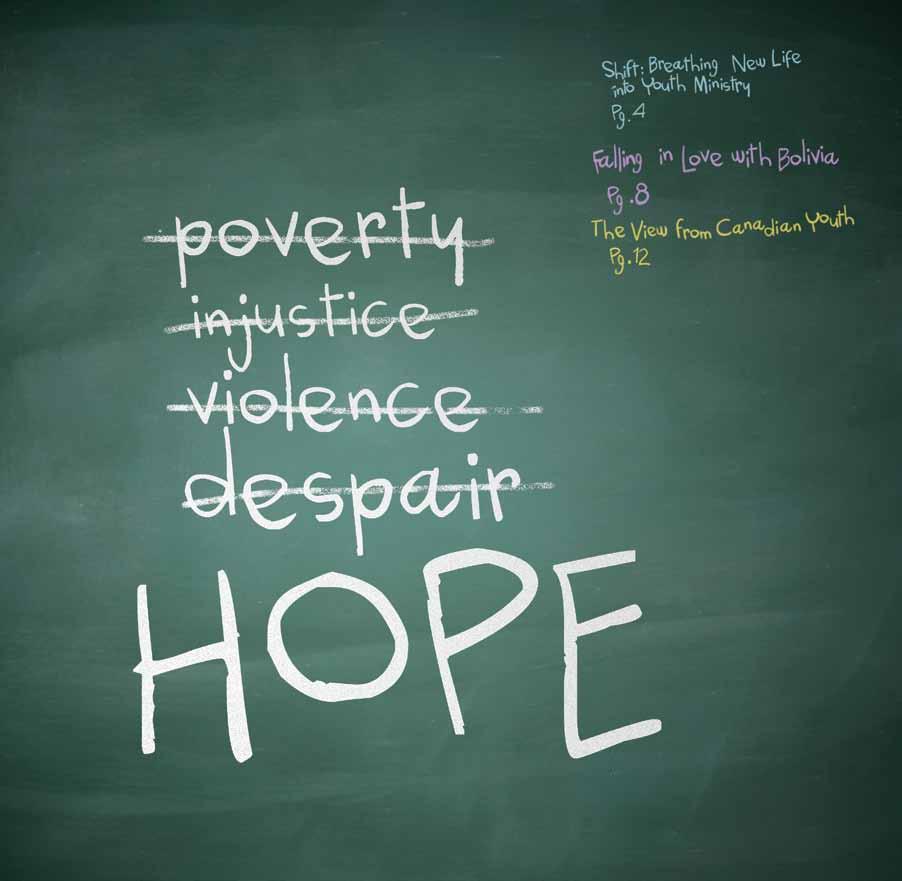
He said “Youth is easily deceived because it is quick to hope.” I would argue the opposite. Living in God’s story results in us being rooted in hope, which means that we are easily deceived not when we are quick to hope, but when we are quick to despair. Or quick to fatalism, or listlessness. It is far too easy, as we become older, to “settle” or give up inside — to live life out of habit instead of on purpose.
Perhaps this is one of the important gifts that younger people can offer the Church: the gift of hope. We recently saw the power of youthful hope in the Middle East as younger people catalyzed demonstrations that protested against long-term oppressive governments. Younger people can remind us that faith is about seeing as a child sees, and about loving Jesus with an intense fervency. Just as our elders can offer us the gift of wisdom, our youth can offer us the gift of hope and passion.
This gives me great hope for the Church worldwide, because the global Church is growing younger. Nearly 40 percent of the world’s population is under the age of 24, and many of these people live in countries where the Church is growing rapidly. In many countries, “youth” isn’t a special sub-set of the Church; they are the majority. As the global Church grows younger, wouldn’t it be wonderful to see it grow mature enough to have the faith of a child?
In Canada, though, the picture is more mixed. While there are notable exceptions, in general we have asked our youth to adjust to our way of doing church, instead of encouraging them to develop their own embodiment of the Gospel. We need to re-imagine the Church so that it embodies the Gospel not just cross-culturally, but cross-generationally. This will take more than stylistic tweaks to an otherwise unchanged model: we need entirely new expressions of the Church. We need to find young leaders in our midst and encourage them to lead with strength and faithfulness, so that they can lead us on the journey to where God wants us to go.
I think we can do it. We just need the courage. And if we do, we can be a Church that is “quick to hope.”
Rev. Sam Chaise General Secretary of CBM
Post a comment on Sam’s new blog at www.cbminorg.wordpress.com
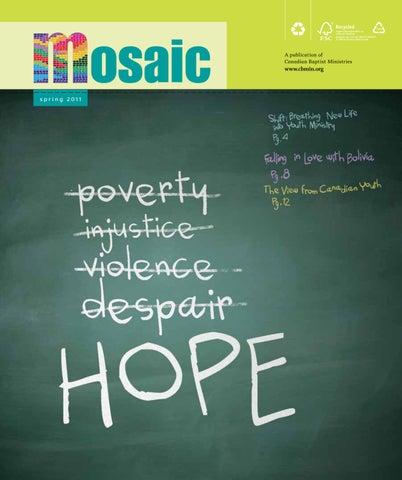
Shift: Breathing New Life into Youth Ministry
by Matt Wilkinson Director of Youth Ministries, Canadian Baptists of Ontario & Quebec
s tatus updates. tweets. text messages. Blogs. How we are relating and building community is changing. For today’s youth, social networking is not just a form of communication, it is a way of life. In the age of YouTube, they are actors and directors, critics and reviewers — moving from passive observers to active participants in the world around them. These are not just generational changes, they are societal shifts, and the church, specifically youth ministry, needs to respond. How can we be part of these shifts?
I have been involved in frontlines youth ministry for nearly fifteen years. I have a deep passion to see teens engaged in a personal and meaningful relationship with God through Christ, to be empowered to live out his love to their world, and to see those who are not yet following Jesus enter into that relationship.
In the past, my natural inclination was to engage young people in the way that I experienced youth ministry. Every Wednesday I got ready for our youth group meeting — snacks set out, music on, videos playing, teaching prepared, and rooms set up for small groups. I could hardly wait to see what would unfold. For the most part, things went really well. But over time I began to realize that I was the one doing everything. The youth weren’t really calling it their own. So I started asking myself some serious questions and I pose them to you as well:
• Am I trying to build my youth ministry by using entertainment when youth already have TVs with hundreds of channels, iPods with thousands of songs and phones with all kinds of applications at their finger tips?
Pages
• Am I engaging youth as a “talking head” when they are already in school for more than 35 hours a week?
• Am I relying on the youth group to be a primary place for youth to connect with friends when they are already connected to hundreds of people through Facebook anytime, anywhere?
In asking these questions I saw that if youth don’t play a role in shaping youth ministry or see how it impacts the world beyond their group, they will feel useless and the youth group will not be worth their time.
Categories
• Christianity
• Evangelism
• Junior High
About Matt Wilkinson
• Senior High Ministry
Social Media
• Social Networking
Student Ministry
• Understanding Teenagers
• Youth share
Visioning
Blogroll
• Development Blog
• Documentation Plugins
• Suggest Ideas Support Forum
Youth social networking identity
Youth social networking identity
youth ministry
youth ministry Christian social media relationships church
Christian social media relationships church Search
This has led me to ask, how do we shape youth ministry in the life of the church to embrace this shift from passive observer to active participant? What I determined was that we need to help young people understand that it is “their turn to breathe.”
Their turn: We need to empower students to own their own spiritual walk as well as be intentional in reaching out and serving others.
Breathe: A healthy Christ-follower is one that both inhales (grows spiritually) and exhales (loves and serves others). If we only inhale then we drown. If we only exhale then we will suffocate. It is only through breathing that we live life to the fullest.
So often, those in leadership in our youth ministries lead in such a way that the “inhaling” portion is designed and controlled by leadership with very little opportunity given to youth to actively participate and discover how biblical truth applies to their lives and impacts their world. In these changing times, we as the church may need to adapt to student-based learning, which empowers youth to take ownership of their spiritual journey.
Students don’t want to show up to a program simply to be entertained, or where everything has been created for them, or just so they can see friends. Students want something meaningful and impactful that goes beyond the walls of the youth room. They want to be part of exploring their own spiritual development and growth. The “talking head” from the front of the room still has importance, but not without the influence and gleanings that students provide along the way.
As students become passionate about their own spiritual journey, we need to remind them that it isn’t about hiding in a Christian huddle, it’s about being missional. So that leads us to the other side of the coin. We need to empower our students to live out the message of Jesus, both in word and deed, particularly to their own generation; to embrace the need to love, serve and share with those who are not yet following Christ. We need to help them “breathe out.”
I think the danger one might face if the focus is simply upon “exhaling” is that it becomes all about their efforts and not about Jesus and what he is doing in them, how he is changing lives. If they focus primarily upon “inhaling,” then they fail to see beyond their own internal journey and understanding. Our youth ministry needs both “inhaling” and “exhaling.”
The challenge as parents and youth workers is to not use our youth ministry programs to direct or coerce our young people to be where we want them to be. Instead, we need to join them in their journey, making an effort to understand their world and to intentionally listen, guide, and empower them as it is their turn to “breathe.”
This shift in how we do youth ministry is made real as we address the shift in how we interact with youth as they are redefining how they establish their identity and build community.
Identity and relationship building used to come through factors such as friendship clusters, academic and athletic achievements, economic means, and even one’s appearance. Today it has become more complex. What has been added into the mix is the significance of their “online connectedness.” We need to engage youth on their own terms, in the ways they are now relating to the world around them. We need to be informed and active within the world of social media like Facebook, the context where youth are establishing an online digital
image that represents themselves and creating their own social status as they communicate about their everyday life.
Hear this — Facebook and other social media are not necessarily good, bad, right, or wrong, they simply ARE. But because they are leading the way for a youth’s communication and identity formation we need to be present there. To many it may be seen simply as a communication tool, but to today’s generation it is a way of life.
I once had a girl tell me, “You would never say to a student that you are a waste of space but when you say that Facebook is a waste of time that is exactly what you are saying, because Facebook is a place where I create my identity and share with others who I am.”
Those involved in frontline youth work need to be committed to building relational ministries. However, the wireless generation is redefining what it means to be relational. Social media is not bringing an end to face-to-face relationships; students still want to connect in person. However, the permission to engage face to face with a youth will come after one has interacted with that youth’s digital image. I think that how we walk through this shift will either give us the grounds and permission to connect with today’s teen or it will leave us totally disconnected.
Our current digital age presents a significant challenge to our traditional ways of doing youth ministry. We
cannot ignore it. The world around us is relating in totally different ways than how most of us grew up. It is not going to disappear. It is incumbent upon us all to make a concerted effort to understand and wisely engage this new social reality. This challenge is particularly important for youth ministry, but it’s also important for the whole church to be even more effective as the hands and feet to the community and world around us.
Furthermore, we must not allow our youth ministries to become silos in our churches, shut off for the most part from the rest of the faith community. If that happens, it will never be as effective as it needs to be. Youth ministry needs the collective effort of the entire church body working together to empower and enable students to grow in Christ while reaching out to their world — to be truly missional.
Effective youth ministry is important not only for the future of our churches but for the very lives of our young people. It is crucial that we allow our students to breathe as we, regardless of our role in the church family, meet them where they are, understand their world, and share life with them going forward.
Matt has contributed to the world of youth ministry at both local and national levels. He began as an intern at Yorkminster Park Baptist Church (Toronto). He most recently served as the Cross Regional Youth Pastor and Youth Ministry Specialist for The Meeting House (Oakville and Ontario region). In February, Matt became the Director of Youth Ministries at Canadian Baptists of Ontario & Quebec. He also continues to serve as the Co-Director of the annual Today’s Teens Conference.
Follow Matt on twitter @mattwilkinson
connecting…
CB Youth
CB Youth is a national network facilitated by CBM for the regional Canadian Baptist Youth Directors. Together they are passionate about seeing the youth ministries of the local church embrace Grassroots Leadership Development and Global Discipleship. CB Youth facilitates leadership exchanges at regional youth events and promotes Global Discipleship by sharing resources to equip youth leaders, inviting youth to participate in furthering the work of God’s Kingdom and offering short-term mission opportunities through CBM.
Falling in Love with Bolivia
I had never heard of Bolivia. It was far away, I knew that much. After some quality time with Google, i was able to learn a little about its climate, location and history, but there are some things that the internet just can’t explain. i’m not sure i can either, but i’ll try my best.
also invited to join a short-term mission team to Bolivia a few months later (in February 2010).
It’s difficult to describe what Bolivia was like. We were there only eight days and it wasn’t long enough. I had fallen in love with the country and the people! My very favourite part was our short visit to Casa de la Amistad in Cochabamba. It’s a sort of daycare-type program for children who live in the prisons with their mom or dad. That’s right. Live.
by JaimeLynn Bagley
My name is JamieLynn Bagley, and I am 16 years old. In October 2009, a strange thing happened: I felt God telling me to get involved in South America, to help build a church, develop leaders and provide practical resources. It was very straight and to the point, and completely out of the ordinary. Perplexed, I contacted CBM and asked how I could make this a reality.
Things started to move very quickly. My parents become involved, and we not only began discussing the possibility of our church becoming a STEP* church, but my dad and I were
Our itinerary was full of visiting people and churches and programs. The people we met were gracious and kind. I could see that they are open to listening to God and trying to determine what he would like them to do. They build additions on their churches before they need to, because they expect God to do something. To them, it’s not about the funding and best music and all the things we regard so highly. It’s about Jesus and their community.
We can learn so much from this! How often do we sit in our North American pews, going to meetings and setting up new “programs” so that we
We need leaders in our lives who do what is right. We need leaders who love mercy, and love us. We need the adults in our lives to demonstrate what it means to walk humbly with our God.
can meet the needs of the people? And we attend prayer meetings asking God to please come and work in the life of our church. Seems we’ve become routine in our faith. But God has told us what he wants from us. “O people, the LORD has told you what is good, and this is what he requires of you: to do what is right, to love mercy, and to walk humbly with your God.” Micah 6:8.
As a Canadian teenager, attending high school and youth group, let me tell you what our generation needs. It’s not better worship teams or more expensive programs. It’s not following the proper protocol. We need leaders in our lives who do what is right. We need leaders who love mercy, and love us. We need the adults in our lives to demonstrate what it means to walk humbly with our God. We need leaders who encourage us to be more, and do more than the world requires of us. So, back to Bolivia. What did I learn while I was there? Exactly what it means to be part of God’s church. To love those around you and serve them the way that Jesus loved and served while he was on earth. It’s to care about the people around us and join together in community to worship.
One Month in Dadaab
by Nathan Petersen
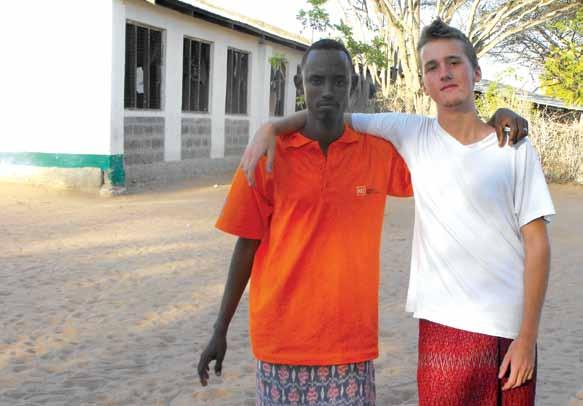
How I ended up in Dadaab — an unbelievably hot, completely Muslim area home to 300,000 refugees — is still a mystery to me.
connecting…
*STEP (Serving, Training, Energizing Partnerships) is a unique program offered by CBM to Canadian churches interested in developing a deeper relationship with their brothers and sisters in Christ in the developing world.
Learn more at www.cbmin.org.
Before my gap year between high school and university, Kenya was just another country on the map. But through casual conversations guided by God’s hand, I ended up sitting in the shade, listening to poetic prayers over the mosque’s loudspeaker and watching a goat try to sneak through the front gate of the community centre that had become my home during my stay.
I had volunteered for anything that CBM needed, which led to teaching physical education at the local primary school as well as some construction and cleaning projects in the area. Being at the school gave me the opportunity to become part of the community. It allowed me to play volleyball with secondary school students, watch European football matches that are always the buzz of the town and spend my nights trading stories and sipping tea with the other teachers.
God revealed so much to me during those days. He filled my time with the accompaniment of five men, some only briefly, who all showed me something essential to practice and continue in my relationship and journey with God:
a love for our creator, the importance of prayer, the education within travel, back-breaking hard work and humour — having a person beside you to laugh.
Even though the experience was sometimes unbearably hard, I wouldn’t change a thing. I made new friends and learned about a new culture. It made me a better person and gave me a fresh love for God. I feel like I have just taken a deep breath of cold air, like the first time you step into a hockey arena. And he gave it to me in the hottest and most unfamiliar place I’ve ever been.
I ask prayers for those back in Dadaab struggling to get by and I thank CBM for their work there.
connecting…
Watch an interview with Nathan Petersen about his time in Kenya on our website: www.cbmin.org.
Youth have a powerful voice to share and a pivotal role to play in shaping a better world but...
What’s on your mind?
mosaic asked a selection of youth (ages 16 to 20) from churches across the country to share their perspective on faith and life. We are grateful for their willingness to be so open and honest. Here is just a sample of some of their powerfully deep and thought-provoking responses.
What do you think are the major issues facing our
world today?
1 hour ago • Like • Comment • Share
7 people like this.
Tischina I have to say gang violence. I knew somebody in my middle school that died. He got shot in a staircase in his building. It’s really sad to talk about it.
49 minutes ago • Like • 3 people
Radeka Poverty. The amount of food that we consume… and half of it is just thrown away. I don’t think we can end poverty until we end greed. We all have basic needs but some people try to push their needs before others and don’t realize we’re all in this together.
46 minutes ago • Like
Mackenna Bullying and relationships. At my school a guy actually committed suicide because a relationship didn’t end well.
36 minutes ago • Like
Alex There are a great many people in impoverished areas who are starving to death and dying… [and we] are doing absolutely nothing about it. We’re too content watching television and rotting in our wealth rather than taking care of what needs to be taken care of. I think that’s the big issue — we are not taking care of what needs to be done. We need to take care of other people
21 minutes ago • Like • 5 people
Canadian Baptist Ministries, Mississauga, Ontario
Share: Status Photo Link Video
Wall info
Photos (20) notes Friends
Friends
CBM
Tischina
Radeka
Christine
Alex
Danielle
Share
8 minutes ago • Like …continued
Evan Wow, where to start.... ignorance and economic/political power… companies trying to profit off the third world and the underprivileged through gimmicks, promotions and company fundraisers — pennies [raised] compared to the billions of dollars companies make… Money tends to be the world’s band aid for problems… when we really need to just love… With so much poverty and pain… it’s laughable to see results of problems being looked after instead of the root. Society seems so focused on achieving economic or political success it tends to fail in the area of treating people with dignity and respect If a company can make millions of dollars it should be able to afford a living wage for its employees… [political] leaders could focus on looking after their people instead of trying to disrupt and damage the lives of others.
14 minutes ago • Like • 1 person
Danielle God has put a few issues on my heart over the past years: slavery, sexual exploitation and other violent injustices. There is also an overwhelming lack of education available to so many… Current issues like the political uprisings and demonstrations in Egypt, Libya and around the world…and many more tragedies we see in the media today.
How do you feel about the future?
4 hours ago • Like • Comment • Share
14 people like this.
Tischina I think the future is what you make of it. I think everybody has a dream for a really nice house, nice car, to be financially stable… things aren’t handed to you.
3 hours ago • Like • 2 people
Radeka It’s always easy to talk about grand plans, how to make everything perfect. Just take it a day at a time and every day try to do the best you can and try to make some little change. Little by little. Make it small, don’t make it big because then you might feel pressured. Just do little things every day.
2 hours ago • Like
Christine In a sense I’m not hopeful. By the time I grow up I’ll probably be spending more than I should be.
51 minutes ago • Like
Alex I feel optimistic. I’ve read the Bible, I know it ends well, but I think that with more people who are starting to really understand what their faith is and the potential that their faith has to improve lives, I think that the future is bright… We have preachers who talk to thousands of people, we have [large youth] ministry events… but really it’s the fact that we have joy and peace in our lives… and that we can impact just a couple people, and they impact a couple people, and they impact a couple people… whether it’s influence in small ways or big ways, it gets around, and we can help people have a better hope and get them imagining things that can improve our future.
48 minutes ago • Like • 3 people
Evan I feel optimistic about our future because it seems as though society is accepting radical ideas and ideas of the younger generations to help better the world. It takes someone who cares about the world to make a difference, whether they are 5 or 95. I hope that the world will continue to prosper and jump on new, helpful ideas that love its people instead of hurt them. Lots of prayer and lots of love is necessary to turn our world away from focusing on financial goals to providing everyone with things they need. With the economy going the way it has I am concerned that the 21st century won’t be as productive and loving as it has the potential to be.
11 minutes ago • Like
Danielle I think the world faces a lot of very heart-breaking challenges as we move forward, but I see a lot of hope! So often, I find myself running into amazing people who are really searching after God’s own heart and doing their part to be God’s love in the world. It’s encouraging to know that we can actively live out being God’s hands and feet here on earth and that we’re not doing it alone. So how do I feel about the future? I rest in God’s everlasting promise to provide and his assurances of the plans he has for us (Jeremiah 29:11).
2 minutes ago
• Like
Canadian Baptist Ministries, Mississauga, Ontario
How do you feel about your church?
11 people like this.
Tischina It’s really nice. There are people there that will help you when you’re down. Everybody there’s really positive. If you have a problem there’s always someone to talk to. You don’t have to go through things alone. Every Thursday we have a youth community group where we gather kids from the neighbourhood… we do Bible study, get them involved in activities like movies, outings, cooking class, arts… just trying to get kids off the street and work towards a better world. I’m proud to be part of that.
1 hour ago • Like
Christine My church has been helping me understand how much God loves me, how much he’s full of mercy and forgiveness.
53 minutes ago • Like • 4 people
Mackenna Church is like one big family
34 minutes ago • Like
Evan In all honesty I have lost much respect and hope for my church… politics have started to run the church instead of our love for God. We don’t need a fancy youth lounge, or expensive speakers, we need solid goals and strong bonds…Too many people point fingers and start havoc…and many times it leads to a forced, negative change. If only our church would refocus… church is meant to bring Christians together to love and worship and serve God… I have always struggled with should I switch churches or stay and try and help bring about that change, and after much prayer I had to stay… maybe one day God will help lead me to some answers that will help transform our church… I would like to ask a question to our church members, ‘How can you expect change and growth when you yourselves aren’t making that step to get involved and help the change?’ So many members request change then back away and hope it happens... that’s not how it works! Take some initiative and some responsibility.
26 minutes ago • Like
Danielle I absolutely LOVE my church. Our Sunday services go beyond the one morning message and branch out into small groups throughout the week which give me such a strong sense of community and support. Being able to hear a sermon and then have the opportunity to safely and confidently hash it out and focus the conversation is very helpful as I am growing spiritually. My favourite part about my church is that there is a very real element of community encouraged in the way we interact and support each other. We not only serve our community, but we serve each other in times of need and in times of celebration.
6 minutes ago • Like • 3 people
spring
30 new photos 7 people like this.
How do you try and live out your faith in your school and community?
2 hours ago • Like • Comment • Share
7 people like this.
Tischina At school, when people are doing stuff and they want you to join in… you know it’s wrong so you’re not going to do it… just because you’re not going to do it, you shouldn’t just let them go, let them do what they have to do…. you can talk to them and try to get them not to do it too… try to get them to do what you’re doing.
1 hour ago • Like
Alex I try to meet new people. I try to just get out and know people…listen to them…just be a good friend because Christ was always good for a chat and he wasn’t necessarily chatting with the good people. I mean, I have Christian friends and I enjoy their company very much, but I always like to make new friends who aren’t necessarily Christian because then maybe through some course of our conversation, we can talk about the deeper things of life like faith, like living for God.
46 minutes ago • Like
Evan I try to live out my faith through example. I love God, and as much as I can, I live my life for him. There are times I make foolish decisions that might be selfish, but then God turns me around and says ‘Hey! I’m here, I love you and just curious what your motives were for doing that.’ That gets me thinking that I need to keep him on my mind… I started volunteering… I help at homeless shelters, children’s programs through my church, and do my best at school to be an example… Whether people notice if I am different or not, God is watching me and I want to live my life for him, not for myself. So when the opportunity arises I will love those he has put in my life, and hope he is with me every step of the way, because no one is better at loving than him.
25 minutes ago • Like • 6 people
Danielle I think this one is simple. If we act in Christ, he works through us in powerful ways. I do what I can to just be who God made me to be as I strive towards being Christ-like to everyone I meet.
12 minutes ago • Like
www.facebook.com/cbmin.org
www.facebook.com/cbmin.org Join the movement of people who call themselves Canadian Baptists. Together we are encouraging passionate discipleship for local and global mission. www.facebook.com/cbmin.org
Youth Catalysts for Peace
It has been 17 years since genocide tore Rwanda apart. Is reconciliation truly possible? Meet a courageous group of youth determined to lead the change so that “never again” is truly never again.
by Michel Nsengi and Laurena Zondo Peace camp facilitators
You can’t ignore the power and potential of youth in Rwanda, a country with one of the highest population densities in the world, and one of the youngest populations — nearly 60 percent are under 25 years old. You also can’t ignore that trauma and discrimination are spreading into the next generation as those with no experience of the genocide are being impacted by what they hear and see at home and in the community.
“We are faced with genocide consequences and we see what perpetrators and genocide survivors go
through,” commented Anthony, one of the youth at peace camp, held this past November in Nyange, Rwanda.
The peace camp brought together 48 youth and youth leaders from secondary schools and churches of the Association of Baptist Churches of Rwanda (AEBR) across the country to share, in a safe space, some of the issues and conflicts they face. They were encouraged to use creative arts — drama, song and dance — to tell their stories.
Some were heartbreaking. Accounts of intimidation and discrimination,
even threats of being kicked out of the house by family if they become friends with, or date, someone from another ethnic group. Bitter feelings and misunderstandings prevail.
“Because I’m an orphan I always struggle to live at peace with my relatives. They want to get rid of me so that they may have my properties,” shared one young girl.
“My mom is in jail [convicted of genocide activities] and my dad died many years ago,” shared another.
The large number of vulnerable children (Rwanda has one of the world’s largest number of child/youth-headed households) and the reintegration of perpetrators back into communities where survivors live, often among those they victimized, are two of the major challenges today. So too are land and property issues. But the biggest obstacle overall is trust and forgiveness — and that takes immense personal effort and the Spirit of God at work in hearts to be able to restore some level of trust, heal from trauma, and have peace of mind.
Youth are ready to give it a try, though. Here are some of their responses to questions we asked on conflict, discrimination, injustice and other things they encounter. Would they intervene and if so, how?
“Love is the best weapon to use. I can show him love and empathy and maybe he can change his attitude toward me.”
“I can approach him with love because love is a catalyst for peace.”
“I cannot watch things deteriorating. I can intervene as much as I can.”
“Following the lessons we learnt, you cannot keep quiet in a situation like this.”
“First of all I can forgive him because it is the only way to free myself.”
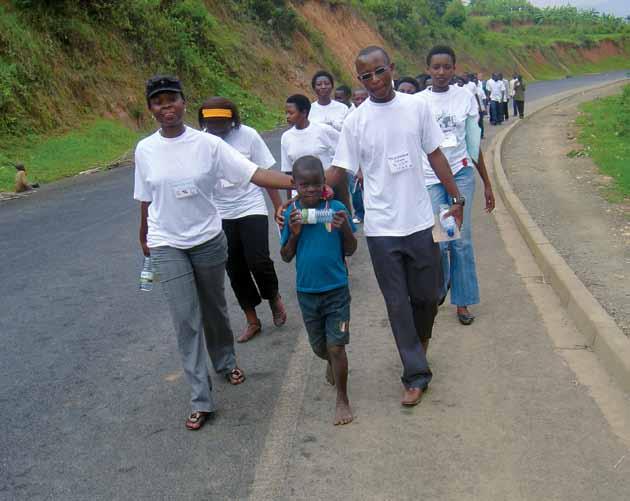
Memory walk to a nearby school to commemorate the courage of students who were shot by rebels on March 18, 1997 after refusing to separate into Hutu and Tutsi.
Camp highlights included creating T-shirts with their own camp slogan (Youth Catalysts for Peace), a memory walk with a student survivor of a school attack, tree-planting and filmmaking.
The peace camp is one of the new, annual projects of AEBR Youth, who represent over 25,000 youth in Rwanda, to encourage and empower youth creativity and leadership in peace and development. “We appreciate, really we are at a loss of words, the support of CBM and so many others in this project,” says AEBR Youth president Dominique Habimana. “Rev. Munyamasoko [CBM Field Staff] is one of our mentors and encourages us so much in our peace-building, like this initiative.”
“Now that we leave this peace camp, we know that we are solutions because we have the skills to mediate and to help those who have trauma,” says Anthony. “We are ready to help other youth of our age teaching them that peace is the pillar of sustainable development, if we associate that to love and prayer, because the word of God says that faith without action is dead.”
Anthony and several other youth have started peace clubs back in their schools and communities. One such club, called Peace Sowers, has 268 members. Their motto: “Forward ever, backward never!”
H O R I Z O N s in Europe for Youth Leaders New
by Jeff Carter, CBM Global Field Staff in Czech Republic
In 2003, I was asked to conduct a research study to determine the needs of youth leaders across the 51 nations of the European Baptist Federation (EBF), which encompasses all of Europe, the Middle East and Eurasia. At that time there were over 30,000 volunteers working in 11,000 youth ministries which serve 181,000 youth.
One result from the study stood out as a top priority — a great desire was expressed for an affordable training curriculum that was both contextual and language specific for volunteer youth workers. After a long process of development, HORIZONS became a reality in January 2010. What has happened since then has been simply amazing!
Coordinator for Youth Ministry, Baptist Union of Croatia. “We can combine material from different available modules to fit with the specific issues for our country.”
One of the most daunting tasks was translation. We first provided content in Russian and Arabic, two of the most widely used languages in the EBF. HORIZONS is now also available in English, French and Spanish, and is currently being translated into Czech, German and Norwegian. Since its official launch a year ago, HORIZONS is already being used in 21 nations with 70 participants. Who could have imagined that God would take this simple idea and use it to reach out to so many nations for his glory?
A Peace of Life is an organization started by Laurena Zondo, editor of mosaic. The Sharing Way has provided some funding for its peace camps over the past two years. Laurena has faithfully served with the communications team at CBM for over 14 years. At the end of this year, she will be transitioning away from her role with CBM to run A Peace of Life full-time. You can find more photos, poems and stories on www.apeaceoflife.com, one of the partners of AEBR Youth.
The program, accessible online through an interactive website, ensures that there is no financial burden for participants. We currently have a dozen mentors being trained in many countries (including Canada) who will walk with youth leaders through their online training. These mentors help breathe life into the course and give it the requested contextualized appropriateness for participants from multiple cultures. “I couldn’t imagine what an important influence HORIZONS would have on development of our own training program,” says Svjetlana Mraz,
Join our HORiZOnS group on Facebook: EBF Horizons Youth Leadership Training
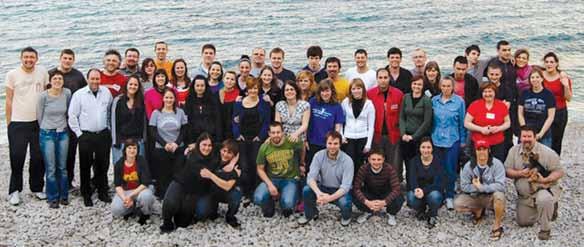
The first-ever training event for youth workers in the Baptist Union of Croatia. CBM Global Field Staff Jeff Carter (pictured bottom right) conducted a series of seminars.
young life
by Rebecca Alward, CBM Global Field Staff in Bolivia
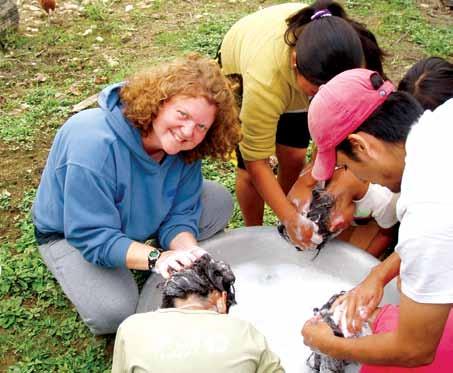
During my first year in Bolivia, a group of “jovenes” (young adults) from Cochabamba invited me to join them on a weekend mission outreach to Chapare, a very poor region in the jungle about four hours away. We partnered with a local Baptist church to help paint a new addition to their building, lead a children’s program and perform a drama at an evening service for young people. We also helped to de-lice many children in the community. As I watched the jovenes work with the kids and generally help as much as they could, I was amazed and humbled by their passion for God and for those who are hurting.
I’ve now been here for two years. When I arrived, all I knew was that I’d been invited by the Bolivian Baptist Union to work in the area of leadership development with young adults, who make up more than 60 percent of Bolivia’s population. This has grown into helping to train these young leaders who are working with teens. In January I moved south to Tarija to help start the teen ministry Vida Joven (Young Life), and will also be working in Potosi, Sucre, and Santa Cruz.
Part of my work will include a research project to better understand youth in Bolivia. It has amazed me how similar the issues faced by Bolivian and Canadian youth are: relationships, employment issues, the future, consumerism, uncertainty, peer pressure, etc.
In the past few years, Bolivia has become more modern and is not as isolated from the “outside” world. As a result, the youth are much more exposed to movies, television and the Internet. The majority of young people seem to believe that modern media paints an accurate picture of life, with no apparent consequences for actions. During one conversation with a young woman about sexual integrity, I asked how a relationship with God influences behaviour in relationships. She explained, “Rebecca, we jovenes are lazy. We think, ‘we just sinned, we’re going to sin again, so what’s the point in even trying?’” I cried when she left.
Yet these young leaders take their faith very seriously and have so much potential — I’m amazed by their strength and their passion. They believe they can change the world!
As well as using HORIZONS (see page 17) as a youth leadership training tool, I will be mentoring and supporting young female leaders. One of my closest friends is just finishing her studies at seminary. She is so strong in her faith, a born leader. The pastor of the church she works in sees how God has shaped her, the gifts he’s given her, and is allowing her to blossom.
Even though the work I’m involved in is still in the beginning stages, I love what I’m doing and have no doubt God is at work in and through the jovenes in Bolivia. I still can’t believe I get to be part of it.
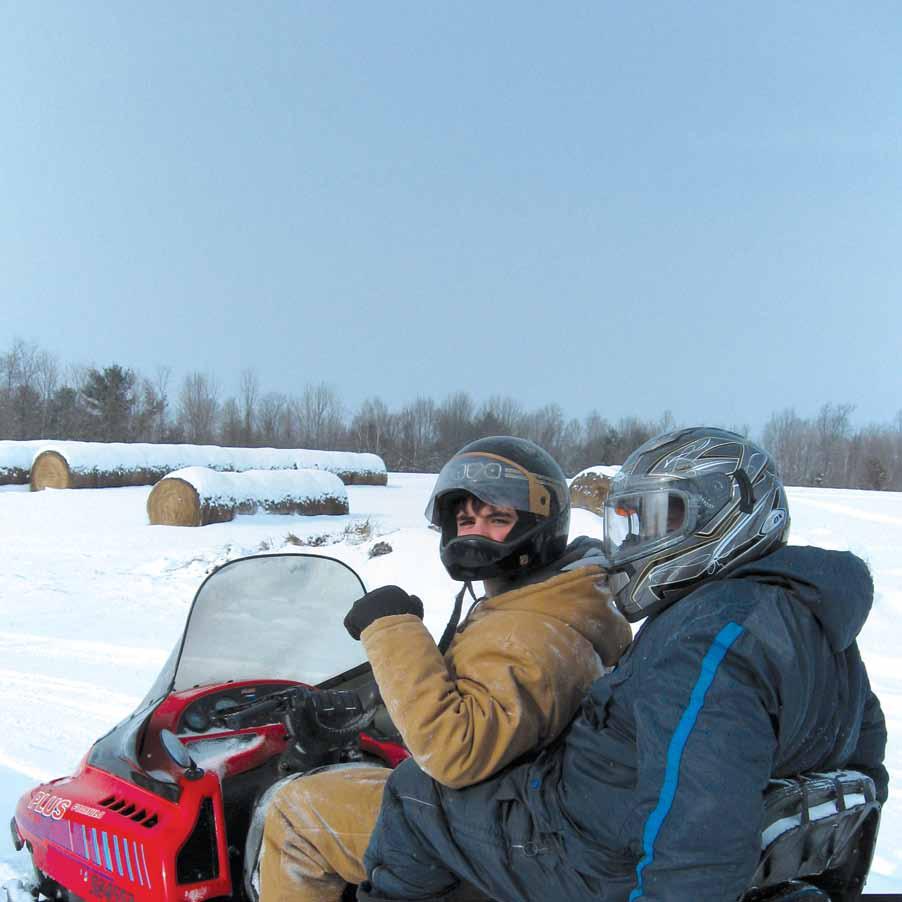
Who: Jeremy and Bishop Ndambuki from Kenya
When: Saturday afternoon
Where: On a family farm in Ontario
Bishop Ndambuki of the Africa Brotherhood Church in Kenya visited Canada in February, along with several of CBM’s international partners, to participate in a Peer Assessment of CBM.
The trip provided an opportunity for the Bishop to visit Chemong Public School to personally thank students and teachers for their fundraising efforts to build a well in Machakos, Kenya.
The Chemong Well Project, started by then-Grade 8 student Jeremy in 2008 with a handful of change he earned at a yard sale, soon grew into a community project. Monthly fundraisers and support from several churches and service organizations helped students raise $22,854 — more than double their
original goal — enough to drill the well, purchase a pump house and provide maintenance training.
In August 2010, Jeremy travelled to Kenya for the well’s inauguration at the invitation of Bishop Ndambuki. He was joined by Joan Price, a teacher at his school who has had a significant impact on his life. Joan is a member of Gilmour Memorial Baptist Church and volunteers for CBM in many ways. She encouraged Jeremy and all her students to learn and respond to global issues
See photo essay at www.cbmin.org
The Middle East
Your support helps students from across the Middle East and North Africa study at the Arab Baptist Theological Seminary. They are helping to build peace in areas of conflict.
Here is a report from one student who serves among the Iraqi refugee population in Lebanon.
We do games, sketches, sports, as well as times of worship and devotion with the children. Our goal is to teach them about Jesus and use him as an example in our lives. During worship we try to teach them about love by holding hands and worshipping together — a symbol of unity and acceptance. We feel that the children are benefiting emotionally and intellectually. They feel loved and part of a peaceful, loving community: not outcasts or unwanted. These children live together and share everything. The idea of peace is especially important to them because they came from a place where there is no peace. We try to show them peace in their lives here.
Welcome to my Neighbourhood: Peacemakers
Available late spring.
CBM’s new mission curriculum presents inspiring stories of youth who are working for peace in countries severely impacted by conflict: El Salvador, Lebanon and Rwanda.
Discover how you and your youth can also become peacemakers! Email communications@cbmin.org.