mosaic is a community forum of local and global voices united by a shared mission. mosaic will serve as a catalyst to stimulate and encourage passionate discipleship among Canadian Baptists and their partners.
Spring 2010
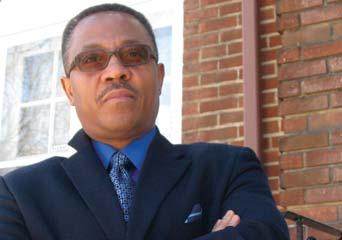
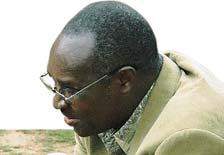
Asante Sana, Gary
Our visionary leader, Gary Nelson, is moving on from CBM, as he faithfully responds to new challenges God has called him to. It was not an easy decision for him to make and he will be missed. Over the years, Gary has challenged and inspired us to think about discipleship and the church in new ways. He has also helped us identify ourselves as a body – not just simply as a denomination, but as a “tribe of people who choose to call themselves Canadian Baptists," as he likes to say. Gary’s influence has profoundly helped to shape the way we live and serve as Canadian Baptists, both locally and globally.
Gary, we simply wish to say asante sana (thanks, very much). For all the years you have served with us, giving the best of your gifts for the building of God’s Kingdom. For setting the example on how to graciously assume the mantle of leadership even in the most difficult times. For your deep love of the Church and reminding us that it is God’s gift to the world. It’s been a good decade together. Thank you for sharing the journey. We’re all the better for it.
To commemorate his years with us, we’ve asked Gary to write one last g-files, which also serves as our feature article this issue.
mosaic is published four times a year by Canadian Baptist Ministries. Copies are distributed free of charge. Bulk quantities available by request.
Contact us at: 7185 Millcreek Drive Mississauga, ON L5N 5R4 Tel: 905.821.3533 mosaic@cbmin.org www.cbmin.org
Mission of Canadian Baptist Ministries Encouraging passionate discipleship for local and global mission.
by Rev. Dr. Gary Nelson General Secretary of CBM
Sacred Ground
Living in the borderlands.
It is difficult to think of this as my last g-files for mosaic, but it is. On July 1st, I begin my new role as President of Tyndale University College and Seminary in Toronto. I believe God is calling me to this new chapter in my life and ministry, so I go willingly, although not without a sense of loss. I have been deeply honoured to serve as General Secretary of Canadian Baptist Ministries, and it is with a sad heart that I leave a position, place and colleagues that I love.
These 10 years have been life changing for me and I am grateful for the opportunity to reflect on my experience and to share both my excitement and concern for what lies ahead for the Church in Canada. This also serves as my hope for our Canadian Baptist movement.
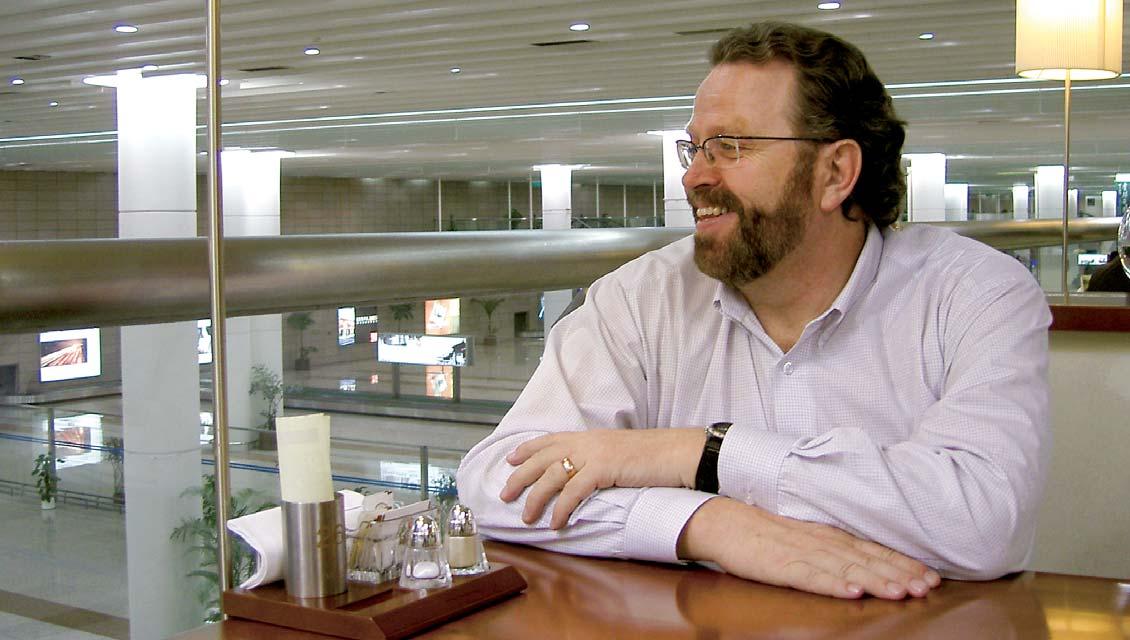
While serving as CBM's General Secretary, many a meeting was squeezed in at an airport, or on the way to an airport, as Gary travelled across Canada and around the world to develop and strengthen partnerships in ministry.
Be a missionary where you are From Gander to Port Alberni, the imagination of small and large churches alike has been captured by a vision for mission. No longer do we need to convince people that mission isn’t only ‘over there.’ There may still be some churches that wait passively for people to come to them, but there are more and more churches coming alive to the possibilities of mission in their neighbourhood. Mission is everywhere and they know it. Each member of the 21st century church is a missionary in the places he or she lives.
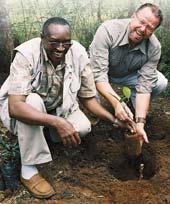
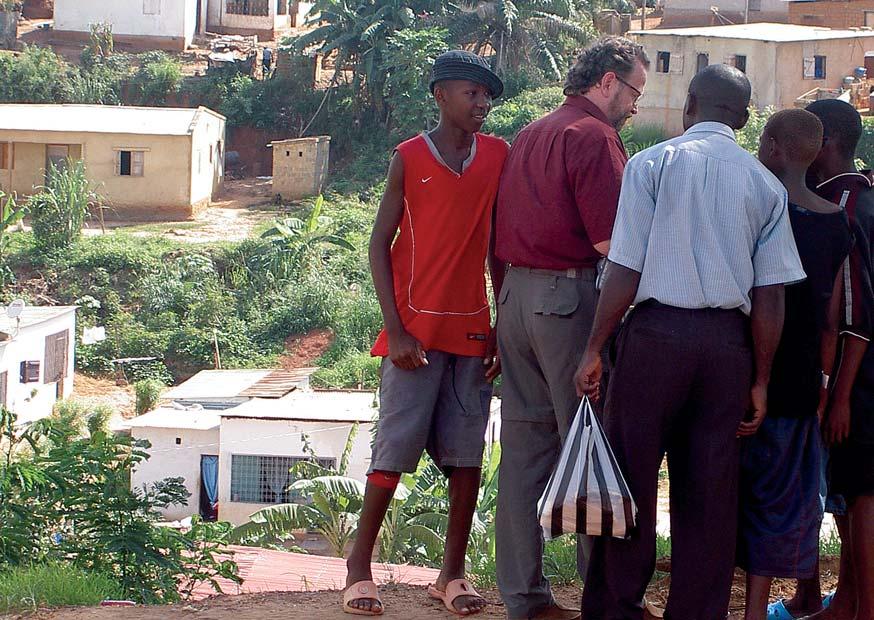
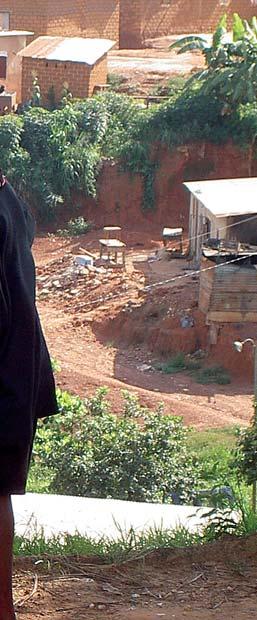
Some of Gary’s poignant memories are from visits in Angola, Kenya and Rwanda, where CBM has been working for years alongside national church partners in sustainable community development and grassroots leadership development. A highlight during his tenure was the launch of Guardians of Hope (GOH), to support and expand the response of our African church partners to the AIDS pandemic. GOH has recently been launched in India.
I have come to believe that the Christian faith is authentic when it is lived outside the walls of the church. It is too easy to maintain the illusion of discipleship in a ‘holy huddle.’ The sacred ground where we capture a sense of who we are as followers of Christ is outside the walls of the church. I call this “borderland” living. The result of this missional adventure is a church that doesn’t measure success by numbers in attendance or programs developed. It is aware of the messiness of ministry in a broken world and desires to make an impact in the community around it — to be a shalommaker wherever it is. Many are beginning to live in ‘holy anticipation,’ knowing that God is out there ahead of them. The result is an exciting movement to join God in what he is doing.
“Over There” has changed Global mission has changed. The old paradigm was simple: pursuing mission activity ‘over there’ meant to pray and financially support individuals who felt a particular call. The possibilities for response to the mission call were pray, pay or go.
In the 21st century, this has changed dramatically — passive participation is not enough anymore. People have a desire to experience overseas mission for themselves, and there are a myriad of options to explore for personal, direct engagement — take a short-term mission trip, sponsor a needy child, partner as a church with an overseas
church. Not only that, they instinctively resist the need to go through a “mediator” and the shrinking of the world by media, internet and international travel makes it all possible.
Churches are repositioning themselves in their rightful place at the centre of the mission activity of God. They are seeking ways to be actively involved in global mission as a natural extension of their local missional journey. This is not without its pitfalls, but it is a recapturing of the missionary purpose of the early church. This has not been an easy transition for historical mission organizations — even CBM has struggled over the years with its role in this process.
The STEP (Serving, Training, Energizing Partnerships) program has become one of our responses to what we believe is God’s global mission movement in his churches. Robert Wuthnow calls these globally responsive churches “transcultural congregations.”
He describes them this way:
Transcultural congregations give priority to programs that honour their commitments at home but also seek to be engaged in the lives of others around the world. A transcultural orientation connects local commitment with churches, communities, organizations and individuals in other countries…They contend that a congregation that focuses only on itself becomes insular.1
Who is the missionary anyway?
I have heard some people say that CBM does not appoint as many missionaries as they once did. They’re quite right. While we still send Canadians to embed themselves in a culture and live incarnationally with our partners, we are very strategic in who we send. The cost of sending a Canadian family to a
1 Robert Wuthnow Boundless Faith: The Global Outreach of American Churches University of California Press, 2009, p. 6.
foreign country for long-term service is very high, so we need to know that they will have an impact. Many of our Global Field Staff illustrate this new reality. Jeff and Deann Carter are a great example: they are based in the Czech Republic, but their impact on youth ministry and leadership training stretches to 52 countries around Europe and the Middle East.
CBM also has an international workforce. Gato, Judson and Ivan are some of the CBM staff who work in their country of origin, bringing skills and viable ministry that Canadians frankly could not do as well. Along with our gifted Canadian and international long-term staff, we have people from across Canada — often experts in their fields — serving in intentional mission assignments for short periods of time. Most recently, we had two women from Canada, one an expert in peace building and conflict resolution, visit Rwanda to
much too convenient in the past. I find myself joining with people such as David Augsburger in believing that a much more dissident discipleship is needed in the 21st century. Rather than simply answering our anxiety about the afterlife, this kind of discipleship is intrusive. It actually rearranges what we think is important by challenging us to not simply believe in Jesus but to believe in the things that Jesus believes in.
For example, I no longer know how we as North American disciples can avoid the economic challenges of following Jesus. Our wealth and comfort is our challenge as Canadian Christians. It shapes our soul in such a way as to create a handicap in our ability to distinguish between what we need and what we want. How can we not realize that this ‘god’ must be replaced by the God of the universe who uniquely made us and knows our every need? While
Passive participation is not enough anymore. People have a desire to experience overseas mission for themselves, and there are a myriad of options to explore for personal, direct engagement.
help our national church partner develop an integrated program of reconciliation. They were there for a short time but their impact will stretch far beyond their time in the country.
Believing in Jesus and living it out I have been asked by many people if I would pastor differently because of my global experience with CBM over the last 10 years. To be honest, I think I would. I wonder sometimes if I made the gospel call on our everyday lives
our generosity in charitable giving is commendable, it does not go far enough in altering our way of life.
Economics are just one of the areas in which we need to capture a prophetic imagination about dissident discipleship. Our language and daily lives need to be framed from the perspective of the gospel. This is not simply a call to personal piety. A lived-out dissident discipleship will encourage a healthy, effective incarnational engagement of the culture by followers of Christ. It will challenge
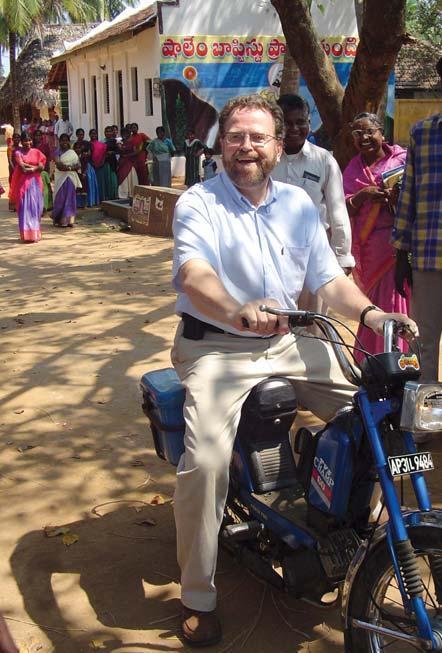
Gary takes a spin on a moped, to the delight of onlookers. India holds a special place in his heart: one of the most wildly colourful, noisy, chaotic places that somehow still works. India is also the birthplace of an independent Canadian Baptist mission.
and nurture participants to be what Andy Crouch calls “culture makers” and what I call “people of shalom” in society. We will no longer be able to be simply passive participants who work during the week and worship on Sunday. Neither will we be able to cocoon ourselves within church program participation.
Living it out will call people from a privatized faith which, at its worst, engages the world with a belligerent attitude, to a much deeper life of witness through word and deed. It will provide a way of living and speaking shaped by the Gospel of Jesus Christ, modeled first in the Church as a foreshadowing of the new possibilities that the Kingdom of God provides. Not all of us are called to be leaders but all of us can be salt and light in the places we live.
Learning to celebrate the Mustard Seed strategy of God
I understand more fully today just how right Jesus was. The Kingdom of God is like a mustard seed and we need to focus more intentionally on the grassroots movements of God. You see it overseas in our partnerships. Small activities and programs have amazing impact. Take for example the child labour rehabilitation program in Tuni, India. In many ways it was a mustard seed program, small and insignificant in the realm of the largeness of India but it has transformed the hiring practices of companies in the area. The place will never be the same.
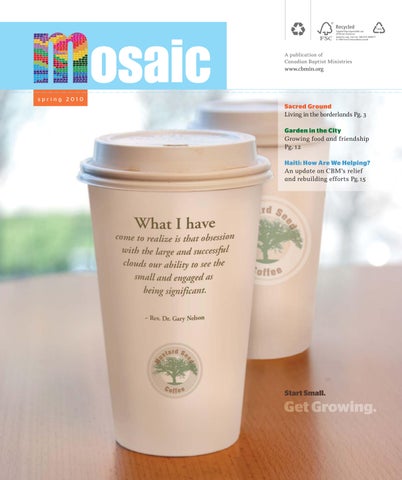
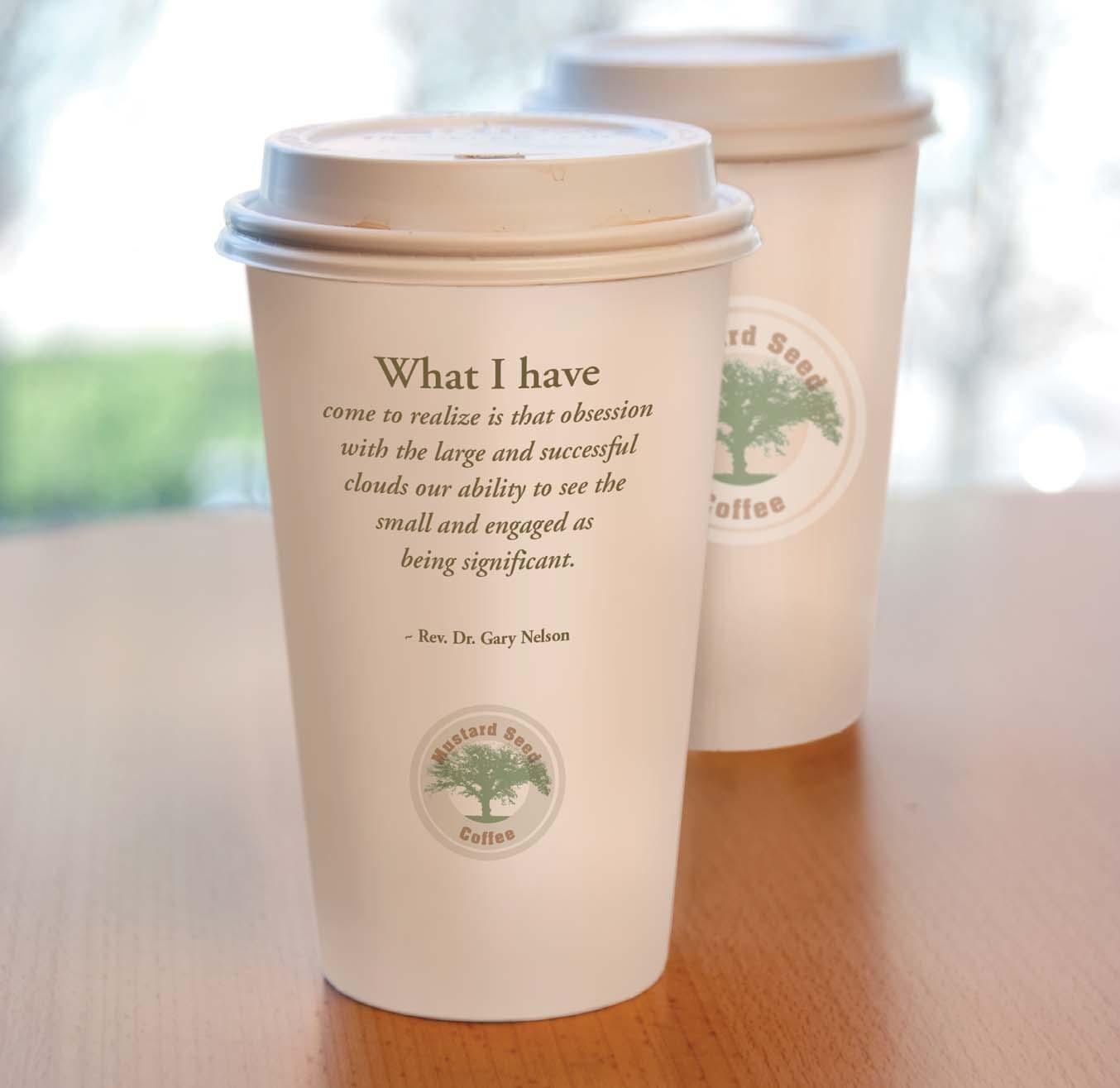
In Canada, I am fascinated to listen to the constant praise of large, active churches around us. What I have come to realize, however, is that obsession with the large and successful clouds our ability to see the small and engaged as being significant. But communities are being deeply changed by the work of small and medium-sized missionally minded congregations. Such mission is the wave of the future. Just read some of the articles in this issue of mosaic
Canadian Baptists as an unrealized possibility
I am very proud of my roots in Canadian Baptist life. These past 10 years have not diminished my love for the tribe that both nurtured me and set me apart for leadership. As I look across the religious and denominational landscape of Canada, I am amazed by how many of our people shape the boards, decisions and ministry of other organizations such as World Vision, IVCF, Mission Aviation Fellowship, Arrow Leadership Program and so many others. The steps we have made toward gathering ourselves, not just as a denomination, but as a movement of God’s people in post-denominational times, have actually been remarkable.
CBM is a crucial part of our movement’s historical identity. I have been proud to serve as one of its leaders. Over the last years, leading this amazing group of people has proven to be one of the most exciting and fulfilling times of my life. To work with colleagues who have a high degree of team commitment, a deep sense of “calling” together and at the same time share the rare gift of friendship makes the environment of the office and field a wonderful place to be. While our growth over the last 10 years has not been without challenges and difficulties, I am
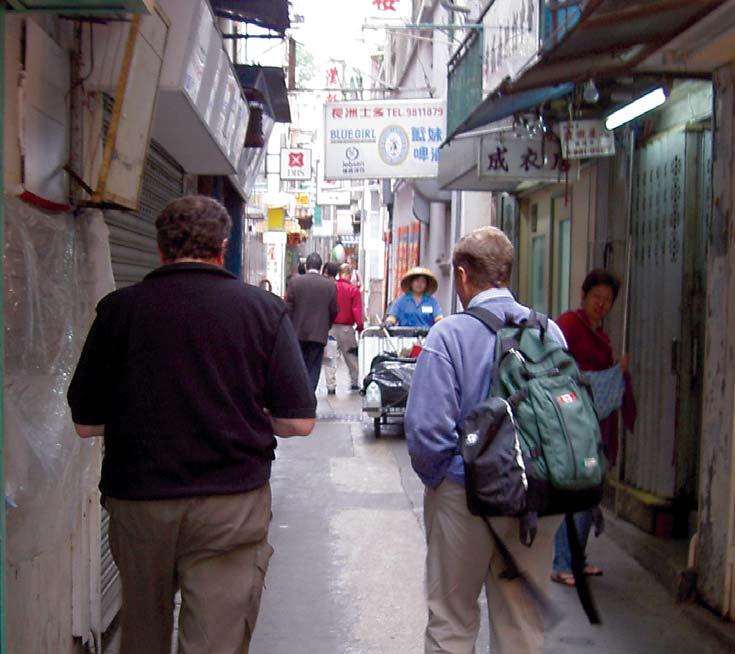
China is just one of the opportunities for ministry that lies ahead for CBM, but it will be a journey with a new leader as Gary steps out into his next calling.
proud of our tribe and will always frame my identity in Canadian Baptist life. However, I also believe that we as Canadian Baptists have not met our potential. There is so much before us and the next years will require courage and tough decision-making. There are critical questions to ask about structures and frameworks that we have long believed were sacred and untouchable. I believe that God has breathed into our life as Canadian Baptists rich possibilities that we have never realized. I believe that time is now.
Final Words
Thank you for providing a place for me to serve. Thank you for allowing me to grow into the position of General Secretary and for embracing the possibilities that God laid before us. May God continue to richly bless us as Canadian Baptists in the mission and ministry that lies ahead.
M A D @ Poverty
One small, rural church in Atlantic Canada has had enough! They’ve started to brew something good to help the poor and hungry in Africa.
by Alden Crain
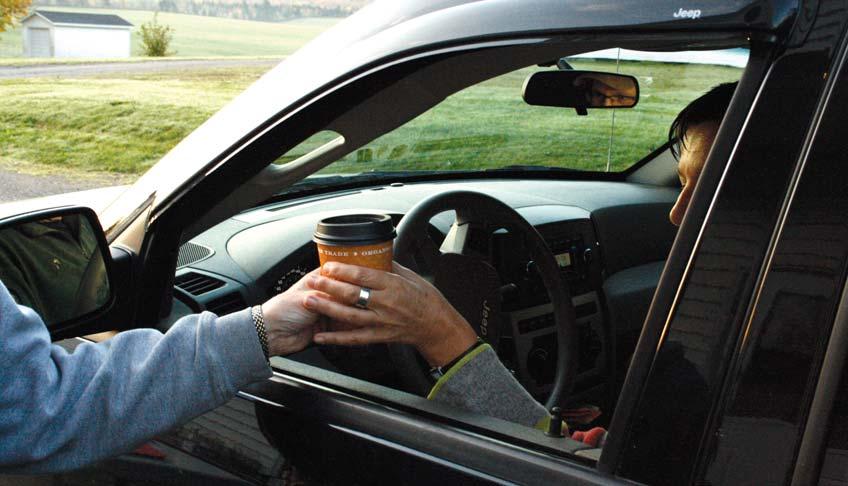
Midland Baptist is a small congregation in a farming community in New Brunswick with an immediate mission field of about 200 homes. The church is on a corner with a driveway joining two roads, and we are 20 km from the nearest Tim Hortons — creating the perfect opportunity for a coffee drive-thru.
It began as a summer ministry for our two summer students: they would simply give coffee away one morning a week, wishing people in our community a good day on their way to work.
Then came another idea. “Why not invite our community to join us in a poverty relief program?” Our hunch was that people genuinely want to give, but often need a convenient way to do so. We called it MAD@poverty (Make a Difference).
We did a pilot run for five weeks in the summer. Every Friday morning, we opened the drive-thru for three hours (from 6 - 9 a.m.). Within three weeks we were serving 50 cups of coffee. We were pleased to discover that at least 80 percent of those who stopped did not attend our church. As well, almost everyone was leaving a donation —
$2, $5, sometimes $20. In fact, one lady made a $27 donation made up of change lying around her house, even though she wasn’t a coffee drinker.
On Thanksgiving Sunday we presented Canadian Baptist Ministries with a cheque for $1,000. This money will be matched by the Canadian International Development Agency, turning our $1,000 into $4,000 — significant funding to support a famine relief project in Kenya. The relief project is coordinated by Canadian Foodgrains Bank, a food aid and development organization that collects donations of cash, grain and other agricultural commodities to support the programming of its 15 member church agencies in the fight against world hunger. CBM is one of the founding members.
An added bonus for our drive-thru is that we are able to buy our coffee from Just Us! Coffee, a fair trade coffee roaster out of Nova Scotia that supports coffee farmers in South America.
We decided this was a “keeper” of a ministry as it really brought church and community together. People say it’s the novelty that first grabs them. “We saw the sign for your drive-thru in the middle of nowhere and just had to stop,” said one couple passing through town recently.
When people find out they are contributing to help feed the hungry, it becomes a really positive experience.
We’re continually struck with people’s genuine generosity and concern for the poor. We’ve had at least three occasions where people wrote out cheques for $100 on the spot.
About 10 people in our congregation now volunteer as servers on a rotation basis to keep the drive-thru open. Despite the difficult weather this past winter, we stayed in business and now have a good number of regulars. As long as there are people to help and people stopping by, we will keep the coffee brewing to make a difference in the lives of the poor and hungry.
connecting…
Rev. Alden Crain served with CBM in Kenya for six years before becoming pastor of Midland Baptist Church in New Brunswick. He is now also the volunteer provincial coordinator for Canadian Foodgrains Bank. Email Alden at midbc@nb.aibn.com for more information on how you can easily start a similar project in your community.
Pastor of Midland Baptist Church, New Brunswick
He Ain’t Poor,
He’s My Neighbour
Poverty. Drugs. Homelessness. And an intervention. A story from the streets of Vancouver.
by Laurena Zondo Editor of mosaic
A man sits on the sidewalk, begging, a beer beside him, and a catheter rigged to an old ice cream bucket. Two other men, out on a walk after lunch, see him and stop. One kneels and starts up a conversation.
“What can I get you that’s healthy? You name it,” asks the kind stranger.
The man roughly tells him to get lost and reaches out to punch him.
“Don’t go there,” says the stranger, in an attempt to break through the hostility. “You raise your hand against people who want to help, to do something constructive.”
“You’re just here to do something, win a trophy [for good work],” angrily responds the man.
“You don’t know me. I don’t know you,” replies the stranger. “Why are you pushing away people who speak to you kindly? You’ll just be left with people who treat you rudely.”
The man stops his raging. Just then a woman passes by. She stops and looks at him for a moment. “Hey, idiot, why don’t you get a job?” she rudely calls out before going on her way.
The stranger also continues with his walk. He is, in fact, no stranger to life on the streets. For over 10 years, former CBM Global Field Staff Bob Swann has been helping First Baptist
Church in downtown Vancouver respond to needs in the community. A short, 15-minute walk from the church reveals rampant homelessness and drug abuse.
Welcome to the Downtown Eastside, Vancouver’s most notorious and poorest neighbourhood.
Bob’s walk that day was part of a men’s Bible study. After spending the morning in meditation and prayer in the church basement, 12 men hit the streets. “I was trying to teach and help the men to get the true story [of what life’s like] from the homeless on the street, those struggling with addiction,” he explains.
It turned out to be quite the introduction. “It was a whole new culture they hadn’t spent time in,” says Bob. “I wanted the guys from the church to learn how to keep a conversation going. Some did get stories. Some watched the world around them, had a coffee somewhere; they didn’t feel comfortable.”
It’s not easy, Bob readily agrees. “The response is not always fun or what you think when you do something compassionately, but don’t let that scare you or stop you from coming back. That man [on the street] pushes people away
because deep down inside he believes he’s not worthy of anything good that comes to him. So when it does come, he puts up a wall to keep it away.”
The urging of a local policeman and conversations on the streets led to the start of a shelter. “Most of the homeless we see are young, between the ages of 25-40,” says Bob. “They lack affordable housing and quick access to detox and to caring follow-up when they need it most. It’s not easy getting into detox centres. The delay prolongs the cycle and the amount of mental illness left untreated.”
A volunteer team was put together, followed by networking and training sessions with skilled professionals such as an ex-RCMP officer, who spoke on self-defence and street issues, and a nurse experienced in working with the mentally ill.
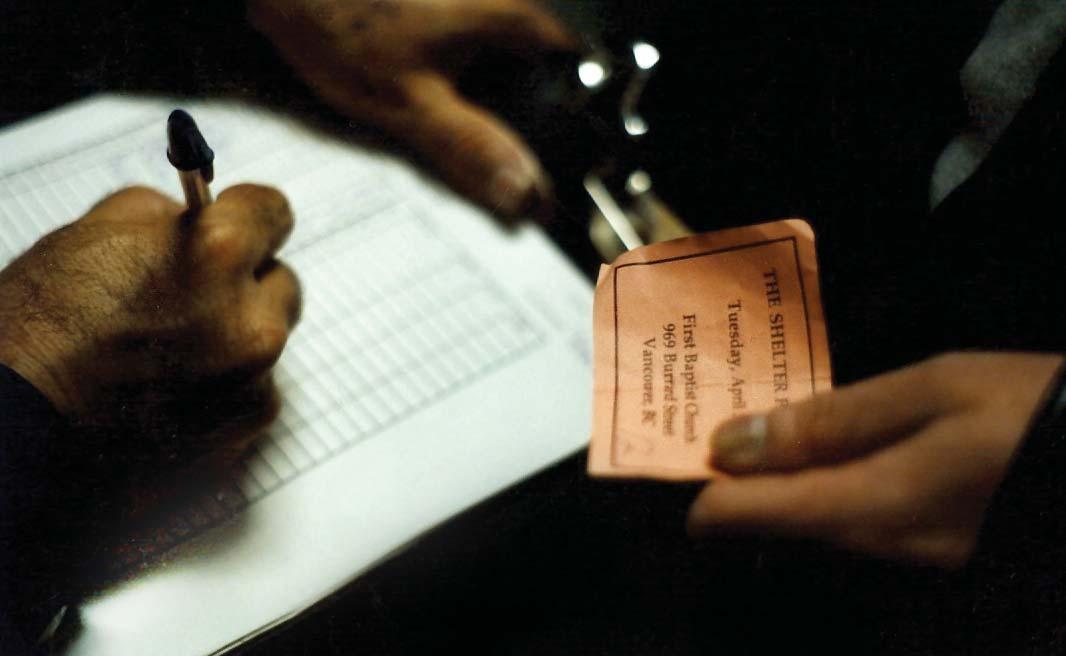
“We went out and bought 12 foam mats and bedding and lasagnes,” recalls Bob with a laugh. “That first night, two of us went to a parkade. Twenty-two youth were sleeping there. We walked up to them at midnight and they immediately asked us, ‘Are we in trouble?’”
“Probably, but not with us!” replied Bob.
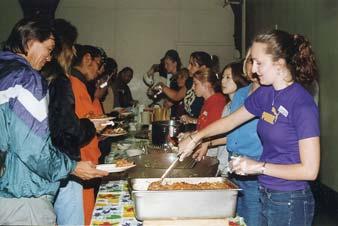
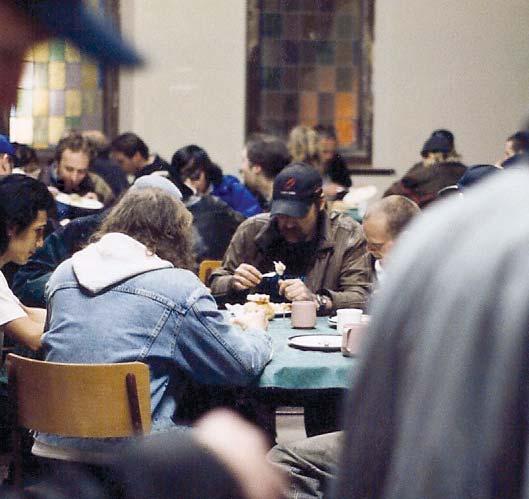
“At 1 a.m., three youth arrived for dinner and one stayed overnight. [Every Tuesday], we now have 125 for dinner, 36 sleeping overnight and 60 for breakfast…but weekends are the most difficult for street youth.”
On Saturdays, at Hobbit House, a building beside the church, The Paper Cup offers a fun, drop-in meal for street-involved youth. The café was started by youth from First Baptist and other local churches. “It’s a significant place of starting the relationship,” says Bob. “It helps our church youth to learn to understand and help youth in need.”
A generous donor from the church also bought and refurbished two old local hotels and made them into one. Jubilee Rooms offers 75 safe, clean and affordable rooms in a city that saw the number of homeless double within three years (2002-2005).
The challenge continues. Poverty and homeless rates remain high, in the city and throughout the province.
In Greater Vancouver alone, there are more than 2,000 people living on the streets, note organizers of the Poverty Olympics, one of the more vocal call-outs on behalf of the poor and homeless during the recent Vancouver 2010 Olympic Winter Games. “British Columbia is a gold medalist when it comes to poverty – we’ve had the highest child poverty rate in all of Canada six years in a row.”
The rate is alarming. Over 18 percent of all children in the province are living in poverty. The level of child poverty is one of the main indicators of a society’s overall economic health and social well-being. It points to a widening gap in a rich and developed country. Streams of Justice, an initiative that’s grown out of Grandview Calvary Baptist Church, is one of the partners in the Poverty Olympics advocating for change.
While some might not agree with their tactics or strong messaging, which included holding a squatters camp near Olympic Games facilities, there is pause for concern: two of the top medal-winning countries, Canada and the U.S., are at the bottom of the standings among their peers (countries of the Organization for Economic Co-operation and Development) when it comes to the race against poverty within their own borders.
Poverty Within Borders
More than 1 in 10 adult Canadians (between the ages of 18 and 65) live in poverty.
Canada earns a “D” grade with its rate of working-age poverty and ranks 15 th among 17 peer* countries. Only Japan and the U.S. do worse. *Organization for Economic Co-operation and Development
More than 1 in 7 children in Canada are growing up in poverty.
Canada earns a “C” grade with its rate of child poverty and ranks 13 th among 17 peer countries.
Now that the fervour of the Winter Olympics is behind us, let’s hope and pray that some of the same energy and enthusiasm is expended on behalf of the poor among us. Imagine the momentum if we each had just a little more compassion and action on behalf of our neighbours in need, here in Canada and around the world. connecting…
Join the conversation.
www.cbmjustice.blogspot.com
If I had a billion dollar s , I would… host a world sporting event * for two weeks
* Operating budget of the Vancouver Organizing Committee for the 2010 Olympic Winter Games.
** International Development Association’s allocation to agriculture and education in the world’s 79 poorest countries.
ethically speaking
feed the world's hungry** for six months send the world's poorest kids to school** for one year
Garden in the City
Growing food, growing friendships. A look at urban churches involved in community gardening.
by Giselle Culver CBM’s Communications Coordinator
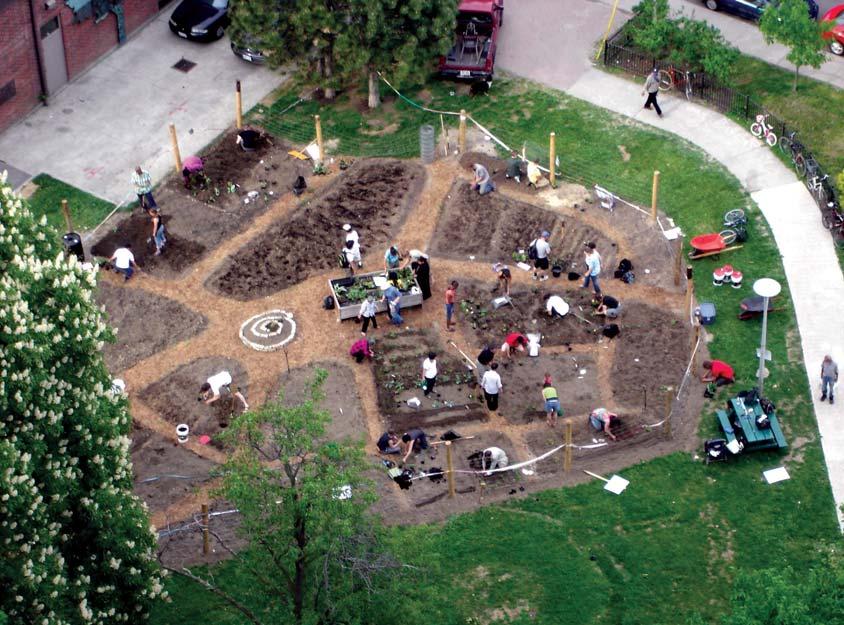
In a city park surrounded by tall apartment buildings, Karen digs up weeds and waters plants in her community garden plot. The garden provides residents of this low-income neighbourhood with a place to grow their own food. The single parent of a 17-year-old son, the garden has stretched her food budget. “I’ll tell you, when he was small, if it weren’t for the green beans, there would have been a few meals that would have been pretty thin,” she says.
In Canada, hunger is a real but often unseen problem. From 2008 to 2009, the number of people helped by Canada’s 884 food banks increased by 18 percent — the largest yearly increase on record, a result of the economic downturn. In March 2009, almost 800,000 people used a food bank. Originally intended as a temporary, emergency response to hunger due to the economic recession of the early 1980s, food banks never disappeared.
According to the Toronto Food Policy Council, “the food charity system, although driven by caring individuals and organizations, does not have the capacity to address any of the deeper structural issues that have created conditions of poverty and hunger. It is our belief that policies to support local food security are essential to the eventual elimination of hunger.”
Angela ElzingaCheng is a Toronto Community Food Animator with FoodShare, a non-profit organization working to improve access to healthy food. A sign taped above her desk reads: “For now I ask no more than the justice of eating (Pablo Neruda).”
Angela helps bring community gardens, kitchens and markets to life in places of poverty and social isolation, places that can be described as food and community space deserts.
For now I ask no more than the justice of eating.
- Pablo Neruda
“People cannot afford healthy food, so being able to grow their own food, being able to have access to cheaper, healthy produce is incredible,” she says. But more than that, “community gardens provide a space for people to be together, to talk together, to exchange recipes together, to talk about their life stories through food, to create a human interaction around something that’s joyful.”
Angela attends Parkdale Neighbourhood Church (PNC), which has a plot in a nearby community
garden. Parkdale is a neighbourhood in Toronto that faces many challenges — poverty, addiction, homelessness. Joe Abbey-Colborne, PNC’s Pastoral Director, says the garden has been a way to draw people into a healthier relationship with their community.
“David came to our drop-in centre the day we were talking about the garden,” Joe says. “He started coming out and discovered it was something he could do. He still has issues, but now he has something in his life that’s creative, that he loves, and that’s feeding him — literally.” Every week, community members cook and eat together, often using food from the garden plot.
In the Old Testament, God’s laws provided for those without land. “When you reap the harvest of your land, do not reap to the very edges of your field or gather the gleanings of your harvest. Do not go over your vineyard a second time or
Photo Credit: Gelek Badheytsang, Greenest City
Parkdale Neighbourhood Church has a plot in the H.O.P.E. Community Garden, run by Greenest City
pick up the grapes that have fallen. Leave them for the poor and the alien. I am the LORD your God.” (Lev. 19:9)
“This is where God’s heart is,” Angela says. “To provide for each other in a community and to be able to offer hospitality to each other and have justice together.”
A garden is a way to respond to those in need, but it can also be a place to connect with neighbours and cross social barriers. “I can hold up an eggplant and we can have this amazing conversation about recipes and family and food,” Angela says. “There’s a rare space for that.”
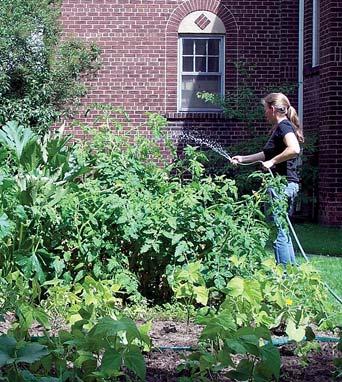
The garden at Walmer Road Baptist Church in downtown Toronto supplies the church food bank with fresh
vegetables, but it also creates an opportunity “to actively love and serve those in need in our communities in a relational way,” says Rachel Masters, the food bank and community kitchen coordinator. “It offers us the opportunity to give — the freshest of Swiss chard, herbs and beans, and the skills to be able to plant, grow and harvest — while growing relationships.” Working in the garden alongside people from the food bank community levels the playing field, Rachel says, allowing conversations that don’t always arise when people are in more defined ‘server-recipient’ roles.
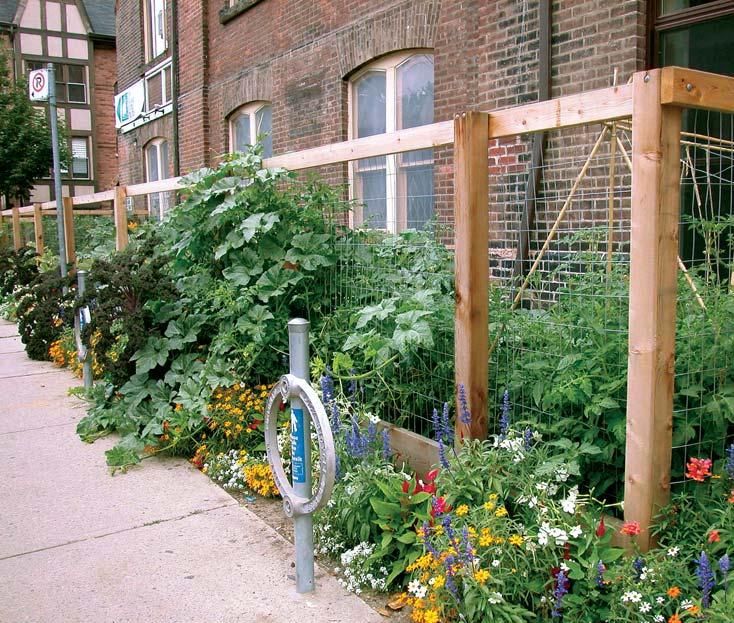
A garden also shows commitment to environmental stewardship. “The stimulus for at least some of this work comes from a deep need to respond to creation,” says MJ Paterson-Watt, coordinator of the garden at Woodbine Heights Baptist Church in Toronto’s east end. “Caring for creation is a large part of acting out my faith.” This carries over to stewardship of all resources. “We as a faith community have intentionally worked to use our resources well,” MJ says. “Our building is a beehive of activity throughout the week. An extension of that is the use of the property. To maintain a large lot full of grass seemed a poor use of our space.”
connecting…
Consider planting a garden on your church property. There are many resources to help you start.
Toronto Community Garden Network www.tcgn.ca/wiki/wiki.php
FoodShare – Community Gardening www.foodshare.net/toolbox_month01.htm
On the east side of Vancouver, what was once a vacant lot near Grandview Calvary Baptist Church has been transformed into a vibrant community garden that provides food for church members, neighbours and a weekly Out of the Cold program. With donated soil, beds and terraces built out of scavenged railroad ties, and a picnic table made from a rusty bed frame and abandoned door, an empty lot and discarded objects have become a place of beauty, welcome and abundance.
“Gardening is part of our Christian faith for many reasons,” says Marty Bywaters-Baldwin, the garden coordinator. “Stewardship of creation; food security for the least; joining in creation’s praise; living in a rhythm that is prophetically counter to the efficiency driven pace of society; hospitality to neighbours; providing points of intergenerational connection.”
Last year, as part of their Stations of the Cross walk on Good Friday, “the church community participated in a litany concerning our care for creation, which culminated in our planting of potatoes,” says Marty. “These potatoes were later harvested by children and adults, washed, roasted and served for one of the Out of the Cold meals.”
A garden in the city attracts butterflies and bees and birds, becoming its own ecosystem. It also attracts people. “I’ve noticed that people walking by our garden are impressed by a sense of good news,” says Marty. “I think they find good news in the fact that people are caring for and making beautiful the plot of land given them, be it ever so small a plot, and so small an effort.” A small plot, a small garden — and yet so much good can grow.
Community garden at Walmer Road Baptist Church
Community garden at Woodbine Heights Baptist Church
Haiti: Destruction and Restoration
An eyewitness account
by Barry K. Pugh, A member of Église Évangelique Baptiste d’Ottawa
That the fate of each of us is unpredictable, yet ultimately in divine hands, is a great biblical truth that was illustrated for all to see as the world witnessed the devastation caused by the recent earthquake in Haiti.
People on that small Caribbean island saw their lives change in a matter of seconds as the earth moved beneath their feet, over their heads, and all around them. And people everywhere empathized with their plight.
One eyewitness to what can truly be called an “act of God” was Franky Narcisse, a Haitian-born Canadian who pastors a growing international church congregation in Ottawa, most of whose members are of Haitian origin.
Pastor Narcisse (or Pastor Franky as he is affectionately called by his congregants) and a 23-member team of Christian nurses, pastors and volunteers arrived in Haiti in early January, weeks before the quake, to provide free medical care, install a watering system for subsistence farming, and share the gospel.
The day before they were due to return to Canada, Pastor Franky was visiting a school owned and operated by his sister-in-law in the capital city of Port-au-Prince. Just as he was about to step onto the stairs leading from the second floor to the street below, the earthquake struck. The violence of the quake left no doubt as to what was happening. He quickly pulled his
Rev. Franky Narcisse
sister-in-law into the door frame opening and started shouting the name of Jesus (just as Simon Peter had called out to Jesus some 2,000 years before when the sea threatened to swallow the whole boat of fishermen in a storm).
One after the other, Pastor Franky saw the two wings of the building he had just visited cave in. Less than 40 seconds later, the only part of the structure that remained was where he and his sister-in-law were standing. “Bring me a rope,” he shouted to the people who rushed out to see if they were all right. He wanted to get his sister-in-law down to street level.
As soon as her feet touched the ground, the second tremor struck. Pastor Franky remained up there alone, stuck on the second floor. Fortunately, the second tremor was not as strong or as long as the first one. When it was over, he took off his t-shirt, stepped over the balcony railing, slid down the rope aided by the shirt, and took cover, away from the building.
“I was emotionally numb,” he later recalls. “The moment called for action; there was no time to think about what happened.” He credits the Spirit of God with giving him the grace to take the right actions quickly.
All around him was devastation: crowds of people in the streets, some crying and others visibly in pain. Still others were praising God for having spared their lives.
“I stood there in shock, suddenly realizing what I had just been through and the scope of the calamity,” says Pastor Franky.
Returning to Canada was also a heart-wrenching experience.
Pastor Franky felt blessed to be
among the first Canadians to be repatriated, but at the same time his heart was torn between a desire to return home to be with his wife and children and a yearning to remain in Haiti to help and encourage people.
Despite his ordeal, Pastor Franky says that he feels privileged to have been in Haiti at the time, sharing in the experience with other Haitians and his own extended family. “For years my only prayer for Haiti has been a fervent request for spiritual revival,” he notes.
As he walked around the streets in the aftermath and heard the prayers and songs, he too prayed. “Lord, breathe on your church; revive her; she is salt and light, the pillar and support of Haiti. Bring your church to true repentance and genuine humility so that, through the church, the healing of the country can come about.”
Believing that “Haiti is in need of a resurrection that only Jesus can bring,” Pastor Franky and his wife returned to Haiti this past March with a mission team. They are assisting the rural community of Colline d’Aquin, offering practical and spiritual aid — clothing, bedding, basic medicine, counselling, Bible study and support groups for reconciliation and restoration — to help people deal with post-earthquake trauma and build a whole new life.
Editor's Note
Approximately 40 volunteers from Canadian Baptist churches were in Haiti when the earthquake occurred. Thankfully all returned safely to Canada. They were from Église Évangelique Baptiste d’Ottawa, First Baptist Church in Leamington, Glen Acres Baptist Church in Waterloo and the French Baptist churches in Montreal. Please continue to be in prayer for the relief effort, and for those who are grieving the loss of loved ones.
How are we helping in Haiti?
An update on CBM’s relief and rebuilding efforts
by Gordon King, Director, The Sharing Way
We are amazed by the generosity and compassion of Canadian Baptists. Over $700,000 was donated to The Sharing Way for relief efforts in Haiti. It is evident that the plight of the Haitian people has touched the hearts of people in a way that is real and inspiring. But as we look to the future of the country, we wonder what will happen after all the emergency needs are met. Will the world now move on to the next disaster? Will the long-term development needs of the people living in the poorest country in the Western Hemisphere soon be forgotten?
One of our goals at CBM is to help people work toward long-term sustainable solutions. For that to happen, we need Canadian Baptists to engage in acts of generosity that support those initiatives.
In the Bible, God desires both acts of mercy (charity) and justice: “And what does the LORD require of you? To act justly and to love mercy and to walk humbly with your God.” (Micah 6:8)
Charity responds to the symptoms of injustice and is intended to provide immediate help to those in need. Justice seeks to address the root causes of suffering and looks to build longterm solutions that restore the dignity of all people as God’s image bearers.
Both types of generosity are needed. Our hope is that outpourings of charity will come alongside gifts which help bring justice and sustainable solutions to the poor and oppressed in communities around the world.
The Sharing Way is taking a balanced approach to using Haiti relief funds by helping to meet immediate needs, as well as focusing on the rebuilding and rehabilitation phase.
The following are the ways in which we are responding through our partners on the ground:
Baptist World Aid: Funds were used to provide emergency response through Rescue 24, Baptist World Aid’s team of rescue and medical personnel. Rescue 24
has training and experience in other earthquake disasters around the world and was part of the initial wave of response.
Canadian Foodgrains Bank: Funds were also used for a food aid project that fed 1,200 families in the Léogâne area over a two-month period.
Evangelical Medical Aid Society: EMAS has a school and medical program that works out of a Baptist church in Bon Repos, a district of Port-au-Prince. The EMAS will be helping to rebuild the school and clinic and support the local community.
Urbanus: Through this theological network of ministries working in Francophone cities, we are supporting a special project called Paraclete to train community grief counsellors and pastors and mobilize them through church communities. They will serve the hurting in their cities.
French Baptist Union: The French Baptist Union is coordinating a program of long-term response and assistance from Canadian Baptist churches with strong Haitian representation.
North American Baptist Fellowship Emergency Network: We are linking skilled volunteers with short-term teams to help with rehabilitation and rebuilding. Funds will be used to help cover the significant costs for materials and equipment. The current housing deficit in Haiti is staggering.
connecting…
You may give online today to support The Sharing Way’s long-term development projects that bring justice to the poor. www.cbmin.org
Prison Kids
In Bolivia, 120 children living in prison with an incarcerated parent have the opportunity to go to Friendship House (Casa de la Amistad) for the day. Here is the story of one of the children you have helped through CBM.
I was nine years old when I went to live with my mom in prison. We were very poor and she had tried to make some money by carrying drugs. I love my mom and am happy that I can stay with her.
I can leave the prison during the day. I go to school. After school I go to the Casa (Friendship House across the plaza from the prison). They give us a very good lunch and help us with our homework. I also get to hang out with my friends and play before it is time to go back to prison for the night.
I really like the Casa and the staff They are our tias and tios (aunts and uncles).
I like to study. My favourite subject is math and I want to become a teacher.
I thank you very much for your help. We heard that you give money to the Friendship House and that you pray for us. Muchas gracias (thanks very much). May God bless you.
The Factor ‘ G l o r i a ’
by Greg Geldart
Associate Pastor, Brunswick Street Baptist Church
Perhaps it was the twinkle in her eye, the passion in her voice or her obvious love for the land of her childhood. Maybe it was the magnitude of her challenge. Whatever “it” was, something amazing happened last Christmas.
For the past seven years, Brunswick Street Baptist Church in Fredericton, New Brunswick has held a Christmas project – Starting Local AND Going Global.
The “local” part invites church members to buy a gift for a parent unable to provide a Christmas present for one of their children — parents who are part of a church ministry called New Life. This year, over 100 gifts were purchased and an additional $3,000 was raised to provide additional gifts and grocery gift cards for nearly 15 families. While this was a blessing in and of itself, it was the “global” part of the project that proved to be truly amazing.
Each year we choose a CBM project to help the most vulnerable children. This year we decided to focus on Bolivia, and that’s where Gloria Tranquilla enters the picture.
The eldest daughter of CBM alumni missionaries Lorne and Florence Stairs,
Many years ago, Gloria had the opportunity to attend a large, countrywide, anniversary celebration of the Baptist work in Bolivia.
Gloria was two years old when they arrived in Bolivia to begin a term of service that stretched from 1952-1977. It was with joy that she and her daughter Giselle visited Bolivia in 1998 as part of a team celebrating the 100th anniversary of Canadian Baptist work in that country. Gloria visited her childhood home again in 2006.
It was on these trips that she had the opportunity to visit Casa de la Amistad (Friendship House), a ministry that provides support and encouragement to children who live in prison with their incarcerated parent.
Back in Canada, Gloria shyly shared her dream with us one Sunday morning — that 500 families from the church would each give $20 to raise $10,000 for Friendship House in Bolivia. We couldn’t believe the response. Defying economic downturns and financial challenges, people gave $10, 043.74 — a more than 300 percent increase in giving over last year!
What made the difference?
We believe it was in part the twinkle in Gloria’s eye and the passion in her voice, but mostly the Spirit of God empowering a quiet lady to share his vision for children in her South American home! It was truly a Christmas miracle worth celebrating.
You can use the CBM Hopeful Gifts for Change catalogue year-round and select items to raise funds for as a group. View
catalogue online at www.cbmin.org
Live to Play Another Day
by Catherine Friesen
Short-Term Mission volunteer with CBM in Brazil
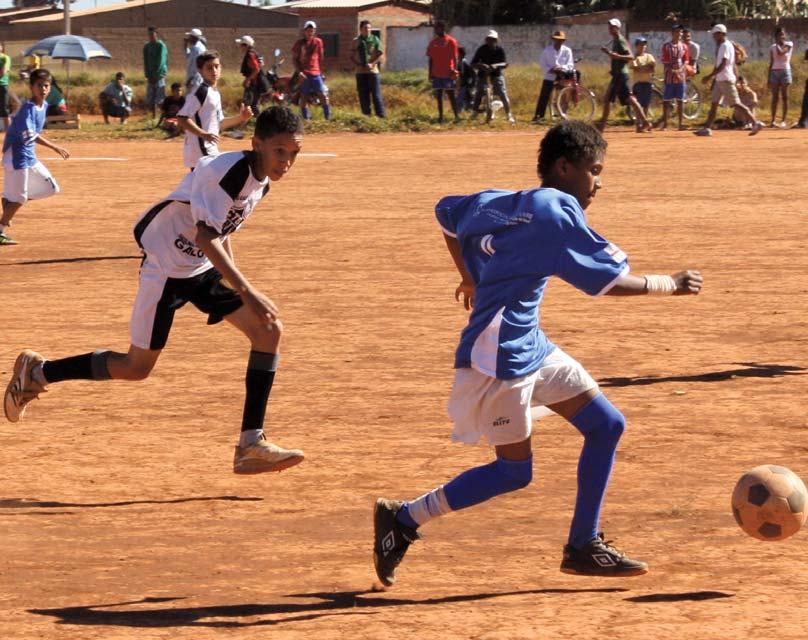
Young Edinaldo plays in the hot sun, in the pouring rain, in any kind of weather, working on his game. Only 13 years old, he spends hours at Free Flight Association running, passing, kicking, scoring and trying out new soccer moves with his friends. They have even set up their own mini-field in an unsold lot in their neighbourhood so they can play when Free Flight closes for the day.
Though Edinaldo is a very talented player, who plays equally well in bare feet as in soccer shoes, up until quite recently he had never been part of a soccer team. Municipal schools in Águas Lindas receive very little funding and often lack qualified teachers and even an adequate number of desks and textbooks for their students. Understandably, sports programming is low on their list of priorities.
In contrast, Free Flight has always considered sports to be an integral part of their programming. In the last few
months, in collaboration with a local soccer coach, they have formed three soccer teams in three different age categories. The majority of the players, like Edinaldo and his friends, come from low-income families who cannot afford the high monthly rates charged by other football clubs in the city.
Free Flight Football Club, now officially recognized by the municipality, is a dream come true for over 55 young players. With the help of a generous donation, they even have soccer uniforms with the club logo. Edinaldo and his friends are so excited to be part of a real team.
In a community plagued with crime, drug and alcohol abuse, teen pregnancy, corruption, unemployment, lack of infrastructure, and a high dropout rate at schools, Free Flight Association is a light in a dark place. It is an outreach ministry located in Águas Lindas de Goiás, Brazil. CBM Global Field Staff
Free Flight has always considered sports to be an integral part of their programming. In the last few months… they have formed three soccer teams.
Joyce Hancock has played a leading role in its development over the years.
Today, in addition to its many courses (computers, English, Spanish, sewing, hairdressing, manicure, silkscreening, jewellery making, guitar, drums, and cooking, to name just a few), Free Flight also operates as a drop-in centre where youth like Edinaldo can play sports or connect with other young people.
It was an incredible privilege to be a part of the ministry of Free Flight, to work alongside dedicated staff such as Joyce and her Brazilian colleagues, to see the light of Christ shine in and through the lives of so many people.
Editor's Note
Catherine was a Short-Term Mission volunteer with CBM in Brazil from August 2007 - February 2008 and from August 2008 - July 2009.
connecting…
New Short-Term Opportunities in 2010
Teams will be working with Free Flight ministries in the community of Águas Lindas. This ministry seeks to educate and empower Brazilian youth living in this economically depressed city on the outskirts of the capital, Brasilia. Teams will be involved in VBS activities, maintenance and construction, and specialized education.
We are now booking for Aug. 4 - 18, Aug. 21 - Sep. 03 and Nov. 4 – 18.
Remembering Sam
Sam Mutisya served for nearly 10 years as The Sharing Way’s Africa Development Manager, before losing his long, courageous battle with cancer last December. Here are just a few of the tributes we received honouring his life and impact.
I only met him twice. Both times, his joy and energy captivated me. Some people seem to live in a state of chronic scarcity — running late, stretching thin, wearing down. Just to be around them is exhausting. Not Sam. He lived from abundance. He spoke and acted out of overflow – slowing down, pouring in, gaining steam. Just to be around him was exhilarating.
One story. In 2006, I travelled to Kenya with a small team from our church. We brought some of the ashes of Pastor Carol Boschma, my colleague and friend. Carol loved Kenya, and requested, before she died, that part of her ashes be buried there. Carol and Sam had met a few years prior.
They had bonded instantly. We dug a small hole in dry ground, and there took turns, the Canadian team, the African team, scooping handfuls of Carol’s ashes, sifting them down into the earth. The practice of cremation and scattering ashes was far outside Sam’s cultural world. It approached taboo. Yet he didn’t flinch. He walked up, stooped down, gathered a handful of ash, and joined us in our sorrowful goodbye. Love trumped custom. Friendship triumphed over personal scruples. That was the substance of the man. I miss him.
When I think of Kenya, it’s lonelier now.
Mark Buchanan Pastor, New Life Community Church in Duncan, BC
Sam brought not only wisdom and experience but also style to his ministry. When you travelled or worked with Sam Mutisya you knew that there would be a tea break in the morning and the afternoon. Sam loved his tea which leads to a favourite memory for me.
We were travelling with Sam in Angola where you can get an espresso anywhere, but not tea. Sam went several days without his tea and then he decided that he could go no longer. It took about 45 minutes for Sam to communicate what he wanted to a waiter who spoke only Portuguese. In the process of the 45 minutes Sam got: hot water, no milk; hot milk, no tea; cold milk. Finally, the waiter took Sam into the kitchen where Sam got to make his own “chai.” It was a wonderful time of laughing, cultural learning and friendship.
Malcolm Card
Former CBM Africa Team Leader
Several years ago, I was fortunate enough to spend a whole afternoon in the company of Sam Mutisya. We were in Mombasa, Kenya, Sam’s home country, and he had offered to help me find a suitcase. We spent hours walking through the city streets, ducking into local shops and bargaining with shopkeepers to get what he thought was the best suitcase to meet my requirements. On our walk, Sam talked of many things — fresh chips sold by a street vendor, why it’s okay to buy watches
When
Sam began with The Sharing Way about 10 years ago, it did not take long to realize that he would also become a special friend and brother. Sam had a gift of teaching… He not only taught in workshops and meetings, but took every opportunity to teach one on one…
His philosophy that people need a “hand-up, not a hand-out” framed his ministry in Africa and other parts of the world. It was critical to the person he was because it represented an approach that treated everyone with respect. Maintaining the dignity of all was crucial to Sam.
Sam loved the Lord and followed the command to love your neighbour with his whole being, every day.
I know I am not alone in saying that I will miss Sam Mutisya, my dear friend and brother.
Marilyn Smith Former Director of The Sharing Way
from the guy on the corner, his wonderful wife Pauline and his lovely children. Most of all, he talked about Africa. His passion for the people was so evident. Where others saw poverty and hopelessness, he saw potential.
In the years that followed, I would see Sam whenever he came to Canada. We would recall our little adventure and share a good laugh.
On the morning I heard that Sam had died, my head rang with all the words of wisdom he
had shared with me over the years. When I think of Sam these days, I picture him walking down another street somewhere with the new friends he has made, sharing laughs and talking about Africa.
Jennifer Lau CBM Director of Communications and Resource Development
Sam was a facilitator. One of his favourite lines was about “keeping the wheel rolling.” He used to say that the wheel was already moving and it just needed a push. That is also how he used to describe working with The Sharing Way: The Sharing Way was the push that the Africa Brotherhood Church and others needed to get more work done in development. Sam was well loved. Anyone who knew him loved him for his calm and gracious spirit. He taught me a lot about patience. I will miss Sam.
Anne Drost CBM Coordinator, Church & Donor Relations
I’d like to borrow the words of Ernesto Cardenal when he heard of the death of his friend Thomas Merton: Dear Sam: When I phoned they told me that you had left the hotel to make your journey home. I look forward to meeting you there with our other friends when my time comes. We all miss you very much.
Gordon King
Director
of The Sharing Way (CBM’s relief and development department)
Ontario’s educational discourse includes talk about turning schools into “community hubs.” Sam had this vision for the schools of the Africa Brotherhood Church years ago. In the late 1990’s, CBM responded to Bishop Ngala’s request for professional support for educators.
Over the span of a decade and in partnership with Carey Theological College, 115 teachers of the Africa Brotherhood Church graduated with a “Diploma in Christian Teacher Education and Counselling.” It was Sam who saw the potential these teachers have to maximize the role schools have to improve the health and well-being of the whole community… he would quietly come alongside a key teacher to offer him or her his personal support and gratitude.
Sam’s legacy is, in part, the empowerment of Christian teachers, in both Kenya and Canada, to live fully as ministers of Christ Jesus in the school setting. I am deeply grateful.
Carla Nelson Director of Bachelor of Education Program
at Tyndale University College & Seminary in Toronto
I did not know I would
meet a relative in Africa… How was I to know that a gentleman by the name of Sam Mutisya would take upon himself the additional role of “father” to my own beloved Laura while she worked with CBM ?
The task of working in the development world is a prickly one. Balancing the needs of people in their context with the available resources and subsequent promises to deliver practical and meaningful assistance is a daunting mission. Watching Sam deftly handle the complexity of that calling while retaining his strong and vibrant Christian character was a joy. I remember most his ability to build and work with a team and give the glory to others.
His care for his community, his desire to make a difference amongst his people, and his deep walk with God, all contribute to a legacy that is well deserved.
For me, I am thankful the Lord allowed the privilege of calling him more than a friend – in actual fact, part of our extended family. He will be remembered.
Doug Ward Pastor, Kanata Baptist Church in Ontario
Learn
Leaders:
Email
Dear CBM, My son Dakota raised $400 through a bake sale that he held at his school. He wanted to help renovate a school in Rwanda. He is a very humble 14-year-old who just does these things because he really likes to help people. Dakota has raised funds for other organizations before. He told me that he decided to raise funds for Canadian Baptist Ministries after seeing the Hopeful Gifts for Change catalogue at church: “I found how great this charity was. I decided to raise funds because I thought it was really sad that children in Rwanda do not get to go to school. I thought by raising money for them, I could help make the world a better place for everyone.” He was so surprised and happy to see staff and students at his school come out and help him.
Sincerely,
Tabitha Stolte Proud mom in Lethbridge,Alberta
Editor's Note: Thanks to Dakota and everyone who gave Hopeful Gifts for Change this past Christmas. Look for a report on the impact of your gifts in the upcoming summer issue of mosaic