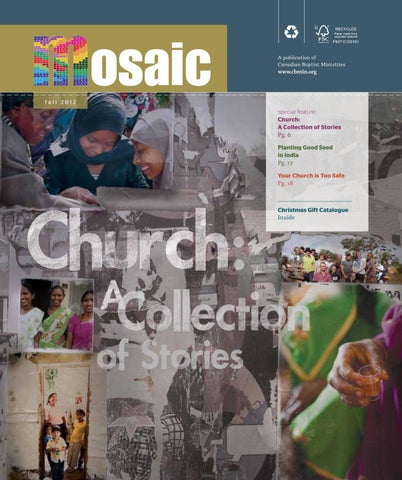
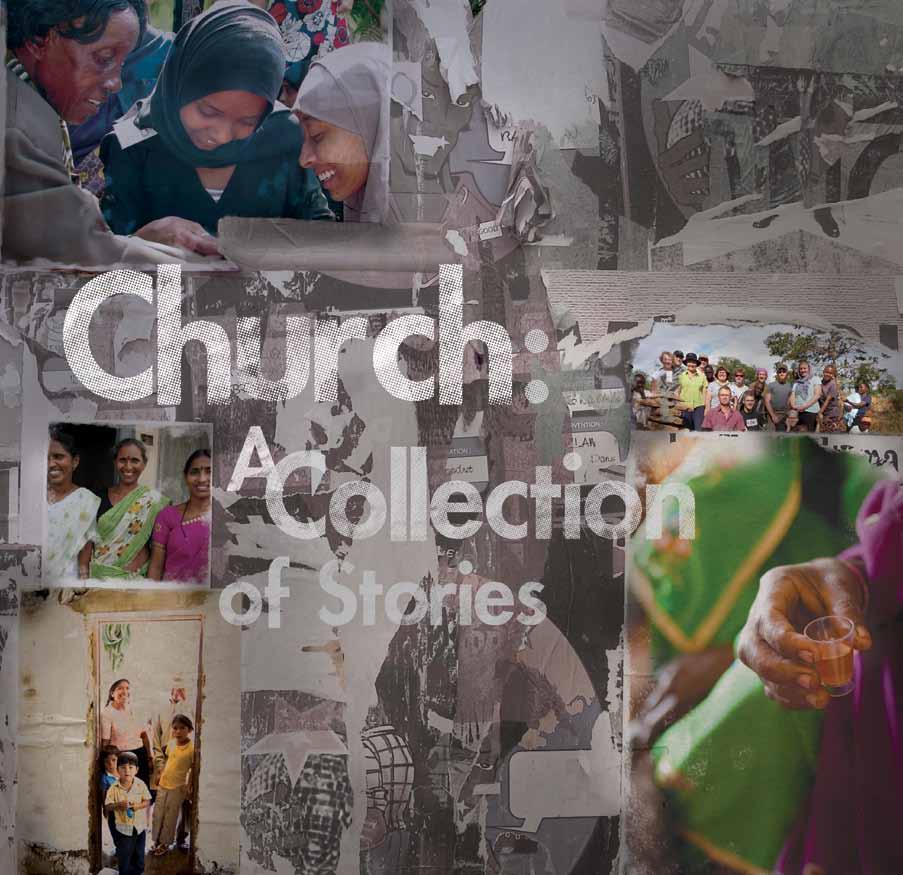
A Collection of Stories
Good work S. It’s an expression in the new Testament that many evangelical Christians seem to have forgotten, believes Dr. Rene Padilla, a leading Latin American theologian who was instrumental in the birth of the integral mission movement — an understanding of Christian mission that embraces both word and deed.
On a recent visit to Canada, Dr. Padilla spoke about the kind of worship that pleases God. “God is not pleased with the separation of worship and whole-life discipleship ... What does whole-life discipleship involve? Do not forget to do good. This is the kind of worship God wants, to do good.”
For Padilla, we need to read beyond Ephesians 2:8-9: “For it is by grace you have been saved, through faith — and
this is not from yourselves, it is the gift of God — not by works, so that no one can boast,” to verse 10: “For we are God’s handiwork, created in Christ Jesus to do good works, which God prepared in advance for us to do.”
“It’s not biblical to think you’ll be saved by the good works you do, but does that mean there’s no place for works? Or that works are optional? We are created in Christ Jesus to do good works. Take a look at the use of that expression throughout the New Testament,” says Padilla. “If you are careful in your study, you end up with this conclusion: you are not really a Christian if you do not do good works. You do not understand the gospel; you do not understand what it means to share the gospel with others.”
Reading Isaiah 58 and Matthew 25 together shows us God’s concern for basic human needs — food, shelter,
ISSUE: SPIRITUAL & PHYSICAL POVERTY
RESPONSE BY: Grandview Calvary Baptist Church
clothing, education, work. “Everyone needs to know God, but this is not separated from real concern for all human needs,” says Padilla.
“This is how we are the light of the world. Let your light shine, that people may see your good works and glorify your Father in heaven. That is how God is glorified — as people see that you are concerned… good works in relation to their needs.”
The following are some inspiring stories of churches — here in Canada and around the world — who are working out what it means today to shine, to be the heart, hands and voice of God in a broken world.
GRANDVIEW CALVARY BAPTIST ChuRCh’S neighbourhood is considered the spiritual mecca of Vancouver. here one can find almost any spirituality: Yoga, Tarot card-reading, Buddhism, hinduism and Christianity. In a contextualized attempt to be present in the neighbourhood, the church had a booth, Free Blessings Readings, during a street fair. A long line up of people sought prayer and counselling and the church now hopes to follow up with a program like Alpha to respond to the deep spiritual hunger they saw in their neighbours.
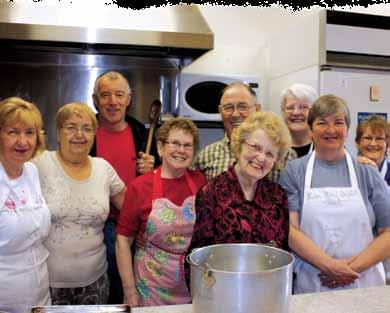
Recently, Grandview also had a re-imagining of their Out-of-theCold program, which provides hot meals to the local poor. Their new vision is to transform the program’s culture of dependency to one that builds capacity and brings dignity to those struggling to get by. The reworking of this program enables greater participation rather than just receiving a hand-out. Participants are now part of the process in meal planning and preparation, serving each other and cleaning up afterwards. It has given them a forum to interact and share more deeply in each other’s lives and struggles, and to build relationships.
Grandview also continues to address the issues of lack of affordable housing and jobs with a community housing program — Salisbury Community Society — that offers a place to stay for those in vulnerable situations (such as those with mental health issues, addictions, and single parents); Kinbrace house that is specifically for refugee claimants as they get established in the country; and JustWork, a collection of three social enterprises (a pottery studio, catering business, and renovation business) which help those with employment barriers.
“One of the ways integral mission is expressed is through renewed imagination of ways we can live differently where we get at the whole of life, seeking transformation in all layers of our life — both personal life and gathered life as a community, but really equipping people to live differently in the world,” says pastor Tim Dickau.
ISSUE: CHAGAS DISEASE
RESPONSE BY: Bolivian Baptist Union
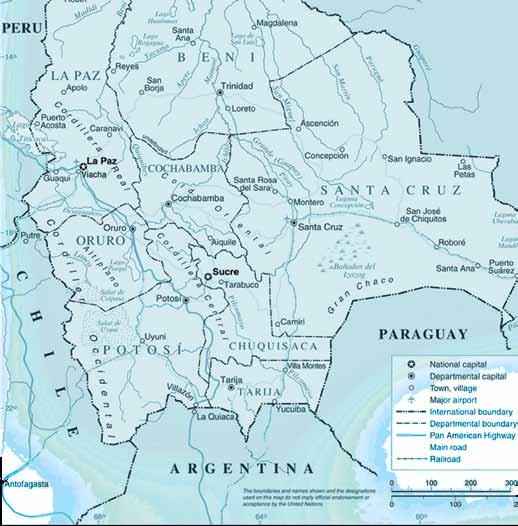
B OLIVIA h AS T h E h IG h EST Ch AGAS INFECTION rate in the world. This life-threatening disease is transmitted by the Vinchuca insect, which infests poorer homes made of adobe mud and thatched roofs.
The parasite enters the victim’s bloodstream and can live undetected for decades while quietly destroying their internal organs — especially the heart. If caught in time, Chagas disease can be treated. With simple home renovations, re-infection can be prevented. h owever, the costs for medical care and construction supplies
Go to vimeo.com/cbminorg to watch CBM’s video on the prevention of
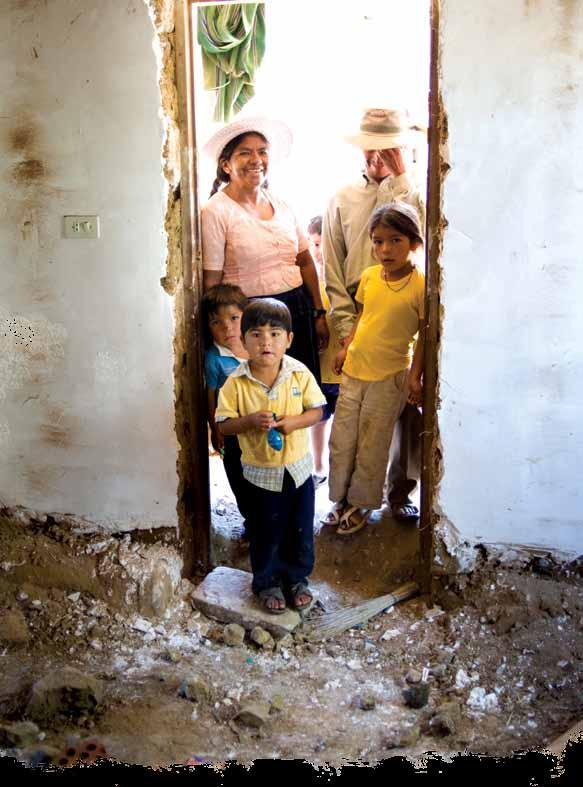
Bolivian and Canadian volunteers share God’s love for the poor by assisting in this program, particularly in the home renovation stage.
are far beyond the means of the people most affected.
With CBM support, Bolivian Baptists have created a project that provides both prevention education and treatment of the disease in partnership with local churches, communities and agencies. The key components include community education on the prevalence and danger of Chagas disease; blood testing campaigns in connection with the Bolivian Ministry of health; supervised medical treatment for children and youth through Doctors Without Borders; and renovations of homes to make them Vinchuca proof.
Bolivian and Canadian volunteers share God’s love for the poor by assisting in this program, particularly in the home renovation stage. A skilled builder works alongside family members to plaster the walls, ceiling and pour a cement floor. Those who have worked on their own homes often go on to help others repair their homes. Each year the program gains more skilled builders. During the build, volunteers often offer children, youth and adult outreach programs in the evening, to share the good news of Jesus.
B OLIVIA
Chagas disease.
Photo: Johnny Lam Photography
ISSUE: CONFLICT & DISPLACED PEOPLE
RESPONSE BY: Evangelical Baptist Churches of South Sudan
Sephano Choi , General Secretary of Evangelical Baptist Churches of South Sudan shares his personal experience and vision.
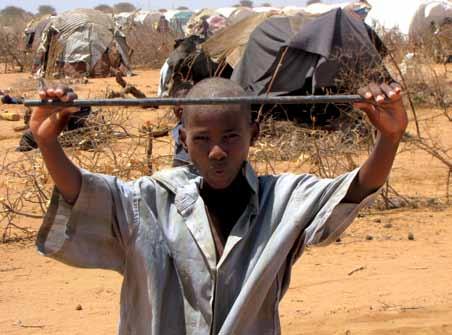
MY STAY IN ThE REFuGEE CAMP [IN KENYA] coincided with the time the united Nations high Commissioner for Refugees was busy airlifting in emaciated refugees from Darfur. Due to the limitation of housing in the camp, all the newly arriving refugees were assembled in an open football stadium. They were rained on and spent chilly nights on wet ground without adequate food…It was as shocking a situation
ISSUE: PERSECUTION & DISPLACED PEOPLE
RESPONSE BY:
IN 2006, CANADA BEGAN RESETTLING KAREN REFuGEES, a minority ethnic group from Burma that has faced severe persecution by the government. Many Karen have been confined in refugee camps along the Thai-Burma border for decades.
In the fall of 2008, three waves of Karen refugees arrived in Quebec, 30 of whom found their way to Evangelical Baptist Church Renaissance. Pastor Stéphane Couture shares how ministry for refugees began with the arrival of those 30. “From changing light bulbs to using a washing machine, we helped them learn the necessary skills to adjust to life in Canada,” says Couture.
In partnership with a multi-ethnic
as I have ever seen…one evening I witnessed five little children die. I attended the funeral of one of the children. I just sat there fighting tears all through…
Refugees and the displaced should be high on the list of global concerns today, not only because of the humanitarian significance but also because of the impact on peace, security, justice and stability… We cannot have a stable society without addressing the refugee problem and human displacement.
In Africa, refugees are forced to flee their homeland because of conflict, violence, intimidation and human rights abuses. The refugee and displaced life is very stressful, humiliating and insecure…As Christians, and as the church in Africa, we should go beyond praying and identify ourselves with refugees and the displaced people, the way Christ did with the poor, foreigners and the needy….By so doing we will be applying the gospel and making it practical to the world’s real situations.
One of the surest ways to solve the refugee problem in Africa is by dealing with root causes. The African church ought to be at the forefront of encouraging and educating the masses to adopt non-violent means in solving problems as opposed to war and other violence.
The Church needs to add to their praying the practical work for peace and social justice in society. We have embarked on this in South Sudan.
Go to wordeed.ca for the full interview.
centre in the Quebec community that helped the refugees find housing, the church helped provide not only a physical home but a spiritual one as well. Bible study groups as well as Sunday school programs were offered in both the English and Karen language.
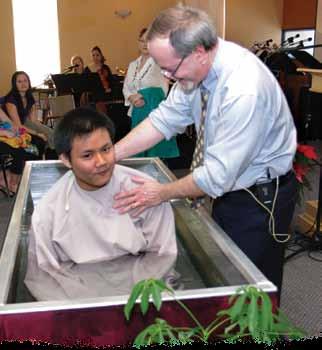
The difficulty of adapting to a foreign country and learning the French language was overcome, especially by younger members who are now thriving. Not only are Karen women involved in serving at church, but in January 2012, a 16-year-old Karen boy was baptized and is now actively serving in the church’s music ministry.
Since that time, 20 of the 30 refugees have made their home in Quebec. The church has become a welcoming presence among the Karen refugee community.
Baptism of a karen teen by Pastor Couture.
S
ISSUE: SEXUAL EXPLOITATION
RESPONSE BY:
Baptist Church in Central Africa (CBCA)
SExuAL VIOLENCE IS A DIFFICuLT AND uGLY ISSuE that must be tackled by the church, adamantly believes Mme Kavira, President of the CBCA Women and Family Department, and one of the initiators of a crucial ministry for rape victims. “The church must come to help all those who have been traumatized.”
A brutal civil war has engulfed Democratic Republic of Congo since the mid-1990s. Estimates vary but certainly more than five million people have perished. Many more have fled their homes, hiding in the jungle to avoid the brutality of soldiers. Thousands of children are now orphans. Countless numbers of women and children have been raped.
“I was taken at night by the military,” shares Ciza. “I did three years in the forest as a ‘military wife’ (forced to have sex, cook food and do whatever else her captor commanded). I was unlucky to conceive and had a baby.”
Back in her village she and her baby continued to suffer. “he has been rejected by everyone… I would like this baby who has no father to be accepted in society... I have lived with poverty, sickness, rejection, and I remain alone with this baby.”
But the power of God’s love is seeping into hearts, souls and minds through the ministry of the CBCA. “We read the Bible and sing together to help lessen the burdens they carry in their hearts,” says Rachel Cikindamuko, a CBCA counsellor.
The church must come to help all those who have been traumatized.
Compounding the stigma is poverty. Many of the women are abandoned, often by family who feel shame and helplessness. “We provide mediation and counselling to help girls and women reintegrate into their families and communities,” says Rachel. “We also help the women financially to combat poverty. In partnership with CBM, we have provided microcredit loans to start small income-generating activities.”
ISSUE: POVERTY & HOMELESSNESS
RESPONSE BY: International Baptist Church of Prague
students mentored by CBM Global Field Staff Jeff Carter at the International Baptist Theological Seminary in Prague. Tasha starts the new Acadia Doctor of Ministry program offered this fall. She shares some of her personal experience and vision.
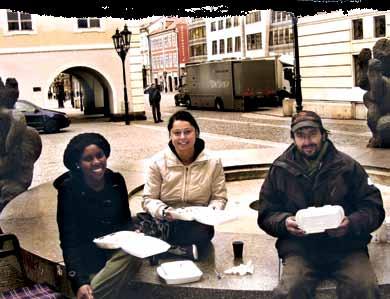
I LIVE IN ThE BEAuTIFuL tourist city of Prague (Czech Republic), yet as one homeless man once said to me, “People just look up at the beautiful buildings, but don’t look down and see us lying on the streets at their feet.” I got involved with working with the homeless because I believe and take seriously what the Lord says in Isaiah 58:6-7, concerning sharing our food with the hungry and clothing those who are naked. The New Testament also talks about the poor. Matthew 5:42, for example, tells us to give to those who ask of us and not to turn them away. I believe that caring for the poor is part of both our worship and witness, and is an imperative of God. The International Baptist Church of Prague has a wonderful ministry called Y.A.N.A. (You Are Not Alone), and we go out every Saturday and meet with homeless friends, sharing both food and the love of Christ with them, as well as holding monthly services in the Czech language to facilitate their spiritual formation and growth. It is my hope and constant prayer that more churches in the Czech Republic would begin opening their hearts to the homeless, sharing food and Christ’s love with them, and obeying Jesus’ command to love our neighbours as ourselves.
Tasha Schoultz (middle), sharing a meal with a homeless man on the streets of Prague.
DR CO n GO
ISSUE: MENTAL ILLNESS & STIGMA
RESPONSE BY: Yorkminster Park Baptist Church
“LET’S SIT AND TALK FOR A BIT,” a resident would say, and then tell me about the various places she’d lived over the last 30 years. “None of them were like this place. None of them were home.” house of Compassion provides a permanent supportive home to 21 adults living with schizophrenia, through a program where each resident has their own room and shares living areas, a kitchen and washrooms.
The story of house of Compassion has its roots at Yorkminster Park Baptist Church. In 1986, Bill Kerr shared with fellow congregation members his dream of providing a permanent home for people who were homeless. he inspired three other
church members, Gerard Collins, Dr. Robert Inman and Michael Wills, to join him in making it reality. The plan was to provide a home that would offer shelter, safety and security, with caring staff present around the clock. This vision was solidified in 1989 when the first residents moved in.
Yorkminster’s commitment continues to be important because though much has changed in the mental health and housing field since house of Compassion opened its doors, the need for stable housing remains. Sixty-six percent of homeless people in Toronto have a lifetime diagnosis of mental illness, and one-third of them are prevented from obtaining and keeping housing as a result.
ISSUE: AIDS & STIGMA
RESPONSE BY: Association of Baptist Churches in Rwanda (AEBR)
The waiting list for supportive housing in Toronto numbers in the thousands.
“The support of Yorkminster Park Baptist Church is immeasurable and their dedication to the wellbeing of residents through the years has made a BIG difference,” says Sue Osborne, executive director of house of Compassion. This past Easter, Rev. Peter holmes held a small service at the house so residents could celebrate communion and the Easter story together. That same night the residents enjoyed a home-cooked dinner prepared by Inga’s cooking angels (a group of women from the church that often prepare meals for residents).
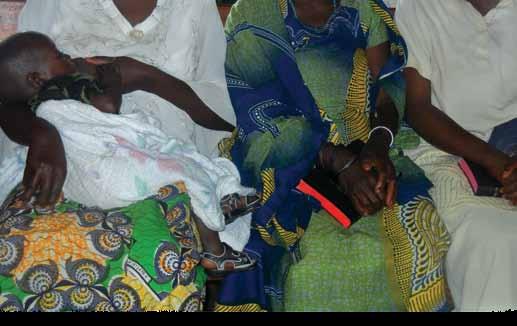
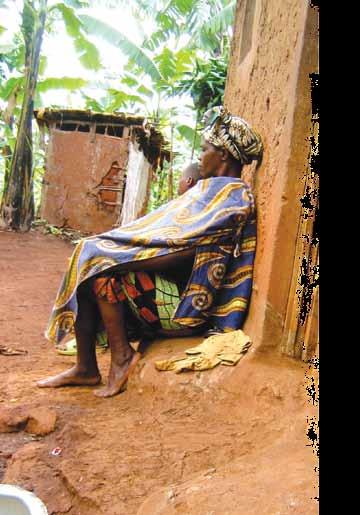
“MY huSBAND DIED BECAuSE OF AIDS,” says Julienne, a young mom with five children. “Because of this sickness in the family we were poor at the level even poor people used to call us poor… It was a big challenge for us to get clean water, we never had enough food, and all my children were forced to drop out of school due to lack of school fees and school materials. But now I’m well because of Guardians of Hope. Their warm welcome to me has removed all the shame, there is no stigma anymore. Now I’m strong and can provide for my family. With loans and savings in our group I have bought 10 goats. I’m able to afford food, clean water, school fees… I’m confident that I’m no longer the one who will die today or tomorrow. I have hope for the future.”
Stigma and poverty continue to be major barriers to overcome in the fight against hIV and AIDS. CBM partners with the AEBR to reach out to more than 1,200 families in Rwanda like Julienne’s, through support groups called Guardians of Hope (GOh), which meet in the local church.
GOh has four priorities: prevention education; spiritual and social care (including visiting homes and providing counsel to the sick and dying); development projects that include agricultural training and microcredit (access to small business loans and skills training to help families support themselves); and special care for orphans including provision of school fees, uniforms and school supplies.
While the miracle of antiretroviral therapy brings a person back from the brink of death, the real challenge continues to be stigma and long-term support. The creation of transformational community groups such as Guardians of Hope is crucial to help people “live positively” for the rest of their life, to access and stay on their course of treatment and maintain a healthy, dignified life.
T ORO n TO , O n
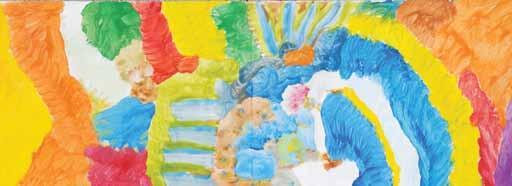
Painted by Robert, house of Compassion resident
ISSUE: POVERTY & COMMUNITY OUTREACH
RESPONSE BY: Council of Christian Hospitals
INDIA hAS ONE OF ThE WORLD’S highest maternal and infant mortality rates as well as one of the highest child malnutrition rates. Extreme poverty is at the root of the suffering. But over the years, CBM has supported a Christian development team who works with village sanghams (self-help groups) to improve health and livelihoods. Jasmine Jonathan, recently retired CBM Development Coordinator in India, explains the process:
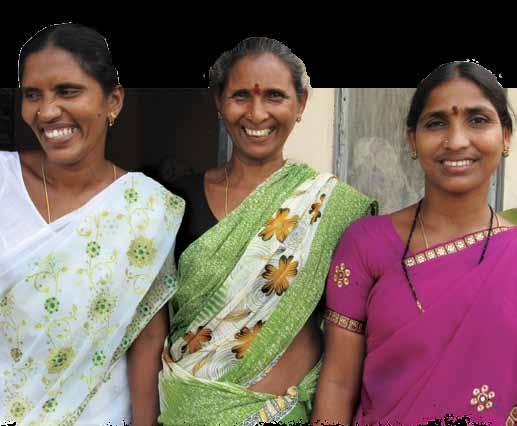
We adopt a village and work with them to identify the needs. We concentrate on women, who we see as the influencers for change in the community and home. We encourage them to start a sangham, and to have frequent meetings to discuss family problems and needs in the village. We also help them to improve their family’s financial stability through microcredit… women have started small businesses like selling cloth (saris), tailoring, or buying rice or other products wholesale to sell. Most of the women are also farm labourers, so they start to lease one or two acres of land to start their own farming. They grow rice, sugar cane, or vegetables, and share in the labour and the profit.
hundreds of sanghams have been created and thousands of women have been empowered, leading development in more than 400 villages — schools and roads built, alleys paved (reducing malaria by eliminating stagnant pools of water that breed mosquitoes), water systems improved, local businesses started, health awareness programs such as AIDS prevention offered, and medical care given through trained health volunteers and medical camps.
Seeds of faith are planted as villagers encounter the love, personal witness and action of the Christian development team. Today at least 60 percent of sangham members have become followers of Jesus, and the good news continues to spread, as neighbouring villages see the change and ask for help. Each year, 36 new villages are added to the program.
ISSUE: POVERTY & COMMUNITY
OUTREACH
RESPONSE BY: Main Street Baptist Church
MAIN STREET BAPTIST ChuRCh is located in the old north end of the city, surrounded by crumbling buildings, slum landlords, poverty, and crime. Since 2004, John Knight has been the church’s full-time ministry person dedicated to serving the neighbourhood. The church has intentionally begun to partner with others in the community — police, health professionals, teachers and social workers — to shape a new vision for the old north end, and deal with both the symptoms and root causes of problems in the community.
Main Street Baptist has embraced a vision for a “beautiful community of faith” that is rooted in the salvation experience and is integrated in its outreach to people. “Ours is a model of transformational discipleship that is all about partnerships,” says Knight. The church presently offers free meals and Bible studies, teaches health and life skills, and runs a clothing closet and food bank. Their dream is to bring to reality a hope Ministries Centre that would inspire social enterprise, create a playground for families and children, and secure housing for vulnerable adults and at-risk youth. During the free meal offered every week, a leader in the church communicates a message from Scripture. At a recent Sunday worship service, people from the community were baptized, having made a profession of faith in Christ.
In DIA
ISSUE: COMMUNITY OUTREACH
RESPONSE BY: The Church at SouthPoint
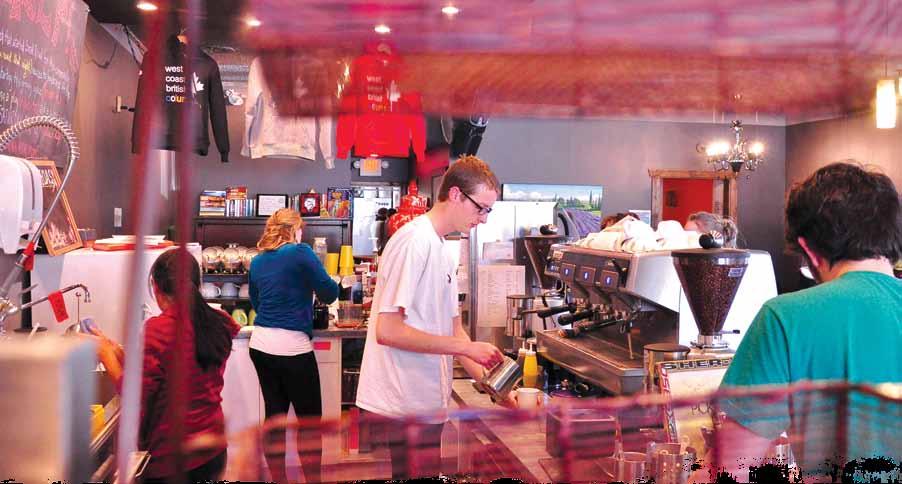
ThE ChuRCh AT SOuThPOINT had a dream to create a vibrant community space where conversations, stories and daily ritual could be shared over a great cup of coffee. In 2009, Small Ritual Coffee Society was opened as an outreach ministry in White Rock, BC — a place to build relationships and community, a backdrop for lingering conversations, and sacred moments of human connection.
hosting local art, music nights, and fundraisers at the coffee shop contributes to the local community presence that it has. Events are hosted for churches and addiction recovery groups in the area. A volunteer program, particularly for those with barriers to employment, provides a gateway into the work world. A partnership with A Rocha, a Christian environmental organization, provides local fresh vegetables and fruit through a community shared agriculture program.
These community connections almost didn’t happen as Small Ritual struggled to be sustainable in the beginning. When it was on the verge of closing its doors, a regular customer who couldn’t imagine losing this community space stepped in
it was a dream that took great courage to turn into reality, and there have been some bumps and bruises during the hard birthing process.
and offered her skills, and now manages the coffee shop full-time as a volunteer.
Anne Smith, the pastor at Southpoint, holds her office hours at the coffee shop on Tuesdays. To her, the coffee shop “is a living, dynamic witness that God’s presence and grace is at work in our midst, in ways both seen and unseen. It was a dream that took great courage to turn into reality, and there have been some bumps and bruises during the hard birthing process. Now, thanks to the hard work of manager Rydé and her staff, the church can begin to enjoy the fruit of all that hard labour and do what it is good at: building relationships.”
W h ITE ROC k , BC
ISSUE: POVERTY & COMMUNITY OUTREACH
RESPONSE BY: Women’s
Empowerment Self-Help Groups
kE n YA
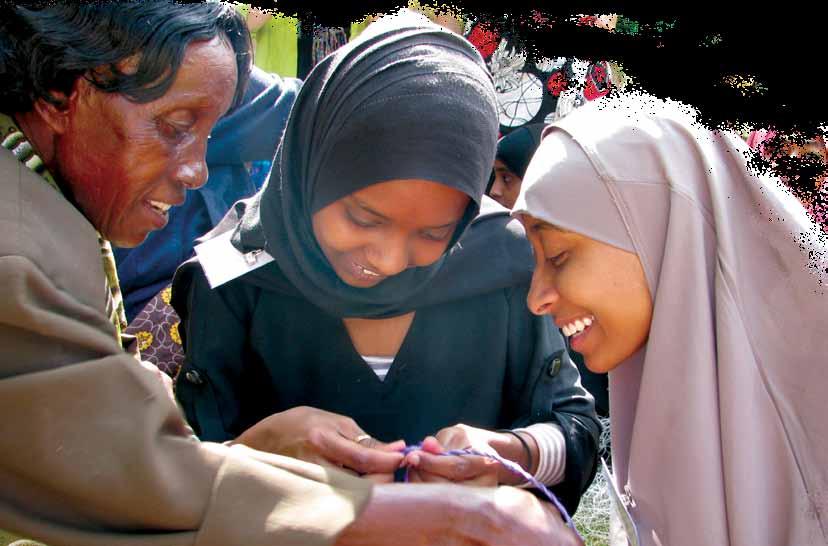
relationships and we believe that by bringing women together through this ministry that God is healing their brokenness,” says Erica Kenny, CBM Global Field Staff in Kenya. She’s talking about the Women’s Empowerment Self-help Groups (ShG), an outreach to displaced Muslim families living in the Nairobi ghetto of Eastleigh.
Over the past few years, 17 small groups have started. Each group is trained on participatory leadership and the basics of running a group. But more than training, they receive mentorship and support. Four of the groups have recently moved to the
training and a group self-assessment to see their strengths and weaknesses. “We use a market scoring and ranking tool to help them look at ideas for small business creation,” explains Laura Muema, project officer.
“Together we measure the viability of an idea, and rate what kind of resources and market opportunities are available. This helps them decide what are the best businesses to start.”
The ShG project also encourages groups to apply for matching grants to help with start-up capital costs and provides community based training that is matched to their small business ideas. “Many of the women
would like to learn how to make wool sweaters, hats and socks,” says Laura. “Also, they are asking for training in soap making, jewelry making and sewing.”
The biggest impact has been the emotional support as most of the women felt isolated and cut off from other women. They struggled to survive in silence. “When I first started working with them, they did not communicate, but only withdrew,” says Laura. “They were silent on issues they face in their homes, with family and personally. The change is not only with each other, but even with me as a Christian. They are opening up and trust is growing. They are free to talk about issues…fears…whatever is going on in their lives. We share together, pray together, and work together!”
“A big part of this ministry is breaking down walls of misunderstanding and ignorance,” says Erica. “Our girls love it when we pray for them, and they pray for us. God is moving in this community and in the lives of these women. It is beautiful to see!”
ISSUE: FOOD & ENVIRONMENT
RESPONSE BY:
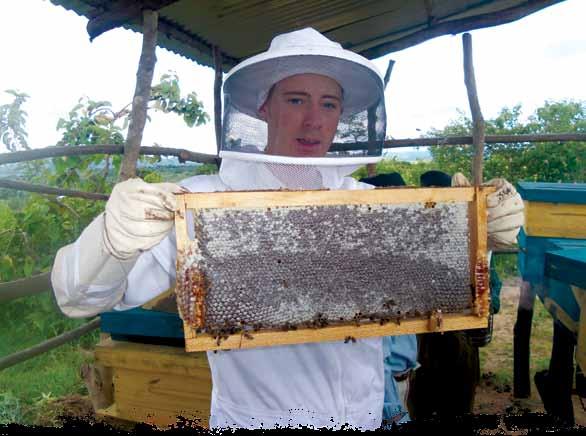
A Canadian pastor & beekeeper on a mission to save bees and help families.
OVER ThE PAST SEVERAL YEARS, honey bees have been disappearing around the world at an alarming rate, a phenomenon known as Colony Collapse Disorder. Several interwoven factors are thought to be the cause: global warming, pesticide use, parasites, habitat loss.
“Bees are indicators of environmental health, of how we’re treating the wider creation,” says Chris Crocker, pastor of Norwich Baptist Church in Ontario and professional beekeeeper. “What’s happening to the bees today… it’s many different things, and it’s because we haven’t been taking care of God’s creation the way that we should have.”
For Chris, beekeeping is a way to stay connected to the land after growing up in the country and working on farms. What started as a hobby with two hives in 2006 has grown into a hobby business with 50-60 hives. As a beekeeper, Chris must pay attention to flowers and when they bloom, seasons and weather patterns, and threats to the health of his bee colonies.
The decline of bee populations has serious consequences for the world’s food supply — about one-third of the food we eat is pollinated by bees. Although we wouldn’t lose all of our food if bees became extinct, many crops we enjoy — such as apples, melons, potatoes, blueberries, pumpkins, almonds — would disappear, with significant economic impact on the agriculture industry. Bees also play a major role in ecological diversity, pollinating wild plants.
Not only are bees important for food security, beekeeping offers exciting possibilities for sustainable community development. In 2011, Chris travelled to Kenya and Rwanda on a short-term mission trip with CBM to teach beekeeping,
Editor’s note:
Chris plans to return to East Africa in 2013 to continue teaching and mentoring farmers, church groups and pastors who have started beekeeping. He will be joined on this short-term trip by his wife Rebekah who plans to assist in CBM’s Guardians of Hope program which provides care, support and microenterprise among families impacted by HiV and AiDS.
Email: stm@cbmin.org for information on more short-term mission opportunities.
working with the development departments of the Africa Brotherhood Church and the Association of Baptist Churches in Rwanda. “honey is a valuable agricultural commodity,” Chris says. “Beekeeping equips people with a skill set, so they can earn money, empower themselves and bless their families and communities.
“I have a saying. Where there are flowers, there can be bees. Where there are bees, there can be honey. And where there is honey, there can be honey money!”
Because bees need flowers and crops, beekeeping must go hand-inhand with water conservation and soil management, especially in Kenya, which faces the risk of desertification. In Rwanda, small land mass and dense population presents a different challenge, with careful management needed to provide bees with enough land to forage. In both countries, education — how to use modern beekeeping equipment, understanding the beekeeping cycle of when to make new hives, when to add honey supers, when to collect honey — is crucial.
“With continued training, equipment and sector organization, the industries in both countries could flourish, directly helping families and communities,” Chris says.
I have a saying. Where there are flowers, there can be bees. Where there are bees, there can be honey. And where there is honey, there can be honey money!
IN 2006, A GROuP OF FRIENDS
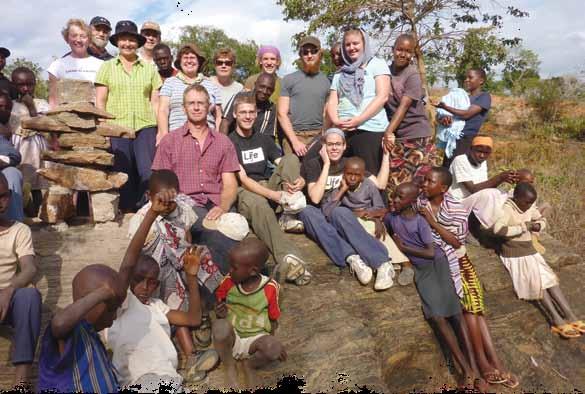
One of Altadore Baptist Church’s short-term mission trips to kenya.
and decided that instead of getting presents for her birthday party, she wanted her friends to give money for a water project in Kenya, raising more than a hundred dollars.
Altadore Baptist Church in Calgary got together and a discussion ensued about the state of the world and the passion we shared for God’s people, especially regarding the issue of clean water in parts of the world where potable water is not easily accessible and available. Thus Well-Come Change was formed.
The result of that one social interaction has been amazing. About once a month, a group of 20 to 25 people get together to share a potluck meal and contribute $25 each toward a water project in Kenya. We wanted this to be a fun time of learning, but also a time for us to make a sacrifice. Instead of going out and spending money throughout the month on dinner or coffee, we decided to forego some of that expense and put it toward a water project.
Because of Well-Come Change we have learned how devastating it is not to have clean, accessible water. People must travel several kilometres to the nearest water supply, leaving younger children at home alone while the eldest often accompanies the mother to fetch water, forcing education to become a lesser priority. In some areas the mother and child are at great risk of personal harm. The water supply itself is often a shallow pool shared with animals, creating
waterborne diseases and parasites that affect so many, especially children.
Over the past four years, our commitment to water projects has gained momentum and attention. By early 2008, Well-Come Change had raised $10,000, which was matched by CIDA to become $40,000. Again in 2009, $12,000 turned into $48,000. To date we have raised $173,000 as a result of matched funds by private donors, Canadian Foodgrains Bank and CIDA, all of which have gone to water and community development projects in Kenya. We have been amazed at how God has provided more than we could have ever asked or imagined each year.
One of the unexpected blessings has been the opportunity to participate in two short-term mission trips to Kenya. Funded separately, in 2008 and 2010 we sent groups of 18 and 12 to Kenya to participate in the building of water tanks in the community of Mitaboni and a water weir in the community of Nzeluni. Both groups were able to witness first-hand the dramatic changes potable and accessible water makes in peoples’ lives. having learned a great deal about water, most of us at Well-Come Change have made lifestyle changes to cut our personal water consumption significantly, installing low-flow appliances, rainwater catchments, and using biodegradable soaps. We became more conscious of not being wasteful of other resources as well.
The water supply itself is often a shallow pool shared with animals, creating waterborne diseases and parasites that affect so many, especially children.
In addition to potluck suppers, we host an annual Christmas Banquet and silent auction, as well as music concerts to raise money for Well-Come Change. Three couples in the group have also taken on a project of making and selling jams. A seven-year-old girl from the neighbourhood heard about our group
Over the last four years we have been blessed by the relationships that have developed and deepened within our group, challenging each other to go deeper in our personal faith journeys. We have become increasingly aware of our responsibility to walk alongside our brothers and sisters locally and globally, as Christ would. As we continue this journey we are confident that God will continue to go before us and walk beside us.
Story by Doug and Colleen Milton & Darren and Lynn Martin
ISSUE: wATER
RESPONSE BY: Altadore Baptist Church
CALGARY, AB
ISSUE: FOOD SECURITY
RESPONSE BY: South Lallaguda
Planting Good Seed in India
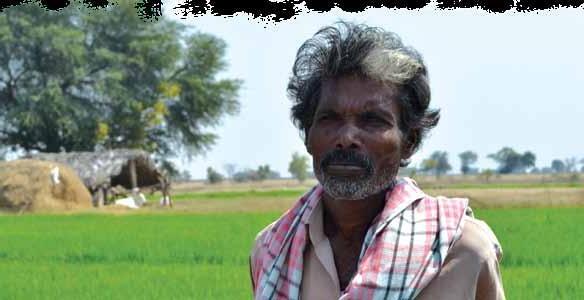
Three years ago, Ramachandrayya couldn’t grow enough food to feed his family. he was sad to see his children’s health deteriorating, and they suffered from many aches and pains. Then he had a visit from BLESS (Burden & Love for the Economically & Socially Suppressed), the community development ministry of South Lallaguda Baptist Church in India, and he saw new farming techniques being implemented at their demonstration farm. he learned about conservation agricultural practices such as reducing the use of chemical fertilizers by using azola (which conserves moisture in the soil, prohibits the growth of weeds and can be used as fertilizer for the next crop). he was also encouraged to plant a variety of crops, including vegetables, for better nutrition for his family and greater revenue in the market.
These simple techniques have already made a large impact. Ramachandrayya greatly reduced his farming expenses while increasing the quantity of produce grown. “We used to spend 5,000 rupees on chemical fertilizers and get less than 15 bags, but now we’re using organic methods and getting 35 bags,” says Ramachandrayya, with pride.
“These farmers want to grow rice, you can understand why, it’s a staple food, but this area is not good for this,” says Dr. Judson Pothuraju, CBM’s food security advisor in India and one of the original founders of BLESS. “It makes me happy to see they’re trying different vegetables and starting to experiment with crops. The first crop we gave Ramachandrayya seed, by the second crop, he didn’t need to get seed from us...The third crop he’s trying to grow vegetables on his own and is keeping the seeds to use for the next crop...he’s becoming more independent.”
BLESS is a vital part of ministry at South Lallaguda Church. “You can’t separate the social community development or the church planting, they go hand in hand,” says Pastor Sam Bontha. his church has planted 22 branch churches in five districts, and started the BLESS program in many rural villages.
“My church is involved in social work because we’re very much blessed by God and the command he gave us to go into the world and preach the gospel. And when Jesus was on earth he not only preached, but he was very concerned with the social needs of the people. Like the leper who was stigmatized and cast out of society, Jesus healed him, and he was restored to his family, to society, and received new spiritual life.”
A few years ago, as part of CBM’s Guardians of Hope program, BLESS started a ministry for people stigmatized by hIV and AIDS. Apart from providing food and care for children
orphaned by the disease, a monthly support group is held for over 100 people living with hIV. A sewing centre was also opened to train girls who lack access to education and to help them become self-employed. The ministry also offers a preschool program to provide care and early childhood education to young children left at home when parents need to go to work in the fields.
“Mission is the heart beat of God and as a pastor, as a church, we have a passion to reach the unreached places, and those who are lost,” states Pastor Sam.
connecting…
CBM responds to hunger in countries like India, kenya, Rwanda, Democratic Republic of Congo, Bolivia and El Salvador, which have large numbers of families living in extreme poverty. Through local church partners we help families become more food secure — having relative confidence in their ability to produce adequate food or earn money to purchase food necessary for a healthy life.
In rural areas, we work with farming families like Ramachandrayya’s who have relatively small plots of land on which they can grow crops. They face challenges of global climate change, droughts, lack of access to credit or education, rising costs of fertilizers, and predatory actions of some of the international seed companies that make promises about hybrid seeds that too often do not live up to expectations. They are also the ones most impacted by regional conflict, poor government policies that cut off their access to food, and other complicating factors such as hIV and AIDS.
Participate in Good Food, Healthy Change, The Sharing Way’s new annual project to help poor families become food secure. Order your free promotional materials today by emailing communications@cbmin.org.
Ramachandrayya
Your
Church is Too Safe: Why Following Christ Turns the World upside Down
Your first published book was Your God Is Too Safe (2001). You’ve gone on to write a number of others about the Christian life, but returned to this “too safe” idea to address pastors and church leaders. What made you return to this paradigm for writing to the church?
Mark Buchanan: The gospel is about dying to self and living for Christ in such a way that we actually become dangerous. We stop obsessing over trifles, titles, turf, stuff. We stop grasping and clinging. The “too safe” theme has become for me a rallying cry — to myself and anyone else listening — to get on with the life we’re actually called to live, in the power we’re called to live it, for the glory of the one who calls.
Can you give some examples of the ways you saw your own church “play it safe” to the detriment of its witness in the community or even its faithfulness to God?
Throughout the book I talk about our church’s growing ministry to, among, and with First nations people. We avoided even the idea of this ministry for several years, and then stalled with near-useless debate and “planning,” because it is, frankly, hard, messy and slow. But when I look at the fruit of this ministry after less than two years on the ground, I’m embarrassed it took us so long to start. And I wonder how our love for comfort and safety still holds us back from all God wants to do.
Another example: how anxious I am (and our leaders are) about how other churches see us. We are overly prone to “do our acts of righteousness before men, to be seen by them.” The risks a church has to take to do Acts-type ministry — the boundaries you must cross, the people you need to eat with, the fights you must pick, all that — often incur the scorn of the religious community: ask the prophets, ask Paul, ask Jesus.
We have taken some of these risks (and endured the consequences), but too often we have held back because we wanted “all men to speak well of us.”
One of the recurring examples you give about your church life is its — and your own personal — involvement in community events that celebrate and benefit the First n ations people groups who originally inhabited your region. The u.S. has the same corollary with its n ative American population, and in many ways the larger issues of race relations of whites with African American and non-white immigrant populations. Why has this been a focus for you? What words of wisdom or advice do you have for churches looking to be involved in these types of reconciliation ministries?
This is the unfinished business of north American churches. The native issue predates the black-white issue and every other ethnic-cultural divide that the church is heir to and accomplice in. In Canada, the complicity of churches in the destruction and humiliation of First nations communities is appalling and heartbreaking. And yet, despite our bloodguilt, the church is the only agency on earth that can bring genuine healing to bear. The First nations communities certainly can benefit from compensation, programs, treaties and public apologies. But the deep wound can only be borne and healed by the cross. And yet everywhere I travel in north America, the church is mostly indifferent or even openly hostile to these communities.
My advice: get to know the First nations/ native American community closest to your church. Study their history, their culture, and their current state of affairs. Simultaneously, earnestly and prayerfully seek at least one friend from this community. Approach everything in humility. Do everything you can to impart honour to the people. Let your heart be open and broken. And ask God to birth in you his love for the people. Everything else will follow from that.
Interview by Emily Varner, Academic Publishing Services
An interview with Mark Buchanan, pastor of new Life Community Church in Duncan, BC, on his latest book.
Who: Anne
Where: Maai Mahui, kenya
What: A visit with a family in one of CBM’s food security projects
Springforth (the Convention of Atlantic Baptist Churches annual youth event) has taken up the challenge to help fight hunger in Kenya. Over the next three years, youth have committed to raise $6,000 each year to help more than 1,200 families like Anne’s become food secure. They live in a region that was hit by a severe drought and famine in 2009. Crops dried up and farmers were devastated. They also lacked funds to purchase food as costs escalated at the same time. An emergency food relief project was quickly put in place by CBM, Canadian Foodgrains Bank and African Christian Church & Schools. This led to the development of the next phase, a food security project.
See photo essay of Anne’s life at facebook.com/cbmin.org
Learn more of Anne’s story and how you too can give the gift of food this Christmas. See the enclosed Gift Catalogue in this issue of mosaic or go online at www.cbmin.org.