This issue of mosaic offers a banquet of goodness stories of God at work in and through his people, to meet all needs: physical, social and spiritual. From sharing a simple meal to advocating for social change, we see each action as significant when rooted in Christ’s love.
But these stories also extend an invitation. What does it mean to have abundant life and how might we all share in it? We know there is great injustice in our world. The depth of poverty and despair should not only disturb us, but serve as a catalyst for more prayerful reflection and action. How might we respond in ways that offer value and dignity to our neighbour? How can we help each other recognize and develop our God-given gifts and talents in ways that ultimately bring honour and glory to God?
Consider some of the ways the local church is attempting to answer these questions from Canada to Africa and beyond. We hope these stories capture your imagination and challenge each of us to strive for an even deeper level of love, witness and service in our world.
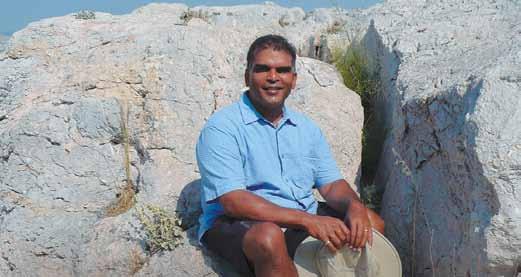
An interview with Sam Chaise, the new General Secretary of CBM
by Jennifer Lau, CBM’s Director of Global Discipleship
J: You have left your community of family and friends back in Vancouver to take this position of General Secretary. Obviously, you feel a deep sense of call into this role. Can you share a bit about the discernment process that led you to this decision?
S: In essence it was about “trusting the process,” or, more specifically, trusting that God was writing his story in the midst of our story. It was also about trusting that God’s voice was being expressed in the midst of our communities of relationship, all of which were encouraging us toward entering the process. Finally, it was about recognizing that our life story had led us to this possibility and had prepared us for it. It was hard for us to do this because we were quite happy where we were, but in the end, felt deeply called by God into this.
J: Can you tell us a bit about your own faith journey and what led you into serving in full-time ministry?
S: I grew up knowing the biblical narrative and knew that Jesus loved me. I believe that all Christ-followers are in full-time ministry — some are called to lead the gathered church (e.g. pastors) and others to minister in the marketplace (work, family, neighbourhood). I initially went to school at Carey-Regent with no intention of becoming a pastor, but over time, I came to realize that it was the best deployment of the particular gifts God had given me.
J: What are you most looking forward to as you begin your tenure as CBM’s General Secretary?
We also need to let go of the idea that there is only one way to “do church.” Jesus taught and embodied the kingdom, and the purpose of the Church is to be a sign and foretaste of this kingdom. This means that we have great freedom in how we form and re–form our lives together, as long as we are a sign of that kingdom.
S: I am looking forward to meeting amazing people in Canada and around the world whom God has called to be catalysts for the kingdom — people who listen to Scripture and to the Spirit and who as a result end up participating in God’s creative and redemptive work in their context. I am looking forward to seeing new expressions of the kingdom and am deeply committed to the thought that we can learn from one another — God delights in diversity and as he builds his Church all across the world I believe he wants us to cross–pollinate relationally by sharing our stories and learning from one another.
We also need to let go of the idea that there is only one way to do church.
J: You are no stranger to Canadian Baptists, as you have served in a volunteer capacity on the boards here at CBM and Canadian Baptists of Western Canada for many years. Where do you think we should be putting our focus as we look ahead into the future?
S: I think that we need to learn how to minister out of joy and delight, not primarily as a way to fix problems. In Scripture, people first had to encounter God before they were called into and empowered for ministry. Most of us have a lot of resources (gifts, money, opportunity) and it would be too easy to depend on our own strength, instead of on God’s. If we’re not depending on God, we’ll eventually burn out.
J: One of the ministries we focus on here at CBM is global discipleship. It seems impossible to even think about Christian discipleship in these challenging times without it being in a global context. What do you think are the most important questions we should be asking ourselves as we seek to live the way of Jesus in this world?
S: How does what I purchase today contribute to the shalom (i.e. economic/ spiritual/relational health) of the person who produced it?
1) How do I deploy the resources God has given me (time, money, gifts, opportunities) most strategically for the sake of the kingdom, so that when I die, I will know that my life was well lived?
2) How do I stay connected to the realities faced by those who live in poverty (whether in my city or around the world)?
3) How do I ask prophetic questions of my economic lifestyle without giving up the questioning because I’m overwhelmed or running away because I feel too guilty?
That’s just a start. These are hard questions for me, and for us — but the life of faith is about living in the important questions, not about finding easy answers. We are global consumers and global travellers and global citizens, so of course our discipleship must be global as well, not just local.
The call of the people of God both to care for the vulnerable and poor and to seek the peace and well–being of the city runs throughout the entire biblical narrative, as well as throughout church history. 1 It makes one wonder how we could have failed to embrace this transforming mission in recent history.
by Dr. Tim Dickau
Just Work. Just City. Just Church.
Rediscovering
God’s love for the city.
As our social safety net slowly erodes to resemble that of developing countries around the world, churches in Canada have been called upon to be more active participants in reweaving the social fabric of our nation in a way that seeks the kingdom of God and includes and empowers the vulnerable and poor. This does not mean that the government or its citizens are off the hook; clearly, God holds leaders responsible for seeking the peace and justice of the nation (Psalm 72). But it does mean that the Church is called to be at the forefront of bearing witness to this new world that Jesus’ resurrection inaugurates.
Throughout history, the transforming vision of the kingdom of God keeps seeping into the imaginations of Christ’s followers, compelling them to bear witness to this kingdom in their neighbourhoods and cities. This has been our own story as a church in East Vancouver.
Some years ago, a woman in our church did a community study and interviewed the many people who were unemployed or underemployed. One refugee spoke of the lack of Canadian work experience as a great barrier to employment: “How do you even make up a resumé if you don’t have work experience?” Another person spoke of personal barriers: “I have an anxiety disorder; I get afraid and then won’t go to work because I am afraid.” Some expressed disappointment that the church had not been more intentional in helping the unemployed find work: “I didn’t find anyone in this church who said ‘I have a job for you.’”
Prompted by the desire to respond and assist those who were unemployed, a small group of church members launched JustWork. After a couple of years of limited success in helping
people find jobs and start businesses, they shifted the focus to developing social enterprises, recognizing that people with alcohol or drug addictions or mental illnesses were very unlikely to maintain employment, even if they secured a job. Social enterprises create a work environment that fits the needs of people in crisis, whether it is piecework with a flexible schedule or part-time work with an empathetic supervisor.
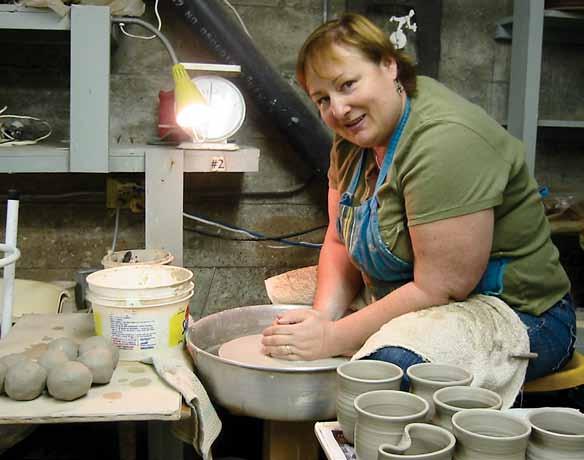
One of the significant factors leading to this shift was a pottery studio in the basement of our church. Started a few years ago by two potters from our church, The Potter’s House quickly became a place of welcome for many in our neighbourhood — those who would otherwise not have access to creative studio space due to economic or social barriers. It launched JustPotters, where people with barriers to employment in the “regular workforce” were empowered to do piecework or develop their own pottery for sale, with training and support along the way. Especially hopeful was seeing one of the participants, a long-time neighbour, experience healing in her own life and even become
… church members and neighbours alike have been empowered — affirmed in the Godgiven dignity and creativity that each person holds as a bearer of God’s image.
the new manager. She demonstrates remarkable empathy with those she works with in the studio — a passion born out of her own experience with poverty and chaos.
JustWork went on to launch JustGarden, JustCatering and JustRepairs — all social enterprises with the mandate to stimulate businesses to alter their employment practices to hire those who might be viewed as “less than ideal” employees.
Business owners and managers are encouraged to consider their social responsibility and provide meaningful work that brings dignity (and financial benefit) to those who are marginalized or excluded from the workplace.
Through all of this, church members and neighbours alike have been empowered — affirmed in the Godgiven dignity and creativity that each person holds as a bearer of God’s image.
Our Out of the Cold program has been — and continues to be — another important starting point. Every Thursday night, people gather together to prepare and share a meal, pray for
one another, read Scripture together, get a haircut, receive nursing care, watch a movie or just have a good conversation over a game of cards before getting the mats out for those who will stay overnight. This meeting place has helped us move from charity to advocacy — justice and community development. Given the increase in homelessness across our country, this response can be a starting point for many churches — a way for strangers to meet, gain trust and build mutual relationships — in a safe, public space.
But if we stopped here as our only response, we could legitimately be accused of neglecting the wider needs of people at best and perpetuating the root causes of poverty at worst. Gratefully, we have, in part due to this shared meal, gotten to know the challenges people face and have developed a variety of responses that address key areas of income generation, housing and support. These acts of welcome led us to pursue urban community development.
Learning
to
Think
Act Systemically
and
One of the moves that enhanced our own work in community development was to think and respond systemically to the challenges we face. Our response in one specific area, homelessness and affordable housing, best illustrates this.
1. Emergency Relief:
From the meals and shelter offered through our Out of the Cold program to the guest rooms that some people have opened up in their homes, we provide an immediate response to an immediate need in the same fashion of Christ’s followers in the fourth century who were encouraged by Chrysostom (one of the early Church Fathers) to set aside a room in their house for people in need.
2. Individual Development:
We have three official community houses, called Co-here, which support groups of people to live in community together, as well as at least 11 other houses where three or more people share living space and costs. This kind of living arrangement provides affordable housing as well
A small pottery studio started in the basement of Grandview Calvary Baptist Church in East Vancouver helped launch JustPotters, where people with barriers to employment are empowered to do piecework or develop their own pottery for sale.
3. Community Development:
Kinbrace (two homes with 10 total suites) offers a home for refugee claimants, helps them get established in the city and supports them through their refugee hearings. Around 300 people have passed through Kinbrace in the first decade of its existence.
church has also endorsed the Red Tent campaign to bring attention to the lack of a federal housing program in our nation.
Jack’s Story
The transforming vision of the kingdom of God compels us to awaken our imaginations, reorient our priorities, and explore how we can contribute to the development of our neighbourhoods and cities in ways that bear witness to the new world Jesus inaugurates.
Our church has recently approved the development of our parking lot to include underground parking and 15 to 25 units of social housing, housing for a lay order of people committed to common ways of life who will accompany the other residents, as well as office space for some of the groups like JustWork and Crossroads (our street outreach). We are really excited about this vision, even though it is by far the biggest project we have taken on. Over the last couple of years, we have also been encouraging other churches to use their parking lots for social housing.
4. Structural Change:
as helps to find the energy for hospitality and develop more of the shared life to which the gospel calls us. There are even cases where families have come together to buy a home. Again, this is more than just economics — although at least one of the families wouldn’t have been able to buy a home otherwise — it’s about this larger vision. Some people have also put money together to help an immigrant family make a down payment to qualify for a house loan. That money has since been paid back and is available for someone else to use.
Recognizing that social assistance has stayed static for 12 years and become much less than you can actually live on, a number of folks have participated in campaigns to raise social assistance rates. Through the social justice movement, Streams of Justice, many people from our church and other churches across the region have been involved in asking the government to pursue social housing. Since 1994, the city has been adding 100 units and losing 400 units on average per year. Our
Slowly, erratically — and with lots of mistakes — we are developing a community response. I leave you with the story of Jack.
Jack came to our Out of the Cold meal when he was living on the street. He eventually got to know some people, was welcomed into a community house, became part of our worshipping community, and started working at JustWork. At a recent planning retreat, Jack shared part of his story.
“When I was working construction, my bosses cared about the work, but not me. When I came here to this community, I found that people cared about me, and wanted to know me.
“At JustWork, people care about the work and me. And because of that, I want to do my work well so that I can make space for someone else to have the kind of welcome and opportunity that I have been given.”
The transforming vision of the kingdom of God compels us to awaken our imaginations, reorient our priorities, and explore how we can contribute to the development of our neighbourhoods and cities in ways that bear witness to the new world Jesus inaugurates.
1 See Ray Bakke, A Theology as Big as the City (InterVarsity Press: Downer’s Grove, Illinois, 2003).
Dr. Tim Dickau has been the senior pastor of Grandview Calvary Baptist in East Vancouver for more than 20 years. His recently published book, Plunging into the Kingdom Way: Practising the Shared Strokes of Community, Hospitality, Justice and Confession, provides more food for reflection.
The Entrepreneurs of El Alto
A developing story in urban integral mission
by Duane and Carin Guthrie, CBM Global Field Staff in Bolivia
Like many cities in the majority world, El Alto is densely populated and rapidly growing, facing increasing pressure from internal migration as people seek opportunities in urban centres. But this concentration of people has created some amazing opportunities to share the gospel in an increasingly strategic location within Bolivia. Sprawled on the outskirts of La Paz, Bolivia’s capital city, El Alto provides a link, a connection between urban and rural.
The one crushing issue faced by the church here is poverty. El Alto is home to some of the poorest people in all of South America and Christians in the Bolivian Baptist Union feel that they simply cannot ignore this reality. They desire to share the gospel through actions that show Christ’s love for those to whom the world has been most cruel.
Urban development is not an easy task, nor is it a quick process. It requires patience and endurance. It takes time to build relationships with people and for trust to develop.
With this in mind, The Sharing Way and the Bolivian Baptist Union began a new microcredit program in November 2007 to directly reach out to the urban poor. Three years later, this Economic Initiative (EI) program has already helped over 200 families either begin a new business or increase an existing enterprise through small, low-interest loans that are paid back over the course of a year.
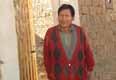
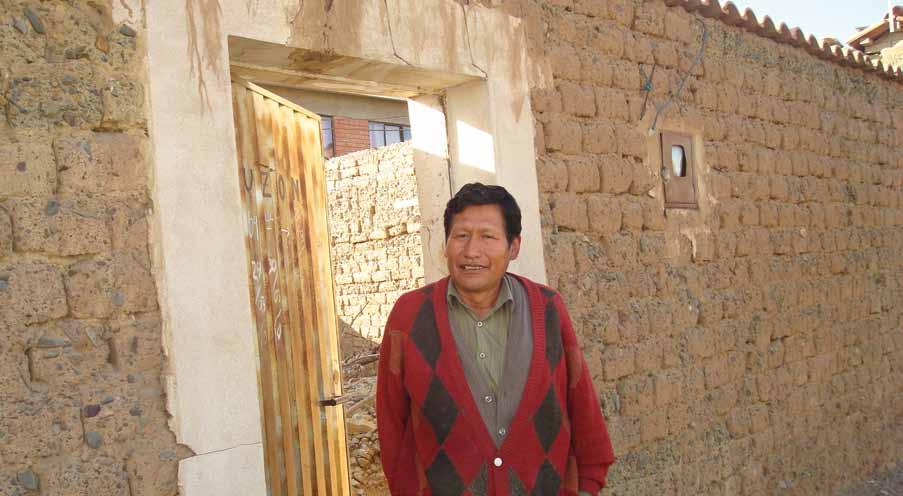
Salustiano Coronel (pictured above) is one of the new small business owners. Prior to the program, he purchased used hats that he then repaired and resold to support his family. Living in rented accommodations, he was barely able to save a small amount each month. Eventually he managed to gather enough money to purchase a small and simple knitting machine. His dream was to make sweaters to be sold in Oruro, another
of Bolivia’s major cities. He approached the EI program for a small loan of $500 to purchase wool and begin his new family business — both his wife and son also work with him.
Within 18 months, Salustiano managed to purchase a small piece of land in the city and begin construction on a combined workshop and family home. In July 2010, Salustiano was able to take another small loan from the EI program to purchase more wool and increase his production so that he can finish his home and workshop space.
As is common with other community based, microcredit programs, the El Alto project has achieved the staggering repayment rate of over 98 percent and has garnered the respect of the beneficiaries to the point where word of mouth alone reaches the current funding capacity of the program. Most encouraging is the Christian witness. “I give glory to God for the provision that has been afforded to my family,” says Salustiano. While in its early stages most of the beneficiaries were from various church denominations, there has been a steady increase in non–Christian involvement. Good news spreads fast!
What has set the EI program apart from others in the city is the willingness of staff to take personal interest in the lives of the participants. Each person receives visits by caring personnel who don’t just look at the business, but also at the personal needs of the participant and their family. Three times a year, workshops are held that teach everything from business planning and marketing to legal rights and children’s health. These workshops allow participants to meet and share ideas and concerns among peers and help the program staff better understand the needs of the people it seeks to serve.
Program staff also visit two churches every month to encourage and instruct
local congregations in integral mission outreach. They desire to see an increase in the ability, capacity and desire for integral mission within the churches of El Alto.
Future plans include combining resources with other ministries in the area that work in relief and rehabilitation to be able to reach further into the community, across the city and beyond. A newly formed Centre for Integral Mission is starting the process.
program seeks to build that trust. All too often the poor are regarded as statistics or as projects to work on or problems to solve. For us, everyone has a name and is addressed with the respect they deserve as children of God. It is the deep desire of the team to represent Christ in all we do and say, and that the light of Jesus would shine through us as we connect with others. It is our hope that when we share the gospel it will satisfy the burning question of why we do what we do and ultimately lead others to join us.
I give glory to God for the provision that has been afforded to my family. Stats at a glance:
Urban development is not an easy task, nor is it a quick process. It requires patience and endurance. It takes time to build relationships with people and for trust to develop. The EI
Population (as of 2004)
El Alto: 858,716
La Paz: 800,385
connecting…
In July 2010, Duane and Carin Guthrie moved to La Paz to begin work alongside the Bolivian Baptist Union in the city of El Alto. They provide logistical support to the daily operations of the Economic Initiatives program as well as long-term planning towards increased sustainability and impact within the city. Their primary goal is to work alongside local congregations to encourage and support grassroots integral mission initiatives.
You can help support the Economic Initiatives program in El Alto. Become a Partner in Mission with the Guthries. Call 905.821.3533.
Poverty. Extreme Poverty.
What is the difference?
by Scott Lewis CBM’s Africa Program Officer
Ten years ago, world leaders from rich and poor countries committed themselves to a set of eight time-bound targets that, if achieved, would end extreme poverty worldwide by 2015. These became known as the Millennium Development Goals.
The targets were based on ending hunger; achieving universal education; promoting gender equality and empowering women; reducing child mortality; improving maternal health; combating HIV and AIDS, malaria and other diseases; ensuring environmental sustainability; and creating a global partnership for development.
The goal is to end extreme poverty. But what exactly is extreme poverty? What does it look like and what can be done?
Usual definitions suggest a figure — an income of around $1 (US) per day — as extremely poor. By this measure, an estimated one billion people (one in six people in the world) are living in extreme poverty.
Poverty can be characterized as deprivation of basic human needs, such as food, safe drinking water, sanitation facilities, health, shelter, education and information. Extreme poverty exists when there is a severe deprivation of most, if not all, of these conditions at the same time, resulting in a nearly daily struggle to survive.
But what is the difference between poverty and extreme poverty in practical terms? Well, consider a mother who has a sick child and is forced to sell one of her last cows, so that her child can be saved. The child might get better, but the family is poorer because of it. For someone living in extreme poverty, there is nothing to sell, medicine is unaffordable and the child may die.
Beyond the statistics, there are mothers and fathers who are not able to send their children to school. There are people eating meagerly once a day. Many, if not most, are working, either as day labourers or subsistence farmers (meaning they eat what they grow with little left to sell). These are people that live very much on the margins. And while images of crowded city slums may come to mind, people living in extreme poverty are just as likely to be found farming small plots of land.
connecting…
Do your part to help end extreme poverty. Become a monthly donor of The Sharing Way online at www.cbmin.org.
Learn more about the Millennium Development Goals at www.endpoverty2015.org
However, the good news is that with relatively small amounts of assistance, people can be lifted out of such vulnerability. The Sharing Way works with partners in Bolivia, India, Kenya, and Rwanda in addressing issues related to extreme hunger. Small farm yields are being improved through new technical knowledge and the provision of better seeds or tools. Incomes are being increased through small loans to start or increase a family business. Better access to clean water for drinking and irrigation reduces a family’s vulnerability to disease and drought. Extra income can mean access to medicine and a doctor. Even small increases in income can allow families to send their children to school, buy a mosquito net in order to prevent malaria and provide adequate and nutritious food so that all in the family can eat more than once a day.
Tackling extreme poverty may seem like a daunting task. However, each contribution made really does make a difference. It provides hope, security and the opportunity for a more fulfilling and longer lasting life to those in need.
Between 1990 – 2005
From 50% to 2 5 %
Extreme poverty in the developing world dropped
From 58% to 51%
Extreme poverty in sub-Saharan Africa dropped
in India
Four years ago, Dayamani and her family were caught in a downward spiral of debt. While she and her husband both worked as farm labourers, they earned very little. So she was often forced to borrow from moneylenders who charge high interest to provide the very basics for their three children. But then she joined a new sangham (self-help group) started in her village by the COCH* Community Development Program (CCDP), one of The Sharing Way’s partners in India.
In these sanghams, which often start with women in the village, literacy is a priority. Training is provided by the group as well as through local education programs, if available. Besides basic skills in reading, writing and math, women learn business and other vocational skills like sewing and soap making to earn more income. The women’s success also often encourages youth and men in the village to join or create their own sanghams.
Sangham members contribute small amounts of money regularly and start their own savings and loan circles. This helps the group gain access to bank loans and government funding for larger amounts of money to start small local businesses, and even help fund projects to improve the village, such as water storage tanks, cement roads and electricity.
Dayamani became interested in opening up her own restaurant and approached her sangham for a small loan of about $112 to start a tea stall. She did very well in her business,
M I nd I n G T h E G AP
Eradicate EXTREME Poverty and Hunger: UN Millennium Development Goal #1
At first glance, it’s impressive. The world seems to be on track to meet the first goal. But what’s forgotten is the large number of people — as many as one billion people (more than 1 in 6 people in the world) — who are likely to remain in extreme poverty.
It’s not only the number of people living in extreme poverty, but how far below the poverty line they live. The depth of poverty is still felt the most in sub-Saharan Africa.
Dayamani enjoys working in her own small restaurant and being able to read basic sentences in her Bible.
paid back her loan, and was able to borrow again from the sangham, this time to expand her business to provide a variety of breakfast items for her customers. Today she earns a daily small profit of about $11. She is very happy that her business is doing well and so is her family. One of her sons has completed his education and now has a government police job. He helps support his mom and the family’s future is looking bright.
* Council of Christian Hospitals
All numbers are approximate.
BAck to School in Africa Special section
th e AwAkening
by Deaconess Mary Nzyoki Lecturer and Registrar, Eastern Kenya Integrated College
It’s commonly said, “When you educate a man, you benefit one person, but when you educate a woman, you benefit society.” True? Hmmm… that’s not really the point. It’s more about equality.
For a long time, in our African context, it was common to view education as only for males — so boys went to school and girls remained at home, helping their mothers, doing house chores and training for their future marriage.
Although there are still families who prioritize boys for education, in much of Africa there has been an awakening of the need to educate girls as well. People realize that education is the currency of the 21st century. Jobs are difficult to get when you don’t have your diploma. One cannot live in today’s world without a certain amount of education and skills training, regardless of whether you are male or female.
For the African woman, education builds confidence and brings dignity. Acquiring skills like reading, writing, computer knowledge, knitting, business management or catering help women work towards poverty eradication. As a result, African women are becoming the breadwinners, helping to pull their families out of extreme poverty. This is especially significant as we face the HIV and AIDS crisis, which is destroying our workforce. As noted by the United Nations Secretary General Ban Ki-Moon, “We have ample evidence that education improves individual incomes, economic growth, child and maternal health, resistance to disease and environmental practices.”
Did you know?
Education is power! The educated have voice and respect in society and are very instrumental in advocacy. An educated mother will train her children and others.
For the Africa Brotherhood Church (ABC), education has been among its foundational, key roles. When many African families still felt education was unimportant, the ABC was encouraging women to get educated and take their rightful place in the church and society.
Today the ABC runs 175 Pre-Schools (Nursery), 287 Primary Schools, 54 Secondary Schools, 30 Polytechnic Schools, and four special units (for the disabled and blind). With a total population of about 51,000 students, over half are girls.
Over the years, the partnership between CBM, Carey Theological College and ABC has also brought new energy into the education of our clergy. A large number — both men and women — have accessed theological education, which before was unaffordable and unattainable for most. This has been a milestone towards the empowerment and growth of our church.
I am very delighted and privileged to be one of these beneficiaries! Today I am a lecturer and registrar at the Eastern Kenya Integrated College (EKIC), the ABC’s new college. I hope to continue my studies in Christian Muslim Relations at St. Paul’s
University so I may introduce the same program at EKIC as well as in our churches, to help develop a harmonious co-existence with mutual respect and understanding, among the Christians and Muslims in our country.
Access to education has profoundly shaped my life. I have been encouraged and challenged to love God all the more, and humbly serve him in the various capacities he gives me. Serving God and humanity to bring hope to the hurting world has become my motto and goal.
I am grateful to God and to all who have joined efforts to empower not only me but all the other women in the ABC. As a result, our women’s ministry has grown, boosting the growth of the ABC in general. Today women comprise over 60 percent of the membership in the ABC. Families are healing and society is awakening. Praise be to God!
Young people who have completed primary education are less than half as likely to contract HIV as those missing an education. Universal primary education would prevent 700,000 cases of HIV each year — about 30 percent of all new infections in this age group. (Oxfam) connecting…
Training for tomorrow’s church leaders is just one of the gifts you can give this Christmas through CBM’s Hopeful Gifts for Change catalogue. You can give online at www.cbmin.org.
A FlAre For educAtion: girls Just want to read and write in rwanda
by Kathleen Soucy, CBM Global Field Staff in Rwanda
There are many reasons why girls do not go to school in Rwanda, but two of the biggest have been tradition and extreme poverty — until now.
Jeanine, 18 years old, lives in an area that is ravaged by floods and erosion during the rainy season, causing ditches and roadways to be filled with debris that must be cleared away during the dry season. She feels fortunate to be employed by the community to clear these ditches and knows that her family depends on the $3 per day that she earns. At the same time, she regrets never having had the opportunity to go to school. When Jeanine heard about literacy classes offered at her community church, she desperately wanted to go. To enable her to attend, Jeanine’s mother agreed to take her daughter’s place on the road crew while she was in class.
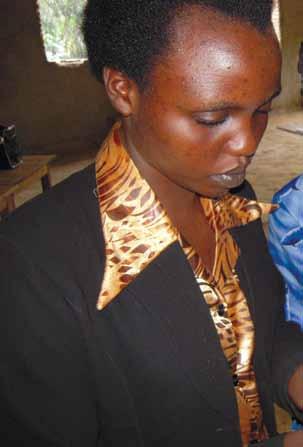
For Alphonsine, there was nothing unusual about watching her brothers go to school while she stayed at home. Her parents, following the common practice of the day, sent their sons to school while keeping their daughter at home to care for the family cows. Illiterate and uneducated, Alphonsine married at age 20 with dreams of a family of her own, secure in the knowledge that women who become wives and mothers are valued by Rwandan society. Sadly, Alphonsine was not able to bear children. At age 40, she endures the pain of her husband choosing a second
wife to fulfill his need for a family. When literacy classes were offered in her community, she too joined.
For these women, literacy classes have provided them with a sense of dignity, self-worth and renewed confidence in their ability to become full members in society.
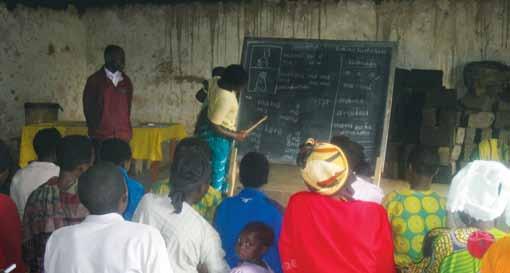
Jeanine and Alphonsine are just two of the more than 200 students, the majority of whom are women, in a new literacy project. It is the brainchild of women in the Association of Baptist Churches in Rwanda (AEBR), CBM’s partner. Two years ago, women leaders from all regions in Rwanda, representing over 300 churches and chapels that make up the AEBR, met to discuss the challenges that they face in their homes, churches and communities, and to begin to consider ways of addressing some of their needs. Since more than 50 percent of the women in the church communities are not able to read or write, the need for literacy training was determined a priority. The women leaders researched and chose a program known for its high success rate, convinced the Rwanda Bible Society to donate materials, identified teachers, mobilized their communities, and committed to supporting students as they faced daily life challenges.
The literacy project touches five communities and is funded by Allison
Church (Moncton, NB), one of the four CBM STEP (Serving, Training, Energizing Partnerships) churches in Rwanda. The first batch of students graduated in September 2010 and plans are now underway to expand the project to 500 students in eight new communities. All students receive a Bible upon successful completion and some are also being trained to conduct Bible studies so that people will not only be able to read the words in the Bible, but better understand how God may be speaking into their lives.
At the mid-point assessment, students prepared short skits to tell
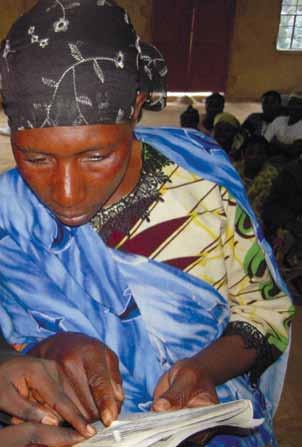
Literacy student Alphonsine (pictured right) reads for the first time with Laetitia Dusabimana, coordinator of the Women’s Department of the Association of Baptist Churches in Rwanda. Alphonsine lives in an isolated village, not far from the Congo border, where 65 percent of women aged 25 and older have been denied an education.
Back to School in Africa
connecting…
CBM Global Field Staff Kathleen and Bruno Soucy offer encouragement and mentorship. They need your support in this vital role. Become their Partner in Mission today. Call 905.821.3533.
stories of their daily life before literacy classes, some of the positive things and challenges in their life today, and what they envision for themselves in the future. Students shared that in the past, because of their lack of knowledge, they were overlooked when training opportunities came to their communities. They were also often mistreated in the marketplace — overcharged by vendors who took advantage of their lack of numeracy skills.
Most revealing, though, was the “future” skit. The women expressed that they now expect to participate fully and have their input considered in community decisions; to do commerce and not be taken advantage of; to be able to better provide for their children and be more highly regarded by their family and husbands; and to be able to read the Bible for themselves and consider what God is saying directly to them through his Word. For these women, literacy classes have provided them with a sense of dignity, self-worth
and renewed confidence in their ability to become full members in society, demonstrating God’s love to family and neighbours alike.
Local church leaders and members have been instrumental in the lives of these students by living out the gospel, bearing witness to the kingdom of God as they provide child care for student parents, encourage those who have difficulty learning, support efforts to begin small savings and loans groups, and advocate for the education of all girls. It’s all going to have a big impact for generations to come.
did you know?
More than one in four adults in the world today cannot read or write: two-thirds are women. (ActionAid)
Above: Kathleen Soucy with Claudine (left) and Olive (right), two of the young literacy students who now lead Bible studies and worship in the church because of their new skills.
Sc h o o l S for P e A c e
by Laurena Zondo, Editor, mosaic
Chantal* was devastated. She wanted to stay in school but couldn’t afford her school fees anymore. When two of her friends heard she was going to drop out, they wanted to help. They were slightly better off, with parents who could pay the fees with even some money left to buy lunch and tea during the term. The two girls put their money together and brought it to the headmaster, asking if they could cover Chantal’s fees. At Ngarama Baptist College, students from different backgrounds are leading the way in building peace.
It’s a story that illustrates the determination of many youth in Rwanda to live differently after the genocide in 1994, and the impact of the peace and reconciliation efforts at many schools operated by the Association of Baptist Churches in Rwanda (AEBR), where students are mentored and exposed to the gospel message of love and caring for your neighbour.
Most of these schools are located in remote regions and provide an opportunity for education for poor youth, many of whom are orphans. But with such large numbers of poor students, school fees are always a problem. So, too, is church funding. As a relatively small denomination — 45,000 members — that serves among the poorest of the poor, the
AEBR itself lacks funds. Dedicated pastors, teachers and other church workers constantly struggle to make ends meet, both in their ministries and their personal lives.
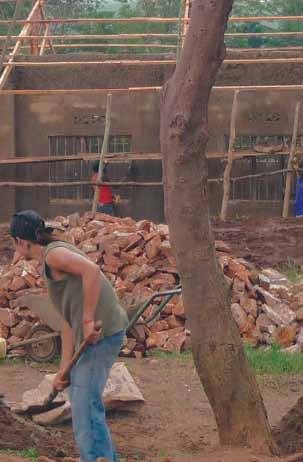
Ngarama Baptist College, like many others, struggles to meet government standards and was in danger of being closed down. Through CBM, teams from Canadian Baptist churches came to help with school reconstruction. A dorm and a new classroom were built, which enabled 100 more students to attend. This year 565 students are enrolled — nearly half of whom are girls.
“This school was nearly closed, but when the government saw the first improvements being made with the help of short-term mission teams they eased off,” says Rev. Gato Munyamasoko, CBM’s Development Manager in Rwanda.
The school has since won top honour for academic achievement in the overall district twice. With success and recognition comes a nice prize ($200 US). “When Ngarama
won, out of nowhere, they wondered who is this school, and they rechecked to make sure the money was going to the right place. And it was,” jokes Rev. Gato.
While recognition is nice, it’s more about building trust. “Besides a better working relationship with the government, all of these developments are building trust and good relationships at school and at home — parents in the community and parents from far-reaching areas now want to send their children to this school.”
*Not her real name
A tree can only be straightened when it is young
— Rwandan proverb
leArning For liFe
Moses grew up in a single-parent home. He was just three years old when his father left his mom and their four children on their own. While Moses’ mom struggled to provide food and housing for her young family, lack of a steady income meant life was tough. Tragically, it also meant that the two oldest siblings could not go to high school. Mom couldn’t afford the school fees with what she managed to earn as a maid.
When it came time for her third child, a daughter, to go to high school, Moses’ mom was able to access a loan to help pay for school fees. She also found a second job picking tea, and all that she earned went to pay down the loan. By the time Moses got to high school, there was not enough money to keep him in school as well. Mom was still making payments.
But then a combination of wonderful things happened.
First, Moses was among the very first students in the area to be assisted by CBM’s Guardians of Hope, in partnership with the African Christian Church & Schools, to help families most impacted by HIV and AIDS and extreme poverty.
Karen Refugee Camps — Thailand: Mar. 03 – 19, 2011
Easter Build — El Salvador: Apr. 14 – 25, 2011.
Email stm@cbmin.org for more information.
However, because of the overwhelming number of orphans in need of school fees, only a portion of Moses’ fees could be paid. The school principal tried to help, as Moses was a very bright student. So rather than kick Moses out of school — a common practice when fees are not paid — he let Moses stay. Moses also came to the attention of a local government program and he received a small bursary.
“It is by God’s grace that Moses was able to complete high school,” his mom shares happily. Moses now dreams of going to university to study science.
Did you know?
Last year, The Sharing Way helped nearly 1,250 students in Kenya and Rwanda stay in school by providing school fees, uniforms and school supplies.
Through the grassroots community development programs of CBM’s church partners, long-term change is slowly but wonderfully happening in families like Moses’. Let’s keep the change going.
connecting…
You and your church can participate in Hunger for Change – Learning for Life, The Sharing Way’s Annual Appeal. Help some of the world’s most vulnerable children in Kenya, Rwanda, Bolivia and India access education. And help meet the United Nations Millennium Development Goal of universal primary education by 2015. Visit our website at www.cbmin.org to obtain more information and download resources to help promote this campaign in your church.
Moses (pictured far right), with two other students who have been helped with school fees.
“Is not this the kind of fasting I have chosen: to loose the chains of injustice and untie the cords of the yoke, to set the oppressed free and break every yoke?” (Isaiah 58:6)
he story is told of some people who lived together in a small village by a great river. They were good people — compassionate people — who worshipped God and lived quiet and kind lives. One day an unusual thing happened. A stranger was found drifting in the river, nearly dead. The kind people rescued him from the water and cared for him, providing food and water and medical help. Soon he was back on his feet and on his way.
As time passed, the sight of people in distress in the river became a common event. The kind people rescued everyone who came to their community via the river, without prejudice. So kind were they that some of the people they rescued remained in the village and even worshipped the God of the people who had saved them. Eventually — because of the increasing numbers of people needing their services — the kind people established programs and protocols for rescuing and restoring victims from the river.
Day after day, year after year, they pulled people from the river and met their needs — but no one ever asked WHY. To be sure, some of the victims told stories of what was going on up the river that caused them to fall in and eventually arrive at the village, in desperate need of help, but the kind people never thought to go up the river to investigate. After all, they had their hands full with their rescue and restoration efforts. Their faith compelled them to be compassionate to those in need, and because they were people of profound faith, they tried not to grumble about the effort and resources that were being poured into this work.
Then one day, as the villagers were studying the Scriptures, the words of the prophet Isaiah struck one of them in a new way. Was simply meeting the needs of the struggling strangers enough? Was this all God required of them? What did it mean to “loose the chains of injustice and untie the cords of the yoke, to set the oppressed free and break every yoke?” Then someone else suggested looking for other verses that might help them know what to do. Soon the community was abuzz with excitement over passages that had previously been overlooked. The kind people quickly discovered that there are hundreds — several thousand, in fact — passages about justice, mercy and God’s desire for his people to serve as advocates for the poor, the oppressed and the marginalized.
Finally, the community decided to send a small group of villagers up the river to investigate the conditions that were causing distress to so many people.
As we consider the various injustices at play in our own communities and around the world, we must ask ourselves how we ought to respond. Are we to operate around the edges of injustice, administering mercy and compassion where we can — providing a cup of water in Jesus’ name? Or does God also call us to a deeper kind of engagement, where we not only go “up the river” to discover the sources of injustice, but then become involved in efforts to serve as advocates for the poor and oppressed?
Join the conversation at www.cbmjustice.blogspot.com.
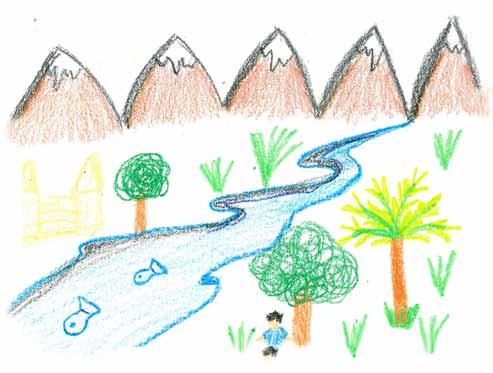
Drawing by Luis, age 12, one of the children in CBM’s Prison
ministry in Bolivia
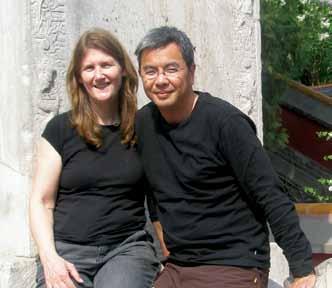
Tom and Grace Mei are two of CBM’s newest Global Field Staff. Tom shares his thoughts and feelings on what lies ahead in their new ministry.
The calling…
Going to Asia has been in the works for many years. I grew up in Duncan, B.C. and had no interest in Chinese things until after I became a Christian — I didn’t even like Chinese food! But after I became a Christian, I had a feeling that God might one day call us to Asia. The burden just got stronger and stronger. In 1992, we spent a year teaching English in China. It was a wonderful experience, although not an easy one. For me, that year was a realization that my heart was in engaging the Christian community, training and encouraging leaders. God called us back to Canada where I continued my theological education, and began pastoring at a church in the Vancouver area. For almost 20 years, we worked towards building up multicultural churches, and invested strongly in Chinese ministries. As a member of CBM’s Board, I always tried to encourage our denomination to be in China. In talking with CBM, we realized there was an exciting opportunity for partnership. The needs of this ministry mix well with our areas of giftedness — we both saw a synergy of partnership and fit. Grace brings skill and experience as an educator and I will be very much involved in areas of leadership development and encouraging pastors that are emerging in Asia.
What integral mission means to you and Grace…
I don’t believe the church has a mission program — it’s God’s mission and he has invited the church to participate in that mission. Integral mission is the incarnation of the kingdom of God. It’s more than just mission — it’s the whole understanding of what it means to be the people of God, the people of faith in a particular area. To me, integral mission is to bring the whole gospel, to incarnate the gospel, in the place where the people of God are working and living and testifying, bearing witness to the reign of God. More than ecclesiology, it’s the transformation of a community. It’s submitting ourselves to the reign of God wherever we are.
The challenges…
The challenge for us is emotionally accepting the reality that we are not going to be sitting down with our kids and just yakking. That would’ve been the only thing that would’ve kept us here, our kids. But they are so supportive. It’s been a conversation in our family forever — they know this has been on our hearts ever since they were children. My mom, who’s 90, has been very encouraging even though she will no longer be able to live with us. Also, the affirmation of our community of faith is just tremendous. Everyone we talked to said we hate to see you go, but it’s so right. So we are really encouraged and affirmed in the next step.
What are you looking forward to…
Fulfilling God’s call in our lives. We’re really excited — God’s obviously involved in all of this. To have a seed planted in your heart when you’re young and then see it bearing fruit at this time in my life, to believe in that and see what that means for us after all these years…
Grassroots Heroes
Praxis this past year, was deeply moved by the way the gospel is being demonstrated practically through the Sharing way’s c hagas project. So, at this year’s VBS we chose to support this project.
each day at VBS i took the opportunity to teach the children some of what chagas* is and how the project is making a difference in Bolivia. they were very interested in hearing about my experience and looking at the pictures. they were also very eager to help and make a difference through their giving.
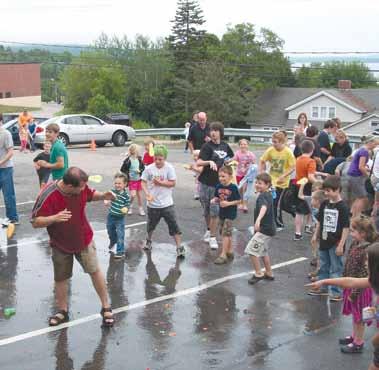
w e set a goal of $500 at the beginning of the week in an attempt to raise enough money to completely renovate a house and provide testing and treatment for 12 people. this was more than we had ever collected in the past. in order to make it a little more interesting, the children were also told that if they met this goal, each one would be given a water balloon on the last day to throw at myself and our summer ministry student.
Mark the date.
December 1 st is World AIDS Day. Order your free promotional material today and help raise funds for CBM’s Guardians of Hope who are caring for orphans and families most impacted by AIDS. Email: communications@cbmin.org
Please find enclosed a cheque for $581.61…i have also included a picture of the children enjoying their reward on the last day.
in c hrist, Adrian gardner
Associate Pastor, grand Bay Baptist c hurch, new Brunswick
* c hagas is known as a disease of the poor - transmitted through the bite of an insect that lives in mud brick walls and thatched roofs.