Call us optimists, but we actually believe that change can start with the actions of just one person and become infectious. We’d like to share with you one such story.
Recently, Bishop Timothy Ndambuki, head of the Africa Brotherhood Church (ABC) in Kenya, and his wife Mary, came to visit Canadian Baptist churches. It was their first time in this country. After he spoke to a small gathering of CBM supporters, he made a very special presentation. He and Mary were overwhelmed by the hospitality they had received here and they wanted to give back. He asked that CBM accept their donation of all the money they had brought with them and that the funds be used to support another one of our partners. “I want the money not to go back to the ABC or Kenya, but to fund the good work happening in other places around the world because we are all partners together.”
This issue is full of similar stories –everyday actions that are leading to change. May it be inspiring. Do you have examples to share? Send us a letter or email us. We’d love to share your story.
mosaic is published four times a year by Canadian Baptist Ministries. Copies are distributed free of charge. Bulk quantities available by request.
Contact us at: 7185 Millcreek Drive Mississauga, ON L5N 5R4
Tel: 905.821.3533
mosaic@cbmin.org www.cbmin.org
Managing Editor: Jennifer Lau
Editor: Laurena Zondo
5
c ontents
mosaic is a community forum of local and global voices united by a shared mission. mosaic will serve as a catalyst to stimulate and encourage passionate discipleship among Canadian Baptists and their partners. ethically speaking
Page 3
Sympathy or Solidarity? Page 4 Charity vs. Development feature Page 6 Consumed Faithful Discipleship in a Consumer World
Page 10
Busted: Consuming Christmas
Page 12
Sweeter Road to Success
Look what can happen when you give someone a little credit
Page 14
Young Entrepreneurs
Mission of Canadian Baptist Ministries Encouraging passionate discipleship for local and global mission.
Sympathy or Solidarity?
It’s time that we North American Christians think more clearly about our strategies of mission.
People of the Global South should not simply be a means by which we alleviate our sense of guilt or people to whom we direct our sympathies. They need to be our brothers and sisters with whom we are called to mutually serve, walk alongside, strengthen and sustain.
The writer of Isaiah 61 speaks to this concept. One particular section has always intrigued me. Deep in verse 3 the writer comments that those who walk with God “will be called oaks of righteousness, a planting of the Lord for the display of his splendor.” They will become stronger and have deep roots. Jesus (in Luke’s Gospel) picks this passage in the Old Testament to announce the coming of God’s reign ushered in through his life, death and resurrection.
This is the way of Jesus and any ministry or mission that does not take
seriously the creating of “oaks with deep roots” spiritually, emotionally and socially, is wandering off track. Jesus’ way is a journey of service where the first becomes last; the weak are made strong; sisters and brothers stand together in mutual responsibility and generosity with one another, desiring to bring what they have, to build solutions together.
There is no dignity in dependence. Neither is sustainability ever built from top-down strategies of help, no matter how well intentioned. Rather, our mission is rooted in mutuality. We need God and we need each other. We serve God by serving each other.
We believe this with all our heart at CBM. Each of our four key strategic ministries – Grassroots Leadership Development, Sustainable Community Development, Pioneer Outreach and
by Rev. Dr. Gary Nelson General Secretary of CBM
Global Discipleship – is rooted in this belief.
In partnership with Carey Theological College, we’ve launched a new diploma program in Integral Mission. Using the resources and leadership of Rupen Das, currently the Director of the acclaimed International Development Program at Humber College in Toronto, this program will train and equip national leaders from all our partners, starting in Africa and then moving to the Middle East, Asia and Latin America. The first module of this course was offered this past spring in Kenya and was attended by CBM Global and National Field Staff, national pastors and development workers from our partnerships in Angola, Bolivia, India, Kenya and Rwanda.
We believe that this diploma program will be critical in developing leaders who are able to create sustainable community development strategies while at the same time have a deep spiritual connection to why sustainability is important. Imagine national leaders equipped as “oaks of righteousness, deeply planted” working alongside each other and passionately desiring to see that in others.
It reminds me of the 1st century followers of Jesus who turned the world upside down because of the way they lived together and how they served those around them. “See how they live!” was the cry from those with whom they came in contact.
Go online at www.cbmin.org for some video clips and student comments from the first class of the Diploma in Integral Mission Program. Make a donation today to support the continued development of leaders around the world.
Charity vs. Development
by Gordon King, Director of The Sharing Way
“ Helping the poor should be simple. You are making it too complicated!” I have heard this complaint often. My immediate response is: “You are right. The Good Samaritan did not need a program design and budget to respond to the wounded victim at the side of the road.” And yet, how many times have we given spare change to a panhandler with the knowledge that this is a temporary fix and not a solution?
There is a story of a girl in India who lived on the streets with her family in a large urban area. Her greatest desire was to attend school. Thanks to the charity of an organization, her school fees were paid and she was given a uniform and supplies.
Within a few days she no longer attended classes.
When asked to explain why she had abandoned her dream, her response was: “The other children say that our family eats the food that their families spit upon.”
Transformational development for this girl required something more than simply school fees, a uniform and supplies. We will return to this point later.
I propose that there are five fundamental differences between charity and community based development programs. I will make specific reference to The Sharing Way (TSW), CBM’s relief and development department, while recognizing that these principles are practiced by the majority of Christian agencies that work in the field.
1. Development programs empower local people to analyze their own problems and seek their own solutions. Church-based development workers act as facilitators and technical advisors. They help the community to determine their key issues and create a plan that
belongs to the community. Charity, on the other hand, underscores existing power differentials. People from the outside analyze the situation and act on behalf of the recipients who are reduced to (grateful) beneficiaries rather than participants.
2. Development programs begin by using local resources and efforts. I often think of Sam Mutisya, The Sharing Way’s Africa Manager, who is sometimes called “Mr. Wheel.” Sam emphasizes that the local community must start the wheel rolling with its own work and resources before outside funds are utilized. Charity often overlooks the importance of local ownership, contributions and sweat equity in moving a community forward to address issues of poverty.
3. Development programs are concerned with root causes of poverty rather than symptoms. TSW development workers understand that poverty is complex and communities require an integrated strategy that may include initiatives such as water, crop production, microcredit and community health services. There is seldom a single “silver bullet” solution. Charity generally overlooks the complexity and offers only a temporary alleviation of a symptom of poverty.
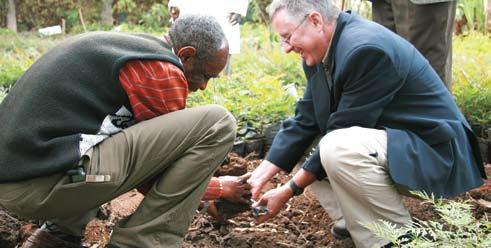
Gordon King (right), Director of The Sharing Way, plants a seedling at one of the Africa Brotherhood Church community development projects in Kenya.
4. Development programs aim at transformational change that can be monitored and evaluated. For instance, a child nutrition program may train mothers to use local food products in a more beneficial manner for their children. The objective is to decrease the percentage of underweight children in the community. The program is monitored by weighing the children prior to the project initiation and at three-month intervals for one year. Comparisons are made with normal weight ranges per age for that country and region. The statistical evidence is used to evaluate the effectiveness of the program. A story of one family may be satisfying emotionally, but the use of quantitative indicators allows the development staff to determine the level of success of the program.
5. Christian development programs add a faith dimension. We believe that God’s intention is to give abundant life to all people during their experience of life in this world (John 10:10). Earlier this year, CBM helped sponsor the visit of Rene Padilla, a leading Latin American theologian. He helped many of us here in Canada to understand that this does not mean abundant possessions. Abundant life describes
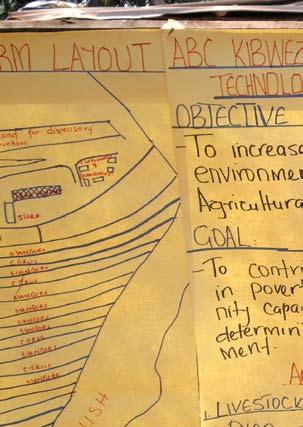
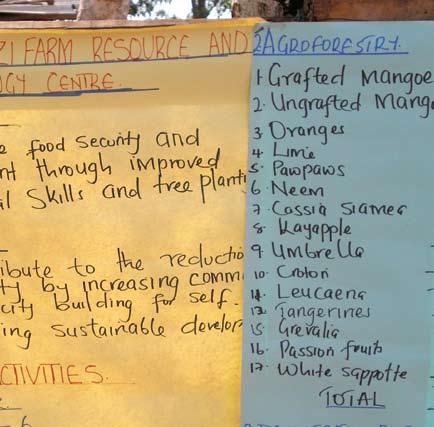
Presentation at the Agricultural Research & Training Centre of the Africa Brotherhood Church (ABC) in Kenya. Besides ABC pastors and development workers, the centre also hosts training for development workers from neighbouring countries and abroad.
the richness of living in a pattern of meaningful and joyful relationships with God, the community, the family and the environment. Abundant life means having the opportunities to develop gifts and abilities and using them to serve others. It means experiencing the love of God and his people.
I began this article with the story of a girl. I have no doubt that she needed the resources to be able to attend school. She also needed to know that she was created in the image of a loving God to live with dignity and hope. She desperately needed a community of faith that loved children from all social backgrounds and nurtured their growth – intellectually, emotionally, morally and spiritually.
This girl was a former colleague of mine. Nearly a decade ago I heard her story, but it has stayed with me.
My dedicated colleagues and I work in church-based development programs because we believe that transformation is possible through God’s grace, the support of the women and men who are followers of Jesus (in Canada and around the world), and the Spirit-inspired work of communities who do not allow themselves to be defined by poverty.
New Appointments
Reflect Commitment to Integral Mission
In 2009, Rupen Das joins CBM as the Deputy Director of The Sharing Way. He and his wife Mamta will focus on the integral development of leaders and be based in Beirut, Lebanon, where they will work alongside their CBM colleagues, Elie and Mirelle Haddad. The Haddads serve at the Arab Baptist Theological Seminary, influencing the development of strong Christian leadership for countries throughout the Middle East and North Africa region. In August, Elie was appointed the new President of the seminary. Congratulations, Elie!
and Carin Guthrie have been appointed by CBM for service to Bolivia. They will work with our partner, the Bolivian Baptist Union, to help equip lay leaders for churches throughout Bolivia. They will also use their extensive business skills and experience to help small business entrepreneurs who benefit from micro-enterprise loans through The Sharing Way.
Duane
consumed
Faithful discipleship in a society of consumption
by Jonathan R. Wilson
We are consumers.
Aren’t we used to hearing that in Canada? In fact, isn’t it so familiar that we barely pause to notice it anymore? The accusation that we consume a disproportionate share of the world’s resources is so much a part of our mental landscape that we simply absorb it and move on. It is like the old billboard advertisement that you don’t even notice on your morning commute – until a new, visually shocking ad replaces the old.
Let’s move beyond the familiar, ineffective “we are consumers” and “we consume a disproportionate share of resources.” Here is a deeper and more deadly truth: we are being consumed.
Our lives are becoming thinner, shallower, and less abundant as a result of the deeper truth that the things that we think we are consuming are actually consuming us. We are becoming less human, even as we consume more and more. And part of this deadly dynamic of consumption is that as we become less human, our anxiety rises and we frantically consume more. This sends us into a whirlpool of ever deepening despair and anxiety.
The Old Testament prophet Joel describes in powerful, imaginative detail how waves of locusts strip the land bare of life. Those who sink into spiraling consumer debt know that same cycle of being stripped bare of life. But so do those of us who can pay our bills and even give to the church, but whose lives are consumed by advertisements, sales flyers, internet shopping, and the desire for things.
This dynamic is why things never satisfy – and why we still pursue them even when we have experienced that disappointment.
Our lives are becoming thinner, shallower, and less abundant as a result of the deeper truth that the things that we think we are consuming are actually consuming us.
So: We are consumers. We are being consumed. Here is an even deeper and deadlier truth: We are consuming others.
The message of Deuteronomy (the Hebrew book of laws), the prophets, Jesus, and Apostle Paul is that when we participate in unjust patterns of consumption, we are devouring others. We are consuming their lives in the way that we live ours. To put it in a shocking image, we are cannibalistic.
This disturbing image and its truth is reality for us today in the midst of a world that is marked by increasing insecurity about food and water. This is true in the ways that we in the west both produce food and distribute it. It is also true in our use of water in manufacturing and recapturing it.
The message of Deuteronomy, the prophets, Jesus, and Apostle Paul is also that God will not tolerate injustice because it is contrary to life. Injustice destroys us; it destroys others. Justice is not an arbitrary rule dictated by a capricious God; justice is the order of things that leads to human flourishing and, indeed, the flourishing of all creation. Justice aligns us with God and the life that God has created.
At this point you may be thinking about and expecting an account of “just consumption.” That is, you may be looking for me to give an account of how we can participate in a “Society of Consumption” as disciples of Jesus Christ in a way that is just and promotes a just order.
But it is wrong for followers of Jesus Christ to think that we can simply make our way within a society of consumption and “make the best of it” given what we have. To think this way is to accept the fallen order of things; it is the opposite of “repent and believe the good news: the kingdom is at hand.”
To repent is to change our way of thinking and living – and to begin to serve and witness to the kingdom of God, we must turn from an “economy of consumption” to an “economy of communion.” As long as our vision, our thinking, our longing, and our acting is framed by an economy of consumption and a view of ourselves as consumers, we cannot break free from our enslavement to our present, consumptive way of “life” –which is in reality a way of death.
The phrase “economy of communion” is not common. I hope that it shocks us out of our complacent consumptive lifestyle. What a strange notion, “economy of communion.” What could it mean?
To repent is to change our view of ourselves from consumer to communer – we must begin where the economy of communion is memorialized and entered into today: the Lord’s Supper. Here we learn that life is sustained not by competition and consumption but by gift and communion.
That’s right: every breath I take, every beat of my heart, the continuing knitting together of the molecules in my body, all of this depends on God’s grace climactically enacted in the gift of Jesus Christ.
Jesus Christ is God the Son communing with humankind fully – even to the point of bearing our sin, including our injustice and our consumptive lives. In that economy of communion we are forgiven, redeemed, reconciled, adopted, and given abundant, eternal life.
An economy of communion begins with the recognition that my life is a gift from God, not a human achievement. Life is sustained by God’s grace, not by human effort. Life is not a zero-sum game in which I am competing for limited resources. True life is abundant and eternal.
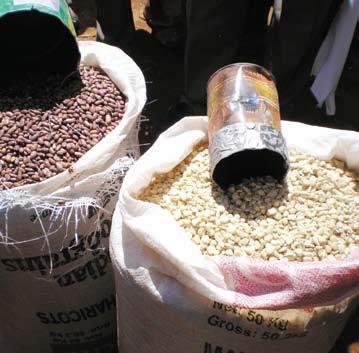
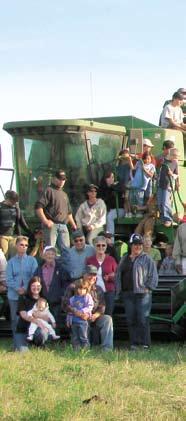
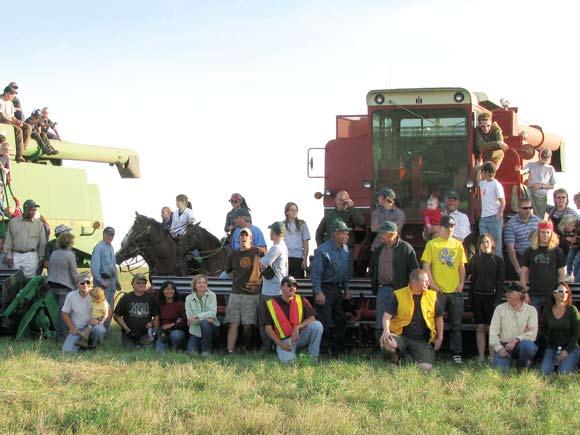
For the past 25 years, a dedicated group of farmers (and their family and friends) from the community of Brownfield, Alberta have worked together to grow and harvest grain that is then shipped – or sold and funds sent – to countries experiencing famine, drought and extreme food shortages. It’s an initiative that has been led by Brownfield Baptist Church and is part of a nation-wide program of the Canadian Foodgrains Bank. CBM is one of the founding members of this organization which now includes 15 Christian denominations. This year marks the CFGB’s 25th anniversary.
That economy of communion is the reality of God’s own eternal life. Without beginning or end, God lives by communing as Father, Son, and Holy Spirit. The Father is “father” because of his relationship with the Son – that’s what makes him Father. And the Son is “son” because of his relationship with the Father. And Father and Son are united by the power of the Holy Spirit, whose relationship with the Father and Son is an expression of their love for one another. In other words, God lives eternally by the giving of the Father, Son, and Holy Spirit in communion. Therefore, when followers of Jesus Christ move from an economy of consumption to an economy of communion, we move more deeply into an understanding of the work of Christ and the life of the triune God.
What I have described as the economy of consumption – consuming, being consumed, and consuming others – is what was happening on a local level in the church at Corinth almost 2,000 years ago. As I have done, Apostle Paul addressed the Corinthian disciples on the basis of their celebration of the Lord’s Supper (1 Corinthians 10:14-22; 11:17-34).
We must refuse to let the world press us into the mold of an economy of consumption. Instead, we must be transformed by God’s economy of communion. When this happens, we will grow in our recognition that God is life and we will learn to confess with the psalmist, “Whom have I in heaven but you? And earth has nothing I desire besides you. My heart and my flesh may fail, but God is the strength of
my heart and my portion forever.” (Psalm 73:25-26)
God’s economy of communion means that we will seek to live ever more deeply in communion with the life of the triune God. The consumptive desires that have ruled our lives will fade away. The energy that we have misdirected toward illusions and counterfeit pleasures will be redirected toward the good life for which God has created and redeemed us, and has shown us in the way of Jesus Christ.
As our desires are purified and as we participate more fully in Christ (1 Cor. 10:16), we will grow in knowing that our life is guaranteed for eternity by the life, death and resurrection of Jesus Christ. The presence of the Holy Spirit in us is the sign, seal, and down payment on that promise.
God’s economy of communion means that we who are guaranteed eternal life can joyfully give our lives in generosity and hospitality to others. In an economy of consumption, such generosity would be either a manipulative act from which I expect to receive more in return or else an act in which I ultimately extinguish or destroy myself. But in God’s economy of communion, such self-giving is an act of communion in which my true life in Christ flourishes.
Finally, if God’s economy of communion transforms my vision, my attitude, and my way of living, then I will always live in communion with other disciples of Jesus Christ. I will be conscious of their presence with me when I shop, when I eat, when I plan my vacation, my professional travel, my giving to the church. If I am truly being transformed, this consciousness will not be merely a dialogue that goes on in my head, it will be a reality practiced in my everyday relationships when I invite others to participate with me and examine me as I seek to be transformed.
Jonathan R. Wilson is the Pioneer McDonald Professor of Theology at Carey Theological College in Vancouver. His most recent book is Why Church Matters: Worship, Ministry, and Mission in Practice
How much are you spending on Christmas this year? shopping spree in December
$874 average amount each Canadian consumer spends in the month of December.*
* $28.7 billion – total amount Canadian shoppers spent in December 2006 (excluding the automotive sector).
Statistics Canada: www.statcan.ca
$730 family income for one year
average total family income in a developing country for one year.*
* based on earning $2/day
Sweeter Road to Success
by Laurena Zondo
“Today, the majority of people in Bolivia continue to live in conditions of extreme poverty.”
Julian lives with his wife and three small children in Bolivia’s remote north – the Potosi region where the streets were said to be paved with silver as a result of the wildly successful mining industry. But that was years ago and only a few really benefited as most of the silver – and the wealth – was shipped out of the country. Today the majority of people continue to live in conditions of extreme poverty. Work is hard to find and many move to the city in search of a better life. Most end up worse off.
This was the path Julian was on before Canadian and Bolivian Baptist
churches got involved. They offered him and others in the community training in agriculture and livestock, along with seeds, tools and other resources to share, as part of the Bolivian Baptist Union community development program for rural families called PADEFAR
Julian received fruit plants and alfalfa seed and he participated in several training courses. But what made the most impact, he now says, is when he received a small loan to buy a beehive.
He hesitantly began his new business in honey production. He was
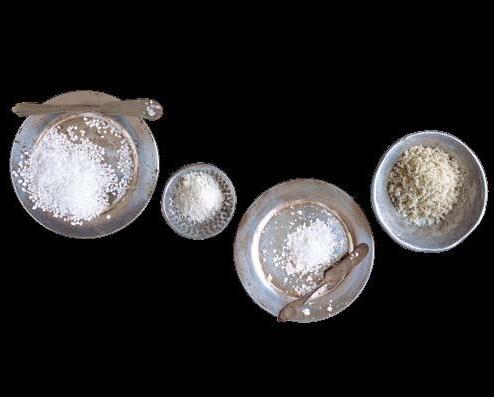
You could pave a road from Potosí (Bolivia) to Spain with the amount of silver that was exported out!
According to the BBC, “…more than 62,000 metric tonnes (137 million pounds) of silver that provided the Spanish aristocracy with a lifestyle of profligate opulence and, because it was used to pay off many Spanish debts to neighbours, fuelled much of the economic rise of Europe.
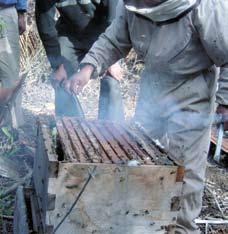
New bee-keepers in Bolivia learn how to smoke out the bees as part of their new honey production business.
unsure of how much this activity would really help, but PADEFAR staff encouraged him to continue.
In his first two years, he had two harvests of honey. Last year, he had three. Next year, he thinks he might have four.
Each of his beehives provides 40 pounds of honey which he then sells for a little over $1 per pound. The harvesting is done with community machines provided by PADEFAR to ensure that production is more hygienic and clean.
Before embarking on honey production, Julian says that he had to go to the city of Cochabamba, over 450 kilometres away, to search for work as a day labourer in order to provide for his family. It was difficult being separated from his family.
Last year, he did not have to leave. “With the good production from my beehives, I have just as much as when I go in search of work. Now I dedicate more [time] to my children, my land and my cattle.”
Julian hopes to be able to improve irrigation, to increase agricultural production and therefore his income, and he wants to plant more trees and flowering plants “because my honey production depends on these.”
He also has more plans in mind for his business, after recently taking a course that specializes on the use of beeswax products. The future looks sweet for Julian and his family.
What’s the big deal about microcredit?
Many of the world’s poorest people have entrepreneurial instincts and work long hours with few resources. They are unable to borrow money because they have no collateral and the loans are too small to be worth the paperwork for commercial banks. Some manage to borrow money from lenders who charge exorbitant interest.
Working with national church partners, The Sharing Way takes a unique and effective approach. We usually begin with a loan circle so that a group dynamic is created around saving and money management.
microcredit...
Much of the silver even ended up in China – used to pay for England’s new addiction to tea. But Spain’s unquenchable thirst for silver had a terrible human cost. The African and native Indian slaves ordered into the mines are said to have survived, on average, six months. It is estimated as many as 8 million men may have died.”
http://news.bbc.co.uk
Loans repaid and given to the next person
Creation of support groups
Business management training
It’s a revolving circle of support that is proving effective. We’ve seen income from these small businesses greatly improve the overall quality of life not only for the participants but also the community, as these empowered groups often start to look at how they can address other needs in their community.
connecting...
Invest for Change. It doesn’t take a lot of money to make a big change. The average first loan received is often as small as $50. You can provide more microcredit today through The Sharing Way. Donate online at www.cbmin.org
Hunger for Change. Learn more about the impact of our microcredit programs and how you and your church can be a part of real change in our world. Email communications@cbmin.org or visit our new website at www.cbmin.org for free promotional material.
Witness for the love of God
Loans for start up
Vocational training
Project mentoring
Hi, I’m Florence!
I’m David
young
entrepreneurs
by Aaron and Erica Kenny
CBM Field Staff in Kenya
Before the sun rises over the Nairobi ghetto of Eastleigh, a group of students at a community centre are already busy preparing their wares for a new day. Along with studying each day from 8 am to 4 pm, they come early each morning at 6 am to prepare mandazis (Kenyan donuts) and porridge that they will sell to other students, children, and staff workers at the centre during tea breaks and recesses.
For many of the young people who complete Kenya’s standard eight level (comparable to Canada’s eighth grade), academics give way to the immediate need of contributing to their household’s income. For this reason, all of the students at the Eastleigh Community Centre’s primary school are introduced to the basics of financial management and micro enterprise development at a young age. Many of the students will enroll into one of the centre’s nine vocational programs immediately after completing standard eight.
Erica Kenny, a Canadian Baptist Ministries Field Staff worker serving with Somali women and children in Kenya, sat down with a group of these young entrepreneurs, age 12 to 25 years old, to discuss their experiences.
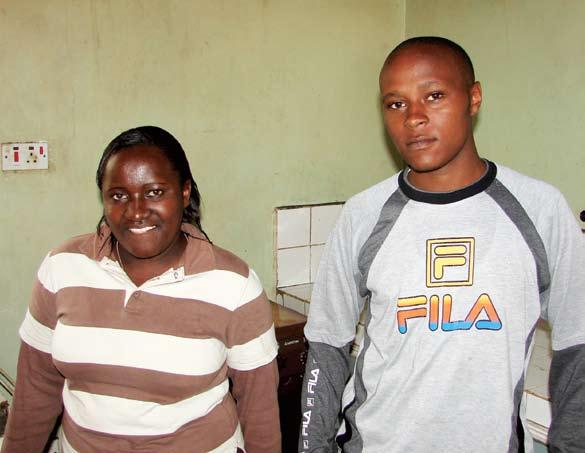
Florence Muoki (age 20) and David Ngunju (age 17) are both students in the one-year catering program.
Why did you choose to join this school and enter the catering program?
I’ve always wanted to be a baker. Because of the Eastleigh Community Centre I am learning the skills I will need to find a job and start a cakemaking business of my own.
I have admired bakers since I was a kid in school. I was also inspired by a lady who came here to the centre during the Youth Entrepreneurship Conference. She was a student at ECC and because she worked hard making cakes, she was able to start to grow her own business. Now she employs two other people who assist her. She no longer needs her parents to support her.
What sort of things are you learning?
There is a process we are learning to follow. You have to be neat, clean, and take care with hygiene. If you take care, the rest is not hard to make.
Do you use a cookbook?
(laughing) No, we must memorize all of our recipes.
That must be difficult.
With interest nothing is too hard. The most important thing in business is that you must be committed and disciplined for the business. We are learning that you have to work hard for yourself.
We also go to other businesses and learn from them by seeing the kinds of challenges that we will face and need to overcome.
In what ways has your faith in God impacted your lives?
Being idle does not honour God. We are studying to learn ways of providing for ourselves and for our families. By working hard I can help the children in my family go to school like I did. This is a big part of living my faith.
david ngunju
erica kenny
florence muoki
As a Christian, I believe that we need to be honest. There are a lot of dishonest people, but in business the only way to maintain customers is to be honest. That is one way my faith helps me to do well.
If you do not have faith, I do not know how you could do it.
At times it must feel overwhelming as you struggle to improve your lives. Running a micro enterprise is not a simple task. Is it better to start a business by yourself or with others in a partnership?
From my side, a partnership is better than going it alone. For example, we have a business of our own making and selling breakfast (at the community centre). We sell mandazis (a Kenyan donut) and porridge so that we can save money for capital to start our own business when we graduate.
How much are you selling your goods for and how much of the profits have you saved?
We sell a mandazi for 5 shillings (approx. 10 cents) and a cup of porridge for 10. Our treasurer collects all the profits for the group and last month we saved 1,260 shillings (about $20 Cdn). We want to use this money to expand our business together.
What are your dreams?
I am excited to be self-employed and be my own boss. When you are the boss you can make decisions for yourself. If something isn’t working you can change it. It is not fixed. I can do what is best to make my business the most profitable.
I want to get a job somewhere so that I can save money for capital to start my own business. It is very hard to find a job in Kenya, but it is easier to start a business of your own. I just need to save capital. With some capital there is no limit on what you can do!
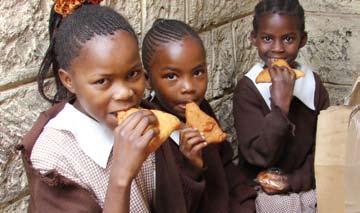
Tea time at school. Students enjoying the mandazis (Kenyan donuts) prepared and sold by young entrepreneurs, David and Florence, both of whom are in the catering program at Eastleigh Community Centre.
Just in time for Christmas! Just for Kids!
Through the Kids Care Gift Catalogue and Activity Book, discover how kids in Canada can help an amazing group of orphans in Kenya who have also started their own business. Email communications@cbmin.org to get your free copy – or shop online at www.cbmin.org
connecting...
Through the youth programs at the Eastleigh Community Centre young men and women like Florence and David are succeeding in making a way out of poverty for themselves and their families. You can support this program by making a donation online to the Kennys Team Support through our new website, www.cbmin.org
on the blogs
Curious about what life is like for the Kennys in Kenya? Check their blog at www.fourkennys.blogspot.com
by Dr. Lois Mitchell CBM’s Justice Initiatives Coordinator
We can’t help but notice that humanity is facing a number of crises. There’s climate change and the dire predictions of what might happen to the earth if the temperature warms another two degrees. Natural disasters seem to be increasingly devastating and – maybe it’s just more immediate news coverage – but it seems that they are striking more often, leaving international aid organizations scrambling to get help to the victims before their situation is totally hopeless.
Then there’s the global food crisis and its implications for the hundreds of millions of people around the globe who are already living in extreme poverty. Water shortages, inadequate sanitation, poor housing, infant and child mortality, unemployment, the threat of a 21st century pandemic, lack of access to education, terrorism – the list goes on.
As you watch the news, have you ever wondered which mountains you might move if your faith really did have that kind of power? Well, we think it’s time for Canadian Baptists to flex our faith – to really BE the incarnational presence of Christ in our world – in positive, creative, compelling ways. It’s time to step up to the challenges of our day by intentionally and persistently living out our faith.
The problems can appear to be totally overwhelming. The idea of progress that arose out of the Enlightenment – that man and society are ultimately perfectible through man’s own ingenuity – seems like an illusion (at best) or a cruel deception (if you’re a cynic).
So, my question is, “Where’s the Church in all of this?”
“In fact, where am I in all of this? How do I reconcile the fact that the gap between the global rich and the global poor is getting ever wider with my faith in an omnipotent God who promises abundant life and who commands me to love my neighbour as myself?”
I propose that there are three logical options for responding to the injustices behind the current realities of poverty and all of the associated problems.
The first option is denial.
We can simply pretend that there is no problem. So long as we have a good and comfortable life here in Canada, we can retreat into ignorance. I actually know people who now refuse to watch the news because “it’s too depressing”. For Christians, there may be a temptation to devote ourselves to our own personal relationship with Jesus Christ and to use this as an excuse for ignoring the material poverty of the masses of humanity.
The second option is perhaps more frightening but it’s one I fear may creep into our thinking. I’ll call it the survival of the fittest rationalization.
The argument could go something like this: the planet can only sustain a population of a certain size and when we exceed those limits – either locally or globally – there is a correction that will happen to reduce the population to a sustainable level. Thus, natural disasters, epidemics or pandemics, starvation, etc. – these are ways that nature (or perhaps even God!) deals with over-population. Thus, Christians need not be overly concerned about these disasters, but rather should focus on the spiritual destiny of those most “like us” – the survivors, the geographically and geo-politically “fit”. We must look after ourselves first – naturally – and God doesn’t REALLY expect us to stand up against forces of injustice in this world for the sake of countries or continents that just can’t seem to deal with their problems. Of
course we support missions if we can see that souls are saved, but we certainly can’t be expected to do more than pray, send missionaries, and give a little bit of extra money when there’s an appeal. This kind of thinking is completely contradictory to the biblical mandate to love our neighbours as ourselves and all of the related verses about caring for the marginalized and vulnerable.
The third option – and clearly the one that is both challenge and opportunity – is to take stock of where we are in our faith and commit to intentionally live more simply, more justly, and more faithfully.
What does that look like?
Well, we don’t really know the details. There’s no “one size fits all” formula or neat and tidy program that will do the trick. All we know for sure is that we must start where we are but not stay there.
This is about changing our lifestyle. It’s really about living counterculturally by finding creative ways to consume less, embrace generosity, respect ecological limitations – you get the picture. It’s about reducing our standard of living – that is, our propensity to use far more than our share of the earth’s resources through sheer wastefulness and carelessness. It’s about improving the quality of our lives and letting the abundant life find us as we focus on really doing the things that Jesus commands us to do. As I make presentations in churches and at events across the country about social justice issues, my observation is that many of us are truly hungry for change. In fact, many Canadian Baptists are already making changes –living more simply, more justly, more faithfully. We can learn from one another. We can spur one another on toward love and good deeds (Hebrews 10:24). God is at work! We invite you to take the Live It Out Challenge and let’s see what mountains God can move through Canadian Baptists, at home and around the world!
Hmmm…To stand up in an unjust society and call for justice means that I am willing to subject myself to a lot of pressure. When a person stands up on the side of the oppressed and justice, he decides to trade comfort for concern, apathy for action, violence for nonviolence, hate for love.
www.myfootprint.org
Canadian Baptist youth take up the Live It Out Challenge. You can join them today!
A Young Leader Speaks Out
During my last year of secondary school, I received Jesus and felt a call to serve Him. I desired to go to theological school as I was convinced that a certain level of knowledge was needed for me to understand and be able to share the Scriptures. I did not find a school, but was eventually admitted to the National University of Rwanda to study humanities.
God has a good plan! It is at university that I improved my language skills in both French and English. I began to understand and share my Christian life experience with many people.
During my time on campus, I was an active member of a local Baptist church and was part of the lay leadership. This was a church with many social and economic problems. I knew the four successive pastors, none of whom seemed to have goals or a vision for the congregation. They enjoyed the routine of Sunday worship without any analysis of the cause of the problems facing the church community.
The pastors seemed to teach poor people that their only hope for a good life would be found in heaven. To me this seemed to be a very critical failing because church members included genocide widows, orphans dropping out school, and traumatized, homeless and starving people who were seeking hope, peace of mind, food and the basic necessities of life.
In 2004, we received a different kind of pastor, one who preached an Integral Gospel where evangelism and community action are encouraged. He connected people in the church to other resources in the community and advocated for the poor. To date, more than 241 children from 31 families are being assisted through the church’s orphans and vulnerable children project; 107 people who are HIV-positive are being supported by a Guardians of Hope project; and 30 people are working together in an agricultural cooperative.
People responded to this new way of preaching the Gospel – which displays Jesus’ love and concern for needy people and talks about Jesus as one who speaks into the lives of the oppressed and brings hope. Over the next four years, the church increased from 32 to 346 people. Today, the church community is saving together and plans to build an extension.
Churches in Rwanda have experienced a great lack of knowledge with church leaders not teaching from the Bible, just telling stories of the Jewish tradition. Today, Bible teaching must be applied to the cultural, social,
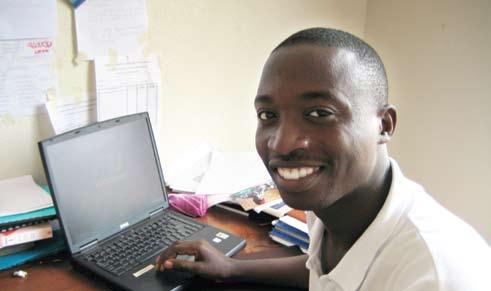
Appointed in 2007 as the Health Project Officer for the Association of Baptist Churches of Rwanda, Andre Sibomana also coordinates the Guardians of Hope projects in Rwanda.
Here is a little of his story.
economical and spiritual context of our society to improve people’s welfare.
I am very happy that I am now able to attend the Baptist International Theological University Seminary (operated by the AEBR) to increase my understanding of the Scriptures and to learn godly leadership. I feel that my education also includes my work within the development department of the church (AEBR) and through our partnership with Canadian Baptist Ministries. I have greatly appreciated the mentoring of the Soucys, CBM Global Field Staff, and being able to participate in the Integral Mission course this past spring with other church development workers from CBM’s partners in Angola, Kenya, Rwanda, India and Bolivia. I thank God for these and other opportunities for learning that are offered to people like me in my role.
My prayer is that I may become God’s tool and servant and an example of Jesus to others.
You can support the continued development of young leaders like Andre Sibomana with the gift of a scholarship and more opportunities for training. Go online at www.cbmin.org for these and other great gift ideas now available in our new Hope-Full Gift Catalogue.
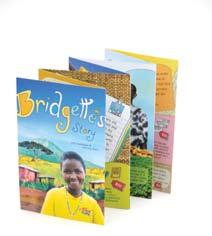
A collection of photos and stories from Guardians of Hope in Africa
Contributors: Andre Sibomana, Guardians of Hope Coordinator, Association of Baptist Churches of Rwanda and Isaac Muthama, Project Manager, Neema HIV/AIDS Lobby Group, Africa Brotherhood Church, Kenya
A very special thank you to the courageous women in Rwanda and Kenya who have graciously allowed us to share their story to encourage more people to join the fight against AIDS.
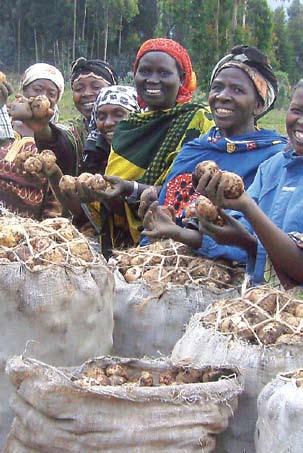
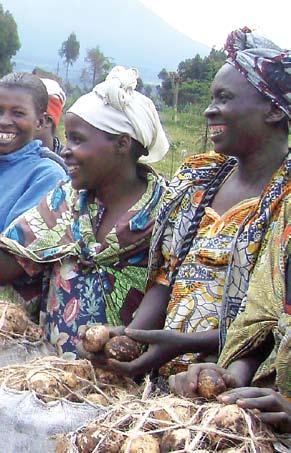
Able to bring in a second good crop of potatoes (a staple food in their region), the Ubuzima Bukomeza Guardians of Hope group celebrates.
“I thank God to have kept me alive long enough to join this group”
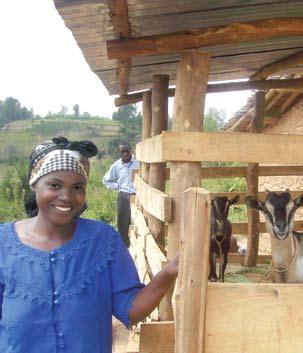
t Seraphine is a 34-year-old widow who struggles to raise four children. She had no hope and felt that her life was over. But after meeting other people who are living well with HIV, she realized that being HIV-positive does not have to mean the end of meaningful life.
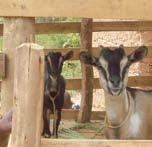
“I am happier now and my mind is at peace,” says Seraphine. “I am raising these goats [provided by the Amizero y’ubuzima Guardians of Hope group] and they will help me to generate income. I am going to start a kitchen garden to have vegetables throughout the year. Soon I will have cassava seeds from our group activities and I know that I will be able to feed my family well.”
“I thank God to have kept me alive long enough to join this group. I thank the AEBR for the work they are doing and the partners from Canada (CBM).”
Amizero y’ubuzima: Hope for Life
“We feel we have value now”
They have 58 members – all are HIV positive. Before this group, everyone was on their own to deal with the difficulties of living with this disease. They meet and encourage one other and discuss how to improve their lives. With funds received from CBM, they were able to plant and harvest Irish potatoes. They sold part of the harvest to add to their savings and shared the remaining potatoes to feed their families while retaining enough seed stock for the next planting season.
“We feel we have value now in our families and in the community,” they shared during one of our meetings. I hear similar stories from our Guardians of Hope groups across Rwanda.
Ubuzima Bukomeza: Life Keeps Going On
“I want to be a support to others”
After 10 years of marriage, Esther found herself alone, divorced and struggling to take care of three children on her own. She washed laundry, did housework and whatever jobs she could find, but it was never enough.
Two years later, she had a new man in her life who she hoped would be a true husband. She became pregnant and after a visit to a prenatal clinic, she discovered that she was also HIV positive.
She was devastated. “It was hard for me to come to terms with this news and hard to disclose it to my husband,” shares Esther. “He disappeared and can not be traced.”
Fortunately Esther found support at a local church. “I happened to attend one of the HIV and AIDS programs organized by Neema (one of the Africa Brotherhood Church’s Guardians of Hope groups in Kenya) and this gave me meaning in my life.”
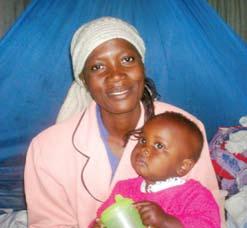
Esther received counseling and was encouraged to join a program at the hospital for the prevention of mother to child transmission so that she could access more counseling and medication. “This support eventually enabled me to deliver a healthy baby who is (HIV) negative.”
One of the greatest challenges she and others in our group continue to face, however, is stigma and
connecting...
Besides Kenya and Rwanda, Guardians of Hope also funds awareness initiatives and training of leaders to facilitate prevention and care activities in Angola and India.
One of the greatest challenges we continue to face is the difficulty of breaking the stigma barrier. You can help by becoming a Guardian of Hope today. www.cbmin.org
mark the date
December 1 is World AIDS Day. Plan a special event to raise funds and awareness. Email communications@cbmin.org to order your free promotional posters and bulletin inserts.
discrimination. We are addressing stigma through our group and our partners, like CBM. We encourage people to know their status – an important first step - and we offer continuous support not only with counseling but also regular visits for moral support and to distribute food which is not easy to get sometimes.
“I understand how to live with the virus,” says Esther, “and the food that the group has given me has helped me to remain healthy.”
Esther now greatly desires to help others and is one of our most active members. She participates in all of our activities of care and prevention and is making use of the skills she has acquired to earn more income. “I want to be a support to others and to my family,” she proudly notes.
Esther is a powerful witness of the change that is possible. Today both she and her child are healthy and have a hopeful, new start in life. Praise God!
at a glance
Guardians of Hope in Rwanda
Number of groups: 44 across the country
Number of beneficiaries: 2,132 households headed by widows/ widowers and orphans
Average funding per group: $1,500
Guardians of Hope in Kenya
Number of groups: 90
Number of beneficiaries:
4,145 households headed by widows/ widowers and orphans
What Can One Person Do?
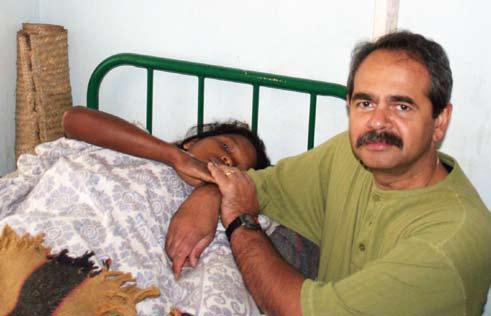
Dr. Ken Jansz, a busy urologist and surgeon from Burlington, Ontario, spent a year rearranging his schedule for a 3-week trip to India.
Dr.
Ken Jansz on a short-term mission trip to India.
While he was able to use his expertise to help many people, including a girl that had suffered from complications after a failed pregnancy, he treated many more cases of malaria and tuberculosis – diseases not common in Canada.
Of the cases that came to him, none was more heart-breaking than the story of a 4-year-old boy brought in by his mother. An untreated childhood disease had rendered him incapable to walk or talk. There was nothing that could be done.
“That was probably one of my saddest moments. I cried. There was nothing I could do, I don’t think there was anything anyone could do.”
Many other medical cases were aggravated by the conditions of poverty and lack of education. He emphasizes the importance of community development to issues of health care.
“Health is more than just the absence of sickness… There is just so much more in community health and preventative medicine we could be doing, particularly in development, in terms of nutrition, hygiene, water, infant, mother and child care. And
along with that goes education because with education comes income and with income comes better health.”
When asked if what one person can do really matters, he shared the story about a doctor he met at a hospital in Serango, a single family physician who
takes care of an entire rural region, where the nearest medical care would be two hours away by bus.
“[In] a lot of places, there is only one person doing it.”
Emergency Response
You can now respond to human suffering caused by disasters in a more personal way – by joining the Canadian Baptist Emergency Response Network
Whether it’s hurricane-affected areas south of the border or flash floods in local communities – we will seek to provide immediate support when possible. Volunteers most often needed in times of emergency range from doctors and nurses to construction workers, chaplains and trauma counsellors.
Here’s How It Works:
1 2 3 4
In the event of an emergency, the network is notified.
Volunteers decide whether or not they can respond at that time.
CBM arranges travel logistics.
Volunteers are responsible for travel costs, which are eligible for a donation tax receipt.
Still interested? Go online at www.cbmin.org for more information, including an application form and a listing of current short-term mission opportunities.
v i e w the
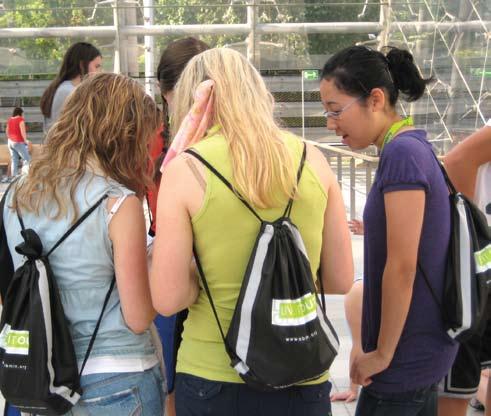
This past summer, I was privileged to take my daughter Lucy and seven of her church friends on a CBM short-term mission trip to Belgium before attending the Baptist Youth World Conference in Leipzig, Germany.
by Alicia Dykstra
We prepared for months and even took some French classes! We emailed and face-booked with the other leader and youths from Ontario who would join us in Belgium.
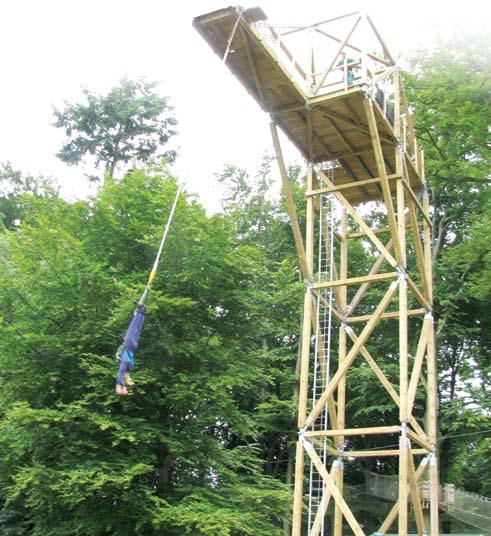
Nothing could have prepared me however for this experience: to sit at the bottom of a 50 metre high tower and watch my daughter bungee jump!
We were at an adventure park - one of the outings of the youth camp in Liege, Belgium – and it so happened that there were two TV reporters on hand to tape a segment on the newly opened bungee jump.
They chose two people from our youth camp: a boy from Belgium and a girl from Canada - my daughter. As she climbed the ladder and received instructions for the jump, I was sitting at the bottom of the tower with my heart skipping beats and wondering if I had made the right choice.
This was a powerful lesson for me as a parent.
We can train our children and prepare them for life, but there comes a time when we have to let go. A time when we have to step back so our children can move forward and dive out on their own.
I watched with pride and pleasure at my team as they too took a plunge for two weeks this summer and shared Christ with their peers both in Belgium and Germany. It was an amazing experience to see these youths go all out for God. As we gathered with over 6,300 youth from 89 different countries, I was filled with a sense of hope and joy. Our youth set a powerful example in faith and service and as parents we should encourage them to dive deeper – and learn from them, to dive deeper ourselves.
Editor’s Note:
Most of the 250 youth and leaders from Canada who attended the 15 th Baptist World Youth Conference participated in a CBM short-term mission trip as part of their experience. Hosting countries included Albania, Belgium, Kenya, Moldova, Rwanda and the Ukraine.
One of the winning entries in our mosaic photo contest.
First Baptist Church, Calgary
Early in 2007, all boards and committees at our church with mor members were given a challenge: Hold an activity and invite peo community to attend. At these free events, an offering would b support one or more items in the CBM Hope-full Gift Catalogue – and the best total offering at an event would be matched by the challenger, J.A. Morrill. A side effect of the challenge was to have all of the church working towards a common goal.
The challenge was taken on
The Cemetery Board sponsored a Games Night and raised $270 – for goats (Rwanda), pigs (Bolivia), and malaria medicine (Kenya).
Just in time for Christmas!
Email communications@cbmin.org to order your free copy today. Bulk quantities for group fundraising are available while supplies last. Or shop online through our new website! Visit www.cbmin.org. It’s the easiest and fastest way to give a gift of hope this Christmas.
The Finance Board provided lunch for the Games Night and raised $150 – for clean water (El Salvador).
The Property Board setup/took down tables for all challenge activities and raised $75 – for rabbits (Rwanda).
Second Mile Mission Circle held a luncheon (soup and sandwich and dessert) and raised $535 – for marginalized children (Canada), seeds and tools (Kenya), and a bike for a pastor (International).
The Choir held a musical evening and raised $530 – for vaccinations, HIV testing and malaria medicine (Kenya), clean water (El Salvador).
• The Church Council held a roast beef dinner and movie night and raised $819 for seminary students (Angola). As this was the largest amount raised, it was then matched by the challenger with a personal donation of $850.
The total amount raised by our church was $3,229. With God’s blessing, these donations will make a difference around the world – in the lives of 15 families, more than 300 children and a pastor and his congregation – through the items we selected in the Gift Catalogue.
Beryl Morrill Treasurer, Second Mile Mission Circle Collingwood, Ontario
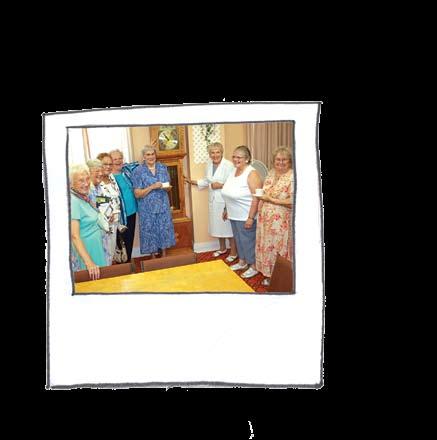
Pictured left to right: JeanWright, Ilene Rhodes, Shirley Everett, MarylinTaylor, Beryl Morrill, Bernice Kolkea, Judith Ann Morrill andVera Smart of the Second Mile Mission Circle, First Baptist Church, Collingwood, Ontario. Their luncheon raised $535 – far exceeding their expectations.