
The Legac y Continues Le Pardon
Back to Bolivia
By the Light of the Lantern
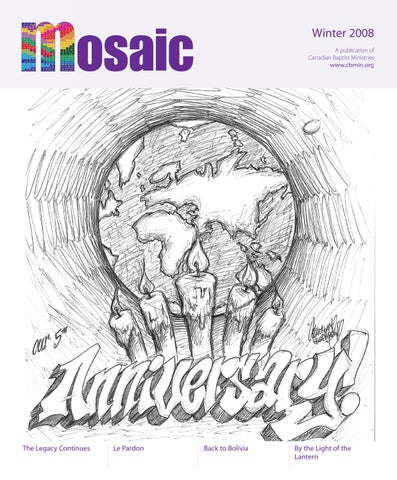
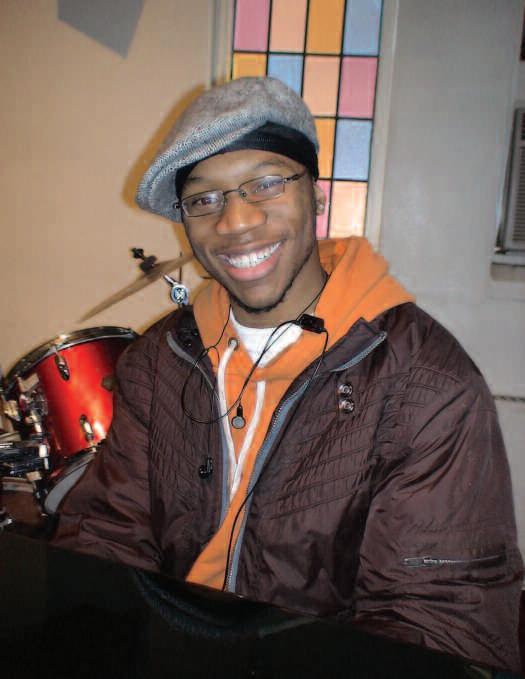
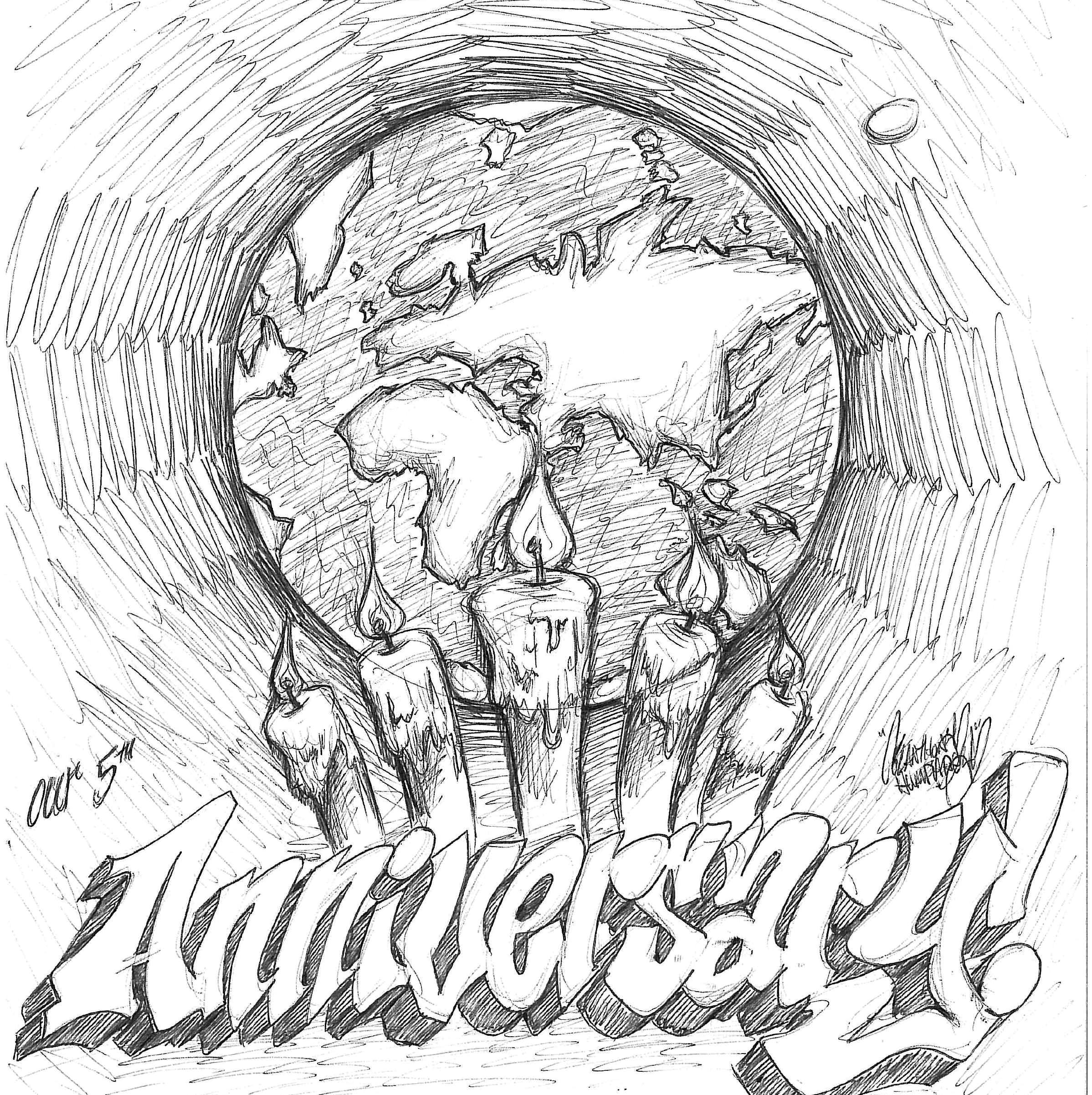
To commemorate our 5th year in print, mosaic commissioned a young ar tist, Colanthony Humphrey, to develop the front cover A student in Humber College’s Creative Adver tising Bachelor of Ar ts program, Colanthony also does freelance ar t and music production He attends First Baptist Church, Toronto and is a k ey member of the music team
mosaic is published 4 times a year by Canadian Baptist Ministries
Managing Editor: Jennifer Lau
Editor: Laurena Zondo
Copies are distributed free of charge
Bulk quantities available by request
Contact us at:
7185 Millcreek Drive
Mississauga, Ontario L5N 5R4
Tel: 905 821 3533
mosaic@cbmin org
www cbmin org
M ission of Canadian Baptist M inistries
Encouraging passionate discipleship for local and global mission.
Purpose of mosaic
mosaic is a community forum of local and global voices united by a shared mission. mosaic will serve as a catalyst to stimulate and encourage passionate discipleship among Canadian Baptists and their partners.
Time flies! A mere five years ago, mosaic was born! As we put together this anniversar y issue and reflected on our collective histor y overall as Canadian Baptists, we stumbled across some incredible stories and landmarks
So many firsts, so many daring endeavours, past and present We wish we could print them all, but we hope you enjoy the ones we have managed to include in this issue They represent a people who are bold enough to step out in faith So far, it has been a journey of well over a centur y
There’s much more ahead, as we each add to this global, inter twined living work over this new year.
We hope you are not only encouraged, but also stimulated, challenged to consider the possibilities in your own life and in your church May you passionately pursue the call of Jesus and have the courage to go where it may tak e you To do what it may ask of you
Thank you for your suppor t and your many letters and emails of encouragement and inspiration Have a great new year, full of the reck lessly hopeful and abundant life we share in the spirit
We’d lik e to hear more of your stories Email us at mosaic@cbmin org
p.s. We recently had another celebration on the Communications & Resource Development team -- the bir th of Sophie, the first child for director and managing editor Jennifer Lau and husband Chun Congratulations! Enjoy this precious time, but not too much – we look for ward to your return in the late spring!
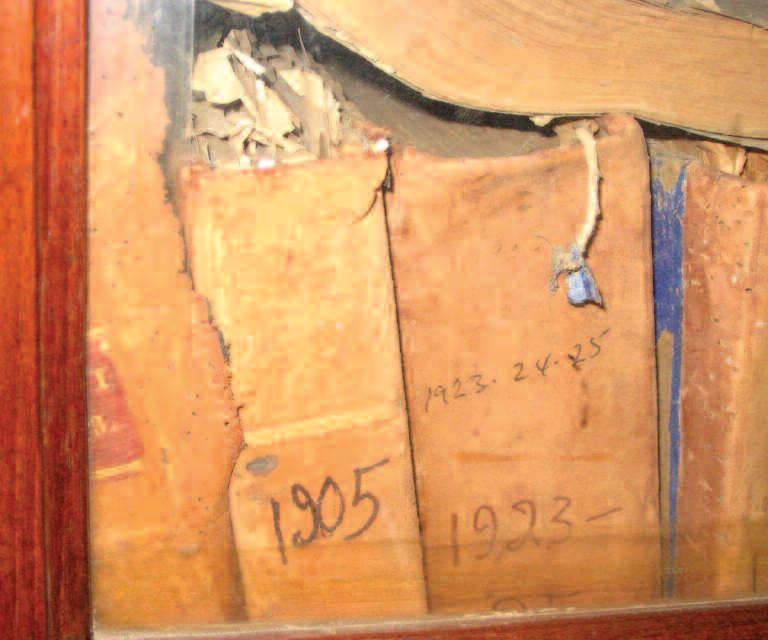
Perhaps that is the greatest legacy that those who went before – to Angola, Bolivia, India, and to other countries – have left us. They knew that they were pioneers, looking to God for direction. God was the source of their vision, and God was their sustainer…pg. 6
e t h i c a l l y s p e a k i n g
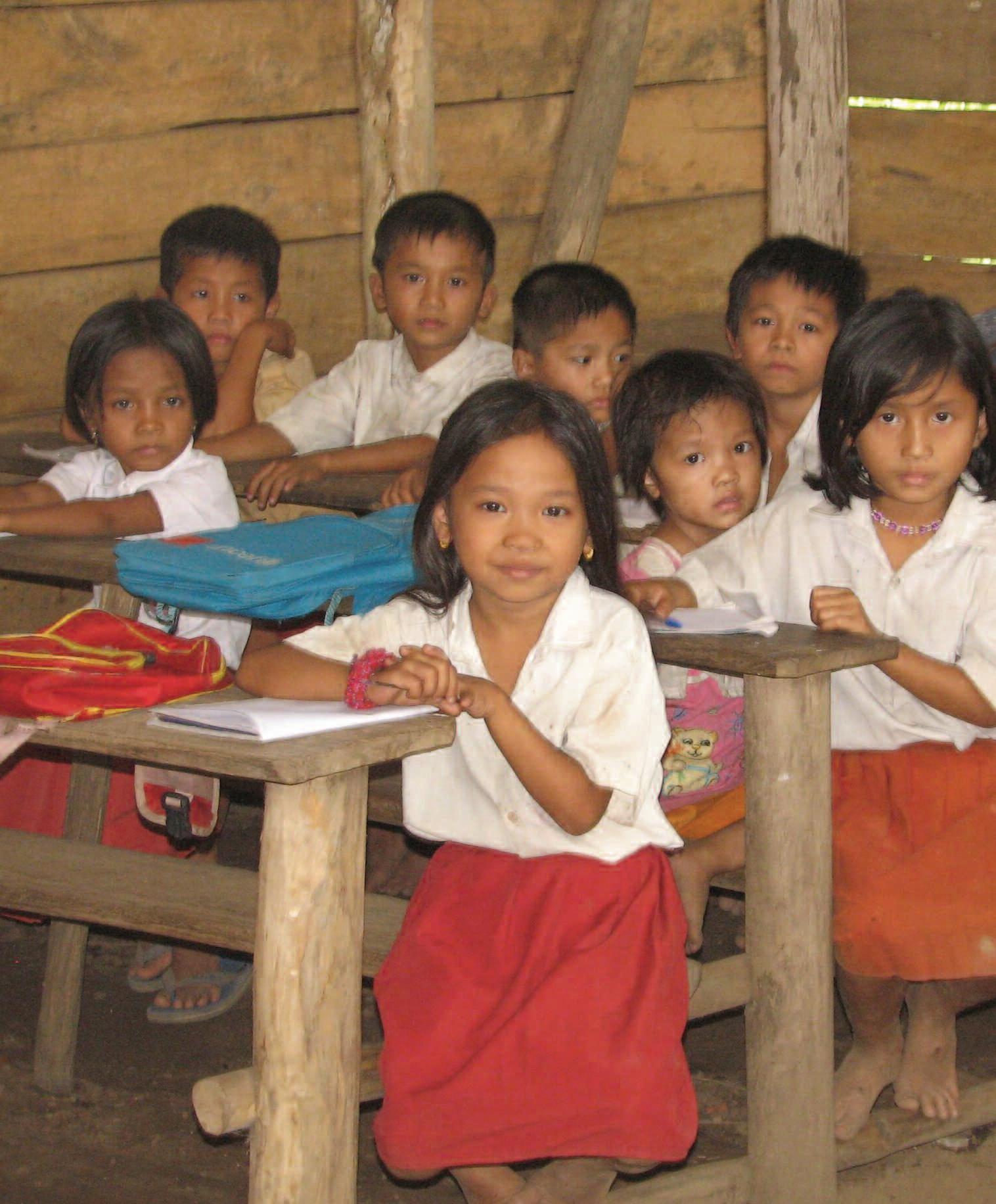
million children, most of them girls, will not go to school Those that make it to school often face inadequate classrooms and ill-equipped teachers.
• $7 billion needed to provide global primar y education

• $70-80 billion would impact the worst of world pover t y.
• $179 billion, the amount spent by [US] teenagers in 2006, this amounts to $102 per teen per week
• $156 billion available for the mission of the church, if church members in the U S had tithed (given 10%) in 2003 Currently it is around 2 58% www empt ytomb org
CBM General Secretar y Gar y Nelson shares his vision for a new year in mission
Things have changed That may go down as the understatement of the year. In fact, many writers talk about the 21st centur y as being a time of discontinuous change - a time in which change is constant and unavoidable There are no times of stabilit y where some can catch up to the changes around them - it all just k eeps going
Why do we in the church think that we can remain untouched by these shifting forces all around us? We act as if the church should be the one place that remains an unchangeable realit y There is a constantthe presence of God in Christ - but ever ything else is up for grabs because this Jesus we have encountered calls us to engage the world around us
We are to be an incarnational and prophetic presence in this constantly shifting world
I was speak ing at a mission week end recently and reflecting on how CBM is facing these discontinuous forces M issions and ministr y is ver y different than it was even a mere 20 years ago We need to adapt to these forces
Here are some of the changes altering the face and response of mission
Technology has shrunk our globe
The impact of the internet, cell phones and satellite feed media has made the world a much smaller place This has become one of the greatest forces altering the shape of mission, the relationships of field staff to Canada and the nur turing of ongoing global par tnerships Global par tners can dialogue with CBM staff in Canada on a regular basis Accessibilit y has intensified the relationships
Mission is right nex t door
There was a time when we thought that mission was something that took place
in some far off, exotic and foreign place Now we realize that it is right nex t to us as well The world has come to Canada and even the secularization of Canada has made our neighbourhoods more of a mission field than they were 40 years ago
New conversations are taking place as local churches think about “community impact ” as a measurement of effectiveness for their ministr y and mission Some people call it the missional church movement I think it is simply a rediscover y of the mandate of the church to be a missionar y people where God has placed them We are either a missionar y people or we are not the church
Churches actively pursuing mission where they are naturally move toward a more global perspective and seek impact there as well A few years ago we responded to this new movement in mission with the idea of “Star t Local Go Global ” The new synergy growing between CBM and the local church in Canada has been life-giving
It is still “over there”
There is no way to avoid the needs in the global world and churches are no longer willing to be satisfied as passive par tners in global work The result is a new t ype of par tnership The catchy word being used to describe this new mission direction is “glocal” - where churches seek to be global and local in their impact
At CBM, some of the results of this “glocal” synergy are programs lik e STEP (Ser ving, Training and Energizing Par tnerships) and the expanding Shor tTerm M ission depar tment that continues to increase in the number of people sent out ever y year
Healthy churches in Canada k now that they need the mission organizations Effective mission organizations realize that they cannot act as gate k eepers to global
ministr y I t ’ s a par tnership in which each player has a role to play in mak ing the global ministr y response sustainable and life-changing
When the local church and mission organization work together, the impact is phenomenal Talk to a STEP church or returning par ticipants of a shor t-term mission trip and that is what you will hear
Mission organizations no longer func tion as simply sending agencies
CBM is no longer simply a conduit for people called to do mission overseas We are much more We bring people together We function more as strategists, brok ers, resource developers and catalysts Our role is to build bridges and form por ts of entr y between people using all the methods and means that are possible to bring people together At first it was simply a flow between Canada and other countries but increasingly these bridges are varied in their source
Recently for example, we brought a group of Indian church leaders together with some of our par tners in Kenya They talk ed about the church and its integral mission and they visited development projects such as the experimental farm of the Africa Brotherhood Church Each group went back with new ideas and sk ills that they wanted to implement They had learned from each other and CBM/ The Sharing Way ’ s role was simply to bring them together and create the oppor tunit y for learning
Changing role of long-term missionar y involvement
Effective, embedded witness by field staff (missionaries) in a par ticular countr y will never be replaced They bring insight, ministr y sk ills, objective obser vation and
a tangible, incarnational witness of our par tnership as Canadian Baptists They are crucial, but they are only one piece of a larger mission strategy For some this can prove unsettling, but our best and most effective missionaries have always functioned this way and many organizations are simply catching up to what many of our staff have always been doing
These embedded staff, like the mission
o r g a n i z a t i o n t h a t s e n t t h e m , b e c o m e facilitators and animators of a rhythm of mission par tnership that includes strategy building, facilitation of shor t-term volunteers and national CBM staff colleagues who work alongside them They build strategies together in the k nowledge that it is not about what they are doing so much as what they are mak ing happen through others
Global par tners have much to teach us
Global par tners are no longer a curiosit y when they come to Canada Their ministr y capacit y around evangelism, integral mission and communit y engagement has much to teach us We call it mutualit y at CBM I t is the simple idea that we are in a constant learning-sharing relationship with our international par tners They bring wisdom and perspective into all we do and many times help us to become more global in our discipleship
This year, Canadian Baptists will be privileged to meet church leaders such as Dr Rene Padilla (Latin America), Bishop Timothy Ndambuk i (Kenya), Rev Dr Julius K aranja (Kenya), Rev M iguel Castro (El Salvador) and Ana Salomão Canga (Angola) They will not simply be here to say thank you for our par tnership - they are here to teach us about how ministr y might be done better We become the learners
For years, ministries of evangelism and social compassion ran parallel in most mission organizations We called it holistic but rarely did these two themes integrate with one another That is no longer so - they are becoming an integrated whole where the local church is empowered to become a compassionate and compelling presence in a communit y
Churches are coming alongside their communities and providing oppor tunities for micro credit, sk ills training, communit y witness to the gospel and social programs that incarnationally witness to the good news of the gospel Previous issues of mosaic have focused on this idea, but it is a Spirit-inspired force of change to be reckoned with in our nex t years of mission and ministr y
You cannot stand aloof or apar t
Imagine what it would be lik e if we star ted living under the assumption that ever ything we have in our lives truly does come from God as a gift to be shared among others Living nominally as disciples of Jesus would become an impossibilit y and the result would be a “rubber hits the road” realit y that would set in, fueled by the winds of the spirit
If we say that ever ything that we have in our lives comes from God as a gift to be shared with others, then following Jesus will look differently Rather than looking to others such as government to solve problems around us, we will look to our God to use us to be the solutions
If we long to see the lost found and the far off stranger made close, then we will pour our energy and our financial resources into mak ing that happen
If we realize that we are the “haves” in a “have not ” world, then as followers of Jesus Christ we will realize that ever y consumer decision we mak e and ever y response we act upon around justice and social concerns are Jesus-decisions
I believe the resources to change the world are at our fingertips They are God- given You can find them in the potential of our global partners for ministr y, the new-found vision of the church in Canada for local community impact, the long-term and shortterm personnel that He has called to ser ve, and the financial blessings and resources that He has bestowed on His church
The only thing missing is for us to realize that it is not about “ us ” but about what God is calling His people to be and to do Then and only then, will we pour out our blessings to others And then and only then, will we know what it means to be sold out to Jesus in such a way as to share in what Apostle Paul calls the “gospel and its blessings ”
CBM General Secretar y Gar y Nelson is one of the leaders of the Missional Training Network, a growing network in Canada committed to training leaders and churches to transform their neighbourhoods Started out of Southside Community Church (in British Columbia), MTN hopes to become a movement of people from all denominations across Canada. www mtnetwork ca
Many of us today aren’t aware of the incredible heritage of faith we share as Canadian Baptists. Here’s a fresh look back and ahead.
by Mel Finlay
Tonight we were in the presence of giants!”
Many people shared this sentiment as they were leaving the 50th anniversar y celebrations last October mark ing the star t of Canadian Baptist missions in Angola A number of the pioneers who had star ted the work there had been brought together in Moncton, New Brunswick, for a special event Similar thoughts occur as one talks to, or reads about the experiences of, those who were involved in the earlier work under tak en in India and Bolivia Together these three countries represent the beginnings of Canadian Baptist missions
In retrospect, these were brave individuals, going to countries they had never seen to work among people they did not know, whose languages they were struggling to learn Their stories are compelling, sometimes bordering on the incredulous Some tell of their luggage being thrown over the side of the anchored ship that had brought them (almost) to their destination The crew assured them that the tide would wash their luggage ashore in approximately the right spot; there simply
wasn’t room in the lighter, small craft that ser ved as a ship-to-shore ferr y for both passengers and cargo
They tell of the hospitality of strangers, of disease and physical threats, of the incredible provision of the Lord in the face of desperation and hardship
The stories out of Angola, Bolivia, and India (and other countries that have been added in more recent years) are many, some tak ing on the propor tions of legend Truly, in reading their stories and meeting those still alive, one feels lik e one is in the presence of giants.
Just don’t say that to those who were there In their personal testimony they are quick to point out that they were just ordinar y people doing the job God gave them to do in the best way they knew how to do it If anything, they are more conscious of their failings than of their successes, quick to give the glor y to God, perhaps even quicker to take personal responsibility for the things that didn’t seem to glorify God – at least, not at the time
In all three countries, some were there because they had heard a direct call from
God to go and be His witnesses in that countr y O thers had simply offered to ser ve anywhere the broader church sent them, and Angola, or Bolivia, or India just happened to be open Still others were moved from one countr y to another as priorities shifted and new oppor tunities arose They went in faith and they lived in faith, and they experienced all of the ups and downs of the early disciples as sometimes their work produced a hundredfold, and sometimes it seemed to land only on rock y places
We who were not there look at their adventures and their work and marvel at what they did Many of us vividly recall visiting missionaries coming to our churches and thrilling us with their stories and slide shows, stirring us to new resolve that we might dare to do what they were doing Without benefit of laptops and cell phones, or even regular snail mail, they went about their tasks with enthusiasm and in deep faith, believing on the Lord for great things to happen.
Sometimes, one can be too close to one’s work, too involved to see what the Lord is really up to. Each tree preoccupies us, and

we just get past, or through, one, when another even larger looms in its place and we struggle to deal with that obstacle Meanwhile, those standing back can see the forest tak ing shape, a work of God made from individual trees, each one having its place in the bigger picture So it was for the early missionar y pioneers They are not giants in their own eyes; they only seem lik e giants to the rest of us We, and they too, if they live long enough, can see the forest growing from the individual trees; but at the time they saw only isolated trees and sometimes wondered if what they did had any lasting significance.
I t did They have left a legac y that is too impor tant to let slip
We k now from the corporate world that family businesses rarely sur vive the third generation The founder laboured hard in response to a vision. The goals were clear, the work was hard and often discouraging, but the hear t was great and the body and the spirit were unified in their desire to produce something of value
The second generation grew up at the
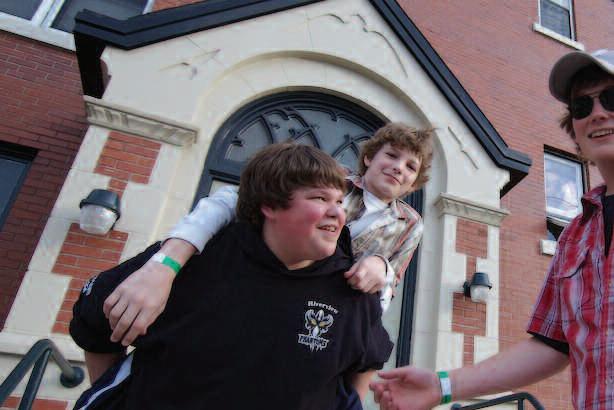
Each
year
2,000 youth and youth leaders attend Springfor th, one of Canada’s largest conferences for youth and youth leaders held by the Convention of Atlantic Baptist Churches in May
side of the founder, driven more by loyalt y to the founder than by a grand vision But driven nonetheless, if not by dreams, then by a desire to carr y on a great tradition
Changes were made in the business to adapt to changing circumstances, and the energy was there to carr y on the work
The third generation is too far removed from the founder to share the vision, and not as bound by loyalty to keep the enterprise going Thoughts turn more to what they can get out of the enterprise, rather than what they are putting in so that customers and clients can benefit Work loses its meaning, and before long the enterprise is either sold off or goes under
We k now too that family for tunes rarely sur vive the third generation, for many of the same reasons There is a tendenc y to live off the capital of the past rather than to build a fresh legac y for the future.
The only effective antidote is for the third generation to tak e ownership of a vision for the family enterprise or the family for tune, and to be energized by their own sense of purpose and commitment
Canadian Baptists can learn impor tant lessons from family businesses.
M issions and evangelism cannot exist by living on the capital of the past The vision and call and commitment of those who went before cannot fuel the expansion of the Christian faith today, nor can they produce results for the future. While one generation of Christians may be inspired by the work and faith of the generation immediately before them, learning as an apprentice learns, the work and faith have to become their own
Perhaps that is the greatest legac y that those who went before – to Angola, Bolivia, India, and to other countries – have left us They k new that they were pioneers, look ing to God for direction God was the source of their vision, and God was their sustainer They were not there tr ying to k eep alive someone else’s vision, or attempting to do things the way a previous generation had done them They k new clearly that Jesus meant what He said: “Apar t from me you can do nothing ” ( John 15:5)
P h o t o c r e d i t : R o b H e t h e r i n g t o n
Those early Christian pioneers understood that the word of God is a living Word, and that they were part of “speaking” it into their surroundings, by whatever means would be “heard” by those they sought to reach They looked to understand their environment and the people who inhabited that environment, and they sought to bring the good news of the gospel alive in that setting At their best, they listened to the people around them, and sought to engage their neighbours within that context At their worst, they tried to overlay a culture that was familiar to them over the one in which they now lived; if they did that, they were in danger of becoming indistinguishable from the colonialists who were governing the countr y.
The first missionaries from the Maritimes were sent 163 years ago (1845), to Burma; Ontario and Quebec commissioned their first missionaries 141 years ago (1867), to India; and the western Canadian Baptists commissioned their first missionar y, to India, through the Ontario and Quebec Board almost 120 years ago (1889)
The living Word “spok en” into those, and other, environments continues to be alive today, even in the face of intense opposition and outright hostilit y.
I t is now time for us to think about the legac y we are building
One thing is cer tain. We need to be as dependent on the Lord for guidance as were the early Canadian Baptist pioneers
Their faith may be of value as an inspiration to us; but only our own faith can provide the energy and enthusiasm that are necessar y for our generation
More than that, we need to k now our neighbours as well as the early pioneers came to k now theirs Whether our “mission field” is ‘Jerusalem’ (our own communit y), ‘Judea’ (elsewhere in our countr y), ‘Samaria’ (the continent we live on) or ‘the ends of the ear th’ (other countries), the challenge of seeing the world first through the eyes of our neighbours before we can “speak ” the living Word to them is equally great. I t ’ s also an essential star ting point The probabilit y is that our neighbour today is no more familiar with the Bible and ‘Christianese’ than is the person who grew up in another countr y In fact, par ticularly in larger Canadian cities, there’s a ver y good possibilit y that our neighbour actually did grow up offshore
Thirdly, we need to understand, just as the pioneers did, that we do not have, nor do we need to have, all the answers before we begin Many of the pioneers we talk with freely admit that not only did they not have all the answers; frequently, they didn’t even k now the questions to ask! An understanding of what questions to ask, and what the answers were, came only through more listening, more praying, and a greater desire to “speak ” into the lives of those around them It helped keep them dependent on God for direction, just as we need to be dependent on Him
But listening to our neighbours is not enough I t ’ s just too easy to get co-opted by our culture, whatever countr y we may live in I t ’ s too tempting to buy into ‘conventional wisdom’ (whatever that is in our par ticular contex t), and sometimes too frightening to “speak ” the word the Lord has given us.
We need also to listen to those early apostles It is instructive to read their speeches in the book of Acts to see how they “spoke” into the lives of their neighbours Current-day Canadians are not the only ones living in a multicultural, multi-religion society.
The early apostles were constantly dealing with many forms of religion practiced by people from many different cultures. Their speeches and letters provide examples of how to “speak ” to one’s neighbour in situations not so ver y different from our own. Many of the neighbours they desired to “speak ” to had a heavy personal, emotional, and financial investment in their particular system of worship – massive buildings, regular ser vices, a degree of certainty about what to expect
from their faith – things that made it difficult for them to even consider the good news being offered by followers of Jesus
Others had little involvement in religious practices of any kind, having either rejected them or not been introduced to them The good news being proclaimed by the apostles sounded as strange to them as it is does to many of our neighbours today
We need also to talk to the living whose work has stood some test of time, and ask them, “ What did you do? How did you ‘speak ’ the living Word into your situation? What were the questions that people were ask ing, the troubling situations they were wrestling with? How did you deal with the frustrations and disappointments? In retrospect, what would you do differently? What advice do you have for me?
But listening to those who have gone
God is first and foremost One who engages in relationships. The written Word followed from, flowed through, relationships He had already established with people He desires to be in relationship with ever y human being We can respond to His desire by getting to k now Him directly through prayer and through His living Word, and only secondarily through what others say about Him and His living Word Nothing can tak e the place of daily Bible reading.
Along with reading one’s Bible daily, prayer is of equal impor tance
Prayer does for our relationship with God, and our own awareness and growth, what conversation with our spouse or closest friend can do for our relationship with them But prayer tak es our relationship one step fur ther I t allows God to lead us, guide us, direct us into His will, along His
before, whether early apostles, Canadian Baptist pioneers, or others of the Christian faith, even when combined with listening to our neighbours, is still not enough.
First and foremost, we have to listen to God We need to ground ever ything in a dynamic devotional life and frequent prayer. We can only “speak ” the living Word if we have first heard and read the living Word We can only have the Word living in us if we are open to it and familiar with it Reading books about the Bible is no substitute for reading the Bible. Reading someone else’s devotional material may be helpful, but it is secondar y Someone else’s impression or understanding of God cannot provide the same degree of k nowledge as connecting with Him directly
path, for His purpose.
The more we listen to God, the more effectively we can “speak ” into the lives of our neighbours. The more effectively we “speak ” the living Word into the lives of our neighbours, the greater the legac y we build for future generations.
Editor ’s Note: At the end of August, Mel will be leaving his position as Pastor of Fallingbrook Heights Baptist Church, Toronto, to join his wife Susan in leading Nation At Prayer, a national ministry she founded to pray regularly with elected representatives at all levels of government as well as to train, resource and equip individuals to pray effectively.
www nationatprayer ca
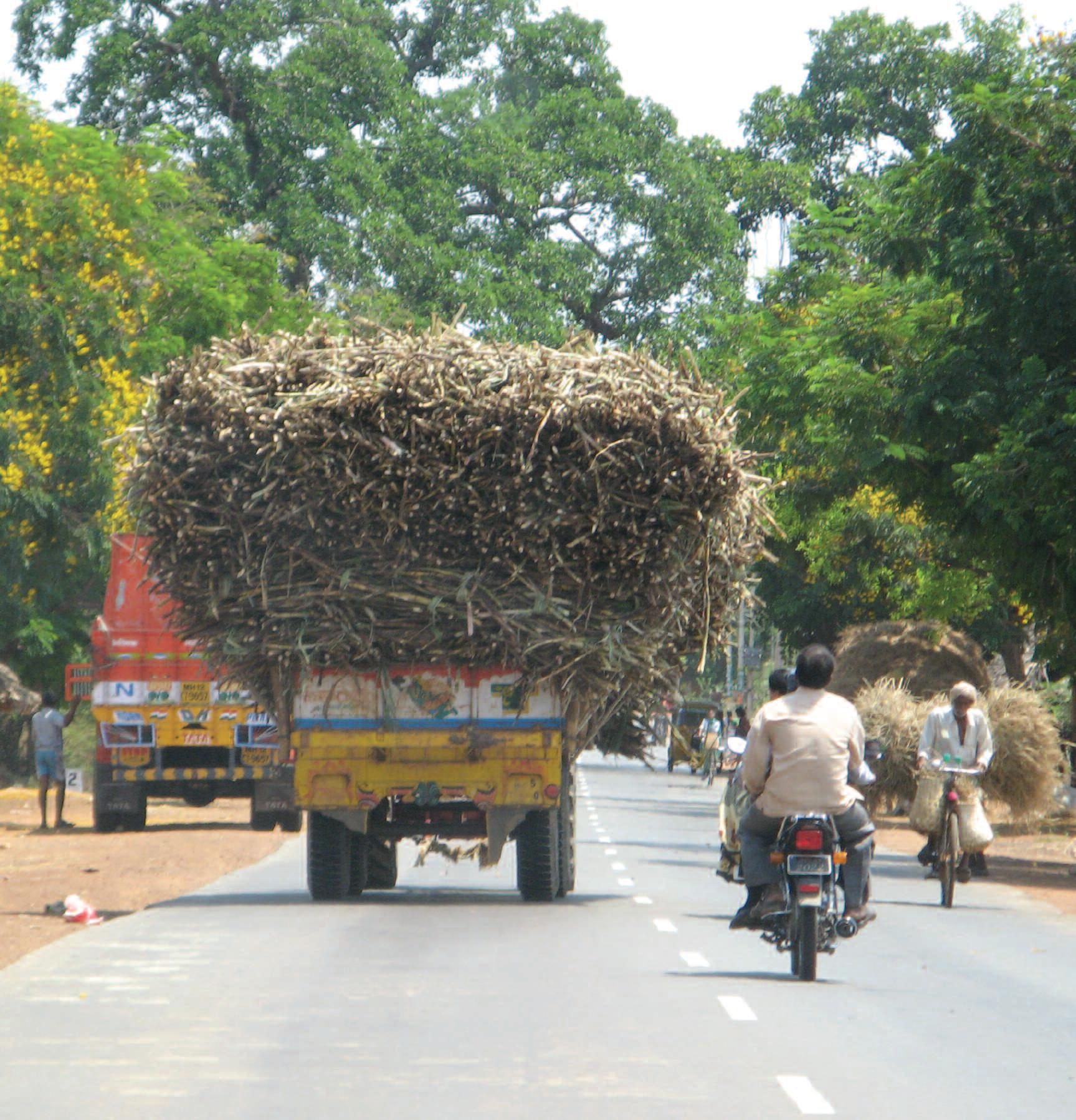
by Frank Byrne, retired CBM Asia Representative
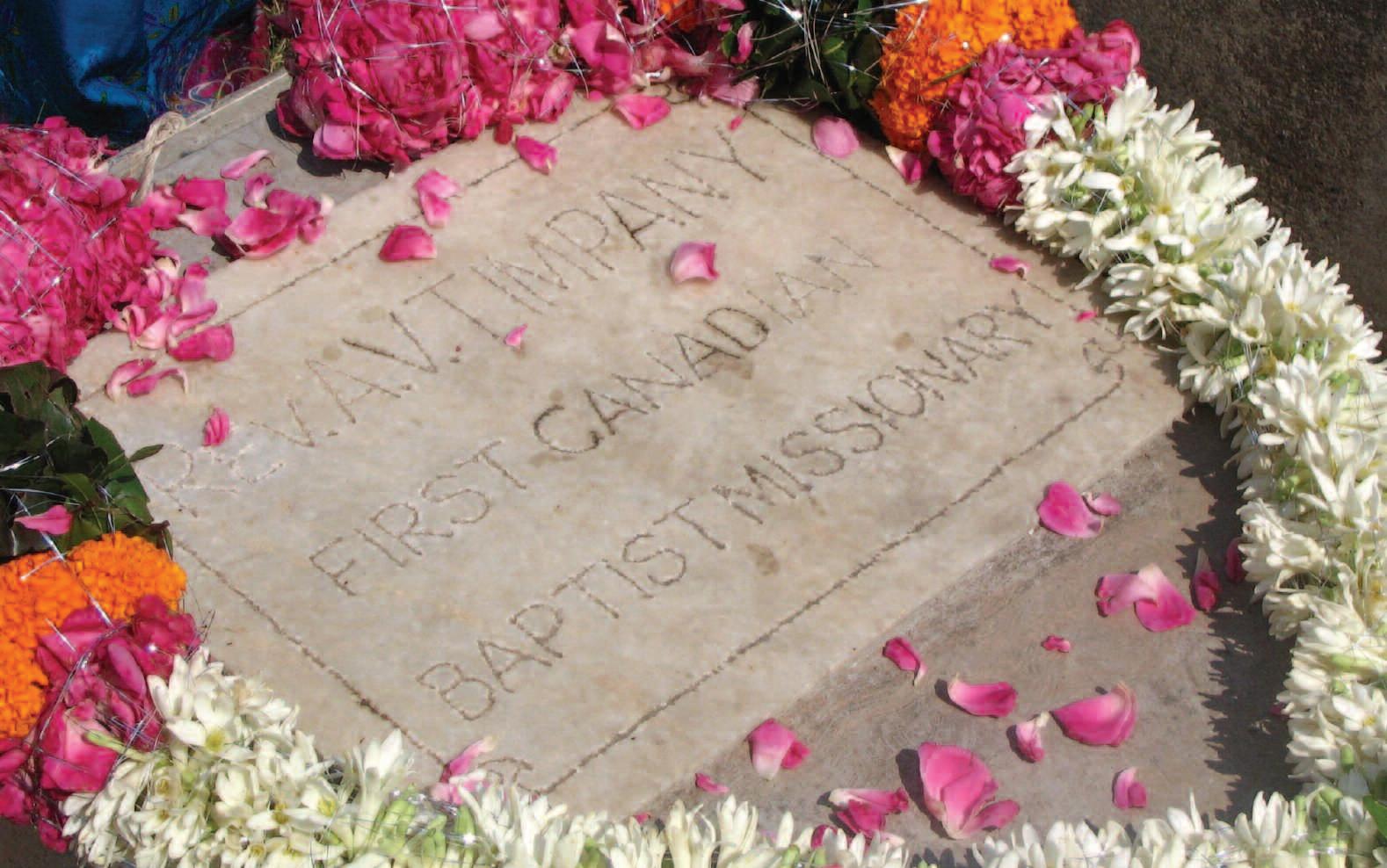
It was because of India, in the late 1800s, that Baptists in Canada began to organize themselves into associations and conventions for the purpose of mission overseas and at home Those early exploits in mission began with a loose par tnership with Baptists in the United States and established a precedent that has mark ed the work of Canadian Baptists ever since, namely that the work of the K ingdom is best done in consultation and par tnership
In the spring of 1874, after consultation with their American and Indian colleagues, Canadian Baptists moved to K akinada in the state of Andhra Pradesh This act symbolized the birth of an independent Canadian mission
O ver the centur y that followed the numbers of Canadians involved in India grew dramatically In fact, more CBM field staff have ser ved in India over the past 140 years than anywhere else in the world At one time (in the 1920s), there were more Canadian Baptist missionaries in India than we have in all the countries where we ser ve today (almost 100!)
The majorit y of ministr y was among those from the outcaste in the Hindu communit y, k nown also as Harijans (Children of God) Today they are referred to as Dalitspeople at the bottom rung of the Hindu caste system, destined for the worse tasks in societ y, without rights, without land, at the merc y of the higher castes
It was among the Harijans that the gospel of God’s grace took root and grew Christian schools were established for children Institutions for higher learning, followed as did hospitals and clinics Teachers, pastors, doctors, nurses, and a whole host of professionals received training in these schools By the 1940s, 440 schools were in operation, 11 of them boarding schools Eventually many of these institutions were turned over to the government or run as local private enterprises. At the beginning of the 20th centur y,
the work spread to other language and tribal groups – Oriya, Sora and Kui speak ing peoples in the state of Orissa – and independent churches were established While ministr y flourished, so too did the challenges Grassroots church-planting in a sea of Hinduism; preparing new leaders; meeting ever yday medical needs for a people in a countr y too poor to provide health care for all, was all par t of developing a Christian response to major social issues, many related to the caste system, which left multitudes living in isolated villages at a subsistence level, and in areas subject to devastating natural and human-influenced disasters
These same challenges face the church of India today. India has more poor than any other nation on the face of the ear th Huge environmental problems, social issues, and natural disasters (such as the 2004 Tsunami) that wreak havoc on the pooriest of the poor, need to be addressed CBM’s Indian par tners have well-trained men and women fully engaged in integral ministr y moving
for ward in par tnership to bring hope and love to a growing nation
Editor ’s Note: CBM has invited a group of young leaders and potential leaders of our partnership network in India to a consultation in Hyderabad, Januar y 15-17, 2008, to explore how we can continue to build on our historical roots and be more involved in integral mission today in India
The first STEP partnership for India was recently signed STEP (Ser ving, Training and Energizing Partnerships) is a CBM program offered to local Canadian churches seeking a deeper commitment and connection to the ministry of churches in the developing world. STEP enables a hands-on partnership and exciting learning experiences Call us at 905 821 3533 for more information
by Laurena Zondo, CBM’s Communications Manager
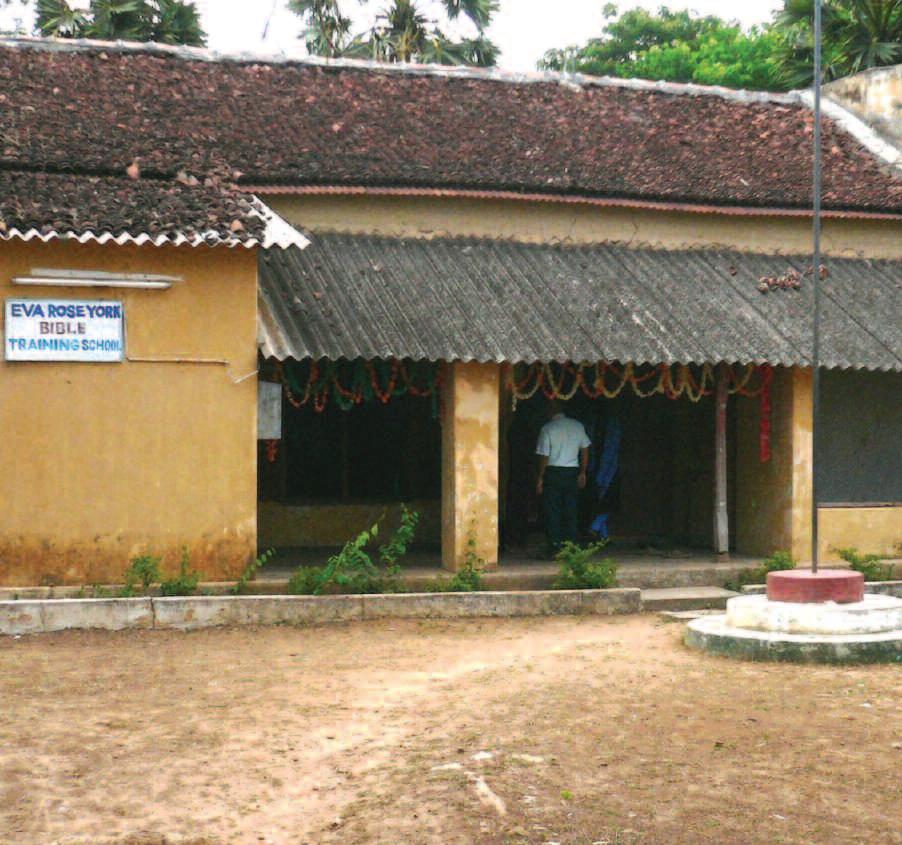
Over the nex t five years, Canadian Baptist Women have tak en on an ambitious new project, to raise at least $10,000 per year - an amount that ’ s above and beyond their already generous giving to CBM - to suppor t the Eva Rose York Bible & Technical Training School in Tuni, India
Star ted in 1922 by Winnifred Eaton, a Canadian Baptist missionar y, the school was named after a Canadian widow who had donated funds for mission in India Eva Rose York, a famous vocalist and one of Canada’s early women composers, had founded a home for unwed mothers in Toronto in the early 1900s
For many young women in India, especially those from the lower castes, the Eva Rose York School has offered a last chance Today approximately 45 young women attend Many have either failed or dropped out of other schools, been orphaned or abandoned by their families But here at Eva Rose York they receive access to training, counseling, encouragement and spiritual care
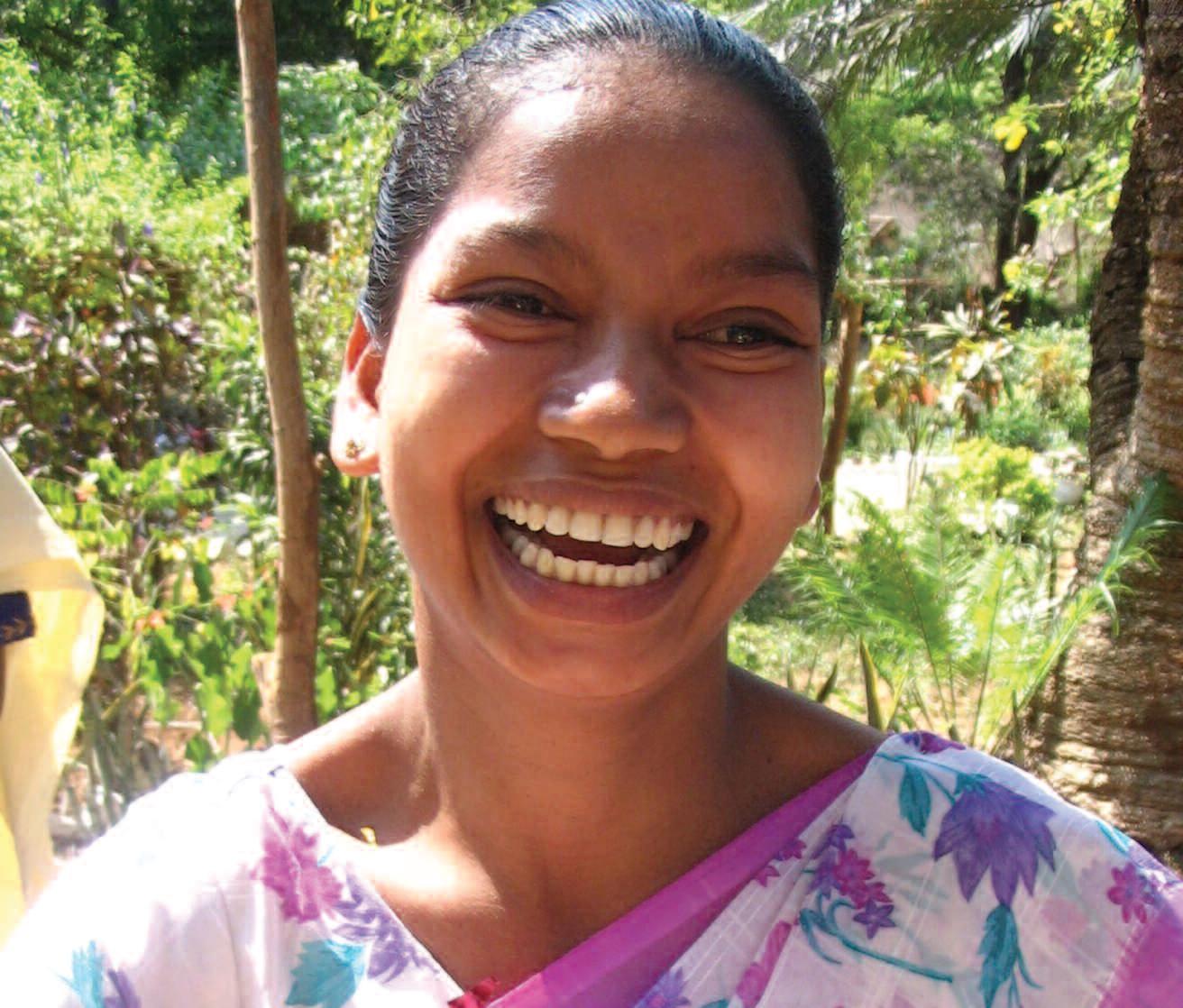
One such student is Krupavani (pictured below) Orphaned at a young age, she was tak en in by a village church pastor and his wife, Sudha R ani. She studied till 10th class but then dropped out
She arrived, unable to concentrate on the Bible or her studies, noted Eva Rose York staff “But God met her here and spok e to her – God will use her ”
K rupavani graduated recently and now has a desire to go back and work among women and children in the more remote, tribal communities
Her adopted mother, Sudha R ani, is also a school alumnus Originally from the Orissa region, Sudha R ani was 16 years old when she and her older sister were ostracized from their home for becoming Christians They ended up living on the streets in V izag

until a police officer inter vened and took them to Andrah Baptist Church He also introduced them to a family who paid for some of their studies They eventually ended up at the Eva Rose York School I t was here that Sudha R ani committed her life to ministr y She went back to the tribal communities and eventually married a pastor Today Sudha R ani is a resource for many churches in her region through her involvement with the V ision for Hill Tribes organization School principal, Rev Dr Lalitha Krupa
Rao, now dreams of upgrading the program, to offer training in computers and advanced English, for access to better jobs, along with community development courses, so women can help address crucial village concerns such as food and water security, health and nutrition
Toonies for Tuni will star t the mak eover Besides providing more resources and teachers, funds raised will help repair and maintain the aging proper t y, most notably the student dormitories I t will also suppor t work on a solution to two major problems at the school caused by regional deforestation: dr y wells and monk eys – who have moved onto the school compound and caused extensive damage to fruit trees and vegetable gardens

Did you know that
The first single woman missionar y from any denomination in Canada was sent by Maritime Baptists? Her name was Minnie DeWolfe and she went to Burma in 1867
Start saving your Toonies for Tuni Help train a group of young women bursting with potential; ready to become leaders in their community, given a little encouragement Email communications@cbmin org for your regional Canadian Baptist Women contact and/or information on other mission projects that can be used as group fundraisers

Without forgiveness, there is no peace.
by Gato Munyamasoko, CBM field staff in Rwanda
The world in which we live is full of violence Truthfully, it ’ s par t of all of our histor y Our deeds indicate how violent we can be: nations k ill one and other ; a state dominates over another state; terrorists k ill randomly – even innocents who are not related to their ideology ; women and young girls are raped in Congo and elsewhere; genocide in Rwanda; massacres in Kosovo; k illings in Dar fur ; conflict in the M iddle East; apar theid and slaver y ; youth gunning each other down in Nor th American streets; and all the injustice that occurs daily
V ictims of these atrocities and oppressions are often tempted to react with a desire for vengeance and retribution, which only worsens the situation
What is a possible remedy?
Forgiveness is still the only way to effectively reduce violence. I t is a necessit y in today ’ s violent world “ Without forgiveness, the monstrous past can awak en from hibernation and devour the present, as well as the future, ” writes Philip Yancey in What ’s so Amazing About Grace.
According to Desmond Tutu, “ To forgive means to give up our right to retaliate towards someone who has done us wrong. We are free by giving up this right ” Archbishop Tutu received the Nobel Peace Prize in 1984 for his leadership in the non-violent struggle for liberation in apar theid South Africa. He continues to provide moral leadership today, and was most recently in Kenya to tr y to help restore peace after violence erupted over the presidential election results But that being said, one could ask:
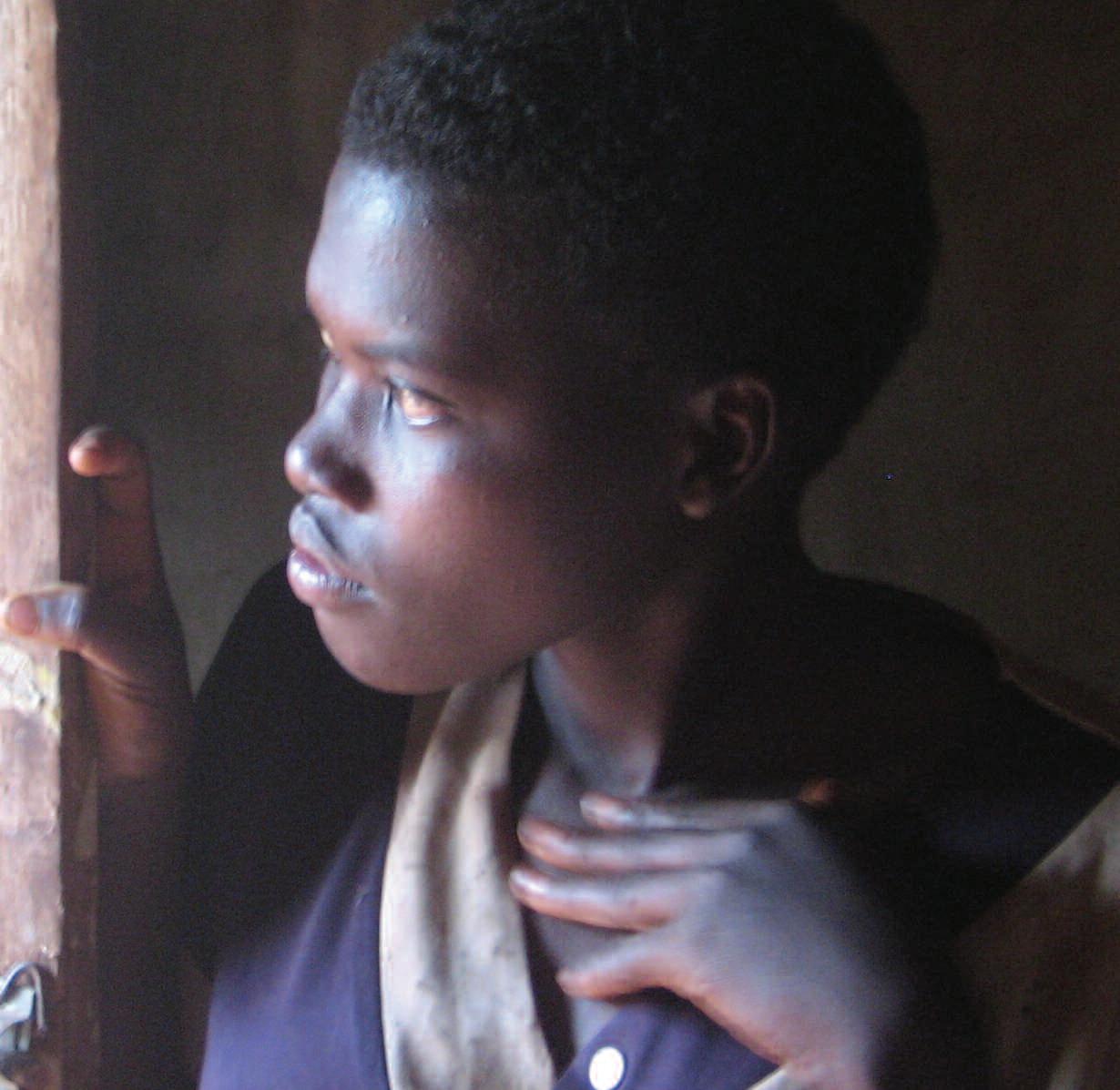
We should forgive because violence has never been resolved by using evil against evil “Revenge is a passion for settling scores I t is a burning desire to hur t as much as we have been hur t, ” quotes Yancey
The problem with revenge is that it never attains its goal: it never settles the score Justice is never reached The chain reaction caused by each act of revenge always follows its course It links the wounded and the one who has hur t him into an escalating suffering
“An eye for an eye mak es the world blind, ” said Ghandi, another influential leader in non-violent protest against racism and injustice not only in India but in countries around the world
To forgive remains the only effective way to counter violence
To forgive is inevitable in our society because we have to live together “ The universe was built in such a way that if one doesn’t live according to its moral rules, one must pay, one day,” notes Desmond Tutu One of these laws states that we are all linked to
each another Our humanity is entangled with one another We were made to live in a community, a group, a family, to evolve inside of a delicate and interdependent network It really is “not good for man to be alone” . It is through forgiveness that we will be able to live together as brothers and sisters
Forgiving is a must for ever y society “If we don’t learn to live together as brothers and sisters, then we will die together as idiots,” said Martin Luther King, another global leader in the cause for a non-violent struggle against racism and recipient of the Nobel Peace Prize in 1964
We must forgive not only for the sake of others but for ourselves as well, because sometimes, the burden that we carr y from our torturers is so heavy that it hurts us “ The first and sometimes only person to be healed by forgiving is the one who forgives,” quotes Yancey
I t is necessar y to forgive in order to free the tor turer, the perpetrator of the crime who is still in chains, living with constant guilt When you forgive someone, you mak e a distinction between the person and their
hur tful acts Before forgiveness, you think of the person as the one who hur t you But when you forgive, you change their identit y You now think of this person as someone who needs you, as someone who is weak and in need In effect, you are mak ing new memories, recreating your past by recreating the person whose evil actions left you with a painful past
“Forgiveness is link ed to a cer tain level of healing in our memor y, ” quotes D J Louw, Dean of a Theological Institute in South Africa. “One sees a par t of himself, even in the enemy, and a glimpse of the ex treme violence that lurks in the depths of the human conscience ”
We must forgive to ensure cer taint y in the future, because without forgiveness, there is a higher risk of holding grudges forever And these grudges could lead to an unending escalation of violence Conflicts would remain unresolved “If we tak e revenge for what happened to us, then we must expect that the children of our victims will avenge themselves on us and our children, ” said Kemal Per vanic, a sur vivor from Omarsk a concentration camp
This would lead to an unending cycle of violence Someone has to break the cycle But forgiveness doesn’t mean forgetting On the contrar y, it is ver y important to remember so the atrocities do not occur again As well, forgiving opens the door to reconciliation, but it doesn’t exclude a fair punishment for the evil acts that have been perpetrated Forgiveness rehabilitates the victim as well as the perpetrator, however it doesn’t exclude reparative justice – we do not have to endure impunity and injustice forever
But most importantly, we must forgive because God himself has forgiven us From a human perspective, forgiveness is impossible Where can we find enough strength to forgive? In God only, who restores us in Jesus Christ!
“God surrendered his right to avenge himself, by choosing instead to pay its price through his own flesh, ” poignantly notes Yancey God changes his feelings towards us by finding a way to justify us so when he looks at us, he sees his own adoptive children, his godly image having been restored.
Rwanda has much to teach the world
about forgiveness, but we also have much yet to learn
In 1994, violence grew to its highest level when more than one million Rwandans (mostly Tutsis along with moderate Hutus) were eliminated following a genocide ideology
Many children became orphans, left without any sur viving family member Many women became widows, others were raped and infected with HIV; and still others wounded and paralyzed from machete and club injuries
To these atrocities, we must add the destruction of proper t y, namely houses, personal belongings, land, domestic animals and businesses In shor t, the sur vivors were left with little suppor t So how can they now cohabitate with those whom they see as their torturers and the cause of their suffering?
Is it possible for victims to live in harmony with their tor turers? What would happen if nothing is done to find a positive solution? What is that solution? These are the questions we have been facing
Many people were imprisoned after the genocide, accused or presumed to be par t of the k illing and violence This resulted in hatred towards those who accused and denounced them If this hate doesn’t cease, it will destroy Rwandan societ y
Nothing less than forgiveness can solve this problem Only forgiveness can heal the wounded souls and give a chance to the next generation to live more peacefully And for the torturers, to ask those they had hurt so badly for forgiveness would help them end the feelings of guilt and the trauma associated to actions perpetrated during the genocide.
We must all think about our children’s future, to help them inherit a world in which there is hope for a long-lasting and peaceful coexistence We must teach them about forgiveness which means, on the one hand, to have no desire for revenge, in spite of ever ything that has happened and on the other hand, to ask for forgiveness to show that we regret our actions and that we seek some understanding from those whom we have offended and hur t, while accepting that justice must prevail
That is how the traditional Gacaca court of law became not only a way to deal with the Rwandan genocide situation but also a process to be maintained Gacaca brings peo-
ple together It allows people in the community to meet, to take appropriate action, so that they can escape feelings of loneliness and of revenge, to better deal with injustice so that all may live as peacefully as possible
But ultimately, it is the church that offers the best solution for we have been given the Holy Spirit - the power to truly forgive And together, we can encourage each other to forgive whoever is in need of forgiveness, for more peace in our world.
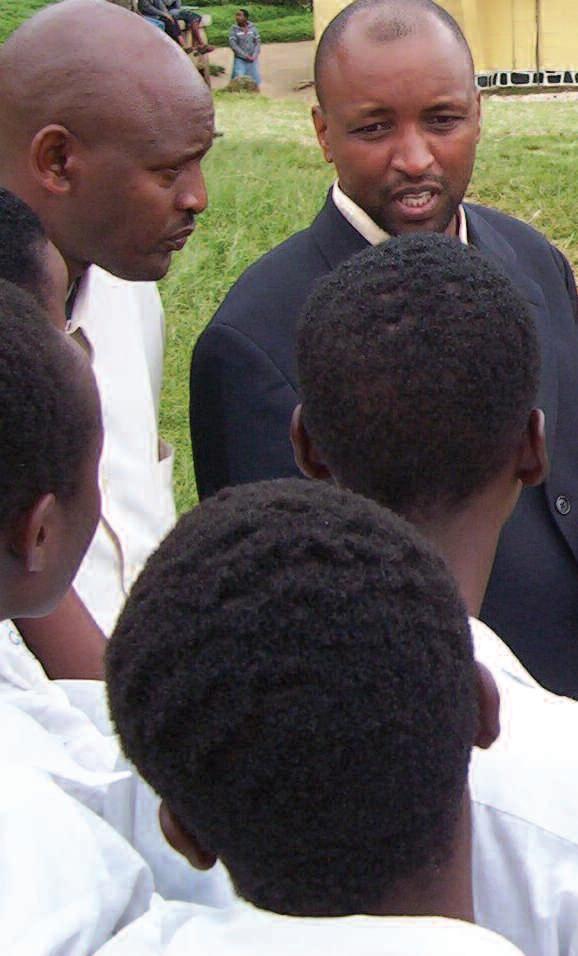
Rev Gato Munyamasoko talks about forgiveness and other crucial issues with youth in churches and schools across Rwanda “ The genocide is difficult for anyone to understand, but after working with youth, I saw that reconciliation is possible. I want to invest more in them. To help them face the big problems of AIDS and poverty, to provide them with training, employment and education, to work with them to prevent further conflict, to help them take responsibility for tomorrow, so that never again will there be a genocide ”

Rev Gato Munyamasoko is CBM’s Peace and Reconciliation Specialist for Rwanda. He brings to his role a passion for evangelism, a commitment to the church, and a strong desire to provide leadership in responding to the needs of the poor Gato believes that these three areas are essential to building a lasting peace. His role on The Sharing Way’s Africa Team will also provide him with ministry opportunities in Angola and Kenya You can become a monthly supporter today of CBM national field staff like Rev Gato Munyamasoko Email communications@cbmin.org.
by Amy Dempsey
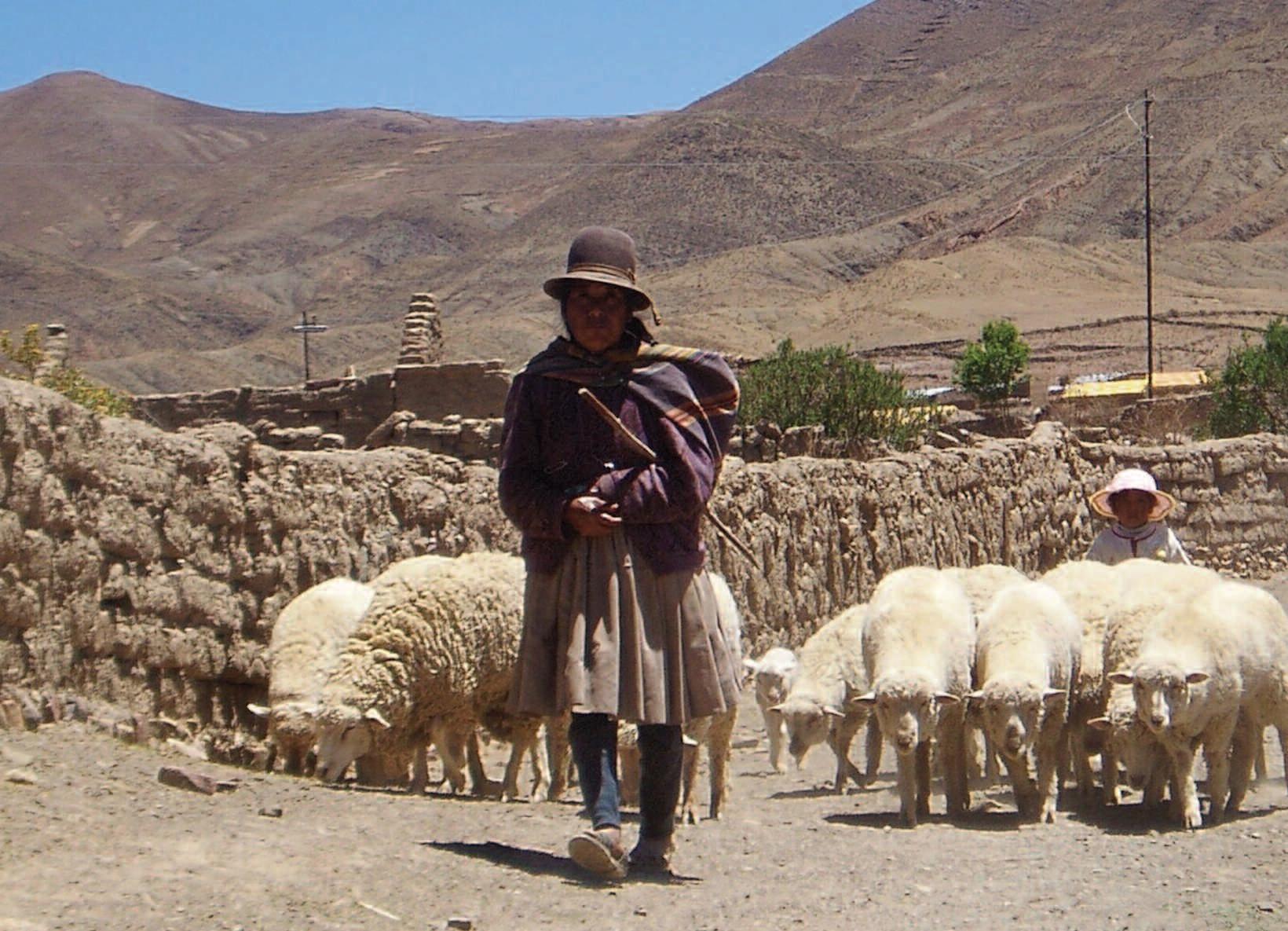
On August 8, 1949, when Amy was only seven years old, her father, Rev. Norman Dabbs, a Canadian Baptist missionar y, was mar tyred along with Francisco Salazar, then President of the Bolivian Baptist Union, Pastor Carlos Meneses and 5 other Baptist believers (Luis Guerrero, Vicente Choque, Aniceto Flores, Atanasio Coronel and Emilio Claros).
This past November, Amy returned to Bolivia to bur y her mother ’s [Lorna] ashes. It was her first trip back She was accompanied by her husband Gerr y, son Stephen and t wo granddaughters, Ciara and Lauren
THURSDAY
I have a clear memor y of being in the airpor t with my mom and two young brothers at La Paz and the farewells. So I was completely overcome with emotion as we descended
into this cit y I was returning to the land of my bir th! But also I was returning to a land and events which had so significantly impacted the whole of my life
We went first to Cochabamba so that we could adjust to the altitude That evening I was ask ed to speak to students at the Seminar y where my dad was to have been the principal when the new term resumed What a privilege to talk to the students, where my father would have stood, had he lived, and share my stor y of the way my father ’ s life and death had impacted my life! These students, I was told, had been raised on the legac y of my father ’ s death and the impact it had on the mission in Bolivia And now I was learning much more of the stor y for myself
I shared with them that it would never have been my father ’ s intent to leave the legac y he did in the way it happened He
was simply responding in obedience to the call of God I encouraged them to respond in the same way to God’s call in their lives and that they would leave their own legac y to the people of Bolivia
SATURDAY
Early Saturday morning we left for Oruro This was where I had lived from bir th until age 7 I t was almost a four-hour trip through spectacular mountain vistas ascending to an altitude of 13,000 feet This par t of Bolivia in the Andes is ver y arid Global warming is affecting it even more so We saw many signs of pover t y Little adobe homes perched on the mountain sides From time to time there were children along the road with their hands held out begging Oruro is the centre for La Diablada Carnival which is celebrated in honour of the Patroness saint of the miners I t is a
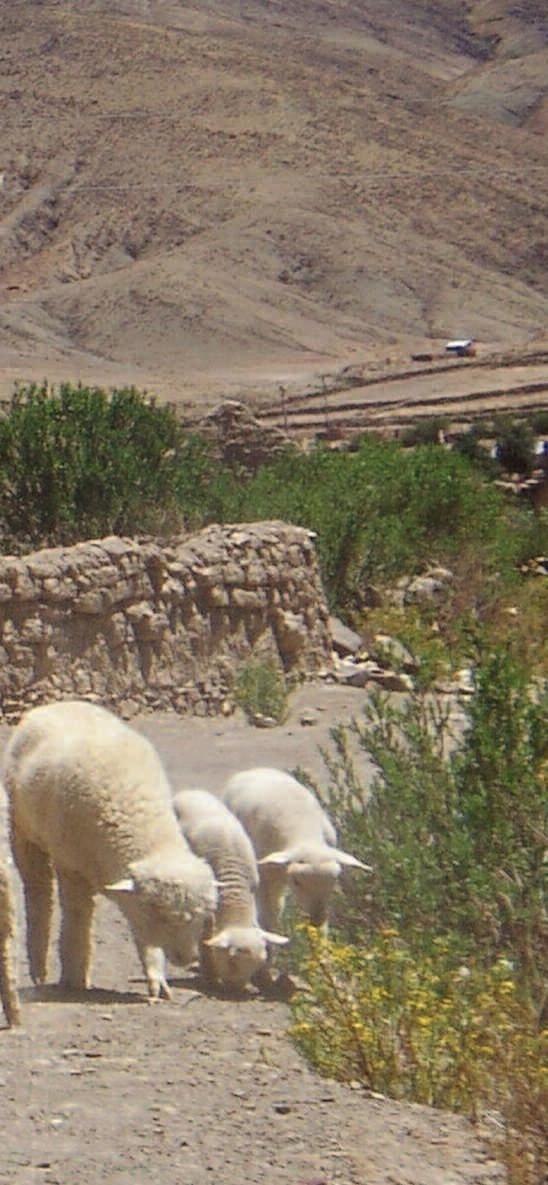
parade of over 50 dance groups that dance, play and sing for over a 5 k m course The dancers dress up as demons, Satan, Incas and Spanish conquerors The Carnival is around Februar y, but when we arrived in Oruro they were having a full dress practice for that event So we got caught in a massive traffic jam through the ver y narrow streets To me there was something ver y significant about the jux taposition of this ‘practice’ and the memorial ser vice for my mom and procession through the streets that was to follow
From the hotel we walk ed to the Church of the Risen Lord the church that my dad had built A wonder ful surprise awaited me! As we arrived, I was introduced to Romulo! The two of us had played together as children! How amazing to be reunited!
To walk into the back of the church,
remembering the last night my dad preached there, was another moment of many tears! The church was exactly as I remembered it! The ser vice was a wonder ful one of honouring my mom who, along with my dad, had ser ved the dear people so faithfully with such love Several Bolivians gave testimonies and I gave the eulogy to mom Truly, my mom’s happiest times were in Bolivia! (She had returned to do a shor tterm mission in the mid 70s ) To stand in the same pulpit in which my father had stood was another complete circle for me!
And then we had the procession through the streets to the cemeter y As a 7-year-old, I had so wanted to be par t of my father ’ s funeral and that procession So again, God was allowing me to par ticipate in an event I had missed! Then to stand in the memorial to the Mar t yrs of Merk ’Amaya and place my mom’s ashes with my dad’s was such an emotional moment They are together in heaven with Jesus!
All of the people who helped organize this memorial ser vice were so amazing We loved the Bolivian people who welcomed us so warmly That evening I had the privilege of speak ing to the Saturday evening youth ser vice in another Oruro church named after my dad I spoke to them from Psalm 27 sharing that God is our strength!
This was the highlight of the whole Bolivian trip for me, but also for our family We drove from Oruro up even higher into the Andes
on a narrow dir t mountain road which dropped off to hundreds of feet below to the little mining town of Merk ’Amaya where the massacre of my father and seven other Bolivians had happened Twenty-five years after their deaths a church was built there
The beautiful Quechua people greeted us with such warmth The women were preparing lunch for us a lamb had just been slaughtered
The ser vice was amazing! This time speaking through two translators Spanish and then Quechua I told the people how God had given me a vision of my father being received into the arms of Jesus when I learned of his death I talked about how we need to see this event from the perspective of eternity I spoke of the battle into which we enter when we become followers of Jesus and how Satan thought he had won the night the men died But Jesus had been victorious! There was a loud clapping in response to that! I shared with them that on the cross Jesus had spoken words of forgiveness, “Father, forgive them, for they don’t know what they are doing ” I told them we needed to hold out the same forgiveness to those who had participated in the slaying!
I met one of the men who had escaped that evening and later returned to plant trees which are now flourishing in the midst of this dust bowl He is blind and his wife is deaf. His grandson is studying at the Seminar y with the hope of returning to this area to pastor it I also met a sister of one of the men who had been k illed
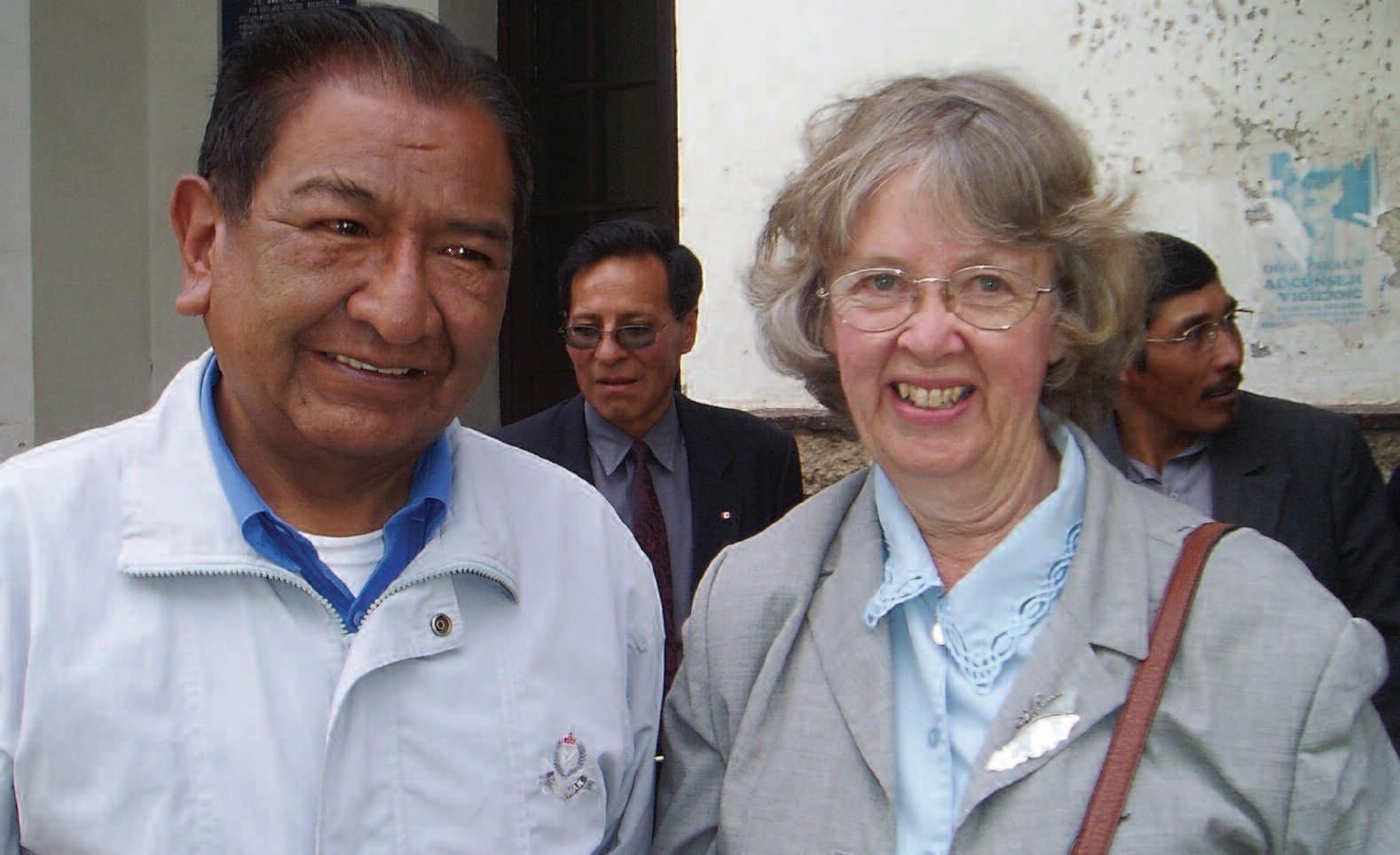
Later we stood on the ver y spot where the house had been in which my dad was showing slides I walk ed the now dried up creek bed and stood where my dad was pulled out of the truck and stoned I pick ed up eight stones which I have brought back with me in memor y of these men and young boys who were k illed
As our son, Stephen, the grandson of a mar t yr, talk ed with Rene, the grandson of the man who escaped and later planted memorial trees, I realize the true memorial for me are the ‘living stones’ (I Peter 2:5)those people who have come to k now Jesus I will never forget them! I wish I were back with them!
Bolivia, through a granddaughter ’s eyes
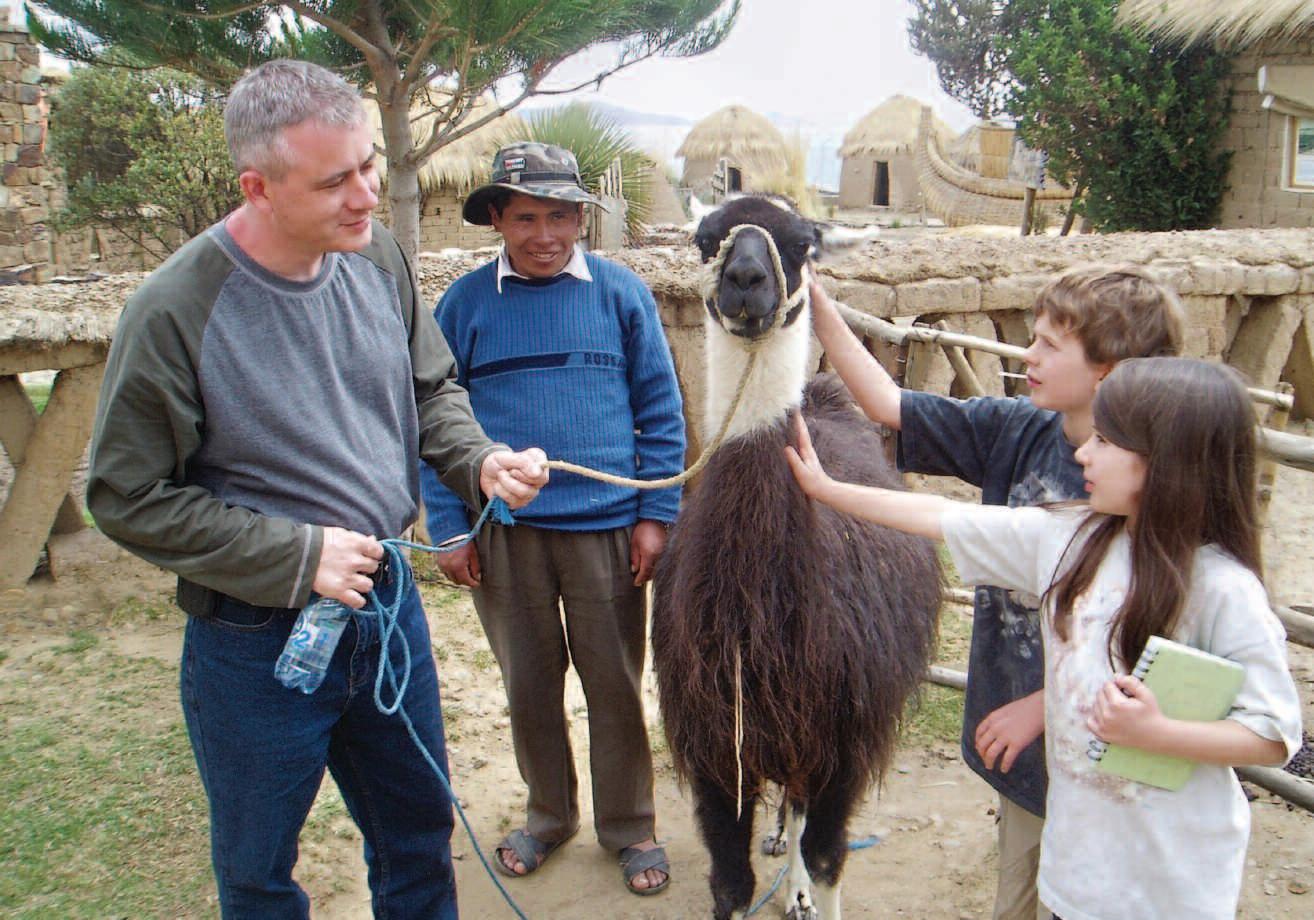
La Paz – Someone announced that we were going to land in a couple minutes we saw the Andes mountains I just saw the city of La Paz La Paz is the city grandma was born in I hope I see a llama in the mountains I didn’t say lamb, I said llama.
Cochabamba – It ’ s a bumpy ride up here on the mountains But it ’ s butiful [beautiful] looking down at the city! Bumpy, Bumpy, ride. Butiful but bumpy. Ver y ver y bumpty
Oruro – There’s lots of parades here. We got to walk in a parade! It ’ s busy in Oruro Oruro is spelled the same forward and backward O-R-U-R-O and O-R-U-R-O
Merk’Amaya – I see mountains surrounding us close and far. We saw a mining town where they mine for silver It ’ s really bumpy and butiful here Merk ’Amaya is down there with all the trees (Later) Right now I am standing at the spot where they first attacked my great grandfather. I found a pretty pebble… I got a present from the church, Norman Dabbs, named after my great grandfather
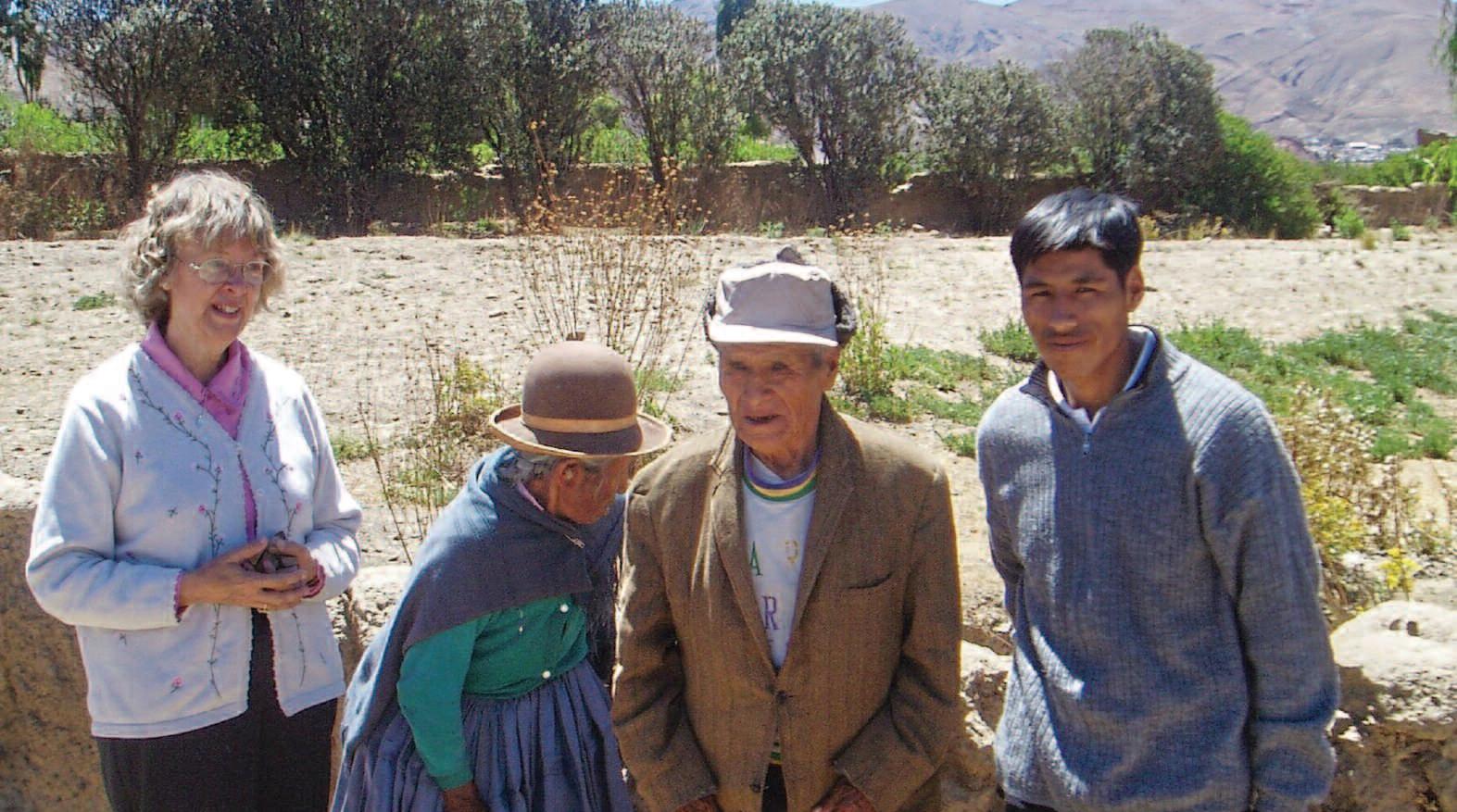
Meet two of the students in the new Spiritual Formation Program at the Baptist Theological Seminar y in Cochabamba CBM field staff Pat and Terr y Janke developed this program to better equip and mentor students It’s part of an exciting, new model for integral leadership formation.
Wilder Zola Fernandez, age 18, is from Cochabamba.
Why did you become a seminary student?
I feel the need for more pastors in Bolivia, as well as a strong call of the Lord on my life
What ministry are you involved in?
I am a student pastor. I like preaching each Sunday. What do you hope to do after seminary?
I want to become involved in one of the Baptist Associations of Bolivia where I can help with the needs
What are some of your hobbies?
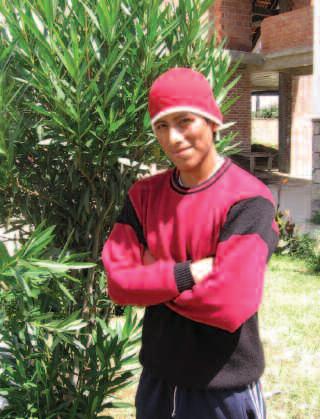
Playing the guitar and the charango, as well as reading the Bible and sleeping!
Roberta Choque Arellana, age 19, is from Oruro
Why did you become a seminary student?
I want to understand more about the Word of God, so that later on I can teach others
What ministry are you involved in?
Casa de la Amistad (House of Friendship), where I am in charge of leading devotions with children whose parents live in the prison.
What do you hope to do after seminary?
I want to be a missionary to other countries and share what I have been learning
What are some of your hobbies?
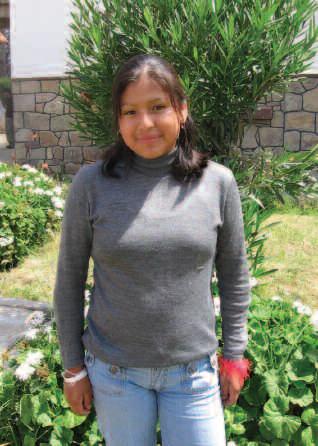
Playing soccer, reading the Bible, and doing choreography for Christian music
Help build a new generation of leaders in Bolivia today Support CBM’s block grant to the Bolivian Baptist Union. For 2008, CBM has committed to providing $55,000, to help fund a variety of ministry including leadership formation at the seminary in Cochabamba Call us at 905 821 3533 or donate online today at www cbmin org
What is restorative justice and why should the church be more passionate about it?
by Rowena Chow, CBM’s Media and Information Systems Manager
Just released from prison onto the streets of Vancouver, Ed had no direction and few options With a histor y of substance abuse, his hopes of k eeping out of prison were slim What he needed was someone to believe in him and walk with him When his drug use and deteriorating behaviour sent him back to prison, he was in danger of being written off as another hopeless case by society
But this time upon release, Ed had someone waiting on the other side People like Vancouver Community Chaplain Reverend Leon Remus, an ordained Baptist Minister, who along with Ed’s parole officer and others in the community, continued to meet with Ed regularly and hold him accountable; to ask him what he had learned from being inside again so mistakes would not be repeated
It ’ s because of this support, Ed himself will testify, that he is now a responsible father of a young daughter and is studying towards a law degree at Simon Fraser University
Ed’s stor y is a real stor y of restorative justice that works
Reverend Greg Rodgers of the Kingston Community Chaplaincy emphasizes the healing that it can bring “Generally speaking, restorative justice is considered to be an alternative approach to our conventional criminal justice system that focuses on bringing healing to those who are affected by crime: victims, offenders, and the community ”
Given the focus on healing and community, it is not surprising that the Circles of Support and Accountability (CoSA, a restorative justice program funded by the Correctional Ser vice of Canada) grew out of a faith connection. In 1994, when faced with the release of a highprofile pedophile, the faith community in Hamilton formed a “circle” of accountability partners around the sex offender and began a program that is now being emulated around Canada and the world.
Rev Hugh Kirkegaard, a Baptist minister, is the Regional Chaplain for Ontario He helped start a similar circle in Toronto and nurtures CoSAs across Ontario “It ’ s no coincidence that the CoSAs emerged from the faith community The faith community stepped up and said we can deal with these guys We
have tools that we can readily apply : our capacity to live and work in community ”
And yet the biggest challenge that restorative justice faces today is the church which has bought heavily into the model of punishment, notes Kirkegaard “ We need to grapple with our view of the atonement We need to do our biblical homework and let it lead us to different places than punishment and retribution ”


Some churches have caught the vision.
Rev Pierre Allard, a Baptist minister recently retired from 30 years as Head of Chaplaincy at the Correctional Ser vice of Canada, has started a program, Just Equipping, with his wife Judy, that ’ s committed to training prison chaplains and criminal justice workers in the area of restorative justice Last year they were in Rwanda to help train prison chaplains who now cope with large numbers of people imprisoned for crimes against humanity committed during the genocide They also have worked with Governments in Jamaica and Malawi
Rev Allard speaks passionately about church involvement. His own church, Bethany Baptist in Ottawa, has supported his work in prison chaplaincy for over 15 years now “It is essential for churches to get involved God is committed to issues of justice Worship that doesn’t incorporate aspects of justice needs to be questioned The church needs to take care of the disenfranchised and abandoned, and
must heed the call in a practical way We’ve lost the incredible joy in discovering justice that is merciful ”
Allard had a first-hand lesson in mercy when his brother was murdered in 1980. Because he was working with prisoners at the time, the concepts of restorative justice provided him with the vision he needed to continue his work
Kirkegaard first got involved in restorative justice as a result of the violence he witnessed during a riot at the Dorchester penitentiar y where he was volunteering “I began to see first-hand how we do justice based on a punitive model It was 30 years ago that I saw first-hand the violence done to prisoners and by the prisoners to each other It raised questions about how we do justice ”
Des had similar questions John “Des” Horan, a retired doctor in his 70s and a longtime member of First Baptist Vancouver, started to wonder about what happens to those who have broken the law and been imprisoned, and then are set free? How do they shake off their old relationships, their old habits and vices, and make a new break for it?
Through his contact with Remus, Des started to spend time with people like Ed, just having a coffee, or going for a walk “If you’re content to invest your time, you’ll be surprised at what may occur in the way of big-time miracles ”
For Remus, it ’ s a spiritual calling, like “standing on holy ground, when they [former inmates] share from the deepest aspects of their own life, some of the deepest and most painful moments That ’ s ver y sacred when they open themselves to you that way ” How could you not get involved?
The Spirit of the Sovereign Lord is on me, because the Lord has anointed me to preach good news to the poor He has sent me to bind up the brokenhearted, to proclaim freedom for the captives and release for the prisoners
Isaiah 61:1
Learn more about restorative justice at the Correctional Ser vice of Canada website: www.csc-scc.gc.ca
What concerns you? What issues would you like your church to become more involved in? Let’s talk Visit us at www cbmjustice blogspot com
by Sandy Sutherland
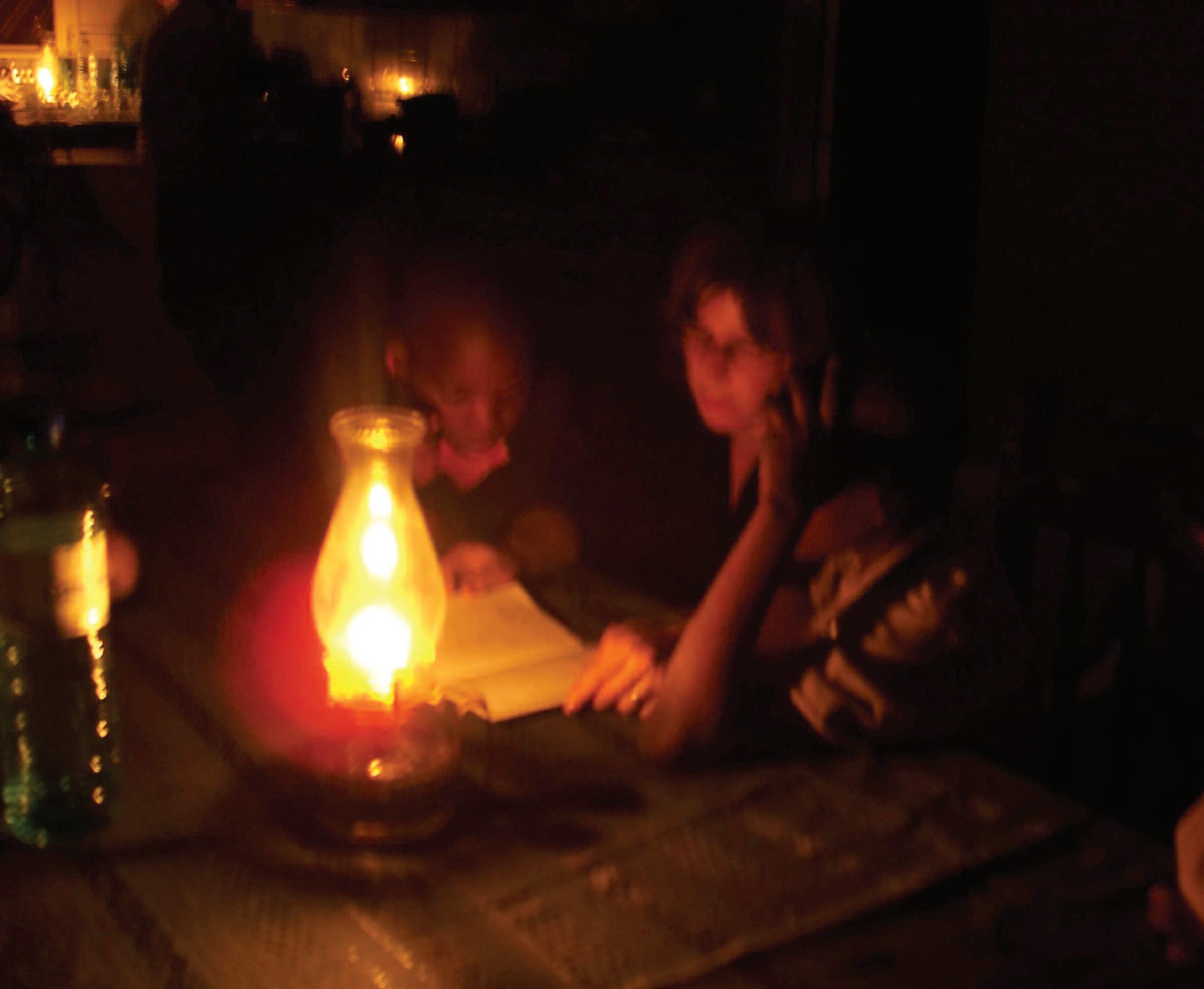
supper by the light of a k erosene lantern. We shared a wonder ful meal in its soft glow
The old generator rallied just enough to light up the church for the Wednesday evening worship ser vice -- and to supply the nearby clinic with a little bit of power-before breaking down and immersing us in the black, velvet darkness Night on the mission compound in Soyo, home to some of CBM’s first mission effor ts in Africa!
Later that evening in the home of Jim and Diane McBeth, par t of the new CBM team now ser ving in Angola, Diane prepared
After wards, we sat in the lantern light and sang with the children before they went to bed We did the dishes in cold water by the light of the lantern Still later, when all had settled down to sleep, I crawled out from under the mosquito netting and found my way to the washroom by the light of the lantern
Jesus too lived with lanterns He k new that you don’t light them and then cover them up Instead, you set them in strategic places to give light to ever yone Jesus tells us to be just lik e this, strategically placed, full of light, so all may see God’s goodness shining through us and praise Him for it
(Matthew 5:15-16)
Many visits by lantern I t ’s not unusual for a young seminar y student, or a high school student, or even a pastor ’s wife to drop by the McBeths (CBM field staff in Angola) to study and to share; to laugh, cr y and pray together Pictured: Diane
reading by
We met such people ever ywhere we went in Angola; people who shine with the power, hope, and goodness of the living God. People put in strategic places.
The Jesse Church, for example, is located right in the hear t of Luanda, the capital cit y As the mother church of the entire Angola Evangelical Church (IEA) denomination, Jesse has a far-reaching influence with her hear t for the young and her commitment to outreach This large, growing congregation recently planted a new church in the middle of a neighbourhood swollen with displaced families who fled their homes in the countr yside for safet y in the cit y during the war Most of these people have nex t to little income Forced to live in meager
shelters, they have ver y little food and scant clean water I llness goes uncheck ed as basic medicines are too costly for them But now the power, hope, and goodness of God shines in their midst through the new church
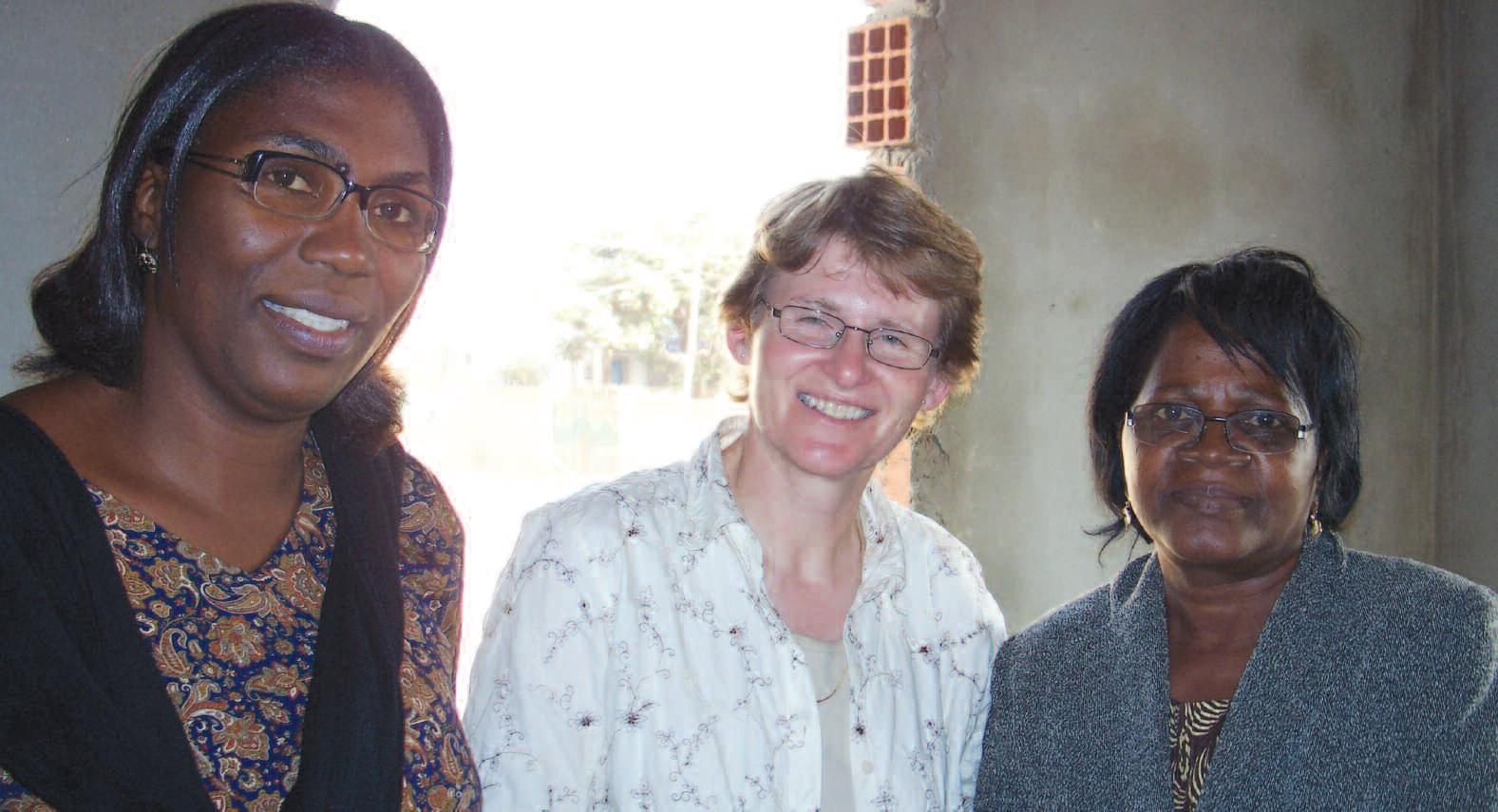
Ana Salomão Canga and her development team are also “lanterns” as they work with communities on water and food security, income generation, and better health care including HIV and AIDS awareness training, testing programs and support for families affected As The Sharing Way ’ s Development Coordinator in Angola, Ana also provides expertise on gender issues and is part of CBM’s multi-national team of Angolans, Canadians, Kenyans and Rwandans, ser ving today in Africa
Far off in the northern province of Cabinda, we met more “lanterns” , dedicated pastors who recounted the faithfulness and goodness of God through war and peace
They now have fresh vision for ministr y At the IEA’s Bible Training School located in the city of Cabinda, directors and staff (including CBM field staff Dorothy Sowden), shared their incredible vision around evangelism and pastoral leadership training and all that God could do in the lives of the young people studying to become pastors Their commitment to the task is admirable when you consider the obstacles they face including a meager librar y, a small, inadequate facility, and student poverty They are grateful for the block grant which CBM faithfully provides each year to help the IEA better support these struggling but strategic ministries which are helping to form new leaders
In Angola, we were reminded that the rays of God’s people shine through the years, lighting the way for future generations We met a number of people who remember CBM personnel who ser ved in Angola 50 years ago They still talk about the way God worked
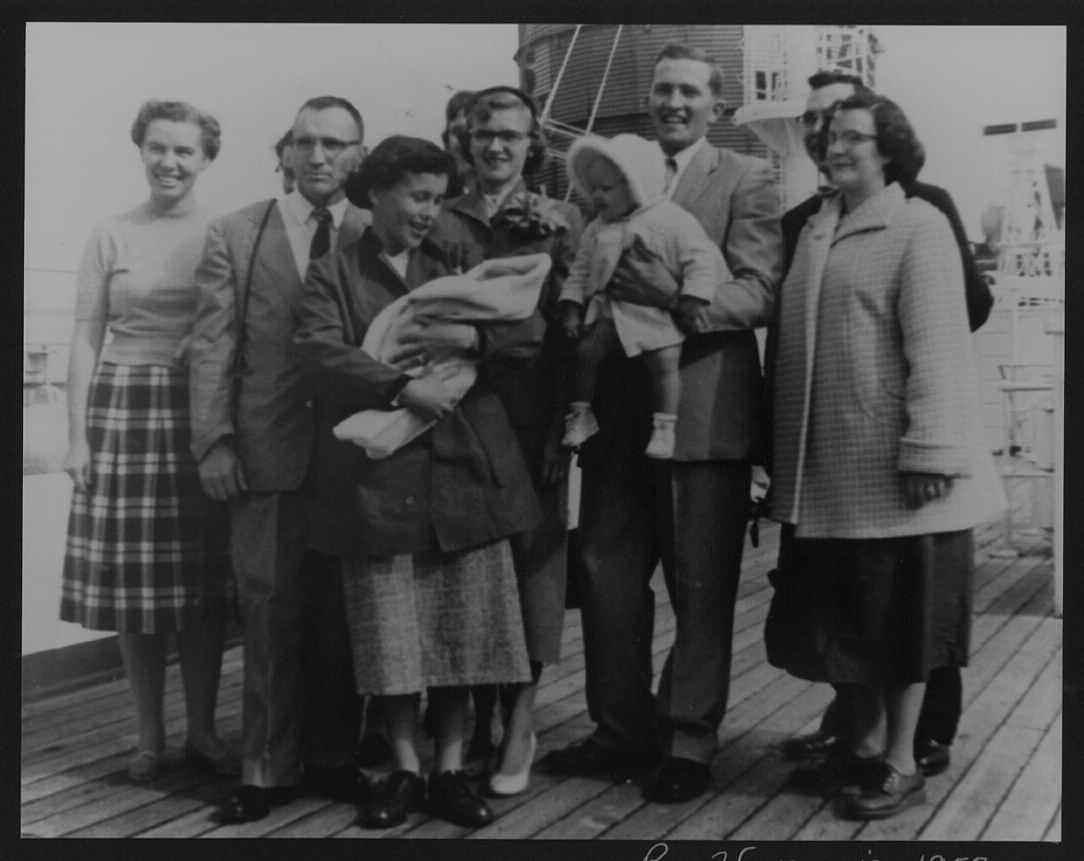
picture was taken by family members as they farewelled the Angola team at New York harbour in October 1957 Left to right: Ellen Stroud; Ada Secord (in the back); Lynn and Hannah Stairs with daughter Sharon; Winnifred Burpee Johnson Palmer (in the back); Virginia and John Keith with daughter Carol (13 months); and Charles and Fran (pregnant with Tim) Har vey
Between 1956-58, 24 Canadian Baptist missionaries left for ser vice in Angola – one of the largest deployments in CBM histor y A few short years later, revolution forced missionaries to leave Some moved north to Zaire (now Democratic Republic of Congo) and started work among Angolan refugees Here they launched a new era in CBM mission by putting themselves under the direction of the Zairian church, setting the model for working in partnership with churches and national leaders that continues today
through these beloved missionaries to lead them to faith in Christ and teach them His ways
The sun wasn’t yet up the morning we left Soyo. We dressed and pack ed in the mellow glow of the lantern We returned home to Canada still in the glow – wrapped in the memories and prayers of the brothers and sisters we met in Angola I thank Him for our visit I t taught me that life is much simpler, much richer and, far more serene when it ’ s lived in the light of the lantern
October 2007 marked the 50th anniversar y of the arrival of the first Canadian Baptist missionaries in Angola I t was the third par tner, after India and Bolivia, in Canadian Baptist mission.
“ We feel honored to be able to follow in the footsteps of those first courageous men and women who ser ved so faithfully here, ” notes CBM field staff Jim and Diane McBeth, who together with Ana Salomão Canga and Dorothy Sowden are CBM’s initial response team in the rebuilding effor ts of the Angola Evangelical Church. They are a testament to our continued commitment to our par tner in Angola Learn more about the ministr y they are involved in by reading some of their updates at www cbmin org
You can build on the legac y by supporting CBM field staff now working in Angola Tel 905 821 3533 to become a Par tner in M ission today
n 1: One person
can make a difference. 2: I t ’s all about attitude and faith. 3: A willingness to just do something.
4: More of ten than not, they may never realize their impac t on others.
We dedicate this grassroots hero column to the often unsung hero: parents, teachers, grandparents, pastors, and all of you who are a part of inspiring the next generation to learn more about the call of God in their life and how they might start to reach out in faith to respond to the needs around them
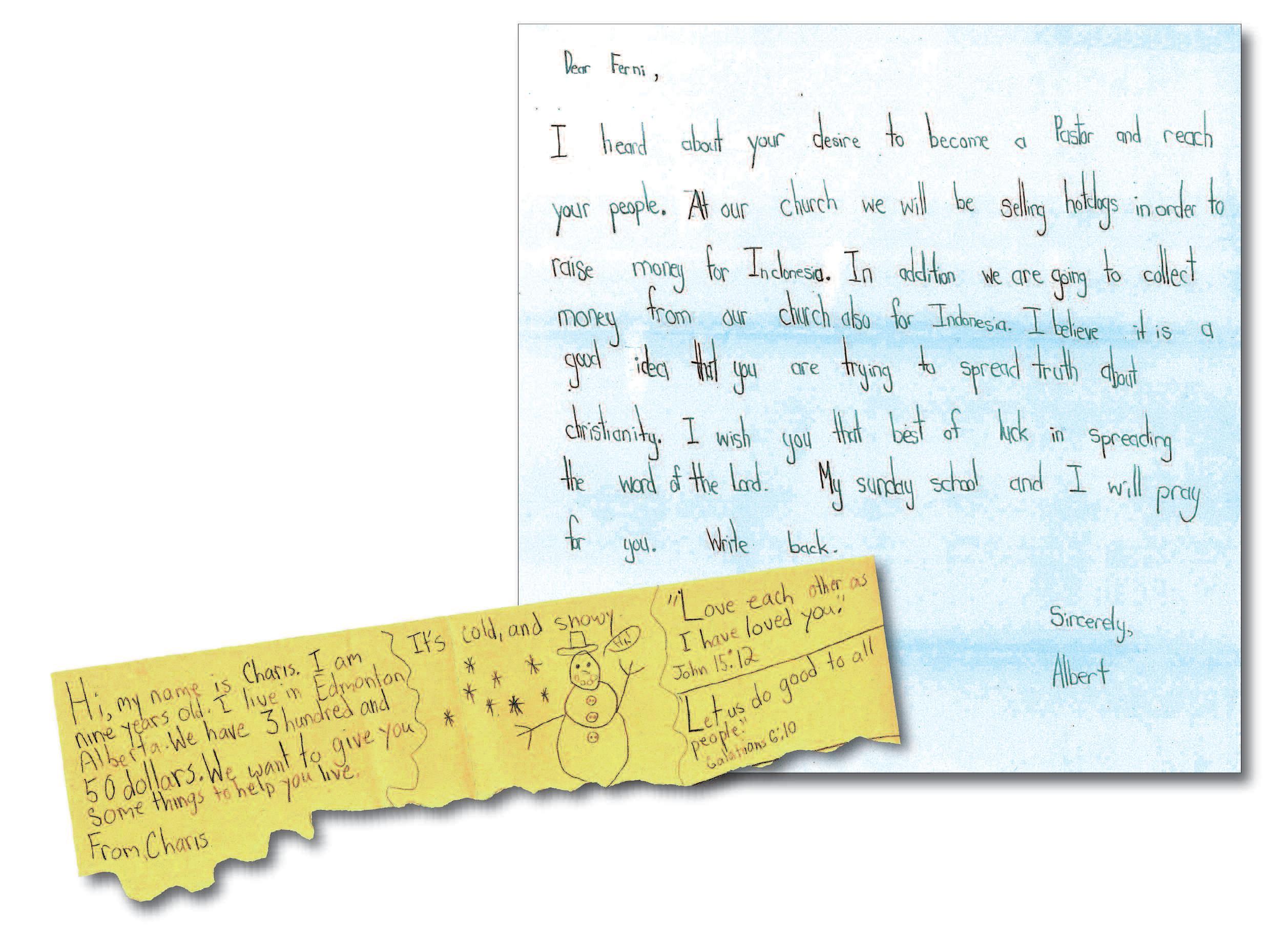
Here is a peak at just some of the notes and drawings that CBM receives.
Albert attends Egerton Baptist They raised money to help more students like Ferni attend seminar y Ferni’s stor y was featured in previous issues of mosaic
Charis attends The Neighbourhood Church
The children’s Sunday School made Christmas decorations to sell to the congregation to raise funds for community development – through CBM’s Gift Catalogue
Solidarity Sunday
On Mother ’s Day, May 11, 2008, join with Canadian Baptists across the countr y as we stand in solidarity with our brothers and sisters in Bolivia
Funds raised from this event will support more integral, church-based ministr y in regions where some of the countr y ’ s most painful levels of poverty are found Look for sample promotional items to arrive at your church in April For more information, please email communications@cbmin org Mark the date today and/or order your free solidarity ribbons early