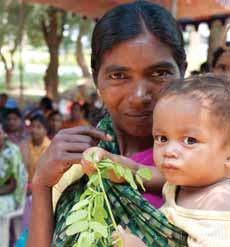
Jennifer Lau is the Director of Global Discipleship and Communications, and a guest writer for Sam’s column in this issue of mosaic
Mission of Canadian Baptist Ministries
Encouraging passionate discipleship for local and global mission.
As partners in the Canadian Baptist family we exist to serve the local church in its grassroots mission. Together we impact our communities and beyond through the love of Christ.
Scan this code using your smart device to on Facebook
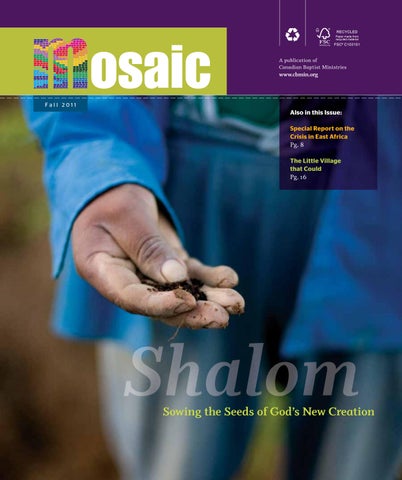
“I see God…” Maybe it’s just me, but it’s hard to understand the concept of shalom (the theme of this issue). The idea of God’s vision for such a perfected world can seem as far from our reality as one could possibly imagine. This October, the world’s population passed the 7 billion mark. More than one billion people go to bed with an empty stomach night after night.
I must admit, sometimes I have a hard time figuring out how to respond to the flaws of this world even as I seek to live in the anticipation of another: one that’s fuller, deeper and better than anything I could dare to imagine.
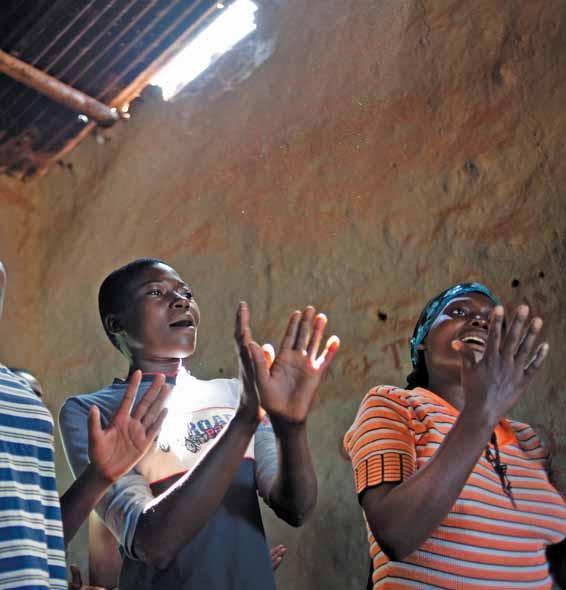
During a recent chapel service held at the CBM office, our General Secretary Sam asked each of us to complete the sentence, “I see God…” Even now as I think back on the answers, they continue to astound me. Not because of their eloquence or originality (although some of them were), but because God is so clearly real and present to every person, each in their own deeply personal way.
@samchaise_cbm
facebook.com/cbmin.org
cbminorg.wordpress.com
Here are some of the responses.
I see God…
— in those who embrace the truly unwanted
— in beauty and diversity of culture
— when compassion moves people to act generously
— as he shouts in our pain and whispers in our joys
— in brokenness and forgiveness
I’m starting to think that maybe we don’t need to understand shalom to experience it — that not seeing the whole picture doesn’t lessen our experience of God in his perfect glory. Through our small glimpses of his goodness and grace every day, we are actually getting so much more — a foretaste of what is to come for all time.
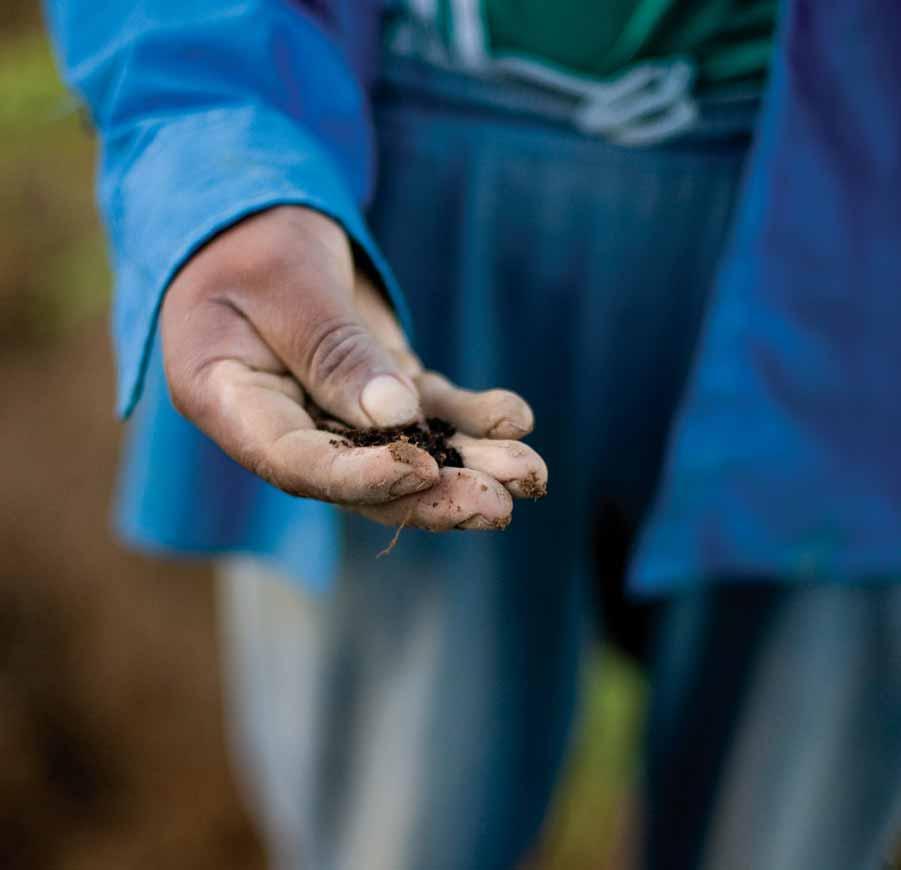
May you be encouraged by the small glimpses of shalom in your own life, and by the small seeds of shalom being planted and tended around the world by faithful women and men as you read this issue of mosaic
Jennifer Lau Director of Global Discipleship and Communications
Photos (cover and opposite page): Johnny Lam Photography
Purpose of mosaic
mosaic is a community forum of local and global voices united by a shared mission. mosaic will serve as a catalyst to stimulate and encourage passionate discipleship among Canadian Baptists and their partners.
When God’s Dream for the World is Fulfilled (and what mission is all about!)
by Rev. Sam Chaise CBM General Secretary
Shalom. Too bad we translate it as “peace.” That is far too anemic a word — it just doesn’t capture the robust richness of shalom. Perhaps there is no one word that is adequate!
Shalom is life as God intended it to be. Imagine the best, most vibrant, most whole experience you have ever had, and you come close. Imagine all evil and suffering disappearing and all tears wiped away, and you come close. Imagine the richness of God’s creation freely lavished on all people, and you come close. Imagine the joy of intimate community and the love of sacrificial giving. Imagine every relationship in harmony and operating at maximum level. Imagine all your best and highest longings, fulfilled. Imagine all that God wants for his world, fulfilled. That’s shalom!
It was present at the dawn of time, when God created the world. Plants, animals, people, electrons, mountains — all in perfect harmony. All relationships worked in harmony as they were meant to function: our relationship with ourselves, with the earth, with one another, and with God. God looked at this and said that it was “good?” The Garden of Eden symbolizes this ideal state: God commissioned the first people to steward the earth and tend the Garden under his kingship (Genesis 1:26-28). There was opportunity for creativity, development and growth. Life was meant to be amazing, invigorating and expansive. It all fell apart, of course, when darkness entered Creation and shattered shalom (Genesis 3).
All of the relationships were affected: we became alienated from ourselves, from the earth, from one another, and from God. For a moment, all seemed bleak.
However, almost immediately, God initiated his mission to restore shalom. This mission was why God spoke to Abraham, and called him to be the father of a people who would bring blessing to the whole earth by living in shalom. It was why God rescued his people from slavery in the Exodus, and delivered them into the possibility of living a whole new kind of life — shalom-life. In sheer grace God unilaterally established a covenant with his people, showing them his love and inviting them to live in shalom. The Land of Promise was meant to be the place where God’s people lived in shalom with themselves, the earth, one another and their God. It was meant to be a demonstration project that showed the rest of the world what shalom-life was like. God promised blessing to his people; blessing is the natural result of shalom-life, because shalom-life is aligned with Creation and the Creator.
Sadly, the people failed to live into shalom. Rather, they reverted back to the natural tendency of fallen humans: they became self-absorbed and lived lives that were fundamentally self-filled and
Photo: Johnny Lam Photography
Today, the purpose of the Church is to be a new people of God who are a sign of God’s shalom, and who speak and embody it.
selfish. Life became about accumulating wealth and power and status, both individually and as a nation. In the end, and after repeated warnings from the prophets, God exiled them from the land of promise. In a sense, he gave them what they wanted: removal from the shalom-life that God had intended for them.
Exile was a crisis (Psalm 137). All their identity markers were removed. In the refining experience of this time, God’s people re-shaped their faith and learned how to be a waiting people. They moved from a temple-centred and monarchy dependent faith to one that was based on reading the Scriptures and worshipping in the synagogue. What emerged was an expectation that God’s Messiah would come, to once again rescue them. As we come to the end of the Old Testament, we find that God’s people are learning to wait.
And into that waiting, a child is born. Into the anticipation, the Messiah arrives! At the start of his ministry, Jesus explicitly aligned himself with the fulfillment of all of God’s purposes and promises found in the Old Testament. In Luke 4 we read of Jesus visiting the synagogue in his hometown of Nazareth, and he quotes from a section of the prophet Isaiah that refers to God’s restoring of shalom:
The scroll of Isaiah the prophet was handed to him. He unrolled the scroll and found the place where this was written: “The Spirit of the LORD is upon me, for he has anointed me to bring Good News to the poor. He has sent me to proclaim that captives will be released, that the blind will see, that the oppressed will be set free, and that the time of the LORD’s favour has come.” He rolled up the scroll, handed it back to the attendant, and sat down. All eyes in the synagogue looked at him intently. Then he began to speak to them. “The Scripture you’ve just heard has been fulfilled this very day!” (Luke 4:17-21)
You could have heard a pin drop. It would have been stunning for the congregation to hear (what they thought was) a mere mortal declare that all of God’s shalomintentions were now being fulfilled “this very day!” Now. Today. Jesus’ ministry was about announcing and demonstrating the already present but still coming reign of God. This happened every time he healed, preached, taught, loved. He said that God’s reign was present in him and he invited people to live in that reign: “come, follow me” is the invitation. The New Testament term “Kingdom of God” (or, Reign of God) is another way of saying shalom. Shalom is where God reigns and where life is ordered as he intends.
Photo: Gabriel Craven
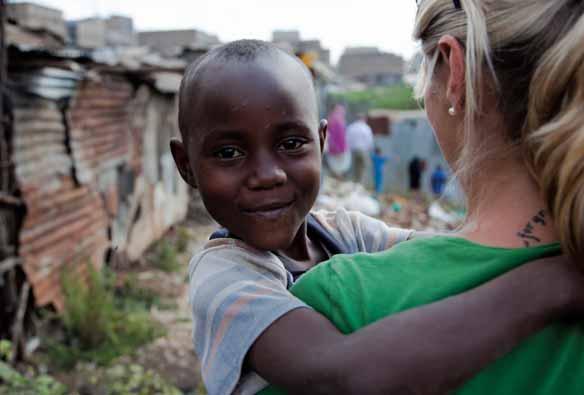
The number of orphans and street children continue to grow in many parts of the developing world. Pictured: CBM Global Field Staff Erica Kenny walks with a young friend, one of the street children in Eastleigh, a ghetto in Nairobi, Kenya.
Jesus also established a new people of God, the Church, in whom he lives and through whom he continues to carry out his ministry of announcing and embodying the shalom reign of God. Shalom is a real possibility (not a vague hope!) precisely because of Jesus’ death and resurrection, which once and for all established victory over darkness, over all that is anti-shalom, and ushered in a new kind of life — it is so new it is symbolized as a ‘new birth.’ A new creation is born each time someone becomes a Christ-follower and the Holy Spirit fills them. This internal life-change is embodied in the details of everyday life: relationships, money, time, sexuality, attitudes — everything is re-born and is changed by this new spirit! God’s New Creation is centred on individuals but its circumference extends to all of creation.
Today, the purpose of the Church is to be a new people of God who are a sign of God’s shalom, and who speak and embody it. Sadly, when parts of the Church fail to either grasp or cling to this purpose, we see traces of the old life creep back in. People are damaged, credibility lost, relationships broken. But God continues to refine and restore his people for the Church is a fragment of the future, a micro-picture of what is yet to come in fuller measure. This is the reality in which we now live. We have a glimpse of what is to come: we know how the story ends. In the final chapter of this phase of the human story, we see God victorious at the end of time, and shalom re-established as God comes to dwell with his people. We don’t “go” to heaven, heaven comes to us! The Holy City (Revelation 21, 22) is a picture of vibrant, full shalom. It’s even better than the original Creation: we began in a Garden but end in a Garden-City that is full of the human community. Shalom is resplendent!
Today, in 2011, as we engage in mission, we are in actual fact participating in God’s mission of restoring shalom. We are not to be
driven by an obsessive need to fix the world (who ever said that the world was a problem that needed to be fixed?), rather, we are compelled to act by a vibrant picture of shalom that we have experienced in seed-form already and for which we wait in faith to see its fully revealed form at the end of time.
Shalom is experienced whenever God’s purposes for the world are fulfilled: whenever justice is enacted, life is nourished, community is strengthened, joy is unlocked, and life is abundant. Shalom is about right and just relationships, to God, to one another, and to the earth. It is about each person having abundant life, physically, socially, emotionally, spiritually.
Whenever a child is loved and nurtured, shalom is present. Whenever the oppressed are companioned with in solidarity, shalom is present. Whenever sacrifice is made for the well-being of another, shalom is present. Whenever God’s love is articulated and embodied in a human being, shalom is present. Whenever we savour the goodness of life and live it in gratitude, shalom is present. Whenever people who have not known God’s love discover it in
God’s people, shalom is present. Whenever those with power use their power for the benefit of the marginalized and for the good of the whole, shalom is present. Whenever we walk with those who are grieving, shalom is present. Every day, we get to choose whether we will live more fully into shalom, or not.
Shalom is enticing. Intriguing. Captivating. Better than we can imagine. This is what energizes our mission and energizes our lives. Too much of our mission, I believe, is focused on problems and difficulties. These things exist, but I believe that Christian mission is about tilting towards God’s intended future. We are not pushed out of our past, but magnetically pulled into an amazing vision of shalom that we see in God’s purposes.
Shalom is God’s mission. And it is our mission.
Malnourished women have malnourished babies, perpetuating the cycle of poverty and despair. Pictured: CBM has helped to provide a new Mother and Child Care Centre that offers medical treatment and health awareness programs.
hunger, famine & Food Security
What is it that we still don’t understand?
by Rupen Das, Deputy Director CBM International Partnerships
IMAGES OF STARVING BABIES and helpless mothers seem to be haunting us again through our television screens and appeals from humanitarian agencies. While they keep referring to Somalia, there is a sense of déjà vu. There were similar images of famines in southern Africa in 2000, in Sudan in 1998, in North Korea in 1996, in Somalia in 1991-92, in Ethiopia in 1984-85, in Uganda in 1980-81, in Bangladesh in 1974 and in Ethiopia in 1973. After a while the images blur together. There is a sense of weariness in seeing this level of suffering, again.
The images bring to life a reality that is far more disturbing. The UN’s Food and Agriculture Organization (FAO) reported that between 2006 and 2008 food prices in developing countries increased by a minimum of 60 percent due to crop failure, conflict and high prices locally. By 2007 an
additional 75 million people had been pushed into hunger and poverty. By 2008 the food price hikes had caused riots in Yemen, Somalia, Senegal, Pakistan, Mozambique, Indonesia, India, Egypt, Ivory Coast, Cameroon, Burkina Faso, the Philippines and Bangladesh. The 2011 “Arab Spring” in Syria was triggered by the thousands of poor who were displaced from rural areas due to repeated crop failures and decreasing fertility of the soil. The UN’s latest report on global food security states that a billion people (one sixth of the world’s population) are undernourished. More people die from hunger and malnutrition than from HIV and AIDS, tuberculosis and malaria combined.
Food security programs usually address different aspects of the following five components:
Availability. There needs to be enough food available for the number of people in a community. Depending on the structure of the community, this may include availability of food in the market, as well as ensuring appropriate agricultural practices to produce sustainable yields that meet the needs of the community and beyond.
Famine is a complex phenomenon and is not understood simply as the lack of availability of food. Amartya Sen’s groundbreaking study of famines showed that even in the worst of famines, there was food available in the area, but was not accessible by the majority of the people, especially the poor. Famines evolve over time and are a volatile mix of underlying social, political and economic problems that are exacerbated by external shocks to the society. Some of the underlying problems may include (but are not limited to) inadequate availability of food (due to improper agricultural practices and poor yields), prevalence of undernourishment and malnutrition, and household poverty. External shocks that exacerbate the problems and then trigger hunger and famine include (but are not limited to) failure of the rains, HIV and AIDS epidemics, war and conflict, natural disasters, and economic collapse.
While food aid in the form of food distribution to the general population and feeding centres for the severely malnourished may be an appropriate response in the early stages, it is not the solution to food security for families and communities. For communities to be food secure there needs to be a long-term commitment to address the causes of hunger.
accessibility. While food may be available, poverty may prevent people from being able to access it. Others may be in areas isolated by conflict, which prevents not only their access to food but also the availability of food.
adequacy. Food not only needs to be available and accessible, it needs to be adequate in terms of its nutritional value. Long-term food inadequacy has severe implications for growing children, causing stunting. This is often referred to as the hidden famine or the hidden hunger.
Acceptability. The food available needs to be acceptable to the local population. There are numerous examples where rice may have been provided to people who consume wheat, or where yellow corn may have been provided rather than white corn (yellow corn is fed to the cattle).
Agency. The availability, accessibility, adequacy and acceptability of food are dependent on government policies, processes and international trade laws.
The tragedy of famines is that they are preventable. With the knowledge, technology and the ability to influence social systems that are now available, what is it that we don’t get about hunger, famine and food security?
Canadian Kids Respond to Hunger in Africa
In hearing about the East Africa drought and hunger crisis, young leaders at Lower Coverdale United Baptist Church (NB) decided to get their Vacation Bible School children involved. As a result, an eager group of 60 kids raised more than $517 by bringing in bags of change from home. One of the VBS coordinators, Cara Rossiter, spoke of how the children were impacted: “[The children] really care about the kids in Africa... and said they’d continue to pray for Africa in their bedtime prayers.”
People of all ages in Canadian Baptist churches have generously responded to the hunger crisis. CBM has received nearly half a million dollars in donations by mid-September.
Lola Crousse making a donation
Dadaab
A story behind the headlines
by Paul Carline
CBM Global Field Staff in Kenya
WE ARRIVED IN CANADA this past summer for home assignment.When we turned on the TV, the news was about Dadaab! It’s weird watching your old neighbourhood in Kenya featured on international news every night.
Thirty years ago, a few Dadaab elders asked Canadian Baptists to live and work in their village of a few hundred souls. Hardly a strategic place in some minds, but the offer was accepted. Thus began years of stories.
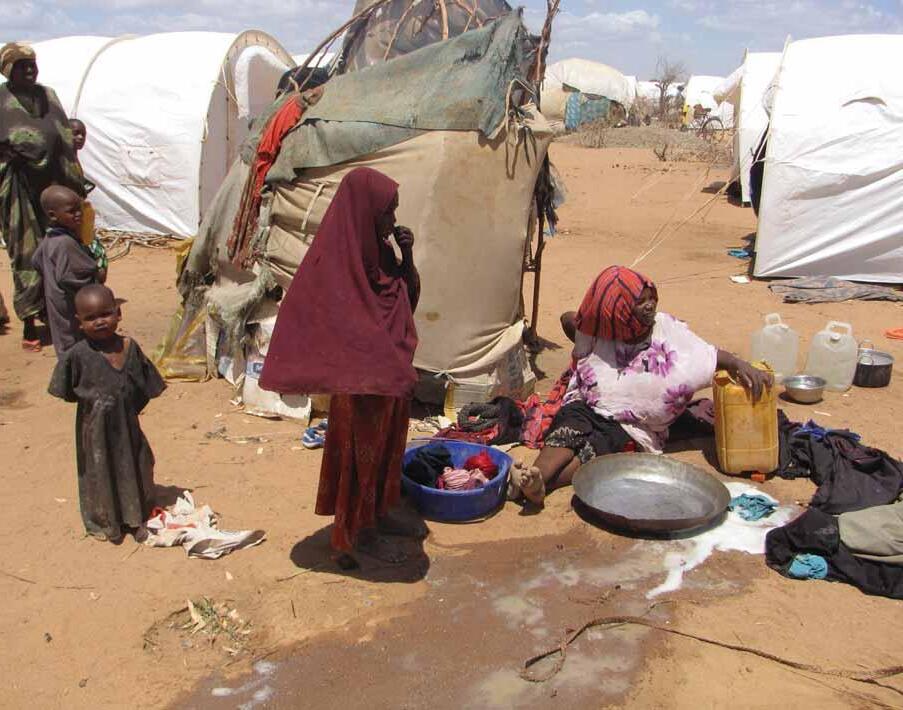
The latest one is drought. It’s been dragging on for years but the numbers just got big enough to be newsworthy. More than 12 million people are facing starvation in the Horn of Africa (which includes the countries of Somalia, Ethiopia and Kenya, among others). Each day 1,000 refugees arrive in Dadaab, a refugee camp designed for 90,000 people that now holds 400,000 — the world’s largest concentration of refugees. They arrive sick and weak, often in critical condition, after walking for many days — most children die on the way — hoping for help only to find long lines and strained resources.
quick pre-assessment at Bara and Dolloloweyn and we randomly sampled 20 kids and found out that 16 of them are mal nourished, 11 severely malnourished…Pray for God’s leading.
Suddenly we’ve become small fish in a big pond — maybe that’s why we have such a heart to look after other small fish. We’re glad Dadaab, northern Kenya and the Horn of Africa are getting attention. We’re glad the U.N. and other agencies are trying to feed and care for the hungry masses. But God continues to call some of us to focus on people that get missed.
Yattani Gollo is one of our CBM colleagues on the ground. He is concerned about the escalating price of food and the plight of some of those forgotten in the crisis. Here are excerpts from one of his emails in July: Food [prices are] so high, a kilo of sugar is 150ksh, an inflation of probably 50 percent, other food items too… Camels are getting weaker, and we see cow carcasses all over…Paul, this is the same story in northern Kenya, no water, no grass. It is even worse than when we visited — it is a tough time for all the pastoralists.
You will not believe the number of cameras pointed at you in Dadaab from every corner; more NGOs, Paul, but still more needy people. I think from my assessment, the situation is under control, the bigger NGOs and others are helping out. The big need is with the locals, especially those in the bush…we went last week to do a
with us and bids us love the world with him in the same way.
Thankfully God is not CNNdependent. Each person is headline news to him. Thankfully Canadian Baptists aren’t CNN-dependent either. Many have had the Somali world and north eastern Kenya in their hearts and minds for many years.
Thank you for your past and present partnership, which is helping vulnerable communities to become more resilient during times of crisis and more hopeful for a better future.
Some Somali villages in the area envy the refugee camps with their food rations, water source, education and health facilities. Some even attempt to register as refugees to access these services. With a few other communitybased organizations we are distributing food to needy families, non-refugees, in and around Dadaab. We are providing healthcare, education, medicine and food to at-risk women and children in six villages outside of Garissa (about 90 kms from Dadaab).
We’re also cooking lunch for a school for vulnerable kids while helping some of their mothers and grandmothers grow food near the river. These widows are the original river people of the area who were displaced and swallowed up by the later Somali incursion and are now seen as inferior, mere daily labourers.
Working with these overlooked minorities amidst the current crisis reminds us of Jesus’ way. Yes, Jesus fed crowds of 5,000, but some of his greatest gifts of grace recorded in the Gospels were individualized, insightful, intense and seemingly insignificant. He noticed a man up a tree, whispered to a pastor’s daughter, talked to a disreputable foreign female and raised a widow’s son. He has compassion on the masses but he also knows and cares about the needs of each person. He shares his Spirit
connecting…
Through our long-standing work and partnerships in the Northeast Province in Kenya, CBM has been able to provide an immediate relief response. Our staff are now engaging an assessment of needs to prepare a long–term strategy to continue working toward sustainable long-term solutions to help improve the lives of families in the area. Some of our first response efforts include:
1) Providing food aid to the most vulnerable, including orphans, widows, small children, elderly and rural farmers
2) Running ambulatory feeding centres in conjunction with existing mobile health service to serve those most at-risk, including children , elderly and pregnant women
3) Supporting Food for Work programs, which help to feed labourers who are working hard on building water projects that will benefit whole communities and increase their food security
There is still much to be done and thousands who need our assistance. You can help play a part in saving lives in this drought crisis. To donate online and find out more information on how you can help, visit our website at www.cbmin.org.
Hungry for Change
Urban gardening in Eastleigh
by Aaron Kenny CBM Global Field Staff in Kenya
HANI IS A SINGLE MOTHER OF FIVE CHILDREN. They live in a small, bare, cement room in the ghetto of Eastleigh. Most of the people who live here are Muslim refugees, predominantly women and children who fled the violence and conflict of Somalia and Ethiopia over the past two decades. On a recent visit, we sat together on the thin foam mattress that is her table, sofa and bed. A true hostess, she offered us something to eat — the injera pancakes that she had made for her daughter’s noon meal, certainly the only meal they would be eating that day.
Hani is not well. She and her children live on a single dietary source — starch. With only a small amount of money to rent her room and buy food, Hani resorts to what she knows, and that is injera — a staple food for Somalis and Ethiopians alike. A little flour (wheat, maize or rice, whatever she can find), salt and water, mixed
together and left to sour and ferment. The batter will “sleep” for as long as Hani can wait, and then after a day or two it is fried over charcoal in an oiled pan. It makes a spongy flat cake that fills an empty stomach and gives a boost of energy. Most of the refugee families we know in Eastleigh have a similar diet — one severely lacking in protein, micronutrients and fat. “Do you ever eat meat?” I asked. Hani shook her head. “If I had money, I would eat chicken. But I never eat chicken.”
Hani’s children show signs of malnutrition. Low muscle development, stunted growth, dry skin and dull hair. The family’s poor diet is caused by
Photo: Gabriel Craven
many factors: as well as the lack of money, Hani does not know how to prepare other foods locally available in Nairobi. She doesn’t understand the importance of balanced nutrition, or how her family’s chronic health problems are linked to what they eat. For Hani and her children, things began to change through the Iftin Program, which includes a literacy project and self-help groups for economic empowerment, at the Eastleigh Community Centre. Discovering that lack of familiarity with other food sources was a common problem, Erica began teaching the women about local fruits and vegetables in English classes as a way of helping them learn to read and write. Soon, they were going on field trips to the market armed with a handful of coins, seeking out strange local produce and bringing it back to the classroom. On Friday mornings, Erica and our Kenyan colleague Nelius would show the women how to cook with
The ladies tasted and tried cooking these vegetables, and began to learn more about the importance of a balanced diet. The women of Iftin were becoming hungry for change.
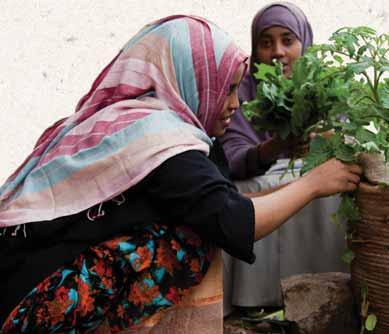
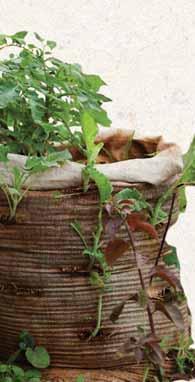
common Kenyan vegetables like sukuma wiki (kale) and spinach. The ladies tasted and tried cooking these vegetables, and began to learn more about the importance of a balanced diet. The women of Iftin were becoming hungry for change.The challenge now became access to food. Since refugee women like Hani and her neighbours do not have access to land, we took the approach of sack gardening as a way for families to supplement their diet. With a little space on a window, roof top, or driveway, Iftin members can grow their own food.
Our CBM colleague Tim Bannister came and led several workshops on how to make a sack garden. A mixture of soil and manure is packed around a vertical column of stones in an old feed sack. The stones help distribute water throughout the sack. Holes are then cut about every twelve inches spiralling around the bag and seeds or seedlings are inserted. The top of the open sack is also used to plant seeds.
Three productive sacks provide a family like Hani’s a daily source of kale and spinach, and a regular harvest of tomatoes, peppers or other vine crops. Five bags will provide a family with an additional income.
“All we need,” says Hani, quoting Tim Bannister, “is sunlight and water, soil and fertilizer, seeds and hard work!”
When we visited Hani and her children recently, there was a change in her face. She now has a job that enables her to provide for her daughters, who help her care for a sack garden at the Eastleigh Community Centre. It is the Muslim month of Ramadan so there is no offer of food, but she smiled when we asked her about the hunger of the day-long fast. “It is not hunger, we are feasting tonight!”
connecting…
Over the past three years, CBM has provided resources to train nearly 500 refugee women on nutrition and urban gardening through the Iftin Program. Give a gift of change this Christmas. See CBM’s Hopeful Gift Catalogue at www.cbmin.org.
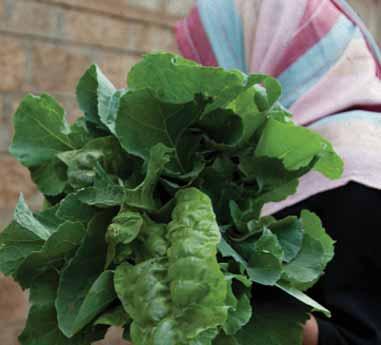
Harvesting vegetables grown in Eastleigh
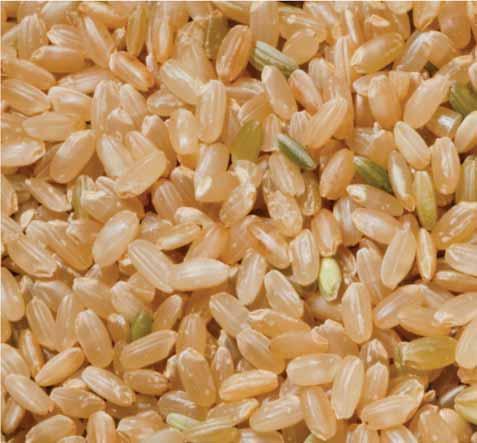
Nutrition Facts
Chronic hunger in the developing world
Daily max percentage (one meal of rice and lentils)
In the developing world, one out of every four children under five years old is underweight. South Asia has the highest prevalence, followed by sub-Saharan Africa.
An underweight child is undernourished, deficient in vitamins and minerals, has a lower resistance to infection and more likely to die from common childhood sickness such as diarrhoea and respiratory infections. Those who survive may be locked into a vicious cycle of recurring sickness and faltering growth, often with irreversible damage to their cognitive and social development
Hunger
per Serving
JUST THINK
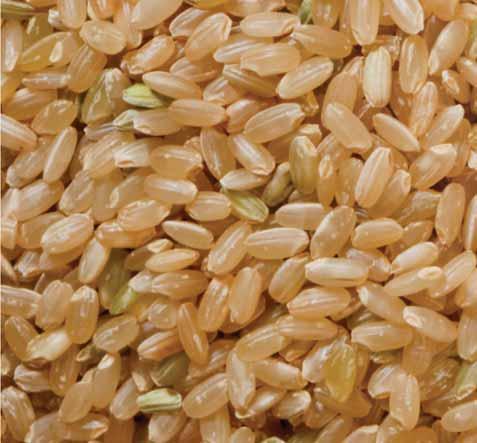
Nutrition Facts
Food security in the developing world
Daily maximum percentage (variety of fruits/vegetables/grains/protein sources)
Nutrition is one of the key building blocks in the development of a child and a society. The health of children, the most vulnerable in society, indicate the health of their community.
Well nourished children perform better in school, grow into healthier adults and are able to give their own children a better start in life.
by Laurena Zondo Editor of mosaic
The Little Village that Could A community development success story in India
“Ten years ago, you would not have recognized this village,” says Susilo with a shy, proud smile. She is one of the Christian social workers who are behind a remarkable community development program in India that has helped hundreds of the poorest villages. Each year, 36 new villages are added to the program.
But the village of Linga is special. It was one of the first to start development work with the encouragement and funding of The Sharing Way, the relief and development ministry of CBM, and one of its partners, the Council of Christian Hospitals.
Linga, which means “rocks,” is very remote, perched on the side of one of the steep, rocky hills of Serango. Three generations have lived here, after fleeing from famine and slavery under the king at the time in the valley. While secure in their new village, they lacked basic services such as water, schools, healthcare, and even a main road to access markets.
Change came in a surprising way. Susilo shares about how the first community group (a sangham) started. “It was tough at first. I visited families and found no interest… After three or four months, they slowly started to join the group and learn new things…we started with 12 women…patiently I explained the goal, the good things that the group could do and slowly they started to understand.”
One of the biggest needs was access to credit. “They used to borrow from others and pay very high interest and seeing this, I told them that through this group we could help…we began by each contributing two rupees a month. Slowly we saved 2,000 rupees, and were happy to receive a small loan from The Sharing Way to add to our savings. We then started to give people small loans for needs at home.”
“Previously we were in debt, so much money we used to pay for interest,” says Judy, one of the members.
Pujani, the group treasurer, agrees. “The biggest personal change for me was the loans — we started a small business, growing fruits, cashew and
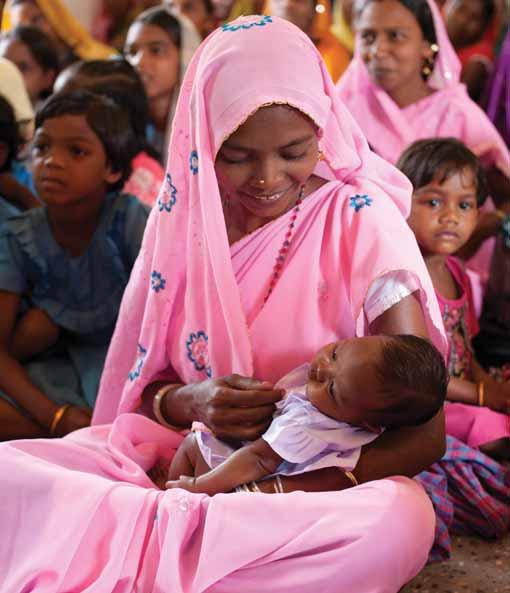
In rural India, maternal and infant mortality rates are among the world’s highest. But in the village of Linga, there is hope and remarkable change happening through community development. Pictured: Young mom, Maderi, at the dedication and naming of her first baby, Diespori, at Linga Baptist Church.
Photo: Johnny Lam Photography
tamarind…Water was another big change. I used to have to walk two to three km [about an hour up the mountain].”
With funding and encouragement, the village built two tanks. Several years later, bolstered by their success, they piped water directly to homes.
For Dasari, the group secretary, the biggest change was in the lives of her children. “Through this group, my two sons learned skills and have good jobs now. One is a tailor [the first in the village] and one is a policeman,” she says with the proud smile of a mother.
But it’s the empowerment of women that gives Susilo the most satisfaction. “At the beginning, the women would not say anything. But through this group, the literacy workshops and other activities, they now speak their minds…they now even contact government officials about their issues. They now know how to read and write and can write their signature on documents…mothers are sending their children to school, encouraging their children to take advantage of these opportunities…I am very happy that women are being developed.”
The men in the village also started a sangham. “Whenever I was in need of money, for the house, or other matters, I got a loan,” says Rasano, the president. He and his group have big plans for the future. “We are just now discussing starting cashew processing, a small factory, in the village.”
Now that men, women and youth in the village have been empowered, the government is starting to take notice. “When we first asked the government, we didn’t get much help,” says Rasano. “Only after we started this group, did the government come and say that they would help.”
Most touching is the strong bonds of community. “Through this group we help one another,” says Ritpo, the men’s group treasurer. “When someone is very much in need and suffering or having any problems, we discuss this as a group and we help him.”
Education has been the key to opening doors and minds.
Through the literacy program, one person got a government job. Another one got driver training and is now licensed to drive a taxi. Some have gone on to government schools. Parents who have learned to read and write now wish to send their children to school. After hearing about their success, the regional school inspector visited and recommended that the village start a government school.
government and ask, plead, for their rights.”
It’s working. Besides a school, the sangham has accessed government programs to improve family homes, water supply (piping water from the village tank to each home) — and even build a road. The whole village volunteers the labour, taking shifts carrying and crushing rock.
Most touching is the strong bonds of community. Through this group we help one another...When someone is very much in need and suffering or having any problems, we discuss this as a group and we help him.
Linga has not only met the development goal to become a selfsustaining village, they are helping others. The sanghams of Linga are among the founders of a group called “Ikyasangham” (united body of sanghams) which has 104 villages working together.
The sanghams started a school that met in the church. A teacher and books arrived. They then discussed the need for a building and a primary school is now being constructed beside the church.
They also participate in workshops on farming and healthcare and any other local issues of concern. Trees were planted for fruit and environmental protection and the villagers now have mango, guava and coconut to eat. Health awareness included information on using nets to combat malaria, a major disease in the area. “We also give training on human rights,” adds Joel, another social worker on the team. “When the villagers get this understanding, they go to the
connecting…
Participate in The Sharing Way’s Annual Project Good Works: Small Business. Big Change and help more families access small loans, business training and mentoring. Learn more at www.cbmin.org.
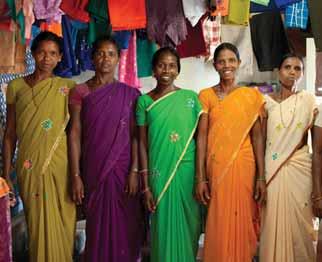
Building dignity and empowerment through a women’s sangham in Linga. Pictured (left to right): Jaisila Roito, President; Pujani Bhyya, Treasurer; Dasari Roito, Secretary; Yudi Roito, Vice President; Sumitra Roito, Joint Secretary; Tabita Roito — at a tailor shop, one of the small businesses their group helped to start.
Photo: Johnny Lam Photography
We’ve recently commemorated the 10th anniversary of 9/11, an event that launched a global war on terror that continues. Through his experience of living through the civil war in Lebanon and his ministry in the Arab world, CBM Global Field Staff Elie Haddad is in a unique position to comment on the role Christians can play in waging peace.
Q:
Some say that recent incidents — such as the threat of an American pastor to burn the Qu’ran (the holy book of Muslims) — are part of an increasing wave of anti-Muslim sentiment. What do you think is going on?
This tension is somewhat new to the Western world. However, we’ve always lived with this kind of tension in our region. This is not new to us. We have different groups of people living on the same land. Different faith convictions, different cultural habits, different political agendas, different aspirations and understanding of what it means to be a nation, different educational, social, and economic levels. This leads to a lot of inter-community conflict. The temptation for the church in our region is to reciprocate the attitudes that lead to conflict and division. The challenge for our church is to wrestle with what it means to be agents of the Kingdom, agents of reconciliation and peacemakers, in the midst of this confusion. The temptation for the West, in my opinion, as people find themselves in the midst of new realities, is to become reactive and defensive. The challenge for the church in the West is to remember that our most powerful tool, our only tool, is proclaiming the good news of the Gospel.
Q:
Based on your experience in facilitating MuslimChristian dialogue, what are the most common misconceptions, areas of misunderstanding?
There’s always a fear of dialogue among our own churches. Some fear that dialogue will lead to compromise or syncretism or simply diluting the message. Others fear that dialogue is
about attacking the “other.” In fact, the reason for dialogue is two-fold: to increase understanding and to share the message. The best way to understand about Muslims and Islam is from Muslims themselves. Learning what they value, what’s important to them, and how they perceive us and our message. This is very important if we want their hearts to be touched with the message of Christ. Understanding their questions is very important. If God is actively seeking to redeem people from every nation, tongue and people group, then he is no doubt working among communities where we don’t expect. The challenge is for us to start recognizing where God is at work in order for us to join him in his work and help point people to Christ and the cross.
Q:
What is one thing that anyone can do to build peace?
I don’t think that it’s about doing anything. It’s more about being. If we aim to live a comfortable, secure, and safe life then whatever we do will not have much impact. But if we live the radical Christ-like life and are fully surrendered to God then the natural outcome becomes: proclaiming the Gospel with truth and grace, having concern for the poor and marginalized, seeking to promote and advocate for peace and justice.
Q:
Any other comment you’d like to make:
It’s very easy to be threatened by people different than us, especially if we perceive them as hostile to us. We are called to love our neighbours, and we are called to love our enemies. Call them as we may, let’s love them and proclaim Christ to them.
Sowing seeds of friendship with children of different faiths in Lebanon.
Who: Fidel Jr.
Where: Village of Panama, Bolivia
What: A visit with one of the farmers in the Bolivian Baptist development program
Create food sovereignty
It’s partly in response to rising food prices, which have caused many Bolivians to depend on cheaper, imported foods rather than indigenous staples such as quinoa. The government plans to focus on domestic seed production and organic fertilizer to protect native food varieties, improve biodiversity, rescue the nutritional value of traditional crops and reduce dependence on foreign seed companies.
It’s a plan that invests in small land-holding farmers.
“We work closely with farmers and see the impact. This new plan will build momentum for what we have already been working on in our rural development program,” says Richard Arroyo, Director of OBADES *. “People should have access to nutritious, affordable food, and to food they like to eat.”
*Development ministry of the Bolivian Baptist Union, CBM’s partner in Bolivia
Coming Soon: New Global Discipleship Resource
The Call to Follow: Living the Way of Jesus in the World
A married couple from Alberta commit to building homes in Central America, blessing hundreds and transforming their own lives. A Lebanese scholar visits a seminary in Toronto, helping broaden and deepen perspective on global ministry. A large church in Saskatchewan ends a massive building program in order to support orphans in Africa. An elderly woman from New Brunswick quietly redirects money spent on luxury to helping the poor around the world.
These people and churches are hearing a call from God and taking up the adventure of following and obeying Jesus Christ in the world. They are bringing love and hope for many, and also changing our world for the better. Through it all, people are being spiritually transformed. This is the work and meaning of global discipleship.
together core biblical truths with modern realities and contemporary examples of people who are both hearing and responding faithfully to Jesus’ command to follow him into the world. Each session begins with a short overview and accompanying video that introduces the theme for study, and then offers three separate application tracks. You can engage in the study as individuals, small groups and as a church congregation. Every session will help broaden your experience and understanding of what it means to live faithfully as a global disciple in our time.
Global discipleship is rooted deeply in God’s design and intentions for a new heaven and earth, which the Bible describes as the Kingdom of God. This Kingdom plan was established and broke surface most fully in our world in the life and ministry of Jesus Christ. It spreads
and flourishes whenever individuals are transformed by Christ, when church communities engage the pain of the world with God’s love, and when Christians around the world join hands in ministry partnerships that integrate truth and love with mercy and justice. God’s Kingdom becomes a reality when you and I hear the call to follow Christ into the world. It is a costly adventure, but if we lose our lives for his sake, we will encounter the living God already working, and discover our deepest purpose and joy.
CBM’s has produced a six-session resource titled The Call to Follow: Living the Way of Jesus in the World. It weaves
Watch for our new release of The Call to Follow: Living the Way of Jesus in the World at the end of November.
Email communications@cbmin.org for more information.