It’s no secret. Hunger is a growing reality in our world. What is an appropriate response as the Church?
In this issue of mosaic we highlight the work of The Sharing Way, our relief and community development department, which partners with families most in need. They live in some of our world’s hardest hit regions. Are they our neighbours?
We also tread into the murky issue of responsibility. Should the widening gap between rich and poor be of more concern to those whom Jesus calls “his hands and feet”? What action needs to be taken?
The stories we present are not meant to take you down a guiltridden path, but rather open up more possibilities for change. May it inspire each of us to consider and strengthen our response to our neighbours in need. How can we pay compassionate attention to the physical, spiritual and emotional needs of those we are called to serve? The opportunities are limitless. Please share your experience with us.
What Really is Worth Fighting for?
Dutch theologian, Teun van der Leer, put it wonderfully when he was speaking this past summer at the opening night of a three-day celebration in Amsterdam for the 400th anniversary of the founding of the Baptist tradition. “Our tradition is valuable, especially because it is open to change.”
Teun wanted us to understand how worldshattering our beginnings were. At the heart of this call for change was the idea of religious freedom. “One century even before the Enlightenment, almost two centuries before the French Revolution, more than three centuries before the Declaration of Human Rights, our forebearers pleaded for the right of freedom of conscience for ‘heretics’, Jews, Turks and all religions. Although totally disagreeing with them, they stood for their right [to practice their own beliefs],” said Teun.
The idea of religious freedom is one of the themes that articulated our identity as Baptists. This and other themes (believers’ baptism, the autonomy of the local church, the priesthood of all believers, sole liberty, and the separation of Church and State) set these
Christians called Baptists apart from the mainstream of Christendom at the time. Their beliefs threatened the status quo. They would still be threatening if we truly lived them out but sadly we may have lost our roots.
It’s time for us to rediscover the radical nature of our historical beginnings. We believe people have a right to make a choice about faith even if we disagree with that choice. This is freedom of religion. How many of you know that Acadia University was started by the Baptists in the Maritimes at a time when Baptists were being refused or at least restricted in enrollment at other universities? When Acadia began, Baptists held to the idea that it would be a place where you would be accepted if you qualified academically, no matter what your faith.
tIt’s time for us to rediscover the radical nature of our historical beginnings.
by Rev. Dr. Gary Nelson General Secretary of CBM
When you read the missional literature calling the Church to engage the culture in new ways – to move from come-to strategies to a more go-to incarnational framework, you realize that they sound strangely like our roots. The ability of the Church to be a contextual expression of the community God has placed it in – free from hierarchically imposed structures (the autonomy of churches); a vibrant, unmediated personal experience with God (baptism, the priesthood of all believers and sole liberty); radically visible communities of faith (separation of Church and State); and finally the present reality of the Church (the Church as the centre of the mission of God) – are the roots given to us from our forebearers, and the imaginative call for the Church to be the Church in the 21st century.
What is our calling today?
In previous issues of mosaic we have discussed evangelism, our call to work for the powerless (particularly children) and the creating of community in the Church. This issue is focused on food security, but it is also about learning how to live out a costly discipleship of simplicity, justice and faithfulness. Rediscovering our roots as Christians called Baptists. This Gospel we are called to has two profound and connected edges. One is the edge of proclaiming the Good News of Jesus Christ and engaging with our world so that the Good News can be heard and seen. The other is the edge of costly living so that God’s reign of kingdom values is experienced by individuals through the faithful people they meet. I want to be the kind of follower of Jesus who fights for the things that really matter – do you? I want to be like our forebearers who fought for things that are worth fighting for…
by
Dave Diewert
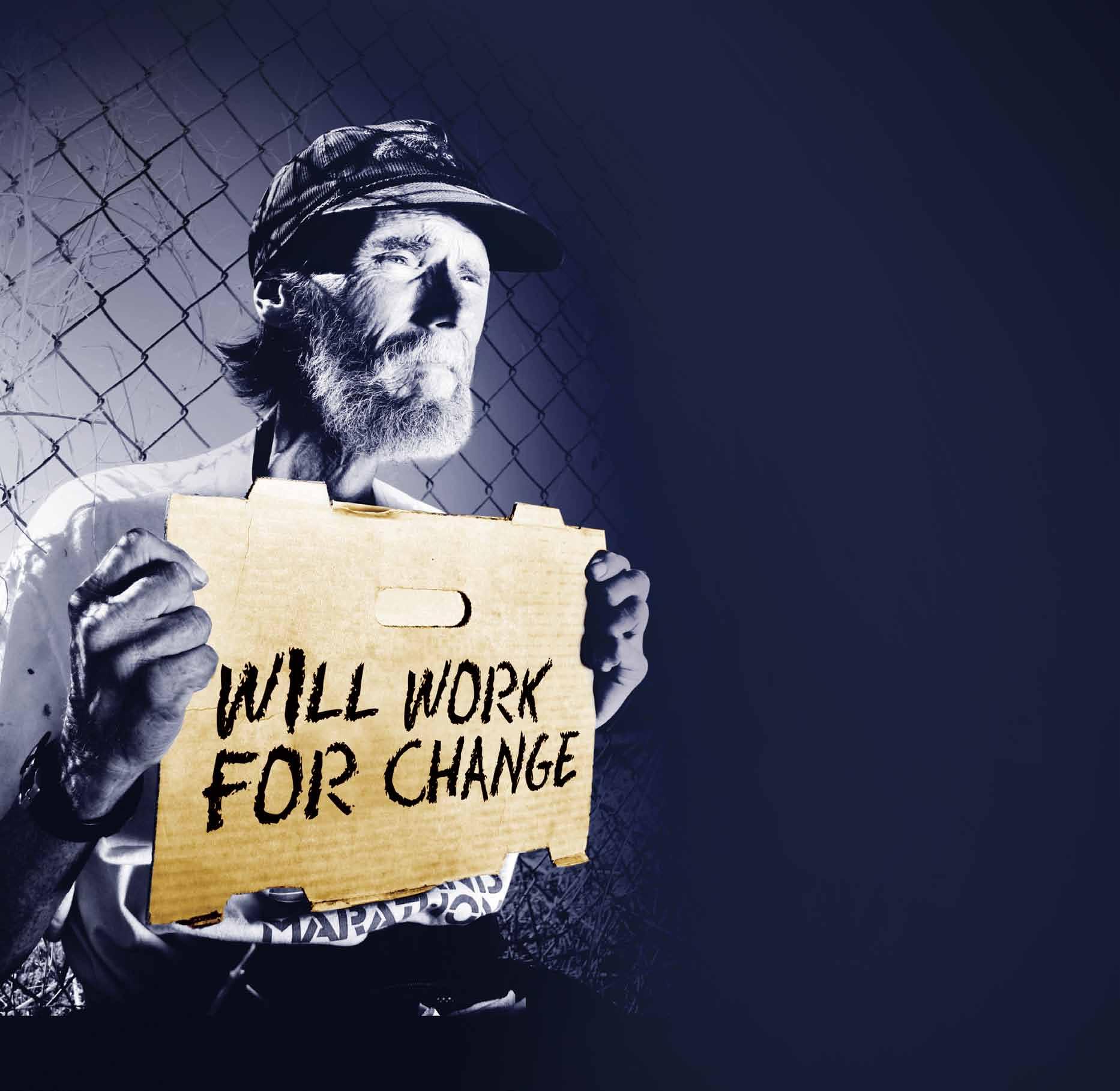
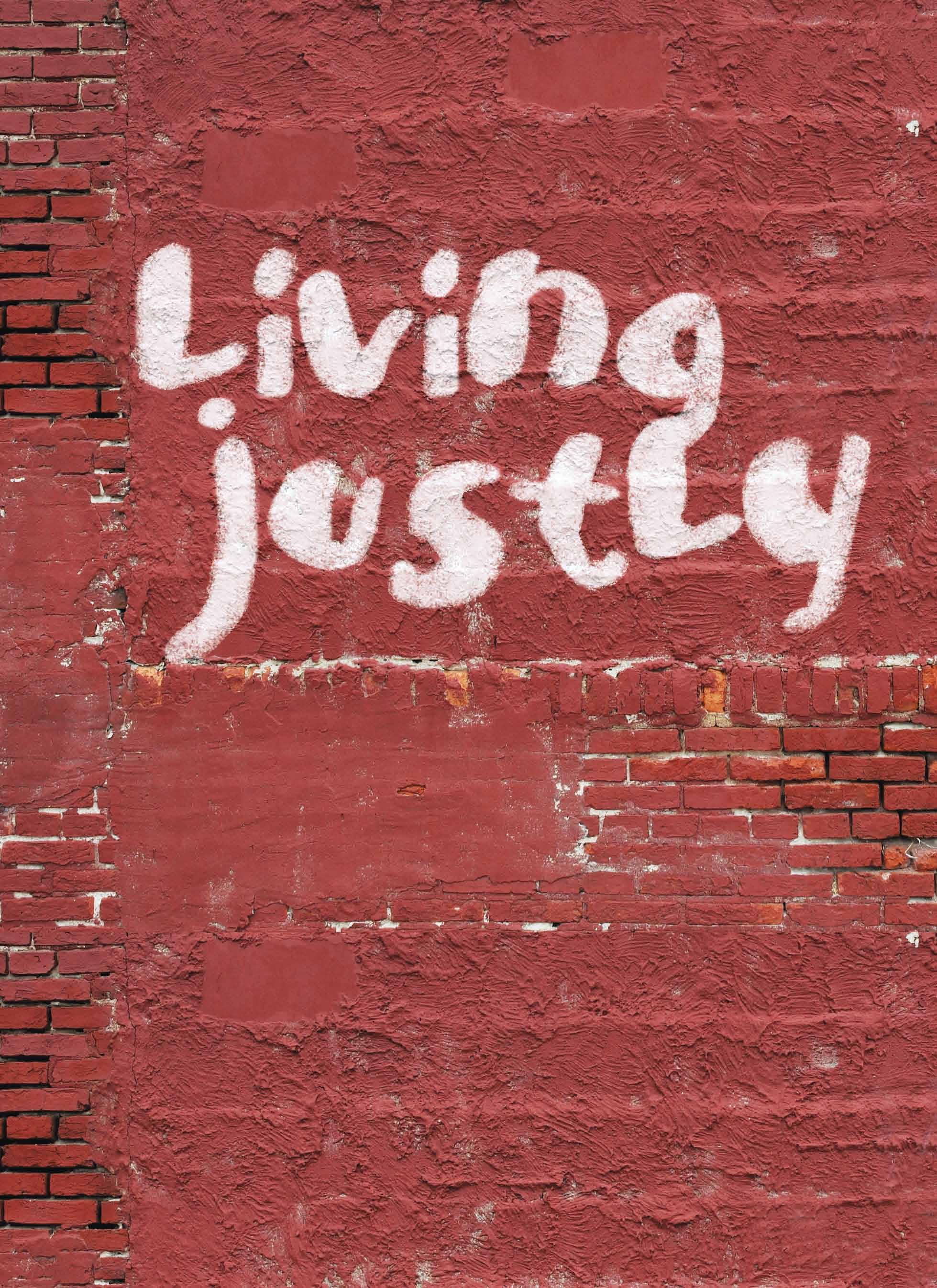
It is not immediately clear what “living justly” might mean.
If we construe justice as defined by law, living justly would entail adherence to state-legislated codes of conduct. Beyond that, we might imagine a just life as marked by moral and ethical standards that call for honesty, kindness, and fair treatment of those within our care or orbit of responsibility. It might even extend to involvement in voluntary service, regular giving to charities or promoting a good cause.
Thinking about living justly in these ways, however, leaves open the possibility of fashioning a “right life” within a social world that is structurally unjust. Conformity to state laws, rigorous adherence to norms of private morality, and generous voluntary service could be devotedly maintained within a system of profound violence and injustice. In this case, living justly ironically supports larger structures of injustice and perpetuates that which it would explicitly disavow.
The biblical notion of justice, rightly understood, blocks this possibility. To begin with, justice in the biblical witness was not limited to fairness in legal and judicial matters; it entailed a whole lot more. It required access to resources, sufficient economic means for meaningful social participation, ensured personal dignity and mutual respect, and non-exclusionary community practices. It was about social relationships of power and how resources were distributed and accessed. Justice in the biblical sense always denotes social justice.
Fundamentally, biblical justice is centrally concerned with the protection, support and care of the most vulnerable members of the society, those who are particularly exposed to abuse, violence and exploitation, and susceptible to the deprivation of basic resources (e.g., women, children, foreigners). And the practice of justice was not left to the goodwill of citizens moved by the precarious situation of their neighbours; it was grounded in the social structures outlined in the covenant stipulations.
For example, one of the key components of the Deuteronomic vision of justice, articulated in a variety of specific injunctions, was the mandatory provision for the socially vulnerable and economically weak, so that they
might be supported as fully valued, meaningfully participating members of the community. To foster and ensure participation, regular rhythms of inclusion within their community life were set in place that blocked spiraling inequality and marginalization. Orphans, widows and foreigners were to be welcomed into the annual community festivals and celebrations (Dt 14:28-29; 16:11-14; 26:12-13); farmed produce was to be left in the field for those who were hungry to pick and eat (Dt. 23:24-25; 24:19-22); day labourers were to be paid at the end of each day (Dt. 24:14-15); the socially weak were to be given fair access and due process in legal matters of justice (Dt. 24:17-18); slaves were to be treated fairly and set free after six years with adequate provision for supporting themselves in the community (Dt. 15:12-18); debt was to be cancelled every 7th year (Dt. 15:1-11).
These Torah instructions regarding just social practices make it clear that justice is not the same thing as charity. Charity can be practiced while structures of inequality are maintained; in fact, charity is dependent on such inequality for its very existence. Charity is a way to manage social problems without a necessary commitment or strategy to eradicate them. “Giving to” and “doing for” the poor or the homeless may make us feel better, but it does not address the social, political and economic structures of inequality and exclusion that render people poor and homeless and keep them in that state of deprivation.
Justice is precisely about political and economic arrangements of power that ensure access to material and social resources for all members of the society, especially those who are vulnerable to deprivation. Justice demands societal practices that uphold the dignity and worth of every member of the community, and refuses to normalize patterns of oppression and social exclusion. In this sense, to live justly is to engage in the work necessary to establish and maintain just social, political and economic arrangements for the well-being of everyone, especially the weak and vulnerable.
In the biblical vision, it was the responsibility of the leaders of the community to make sure that justice was done.
They were charged with the task of implementing just social structures, of maintaining community practices that followed the covenant requirements set forth in the Torah. Psalm 72 offers a vivid depiction of divinely ordained justice, for which the king was held accountable.
1 Give the king your justice, O God, and your righteousness to a king’s son.
2 May he judge your people with righteousness, and your poor with justice.
3 May the mountains yield prosperity for the people, and the hills, in righteousness.
4 May he defend the cause of the poor of the people, give deliverance to the needy, and crush the oppressor.
12 For he delivers the needy when they call, the poor and those who have no helper.
13 He has pity on the weak and the needy, and saves the lives of the needy.
14 From oppression and violence he redeems their life; and precious is their blood in his sight.
Translating this into a modern western context, our political leaders and those with economic and social power must consider the lives of the needy, the poor and the vulnerable as precious, and it is the people who must press, provoke, challenge, and impel them to ensure that this kind of justice is actualized.
What if we as a whole society viewed the physically and socially weak among us as people of great worth and value, rather than as social problems to be managed for political or economic gain?
How would this perspective be translated into material reality – good homes in supportive environments, social inclusivity, access to healthcare, viable educational and employment opportunities, etc. This is precisely what the poet articulates as the way of justice.
The gospel narratives present Jesus as one who stood solidly in this trajectory of justice. Like the depiction of royal justice presented in Psalm 72, the blood / life of the poor was precious in his sight. He firmly stood in solidarity with them and advocated for their lives and well-being. Such solidarity was expressed as table fellowship with social deviants and misfits, sharing meals with them and declaring to them their favoured status in the kingdom of God. It was also evident in his acts of engagement with the outcasts – touching lepers, healing the diseased and disabled (who were physically flawed and therefore socially outcast and religiously rejected), and
embracing children (who were viewed as of no importance).
While Jesus had a reputation for dining with the disreputable members of society (Matt 9:11; Mark 2:16; Luke 15:1-2), he also, on occasion, made the guest list of the ruling elite. Luke 14 recounts an episode in which Jesus was invited to a dinner party hosted by one of the leaders of the Pharisees. Such occasions were significant social events aimed at maintaining or improving one’s social standing, acquiring communal honour or status, and solidifying economic and political connections. As such, banquets of the aristocracy were carefully monitored gatherings of selectively chosen participants. It was only reasonable,
then, to invite “your friends or your brothers or your relatives or rich neighbours” (v 12).
Jesus overturns such conventional cultural practice by suggesting that the host should instead invite to the banquet “the poor, the crippled, the lame, and the blind.” He then proceeds to tell a parable of a wealthy urban aristocrat who, having been snubbed by his peers, opens up his table to a group of social outcasts located at the opposite end of the social-economic spectrum. These were the destitute and the disabled, who were subject to social discrimination and rejection, denied access to civic institutions and collective forms of public life, who lacked the economic leverage to change their lot in life or improve their conditions, and were bereft of personal dignity or respect. Yet the host now extends to them an enthusiastic welcome to the banquet. They enter his home, and take their seats; but there is still more room.
So another invitation goes out, this time to those occupying the most extreme realms of society. They were those relegated to the perimeter of the city, belonging to neither the city itself nor the rural villages. They were, perhaps, the disgusting and the disenfranchised (refugees, run-away slaves, prostitutes, roving beggars, the contagiously ill). In these actions, the host has broken with his habitual patterns of relentless acquisition of social prestige, turned from his lifestyle of economic self-interest, and forged radically new social affiliations. He has crossed a politically, economically, and religiously inscribed threshold, with all the fallout that such a move involves.
Such profound and socially troubling acts of solidarity actualize the reality of the kingdom and the justice of the divine reign.
In addition to living in solidarity with the poor, Jesus also called for just economic arrangements that provided access to resources for those who were socially weak and vulnerable to abuse, exploitation and oppression. Justice in the tradition of the Torah and prophets required equitable distribution of
Psalm 72
resources; it set in place systems that would prevent an endless spiral into deep poverty and set in place rhythms for recalibrating the economic options for people (e.g., the year of debt release and the Jubilee). Jesus called for the redistribution of resources; in particular he challenged those with abundance to give it away to the poor; in fact, he made this the prerequisite for participation in his movement (Luke 18:18-30).
Of particular significance is the story of Jesus’ encounter with Zacchaeus, a very wealthy tax collector (Luke 19:1-10). After sharing a meal and conversation together in Zacchaeus’ home, the content of which Luke omits, the concluding piece of dialogue is remarkable.
Zacchaeus declares, “Look, half of my possessions, Lord, I will give to the poor; and if I have defrauded anyone of anything, I will pay back four times as much.” This tax collector does what the wealthy ruler was not willing to do – give his possessions to the poor. He recognizes that for one who is wealthy such as himself, experiencing life of the kingdom of God requires the redistribution of his assets and financial resources. These were gained through exploitative means from people with very limited income – taxation pushed people deeper into poverty –and so redistributing them back into the community of the poor was necessary justice.
In addition, Zacchaeus recognizes that his position as tax collector and his collaboration with oppressive political and economic power had given him the opportunity to increase his own personal wealth through fraudulent means, and so he promises to make just restitution (on a fourfold basis) to those he had deceived in his tax collecting practice. For someone who was part of the imperial machinery of domination, who used his position of collaboration with the ruling class to amass great wealth from the local population through unjust means, participation in the movement of Jesus required redistribution of wealth and reparation of what had been stolen.
These gospel stories provide clear illustrations of what divine justice entails.
For those who benefit from systems of violence, exploitation, and domination and view themselves as participants in the reign of God, living justly means sitting at table with those excluded from the realms of social power. This table is where meals are shared together as an expression of equitable resource distribution (everyone has enough to eat), hospitality (everyone is welcomed) and social solidarity (everyone sits side by side in non-hierarchical arrangements). Around this table new communities of understanding and friendship are formed that cut across demarcations of exclusion and inequality and dissolve damaging stereotypes.
Living justly also requires that such social solidarity be implemented while
Living justly means sitting at the table with those excluded from the realms of social power. This table is where meals are shared together as an expression of equitable resource distribution, (everyone has enough to eat), hospitality (everyone is welcomed) and social solidarity.
seated together around another table, the table of decision-making concerning collective policies, economic arrangements, and power distribution, the table where the voices of those detrimentally affected are given substantial weight. At this table, no one is spoken “for”, everyone has a turn to speak, and the common good is forged through processes of truth-telling and the relentless pursuit of collective wellbeing. Pursuing justice in this sense requires that we take our places at such tables, alongside “the poor, the crippled, the lame and the blind” as it were, willing to make just restitution to those who have been harmed, and to redistribute personal and communal resources for the shalom of all.
Living justly demands a stance of solidarity with the poor, and a seat beside them around the diningroom table (personal) and the boardroom table (political). It is the lived commitment to social justice in the pursuit of the common good.
About the writer:
Impacted by the “least” in society and disturbed by systemic injustice, Dave Diewert left full-time teaching at Regent College (Vancouver) to deepen his understanding of what it means to be with and for the poor. In 2007 he helped organize Streams of Justice, a local faith-based social justice group working for change, especially around the issues of homelessness and poverty.
What’s so Amazing about Hope?
A m a z i n g Hope?
You might be surprised to see what’s having the most impact in the fight against HIV and AIDS.
by Rupen Das Deputy Director of The Sharing Way with files from Laura Dennison, Program Officer, The Sharing Way and Patty Card, CBM’s Guardians of Hope Coordinator
t In India
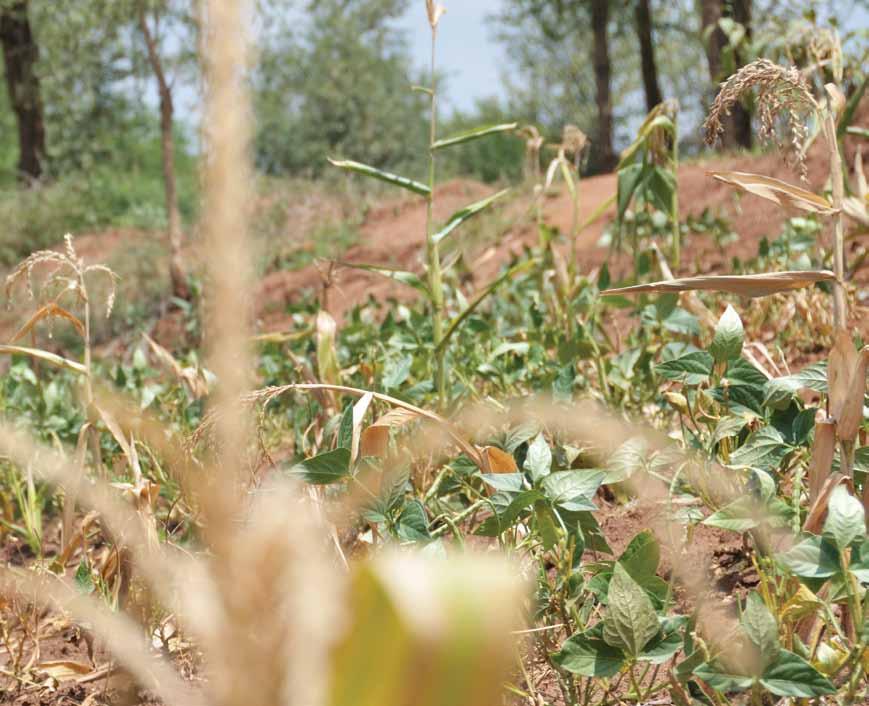
Two hours north of Hyderabad, the fields are almost brown from the failed monsoons in India. The onset of a severe drought is affecting the livelihood of millions who barely survive on the edge of poverty in rural areas. At a local hospital we met a group of women, men and children who are facing an even greater threat, one that is invisible to the naked eye, but one that will surely kill each one of them. Everyone in this group of 30 is HIV positive.
The stunning thing is that over two-thirds of them are women who are mostly below the age of 35. All of them were infected by their husbands – and now all of them are widows. Each was driven out of their own home, rejected by friends and relatives. Some eventually returned “in shame” and suffer silently.
Yet as the group meets, as they do once a month, there was no shame or bitterness but a sense of belonging and joy as they chatted with each other. This was now their family – a community who accepts them for who they are.
Through our local partner, BLESS (a ministry of the Lallaguda Baptist Church in Hyderabad), their weight is recorded and they receive medicines, vitamins and emergency food rations. The Sharing Way (TSW) staff check their progress and offer words of encouragement. The team from TSW and the church are the only ones who show genuine concern about what is happening to them – you can see it in the way they wait eagerly to talk with the staff.
Some have recovered well enough that TSW has given them a loan to start a small business. Something as small as a loan of $100 helped one man to start a tea stall. Today he earns about $7 a day. He is happy. This is enough for him to meet his needs.
Everyone there had a story to tell of how much the group meant to them. They were eager to share how they were regaining their strength and beginning to hope about the future for the first time.
Before the group (most of whom are Hindus) disbursed, the pastor of the local Baptist Church prayed with them. I sensed that each one of us that day had witnessed and experienced the reality of the Kingdom of God.
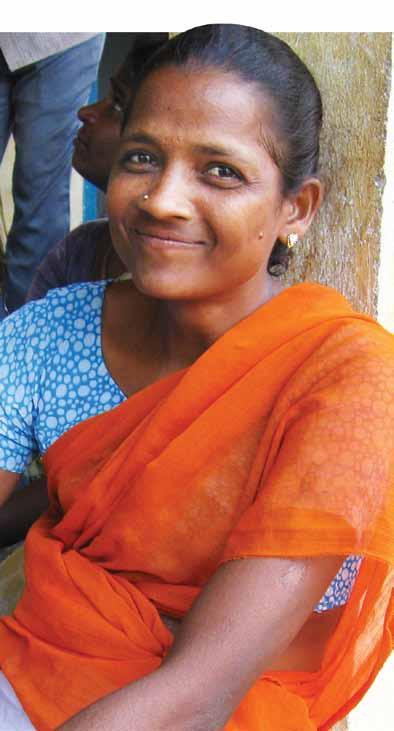
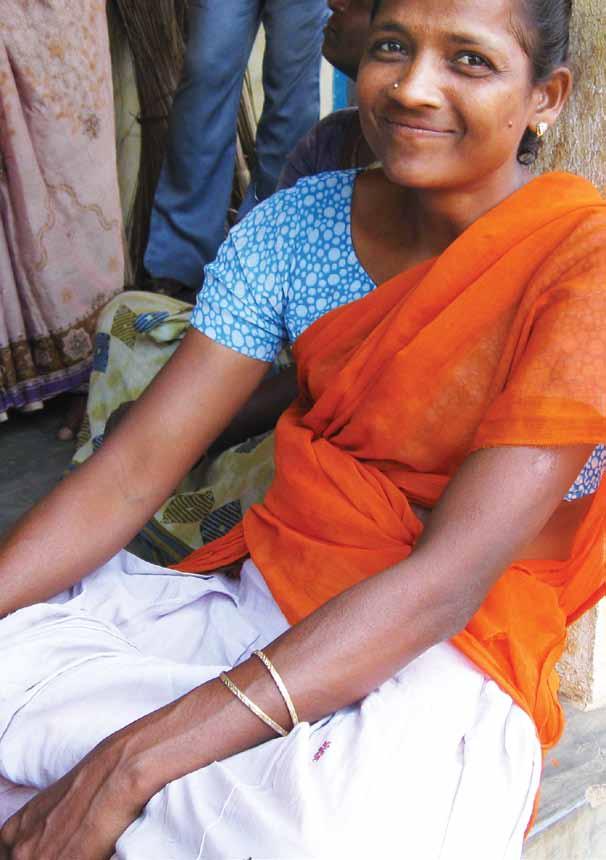
One of the members of Guardians of Hope in India
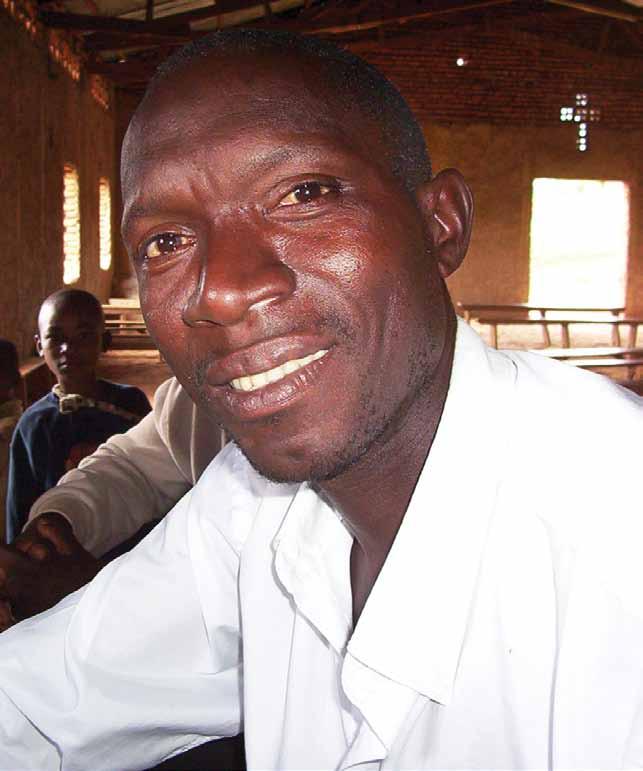
Vedaste Rwanda
In Rwanda
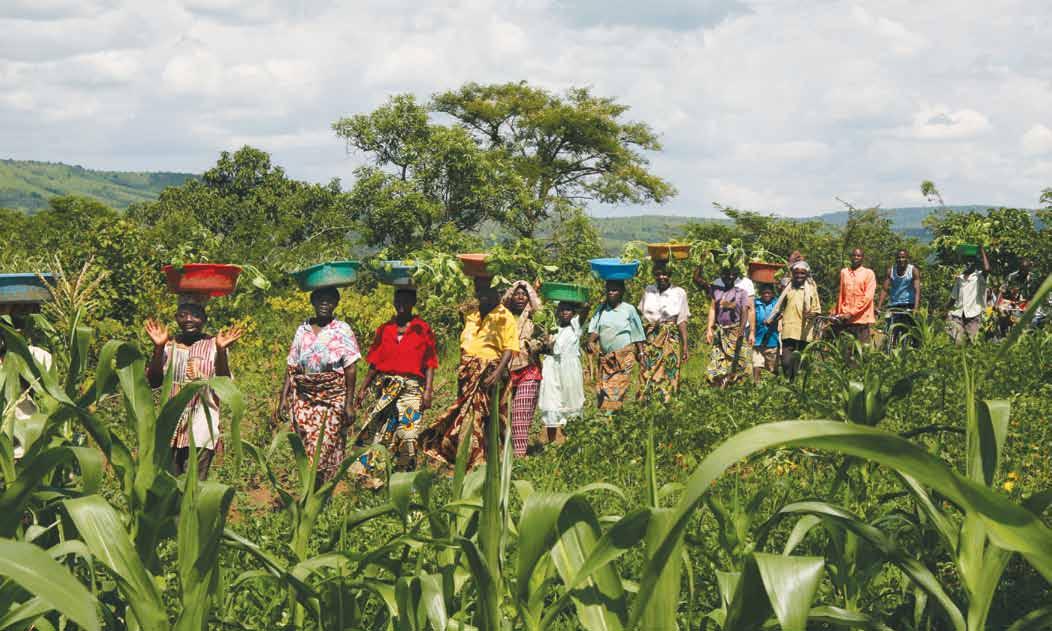
A group of Guardians of Hope (GOH) leaders gathered recently for evaluation and planning, and to encourage each other. While they have seen much success – over 2,250 households reached with simple agricultural improvements such as the distribution of goats and rabbits and seeds and tools, the provision of small loans and school fees, the training of caregivers, and even the reconstruction of houses – it’s the care and sense of community that’s making the most impact.
“People who were discouraged and dying are living with hope today because we have worked together, and because of the great gifts of God, including the gifts he has invested in each one of us,” explains one of the young leaders. “Hope transforms them from someone who feels helpless to someone who can do something to help their community.”
Three years ago, Vedaste, one of the members of Guardians of Hope in Rwanda, first learned he was HIV positive. He is married and has four children. “When I am in the GOH group, I feel at ease, because I am with people who are affected like me,” he shares with CBM Global Field Staff Kathleen Soucy.
Thanks to the support of the group, Vedaste started taking anti-retroviral medication. He is becoming stronger and continues to work to provide for his family. He now plans and saves for their future needs. “I am thankful for the support of this group and CBM and others…please continue to pray for us… and keep thinking of us.”
In this one GOH group alone, 158 family members are represented, 24 of whom are orphans. Like the other groups, members are encouraged to combine their savings. Each contributes about 40 cents, which is saved and can eventually then be loaned out to one of the members. Besides their savings and loans, they also help to pay the school fees for five students to stay in school.
“Success lies in ensuring that activities are driven by the communities they serve,” says Andre Sibomana,
GOH Coordinator for the Association of Baptist Churches in Rwanda. “You can write the best proposals and the most perfect plans and the most eloquent reports, but the project will still only succeed if the community succeeds… hope really is a crucial key.”
tIn Kenya
“Our greatest success is when people are able to help others, even though they themselves have little,” says Ruth Mbaika, GOH Coordinator for the Africa Brotherhood Church. “The greatest challenge is when people believe that they have nothing to offer – everyone has something – and if you can help them to see that with the little they have they can change their lives, then you know that you have really succeeded.”
Kenya is going through some tough times, reports Patty Card, GOH Coordinator for CBM. “Inflation is high due to the drought (lack of produce to consume and to sell) and the high price of maize. The situation of the poor is getting desperate. Rural families can’t afford the rising price of food and many children miss school to help get food. The youth especially, unable to find jobs and support themselves, fall back on the already stressed family or even resort to crime.”
The next five years of programming will be crucial to creating more sustainability. “We will continue to focus on income generation and training for economic development as this helps groups to expand the little they have and increase their reach and impact in their communities,” says Ruth. “Savings groups not only provide capital to invest in income generating projects but also help people to see that if they pool the little they have together, much can be accomplished and many can benefit.”
In Kenya, many GOH associations are legally registered and can now access substantial loans from other sources. Through the efforts of the Africa Brotherhood Church alone, 857 adults (widows and widowers, many of whom have AIDS) and over 2,000 children and youth (most of whom are orphans and some also infected with HIV) now have a better standard of living.
But one of our highest priorities in the next phase continues to be meeting the needs of the extremely vulnerable, children and youth, notes Patty. “Nutrition and psychosocial intervention continues to be a burden in all of the countries where we have GOH projects. We hope to address this by training members in children’s rights, child development, crisis intervention and improved business and farming methods.”
connecting...
CBM has renewed its commitment to provide another five years of funding for Guardians of Hope projects in Angola, India, Kenya, and Rwanda. We will need to raise $400,000 to meet this commitment in 2009. Please give generously. Become a Guardian of Hope today. www.cbmin.org.
mark the date
December 1 is World AIDS Day. Plan a special event to raise funds and awareness. Email communications@cbmin.org to order your free promotional material.
waste not want less
* 2008 policy brief by Stockholm International Water Institute, the UN Food and Agriculture Organization, and the International Water Management Institute (www.ens-newswire.com)
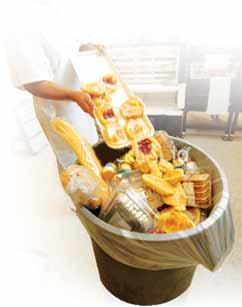
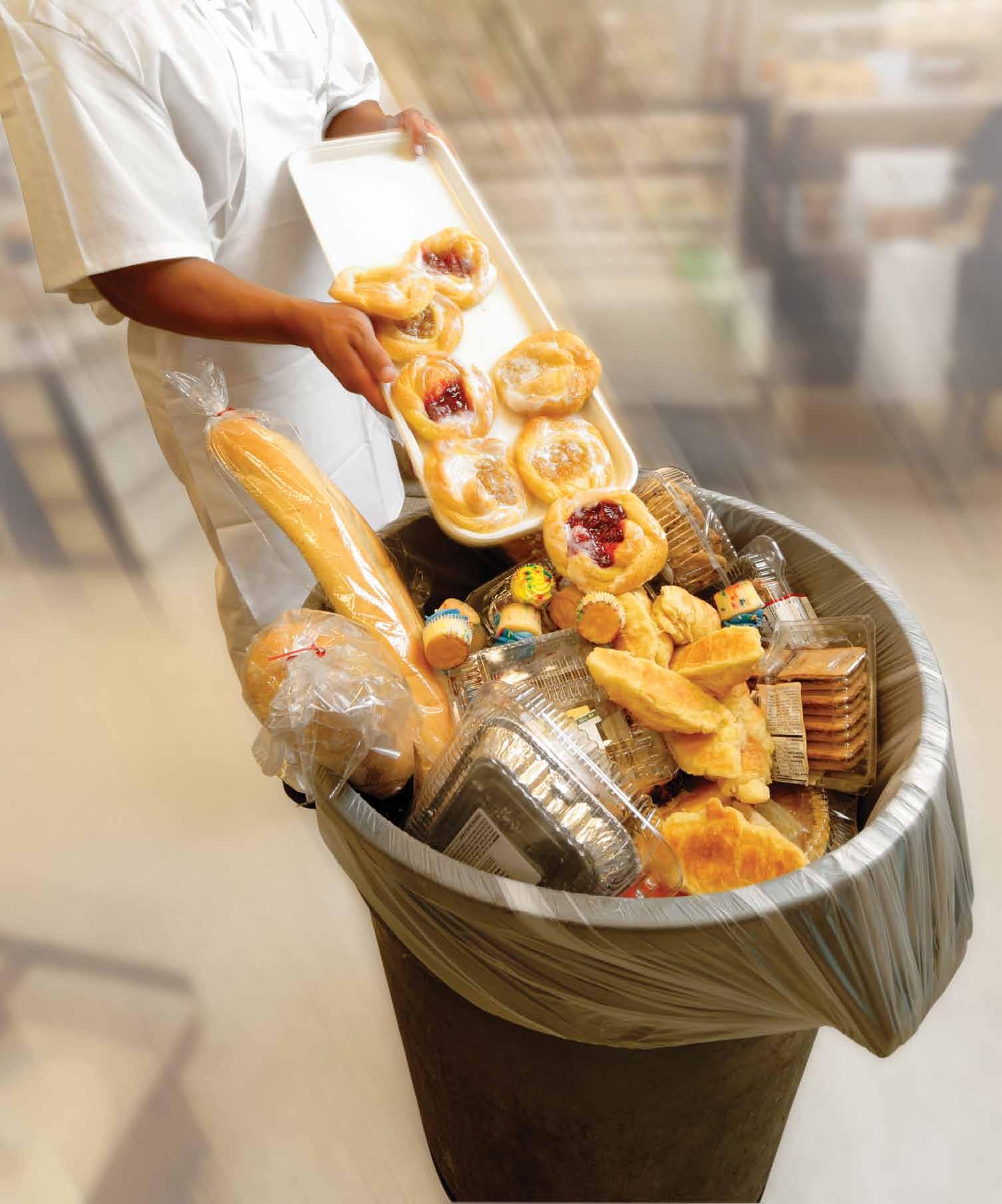
37% of those assisted by food banks are children2 close to half of all food produced worldwide is wasted – discarded in processing, transport, supermarkets and kitchens*
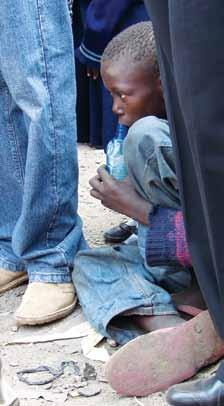
Every day, almost 16,000 children die from hunger-related causes...
704,414 people were assisted by a food bank in March 2008. one child every five seconds1
A Perfect Storm
by Gordon King, Director of The Sharing Way, and Lois Mitchell CBM’s Justice Initiatives Coordinator
Climate Change
Global climate change has been called the defining human development issue of our time by the UN Development Program. It is different than other problems humanity has overcome in the past because climate change is caused by the demand for energy sources to provide the mobility and lifestyles that we enjoy. We have spent at least two decades debating climate change. Since 1990 global carbon emissions have risen 37 percent. Our destruction of creation is becoming all too apparent:
Polar ice caps are melting, threatening the existence of millions of people who live on land barely above sea level.
Changes in rainfall patterns, record heat levels and intense tropical storms are increasingly evident.
Coral reefs are gradually disappearing and ocean water is becoming more acidic.
Deforestation continues at an estimated 13 million hectares a year, reducing the planet’s ability to capture carbon.
The US National Weather Service issued a warning on October 30, 1991 that a perfect storm was forming over the Atlantic Ocean south of Nova Scotia. The intense winds reached 190 kilometres per hour and waves were as high as 30 metres. The storm was caused by the convergence of warm air from a low pressure system, currents of cool air from a high pressure system, and tropical moisture from Hurricane Grace approaching from the south. A fishing boat, the Andrea Gail, was lost at sea with its six-man crew.
Another perfect storm is gaining strength in our time. The number of casualties will be staggering. This storm is caused by the convergence of three destructive forces:
Global climate change
Hunger
Water scarcity
Here’s a brief analysis of the issues and the concerted actions that can save human lives and the earth upon which we all depend.
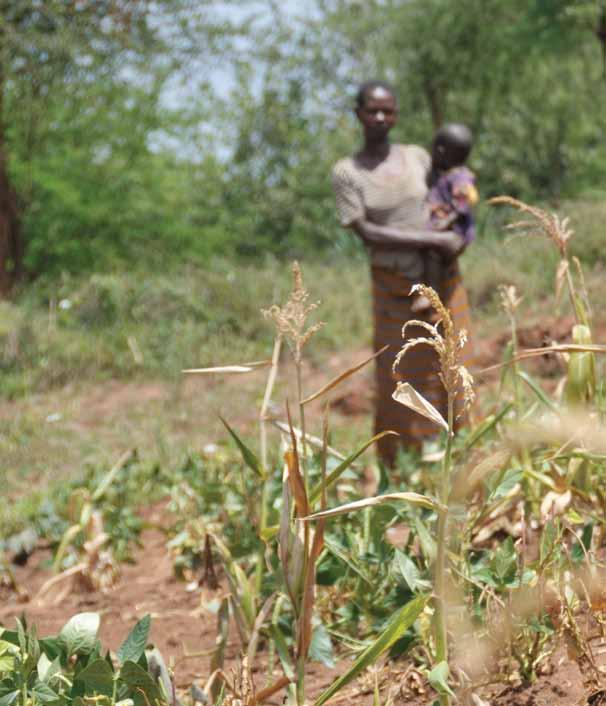
Rich countries bear a disproportionate responsibility for climate change. But the world’s poor are suffering disproportionately from its effects. Farmers watch their crops whither in the hot sun. Monsoons and hurricanes strike with increased frequency and intensity. With each passing year of relative inaction (despite lots of talk
and political rhetoric) the destructive circle widens and it is now reaching Canada. Climate change should be everyone’s issue. It requires an engaged civil society, urgent political decisions, and compassionate solidarity with those who are already victims.
Hunger
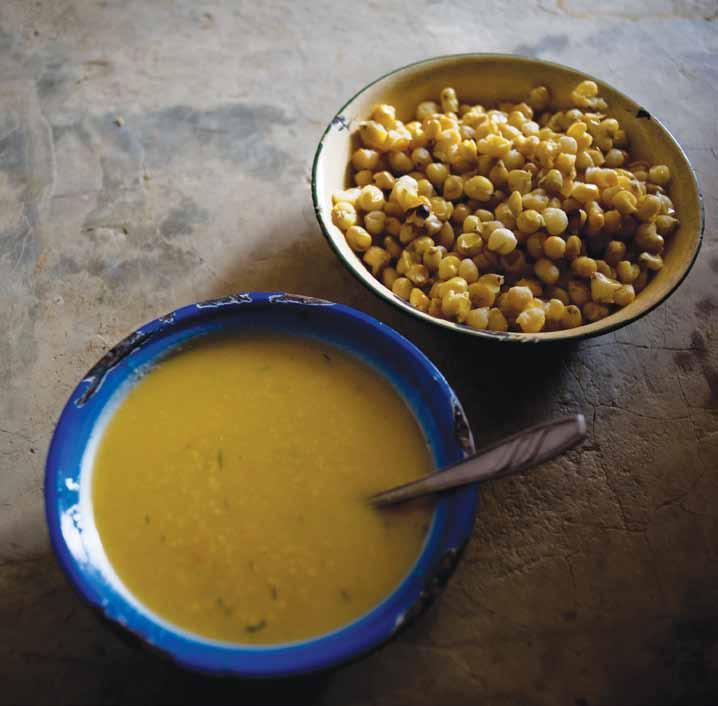
Humanity crossed an ignoble threshold in June 2009. The Food and Agriculture Organization (FAO) of the UN announced that for the first time in history over one billion people lived daily with hunger. Hunger is defined as the daily consumption of less than the minimum amount of calories required by a moderately active person. This statistic means that one of every six people in the world faces hunger day after day, week after week.
Several factors are behind this record number. The global recession inflicted damage on the economies of developing countries and made the lives of the poor even more vulnerable. Biofuels use grains to fuel automobiles that could feed people. Increased levels of meat consumption divert grains from people to animals. This is a poor investment of protein because a kilo of beef will require about eight kilos of grain. Global climate change has reduced food production in many areas of the world because agriculture requires consistency in temperatures
and rainfall. Food prices spiked with oil prices in 2007 and 2008 and still remain about 25 percent higher than in 2006. The result is devastating for families in the developing world that already spend 60-80 percent or more of their income to purchase food.
We are familiar with the painful reality of hunger through our work with The Sharing Way (the relief and community development department of CBM). Child malnutrition in India is higher than in sub-Saharan Africa. According to UNICEF, 57 million children in India are underweight, ranging from moderately to severely malnourished. A study published in Kenya in November 2008 showed that 51 percent of the country’s population had been pushed into hunger. The rising cost of food had reduced their diets to less than the minimum calorie level required for normal, healthy people. Our experience bears witness to the counterintuitive reality that the majority of hungry people in the world are the rural poor who are either day labourers or who try to raise crops on small land holdings. The cries of hungry children and the vacant eyes of their mothers are haunting.
Water
There is growing recognition that the world faces a water crisis. More than one billion people do not have access to
a reliable source of safe water. As might be imagined, the names on the list of the water deprived is virtually identical with the list of the hungry.
Water scarcity, in large part, is due to human factors. Climate change is causing prolonged droughts in some parts of the world. Agricultural methods that require large quantities of water deplete underground aquifers at an unsustainable rate. Deforestation affects micro-climates and reduces the soil’s capacity to store moisture. In our efforts to grow more food using industrial technologies (that is, using chemical pesticides and fertilizers), we have, in many settings, actually undermined the earth’s long-term ability to produce nutritious food, even for the very people who are simply trying to subsist from a small plot of land.
Water problems do not end there. The use of chemical pesticides and fertilizers combined with industrial wastes and human sewage compromise the quality of water around the world. In addition, agriculture and industry demand larger quantities of water each year and battle with humans for access rights. For over a century water use has increased at a rate double that of population growth. The way we use water is simply not sustainable and will affect future generations.
at a glance
SINCE 1990 global carbon emissions have risen 37%.
KENYA 51% of the population has been pushed into hunger
GLOBAL USE OF WATER has increased at a rate double that of population growth in the last century.
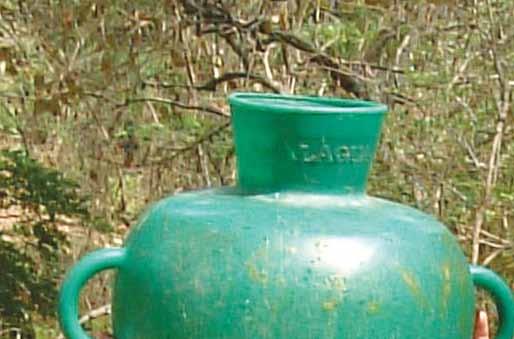
Our work in community development makes us painfully aware of water issues. The average Canadian or American uses more than 400 litres of water a day. The UN recommends a minimum standard of 20 litres of clean water a day per person. Most people in our project areas survive on about five litres of dirty water each day. El Salvador, one of CBM’s priority regions, is the most water-scarce country in the Americas. We were deeply moved by the statement of an elderly man whose community benefited from a TSW water project. He told us:
, ,
We have asked the government and prayed to God for water for over 50 years. God answered our prayer.
Bearing the Burden of Reality
Ignacio Ellacuria was a Jesuit priest and university professor who was martyred in El Salvador. He taught and wrote with passion about the need to face the truth of the world. He often urged people to:
1. Understand the reality of the world as it is.
2. Take personal responsibility for the reality that we have created.
3. Bear the burden of reality through determined and courageous action to bring God’s redemptive power to the wounds of the world.
The reality is clear
As stewards of the earth and its resources, we have brought this planet – home to almost seven billion souls –into the path of a perfect storm resulting from climate change, hunger and water scarcity. While there may be a great temptation to avoid this painful reality – to evade responsibility for both the causes of the various crises that are facing areas of the globe, and for our response in the midst of suffering – this is certainly NOT a Christian response to the current reality.
When news of the likelihood of a perfect storm reached the ears of the captain of the Andrea Gail, he had to make a decision. Would he abandon a potentially lucrative fishing trip and seek safe harbour? Would he try to outrun the storm? Or would he try to ride it out, hoping that it might not be as severe as anticipated? Perhaps we
face a similar choice as we consider the impact of the perfect storm that is brewing and already affecting millions of people around the world. What will our response be?
There are those who argue that it is too late to hope to avoid the storm – it is already upon us. We can’t outrun or outsmart it. In a sense, some of us might believe that we can hide from it – that is, we can batten down the hatches, stock up on supplies, make sure we look after ourselves, and wait it out. We can look for a safe harbour that will shelter us from the storm. Frankly, this is an option that is only available to the privileged minority of the global population who live in a more favourable climate and who have access to more than their share of the world’s resources. And, the reality is, such a response may ensure our own survival,
connecting...
We invite you to really put your faith on the line. This year, The Sharing Way’s Annual Appeal, Hunger for Change –Environment for Life, tackles the related issues of climate change, hunger and water scarcity. The projects give hope to vulnerable people in communities in India, Kenya, Rwanda, Angola, Bolivia and El Salvador. Your support will:
• Plant trees that prevent erosion, add nutrients to soils and remove carbon from the atmosphere.
• Promote the use of organic pesticides and fertilizers that have no residual side effects and do not drive farmers into debt.
• Facilitate rainwater harvesting and micro irrigation projects that allow water to be used effectively and efficiently.
• Train community members in conservation agriculture techniques.
• Assist rural families to become food secure.
We ask you to take action to understand the reality of the world in which we live, to accept responsibility for it and to bear its burden. Please generously support The Sharing Way Annual Appeal. And consider some of the changes you can make personally. Join CBM’s challenge to Live It Out – to live more simply, justly, and faithfully. Learn more at www.cbmin.org
but at what expense? Let’s not kid ourselves. If we insist on looking after ourselves, who is going to look after the vulnerable? The poor? Those who are already weak from lack of adequate nutrition?
It is quite likely that our politicians will appeal to our sense of fear and self-preservation. It may seem to be the most rational and sensible course of action to implement policies that ensure our safety and security, even as we watch the storm hit our more vulnerable neighbours. But is that what God calls us to be and do? Instead of a self-serving response to global crisis, Scripture cries out to us with an alternative – consider the well-being of your neighbour as much as your own.
What is your response going to be?
Just Ask the President
Who is she and what is she thinking?
m mosaic b brenda
First question on everyone’s mind…you are one of only two women so far to serve as President of the CBM Board. What are your thoughts on this? Do you think it’s significant?
I’m not sure if it’s necessarily significant – I hope the Board has chosen the best person for the job – but I think one of the side effects is seeing women in Canada set a model of leadership, especially for our national partners. I think we’ve worked hard through our Canadian Baptist Women to empower women and to train and support women in leadership and I hope it’s a model for our national partners, for other organizations, and for churches in general, to not overlook women when they’re seeking leadership positions.
You’re also a very successful small business owner and very supportive of CBM. What is your message to other small business owners that we have in Canadian Baptist churches?
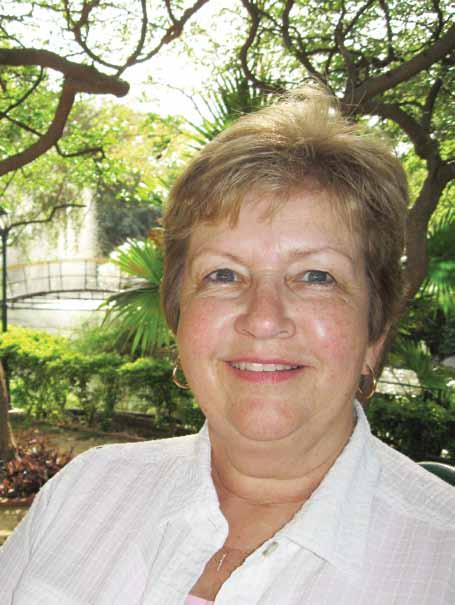
mosaic sits down for a little heart-to-heart with CBM’s incoming President, Brenda Halk.
When I’m away at CBM meetings or dealing with other things I’m passionate about, it does mean I work a lot of nights and weekends, but I really value the flexibility of being a small business owner… I’ve always been envious of those people who can work in ministry full-time, but I’ve also learned over the years that opportunities arise every day; that those who are in business, or out in the workforce, have the opportunity to cross paths with those who are not Christians so they shouldn’t look at it as if they are not in ministry…small business owners have the opportunity to be out meeting and networking with other people and it does give them, hopefully, some flexibility to be able to serve where needed.
Have you had one of those ‘ah-ha’ moments in your life?
(laughing): I’ve had a lot of them! I often call it a cold bucket of water, when you’re charging along in one direction and God moves you. I did have a very big ‘ah-ha’ moment in January 2009 when I was in India and visiting a church…after their service, once a month, they give money to the poor… [at the time] I was feeling slightly inadequate with some of the things that I had to fulfill in the next few months when one of the ladies of the church called me over and put some rupees in my hand…they wanted me to distribute it to the women. My natural inclination was to give it back to them thinking, this is your church project, and these are your women, and it’s your money, and what do I have to do with this? But she was insistent and said, ’You don’t understand, we need to do this through you.’ That was a huge ‘ah-ha’ moment for me…I realized I was trying to drive the agenda again…I just needed to let God work through me. That gave me a lot of confidence and took away a lot of the feelings of doubt I had when I realized that it wasn’t up to me to figure everything out, it was just up to me to allow God to work through me.
What is your passion, your ministry niche?
My ministry niche has probably been serving on boards (with a laugh.) I’m not sure that’s a niche, but that’s where I’ve ended up…I guess the board needs to be there for everyone else to be able to do their jobs. My passion obviously has been working with women and women’s organizations…to be able to empower women to be the best they can be.
There’s been a lot of progress in terms of the conventions and unions working together in Canada. What do you hope to see develop in this partnership?
I would like us to see that even though we are autonomous and independent regions, we really need to pull together, to know that we have one purpose. We are regionally very different, and may have different projects, different needs in our churches…but we are all here for the same reason. I think it is imperative that we show that we’re united under CBM, especially in global missions. We encourage our national partners to be united, we deal with conflict in different countries around the world… I think that it is imperative that our Canadian organization pulls together in a united front.
The greatest challenge facing a church in Canada today?
The fatigue of people…we’re over-driven, over-managed in time, with too much on our plate…we need to just back off a little bit, and regain some of the things we’ve lost. Churches in Canada are competing with a lot of other organizations for Sunday morning. They’re competing with high-tech games and entertainment; kids looking for sparkle and dynamic things are probably drifting away…. The other challenge, obviously, is economics…but as people’s investments and income decline, I think it’s more important than ever that they maintain their charitable giving.
Brenda Halk
Serving Life in Prison
by Laurena Zondo, editor, mosaic
A unique ministry is helping families who are living in prison in Bolivia.
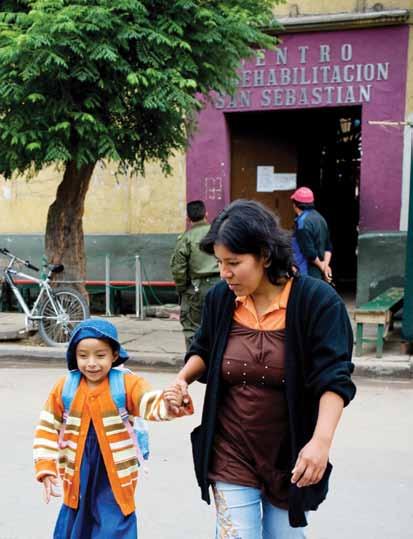
In Bolivia, children (up to the age of 14) can live in jail with an incarcerated parent. Surprisingly, it just might be the best option for them in spite of the tough life on the inside.
“It is clear that the prison environment negatively affects children,” reports Laura Ward, former Strategic Programs Officer for The Sharing Way. “They live in unsanitary and unhygienic conditions (in some cases, an entire family to a bed in a room of four beds). They witness constant violence and fighting. However, it can be very beneficial to keep the families together and the parents often feel lonely without the children around.”
Laura was in Bolivia this past spring to conduct an assessment of programming offered by Casa de la Amistad (Friendship House), a ministry that has helped prison children for over
10 years. Located across the plaza from both a men’s and a women’s prison, the Casa is a home away from home for over 120 children.
“Many families have creative living arrangements,” notes Laura. “If one parent or another relative lives outside, for example, they often decide for the child to spend the nights there and visit the parent each day before or after the Casa program.”
Regardless of where children live, there’s heartbreak. Parents often separate – the incarcerated parent abandoned by spouse, family and friends.
There’s also a sense of injustice. Many remain in prison due to poverty – they lack access to affordable legal aid. In tears, they share their frustration at remaining in prison well after their sentence is served because of lack of funds or legal assistance. Others go to prison for long periods before they manage to get their case heard, but they lack funds for bail. Ironically, it’s poverty that most often gets them into trouble in the first place, tempted or coerced to earn family income by drug trafficking.
As part of the assessment, Laura visited with children, parents, comm-
unity members and “graduates” of the Casa program, older youth such as Fidel and Lisette.
Fidel came to the Casa for six years. Together with his brother and sisters, he lived with his father in prison for two years before having to leave and live on his own when he turned 14. He doesn’t know where his mom is. His dad is now free, but doesn’t keep in touch.
Fidel visits the Casa to say hi to the ‘Tia’s’ (aunties). “The best thing they do,” he says, “is to treat us like their own children.”
Lisette and her younger brothers and sister moved into prison when their mom was incarcerated. They all joined the Casa program. She worries about the family. “My mom can’t find a job and she can’t have money for me and my brother and sisters. When my mom went to prison, my dad left for Argentina and never came back or sent money.”
Lisette wants to get a good job “so that I can help the Casa help other kids. I also want to help my mom and brother and sisters.”
She doesn’t want her siblings to stay in the jail with her mom because “they see fights and bad things. I don’t want
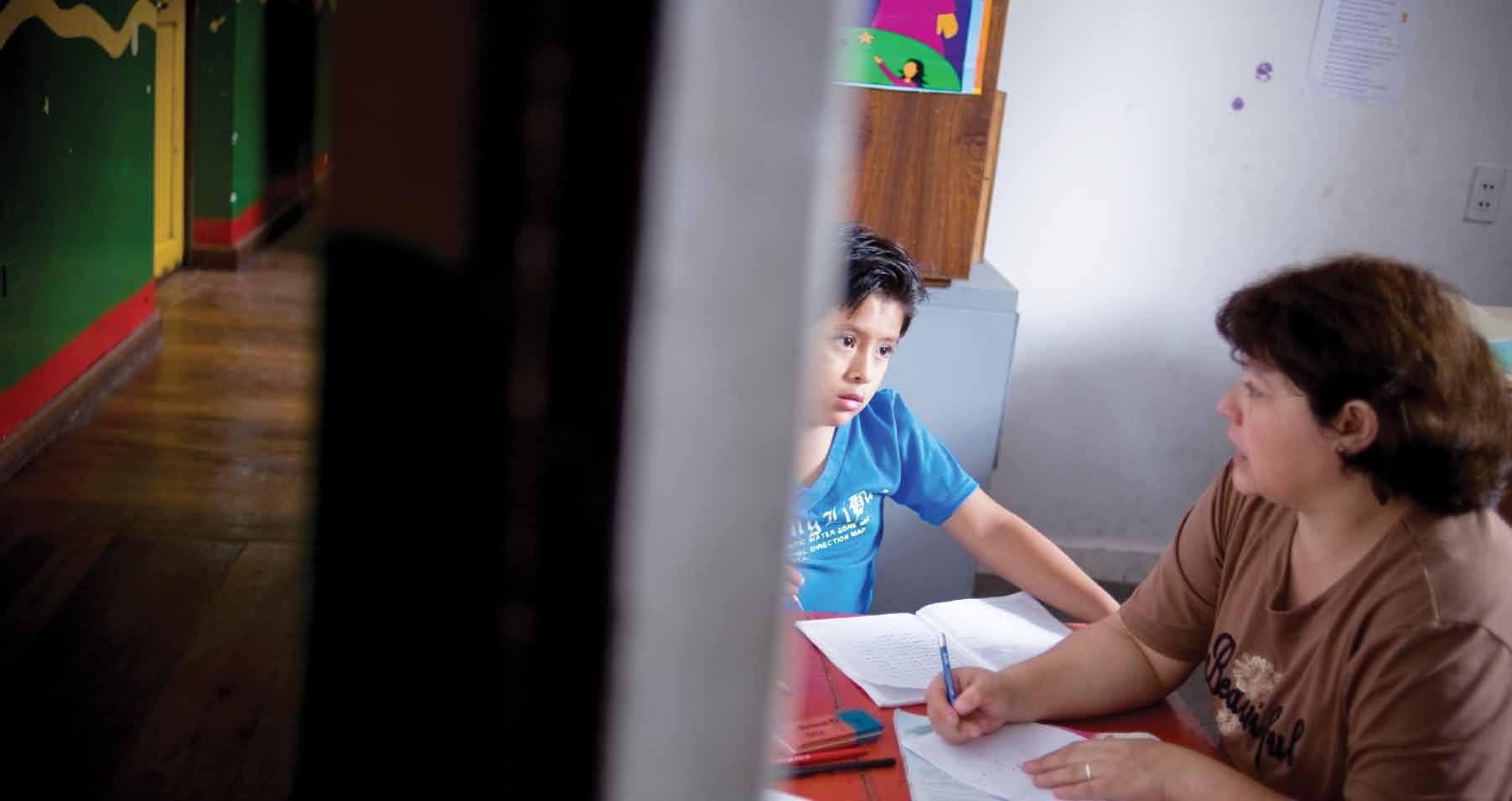
Friendship House (Casa de la Amistad) is a place where prison children can go during the day for education, counselling, food, health care and a chance to play. Pictured left is Carla, the Casa’s psychologist.
Pictured below: Lourdes, prison chaplain and Casa staff member, helps bring children from prison to the Casa each morning.
them there, but my mom needs them there too, so I don’t know what is best.”
In addition to starting her first year of studies at university, Lisette is taking a night course so she can become an accounting assistant to help support the family. She also volunteers at the Casa as often as she can.
In the women’s prison, Laura and Lourdes (chaplain at both the men’s and women’s prisons and one of the Casa staff) meet with a mother who has a four-year-old son, Samuel. They are one of the 62 families in the Cochabamba region who Lourdes and other Casa staff visit regularly. The mom shares a conversation she had with her son that morning when she returned from the laundry room where she works to earn money to pay for their food and other basic needs while in prison:
When I got back, my fingers and palms were inflamed and red – my hands had reacted to the heavy scrubbing and the soap. Samuel asked me to get one of those special black boxes for him. When I asked why, he replied that he wants a shoe-shining set…to start working so that I don’t have to hurt my hands anymore. He said that he can do this work right in the prison – ‘the policewoman’s shoes, of course.’
“She wept as she told us the story,” recalls Laura. “She said that it is the innocence of her little boy that inspires her to work hard to be freed and once free, to live an honest and good life.”
Unfortunately many children lose that innocence. They come to the Casa in emotional turmoil, some with marks on their bodies, indications of the fighting, violence and abuse that occurs in prison. Carla, the Casa’s psychologist, has worked with prison children for
over 11 years. “She is loving, creative, innovative and committed to their holistic development,” notes Laura. “She uses art, drawing, toys (and soon, sand therapy!) to work with children on an individual basis.”
Besides psychosocial support, the Casa provides children with nutritious meals and integrated health care, which includes regular check-ups, dental and orthodontic assistance, as well as lessons in hygiene and learning how to care for their bodies to prevent illness. They also offer education and mentoring – from daycare and early childhood education through to afterschool tutoring for older children. Staff also assist parents in enrolling children in schools and are “parent substitutes” at parent-teacher meetings. And they have started to offer training in vocational skills such as administration and computers to older youth.
Skills training is also important for parents. While they can learn skills (such as sewing, knitting, tailoring,
This Christmas, you can help children in Bolivia who are living in prison by participating in Kids Care. For more information including a short promotional video see www.cbmin.org.
carpentry, mechanics) in the prisons, parents find it difficult to find meaningful work once they are freed, say Casa staff, and many return to the drug trade or other risky ways to earn a living.
The Casa is now developing their next phase of programming to better meet the needs of older youth living on their own and parents who have been released from prison. They want to offer more training, mentoring and follow-up. One of their ideas is to develop a marketing centre/association to help former inmates market their products in the city.
Employment is a crucial need. One former inmate, who met her husband in prison, is now raising their three children alone after her husband ended up back in prison. She learned to sew while in prison, saved and bought a machine, and now has her own small business. The Casa is one of her clients – she is sewing the kindergarten painting shirts. When asked what her advice for other women in her situation is, she replies, “Never separate. I saw many families in jail who separated instead of staying together. I said to myself, I am not going to be like them. I am going to be different.”
“There is love in this family. When I hear them talk I am so impressed,” says Lourdes. She visits both parents often. “Of course, everyone has their problems, but they are an example.”
With the support of the Casa, many more families in Bolivia will also have a fresh start in life.
Editor’s Note:
This article is based on Laura Ward’s report on the Assessment of Children’s Programming in Bolivia. Shortly after completing this assignment for The Sharing Way, she returned to Canada for her wedding and to begin Doctoral studies at the University of British Columbia. Congratulations, Laura. We wish you all the best in your new start!
v i e w the
Give the gift of a well, for clean water…. or a well-trained pastor?
What has the most impact? Why is it so difficult to raise money for developing leaders in the church? Colin Godwin, CBM Global Field Staff now serving in leadership development in Rwanda, responds to these and other questions faced by those who live and serve in the gap between the worlds of rich and poor.
Knowing that it’s difficult to capture the imagination of people for funding the training of a pastor, or supporting a seminary, or those working in evangelism and outreach, my response is…
There is no shortage of urgent needs all over the world. In Rwanda, we see people daily who live in poverty, who don’t have the means to go to school; others who are below the daily caloric intake for what’s required to maintain physical health; still others who are dealing with the effects of AIDS in their family or simply just trying to survive when they’ve got a Grade 4 education and no skills… We need to have a response to these needs…to provide bags of rice and clean water so people can have something to eat and drink, but we also want to continue and provide some training…new crops that would be more drought resistant, better irrigation techniques, better land-use techniques, so that in the future they would be more resilient to changes in the environment or potential food shortages… In the same way, I see the need for leadership development in the church…it’s a huge investment in the future because these are leaders who are going to impact not just the local congregation, but their whole village or town…provide the spiritual oversight and direction of any other kind of projects that we might do…the orphans that are helped, the bags of rice that are handed out…It just takes a couple years of study for these pastors, so it’s a short-term investment with a huge impact over an entire career.
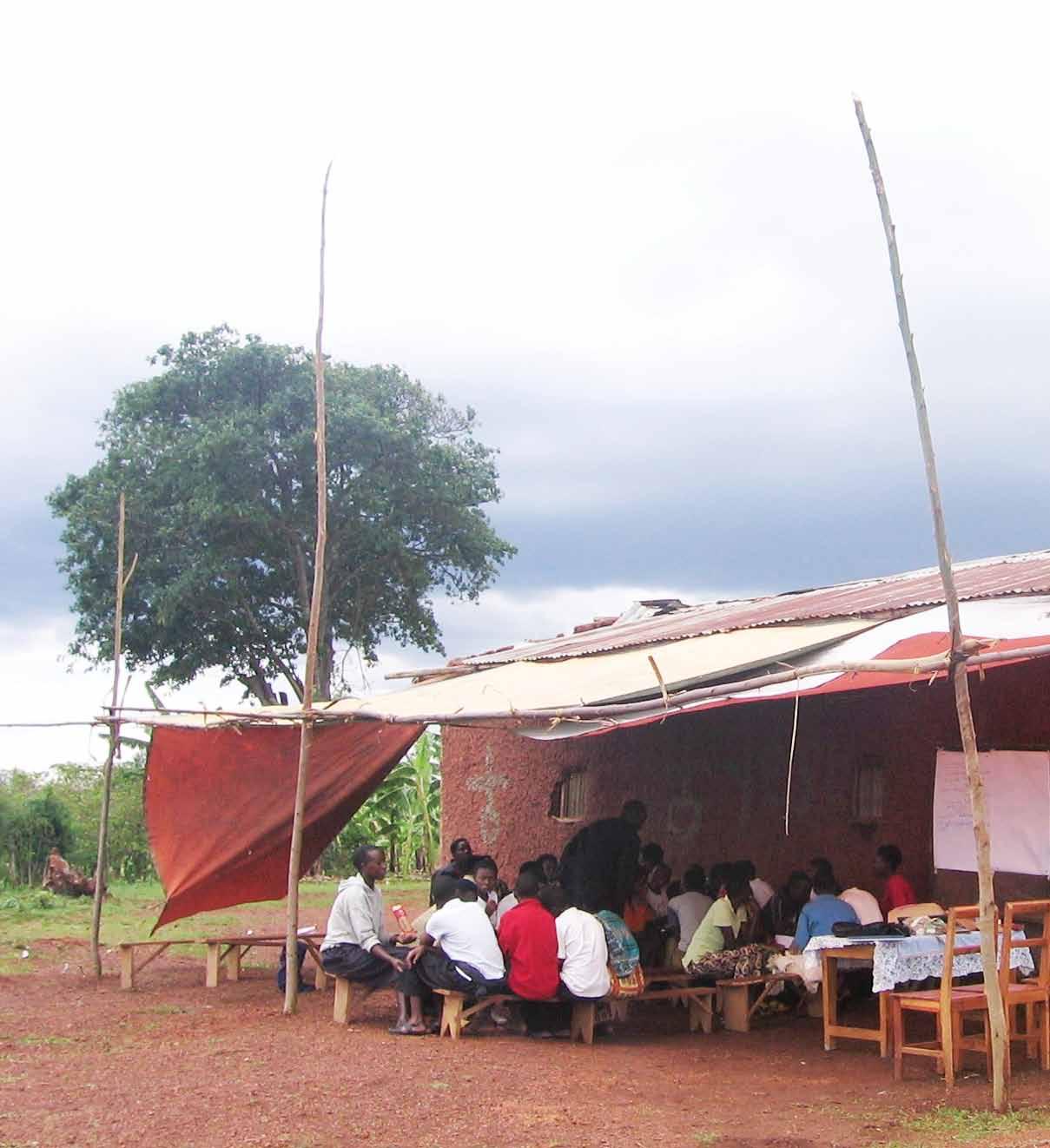
tA group of orphans living in child/youthheaded households meets at the local Baptist church for encouragement and training.
You can make a gift today through CBM’s Hopeful Gift Catalogue. Each gift is part of our integral approach to encouraging and equipping the local church to better respond to the needs in their community. www.cbmin.org
On those days when poverty wears on my soul…
I try to look at how my African peers deal with it…they see their own position and relative wealth [compared to the desperately poor among them] as a gift from God and they feel a responsibility to help those people that they can…and when we do that it releases us from being motivated out of guilt…instead we’re motivated by a spiritual responsibility…to know that God is asking us to help those we can and that our means are limited…God knows that, so we pray for those we can’t help.
What gives me the most hope...
In confronting poverty, it’s to see the willingness to change. Our church partner in Rwanda is great at quickly adopting dynamic strategies to help deal with poverty, to be innovative in terms of leadership development… so my hope is in the Lord, but also in his Church…God is raising up men and women who can multiply the impact of Canadian Baptist dollars in Africa in huge ways because the giving of our gifts goes on through these leaders that we’ve helped to train and sponsor.
My challenge to the Church in Canada…
It’s only by God’s grace that we have anything…and that spirit of thankfulness to God should motivate us to be generous in our giving… with the global economic downturn right now things are difficult for some Canadians, but we live in a well-structured society with all sorts of social networks and different support for unemployment, which is far beyond anything that anyone in Rwanda could hope for… chances are that at the end of this global economic crisis the poor will be even poorer and the rich will end up even richer, so my challenge to Canadians would be to seriously consider your spiritual, God-given responsibility to help those who are in need in your own community and beyond that in Africa, and other places. Consider making a serious spiritual commitment to change your lifestyle to reflect what God’s priorities are for the world…supporting Global Field Staff, supporting those involved in education who are investing in the future, and supporting the development projects that make such a huge difference to widows and orphans, the vulnerable and people who are suffering.
Any last thoughts or comments…
The fact of having wealth, like we do in Canada, is not something that God condemns. What God condemns is those who use that wealth for their own needs, and only for their own needs… But God invites us to a different way, to recognize our responsibility…God invites us to help those who are in need around us and far beyond, to the kind of engagement where we have a changed lifestyle, where we give as much of our wealth away [as He asks] in order to bless those around us to the glory of God. That is the kind of rich person that God honours.
A “Hole in One” for Missions
Rev. Daniel Green of Chester United Baptist in Chester, NS presented a cheque for $2,681.19 to CBM for ministry among Somali people in Kenya.
This was the 11th year of Chester Baptist’s Golf Tournament, held this past June in support of CBM. Over the years they have faithfully raised thousands of dollars for ministry around the world while at the same time reaching out to friends, family and the community.
Way to go!
Dear Friends,
I want to take a few moments to highlight the significant contribution that Sharon Tiessen makes to the life of Weston Park Baptist Church.
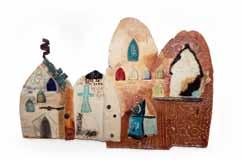
Sharon serves in the role of ‘Artist in Residence’… she leads the congregation in the importance of the arts in the life of the believer. She does this by presenting her art in the sanctuary of Weston Park, leading the congregation through the liturgical year and through her regular writings called ‘Art Matters’. Through these combined vehicles Sharon has helped the congregation to grow in its understanding of discipleship by demonstrating the holistic impact that faith has in all areas of life.
We at Weston Park have benefited from Sharon’s participation in our midst. It is my prayer that Sharon will have more opportunities to share her gifts and that the important dimension of ‘worship and the arts’ will be received and nurtured by many congregations for the glory of Christ.