Safe & Strong
A proud inclusive community that unites, celebrates and cares
Safe & Strong documents cover such themes as being a child friendly City, social justice, children’s services, community safety and crime prevention, inclusiveness, community services, universal access, reconciliation, ageing, community harmony and youth.
Clean & Green
A cool, clean and sustainable city with healthy waterways and natural areas
Clean & Green documents cover such themes as managing our catchments and waterways, natural resources, environmental hazards and risks, weather/ climate emergencies, biodiversity, climate change, resilience and corporate sustainability.
Prosperous & Innovative
A smart and evolving city with exciting opportunities for investment and creativity
Prosperous & Innovative documents cover such themes as economic growth and employment, investment, art, culture, heritage preservation, pursuing digital solutions and being creative.
Moving & Integrated
An accessible city with great local destinations and many options to get there
Moving & Integrated documents cover such themes as accessibility, pedestrian and cycling networks, pedestrian and road safety, transport hubs and asset management.
Healthy & Active
A motivated city that nurtures healthy minds and bodies
Healthy & Active documents cover such themes lifelong learning, active and healthy lifestyles, open spaces, passive parks, play spaces, and providing quality sport and recreation infrastructure and programs.
Liveable & Distinctive
A well designed, attractive city which preserves the identity and character of local villages
Liveable & Distinctive documents cover such themes as preserving the character and personality of centres and revitalising them, affordable housing, well-managed development and complying with local laws.
Leading & Engaged
A well-governed city with brave and future focused leaders who listen
Leading & Engaged documents cover such themes as open government, managing assets, improving services, long term funding, operational excellence, monitoring performance, being a good employer, civic leadership and engaging, educating and communicating with our community.
1
The Strategic Planning Framework (SPF) maps out the role of all current and future Council strategies and plans that work to deliver the vision for the City. The framework works from the highest level of strategic direction from the Community Strategic Plan through to more detailed plans that will eventually drive works, projects and programs on the ground. The framework is comprised of the following levels:
The COMMUNITY STRATEGIC PLAN (CSP) is our highest level plan and translates the community’s desired outcomes for the city into key destinations. The CSP includes community suggested actions which can be tested in the development of all other plans.
SUPPORTING PLANS
break down broad theme areas discussed in LEAD STRATEGIES into smaller themes providing high level actions. SUPPORTING PLANS identify broad works, projects and programs required to deliver on these actions. Supporting plans include indicative costing and resourcing requirements and delivery timeframes.
2
3
DETAILED ACTION PLANS
take actions from SUPPORTING PLANS and identify specific works projects and programs required to deliver on these actions. These plans include detailed costing and resourcing requirements and delivery timeframes.
GUIDELINES, POLICIES AND CODES provide detailed information, rules for activities or guidance for specific works on Council or other lands.

The City of Canterbury Bankstown acknowledges the traditional country of the Darug (Darag, Dharug, Daruk, Dharuk) and the Eora People.
We recognise and respect their cultural heritage, beliefs and relationship with the land.
We acknowledge they are of continuing importance to Aboriginal and Torres Strait Islander people living today.

We developed our Disability Inclusion Action Plan (DIAP) 2026-2030 (DIAP) with valuable input from community members, Council’s Senior Management Team and staff, consultation participants, survey respondents and people with disability who live, work and visit Canterbury-Bankstown.
Our DIAP is available in alternative formats, including word RTF and Easy English (available on our website). Hard copy formats (in both large and standard print) and other alternative formats are also available upon request.
We recognise that there are varying views on language and disability terminology around disability in Australia and internationally. Language can be both a personal and political choice.
We have chosen to write this Plan using the person-first language of ‘person with disability’ to recognise that disability is just one aspect of a person’s life and does not determine who they are. This is currently the preferred language used by governments across Australia. However, we respect that different people have different preferences about language.
The City of Canterbury Bankstown is home to around 372,000 residents across 41 suburbs, making it the second-largest local government area (LGA) in NSW by resident count.
Located just nine kilometres southwest of the Sydney CBD, our area spans more than 110 square kilometres and is a hub of urbanised neighbourhoods, key employment and education institutions, major state and regional road networks, three rail lines and is near the new Western Sydney International Airport (opening late 2026).
Residents from over 129 nationalities, around 200 languages spoken and nearly 45 per cent of residents born overseas.
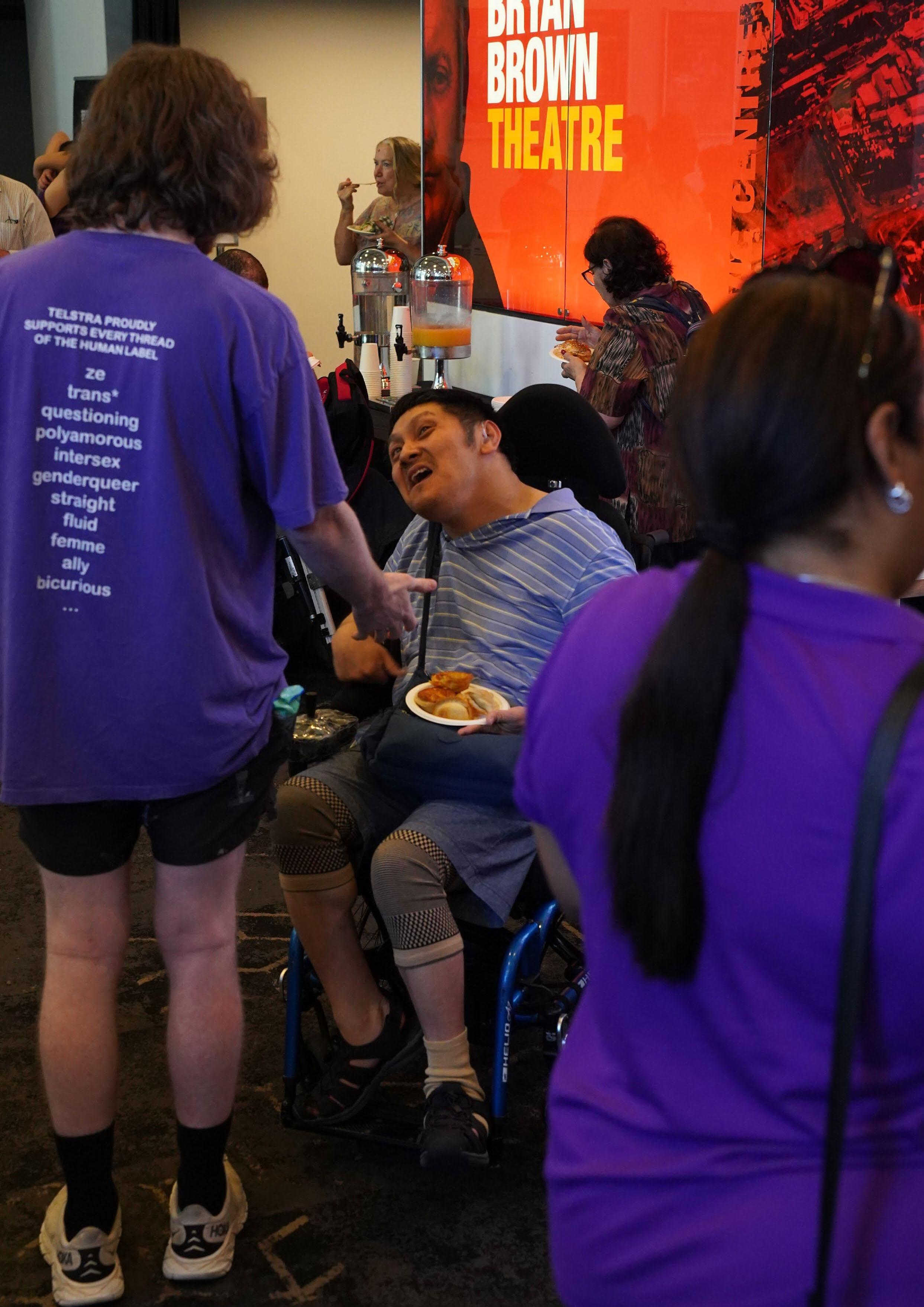
We are proud of our rich and vibrant cultural diversity with residents representing more than 129 nationalities. Importantly, our community also includes 25,076 people who have reported needing assistance with core activities in their day-to-day lives due to disability.
25,076 people –representing 6.8 per cent of the local population – reported needing assistance with core activities in their day-to-day lives due to disability.
11 per cent of residents aged 15 years and over are providing unpaid assistance to a person with a disability, health condition or due to older age.
(2021 Census)
MENTAL HEALTH
OLDER PEOPLE
WOMEN
PERSONALITY
Our DIAP reflects our ongoing commitment to building a City that is inclusive, accessible and responsive to the diverse communities who call it home.
We recognise that people with disability may experience layered or compounded barriers when they belong to more than one marginalised group. By taking an intersectional approach, we focus on how overlapping identities influence access and participation, and we acknowledge the diverse experiences that exist within all marginalised communities.
SOCIOECONOMIC BACKGROUND
FIRST NATIONS HOBBIES
CULTURAL BACKGROUND
LGBTQIA+
CHILDREN AND YOUNG PEOPLE
The DIAP operates within a wider legal and policy framework that protects the rights of people with disability. Australia is a signatory to the United Nations Convention on the Rights of Persons with Disabilities, which recognises that disability arises from barriers in the physical, social and attitudinal environment rather than from the disability alone.
At a national level, disability rights are supported through the Disability Discrimination Act 1992 and the National Disability Strategy 2021-2031, which set out actions to build a more inclusive society where people with disability can participate on an equal basis with others.
In New South Wales, the Disability Inclusion Act 2014 provides the legislative basis for disability inclusion and access planning, guiding state and local governments to uphold the rights of people with disability and enable full participation in community life.
In line with the recent release of the NSW Disability Inclusion Plan 2026-29, we have adopted the four focus areas to form the basis of our new DIAP:
Focus area 1:
Developing positive community attitudes and upholding the rights of people with disability
Focus area 2: Creating liveable and safer communities
Focus area 3: Supporting access to meaningful employment and independence
Focus area 4:
Improving access to mainstream services through better systems and processes
These areas provide a clear, structured way for Council to continue strengthening access and inclusion across its services, places, systems and workforce – now and into the future.
UN Convention on the Rights of Persons with Disabilities
National Disability Strategy (NDS)
NSW Disability Inclusion Amendment Act 2022 (DIA)
NSW Disability Inclusion Action Plan Community Strategic Plan Operational Plan
CBCity Disability Inclusion Action Plan 2026-2030

Here are some of our key achievements from CBCity’s 2022-2026 Disability Inclusion Action Plan.
Council hired 10 swim instructors qualified for accessibility and inclusion lessons
Ran ongoing diversity and inclusion awareness training (corporate induction, Auslan taster sessions, ADHD awareness, Disability Language Guide, Accessible Events Guide)
Provided evidence to the Disability Royal Commission
Included accessible toilet facilities on the National Toilet Map
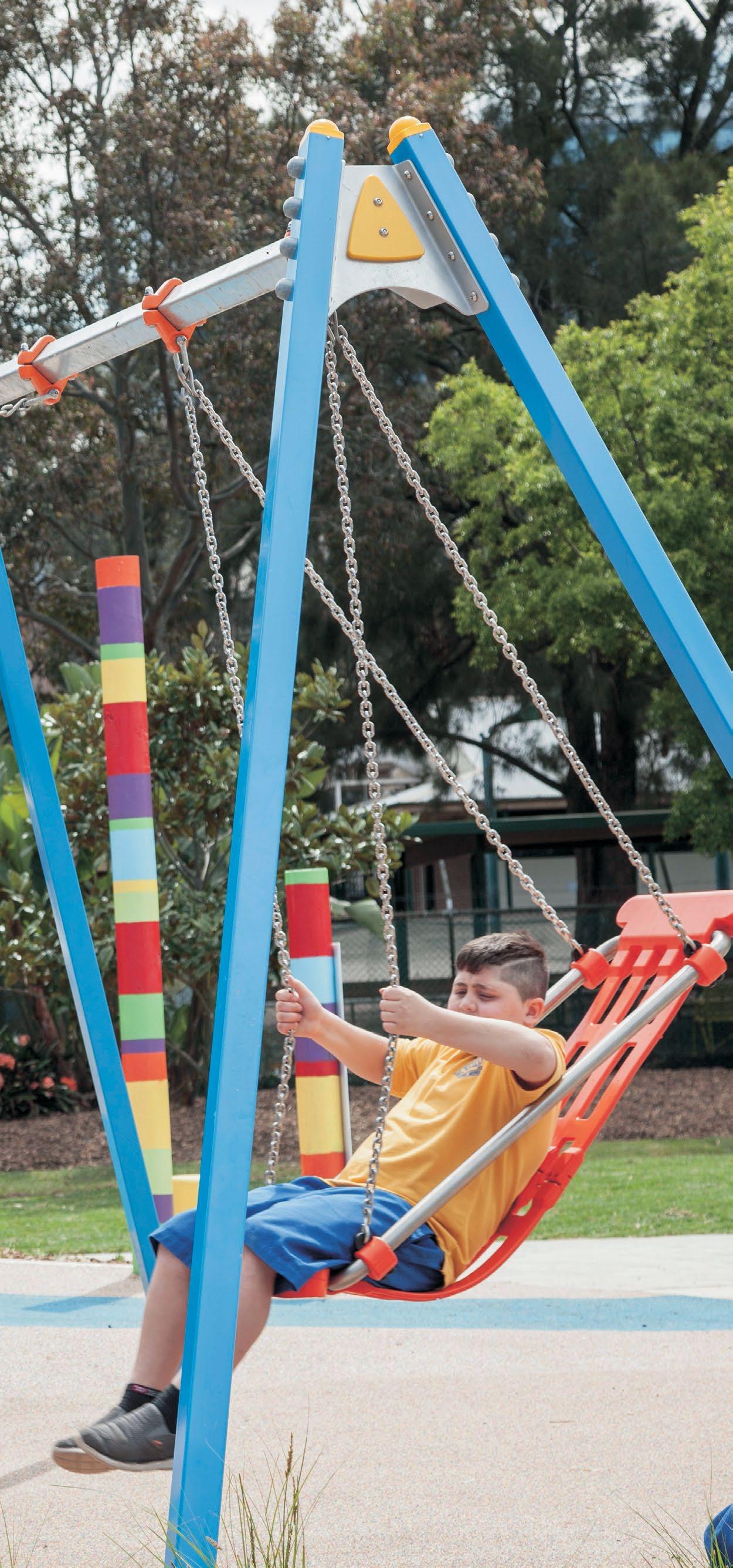
Constructed five outdoor areas and playgrounds with accessible and inclusion provisions: Parry Park, Greenacre Splash Park, Arthur Park, Flinders Slopes and Earlwood Oval.
Focussed on ‘whole of journey’ accessibility, from public transport and parking to park/playground including access to water, restrooms and accessible restrooms in new developments.
Provided an accessible hoist on the indoor pool at Birrong Leisure and Aquatic Centre and identified accessibility needs in the designs for the new Canterbury Leisure and Aquatics Centre.
Delivered a community communications and awareness campaign to highlight the importance of disability parking focusing on accessibility, independence and equality in car parking provision.
Ensured that the relevant Australian Standards, planning controls and the Disability Access Code were considered in the assessment of relevant development applications, construction certificates and complying development certificates.
Developed Easy Read and Plain English summaries for the CBCity Positive Ageing Plan 2024-2028 and the CBCity Social Justice Charter
Talent management teams reviewed the accessible application process to work towards improved inclusive recruitment.
This DIAP has been developed using a range of consultation methods and engaging a diverse cross section of the community. Through community consultation, we engaged with people with disability, carers, support workers, family members, Council’s Senior Management Team and staff as well as members of the DIAP Reference Group. We also engaged a consultant with lived experience of disability to support and guide the development of this Plan.
A range of consultation methods included:
• Community ‘Have Your Say’ online survey
• Face-to face and online community consultation sessions
• Consultation sessions with the DIAP Reference Group comprising people with lived experience of disability.
• Consultation with Senior Management Team
• Internal survey for staff
• Participation in a ‘Mystery Resident’ project, where participants with lived experience provided video or written feedback on their experiences on using several Council services including using Council’s Leisure and Aquatics Centre and library services.
Consultation methods were promoted widely including via Council’s website, social media platforms and at Council events. Accessibility supports, including Auslan interpreters, were provided to ensure inclusive participation.
CBCity’s Senior Management Team and the DIAP Reference Group were later consulted to review and provide feedback on draft actions.
The draft plan was approved internally by Councillors and placed on public exhibition for further community feedback. Any feedback received was considered in the final review before this plan was submitted to the Disability Council NSW.
Focus Area 1:
Developing positive community attitudes and upholding the rights of people with disability
1 Increased awareness, confidence and inclusive practice when interacting with people with disability, leading to more accessible services and improved community experience.
1.1 Strengthen promotion of Council’s disability awareness and inclusion training for all staff, including the Disability Language Guide and Accessible Events Guidelines and Checklists.
1.2.1 Increase awareness and capability for Council staff around a broad range of disabilities, including hidden disabilities and intersectionality.
1.2.2 Increase awareness and capability for the community around a broad range of disabilities, including hidden disabilities and intersectionality.
1.3 Deliver tailored disability training programs with relevant content to meet operational needs for specific business units.
1.4 Develop a disability etiquette guide to raise awareness to customer facing staff and the community.
1.5 Re-promote the accessible parking campaign to reinforce community understanding that disability parking is reserved for permit holders.
1.6 Review and update Council’s Development Control Plan to acknowledge built form best practice for accessibility, including addressing universal access to buildings in flood prone areas.
Year 1 People Transformation
Year 1 & 2 (Sunflower Program)
Year 2 & 3 (Disability etiquette) People Transformation
Year 3 & 4 Community and Cultural Services
Year 3 & 4 People Transformation
Year 1 Community and Cultural Services People Transformation
Year 2 & Year 4
Services Communications
Year 4 City Strategy and Design
2 Maintain and strengthen ongoing lived experience advisory structures.
2.1 Ensure lived experience advisory groups are well promoted and consistently used across Council Units, including for user testing, to inform inclusive policy, projects and operations.
2.2 Actively promote and increase representation of people with disability across all Council Advisory Committees and Working Groups over time.
3 Strengthen disability visibility and representation in Council communications.
4 Increase disability inclusion in local businesses and community organisations.
5 Increase disability awareness in local schools and education settings.
3.1 Continue to expand, refresh and consistently use Council’s disability image library across marketing and communications.
3.2 Promote Council’s inclusive services and highlight inclusive program successes through internal communications.
3.3 Deliver year-round disability awareness campaigns led by people with lived experience.
4.1 Work with local businesses to improve attitudes, customer service and accessibility awareness.
5.1 Co-design and deliver disability education initiatives in schools to build understanding, awareness and inclusive attitudes among students and staff.
Year 1,2,3 & 4
and Property Services
and Cultural Services
Year 1,2,3 & 4
and Property Services
Year 1 and Year 3 Communications
Year 1,2,3 & 4 Communications People Transformation
Year 1,2,3 & 4
Year 2
Year 3
and Cultural Services Communications
Business and Engagement
and Cultural Services
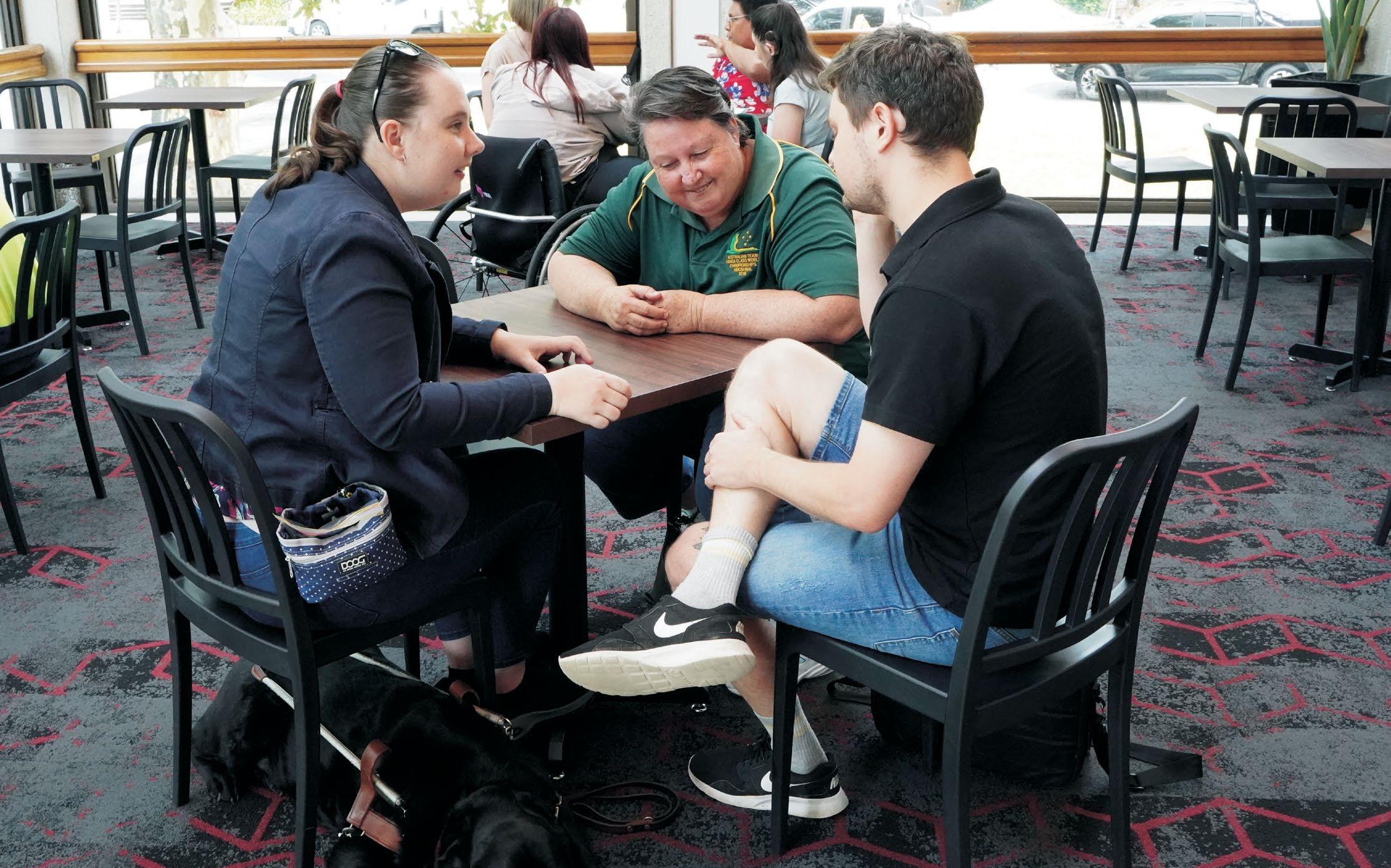
6 Council open spaces and public domain provide accessible “whole journey” experiences, enabling people of all abilities to safely access, navigate and enjoy public spaces.
6.1 Provide infrastructure that considers people with diverse needs, such as seating with supportive backrests and different seating heights in the public domain.
7 Library services are accessible and inclusive, enabling people with disability to participate in programs, access resources and engage with the library environment.
8 Council Leisure & Aquatic Centres are accessible.
9 Improve wayfinding and signage, including at wheelchair height.
10 Toilets across older Council sites are upgraded to be accessible, safe and inclusive, improving independence and comfort for people with disability.
Year 1,2,3 & 4
6.2 Review of the Playground and Play Spaces Strategic Plan to ensure compliance. Ensure inclusion design features are incorporated into Tier 1 playgrounds and key destination parks across the City. Year 1, 2, 3 & 4
6.3 Advocate for legible, safe and inclusive ‘whole of journey’ pedestrian experience from Bankstown Metro to Bankstown Hospital, for everyone.
6.4 Advocate to address gaps in existing transport system and improve pedestrian experience to Canterbury Hospital.
7.1 Expand inclusive services within libraries such as inclusive programming, multiple formats, digital accessibility and assistive technology.
8.1 Increase participation of people with disability in Council lessons, programs and visitation to all Leisure and Aquatic Centres.
8.2 Implement and regularly test visual emergency alert systems in Leisure and Aquatic Centres to ensure the safety and inclusion of d/Deaf patrons.
8.3 Inclusion of design features implemented into design and construction of new Leisure and Aquatic Centres.
9.1 Incorporate directional signage, including at wheelchair height into the Public Domain Manual.
9.2 Audit wayfinding and signage across Council facilities to ensure clear, consistent directional signage, including at wheelchair height and tactile indicators.
10.1 Consider implementing Changing Places facilities and inclusion features when upgrading toilet facilities.
Year 1,2,3 & 4
Year 1,2,3 & 4
Plan and Transformation
Systems & Planning
and Transformation
Systems & Planning
Strategy & Design City Plan & Transformation
Strategy & Design City Plan & Transformation
2
1
2
and Aquatics
and Aquatics
Systems and Planning
4
10.2 Ensure Council facilities are accurately listed and kept up to date on the National Public Toilet Map. Year 1,2,3 & 4
Systems and Planning
Systems and Planning
11 Council events are inclusive, accessible and designed to enable people with disability to participate, enhancing community engagement and social inclusion.
11.1 For selected major events, partner with community transport to reduce barriers for people who cannot easily use taxis or public transport to attend events.
11.2 Embed accessibility information and symbols across all promotional materials, including Council websites and event communications.
11.3 Implement Accessible Events Guidelines and Checklists as part of event and program planning across all Council Units.
Timeframe
Year 2 City Business and Engagement
Community and Cultural Services
Year 1 Communications
Year 1,2,3 & 4
City Business and Engagement
Community and Cultural Services
Customer Experience and Recreation
Executive Services
Sustainable Future
Children’s Services
12 People with disability can participate in arts and cultural programs that support creative engagement and inclusion.
13 Enhance accessibility of sports and wellbeing programs for people with disability.
11.4 Build staff capability to develop visual stories to support accessibility of programs and events.
12.1 Develop an accessible arts program that supports creative connection and participation for people with disability.
13.1 Deliver and support inclusive sport and wellbeing programs for people with disability.
13.2 Expand and support accessible programs across the LGA to reduce travel and participation barriers.
Year 1 Communications
Community and Cultural Services
Year 2
Year 1,2,3 & 4
Year 1,2,3 & 4
Community and Cultural Services
Customer Experience and Recreation
Leisure and Aquatics
Community and Cultural Services
Community and Cultural Services
Customer Experience and Recreation
Leisure and Aquatics
14 Sensory-friendly and quiet spaces are available across facilities and programs, supporting people with sensory or other needs to participate comfortably and safely.
13.3 Investigate, implement and promote sensory-friendly or quiet-hour programs at Morris Iemma Indoor Sports Centre and Council Leisure and Aquatic Centres.
14.1 Establish and promote quiet and sensory spaces, with clear staff guidance on how to offer and support their use.
Year 1,2,3 & 4
Year 3
Customer Experience and Recreation
Leisure and Aquatics
Community and Cultural Services
Customer Experience and Recreation
Leisure and Aquatics
Children’s Services
Asset Systems & Planning
Communications
15 Increase disability employment at Council through meaningful identified roles and targeted recruitment.
16 Staff and candidates with disability can access timely, effective and consistent reasonable adjustments, enabling equitable participation, performance and wellbeing in the workplace.
15.1 Identify opportunities and recruit people with disability into meaningful roles across Council.
16.1 Review and enhance the workplace adjustment process to ensure staff with disability and their leaders work collaboratively to identify, implement and manage appropriate adjustments.
16.2 Implement a system-based record of employees’ access needs to minimise repeated disclosure when managers, teams or roles change.
16.3 Embed regular access needs check-ins into wellbeing conversations, ensuring staff have safe opportunities to update their access needs over time – not only at recruitment.
17 Employees with disability have a safe, supported and influential forum to connect, share lived experience and inform leadership, strengthening inclusive workplace culture and decision-making across Council.
18 Council staff demonstrate improved d/Deaf awareness and inclusive communication skills, enabling effective, respectful and accessible engagement with d/Deaf people.
19 Council is recognised as an inclusive employer, attracting, retaining and supporting staff with disability through equitable practices, accessible workplaces and a positive organisational culture.
20 Increased participation of people with disability in Council volunteering programs through accessible and inclusive pathways, contributing to meaningful engagement, skills development and community inclusion.
21 Community members with disability have improved access to employment readiness supports, building skills, confidence and pathways to meaningful employment.
22 Local businesses are aware of and actively use JobAccess and the Employment Assistance Fund, increasing employment opportunities and workplace inclusion for people with disability.
17.1 Implement the outcomes of the Disability Employee Network feasibility assessment, including establishment of an internal network or alternative mechanism where there is demonstrated demand and readiness.
18.1 Provide practical training for staff on working well with d/Deaf colleagues and the community, including introducing Auslan learning opportunities.
19.1 Implement Council’s Disability Employment Strategy.
20.1 Develop an inclusive volunteer engagement framework that enables and encourages all units to create volunteering opportunities for people with disability.
21.1 Deliver work readiness and employment initiatives for people with disability.
21.2 Publish and maintain an easy to find referral pathway to local Disability Employment Service providers and related supports.
22.1 Promote JobAccess and the Employment Assistance Fund to local businesses to increase awareness of financial supports for workplace modifications and adjustments, helping local employers feel confident to hire and retain staff with disability. Year 1,2,3 & 4
Business and Engagement
23 New and upgraded Council facilities are accessible, inclusive and usable from day one, reflecting the lived experience of people with disability through genuine co-design.
24 People with disability can consistently participate in Council consultations and public forums because meetings are planned and delivered using standard, accessible set-ups.
25 People who are d/Deaf or hard of hearing can reliably access Council services, facilities and events through well-maintained and functioning hearing loops and assistive listening systems.
26 Physical access barriers in public spaces are identified, tracked and addressed in a timely and transparent way, improving access for people with disability.
27 Council information, including digital platforms, is consistently provided in accessible formats, ensuring people with disability can easily access and understand documents and materials.
23.1 Engage people with diverse disabilities, including d/Deaf community members, to review and comment on design and to user test new or significantly modified facilities before opening.
24.1 Develop an Accessible Consultations Checklist to ensure microphones, acoustics, ventilation noise, captions, Assistive Listening Devices and other access supports are in place and working before each session.
25.1 Establish a program for regular maintenance and calibration of hearing loops and assistive listening systems, including user testing by d/Deaf people.
26.1 Promote internal and external reporting pathways for physical access barriers via Report It and OurCustomer.
27.1 Ensure Council website pages, forms and documents in multiple formats meet accessibility standards, supported by regular digital accessibility audits and paid user testing.
27.2 Develop and communicate an Accessible Documents and Formats Policy which outlines when to provide Plain English, Easy Read, accessible PDFs, captions and transcripts.
Year 1,2,3 & 4 City Design & Delivery Leisure & Aquatics (Year 1)
Year 2 City Business and Engagement Community and Cultural Services
Year 1,2,3 & 4 Open Space and Building Maintenance
28 People with disability can safely and confidently navigate Councilmanaged footpaths and roads, with well-maintained surfaces and clearly identified hazards.
28.1 Ensure roads and footpaths meet accessibility and safety standards, including accessible footpaths and kerb ramps for wheelchairs and mobility aids.
28.2 Implement clear, accessible and inclusive wayfinding around construction works and notification of works to enable safe navigation for people with disability.
Year 1 Customer Experience and Recreation Communications
Year 1,2,3 & 4 Communications Digital Transformation
29 Council meaningfully engages with people with disability for lived experience insights and expertise which is appropriately remunerated.
29.1 Conduct user testing through systematic accessibility assessments of all Council services to remove barriers to programs, facilities and information.
29.2 Formalise fair and consistent payment processes for people with disability providing lived experience consultation or speaking contributions.
Year 2 Governance and Property Services Communications People Transformation
Year 3 City Design & Delivery Roads Operations
Year 1,2,3 & 4 City Design & Delivery
Year 2 & 4 Community and Cultural Services
Year 1 Community and Cultural Services
30 Embed disability and inclusion messaging more visibly in Council events and communications.
31 People with disability have increased access to convenient, safe and welllocated parking options, supporting equitable participation in community, business, medical and Council activities.
30.1 Update the Language and Accessible Events Guidelines and Checklists to avoid unintentional segregation and promote inclusion and integration.
30.2 Update Event Communications Plan processes to embed consideration of people with disability and ensure appropriate targeted promotion to increase participation at events.
31.1 Conduct a needs analysis across Council carparks to identify locations with insufficient accessible parking.
32.2 Maintain Council’s existing process for accessible drop-off zone requests and publish clear guidance for businesses, including medical centres, on how to lodge a request, to support equitable access for people with disability.
1
32 Council’s Waste and Cleansing services are accessible by all residents.
33 Increased inclusion in Council’s Children’s Centres to support children with disability.
34 Healthy Streets methodology for qualitative and quantitative assessment of street accessibility and inclusion is supported by Council .
35 Increased coordinated and proactive approach to disability inclusion in the housing sector.
32.1 Adopt and implement the Domestic Waste and Recycling Policy that includes a supported bin service.
33.1 Review staffing, resources and training in Children’s Services to support enrolments of children with additional needs beyond standard ratios.
34.1 Provide training and access to Healthy Streets Framework, with healthy streets data in the data bank kept as a resource for all of Council.
35.1 Investigate the development of a live register of gold-standard adaptable dwellings across the LGA.
2 Children’s Services
Governance and accountability for disability inclusion across Council will ensure the consistent implementation of the DIAP.
Specific measures, clear timeframes and identified responsible Units have been established to support ongoing improvements in inclusive practice and service delivery and to achieve the actions and outcomes outlined in this Plan.
To support this Plan, we are committed to continuing to engage with community members with lived experience and other community and internal stakeholders to implement actions accordingly.
CBCity will conduct quarterly reports on DIAP progress and publicly report on DIAP actions annually. This information will be included in Council’s Annual Report.
Our DIAP and accessible formats are available to the community through our website at cb.city/DIAP. This plan is also registered with the Disability Council NSW.
We value community feedback on our progress in meeting the goals and actions outlined in our DIAP.
We encourage individuals and organisations to share their thoughts and experiences with us to ensure our continuous improvement.
Please contact us via our Customer Service team:
Phone: 9707 9000 (24 hours, seven days a week)
Email: council@cbcity.nsw.gov.au
For a free interpreter, call us via the Translating and Interpreting Service (TIS) on 131 450.
If you are deaf, hard of hearing or have a speech impairment, please contact us via our National Relay Service on 9707 9000