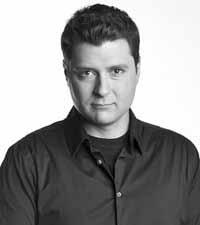
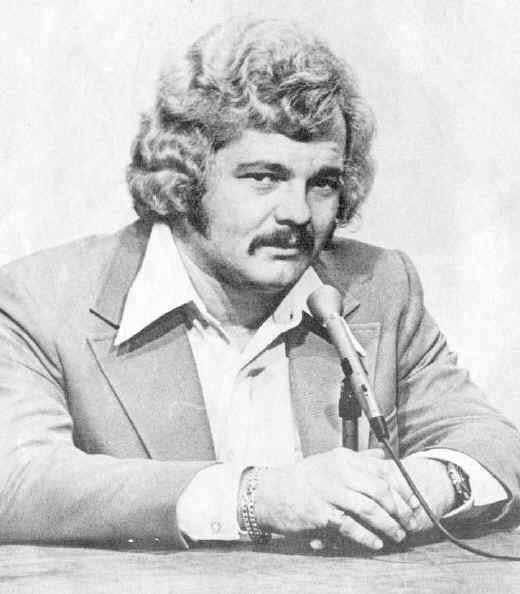
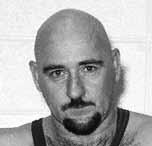
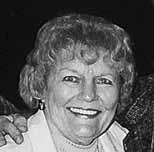
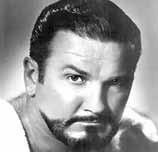
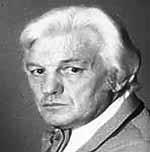
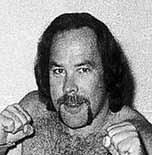
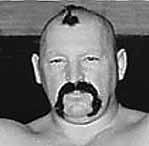
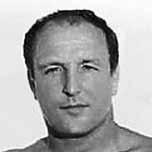
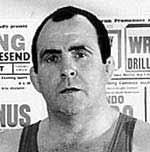
Jeff Sharkey takes an in-depth look at the CAC’s new Baloney Blowout host ARDA OCAL
Dale Pierce takes us on a trip back to the territory days as he remembers the glory era of pro wrestling in DAYTON, OHIO
Ear Editor Eric Chmiel sheds some light on the incredible film career of 20-year Cauliflower Alley Club member AL BURKE
ARDA OCAL
Cauliflower Alley Club
A non-profit corporation “The Ring of Friendship”
MEMBERSHIP 2013-2014
An association of past, present and future champions, contestants and allied personages joining in recognition and celebration of fellowship within the wrestling world. Upon receipt of dues, your new membership card & parchment membership certificate will be mailed.
Renewal or
New Application
U.S. MEMBERSHIP CANADA/MEXICO OVERSEAS
(includes The Ear) Tw o-year Membership $50
Membership $45 (includes The Ear) (includes The Ear) (includes The Ear) Lifetime Membership $300
Membership $450
Membership $550 (includes The Ear) (includes The Ear) (includes The Ear)
Mail membership application Or charge membership to Visa, MasterCard, or Discover with your check to: (American Express accepted online only):
Cauliflower Alley Club CC #:___________________________exp. date__________ 383 Highway 00 three digit security code on back of card _______________ Rolla, MO 65401 USA zip code___________cardholder s name________________ cardholder s signature_______________________________ FAX this page to: 1-888-235-7818
New members only: Please write in the name of the individual who referred you to the club; or indicate how you heard about the CAC.
When time allows, please send two photographs of yourself; one for the CAC files and one for the Las Vegas Wall of Fame, displayed at our annual reunion.
We will mail you a new certificate if you check here ______; however, if you do not need an updated certificate, please do not check and help us save in postage costs. Thank you.
Please initial here ____________if you agree to allow us to use your name and image in “The Ear” and on the CAC web site from time to time.
NEWS FROM AROUND THE CAULIFLOWER ALLEY CLUB
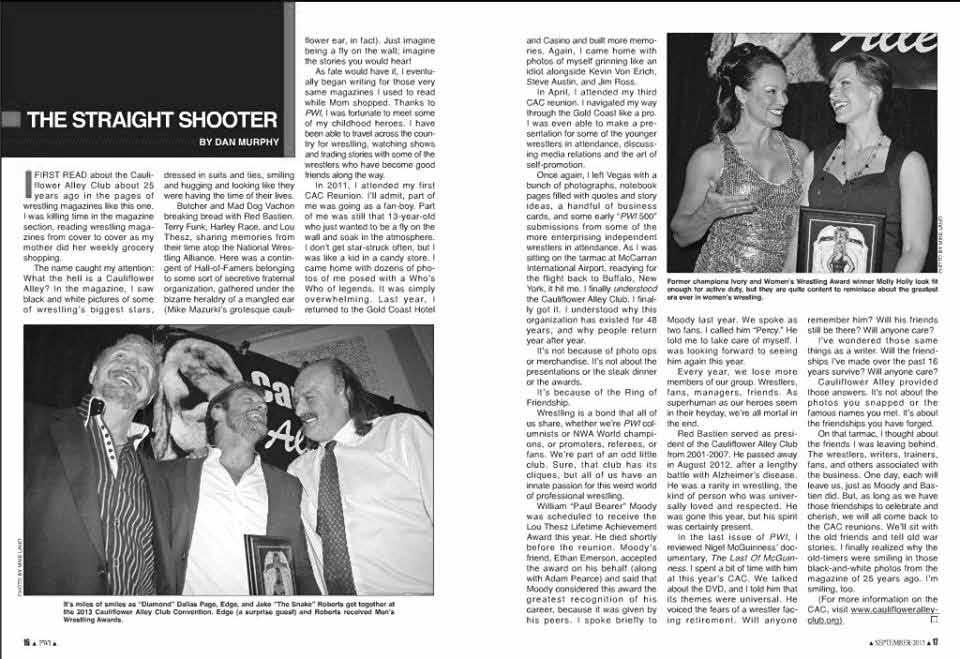
The CAC extend its thanks to our own Dan Murphy, who for the second year running wrote a great article for Pro Wrestling Illustrated recapping our annual reunion in Las Vegas this past spring. Whether it’s writing for PWI or penning a piece right here in The Ear, Dan always does great work, and this article is no exception. Special kudos go out to Mike Lano, whose photos helped bring Dan’s piece alive. We always appreciate the positive publicity, and we always like seeing CAC members like Dan enjoying success in their chosen fields!
Longtime member Brian Westcott sends us word correcting his own report in the last issue on the live matches promoted at the last reunion by Billy Blade. When Dave Dutra defeated Will Rood to win the All Pro Wrestling Internet Championship in the fourth match on Dan Murpy’s CAC article in Pro Wrestling Illustrated the show, it was in fact NOT the first (thanks to Dan Murphy for the scan) title change ever on a CAC reunion. After checking his files, Brian found that there had actually been a title change at the CAC event back on April 13, 2009 at the Gold Coast when Oliver John won the NWA Heritage title by winning a four-way match over Ryan Taylor, Chris Hero, & Steve Anthony. Nice work, Brian.
Last issue, we mentioned that there was a stray camera found in the ballroom at the Gold Coast right after this year’s reunion banquet ended, and that a quick perusal of its contents failed to yield any clues as to the identity of the owner. Happy ending alert: After sending out an all points bulletin here in The Ear, we are delighted to report that the owner stepped forward and, thanks to Morgan Dollar, the camera is now back at home resting comfortably, awaiting its next assignment.
Whoops! Our apologies go out to CAC staple Shawn Mayne. Last issue, we identified him as the son of the late, great Lonnie “Moondog” Mayne. But if you know Shawn, you realize he’s Lonnie's brother, not his son. Well heck, he looks so young, anyone could make that mistake! Shawn currently resides in Utah and makes a point of getting to the reunion each and every year, much to the delight of our members. (Thanks to Mike Lano for this info)
Announcing legend Jim Ross is another guy who’s become a regular at the annual Vegas reunions. Like Dan Murphy, he enjoys scribbling up his thoughts on the event each year, and he did so again, writing about the CAC as part of his WWE blog. Ross talked about how he wishes the event was in June, because that would allow many more WWE names to attend. Well, he’s getting his wish (see the item below). Wrote Ross, “The CAC is a great non-profit organization that does many amazing, charitable things for those in need from within the wrestling biz. CAC doesn’t look for publicity as many of their benevolent acts would bring embarrassment to many of the recipients. But, take it from me, CAC helps lots of people that you know or have heard of over the years, and I’m of the mindset that more people, fans and wrestlers alike, should join the organization.” Amen to that, JR!
Speaking of the next Cauliflower Alley Club reunion, as we mentioned in the last issue, the event is indeed moving to June. We expect this switch to attract a lot of members who haven’t previously been able to attend, and to also to create some new members to boot. We’ll be back at the Gold Coast Hotel and Casino in Vegas, from June 2nd to June 4th, 2014. We’ll have much more about next year’s reunion in coming issues, but for now we’d just like to mention that a lot of work is already being done lining up awards honorees, toying with some new wrinkles for the boys and fans alike, and generally planning to make the 49th year reunion one of best in the long and storied history of the club.
CANVAS CAVITY
By Mike Lano
--- CAC superstar Billy Corgan was recently trapped on a stalled European train with other passengers fainting around him. The interior temperature became so hot, people were passing out while Billy kept his cool and tweeted for help, writing, “Currently TRAPPED on a stalled train, temps over 140 degrees. They won't let us off, people fainting." The Eur ostar train was traveling from Germany to the U.K., where Billy was to play a gig at London's historic Wembley Arena. His tweets helped Eurostar locate train #ES9133, and the passengers were finally saved. Smashing Pumpkins, Billy’s superstar group, once had a global hit with a line about being a rat trapped in a cage, a fact which Corgan later referenced to the media when discussing the incident. When he got to London, he rocked his legions of fans and became a hero all over again. We've had many international stars attend CAC events since Mike Mazurki founded the club so long ago, but none who multitask as a global rock star, music historian and brilliant wrestling booker and promoter, as Billy does with Resistance Pro Wrestling out of Chicago, his hometown (see www.resistancepro.com). He's helped create a great interest in the CAC from an entirely new and different demographic for us, and we give him a heavy metal salute.
--- Another CAC superstar is “Stone Cold” Steve Austin, who was recently the subject of a highly-rated hour-long piece for a one-on-one interview program on the AXS cable TV network. TV reviewers said it was the best episodes in the program's history because Steve "shot" and was completely honest. He also put over those who came before him.
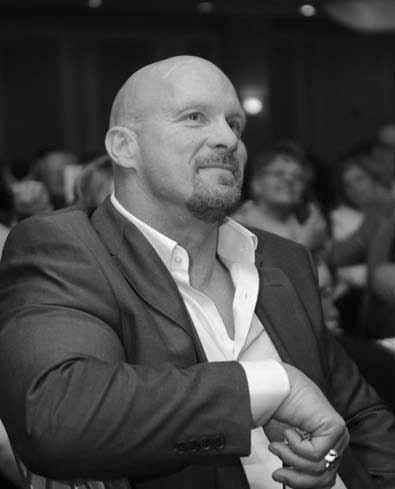
--- Welcome to the CAC to an old pal, “Hustler” Rip Rogers. Rip, like many, grew up on Dick the Bruiser's great Indianapolis WWA promotion, which had many ties to my old homebase Stone Cold enjoys the festivities at the promotion, the Los Angeles WWA/Cal Eaton territory. (Want to 2012 reunion (photo by Scott Romer) hear a great story?
Just ask the CAC’s own mat historian Steve Yohe about the time The Bruiser feuded with Fred Blassie over the L.A. WWA belt, and reportedly wound up not returning it and using it to launch his own Midwest WWA.) Rip Rogers was like another brother to Randy Savage and Lanny Poffo throughout the 1970's, especially in the Poffo's famed Kentucky-based ICW "outlaw" group that ran from 1978 to 1984. ICW was packed with star power, including a slew of current CAC members like Ron Garvin, Bob Orton Jr., Paul Christy (who also worked for Bruiser's group), Ox Baker and Bob Roop. Rip worked and wrestled for just about everyone all over the world, and he’s fondly remembered as the lead heel for a time in Ole Anderson's beloved Georgia Championship Wrestling, with his then-wife and valet Brenda Britton. And of course, he’s done outstanding work the past 15 years with Danny Davis running the OVW group which has served as the farm system for WWE and TNA. We all hope to see Rip next June at the CAC in Las Vegas!
-- We’ll all miss GLOW's Big Bad Mama, who recently passed away. She was almost like a “faux” heel, as she was always more comfortable being nice to fans, because that was just her natural disposition. Big Bad Mama showed a lot of heart “Hustler” Rip Rogers, telling it like it is and great spirit during her career. She will be missed.
Mike Lano co-hosts “Legends”, a weekly nationally-syndicated sports and entertainment radio show where he interviews wrestlers, MMA stars, boxers, musicians, actors and politicians including notables like Lou Ferrigno, Sarah Jessica Parker, Rudy Giuliani, Joan Rivers, Howie Mandel, Drew Carey and many more
THE CAC INTERVIEW: LES THATCHER HAS DONE IT ALL—AND THENSOME—IN AND OUT OF THE RING
by Eric Chmiel
Just before I, Ear editor Eric Chmiel, conducted the interview with Les Thatcher that you’re about to read, Les was kind enough to send along a resumé that included some of his notable professional accomplishments. Looking at the document, I was floored. As a student of wrestling history, I know a little bit about the respected, extensively traveled Thatcher, who has been working in wrestling in various capacities for over 50 years, and is still going strong. But I didn’t know he had accomplished so much!
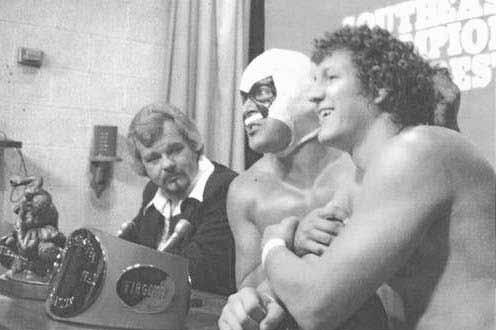
Thatcher has done just about everything you can do in and out of a wrestling ring, including a lot of things I wasn’t even aware of. He’s been a decorated wrestler in both singles and tag teams; he’s been an innovator in TV production going back to the 1970’s when he won awards for producing the old Southeastern Championship Wrestling territory’s show out of Knoxville, TN and also produced numerous other TV wrestling shows including Georgia Championship Wrestling, Smoky Mountain Wrestling and Mid-Atlantic Championship Wrestling; he’s acted as a top-flight TV announcer for numerous promotions; he’s written and edited wrestling magazines and programs across the southeast; he’s managed a slew of gym businesses; he’s hosted weekly radio shows; he’s promoted his own wrestling events with great success. And that’s just a sampling.
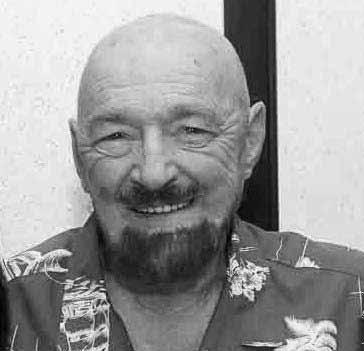
The editor sat down with Thatcher and shot the breeze about Mr. Les Thatcher his distinguished career. Besides hearing a tidal wave of fascinating tidbits and stories along the way, it was also stri king how, despite his many accolades, Thatcher isn’t resting on his laurels. Even today, he continues to be an innovator of new concepts in pro wrestling promotion with his Wrestling Cares Association group, which not only promotes pro wrestling shows, but also donates much of its profits to charity.
The Ear: You were born in Ohio, right?
Les Thatcher: Yes, in Cincinnati. We lived in a small community on the outskirts of Cincinnati.
Ear: Were you a wrestling fan as a child?
Thatcher: Oh, yeah! I got hooked when I was about 8 or 9 years old. Actually, I saw it on the neighbors’ television. My family didn’t even have a TV at that time. It was on a little 10-inch black and white TV set. I was hooked. It was Al Haft’s promotion out of Columbus, or actually Reynoldsburg, Ohio. Haft had one of the biggest territories in existence at that time. This was in the late 1940’s, into the early 1950’s. He ran five states and I’d heard he had as many as 70 guys on his roster at any given time. He’d run two or three towns every night. At one time or another, through Haft, we got to see virtually every star that you’d be seeing in Los Angeles or Chicago or New York. They all came through Haft’s promotion.
Ear: Do you remember who you saw back then?
Thatcher: Oh, sure. I just talked to one of them at the CAC reunion, Bob Geigel. I later worked
with and for Geigel in Kansas City years later. I remember Buddy Rogers, he was really my childhood idol.
Ear: You’re not the only one!
Thatcher: I know it! But we saw virtually everyone. Enrique Torres, Ruffy Silverstein, Don Arnold, Don Eagle, Jackie Nichols. A lot of the great junior heavyweights, Marvin Mercer. Virtually everyone who was somebody, who was a big star, came through here at the time.
Ear: When did you go from watching it to thinking, “Hey, I don’t just want to watch this, I want to do this.”
Thatcher: I guess that was always in the back of my mind. I’d been in organized athletics since the age of seven, baseball and football and basketball. We had no high school wrestling, actually anywhere in the greater Cincinnati area. No school wrestling at all at that time. So I went to the YMCA, because that’s what was available. In my late teens, I started thinking about it as a vocation. But it was hard, because there wasn’t an open-door policy in the business then. I went to Haft’s
office and of course they turned me away. They told me I need to get more experience and put on some size. I was probably 170, 175 pounds at the time. I was only 17 or 18 years old. Well, I read in Wrestling Review—that was the big newsstand magazine at the time—they had a story on Tony Santos in Boston. He was taking good athletes and training them for a career in pro wrestling. I suppose he was the forerunner to the multitude of wrestling schools we have today. I contacted him and sort of bonded with him, and eventually in February of 1960 I went to Boston to start my training with him.
Ear: So wrestling was really the only thing you wanted to do right from day one?
Thatcher: Well, I had started drag racing when I was 15 years old. This was before I even had a license to drive on the street! That was something I also considered as a pursuit in life, but it never got to where it looked like I could make good money with it. I had done well regionally, but it never got to where it was turning into a full-time job. So wrestling won out. That’s how it started.
Ear: I read that your first match was against Ronnie Hill.
Thatcher: Yes, it was. It was on July 4th, 1960. So it actually was my 53rd anniversary in the business this past July 4th. They only started smartening me up on the way to the town, the morning of July the 4th, on the car ride to the town! There were only four guys on the show: it was myself, Ronnie Hill, Bull Montana and a kid from Boston College named Joe Sasso, who had been a football player. Sasso was like a 1960’s version of Sheamus, he had a similar look. I worked a single with Ronnie while Bull worked a single with Joe. Then Joe and I came back for a tag against Ronnie and Bull, so I actually worked twice that first night.
Ear: Where was the show?
Thatcher: It was Blue Hills, Maine. There was no big promotion running Maine at the time. Boston had the big office relatively nearby, but Montreal actually was running the Boston office at that time. Santos ran the Garden once in a great while, but the Montreal office ran the Garden regularly with the big names like Rogers and Valentine and so forth. Santos ran a New England territory, and I was working for him. Santos had Maine, Massachusetts, Vermont, New Hampshire, Rhode Island.
In the 1970’s, nobody in pro wrestling had hair that could compare to Les Thatcher’s!
Ear: Were you working a lot right off the bat?
Thatcher: I guess it quickly became a full-time occupation. It started a couple nights a week, then three, then four. It’s funny, but I got bookings because I had a good car. It was reliable. The office would pay me extra for transportation for me to drive the boys to their shots, so I picked up some bookings that way too. I was living in a really luxurious $10 or $12 a week boarding house with a bunch of the other guys at the time. It was a tough life at first, but I was young and didn’t mind. It was a blast. Looking back, I wouldn’t trade those days for anything.
Ear: How soon before you were traveling a lot?
Thatcher: Well, I came home for Christmas in 1960, then I went back to New England early in 1961 and came home again. Luckily, I got an in with the Barnett office in Indianapolis in 1961
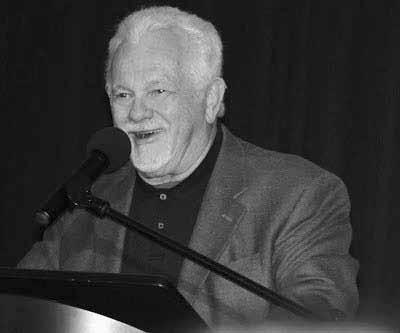
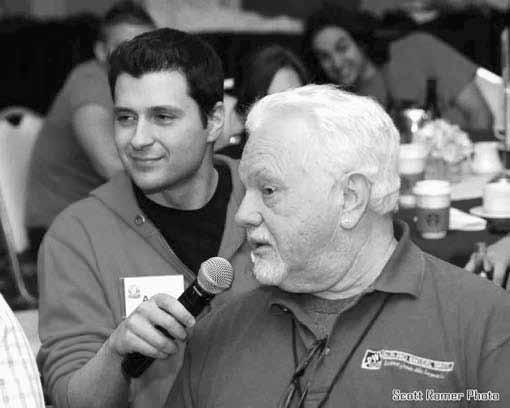
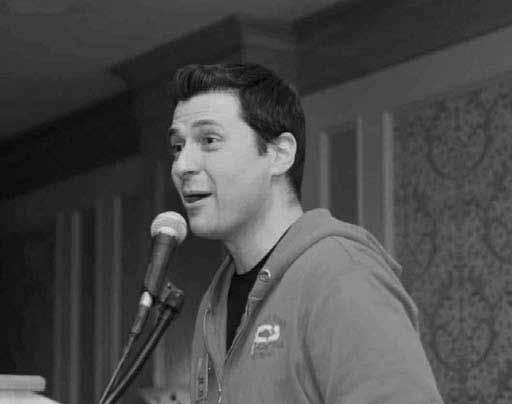
Les Thatcher interviewed on the roving mic by Arda Ocal at the 2013 CAC reunion (photo by Scott Romer)
and worked there until 1962.
Ear: Barnett was another guy with a big territory.
Thatcher: Oh, yeah. He worked with Johnny Doyle. Barnett had the office in Detroit and Doyle had the office in Indianapolis. The first TV I ever did was in Indianapolis. I walked into the dressing room and there’s Fritz Von Erich, Dick the Bruiser, Art Nelson, Angelo Poffo and the original Sheik. I’m thinking, ‘Wow! I used to buy tickets to watch these guys.’ You couldn’t help but be star-struck.
Ear: At one point, you worked as a cousin of Dennis Hall and Roger Kirby, am I right?
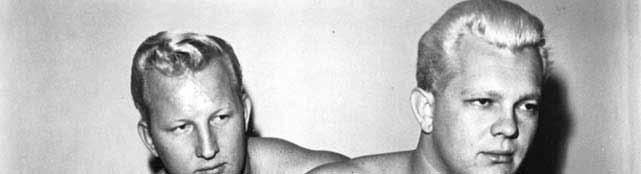
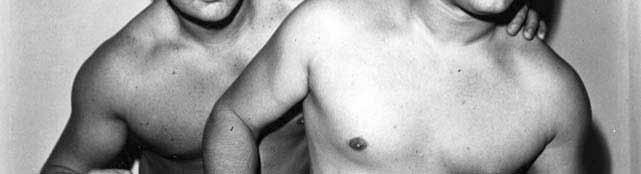
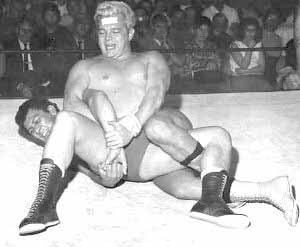
Thatcher: Right. They legitimately were cousins by marriage, and we came up with the idea of having me as a cousin too. We started it in Atlanta when I first went down there in ‘66. Kirby and I went to the Alabama/Louisiana territory, which was Lee Fields’ territory, in the fall of ’66. See, there were three Daltons. It was Frank Dalton, then Don Fargo as Jack Dalton and Johnny Long from Tennessee was Bob Dalton. We thought, ‘Well, this is a great set-up for six-man tags with the Daltons,’ because we were babyfaces. That’s really why we started it. We ran with that for several years. We had a lot of fun with it, actually. We did in that territory, then in Tampa, then Charlotte, then Tennessee. We all first met while working for Barnett. Dennis was the senior member, and Roger actually had only been in the business for a year at the time. They were just great guys to work with. (The photo on this page shows a young Roger Kirby and Les Thatcher from this period in the 1960’s—Editor)
up there. He had TV that covered the entire area, and it really started to get over. He ran seasonally from April to about October. He contacted me and wanted me to work the season in 1970. I said sure. I was there to wrestle. We had actually been next door neighbors, when we were working in Charlotte together a couple years earlier. He called me and said, “Les, remember we were going down the road in Charlotte, and you said someday you’d like to try TV broadcasting, when you’re ready to hang it up?” I said yeah. So he told me to bring a suit and tie with me, because they wanted me to do the TV show for them. Well, Rudy and his brothers were all known for their ribs, so I figured he was pulling my leg. But it turns out, the guy who was doing the TV had a death in the family and he had to go home on short notice. I don’t know why he put his faith in me, but God bless him, he did. I had never read a TV format in my life. I knew nothing about a segue. But I just went in there and I did it. Miraculously, I got through it. I was only supposed to do it for a few weeks, but Rudy really liked me. He told me, “Hey, if it’s okay with you, I’ll pay you extra and you can just keep doing the TV through the end of the season, and I’ll just tell the other guy not to come back.’ That’s how I got my start in broadcasting.
Ear: How many seasons did you commentate for Rudy?
Thatcher: Well, really it was just for the one season. I could’ve gone back and done it for another season, doing the TV and working in the office, but I still had a desire to wrestle. I still had a few good bumps left in me. Doing the TV was an adventure and I enjoyed it, and I realized I had a talent for it. But I still wanted to be in the ring.
Ear: Where did you end up going from there?
Ear: Something I saw on your resumé, that I never knew, was that when you were in the Maritimes in Canada, that’s where you started doing the TV show when you weren’t wrestling. How did that come about? T
Thatcher: Well, it was 1970. It was an accident, honestly. Rudy Kay started a territory in 1969
Thatcher: All over. I came back to the states into Nashville for awhile, because that was a territory I had worked before I went to Canada. Then I went to Florida, to Tampa for Eddie Graham. Leo Garibaldi was the booker there, with Louie Tillet. Then Danny Miller and I went into the Carolinas as the number two babyface
team behind Weaver and Becker in the spring of ‘71. There was a whole litany of places.
On the set of Southeastern Wrestling, Les listens as Mr. Knoxville (Ron Garvin) and Bob Orton Jr. speak
Ear: You soon found yourself back in front of a microphone in the Carolinas.
Thatcher: Yes. I didn’t even mention it to Mr. Crockett. It was Lord Littlebrook who brought it up. He asked Mr. Crockett why I wasn’t doing the TV. Mr. Crockett said, “What? He’s on TV every week.’ Littlebrook says, ‘No, I mean announcing. He was an announcer in the Maritimes and did great.’ Crockett had no idea. They started working me in little by little, and finally I was doing the TV for the main circuit out of Raleigh. I also wound up doing TV with Gordon Solie in Georgia during the big war they had down there in ’73-’74. Then from scratch I ended up producing the TV for Ron Fuller in Knoxville in 1977, and did that for several years. I finally came home to roost in 1985 and knocked around the gym business awhile, but I was back on TV announcing for Jim Cornette’s Smoky Mountain Wrestling in the ‘90’s.
Ear: In the Carolinas, when you working behind the mic on TV, it’s striking how many top names there were down there during that era. It’s a huge list of guys you worked with: Tiger Conway Jr., Ric Flair, Rick Steamboat, Blackjack Mulligan, Paul Jones. You did so much as an announcer, sometimes I wonder if you remember yourself from that time period as a wrestler or an announcer or a producer.
Thatcher: I don’t know either! I’ve been blessed and lucky to do well in the different areas of the business. I also did well with the magazines, and as a trainer. But whatever I did, I was always fortunate in any case, because I got to live my dream for 50 years as a part of the wrestling business, and that ain’t bad.
Ear: And you’re not done!
Thatcher: Nope. We’re doing a new project now with my company Wrestling Cares which is an
entirely different approach to wrestling. We just kicked it off with a tournament. Wrestling people, and the boys in the tournament, were very receptive to the whole thing. We use a ten minute time limit, and all the matches go the full ten minutes, unless there’s an injury. You score one point for a pinfall, submission or count-out win. Whoever has the most points after ten minutes moves on to the next round. If it’s a tie, they go to a three-minute sudden death period. Whoever scores in sudden death moves on. If nobody scores in sudden death, then both guys are eliminated and we go to an alternates match to see who will continue on in the tournament in that slot. It’s good because you can really get creative with both the clock and the scoring system. It’s gonna take awhile for it to catch on, but I think it will, because it’s a lot of fun. It puts the clock back in wrestling, which has been taken out in recent years. It makes it more about being competitive athletics and not the sports entertainment thing.
Ear: Well, it makes you focus on the match and the work in the ring rather than on the gimmicks or the theatrics.
Thatcher: Yeah, that’s what we’re shooting for, the drama. We’re not trying to take anybody on or anything like that. We’re just doing what we do. Wrestling Cares gives 25% of each ticket sold for each event to a different charity each time. The first show in the tournament, we donated to the Scott L. Schwartz Children’s Foundation, which helps young children with cancer. (Scott is a longtime member of the CAC, who many readers have probably met at a CAC event in recent years—Editor) We donated to the Orange County facility near L.A. The next one, we’re donating to the Boys and Girls Club of Greater Los Angeles. So we’re helping out locally, plus there’s some great wrestling. If anyone is interested, they can go to wrestlingcares.com and learn all about it.
At the 2013 CAC reunion, Les poses for a pic with his star trainee Nigel McGuinness (photo by Scott Romer)
Ear: You’re one of the few guys I never remember working as a heel in your career.
Thatcher: There was just one time. I went into the Maritimes as a heel in a tag team with a guy named Freddie Sweetan (Fred Prosser) and then we split up and I was the face. This was before I started doing the TV announcing up there. So it all kind of fell into place, because if I had stayed heel, I couldn’t have done the TV. But in the 20 years I was in the ring, that was the only time in all those years I ever worked as a heel. It was only for a few months.
Ear: So I’d guess that run-ins with fans outside the ring, for you it would’ve been non-existent because you weren’t working as a heel.
Thatcher: Well, I had run-ins with fans, but from a different perspective. I was just in the middle. In the Maritimes, I worked a lot with heels who always had a knack for getting us into trouble. There were guys like Buck Robley and Stan Pulaski and Freddie Sweetan. They tend to find their way into places you had to fight your way out of. I’d say to them, “Come on, guys!” There are places you probably shouldn’t go as a heel, but that crew seemed to go there all the time. But I had fun in the Maritimes, it’s great country up there. I loved my time there. I actually just ran into Leo Burke at the CAC reunion. You know, the last time I worked with him was back in 1970. Do you believe it? He was a great worker. I honestly had not seen him since then. It was great to talk to him.
Ear: How did you get in with Smoky Mountain Wrestling, doing the TV there? That was really a good, old school territory. They had a great product. Jim Cornette could really tell a story.
Thatcher: I first met Jim Cornette when he came to the 1978 WFIA (Wrestling Fans International Association, an old-time fan organization—Editor) convention in Knoxville, where I happened to be working at the time for Southeastern Wrestling. Jim was a fan. Jim Cornette and Jim Melby and Jim Ross—not THE Jim Ross but an officer in the WFIA—and one other guy I can’t remember, we had them all on our TV show. We used to pre-tape a segment when I was producing the TV there. It was a 5-minute pre-taped segment called “Personality Profile.” Since Knoxville was hosting a WFIA convention that week, we did a round table discussion, and Cornette was on there. That’s how I first met him. A lot of the stuff we talked about, it stuck with Jimmy all those years until he started Smoky Mountain. I was doing competitive bodybuilding and training at the time he started, so I just couldn’t do it at first. But after awhile, I went in doing the TV. I worked with Bob Caudle there, and Dutch
Mantell and Jim Ross. It was great, and there was a lot of good talent. It was probably the last promotion with old-fashioned television like that. I had a lot of fun doing it, but the overhead got to be too much and we just couldn’t hold on.
A young Thatcher slaps an armlock on Alex Medina
Ear: It seems like you’ve had a long history in Knoxville, with Southeastern Wrestling and Smoky Mountain, spanning a whole lot of years.
Thatcher: It was a great place for me. I had a great opportunity with the TV down there. Ron Fuller was running it. When he took over in 1977, Nelson Royal and I went in as a babyface team, but we were also helping with the book initially. I ended up building the television from the ground up there. I rebuilt the TV differently from what they’d been doing. That territory got red hot. We had a list of guys waiting to come in. It was a lot of short trips so you were home every night, and the money was good. It was a good place to work.
Ear: Yeah, the newsstand magazines then were all based in New York, and they never paid a lot of attention to Knoxville, because it wasn’t the type of huge metropolis like New York or Chicago or Los Angeles. But even though the newsstand magazines didn’t seem to cover it much, it was such a great territory for such a long time, with a boatload of talent.
Thatcher: I’ll tell you a funny story. When I was in Knoxville, Leo Garibaldi called me once from out west and told me, ‘Les, I’ve got this young kid here, you’ll love him! He’s a hell of a talker. He’s a good worker, and man, can he talk! I need to move him, because he’s run his course here and he needs to go someplace else.’ I said I’d talk to Ron Fuller about it. Turns out, we just didn’t have a spot for anyone at that time, so Ron said no. I called Leo back and told him to call around some more, because we couldn’t take this kid. It’s funny now, but the guy we turned down was Roddy Piper!
MEET ARDA OCAL
by Jeff Sharkey
Cauliflower Alley Club has gained its notoriety over the past 48 years on the strength of its membership. It can be surprising to think where CAC might be today were it not for the glorious paradox that founder Mike Mazurki set forth; a gritty countenance in the ring, yet a benevolent and generous heart outside of it. Since 1965, CAC reunions have welcomed thousands of new members into its ranks and helped to make the reunions a destination event annually that is not to be missed.
In taking the reins from longtime banquet coordinator and CAC Vice-President Karl Lauer, Executive Board Member Morgan Dollar sought ways to keep the fun and celebration of the award nights that CAC traditionally enjoyed. Yet he also focused an eye on our newer membership, seeking those with a desire to get involved. That focus was demonstrated with the debut of a new emcee for the Tuesday night Baloney Blowout, Arda Ocal.
“Bob Leonard knew I was looking for ways to make a few changes, and told me about Arda,” said Dollar. “He was very excited to get the opportunity. All in all , it worked out very well, and he had a great time. Before that night was over, I told Arda he was already booked for next year.”
But who is Arda Ocal?
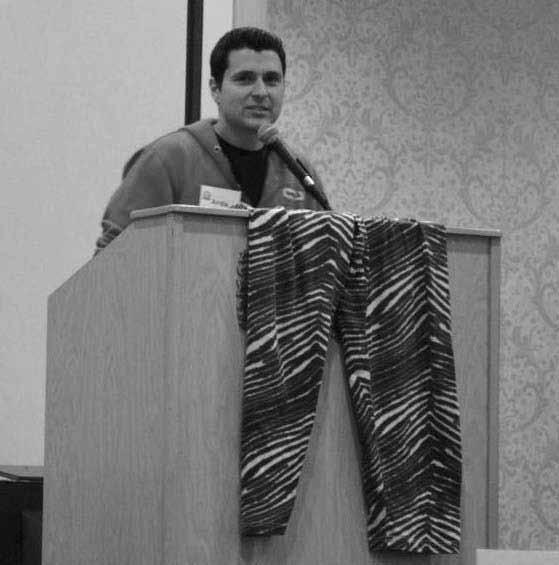
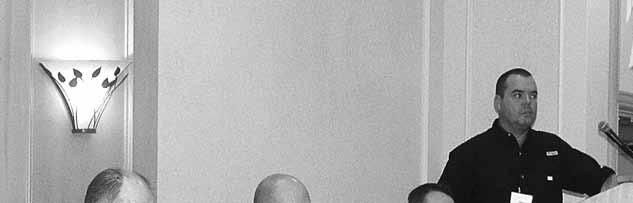
You might think that someone who’s just 32 years of Arda Ocal makes his debut as Baloney Blowout host age would be totally removed from the heyday of at this past April’s reunion (photo by Scott Romer) territorial wrestling and the stars of that era. To the contrary; Arda Ocal of the Toronto area is a student of the game and wrestling history is of great interest to him. He is building his base of knowledge, connecting the dots that help explain the times and talents that worked within.
“Obviously I didn’t get much exposure to the territories first hand,” Ocal said. “I recall going to a friend’s house to watch wrestling. This was the WWE era with Saturday Night’s Main Event, plus Maple Leaf Wrestling. There wasn’t much other wrestling I could see at first. It was later, as I started trading videotapes, that I got to see Mid-Atlantic, Mid-South and St. Louis Wrestling.”
His formative years were spent in concert with the timeline of the Monday Night Wars and the development of ECW. “As I experienced all these memories of the late ‘90s, I never envisioned that the wrestling world was one that I would be part of someday,” Ocal said. Attending the University of Waterloo as a young adult reinforced those original notions. “I thought I was going to do a desk job. I wrote news articles on things like the local pie-eating contest. I wound up volunteering at the area community access station, and even drove the community van around, taking people to local events.”
Fast-forward to 2009, when Ocal was an intern at The Score, a Canadian television network. “The Score carries WWE’s programming. One day, there was an email from the Vice-President of programming, asking for ideas related to content. I felt there would be a market of fans who would be interested in a post-RAW type of program. In December 2009, Right After Wrestling went on the air. I am very proud of what I accomplished with that show. Since day one, they went with my ideas. I pitched the idea, then produced and hosted it, and built it into its own brand. Right After Wrestling became their highest-rated show, and it’s still on the air today (it was renamed “Aftermath” in 2011-Editor).” Ocal was among the layoffs when Rogers Communications, the parent company, was purchased, yet Ocal viewed that time as an early milestone.
One of Ocal’s co-workers who remains with Aftermath is referee Jimmy Korderas, who spent 24 years as the third man in the ring for WWE. “Having a veteran like Jimmy was very important. It made our product more legitimate. I first met him in 2009, and we became friends,” Ocal said. At the Baloney Blowout, Ocal made some references that endeared him to the crowd, like saying he needed to “go home” with the segment as time was running out. “Blackjack Lanza is waving his tie, so let’s conclude,” Ocal said. “That was an insider perspective that I got from listening to one of Jimmy’s stories while at dinner after a show, where I’d ask a million questions and pick up on little things.”
As his television career was blossoming, Ocal was paying his dues in various ways within the wrestling business. “I volunteered on the indys doing whatever was needed to get my feet wet. I would set up the ring and chairs, and later promoted some events and did some of those cross-Canada tours where you cover 14 shows in eighteen days across Ontario, Manitoba and Saskatchewan. Those were some of the best times.”
Taking on the announcing duties for a variety of organizations has helped Ocal get a feel for the effort and dedication that his predecessors went through in making the wrestling profession a full-time endeavor. “I have a lot of respect for the lives these men and women led. As I was on the road, driving from town to town, it affirmed that this is where I belonged. It felt like home to me; it’s in my blood, and it will always be a part of my life,” Ocal said.
Arda Ocal has been tagged with the label ‘the wrestling guy’ in some broadcasting circles. “I have lost out of doing traditional sports opportunities because of it,” Ocal Arda with a pro wrestling throwback to the said. “But while some would have a problem associating 1980’s: zubaz pants! (photo by Arda Ocal) themselves with wrestling, I embrace it. I want that affiliation.” His experiences have included doing a few mainstream projects, however. “I hosted a Regis and Kelly-type show for a year. It’s something different, but gives you a great experience in doing interviews, knowing what to ask and showing how interesting people can be.”
These travels in and around wrestling and mainstream entertainment eventually led to opportunities to emcee the 2012 and 2013 George Tragos/Lou Thesz Pro Wrestling Hall of Fame at the Dan Gable Museum in Waterloo, Iowa, and of course, the 2013 Baloney Blowout at CAC. “At Cauliflower Alley, it was wonderful to meet so many people passionate about the business. I enjoyed meeting Bob Geigel, one of the legendary wrestlers and promoters. And just the time sitting at the bar with the stories shared by Les Thatcher, Ron Hutchison and Leo Burke… it was amazing.”
As an established trainer of young wrestlers, Thatcher has had the opportunity to witness the growth of many talents in the ring. With Ocal, he sees the potential outside of it. “We’d corresponded by email on a few things, but CAC this year was the first time we met face to face,” Thatcher said. “We bonded right away, and I saw a passion and love for the business. I think some company would be really smart to catch hold of him. It is clear he loves being a part of it all, and is a great front man. And a lot of young people don’t go back to absorb the history like Arda does. He’s asked me to elaborate on things I mention while telling stories, how things were done and how they might compare with what’s current. He sees things through the eyes of an announcer, the wrestlers, executives and officials. His personality and knowledge come across as genuine, and that’s an invaluable tool Arda is developing. He gets over with his audience by putting the product over. By having the right attitude, he can share his passion.”
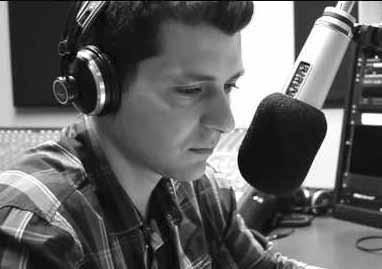
Ocal where he’s most comfortable: behind a mic
“I have so much respect for the guys who came before me, and it’s allowed me to get some pointers from guys like Ricky Steamboat and Jim Ross, Dominic DeNucci and The Destroyer, Al Friend and the GLOW girls,” Ocal said. “I was very happy to have met so many delightful people willing to share their knowledge. At the Blowout, I got the best validation when Ivory winked at me! I was very proud.”
To answer the earlier question, that’s who Arda Ocal is. It’s clear he also wants to know you, his fellow CAC members.
A longtime refereeing and promoting veteran of the business and a CAC member since 2003, Jeff Sharkey has studied from wrestling's legendary learning trees, and hope s to pass that knowledge along to the next generation.
THE CAC LIST CORNER: PAUL VACHON PRESENTS FOUR FOND MEMORIES FROM HIS MANY WORLD TRAVELS
By “Butcher” Paul Vachon
(Editor’s Note: Every now and again, The Ear combs the CAC’s membership files for an esteemed member of the wrestling brotherhood (or sisterhood) and asks them to contribute a list on any topic they choose, for the delight of our readers. In this issue, “Butcher” Paul Vachon, one of the true giants of the business and a staple at our annual reunions in Las Vegas, has collected a quartet of his favorite memories from the many countries he visited during his stellar career. A special thanks goes out to Paul for being kind enough to allow us to print the list below. It’s a riot!)
#1) Cringing in Canada. I had my first match at age 17 in Northern Ontario, teaming with my brother Mad Dog against Dory Funk Sr. and a guy called “Tough” Tony Morelli. Morelli was a true shooter who lived up to his nickname, and Dory Sr. was a legendary tough guy himself. My brother started the match with Dory Sr. for about three minutes, then he came to tag me in. I had the worst case of stage fright possible. Instead of tagging in, I just cringed in the corner. I couldn’t move, so Mad Dog went back and wrestled Tough Tony for awhile. After awhile, he came back and tried to tag me again, saying, “This is your big moment. Go to it!” But I was frozen. My knees were knocking and my teeth were chattering. I had heard of world famous actors and opera singers getting this kind of stage fright. I felt as though I could’ve cried. Mad Dog raged in his best Mad Dog voice, “You get in this ring right now, this minute, or it’s back home to the farm shoveling manure for you tomorrow!” That scared me a lot more than wrestling in front of a crowd, because I hated working on the farm, so I tagged in. But I wasn’t out of the woods. I was frozen again in the ring, and Tough Tony was circling me. He knew what was happening and, for the sake of the match, he came to my rescue. He said in a low voice, while circling me, “Hey kid, you know how to do a leg dive in the amateurs? Well, when I come at you, you leg dive me.” And I did. In that one instant I was free of my fright. I never got stage fright again in my 32 years of professional wrestling.
#2) Peeing in Pakistan. In 1963, I was wrestling in Karachi, Pakistan in front of a huge crowd of 55,000 at a big soccer stadium. There were going to be eight or so preliminary matches, and then my Australian friend Kangaroo Kennedy (Clyde Hurle) was to have a match, then after his match I would be in the main event. When Kennedy and I got to the stadium, it was in complete darkness. We walked through a long tunnel under the grandstand and came out on the other side in the middle of the soccer field. In the field, there was a ring set up with a light bulb over it! We could barely see, our eyes really just Butcher and the man who forced him into the hadn’t adjusted yet. The last match before Kangaroo’s was ring with threats of manure shoveling, his in the ring, and the preliminary wrestlers from the earlier brother “Mad Dog” Maurice Vachon matches were all sitting in the grass waiting for the top two matches to start. Kennedy said to me, “All this waiting around and drinking tea, it’s too much for me. I’ve got to pee.” I said, “Me too. But where?” He pointed in the direction opposite from where we had come out and said, “Over there in that field.” We walked about a hundred steps until we figured we were out of range of the one light bulb that was over the ring. There seemed to be no one sitting there. We turned around toward the ring. There we stood, the two of us, urinating in the field. We thought we were away from prying eyes. Suddenly, from behind us came a great big roar as the fans reacted to the action in the ring. We realized that we had been standing there, peeing in front of a big section of the crowd that was sitting on the grass in the darkness. Kennedy said to me, “Now there’s a story to tell your grandchildren!”
#3) Singing in Sydney. Dirty Dick Raines was a big star in Australia in the 1930’s and, after World War II, he was one of the pioneers of the wrestling business in that country. Years later, a guy named Dick Lean Jr. was working with a rich pair of brothers called The Wrens to try to get a promotion going there. Lean made a deal with Raines to bring in four wrestlers from North America to help get things
jump-started, and in return Raines would get 25% of all the gates. But there was a problem. At the time, there was a big influx of Italians coming into Australia, so Lean only agreed to a deal with Raines if Raines could get a famous Italian wresler for the tour. In response, Raines had promised to produce a wrestler named “Savoldi.” But the four North American wrestlers who actually showed up to wrestle were myself, the Zebra (George Bolus), Dale Lewis and a guy named Lou Sharpe. Not an Italian in the bunch! Lean came to the airport in Sydney to meet the wrestlers when they landed, expecting to see an Italian guy named “Savoldi.” He had even arranged to have reporters from the local Italian press come out to meet the Italian wrestling hero, who unfortunately wasn’t there. Lean explained his problem to us. Without missing a beat, Lou Sharpe walked out of customs and greeted the Italian reporters with a brand new (fake) Italian accent, impersonating Dean Martin, singing Martin’s hit song “That’s Amore” and claiming to be “Salvatore Savoldi, the son of the famed Joe Savoldi, inventor of the dropkick!” Not only did Sharpe fool the reporters, but under his newly invented, ad-libbed persona, Sharpe become quite a drawing card in Australia and never looked back!
#4) Missing in Madras. In Madras, India (a city now known as Chennai) in the 1960’s, the big wrestling star was also a movie actor. He had married a beautiful Indian movie star who got him into both acting and wrestling, since as she got older, she had taken to both producing movies and promoting wrestling. The woman’s name was Ajeet Singh, and by the time I went to work for her in Madras, her beauty had somewhat begun to fade, but not her spirit. My first match was against another up and coming actor who had gotten into wrestling. Before the match, Ajeet came to see me. “You know this young fellow you’re about to wrestle? He thinks he’s going to take my husband’s place as the number one movie star, and The much beloved Butcher Vachon at the also in my bed! But he won’t, because I don’t want him 2013 CAC reunion (photo by Scott Romer) to, so please, beat him, and beat him good!" Who would have ever imagined this would happen to me before my first match in Madras? Well, that night the match didn’t go well. My opponent was trying to build his own career at my expense, just as Ajeet had warned, and he was trying to block everything I did. I had to stiffen up and take my share of the match and more. I got him in the Hangman, which I was using as my finisher at the time, and the referee declared immediately that he had given up. He was not happy.
Earlier that same night, Ajeet had come to me and said, “There’s an inspector from the police department here to see you.” I didn’t know what a policeman might want with me. I hadn’t done anything illegal, at least not lately! So I said, “S end him in.” This Indian policeman came into the dressing tent and said, “Are you Paul Vachon, from Canada?” I told him yes and stood up to shake hands with him. Before I could put my hand out, he said, “Write your mother.” I was flabbergasted. I fell silent and didn’t know what to say. I was just looking at him, so he figured he’d better explain. He said, “I am in charge of the missing persons bureau here in Southern India, and we have had many people on our missing persons lists over the years. But you were one of the easiest to find, thanks to the information your father sent us.” I had been gone from home for two-and-a-half years and hadn’t written. My mother was getting worried about her seventh born. My dad heard that I’d be wrestling in Madras and knew what to do from his days on the Montreal Police force. All police forces have a missing persons bureau. So it was not out of order for a Canadian policeman to ask a favor of an Indian policeman. My father told the man to locate me because my mother was worried, since she hadn’t heard from me in two years, and it would make her life happier if I would get in touch. I thanked the man profusely and asked if he wanted to stay and watch the matches. He said, “Only yours, so I can refer it to your father in Canada.” I promised him I’d write my mother the next day, and I did. My mother wrote back a letter that kept expressing how happy she was that I was still alive!
“Butcher” Paul Vachon has four books chronicling his wrestling exploits. They’re unique in the pantheon of wrestling literary efforts, as they’re the only ring books you’ll read that make you feel like you’re having a private conversation with a wrestler. You can get his latest, “Wrestling With The Past,” on Amazon.com. Or, meet Paul and get a copy from the man himself at next year’s CAC reunion. He always has a table in the hospitality room!
THE EAR PRESENTS: THE TERRITORY DAYS.... THE OLD AKRON ARMORY
By Dale Pierce
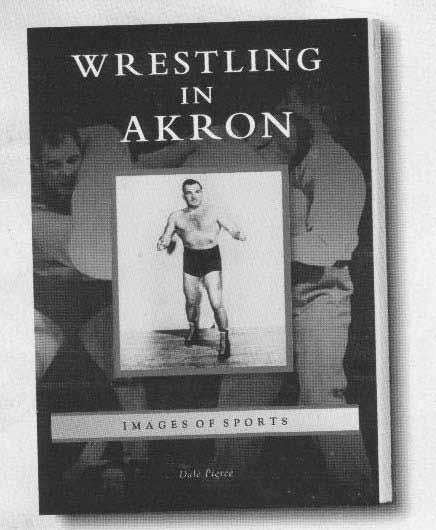
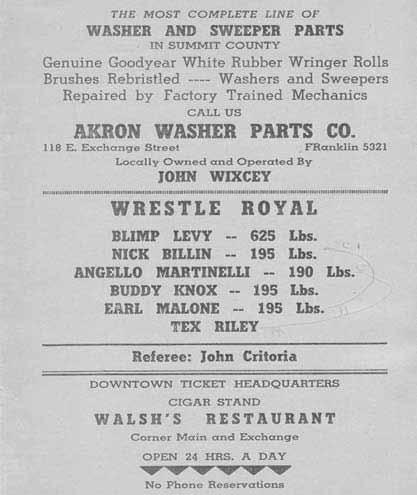
This past summer my book, “Wrestling in Akron,” was published by Arcadia Publishing. In putting this book together, I dug up enough material to overlap for an article here, with a focus on the Akron Armory itself. And why not! For those in the know, the old armory would be considered the shrine for Akron wrestling.
The Armory was built between 1916 and 1918 in the heart of downtown Akron, Ohio. It was torn down in the 1980’s. Other venues in the town held wrestling before, during and after. Passing carnivals in the Akron/Canton. area had their brand of wrestling as well. The Eagles Club, The Market Street Garden and The Main Street Garden all had spot shows while the Akron Armory was in operation. The Firestone Union Hall, The Breakaway Disco, The Knights Of Columbus in Akron and the Shamrock Bar in nearby Barberton all had shows after the old Armory building was demolished.
For decades, Walter Moore served as Akron’s promoter, working with Chicago, Buffalo, Detroit, Nashville and even as far off as Phoenix at varied intervals, to book shows that gave the local fans a wide variety of talent. Long before the days of The Sheik, two homegrown Arizona-based crazies, Rod Fenton and Monte Ladue, would bring their western-styled mayhem to Ohio. But neither would last very long because they provoked “too much” heat. Moore would have realized this had he been a bit more informed about the duo, for in the Tucson/Phoenix area, Fenton and especially Ladue had a longstanding tendency to cause riots. Ladue was still doing so in the early 1950s when, in Tucson, a fan threw a fistful of nails at him, point blank, as he made his way to the locker room. But Ladue ducked, and a female fan caught the nails square in the face.
Dale Pierce’s “Wrestling In Akron” (scan courtesy of Dale Pierce) The Akron Armory had its share of established heels who remained regulars over the years, including names like The Swedish Angel, The Sheik, Bulldog Brower, Hans Schmidt, the Love Brothers, Buddy Rogers, the Mongols, Waldo Von Erich, the Hell’s Angels and Dizzy Davis. There were of course the streams of babies to fight them, such as Johnny Powers, Primo Carnera, Morris Shapiro, Don Eagle, Dominic DeNucci, Fred Curry and Irish McGee. Occasionally someone would turn from bad to good or good to bad, as did Ben Justice, but the general rule was if you came in as heel you stayed heel and if you came in as baby, you stayed baby.
One of the oddest incidents of all saw the hated Buddy Rogers converted to an instant fan favorite when he was matched up against the equally hated Hans Schmidt in the early 1950s. Rogers won the two out of three fall encounter in a broken ring, with the ropes and turnbuckles falling apart.
Andre The Giant was also booked for a major spot appearance at the Armory, where he faced Bulldog Brower. Brower was A flyer for an Akron show, 1940’ s disqualified in the match. (scan courtesy of Dale Pierce)
The building did not hold wrestling alone, but also hosted a multitude of activities from business seminars to the Shrine Circus. Buddy Holly performed there. Presidents Kennedy and Truman had campaign rallies there. Amateur and pro boxing took place within. Evangelists led crusades there.
As for all the wrestlers who worked there, the list would be endless during the building’s long history. It all came to an end when promoter Walter Moore won a fortune in the lottery, decided it was a good time to retire and packed up for Florida. This spelled the end of Akron wrestling as in the years that followed, the arena fell into major disrepair. Promoters wanting to use the place were told it was no longer for rent. The last hurrah for wrestling came right before the place was condemned, when scenes for the 1981 wrestling comedy “All the Marbles,” starring Peter Falk (the famous TV detective “Columbo”), were filmed there.
Just for fun, here’s a very brief listing of people who appeared at the Akron Armory, aside from those mentioned already: Ali Pasha, Bill Bethune, The Dark Destroyer, Pete Sanchez, Mighty Igor, Rip Hawk, Kurt Von Hess, Don Kent, Al Costello, Porky The Pig, Killer Brooks, Marvin Mercer, George Steele, Tony Parisi, Luis Martinez, Cowboy Bob Ellis, Lou Albano, Legs Levin, Bobby Nichols, Red Bastien, Lanny Poffo, Charlie Fulton, Jay Strongbow, Afa & Sika (The Samoans), Fabulous Moolah, Susan Green, Paula Kaye, Farmer Jones, Don Curtis, Jerry Graham, Lou Thesz, Don Arnold, Jim Lancaster, Ali Baba, Abdullah The Butcher and Ernie Ladd.
Some of the names of past or present CAC members appear in this above listing, which is far from complete. Many, it must be noted, have passed into history, just like the Akron Armory itself.
(If you enjoy wrestling history, especially the territory days, there are very few books you’ll enjoy as much as Dale Pierce’s “Wrestling in Akron.” You can get it at www.arcadiapublishing.com, or just order it from any book store chain or the larger booksellers on the web like Amazon.com. Excellent work by Dale, this book is well with it just for the many great photos alone.—Editor)
Dale Pierce is a longtime veteran of the wrestling busi ness and a longtime member of the Cauliflower Alley Club. He is a prolific author on numerous subjects, including wrestling, and he has a whole host of books available on the website Lulu.com (just search for “Dale Pierce”).
THE SCOWL: DUKE MYERS
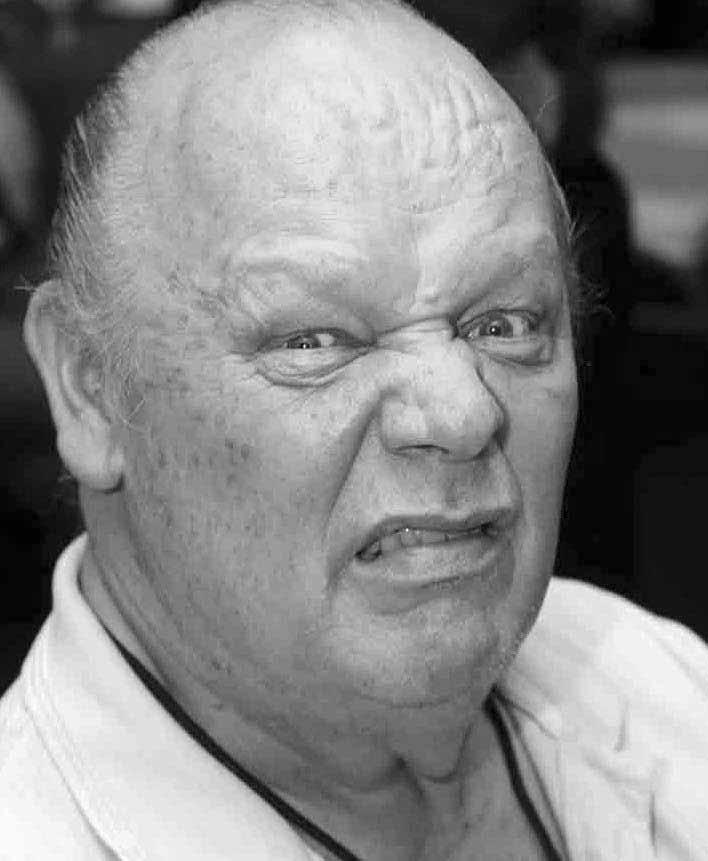
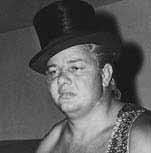
Just look at this scowling face!
It’s tempting to say this is a face only a mother could love. But actually, in the 60’s, ‘70’s and ‘80’s, it was a face wrestling fans loved to hate.
Duke Myers was a premier heel in numerous territories around North America and around the world, causing mayhem wherever he went and capturing a boatload of belts along the way. Many of his greatest triumphs came in the tag team division. In Tennessee, Duke won the Mid-America tag team championship with Terry Garvin as well as the Southern tag title with Bobby Eaton. Up in Calgary working for Stu Hart, he captured tag team gold in tandem with the likes of the legendary Dynamite Kid and also with the CAC’s own “No Class” Bobby Bass. He also did top-notch tag team work for Bill Watts and LeRoy McGuirk in the old Oklahoma territory, teaming up once again with Terry Garvin to win the local version of the U.S. tag team title there.
But for all the tag team gold he racked up during his notable career, Duke was definitely no slouch when it came to the singles ranks. In 1980 in Calgary, he defeated future WWE Hall of Famer Bret Hart to capture that area’s top honor, the North American title. Later, he played a major role in the famed Jerry Lawler vs. A scowling Duke Myers (photo by Scott Romer) Andy Kaufman feud in Memphis, working under a mask as a creepy character called “Colossus of Death.”
A 2007 CAC honoree, Duke made his return to the CAC reunion this past April in Vegas. It was great to see him back with us, and we hope he’ll come back again next year. The CAC salutes Duke Myers!
PASSAGES Compiled by Bob Leonard
After omitting the “Passages” column in the last issue due to our extensive reunion coverage, this time, sadly, we say goodbye to 51 of the boys and girls who traveled the roads with us and made their mark, however big or small, on the business. Some of those we mourn were longtime members of the CAC. For more on them (and for bios of all those who have passed from the wrestling fraternity going back several years), you can find detailed obituaries on the CAC website, www.caulifloweralleyclub.org, under 2013 Finishes (RIP) on the home page.
Corey Maclin (Memphis announcer) Jul 30, car wreck, 43
TAKE A LISTEN TO THE CAC RADIO PROGRAM
CAC Radio has now been on the air for two years! CAC Radio is the official radio program of the Cauliflower Alley Club, and like the CAC itself, the radio show pays homage to various notables involved with wrestling, boxing and the silver screen. Each episode of CAC Radio highlights important information about the club, including membership updates, reunion details and awards nominees, as well as featuring a special guest interview. In the first year of CAC Radio, many big names such as J.J. Dillon, Dan Haggerty, “Handsome” Jimmy Valiant, Wendi Richter, Rock Riddle, Paul Bearer and many more have appeared.
CAC Radio is hosted by actor/producer David Buckler, a veteran of the Washington, DC film scene, and CAC Executive Director Morgan Dollar, who has been honored by the Gulf Coast Wrestlers Reunion with the Speedy Hatfield Referee of the Year award. David has over ten years of communications training and media experience, while Morgan, a CAC board member since 2006, is also the banquet coordinator for the CAC Reunion held in Las Vegas each April.
Go to the CAC website for more information about CAC Radio, and hear the shows at www.caulifloweralleyclub.org/category/radio. The website contains all past episodes, so you can catch up on any you may have missed. To hear the inside stories from some of the greatest stars in wrestling history, listen to CAC Radio!
REMEMBRANCES OF REUNIONS PAST
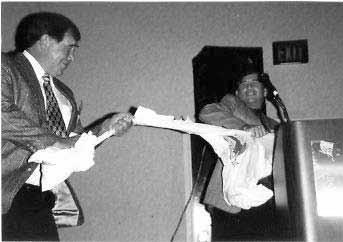
You’ve got to love this photo…..unless you’re a member of the Funk Family.
The year was 1996, and the CAC was holding a regional reunion in Tampa. Among those being honored were the great Jack and Gerald Brisco, who had just taken the stage to accept their award. As they addressed the audience, the duo was interrupted when former World champion Dory Funk Jr. somehow got the idea that the one thing that would make the affair even better for the Briscos would be—of all things—a t-shirt adorned with a photo of another legendary brother team: Dory and his own sibling Terry.
Needless to say, all hell broke loose!
If you know anything about the classic rivalry the Briscos and the Funks had during
If the t-shirt could have submitted, it definitely would have their days in the ring, it will not surprise you (photo by wrealano@aol.com) to hear what happened next. Gerald grabbed one end of the shirt and Jack grabbed the other, and before anyone knew it, the unfortunate garment had been pulled apart at the seams until only some shredded remnants remained. This hilarious display got a huge pop and a ton of laughter from the assembled wrestling royalty in the room. Heck, even Dory Jr. couldn’t help but crack a smile.
CAC’s AL BURKE MAKES A SPLASH IN THE MOVIES
By Eric Chmiel
Al Burke is a regular attendee at the annual CAC reunions in Vegas. He’s been a member of the club dating all the way back to 1993, and is a familiar face as a pro wrestler with his career spanning back to the 1980’s. But in more recent years, he’s been amassing a mighty impressive résumé in an entirely different business: the movies.
Burke has been involved in acting and doing stunts for TV and movies going all the way back to 1994, when he got his first big movie break in a film called “Atomic Blue.” The opportunity for Burke to do that film was arranged by none other than the CAC’s own Executive Vice President, Karl Lauer. “Karl was the stunt coordinator for ‘Atomic Blue’,” remembers Burke, who in the ring goes by the name “Mr. Outrageous.” “For that one, all I had to do was beat up, kidnap and kill people in East Los Angeles…easy! I played a character named Tex.”
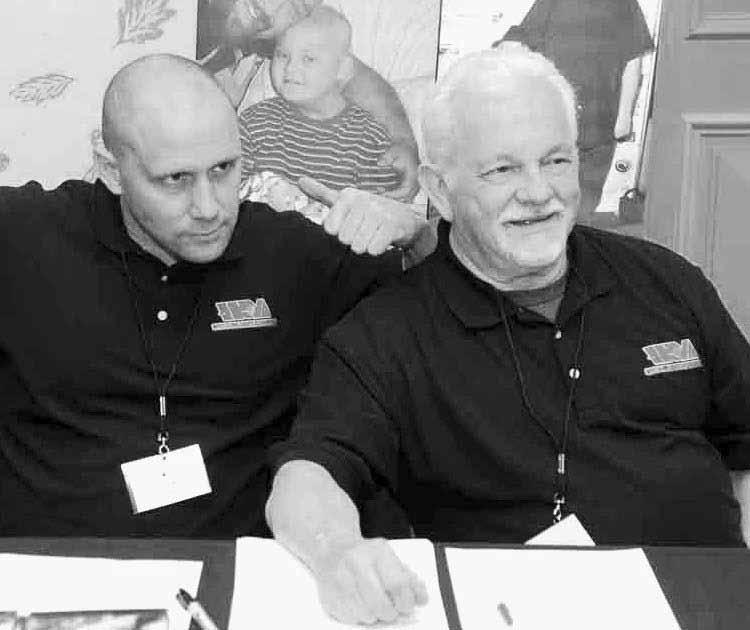
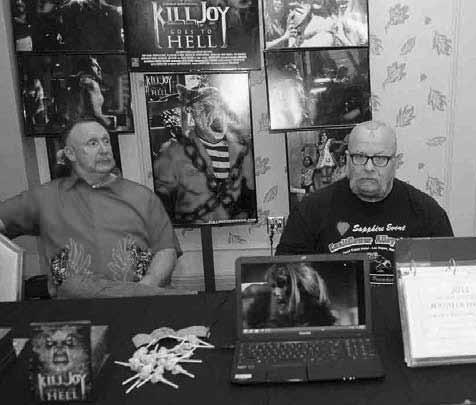
His work in “Atomic Blue” opened the door to numerous other opportunities on the screen. After discovering that he had a talent for acting, Burke was able to parlay his distinctive tough guy look and winning personality into a whole new career which has seen him rack up an astounding number of credits. Over the last 20 years, he has been involved in no less than 400 different screen projects of every imaginable stripe. He has done it all on TV, including soap operas (“Passions” and “The Bold and the Beautiful”), cable series (“Real Life Stories of Al Burke (left) and Nick Danger working the ER”), sci-fi (“Star Trek Enterprise”) and comedy their table in the hospitality room at last “Mad About You”). He’s appeared in a music video for year’s reunion (photo by Scott Romer) rapper Eminem. He’s starred in several commercials for major corporations lik e 7-Up, Sony and Corona Beer. On the big screen, he’s been in high demand as a character actor in more films than you can count, playing everything from a thug to a cop to a dock worker. He once even portrayed Arnold Schwarzenegger! And, he’s done some of the big budget Hollywood blockbusters too, like “The Wedding Singer” with Adam Sandler and Drew Barrymore. This is all in addition to wearing many other hats in the film industry as a stunt coordinator, stuntman, producer, assistant director, special effects consultant and weapons consultant.
Lately, Burke has been involved in several films with strong CAC connections. It all started with a film called “Killjoy 3,” written and directed by John Lechago. Burke had worked several times in the past with Lechago, and in Killjoy 3 he was called upon to play a killer clown character named “Punchy.” The flick was filmed in the exotic locale of Guangzhou, China, which is situated just an hour’s train ride from Hong Kong. Like the first two “Killjoy” films, the third installment did very well.
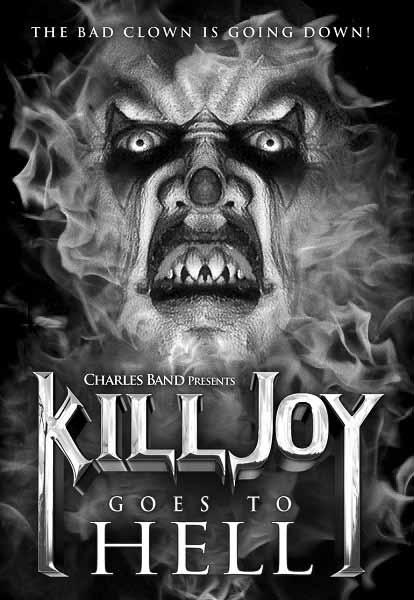
“That movie was a big financial success, and that opened the door to Killjoy 4, which is also known as ‘Killjoy Goes to Hell’, says Burke.“But The DVD cover for Killjoy 4 John Lechago wanted a bigger fight scene than before, so after a few production meetings the decision was made to visit some of the local Los Angeles wrestling shows. First stop was Santino Brothers wrestling school and the second stop was Freakshow Wrestling, both in Southern California. By the time everything was set, Killjoy 4 had hired 18 pro wrestlers.”
Of those 18 wrestlers, 12 were CAC members. With Burke not only acting in the film but now also taking on the role of stunt coordinator, he decided to enlist the help of fellow CAC member Nick Danger to step in as his assistant. “I needed someone to help me control all the wrestlers we had,” laughs Burke. “We had a lot of Cauliflower Alley guys, like Sinn Bodhi, The Almighty Sheik, Chip Hazard, Joey Kaos, Jezabel and Famous B, to name a few.”
It turned out that Danger was an excellent hand at coordinating stunts, having already had screen experience as an actor in TV shows like “Married With Children” and several movies. In fact, Nick brought in his son Wolfgang Danger to appear in some of the stunt work for the movie. Wolfgang, a talented wrestler in his own right, was in the running for the CAC’s “Future Legend” award in 2012. The elder Danger is shaping up to have a quite a bright future ahead of him in the movie business.
Killjoy 4 was released in October of 2012 and did so well that the movie quickly paid for itself. As a result, there’s already a new biker horror flick in the works for Lechago, and after the job they did on Killjoy 4, Burke and Danger will be back in the fold doing stunts and acting in the new project. “I will be looking for more CAC wrestlers to do fight scenes and play bikers in the next movie,” says Burke.
Aside from his extensive wrestling and movie background, Burke also has done a lot of charity work. He was honored by the CAC in 2012 with the Jason Sanderson Humanitarian Award for his work with the handicapped. He also is the promoter of the top pro wrestling group in Alaska, the “Alaska Wrestling Alliance,” which also goes by the name “Zero 1 USA Alaska.” His promotional partner is none other than Nick Danger, Burke’s stunt partner in Killjoy 4. The duo has been in business promoting the best live wrestling in Alaska since 1998.
We’re all looking forward to seeing Al Burke and Nick Danger not only in their next movie project, but also at the next Cauliflower Alley Club reunion next June.
REFEREES SEMINAR A BIG HIT AT THE REUNION by Eric Chmiel
In the last issue, The Ear accidentally overlooked a seminar in our review of the annual Vegas reunion. We did not print anything about a great event run by longtime referee Steve Hooper on the art of being the third man in the ring. And that’s a shame, because this seminar was a big hit with those who attended, and was actually one of the highlights of the 2013 seminar schedule.
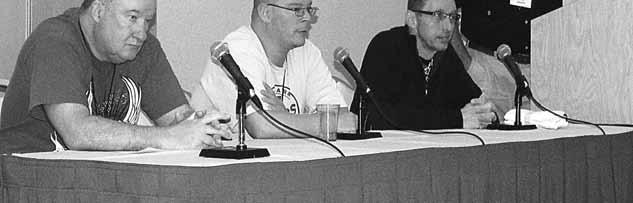
Steve Hooper’s
Hooper, himself a gifted pro ref, brought along a stellar cast of fellow zebras including former WCW and WWE official Billy Silverman, indie refereeing standout Trevor Blanchard, and veteran Canadian star Vern Siebert, who not only has refereed extensively but also has wrestled, promoted and trained young grapplers for the ring.
With Hooper moderating, this notable quartet commented on nearly every aspect of a wrestling match from the perspective of the referee. If you were lucky enough to have been there, you
seminar: From left to right, it’s Vern would’ve been served a dazzling array
and
of knowledge about what the ref’s role
is in the ring and how to do it well
PLEASE HELP US BUILD AN EMAIL LIST FOR THE CAC
The CAC is building an email database of our members in order to create a “Special Announcement List.” As part of this list, you’ll receive important information via email regarding Cauliflower Alley Club events and business. It would be very helpful to us if you’d assist us in this project.
Please send your email address to us at cacdean@hotmail.com to get on the list.
The communications that will be sent to members on the Special Announcement List will go to CAC members ONLY and will not be released to the general public. Thanks!
At
refereeing
Siebert, Trevor Blanchard, Billy Silverman
Steve Hooper
(photo by Bob Leonard)
Cauliflower Alley Club
383 Highway 00
Rolla, MO 65401
Non-Profit Organization
U.S. Postage Paid
Kingston, NY Permit #1880
RETURN SERVICE REQUESTED
Members
It’s your responsibility to notify us if your address changes, as the post office does not forward bulk mail.