
by Dan Murphy
BIO: A Senior Writer with Pro Wrestling Illustrated and Senior Editor-in-Chief of Online World of Wrestling and Diva-Dirt.com. He co-authored the book Sisterhood of the Squared Circle: The History and Rise of Women's Wrestling with Pat Laprade. He has also written Bodyslams in Buffalo: The Complete History of Pro Wrestling in Western New York
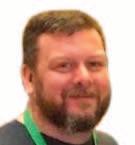
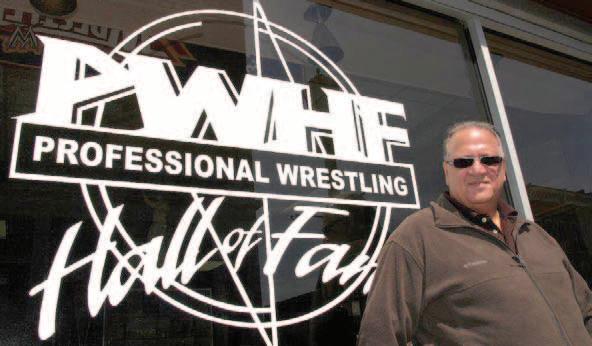
In 1999, during a conversation over drinks, Tony Vellano had an epiphany. A longtime boxing fan and board member of the International Boxing Hall of Fame in Canastota, New York, Vellano figured it was high time that professional wrestling receive a hall of fame of its own.
For the next 16 years, Vellano worked to make that vision a reality, establishing the not-for-profit Professional Wrestling Hall of Fame in Amsterdam, New York. Vellano envisioned the PWHF as a shrine to the wrestling business, a tourist destination that could attract fans from all areas, and where the accomplishments of the pioneers of the ring could be properly celebrated.
Vellano, whose background was in construction, came at the PWHF with the mind of a businessman, creating a balanced board of directors with a diverse set of skills. He courted politicians for funding and support. Even when some of those polticos and potential bankers scoffed at the notion of a wrestling hall of fame, Vellano remained undeterred.
In 2002, the PWHF inducted its first class, including Frank Gotch, George Hackenschmidt, Lou Thesz*, Jim Londos*, and Gorgeous George, among other titans of the ring.
From fundraising to vacuuming the carpets, Vellano took a central role with the PWHF, serving as president of the organization from 1999 until 2016 when the PWHF relocated to Wichita Falls, Texas. Though he is no longer affiliated with the PWHF, he spoke to The Ear about how his labor of love became a reality.
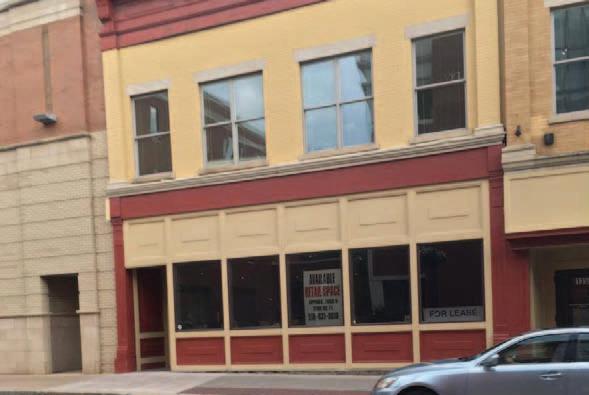

Q. How did you come to the realization that professional wrestling needed its own hall of fame?
A. It was after a wrestling show I worked in September of 1999. I was sitting with George Steele* in a bar and we talked about what happens to wrestlers after their careers are finished. I asked if there was a HOF for them or a place that could be visited to honor their careers. He said no. I said if I could get a charter to open a HOF, would you help open doors for me with other wrestlers to visit the Hall and to donate memorabilia? He said sure, and on December 17, 1999, I received a letter from the New York State Board of Regents to open a Professional Wrestling Hall of Fame.
Q. What was the initial feedback you received from politicians and potential sponsors as you worked to established the PWHF, which opened initially in Schenectady, NY, and later moved to Amsterdam, NY?
A. I didn't have much support from the community or sponsors. They looked at pro wrestling and setting up a HOF as a joke. I went to council meetings, chamber of commerce meetings, talked to politicians, and almost all doors closed on me. Then Senator (Hugh T.) Farley, a former Army boxer, was intrigued in what I was doing and asked to talk to me. He asked me to do a presentation on what I was trying to promote. I talked about the influx of visitors the HOF would create and the hotels, restaurants, gas stations, and local boutiques that would benefit from the visitors. He commended my idea and wrote a check for $20K to start building a HOF.

Q. Was there one specific piece of wrestling memorability you received that made you think, “This is something that absolutely needs to be put out on public display?”
A. The one piece of memorabilia that I received and never got to display or see it displayed was the wrestling ring given to me by the Savoldis. Mario Savoldi called me one day and asked if I wanted the ring. I did not have space for it, but I knew it belonged in the Hall. Mario told me his dad Angelo wrestled in it and it was set up many times in the Polo Grounds. I said I had to have it. The Savoldi sons loaded it in a truck, drove from New Jersey to Amsterdam, and we all unloaded the truck. I stored it in the attic until the move to Texas, where I am told it is displayed.
Q. What were your main responsibilities with the operation of the PWHF once it was established?
A. My responsibility once the HOF was established was to promote the history of professional wrestling, to make it an attraction for all to see, and to display wrestling memorabilia that was not offensive. We wanted visitors to be able to bring their wife, kids, parents, and
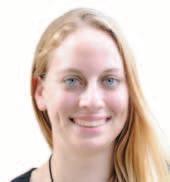
BIO: Kari Williams began her journalism career in high school, became editor of her college newspaper and has worked for various publications in the Midwest since 2011. She received her bachelor's and master's degrees in mass communications from Southern Illinois University Edwardsville. Kari is currently the senior writer for VFW magazine and has been freelancing for SLAM! Wrestling since 2014.
Born into a wrestling family, Mike McGuirk’s father — promoter and wrestler Leroy McGuirk — never wanted her in the ring. But from childhood on, McGuirk heard the questions, “Is she our next world champion?” and “Is she going to be a lady wrestler?” “He really didn’t want me around in the business because he knew how tough it could be,” McGuirk said. “The only opening (at that time was for a) lady wrestler. He didn’t want that for his daughter.”
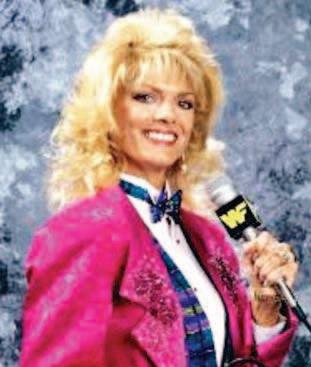

While she took that to heart and never laced up a pair of boots, she did stand in the center of a then-WWF ring, decked out in men’s tuxedos, introducing the likes of Hulk Hogan, Randy Savage and a multitude of others for six years. Her first announcing gig included Andre the Giant, Hogan and The Fabulous Moolah* for a Sept. 12, 1986, show at the Mid-South Coliseum in Memphis, Tenn.
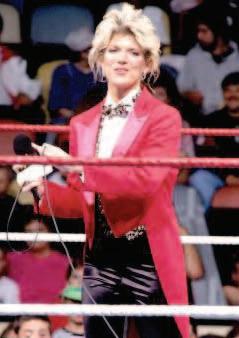
said cost a “fortune” to dry clean. Then in talking with the seamstresses, they decided to add color to the outfits and soon thereafter switched to spandex.
“It became a staple. I still have people ask me [about the tuxedos],” said McGuirk, who appeared in a Roy Clark television special filmed at her father’s ranch called “A Country Christmas.”
McGuirk said she never received “formal training” to announce. “I believe watching all those years and hearing various announcers, some really good, and the voice training I had at William Woods and at Oklahoma State University in broadcasting had an impact on my presentation and timing,” McGuirk said. “Then I met Howard Finkel, and while he never sat me down and really trained me, I listened to whatever he told me and put my own approach to it.”
She also was at the commentary booth for more than a year while announcing live events and driving the ring to shows. McGuirk said her teaming with Bruce Prichard and The Duke of Dorchester on commentary was a first for females in the then-WWF.
“That was a time for me to grow doing commentary with the Duke and Bruce,” McGuirk said. “I sat in awe with Gorilla Monsoon* doing commentary not realizing the huge task ahead and as I look back there are so many things I would have brought to that table but fate had a different place for me. I had two firsts in the industry as a woman and only a few real historians of the WWF know I started in the commentary seat.”
Of her time in the industry, WrestleMania VII stands out the most. “The most memorable would be meeting now President Donald Trump, Marla Maples, Regis Philbin, and Willie Nelson all in one day during Wrestlemania on March 24, 1991,” McGuirk recalled. “There were so many backstage, including Chuck Norris, Alex Trebek, and George Steinbrenner.”
While her flashy tuxedos are tucked away and announcing gigs are rare, McGuirk has continued with a career she set the groundwork for prior to entering the squared circle — real estate.
Throughout her time as a ring announcer, McGuirk also had her real estate license — which is how she currently spends her days.
“I went in and took the class in 1983. I had my license and was doing that when those calls started coming about the ring,” McGuirk said. “I always kept it. I never let it lapse.”
Prior to her return to real estate, McGuirk worked in the traffic/ad sales department and production for TCI Cablevision of Tulsa and “chose a life in politics for eight years.”
But her “in” to the business was through providing a ring (and helping tear it down) when WWF came to town. That soon propelled her into an announcing career, which, to her knowledge, was a first for females.
“[Vince McMahon] broke the mold and he believed in me,” McGuirk said.
Though breaking barriers was not something she set out to do, when she didn’t see other women in similar roles, she “thought it didn’t catch on.” Then Lilián Garcia graced a WWE ring and others like WWE announcers JoJo and Dasha Fuentes followed.

She wanted to give back to the community. “I started out in the county government and soon found it was open to those who wanted to put themselves out there for ridicule, and headstrong in the belief of making things better, so I fit right in,” McGuirk said. She later was appointed secretary of three county commissioners at the local courthouse.
Just as her real estate license always was a part of her life, wrestling followed the same path.
www.onlineworldofwrestling.com

“I’m not an activist for it, but I believe that there’s not anything that we shouldn’t try,” McGuirk said, “and given the opportunity, a woman can hopefully hold herself up against these boys and still be a lady. And that was the whole thing of it.”
When she started with the tuxedos, McGuirk said, she would rent the outfits, which naturally came with mens pants, wool pants, which she
“Everything I learned from wrestling and the people I've met or known has helped me along the way to become the person I am today, whether it's in real estate or being a corporate flight attendant, and making videos for MarineMax selling beautiful boats, said McGuirk, who was trained and licensed by United Airlines and Express Jet.
Her son, Max has even followed in the family footsteps. McGuirk said he currently wrestles part-time on the independents, but was in WWE’s developmental system from 2009-10 and trained with the likes of Dory Funk Jr., Dusty Rhodes, Tom Prichard* and Steve Keirn.
Hello CAC Universe,
Welcome to another edition of the "Ear." This issue we are featuring Dan Murphy's story on life member Tony Vellano who created the Professional Wrestling Hall of Fame. It took a guy like Tony to spearhead the HOF. His immense drive, in an area he knew little about, overcame all obstacles as he soldiered and willed it to happen. Everyone in the wrestling world owes Tony a debt of gratitude.
Number two is Viktor Berry's fine photography. Mostly B&W, he captures San Francisco's Big Time Wrestling's and many of our members. We hope you enjoy it.
Also, in this issue we are pleased to present the CAC's 1st ever Black writer - Julian Shabazz. He pens a story for us on Woody Strode. In addition this issue brings us new writers Larry Lovell, Patty Miler, Ken Jugan and Bill Hinbern (one of the top authorities on conditioning, strength, and lifting publications in the country.) Back again are favorites Ron
Ok, ok, seems I'm not perfect. I mislabeled a photo in the Reunion Issue. The caption should have read "Bill Brown" not "Bill West." The bad thing is I proofread the issue 2 times! The confusion can only be blamed on me. I use to work with a Florida promoter (like Bill Brown) who promoted National Motocross and Supercross events named Bill West. He owned Gatorback Cycle Park in Florida and we provided programs for his big events. The other bad thing is that I've known Bill Brown for 20+ years. He helped with the "Wrestling Title Histories" book. I always enjoy talking to Bill at the reunion. So–Bill, I'm sorry about the error. I owe you one. Here's the right caption.
TABLE OF CONTENTS
The hall of Fame Series Front Cover
Mike McGuirk 2
Creed, Mission Statement, Oath 3
Fifth Pole of the Mat 4
Woody Strode, Diane von hoffman 5
Bambi hall, Benevolent Fund 6 Rip hawk 7
Karl's Korner 8
viktor Berry Photos 9-11
Bert Goodrich 12
Adam Knight 13
Ed Don George 14
Curt hennig/CAC Postal Cancellation 16
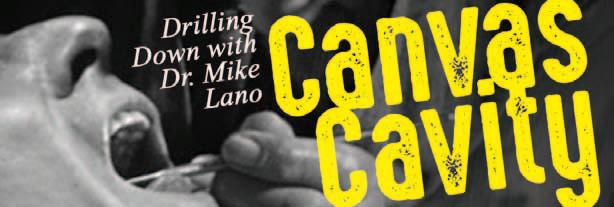
Canvas Cavity 17
Movie Reviews/R.I.P. 18
Banquet/CAC Membership Forms 19
More from viktor Berry Back Cover
CONTRIBUTORS
WRITERS
Dean Silverstone
Dr. Mike Lano
Karl Lauer
Viktor Berry
Tom Burke
Bill Hinbern
Ron Hutchison
Zoltan Ken Jugan
Larry Lovell
Don Luce
Patty Miler
Dan Murphy
Thomas Rude
Julian L.D. Shabazz
Sydni Thomas
Kari Williams
Seth D. Witz
Royal Duncan
PHOTOS
Dean Silverstone
Dr. Mike Lano
Karl Lauer
Viktor Berry
Johnny Bradford
Christine Coons
Bambi Hall
Bill Hinbern
Steven Johnson
Zoltan Ken Jugan
onlineworldofwrestling
Richie Rotten
SLAM! Sports
John Smith
Tony Vellano
Chelsea Voogt
Royal Duncan

Hutchison, Vance Nevada, Mike Lano, and Dean Silverstone. Karl reaches into his memory bank and scripts a story from his youth on legendary Pappy Boyington. Thomas Rude and Seth Witz bring us reviews of a Mike Mazurki classic. NOW Magazine provides us a story on Killer Brooks.
And finally we come to Don Luce. With the passing of J. Michael Kenyon, Don is the greatest living historian of our time. I am grateful and honored that Don has written for us. Now, newly formed Historian selection committee, please honor Don and J. Michael with the awards they so justly deserve.
Tapping Out,
P.S. * means that they were or are a member and/or honoree of the CAC.

From our quarterly CAC Board Conference Call of September 20, 2017, three new items emerged. They are the CAC Creed, Mission Statement, and Oath. Almost every club (fraternal, social, business, community) has these or a variation of these points. We've never had anything before and thought it would help fine tune our purpose, message, beliefs, identity, and personal club values.
CAC CREED
Let us recognize that the CAC was established as a club for wrestlers, boxers, movie people, assorted friends and companions. Now, we are the people from the world of wrestling that are dedicated to the belief in the need of a club of kindred souls who enjoy the camaraderie, companionship, togetherness and friendship of each other. We believe in the history of wrestling as well as promoting the future of wrestling. We further believe that through our selection of officers and staff (who have given, for free, their personal time, talents and finances) that they will make the correct decisions to build the reputation and membership of the club and continue its business into the future.
CAC MISSION STATEMENT
To financially assist those in the wrestling industry that have fallen on difficult financial times.
CAC OATH
"I will adhere to all CAC by laws and principles and promise to do what is in the best interest of the CAC with Integrity, Kindness, Humility, and Gratitude to all of our members, peers, past associates, and honorees as we conduct ourselves with these principles to all."
Published by:

* As with any project this size, photos are provided with no copyright or unknown photographer. We appreciate and thank the photographers that have taken these photos.
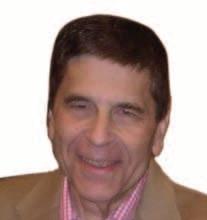
BIO: Dean is the former Pacific Northwest Wrestling promoter and currently holds two positions within the Cauliflower Alley Club – Secretary and Treasurer. Dean began working in the Northwest area in 1958 and left the business in 1976 after promoting in Washington, Oregon, Idaho, British Columbia and Alaska. Dean became a CAC Director in 1995 and was named to the Executive Committee in 1999. Dean and his late wife, Ruth, were the co-editors of The Ear, the official newsletter of the Cauliflower Alley Club, from 1995 until 2012.
Jimmy Flame: New Star on the Horizon
HOW I GOT INTERESTED:
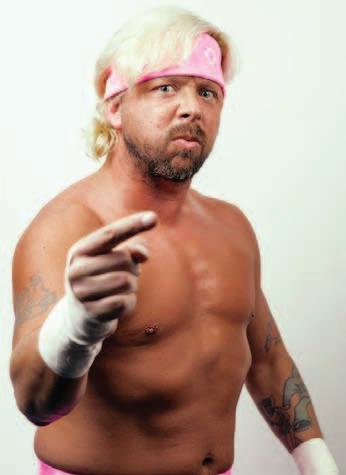

I grew up watching wrestling and it just looked really fun. Baltimore was an interesting city for it because that's where the territorial lines of the NWA blurred. Our local stations got feeds from Tennessee, Texas, Gulf Coast region, Mid-Atlantic, and of course TBS and whatever station aired World Wrestling Federation. Sometimes we would get feeds from Portland Wrestling, which was great because they had talent during that time you could not see anywhere else; Snuka, Rose, and Piper immediately come to mind. All went on to the more well known WWF for the world to see, but we were already conditioned for them by the time they became full-time employees of the McMahon clan. So there wasn't much regarding battles between promotions for airtime -- Baltimore was a very large wrestling market and could handle many, many promotions running at the same time; it's religion to us! And just like any good God-fearing American, you go to church every time those doors open, and we did it in droves. Wrestling was on nearly every night of the week except Tuesdays -- the only day that wrestling did not air or have an event to go to. I also reverently read all the magazines. Pro Wrestling Illustrated and The Wrestling Observer could be found front and center at local grocery and convenience stores, while getting my hands on the lesser known rags was easy, as someone would peddle them at live events. If it had anything to do with wrestling, I found a way to get it and soak it up.
Professionally, I became more directly involved while attending a bout in 1994 at Bingo Bill's. The ring announcer took to the mic and challenged anyone in the crowd to call a number if they had the guts to step in the ring. I frantically ran to the concession stand to find a pen so I could jot down the number. There was no way this opportunity would avoid me. After the matches, I ran into Axl Rotten and Mark Shrader in the parking lot and told them I was going to call. They instructed me to "bring $50 on Monday" and to be ready. I called the number anyways and it was a recording advertising upcoming matches. Nevertheless, I showed up on Monday, gave them $50, and took a pretty bad but necessary ass whipping. No broken bones or blood, or anything like that. But the message was clear: be ready, be in shape, and be tough. I began training with Tim "Lucifer" Burke that week along with the likes
of Axl Rotten, Hack Myers, and Mike Awesome assisting. The first thing Axl told me was to start eating tons of donuts (I was about 150 lbs. then). Reflectively, I do not think any of those guys thought I would last more than a week.
Fast forward to 2002. I moved to the Northwest and began looking for wrestling work. I met Mark Ferguson and TIm Flowers who agreed to give me a go at their training facility in Bremerton, WA. There, I began really learning the craft as an art form and less a combative sport, as it was more hands-on and explanatory than the training I had received in Baltimore. The "psychology" of a match was exactly the same, but the performance aspect was like night and day. The East Coast style at the time tended to be very rough and based more on English fundamentals while the West was more akin to Tennessee style, that I would later adopt to create a hybrid Baltimore/Northwest style. So there, in Bremerton, the wrestler known as Jimmy Flame really began to take shape.
IN THE RING:
Hopefully my job! I have always been a listener so whether the promoter wants to see something from me or the match, or my opponent expects something out of me, I have always strived and take great pride in always doing my job to the utmost best of my abilities.
I have had the honor of carrying the NWA/Oregon Television championship and won the Ballard Wrestling Federation heavyweight title multiple times; I have been 3-2-1 Battle Tag-Team Champion (with Mr. Fitness and our excellent manager Kiwanis Adonis as The Free Radicals) and AWA Worldwide tag-team champion. I'm not great at keeping track of titles partially because I know my role as champion in most scenarios came as a result of me simply doing my job. I have scars and busted bones to prove all that. I don't even keep memorabilia -- wrestling or music related -- because I view what I do as art; it's live and in the moment. For me the memories and the conversations I have with people who remind me of all the crazy things I've done more than suffice. But to be clear, around 25 titles have been around my waist and I've been to every state except Alaska.
FUTURE PLANS:

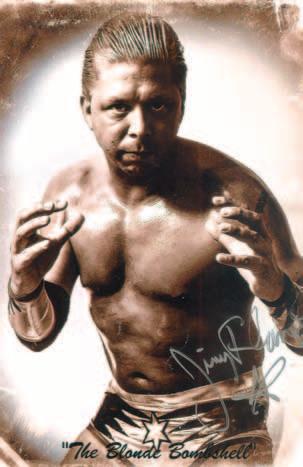
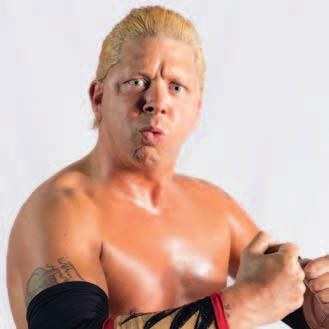

Television production has always piqued my interest. It seems as if a lot of work might be available in the near future with several Indies investing good money in their product. I believe the television market and on-demand markets will expand in the next few years, and wrestling companies are going to either keep up and hire producers who know both the wrestling business and how a rigid product should look, or fall below the companies investing in these markets. I will also continue writing music and am also interested in writing ring music for wrestlers, as the indie model of self-promotion is starting to require wrestlers to have original everything, including music. I'm your guy! So needless to say, my future plans do include wrestling, but from a less public and more behind-the-scenes approach. As for getting in the ring and breaking skulls: I'll keep doing it as long as it's fun. But expect to see me behind a control room board or on stage smashing guitars sooner than later.
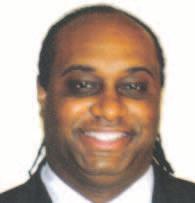
BIO: Julian has more than 30 years as a professional author/publisher, keynote speaker, entertainer, and college professor.
As the author/publisher of ten books, he has appeared on numerous television, radio, and internet broadcasts. He has also been interviewed and written about in a host of national and international newspapers, magazines, and online publications. Since 1989, he has spoken to many colleges, churches, prisons, Greek-letter organizations, youth associations, business, and civic groups around the country.
Networks: Shabazz has appeared on BET, ABC, PBS, blogtalkradio
Books: Black Stars of Professional Wrestling, How to be a Player in the Publishing Industry, Dolemite: the story of Rudy Ray Moore, The Genius of Huey P. Newton, Roar of Tigers, The United States vs. Hip-Hop
I decided to focus this column on a groundbreaking athlete who established a template in two sports. Today's Black athletes and entertainers owe a huge debt to the late Woody Strode. Long before Dwayne “The Rock” Johnson, Ernest “The Cat” Miller or even Tiny “Zeus” Lister, Strode was a pioneer in pro football, pro wrestling and acting. His odyssey began as a track star at UCLA. While training for the 1936 Olympics, he was contacted by German filmmaker Hubert Stowitts. The tall, handsome, well-developed physical specimen was asked to pose nude for paintings to be displayed at the Berlin Olympic Art Show. Incidently, the paintings were commissioned by Adolph Hitler and won second prize in the show.
were joined on UCLA's football team by Jackie Robinson. Collectively known as the “Goal Dust Gang,” these three athletes went on to integrate two of America's most popular sports.
In 1946, Strode and Washington became the first two Black players in the modern NFL when they signed with the Los Angeles Rams. The following year Robinson broke the color barrier in Major League Baseball with the Brooklyn Dodgers. Woody also played for the Grey Cup Championship winning Calgary Stampeders in the Canadian Football League (CFL).
Woody quit football in 1948 and became a fulltime professional wrestler. At first he wrestled primarily in Southern California where he tangled with such grapplers as Gorgeous George, Jim Londos* and Baron Michele Leone. He worked the territory regularly and later began to wrestle around the country, often billed as the Pacific Coast Heavyweight Champion.
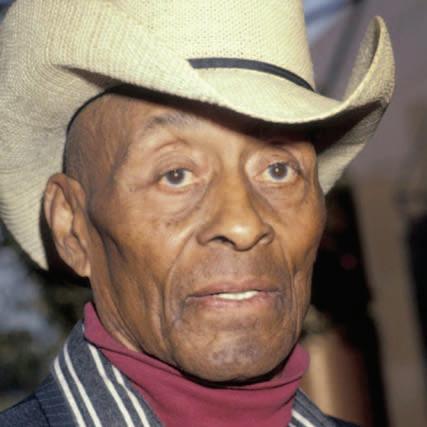

In the America of that time, some cities were very segregated and in many instances Blacks could only wrestle each other. During those days, if Blacks did wrestle against Whites, the Blacks were usually faces and Whites were the heels. Once while appearing in a match in Texas, Woody noticed the referee was carrying a pistol and a blackjack. He later learned that the weapons were for his protection because there had been a race riot just a week before.
He eventually wrestled all over the United States and Canada. It was while wrestling on television that he was spotted by a Hollywood agent. Thus began his acting career. From the 1940's until the 1990's he appeared on numerous television shows and in more than 50 movies including Sergeant Rutledge, The Man Who Shot Liberty Valance, The Professionals and Posse. (ironically appearing with Tiny Lister). For his role in the 1960 movie Spartacus with Kirk Douglas*, he was nominated for a Golden Globe award for Best Supporting Actor.

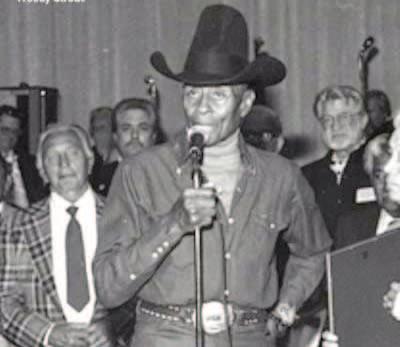
Woody Strode* photo courtesy www.onlineworldofwrestling.com
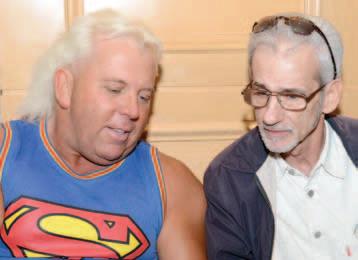
Notice Buddy Rogers* on left and Red* on the right, Sportsman Lodge in Studio City, CA, 25th anniversary of the CAC. - Editor note
Woody was also an All-Conference end for UCLA's football team. The other All-Conference star was halfback Kenny Washington. They
DIANE VON HOFFMAN
by Zoltan Ken Jugan
I was deeply saddened to learn of the sudden death of Diane Von Hoffman, known to me as Phyllis. I met her many years ago in Lancaster, Ohio when she was just a fan and traveling to shows with Candi Divine. Phyllis would later train and become a wrestler herself. Although very outspoken and boisterous, she was a dear friend of mine. Phyllis pulled no punches in letting you know how she felt and would not bat an eye at giving you a peace of her mind. We fought like cats and dogs but at the end of the day, she would
Woody died on December 31, 1994, in California. He will forever be remembered as one who broke down barriers in multiple sports and entertainment.
For more information or to contact Julian L.D. Shabazz
Phone: 864-682-0793, E-Mail: awesomerecords@yahoo.com
Social Media: Facebook, Twitter, LinkedIn, YouTube
always be there to lend an ear or help in any way that she could. She was a big supporter of the Cauliflower Alley Club and the Professional Wrestling Hall of Fame in both Amsterdam, New York and now it's new home in Wichita Falls, Texas. She was a big supporter of the indy wrestling promotions or the "outlaw" organizations as we first knew them. Although Diane was in poor health recently, and having gone through many surgeries, she still managed to make it to Texas this past May for the PWHF Indictions. May God grant her eternal rest and peace. My deepest sympathy to her family and friends.

BIO: Ron Hutchison is a retired Canadian professional wrestler, trainer and promoter who competed for Canadian independent promotions such as Grand Prix Wrestling and Maple Leaf Wrestling as well as a brief stint in the World Wrestling Federation during the mid-1980s. The owner of the Ron Hutchison Wrestling Academy at Sully’s Gym and co-owner of Sweet Daddy Siki and Ron Hutchison’s School of Wrestling, he is credited as one of the leading trainers of professional wrestlers in Canada. His students include Christian, Edge*, Trish Stratus*, Gail Kim*, Beth Phoenix*, Traci Brooks, Tiger Ali Singh, Johnny Swinger, Mad Dog Rex, David Diamond, Joe E. Legend, The Original Sinn and Asylum. Ron is also the promoter of the Toronto-based Apocalypse Wrestling Federation and the head trainer of Carmen Electra’s Naked Women’s Wrestling League. In 2014, Ron was honored with the first ever CAC Trainers Award.
ing a Canadian reality show television taping.
"I never picked the name Bambi Hall. I had always wanted to go with something like Sammy," she said. "I had received the chance to move to Calgary, Alberta, in mid-Aug 2011 to film a reality TV show called World of Hurt and Roddy Piper was going to be the host/trainer. Even after I introduced myself and reminded him that my name was Samantha he would always call me Bambi!"
"His reasoning was that 'you just look too cute and innocent and you sometimes have the 'deer in the headlights look.' So since that time I have been called Bambi and debuted using that name on Sept. 12, 2011, in Surrey, British Columbia, against Nicole Matthews.
Bambi wasn't the only animal related name Hall has used though. She started, complete with a wasp hood as "Waspette," a name and gimmick her younger sister Stacie uses in the ring today.

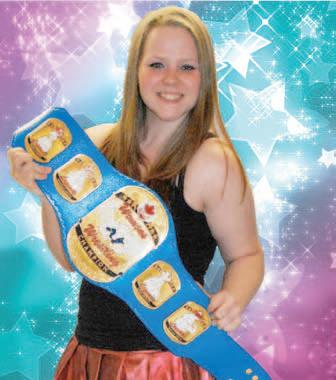
Born July 14, 1992, this second generation wrestler is the daughter of long time CAC member Raven Lake* and she began training at the All Star Wrestling School in Surrey, British Columbia, under head trainers Michelle Starr* and Nathan Burke*.
After 7 months of training she made her pro debut as the Waspette in Powell River, BC, in a mixed tag team match with, none other than her mother Raven Lake providing the female opposition on the opposing team.
Since that time her wrestling travels have taken her all over Western Canada, Las Vegas, Chicago, Florida, Portland, and the central and eastern provinces of Canada when she appeared in Winnipeg, Manitoba, for promoter Tony Condello and in Nova Scotia for Beauty Slammers Wrestling where she competed against veterans Sarah Stock and Serena Deeb.
The young doe has snagged her share of women's titles already in her fairly short time in the squared circle. She's held the All Star Wrestling Women's Championship twice, the Canadian National Wrestling Alliance Women's title, and the Beauty Slammers title, which she won by upending the veteran Sarah Stock.

There aren't very many wrestlers who can claim that they got their ring names from the one and only "Rowdy" Roddy Piper. As a matter of fact, I know of only one and that one just happens to be a Cauliflower Alley Club member and a second generation wrestler out of British Columbia, Canada, whose given name is Samantha Hall. Wrestling fans and fellow CAC members will know this young lady better as "Bambi" Hall though, and she recently explained for The Ear how she picked up her ring name from the late, great Piper after they had the pleasure of meeting each other dur-
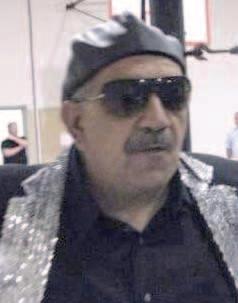

NAME: Tony Damato Sr.
RING NAME: Tony Schoff
WIFE: Karen
DAUGHTERS: Jennifer and Dana
SON: Anthony (wrestled a little and refereed for Richie Rotten)
CAREER: Tony wrestled a few times (one was a strap match with Richie Rotten).
He refereed in a cage match - 2005 and he became a manager in 2006. Tony started working in the office in 2001.
With a resume like this and youth on her side, Cauliflower Alley Club members can look forward to seeing and reading about Bambi Hall for a long time to come.
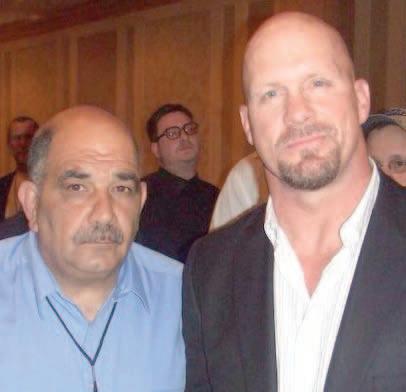
Tony Damato and Steve Austin at a CAC reunion.
photo courtesy Richie Rotten
SAYINGS: "Schoffnocious" and "Unschoofenbelievable"
BROUGHT TO CAC BOARD BY: Richie Rotten*
FEDERATIONS: BWO, LWO, Fundraiser Wrestling (w/Tommy Face and Ricky Landell) and EGW.

MANAGED:
The Dynasty of Destruction and Schoof International
Tony & wife were all about kids. Tony was on the Board of Education in Garfield for 15 years, a volunteer coach for the Jr. Football League and a volunteer fireman from his teens to his 50's. Karen runs the girls softball league in Garfield. Tony loved the camaraderie of the CAC, attending at least twice.
Tony was still working as a manager when he died 5/28/16 at 61 from a massive heart attack. The CAC helped with burial expenses.
Karen's quote: "I was shocked that the CAC knew about Tony. It helped out a lot. He didn't have any insurance. I appreciate your organization."
R
BIO: I was an early letter writer to Dave Meltzer's Wrestling Observer and went on to write columns for Jamie Ward's Squared Circle and then for Jeff Mullin's Pro Wrestling Sushi
My hobbies include reading, walking, and I'm also a sports, history, and movie buff. I am recently retired. Editor's note: Larry helped me with the "Wrestling Title Histories" book.
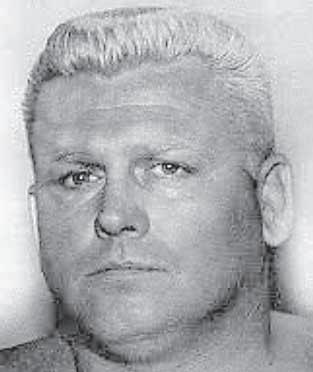
ip Hawk, real name Harvey Evers, was born in Waterloo, Indiana, in 1930. He became a legendary figure in professional wrestling in a career that spanned just over 30 years. He competed in the major NWA Territories and toured Japan and Australia. He held numerous singles and tag team titles and wrestled most of the biggest stars of his era.
After competing in club wrestling as a teenager, Rip turned pro in 1948 under the tutelage of Karl Pojello, a tough mentor who had been a wrestler, trainer, and promoter. After Rip had served in the Korean War, some promotors wanted to emphasize his service record. However, wrestling fans perceived his attitude as superior or cocky. His sharp facial features led to a promoter giving him his career enduring nickname of Rip Hawk.
Like many wrestlers of his era, Rip paid his dues on his way to becoming a headliner in numerous promotions. A stay in the St. Louis, Missouri, promotion of Sam Muchnick* led to a meeting with former World Champion, Wild Bill Longson. Longson suggested to Rip that he use a controversial hold called the piledriver. The hold would be associated with Rip for the duration of his career.

Rip would go on to win the Texas Heavyweight Title from El Medico II on January 11, 1963, and on March 21 of the same year, he teamed with Rock Hunter to win the Texas Tag Team Titles from Bull Curry and Lucas Pertano.
A stay in Jim Crockett
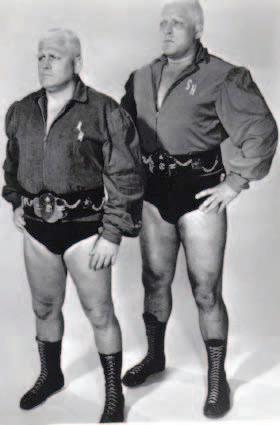
Sr.’s Mid-Atlantic Promotion led to a fortuitous teaming of Rip and Swede (Robert) Hanson at Rip’s suggestion. The duo would be known as the Blonde Bombers and hold various tag team titles on nine different occasions. Their partnership would last over a decade with the two becoming very good friends. Rip was the consummate ring psychologist with the Swede the silent enforcer. They were managed by Playboy Gary Hart and later by Homer O’Dell. Rip and Swede won their first tag titles as a team in Florida when they defeated Duke Keomuka and Hiro Matsuda on August 3, 1965. Their first reign as Atlantic Coast Tag Champions came in 1968. Then on February 17, 1970, they regained the tag titles from George Becker and Johnny Weaver. A tour of Australia saw Rip and Swede defeat Curtis Iaukea* and Buddy Austin for the IWA World Tag Titles in April of 1970.
The Carolinas and Virginiabased Mid-Atlantic Territory was known for its tag team competition. Rip and Swede would face such teams as George Becker and Johnny Weaver, George* and Sandy Scott, Paul Jones and Nelson Royal* and Paul Jones and Mr. Wrestling (Tim Woods). In a twist, they would also wrestle heel combinations like Bronko Lubich and Aldo Bogni and Gene and Lars Anderson*. Rip and Swede won the Atlantic Coast Tag Titles again on December 9, 1970, from Paul Jones and Nelson Royal and for a final time, won the titles from Becker and Weaver on September 25, 1971. A heart attack later that year sidelined Swede for a time with Rip going on to singles competition. Rip would win the Eastern States (Mid-Atlantic) Heavyweight Title from Jack Brisco* on February 14, 1972, and regain the title from Jack in May of 1972. Jack’s brother, Jerry, would begin a feud with Rip that year, with Rip going on to win the Eastern States Title on two occasions from Jerry, first in August and again on December 28, 1972. Rip, who also called himself “The Profile,” feuded with Jack* and Jerry Brisco*, Johnny Weaver, Thunderbolt Patterson and Danny Miller during this time period.

Rip would also mentor a young newcomer to MidAtlantic Wrestling named Ric Flair. Rip would refer to Ric as his nephew, and they won the Mid-Atlantic Tag Titles from Paul Jones and Bob Bruggers on July 4, 1974. Flair would also benefit from associations with Johnny Valentine, and Ole and Gene Anderson after his initial pairing with Rip.

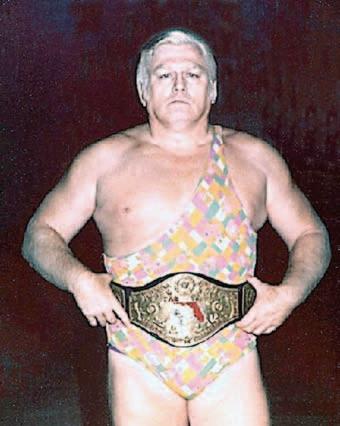
Rip would venture to Florida and team with Roger Kirby to win the Florida Tag Titles from Cyclone and Omar Negro* in December of 1975 and then regain them in February of 1976. A return to Texas saw Rip reform the Blonde Bombers with Swede Hanson. They teamed to win the NWA Western States Tag Titles on three occasions. First from Abe Jacobs and Pez Whatley on July 16, 1976. Then in January of 1977, they defeated Alex Perez and Dennis Stamp. Their third title reign in Texas, and ninth overall, saw them defeat Dory Funk Jr. and The Super Destroyer.
Rip’s career wound down in 1980 when he was wrestling in the Oklahoma Territory. Returning to Texas with his wife Kitty, Rip tossed one of his wrestling boots out of the car window of his Cadillac, saying, “this way I won’t have to wrestle.”
After leaving wrestling, Rip and a partner went into the popcorn business, inventing “microwave popcorn on the cob,” which had a national distribution. Rip would eventually sell his share of the business and would work as a wrestling coach and personal trainer at his hometown YMCA in Hereford, Texas. Rip received the respect in that role that he had gotten from his peers in professional wrestling. Rip passed away following a heart attack on December 22, 2012. He is survived by his wife, Kitty, their two daughters, Angela and Jessica, and four grandchildren. I would like to thank Kitty Evers, Curtis Webb, Ryan Webb and Trevor Melton for their contributions to this article.
BIO: Was with the CAC for 36 years 1979 till 2015 including 24 years as Executive Vice President, Board Chairman and CEO.
I ONLY WISH I KNEW WHO HE WAS....
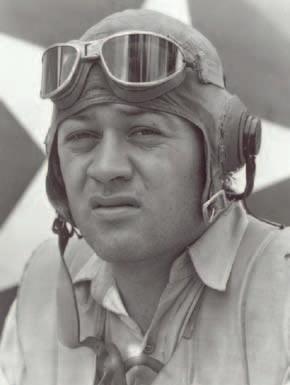

It was in late 1947 when a friend from school invited me and another friend to go to the professional wrestling matches. He said his dad was a referee and these were all the guys we would see on TV. My friend was Chester Woods and his dad was Smokey Joe Woods, my dad knew Joe from our church and they belonged to the same K of C Lodge. So I was going to my first wrestling show at 9 years old sitting in the front row. There were four matches and a second referee for two of them, Pappy Boyington. I would bet 99% of you reading this have no idea who he was, neither did I. Before you finish reading this I hope you will go on your computer and look at the countless articles and stories of this man. Back to that first night, main was Antone “Ripper” Leone* vs Sheik Lawrence, George and Bobby Becker vs Hans and Fritz Schnabel Mr. Moto vs Leo Garibaldi* and the only one fall match the opener Roger Mackey vs The Great Scott*. Back then kids could get up on the apron and get autographs. No one had music and no one touched the mic. Pete (my friend and still is 70 yrs later) and I got everyone’s autograph and both referees. My dad had Smokey Joe take him back to the dressing room and that began a long friendship with the wrestlers. Joe was not a wrestling fan, but could use them at the shop loading the trucks the next day. It gave them extra pay and a work out at the same time, Young guys today cannot believe 50₵ an hour was good pay in 1947, but it was. For the next five years I was at a show, one or two a week.
Now span 15 years out of the service myself (1958 to 1966); it was during that time I would see photos of this guy I used to watch referee wrestling. They were on almost every base I went to: Gregory “Pappy” Boyington–Medal of Honor winner, Navy Silver Cross winner, top ace fighter pilot (shot down 28 of the enemy) gave up his commission in the Marine Corps as fighter pilot to join General Clair Chennault’s Flying Tigers shooting down six of the Japanese Zeros. His squadron was called Boyington’s Bastards, but pressure from the press they changed their name and code call to BAA BAA Black Sheep. His life was portrayed in two major movies. The first was Flying Tigers with John Wayne playing Pappy and the TV series called Baa Baa Black Sheep with Robert Conrad playing Pappy. It was also condensed from the 104 shows to a movie by the same name.
After the attack on Pearl Harbor, the US entered the war. He left the Flying Tigers and rejoined the Marine flyers. During time he was promoted to major, and in less than 2 years shot down 28 Japanese pilots. One day he took 5. He himself was shot down in January, 1944, and was a POW for 18 months until the end of the war. It is said that his torture and beatings would have killed most men.
This farm boy from Coeur D’Alene, Idaho, was born December 4, 1912. In 1925 he and his mother moved to Tacoma, WA, where he was a top wrestling star in high school and earned a scholarship to Washington University in 1930. In 1934 he received his degree in Aeronautical Engineering. Because he was in the ROTC program he also received his commission as a second lieutenant. He worked several jobs before joining the Marines in 1935 and became a first lieutenant in 1939. He was
a top fighter pilot, but there was no war. In 1941 the call came from China for a fighter pilot and he became a Flying Tiger.
Then the US got in the War and home he came, promoted to Major. After the war and his release from a POW camp he along with Admiral Nimitz and 11 other war heroes had a ticker tape parade in New York City on October 9, 1945. An estimated 4,000,000 people came out to honor these men. But war can scare you tremendously. All the fame and glory as America’s greatest flying ace of his time, the medals, awards, and the memories of the deaths drove him to drink.
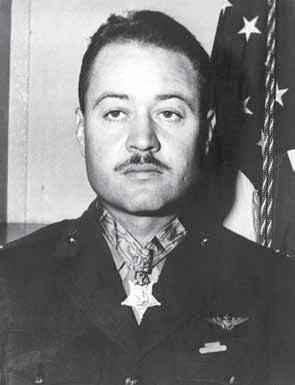

Promoted to lieutenant colonel, he said in his book, “I was no angel when I got out. They made something special out of me, tours, parties and dinners, they used me for publicity. I wish I never had received the medals.” After three divorces and being treated for cancer at the VA, he lived in the Los Angeles area.
Professional wrestling was the rage in Los Angeles in the late 1940s and the main show on TV almost every night. Pappy was accepted to be one of the six full time referees not because of his war record, but because he was first a great wrestler and the fans of the day knew who he was. His counter parts at the time were Tiny Roebuck, Joe Woods, Mike Ruby, Al Billings and Stanley Pinto. He was quoted as saying “the wrestlers treated me as one of the boys”; most had served also during WWII.
Pappy married his fourth wife Josephine Moserman in 1978 who stayed with him until his death on January 11, 1997, in Fresno, CA, from cancer. He was 75.
As a kid from 9 to 12, I saw this man countless times. We would get his autograph all the time when we got the wrestler's autographs, thinking I was doing him a favor to ask a ref. Oh how good is hind sights. A nice guy who was always so kind to the kids. IF ONLY I KNEW WHO HE REALLY WAS – A HERO’S HERO
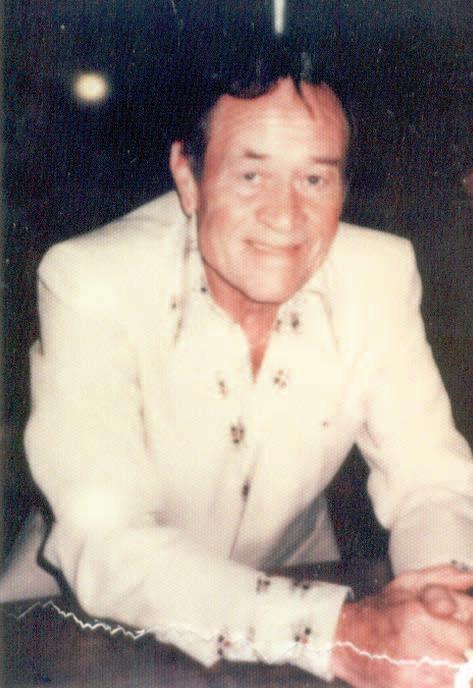

NAME THIS CAC MEMBER
One of the most loyal and well loved CAC members. Cribbage player. Has a son that is a wrestler. Good buddy of Al Friend.
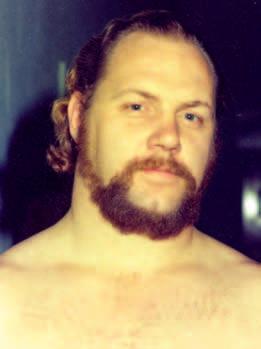


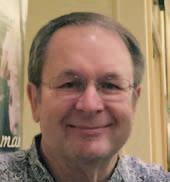
I began attending pro wrestling matches in 1969 when I was 14 years old in Sacramento, CA. The only thing that disappointed me that night was that there were no programs.
After giving it some thought, I decided that I could produce a program for Sacramento and figured that all I had to do was talk to Roy Shire*. That was easier said than done. For years I loved going to my grandfather’s printing company on Saturdays to learn the printing business so I had access to cameras and a great darkroom. The hard part was getting Roy to take me seriously. I began taking a 35mm camera to the matches and started taking photos. The fans liked them and even the wrestlers liked them, so I showed up each week with a handful of 8x10s that I gave to many of the wrestlers and to Hank Renner, Roy’s TV announcer on his Big Time Wrestling TV show. Hank became my partner and we started producing programs for Sacramento. I also began taking photos every Thursday at the TV station, KTXL Channel 40, because the lighting was so much better than the arenas.
I met with Hank to get the card for my first program and I went home with the finishes for the next two months to help me decide what photos to print or delay, depending on what was going to happen in the future. I printed 350 copies of the first issue.
Hank was the ring announcer in Stockton. I carpooled with him to sell programs there and to take more photos. I was still too young to get a driver’s license, so I was limited to those two cities at first. A few months after I had been producing the Sacramento programs, Roy asked me if I
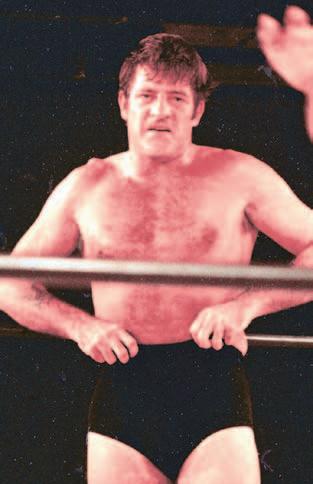

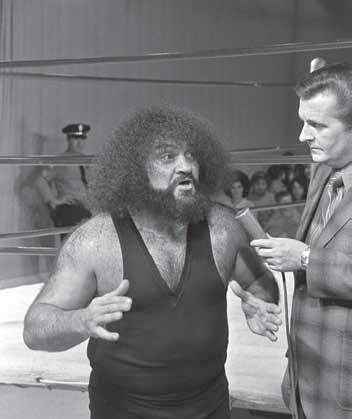

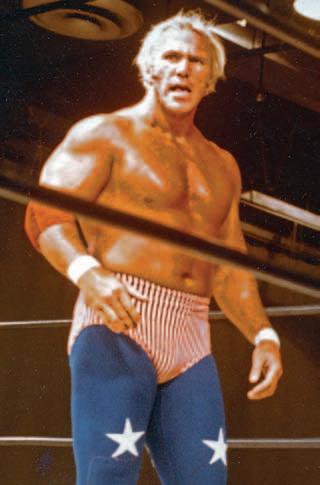

wanted to produce programs for the Cow Palace shows which of course I did. On a good night at the Cow Palace, we could sell 4,000 programs at 75¢ a pop.
After I had been publishing the programs for Shire for a few years, I became good friends with Frankie Cain. In the Spring of 1973 when Frankie told Shire he was leaving the territory and I decided to go with him. I left for the East Coast so I could learn more about promoting the business, doing everything necessary to get a show up and running and attracting people to fill the seats.
I started working for All Star Productions (owned by Saul Weingeroff and Angelo Poffo) and Promoter Phil Golden, who was promoting wrestling in Kentucky, Tennessee, Ohio and beyond in opposition to Ray and Ann Gunkle’s NWA promotion. I was hired as Phil Golden’s assistant and to set up a new office in West Virginia where they were planning to start operating very soon. As we began promoting shows there, I also ended up working as a referee. Kurt and Karl von Brauner gave me about ten minutes of training before my first appearance in the ring and I loved it. I stayed with All Star Productions for six or seven months until late 1973.
When I took off for Florida and got a job on the Jungle Cruise at Walt Disney World for four years. In 1978 I joined the US Navy where I spent four years underwater on a nuclear-powered submarine and finished my Bachelor’s degree by reading underwater. I used the G.I. Bill to pay for law school and became a California attorney in 1986.
I really enjoyed the time I spent in the wrestling business. It was definitely one of the happiest times of my life. Currently, I am a life member of the Cauliflower Alley Club and attend as many reunions as I can.
* means that they were or are a member and/or honoree of the CAC




















BIO: Bill Hinbern has been an author, publisher and mail order distributor of "The World's Largest Selection of Strength Training Publications Available" for nearly 50 years. Topics include weight training, bodybuilding, Olympic weightlifting, powerlifting, strength, grip training, old time strongmen, wrestling, diet and nutrition, etc. Among his writings, he has written two top sellers: “The Master Method of Health, Strength and Bodybuilding,” with the great David P. Willoughby; and “Hand-Balancing for Muscular Development.”
One of the most athletic, all-around, bodybuilders of the 1940s was none other than Bert Goodrich.

Born on December 26, 1906, near a river in Tempe, Arizona.
It was there that he learned to swim, and by the age of 12, he was doing acrobatics and outrunning everyone.
At 14, he won the Arizona state titles in flyweight boxing and diving.
Like many other young boys, Bert wanted strength to help him improve in sports, like gymnastics, tumbling, and football.
It was around this time that he answered a Charles Atlas ad on the back of a comic book that would spark his interest and become his lifelong pursuit.
After discovering that bodybuilding was a means to an end, just four years later, he weighed a muscular 185 pounds and starred in track and gymnastics during high school.
Later in college he became interested in putting the shot and running the 100-yard dash.
In addition, he continued to box, now as a heavyweight, and fought matches at Madison Square Garden.
One summer, he performed as a trapeze artist, doing feats 100 feet in the air without a net!
In 1928 he began working out at David Willoughby’s Gym in Los Angeles.
It was here, in nearby Hollywood, that he soon became one of the top stuntmen.
He appeared as a stunt-double for Buster Crabbe in Tarzan the Fearless (1933), for Red Grange jumping cars in The Galloping Ghost (1931), for John Wayne in The Hurricane Express (1932), as a member of the acrobatic team in Berlin Express (1948), in the role of a strong man in Roseanna McCoy (1949), and more.
He often remarked about the evenings he would spend with John Wayne. "He would drink all night and be on the set at dawn ready to work. Now that's acting!"
Between film shoots he performed on the local vaudeville circuit and headed for Crystal Pier in Santa Monica (the original Muscle Beach) to perform acrobatics for the crowds.
It was there that he and fellow vaudevillian, Charlie Schaeffer, formed a two-man hand-balancing act with Bert on the bottom.
Bert played at the top music halls in New York, first with Charlie, and later with Jack Nelson, a champion ice skater and balancer.
It was this act that would take them across the country to New York where bodybuilding destiny awaited.
It was on April 23, 1939, that Bert entered and won, his FIRST bodybuilding contest… “Greater New York Best Built Man.”
It was held at the Bronx YMHA (Young Men’s Hebrew Association). He beat 54 other contestants to win the tall-class and overall decisions.
Less than two months later, he would enter and become the overall winner in a bodybuilding contest that would forever etch his name in the history books of bodybuilding… “America’s Finest Physique.”
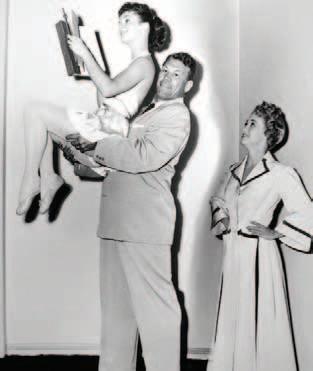

Although this contest is mistakenly referred to as “Mr. America,” it nevertheless vaulted the name, “Bert Goodrich,” to stardom.
In his prime, he stood 5'10," at muscular 195 pounds.
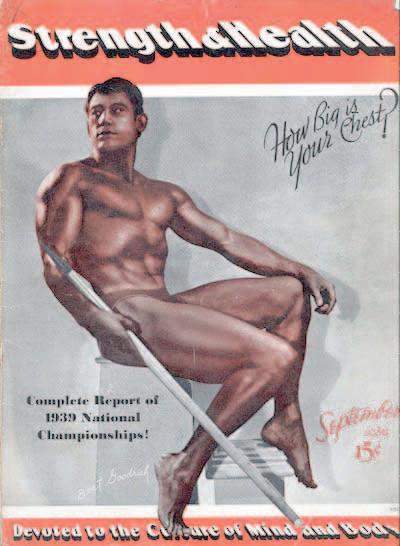
His likeness appeared on the cover of such magazines as: Strength and Health, September of 1939; Iron Man magazine, Vol 3, No 4; LOOK Magazine, September 12th, 1939, as the Finest Physique in America; Pic Magazine, November 28th 1939, and others.
After serving in the Navy as a physical training instructor during World War II, he opened, what was for the time, the most luxurious gym in the country at 6624 Hollywood Boulevard in Hollywood, California. He later added six more locations.
In 1948, he teamed up with Vic Tanny and tried his hand at promoting the FIRST “Mr. U.S.A.” Bodybuilding Contest. The legendary movie star Steve Reeves of Hercules fame competed in this contest.
A few years later, he acted as a talent scout, helping to recruit musclemen for Mae West’s touring nightclub act.
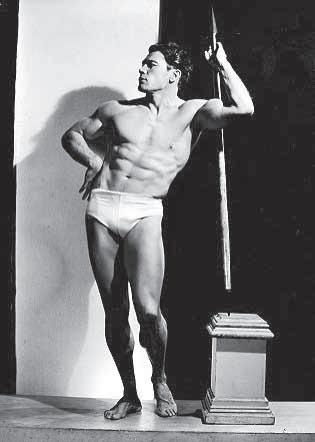

Bill hinbern
In 1956, Goodrich sold his very successful chain of gyms.
In 1957, he produced the Miss and Mr. USA Contest and Pageant featuring such famous bodybuilders and strongmen as Reg Park, Steve Reeves, George Eiferman, Paul Anderson, et al. Later in 1976, at 69 years of age, Goodrich appeared on local television in the Senior Olympics and until his surgery, continued to do 75 push-ups every morning while his coffee was heating. Los Angeles Times columnist Jim Murray* wrote that the former Mr. America still "can see a fly on a lamp post a block away. His pulse is in the 50s and his blood pressure 130/80."
He learned to play the ukulele and harmonica and entertained at senior citizen homes and meeting rooms.
Sadly, Bert Goodrich passed away on December 6, 1991, at Veterans Administration Medical Center, in Sepulveda, California, from intestinal surgery for gangrene several months prior.
He was survived by his wife, Norma Tanny Goodrich (sister of Vic Tanny); son, Bert Goodrich Jr.; daughter, Lucinda Goodrich; and two grandchildren, Amber Goodrich and Bert Goodrich III.
He is buried in Pierce Brothers Valley Oaks Memorial Park, in Westlake Village, California.
HERE IS A LISTING OF A FEW OF BERT’S AWARDS AND HONORS:
- 1985 Pioneer of Physical Fitness Award
- 1986 Hollywood Stuntman’s Award
- 1987 The Association of Oldetime Barbell and Strongmen Highest Achievement Award.
- 2003 Inducted into the International Federation of Bodybuilding and Fitness Hall of Fame”
BIO: “Mr. Beefy Goodness” Vance Nevada wrestled across Canada and made select appearances in the United States during a 20 year career from 19932013, exiting the sport as a recipient of a Edmonton Combative Sports Commission Lifetime Achievement Award. His work as a trainer and mentor has included training/mentoring the early careers of Kyle O’Reilly (ROH), Kenny Omega (NJPW), the Bollywood Boyz (Global Force), and others. Vance has published two books The Central Canadian Professional Wrestling Almanac (1999) and Wrestling in the Canadian West (2009 – Crowbar Press), the latter of which earned him the 2010 James C. Melby Historian Award from the Cauliflower Alley Club. He has been an active contributor to The Ear since 2010.
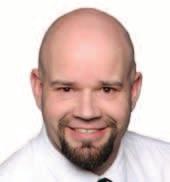
There’s no mistaking the hulking figure of Adam Knight when he enters a room that this is someone who has arrived in Las Vegas for the Cauliflower Alley Club reunion. The 6’5,” 280 pounder has carved a wide swath for himself in the world of professional wrestling over a twenty year career that has taken him through three countries. But, as is the case with many in our circle of friendship, there’s more than meets the eye when it comes to the Canadian heavyweight known by the monicker “The Outlaw.”
First stepping through the ropes in the training ring in Winnipeg in 1995, Adam Knight towered above most of the fellow hopefuls in his camp and on the roster of River City Wrestling where he made his earliest appearances. Learning the ropes under area wrestlers Robby Royce and Vance Nevada*, Brian Jewel (aka Joe Lightfoot in the Central States territory) also is owed a nod for helping the novice heavyweight start to latch onto ring fundamentals. However, it was in the harsh climate of Winnipeg that he developed his grit and tested his skills against the best local talent as well as marquee attractions including The Road Warriors, Jim Neidhart and Steve Corino.
One of the big eye openers for him in his early career was an op-
CONTINUED FROM COVER
grandparents to the Hall and not be offended with what was on display. I tried to find memorabilia that told the story of pro wrestling in a dignified way and I did that. The HOF displayed articles from just after the Civil War. It became a place that not only people off the street came to but busloads of school kids, veterans, physically-challenged groups, and kids in summer camps. I am proud of what was accomplished.

Q. How did you go about determining who should be enshrined by the Hall? Did you have a specific criteria in mind for nominations?
A. Formulating the criteria for induction was a challenge. New York
portunity to sit down with William Regal at a WWE tryout in 2004. In 90 minutes, Regal illustrated the fine-tuning of his ring repertoire as a big man that would make the difference in his career. It’s advice that he took to heart and it paid off with opportunities to tour internationally. In 2007, he was recruited to the All Japan dojo and had just begun the punishing introduction to their style when a knee injury waylaid that opportunity. He felt vindicated when he was able to return to Japan for several repeat engagements in 2010 for Tajiri’s Smash Wrestling promotion – where he was billed as Golem Knight.
Now married with a preschooler at home, Knight remains active between the ropes while not focusing on a blossoming writing career. To date, he has penned two novels (Cowboy Ending and Outlaw Justice) that are drawing strong reviews. Cowboy Ending in 2013 and Outlaw Justice in 2015 both spotlight the sometimes dark underbelly of human nature wrapped in compelling urban drama. Yet, he can’t shake the wrestling bug. He now finds that in most locker rooms he serves more of a mentoring role for younger talent at the beginning of their journey.
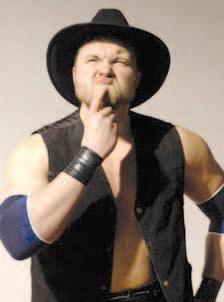

“Professionalism is most lacking in the current climate of wrestling,” he observes. “[On the independents] there needs to be more humility when a guy comes back through the curtain. How these ‘stars’ interact with the ticket buyers during and after the matches really makes me think that the slogan ‘Support Independent Wrestling’ needs to be taken to heart by the wrestlers themselves, not just the fans.”
Adam has been a member of the Cauliflower Alley Club for about five years and attended his second reunion last year. We asked him what brings him back to the CAC.
“Being able to share stories or the universalisms of our business with people who are equally committed to their craft ... I just love it. It’s validating to be here, among this group of peers and reinforce that what I see and feel for the business is on the right track.”
ANSWER FROM PAGE 8: Bill White
State has 23 halls of fame, and I live within about an hour and a half of about 7 or 8 of them. I attend their induction ceremonies and read their rules for Induction. For more than 20 years, I sat on the Boxing Hall of Fame Board of Directors, and I took my experience from that and - while attending other Inductions - I just sat down one day and started to put together rules and regulations that were somewhat related to other HOFs but incorporated the needs of being a Wrestling HOF. I produced what I think is the fairest and non-complicated way to Induct an individual into the PWHF.
Q. Did you have any contact with Vince McMahon or WWE regarding their Hall of Fame while you were involved with the PWHF?
A. No. I never talked to Mr. McMahon. The PWHF and WWE Hall of Fame are two different animals, one is for profit and the other is not-for-profit. Mr. McMahon is a bright individual that has taken what was given him and brought it to the highest of levels. He inducts those that mostly worked for the organization whereas the PWHF honors those that came before the WWE: Strangler Lewis, Jim Londos*, George Hackenschmidt, the turn-of-the-century guys. If the PWHF was never created, those type of wrestlers would have been forgotten. I saw them as the foundation for what wrestling is today. Mr. McMahon was kind enough to let the likes of The Fabulous Moolah*, Mae Young*, Jay Strongbow, Ted DiBiase*, Roddy Piper*, Pat Patterson*, and others attend the PWHF Inductions. And for that I thank him. Vince Sr. and Vince Jr. are both PWHF Inductees.
Q. On a personal level, what was your most enjoyable moment or experience during your involvement with the PWHF?
A. Watching the faces of the rough and tough break down and cry when they experience their own display at the PWHF. Walter Kowalski* cried
BIO: I started following pro wrestling in 1950 when the main event from Buffalo’s Memorial Auditorium was broadcast over WGR Buffalo. When we got our first TV in late 1951 I watched the one hour show from Buffalo, along with wrestling from Chicago. As I got older I researched the career of Ed Don George who was the Buffalo promoter.
I joined the Society for American Baseball research (SABR) in 1980. While doing early baseball study, I came across the old grappling names, Tom Jenkins, Frank Gotch, The Zbyszko brothers, Frank Sexton and others.
traveled to a carnival in Batavia, N.Y. A chance meeting with an areawrestling promoter changed his mind about a career in the tire business.
Ed George (not to be confused with Captain Ed George, the Sheik's son) turned professional on November 21, 1929, in Boston. He defeated Ivan Ludlow in 30 seconds. Ludlow was a veteran boxer-wrestler better known as Ivan or Jack Linow.
George worked the New England area through April, 1930 under promoter Paul Bowser remaining undefeated.
He then traveled to the southern California terriority of Lou Daro which proved to be a major career move. He was billed as Don George and the name struck.
Wins over such men as Dan Koloff, Stanley Stasiak (the older one), Nick Lutze, Lee Wykoff, Joe Malcewicz and Marin Plestina gave George his first shot at champion Gus Sonnenberg in October, 1930. Despite losing his first title bout, George worked himself into a return match.
On December 10, 1930, George defeated Gus Sonnenberg in Los Angeles to win the world’s heavyweight mat championship. Back East he was billed as Ed Don George.
Ed (Strangler) Lewis defeated George in Los Angeles on April 13, 1931, to end the North Java man’s first title reign. Lewis, in turn, dropped the strap to Henri DeGlane in the famous “biting match” in Montreal.
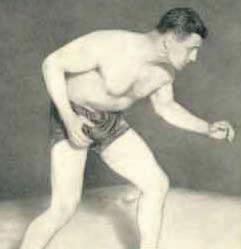
Soon I was again researching old pro wrestling history. It seemed to be more interesting than baseball. There were few who really knew much about it.
Today I have researched pro wrestling from the Civil War period into the late 1960's.

Edward George was born June 3, 1905, in North Java, New York. After graduating from Canisius High School in Buffalo, he went on to college at St. Bonaventure University. After two years he transferred to the University of Michigan. There George played football. However, it was his wrestling skills that set him apart.
Ed went to the 1928 Olympic games in Amsterdam, Holland when he defeated Earl McCready on July 28. The next day he defeated Wernli, before losing in the finals to John Richtoff of Sweden.
The following year he won the National A.A.U. tournament final over Ernest Ots on April 20.
After taking a job with the Firestone Tire Company of Akron, Ohio, he
and thanked me. He told me that he used to fill Madison Square Garden on more than one occasion and that later in life he would walk by the Garden and no one knew who he was, and now with the creation of the PWHF, he is reborn and that for years to come people will remember him and his accomplishments, and for that he was extremely grateful. He hugged me, kissed me, and cried.
Q. Having put in so much time in creating the PWHF, how did it feel when the decision was made to move it to Texas?
A. I worked for 16 years creating and developing the PWHF. The ups and downs were numerous, doors opening and just as many closing, writing the book as my experiences grew. See, there was no playbook or guide for me to use as a reference. It was like here is a machete, there is the jungle, see you on the other side. I took a beating sometimes. I can't tell you how many tons of snow I shoveled, how many hours I vacuumed, how many gallons of Windex I used, but we were growing and the town we were in wasn't so I looked for a place that would bring in new clientele, new ideas, and expansion. The flower I call the Hall needed to grow and the Amster-
Ed Don finally defeated DeGlane in Boston on February 10, 1933, to regain the world title as recognized by the American Wrestling Association. This was considered to be the lineal championship as it could be traced back to Joe Stecher in 1915.
During his second title reign, George wrestled Jim Browning, a rival claimant, to a draw at Madison Square Garden. Jim Londos* was the claimant of the National Wrestling Association. In 1934, George and the “Golden Greek” met in Boston and Buffalo with both matches ending in draws.
On July 30, 1935, Danno O’Mahoney of Ireland defeated Ed Don by a count out in a Boston match refereed by heavyweight boxing champion Jim Braddock. This ended his second title claim.
Ed Don George made a tour of New Zealand in October, 1936, meeting his former amateur rival Earl McCready in a trio of bouts. From February into April, 1937, he wrestled in London and Paris.
On April 18, 1939, George defeated Steve (Crusher) Casey, the American Wrestling Association World title-holder, in Albany, N.Y. He won the bout on a time limit decision. He told me in a letter that he had no belt this time. Casey cleared up the AWA championship by defeating George on November 3, 1939, at Buffalo.
In November 1941, he ran for sheriff in Erie County, NY, but was defeated in the election.
His final match was likely in Toronto on March 19, 1942 against his old rival Earl McCready.
George entered the Navy as a lieutenant commander, teaching handto-hand combat.
After the war he sometimes refereed big matches in various cities. George bought the Buffalo terriority from Jack Herman, promoting his first card on September 12, 1947. In August, 1955, he sold out to Pedro Martinez.
Ed Don later promoted in Havana, Cuba, until Fidel Castro took over the country.
Ed Don George passed away on September 18, 1985, in Fort Lauderdale, Florida. He was buried in North Java, N.Y.
dam facility was getting to be too small a pot for its growth, so I sent out a Request For Proposal to let cities interested in the PWHF to respond. I chose Wichita Falls, Texas. In doing so, I became a footnote in PWHF history, as I had no relationship with them after the move.
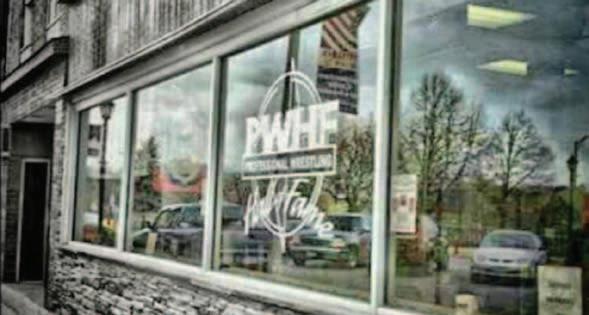
Amsterdam, NY photo courtesy Tony vellano



Story courtesy of WaxahachieNOW Magazine, a NOW Magazines, L.L.C. publication. www.nowmagazines.com.
Killer Brooks had made a career out of being the bad guy, but his real life personality, one of generosity and caring for others, is far from it. After decades of traveling the world wrestling, Tim Brooks is now permanently stationed near Waxahachie where he puts on wrestling shows for families and teaches the tricks of his trade to younger generations.
Wrestling wasn't a career Tim had put much thought into while growing up. His uncles, Lloyd Murdock and Hoyt Murdock, as well as his cousin, Dick Murdock, were professional wrestlers, but he didn't know much about wrestling as a career. After getting out of the Army, Tim began working at General Dynamics. At the time his aunt passed away, he traveled to Amarillo for her funeral, and that was when wrestling became a contender in his life. His cousin Dick, also known as Captain Redneck, convinced him to not go back home after the funeral, but instead to travel from town to town as part of his wrestling show.
“We loaded up and headed for the Ector County Coliseum Fair Grounds in Odessa," Tim said. "The plan wasn't for me to become a wrestler. I was just there to help. I didn't have any training or experience. The only thing I knew was from watching it.”
Once they arrived in Odessa, complications began with that night's main event, a battle royal where 10 men wrestled to the end in the ring. One of the men scheduled to fight, The Turk, had been put in a Mexican jail the night before and they needed a fill in. Dick volunteered Tim, the then 20-year-old with no experience. After a quick makeover of hair grease, yellow and green trunks and a sheep skin seat cover converted into a robe, Tim was ready for his first battle royal.
“They said ‘Don’t worry kid, we’ll take care of you,’” Tim recalled. “Those are the famous words of any wrestler to a new guy. And take care of me they did. They beat me up so badly as soon as the fight started and threw me over the ropes. I didn’t stand a chance. One by one as they’d come back into the locker room, they’d tell me I had done a good job. I thought they were going to take care of me, but I guess I misunderstood what that meant.”
After the fight, the promoter gave him a brown envelope full of cash, and that was the beginning of Tim’s new and adventurous wrestling career as a villain. Two weeks later, he made his first television fight appearance, and his traveling show continued non-stop after that. His group would arrive early for each show and would train him before each match. Over the years, Tim picked up what he needed to know to play the best villain by wrestling some of the greatest opponents out there, in-
cluding the entire Von Erich family. He was dubbed “Killer” by a promoter in Ohio in 1971.
Tim has seen many changes in the wrestling industry since he started. One of the major differences is he once worked six to seven days a week and rarely had any time off. If he wasn’t wrestling, he was driving to a match. There were no luxury plane rides, action figures and pay-per-view match paydays. Some weekends he would wrestle three different events in one day. The money was great for that time, but it wasn’t the millions that some wrestlers make today. “The wrestling life is nonstop,” Tim said. “Sometimes I was making $800 per week in the 1970s. That’s pretty great for a young guy, but I was always working. Very rarely did I get time off.”
Killer Brooks made his last wrestling appearance at the Boys & Girls Club of Waxahachie in 1996. Now he runs a wrestling school, Killer Brooks’ Big Time Pro Wrestling, founded in 1988 in Lancaster, Texas, and has wrestling matches at his home wrestling arena once a month. Tim and his wife, Julie, moved back to Texas about 16 years ago and are continuously working on the barn behind their house to make it the best wrestling arena around. From the outside, looks are deceiving. Inside the plain metal barn is a professional quality ring and seating for up to 200 guests.
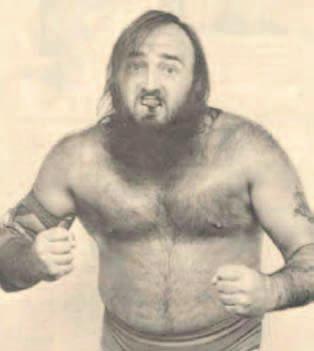
www.onlineworldofwrestling.com

“Wrestling is a family event,” Julie said. “I remember growing up and watching wrestling with my family on Saturday nights. That is where I first saw Tim. I’ve always been a fan of Killer Brooks.”
“It’s important to me for families to be able to enjoy this sport,” Tim said. “I’ve created a safe place where grandparents can bring their young grandkids.”
Tim credits Julie, also known as Mrs. Killer Brooks, with being able to run his successful wrestling school and monthly wrestling matches. Both Tim and Julie were previously married. Each year Tim would stop by the roadside store where Julie worked on the way to see his brothers and ask her jokingly if she would like to join his wrestling team. This went on for years until one trip through town when Julie said, “Yes.”
“We’ve been together ever since,” Julie said. “We came together at the right time. I was at a place in my life where I needed Tim, and he needed me. He is the reason I made it through.”
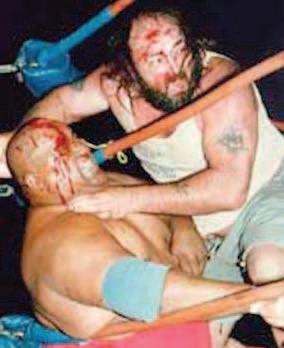
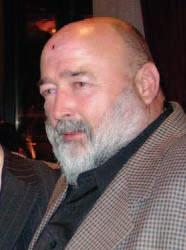
Abdullah the Butcher and Killer Tim Brooks photo courtesy www.onlineworldofwrestling.com

Competing as the bad guy was one of Tim’s favorite parts of wrestling, but once he was out of the ring, he was back to being the man who tried to find ways to help others out whenever he could. From charity wrestling events to restoring old bicycles he collects back into working condition so he can give them to those without transportation, the Brooks have made giving back to the community a priority in their life. He has donated over 50 bicycles to Souls Harbor and Waxahachie Care.
“Wrestling keeps us busy,” Tim said, “but we find time to help our community. Waxahachie has given so much to us and we want to give back to it.”
Tim has traveled all over the world, wrestling in Japan, Australia, Nigeria, Canada and New Guinea. A career that may not have happened if he had not gone to his aunt’s funeral, led him on a once-in-a-lifetime adventure with endless tales of epic matches between good and evil. “As the bad guy, I’d get booed as I’d enter the ring,” Tim said. “But near the end of my career fans would boo at me and then cheer because they never knew if this was my last time out there. They hated me as the bad guy, but loved me because they’d seen me for decades. I loved my life as a wrestler, and now I love teaching the younger guys how to take over.”
BIO: Likeable and knowledgable, Patty helped with research for Royal and Gary Will's wrestling title histories book
THE PERFECT WRESTLER
C
urtis Micheal "Curt" Hennig was born March 28,1958 in Robinsdale, MN. Curt was the son of Larry "The Axe" Hennig and the father of WWE wrestler Curtis Axel.
Curt was trained by Verne Gagne* and his father Larry Hennig*. He made his professional debut January 30,1980, in the AWA. He first went to the WWF in 1981.
Curt had a very successful run in the Pacific Northwest area. He held the Pacific Northwest tag title with Larry Hennig defeating Rip Oliver and Matt Borne on April 27,1982. He also held the Pacific Northwest heavyweight title defeating Sheik Abdullah Ali Hassan on December 7,1982. Curt held the tag titles with Buddy Rose defeating Rip Oliver and The Assassin on August 30,1983. On December 23,1983, he won the tag belts with Pat McGhee defeating The Dynamite Kid and The Assassin.
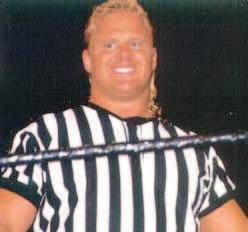

He returned to the AWA. He and Scott Hall* won the tag titles January
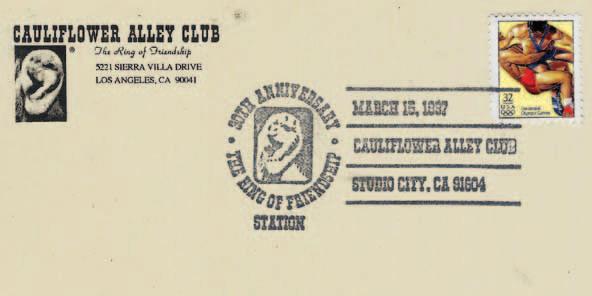
At a board of directors meeting a year before the third decade of the club, I proposed that the club have a special Postal cancellation. Lou Thesz* along with the other board members were 100% behind the effort.
The late Art Abrams* and I worked on the design and the format of having a special souvenir for the 30th anniversary.
A special postcard was printed with the icon of the famous "ear" of Mike Mazurki*.
There was a special cancellation held at the Studio City, California Post Office. Attending the stamping were - Lou Thesz*, Red Bastien*, Killer Kowalski*, The Destroyer*, Al Mandell*, Ida Mae Martinez*, myself and others attended.
PAST CONTRIBUTORS
Alfred Ticineto, Jr. - writer, photos
Brad McFarlin - photos
Brian Blair - writer
Brian Kelley - writer
Brian Westcott - writer
15, 1986. Curt also captured the AWA heavyweight championship from Nick Bockwinkel* on May 2, 1987. From the AWA he returned to the WWF, here he had the most successful run of his career.
Chuck Thornton Collection - photos
Dan Westbrook - writer, photos
Darlene Kreis - writer
Greg Oliver - writer, photos
ibhof.com - photos
Jeff Leen - writer
Jeff Sharkey - writer, photos

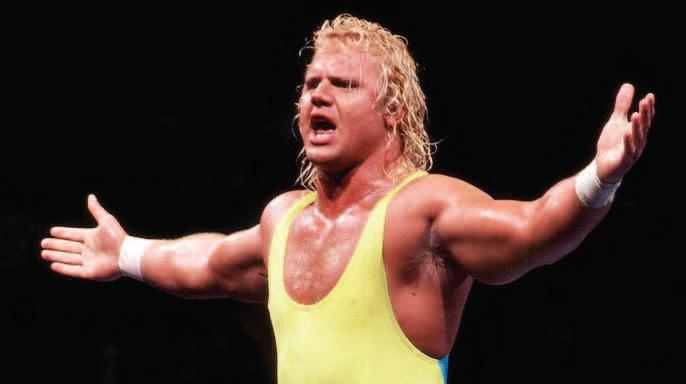
Curt hennig photo courtesy www.onlineworldofwrestling.com
A heavily hyped series of vignettes showed him doing everything from bowling a perfect game to hitting a home run. Mr. Perfect was born. He went undefeated for a year. With Bobby Heenan's guidance he won the Intercontinental title. He is best remembered for a loss to Brett Hart at Summerslam 1991 in a match said to be the finest in the history of the event.
OTHER ACHIEVEMENTS DURING HIS WWF RUN:
Winning the Intercontinental from Tito Santana on April 28,1990.
Winning the Intercontinental title from Kerry Von Erich on November 19,1990.
Curt next ventured to WCW. In 1999 he joined up with Kendell and Barry Windham and Bobby Duncum Jr. in a group called The West Texas Rednecks. They recorded a song called "Rap is Crap."
He won the WCW tag title with Barry Windham. They defeated Chris Benoit and Dean Malenko on February 21, 1999.
Curt returned to the WWF for the final time in 2002. He competed in the Royal Rumble making it to the Final Four.
Curt was found dead February 10, 2003. He was 44. He was inducted into the WWF Hall of Fame in 2007.

Joe Pottgieser - photos
Johnny Griffin - writer
Jon Langmead - writer
Joyce Paustion - photos
Kari Williams - writer
Michael McCurdy - writer
Mike Rice - graphic artist
PamElla Lee - photos
Pat Laprade - writer
Ron Hutchison - writer
Steven Johnson - writer
Thomas Rude - puzzles, writer, photos
Vance Nevada - writer, photos
BIO: I’ve been a newsstand magazine photographer/ writer since the sixties and covered every CAC event since the late eighties.
While we celebrated the actual GLOW (1986-1990) series in Vegas last May, the world was just getting hit with an unprecedented media smackdown for the new hit Netflix series of the same name, loosely based on the eighties weekly show. And with Wonder Woman's recent global success, there's never been more demand for strong female warriors. I’d interviewed comic acting genius Marc Maron twice in the last decade who plays “washed-up” GLOW director Sam (inspired by Matt Cimber who was also honored in Vegas where original GLOW was filmed at the old Tropicana Hotel). Don’t forget that Matt directed many films including 1982’s Butterfly starring actress/singer Pia Zadora.
Maron admitted occasionally watching pro wrestling as a kid. When he was on my show to promote his book and brilliant IFC TV show "Maron" (also based on his shoot-life podcasting in his garage). His WTF podcast many times has been ranked “number one in the world” and he also made international news interviewing President Obama in the garage. Maron told People Magazine “I’ve never worked with so many women before GLOW. They all loved doing it. It looked like they’d waited their whole lives to do something like this in the ring.” Netflix GLOW co-star Betty Gilpin said “it was so empowering and fun.” It’s really remained popular amongst its fan-base with regular reunions, appearances and even GLOW dedicated cruises since it went off the air. Check out GLOW’s regularly updated Facebook and Twitter pages.
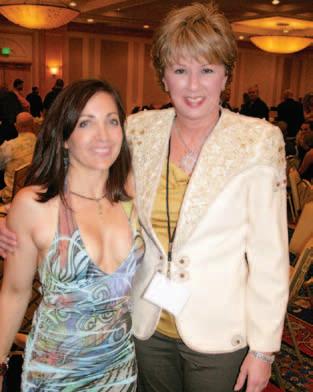

Certainly brilliant writing and acting have been the driving forces since GLOW debuted June 23rd. While Alison Brie’s lead character Ruth has been fictionalized like the drama between the cast, some characters are thankfully based on beloved GLOW originals like Farmer’s Daughter and Mountain Fiji. Maron said “there’s no good or bad guys here. That’s only in the ring. Outside it, everyone just plays all those parts. But they’re all a little broken. And the 80’s show was the setting, not the story.”
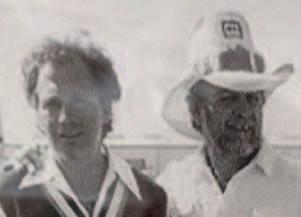
huge outdoor 1971 Coliseum mega-card that drew a record crowd for Blassie* vs Tolos*, Brazil vs Sheik*, Shibuya*/Saito vs Gordman and Goliath, CACers Moolah vs Betty Niccoli, Mil Mascaras*, El Solitario and many others. Suni held our area’s America’s Tag straps with La Pantera Negra and Raul Mata and was also briefly our TV Champ. We also miss Sid Balkin* at CAC. He regularly flew in for our L.A. annual reunions at the historic Sportsman’s Lodge and was a big boxing/wrestling guru. Another of Karl’s cowboy pals I believe he helped us get each year until his passing was actor/ wrestler legend Woody Strode (editor's note - see article in this issue). Woody was one of wrestling's Jackie Robinsonlike pioneers, plus a decorated cowboy and actor (Spartacus besides so many other films). He always wore his tall Stetson to CAC and helped our former CAC Prez Archie Moore behind the scenes.
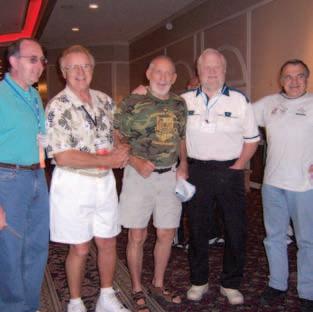

George Shire*, Nick Bockwinkel*, Reggie Parks*, Larry hennig*, & Buddy Wolfe
by Mike Lano
Jim Ross* and his equally classic Resistol would be proud. Don’t think I’d ever seen Karl beam as much as in 1992, when young Oscar de la Hoya* attended our awards banquet and spoke about “the fighting arts” to thunderous applause and a standing "O." Robert Conrad remains a total legend and not just for his classic Wild Wild West TV show. Bob was also a talented singer, stuntman, screenwriter and director. His Black Sheep was later syndicated as Black Sheep Squadron for additional years plus still airs on the nostalgia TV networks. Bob’s long-time syndicated radio show is also still out there. Karl, any chance of us dragging this legend back to a CAC to croon like Mad Dog* and Butcher Vachon*, and Kangaroo Al Costello*?


Lucha Underground’s Chavo Guerrero Jr. said he gave a “professional crash course just like the originals had from my uncle Mando*.” Brie said the hip-hop rhymes were always going to be true to the original Matt Cimber/Dave McLane show and finally are alluded to in Episode 3 of this new version. The show runners Liz Flahive and Carly Mensch with Orange Is the New Black creator Jenji Kohan as Executive Producer have made sure the rest of the world knows what was GLOWing.
In Karl Lauer’s excellent EAR column, he mentioned Suni War Cloud who wrestled for us in Los Angeles in the early 70’s including at the

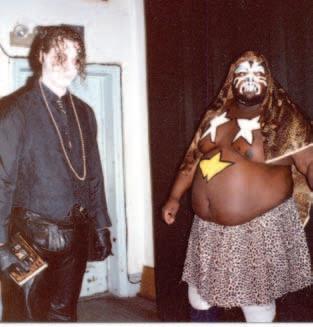
We recently lost long-time wrestler Buddy Wolfe who attended a CAC some six years ago. He told me then “I really miss the biz but have kept busy with my sign-banner company.” Dave Meltzer's* Observer had an excellent obit on him, discussing his teams with Spoiler Don Jardine (as Spoiler #2), Lars Anderson*, and Kim Duk/WWF’s Tiger Chung Lee. He helped put Andre over in the latter’s MSG debut as well as for Muhammad Ali helping set up Ali/Inoki* which was the Mayweather/ McGregor bout of its day. Buddy was married several years to all-time great in beloved Vivian Vachon. CAC's always had some amazing and colorful wrestling characters who not only maintain their membership but also regularly attend Vegas like Carmine DeSpirito*. “Big C” has done it all. From taking bumps as a risk-taking goth manager for Joel Goodhart’s 1991 ECW predecessor TWA beyond playing other managers like Hubie Marx and served for years as Wrestling Eye magazine editor. For years he’s promoted his own group in Wisconsin as well as in other Midwest states and usually brings many of his talented guys to join our CAC family. Another good guy is long-time Ring Around The North West newsletter editor Mike Rodgers* who hopefully will be back with us next year. Few know their history like Mike who’s documented not just the entire West Coast (ala Steve Yohe*) but also territories in Japan, Europe and beyond. He and I traveled to Calgary together back in 1995 for Stu Hart’s* 80th b’day party (and 45th anniversary of Stampede Wrestling) which was a spectacular card at Stu’s classic Corral with most of his longtime stars and several WWF and WCW talent at the time working dream bouts. Mike Rodgers truly from his heart on out is pro-wrestling. The last time he was with us in Vegas ~10 years ago, he had to jet back early to Oregon when his father passed. We’ll never forget Owen Hart and his best pal Louie Spicolli picking us up at the airport in a total blizzard. Owen drove super fast, cussing most of the time but got us all there safely. Mike and I really miss Owen and Louie (besides Mike's father), who were incredible people beyond being superb athletes and rib artists. Sorry to hear of Joe Pottgieser's passing too.

BIO: Thomas J. Rude was born and raised in Alpena, Michigan which means he grew up on Big Time Wrestling. Graduated Central Michigan University, joined the US Army as a paralegal/court reporter. He is currently working for Sabu and Super Genie. He also is a co-promoter of Capital Pro Wrestling.