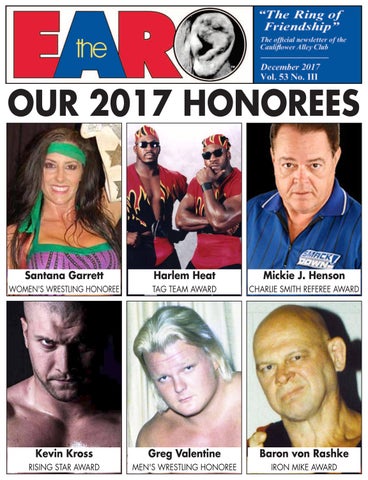
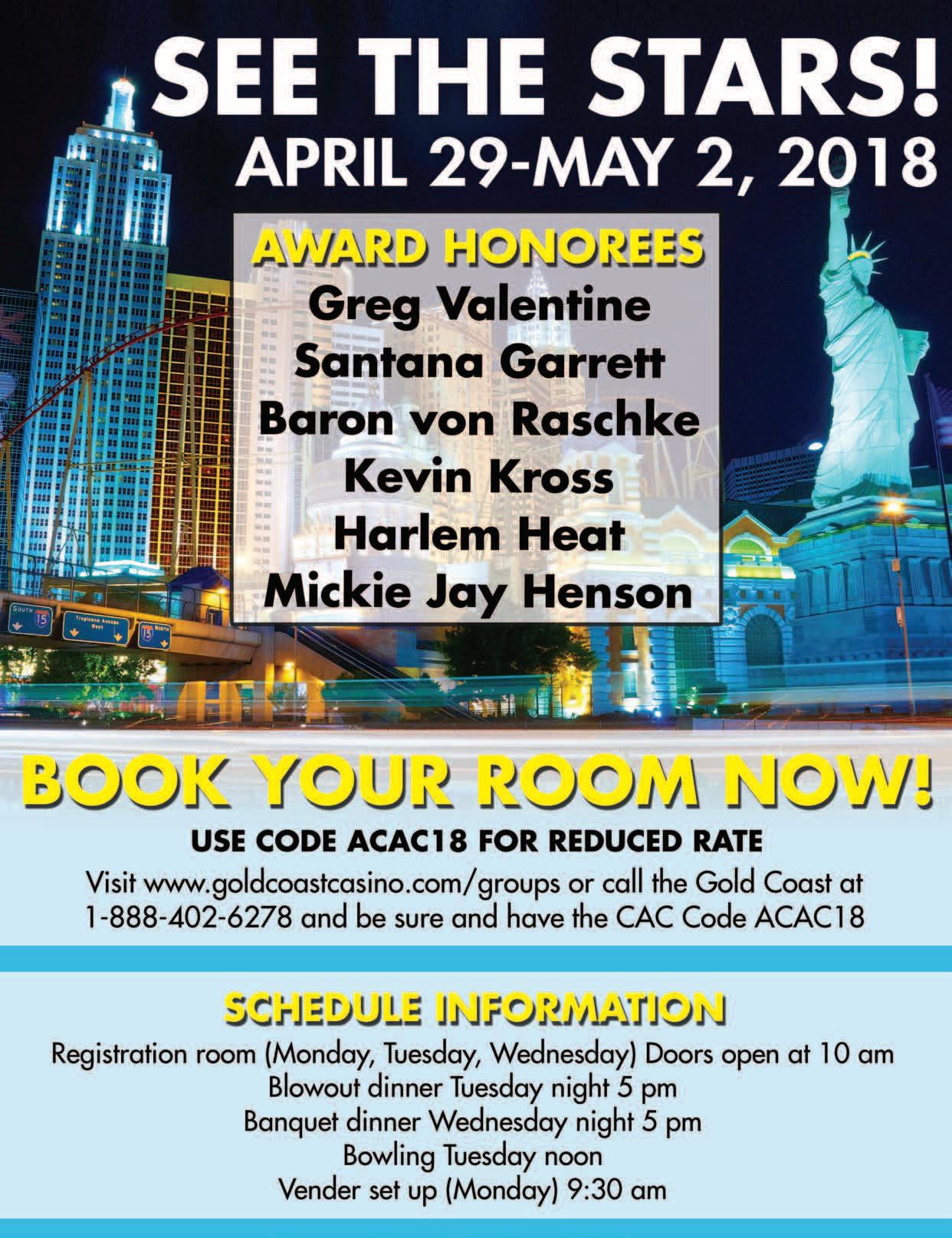
OUR 2017 HONOREES
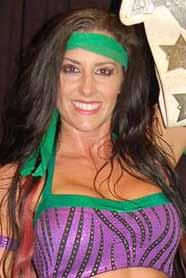
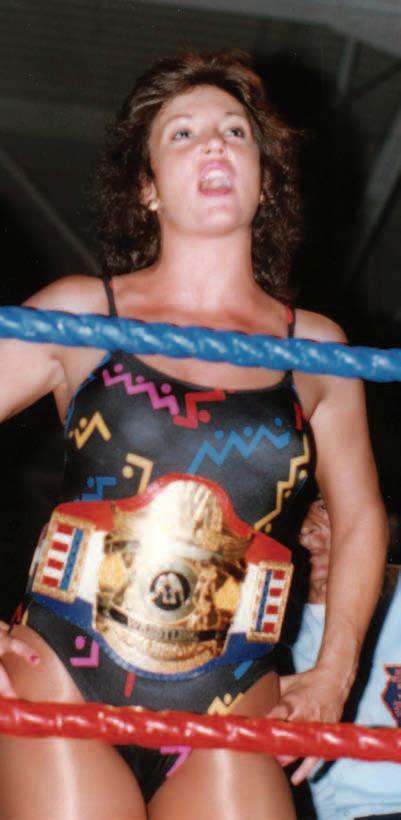
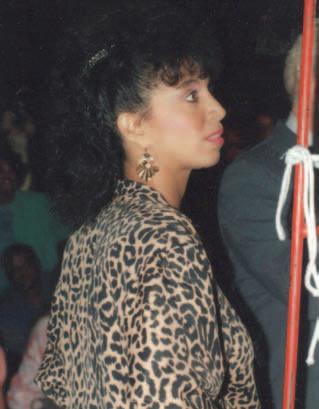
Santana Garrett
WOMen's Wrestling HOnOree
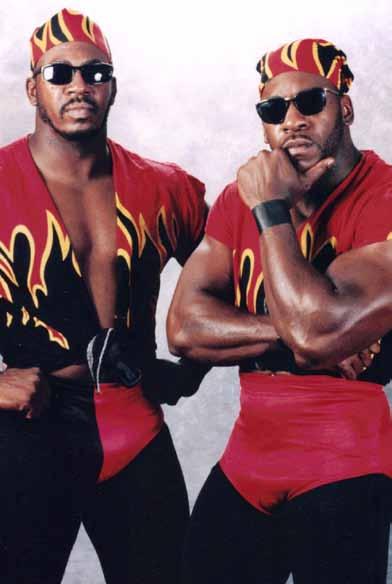
Harlem Heat tAg teAM AWArD
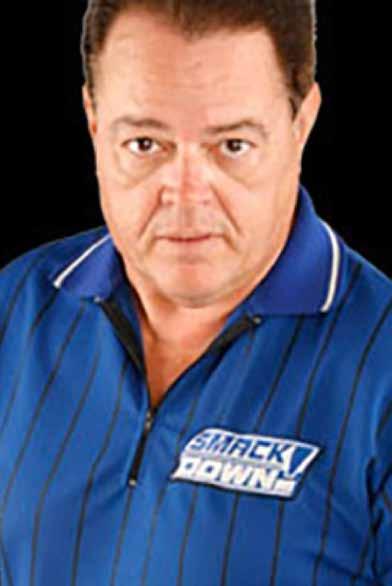
Mickie J. Henson CHArlie sMitH reFeree AWArD
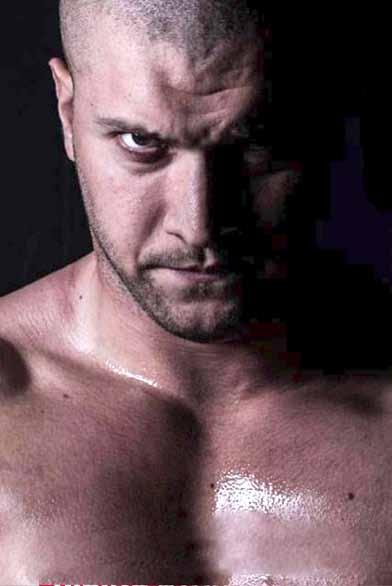
Kevin Kross
rising stAr AWArD
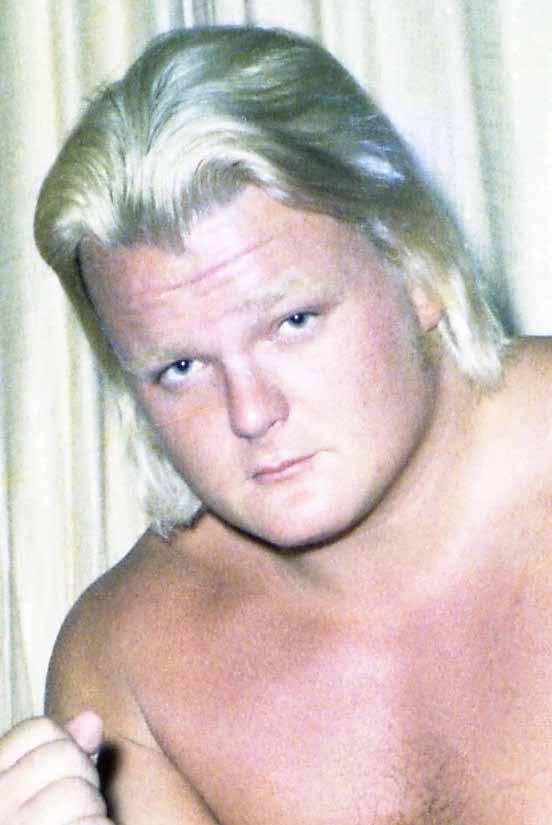
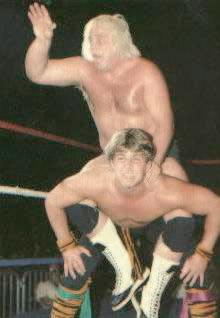
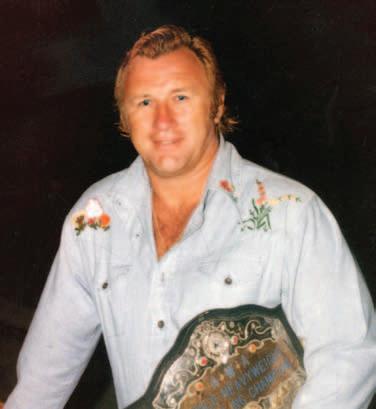
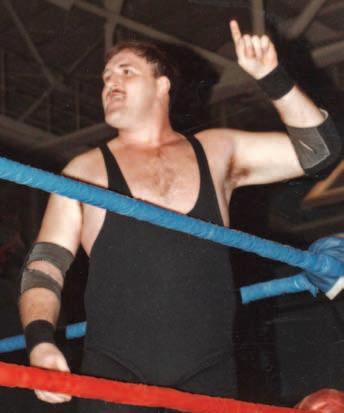
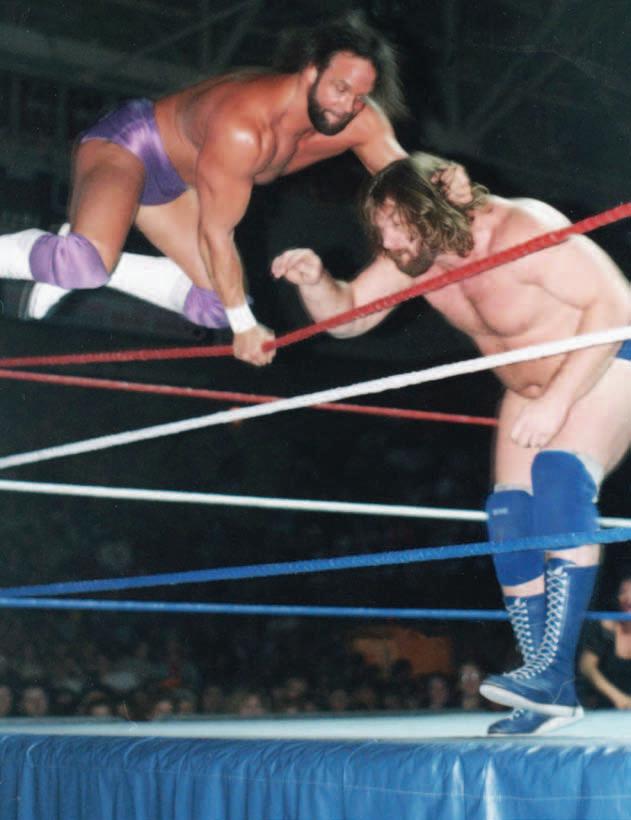
Greg Valentine Men's Wrestling HOnOree
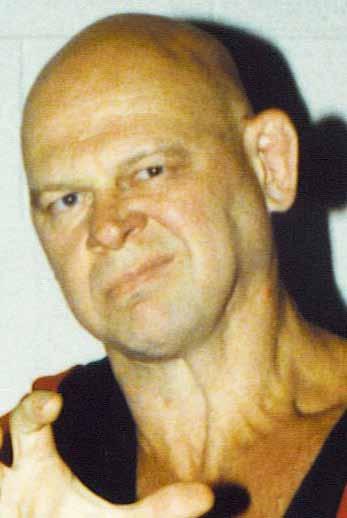
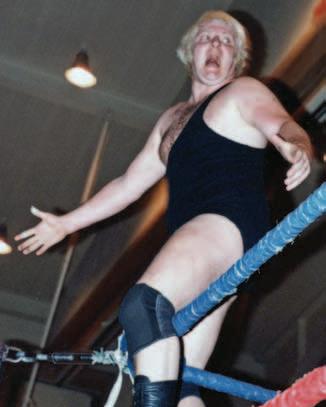
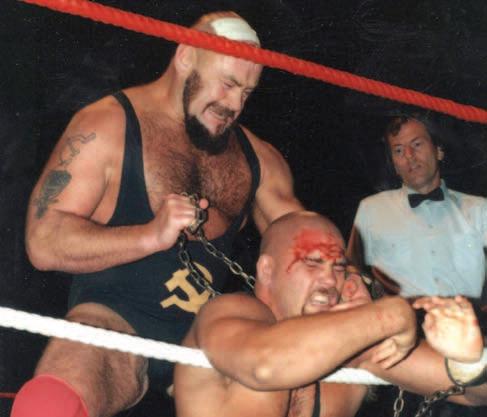
Baron von Rashke irOn MiKe AWArD
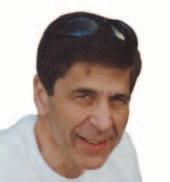
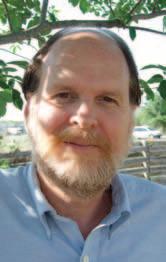
BIO: Dean Silverstone is the Secretary and Treasurer of the Cauliflower Alley Club. He has served on the Executive Board of the CAC since 1995. He was a wrestling promoter in the Pacific Northwest from 1960 until 1978 and he served as editor of the Ear from 1995 until 2012.
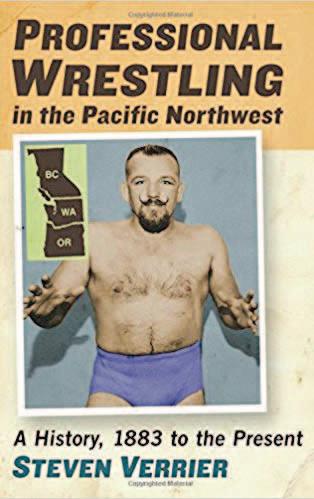
The "vade mecum" of all books dealing with the history of professional wrestling throughout the Pacific Northwest will be available in early 2018, according to author and CAC member Steven Verrier. This book is the most comprehensive study of wrestling's development in one geographic area that has ever been made available.
It all begins in 1883 with the arrival of wrestling in Washington state, where soon Frank Gotch establishes Bellingham, Washington as a major world wrestling center in 1903. With Vancouver, B.C. as part of the early circuit, it also introduces Herb Owen as the first Oregon promoter in 1920.
being run by Cliff Parker: Rod Fenton joined Parker in 1961. Fenton then introduced Gene Kiniski to the Northwest, and the popular All Star TV Wrestling show out of Vancouver, B.C. eventually was nationally broadcast in Canada.
The book's author, Steven Verrier*, grew up watching weekly episodes of wrestling from Calgary, Detroit, Indianapolis, Montreal, the Canadian Maritimes, and Vancouver from his home base in Ontario, Canada. Steven moved to Seattle in 2014 and began researching and interviewing every individual associated with Northwest wrestling in all aspects of the business.

Ted Thye, headliner during that era, encounters numerous political and underhanded battles with Herb Owen who eventually becomes the czar of Oregon wrestling. The book includes fascinating stories dealing with well known wrestling pioneers like Paul Boesch*, Whipper Billy Watson, all the way up to 1942 when Herb's two sons, Don and Elton Owen entered the wrestling world.
The Depression Era of the 1930's affected wrestling greatly, and this book, aptly titled The History of Professional Wrestling in the Pacific Northwest, covers every small time promotion attempting to run shows during The Depression Era. It provides fascinating and little known facts about promoters like George Fitch and Percy Hicks.
Chapter four covers Washington and Oregon in the 1930's and 1940's and explains in detail, with many never before researched facts, why there was a virtual ban on wrestling in Seattle from 1940 until 1945. Both Gorgeous George and Lou Thesz* were based, in the Northwest (Oregon and Washington, respectfully) in the late 1940's when television wrestling first entered the scenario, plus the formation of the National Wrestling Alliance and its role in granting exclusive promotional "rights" to geographic locations.

The Golden Era of Wrestling (1949-1957) is well documented explaining how George Wagner turned into the national icon Gorgeous George and how black wrestlers prospered in this territory better than any other geographic area in the world. Stars like Luther Lindsay, Shag Thomas, Bearcat Wright, Sweet Daddy Siki, and Don Kindred all got their starts in this area and there is an in-depth discussion on racial discrimination within the business at this time.
Television and wrestling is also well documented starting with Tex Porter's TV wrestling show in 1948, the Heidelberg Brewing Company (see side article) and its sponsorship of the Don Owen wrestling show set in the Portland Armory annex and Harry Elliott's most popular Northwest Championship Wrestling out of Seattle.
Vancouver, B.C. TV started in 1962. Prior to that, British Columbia was
The book also deals with chapters covering NWA's dominance in the Northwest as well as the legal challenge instituted by Kurt von Poppenheim (whose picture appears on the
(continued on page 6)

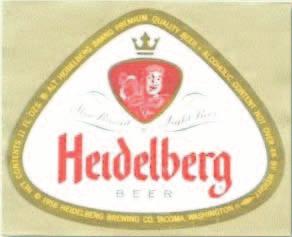
Heidelberg Brewing Co.
Columbia Brewing Co. (makers of Columbia Golden Drop, Golden Foam, Old Pilsner, and Alt Heildelberg beers) began operations in 1900. By 1906, Pacific Brewing and Malting controlled Columbia, but allowed it to operate independently and promote its own beer brands. In 1916 Prohibition began in Washington state (4 years earlier than National prohibition). Columbia changed their product line to fruit drinks, cider, and soda. Selling birch beer, near beer, Chocolate Soldier, Blue Jay, and Green River. In 1936 Columbia was the first Pacific Northwest brewery to sell beer in cans.
In the late 40's and early 50's, they adopted a large advertising drive that covered the entire Pacific Northwest. This is when they began sponsoring wrestling.
On July 15th, 1953 the brewery changed its name to Heidelberg Brewing Company and its Alt Heidelberg brand to just Heidelberg. Their new cellar had storage for over 1/2 million gallons of beer and they produced 750,000 barrels a year. It became the largest brewery north of San Francisco and west of Milwaukee.
In 1958 Carling Brewing Company (makers of Carling Black Label, Tuborg, and Stag) purchased them for 3 1/2 million dollars. In 1979, Heildelberg closed for good. - Editor
steven verrier - Author

Hi CAC Earthlings,
Coming into your gravity with another edition of the "Ear". In this issue we take the Peabody and Sherman Way-back machine with articles by Karl, Jeff Leen, and Michael O'Hara about wrestling's past.
Dean space walks with his book review on Steve Verrier's book Professional Wrestling in the Pacific Northwest
The inter-galactic invasion of Bradley Craig (United Kingdom) and Bertrand Hébert (Canada) helps our global positioning with articles from both.
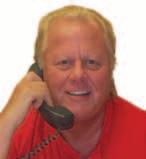
Greg Oliver, at mission control, not only pens an article, but provides us with a crossword puzzle to pass the time in space. Lewis Curry contributes to the space race by penetrating the ozone with a quiz to make sure we have enough oxygen flowing through our brains.
Joyce Paustian explodes the space/time continuum with her astronomically great photography.
And finally, Scott Teal takes us to the stratosphere inking a definitive article on our fallen astronaut J Michael Kenyon (our former MC) - the greatest wrestling historian of all time.
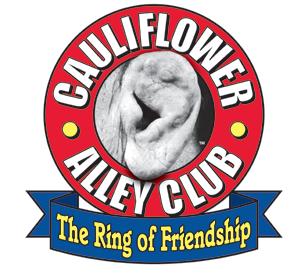
A matter that the Executive Board has been working on is the standarization of club colors. So here are the results:
We've brightened up the red, changed the yellow from a mustard to a more visible yellow, and darkened the blue. We've also changed the type on the "Ring of Friendship" to make it more readable in a smaller format.

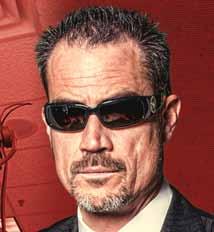
The Cauliflower Alley Club is pleased to announce that Jim Valley and Matthew Roblez will be the new cohosts of CAC Radio. They will replace long-time hosts Morgan Dollar and David Buckler, who started recording the show back in 2011.
Through the years CAC Radio has featured interviews with some of the biggest names in professional wrestling including James J. Dillon*, Mean Gene Okerlund*, Diamond Dallas Page*, Beth Phoenix, Ivan Koloff*, Terry Taylor*, Trish Stratus*, and many others. The show also allows the club to make special announcements and share important reunion details. We know that Jim and Matthew will do a great job as hosts and we welcome them to the team!
CONTRIBUTORS
WRITERS
David Buckler
Bradley Craig
Lewis Curry
Royal Duncan
Bertrand Hébert
Dr. Mike Lano
Karl Lauer
Jeff Leen
Greg Oliver
Michael O'Hara
Joyce Paustian
Dean Silverstone
Scott Teal
PHOTOS
Viktor Berry CAC Website
Bradley Craig Dr. Mike Lano
Karl Lauer
Jeff Leen
Greg Oliver OnlineWorldOfWrestling.com
Joyce Paustian
Dean Silverstone
SLAM! Sports
Chris Swisher
COVER PHOTOS:
Santana Garrett - Paul Stratoti
Harlem Heat, Mickie J. Henson, Kevin Kross - CAC Website
Greg Valentine, Baron von Rashke
- Chris Swisher

* As with any project this size, photos are provided with no copyright or unknown photographer. We appreciate and thank the photographers that have taken these photos.
Jim Valley is a National Murrow Award Winner and currently hosts a popular radio show for The Torch. He also just started a new podcast with legendary Japanese wrestling journalist Fumi Saito. In total, he is a 30year radio veteran who brings a wealth of experience to the position.
Matthew Roblez has been working for ESPN radio since 1998. In addition to working on many successful podcasts the past 3 years, Matthew ran the broadcast booth for the past two years at the Casino Royale wrestling shows. Matthew has also been a performer in the professional wrestling community for the past ten years.
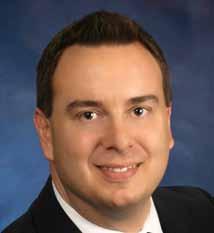
Pantone 186 C: 3 M: 100 Y: 85 K: 0
CAC PUZZLE PAGE
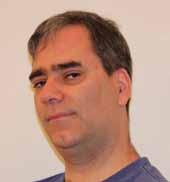
BIO: A writer, editor, producer, and stay-athome dad, GREG OLIVER has had six books about professional wrestling published. Producer at SLAM! Wrestling. CAC member since 2001, though did attend the CAC dinner in Cherry Hill, NJ, in 1998 www.oliverbooks.ca He can be emailed at goliver845@gmail.com, and you can follow him on Twitter @ gregmep
IRON MIKE AWARD WINNER CROSSWORD PUZZLE
ACROSS
1. Competed for Canada at 1948 Olympics (Last name)
5. Most famous role was fighting Kirk Douglas in Spartacus. (Nickname)
7. First female winner. (Last name)
8. It's now the ______ Baloney Blowout.
11. "Gimme a Hell Yeah!"
12. The Weasel, The Brain. (Last name)
14. His niece is WWE woman wrestler Natalya.
15. Made men scream in The Dungeon.
16. Was CAC President from 1992 – 2000. (Last name)
18. Last name of "The Axe".
19. Started as Red McNulty.
21. Last name of Mike, Ted (2x), Brett. 22. Bob Remus' rank.
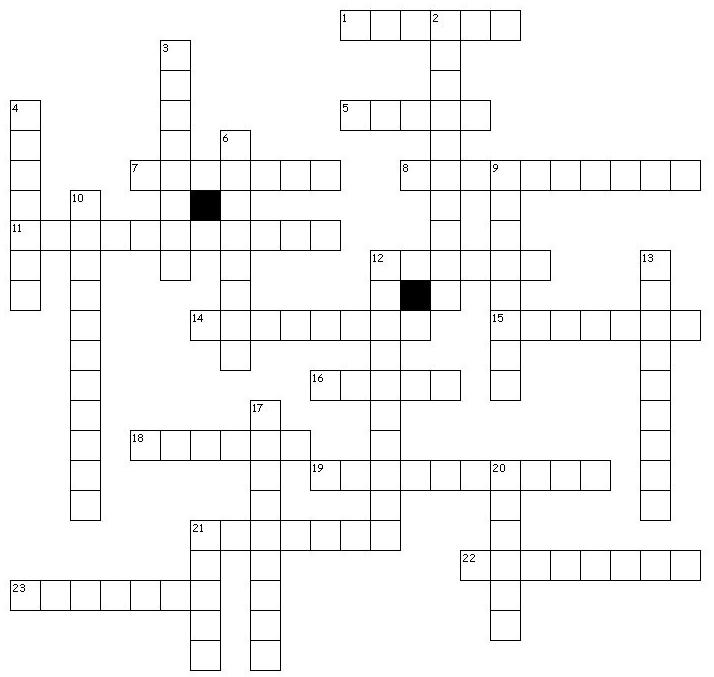
23. AWA World tag champ with Adrian Adonis. (Last name) DOWN 2. Nickname of Don Stansauk. 3. Last name of the Mormon Giant.
4. One of the biggest ribbers; brother of Ted. (Last name)
6. Before the “Thunder” was born Walter Bookbinder.
9. Trained Triple H, John Studd, Kazarian, etc. (Last name)
10. Once strutted like a Rooster.
12. Call him Handsome.
13. His autobiography was More Than Just Hardcore
17. Played football at the University of Syracuse. (Real name)
20. His mother ran an arena in Los Angeles. (Last name)
21. Tom’s ties are deep at University of Alabama.
(ANSWERS ON PAGE 18)

ANSWERS ON PAGE 6
1. This wrestler was in an episode of Hawaii Five-0 "Savage Sunday"?
2. This legendary promoter and wife's son has appeared on the Jay Leno show as a musical guest?
3. This former wrestler now works in Hollywood as an editor and dolly grip?
4. This former wrestler has a son that is a famous fashion designer in Britain?
5. This former wrestler co-trained Sting and The Ultimate Warrior?
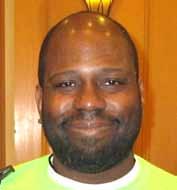
6. This current wrestler was trained by Daniel Bryan, Chistopher Daniels, Robert Thompson, Billy Anderson, and Mariko Yoshida?
7. This former wrestler was a head coach for Mumford High School for two years?
8. This part time announcer's son played for the US Olympic hockey team in 1988?
9. This "Super Fan" won the Red Bastien Friendship award in 2009?
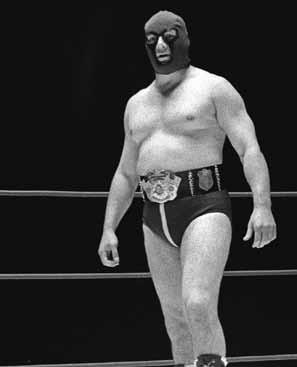
10. This former wrestler beat Lou Thesz for the NWA World title in 1966?
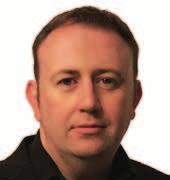
BIO: Bradley Craig is a professional wrestling historian and writer based in the United Kingdom. He is also the founder of The Professional Wrestling Hall of Fame for Scotland and was the co-author of Jeanie Clarke’s autobiography Through the Shattered Glass
2017 BRITISH WRESTLERS REUNION
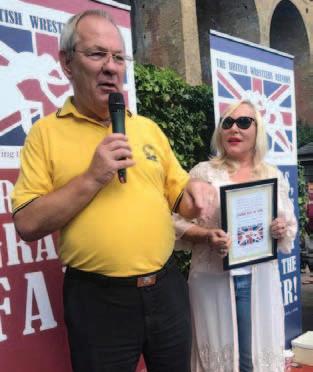
Beginning as an informal congregation of seven colleagues to remember a departed friend in 1991, The British Wrestlers Reunion has steadily grown to become a summer tradition for the grappling community of the United Kingdom. This year’s gathering on August 13th welcomed a crowd of over 300 attendees to The Bridges (a cozy tavern in Dartford, Kent owned by former heavyweight champion Wayne Bridges) in celebration of an industry which has left an indelible mark on British culture. Due to the ongoing growth of the Reunion, a new committee was formed to organise the 2017 festivities which attracted over 170 stars from the past and present amongst the legions of supporters in attendance. Some of the most memorable names from the World of Sport era were on hand including legends such as Mark "Rollerball" Rocco, Johnny Saint, "The Super Destroyer", Pete Roberts, Johnny Kidd, Alan Sarjeant, Steve Veidor, and CAC member Jeanie Clarke who started her career on the British wrestling circuit for Joint Promotions. The Reunion also marked the return of its honorary President Joe D’Orazio who, at 95 years of age, is the most senior wrestler alive. Amongst these revered veterans
tony Walsh and Jeanie Clarke photo courtesy Bradley Craig (continued from page 2)

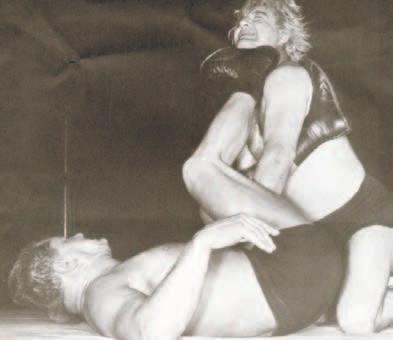
of the mat game were some of the top new stars of the thriving independent scene, as well as enthusiasts of all ages and even a film crew from Ridley Scott Associates.
Significant investment had been made to upgrade the presentation of the 2017 gathering with new backdrops and banners. It is hoped that the modernization of this event will encourage the participation of a new generation of talent as the future of the Reunion depends on their continued involvement. It was also revealed that two icons of the British industry would receive formal honours at two separate events in the following months.
books cover). The legal battle is a book within a book and provides amazing details on numerous ways wrestling was able to "sidestep" monopolistic legal laws. It dives into the Sandor Kovacs era and includes in depth bio's on some of the greatest talent that came out of that era, stars like Jimmy Snuka, Jesse Ventura, Roddy Piper*, Buddy Rose, Don Leo Jonathan*, Lonnie Mayne and others. It covers promoters like Dutch Savage and Dean Silverstone* who worked with and against the established promoters with exclusive never before printed information. Al Tomko's entry into B.C. wrestling is well documented and the book flows smoothly into the WWF's first appearance. In 1992, when the WWF lured the key talent away and local television ended, it discusses in detail the works of Sandy Barr who ran his Championship Wrestling from 1992 until 1997.

gorgeous george and sandor szabo photo courtesy Mike lano
Modern Northwest professional wrestling is also well covered including ECCW in British Columbia from 1999 through the present. The impact of WWF/WWE and WCW and the sold out (65,000 plus) WrestleMania 19 in Seattle. It also covers the TNA promotional efforts here.
The book is so detailed that it even covers the Ed "Moondog" Moretti*
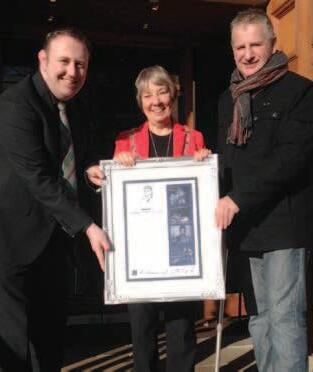
Bradley Craig, Christine simpson, and Chic Cullen photo courtesy Bradley Craig

On October 27th, Frank "Chic" Cullen was inducted as the third member of The Professional Wrestling Hall of Fame for Scotland. In line with the inductions of George Kidd and Andy Robin, the honour was presented at a formal ceremony which unveiled a commemorative plaque for permanent display in the inductee’s hometown. This year’s induction was held at The Albert Halls in Stirling, a public building which was Cullen’s home wrestling venue, and was hosted by the city Provost Christine Simpson. One of the most enduring stars from the latter days of national televised wrestling in Britain, Cullen became known to North American audiences after he moved his career to Stampede Wrestling in Canada under the name Robbie Stewart.
Finally, it was announced that the town of Royal Leamington Spa in England will pay homage to "Gentleman" Chris Adams with a civic event in memory of his life and career. Before reaching significant success in the United States, Adams was one of the brightest stars in British wrestling and his many contributions to the industry will be recognised this winter in a reception hosted by the town Mayor Caroline Evetts.
With the British fraternity uniting at events which celebrate the rich heritage of the professional wrestling industry, it is encouraging to know that the goodwill and sense of kinship promoted by the Cauliflower Alley Club exists on both sides of the Atlantic.
EDITOR NOTE - English spelling on some words
stint on the Oregon Boxing and Wrestling Commission and Joel Chuy's Luchanado promotion in Paraguay, from a couple of years ago, which is included because Joel Chuy was from Vancouver, B.C. That's how complete and detailed this book is--everything under the sun about wrestling in the Pacific Northwest is included. Steve Verrier was able to sit down for weeks with J Michael Kenyon, the "Lou Thesz" of wrestling historians, and capture some never before released facts about what went on behind the scenes, between the ropes, in the dressing room and both on the way and after the matches. It's an amazing read.
ANSWERS FROM QUIZ ON PAGE 4:
Nick Bockwinkel, 2. Paul and Valerie Boesch/ Joey Boesch, 3. Ricky Ataki, 4. Billy Two Rivers/ Wayne Hemingway, 5. Red Bastien, 6. Melissa Anderson, 7. Honky Tonk Man, 8. Mean Gene Okerlund/ Todd Okerlund, 9. Shuhei Aoki, 10. Gene Kiniski
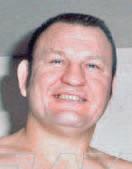
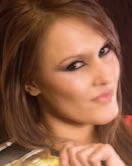
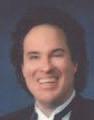
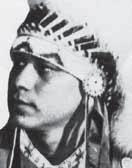
photos courtesy Chris swisher, onlineworldofwrestling, slAM! sports, CAC
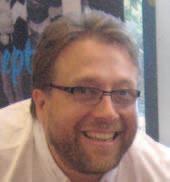
BIO: Bertrand Hébert is the co-author of: Accepted but also Mad Dogs, Midgets and Screw Jobs and Mad Dog: the Maurice Vachon story. He contributes to Slam Wrestling from time to time and he is working with his partner Pat Laprade on a new book about Andre the Giant. In another life he was also a wrestling promoter and a booker as well as a referee for NCW out of Montreal.

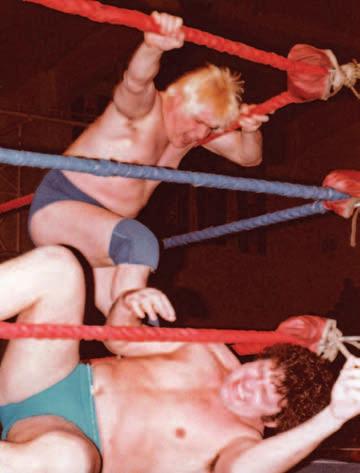
You don’t expect to meet your hero or their villain when you are a kid. They are bigger than life and you love them or hate them with a passion. At least when they are involved in the crazy world of professional wrestling. Growing up in Montreal in the 1980’s I grew up with Rick Martel*, Dino Bravo and the Rougeau Brothers. The one guy I remember hating with a passion was Pat Patterson. Imagine that, an obvious FrenchCanadian with a name like Pat Patterson* that would dare to tell me that all Quebecers were just no good, never going anywhere hot-dog eaters. He would get under my skin like no other. First off, he was disloyal turning on Raymond Rougeau and becoming partner with the evil Mad Dog Lefebvre and his manager the despicable Eddie (Eddy) Creatchman. He would never win a match except by cheating or using, at best, questionable tactics. He would sing and ridicule during interviews. That Pat Patterson had not one good redeeming quality. He was evil. I have learned to appreciate that Pat can unleash such passionate hate. Even in the twilight of his career, Pat Patterson was the best heel. He knew how to push all the right buttons. Then Pat retired and became a dominant force behind the scene with the WWF/WWE. He became that mythical figure that few knew except for a very tight circle of friends and family. For years the rumor he would write his memoir was there. In fact, he refused Pat Laprade and I an interview for Mad Dogs, Midgets and Screw Jobs (our first book) because he was planning on having his own book published soon. Lucky for us those plans never panned out as Pat and multiple writers assigned to him could never find a way to work together. During that time I had three books published and Pat loved the way we spoke about him in our books. Then, destiny brought us together. As I was writing and helping produce a pilot project for the revival of
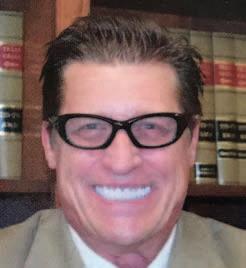
R. Bruce Tharpe –Legal Counsel for the CAC
The Cauliflower Alley Club is pleased to announce that R. Bruce Tharpe is assisting our club with legal counsel. Along with the Drake Law Firm, Mr. Tharpe will be providing pro bono legal support for the club to assist us with our mission
local wrestling here in Montreal, Pat was brought in to do his legendary interview segment "Le Brunch" here in La Belle Province. "The Brunch" is like "Piper’s Pit." We hit it off right away as we came up with ideas for the first "Brunch" in over 20 years. He knew I had written the book about Montreal wrestling and suddenly in his mind I was the guy to help him tell his story.
It was not easy finding a way to work together on the book. I could work on it 24/7. Pat had a different approach. Wrestling was never his be all and end all. It was just something he was good at and helped him make a living while giving him an outlet for his artistic side in performing in front of an audience.
Once we figured out the best schedule to work together, 2 days on and 5 days where I would work alone, we were up and running for the next six months or so.
All along, Pat wanted to be involved with the whole process. We must have had over 20 working sessions and I even spent a week with him in Florida. I was not hired to talk with him twice and then fill in the blanks. I was there to bring his vision to life.

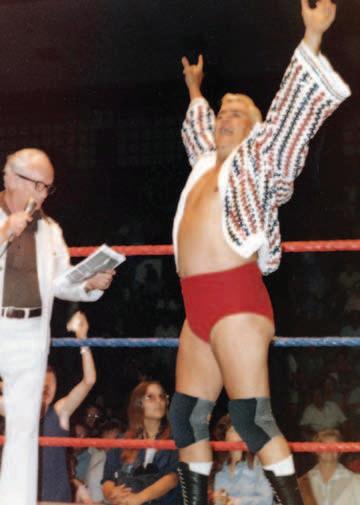
The first time we met I figured out quickly that like a lot of wrestlers, Pat Patterson was the complete opposite from the character who would torture his opponent and the fans by singing jingles to ridicule them on TV. He was different that’s for sure and I don’t mean the fact that he’s gay. Something that was on the table for the book from the start as Pat was finally free of years of hiding in plain sight. No, Pat Patterson is an artist who loved to create and bring to life ideas. Who has a range of interest. A person who was in love for 40 years with the same man, that’s beautiful and had even more meaning to me as I was going through a divorce with my wife of 17 years as I was writing Accepted with him. Even with the passing of Louie Dondero, he remains the love of Pat's life. Someone who grounded him and helped make him the man he is today. Not too strong on regrets and what ifs, there was a clear note of regret in Pat Patterson's voice about not having any children of his own with his partner. I also met a man who had met great teachers along the way and was now so happy to pass along his knowledge to a new generation of wrestlers.
I have learned to appreciate all that Pat was for the wrestling business but, most importantly, as a human being. Writing Accepted with him was an incredible experience where I discovered a wrestling genius, a savant of the industry. Someone I could listen to for hours and accepted discussing wrestling with me. I am grateful for that and every text message he sent to me and every meal we shared. I discovered through the process of writing his memoirs with him a great human being loved and respected by everyone who has ever worked with him. In reading the book, don’t expect to find out about wrestling secrets. Expect to read the love story of a man for his partner and what he did for a living. Grateful to still be a part of it. We should all be grateful that such a man was part of something we love so much. I am grateful to call this man my friend.
of helping wrestlers in need. A Lifetime Member of the CAC, Mr. Tharpe has been licensed to practice law in Texas since December 1989 (27+ years). He is the former Assistant Cameron County DA in Brownsville, Texas from 1990 to 1993, and has been in private practice for approximately 17 years. Mr. Tharpe is also the former President of the National Wrestling Alliance, serving in that post from 2012-2017.
Pat Patterson and Bill robinson* photo courtesy Joyce Paustian
Pat Patterson photo courtesy Joyce Paustian
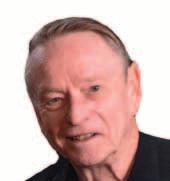
BIO: Was with the CAC for 36 years 1979 thru 2015 including 24 years, as Executive Vice President, Board Chairman and CEO.
Time changes things and sometime it is very hard to accept
Those of the wrestlers who worked in the 1940's, 50's, 60's, and even the 70's have a hard time adjusting to the product of today. It use to be 70% mat wrestling and holds would last 3 or 4 minutes, sometime even longer and the fans felt they were seeing a real contest.

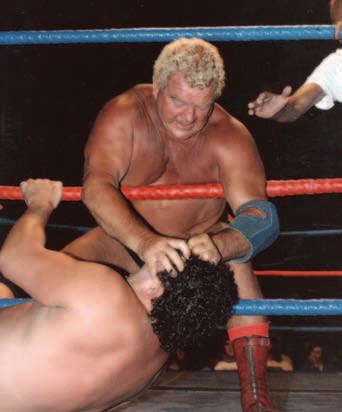
I went to many shows as a youngster and there were only 8 guys on the card and you would have a full 2 hours of wrestling, the opener would be 1 fall, 20 minute time and would go 12 to 15 minutes and set the pace for the next match, which would be the “special” event girls, midgets, local title or gimmick arm wrestling with a local coach who would take down one of the local heels. Of course the coach became a wrestler a few weeks later with a built-in fan base. This was always good for 30 minutes
Then the semi-main, 2 out of 3 falls, and both were major names and they were to go not less then 35 minutes for all 3 falls, this usually set the angle for a return show the following week. Winner would challenge the main event winner for a title. Of course, tickets for next week went on sale right then. A short beer break and the main event, 2 out of 3 with a one hour time limit. The matches always featured one of the TV top guys and the traveling star who was in for the 3 or 4 weeks, like the ones featured in the national magazines. Ones I remember waiting to see like waiting for Santa Claus as a child, but now a wrestling fan.
They all came through the Los Angeles area: Baron Leone*, Gorgeous George, Lou Thesz*, Buddy Rogers*, Argentina Rocca, Gene Stanlee*, Becker Bros, Torres Bros, Ray Stevens*, The Crusher*, The Bruiser, and Killer Kowalski*. Some like the Destroyer* stayed for years as did John Tolos* and Freddie Blassie* who would be gone for few months to Japan or tour and back for another year.
In the 50's there were a lot of venues that ran weekly, so they had a 60% fan base every week and TV sold most of the remaining 40% seats. Just from memory, Monday-Pasadena and Hollywood, Tuesday-San Diego and South Gate,

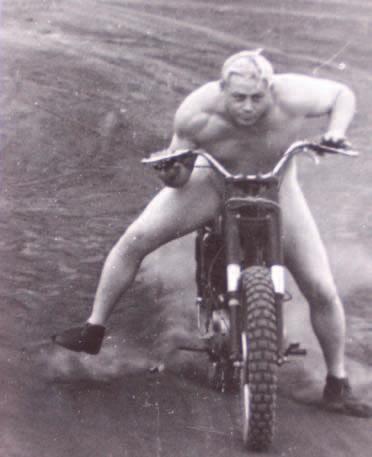
Wednesday-Olympic (TV live,) Thursday-Bakersfield, Long Beach, and El Monte, Friday-Ocean Park and Palmdale, Saturday-Valley Gardens and Redondo Beach and Sunday-San Bernardino. Plus, spot shows almost every night. So, 15 plus weekly shows and you never drove over 120 miles, you can see why the wrestlers loved the territory.


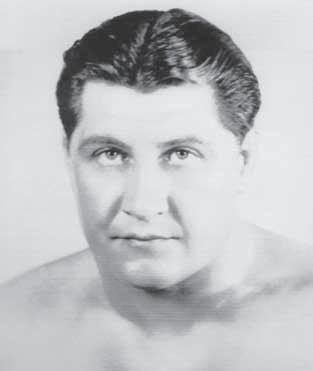
Average 8 guys to a show sometimes 10 but on Wednesday, even more. All the promos were done during the day for all 15 shows coming up during the next week or so.
Today there are 20 plus on every show, average match is maybe 7 or 8 minutes or less, all the old finishes are now high spots, everyone does pile-drivers, sleeper holds, suplexes, top rope leaps, and almost uncountable punches in every match.
But, it's all okay because today it is called entertainment. There are no secrets and the fans go to be entertained knowing someone is calling the shots for the finish. It’s a fact that there are far more injuries today then ever in the past and the outstanding talent and beating these guys take for the fans is unbelievable. They are true athletes who love it because they sure do not do it for the money. The 4 or 5% who make it to the WWE do make a nice living, but for the most part short-lived. There is always 100 plus guys wanting to take your place and doing more crazy high risk moves.
Fans today expect and want more fast action and become easily bored. Instant everything. I do 15 to 20 wrestling shows a year for the Missouri State Athletic Commission and marvel at some of the moves these youngsters do. Ladder matches and hard core matches bringing everything in the ring from baseball bats to trash cans. Some of the indy promoters and young indy wrestlers who have no more business in the ring then I have doing brain surgery.
In the 50's there were only 5 or 6 TV channels and 2 had wrestling on every night. It's hard to believe that 75% of people watching that slow, boring event believed it and could hardly wait for wrestling from the Olympic on Wednesday night, and wrestling from the Hollywood Legion on Mondays. Every night there was live wrestling and you knew that there would be a match after the TV went off the air that could not be seen on TV due to the no DQ rules or Mexican death match.
So the die hard fans had to go for this special match and maybe be seen on TV also. They made sure the cameras spanned the arena.
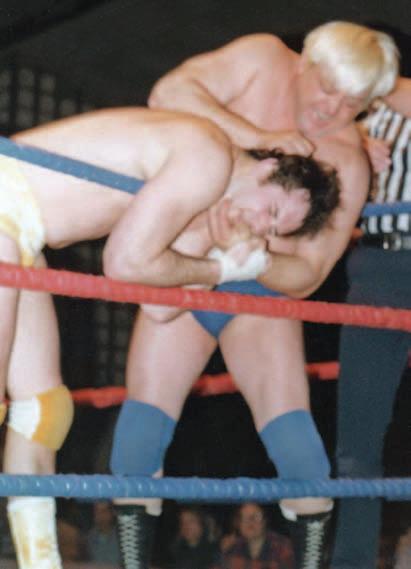

Yes, the times have changed. Faster instant communications, computers do all the thinking for you, your attention span has gotten slower and you become bored way too easy, but every once in a while WWE surprises the hell out of you and the wrestlers actually do a match with no clotheslines, no punches, no kicks, no reversal throws to the corners, but actually hold a head lock for several minutes and work a hold, and you are amazed these guys actually do know how to wrestle. Yes they all can wrestle and have a good match.
the Bruiser and Bill robinson* photo courtesy Joyce Paustian
ray stevens and greg gagne photo courtesy Joyce Paustian
ray stevens on a casual day off. photo courtesy Mike lano
Freddie Blassie photo courtesy Chris swisher

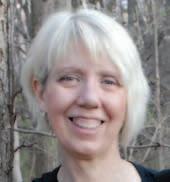
Joyce began taking pictures of wrestling matches in 1976, as a teenager, shooting from her ringside seat at midwest wrestling cards of Gagne’s American Wrestling Association. She had been a fan of pro wrestling since 1969. During college in Davenport, IA., she took a year of photography. Joyce remembers her photography teacher being surprised both at her love for wrestling, and also at what great subject matter the wrestlers made for interesting photographs. Though Joyce originally began shooting wrestling photos for her own collection and enjoyment, Norman Kietzer and Jim Melby* of The Wrestling News later encouraged Joyce to share her photos through their publications. Many of Joyce’s AWA and WWA photos appeared in their magazines and programs during the 1980's. She especially enjoyed photographing the wrestlers who appeared in the AWA, but also later the WCW and WWE wrestlers who appeared in Chicago during the late 80's and early 90's. When the CAC reunions moved to Las Vegas, Joyce took that opportunity to share her photography abilities with the club, providing photos from the annual reunions for the newsletters. She was recently named the Official Photographer for the National Wrestling Hall of Fame Dan Gable Museum in Waterloo, IA., photographing their annual events. She is one of five individuals who have never missed one of the Museum Hall of Fame events since the first one in 1999. In 2016, the Dan Gable Museum also asked Joyce to provide a sampling of several hundred of her photos for a temporary display there. Joyce is grateful for the opportunities wrestling has given her to develop her skills, and to meet new and interesting friends. She is pleased to share some of her favorite photos from over the years here.
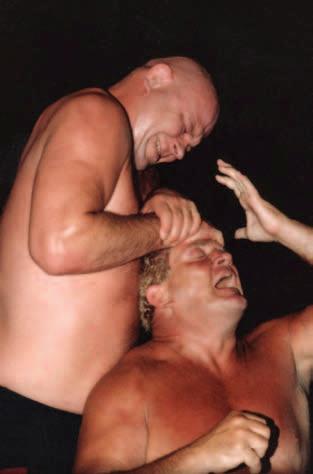

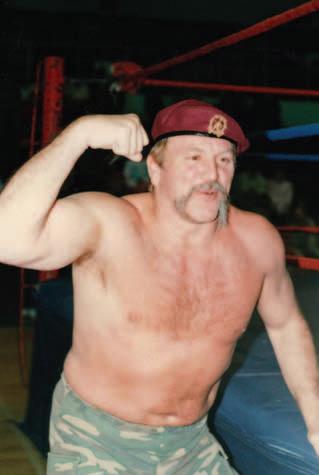

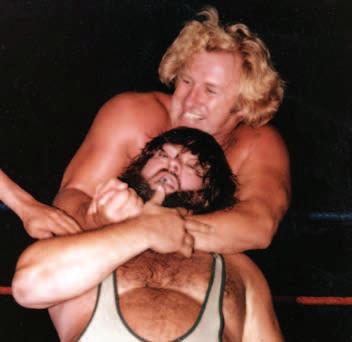
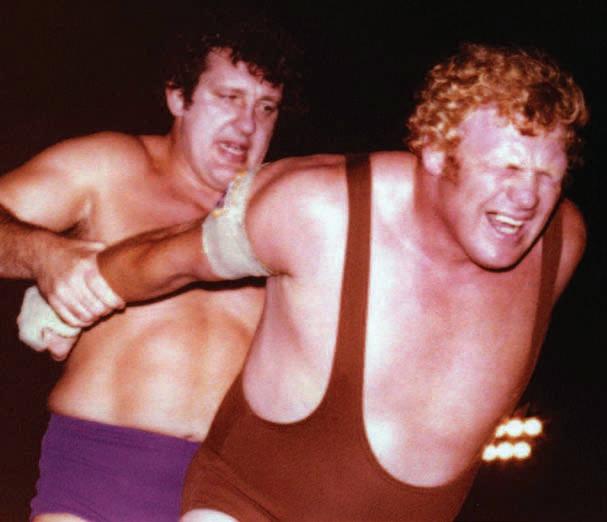
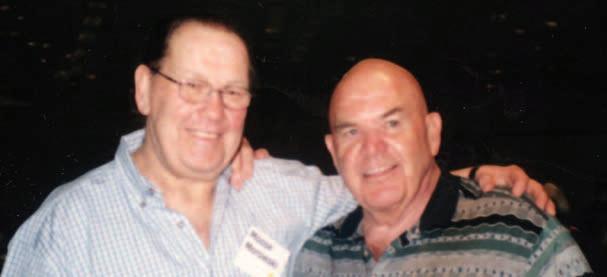
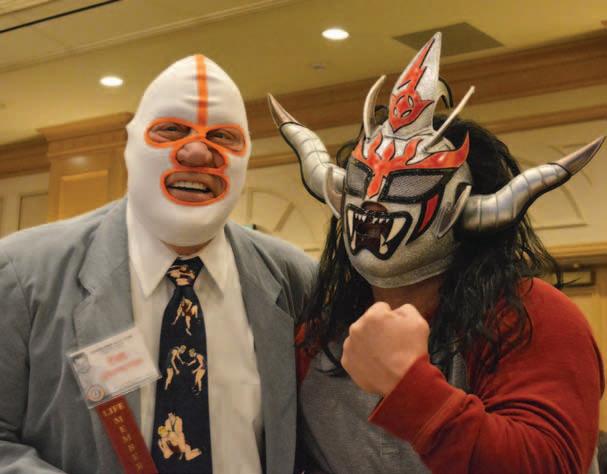
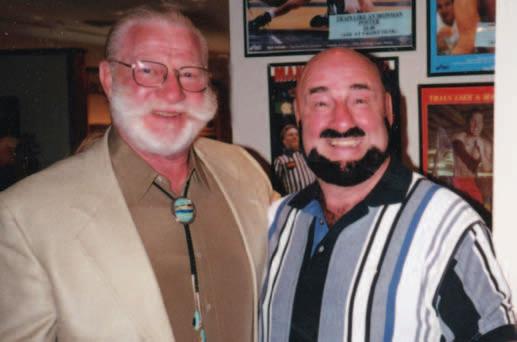

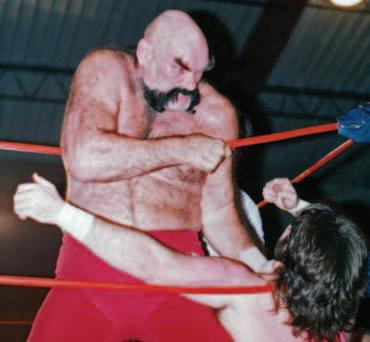
nick Bockwinkel* and Mighty igor red Bastien* and Mad Dog vachon*
Baron von raschke and Dick the Bruiser Colonel DeBeers* Dick "the Destroyer" Beyer* and Jushin "thunder" liger
Ox Baker*
Billy robinson* and lord Alfred Hayes*
Moose Morowski* and george "the Animal" steele*

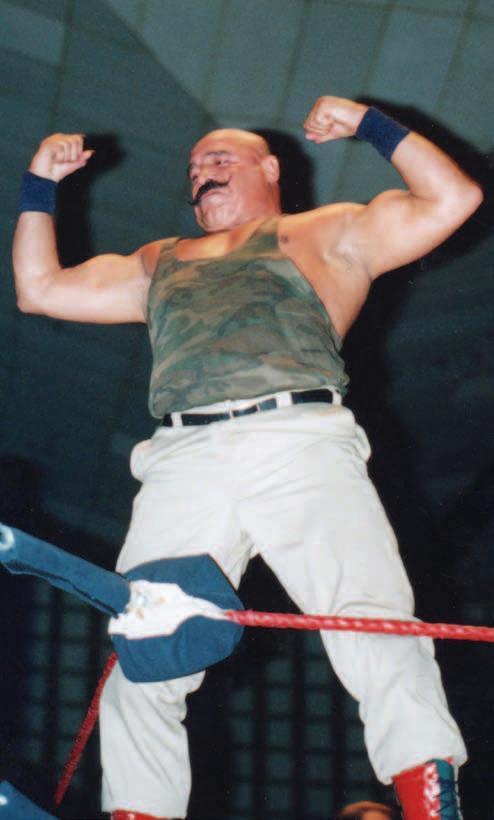
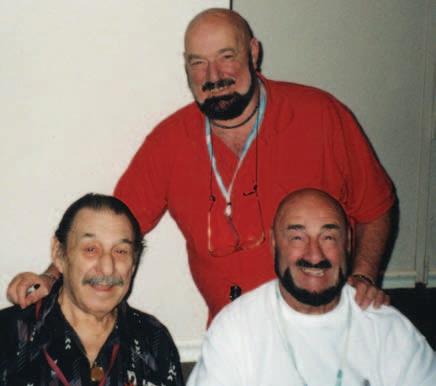




sgt. slaughter*





larry
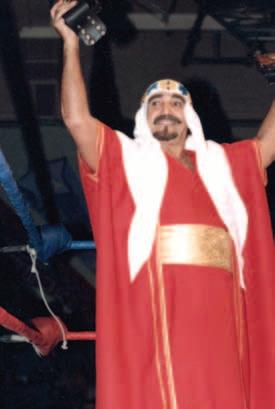
Adnan Al-Kaissie
the Crusher* and Masa saito
Jerry Brisco* and Danny Hodge*
l-r: stan Kowalski, Paul vachon*, and Maurice vachon*
nick Bockwinkel*
iron sheik
rick Martel*
sherri Martel*
nick Bockwinkel*
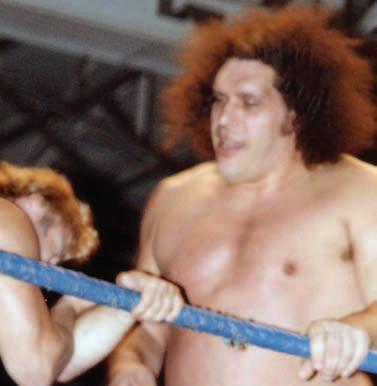
Andre the giant
Bobby Heenan*
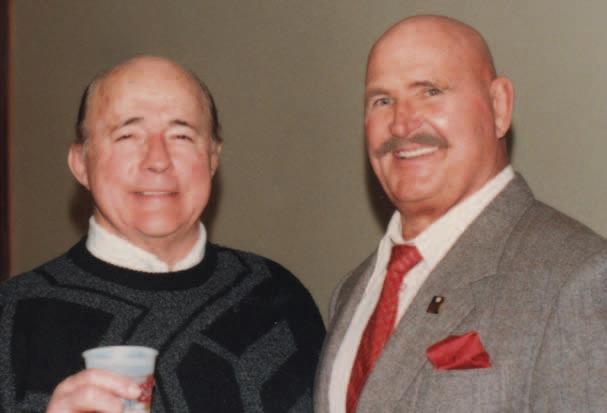
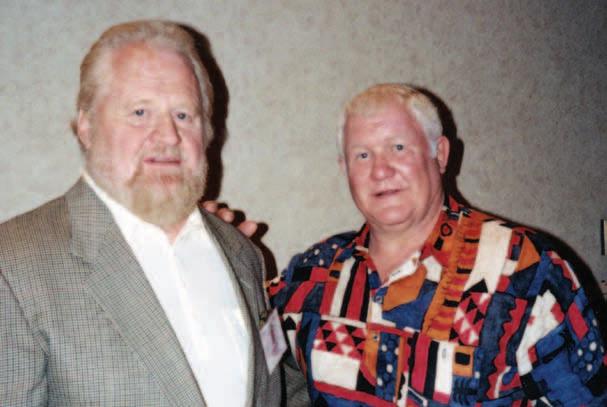




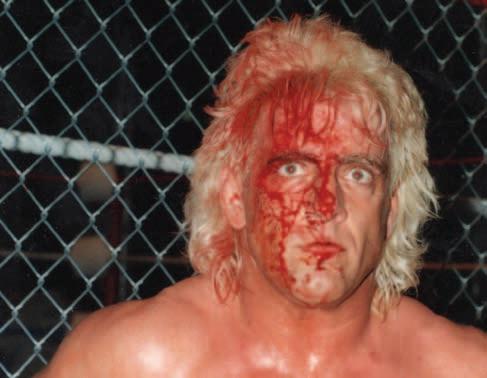

larry Hennig* and Harley race*
Jim Brunzell*
verne gagne* and Hard Boiled Haggerty*
randy savage and Jim Duggan
ivan Koloff* and nikita Koloff
Bockwinkel* and
ric Flair

BIO: Michael O'Hara is a native New Yorker, a graduate of CUNY/Hunter College and a member of the Dramatist Guild. From the late 1980s to early 2000s, he's been a photographer, graphic designer, as well as editor-in-chief and publisher of such newsstand pro-wrestling magazines as New Wave Wrestling, Gold Belt Wrestling, Powerslam Wrestling, Celebrity Wrestling, Wrestling Life, Wrestling Fever, Wrestling Power, Official International Wrestling Insider, and Toxxxic to name a few. As a teenager, he was President of fan clubs for Hulk Hogan and Dick "The Bulldog" Brower. From 1978 to 2000, he was the publisher of Combat Sports, a fanzine dedicated to pro-wrestling, roller derby, and martial arts. Since 2005, twenty of Michael's One-Act Plays have received readings or staged performances nationally. Michael and his wife Roma are Certified Consulting Hypnotists with a practice in New York City.
THE SIZZLING ACTION OF YESTERYEAR
When talking to any of today's instant-texting generation regarding the good old days of professional wrestling (and for me, we're talking about the 1970's and 80's...primarily the 70's), it's really quite overwhelming to see how the entire psychology and marketing machinery of today's corporate spectaculars have evolved from the wonderfully eccentric antics of the wrestlers, the managers and the promoters of yesteryear.
One thing that you needed as a fan of the pre-corporate product was patience -- and plenty of it! You'd sit through the weekly, pre-recorded televised broadcasts, witnessing the heroes or villains du jour trample opponents for four or five minutes at a time while waiting with baited breath to see the big finish. Whether it was Ox Baker's* heart punch, Abdullah the Butcher's "Meat Cleaver" elbow drop or the unbelievable high-risk superplex off the top rope by "Cowboy" Bob Orton*. While waiting in anticipation of the trademark maneuver, your imagination
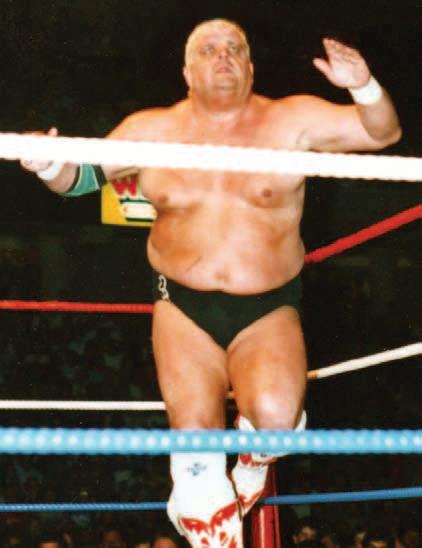

would run wild. Could those deadly holds run roughshod over the likes of Dusty Rhodes, Mark Lewin or Bob Backlund?
The broadcasts of yesteryear provided a whole lot o' sizzle and very little steak. In fact, the concept of the infomercial may have very well started with the weekly shows which were presented usually on the farflung UHF stations. (UHF! What's that?)
Who had the most powerful bear hug? Bruno Sammartino* or "Superstar" Billy Graham*? Who was more resilient in the ring? The Sheik*


or Bobo Brazil? Who could make the true claim to the title of Bruiser? Dick Afflis or Frank Brody? There was only one way to find the answers to those questions - get your tickets for your local arena shows 'cause you just weren't gonna see that stuff on the tube!
The weekly broadcasts helped fuel the fire of fandom, bringing the rabid crowds each month (in many cases - weekly!) to the great arenas (large and small) of the United States. And if the hyped arena matchmaking wasn't enough to get you to part with your hard-earned greenbacks - there were the interviews which were squeezed in (sparingly) at the 30-minute mark of the one-hour TV slugfests.
Some of the greatest, off-the-wall squawkers and talkers would babble on in rapid, machine-gun improvisational style. You never knew what would come out of the mouths of Bobby "The Brain" Heenan*, "Killer" Karl Kox* or "Kangaroo" Al Costello* (and chances are, neither did they until they said it!) There were no script writers, no rehearsals, no momentous speeches from within the ring. All we had were unique, bizarre, witty and unbelievably gifted gabbers who could easily fill 60 seconds, and if given the opportunity, they would have been able to ramble for 60 minutes with a non-stop assault of violent verbiage. Witness the spark of wrestling wit by "Rowdy" Roddy Piper*, Fred Blassie* or Nick Bockwinkel* via YouTube for a true taste of the unexpected.
And as for pyrotechnics - who needed them! You had the flamboyant "American Dream" Dusty Rhodes, Jerry "The King" Lawler or "Superstar" Billy Graham* strutting to the ring decked out in the finest grappling attire. Could you imagine one of today's brightest stars jogging down to the ring in simple black trunks and black boots? Well, that's exactly what Bruno Sammartino* did, year after year, as the fans nearly tore off the roof of every East Coast arena in the process.
The psychology of the matches told, as well as sold, the stories of brains and brawn way back when. The lopsided TV matches created weekly heat, resulting in a fan frenzy for live arena action.
In days of yore, let's face it, the crescendo occurred during a pinfall, submission, or TKO. Fans were always thrilled to see their favorite hero (or the heel) attain victory on the weekly TV infomercial.
Today's matches are so synchronized that the only time the crowd will "wake up" is when something goes wrong - a brief moment of unexpected improv!
There is something to be said for the sizzling action of yesteryear. Living in adrenaline-filled anticipation of the next live arena event was almost as much fun and excitement as the matches themselves.


Dusty rhodes
photo courtesy Joyce Paustian
Killer Karl Kox* photo courtesy Chris swisher
Al Costello* photo courtesy Chris swisher
EDITORS NOTE:
Mike and I have known each other for about 30 years. His newsletter "Combat Sports" was a publication that covered not only wrestling, but roller derby too. It was digest size, black and white on offset paper. Mike's been out of the wrestling world for awhile now, but agreed to write this article for "The Ear."
Thank you Mike! You are in a class with other historical/long-term newsletter producers like Burt Ray, Mike Rodgers*, Bob Closson, Mark Vellios*, Dennis Brent, Dave Meltzer*, Georgiann Makropoulos, Jon Gallagher, Tom Burke*, Wade Keller, Terry Justice, Jim Melby*, Kurt Brown*, Norman Dooley, Ron Dobratz, and others.
Joining a group that includes Tim Geoghegan, Dr. Lee Grable*, and Jerry Graham*, Mike O'Hara has moved from the wrestling world to the world of hypnotism and the subconcious. (I guess they're not that far apart – they both have to suspend your disbelief and believe in the power of suggestion).
Mike works for Manhattan Hypnosis combining hypnosis, neuro-linguistic programming, and creative imagery. He provides holistic healing for physical, emotional, and over-all wellness that creates the changes in your life. He uses the relaxed state of mind to work with the subconcious mind to eliminate emotional blocks and re-program positive thinking, new habits, and give people the tools to control their own mind to change their behavior.
Some of the features of his practice include:
• release anxiety, fears, panic attacks, sexual dysfunction, insomnia, unwanted habits
• stress reduction
• pain control
• release of emotional barriers
(guilt, aggression, lack of confidence)
• relationship building
increase focus
sports goals
immune enhancement and over-all well being
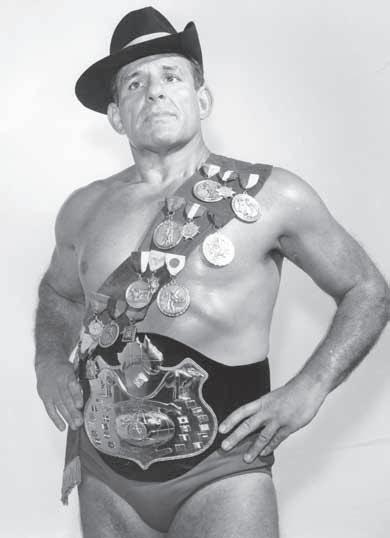
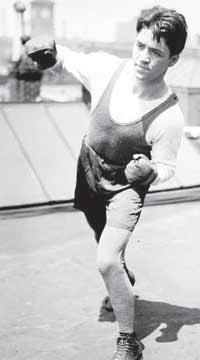
Sammy Mandell, whose real name was Samuel Mandella, fought during one of the lightweight division's golden eras. The 5'6" Mandell, who hailed from Rockford, IL., emerged as one of the top lightweights in the post-Benny Leonard era of the late-1920s. The tough slugger, who turned pro in 1920, averaged between 15-20 bouts a year during most of his career. Although certainly noteworthy by today's standards, Mandell's activity was not uncommon in his day.
self empowerment
relaxation
optimism
motivation
surgical recovery
headaches
public speaking confidence
scholastic achievement
test taking skills
Mike has done a 30 year study of the mind. He is a professionaly trained NGH-certified consulting hypnotist and a member of the National Federation of Hypnotists.
SAMMY MANDELL
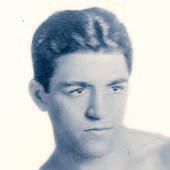
They called him the “Rockford Sheik” because of his resemblance to matinee idol Rudolf Valentino and from being from Rockford, IL (home of your editor and Cheap Trick). With his paralyzing left, Sammy became the Lightweight champion of the world from 1926-1930. Growing up in Rockford, IL., Mandell learned to box at Camp Grant (an Army camp during WWI south of Rockford). At this time he was too small 105 lbs to enlist, but friendly military personnel gave him permission to work out with them.
Sammy turned pro at 16, fighting across the country. He fought Jimmy McLarnin (3x), Jackie Fields (2x), Billy Petrolle, Solly Seaman, Johnny Dundee, and Jack Bernstein. Experts said he had the greatest left hand in the history of boxing.
Mandell was inducted to the International Boxing Hall of Fame. His final record was 143 wins, 26 losses, and 16 draws.
Sammy operated a pool hall in the bak of a pharmacy on E. State Street in Rockford. There was a vestubule with 2 large windows you could see into the drugstore and the pool hall. As kids, we would look through the window and catch a glimpse of Sammy playing pool with his buddies.
Mandell lost only five bouts en route to his title shot against lightweight king, Rocky Kansas. On July 3, 1926, he won a decision over the champion over 10 rounds in Chicago. Although he didn't put the title on the line for two years, Mandell did fight the top 135-pounders in non-title affairs. He decisioned world ranked Phil McGraw and Billy Petrolle in a pair of 10-rounders, and drew with Jackie Fields over 12 frames.
His two successful title defenses came against Hall of Famers. On May 21, 1928, he completely outclassed future welterweight great Jimmy McLarnin in New York, and 14 months later outpointed eventual lightweight and junior welterweight king Tony Canzoneri over 10 rounds in Los Angeles.
By 1929, Mandell's pace and rough style started to take their toll as he dropped two 10-round decisions to McLarnin. Nevertheless, Mandell, and the rest of the boxing world was shocked when he lost his title via K.O. in just 1:46 of the first round to power-punching Al Singer, July 17, 1930.
Although no longer a world contender, he fought until 1934, with his only noteworthy triumph coming against future Hall of Famer, Battling Nelson.
EDITOR'S NOTE:

I have been a member of the International Boxing Hall of Fame in Canastota, N.Y. since its beginning in 1990. The founder Ed Brophy was a visionary much like Tony Vellano*. Thru Ed's and others hardwork, the Hall is now nationally recognized as the Boxing Hall of Fame. Ed nurtured it into a successful, viable, highly visible entity. The Hall has been so kind as to allow us to use his induction bios in "The Ear" when we do a story on CAC's boxers.
The CAC thanks Ed and the IBHOF for this privilege.
sammy Mandell
BIO: Scott Teal has been in and around the wrestling business since 1968. Working for promoter Nick Gulas, he published the SLAM-O-GRAM arena program. He later published a magazine called Whatever Happened to ...? and, under his Crowbar Press banner, has written and/or edited 33 books.
In Japan, Karl Gotch was known as the “God of Wrestling.” If someone is to be considered the “God of Wrestling Historians,” that honor would go to J Michael Kenyon. J Michael, or JMK as many of us know him, may have done more research and chronicled more wrestling facts than anyone alive. Fellow wrestling historians considered him the “go-to guy” when information about a specific wrestler or event was needed.
J Michael passed away of congestive heart failure at the age of 73 on May 3, 2017.
Born Michael Eugene Glover in Seattle, Washington, on July 9, 1943, he discovered pro wrestling in December 1952 when his grandfather took him to see Lou Thesz defend the NWA title against Primo Carnera at the Armory in Seattle on Dec. 18, 1952. Not having a television in their home, that event sparked an interest in pro wrestling that would last his entire life. “They had me from the minute I stepped in the door. I was captivated by the overall atmosphere, the smoke, the growl of the crowd, people dressed to the nines screaming their heads off ... and, of course, the colorful guys who were climbing up into the ring.”
His dad wasn’t really a fan, so JMK wasn’t able to attend house shows again until he was in high school. That didn’t stop him from pursuing his interest, though. He kept up with what was going on through newsstand magazines, scoured the newspapers for reports about the weekly matches, and joined fan clubs. One night at the Civic Auditorium, he summoned up enough courage to approach wrestler Shag Thomas and told him he would like to start a fan club in his honor. The following week, Shag brought around 100 glossy photos and gave them to JMK to send out with a mimeographed bulletin he produced.
When he was able to drive, J Michael ventured out to house shows in Tacoma, promoted at the time out of the Vancouver office. “Tacoma was a different kind of promotion. They used bigger heavyweights. Don Owen continued to use smaller guys, like (Morris) Sigel did in Texas. Rod Fenton, who had the license up there, Don Owen and Harry Elliott combined to run huge shows in Seattle, drawing 12,000 to 14,000 people. Those were the first really big shows I had seen.”
JMK never pursued a career as a wrestler, but he had a couple matches at charity boxing exhibitions in Seattle. “Before one of the boxing matches, one of my friends and I would go into the dressing room, blade ourselves, cover it with something so it wouldn’t bleed, and go out to the ring. In seconds, we had blood all over us. We’d blow up in about two minutes and could barely move, but everybody got a kick out of it. It made for a nice intermission.”
He was still in high school when he got his first experience in the newspaper business, writing sports reports for the school newspaper, and was listed as a finalist for a Seattle Times scholarship in 1960. When he graduated high school, he went into the service and was assigned to Fort Ord in California. He later was transferred to Fort Hood in Texas where he made friends with the local wrestling promoter in Waco. “He thought he was promoting, but Dick Raines was running the town.” Raines took JMK into the dressing room and that’s when he got smartened up to the inner-workings of the wrestling business. In the days that followed, he began sending articles on the Texas promotion to Wrestling Revue and Wrestling World magazines.
After receiving an honorable discharge from the army in Dec. 1964, JMK moved to Yakima, Washington, where he got a job as sportswriter. A year later, he was hired as a reporter for the Seattle Post-Intelligencer. During that time, JMK and Dean Silverstone, who later would form his own wrestling promotion known as Superstar Championship Wrestling, got together to promote at the Port Angeles Masonic Temple. JMK pulled out after a short time.
In 1965, the sports editor of the Seattle PostIntelligencer hired him as a sportswriter. Three years later, when he was just 25 years old, young Mike Glover replaced the Post-Intelligencer reporter who had been assigned to the newly formed Seattle Sonics basketball team, a position that propelled him into the bigtime. He took to the limelight with alacrity, traveling from coast to coast, indulging in willing women and high-stakes card games, and was a nightly patron at bars. By his own admission, it wasn’t unusual for him to “be gone 24 hours a day, working 12 hours at the paper and spending 12 hours at the bar.” He added, “I used to run across so many fascinating characters and I was easily influenced. I wandered onto downtown Seattle’s old Union Street scene just as an era was ending. The saloons were full of bookmakers, pimps, conmen, promoters, whores, gamblers — and I just seemed to make friends with most of them. I was barely into my 20's, always the baby in almost every social situation, and, well, these wise guys (and gals) proceeded to give me a street education. Along the way, we had lot of laughs, a lot of fun times, and stuff just seemed to happen.”
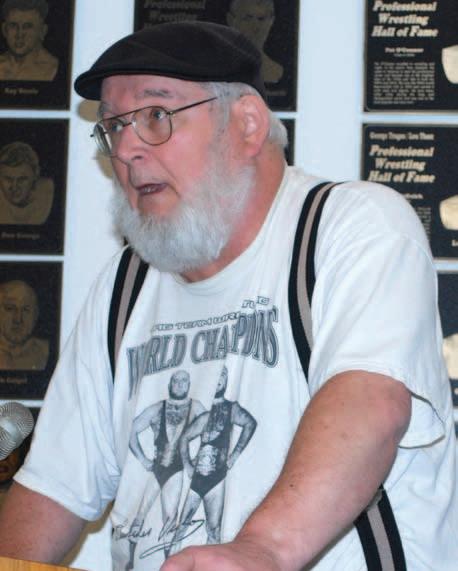
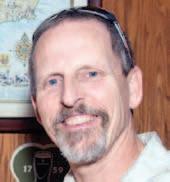
J Michael Kenyon photo courtesy Joyce Paustian

In June 1968, before he married the second time, his fiance accepted his proposal on the condition he change his name. The name “Michael Glover” didn’t appeal to her. He agreed and changed his name to J Michael Kenyon. The name was conceived when he drove past a building in Lynnwood, Washington, with the name Kenyon Printing printed on the side. He liked the sound of “Michael Kenyon,” but thought it was too short for a byline at the Seattle Post-Intelligencer, so he asked the printer to add a “J” before “Michael” ... and to leave off the period. He had his name legally changed and they moved to Baltimore (another condition his bride made before accepting his proposal) where he took a job with the Baltimore Sun. He discovered that the columns for the newspaper, however, were narrower in size than those in Seattle, so he was billed simply as “Mike Kenyon” in the Sun sports pages. Other than that, from that day on, he has been known personally and professionally as J Michael Kenyon.
Due to irreconcilable differences, six weeks after the wedding, JMK left a note on the couch that said, “I’m leaving,” and took a bus to Detroit, where he wandered the streets dead broke while working for two fledgling local magazines. He eventually called the managing editor of the Post-Intelligencer and secured a job with the newspaper as the television critic. The job didn’t last too long. He left the Post-Intelligencer in 1969 when he was ordered to write about Neil Armstrong and Buzz Aldrin landing on the moon. He refused and eventually typed a resignation letter which he took to KVI Radio and read it over the air.
JMK then went to work for George Chemeres, a boxing promoter at the Downtown Boxing Gym on First Avenue. He ran the gym and helped with Chemeres’ boxing cards. In January 1970, Dean Chance, former Major League Baseball pitcher and winner of the Cy Young Award, tried his hand at presenting boxing and asked J Michael to promote them. They held several cards, with most not drawing well, and JMK left less than two months later when he couldn’t handle Chance’s interference with the shows.
He also worked in various capacities for a variety of publications — managing editor of Hollywood Citizen-News, columnist for Hollywood
Reporter, and was a feature writer for the McClatchy News Service, all of which went out of business or didn’t pay well. He returned to Seattle and, drag-racing being another of his passions, took another low-paying job as publicist for the Seattle International Raceway. A short time later, broke and discouraged, he swallowed his pride and called someone he knew at the Post-Intelligencer. To his amazement, he was offered a position.
JMK was quite a controversial character. A newspaper report said, “Seattle never has been the same since this man blew through the city, sending people running for cover and dodging debris, providing his hometown with an unforgettable character who repeatedly tested the limits of his personal and professional life while writing and talking about sports in an entertaining and pioneering fashion.”
He may have been controversial, but he also was highly respected by those in the news industry. In his column, "Larry King’s People", Larry King wrote, “J Michael Kenyon in Seattle and Pete Franklin in Cleveland are the two best radio sports talk-show hosts in the USA.” The Weekly, a Seattle publication, said he was “the best sportswriter in Seattle,” and referred to him as “the hardest working, most imaginative, most thorough, most knowledgeable,” and added “with a special citation of ‘most bizarre.’” One of those bizarre incidents include driving a borrowed Chevrolet into San Diego’s Mission Bay ... and leaving it there. His direct style of reporting led to ABC Television and Carol Channing, on separate occasions, demanding he be fired by the Post-Intelligencer, being threatened by former Yankee catcher Elston Howard, and having a can of beer hurled at him by Boston Red Sox pitcher Dick Williams. While hosting a talk-show on Seattle’s KVI radio, he had more than one interview end abruptly when he asked a question deemed too controversial for the subject he was interviewing. By JMK’s own admission, he went a little crazy in the ‘70s. “I went off the rails for 15 years ... drugs, booze, and four wives during that time.”
In 1973, JMK began working as publicity director, ring announcer, and even did some refereeing for Dean Silverstone’s Superstar Championship Wrestling promotion. “At the time, I was a special projects editor for the Seattle Post-Intelligencer. I was around for four or five months, but Dean stayed at it for three years or so.”
In 1977, when the Seattle Mariners came into existence, he was asked to cover the Mariners. JMK immediately spent every waking hour reading about baseball and learning everything he could about the operation and history of the sport. General manager Dick Vertlieve praised J Michael’s work when he told a reporter, “He has a feel for what makes sports colorful, for the wonderful characters who play and hang around the game. He knows them and knows everything else, too.” JMK is credited for nicknaming Mario Mendoza, the shortstop, “El Espirador” (the vacuum cleaner), and saddled Mariners’ broadcasters with the handles “Dapper” Dave Niehaus and “Captain” Kenny Wilson. He also knew more about what was going on inside the Mariners offices than the team owners and executives.
in the Kingdome and measured them), regardless of how that might affect his acceptance into the Mariners’ locker room, and when he was in the Mariners’ clubhouse, he asked outrageous questions that had the players thinking he was a bit off his nut. Those questions, however, elicited fascinating answers that no other reporter could have obtained.
In 1980, he began moonlighting on KAYO radio as an occasional guest and host of the station’s sports talk show. That spring, he moved to KVI as host of the Ask Dan O’Brien Show, in which the public called in to ask questions of the Mariners’ president. It was during his time at KVI when he experienced what he called the “highlight of my life in sports.” While hosting the Sunday night 7/11 "Legends of Sport" in 1982, he spent an hour reminiscing with “The Galloping Ghost,” Harold (Red) Grange, the legendary All-American halfback for the University of Illinois and Chicago Bears.
From there, he worked a variety of jobs — columnist with the NewsTribune in Tacoma from 1986 through 1989, co-hosted a Saturday night college football highlights show on KCPQ-TV with Keith Shipman in 1987, returned to KLAY in 1990 with a seven to nine a.m. morning show, complete with (as one newspaper reported) “a make-believe marching band, oodles of controversial and often silly guests, plus his usual, nonsensical view of the sporting scene.” In 1992, JMK and his wife Joan went to England, returning to the U.S. in 1994 to host a sports radio talk show in Portland.
From 1995 to 1998, JMK was the spokesman and vice-president of public relations for the Unlimited Hydroplane Racing Association and promoted annual hydroplane races on the river near Evansville, Indiana. That ended with a move to the New York City area where he worked for a sports website. He returned to the Pacific Northwest in 2000 and, for health reasons, moved to the Oregon coast in 2004.

A true reporter, though, he didn’t allow his relationship with the team to skew his reporting. He wrote many stories that team executives didn’t appreciate, like financial troubles the Mariners were facing, or how the outfield fences weren’t regulation height (he actually took a tape measure
J Michael was both a mentor and an inspiration to me since I first began researching and writing about professional wrestling in 1996. He also has been one of the biggest advocates of my work. That didn’t stop him from reaming me out whenever he found an error in my writing, be it historical or grammatical. He sent e-mails chastising and/or insulting me strongly for spelling or grammar infractions, and minced no words in the process. Where most people would have been offended to have been addressed in such a manner, I loved everything he wrote ... because I always learned something. As the president of the unofficial “Wrestling Spelling Police,” an imaginary organization born in his fertile mind, J Michael sent out regular updates to historians about the correct spelling of wrestlers’ names. On one occasion, I reported that a “Mike Czarian” wrestled in Nashville, which should have been “Mike Nazarian.” It was spelled “Czarian” several times in newspaper reports and I never made the connection. J Michael’s e-mail began with, “I was able to at least temporarily block a cease-and-desist order by the Wrestling Spelling Police to have you arrested on sight.” That was a mild rebuke compared to others he sent.
It was attention to details that makes J Michael Kenyon the most important wrestling historian ever. There were times when I would e-mail and ask if he could send me a brief overview of a particular wrestler’s career. Within an hour, a return e-mail would arrive with ten to 20 (sometimes more) pages of results, articles, and background material. How he was able to structure his records so he could find that much material so quickly is amazing.
Even more amazing, J Michael’s brain was a virtual computer filled with information he could access at the drop of a hat. I’m one of those whose talent lies in knowing where to look to find the material I need, but I forget a lot of things as soon as I hear them. JMK had instant recall of all kinds of information. And wrestling wasn’t the only thing he knew. He could rattle off statistics, details, and trivia about basketball, baseball, boxing, auto racing, horse racing, old-time radio, politics, and who knows what else. He could even tell you the history of various newspapers.
A great deal of J Michael’s research and writings can be found on the Internet, specifically The WAWLI Papers (Wrestling As We Liked It), which can be found on the wrestlingclassics.com website, and he sent out regular e-mails to fellow historians with lengthy documents under various titles, like Allsies and Matmania, each filled with typed articles followed by his comments and viewpoints. If combined into book format, his work would easily fill 20 or more books. He also was a valuable asset to other authors, giving Steve Yohe an unfinished version of a biography on Ed (Strangler) Lewis, which Steve used as the base for the early part of his book Ed (Strangler) Lewis: Facts Within a Myth, and he helped Fred Hornby with his Gorgeous George Record Book.
For the past fifteen years, I pushed, cajoled and prodded JMK to actually write a book on some subject — any subject — pertaining to
(continued on page 18)
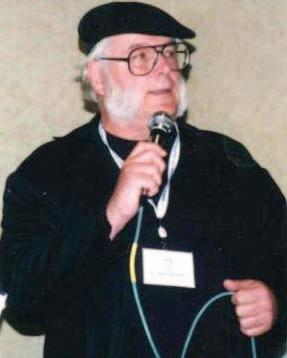
J Michael Kenyon photo courtesy slAM! sports
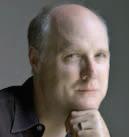
BIO: Jeff Leen is the author of a biography of Mildred Burke, “The Queen of the Ring: Sex, Muscles, Diamonds and the Making of an American Legend,” and the co-author of “Kings of Cocaine: Inside the Medellin Cartel--An Astonishing True Story of Murder, Money and International Corruption.” He is a long-time newspaper journalist who has worked at the Miami Herald and the Washington Post. Jeff Leen today is the Asst. Managing Editor in charge of the Post's investigation unit where his work has helped win six Pulitzer prizes.
Everyone remembers the Battle of the Sexes on the tennis court, but the Battle of the Sexes in the wrestling ring doesn’t get the notice it should. In 1980, shortly after the election of Ronald Reagan and the beginning of a new conservative era, Joyce Grable* and Judy Martin* engaged in a mixed tag team match against Jerry Roberts and Steve O in the Omni in Atlanta. It had never been done before: two female professional wrestlers squaring off against two male pros before a packed arena and a national TV audience. Not only did Joyce and Judy prove that women could go toe-to-toe with men on the mats, they displayed such extraordinary skill, courage and physical vigor that they convinced the audience and even seasoned observers that the women easily could have won the one-fall match, with a little better grip here or a little more tug there. In the end, the match was a contest of inches, and the women came exceedingly close to pinning the men on more than one occasion.
“A lot of people say Chyna* was the first to wrestle a guy,” Joyce recalled recently. “No, sir, she wasn’t. We were doing great in there against them. When you’re smaller you’re faster and more limber.” The Atlanta match was part of a National Tag Team Tournament put on by Georgia Championship Wrestling for superstation WTBS. It was the brainchild of Ole Anderson, who was trying to emulate the historic Billie Jean King vs. Bobby Riggs tennis match of 1972. Although Jerry Roberts and Steve O eventually won the historic mixed wrestling match, the crowd was thrilled and so were the promoters.
Bobby Simmons*, the office manager for Georgia Championship Wrestling who was at ringside that night, raved about the quality of the match decades later.

“The guys and the girls worked so well together that people bought it,” Simmons said. “There was no comedy to it. There was no clowning around and no sexual stuff…It was just straightforward wrestling.” The fast, exciting match featured a lot of back-and-forth, nip-and-tuck, tight, hard wrestling, with no quarter given. At one point, Judy Martin, who would go on to an illustrious 20-year career and collect several championship belts, employed an incredible power move and almost pinned Jerry Roberts in a small package. At another, Joyce Grable said
she made the deliberate decision to kick Roberts, hard, in the trunks. She said he had been wrestling stiff against the women, and she needed to teach him a lesson.
“You’ve got to suck it up and be as mean as you can,” Joyce recalled. “I wasn’t intimidated at all by them.”
Joyce was by far the most experienced wrestler in the ring—the others all had only a year or two of wrestling experience each—and Joyce’s ring savvy set the pace and tone for the match. She had been a tag team champion, and she was an expert with holds and she knew how to tell a story in the ring. Judy was big and exceptionally strong, but raw and inexperienced. The men had the added disadvantage of having to wrestle women in front of a national audience with no rehearsal, no precedent and no script. The only thing the wrestlers were told was that the men were coming out on top.
A look at surviving video from the match shows the differences between men and women wrestlers at the pro level. The men relied on their strength and size, the women on their speed and skill. The men’s wrestling was centered on their bulging upper bodies, employing their huge biceps, chests and shoulders; the women enjoyed lower centers of gravity and depended on their strong legs and flexibility to dominate the men for much of the match.
“It really taught these guys something about how a girl could wrestle,” Joyce recalled. “It really slowed them down a lot. They underestimated what we could do. When we made a move on them, they really just couldn’t believe it. Especially if it was something flying or something they could not do as a man because of the muscles and the build. They’re so muscular, with their biceps and triceps, they couldn’t move like we could. When you got them on their backs, they had a hard time getting up.”
Simmons said the key to the success of the match was that they planted the seed that the women could have been victorious. “When the match was over and people had time to reflect on it, they could see, maybe, under certain circumstances, on a certain day, maybe the women could slip in and get a fall on the guys.”
Joyce said that if the match had not had a determined ending she could have reached into her bag of holds and come up with one of her own, putting the women on top.
“I think so, I really think so,” she said. “I really think, if things had been different. I could do an abdominal stretch really well. I would have put him in an abdominal stretch with my left leg wrapped around his, I could have bent him all the way back with all of my weight, putting my legs into it, and he would have had to give up or start pulling my hair and punching me.”
She said she also could have won a submission with a head scissors, but you could not use that kind of a hold in a mixed match back then. “We were trying to stay away from that,” she said. “We didn’t want them to start saying sexual innuendo. Any girl could throw their legs up and catch them in a head scissors. We wanted to stay as professional as we could.”
Joyce remembers the mixed match fondly. “I enjoyed every minute of
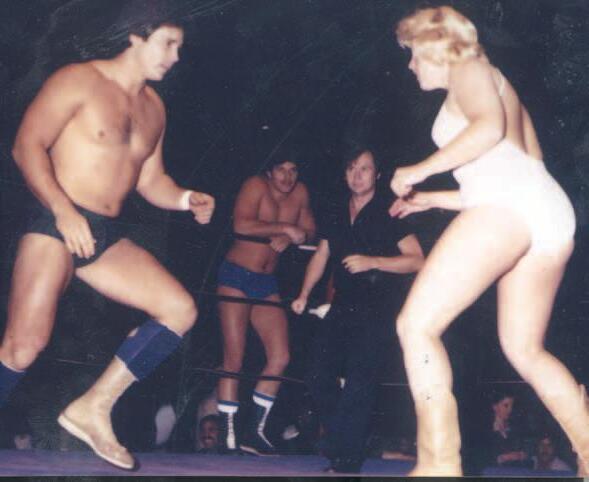
steve O and Joyce grable* as Jerry roberts looks on. photo courtesy Jeff leen
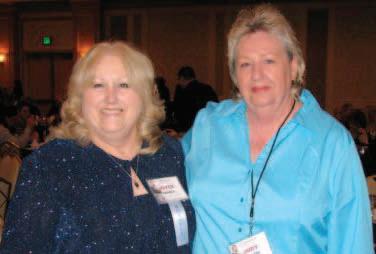
Joyce grable* and Judy Martin* at the 2010 photo courtesy greg Oliver
BIO: I’ve been a newsstand magazine photographer/ writer since the sixties and covered every CAC event since the late eighties.
Every year we unfortunately lose more and more of our all-time classic territory greats. The recent loss of Bobby Heenan* really hit hard.
No one could verbally dissect an opponent like The Brain. If you only know him for his WWF/E outstanding work, treat yourself to his WWA, AWA, St Louis & brief Atlanta GCW pre-80’s masterpieces where he seldom clowned around. His WWF commentary paired with former CAC board member Gorilla Monsoon* was pretty great obviously. I was honored to have covered his career for the magazines from the early 70’s all over the U.S. and Canadian territories. You’d never approach him post-shows unless allowed to do so. I will never forget Bobby holding court immediately after a major Kiel Auditorium (1977 Funk*/Brisco*/ Race*) spectacular at the bar in St. Louis’ famous Chase Hotel (where Sam Muchnick’s* TV would be taped the next day).
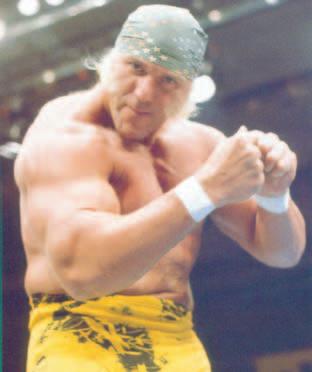

On one end of the room, Ray Stevens*, Bobo Brazil, Dory and Harley*, Jack Brisco*, Dick The Bruiser, Jimmy Valiant*, Bulldog Bob Brown, Akio Sato*, Ox Baker*, Jesse Ventura and others were taking in every word Bobby said, both in general and to then WWWF champ Superstar Graham*. A few fans not in the know tried approaching Bobby and were quickly verbally terminated by him. I just kept my mouth shut and snapped away with my Minolta for the magazines. Thankfully he was welcoming to me once he figured out I worked for Stan. When he came to New York for a planned photo shoot piece posing with Lou Albano* in 1974, in a symbolic passing of his Blackjacks duo of Lanza and Mulligan, people went bonkers hoping he’d join all the other WWWF great managers at the time which of course included Wiz/Ernie Roth and Classy Freddie Blassie*. All eyes on the street were centered on Heenan. He just had wrestling’s famous "it" factor, exuding showbiz, hutzpah and confidence.
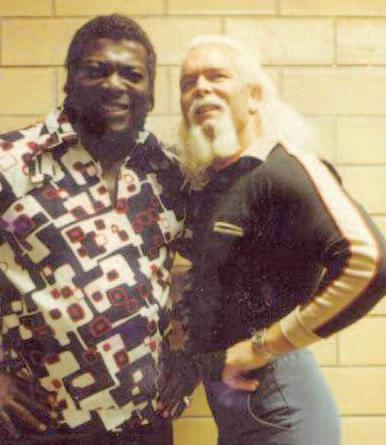

better than anyone. How to create and then get out of those riots he personally created, particularly in Chicago at the Amphitheatre.” One of my fondest memories was shooting at the Amph the night Ray and Nick lost their AWA World Tag Belts to Bruiser and Crusher* in a 2/3. The place went ballistic, in part due to Bobby’s antics inside and outside the ring. After the show, backstage, Bobby had the biggest smile of anyone back there despite the usual riot dangers in that wonderfully classic and beloved venue we all miss as well. Bobby loved seeing his crafted contributions pay off while sending crowds home happy, never forgetting what they’d seen The Brain weasily pull off. That was his master of craft. What a professional. How he’ll always be missed. Loved. Respected. We were lucky to have had Bobby and Cindi with us at CAC one last time in 2015. Although cruelly unable to speak much when the gift of gab was his gift for decades, I’ll never forget when Paul Orndorff* walked from the back to the podium to be honored on-stage at our Awards Banquet. He spotted Bobby seated in his wheelchair and came up from behind and planted a big sloppy kiss atop Bobby’s head. Bobby beamed as only he could which said far more than words. Everyone who worked with him cherished Bobby Heenan.
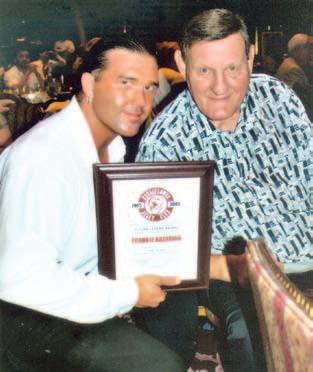

We’re posthumously honoring the great Roy McClarty in Vegas this May 1st as Dean Silverstone reminded me. His son, daughter and granddaughter will be coming all the way from Prince George, B.C. to be with us and accept his award which is a great honor back to CAC because it’s a Stu Hart territory-like massive drive for them! At Dean’s 1993 Northwest Wrestler’s Reunion, Roy was honored when he, Don Leo Jonathon*, Dean Ho/Higuchi, John Quinn and Freddy Baron all came down from Canada together. I was there and everyone was thrilled Roy and the boys had made it down. HB Haggerty* and Kenji Shibuya* were all over Roy with hugs, ribs and road stories. And HB said “now that was one damn fine pro wrestler!” When I returned home, I told John Tolos I’d seen his old “nemesis” there and John said some of his best matches ever were with Blassie*, Bastien*, Kiniski*, Jonathon, Walter Kowalski* and “especially Roy. He was aces.”
On my radio show, he said he “grew up totally loving wrestling. I was like a male rat and did anything just to take the boys robes to the back when I was a kid. Whatever it took to join the show. I didn’t care if I ever made a dime. Later on I thankfully made a lot of dimes.” Amongst his many close friends like Stevens, Bockwinkel*, Pepper Gomez*, Angelo Mosca*, Pat Patterson* all agreed he was one of wrestling’s greatest bump-takers. Nick repeatedly said that “Bobby was better in the ring than most. He was like Ray(Stevens) in just having it all naturally. He didn’t have to do much in the gym beforehand. Just go out there and knock the crowds dead. He was a heat-guided, missile-magnet for us. Just one look at the crowd without even opening his mouth and they’d all go crazy. He knew how to read and gauge those same crowds
Roy Lorne McClarty was born in Saskatoon July 31, 1918. He played football for the Canadian League’s Deer Lodge team and later moved to Vancouver, B.C. where he has some of his greatest fame winning the Pacific Coast Title in 1961 paired with Whipper Billy Watson beating HB Haggerty and Gene Kiniski (wow!) as well as beating them for the Canadian Tag Straps the following year. Roy feuded with Tiny Mills, Aldo Bogni and others utilizing his cobra clutch and sleeper to put them away. In Chicago he held the NWA World Tag straps with Pat O’Connor beating Art Neilson and Crusher Reggie Lisowski* in 1955, the following year teamed with Bobby Bruns defeating Boris and Nicoli Volkoff for the belts. Publicly, Roy claimed to have been trained for the biz first at a YMCA in Winnipeg before promoter Alex Turk signed him. He was then sent to train with the great Joe Pazandak in Minneapolis and served overseas in WW2 for 18 months. Roy said he’d pinned Henri DeGlane in Paris before 22,000 fans which was his biggest thrill.
WWE is not only continually acquiring some of wrestling’s greatest talent internationally: Shinsuke Nakamura, Asuka, CMLL’s Cien (La Sombra) Almas, and Gran (Máscara Dorada) Metalik but also from spots like the hot UK talentpool, China, India plus of course from great indies like Evolve and Ring Of Honor. Their talent who originally acquired fame in TNA/Impact/GFW like Bobby Roode and AJ Styles, have obviously proven their worth on the main roster with Madison Rain and Eric Young waiting their turns. They are truly “world” and really have been so for years.
PAT PATTERSON
Billy graham* photo courtesy Mike lano
Frankie Kazarian* and Killer Kowalski* photo courtesy Mike lano
Bobo Brazil and Jimmy valiant* photo courtesy Mike lano
(continued from page 15)
wrestling. Sadly, the only book published with his name as author was the recently released Wrestling in the Garden — The Battle for New York: Works, Shoots & Double-Crosses, of which JMK and I were co-authors. After it was released, he admitted to me that he wished he had taken me up on my suggestion, and having the completed book in his hands had inspired him to begin working diligently on a book about the wrestling territories, centering around the Tom Packs booking operations of the ‘30s and ‘40s, which he planned to begin in May 2017.
In 2016 and 2017, he edited the autobiography of the first Sonics coach, Al Bianchi, and had just finished the edit of My Oh My: The Dave Niehaus Story.
He lived the last decades of his life with his wife, Joan (who he refers to as Madame Zogg), in Port Orford, Oregon. For almost a decade, he told close friends that he was suffering from dementia. Until the day of his death, though, he never was at a loss when asked a question about a wrestler or an event.
“There will never be another like him” is a cliché overused in obituaries, but in regards to J Michael Kenyon, it’s the perfect description to characterize his life. Words can’t begin to describe just how much he contributed to the wrestling community and the annals of wrestling history.
We're saddened to pass on the news of the death of J Michael Kenyon who was the preeminent wrestling historian, bar none.
- Greg Oliver, Slam Wrestling
...with J Michael Kenyon, the "Lou Thesz" of wrestling historians...
- Dean Silverstone
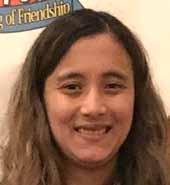
Bambi Weavil –Communications and Marketing Consultant
Bambi will lead our efforts for developing communication strategies that help advance the CAC’s efforts to financially assisting those in need, whom have made their living in the Wrestling Industry. These strategies include media outreach, web marketing, social media, membership marketing and more.
Bambi is also the founder of Masters Of Ring Entertainment. Bambi is responsible for leading Master of Ring Entertainment’s efforts in event production, business operations and marketing.
Prior to Masters Of Ring Entertainment, Bambi was the Director of Marketing for Escape Artist International. In addition, Bambi was the Director of Marketing for Passion & Purpose and YoPro Global.
For over 10 years, Bambi has lead companies and non-profits to forge and implement strategic communications and growth in traditional
(continued from page 16)
it. And if I was younger, I would do it again.”
Her favorite picture of the match, Joyce said, is the one showing her in the ring with Steve O as they are just getting ready to lock up for the first time. It has the quality of one of those George Bellows boxing paintings from the early 20th Century, with clashing, sinewy bodies in a lighted arena surrounded by darkness. The photograph is angled so Joyce appears as big as her heavily muscled male opponent. Between the two wrestlers is the male referee and her other male opponent, Jerry Roberts, waiting outside the ropes. There are three men and only one woman in the photo, but she is the focal point, with her shining blond hair and bright white wrestling suit throwing off a blinding light. Steve O appears pensive as he approaches her, inching toward a date with destiny and a bruising and determined opponent, just one abdominal stretch away from a wrestling Waterloo.
Despite their historic careers, Joyce Grable and Judy Martin are not in the WWE Hall of Fame, left out along with such stars as LeiLani Kai and Toni Rose, although some more recent women from the Diva Era have made it in.
“We were great athletes,” Joyce said. “For some reason they forgot about us who paved the road.”
ANSWERS FROM CROSS WORD PUZZLE
marketing and social media marketing campaigns by advising, developing, implementing and leading winning marketing strategies in fast-paced environments. Her industry expertise and passion includes social media, cause-related marketing, sports entertainment marketing and media relations.
In 2012, she moved to NYC from Wilmington, NC to become the Digital Marketing and PR Manager for MetSchools, Inc. She returned to Wilmington in 2015. Bambi is currently the Marketing Manager for ACME Growth Co.
Bambi began her pro wrestling career through journalism writing for the popular SCOOPS Wrestling, InsidePulse.com, PulseWrestling.com, and Pro Wrestling Daily. Bambi also started with Greg Ragland, popular internet wrestling sites - MarkingOut.com and Squared Circle Magazine.
Bambi has also worked in pro wrestling radio as an online pro wrestling personality in Pro Wrestling 24/7 in 2011-12.
For the last 7 years, Bambi has run Out Impact Productions - a sports-entertainment talent agency. In 2012, Bambi proudly worked with long-time friend “Diamond” Dallas Page in leading marketing and social media efforts on promoting DDPYOGA.
Bambi is excited about working for CAC.
Jason Sanderson's* audiobook for Code Name Wanderer made it to the first round consideration of the Grammy ballot in the Spoken Word field.
PAST CONTRIBUTORS
Alfred Ticineto, Jr. - writer, photos
Brad McFarlin - photos
Brian Blair - writer
Brian Kelley - writer
Brian Westcott - writer
Chuck Thornton Collection - photos
Dan Westbrook - writer, photos
Darlene Kreis - writer
Greg Oliver - writer, photos
ibhof.com - photos
Jeff Leen - writer
Jeff Sharkey - writer, photos
Joe Pottgieser - photos
Johnny Griffin - writer
Jon Langmead - writer
Joyce Paustion - photos
Kari Williams - writer
Michael McCurdy - writer
Mike Rice - graphic artist
PamElla Lee - photos
Pat Laprade - writer
Ron Hutchison - writer
Steven Johnson - writer
Thomas Rude - puzzles, writer, photos
Vance Nevada - writer, photos
Dallas James, Dallas Divine, Don Parker - sep 24
Ken Hawk, Kenneth David Stidgersep 26
Scott Eiland, announcer - sep 27
lance Russell - Oct 3
Eric Denis - Oct 8
Burrhead Jones, Melvin Nelson - Oct 15
Bill Kersten, announcer - Oct 20
Stan "Krusher" Kowalski, "The Big K" Bert Smith - Oct 20
Devil Murasaki, akio Murasaki - Oct 23
Bobby Bahfanabalaminga, Sean
Vecchione-Dale - Oct 29
Tokyo Joe, Yukihiro Sakeda - nov 4
Tugboat Taylor, Dick Taylor - nov 8
Chad adams, Steven Joseph Wolther - nov 9
Eddy Steinblock, Edwin Steinblock - nov 9
Max Devlin, Dutch fielding, Devon leigh fielding - Dec 4
Spyral, Snake, Brandon Kaplan - Dec 4
Gino Moore, Eugene W. Moore, Promoter - Dec 8
thanks to greg Oliver - slAM! sports slam.canoe.com & www.caulifloweralleyclub.org
1. Vachon 2. HardBoiled 3. Jonathan 4. Christy 5. WoodyStrode; 6. RayStern 7. Stratus 8. Bockwinkel 9. Kowalski 10. TerryTaylor; 11. SteveAustin 12A. Heenan 12D. HarleyRace 13. TerryFunk; 14. BretHart 15. StuHart 16. Thesz 17. DickBeyer 18. Hennig; 19. IvanKoloff 20. LeBell 21A. DiBiase 21D. Drake 22. Sergeant; 23. Ventura
CaUlIflOWER allEY ClUB MEMBERSHIP
NEW RENEW
aMERICa aNNUal:
$25 via Check*
aMERICa lIfETIME:
$300 via Check*
CaNaDa aNNUal:
$35 via Check* (U.s. Funds)
CaNaDa lIfETIME:
$450 via Check* (U.s. Funds)
OVERSEaS aNNUal:
$45 via Money Order* (U.s. Funds)
OVERSEaS lIfETIME:
$550 via Money Order* (U.s. Funds)
some additional processing fees may be associated with certain forms of payment.
PaYMENT OPTIONS
• Check
• Money Order





*To pay via Check or Money Order mail form to:
Cauliflower Alley Club 4138 187th Ave se issaquah, WA 98027
**To pay via Credit Card mail this form to above address with Credit Card information; or phone CaC at (425) 644-2658.
Open seven days a week from noon to 5pm Pacific Time.
***To pay via PayPal go to www.caulifloweralleyclub.org/shop and follow instructions.
name ___________________________________________________________________
ring name ______________________________________________________________
Address _________________________________________________________________
City ______________________________ state _______________ Zip ______________
e-mail ______________________________ Phone ______________________________
Accomplishments in wrestling (or send resume) ________________________________
To charge membership via mail
Credit Card # ___________________________________ expiration Date __________ name on credit card __________________________________ Amt. Charge ________
CaC 2018 BaNQUET/BOCKWINKEl BlOWOUT
Gold Coast Hotel & Casino in las Vegas, NV
Blowout: MAY 1, 2018 Banquet: MAY 2, 2018
total number of tickets You Wish to Order __________
PRINT & MAIL FORM TO:
CAUliFlOWer AlleY ClUB 4138 187tH Ave se issAqUAH, WA 98027 or Call in your Credit Card seven days a week, noon to 5pm PST (425) 644-2658
NO BaNQUET TICKETS
SOlD aT DOOR!
All OrDers BY CHeCK MUst Be in U.s. FUnDs, inClUDing CAnADiAn and OverseAs OrDers
TICKET OPTIONS
MEMBERS:
$125 per person by check for BOTH NIGHTS
- Blowout & Banquet
MEMBERS:
$130 per person by credit card for BOTH NIGHTS - Blowout & Banquet
NON-MEMBERS:
$150 by check
$170 Canadian orders, $185 overseas orders
NON-MEMBERS:
$155 by credit card
$173 Canadian orders, $185 overseas orders
(only one non-member charge per immediate family is necessary)
(list the RING NaME of each person who will be using the tickets) Print nAMe CleArlY
enclosed is a check in the amount of __________________ or charge my credit card in the amount of ____________________ for _____ tickets.
If paying by credit card: Credit Card #______________________________________ Amt. Charge___________ exp. Date___________________ name of credit card holder __________________________
fOR NEW MEMBERS ONlY: PLEASE MAKE SURE TO FILL OUT AND SUBMIT THE MEMBERSHIP FORM
YOU Will nOt reCeive "tHe eAr" iF YOU DO nOt Fill OUt tHAt FOrM As Well!
Cauliflower alley Club
383 Highway 00 Rolla, MO 65401
RETURN SERVICE REQUESTED
53rd anniversary of The CaC Gold Coast Hotel/Casino, las Vegas
april 29th to May 2nd 2018
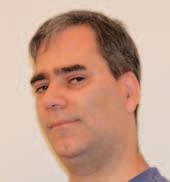
BIO: A writer, editor, producer, and stay-at-home dad, GREG OLIVER has had six books about professional wrestling published. Producer at SLAM! Wrestling. CAC member since 2001, though did attend the CAC dinner in Cherry Hill, NJ, in 1998 www.oliverbooks.ca He can be emailed at goliver845@gmail.com, and you can follow him on Twitter @gregmep
There were two distinct parts to the wrestling days for Roy McClarty, and both are deserving of celebration at the upcoming Cauliflower Alley Club reunion.
The first came after the Winnipeg, Manitoba, native got out of the Canadian military and decided to give professional wrestling a try, learning the trade at the local YMCA with the likes of Ole Olsen and George Gordienko, while also excelling at other sports, and working as a lifeguard. Debuting around 1948 in England (sometimes as “Sir Garth”), he was soon back in North America, where he polished his skills with Joe Pazandak before making a name for himself in rings across the continent.
A different ring came on February 9, 1950, when McClarty married fellow wrestler Shirley Strimple, of Odessa, Texas, in the ring in Boston; promoter Paul Bowser gave the bride away. They would have four children together in their near-decade long marriage, and appeared on the TV show, To Tell The Truth, as a couple. A second marriage, to Geraldine Ann White, would bring five more children.
A 6-foot-1, 230-pound blond babyface, McClarty's specialty was the
sleeper hold, where he'd take an opponent's arm, hold it across his foe's face with one hand, and use the other hand to reach around and apply pressure to the artery on the neck. He was a phenomenal talent, said the late Moose Morowski. “He was just an all-around great athlete ... He had such a sense of balance and co-ordination, and an excellent wrestler. And tough.”
During the later part of his career, McClarty settled on the west coast, working Oregon, Washington and B.C.. Beginning around 1971, he refereed and drove the ring truck for the Vancouver promotion. His influence on young grapplers, and his valued status in the community, are perhaps more meaningful than his in-ring accomplishments.
“Gimme the best babyface story you can, and I would have said Roy McClarty for his humanitarian ways, his kindness, his sensitivity,” recalled “Cowboy” Dan Kroffat*, a frequent golfing buddy. “He was really, really a legitimate nice guy.”
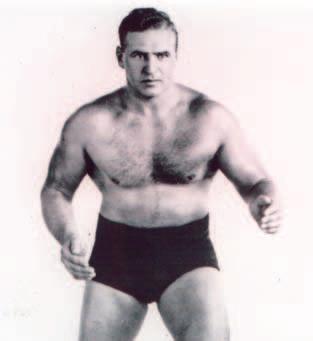
roy McClarty

The veteran was sought out by youngsters like Ed “Moondog” Moretti* for advice. “He was like an angel. He helped me so much,” said Moretti. Besides sparring with the new talent after setting up the ring, including a young Jake Roberts, McClarty preached a simple credo for the action: “Make it look like a contest.”
When the Vancouver promotion closed up, McClarty took a job as a custodian for the school board. During the years before his death in April 1988, McClarty battled Alzheimer's disease. At the upcoming reunion, members of his family, including daughter Kelly and granddaughter Briley, will be on hand to receive a posthumous award on behalf of Roy McClarty.