

EXECUTIVE BOARD
ADVISORY BOARD
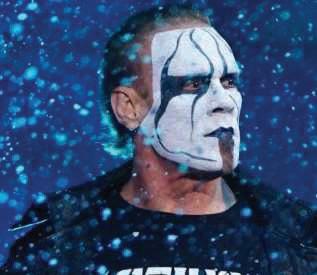

In professional wrestling, a connection with fans can’t be faked or manufactured. If one thing set Steve “Sting” Borden apart from his contemporaries, it was that ability to connect genuinely with an audience. It’s been said before but bears repeating: There were wrestlers who were bigger, faster or better on the mic than Sting. But few wrestlers were so solid in those categories while being so good for so long as someone fans could identify with.
Born March 20, 1959, in Venice Beach, California, Borden was a local bodybuilder who had no idea what pro wrestling was when a group of trainers, including the famed former wrestler Red Bastien, approached him seeking to form a quartet of muscleheads. An evening of live matches sold Borden on a life pursuing wrestling fame. “As soon as I heard the roar of the crowd, it was like magic,” he later wrote.
Borden debuted for Tennessee promoter Jerry Jarrett
alongside Jim Hellwig, an intense competitor with an eye-popping physique. By 1988, the pair had gone their separate ways: Hellwig to the WWF as the Ultimate Warrior and Borden to Jim Crockett Promotions as Sting. Sting wrestled what might still be his most iconic match on March 27 of that year, a time-limit draw with NWA heavyweight champion Ric Flair at the inaugural Clash of the Champions. As the match unfolded, he won thousands of new fans by the minute. By the end, he was over in such a way that he would never need to worry about scrounging for work again. “Everything changed after that night,” he wrote.
By 1997, when Sting wrestled Hulk Hogan in the main event of Starrcade, he’d adopted a new persona. His multi-colored grease paint and spandex was replaced by a stark black-and-white palette and brooding personality based on the film The Crow. In anyone else’s hands, this new persona risked coming off as silly. In Sting’s, it worked like a charm.
He left wrestling in 1998 to focus on his health and family. Painkillers and all that comes with a decade of life on the road had taken its toll. He got clean, rebuilt his life and after returning to wrestling, worked for a number of promotions, including TNA, AEW, and WWE. Though his guise and surroundings would change, he was always Sting. In 2012, he was inducted into the TNA Hall of Fame. In 2016, he was inducted into the WWE’s.
Sting learned the wrestling business the hard way before finding what looked like overnight success. He worked with some of wrestling’s very best and added his own touches along the way. More than anything, though, he brought a knack for reaching fans and making them feel a wholehearted investment in his work. A wrestler can be shown any number of skills, but that is not one of them. Though he didn’t even know what wrestling was for the first 20 years of his life, almost by magic, he would come to embody all the best things about it.
Jon Langmead
All the grueling training, milk drinking and singing about breaking ankles has paid off for your Olympic Hero.
Kurt was born on December 9, 1968, in Mt. Lebanon, Pennsylvania, a suburb just south of Pittsburgh. In the mid1980s he played fullback and linebacker for the Blue Devils. He followed his brother Eric into scholastic wrestling, where he excelled from 185-235 pounds. By the time he graduated in 1987, Kurt was an undefeated (56-0), WPIAL, Pennsylvania State and National Scholastic Heavyweight Champion. Before attending Clarion University, Angle defeated 10 men to win the Junior National Freestyle Wrestling Championships.
Once at Clarion, Angle played nose tackle for the Golden Eagles before focusing on wrestling and facing off against other NCAA wrestling champions like Carleton Haselrig and Sylvester Terkay. Angle graduated from Clarion with a 90-10-2 record and was a two-time national champion.
Kurt turned his attention to the 1996 Olympics, where he trained with David Schultz. While preparing for the Atlanta games, Angle suffered from a severe neck injury, fracturing two of his cervical vertebrae, herniating two discs and pulling four muscles.
In a thrilling turn of events, Angle defeated Iranian Abbas Jadidi in the 198-220 weight class for the freestyle gold medal and became an instant celebrity. Most notably, Angle returned to his native Mt. Lebanon and was honored as grand marshal in a hometown parade, motoring in a convertible along with his mother.
Angle’s career in pro wrestling nearly ended before it started. Encouraged to attend an ECW event in Philadelphia, Angle did not care for the industry. He also initially turned down a 10-year contract to join WWE and returned home to Pittsburgh to be named a “Dapper Dan Man of the Year” along with the likes of Mario Lemieux, land a pizza sponsorship, produce an exercise video for kids, work with a company that produced foodstuffs and join a fledgling news station as its star sports anchor and reporter.
But the allure of pro wrestling never really left. In 1998, he






Not long after, Paul “Triple H” Levesque would be quoted as saying that Angle picked up the sport faster than anyone he had ever seen. Inspired by “Stone Cold” Steve Austin, Angle would go on to have one of the most charismatic and successful runs in history, including time with the WCW, WWE and TNA World belts.
Angle has earned countless titles, accolades and awards, and at 42 even discussed an Olympic comeback in 2012, but an injury unlike a “broken friggin’ neck” stopped him from wrestling in London.
A WWE Hall of Famer since 20018, Angle, his wife Giovanna, and their family live in suburban Pittsburgh.







Allison Danger always wanted to forge her own path in professional wrestling, which is why she adopted a generic and clearly fabricated name. But there’s nothing generic about Danger, whose real name is Cathy Allison Corino. But despite her family name having greater meaning in the wrestling business, Danger achieved her dreams all on her own.
The younger sister of former ECW and NWA World Champion Steve Corino didn’t want any allegations of nepotism following her, nor did she want people to associate her with an established name and use her as a stepping stone or as a conduit to curry favor in the political and cloistered world of professional wrestling.
“I chose to take a harder path in wrestling but it ended up being more rewarding because I knew people were booking me because they saw something in me not because, ‘She’s Steve’s little sister that might get us in good with Corino,’” Danger told SlamWrestling.net in 2011.
And although Steve Corino had a role in training her— as did the likes of CM Punk and the CHIKARA Wrestling Factory—Danger found work all over the United States, Canada, the United Kingdom, France, Germany, and Japan. These experiences made her into an experienced in-ring competitor, but an even better trainer. Though she has won championships and accolades in many different places, her biggest contribu-
tion was her involvement in the creation of SHIMMER Women’s Athletes, which ran from November 2005 to December 2021. That promotion helped bring further attention to several mainstays in modern women’s wrestling, including Mercedes Martinez, Willow Nightingale, Athena/Ember Moon, Sara Del Ray, Nikki Cross, Mia Yim, Serena Deeb, and Danger’s favorite wrestler, Beth Phoenix.
Danger devoted several years to training aspiring women’s wrestlers and managing an entire promotion alongside SHIMMER co-founder Dave Prazak. Even as the mounting challenges of managing a promotion and maintaining in-ring increased, Danger put everything into her craft. Nothing, not even the physical toll of pregnancy, could keep her away from her passion for professional wrestling.
“I was still booking and training people through my whole pregnancy. I went to shows up to three weeks before I had my daughter—I did commentary, booking, ran backstage stuff, helped at training seminars where I couldn’t get in the ring but would stand outside and take notes, critique people, help them. I was involved that whole time and seven weeks after I had my daughter I was back in the ring bumping.”
Even as some SHIMMER alumnae used her promotion as a stepping stone to bigger venues, Danger didn’t see those situations as wrestlers “selling out.” To her, a SHIMMER wrestler moving onto somewhere else was seen as another woman bringing more exposure to women’s wrestling in general. And besides, if a departing wrestler left a spot on one of SHIMMER’s cards, then there was no shortgage of hungry women to choose from to fill that void. After all, SHIMMER was meant to put women’s athletics front and center.
Long before #GivesDivasAChance or “Women’s Evolution” were on anyone’s minds in North America, Allison Danger was dedicating her time and effort into giving women’s wrestlers a platform to be taken seriously as competitors. And considering how many similar federations have popped up all over the place over the past decade, it’s fair to say that Danger earned her spot as a net positive contributor to professional wrestling.
Alex Podgorski
The entrance of Gary Jackson to the world of pro wrestling is all about a special entrance.
Too young to attend the shows at the Chase Park Plaza Hotel, he could only dream of attending TV tapings of Wrestling at the Chase, the flagship show of the St. Louis Wrestling Club, one of the most prominent members of the National Wrestling Alliance for decades
By chance, Mickey Garagiola, the voice of Wrestling at the Chase from 1969 to 1982, worked with Jackson’s mother at Ruggeri’s, an Italian restaurant in St. Louis. When Garagiola found out young Gary was a wrestling fan, he instructed him to be at a certain door at a certain time, and Gary would be secretly ushered in.
That was Jackson’s introduction to the world of professional wrestling. He would befriend Larry Matysik, St. Louis promoter Sam Muchnick’s trusted assistant for over a decade, just one of numerous connections that would influence his career.
Jackson was born 1960 in El Dorado, Arkansas, to Mary Lee Jackson and Jody Clemens. It is about 20 miles from the border of Louisiana. However, he grew up and still lives in St. Louis. He describes his childhood as normal, attending a Catholic elementary school and Vashon High School, where he participated in wrestling and football.
Once he finished high school, Mr. Jackson joined the Army for active duty from 1980 to 1983. After he was discharged, he looked for a place to train to become a pro wrestler. He learned his new trade under Tim Kearns and Ricky Robinson at the South Broadway Athletic Club, and Robinson was also Jackson’s debut opponent in August 1984. His old friend Matysik opened his own promotion in 1984 and used Jackson on some of his cards, though never on TV.
Jackson’s big break came with Bob Geigel’s Central States promotion in 1986. Although he would only spend about six months in the territory, he made connections


that would provide him work in various places, from Jerry Jarrett’s USWA in Tennessee to Herb Simmons’ Southern Illinois Championship Wrestling (SICW), which is his home promotion and his “comfort zone.”
Briefly, he wrestled as “Gorgeous” Gary Jackson while he was a heel in St. Louis. The moniker that stuck, though, was “Night Train.” Bruiser Brody thought he looked like Pro Football Hall of Famer Dick “Night Train” Lane and, as Mr. Jackson says, if Brody gave you a nickname, you took it.
Jackson once told Matysik he was “the most famous unknown wrestler in the world.” He is still active today, a career that spans 40 years. Through his work, he has made wrestlers like Steve Austin and Scott Hall look like stars.
In May 2024, the SICW presented Jackson with its Sam Muchnick Award. Resplendent in an orange suit, Jackson succinctly summed up an ongoing career: “It’s been great, I have no regrets.”
Thomas Starr
CAC Tip of the Hat
For the past several years, David Boyce has designed the cover of our banquet program, including this year’s. David is a wrestling manager and promoter in Nova Scotia, Canada. Thank you David for all that you do for the sport of wrestling and the Cauliflower Alley Club.


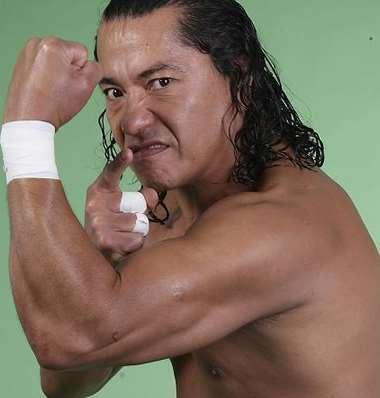
José Casas Ruiz was born to wrestle and his family tree shows no sign of slowing down.
He was born in 1960, the eldest son of José Casas Granados, aka Pepe Casas, who started wrestling in 1964. While Pepe learned the craft, he brought his eldest son with him, and they studied the inner workings of the business together. So even before his first match, Negro had more than a decade of being under the learning tree in the crowd and behind the scenes.
The youngster began in 1979 as Pepe Casas Jr., and a few months into his career, he switched over to “Negro” (the color black in Spanish) Casas, the name that would stay with him.
Word of Casas spread throughout the magazines and word of mouth, and soon enough, he started wrestling for the competition in Mexico, the UWA (Universal Wrestling Association).
Around this time, the man he would be most associated with for the rest of his career was starting to make waves too. Like Casas, El Hijo del Santo was following in his father’s footsteps, only the legendary El Santo. The duo would be each other’s primary opponents, often on a main role in tag team matches (called parejas in Mexico) or six-man matches (trios) for decades, trading countless titles and even switching roles as rudos and tecnicos.
In Japan, the 5-foot-7, 180-pound Casas was a successful junior heavyweight, competing in Best of the Super Juniors and Super J Cup tournaments.
Unlike some of his contemporaries, Negro Casas never made it huge in the U.S., though he was a part of the short-lived WWE Super Astros offshoot.
No matter where he was working, Casas could be counted on, show after show, week after week, to be there and give the fans value for their money, to work behind the scenes, and to help to train and get over the hot new
CAC Tip of the Hat
babyfaces for the company. Those who have benefited from his teachings include Mephisto, Kazushige Nosawa, T. J. Perkins, Rocky Romero, and Ricky Marvin.
And Casas would adapt with the times, so that he could still perform in the ring and do what he does the best, including having his own mascot, Zacarias el Perico, a small parrot that would accompany him to the ring.
Now, back to the family.
Casas is married to luchadora Dalys la Caribeña, and their daughter, Zaraida, is married to the most popular luchador currently in Mexico, Psycho Clown. His brothers are El Felino and Heavy Metal, and he is the uncle to Puma, Tiger, Canelo Casas, Rocky Casas, Danny Casas, to name but a few.
On behalf of the worldwide membership of the Cauliflower Alley Club we would like to thank B. Brian Blair, Rich Ingling , Royal Duncan, Ron Hutchison and Darla Staggs for their years of service on the CAC Executive Board. Thank you for all that you do for the Cauliflower Alley Club.
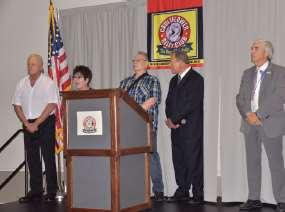
The Dudley Boyz were one of the best tag teams ever to grace a wrestling ring, whether that ring had four sides or six. The 6-foot-2, 240-pound D-Von is New Yorker Devon Hughes, who was trained by Johnny Rodz and started in 1992. Buh Buh Ray is the 6-foot4, 275-pound Mark Lamonica, who also hails from New York. He trained for a year with Sonny Blaze before starting in ECW as a bodyguard for manager Bill Alfonso.
Philadelphia-based ECW was a perfect stomping ground for the Dudleys after their 1996 debut, but it became about more than just being extreme. “It was our ability to entertain people on a different level,” Buh Buh told Wrestling Digest in 2000. “Tables and chairs were minuscule compared to the barbed wire and the fire -- the crazy stuff we used to do. That’s why me and D-Von stood out. Plus, when it came time to wrestle, they actually realized that: ‘Hey, these guys can work a match. They have psychology.’” From 1997 to 1999, D-Von and Buh Buh managed to win the ECW Tag titles eight times before taking their talent to WWE.
In WWE, their success continued as they also won the federation’s tag titles eight times. However, in WWE, it wasn’t the titles that got them over. It was the historic matches and of course, the “D-Von, get the tables!” catchphrase. Facing the Hardy Boyz and Edge and Christian, they found two flying teams that meshed with their own more ground-based, solid work and created history. The three teams put on a match for the ages at WrestleMania 2000 in Anaheim with a Triangle Ladder Match before eventually being involved in the
first Tables, Ladders and Chairs match in WWE history.
“Every time we have a match, whether we get our behind kicked in the middle of that ring, or put an old lady through a table, we like to believe we make a little bit of history, and it’s great to know that Vince, Shane and Stephanie [McMahon] have that much confidence in us to do so,” D-Von Dudley told SLAM! Wrestling.net
In 2005, they made the jump to TNA, where they rebranded themselves as Team 3D. It seemed to be no matter where D-Von and Buh Buh were or what their name was, they found more gold, also winning the IWGP Tag Team titles in Japan.
Throughout their illustrious careers, both Buh Buh and D-Von did test the singles scene. Buh Buh was the more successful of the two with his Bully Ray gimmick, but even so that is not what he will be remembered for. Buh Buh and D-Von will forever be connected and if you see one you instantly think of the other. The Dudley Boyz are one of the best tag teams to ever do it.
Joseph Casciaro
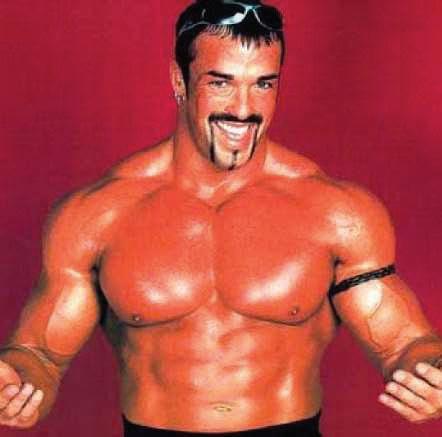
“I’m Buff and I’m the stuff and the girls can’t get enough,” is a memorable catchphrase. As was the career of Marcus “Buff” Bagwell.
His first big break didn’t take long. In 1990, the native of Marietta, Georgia, debuted locally, progressed quickly to the GWF, which was on ESPN, as the Handsome Stranger. Bagwell was in WCW not long after.
The push was there from the start, and some didn’t think he deserved it. Who was this good-looking babyface Marcus Alexander Bagwell? How did he reach the Battlebowl at Starrcade? Why did the Chippendale-like dancer get a title shot for Steve Austin’s TV Title so quickly? Well, because he looked good, he could wrestle, as his time limit draw against Austin showed, and he was a hit.
Buff excelled as a tag team wrestler, first with Erik Watts, then 2 Cold Scorpio with whom he won his first tag title in 1993. The Patriot was another winning combo as Stars & Stripes followed by the American Males with Scotty Riggs, and they won the belts in 1995.
This was all well and good, but the bad boy beckoned, the top hat tantalized and Buff was born. Those who thought the white-meat babyface Bagwell was bogus got a shock as he leaned into his heel persona, flexing, rubbishing opponents and creating an excellent combo with Scott Norton as Vicious & Delicious — he was just great at it. As Eric Bischoff said on Dark Side of the Ring , Buff was “entertainingly obnoxious.”
Even when he suffered an in-ring neck injury and had to undergo surgery, he kept up the NWO loyalty and joined the red brand, NWO Wolfpac. And yes, he was in the middle of the ridiculous WCW days, including the Judy Bagwell On A Pole match with his mom on a forklift, in which David Arquette was also involved. After a tag team run with Shane Douglas and then Lex Luger as Totally Buff, the WWE beckoned.
Not for long, as it turned out, and the next few years were

a tale of TNA and the independent circuit. “I was going to be one of the biggest names in pro wrestling, ever. Instead, I had a good run, that’s all,” admitted Bagwell on Vice TV.
But the most difficult fight was surely returning from a serious car accident in 2012 and another in 2020, and battling personal demons. “I was the best functioning addict in the world, until I wasn’t,” he summed up.
Dark Side of the Ring profiled him in early 2024. People love a good phoenix from the ashes story and the honest telling of his arrogance, success and decline resonated.
He started to work again in wrestling, debuted a podcast and rehabilitated his image. Then he and Riggs reunited in Memphis recently and what did they do? Won the tag titles, of course.
It was proof that, despite experiencing dark days away from the spotlight, he can still be The Stuff.
Steve Swift
CAC Tip of the Hat
In recent years, Pamela Morrison has taken on the role as reunion registrar, greeting members upon arrival at the reunion, helping them to secure their credentials and direct them to reunion activities.
Thank you Pamela for all you do for the Cauliflower Alley Club.
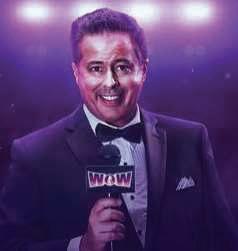
David McLane is known for his innovation and passion for women’s professional wrestling. His journey from a young enthusiast to a pioneering promoter has made a lasting impact on the industry. He has brought women’s wrestling to the forefront and created three of the most successful female-based promotions ever.
Growing up in Indiana, he was captivated by the local promotion, World Wrestling Association (WWA), in Indianapolis, run by Hall of Famer Dick the Bruiser.
McLane talked about how he got involved with the WWA during a 2018 interview: “I grew up in wrestling. I was with Dick the Bruiser since I was 13, so I knew wrestling and had been in it for over 12 years with Bruiser and Verne Gagne, Jerry Jarrett, the Crocketts in Ohio.”
In the mid-1980s, McLane’s entrepreneurial spirit led him to embark on a groundbreaking venture that would change the landscape. In 1986, he founded the Gorgeous Ladies of Wrestling (GLOW). GLOW was a revolutionary concept, combining the athleticism of wrestling with the glitz and glamor of Hollywood.
“My vision was something new for women’s wrestling,” he said. “When I came up with the initial idea, I said, ‘We’ve got to have brilliant costumes, over-thetop costumes, and characters so that people get into them.’ Hulk Hogan was the biggest thing then. To me,
Hulk Hogan was a character; it wasn’t Terry Bollea wrestling.”
McLane’s vision for GLOW extended beyond the ring. He understood the importance of marketing and media, leveraging television to bring the spectacle of women’s wrestling to a broader audience. The GLOW television show became a sensation, introducing viewers to a cast of vibrant personalities like Mountain Fiji, Matilda the Hun, and Hollywood. The show’s unique blend of athletic competition and entertainment resonated with fans, making it a pop culture phenomenon.
After two seasons, McLane left GLOW and started his next venture, Powerful Women of Wrestling (POWW). With POWW, McLane concentrated more on the inring action quality and less on the colorful storyline and characters. POWW allowed him to promote matches alongside the American Wrestling Association owner Verne Gagne, using legendary wrestlers Lisa Moretti, Wendi Richter, Candi Devine, Luna Vachon, and Madusa Miceli.
In the late 1990s, McLane launched Women of Wrestling (WOW), another promotion focused on showcasing the talents of female wrestlers and WOW built on the foundation laid by GLOW, presenting a new generation of women who combined skill, charisma, and athleticism. McLane’s commitment to promoting women’s wrestling was unwavering, and his efforts played a crucial role in elevating the status of female wrestlers in a predominantly male-dominated industry.
“I think [WOW has] the most diverse lineup, driven by superheroes and 100 percent committed to characters, superheroes, and villains. What you have with WOW is blending the best of GLOW, absent the HeeHaw comedy, with the best in athleticism. WOW still is cemented in characters,” he said.
Even as he reflects on his achievements, McLane remains focused on the future. He continues to be involved in wrestling, exploring new opportunities and pushing the boundaries of what is possible. His journey from a young wrestling fan to a trailblazing promoter is a testament to his passion, perseverance, and vision.
Chris Schramm






In professional wrestling, a heel can turn into a babyface with little or no struggle. Indeed, on the whims of a booker, a villain’s past heinous actions can be quickly forgiven and forgotten about.
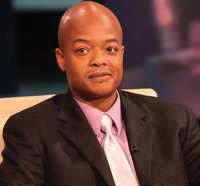
In real life, it’s not so easy to find redemption — but it can be done. As an example, look no further than actor Todd Bridges. He was never really a villain, just someone who made some bad choices, but has been able to overcome his personal demons, put the tabloid headlines behind him, and continue working.
A lifelong fan of wrestling, Bridges grew up watching wrestling in the San Francisco area, where he would cheer on big names like Pat Patterson, Rocky Johnson, Ray Stevens, and “Superstar” Billy Graham.
That fandom never left him, even as he went on to become a recognized star himself, whether it was as a cast member of the acclaimed TV mini-series Roots or appearing as Loomis on the show Fish, a spinoff of Barney Miller
But it was his role as Willis on the show Diff’rent Strokes where Bridges found his biggest fame. As the older brother

of Gary Coleman’s character Arnold, Bridges often played the straight man on the show, a critical component of any sitcom’s success.
Unfortunately, Bridges became so synonymous with the Willis character that he had difficulty being cast in anything else after the show ended its eight-year run in 1986. This led to some difficult times, including drug addiction and run-ins with the law.
Perhaps inspired by his childhood heroes of the squared circle, Bridges battled his personal demons, kicking his drug habit in 1993, and kicking off a resurgence of his acting career, with runs on The Young and the Restless, and Everybody Hates Chris
In 2008, Bridges got to live out some of his childhood fantasies as a cast member on the celebrity reality competition show Hulk Hogan’s Celebrity Championship Wrestling. Tapping into his acting skills, Bridges impressed the judges and the viewers with his work ethic, and his charisma, excelling as both a heel and a face. Indeed, Bridges’ abilities impressed Eric Bischoff, one of the show’s producers, so much that Bischoff said in interviews that Bridges was one of the front-runners to win the competition.
Though he didn’t win, Bridges found the experience to be personally rewarding and fulfilling. “I really feel I showed everything, worked hard in every area from wrestling, to character development and learning how to properly cut a promo. No hard feelings as we all had a great time. I just feel that I really should’ve won that thing,” Bridges said in an interview with SlamWrestling.net in 2009.
After CCW, Bridges continued his forays in the squared circle, training under Tom Howard at Rick Bassman’s UPW promotion, and competing on independent shows, where he earned praise for his matches from fans and talent alike.
These days, Bridges continues his babyface run in Hollywood as an actor, director, and producer.
CAC Tip of the Hat
Since 2020, Vance Nevada has served as the editor for The Ear, coordinating the layout and content for 13 issues of the newsletter and three annual banquet programs. He is a lifetime member and has served on multiple committees since 2011. Thank you Vance for your service to the Cauliflower Alley Club.
Although best known for his black cowboy hat, James William Ross — known by some as “Good Ol’ JR” or simply “JR” — has worn many more hats during five decades in the wrestling business.
From refereeing an NWA World title match between Harley Race and Dory Funk Jr., to serving as a talent scout for WWE and bringing in the likes of Mark Henry, Kurt Angle, Brock Lesnar, and many others, to making $25 a day as part of ring crew, to filling any role required of him behind the scenes, Ross was never afraid to get his hands dirty if doing so meant the continued success of professional wrestling.
For his hard work and dedication, Ross was bestowed with the CAC’s Art Abrams Lifetime Achievement Award in 2010. But he did not retire then, nor, likely ever.
In a medium that has sometimes strived to present itself as sports-like and copy other, more analytical formats, Ross went in the other direction. He chose to put emotion into his ringside calls because he understood the art of striking an emotional chord to sell a ticket when calling the action from the commentary table.
“I know my job is to tell stories and to make you care about who these guys are,” Ross said at the 2016 CAC reunion.
This has been Ross’s forté for decades. Ross is responsible for adding to some of the greatest moments in wrestling history. The passion, tone, and emotion he put into his calls took already iconic moments and amplified them, akin to great seasoning to an already satisfying meal.
Who can forget Ross’ genuine shock as he screamed “Good God, almighty!” when The Undertaker threw Mankind off the Cell at King of the Ring 1998? Or the guttural sense of betrayal he felt and exuded when Stone Cold Steve Austin shook Vince McMahon’s hand at WrestleMania XVII? Or the fact that he added so much to Hogan versus Rock at WrestleMania XVIII with only eight words: “He beat André the Giant with that move!”?
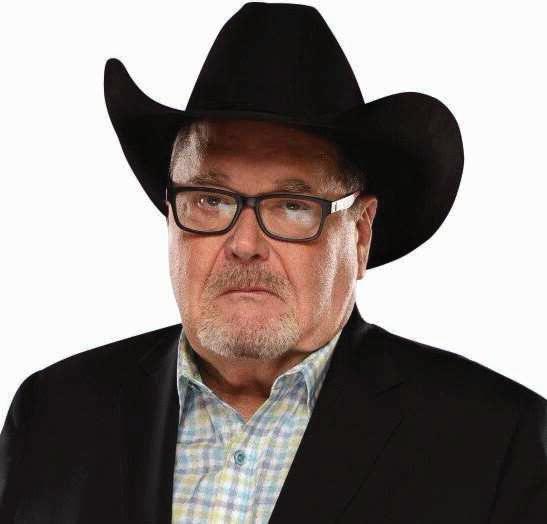
But it wasn’t just his biggest moments that mattered; in some cases he didn’t even need to say anything over the top to get his point across. “Business just picked up” could elevate someone, while “bowling-shoe ugly” gently described something subpar. With his tremendous chemistry with Jerry “The King” Lawler, Ross came across as genuine in an industry that, for a time, was plagued by sterility brought on by scripts and too much control.
“You can’t possibly script the emotions that J.R. put into his matches. I think everybody got the sense that, while what they were seeing may have had elements of theatrics to it, when it came to the announcing, Jim Ross was 100% legitimate,” said Mick Foley in 2011.
As the wrestling industry changes, some moments will remain frozen in time thanks to J.R.’s passion-filled commentary. And while his peers will continue to sing his praises for his professionalism, a big part of Ross’ success as a commentator came from the fact that he was a fan at heart and brought that into his nightly work.
Alex Podgorski


“Every man has two deaths, when he is buried in the ground and the last time someone says his name.” – Ernest Hemingway
The above is one of the favorite quotes of this year’s James C Melby Historian Award winner, Jason Presley. Currently residing in Huntsville, Alabama, Presley, 48, is an author, historian, and meticulous (and we mean meticulous) researcher who also loves cats.
Presley readily admits he wasn’t really a fan of learning history at school. But the slack approach didn’t apply to going down “rabbit holes” of sleuthing when it came to music, movies, and eventually wrestling.
“Watching the matches back in the ’80s and ’90s, announcers would still often bring up names from the past and who they thought the competitors reminded them of. It was years later before I learned that Gorilla Monsoon, Lord Alfred Hayes, and Mr. Fuji had all been wrestlers,” he said. Initially his interest in pro wrestling history “was just about wanting to learn more about their earlier days in the ring and that just kind of led me down the rabbit hole.”
Like a true pro wrestling historian, Presley adamantly believes “there is always more to uncover and every new discovery seems to lead to the next.”
Presley points out, “And at its core, despite all the changes in styles and technology, professional wrestling hasn’t really changed much in how it is booked and presented in the past 100 years. People go on about the ridiculous gimmicks of wrestlers in AEW or DDT Pro, but there was a wrestler in 1910 called the Mysterious Waffle! How can you not want to know more about him?”
After spending a decade researching his family history, Presley decided to apply his skillset to pro wrestling. He authored The Great Pro Wrestling Venues, Volume 3: Alabama: 1931-1935, published by Crowbar Press. The endeavor had him scouring online newspaper archives for hours, scrolling through microfilm by traveling to multiple public libraries in various locales and tracking family members and other subjects to interview.
The latter ended up being one of the highlights of writing the book.
“I was fortunate enough to meet and speak with family members of three of the wrestlers who featured heavily in my research, the families of Chris Jordan, Stanley Buresh, and Freddie Knichel. They were all thrilled to talk about their fathers and grandfathers, and were very welcoming and I can’t thank them enough for sharing stories and photos with me.”
Upon the news of his receiving this prestigious CAC award, the humble Presley reflected, “It is tremendously gratifying to have been selected by this group of previous honorees. That they even know who I am and think enough of my work to include me in the conversation is more than I would have hoped for. It also means I really need to buckle down and truly earn it before they change their minds. I’m also excited that I’ll get to help choose future honorees.”
Jamie Hemmings
There are two famous Fonzies. One was a 1950s greaser, Arthur Fonzarelli, who lived above a family garage, skijumped a shark and could start a busted jukebox with a knock of his knuckles. The other is the wrestling referee and manager Bill Alfonso, who traveled the globe, entertained millions and could start a riot with a whistle. It’s obvious which Fonzie was actually the cool one.
When Bill Alfonso was a rookie referee, barely old enough to drink (legally), he was put in charge of officiating a chain match between The Sheik and Terry Funk. He was thrown into the deep end of professional wrestling, sink or swim, and he swam.
Alfonso called it “right down the middle” — most of the time, anyway — in every major American wrestling promotion over five decades.
“Bill Alfonso is the most competent referee in the wrestling business today,” Kevin Sullivan said in a 1987 interview. “He even catches me doing some things, he is so street smart and streetwise.”
Whether wearing the zebra stripes, the blue-shirt-and-bow tie or the black-and-red ECW gear, Fonzie officiated thousands of matches featuring the biggest stars of the past halfcentury and showed many other referees the ropes.
In the early days of ECW, Alfonso was an anti-hardcore crusader who disqualified rulebreakers — a recipe for some scorching heel heat.
It’s possible Alfonso earned the world record for the highest chokeslam in history after the seven-foot Giant Gonzales hoisted ref Alfonso way, way up for the maneuver at WrestleMania IX.
And Fonzie was a whistleblower before it was cool. The earsplitting trill of Fonzie’s coaching whistle drew the attention and ire of fans, establishing Fonzie as both an onscreen talent in his own right and a natural heel. So fans were understandably ecstatic when Fonzie got pummeled to a bloody pulp by Beulah McGillicutty in 1997. Fonzie’s bloodletting
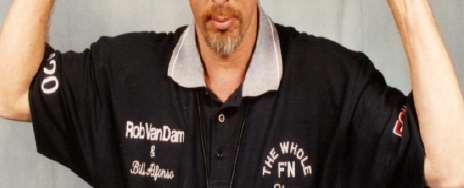

was so profuse that night that he lost one-third of his blood, according to Paul Heyman (who has never been prone to exaggeration or hyperbole, so it must be true).
“I didn’t know I had this hidden talent inside me — ECW brought it out in me,” Alfonso told SLAM! Wrestling.net in 1997. “They created a small monster and I love it.”
Thanks to his loud personality and louder whistle, Fonzie has been booed, jeered, and sucker-punched by irate fans. He has logged thousands of miles to entertain millions of people. He still has a scar, proudly, from the time Wahoo McDaniel clocked him with a championship belt that Sgt. Slaughter ducked.
“The wrestling business has been so good to me,” Fonzie said in an interview for The Ref Didn’t See It, an upcoming documentary celebrating wrestling’s unsung heroes in zebra stripes.
“If I could do it all again, I would.”
CAC Tip of the Hat
Colin Hunter
Keeping things fresh on the club’s social media channels is wrestling alumnus, Bob Cook.Curating content of interest to members and celebrating wrestling’s past and present is a daily assignment all year long. Thank you Bob for your service to the Cauliflower Alley Club.
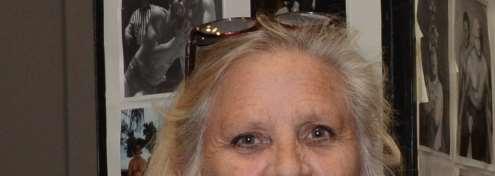
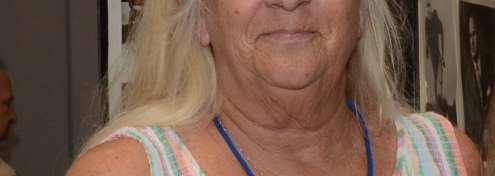

Loyalty and friendship go hand in hand, and those two words define Lori McGee Hurst.
Since the mid-1980s, she has been a confidante, an ally, an advocate, an alibi, a bartender and designated driver to the various wrestlers and personalities that came in and out of southern Texas.
But her ties go back further, to when her family shared a property line with the Von Erichs in Edom. One of four McGee kids, whose father died at only 42, Lori was raised by a single mother who worked for the government in Fort Worth. “Kevin, Kerry and David and all of us were just romping around, because we were kids. Young kids do kids things,” said McGee Hurst. “We would get in trouble and we would get blamed for it. But it’s never, never the fault of the Von Erichs. It was always our fault.”
McGee grew up around horses and competed in rodeo, specializing in barrel racing. Her other specialty was making friends, which served her well as a bartender.

One night, Brian Adias, “Grappler” Len Denton and Gary Hart — an old family friend — bugged her enough to start coming with them to World Class Championship Wrestling shows. A wrestling fan as a kid, with her favorites being Jose Lothario and Wahoo McDaniel, it wasn’t a tough sell.
What she didn’t expect was for wrestling to permeate the rest of her life.
Whether it was staying in the Hilltop Lodge apartment complex in Fort Worth that accepted rentals by the month with all the other boys, with their constant dropping in for her famed cooking, or selling merchandise at shows, McGee always seemed to be there.
World Class promoter Fritz Von Erich noticed, and hired her as a secretary, but her job entailed everything from driving wrestlers around in her 1976 Cadillac Fleetwood Chrome (a “land tank” that “had its own booking sheet”) to scaring off overzealous fans. What Lori never did, though, was actually report back to her boss about what the boys had gotten up to. More than once, she calmed a tense situation or helped a friend in need. That continued post-World Class, working with Jerry Jarrett’s USWA and then the various promotions in Texas. There was a long break while she was married, though close pals like Gary Young and Matt Borne stayed in touch.
It was Borne who brought her back into the business after her husband, Larry Hurst, passed away. There were fan fests, conventions, and excitement when the Professional Wrestling Hall of Fame moved to Wichita Falls, Texas, from upstate New York. When the PWHF all fell apart under mismanagement, the artifacts abandoned after an eviction, McGee Hurst took it upon herself, with a handful of helpers, to return memorabilia to its rightful owners and to find homes for all the historical documents.
CAC Tip of the Hat
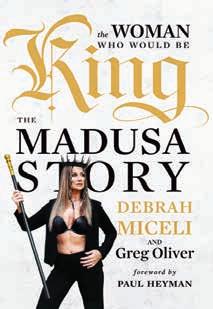
Ensuring to the needs of our reunion honorees, Madusa Miceli has taken on the role as our Reunion Talent Coordinator over the past two years. The former world champion and wrestling Hall of Famer is also an active co-host of reunion festivities. Thank you Madusa for your service to the Cauliflower Alley Club.