
EXECUTIVE BOARD
ADVISORY BOARD

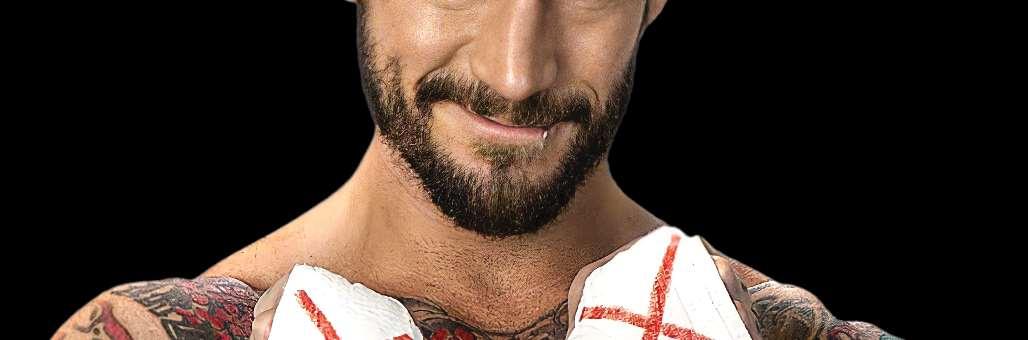
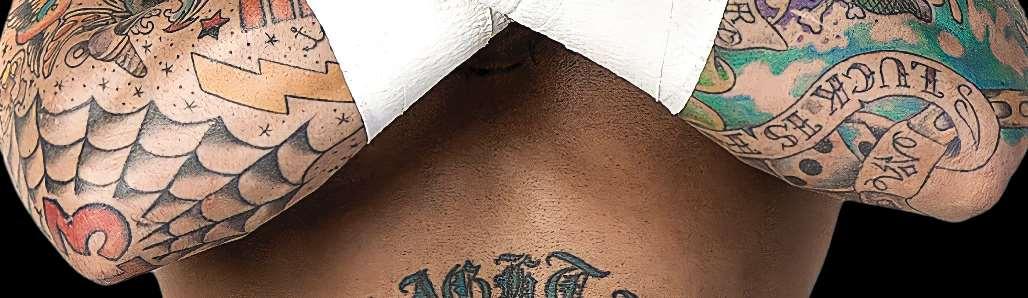
There was nothing instant about the route the 6-foot-1, 220-pound Phil Brooks took to the upper echelon of Ring of Honor,WWEandnowAEW.Hebeganbackyardwrestlingin themid-’90s,usinghisCMPunkname,beforebeingtrained in a more conventional manner. “I wanted to be a wrestler ever since I was very, very small. It was all I ever wanted to do,” said Punk, who was born in 1978 in Chicago.
He blazed his own trail, doesn’t smoke, doesn’t drink, doesn’tdodrugs,iscoveredintattoos,andspeakshismind, no matter the cost.
Feuding with Raven and his epic battles with Samoa Joe in ROH put Punk on the map, and he spent an oft-overlooked yearinTNAbeforeheadingtoWWE,startinginitsOhioValley Wrestling territory and then its ECW off-shoot, where Punk claimed the championship.
But it’s his time on the main roster that had Punk rocking the boat.
OnSmackdown,hefeudedwiththelikesofEdge,ReyMysterio,andTheUndertaker,leadinghisStraightEdgeSociety as a Koresh-like cult leader. After three short runs with the World heavyweight title, Punk was reassigned to the Raw roster, and was again asked to be a leader, helming the NewNexusandmakingRandyOrtonandJohnCena’s lives miserable; it was only the beginning. In July 2011, with his contract up for renewal, Punk began making noises about leaving the company, and in one memorable rant at the end ofMondayNightRaw—thePipeBombpromo—helistedeverything he thought was wrong with the wrestling industry, slamming everyone up to and including his bosses, before the microphone was cut off mid-stream.
Thenhedidashevowed,takingtheWWEtitleattheMoney in the Bank pay-per-view from John Cena. He made a numberofnon-wrestlingappearances,includingaCubsgameat Wrigley Field, before WWE’s entreaties brought him back.
He did leave the company in 2014, and used the time to get married toApril Mendez, also known asAJ Lee. Then Punk did an abrupt left-turn and trained to fight in mixed martial arts, in UFC and Cage Fury. And just as we all thought he wasdonewiththewrestlingbusiness,therehewasasasurprise co-host on the Fox Sports 1 series WWE Backstage.
But it was his arrival in AEW in 2021 that shook wrestling’s foundation, and he soon shook up AEW, calling out favoritism and unprofessional behavior in an unforgettable postmatch media press conference. He summed up his take on getting a chance to talk just before AEW Collision debuted. “I won’t know what I’m gonna do or say until I have that microphone in my hand. I have a lot of things to get off my chest,” he told ESPN.
As a hero to the people, Punk has never wavered from his message, never changed his style, never been anything else but himself.And he’s pretty confident about those abilities. “From bell to bell I don’t think there’s anyone in the world that can touch me at what I do.”
– Greg Oliver
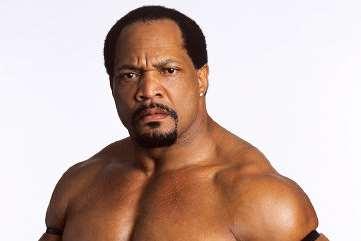
Ron Simmons has been turning heads his entire life.
From the gridiron to the squared circle Simmons always left hismark, with his latestindentation on audiences coming in the form of the Cauliflower Alley Club’s prestigious 2023 Lou TheszAward.
Born May 15, 1959 in Perry, GA, Simmons’ early athletic pursuits earnedhim a status as oneof the most sought afterhighschoolfootballrecruitsinthestateofGeorgia.Simmons turned heads when he accepted an offer to attend FloridaStateUniversityin1977.TheSeminoleswereaperennial powerhouse in the four years Simmons spent patrolling the defensive line. Simmons lettered all four years, earning twoAll-American honours while taking FSU to the Orange Bowl twice. Simmons has since been enshrinedin the College Football Hall of Fame.
Simmons was taken by the Cleveland Browns in the 1981 NFL Draft, but spent that year in the Canadian Football League with the Ottawa Rough Riders, helping the outfit from the Canadian capital to that year’s Grey Cup. Simmons then transitioned to the USFL’s Tampa Bay Bandits and it was in Tampa where his next career ambition would take hold.
Simmons got to know Larry Pfohl while playing together in TampaasmembersoftheBandits.Pfohl,whowasstarting a pro wrestling career under the name Lex Luger, helped Simmons get his start in Florida Championship Wrestling after introducing him to trainer Hiro Matsuda.
The former football star commenced his new career as a professional wrestler and by the end of the 1980s had worked with such stars as Ivan Koloff, Rodney Anoa’i, The Barbarian, Dr. Death Steve Williams, Mike Rotunda, Kevin Sullivan, among others while competing under various arms of the National Wrestling Alliance. As the decade turned, so too did Simmons’ fortunes inside the ring. First came an NWAWorld Tag Team Championship win at 1990’s Capitol Combat alongside Butch Reed.
Next came one of the most monumental moments in the history of pro wrestling. On August 2, 1992, Simmons de-
Big Van
to capture the World Championship Wrestling Heavyweight Championship, becoming the first major African-American World heavyweight champion. Simmons would hold the championship for five months.
After brief stops in Extreme Championship Wrestling and New Japan Pro Wrestling in the mid-1990s, Simmons made a jump to the World Wrestling Federation in 1996 where was rebranded as Faarooq and where he would, again, leave an indelible mark on audiences.
AsamemberoftheNationofDomination,Simmonshelped catapult the career of Dwayne “The Rock” Johnson in the form of a bitter feud over control of the faction.
From there, Simmons took on a real-to-life role as a beer drinking, card-playing tough guy alongside John “Bradshaw” Layfield as part of the Acolytes Protection Agency (APA). The duo won a pair of WWF Tag Team Championships as part of their run. DAMN… what a career.
-- Kevin Michie

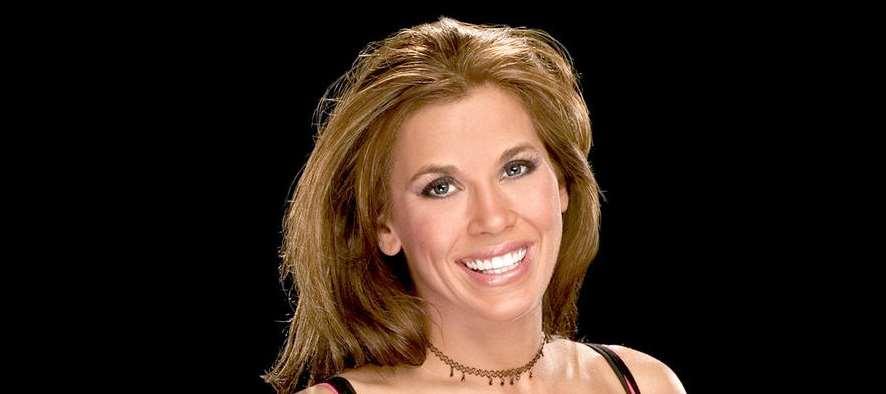


From stalker to producer, from Alexis Laree to country music singer, there is so much to talk about with Mickie James.
The Virgina native got into wrestling in 1999, and was a part of those early NWA: Total NonstopAction shows as Alexis Laree. After a couple of years in developmental, Mickie James hit it big with a stalker storyline in WWE, obsessed withTrish Stratus.
It made her a star, and, eventually, a five-time WWE Women’s Champion, and one-time WWE Divas Champion.
For all the success in WWE, there was always a home for her in the Knockouts division in TNA/Impact, where she is a three-time champ. She reflected on the run in a 2021 interview with Wrestling Epicenter: “My first run was pretty remarkable. But to be able to go away from there(WWE)whichislegitimatelythelargestplatformfor
wrestling and then to be able to come back to Impact, because I had been there before (asAlexis Laree). I felt I had to evolve away from that character that resonated with people (in WWE), that kind of crazy character and especially coming away from that ‘Piggie James’ thing, I just wanted to be myself and stand in my own shoes.”
Eventually, James became an iconic woman wrestler, though that took a lot of effort. “I worked so hard on that crazy character. I wanted to keep elements of her in my character and see what a babyface Mickie James would looklike.Thatwasanoddtransition.Because,thatcrazy character is what people connected with and was cool and made me... But, you know,everything hasto evolve. You have to go through the chapters.”
Another chapter has been her music career, with two albums—Strangers & Angels (2010) and Somebody’s Gonna Pay (2013)—plus a number of singles, including “Grown Ass Woman” from 2021, tied into the podcast of the same name she did with Lisa Marie Varon (Victoria/ Tara) and Valerie Wyndham (So Cal Val).
Even when something negative happens, James can turn it into a positive. Released from WWE, she posted about receiving the contents of her time there in a garbage bag, resulting in a discussion about proper treatment of employees ... and then she still came back for perhaps the biggest “Forbidden Door” moment to date, appearing in the January 2022 Royal Rumble as the Impact Knockouts champ.
Then there was the 2021 all-women’s NWA EmPowerrr pay-per-view, for which she was the executive producer. “Itiscooltogettheopportunitytopresentwomen’swrestling in a whole new place,” she said at the time.
EverybodyseemstoloveMickie.“Thewrestlingbubbleis so small,” she noted. Her own personal bubble includes her husband NickAldis and their son Donovan.
–GregOliver
Riea Von Slasher has been a wrestler since the age of 14, having wrestled formore than half of her life.
The native of Vancouver Island has recently started to train peopleontheIsland, whichwas somethingshethought she would never do. Outside of her home city of Victoria, British Columbia, Von Slasher has gotten the opportunity to travel outside the border and take part in some wrestling shows. ShehasbattledincompanieslikePrestige,3-2-1Battle,and DOAPro Wrestling.
Jeff Hardy was a big inspiration for Von Slasher getting into wrestling. Ever since her childhood she had an interest in combat sports like boxing, and she was also into solo oriented sports rather than team-oriented ones.
“The town I was in had a school, so the day after my 14th birthday Istarted training and,youknow, my mom thoughtit was a phase, but the more I got submerged in it, the more I wasjustsoaddicted,”saidVonSlasher.“Wrestlingismylife, 20yearslater it’sstill what Ilook forwardto at the end of the day or what I’m thinking about.”
Her wrestling persona is a mean girl and an aggressive fighter,butthatwasn’talwaysthecaseasearlyonshewore a mask while performing due to being shy, until someone she knew told her she has the appearance of a scary and intimidating person in real life.
“I really took that into consideration, and I was a goth kid when I was younger, so I always kind of had a weird style and I’ve just transformed it over the years,” said Von Slasher. “Someone telling me to be more me is what sparked my Riea character.”
Evenwithalotofwrestling experience,Von Slasherismore selective on where she works currently.
“I feel like I’m more choosy about where I work these days justbecauseyou never knowwhatyour walkinginto,soyou know,youdon’twanttobeputinaringwithsomebodythat’s a little reckless or you know, you risk getting hurt,” said Von Slasher.



Shementionsthatmostofhertravelsaresponsoredthrough promoters unless under certain circumstances.
“I don’t generally travelanywhere that comes out of myown pocket, if it does, it’s something I really really want,” said Von Slasher. “I would say 98 percent of the time my travel expenses come from thepromoters.”
The wrestling promotions she works for the most currently are, Vancouver Island Pro Wrestling,andThrash Wrestling.
Her message to fans that want to pursue a career in wrestling was to make sure this is something they want and to never take no as an answer,
“If you’re just getting in to do it for fame, it’s not going to work. The toll it takes on your body, the mental game you have to play, make sure you want it,” said Von Slasher. “Be everywhere and give it your all is really what it comes down to. There’s always ways to progress, like even when you cant go train, you can go think about character work. Stay hungry all the time.”
– Sanjeevan Kandasamy





































Jose Leonardo Carrera, aka Damian 666, from Tijuana, Baja California, was trained by legendary “maestro” Luis Canales, in the early 1980s. He was actually a star soccerplayerinhisyouth.However,arandomfightinvolving a knife got him to go to wrestling school to learn basic protection, and incredibly enough, 40 years later, he’s at this position in his career.
He had a couple early names, Caballero 2000 and Ultraman II, having good success in Northern Mexico. In 1991,TijuanapromoterBenjaminMoraranashowalong with Red Bastien that featured Japanese hardcore icon Atsushi Onita on it. It was on this show that Onita saw Carrera wrestling, and was impressed enough to bring him to his promotion in Japan, FMW (Frontier MartialArts Wrestling), as Amigo Ultra. After a couple years in the promotion, Onita knew it was time to elevate Amigo Ultra into something more special, so he transformed him into the more dark and demonic “Damian 666.” He had multiple tours with FMW during this time, even representing FMW in the second Super J Cup in December of 1995, which many consider to be one of the greatest tournaments ever in pro wrestling.
Back inMexico, Carreramostly still worked the Ultraman II gimmick, eventually losing a mask match in 1996 to Psicosis (the original one who wrestled in WCW) and stopped using the gimmick completely, sticking with the Damiancharactermovingforward.ItwasinWCWwhere he was a member of the group led by Eddie Guerrero, the Latino World Order. He would be a regular in WCW for three years. Once his WCW run ended, he would again travel the world, wrestling back in Japan, this time for theAll Japan promotion for multiple tours.
Inlate2001,hewouldmakehisdebutatthemostfamous arena in Mexico,Arena Mexico, for the CMLLpromotion, as they brought in Damian, Psicosis, Halloween, and Lady Victoria as “La Familia de Tijuana”. With WCW no longer in business, several of the luchadores that were wellknown therefinallywrestledthere,withDamianhaving huge success at this time, looked at by the fans and
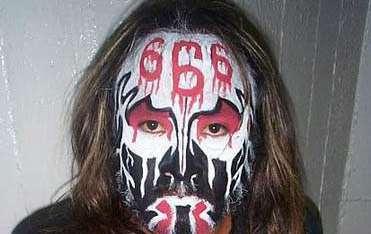
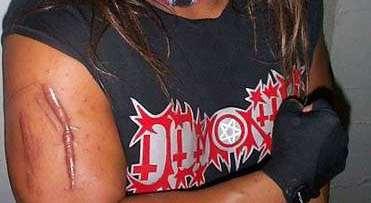
fellow luchadores with a lot of respect due to his worldwide travels. This group had amazing success in the company, even winning the country’s most prestigious trios title, the Mexican National Trios title, in mid 2002.
The list of titles that Damian has won in his career goes into the dozens, but another thing in Mexico is the factor of the “apuesta” (the “bet” match, where someone puts up their mask or their hair on the line, the biggest money making type match in the country). He has had huge mask or hair matches with the best of the best in Mexico over the decades, from the legendary El Satanico, to Chavo Guerrero Jr., to the original Psicosis, the Psycho Circus, and dozens more.
Even today, Damian is still an active wrestler, and often times gets to team with his son, Bestia 666, who has formed a championship tag team with Mecha Wolf.
–RoyLucier
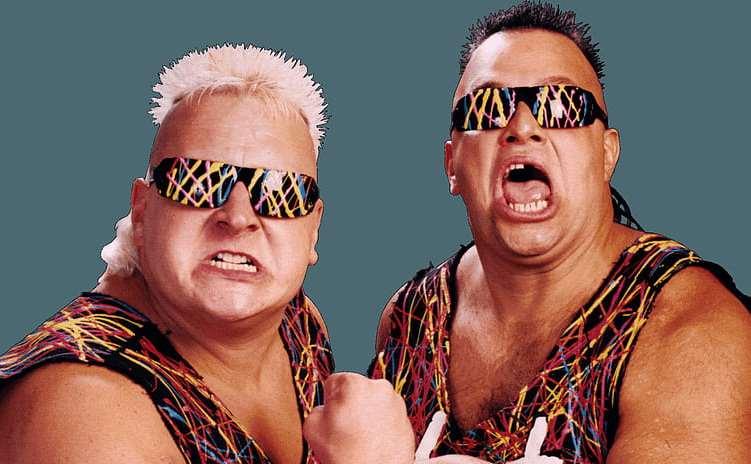
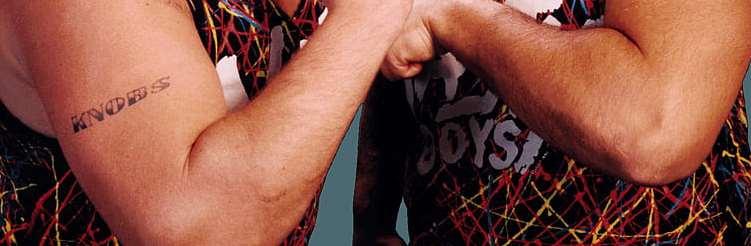
Jerry Saggs (Jerry Saganowich) and Brian Knobbs (Brian Yandrisovitz) were buddies growing up in Whitehall, Penn., first meeting in Little League. Knobbs was the one obsessed with the grappling game, having watched since he was eight years old. After surviving a Knobbsrun backyard wrestling promotion and multiple Knobbsorganized bus trips to see the big WWF shows at the Spectrum in Philadelphia, the two began toying with the idea of a career in wrestling.
Their gimmick of the Nasty Boys, two barroom brawlers who had grown up on the wrong side of town, wasn’t a work. Saggs went to college on an athletic scholarship but got the boot for his partying. Knobbs tried the Army, but was sent home for bouncing a colonel from his Jeep. They drifted around, even serving time as muscle for localloan sharks.
Thankstoafriendatthehotelwherethewrestlersstayed, the pair of 6’3” troublemakers started harassing George “The Animal” Steele. “They used to wake me up every time we went to Allentown [Pa.] to do TV. They’d knock on mydoor—‘I wannabea wrestler.’Isaid,“Get out,you
fatpukes.Everybodywantstobeawrestlerandyouguys aren’t it,” Steele recalled. Their persistence paid off, and eventually Steele gave them information on theAWA-affiliated camp run by former Olympian Brad Rheingans in Minnesota.Aftertwo months of physical training, the ring was erected. Soon, they’d meet friends and mentors like RayStevens, Nick Bockwinkel,BillyRobinsonand especially Curt Hennig, and make their debut as singles after paying their dues setting up the ring each night.
The Nasty Boys caught the eye of Vince McMahon and the WWF, and they landed there in early 1991. Jimmy Hart was assigned as their manager. In the WWF, they won the tag belts from the Hart Foundation, and went around for almost over year with the Legion of Doom, dropping the titles to them.
In 1993, they returned to WCW and popularized the hardcore style with their matches against Maxx Payne, Cactus Jack and Kevin Sullivan.
A real-life feud with Scott Hall—whom they thought they werefriends with from theirAWAdays—developed when Hall and Kevin Nash arrived in WCW, upsetting the proverbial apple cart. Their matches against the Outsiders were violent, and Saggs suffered a crushed vertebrae while in WCW, and while he tried to wrestle, that was pretty wellit.
Knobbswouldreturnasasinglein2000inWCW,playing up his hardcore gimmick. When that run ended, Knobbs teamed with brother-in-law Greg Valentine on the XWF in Florida, an attempt to start a viable second promotion after WCW was engulfed by the WWF. Saggs came out of retirement for it, but the promotion didn’t last. It’s a big what if for Knobbs, but he still has one bright spot. “We were the XWF World tag team champions. Nobody ever saw the tapes, but we were!”
–
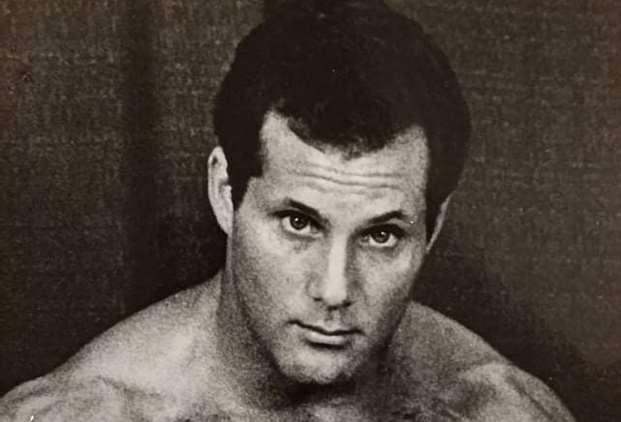
Jody Simon, known by some as Joe Malenko, wrestled in a different era and offered a different style than what most people were used to. In a time when pro wrestling was getting flashier and more avant-garde, Jody stayed true to the sport’s roots and embraced a traditional and technical style. Not onlydid thisstylebring him considerable career longevity, but it also made him into a respected grappling expert that would train an entire generation of future professional wrestlers.
Of course, this came from his intense training. Jody got plenty of experience and wisdom from his father, Lawrence “Professor Boris Malenko” Simon, who took the ‘Malenko’ last name (‘Malenko’ being a Russian word for ‘little’) to capitalize on Cold War tensions. Jody, for his part, focused more on the in-ring lessons he learned from his father as well as those of his other main trainer Karl Gotch, a man so revered for his innate grappling skill that the Japanese referredtohimas“God”.TheselessonsmadeJodyintoone of the most respected technical specialists of his time and a reliable hand wherever he wrestled.
Though not as active in the business as his brother Dean, Jody still accomplished quite a lot, both directly and indirectly. In the ring, he is best known for his extensive work inAll Japan Pro Wrestling, which includes two reigns as the company’s World Junior Heavyweight Champion. And unlike rival New Japan, which focused on speed, agility, and high-flying acrobatics, AJPW’s junior heavyweights, Jody included, focused more on matwork and innovative holds. Andwhilethecompanyputmostofitsattentiononitsheavyweight class of main-eventers, it was Jody and his fellow junior competitorsthatbroughtexcitement tothe company’s undercards to help build excitement for said main-event classics.
When the 5’10”, 220-pound Jody Simon wasn’t in the ring competingwiththelikesofTheBritishBulldogs,TheFantastics, The Can-Am Express, Tiger Mask, Joel Deaton, Richard Slinger, and All Japan’s fabled Four Pillars of Heaven, he was helping future wrestlers improve, either on his own or through his family’s Malenko WrestlingAcademy.
Stateside wrestlers to have trained with Jody and his family include Sean “X-Pac” Waltman, “Wildman”MarcMero, Fred






“Tugboat” Ottman, and Glenn “Kane” Jacobs. And while training in Japan, Jody held a two-week intensive training programinHawaiiandplayedanintegralpartintrainingtwo of All Japan’s top stars of the 1990s, Tsuyoshi Kikuchi and Kenta Kobashi.
Jody’s dedication to his craft and his willingness to help others didn’t go unrecognized. As thanks for all of his hard work, he had the honor of being in the opening match of the once-in-a-lifetimeAll Japan/New Japan/WWF Wrestling Summit show in theTokyo Dome in 1990.
Although he has long since moved away from the wrestling business—he now runs his own private precision medicine practice in Florida—he is still appreciative of people that remember what he and his family have done for the wrestling business.
“Italwayswarmsmyheartthattherearepeoplethatwatched some of what I did, that appreciated my level of expertise, whatever that was. I’m happy that people remember my father, remember my brother, and remember me.”
–Alex Podgorski







Originally from Vancouver, Kevin Jefferies grew up in Kelowna, British Columbia. He loved watching wrestling as a little boy. Jefferies’athletic background consisted of high school track and field, and amateur wrestling. However,allhereallywantedtodowasbeinawrestlingring. Jefferieswouldlatergethischanceattheageof17when he started withAll-Star Wrestling in Vancouver.
During this period, Roy McClarty, who was the referee withAll-Star Wrestling, and set up the ring in each town, took Jefferies under his wing. “Roy was like my dad on theroad.Ineverhadafather.Mymomraisedsevenkids all by herself,” said Jefferies. “He taught me a lot about about the business, a lot about how to save your money, how to live, and how not to let people take advantage of you. He taught me a lot about life. He taught me how to referee and the wrestling.”
Jefferies started refereeing at first and would go into the ring earlier in the day to fly around, until one day McClarty tooknoticeof his unbridled enthusiasm and asked him the fateful question — would he like to wrestle professionally?
ThetrainingwithMcClartyconsistedofgoingintothering and learning the basics. “I was a flyer, I liked to be on the ropes and moved around and all that. Roy would try to settle me down; well, you know the old school way was a headlock,drop down and holdthe headlock for 15 minutes and the fans went nuts. Get up, do some more moves, and then go again.”
The planning involved in being a wrestler versus being a referee was quite different, but Jefferies found he was adept at both roles.
The role of a referee is one that is often underestimated, but it is a vital according to Jefferies. “Without the referee the match could be horrible. You just have to use your brain to know when to turn and when not to turn. Know what the counts are. It doesn’t come easy to a lot of people. I’ve always said as a referee you’re like a cop in the ring, you’re in charge.”
The reason that Jefferies had to stop refereeing was ultimately because his eyesight diminished and he needed glasses; it was considered too dangerous to continue. However,sincethen hehashadlasereyesurgery, anda knee operation, and has started doing special refereeing for local promotions in British Columbia.
Nowadays, living off his investments in Kelowna, one of his most rewarding roles is that of a mentor for the younger generation of wrestlers coming up.
For the future well-beingofthebusiness,Jefferieshopes that more people start to go to the independent shows. “If a lot of the people who watch WWE started going to the independent shows, I really believe they would get hooked on it.These guys are going out thereand putting ontremendous performances,”heconcluded.“It’s sortof the old school and the new school wrestling.”
--MatthewByer












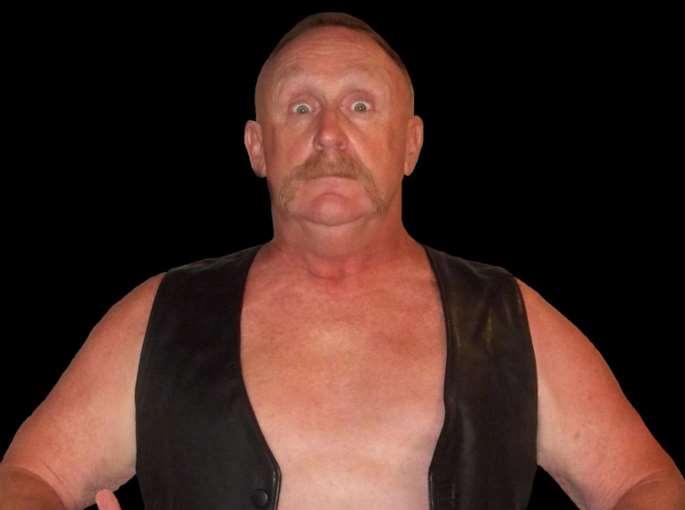

Theonetheycall“Mr.Outrageous”AlBurkewasasuccessfulwrestler for overthreedecades.Burketransitioned intoa life of acting and saw success in that field as well.
“I’ve been athletic all of my life, I mean in school I played football and hockey and track and things like that. I did not like wrestling in high school,” recalled Burke.
One of the biggest reasons Burke got into wrestling was from aninteraction he hadwith legend Hulk Hogan.
ManyofthewrestlersthatBurkehasworkedwithhavebeen an inspiration to his career as he says the professionalism and the excellence in their craft would always leave him impressed.
The opportunity to be a part of the WWF was one of the most exciting times for Burke, getting to get to work with the best wrestlers in the world but he made it a conscious decision that this was the only company he was going to do enhancement matches for.
“I was having a good time on the independents and that’s where I could really thrive and I won 16 different champion-
ships through the years with all the different independents, sotheywere happy to havemebecause of what I had done on the WWF,” said Burke. Even though he was a perennial loser for the WWF, it never bothered him. “Where do you get to go work for three or four or five minutes and get paid decent money?”
Just like wrestling, a career in acting wasn’t something that Burke saw himself doing. He got an offer to play a bad guy role and it stuck.
Even though he has agents and managers, Burke books a lot of his gigs himself. Not only acting in movies, but Burke had also made appearances in music videos, which he views as still a part of the acting craft.
“I ended up getting into music videos and realized, Oh wow, this is really cool,” said Burke, adding that “a lot of actors look at that, well that’s not acting, you’re just playing a character, that’s beneath me.”
One of biggest appearances for Burke was in Billie Eilish’s “Bellyache” video.
For Burke, he says his wrestling career helped a ton when transitioningintoacting, ashe saw it as him beinga character rather than being an actor.
“I have never ever taken one acting class, not one. All of the training as a pro wrestler has made me into the character that I am, I’m more of a character than an actor, I tell people,” said Burke.
His upcoming projects include a 1980s horror film where he plays a security guard and another project where he gets to play a cowboy. Even with a busy schedule, Burke likes to work on his cars and bikes during his off days.
– Sanjeevan Kandasam
Few wrestlers have seen as much change in the pro wrestling business as James Ware. From his days as an undercard worker in the Tennessee territory to wrestling in front of tens of thousands at WrestleMania, Ware has seen and done everything he set out to do.
Ware started wrestling in 1978 and from the beginning he was seen as a future star. He trained intensely with Wayne Farris, who would later become known as The Honky Tonk Man, and enjoyed steady work throughout the Memphis and larger Tennessee area for years. This intensity came from him wanting to achieve his childhood dreams. Inspired to be a wrestler since he was a kid, Ware got his first big break when Uncle Elmer introduced him to Jerry “The King” Lawler.
Ware credited God for giving him certain assets and talents that not only help him distinguish himself from his peers but also give him small advantages when wrestling. One of those was an exceptional sense of balance, which allowed him to ascend the top turnbuckles without shifting the ring. That allowed him to fly and land on his opponent with pinpoint precision.
“Most guys climb from outside the post and then hold on to get their equilibrium right,” Ware told the Oshawa Times in 1987. “But I’m grateful to the man upstairs for providing me with better balance. I walk up to the post backwards from inside the ring. My size doesn’t shake the ropes when I’m standing on top of the turnbuckles.All I have to concentrate on is where I want to be strike my opponent and at which angle I should come downinto him.”
Ware’s talents led to a long and storied wrestling career. Whether he was wrestling on his own as “Sweet Brown Sugar” or teaming with Norvell Austin as the Pretty Young Things, or pumping crowds full of energy as he sang while hismacawFrankieaccompaniedhimtothering,Waremanaged to reach fans all over the world with his charisma.
Ware is particularly happy with his ability to get different reactions from the crowd and adapting to new situations. As the Birdman, Ware was a beloved entertainer that brought people to their feet. When teaming with Owen Hart as part of the High Energy duo,
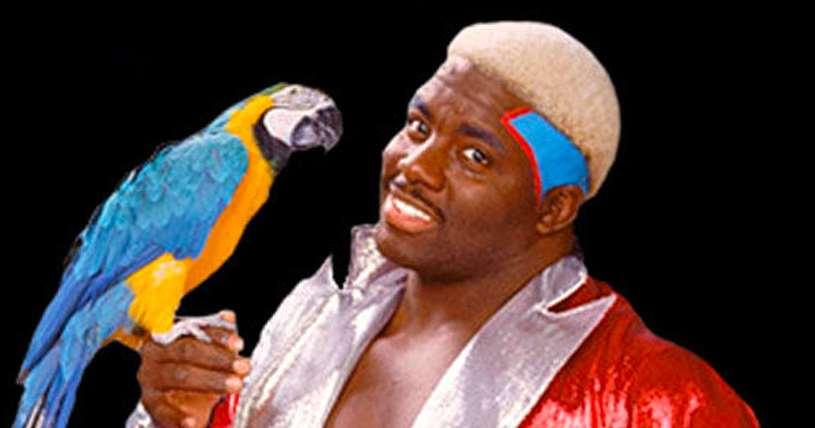
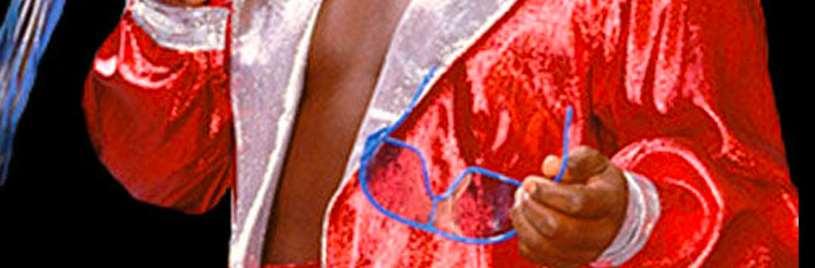
Koko’s personality meshed with Owen’s in-ring skill. And much earlier than that, the Pretty Young Things got such intense reactions that he and Norvell Austin had to fight their way back to the dressing roomonanightlybasis,even though the duo lost most of theirmatches.
Ware is proud of all that he has achieved, and while he is long removed from the wrestling business now as he runs his own painting company, he is still deeply appreciative of the business and all those within it that have helped him along the way.
“I’d like to thank Jerry Lawler for making me look like a million dollars. I’d like to thank Owen Hart for being one of the classiest guys that you’d ever want to be around and be partners with. I’m thankful to Tojo Yamamoto and Norvell Austin for teaching me so many things.And I feel I still owe Vince[McMahon]somethingformakingmewhoIamtoday.” –Alex Podgorski

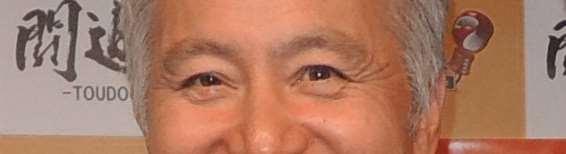

There is no understating the importance of Koji Miyamoto’s contribution to the preservation of wrestling history. He has been a trusted colleague and friend to legends, and has worked for over 30 years to spread information on the history of Japanese wrestling to fellowfans around theworld.
Koji fell in love with pro wrestling as a 10-year-old boy living in Mito City. Televised wrestling was a regular feature in Koji’s house thanks to his father and brother, but it wasn’t until he first saw Lou Thesz in 1968 that it finally captured his imagination. “What Lou showed me was true professional wrestling,” he said. “I don’t want to see professionalwrestling as showbiz.I wantto seeprowrestling as a sport.”
Laterthatyear,MitoCity’sChannel12beganbroadcasting filmsofclassicwrestlingfromChicagothatintroducedKoji to legends like Verne Gagne andAntonino Rocca, and he developed a deep affection for the black andwhite stars.
After relocating to Tokyo, he was able to attend matches from all the major Japanese promotions. After several
months of being a fan, he worked up the nerve to volunteer himself to serve as an interpreter forThesz andother American wrestlers. Incredibly, the promoters agreed.
He became fast friends withThesz, and through that relationship, he gained the trust of other American wrestlers. “Ikeptkayfabecold,everytime,”Kojisaid.“Iwasserious.”
Despite a full-time job, Koji traveled with a number of wrestlers and began contributing to Japanese wrestling magazines under the pen-nameTomomiNagare.
In 1995, he relocated to San Francisco. It was whileliving intheUnitedStatesthathemetseveralofthepeoplefrom the loose group of pen pals that would later form the core of wrestling historians in America. “There was no word of historian back then,” he said. “We were just big fans.” As video recording became more accessible, he began contributing tapes of Japanese wrestling, providing much of the footage exchanged among tape traders in the late 1980s.
Living closer to his friends than ever before, he worked to organize the informal network into a more cohesive unit, dubbing the group The International Wrestling Historians Club. Together, they’re responsible for producing the vast amount of researchon wrestling’s past.
He returned to Japan in 1998, and continued to work with Thesz until his death in 2002. “[Koji] and Lou were almost always on the same page and had so much of what Lou called ‘mutual respect,’” said Thesz’s widow, Charlie Thesz. Upon Thesz’s death, Charlie Thesz gave several pieces of his ring gear to Koji as a reminder of their relationship. “Lou Thesz was myAmerican father,” he said. “I stillfeel like that.”
For hisrespect,love,andunendingeffortstopreservethe artofprofessionalwrestling,KojiMiyamotohasmorethan earnedhisJamesC.MelbyHistorianAwardfromtheCauliflowerAlley Club.
– Jon Langmead
Where do you begin with Killer Karl Kox? Maybe with the glasseye.Koxroutinely dropped aglassmarblethat looked like an eye into his beer, clenched his socket and called for awaitress,“Myeye!” heexclaimed, asDick“TheDestroyer” Beyerrecalledthetrick.“Helookedupandshelookeddown at the beer and they’d pick upthe beer, pour it out, and give him the glass eye back and then he’d make believe he was putting the eye back by covering it up.”
MaybeyoubeginwithThunderboltPatterson.Koxtapedthe tips of his fingers before he went into the ring. “Why? I have noidea,”hesaid.Pattersonwitnessedthequirkthefirsttime he was in Dallas and asked for an explanation. “The new guy is coming into the territory, and I like to gig ’em,” Kox responded. “Seeing how you’re new to the territory, it’s your numbertonight.”Thetwowereinabattleroyalandallittook was one look from Kox to send T-Bolt scurrying to a safe side of the ring.
Maybe you begin with the horror. He was in the Marines at Chosin Reservoir in November 1950, the most brutal battle of the Korean War. It was bitter and freezing and the U.S. suffered more than 5,000 combat casualties. Dallas broadcaster Bill Mercer oncetriedto talktoKoxabout itforadocumentary.“Hesaid,‘Iwentoutthereandstackedthosebodies up like cordwood on the back of a Jeep.’And he started to cry.Then we stopped the camera.”
There were many sides to Kox, born Herbert Alan Gerwig on April 26, 1931, in Baltimore, Maryland, where he played football for an athletic club. He got into wrestling as a nondescript babyface thanks to Fred Bozik, who he met at the YMCAin Cleveland. Incredibly, he was first billed as “plenty good looking and a real favorite with the ladies,” one paper noted.Withhisoff-the-wallsenseofhumor,itwasabadfit.“I didn’thavethebackgroundandtheknowledgetobeababyface,”hesaid.TheSheik senthim to Omaha,wherehe was Killer Carl Cox. In Amarillo, he made a slight adjustment in thealphabet. ErnieLaddcalleditthegreatestgimmickever. “KKK — he didn’t have to say a word,” Ladd said.
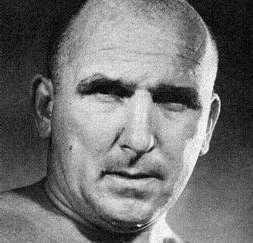
Kox’slistoftitleswouldtakeupayear’sworthof The Ear.He reigned especially supreme in Texas and Florida, and was a massive draw for promoter Jim Barnett in Australia. You would be too, if you crippled a 63-year-old TV announcer. Kox was incensed that Jack Little, doubling as timekeeper, rang a time-limit bell to deprive him of a victory against SpirosArion.HeputLittleinhisbrainbuster,aninvertedsuplex, and sent him to the hospital. For the next month, the bespectacled Little called matches wearing a neck brace.
After wrestling, Kox worked as a jailer, a fitting occupation for someone who regularly required police escorts to and from arenas everywhere. “He was a crowd-drawing son of a gun,” said “Lawman” Don Slatton. “He was unpredictable. Some of the crazy stuff he would do.” He died November 10, 2011.
-- Steve Johnson
George Beppu, Oct 20
Jay Briscoe (Jalman Pugh), Jan 17
Brian Bukantis, Feb 17
J.R. Bundy (Mike Phillips),Apr 20
Bushwhacker Butch (Bob Miller),Apr 2
Hank Dalton (Steve McGregor), Nov 4
Dickie Davies, Feb 19
Brian Dixon, May 27
Ron Doner, May 18
Darren Drozdov, June 30
Farmer’s Daughter (Ursula Hayden), Dec 3
Eric Froelich (Udo Froehlich),Feb 10
JeffGaylord, March 15
Billy Graham (Wayne Coleman), May 17
AntonioInoki (Kanji Inoki), Oct 1
Iron Sheik (Khosrow Vaziri), June 7
Jerry Jarrett, Feb 14
Kenny Jay (Ken Benkowski), Feb 2
D’Lo Jordan (Jason Pearce), Nov 14
Cathy SchaveKemp, Oct 29
Damon Knight (Andrew Smith), Dec 10
Peggy Lee Leather (Peggy Fowler), May 22
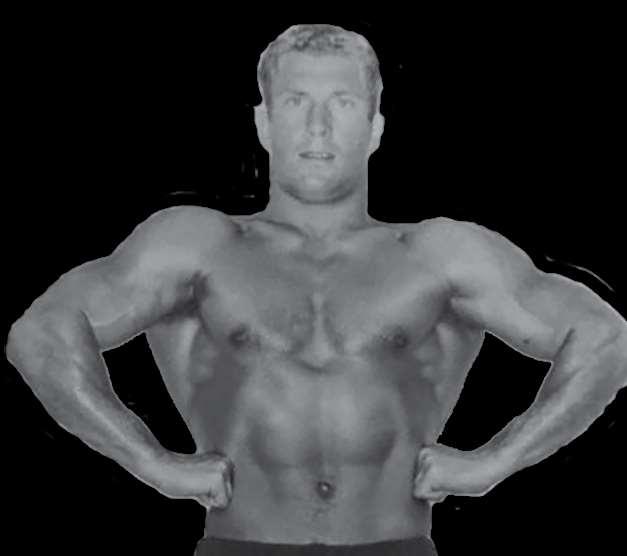
ZarinoffLebouef (Rejean Gagnon), May 17
Don Luce,Apr 24
Terrance Machalek, Mar 5
Bob Mulrenin, Nov 19
Tristen Nash, Oct 20
Charlie Norris, Feb 6
Mike Pappas (Manoli Savvenas), Dec 31
Sean Patrick (Sean O’Brien), March 17
Phantom of the Ring (Ed Garea), July 6
Lanny Poffo, Feb 2
Johnny Powers (Dennis Waters), Dec 30
Randy Rhodes (Randy Hunter), Jan 8
Scrapyard Dog, Dec 28
Beverly Shade, June 2
Nick Steel (Nick Castanhinha), Feb 15
“Exotic”Adrian Street, July 30
JaysinStrife (Nathan Bloget), Dec 29
Monty Swan, Jan 27
BillyTwoRivers, Feb 12
Karl Von Steiger (Lorne Corlett), Nov 8
Don West, Dec 30