

CATHOLIC NEWS HERALD
MARCH 20, 2026
VOLUME 35 • NUMBER 12
1123 S. CHURCH ST. CHARLOTTE, N.C. 28203-4003 catholicnews@rcdoc.org 704-370-3333
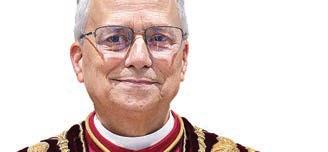
The Most Reverend Michael T. Martin, OFM Conv., Bishop of Charlotte
Arts & Entertainment 20-21
Contact us 2
Español 16-17
Our Diocese 4-9, 14-15
Our Faith 3
Our Schools 10-13
Scripture 3
U.S. news 22-23
Viewpoints 26-27
World news 24-25
EDITOR: Trish Stukbauer
704-370-3392, tmstukbauer@rcdoc.org
ADVERTISING MANAGER: Kevin Eagan 704-370-3332, keeagan@rcdoc.org
MULTIMEDIA DESIGNER: David Puckett 704-808-4521, dwpuckett@rcdoc.org
EDITORIAL TEAM: Kimberly Bender 704-370-3394, kdbender@rcdoc.org Lisa Geraci 704-370-3294, lmgeraci@rcdoc.org Troy C. Hull 704-370-3288, tchull@rcdoc.org Christina Lee Knauss 704-370-0783, clknauss@rcdoc.org Amelia Kudela 980-374-3411, arkudela@rcdoc.org Brian Segovia 704-370-3235, bmsegovia@rcdoc.org
COMMUNICATIONS ASSISTANT/CIRCULATION: Maria De Ugarte 704-370-3333, catholicnews@rcdoc.org
COMMUNICATIONS DIRECTOR: Liz Chandler 704-370-3336, lchandler@rcdoc.org
ASSISTANT COMMUNICATIONS DIRECTOR: Patricia L. Guilfoyle 704-370-3334, plguilfoyle@rcdoc.org
THE CATHOLIC NEWS HERALD is published by the Roman Catholic Diocese of Charlotte 26 times a year.
NEWS: The Catholic News Herald welcomes your news and photos. Please e-mail information, attaching photos in JPG format with a recommended resolution of 150 dpi or higher, to catholicnews@rcdoc.org All submitted items become the property of the Catholic News Herald and are subject to reuse, in whole or in part, in print, electronic formats and archives.
ADVERTISING: Reach 165,000 Catholics across western North Carolina! For advertising rates and information, contact Advertising Manager Kevin Eagan at 704-370-3332 or keeagan@rcdoc.org. The Catholic News Herald reserves the right to reject or cancel advertising for any reason, and does not recommend or guarantee any product, service or benefit claimed by our advertisers.
SUBSCRIPTIONS: $17.25 per year for registered families of the Diocese of Charlotte and $25 per year for all others
POSTMASTER: Periodicals Class postage (USPC 007-393) paid at Charlotte, N.C. Send address corrections to the Catholic News Herald, 1123 S. Church St., Charlotte, N.C. 28203.
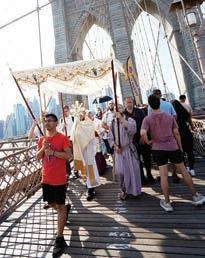
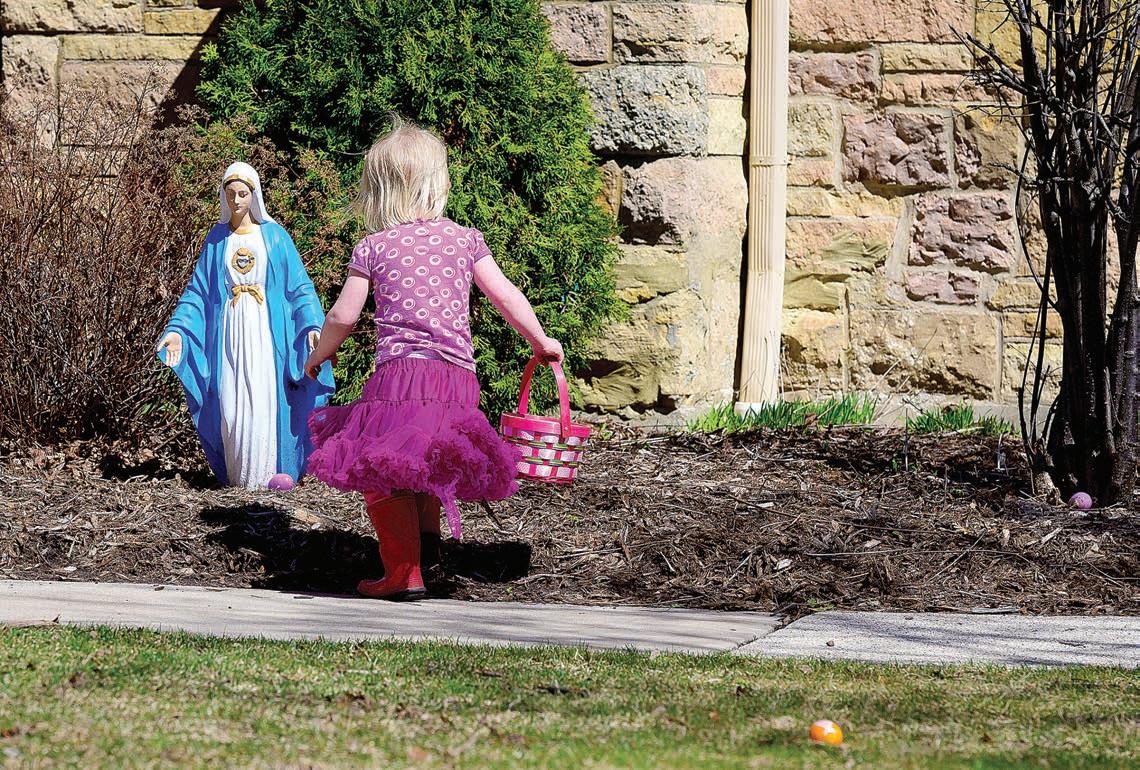
Easter eggs are a beloved seasonal tradition, but did you know that they have deep roots in our faith? Beyond the chocolate and sweet treats, the elaborate Easter baskets, and the happily chaotic scavenger hunts for those delicious morsels, the egg has long been associated with the miracle at the center of our Catholic faith – Christ’s triumphant Resurrection.
1
Eggs are a representation of the new life that hatches every spring, but their symbolism extends far beyond the wonder of nature. For early Christians, the egg was a tangible symbol of Christ’s Resurrection. The hard shell represented the sealed tomb, and the act of cracking the egg open to reveal its center symbolized Christ rising from the dead. In the early Church, the Lenten fast included abstaining from eggs as well as meat, so the end of the penitential season meant people could once again indulge in eating them.

MARY MAGDALENE’S ROLE
But where did the color come from?
We have the Eastern Orthodox traditions to thank for this fun rite of childhood passage. According to a popular story, Mary Magdalene went before the Emperor Tiberius in Rome to proclaim Christ’s Resurrection, using an egg to demonstrate the concept. The emperor allegedly said that a man rising from the dead was as likely as the egg in her hand turning red, which it immediately did. Whether the story was based in truth or fabricated, it launched a tradition of dying eggs red to symbolize the blood Christ shed for us on the cross, and it explains why some icons of Mary Magdalene depict her holding a red egg.
— Catholic News Herald, Catholic News Agency, OSV News and Wikipedia

Scan the QR code for this week’s recommended prayers and activities
VIÑEDO DE RAQUEL ¿Usted o alguien cercano está buscando sanar las secuelas de un aborto anterior? Retiros de fin de semana son ofrecidos por Caridades Católicas para hombres y mujeres en todas las regiones de la Diócesis de Charlotte. Para obtener más información, comuníquese con Lorena Haynes al 828-585-0483 o por correo electrónico a lorena_haynes@yahoo.com.
EVENTS
‘SAME SEAT’: Celebrate Lent with Father Pat Cahill and friends in a series on faith lived out in unexpected ways. 9:30-11 a.m. and 7-8:30 p.m. Wednesdays through March 25 at St. Matthew Church, 8015 Ballantyne Commons Pkwy., Charlotte,
While most children in the United States use commercially purchased shrink wrap and dye kits to decorate Easter eggs, Slavic traditions are far more elaborate. Pysanka are eggs that originate in Ukraine, where colorful patterns are created by applying alternating layers of dyes and wax (which protects the color underneath). Other Slavic cultures paint wooden eggs, etch eggs, or decorate them with beads or fabric. No matter how your family decorates them, enjoy this delicious symbol of the joyous reason behind the Easter season.
or on YouTube @stmatthewcatholicchurch.
EASTER FOOD BASKETS BLESSING: Deacon James Witulski will bless Easter food baskets in both English and Polish at 1 p.m. on Holy Saturday, April 4, at St. Thomas Aquinas Church, 1400 Suther Road, Charlotte. All are welcome.
2026 CATHOLIC CAMPOREE : Catholic Scouts gather for a weekend of faith and fellowship April 17-19 at BSA Camp Grimes, 383 Vein Mountain Road, Nebo. Call 704-907-1234 or email cdcatholicscouting@gmail.com.
IGBO MASS: 11:30 a.m. Sunday, March 22, St. Mary’s Church, 812 Duke St., Greensboro. Call 336-707-3625.
participate in the following events over the coming weeks:
MARCH 26 – 6:30 P.M.
Partners in Hope Catholic Charities Fundraiser Benton Convention Center, Winston-Salem
MARCH 28
Bishop’s Youth Pilgrimage Belmont Abbey College, Belmont
MARCH 31 – 3 P.M.
Chrism Mass St. Mark Church, Huntersville
For a list of the bishop’s upcoming Holy Week and Easter liturgies, go to www. charlottediocese.org/about/ bishop-michael-martin
The Catholic Church is made up of diverse people who are united by their faith in Christ and are called to welcome all of humanity, Pope Leo XIV said during his weekly general audience.
“Its unifying principle is not a language, a culture, an ethnicity, but faith in Christ,” he said in St. Peter’s Square March 11.
Continuing his series of reflections on the Second Vatican Council, the pope focused on the Dogmatic Constitution “Lumen Gentium,” which describes the Church as the “People of God.”
The Church is the assembly of “all those who in faith look upon Jesus,” he said, united not by nationality or culture but by their shared faith in Christ.
Pope Leo said this understanding is rooted in the Bible, pointing to God’s covenant with Abraham and the people of Israel, which prepared the way for the new covenant established through the death and resurrection of Jesus.
The pope said love is the law that governs relationships within the Church, as believers receive and experience it through Jesus. Through Christ, believers from every nation are united in faith, he said. The Church is the people of God who “draw their existence from the body of Christ and who are themselves the body of Christ.”
Rather than turning inward, he said, the Church must remain open to everyone.
“Unified in Christ, Lord and Savior of every man and woman, the Church can never turn inwards on herself, but is open to everyone and is for everyone,” he said.
In a world marked by conflict and division, Pope Leo added, the diversity of the Church is a sign of hope.
“It is a great sign of hope – especially in our times, marked by so many conflicts and wars – to know that the Church is a people in which women and men of different nationalities, languages and cultures live together in faith,” he said.
During the general audience, Pope Leo asked for prayers for peace in Iran and throughout the Middle East, above all for the many civilian victims and innocent children.
“May our prayer be a comfort to those who suffer and a seed of hope for the future,” he said.
HEIDI BUSSE OSV News
he week between Palm Sunday and Easter Sunday, Holy Week, is the most sacred time of year. During this special time, we enter into the passion of Christ – His crucifixion, death and resurrection –through liturgical celebration and personal conversion. While the season of Lent is a very important time in the Church, it is helpful to remember that our Lenten practices (prayer, fasting and almsgiving) are meant as preparation for the three days of the Triduum.
The three days of the Triduum are counted as the Hebrews counted their days, from dusk to dusk. Lent officially ends and the Triduum begins at dusk on Holy Thursday and continues through dusk on Easter Sunday. Because we cannot separate Jesus’ death from His resurrection, the Church teaches that the Triduum is really one celebration that lasts for three days. At various times during these days we are called to gather together at church to celebrate and remember the saving action of Christ.
HOLY THURSDAY
The evening Mass on Holy Thursday begins the sacred Triduum. On this night, we remember the Last Supper and celebrate the institution of the Eucharist and the sacrament of holy orders. At the end of the liturgy, the sanctuary is stripped clean in preparation for Good Friday.
The spirituality of the Triduum is centered on the accounts of the Paschal mystery in the Gospel of John. In John’s Gospel, the Last Supper is not the Passover meal; rather, Jesus is crucified at the same time the lambs are being slaughtered for Passover, as a sign that He is the Lamb of God, sacrificed for all of humanity. The last meal Jesus shares with His apostles in the Gospel of John is marked by the washing of feet. Jesus washes the feet of His disciples and in this way connects the Holy Eucharist with service to others.
Most Holy Thursday liturgies include a modern-day experience of foot washing.
This recalls Jesus washing the feet of His apostles and is a powerful example of how we are called to serve and care for one another.
Holy Thursday is also referred to as Maundy Thursday, meaning “a new mandate.” It refers to the mandate put forth by Jesus in John 13:34, “Love one another as I have loved you.”
GOOD FRIDAY
Good Friday is a somber remembrance of Jesus’ crucifixion and death on the cross. It is a day of fasting and penance and a time to examine all of the places in our lives where we fail to follow Christ and fall into sin. Good Friday is not only a commemoration of a historical event – Christ’s sacrificial death on the cross and glorious Resurrection are the heart of the Christian faith.
The church is bare on Good Friday, the altar stripped of ornamentation and the tabernacle left open and empty. Good Friday is a day of mourning. Traditionally, there is no music (other than chanting) on
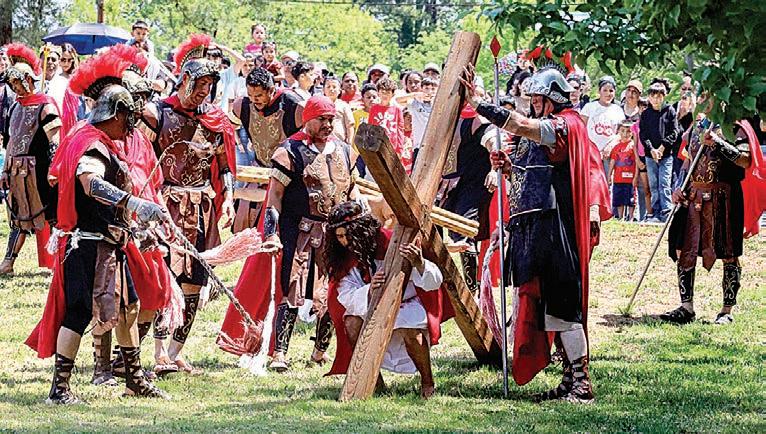
this day, and the prayer of consecration is also omitted from the service as a sign of what Christ’s sacrifice on the cross truly means. Good Friday is not a Mass; the holy Communion that is given out has been consecrated on Holy Thursday and kept in the tabernacle for adoration.
The service is divided into reading of the Passion, Veneration of the Cross and reception of the Eucharist. Christ’s passion is read from the Gospel of John and concludes with the prayers of the faithful, offered for the unity of the universal Church.
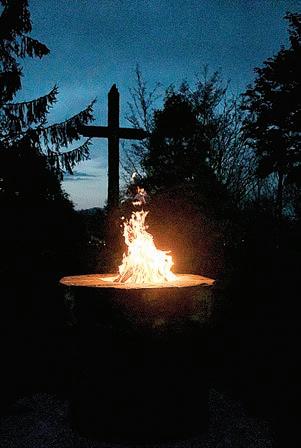
great celebration of adult baptism and confirmation. It is the high point in the Church liturgical year. The Vigil begins in darkness (usually outside), and the long procession of candlelight that enlivens the church reminds us that Jesus is the light of the world who has conquered all darkness and death. The Paschal candle that is lit at the Easter Vigil will remain in the church throughout the year as a sign of Christ’s death and resurrection.
Those who are coming into full communion with the Church receive the sacraments of initiation at the Easter Vigil, and we, as the community of believers, participate in this initiation by renewing our own baptismal promises. We recommit ourselves to Christ by once again rejecting sin and accepting the freedom that comes from living as children of God. We pray and welcome the newly initiated as they receive the oil of chrism and “share in the outpouring of the Holy Spirit” at confirmation. The white garments given to the newly initiated represent Christ’s everlasting victory over death.
The veneration of the cross is a time for the faithful to individually revere the cross and ponder Christ’s salvific act. Holy Communion is then distributed, and the priest and congregation depart in silence.
Many parishes offer Stations of the Cross on Good Friday.
Fasting is required on Good Friday. Catholics are to take in only one full meal (smaller than a regular meal and substituting fish for meat) in solemn remembrance of our hunger for Christ and His everlasting sacrifice on the Cross.
The Easter Vigil is the restoration of the early Church’s tradition as the
Daily Scripture readings “I am the resurrection and the life, says the Lord; whoever believes in Me, even if he dies, will never die.” — John 11:25a, 26, from the readings for March 22, the Fifth Sunday of Lent
The Vigil concludes with reception of the Eucharist. As the newly confirmed receive the final sacrament of initiation, the body and blood of Jesus, we are ready to celebrate Easter. The tomb is empty. There is light in the darkness. Alleluia, Christ is risen!
The Triduum is the culmination of the entire liturgical year and the three most sacred days in the lives of Catholic Christians. The single celebration that comprises the Triduum commemorates the fullness of the Paschal mystery – the passion, death and resurrection of Jesus Christ. Because Jesus was willing to die for our sins and was resurrected, death is no longer the end of life for us. It is the beginning of new life.
We gather together during Holy Week, then, to remember the saving act of Jesus, to celebrate the miracle of His resurrection and to embrace His promise of eternal life.
Snap the QR code (right) to get the Mass readings for every day, in English or Spanish, online at the U.S. Conference of Catholic Bishops’ website.

For the latest news 24/7: catholicnewsherald.com
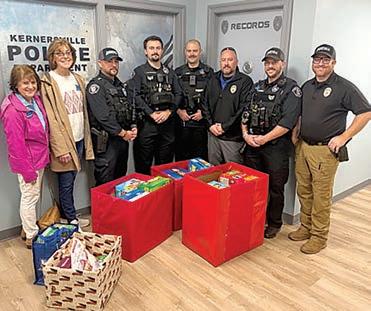
Columbiettes support local police department
KERNERSVILLE — The Columbiettes from Holy Cross Parish recently stopped by their local Kernersville Police Department with five bins of snacks for Police Appreciation Day. Pictured from left are President Olga Sasser, Vice President Janet Shipko and local officers. The Holy Cross Columbiettes, with more than 85 members, do numerous acts of charity for their parish and community.
House of Mercy set to host 31st annual WALK for AIDS
BELMONT — House of Mercy, a sponsored ministry of the Sisters of Mercy, invites the community to join them Saturday, April 18, for the 31st Annual WALK for AIDS. For more than three decades, this annual event has united individuals, families, faith communities, businesses and local partners in support of people living with HIV/AIDS.
This year’s fundraising goal is $25,000 to support House of Mercy’s mission of empowering people living with HIV/AIDS in their transformation toward a more independent life through housing, case management and supportive services. Funds raised directly sustain critical programs that promote stability, improve health outcomes and combat stigma and discrimination surrounding HIV/AIDS. To register, visit www.thehouseofmercy.org/ events.
SANTA BARBARA, Calif. — Legatus, an international Catholic businessperson’s organization, recently named Kevin Scully of the Charlotte chapter as its 2025 National President of the Year. The award recognizes the chapter president who has demonstrated exceptional leadership and service to his or her chapter. “Kevin has been instrumental in helping the Charlotte chapter be rejuvenated, being very engaged in supporting the membership program to strengthen the chapter,” said Legatus President Stephen Henley. Scully, who has served as Charlotte president since 2024, was enthusiastic about the notoriety the award gives the chapter. “We think Legatus serves a great purpose, and we would love to have more people join us in our mission.”
— Catholic News Herald and provided
PATRICIA
L. GUILFOYLE plguilfoyle@rcdoc.org
CHARLOTTE — The Diocese of Charlotte is updating policies for its cemeteries and columbaria in response to growing demand for burial space and limited land available at many parishes.
Bishop Michael Martin, OFM Conv., promulgated the new “Diocesan Norms for the Governance and Stewardship of Cemeteries and Columbaria” on March 19, the feast of St. Joseph, patron of the dying.
The norms update rules for establishing, operating and expanding parish cemeteries, columbaria, and Catholic sections in public or private cemeteries –as well as for potential future cemeteries operated by the diocese. They also set requirements for who is eligible to be interred, ensure perpetual upkeep of sites, and emphasize that burial options should remain affordable.
They replace policies first issued in 2007 and are intended to help the fastgrowing diocese better meet the pastoral and practical needs of the faithful seeking Catholic burial.
Diocesan officials say demand has been increasing due to the rising population of Catholics, who want the assurance that a Catholic cemetery or columbarium will be there for them and their loved ones.
“One thing we were hearing from priests is that parishioners were increasingly asking where their loved ones could be laid to rest,” said Monsignor Patrick Winslow, the diocese’s vicar general and chancellor. “Those questions really started reaching a tipping point.”
The Church recommends burial of
the body but permits cremation. As available parish land has become more limited, cremation and a reliance on civil cemeteries has increased.
Currently, three of the diocese’s 93 parishes have cemeteries and seven have cemeteries with columbaria. Another 21 parishes operate freestanding columbaria, although 10 of those are already full. Catholic burial sections are also designated in civil cemeteries in Albemarle, Charlotte, Clemmons, Cornelius, Huntersville and Matthews.
One of the new policy’s most significant changes removes the limit on the number of columbarium niches to no more than the number of burial plots at the same site.
“The previous formulas tying the number of niches to burial plots are no longer being used,” Monsignor Winslow said. “Instead, we’re allowing need, space and availability to guide the decisions.”
For parishioners and their relatives, the practical effect will likely be greater opportunities for interment options in the years ahead, Monsignor Winslow said.
The new norms reiterate Church teaching that Catholic cemeteries and columbaria are intended primarily for baptized Catholics, yet others may be eligible – including non-Catholic or non-Christian spouses, children or other relatives.
They also outline procedures for acquiring land for new cemeteries or expansions, establishing Catholic sections in civil cemeteries, and managing parish cemetery operations such as recordkeeping and financial stewardship.
Parishes with cemeteries or columbaria must establish advisory boards to oversee finances and create perpetualcare endowments to ensure long-term maintenance of the property.
The norms also encourage environmental stewardship, recommending “ecologically ethical” practices such as water-saving irrigation systems. “Green” burials are permitted provided they conform to Catholic teaching.
The norms also create a framework for a possible diocesan cemetery in the future.
SACRED
Beyond administrative guidelines, the norms reflect Church teaching and emphasize the spiritual significance of Catholic burial.
“Catholic cemeteries/columbaria are extensions of the Church’s ministry –pastoral, liturgical and communal, not merely functional places of burial,” the policy states. “They are places where the faithful come to pray, to grieve, to remember, and to entrust their loved ones to God’s eternal care.”
Cemeteries should be understood as sacred spaces within the life of the Church, Monsignor Winslow said.
“We often think of sacred spaces in terms of churches and chapels,” he said, “but cemeteries are also sacred spaces
CEMETERY, SEE PAGE 28
CHARLOTTE — The 2026 National Eucharistic Pilgrimage is stopping at four parishes in the Diocese of Charlotte on a special route that will travel the East Coast from St. Augustine, Florida, to Portland, Maine, ending in Philadelphia.
The pilgrimage – the third of its kind – will begin in May on Memorial Day weekend and end July 5. This year’s pilgrimage celebrates America’s 250th anniversary with the theme “One Nation Under God,” and its route incorporates key sites in the history of the country and its Catholics.
Locally, the pilgrimage will journey from Our Lady of Grace in Indian Land, South Carolina, to Our Lady of Lourdes Church in Monroe on the afternoon of Saturday, May 30. Stops will follow at St. Vincent de Paul Church in Charlotte, St. Philip the Apostle Church in Statesville and St. Pius X Church in Greensboro.
Non-public events that are not advertised on the pilgrimage website, are still being planned. Initial plans include a “Meet the Pilgrims” event from on Sunday, May 31, at St. Peter Church in Charlotte, and a young adult event later that evening at a time and location to be determined. A service project in Greensboro is in the works for
The National Eucharistic Pilgrimage will make these official stops in the diocese, with additional events still in the planning stages:
n Our Lady of Lourdes Church in Monroe: Eucharistic Adoration from 3:30 to 4:30 p.m., followed at 5 p.m. Mass on Saturday, May 30
n St. Vincent de Paul Church in Charlotte: 2 p.m. Mass followed by Eucharistic Adoration on Sunday, May 31
n St. Philip the Apostle Church in Statesville: 9 a.m. Mass, followed by Eucharistic Adoration until 10:30 a.m. on Monday, June 1


n St. Pius X Church in Greensboro: Eucharistic Adoration from 4 to 5 p.m., followed by a 5:15 p.m. Mass on Monday, June 1
the morning of June 2 before the pilgrims continue on to Richmond, Virginia. Organizers described the pilgrimage as “a nationwide call to renewal, unity and mission rooted in the Eucharist.” They noted that 2026 marks the 75th anniversary of the lobbying
Our Lady of Lourdes, 725 Deese Street, Monroe St. Vincent De Paul, 6828 Old Reid Road, Charlotte St. Philip the Apostle, 525 Camden Drive, Statesville St. Pius X Church, 2210 N. Elm St., Greensboro Planned stops 1. 2. 3. 4.
campaign, led by the Knights of Columbus, to add the phrase “One nation under God” to the nation’s Pledge of Allegiance. “One Nation Under God is not a
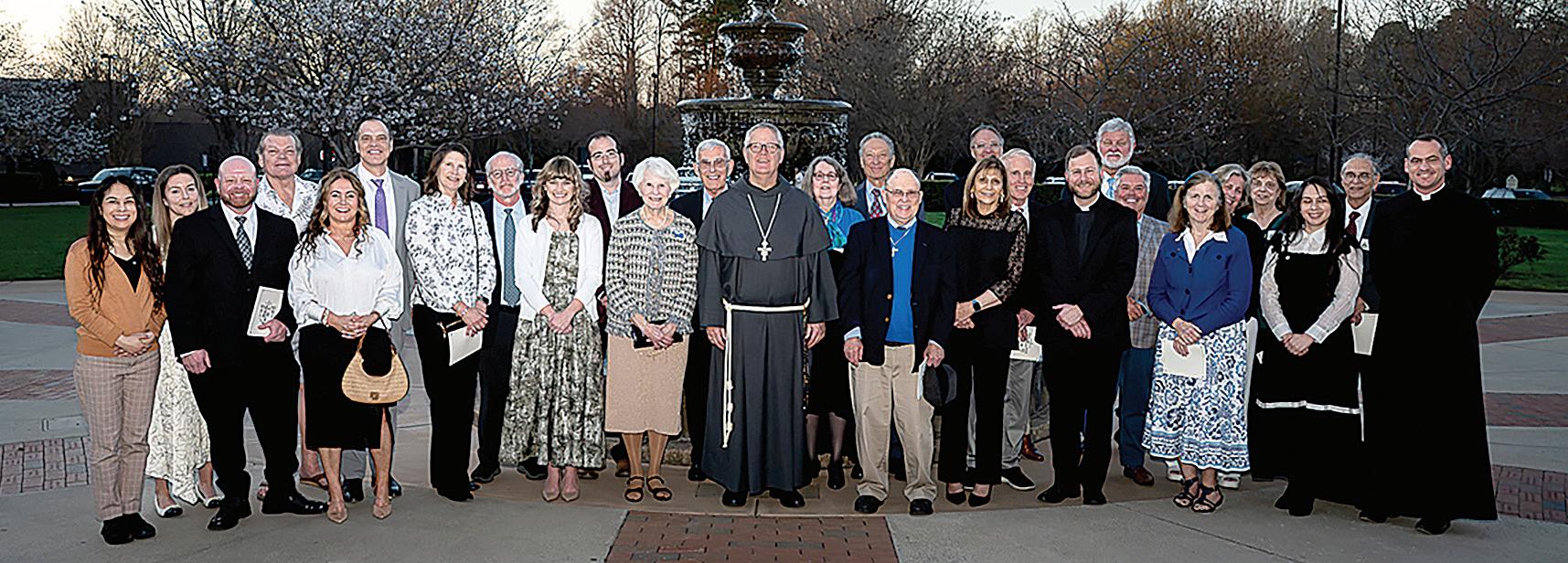
LISA M. GERACI lmgeraci@rcdoc.org
HUNTERSVILLE — St. Mark Church hosted the March 9 installation Mass of the newest chapter of the Serra Club, welcoming 25 members to the global lay apostolate that encourages vocations to the priesthood and religious life.
This chapter marks the 190th Serra Club in the United States. Serra International was started in 1935 by four men who wanted to promote vocations. The group now numbers 13,000 Serrans in 48 countries, all committed to praying for seminarians, consecrated religious and clergy.
Bishop Michael Martin, OFM Conv., celebrated the Mass and induction ceremony with Father Brian Becker, director of formation for St. Joseph College Seminary and the chapter’s new chaplain; Father John Eckert, vocations director; Deacon William Schreiber, director of deacon formation; and Father John Putnam, pastor of St. Mark Parish.
In Bishop Martin’s homily, he drew from the first reading, 1 Sam. 3:1-10, urging the new Serrans to support others in discerning God’s call, just as Eli did when guiding Samuel.
“In the work of God, there were always helpers. There was always a specific call to people to assist in making sure that God’s plan, that God’s mission, gets carried out,” the bishop said.
“God has always used people that oftentimes go unnamed … and yet the work that they do enables others to do the work they do, and that work brings about the Kingdom of God.”
Bishop Martin said he is a living example of this –following his calling to be a Franciscan priest not only based on his discernment, but also because the people in his life enabled him to hear God’s voice.
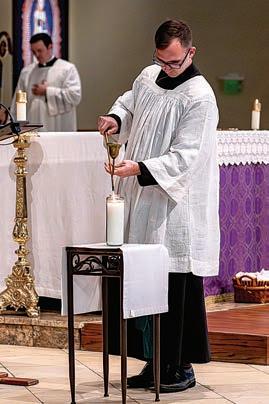
After his homily, the candle symbolizing Jesus, the light of the world, and its fire, the transforming energy of the Holy Spirit, was lit, officially marking the start of the ministry. Members stood and pledged
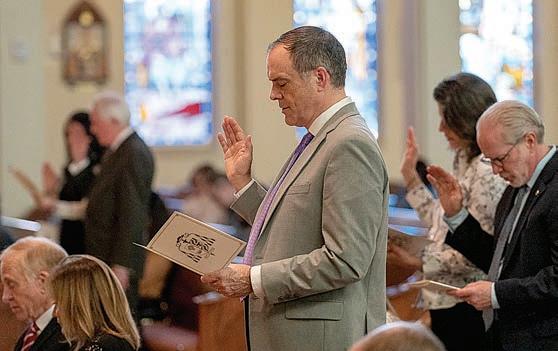
to promote vocations. It has since grown to 190 chapters with the induction of its newest at St. Mark Parish in Huntersville. (Below) The lighting of the candle officially marks the beginning of the new effort.
their prayer and support to those in religious vocations.
“One year from now you will not know, but the Holy Spirit will know, how many men and women, influenced by your example, prayers and programs, heard the invitation of the Holy Spirit to ‘Come and See,’” said Dr. Anne Roat, president of Serra USA Council, who flew in from Lafayette, Indiana, for the event.
A GROWING NEED
The diocese has 44 seminarians, 141 active and retired priests, and 143 deacons. There are 82 sisters representing 17 orders and 12 brothers, mostly from the Missionaries of the Poor and the Franciscan community, and 14 active Benedictine monks at Belmont Abbey.
The growth of vocations is the natural byproduct of the population growth in the active diocese, which includes 93 parishes and 565,000 Catholics. There has been a 19% increase from 69,000 registered households a decade ago to 82,000 in 2025. By 2030, the diocese projects close to 100,000 registered households.
“As we know, as they are serving their vocation, they are being pulled in all different directions,” said Al Jarvis, president of the new chapter.
Jarvis said reports of burnout,
loneliness and a lack of fraternity are on the rise, and global trends are indicating that some priests are falling away from their vocations.
“Pope Francis says that a true Serran is a friend to the priests and the religious. That is truly what this is about,” David Spaedy, St. Mark parishioner and the chapter’s vice president of programs, said, referring to comments Pope Francis made at the 75th Convention of Serra International in 2017 in Rome.
Serran members meet monthly to pray and listen to a local priest or religious speak about their vocation journey. Between meetings, Serrans
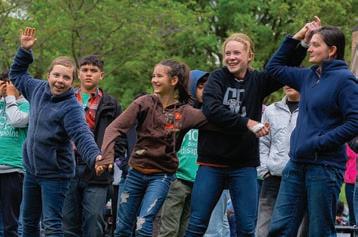
pray daily for vocations, write letters of support, visit seminaries and convents and encourage those feeling the tug toward religious life.
The new chapter was initiated by Spaedy, who underwent a 13-year pursuit of organizing, planning, but mostly waiting, to start the local ministry.
His father, now 90, has been a Serran for 62 years. In Spaedy’s hometown of Bismarck, North Dakota, the club is thriving.
“You could see that these were like-minded Catholics that knew their mission,” Spaedy said.
“It just felt like we were part of something bigger than ourselves. It was just wonderful.”
When Spaedy moved to Huntersville in 2013, he was surprised there was not a local chapter.
“I wanted to start a Serra Club and met with Bishop (Emeritus Peter) Jugis, but it was not the right time,” Spaedy said.
“We got our new bishop, and the Spirit started stirring up thoughts in me to take another swing at the plate. We met last February, and the bishop said, ‘Give me a couple of months to think about it.’ A week later, he emailed me and said, ‘Let’s go.’”
With the bishop’s nod, Spaedy and others visited St. Dorothy Parish in Lincolnton, St. Ann and St. Thomas Aquinas parishes in Charlotte, and Sacred Heart Parish in Salisbury, recruiting potential members.
“I didn’t hear about the club until David was given the opportunity to speak at a weekend here at St. Mark,” Jarvis said. “I felt called to be a part of this.”
Seminarians Patrick Martin and John Yellico, who both attended the event at St. Mark, welcome all prayer warriors.
Yellico says prayers make a huge difference in his journey, noting that a warm meal, a word of encouragement or a letter of support can go a long way.
As he said, “We need prayers and for people to be visible when we need support. Just being there. Because it does get rough at times. It is like discernment through whispers.”
CHARLOTTE — Spring kicks off in the Diocese of Charlotte with youth events that are designed to be both fun and inspirational, starting with the 2026 Bishop’s Youth Pilgrimage and the Diocesan Youth Conference.
“These are opportunities for young people to really deepen their faith and encounter Jesus,” said Daniel Torres, diocesan director of youth and young adult ministry. He said participating in these events helps youth realize “that their faith goes beyond just their parish limits and that they can be Catholic wherever they go in the world.”
BISHOP’S YOUTH PILGRIMAGE
The events begin March 28 with the Bishop’s Youth Pilgrimage on the grounds of Belmont Abbey College. Last year, the pilgrimage brought more than 1,000 young people together for a day of worship, engaging talks, fellowship, live music, food and games. Online registration closed March 18, but participants can register at the event, although lunch and a T-shirt are not guaranteed. This is not a drop-off event; youth must be accompanied by an adult.
DIOCESAN YOUTH CONFERENCE
The Diocesan Youth Conference will bring together eighth- through 12th-grade youth for a theme-centered weekend of workshops, speakers, entertainment, Mass, Eucharistic Adoration and confession. Centered around the theme “Recognize His Voice,” the three-day conference helps youth grow deeper in their faith. Registration is open for the April 24-26 event at the Ridgecrest Conference Center in Black Mountain at www.charlottediocese. org/event/diocesan-youth-conference.
Young adults are encouraged to plan ahead for an international adventure next year. World Youth Day 2027 will take place July 29 to Aug. 10, 2027, in Seoul, South Korea. Thousands of young Catholic pilgrims from across the world will join Pope Leo XIV in an opportunity to encounter Christ through prayer, catechesis, Masses and festivals. Details and an interest form are at www. charlottediocese.org/world-youth-day. Torres noted these types of events can have a profound impact on youth. “I attended the Bishop’s Youth Pilgrimage, the Diocesan Youth Conference and World Youth Day when I was a young person, and those were really profound moments for my faith,” he said. “I think being able to meet other people outside my parish, to be able to see Christ within other people and the Christian life being lived out in an authentic, beautiful and vibrant way just really inspired me to want to make my faith my own.”
CHRISTINA LEE KNAUSS clknauss@rcdoc.org
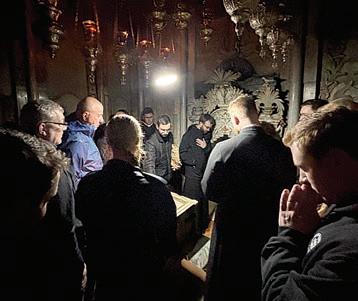
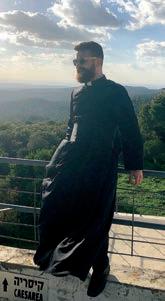
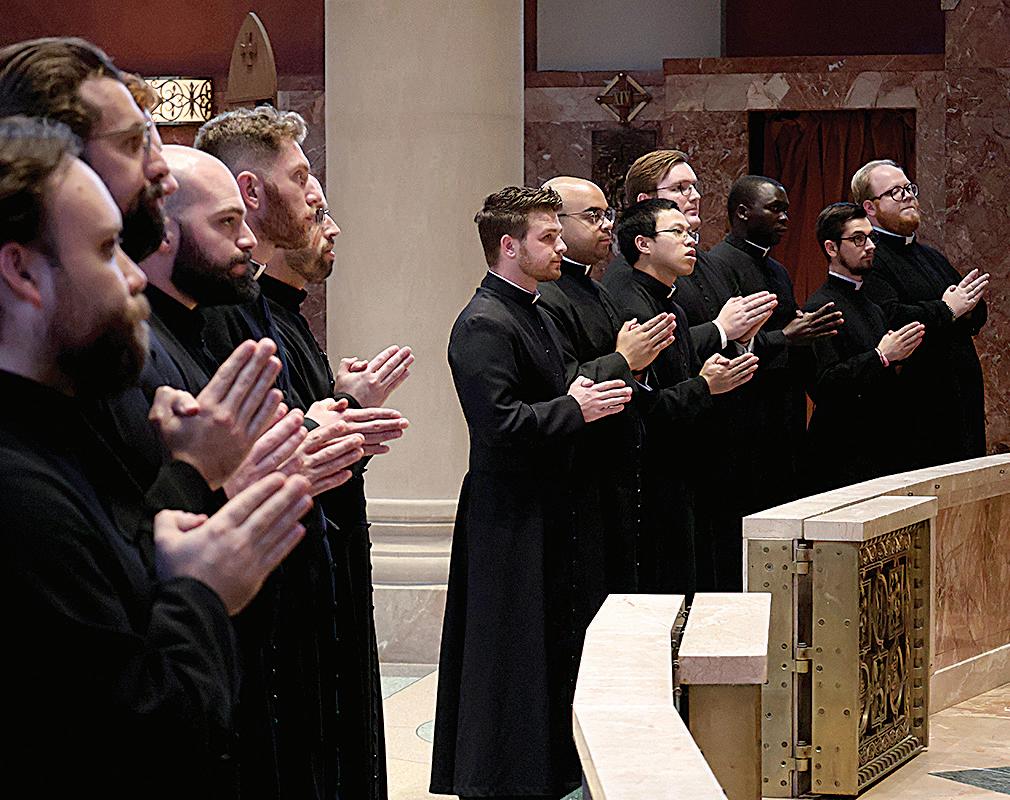
Over the winter, seminarians from the Diocese of Charlotte who are studying in Rome combined their studies for the priesthood with experiencing Christ in the Holy Land, in various sites around Europe and Asia, and in special Lenten rituals.
Elijah Buerkle, John Harrison, Gabriel Lugo and Ronan Ostendorf are students at the Pontifical North American College in Rome, studying theology and other topics in Italian and English.
Harrison, Lugo and Ostendorf also took an important step on their journey to the priesthood on March 1, when they were instituted as acolytes at a Mass celebrated by Archbishop Samuele Sangalli, adjunct secretary of the Vatican’s Dicastery for Evangelization, at the college’s Chapel of the Immaculate Conception.
As acolytes, the men took on duties of attending to the altar, assisting the deacon and priest at Mass, and distributing Holy Communion as an extraordinary minister.
The winter months offered them chances to reflect on their vocations and to deepen their faith through experiences.
FINDING GOD IN THE MOUNTAINS
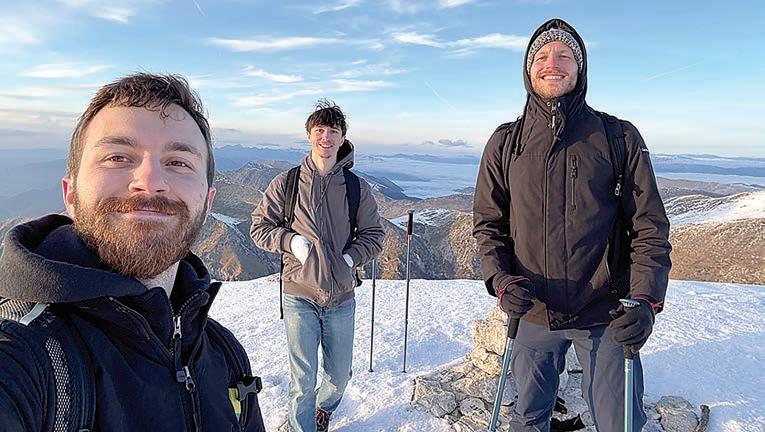
Harrison hiked through the Apennine mountains in the north of Italy, first with his brothers, Father Matthew Harrison and Joseph Harrison, and later with Buerkle and Ostendorf.
“Every direction I looked was a new view of the snowy mountains and foggy valleys, and yet it was all surrounded by a deep silence and tranquility,” he said.
He also took a ski trip with friends in northern Italy. On the train trip up, one of his friends recalled his grandfather saying, “I see the hand of God in the mountains.” That resonated deeply with Harrison.
He said people can find meaning in reflecting on God’s great love in creating not just humanity, but the Earth and all its beauty, referring to the Scripture passage: “For as high as the heavens are above the Earth, so great is His love for those who fear Him” (Psalms 103:11).
PILGRIMAGES AND DAWN WALKS
Buerkle, who started his studies in Rome
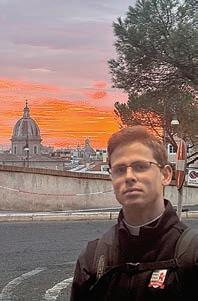
last fall, is getting accustomed to seminary life and feels he has gotten his “Roman sealegs.”
Highlights of his past few months were pilgrimages over Christmas break to the Holy Land, Venice and Ephesus, Turkey.
At Ephesus, he joined Ostendorf and Lugo to visit and attend Mass at the house of St. John the Evangelist and the Blessed Virgin Mary.
In Venice, a visit to the Basilica of St.
Mark, where St. Mark is buried, was special.
“I was especially grateful to be able to make this pilgrimage because my home parish is St. Mark’s in Huntersville, and I was able to spend some time in prayer at St. Mark’s tomb asking for his intercession for our parish,” he said.
Since Lent began, Buerkle has enjoyed participating in an old tradition in which Romans begin their mornings before dawn by walking across the city for Mass at the
day’s designated “Station Church.”
“It is a lot of walking, but it has been a wonderful way to enter into the spirit of Lent,” Buerkle said.
ENJOYING ROME WITH FAMILY
Lugo jumped from the winter break into an extended final exam period, an experience he said was challenging but meaningful because of the material.
“I spent a couple of long study days preparing for a Christology exam in particular, and it was time well spent,” Lugo said. “It is information that helps me now to better know and love Jesus and will help me to be a better preacher and pastor.”
After that exam, Lugo welcomed family from the U.S. who visited for several days. They took a tour of the Roman Colosseum and Forum, his first time inside the ruins.
“Hearing the stories and seeing the marks of history, both of Rome’s rise and fall, gave more meaning to the places I see on a regular basis and made me more grateful to be studying here,” he said.
While on pilgrimage in the Holy Land, Ostendorf ushered in 2026 by taking a swim in the Sea of Galilee on Jan. 1, which is both New Year’s Day and the Solemnity of Mary, Mother of God.
“Literally being submerged in the environment in which Jesus walked and talked and taught was a particular grace,” he said. “It hits home that Jesus was a real fleshand-blood man.”
The pilgrimage brought Christ’s life into physical focus for him, he said, because of the experience of realizing “Jesus walked on this water, died on this hill, etc.”
He reflected on how the disciples must have felt when they realized they were sharing their daily lives with a man who was also the Son of God.
“It’s easier to understand how dumbfounded and awestruck they were with fathomless joy when they finally started realizing, in their bones, that they had walked with God Himself,” he said. “That’s why Peter threw himself into the water when John told him who was on the shore. When you know Him, it’s hard not to throw yourself at Him, even if there’s a sea in the way.”
CHARLOTTE — The number of men studying for the priesthood for the Diocese of Charlotte has tripled in the past 11 years, creating a greater need for funding to support our 44 seminarians.
The Seminarian Education Collection taken up in all parishes at Easter, April 4-5, is one of the primary ways people can support seminarians and foster vocations to help meet the growing need for priests to serve the increasing Catholic population.
There has been remarkable growth in the diocese: a 19% increase, from 69,000 registered households a decade ago to 82,000 in 2025. Diocesan officials project that the number of registered households will reach 100,000 by 2030.
“For the past 28 years, the Seminarian Education Campaign has given faithful Catholics the opportunity to invest in the
There are several ways to make a gift to fund the education of the Diocese of Charlotte’s seminarians through the Seminarian Education Collection: n Use the envelope provided in your parish offertory packet n Make a gift online at your parish’s website, if available n Make a secure gift online at www.charlottediocese.org/giving (click on Seminarian Education)
lives and ministry of our future priests,” said Bishop Michael Martin, OFM Conv., in his letter to the faithful.
Since 2015, 28 priests have retired. Seven priests are serving beyond the retirement age of 70. In the next 10 years, another 27 priests are expected to reach retirement age.
“Your financial gift will help prepare each of our young men to serve as priests in our diocese for an average of 40 years,” Bishop Martin wrote. “Since 1998, 82 seminarians have been ordained to the priesthood with your help. By contributing to the formation of our future priests, you are helping to ensure that the sacraments,
spiritual guidance, and the light of Christ continue to reach every corner of our growing diocese.”
As Deacon Bryan Ilagor, who will be ordained to the priesthood in May, said, “One cannot do this alone. Prayer and financial support are crucial, as they benefit both us and the families we serve now and in future generations to come from our ministry.”
The Seminarian Education Program –in which 22 men are currently enrolled at St. Joseph College Seminary in Mount Holly, 20 men are either enrolled in major seminary at Mount St. Mary’s Seminary or in Rome, and two are in a pastoral year – is primarily funded through the annual Diocesan Support Appeal, the Seminarian Education Campaign and this collection.
— Trish Stukbauer
CHRISTINA LEE KNAUSS clknauss@rcdoc.org
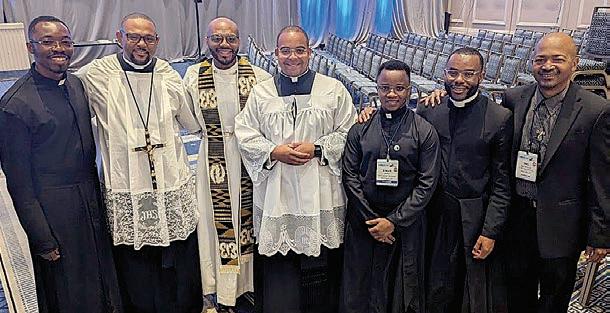
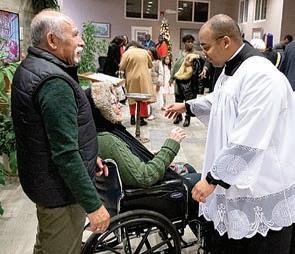
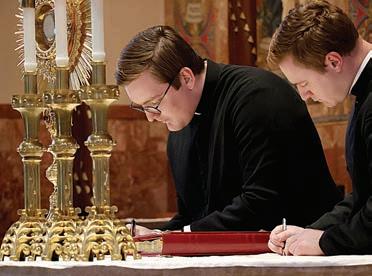
CHARLOTTE — Three chance meetings on a weekend in 2018 changed the direction of James Johnson’s life.
He was an active member at his home parish, Our Lady of Consolation in Charlotte, and volunteered as an altar server. On that weekend, he served at all three Masses, and at each of the Masses,
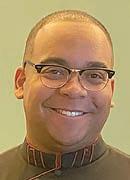
business management. But the question coming from nine different people had an impact.
“I was just floored. I asked, ‘What is going on?’” Johnson said. “So I went home and looked at the diocesan vocations website and saw a checklist for what made a good candidate for seminary. A lot of it sounded like me, so I submitted the online form around 11 p.m. at night and didn’t expect to hear back for a while. But the very next morning, I had a response from the vocations director.”






CHRISTINA LEE KNAUSS clknauss@rcdoc.org
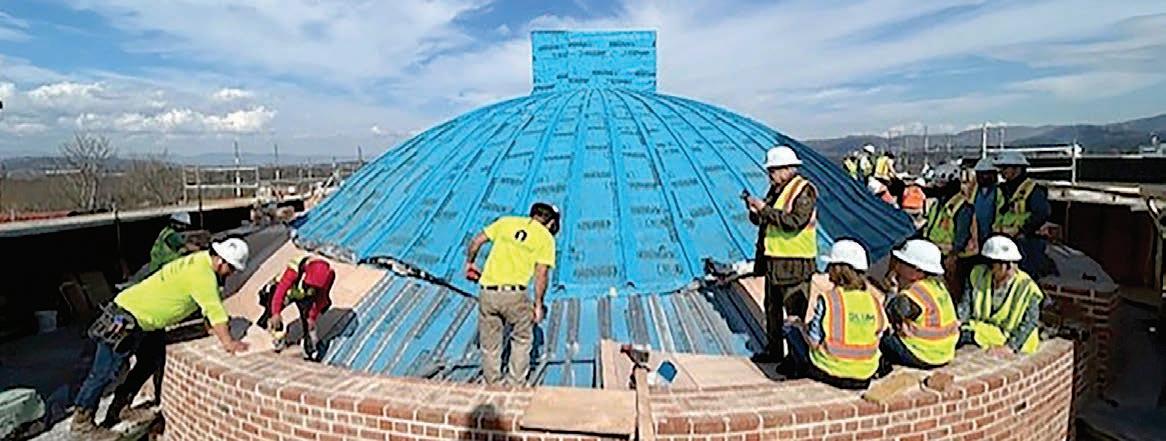
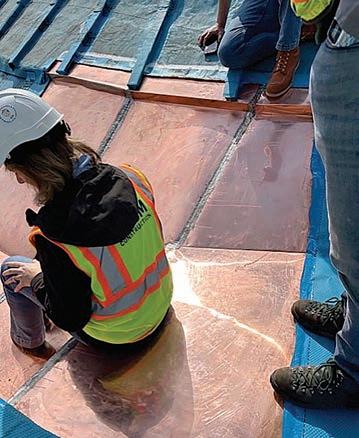
ASHEVILLE — Workers are laying shining copper on the dome of St. Lawrence Basilica as a massive renovation project continues at the historic structure in downtown Asheville.
Launched in October 2025, the first phase of the project is expected to cost an estimated $7.7 million and bring new life to much of the beloved 117-year-old basilica, which was designed by the renowned Spanish architect Rafael Guastavino Sr. Parishioners and donors from around the
country have donated to the project. The basilica is on the National Register of Historic Places and is known for its large elliptical dome, one of the largest in North America.
Replacement of the copper on top of the famous dome started in early March, and is the latest, most visible element of the project.
“Upfitting, waterproofing and placement of the new copper dome material will be happening through the spring,” said John Nobers, construction project manager for the Diocese of Charlotte. “From a construction standpoint, all the masonry and rehabilitation work is on schedule, and


everything at the basilica is moving along as planned.”
The copper on the roof is being completed in sections, and that work will continue through early summer, Nobers said.
The installation of new storm drains and other work to stop water intrusion has gone well, along with repairs to the cornice and parapets around the dome, Nobers said. Some interior work is also being done on the Marian chapel.
The final touch on the project will be repairing and replacing the oculus glass and installing the cupola skylight cover.
“The work is on budget and moving along well and really putting the Basilica parish in a good position to have the work completed by the end of the summer,” Nobers said. The current work is the first of three phases of restoration, which will stretch over many years as fundraising continues and could eventually cost an estimated $30 million.
How to give

At www.saintlawrencebasilica.org/ preservation-efforts : Learn about and donate to the preservation campaign
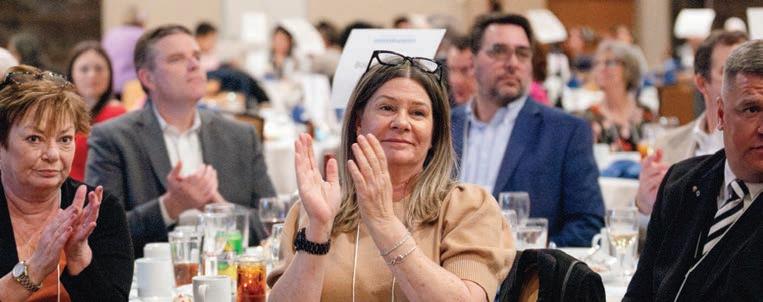
BELMONT — Dale Ahlquist, one of the world’s leading authorities on the life, writings and legacy of Catholic apologist G.K. Chesterton, was honored March 5 with the 2026 Benedict Leadership Award from the Benedict Leadership Institute at Belmont Abbey College.
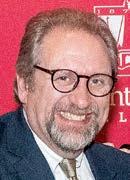
schools emphasize the integration of faith and reason, the pursuit of wisdom and the cultivation of joy – hallmarks of both the Benedictine educational tradition and Chesterton’s philosophy. A philosopher, lecturer and prolific writer, Chesterton converted to Catholicism and defended the faith in countless literary works with humor, wit and intellectual rigor. Pope Pius XI called Chesterton a “gifted defender of the faith.”
In addition to his work in education, Ahlquist is a bestselling author, broadcaster and international speaker. He has written and edited numerous books on Chesterton, hosted the long-running EWTN series “G.K. Chesterton: The Apostle of Common Sense,” and has spoken at universities, seminaries, conferences and cultural institutions around the world. His work has introduced countless readers and students to the relevance of Chesterton’s thought for modern society.


As the co-founder and president of the American Chesterton Society and the founder of the Chesterton Schools Network, Ahlquist has played a central role in a national renewal of classical Catholic education. Under his leadership, the Chesterton Schools Network has grown into a flourishing movement of classical high schools across the United States, forming young men and women in faith, reason, virtue and joy.
Founded in 2016, the Benedict Leadership Institute’s goal is to develop Catholic leaders and inspire them to help transform society through their faith.
Ahlquist is the ninth recipient of this award, which highlights the achievements of people whose lives reflect the heroic leadership of St. Benedict and whose work has strengthened culture, faith and education.
Ahlquist has helped establish more than 70 Chesterton Academies that provide an academically rigorous, culturally rich and spiritually grounded education. The
In 2020, he received a presidential appointment to serve on the National Board of Education Sciences. Ahlquist received the 2023 Our Lady of Victory Medal and an honorary doctorate from the University of Mary in 2024.
“Ahlquist’s leadership reflects a deep commitment to renewing Western culture through faith, literature and education,” the institute said in a letter announcing his award. “His work has helped restore confidence in the Catholic intellectual tradition and has inspired a new generation of educators, parents and students to pursue truth, beauty and goodness.”
CHARLOTTE — Girl Scouts at St. Matthew Parish held their annual Girl Scout Mass on March 8 to kick off Girl Scout Week. After a Mass celebrated by Father Chukwunonso Nnebe-Agumadu, a banquet was held and religious awards were presented.
Catholic religious awards developed by the National Federation for Catholic Youth Ministry in Washington, D.C., were earned by the following Girl Scouts: Reagan Lavezzo and Olivia Norris in Troop 318 earned the God is Love award; Paige Alef, Audry Haemmerlein, Zoey Hill and Madison Ruangchotvit in Troop 2035 earned the Family of God award; and Genevieve Rauscher in Troop 3180 earned the I Live My Faith award Brownie Troop 2035, Junior Troop 1488 and Cadette Troops 1487 and 3180, as well as a Juliette Ambassador, earned the My Promise, My Faith award, developed by Girl Scouts of the USA.
Junior Scouts Madeline Horne of Troop 1487 and Charlotte Baker, Frances Brooks, Kaitlyn Sliter and Cassidy Zeind of Troop 3497 earned the Girl Scout Bronze Award, the first of the three highest awards given by Girl Scouts.
Five Girl Scouts were presented with the Pillars of Faith – Service to God award for completing four core Catholic religious awards during their years in Girl Scouts, an honor which previously had only been achieved by two scouts at the parish. The recipients (shown in bottom photo) are Nia Hung and Bridget Larkin in Troop 2265 and Stella Russell, Ella Daly and Viviana Vuchnich (not pictured) in Troop 1768. — Nannette Gorman
South Charlotte-area girls in kindergarten through high school interested in Girl Scouts and their parents can reach out to Christie Ryan, Girl Scout Ministry Leader at St. Matthew Church at ctalley125@aol.com. Adult troop leaders and volunteers are also needed.
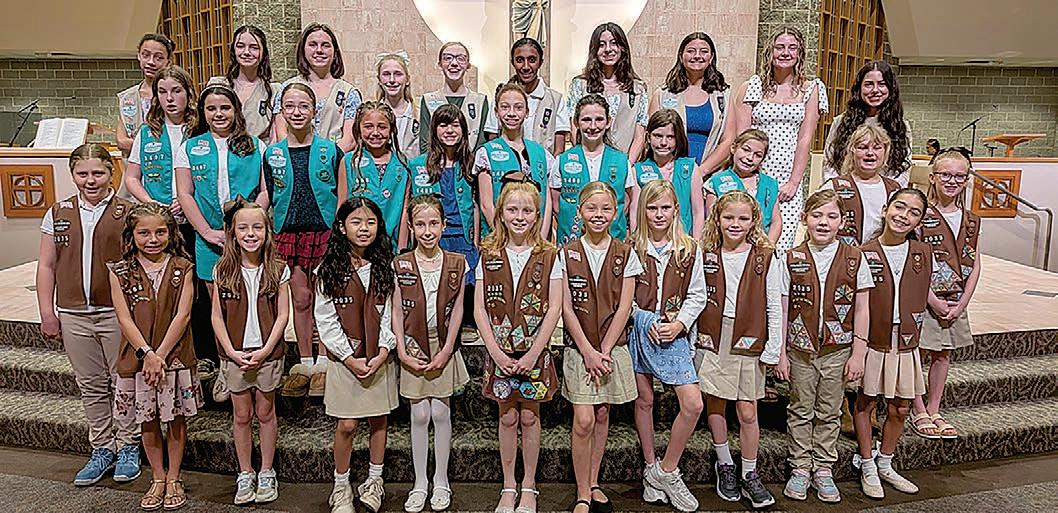
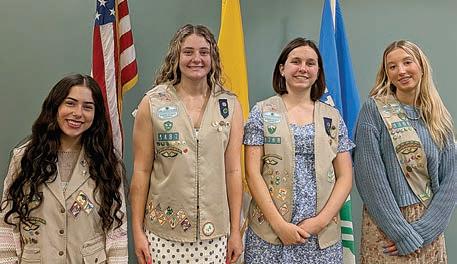
Scouts attend the annual Girl Scout Mass and banquet on March 8 at St. Matthew Parish. The event coincides with the national celebration of Girl Scout Week. March 12 is the birthday of the Girl Scouts, commemorating the day in 1912 when Juliette Gordon Low registered the first members in Savannah, Georgia. (At left) Five scouts were presented with the Pillars of Faith–Service to God award for completing four core Catholic religious awards during their years in Girl Scouts, an honor which previously had only been achieved by two scouts at the parish. The recipients (from left) are Nia Hung and Bridget Larkin in Troop 2265 and Stella





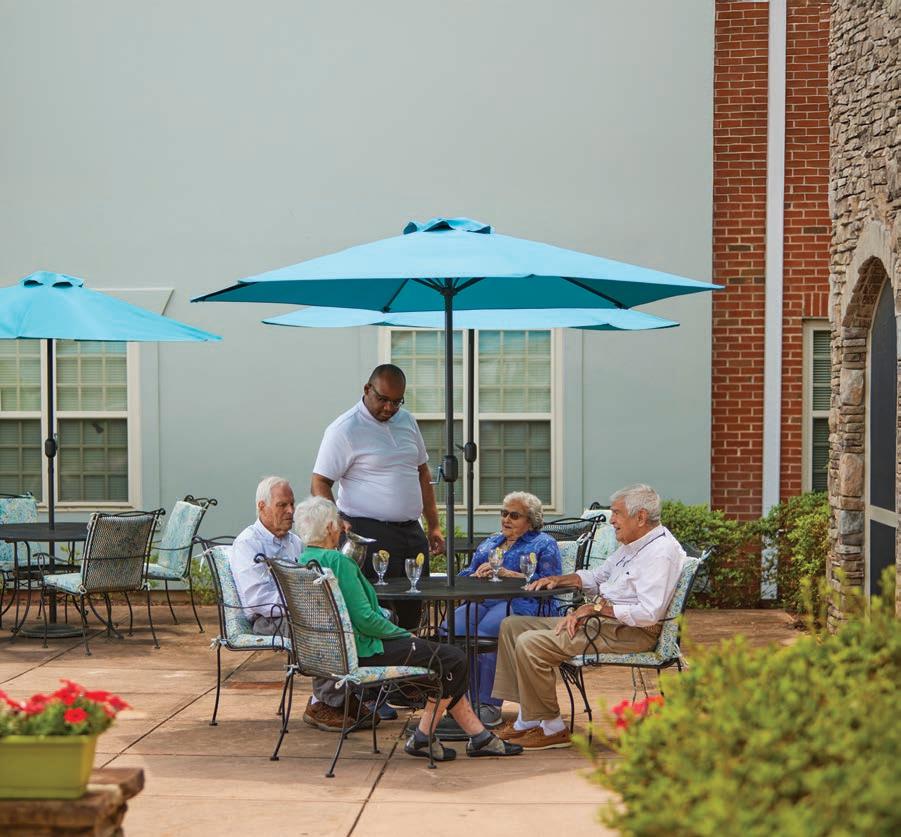
At Pennybyrn’s Melvin and Ruth Witcher Adult Day Center, every detail is designed to enrich the lives of older adults while o ering support and respite for their caregivers. Our safe, welcoming and vibrant environment o ers more than just care— it inspires joy, sparks learning and builds meaningful social connections. A thoughtfully planned variety of daily activities promotes better overall health, greater emotional well-being and a higher quality of life.

LISA M. GERACI lmgeraci@rcdoc.org
HUNTERSVILLE — Christ the King High School has named veteran educator Shaileen Riginos as its new president, effective July 1, when current President Dr. Carl Semmler will transition into a leadership role within the Diocese of Charlotte’s Catholic Schools Office.
Riginos comes to the diocese with two decades of Catholic education experience. Most recently, she served as associate superintendent for the Diocese of Charleston, South Carolina, where she provided strategic leadership across 32 Catholic schools, supporting pastors, diocesan leaders and school administrators. She previously spent 10 years as principal at St. Anne Catholic School in Rock Hill.
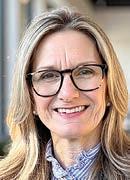
“Christ the King has long been a model of what a thriving Catholic high school can be,” Riginos said. “While leading the expansion of St. Anne Catholic School into the first PK-3 through 12 school in the Diocese of Charleston, I often looked to CTK as an example of strong Catholic identity and student formation. To now have the privilege of serving as its president feels like it is coming full circle.”
Current CTK President Dr. Carl Semmler, who served as principal for six years and as president for the past three, will transition into a newly created position as executive director of Catholic Identity, Operations and Capital Improvements for the Catholic Schools Office.
In that role, Semmler will partner with stakeholders to foster a strong Catholic identity within the 20 Diocese of Charlotte schools, assisting with the execution of capital improvements and collaborating to ensure the schools have an operating budget that supports the vision of both local school and diocesan leaders.
“The nine years that I will have spent at CTK have been an absolute blessing,” Semmler said.
“The students, parents, faculty, staff and fellow administrators have been an inspiration to me and a strength to my faith. As a community, we have grown in every
possible way.”
Christ the King High School was founded in 2011 with 28 students. During his tenure as its first president, a role he assumed in 2023, Semmler grew the school from 260 students to 435 this academic year.
At a time when the campus is undergoing a $12 million expansion project, increasing its footprint to handle enrollment that is expected to eventually reach 600 students, Riginos will collaborate with the leadership team, including Principal Mark Tolcher, to ensure a seamless transition.
The high school leadership model that the diocese uses allows high school principals to handle academic oversight and daily operations, while presidents focus on shaping the mission and vision of the school, community relationships, financial management and fundraising.
Riginos, who will be the first female high school president in the diocese, holds a Bachelor of Arts in Elementary Education and a Master of Arts in Educational Leadership from Stetson University in DeLand, Florida. Her appointment comes after a national search.
“Mrs. Riginos brings broad experience at both the diocesan and school levels, along with strong expertise in strategic planning and relationship building, which will serve the Christ the King community well as the school continues to grow,” said Dr. Greg Monroe, the diocesan superintendent of schools. “I look forward to seeing what she and Mr. Tolcher will accomplish together as the leadership team of Christ the King.”
While he will be fully immersed in his new responsibilities, Semmler told the Catholic News Herald he wants Riginos to know he is just a phone call away.
“I am here for you,” Semmler said he would tell her. “I want to help you and the school be successful.”
Although Riginos worked for the Diocese of Charleston, she, along with her husband and three children, already call the Greater Charlotte area home.
Riginos said she is looking forward “to working alongside students, teachers, staff and families as we continue the mission of forming young men and women in faith, academic excellence and service.”
“ Is your family protected? ”
GREENSBORO — Thanks to a $1.5 million endowment for tuition assistance, 28 students attending Our Lady of Grace School in Greensboro have received $44,705 in funds for the 2025-2026 school year.
The support was made possible through the charitable legacy of Vic Nussbaum Jr., a former Greensboro mayor and long-time member of St. Pius X Parish. “At Our Lady of Grace, this endowment is more than financial assistance; it is tangible support of our belief that every child deserves to be formed in truth, beauty and goodness,” said Principal Catherine Rusch. “It allows families to say yes to Catholic education and strengthens our mission to shape virtuous leaders and faithful disciples within our Panther family.”
The late Nussbaum – a self-proclaimed “Catholic Yankee in Dixie” who became one of Greensboro’s biggest boosters and its mayor for three terms, from 1987 to 1993 – was focused on expanding libraries, providing low-income housing and improving the quality of public education.
He was a devout Catholic, attending Mass every day at 6 a.m., and was a friend to the downtrodden, said Jim Melvin, who was mayor when Nussbaum was first elected to the Greensboro City Council in 1973.
Interested in setting up – or adding to – an endowment to benefit your parish or Catholic school? You can establish an endowment in the Diocese of Charlotte Foundation by leaving a bequest in a will, a beneficiary designation from a retirement plan, a trust or annuity, or a gift of real estate, life insurance, cash or securities.
For details, contact Gina Rhodes at 704-370-3364 or gmrhodes@rcdoc.
Nussbaum attended Our Lady of Grace Church and sent his children to Our Lady of Grace School, and after a cross-town move later was active at St. Pius X Church. He believed Catholic schools not only provide a great education but are crucial to carrying on the faith.
Across the diocese, donors like Nussbaum have given one-time gifts of cash or stock, pledged to capital campaigns or projects, or left gifts in their estate plans. Such gifts have benefited parishes, Catholic schools, the diocese, the diocese’s foundation and St. Joseph College Seminary.
“We receive gifts of every amount, and all of them make a difference,” said Jim Kelley, diocesan development director. “There have been some individuals with significant resources who have had so much confidence in the Church’s leadership and commitment to their faith that they have given $1 million or more. I invite others to be part of our mission in this kind of significant way to help build up the Church across western North Carolina. Gifts given to establish endowments in particular help change people’s lives because they keep on growing and providing returns year after year.”
As Rusch noted, “In my eighth year as principal, I can see that the beauty of an endowment is its lasting impact. A single investment continues to bear fruit year after year, ensuring that students are able to receive an authentic Catholic education at Our Lady of Grace Catholic School.”
— Courtney McLaughlin
Faith guides your life, why not your financial decisions?
For over 140 years, the Knights of Columbus has been committed to helping families plan their nancial future and achieve economic security, a tradition carried on today through its insurance products.
Book a complimentary financial needs analysis today.
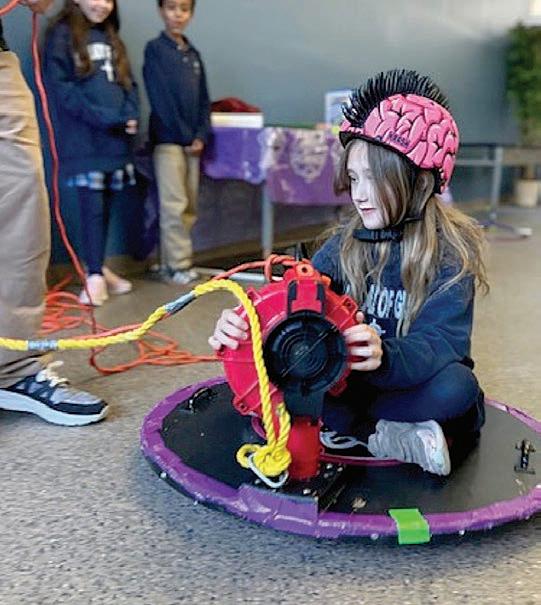
GREENSBORO — Students in the intermediate grades at Our Lady of Grace School had an amazing day of science discovery and excitement March 13.
For Science Day, students explored hands-on experiments, sparking curiosity and creativity. A highlight was the Mad Science session, where students experienced science in action – some (as shown above) even had the opportunity to ride a hovercraft!
— Our Lady of Grace School

LISA M. GERACI lmgeraci@rcdoc.org
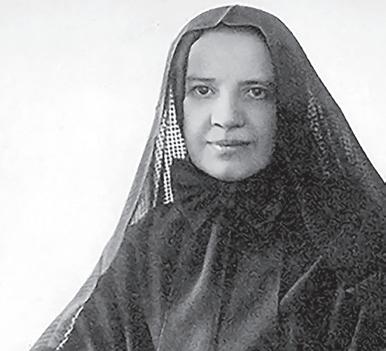
CHARLOTTE — On March 12, in the nontraditional setting of a movie theater, high school students learned about St. Frances Xavier Cabrini, an Italian-American nun who fought for the dignity of Italian immigrants in New York City during the late 1880s.
Buses from Charlotte Catholic and Bishop McGuinness high schools drove through the morning dew for a special screening of “Cabrini,” an Angel Studios production, at Regal Theaters at Piper Glen in Charlotte and AMC in High Point. Christ the King High School will view the movie in their gymnasium at a later date.
“A couple of years ago, when it first came out, some of the parishes did a screening, and that was my introduction,” said Dr. Greg Monroe, the diocesan superintendent of schools. “I was blown away by the way it showed the human element for this saint who did so much for migrants and was such a witness to the corporal works of mercy, showing us how we are supposed to work for all people.”
St. Frances Xavier Cabrini’s actions resonated with Monroe, and when folks in the Catholic Diocese of Dallas introduced him to the film’s directors with the goal of bringing the saint’s message to local students and educators, he was all in.
“They mentioned how some dioceses were taking the messages found in Mother Cabrini’s life and using them as part of their lesson plans,” Monroe said. “In schools we come from all walks of life, and we have teachers from different backgrounds. … It is a nice bridge to see what Mother Cabrini was trying to do and
St. Frances Xavier Cabrini, the first American citizen to be a canonized, is known as the patron saint of immigrants.

Students from Charlotte Catholic and Bishop McGuinness high schools
and above
took a field trip to local movie theaters to learn more about the legacy of St. Frances Xavier Cabrini. The movie gave students the opportunity to reflect on the political polarization of our time and how to bring people together.
what we are trying to do with our students. It was so beautiful how Mother Cabrini saw the inherent dignity of every single person, no matter who they were or where they were from – she considered them a beloved child of God.”
From 1889 to 1910, more than two million Italian immigrants came to New York City in pursuit of the American dream. Instead, they found a nightmare, with many denied access to healthcare, education and housing. Racial slurs followed migrants through the city while they worked and
Refused admission to the religious order which had educated her to be a teacher, she began charitable work at the House of Providence Orphanage in Cadogno, Italy. In September 1877, she made her vows there. When the bishop closed the orphanage in 1880, he named Frances prioress of the Missionary Sisters of the Sacred Heart. Seven young women from the orphanage joined her.
lived in slums infested with rats.
In the Five Points area of the Lower East Side of Manhattan, where most immigrants settled, thousands of abandoned children slept under steam grates and existed in the dark cement tunnels of the city’s sewage system.
In the midst of that chaos, one nun, Frances Xavier Cabrini, overcame gender persecution and ethnic discrimination to create an orphanage and hospital for the neglected Italian immigrants.
The movie “Cabrini,” based on her life
Since her childhood in Italy, she had wanted to be a missionary in China but, at the urging of Pope Leo XIII, Frances went west instead of east. She traveled with six sisters to New York City in 1889 to work with the thousands of Italian immigrants living there.
She provided the poorest of the poor Italian immigrants of New York with food, shelter, education and health services. By the 1890s, she established services in Chicago, also erecting several hospitals. She expanded those services to
story and released in 2024, showcased her journey of resilience and persistence. During her 67 years, she established 67 hospitals and orphanages across the globe and became the first U.S. citizen to be canonized.
Though her work was largely focused on Italian immigrants in New York City, her message of human dignity remains relevant today, when migrants are still persecuted, called names and treated as second class.
The movie is trending in Catholic schools across the nation, which are incorporating its message in their curriculum to help students understand the Catholic view on human dignity associated with current events such as modern-day immigration.
Most Charlotte Catholic students said they better appreciated the works of the saint and the rawness of discrimination through the film.
“We learned a little about it in history class, but not like that graphic,” said student Brynley Wilde. “I loved the movie so much. I like how she had women power. She was very inspiring. And she took control of the men who were trying to stop her. She just kept going, even in the face of danger.”
Monroe said the movie was important on both a theological and an educational level.
“In a world that is so polarizing and fractured, where you have so much adversity, this can be a real opportunity to reflect,” Monroe said. “How can we learn from the challenges that Mother Cabrini experienced to strengthen and enhance what we are trying to do in our diocese? Especially in a diocese with so many different demographics, how can we support them and bring them together, all through the lens of our faith?”
all immigrants across the country and around the world.
By the time of her death in 1917, at age 67, the naturalized American citizen had established 67 education, health and social service institutions throughout the world.
The route of the 2026 National Eucharistic Pilgrimage – which will come through the Diocese of Charlotte – is named after the saint.
— OSV News and Catholic News Herald
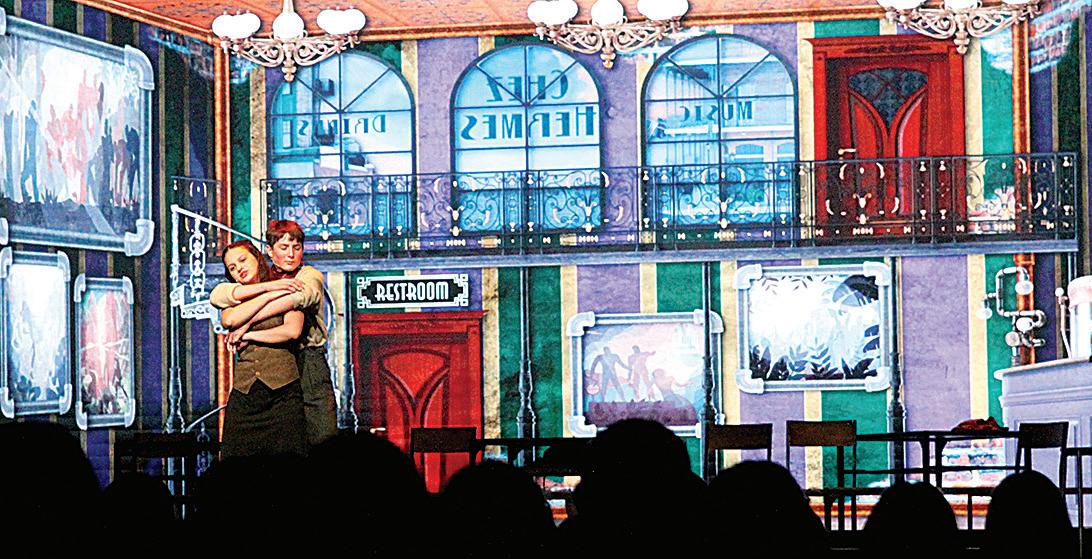
HUNTERSVILLE — The Crusader cast of performers brought the heat to the Christ the King High School stage March 12-14 with their production of “Hadestown: Teen Edition.”
The musical is the school adaptation of the Tony award-winning Broadway hit “Hadestown,” written by the same playwright, Anaïs Mitchell.
“We chose this show because the themes resonate with young people and the music is amazing,” said Sarah Varricchio, theater director.
The two-act show with its New Orleans jazz vibe, mature themes of love vs. fate, and playlist of 35 songs left the crowd at the edge of their seats.
For the first time, a school production featured the new 12-foot-by-30-foot video wall as the stage backdrop. The tech-savvy set led guests through a portal of seamless scene changes from the bustling streets of New Orleans to the grueling underworld of Hades. Characters dressed as Greek gods danced and sang through a moving set of flowers, rain, jazz clubs and underground coal, while audience members witnessed the love story of Orpheus (Liam McSorley) and Eurydice (Ingrid Siega). Narrator Hermes (Lucia Varricchio) navigated the audience through the couple’s perilous journey through Hades, run by Hades, the god of the underworld (Hudson Hughes), and his wife, Persephone (Camille Lemke).
The cast, plus a set crew of six and five pit orchestra members, practiced the musical since October under the stage direction of Varricchio, the vocal coaching of Randy Price and the choreography of Rachel Patterson.


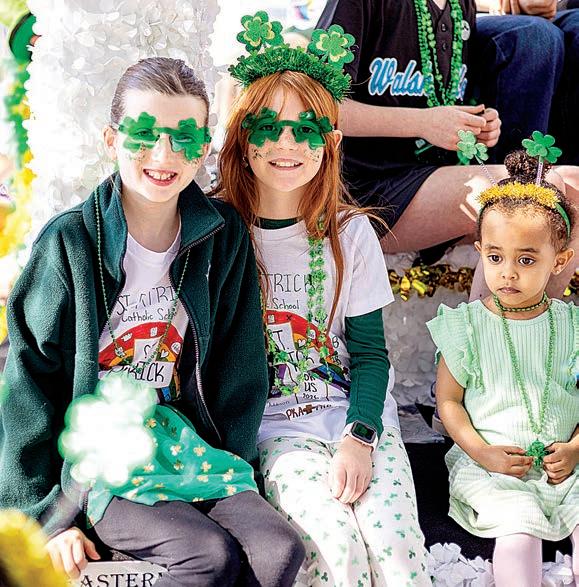
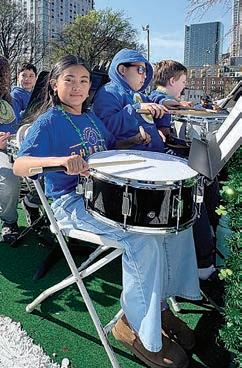
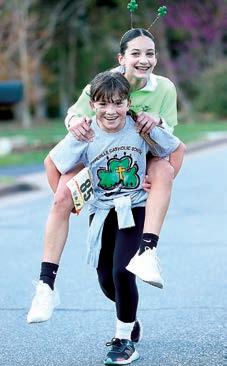
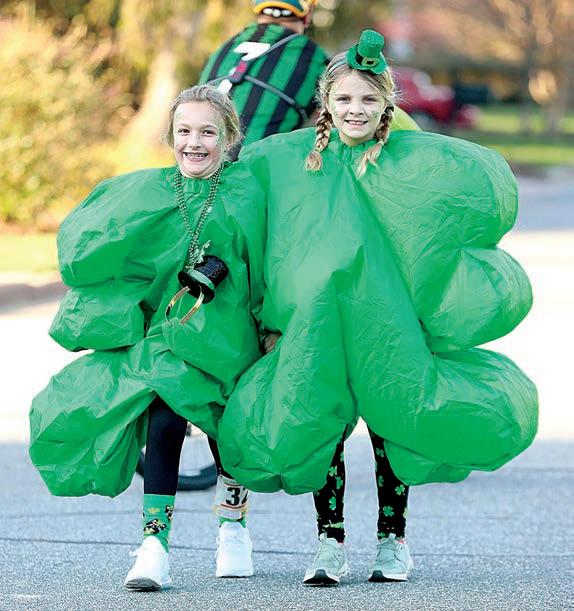
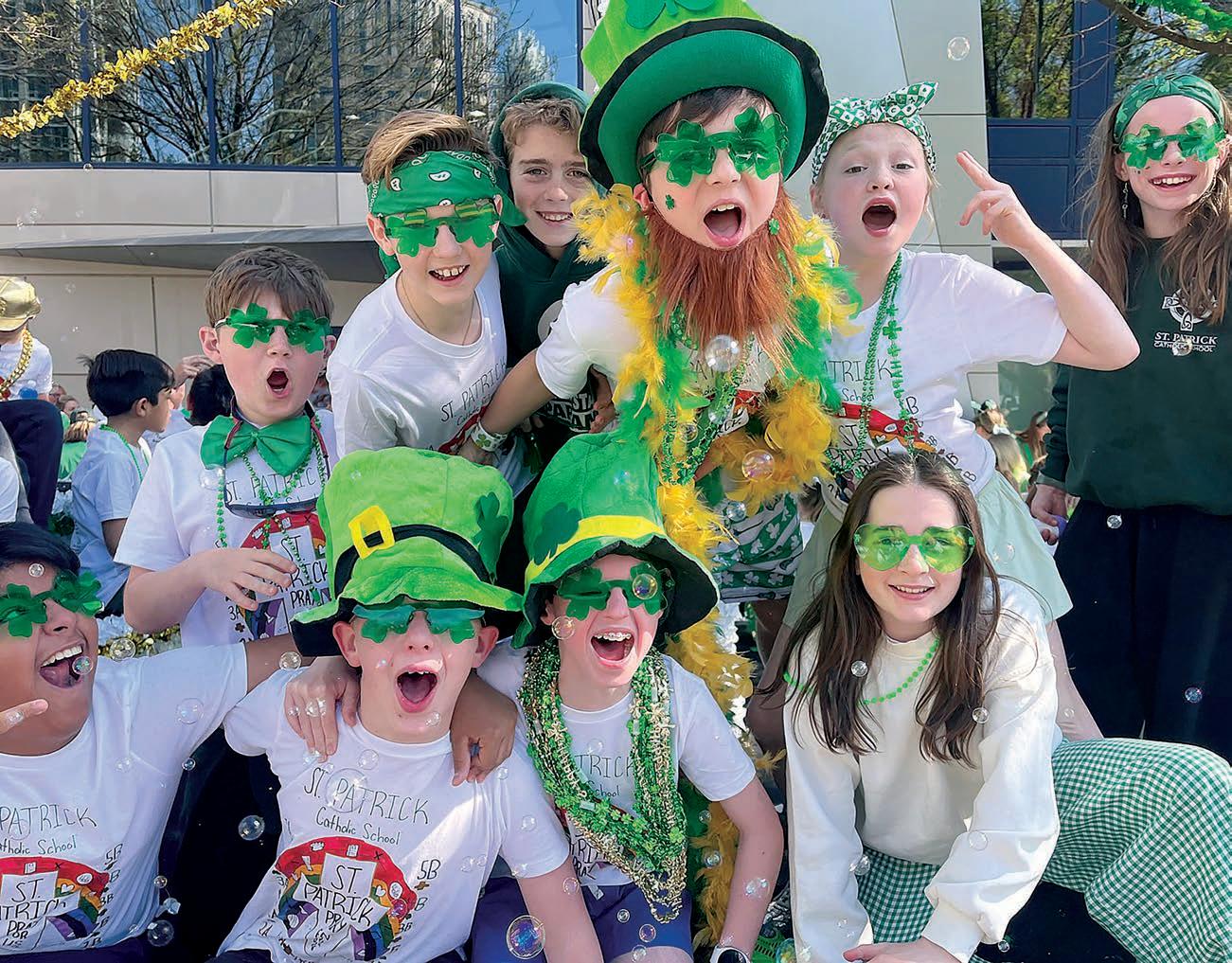
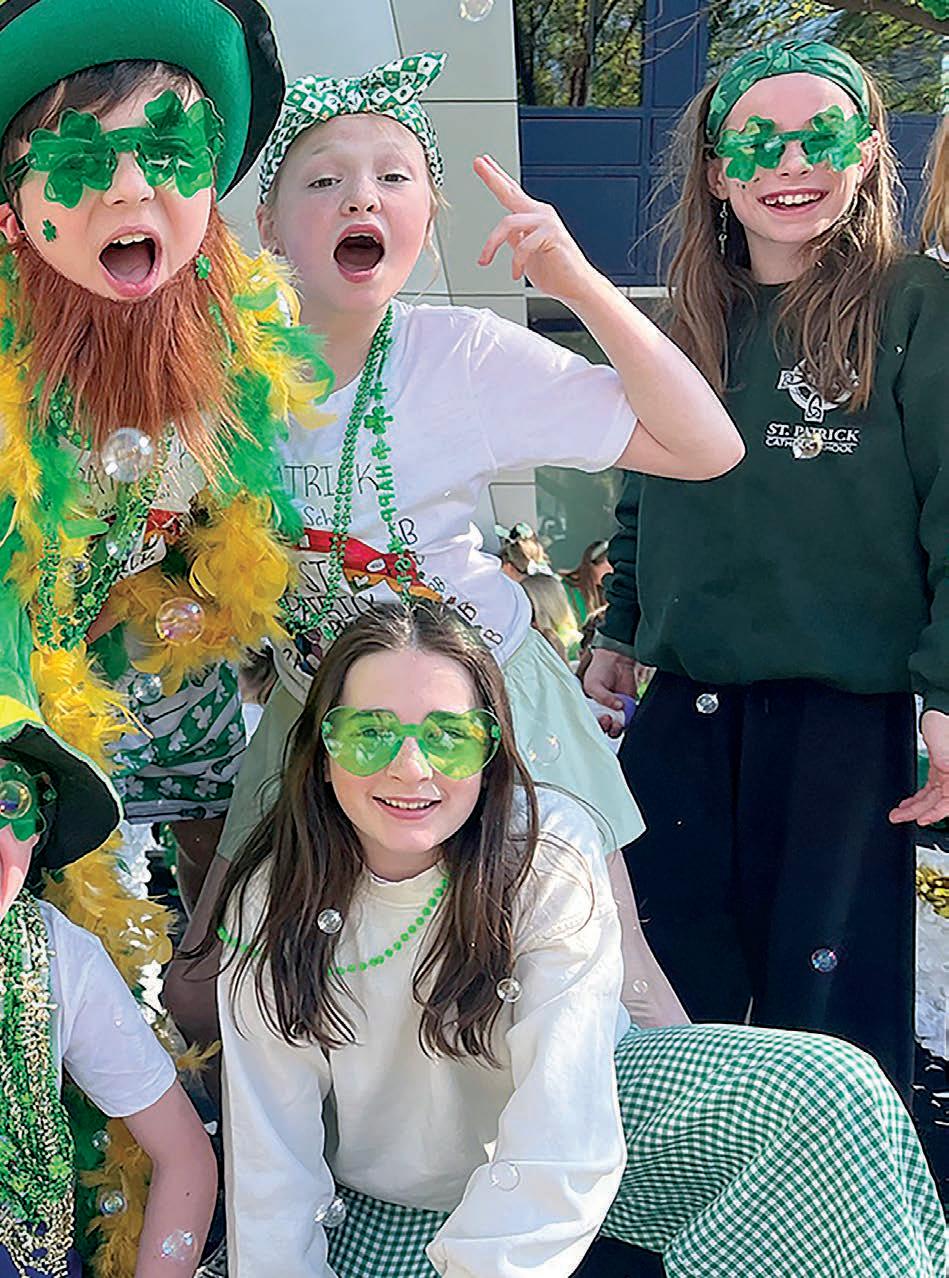
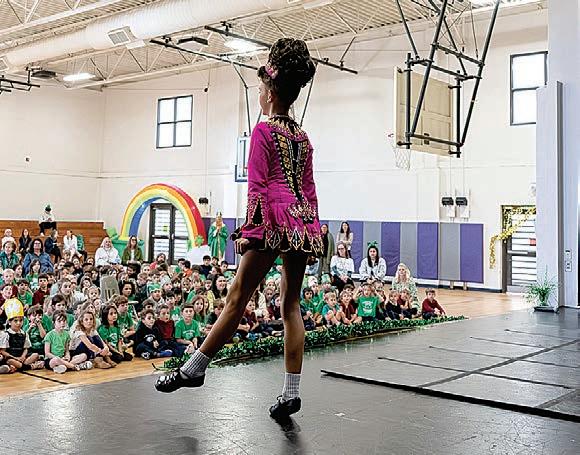
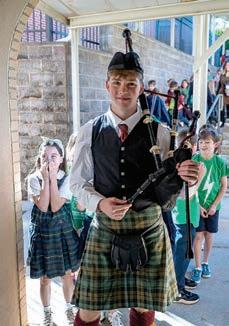
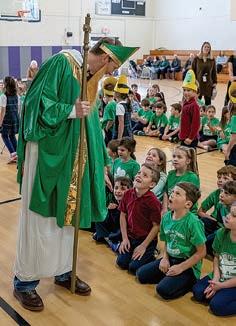
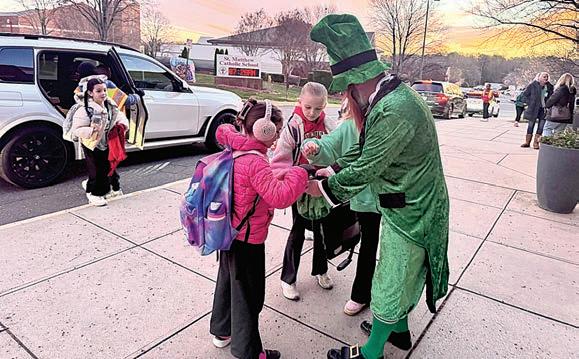
— St. Ann School paid tribute to the diocese’s Irish roots by kicking off St. Patrick’s Day festivities March 14 with a Parade of Saints through the hallways. The next day, a sea of green lined Tryon Street for Charlotte’s 2026 St. Patrick’s Day Parade. More than 1,000 marchers, including students, teachers and parents from three of the diocese’s schools – St. Ann, Our Lady of the Assumption and St. Patrick – marched in the parade through Uptown Charlotte.
Old St. Joseph Church in Mount

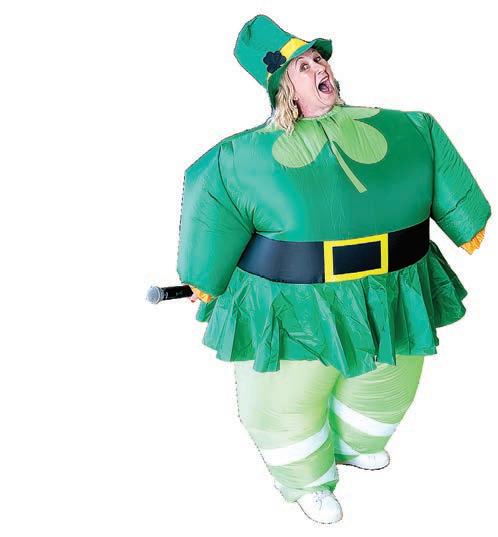
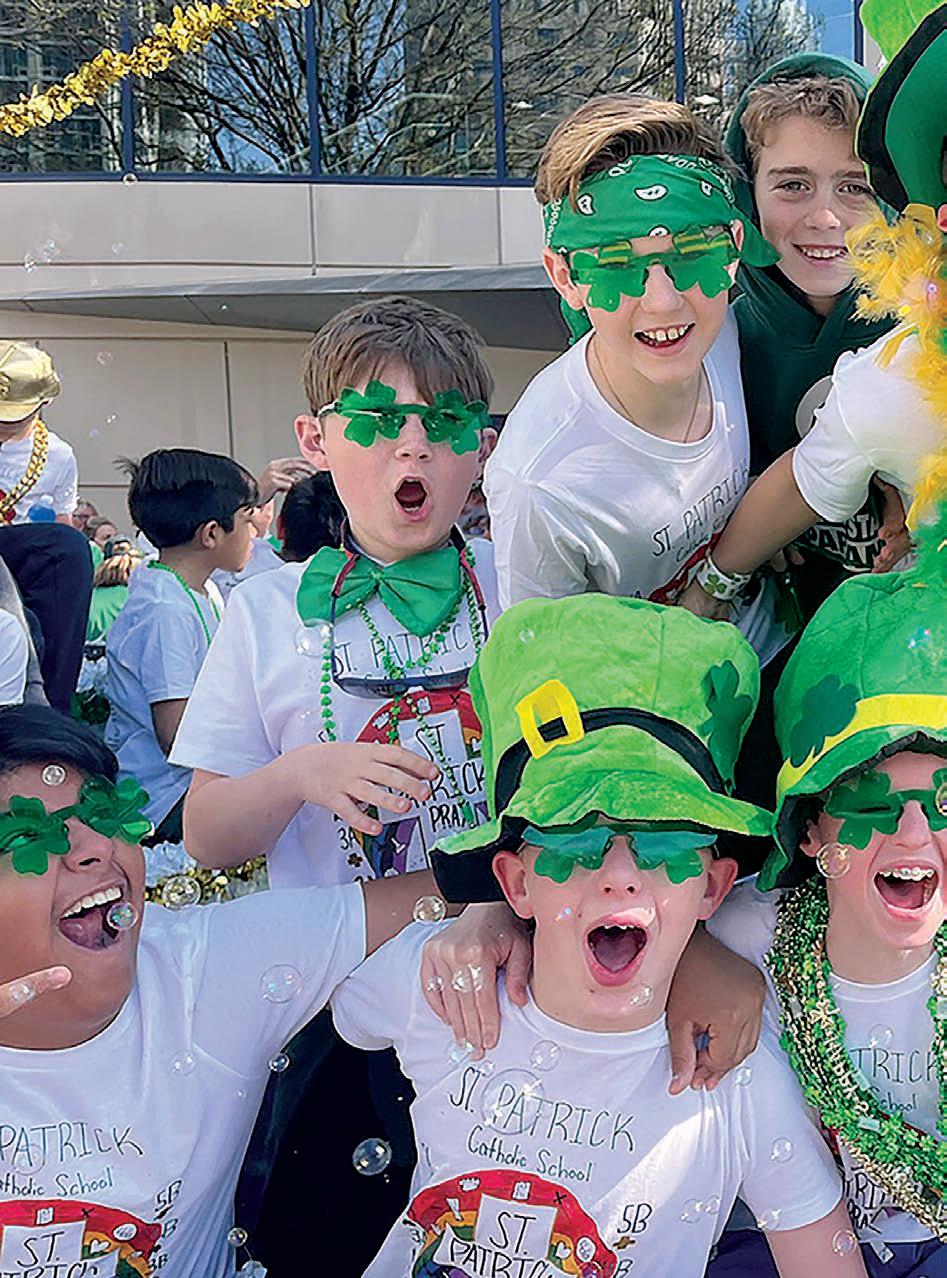
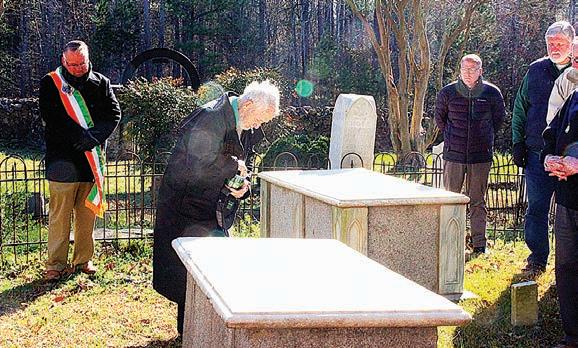
Holly, the oldest church building in the Diocese of Charlotte, opened its historic doors March 17 for its annual St. Patrick Day Mass celebrated by Father John Putnam. The Mass pays tribute to the Irish roots of the original Catholic families in western North Carolina and their beloved first pastor, the Irish-born Father T.J. Cronin. And, of course, our St. Patrick Cathedral was named after Ireland’s favorite saint. Other schools and parishes continued spirited festivities throughout the week.

CHARLOTTE — La primavera comienza en la Diócesis de Charlotte con eventos para jóvenes diseñados para ser tanto divertidos como inspiradores, comenzando con la Peregrinación Juvenil del Obispo 2026 y la Conferencia Juvenil Diocesana.
“Estas son oportunidades para que los jóvenes profundicen realmente su fe y tengan un encuentro con Jesús”, dijo Daniel Torres, director diocesano del ministerio para jóvenes y adultos jóvenes. Señaló que participar en eventos diocesanos ayuda a los jóvenes a darse cuenta de “que su fe va más allá de los límites de su parroquia y que pueden ser católicos dondequiera que vayan en el mundo”.
Los jóvenes pueden esperar una variedad de actividades en cada uno de los eventos.
“Hay oradores poderosos, hermosos momentos de oración y mucho tiempo para divertirse y compartir tiempo de calidad unos con otros”, dijo Torres. “Son realmente grandes experiencias que ayudan a fortalecer la fe de nuestros jóvenes”.
PEREGRINACIÓN JUVENIL DEL OBISPO
Los eventos comienzan el 28 de marzo con la Peregrinación Juvenil del Obispo en los terrenos de Belmont Abbey College. El año pasado, la peregrinación reunió a más de 1,000 jóvenes para un día de adoración, charlas dinámicas, convivencia, música en vivo, comida y juegos. Celebrado cada primavera durante los últimos 22 años, el tema del evento este año es “Tengo sed”. Aunque el registro en línea cerró el 18 de marzo, los participantes pueden registrarse en el evento; sin embargo, el almuerzo y una camiseta no están garantizados si lo hacen. Tenga en cuenta que este no es un evento donde se pueda dejar a los jóvenes solos; deben estar acompañados por un adulto.
LA CONFERENCIA JUVENIL DIOCESANA
El mes siguiente, la Conferencia Juvenil Diocesana reunirá a jóvenes de 8.º a 12.º grado para un fin de semana centrado en un tema, con talleres dirigidos por jóvenes y adultos, conferencistas principales, entretenimiento, misa diaria, adoración eucarística y confesión. Centrada en el tema “Reconoce su voz”, la conferencia de tres días brinda a los jóvenes la oportunidad de profundizar en su fe católica. La inscripción está abierta para la conferencia del 24 al 26 de abril en el Ridgecrest Conference Center en Black Mountain, en www.charlottediocese.org/event/diocesan-youthconference.
LA JORNADA MUNDIAL DE LA JUVENTUD
Se anima a los adultos jóvenes a planificar con anticipación una aventura internacional el próximo año. La Jornada Mundial de la Juventud 2027 se celebrará del 29 de julio al 10 de agosto de 2027 en Seúl, Corea del Sur. Peregrinos de la Diócesis de Charlotte se unirán al Papa León XIV y a miles de jóvenes católicos de todo el mundo. Será una oportunidad para encontrarse con Cristo a través de la Iglesia universal y celebrar con jóvenes católicos de distintos países. Los participantes participarán en momentos de oración, catequesis, misas, festivales juveniles y eventos especiales con el Santo Padre, mientras exploran la rica cultura y la belleza de Corea. Más detalles y un formulario de interés están disponibles en www. charlottediocese.org/world-youth-day.
Como señaló Torres, este tipo de eventos puede tener un impacto profundo en los jóvenes.
“Asistí a la Peregrinación Juvenil del Obispo, a la Conferencia Juvenil Diocesana y a la Jornada Mundial de la Juventud cuando era joven, y fueron momentos realmente profundos para mi fe. Creo que poder conocer a otras personas fuera de mi parroquia, ver a Cristo en los demás y ver la vida cristiana vivida de una manera auténtica, hermosa y vibrante realmente me inspiró a querer hacer mía mi fe”.
FACEBOOK.COM/ CATHOLIC NEWS HERALD ESPAÑOL
catholicnewsherald.com | March 20, 2026
BRIAN SEGOVIA bmsegovia@rcdoc.org
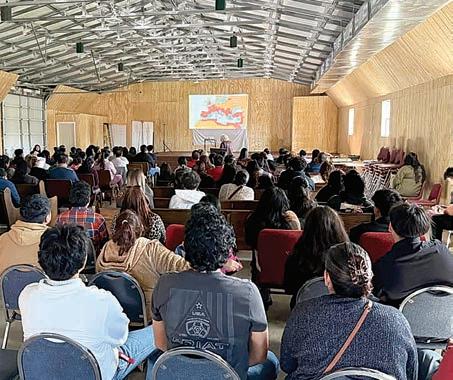
Muchos retiros de Cuaresma han comenzado en la diócesis de Charlotte, combinando la oración y la reflexión espiritual en el proceso de renovación de los corazones para cientos de fieles. En diversas parroquias como St. John Baptist de LaSalle en North Wilkesboro, Santa Cruz en Kernersville y San José en Newton, grupos parroquiales, coordinadores de ministerios, coros, monaguillos y muchos más participaron en la renovación espiritual.
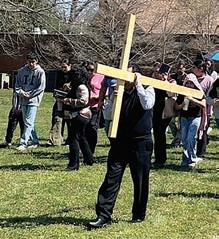
Muchos retiros ofrecieron charlas dirigidas por líderes como los párrocos y coordinadores del ministerio hispano para reflexionar sobre temas como el pecado, la crucifixión y la preparación espiritual durante el tiempo de Cuaresma. Luego, los participantes realizaron prácticas espirituales a través de la oración, la adoración al Santísimo Sacramento y el víacrucis.
Aleksandra Banasik, coordinadora de varios retiros de Cuaresma en cuatro parroquias en la vicaría de Boone, dirigió los retiros bajo el tema “El verdadero
rostro de Jesús”, que exploró el camino hacia la crucifixión, así como evidencias científicas relacionadas con la crucifixión y la resurrección. Según Banasik, hubo una gran participación de familias, especialmente en la parroquia St. John Baptist de LaSalle en North Wilkesboro, donde asistieron más de 250 personas.
“Muchos mostraron interés y quisieron conocer más sobre los aspectos históricos de la crucifixión”, dijo Banasik. “Les quería recordar que Dios nos ha ofrecido una oportunidad de creer, pero nosotros tenemos que aceptarla”.
En la vicaría de Hickory, el diácono Darío García dirigió un retiro de Cuaresma junto a el padre Julio Domínguez ofreciendo un víacrucis acompañado por cerca de 150 fieles de la parroquia San José en Newton en un día soleado, resaltando la importancia de la dedicación a la oración y a la reflexión sobre el sufrimiento de Cristo.
“Hemos visto una gran participación”, dijo el diácono García. “La comunidad hispana ha respondido muy bien, especialmente cuando se ofrece el víacrucis en preparación para el Viernes Santo”.
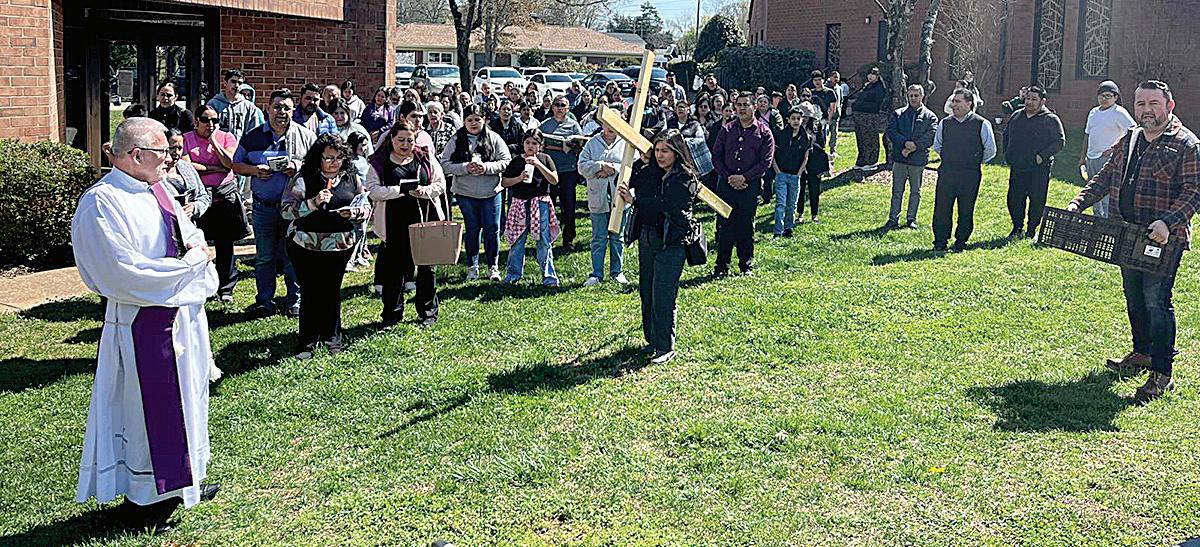
La parroquia San José, en Newton, vivió un retiro espiritual acompañado por el párroco, el padre Julio Domínguez, quien dirigió la jornada de reflexión. Durante la actividad, los participantes realizaron el viacrucis, como se hace todos los viernes y como se ha realizado durante los últimos años en los exteriores del templo. Además, participaron en una hora santa.
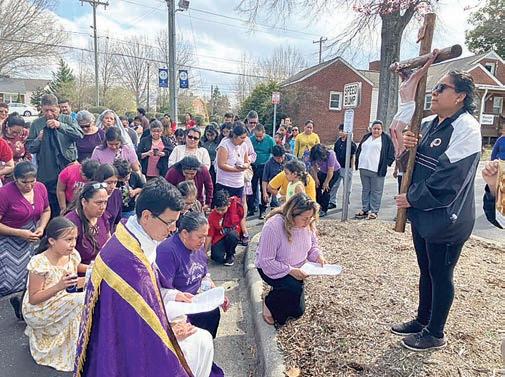
El diácono Daniel Chaves y el diácono Mark Mejias lideraron el retiro espiritual de Cuaresma para la parroquia Santa Cruz en Kernersville, donde hablaron sobre la importancia de la reconciliación con la comunidad e hicieron un viacrucis en el estacionamiento de la parroquia.
BRIAN SEGOVIA bmsegovia@rcdoc.org
HUNTERSVILLE — El obispo Michael T. Martin, OFM Conv., visitó a los líderes de la organización Healed and Restored el 16 de marzo en su sede en Huntersville para conocer su labor en la comunidad y analizar los próximos pasos en su desarrollo.
La organización católica sin fines de lucro, fundada en 2020, busca sanar y restaurar a mujeres que enfrentan traumas sexuales, emocionales o físicos no resueltos en un entorno guiado por la fe.
La visita se produce mientras el obispo Martin continúa sus esfuerzos por recorrer y conectarse con organizaciones católicas sin fines de lucro en el oeste de Carolina del Norte, como ya lo ha hecho con otras entidades en toda la diócesis.
Elza Spaedy, directora y fundadora de Healed and Restored y feligresa de la iglesia St. Mark, ofreció al obispo Martin un recorrido por la casa, mostrándole los espacios donde las mujeres reciben atención y apoyo.
Spaedy, autora de varios libros sobre la sanación del trauma, habló con el obispo Martin sobre las áreas principales de enfoque de la organización: talleres de sanación que ayudan a las mujeres a
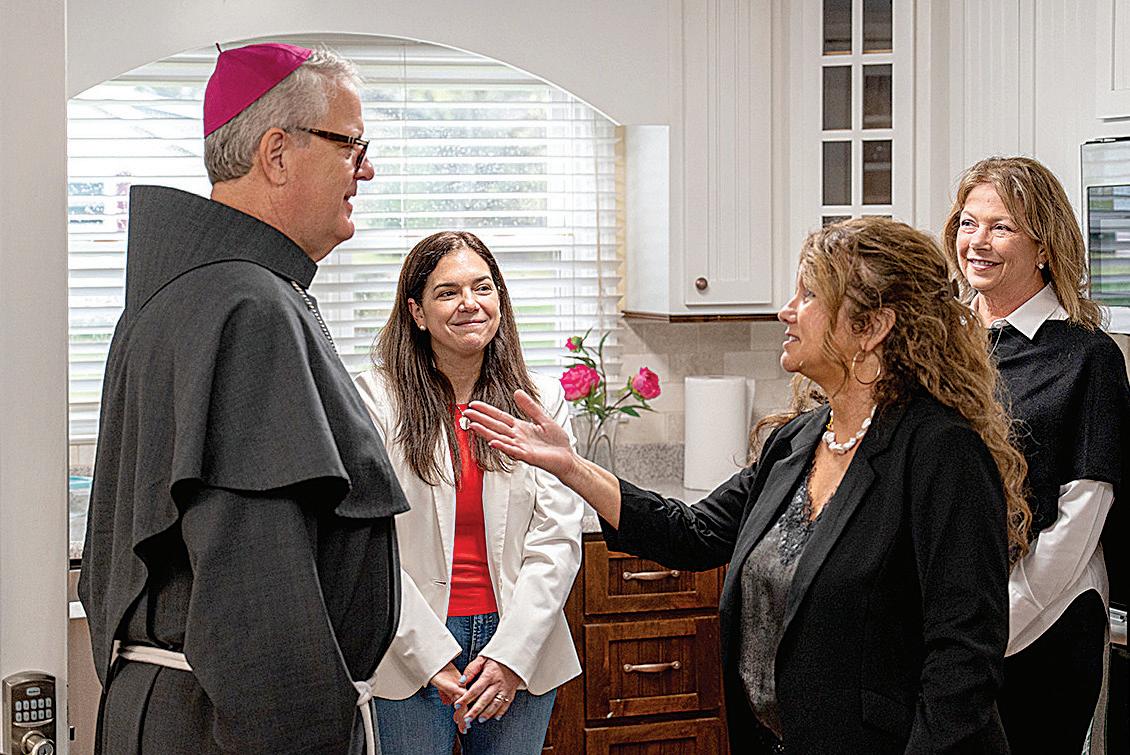
explorar sus historias personales para encontrar sanación, restauración y plenitud en Cristo; una despensa de
alimentos que brinda asistencia en momentos de necesidad; y una boutique con ropa y accesorios para las mujeres
que reciben apoyo.
Spaedy explicó que muchas mujeres se alejan de su fe después de experimentar trauma. La organización trabaja para ayudarlas a sanar mediante consejería y acompañamiento, para que puedan reconstruir sus vidas.
“Cuando encontramos a las mujeres, las amamos en su fragilidad y las guiamos hacia el médico divino”, dijo Spaedy. “¿Por qué no estamos llevando a Cristo a la sanación de nuestra mente, cuerpo y espíritu?”
Más tarde, el obispo Martin se reunió durante el desayuno con Spaedy y su equipo para hablar sobre sus necesidades y cómo podrían colaborar.
Spaedy señaló que la organización ha ayudado a cientos de mujeres a sanar, pero aún necesita llegar a más sobrevivientes, el 90% de las cuales son hispanas.
Para responder a esa necesidad, Spaedy indicó que la organización espera incorporar más consejeras bilingües y exploró posibles formas de iniciar ese esfuerzo junto con el obispo Martin.
“La necesidad de contar con más consejeras bilingües es enorme en este momento”, dijo Spaedy. “Estamos muy agradecidas de que el obispo Martin tuviera tantas ideas para nosotras. Es algo hermoso, y lo esperaba de él.”
La diócesis actualiza las normas sobre cementerios y columbarios para responder al aumento de la demanda católica
PATRICIA L. GUILFOYLE plguilfoyle@rcdoc.org
CHARLOTTE — La Diócesis de Charlotte está actualizando las normas para sus cementerios y columbarios en respuesta a la creciente demanda de espacios de sepultura y a la limitada disponibilidad de terrenos en muchas parroquias. El obispo Michael Martin, OFM Conv., promulgó las nuevas “Normas Diocesanas para la Gobernanza y Administración de Cementerios y Columbarios” el 19 de marzo, festividad de San José, patrono de los moribundos.
Las normas actualizan las reglas para el establecimiento, funcionamiento y ampliación de cementerios parroquiales, columbarios y secciones católicas en cementerios públicos o privados, así como para posibles futuros cementerios administrados por la diócesis. También establecen requisitos sobre quién puede ser sepultado, garantizan el mantenimiento perpetuo de los lugares y enfatizan que las opciones de sepultura deben seguir siendo accesibles.
Estas normas sustituyen las políticas emitidas por primera vez en 2007 y buscan ayudar a la diócesis, en rápido crecimiento, a responder mejor a las necesidades pastorales y prácticas de los fieles que buscan una sepultura católica.
Funcionarios diocesanos señalan que la demanda ha ido en aumento debido al crecimiento de la población católica, cuyos miembros desean la certeza de contar con un cementerio o columbario católico para ellos y sus seres queridos.
“Una de las cosas que escuchábamos de los sacerdotes es que los feligreses preguntaban cada vez más dónde podían ser sepultados sus seres queridos”, dijo monseñor Patrick Winslow, vicario general y canciller de
la diócesis. “Esas preguntas realmente comenzaron a alcanzar un punto crítico.”
MÁS OPCIONES DE SEPULTURA
La Iglesia recomienda la sepultura del cuerpo, pero permite la cremación. A medida que el terreno disponible en las parroquias se ha vuelto más limitado, ha aumentado la cremación y la dependencia de cementerios civiles.
Actualmente, tres de las 93 parroquias de la diócesis cuentan con cementerios y siete tienen cementerios con columbarios. Otras 21 parroquias operan columbarios independientes, aunque 10 de ellos ya están llenos. También existen secciones católicas en cementerios civiles en Albemarle, Charlotte, Clemmons, Cornelius, Huntersville y Matthews.
Uno de los cambios más significativos de la nueva normativa elimina el límite que restringía el número de nichos en los columbarios al número de parcelas de sepultura en el mismo lugar.
“Las fórmulas anteriores que vinculaban el número de nichos al de parcelas ya no se utilizan”, explicó monseñor Winslow. “Ahora permitimos que las decisiones se guíen por la necesidad, el espacio y la disponibilidad.”
Para los feligreses y sus familiares, el efecto práctico probablemente será una mayor disponibilidad de opciones de sepultura en los próximos años, añadió.
Las nuevas normas reiteran la enseñanza de la Iglesia de que los cementerios y columbarios católicos están destinados principalmente a católicos bautizados, aunque otras personas también pueden ser elegibles, incluidos cónyuges, hijos u otros familiares no católicos o no cristianos.
También describen procedimientos para la adquisición de terrenos para nuevos
cementerios o ampliaciones, la creación de secciones católicas en cementerios civiles y la administración de cementerios parroquiales, incluyendo el mantenimiento de registros y la gestión financiera.
Las parroquias con cementerios o columbarios deben establecer consejos asesores para supervisar las finanzas y crear fondos de cuidado perpetuo que aseguren el mantenimiento a largo plazo de las propiedades.
Las normas también fomentan el cuidado del medio ambiente, recomendando prácticas “ecológicamente responsables”, como sistemas de riego que ahorren agua. Se permiten los entierros “verdes” siempre que se realicen conforme a la enseñanza de la Iglesia.
Asimismo, las normas establecen un marco para un posible cementerio diocesano en el futuro.
ESPACIOS SAGRADOS
Más allá de los aspectos administrativos, las normas reflejan la enseñanza de la Iglesia y destacan el significado espiritual de la sepultura católica.
“Los cementerios y columbarios católicos
son extensiones del ministerio de la Iglesia – pastoral, litúrgico y comunitario –, no meramente lugares funcionales de sepultura”, afirma la normativa. “Son lugares donde los fieles acuden a orar, a llorar, a recordar y a encomendar a sus seres queridos al cuidado eterno de Dios.” Los cementerios deben entenderse como espacios sagrados dentro de la vida de la Iglesia, señaló monseñor Winslow. “A menudo pensamos en espacios sagrados en términos de iglesias y capillas”, dijo, “pero los cementerios también son espacios sagrados – espacios sagrados al aire libre dedicados a la sepultura de los restos de las personas que amamos y de nuestros hermanos en la fe.” Las normas piden que los cementerios y columbarios estén ubicados en entornos propicios para la oración y que se mantengan cuidadosamente. Los terrenos, la iluminación, los caminos y aceras, las lápidas, las estatuas, los crucifijos y los santuarios deben reflejar la dignidad del lugar.
Se anima a las parroquias a ofrecer
CEMENTARIO, PASA A LA PÁGINA 28
Considere unirse a los más de 2 millones de miembros de la organización fraternal católica más grande del mundo y registrándose en línea hoy en: www.kofc.org/joinus/es Caballeros de Colón
Por tiempo limitado - Membresía en línea GRATISUse el código de promoción (BLESSEDMCGIVNEY)
KELLY J. HENSON catholicnews@rcdoc.org
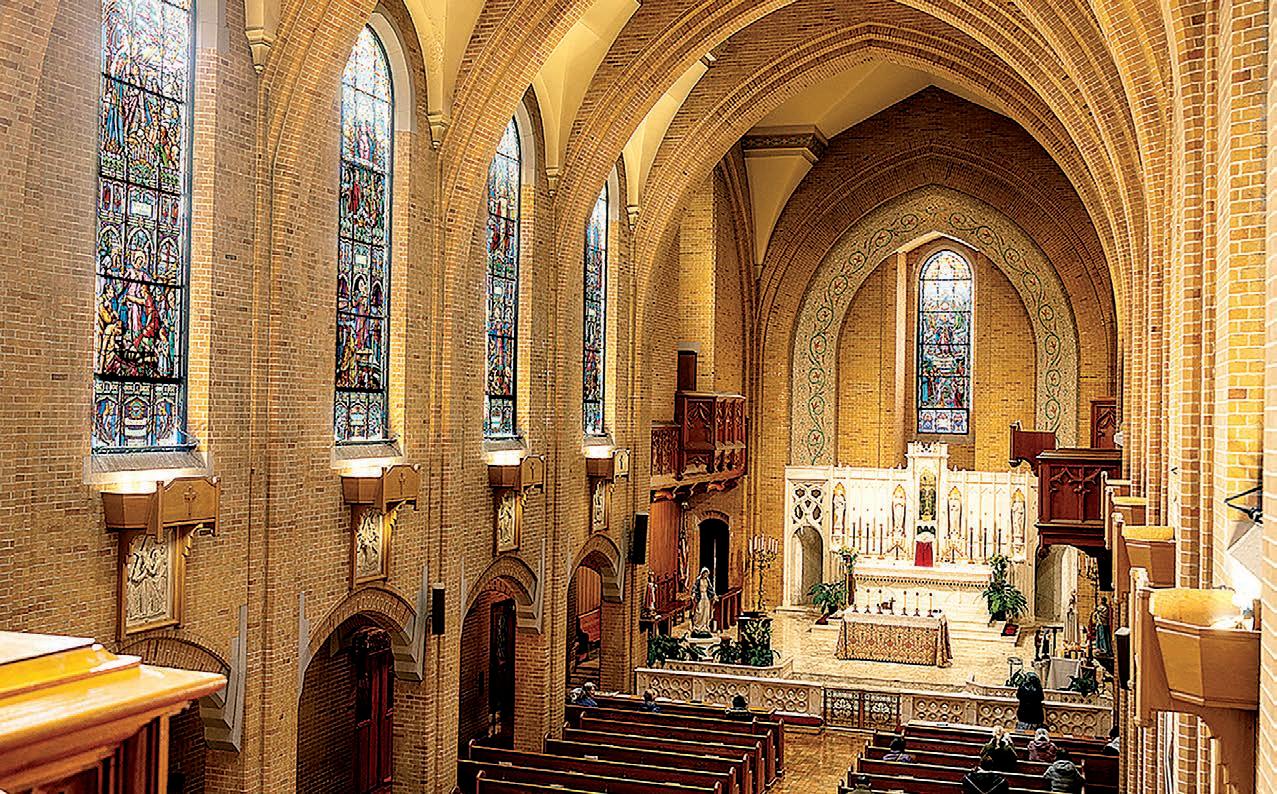
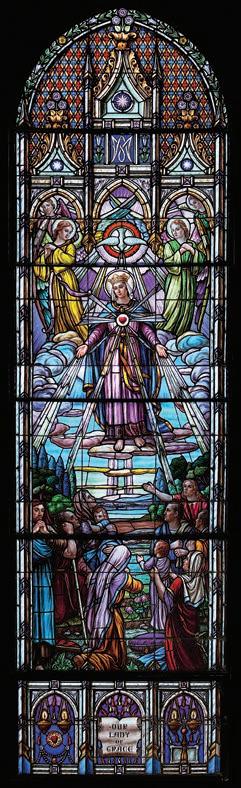
OurLady of Grace Church in Greensboro is known for its beauty. Stepping into the quiet sanctuary from the rush of Market Street feels like entering a hidden garden of light and color. Italian white marble glows, ornately carved woodwork shines and a custom mosaic sparkles.
The stars of this hymn to Our Lady in architecture are 14 stained-glass windows, alive with deep jewel tones and sunlight. Below them, a series of smaller windows captures symbolic representations of Our Lady’s titles. To ensure that their beauty endures, the parish is launching a fundraising drive to complete maintenance and repair to these delicate works of art. The church’s windows were created by famed Italian-Canadian artist Guido Nincheri. He designed each window to depict a different title of Mary from the Litany of Loreto. He interpreted these titles using Biblical images,
stories from Church history (such as the Battle of Lepanto’s connection to Our Lady of the Rosary) and cultural references.
“The windows give a sense of being immersed in Our Lady’s loving presence and wrapped by her maternal care and protection,” said Father Casey Coleman, the parish’s pastor. “When the sunlight penetrates, there is just so much depth to the windows. The mystery of faith they articulate is magnified literally by the colors penetrated by the light.”
Nincheri set high standards for materials, shipping 30,000 pieces of deeply hued glass from Belgium during
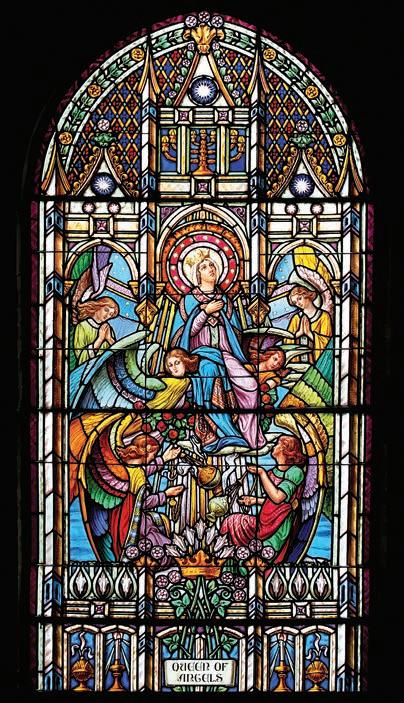
the tumultuous years of World War II. He designed the images, supervised their creation and then painted their emotive faces. The completed windows were installed for the 1952 dedication of the church.
Parishioner Barbara Manson was intrigued with the art she saw as she sang in the choir loft. As she examined their expressive faces, she realized “these windows are portraits.” Her fascination led her to travel to Canada to study Nincheri’s art. She collaborated with his grandson, Rodger Nincheri, until he recently passed away while she was leading a project to collect information about Our Lady of Grace’s windows. Unfortunately, stainedglass windows are as fragile as they are beautiful. Over time, the lead that joins the panes of glass can soften and warp. Stained glass is particularly vulnerable to the harsh southern sun and summer heat. Without maintenance, the windows can bow and break. A recent analysis found the beginnings of this deterioration, so the parish has gathered a committee to
raise awareness and funds to care for its artistic treasures.
Rebekah Zomburg is leading the effort. She and her husband, John Zomburg, have loved the windows since pointing their symbols out to their children to engage their minds. As the Catechism states, “genuine sacred art draws man to adoration, to prayer and to the love of God” (CCC 2502). Many parishioners echo this idea when they speak of their beloved images.
“My hope is that, as the community comes together, we are given a greater opportunity to focus and experience the windows in a new way,” Father Coleman said. “I hope this opportunity will help us to internalize the mystery and beauty of the windows and strive to preserve them not only in material fact but by conveying their spiritual meaning with family and friends.”
The parish is creating an opportunity to learn more about the meaning of the windows and their creator. From 6:30 to 9:30 p.m. on Saturday, April 11, at Starmount Country Club in Greensboro, parishioners and friends can attend a Stained Glass Gala. The hope is to complete the restoration for the 75th anniversary of the windows’ dedication in September 2027.
More online
At www.bit.ly/4uF1Sku
LISA GERACI lmgeraci@rcdoc.org
MORGANTON — St. Charles Borromeo
Church is known for its eclectic art, with Stations of the Cross crafted by a mountain woodsman and icons purchased from passing craftsmen. It recently displayed a piece of ecumenical art called “The Branch” that had its roots in Tropical Storm Helene.
As its title suggests, the piece is a branch of a poplar tree that was knocked down during Helene, but what is unique is its image of the Blessed Mother holding the Christ Child.
During the storm, Alex Kneen and her husband watched as the little creek in their yard overflowed and the winds uprooted a poplar tree.
“We hopelessly watched as the water rose and the ground became supersaturated. A tree fell,” Kneen recalled. “It demolished a swing we had and then hit this particular branch to the ground. And then it knocked out another tree.”
While parts of Burke County were completely wiped out, the Kneen residence was spared. When they started piling up branches, Kneen stopped in her tracks.
“When I saw the broken branch, immediately I saw Mary holding the Baby. I just thought it was beautiful. It captured my heart and my imagination,” she said.
Kneen could not bring herself to put it in the woodpile, so she put it in her shed for safekeeping.
“The revealing of the beauty, even in the midst of what was difficult for so many, amazed me,” she said. “There is so much
God can say if we just pay attention and look.”
As an Anglican who graduated with a theology degree from Nashotah House Theological Seminary, Kneen did not believe the resemblance was a coincidence. When she showed the branch to family and friends, they saw it, too.
‘I was awestruck. I could not believe that a branch from a tree broke with such a clear image of the Virgin Mary holding Baby Jesus.’
Gail Watson Faith formation director of St. Charles Borromeo
After she took an iconography carving class, she knew exactly what to do. She returned “with all these woodworking tools and immediately sat down and started sanding the branch, and I kind of traced around the colors in the wood and the contours where I saw her picture,” Kneen said.
The project took about two weeks of sanding to accentuate the image.
“The whole process of carving for me was filled with prayer and meditation,” Kneen said. “Of course, the reason I name it ‘The Branch’ is because of the Biblical
Pilgrimage to Fatima, Portugal & Avila Spain July 15-July 29, 2026
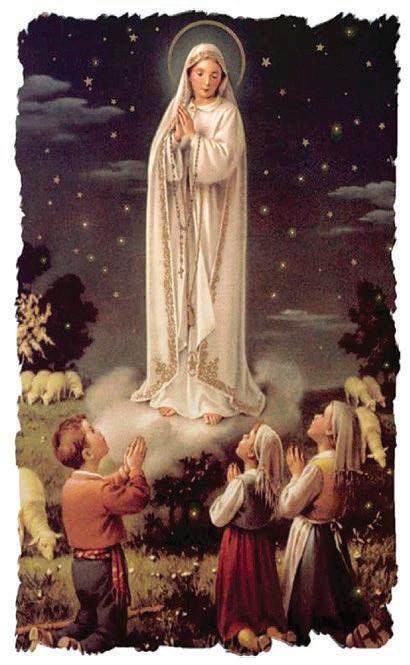
idea of Christ being the branch from the stump of Jesse. A righteous branch that would spring from Mary, that would be fully God and fully man. And, Mary was a part of that. And, of course, the fact that it was an actual branch.”
It was then that Gail Watson, faith formation director of St. Charles Borromeo, learned about the branch from her daughter, a friend of Kneen’s, and wanted to see it for herself.
“I was awestruck,” Watson said. “I could not believe that a branch from a tree broke with such a clear image of the Virgin Mary holding Baby Jesus.”
She then brought it to St. Charles Borromeo Parish for all to see.
While it was on display at the church, parishioners paused in front of the image to reflect on the simple beauty of God’s creation revealed in nature while praying for Mary’s intercession.
After its visit to the church, “The Branch” was mounted by a local artisan and is proudly displayed on a table in Kneen’s house – although it may not stay there.
“I am not sure if I want to part with it, but I am also not sure if I want to keep it to myself,” Kneen said. “When God does something beautiful, He doesn’t want to hide it.”
Kneen has since taken the time to walk very intentionally through forests, looking for images that God puts in her path.
As Kneen said,“I can’t help but think that is the Christian life. In us, God is bringing out those things that are good and true and beautiful and forming us and shaping us, highlighting His own work.”

Join Father John Putnam & Father Christopher Roux on a special pilgrimage celebrating the 109th anniversary of the Appearance of Our Lady of Fatima to Three Shepherd Children
For more information contact The Te Deum Foundation, Inc.
980-355-8762 or visit our website: www.tedeumfoundation.org
Reservation Deadline: April 1, 2026
KATE SCANLON OSV News
WASHINGTON, D.C. — Amid a spike in measles cases in the U.S., an infectious diseases specialist, who is also a Catholic deacon, told OSV News that the Church “has recommended measles vaccination to safeguard the health of children and families.”
The U.S. has already seen more than 1,000 cases of measles in 2026, making the year so far one of the three worst years for measles infections in the U.S. since 2000, according to an analysis of Centers for Disease Control and Prevention data by NBC News.
Dr. Timothy Flanigan, a hospital doctor in Brown Medicine’s Infectious Diseases Division, who also teaches at Brown Medical School and is a permanent deacon in the Diocese of Providence, Rhode Island, told OSV News that “we all need to be vigilant because it is a serious illness among children.”

According to the U.S. Centers for Disease Control and Prevention, measles is one of the most contagious diseases and can be dangerous in babies and young children. However, the measles,
mumps and rubella vaccine, or MMR – or the related MMRV vaccine, which protects against chickenpox, too – is 97% effective against measles for those who receive both doses.
The Pontifical Academy for Life in 2017 issued updated moral considerations on vaccinations, telling Catholic parents they should vaccinate their children for the good of their children and the community, and they can do so with a “clear conscience.”
“As Catholics, we always encourage the development of vaccines that do not utilize cell lines derived from an abortion,” Flanigan said, noting that there is not a range of measles vaccines in the U.S. apart from the MMR or MMRV vaccines.
“The Church and the Vatican have recommended vaccination and utilization of vaccines which are remotely connected to cell lines from an abortion if there are no alternatives,” Flanigan said.
He added that “the choice of vaccination is always up to the
individual and the parents,” per that teaching.
Sites of measles outbreaks included Ave Maria University, a Catholic university in Florida, and the Global Academy of South Carolina, a public charter school.
The outbreak has prompted some concern about inconsistent messaging on vaccines from federal health officials.
Department of Health and Human Services Secretary Robert F. Kennedy Jr. has a record as a vaccine critic, including his suggestion that they are linked to autism, which studies have consistently debunked.
A nonprofit he once ran has claimed that risks associated with vaccine-preventable diseases are exaggerated.
But after measles cases increased last year, Kennedy later said the “most effective way to prevent the spread of measles is the MMR vaccine,” in an April 2025 social media post.
More recently, earlier in March, a lawyer for the Trump
administration argued in court that Kennedy has “broad, unreviewable authority” to alter policies governing the use of vaccines.
However, critics of Kennedy’s approach included Jerome Adams, who was previously the surgeon general during Trump’s first term. Adams wrote on X March 1 that Kennedy “helped fuel the hesitancy we’re dealing with” when it comes to vaccines.
Meanwhile, amid a spike in measles cases in early 2026, Acting CDC Director Jay Bhattacharya and Centers for Medicare and Medicaid Services head Dr. Mehmet Oz have encouraged vaccination.
Measles, Bhattacharya said on social media, “is preventable, and vaccination remains the most effective way to protect yourself and those around you.”
“Take the vaccine, please,” Oz said in a recent CNN interview. “We have a solution for our problem.”





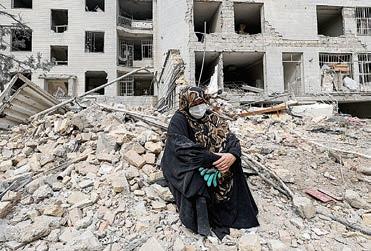
WASHINGTON, D.C. — Since the start of the U.S. and Israel’s war on Iran, some U.S. Catholic bishops have highlighted Church teaching on what constitutes a “just war” – with one cardinal flatly declaring the current conflict fails to meet the necessary criteria, and is therefore “morally illegitimate.”
The Trump administration maintains the joint U.S.-Israeli attacks have been necessary to counter threats posed by Iran. But several American Catholic prelates have pushed back, either directly or indirectly, on that assertion while urging prayer, diplomacy and moral renewal.
Two of the most explicit condemnations of the war in light of Catholic teaching have come from Cardinal Robert W. McElroy of Washington and Bishop Anthony B. Taylor of Little Rock, Arkansas. Both prelates detailed the Church’s just war criteria and concluded that current U.S. actions in Iran have failed the test.
Church teaching on just war has at its heart “an abiding resistance to war,” as part of Christ’s call to discipleship, said Cardinal McElroy. Ultimately, he said, “the moral questions that confront us today in Iran are part of a larger issue of moral renewal and dialogue that is deeply needed in our country that we reverence so profoundly.”
Supreme Court asked to end temporary protections for Haitians backed by
WASHINGTON, D.C. — The Trump administration on March 11 asked the U.S. Supreme Court to pause a ruling by a federal judge that barred the government from ending a program temporarily shielding eligible Haitians from deportation amid turmoil in their country of origin.
The request for emergency relief from U.S. Solicitor General D. John Sauer argued that numerous challenges related to the Trump administration’s efforts to end Temporary Protected Status for several nations “cry out for immediate resolution.”
The program, sometimes called TPS, authorized the U.S. government to grant protection from deportation to people from countries experiencing dangerous conditions such as war, disaster or other unrest. Its uncertain future impacts more than 350,000 Haitian migrants present in the U.S. legally.
The U.S. bishops are among those who have called for an extension to TPS protections for Haiti. In a statement issued in response to the administration’s attempt to end the program,
Bishop Brendan J. Cahill, chairman of the U.S. Conference of Catholic Bishops’ Committee on Migration, and Bishop A. Elias Zaidan, chairman of the USCCB’s Committee on International Justice and Peace, pointed out the federal government’s warnings on the “life threatening” conditions in Haiti to potential travelers.
“There is simply no realistic opportunity for the safe and orderly return of people to Haiti at this time,” they said, arguing that the dangerous conditions in Haiti reflect why Congress created TPS in the first place.
WASHINGTON, D.C. — Sen. Josh Hawley, R-Mo., announced March 11 he has introduced legislation in the Senate that would ban mifepristone, a drug commonly, but not exclusively, used for first trimester abortion.
The Safeguarding Women from Chemical Abortion Act, if enacted, would revoke the Food and Drug Administration’s approval of the drug. However, the path forward for the legislation was not clear, as President Donald Trump indicated as a candidate for president in 2024 he would veto a national abortion ban. Abortion restrictions have failed to gain traction in Congress since the Supreme Court’s 2022 Dobbs v. Jackson Women’s Health Organization decision, which overturned its previous precedent that held abortion as a constitutional right.
“We’ve known for years that mifepristone is risky, but it’s really just in the last few years that we’ve learned this drug is inherently dangerous, and it’s inherently prone to abuse,” Hawley said in remarks at the Capitol March 11.
BALTIMORE — A forceful voice for Black Catholic identity and a pioneer in bringing Gospel music into Catholic liturgy following the Second Vatican Council, Josephite Father William Norvel helped shape the spiritual life of Black Catholic communities nationwide. He died March 8 at age 90. Father Norvel spent more than six decades challenging the institutional
Church to live up to its claim of being universal. He contributed to the groundbreaking Black Catholic hymnal “Lead Me, Guide Me” and founded the first Catholic Gospel choirs in Washington and Los Angeles. He was elected superior general of his Baltimore-based religious community, the St. Joseph’s Society of the Sacred Heart, making him the first Black man to lead the community and the first Black to head a community of priests and brothers in the United States.

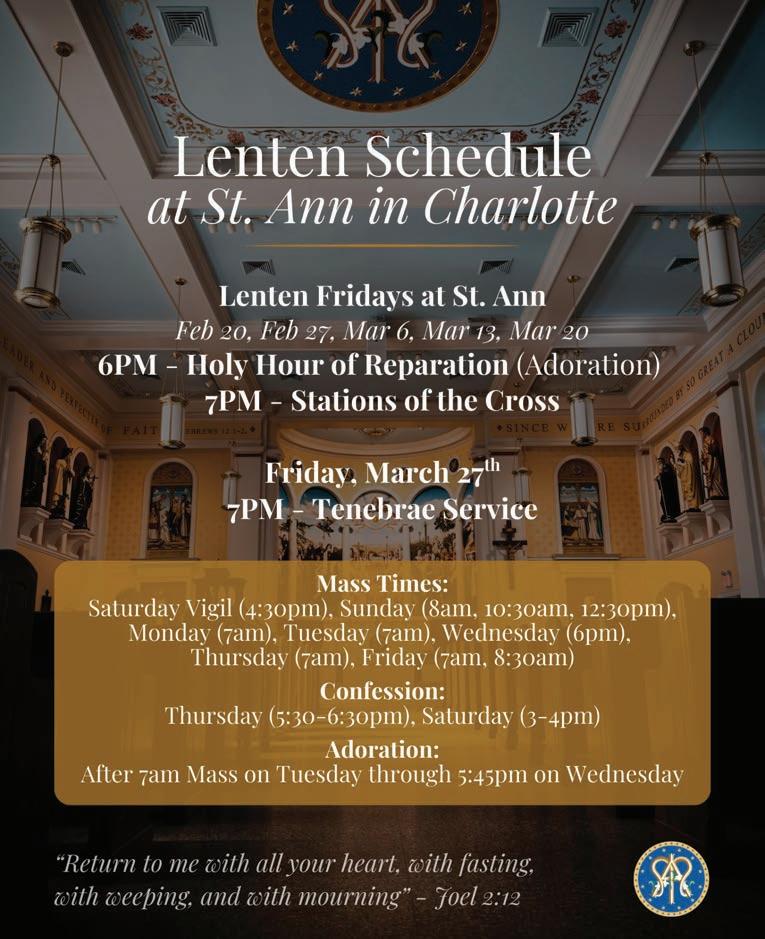
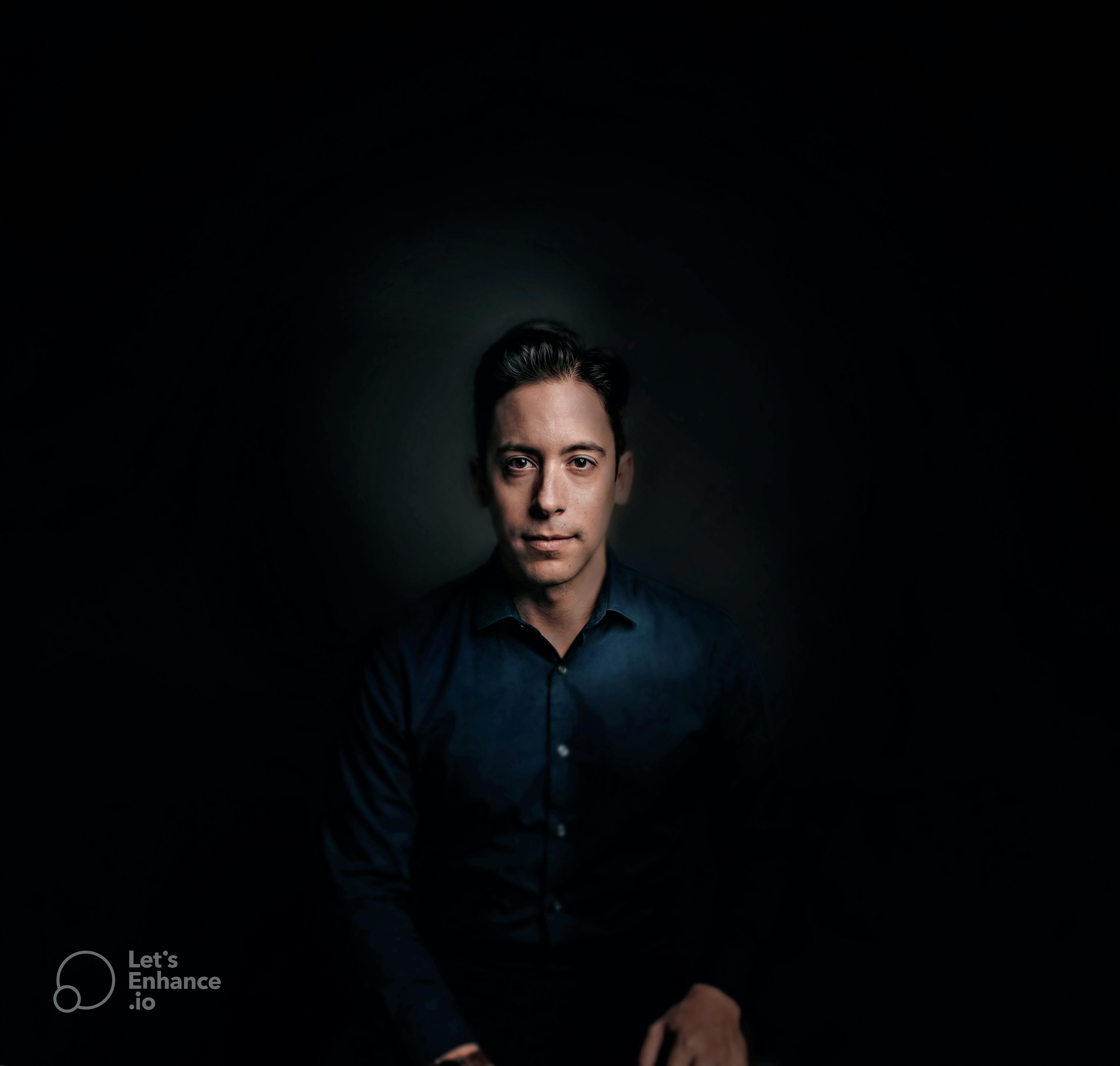
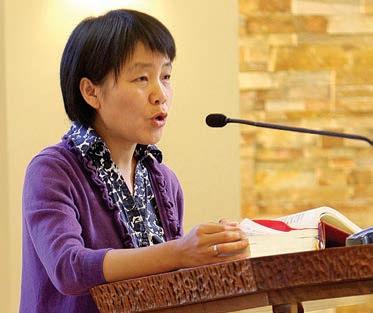
GREGORY A. SHEMITZ | OSV NEWS
A file photo shows a lector delivering a reading during Mass at a church in Ronkonkoma, New York. On March 10, the Vatican released the final report of the synod study group examining women’s participation in the Church, which calls for expanding roles for women in Church governance and leadership except ordained ministry.
Maria Mutual Funds – 10.375x6.26Knowles Ad | 2026 03
You shouldn’t have to compromise your values when it comes to investing. That conviction is among the many reasons I support Ave Maria Mutual Funds and why I’m proud to serve on their board.
Since 2001, Ave Maria Mutual Funds has refused to invest in companies that profit from pornography, abortion or attacks on the family. Their strong, long-term performance proves that principled, Pro-Family, Pro-Life investing works.
MICHAEL KNOWLES Podcaster & Author
This testimonial may not be representative of the experience of other customers. “As a member of the Ave Maria Mutual Funds Catholic Advisory Board, I receive compensation from the Funds of approximately $14,000 per year, which I do not believe affects my objectivity. Such compensation for my time and advice is not payment for this endorsement. I truly believe in the mission of the Ave Maria Mutual Funds.” – Michael Past performance does not guarantee future results. Schwartz Investment Counsel, Inc., a registered investment adviser established in 1980, serves as investment adviser for Ave Maria Mutual Funds and invests only in securities that meet the Funds’ investment and religious requirements. The returns may be lower or higher than if decisions were based solely on investment considerations. The method of security selection may or may not be successful and the Funds may underperform or outperform the stock market as a whole. All mutual funds are subject to market risk, including possible loss of principal. Request a prospectus, which includes investment objectives, risks, fees, charges and expenses and other information that you should read and consider carefully before investing. The prospectus can be obtained by calling 1-866-283-6274 or it can be viewed at www.avemariafunds.com. Distributed by Ultimus Fund Distributors, LLC.
|
ROME — Pope Leo XIV asked on March 13 if Christian leaders who bear responsibility for war have the courage to humbly examine their consciences and seek the sacrament of confession. “One might ask: Do those Christians who bear grave responsibility in armed conflicts have the humility and courage to undertake a serious examination of conscience and confess?” he said.
Speaking in the Vatican’s Clementine Hall, the pope addressed priests and seminarians attending the Apostolic Penitentiary’s annual course on issues related to the sacrament of reconciliation.
He warned that many Catholics neglect the sacrament. “It is as if the infinite treasure of the Church’s mercy remained ‘unused,’ due to a widespread inattention among Christians who, not infrequently, remain in a state of sin for a long time rather than approach the confessional with simplicity of faith and heart to receive the gift of the Risen Christ.”
The pope emphasized that confession restores unity with God and fosters reconciliation among people today.
“Dear young priests and seminarians, always be keenly aware of the most exalted task that Christ Himself, through the Church, entrusts to you: to restore people’s unity with God through the celebration of the sacrament of reconciliation,” he said.
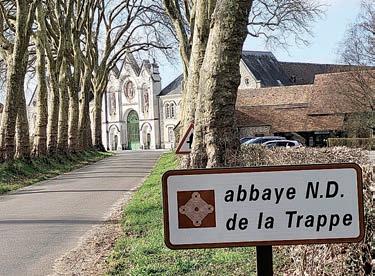
PARIS — After nine centuries of monastic life, the monks of La Trappe Abbey say they may leave their historic monastery in 2028, citing a sharp drop in vocations and the growing burden of maintaining the vast property.
In a March 5 statement, the community stressed that the abbey is not closing or being sold and that the remaining brothers continue their daily rhythm of prayer and work.
But after what they described as a “long period of discernment,” the monks acknowledged they are considering relocation and are exploring options with other communities.
Founded by Count Rotrou III in the 12th century, the abbey later became the birthplace of the Trappist reform under Armand Jean le Bouthillier de Rancé in the 1600s.
Today only about a dozen monks remain in a monastery built for 100. The Diocese of Séez, to which the abbey belongs, has invited people to pray for them at this stage of their journey, referring to “their influence extending far beyond the diocese.”

GLASGOW, Scotland — Scotland’s Catholic bishops are raising concerns about proposed assisted-suicide legislation and the removal of protections for institutions that object on moral grounds.
In a March 10 statement, Bishop John Keenan of Paisley, president of the Scottish bishops’ conference, criticized the government’s response to amendments that would safeguard conscience rights for faith-based groups, hospices and other organizations.
The government had argued it was unclear how institutions could demonstrate a “conscience” position. Keenan countered that every organization operates according to guiding values that shape its mission and practice.
The Assisted Dying for Terminally Ill Adults (Scotland) Bill, introduced in March 2024, would allow eligible adults age 18 and older with terminal illness to request medical help to end their lives. The bill was amended recently to raise the minimum age from 16 to 18.
Two proposed amendments aimed to protect healthcare providers and institutions that refuse to participate. But lawmakers backed a

measure removing those safeguards. Pro-life advocates and several medical organizations also warned the change weakens transparency, oversight and ethical protections in the legislative process.
As humanitarian crisis looms, Mideast Christians face uncertainty
BEIRUT — War across the Middle East and a looming humanitarian crisis are triggering fresh fears for Christian communities in Lebanon and Iraq, as escalating violence drives displacement and deepens uncertainty about the future.
In Lebanon, Israeli evacuation orders and heavy airstrikes targeting Iran-backed Hezbollah have forced nearly 700,000 people from their homes, according to the United Nations.
Many Christians from villages in the south are fleeing to Beirut, while others remain, trying to protect their homes despite the danger.
Aid workers say the situation is increasingly desperate. Michael Constantin of the Catholic Near East Welfare Association told OSV News some Christian villages are trapped between Israeli forces and Hezbollah fighters, with families sheltering displaced neighbors and relying on aid.
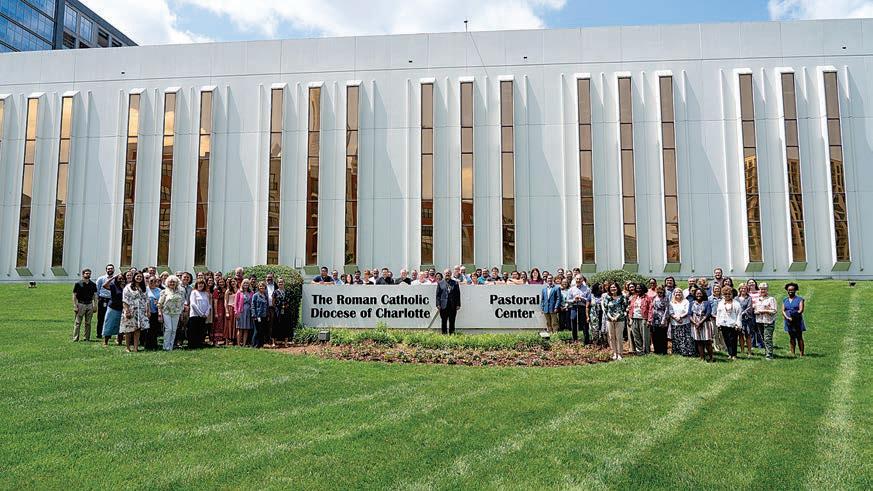

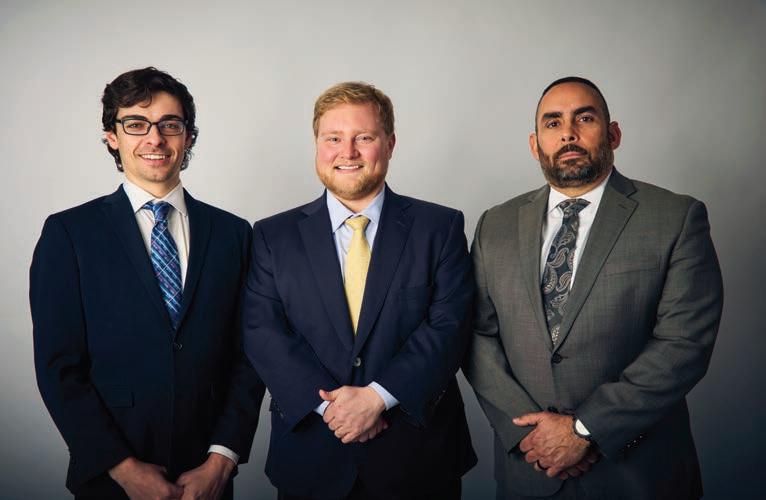

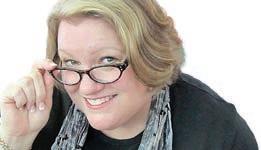
Elizabeth Scalia
Perhaps fear, after all, is at the root of all sin. I used to think it was selfishness, but it’s not. Even selfishness is rooted in fear.
We can see this in the early wreckage of our Lenten practices: We are afraid of material poverty, and so we selfishly hold back on our almsgiving. We are afraid of hunger, and so we selfishly reach for the bread and chocolate. We are afraid of what we might find within ourselves and our interior lives, and so we selfishly cut short our prayers for something that we tell ourselves is more fun or important. Obviously, we should not fear these things. Prayer, fasting and charitable giving are spiritually powerful practices that always redound to our benefit.
Be not afraid of giving alms, because God is never outdone in charity. If you think about this, you know it is true.
Be not afraid of fasting, because, as Pope Benedict XVI reminded us, it grows compassion by opening our eyes to the deprivations of others.
Be not afraid of prayer – even the challenging silence of contemplation. Prayer brings us before the feet of Christ and sets loose upon the world a most subversive force for good.
Granted, falling short in these three major works of Lent is not actually sinful, but it’s fair to reason that if fear
can influence us away from them, it can mislead us in other ways.
Fear of not “keeping up” with neighbors or family members or friends can lead us into living a falsehood that keeps us dishonest, in debt and full of self-doubt.
Fear of “missing out” has us embracing political, social or even religious “trends” that we don’t even like, thus surrendering our truest selves to the world rather than to the stability of the unchanging Christ.
We should already know this about fear – it should be obvious, simply because of how frequently some variation of “Do not be afraid” or “Have no fear” or “Do not fear” occurs in Scripture.
Jesus, of course, says it a lot.
Of course, Jesus was the perfection of love – the All Love – and perfect love casts out fear (1 Jn 4:18).
It is human to be afraid. But this year, in our Lenten disciplines, let us place all of the fears we’re conscious of – or will admit to – into the vast depths of the Sacred Heart of Jesus, who said, “Do not be afraid, little flock, for it is your Father’s good pleasure to give you the kingdom” (Lk 12:32).
ELIZABETH SCALIA is editor-at-large for OSV. Follow her on X @theanchoress.
We proclaim Christ to the world around us by our efforts to provide a safe environment for all people, especially the young and the vulnerable.
The Catholic Church is absolutely committed to the safety of children. Together we can make a Promise to Protect and a Pledge to Heal.
Suspect sexual abuse or misconduct?
If you have information about possible sexual abuse or misconduct by any clergy, employee or volunteer of the Diocese of Charlotte, report concerns safely, securely and anonymously 24/7 over the phone using the diocese’s new hotline, 1-888-630-5929, or online: www.RedFlagReporting.com/RCDOC
Please note: If you suspect a child is in danger, please contact 9-1-1 or your local law enforcement agency.
Safe Environment training
Every Church worker must go through abuse prevention and education training. Find more information about the Diocese of Charlotte’s Safe Environment program, sign up for Protecting God’s Children training and more: Go to www.charlottediocese.org and click on “Safe Environment”
For more information or questions, please contact the diocese’s Safe Environment Office: www.safeenvironment@rcdoc.org or 704-370-3222
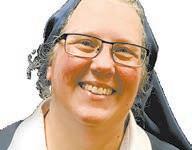
and home: Raising holy families in a screen-saturated world
Parents today raise children in a world unlike any previous generation.
Video games, social media, streaming platforms, AI chatbots and instant information transform daily life.
The tools of the digital world offer many remarkable opportunities for learning, creativity and enjoyment. Media messages educate and form audiences through ideas, values and worldviews. When used well they can expand the minds and hearts of children and enrich their imaginations.
Along with the benefits of technology, risks are also a reality. Harmful content can adversely affect a child’s emotional and spiritual health. Without guidance, kids can, intentionally or not, find themselves in dangerous digital spaces where the content may undermine their faith and well-being.
USE TECHNOLOGY – DON’T LET IT USE YOU
Technology itself is not the enemy. Human ingenuity created social media apps, video games and artificial intelligence. However, like any tool, they can be used for good or for harm.
Pope Leo XIV emphasizes that technology must serve the human person rather than replace human wisdom or relationships. Parents, rooted in faith, are the ones who form and guide children toward the beautiful, true and good.
Youngsters cannot always distinguish helpful from harmful content online because they lack the maturity to apply discernment to the messages they encounter in the media. Yet these are the messages that shape their young minds and hearts.
SHAPE YOUR CHILD’S DIGITAL CHARACTER
Being a responsible parent when it comes to media does not simply mean setting limits for screen time. It also involves playing and viewing together as a family.
Being present to one another and engaging media together allows the chance to enter into conversations about content. This helps children interpret what they see and hear through the lens of faith. Talking with children helps them develop discernment skills, which are essential as they grow into adulthood.
Encourage children to ask questions of the media, such as: How does this story make me feel? Does it reflect goodness? Does it draw me closer to God? This equips children to safeguard their interior lives and grow in their relationship with God.
DEFEND YOUR FAMILY THROUGH PRAYER
Helping strengthen their spiritual core provides the most effective way to protect children in the digital age. When families pray together, they invite Christ into their home, making Him the center of their relationships and activities.
When a family prays the rosary or grace before meals together or brings their

More online
For more tips and ideas about how to form digitally safe and holy kids, watch the “Digital Age Family Safety” series by Family Theater Productions and Pauline Media Studies at www.digitalfamilysafety.org or on its YouTube channel. These short videos are designed to help busy Catholic parents navigate the digital culture for their kids with practical tools and fun ideas. The downloadable guides make the content accessible and lasting.
intentions about their online experiences to God, God’s grace bonds the family together. These moments teach children that God is present in every aspect of life – including their digital lives.
Perhaps the most important factor in forming children is the example of the parents. Children see what their parents do and imitate them. When devices constantly distract parents, children internalize that behavior, but when parents pray together and lead the family in prayer, the children learn the value and beauty of faith.
Families can support their faith by using technology intentionally. Families can watch inspiring content together and discuss what they see, listen together to a recording of Scripture, learn about the saints, and use digital tools to deepen their spiritual life. It is a challenge to parent in the digital age, but by setting boundaries, keeping bedrooms screen-free, establishing tech-free times and encouraging other activities including prayer, parents can bring balance to their homes. Parents should aim to raise children who know how to use digital tools without being controlled by them. When families pray together, discern together and live intentionally with their media, the home becomes a sacred space where faith is lived, hearts are formed and Christ reigns at the center. In such homes, holiness can flourish.
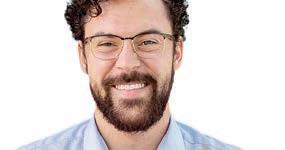
It was a quiet Saturday afternoon. I found myself in my parish’s chapel, yelling at God, angry at Him for calling a dear friend to move away.
Between tirades came a reply that echoed in the silence: “What if you loved Me this much?”
I wish I could say I piously realized the error of my ways, repented, cried tears of joy.
Even though I may not have responded well that day, the Lord’s question haunted me in the weeks that followed.
What if I did love the Lord that much? What if I did give Him my all? What would that look like?
As the month ended, I decided to give it a shot, to go “all in.” I’d started praying the rosary daily a few weeks prior, so I committed to stepping it up by going to daily Mass every day.
‘I realized that communication happens most often, most effectively and most powerfully through the Scriptures.’
After a 31-day Mass streak – better than any Duolingo streak I ever had, for the record – God has shown me a ton. Here are just a few lessons I learned from going to Mass every day for a month.
n There will always be more work to do. Take a break.
I’ll admit, I fell into the “I’m too busy to go to Mass” camp far too often. The length of my to-do list, the howl of deadlines and the chirp of email notifications drowned out the gentle, quiet call of God to spend time with Him on most days.
No matter who you are, what job you have or what state of life you find yourself in, there will always be more work to do. Now, 31 days of Mass later, I see the value of taking a break and a breath and turning to the Lord. And I’m grateful for the peace, clarity and stability that’s given me.
n God wants a relationship with us. It’s not just that Jesus came and dwelt among us. It’s that He still comes and dwells among us – present tense. He does so in the Eucharist.
At any given moment, on any given altar, in any given place across the world, Jesus comes to meet His people. Heaven touches earth. God is made food to nourish, sustain and bless His people. He not only gave us
everything necessary to know, love and serve Him in His earthly life, death and resurrection. He gives, now, all that we need to follow Him.
In this month of Mass, the God of the universe has met little old me right where I’m at, every single day, and called me closer to Him.
n God speaks to us every day.
Well, if God wants a relationship with us, of course God would communicate with us! That’s what any good therapist will tell you – relationships are built on communication.
I realized that communication happens most often, most effectively and most powerfully through the Scriptures, through the daily readings.
More often than not, I’d walk into Mass to piously prepare and forget to check out the day’s readings. Then, when the lector would begin proclaiming the living Word of God, my heart would be pierced.
It was as if God was speaking directly to me – whether in the first reading, the psalm, the second reading on Sundays or the Gospel. No matter what I thought of the homily, either. (But y’all are doing great, Fathers!)
n Daily prayer isn’t a talisman.
Partway through the month, I was feeling good – close to God, holier, peaceful and maybe a bit more patient. Things were going well!
Then, the winds changed and the storm came.
What was this all about? God, I’m praying more than I have in a while! I’m going to Mass every day! Why isn’t everything going well?!
Then it hit me. I was trying to “earn” goodness and grace by putting together an impressive spiritual resume.
But prayer isn’t a talisman. Just because we do a litany of laudable things doesn’t mean we’ve earned comfort. In fact, Jesus promises us the exact opposite (see Jn 16:33).
It was a hard pill to swallow, but I’m grateful for the reality check. It might just bring me closer to Jesus in the next 31 days.
TAKE
Whether you find yourself in shoes like mine or you’re much holier than me, I’d invite you to consider taking the next step in your spiritual journey today.
It’s worth it to enter into the discomfort, the inconvenience, and try to figure it out with God.
I say that not as a saint or a pillar of peaceful prayer, but as a guy who’s still figuring this whole Christian life thing out. But on only day 32 of daily Mass-going, I can tell you: There’s peace, security and joy in the arms of the Father. It won’t be easy. It won’t always be fun. But it will be worth it.
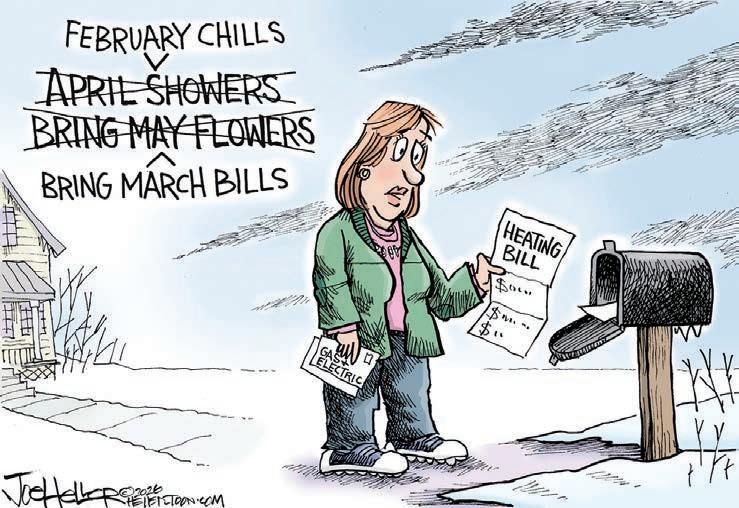
‘Its unifying principle is not a language, a culture, an ethnicity, but faith in Christ.’
Pope Leo XIV
From online story: “Church’s unity comes from faith in Christ and from love, pope says ”

The Catholic News Herald reached the Facebook and Instagram feeds of more than 1.35 million people in English and Spanish last month. The most talked about post? Coverage of ChosenCon in Charlotte. Join the conversation: www.facebook.com/ CatholicNewsHerald.
On YouTube in March so far, videos produced by the Catholic News Herald have been viewed more than 15,500 times. The most popular video? A message from Bishop Martin on the Pastoral Vision.
Over the last 30 days ending March 18, 35,000 visitors to www.catholicnewsherald.com have viewed a total of 48,000 pages. The top 10 trending headlines are:
n ‘ChosenCon’ convention and stars are coming to Charlotte 1,821
n ‘Where, Lord, do you want me to go?’
n Jim Kelley celebrates 40 years of giving to God .............................................................................
n Our Lady of Consolation partners with diocese to renovate church
n 14 men instituted as acolytes; deacons reaffirm promises
n Christ the King High School names new president
n Sarah Kroger’s voice melts hearts at St. Matthew Parish
n Diocese receives milestone $1 million estate gift from couple known for their service......
n ‘Everyone so loves Jesus, we share Him with others’
n Real love can wait 178
Join the conversation online

The Catholic News Herald welcomes letters from readers. We ask that letters be originals of 250 words or fewer, pertain to recent newspaper content or Catholic issues, and be written from a perspective of Christian charity.
To be considered for publication, each letter must include the name, address and daytime phone number of the writer for purpose of verification. Letters may be condensed due to space limitations and edited for clarity, style and factual accuracy.

The Catholic News Herald does not publish poetry, form letters or petitions. Items submitted to The Catholic News Herald become the property of the newspaper and are subject to reuse, in whole or in part, in print, electronic formats and archives.
E-mail: catholicnews@rcdoc.org
Mail: Letters to the Editor Catholic News Herald 1123 S. Church St. Charlotte, N.C. 28203
– outdoor sacred spaces dedicated to the burial of the remains of the people we love and our fellow Christians.”
The norms call for cemeteries and columbaria to be located in prayerful settings and carefully maintained. Grounds, lighting, roads and sidewalks, headstones, statues, crucifixes and shrines should all reflect the dignity of the site.
Parishes are encouraged to offer liturgies and devotional events at cemeteries, such as All Souls’ Day services, to encourage prayer for the deceased.
Father Noah Carter, director of the diocese’s Office for Divine Worship and pastor of a church with both a cemetery and columbarium, was among those who provided input for the new rules.
His parish, Holy Cross in Kernersville, has a cemetery and columbarium with 300 plots and 300 niches, and has plans to expand to 600 of each.
“There’s absolutely interest,” Father Carter said. “Catholics want to be buried in Catholic places, because they know that they’re going to be assured of the prayers for the dead, they’re going to be assured that people are visiting.”
STANDARDIZED POLICY
The new policies standardize what parishes with cemeteries and columbaria were largely doing already, Monsignor Winslow and Father Carter said.
The norms were developed over several years with input from multiple diocesan offices as well as the Presbyteral Council and pastors who operate cemeteries. Diocesan leaders with expertise in Church law, finance, liturgy, real estate and legal matters contributed to the process.
To help parishes implement the new norms, the diocese has created a set of accompanying resources and templates.
“You don’t want to tell a parish, ‘You can run a cemetery now – go figure it out,’” Monsignor Winslow said. “It’s essentially a complete kit for parishes – almost a plug-andplay approach – so they don’t have to reinvent the wheel.”
liturgias y actos devocionales en los cementerios, como servicios del Día de los Fieles Difuntos, para fomentar la oración por los fallecidos.
El padre Noah Carter, director de la Oficina de Culto Divino de la diócesis y párroco de una iglesia con cementerio y columbario, fue uno de los que aportaron ideas para las nuevas normas.
Su parroquia, Holy Cross en Kernersville, cuenta con un cementerio y columbario con 300 parcelas y 300 nichos, y planea
ampliarse a 600 de cada uno. “Definitivamente hay interés”, afirmó el padre Carter. “Los católicos quieren ser sepultados en lugares católicos, porque saben que allí se les asegura la oración por los difuntos y la visita de las personas.”
NORMAS ESTANDARIZADAS
Las nuevas políticas estandarizan lo que las parroquias con cementerios y columbarios ya venían haciendo en gran medida, señalaron monseñor Winslow y el padre Carter.
Las normas se desarrollaron durante varios años con aportes de múltiples oficinas diocesanas, así como del Consejo Presbiteral y de párrocos que administran
cementerios. Líderes diocesanos con experiencia en derecho canónico, finanzas, liturgia, bienes raíces y asuntos legales contribuyeron al proceso.
Para ayudar a las parroquias a implementar las nuevas normas, la diócesis ha creado un conjunto de recursos y plantillas complementarias.
“No se trata de decirle a una parroquia: ‘Ahora pueden administrar un cementerio, averigüen cómo hacerlo’”, explicó monseñor Winslow. “Es básicamente un paquete completo para las parroquias – casi un sistema listo para usar – para que no tengan que empezar desde cero.”
borrowed slogan; rather, it is an invitation to realign our lives, our communities and our country under the sovereignty of Jesus Christ,” said Jason Shanks, president of the National Eucharistic Congress.
The nonprofit National Eucharistic Congress organizes the pilgrimage, which first took place in 2024 ahead of the 10th National Eucharistic Congress in Indianapolis as part of the National Eucharistic Revival.
“Our hope is that Catholics will come together on this significant anniversary to give thanks for our country and to pray for our future,” said Bishop Andrew H. Cozzens of


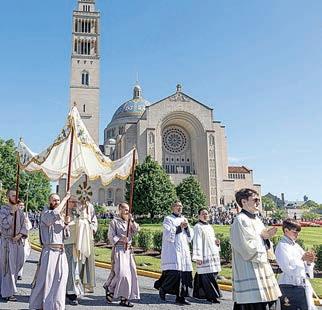
Crookston, Minnesota, chairman of the National Eucharistic Congress.
The pilgrimage has been placed under the patronage of St. Frances Xavier Cabrini, an Italian-American immigrant and the first U.S. citizen to be canonized a saint. It will also take place in solidarity with the U.S. bishops’ call to consecrate the United States to the Sacred Heart of Jesus.
The pilgrimage will start Memorial Day weekend in St. Augustine, the site of the first Mass on American soil in 1565, and end in Philadelphia with events planned July 4-5.
The pilgrimage will also connect with a national prayer campaign and digital lecture series “that highlights themes and topics of America through a Catholic lens and framework,” organizers said.
— OSV News and Catholic News Herald