

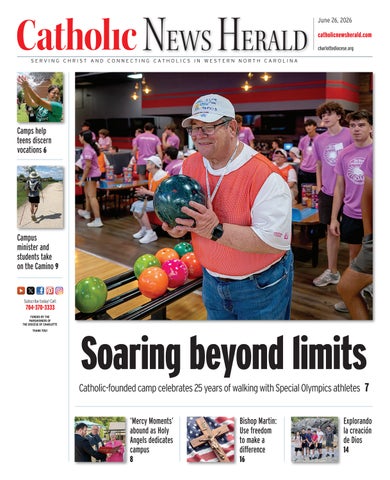
JUNE 26, 2026
VOLUME 35 • NUMBER 19
1123 S. CHURCH ST. CHARLOTTE, N.C. 28203-4003 catholicnews@rcdoc.org 704-370-3333
PUBLISHER
The Most Reverend Michael T. Martin, OFM Conv., Bishop of Charlotte
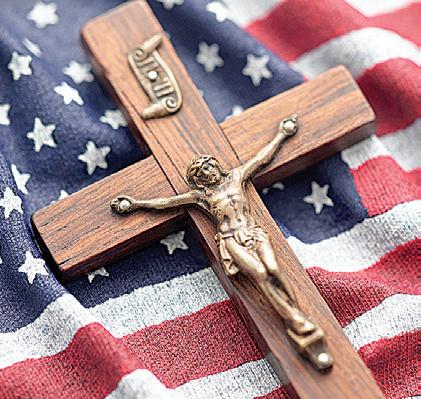
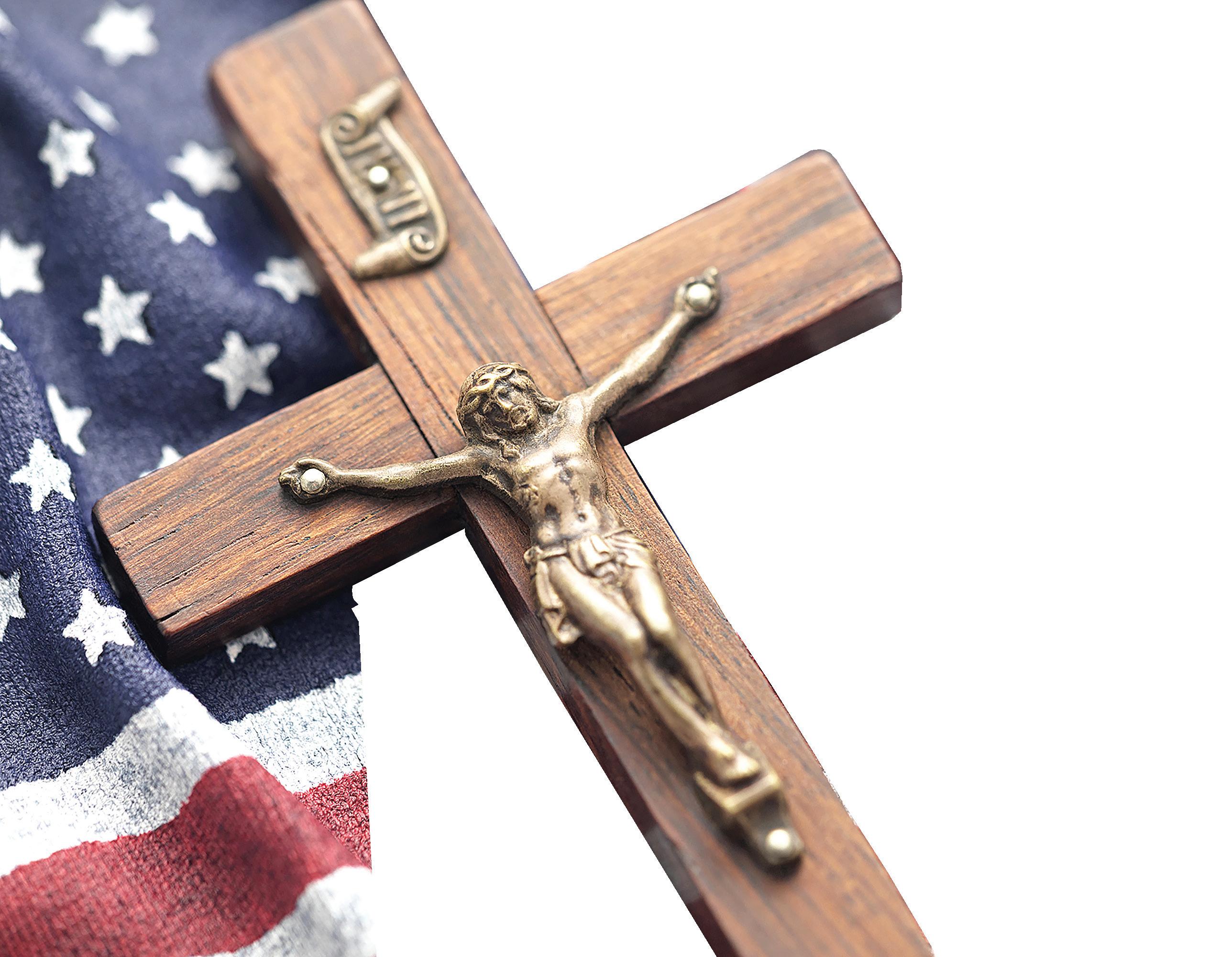
elebrations of the Fourth of July will be more spirited this year as our nation marks the 250th anniversary of the signing of the Declaration of Independence. Amid the picnics and fireworks, take some time to reflect on one of the greatest birthday gifts in history – aside from the gift of Jesus to humanity at Christmas – the enduring legacy of freedom. (See Bishop Michael Martin’s column on page 16.) Here are a few ways to celebrate America and learn more about its history from a Catholic perspective.
EDITOR: Trish Stukbauer
704-370-3392, tmstukbauer@rcdoc.org
ADVERTISING MANAGER: Kevin Eagan
704-370-3332, keeagan@rcdoc.org
MULTIMEDIA DESIGNER: David Puckett 704-808-4521, dwpuckett@rcdoc.org
EDITORIAL TEAM: Kimberly Bender 704-370-3394, kdbender@rcdoc.org Lisa Geraci 704-370-3294, lmgeraci@rcdoc.org
Troy C. Hull 704-370-3288, tchull@rcdoc.org Christina Lee Knauss 704-370-0783, clknauss@rcdoc.org Amelia Kudela 980-374-3411, arkudela@rcdoc.org Brian Segovia 704-370-3235, bmsegovia@rcdoc.org
COMMUNICATIONS ASSISTANT/CIRCULATION: Maria De Ugarte 704-370-3333, catholicnews@rcdoc.org
COMMUNICATIONS DIRECTOR: Liz Chandler 704-370-3336, lchandler@rcdoc.org
ASSISTANT COMMUNICATIONS DIRECTOR: Patricia L. Guilfoyle 704-370-3334, plguilfoyle@rcdoc.org
THE CATHOLIC NEWS HERALD is published by the Roman Catholic Diocese of Charlotte 26 times a year.
NEWS: The Catholic News Herald welcomes your news and photos. Please e-mail information, attaching photos in JPG format with a recommended resolution of 150 dpi or higher, to catholicnews@rcdoc.org All submitted items become the property of the Catholic News Herald and are subject to reuse, in whole or in part, in print, electronic formats and archives.
ADVERTISING: Reach 165,000 Catholics across western North Carolina! For advertising rates and information, contact Advertising Manager Kevin Eagan at 704-370-3332 or keeagan@rcdoc.org. The Catholic News Herald reserves the right to reject or cancel advertising for any reason, and does not recommend or guarantee any product, service or benefit claimed by our advertisers.
SUBSCRIPTIONS: $17.25 per year for registered families of the Diocese of Charlotte and $25 per year for all others
POSTMASTER:
The U.S. Conference of Catholic Bishops has compiled on its website (www. usccb.org) a series of videos, podcasts and articles highlighting the contributions of Catholics and the impact of our faith on the history of this country. From the founding of the country to the dehumanizing treatment endured by Black and Indigenous peoples to the waves of immigration that have shaped the nation and the lasting impact of religious sisters on our medical institutions, learn more about the role of Catholicism.
PRAY FOR OUR NATION
The USCCB is encouraging Catholics to take part in “250 Hours of Adoration.” Parishes across the country offered Holy Hours leading up to the June 11 consecration of the country to the Sacred Heart of Jesus. However, the need to spend some time in prayer for our country with Jesus in the Blessed Sacrament didn’t end with the consecration. Catholics can still pray for unity and healing by using the prayers and readings from the USCCB during their own adoration hours.
The USCCB also has created a “250 Works of Mercy” initiative to encourage people to participate in parish and community programs. “Our works of mercy draw from the deep well of our faith and prayer, constantly reminding us that in tending to our brothers and sisters, we tend to Christ Himself,” the USCCB said. Works of mercy include concrete acts such as assisting women who face a crisis pregnancy, donating to food pantries or tutoring children. For ideas about how to participate locally through Catholic Charities Diocese of Charlotte, read more on page 8

ESPAÑOL
VIÑEDO DE RAQUEL: ¿Usted o alguien cercano está buscando sanar las secuelas de un aborto anterior? Retiros de fin de semana son ofrecidos por Caridades Católicas para hombres y mujeres en todas las regiones de la Diócesis de Charlotte.Para obtener más información, comuníquese con Lorena Haynes al 828-585-0483 o por correo electrónico a lorena_ haynes@yahoo.com.
EVENTS
45+ SINGLES FELLOWSHIP EVENT: Join St. Mark Parish’s 45+ Singles for fellowship and fun 5-8 p.m. Sunday, June 28, at Ed’s Tavern, 17044 Kenton Dr., Cornelius. Sign up at https://bit. ly/4nJa1kJ or email 45plussingles@gmail.com with questions.
KICKOFF DONATION DRIVE : The 24th Annual Monsignor McSweeney World Hunger Drive at St. Matthew Church begins with this donation drive with a fundraising goal of $400,000. Proceeds will be used for a large-scale meal-packing event on Aug. 15 to
support the Missionaries of the Poor and St. Marc School in Haiti. To donate, visit www.stmatthewcatholic.org/worldhungerdrive. Hoops for Hunger, a three-on-three basketball tournament on Aug. 1, will raise funds for the annual drive.
VIGIL OF THE TWO HEARTS: Vigil begins with 8 p.m. First Friday Mass on July 3, followed by Eucharistic Adoration and concludes with 8 a.m. First Saturday Mass July 4. St. Patrick Cathedral, 1621 Dilworth Road East, Charlotte. Details: www.defendthefamily.org/two-hearts.
The next print edition of the Catholic News Herald will arrive in mailboxes on July 24. Until then, stay up to date with the latest diocesan news, features and videos at www.catholicnewsherald.com, and follow us on Facebook, Instagram and X for daily coverage.
will participate in the following events over the coming weeks:
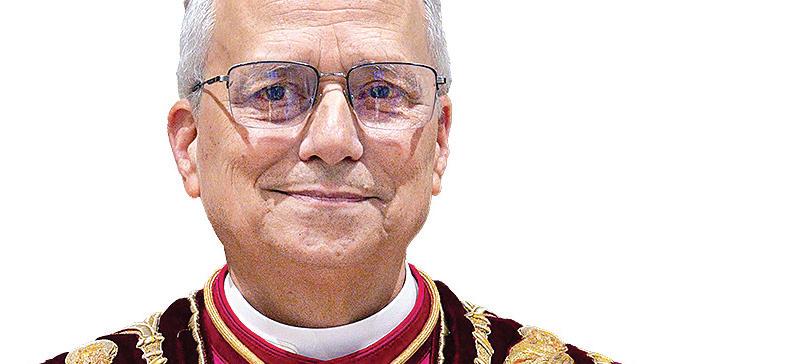
Participation in the Eucharist transforms believers into the Body of Christ and offers a remedy to the divisions affecting families and communities, Pope Leo XIV said during his weekly general audience June 24.
In his final general audience until Aug. 5, Pope Leo also encouraged young people to use the downtime of summer vacation to attend Mass, go to confession frequently, reflect on Scripture, go on spiritual retreats and pilgrimages and spend time with loved ones.
“Vacation is a time for rest and to seek signs of God in the beauty of creation,” he said in his remarks to Polish-speaking visitors. He also asked people to pray for students so that they may “choose wisely” the schools and universities they will attend and “discern with prudence their vocation.”
Continuing his series on the documents of the Second Vatican Council, the pope focused on “Sacrosanctum Concilium,” the Constitution on the Sacred Liturgy, explaining how the Eucharist draws the faithful into deeper communion with God and one another.
Receiving Christ in the Eucharist transforms believers into the Body of Christ, whose head is the risen Lord seated at the right hand of the Father, the pope said.
“Thus, the Eucharist is the sacrament of the Kingdom that is to come,” he said.
The Eucharist teaches Catholics to adopt Christ’s way of self-giving love and to be “drawn day by day into ever more perfect union with God and with each other,” he said.
“This gift draws us into the dynamic of unity, offering a powerful antidote to the forces of division that undermine our world, our communities, our families and our hearts,” he said.
The Constitution on the Sacred Liturgy teaches that the faithful are called to “offer themselves in union with Jesus Christ” to the Father “through the hands of the priest and together with him,” the pope said. Participation in the Eucharist also means being formed by God’s word and “nourished at the table of the Lord’s body.”
The Eucharist cannot be separated from the Word of God, the pope said, noting that the liturgy and the Eucharist form “one single act of worship.”
s the United States indulges in a star-spangled celebration of its 250th birthday, a cornerstone of historical significance that stands out is religious freedom, and unlike for many other nations, it is a unique founding principle of this nation.
“From the beginning, we’ve had this quarrel – that’s why I call it the Founders Quarrel – which is, on the one hand, there was agreement that we should have religious liberty. But what that actually meant was what?” Linda Przybyszewski, associate professor of history at the University of Notre Dame, told OSV News.
“They argued about it,” she said of the Founding Fathers, “because so many of them believed that some form of belief in God was necessary to teaching people virtue and morality –since we need virtue and morality in order to be a self-governing republic. The question then became, ‘Who’s going to teach the religion?’ ... And I don’t think that has ever gone away.”
The variety of religious traditions complicated matters.
“At the founding of the United States, we saw a fascinating mix of groups who argued for religious liberty,” explained Przybyszewski. “There were deists – people who believed in God, but had their doubts about Christ – like Thomas Jefferson and James Madison. There were also sort of ‘orthodox’ churches, which were in some cases newer – like the Baptists, or the Presbyterians – and they had been actively persecuted by colonies that had established churches; that is, churches with privileges.”
During the colonial period of the early 1700s, most colonists – about 85% of some 500,000 – lived in colonies with an official state church, typically the Congregational or Anglican Church.
“This disparate group of people argued very strongly for religious liberty,” Przybyszewski said, “which is why we have in the First Amendment to the U.S. Constitution that Congress shall make no law regarding the establishment of religion or imposing on the free exercise of religion.”
Michael Breidenbach – dean of the Honors College and associate professor of history at Ave Maria University in Ave Maria, Florida – agreed.
“Religious experience for colonial Americans was very varied. There were some colonists who came specifically because they were fleeing religious persecution,” he shared.
“There were others who were trying to find a better life than what they had in Europe. And most of them were, I would say, a Christian in some description – although there are notable and important exceptions with Jews and Muslims; and of course, those who did not profess the faith, gnostics or atheists,” said Breidenbach.
The Maryland Toleration Act of 1649 – written by Cecil Calvert (1605-1675), son of George Calvert (1580-1632), the Catholic founder of the colony of Maryland (later home of the first U.S. diocese) – is typically identified as the first American law specifically referring to “the free exercise” of religion.
Ironically, it was repealed in 1654 when William Claiborne, who was stridently anti-Catholic, took control of the colonial government. A new law was passed barring Catholics from openly practicing their religion.
Daily Scripture readings “No one knows the Son except the Father, and no one knows the Father except the Son and anyone to whom the Son wishes to reveal him.”
— Matthew 7:7, part of the daily readings for July 15, 2026, Memorial of St. Bonaventure, Bishop and Doctor of the Church
“By the time we get to American Independence,” said Breidenbach, “what changes is that we see a shift in the discourse to the natural rights of someone to freely exercise one’s religion – public worship – according to the dictates of their conscience. And that’s a different commitment because the government can’t abridge those rights,” he added.
Catholics, Breidenbach noted, were at the forefront of the commitment for the natural rights of religious liberty.
Archbishop John Carroll of Baltimore (1735-1815) – the first Catholic bishop in the U.S. – wrote publicly on the subject; his brother Daniel Carroll (1730-1796) was a framer of the U.S. Constitution; and their second cousin Charles Carroll (1737-1832) was the only Catholic to sign the Declaration of Independence. Still, non-Protestants often faced exclusion and outright persecution.
In the 17th century, Massachusetts hanged people for being Quakers; when the Declaration of Independence was signed, nine of the 13 colonies prohibited Catholics and Jews from holding office; in 1838, the governor of Missouri issued Executive Order 44, calling for the “extermination” of the Mormons; and during the
FREEDOM, SEE PAGE 17
Snap the QR code (right) to get the Mass readings for every day, in English or Spanish, online at the U.S. Conference of Catholic Bishops’ website.

For the latest news 24/7: catholicnewsherald.com
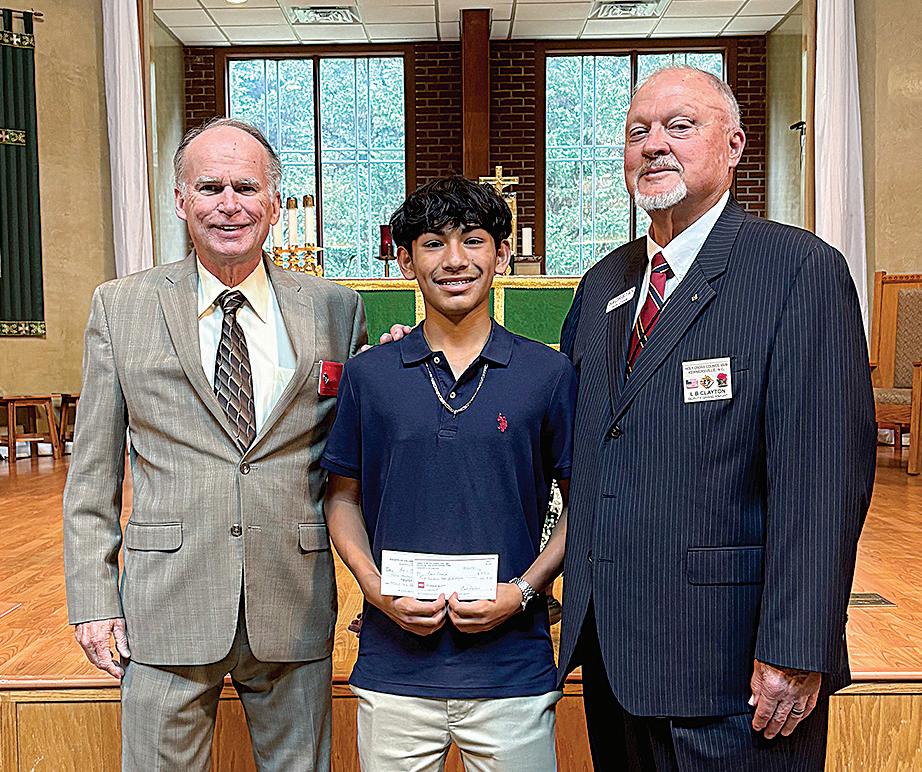
Student awarded $750 Knights of Columbus scholarship
KERNERSVILLE — On June 14, the Knights of Columbus of Holy Cross Parish presented Pablo Zavala with a $750 check for his selection as this year’s Staddon-Cain Scholarship Award winner. Zavala is a student at Bishop McGuinness High School and serves the community and his parish in a variety of ways.
The Staddon-Cain Scholarship was established to recognize the importance of young men and women continuing their Catholic education. Selection criteria is based on support of their Catholic faith, family and community outreach.
Date set for homeschool Mass and lunch with Bishop Martin
CHARLOTTE — Homeschooling families are invited to kick off the 2026-’27 school year with a Mass offered by Bishop Michael Martin, OFM Conv.
The Bishop’s Back to School Mass & Potluck for Homeschoolers is scheduled for 12:10 p.m. Wednesday, Aug. 19, at St. Patrick Cathedral in Charlotte.
Students can sign up to sing in the children’s choir and families can RSVP for the potluck lunch at this link: tinyurl.com/ homeschoolpotluck.
St. Ann’s Homeschool Ministry is coordinating this event and welcomes all homeschool families.
Wedding anniversary Mass scheduled for Oct. 11
CHARLOTTE — The Diocese of Charlotte’s annual Anniversary Mass for couples celebrating 25 and 50 years of marriage will be offered at 2 p.m. Sunday, Oct. 11, at St. Patrick Cathedral. Bishop Michael Martin will be the celebrant. A reception will be held after Mass, sponsored by the diocese’s Family, Marriage and Life Office. Couples celebrating their 25th and 50th wedding anniversaries in 2026 will receive a special certificate commemorating their anniversary. Limit two guests per couple. To register and receive a certificate, please sign up at www.charlottediocese.org/event/weddinganniversary-mass.
PATRICIA L. GUILFOYLE plguilfoyle@rcdoc.org
CHARLOTTE — The Diocese of Charlotte is refreshing its visual identity with a new logomark that honors its history while embracing modern digital usage – part of a larger effort to express more clearly what the diocese and its ministries stand for.
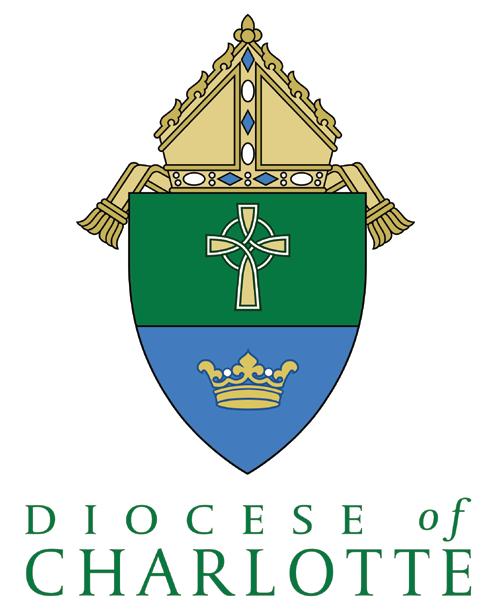
The visual identity includes a refined formal coat of arms and a new digital logo, as part of a broad communications platform to help the growing diocese present a consistent, recognizable visual presence and welcoming message.
Monsignor Patrick Winslow, vicar general and chancellor of the diocese, led the effort over several years in collaboration with two bishops, the diocese’s Communications Office, and award-winning brand strategy firm BROOKHOUSE, based in Charlotte.
The effort began in 2022 as the diocese sought to update its coat of arms after its 50th anniversary.
“We came to appreciate that our logomark was just the tip of the iceberg,” Monsignor Winslow said. “We also needed to more clearly articulate who we are as a diocese and how our mission fits within the universal Church.”
The diocese’s new “brand platform,” he said, includes a new look and a promise the diocese and its ministries aspire to deliver.
“At a time when people are searching for meaning and belonging, the Catholic Church of western North Carolina offers people ‘something more’ – God and the truth of the Gospel set within a joyful, hospitable and authentic community grounded in 2,000 years of the teaching and traditions of the Catholic faith. Here, we help people encounter Jesus Christ and share Him and
His love with others.”
The promise is evident in the Church’s sacramental life and should be in all of its daily interactions with parishioners and the broader community, he said.
“‘Something more’ is not a slogan, it is what we offer to those we are interacting with – as well as a call to action for our parishes, schools and ministries,” he said. “It expresses a truth at the heart of our faith. In the Eucharist, there is ‘something more’ than bread and wine. In baptism, there is ‘something more’ than water washing over you. And when you interact with us, at the diocese and in all of our ministries, we should go the extra mile to deliver ‘something more,’
something deeper, than you might expect.”
The refreshed coat of arms preserves the essential symbolism chosen by the diocese’s first bishop, Bishop Michael Begley. It continues to feature a Celtic cross on a green background – recalling the Irish immigrants who were among the first Catholics to settle in North Carolina and honoring St. Patrick, patron of the diocese’s St. Patrick Cathedral. A crown on a Marian blue field symbolizes two queens: Queen Charlotte, the wife of British King George III for whom the diocese’s see city is named, and the Blessed Virgin Mary, Queen of Heaven and Mother of the Church.
The design has been simplified and refined with a cleaner style in keeping with other dioceses’ coats of arms, and its updated color palette of blue, green and gold provides improved flexibility in printing and reproduction.
The logotype is a version of Capitolium, an award-winning serif typeface designed by Dutch type designer Gerard Unger for the Jubilee of the Catholic Church in 2000.
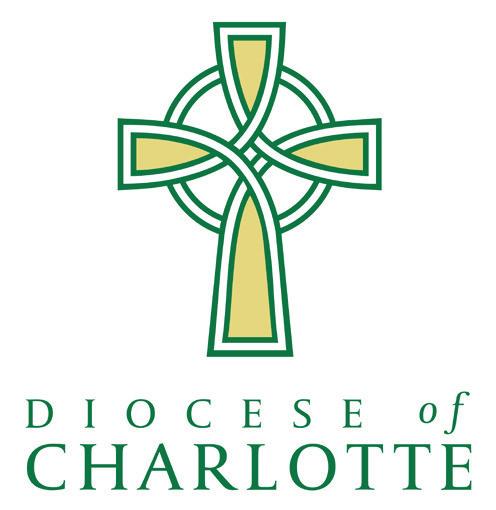
The diocese also introduced a simplified secondary mark more suitable for digital platforms and community outreach. It pulls the Celtic cross from the formal coat of arms to provide a more immediate and recognizable expression of the diocese’s identity while remaining visually connected to the formal coat of arms.
Both logos were created by Charlottebased designer Todd Aldridge, a successful freelance designer and Brand Creative Operations director for Harley-Davidson Motor Co. Aldridge has developed brand identities for nationally recognized organizations, including the University of North Carolina at Charlotte, where he designed the university’s iconic “C” logo.
The Diocese of Charlotte’s coat of arms has evolved several times since the diocese was established in 1972, most recently with a commemorative gold version created for its 50th anniversary in 2022.
CHRISTINA LEE KNAUSS clknauss@rcdoc.org
CHARLOTTE — About 75 people came out to stand in support of immigrants at a special prayer service June 20 in the meditation garden at St. Peter Church.
The service was organized by the Uptown Charlotte parish’s Social Justice Ministry as part of the “Season of Faithful Witness” initiative. This nationwide effort is coordinated through Catholics in Communion – a coalition of Catholic organizations, communities and leaders responding to challenges currently facing immigrants and vulnerable families. The group focuses on prayer, public witness and faithful action.
“Catholics across the country are gathering in public spaces to bear faithful witness to the dignity of every person,” said Jesuit Father Mark Scalese, parochial vicar at St. Peter. “We gather because we believe we are one Body in Christ. And when members of that body are suffering – when families are afraid, when neighbors feel forgotten, when human dignity is threatened – our faith calls us to respond with prayer, solidarity and courage.”
The service included songs and Scripture readings focused on the plight of migrants and refugees, as well as passages from a message Pope Leo XIV prepared for the 111th World Day of
in 2025.
heard from
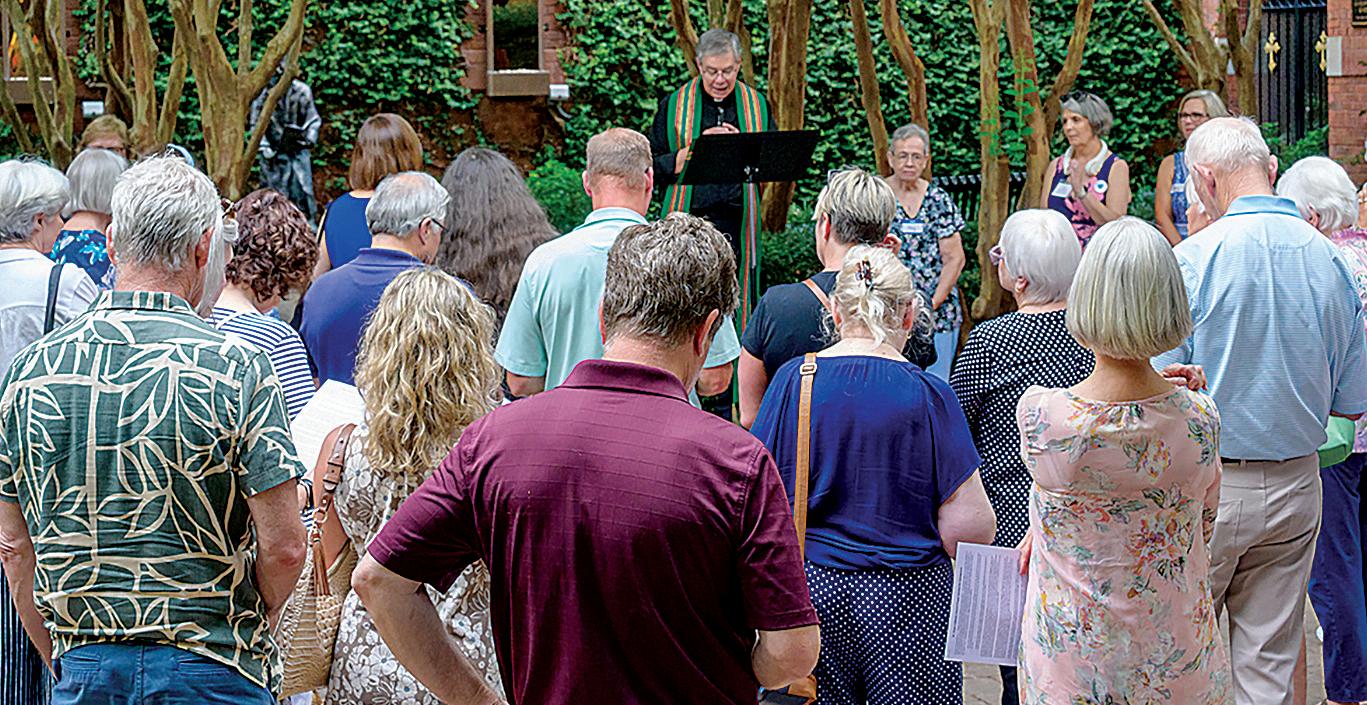
As Father Scalese noted, “We come together to ask God to open our hearts, strengthen our courage, and help us become what we receive in the Eucharist: the Body of
CHARLOTTE — The Diocese of Charlotte’s news outlet, the Catholic News Herald, has won 16 national awards for excellence in reporting, writing, design, advertising and digital content from the Catholic Media Association.
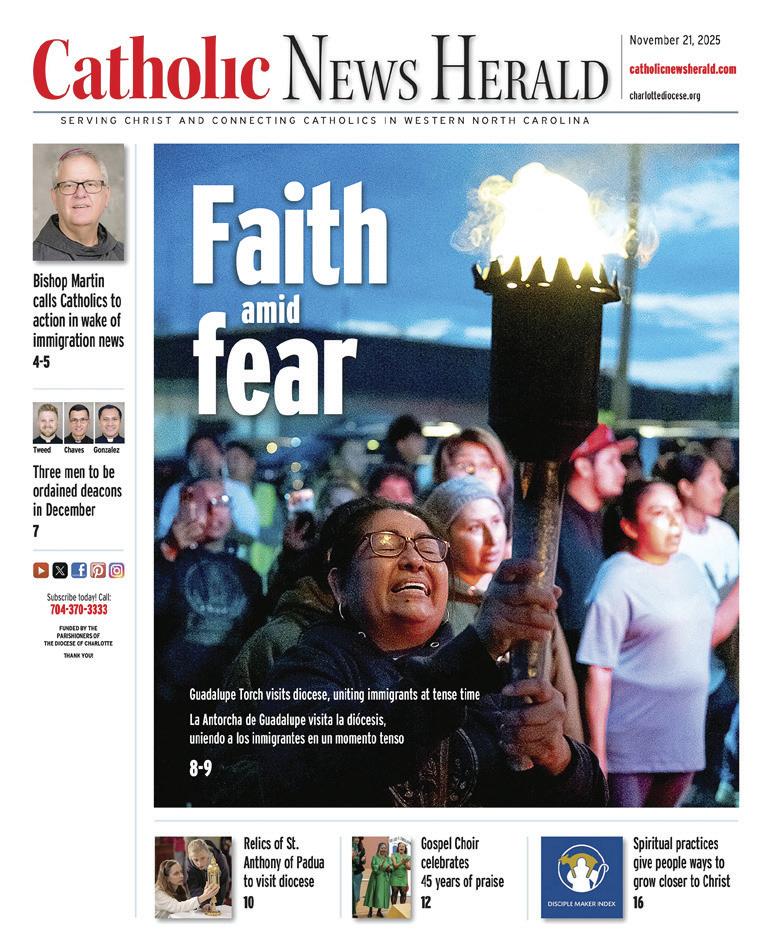
Judges praised the diocese’s coverage of issues that impacted people’s lives and faith – including immigration, recovery after Tropical Storm Helene, Holy Week and Eucharistic Congress celebrations, and a diocesan-wide faith survey of parishioners. Among the awards announced June 19 was a second-place finish for Best Newspaper among non-weekly Catholic newspapers in the U.S. and Canada. The award recognizes the publication that most demonstrates
consistent quality and originality of overall content, writing and headlines, editorials, art and graphics, design and usability.
Another highlight was three first-place awards for Spanish-language reporting, led by the diocese’s Spanish Media Coordinator Brian Segovia. People of Hispanic origin now make up about half of the diocese’s 575,000 Catholics.
n Best Seasonal Issue: “This Great Joy Needs to be Shared” (Holy Week), Catholic News Herald staff
n Best Front Page: “Faith Amid Fear” (immigration), David Puckett
n Best Photograph – General News: “Faith Amid Fear,” Troy C. Hull
n Best Story and Photo Package by two individuals or more: “Faith Amid Fear,” Brian Segovia and Lisa Geraci
n Best Investigative News Writing Reporting – Non-Weekly: “Resilience: One Year Later, Helene Survivors Still Feel the Pain, but Walk Forward in Faith,” Christina Lee Knauss
n Best Story and Photo Package – Spanish: “Guadalupe Convoca Multitudes y Toma el Coraz de la Diesis (Guadalupe Torch draws multitudes and captures the heart of the diocese” (Guadalupe Torch), Brian Segovia and Lisa Geraci
“It is gratifying to see our work recognized by our peers, especially in such a broad array of categories – and in both English and Spanish,” said Catholic News Herald Editor Trish Stukbauer. “We couldn’t do this work without the strong support of our bishop and our parishes, schools and ministries, who everyday lay their hearts on the line to live out the Gospel.”
The Catholic Media Association’s annual awards spotlight the work of Catholic print and digital publications of dioceses, wire services, religious orders and other Catholic media organizations throughout the U.S. and Canada. The awards were announced during the association’s annual conference, this year held in Atlantic City, New Jersey.
Bishop Michael Martin, OFM Conv., serves as publisher of the Catholic News Herald and cites good communication among his top priorities.
The Catholic News Herald publishes content daily on its website and social media channels, and mails a print edition every two weeks to more than 65,000 registered households across western North Carolina.
Overall, the publication earned eight firstplace awards and other honors for its work in 2025, including:
n Best Reporting on Immigration – Spanish: “Parroquias Ajustan Actividades Ante Presencia de Patrulla Fronteriza en Charlotte” (immigration), Brian Segovia and Lisa Geraci
n Best Feature Writing – Spanish: “Desde Mooresville Hasta Huánuco: ‘Entre Fronteras’ Conecta Feligreses en un Mismo Latido” (radio outreach), Brian Segovia
n Best Newspaper among non-weekly U.S. and Canadian diocesan newspapers: Catholic News Herald staff
n Best In-depth News/Special Reporting – Non-Weekly: “2025 Eucharistic Congress,” Catholic News Herald staff
n Best Media Kit: “Catholic News Herald Media Kit 2025,” David Puckett and Kevin Eagan
n Best Analysis/Background/Round-Up News Writing – The Gerard E. Sherry Award –Non-Weekly: “Disciple Maker Index: From Believers to Disciples,” Patricia L. Guilfoyle
n Best News Writing – Single Article – National Event: “Catholic Charities Navigates Refugee Funding Halt,” Liz Chandler and Christina Lee Knauss
n Best Single Advertisement Small Space: “St. Luke Music Director,” David Puckett and Kevin Eagan
n Best News Writing on a Local Event – Non-Weekly: “Thank God for Sending Angels,” Christina Lee Knauss
n Best Reporting on the Celebration of a Sacrament:“Finding Their Way Home: SpiritFilled Journeys of New Catholics in the Charlotte Diocese,” Lisa Geraci
— Catholic News Herald
JACKSONVILLE, Florida — Deacon
Anthony “Tony” P. Marini passed away peacefully June 13, 2026 – leaving behind a legacy marked by devotion, kindness and unwavering faith.
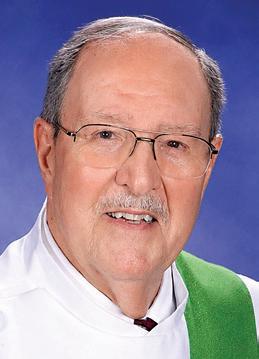
A Mass of Christian Burial was celebrated Saturday, June 20, 2026, at Our Lady Star of the Sea Catholic Church in Ponte Vedra Beach, Florida. Born on Nov. 13, 1930, in San Benedetto in Perillis, Italy, his life was a testament to loyalty, spirituality and gentle compassion that touched the hearts of all who knew him.
A man of profound intellect and dedication, he pursued academic excellence with determination. He graduated from Fordham College in 1952, earning a Bachelor of Science in mathematics, followed by an MBA in statistics from New York University in 1954. His journey in education laid the foundation for a distinguished career that began with his employment at Western Electric Co. and American Can Co. in Manhattan. Balancing work with a passion for teaching, he served as an adjunct
associate professor of statistics at Pace College during the evenings, sharing his knowledge with eager minds. On July 14, 1956, he married Maria Patrizio, a longtime friend from Staten Island, New York, who was born in the same town in Italy. In 1965, he accepted a position with the Xerox Corp. in Rochester, New York, where his leadership and vision flourished. He participated in the Xerox Executive Leave Program in 1979 and championed the establishment of a non-profit corporation focused on empowering minority businessmen through Small Business Administration loans. From 1980 to 1984, he held the influential role of eastern regional manager for Xerox’s Employee Assistance Program, demonstrating his commitment to supporting others in both professional and personal capacities.
His spiritual journey was equally remarkable and deeply inspiring. Together with his wife, Maria, he embraced the Cursillo Movement, a testament to their shared devotion. In 1969, his faith and service were recognized when Rochester Bishop Joseph L. Hogan appointed him as diocesan lay director of Cursillo. His calling culminated in a profound milestone when, in 1978, he was accepted into the Diocese of Rochester’s first class of
candidates for the permanent diaconate.
On April 17, 1982, he was ordained a permanent deacon by Rochester Bishop Matthew H. Clark, the start of a life of a sacred duty he fulfilled with loving dedication. In 1984, he and Maria moved to Florida, beginning a new chapter of service including migrant ministry and Hispanic outreach. In 1997, they moved to Ponte Vedra Beach and joined Our Lady Star of the Sea Parish. As part of his parish duties in his later years, after moving to Vicar’s Landing, he assisted at weekly Mass in the chapel and offered opportunities for spiritual growth.
In 1999, he was incardinated into the Diocese of Charlotte and served at St. William Parish in Murphy and Immaculate Conception Parish in Hendersonville. He retired from active ministry in 2004.
Deacon Marini was known not only for his professional accomplishments, but for his creative endeavors such as stained glass, watercolor painting and poetry. A man whose devotion was matched only by his humility and grace, he exemplified what it means to live a life rooted in love and service to others.
Throughout his life, Deacon Marini held two great sources of pride and joy: his faith and his family. He was a devoted husband to his beloved late wife, Maria Marini, and a
cherished son of Claudio and Anna Marini. Deacon Marini will be eternally remembered, not only for his impressive accomplishments, but for the noble spirit that defined his every moment. He is survived by his loving children, daughter Agnes (Philip) Barber and son Claude (Janie) Marini. His legacy lives on vibrantly through his grandchildren, Lianna (Randy) Barlow, Stephen (Sheena) Barber, Gabrielle Barber, Anthony (Liis) Marini, Dominic (Rebeca) Marini, Christopher Marini and Cecilia Marini; as well as his great-grandchildren, Harmony, Alaina, Cora, Eevee, Rahel and Penelope. In lieu of flowers, memorial donations may be made to the National Shrine of Our Lady of La Leche at Mission Nombre de Dios, Marywood Retreat and Conference Center or a charity of your choice. Donations to Marywood Retreat and Conference Center can be made payable to Marywood Retreat Center and mailed to 235 Marywood Dr., St. Johns, FL 32259, or via phone to 904-436-6592 (ask to speak to Ansley or Brianna).
Condolences may be shared via the funeral home’s website, www.quinn-shalz.com. Quinn Shalz Funeral Home was in charge of the arrangements.
— Catholic News Herald
LISA M. GERACI lmgeraci@rcdoc.org
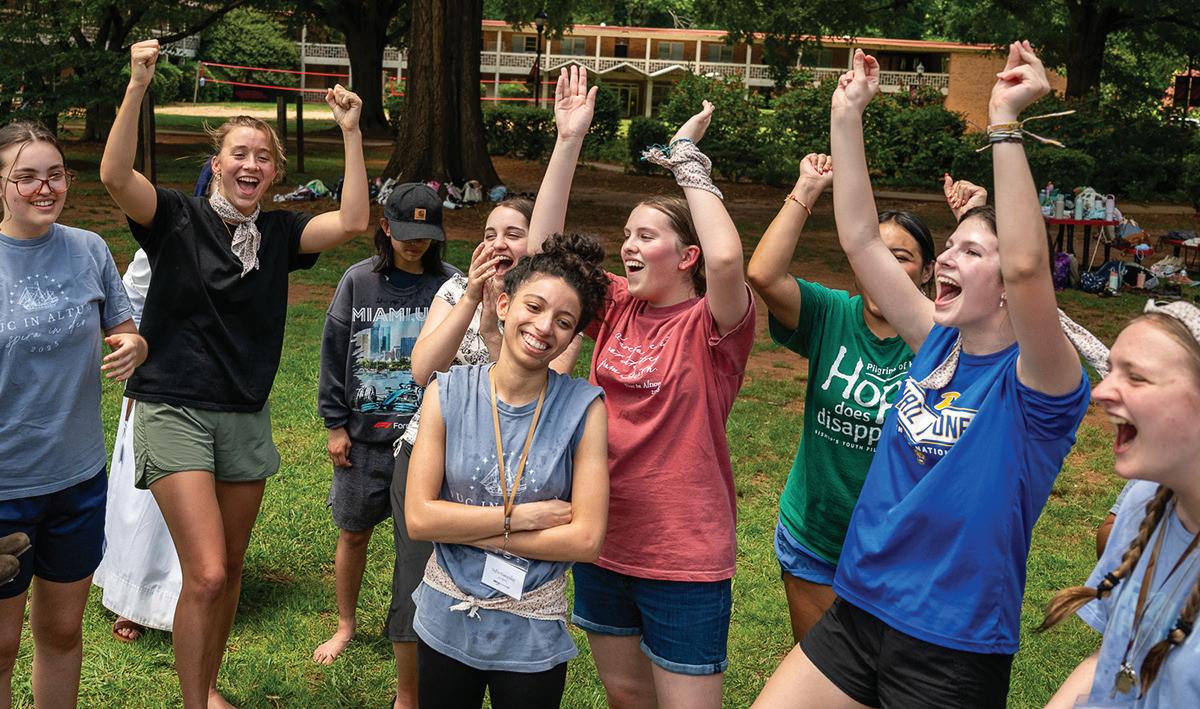
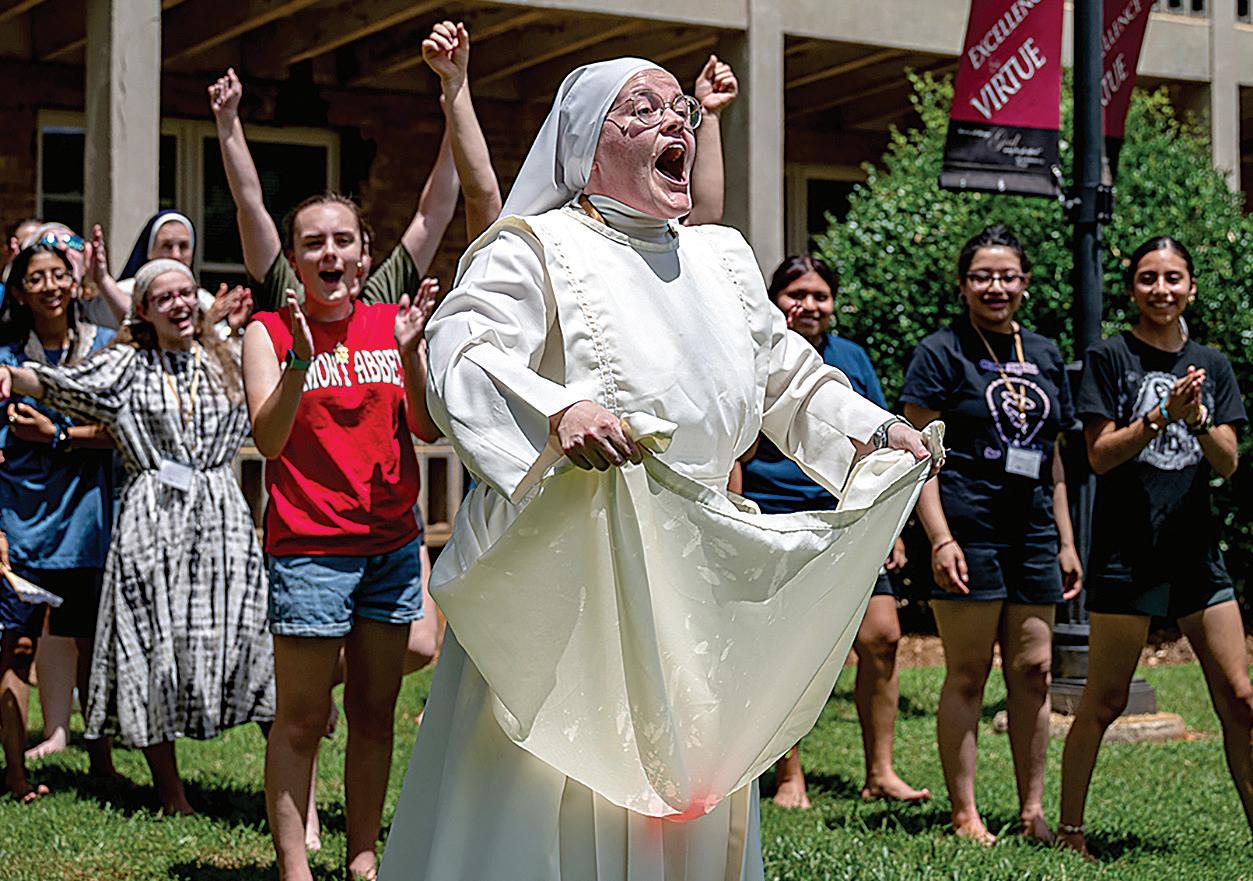
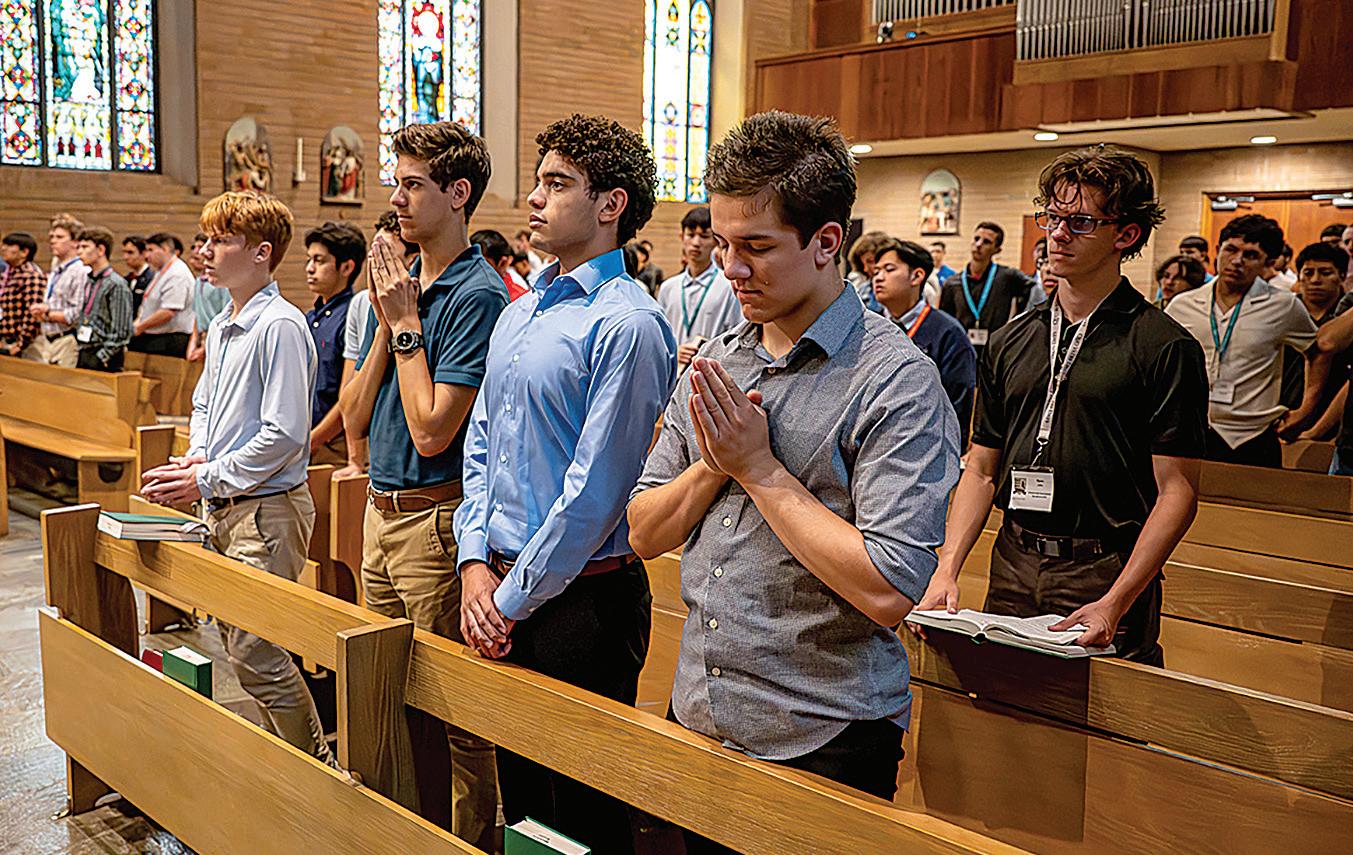
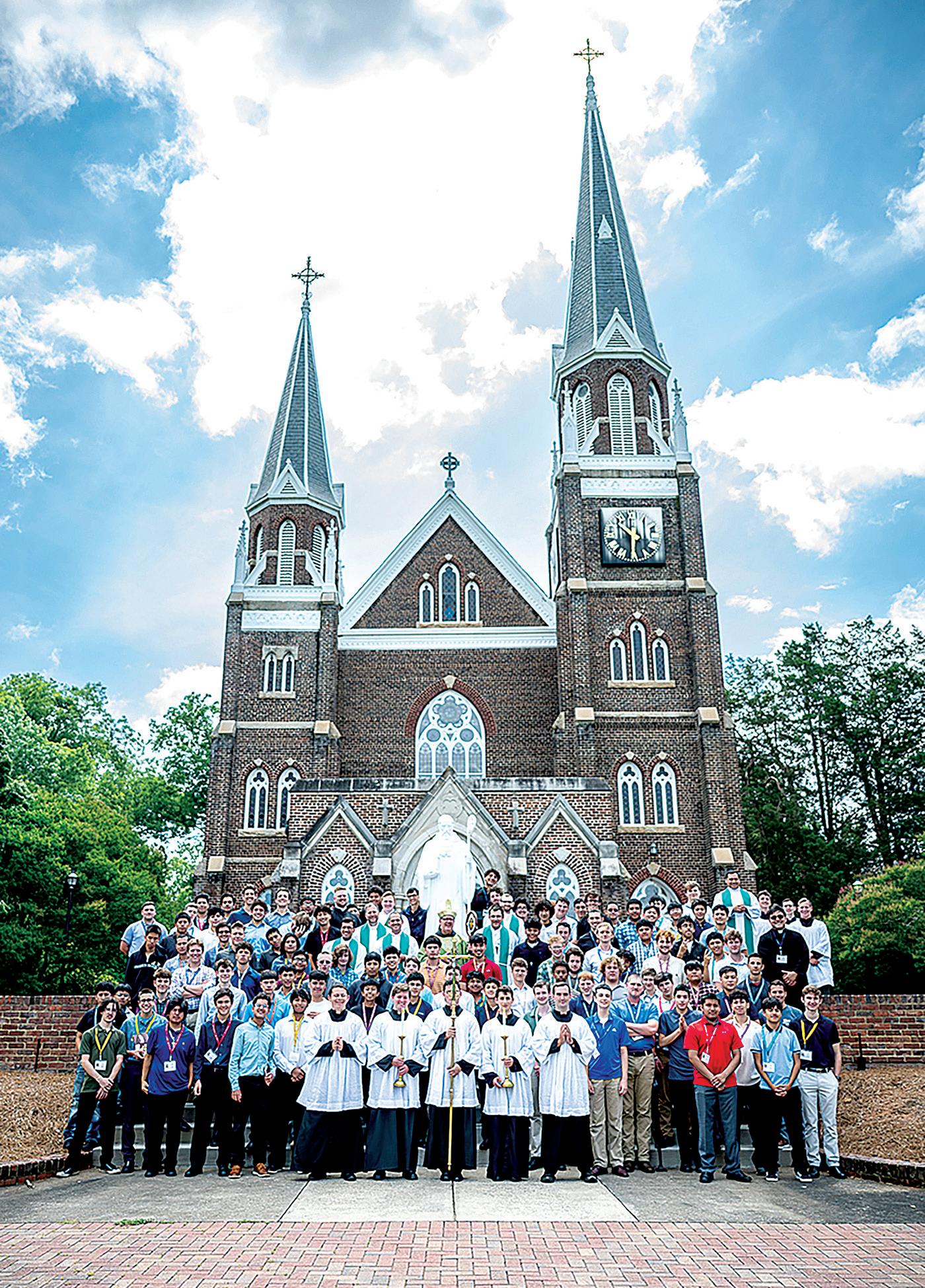
BELMONT— The past two weeks were filled with laughter, fun and prayerful excitement as the Diocese of Charlotte invited 300 teens and tweens to deepen their faith through three annual summer discernment camps: Quo Vadis Days, Duc in Altum and Talitha Koum.
As Father Brian Becker, vocations promoter for the diocese, explained, “The camps are mostly to come away from the world and spend a week alone with God and ask Him the question: ‘What are you calling me to do?’”
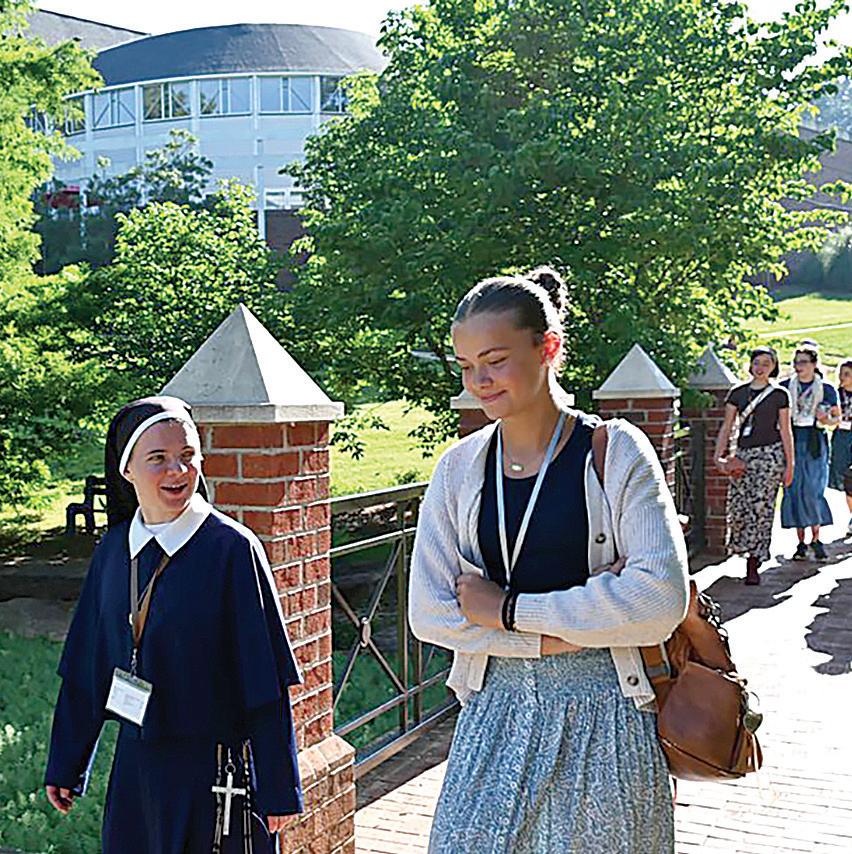
The 11th annual Quo Vadis Days vocation discernment camp for young men June 15-19 saw 100 campers spend a week alongside priests, monks and seminarians at Belmont Abbey College. The following week, at the same location, the Daughters of the Virgin Mary apostolate led the 10th annual Duc in Altum for 108 girls ranging in age from 15 to 19. On June 22, 110 preteen girls gathered for a one-day mini-camp called “Talitha Koum.”
Since 2014, the camps have served as the starting point for many of the diocese’s seminarians, priests and religious. When the camps were introduced by then-Bishop Peter Jugis, no one could anticipate the wave of vocations the diocese is currently celebrating, with a record number of 10 priests ordained this year. St. Joseph College Seminary, founded in 2016, boasts 27 seminarians, with more
receiving advanced formation at Mount St. Mary Seminary in Cincinnati and the Pontifical North American College in Rome, all ready to take their next steps toward the priesthood.
Many of the seminarians and sisters volunteering at the camp confirmed their calling during their own stay at Quo Vadis Days or Duc in Altum.
“I went two years before I entered the seminary,” said seminarian Walter Frei. “This was an opportunity to meet with Father Becker and talk to others already in formation. It was a good jump start to my discernment process – a little insight on what life in the seminary was truly like.”
Now Frei is studying at St. Joseph College Seminary, and his brother, Father Max Frei, who also attended, was ordained in May.
Micah Burgess, a fellow seminarian at St. Joseph College Seminary, feels similarly about the head start Quo Vadis Days gave him.
“After my first year of being Catholic, I looked into seminaries and heard about Quo Vadis Days,” Burgess said. “I went three times in high school. My junior year, I didn’t really know if I wanted to go to seminary and told God this was the week to show me. On the last day, I felt called to kneel in front of the Mary statue, and I just knew that I was being called to go to seminary.”
This year, the newly ordained priests and deacons and the seminarians shared their discernment journeys. The new priests gave the talks, were available for confessions, preached homilies and celebrated Masses.
Each day’s activities included Mass, Eucharistic adoration, prayers, quiet reflection and a rosary – practices Father
Mary Jacinta strongly encouraged attendees to continue long after the camp ends.
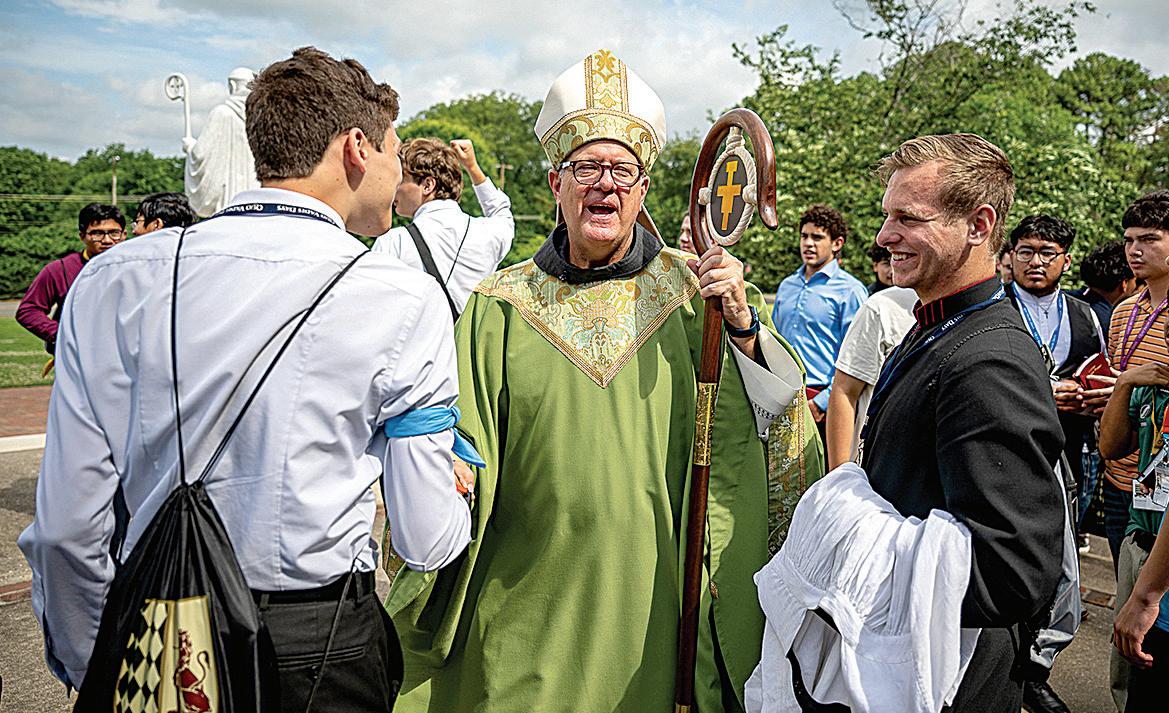
Other high notes of the Quo Vadis Days camp were a tour of the college seminary in Mount Holly, a procession through the Belmont Abbey College campus, singing vespers with the Benedictine monks and learning the history of the abbey from Benedictine Abbot Placid Solari. On Thursday, Bishop Michael Martin celebrated Mass and, at the end of each day, they found time for fraternity through competitive sports.
‘GOD IS CALLING’
For the young women, Sister Mary Elizabeth focused on the details. “We just want these girls to know that God loves them,” she said. “We didn’t just give them bandanas. We gave them beautiful bandanas, because that is what they are – beautiful – and we wanted to show them that in every detail. They are precious, the girls love God and they are having a lot of fun. These girls are beautiful, and we want them to feel beautiful this week because that is how God sees them.”
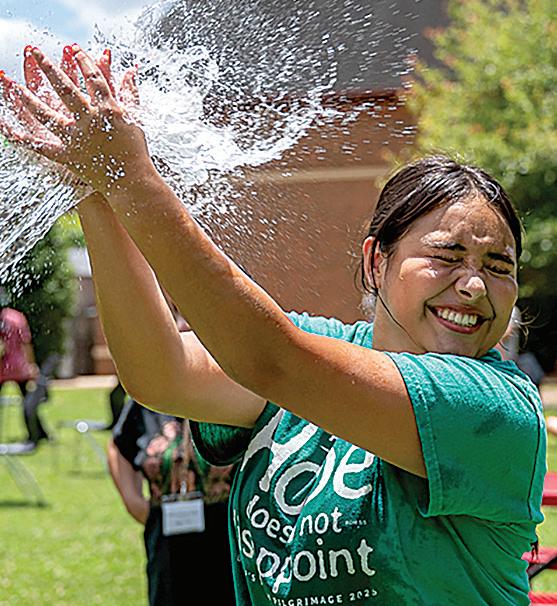
At the Duc in Altum camp, the girls listened to motivational talks from members of religious orders from across the country, visited the Sisters of Charity of St. Vincent de Paul in High Point, and shared sisterhood fun through crafting and pelting each other with water balloons.
“This is just an awesome way to come together with a bunch of girls who realize that they may have an interest in the religious life,” said 14-year-old Ava Howell. “It is a great way to know your faith better and have some time with God. Realizing there are more vocations than marriage is awesome. I want to be open to God’s plan for me, and that is why I love this retreat.”
Father Becker said he prays the camps will prepare the young people with the discernment tools they need to move forward in their holiness journey – whether it is through the seminary, religious life, marriage or singlehood.
“‘Vocation’ comes from the Latin word ‘Vocare,’ which means to call. God is calling. It is our job to listen,” he said. “Pray consistently and sincerely. Open your heart and allow the Lord to give you His invitation.”
CHRISTINA LEE KNAUSS clknauss@rcdoc.org
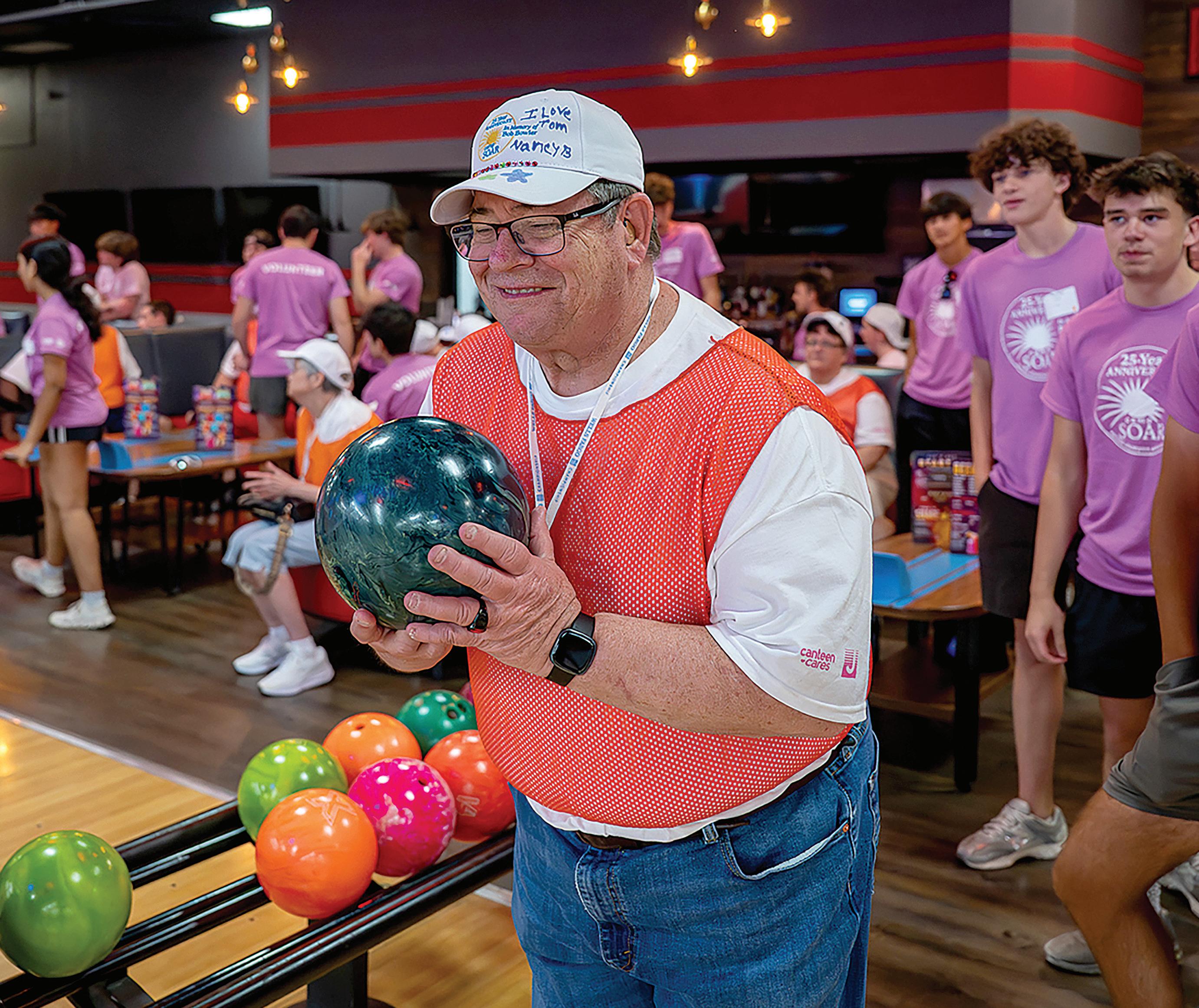
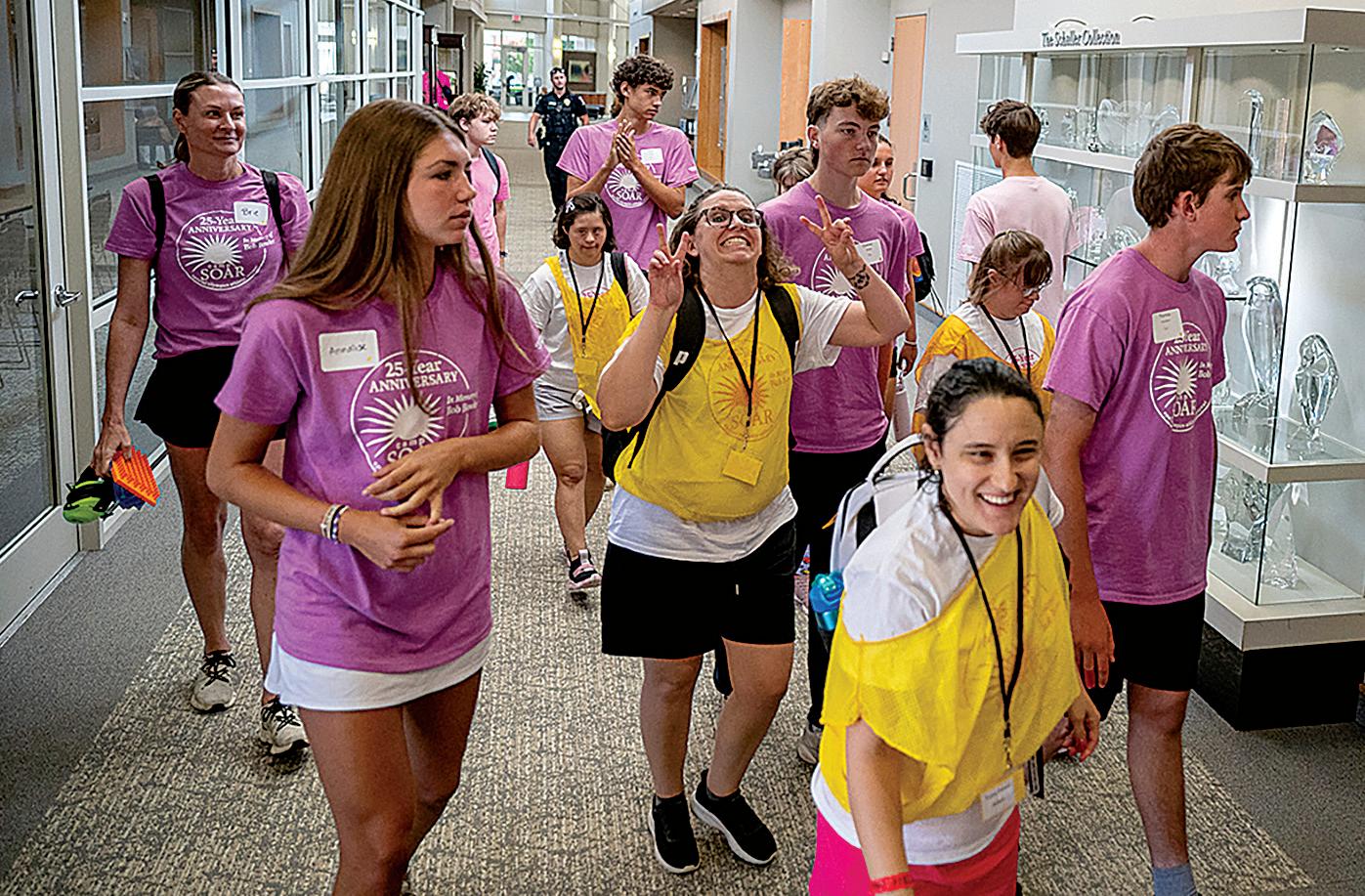
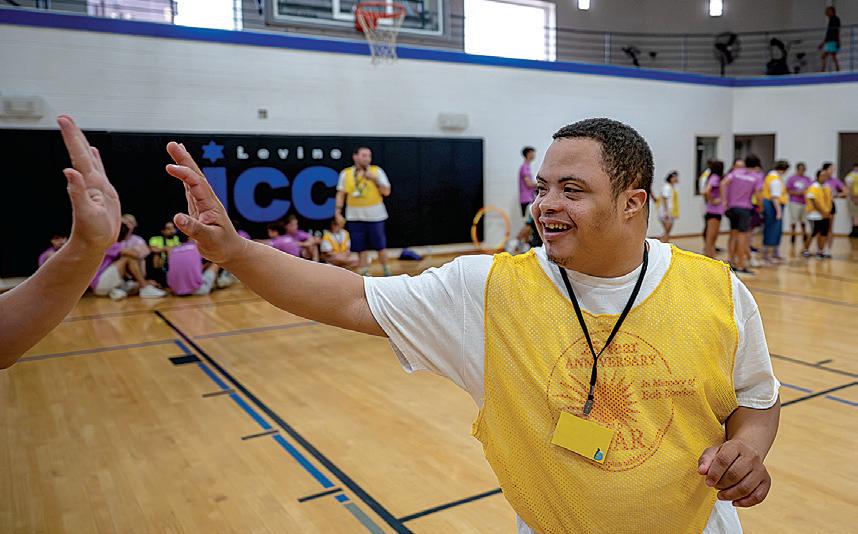
If you want to experience pure joy in action, it can be found at Camp SOAR. For 25 years, the Special Olympics Athletic Retreat has been offering a summer camp experience for people with intellectual disabilities in the Charlotte region.
Held annually at the Levine Jewish Community Center on Providence Road, this year’s camp hosted more than 300 campers assisted by 400 volunteers from area businesses and schools, including many from Charlotte Catholic High School and Holy Trinity Middle School.
The June 15-19 camp marked two milestones, one happy and one sad. Campers celebrated the program’s 25th year but also started the week with an emotional tribute to founder Bob Bowler, who passed away in September.
Bowler, a member of St. Gabriel Parish, volunteered with Special Olympics North Carolina for 40 years and started Camp SOAR in 2000 because he wanted the athletes to experience summer fun.
“Many of them saw their siblings going off to summer camp but they didn’t have a chance for a similar experience,” said Marilynn Bowler, Bob’s widow, who made several
visits to this year’s camp. She was brought to tears of joy a few times as she saw the fruits of her late husband’s work.
Bowler’s memory and image were never far from the minds of organizers and volunteers. Several people wore commemorative T-shirts with his picture on them.
“I arrived the other day and was presented with one of these shirts and was in tears,” Marilynn Bowler said. “I remember when Bob came up with the idea of this camp. Bob’s background was in sales, and he was comfortable selling both products and ideas. He was so enthusiastic about starting this camp and surrounded himself with people who believed in this idea, and now 25 years later, we’re here.”
The camp is divided into two
segments, one serving younger children and another geared toward teens and adults. Some have been attending the camp annually since childhood, and a few former participants are now volunteers.
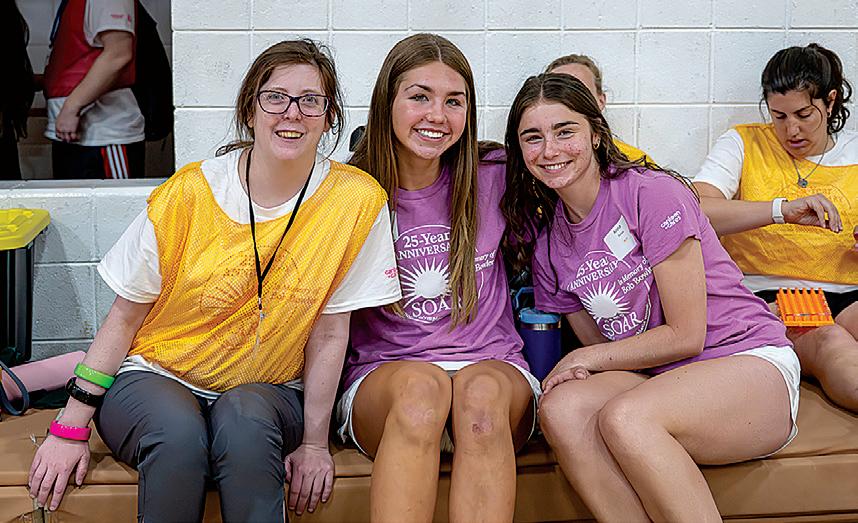
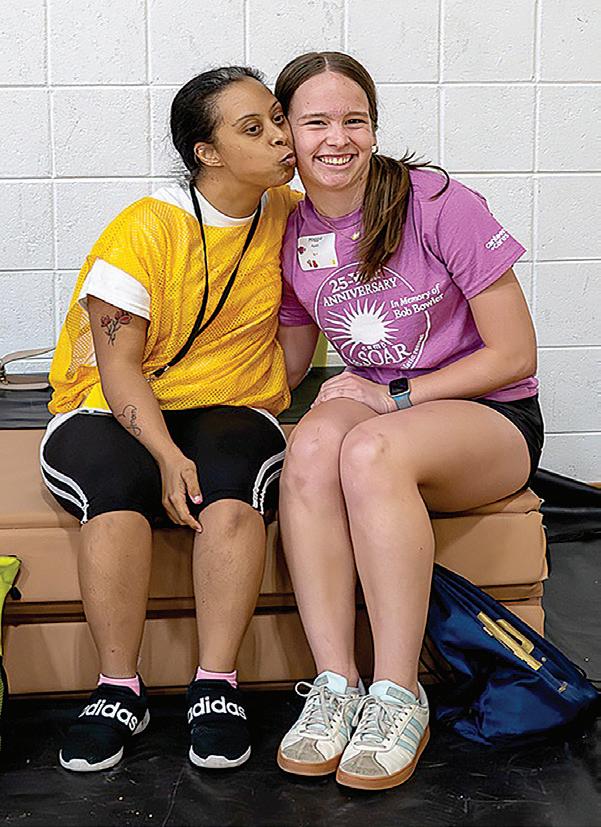
It’s a daily flurry of activity from morning until afternoon, with campers moving constantly between different sports and activities. Each of them has a “buddy” volunteer who accompanies and assists them and cheers them on.
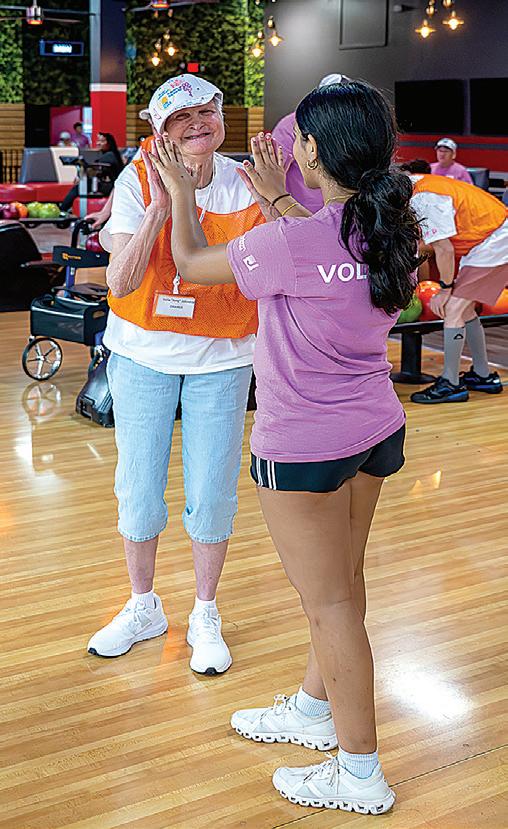
During the week, the campers participated in a variety of sports including basketball, boxing, bocce, bowling, soccer, tennis, pickleball, swimming and golf.
They also took part in daily arts
and crafts and bingo and divided into teams to take part in a daily program that promoted general fitness along with the fun.
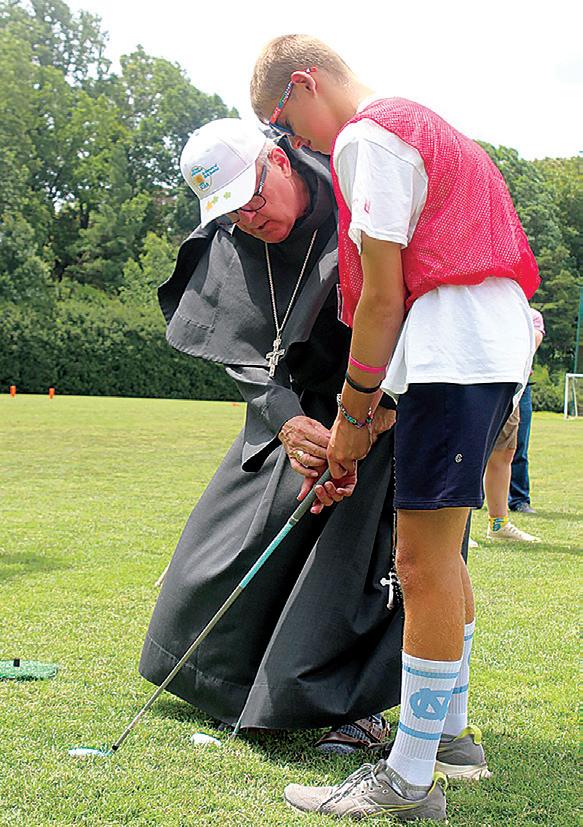
On June 18, Bishop Michael Martin paid a visit and even picked up a golf club to take a few swings on one of the athletic fields. He also took time to offer some golf tips to campers, showing them how to properly swing and grip the clubs. Bishop Martin also watched a spirited basketball session that featured a powerful slam dunk from one camper.
Throughout the day, volunteers and campers cheered each other on. No accomplishment was ignored, and smiles were the norm.
Camp ended with Friday Fun Day on June 19, with jugglers, movies and the highly anticipated
annual dance party.
“Bob initially asked how we could pull this off, because he didn’t have any money for it and no facilities, but he did it,” said Al Tinson, a member of St. John Neumann Parish who along with Bowler helped to launch the camp and has been a volunteer ever since. “We started with just 25 campers and a handful of volunteers, and now we have hundreds involved. Many people come back year after year, and that’s the number one thing that pleased Bob.”
Emma Keese started as a volunteer when she was a freshman at Charlotte Catholic High School. The rising sophomore at St. Mary’s University in Indiana, where she majors in psychology and Spanish, was happy to be back.
“The reason I keep coming back is the fundamental joy that is present there,” Keese said.
“When a camper recognizes you and there is that connection and recognition and appreciation, there is no feeling like it. It’s unmatched. What makes Camp SOAR so special is the joy and energy that’s present there.”
Many former student SOAR volunteers have gone on to pursue degrees and careers in special education and other related fields, Tinson said.
“We have no idea how much of an impact this program has had on the community, both in North Carolina and around the country,” he said. “This is all because of what Bob started. It’s a tough thing to not have him here – it leaves a huge hole. But the people came back, and they’re carrying on for him.”
LISA M. GERACI lmgeraci@rcdoc.org
BELMONT — A giant ‘Mercy Moment’ milestone occurred June 18, as Holy Angels dedicated its Treescape Campus, celebrating the largest expansion project in the nonprofit’s 70-year history.
A ‘Mercy Moment’ is when an unexpected, perfectly timed blessing or instance of help arrives without explanation. Thousands of these moments are built into the mortar of this expansion project, which has been in the making for the past decade.
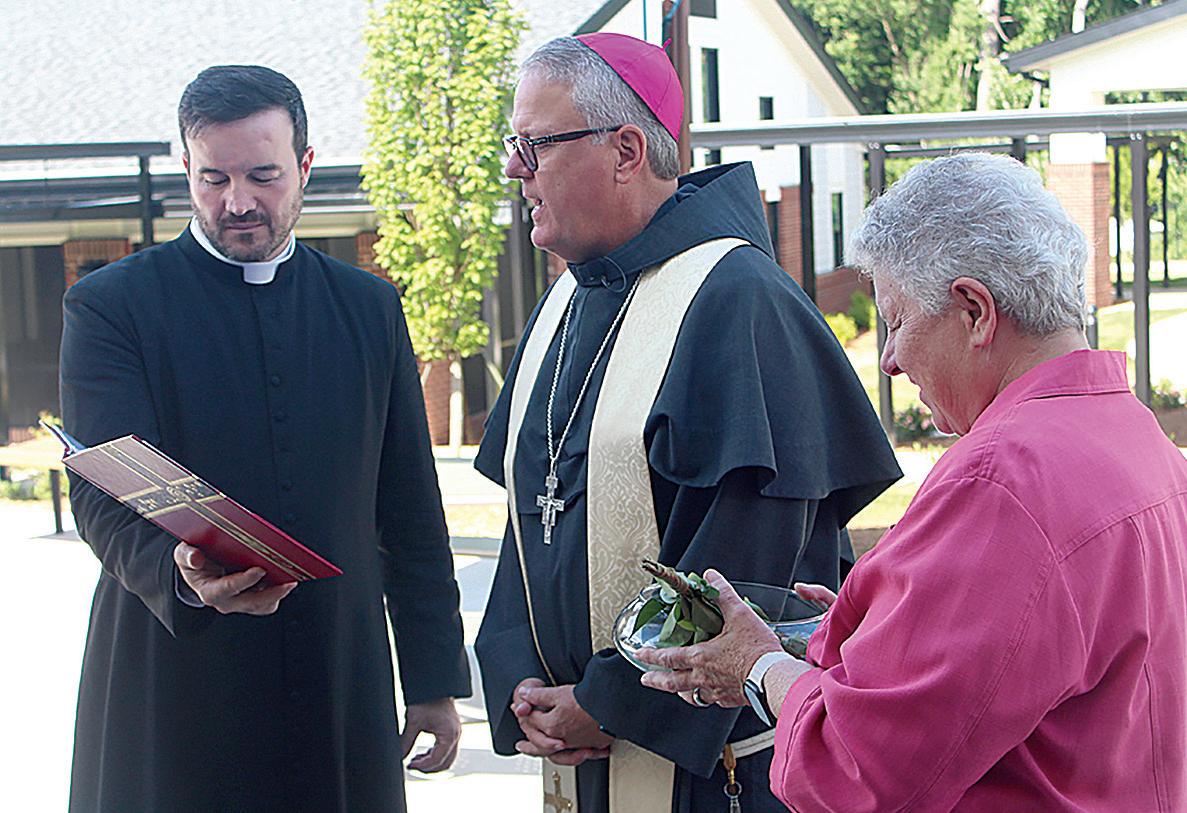
“This campus is more than a collection of beautiful buildings,” said Holy Angels’ President and CEO Kerri Massey. “It reflects what happens when love leads the way.”
Sponsored and founded by the Sisters of Mercy, Holy Angels is located on 17.5 acres in Belmont and provides care for more than 85 residents, ranging from 3 years old to 84, who have intellectual and developmental disabilities.
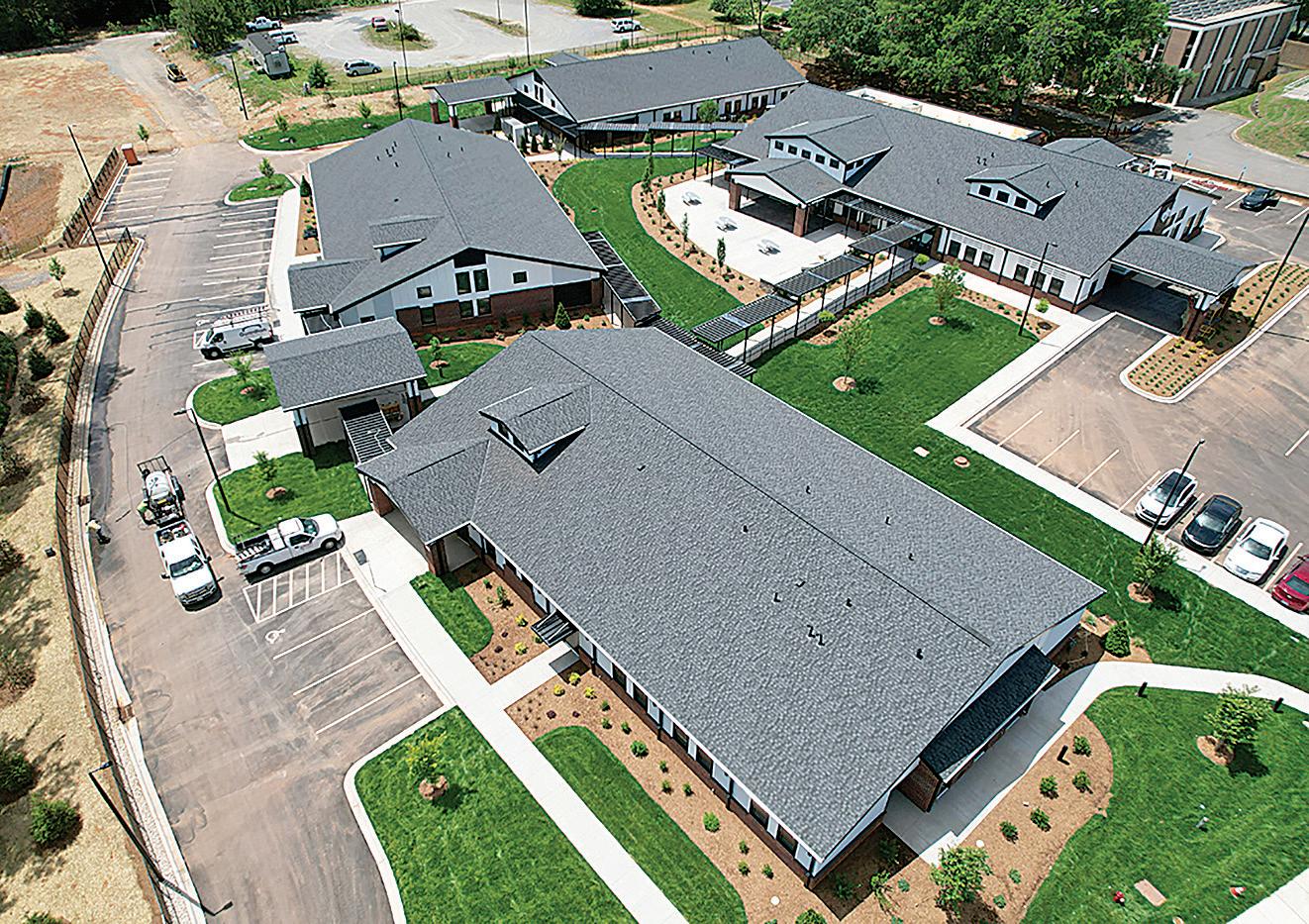
The Treescape Campus includes three six-bedroom homes named Maple, Magnolia and Dogwood in honor of the native trees surrounding the property. Each 6,000-square-foot, single-story home features private
bedrooms, family-style living and dining spaces, multisensory rooms and accessible outdoor areas.
The campus also includes the new 10,000-square-foot Holy Angels Community Center, featuring a saltwater pool, a gathering space – the community’s largest – and a specialized commercial kitchen where dietary staff can create the more than 90,000 individualized meals served each year to suit residents’ dietary needs.
This summer, Holy Angels’ youngest residents, ages 3 to 19, are expected to move into their new homes on the 4.5-acre campus designed to address their intellectual and developmental disabilities and delicate medical conditions.
The timing of the opening is a ‘Mercy Moment’ in itself, as their current home was damaged by a fire last month, displacing the residents and putting them in temporary housing across campus until the expansion was ready.
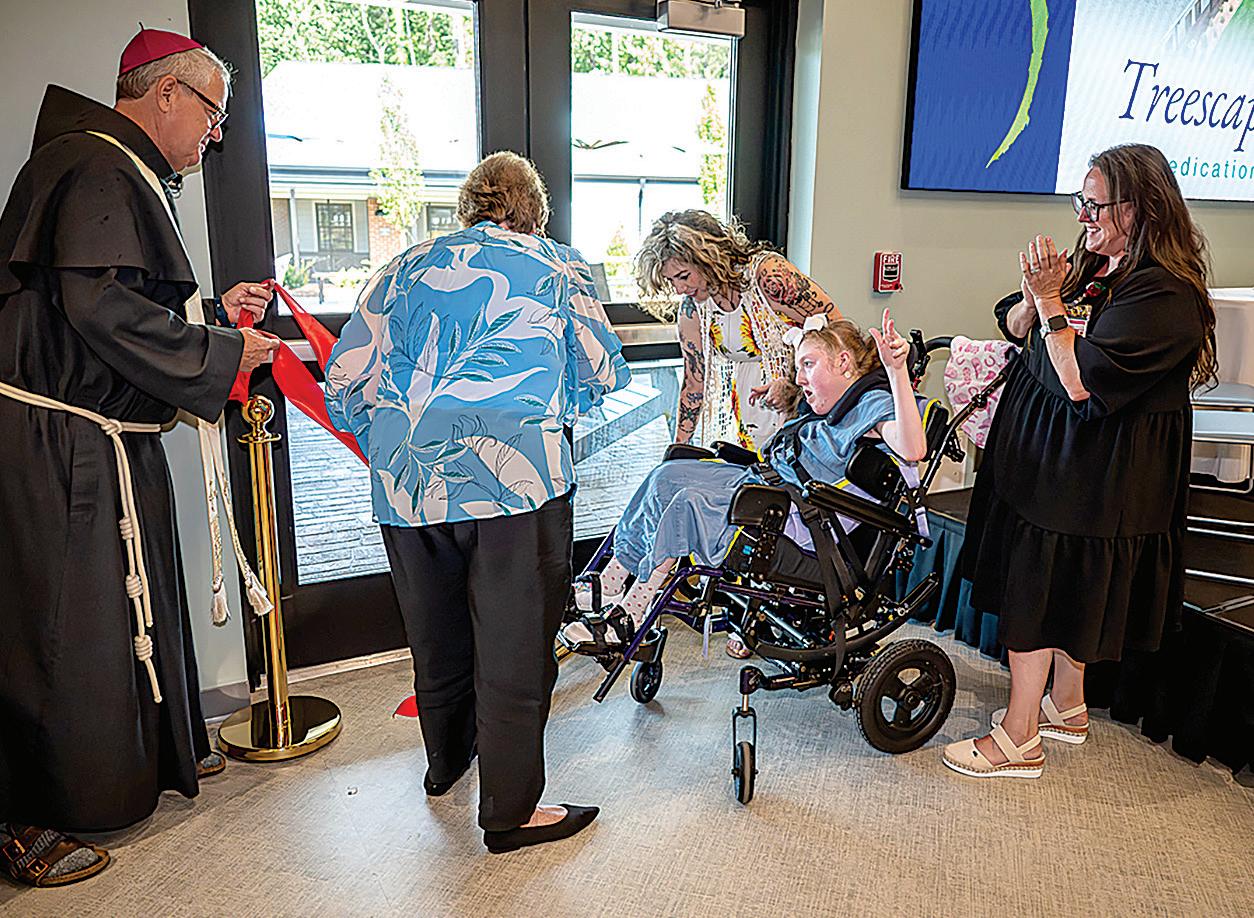
Residents Wyatt and Nora, along with their families, started the ribbon-cutting ceremony by “unwrapping” the campus.
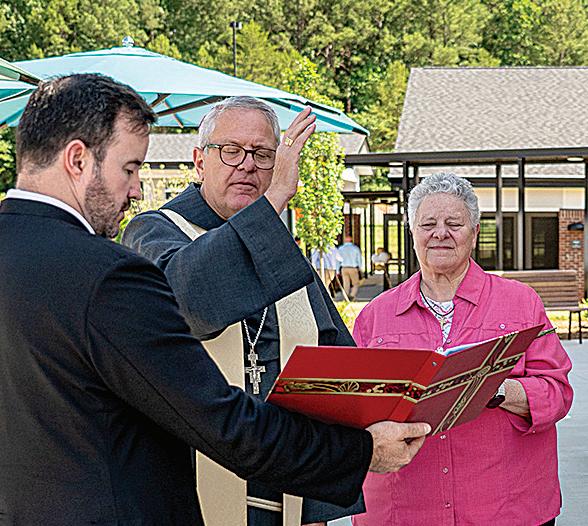
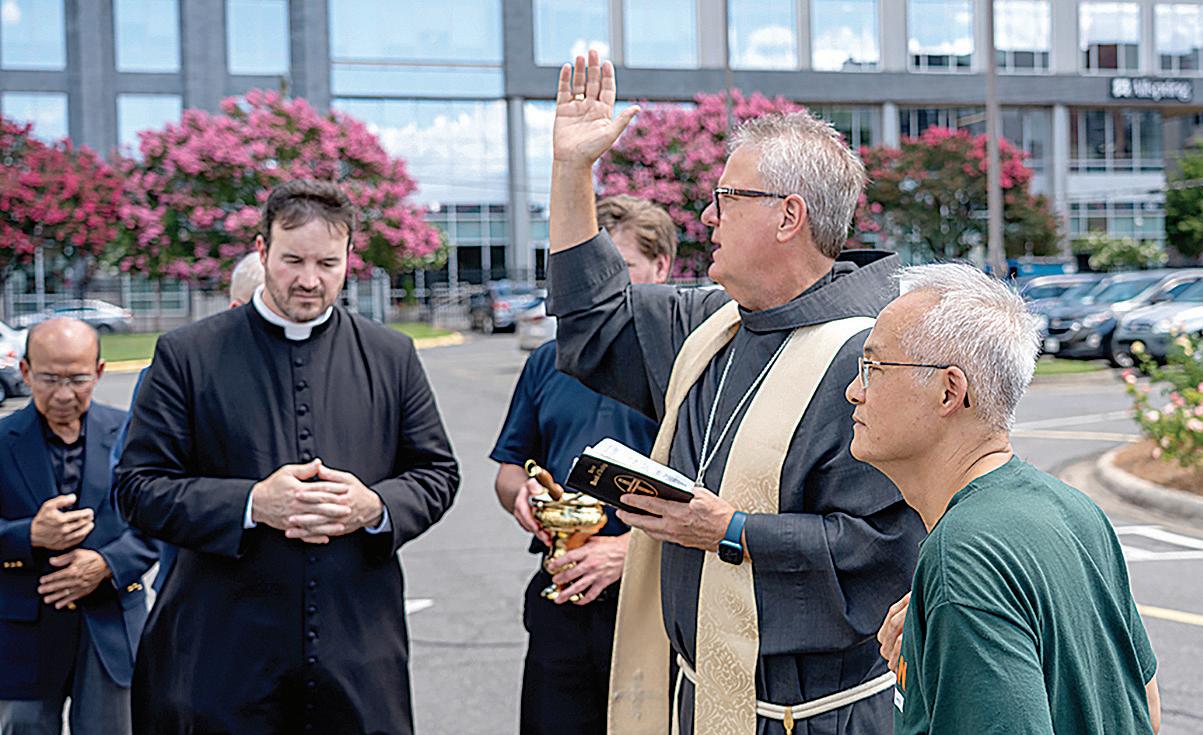
Bishop Michael Martin, joined by Benedictine Abbot Placid Solari, Father Dennis Kuhn and the Sisters of Mercy, blessed the homes and gathering spaces.
In his remarks, Bishop Martin pointed out that “the residents of Holy Angels reveal to us God’s image and likeness through their different abilities” and prayed that Holy Angels would continue to challenge the world to “experience and appreciate how these children of God reflect to us God’s image and likeness in a way that we would never have imagined.”
The impact of the campus is best understood through the families whose lives it will touch. One of the most moving moments came from Sara Anderson, whose son Nolan will move into the new campus after seven years at Holy Angels.
“This has truly been a labor of love, and we should all be so proud that we were able to have a part in making this dream a reality,” Anderson said.
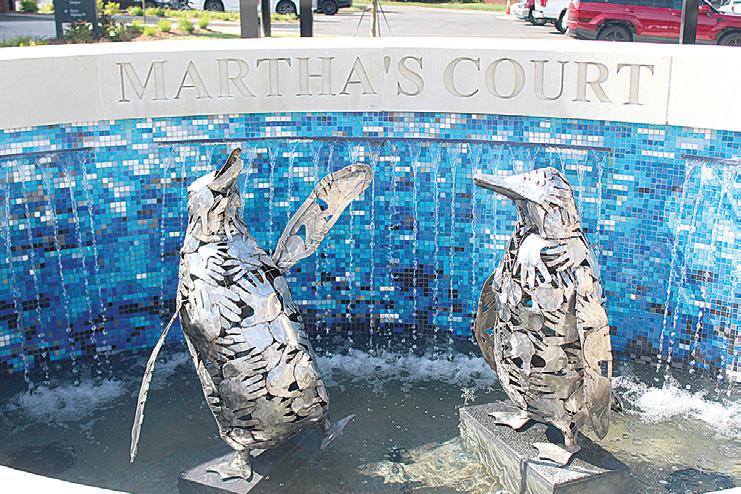
Another resident angel commemorated during the event was Martha, who lived at Holy Angels for 50 years before she passed away two years ago. She will forever be remembered through Martha’s Courtyard, which features five metal sculptures of her favorite animal, penguins,
CHRISTINA LEE KNAUSS clknauss@rcdoc.org
CHARLOTTE — As the United States prepares to celebrate the 250th anniversary of the signing of the Declaration of Independence, Catholics are being invited to mark this historic milestone through prayer, service and acts of mercy.
Catholic Charities Diocese of Charlotte is encouraging parishioners, families and parish communities to take part in the effort through a local initiative called “250 Works of Mercy.”
The initiative builds on a national
As Catholics across the Diocese of Charlotte respond to the U.S. bishops’ invitation to participate in the “250 Works of Mercy,” Catholic Charities offers opportunities to serve neighbors in need throughout western North Carolina. Here are some of the local needs:
Charlotte regional office: 704-370-3262 or volunteercharlotte@ccdoc.org. Needs include:
n Welcome home kit assembly
n Furniture warehouse organization
n Food pantry distribution (Tuesday)
n Food distribution at pop-up farmers market (first and third Thursdays)
Winston-Salem regional office: 336-727-
invitation from the U.S. Conference of Catholic Bishops, which is commemorating America’s 250th anniversary by highlighting the contributions of Catholics and the impact of our faith on our nation’s history. As part of the celebration, the bishops are encouraging Catholics to pray for the unity and healing of our country through a collective “250 Hours of Adoration” and “250 Works of Mercy.”
The “250 Works of Mercy” initiative invites people to live out the seven corporal works of mercy in tangible ways throughout the summer.
Need a reminder? The Corporal Works of
0705. Help assemble much-needed supplies for families visiting the food pantry:
n Cat and dog food bags
n Laundry pod bags
n Shaved Ivory soap hygiene kits
n Toiletry bags
Salisbury regional office: Volunteers needed from 9 a.m. to 3 p.m. Monday through Friday.
Contact Deacon Jeff Font at 704-370-3234.
n Organize diapers and wipes in office
n Clean office space
n Prepare community outreach materials
Lenoir regional office: Volunteers needed from 9 a.m. to 3 p.m. Monday through Friday. Contact Silvia Echeverria at 828-434-5710. Needs include:
Mercy are feeding the hungry, giving drink to the thirsty, clothing the naked, welcoming the stranger, visiting the sick, visiting the imprisoned, and burying the dead.
“The ‘250 Works of Mercy’ campaign reminds us that faith must be lived out loud to truly be alive,” said Gerry Carter, executive director and CEO of Catholic Charities Diocese of Charlotte. “Catholic Charities stands eager to support the countless ways our parishes and parishioners serve neighbors in need across the entire diocese.”
Rooted in the Gospel of Matthew, the corporal works of mercy are central to
n Organize diapers
n Pack client bags
n Welcome clients in the waiting room
n Organize files
n Conduct inventory
n Paint the office
In honor of America’s 250th anniversary, Catholic Charities is inviting the faithful to help secure 250 gifts to support neighbors in need across western North Carolina.
Whether your gift helps stock a food pantry, provide mental health counseling, assist a veteran, support disaster recovery or provide
Catholic life and provide practical ways for the faithful to encounter Christ in those who are suffering or in need.
“As Catholics, we are called not only to believe in mercy, but to live it,” said Virginia Garramone, the agency’s director of development. “This is a beautiful opportunity to celebrate our nation’s anniversary by putting our faith into action. Whether it’s volunteering, donating needed items, checking in on a lonely neighbor or making a charitable gift, each act of mercy becomes a visible sign of Christ’s love in our communities.”
burial assistance to a grieving family, every gift becomes an act of mercy. To donate, visit: CCDOC.org/250GIFTS

Share
Whether you volunteer, donate needed supplies, support a neighbor, or make a charitable gift, Catholic Charities would love to hear your story.
Share your act of mercy on social media using #250ActsOfMercyCCDOC to show how faith in action transforms lives and strengthens communities.
LISA M. GERACI lmgeraci@rcdoc.org
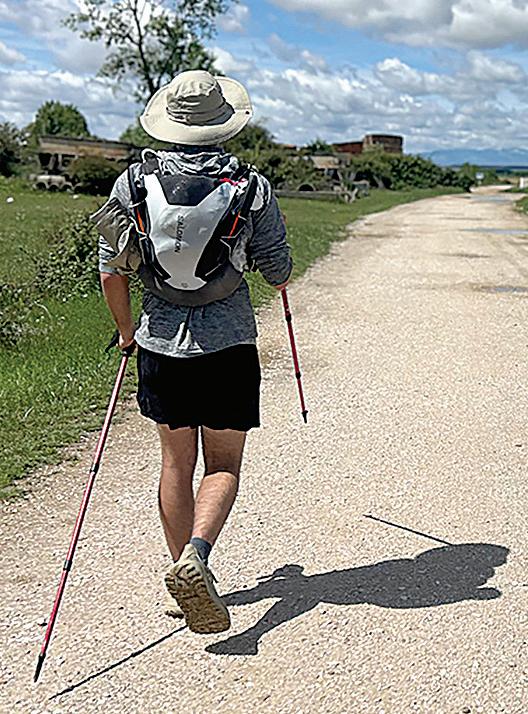
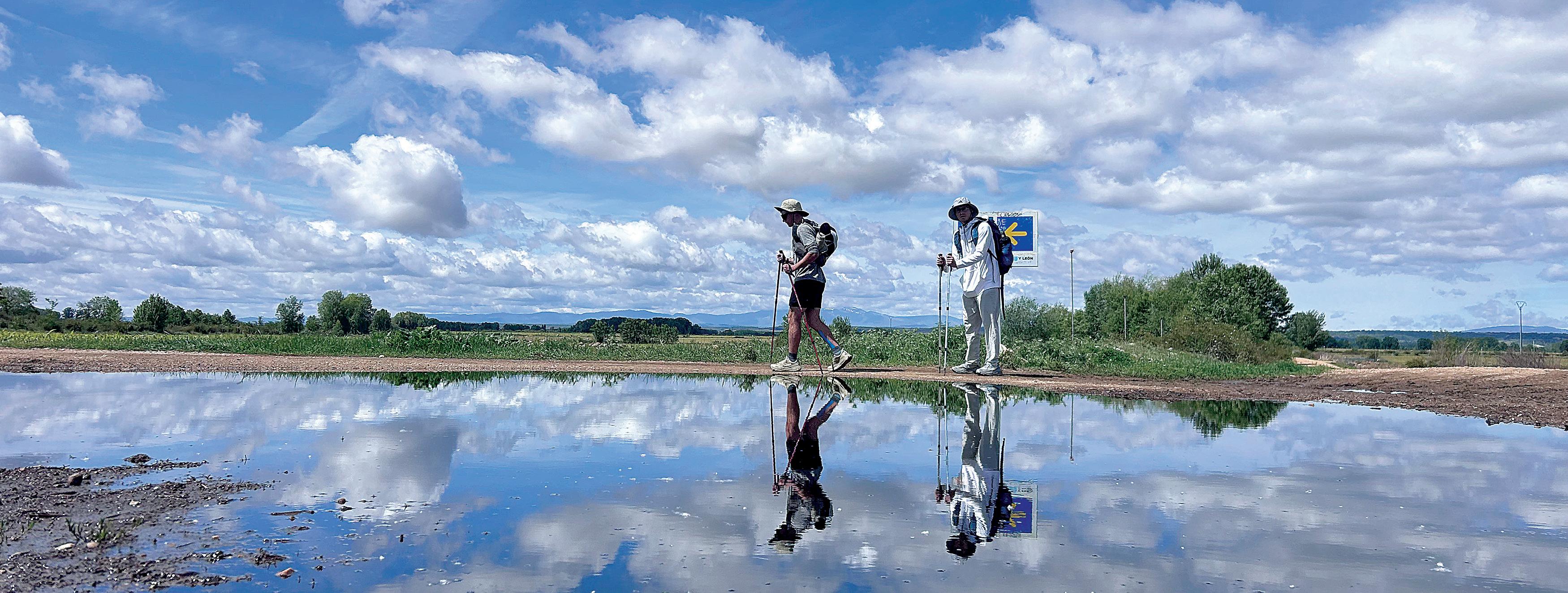
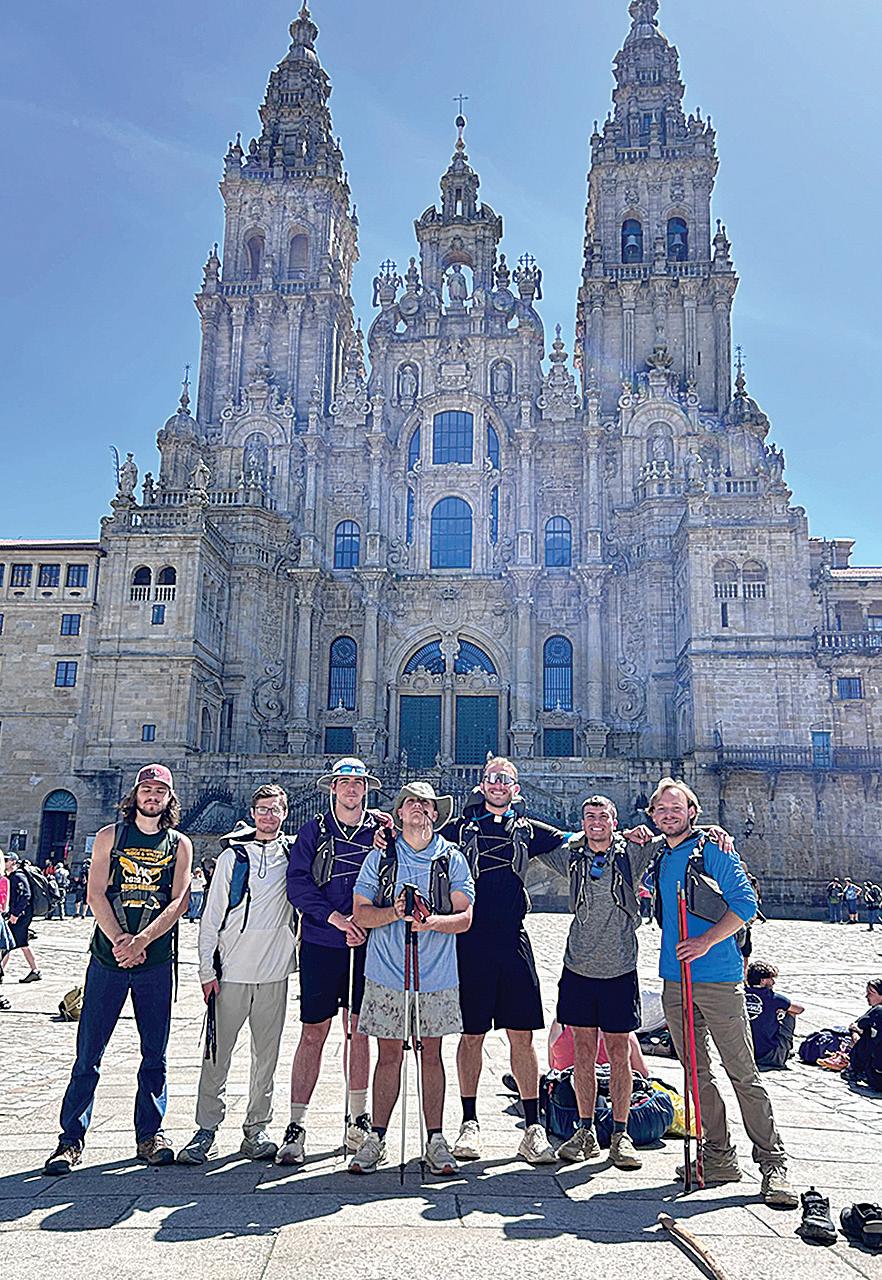
HIGH POINT— Father Matthew Harrison and a group of college students from High Point University’s Campus Ministry trekked the Camino de Santiago in Spain in May, following in the footsteps of St. James the Apostle.
This was the third time Father Harrison has hiked the Camino, and each experience has had its own challenges and benefits.
“Taking the students and leading them through the spiritual journey of St. James and tapping into the apostolic zeal that is so inherent to the Camino was a different experience,” said Father Harrison, who serves as their campus minister.
The Camino, dubbed “The Way of St. James,” marks the pathway forged by St. James the Apostle as he evangelized across Europe. The path spans more than 200 recognized routes encompassing thousands of miles of trails, with primary routes passing through Spain, Portugal and France.
“There is something so beautiful about being disconnected in nature, but on a deeper level feeling that connection to St. James and going back to the roots of our Christian faith is amazing,” Father Harrison said. “St. James literally walked to the end of the earth to preach the Gospel, and that reinvigorates me with my own desire to evangelize always and everywhere.”
Father Harrison chose the Camino Francés route because it is the most traveled, has the most resources and is heavy with pilgrims. The path winds through congested cities full of sights and sounds capable of bringing even the least spiritual person to their knees – the perfect setting to maximize evangelization while bonding spiritually with his students and God.
“A majority of people on the trail are not Catholics,” Father Harrison said. “A lot of people there are looking for God or looking for something, and almost every conversation we have is able to navigate towards Christ and turn into a moment of evangelization.”
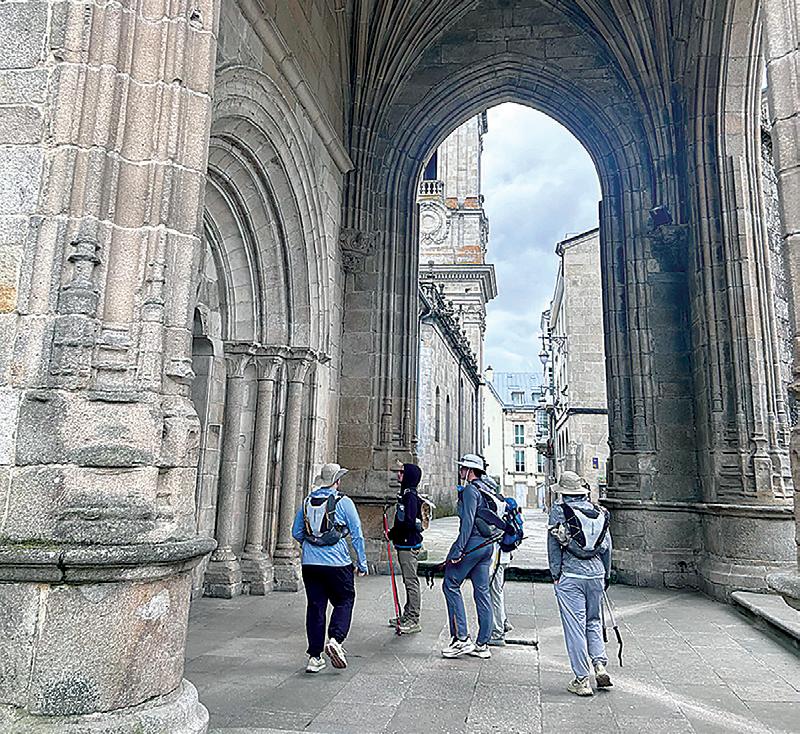
Their chosen route travels nearly 500 miles, but the group had time for only 200. They hit hot spots like the “House of Light” Cathedral in León and the ancient Roman walled town of Astorga. They ended at the Santiago de Compostela Cathedral, where, like most pilgrims, they spent their final moments stretched out on stone ground reflecting on their journey toward God.
For the pilgrims, the quiet reflection times, journaling, digital fasting, prayers and evangelism opportunities felt like a long-needed retreat.
“The Camino simplified life and showed me the things we live for,” said participant Caleb Knox. “I don’t think I appreciated sacred spaces before this trip.”
“We were praying constantly together and celebrated Mass all over the place,” Father Harrison said. They offered Mass most notably at the ruins of the monastery that St. Francis of Assisi visited during his own Camino adventure.
During the two-week trip, they stayed overnight at inexpensive hostels, chowing down on cheap pasta, cereal or rice – carbs
to help fuel them on their long journey. Each day, students took a turn leading the group in prayer. When they were not praying, they were discussing everything from technology and feeling rushed in modern society to geopolitics and wars, “doom scrolling” and the animal kingdom. For the most part, they put their cell phones aside, trying to use them for less than an hour a day. Father Harrison wore his Roman collar, and the students all traveled with their backpacks that featured a shell, the symbol of Catholic pilgrims, displayed on the back.
Going as the spiritual father of the group was different for Father Harrison, who experienced the same physical exhaustion as his students but also focused on how to turn hiking activities into opportunities for spiritual growth. There were bad blisters and sore legs, knees and feet, but the Camino, just like life and the weather, continued to move forward unconcerned about the pilgrims’ personal struggles.
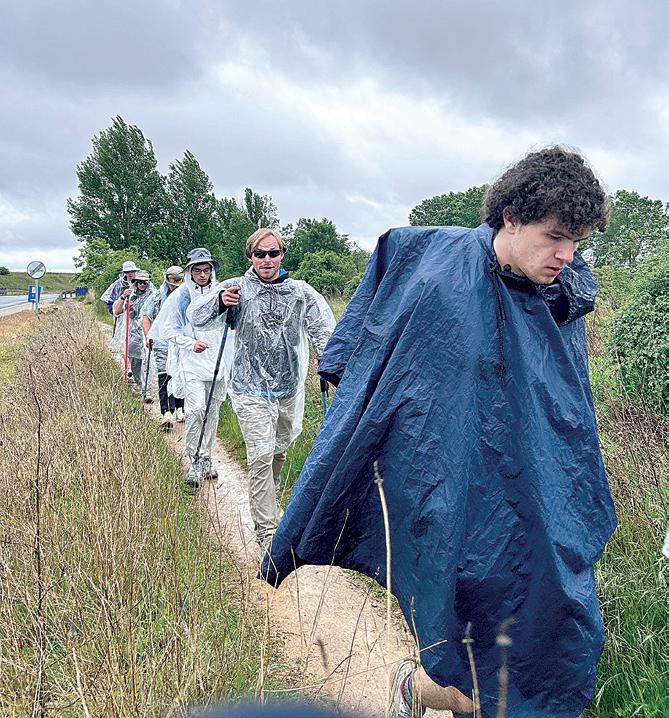
On day one, a May downpour caused the men to run for cover. By the second week, though, the students were unfazed by the weather. A massive sheet of rain appeared in front of them, and instead of scattering for shelter, they plowed right through without words – a complete contrast that impressed Father Harrison.
“As a group we grew and matured,” he said. “One of the beautiful things about the Camino is that it is incredibly challenging, but all the men were able to push hard through those moments and get to the other side successfully, together as a team.”
The trip left an impression on Father Harrison, and he hopes to make it an annual campus ministry trip.
“It is not just a personal journey for each of them, but a journey for our community and our campus ministry, for us to get closer to Christ,” he said.
“I definitely want to take more students on this pilgrimage. It is an opportunity for them to grow both in their faith and as future leaders in the Church and the world. Doing something hard like this makes you a stronger person and a better version of yourself.”

Tenyears ago, Julie was feeling lost after going through a painful divorce. The young mother of three was angry, fearful and sad, and she felt her relationship with God and her Catholic faith slipping away.
“God and I were not on good terms,” she remembers.
Then, she learned about Catholic spiritual direction. The practice pairs people with trained professionals who help them examine their relationship with God, their pursuit of holiness, and the work of the Holy Spirit in their lives.
She began meeting monthly with a spiritual director in the Charlotte area. In hour-long sessions, they talked about her life experiences and the trouble she was having with faith. Those initial sessions grew into a years-long spiritual direction relationship that has helped Julie feel renewed – in both her daily life and her relationship to God and the Church.
“I needed somebody else to find it important for me to invest in my faith, because I was not at a place where I wanted to do that,” said Julie, who asked that only her first name be used to protect her identity. “It was so important to have her support in figuring out my unique situation and to help me to try to find my way back to faith.”
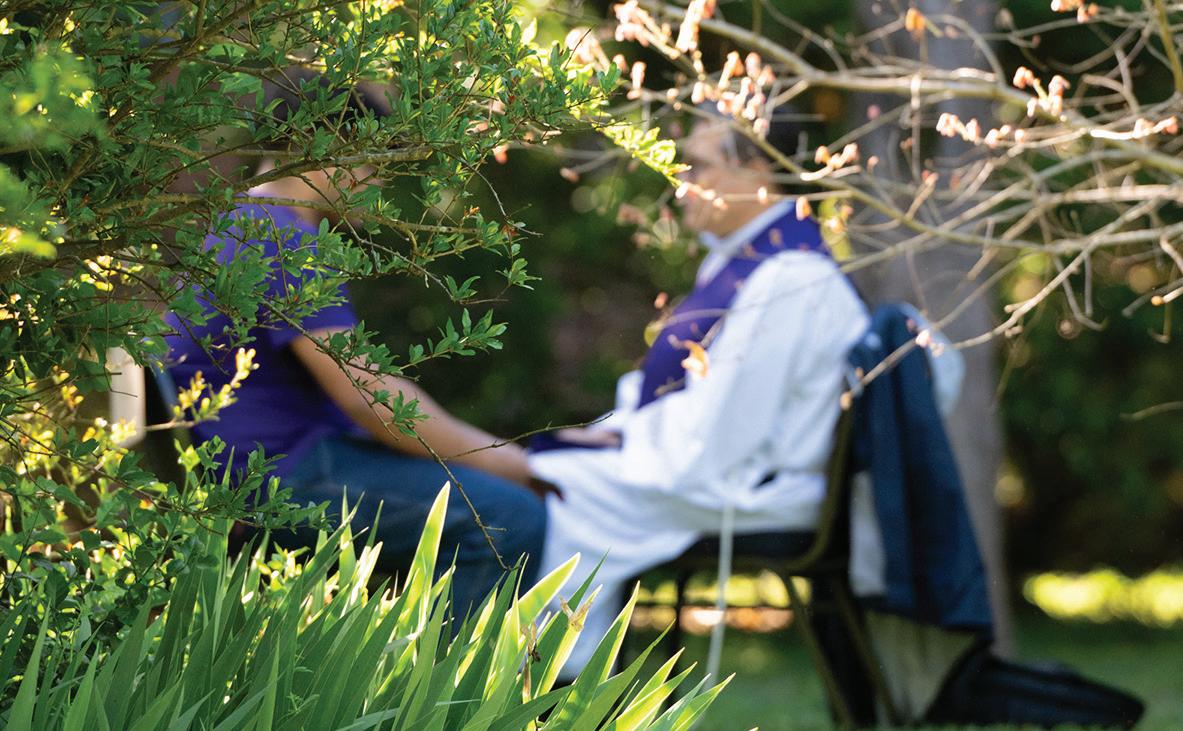
The process took time and work but was well worth the effort, she says.
“Very slowly and intentionally, I kind of rebuilt my faith one tiny little brick at a time,” Julie said. “I thought there were rules and regulations and boxes we were supposed to check to earn God’s love, and I learned that those were not our faith.”
Many people like Julie in the Diocese
of Charlotte have benefited from spiritual direction, and both guides and seekers encourage others interested in deepening their faith to explore the practice.
“Spiritual direction can have a profoundly positive effect on people’s lives by bringing you closer to Jesus,” said Bishop Michael Martin, OFM Conv. “It provides support and clarity during big life transitions, difficult decisions and periods
of spiritual questioning. But it’s more than that: It helps people explore their beliefs and experiences more deeply – and can lead to greater self-awareness and a stronger sense of purpose.”
‘SIT WITH PEOPLE’
Spiritual directors can be members of the clergy or lay people who receive specialized training. Formation programs vary from one to four years and include study of spirituality, theology and religious traditions, listening skills, ethics, and discernment practices. They also typically require supervised practice with seekers as well as their own personal spiritual practice, mentoring and ongoing education.
“It just really is a privilege to sit with people and to listen to their faith experiences, to walk with them on that journey,” said St. Peter parishioner Allain Andry, who became a spiritual director after going through a four-year formation program at Fairfield University in Connecticut.
St. Matthew parishioner Karen Scully also completed the Fairfield program and became a spiritual director in 2021.
“Spiritual direction is accompanying a
SPIRITUAL, SEE PAGE 11
FROM PAGE 10
person on their spiritual life,” Scully said. “How is God acting in your life? How is this being manifested? Or if you feel He is not in your life, and you want Him there, how do we respond to God’s call?”
“It’s all about accompanying someone on their spiritual journey, having a discerning listener and a contemplative presence,” she said. “We try to dig a little deeper. It’s a way of deepening their relationship with God in a confidential, solemn, holy space.”
Benedictine Father Elias Correa-Torres, who teaches physical sciences at Belmont Abbey College, started offering spiritual direction in response to requests from students and parishioners.
“Spiritual direction can be very helpful,” he said, “especially for those who are serious about seeking God and a life dedicated to Him.”
TRUSTING AND LISTENING
Many people seek spiritual direction when going through discernment, either for a religious vocation, marriage or for
To find a spiritual director, reach out to your parish, contact the Catholic Conference Center in Hickory, or visit sites including The Emmaus Center for Spirituality, www. emmauscenterforspirituality.com, and Ignatian Spiritual Direction Formation, www.worldonfireformationprogram.com.
another major life event, Father CorreaTorres said. Others are looking to deepen their prayer lives or to discover how God is working in life’s challenges.
He asks seekers what they are looking for and then offers insights.
“I bring in a lot of Scripture and a lot of information from the lives of the saints for perspective,” he said. “It is a matter of trusting God’s presence there, and listening. … I know I don’t have all the answers – we’re relying on God. I will often pray in the middle of a session asking for the Holy Spirit to guide me.”
As Julie relates, “This is my individual journey … she’s not leading me. She just comes along beside me for one hour a
FROM PAGE 11
designed by local artist Bob Doster. Doster meticulously welded together metal resident and staff handprints to create the birds that represent Martha and her family members.
“Our children’s campus wasn’t built by one person,” Massey said. “It was built by families who shared their hopes, donors who gave generously, architects who listened carefully, construction crews who worked through heat and rain, and staff who imagined what could be.”
The project represents years of planning by Holy Angels, led by President Emeritus Regina Moody.
“Here at Treescape, our kids will get to live like other kids – with their own room, spaces that meet their unique needs and connections to nature all around them,” Moody said. Moody recognized the organizations and individuals who helped make the project possible, including the Sisters of Mercy, the Order of Malta and the State of North Carolina.
month. There is never any judgment … she turns the reflection back and asks questions: ‘What do you think God is trying to tell you? How do you feel called to do the next thing in your life?’ It’s a conversation where she and God and I are in the same spiritual space.”
Scully notes it is also important to remember what spiritual direction is not – it is not a substitute for mental health treatment or counseling, and it is different from preparing for the Sacrament of Reconciliation.
Spiritual directors, whether lay people or clergy, have their own guides. As a Benedictine priest, Father Correa-Torres is required to receive spiritual direction and meets with his director regularly. Both Andry and Scully regularly attend spiritual direction and meet monthly with a supervisor.
Many seeking spiritual direction say the experience helps them see God moving in their lives.
Jake Goduti, who grew up in Huntersville as a parishioner at St. Mark Parish, sought spiritual direction after he graduated from Franciscan University in Steubenville, Ohio.
His college years led him to take his faith more seriously, and he realized spiritual direction might help with the challenge of seeking God amid the distractions of adult life. He turned to the pastor who was there for him in his youth – Father John Putnam.
“Prayer can be a difficult journey, especially with how loud the world is, and Father Putnam was there to offer assistance,” Goduti said.
Goduti, a project coordinator in the diocese’s construction and real estate office, now attends St. Anne Parish in Charlotte and said the lessons he learned in spiritual direction still help him in daily life.
“I learned how to build a habit of being silent, listening for the movements of God through prayer,” he said. “Spiritual direction helped me to have the tools to know what God was calling me to do on a day-to-day basis, and what the peace of God feels like.”
For Julie, spiritual direction helped bring her back into relationship with God and with the faith she chose as a convert.
“It’s a conversation, a judgment-free zone for anybody whether they want to go a centimeter deeper in their faith or a mile deeper,” she said. “Really it is all about your individual journey.”
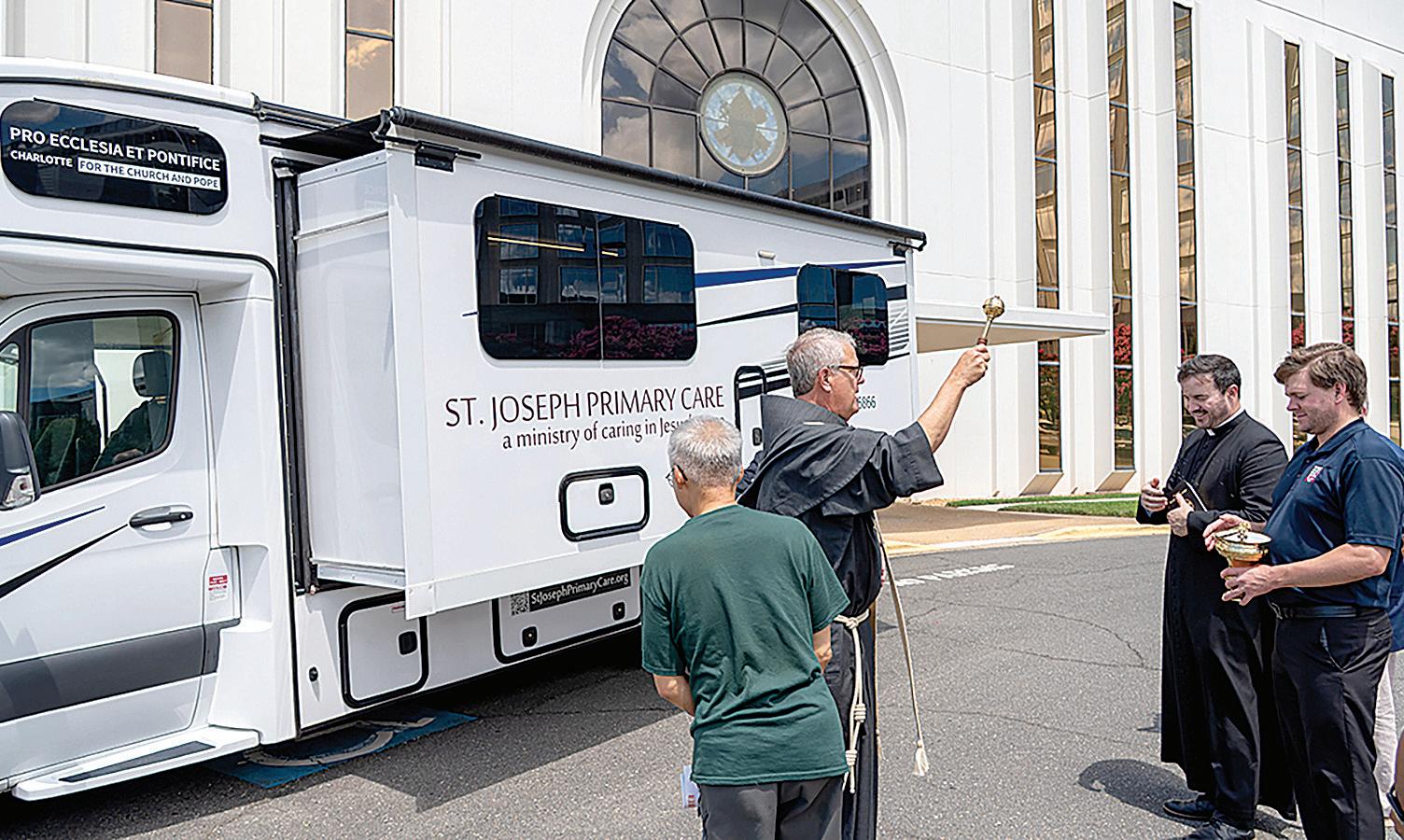
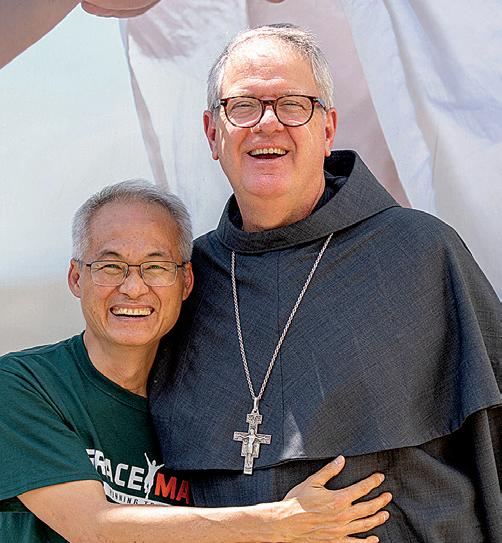
— St. Joseph’s Primary Care, a Raleigh-based Catholic nonprofit dedicated to providing accessible and affordable primary healthcare to those in need, pulled its service RV into the Diocese of Charlotte’s Pastoral Center parking lot on June 23. During the visit, Charlotte Bishop Michael Martin blessed one side of the RV, adding to a previous blessing Raleigh Bishop Luis Rafael Zarama gave to its other side. The bishops split the blessing because the nonprofit is based in Raleigh but assisted with Helene relief in the Charlotte diocese and hopes to do more in the area. St. Joseph’s Primary Care was founded in 2014 by Peter Le. In 2025, Le received the prestigious Pro Ecclesia et Pontifice award, the highest papal honor that can be bestowed upon a member of the laity.
Donors’ contributions will remain planted in the very fabric of the building, with threedimensional flowers displaying the donors’ names affixed to the community center walls.
“This campus is rooted in the love of countless people who believed in its potential, and we know the miracles are still to come,” Massey said. “The lives that will be lived here, the memories that will be made here and the future that will take shape here are the greatest celebration of all.”
Catholic Charities is looking for a fully licensed mental health counselor with bilingual English and Spanish skills to join our team.
POSITION SUMMARY: Provides professionally licensed mental health counseling services to participants in compliance with agency philosophy, policy, procedures, and professional criteria; carries and manages a caseload as assigned.
Catholic Charities is a Christian ministry of charity, service, and justice dedicated to providing help to those in need, hope to those in despair, and inspiration for others to follow.
To view the entire job description and apply please visit the jobs tab on our website, https://ccdoc.org/jobs or email lalucarelli@ccdoc.org
MOUNT HOLLY — St. Joseph College
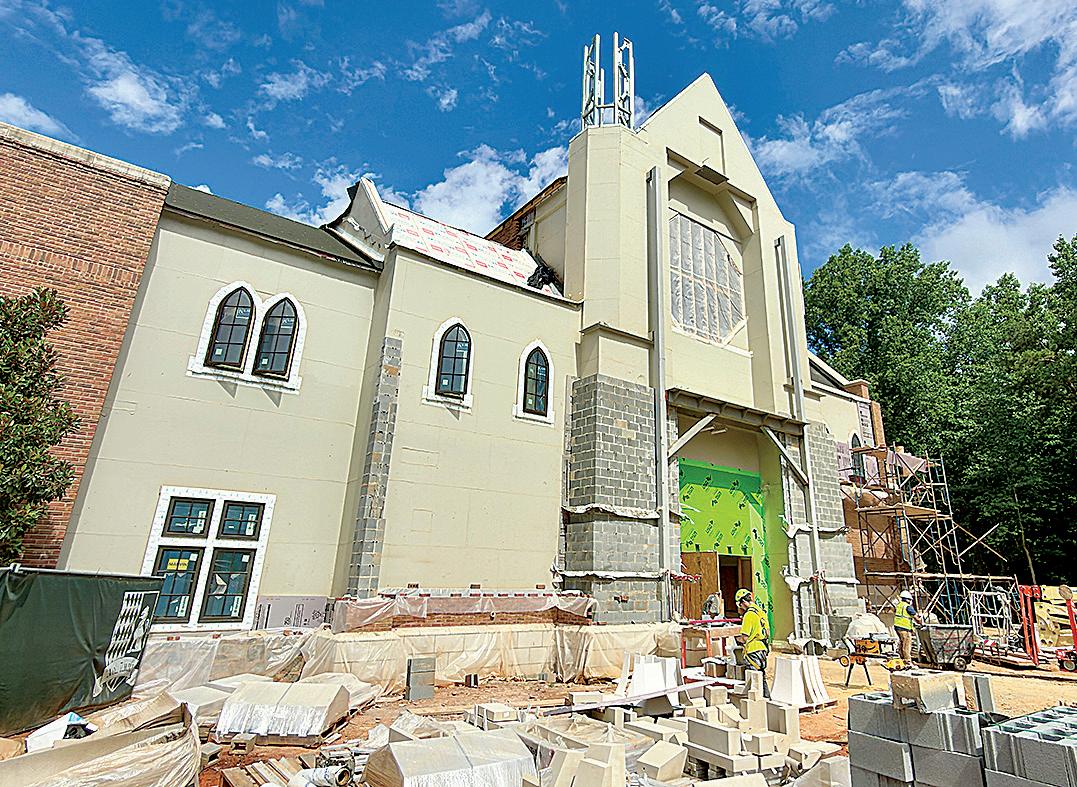
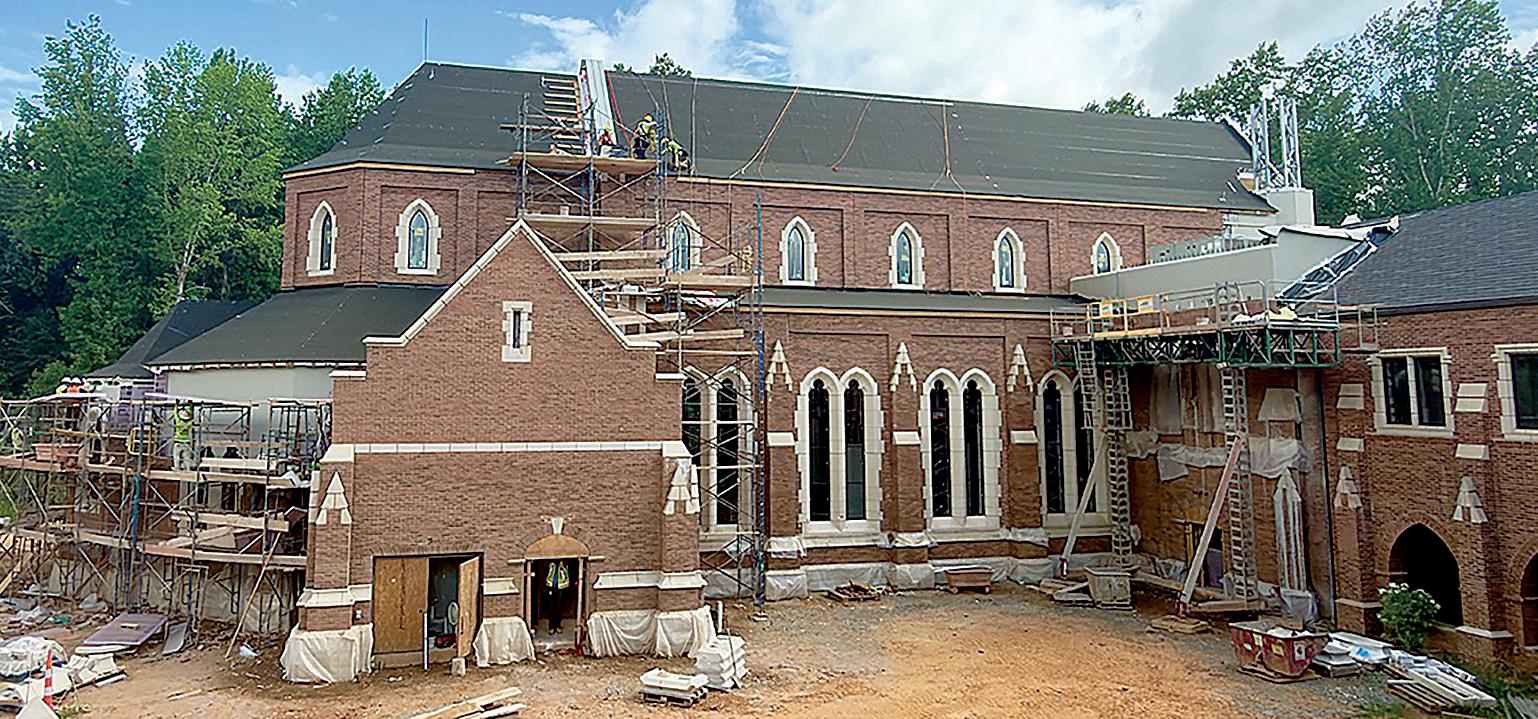
Seminary is nearing completion of a new chapel, a major development that leaders say will strengthen the seminary’s mission of forming future Catholic priests and better accommodate visitors.
Father Matthew Kauth, seminary rector, said chapel construction is expected to be completed by the end of the year.
The $24 million project marks a significant milestone in the seminary’s continued growth. Working in collaboration with Bishop Michael Martin, seminary and diocesan leaders adopted a plan that not only includes a new chapel with seating for about 250 people, an office, a guest suite and other
program spaces, but also will pay off existing seminary construction debt and set aside funding for an endowment to pay for long-term capital needs.
The project includes $20.7 million for the construction and related sitework and furnishings, $2 million for the endowment and $1.7 million for debt elimination. The funding comes from generous donors, many of whom gave to the seminary’s first capital campaign.
The new chapel will serve as more than an architectural addition, Father Kauth said – it is central to priestly formation.
“We form our buildings and then they form us,” Father Kauth said. “Proportion, integrity, clarity, harmony – all of these go into a building and they then go into
The Diocese of Charlotte and its official news source, the Catholic News Herald, received 16 awards for its work in 2025, including a second-place finish for Best Newspaper and three first-place awards for Spanish-language reporting.
This recognition would not have been possible without the generous support of our readers, advertisers, as well as the clergy and religious of the Diocese of Charlotte.
Thank you for supporting us in our mission to serve Christ and connect Catholics in western North Carolina.
those who live there. This has a subtle but powerful effect on the spiritual life.”
Father Kauth said one of the things that any seminary needs is space: “Ultimately, you create an atmosphere of openness and lucidity where the eye of the mind can rest.”
The project will also enable the seminary’s existing chapel – which seats only 50 and was originally designed as a lecture and dining hall – to be repurposed for lectures, banquets and other diocesan events.
Father Kauth said construction has gone unusually well.
“This has been perhaps the smoothest that I’ve ever encountered,” Father Kauth said.

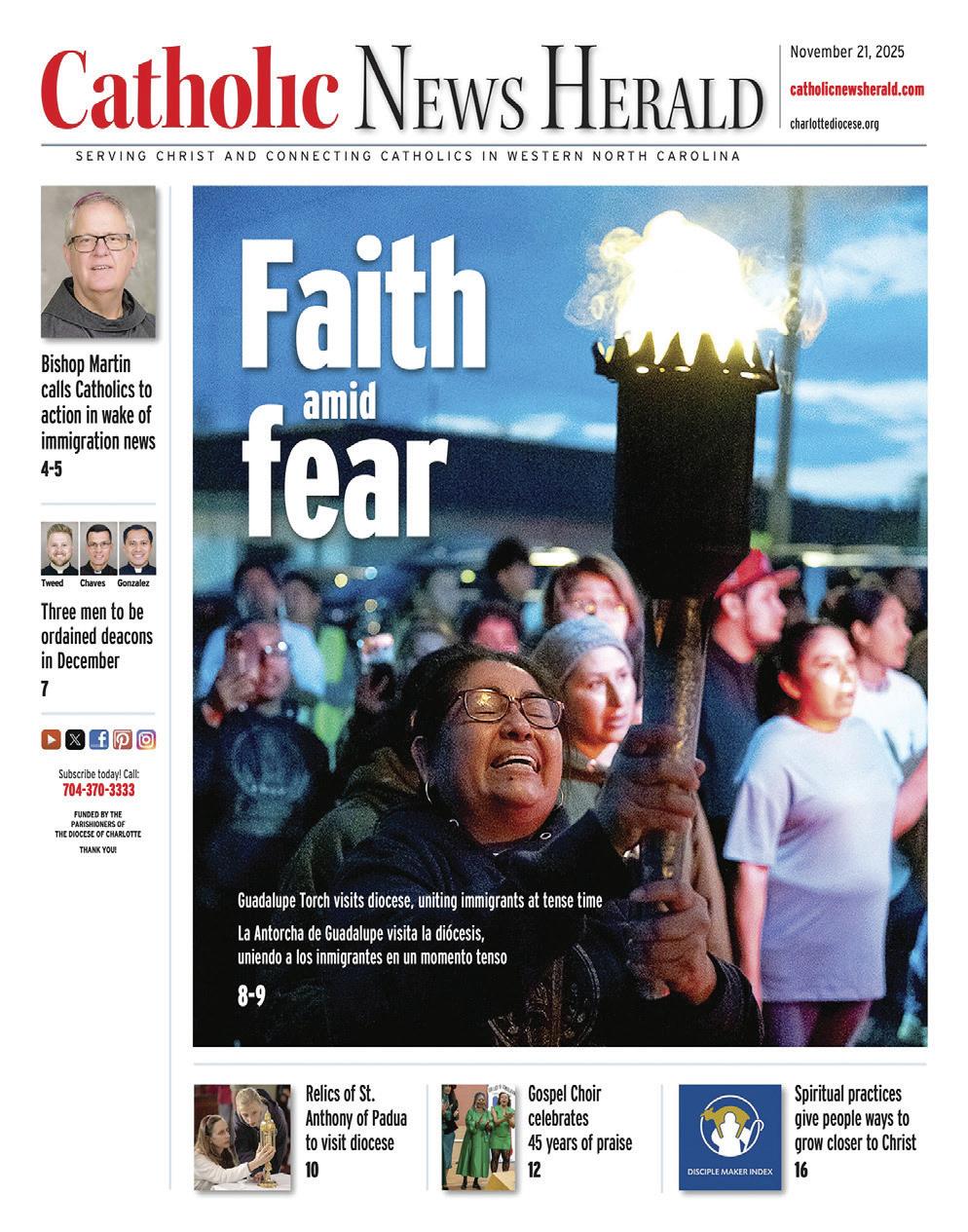

He credited the progress to careful planning, strong execution by the team of architects and contractors and, of course, the prayers of the faithful.
The chapel is the latest milestone in the development of St. Joseph College Seminary, which was established in 2016 under then-Bishop Peter Jugis. In its early years, the seminary operated out of several temporary houses before securing land and building its permanent campus, located not far from Belmont Abbey College, in 2020.
To date, 24 priests have been ordained who came through St. Joseph College Seminary and are serving across the diocese.
— Walter Frei
Best Seasonal Issue: “This Great Joy Needs to Shared” (Holy Week), Catholic News Herald staff
Best Front Page: “Faith Amid Fear” (immigration), David Puckett
Best Photograph – General News: “Faith Amid Fear,” Troy C. Hull
Best Story and Photo Package by two individuals or more: “Faith Amid Fear,” Brian Segovia and Lisa Geraci
Best Investigative News Writing Reporting – Non-Weekly: “Resilience: One Year Later, Helene Survivors Still Feel the Pain, but Walk Forward in Faith,” Christina Lee Knauss
Best Story and Photo Package – Spanish: “Guadalupe Convoca Multitudes y Toma el Coraz de la Diesis (Guadalupe Torch draws multitudes and captures the heart of the diocese” (Guadalupe Torch), Brian Segovia and Lisa Geraci
Best Reporting on Immigration – Spanish: “Parroquias Ajustan Actividades Ante Presencia de Patrulla Fronteriza en Charlotte” (immigration), Brian Segovia and Lisa Geraci
Best Feature Writing – Spanish: “Desde Mooresville Hasta Huánuco: ‘Entre Fronteras’ Conecta Feligreses en un Mismo Latido” (radio outreach), Brian Segovia
Best Newspaper among non-weekly U.S. and Canadian diocesan newspapers: Catholic News Herald staff
Best In-depth News/Special Reporting – Non-Weekly: “2025 Eucharistic Congress,” Catholic News Herald staff
Best Media Kit: “Catholic News Herald Media Kit 2025,” David Puckett and Kevin Eagan
Best Analysis/Background/Round-Up News Writing – The Gerard E. Sherry Award – Non-Weekly: “Disciple Maker Index: From Believers to Disciples,” Patricia L. Guilfoyle
Best News Writing – Single Article – National Event: “Catholic Charities Navigates Refugee Funding Halt,”
Liz Chandler and Christina Lee Knauss
Best Single Advertisement Small Space: “St. Luke Music Director,” David Puckett and Kevin Eagan
Best News Writing on a Local Event – Non-Weekly: “Thank God for Sending Angels,” Christina Lee Knauss
Best Reporting on the Celebration of a Sacrament: “Finding Their Way Home: Spirit-Filled Journeys of New Catholics in the Charlotte Diocese,” Lisa Geraci


WADESBORO — A gift started by three sisters has blossomed into a fund that since its inception has provided more than $17 million in 74 interest-free loans to under-resourced parishes and missions throughout the Diocese of Charlotte.
Sarah Horne Sutherland, Elizabeth Wallace Horne and Mary Virginia Horne shared a faith and a pioneering generosity that has helped grow the Catholic Church in western North Carolina since Mary Virginia passed in 1975. Over the course of the next two decades, each of the sisters left estate gifts of more than $1 million to the diocese.
Their father, James Dudley Horne, was a prominent Baptist businessman. Their mother, Sarah Divine Horne, was a Catholic at a time when the faith had only a limited presence in Anson County. After inheriting the family’s Wadesboro cotton farm in 1950, the sisters used their considerable wealth and sharp business skills to continue their mother’s mission of spreading the Catholic faith throughout the Piedmont.
The family began that legacy by helping to build a church. Growing tired of the challenging 25-mile commute to the nearest parish – St. James Church in Hamlet – the family approached the late Bishop Vincent Waters, the bishop of North Carolina at the time, about building and funding a new church. Sacred Heart Mission in Wadesboro was the result of that idea.
Spiritan Father Ed Vilkauskas, former pastor of Sacred Heart Mission and Our Lady of Lourdes Parish in Monroe, told the Catholic News Herald in 1995 that the sisters built Sacred Heart “hook, line and sinker.”
“They took intense personal interest in their projects and wanted things to be done ‘the right way,’” he said.
“They had a dream, hope and vision, and faith enough to invest in the future of the Church,” he said. Father Vilkauskas passed away in 2021.
At the time of Sutherland’s passing in 1995, former Bishop William G. Curlin said of the three sisters, “They were magnificent benefactors to the diocese and pioneers for the Catholic Church.”
The Horne sisters also donated their personal homes and furnishings to the diocese and established the Virginia Horne Residence Hall at Belmont Abbey College.
Interested in setting up – or adding to – an endowment to benefit your parish or Catholic school? You can establish an endowment in the Diocese of Charlotte Foundation by leaving a bequest in a will, a beneficiary designation from a retirement plan, a trust or annuity, or a gift of real estate, life insurance, cash or securities.
For details, contact Gina Rhodes at 704-370-3364 or gmrhodes@rcdoc.org.
Today, the Horne Fund they established continues to help parishes address routine maintenance needs and facility improvements that otherwise might fall through the cracks.
Matt Ferrante, chief financial officer for the diocese, said many Horne Fund loans fund projects such as HVAC replacements or parking lot lighting upgrades.
“On occasion, it’s for larger projects, such as renovations to a sanctuary, church building or other parish facilities,” Ferrante said. “The fund helps them pay for it over time with no interest.”
Many of the once-small parishes initially helped by the funds have gone on to thrive, including St. Mark in Huntersville.
“Over the last 40 years, we have talked with almost 1,900 individuals who have either left an estate gift when they passed or are leaving a gift in their estate to benefit one of the entities in our diocese. Never before have we had three siblings all decide to each leave an estate gift to one of our entities,” said Jim Kelley, the diocese’s development director.
“I had the good fortune early in my tenure at the diocese to talk with both Elizabeth and Sarah,” Kelley said. “Having established a small church in Wadesboro, they wanted other small church communities to benefit by their gifts.
Because the Horne Fund provides interestfree loans that churches must pay back, their gifts will benefit churches in our diocese for many generations to come. We encourage more individuals to think about our small financially challenged parishes and consider a way they can help them in their estate plans also.”
— Courtney McLaughlin

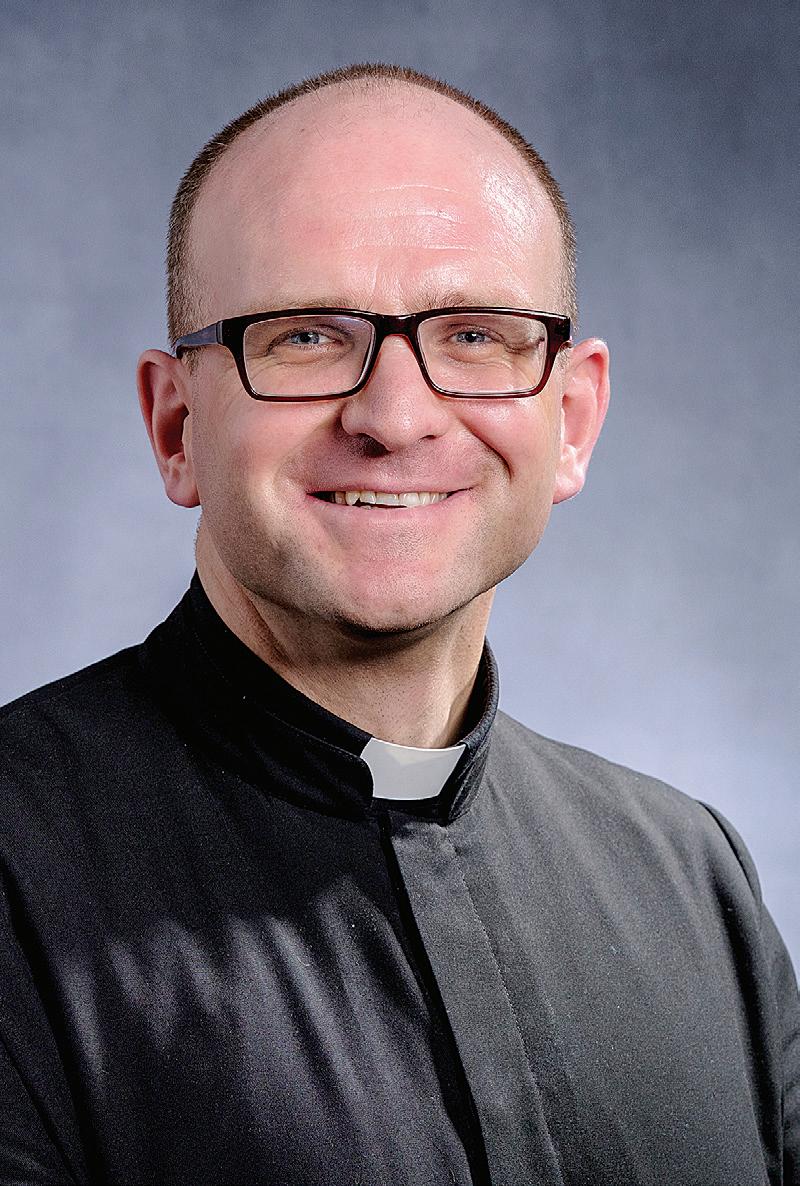
our new Parochial Administrator
May the Lord bless you both abundantly as you
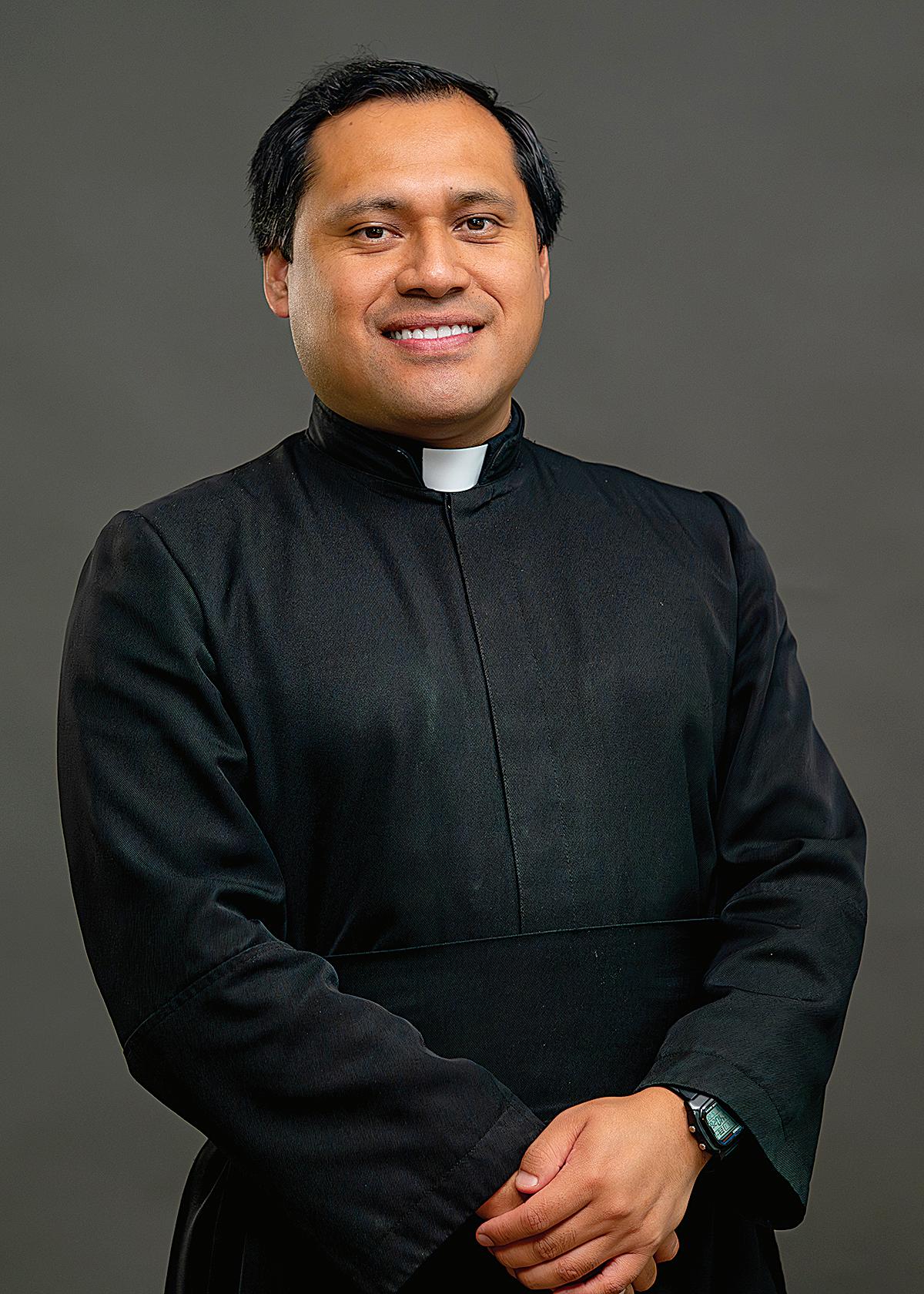
HUNTERSVILLE — This year’s Miss All American Pageant takes place July 15-18 in Charleston, and the Diocese of Charlotte is rooting for a familiar face: Miss Huntersville, Deanna Glenn. Some may remember Glenn (pictured here with Julianna, a former student) from her Miss America days, when she entered as Miss Huntersville. Glenn sings at St. Therese Church in Mooresville, attends Mass with her long-term boyfriend at St. Mark in Huntersville, and often visits her parents’ church of St. Thomas Aquinas Church in Charlotte while remaining an active participant in the campus ministry. Her pro-life platform then and now has highlighted her work with Catholic organizations such as Mira Via and Birthright of Charlotte. Her advocacy has led to motivational speeches like the one she delivered at the local March for Life in Charlotte. “I just want to use this pageant to bring glory to God,” Glenn said.

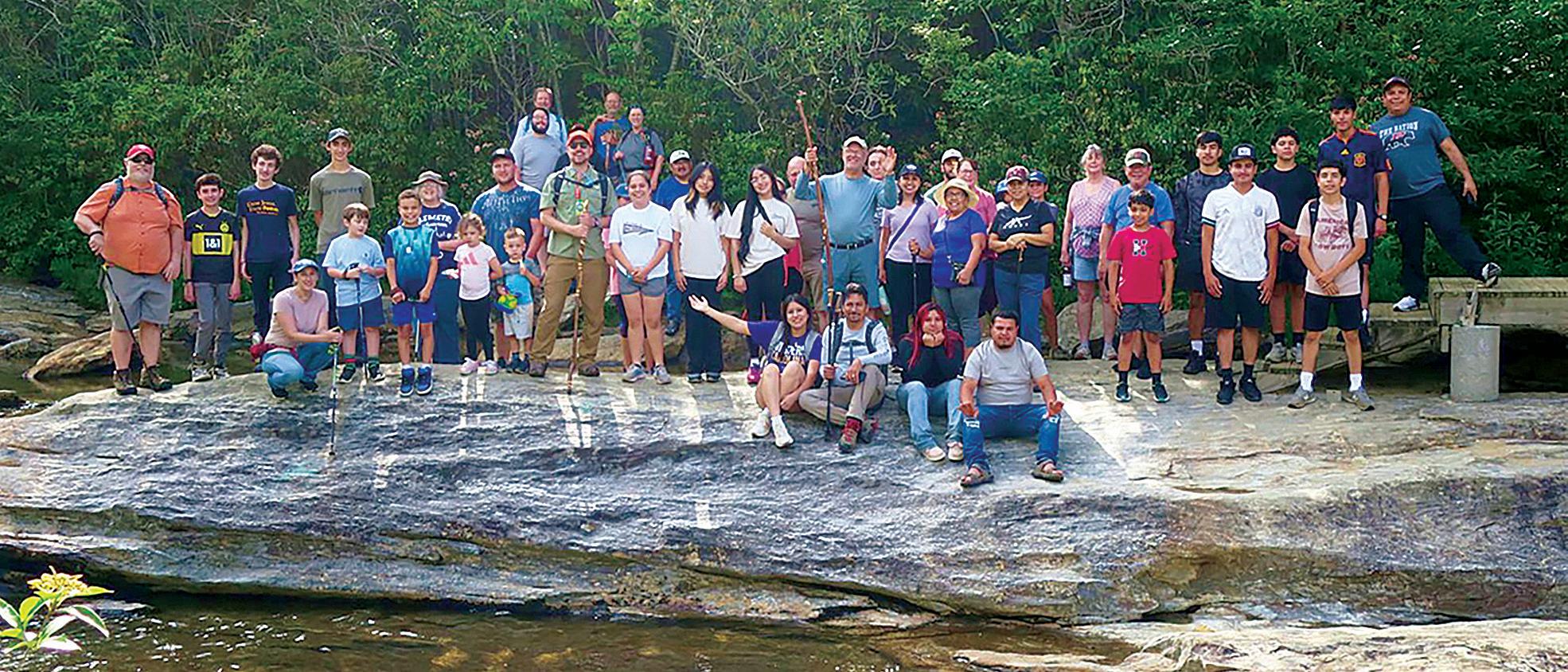
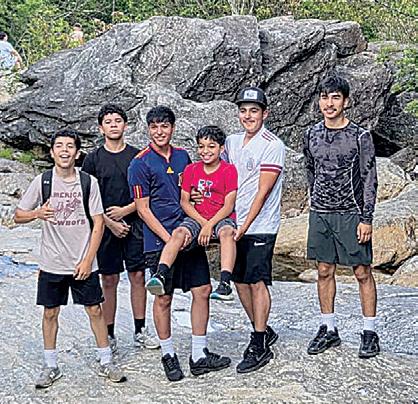
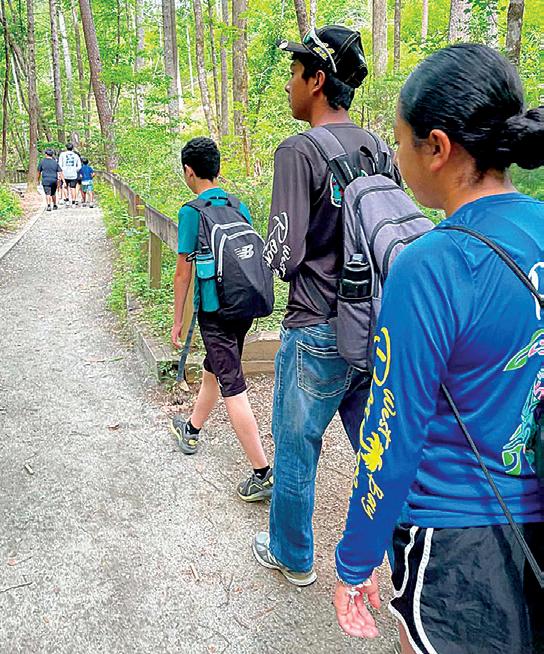
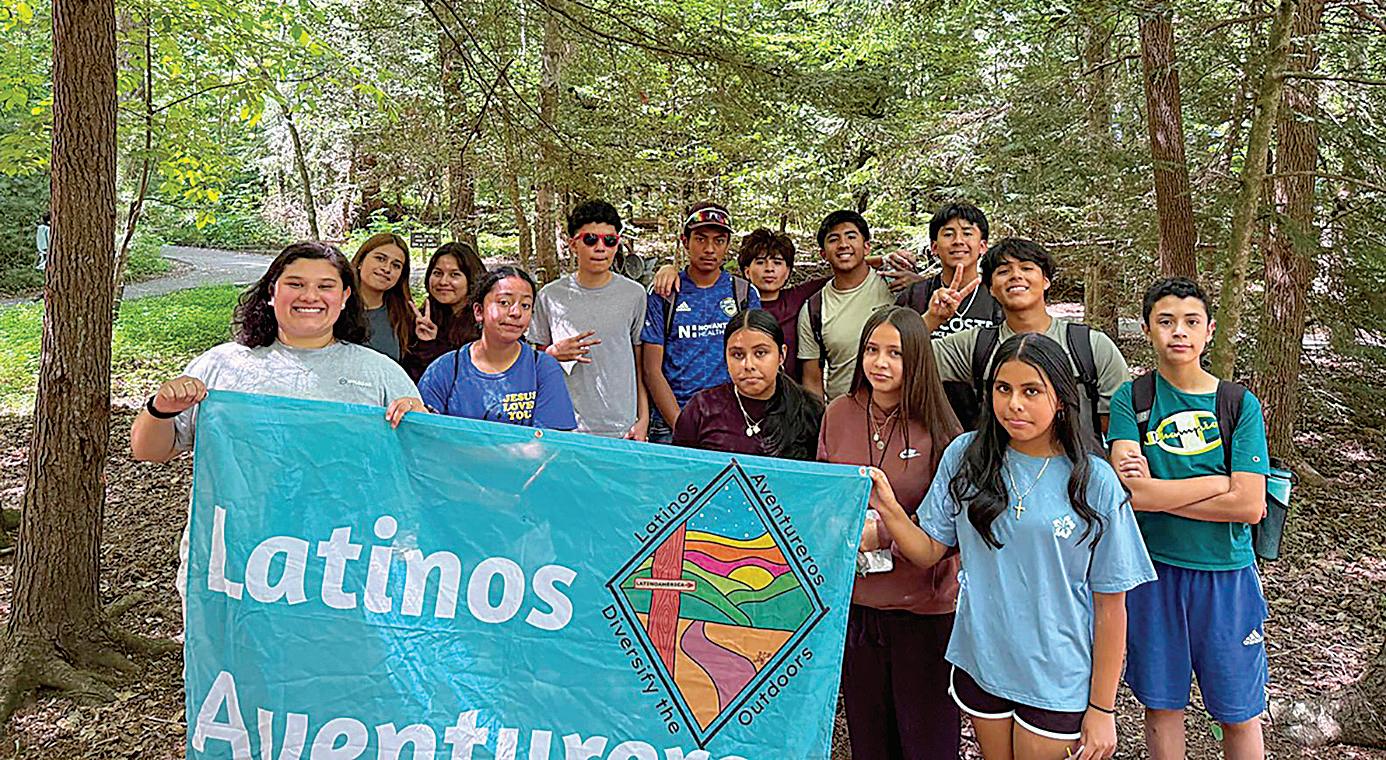
El sábado 22 de junio, un grupo de 42 jóvenes de San José, en Kannapolis, junto con sus familias, participó en una excursión patrocinada por Latinos Aventureros. Esta organización sin fines de lucro se enfoca en conectar a las comunidades con la naturaleza a través de aventuras bilingües, conservación ambiental, programas para jóvenes y otras actividades. Durante la excursión, los participantes tuvieron la oportunidad de nadar, compartir alimentos, almorzar y aprender a pescar, guiados por los organizadores. Por otro lado, en el oeste del estado, 60 jóvenes de la parroquia San Juan Evangelista, en Waynesville, participaron en una jornada de senderismo en las montañas Blue Ridge, recorriendo el sendero Graveyard Fields Loop el domingo 14 de junio. Liderado por el padre Lucas Rossi, el grupo reunió a miembros de las comunidades anglosajona e hispana para disfrutar de un día lleno de alegría y oración.
CHRISTINA LEE KNAUSS clknauss@rcdoc.org
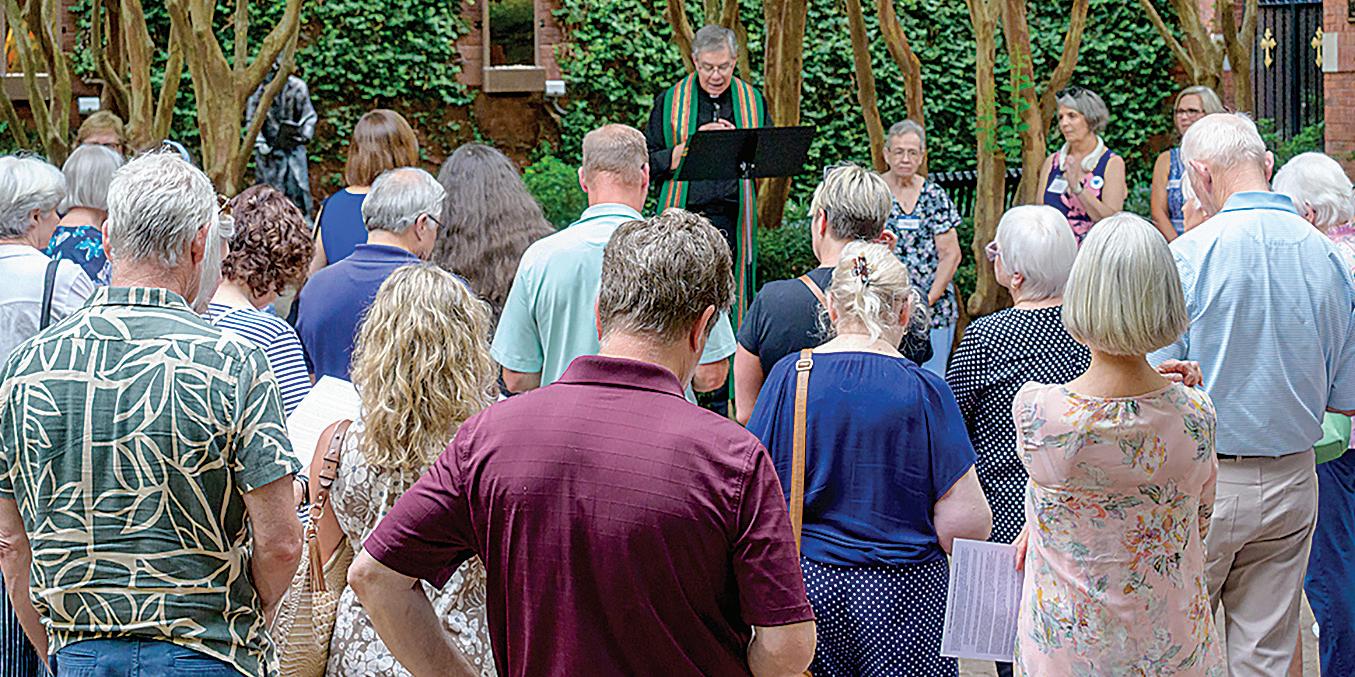
CHARLOTTE — Aproximadamente 75 personas se reunieron para mostrar su apoyo a los inmigrantes durante un servicio especial de oración el 20 de junio en el jardín de meditación de la Iglesia St. Peter, en el centro de Charlotte. El servicio fue organizado por el Ministerio de Justicia Social de St. Peter como parte de la iniciativa Season of Faithful Witness. Este esfuerzo nacional está coordinado a través de Catholics in Communion, una coalición de organizaciones, comunidades y líderes católicos que responden a los desafíos que actualmente enfrentan los inmigrantes y las familias vulnerables. El grupo se enfoca en la oración, el testimonio público y la acción fiel.
“Los católicos de todo el país se están reuniendo en espacios públicos para
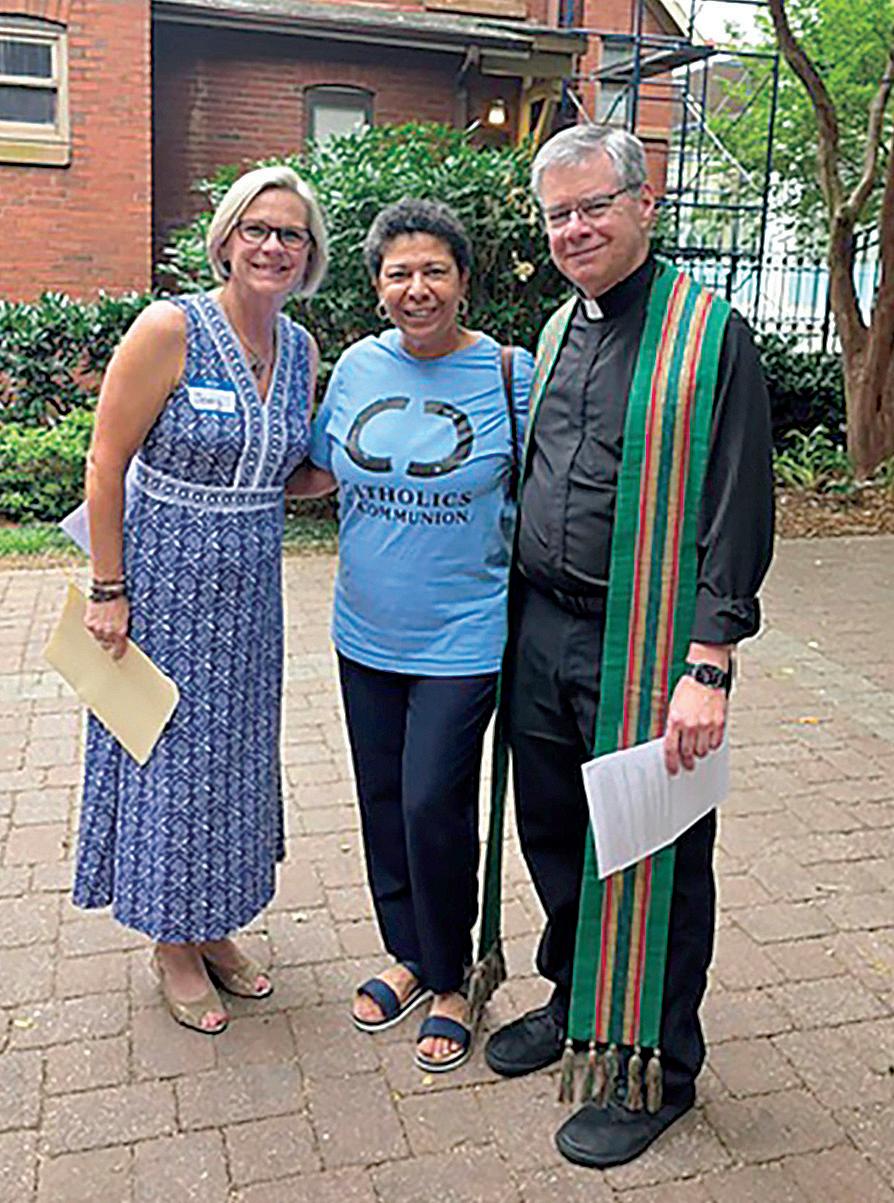
(De izquierda a derecha) Jenny Cox, Yohanny Ana Ashley García, de Católicos en Comunión, y el Padre Mark Scalese asisten al Servicio de Oración de Testimonio de los Fieles.
Caballeros de Colón
Considere unirse a los más de 2 millones de miembros de la organización fraternal católica más grande del mundo y registrándose en línea hoy en: www.kofc.org/joinus/es
Por tiempo limitado - Membresía en línea GRATISUse el código de promoción (BLESSEDMCGIVNEY)
dar testimonio fiel de la dignidad de toda persona”, dijo el padre jesuita Mark Scalese, vicario parroquial de St. Peter. “Nos reunimos porque creemos que somos un solo Cuerpo en Cristo. Y cuando miembros de ese cuerpo están sufriendo —cuando las familias tienen miedo, cuando los vecinos se sienten olvidados, cuando la dignidad humana está amenazada— nuestra fe nos llama a responder con oración, solidaridad y valentía”.
El servicio incluyó cantos y lecturas de las Escrituras centradas en la
situación de los migrantes y refugiados, así como pasajes de un mensaje que el papa León XIV preparó para la 111.ª Jornada Mundial del Migrante y del Refugiado en 2025. Los participantes también escucharon a inmigrantes del área de Charlotte que han enfrentado dificultades.
Como señaló el padre Scalese: “Nos reunimos para pedirle a Dios que abra nuestros corazones, fortalezca nuestra valor y nos ayude a convertirnos en lo que recibimos en la Eucaristía: el Cuerpo de Cristo para la vida del mundo”.
Papa León XIV
La participación en la Eucaristía transforma a los creyentes en el Cuerpo de Cristo y ofrece un remedio frente a las divisiones que afectan a las familias y comunidades, afirmó el papa León XIV durante su audiencia general semanal del 24 de junio.
En su última audiencia general hasta el 5 de agosto, el papa León también animó a los jóvenes a aprovechar el tiempo libre de las vacaciones de verano para asistir a misa, confesarse con frecuencia, reflexionar sobre la Sagrada Escritura, participar en retiros espirituales y peregrinaciones, y pasar tiempo con sus seres queridos.
“Las vacaciones son un tiempo para descansar y para buscar los signos de Dios en la belleza de la creación”, dijo en sus palabras dirigidas a los visitantes de habla polaca. También pidió oraciones por los estudiantes para que puedan “elegir sabiamente” las escuelas y universidades a las que asistirán y “discernir con prudencia su vocación”.
Continuando su serie sobre los documentos del Concilio Vaticano II, el Papa se centró en Sacrosanctum Concilium, la Constitución sobre la Sagrada Liturgia, explicando cómo la Eucaristía conduce a los fieles a una comunión más profunda con Dios y entre sí.
Recibir a Cristo en la Eucaristía transforma a los creyentes en el Cuerpo de Cristo, cuya cabeza es el Señor resucitado, sentado a la derecha del Padre, dijo el Papa.
“Así, la Eucaristía es el sacramento del Reino que ha de venir”, afirmó el papa León.
La Eucaristía enseña a los católicos a adoptar el camino de amor y entrega de Cristo y a ser “atraídos día tras día hacia una unión cada vez más perfecta con Dios y entre nosotros”, señaló. “Este don nos introduce en la dinámica de la unidad, ofreciendo un poderoso antídoto contra las fuerzas de división que socavan nuestro mundo, nuestras comunidades, nuestras familias y nuestros corazones”, añadió.
La Constitución sobre la Sagrada Liturgia enseña que los fieles están llamados a “ofrecerse a sí mismos en unión con Jesucristo” al Padre “por manos del sacerdote y junto con él”, explicó el Papa. La participación en la Eucaristía también implica ser formados por la Palabra de Dios y “alimentados en la mesa del Cuerpo del Señor”.
La Eucaristía no puede separarse de la Palabra de Dios, señalando que la liturgia de la Palabra y la liturgia eucarística forman “un único acto de culto”. Citando al papa Benedicto XVI, dijo que la Escritura ilumina y explica el misterio de la Eucaristía, mientras que la Eucaristía abre a los creyentes a una comprensión más profunda de la Escritura.
los obispos de Estados Unidos se preparan para consagrar el país al Sagrado Corazón de Jesús el 11 de junio, durante su reunión de primavera en Orlando, Florida, aquí compartimos seis cosas que conviene saber sobre la devoción al Sagrado Corazón.
Esta devoción tiene raíces antiguas.
Cuando el soldado romano atravesó con su espada a Jesús crucificado, de su costado brotaron sangre y agua. Desde hace mucho tiempo, se entiende que esa sangre y esa agua simbolizan el derramamiento de la gracia de Dios. A lo largo de los siglos, santos y teólogos escribieron reflexiones sobre el Sagrado Corazón, pero la práctica permaneció como una devoción personal.
La devoción se difundió gracias a las visiones de una joven religiosa francesa.
A partir de 1673, sor Margarita María Alacoque, de la Orden de la Visitación en Paray-le-Monial, Francia, experimentó una serie de visiones de Jesús a lo largo de 18 meses. En ellas, Jesús mostraba su Sagrado Corazón como símbolo de su amor y le pedía que trabajara para universalizar la devoción a su corazón. Estas visiones constituyen la base de las devociones de los Primeros Viernes y de la solemnidad del Sagrado Corazón de Jesús que celebramos hoy en día. La imagen del Sagrado Corazón --un corazón herido y ardiente, rodeado por una corona de espinas y coronado por una cruz-- también surgió de esas revelaciones. Santa Margarita María fue canonizada en 1920.
Esta devoción se fundamenta en la oración, la liturgia y los actos de reparación.
Santa Margarita María relató que Jesús le dijo que, a pesar de amar tanto a la humanidad como para dar su vida por ella, era tratado con irreverencia, frialdad e ingratitud. Él deseaba que el mundo reconociera el amor que continuamente derramaba sobre los hombres --simbolizado en su Sagrado Corazón-- y que la humanidad reparara su ingratitud. Jesús instó a Santa Margarita María a iniciar una devoción personal a su Divino Corazón, recibiendo la Sagrada Comunión cada primer viernes de mes y dedicando una hora a la oración la víspera; ambas prácticas debían centrarse en buscar su perdón y en ofrecer reparaciones, mediante la oración, por el abandono de su amor por parte de la humanidad.
La devoción incluye 12 promesas.
Jesús reveló a Santa Margarita María 12 promesas destinadas a quienes cultivaran y difundieran la devoción a su Sagrado Corazón. Son las siguientes: Yo (Jesús) a las almas consagradas a mi Corazón les daré las gracias necesarias para su estado de vida; estableceré la paz en sus hogares/familias; los consolaré en todas sus aflicciones; seré su amparo y refugio seguro durante la vida y, especialmente, en la muerte; derramaré bendiciones abundantes sobre sus empresas; los pecadores encontrarán en mi Corazón la fuente y el océano infinito de misericordia; las almas tibias se harán fervorosas; las almas fervorosas e elevarán rápidamente
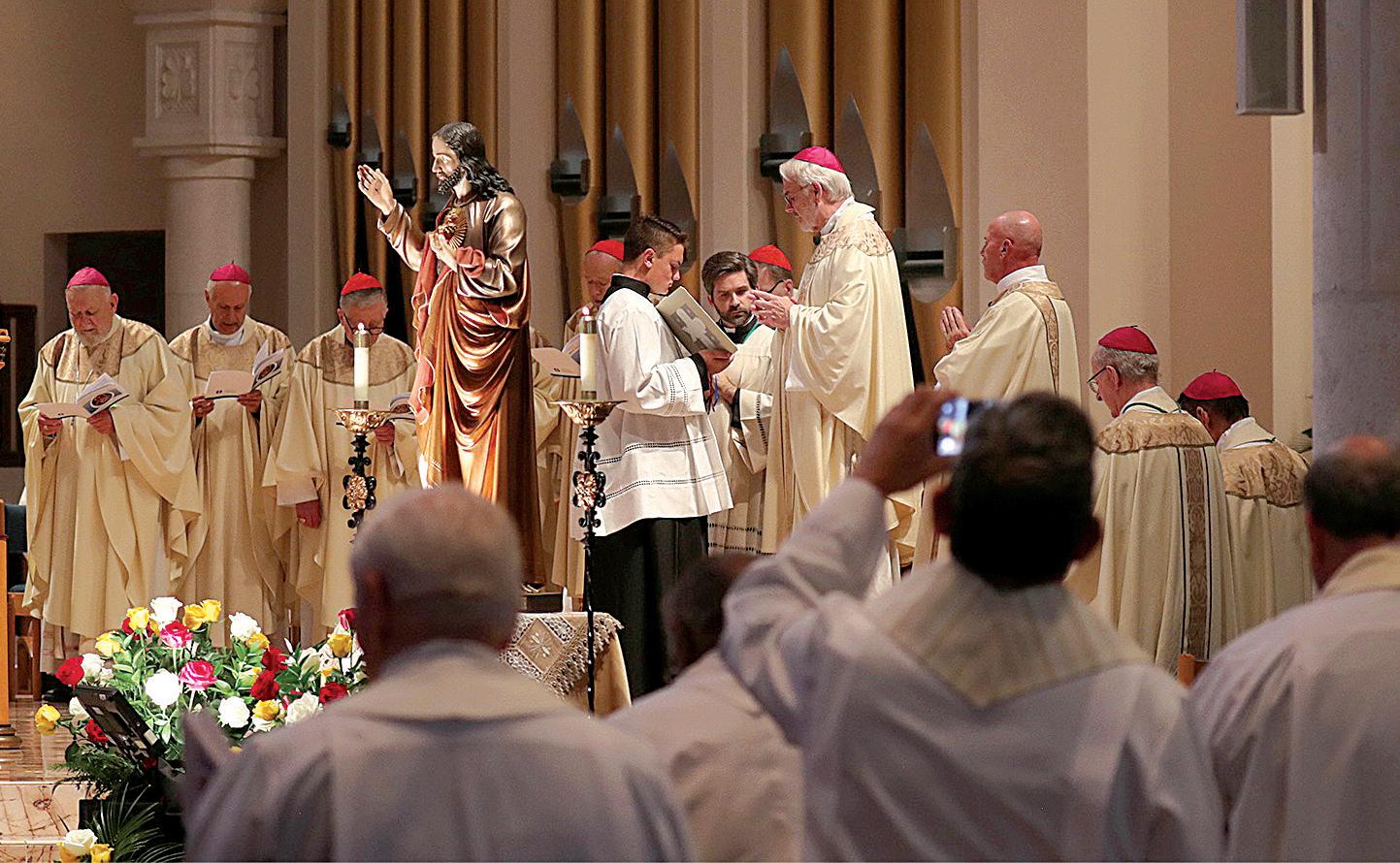
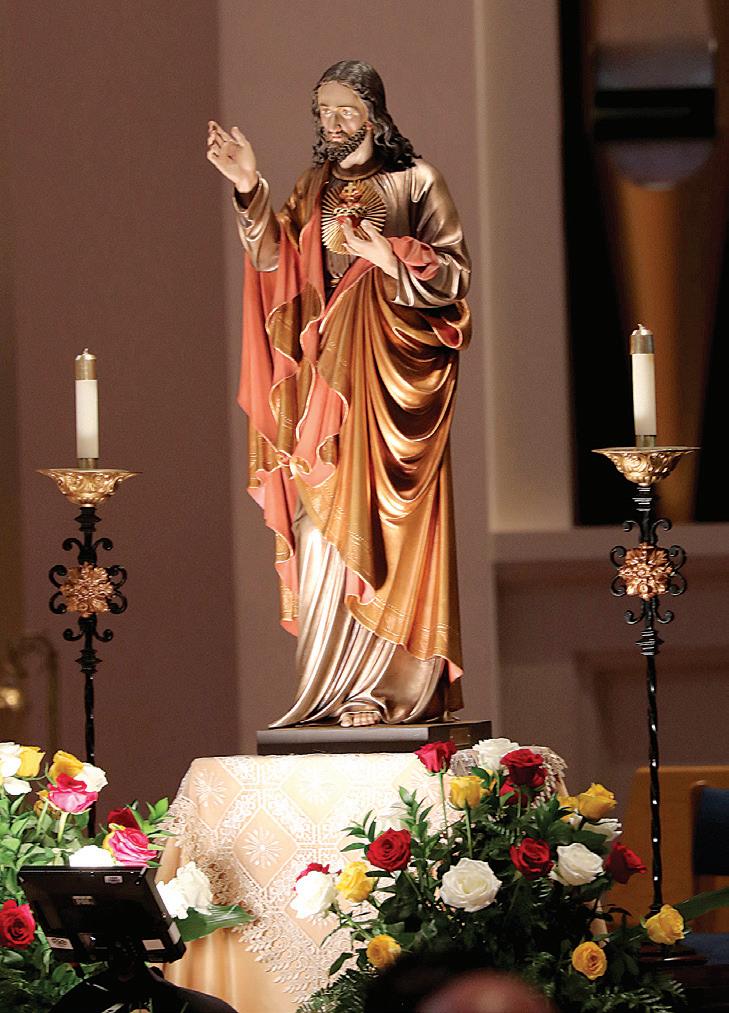
a gran perfección; bendeciré todo lugar donde la imagen de mi Sagrado Corazón esté expuesta y sea honrada; daré a los sacerdotes el don de llegar incluso a los corazones más endurecidos; quienes promuevan esta devoción tendrán sus nombres escritos en mi corazón; y quienes comulguen durante nueve primeros viernes consecutivos recibirán la gracia de la perseverancia final.
Los jesuitas contribuyeron a que la devoción obtuviera la aprobación oficial.
Cuando Santa Margarita María intentó explicar las visiones por primera vez, muchas personas de su entorno se mostraron escépticas. Fue San Claudio
de la Colombière, su director espiritual jesuita, quien reconoció su santidad, fervor y sinceridad. Sin embargo, aun cuando se le creyó, al ser una monja de clausura, poco podía hacer para difundir sus visiones fuera de su orden. La devoción también fue promovida por San Juan Eudes --sacerdote no jesuita y antiguo oratoriano--, quien fundó la Congregación de Jesús y María y las Hermanas de la Caridad del Refugio. Finalmente, el Vaticano otorgó la aprobación universal en agosto de 1856, durante el pontificado de Pío IX. En 1899, el Papa León XIII, alentado por católicos de todo el mundo, consagró el género humano al Sagrado Corazón. La Compañía de Jesús decretó oficialmente en 1883 que sus miembros tenían un papel especial en la promoción del Sagrado Corazón de Jesús y, en 1915, vinculó esta labor al Apostolado de la Oración --conocido actualmente como la Red Mundial de Oración del Papa (Pope’s Worldwide Prayer Network) --, cuya gestión está encomendada a la orden.
La fiesta anual del Sagrado Corazón se celebra en junio.
La solemnidad del Sagrado Corazón tiene lugar el tercer viernes después de la fiesta de Pentecostés; este año, cae el 12 de junio. En una visión, Jesús pidió a Santa Margarita María que estableciera una fiesta litúrgica para honrar su Sagrado Corazón. En ese día, los fieles a Jesús asistirían a Misa, recibirían la Sagrada Comunión, profesarían su amor y ofrecerían actos de reparación por las ofensas que la humanidad había cometido contra Él. La solemnidad es la celebración de mayor rango en el calendario de la Iglesia. La Iglesia también dedica los Primeros Viernes y el mes de junio al Sagrado Corazón.
Bishop Michael T. Martin
As a kid, the Fourth of July was the only time I ever got to see fireworks. I thought that the reason fireworks existed was to replicate what we sing about in “The StarSpangled Banner” – “the rockets’ red glare” and “the bombs bursting in air.”
What’s interesting is that fireworks have an ancient history, and they weren’t created to be bombs bursting in air. It was quite the opposite; it was more celebratory. They were created for something entirely different than what they ultimately were used for.
In our celebration of the 250th anniversary of the birth of our nation, we should ask ourselves the same question. Our country was born for a particular reason, but is that still valid today? Are we using our freedom for the purpose for which it was given to us, for which it was fought for, for which many people offered their lives?
Our readings this weekend share with us a deeper understanding of the freedom that we enjoy in this country and that we hope our nation expresses to the rest of the world. But it’s incumbent upon all of us to ask ourselves: Have we fully understood the deeper reality of the freedom we’ve been given?
In our first reading from the second book of Kings (2 Kings 4:8-11, 14-16a), we hear this wonderful story about Elisha, who is on the road and is oftentimes welcomed into a couple’s home. While the couple is described as being well off, the one thing that this particular couple does not have is the one thing they desire the most – and that’s a child. Amidst all of their concerns, there’s no question about whether or not they should be welcoming a stranger into their home.
My brothers and sisters, we have been freed for the purpose of welcoming the stranger. Hospitality should be a hallmark of what we are free to do. Like that couple, all of us are lacking something. Yet amidst our lacking, we should be looking for ways to be hospitable, especially to strangers. We have a debate going on in our country about welcoming the immigrant. Let’s be clear in realizing that we have been given this freedom for the purpose of sharing that freedom with others.
FREED FOR A PURPOSE
St. Paul, in his Letter to the Romans (Romans 6:3-4, 8-11), talks about how we have been freed for the purpose of living like Christ. He says those of us who have died with Christ will rise also with Christ. We are baptized into His death – not in some future moment, but to live it right now. We’ve been given freedom for that purpose, to live our faith. Religious liberty should not be something that we take for granted. It should be something that we cherish. Because we cherish it, our worship, our engagement in faith, should not be something that we do once in a while when it’s convenient. We have been given freedom for the purpose of worshiping our God, of sharing our faith with one another, of being a witness of the resurrected Christ in this world, in this land of ours. Religious liberty should not be taken for granted. It should be something that by our daily witness we show to the rest of our brothers and sisters. In our gospel today (Matthew 10:37-42), Jesus gives us a challenging message about taking up our cross. We see the heart of that sacrifice being lived out by our ancestors –who gave their lives, who picked up the cross for freedom. We should ask ourselves: how are we going to do that today?
We have been given freedom to sacrifice for the common good. Too often in our American lives, we have a sense of rugged individualism. I do this for me. I’ve been given my rights and my freedoms for me. That is not at the heart of what the Founders had in mind, and it is certainly not at the heart of the Gospel message. What we are called to do today is to pick up our cross for the sake of others. We as Catholics should be going out to try and help others carry their cross for the common good – to walk with others who are struggling.
As we celebrate our own 250 years of freedom – not from tyranny as our founders did, that’s a story of our past – but freedom in this time, in this year, in this space, in this country, to make a difference.
We live in a time of tremendous division. We as Catholics are called to give witness to the unity of the Trinity, called to give witness to our unity in the Body of Christ. We should be carrying the torch of unity that shows the world we will not give in to the division that is enmeshed in the fabric of every conversation in which we find ourselves.
We have been given freedom for unity. May we put aside the divisions that we see and realize that when we passionately take up the cause of freedom for the unity of the United States of America and for all the world, we witness the greater purpose of God’s loving gift of freedom – of freedom for unity, of freedom for communion, of freedom for life in Christ, that welcomes the stranger, that appreciates the real gift that religious liberty is, and that picks up not only my cross but the crosses of others, for the common good.
BISHOP MICHAEL T. MARTIN, OFM CONV., leads the Diocese of Charlotte. This commentary is excerpted from a homily he is sharing with all the people of the diocese this weekend, June 27-28, in advance of the 250th anniversary of the nation’s founding.
GINA CHRISTIAN OSV News
PHILADELPHIA — As the U.S. marks its 250th anniversary, a number of faith and civic leaders will be on hand as Pope Leo XIV accepts – via livestream from the Vatican – a major honor for his efforts to promote religious liberty, along with freedom of expression and conscience.
The National Constitution Center will bestow its Liberty Medal on Pope Leo July 3 during a public ceremony outside its location at Independence Mall in Philadelphia, part of Independence National Historical Park, home to several sites of historical significance in the nation’s founding.
Established in 1988 to mark the bicentennial of the U.S. Constitution, and hosted by the center since 2006, the Liberty Medal honors both individuals and organizations “who strive to secure the blessings of liberty to people around the globe,” said the National Constitution Center in a June 22 media advisory listing the event’s key speakers.
The center – a private nonprofit that promotes constitutional education and civic debate – had announced its decision to honor Pope Leo back on March 16.
The center noted at the time that the ceremony will take place amid the Independence Week events set to commemorate the signing of the Declaration of Independence.
AN ‘ADVOCATE FOR RELIGIOUS LIBERTY’
Vince Stango, the center’s interim president and CEO, described Pope Leo in that March announcement as a “consistent advocate for religious liberty, freedom of conscience, and human dignity.”
Pope Leo is only the second religious leader to receive the Liberty Medal, preceded by the 2015 recipient, the 14th Dalai Lama of Tibet.
Archbishop Nelson J. Pérez of Philadelphia – the city that was the nation’s capital from 1790 until 1800 – will be among the religious leaders addressing the crowds in person at the event, which will also be livestreamed on the center’s YouTube channel.
On June 11, the archbishop read a message from Pope Leo on religious liberty to attendees of the Becket Fund for Religious Liberty’s 2026 Canterbury Medal Gala, held at the National Constitution Center.
In that message, dated June 4, Pope Leo described religious freedom as “the cornerstone of any just society” and “an integral part of upholding human dignity.”
The first U.S.-born pope noted that efforts to safeguard religious liberty “acquire particular significance as the United States of America prepares to celebrate the 250th anniversary of its foundation.
“Indeed, we can recognize in the Preamble to the Declaration of Independence an expression of the truth regarding the human person,” said Pope
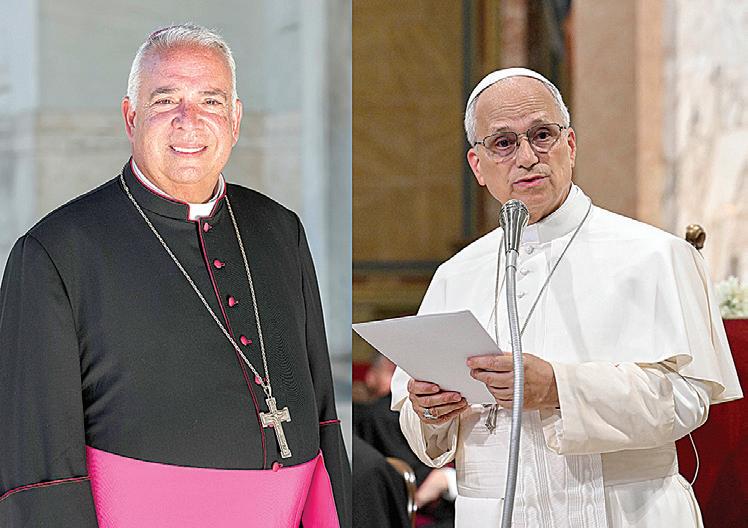
Leo in his Becket gala message. “Namely, the innate dignity of every man and woman, created by God in His own image and likeness, and the rights that stem therefrom.”
‘A FITTING RECOGNITION’
In March, Archbishop Pérez had described the bestowal of the medal on Pope Leo as “a fitting recognition of the Holy Father’s long dedication and fidelity to advancing liberty for all people throughout the world.
“In many ways, his tireless work as a priest, bishop, cardinal, and now shepherd of the universal Church has focused on lifting up the dignity of all people and building pathways to peace,” said Archbishop Pérez at the time.
Also on hand with the archbishop will be Imam Quaiser D. Abdullah, director of the Philadelphia Mayor’s Office of Muslim Engagement; the Rev. Carolyn C. Cavaness, the first female pastor of Mother Bethel AME Church, founded in 1794; the Rev. Luis A. Cortés Jr., founder, president and CEO of the faith-based nonprofit Esperanza, which provides an array of services to Hispanic communities; and Rabbi Jill L. Maderer, senior rabbi of Congregation Rodeph Shalom in Philadelphia.
Past recipients of the Liberty Medal include Ukraine President Volodymyr Zelenskyy, U.S. Supreme Court Justice Ruth Bader Ginsburg, U.S. Sen. John McCain, U.S. Rep. John Lewis and human rights advocate Malala Yousafzai.
The Liberty Medal is typically accompanied by a prize sponsored by philanthropists Ira Lubert and Pamela Estadt, with contributions from corporations, foundations and individuals.
In a March statement to OSV News, the center confirmed that the medal “traditionally includes a $100,000 prize,” adding that “the Holy See has not yet indicated how it may be used.”
“Any decisions regarding the prize will be made by the Vatican, and we will share additional information when it becomes available,” the center told OSV News at the time.
TESSA GERVASINI, KEN OLIVER-MÉNDEZ Catholic News Agency
“Endowed by Their Creator: Catholicism, the Declaration of Independence, and the American Experiment at 250” was the subject of a recent conference at The Catholic University of America (CUA) featuring a bevy of Catholic academics, jurists and public intellectuals.
Co-hosted by CUA’s Center for the Constitution and the Catholic Intellectual Tradition and Carroll Forum for Citizenship and Public Life, along with the University of Notre Dame’s Center for Citizenship and Constitutional Government, the conference included a video address by U.S. Secretary of State Marco Rubio highlighting Catholics’ presence and influence on the nation.
“It has been 250 years since a new people declared themselves to the world. At the time, less than 2% were Catholic, but the nation they built would come to serve as one of the proudest and most enduring testaments to the eternal truth of our faith,” Rubio, himself a Catholic, stated.
THE AMERICAN EXPERIMENT
One of the symposium’s central panels was titled “Catholic Social Thought and the American Experiment” and featured Russell Hittinger, executive director of the Institute for Human Ecology at CUA; Kenneth Grasso, professor and department chair of political science at Texas State University; Ryan T. Anderson, president of the Ethics and Public Policy Center; and CUA professor Sarah Gustafson.
Grasso focused his presentation on the late Father John Courtney Murray, an American Jesuit priest known for reconciling Catholicism with American pluralism and religious freedom.
“Murray in some sense was a celebrant of the American experiment, admired the Founding Fathers, somebody who celebrated America’s success; he also thought that America was in deep trouble.”
The moral tradition “provided the justification and substance of the American experiment and had been the source of its success,” Grasso said. However, Murray also saw that “the very moral tradition
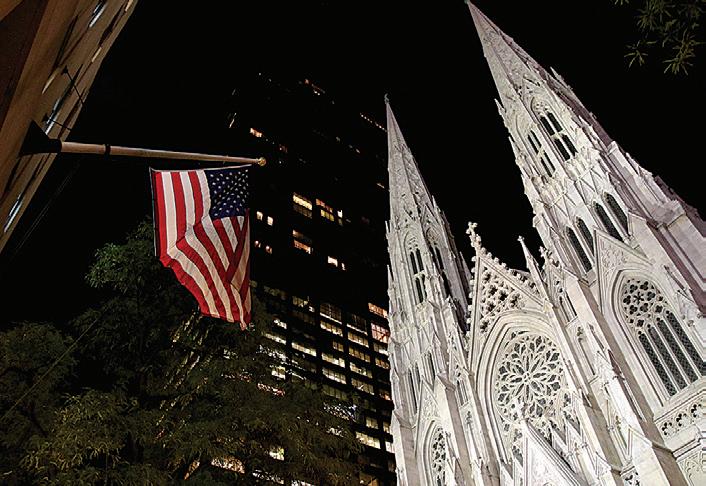
which made American democracy compatible with Catholicism no longer lives in the minds and hearts of Americans.”
“Modern culture’s rejection of the Christian mode of existence” has created a spiritual vacuum “that will be filled by an explicitly non-Christian mode of existence,” Grasso said.
“The American experiment will not long survive the revelation that was its ultimate inspiration. Where does this leave us?
Murray says it leaves the body politic in a grave crisis,” Grasso said.
Anderson focused his remarks on the contemporary application of Catholic social teaching.
“There are four fundamental basic principles of Catholic social thought,” Anderson said. “Human dignity, the common good, subsidiarity, solidarity.”
“We’re all created for friendship with God. And so it’s both the origin and the end of the human person that explains the nature of humanity.”
When it comes to social thought and the Declaration regarding “the account of liberty and religious liberty in particular,” there are “tensions” between the two, Anderson said.
“But there’s also surprising overlap and harmonization between the account that [James] Madison gives us ... in which he says ‘the reason that we have rights to religious liberty is because we have duties to the Creator.’
Cuando era niño, el Cuatro de Julio era la única ocasión en que podía ver fuegos artificiales. Yo pensaba que la razón por la que existían los fuegos artificiales era para reproducir aquello que cantamos en “The Star-Spangled Banner”: “el resplandor rojo de los cohetes” y “las bombas que estallan en el aire”.
Lo interesante es que los fuegos artificiales tienen una historia antigua, y no fueron creados para ser bombas que estallan en el aire. Más bien, era todo lo contrario; tenían un sentido más festivo. Fueron creados para algo completamente distinto de aquello para lo que finalmente se utilizaron.
En nuestra celebración del 250.º aniversario del nacimiento de nuestra nación, deberíamos hacernos la misma pregunta. Nuestro país nació por una razón particular, pero ¿sigue siendo válida hoy? ¿Estamos utilizando nuestra libertad para el propósito para el cual nos fue dada, por el cual se luchó, por el cual muchas personas ofrecieron sus vidas?
Las lecturas de este fin de semana nos ofrecen una comprensión más profunda de la libertad que disfrutamos en este país y que esperamos que nuestra nación exprese al resto del mundo. Pero corresponde a cada uno de nosotros preguntarnos: ¿hemos comprendido plenamente la realidad más profunda de la libertad que hemos recibido?
En nuestra primera lectura del segundo libro de los Reyes (2 Reyes 4,8-11.14-16a), escuchamos esta hermosa historia sobre Eliseo, que va de camino y con frecuencia es recibido en la casa de un matrimonio. Aunque se describe a esta pareja como adinerada, hay una cosa que no tiene: precisamente aquello que más desea, un hijo. En medio de todas sus preocupaciones, no hay duda alguna sobre si deben o no acoger a un extranjero en su hogar. Hermanos y hermanas, hemos sido liberados para acoger al extranjero. La hospitalidad debería ser una característica distintiva de aquello que somos libres de hacer. Como aquella pareja, todos carecemos de algo. Sin embargo, en medio de nuestras carencias, deberíamos buscar maneras de ser hospitalarios, especialmente con los extranjeros. Tenemos un debate en nuestro país sobre la acogida de los inmigrantes. Tengamos claro que hemos recibido esta libertad con el propósito de compartir esa libertad con los demás.
LIBERADO PARA UN PROPÓSITO
San Pablo, en su Carta a los Romanos (Romanos 6,3-4.8-11), habla de cómo hemos sido liberados para vivir como Cristo. Dice que quienes hemos muerto con Cristo también resucitaremos con Cristo. Hemos sido bautizados en su muerte, no para algún momento futuro, sino para vivirla ahora mismo. Hemos recibido la libertad para ese propósito: vivir nuestra fe.
La libertad religiosa no debería ser algo que demos por sentado. Debería ser algo que apreciemos profundamente. Precisamente porque la apreciamos, nuestro culto y nuestro compromiso con la fe no deberían ser algo que hacemos de vez en cuando, cuando nos resulta conveniente. Hemos recibido la libertad para adorar a nuestro Dios, para compartir nuestra fe unos con otros, para ser testigos de Cristo resucitado en este mundo, en esta tierra nuestra.
La libertad religiosa no debería darse por sentada. Debería ser algo que mostremos al resto de nuestros hermanos y hermanas mediante nuestro testimonio diario.
En el Evangelio de hoy (Mateo 10,37-42), Jesús nos presenta un mensaje exigente acerca de cargar con nuestra cruz. Vemos el corazón de ese sacrificio vivido por nuestros antepasados, que dieron sus vidas y tomaron la cruz por la libertad. Deberíamos preguntarnos: ¿cómo vamos a hacerlo nosotros hoy?
1830s, Protestant mobs burned convents and sacked churches during anti-Catholic riots.
“A lot of American Protestants didn’t even think the Catholic Church was producing people who were going to make good citizens,” explained Przybyszewski. “The Protestant view of Catholics was that this was a backward, superstitious, not really Christian church – which their faith had rejected centuries earlier.”
STIGMA LINGERS
Since May 2020, at least 410 anti-Catholic episodes have occurred throughout the country, the U.S. Conference of Catholic Bishops notes.
“Incidents,” the USCCB states, “include arson, statues beheaded, limbs cut, smashed, and painted, gravestones defaced with swastikas and anti-Catholic language and American flags next to them burned, and other destruction and vandalism.”
‘Catholics in colonial America were presumed dangerous until proven loyal.’
Michael Breidenbach
Associate professor
of history, Ave Maria University
While present questions of religious liberty may seem discouraging, Breidenbach sees a lesson in the nation’s revolutionary history.
“Catholics in colonial America were presumed dangerous until proven loyal. And to go from being suspected subjects of a king to trusted patriots in a new republic is a remarkable transformation,” he emphasized.
Hemos recibido la libertad para sacrificarnos por el bien común. Con demasiada frecuencia, en nuestra vida estadounidense, existe un sentido de individualismo autosuficiente. Hago esto por mí. He recibido mis derechos y mis libertades para mí mismo. Eso no estaba en el corazón de lo que los Fundadores tenían en mente, y ciertamente tampoco está en el corazón del mensaje del Evangelio.
Lo que estamos llamados a hacer hoy es cargar con nuestra cruz por el bien de los demás. Nosotros, como católicos, deberíamos salir a ayudar a otros a llevar su cruz por el bien común, a caminar junto a quienes están sufriendo.
Mientras celebramos nuestros propios 250 años de libertad —no de la tiranía, como hicieron nuestros fundadores; esa es una historia de nuestro pasado—, celebremos la libertad en este tiempo, en este año, en este lugar, en este país, para marcar una diferencia. Vivimos en una época de enormes divisiones. Nosotros, como católicos, estamos llamados a dar testimonio de la unidad de la Trinidad, llamados a dar testimonio de nuestra unidad en el Cuerpo de Cristo. Deberíamos llevar la antorcha de la unidad que muestre al mundo que no cederemos ante la división que se encuentra entretejida en el tejido de cada conversación en la que participamos.
Hemos recibido la libertad para la unidad. Que dejemos de lado las divisiones que vemos y comprendamos que, cuando asumimos con pasión la causa de la libertad para la unidad de los Estados Unidos de América y de todo el mundo, damos testimonio del propósito más grande del amoroso don de la libertad que Dios nos ha dado: libertad para la unidad, libertad para la comunión, libertad para la vida en Cristo; una libertad que acoge al extranjero, que aprecia el verdadero don de la libertad religiosa y que carga no solo con mi cruz, sino también con las cruces de los demás, por el bien común.
OBISPO MICHAEL T. MARTIN, OFM CONV., dirige la Diócesis de Charlotte. Este comentario es un extracto de una homilía que comparte con todos los fieles de la diócesis este fin de semana, 27 y 28 de junio, con motivo del 250.º aniversario de la fundación de la nación.
GIGI DUNCAN Catholic News Agency
ORLANDO, Florida — The U.S. bishops consecrated the United States to the Sacred Heart of Jesus on June 11, entrusting the nation to Christ’s merciful love during a solemn Mass as part of their spring plenary assembly ahead of the nation’s 250th anniversary.
“We gather not first to celebrate ourselves, but to consecrate, to entrust … and to place our whole nation into the Sacred Heart of Jesus Christ,” Archbishop William E. Lori of Baltimore said in his homily.
The liturgy took place on the final day of the U.S. Conference of Catholic Bishops’ spring plenary meeting.
FREEDOM FROM THE SUPERFICIAL
In the hours leading up to the Mass, bishops concluded their assembly with reflections that centered on the meaning of devotion to the Sacred Heart in contemporary life.
Archbishop Alexander Sample of Portland, Oregon, described the devotion as a response to modern forms of spiritual strain, including loneliness and the pressure to measure personal worth by achievement or failure. Drawing on Pope Francis’ encyclical “Dilexit nos” (“He loved us”), he said contemporary culture often unsettles identity itself.
“The Sacred Heart of Jesus answers that question decisively,” Sample said. “When we know that we are loved by Christ, we no longer need to build our identity on achievements or failures.”
He added that devotion to the Sacred Heart offers freedom from fear, self-centeredness, despair and superficiality while also calling believers to bring that love into public life. “The world needs witnesses whose hearts resemble the heart of Jesus,” he said.
Archbishop Shelton Fabre of Louisville, Kentucky, reflected
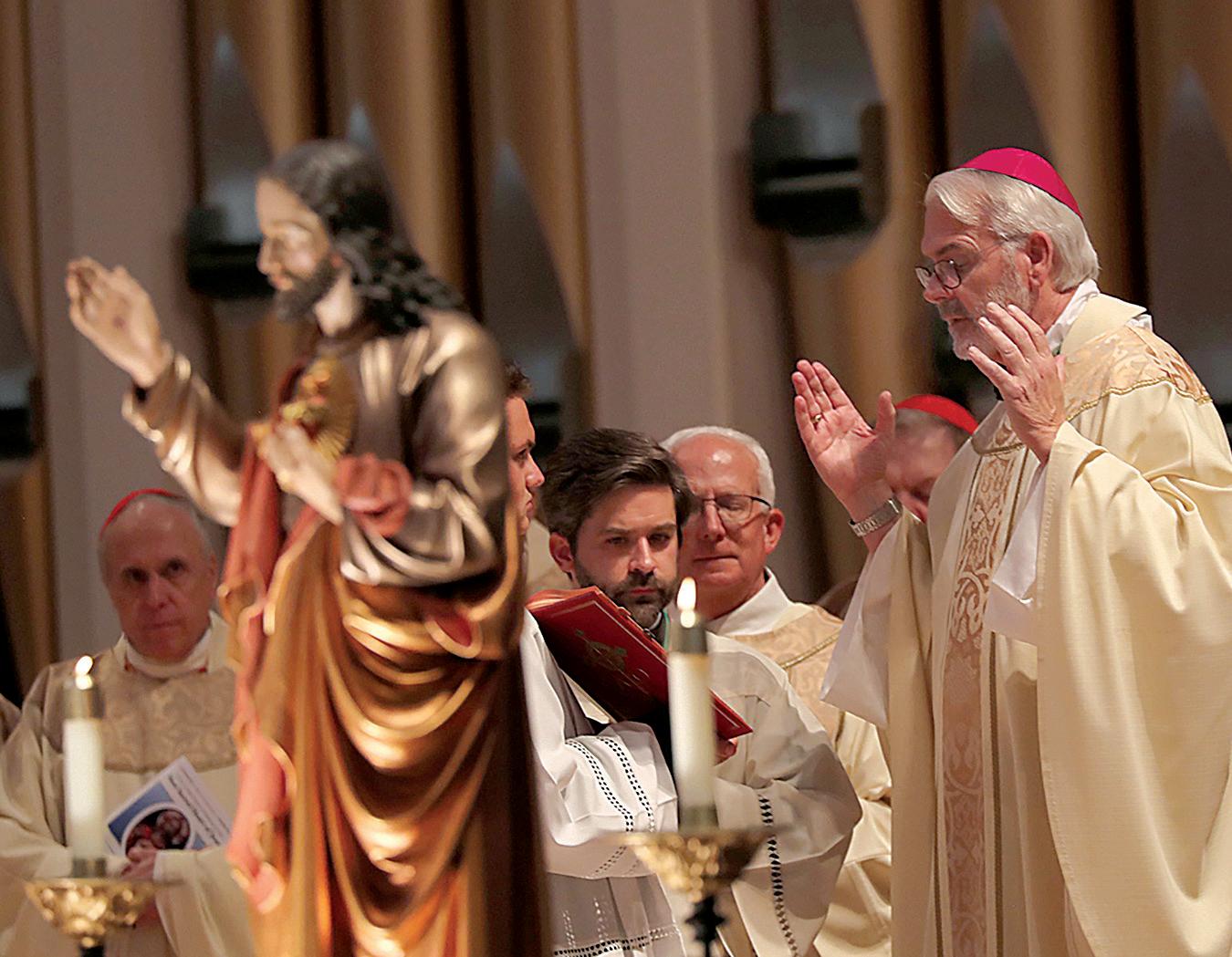
on the Sacred Heart as a source of communion within the Church, emphasizing that unity within the Church is not built on shared preference but on divine initiative and grace. He described the Church as “a brotherhood not created by personal preference, affinity or ideology but by the providence of God and the will of Jesus Christ.”
Archbishop Bernard Hebda of St. Paul and Minneapolis pointed to the devotion as a path of interior renewal grounded in prayer and sacramental life. Citing St. John Henry Newman’s phrase “cor ad cor loquitur” (“heart
speaks to heart”), he said the deepest encounter with Christ takes place in a personal, interior communion shaped by prayer and the Eucharist.
Shortly before the Mass, bishops spent time in Eucharistic Adoration and venerated the relics of St. Margaret Mary Alacoque, the 17th-century French nun whose visions helped spread devotion to the Sacred Heart throughout the Church.
In his homily, Lori placed the consecration within the broader moral and spiritual tensions of Church and national life, framing it as an act of trust.
“To love as Christ loves is the true measure of Christian discipleship, and it is the true measure of our humanity,” he said.
He acknowledged that this measure has often not been lived out. “Indeed, it has sometimes obscured it almost beyond recognition,” he said, noting the reality of division, sin and failure alongside moments of grace.
Lori said the act of entrustment is not an assertion of strength but an admission of dependence on mercy. “We cannot come to the heart of Christ while pretending we have no need of His mercy,” he said.
The future, he emphasized, cannot be secured by human systems. “The future belongs to God, not to political movements, economic forces or human plans,” he said.
He then described the Sacred Heart as the source of reconciliation itself, not merely a devotional image but a living reality that reshapes those who turn to it.
“The Sacred Heart does not divide, it reconciles,” he said. “It does not harden hearts, it transforms them. It does not simply invite us to receive love; it sends us forth to share it.”
More online
At www.catholicnewsherald.com : Read more about the consecration and Bishop Michael Martin’s own reflection.
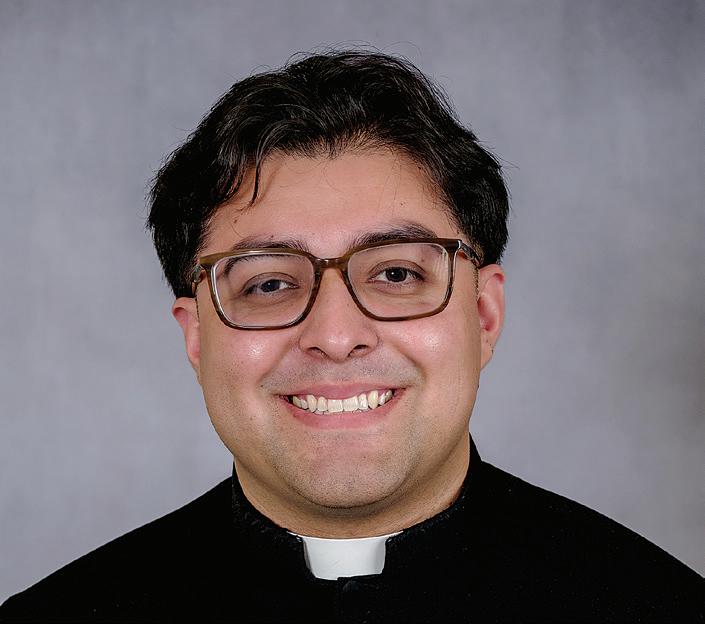
We are delighted to welcome Fr Brian Ilagor to St. Therese Catholic Church. Our parish community looks for ward to the new energy, and spiritual perspective you will bring as you join us in faith and ser vice
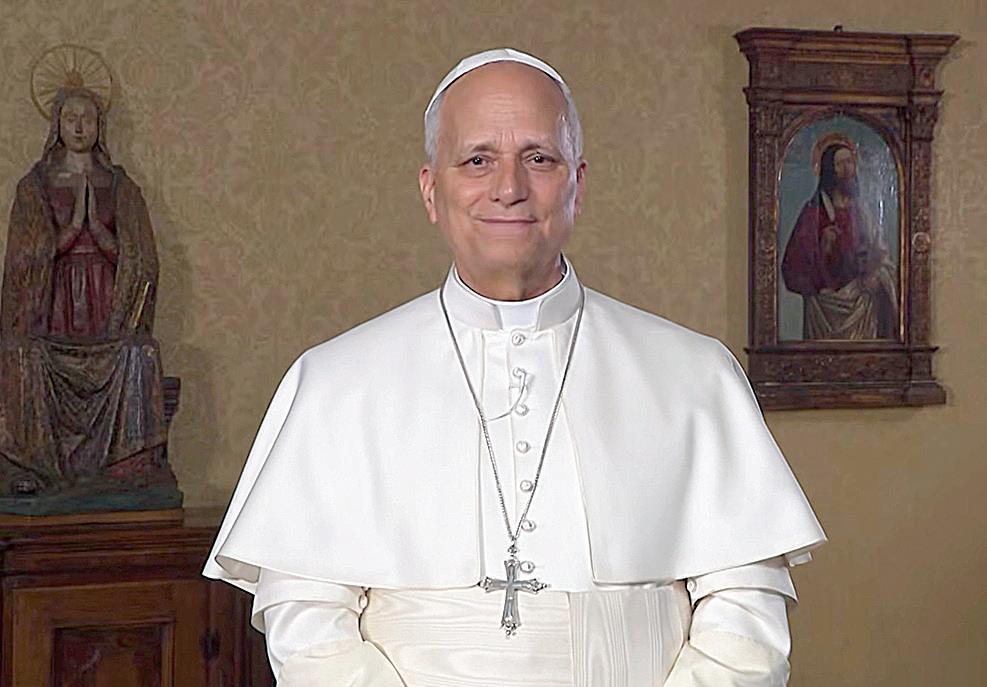
Pope tells American teens true joy isn’t found in ‘endless scrolling’ on social media
VATICAN CITY — Pope Leo XIV has a message for American teens gathered this summer at the Steubenville Youth Conferences: True joy is not found “spending hours in front of a screen or endlessly scrolling on social media.”
In a video message released June 20 for the 50th anniversary of the conferences hosted by Franciscan University of Steubenville, Ohio, the pope told young people his message is simple: “Only the love of God can provide us with true and perfect joy.”
He said, “True peace and perfect joy are gifts from God that come when we open ourselves to Him and trust in His power to transform us.”
Pope Leo underlined that the hours spent scrolling social media often crowd out time better spent in prayer, building real friendships, being with family, studying or playing sports.
He went further, warning that drugs, alcohol, promiscuity or a fixation on image or appearance are not paths to fulfillment either, adding that even wealth, beauty, fame and health are fleeting. For the pope, reflecting on the message of St. Francis of Assisi, the answer lies elsewhere entirely.
He told the young Catholics that only God’s love can give them genuine and lasting joy, and that trusting in God is what allows people to remain steady even when life gets hard.
“If we have the profound conviction that God cares for us as His beloved children, we will not be flustered or discouraged, even in difficult situations,” he said.
‘calls us forward,’ while urging repentance, say bishops
PHILADELPHIA — Juneteenth “calls us forward,” while providing a moment to atone for past sins of racism, including in the Church, and to reaffirm the human dignity of all, said several bishops.
Observed every June 19 and known as the nation’s second Independence Day, Juneteenth commemorates the June 19, 1865, announcement of the 1863 Emancipation Proclamation to more than 250,000 enslaved Black persons in Galveston, Texas.
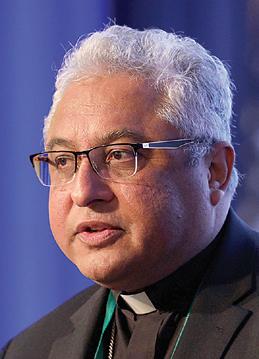
“Juneteenth invites us to confront the painful legacy of racism in our nation,” said Bishop Daniel E. Garcia of Austin, Texas, who chairs the U.S. Conference of Catholic Bishops’ Subcommittee for the Promotion of Racial Justice and Reconciliation.
In a June 18 message, Archbishop Nelson J. Pérez of Philadelphia described Juneteenth as “a day of celebration and hope for the Black community and all Americans.”
Bishop Garcia and Bishop Roy E. Campbell Jr., retired auxiliary bishop of Washington
and chairman of the USCCB Subcommittee on African American Affairs, posted a joint reflection on Juneteenth to the USCCB website. They encouraged people to read the USCCB’s 2018 pastoral letter on racism, “Open Wide Our Hearts: The Enduring Call to Love,” also available on the USCCB website.
Pew survey: Most U.S.
WASHINGTON, D.C. — A majority of U.S. Catholics view Pope Leo XIV favorably, and just over half say President Donald Trump has been too critical of the pontiff, according to new data from the Pew Research Center.
In a survey published June 18, Pew noted its research was conducted from May 26 to June 1, after President Donald Trump’s social media and verbal attacks on Pope Leo when the pontiff raised objections to the war in Iran.
The survey found that 78% of U.S. Catholics have a favorable view of Pope Leo, the first U.S.born pope – a number fairly consistent with his three immediate predecessors.
The survey also found 51% of Catholics said Trump has been too critical of Leo, far more than the shares that said Trump hasn’t been critical enough at just 4%, or those who said he is striking the right balance at 14%.
Meanwhile, 19% of Catholics said Pope Leo has been too critical of the Trump administration, while 16% said he hasn’t been critical enough. Another 35% said Leo is striking the right balance, while another 30% said they were not sure or did not have enough information to answer.
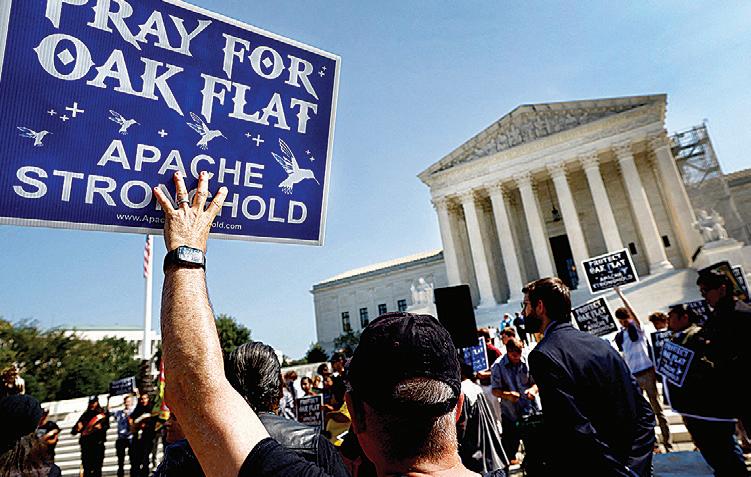
PHILADELPHIA — Although the U.S. Supreme Court declined to hear its case and the land
has been transferred, an Indigenous coalition seeking to protect its sacred site at Oak Flat in Arizona from destruction by a copper mining giant continues its legal efforts.
Luke Goodrich, vice president and senior counsel at Becket and lead attorney for the indigenous coalition using the name Apache Stronghold, said there are still four active lawsuits challenging continued construction of the mine and challenging the land transfer and trying to get it rescinded.
Oak Flat is considered a sacred site by the region’s Indigenous peoples and is on the National Register of Historic Places.
However, after the discovery of copper deposits on the land, Congress authorized in December 2014 the U.S. Forest Service to swap the land for other sites with Resolution Copper and lifted a mining ban on Oak Flat.
Apache Stronghold filed a series of lawsuits and appeals to protect Oak Flat, eventually reaching the U.S. Supreme Court.
A broad range of religious organizations – including the U.S. Conference of Catholic Bishops – had argued the high court should hear the case because it has serious implications for the scope of the Religious Freedom Restoration Act.
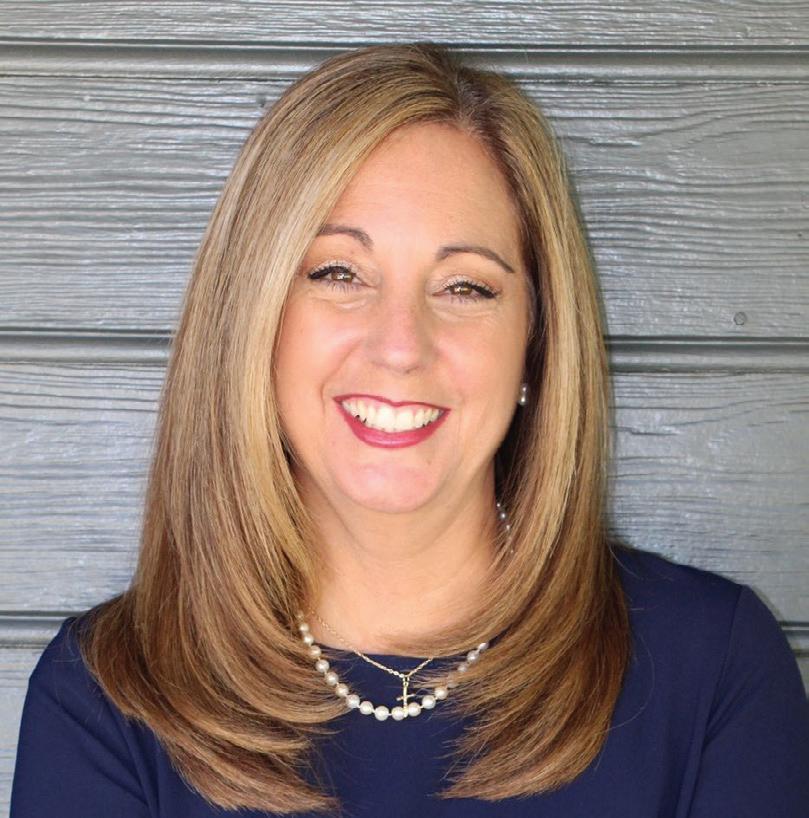
OCEAN CITY, Maryland — Catholics in the Diocese of Wilmington rose early June 12 for a 6 a.m. Eucharistic Procession led by Bishop William E. Koenig on the city’s boardwalk. Processors with guitars led hymns, while others sang and prayed as the sun rose beyond the sand and the Atlantic Ocean beside them.
The procession was part of the National Eucharistic Pilgrimage, which – after coming through the Diocese of Charlotte – spent June 11-12 in the Diocese of Wilmington, which covers Delaware and Maryland’s Eastern Shore.
The pilgrimage’s nine “perpetual pilgrims” joined the 17-block sunrise procession. Eddie Gutierrez, a perpetual pilgrim from Phoenix, encountered two men on the boardwalk who asked him to pray that they stop drinking.
“This is always my favorite encounter because it’s so natural and people are so hungry for prayer, and it’s a perfect opportunity to let them know Who and What they are seeking is Jesus in the Eucharist,” he said.
Please pray for the following deacons who died during the month of June
Canio Codella 6/25/1991
Edward Morovich 6/1/2000
Hugo May 6/23/2010
Gerald Hickey 6/6/2011
John Parrish 6/6/2015
Eugene Gillis 6/6/2017
Ronald Steinkamp 6/10/2018
Thomas Kak 6/25/2021
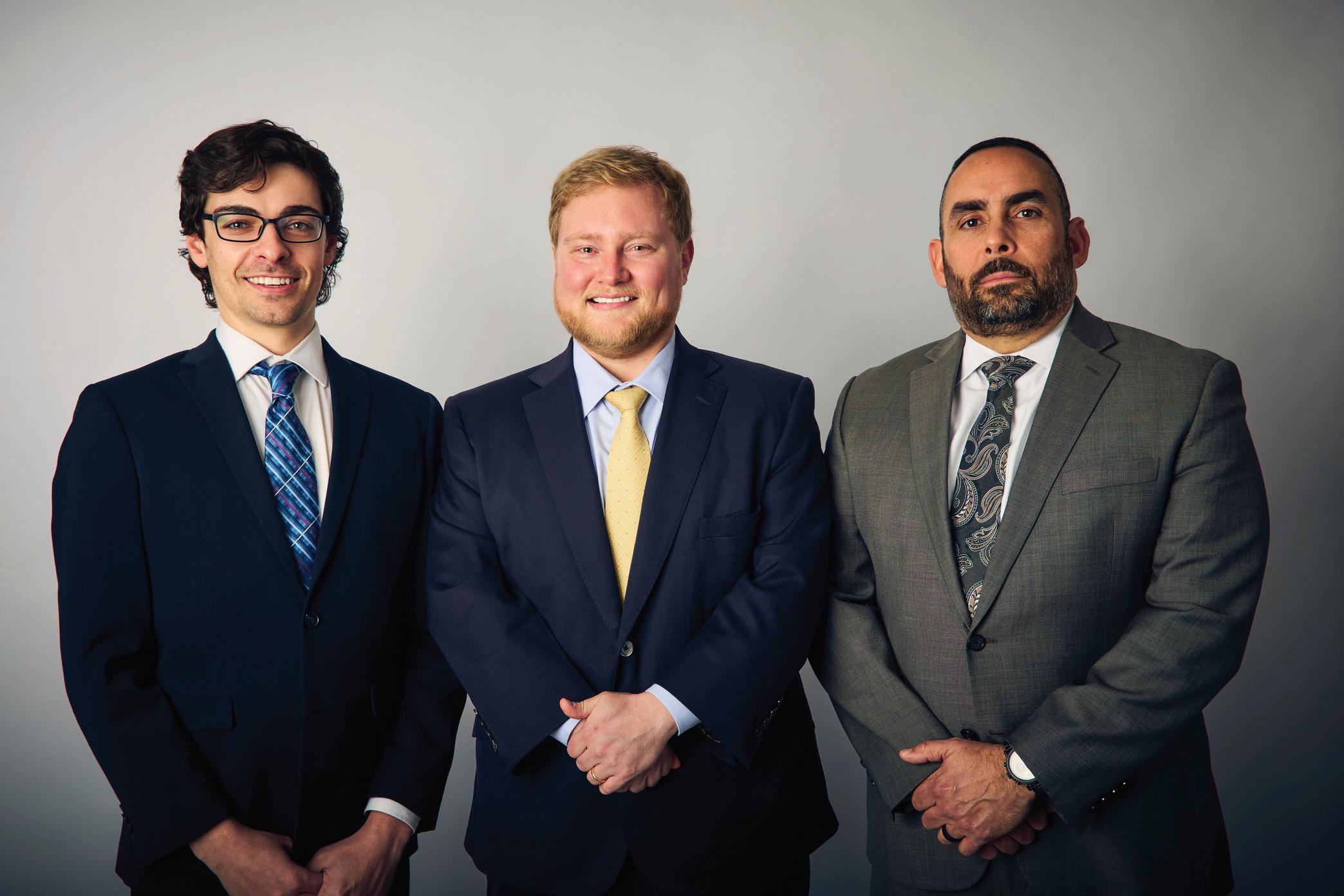

COURTNEY MARES OSV News
PAVIA, Italy — Pope Leo XIV knelt in prayer at the tomb of St. Augustine June 20, returning to the basilica where he once guided the late Pope Benedict XVI as the leader of the Augustinian Order, only this time as the first Augustinian pope in history.
The visit to the Basilica of San Pietro in Ciel d’Oro was a highlight of the pope’s day-long pastoral visit to the northern Italian city of Pavia, where St. Augustine’s remains have rested since the eighth century.
As Pope Leo entered the basilica’s cloister, he told the gathered Augustinians that he recognized many familiar faces among them.
“St. Augustine teaches us to live out what Jesus Christ taught us: to love God and to love our brothers and sisters,” the pope said in offthe-cuff remarks before entering the basilica.
“Charity toward everyone today is a message from St. Augustine and from Jesus Christ that is very important for the world,” he added. “May we all truly be this sign of love and charity in the world. May we know how to live out forgiveness, reconciliation, and peace.”
‘RETURN TO WITHIN YOURSELF’
Inside the basilica, bishops, priests, religious sisters, seminarians and lay faithful from across the northern Italian region of Lombardy awaited the pope’s arrival. Local authorities estimated that 1,800 people gathered in and around the centuries-old basilica.
After processing into the basilica with his fellow Augustinians, Pope Leo knelt in prayer in front of the final resting place of the fifth-century bishop and theologian behind the religious order that shaped his own vocation.
“The figure of St. Augustine shines with a precious light,” the pope said, citing St. Augustine’s own words, “Do not go outside yourself; return to within yourself; truth dwells in the inner man.”
That inward turn, the pope said, speaks directly to a restlessness in the world today, particularly among the young.
“The need to return to oneself, to avoid
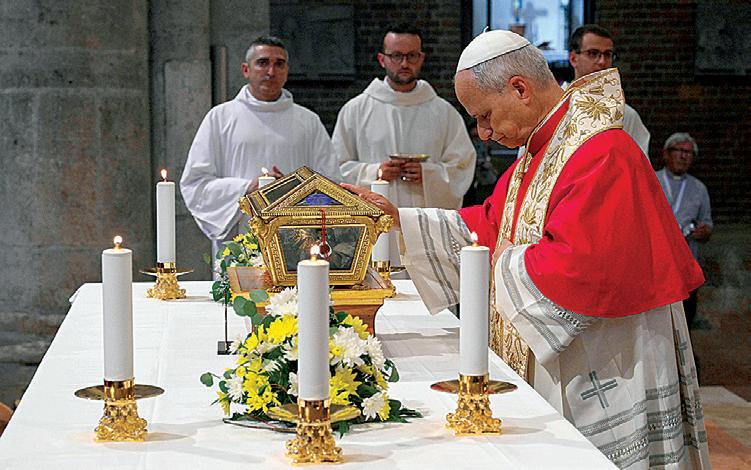
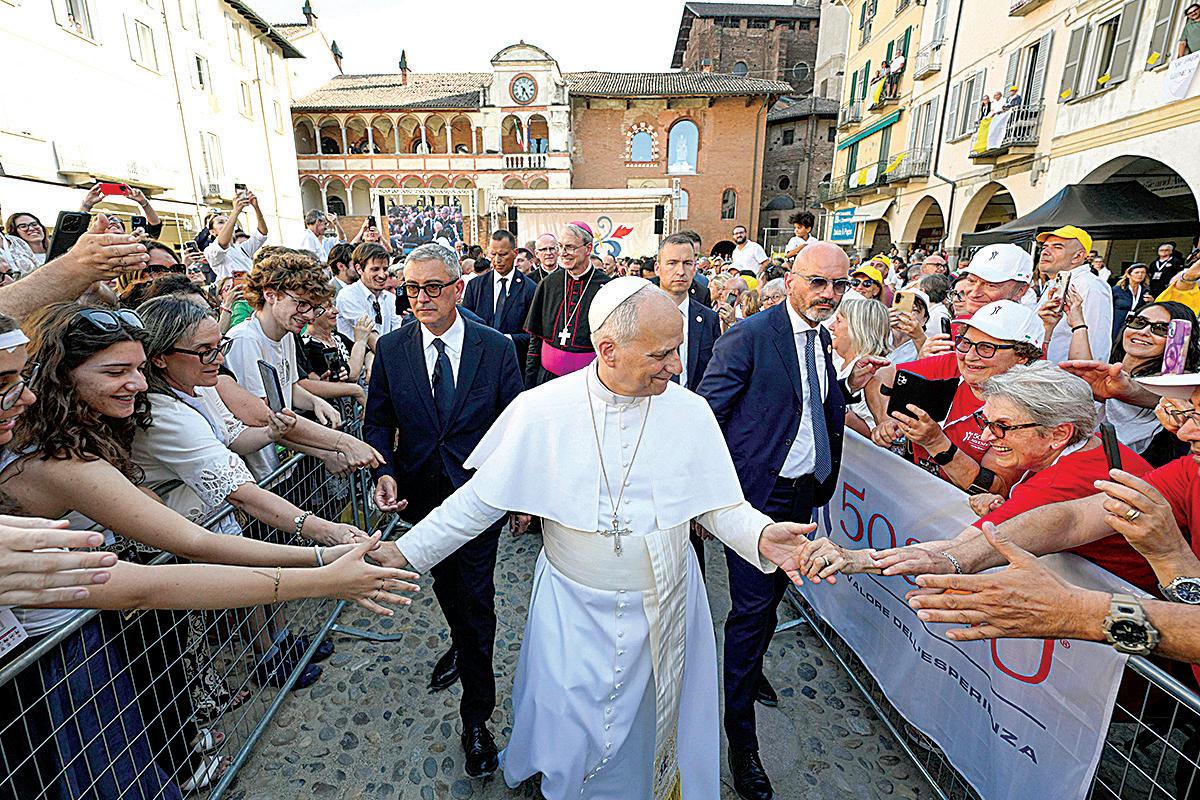
‘St. Augustine’s soul was filled with this thirst; he is an example of the healthy restlessness that stirs within those who seek, those who study, and those who educate.’
Pope Leo XIV
being scattered by external fragmentation, to seek and find a meaning that guides our lives and animates our relationships, is a need shared by all,” he said. “Today it resurfaces in various ways even amid the haste and distraction of daily life, especially in the questions posed by the youngest among us.”
“At a time when many people seem to have lost their spiritual appetite or, for various reasons, no longer find the Christian faith appealing for their lives, we are called first and foremost to proclaim
the Gospel – a joyful and liberating message of Jesus Christ – that brings out the beauty of faith for our lives and for our society,” he said.
The pope urged those present to accompany others toward faith by keeping Jesus at the center of their witness. “We must proclaim the heart of the Gospel – that is, Jesus – who, through His incarnation, death and resurrection, reveals to us the mystery of God and, at the same time, the mystery that is ourselves,” he said.
St. Augustine’s relics were brought to Pavia around the year 720. According to the Venerable Bede, after St. Augustine’s death in 430 in Hippo Regius, in present-day Algeria, his remains were transferred to Cagliari, Sardinia, before being acquired and brought to Pavia by the bishop, who was an uncle of the Lombard King Liutprand.
Pavia served as the capital city of the Kingdom of the Lombards and later of the medieval Kingdom of Italy. It is home to one of Europe’s oldest universities. The Romanesque basilica in Pavia, consecrated by Pope Innocent II in 1132, is also the resting place of
the sixth-century philosopher Boethius.
“Pavia for us is a special place for our identity as Augustinians and our mission to bring Augustine to the world,” said Father Alexander Lam, a Peruvian Augustinian friar who serves as the order’s vicar general.
“It is a beautiful experience to be here to share with our friars, our brothers in the order, to be part of this pilgrimage,” he said, adding, “It is not only a visit, it is a symbol of (Pope Leo’s) spirituality.”
For Pope Leo XIV, the basilica holds personal significance. When he served as prior general of the Augustinian Order, he once
Monsignor Daniele Baldi, vicar general of the Diocese of Pavia, said the pope’s arrival carried particular weight for the local Church.
“It’s something extraordinary and beautiful,” he said. “He comes to strengthen our faith, to speak to us, and to support us in our commitment to peace and unity – it’s a beautiful thing.”
“He’s coming to Pavia, where the remains of St. Augustine are kept; he is a son of St. Augustine, and our city is one that is committed to the search for truth,” he added. “And St. Augustine teaches us just how important and relevant this quest is, and he also gives us all the concrete, specific ways to put it into practice.”
Among those waiting in the piazza was Abiel Muriel, 62, who moved to Pavia from Barranquilla, Colombia, and now lives near the cathedral. He said the pope’s visit, so close to his home, would be a blessing he carries for the rest of his life. Maria Victoria, also from Colombia and now living in Pavia, said she wished her mother, a devout Catholic who has Alzheimer’s disease and could not attend, could have shared her joy of seeing the pope in person.
After praying inside the cathedral, Pope Leo walked to the nearby Piazza Vittoria, where an estimated 3,500 people gathered to hear him speak, despite the sweltering heat.
“St. Augustine’s soul was filled with this thirst; he is an example of the healthy restlessness that stirs within those who seek, those who study, and those who educate,” Pope Leo told the crowd, which included students from the University of Pavia, a university founded in 1361.
In the evening, Pope Leo traveled via helicopter from Pavia to Sant’Angelo Lodigiano, the hometown of St. Frances Xavier Cabrini, to venerate the heart of the first U.S. citizen to be canonized. Mother Cabrini was born in northern Italy but was sent as a missionary to the United States, where she became a naturalized citizen.
“Today the experience we had welcoming Pope Leo here was very beautiful,” Gidelvyn Pena told OSV News as the 10-year-old waited to wave goodbye to the pope in Pavia. “It is not something you do every day.”
accompanied Pope Benedict XVI to the same tomb for the last papal visit to Pavia in 2007.
Father Joseph L. Farrell, prior general of the Augustinians, welcomed the pope to the basilica, speaking about the significance of St. Augustine before adding, “If these words sound familiar to you, it is because they were the ones you, as prior general of the Order of St. Augustine, addressed to Pope Benedict XVI on April 22, 2007, during his pastoral visit to Pavia and to this basilica. Here we are, 19 years later.”
— OSV News
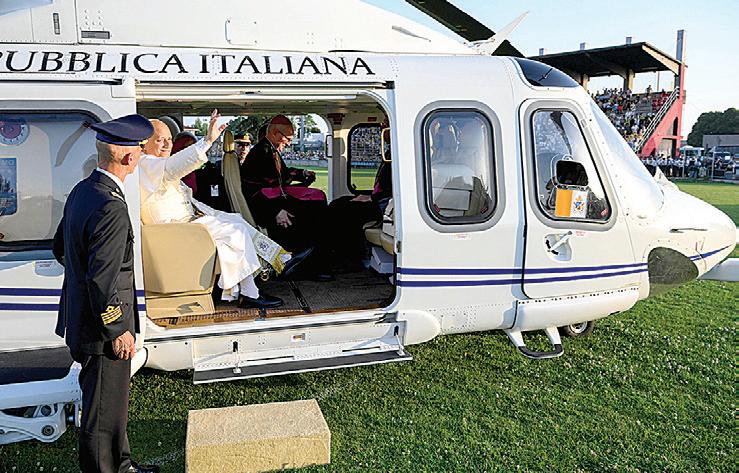
SANT’ANGELO LODIGIANO, Italy — Pope Leo XIV visited the northern Italian hometown of St. Frances Xavier Cabrini June 20, venerating a relic of her heart and highlighting the enduring relevance of her mission to migrants.
Speaking at the Parish of Sts. Anthony Abbot and Frances Cabrini in Sant’Angelo Lodigiano, the pope said, “I am here to pay tribute to Mother Cabrini, patroness of migrants and the first saint of the United States of America, who was born here in Sant’Angelo Lodigiano in 1850 and died in Chicago, my hometown, in 1917.”
Pope Leo traveled to Mother Cabrini’s hometown, where thousands gathered to welcome him.
Inside the church, Pope Leo prayed before the relic of Mother Cabrini’s heart, brought from the saint’s motherhouse in nearby Codogno, and addressed those gathered there.
Reflecting on Mother Cabrini’s life, he recalled how Pope Leo XIII redirected her missionary ambitions from China to the United States to serve Italian immigrants. Calling her witness especially timely, the pope asked: “What could be more relevant today than a missionary charism dedicated to serving migrants?”
Quoting Mother Cabrini’s writings, Pope Leo XIV said, “No task will be too difficult, no land too far away, no person too wounded for the love of the heart of Jesus and for all those called to be bearers of Christ’s love in the world.”
Before returning to Vatican City, he encouraged young people to learn from Mother Cabrini’s example and concluded his visit by telling them, “You young people can change the world. We are waiting for you.”
SAN CRISTOBAL DE LA LAGUNA, Spain — Concluding his apostolic visit to Spain, Pope Leo XIV issued a scathing rebuke to human traffickers and those exploiting vulnerable people, demanding they “stop” and “repent.”
Speaking on the island of Tenerife, a major arrival point for African migrants, the pope warned exploiters they will face divine justice for organizing “death routes.”
Earlier in the day, Pope Leo visited the “Las Raices” temporary reception center, which has housed over 54,000 migrants since 2021. The pope met with residents, including a 16-yearold from Gambia, and listened to harrowing testimonies of Atlantic sea crossings.
Addressing Catholic volunteers and integration organizations, Pope Leo emphasized that welcoming migrants is an act of Christian charity, not just a social undertaking. He called integration a reciprocal journey, urging societies to treat migrants as people created in the image of God rather than legal problems to be managed.
World’s conflicts are ‘fed’ more readily than people, pope says
JUNNO AROCHO ESTEVES OSV News
ROME — World hunger has only worsened as conflicts in the world take priority over human lives and weaponry is allowed more distribution than basic humanitarian needs, Pope Leo XIV said.
Addressing members of the United Nations’ World Food Program, or WFP, June 22, the pope said that while alleviating human suffering “is widely recognized as essential in principle,” humanitarian needs have taken a back seat to “international priorities.”
“In effect, conflicts are ‘fed’ more readily than people are nourished. This reality reflects not only operational shortcomings but also a fundamental imbalance in political and moral priorities,” the pope said.
Headquartered in Rome, the WFP is the world’s largest humanitarian organization addressing hunger and promoting food security. Present in more than 120 countries and territories, the WFP provides food and humanitarian assistance. As of June 2026, WFP has provided 15.8 billion food rations worldwide, the organization said.
Arriving at the WFP headquarters, the pope was welcomed by Cindy McCain, the organization’s former executive director. McCain, the widow of the late U.S. Sen. John McCain, R-Ariz., announced in February that she would step down as head of the WFP to focus on her health after suffering a mild stroke in October 2025.
In her welcome address, McCain said that for those suffering from hunger, the pope’s voice was “one of – if not the – the most powerful on earth.”
“You have spoken for them with courage and with love – not as statistics, but as brothers and sisters, human beings made in the image of God, deserving of dignity, of care, and of enough food to live and to thrive,” she said.
In his address, Pope Leo said the WFP’s commitment to those in need “resonates profoundly with the Catholic Church’s mission to uphold human dignity and to foster fraternity, rooted in the Gospel’s call to love our neighbor.”
Reflecting on crises that have evolved from “isolated events into persistent realities,” the pope said that due to a lack of a “shared ethical horizon,” the world has instead shifted from “multilateralism toward a disorderly and conflict-ridden multipolarism with a prevailing sense of mistrust.”
“This trend reveals a striking paradox: unprecedented global productive
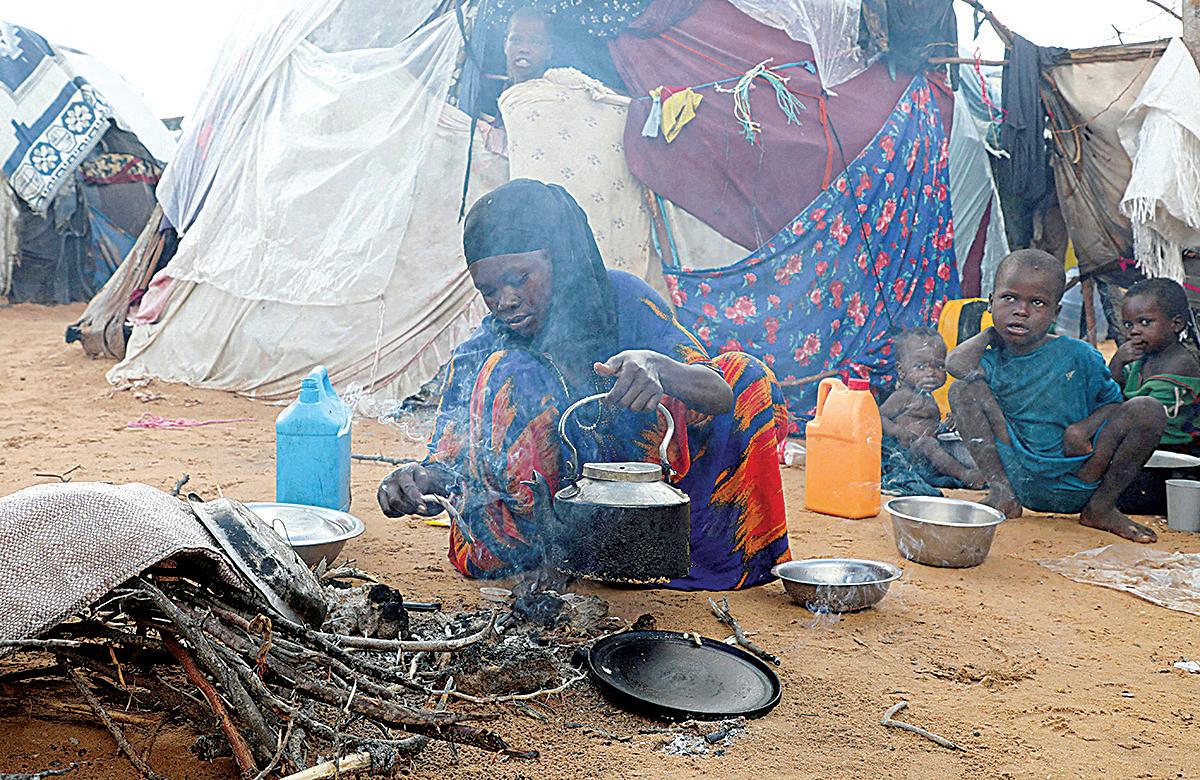
An internally displaced Somali woman prepares breakfast for her family outside their makeshift shelter in Mogadishu. Somalia is nearing the brink of humanitarian catastrophe, with nearly 6.5 million people – including 1.8 million children – suffering from “acute food insecurity” because of recurrent drought, displacement, prolonged instability and insufficient resources.
capacity exists alongside expanding zones of extreme vulnerability,” he said.
“The same forces that drive economic growth often exacerbate exclusion and marginalization. Although alleviating human suffering is widely recognized as essential in principle, humanitarian concerns increasingly risk being relegated to a secondary place among international priorities,” Pope Leo said.
The pontiff also lamented the “progressive bureaucratization of solidarity” coupled with “the quiet commodification of human life,” which results in delayed assistance to those in need due to bureaucratic red tape and the access to essential aid, especially food,
being influenced “by economic or strategic considerations.”
Calling for a “renewed commitment to multilateral cooperation,” the pope appealed to governments worldwide to increase resources for fighting hunger and “to remove the obstacles that prevent aid from reaching those in need.”
“The world today could live without hunger,” Pope Leo added. “The resources should be available; the capacity for food production exists. And yet oftentimes, the resources are spent on promoting war and conflict and other kinds of – if you will –less important end results.”
As a result, he said, “hunger continues to increase in some parts of the world.”
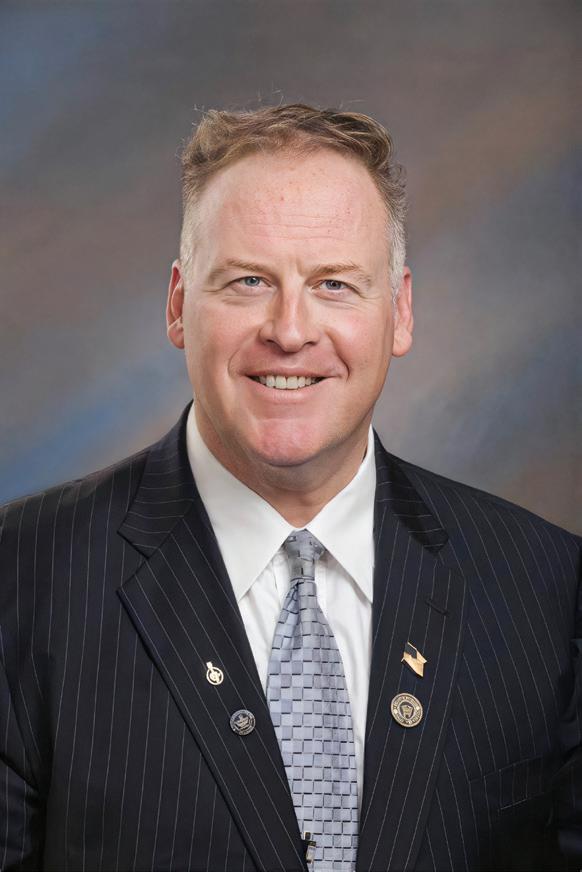
decisions?
For over 140 years, the Knights of Columbus has been committed to helping families plan their nancial future and achieve economic security, a tradition carried on today through its insurance products. Book a complimentary financial needs analysis today.
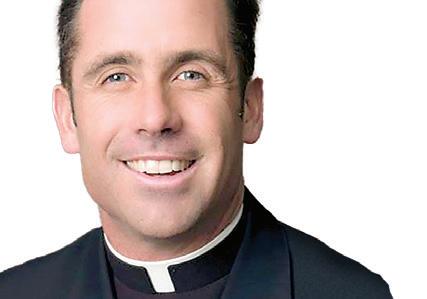
What are your plans for this summer?
For many, vacation plans are taking shape. Some are preparing for important transitions in life – from high school to college, from school into the working world, or into marriage. Others may be settling into a new home or preparing to move elsewhere. And for some, summer may simply bring the continuation of daily work, ongoing challenges or the burden of a difficult cross that makes even sunny days feel overcast. In every season of life, we are invited to walk with Jesus Christ as His disciples. This summer can be an opportunity for all of us to walk with Jesus. Jesus continually invites us to come and follow Him (John 1:39), to hear His voice (John 10:27), and to love as He loves (John 13:35). One of my favorite passages for summer prayer is the Road to Emmaus (Luke 24:1335), where disciples encounter the risen Lord while walking together.
TAKE THE WORD WITH YOU
Wherever this summer takes you – to the mountains, the beach, the lake, or simply into the routines of daily life – take the living Word of God with you and turn it over in your heart, as Our Blessed Mother did (Luke 2:19).
In his recent pastoral vision for our diocese, Bishop Michael Martin speaks to the heart of our mission: “Everyone so
loves Jesus, we share Him with others.” Summer offers a wonderful opportunity for families, individuals and groups of friends across our diocese to listen to or read the bishop’s pastoral vision and prayerfully reflect on it together.
Perhaps once a week you might discuss the Sunday Gospel, watch part of the bishop’s video reflection, and ask: How is Jesus inviting us to grow this week as His disciples?
BE A JOYFUL WITNESS
Our world does not need more fans; it needs players – missionary disciples who are joyful witnesses to the hope, mercy and love of Jesus Christ, Bishop Martin also reminds us.
A simple invitation to Mass, a conversation with a neighbor, serving someone in need, praying together as a family or faithfully showing up each Sunday ready to worship and encounter the Lord can become powerful ways of sharing Christ with others. May this summer be a season of renewal, joy, rest and deeper faith for all of us.
Let us walk with Jesus each day, praying simply: “Thank you, Jesus. I love you, Jesus. I will follow you, Jesus.” And may we so love Jesus that we share Him with others.
FATHER RICHARD SUTTER is pastor of St. Gabriel Parish in Charlotte.
We proclaim Christ to the world around us by our efforts to provide a safe environment for all people, especially the young and the vulnerable.
The Catholic Church is absolutely committed to the safety of children. Together we can make a Promise to Protect and a Pledge to Heal.
Suspect sexual abuse or misconduct?
If you have information about possible sexual abuse or misconduct by any clergy, employee or volunteer of the Diocese of Charlotte, report concerns safely, securely and anonymously 24/7 over the phone using the diocese’s new hotline, 1-888-630-5929, or online: www.RedFlagReporting.com/RCDOC
Please note: If you suspect a child is in danger, please contact 9-1-1 or your local law enforcement agency.
Safe Environment training
Every Church worker must go through abuse prevention and education training. Find more information about the Diocese of Charlotte’s Safe Environment program, sign up for Protecting God’s Children training and more: Go to www.charlottediocese.org and click on “Safe Environment”
For more information or questions, please contact the diocese’s Safe Environment Office: www.safeenvironment@rcdoc.org or 704-370-3222
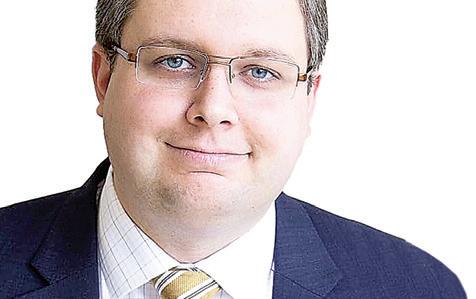
On June 11, the U.S. bishops undertook the long-anticipated consecration of the nation to the Sacred Heart of Jesus. Ahead of the Mass at which the consecration took place, three American archbishops offered to their brothers reflections on the Sacred Heart of Jesus.
The presentation by Louisville’s Archbishop Shelton J. Fabre, on how the Sacred Heart of Jesus builds communities, was a tour de force of what living with the love of the Sacred Heart should look like in the Church, for the good of society.
MODELING COMMUNION
Archbishop Fabre offered a stirring examen for his brother bishops, building upon Christ’s heartfelt plea to the apostles on the night before He offered His life in love: “I give you a new commandment: love one another. As I have loved you, you also should love one another. This is how all will know that you are my disciples, if you have love for one another” (John 13:34-35).
Challenging his brothers to take these words to heart, Archbishop Fabre stressed the need for unity within their ranks, observing how “before the apostles would preach, govern, sanctify, and hand on the life of the Church, they first had to learn to love one another as brothers.”
Urging further reflection on Christ’s commandment of love, Archbishop Fabre asked his brother bishops to confront the sometimes obvious, sometimes subtle divisions that can creep into their ranks. Why? Because, as he said, if bishops are to ask their priests and flock “to build communities rooted in charity, encounter, patience and mutual love,” then it is incumbent upon them to be exemplary models “regardless from which directions the political, partisan or civic winds may blow.” He warned that the danger of not doing so risks making their communion “reduced to a temporal ideological model” rather than “the spirituality of communion and mission we visibly live and foster as genuine fraternity.”
“If we desire our parochial communities to become authentic parishes animated by communion, missionary discipleship, trust and mutual charity, we must first model that Communion,” Archbishop Fabre urged. As he rightly pointed out, those entrusted to the bishops’ care “should always be able to look to us and discernibly see living icons of what it means to follow Jesus Christ.”
DIVISION HARMS THE CHURCH
These words struck me as most timely and necessary. We live in a society plagued with deep divisions and polarizing ideologies, and the Church is not immune from mirroring these tendencies. Any divisions that exist
among the bishops, which Archbishop Fabre articulated so well, “deeply harms the Church’s witness and calls us to feel the gravity of our unity’s fragility.”
Bishops, he argued to his brothers, are called to “ensure that our words and choices make visible our life-giving incorporation into Jesus Christ, a lived participation in Christ that binds us to each other with an unfeigned love.”
In warning against the temptations to categorize people, which our polarized and fractured world so often encourages, Archbishop Fabre stressed encountering others in the manner of the Sacred Heart of Jesus. “If we are to always be continually striving to love one another authentically as brothers, we must resist the temptation to reduce one another to labels or conventions.”
To a conference that has had its share of embroilments, Archbishop Fabre
‘For the recent consecration of the U.S. to the Sacred Heart of Jesus to bear fruit, our hearts must be transformed.’
observed: “The people entrusted to our care do not simply need efficient leadership or compelling strategies. They long to encounter the Sacred Heart of Jesus in us, their shepherds.”
And to a conference at times divided over prudential matters, Archbishop Fabre encouraged: “The Christian faithful seek to see bishops who continually and genuinely love one another, speak of one another with reverence, bear one another’s burdens patiently, and remain united even amid difficulty. Such a witness is an exemplar of the evangelical beatitudes and possesses a formidable evangelical power.”
Simply put, for the recent consecration of the United States to the Sacred Heart of Jesus to bear fruit, our hearts must be transformed – and Archbishop Fabre’s impassioned appeal got to the heart of the matter. He laid out a vision for the U.S. episcopacy that can equip them to be shepherds with the heart of Christ.
The challenge he posed to his brother bishops was simple: To love as Christ loves, and to model this love for the world.
MICHAEL R. HEINLEIN is author of “Glorifying
The
and
‘Making
the decision to have a child
– it is momentous. It
is to decide
forever to have your heart go walking around outside your body.’
— Elizabeth Stone, journalist and
author
Over the years I’ve heard so many parents share this quote from Elizabeth Stone, because it speaks to the (literal) heart of raising a child: a calling that involves vulnerability, anxiety, lack of control, and above all, overwhelming love.
But what about the original One who let His (literal) heart be broken open and given to us?
In this month dedicated to the Sacred Heart of Jesus, I’m always struck by the vivid imagery of this title and devotion. Christ is shown holding His own heart, pointing to a human heart pierced with thorns, held in His wounded hands, giving His whole self to us in the most visceral way.
WHAT THE HEART CAN HOLD
What is the holy beat of the Sacred Heart if not the same joyful, painful throb that parents feel the moment a child is placed in their arms, knowing they will forever have their whole heart “walking around outside their body”?
Every time I speak at a church or conference, parents and grandparents come up afterward and want to tell me their most painful stories. Grief, loss, illness, estrangement, addiction, abuse – I am brought to my knees by what the human heart can hold.
Yet I’m equally amazed by how the heart can heal, mend, stretch, yearn and hope. I have witnessed the resilience and radical love of parents who come to understand that while they cannot control or change their children, they can always come to God with every hope that Love will carry their children through whatever life brings.
My own body bears physical scars and emotional wounds. The deepest pains I have carried are from parenting: the babies I have buried, the wounds my children suffered that I was powerless to stop, and the dreams I had to let die to embrace the real life before me. But the Sacred Heart reminds me that nothing – not even the bruised or broken parts of our lives – needs to be hidden from God, especially not from Jesus, who never shielded His own flesh from wounds but laid down His whole life out of love.
The 17th-century mystic St. Margaret Mary Alacoque wrote of her intense visions of the Sacred Heart of Jesus: “The divine heart … is an abyss of joy into which all of us can immerse our sorrows … an abyss of love to meet our every need.” She spoke of God’s love and mercy in words that resonate with the unconditional, sacrificial love of anyone who has ever given their life to a child: “The Sacred Heart is an inexhaustible fountain, and its sole desire is to pour itself
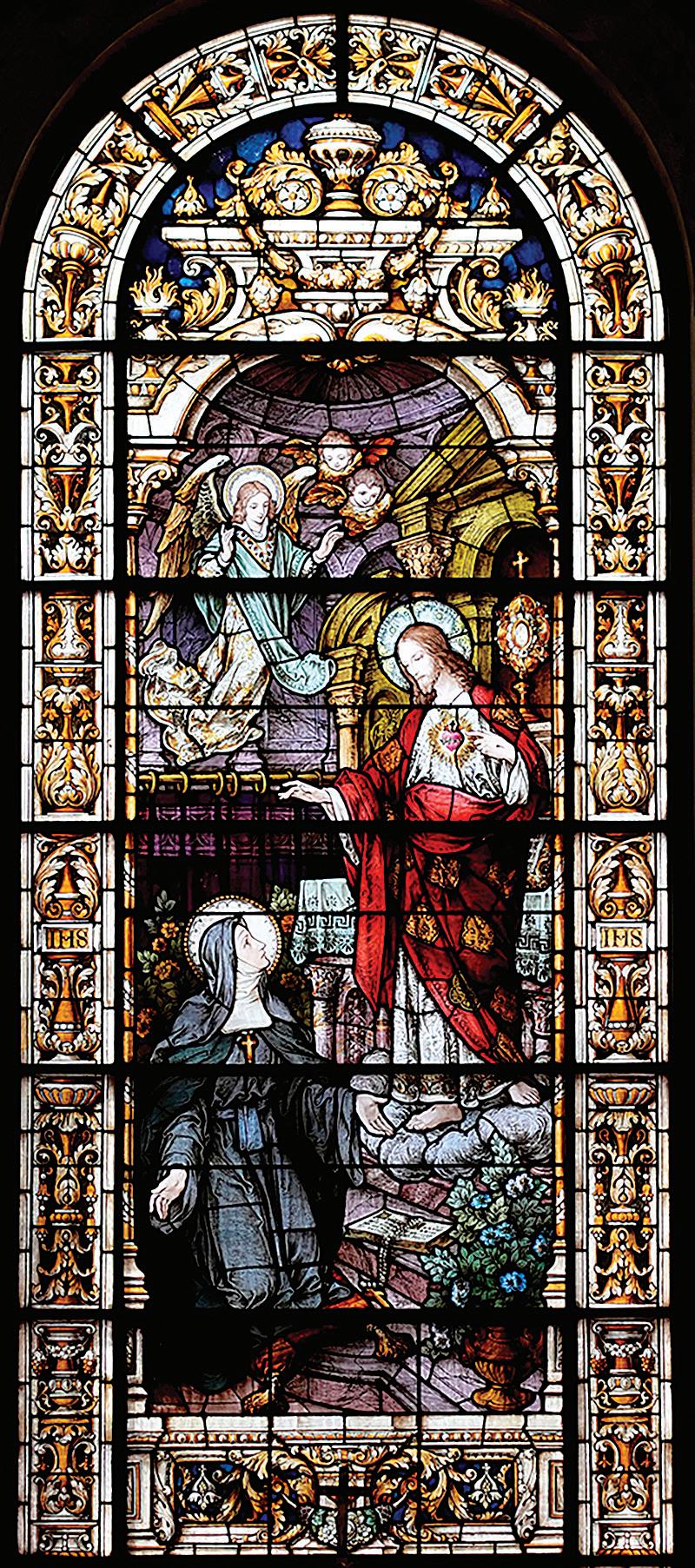
GREGORY A. SHEMITZ | OSV NEWS
The revelation of the Sacred Heart of Jesus to St. Margaret Mary Alacoque is depicted in a stained-glass window at St. Ignatius Loyola Church in the Upper East Side neighborhood of New York City. The U.S. bishops consecrated the United States to Jesus’ Sacred Heart on June 11.
out into the hearts of the humble so as to free them and prepare them to lead lives according to his good pleasure.”
Can we step back to let this sacred iconography startle us anew? A shining, flaming heart encircled by thorns and topped by a cross. An organ outside the body, outstretched and offered to us. What is Christ saying to us through this image if not the truth that love is costly and painful – yet also the ultimate offering of hope? You cannot see a bleeding heart and turn away unchanged. We let our hearts walk around outside our bodies, and so does God, the ultimate loving parent. What a gift to have not just a single solemnity but a whole month – at the sweet start of summer – to celebrate the greatest gift of the Sacred Heart. A heart that cannot contain all the compassion and mercy it offers, spilling over in abundance. A heart that beats for all of us, God’s beloved children walking out into the world, always part of the Body of Christ.
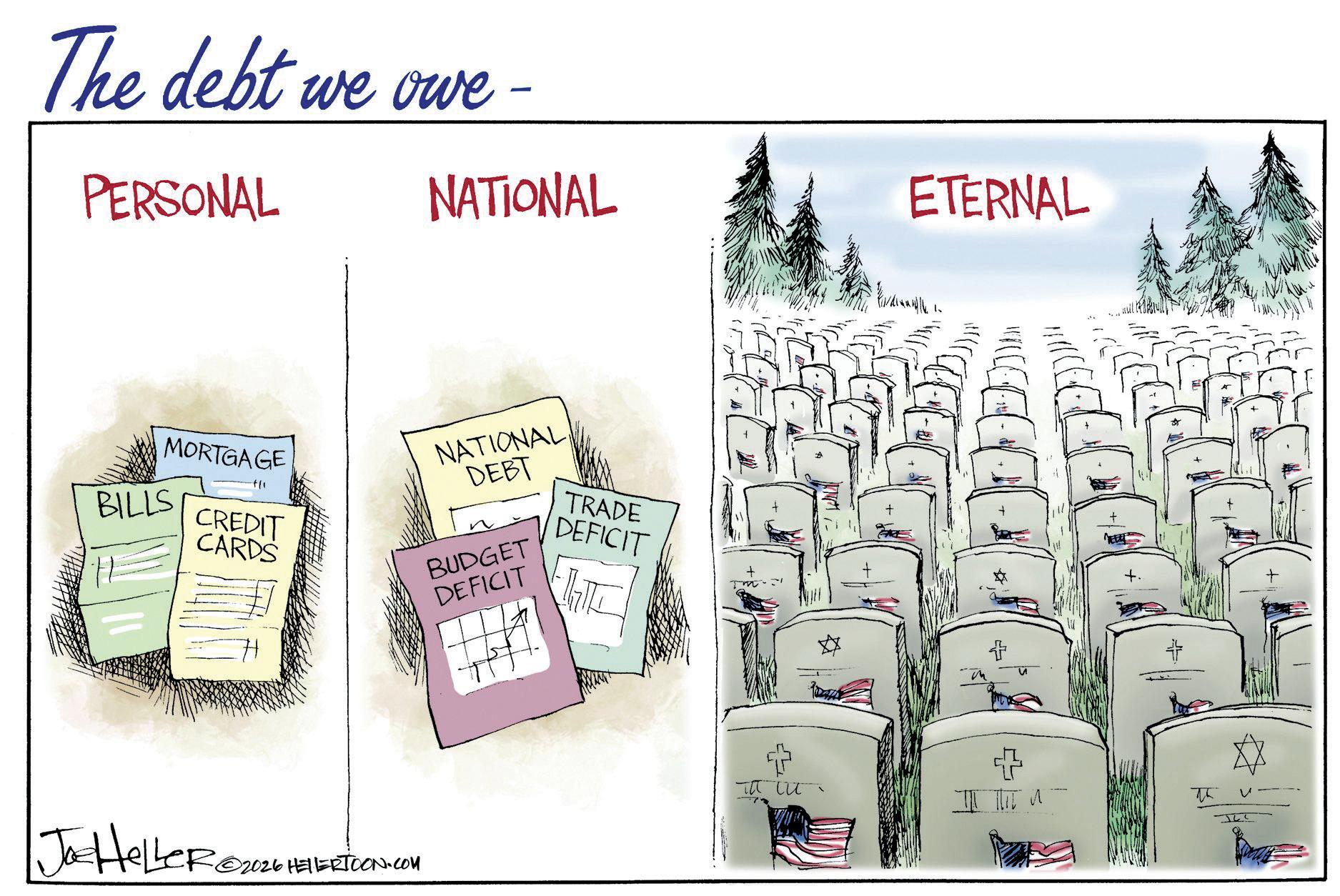
‘Vacation
is a time for rest and to seek signs of God in the beauty of creation.’
Pope Leo XIV
From online story: “Eucharist transforms believers into Christ’s body and counters division, pope says”

The Catholic News Herald reached the Facebook and Instagram feeds of a record-high more than 5 million people in English and Spanish last month. The most talked about post? Coverage of the National Eucharistic Pilgrimage through the Diocese of Charlotte. Join the conversation: www.facebook.com/CatholicNewsHerald
On YouTube over the past 30 days ending June 23, videos produced by the Catholic News Herald have been viewed more than 35,000 times. The most popular video? Livestream of the Ordination Mass to the priesthood.
Over the past 30 days ending June 23, 45,000 visitors to www.catholicnewsherald.com have viewed a total of 75,000 pages. The top 10 trending headlines are:

The Catholic News Herald welcomes letters from readers. We ask that letters be originals of 250 words or fewer, pertain to recent newspaper content or Catholic issues, and be written from a perspective of Christian charity.
To be considered for publication, each letter must include the name, address and daytime phone number of the writer for purpose of verification. Letters may be condensed due to space limitations and edited for clarity, style and factual accuracy.

The Catholic News Herald does not publish poetry, form letters or petitions. Items submitted to The Catholic News Herald become the property of the newspaper and are subject to reuse, in whole or in part, in print, electronic formats and archives.
E-mail: catholicnews@rcdoc.org
Mail: Letters to the Editor Catholic News Herald 1123 S. Church St. Charlotte, N.C. 28203