

April 17, 2026
VOLUME 35 • NUMBER 14
1123 S. CHURCH ST. CHARLOTTE, N.C. 28203-4003 catholicnews@rcdoc.org 704-370-3333
PUBLISHER
The Most Reverend Michael T. Martin, OFM Conv., Bishop of Charlotte
INDEX
Contact us 2
Español 12-13
Our Diocese 4-10, 14-19
Our Faith 3 Scripture 3
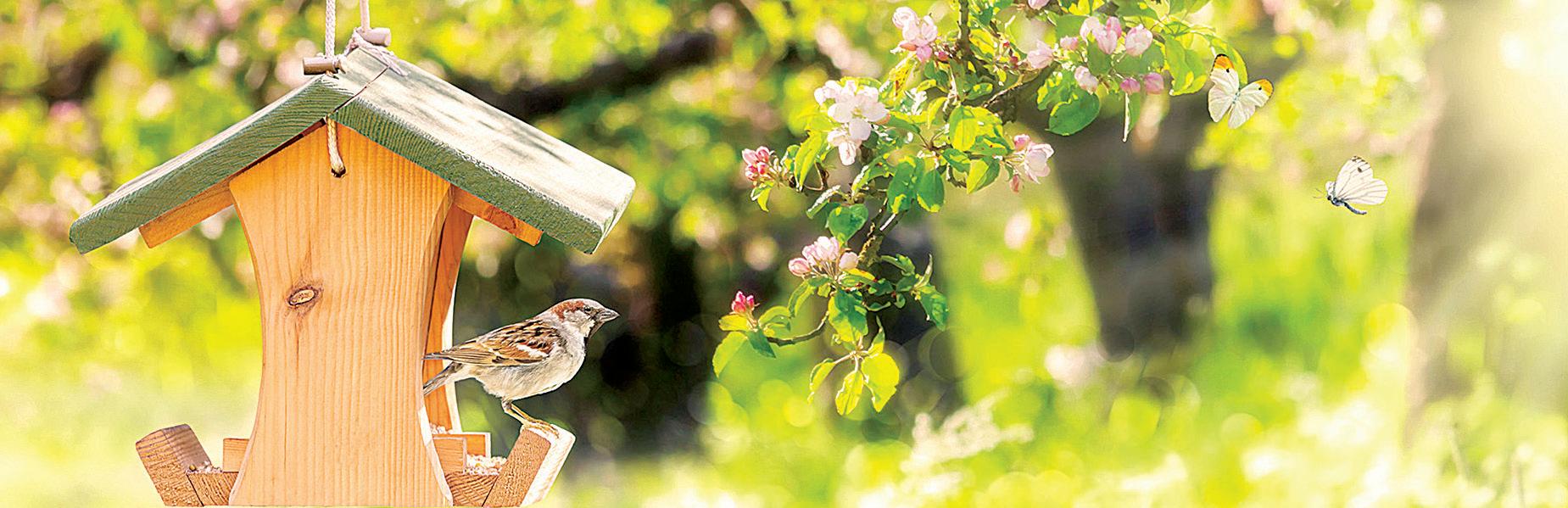
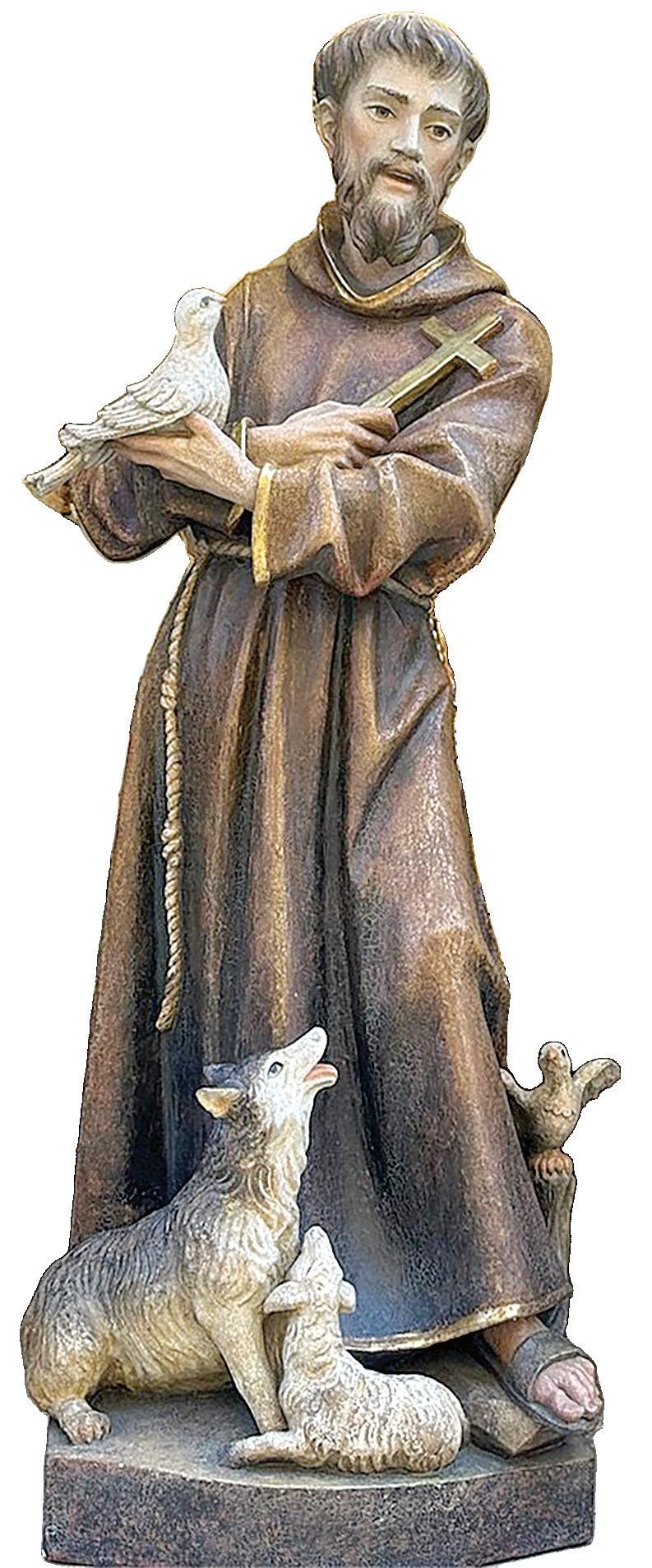
hile St. Francis of Assisi was declared a saint nearly 800 years ago, it was not until nearly 50 years ago that he became known as the patron of ecology. “John Paul II makes that proclamation in 1979,” explained Joshua C. Benson, associate professor of historical and systematic theology at The Catholic University of America in Washington. “There’s greater ecological awareness on the part of people – and in looking for a patron for that, Francis became an obvious choice.” As we celebrate Earth Day on April 22, here is a look at why the beloved 13thcentury Italian friar became associated with creation care and how we can keep that tradition alive.
STAFF
EDITOR: Trish Stukbauer
704-370-3392, tmstukbauer@rcdoc.org
ADVERTISING MANAGER: Kevin Eagan
704-370-3332, keeagan@rcdoc.org
MULTIMEDIA DESIGNER: David Puckett 704-808-4521, dwpuckett@rcdoc.org
EDITORIAL TEAM: Kimberly Bender
704-370-3394, kdbender@rcdoc.org Lisa Geraci 704-370-3294, lmgeraci@rcdoc.org
Troy C. Hull 704-370-3288, tchull@rcdoc.org
Christina Lee Knauss 704-370-0783, clknauss@rcdoc.org Amelia Kudela 980-374-3411, arkudela@rcdoc.org Brian Segovia 704-370-3235, bmsegovia@rcdoc.org
COMMUNICATIONS ASSISTANT/CIRCULATION: Maria De Ugarte 704-370-3333, catholicnews@rcdoc.org
COMMUNICATIONS DIRECTOR: Liz Chandler
704-370-3336, lchandler@rcdoc.org
ASSISTANT COMMUNICATIONS DIRECTOR: Patricia L. Guilfoyle 704-370-3334, plguilfoyle@rcdoc.org
THE CATHOLIC NEWS HERALD is published by the Roman Catholic Diocese of Charlotte 26 times a year.
NEWS: The Catholic News Herald welcomes your news and photos. Please e-mail information, attaching photos in JPG format with a recommended resolution of 150 dpi or higher, to catholicnews@rcdoc.org All submitted items become the property of the Catholic News Herald and are subject to reuse, in whole or in part, in print, electronic formats and archives.
ADVERTISING: Reach 165,000 Catholics across western North Carolina! For advertising rates and information, contact Advertising Manager Kevin Eagan at 704-370-3332 or keeagan@rcdoc.org. The Catholic News Herald reserves the right to reject or cancel advertising for any reason, and does not recommend or guarantee any product, service or benefit claimed by our advertisers.
SUBSCRIPTIONS: $17.25 per year for registered families of the Diocese of Charlotte and $25 per year for all others
POSTMASTER: Periodicals Class postage (USPC 007-393) paid at Charlotte, N.C. Send address corrections to the Catholic News Herald, 1123 S. Church St., Charlotte, N.C. 28203.
TAKE A POETIC APPROACH
“When you look at St. Francis’ life, he shows a very deep and real care for creation,” said Father Jonathan St. Andre, a Third Order Regular Franciscan friar and vice president for Franciscan life at Franciscan University of Steubenville in Ohio. “We see that in his writings, particularly in a beautiful writing called ‘The Canticle of the Creatures’ … he talks about how all of creation praises God.” Take some time to read this beautiful poem that reinforces that “we all come from the same creator and need to care for one another.”
St. Francis loved animals – so much so that he is the saint most likely to be depicted in garden statues. He was known for preaching to the birds and negotiating a truce with “Brother Wolf.” The saint was especially concerned with creatures with a biblical connection to Christ, such as lambs and worms –based on the passage, “I am a worm and no man” (Ps 22:6), referring to Christ and His suffering. Make an effort to care for the creatures in your life, whether that’s maintaining a bird feeder, paying extra attention to your pets, or volunteering or donating funds to an animal shelter.
You can learn more about caring for our common home this Earth Day through “Prayer, Learning, & Action.” Sponsored by Catholic Charities and the Sisters of Mercy, this event will include presentations on local Care of Creation topics. The event will take place from 2 to 4 p.m. on Wednesday, April 22, in Curtin Hall on the Sisters of Mercy campus, 101 Mercy Dr., Belmont. Doors open at 1:30 p.m. RSVP for the free event by Monday, April 20, at www.ccdoc.org/education.
— Catholic News Herald and OSV News
ESPAÑOL
VIÑEDO DE RAQUEL: ¿Usted o alguien cercano está buscando sanar las secuelas de un aborto anterior? Retiros de fin de semana son ofrecidos por Caridades Católicas para hombres y mujeres en todas las regiones de la Diócesis de Charlotte.Para obtener más información, comuníquese con Lorena Haynes al 828-585-0483 o por correo electrónico a lorena_haynes@yahoo.com.
EVENTS
MUSIC FROM THE AMERICAN REVOLUTION : Carolina Pro Musica presents this free concert at 11 a.m. April 18 at the Gaston County Public Library, 1555 E Garrison Blvd., Gastonia, as part of its Gaston Early Music Series. The program features music from England and America that was popular around the time of the revolution.
Featured soloist is bass-baritone Andrew Mahon, choirmaster at St. Joseph College Seminary in Mount Holly and an internationally known artist. For details, go to www.carolinapromusica.org.
2026 CATHOLIC CAMPOREE : Catholic Scouts will gather for a weekend of faith and fellowship April 17-19 at BSA Camp Grimes, 383 Vein Mountain Road, Nebo. Call 704-907-1234 or email cdcatholicscouting@gmail.com.
VIGIL OF THE TWO HEARTS : Vigil begins with 8 p.m. First Friday Mass on Friday, May 1, followed by Eucharistic Adoration and concludes with 8 a.m. First Saturday Mass May 2. St. Patrick Cathedral, 1621 Dilworth Road East, Charlotte. For details, go to www.defendthefamily.org/ two-hearts.

Scan the QR code for this week’s recommended prayers and activities
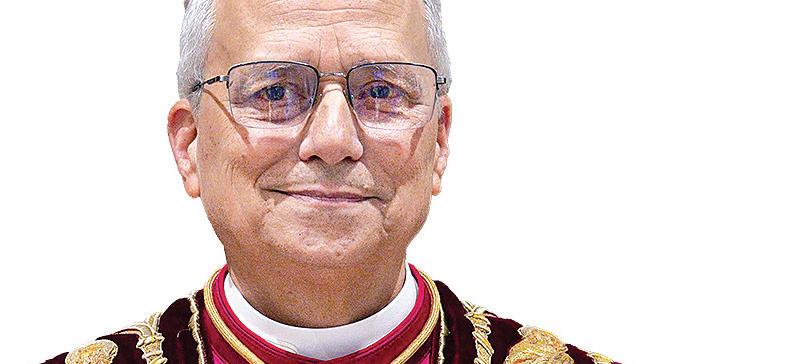
Bishop Michael Martin, OFM Conv., will participate in the following events over the coming weeks:
APRIL 22 – 6 P.M.
Confirmation
St. Andrew the Apostle Church, Mars Hill
APRIL 23 – 6 P.M.
Confirmation
St. Lucien Church, Spruce Pine
APRIL 28 – 6 P.M.
Confirmation
Our Lady of Grace Church, Greensboro
APRIL 30 – 6 P.M.
Confirmation
St. Michael the Archangel Church, Gastonia
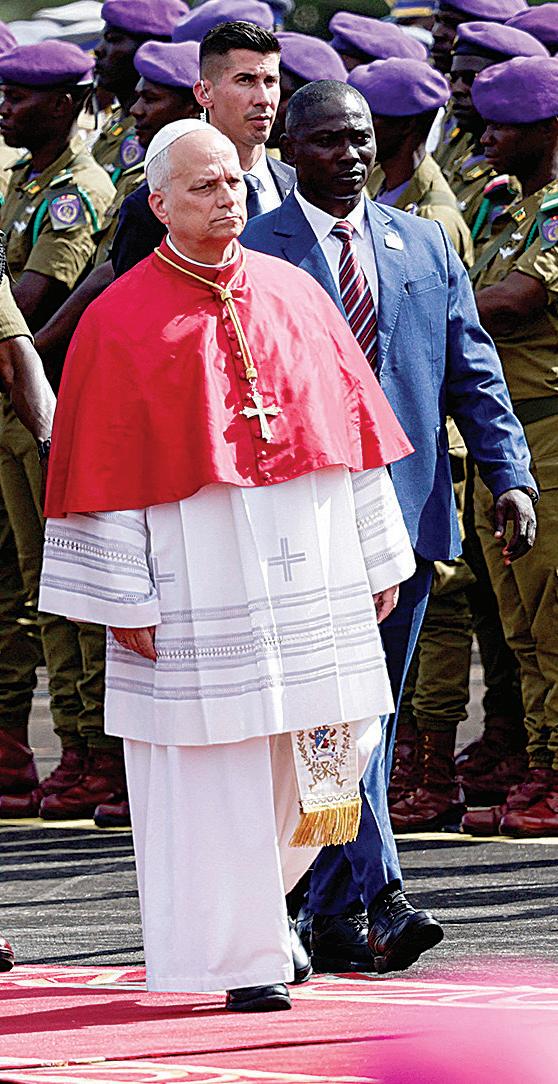
In a country marred by hardship, deep faith and hard-won independence, Pope Leo XIV pointed to Algeria as a living witness to what he called the Church’s “guiding principle above all,” a charity that transcends power, binds community and makes peace.
Throughout the first leg of his 11-day trip across Africa, the pope returned to one idea: peace comes not through power or dominance, but through a sacrificial love, exemplified in Christ.
In the Basilica of St. Augustine, his spiritual father, Pope Leo presented the Christians of Algeria as an example of this aspect of the Church’s mission, asking that they remain a humble and faithful sign of Christ’s love.
“Your presence in this country is like incense: a glowing grain that spreads fragrance because it gives glory to the Lord and joy and comfort to so many brothers and sisters,” he said during his final Mass in the country April 14.
In his homily, he described a Church of charity, “where there is despair, she kindles hope, where there is misery, she brings dignity, and where there is conflict, she brings reconciliation.”
“Therefore, in the face of poverty and oppression, the guiding principle above all for Christians is charity: let us do to those around us, as we would have them do to us,” he said. “On the contrary, faith in the one God, Lord of heaven and earth, unites people according to perfect justice, which calls everyone to charity – that is, to love every creature with the love that God gives us in Christ.”
At the Basilica of Our Lady of Africa, he spoke again on selfless love, saying the Church’s work with disabled children shows how charity transcends “material help” and creates “an authentic community, where many people share moments of joy and sorrow, united by bonds of trust, friendship and fellowship.” He furthered this message at a nursing home run by the Little Sisters of the Poor.
“God’s heart is with the little ones and the humble, and with them he builds up his kingdom of love and peace, day by day, just as you are striving to do here in your daily service, friendship and life together,” he said.
EDITOR’S NOTE: Read more about the pope’s trip to Africa on page 24.
RUSSELL SHAW OSV News
EDITOR’S NOTE: This is part of a series profiling great American Catholics ahead of the July 4, 2026, celebration of the 250th anniversary of the signing of the Declaration of Independence.
Flannery O’Connor was not an evangelist. She was an artist, one of the most gifted American fiction writers of the 20th century. But a profoundly Catholic theological vision informs her art, giving her stories resonance and depth that sound deep – and sometimes deeply disturbing –spiritual chords.
Explaining why she often wrote about grotesque characters in bizarre situations, O’Connor remarked that in an age of disbelief like this one, “You have to make your vision apparent by shock – to the hard of hearing you shout, and for the almost blind you draw large and startling figures.”
She said, “All my stories are about the action of grace on a character who is not very willing to support it.” Then, with her characteristic mixture of ruefulness and realism, she added, “But most people think of these stories as hard, hopeless, brutal, etc.”
Today, more than six decades after her death, that sort of reaction to O’Connor’s fiction is more and more giving way to the realization that these are richly imagined analogies of faith flung in the face of skeptical secularism by a master storyteller.
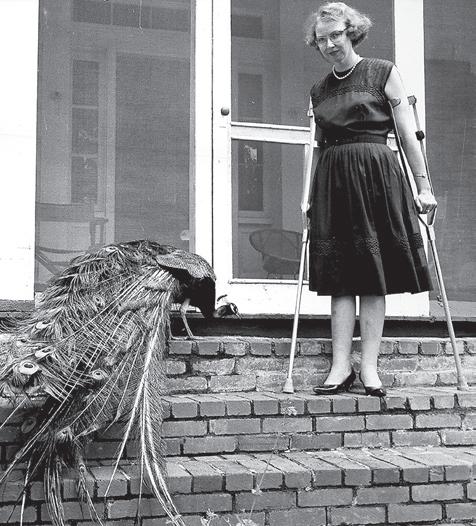
Catholic writer Flannery O’Connor shares the steps with one of her pet peacocks in an undated photo. This Southern writer’s Catholic faith shaped her vision of a world that often ignores goodness.
Writing in the New York Review of Books, author Joyce Carol Oates cited O’Connor’s “unshakable absolutist faith” as the foundation of her creative work. Faith, said Oates, provided O’Connor with “a rationale with which to mock both her secular and bigoted Christian contemporaries in a succession of brilliantly orchestrated short stories that read like parables of human folly confronted by mortality.”
School, drawing cartoons and writing for the school paper. In 1942, she entered Georgia State College for Women,near her home. It was then she began to use the name Flannery O’Connor on school assignments. She graduated with a degree in social science. In 1946, she was accepted by the prestigious Writers’ Workshop at the University of Iowa and went there to study journalism. In 1950 she was diagnosed with lupus, an inflammatory connective tissue disease that had killed her father.
A CHRISTIAN VIEW OF THE WORLD
Her first novel, “Wise Blood,” appeared in 1952 and received respectful but sometimes puzzled reviews. The story, she later said is about a “Protestant saint, written from the point of view of a Catholic.”
Her short fiction was collected in two volumes, “A Good Man Is Hard To Find” (1952) and the posthumously published “Everything That Rises Must Converge” (1965).

The only child of a real estate agent named Edward F. O’Connor and Regina Cline O’Connor, Mary Flannery O’Connor was born March 25, 1925, in Savannah, Georgia. Her great-grandparents were Irish immigrants, and the family had remained staunchly Catholic, members of a religious minority in the Protestant Bible Belt. As a child, Mary Flannery attended parochial schools until her father’s failing health forced a move to the Cline family home in Milledgeville, Georgia. There she attended Peabody High
St. Matthew Church invites book lovers to attend a six-week series, “Peculiar Crossroads: An Introduction to Flannery O’Connor’s Life and Her Works.” The series is open to anyone interested in gleaning timeless and timely spiritual insights from one of America’s most celebrated fiction writers, who was also fiercely Catholic. Explore O’Connor’s short stories,
Daily Scripture readings “I am the bread of life; whoever comes to me will never hunger, and whoever believes in me will never thirst.”
— John 6:35, part of the daily readings for Wednesday, April 22
The unraveling of hypocrisy is a favorite theme and a story called “Revelation” is a striking example of that. Beyond mere hypocrisy, O’Connor sometimes confronted monstrous evil.
“The novelist with Christian concerns will find in modern life distortions which are repugnant to him, and his problem will be to make these appear as distortions to an audience which is used to seeing them as natural.”
In 1960, the Dominican Servants of Relief for Incurable Cancer approached O’Connor to write a book about a girl with a facial tumor whom the sisters had sheltered until her death at the age of 12. O’Connor wrote the introduction, which is an extraordinary testimony of faith.
“One of the tendencies of our age is to use the suffering of children to discredit the goodness of God,” she wrote, “and once you have discredited His goodness, you are done with Him.” In earlier times, people viewed unmerited suffering with “the blind, prophetical, unsentimental eye of acceptance, which is to say, of faith.” But now “we govern by tenderness” – tenderness divorced from its source in Christ – which “ends in forced labor camps and in the fumes of the gas chamber.” O’Connor died of kidney failure on Aug. 3, 1964. “The Complete Stories of Flannery O’Connor” received the National Book Award for Fiction in 1972.
essays and letters with expert guest speakers and discussion. Sessions will be held from 7 to 8:30 p.m. on Tuesdays, April 28 to June 9 in the New Life Center Banquet Room. Visit www.stmatthewcatholic.org/ adultfaithformation to register. Organizers recommend buying “O’Connor Collected Works,” the textbook for the series.
Snap the QR code (right) to get the Mass readings for every day, in English or Spanish, online at the U.S. Conference of Catholic Bishops’ website.

BRIAN SEGOVIA bmsegovia@rcdoc.org
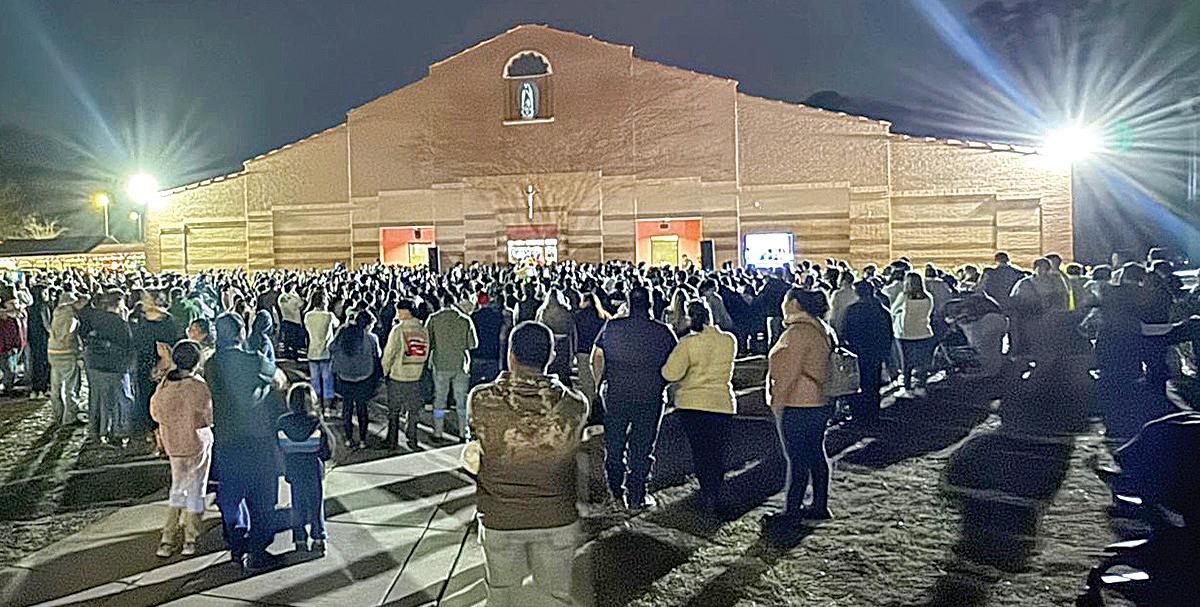
CHARLOTTE — With more than 6,000 people packing into eight weekend Masses – and 10,000 overwhelming the church at Easter – Our Lady of Guadalupe Parish may finally get some relief as the booming congregation takes its first steps toward building a church.
The parish currently worships in a 14,000-square-foot multipurpose building that doubles as a church and activity center, with basketball goals and storage for hundreds of chairs that volunteers set up, then put away, again and again, depending on the day’s activities.
The largest predominantly Hispanic parish in the diocese, Our Lady of Guadalupe ranks second in Mass attendance among the diocese’s 93 churches and exemplifies the larger trend of growth among Hispanic Catholics.
“Population growth in Charlotte consistently ranks among the highest in the country as people move to this area seeking job opportunities, better quality of life and nice weather,” said Emmett Sapp, the diocese’s director of construction and real estate.
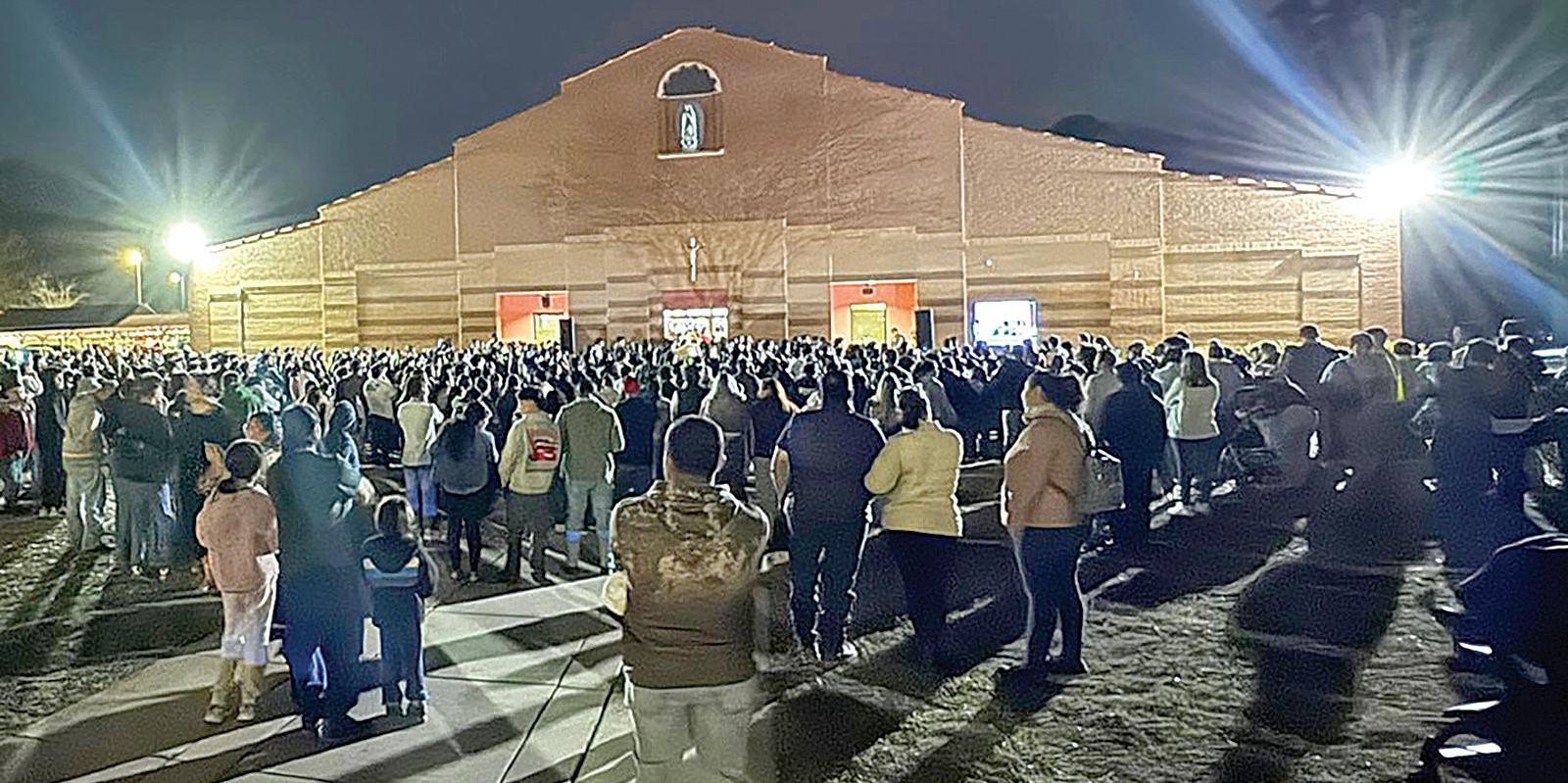
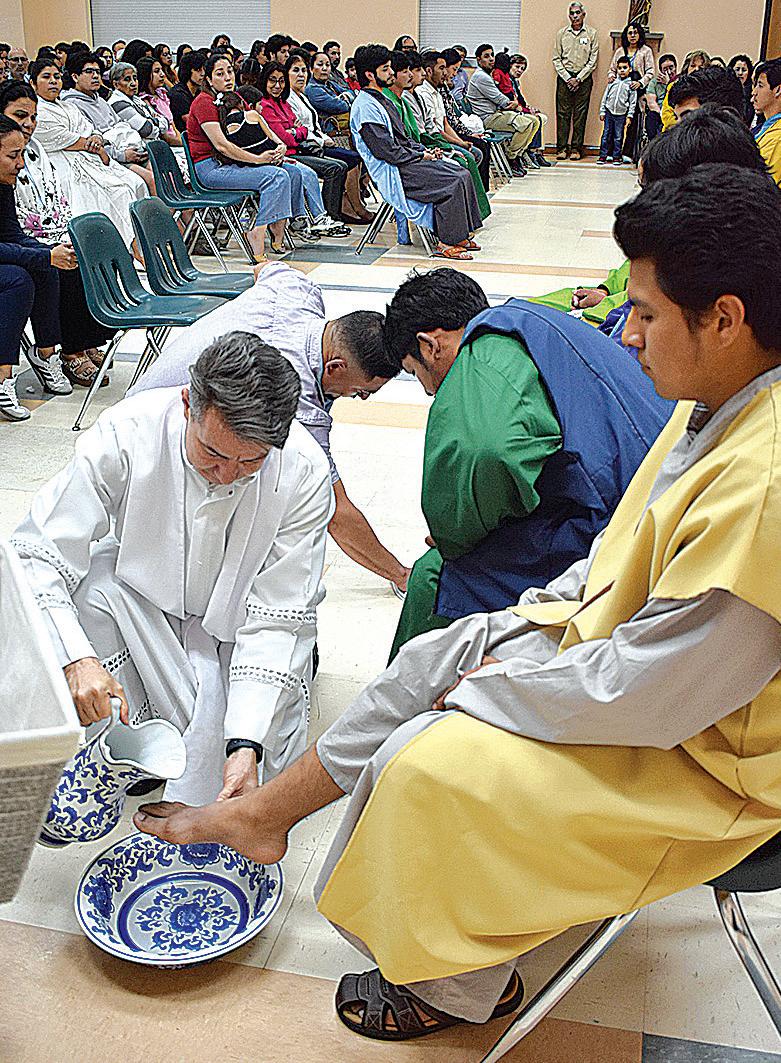
“The fastest growing demographic is the Hispanic population, which historically has been predominantly Catholic. Parishes are doing everything they can to accommodate this influx, and it’s wonderful to see faith communities like Our Lady of Guadalupe maturing to a place where building a church home is within financial reach as they become a larger part of the fabric of our diocese.”
A GLIMPSE OF THE FUTURE
The parish still has a long process of design and fundraising ahead before construction can begin, but diocesan leaders have approved the project to move forward with engaging professionals to create schematic designs for a new church with targeted seating capacity of 1,500 people and costs likely exceeding $10 million. Initial designs and cost estimates are expected by fall, to be followed by more detailed design documents – all of which require diocesan approval. Fundraising is expected to begin in January.
Our Lady of Guadalupe leaders recently offered the parish a glimpse of what the 32-acre campus might look like a generation from now. Church leaders shared architectural renderings that include a new church along with at least three multipurpose buildings on manicured grounds along Tuckaseegee Road.
“We still have a long way to
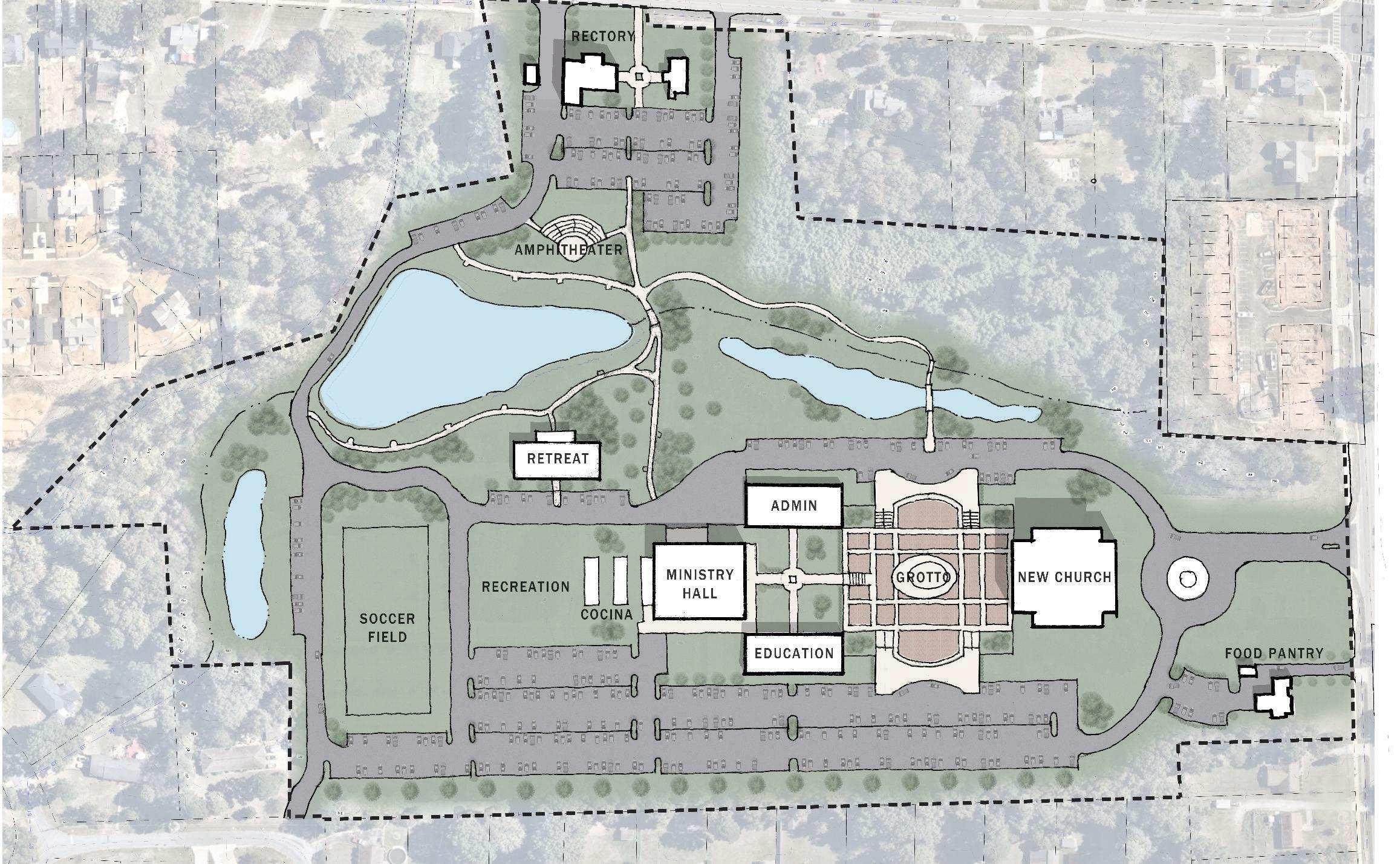
do, but we have begun,” says Vincentian Father Marvin Navas, pastor. “This first step means that a dream that has been in the hearts of many can become reality… I feel that many people feel that sense of joy with this first step.”
Established in 2007, Our Lady of Guadalupe’s redevelopment coincides with a 36% spike in the city’s Hispanic population over the past decade, according to U.S. Census estimates.
North Carolina has seen dramatic growth among Hispanics since 1990, when the estimated 77,000 Hispanics made up just 1.2% of the population. By 2020, thanks to the state’s diverse
economic opportunities and relative affordability, some 1.1 million Hispanics accounted for 10% of the population.
Other parishes are also experiencing this growth among Hispanics, who now make up at least half of the Catholics living in the diocese.
At Our Lady of Guadalupe, the parish juggles scheduling conflicts with eight weekend Masses and hundreds of organizations and groups competing for the space.
“The space we currently have is actually large, but it is too small now for our community,” Father Navas said. “Every Mass is full,
but we also have meetings there and catechism classes in the same space. Sometimes we have canceled different activities to accommodate others. We are reaching our limit.”
This parish community has seen many changes, beginning in 1972 when the diocese’s first shepherd, Bishop Michael J. Begley, established the Hispanic Catholic Center to serve immigrants and connect them more fully with the diocese.
The cultural center on Tuckaseegee Road was dedicated in 2002 to Our Lady of Guadalupe.
In 2007, it was elevated to parish status under that name, reflecting its role as the spiritual home for Hispanic Catholics in Charlotte. Today, Our Lady of Guadalupe’s presence extends far beyond the church walls and is positioned as a leader in faith and outreach.
The parish serves as a trusted hub for medical and social service referrals, partnering with providers such as Novant Health, and anchors one of the diocese’s busiest food pantries. Since 2012, Casa Marillac has provided weekly food distributions to more than 300 families in collaboration with Second Harvest Food Bank.
The parish also sustains a vibrant community through liturgies and faith formation, and its annual Feast of Our Lady of Guadalupe draws people from across the diocese for an all-night celebration of prayer, song, dance and cultural expression that symbolizes a shared Hispanic devotion.
In the summer of 2025, parish leaders shared their pastoral plan with Bishop Michael Martin, explaining the need to build a church and other campus facilities for the future. They then went to work developing a master plan for the next 20 years, charting a possible path for development.
“With the master plan as a backdrop, the parish will now start developing a schematic design and gathering construction cost estimates for the new church,” Sapp said. “By early 2027, the parish should be ready to unveil plans for the new church and begin fundraising in conjunction with the diocese.”
“The dream has always been with us within this community,” Father Navas said. “We have a dream that the Virgin of Guadalupe, who came down to Tepeyac, will also come down to this new Tepeyac.”
CHRISTINA LEE KNAUSS clknauss@rcdoc.org
ASHEVILLE — This past winter, hundreds of people in the mountains still recovering from Tropical Storm Helene got heating help from Catholic Charities Diocese of Charlotte and progress was made on the first wave of property buyouts from the Federal Emergency Management Agency.
Through its Propane Special Project, the agency was able to help 619 households in seven mountain counties with access to propane, a necessary and versatile fuel for those still living in campers, waiting for their flood-damaged homes to be repaired or rebuilt.
The propane project developed in tandem with the agency’s larger weatherization project, which helped more than 250 households insulate and protect their campers from the cold weather.
“During the colder parts of this past winter, people were literally burning through the propane to heat their campers and to cook food,” said Glenn Middleton, disaster parish and community coordinator for Catholic Charities in Asheville.
“While the weatherization we did helped, the campers themselves aren’t insulated as well as a house is, so they used a lot of propane to heat them,” he said.

CHRISTINA LEE KNAUSS clknauss@rcdoc.org
CHARLOTTE — The Diocese of Charlotte has named new leaders for two key ministries, part of ongoing efforts to expand outreach and better serve its rapidly growing Catholic population.
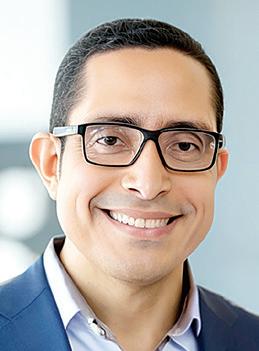
Steven Samol will relocate from the Dominican Republic to serve as director of the Hispanic Ministry Office at a time when more than half of the diocese’s 565,000 Catholics are Hispanic.
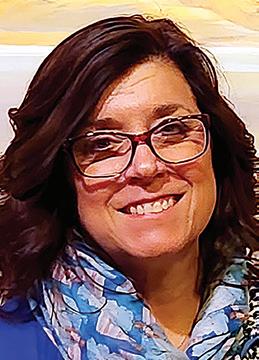
Dawn Fitzpatrick will lead the renamed Marriage & Family Life Office, overseeing diocesan initiatives to support couples and families and promote a culture of life.
“Steven and Dawn are talented, experienced leaders who will help us deliver on our commitment to develop missionary disciples and share the Gospel,” said Monsignor Patrick Winslow, vicar general and chancellor, in an April 10 email to clergy and staff.
Both began limited virtual work this week and will start full-time onsite April 27.
STEVEN SAMOL
A bilingual ministry leader, Samol has more than 20 years of experience in leadership and project management in Catholic ministry, healthcare, government and international development. He most recently served with the Encounter School of Ministry, a Catholic-based training program, where he provided leadership formation and discipleship training for hundreds of English- and Spanishspeaking students.
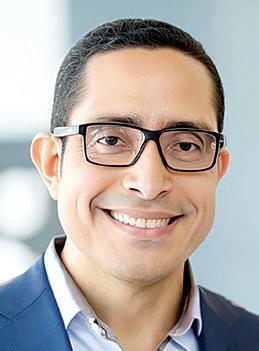
Born in New York City to a Puerto Rican father and Dominican mother, Samol has lived and worked internationally. He met his Cuban-born wife, Sayli, in Spain while serving in a Catholic ministry dedicated to evangelization through art and media. He holds master’s degrees in marketing and business administration as well as a bachelor’s degree in industrial engineering from the Instituto Tecnológico de Santo Domingo. He also has a master’s degree in marriage and family from the Pontifical John Paul II Institute for Studies on Marriage and Family, part of The Catholic University of America in Washington, D.C.
‘We are hopeful that the buyouts continue.’
Glenn Middleton
Catholic Charities Diocese of Charlotte
To make the propane exchange happen, the agency worked with long-term recovery groups in Avery, Madison, Polk and Yancey counties as well as Fairview Strong and The Blessing Project out of Buncombe County and Giving Goods NC and Feed the People in McDowell County.
Families in Haywood, Jackson, Buncombe, McDonald, Henderson, Transylvania, Polk, Yancey, Avery, Madison and Mitchell counties received propane. Middleton said household size ranged from one to 10 people.
Funding came from a single donation of $19,141 to Catholic Charities.
The long-term recovery groups and local organizations connected with local and regional propane companies that they trusted to distribute the fuel.
Between 100 and 400 20-gallon tanks and about a dozen 100-gallon tanks went out to survivors each week, Middleton said.
In most cases, survivors received vouchers they could use in direct transactions with the propane company. Partner organizations also set up onsite refill programs where people could get their propane tanks refilled.
The program launched in January and ran through early March.
Work is currently in progress to help people who will continue to need help with propane during the spring and summer.
Spring’s arrival also saw some long-awaited progress on property buyouts from the Federal Emergency Management Agency.
FEMA announced on April 6 that more than $26 million had been awarded to the state to eliminate flood risks for properties that had been severely damaged by Helene. The state will use the funding, administered through FEMA’s Hazard Mitigation Grant Program, to buy 75 damaged residential properties in Henderson, Polk and Yancey counties.
The buyouts included 53 homes damaged by flood landslides in the Burnsville and Green Mountain communities of Yancey County, 18 flood-damaged homes in Fletcher, Gerton and Hendersonville in Henderson County, and four flood-damaged properties in Tryon and Saluda in Polk County.
FEMA expects to award more funding for property buyout acquisitions in the weeks ahead.
The buyouts can’t come soon enough for homeowners who have been struggling since the storm hit in the fall of 2024. After disasters like Helene, owners are often still required to pay mortgages, property taxes and other expenses –even if their homes and property are unlivable.
“We are hopeful that the buyouts continue, because we know there are many hundreds more waiting for help from that program,” Middleton said.
He will coordinate all areas of Hispanic ministry across the diocese. Working with pastors and parish leaders, he will support pastoral needs, promote fuller participation in parish life, and oversee implementation of the National Pastoral Plan for Hispanic Ministry. He will also advance leadership formation, evangelization programs and discipleship initiatives, serving as a vital bridge between the Hispanic faithful and diocesan offices.
Having lived, studied and worked in several countries, Samol said he finds joy in helping people from diverse cultures find common ground through their shared faith and grow by enriching one another.
DAWN FITZPATRICK
Fitzpatrick brings more than 20 years of experience in family and pro-life ministry. She most recently served as executive director of the National March for Life Education and Defense Fund in Washington, D.C., and previously led the Respect Life Office for the Archdiocese of Chicago.
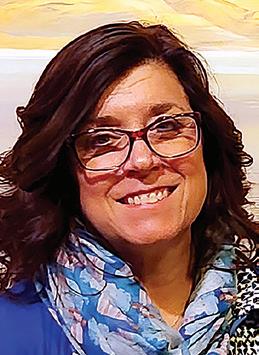
She has also served in youth and adolescent catechetical ministries for parishes in the Archdiocese of Baltimore and the Diocese of Charleston, South Carolina, and worked in business as a corporate trainer and college instructor of public speaking and communications.
Fitzpatrick holds a bachelor’s degree in political science from Shippensburg University, a master’s degree in communication studies from Bloomsburg University, and graduate certificates in theology and theology of the body.
She will lead initiatives supporting marriage and family life, and she will assist parishes in developing local ministries aligned with Church teaching and the diocese’s pastoral priorities.
She and her husband, Deacon Michael Fitzpatrick, have been married for 35 years and have two daughters and a granddaughter. Samol succeeds Father Julio Dominguez, former Vicar of Hispanic Ministry, and Fitzpatrick succeeds Father Peter Ascik, former director of the Family Life Office.
The changes reflect Bishop Michael Martin’s emphasis on placing qualified lay leaders in administrative positions while assigning priests to roles where they are uniquely qualified to focus on parish ministry, sacramental life and pastoral care.
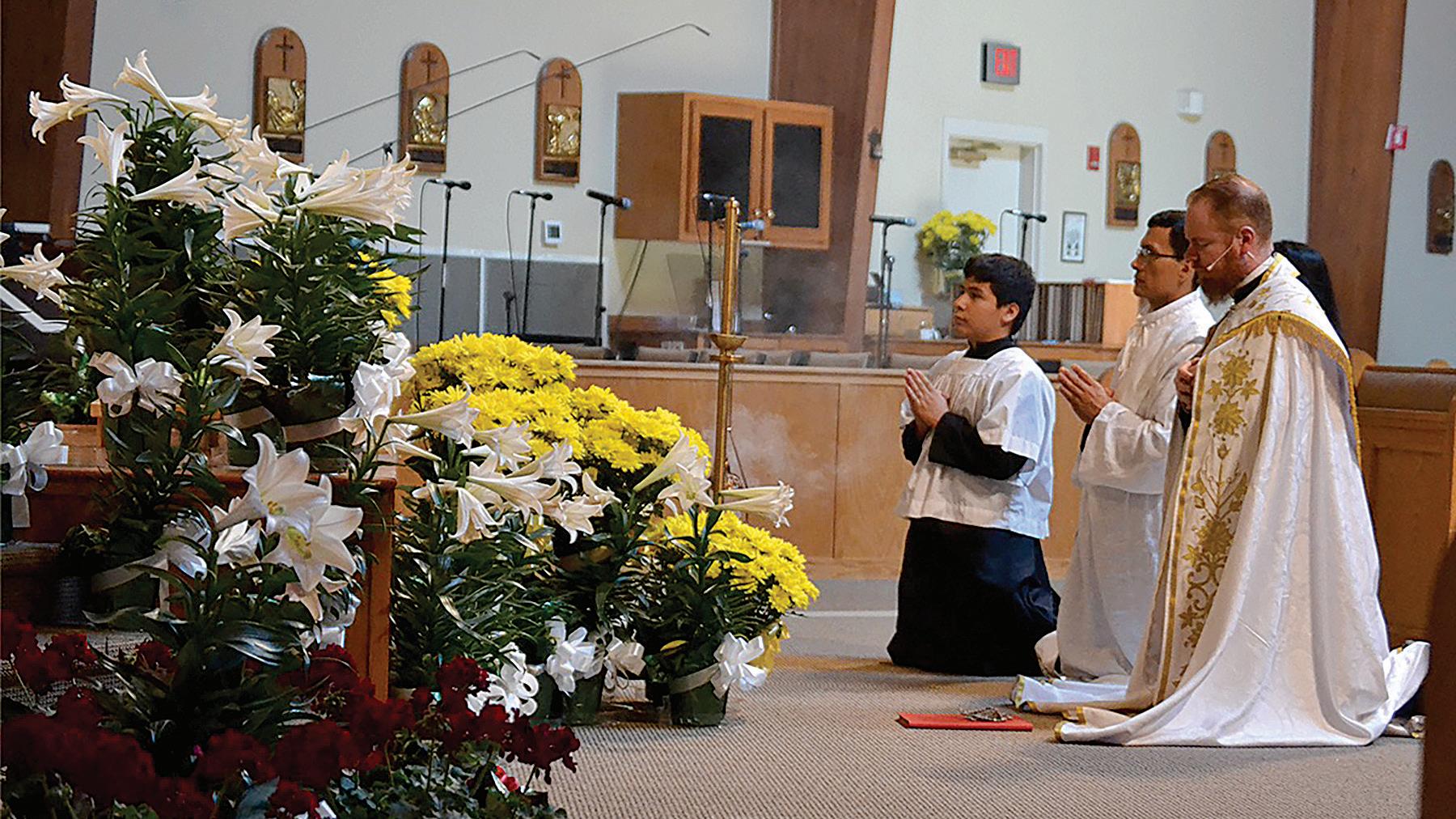
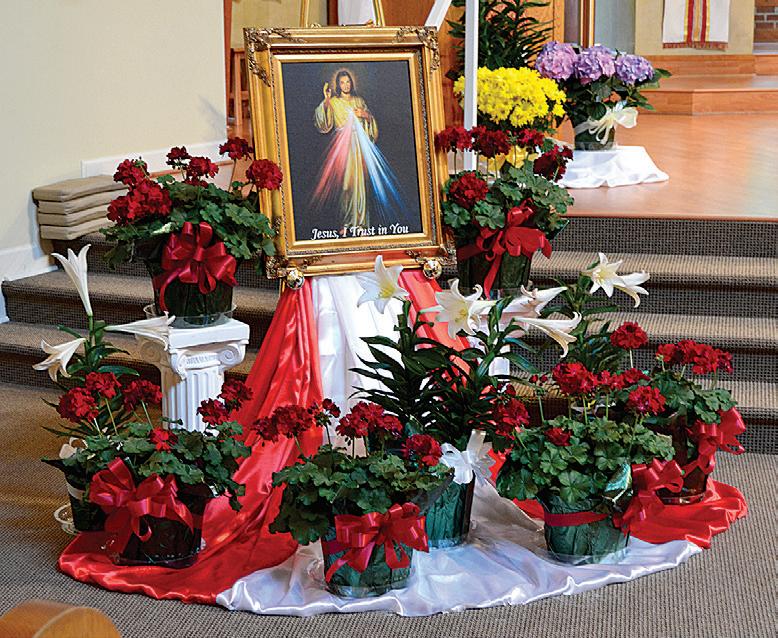
KERNERSVILLE — Father Noah Carter, pastor of Holy Cross Parish, celebrated Divine Mercy Sunday April 12 by leading a Divine Mercy Chaplet. Across the diocese, parishes celebrated the Sunday after Easter with special services that included Eucharistic Adoration and confession, displayed the image of Divine Mercy and said the chaplet and other prayers. The day recognizes Our Lord’s private revelations to Polish nun St. Faustina Kowalska that promised complete forgiveness of sins and punishment for those in a state of grace who go to confession, receive Holy Communion and pray for the pope’s intentions. On May 5, 2000, five days after the canonization of St. Faustina, the Vatican decreed that the Second Sunday of Easter would be known as Divine Mercy Sunday.
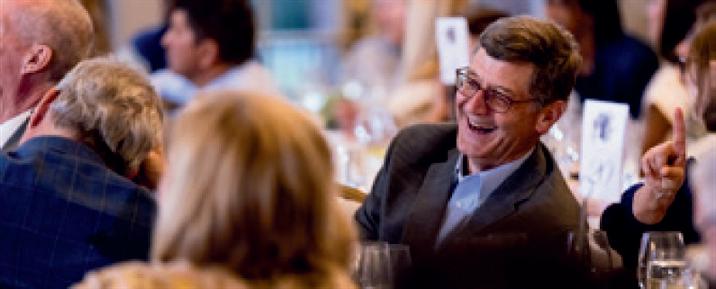
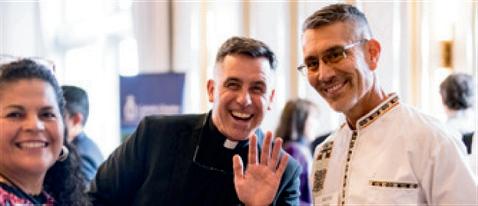
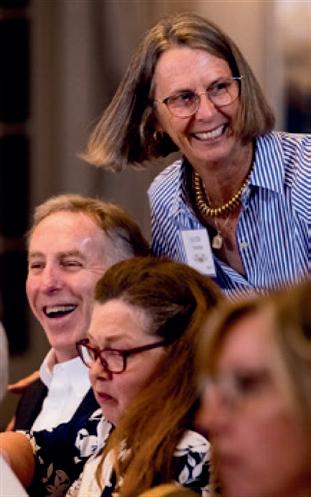
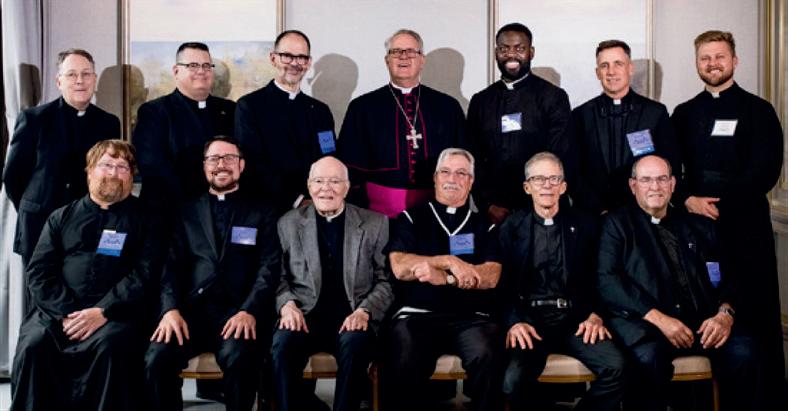

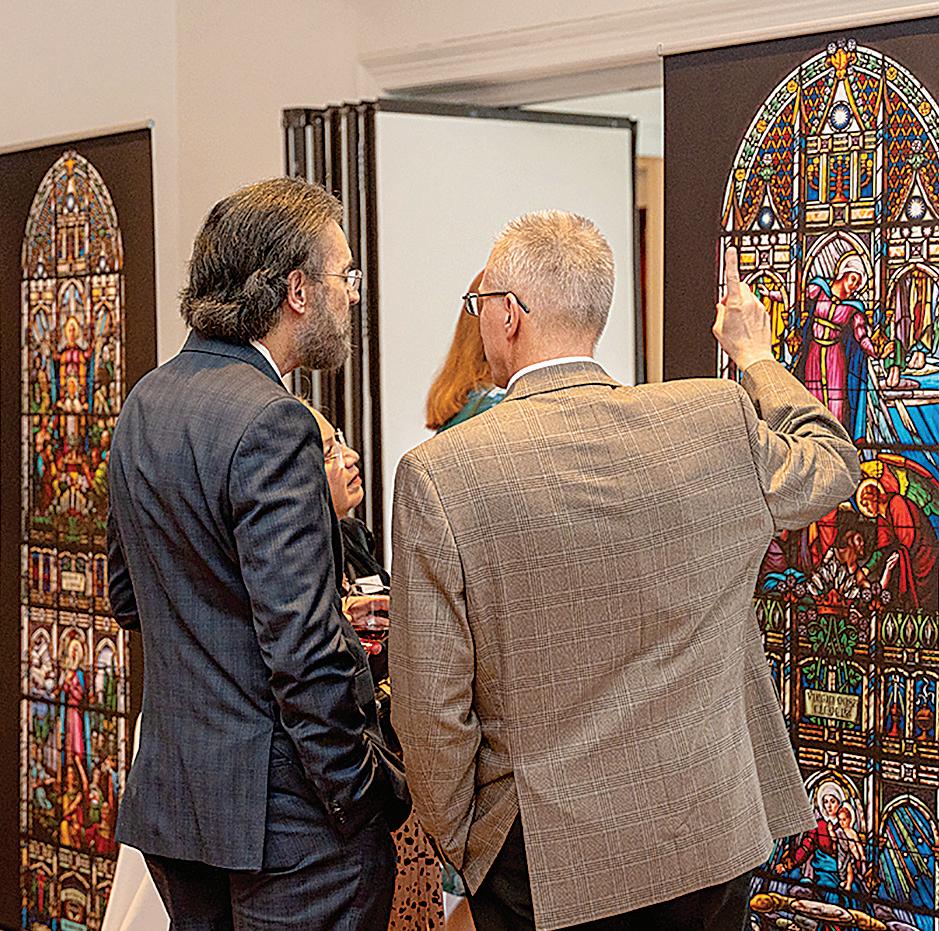
GREENSBORO — Our Lady of Grace Church held a gala April 11 at Starmount Country Club where parishioners and friends could learn more about its historic stained-glass windows created by famed Italian-Canadian artist Guido Nincheri. As his grandson was on hand to explain, Nincheri designed each window to depict a different title of Mary from the Litany of Loreto. To ensure that their beauty endures, the parish launched a fundraising drive to complete maintenance and repair to these delicate works of art. The hope is to complete restoration work for the 75th anniversary of the windows’ dedication in September 2027. Read more about the windows at www.catholicnewsherald.com.
LISA M. GERACI lmgeraci@rcdoc.org
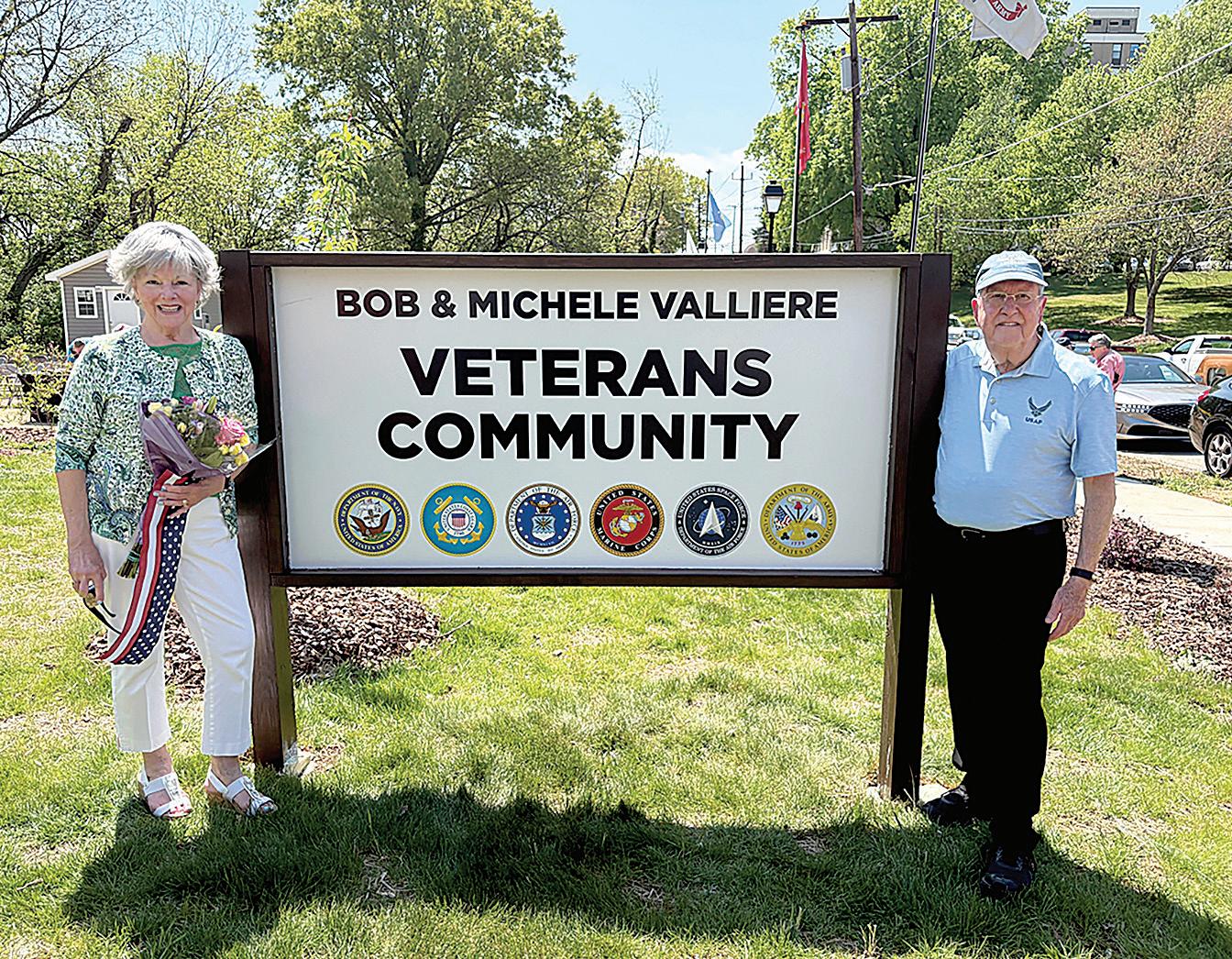
HIGH POINT — An Immaculate Heart of Mary couple was brought to tears when they saw that a new tiny home neighborhood for homeless veterans will bear their name: the “Bob & Michele Valliere Veterans Community.”
“These signs will always remain here as part of their dedication to our veterans and the homeless population of Guilford County,” Scott Jones, founder of Tiny House Community Development Inc., said at an April 11 ribbon-cutting ceremony when the name was unveiled.
Jones explained how the Vallieres’ stewardship and love propelled the sixhome project forward.
“Bob has been the reason that we were able to do this today, because of his persistence and his dedication to veterans and seeing this community built,” Davis said. “It was just fitting to honor him and his wife Michele.
“He pushed to fuel this, and I am so honored to have him and the Catholics that rallied behind him along the way.”
This development is Jones’ third in the past 10 years in the Triad and the first dedicated exclusively to homeless veterans. Each of its six homes is named after a military branch and finished with new furniture donated by Bob’s Discount Furniture.
The Vallieres began this journey with Jones in 2024, after seeing him on the local TV news raising awareness about the 80-plus veterans and families in Guilford County who needed a home. The cause appealed to Bob Vallieres, a Vietnam veteran, and his ministry, the IHM Military, Veterans and Families Outreach Ministry (MVFO).
With the support of Father Patrick O’Connor, their pastor, members started a fundraiser to sponsor one of the onebedroom tiny homes and surpassed expectations, raising $40,000 – enough for the two-bedroom Coast Guard home.
“He reached out to a lot of people and
was so involved in this,” said Air Force veteran and donor Lauren Flossman. “So, I decided to help out where I could.”
IHM was proud to be the first and only parish to sponsor a home in the community, but the aid did not stop there.
IHM MVFO members started serving blueberry pancakes every Tuesday morning at Jones’ community in Greensboro, while the IHM Habitat for Humanity spent weekends and some weekdays building the High Point homes.
As the parish ministries learned more
about the families they were serving –their struggles, passions and personalities – help expanded. The Christmas Giving Tree ministry placed tags on the tree
that provided household items for the Coast Guard home. Parishioners were so generous that they had extra items for the other five houses.
While their stewardship progressed, so did their passion to recruit more support, and other Catholic churches and parishioners took notice.
Lt. Col. Mike and Kathy Mader, an Air Force family from St. Matthew Parish in Charlotte, read about the project in the Catholic News Herald, and they felt God calling them to sponsor a home.
“We have been involved with projects like this in Rock Hill,” Kathy Mader said. “We called Bob and got involved. We are impressed with this community and all the people that came together to help make this happen.”
Now, the home bears a plaque dedicated to them, reminding veterans who will occupy it that they are not alone.
Another couple, parishioners of Holy Family in Clemmons, sponsored a tiny home anonymously. The home bears the name “Holy Family” house.
The veterans have yet to move in and the second phase – two three-bedroom homes –will soon break ground, but Valliere and his MVFO team are excited to meet the families and help further the legacy.
“I am so proud of Immaculate Heart of Mary, who has stepped up to support the Tiny House Home Community,” Bob Valliere told the crowd at the opening. “Our work as Christians is an ongoing effort, as difficult as it is, to follow the steps of Jesus as He has instructed us to – to feed the hungry, to give drink to the thirsty, clothe the needy and, as is here today, shelter the homeless.”



LISA M. GERACI lmgeraci@rcdoc.org
CHARLOTTE — For seminarian Connor White, the journey to priesthood is much like practicing for a marathon – it demands discipline, consistency, perseverance and a willingness to sacrifice.
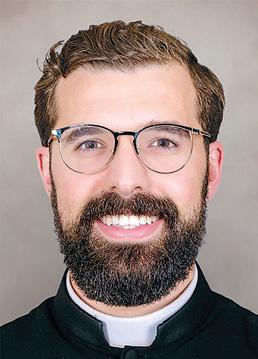
In many ways, White envisions his path through St. Paul’s lens: “I have fought the good fight, I have finished the race, I have kept the faith” (2 Timothy 4:7).
White will be ordained as a transitional deacon May 23, a step on his journey to the priesthood. A cradle Catholic who attended St. Mark Church in Huntersville with his family, White went to Catholic school and excelled in both cross-country and academics, things he believes prepared him for a life of discipleship.
White’s running partner Deacon John Cuppett, who will be ordained a priest on May 30, will be vesting him. Cuppett believes White’s approachability and friendliness will serve him well when the time comes to lead his own flock.
Right now, White is on track to be one of the first of four seminarians from the 2018 Christ the King High School graduating
class to reach this vocation milestone.
White’s longtime classmate Bradley Loftin will also become a transitional deacon on May 23. Loftin, who has known White since kindergarten, believes his friend has grown in the faith.
“Throughout the years of getting to know Connor more and more, it is clear to me he has a deep love for our Lord and the Church,” Loftin says. “The devotion he has to the people he loves stands out to me.”
Loftin, White and some high school friends have a tradition that has caught on with priests and seminarians at St. Mark Parish.
“Every Saturday at 11 p.m., it would be me, White, and a few of our friends from high school. We would do an hour of Eucharistic Adoration and get a milkshake from Cookout after,” Loftin says.
After this Easter Vigil, the tradition continued as it has for the past eight years – this time with Monsignor Patrick Winslow, vicar general and chancellor of the diocese, who celebrated the Vigil Mass at St. Mark.
“Even Father Winslow showed up this year,” says Loftin, who noted that while White favors Oreo Mint milkshakes, “I am more a Reese’s guy.”
White’s home parish: St. Mark, Huntersville Colleges: Elon University and St. Joseph College Seminary Degrees: Philosophy and Latin
A decade of forming priests
Theology: Mount St. Mary’s Seminary and School of Theology (Athenaeum of Ohio) Summer assignments: Holy Cross (Kernersville), St. Margaret Mary (Swannanoa) and St. Francis of Assisi/St. Frances of Rome (Jefferson and Sparta).
Since ordinands typically select someone who was instrumental to their vocation to vest them, who will be vesting you? Deacon John Cuppett will be vesting me. Deacon Cuppett and I entered seminary together in 2020 and quickly became close friends. We shared so many great memories in seminary, and I asked him to vest me so this occasion will be yet another event that we can share together.
What are some of your hobbies? I love running and playing golf with family and friends. I also enjoy reading, cooking with friends and making coffee/espresso-based drinks.
When did you first realize you had a call to the priesthood? I first began discerning a call to the priesthood during my confirmation retreat around the beginning of high school.
Why did you decide to become a priest in the Diocese of Charlotte? I was born and raised in the Charlotte area, so this diocese is home. I received the sacraments here and attended Catholic school (K-12) at St. Mark and Christ the King. I feel called to minister to this diocese, as this is where my faith has been cultivated and vocation fostered.
Do you feel a special devotion to any saints? My closest saint-friends are St. Elizabeth of the Trinity and St. Therese of Lisieux. They both
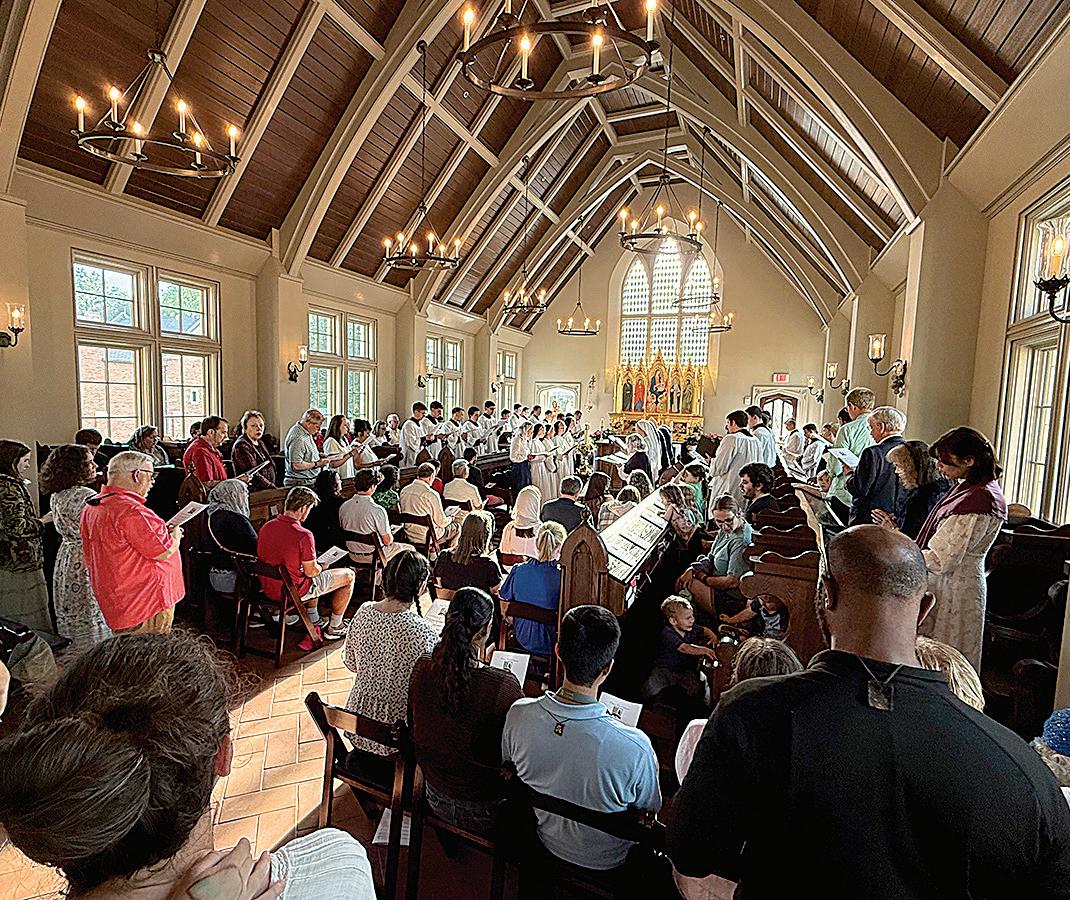
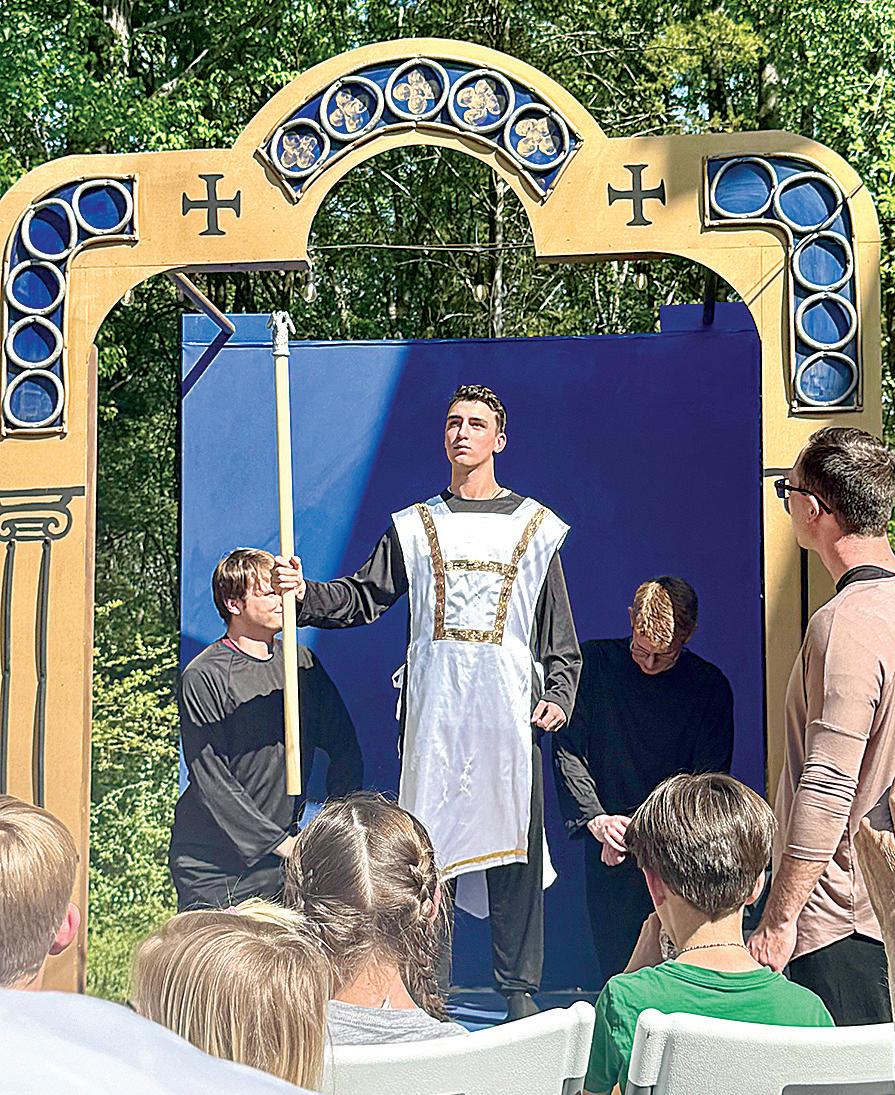
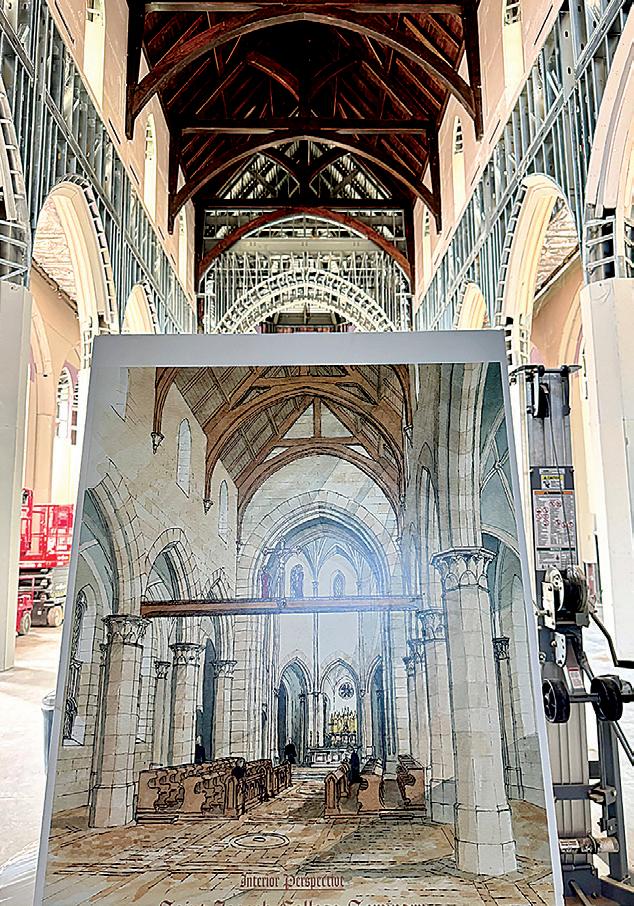
MOUNT HOLLY — St. Joseph College Seminary held a 10th anniversary open house April 11, giving more than 900 visitors the chance to tour the seminary, visit the construction site of the new chapel, and enjoy games, activities and food. Events included a concert, a vocal performance of Easter Lessons and Carols in the chapel, a holy rosary by the Grotto and a play featuring seminarians depicting the events on the Road to Emmaus, when Jesus appeared to two men after His resurrection.
PHOTOS PROVIDED
For over 140 years, the Knights of Columbus has been committed to helping families plan their nancial
and
have taught me how to pray and charitably live with others. St. Elizabeth emphasizes the Divine Indwelling (the Holy Trinity residing within the soul of a baptized person), something I was immediately drawn to. I also have devotions to other priest-saints: St. Thomas Becket, St. John Fisher and St. Pius X.
Who helped you on your faith journey? St. Paul reminds us “faith comes from hearing,” so the faith is handed on by our elders. My family and, more particularly, my parents have raised my siblings and me by sending us to Catholic school and nurturing the faith at home. Father John Putnam, pastor at St. Mark Parish, has also helped me, encouraging my vocation and seminary discernment.
What did you do as a child that may have foreshadowed the priesthood? While at Christ the King, I worked with the chaplain at the time, Father Paul McNulty, who ultimately became a great priestly role model. Living the Catholic life is not a solo endeavor, and I have met some of my closest friends in school, some of whom are also in seminary.
Your DSA contributions at work
Seminarian education is funded in part by the annual Diocesan Support Appeal. Learn more about the DSA and how to donate online at www.charlottediocese.org/dsa


LEWISVILLE — Deacon Michael Langsdorf, 72, passed away peacefully on April 6, 2026, at Forsyth Medical Center, surrounded by the love of his family. He will be deeply missed and forever remembered for his faith, his humor, and the love he so freely gave to everyone around him.
The funeral Mass was offered on Monday, April 13, 2026, at Divine Redeemer Catholic Church in Boonville.
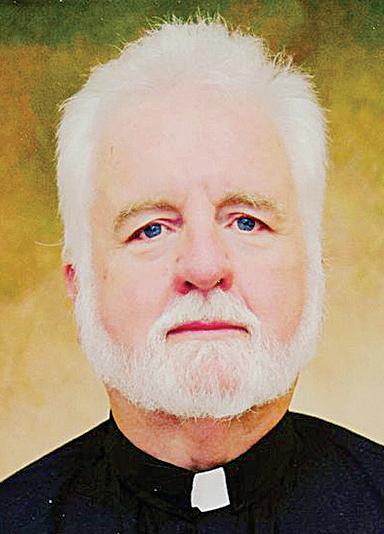
Born on Aug. 22, 1953, in Pennsylvania to the late Francis and Eleanor Geno Langsdorf, he lived a life rooted in faith, family and service.
In 1976 he, his wife Mary and their family moved south from their native Philadelphia. As his children reached their teen years, he responded to the call to serve the Church, which he had discerned for some time, particularly through his involvement in Cursillo.
On July 1, 1995, he was ordained a permanent deacon for the Diocese of Charlotte by then-Bishop William G. Curlin. As a deacon, he dedicated himself to serving others with compassion, humility and a steady sense of purpose.
His first assignment was to his home parish of Holy Family in Clemmons, where he served for nine years. As their family grew, Deacon Langsdorf remained very involved in youth ministry and was active with his wife Mary in family and life ministries of the parish and within the diocese. In 2004 he was assigned to Divine Redeemer Parish in Boonville, where he coordinated the Englishlanguage youth faith formation program and

conducted sacramental preparation classes for baptisms and confirmations.
Above all, Deacon Langsdorf was a devoted husband, father, grandfather, greatgrandfather, brother and friend.
For 52 years, he shared a deep and enduring love with his wife, Mary, building a life centered on family, laughter and unwavering support. He found his greatest joy in their moments spent together – whether gathered around the table, traveling in their RV or simply enjoying the outdoors he loved so much. He had a passion for gardening, fishing and camping, and he rarely missed an opportunity to be outside. Known for his quick wit and playful spirit, he had a gift for making others smile – especially through his well-timed (and often well-rehearsed) dad jokes.
He leaves behind a legacy of love in his children: Michael Langsdorf (Molly), Amanda Reilly (Robert), Matthew Langsdorf (Nicole), and Beth Morris (Will). He was a proud and loving grandfather to Miracle, Jaeda, Julia, Maryn, Ashley, Kaitlyn, Buddy, Bradley, Anthony, Andrew and Theo, and a great-grandfather to Eloise, Fergus, Elora and Lincoln. He is also survived by his brother, Francis Langsdorf (Connie); his sisters, Nancy Knappenberger (Alton) and Lisa Cloran (Scott); as well as many nieces, nephews and cousins; and his beloved dog, Anya, affectionately known as “Munchkin.”
In lieu of flowers, the family asks that memorial donations be made in his honor to Food For The Poor (www.foodforthepoor.org), reflecting his lifelong commitment to helping those in need.
Hayworth-Miller Funeral Home-Lewisville Chapel was in charge of the arrangements. — Catholic News Herald
BELMONT — Mercy Sister Marilyn Helene King passed away April 8, 2026, at Sacred Heart Convent-Marian Center, aged 86.
The Mass of Christian Burial will be celebrated at 11 a.m. Friday, April 17, 2026, in the Cardinal Gibbons Chapel of Sacred Heart Convent, 103 Mercy Dr. in Belmont. The Mass will be livestreamed: https://www.facebook.com/ events/711297872058595. Immediately after the Mass, the Sisters will provide lunch, followed by a graveside service at 1:30 p.m. at Belmont Abbey Cemetery.
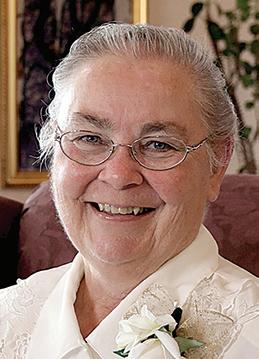
Marilyn Helene King was born in 1940 to Francis and Helene Johnson King in San Francisco. She grew up at Holy Name Parish and graduated from Mercy High School, where she came to know the Sisters of Mercy. She entered the community in Burlingame, California, in 1957 and professed her vows in 1960. Before teaching math and religion at Mercy High School, she earned a bachelor’s degree from the San Francisco College for Women. Sister Marilyn was particularly interested in theology and was sent to St. Paul University, University of Ottawa, and the Graduate Theological Union, where she completed a doctorate degree in 1975. These studies equipped her to teach high school, college and adult religious education. She was later drawn to a contemplative lifestyle and spent a year at Our Lady of the Mississippi Abbey, then moved to the Bardstown, Kentucky, area and ministered in local parishes and for the Archdiocese of Louisville. In 2014, she and Genevieve Durcan, OSCO, founded The Laura in Lebanon, Kentucky, as a contemplative residence where others could come for retreat and reflection. Accomplished in many avenues of education, she was proud of her time in Kentucky. In addition to her parents, she was preceded in death by her two younger brothers, Jesuit Father Frank King and Rich King. She is survived by her nephew Richard King and a loving community, the Sisters of Mercy.
Prayerful thoughts and heartfelt condolences may be left at www. mcleanfuneral.com. Memorial gifts may be made to the Sisters of Mercy, c/o Donations, 101 Mercy Dr., Belmont, N.C. 28012.
McLean Funeral Directors of Belmont is in charge of the arrangements. — Catholic
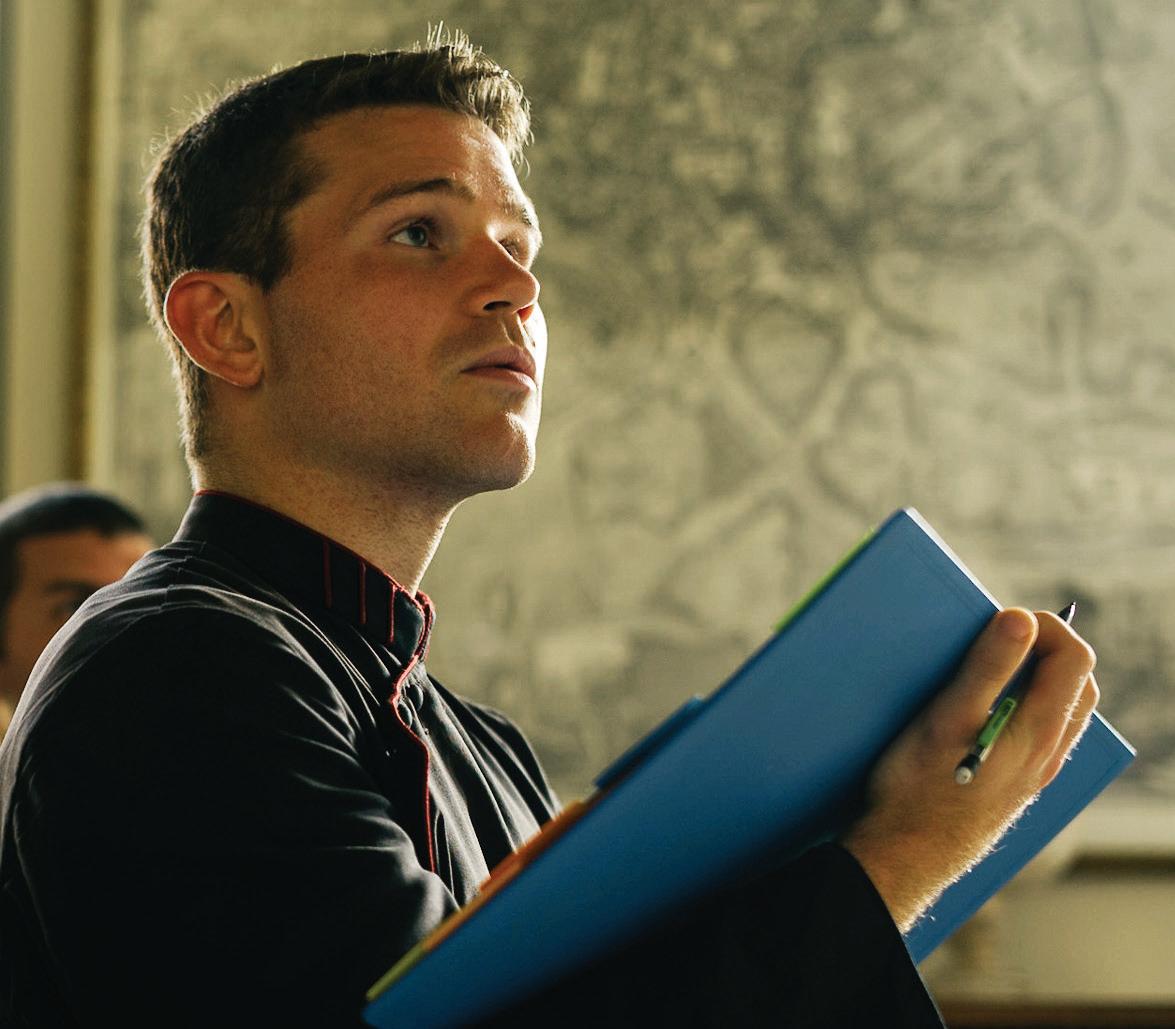
SWANNANOA — Doris Edith Thibodeau lived a life centered on education and service to others.
A dedicated member of St. Margaret Mary Parish in Swannanoa from 2010 until her passing in 2021 at the age of 89, the retired librarian attended Mass regularly and made a lasting commitment to the parish she loved.
“Doris was a parishioner who was quietly engaged at our parish,” said Claudia Graham, pastoral associate at St. Margaret Mary Parish. “She demonstrated her faith by regular Mass attendance on Sundays and holy days of obligation. Doris understood the importance of supporting the financial needs of the parish with consistent contributions to the offertory and especially by remembering St. Margaret Mary in her final wishes.”
After her passing, the parish received a bequest of more than $134,000.
“The pastor and the Parish Finance Council directed $70,000 to parish savings and the balance of $64,040.72 established the Doris Thibodeau Memorial Endowment Fund,” Graham explained. The funds are earmarked to support future campus building improvements.
Born on July 28, 1932, in Brooklyn, New York, Thibodeau’s family moved to Nova Scotia. She attended Mount Saint Vincent University, where she earned degrees in library science. She began her library career in Santa Clara, California, before joining the American Red Cross, where she served in Korea and France in Recreation Services and later with Army Special Services as a civilian librarian. Upon returning to the United States, Thibodeau earned her master’s degree in library science at Western Reserve University, specializing in the history of medicine and
rare books. She spent the final 20 years of her career as a librarian at Johns Hopkins Medical School in Baltimore.
Retirement led Thibodeau to Asheville, where she embraced the area’s social, cultural and outdoor offerings. She enjoyed the opera, theater, reading, golf and active involvement in her church, which her endowment is now helping to grow.
“Endowments are the gift that keeps on giving,” Graham said. “Since receiving Doris’ gift, our parish has been able to utilize some of the endowment earnings to cover initial costs associated with our Bells of Hope capital campaign.” When complete, the $4.5 million capital campaign will enable the parish to more than double seating capacity in the 90-year-old church and usher in other needed improvements.
“Across our diocese there are people like Doris who are leading lives of quiet impact,” said Jim Kelley, the diocese’s development director. “While they may not get involved in activities in their churches beyond going to Mass, their love for their parishes continues, and the difference they make in perpetuity with an endowment can be substantial.”
— Courtney McLaughlin
Interested in setting up – or adding to – an endowment to benefit your parish or Catholic school? You can establish an endowment in the Diocese of Charlotte Foundation by leaving a bequest in a will, a beneficiary designation from a retirement plan, a trust or annuity, or a gift of real estate, life insurance, cash or securities.
For details, contact Gina Rhodes at 704-3703364 or gmrhodes@rcdoc.
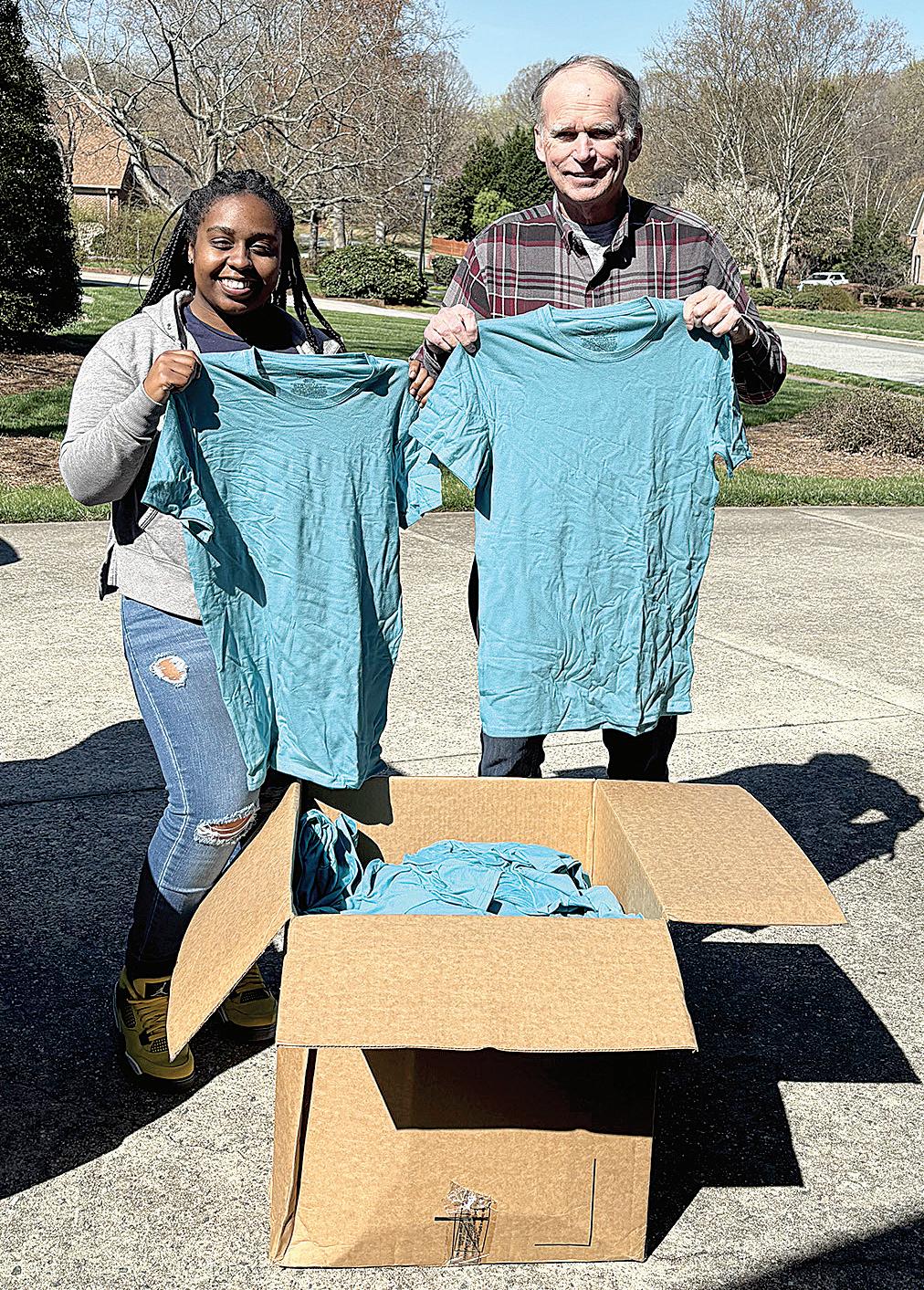
KERNERSVILLE — Thanks to a partnership between Knights of Columbus Council 8509 and Hanes Hosiery in Winston-Salem, approximately $30,000 worth of T-shirts and socks is being distributed to charities that serve vulnerable populations across the Triad. The donation is the largest in history for the local Knights council.
Chuck Tierney, who chairs the Knights’ Coats for Kids campaign, initially connected with apparel company Hanes with the aim of supporting Veterans Helping Veterans Heal, a nonprofit that helps veterans transition out of homelessness. When that organization was unable to accept a large donation due to space limitations, Hanes asked the Knights council to explore more ways to distribute the surplus clothing. Working with local police departments, the Knights helped identify other nonprofits in need. Among the additional recipients was Youth Focus in Greensboro, which provides support for runaway youth and children in abusive situations. The organization received approximately $4,000 worth of clothing.

Organizers described the effort as a collaborative success, noting it was “another great day for the Knights and a better one for the charities we serve.”
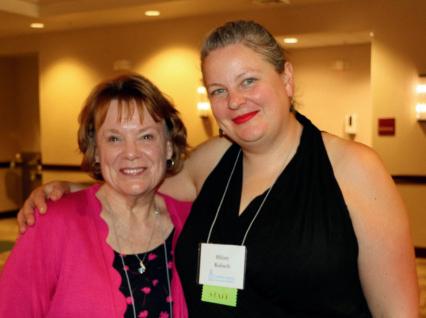
Pictured are Jana Foster-Harris, program manager of Youth Focus, and Tierney.

BRIAN SEGOVIA bmsegovia@rcdoc.org
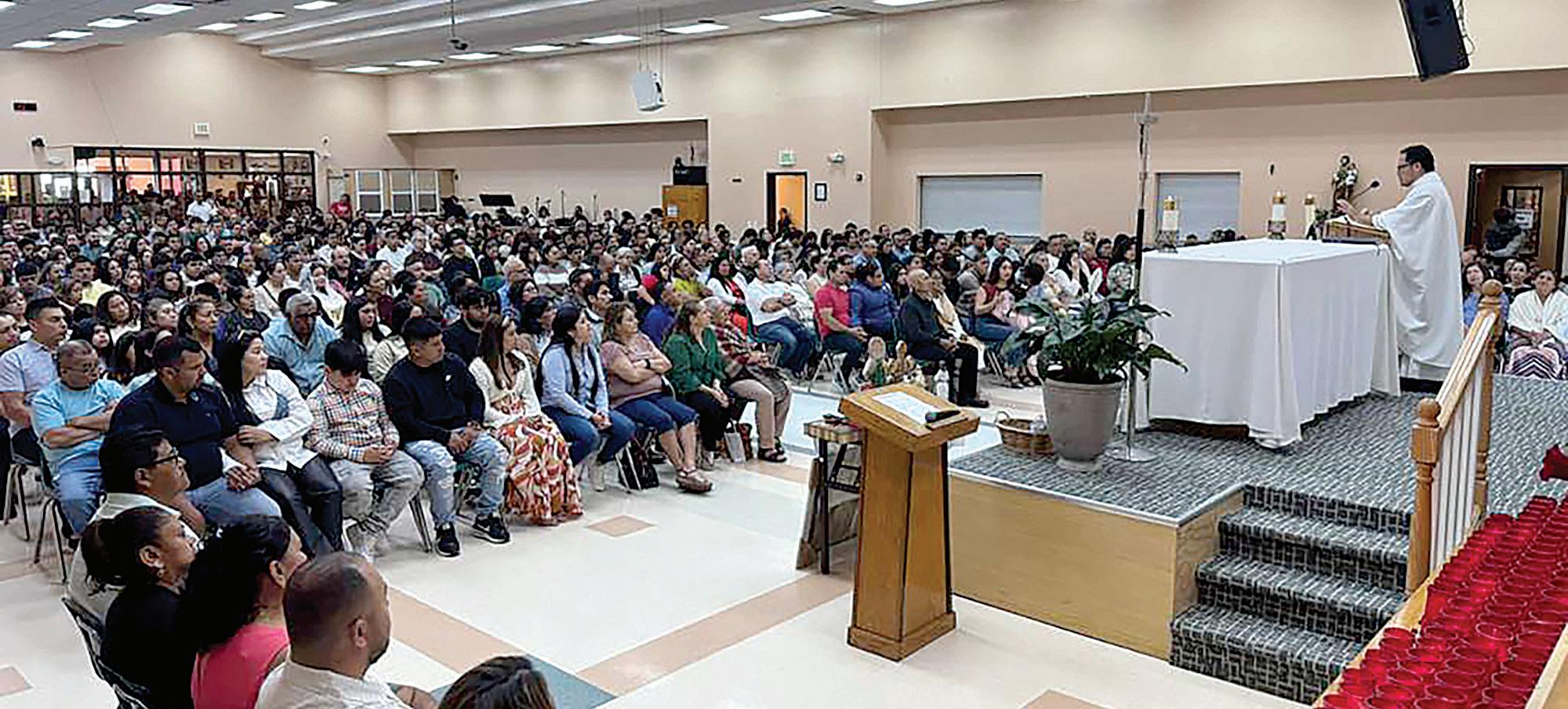
CHARLOTTE — Con más de 6,000 personas llenando ocho misas de fin de semana y 10,000 desbordando la iglesia en Pascua, la parroquia Nuestra Señora de Guadalupe podría finalmente obtener algo de alivio mientras la creciente congregación da sus primeros pasos hacia la construcción de un templo.
Actualmente, la parroquia celebra misa en un edificio multipropósito de 14,000 pies cuadrados que funciona como iglesia y centro de actividades, con canastas de baloncesto y almacenamiento para cientos de sillas que los voluntarios colocan y luego retiran una y otra vez, dependiendo de las actividades del día.
La parroquia más grande predominantemente hispana de la diócesis, Nuestra Señora de Guadalupe ocupa el segundo lugar en asistencia a misa entre las 93 iglesias de la diócesis y ejemplifica la tendencia más amplia de crecimiento entre los católicos hispanos.
“El crecimiento de la población en Charlotte se encuentra constantemente entre los más altos del país, ya que las personas se mudan a esta área en busca de oportunidades laborales, mejor calidad de vida y buen clima”, dijo Emmett Sapp, director de construcción y bienes raíces de la diócesis.
“El grupo demográfico de más rápido crecimiento es la población hispana, que históricamente ha sido predominantemente católica. Las parroquias están haciendo todo lo posible para adaptarse a esta afluencia, y es maravilloso ver comunidades de fe como Nuestra Señora de Guadalupe madurar hasta un punto en el que construir un templo está al alcance financiero a medida que se convierten en una parte más grande del tejido de nuestra diócesis”.
La parroquia aún tiene un largo proceso de diseño y recaudación de fondos por delante antes de que pueda comenzar la construcción, pero los líderes diocesanos han aprobado el proyecto para avanzar con la contratación de profesionales que elaboren diseños esquemáticos para una nueva iglesia con una capacidad prevista de 1,500 personas y costos que probablemente superen los 10 millones de dólares. Se espera que los diseños iniciales y las estimaciones de costos estén listos para el otoño, seguidos
La parroquia publicó un plan maestro de cómo podría verse su campus en el futuro, con una nueva iglesia, así como edificios adicionales dedicados a la educación, oficinas y ministerios. Actualmente, todos los ministerios y eventos comparten un solo espacio sobrecargado.
de documentos de diseño más detallados, todos los cuales requieren la aprobación diocesana. Se prevé que la recaudación de fondos comience en enero. Los líderes de Nuestra Señora
de Guadalupe ofrecieron recientemente a la parroquia un vistazo de cómo podría verse el campus de 32 acres dentro de una generación. Los líderes compartieron representaciones
arquitectónicas que incluyen una nueva iglesia junto con al menos tres edificios multipropósito en terrenos ajardinados a lo largo de Tuckaseegee Road, en el noroeste de Charlotte.
“Aún nos queda mucho por hacer, pero hemos comenzado”, dijo el padre Marvin Navas, párroco. “Este primer paso significa que un sueño que ha estado en el corazón de muchos puede hacerse realidad… Siento que muchas personas experimentan esa alegría con este primer paso”.
Fundada en 2007, la remodelación de Nuestra Señora de Guadalupe coincide con un aumento del 36% en la población hispana de la ciudad durante la última década, según estimaciones del Censo de EE. UU. Carolina del Norte ha experimentado un crecimiento dramático entre los hispanos desde 1990, cuando los aproximadamente 77,000 hispanos representaban solo el 1.2% de la población. Para 2020, gracias a las diversas oportunidades económicas del estado y su relativa asequibilidad, unos 1.1 millones de hispanos representaban el 10% de la población.
Otras parroquias, tanto urbanas como rurales, están experimentando este crecimiento entre los hispanos, quienes ahora constituyen al menos la mitad de los católicos que viven en la diócesis.
En Nuestra Señora de Guadalupe, la parroquia enfrenta conflictos de horario con ocho misas de GUADALUPE, PASA A LA PÁGINA 13
En un país marcado por las dificultades, la fe profunda y una independencia ganada con esfuerzo, el papa León XIV señaló a Argelia como un testigo vivo de lo que llamó el “principio rector por encima de todo” de la Iglesia: una caridad que trasciende el poder, une a la comunidad y construye la paz.
A lo largo de la primera etapa de su viaje de 11 días por África, el papa volvió a una idea: la paz no llega mediante el poder o el dominio, sino a través de un amor sacrificial, ejemplificado en Cristo.
En la Basílica de San Agustín, su padre espiritual, el papa León presentó a los cristianos de Argelia como un ejemplo de este aspecto de la misión de la Iglesia, pidiéndoles que permanezcan como un signo humilde y fiel del amor de Cristo.
“Su presencia en este país es como incienso: un grano encendido que difunde su fragancia porque da gloria al Señor y alegría y consuelo a tantos hermanos y hermanas”, dijo durante su misa final en el país el 14 de abril.
En su homilía, describió una Iglesia de caridad, “donde hay desesperación, ella enciende la esperanza; donde hay miseria, lleva dignidad; y donde hay conflicto, trae reconciliación”.
“Por lo tanto, frente a la pobreza y la opresión, el principio rector por encima de todo para los cristianos es la caridad: hagamos a los demás lo que quisiéramos que ellos hicieran con nosotros”, dijo.
“Por el contrario, la fe en el único Dios, Señor del cielo y de la tierra, une a las personas según una justicia perfecta, que llama a todos a la caridad, es decir, a amar a toda criatura con el amor que Dios nos da en Cristo.”
En la Basílica de Nuestra Señora de África, volvió a hablar del amor desinteresado, afirmando que la labor de la Iglesia con niños con discapacidad muestra cómo la caridad trasciende la “ayuda material” y crea “una comunidad auténtica, donde muchas personas comparten momentos de alegría y de dolor, unidas por vínculos de confianza, amistad y fraternidad”.
Reforzó este mensaje en un hogar de ancianos dirigido por las Hermanitas de los Pobres.
“El corazón de Dios está con los pequeños y los humildes, y con ellos construye su reino de amor y de paz, día a día, tal como ustedes se esfuerzan por hacerlo aquí en su servicio cotidiano, en la amistad y en la vida compartida”, dijo.
CHRISTINA LEE KNAUSS clknauss@rcdoc.org
CHARLOTTE — La Diócesis de Charlotte ha nombrado a nuevos líderes para dos ministerios clave, como parte de sus esfuerzos continuos por ampliar el alcance pastoral y servir mejor a su población católica en rápido crecimiento.
Steven Samol se trasladará desde la República Dominicana para desempeñarse como director de la Oficina de Ministerio Hispano, en un momento en que más de la mitad de los 565,000 católicos de la diócesis son hispanos.
Dawn Fitzpatrick dirigirá la recién renombrada Oficina de Matrimonio y Vida Familiar, supervisando iniciativas diocesanas para apoyar a los matrimonios y las familias y promover una cultura de la vida.
“Steven y Dawn son líderes talentosos y con experiencia que nos ayudarán a cumplir nuestro compromiso de formar discípulos misioneros y compartir el Evangelio”, dijo el monseñor Patrick Winslow, vicario general y canciller, en un correo electrónico del 10 de abril enviado al clero y al personal.
Ambos comenzarán con trabajo virtual limitado esta semana y se incorporarán a tiempo completo de manera presencial el 27 de abril.
STEVEN SAMOL
Líder ministerial bilingüe, Samol cuenta con más de 20 años de experiencia en liderazgo y gestión de proyectos en el ministerio católico, la atención médica, el gobierno y el desarrollo internacional.
Más recientemente, trabajó con la Encounter School of Ministry, un programa de formación católico, donde brindó formación en liderazgo y discipulado a cientos de estudiantes de habla inglesa y española.
VIENE DE LA PÁGINA 12
fin de semana y cientos de organizaciones parroquiales y grupos de fe compitiendo por el mismo espacio.
“El espacio que tenemos actualmente es en realidad grande, pero ahora es demasiado pequeño para nuestra comunidad”, dijo el padre Navas. “Cada misa está llena, pero también tenemos reuniones y clases de catecismo en el mismo espacio. A veces hemos cancelado diferentes actividades para acomodar otras. Estamos llegando a nuestro límite”.
Esta comunidad parroquial ha experimentado muchos cambios, comenzando en 1972 cuando el primer obispo de la diócesis, Michael J. Begley, estableció el Centro Católico Hispano para servir a los inmigrantes hispanos y conectarlos más plenamente con la diócesis.
El centro cultural en Tuckaseegee Road fue dedicado en 2002 a Nuestra Señora de Guadalupe. En 2007, fue elevado a estatus de parroquia bajo ese nombre, reflejando su papel como hogar espiritual para los católicos hispanos en Charlotte.
Hoy, el ministerio de Nuestra Señora de Guadalupe se extiende mucho más allá de las paredes de la iglesia y la posiciona como líder en el ministerio hispano, tanto en la fe como en el servicio comunitario.
La parroquia sirve como un centro
Nacido en la ciudad de Nueva York de padre puertorriqueño y madre dominicana, Samol ha vivido y trabajado a nivel internacional. Conoció a su esposa, Sayli, nacida en Cuba, en España mientras servía en un ministerio católico dedicado a la evangelización a través del arte y los medios de comunicación. Tiene maestrías en mercadotecnia y administración de empresas, así como una licenciatura en ingeniería industrial del Instituto Tecnológico de Santo Domingo. También cuenta con una maestría en matrimonio y familia del Instituto Pontificio Juan Pablo II para Estudios sobre el Matrimonio y la Familia, parte de The Catholic University of America en Washington, D.C. Coordinará todas las áreas del ministerio hispano en la diócesis. Trabajando con párrocos y líderes parroquiales, apoyará las necesidades pastorales, promoverá una participación más plena en la vida parroquial y supervisará la implementación del Plan Pastoral Nacional para el Ministerio Hispano. También impulsará la formación de líderes, los programas de evangelización y las iniciativas de discipulado, sirviendo como un puente vital entre los fieles hispanos y las oficinas diocesanas.
Habiendo vivido, estudiado y trabajado en varios países, Samol dijo que encuentra alegría en ayudar a personas de diversas culturas a encontrar puntos en común a través de su fe compartida y a crecer enriqueciéndose mutuamente.
DAWN FITZPATRICK
Fitzpatrick aporta más de 20 años de experiencia en el ministerio familiar y
confiable para referencias médicas y de servicios sociales, asociándose con proveedores como Novant Health, y sostiene una de las despensas de alimentos más importantes de la diócesis. Desde 2012, Casa Marillac ha proporcionado distribuciones semanales de alimentos a más de 300 familias en colaboración con organizaciones como Second Harvest Food Bank.
Más allá de satisfacer necesidades materiales, la parroquia mantiene una vida espiritual y cultural vibrante a través de liturgias en español y formación en la fe, y su fiesta anual de Nuestra Señora de Guadalupe atrae a personas de toda la diócesis para una celebración nocturna de oración, canto, danza y expresión cultural que simboliza una herencia y devoción hispana compartidas.
En el verano de 2025, los líderes parroquiales compartieron su plan pastoral
provida. Más recientemente, se desempeñó como directora ejecutiva del National March for Life Education and Defense Fund en Washington, D.C., y anteriormente dirigió la Oficina de Respeto a la Vida de la Arquidiócesis de Chicago.
También ha servido en ministerios catequéticos juveniles y para adolescentes en parroquias de la Arquidiócesis de Baltimore y la Diócesis de Charleston, Carolina del Sur, y trabajó en el ámbito empresarial como capacitadora corporativa e instructora universitaria de oratoria y comunicación. Fitzpatrick tiene una licenciatura en ciencias políticas de Shippensburg University y una maestría en estudios de comunicación de Bloomsburg University, además de certificados de posgrado en teología y en la Teología del Cuerpo.
Dirigirá iniciativas de apoyo al matrimonio y la vida familiar, y ayudará a las parroquias a desarrollar ministerios locales alineados con la enseñanza de la Iglesia y las prioridades pastorales de la diócesis.
Ella y su esposo, el diácono Michael Fitzpatrick, llevan 35 años de matrimonio y tienen dos hijas y una nieta.
Samol sucede al padre Julio Domínguez, ex vicario de Ministerio Hispano, y Fitzpatrick sucede al padre Peter Ascik, ex director de la Oficina de Vida Familiar. Los cambios reflejan el énfasis del obispo Michael Martin en colocar a líderes laicos calificados en funciones administrativas, mientras asigna a los sacerdotes a roles en los que están especialmente capacitados para centrarse en el ministerio parroquial, la vida sacramental y el cuidado pastoral.
con el obispo Michael Martin, explicando la necesidad de construir una iglesia y otras instalaciones en el campus para el futuro. Luego comenzaron a desarrollar un plan maestro para los próximos 20 años, trazando un posible camino de desarrollo.
“Con el plan maestro como base, la parroquia ahora comenzará a desarrollar un diseño esquemático y a recopilar estimaciones de costos de construcción para la nueva iglesia”, dijo Sapp. “Para principios de 2027, la parroquia debería estar lista para presentar los planes de la nueva iglesia y comenzar la recaudación de fondos en conjunto con la diócesis”.
“El sueño siempre ha estado con nosotros dentro de esta comunidad”, dijo el padre Navas. “Tenemos el sueño de que la Virgen de Guadalupe, que descendió al Tepeyac, también descienda a este nuevo Tepeyac.”
Considere unirse a los más de 2 millones de miembros de la organización fraternal católica más grande del mundo y registrándose en línea hoy en: www.kofc.org/joinus/es Caballeros de Colón
Por tiempo limitado - Membresía en línea GRATISUse el código de promoción (BLESSEDMCGIVNEY)
LISA
GERACI lmgeraci@rcdoc.org
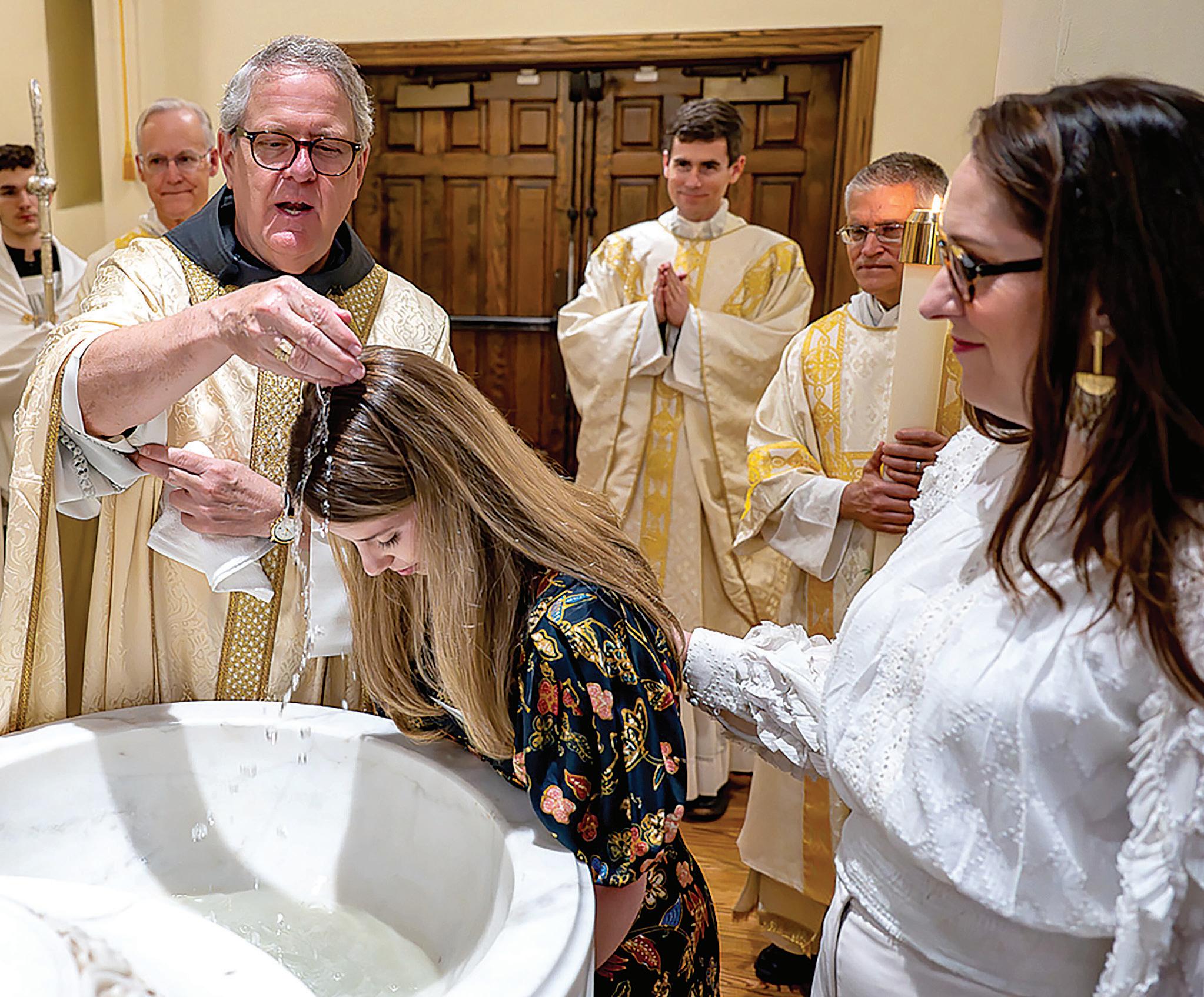
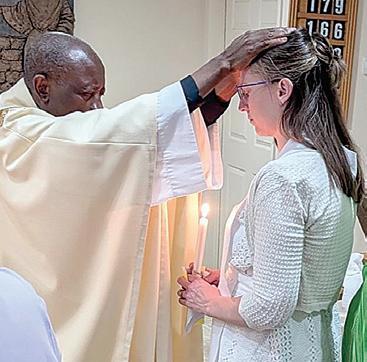
Inline with national trends, the number of people entering the Church this Easter season is surging across the Diocese of Charlotte.
Diocesan leaders and new Catholics themselves credit a range of influences –from pop culture to Pope Leo – but point to a common question driving the surge: Is there something more to life?
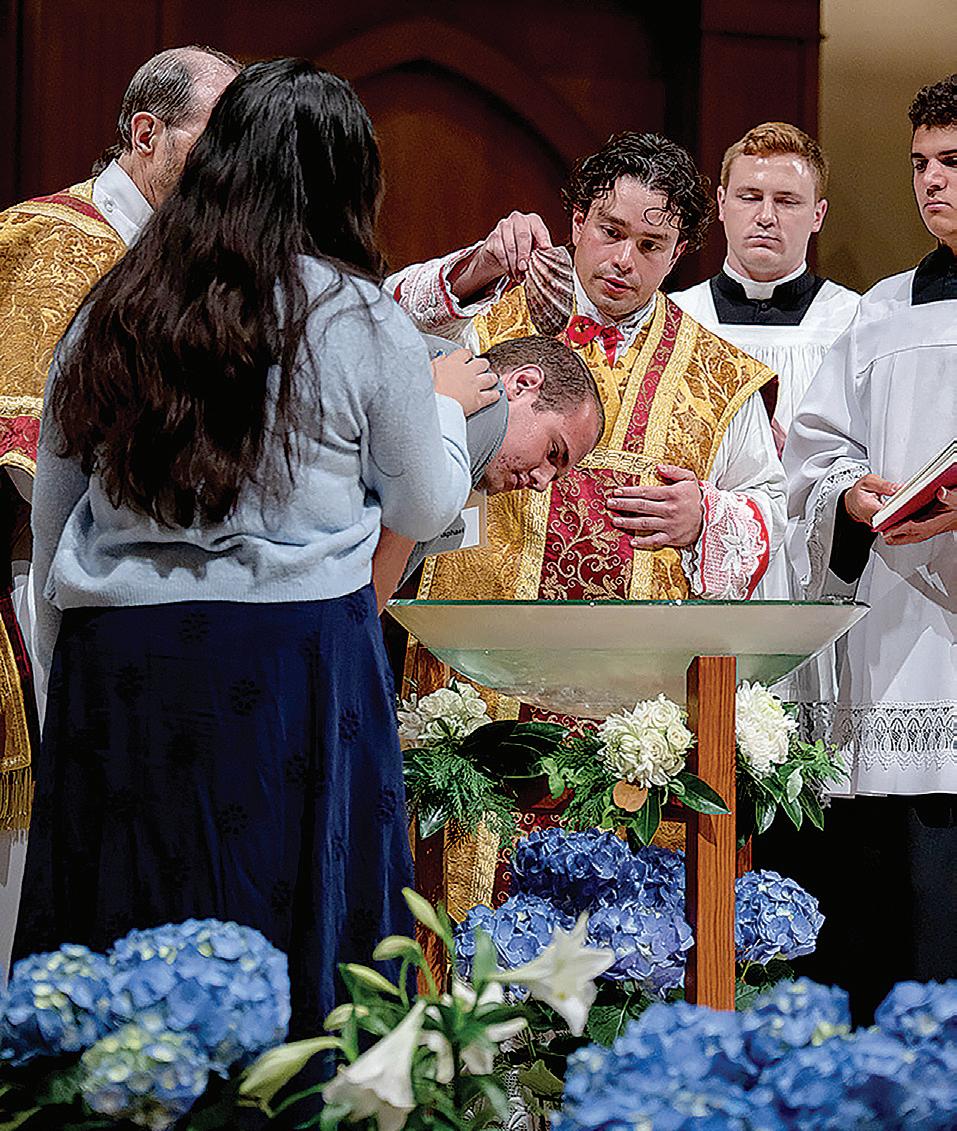
That search for meaning is drawing more people into the Church, with parishes reporting a sharp rise in baptisms and receptions into full communion. Clergy say many are in their 20s and 30s, often drawn by a desire for meaning, stability and community and sparked by personal relationships or encounters with the faith online.
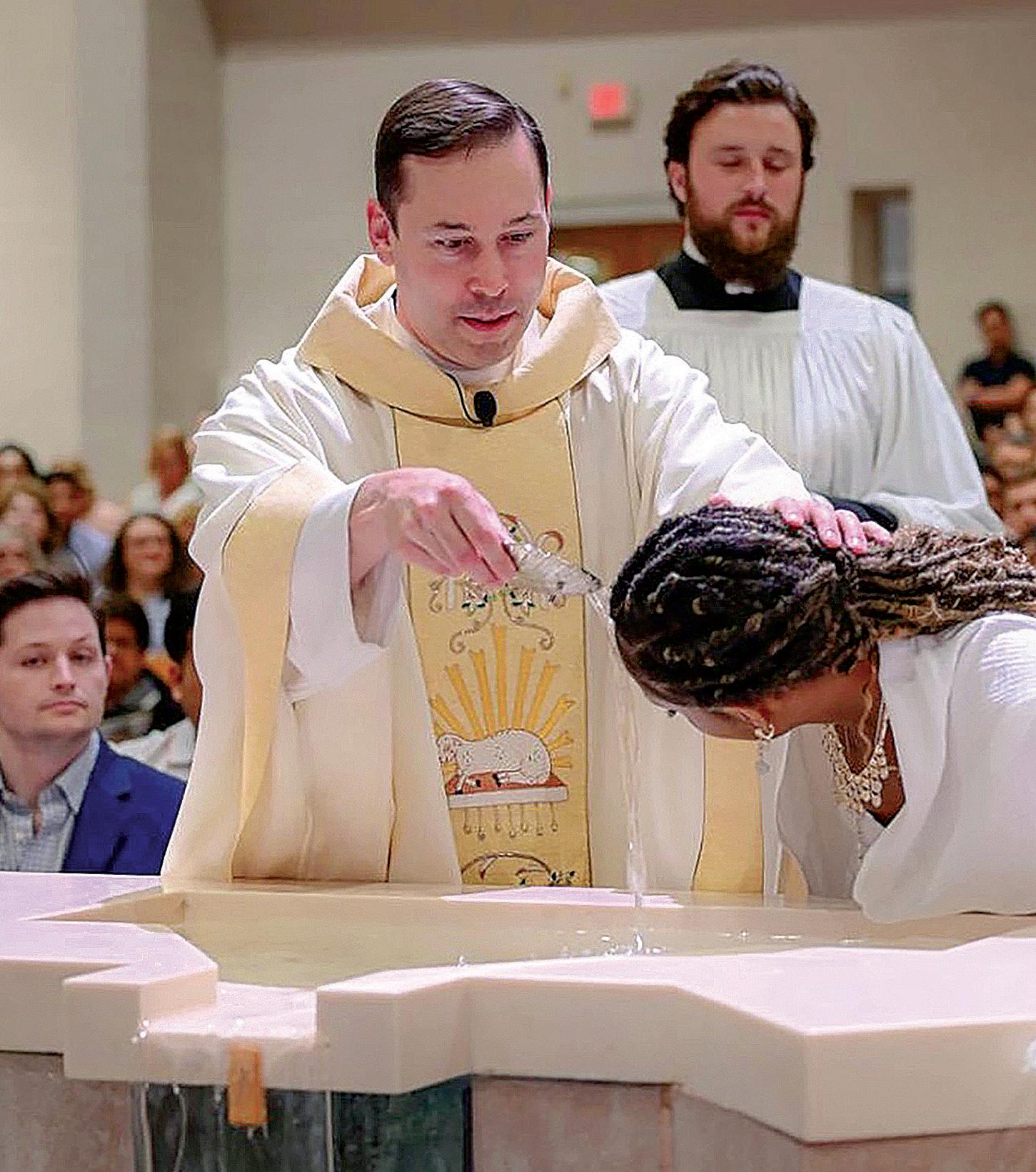
The diocese is expected to meet or surpass last year’s 1,743 new members – the highest in at least a decade. That follows two consecutive years of 43% growth in people joining the Church. Final numbers are still coming in from the diocese’s 93 churches, but several, including parishes in Charlotte, Hendersonville and Greensboro, are reporting a surge.
Parishes aren’t the only ones seeing growth. High Point University’s Campus Ministry saw 17 college students receiving the sacraments of initiation.
While population growth in western North Carolina is partly the reason –the diocese has grown 50% in the past decade – clergy say something deeper is happening.
“We are seeing the fingerprints of the Holy Spirit all over this amazing phenomenon,” says Father Andres Gutierrez, pastor of Immaculate Conception in Hendersonville, “from the moving personal stories of searching and meaning, to the conversations where the content of faith ‘clicked,’ to the experiences where faith transitioned from content to lived reality in their personal lives and in the community.”
FLOCKING
What’s happening here reflects a broader trend.
According to data collected by the religion app Hallow, American dioceses are seeing an average of 38% more converts to Catholicism this year than
in 2025.
Secular and religious media are capturing the moment with headlines like the New York Times’ “Roman Catholics see a surge of new converts” and the National Catholic Register’s “Something’s Happening: Catholic converts surge in many U.S. dioceses.”
Many report a similar pattern: Gen Z and Millennials – those aged 14-35 – are leading this resurgence.
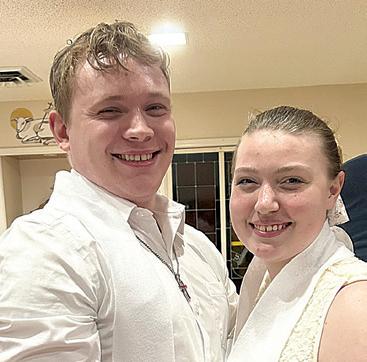
Michael Shelton, 22, is among them.
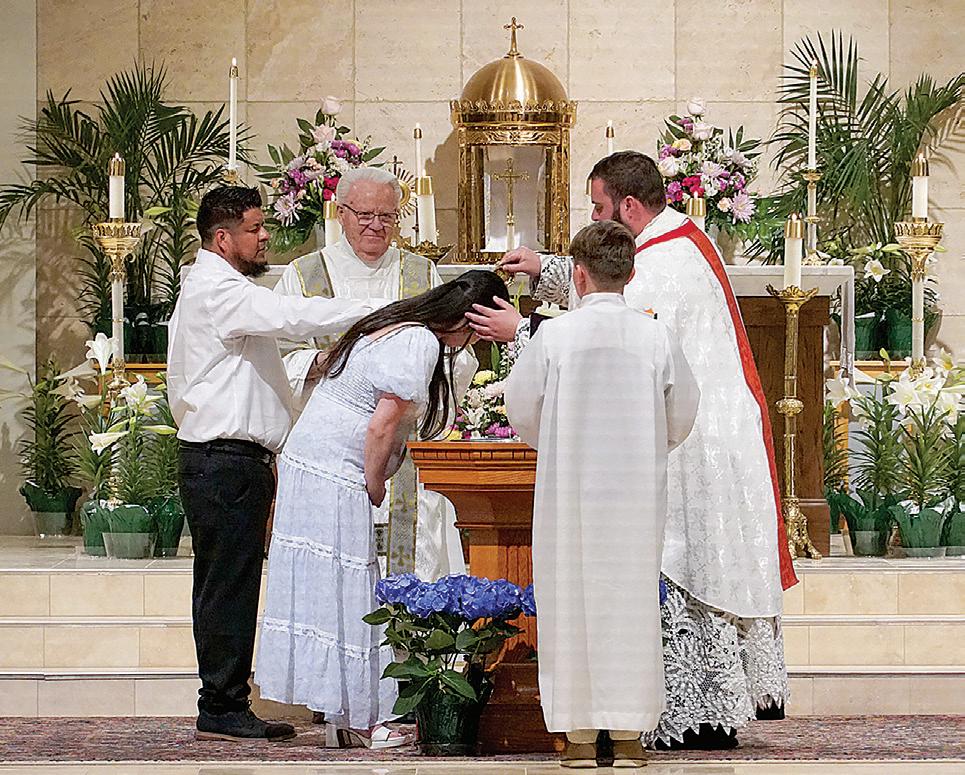
He and his wife Cressida were baptized during the Easter Vigil at St. Andrew the Apostle Church in Mars Hill.
“There have been so many changes albeit religious or political views, but we are starting to get more involved and are becoming something different than our predecessors,” Shelton says of his generation. “No matter what you are chasing, it doesn’t feel as good as following God. And I think we are starting to realize it.”
Olivia Owen, 26, had little knowledge
The number of adults coming into the Church in
total. The drop noted above reflects the disruption of
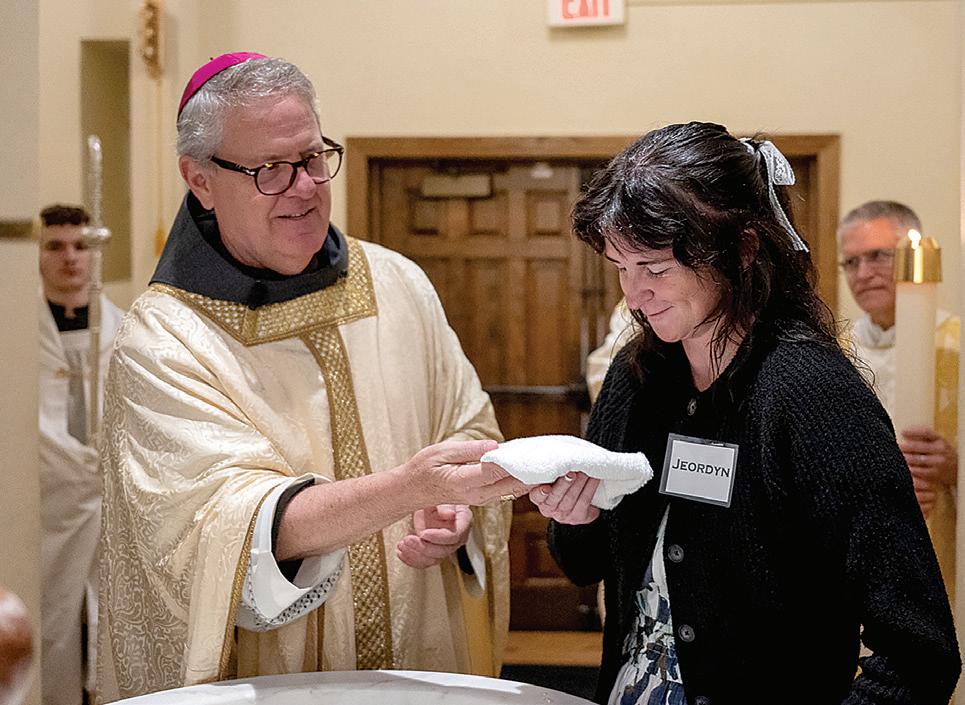
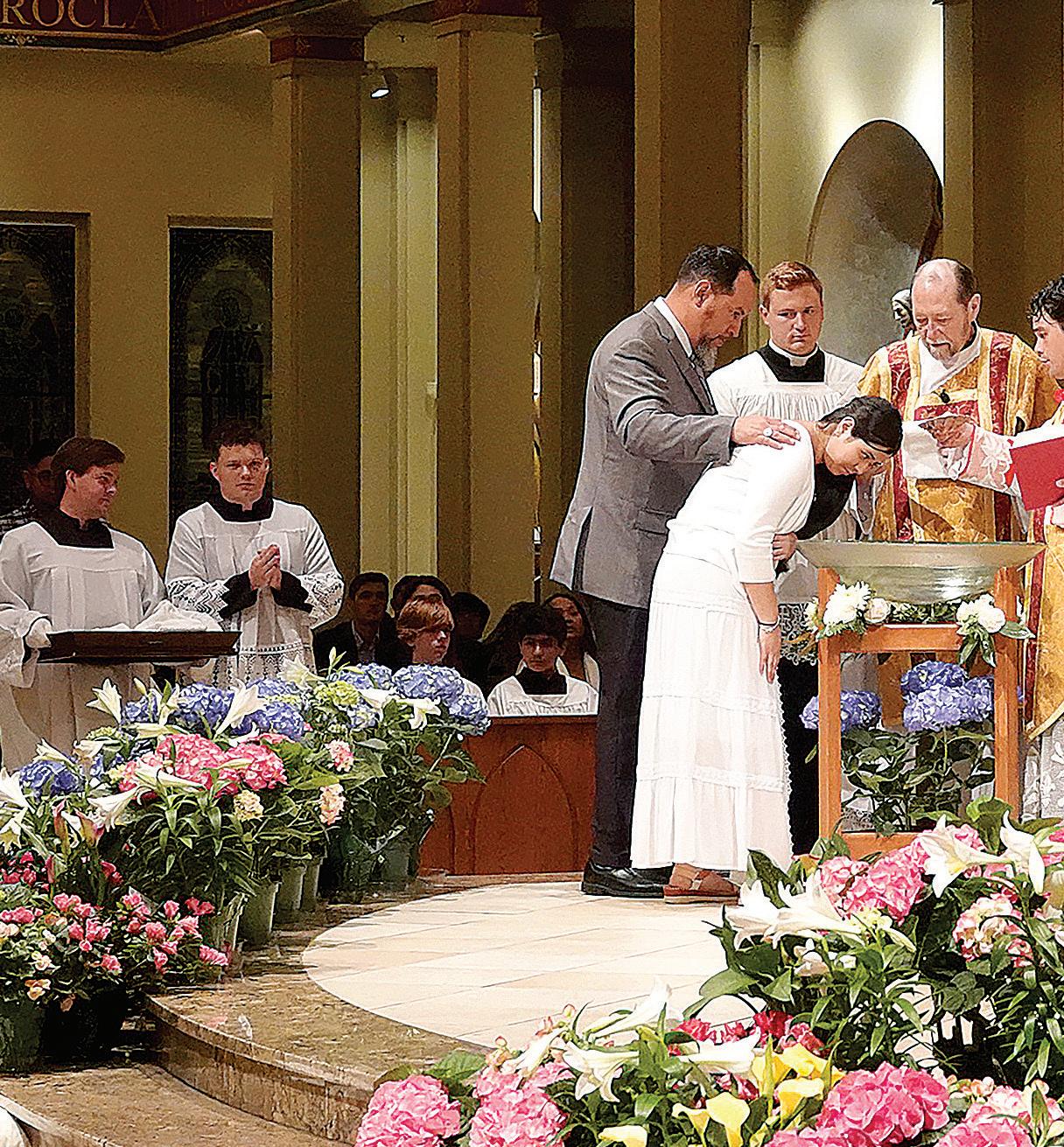
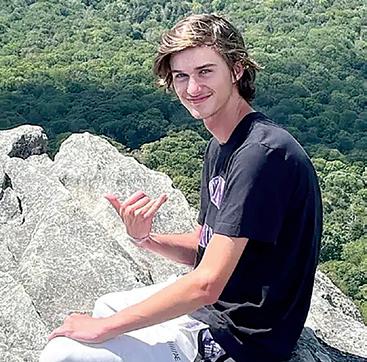
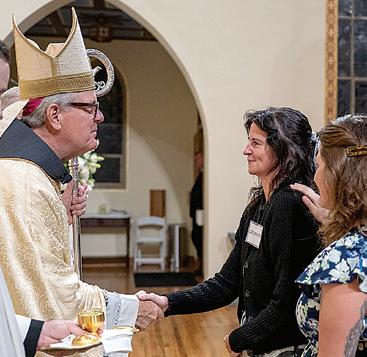
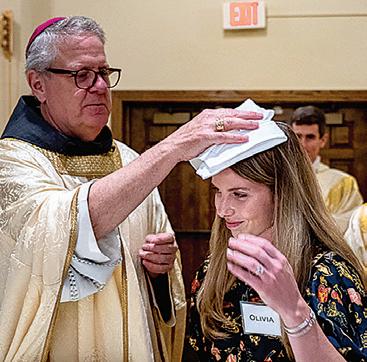
of the Catholic faith until her Catholic fiancé invited her to Mass. She was among six people baptized and confirmed by Bishop Michael Martin during the Easter Vigil at St. Patrick Cathedral in Charlotte.
The moment was “life-changing,” Owen said afterwards. “It was beautiful, it was wonderful.”
“The more I researched, the more I tried to disprove Catholicism, but I couldn’t.”
“I went to Mass as numb as I could be… but, during Mass, I felt undeniable comfort and peace.”
“Because I noticed I was growing weaker in my faith, I really wanted to explore the other denominations to see what their beliefs were.”
“I started having life questions: ‘Why are we here? Where did we come from?’”
or
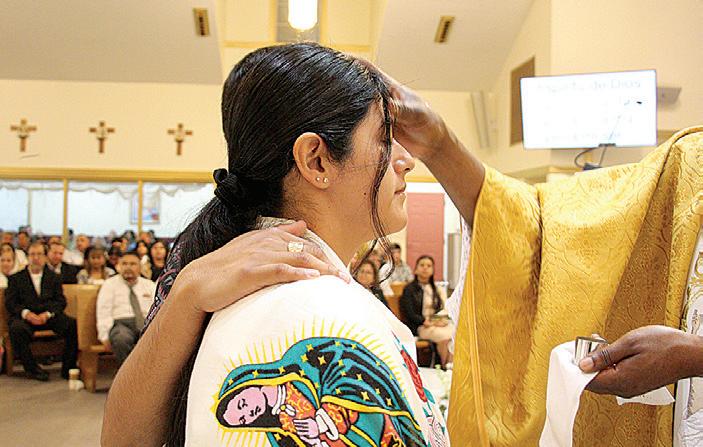
n St. Matthew in Charlotte – one of the largest Catholic parishes in the U.S. –saw 88 people enter at the Easter Vigil, and another 108 people entered at St. Gabriel, also in Charlotte.
n Immaculate Conception welcomed 76 people at the Easter Vigil – the most ever for the Hendersonville parish, breaking last year’s record of 66.
n At Our Lady of Guadalupe in Charlotte, 70 people are expected to enter the Church between Easter and Pentecost.
n St. Leo the Great in Winston-Salem saw 67 people enter during the Easter Vigil, while nearby Immaculate Heart of Mary in High Point had 55 people enter.
Nationally, clergy and new Catholics credit growing interest in part to the digital world – with access to Church history, podcasts and videos by Catholic influencers, and apps like Hallow and Exodus 90. But it’s not the only factor.
“For many, it is a Catholic friend or relative who inspired them,” says
Deacon Matthew Newsome, who leads Campus Ministry at Western Carolina University in Cullowhee. “For many others, it is a desire to practice a more historically rooted version of Christianity. For others, it is a desire for more organized, traditional liturgy.”
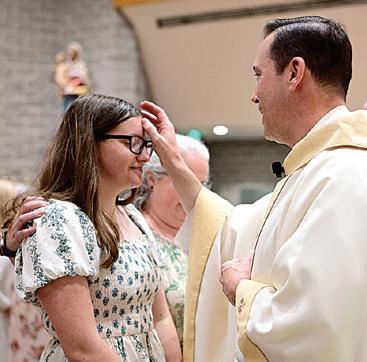
Nicole Neuse, 18, always believed God existed, but as she neared the end of high school, “life questions” persisted:
“Why are we here? Where did we come from? What is going on?” she says.
Visits to non-denominational megachurches failed to provide the answers she was seeking. Curious about the Eucharist, she searched online and learned about the Catholic Church.
“What really got me was the early Church Fathers and how strongly they believed in the Real Presence of the Eucharist,” she says. “And then it took a lot of time going through each teaching and slowly finding the justifications.”
Neuse was among 88 people welcomed into the Church during the Easter
Vigil at St. Matthew Church in Charlotte.
Franciscan Father Casey Cole, a Catholic social influencer with 473,000 YouTube subscribers and 173,000 Instagram followers, has seen the interest among young adults firsthand.
To bridge the digital and real worlds, he and two fellow friars launched an outreach to young adults and the religiously unaffiliated. Between posting videos, they walk the streets of Uptown Charlotte and the University of North Carolina-Charlotte, spending time in bars and coffee shops, answering questions about the faith.
“There’s a tremendous openness to faith – there is definitely something going on countrywide,” Father Cole said. “There’s more interest, more fervor. We’ve had great conversations with atheists, Protestants and others who are looking at the Church in a different way.”
Pope Leo XIV – the first pope born in the United States – is another
factor, along with Catholic politicians, celebrities and hit shows like “The Chosen” that have popularized the faith.
But even more than that, says Bishop Michael Martin, is a deep craving for hope and certainty among young adults navigating a turbulent world. A former high school coach, principal and campus ministry director, he understands the pressures that today’s consumer-driven culture puts on young people.
“All of us at some point need to ask ourselves, ‘If there is nothing greater than this, then I am not sure that I can carry the weight of that,’” the bishop said recently. “The increase in anxiety and depression in our world – in particular, among our younger people – is a result of the message that has been promoted to them that there isn’t anything greater than this. After a while they start
n At St. Mark in Huntersville, 65 people are coming into the Church between Easter and Pentecost.
n St. Pius X in Greensboro is welcoming 58 people into the Church this year, up 57%.
n St. Ann in Charlotte saw 56 people enter during the Easter Season.
the
TRISH STUKBAUER tmstukbauer@rcdoc.org
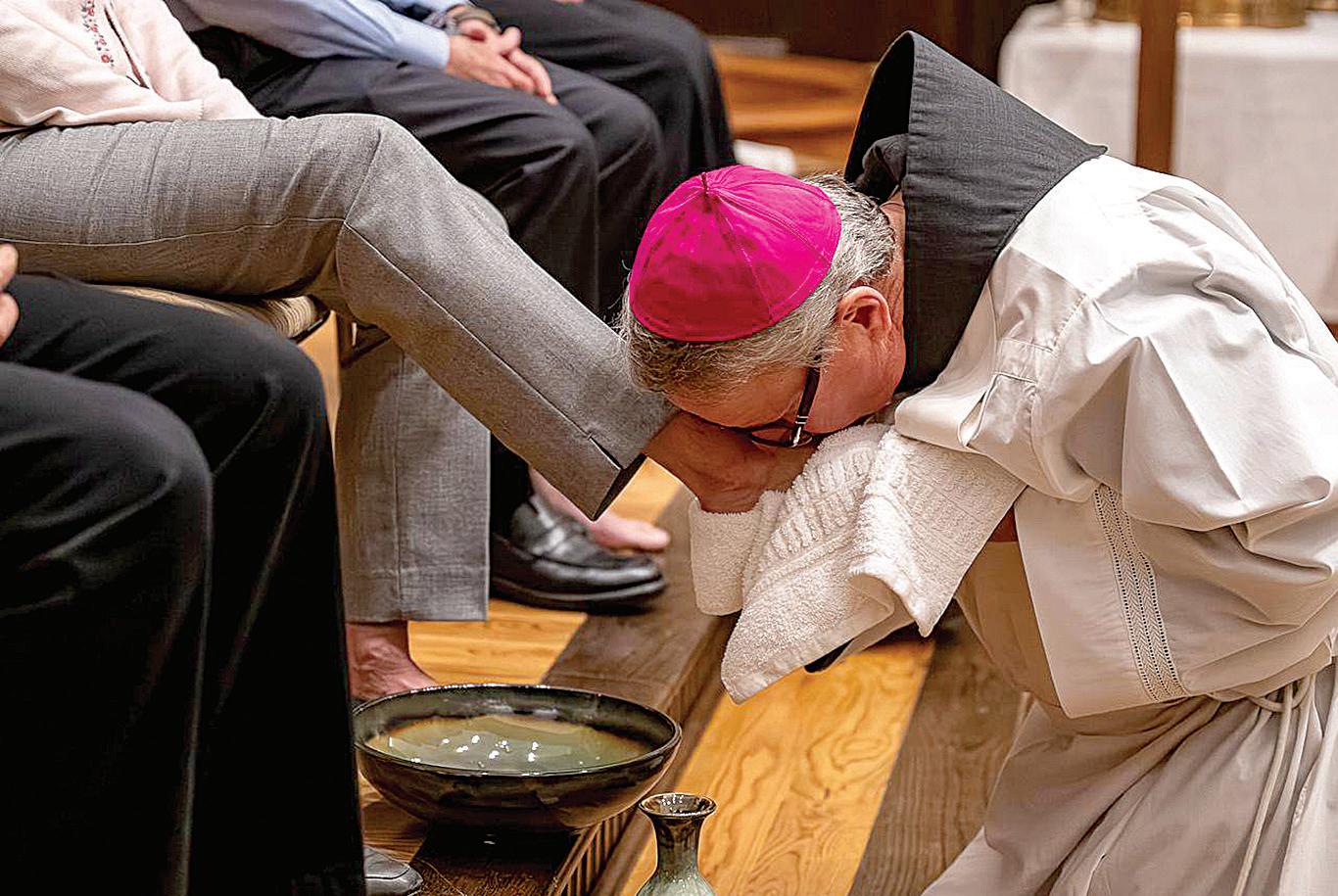
CHARLOTTE — An overflowing crowd gathered at St. Peter Church on Holy Thursday for the Mass of the Lord’s Supper as Bishop Michael Martin emphasized the importance of communion with God and one another in a broken world.
“The very beginning of these sacred three days challenges all of us to know better why it is that we do what we do,” said Bishop Martin, “and to face the unfortunate truth that many of even some of our best intentions, even some of our best desires, have been twisted by a broken world.”
Holy Thursday began the Triduum, the three holiest days of the Church year, commemorating Jesus’ Passion, death and resurrection. The liturgy commemorates the Last Supper, when Jesus instituted the Eucharist and the priesthood, before His betrayal and arrest.
During the Mass, Bishop Martin invited the congregation to reflect more deeply: “Why are you here? What motivates us? What is at the heart of our deepest longing?”
The answer, he said, is communion.
“We see the Communion that Jesus institutes tonight – His sacred Body and Blood – as the greatest gift of communion, that He could be in communion with us for all eternity through what we will celebrate on this altar,” he said. “Why did He create us? So we could be in communion with Him – and not just in communion with Him, so we could be in communion with one another.”
He encouraged the faithful to focus more on others than themselves and recalled his pastoral vision for the Diocese of Charlotte: “Everyone so loves Jesus, that we share Him with others.”
That call was reflected in the washing of the feet, when Bishop Martin and others knelt to wash the feet of parishioners. More than 60 people participated, from young children to the elderly.
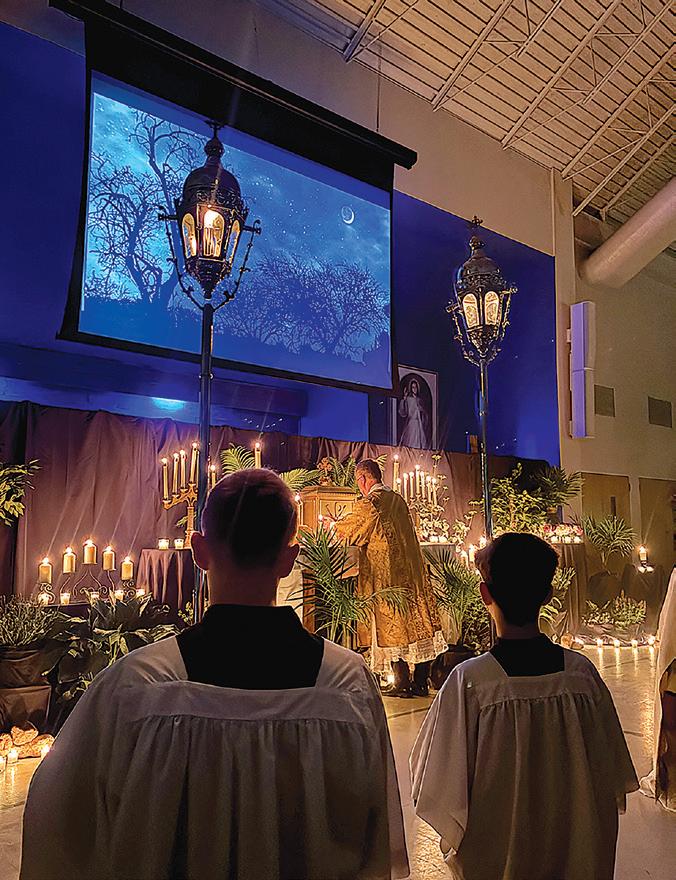
At the end of Mass, the Blessed Sacrament was processed to an altar of repose, where parishioners knelt in silent adoration, recalling Christ’s agony in the Garden of Gethsemane.
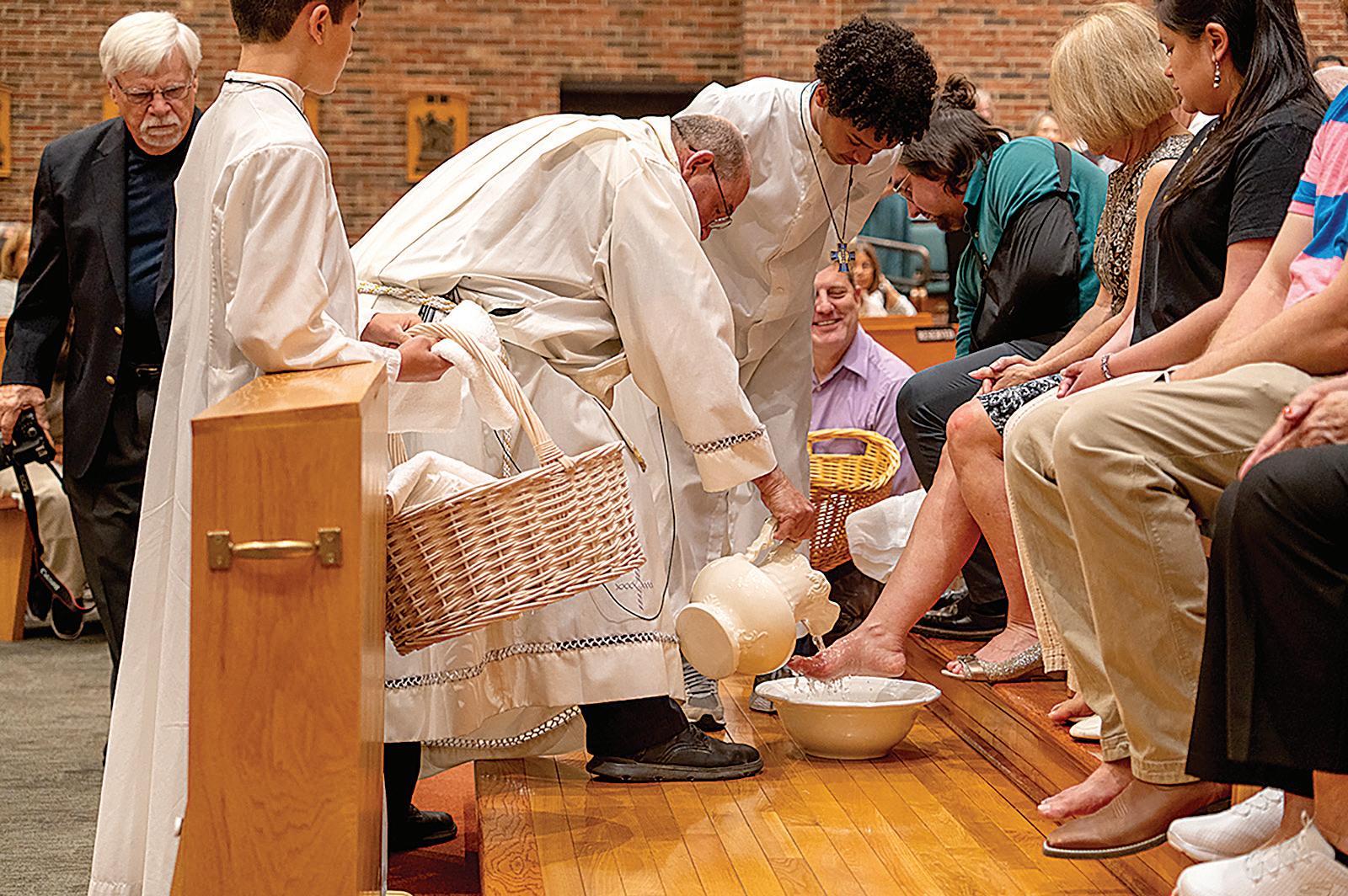
La parroquia St. John Neumann comenzó el Triduo, los tres días más sagrados del año litúrgico que incluyen el Jueves Santo, el Viernes Santo y la Vigilia Pascual, lavando los pies de los feligreses.
El obispo Martin exhorta a la comunión con Dios y con los demás
TRISH STUKBAUER tmstukbauer@rcdoc.org
CHARLOTTE — Una multitud desbordante se reunió en la iglesia St. Peter el Jueves Santo para la Misa de la Cena del Señor, mientras el obispo Michael Martin destacó la importancia de la comunión con Dios y entre nosotros en un mundo marcado por la fragilidad.
“Desde el mismo comienzo de estos días sagrados se nos desafía a todos a comprender mejor por qué hacemos lo que hacemos”, dijo el obispo Martin, “y a enfrentar la triste realidad de que incluso algunas de nuestras mejores intenciones, incluso algunos de nuestros mejores deseos, han sido distorsionados por un mundo roto”.
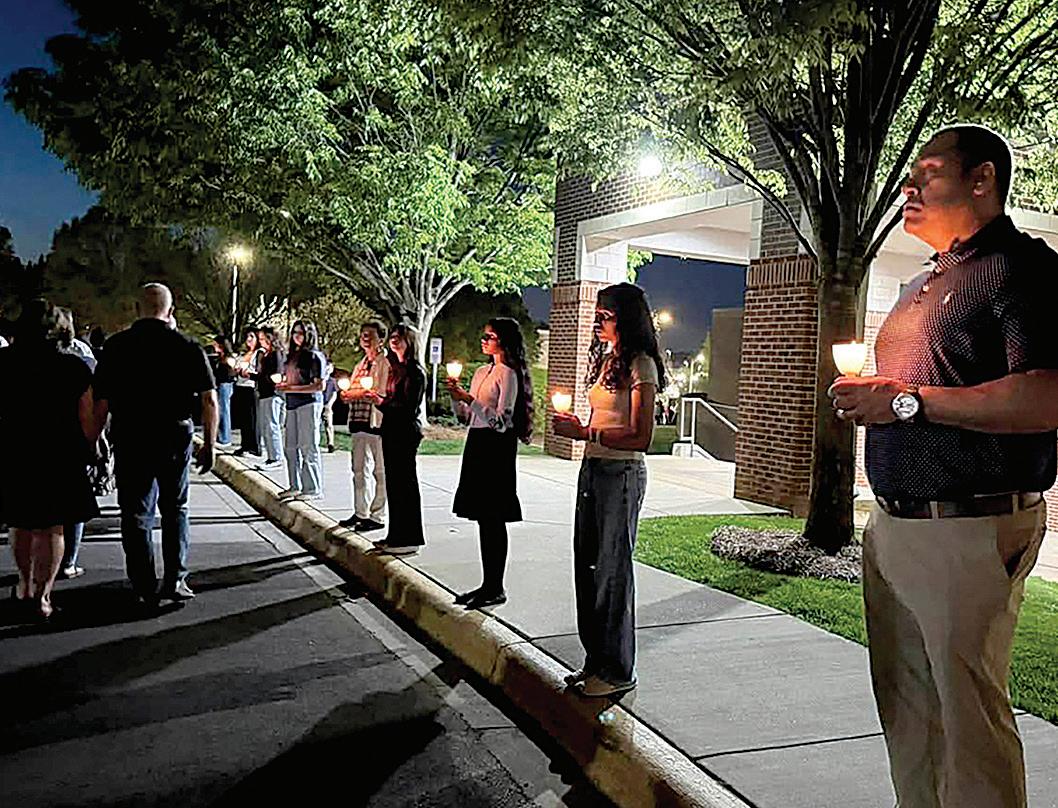
FOTO PROPORCIONADA
Feligreses de la parroquia de San Mateo se alinean en la acera antes del Altar de la Reserva el Jueves Santo.
El Jueves Santo marca el inicio del Triduo, los tres días más sagrados del año litúrgico, que conmemoran la Pasión, muerte y resurrección de Jesús. Recuerda la Última Cena, cuando Jesús instituyó la Eucaristía y el sacerdocio, antes de su traición y arresto.
Durante la Misa, el obispo Martin invitó a los fieles a reflexionar más profundamente: “¿Por qué estás aquí? ¿Qué nos motiva? ¿Qué está en el corazón de nuestro anhelo más profundo?”
La respuesta, dijo, es la comunión. “Vemos la Comunión que Jesús instituye esta noche – Su sagrado Cuerpo y Sangre – como el mayor don de comunión, que Él pueda estar en comunión con nosotros por toda la eternidad a través de lo que celebraremos en este altar”, dijo. “¿Por qué nos creó? Para que pudiéramos estar en comunión con Él – y no solo en comunión con Él, sino también en comunión unos con otros”.
Animó a los fieles a centrarse más en los demás que en sí mismos y recordó su visión pastoral para la diócesis: “Que todos amen tanto a Jesús, que lo compartamos con los demás”.
Ese llamado se reflejó en el lavatorio de los pies, cuando el obispo Martin se arrodilló para lavar los pies de los feligreses. Más de 60 personas participaron, desde niños pequeños hasta personas mayores.
Al concluir la Misa, el Santísimo Sacramento fue llevado en procesión a un altar de reposo, donde los fieles se arrodillaron en adoración silenciosa, recordando la agonía de Cristo en el huerto de Getsemaní.
Más online
En www.catholicnewsherald.com : Vea más fotos de las celebraciones del Jueves Santo en toda la
Bishop Martin: Leave challenges at the foot of the cross
LISA M. GERACI
lmgeraci@rcdoc.org
CHARLOTTE — Bishop Michael Martin, Father Peter Ascik, Father Miguel Sanchez and Deacons Brian McNulty and Paul Bruck silently processed into St. Patrick Cathedral April 3 and prostrated themselves before the empty tabernacle and bare altar to begin the Good Friday service.
The liturgy – the only day of the year on which Mass is not celebrated – started at 3 p.m., traditionally noted as the time of Jesus’ death. Outside the cathedral, just as 2,000 years ago, passersby barely noticed, Bishop Martin said in his homily.
Inside, however, the reenactment of the Passion of the Christ in John’s Gospel reading brought the congregation of more than 250 back to the foot of the Cross.
The bishop urged people not to jump ahead too quickly to Easter Sunday before embracing Good Friday.
“Jesus Christ – the King of Kings, the Lord of Lords, the Son of God, perfect holiness, goodness, truth and beauty – walked through the streets of Jerusalem, bloody and beaten, carrying a massively heavy
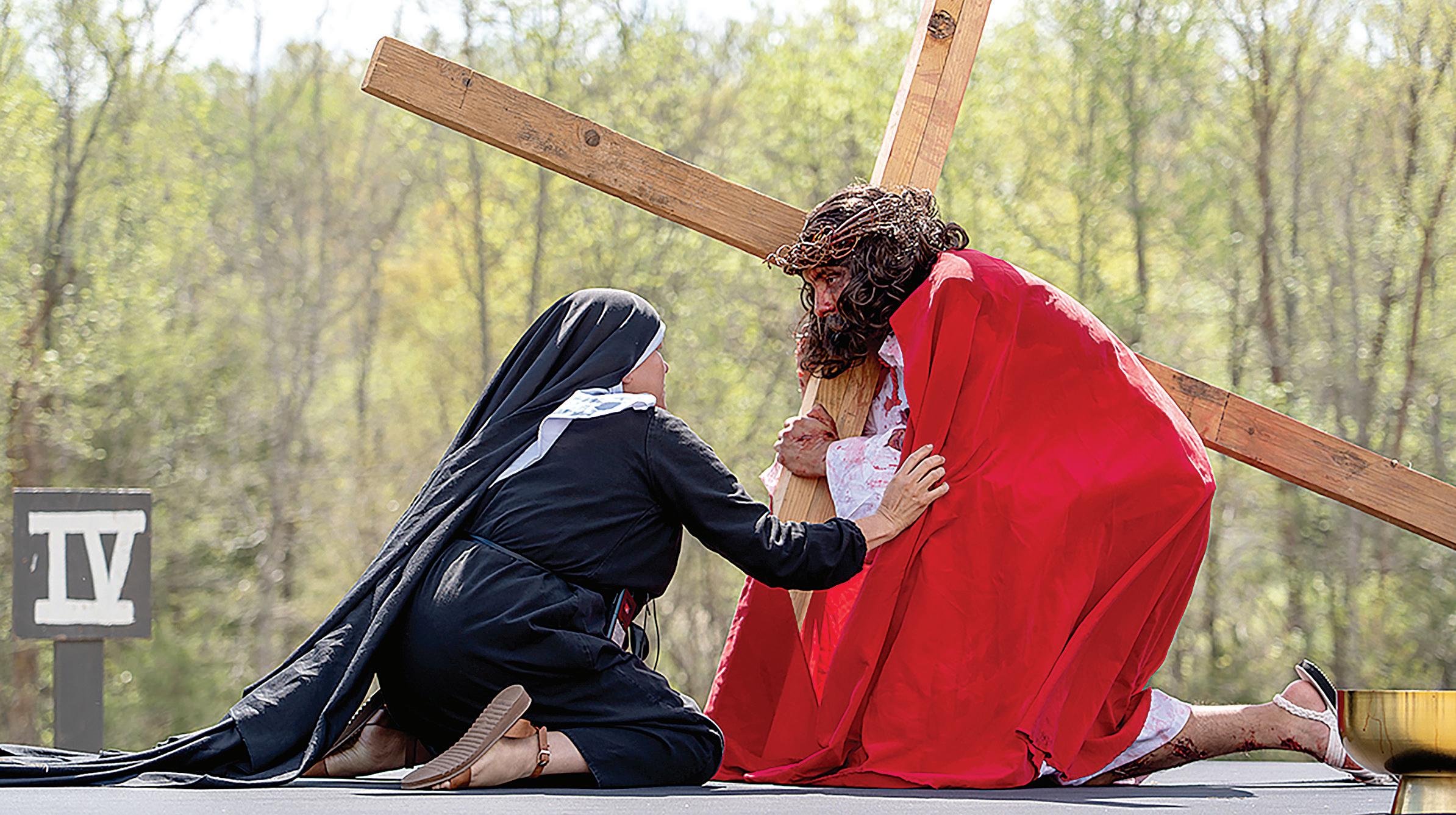
In one of the most dramatic displays of the Live Stations of the Cross, St. Joseph Church brought the Passion of Christ to life at Asheboro Regional Airport – a powerful tradition they have faithfully carried on for more than 13 years.
cross, and most of the people who saw Him just went about their business,” the bishop said, “not knowing that all of their difficulties, all of their weaknesses, every single sin of theirs, every sin that was ever committed, and every sin that would ever be committed were being carried by that Man and that Cross, on that road. For them, and for us. … Our lives could be forever changed, and yet, most of the world doesn’t even take notice.”
Deacon McNulty chanted the
Solemn Intercessions of the Good Friday liturgy as the congregation knelt, uniting with Catholics around the world in prayer.
A large wooden crucifix was unveiled and first the bishop, then the congregation came forward to venerate it with silent kisses, touches and genuflections. In his homily, the bishop had invited people to acknowledge their own faults as they did so.
“Confront the hopelessness,” he said. “We acknowledge Him,
“Enfrentar la desesperanza”
El obispo anima a los católicos a dejar sus cargas al pie de la cruz
LISA M. GERACI lmgeraci@rcdoc.org
CHARLOTTE — El obispo
Michael Martin, el padre Peter Ascik, el padre Miguel Sánchez y los diáconos Brian McNulty y Paul Bruck entraron en silencio en la Catedral de San Patricio el 3 de abril y se postraron ante el sagrario vacío y el altar desnudo para comenzar el servicio del Viernes Santo.
La liturgia – el único día del año en que no se celebra la Misa – comenzó a las 3 p.m., hora tradicional de la muerte de Jesús. Afuera, como hace 2,000 años, muchos transeúntes apenas lo notaban, dijo el obispo en su homilía.
Dentro, la proclamación de la Pasión según san Juan llevó a los más de 250 fieles al pie de la Cruz. El obispo exhortó a no adelantarse a la Pascua sin abrazar primero el Viernes Santo.
“Jesucristo, el Rey de reyes, el Señor de señores, el Hijo de Dios, perfecta santidad, bondad, verdad y belleza, caminó por las calles de Jerusalén, ensangrentado y golpeado, cargando una cruz inmensamente pesada, y la mayoría de las personas que lo vieron simplemente siguieron con sus asuntos”, dijo el obispo.
Siguieron con sus vidas, añadió, “sin saber que todas sus dificultades, todas sus debilidades, cada uno de sus pecados, cada pecado que alguna vez se cometió y cada pecado que se cometería estaban siendo cargados por ese Hombre y esa Cruz, en ese camino. Por ellos, y por nosotros… Nuestras vidas podrían cambiar para siempre, y aun así, la mayor parte del mundo ni siquiera lo nota”. El diácono McNulty entonó las Oraciones Solemnes mientras la asamblea se arrodillaba, unida a los católicos de todo el mundo.
Se descubrió un gran crucifijo de madera, y el obispo y luego los fieles se acercaron a venerarlo con besos, toques y genuflexiones. El obispo los había invitado a reconocer sus propias faltas.
“Enfrenten la desesperanza”, dijo. “Lo reconocemos a Él, herido y quebrantado por los antepasados que no lo hicieron y por las generaciones futuras que no lo harán”.
“Al venerar la Cruz, también aceptamos nuestra propia cruz, aquello que cada uno de nosotros carga, sea lo que sea, por difícil que sea, por desafiante que pueda ser, por desesperanzador que parezca. Déjenlo aquí mismo, al pie de la cruz”, dijo.
Feligreses, entre ellos la pareja Riley Waldthausen y Henry Smith, encontraron en el servicio un recordatorio del sufrimiento de Jesús.
“Hoy es diferente”, dijo Smith.
bruised and broken for ancestors that didn’t and future generations who won’t.”
“As we venerate the Cross, we accept our own cross, too, whatever you and I carry, whatever that may be, as hard as it is, as challenging as it may be, as hopeless as it may be. Leave it right at the cross here,” he said.
Parishioners, including young couple Riley Waldthausen and Henry Smith, found the service a somber reminder of the emotional
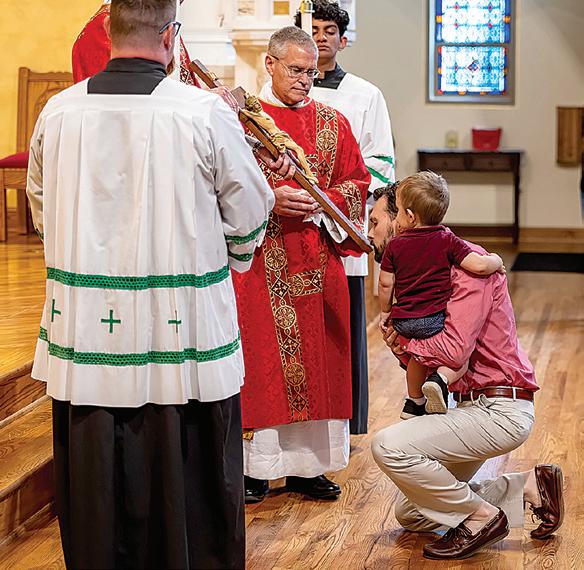
and physical pain Jesus endured at the hands of His people.
“Today is different,” Smith said. “In my own life, it calls for deep reflection of my own sins, and walking those steps with Him and experiencing it all firsthand is very meaningful to me.”
His fiancée could not hide her tears. “Every Triduum moves me because we are walking the steps with Him,” she said. “What He is doing right now is opening up a way for us to get to heaven. We can’t ever repay that, and He doesn’t even ask us to.”
More online
At www.catholicnewsherald.com : See more photos from Good Friday liturgies and Passion plays around the diocese
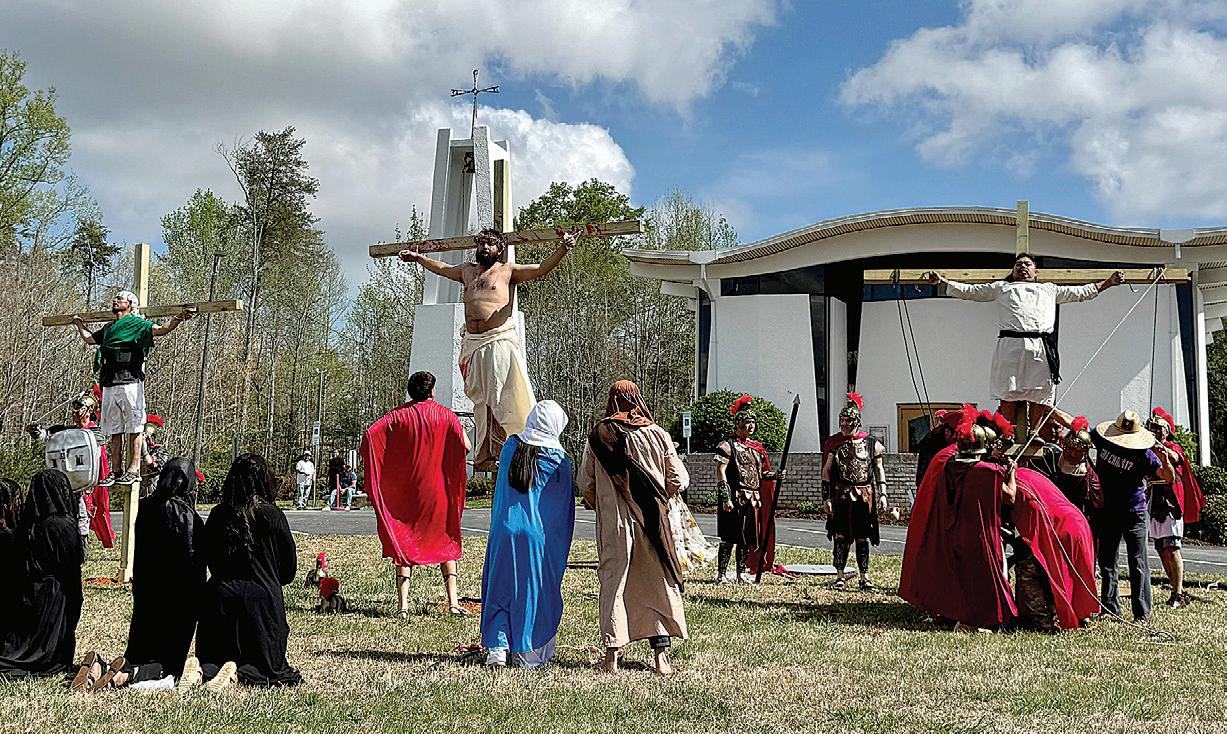
“En mi propia vida, me invita a una profunda reflexión sobre mis pecados, y recorrer esos pasos con Él y experimentarlo todo de primera mano es muy significativo para mí”. Su prometida, Riley, no pudo contener las lágrimas. “Cada Triduo me conmueve porque estamos recorriendo los pasos con Él”, dijo. “Lo que Él está haciendo ahora es
abrir un camino para que lleguemos al cielo. Nunca podremos pagar eso, y ni siquiera nos lo pide”.
Más online
En www.catholicnewsherald.com : Vea más fotos de las liturgias de Viernes Santo en toda la diócesis
‘All in or all out’
At Easter, Bishop Martin urges people to choose Jesus and choose to be His disciples
PATRICIA L. GUILFOYLE AND CHRISTINA LEE KNAUSS catholicnews@rcdoc.org
CHARLOTTE — Easter confronts everyone with one single, unavoidable choice: Do you believe Jesus rose from the dead? Choosing “yes” demands an all-in commitment to transform our lives by the choices we make every day to be His disciples.
That was the challenge Bishop Michael Martin, OFM Conv., presented to congregants at the April 4 Easter Vigil Mass at St. Patrick Cathedral, and the following day at St. Matthew Parish’s south campus in Waxhaw and at a Spanish Mass at St. Vincent de Paul Church in Charlotte.
In his homily, Bishop Martin said Jesus’s resurrection challenges us with choices.
“Do we believe that Jesus of Nazareth, who claimed to be the Son of God and was brutally beaten and crucified … did He rise from the dead?” he asked.
There are “no halfway responses to this question,” he said. “You need to be all in or all out. There is no other choice.”
People who choose Jesus must also choose not only to believe in Him, but to follow Him – making the choice every day to be His disciples, the bishop said.
Referring to the pastoral vision he presented in January to the people of the Diocese of Charlotte, Bishop Martin said, “Easter forces us to make a decision … we can no longer live the rest of our lives as fans who only cheer from the pews, offer prayers for our team and sing songs on Sundays. Rather, Jesus invites us to be players who make the choice daily to carry the cross with Him in every area of our life.”
“Make that choice tonight, over and over again,” he encouraged people. “Make that choice tomorrow, over and over again. And the next day, and the day after that. Those are the only choices that will ever satisfy our deepest longings.”
Easter Sunday morning at St. Matthew’s Waxhaw location was his first visit to the church – an occasion he acknowledged in his greeting and that was marked by a parish family presenting him with a bouquet of flowers.
After the Mass, people filed out to greet the bishop and were met by youth from the parish and someone in a bright Easter bunny outfit, offering a welcome splash of spring color against the cloudy skies and drizzle. The youth held buckets of elastic bracelets bearing the message of the morning: “He is not here; He is risen! (Luke 24:6)
Chris Day of Waxhaw hurried
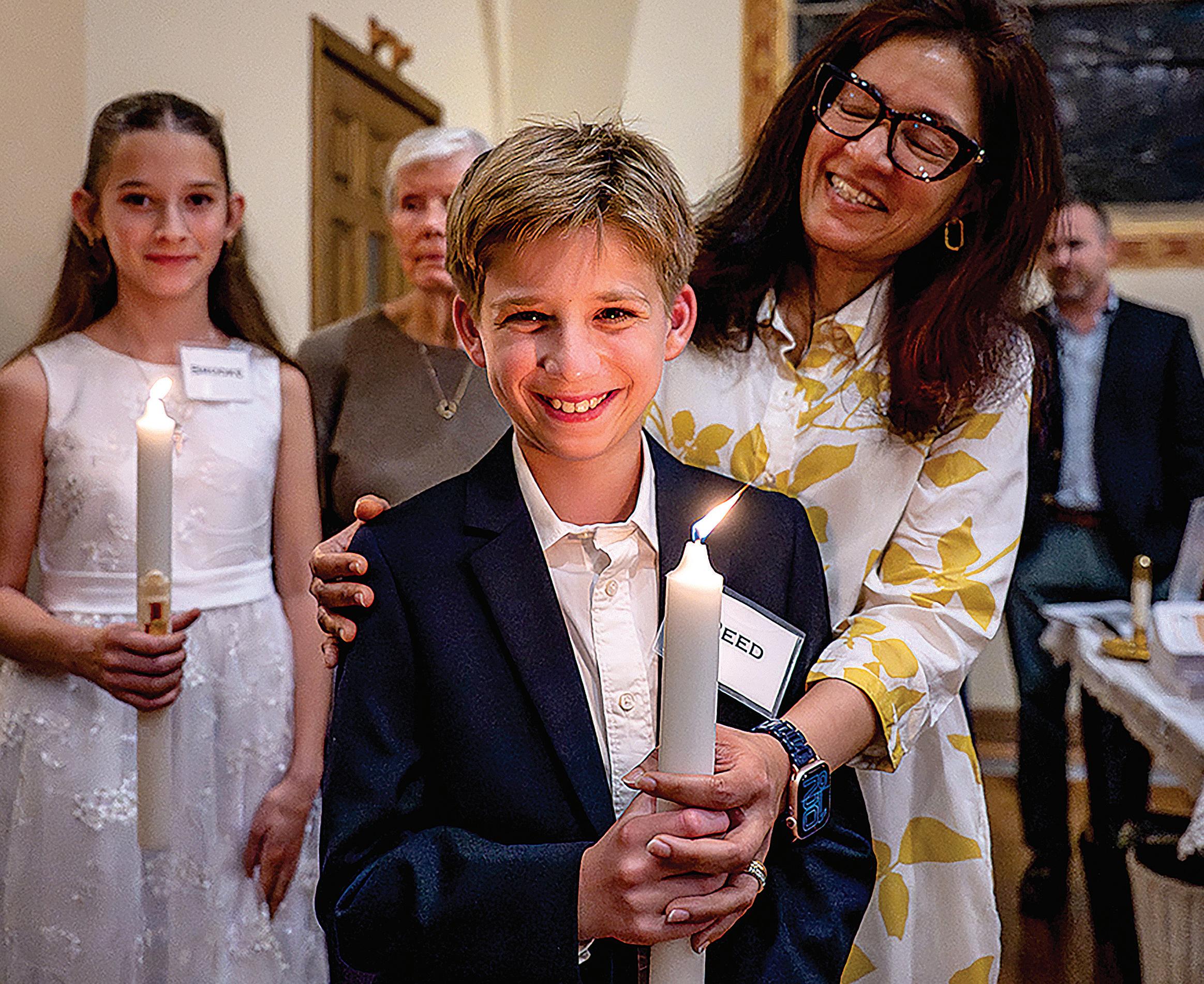
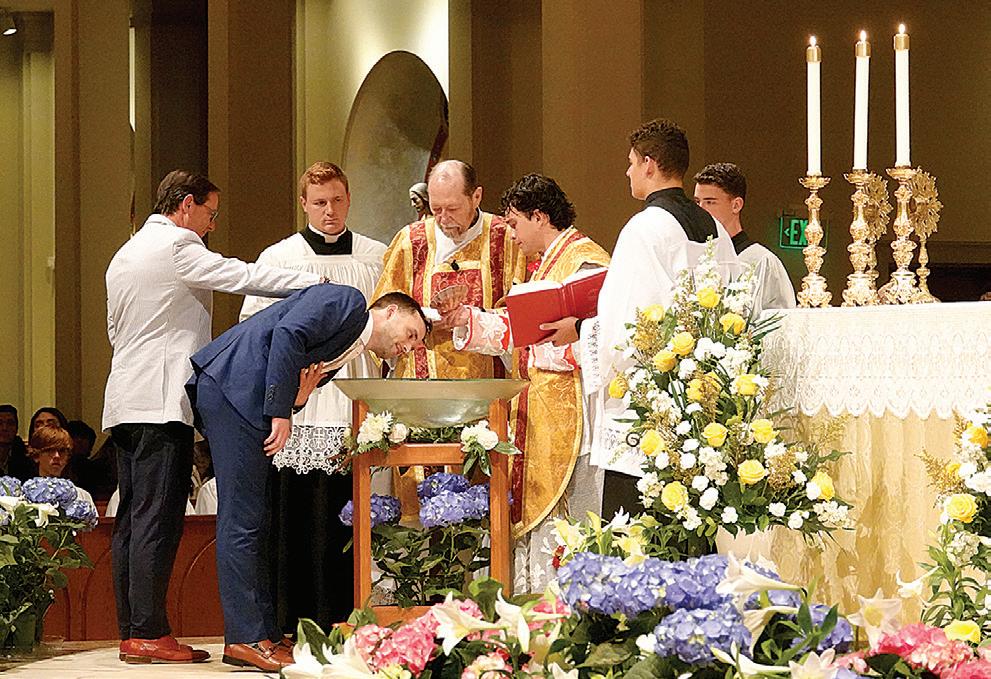
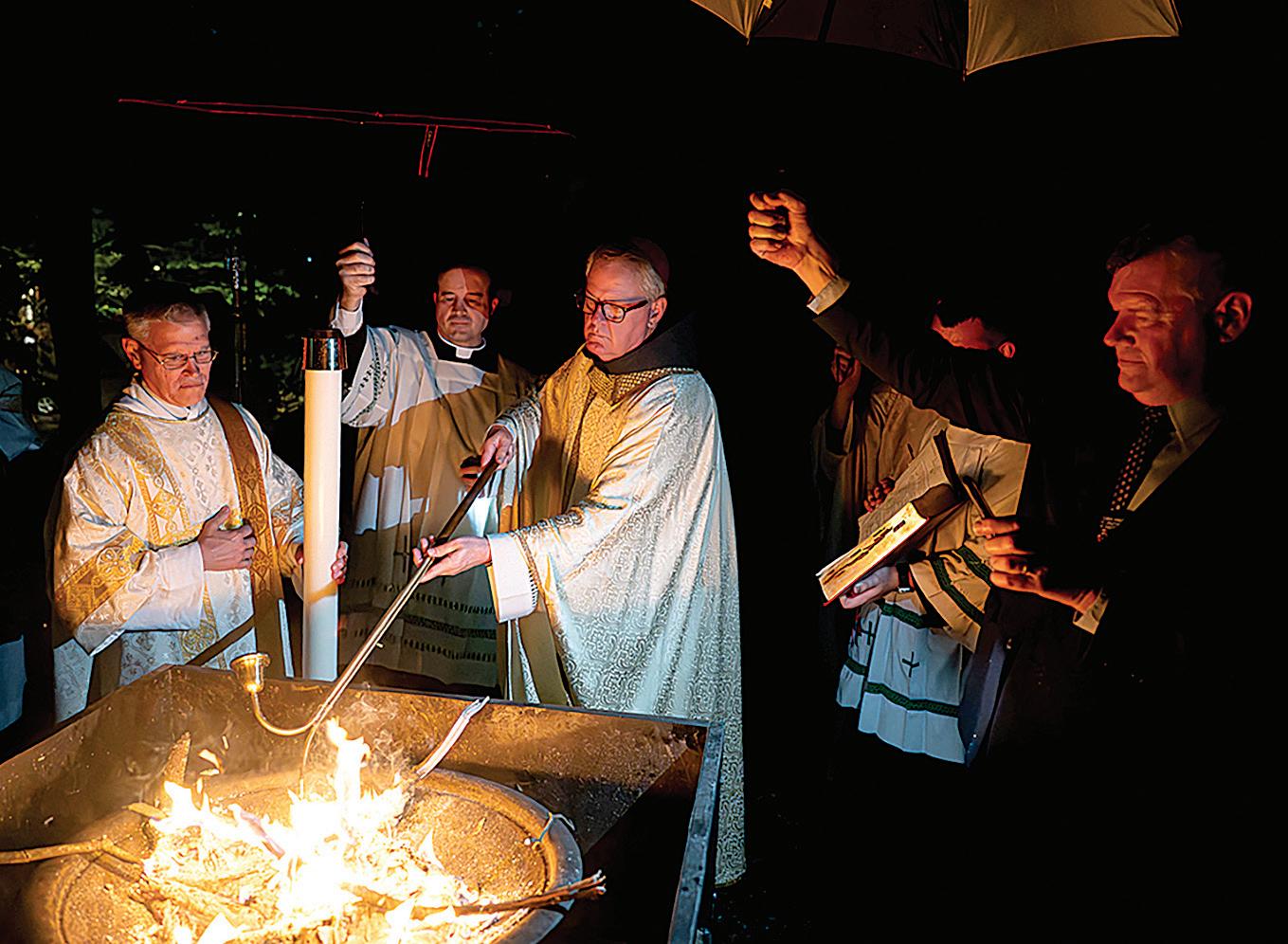
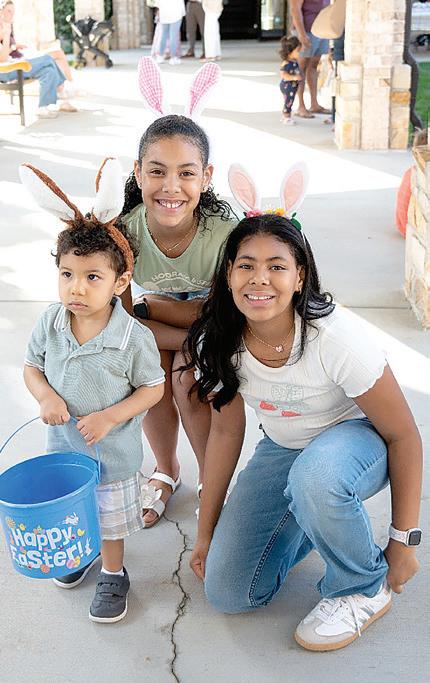
“I
BRIAN SEGOVIA bmsegovia@rcdoc.org
CHARLOTTE — A las 2 de la tarde, en un día nublado y lluvioso, la parroquia St. Vincent de Paul se llenó de feligreses hispanos que esperaban con emoción la llegada del obispo Michael T. Martin en esta jornada de celebración de la Resurrección en toda la Iglesia. Acompañados por música de guitarra, piano y violín, los fieles, algunos con expresiones de sorpresa y alegría, le dieron una cálida bienvenida en este día tan significativo.
La homilía en español del obispo Martín hizo eco de su mensaje de la Vigilia Pascual en la Catedral de San Patricio, diciéndoles a los feligreses que la Pascua les presenta una cosa crucial: una elección, una de las muchas que enfrentan hoy.
“Si hay algo que ha cambiado dramáticamente con los años, tendría que ser la cantidad de opciones que tenemos”, dijo.
“Si no crees que eso sea cierto, hace 50 años el supermercado promedio tenía el 25% del tamaño de los supermercados actuales.”
La Pascua ofrece la elección más importante, dijo: “O eliges creer que Jesús de Nazaret resucitó de entre los muertos o eliges creer que no lo hizo, hay solo una opción.”
Elegir creer abre otra decisión, añadió, usando una metáfora deportiva: vivir la fe como “jugador” o como “fanático”. ¿Te limitas a asistir el domingo o entras en la contienda dispuesto a compartir la resurrección de Cristo con los demás?
“Deja que Su poder resucitado penetre en las grietas y los rincones de tu vida”, dijo el obispo Martin.
Después de la Misa, muchos feligreses valoraron tanto el mensaje como el español del obispo.
“El mensaje fue claro, y su español estuvo muy bien,” dijo el diácono Herbert Quinanilla. “Nos recuerda que Jesús resucitó, Él está con nosotros y tenemos que cambiar en lo que estamos haciendo.”
Otro feligrés, Jaime Alberto Humberto, destacó la cercanía del obispo en un día clave.
“Vi muchas personas que se sorprendieron al ver al obispo aquí,” dijo Jaime Alberto Hurtado. “Es importante ver esa cercanía de él.”
Más online
En www.catholicnewsherald. com : Vea más fotos y vea la homilía de Pascua del obispo Martin
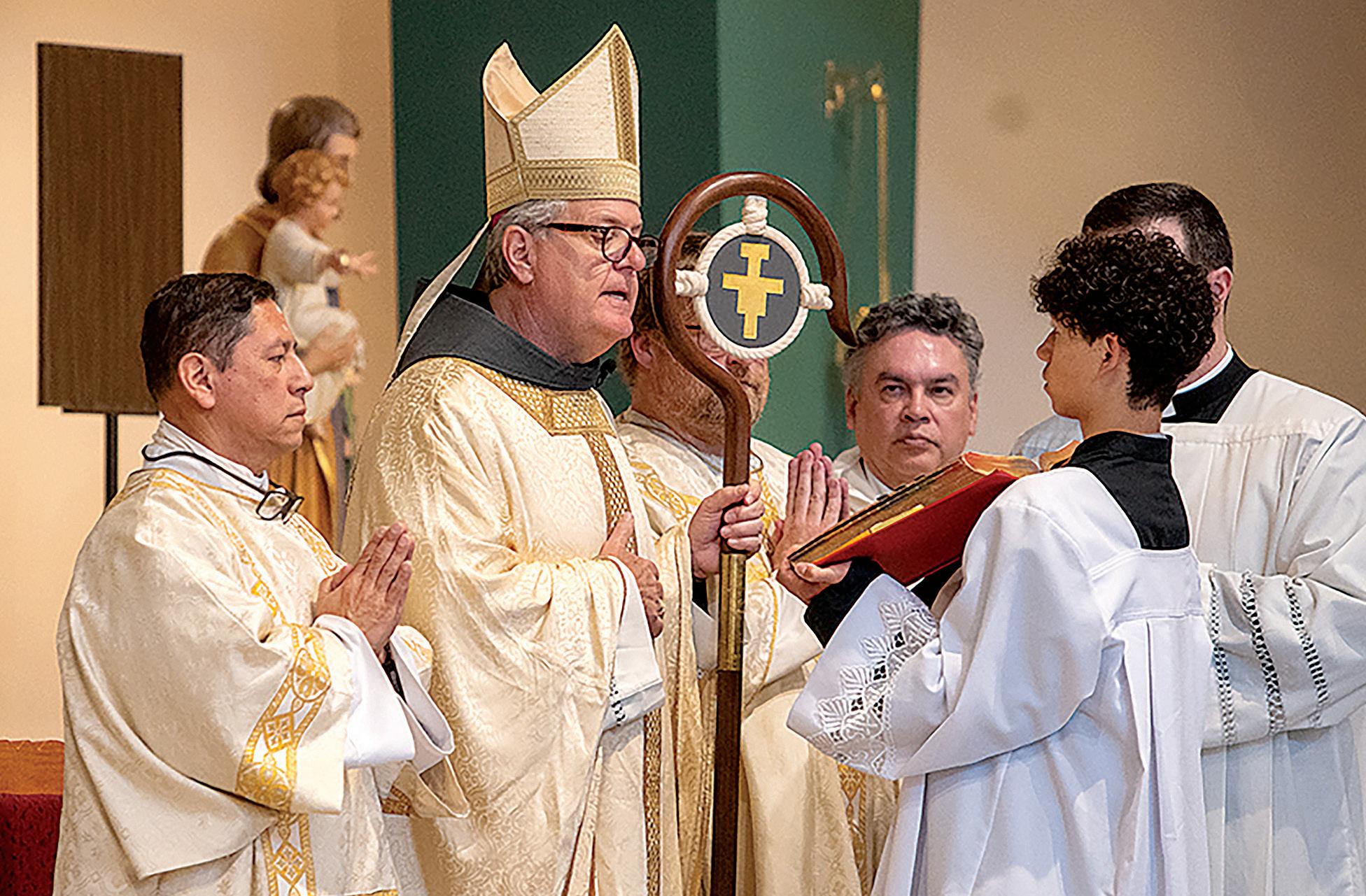
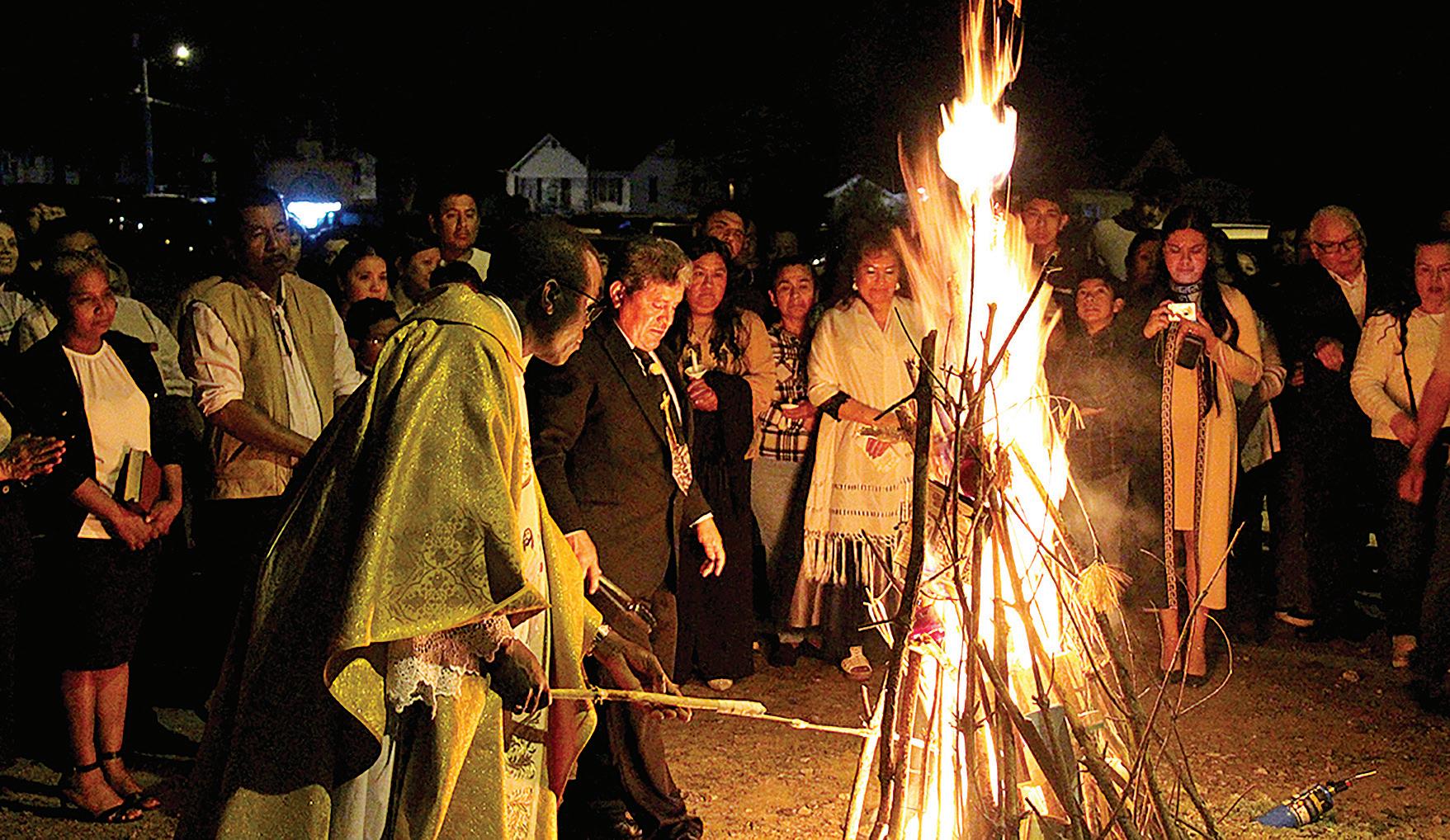
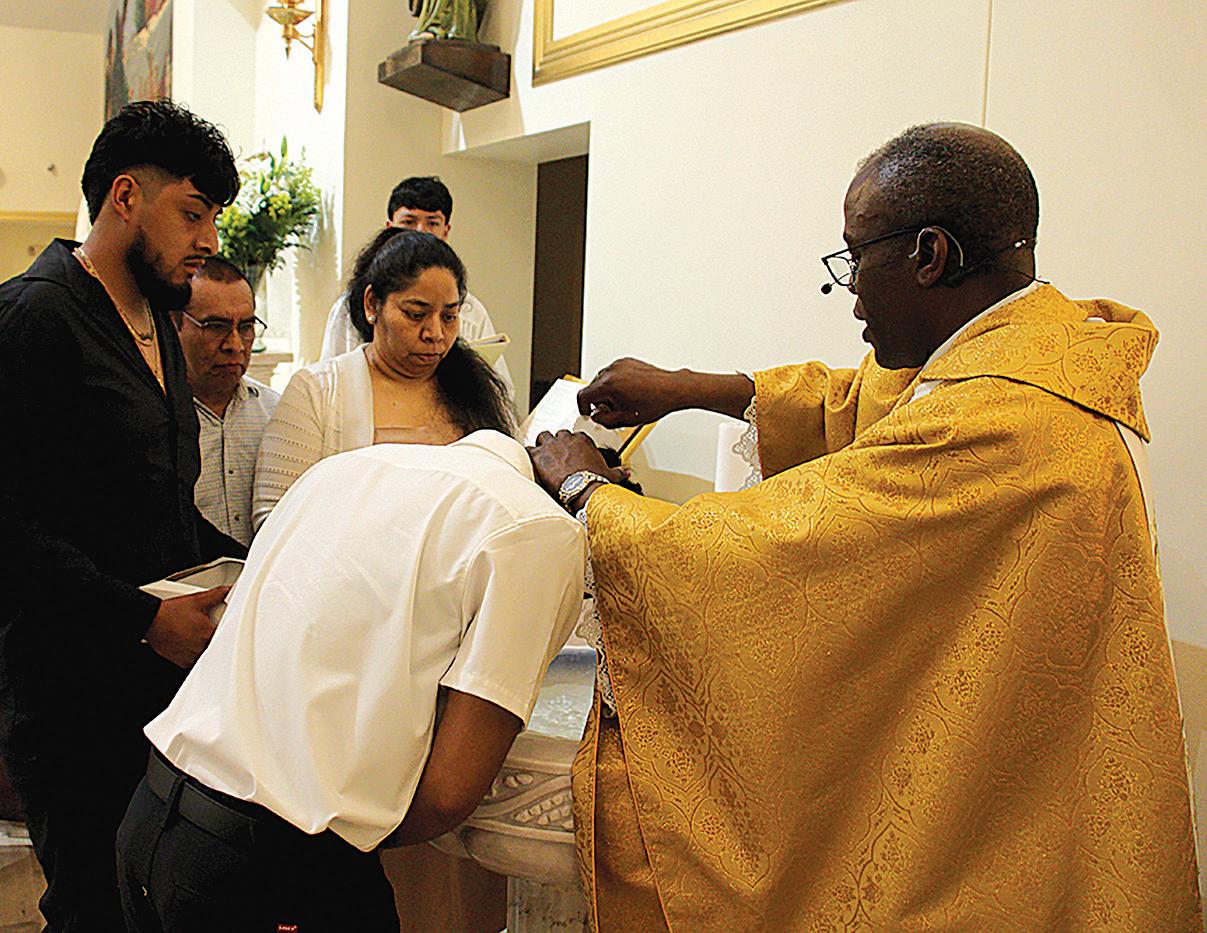
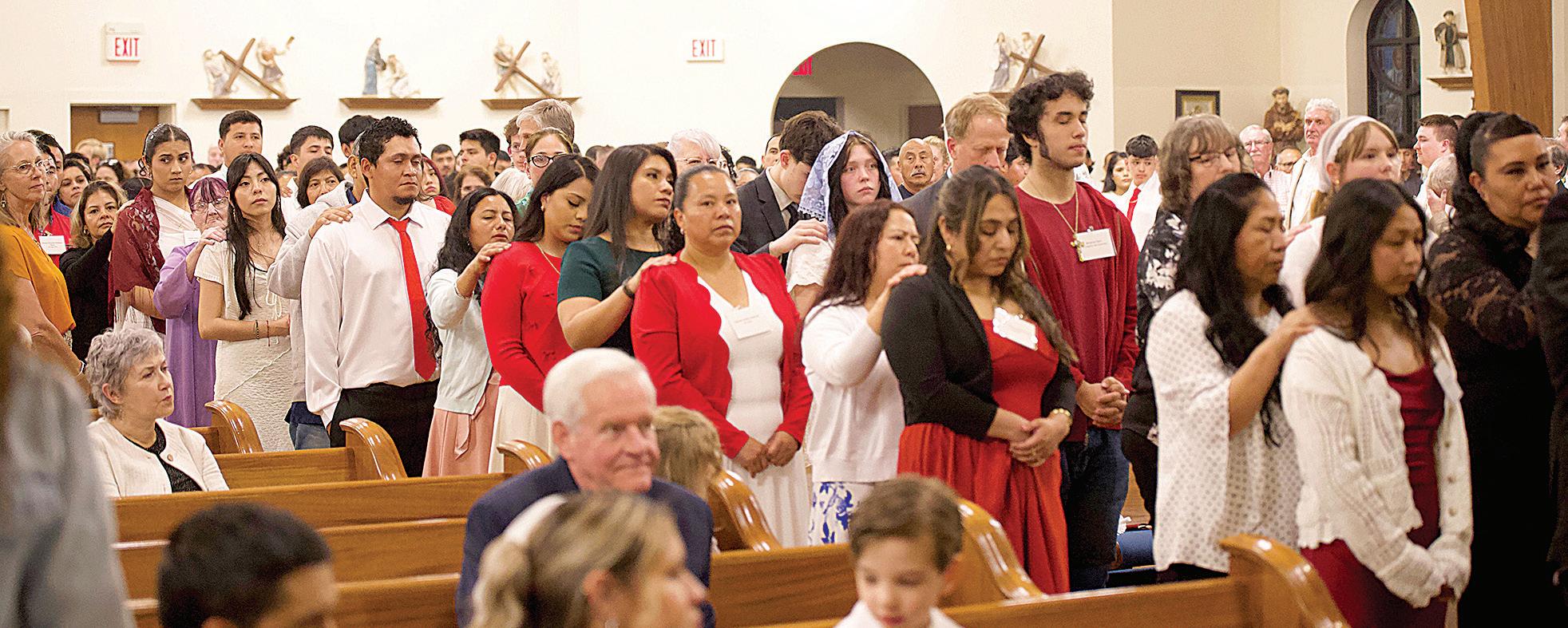
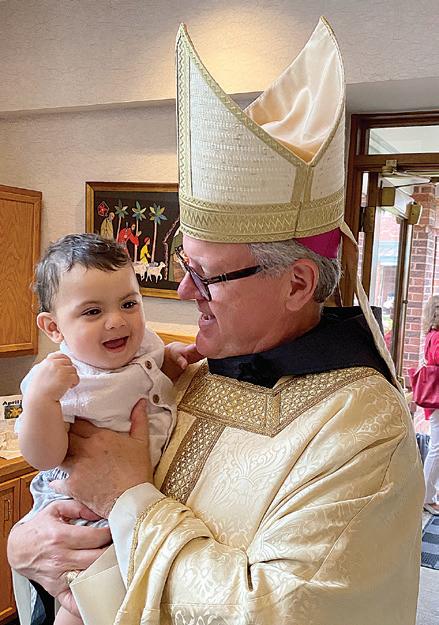
Al terminar la Misa, el obispo Martin se tomó su tiempo para tomarse fotos y alzar a varios bebés de la comunidad, además de dar varias bendiciones a aquellos que lo pidieron.

“ Is
CHRISTINA LEE KNAUSS clknauss@rcdoc.org
STATESVILLE — Holy Saturday marked a new beginning for 12 men who are inmates at the Iredell County Detention Center as they were received into the Catholic Church.
It was the first time Catholic sacraments of initiation had been held at the jail, and it came about because of prison ministry volunteers from St. Philip the Apostle Parish in Statesville.
”
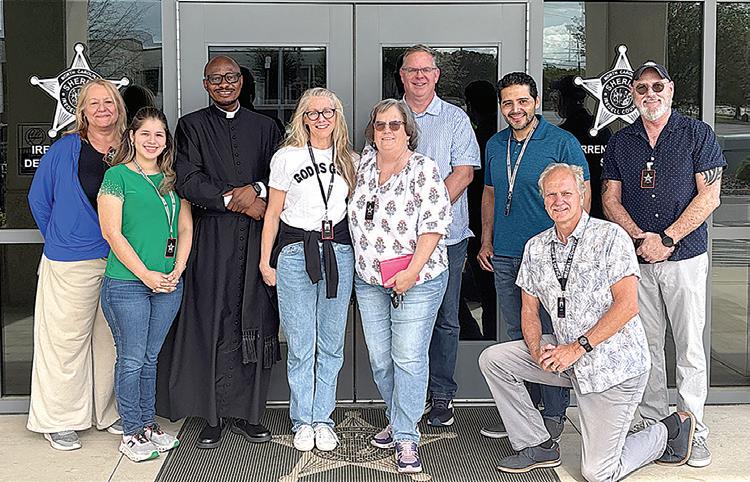
Father Bernard Oleru, St. Philip’s pastor, visited the detention center April 4 to administer the baptisms, first Holy Communions and confirmations for the dozen men who had completed an abbreviated version of the OCIA program, the process by which adults are initiated into the Church.
“It was a truly uplifting experience,” said Greg Nikiel, who along with fellow parishioner John Moloney helped launch the prison ministry program a year ago. Before he moved to nearby Troutman in 2024, the retired fireman had been active in prison ministry in Buffalo, New York, and wanted to get involved with a similar ministry in his new home community.
Moloney said the ministry was sparked by a conversation with Nikiel and others at a Tuesday night men’s Bible study.
“A few of the men asked themselves when I actually break out of my ‘Holy Huddles’ of my Bible study groups and my Cursillo Group reunion and actually go and meet with Jesus one on one in the jail or at the nursing home,” Moloney said.
Motivated by that question, Nikiel, Moloney and other volunteers visited the detention center to begin the process of background checks and other steps they needed to take to start a ministry to inmates. Seven men and seven women from the Statesville parish completed the process and launched the ministry.
The volunteers usually visit the inmates once a week, offering Scripture study and the OCIA program. They were also able to distribute ashes to inmates on Ash Wednesday, and Father Oleru has made visits to the facility.
“The ministers share so many stories of how the inmates have touched their lives, broken their hearts, brought them to new spiritual highs,” Moloney said.
“The inmates and staff have been blown away with the joy and the grace that Father Bernard has shared on his visits … and the staff has often stopped us and thanked on the work we’re doing. They will share that they can feel and see the incredible works that are occurring in the various cell blocks and pods through this ministry.”
This first year brought joyful results at Easter, when the men were initiated into the Church by Father Oleru as their fellow inmates cheered, Nikiel said.
At the same time, four female volunteers joined in prayer and fellowship with a group in the women’s dormitory. Father Oleru also was permitted to offer a prayer and blessing there, an event that was special because men aren’t typically allowed in the women’s section.
Father Oleru’s visit originally was planned as a video call because of this restriction, so his in-person prayer for the women was also a first for the jail, Nikiel said.
Building on these notable firsts, future plans for the prison ministry call for working with inmates after their release. Volunteers are putting together a program called “RE-ENTRY” that will help women and men find housing, create resumés and find employment after their release, Moloney said.
thinking, ‘Wow, if there is nothing else and it is all on me. … Gosh, there is too much going on. I can’t deal with all of that.’”
“People are trying their best to search through the reality of bigger questions,” he says.
While clergy can help Mass-goers deepen their faith, Bishop Martin notes in his pastoral vision for the diocese that everyone should “go out” as disciples, sharing the Gospel with others in need of the message.
“It’s obvious,” Father Gutierrez says, “many people are in search for things more substantial and affirming than digital relations, half-truths morality and cultural confusion.”
This was the case for John Hanson, 28, who was received into full communion at St. Patrick Cathedral.
“I think a lot of young people are looking at the world, and if we are being completely honest, things aren’t working,” Hanson says. “You start to think, ‘Why is that?’ And, for young people that come to Catholicism, that
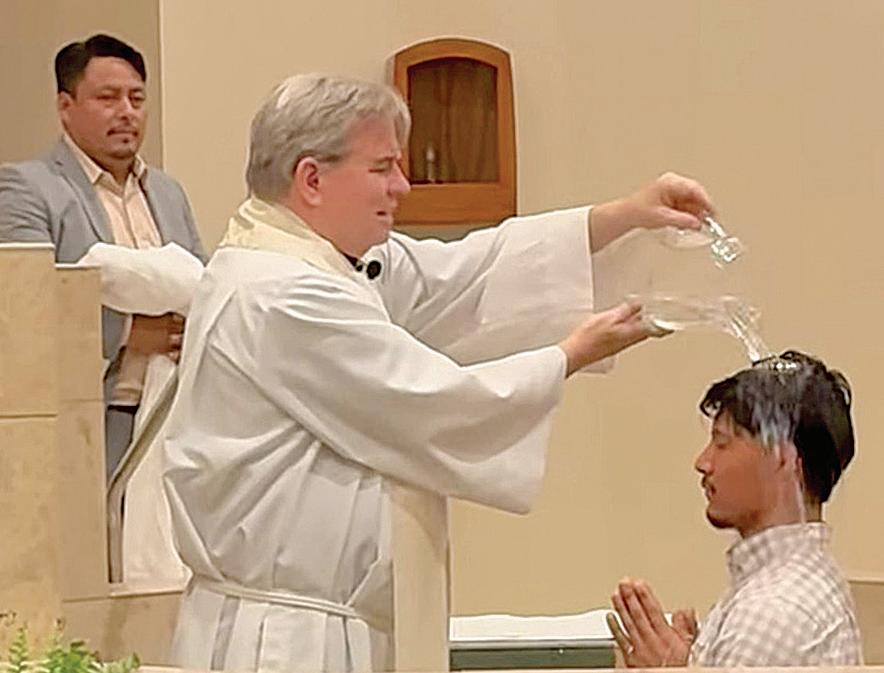
is at least a question.”
For clergy, ministry leaders and “cradle” Catholics, the trend is a sign of the Holy Spirit at work and a call to action.
As Deacon Newsome notes, it’s about “meeting students where they are at and accompanying them on their faith journeys. Who knows who else the Holy Spirit may send our way in the months to come.”
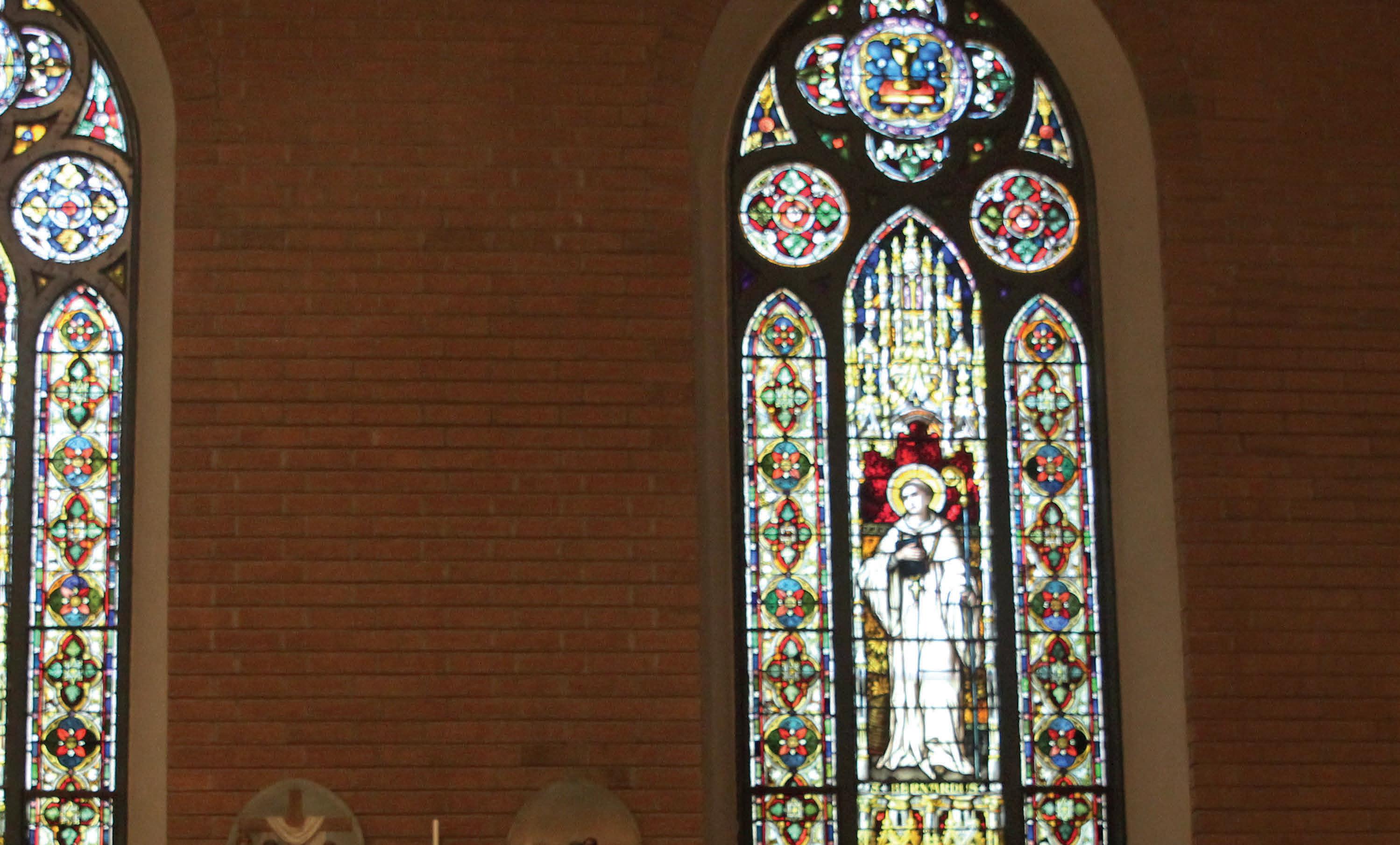
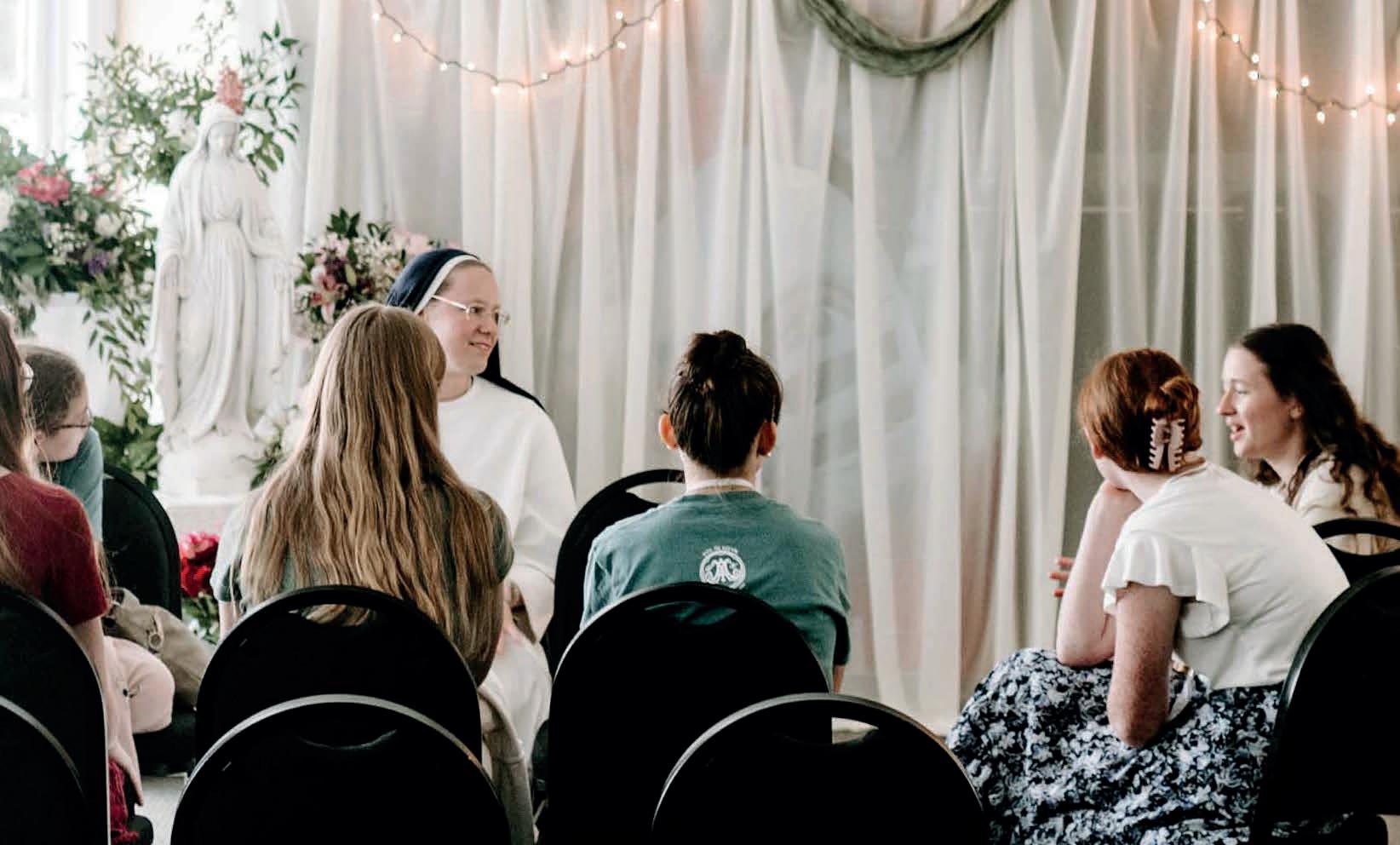

GRETCHEN R. CROWE OSV News
The Artemis II space mission was extraordinary for many reasons, and not insignificantly so for the perspectives it gave us.
The team of four astronauts, inside a spaceship named Integrity, showed us views we’d never seen before. We got new angles of the far side of the moon. We saw the moon eclipse the sun from the perspective of space – something Integrity crew member Victor Glover called going “sci-fi.” We saw different views of the Milky Way galaxy, of stars and of planets. Earth was reduced to a crescent, the likes of which earthlings are only used to seeing during certain lunar phases.
Each perspective gave new scientific insights and new inspiration for further exploration.
We saw other perspectives, too – those from inside the Integrity. We saw four individuals solidify into one unit as they worked together constructively to complete their mission. We saw them support one another professionally and personally. We saw a master class in communication, with, as my colleague Gina Christian pointed out, a synodal emphasis on listening and clear dialogue. We saw them laugh, cry, play, report, photograph and transmit “moon joy” to their home planet. We saw them at such a loss for words that they told mission control they needed “20 new superlatives” to properly be able to
describe the other-wordly experience they were having.
But we saw a further perspective from the team: one that seemed to feel the weight of the responsibility of history. Not just the history of NASA or space exploration, but the history of humanity itself. Artemis II left Earth at one of the planet’s most precarious times in recent memory, with a new war raging and an uncertain future looming. As Pope Leo XIV told members of the Diplomatic Corps
accredited to the Holy See in January, “War is back in vogue, and a zeal for war is spreading.” Speaking at a press event on Holy Saturday, and clearly hyper aware of the moment, Glover emphasized the preciousness of human existence.
“You guys are talking to us because we’re in a spaceship really far from Earth, but you’re on a spaceship called Earth that was created to give us a place to live in the universe,” he said. “Maybe the distance we are from you makes you think what
we’re doing is special, but we’re the same distance from you. And I’m trying to tell you – just trust me – you are special.”
The next day, he spoke of love, quoting the two greatest commandments of Jesus Christ: to love God “with all you are” and “to love your neighbor as yourself.”
After returning from a planned 40-minute communications blackout as the Integrity sailed around the far side of the moon, crew member Christina Koch shared a message that contained great aspirations for the future of space travel, but which ended with these poignant words: “We will inspire, but ultimately, we will always choose Earth. We will always choose each other.”
Throughout its mission, the gained perspective of the Integrity crew was reflected back to us: that humanity, with all of the flaws that bespeak a fallen people, is fundamentally worth fighting for. That it is love – not hatred, war or division of any kind – that is the calling of each of us. That we must intentionally choose one another. The perspective of the crew of the so aptly named Integrity should be one embraced by every person of good will, and most certainly every Christian, living on what is our precious and increasingly fragile common home.
In a news conference following Integrity’s splashdown April 10 and the safe return of the astronauts to Earth, NASA official Lori Glaze defined the Artemis II mission as “a mission for all humanity.” From my own perspective, it was a mission that brought out the best in humanity. And I can only hope and pray that we take to heart its most fundamental lessons.
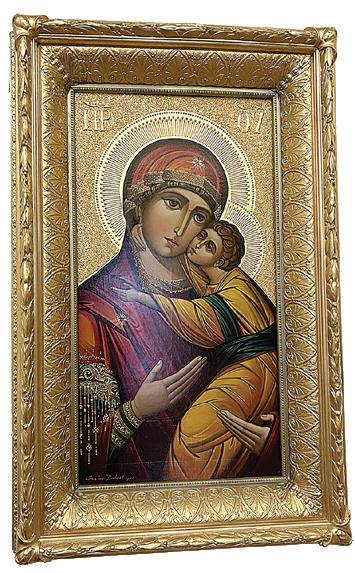
of the spiritual life – and inviting people into an encounter with the Lord.”
In November 2021, Archbishop Gudziak presented Dochwat with the Order of Metropolitan Andrey Sheptytsky, the Ukrainian Catholic Church’s highest honor. At the same time, Dochwat was known for her humility – and for keeping her eyes ever on the Lord. The
vaccinations – a decrease from 426,268 the previous year.
Tessa Cox, senior research associate at the Charlotte Lozier Institute, the research arm of Susan B. Anthony Pro-Life America, said in a statement that women deserve better alternatives to Planned Parenthood.
“Yet again, abortions performed by Planned
“exceptional circumstances,” such as national security or imminent threat of harm.
“No matter one’s immigration status, there is no overarching justification for separating nursing infants from their mothers or endangering the health and safety of pregnant women or their preborn babies,” they said. The bishops said they urged Mullin “in the
You shouldn’t have to compromise your values when it comes to investing. That conviction is among the many reasons I support Ave Maria Mutual Funds and why I’m proud to serve on their board.
Since 2001, Ave Maria Mutual Funds has refused to invest in companies that profit from pornography, abortion or attacks on the family. Their strong, long-term performance proves that principled, Pro-Family, Pro-Life investing works.
MICHAEL KNOWLES Podcaster & Author
and invests only in securities that meet the Funds’ investment and religious requirements. The returns may be lower or higher than if decisions were based solely on investment considerations. The method of security selection may or may not be successful and the Funds may underperform or outperform the stock market as a whole. All mutual funds are subject to market risk,
COURTNEY MARES OSV News
ABOARD THE PAPAL FLIGHT TO ALGIERS — Pope Leo XIV said April 13 he has “no fear” of President Donald Trump’s administration and responded to Trump’s criticism by telling journalists that his message to the U.S. president is “the message of the Gospel: Blessed are the peacemakers.”
Speaking aboard the papal plane, a chartered ITA Airways flight, en route from Rome to Algiers, the pope said he had seen Trump’s social media post lashing out at him the night before the papal trip.
“I have no fear, neither of the Trump administration nor speaking out loudly of the message of the Gospel, which is what I believe I am here to do, what the Church is here to do,” the pope said.
The pope spoke in response to Trump’s comments April 12 calling him “weak on crime” and “terrible for foreign policy,” as tensions escalate in the Middle East.
“We are not politicians,” Pope Leo said. “We are not looking to make foreign policy … with the same perspective that he might understand it, but I do believe in the message of the Gospel: ‘Blessed are the peacemakers’ is the message that the world needs to hear today.”
In response to local media inquiries, Charlotte Bishop Michael Martin said, “I am grateful for Pope Leo XIV’s ongoing proclamation of the Gospel of Jesus Christ which consistently calls down ‘Peace’ upon all of us, especially in this Easter season. The Holy Father knows that when God is our central focus, all things are possible, even between national leaders who are in conflict.”
Pope Leo told reporters he did not intend to engage in a political dispute.
“I do not look at my role as being political, a politician,” the pope said. “ I don’t want to get into debate with him. I don’t think that the message of the Gospel is meant to be abused in the way that some people are doing.”
“The message of the Church, my message, the message of the Gospel: Blessed are the peacemakers,” the pope underlined.
Pope Leo has been a staunch critic of combat operations generally, including those initiated by the U.S. and Israel against Iran on Feb. 28. He also condemned Trump’s threat to wipe out Iran’s “whole civilization,” which the president later backed down from, citing negotiations with Pakistani mediators.
The exchange came hours before a now-deleted April 12 post on President Trump’s Truth Social account drew outrage from Catholics and Christians around the world. The post depicted an AI-generated picture that was widely regarded across the political spectrum as showing Trump as Jesus Christ. Trump posted the image 46 minutes after delivering a social media tirade against Pope Leo. Trump confirmed with reporters April 13 he posted it but claimed it was intended to show him as a doctor “making people better.”
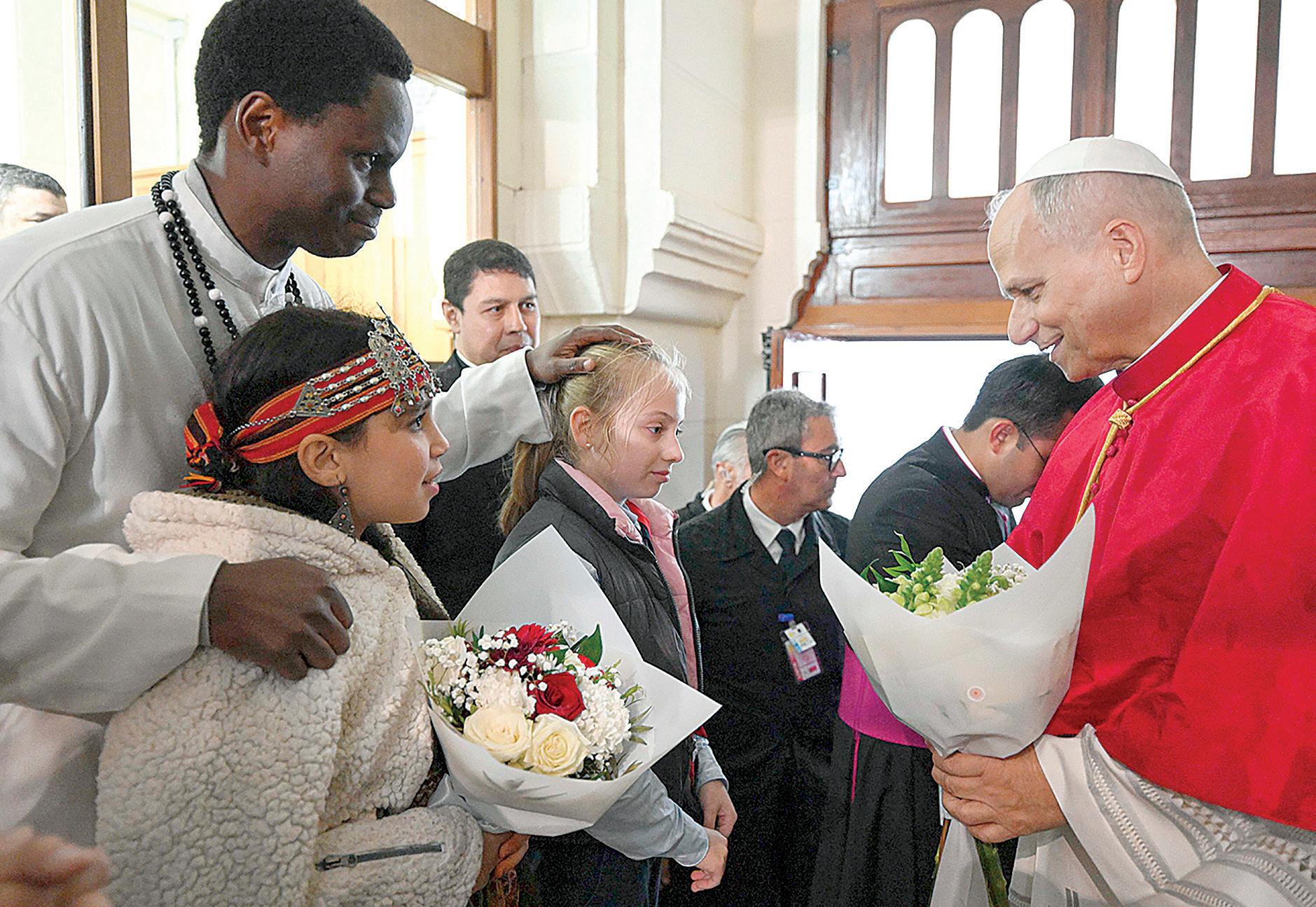
COURTNEY MARES OSV News
ALGIERS — Pope Leo XIV arrived in Algeria on the morning of April 13, becoming the first pope to make an apostolic journey to the North African nation, the first stop of the pope’s 11-day, four-country tour of Africa.
“Already last year, in May, I said, ‘On my first trip, I would like to travel to Africa,’” Pope Leo said to journalists on the papal plane, a chartered ITA Airways flight.
“I am very happy to visit the land of St. Augustine again,” he added, saying that Augustine “offers a very important bridge in interreligious dialogue” and “is much loved in his homeland, as we will see.”
He emphasized, “We must always seek bridges to build peace and reconciliation. And so, this trip truly represents a precious opportunity to continue with the same voice, with the same message.” (Editor’s note: on page 26, columnist Elizabeth Scalia considers “Trump vs. the Pope.”)
Calling the trip “very special for several reasons,” the pope said it is “a blessing for me personally,” expressing hope that the visit will also be a blessing “for the Church and the world.”
The papal plane touched down at Houari Boumediene Airport in Algiers shortly before 10 a.m. local time following a twohour flight from Rome.
The pope was greeted by Algerian President Abdelmadjid Tebboune as an honor guard stood at attention and a young girl presented the pope with flowers.
The pope’s visit to Algeria marks a historic milestone in a country that is 99%
Sunni Muslim and home to fewer than 9,000 Catholics among a population of more than 45 million people. Algerian bishops said the pope comes “as an apostle of peace,” seeking to strengthen a Church whose mission is one of “fraternal presence” in a predominantly Muslim society.
‘We must always seek bridges to build peace and reconciliation.’
Pope Leo XIV
From April 13 to 23, the 70-year-old pope is scheduled to travel a total of 11,000 miles on 18 flights, visiting 11 cities across Algeria, Cameroon, Angola and Equatorial Guinea. Algeria, the largest country in Africa, is dominated by the vast Sahara Desert, yet the pope’s itinerary is centered on the country’s northern Mediterranean coast, with stops in Algiers and Annaba.
The visit carries particular significance for Pope Leo, who described himself as a “son of Augustine” on the day of his election on May 8, 2025. St. Augustine was bishop of Hippo Regius, near the presentday Algerian city of Annaba, and died there in A.D. 430. The pope first visited Algeria in 2003, when he was serving as prior general of the Augustinian order, and
returned again in 2014.
Pope Leo’s apostolic visit to Algeria, Bishop Michel Guillaud of ConstantineHippone said, is primarily “to meet the Algerian people and to support his Church.”
Pope Leo XIV offered Mass April 14 at the basilica built near the site where St. Augustine died nearly 1,600 years ago.
“Here the martyrs prayed; here St. Augustine loved his flock, fervently seeking the truth and serving Christ with ardent faith,” the pope said in his homily, delivered in French. “Be heirs to this tradition, bearing witness through fraternal charity to the freedom of those born from above as a hope of salvation for the world.”
Besides St. Augustine and St. Monica, Algeria is known as the site of more modern witnesses to the faith. In 2018, the Church beatified 19 martyrs killed during the Algerian Civil War, including Trappist monks whose story was depicted in the film “Of Gods and Men.”
The next day, Pope Leo arrived at Yaoundé Nsimalen International Airport in Cameroon. He was scheduled to meet with Cameroon religious and political leaders, traditional chiefs, peacemakers, as well as faithful during his April 15-18 visit.
Separatist groups in Cameroon’s Anglophone regions announced a temporary ceasefire for Pope Leo’s visit. The truce is meant to protect civilians and allow participation in papal events More online
At www.catholicnewsherald.com : Read full coverage of the pope’s trip to Algeria, Cameroon, Angola and Equatorial Guinea
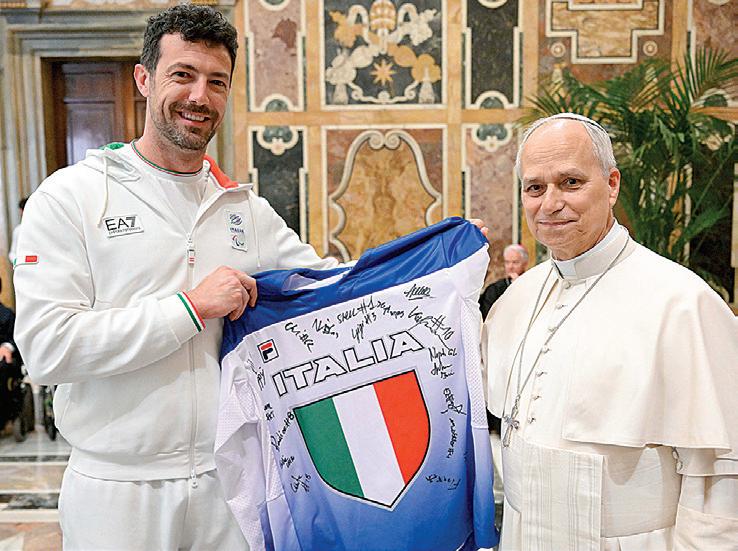
ROME — Pope Leo XIV met Olympic and Paralympic athletes from the 2026 Milan Cortina Winter Olympics, praising sport as a path to humility, resilience and peace.
Italian figure skater Daniel Grassl called the encounter a “dream,” saying his Catholic faith made meeting the pope especially meaningful. He highlighted Pope Leo’s message: in loss, never lose yourself; in victory, remain humble. Addressing roughly 300 athletes, the pope said no one wins alone and described sport as “language” of sacrifice, discipline and new beginnings. He pointed especially to Paralympic athletes, where limitations can become sources of strength.
Among those present, speed skating champion Francesca Lollobrigida and
Paralympians shared how faith and community shaped their journeys. Pope Leo also urged athletes to promote peace, recalling the Olympic truce and calling sport a space for encounter in a divided world.
“I wanted to recall, on the occasion of these Games, the value of the Olympic truce. With your presence, you have made visible this possibility of peace as a prophecy that is by no means rhetorical: breaking the logic of violence to promote that of encounter,” the pope said.
Lebanese
BEIRUT — Lebanese Christians are reeling as violence escalates in the conflict between Israel and the Iran-backed Hezbollah. Since March, Israeli bombardments have killed more than 2,000 people, displaced over a million, and devastated communities.
Joseph Aoun, Lebanese Maronite Catholic president, has accused Israel of “a new massacre,” urging global intervention.
Meanwhile, Pope Leo XIV voiced solidarity, calling for peace and saying he’s “closer than ever” with the Lebanese people. Cardinal Bechara Rai condemned both sides for Lebanon’s suffering.
An April 8 air assault on Beirut killed hundreds, shocking residents, including Christians far from Hezbollah areas. Aid groups report worsening humanitarian conditions, with blocked access to food and medicine.
“Towns and villages in which Christians live in south Lebanon have also been violently attacked without any warning. Israel has bombed areas that have nothing to do with Hezbollah,” Michael Constantin of Catholic Near East Welfare Agency-Pontifical Mission said of the region requiring desperate aid.
Despite fear and isolation, clergy continue
ministering. Local priests say faith and daily prayer sustain communities clinging to hope amid destruction and uncertainty.
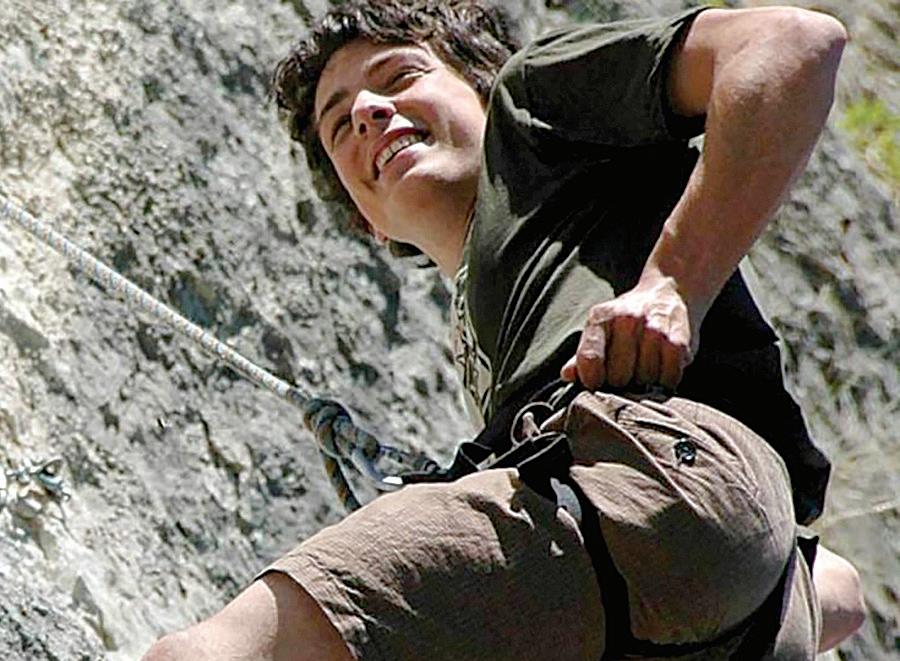
Mother reflects on son’s
MILAN — Italy’s Catholic Church has opened the diocesan phase of a sainthood cause for Marco Gallo, a Milan teenager remembered for a deep spiritual life and a striking final witness.
Gallo was 17 when he died in a traffic accident on Nov. 5, 2011, a day after writing on his bedroom wall a line from St. Luke’s Gospel: “Why do you seek the living among the dead?”
His mother, Paola Cevasco, said the words became a source of consolation, pointing the family toward the hope of the Resurrection. She told OSV News her son was thoughtful, attentive, and drawn from a young age to life’s biggest questions. Raised in a Catholic family, active in the Communion and Liberation movement, Gallo left behind reflections on happiness, suffering and the search for God.
Church officials say his reputation for holiness has only grown, inspiring the Milan Archdiocese to formally begin his cause.
ABOARD THE PAPAL PLANE — Pope Leo XIV
shared some of his favorite spiritual reading recommendations on the papal flight to Algeria, pointing to a letter by St. Augustine that he said provides tips for how to deepen prayer.
The pope commended St. Augustine’s “Letter to Proba,” also known as Letter 130.
“Augustine gives some wonderful guidelines and hints, if you will, about how our prayer can really be meaningful,” Pope Leo said. The recommendation came with a light-hearted acknowledgment that St. Augustine has become something of a recurring theme for him.




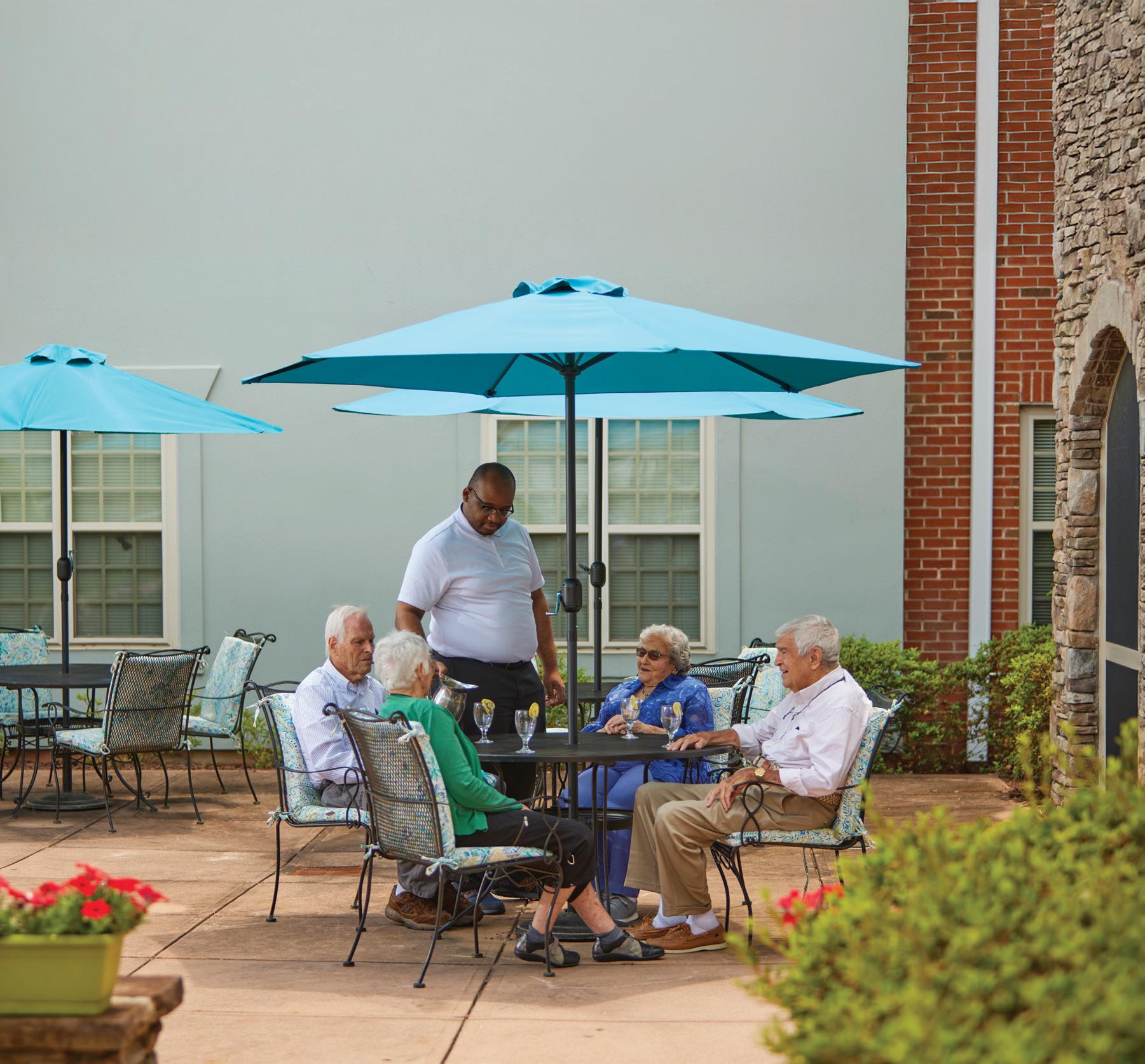
At Pennybyrn’s Melvin and Ruth Witcher Adult Day Center, every detail is designed to enrich the lives of older adults while o ering support and respite for their caregivers. Our safe, welcoming and vibrant environment o ers more than just care— it inspires joy, sparks learning and builds meaningful social connections. A thoughtfully planned variety of daily activities promotes better overall health, greater emotional well-being and a higher quality of life.

Elizabeth Scalia
Anyone who reads me regularly knows I am not the sort of Catholic who grabs the smelling salts for every seeming insult or ignorant remark made about the Church.
Ever since Madonna danced before a burning cross, I’ve judged most of the controversial “scandals” against Catholicism to be weak broths that turn to mere water in the face of a supernatural Church that has watched the last 2,000 years of governments, political movements and infant nations parade by its Petrine seat before disappearing from sight.
Even the recent, so-called “Avignon threat” reportedly made by the Trump administration didn’t light my fire. Given the known temperament of the administration, the whole truth of the matter being unknowable and the Christian world being in the midst of the octave of Easter, I chalked it up to the devil having his usual frolic during our holiest days and was content to let social media burn itself out in the entertainment outrage to which it is addicted. Then, of course, on the day Orthodox Christians celebrate Easter – and it is crucial for all of us to remember we are still living the Easter season and should be considering all we think we know and all we cannot begin to imagine – President Donald Trump let loose an unhinged diatribe against the Vicar of Christ, whom he seems to imagine is an ordinary politician and ideologue.
The catalyst for his rant appeared to be Pope Leo XIV’s Easter discourses, where he proclaimed for peace, humility and dialogue and against pride and intemperance.
Unsurprisingly, our rather self-referential president saw the pope’s lessons as big fat missiles aimed solely at him and, after his rant, topped it off by releasing a gaudy image of himself seemingly portrayed as Jesus Christ, healing the United States.
I mean, even a temperate girl like me is appalled.
Christ has big shoulders, and He can take that nonsense, but the blasphemous image – even if only meant to troll – tells us something troubling about the mindset of the president (who has since said that he thought the image depicted himself “being a doctor”) and those who made excuses for him. It tells us that he (and they) are comfortable with making golden calves of their ideology.
And they can’t handle the pope not falling in line with their idolatry.
Ideological idolatry is a true spiritual sickness – one that, increasingly, we’re all falling into, no matter where on the political scale we find ourselves – and it is madly encouraged by social media.
A spiritually sick society can quickly go into both spiritual and corporeal sepsis because its weakened immune system cannot effectively battle evil thoughts, destructive actions and mindless sputterings of rage broadcast like bullets from a tommy gun, their effects broad, wild and indiscriminate.
Pope Leo is right to preach “blessed are the peacemakers.” Peace should be humanity’s daily quest, and we establish armies and guards in order to help preserve peace from what is malevolent and unnatural, yet connected to the very first sins in Eden.
We need popes to keep reminding us that peace is the prize, even though guards and armies must be in place. Jesus Himself served soldiers’ requests (Luke 7:9), healed them, declaring “no more of this!” (Luke 22:51) and showed them mercy (Luke 23:34). It was a centurion who stood at the foot of the cross and proclaimed Jesus “the son of God!” (Matthew 27:54). They are necessary, but we pray not needed.
Catholics will always be loyalty suspects in the United States of America. We love our country, but we will not (and should not) put it before Christ or His Church or the successors to His apostles. Movements move on. Even the most storied countries lose their way. Governments sometimes completely evaporate, replaced by new ones and again administered (like the Church) by faulty humanity. Yet, Christ and His Church remain.
ELIZABETH SCALIA is editor-at-large for OSV. Follow her on X @theanchoress.
Parents must remain vigilant in a digital culture whose values and behaviors aren’t aligned with our faith
As we continue to navigate the realities of raising children in an increasingly digital world, I would like to offer some guidance and reflection regarding devices, internet access and social media use within our elementary school community. If a parent chooses to provide a child with a phone or internet access, it should be understood that this decision includes the responsibility and commitment to actively monitor that access. This involves the ongoing oversight of chat groups, social media interactions, browsing habits and overall device usage, as well as the installation and maintenance of appropriate protective software, such as Ever Accountable, Covenant Eyes or similar accountability tools to help safeguard their children.
As members of a Catholic school community, striving for alignment in our values is essential. When one family is unable or unwilling to limit exposure to media content that includes violence, inappropriate themes or messaging that is not consistent with our Catholic values, it can unintentionally impact the efforts of other families who are working diligently to raise their children in a shared moral framework.
HARMFUL CONTENT, INTERACTIONS
Why am I writing this? Administrators continue to observe a troubling increase in inappropriate behavior in the digital world, along with a sharp rise in social media use that degrades, excludes and causes children to feel unliked, isolated, ugly, insecure or defined by comparison. We are also seeing the presence of harmful content, including pornography, and the concerning reality of predatory behavior infiltrating platforms and games that many children enjoy. Sadly, this seems to be occurring at younger ages each year.
Most heartbreaking, however, is witnessing our students, especially those in Catholic schools, participating in chat groups where interactions are unkind, inappropriate or exclusionary. And while the world may tell us that these interactions are normal, they are not. They require active and courageous parental intervention.
Children do not yet possess the maturity, confidence or life experience to navigate these environments on their own. Parents must be willing to step in, guide and correct behavior in chat groups and online interactions in the same way they would if such behavior were occurring in person. We must not allow the secular narrative to convince us that children should have privacy and autonomy in these spaces; they cannot reasonably handle such freedom without serious guidance and oversight.
On a regular basis, principals speak with parents who share concerns about troubling interactions on phones or social media. Yet some do not wish to be identified as the reporters, are afraid of what other parents might think of them, and are reluctant to remove devices or limit social media for fear their children will feel left out. Something is clearly wrong
with this picture.
Our daily prayer is that we have the heart to hear God’s guidance and the courage to follow it. What we are describing isn’t just about phones – it’s about fear and the discomfort of setting boundaries in a culture that resists them. Parents often feel stuck between two risks: protecting their child’s wellbeing or protecting their child’s social belonging. Parents are the greatest champions and protectors of their children’s souls. In a digital culture that increasingly promotes values and behaviors that are not aligned with our faith, we must remain vigilant and intentional in our oversight.
For this reason, if parents do not have the time, capacity or willingness to actively and consistently monitor phones, chat groups, internet usage, gaming and social media, their children are not ready for that level of access to the digital world. Giving a child a phone so they will not feel “left out” is not a compelling reason.
It is good and right for a child to be excluded from things that are unhealthy or destructive. The discomfort of feeling “left out” will be far outweighed by the challenges and potential harm of negative social interactions and the constant exposure to unhealthy content. Nothing adds to our parental responsibilities and time on the job like a phone or computer. They may give us some “quiet time” and the false sense that it’s OK because “this is how kids interact today,” but they add exponentially to parenting challenges.
When parents ask me – as they often do – whether they should give their child a cell phone because “everyone else in the class has one,” I encourage them to approach the decision very carefully. As Theodore Roosevelt once said, “Comparison is the thief of joy.”
It is somewhat ironic that in trying to prevent a child from feeling left out or inadequate, providing access to social media and the internet can actually intensify those very feelings. Social media’s constant stream of curated lives encourages children to measure themselves against others, which can erode personal contentment and quickly lead to jealousy and dissatisfaction. Proceed with caution.
We are truly fortunate to be part of a community willing to face these difficult questions and challenges together. Please continue to seek guidance, share your concerns, and advocate for your child’s well-being. We are committed to engaging the difficult topics alongside you and to thoughtfully examining the true value of social media, rather than simply accepting the reasons often given for its benefits. Thank you for your ongoing partnership, commitment and dedication to raising children grounded in faith, virtue and truth.
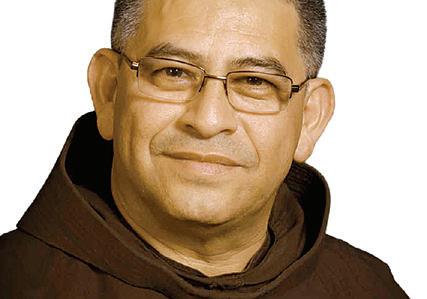
As I held Archbishop Óscar Romero’s empty shoes in my trembling hands, I felt gravity heavier than their weight.
It was the evening of March 24, 1980, at San José de la Montaña, where I was a seminarian in San Salvador. Our daily routine proceeded normally until the end of the 5:30 p.m. Mass, when devastating news shattered our world. Archbishop Romero had been assassinated while celebrating Mass at the Divine Providence Hospital chapel. El Salvador’s political situation was deteriorating dramatically. Violence engulfed the country as government forces committed widespread human rights abuses against civilians suspected of supporting leftist movements. Tensions had reached such extremes that Archbishop Romero felt compelled to address the armed forces directly in his Sunday homily, begging soldiers to stop the brutal repression. In a powerful sermon on March 23,
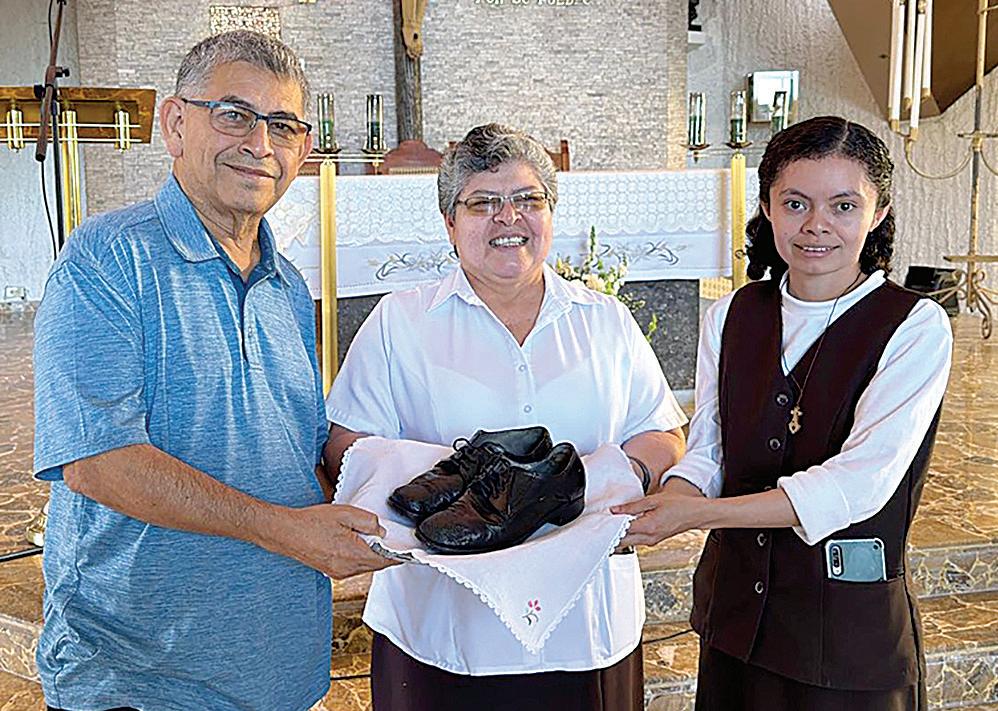
Archbishop Romero spoke with unwavering moral clarity. “Brothers, you are members of our own people. You kill your fellow peasants. … When faced with a man’s order to kill, God’s law must prevail: ‘Thou shalt not kill’,” he said.
“In the name of God, and in the name of this suffering people whose cries rise to heaven more loudly each day, I implore you, I beg you, I order you in the name of God: Stop the repression!”
This statement sealed his death sentence. No one knew his life would be taken the very next day.
That evening, Father Gregorio Rosa Chávez, our rector, approached me with grave urgency. He requested that I accompany him to the medical facility where emergency personnel had transported the archbishop’s body.
As darkness fell, the taxi ride – a blur of motion and dread – took us through the crowded streets of a city already erupting with grief, outrage and uncertainty. Upon arrival, we found Archbishop Romero surrounded by frantic doctors and weeping religious sisters. His body still retained warmth, and a single, precise bullet hole in his chest marked exactly where hatred had pierced his compassionate heart. Mechanically I took photographs, using my camera as an emotional shield between myself
and the unbearable reality unfolding before me. Archbishop Romero himself had given me the camera to document the archdiocese’s work.
Trauma erased many details from my memory, yet one image is etched in my mind: When his body was wheeled away for autopsy, his shoes remained behind on the floor, suddenly empty and abandoned.
I knew well those simple, worn-down shoes. I had seen them faithfully carry him through El Salvador’s dusty streets and roads, to remote villages and to the humble homes of its most impoverished citizens. They had also taken him to the pulpit, where he boldly spoke truth to power.
These emptied vessels had transported a man who walked alongside the suffering, who refused the comfort of silence when his people desperately needed a voice for justice. Without thinking, I carefully placed them in my camera bag.
As we returned to the seminary in stunned silence, El Salvador trembled on the edge of an unimaginable brutality. Our shepherd had fallen, and 12 years of civil war would claim more than 75,000 lives. Half a million of us had to flee our country.
Throughout my four-and-a-half decades in the United States, these shoes accompanied me, tucked away safely yet always present. Silent companions witnessing my own journey, they saw me become a Franciscan friar and anchored me through life’s triumphs and hardships.
The shoes officially became relics with St. Óscar Romero’s canonization. But in time I came to realize that the shoes were like immigrants who yearned for their birthplace. The worn leather that once cushioned Monsignor’s feet belonged in the country whose soil is embedded in their soles.
So, 46 years later, I returned the shoes to their homeland.
On Jan. 14, I had the privilege of presenting his shoes to Sister Tránsito de la Cruz, superior of the community at Divine Providence Hospital. There, the Missionary Carmelites of St. Teresa lovingly tend a memorial museum in the little apartment where St. Romero lived, and the delivery took place in the chapel where he was martyred.
As Sister Tránsito received the shoes, her weathered hands trembled slightly – perhaps remembering the times when St. Romero himself walked these grounds, bringing comfort and courage to the sisters during uncertain times.
“These belong here,” she whispered, tears glistening. “They have completed their journey.”
As they passed from my hands to hers, I felt both emptied and fulfilled.
In giving the shoes away, I gained newfound clarity. They represent a path that few possess the courage to walk – one of sacrifice and unconditional love, placing one foot before the other, even when each step brings you closer to crucifixion.
But St. Romero’s legacy is not confined to museums. It lives in continuing acts of remembrance, in the courage of those who still speak truth to power, and in the hope that justice will someday walk freely in the land our martyr loved.
a frequent contributor to Maryknoll magazine, where this piece originally ran.

‘Let us believe once again in love, moderation and good politics.’
Pope Leo XIV From online story: “Pope decries horror, inhumanity that ‘some adults boast of with pride’”

The Catholic News Herald reached the Facebook and Instagram feeds of more than 1.5 million people in English and Spanish last month. The most talked about post? Coverage of the 2026 Chrism Mass. Join the conversation: www. facebook.com/CatholicNewsHerald
On YouTube over the past 30 days ending April 15, videos produced by the Catholic News Herald have been viewed more than 25,000 times. The most popular video? Bishop Martin’s homily at the 2026 Chrism Mass
Over the past 30 days, 47,600 visitors to www.catholicnewsherald.com have viewed a total of 65,000 pages. The top 10 trending headlines are:

The Catholic News Herald welcomes letters from readers. We ask that letters be originals of 250 words or fewer, pertain to recent newspaper content or Catholic issues, and be written from a perspective of Christian charity. To be considered for publication, each letter must include the name, address and daytime phone number of the writer for purpose of verification. Letters may be condensed due to space limitations and edited for clarity, style and factual accuracy.

The Catholic News Herald does not publish poetry, form letters or petitions. Items submitted to The Catholic News Herald become the property of the newspaper and are subject to reuse, in whole or in part, in print, electronic formats and archives.
E-mail: catholicnews@rcdoc.org
Mail: Letters to the Editor Catholic News Herald 1123 S. Church St. Charlotte, N.C. 28203





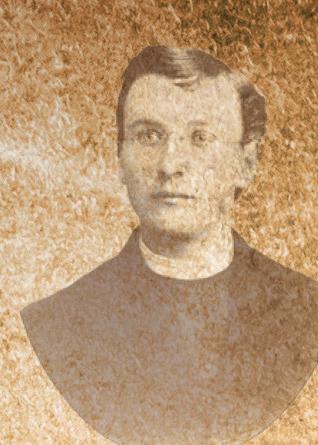

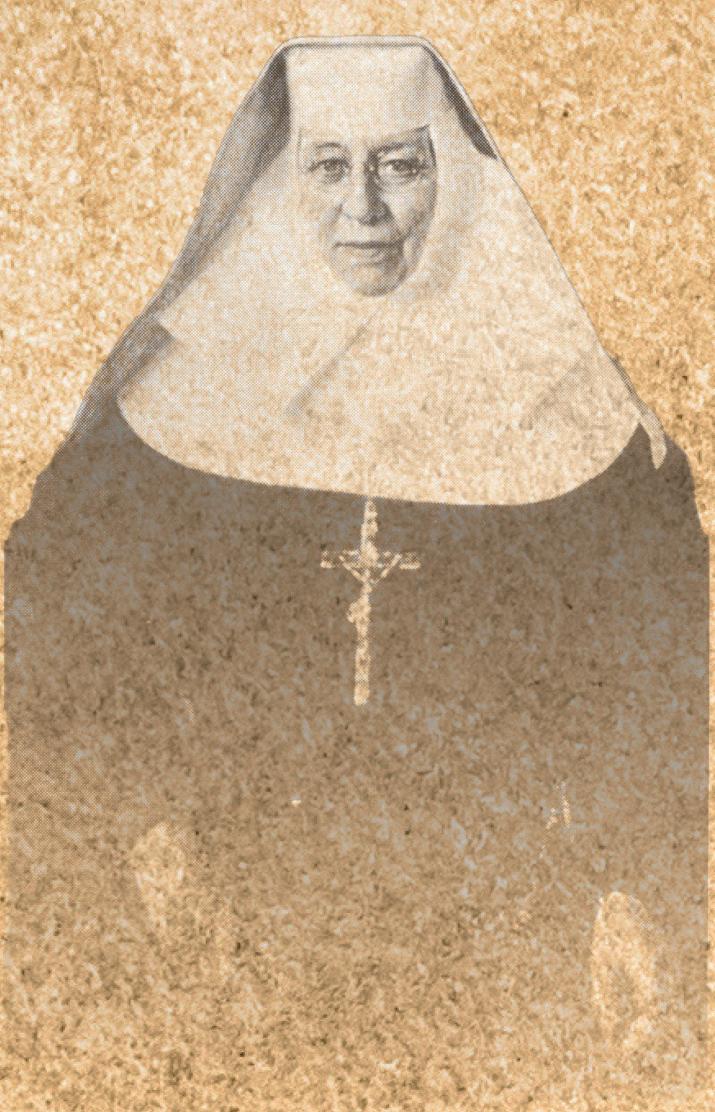




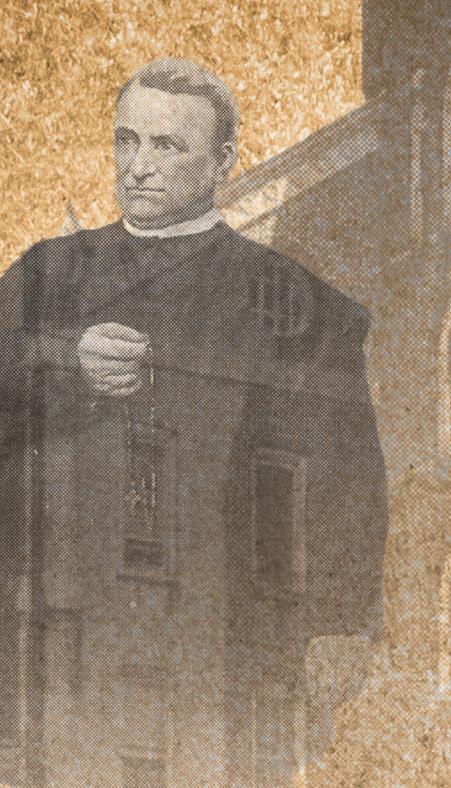






















For more information about our year of celebration visit: www.bac.edu/150







This good work began in 1876. One hundred fifty years later, we remain grateful for these generous souls who dedicated themselves to spreading the Gospel and bringing the Catholic liberal arts tradition to the South.
Join us in celebrating every monk, every faculty and staff member, every alum, and every student, who made the Abbey a home and a foundation for a joyful life. Thank you to our benefactors. Thank you to our founders. Thank you to every man, every woman, and every family who gave willingly to support this mission.
Here’s to the next 150 years.



“The work and prayers here shall spread God’s blessing over this beautiful country in the years to come when perhaps few of you who are listening will be among the living.”
-- Abbot Leo Haid, O.S.B.