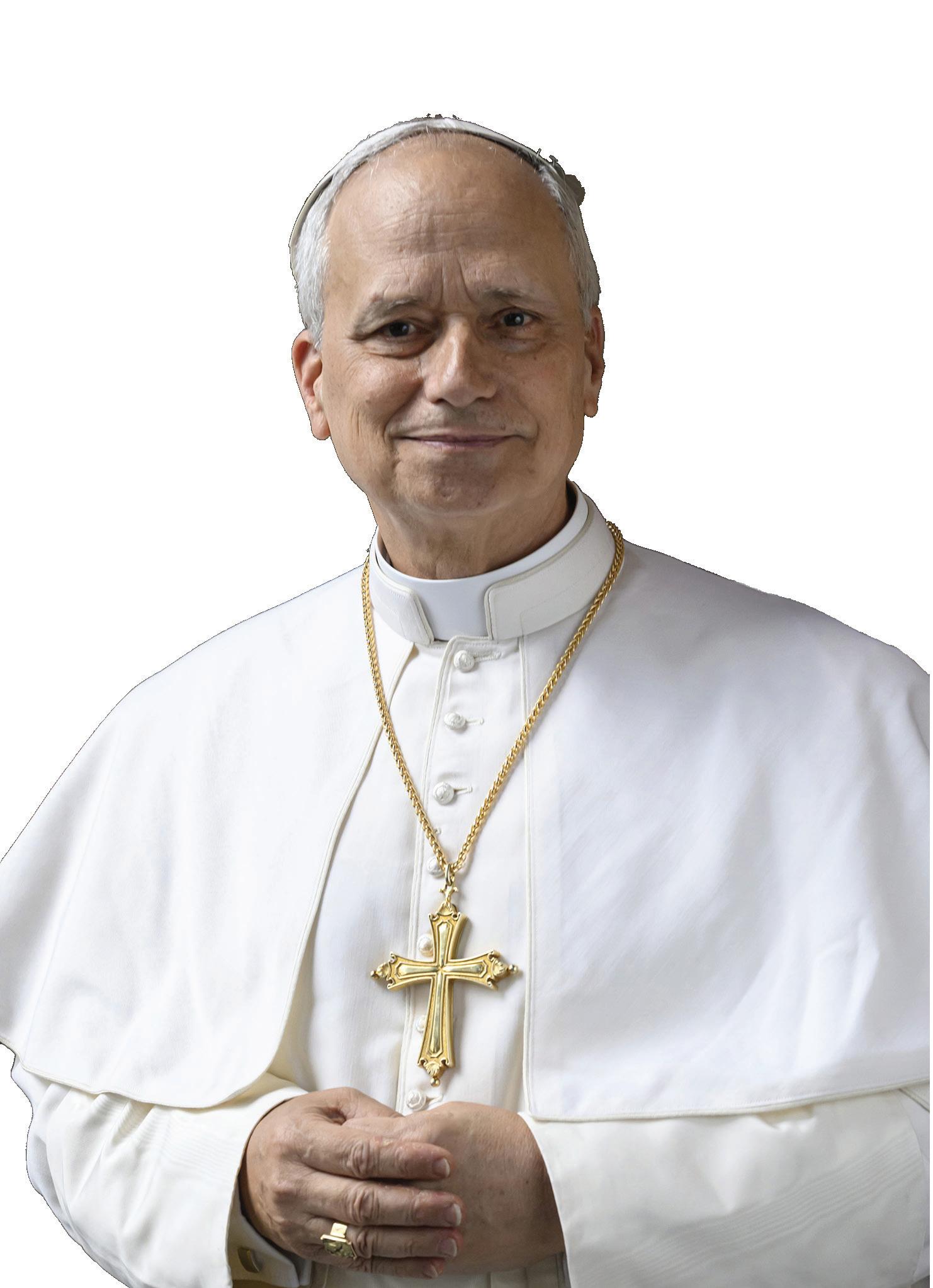
Therefore, in order to be a truly missionary Church, one that is capable of witnessing to the attractive power of Christ’s love, we must first of all put into practice his commandment, the only one he gave us after washing his disciples’ feet: ‘Just as I have loved you, you also should love one another’.”
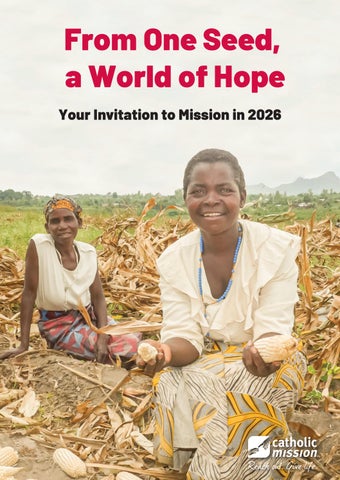
Every seed carries a promise. Small and unseen, it holds within it the potential for life, growth, and transformation far beyond itself.
2026 marks a significant moment for the universal Church. This year we celebrate 100 years since World Mission Sunday was established by Pope Pius XI - a century of prayer, generosity, and shared commitment to God’s mission. In this spirit, the World Mission Month theme, ‘One in Christ, United in Mission’, invites us to recognise that all we do flows from our unity in Christ and our call to walk together in faith and service.
Through this publication, we invite you to reflect on how your faith, expressed through compassionate generosity, is helping to cultivate new beginnings in communities around the world. As the Pope’s international mission agency, Catholic Mission exists to connect people of faith here in Australia with those most in need - across cultures, countries and continents - united in Christ and purpose.
This year, our focus is on the people of Malawi and Myanmar, two nations facing ongoing challenges. Together, through our work in farming and agriculture, education and impact investing, we are sowing seeds of hope - trusting that, in God’s time, they will take root, grow strong, and bear fruit for generations to come. Alongside this work, Catholic Mission continues to support projects across Australia and in mission countries throughout the world.
As you journey through From One Seed, a World of Hope, you will see how your generosity can nurture new life, sustain communities, and strengthen local Churches. Each story is a reminder that when we are one in Christ, our shared mission becomes a powerful force for renewal and hope.
Thank you for being part of this mission, especially in this centenary year of prayer and solidarity. May God bless the seeds you sow, and may the harvest be rich in hope.
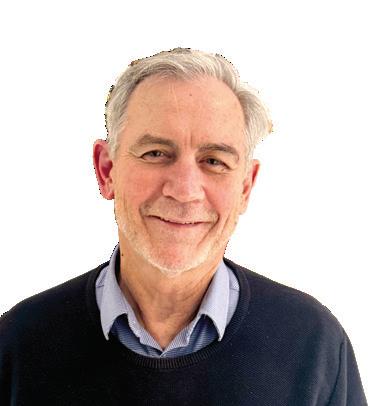
Peter Gates, National Director
Throughout my 11 years working for Catholic Mission, I have seen so many examples of the incredible impact that is made for those in most need through the kindness of people like you. I’ve been privileged to travel to places like Myanmar, Cambodia, and Malawi, meeting not just the missionaries who turn your generosity into practical action, but the children, families, and communities whose lives are changed because of it.
In 2025 during my visit to Malawi, we spent time in rural Chikwawa, in a village of families who lost their homes, belongings, and livelihoods a few years back in disaster-level floods and were forced to relocate hours away with nothing but the clothes on their back.
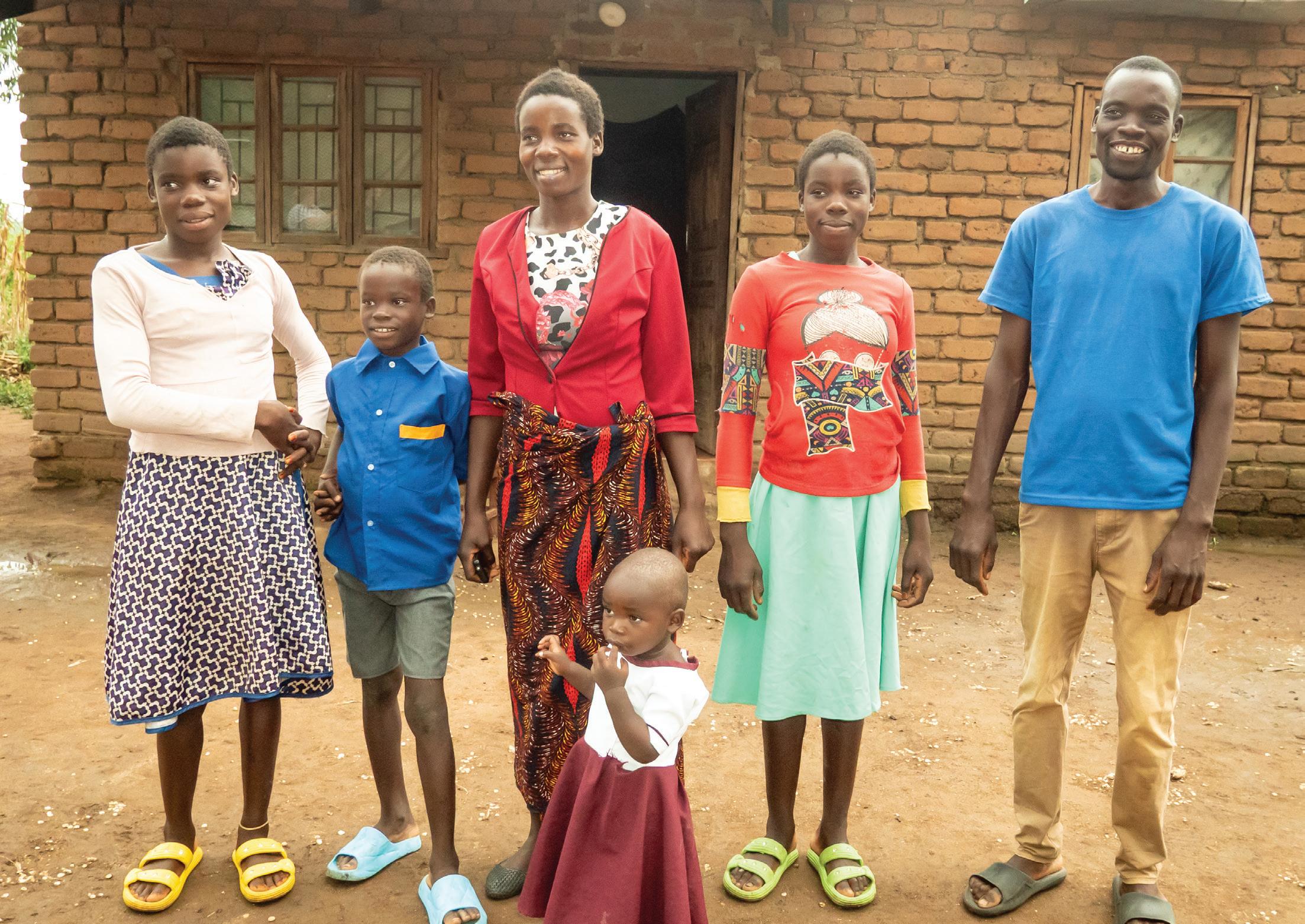
These families welcomed us with wide smiles and open arms, sharing with us what little food they had, and eagerly telling us their hopes and dreams for their children’s future, wanting much more for their sons and daughters than what they have now. Sigi, mother of 14-year-old Limbani, shared with us the future that she hopes for her son.
“[Education] is good, because it’s his future. If he [Limbani] gets educated, he will be knowledgeable and maybe in the future he might support us. We wish him all the best that he should continue with school ... If there is someone to hold us a hand in the future, he is the one.”
What we may see as ‘just another school’ is, to them, often the only stepping stone to opportunity and possibility beyond continuing the cycle of poverty many live in now. I share experiences like this not to evoke guilt or sadness, but to show the true impact that our contribution and prayers can have. With your partnership in 2026, the projects we fund and support will make a lasting change for communities in most need.
Whether you have stood with Catholic Mission in years past, or if you have just started your journey with us, thank you for being here as we stand ‘One in Christ, United in Mission’.
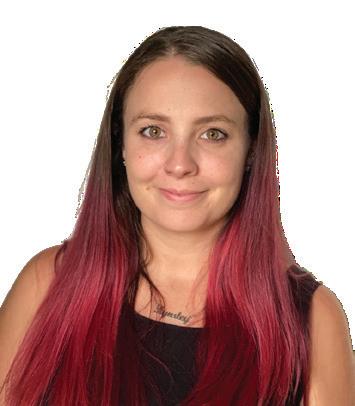
Aynsley Vernon, Individual Giving Manager
Our Roots in Mission
Who is Catholic Mission, and how we serve the universal Church
Every mission begins with roots. Grounded in the Gospel and entrusted by the Holy Father, Catholic Mission connects communities of faith in Australia with those most in need across the world. From this shared foundation, hope takes root and grows.
As part of the global Pontifical Mission Societies network, Catholic Mission works in partnership with local Churches in more than 160 countries, responding to need where it is greatest and helping communities to flourish spiritually, socially, and economically.
Direct Projects
Direct Projects grow from close relationships with missionaries and Church partners on the ground. These partnerships are formed through our work within the Pontifical Mission Societies or when missionaries reach out to Catholic Mission directly for support.
Through these projects, we respond to urgent needs while building local capacity. By assisting communities to overcome challenges, whether through access to healthcare, education, or pastoral support, we help ensure that our projects take root and deliver lasting benefit.
Our work is grounded in partnership and our approach is shaped by listening to those closest to the challenges. By supporting locally-led, grassroots projects, we help ensure that communities are strengthened from within, addressing immediate needs while laying foundations for long-term development.
A Global Mission
Catholic Mission is proud to partner with local Churches across the world in 2026 including, among others, Malawi, Myanmar, Mongolia, Cambodia, Ethiopia, Kazakhstan, Thailand, Zambia, and Australia.
Programs Entrusted to Us by the Holy See
In addition to Direct Projects, Catholic Mission supports programs allocated to us by the Holy See through three Pontifical Mission Societies.
Society of the Propagation of the Faith Work with Communities
Founded by Blessed Pauline Jaricot in 1822, the work of the society supports the day-to-day life of local parishes and dioceses in mission territories. Funding assists with essential healthcare, feeding, sanitation programs, pastoral services, and the training of catechists. These initiatives sustain communities at their roots, enabling the Church to be of service to the people.
Society of the Holy Childhood Work with Children
Founded by Bishop Charles de Forbin-Janson in 1843, this Society focuses on the care and protection of children. The projects are supporting schools, rehabilitation centres, health and nutrition programs, and care for pregnant mothers. By investing in the wellbeing of children and families, we help nurture the next generation and offer hope for a more stable future.
Society of St Peter the Apostle Work with Church Leaders
Founded by Jeanne Bigard in 1889, this Society provides financial and educational support for seminarians and novices discerning a vocation to religious life. These future Church leaders will serve their communities with compassion and courage, accompanying those in need, and guiding faith communities to grow and flourish.
Strengthening Mission Across Asia
Regional Mission Development Office, Phnom Penh
Established in 2019, Catholic Mission’s Regional Mission Development Office (RMDO) in Phnom Penh, Cambodia, is a vital hub for our work across Asia. From this central location, the RMDO supports project partners through technical assistance, capacity building, and close accompaniment throughout the project lifecycle.
The office enables Catholic Mission staff to travel efficiently across the region, providing hands-on support, monitoring progress, and responding quickly to emerging needs. Staffed by local Khmer employees, the RMDO delivers regular training for both local and international partners and plays a key role in strengthening mission capability across Asia.
Being present matters. When we listen locally and respond together, mission becomes something that grows from within communities.”
Pisey Soeurn, International Programs Coordinator
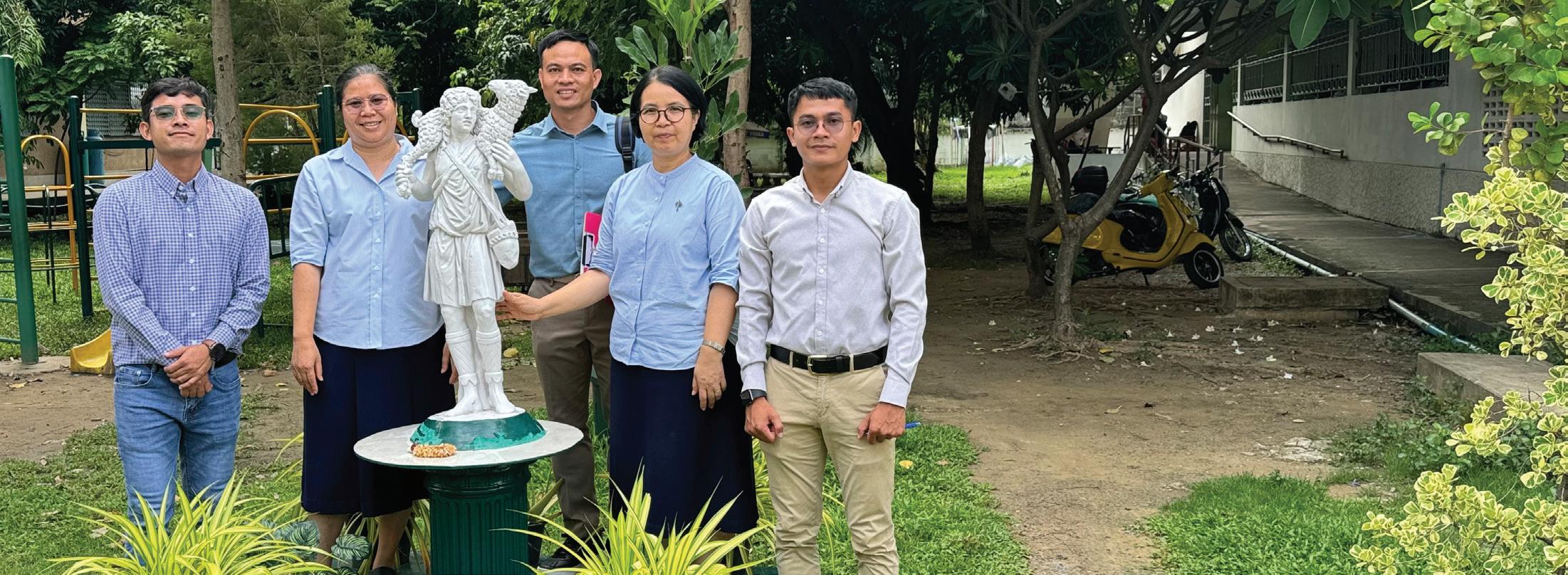
Left to right: Rathana Chhoeurt, Samai Sum and Pisey Soeurn from the RMDO Phnom Penh with the Good Shepherd Sisters in Bangkok, Thailand.
From Seed to Harvest
Understanding how our projects grow and bear fruit
Mission development at Catholic Mission is a journey of faith in action, guided by a thoughtful and accountable project lifecycle.
Each initiative begins with listening and responding to local needs identified by Church partners on the ground, in collaboration with the local community.
Through careful planning, community consultation, and strong collaboration, projects are then implemented and supported to ensure they are practical, sustainable, and effective.
As projects progress, we monitor outcomes, adapt where needed, and remain accountable to both communities and supporters.
Project Lifecycle
1 Discovery
We build trusted relationships with local Church leaders, listening deeply through community consultation to understand needs and to discern the most meaningful opportunities for impact.
5 Assessment
We evaluate results and long-term outcomes, using insights gained to inform future investment and enduring mission impact.
Finally, we reflect on what has been achieved, measuring impact and learning how best to strengthen future work.
This approach ensures your generosity is stewarded with care, allowing projects to take root, grow well, and deliver lasting outcomes for those most in need.
4 Monitoring & Evaluation
We stay connected throughout the project, reviewing progress, adapting when needed, and ensuring maximum impact and accountability.
2 Planning
Projects are strategically designed in collaboration with local leaders with clear outcomes, robust budgets, and strong governance to ensure responsible stewardship of donor funds.
3 Implementation
We walk alongside communities as projects are established, providing guidance and support while strengthening local leadership and long-term capacity.
Cultivating the Common Good
Catholic Mission and the United Nations Sustainable Development Goals
Catholic Mission’s locally-led programs advance human dignity and sustainable development, aligning closely with the United Nations Sustainable Development Goals (SDGs).
Our programs respond to immediate needs, identified by Church partners on the ground, while also supporting long-term pathways out of poverty. By working with trusted local partners, we listen to communities, strengthen local capacity, and support people to shape sustainable futures for themselves.
This approach is grounded in Catholic Social Teachings, particularly the principles of human dignity, solidarity, and the preferential option for
Nourishing Life and Livelihoods
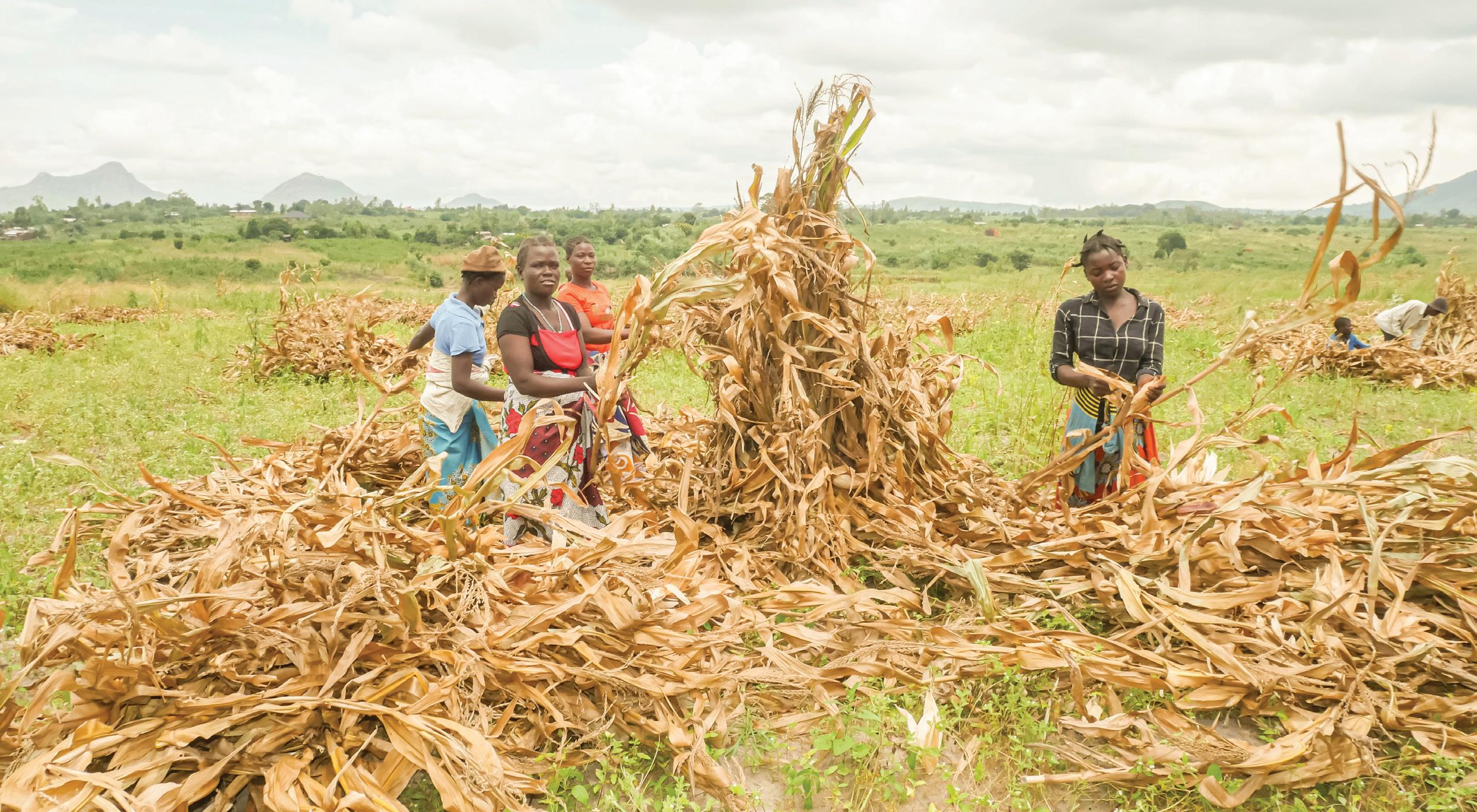
Addressing food insecurity remains central to Catholic Mission’s work in 2026. In Malawi and Myanmar, farming and agricultural projects are are not only addressing the immediate need, but also equipping communities with practical training, tools, and shared knowledge to improve crop yields and strengthen resilience in the face of climate challenges and economic insecurity.
Empowering Women and Building Equity
SDG 5: Gender Equality
Many Catholic Mission projects place women at the heart of sustainable change. From maternal health initiatives to training women in small-scale farming and income-generating activities, these projects recognise women as leaders, caregivers, and agents of transformation. When women are empowered, families are strengthened and communities become more resilient for generations to come.
the poor. Many of these efforts align naturally with the United Nations SDGs, reflecting a shared commitment to human dignity, social justice, and sustainable communities.
Through collaboration, trust, and locally-led solutions, Catholic Mission seeks to nurture resilient communities where people are supported to thrive today and into the future.
Below are just a few examples of SDGs which are reflected in Catholic Mission projects.
Education that Opens Futures
Education is one of the most powerful seeds of change. Catholic Mission’s education projects for 2026 in Malawi and Myanmar support schools and student wellbeing, helping children remain engaged in learning despite hardship. Through education, young people are given the tools to shape their own futures and contribute positively to their communities.
Across our partnerships, Catholic Mission promotes environmentally responsible practices that protect the land and sustain livelihoods. In our agriculture and land management projects, communities are encouraged to care for soil health, plant trees, and adopt practices that support biodiversity. Our Ecological Action Plan further reflects this commitment, both within our Australian offices and throughout our global partnerships.
SDG 4: Quality Education
SDG 2: Zero Hunger
SDG 15: Life on Land
Caring for Creation Together
Tending the land
Farming and agriculture projects
When the land is cared for, life can flourish. Through sustainable farming and agriculture initiatives, families are empowered to nourish their communities, protect creation, and build secure futures.
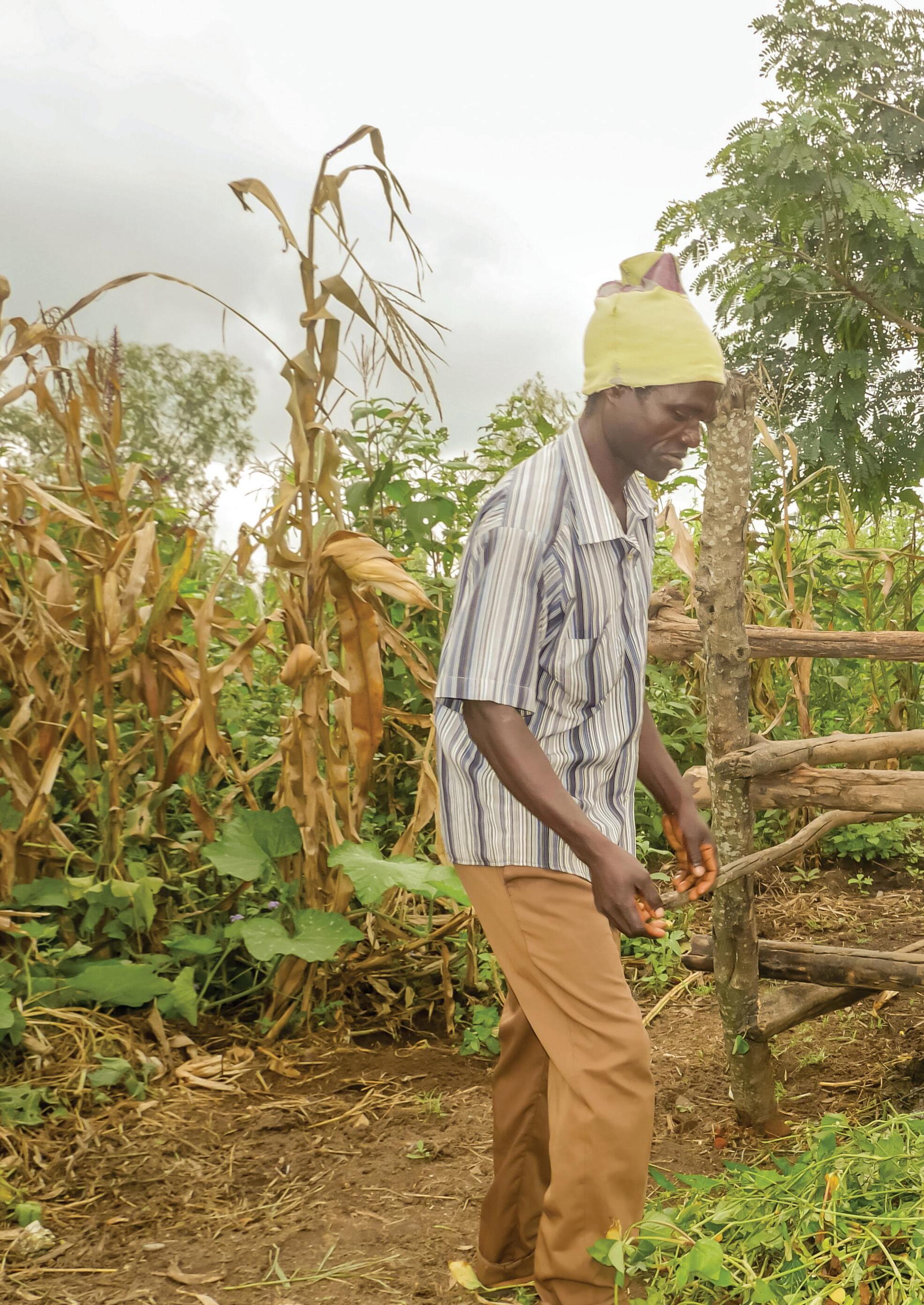
The Blantyre Sustainable Farm Project in Malawi gives locals like Samuel (left) the chance to independently support his family. When farming improves, his family’s life will improve, and his children can have a better future.
Strengthening Food Security Through Sustainable Agriculture
Project:
Blantyre Sustainable Farm Project
Project Code: MWPT-2200758
Project Location: Blantyre, Malawi
Funding Required: $283,179
A snapshot of the situation
Food insecurity: Two in every three households struggle to meet daily food needs
Climate challenges:
Long-term impact of 2023 Cyclone Freddy still felt today
Poverty rate:
Catholic population: 36.3%
Malawi is currently facing a silent emergency, as it ranks among the most food-insecure countries in the world.
With over 70% of the population living under the poverty line, nearly two out of every three households struggle to grow or afford enough food to meet their daily needs.
Prolonged droughts, sudden floods, and devastating storms have destroyed crops, depleted soil, and eroded livelihoods – with immediate loss turning into widespread, long-term devastation.
Most families in Malawi are subsistence farmers, meaning a failed harvest often results in empty plates, missed school days, and difficult choices for families.
A typical family of five needs about 85 bags of maize each year to meet basic food requirements, yet most households produce only a fraction of this amount.
As a result, families often rely on food aid or are forced to skip meals, with some rural households going up to four days surviving on little more than water or thin porridge.
While food aid can avert immediate hunger, it does not address the root causes of food insecurity. Without strengthening local food production and livelihoods, communities remain trapped in recurring cycles of hunger.
TANZANIA
MOZAMBIQUE
MOZAMBIQUE
ZAMBIA
MALAWI
Key outcomes of this work
The Blantyre Sustainable Farm Project at Chisombezi Farm is creating a centre for sustainable agriculture, learning, and community growth. Through your support, the farm will provide training, tools, and opportunities
A maize mill and a vegetable processing unit will be installed to reduce post-harvest losses and increase income.
Five hectares of land will be cultivated as a model for sustainable, climate-resilient agriculture.
Five hundred vulnerable farming households, each year for three years (1,500 total) will receive practical training in sustainable, climate-resilient agriculture, gain access to improved seeds and irrigation, learn how to protect their harvests, add value to their crops, and connect with local markets.
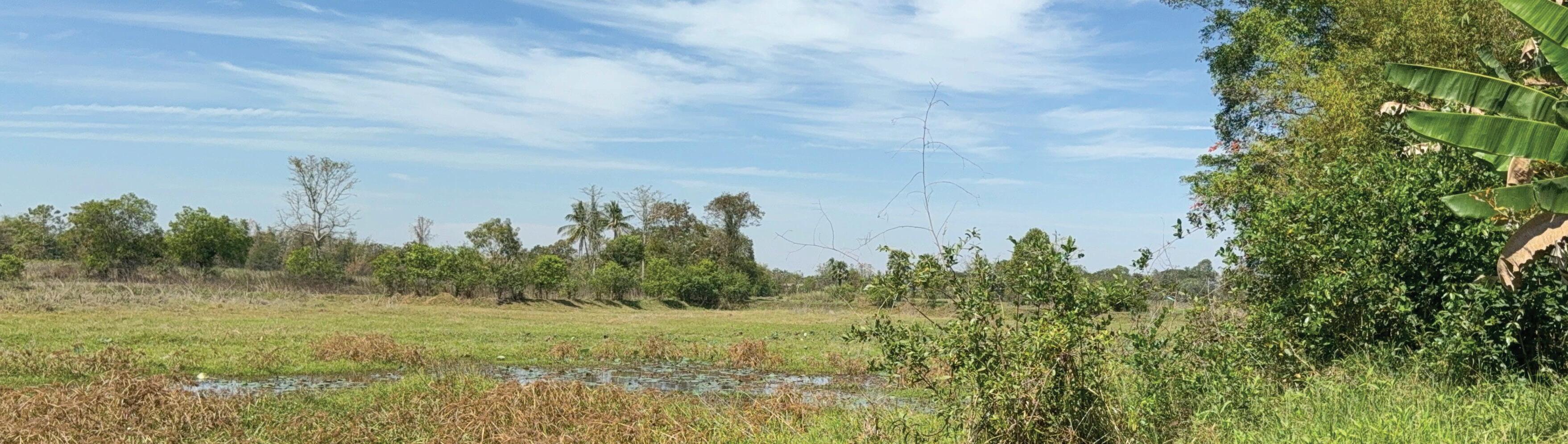
The Blantyre Sustainable Farm Project will utilise the Church-owned land seen here to provide practical agricultural skills for local men and women.
that help families grow food, earn an income, and plan for the future. Knowledge shared here will extend to neighbouring villages, strengthening food security, local livelihoods, and long-term resilience.
An irrigation system will be installed, allowing farmers to grow crops twoor even three - times a year instead of just once, turning months of hunger into seasons of productivity.
Local employment opportunities will be created, supporting families beyond the farm.
Thousands more people will be reached indirectly as farmers trained through the project will pass on skills to relatives and neighbours, multiplying the impact far beyond the farm itself.
Who are we partnering with?
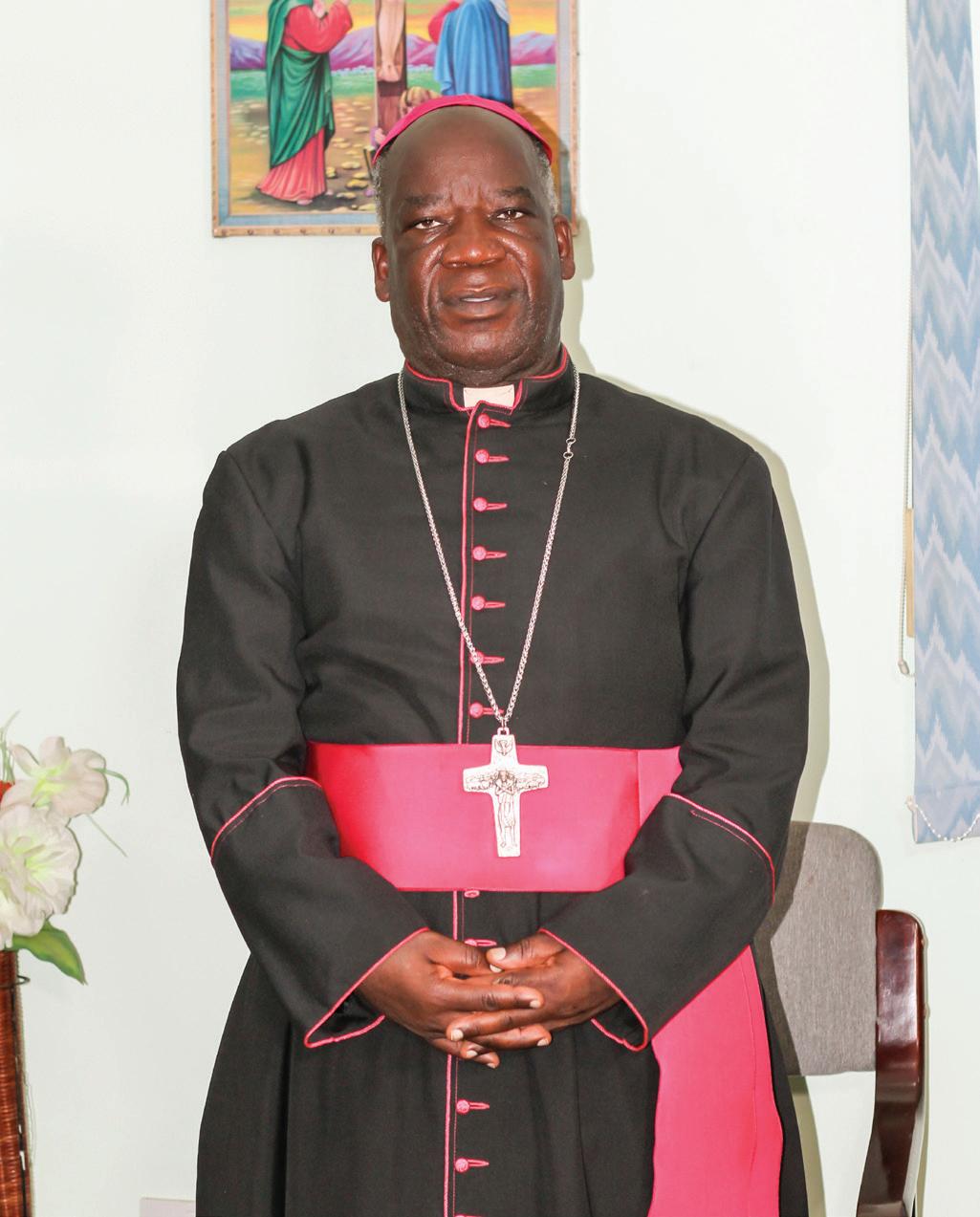
Archbishop Thomas Luke Msusa, SMM, leads the Archdiocese of Blantyre with a deep understanding of the daily realities facing families in Malawi.
Through decades of pastoral leadership, he has witnessed how hunger, climate change, unemployment, and lack of opportunity affects entire communities, especially women and young people.
He believes lasting change begins with food on the table, practical skills, and access to modern farming methods that help families support themselves.
As a strong advocate for unity and development, Archbishop Msusa champions projects that move beyond short-term aid toward long-term solutions.
The Blantyre Sustainable Farming Project reflects his vision of training people, caring for the land, and creating pathways for families to build more secure livelihoods together.
This project is about giving our people a place to begin. When families are trained to grow food, to care for their land, and to work together, life starts to change. Food comes to the table, skills grow, and hope spreads through the whole community. With this support, our people can move forward and build a better future for themselves.”
Archbishop Thomas Luke Msusa, SMM, Archdiocese of Blantyre
Your support can help
The items listed above represent only a small sample of how financial support may be used. For a full project budget, please contact your local Catholic Mission representative.
Archbishop Msusa knows the potential for his people to thrive if given the right tools and support to begin.
Faces of hope
Patricia’s story
Patricia is a mother of five from the Blantyre region who has worked tirelessly to provide for her family through small-scale farming and brickmaking.
Patricia and her husband have often struggled to earn enough to meet the family’s basic needs like supporting their children’s education.
Like many families in her community, unpredictable rainfall, destructive pests, and extreme weather events like Cyclone Freddy have repeatedly wiped out her crops, leaving her harvests too small to sustain her family each year.
The Blantyre Sustainable Farming Project offers Patricia and her family a pathway out of this cycle of vulnerability. Through practical training, improved farming methods, and access to more stable and fair markets, the project will help Patricia grow stronger crops, reduce losses, and earn a reliable income.
With greater food security and better returns from her harvest, Patricia is excited for her family’s future.
This support gives us hope that our future will be different. With the skills and knowledge we will gain, we can grow enough food, earn a better income, and give our children the education and life we have always dreamed of.”
Patricia, future beneficiary of the Chisombezi Farm
Patricia has hope for her family’s future, wishing that her children have more security and opportunity than she had.
Cultivating Generational Transformation in Myanmar
Project: Ecological Farming Project
Project Code: MMCT-1200120
Funding Required:
Project Location: Pathein Diocese, Myanmar
A snapshot of the situation
Ecological and climate stress: Flooding, drought, and land degradation threaten crops
Poverty and food insecurity:
Almost half of the 57.7 million population live in poverty
Internally displaced people:
More than 3.2 million have been internally displaced since the civil unrest began in February 2021
Catholic population: 1%
Since February 2021, communities across Myanmar have faced compounding challenges that have deeply affected daily life.
Insecurity, economic disruption, and limited access to essential services have placed immense strain on families, impacting livelihoods, education, and healthcare. Today, an estimated 18.6 million people, including 6 million children, require humanitarian assistance.
More than 3.2 million people have been internally displaced, including 1.8 million in the past year alone. Many families now live in temporary shelters with limited access to food, safe water, and healthcare.
Despite these hardships, communities continue to demonstrate remarkable resilience, drawing on strong local networks and traditions of mutual support.
Amidst this suffering, the Catholic Church remains on the frontlines, helping as best they can with the resources they have available.
For over 30 years, the Missionaries of St Paul (MSP) have served communities through pastoral care, education, and outreach to families affected by financial hardship and conflict. But today, their mission is under pressure.
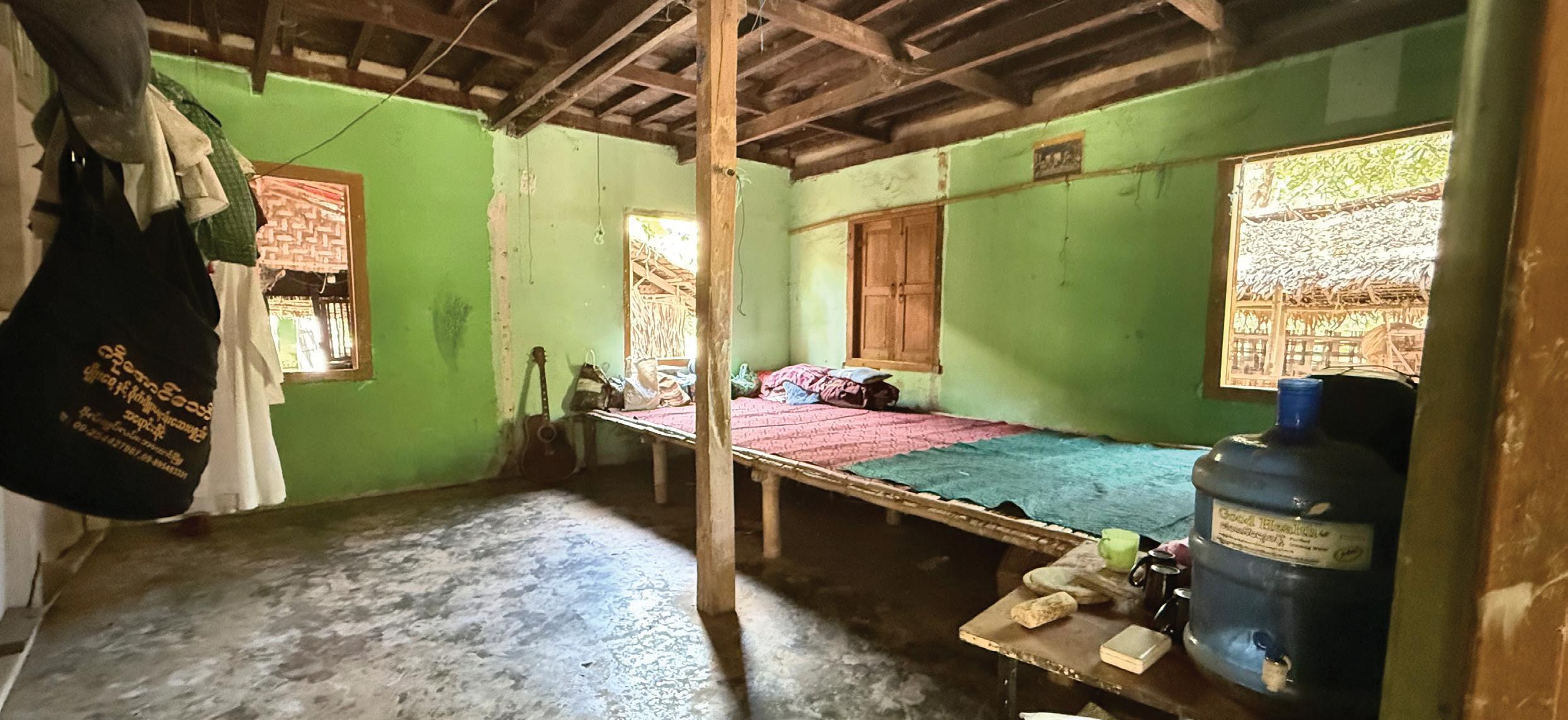
Rising food costs and reliance on rented farming equipment mean they can no longer accept additional children into their boarding hostels. The need grows. Resources shrink.
To address this need, the MSP are expanding ecological farming initiatives - including growing and harvesting rice, beans and aquaculture across 20 acres - to strengthen food security, train young people in ecological farming, and support more resilient local livelihoods.
Yangon Naypyidaw
Key outcomes of this work
By transforming Church land into a living model of hope and self-reliance, this Ecological Farming Project aims to financially sustain a variety of work within the Pathein Diocese for the long-term, such as supporting pastoral care, youth formation, education and safe boarding for students, and outreach for many families affected by the ongoing conflict.
What began as a small investment in agriculture and aquaculture to grow organic rice and beans has already shown strong returns, with the Church now focused on strengthening and expanding the initiative.
Provide sustainable food security for at least 100 conflict-affected families each year through organic rice, bean, and vegetable production.
Establish an eight-acre integrated fishpond system, producing reliable nourishment for children living in the boarding hostels and generating local income.
Purchase a multi-purpose tractor, reducing costly equipment rental and enabling cultivation of up to 20 acres of farmland annually.
Upgrade boarding facilities, creating safe, stable accommodation for 300 children from conflict-affected and low-income families.
By building local capacity today, this project can transform the prospects of children and familiescultivating not only harvests from the soil, but also hope and opportunity for generations to come.
With the right support, this community-led model has strong potential to grow and be replicated in other regions - strengthening local food security, and building long-term sustainability for the future.
Benefit 500 local community members through ecological farming, renewable energy, water sanitation, and waste management initiatives.
Train 150 local youth in ecological farming, aquaculture and conflict transformation, equipping them as leaders for peace and self-reliance.
Build a scalable model of self-sustaining mission with potential to expand across other parishes and dioceses throughout Myanmar.
Install renewable solar energy systems, lowering operational costs and ensuring consistent power supply for study and daily living.
The current boarding facilities are in need of upgrading to provide safe, stable accommodation, where children can truly flourish.
Who are we partnering with?
Fr Salai Michael, MSP, grew up in the small village of Ka Beh in Myanmar’s Ayeyarwady Region, an area that was remote, difficult to access, where poverty was common, and a priest could visit only twice a year. As a young boy, he watched his family wait eagerly for the sacraments.
At just six years old, he felt called to become a priest who would bring God’s closeness to forgotten communities like his own. In 2007, he joined the Missionaries of St Paul (MSP), and after years of formation was ordained in 2018.
Fr Salai has lived the reality that so many families in Myanmar now face. He knows what it means to grow up in a village where opportunities are scarce, where access to education is fragile, and where the Church is often the only stable presence in times of uncertainty.
Today, Fr Salai serves as Secretary of the MSP and leads the Ecological Farming Project in the Diocese of Pathein. He believes faith must be lived in action, feeding the hungry, creating opportunity, and building peace in a nation marked by conflict and hardship.
This project is not only about growing food, it is about restoring hope. When families can rely on the land and children can stay in school, the future begins to change.”
Fr Salai
MSP, Diocese of Pathein
Your support can help
The items listed above represent only a small sample of how financial support may be used. For a full project budget, please contact your local Catholic Mission representative.
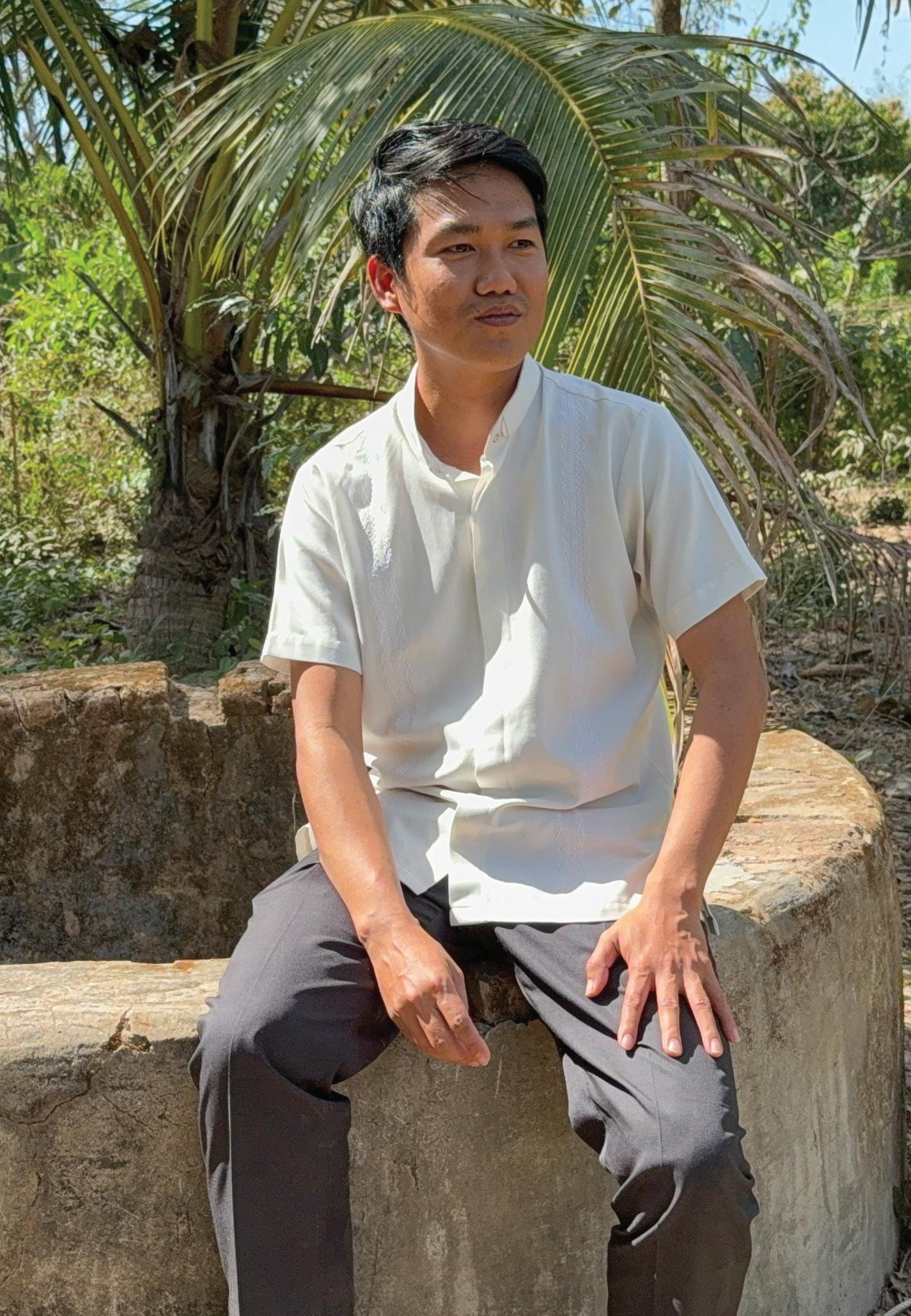
Fr Salai rests on the edge of the farm’s wellenvisioning the future for his community.
Michael,
Faces of hope
Daniel’s story
Daniel is 17, but his life has already carried heavy burdens. His mother works long hours in a factory. His father, weakened after an operation, cannot work and stays at home. Before coming to the MSP boarding hostel, Daniel’s days were uncertain.
There was little space to study, and the pressure to help support his family weighed on him. His parents sent him to the boarding hostel not because they wanted distance, but because they wanted hope - hope that he could become “an educated person”.
Now Daniel lives at the boarding house, where he finally has time to learn. Burmese language is his favourite subject - he understands it well and feels
confident in class. English and Mathematics are harder, but he keeps trying.
He wakes at 6am to feed the 16 ducks, laughing as they scatter “very crazy” around the yard before returning for water. He helps in the garden and learns how to care for the land. Daniel dreams of becoming an engineer one day, building things that last.
Thanks to the MSP, and the Ecological Farming Project that will help sustain the hostel, Daniel is not defined by his family’s hardship. He is studying. He is growing. He is building a different future.
Join the Story
By contributing to the Ecological Farming Project in Myanmar, you are providing children like Daniel with food, education, and hope that will last for generations.
Through faith in action, Daniel is discovering the strength to shape a brighter tomorrow.
Growing Futures
Education projects
Education is a seed planted today for a tomorrow filled with possibilities. By supporting learning, you help children and young people grow in confidence, opportunity, and hope for the future.
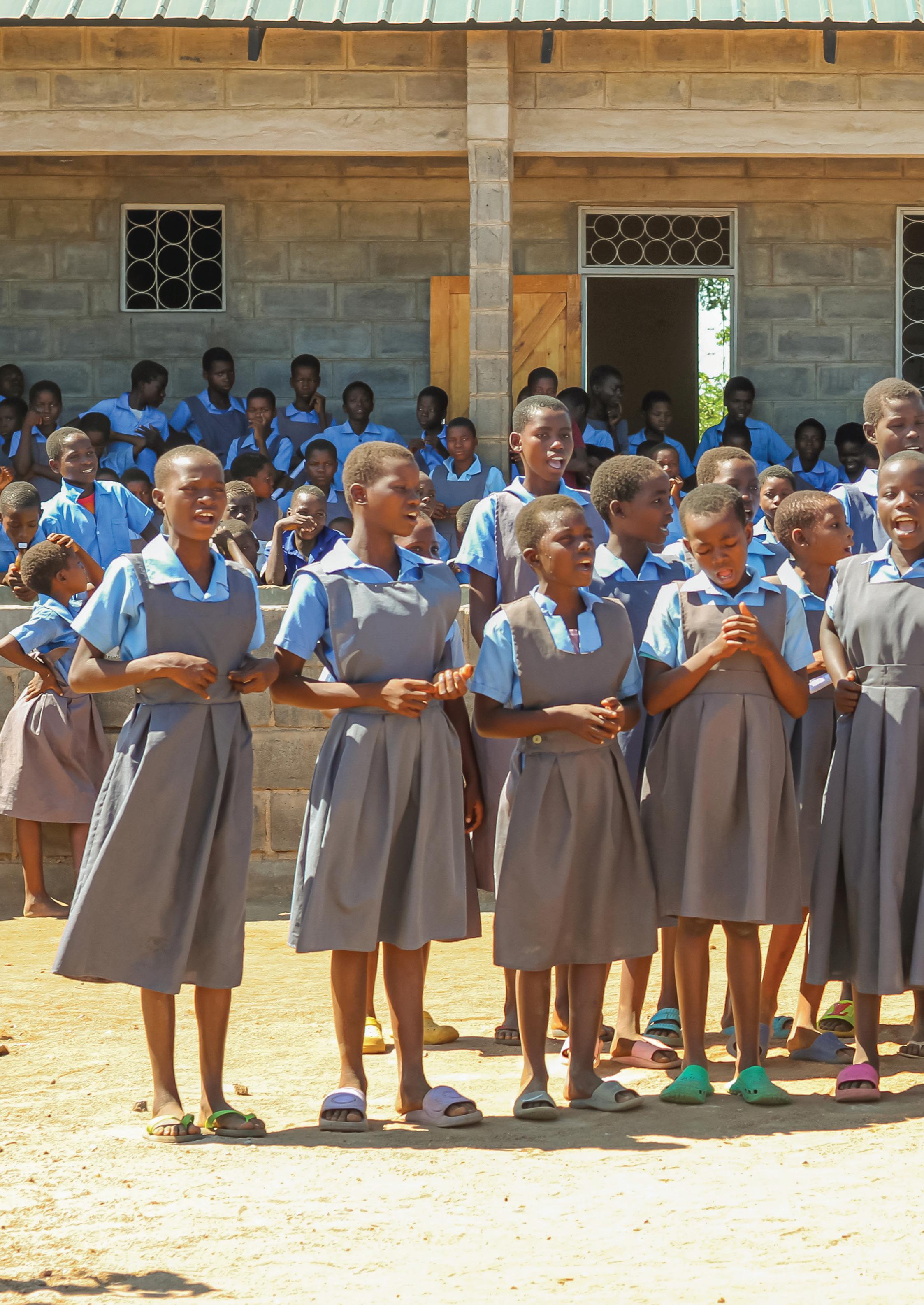
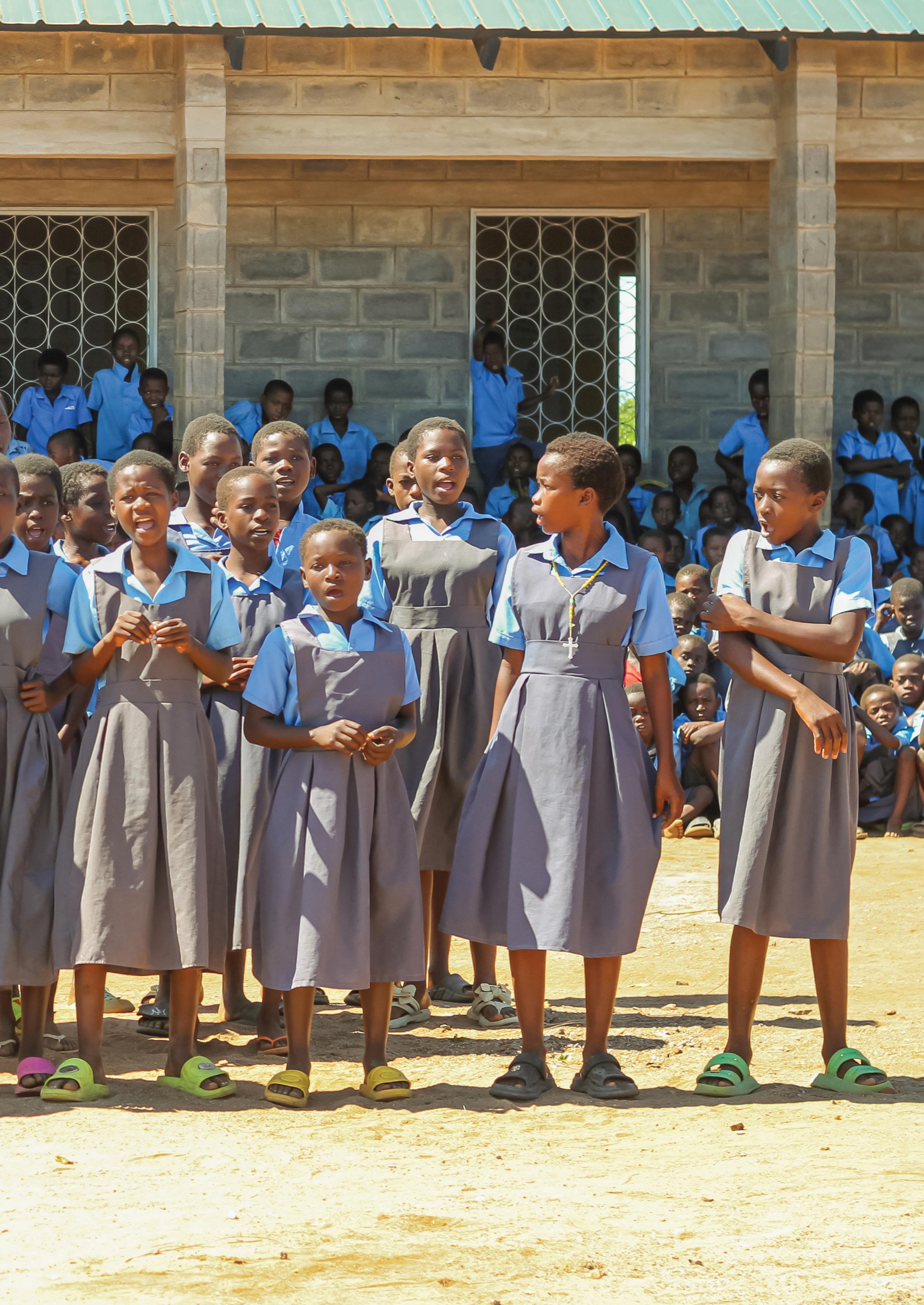
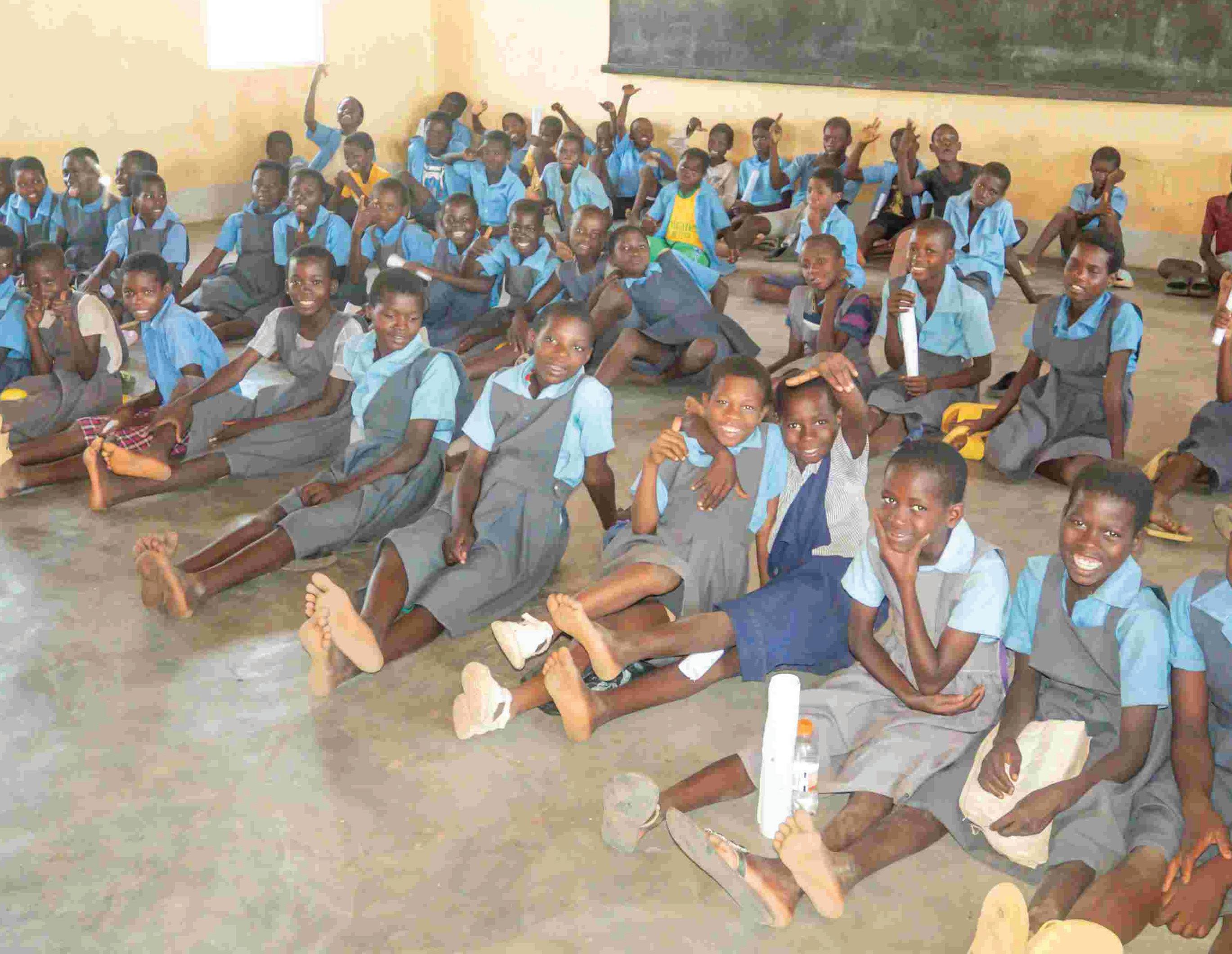
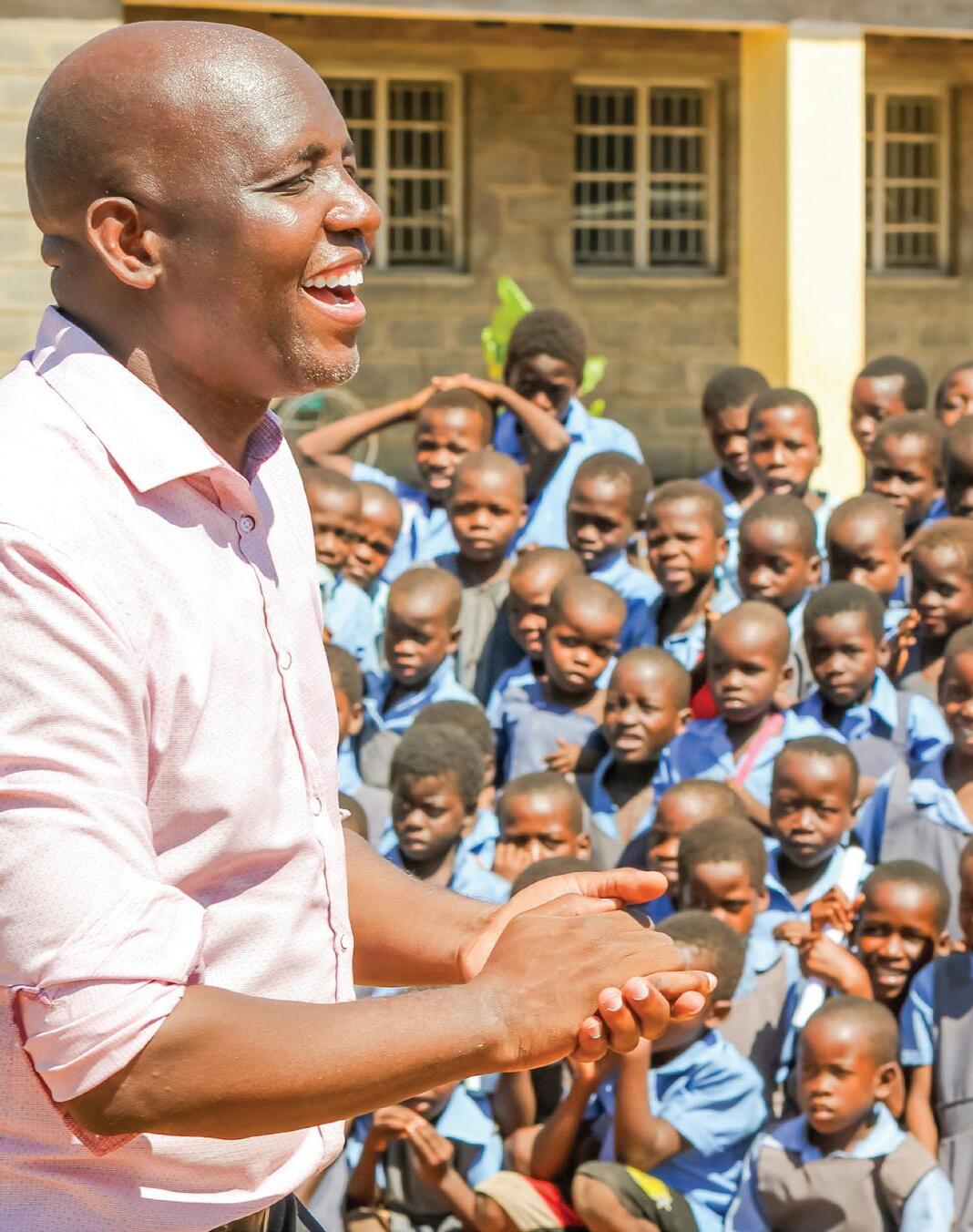
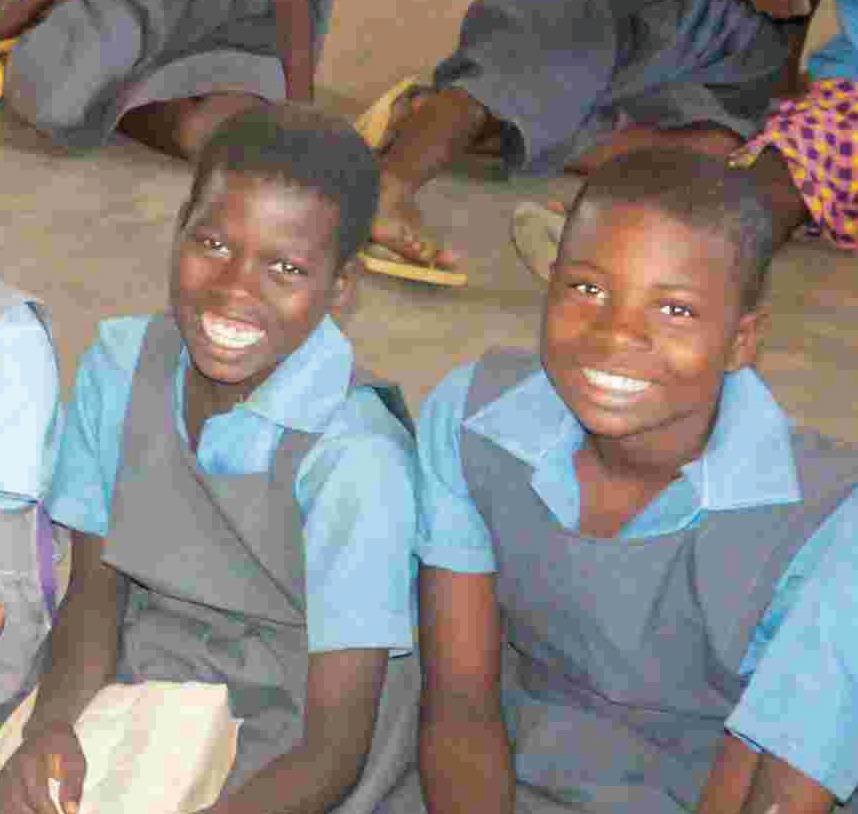
Students in Chikwawa, Malawi, lift their voices in song. In Kampira Village where life can be difficult and uncertain, moments like this show the joy and hope that education can bring to a community.
Restoring Dignity Through Education in Chikwawa
Project: St Peter’s Nyamikuta Primary School
A
ProjectCode: MWCT-2200484
Funding Required: $452,936
Project Location: Chikwawa, Malawi
snapshot of the situation
Extreme conditions:
Some children walk barefoot for kilometres to school in extreme heat
Country progress:
Ranked 172 out of 193 on the Human Development Index
With 71.3% of Malawians living on less than $3.21 AUD a day, many families face severe challenges accessing healthcare, education, and adequate nutrition.
Climate pressures intensify these hardships. Extreme heat, often reaching 48°C, brings prolonged drought, followed by unpredictable flooding rains, that destroy crops and livelihoods.
In 2022, devastating floods along the Shire River swept away homes, livestock, and farmland, forcing more than 500 families to relocate to higher ground in Kampira Village. Starting again, families built makeshift shelters from mud and grass and resumed subsistence farming on drier land.
Many parents now rely on piecework - low-paid, irregular labour - to help support their families, though it provides little stability.
For children in Kampira Village, accessing education is also a daily struggle. The nearest school is several kilometres away, and many walk barefoot in extreme heat, and flooding frequently cuts off access.
In addition, with limited resources and drier land; many crops fail, leaving families with scarce food supplies. When children go days without food, they are often too weak to make the journey to school.
TANZANIA
MOZAMBIQUE
MOZAMBIQUE
ZAMBIA
MALAWI
Chikwawa
Mangochi Lilongwe Lake Malawi
Blantyre
Key outcomes of this work
The new St Peter’s Nyamikuta Primary School in Kampira Village will provide the community with something they have lacked for years - stability, safety, and a genuine opportunity for their children to thrive.
With classrooms close to home, a daily meal of maize porridge, and safe access through all seasons, families finally see a future that feels bright for their children.
800 children will receive quality education close to home.
A daily feeding program will provide each student with one nutritious meal of maize porridge, boosting concentration, energy, and learning.
For the 800 children who will attend, this school represents more than just a building; it is a new beginning.
It will become the heart of Kampira Village, a place where children can gather, learn, play, and dream. It offers parents hope that their children can break free from the cycle of loss and hardship that has defined their lives for so long.
10,000 neem trees will be planted to create a natural windbreak, protecting the school buildings and surrounding homes.
Two small bridges will ensure children can safely reach school, even during the rainy season.
The students who will benefit from the new St Peter's Nyamikuta Primary School in Kampira Village.
Who are we partnering with?
Fr Matthew Semba, Director of Social Services, Diocese of Chikwawa, is the key leader in the Church’s development efforts in the diocese. He oversees projects that aim to bring stability and hope to communities severely affected by poverty and climate disasters.
As the lead coordinator for the new St Peter’s Nyamikuta Primary School, Fr Matthew collaborates with local families, teachers, and Catholic Mission to ensure the school becomes not only a centre for learning, but also a foundation for long-term community strength.
He firmly believes that education is a sacred pathway; and focuses on enabling children to dream beyond their hardships, equipping them with the tools to change their futures.
To Fr Matthew, the new St Peter’s Nyamikuta Primary School will symbolise resilience. He envisions the school as a source of joy, dignity, and hope for both parents and children.
This school will give our people a sense of hope. They know that God comes to them through the generosity of others. For children who walked many kilometres to learn, or stayed home because they had nothing to eat, St Peter’s will be a rock. It will show them they can build a better life.”
Fr Matthew Semba, Diocese of Chikwawa
Your support can help
The items listed above represent only a small sample of how financial support may be used. For a full project budget, please contact your local Catholic Mission representative.
Fr Matthew Semba inspiring the children of Kampira Village to use their education to create a brighter future.
Faces of hope
Yamikani’s story
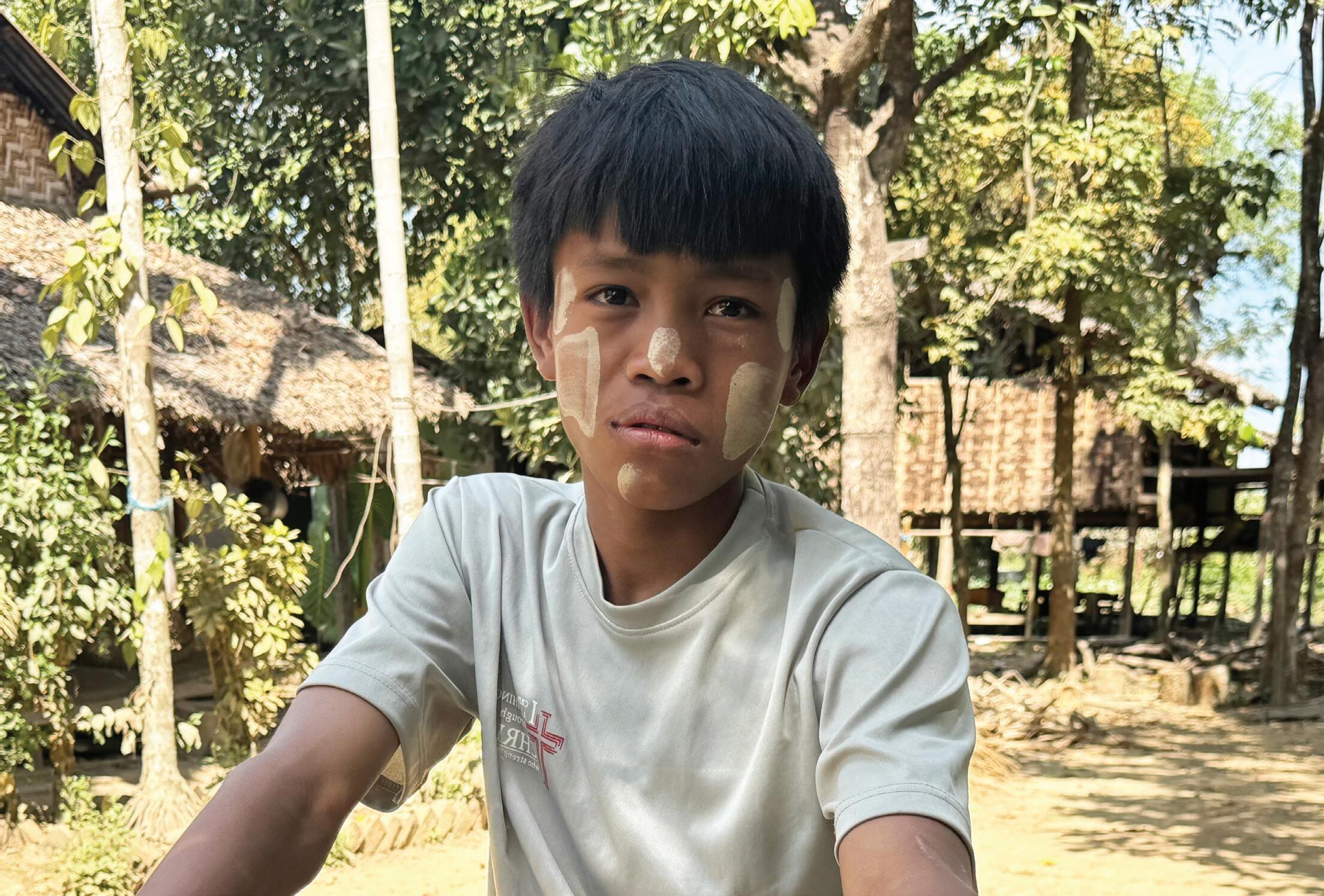
Twelve-year-old Yamikani lives with a physical disability. Every day, he sets out on a road that tests his strength, walking long distances to and from school in pain. It’s a heavy burden for someone so young. In 2023, his family fled to Kampira Village, after the Shire River flooded their home.
After his father lost his arm in a crocodile attack many years ago, Yamikani’s mother, Rute, is the sole provider. She searches for farm work every day, and tends to their small crops, which often wilt in the hot, dry season.
Some days, she returns home empty-handed, leaving the children too hungry to attend school. Despite these challenges, Yamikani dreams of becoming a driver so he can “see different places and live like the people who drive”. His parents understand that education is essential for giving him that opportunity.
With a new school nearby, Yamikani would no longer have to walk long distances or miss lessons due to a lack of food or strength. The school will provide hope for his family, allowing the children to rise above the current struggles and build a better life for tomorrow.
Stand With Us
Education is the only path to change here, together through St Peter’s Nyamikuta Primary School we can create the beginning of that transformation.
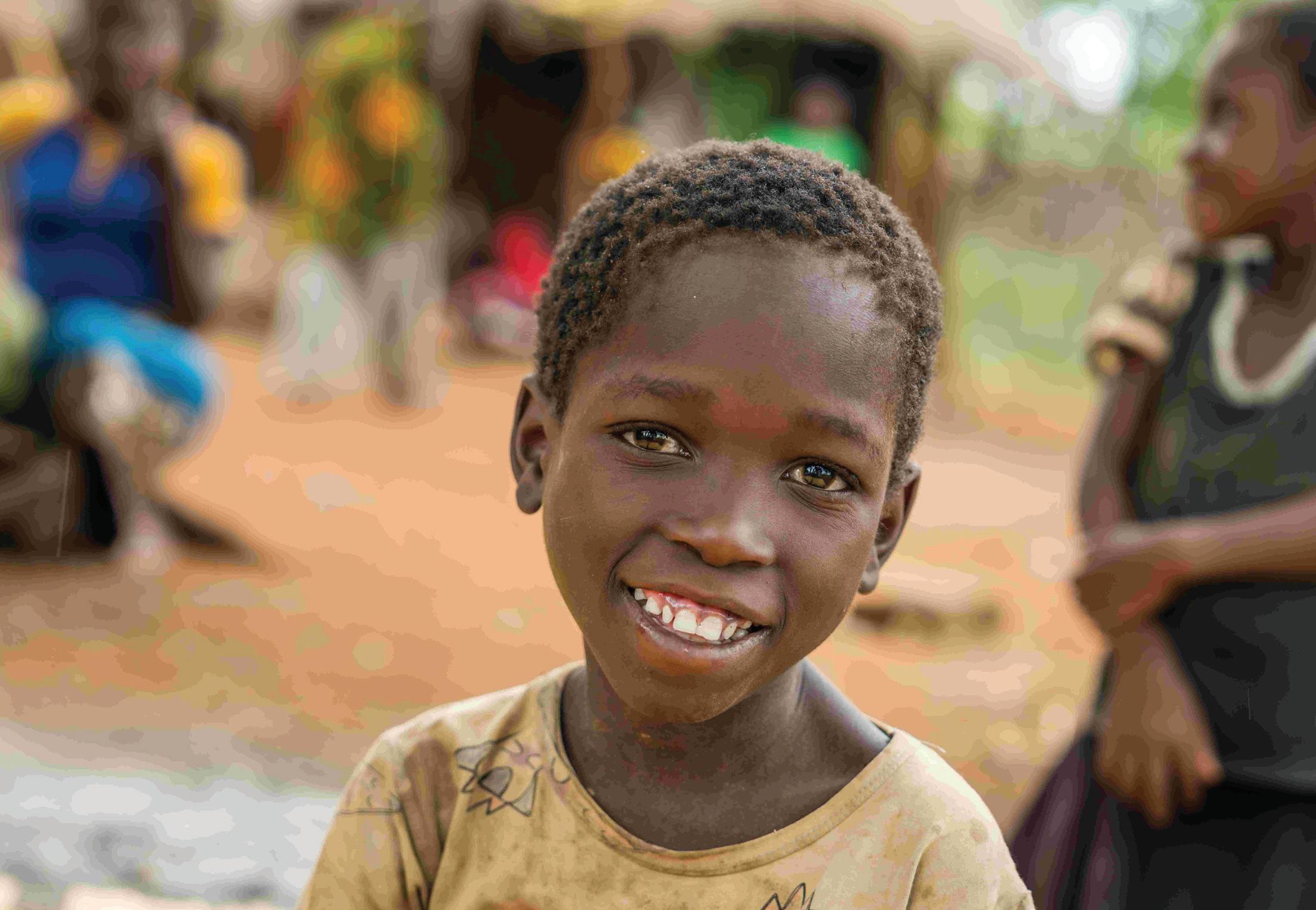
Yamikani has a big smile and big hopes for the future.
From Small Beginnings to Lasting Impact
Project: Expansion of Sacred Heart Education (SHE) Private School
Project Code: MMCT-2200760
Project Location: Bago, Myanmar
A snapshot of the situation
Global Peace index:
Ranked 153 out of 163 countries, making it the least peaceful nation in Southeast Asia
Ecological and climate stress:
Cyclones, floods, and earthquakes have destroyed thousands of classrooms
Teacher shortage:
More than 125,000 teachers have lost their jobs since 2021
2021 political instability:
Up to 7 million children are out of school
Funding Required: $981,620
For decades, Myanmar’s education system has operated under significant strain due to recurring conflict, natural disasters, and economic hardship. For children and families across the country, these challenges have translated into a profound disruption to learning.
Today, an estimated seven million children - more than half of the country’s schoolage population - are out of school, representing one of the highest proportions globally.
Educational spaces have increasingly been affected by insecurity with more than 125,000 teachers removed from their positions. Over 3.5 million people - including children - have been displaced by conflict, and thousands of classrooms destroyed.
Established in 2017 by the Archdiocese of Yangon with support from Catholic Mission, Sacred Heart Education (SHE) Private School was founded to offer a safe, values-based education for all children, offering scholarships to those in need.
What began with just 30 children, expanded from pre-primary to primary in 2019, and middle school in 2022, maintaining a focus on sustainability and community impact.
Today, enrollments have risen to 459 students, supported by a growing team of qualified educators, reflecting strong community trust and a commitment to rebuilding lives and strengthening the nation through education.
MYANMAR
Yangon Naypyidaw
Key outcomes of this work
Now at full capacity, SHE stands at a critical juncture. Drawing on a long tradition of excellence in education, the Archdiocese of Yangon is responding to this national emergency by strengthening and expanding schools as places of safety and opportunity.
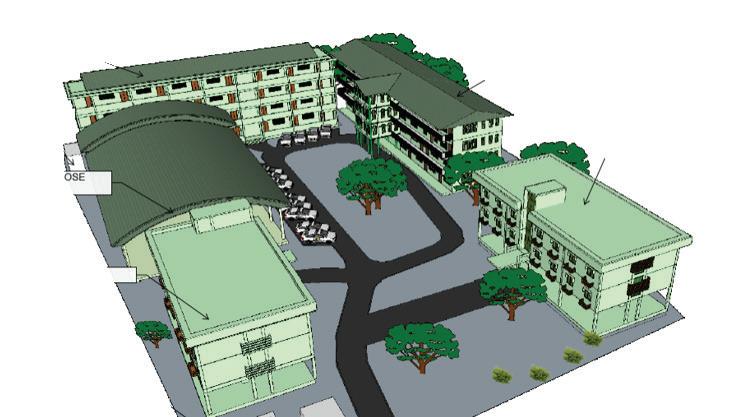
As part of the continued growth of SHE, the construction of a new four-storey classroom building will help safeguard the future of hundreds of children.
Even in the shadow of conflict and uncertainty, this expansion will equip young people with the knowledge, skills, and resilience to help rebuild their country through education.
This development will allow the school to offer education to students in grade nine through to grade twelve. This next stage of development will ensure students can continue their studies locally, rather than being forced to leave education altogether.
For young people living amid political and economic instability, this expansion offers more than classrooms - it offers hope, stability, and a pathway to a better future.
Through SHE, your support can fund not just a building, but invest in young lives, walking faithfully with the people of Myanmar, and helping to rebuild a nation - one student, one classroom, and one future at a time.
Proposed four-storey Classroom Building
Multipurpose building already funded and constructed by the school community
Existing building
Proposed future student hostel*
Proposed future student hostel*
*Hostels not part of current project.
Site plan of Sacred Heart Education (SHE) Private School in Bago, Myanmar.
Who are we partnering with?
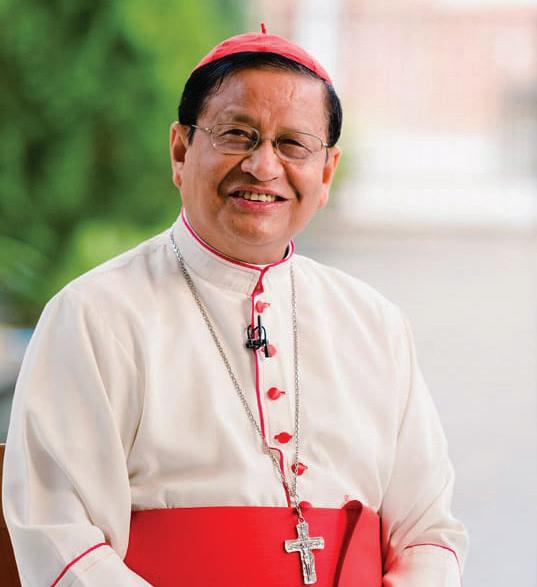
His Eminence, Charles Maung Bo, SDB, Archbishop of Yangon, is a steadfast pastoral leader and Myanmar’s first Cardinal. A Salesian priest ordained in 1976, Cardinal Bo has devoted his life to accompanying communities through decades of conflict, poverty, and social upheaval.
As Archbishop of Yangon since 2003, he has played a central role in strengthening the Church’s response to the needs of the most vulnerable, particularly through education. Cardinal Bo believes that educating young people is essential to rebuilding the nation, not only academically, but morally, socially, and spiritually.
His leadership has guided the Archdiocese to prioritise schools as places of stability and hope for children whose futures have been shaped by uncertainty.
Cardinal Bo’s continuing partnership with Catholic Mission reflects a shared conviction that lasting change comes through long-term commitment, not short-term solutions.
Cardinal Charles Maung Bo, SDB, a missionary leader nurturing hope and empowering communities in Myanmar.
He has been a strong advocate for accessible, high-quality education across Myanmar, recognising it as the foundation for peace and national renewal.
When peace returns, Myanmar will urgently need young people formed in wisdom, integrity, and leadership. Education is therefore not simply a service - it is a mission of hope and nation-building.”
Cardinal Charles Maung Bo, SDB, Archbishop of Yangon
Your support can help
How your kindness can make a difference
The items listed above represent only a small sample of how financial support may be used. For a full project budget, please contact your local Catholic Mission representative.
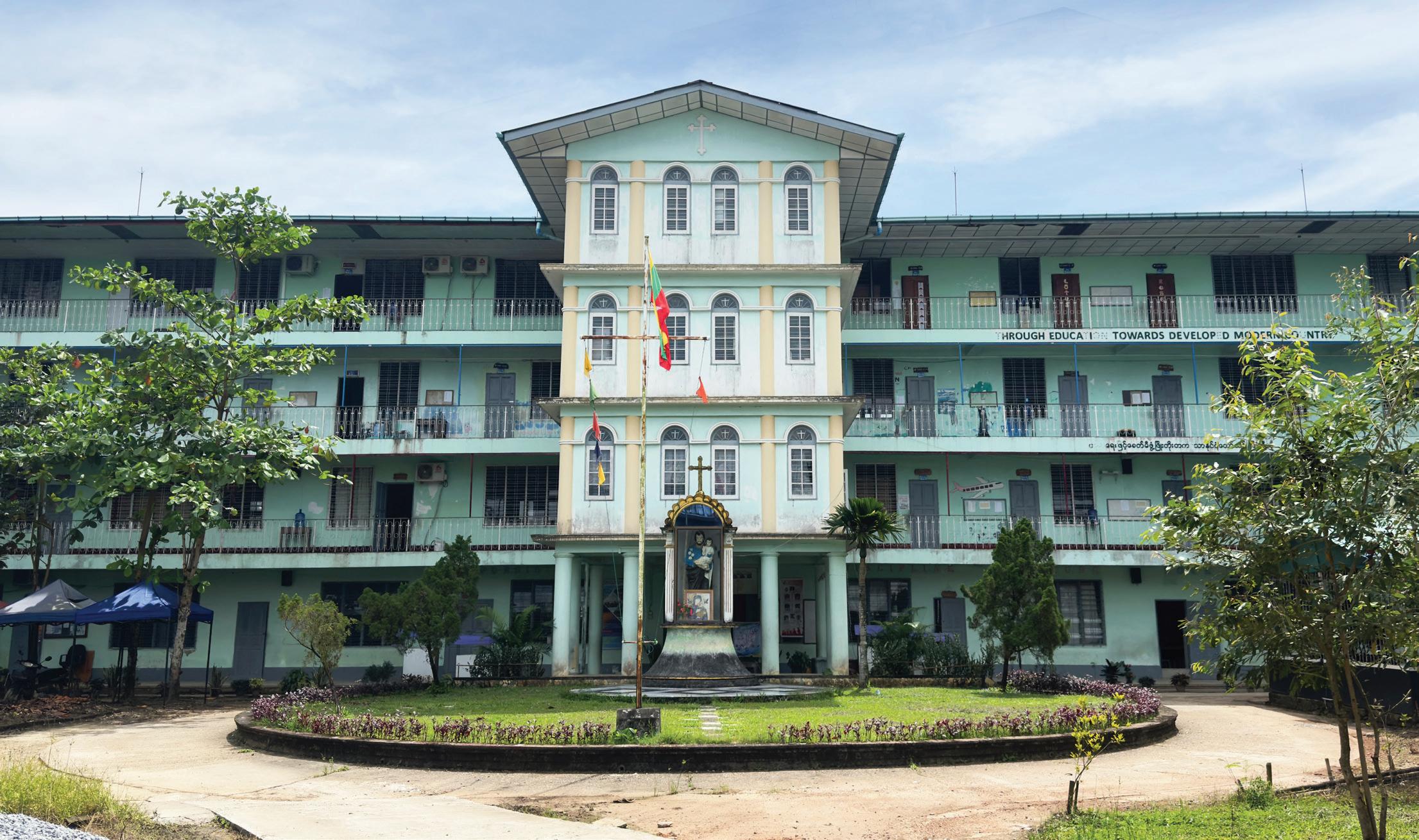
From humble beginnings to a place of hope, the current Sacred Heart Education Private School (pictured above) was a former minor seminary renovated by Catholic Mission in 2018. Now at full capacity, SHE is a vibrant centre for learning shaping the future of children in Bago, Myanmar.
Be Part of the Journey
By supporting this project, you become part of a long-term commitment to education, hope and lasting change in Myanmar.
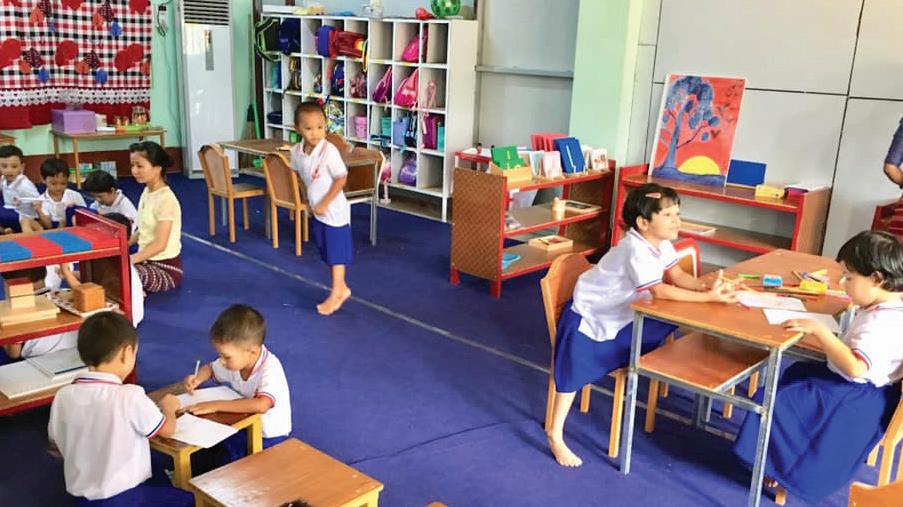
In a country where classrooms have too often been overshadowed by conflict, students at Sacred Heart Education Private School laugh, learn and play.
Building Bright Futures in Mongolia
Project: Don Bosco Industrial Training Center (DBITC)
Project Code: MNPT-1200085
Funding Required: $412,677
Project Location: Ulaanbaatar, Mongolia
A snapshot of the situation
Youth unemplyment: 13.8%
Poverty rate: 27.1%
Catholic rate: 0.04%
Climate: –40°C to 40°C
MONGOLIA
Young people in Mongolia face significant barriers to education and employment, shaped by hardship, climate extremes, and economic instability. More than 27% of the population lives below the national poverty line, and with over half of Mongolians under 34, many grow up without reliable access to education or secure work.
Mongolia’s harsh climate, ranging from –40°C winters to 40°C summers, places enormous pressure on rural families. Increasingly frequent dzuds (extreme weather events) destroy livestock and livelihoods, forcing many to migrate to the capital city of Ulaanbaatar.
Almost half of Mongolia’s population resides in Ulaanbaatar, many living in the vulnerable ger districts. These are areas where residents live in traditional gers or simple homes, with limited heating, water, and sanitation, heightening the risks for young people who already face significant barriers to staying in school and finding work.
Economic instability compounds these challenges. Mongolia’s heavy dependence on mining leaves the job market exposed to global volatility, contributing to a youth unemployment rate of 13.8% - more than double the national average.
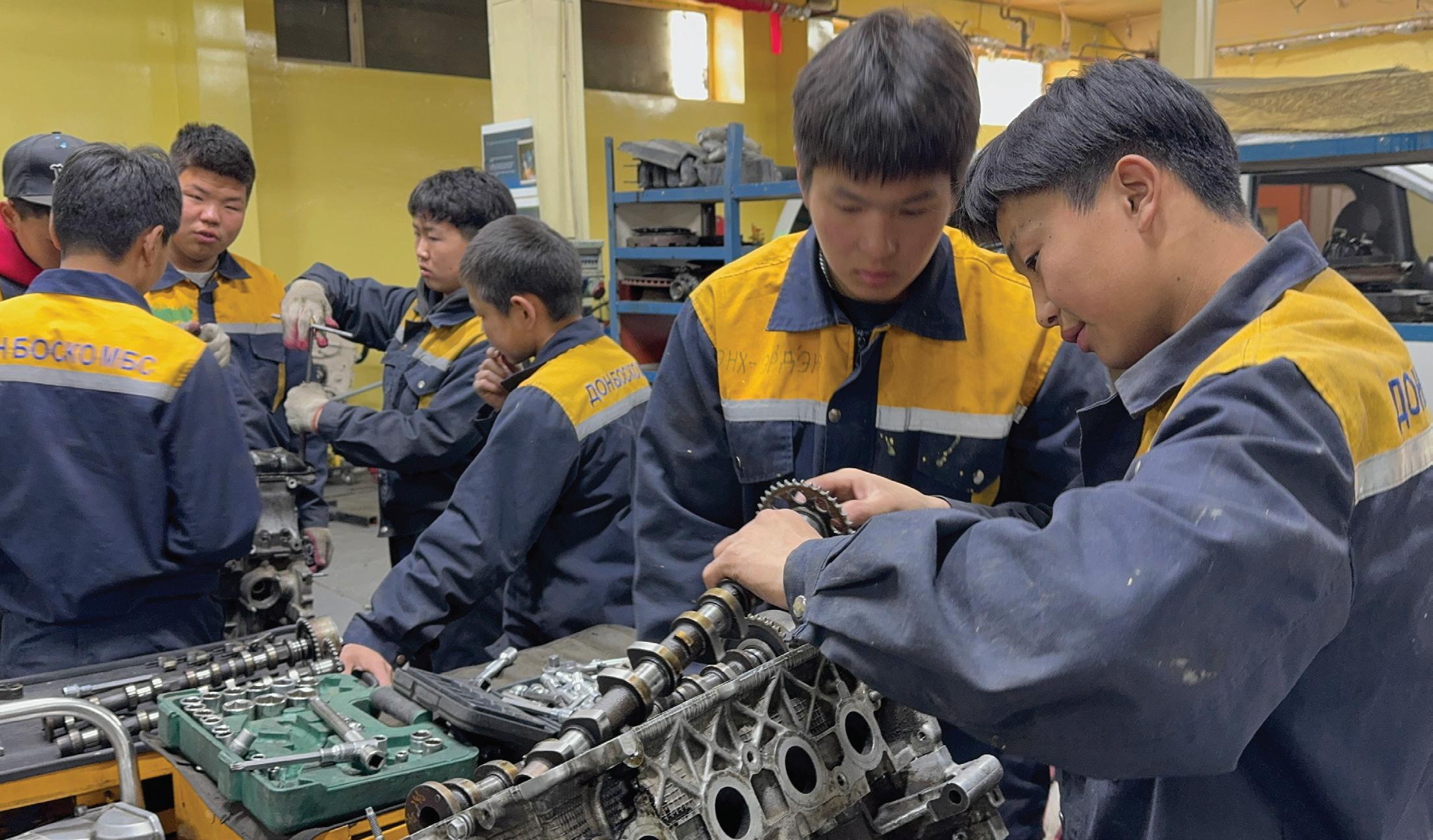
To meet this need, the Salesian Brothers founded the Don Bosco Industrial Training Center (DBITC) in Ulaanbaatar. Since opening in 2001 with just 30 students, it now serves up to 350 young people each year, many from low-income families. In 2023, Catholic Mission partnered with the DBITC to upgrade equipment and establish a new electrical workshop.
Today, students gain not only academic education and technical training but also confidence, and a sense of purpose. The school equips them with hands-on skills tailored to Mongolia’s demanding environmental conditions, skills that open pathways to dignified work and long-term independence.
Ulaanbaatar
Your generosity is changing lives - your impact so far
Workshops Built and Equipped
Your generosity has transformed old, under-resourced spaces into vibrant centres of learning, including a welding workshop, auto-mechanic workshop, and electrical workshop.
Students Learning Through Renovations
Due to the construction boom in Ulaanbaatar, and the shortage of skilled workers, there were delays in desperately needed renovations at the DBITC. However, this presented an opportunity for practical training.
Students helped with construction, wiring, and carpentry, gaining hands-on experience while reducing project costs. These cost savings were redirected into the purchase of tools and classroom improvements.
Growth in Student Enrolment and Graduation
• 54% increase in student enrolment from 95 students in 2023 to 146 students in 2025
• Graduation numbers up from 55 in 2023 to 72 in 2025
• New study streams added (auto-mechanic and electrical)
Building Sustainability
In partnership with Catholic Mission, the DBITC is building towards long-term financial independence.
• Piloting first enterprise: graduate-run auto-mechanic shop
• Additional enterprise models under review for sewing, electrical, and welding streams
• Goal: Generate income, employ graduates, and ensure DBITC thrives for generations
Your support is helping to launch the Auto Shop, DBITC’s first income-generating social enterprise.
Who are we partnering with?
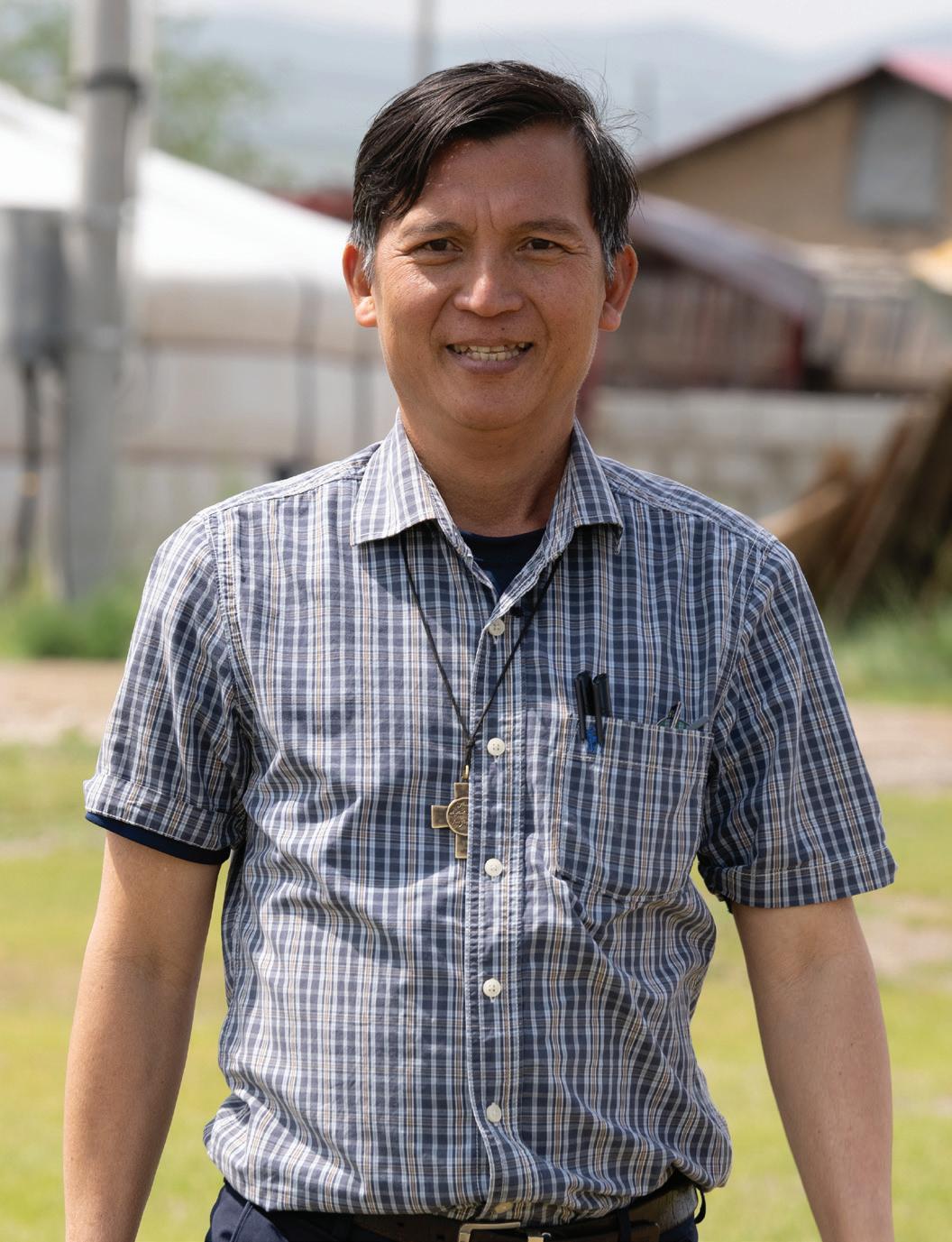
Br Andrew Tran Le Phuong, SDB, serves as Financial Administrator of the Apostolic Prefecture of Ulaanbaatar and plays a key role in supporting the mission of the Don Bosco Industrial Training Center. A trained mechanic with missionary experience in Papua New Guinea, he brings both technical expertise and pastoral commitment to his work.
Born in Vietnam, Br Andrew became a Salesian Brother more than 25 years ago, inspired by a desire to serve young people. He was part of the first Salesian missionary expedition to Mongolia in 2000 and later returned in 2014, where he has continued to accompany communities with dedication and care.
In Ulaanbaatar, Br Andrew has helped restore equipment and develop practical training opportunities for students, equipping them with skills for employment and independence. Deeply committed to education, he is passionate about creating pathways to brighter futures for the young people at the DBITC.
Br Andrew stands alongside the young people of Mongolia, where hope is forged through practical skills training.
Don Bosco taught us that education is an act of love. Through the Don Bosco Industrial Training Center, your generosity becomes that love in actionopening doors for young people who might otherwise be left behind. Thank you for helping us continue Don Bosco’s mission here in Mongolia.”
Br Andrew Tran Le Phuong, SDB, Apostolic Prefecture of Ulaanbaatar
Your continued support can help
The items listed above represent only a small sample of how financial support may be used. For a full project budget, please contact your local Catholic Mission representative.
Faces of hope
Batuhan’s story
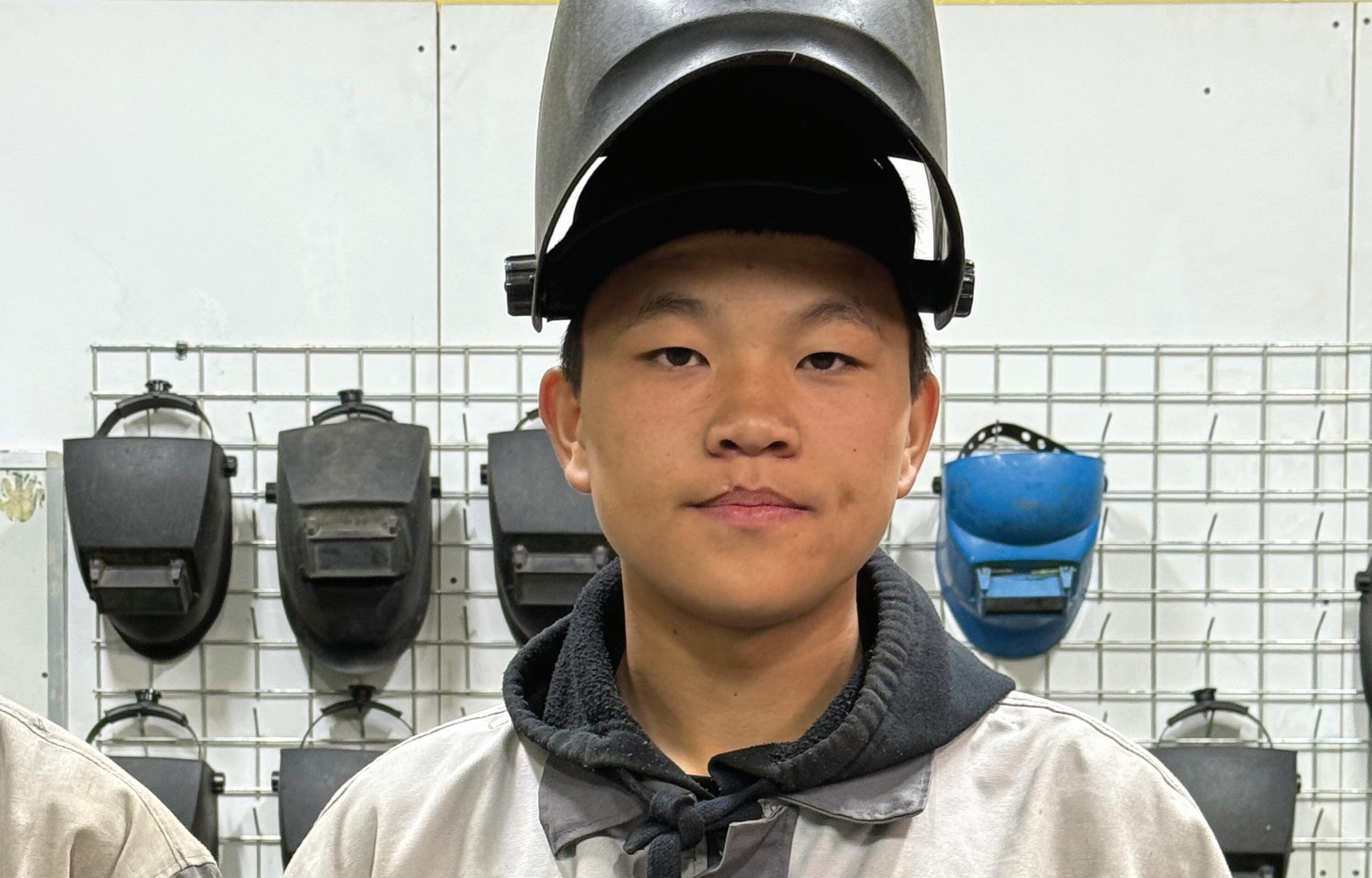
At just 16, Batuhan knows what hardship looks like. One of eight children, he has lived at the Don Bosco Caring Center from age 11. The Caring Center is another project which has been supported by Catholic Mission and is also run by Br Andrew.
It became a safe haven, his first experience of consistent care and stability. Now a welding student at the DBITC, he wakes every morning at 6:30am. He eats breakfast with the children at the Caring Center, then walks to class to put on his welding gear.
He says the work is difficult, but the teachers are kind and patient.
Batuhan shares, “The DBITC is a very nice environment and comfortable. It is sometimes hard for me to study, but I want to work in a factory one day.”
The welding program offers him something he never had before - a path forward, a profession, a reason to believe in his own potential. He wants donors like you to know:
“Thank you very much for the support.”
Your support gives young people like Batuhan not only skills, but safety, structure, and hope. For Batuhan, he is ready to build a whole new future with his hands, thanks to his education and training at the DBITC.
Help Build Brighter Futures
Your gift opens doors for students, supports teachers, uplifts graduates, and strengthens the DBITC for generations to come.
Batuhan has found a home, purpose and a trade at the DBITC.
Planting for Tomorrow
Impact investing - Loaves and Fishes
Impact investing is one way Catholic Mission helps communities build lasting change - not only meeting today’s needs, but creating opportunities that continue to bear fruit for years to come through the creation of larger community-based income-generating projects.
Through impact investing, Catholic Mission partners with local Churches and trusted organisations to support projects that:
• Create stable employment and livelihoods
• Strengthen local economies
• Support the ongoing mission of the Church
• Generate income that can be reinvested into future projects
Like seeds planted in good soil, these projects are carefully discerned, supported, and accompanied to ensure they grow in ways that are ethical and life-giving, allowing your generosity to keep giving season after season.
Planted with care. Grown with purpose. Shared in hope.
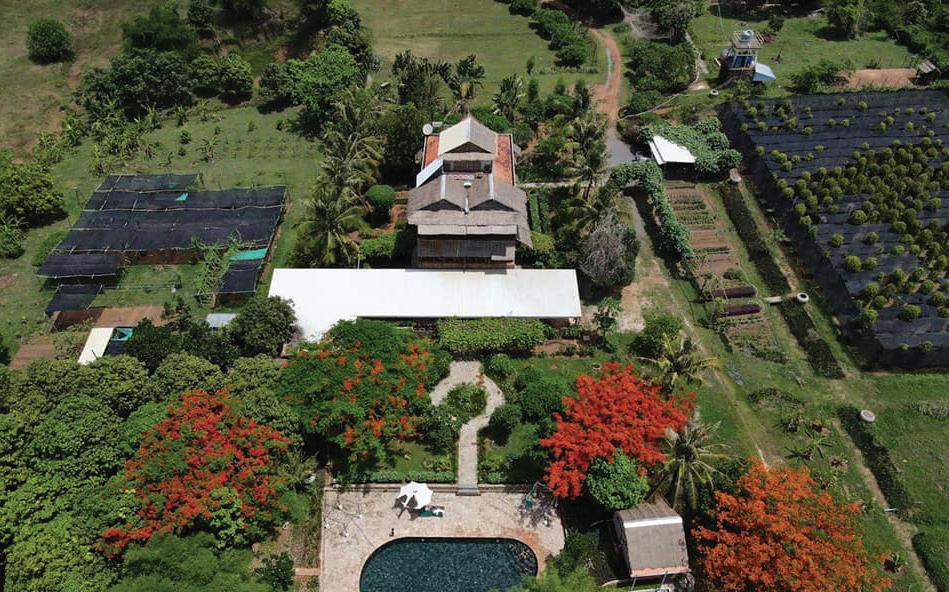
An aerial view of Eden Voah part of the Phnom Voah Training Centre, which empowers students from St Francis Technical High School with practical skills while supporting sustainable change in Cambodia.
Why it matters
Impact investing is about more than finances. It is about trust in local leadership, in community knowledge, and in the belief that with the right support, people can shape their own futures.
When people like you support impact investing, they help plant something enduring. A project that continues to serve. A community that grows stronger. A Church that is better equipped to respond to the needs of its people.
As one seed multiplies into many, impact investing allows generosity to keep giving, season after season.
Each project reflects a shared commitment
to walk alongside communities as they build futures rooted in resilience, faith, and hope.
Impact investing in action: Seeds that have grown
Catholic Mission has supported impact investing projects which now bear fruit for their communities, such as:
The Oh Battambang Hotel, a guesthouse and accommodation project in Cambodia has helped a local prefecture generate reliable income to support pastoral programs, clergy formation, and social outreach, reducing dependence on external aid.
The Phnom Voah Training Centre, an agricultural and farming initiative (pictured left) in Cambodia has created jobs, improved food security, and strengthened local supply chains, while caring for the land and protecting creation.
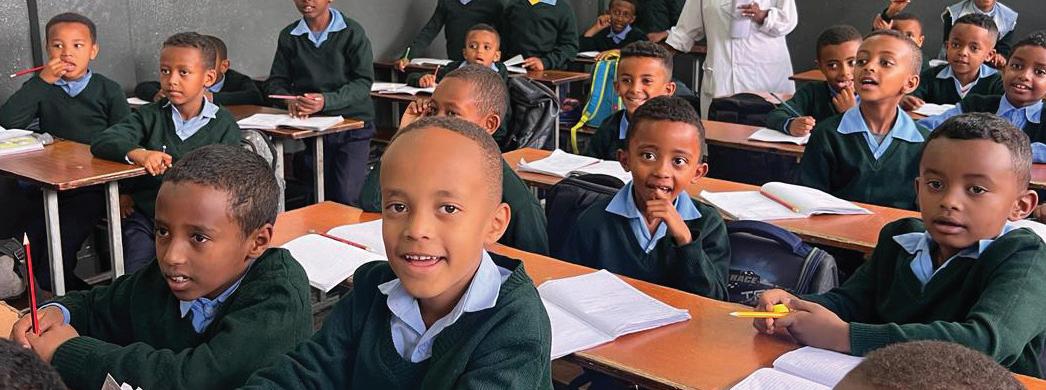
The Lideta Catholic Cathedral School (pictured below) in Ethiopia has generated income to support a student scholarship program for children from vulnerable and disadvantaged backgrounds.
The Lideta Catholic Cathedral School has already given over 400 children from disadvantaged backgrounds opportunity to build a brighter future for themselves through educational scholarships.
Sheltering Hope and Education
Project: Venite Seorsum Lodge, Impact
Investing
A snapshot of the situation
Population:
20.55 million
Food insecurity:
Children go days without food and are too weak to make the journey to school
Poverty rate:
71.3%
Job insecurity:
Many parents rely on piecework - low-paid, irregular labour - often resulting in missed meals
Project Code: MWPT- 2200759
Funding Required: $643,680
Project Location: Mangochi, Malawi
In 2026, Catholic Mission will invest in the revitalisation of Venite Seorsum Lodge, a lakeside property on the shores of Lake Malawi in Mangochi. Once a retreat centre, the lodge has fallen into disrepair but now offers new potential as a vibrant hospitality enterprise responding to growing tourism demand, while serving a far greater purpose.
With many children arrive at school hungry, daily meals will improve attendance, learning, and wellbeing, while easing pressure on families.
Lake Malawi
Owned by the Diocese of Chikwawa, the lodge will be redeveloped into a welcoming and affordable destination for travellers, pilgrims, and conference groups. With refurbished lakeside suites, budget accommodation, and modern conference facilities, it will attract local and international guests while remaining accessible to the Church and local community.
What makes this project especially compelling is its purpose. Venite Seorsum Lodge will operate as a sustainable source of income, supporting vital charitable initiatives, beginning with the feeding program at St Peter’s Nyamikuta Primary School in Kampira Village, Chikwawa.
The lodge is part of a broader vision for long-term sustainability. Alongside agricultural projects, it will help build a self-sustaining ecosystem that generates income, creates jobs and strengthens communities. At least 18 local people will be employed, providing stable income and supporting families.
Importantly, this investment will also strengthen the Church’s ability to respond to crises. In a region affected by cyclones and flooding, locally generated resources will enable faster, more effective support for vulnerable communities.
This is impact investing in action: transforming an underused asset into a source of dignity, resilience, and hope, where every stay helps nourish children, support families, and build a more sustainable future.
Venite Seorsum Lodge generates income from tourism
the cultivation and harvest of maize
The harvested maize is used to provide a meal of maize porridge, per day, for children at St Peter’s Nyamikuta Primary School in Chikwawa
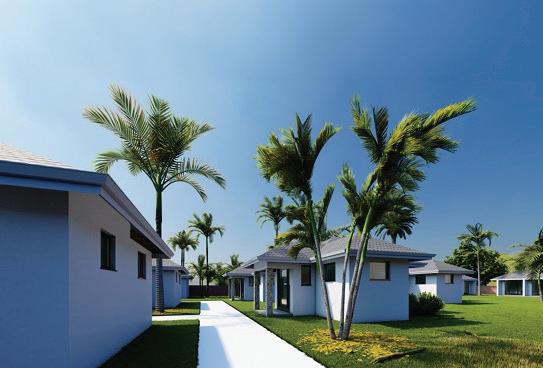
Artist impressions of the redeveloped Venite Seorsum Lodge.
Who are we partnering with?
Fr Matthew Semba, Director of Social Services, Diocese of Chikwawa, is the key leader in the Church’s development initiatives focused on long-term sustainability and poverty alleviation. He plays a central role in the Venite Seorsum Lodge impact investing project on the shores of Lake Malawi in Mangochi.
Recognising the diocese’s need for financial independence, Fr Matthew is guiding the transformation of a dilapidated former retreat centre into a viable, income-generating lodge. The project is designed not only to tap into the region’s growing tourism market, but to fund critical social programs, including school feeding, education support, and community development initiatives.
His vision integrates business with mission: profits from the lodge will directly support vulnerable communities, especially children affected by poverty and climate-related disasters. Through this model, Fr Matthew is helping build a self-reliant Church capable of responding swiftly and sustainably to local needs.
We are not building this lodge simply to generate income, we are building hope, so that even in times of crisis, we can stand with our people and provide for them with dignity and compassion.”
Fr Matthew Semba, Diocese of Chikwawa
Your support can help
The items listed above represent only a small sample of how financial support may be used. For a full project budget, please contact your local Catholic Mission representative.
Fr Matthew stands in the Diocese of Chikwawa with a vision that transforms compassion into action.
Faces of hope
Chisomo’s story
Chisomo is the youngest of seven children, a bright girl who dreams of becoming a doctor one day. Her family lost everything when floods forced them from their home across the Shire River, pushing them to start again in Kampira Village with nothing but faith and determination.
Life has been a daily struggle, her parents survive through piecework - low-paid, irregular workearning just enough to buy one or two cups of maize for dinner. Their mud brick house leaks in the rainy season, and finding building materials is nearly impossible.
Still, Chisomo rises early each day to sweep the yard, fetch water, cook, and care for her siblings before walking long distances to school. Education is her family’s hope, the only path they
see that can lift Chisomo and her siblings out of hardship.
With a new school being built closer to home, Chisomo will no longer face long, unsafe journeys. Through the daily feeding program at St Peter’s Nyamikuta Primary School, she will receive a nourishing meal, provided by the profit raised from the Venite Seorsum Lodge.
With funds generated by visitors to the lodge, maize will be purchased from a local farm, which will be transformed into hearty maize porridge for the students.
With easy access to school and food in her stomach, Chisomo will have the chance to grow, learn, and chase her dream of becoming a doctor.
Join Us
We invite you to be part of this story of hospitality and hope. By supporting Venite Seorsum Lodge, you help create a sustainable future where rest for travellers becomes nourishment and opportunity for children.
Chisomo will have the chance to be nourished and to learn, through the Venite Seorsum Lodge, impact investing project.
A Harvest of Hope
Your invitation to continue the journey
Every seed planted in faith carries the promise of life. Throughout From One Seed, a World of Hope, you have seen how generosityoffered with trust and love - takes root in communities around the world, growing into education, dignity, resilience, and faith.
This mission is shared. What is sown through your prayer, compassion, and support can bear fruit in the lives of children, families, and communities who long for a more hopeful tomorrow. Each project tells a story of lives strengthened, futures restored, and local Churches empowered to serve their people with courage and hope.
Yet the fields remain wide, and the work of nurturing hope continues. New challenges call for renewed commitment, and each season invites us once more to place our trust in God and respond with open hearts. One in Christ, united in mission, we are reminded that even the smallest act of generosity can become a lasting source of life for others.
Want to give or learn more?
If you would like to make a transformational gift or explore a multi-year pledge to support our mission, or talk to a local representative to learn more about our work, please contact our Philanthropy Team at philanthropy@catholicmission.org.au or scan the QR code below.
Thank you
Thank you for everything you will do to help me help missionaries throughout the world.”
Pope Leo XIV, video message for World Mission Day 2025
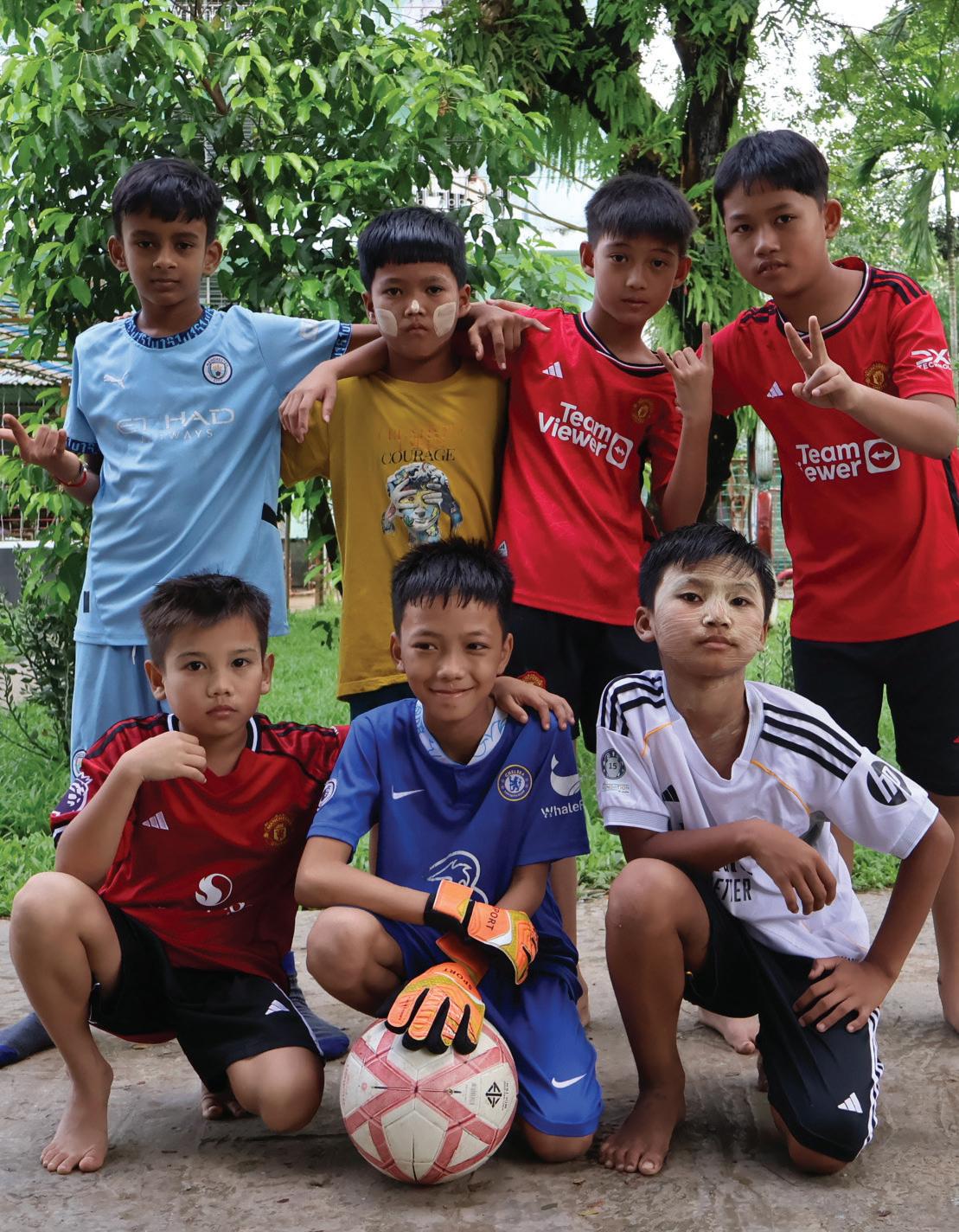
For the students at SHE, every game of football is a reminder that education brings hope, resilience and the promise of a brighter future for Myanmar — made possible thanks to your support.