Friday, January 23rd 2026 Established 1905 27 Brickdam, Stabroek, Georgetown, Guyana Year 121, No. 3
Friday, January 23rd 2026 Established 1905 27 Brickdam, Stabroek, Georgetown, Guyana Year 121, No. 3
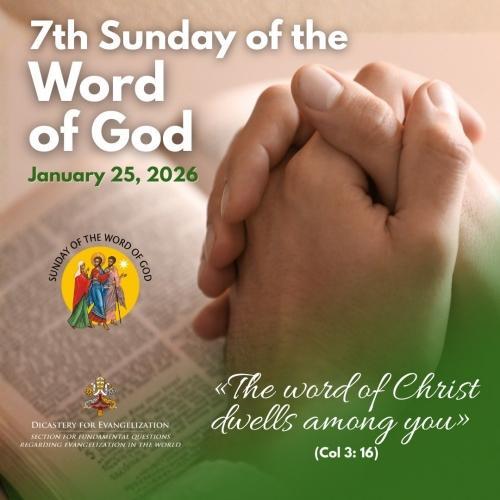
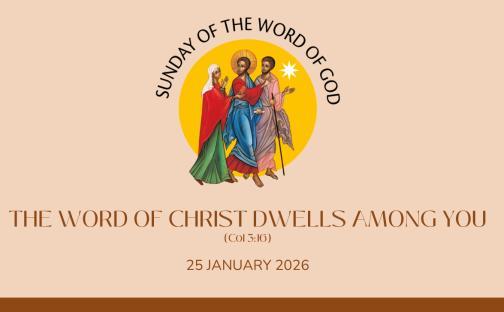
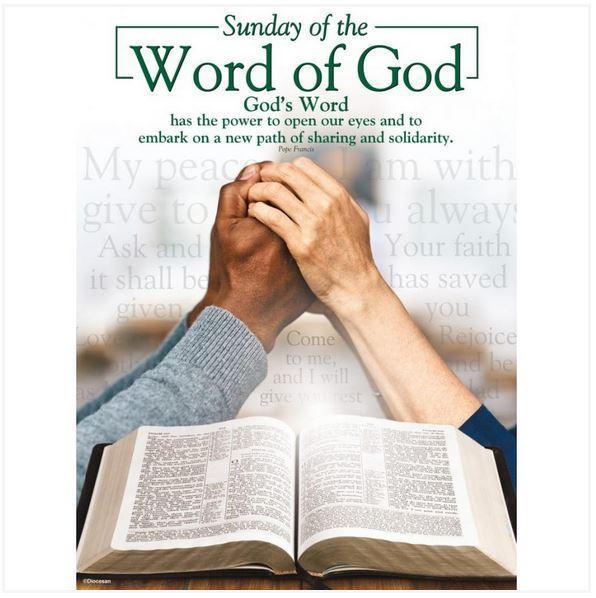
The Church will celebrate the Seventh Sunday of the Word of God on Sunday, 25 January 2026, under the motto: “The word of Christ dwells among you” (Col 3:16). Observed each year on the
Third Sunday in Ordinary Time, this day invites the faithful to reflect on, celebrate, and share the Word of God in their daily lives.
The celebration was established by Pope Francis in his 2019 Apostolic
Letter Aperuitillis, emphasizing the essential connection between the Risen Lord, Christian communities, and Sacred Scripture. The Pope calls on all believers to make the Word of God a living presence in their hearts, guiding their actions and inspiring their witness.
Archbishop Rino Fisichella, ProPrefect of the Dicastery for Evangelization, explains this year’s theme:
“Saint Paul’s words to the Colossians, ‘The word of Christ dwells among you’, invite us not only to listen to the Word but to let it dwell within us. The Word shapes our thoughts, guides our desires, and unites the Christian community. To welcome it is to allow Christ to speak through our lives, bringing hope and life to those around us.”
This year, the celebration also coincides with the Feast of the Conversion of Saint Paul, marking the end of the Week of Prayer for Christian Unity. Just as the Word transformed Paul on the road to Damascus, it continues to call Christians today to open their hearts and share the Gospel with the world.
The Seventh Sunday of the Word of God is a reminder that Scripture is not just to be read or studied, it is to live within us, bearing fruit in our lives and communities. ❖
[northamptondiocese.org ]
The Bishops of the Antilles Episcopal Conference (AEC) on Thursday January 22nd issued the following Pastoral Statement on Recent Events in Venezuela and the Caribbean, calling for peace, dialogue, and respect for human dignity and international law: Pastoral Statement on Recent Events in Venezuela and the Caribbean
To the people of the Caribbean, to our brothers and sisters in Venezuela, and to all in the international community concerned for peace and justice:
As pastors of God’s people in the Caribbean, we write with heavy hearts and deep concern about the dramatic and troubling events now unfolding in our region.
Since our statements in October and December 2025, the situation has escalated in ways that cause profound anxiety. We have learned, from widely reported accounts, of the capture and
transfer of Venezuela’s president, Nicolás Maduro, and his wife, Cilia Flores, to the United States, and of the uncertainty that now surrounds Venezuela’s governance and constitutional order. These developments raise serious questions not only about politics and law, but also about the kind of world we are shaping for future generations.
The legality of these events must be judged by the competent international authorities. Whatever judgments are eventually rendered, we must insist on what the Gospel and the moral law require: respect for human dignity, for due process, and for the rule of international humanitarian law. As Pope Leo recently reminded the (please turn to p8)
Synod Implementation Committee Retreat - p2
Pope: Let us intensify prayer for the full unity of Christians - p2
Three Catholic Cardinals issue rare joint statement on the morality of U.S. Foreign Policy - p3
A Christian Perspective on Social Issues - p4
Sunday Scripture - p5
The Word and the World - p6
'Morally acceptable' for troops to disobey 'morally questionable' orders, says US Military archbishop - p7
Cardinal warns a ‘crisis of values’ amid global uncertainty may lead to international war - p8
Children’s Page - p9
Enthroning the Bible in the Family - p10
Growing in Grace Week 77 - p10
Synodality as a Path of Renewal: Key Reflections from the AEC Formation Session - p11
Parents can’t wait for children to choose baptism, says pope, baptizing 20 infants - p12
25th Anniversary of the Caribbean Conference of Catholic Charismatic Renewal - p14
Sunday January 25th
16:30hrs – Mass atParfaite Harmonie
Tuesday January 27th
09:00hrs – Clergy Meeting (Virtual)
Wednesday January 28th
09:00hrs – AEC Meeting(Virtual)
Thursday January 29th
09:30hrs – UNICEF Meeting
Saturday January 31st
10:00hrs – AEC SynodSession(Virtual)
JANUARY 18 - 25

There is one body and one Spirit, just as you were called to the one hope of your calling. (Ephesians 4:4)
Come, Holy Spirit and fill the hearts of all believers. You, our God, are the source of perfect unity, perfect love and perfect joy. We adore and praise you because your overwhelming love for your creation invites us into mystical unity with you and with all who believe. Help us to use this gift to announce the gospel to all the world. May we bear witness to the resurrection and glory of our Lord Jesus Christ in such a way as to be a light to the nations.
Give us, Almighty God, the seven “unities” of the Church: one Spirit, one hope; one Lord, one faith, one baptism; and one God and Father (Ephesians 4:4-6), that your Church may continue to walk in her pilgrimage towards complete unity with you, even as we reconcile with one another. Grant this through our Lord Jesus Christ, who reigns with you and the Holy Spirit, God for ages unto ages.
Amen
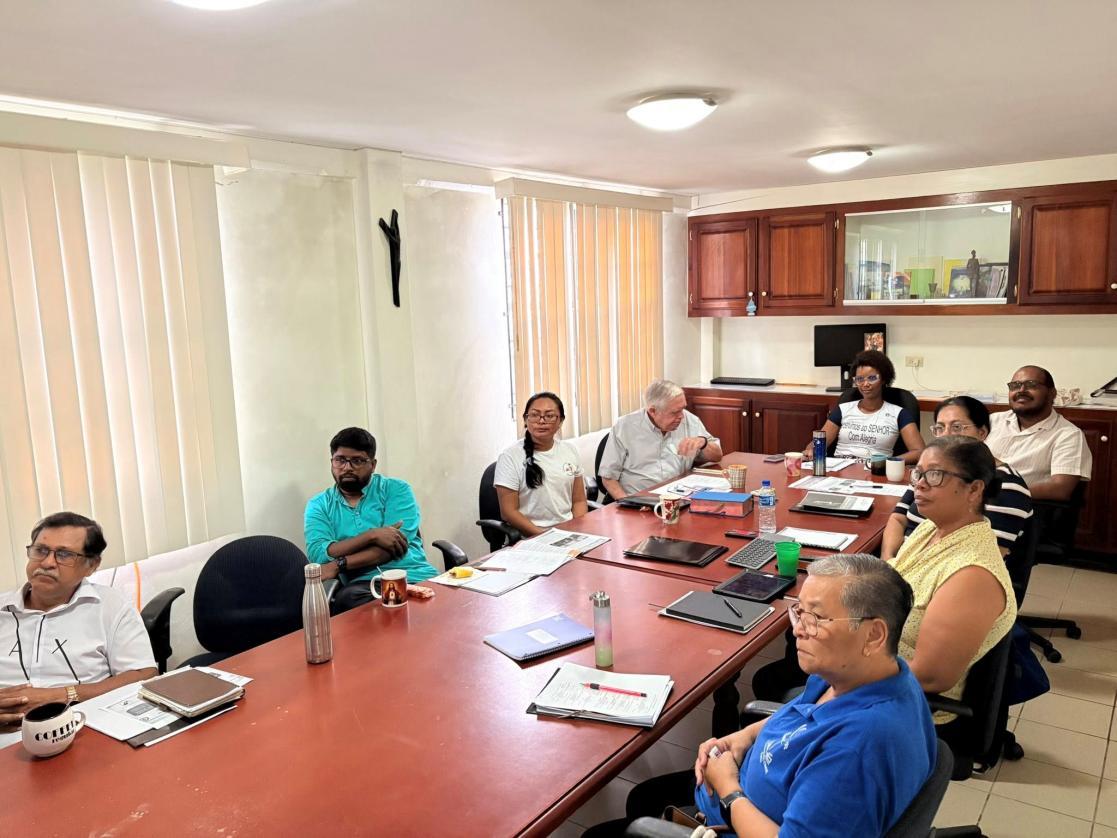
The Synod Implementation Committee of the Diocese of Georgetown was on retreat from Saturday, January 17th to Sunday 18th. The retreat provided a dedicated time for prayer, reflection, and discernment as the Committee continues the important work of implementing the recommendations of the Synod within the Diocese, in keeping with the spirit of synodality.
The members of the Synod Implementation Committee are: Ms. Roxanne Douglas (Coordinator), Bishop Francis Alleyne OSB, Ms. Penelope Chow-Chee, Mr. Leon Butchey, Sr. Elizabeth Small RSM, Fr. Santiago Lantigua SJ, Fr. Edwin
This local work forms part of a wider journey within the universal Church.
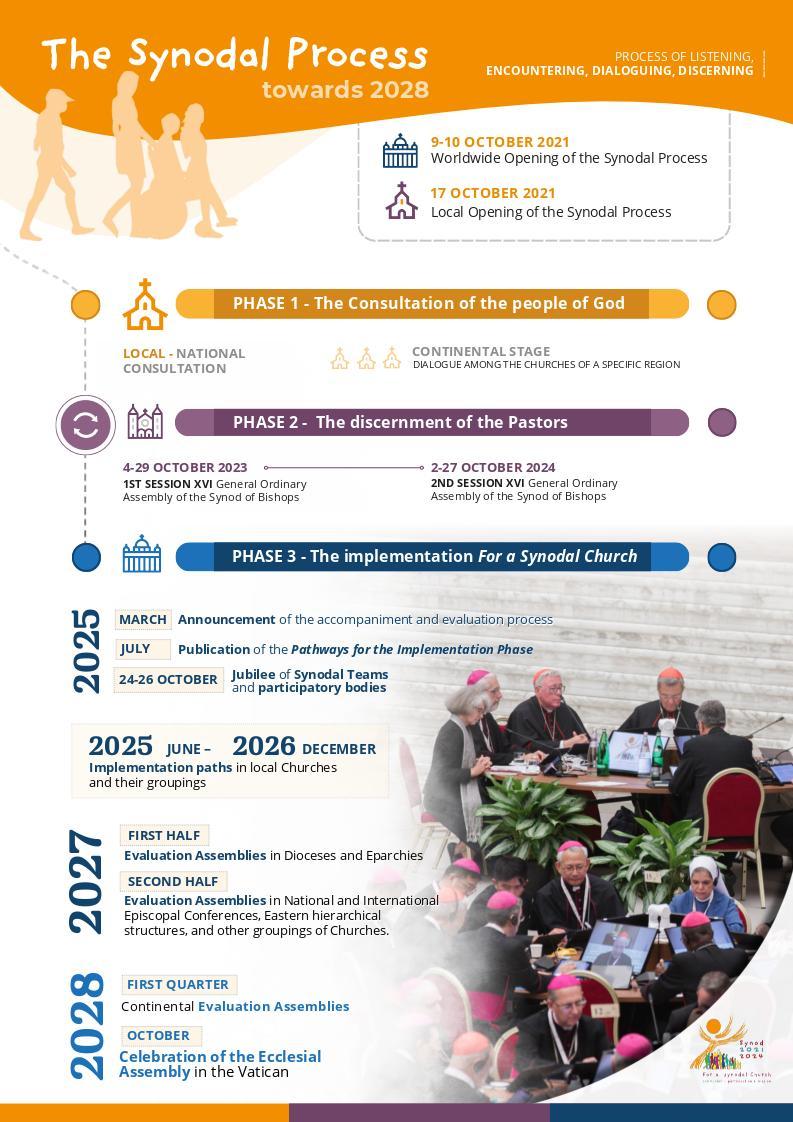
In 2021, the late Pope Francis launched the Synod on Synodality, inviting the entire Church into a renewed way of walking together. Synodality emphasizes listening, dialogue, discernment, and shared responsibility among clergy, religious, and laity, with the aim of deepening communion, participation, and mission.
In October 2025, Ms. Leah Casimero represented the Antilles Episcopal
(AEC) in Rome for the Jubilee of Synod Teams. This gathering brought together synod representatives from across the world and marked a significant transition in the synodal journey from listening to the establishment of concrete actions, ensuring that the fruits of the Synod take root in the daily life of local Churches.
As the Diocese continues this journey, the work of the Synod Implementation Committee stands as a concrete expression of the Church’s call to walk together, guided by the Holy Spirit, in service of God’s mission.
(Adapted from Catholic Media GuyanaFB) .❖
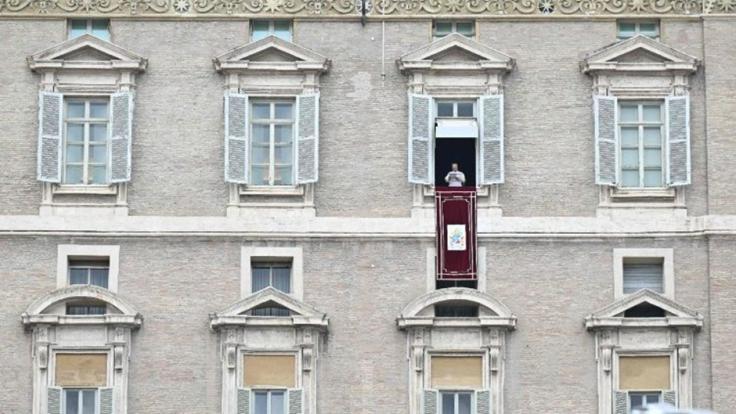
Pope Leo during his Sunday Angelus address (AFP or licensors)
(Vatican News) - Speaking after the Angelus on Sunday January 18, Pope Leo XIV recalled the origins of the Week of Prayer for Christian Unity, which began Jan 18 and dates back two centuries. The initiative, he noted, was “strongly encouraged” by
Pope Leo XIII and, exactly one hundred years ago, was enriched for the first time by the Suggestions for the Octave of Prayer for the Unity of Christians. The Pope recalled that the theme of
this year’s Week is taken from Saint Paul’s Letter to the Ephesians: ““There is one body and one Spirit, just as you were called to the one hope of your calling” (Eph 4:4). The prayers and reflections, he said, were prepared by an ecumenical group coordinated by the Department for Interreligious Relations of the Armenian Apostolic Church.
“I therefore invite all Catholic communities,” Pope Leo XIV said, “to intensify their prayer during these days for the full, visible unity of all Christians.”
The Holy Father added that this call to communion will accompany reflection throughout the Week, which will conclude on Sunday, 25 January. As is customary on the Solemnity of the Conversion of Saint Paul, Pope Leo XIV will preside at the celebration of Vespers at 5.30pm Rome time in the Basilica of Saint Paul Outside the Walls.❖
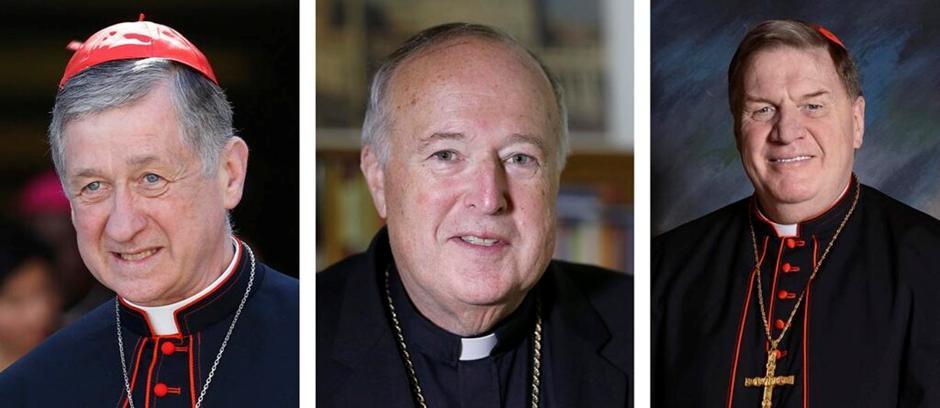
Cardinals Blase J. Cupich of Chicago, Robert W. McElroy of Washington and Joseph W. Tobin of Newark, N.J., are pictured in a combination photo. The three cardinals issued a joint statement Jan. 19, 2026, on the morality of U.S. foreign policy under the Trump administration, particularly with regard to Greenland, Ukraine and Venezuela. (OSV News files/Paul Haring, CNS/Archdiocese of Newark)
(OSV News) - Three U.S. cardinals have issued a joint statement urging the creation of a “genuinely moral foreign policy for our nation,” as the U.S. faces “the most profound and searing debate about the moral foundation for America’s actions in the world since the end of the Cold War.”
Cardinal Blase J. Cupich of Chicago, Cardinal Robert W. McElroy of Washington and Cardinal Joseph W. Tobin of Newark, N.J., released the statement Jan. 19, focusing on the “enduring ethical compass” for foreign policy that Pope Leo XIV provided in his Jan. 9 address to members of the diplomatic corps accredited the Holy See.
In their statement, the cardinals pointed to “events in Venezuela, Ukraine and Greenland” that “have raised basic questions about the use of military force and the meaning of peace.”
The U.S. recently staged a military intervention in Venezuela during which President Nicolás Maduro and his wife, Cilia Flores, were captured and brought to the U.S. to face federal narcotrafficking and weapons charges. President Donald Trump declared the U.S. would “run” Venezuela, although the administration has since been working with Venezuela’s interim president, Delcy Rodríguez.
In recent weeks, Trump has also vowed to acquire Greenland a semiautonomous region of the Kingdom of Denmark either through purchase or military force, and has threatened to levy tariffs on several European nations, including Denmark itself, that have opposed the plan.
Russia’s full-scale invasion of Ukraine, launched in February 2022, continues attacks initiated in 2014, and has been classified as a genocide in two joint
reports from the New Lines Institute and the Raoul Wallenberg Centre for Human Rights.
“The sovereign rights of nations to self-determination appear all too fragile in a world of ever greater conflagrations,” said the cardinals in their statement. “The balancing of national interest with the common good is being framed within starkly polarized terms.”
United Nations Secretary-General António Guterres told BBC Radio 4 on Jan. 18 that current U.S. foreign policy showed “a clear conviction that multilateral solutions are not relevant and that what matters is the exercise of the power and the influence of the United States and sometimes in this respect by the norms of international law.”
The three cardinals stressed that “our country’s moral role in confronting evil around the world, sustaining the right to life and human dignity, and supporting religious liberty are all under examination.”
They continued: “The building of just and sustainable peace, so crucial to humanity’s well-being now and in the future, is being reduced to partisan categories that encourage polarization and destructive policies.”
Amid the fraying post-World War II order under which the U.N. Charter recognizes the equal sovereignty of nations, while prohibiting “the threat or use of force against the territorial integrity or political independence of any state” the cardinals called for a recalibration according to the “truly moral foundation for international relations” Pope Leo provided earlier in January.
Chieko Noguchi, spokesperson for the U.S. Conference of Catholic Bishops,
that peace which Jesus proclaimed in the Gospel.”
In so doing, they said, “We renounce war as an instrument for narrow national interests and proclaim that military action must be seen only as a last resort in extreme situations, not a normal instrument of national policy. We seek a foreign policy that respects and advances the right to human life, religious liberty, and the enhancement of human dignity throughout the world, especially through economic assistance.”
They lamented that “our nation’s debate on the moral foundation for American policy is beset by polarization, partisanship, and narrow economic and social interests.”
Yet “Pope Leo has given us the prism through which to raise it to a much higher level,” they said. “We will preach, teach, and advocate in the coming months to make that higher level possible.”
told OSV News that the conference “was consulted on the statement.”
She added that USCCB president Archbishop Paul S. Coakley of Oklahoma City “supports the emphasis placed by the cardinals on Pope Leo’s teaching in these times.”
The cardinals quoted from Pope Leo’s Jan. 9 address to diplomats, in which he had warned that “diplomacy that promotes dialogue and seeks consensus among all parties is being replaced by a diplomacy based on force, by either individuals or groups of allies.”
“War is back in vogue and a zeal for war is spreading,” Pope Leo said in his address, adding that the postwar principle prohibiting nations from violating each other’s borders by force “has been completely undermined.”
The cardinals also noted that Pope Leo reiterated Catholic teaching that “‘the protection of the right to life constitutes the indispensable foundation for every other human right’ and that abortion and euthanasia are destructive of that right.”
They also underscored the pope’s emphasis on “the need for international aid to safeguard the most central elements of human dignity, which are under assault because of the movement by wealthy nations to reduce or eliminate their contributions to humanitarian foreign assistance programs” and the concern he expressed over “the increasing violations of conscience and religious freedom in the name of an ideological or religious purity that crushes freedom itself.”
“As pastors and citizens, we embrace this vision for the establishment of a genuinely moral foreign policy for our nation,” said the cardinals. “We seek to build a truly just and lasting peace,
In a press release accompanying their statement, the three cardinals each shared additional comments about their position.
“As pastors entrusted with the teaching of our people, we cannot stand by while decisions are made that condemn millions to lives trapped permanently at the edge of existence,” said Cardinal Cupich.
Cardinal McElroy said that Catholic social teaching which draws on papal, conciliar and Church documents to articulate the means of building a just society and living out holiness in modern life “testifies that when national interest narrowly conceived excludes the moral imperative of solidarity among nations and the dignity of the human person, it brings immense suffering to the world and a catastrophic assault on the just peace that benefits every nation and is the will of God.
”
Cardinal Tobin said that “the need to underscore the vision of Pope Leo for just and peaceful relations among nations” was more critical than ever amid recent events, including the extraordinary consistory called by the pope.
“Otherwise,” said Cardinal Tobin, “escalating threats and armed conflict risk destroying international relations and plunging the world into incalculable suffering.
”
The cardinals’ statement came a day after Archbishop Timothy P. Broglio of the U.S. Archdiocese for the Military Services said in a BBC interview that U.S. soldiers who are Catholic could in good conscience disobey orders to participate in an invasion of Greenland.❖
This is the nation's capital
By GHK Lall
On one street the pileup can be overpowering. So, also, the smells that assault the senses, the nostrils most of all. There may be relief on the next few streets, but just don’t hold the breath. Because before long, whether in a vehicle or on foot, the eyesores come into sight, multiply. If those unsightly garbage mounds were all, they would have been bad enough, but there is something else that covers the length and breadth of this stretch of crowded land that is Guyana’s capital city. There are the drains. Those drains that are stagnant, with darkened waters, and another set of pileups, the sludge that’s going nowhere. Just stuck in place, and announcing their presence in odors intolerable, and probably introducing any number of health issues into the atmosphere and various neighborhoods. This is a partial picture of what was once celebrated as Guyana’s stately Garden City. No question that it has had better days. Those were a long time ago, almost ancient history unknown by the largest demographic in Guyana, its younger citizens.
Garbage in small heaps and bigger shapes are visible, but now are so much part of the capital’s landscape that they are taken for granted, accepted with a shrug, maybe some level of disdain. Much is spoken of it. Yet, the piles and heaps remain a constant fixture, while the squabbling and finger pointing go on. The clogged drains are below eyelevel, but their presence is longer, impacts almost every street and section. The arguing continues, the official sloth part of the norm. To compound the challenges, there is one more worry that weighs on city residents, and stirs elements of fear. Rats of various sizes infest around market places, and many other places throughout this center of local life, which now attracts people from different parts of the globe.
Guyana is now that kind of country, with the discovery of oil, and the systems needed to support its advances, bringing many and their families in
search of hitting it big in one of the hottest global prospects. Citizens must have some degree of pride in the fact that their capital must be seen as their showpiece. Georgetown must not be seen as a ghetto; one swept up, brightened up, and smoother over for special occasions, or when the mood hits those in charge, due to the sights and smells becoming unbearable.
There is money now, which can make many positive things happen, purge what disturbs both the peace and senses. There needs to be the will. There must be the self-respect among leaders at all levels that prompt them to impatience and dissatisfaction with where the once Garden City now is. How it looks, which no modern skyline can cover over its dirty, sleazy underbelly. How it smells, which lingers long after quick passage, with resolve not to look back or come back. Those in charge should realize, accept, that the present disgusting, nauseating state of Guyana’s capital is a huge and immovable blot on their records, on their works, and on whatever plans they may have in mind.
Remedial measures must start to be put in place now. Again, resources are more present today than they have ever been in the history of this country. What is the excuse? There
can be none. Why the delay doing the tangible and durable with what is a national embarrassment? Indeed, a vision at the highest level has been shared with the public. A good development that I applaud. It has to be put on an accelerated footing, so that what tarnishes the spirit and appearance of the national capital quickly fades from view, and Georgetown is a place of which all can be proud. From president to mayor, from citizen to those who come here to participate in the great national bonanza. I take the liberty of asserting that few are the Guyanese, who would feel comfortable, or unashamed, when visitors come, including close friends and relations, and find their homes in such a dreadful state that it chases them away.
Georgetown is home to the biggest fraction of Guyanese. Residents have their part to do to keep it sanitary. Other citizens from other parts, who are passing through, should also appreciate that it is their capital also. Most of all, movers and shakers, and influencers, with national clout should resolve that the actions to be taken are put on an expedited pathway, so that the current state of the city is banished, and replaced what instils joy and pride.❖
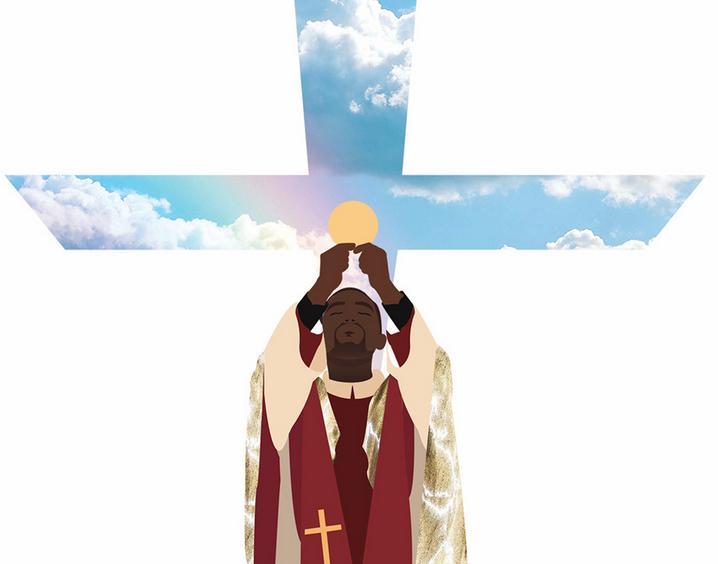
Gracious and loving God, we thank your for the gift of our priests. Through them, we experience your presence in the sacraments.


Help our priests to be strong in their vocation.
Set their souls on fire with love for your people.
Grant them the wisdom, understanding, and strength they need to follow in the footsteps of Jesus. Inspire them with the vision of your Kingdom.
Give them the words they need to spread the Gospel.
Allow them to experience joy in their ministry.
Help them to become instruments of your divine grace.
We ask this through Jesus Christ, who lives and reigns as our Eternal Priest. Amen



First Reading Isaiah 8:23
In Galilee of the nations the people have seen a great light.
In days past he humbled the land of Zebulun and the land of Naphtali, but in days to come he will confer glory on the Way of the Sea on the far side of Jordan, province of the nations. The people that walked in darkness has seen a great light; on those who live in a land of deep shadow a light has shone.
You have made their gladness greater, you have made their joy increase; they rejoice in your presence as men rejoice at harvest time, as men are happy when they are dividing the spoils. For the yoke that was weighing on him, the bar across his shoulders, the rod of his oppressor, these you break as on the day of Midian.
Responsorial Psalm Psalm 26:1,4,13
Response: The Lord is my light and my help.
1. The Lord is my light and my help; whom shall I fear?
The Lord is the stronghold of my life; before whom shall I shrink? Response
2. There is one thing I ask of the Lord, for this I long, to live in the house of the Lord, all the days of my life, to savour the sweetness of the Lord, to behold his temple. Response
3. I am sure I shall see the Lord’s goodness in the land of the living. Hope in him, hold firm and take heart. Hope in the Lord! Response
SECOND READING 1 Corinthians 1:10-13. 17
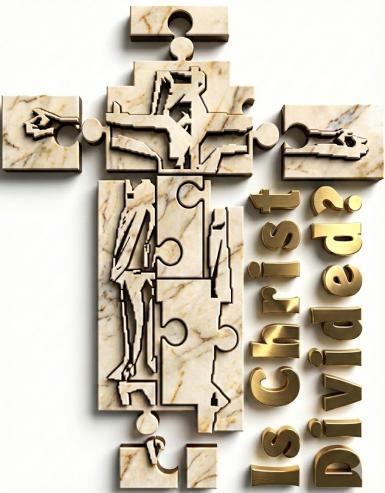
Make up the difference between you instead of disagreeing among yourselves I appeal to you, brothers, for the sake of our Lord Jesus Christ, to make up the differences between you, and instead of disagreeing among yourselves, to be united again in your belief and practice. From
Today’s readings remind us that stewardship is not just a thing we do. Rather, stewardship is at the core of who we are as disciples of Christ.
Our first reading, from Isaiah, contains this prophecy of Christ and what His
what Chloe’s people have been telling me, my dear brothers, it is clear that there are serious differences among you. What I mean are all these slogans that you have, like: ‘I am for Paul,’ ‘I am for Apollos,’ ‘I am for Cephas,’ ‘I am for Christ’. Has Christ been parcelled out? Was it Paul that was crucified for you? Were you baptised in the name of Paul?
For Christ did not send me to baptise, but to preach the Good News, and not to preach that in the terms of philosophy in which the crucifixion of Christ cannot be expressed.
Gospel Acclamation Mt 4:23 Alleluia, alleluia!
Jesus proclaimed the Good News of the kingdom, and cured all kinds of sickness among the people Alleluia!
saving message would mean to all who embrace it. “The people who walked in darkness have seen a great light; upon those who dwelt in the land of gloom a light has shone.” We are among those blessed people on whom the light of Christ has shone. By virtue of our baptism, we, who were once in the darkness of original sin, have been reborn into the great light that is God’s grace in us.
What a privilege! Yet, with this privilege comes the responsibility to live for God and bring His good news to all
Jn 1:14
Alleluia, alleluia!
Blessings on the King who comes, in the name of the
Peace in heaven and glory in the highest heavens! Alleluia!
Gospel Matthew 4:12-23
Jesus went and settled in Capernaum: in this way the prophecy of Isaiah was fulfilled
Hearing that John had been arrested Jesus went back to Galilee, and leaving Nazareth he went and settled in Capernaum, a lakeside town on the borders of Zebulun and Naphtali. In this way the prophecy of Isaiah was to be fulfilled:
Land of Zebulun! Land of Naphtali!
Way of the sea on the far side of Jordan, Galilee of the nations!
The people that lived in darkness has seen a great light; on those who dwell in the land and shadow of a light has dawned.’
From that moment Jesus began his preaching with the message, ‘Repent, for the kingdom of heaven is close at hand.’
As he was walking by the Sea of Galilee he saw two brothers, Simon, who was called Peter, and his brother Andrew; they were making a cast in the lake with their net, for they were fishermen. And he said to them, ‘Follow me and I will make you fishers of men.’ And they left their nets at once and followed him.
Going on from there he saw another pair of brothers, James son of Zebedee and his brother John; they were in their boat with their father Zebedee, mending their nets, and he called them. At once leaving the boat and their father, they followed him.
He went round the whole of Galilee teaching in their synagogue proclaiming the Good News of the kingdom and curing all kinds diseases and sickness among the people.❖
we meet at work, at school, in our community, and right in our own home in other words to live as His good stewards. And, there is a certain urgency that comes with the call to a stewardship way of life as we see in our Gospel passage from Matthew. Jesus says, “Repent, for the kingdom of heaven is at hand.” In other words, turn away from selfishness, turn towards God and live as His disciple now don’t wait!
In this same passage, the very first disciples give us examples of a good steward’s prompt “yes” when the Lord called to them. Our Lord invites them to “Come after me and I will make you fishers of men.” They did not hesitate but “immediately left their boat and followed him.” They put our Lord and His will first.
This is the essence of a stewardship way of life to be always ready for the ways our Lord is calling us to bring His light to others. It’s more than something we do. It’s who we are.❖ [www.catholicsteward.com/blog/ ]
Matthew compares the arrival of Jesus on the scene as the coming of a great light to a people who had been living in darkness. Jesus was later to describe his mission in similar terms when he said, “I am the light of the world.” He shared his light through his teachings and through the way he treated people. Many people came to him in darkness, (and who continue to do so today) and have gone away in light. We know what it is like to live with darkness, for example, when there is a blackout. Rural areas that have electricity installed for the first time experience a changed way of life. For sick people, the night is usually the hardest and loneliness time of all. We all need light in our lives because it is a source of great joy and comfort.
Though Christ brings light into the world, not everyone welcomes it. Sadly, some refuse the light and go for the darkness instead. They prefer the darkness of sin, revenge, domination and oppression, rejection and hatred. While light is something we normally welcome, at certain times we are afraid of it. Light shows up the things we prefer to keep out of sight from ourselves and from others. We don’t allow the light to shine in the dark areas of our lives. We don’t like to talk about these dark areas but prefer to cover them up and hide them away. But it is exactly these areas of darkness that need the light. This is why Jesus begins his mission by preaching a call for repentance. Repentance and reconciliation are necessary if we are to shed the darkness of evil and sin and put on the light of Christ. ❖
[From: Journeying with the Word of God, The Religious Education Department, Diocese of Georgetown, Guyana ]
BYMIKEJAMES
A US Anglican bishop has warned clergy to prepare for what he described as a possible “new era of martyrdom” as tensions grow around immigration enforcement and social justice in the USA. In reports carried by CNN and Ecumenical News outlets, Bishop Rob Hirschfeld of the Episcopal Church of New Hampshire addressed a vigil earlier this month, where he was honouring Renee Good, who was fatally shot on 7th January by a US Immigration and Customs Enforcement (ICE) officer in Minneapolis. Speaking to clergy and worshippers, Bishop Rob urged Christian leaders to be spiritually and practically prepared, including by finalising their wills. He pointed to historical examples of Christian sacrifice, including Jonathan Daniels, a seminary student killed in 1965 while protecting a young civil rights activist in the nonviolent and ultimately vindicated anti-discrimination movement forBlack Rightsin the US. He said Christians may again be called to physically stand between power and the vulnerable. “I have told the clergy of the Episcopal diocese of New Hampshire that we may be entering into that same witness,” Bishop Rob said. “And I’ve asked them to get their affairs in order, to make sure they have their wills written, because it may be that now is no longer the time for statements, but for us with
our bodies, to stand between the powers of this world and the most vulnerable.”
He stressed he was not calling for violence but urged Christians not to fear death. “Those ofuswho are ready to build a new world, we also have to beprepared,” hesaid.
“I have asked the clergy of the Episcopal diocese of New Hampshire to get their affairs in order, to make sure they have their wills written, because it may be that now is no longer the time for statements, but for us with our bodies, to stand between the powers of this world and the most vulnerable.” - Anglican Bishop Rob Hirschfeld
Other Episcopal leaders, including Most Rev Sean Rowe and Rt Rev Craig Loya, have echoed the message, urging Christians to care for immigrants and refugees and to respond to injustice with love. “We are going to disrupt with Jesus’ hope. We are going agitate with Jesus’ love,” RevLoyssaid.
Three Cardinals
In a rare direct rebuke to a U.S. president, three American cardinals
urged the Trump administration to step back from foreign policy strategies and goals that threaten world peace. The cardinals, citing a recent warning from Pope Leo XIV of the resurgence of a “zeal for warmaking,” urged instead a return to a U.S. overseas policy focused on the protection of the right to life and investments in the promotion of human dignity.
In a joint statement, Cardinal Blase J. Cupich, archbishop of Chicago; Cardinal Robert McElroy, archbishop of Washington; and Cardinal Joseph W. Tobin, C.Ss.R., archbishop of Newark, said that as “pastors and citizens…[w]e renounce war as an instrument for narrow national interests and proclaim that military action must be seen only as a last resort in extreme situations, not a normal instrument of nationalpolicy.”
In their statement, the cardinals said they embraced Pope Leo’s vision “for the establishment of a genuinely moral foreign policy for our nation.” “The events in Venezuela, Ukraine and Greenland have raised basic questions about the use of military force and the meaning of peace,” they said. “The sovereign rights of nations to selfdetermination appear all too fragile in a world of ever greater conflagrations. The balancing of national interest with the common good is being framed withinstarklypolarizedterms.”❖



For 121 years, the Catholic Standard has been sharing the Gospel of Jesus Christ.
Now reaching 10,000+ followers on Catholic Media Guyana Facebook plus going straight to your inbox and WhatsApp, our vibrant weekly e-paper is a trusted source which delivers informative and inspiring stories from across the diocese and around the world.
Want to promote your business or event? Advertise with us! Call 675-4542 or email catholicstandardgy@gmail.com ❖
MAKING THE WORD OF GOD YOUR OWN
Step 1: Lookattoday’sReadingsprayerfully.
1st Reading: The prophet predicts future glory for an oppressed people and celebrates the joy of their freedom.
2nd Reading: Having reminded the community at Corinth that they belong to the holy people of Jesus, Paul now urges them to settle their differences.
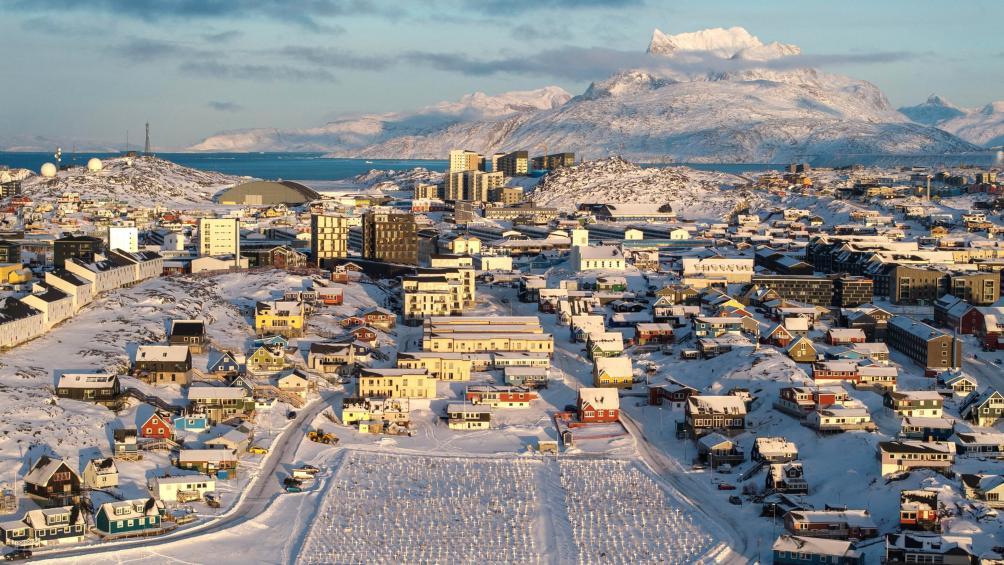
A drone view shows a general view of Nuuk, Greenland, Jan. 15, 2026. Archbishop Timothy P. Broglio of the U.S. Archdiocese for the Military Services said in a Jan. 18, 2026, radio interview that U.S. soldiers could in good conscience disobey "morally questionable" orders to participate in an invasion of Greenland. (OSV News photo/Marko Djurica, Reuters)
WASHINGTON (OSV News) - The head of the U.S. military archdiocese said in a Jan. 18 radio interview that U.S. soldiers could in good conscience disobey orders to participate in an invasion of Greenland.
The comments from Archbishop Timothy P. Broglio of the U.S. Archdiocese for the Military Services came as President Donald Trump and members of his administration escalated their rhetoric about acquiring Greenland for national security, while refusing to rule out the use of military force to take the Arctic island. The semiautonomous territory is part of the Kingdom of Denmark, a NATO ally, and the comments set off alarm in Europe's capitals.
In an interview on the BBC's "Sunday" program, Archbishop Broglio said he was concerned the U.S. military personnel under his pastoral care could be "put in a situation where they're being ordered to do something which is morally questionable."
"It would be very difficult for a soldier or marine or a sailor to, by himself, to disobey an order such as that, but strictly speaking ... he or she would be within the realm of their own conscience it would be morally acceptable to disobey that order," he said. "But that's, that's perhaps putting that individual in
an untenable situation, and that's my concern."
A hypothetical use of military force against Greenland by the U.S. would amount to an attack on a NATO ally under the terms of the alliance. NATO, which was implemented in 1949, considers an attack against one or several of its members as an attack against all, and pledges collective defense in the face of such a scenario. A hypothetical attack by a NATO member against another NATO member is widely seen as a scenario that would bring about the end of the alliance.
Archbishop Broglio said the prospect of military action in Greenland "tarnishes the image of the United States in our world."
"Because traditionally, we've responded to situations of oppression or situations it's not to say that those weren't sometimes in national interest but ... this is certainly very difficult to justify," he said.
In a text message to Norway's prime minister first published by PBS Jan. 18, Trump tied his interest in Greenland to not winning the Nobel Peace Prize last year.
"Considering your Country decided not to give me the Nobel Peace Prize for having stopped 8 Wars PLUS, I no longer feel an obligation to think purely of Peace, although it will always be
predominant, but can now think about what is good and proper for the United States of America," Trump wrote in the message.
The Nobel Committee operates independently of Norway's government, it says on its website.
Asked if he saw any scenario where taking Greenland by force would satisfy the requirements of a just war, Archbishop Broglio said he "cannot see any circumstances that it would."
"Greenland is a territory of Denmark. Denmark is an ally. It's part of NATO. It does not seem really reasonable that the United States would attack and occupy a friendly nation. It doesn't seem acceptable," he said.
Archbishop Broglio's remarks came a day before Cardinal Blase J. Cupich of Chicago, Cardinal Robert W. McElroy of Washington and Cardinal Joseph W. Tobin of Newark, New Jersey, released a joint statement urging the creation of a "genuinely moral foreign policy for our nation," as the U.S. faces "the most profound and searing debate about the moral foundation for America's actions in the world since the end of the Cold War..❖
Gospel: Jesus begins to carry out the mission that John the Baptist had mentioned. He is to bring the light of liberation to people under the power of sin.
Step 2: ApplyingthevaluesoftheReadings toyourdailylife.
1.The tragedy of the death of John the Baptist was a turning point for Jesus. Have you ever experienced a tragedy that had become a turning point for you? Why do you think it sometimes takes a misfortune to bring about changes in people?
2.Paul had to stop the divisions that were appearing in the Christian community at Corinth. Is there a bit of Corinth in your community? Why do you think this is so and what can be done about it?
3.Jesus called his first disciples and their lives were never the same again. Do you feel that Jesus has also called you? In what way has that call changed your life?
4.At the very start of his mission, Jesus set about choosing his disciples. We see that he chose them from ordinary working people just like any one of us. Is there a message for us from this?
Step 3: Accepting the message of God’s Wordinyourlifeoffaith
We Christians walk in the bright light Jesus brought into the world. By living in this light, we become a source of light for others, a lamp for their steps, a light for their path. Jesus begins his ministry by issuing a call for repentance. For those who accept him and repent, Jesus really becomes the light in their lives.
Step 4: Somethingtothink&prayabout
1.There is a bit of “darkness” in us all. Take a moment to identify your own “darkness” and reflect on what you can do to bring light where there is darkness.
2.Recall a time when the light of Christ brought healing, freedom and life to you in your moment in need. How did you pass on the light to others?
3.Pray that where necessary, you will be the light of Christ to others who need it.❖
[From: Journeying with the Word of God, The Religious Education Department, Diocese of Georgetown, Guyana ]
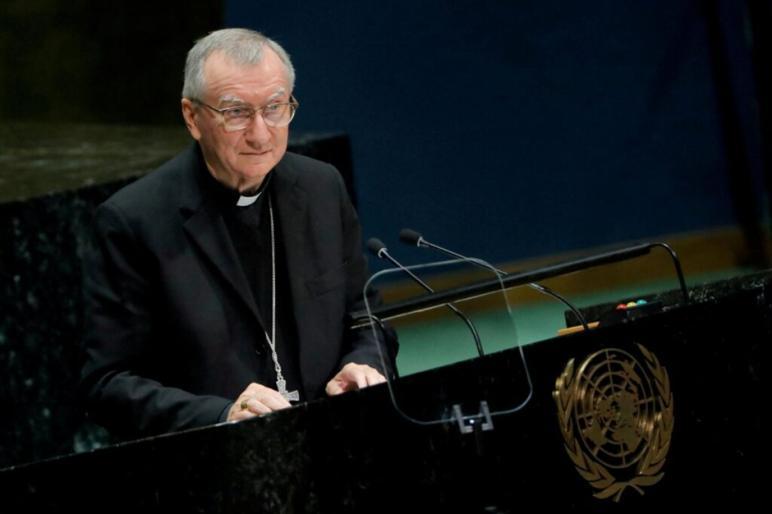
Cardinal Pietro Parolin, Vatican secretary of state, is seen Sept. 28, 2019, addressing the 74th session of the General Assembly of the United Nations at U.N. headquarters in New York. Speaking to journalists outside Rome’s Domus Mariae Church Jan. 17, 2026, Cardinal Parolin lamented the decline of diplomacy and confirmed a Washington Post report that the Holy See tried and failed to broker a peaceful transition in Venezuela. (OSV News photo/Brendan McDermid, Reuters)
(OSV News) From unilateral actions in Venezuela to continued violence in Iran, the world is steadily sliding into a “crisis of values” that risks sparking international war, the Vatican’s top diplomat warned.
Speaking to journalists outside Rome’s Domus Mariae Church Jan. 17, Cardinal Pietro Parolin, the Vatican secretary of state, lamented the decline of diplomacy and confirmed a Washington Post report that the Holy See tried and failed to broker a peaceful transition in Venezuela.
Wanted agreement to ‘avoid bloodshed’
“We had tried to find a solution that would avoid any bloodshed, perhaps by reaching an agreement also with Maduro and with the other representatives of the regime, but this was not possible,” Cardinal Parolin said, according to the Italian newspaper Il Corriere Della Sera.
The Washington Post reported that Cardinal Parolin met on Christmas Eve with Brian Burch, the U.S. ambassador to the Holy See, to inform U.S. officials that Russia was willing to grant asylum to Venezuelan President Nicolás Maduro in an attempt to avoid bloodshed in Venezuela.
Ultimately, the U.S. carried out a military operation in the early morning hours of Jan. 3, resulting in the capture of Maduro and his wife, and transporting them to New York to face narco-terrorism conspiracy charges.
Economic situation ‘very precarious’
After confirming the report, Cardinal Parolin said he hoped that the current situation “evolves toward stability, toward economic recovery because the economic situation is truly very, very precarious and also toward a democratization of the country.”
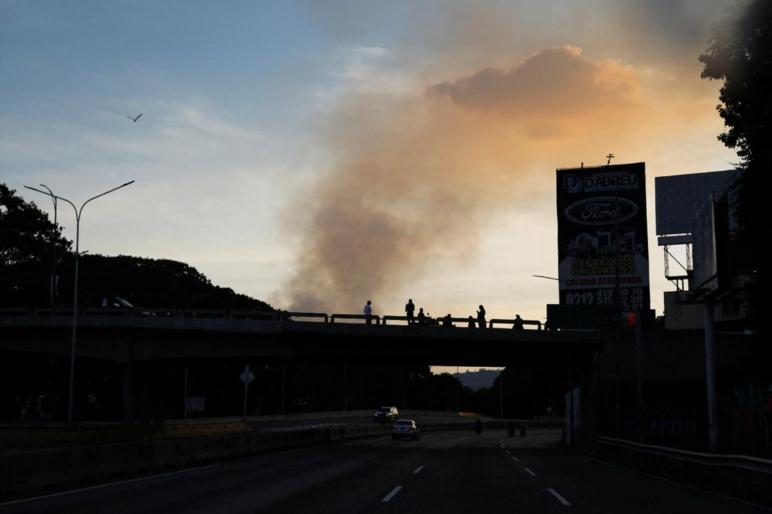
People on a bridge are silhouetted as smoke rises near Fort Tiuna, after U.S. President Donald Trump said the U.S. struck Venezuela and captured its President Nicolás Maduro in Caracas, Venezuela, Jan. 3, 2026. (OSV News photo/ Leonardo Fernandez Viloria, Reuters)
Il Corriere Della Sera reported that before celebrating Mass Jan. 17, the Vatican secretary of state delivered a lecture at the Pontifical Ecclesiastical Academy, the institution that trains priests for service in the diplomatic corps and the Secretariat of State.
In his lecture, Cardinal Parolin warned of a “crisis of multipolarism” that “disregards the values upon which the community of nations was gradually built.
Violations of sovereignty
“Conscience and reason can no longer tolerate violations of sovereignty in their most diverse forms, the forced displacement of entire peoples, the change in the ethnic composition of territories, the subtraction of means necessary for economic activity, or the limitation of freedoms,” the cardinal said.
Responding to a question regarding U.S. President Donald Trump’s repeated threats to acquire Greenland, Cardinal Parolin recalled his
lecture and told journalists that solutions based on force “cannot be used.”
He also warned that the “spirit of multilateralism that characterized the post-war years” was “being lost.”
‘Will lead increasingly to conflict’
“This is not acceptable, and will lead increasingly to conflict, to a war within the international community,” he said.
Cardinal Parolin also expressed his concern over the “endless tragedy” in Iran where a crackdown on antigovernment protests resulted in the deaths of thousands of people.
“I ask myself how it is possible to rage against one’s own people, that there have been so many deaths it is an endless tragedy,” the cardinal said.
The Vatican secretary of state emphasized the Holy See’s consistent call for diplomatic solutions instead of resorting to armed conflict and expressed his hope “that we can reach a resolution to this state of affairs.”❖
diplomatic community, no crisis, however grave, can justify abandoning these foundations, and peace can never be built on the erosion of law, conscience, and the dignity of the human person.
We are equally troubled by the wider implications of actions involving the use of force within the territory of a sovereign nation, as well as by the growing instability in our region, including continued seizures of vessels and disruptions to ordinary life. Such actions risk setting dangerous precedents and deepening a spiral of fear and confrontation. As the Holy Father has warned, when force replaces dialogue and power replaces patient diplomacy, the international community
itself is weakened and the future made more fragile.
Above all, we are concerned that the good, the dignity, and the freely expressed will of the Venezuelan people must remain paramount and must be safeguarded. We are especially mindful of the poor, the vulnerable, migrants, fisherfolk, and families who always suffer most when nations collide. Their cries must not be drowned out by the noise of geopolitics. Pope Leo has reminded the world that it is always the weakest who pay the highest price for the failures of politics and the ambitions of the powerful.
We therefore renew our appeal: ● for restraint and de-escalation, ●for international mediation,
especially through the United Nations, ● for respect for international law and legal process, ● and for a renewed commitment to dialogue and peaceful solutions.
The Caribbean has long cherished the vision of being a peaceful space. We must not allow that hope to slip away. In the words of Pope Leo, peace is not built by intimidation or domination, but by courageously choosing dialogue, cooperation, and mutual trust.
We stand in solidarity with the people of Venezuela in this time of volatility and uncertainty, and we also express our communion and solidarity with the Bishops’ Conference of Latin America and the Caribbean, which has expressed concern and solidarity for
(From Front Page)
the people of Venezuela. We invite the people of the Caribbean to pray daily for the people of Venezuela and for their country.
As disciples of Jesus, the Prince of Peace, we believe that justice cannot be built on force alone, and that lasting peace is born from dialogue, patience, truth, and respect for human dignity. We pray for the people of Venezuela, for all who lead and govern, and for our own region, that wisdom may prevail over pride, and reconciliation over conflict.
May the Lord guide our nations in the ways of justice and peace, and keep our Caribbean home a place of hope, solidarity, and life. ❖
Dear Boys and Girls,
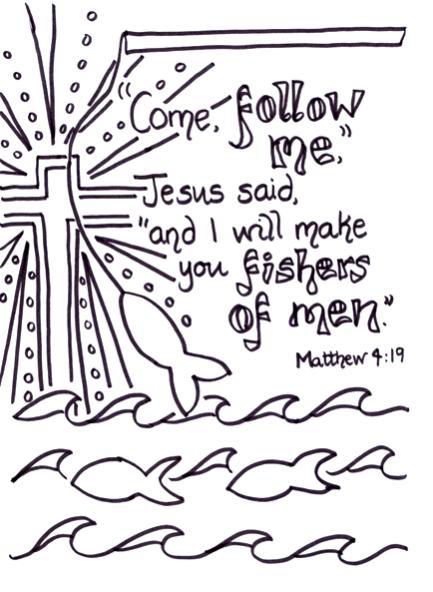
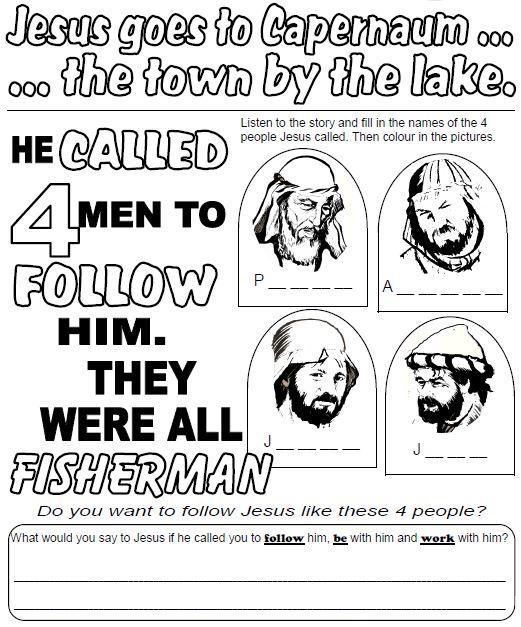
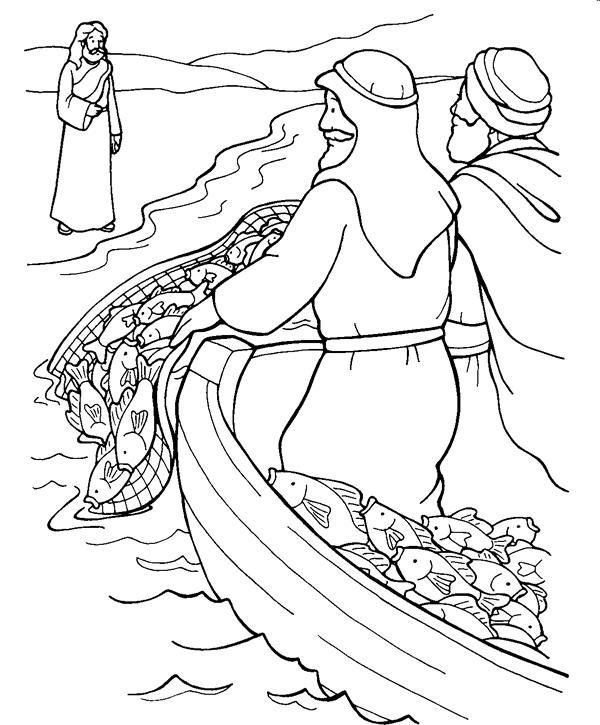
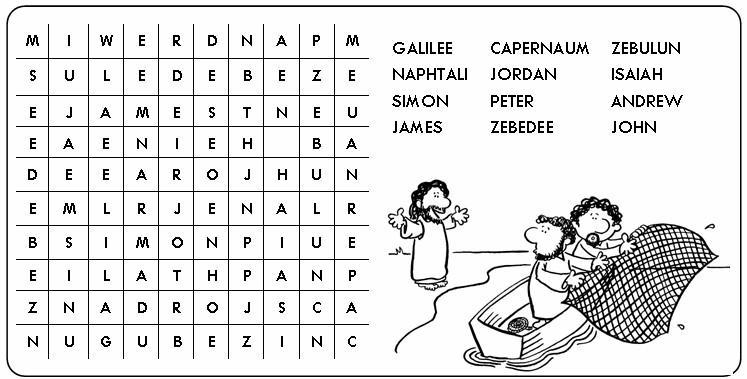
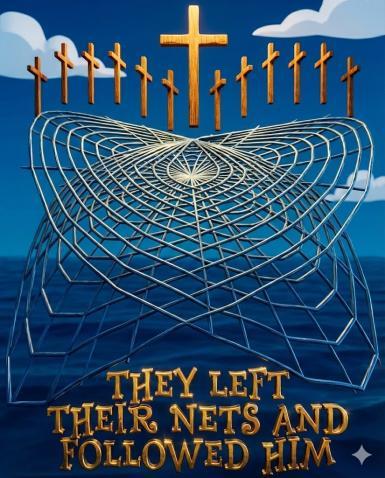
One day as Jesus walked along the shore of the Sea of Galilee, he saw two brothers Simon Peter and Andrew throwing a net into the water because they fished for a living. Jesus called to them, “Come, follow me, and I will show you how to fish for people!” The Bible tells us that they immediately dropped what they were doing and followed Jesus.
As Jesus, Peter, and Andrew walked along the shore, they saw two other brothers James and John sitting in their boat mending nets. They called and invited them to come along too. They dropped their nets, left their boat behind, and followed Jesus.
If you have ever been fishing, you know what a thrill it is to land a big one. Can you imagine what a thrill it is to go fishing for people and to help someone else come to know Jesus and become one of his followers? Even though this story in the Bible is about Jesus calling the first disciples, it is for us too. It is a message from Jesus that he wants us to go and make disciples. Will we return his call? What will our answer be?
Dear Jesus, just like Peter, Andrew, James, and John, we want to join you and go fishing for people. Amen. ❖
As everyone enters the house or room, they may sing a suitable song.
Then Scripture is read from the Bible
Matthew 4:17-23 Jesus calls and heals through the power of his Word/
Mark 4:1-20 The Word is like the seed./
Luke 4:14-21 Jesus proclaims the Word in Nazareth./
John 1:10-14 Jesus, the Word of God and the light of the world.
After the reading, the leader places the Bible in the place prepared for it.
All bow deeply before the enthroned Bible.
Leader: We have heard your words, Jesus.
They give us joy and bring light and truth into our lives.
Your presence gives us peace in our troubled and divided world.
Let your Word create in our hearts a deep desire for you.
By Renika Anand
Simon Sinek, an American author, once said “Leadership is not about being in charge. It is about taking care of those in your charge.”
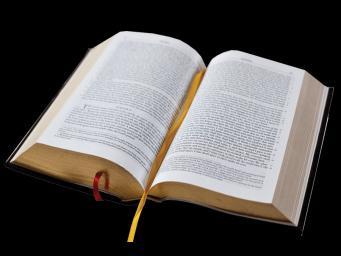
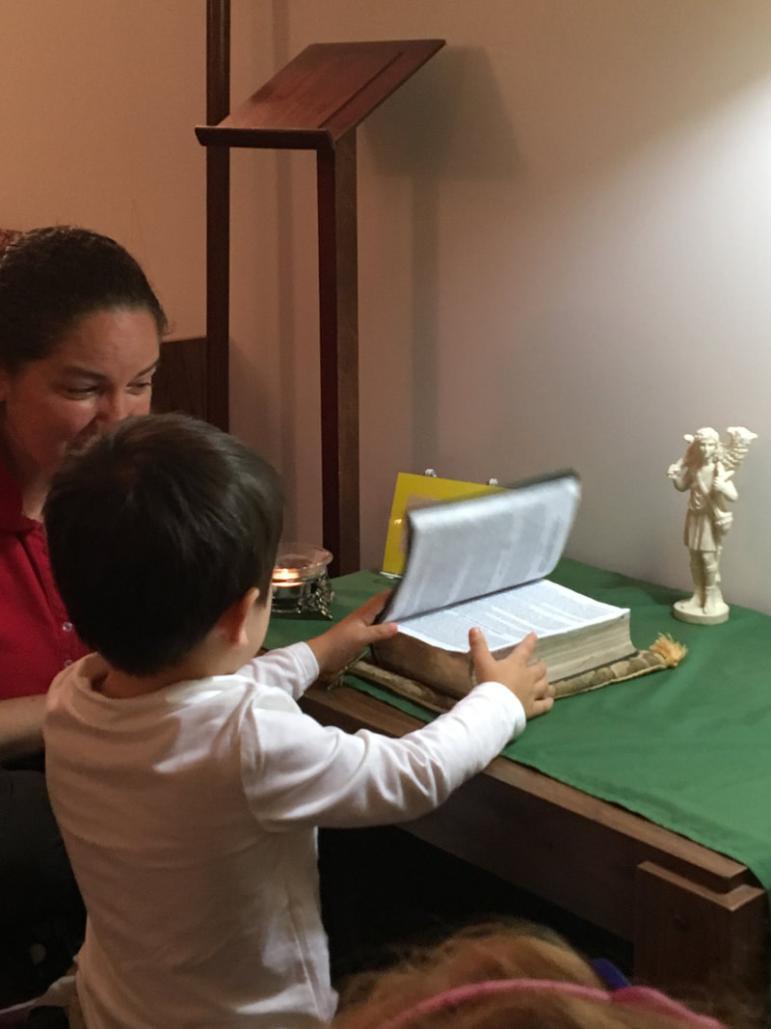
ing the Sacred Scriptures in a prominent place decorated with flowers and art, and by gathering at this spot for daily prayer, families show that God is present and active through his Word. Enthroning the Bible in your home is easy to do. Simply pick a place where the Bible can be honoured. The Bible should be placed where it will be seen regularly, but removed from the noise and confusion of the family entertainment centre. Place the Bible, opened to a favourite passage or the readings of the day, on a table or shelf. Decorate the area around the Bible with a cloth, flowers, and/or a candle whatever makes sense to you. Use the following ritual prayer when you gather as a family to enthrone the Bible.
Things to prepare:
• Bible
• A shelf or table where the Bible will be placed (the shelf may be adorned withaclothandcandles)
When possible, the ritual may start outside the main door to the house or the main entrance to the room. One member of the family holds the Bible, raised slightly. The father, mother, or other leader begins the celebration with the Opening Litany.
Leader: Our Lord Jesus Christ, you are the Word of the Father.
R. Come, Lord Jesus, come.
Leader: You became one with us to tell of the Father's love.
R. Come, Lord Jesus, come.
Leader: Youarethelightthatshinesin thedarkness.
R. Come, Lord Jesus, come.
Leader: You save us from fear and break the bonds of sin and death.
R. Come, Lord Jesus, come.
Leader: You come to guide our steps and lead us to God.
R. Come, Lord Jesus, come.
Leader: You are the Word of eternal Life.
R. Come, Lord Jesus, come.
Leader: You fill us with the Holy Spirit.
R. Come, Lord Jesus, come.
Be with us in our hearts and homes, in our community and country. Give us your Holy Spirit to help us to understand your Word. We enthrone now this Holy Bible in our midst.
Make your Word the center of our lives.
May your Word inspire all that we think and say and do.
May your Word bind us together in unity with each other and with you. Today and forever.
R. Amen.
All join in saying the Lord's Prayer. All repeat after the leader: We promise to respect the Word of God in our midst.
We shall read and reflect on it as a family of God.
May we draw from it inspiration for our decisions, strength for our work, and comfort in suffering. Jesus, help us to be faithful to our promise, you who live forever and ever. Amen. The celebration concludes with a sign of peace ❖
[https://www.usccb.org/committees/divine-worship/ sunday-word-god ]
Oftentimes, being young can feel confusing and frightening. There seem to be so many important choices to make, and so many possible things that could go wrong. At this stage of our lives, it is impossible to imagine adopting a leadership role, much less showing others the right way. Yet, it is at this very stage that leadership must become a crucial part of who we are. Leadership is not about being perfect, or always knowing the answers. It is not about adopting a title or acquiring power. It is about knowing how to care for each other and share love in ways that make an impact. You can be a leader to your friends, to your family and even to yourself.
Even when you are confused and frightened, you can still share love. The time for leadership is right at this very moment.
Don’t let anyone look down on you because you are young, but set an example for the believers in speech, in conduct, in love, in faith and in purity
- 1 Timothy 4:12 ❖


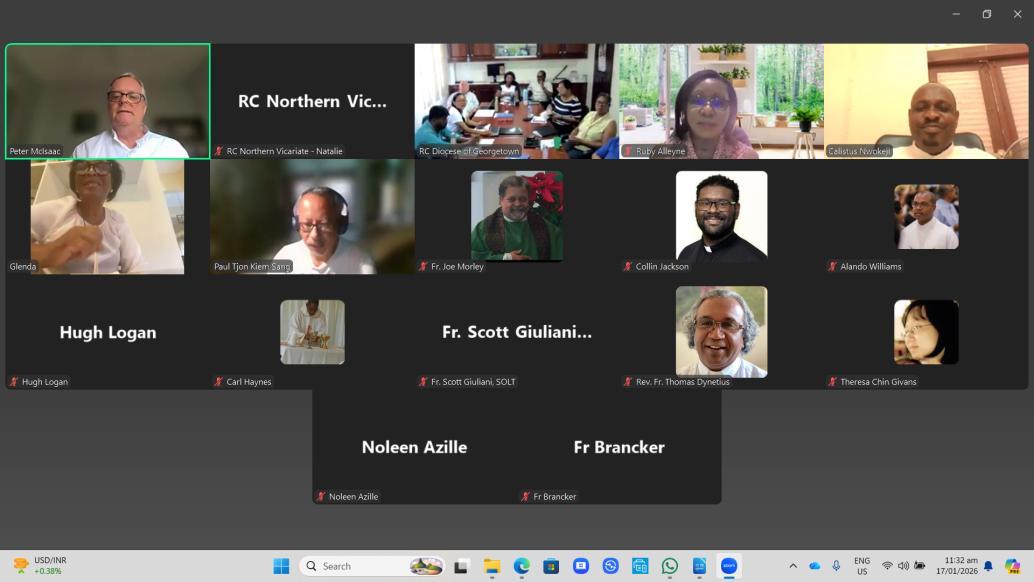
A Synodal Formation Session of the Antilles Episcopal Conference (AEC) was held on Saturday, 17 January 2026, under the guidance of Fr. Peter Mc Isaac. Bringing together diocesan synodal team members from across the region, the session marked another important step in the Conference’s ongoing journey toward becoming a more synodal Church.
The meeting opened with practical arrangements to support smooth participation, including host permissions, cloud recording, and access to shared resources. These preparations reflected the AEC’s commitment to transparency, collaboration, and effective communication in its synodal process.
Fr. Mc Isaac then led participants into a deeper theological and pastoral reflection on Synodality. He emphasized that synodality is not simply about clarifying Church teaching, but about the ongoing renewal of the Church through conversion, participation, and communal discernment. He outlined four key pillars of synodality: the full participation of the baptized, the deepening of spiritual life, the transformation of the Church’s identity and mission, and the strengthening of ecclesial structures and processes.
Drawing on Sacred Scripture and the teachings of the Second Vatican Council, Fr. Mc Isaac explained that synodality invites the Church to listen attentively to the Holy Spirit speaking through all the baptized, while respecting the pastoral leadership of bishops and priests. He clarified that synodality does not replace Church hierarchy with a democratic model, but rather enriches the life of the Church through shared listening, dialogue, and responsibility.
The session also addressed challenges such as clericalism and the need to move away from overly autocratic styles of leadership toward more consultative and transparent approaches. Participants discussed timelines for implementation and the importance of engaging commissions, clergy, and pastoral leaders in the next stages of the synodal journey.
The impact of the session was clearly felt among participants. One diocesan team from the Diocese of Georgetown, Guyana shared that the meeting was “very informative and helpful,” noting that a priest on their team said it helped him understand more clearly what is expected of the synodal team and how synodality will be implemented in practice. Other team members echoed these sentiments, expressing renewed clarity and confidence in their role within the process.
The session concluded with a commitment to continued formation, the sharing of resources, and the scheduling of the next Synodal meeting for 31 January 2026, as the Antilles Episcopal Conference continues to walk togetheras a synodal Church.❖
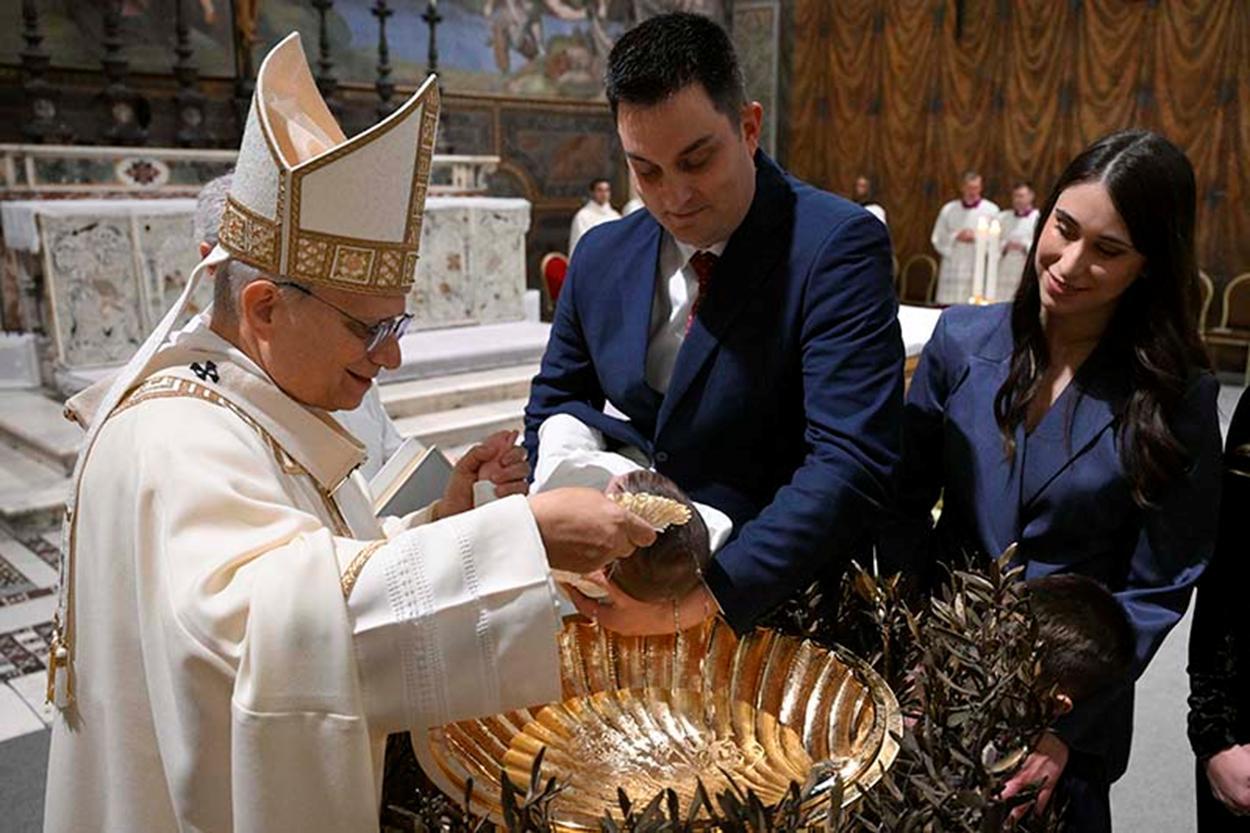
VATICAN CITY (OSV News) Just as we wouldn’t leave newborns without clothes or food, we cannot leave them without faith and baptism, Pope Leo XIV told parents of children he baptized in the splendor and beauty of the Sistine Chapel Jan. 11.
The tradition of baptizing children of Vatican employees started in 1981 with St. John Paul II. Pope Leo baptized 20 children on the feast of the Baptism of the Lord.
Michelangelo’s chapel
“The children you now hold in your arms are transformed into new creatures,” the pope told parents and godparents gathered for the ceremony in the breathtaking interior of Michelangelo’s chapel.
“Just as they received life from you, parents,” he said, “so now they receive the meaning to live it: faith.”
In seeking good for our children, we wouldn’t “leave newborns without clothes or food, waiting for them to
choose how to dress and what to eat as adults,” would we? the pope asked.
Addressing the gathering as “Dearest ones,” the pope said that if “food and clothing are necessary for life, faith is more than necessary, because with God life finds salvation.”
‘A light in the darkness’
Pope Leo said that “as a light in the darkness, the Lord makes himself available where we least expect him: He is the holy one among sinners, who wants to dwell among us without keeping his distance, but rather, fully embracing all that is human.”
Through the baptism of the Lord, “in his infinite mercy, the Father makes us righteous through his Christ, the only Savior of all” as “he who is baptized by John in the Jordan makes this gesture a new sign of death and resurrection, of forgiveness and communion. This is the sacrament we celebrate today for these children: Because God loves them, they become Christians, our brothers and sisters.”
God’s “provident love is manifested on earth through you, mothers and fathers, who ask for faith for your children,” the pope said, telling the parents that “the day will come when they will become heavy to hold in your arms; and the day will also come when they will be yours to support.”
‘
’
But baptism, he said, “unites us in the one family of the Church,” sanctifying “all your families at all times, granting strength and constancy to the affection that unites you.”
Explaining the meaning of baptism rituals, the pope said that “the water of the font is the cleansing of the Spirit, which purifies from every sin,” the white robe “is the new garment, which God the Father gives us for the eternal celebration of his Kingdom,” and the candle “lit from the Paschal candle is the light of the risen Christ, which illuminates our path.”
“I hope you continue this journey with joy throughout the year just begun
and throughout your lives, certain that the Lord will always accompany your steps,” Pope Leo told the lucky families who could experience the special day in a special place, with the pastor of the world as celebrant.❖

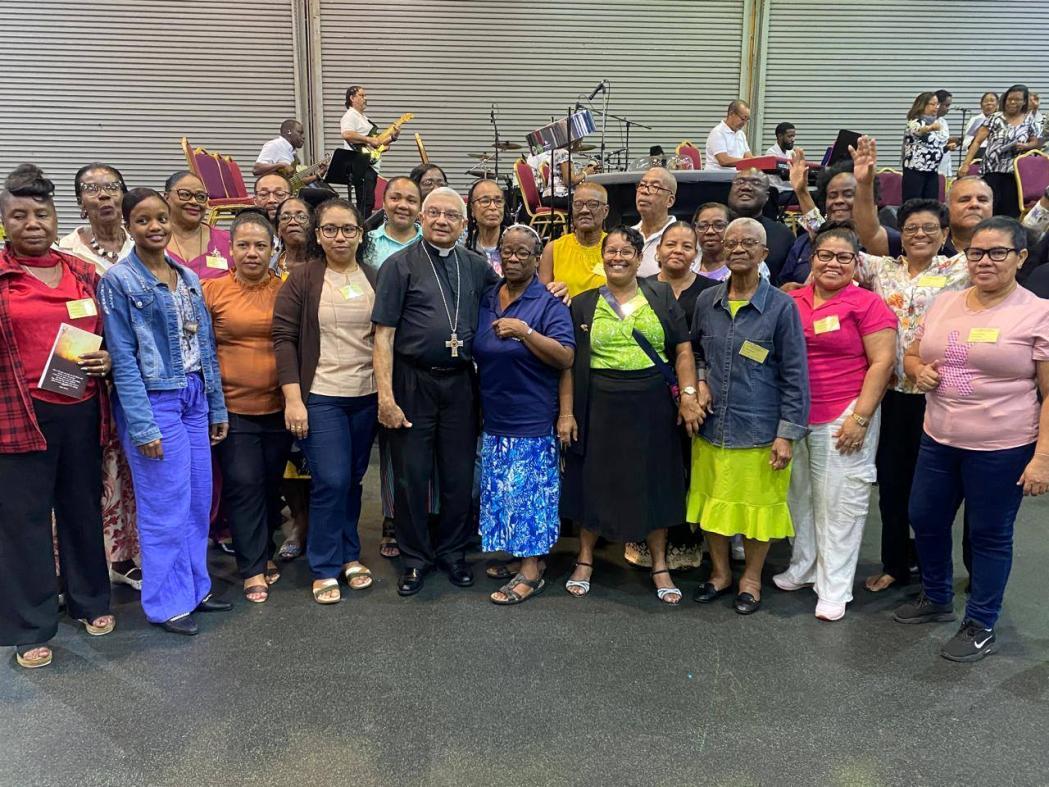
Caribbean Conference of Catholic Charismatic Renewal was held in Trinidad from January 9 – 11, 2026. Twenty-four persons, including Fr. Carl Philadelphia, travelled from Guyana to attend the Conference. Guest speakers were His Grace, The Most Reverend Archbishop Dr. Charles Jason Gordon, Fr. Matthew D’Hereaux of Trinidad, Fr. Elveau Augustine of Dominica, Fr. Isaac Umoru of Nigeria - now based in Trinidad, Fr. Peter-Mary Emmanuel, Ph.D. of Nigeria - now based in St. Vincent and the Grenadines, and Br. Winston Garcia of Trinidad.
The Theme of the Conference was taken from Is.44:3-4 “For I will pour out water on the thirsty soil, streams on the dry ground. I will pour out my Spirit on your descendants, my blessings on your children. They shall grow like grass where there is plenty of water, like poplars by running streams.” Subtopics were “The power of Praise and Worship,” “All I want to know is Jesus Christ,” “Lord make me like you,” “The gift of Salvation offered
the Holy Spirit Flow. More Power, More Love, More Holiness.”
The days began with the rosary, Praise and Worship, and Prophecy, which lifted the hearts of everyone and set the tone for the day. The atmosphere was one of joy, prayer, and expectant faith. The various talks were powerful, uplifting, and anointed, challenging the faithful. Fr. Matthew D’Hereaux challenged everyone to be instruments of Reassurance, Restoration, Renewal, and Re-Creation. Archbishop Jason Gordon challenged the Catholic Charismatic Renewal as a whole to conduct even more Life in the Spirit Seminars so that more persons could experience the “Baptism of the Holy Spirit,” and to report to him on the progress.
Sessions included prayers for the outpouring of the Holy Spirit on families, Intercession for the Watering of the land and our descendants, Ministry for the opening of the Gift of Salvation, Healing Ministry, and for a Special outpouring of the Holy Spirit on the young people and those
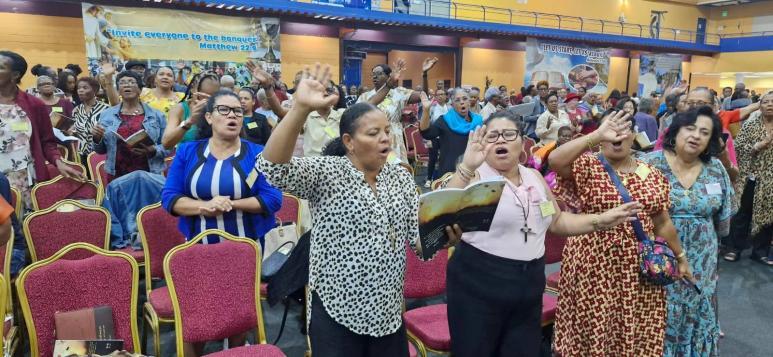
present. Many were filled with the Holy Spirit as prayer in tongues led by the Archbishop, Priests, and Catholic Charismatic Leaders flowed through the assembly.
There was a Youth Segment where the young people sang “Gospelypso,” presented Poetry, played Gospel music on the steel pan, and the Suriname contingent performed a local (Dutch) song and dance.
Guyanese were not left behind as Mrs. Melcita Bovell was the host for the Sunday morning proceedings, Ms. Salome Hernandez gave her testimony, and several Extraordinary Ministers of Holy Communion (Melcita Bovell, Gail Vincent, Joylyn Jaferally, Shondel Lashley, and Salome Hernandez) from Guyana assisted in the distribution of the Body and Blood of Christ during the Masses on Saturday and Sunday.
Mrs. Gail Vincent also proclaimed the first reading at the Closing Mass on Sunday.
Bishop John Persaud, who was in Trinidad, visited for a period of time and was invited to speak to the attendees about the situation in Jamaica. Before departing, he took pictures with the Guyana group.
Archbishop Jason Gordon celebrated the Closing Mass with several priests concelebrating and Extraordinary Ministers of Holy Communion from several countries assisting. The Conference was described by those present as “Awesome!” “Anointed!” “Empowering!” and “Spirit Filled!” The Presence of God was tangible throughout the Conference. It was a weekend well spent!❖(Catholic Charismatic Renewal Guyana FB)
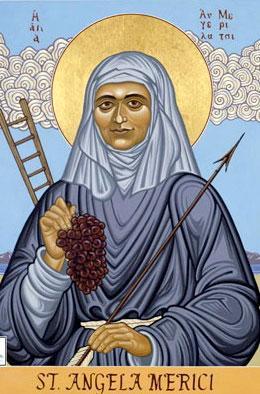
January 27th: St. Angela Merici (March 21, 1474 January 27, 1540)
St. Angela Merici has the double distinction of founding the first teaching congregation of women in the Church and what is now called a “secular institute” of religious women.
Angela was born in 1474 in Lombardy, Italy. As a young woman, she became a member of the Third Order of Saint Francis, and lived a life of great austerity, wishing, like Saint Francis, to own nothing, not even a bed. Early in life she was appalled at the ignorance among poorer children, whose parents could not or would not teach them the elements of religion. Angela’s charming manner and good looks complemented her natural qualities of leadership. Others joined her in giving regular instruction to the little girls of their neighborhood. She was invited to live with a family in Brescia (where, she had been told in a vision, she would one day found a religious community). Her work continued and became well known. She became the center of a group of people with similar ideals.
At 57, she organized a group of 12 girls to help her in catechetical work. Four years later the group had increased to 28. She formed them into the Company of Saint Ursula (patroness of medieval universities and venerated as a leader of women) for the purpose of re-Christianizing family life through solid Christian education of future wives and mothers. The members continued to live at home, had no special habit and took no formal vows, though the early Rule prescribed the practice of virginity, poverty, and obedience. The idea of a teaching congregation of women was new and took time to develop. The community (the Ursulines) thus existed as a “secular institute” until some years after Angela’s death.❖ [www.franciscanmedia.org]