Friday May 1st 2026 Established 1905 27 Brickdam, Stabroek, Georgetown, Guyana Year 121, No. 16
Friday May 1st 2026 Established 1905 27 Brickdam, Stabroek, Georgetown, Guyana Year 121, No. 16
Pope’s May prayer intention - p2
Anglicans, Catholics must work to overcome differences,popetellsarchbishopofCanterbury - p3
AChristianPerspective on Social Issues - p4
Sunday Scripture - p5
The Wordandthe World - p6
Catholicismlosesmoremembersthanitgains - p7
AEC Bishops bring Caribbean realities to heart of Universal Church - p8
Children’s Page - p9
Patronsaints named for WorldYouthDay - p10
Growingin Grace Week 84 - p10
Faithin Practice Week 12 - p11
Carib-beingor Carib-been? - p12
Pre-examblessings - p14
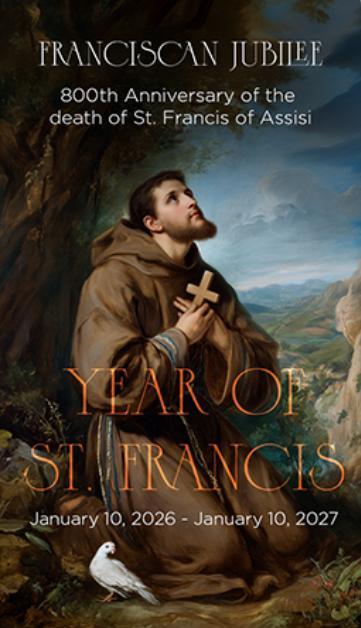
Saint Francis, our brother, you who eight hundred years ago went to meet Sister Death as a man at peace, intercede for us before the Lord.
You recognized true peace in the Crucifix of San Damiano, teach us to seek in Him the source of all reconciliation that breaks down every wall.
You who, unarmed, crossed the lines of war and misunderstanding, give us the courage to build bridges where the world raises up boundaries.
In this time afflicted by conflict and division, intercede for us so that we may become peacemakers: unarmed and disarming witnesses of the peace that comes from Christ.
Amen - Pope Leo XIV
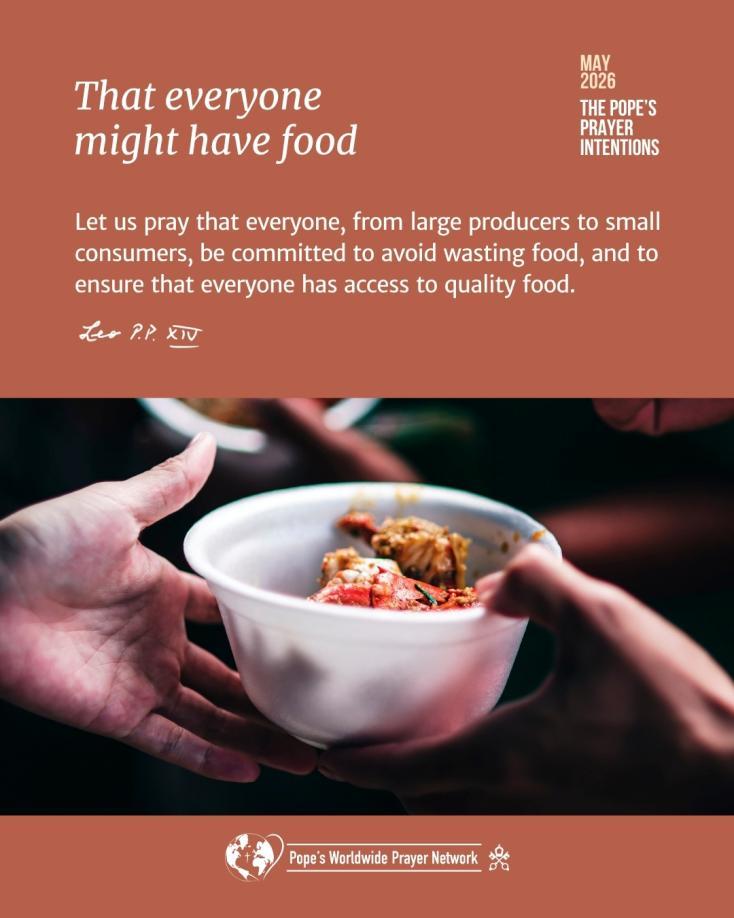
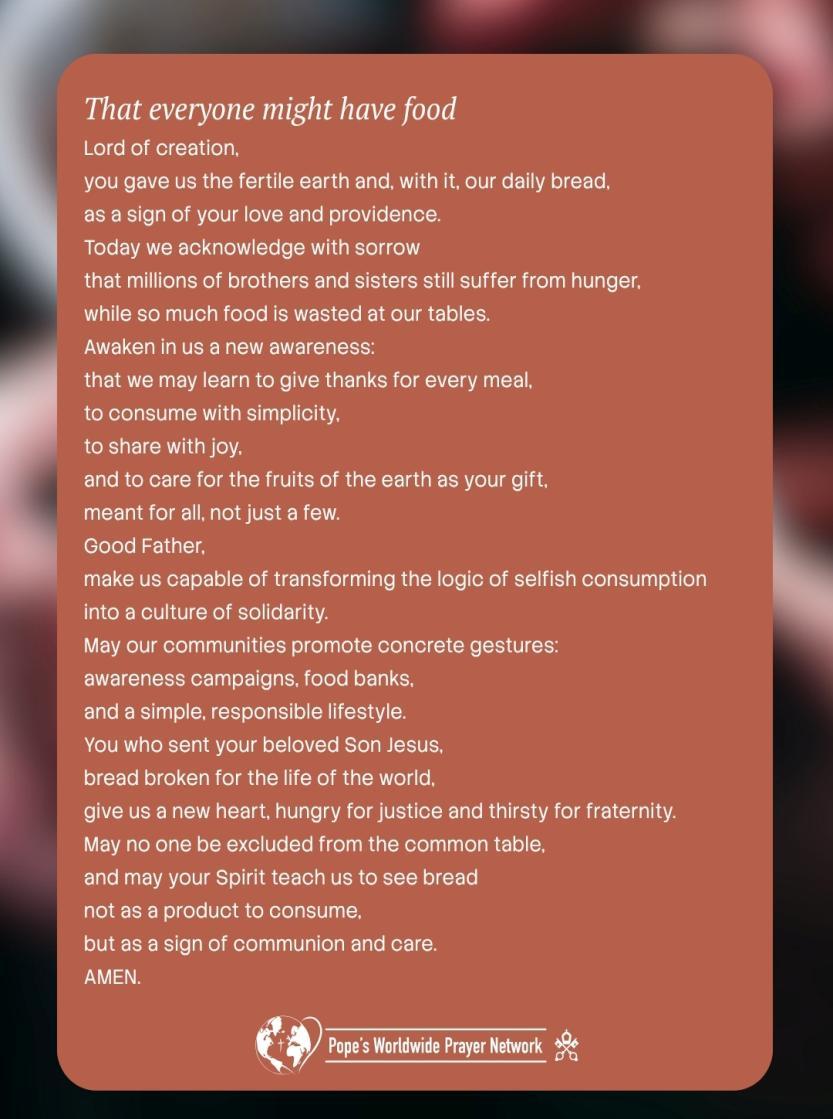
ROME (OSV News) Pope Leo XIV has dedicated his prayer intention for the month of May to one of humanity’s most persistent challenges:hunger.
In a video message released on April 30 by the Pope’s Worldwide Prayer Network, the pope called on Catholics worldwide to confront the problem of food insecurity with both prayer and concrete action.
Millions ‘sufferfromhunger’
“Today we recognize with sorrow that millions of brothers and sisters continue to suffer from hunger, while so many goods are wasted at our tables,” the pope said in the video, recorded inside the Church of San Pellegrino inVaticanCity.
At least 318 million people are expected to face food crisis conditions or worse this year, according to the World Food Program’s 2026 Global Outlook. The ongoing war in the Middle East could push an additional 45 million people into severe hunger before mid-year.
In 2025, two famines were recorded inparts of Gaza andSudan.
At the same time, the U.N. Environment Program reports that more than 1 billion tons of food are wasted globally every year, a contrast the pope addressed directly inhis message.
Pope Leo called for a shift away from what he described as “the logic of selfish consumption” and toward “ culture of solidarity,” urging Catholic communities to take up practical measures including food banks, awareness campaigns and simpler, more responsible lifestyles.
“May our communities promote concrete gestures,” the pope said, adding that believers should approach every meal with gratitude, consume simply and “share with joy in the knowledge that the fruits of the earth are “destined for all, not just afew.”
The Pope’s Worldwide Prayer Network, also known as the Apostleship of Prayer, releases a prayer intention from the pope each month as part of its mission to unite Catholics in prayer for the Church global concerns.
A deeply personal concern forpope
Father Cristóbal Fones, director of the Pope’s Worldwide Prayer Network, said the intention is a deeply personal concern for the pope.
“This intention comes from the pope’s heart. It pains him deeply that so many people in the world cannot access something as essential and human as food,” Father Fones said. “This is why he is asking everyone not to remain indifferent but to take decisive action, first with prayer, then with concrete gestures of solidarity.”❖
Simone Risoluti, Vatican Media)
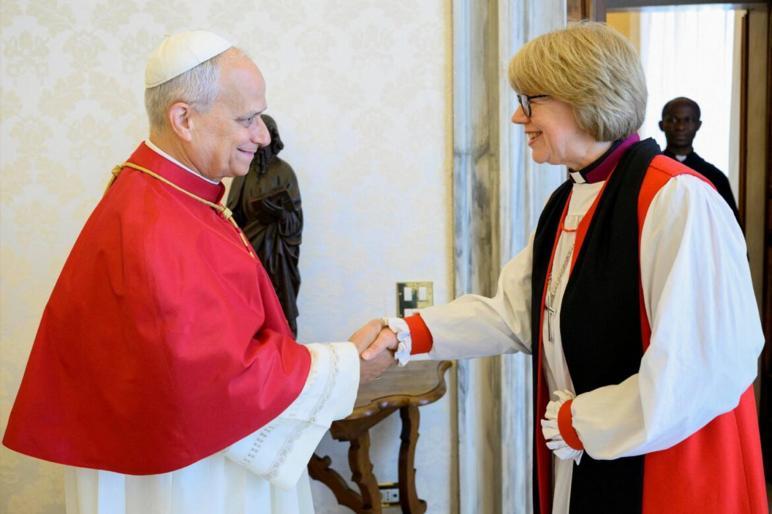
(OSV News) Although the path to full communion has become “more difficult to discern,” Catholics and Anglicans must continue on the path of dialogue and “proclaim Christ to the world,” Pope Leo XIV said in his first meeting with Anglican Archbishop SarahMullally of Canterbury
In his address to Archbishop Mullally during her visit to the Vatican April 27, the pope acknowledged that while much progress has been made on “historically divisive issues, new problems have arisen in recent decades” which have made the “ecumenical journey” more challenging.
Nevertheless, he said, it “would also be a scandal if we did not continue to work towards overcoming our differences, no matter how intractable they may appear.”
17th-century Chapel of Urban VIII
According to a statement by the archbishop’s office, Archbishop Mullally joined the pope for midday prayer in the 17th-century Chapel of Urban VIII, located in the Apostolic Palace.
Welcoming the archbishop of Canterbury to the Vatican, Pope Leo noted that while “our suffering world greatly needs the peace of Christ, the divisions among Christians weakens our capacity to be effective bearers of that peace.”
“If the world is to take our preaching to heart, we must, therefore, be constant in our prayers and efforts to remove any stumbling blocks that hinder the proclamation of the Gospel,” the pope said. “This focus on the need for unity for the sake of a more fruitful evangelization has been a theme throughout my own ministry; indeed it is reflected in the motto I chose when I became a bishop: ‘In Illo uno unum’, ‘In the One that is Christ we are one.'”
‘Journey together in friendship and dialogue’
Recalling king and queen’s visit to Vatican
Recalling King Charles III and Queen Camilla’s visit to the Vatican in October, Archbishop Mullally said the British monarch “valued his recent visit” and assured Pope Leo “of a warm welcome from the Church of England should you honor the United Kingdomwitha visit.”
Appointed as archbishop of Canterbury by King Charles in October, Archbishop Mullally is the Church of England’s first female to lead the Anglicans “in its 1,400-year history,” the Diocese of Canterbury said.
Anglicans claim 1,400 years of history because they identify the Church of England not as a new entity created during the 16th-century Reformation, but as the continuation of the church established in England by a Catholic saint St. Augustine of Canterbury inA.D. 597.
long-standing ecumenical relationship between the Anglican Communion and the Roman Catholic Church, rooted in the historic 1966 meeting between Archbishop Michael Ramsey and Pope Paul VI,” Anglican CommunionNews Service said.
The pilgrimage began April 26 with a visit to St. Peter’s Basilica and the Basilica of St. Paul Outside the Walls in Rome to pray before the tombs of the apostles. In a tweet posted on X, Archbishop Mullally called for prayers “for the unity of his disciples and all God’s people.”
“Our world is deeply wounded by war, division and fear, and it longs for the peace, justice, reconciliation and hope that are found in Jesus Christ alone. We are called to proclaim and live this Gospel together, for the sake of the life of the world that God so loves,” she wrote.
While the ecumenical path of communion is complicated, Pope Leo said the Catholic Church and the Church of England continue to “journey together in friendship and dialogue.”
He also prayed that the Holy Spirit, “whom the Lord breathed on the disciples on the evening after his resurrection, will guide our steps as we prayerfully and humbly seek the unity which is the Lord’s will for all his disciples.”
“Your Grace, in thanking you for your visit today, I pray that the same Holy Spirit will remain with you always, making you fruitful in the service to which you have been called,” the pope said.
In her address to Pope Leo, which was published by her office, Archbishop Mullally expressed her gratitude to him for speaking “about the many injustices in our world,” especially during his recent apostolic journey in Africa
‘This vision of the common good’ “The world needed this message at this time thank you,” she said. “It reminded us that despite our sufferings, people long for life in all its fullness, and countless people are working each day for this vision of the commongood.”
The archbishop of Canterbury noted that in the ecumenical journey embarked upon by Catholics and Anglicans, the “Holy Spirit is inviting us into a deeper practice of hospitality, not simply as welcome, but as a form of ministry.”
It is “a willingness to make space for one another as those created in the image of God and called to grow more fully into his likeness,” she said. “Already, we receive from one another gifts we cannot generate alone: depth in prayer, courage in witness, perseverance in suffering, and faithfulness in service. In these, our commonwitness is strengthened.”
Archbishop Mullally’s meeting with Pope Leo was part of a four-day pilgrimage to Rome, which, according to her office, is meant “to strengthen Anglican–Roman Catholic relations through prayer, personal encounter, andformal theological dialogue.”
“The archbishop of Canterbury’s visit takes place within the context of the
In the evening, following her meeting with Pope Leo, Archbishop Mullally was to preside over vespers at the Church of St. Ignatius of Loyola, with Cardinal Luis Antonio Tagle, proprefect of the Dicastery for Evangelizationas homilist.
According to the archbishop’s office, Archbishop Mullally will appoint Anglican Bishop Anthony Ball, director of the Anglican Center in Rome, as her representative to the Holy See. ❖
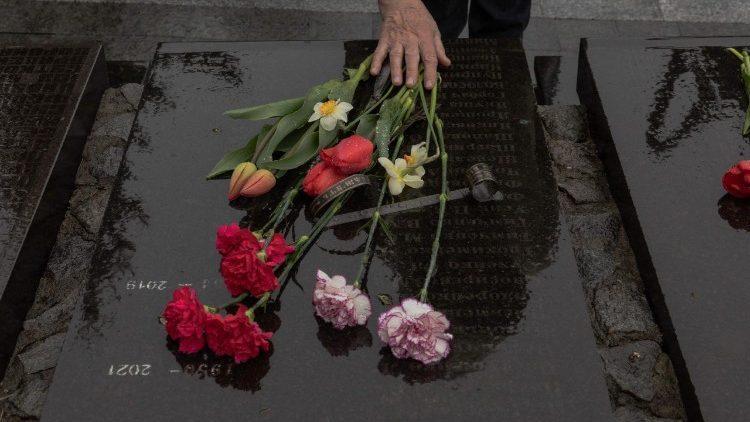
(Vatican News) - As heprayed theRegina Caeli in St. Peter’s Square on Sunday April 26, Pope Leo XIV called for the responsible use of nuclearenergy. His appeal came on the 40th anniversary of the Chernobyl nuclear disaster, which he said “marked the conscience of humanity.”
“We entrust to God’s mercy the victims and all those who still suffer its consequences,” he said.
On April 26, 1986, a reactor exploded at the Soviet-run Chernobyl Nuclear Power Plant, located some 90 kilometers north of Kyiv in Ukraine, killing 31
people immediately and another 15,000 over the next several years from radiation poisoning.
In his appeal, Pope Leo warned about the risk of using increasingly powerful technologies.
He expressed his hopes that discernment and responsible decision-making may be carried out regarding nuclear energy.
“I hope that at all levels of decisionmaking, discernment and responsibility may always prevail, so that every use of atomic energy may be at the service of life and peace,” said thePope.❖
By GHK Lall
(Part 3 of 3)
Easter introduces a unique perspective. A man dies and there is rejoicing. It doesn’t come immediately. There is grappling with loss. Fear sends scurrying behind locked doors. From the tomb and running footsteps to share the news of a missing body with fellow workers, there is entering through a locked door and comforting those huddled in numbness. They were wondering to themselves, what next? From a very low point, with the life sucked out of them, the spirit of faith fleeing from them, there is this miraculous transformation. The Risen Christ reappears to the eleven and Mary and reassuring them of his nearness and how they will be helped in the great ministry ahead of them. It is really 10, since Thomas wasn’t there in that upper room. But his absence has a purpose, one that led to divine revelation. Reaffirmation in seeing with the eyes of the heart and faith, and believing; as opposed to having to see and touch before belief gains strength, and inspires to great works of joy.
Go spread the Good News of the Kingdom to the ends of the earth. Good News is a source of joy, of tingling withits impulses inarms andfeet,and with mind and body fully committed to being a light to the world. From
One Master to 11 (then 12) servants, and a new world is born, comes alive, despite relentless opposition, and trials that increase in intensity as the journey in Jesus’s name lengthens to the far corners of the then known world. A joy that flows out of Lent and Holy Week, and the unfolding of the Easter Season, is the presence of the Holy Spirit strengthening the faithful and blessing their work with miles covered and converts gained. The name of the Risen Jesus is not forgotten, but filling the world, and instilling a sense of awe in it. The things that have happened, and the will of God in operation, made known to the world by men and women, with little to recommend them, other than the name Jesus. Jesus lives. Jesus thrives.
Almost all of the apostles would meet with a violent death. They had already sown the vineyards of the Lord under the guiding power of the Holy Spirit with good seed. Seed that produced good fruit that produced more good fruit. From those small beginnings in Bethlehem, the post Jesus era is one of growth, of the great names in the Christian pantheon, that laid a strong foundation on which we now walk. Standing on the shoulders of the 1st century Christian giants, martyrs and saints, the world can be seen through the eyes of Jesus. The inspirations from daily scriptural accounts should aid us in seeing how a life in Jesus could be lived, tribulations and all, and how there is a role
waiting for all who are ready hear his voice andobey it.
The joy of loving neighbor, the great joy of love of enemy, not in mere words, but in the cheek turned. In the slight pardoned. In life absorbed with a smile. In recalling how Jesus toiled, often on seemingly barren soil. In appreciating how mostly near illiterate men and women were motivated to be living stones in the Good News of the Kingdom. No sacrifice too great. No pain and shame too much. No privilege that can compare. If the Season of Easter doesn’t bring a flicker, then a flame, of pure joy, then something profound is missingfrom life.
Easter should help to build faith in the promises of God. No matter how bleak and insurmountable the circumstances appear to be. In some parts of the world today, followers of Jesus practice their beliefs and faith in constant danger. Yet, the Good News of the Kingdom soars across ocean and time zones, forests and fields, and finds receptive hearts ready to turn to the Messiah, the Chosen of God. Great joys stir, gather strength, touch the genuine, the hopeful, and the faithful prayerful. Hail! King of Eternal Glory.❖
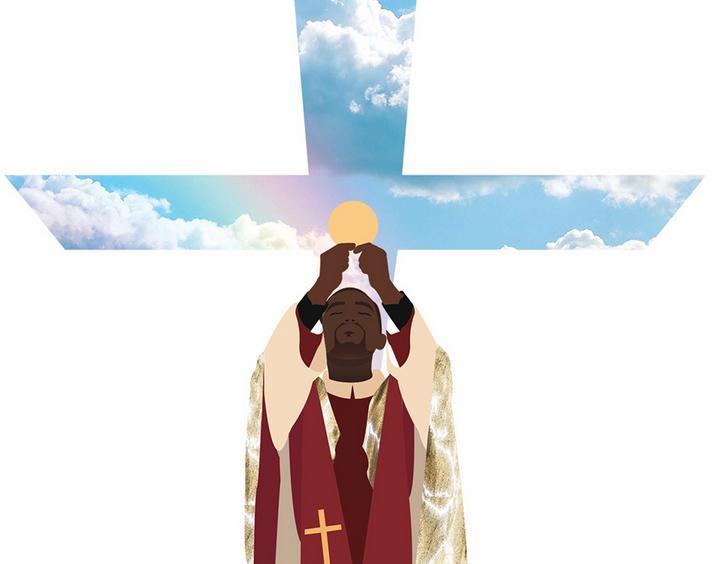
Gracious and loving God, we thank your for the gift of our priests. Through them, we experience your presence in the sacraments.
Help our priests to be strong in their vocation.
Set their souls on fire with love for your people.
Grant them the wisdom, understanding, and strength they need to follow in the footsteps of Jesus. Inspire them with the vision of your Kingdom.
Give them the words they need to spread the Gospel.
Allow them to experience joy in their ministry.
Help them to become instruments of your divine grace.
We ask this through Jesus Christ, who lives and reigns as our Eternal Priest. Amen


First Reading Acts of the Apostles 6:1-7
They elected seven men full of the Holy Spirit
About this time, when the number of disciples was increasing, the Hellenists made a complaint against the Hebrews: in the daily distribution their own widows were being overlooked. So the Twelve called a full meeting of the disciples and addressed them, ‘It would not be right for us to neglect the word of God so as to give out food. You, brothers, must select from among yourselves seven men of good reputation, filled with the Spirit and with wisdom; we will hand over this duty to them, and continue to devote ourselves to prayer and to the service of the word’. The whole assembly approved of this proposal and elected Stephen, a man full of faith and of the Holy Spirit, together with Philip, Prochorus, Nicanor, Timon, Parmenas, and Nicolaus of Antioch, a convert to Judaism. They presented these to the apostles, who prayed and laid their hands on them.
The word of the Lord continued to spread: the number of disciples in Jerusalem was greatly increased, and a large group of priests made their submissionto the faith.
The Word of the Lord.
Responsorial Psalm Psalm 32
Response: May your love be upon us, O Lord, as we place all our hope in you. or Alleluia!
1. Ringout your joy to the Lord,Oyou just; for praise is fittingfor loyal hearts. Give thanks to the Lord upon the harp, with a ten-stringedlute singhimsongs. Response
2. For the word of the Lordis faithful and all his works to be trusted. The Lord loves justice and right and fills the earthwith his love. Response
3. The Lordlooks onthose who revere him, onthose who hope in his love, to rescue their souls from death, to keepthem alive infamine. Response
The word “church” finds its roots in the Greek word ecclesia. However, a correct translation of that word is actually “an assembly of people, called
Second Reading 1 Peter2:4-9
You are a chosen race, a royal priesthood He is the living stone, rejected by men but chosen by God and precious to him; set yourselves close to him so that you too, the holy priesthood that offers the spiritual sacrifices which Jesus Christ has made acceptable to God, may be living stones making a spiritual house. As scripture says: See how I lay in Zion a precious cornerstone that I have chosen and the man who rests his trust on it will not be disappointed. That means that for you who are believers, it is precious; but for unbelievers, the stone rejected by the builders has proved to be the keystone, a stone to stumble over, a rock to bring men down. They stumble over it because they do not believe in the word;it was the fate instore for them.
But you are a chosen race, a royal priesthood, a consecrated nation, a people set apart to sing the praises of God who called you out of the darkness into his wonderful light.
out of their homes into a public meeting place.” Thus, the Church is really the people who make it up; the use of the term in relation to a building has developed through time, but we must never forget that it is we who are indeedthe Church.
That is a basic part of something St. Peter writes in our Second Reading. Peter says, “… like living stones, let yourselves be built into a spiritual house,” in reference to the members.
Gospel Acclamation Jn 14: 10
Alleluia, alleluia!
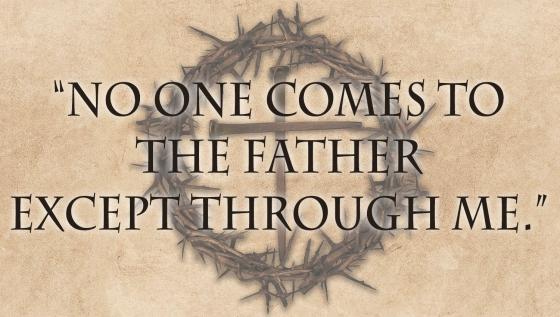
Jesus said: ‘I am the Way, the Truth and the Life. No one can come to the Father except through me.’ Alleluia!
Gospel John14:1-12
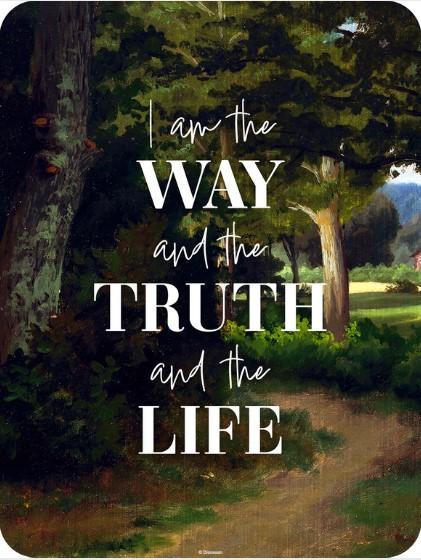
I am the Way, the Truth and the Life.
Jesus saidto his disciples
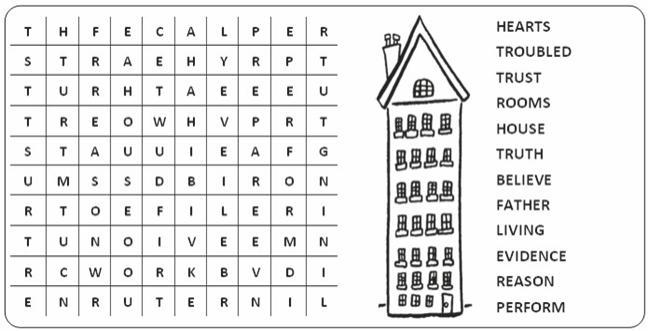
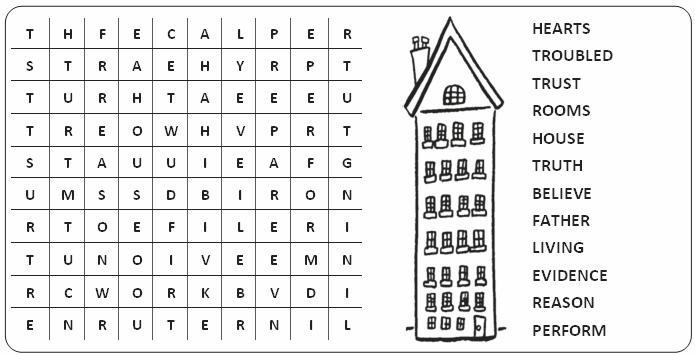
‘Do notlet your hearts be troubled. Trustin Godstill, and trust inme.
There are many rooms in my Father’s house; if there were not,I should have toldyou. I amgoing now to prepare aplace for you, andafter I have gone and preparedyoua place, I shall return to take you withme; so that where I amyoumay be too.
Youknowthe way to the place where I am going.’ Thomas said, ‘Lord,we do notknow where youare going,so how can we knowthe way?’
Jesus said:
‘I am the Way, the Truthand the Life. No one can come to the Father except throughme. If youknowme,youknow my Father too.
Fromthismomentyouknowhimandhaveseenhim.’ Philip said, ‘Lord, let us see the Father and then we shall be satisfied’. ‘Have I been with you all this time, Philip,’ said Jesus to him ‘and you still do not knowme? ‘
‘To have seenme is to have seenthe,Father, so howcanyousay, “Let us see the Father”? Do younotbelieve thatI aminthe Father and the Father is inme?
The words I say to youI do notspeak as from myself:
itis the Father,living inme, who is doing this work. Youmust believe me whenI say that I amin the Father andthe Father is in me; believe iton the evidence of this work,if for no other reason.
‘I tell youmostsolemnly, whoever believes inme will perform the same works as I do myself, he will perform evengreater works, because I am going to the Father.’❖
He is sayingin effect that we are called to build a church with living stones, namely ourselves. We all also understand that for a structure to be most effective, every element is needed to keepitstrong.
We, as the Church and as our parish, are no different. We need each person, each part of what is really the Church, to be like a living stone, active and involved. We are a faith community, not just a community of worshipers, but a community to reach
out and serve others. To really do that we need each member to offer somethingof himself or herself.
In a message to a celebration about the Church being the people, Pope Francis said, “It is isolation that harms, not sharing. Being among people does not mean merely being open toward others, butalso letting others getclose to us.” To be open, to be Church, requires eachof us to do a part.❖
[http://www.catholicsteward.com/blog/ ]
It is easy to say that I trust in God, that I have strong faith when all is going well in my life. I can think that God really loves me so much that nothing bad would ever happen to me. But there comes a time in everyone’s life when things get very dark, when a storm hits. It is only in moments of crisis that we can discover what kind of faith we have, or if we had any faith at all. Many people feel that God has abandoned them when they are experience a crisis of faith. Some may even doubt the existence of God. But it is in moments of tragedy that the best thing we can do is to go on stubbornly trusting in God. Real faith is knowing that God is with us in the midst of our crisis. It is the sure feeling that we are not alone and abandoned that helps get us through the crisis. Then the unbearable will become bearable and a little light will become visible in the darkness.
Our Church is a living structure where God and humanity encounter one another. It is where God and humanity work together to shape the destiny of all of God’s creation. God is the architect and the contractor. We are both the bricklayer and the bricks. As we go about our mission of building the Church of God, we must strive to create a place where no one is neglected, hungry or naked, belittled or violated. Our Church must, of course, begin with creating a space for God within ourselves. Only then can we strive as a community to be the Church of Christ, in service to the world. And just as a building is as strong as the bricks that go into its structure, so too our community is as strong as the individuals who make it up. It is weakened, for example, if there is a person here or there who stops striving in faith, hope and charity. So we have to be strong bricks and good bricklayers. ❖
[From: Journeying with the Word of God, The Religious Education Department, Diocese ofGeorgetown, Guyana ]
BY MIKE JAMES
In his press conference on the plane returning from his four nation visit to Algeria, Cameroon, Angola and Equatorial Guinea, as he did on more than one occasion on this 11-day trip, Pope Leo said that “Africa, for many people, is a place where one can go to take minerals, to take its riches, to enrich others in other countries.”
“At the global level, we need to work to promote greater justice and equality and development so that there not be the need to emigrate…” “What does the Global North do to support the Global South, or those countries where young people today find no future and therefore dream of going North?” “Often the North has no answers on how to offer them opportunities,”
“I ask: What do we do in richer countries to change the situation in poorer countries? And why can we not try, both through state aid and through the investments of large, rich, multinational companies, to change the situations in countries like those that we visited on this trip?
”
Asked about the US and Israel war on Iran he responded: “It is necessary to promote a new attitude and culture for peace. Many times, when we evaluate certain situations, immediately the response is ‘we must enter with violence, with war, by attacking.” Since becoming pope, he has constantly called for patient negotiations, instead of rushing to attack, as Israel and the United States did in June of 2025 and in February of 2026.
“What we have seen is that so many innocents are dead. I have just seen a letter from families whose children died on that first day of the attack [on Iran]. They speak of the fact that now their children, their babies are lost, they died in that [attack],” the pope said referring to the air strike on Feb. 28 that killed some 150 children at an elementary school in Iran.
“Moreover, there is a whole population in Iran of innocent people that is suffering because of this war.” So far, an estimated 3,000 have been killed and many more injured in the country of 90 million people.
“At this moment I would like to encourage the continuation for the dialogue for peace; that the sides that participate make every effort to promote peace [and avoid] the threat of war.”


He insisted “that international law be respected,” meaning civilians and civilian structures such as hospitals, schools and residential areas should not be targeted. “It is very important that the innocent be protected, which has not been the case in many places,” the pope said.
He revealed that he has a personal memory of the recent attacks on Lebanon. “I carry with me the photo of a Muslim child, who in the visit in Lebanon carried a sign saying, ‘Welcome Pope Leo,’ and then in this last part of the war he was killed!”
Pope Leo said: “They are so many human situations; we need to have the capacity to think in this way. As a church, I say again, as a pastor, I cannot be in favor of war.”
“I would like to encourage everyone to make the efforts to look for answers that come from a culture of peace and not from a place of hate and division.”
On a question about blessings for persons in irregular or homosexual unions:
“First of all, I think it’s very important to understand that the unity or division of the church should not revolve around sexual matters.”
“We tend to think that when the church is talking about morality, that the only issue of morality is sexual. And in reality, there are much greater, more
important issues, such as justice, equality, freedom of men and women, freedom of religion, that would all take priority before that particular issue.”
On this particular question, he said, “The Holy See has already spoken to the German bishops.” Indeed, “The Holy See has made it clear that we do not agree with the formalized blessing of couples, in this case homosexual couples, as you asked, or couples in irregular situations, beyond what was specifically, if you will, allowed for by Pope Francis in saying all people receive blessings.”
Pope Leo said, “When a priest gives a blessing at the end of Mass, when the pope gives a blessing at the end of a large celebration like such we had today, these are blessings of all people.”
He added, “[Pope] Francis’ famous, well -known expression of ‘Tutti, tutti, tutti’ (Everyone, everyone, everyone” is an expression of the church’s belief that all are welcome, all are invited, all are invited to follow Jesus, and all are invited to look for conversion in their lives.” Pope Leo, who has put peace and unity as central priorities in his papacy, concluded: “To go beyond that today, I think that the topic can cause more disunity than unity, and that we should look for ways to build our unity upon Jesus Christ and what Jesus Christ teaches.”❖


For 121 years, the Catholic Standard has been sharing the Gospel of Jesus Christ.
Now reaching 10,000+ followers on Catholic Media Guyana Facebook plus going straight to your inbox and WhatsApp, our vibrant weekly e-paper is a trusted source which delivers informative and inspiringstories fromacross the diocese andaround the world.
Want to promote your business or event? Advertise with us! Call 675-4542 or email catholicstandardgy@gmail.com ❖
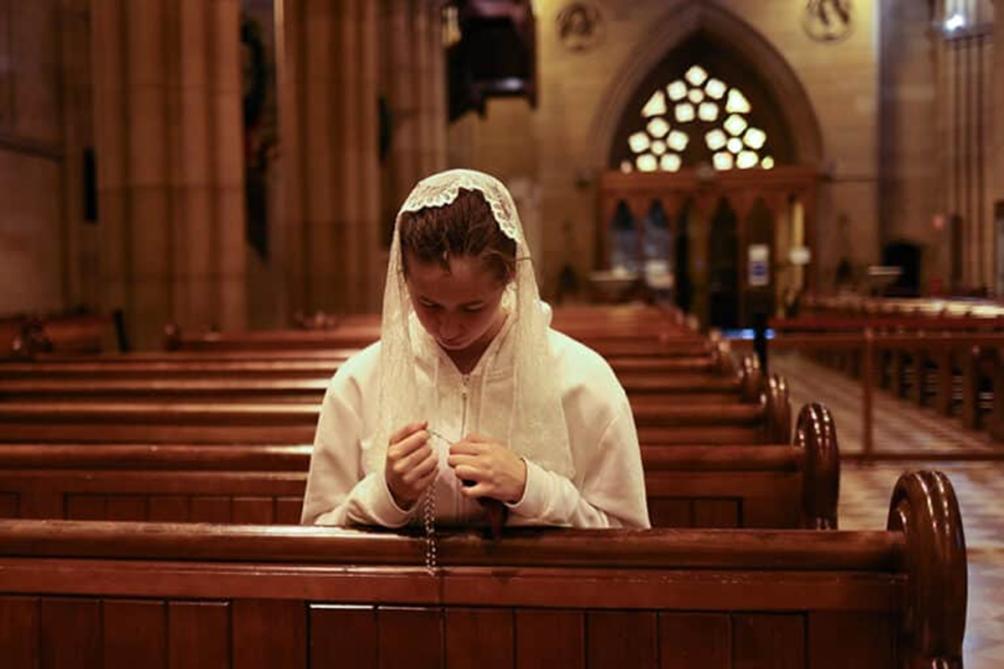
(OSV News) A new analysis from Pew Research Center has found that Catholicism has lost more members than it has gained in most of the 24 countries surveyed, while Protestantism has seen net gains in several nations, especially LatinAmerica.
The shifts are due to religious switching, or leaving one’s childhood religious identity for another inadulthood.
Pew published its findings April 23, based on data from its surveys of 24 countries spanning Asia and the Pacific, Europe, Latin America, North America andsub-Saharan Africa.
The center’s 2023-2024 Religious Landscape Study provided the data for the U.S., while international data was drawn from surveys conducted during the spring of 2024.
Pew noted the latter data includedadditional countries notreferenced in the April 23 analysis, since the overall percentages of Christians in those nations was too small (1% or less) to statistically differentiate between Protestants and Catholics.
Those who leave Catholicism “tend to join Protestantism or disaffiliate from religion altogether,” said Pew, noting that “disaffiliation is especially common in parts of Europe and Latin America.”
In contrast, those who leave Protestantism “tend to become religiously unaffiliated,” said Pew, which defines “religious nones” as atheist, agnostic or “nothingin particular.”
Even with the losses sustained, Catholicism remains the majority religion in eight of the 24 nations studied, with Poland, the Philippines andItaly topping the list.
Pew noted that 96% of the Polish population was raised Catholic, with 92% still identifying as such in adulthood. The Philippines, where 88% are raised Catholic, has also seen a high adult retention rate, with 78% of that nation’s adults still regarding themselves as Catholic. In Hungary, 57% of adults identify as Catholic, with 59% of the population having been raisedCatholic.
Italy has experiencedhigher losses, with 89% of the nation’s adults raised Catholic, and 67% of them identifyingas such.
In Mexico, 66% of adults regard themselves as Catholic, although 87% of the nation’s population is raised in the faith. In Peru, where 81% are raised Catholic, 63% of adults still identify with the faith.
Spain sees 80% of its population raised Catholic, but just 45% identify as such in adulthood, while in France, with 60% raised Catholic, only 34% of adults describe themselves as such.
In the U.S., less than one third (30%) are raised Catholic, and only 17% of adults describe themselves as Catholic. Those figures are slightly higher in Canada, where 39% are raised Catholic and 20% of adults identify as such.
Pew found that in Brazil, Kenya, Nigeria and the Philippines, “former Catholics are more likely to have joined Protestantism
MAKING THE WORD OF GOD YOUR OWN
Step 1: Lookattoday’sReadingsprayerfully.
1st Reading: In this section from Acts, we see plans being made to carry out two main concerns of the Church – to look after the material needs of the community and to preachthe Wordof God.
than to have become religious ‘nones.'”
Former Catholics comprise “10% or more of the total population in 15 countries” surveyed, said Pew.
Moreover, “relatively few adults in the countries analyzed enter the church after being raised in another religion or with no religion,” Pew said.
The center cited Italy, where 22% are former Catholics, but just 1% who were not raised Catholic became so “a net loss of 21 percentage points,” said Pew.
“Overall, more people left Catholicism than joined it in 21 of the 24 countries we analyzed,” Pew said.
Hungary ranked as “the only country surveyed where more people joined (5%) than left the church (2%),” addedPew.
In contrast with Catholicism, said Pew, “Protestantism has seen a net gain from switching in nearly as many places as it has seen a net loss.”
Sweden, the UK and Germany “are among the countries with the largest net losses,” saidPew.
In the U.S., 14% of those saying they were raised Protestant left the faith, with 8% who had not beenraised as such joining.
In 16 of the 24 countries it surveyed, Pew found that “Protestants account for no more than about a quarter of the total population,” although Ghana (62%) and Kenya (55%) have majority Protestant populations.❖
2nd Reading: Peter encourages the early Christians to live up to their vocation. Because of their new relationship to Christ in baptism they must be alive for others.
Gospel: Jesus goes ahead of us to prepare a place for us with the Father. He is our Way our Truth, our Life.
Step 2: ApplyingthevaluesoftheReadings toyourdailylife.
1.Jesus consoles his disciples with the words: “Do not let your hearts be troubled. Trust in God still, and trust in me.” Is there some area of your life inwhichyou need to trust inGod?
2.Peter, in the Second Reading, calls on us to be “living stones making a spiritual house.” What do youthink this means?
3.“It is not we who keep the faith but the faith that keeps us.” What does this saying mean to you?
4.In today’s Gospel passage, Jesus encourages his disciples to avoid being troubled and anxious. The disciple must show a certain freedom from tension and worry. Is this realistic living in the world today? It is easier said than done, even for believers. Despite our Lord’s teaching, many of us cannot help being worried and upset about all kinds of things. Why is this so?
Step 3: Accepting the message of God’s Wordinyourlifeoffaith.
Those who can continue to trust in God in the face of great crisis have the kind of faith that is a source of comfort and inspiration that helps them to cope. They know that God will be good to them through it all.
Step 4: Somethingtothink&prayabout
1.Recall a moment of crisis in your life. Did your faith in Christ help you to understand and come to grips with the moment or did you feel abandoned by God? What helped you to overcome that moment?
2.Pray that even though you may have reason to be afraid and anxious, you will have the faith that allows you to trust in God in the face of all that may be burdeningyou. ❖
[From: Journeying with the Word of God, The Religious Education Department, Diocese of Georgetown, Guyana ]
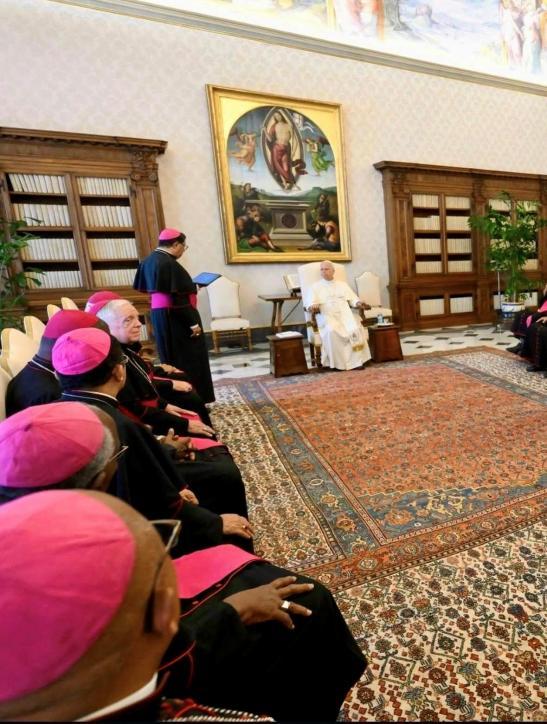
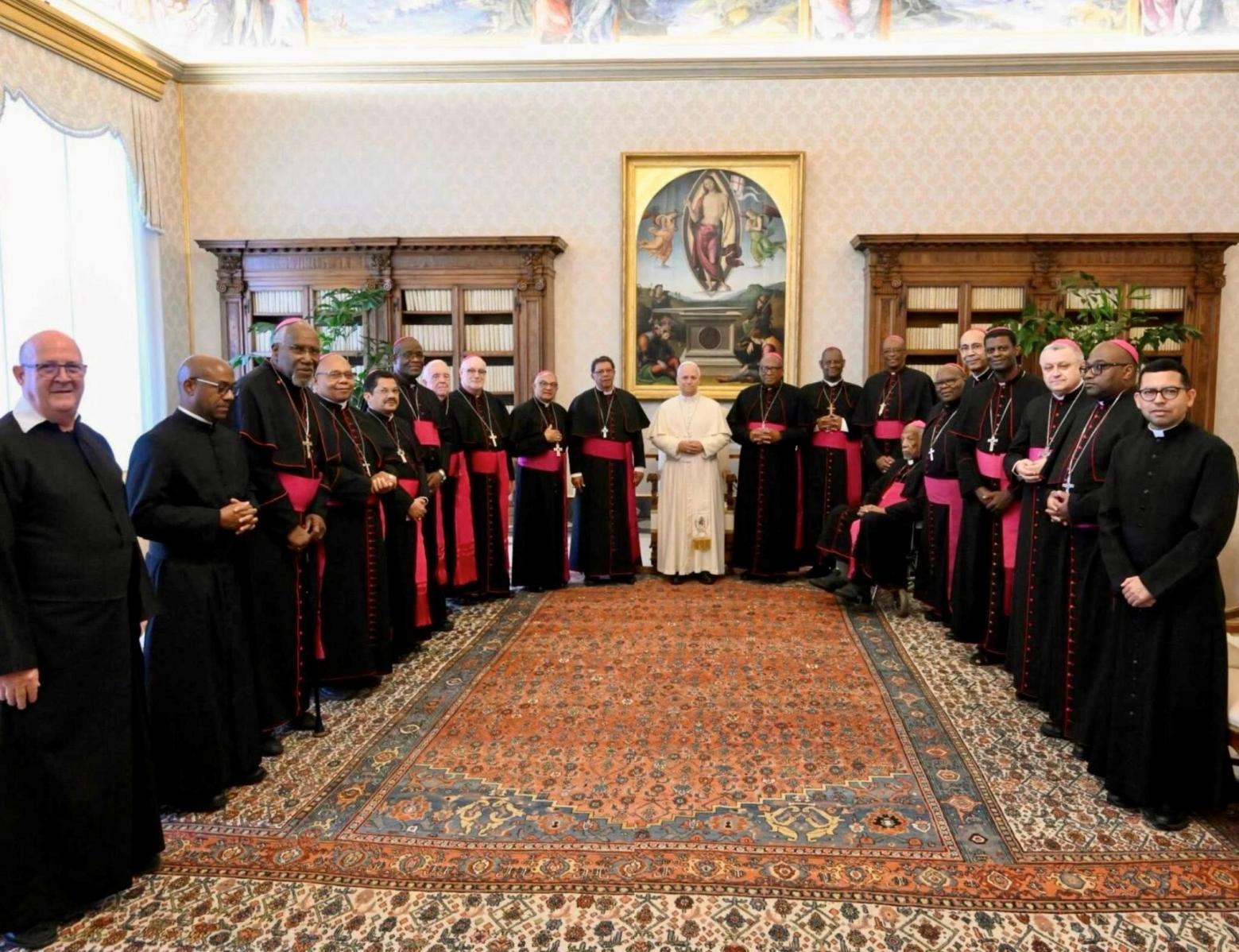
Archbishop Charles Jason Gordon, President of the Antilles Episcopal Conference (AEC), has described the bishops’ ad limina Apostolorum visit to Rome as a privileged moment of communion, encounter, and exchange between the local Churches of the Caribbean and the universal Church.
Speaking to Vatican News during the bishops’ 2026 visit, held April 27th to May 2nd, Archbishop Gordon reflected on the significance of the pilgrimage, calling it “a very special moment in the life of a bishop, and in the life of the Conference ofBishops.”
The Archbishop, who also serves as Archbishop of Port of Spain, noted that the visit offers bishops a unique opportunity to gather in the Eternal City and engage directly with the Holy See’s Dicasteries.
A moment of communion and listening
“We come to the Holy City, to the Eternal City, to find communion, to listen deeply to the heartbeat of the Church,” he said, “but also to share the particularity of the mission in our context with the different Dicasteries that we meet.”
Highlighting the reciprocal nature of the ad limina encounter, Archbishop Gordon said the exchange between the universal and local Church enriches both.
“The Church is universal, but the Church is also particular,” he said. “In this exchange between universal and particular, there are always great riches that we walkaway with.”
He explained that the experience of local Churches can also help the universal Church reflect more deeply on pastoral realities from fresh perspectives.
Evangelising the digital continent
Among the first meetings of the Caribbean bishops’ visit was an encounter with the Dicastery for Communication, where discussions focused on the Church’s mission in the digital world.
social media presents undeniable risks, those dangers cannot deter the Church from evangelising in thedigital sphere.
“There are dangers in social media,” he said, “but there are dangers crossing the street, dangers travelling from one part of the country to another. Those dangers cannot stop us from bringing the Gospel into all creation, into all spheres of life and activity.”
Echoing Pope Benedict XVI’s description of the internet as the “digital continent,” Archbishop Gordon said the Church must embrace its missionary responsibility online.
“It is a place where we have to be missionaries also,” he said, “not just to bring the message there, but also to shape the interaction in digital media.”
He explained that Christians are called to help ensure digital communication becomes “more human” and “more humanising,” so that online spaces may better guide people in their search for truth and meaning.
Bringing Caribbean challenges to Rome
Turning to the realities facing the Church in the Caribbean, Archbishop Gordon highlighted climate vulnerability, migration, and family life as among the region’s most pressing pastoral concerns.
“In our region, we are the second most vulnerable region for climate change, and that is always a major issue,” he said, noting the grave threats posed by rising sea levels, hurricanes, and environmental degradation to
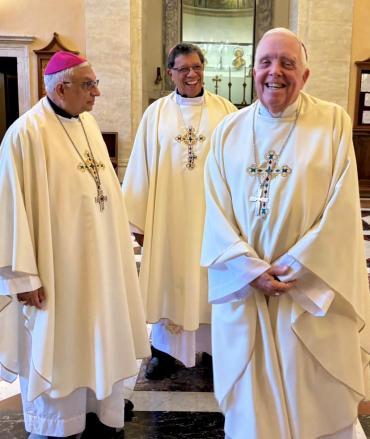
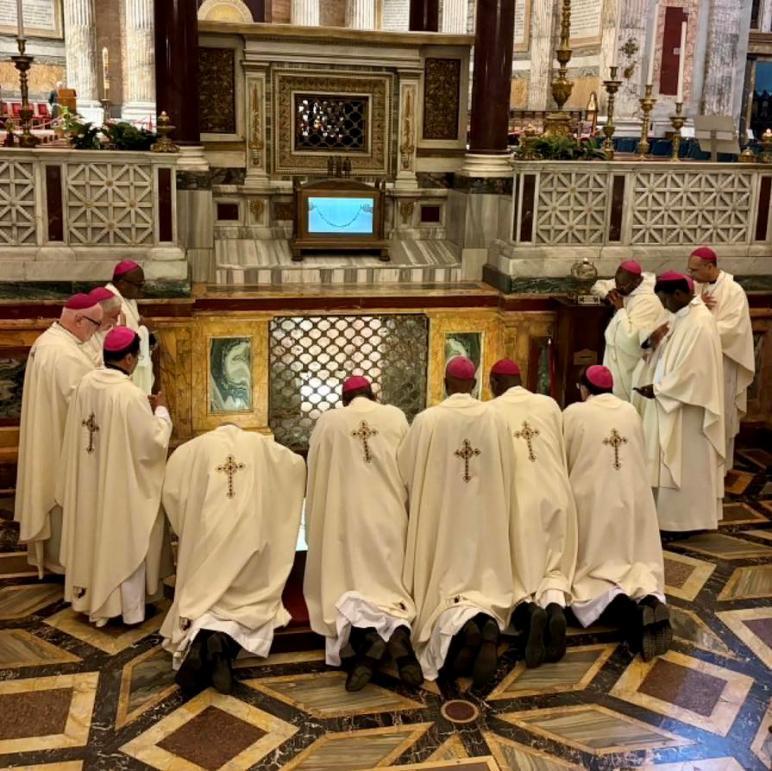
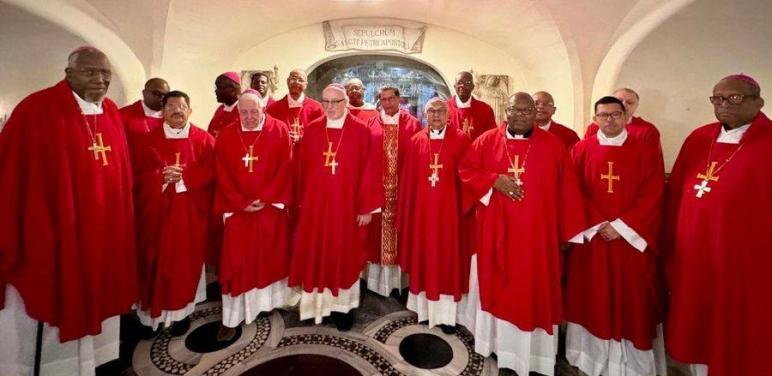
The Ad Limina visit, usually held every ” that allows bishops to pray at the tombs of Saints Peter and Paul, submit reports on their dioceses, and strengthen ties with theHoly Father.
The schedule began with meetings at several Vatican dicasteries, the main administrative departments of the Vatican, similar to government ministries, as well as the Pontifical Commission for Latin America. These included dicasteries responsible for Laity, Family and Life; Causes of Saints; Communication;and Interreligious Dialogue.
Migration, too, remains a defining challenge.
Recalling the impact of the Venezuelan crisis and wider regional instability, Archbishop Gordon said countries such as Trinidad and Tobago have received “thousands and thousands of migrants” from Venezuela, Haiti, Cuba, and elsewhere in the Caribbean and Latin America.
He also pointed to the unique historical experience of Caribbean family life, shaped by centuries of colonialism and the plantation system.
“We have had a 400-year structure of families disrupted through the plantation system,” he explained, noting that this has produced family dynamics and pastoral realities distinct from manyother parts of the world.
Challenges as opportunities for grace
Archbishop Gordon said the purpose of bringing these realities to the Vatican is not merely to present difficulties, but to contribute the Caribbean’s particular experience to the wider discernment of theChurch.
“The hope is to bring this peculiarity, this particularity, to the universal conversation,” he said.
In doing so, he added, the bishops seek to receive and offer light that can help transform challenges into opportunities for mission.
“To see our mission and see the challenges,” he said, “not just as challenges, but also as grace and opportunities for evangelisation.”
In a video message shared April 27, Bishop Robert Llanos of St John’sBasseterre, Antigua and Barbuda, said the bishops had just concluded their first meeting with the Dicastery for Laity, Family and Life, describing “some important discussions” with Cardinal Kevin Farrell, Prefect of the Dicastery and his team.
He said the “main” focus was the region’s history and culture of family life, including “the experience of slavery and the experienceof the various cultures of the different islands, and how cohabitating and families are being structured asa result of that.”
He added that discussions also explored formation for young people and relationships.
“From that time on we should be preparing persons for good human relationships which will eventually lead to a more sound marriageexperience.”
The bishops celebrated Mass at the Basilica of Saint John Lateran on April 28 before meetings on culture, education,and divine worship.
Midweek sessions included discussions on religious life, doctrine, evangelisation, clergy,and Christian unity.
A key highlight came April 30 when the bishops celebrated Mass at Saint Peter’s Basilica and were received in audience with Pope Leo XIV. Additional meetings were held on safeguarding, human development, and Church governance, before the day concluded with Mass at St Paul Outside the Walls “and a fraternal gathering”.
The visit concludes May 2 with final sessions involving the Church’s highest judicial authority and the Synod of Bishops, “marking a renewed commitment to serving the Church in the Caribbean.”❖(From Vatican News and The Catholic News of T&T)
Dear Boys andGirls,
When we are trying to findour way through the journey of life, we need some help in finding the right way to go, don't we? Each day we face many difficult decisions and it is sometimes hard to know which way to turn. Some people use their feelings to make decisions. They say, "I'm going to do this, because it just feels like the right thing to do." That's no good. Our feelings may change from day to day, and just because we feel good about something doesn't mean thatitis the right thingto do. Some people make choices by what's popular. Have you ever tried to convince your parents to let you do something by saying, "Everybody's doing it"? Just because everyone else is doing it doesn't mean that it is the right thing to do, does it? Besides, tomorrow everyone might be doing something else.
There is one sure way to know if we are going in the right direction in life and that is to follow Jesus. Jesus said, "I am the way, the truth, and the life. No one comes to the Father except through me." We know where we want to go, we want to go to heaven. And now, we know the way. Jesus is the way. If we follow him, we know we are on the right path and headed in the right direction.
Dear Father, help us each day as we journey through life to follow Jesus, because we know he is the way. In Jesus' name we pray. Amen.❖
By Renika Anand
James F. Amos, a retired United States Marine Corps four-star general, once said “You just look at the world, and you see things unraveling, and you say, 'I wonder what we ought to do?' Things are seldom crystal clear.”
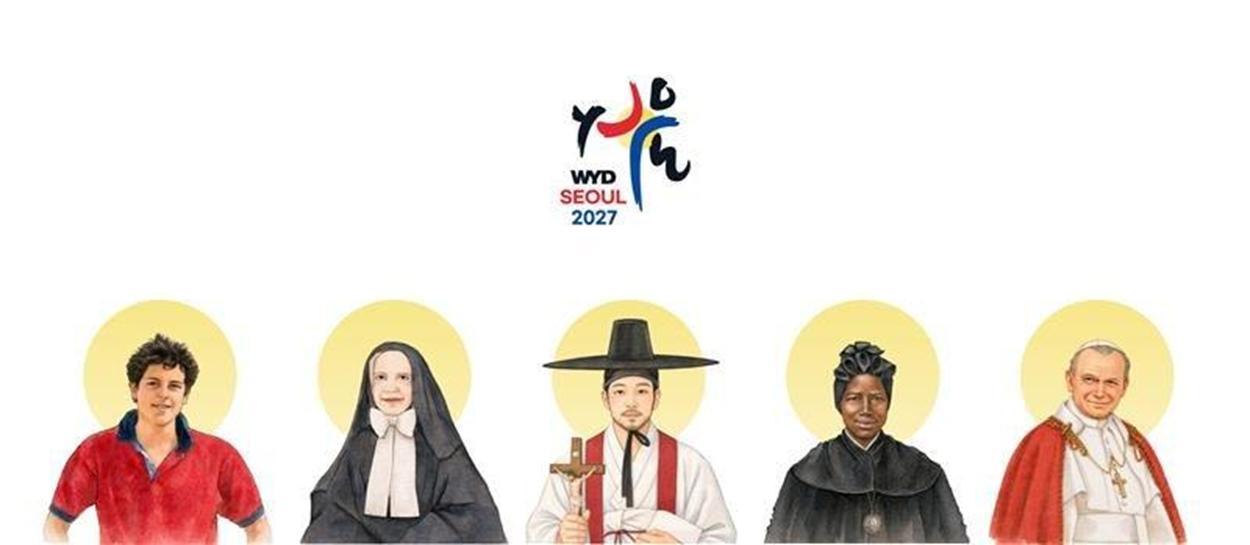
(OSV News) Organizers in Seoul, South Korea, announced five patron saints for World Youth Day 2027 that reflect the themes of truth, peace and love that are at the heart of the youth gathering.
The five saints selected by the WYD Organizing Committee include: St. John Paul II, who founded the World Youth Day celebration; St. Andrew Kim Taegon, the first Korean Catholic priest, and companions who were martyred; St. Frances Xavier Cabrini, patron saint of immigrants; St. Josephine Bakhita, patron saint of victims of human trafficking and modern slavery; and St. Carlo Acutis, the millennial saint known for his use of technology to evangelize.
Saints’ lives reflect today’sissues
According to the Asian Catholic news site Licas News, organizers said the
lives of the patron saints reflected on issues relevant today, including persecution, migration and social struggle, making them appropriate guides for the global event.
The process of choosing the event’s patron saints began in late 2024, including a survey of young people, youth ministers and pastoral workers, followed by deliberations by the organizing committee, Licas News reported.
Volunteers also studied the lives and spirituality of the saints chosen to prepare prayers and their respective symbolic representations. Among the symbols chosen were a crozier for St. John Paul II and a computer for St. Carlo Acutis.
‘Fundamental role’ of WYD’spatronsaints
Commenting on the announcement, Cardinal Kevin Farrell, prefect of the Dicastery for Laity, Family
and Life, said the patron saints “play a fundamental role in the preparation” of every WYD.
“They invite young people, formators, and pastors to reflect on the gift of God’s call, on our baptismal, priestly, religious, and marital vocations, encouraging us to respond to it with generosity and courage in following Christ, who has conquered the world, as the theme of the upcoming WYD reminds us,” he said, according to Licas News.
Cardinal Farrell expressed his hope that the lives and witness of the five patron saints “inspire young people around the world, especially in contexts marked by difficulties and persecution, to see that holiness is not a distant ideal, to fix their gaze on Christ and to respond generously to His call.”
Korean Archbishop Peter Soon-Taick Chung of Seoul, president of the WYD organizing committee, noted that each saint “offers a concrete path for living out the faith amidst the realities that young people face today.”
“I hope that young people will discover in these saints examples for their own lives and, through the journey of preparation for World Youth Day, forge a deep spiritual bond with them,” he said.
The official website for World Youth Day 2027 was updated with biographical information on each saint. Organizers also launched an interactive site, titled “Meet Your Patron Saint,” where users can take a short quiz to match with one of the five saints. ❖
It is one of our first milestones as infants to begin recognising the world and understanding that there are people and objects that lie beyond our perception of ourselves. Strangely, as we grow into adults, we seem to have a natural tendency to revert to the childlike tendency to view life as nothing more than the events which occur directly to us. We are all guilty of becoming absorbed by our own obstacles and our own victories; it is a very human inclination. However, in the pursuit of a better world, we must recognise that even when events do not directly affect us, we still have the burden to respondto them.
We must open our eyes to the injustices that occur to the people around us, and be willing to hold each other up, even when there is no personal reward to be gained. This is the only way by which we can build a purer world.
Carry each other’s burdens, and in this way you will fulfill the law of Christ - Galatians 6:2❖


Fr Joel Thompson SJ
My sheep hear my voice. I know them, and they follow me (John 10:27)
In a world filled with many voices about sex, relationships, and identity, the Catholic understanding of human sexuality is often misunderstood. Sometimes it is reduced to a list of “don’ts,” or seen as outdated or restrictive. However, what the church offers is a beautiful vision of love that leads to holiness, happiness and healthy relationships.
But Father… everyone does it! I remember a group of young people saying that to me one evening after a discussion on relationships. We had discussed that having sex without being married is not a Catholic or Christian thing to do. They were being honest. For them, this was simply what they saw among friends, relatives and onsocial media.
Whether it is sex outside of marriage, “living home”, homosexual activity or other expressions of sexuality, many feel that the Church is asking something unrealistic. This raises a deeper question: since when does “everyone does it” determine what is good? We don’t use that logic elsewhere. Many people lie but truth still matters. Many act unjustly, but justice is still right. In the same way, even if many misunderstand or misuse sexuality, it does not change its meaning. Jesus calls us to something higher: “Be perfect as your heavenly Father is perfect” (Matthew 5:48). This is a reminder that our Christian values do not come from our culture but from Christ. My sheep hear my voice
In our hookup culture where “everyone does it,” many people quietly carry wounds, confusion, and regret. They often realize after broken relationships that they should have waited.
We all struggle with lust. Lust is selffocused desire and seeks pleasure without the responsibility of love. Lust views others simply as objects and pulls us to take shortcuts to satisfy ourselves. This is not something that affects only a few, it is part of our human condition. The Church does not only give teaching, but also calls us to conversion,growth, and grace.
Before going further, let us summarize the core of the Church’s teaching on sexuality:
1. Every person is called to chastity This is different from celibacy or abstinence since it includes right sexual intercourse between spouses. It means learning to love rightly, withoutusingothers.
2. Sex expresses a total self-gift (All of me loves all of you). It therefore belongs within marriage, where that gift is faithful andlifelong.
3. Sex is both unitive and procreative. This means that it brings persons together in love and is open to new life.
Meet today, sex tomorrow? Sexual love is not something casual or superficial. It is powerful and deeply meaningful. As John Legend sang “All of Me, Loves All of You”. It involves the whole person (body, mind, and spirit) giving of themselves completely to another.
Because of this depth, the Church teaches that sexual expression belongs within the stable, faithful, lifelongrelationship called marriage Marriage is a covenant and a sacrament, which is a total gift of self between a man and a woman. Within this covenant, sexual love has two inseparable meanings: (1) It is unitive: it expresses and deepens the loving bond between spouses and (2) it is procreative: it is open to the gift of new life. They belong together, like two sides of the same coin.
If sex is as meaningful as we claim, then it cannot be treated lightly. This is where the virtue of chastity comes in. Chastity is not simply “not having sex.” It is about learning to love rightly, to see others not as objects to be used, but as persons to be cherished. Simply put, love gives, but lust uses. “Love is patient, love is kind it does not seek its own.” (1 Corinthians 13:4–5).
Every person is called to chastity. Married couples live it through faithful, life-giving. Single persons live it through self-control and openness to God’s plan. Those with different experiences of attraction are called to a life self-control, friendship, and holiness. The Church walks with all who are striving, knowing that this journey is not always easy since we live in a culture that often separates sex from commitment, and desire fromresponsibility.
Within the Catholic vision, we can see why some expressions of sexuality such as masturbation, pornography, or sexual relationships outside of marriage, fall short of the full meaning of love because they do not fully express that total self-gift or openness to life. What to do about lust? The movies, music, books and company we keep can indulge our lust or strengthen our virtue (chastity). If we focus on movies that portray nudity constantly then our minds are trained to see others simply as objects. Christian spirituality speaks of the “custody of the senses”. Redirecting our desires towards friendships, exercise, sports, hard work, prayer, hobbies, studies or good books helps us to mute the voice and vice of lust.
Growth in chastity is a journey. It involves struggle, patience, and grace. None of us lives this perfectly. All of us are learning. Through prayer, the sacraments, and the grace of God, we are slowly formed into people capable of real love.
Those who are dating and find that they have an intense desire to take the relationship to the next level (i.e. marriage), the question to ask is do you love each other and want to give yourselves completely to each other forever? What a beautiful thing it is to raise children with the person you love for life. To want a person simply for a night or a day is to be in lust not love. The Catholic vision of sexuality is demanding, but it is also deeply hopeful and beautiful. May we strive to live itwith God’s grace. ❖
On April 21, the Conference on Theology in the Caribbean Today (CTCT) held its virtual forum entitled ‘Carib-being or Carib-been? Is there stillhopeforregionalidentitytoday?’
The topic was motivated by the current escalating geopolitical tensions regionally and internationally which have been calling into question the idea of a present-day regional identity.
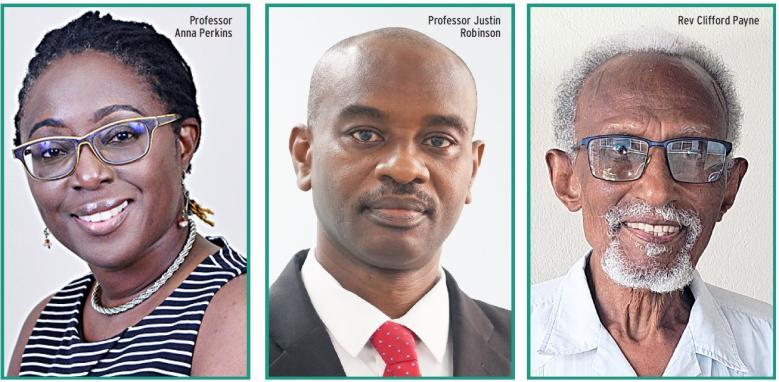
Featured speakers were Rev Clifford Payne, retired Church of God pastor and one of the foundational members of the Caribbean Conference of Churches (CCC); and Professor Justin Robinson, Pro Vice-Chancellor and Principal of The University of the West Indies (UWI) Five Islands Campus. The proceedings were moderated by CTCT member and
UWI, Mona, Professor Anna Perkins.
As both speakers explored the reality of Caribbean identity, they highlighted the threats to such, coming from external pressures and a changing geopolitical landscape presently being defined by the maxim: ‘might is right’, where a rules-based order was being rejected by larger powers.
The speakers highlighted the serious effects this had on the Caribbean through the examples of US military build-up in the Caribbean with direct consequences for both Venezuela and Cuba.
Rev Payne provided a historical look at regional identity through the lens of the CCC, a regional ecumenical body
founded in 1973. Among the precursors to such a movement, he identified Vatican II which allowed for recognising a new world in which Roman Catholics would relate to other Christian bodies differently.
This had a formidable consequence for the Caribbean where Archbishops Anthony Pantin of Trinidad and Tobago and Samuel Carter of Jamaica (both deceased) were among those instrumental in the work of the CCC. In speaking of the present prospects for ecumenical work within the Caribbean, Rev Payne lamented the deteriorating interest in both regional and ecumenical movements and highlighted a lack of investment from member churches along with an insularity among individual churches
Prof Robinson meanwhile questioned the weakening of Caribbean identity and attributed it to some factors: insular nationalism where politics was being organised in terms of what is important to individual nations first, and the region second or optional.
Rev Payne also identified a colonial mindset which resulted in the belief that we cannot chart our own paths and we need external validation. The priority of the Privy Council over the Caribbean Court of Justice for some territories was highlighted as an instance of this validation.
The sense that “foreign is better” was also mentioned as a root cause of a weakening sense of Caribbean identity, along with the drive of political leaders to establish their own little kingdoms. Prof Robinson however, called out the stubborn resistance to all these threats that were actually taking place highlighting, as examples: culture, and musical fusions discernible in AfroReggae beats like Reggaeton and the many manifestations of Carnival in different territories that draw from one another, unity inherent in diaspora communities, sport, and civil society.
Prof Robinson pointed to the CTCT as but one example of how civil society works to foster a sense of regional identity beyond insular national politics. He further affirmed the Organisation of Eastern Caribbean States (OECS) as a lived example of conscious regional integration through the single currency, freedom of movement and single central bank.
The recognition that individual States cannot make it alone has helped to strengthen the sense of integration among the eastern Caribbean states. Prof Robinson asserted that regional identity was “neither safely alive nor quietly dead” and that civil society was one way of moving toward a muchneeded and stronger sense of regional identity.❖ (From The Catholic News of T&T)
a ‘double occupation’: the external pressure of war and blockade, and the internaloppressionoftheHamasregime.”
Migrants are largest group of Christians
He also said that the number of Hebrew-speaking Christians, while small, is growing. However, the largest group of Latin-rite Christians is comprised of migrants who hail from Asia, Africa, Eastern Europeand Latin America.
” the abbot told ACN representatives.
Father Schnabel also denounced increasing hostility against Christians from extremist Jewish groups. According to a 2023 report by the U.S. State Department, Christian clergy and pilgrims face increasing harassment, including incidents of spitting and verbal assaultbyultra-Orthodox extremists.
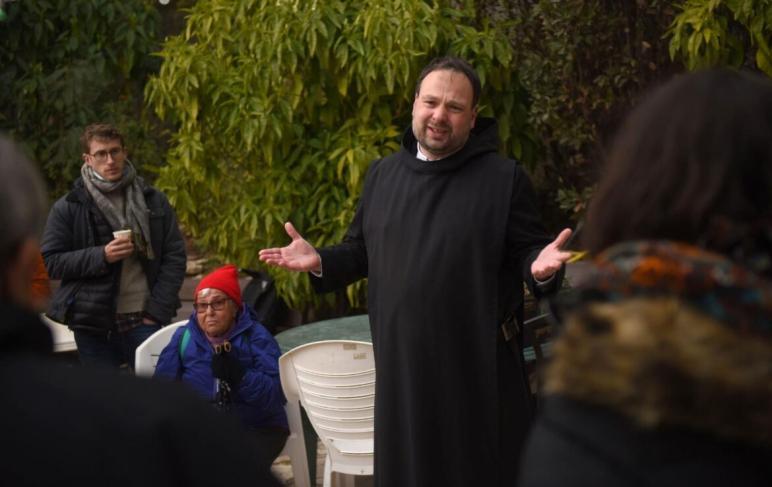
Christian population that has borne the brunt of war and economic hardship is slowly diminishing, warned tineFather Nikodemus Schnabel
Father Schnabel, abbot of Dormition Abbey on Mount Zion in the heart of Jerusalem and of Tabgha, the community’s priory on the northwest shore of the Sea of Galilee, told national directors and representatives of Aid to the Church in Need his fear is that “Holy Land could become a kind of ‘Christian Disneyland'” where holy places, monks and priests remain while there “may be no Christian families, no young Christians, no ordinary Christian life.”
Not an ‘Eldorado of Christianity’
“If you think this is an Eldorado of Christianity, the reality is different. All Christians together are less than 2%,” he said. “For us, dreaming of reaching
there, Christians are many times more numerous than here,” he told ACN April 24.
In his address, the Benedictine abbot noted that while there are 13 historic Churches, both Catholic and nonCatholic, the diversity presents a paradox, in that the places “where the most important events of our faith occurred risk losing its indigenous population.” Palestinian Christians in the Latin-rite Church, he noted, face significant hurdles. Those in Jerusalem have full citizenship but without political rights, while in the West Bank, Christian residents face movement restrictions. In Gaza, the small community of Catholics is “particularly vulnerable, living under
“They are, in many ways, the most vulnerable,” he said, adding that many live in “a form of modern slavery” and often have their passports confiscated, and “have very limited freedom.” At times, women who become pregnant or choose not to have an abortion are penalized.
“In the eyes of the system, the most ‘criminal’ act can be to say yes to life,” Father Schnabel said.
As the continued conflicts caused a sharp decline in tourism, many Christians who depend on it have no choice but to flee the country in search of employment.
People don’t see any future
“People leave because they don’t see a future,” the abbott said, adding that even with a concrete future on the horizon, “they often have the feeling that it doesn’t matter whether they are there or not.”
The abbot said the attacks, which have also included vandalism, arson, desecrations and hate graffiti, “can no longer be considered marginal,” and noted that ultranationalist figures in the Israeli government have legitimized or encouraged anti-Christian actions.
He also echoed concerns expressed in January by the Patriarchs and Heads of Churches of the Holy Land regarding the harm caused by Christian Zionism a theological and political movement, primarily within Protestant evangelicalism that asserts the return of the Jewish people to the Holy Land and the establishment of the state of Israel as the fulfillment of biblical prophecy. Christian Zionism is “incompatible with the Gospel when it is used to justify violence, ignore the suffering of Palestinians, or remain silent about attacks against Christian communities,” he said, according toACN.❖

May 3rd
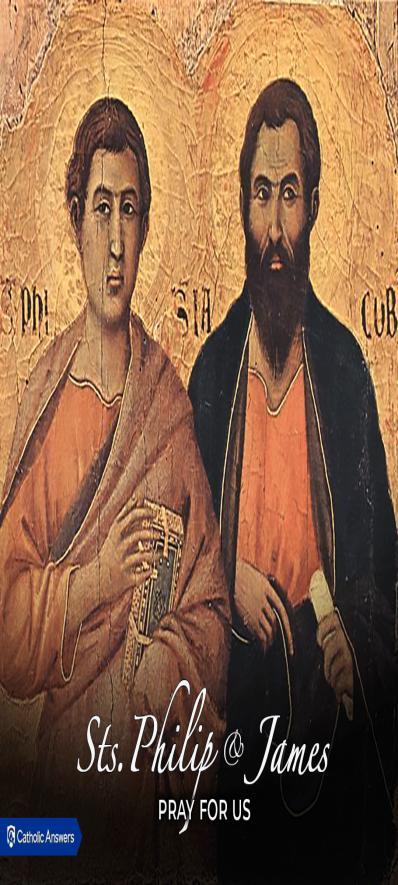
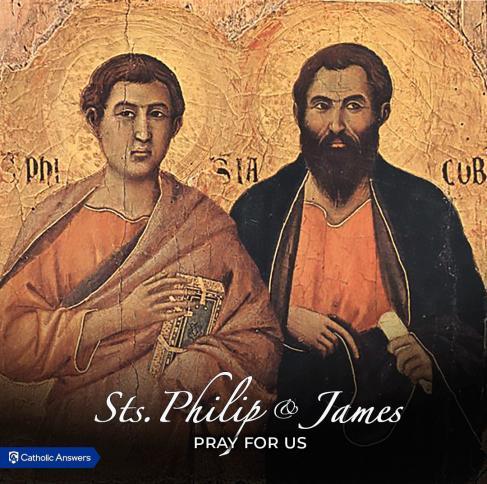
Saints Philip and James
Saint Philip was born at Bethsaida. Formerly a disciple of John the Baptist, he became a follower of Christ.
Saint James, the son of Alphaeus and cousin of the Lord, ruled the Church at Jerusalem, wrote a Letter andwas martyred inthe year 62.❖
[www.salfordliturgy.org.uk ]