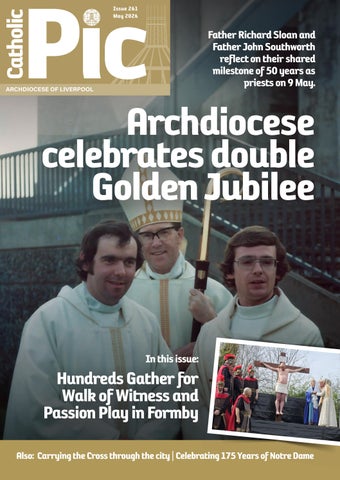
Father Richard Sloan and Father John Southworth reflect on their shared milestone of 50 years as priests on 9 May.
Archdiocese celebrates double Golden Jubilee

Joining St Joseph Catholic Multi Academy Trust
A Stronger Future
A Protective Shield
A Shared Mission
In today’s fast-changing education landscape, school leaders face growing demands from policy changes and Ofsted frameworks through to increasing operational pressures.
You don’t have to face pressures alone.
At St Joseph Catholic Multi Academy Trust, we provide a protective shield around our schools; absorbing complexity, reducing burden, and offering expert support so you can focus on what truly matters:
Delivering an exceptional Catholic education for every child.
What does joining SJCMAT mean for your school?
Protection from external pressures
We manage the complexity of policy, compliance, and accountability.
A strong, supportive family
Collaborate with like-minded Catholic schools that share your mission.
Expert central support
From school improvement and safeguarding to finance and governance.
Leadership that lifts you up
No isolation – just guidance, partnership, and shared strength.
Your identity remains yours
We strengthen what makes your school unique, not replace it.
Stronger together
SJCMAT schools support one another, share expertise, and grow in confidence, creating a culture where no school stands alone and every child benefits.
Let’s start the conversation
If you’re exploring the future of your school, we’d love to talk.
Join a Trust that protects, supports, and strengthens.
Join the St Joseph Catholic Multi Academy Trust family.
Get in touch today to find out more.
Head to Join Our FamilySJCMAT to book an appointment.
From the Archbishop’s Desk
There is a tradition that the Risen Christ appeared to Our Blessed Lady and greeted her on Easter morning. Although this encounter is not recorded in the scriptures, it finds expression in popular piety across the world. It is enacted on Easter Sunday morning in Valladolid in Spain. On Easter Sunday, one procession carrying a statue of the Risen Christ heads towards the Plaza Mayor, as another procession carrying a statue of the Blessed Virgin departs from a different corner of the city, so that they meet in the central plaza. No longer do we see the dark penitential clothes, hoods and black mantillas of Good Friday; now the members of the local confraternities wear white clothes and white veils. A large crowd gathers to see Our Blessed Lady bow to her Christ; a round of applause follows accompanied by the ringing of church bells. Likewise, in the Church of the Holy Sepulchre in Jerusalem there is a statue depicting this meeting. In his thirty days’ spiritual exercises for retreats, St Ignatius of Loyola provides a meditation for such a meeting.
After the closeness of Our Lady to her Son during his Passion, it is natural that the Risen Christ would want to greet his mother. Her tears and the grief of witnessing his suffering and death is now transformed and swept away as she rejoices in his resurrection and sees his promises fulfilled. Surely, he greeted her with the Easter words, ‘Peace be with you’. She is the Queen of Peace. Our Easter April leads into Mary’s month of May.
Mary’s month is a time for us to intensify our praying of the rosary. This simple and cyclical style of prayer provides a sure source of comfort, while the repetition of the Hail Marys leads to a deepening of the mysteries which we pray.
Before his death, my grandfather gave me his rosary beads. He told me that he had worn them around his neck during the First World War, and he attributed the help of Our Lady to his return home and surviving being gassed. It was while he recovered in a hospital in Hinckley that he met my grandmother whose family of girls visited the soldiers. Now well worn, this set of rosary beads are a constant reminder for me of the power of the rosary and the necessity to pray. I always put them in my suitcase when I go away. I hope you do the same with yours. I remember how I used Jack Traynor’s rosary beads at the grotto in Lourdes last year. Somehow the past and the present are united in our prayer of the rosary.
Pope Leo urges us to pray for peace at this troubled time in world affairs as we see the suffering, pain and poverty caused by violence and war. We are called to look heavenwards and see how Christ’s gift of peace breaks into the darkness of war and conflict. Here we find hope for the future.
As we pray for peace, and especially by praying the rosary for peace, we ask the intercession of Our Lady Mother and Queen of Peace. May she bring comfort to those who suffer because of war and violence. May her intercession bring peace to our world.
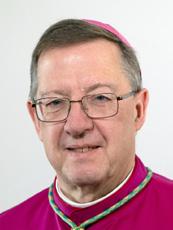
Archbishop John Sherrington Archbishop of Liverpool
Monthly prayer intentions
MAY
That
everyone
might have food.
Let us pray that everyone, from large producers to small consumers, be committed to avoid wasting food, and to ensure that everyone has access to quality food.
Editorial Catholic Pictorial Magazine, St Margaret Clitherow Centre, Liverpool Archdiocesan Office, Croxteth Drive, Liverpool L17 1AA
Tel: 0151 522 1007 Email: CatholicPic@rcaol.org.uk
Advertising Sales team 0151 709 7567 sales@cpmmmedia.com
Contributor
Katie Parry
Pictures Nick Fairhurst (www.nickfairhurstphotographer.com)
Martin Cahill (cahill-photography.com)
Website: www.catholicpic.co.uk
Twitter: @PicCatholic
Youtube: CPMM Media
Publisher
4 Main Feature Archdiocese celebrates double golden jubilee
7 Sunday Reflections
8 From the Archives World Cup underdogs
9 News News from around the archdiocese
14 What’s On What’s happening in the archdiocese
15 Cathedral Record
16 Pastoral Ponderings
17 Profile Deacon Anil Lukose
18 Catholic Life
28 Pic Extras Mum’s the word News from the KSC
29 Youth Ministry
30 Dialogue and Unity
Editor Harriet Anwyl
“The cathedral was jam-packed, standing room only. It was an amazing celebration.”
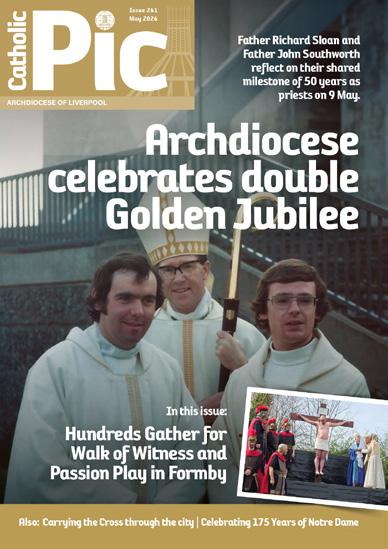
Archdiocese celebrates double Golden Jubilee
Father Richard Sloan and Father John Southworth reflect on their shared milestone of 50 years as priests on 9 May.
By Simon Hart
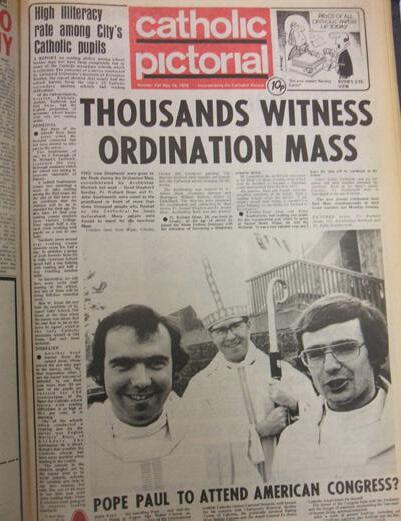
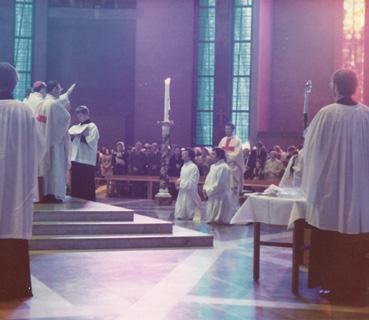
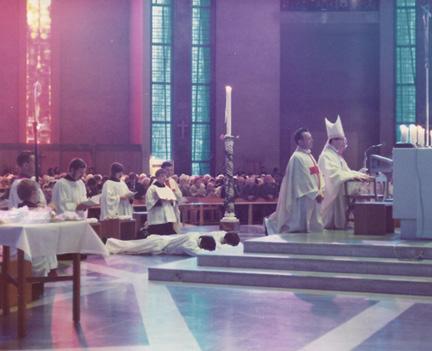
“Thousands witness Ordination Mass” ran the Catholic Pictorial headline on 16 May 1976.
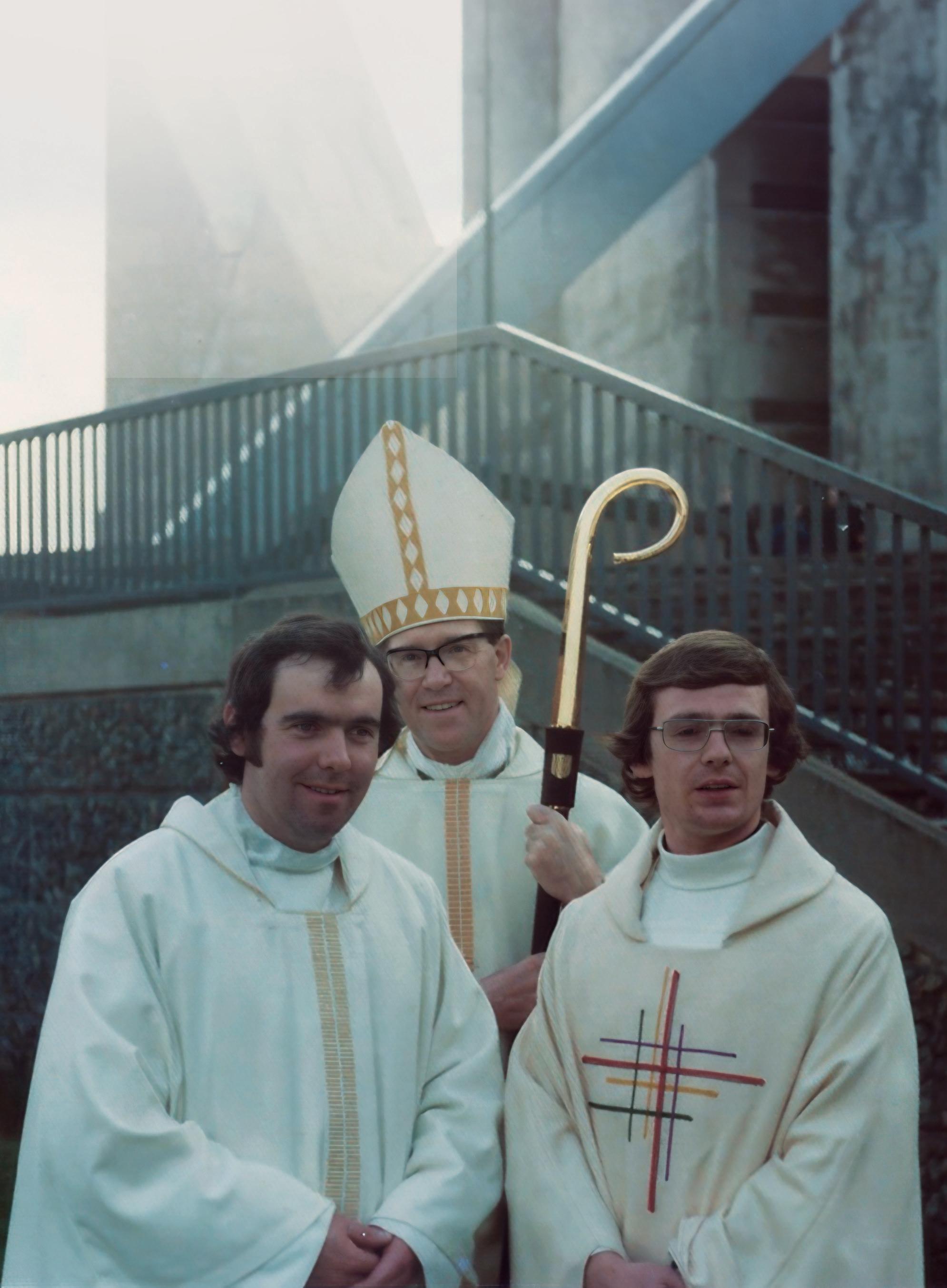
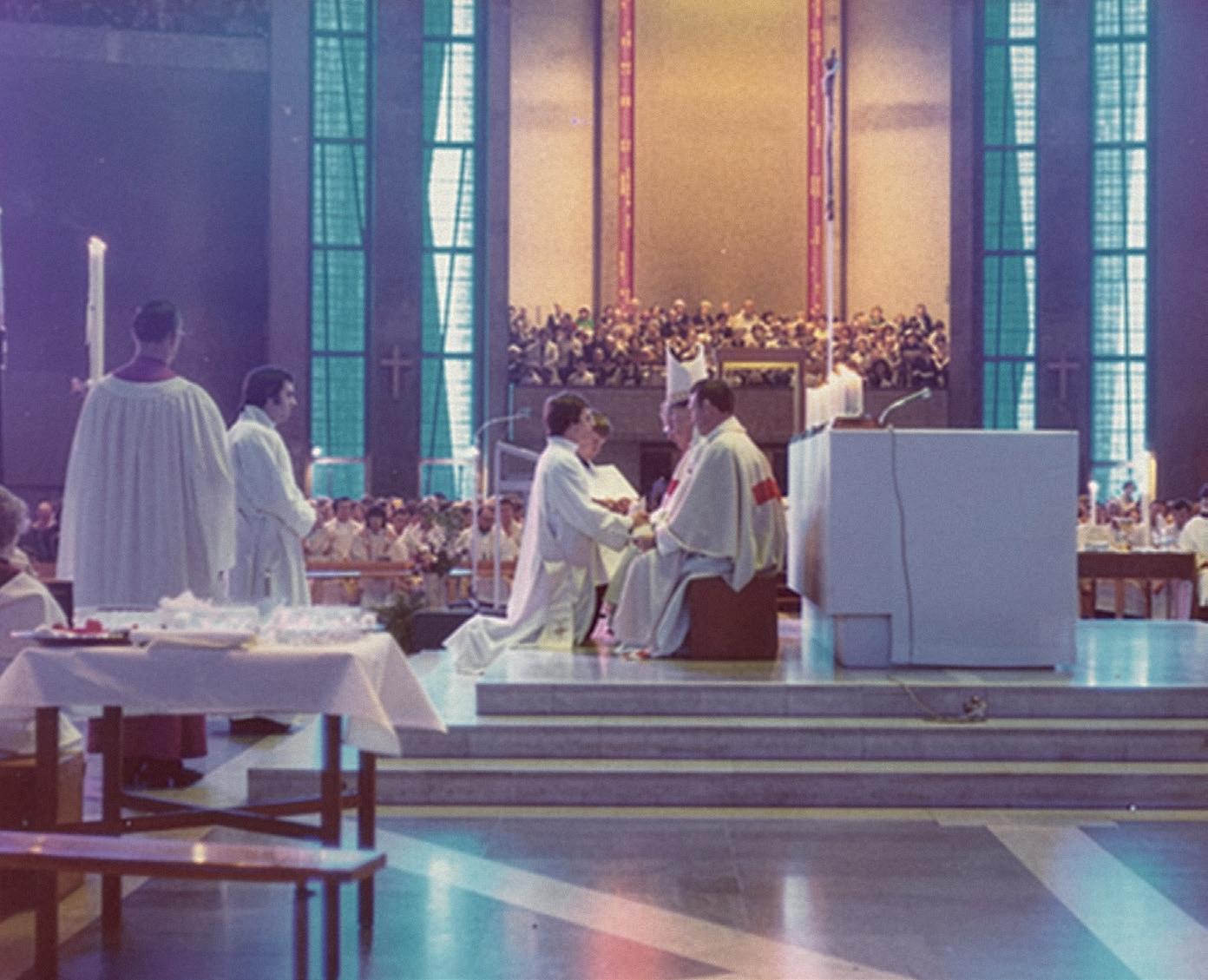
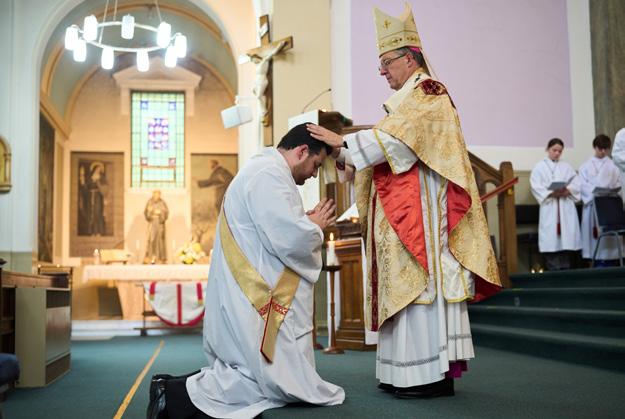
The previous Sunday, the Metropolitan Cathedral had celebrated the Ordination Mass of two new priests, and the Pic featured the pair – Father Richard Sloan and Father John Southworth – on its front page, together with the main celebrant, Archbishop Derek Worlock.
As the Pic’s article explained, “more than 3,000 people” attended the 5pm Mass and “many people were forced to stand. Coaches came from Wigan, Chorley, Crosby, and Liverpool parishes.”
It may be 50 years ago, but Fr Richard remembers it well. “The cathedral was jam-packed, standing room only,” he recalls. “It was an amazing celebration.”
Both he and Fr John, then 24, had initially been set for ordination in the summer, but Archbishop Worlock, installed in March that year, had other ideas. Fr John explains: “We were planning to be ordained in our own parishes, but then it was decided that, as it was Archbishop Worlock’s first year, it’d be appropriate to have an ordination on Vocations Sunday, and so
we were ordained in the cathedral by the new archbishop.”
“He wanted to make a big thing of it as the new archbishop and to promote vocations,” adds Fr Richard.
The day after the Ordination Mass, each man celebrated his first Mass at his home parish – Fr Richard at Saints Peter and Paul, Crosby, and Fr John at St Mary’s, Chorley.
Half a century on, the two men, both 74, will celebrate their golden jubilees with Masses at the parishes they call home today – St Agnes and St Aidan in Huyton for Fr Richard, and St Paul and St Timothy in West Derby for Fr John. For each, there will be much to be thankful for – and much to reflect on too.
In the case of Fr John, he has served at parishes across the diocese, beginning with Sacred Heart, Leigh, and St Teresa’s, Penwortham – stints which sandwiched a decade on the staff of the junior seminary at Upholland, prior to its closure in the late 1980s.
His first experience as a parish priest came at St Michael’s, Ditton, for a decade leading up to the turn of the millennium. Then, in 2000, he moved to Toxteth to take over Our Lady of Mount
Carmel Church. As he explains, on the reorganisation of parishes later in that decade, he “became parish priest of St Patrick’s and St Vincent’s too”.
“I’ve enjoyed everywhere I’ve been,” adds Fr John, who has acted as dean of nearly every area he has served, and witnessed much change over the decades. “There’ve been changes of archbishop, from Archbishop Worlock, to Patrick Kelly, and to Malcolm [McMahon], and now our present archbishop [John Sherrington]. Things morph from one thing to another. They retain some sort of stability and sameness, but at the same time everything becomes different according to the personality of those who are there, particularly archbishops and auxiliary bishops – and we’ve had several in my time.”
And yet through it all, he notes, “Liverpool and the cathedral have always been a real anchor.”
Away from Liverpool, Fr John summons another highlight of his priesthood –namely a summer spent in Sierra Leone in the 1980s, during his time teaching at Upholland. “You can read about countries where the Church is thriving or developing, but you really can’t get anything like the real picture until you experience it,” he explains.
“I was helping out in two parishes in the main city, Freetown – both the cathedral and an outlying parish. The administrator there wanted me to get a feel of a different style of ministry and so he arranged me to go for a week into the bush. That was in Kenema, in the heart of Sierra Leone. It was a fascinating experience. It just gave me a wider awareness of the Church and how varied it is.”
With Fr Richard, his own experience of ministry overseas proved even more transformative. Ten years after ordination, he embarked on a seven-year spell
as a priest with LAMP, the Liverpool Archdiocesan Missionary Project in South America, serving the Pius X parish in the town of Oruro in Bolivia.
He remembers: “It was a tin-mining town in the Andes. I’d only been in the parish for about six weeks when the bottom fell out of the world tin market. We went from 10,000 miners to 400 in a matter of weeks. And the consequences of that were women and children left while the husbands had to go looking for work lower down because we were 12,500 feet up.
“There were people struggling to exist and, all of a sudden, we were thrust into the challenge of trying to feed hundreds of people every day to keep them going. That had the biggest impact on me. It quickly knocks off any airs and graces – you’ve got people struggling to survive and at the same time you’re amazingly impressed by the faith that they have.
“I’ll never forget one woman who lived in terrible poverty. We went to visit her home, which was a one-room house with a dirt floor. The only way the parents and kids had separate bedrooms was to break open cardboard boxes and tape them together from ceiling to floor. For somebody to come out of that house with shining eyes and say to me, ‘Oh, Padre, isn’t God good’ was stunning to see.”
Before Bolivia, Fr Richard had experienced parish and school ministry –first at St Cuthbert’s, Pemberton, where he was chaplain to St Thomas More High School, and then at St James, Orrell, and St Mary’s, Lowe House, where he was chaplain to St Peter’s High School and St John Rigby Sixth Form College. There was also a spell at St Clare’s, Liverpool. Yet despite those experiences, his return to the archdiocese in 1993 brought a sense of dislocation.
“After living with people who were up against survival,” he explains, “everything seemed superficial and ridiculous. I was really bereaved for the life and the people I’d left behind.”
A bout of depression led him into therapy and that was his cue to train as a psychotherapeutic counsellor. After spells as parish priest at Our Lady of Sorrows, Liverpool; St Agnes, Huyton; and then Our Lady of Good Help, Wavertree, he received support from Archbishop Patrick Kelly “to go down to London and train in counselling and psychotherapy.”
Fr Richard stayed in London from 19992012, working in professional practice while assisting at the Church of Our Lady, St John’s Wood, and later serving as chaplain to the Catholic Hospital of St John & St Elizabeth. “I had a job as the counselling supervisor for the Islington Churches’ Bereavement Service,” he adds. On turning 60 he returned to
Huyton, focusing on “counselling, therapy and spiritual direction” and working with the Helpers of the Holy Souls in offering Ignatian Spirituality Workshops both in the UK and Romania. “It’s a great joy to be back once again in the lively parish community of St Agnes and St Aidan, to help out wherever possible and to work alongside our most dedicated parish priest, Father Anton [Fernandopulle].”
Fifty years ago, the Pic described Frs Richard and John as “two new shepherds” for this diocese. In the years since, they have certainly served their flocks well – in places near and far.
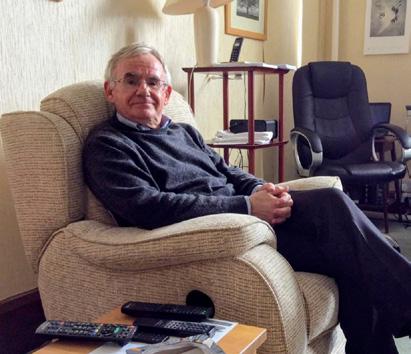
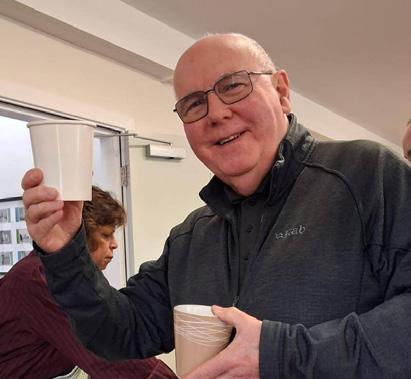
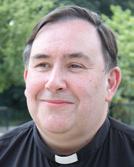
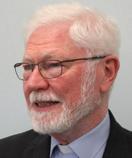
50 years on, Fr John (above) and Fr Richard (below), each taking a well-earned rest at their respective presbyteries after Mass
NOVENA to ST JUDE
Holy St Jude, Apostle and Martyr great in virtue and rich in miracles, near Kinsmen of Jesus Christ, faithful intercessor of all who invoke you, special patron in time of need, to you I have recourse from the depths of my heart and humbly beg to you whom God has given such great power to come to my assistance. Help me now in my urgent and present need and grant my earnest petition. In return I promise to make your name known and cause you to be invoked. For nine consecutive days say three Our Fathers, three Hail Marys and three Glorias. Publication must be promised. St Jude pray for us and all that invoke your aid.
Amen
This novena has never been known to fail.
CY Prayers answered

On a liturgical note
Happy Easter! You may think this greeting is a little ‘behind the times’ as we celebrated Easter Sunday some weeks ago. However, in the Liturgy we find ourselves still in the 50 days of Eastertime, so the Church is keeping the Season of Resurrection for some days yet!
The recent events in the Middle East and the Holy Land have made us think much about the position of our Christian sisters and brothers in Jerusalem and elsewhere in that region. You may have seen the news story of how the Latin Patriarch of Jerusalem, Cardinal Pierbattista Pizzaballa, was unable to celebrate the Palm Sunday Liturgy in the Church of the Resurrection in Jerusalem and how the Christian residents and pilgrims were unable to celebrate the processions and liturgies of Holy Week and the Triduum in the same way as in years past.
This has been – and continues to be – a sad and painful time for the Christians of Jerusalem and
Sunday thoughts
An advantage of retirement is the freedom to accept invitations to family events. A couple of weeks before Easter, I was invited to see my nephew’s children in their school performance of the ‘Wizard of Oz’. Michael and Annegret have four children and they all go to the same school in Hertfordshire. The three oldest all had parts to play. Cornelia, the eldest, took the role of the Wicked Witch.
It reminded me immediately of other legends, notably the medieval story of King Arthur and the Knights of the Round Table. These legends centre on an archetypal hero on a quest for the Holy Grail in which they encounter obstacles, failure and suffering. Significantly, the hero of the ‘Wizard of Oz’ is not a young knight but a young girl, Dorothy.
On her journey along the Yellow Brick Road, she encounters the Scarecrow, the Tin Man and the Cowardly Lion. They become her companions on the road. She also meets the Wicked Witch of the West and finally the Wizard of Oz himself. Each of these
Canon Philip Gillespie
the Holy Places: it is good that we hold them in our continued prayer and that, where possible, we continue to support them in practical and material ways.
In the 24th Chapter of the Gospel of Luke we read that “repentance for the forgiveness of sins will be preached in His name to all nations, beginning at Jerusalem”. This highlights the spiritual importance of the city of Jerusalem as the place of the final suffering, death and resurrection of the Lord Jesus. Throughout Eastertime we read at length from the Acts of the Apostles as the reality of this preaching unfolds. We encounter many characters for whom this proclamation is lifechanging and transformative – not least Saul who, after his encounter with the Risen Lord on the road to Damascus, is better known to us as Paul. It is from his letters to various churches that we take our Second Reading at Mass for most of the year.
Mgr John Devine OBE
characters can be said to represent unconscious aspects of her own personality, with which she has to come to terms on the path to maturity: wisdom, emotion, courage, and evil.
At the end of her journey, having achieved wholeness, she is content to return to her unpretentious existence in rural Kansas. The very things she felt driven to seek beyond the horizon were all the time to be found within her. Her conclusion: “There’s no place like home.”
The school performance was staged in the latter part of Lent. They had been rehearsing since the autumn. On reflection, it proved to be highly appropriate to the Lenten and Easter season.
Is it too great a stretch to recognise the characters Dorothy encounters reflected in the temptations endured by Jesus, in his 40-day sojourn in the desert? We also are invited to take up our own cross each day with the promise that we will rise with Him. He is the Way, the Truth and the Life.
The risen Lord is with us
I was once trapped in a cold waiting room because of the cancellation of a train, with no more promised until the following day.
I was wondering what to do when the door burst open and Jesus stood among us. He wore a Salvation Army uniform and was full of good cheer. He invited us to the citadel where there was soup and food and blankets. The hall was warm with good people preparing food.
We – myself and my fellow travellers – were safe and, although tired, were able to continue our journey the next day. I remember thinking that it really had been an experience of the risen Jesus breaking into our lives.
We all say that we believe in the risen Jesus. Yet, despite what we say we believe, we still get caught up in the same old fears and anxieties.
Maybe that is what it was like for those first disciples as they were faced with the risen Lord. Their fear and anxiety had become their tomb. Jesus is on the loose, risen from the dead, and the disciples are bound in fear. They have separated themselves and their lives from the reality of Jesus’ Resurrection. Their doors of faith have been closed, and the locked doors have become the great stone sealing their tomb.
It invites us to ask ourselves some questions. Are we living in the freedom and joy of the Resurrection, living the gift of the moment, or are we like those first disciples living behind locked doors? It always strikes me that the doors of our tombs are locked from the inside. When John describes the disciples as being locked in an upper room, he’s not just talking of a physical room. He is also describing the interior condition of the disciples.
John is inviting us to reflect on our own inner condition. The locked places of our lives are always more about what’s going on inside of us than around us. What are the closed places of your life? What keeps you in the tomb?
Whatever tombs we find ourselves in, Jesus is always entering the locked places of our lives. Sometimes He is unexpected, uninvited. At times, He is unwanted as He shatters our comfort zones and offers us a new way of living. Whatever the situation, standing among us, Jesus offers peace and breathes new life into us. He always shows up offering life, embodying life. Life and peace are Resurrection realities. The risen Jesus gives us all we need so that we might open our doors to a new life, a new creation, a new way of being. That offer is eternal.
Those gifts of peace and life do not necessarily change the circumstances of our lives and our world. The world is still full of broken people, and bad things still happen to good people, but the life and peace of Jesus’ Resurrection enable us to meet and live through whatever happens to us. As Timothy Radcliffe says, “He gives us His peace, His breath, His life, and then sends us out. We are free to unlock the doors of our lives and step outside into His life.”
Father Chris Thomas
World Cup underdogs
by Neil Sayer, Archdiocesan Archivist
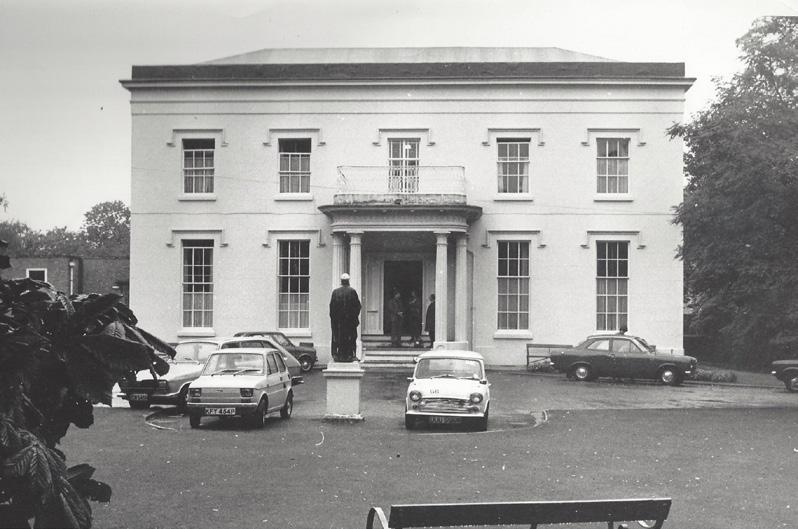
It’s 60 years since England won the FIFA World Cup on home soil, and one surprising story from the competition was of a Communist takeover of a Catholic retreat centre in Rainhill.
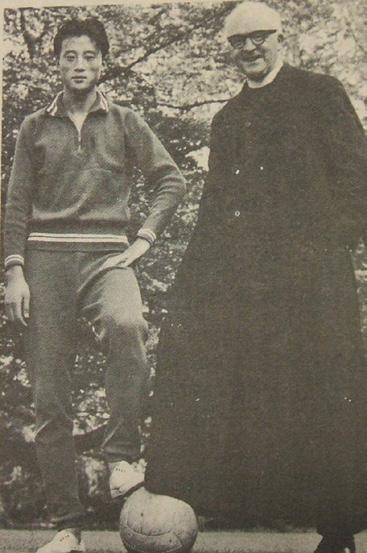
Just over a decade after the Korean War, the team from North Korea almost provoked a diplomatic storm when they qualified to play in the finals. The British government of the time might have been pleased to have them safely out of the limelight in Middlesbrough, where they played their group matches at Ayresome Park. Their underdog status combined with the players’ good manners and willingness to use their sporting skills for public relations purposes had made them welcome in Middlesbrough, and they surprised everyone by progressing from the group stage. One of the teams they beat was Italy, who had booked Loyola Hall in Rainford as their base for their confidently anticipated appearance in the quarter finals.
Loyola Hall had been built as Rainhill House by Bartholomew Bretherton in 1824. A substantial landowner and Catholic benefactor, he is remembered in the dedication of St Bartholomew, the Rainhill church built in the 1840s. Following the First World War the StapletonBretherton family sold off most of their Rainhill estates and moved to the south of England.
In 1923, Rainhill House and four acres of land were bought by the Society of Jesus for use as a retreat house, named in honour of St Ignatius Loyola, the founder of the Jesuits. Many readers are likely to have memories of visits to the premises. As a retreat house, Loyola Hall catered to the varying needs of priests, nuns, and lay groups offering periods of prayer and contemplation, as well as UCM Study Days, youth leadership courses, and Young Catholic Workers’ events. Its facilities included a chapel, library, dining room, lounge, and recreation room. Every weekend, about 40 lay people could be accommodated on traditional parish retreats: often men would visit one week, followed by their wives the following week. In 1965, Fr Peter Blake, Jesuit Superior of the Hall, put his institution forward as accommodation for one of the teams in the football championship then being planned. “We had a new £100,000 wing with every facility required”, he said. “The World Cup people jumped at the chance.”
Denise Newcombe was a schoolgirl living in Rainhill at the time. She was in the fourth form at Notre Dame High School in St Helens and reported on the visit of the North Korean team for the school magazine. “If the Italians had got into the quarterfinals, they were to have stayed at the Hall instead. They were so confident that
before they played the match, they sent Father Blake a present of a golden chalice.”
According to the Pic, when the Italians “crashed sensationally” to the Asian side, “the Koreans decided to take their place. Together with their coaches and cooks, trainers and cheerleaders [they] posed for pictures before meeting Portugal at Everton.”
As at Middlesbrough, the team became popular locally, and Denise Newcombe remembered: “Although they were not Catholics, the North Koreans stayed at Loyola Hall and were welcomed by everyone. They brought with them two chefs to cook all their meals. My brother was lucky enough to get the autographs of all the players as well as those of the two chefs. Although he was unable to read them, because they were written in their language, he was very pleased. Father Blake, the Rector at Loyola Hall, often watched the team training and tried to give them tips on what he thought were their weak points.” It was said that the team’s “communist minders” were not in favour of such fraternisation.
The crowd of almost 52,000 for North Korea’s quarter final match against Portugal on 23 July 1966 at Everton’s then-home of Goodison Park included many Boro fans who had taken the World Cup underdogs to their hearts and followed them from Teesside. Their adopted team in fact took a 3-0 lead, but a Eusébio-inspired comeback saw Portugal score 5 goals to win the match, progressing to the semi-finals where they were beaten 2-1 by England.
Loyola Hall was closed in 2014 and sold to a property developer in 2017. It is now a hotel and popular wedding venue.

Loyola Hall, Rainhill, pictured in 1977
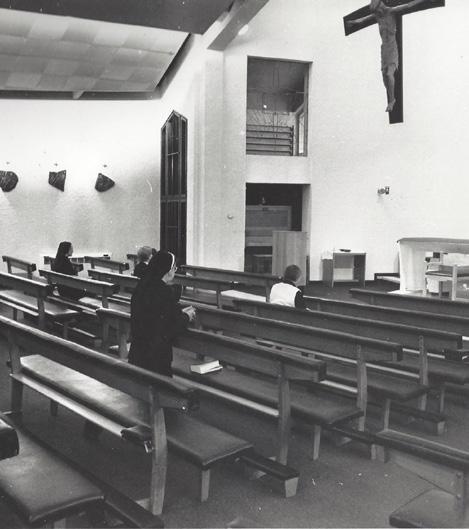
The chapel of Loyola Hall, Rainhill, pictured in 1977

diary
If you’ve got any news from your parish that you’d like featured e-mail us with the details at: CatholicPic@rcaol.org.uk
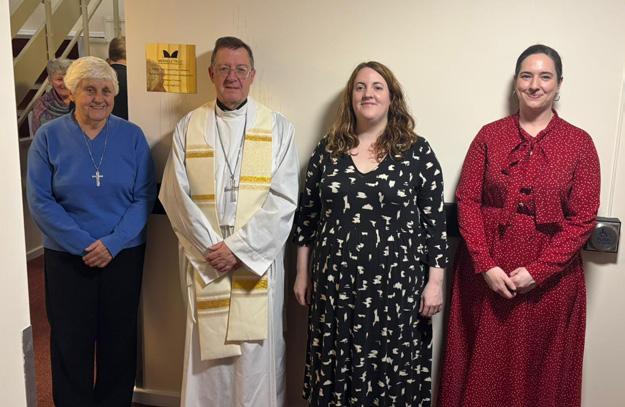
Archbishop opens new Medaille Trust safe house for survivors of modern slavery
Archbishop John Sherrington formally opened a new safe house for survivors of modern slavery and human trafficking, operated by Medaille Trust. Speaking at the unveiling of the plaque, Archbishop John welcomed it as a place of safety, refuge, and sanctuary.
The new safe house provides support for up to 18 male survivors at a time in Liverpool. Aside from safe and secure accommodation, survivors will benefit from wraparound support, including a dedicated caseworker and assistance with access to healthcare, legal support, and help to begin the process of recovery.
It builds on the longstanding work of the Medaille Trust, one of the leading providers of support for survivors of modern slavery in the UK, who are marking their 20th anniversary this year. Medaille currently operates 10 safe houses and five community projects across the UK, as well as projects in Albania which collectively support more than 700 men, women, and dependent children each year.
Speaking at the opening, Medaille CEO Dani Wardman said: “Last year, a record number of potential victims of modern slavery were identified in the UK. At Medaille, we believe the journey to meaningful recovery starts with people feeling safe, supported,
and having their dignity respected. This new safe house has been opened with a commitment to offering the highest standards of support to help people on their journey to become survivors.”
The new project has been generously supported by The Albert Gubay Charitable Foundation and The Sisters of Poor Servants of the Mother of God.
Focolare in Liverpool - Endings & New Beginnings
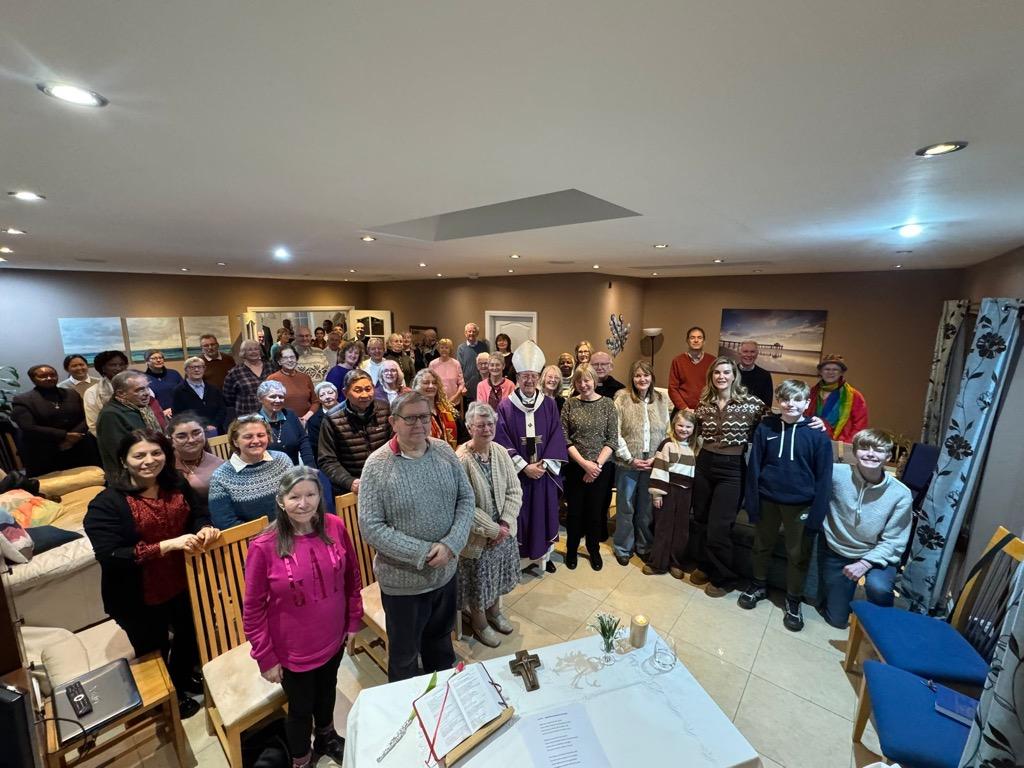
On Thursday 19 February, friends old and new gathered in Roby for an evening of thanksgiving for the presence of the Focolare in Liverpool.
After six decades in the city, the Liverpool women’s community house is closing, but the life of the Focolare in the region remains vibrant and hopeful. Archbishop John Sherrington celebrated a thanksgiving Mass for the Focolare, with some of those present sharing what the spirituality meant to them.
The atmosphere was one of joy and celebration. Some guests had never been to the house before, and stories of discovery were shared over a feast of food prepared by all. Our ecumenical family was well-represented, including Methodist, Baptist, Anglican, and Coptic Orthodox friends. Attendees appreciated the beautiful music, food, and friendship shared, to which so many had contributed, including the young people.
Diane Williams represented all members present by sharing her experience of renewal in all areas of her life, through meeting the Focolare, by discovering how to live out the Gospel in daily life. While some tears were shed, the local communities in Liverpool and across the north west will continue carrying the torch for unity, building for the future together.
An attendee commented after the event:
“During Mass, Archbishop John Sherrington spoke with much appreciation and encouragement of the Focolare community.
An early video took us back to the roots of the charism, the first Focolare established in the city (and indeed Great Britian, and those founding days of ecumenism in Liverpool, so full of hope and new life.”
“As the Focolare house is closing, the local community feels strong enough to keep the charism alive locally by remaining united in mutual love and trusting in Jesus to lead us. Uncharted territory in some ways, and we’re taking it step by step. ‘Behold I make all things new’!”
For more information about Focolare events and Word of Life meetings in your area, please contact: Christine Ashley: 07731 342 445 (also on WhatsApp) or Loretta Hegarty rettahegarty@ googlemail.com
A year of Archbishop John Sherrington
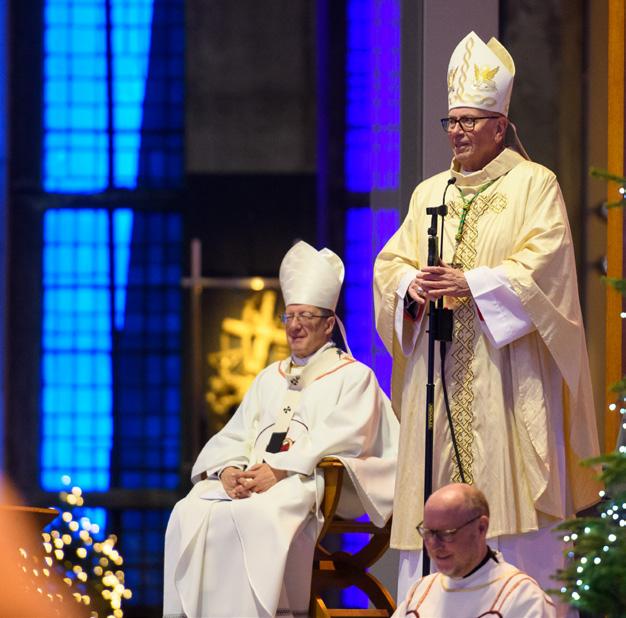
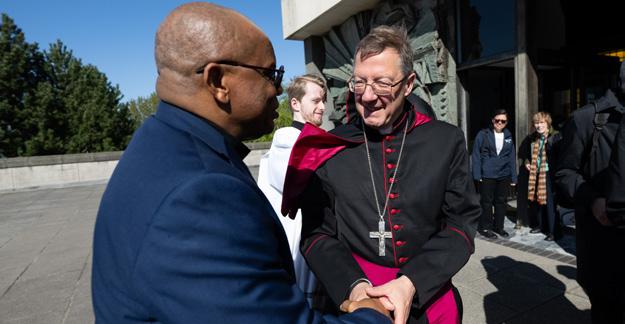
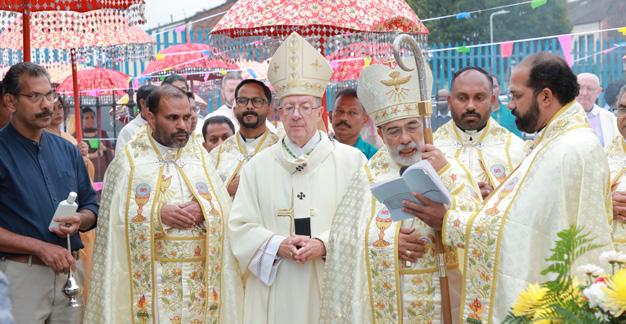
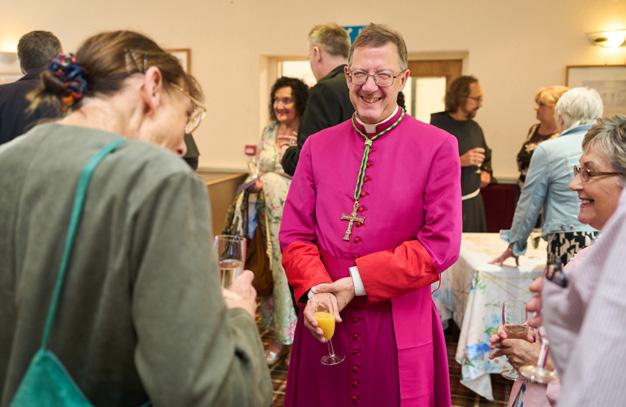
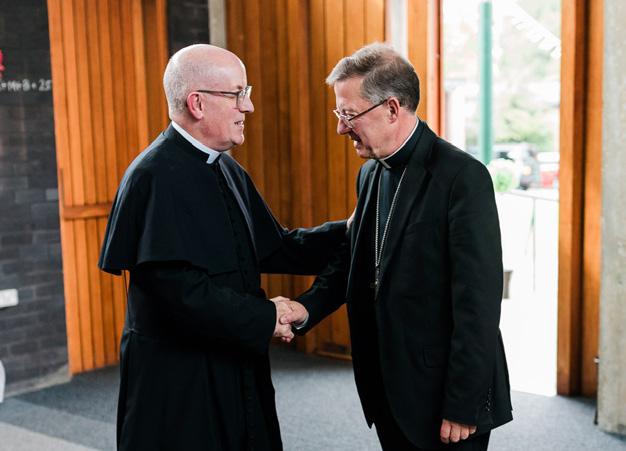
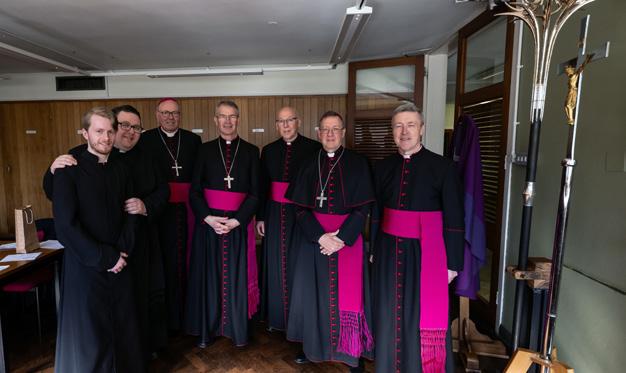
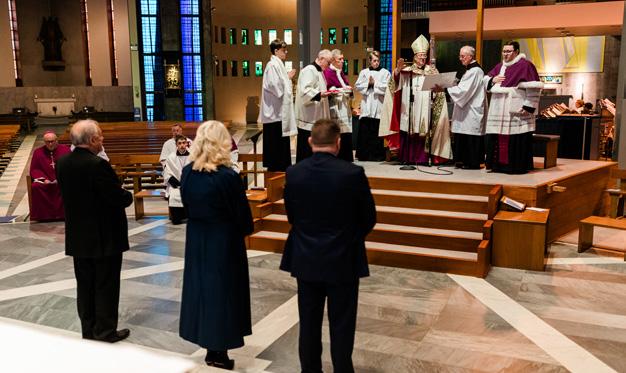
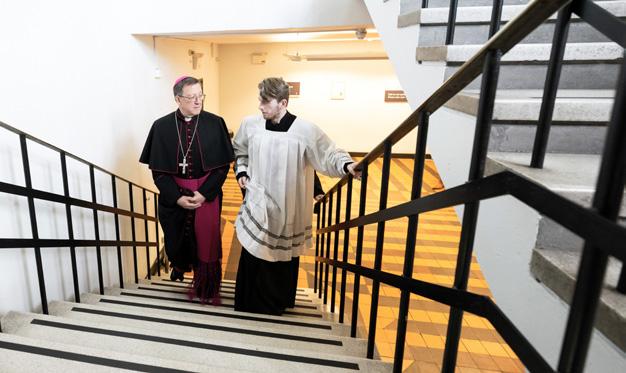
One year ago this month, on Tuesday 27 May 2025, the archdiocesan family celebrated the Mass of Installation of Archbishop John Sherrington as the tenth Archbishop of Liverpool.
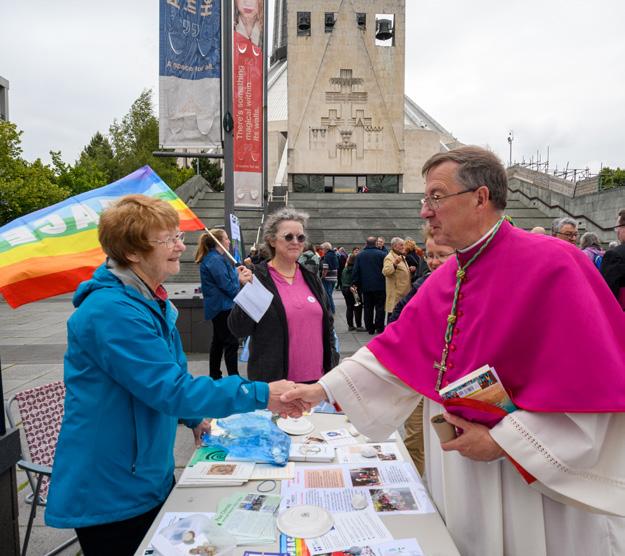
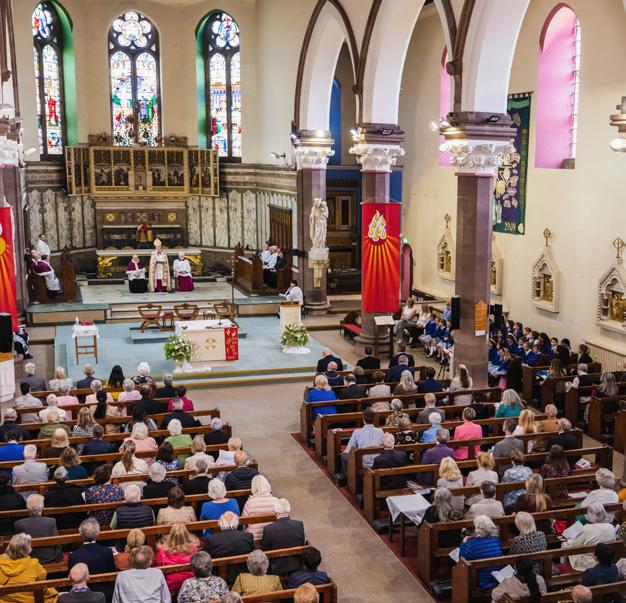
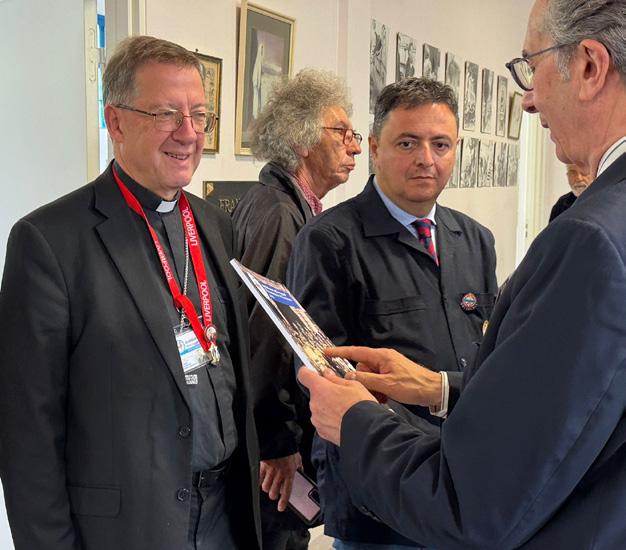
Just a couple of weeks after his installation, Archbishop John took part in one of our archdiocese’s favourite ecumenical traditions – the Pentecost “Two Cathedrals” walk, walking between the Metropolitan Cathedral and Liverpool Cathedral alongside our Anglican brothers and sisters along Hope Street. In keeping with the theme of two cathedrals. The archbishop then took canonical possession of the co-cathedral, St Mary of the Isle Cathedral in Douglas, the Isle of Man..
Here are some highlights of his first year at the Archdiocese of Liverpool.
Parish fundraiser raises over £1,000 for Air Ambulance
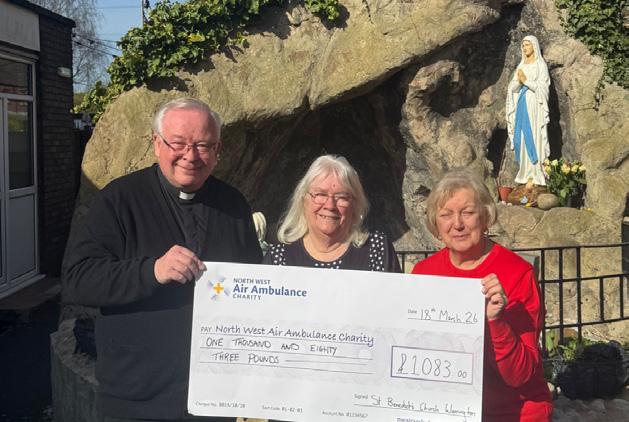
The parish of Blessed James Bell, Warrington, recently held a fundraiser raising a whopping £1,083 for North West Air Ambulance (NWAA).
The event, held at St Benedict’s Church, began with an informative speech about the vital work of the charity, delivered by parish priest Rev. Canon David Heywood. This was followed by a presentation from Rob Cant, a volunteer with the NWAA, who gave further insight into the life-saving services the organisation provides across the North West.
Guests were treated to a warm and welcoming lunch prepared by members of St Benedict’s fundraising team. The afternoon continued with a raffle and a small auction, alongside sponsorship contributions, all helping to boost the total funds raised. Thanks to the generosity and support of everyone involved, the parish was delighted to present a total of £1,083 to the North West Air Ambulance.
The cheque was formally handed over to Danny, a representative of the NWAA, in the presence of Canon David Heywood and parish fundraisers Chris Sykes and Sandra Brinksman.
Organisers expressed their sincere thanks to all who contributed to the event’s success, highlighting once again the strength of community spirit and the importance of supporting such a vital, life-saving service.
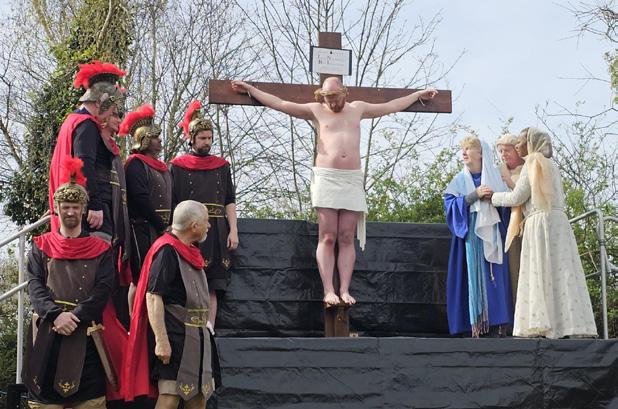
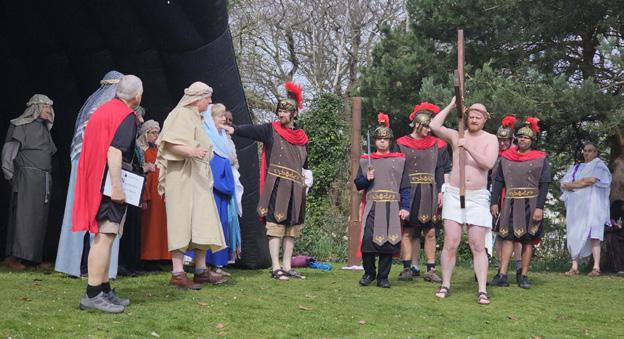
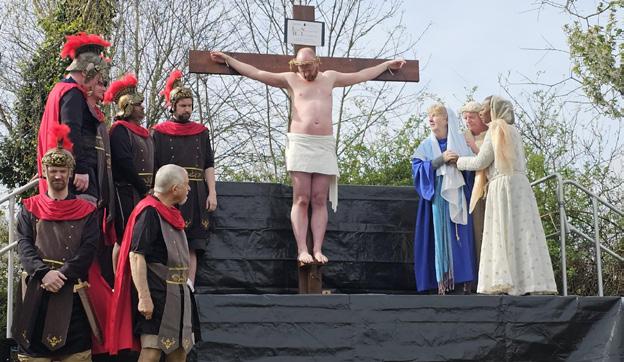
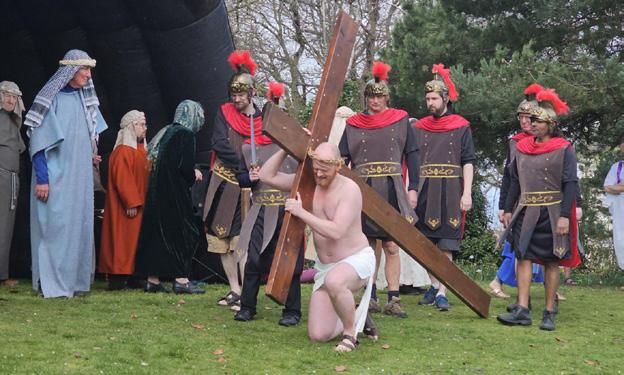
Hundreds Gather for Walk of Witness and Passion Play in Formby
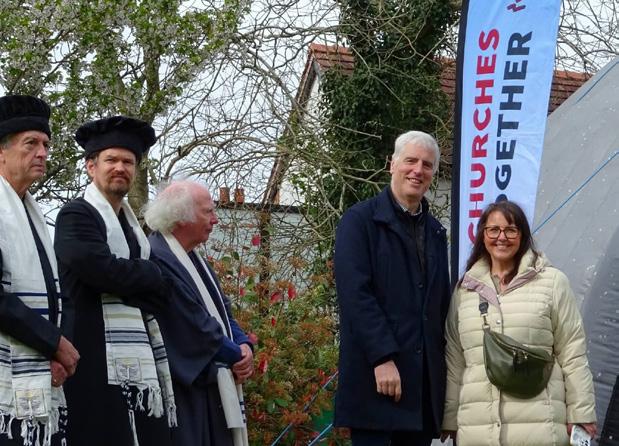
Hundreds of people gathered in Formby for the annual Walk of Witness, organised by Churches Together in Formby, Altcar and Hightown.
Blessed with fine weather, the procession moved prayerfully through the village before concluding in Formby Pool Gardens for the Passion Play. This much-loved event has been a central part of Churches Together in Formby for over ten years, bringing the community together to reflect on the story at the heart of our Christian faith.
Andrea Dell, Chair of Churches Together in Formby, Altcar and Hightown and a parishioner at Our Lady of Compassion Church, welcomed those gathered at the start of the event. She described the walk as “a visible and prayerful expression of our shared faith,” and highlighted the importance of the play as “a central part of our community’s preparation for Easter.”
Her husband, Deacon Andy Dell, also of Our Lady of Compassion, gave the opening reflection before the performance began. Participants from across local churches contributed to the event, offering their time and talents in a spirit of shared mission. Andrea noted that “this collaboration across denominations is a powerful witness in itself,” showing how Christians can stand together in proclaiming the Gospel. She also expressed gratitude to all those involved, particularly organisers, volunteers, and supporters, with special thanks to Dympna and Mark Edwards for their dedication.
Carrying the Cross through the city
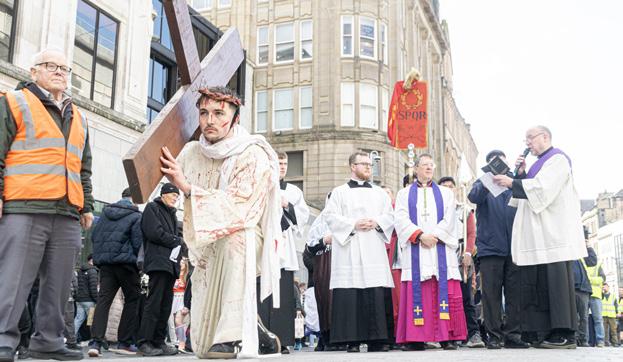
Around 200 Christians gathered in Liverpool city centre for the annual “Carrying of the Cross” procession, organised by the Missionaries of Charity and led by Fr Peter Ross.
The public act of devotion saw a participant portraying Christ lead the procession through the streets, stopping at fourteen stations. At each point, Archbishop John Sherrington read the reflections, while costumed participants reenacted scenes from the Passion. The procession, which began on Church Street, concluded with a short service at St Luke’s “Bombed Out” Church, a place itself marked by history and witness.
The event offered a striking reminder of faith lived publicly, drawing together prayer, community, and a shared reflection on the meaning of the Cross.
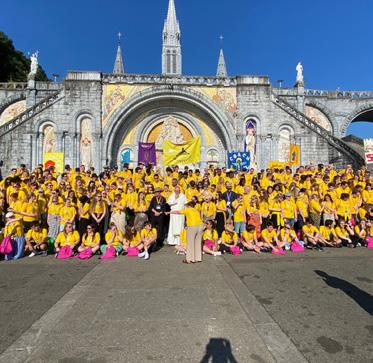
SHARE YOUR YOUTH PILGRIMAGE MEMORIES!
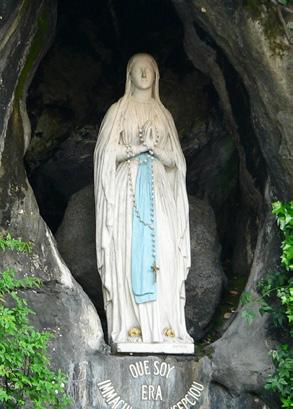
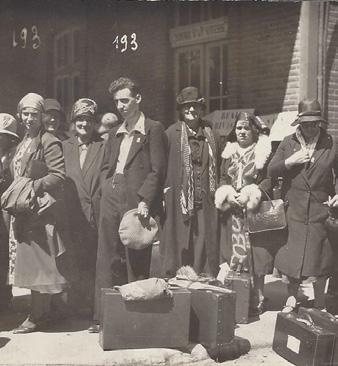
This year marks 50 years of the Archdiocesan Youth Pilgrimage to Lourdes, and we’d love your help to celebrate this special milestone by sharing your memories.
Did you meet your partner on the pilgrimage?
Have several generations of your family travelled to Lourdes? Were you part of the very first pilgrimage, or did you experience a moment there that stayed with you forever? Whatever your memories or experience – we want to hear from you!
Please send your memories and/or photos – to communications@rcaol.org.uk by 13 May. Selected submissions may be featured in The Pic, on the archdiocese and Animate’s website and social media channels, and in a special scrapbook of memories being created for the youth pilgrims travelling this year.
p01-17_covers 02/09/2022 15:32 Page 11
Please note: By sharing photos with us, you confirm that you are happy for them to be used in archdiocesan publications and that you have obtained permission from everyone pictured, or from their family if they are deceased.

what’s on May
Tuesday 5 May
Continuing along the path of Synodality
7:00pm – 8:30pm (Online)
Pope Leo has continually affirmed Pope Francis’ understanding of synodality as the way of the Church for the third millennium and recently clarified expectations of how this will shape the life of our dioceses and parishes. In the Archdiocese of Liverpool, our own diocesan synod laid some good foundations for us to continue to build on. The Final Document from the Synod on Synodality (Vatican Synod) provides the basis for the journey ahead. During Eastertime a series of Zoom sessions will give an opportunity for reflection, sharing and prayer on some of the themes of the document.
Zoom link: archdioceseofliverpool.org/ SynodalityZoom
Wednesday 6 May
General Catechist Course
6:30pm – 8:30pm at St John Fisher, Moorfield Road, Widnes, WA8 3JA
If you want to be a catechist, or want to refresh your knowledge, then this course is for you. We will be hosting several sessions, including Catechist and kerygma, We believe, We pray, We celebrate, Catholic social teaching, Safeguarding, Family catechesis and Catechesis for people with additional needs. All current and aspiring catechists are welcome.
Sign up here: archdioceseofliverpool.org/ GeneralCatechistCourse
Tuesday 12 May
Continuing along the path of Synodality
7:00pm – 8:30pm (Online)
Pope Leo has continually affirmed Pope Francis’ understanding of synodality as the way of the Church for the third millennium and recently clarified expectations of how this will shape the life of our dioceses and parishes. In the Archdiocese of Liverpool we have been endeavouring to walk this synodal path for some time. Our own diocesan synod laid some good foundations for us to continue to build on. The Final Document from the Synod on Synodality (Vatican Synod) provides the basis for the journey ahead. During Eastertime a series of Zoom sessions will give an opportunity for reflection, sharing and prayer on some of the themes of the document. Zoom link: archdioceseofliverpool.org/SynodalityZoom
Wednesday 13 May
General Catechist Course
6:30pm – 8:30pm at St John Fisher, Moorfield Road, Widnes, WA8 3JA
If you want to be a catechist, or want to refresh your knowledge, then this course is for you. We will be hosting several sessions, including Catechist and kerygma, We believe, We pray, We celebrate, Catholic social teaching, Safeguarding, Family catechesis and Catechesis for people with additional needs. All current and aspiring catechists are welcome.
Sign up here: archdioceseofliverpool.org/ GeneralCatechistCourse
Thursday 14 May
Sefton South Women Faith and Friendship Meeting
7:00pm at The Irenaeus Project, 32 Great Georges Road, Waterloo, L22 1RD
Join the latest Sefton South Women Faith and Friendship Meeting which will include a talk about the work of Irenaeus and a tour of the church (the former St Thomas of Canterbury Church).
Tuesday 19 May
Continuing along the path of Synodality
7:00pm – 8:30pm (Online)
Pope Leo has continually affirmed Pope Francis’ understanding of synodality as the way of the Church for the third millennium and recently clarified expectations of how this will shape the life of our dioceses and parishes. In the Archdiocese of Liverpool we have been endeavouring to walk this synodal path for some time. Our own diocesan synod laid some good foundations for us to continue to build on. The Final Document from the Synod on Synodality (Vatican Synod) provides the basis for the journey ahead. During Eastertime a series of Zoom sessions will give an opportunity for reflection, sharing and prayer on some of the themes of the document.
Tuesday 19 May
Top tips for a happier Marriage
7:30pm – 8:30pm (Online)
The archdiocese, together with Marriage Encounter, will be running an online session called “Top tips for a happier Marriage”. You can discover ways to grow in love, marriage and life. Marriage Encounter have 50 years of wisdom and experience, based on Scriptural truths. All married couples are welcome. Sign up here: archdioceseofliverpool. org/4tmmxIC
Wednesday 20 May
General Catechist Course
6:30pm – 8:30pm at St John Fisher, Moorfield Road, Widnes, WA8 3JA
If you want to be a catechist, or want to refresh your knowledge, then this course is for you. We will be hosting several sessions, including Catechist and kerygma, We believe, We pray, We celebrate, Catholic social teaching, Safeguarding, Family catechesis and Catechesis for people with additional needs. All current and aspiring catechists are welcome.
Sign up here: archdioceseofliverpool.org/ GeneralCatechistCourse
Thursday 21 May
Newman Association Talk: ‘Lord into your hands, I commend my Spirit’
7:30pm at St Helen, Alexandra Road, Crosby, L23 7TG
Archbishop John Sherrington will lead this talk for the Newman Association on the topic of Assisted Dying. All are welcome to attend. Light refreshments will be served from 7:10pm.
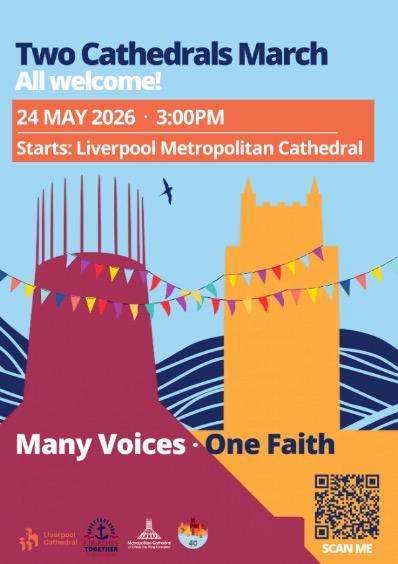
Sunday 24 May
Pentecost Celebrations / Two Cathedrals Service
3:00pm at Liverpool Metropolitan Cathedral
You’re invited to the Pentecost or the Two Cathedrals Celebrations, an event for everyone, including our youth. This year, the stalls will focus on the Manifesto for Hope launched last November. CTMR Church Leaders have also extended an invitation to our Civic Leaders.
Wednesday 27 May
General Catechist Course
6:30pm – 8:30pm at St John Fisher, Moorfield Road, Widnes, WA8 3JA
If you want to be a catechist, or want to refresh your knowledge, then this course is for you. We will be hosting several sessions, including Catechist and kerygma, We believe, We pray, We celebrate, Catholic social teaching, Safeguarding, Family catechesis and Catechesis for people with additional needs. All current and aspiring catechists are welcome.
Sign up here: archdioceseofliverpool.org/ GeneralCatechistCourse
Saturday 30 May
Missionaries of Charity: May Procession 2026
2:00pm (starting at St Peter’s Square, Liverpool City Centre)
Fr Peter Ross will lead the procession, beginning at St Peter’s Square and continuing along Bold Street, Church Street and Whitechapel, finishing at the Blessed Sacrament Shrine on Queen’s Square. A special invitation is extended to those making their First Holy Communion. If you would like to volunteer, contact Jim Ross on jimmy.ross7@gmail.com
See more event details on our website: www.liverpoolcatholic.org.uk
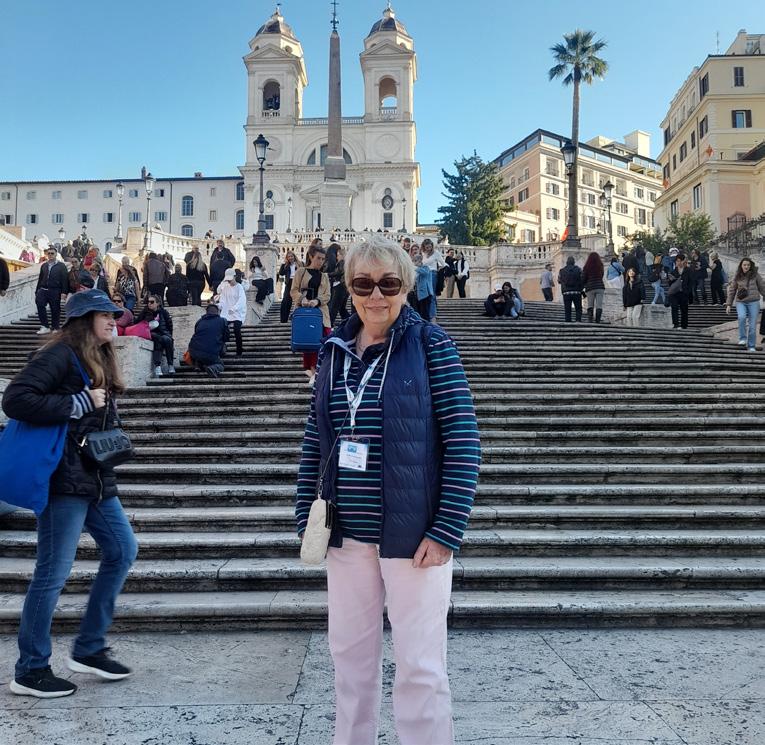
Jottings of a Roman Pilgrim
By Pat Murphy
There are approximately 500 churches in Rome, and 26 of them dedicated to the Blessed Virgin Mary. As it’s the month of May, a month dedicated to Our Lady, I thought I would write about one of these churches that I love to visit when in Rome.
To me, it’s the most unusual and quirky. It’s where ancient Rome meets modern sculpture, with the Gregorian calendar thrown in for good measure. Of course, it’s Santa Maria degli Angeli dei Martiri. A church that many pilgrims may miss, as it looks like a Roman ruin. Indeed, the building is the former Roman baths of Diocletian built at the turn of the 4th century by Christian slaves. The baths were in use until the fall of Rome, when the aqueduct supplying water was destroyed.
The ruins lay empty for around 1,000 years when the Pope asked an aged Michelangelo to redesign the building into a place of worship - recycling at its best in the mid-16th century. The 1700-year-old Roman baths are now a huge church.
The church is dedicated to Christian Martyrs known and unknown – a nice touch. Since the 16th century, it was added to over the next few hundred years - it really is ancient Rome meeting Renaissance and modern Rome. For instance, the organ in the chapel of St Bruno was a gift from Pope St John Paul II to the city. In recent times, new bronze doors have been added that include a statue of Galileo. There is, of course, the reference in this church to the Gregorian calendar. The Pope wanted to check the accuracy of the changes to the calendar, and had a meridian line – a sundial constructed in the middle of the church (the calendar is indeed correct).
There are a great number of sculptures around the church, and if you venture further at the back of the church around the ruins, you can really picture the colossal size of this Roman bath. To me, this building has the brilliance of Roman civil engineering, with the wonderful calmness as you enter the church. It’s never as busy as the large basilicas are. If you are visiting Rome, do add this church to your itinerary – it’s a little gem.
Cathedral Record
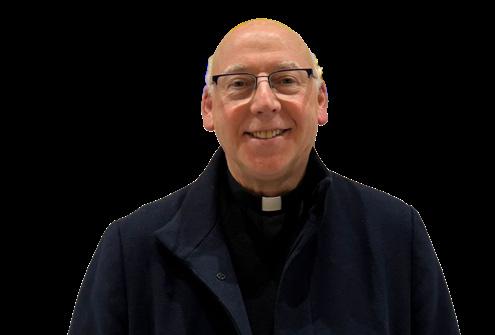
Canon Anthony O’Brien –Cathedral Dean
I found the Holy Week and Easter services at the cathedral very moving this year.
It was Archbishop Sherrington’s first Holy Week celebrating the Triduum within his cathedral and the dignity of the celebrations, the prayerfulness, and the care in celebrating the liturgies was appreciated by the large congregations that attended throughout the week.
Despite the very long Easter Vigil ceremony, the joy and intent of the numbers of adults who were baptised and received was really infectious, and nearly all of them were back later that Easter morning wanting to affirm their faith once again, and to celebrate their newfound membership within the Church and receive the Risen Lord in the Holy Eucharist. May the strength, the joy, and the renewal of our faith at Easter sustain us throughout the season and the rest of the year.
The celebration of Pentecost falls this year on 24 May. This special Feast of the outpouring of the Holy Spirit marks an annual celebration of the anniversaries of the opening of our cathedral and also the visit of St John Paul II to Liverpool and our two cathedrals. Since the Pope’s visit, we have kept faithful to an annual joint Two Cathedrals service and walk of witness and unity along Hope Street. This year, we begin the service on the steps of our cathedral at 3pm and the Salvation Army band will lead the clergy, choirs, and congregation in a march along the street to Liverpool Cathedral. The theme of the service this year is ‘Many Voices – One Faith’. It would be great to have people come with flags or different national costumes in keeping with the theme. The event is organised to be a family-friendly occasion, with activities for children at the end of the service at Liverpool Cathedral.
Pastoral ponderings
by Dominic Redcliffe
Hello from Rome to all of you at home.
In my second year here at the Beda College, my continued formation has been greatly influenced by my house job. Each seminarian has a role that they undertake in college in addition to academic studies. These include the infirmarian, librarians, sacristan with his team of assistants, and my role this year, Master of Ceremonies (which is shortened to MC).
Being in this role has been a massive learning curve for me. I have to ensure that preparations are made for liturgies such as daily Mass and morning or evening prayer. I prepare the missal for the celebrant at Mass and the lectionary for the lectors. Each week, I publish a timetable listing who is doing what at each liturgy. Additionally, I also list who the celebrant is and the deacons who will be assisting.
Holy Week last month was a challenge for me, but with good advice from people in college and from friends at home, the liturgies ran smoothly. For some reason though, my idea of having a donkey for the Palm Sunday procession wasn’t approvedI can’t think why!
As the seminary year has progressed, by carrying out my house job, I have learned a great deal about how the liturgical year continues. This is all part of my overall formation as a seminarian. This type of learning and formation is ‘hands-on’, rather than the other learning that is done in the classroom. During this month, I’m working with the liturgy team to prepare for the college’s Patronal Feast of Saint Bede on 25 May. We will have Mass followed by what is called a ‘festal meal’.
Saint Bede, often known as the Venerable Bede, stands as one of the greatest scholars of the early Church in England and a figure of importance for Catholic life and learning. Born around 673 in Northumbria, he lived in monasteries in Jarrow, where he spent almost his entire life in prayer, writing and in studying the scriptures. The legacy of Saint Bede is not confined to the early medieval Church, but continues to shape priestly formation today here at the Beda College. Like Bede himself, the college is dedicated to the integration of prayer, study, and pastoral formation.
St Bede, pray for us.
Dominic
Walking Together: The Journey to Pentecost
by Liz Parsons, Director of Pastoral Development
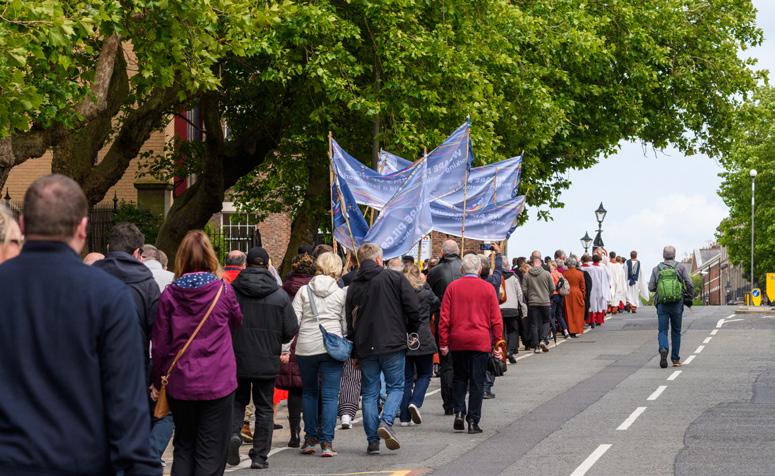
As the Feast of Pentecost approaches, and we remember the moment when the early Christians were flooded with the Holy Spirit and carried the Gospel out into the crowds, Christians across our own region are preparing to come together in celebration at this year’s Two Cathedrals Pentecost Walk. Inspired by Pope John Paul II’s journey down Hope Street in 1982, the tradition of the Two Cathedrals Pentecost Walk has become a cherished feature of Christian life in Liverpool.
It’s been an exciting year for ecumenism in our region and beyond. Last October, we witnessed an astounding moment, as Pope Leo XIV and King Charles prayed side by side in the Sistine Chapel. For the first time since the Reformation, a British monarch and a Pope prayed together, standing as a reminder that the story of our journey towards unity is still unfolding.
Those of our readers who remember the 1960s and 70s may well recall that our own region has not always enjoyed such a strong tradition of ecumenism. When Archbishop Derek Worlock arrived in Liverpool in 1976, he was initiated into a city with an especially painful history of sectarian division. Although it was the case that in the difficult years that preceded him, quieter forms of ecumenism were already at work behind the scenes, especially in the friendships of church leaders such as Archbishop George Andrew Beck and Bishop Stuart Blanch, the transformation of the archdiocese into a place where Christians confidently work together took decades of hard work
and individual decisions to seek out friendship and reconciliation. From this foundation, a pact once made between Archbishop Worlock and Bishop Sheppard would eventually emerge as the ordinary way of Christian life for our churches: “Do everything together, except the things which conscience forces us to do apart”.
However, the story of ecumenism in our region is not only written in the friendships of bishops and archbishops, nor at the level of kings and popes! At a more local level, many of our parishes have formed their own Christian friendships, especially through more practical acts of compassion in their communities. Across the archdiocesan region are countless stories of Christians from different denominations coming together to respond to emerging needs through setting up foodbanks, warm spaces, support hubs, and much more. In these spaces, ecumenism is part and parcel of ordinary Christian life, through a natural response to the Gospel’s call to love our neighbour.
But our ecumenical way of life consists not only of working together but celebrating together too, and this spirit will be captured at this year’s Two Cathedrals Walk, which will take place on Sunday 24 May at 3pm. All are warmly welcome to join us in gathering at the Metropolitan Cathedral of Christ the King for a walk down Hope Street to Liverpool Cathedral in a time of joint celebration. For more information, visit: https://www.ctmr.org. uk/Groups/341586/Pentecost.aspx
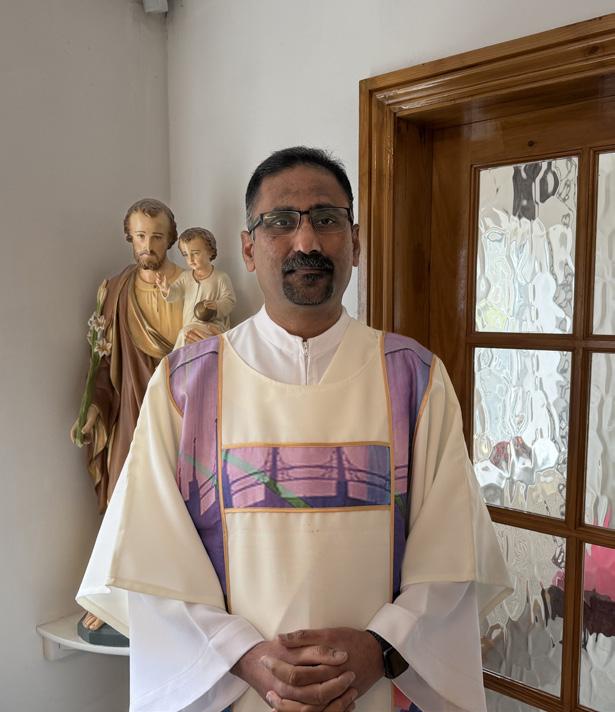
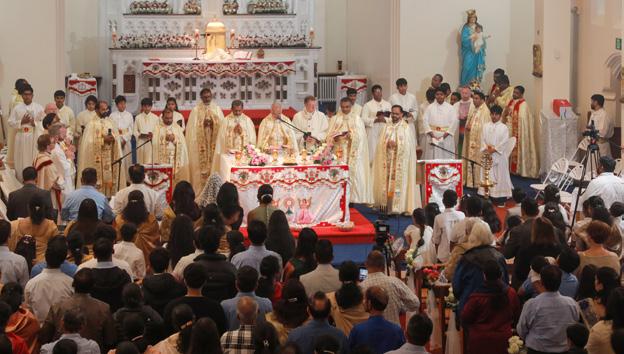
Deacon Anil Lukose is casting his mind back to 20 September last year, a special day at Saint Elizabeth’s Church in Litherland. It was the day that the Knanaya Catholic community in the northwest celebrated taking the keys of a church granted them on a long-term lease by the Archdiocese of Liverpool.
“It marked a historic milestone as it’s the first Knanaya Catholic church in the UK, and indeed the first in Europe,” explains Anil, a permanent deacon of Liverpool Archdiocese and also a member of the Knanaya Catholic community. “The blessing ceremony was wonderful,” he adds. “Around five hundred people attended.”
That number included the Archbishop of Liverpool, John Sherrington, along with Archbishop Mathew Moolakkatt and Bishop Joseph Pandarasseril, who had travelled from the community’s home diocese of Kottayam in Kerala in southern India. That is where this branch of Catholicism took root some 1,700 years ago. Today, the members of its British-based community form part of the Syro-Malabar Eparchy of Great Britain, which was established by Pope Francis in 2016. Due to their unique traditions and historical identity, they are able to retain their membership of the Archdiocese of Kottayam while living in the UK.
As a deacon of the archdiocese, Anil serves the parish of St Edward the Confessor in Wigan. The 51-year-old father of four plays a role in the Knanaya Catholic community too – an attachment explained by his roots in Punnathura, Kerala, where he was born and grew up in the parish of St Thomas Old Church.
A Wigan resident since 2002, when he arrived in Britain to be with his wife, Sony, a specialist nurse, he explains: “We’re spread all over the country with 15 Knanaya Catholic missions. The St Pius X mission serves the faithful in Liverpool and the surrounding areas. The mission includes approximately 250 families, with around 150 children attending Sunday School catechesism.
“When time permits, I take part in the Knanaya Catholic community. I’m involved in the family apostolate and the youth formation team, where I help prepare young adults for marriage and teach the faith to our youth. I also occasionally support major national gatherings and events under the guidance of the mission directors.”
On the benefits of the community having access to St Elizabeth’s Church on a full-time basis, Anil adds: “It makes a significant difference, as the Knanaya community now benefits from having their own church. Parish life is very important in the life of the
Deacon Anil Lukose
Finding time to serve two communities
By Simon Hart
Catholic faithful. The Knanaya community in Liverpool now enjoys a stronger parish life, with a dedicated place for worship, catechism, and community gatherings. We’re very thankful to the Archdiocese of Liverpool for granting us this church. We’re also deeply grateful to all the parish priests and parishioners who kindly allowed us to use churches and parish centres across the archdiocese in the past.”
In his professional life, Anil is a computer engineer working in the aerospace manufacturing industry. For seventeen years he has worked nights, and he continues to do so, he explains, in order to have the time to support families at funerals – something he considers a crucial part of his diaconal ministry at St Edward the Confessor.
“In my profession, if I work daytime Monday to Friday, I can’t always attend funeral services,” he says. “But as a deacon, accompanying people in their grief and being with them in those difficult moments is central to my ministry.”
There is much else besides. “Alongside my regular diaconal ministry, I conduct baptism preparation courses and lead a reevangelisation programme titled ‘Come and See’,” he says. “This includes talks by priests from across the archdiocese on various topics, along with worship led by musicians from our family of parishes in Wigan. I also co-ordinate the RCIA programme for our family of parishes in Wigan.”
Throw into the mix his above-mentioned work with the Knanaya Catholic community, and those nightshifts now make perfect sense – how else could he fit everything into his week?
Walking Pilgrimage of the Month
MAY
Families of Parishes Pilgrimage
Walk - West Lancashire
Deanery Area 1 – Part 1
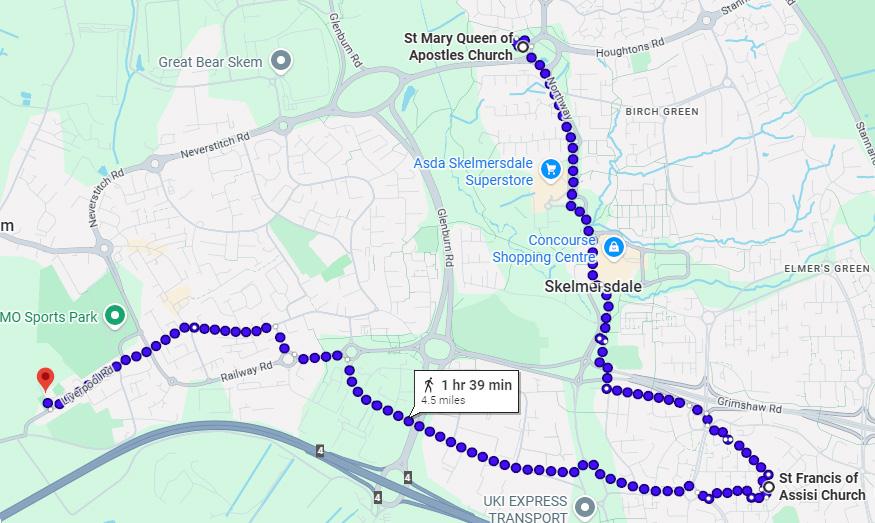
Our latest Families of Parishes walk takes us through Skelmersdale, covering one of the legs in Area 1 Family in the West Lancashire Deanery.
Area 1 also includes Parbold, Burscough and Wrightington, and we will explore walks involving those churches in due course.
Consisting of three churches, all within the parish of St Richard, the walk travels through the town that sits in the middle of Liverpool and Wigan – just towards the end of the M58, which you can join from Switch Island.
Time: 1 hr 39 minutes
Distance: 4.5 miles
Start: St Richard’s
To start your walk, head to St Richard’s Church, close to JMO Sports Park in Skelmersdale. This is the oldest church in the town, with its roots dating back to 1864 – 162 years!
Sunday Mass here starts at 9am, making it a good opportunity to come and pray before you set off on your journey.
Stop 1: St Francis of Assisi
Head straight over three roundabouts and you will reach the first checkpoint of this walk, St Francis of Assisi Church.
Next year, the church will celebrate its 60th anniversary! While you are there, take a moment to pray for those who have gone before over the past 60 years — the priests who have served there and the parishioners who have been part of its life.
Time: 57 minutes
Distance: 2.6 miles
Stop 2: St Mary Queen of Apostles
The final stop takes you past the dual carriageway on Grimshaw Road and through the Delph Waterfall and Nature Trail, both beautiful places to pause and consider the natural world God has given us. Keep going towards St Mary Queen of Apostles, located just off the roundabout.
This is the newest church of the parish, having been built in 1993. It’s a quaint little church and slightly off the beaten track, making it the perfect place to stop and reflect on completing this Families of Parishes walk.
Time: 43 minutes
Distance: 1.9 miles
Blessed Lawrence Richardson
Deanery Diary
Lancashire Martyrs Deanery (LMD)
Blessings in spring from the LMD Synodal Council! May the better weather encourage green shoots of love and hope to prosper and grow as well as the fields and trees.
The LMD is the largest geographical area in the archdiocese, running from the outskirts of Southport to the West Pennine Moors, and from the suburbs of Preston to the outskirts of Bolton. There are four Families of Parishes, each with a distinct identity, originally covering 18 parishes. The realities of life have since seen two parishes closed and merged with neighbours, and the remainder are faithfully served by 11 priests (some now close to retirement) supported by deacons.
We have the common problems of an aging clergy, many listed buildings, and a declining number of volunteers to help carry the burden.
But there is hope! The realities of the situation are being addressed with the help of the Holy Spirit within the Families. Plans are under consideration for ministering to our flocks in an uncertain future, identifying resources (both human and buildings) and how best we might use them. Parishioners are involved as part of the consultation process.
Engagement with our schools is strong and two-way, as evidenced by a high school SVP group who invite local parishes to social and contemplative events through the year.
As mentioned in a previous edition of the Pic, St Mary’s in Leyland now has 27 altar servers thanks to a proactive approach by the parish priest linked to First Communion and the family engagement it brings. The future of the Church lies in these young hands!
Communication is key in such a large area, and a FoP monthly bulletin is already well-established in one family with the other parishes highlighting events, from retreats to comedy nights and brass band performances in their weekly bulletins for neighbouring parishes to enjoy.
Going forward, Deanery Synodal Council meetings will be a mixture of update/ report style “business” meetings and more contemplative gatherings focussed on specific topics such as Youth Ministry, facilitated by experienced leaders such as Father Matthew Nunes, who has recently moved into the Chorley area to help us discern the way ahead.
With the help of the Spirit, the Church will indeed prosper and grow!
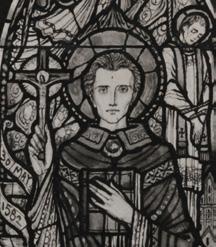
Born in Great Crosby, Blessed Lawrence Richardson, born Lawrence Johnson, was ordained as a priest in 1577, where he took the name Richardson. He worked in his native Lancashire for some time before being arrested on his way to London. He was martyred alongside a fellow northern priest, Luke Kirby, at Tyburn in 1582. His feast day is 30 May.
‘This is… Easter’ at All Hallows
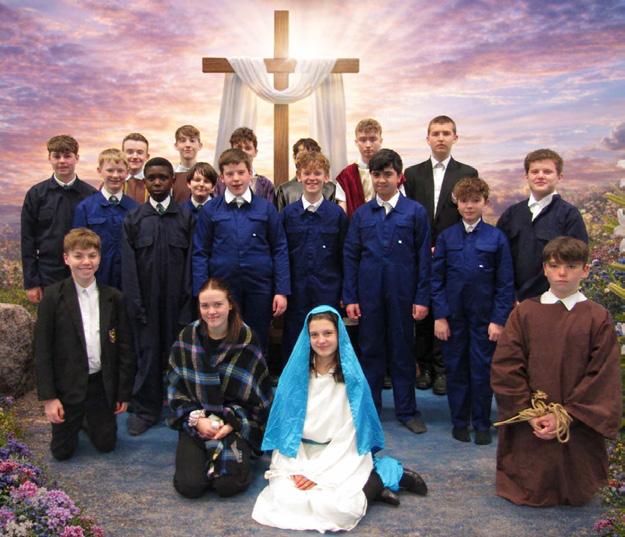
All Hallows Catholic High School marked Holy Week with its annual Easter liturgy. Students from all year groups took part in the re-telling of the story of Jesus’ journey to the cross and resurrection.
The theme was ‘This is… Easter’. Each day of Holy Week was explored, beginning with the triumphant entry of Jesus into Jerusalem on Palm Sunday, reminding us that people welcomed him with joy but did not yet fully understand.
The Last Supper role play, focusing on the washing of the feet, highlighted how Jesus taught us to be servants to others and to follow his example. This was followed by a video showing what pupils have done across the school to raise money for CAFOD’s Lent Appeal by taking part in the Big Lent Walk.
The moment in the Garden of Gethsemane, where Jesus was arrested, reflected on the fact that his purpose was not to escape suffering, but to face it and bring light out of darkness. Students then acted out Jesus’ trial before Pilate, showing the moment when human wrongdoing was allowed to run its course so that something greater could emerge from it.
The cross was carried onto the stage, with each station freeze framed, depicting Jesus meeting his mother, being helped by Simon, and having his face wiped by Veronica. A procession of crosses, created by each year group, followed to the song ‘Love Lifted on the Cross’, with students placing their crosses at the foot of Jesus’ cross.
The burial on Holy Saturday was explored as an important day of waiting, showing that the story was not yet finished. The liturgy concluded on a high with the story of the empty tomb and the joy of the risen Jesus. This was beautifully encapsulated in a liturgical dance to the song ‘Risen: He’s Alive!’.
Students and staff step up for CAFOD’s Big Lent Walk
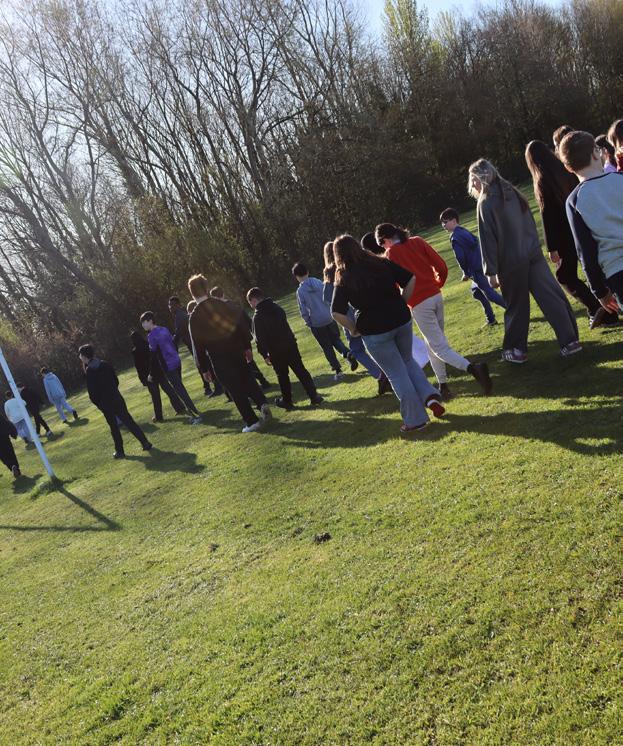
Students and staff at St Gregory’s Catholic High School came together on Thursday, 2 April to take part in CAFOD’s Big Lent Walk, raising funds to support communities living in extreme poverty around the world.
The Big Lent Walk offered a moment for both staff and students to reflect on the shared call to walk with others during Lent, turning perseverance and prayer into practical action. The initiative aims to provide life-saving water and essential support to families in need.
Participants complete the challenge at their own pace, whether individually or in groups, while joining thousands of others across England, Wales and Scotland in tackling global poverty.
St Gregory’s event saw strong participation from across the school community, with walkers showing enthusiasm and determination as they contributed to the cause.
School chaplain, Mrs Whitlow, praised the efforts of everyone involved, saying: “It has been truly inspiring to see our students and staff come together for such an important cause. Their generosity, commitment and sense of community have been outstanding, and they should all be incredibly proud of what they have achieved today.
“Thank you to everyone who has donated or taken part in today’s walk. Your support will make a real difference to families in need.”
St Gregory’s is still receiving donations from the event and its ‘non-uniform’ day, hoping to raise over £1,000 for this worthy cause.
A clearer vision for hope
Alison Burrowes is a well respected figure within the archdiocese and currently serves as North West hub development officer for the Catholic Education Service. A former headteacher of Thornleigh Salesian College in Bolton, she brings a wealth of experience in Catholic leadership, professional development and service. Alison is deeply committed to nurturing and sustaining leadership within Catholic education at every stage of vocation.
That commitment was brought into sharp focus when, following an introduction to Dr John Patterson, former headteacher of St Vincent’s School for the Blind, Alison was invited to lead a Catholic Social Action project, providing specialist prescription glasses for children with albinism in Tanzania. An experience she reflects on below.
“Tanzania has one of the world’s highest rates of albinism, with roughly one in 1,429 births, and people with albinism have faced extreme persecution and violence for years. Albinism is a genetic condition which results in a lack of the pigment melanin in the skin, hair and eyes. It results in a permanent problem with vision and children with albinism across Tanzania are isolated and unable to access mainstream education.
I have visited Tanzania many times, initially as the headteacher of a Catholic secondary school when I would take sixth form students for a month during the summer holidays to volunteer in schools and clinics. Then after setting up an NGO, Partners in Education – International (PiE-E), providing training for school leaders.
Having worked with the Tanzanian Department of Education since 2014, our charity was best placed to identify the pupils with albinism in schools in the Morogoro region who would benefit from this initial pilot project.
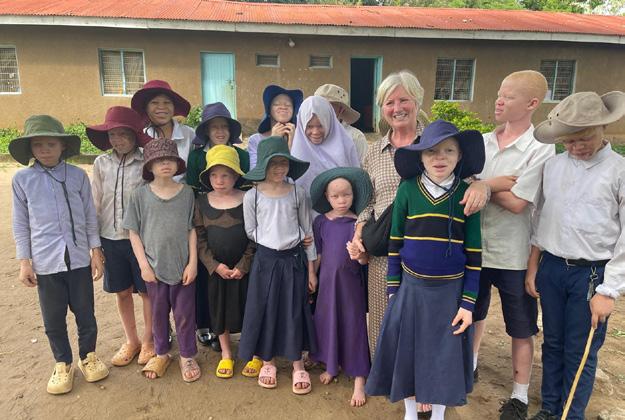
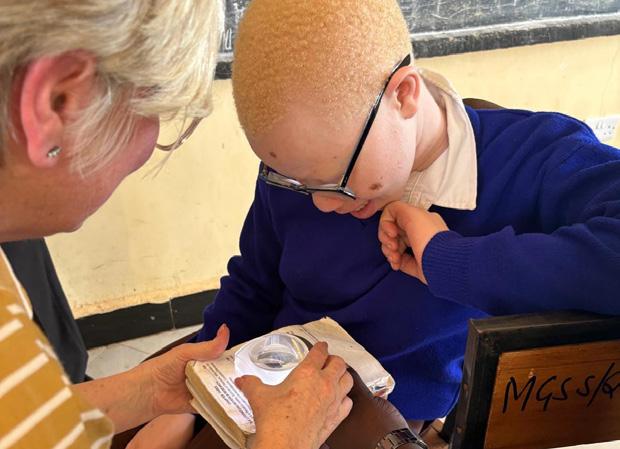
After visiting in October 2025 and working with a Tanzanian optometrist I returned in March 2026 with 68 pairs of specialist glasses and will be forever grateful to Keith Burns, an optician in Formby, who prepared them. I travelled to some of the poorest, rural communities to personally deliver them to each individual child. The impact was immediate and will be life changing as they can now join the mainstream classroom for their learning.
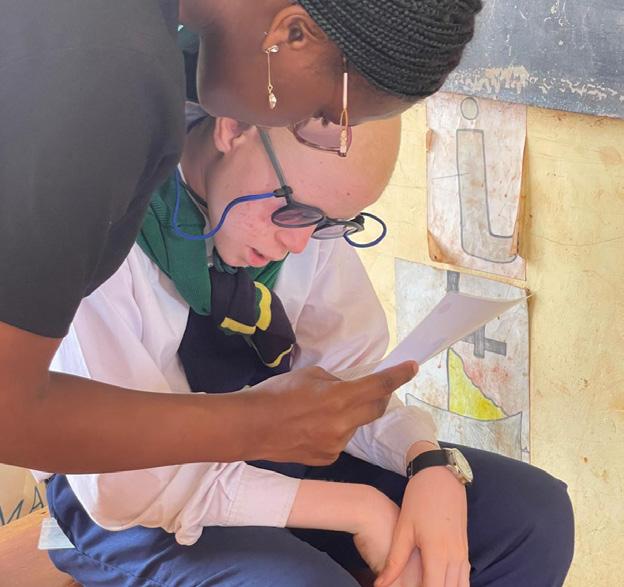
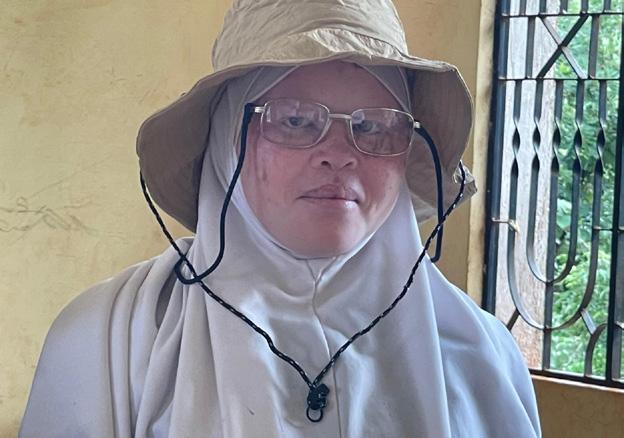
During the visit I became acutely aware of the numbers of children with albinism across the Morogoro region whose life would also be changed if they received a pair of glasses which would enable them to access education and have a brighter future.
The cost of each specialist pair of glasses is £200 (on average). If you can support this on-going project, we would be delighted and grateful to receive any donation you could make.
Please make payable any donations to the Charity Partners in Education – International, account number 22256768, sort code 30-97-19, Lloyds Commercial Bank.”
Reflections of a momentous occasion
On Wednesday, 25 March, the school community of St Julie’s Catholic High School in Woolton came together in celebration of a milestone 175 years of education in Liverpool under the Sisters of Notre Dame.
A fleet of 18 buses brought the whole school to the cathedral, where they were joined by students from Notre Dame Catholic Academy and special guests, including former school leaders and many Sisters of Notre Dame who had travelled from across the country.
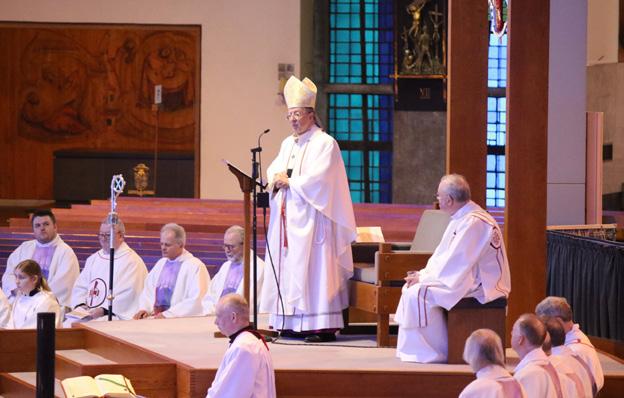
Archbishop John Sherrington, accompanied by the school’s local deanery priests, celebrated Mass, which included an insightful address detailing the remarkable history of the Sisters in Liverpool and the far reaching impact of their work since their modest beginnings at their original house on Mount Pleasant.
The congregation was honoured to receive an address from Sister Lorraine Connell SNDdeN, a member of the Congregational Leadership Team of the Sisters of Notre Dame, who had flown in from Rome the previous evening.
She spoke of her delight at being able to attend such a significant occasion and to address so many students directly. She reminded students of the international reach of the Notre Dame family, encouraging them to remember that every member of the school community “stands on the shoulders of giants”.
Speaking after the event, St Julie’s headteacher, Kate McCourt, reflected on the great sense of privilege she feels in her role: “It is with a great sense of honour that I follow in the footsteps of these trailblazing and inspiring women, who 175 years ago resolved to make a difference to the lives of underprivileged children, particularly girls, by providing empowerment through education. Their courage, resolve and clarity of purpose serve as the guiding lights that continue to inspire us all today to help our students grow into confident, compassionate and capable young women.”
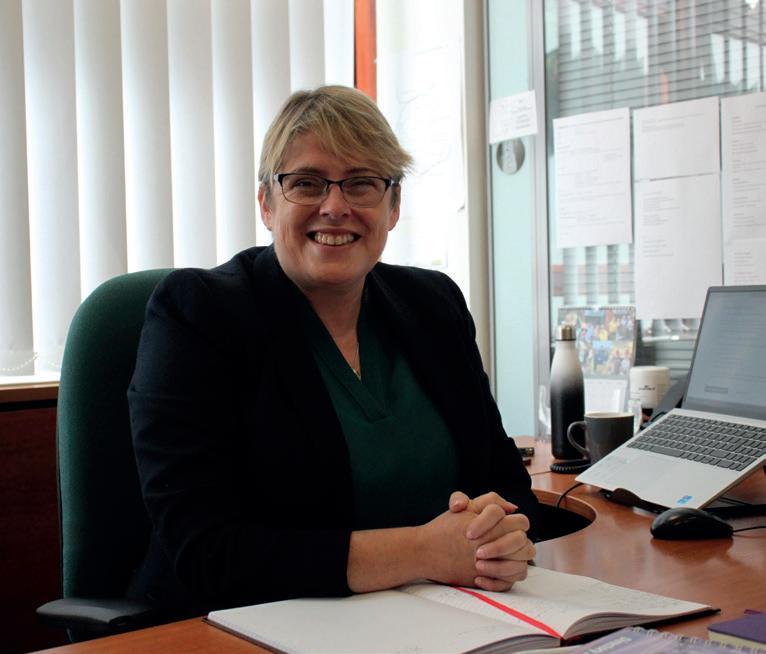
For
we walk by faith, not by sight. — 2 Corinthians 5:7
At the time of writing this article, I am preparing to spend a few days walking on the Camino in northern Spain. The Camino de Santiago is an ancient pilgrimage route with roots stretching back over a thousand years, traditionally walked by Christians journeying to the shrine of Saint James in Santiago de Compostela. Over time, it has become not only a religious pilgrimage but also a cultural and personal journey, attracting people from all walks of life.
There are many reasons why people choose to undertake this walk. Some do so for religious or spiritual purposes, others seek a personal challenge, and many hope to find inner peace or clarity. The Camino offers space for reflection, simplicity, and connection—both with oneself and with others met along the way.
Walking as a meaningful journey is a theme deeply embedded in the Bible. In the Old Testament, figures such as Abraham are called to leave their homeland and walk in faith toward an unknown destination. The Israelites’ long journey through the wilderness toward the Promised Land is another powerful example of walking as both physical and spiritual transformation.
In the New Testament, Jesus Himself travels extensively on foot, calling disciples to follow Him, often teaching and performing miracles along the way. The road to Emmaus is a particularly striking story, where two followers encounter the risen Christ while walking and come to a new understanding through the journey.
These examples highlight how walking—whether alone or with others—can be both an outward journey and an inward one, rich with meaning, challenge, and discovery.
In our schools and colleges, staff walk alongside the young people in their care, guiding them in their knowledge of Jesus Christ. Walking with them means listening, supporting, encouraging, and helping them to discern right from wrong. As we enter the exam season, please pray for all those in education in our archdiocese, that they may continue to walk together with faith and purpose.
P.S. Please pray for my feet!
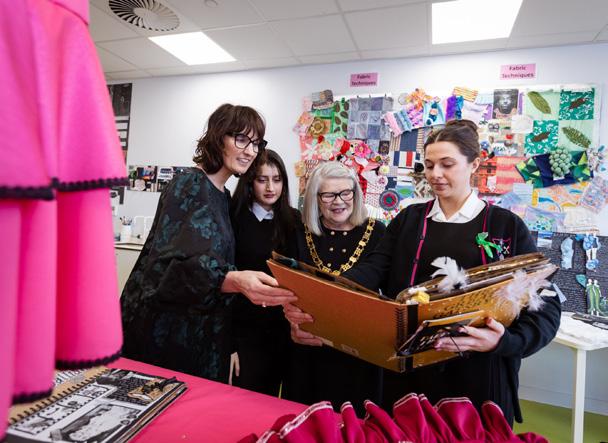
Sixth form students leave a lasting impression on Lord Mayor
Students at St John Bosco Arts College Sixth Form have been praised for their creativity and imagination following a fashion collaboration with the Lord Mayor of Liverpool, Councillor Barbara Murray.
Spanning across the spring term, the project saw the Lord Mayor pay a special visit to the Croxteth school after specially selecting sixth formers studying BTEC Level 3 textiles and fashion to contribute to her Fundraising Ladies Day Lunch and Fashion Show.
During the visit, students had the opportunity to showcase their designs to the Lord Mayor, explaining the inspiration behind their creations, as well as sharing their ambitions for the future.
Year 12 student, Zahra, said: “It was such a positive and inspirational day for me and my class. Displaying my work and having the opportunity to be involved in the fashion show was very exciting.”
Following the Lord Mayor’s visit, students took to the catwalk at Devonshire House Hotel just a few weeks later to showcase their innovative garments to a packed-out room.
Reflecting on the project, the Lord Mayor of Liverpool, Councillor Barbara Murray, said: “I was delighted to visit St John Bosco to meet with sixth form students and was incredibly impressed by the work the girls had produced.
“As a result of this visit, they were invited to attend my Fundraising Ladies Day Lunch and Fashion Show. The girls were fabulous, modelling their own designs with confidence and panache - their designs were absolutely stand out. I am hoping they will visit me at the Town Hall before the end of my tenure so I can show them this wonderful building and some of our fantastic city treasures.”
Headteacher, Mr Darren Gidman, added: “It has been fantastic to see our students work closely with the Lord Mayor over the past few months. Our students engaged in the fashion project with such confidence and enthusiasm, and should be extremely proud of the exceptional dedication and talent they demonstrated.”
St John Bosco Arts College Sixth Form nurtures students’ talent, igniting their inner spark and setting ambitions alight. Find out more and apply for September 2026 here: www.stjohnboscoartscollege.com/sixth-form/
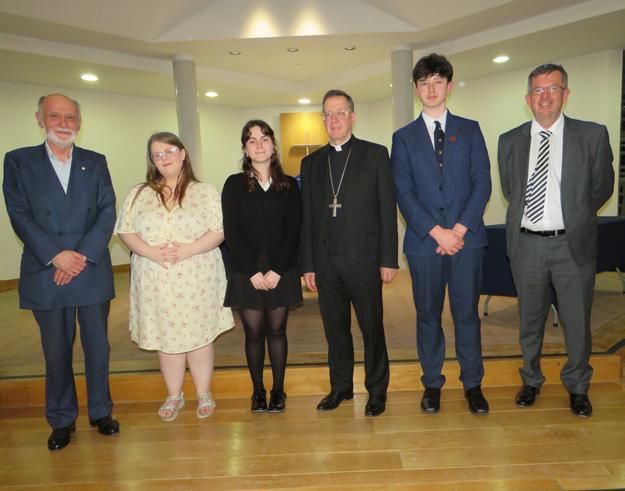
Young voices shine at Catenian Annual National Public Speaking Competition
An appreciative audience of more than 80 people gathered at Hope University Chapel to enjoy six insightful speeches delivered by sixth form students from Catholic schools across Chester and Merseyside. The students were competing to represent their schools and Province 4 at the Catenian Annual National Public Speaking Competition for Catholic fifth and sixth forms, which will be held in Manchester on 6 September 2026.
The contest was of an exceptionally high standard, with the winner emerging after a close decision. First place was awarded to Ruby Jane Smith of Ellesmere Port Catholic High School for her speech, ‘The Boots Theory’, a compelling and well illustrated explanation of why, in modern society, the poor are destined to become poorer.
The runner up was Harrison Jones with his thoughtful speech, ‘Conformity and its Dangers’, while third place went to Layla Gallagher of Carmel College, who spoke passionately on ‘Beyond the Credits: Why Books Endure’.
His Grace, Archbishop John Sherrington, presented certificates and gift vouchers to all the competitors, including students from St Edward’s and Archbishop Beck in Liverpool, and Chester Catholic High School.
Following the competition, the speakers, their families, and members of the wider school communities joined the archbishop and guests for an excellent shared meal in the adjoining dining area.
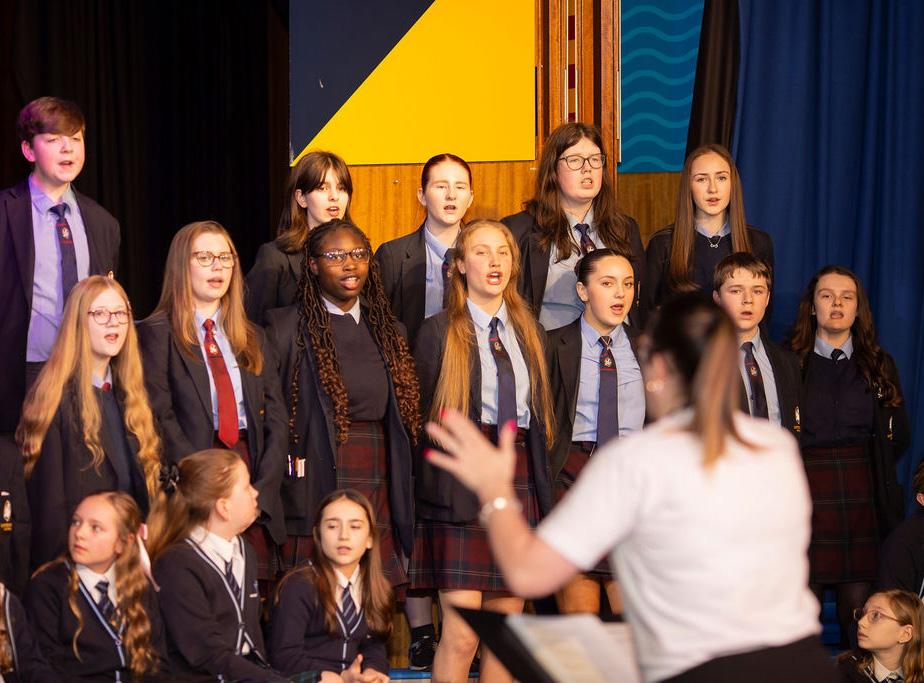
Saints Peter and Paul Catholic High School joined forces with Halton primary schools for highly anticipated spring concert
Held over three sold-out evenings, this year’s ‘Back to the 80s’ concert series, showcased the talents of primary school pupils from Our Lady of Perpetual Succour, St Gerard’s, St John Fisher, St Michael’s, Holy Family and St Basil’s Catholic Primary Schools, along with Moorfield and Ditton Primaries, St Bede’s Roman Catholic Junior School and Widnes Academy, who performed alongside their secondary peers.
Families, staff, governors and members of the wider community were treated to a programme of 1980s classics, including much-loved hits from Madonna, The Pet Shop Boys, Erasure and Cyndi Lauper. Standout renditions of ‘Time After Time’, ‘I Wanna Dance with Somebody’ and ‘Don’t Stop Believin’’ were brought to life through neon costumes and high energy choreography.
Alongside the choirs, the concert also featured a range of musical ensembles, including instrumentalists and the popular Saints Peter and Paul Samba band.
Head of music, Mrs Saunders, praised the commitment of all involved and emphasised the value of collaboration between schools. She said: “The chance to work together like this not only enhances performance opportunities but also help to build lasting relationships, and help to ease the transition from primary to secondary education as well as strengthening the wider Catholic community.”
“The connection between our primary and secondary schools is something truly special,” she added. “Events like this show just how powerful that partnership can be.”
Parents and staff spoke of the high standard of performance and the inspiration it provided for younger pupils. One primary
school representative described the choir as “phenomenal,” while others praised the teamwork and dedication shown by students of all ages.
Principal, Danielle Scott, said: “Our annual Spring Concerts continue to stand as a testament to the value of collaboration within Catholic education, demonstrating how strong partnerships between primary and secondary schools can ultimately enrich experiences, build a sense of belonging, and support young people in developing both their talents and their character. I am immensely proud of the team of people, our students, and primary partners who work so hard to make this wonderful event happen every year and make it such a fantastic success”.
Easter Passion Services
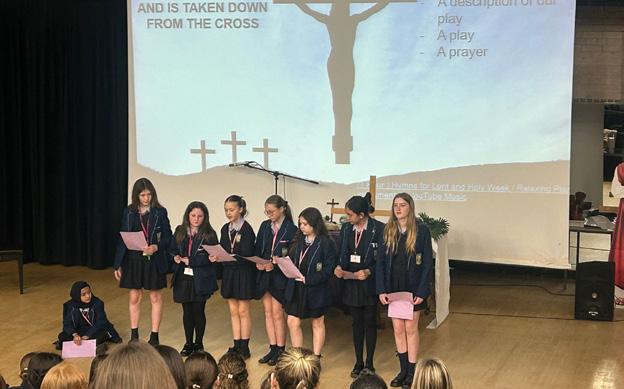
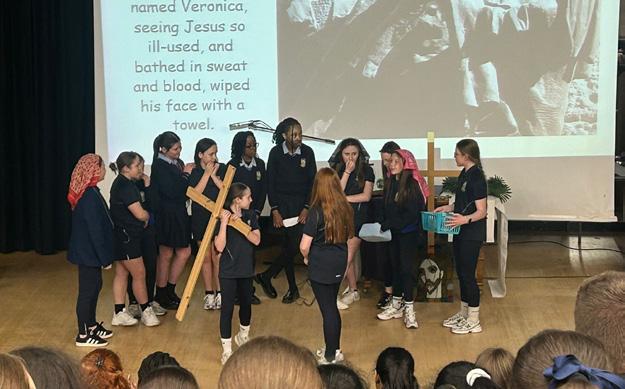
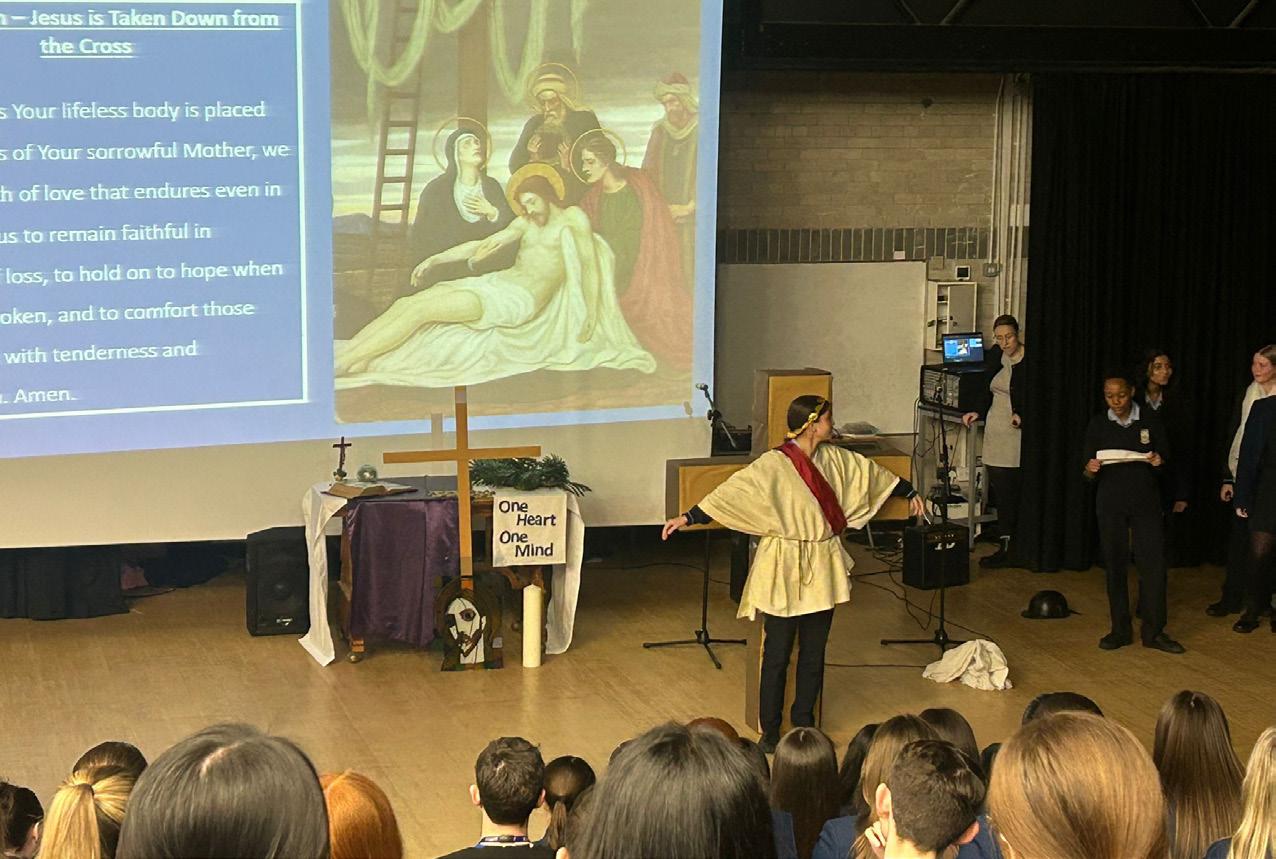
This year, students at Broughton Hall Catholic High School played a central role in celebrating Catholic community and faith through its beautiful Easter Passion Services.
Students from each year group took ownership of their liturgies, leading them with creativity, reverence, and respect, and truly embodied the spirit of the season. Through thoughtful readings, reflective drama, music, dance, and prayer, they brought the story of the Passion to life in a way that was both moving and meaningful for all involved.
Since September, Broughton Hall has encouraged its students to strive to be the very best versions of themselves and to hold the highest aspirations in all that they do. The Passion Services were a powerful reflection of that commitment. The students’ confidence, teamwork, and willingness to express their faith so openly demonstrated just how much they have grown.
From carefully prepared scripts to heartfelt performances, it was clear how much effort had gone into each service. The sense of ownership students showed highlighted not only their talents but also their deepening understanding of faith, compassion, and community.
The school’s Easter celebrations were a wonderful way to finish the term. The Passion Services from each year group reflected genuine care, creativity, and reverence and were complemented by a well-deserved ice cream treat, enjoyed altogether in the sunshine.
Broughton Hall Catholic High School looks forward to seeing this ongoing journey of faith, growth, and aspiration continue into the summer term.
Why now is the perfect time to enter the Educate Awards!
Entries are now open for this year’s Educate Awards, inviting schools, colleges, multi academy trusts and, for the first time, nurseries across the North West to showcase the innovation, dedication and impact that define their work.
With the summer term underway, this is an ideal moment to submit your entry. Schools are well placed to reflect on recent achievements and gather strong evidence ahead of the Thursday 16 July deadline.
Now in its fifteenth year, the Educate Awards is the region’s largest celebration of education excellence, spanning Merseyside, Cheshire, Lancashire, Greater Manchester and Cumbria.
The value of the Educate Awards lies not just in the winning, but in the process itself. Being shortlisted, or even simply entering, offers an opportunity to:
• Reflect on progress and achievements
• Celebrate staff and student contributions
• Strengthen school identity and culture
At a time when recruitment and retention remain challenging, recognition plays a meaningful role. Celebrating success reinforces pride within school or trust communities and reminds staff of the importance of their work.
Tips for writing a strong entry
If you’re new to the Educate Awards and haven’t written a submission before, the following guidance will help you craft an entry that showcases impact and captures the attention of the judging panel.
While the process is straightforward, the difference between a good entry and a standout one often comes down to evidence and storytelling.
The first recommendation is simple – head to educateawards.co.uk and familiarise yourself with the 21 categories and their associated criteria. Here you will also find more information about entry guidance and conditions of entry.

Understanding the criteria
Review the category criteria carefully, as these effectively act as the marking scheme. Entries should directly address them. Common pitfalls include entering the wrong category or submitting the same content multiple times, so tailoring each submission is essential.
Focus on evidence
Strong entries are built on clear, relevant evidence. Be selective – evidence should support the narrative rather than overwhelm it.
Tell a clear story
A successful entry outlines the context, the action taken and the results achieved. Avoid trying to include everything; instead, focus on what makes your work distinctive.
Demonstrate impact
Impact is central to judging decisions. Show the difference your work has made through measurable outcomes.
Use visuals carefully
• Share best practice with the wider sector Deadline for entries: Thursday 16 July!
Include only high-quality, relevant visuals that strengthen key points. Think ‘quality over quantity’.
Seek
a second opinion
Before submitting, ask a colleague to review your entry. For added objectivity, go one step further and ask someone outside your organisation to provide feedback. A fresh perspective can improve clarity, while careful proofreading helps avoid unnecessary errors.
Remember, judges don’t know your school, so make sure any context or background is clearly explained.
Declare any use of AI
If you have used AI tools to support the writing of your entry, this should be clearly declared within the document.
Your
winning moment starts here
Ultimately, the Educate Awards is all about celebrating the work that nurseries, schools, colleges or multi academy trusts do every day. At a time when the education landscape continues to face pressure, acknowledging success really matters.
There really is no better time to start your award entry than now.
Celebrating 175 Years of Notre Dame Education in Liverpool
The Metropolitan Cathedral was filled with joy and thanksgiving as the archdiocese gathered to celebrate 175 years of Notre Dame education in Liverpool.
The Mass, celebrated by Archbishop John Sherrington, brought together pupils, staff, governors, trustees, and representatives from Notre Dame schools across the region and beyond. They were joined by members of the Sisters of Notre Dame, clergy, and invited guests, all united in gratitude for the enduring legacy of Catholic education inspired by St Julie Billiart.
In his homily, Archbishop Sherrington reflected on the remarkable vision of St Julie, whose mission to make known the goodness of God led to the founding of the Sisters of Notre Dame de Namur. He spoke of her deep faith, perseverance through suffering, and commitment to the education and empowerment of girls, describing her as a courageous woman firmly focused on God.
The Sisters arrived in Liverpool in 1851, invited by Fr James Nugent in response to the urgent educational and social needs of the time. From small beginnings, the Sisters established a tradition of education that combined academic excellence with moral and spiritual formation.
Over the decades, the Sisters laid the foundations for a network of schools that continues to serve the archdiocese today, including St Julie’s Catholic High School and Notre Dame Catholic Academy.
Reflecting on the feast of the Annunciation, on which the Mass was celebrated, Archbishop Sherrington invited those present to consider their own response to God’s call, inspired by Mary’s ‘fiat’ to the angel Gabriel. He encouraged all to recognise their unique gifts and their role in continuing the mission entrusted to them. The values established 175 years ago remain at the heart of Notre Dame education, continuing to shape lives and communities in Liverpool and beyond.
Victoria Taylor, headteacher at Notre Dame Catholic Academy, said: “I am immensely proud to serve as headteacher of Notre Dame Catholic Academy, and to have been part of such a deeply meaningful celebration.
“Events like this remind us of the privilege we share in continuing this mission today, nurturing not only academic success but also spiritual growth, compassion, and leadership in our students; all possible, thanks to the strength and impact of Notre Dame education across the years.
Victoria added: “I extend my sincere thanks to St Joseph Catholic Multi Academy Trust, the Sisters of Notre Dame, our trustees, governors, and the clergy for their continuous support and for making this such a memorable and inspiring occasion. The spirit and values of Notre Dame education will continue to flourish for generations to come, and we are privileged to be a part of it.”
Kate McCourt, headteacher at St Julie’s Catholic High School, commented: “The gathering of over 1,500 members of our school communities, parishes and wider diocesan family was a truly magnificent occasion. Archbishop John’s leadership of the liturgy, prayerful presence, and thoughtful homily gave profound meaning to this historic celebration and ensured that the Mass was both joyful and deeply reflective.
“The occasion provided a powerful opportunity to honour the enduring legacy of the Notre Dame Sisters, whose vision, courage and commitment laid the foundations for generations of Catholic education in Liverpool. Today helped us to reflect on the continuing importance of this mission in modern society, as we strive to serve young people with faith, hope and compassion.”
You can find Archbishop Sherrington’s homily on the archdiocese’s website.
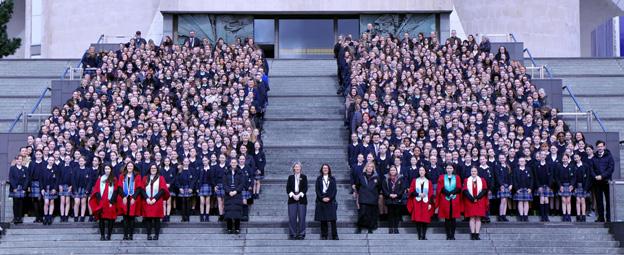
Living the mission
St Augustine of Canterbury Catholic Academy in St Helens is celebrating a strong endorsement of its mission and community, following its recent inspection by the Catholic Schools Inspectorate.
The academy, part of St Joseph Catholic Multi Academy Trust, was deemed ‘Good’ (grade 2) across Catholic life and mission, religious education and collective worship, an achievement that reflects the dedication of leaders, staff, and pupils.
Inspectors praised the school’s ‘excellent pastoral care,’ highlighting how staff show a ‘tireless and practical devotion to the success of every child,’ particularly the most vulnerable. This commitment creates a community where students feel ‘happy, safe, and supported,’ with a strong sense of belonging evident in their respect for one another and their engagement in school life.
The report also commended the way Catholic values are lived out daily. Students actively serve others through initiatives such as charitable fundraising and community outreach.
Collective Worship was recognised as a strength, with ‘routine Collective Worship, grounded in scripture,’ promoting Catholic social teaching and enriching the spiritual life of the academy.
Leaders have ensured that religious education remains at the core, with improvements to the curriculum driving a “clear and positive trajectory of development.” Students demonstrate growing confidence, strong religious literacy, and pride in their work, supported by skilled teaching and effective feedback.
Leadership across the academy was also singled out as a key strength, with leaders and governors being described as ‘actively championing archdiocesan initiatives,’ developing strong partnerships, and ensuring that Christ remains at the centre of school life.
This inspection outcome is a testament to the academy’s unwavering commitment to its Catholic mission and its continued pursuit of excellence in forming young people in faith, learning and service.
To read the full report, head to: www.staugs.org.uk/our-school/reports/
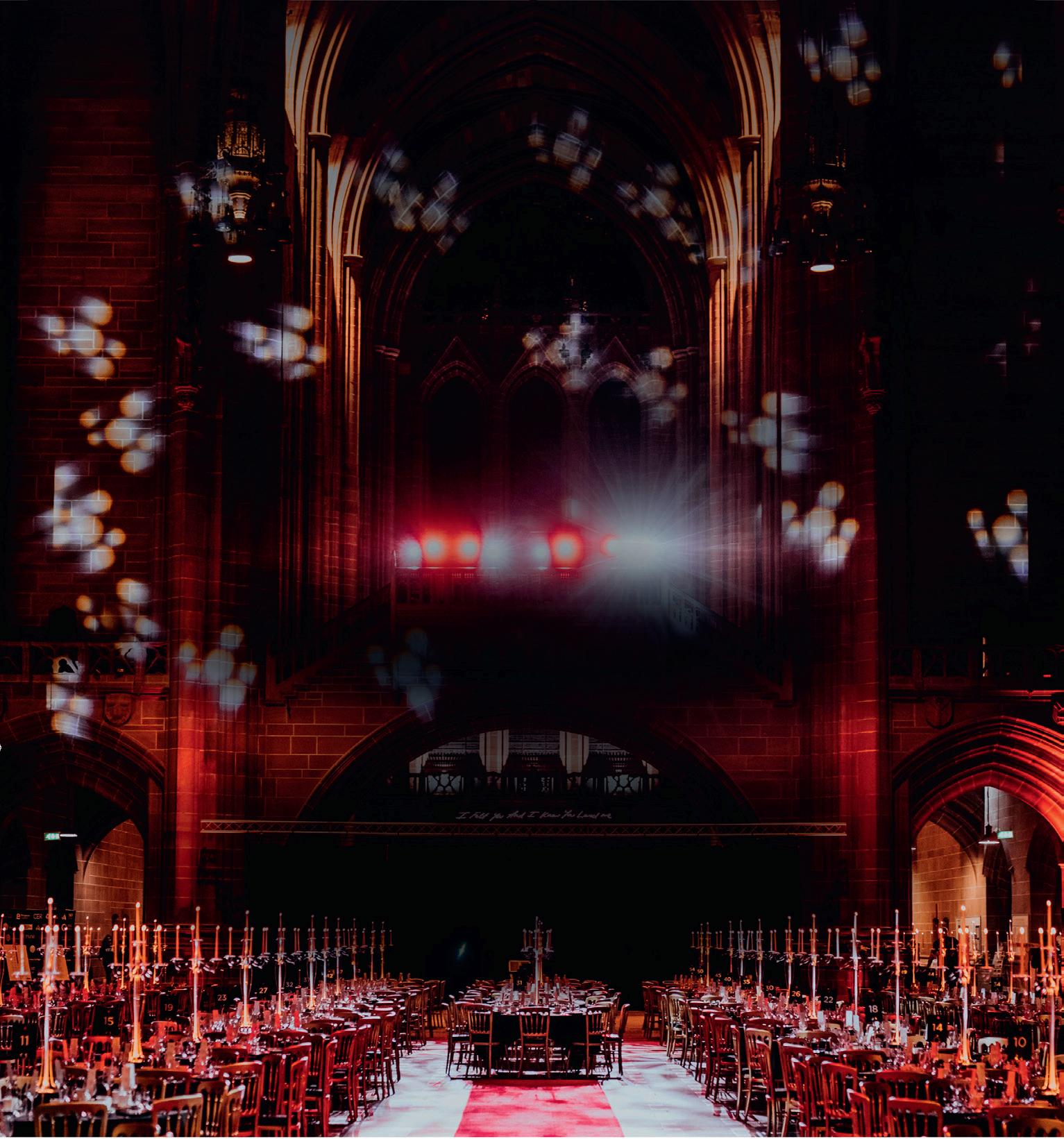

Mums the Word
I hope everyone is well and looking forward to our Holy Week services.
I remember as a child walking in procession through the streets of Liverpool wearing my new white dress and carrying a posy of flowers. We assembled in a square of tenements where Our Lady was crowned with flowers, and we all sang ‘Bring Flowers of the Rarest’.
The other night I watched Sir Paul McCartney in concert, which I thoroughly enjoyed. He sang all his old songs to a packed audience and it was very entertaining. When he sang ‘Let It Be’, I immediately thought of Our Blessed Lady: “When I find myself in times of trouble, Mother Mary comes to me Speaking words of wisdom, let it be.”
This is so true of Our Lady: whenever I am in need or trouble, I always ask her to help me and she does. So especially this month of May, put your trust in Mary. She won’t let you down.
Can I remind you of our AGM on 9 May in the Gibberd Room at the Metropolitan Cathedral? We pray to Our Lady that we find new officers to take over from the present committee.
Finally, 13 May is the date for our bi-monthly Mass at St John Fisher, Widnes (St Wilfrid’s parish), while 18 May is when our National Council will meet.
Maureen Finnegan, Archdiocesan vice-president
Over a century of service
News from the Liverpool Province of the Knights of St Columba
Fifty years a Knight
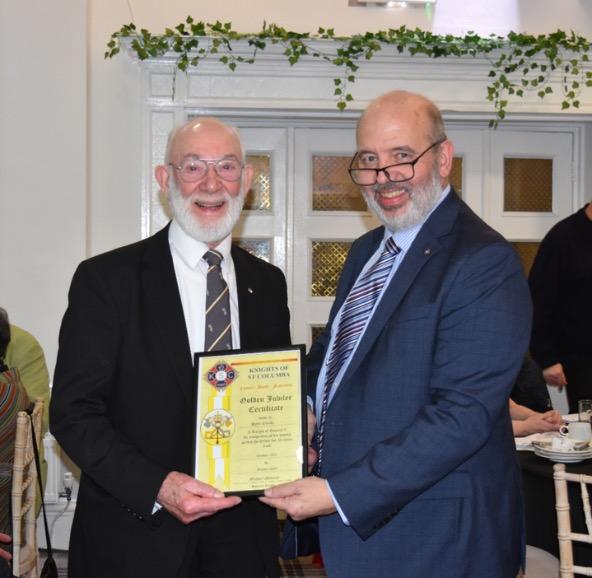
One of my enjoyable duties as Provincial Grand Knight is recognising the many years of service that our brothers complete. I was privileged to present Brother Peter Clarke, of council 9, with his Golden Jubilarian medal and certificate at Liverpool Cricket Club on Friday 20 March.
Brother Peter’s half-century as a Knight of St Columba started in September 1975 when, as was the tradition at the time, he was interviewed by two provincial officers at his home. He initially joined a council based at St Bede’s Church in Widnes. Next, he attended a council which met in the Guildhall in Prescot and, when that closed, he moved to council 409, meeting at the parish club of Christ the King, Queens Drive. After holding the office of chancellor there for a few years, he later moved on to council 14, which met at St Oswald’s Parish Club, before finally transferring to his current home of council 9.
Thank you and well done on your Golden Jubilee, Brother Peter.
Easter art competition in Widnes
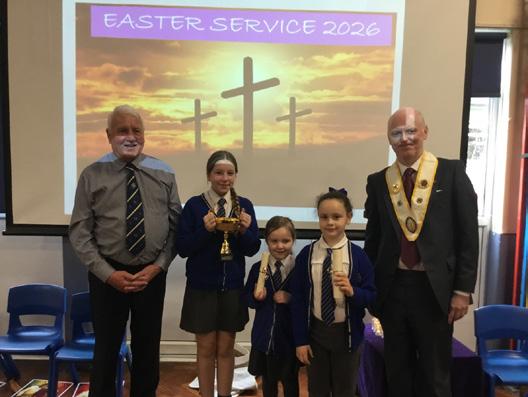
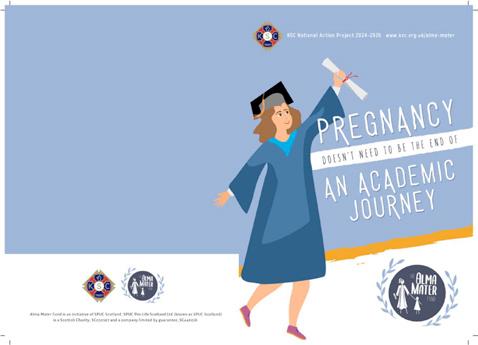
At our 2024 supreme council, we selected the Alma Mater fund as the KSC’s na/onal project for the two years running to the end of this year.
The Alma Mater Fund is an ini/a/ve of SPUC (Society for the Protec/on of Unborn Children) that provides financial grants to pregnant students facing difficul/es at universi/es across the UK in order to support them in pursuing their academic and personal goals. Through the work of the ini/a/ve, the Alma Mater Fund co-ordinator can also direct students to further sources of support and advice.
The KSC’s Easter art prize presentation took place at Our Lady of Perpetual Succour in Widnes. The winning pupils were Ivy, Ruby and Darcy-Rae, who are pictured with Brothers Mike Naughton and Philip Higgins from Council 18. Congratulations to the prize winners and indeed all who entered, and thanks to the head teacher Miss Kelly Nuttall, and to Mrs Heston and Miss De Beger for their help and support.
At our 2024 Supreme Council, we selected the Alma Mater Fund as the KSC’s national project for the two-year period ending this year. The Alma Mater Fund is an initiative of SPUC (Society for the Protection of Unborn Children) that provides financial grants to pregnant students facing difficulties at universities across the UK in order to support them in pursuing their academic and personal goals. Through the work of the initiative, the Alma Mater Fund co-ordinator can also direct students to further sources of support and advice. The contact details are as follows: Call, text, WhatsApp: 07849 088244; email: info@ almamaterfund.org.uk; social media: @almamaterfund.
If you would like to learn more about the KSC or visit your local council, please email me at Philonline2@btinternet.com.
Phil Woods, Provincial Grand Knight - Province 2 Website: www.ksc.org.uk Facebook: The Knights of St Columba Instagram: @knightsofstcolumba
The contact details are as follows: Call, text, WhatsApp: 07849 088244; email: info@almamaterfund.org.uk; social media: @almamaterfund.
Pray the Rosary
How you can support our young people
Father Simon Gore highlights the upcoming special anniversaries for the Liverpool Youth Pilgrimage and Faith in Action award scheme – and asks Pic readers to get involved.

I am writing this a day or two after Easter – so I hope you had a blessed Easter and that the sun (as I write this, the sun is out!) and the lighter nights are a little reminder of the light and hope that the Easter season brings.
This month’s offering is not so much a newsletter or update, but perhaps another way to think about this Easter season.
I am in the fortunate position of being more involved than most with various elements of youth ministry, and so can see lots of examples of young people active in the Church. On a day-to-day basis, we have retreats here that only a small number of you would ever see – you would have to work in a school and be a member of staff who comes on the retreats to see what goes on. The same applies with our Eucharistic Ministry training, or trips to Flame, or any number of other events that take place not so much ‘behind closed doors’, but simply with limited general involvement.
That means that many people reading this will be more familiar with two of the larger-scale youth ministry events/projects that we have going on in the archdiocese, namely the Liverpool Youth Pilgrimage to Lourdes and the Faith in Action (FIA) award scheme. The Youth Pilgrimage is 50 years old this year – this may make some of you feel a little old! And the FIA awards are 10 years old this year – this might also make you wonder where time has gone! And our wish here is to ask if you might like to be involved in these two projects.
Reconnecting with Lourdes
As it is the 50th anniversary year, we are inviting anyone that might have been a pilgrim or a staff member on past youth pilgrimages to consider coming back to Lourdes this summer. It would not be as a member of the Youth Pilgrimage – you can come and go as you please – but just to reconnect and see what the pilgrimage looks like now and, hopefully, join us in the times of prayer we have through the week. Email s.gore@animateyouth.co.uk or call 01744 740461 for more information.
Faith in Action volunteers
As it is the 10th anniversary year, we want to ‘go bigger’ than before and so have three days of award ceremonies lined up. Yet in order for these days to happen, we need people to help as ‘fun day’ volunteers. This is not to act as a staff member guiding people around or actively leading anything on those three days; rather it would involve just being a presence in certain areas of Lowe House for certain periods of time, be it as a volunteer handling the activities or beverages or safety co-ordinator.
Alternately, we are always looking for more moderators/affirmers to look at the work of the young people who have put their faith into action this year. It is not a huge time commitment – maybe one hour per pack, and you can take as many packs as you like. If you would like more information, please see the contact details noted above. Finally, if you have missed an update on what we have been up to here for the past few weeks, you can always subscribe to our termly newsletter by sending an email to admin@animateyouth.co.uk and asking to be added to the list, or by calling 01744 740461, or you can download it from the Animate website (www.animateyouth.org).
Celebrating our growing unity in Europe
By Ultan Russell, Archdiocesan ecumenical officer
In 2001, the Conference of European Churches (CEC) and the Council of European Bishops’ Conferences (CCEE) signed the Charta Oecumenica. For more than two decades, this charter has played an important role in resourcing and shaping ecumenical developments in many parts of Europe. Last year, the Charta was updated as churches throughout the world marked the major celebrations of the 1,700th anniversary of the Nicaean Creed.
The updated document was signed by Archbishop Nikitas of Thyateira and Great Britain – the Greek Orthodox Archbishop of this country who is also president of the Conference of European Churches, as well as one of the six presidents of Churches Together in England. Among his fellow signatories was Archbishop Gintaras Grušas of Vilnius, president of the CCEE. That took place at a major consultation in Rome last autumn.
The updated version reflects the changes that have taken place in the last two decades. New sections have been added to reflect this – on peace and reconciliation, on migration, and on new technologies (reflecting the emphasis that Pope Leo has placed on this). A separate additional section acknowledges the central role of young people in the Churches and in ecumenism – something that certainly resonates in our archdiocese.
Welcoming the updated charter, Archbishop Nikitas said: “This is a call to conscience and co-operation. Our commitment to one another as churches is not abstract. It is grounded in shared faith, and lived out amid pain, division, and hope. In a fragmented and secular Europe, the Charta urges us to rediscover the strength of our communion and the urgency of our mission. We must proclaim the Gospel together, uphold human dignity, and work side by side for justice, peace, and care for creation. This is our ecumenical vocation—not just to speak of unity, but to live it.”
There are 14 headings which provide points for reflection and resonate very strongly with our own archdiocesan Pastoral Plan and our ecumenical endeavours with partners in Churches Alive in Man, Churches Together in Lancashire, and Churches Together in the Merseyside Region, and Mission in the Economy. They are:
1. Called Together to Unity in Faith
2. Listening to the Word of God and Praying Together
3. Moving Towards One Another
4. Witnessing Together
5. Continuing in Dialogue and Acting Together
6. Youth in Churches and in Ecumenism
7. Participating in the Building of Europe in a Changing World
8. Strengthening Relations with Jews and Judaism
9. Strengthening Relations with Muslims and Islam
10. Engaging with Other Religions and World Views
11. Striving for Peace and Reconciliation
12. Safeguarding Creation
13. Journeying with Migrants, Refugees and Displaced People
14. Engaging with New Technologies
The following prayer was written to celebrate the revised Ecumenical Charter. “In Europe” could be replaced by “in my area”. Jesus Christ, the Lord of the one Church, is our greatest hope of reconciliation and peace.
In His name, we commit to continuing on our shared path in Europe.
We pray for God’s guidance through the power of the Holy Spirit. May God make us perfect in every good work and accept our concord as people made one in the unity of the Father, Son and Holy Spirit. Amen.