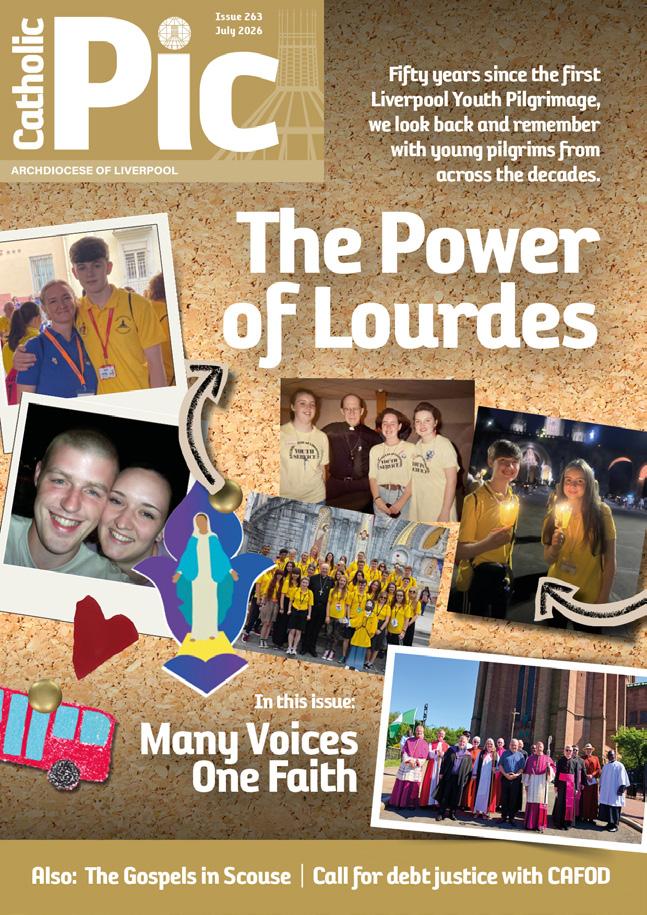
Fifty years since the first Liverpool Youth Pilgrimage, we look back and remember with young pilgrims from across the decades.
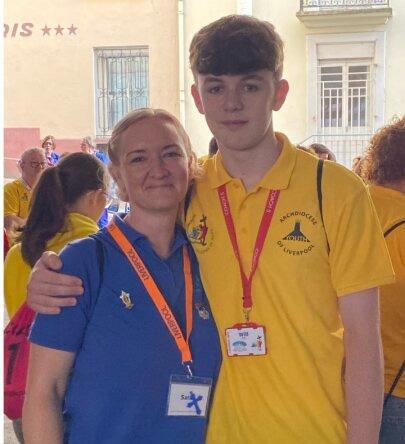




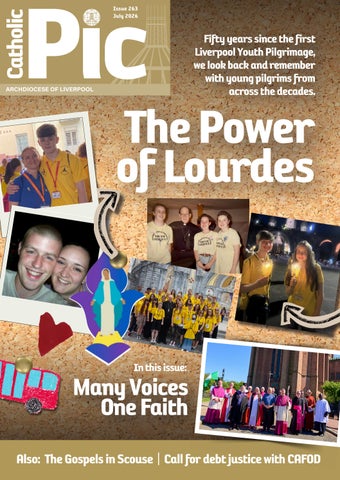
Fifty years since the first Liverpool Youth Pilgrimage, we look back and remember with young pilgrims from across the decades.


The Gospels in Scouse | Call for debt justice with CAFOD



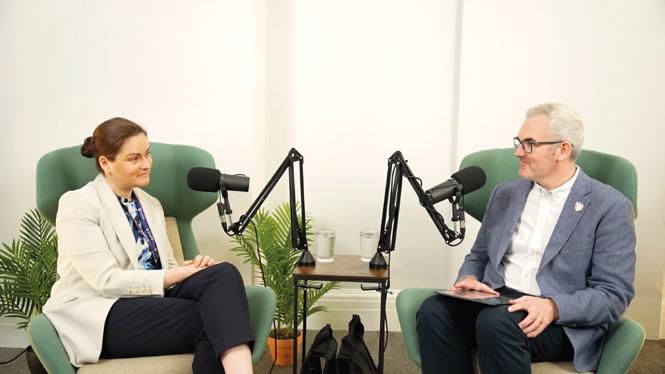
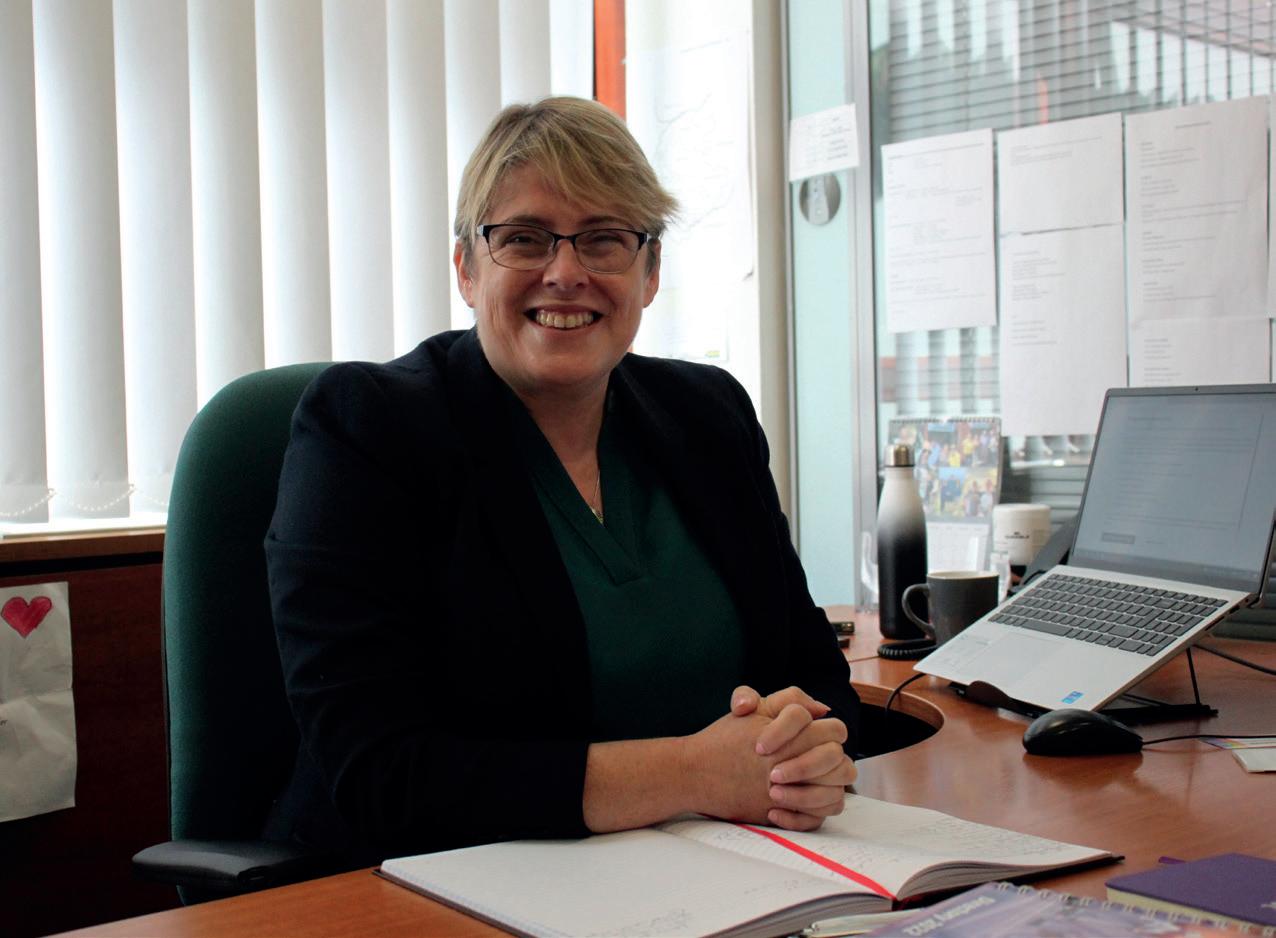
St Joseph Catholic Multi Academy Trust is delighted to launch its brand-new podcast series, The SJCMAT Family Podcast
St Joseph Catholic Multi Academy Trust is delighted to launch its brand-new podcast series, The SJCMAT Family Podcast.
St Joseph Catholic Multi Academy Trust is delighted to launch its brand-new podcast series, The SJCMAT Family Podcast

Join us for a series of engaging conversations with the people at the heart of our Trust, as we shine a spotlight on the individuals who help make a difference to the lives of children and young people every day.
Join us for a series of engaging conversations with the people at the heart of our Trust, as we shine a spotlight on the individuals who help make a difference to the lives of children and young people every day.
Join us for a series of engaging conversations with the people at the heart of our Trust, as we shine a spotlight on the individuals who help make a difference to the lives of children and young people every day.
Each episode will introduce members of our Central Team and leadership, giving listeners an insight into their roles, their experiences and what inspires them to serve our schools and communities.
Each episode will introduce members of our Central Team and leadership, giving listeners an insight into their roles, their experiences and what inspires them to serve our schools and communities.
Each episode will introduce members of our Central Team and leadership, giving listeners an insight into their roles, their experiences and what inspires them to serve our schools and communities.
“In each episode, we'll get to know somebody from our Central Team, what motivates them and how their role serves our mission to transform children's lives.”
“In each episode, we'll get to know somebody from our Central Team, what motivates them and how their role serves our mission to transform children's lives.”
“In each episode, we'll get to know somebody from our Central Team, what motivates them and how their role serves our mission to transform children's lives.”
Andrew Truby, Chief Executive Officer
Andrew Truby, Chief Executive Officer
Andrew Truby, Chief Executive Officer
Why listen?
• Meet the people behind SJCMAT.
• Meet the people behind SJCMAT.
• Meet the people behind SJCMAT.
• Discover the purpose and impact of different roles across the Trust.
• Discover the purpose and impact of different roles across the Trust.
• Learn more about our mission, values and vision.
• Learn more about our mission, values and vision.
• Learn more about our mission, values and vision.
• Discover the purpose and impact of different roles across the Trust.
• Hear authentic stories, experiences and inspirations from colleagues across our organisation.
• Hear authentic stories, experiences and inspirations from colleagues across our organisation.
• Hear authentic stories, experiences and inspirations from colleagues across our organisation.
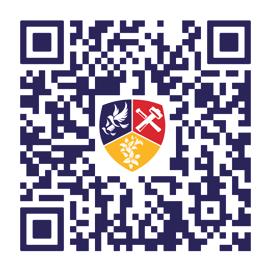
Scan the QR code or search for The SJCMAT Family Podcast on Spotify.
Scan the QR code or search for The SJCMAT Family Podcast on Spotify.
Scan the QR code or search for The SJCMAT Family Podcast on Spotify.
Follow and share with colleagues, parents, governors and the wider SJCMAT community.
Follow and share with colleagues, parents, governors and the wider SJCMAT community.
Follow and share with colleagues, parents, governors and the wider SJCMAT community.
we're building stronger connections across our SJCMAT family.
Together, we're building stronger connections across our SJCMAT family.
Together, we're building stronger connections across our SJCMAT family.
The preparations are well in hand for the early morning departures to Lourdes for the Archdiocesan Pilgrimage later this month. There is a lot of excitement as we head again to the Shrine of Our Lady of Lourdes and bring our prayers to our Blessed Mother, who will offer them to the Lord Jesus. Mothers are good at managing difficult family situations and getting things done! For the less able pilgrims and those who are sick, it will be a long and arduous journey, but they will look forward to the next morning when they will awaken and feel once again at home in this holy place. The familiar sight of the young people in their yellow shirts, who will be ready to help generously and with cheerfulness, will be a welcome one. I thank the hospitalité in advance for all their generous service to others during the pilgrimage. Please pray for us as we travel to Lourdes.
We begin our pilgrimage on Sunday 19 July in the Cathedral at 3pm. The Annual Archdiocesan Lourdes Mass will be celebrated and petitions brought together to be taken to Lourdes with us and placed at the feet of Our Lady in the grotto. I hope that many pilgrims and those staying at home will be able to join me as we pray together for the safety of the pilgrimage and those who are sick and offer these intentions to the Lord. If you are unable to travel, a simple novena will be distributed to parishes which will enable you to join us in prayer. There will be plenty of social media and messaging to help you join us on pilgrimage.
Our pilgrimage is a sign of the Church of Liverpool walking together to celebrate our faith and serve others. This is who we are as Catholics. It is also a witness to the culture of life which we want in our society. Those who are the weakest because of sickness or frail because of age are the centre of our pilgrimage. They are the persons of honour and have the place at the top table. We walk with them at their pace to help them pray, and to celebrate the Mass, the sacraments, and enjoy companionship and communion. Jesus was always close to the sick and healed them during His earthly ministry. May they find hope in Him during these days.
Lourdes is a place of holiness and one of the sacred places where we see the building blocks of a civilisation of love, with those most in need at the centre of everybody’s life. Our Lady has inspired vocations to priesthood, religious life, marriage, and the healthcare professions. Please pray that young people on pilgrimage will find their calling in life.
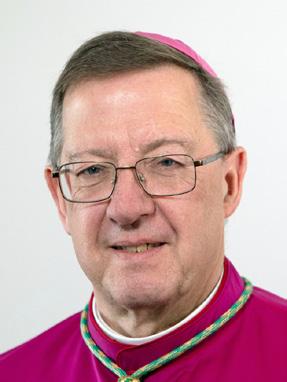
Archbishop John Sherrington Archbishop of Liverpool
JULY For respect for human life. Let us pray for the respect and protection
Editor Harriet Anwyl
Editorial Catholic Pictorial Magazine, St Margaret Clitherow Centre, Liverpool Archdiocesan Office, Croxteth Drive, Liverpool L17 1AA
Tel: 0151 522 1007 Email: CatholicPic@rcaol.org.uk
Advertising Sales team 0151 709 7567 sales@cpmmmedia.com
Contributor Katie Parry
Website: www.catholicpic.co.uk
Twitter: @PicCatholic
Youtube: CPMM Media
4 Main Feature The Power of Lourdes
7 Sunday Reflections
8 From the Archives The G ospels in Scouse
9 News News from around the archdiocese
14 What’s On What’s happening in the archdiocese
15 Cathedral Record
16 Pastoral Ponderings
17 Profile Andrew Truby
18 Catholic Life
26 Pic Extras Mum’s the word News from the KSC
27 Youth Ministry
28 Dialogue and Unity

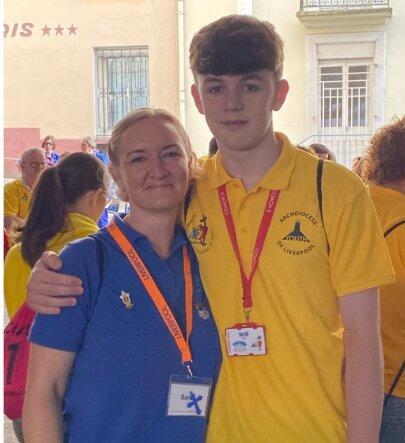
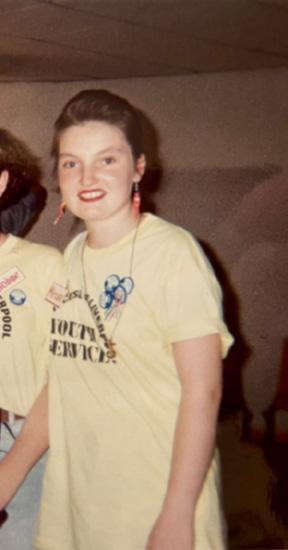
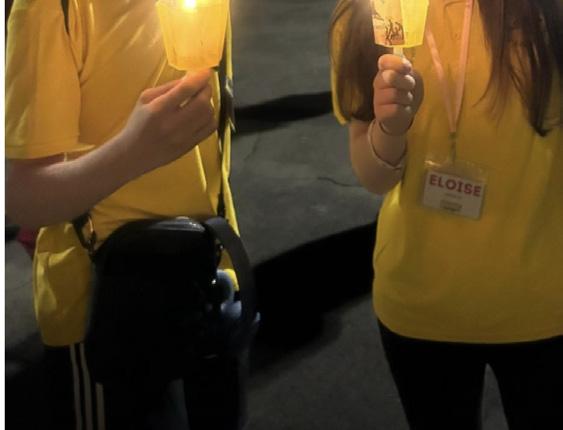
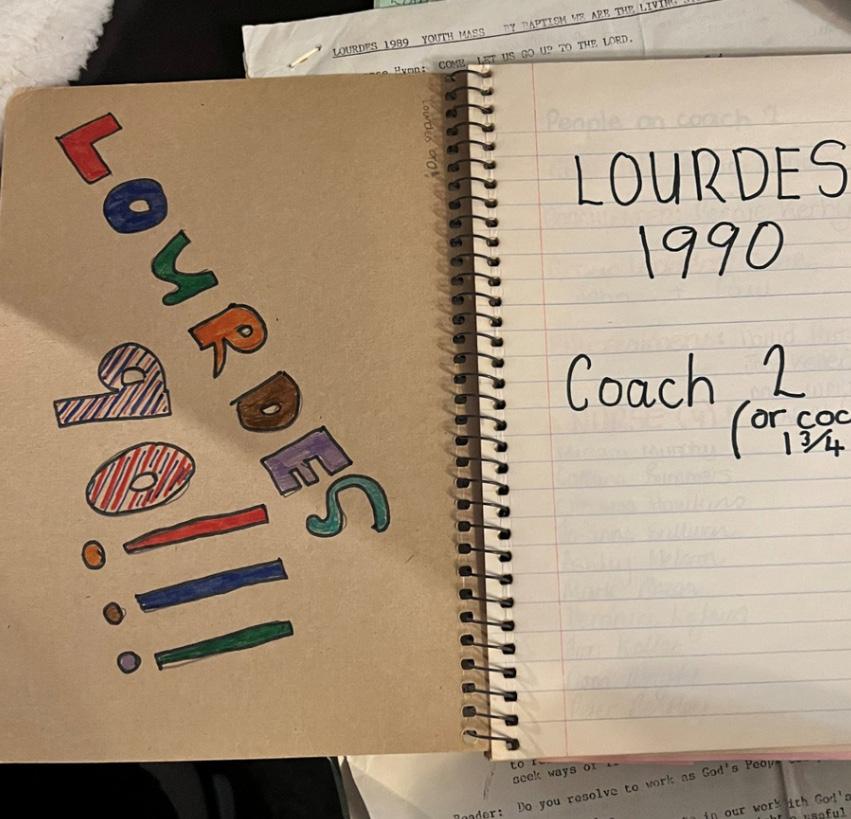
Fifty years since the first Liverpool Youth Pilgrimage, we look back and remember with young pilgrims from across the decades.

was 50 years ago this month, in July 1976, that young people set off from Liverpool to the French Pyrenees by coach. Their destination? Lourdes.
They were the pioneers of the Liverpool Youth Pilgrimage, starting a tradition which has not only survived but indeed thrived to this day. Over half a century, young pilgrims from our archdiocese have had their hearts touched and their horizons widened by time spent in

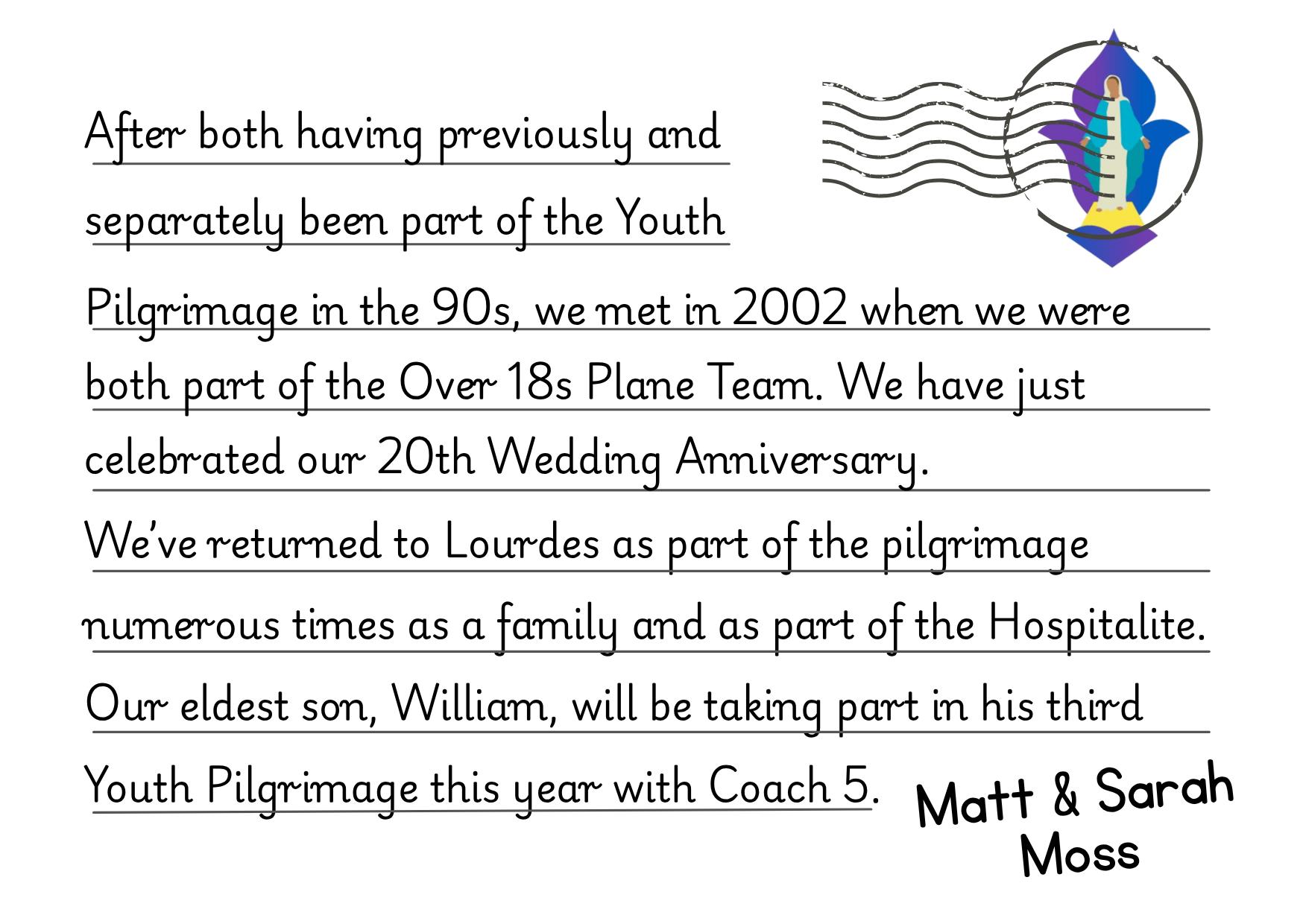




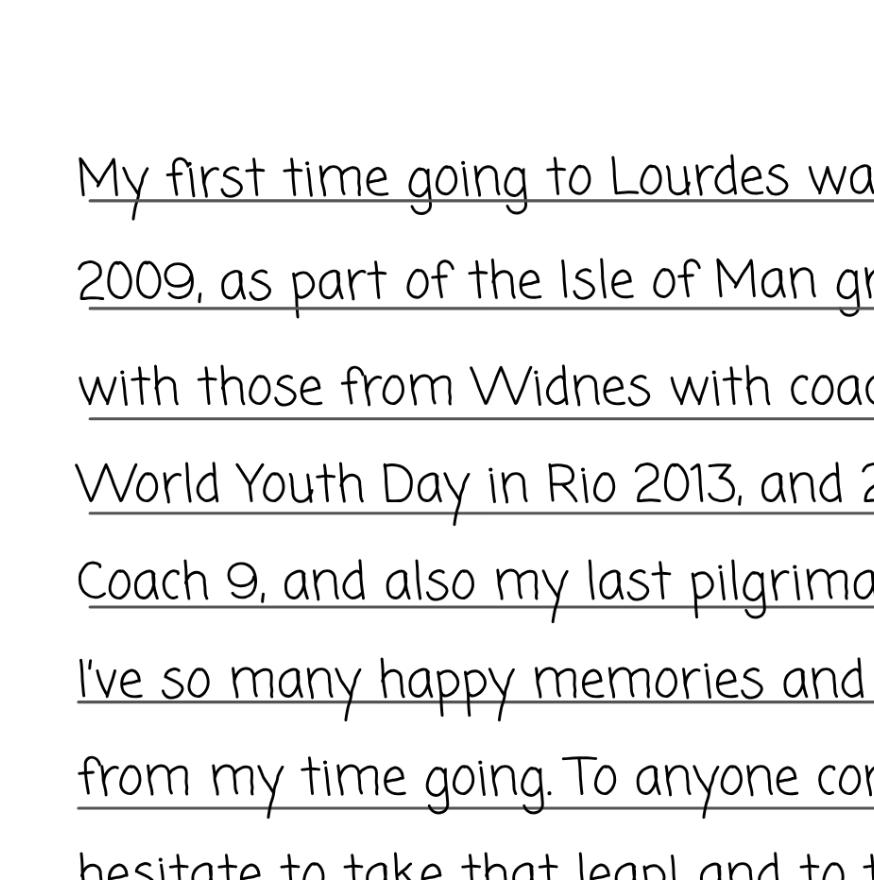
Louise Crossey played an integral role in establishing the first archdiocesan Lourdes youth pilgrimage.
She said: “I remember being invited to a meeting with Fr Pat Harnett because the Lourdes pilgrimage needed more support and helpers to work with the sick. Someone suggested that young people could come to help, and from there it just grew.
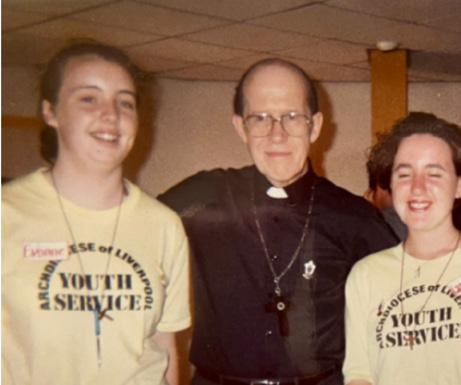
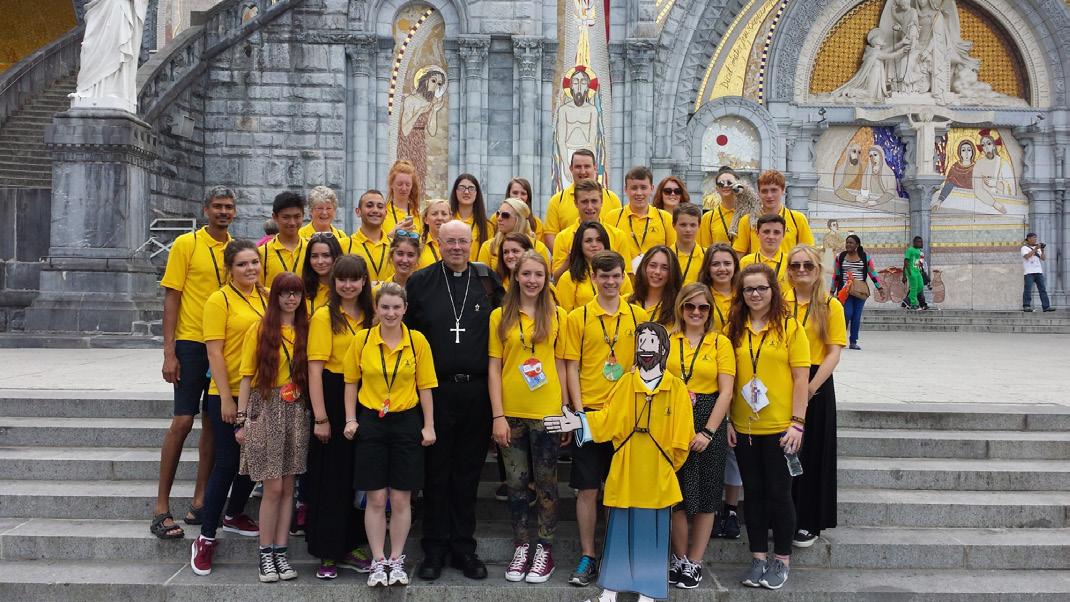
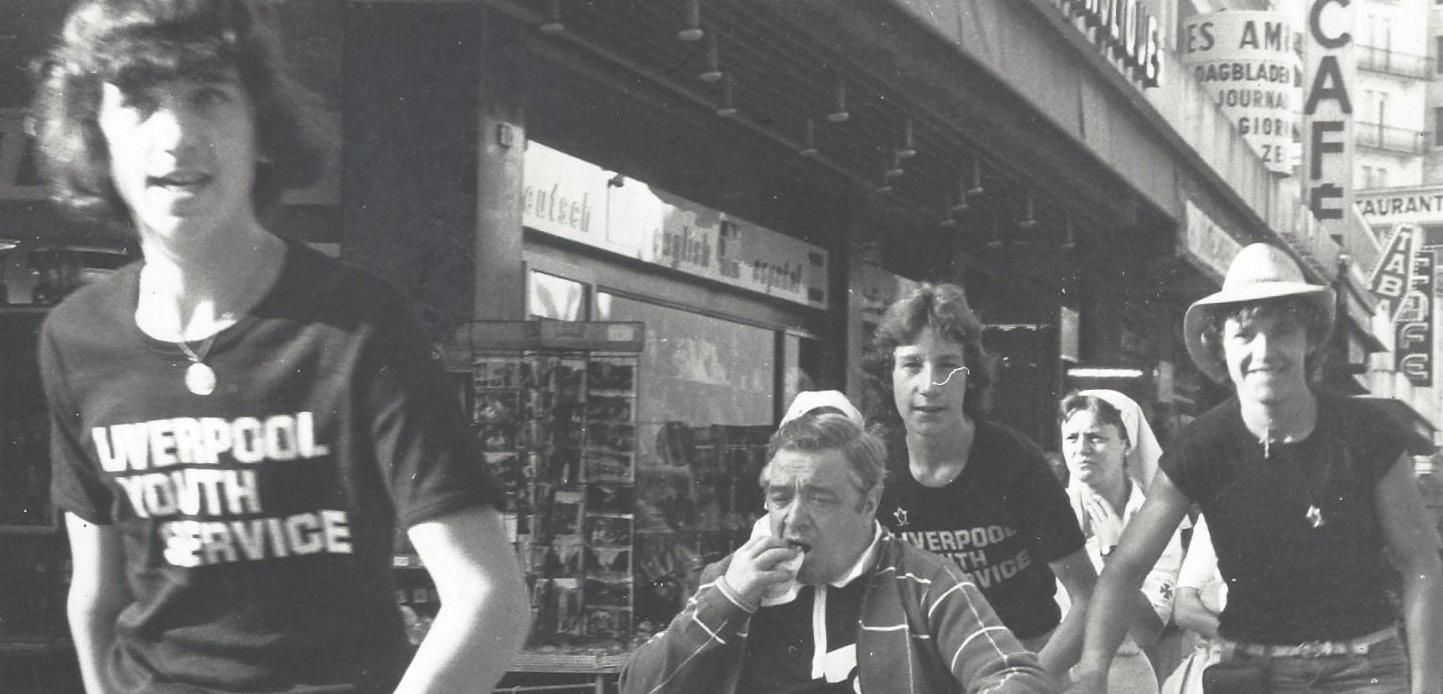
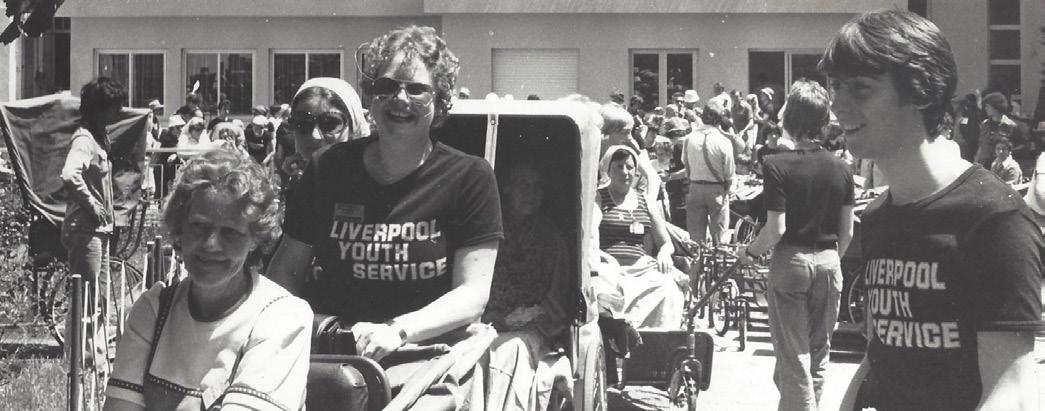
“The first youth pilgrimage had two coaches filled with young people, chaplains and leaders, around 100 people total. We all wore black t-shirts on the first trip, as they were the cheapest, but over time we switched to red and now of course we have the famous yellow shirts the youth still wear today.
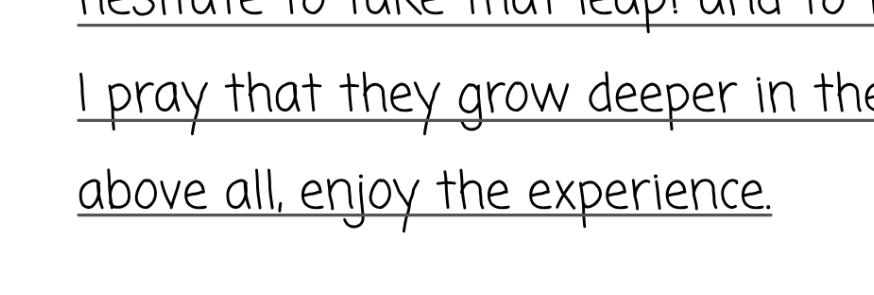
“The highlight for me was definitely the effect it had on the young people and the kids, socially, educationally and spiritually – it surpassed our wildest dreams of what we could give to the young people.”

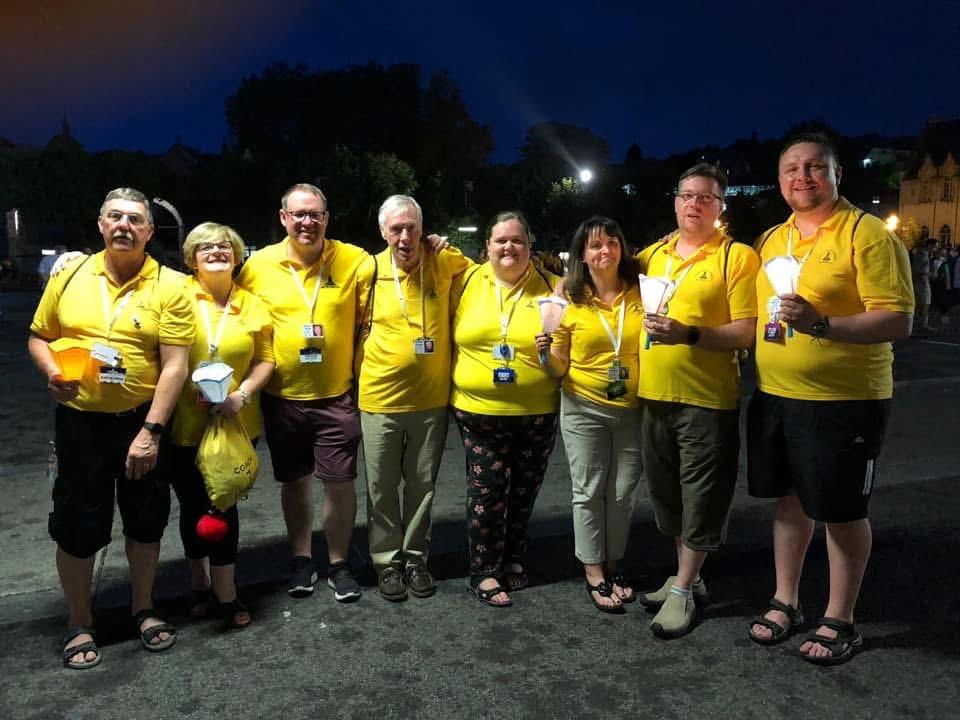
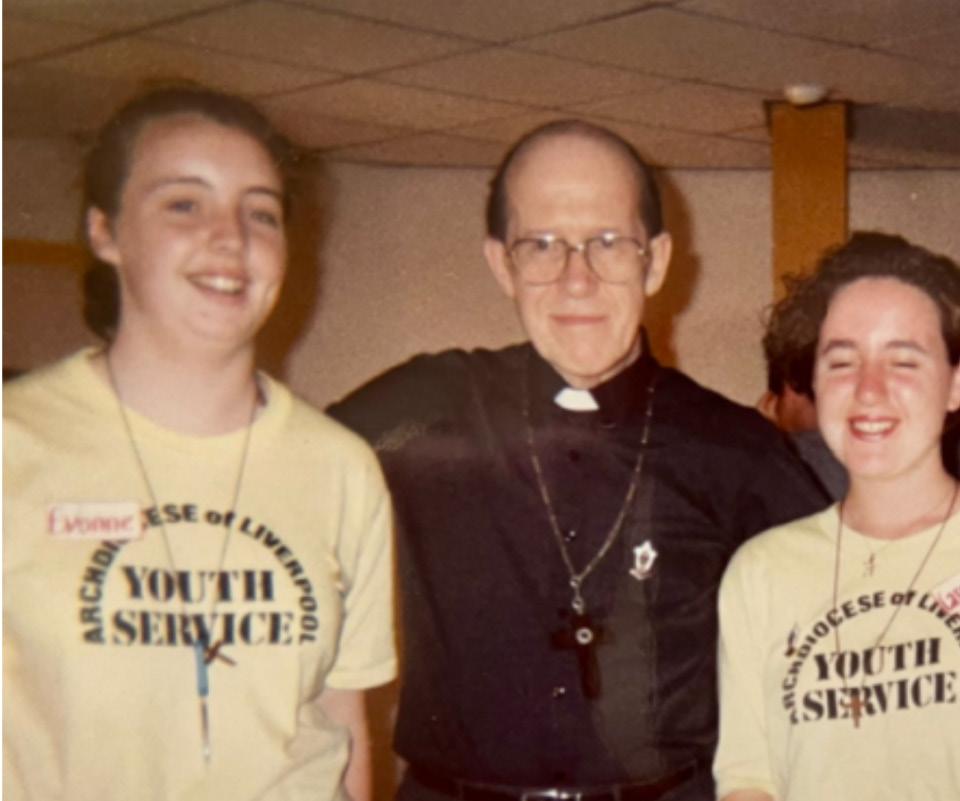


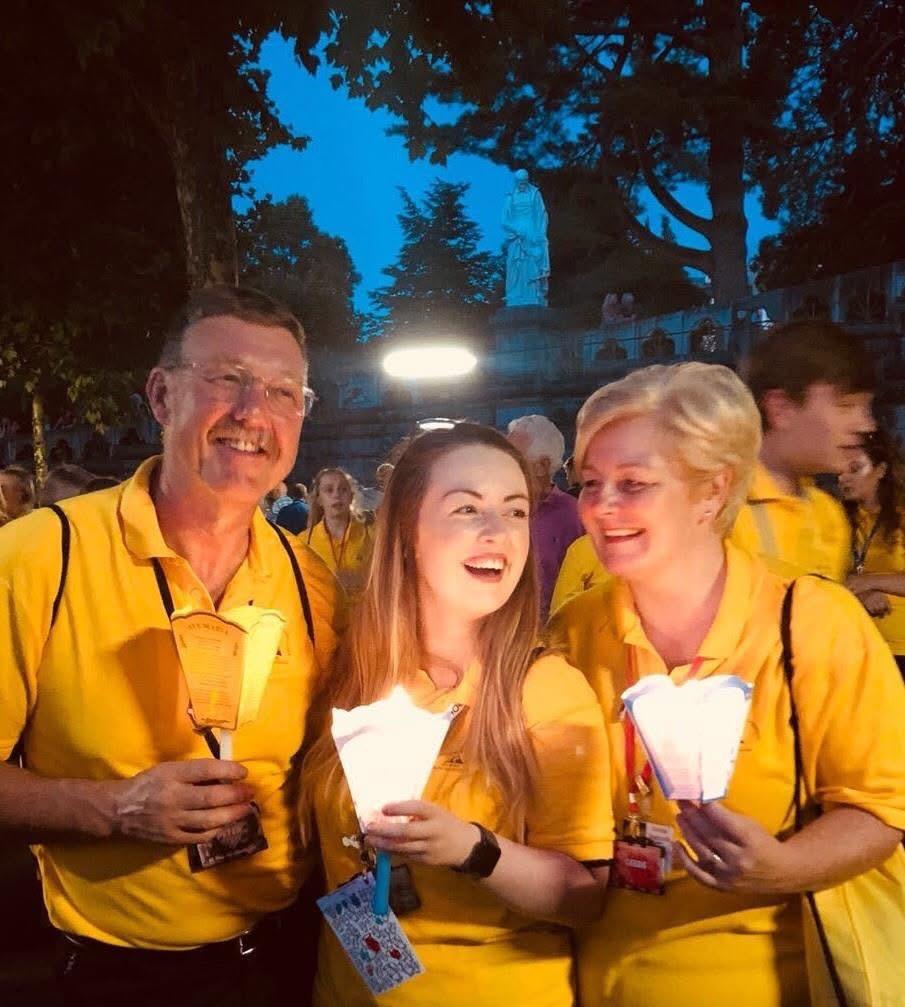
What began as part of Debbie Reynolds’ role within the diocesan Catholic Youth Service, the Lourdes Youth Pilgrimage soon developed into a remarkable 33-year journey, becoming an integral part of both her life and her family’s story with husband Pete and daughter Beth joining her when Beth was only 2 1/2 years old.
Debbie recalls: “There was always so much laughter and you really do build your own little Lourdes family. You could go a year without seeing people, but when you met up in Lourdes, it’s like you’ve never been away from each other.
“A joyful memory for me is meeting the train when the sick pilgrims arrive in Lourdes – groups were on the platform singing and dancing as the train embarked and there was so much excitement about the week ahead.”
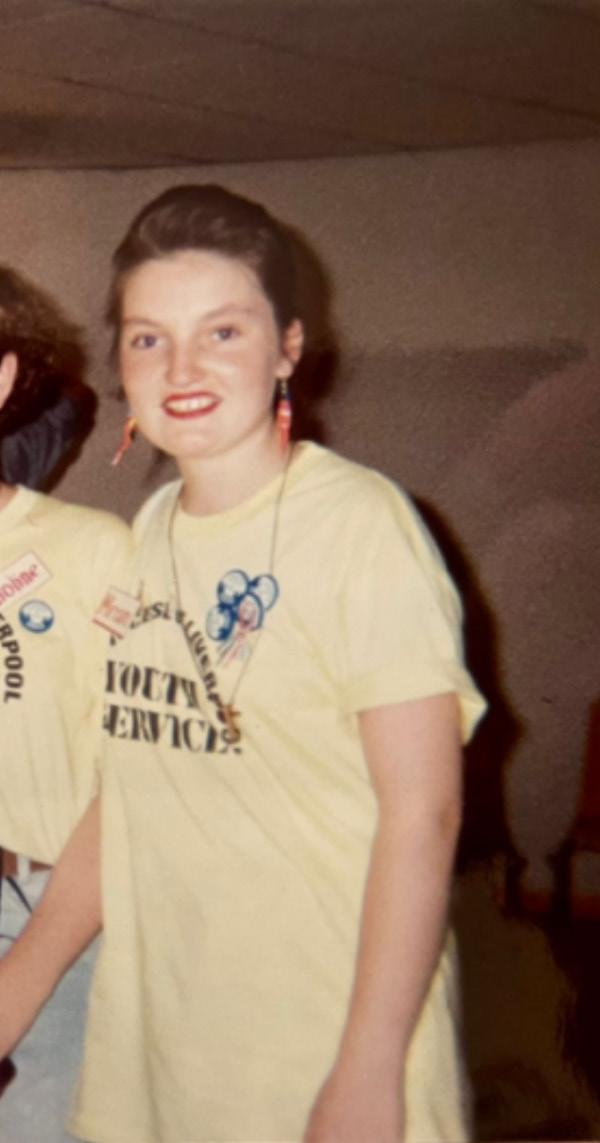

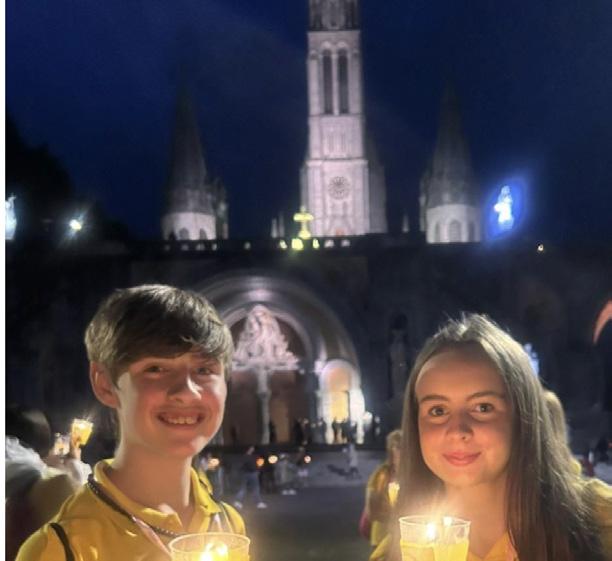













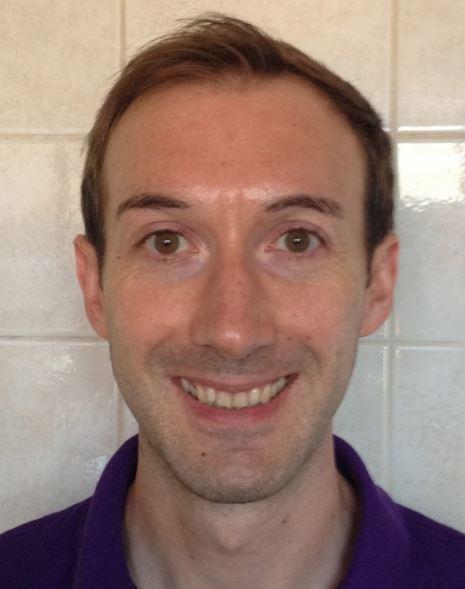
Fathers Philip Inch and Simon Gore, Liverpool Youth Pilgrimage directors past and present, share their memories – and reflect on Lourdes’ impact on young people from this archdiocese over the years.
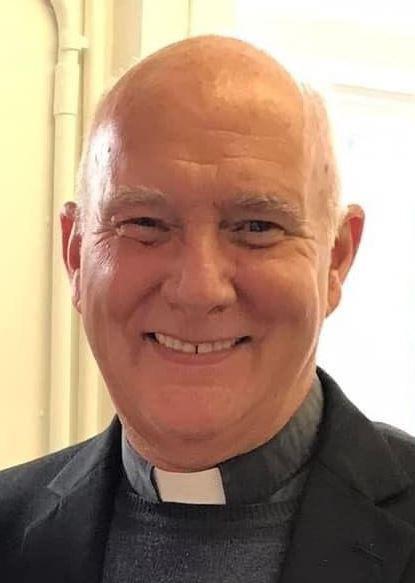
“The first thing I did after ordination was go on the Lancashire coach as a chaplain in 1982. I did that for five years, then Archbishop Derek Worlock asked me to shadow Father Pat Harnett, who was running the youth pilgrimage then, with the intention of taking over, which I did at the end of that decade. One of the big differences from now is we’d stop for two nights on the way there. We’d stop in a youth hostel in northern France, somewhere like Amiens, and then we’d all gather in Poitiers in an enormous youth hostel for the second night.
“The real start of the pilgrimage was when the Liverpool train rolled into the station in Lourdes and the youth would be waiting for them. The whole platform would be lined with yellow shirts singing. It was a great welcome for those who’d come on the train, but a pain to organise because the train was often late and those were the days before mobile phones. The Youth Mass was always a highlight too. We assisted at the other Masses, but in the Youth Mass, you had more freedom to be creative. Archbishop Worlock would often use that as a moment to ask young people ‘Why not become a priest?’ and other questions.
“Archbishop Worlock was also responsible for bringing in the yellow T-shirts, in place of red, after the Heysel Stadium disaster in 1985. We had the Over-18s group who were still allowed to wear red shirts, and it was a kind of progression: you went from yellow to red.
“For our young people, Lourdes was faith in action, and it was also always a tremendous prayer experience. They might end up going to Mass two or even three times a day if they were helping groups, and nobody would ever complain. Moreover, we introduced the idea of each coach having its own prayer services so, for example, they’d lead night prayers for each other. In a sense, you were training young leaders and, as a result, we developed a good youth leadership team in Lancashire. Lourdes wasn’t just a one-off, but fed into other things.”
Father Simon Gore
“My first pilgrimage as a priest was in 2007, the summer I was ordained. It was the first year they’d introduced a second coach for Lancashire, Coach 8, and they needed a priest. Six years later, I took over the running of the youth pilgrimage from Father Stephen Pritchard, who’d been director since 1999.
“We’ve always had the biggest youth pilgrimage in the country and, even after COVID, when we had to restart in 2022 having lost numbers over that intervening period, we still had the biggest pilgrimage. Last year, we had 280 youth pilgrims, and this year it’ll be 310. I think there’s something about the Archdiocese of Liverpool – the idea of social justice and Catholic social teaching has always seemed to have a big impact here because we can see where the need might be. And so young people in this area want to put their faith into action.




“Following the pandemic, it took a couple of years to get the culture of the pilgrimage back. That’s not to say that 2022 and ‘23 weren’t good years, but when you’ve had a break like that, it can take a little time to remind ourselves of what the pilgrimage is and for the coaches to regain their identity. Ultimately, if you listen to people who went in 1976 and see the original foundational document, the essential points have probably remained the same for 50 years. There are little changes – the pilgrims you work with and the hotels you stay in, and the town itself changes – but it remains a time of service to the assisted pilgrims, a time of community with the young people gathered together, and a sense of joy around the place. Maybe that’s the reason it’s remained as popular, because young people that sign up know what they’re going into and what’s expected of them.”

Canon Philip Gillespie
Listen.
This is the first word of the ‘Rule’ or Way of Life written by Saint Benedict, whose memory is kept in the Liturgy on 11 July. Benedict was born in the Italian town of Nursia in Umbria, around the year 480AD.
Disillusioned by the excesses of his time, he went to the hills of Subiaco to seek solitude and space. There, he found other communities who were likewise dedicating themselves to reflection and prayer, and it was upon their goodness and wisdom (and at times opposition!) that he relied in his early years.
Soon, he was joined by like-minded men who were inspired and challenged by his radical choice of life, and he established 12 small communities around the Aniene Valley, later moving to a hilltop site at Monte Cassino – and it was for the community of Monte Cassino that his ‘Rule’ or Way of Life was composed.
Listen. Some years ago there was a BBC Radio programme called ‘The Listening Project’ whose tagline was “It’s surprising what you hear when you listen”. It brought people together and allowed them to engage and learn with and from each other. Our societies and communities
A parent was wondering how to advise his daughter on her choice of career. Writing in The Times, he says he fears that future advances in artificial intelligence will soon render traditional career paths obsolete.

could benefit from a dose of good and deep listening: not just hearing words that are spoken, but grasping the deeper significance of what is shared. Benedict, of course, wrote this word – ausculta, be attentive – with regard to those who were to live under the Way of Life of the monastic community, but it is not hard to see how this can be applied in my life and your life in the sphere of our prayer, the Liturgy we celebrate together, and indeed our daily interaction with the people with whom we share our lives.
In 1964, Pope Paul VI declared St Benedict to be a Patron Saint for Europe. This was to acknowledge not only the sanctity and influence of Benedict and his Rule of Life but also the cultural effects which the Benedictine Order had – and continues to have – in the European Church of today. We ask his intercession that, in our day, we may be people who truly listen, people who recognise the dignity of all and have lives which seek to embody the virtues and values of the Gospel in our communities today. St Benedict – pray for us!
Mgr John Devine OBE
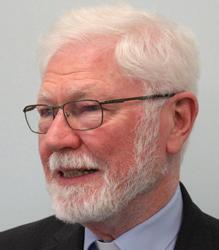
According to the article, routine employment in finance or law will not survive, while those working in the caring and people-facing professions are less likely to find themselves out of a job. The artificial intelligence revolution impacts everyone in different ways. But we’ve all experienced the frustration of attempting to speak to a human being when automatically referred to a website. It’s not all bad. I’ve already made use of Google in preparing this article.
Pope Leo’s encyclical letter is timely. Papal encyclicals don’t make easy reading, but Magnifica Humanitas is different. One reason may be that it was originally drafted in English before its translation into other languages. Yes, it’s over 50 pages long with 224 footnotes, but unlike other Vatican texts, doctrinal and liturgical alike, it doesn’t read like Latin translated into English. In a nod to convention, the encyclical has a Latin name, but its strapline ‘On Safeguarding the Human Person in the Time of Artificial Intelligence’ is clear. The document delivers what it says on the tin and has plenty to say to people living beyond the boundaries of the Church; a document to be proud of. So what does Pope Leo say?
He warns that runaway expansion of artificial intelligence poses a threat to the dignity of the human person. The digital economy is as voracious and dehumanising as the 19th century Industrial Revolution. There will be some winners and a great many losers. He predicts that the majority left behind will be those already disadvantaged and excluded. The Tower of Babel in the Book of Genesis is a metaphor for a dog-eat-dog rush for progress. Pope Leo contrasts it with the rebuilding of the walls of Jerusalem after the Babylonian captivity – a collaborative enterprise in which no one was left out. The document is not just a series of health warnings. It’s positive: “In the humble fidelity of daily life, even the era of AI can become a time in which the Holy Spirit brings about the civilization of love in our lives ...”
Published on the anniversary of Pope Leo XIII’s 1891 encyclical, Rerum Novarum, there’s an obvious parallel to be drawn. Leo XIII’s championing of the dignity of the human person is cited as early as the third paragraph. That document introduced Catholic Social Teaching to wider society. To this day, even nonpractising Catholics are proud to be advocates of its message. Our hope is that Pope Leo XIV’s new encyclical will have the same impact. Will the Church still be quoting it in 2161?
Filled with the utter fullness of God
Just recently, I had an encounter with a young man who is homeless. After he’d washed and eaten and was feeling more human, I sat down with him. He asked, “Are you a priest?”.
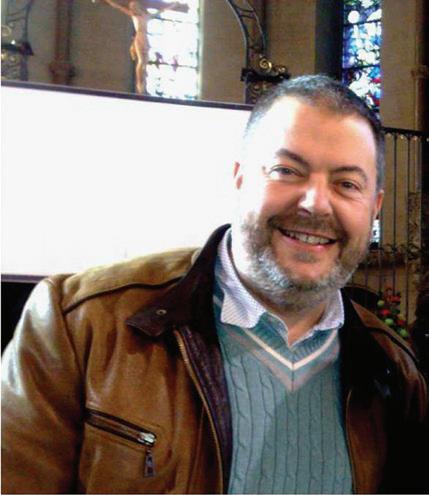
And then he asked, “A Catholic one?” Once I’d said yes, he asked me why God had left him in this state. I told him that I couldn’t answer, but one certainty I did have was that God loved him and the centre he was in was a witness to the love of God as we tried to help people. He asked me if the centre was just for Catholics and I said no. He became really angry then and shouted that God couldn’t love Muslims or Hindus because they weren’t Christian.
I hope he left with a wider sense of the love and the surprise of the graciousness of God. It did strike me that he was very like Jonah in the Bible, angry with God because of God’s mercy and graciousness.
I’m not sure that we, as the Church, have ever come to terms with being human beings – hence our perceived hardness towards humanity. Nor do we recognise God’s irrevocable choice to live within us. Why should we be this way? God has chosen to live within humanity and within each person regardless of who they are. We are filled with the utter fulness of God. We should be full of joy that we are God’s dwelling place.
I was recently reading a reflection on the story from Luke’s Gospel of the woman who was bent double. It was written by Nadia Bolz-Weber who spoke of the sacred nature of the human body, the containers of God. She reminds us of just how amazing it is that a human body is what God chose to take on, to be with us, that God would slip into skin and walk among us and choose to make God’s home in the person of Jesus of Nazareth. More than that, in your body and in my body.
She then says something very powerful. It’s because of that truth that “your body is holy and beautiful to God – your young, old, fit, fat […] disabled, strong body. For after all, it is the human body in which God placed God’s image. God could have chosen to place the image of God in the mountains, but instead […] put it in our bodies. We might experience the awesomeness of God in the mountains … but we see the image of God in the human body in all its perfectly glorious diversity.”
However much we might hate our humanity, and I have met plenty of people who do, there is a journey to go on that Paul understands as he prays that we be filled with the utter fulness of God. It is a journey towards learning how to love ourselves because of the in-dwelling of God, yet rather than embark on it, we avoid being real and escape into a false spirituality where we become narrow, frowning people who live false, protected lives.
It’s sad that we devalue what it means to be human beings when the centre of our faith is all about “the Word made flesh”. So go on the journey where we learn to love ourselves, a journey in which we become aware that we are indeed filled with the fulness of God.
Father Chris Thomas
by Neil Sayer, Archdiocesan Archivist
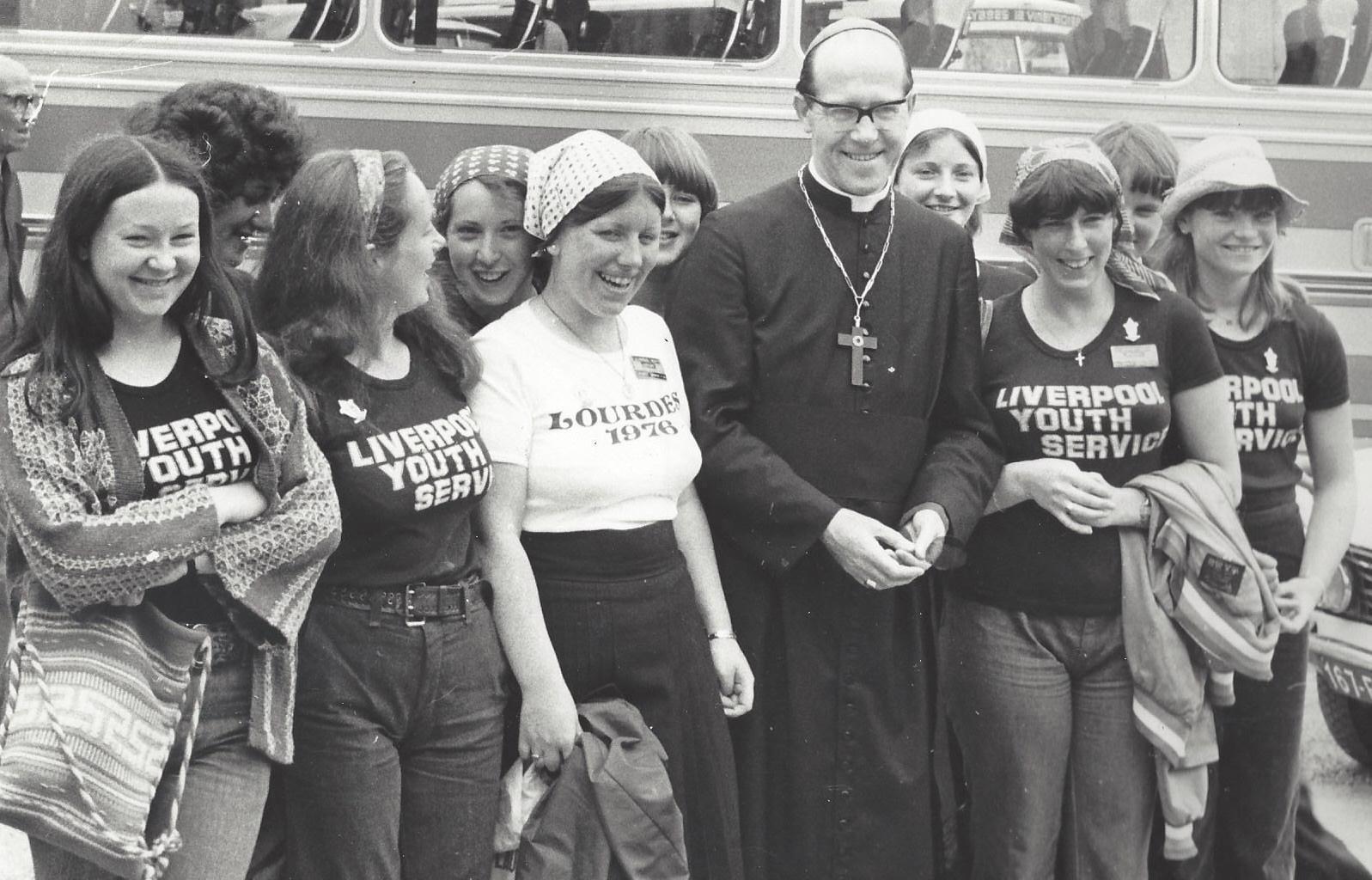
In Parbold and Ormskirk, they were praying for rain. For these rural farming communities of the archdiocese, the drought conditions of the long hot summer of 1976 seemed to demand divine intervention. So it seems ironic that the volunteers on the Archdiocesan Youth Pilgrimage to Lourdes were being advised to pack for rain. “When it rains in Lourdes, it really rains”, they were told.
Lacking the comforts of the main pilgrimage on their overnight train voyage, the young folk had a three-day coach journey to cover the thousand miles to Lourdes. Much singing was expected on “the long coach journey when the party was able to get to know each other … as each group develops around the common purpose, the care of the sick pilgrims.”
They were meant “to add a ‘youth presence’ to the Archdiocesan Pilgrimage”, according to the Pic, “wearing their distinctive black T-shirts”. Representing all parts of the archdiocese, they assisted the Brancardiers and Handmaids, but they didn’t just provide “muscle”. “With beautiful singing at services in the Grotto and in the Basilica, and with their help and friendliness to the sick pilgrims, our young people were certainly a credit to the archdiocese.” The Brancardiers’ Association acknowledged the assistance of Fr Pat Harnett, SCJ, who had established the Archdiocesan Youth Service in the early 1960s and had steered them into this practical aid which became an annual event. Not only did they help in the transporting of the sick, “they also cheered everybody with their music, cheerfulness and typical ‘Scouse’ humour.”
In 1977, the Archdiocesan Youth Service organised a second youth pilgrimage, and over 100 youngsters took part. Their work was appreciated by those on the pilgrimage. Catherine Kenny, a parishioner of St Cecilia in Tuebrook, thought that “They deserve the highest praise for the way they helped with the sick.” Her fellow parishioner, Alice Campbell, also wanted to record how “marvellous” the youngsters were. “They took the sick from the hospital to the various places of pilgrimage around Lourdes, even though they had to walk through torrents of rain. I saw one boy who had pushed an old woman in a wheelchair all the way up to the parish church where St Bernadette was baptised. He was wringing wet, but he was happy because the old woman was so overjoyed at seeing places which she wouldn’t otherwise have had

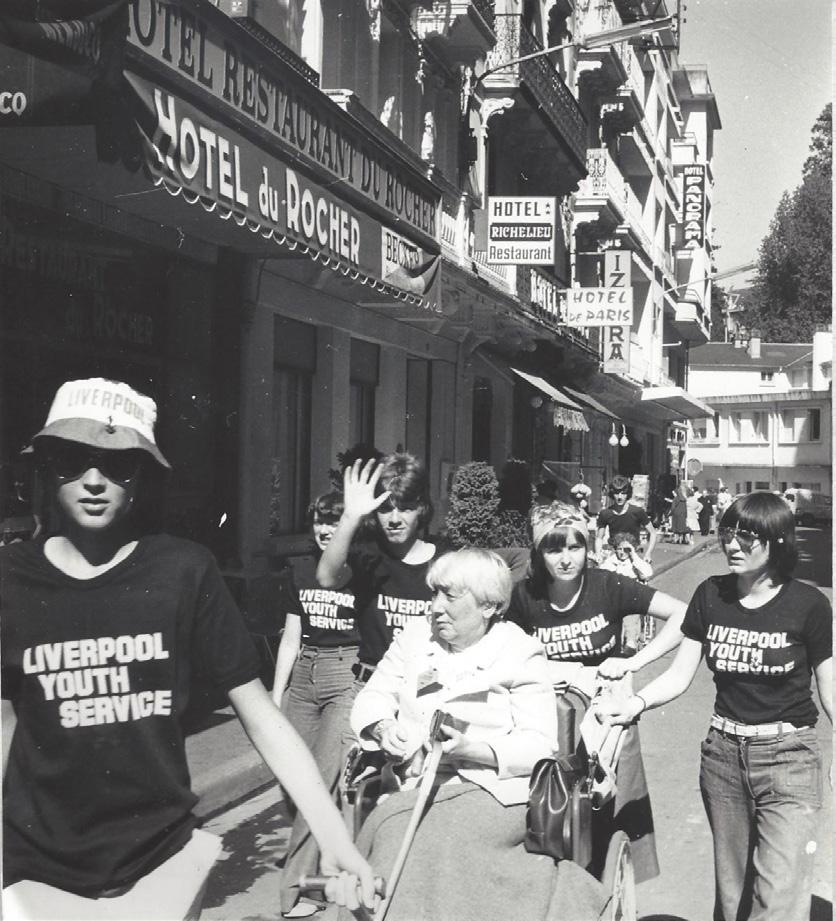

the chance to.” May Blackburn from Orrell was also full of praise for the youth section of the pilgrimage. “They helped everyone”, she said, “they were marvellous.” Her husband Leo was also a fan, especially of the young folk singing. Perhaps those hours on the coach had been well-spent after all. “In true Liverpool style, the young people maintained the musical reputation of the city of Beatles fame. “They were a better attraction than the Italian choir that was there’”, according to Leo Blackburn.
1977 was the year recently retired Archbishop Beck celebrated his Golden Jubilee as a priest at Lourdes. Members of the Youth Pilgrimage presented him with a couple of books. Riffing off the title of one of them, “What our young people could be said to be doing in Lourdes”, said the Pic, is “living the Gospels… in Scouse.” As Mrs Campbell said, “I hope to God that there will be more of them next year.”

If you’ve got any news from your parish that you’d like featured e-mail us with the details at: CatholicPic@rcaol.org.uk
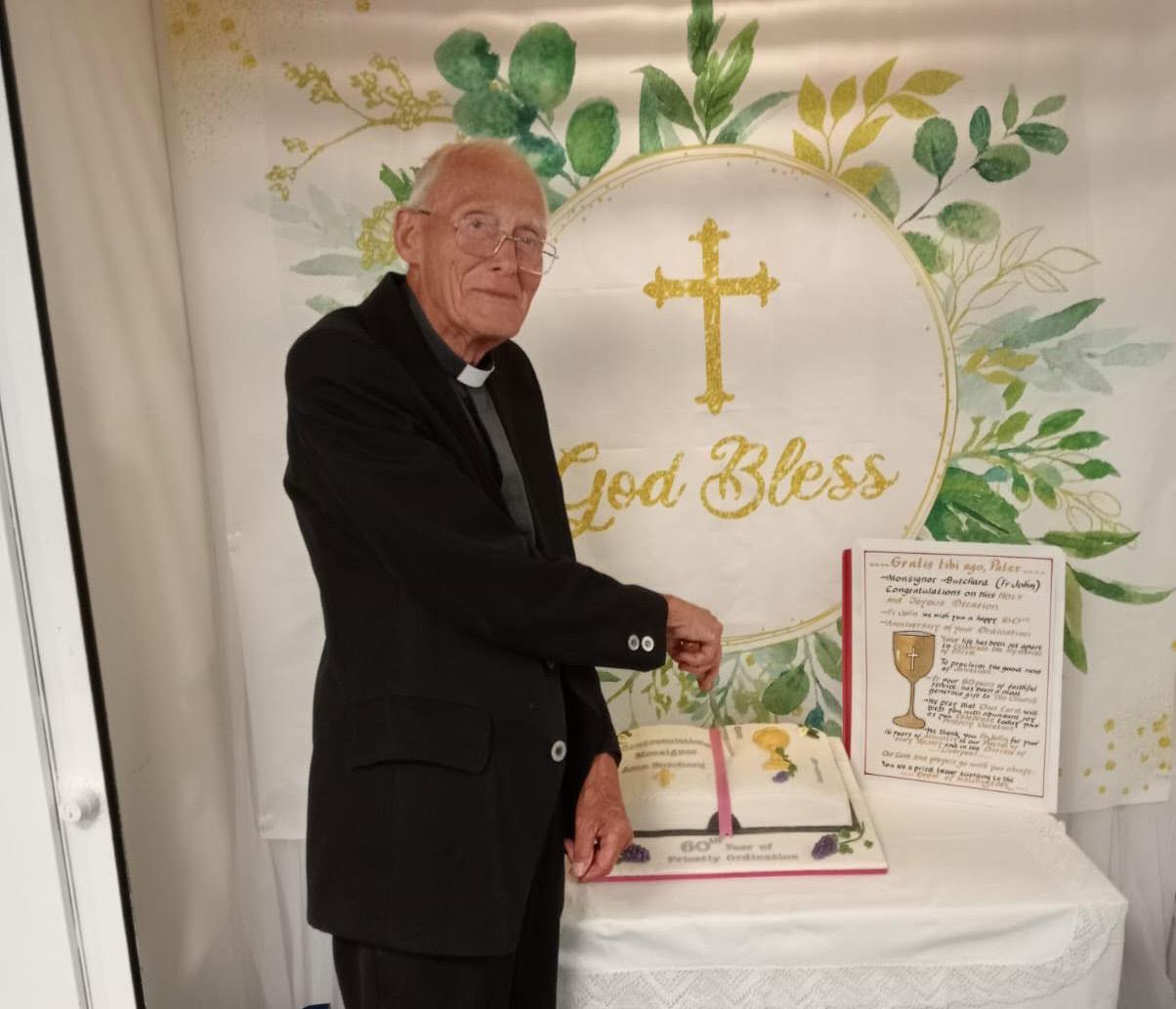
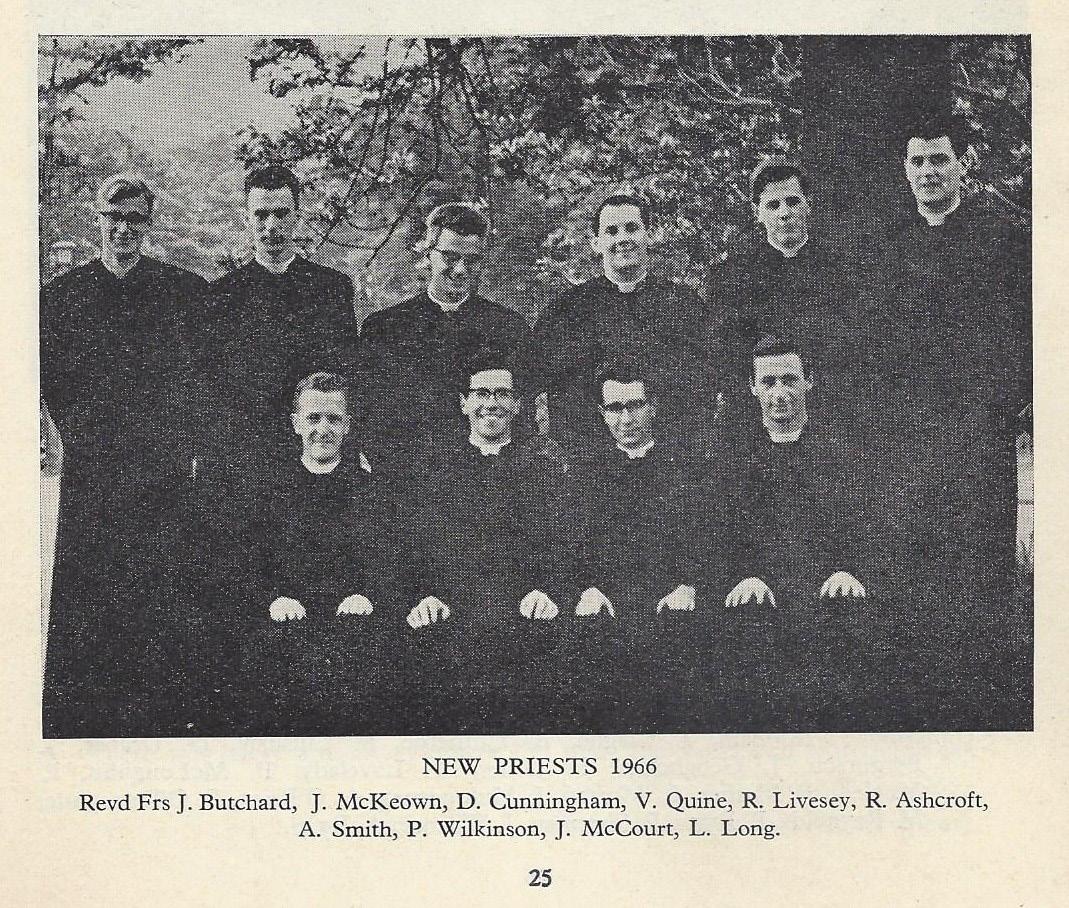
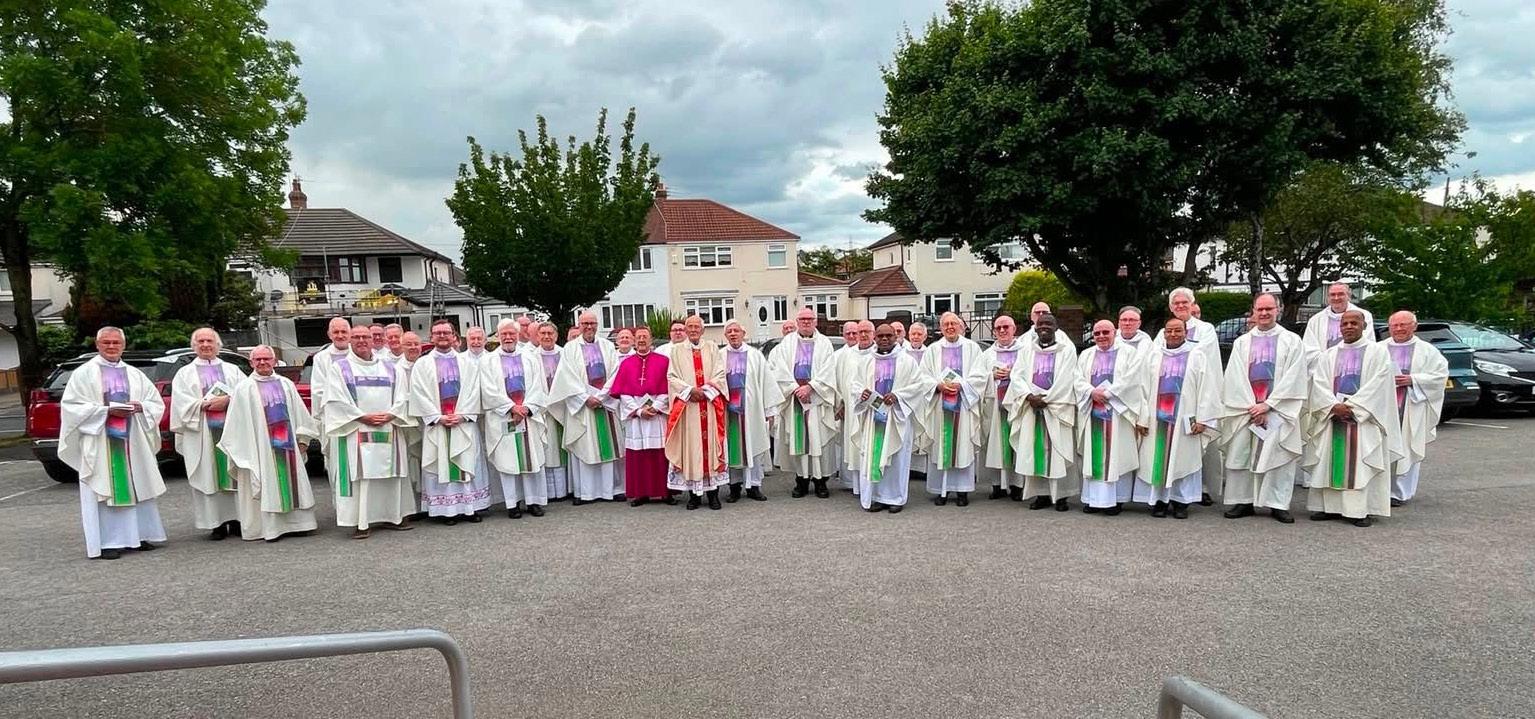
There was plenty of reason to celebrate at Holy Rosary parish in Aintree, as the community came together to celebrate the vocation of former parish priest Monsignor John Butchard, who celebrated his 60th anniversary of ordination.
Monsignor Butchard served as parish priest of Holy Rosary from 2000 to 2016, when he retired from active ministry. Before then, he also served as parish priest of St Joseph in Penketh, and spent 21 years at St Joseph’s seminary, Upholland.
He was also the Pilgrimage Director for the Archdiocesan Pilgrimage to Lourdes from 1991 to 2016 and hasn’t missed a pilgrimage since 1968.
The Mass was attended by Archbishop John Sherrington, Archbishop Malcolm McMahon, the Archbishop Emeritus of Liverpool, and clergy from across the archdiocese. A total of 60 priests were in attendance.
As well as that, 300 people packed out Holy Rosary church, with a further 320 joining in the celebration online.
After Mass, Mgr Butchard was presented with a gift on behalf of the parish – an all-expenses-paid weekend in the Lake District.
The celebration after Mass was held in the parish lounge where Mgr Butchard thanked guests for the wonderful celebration.
Monsignor Philip Inch, who is the current parish priest at Holy Rosary, having taken over the pastoral care in 2018, remarked in the parish newsletter: “It was wonderful that so many people came together to celebrate. Fr John was overwhelmed.
“Thank you to the great parish team who pulled together and made a wonderful, unforgettable celebration.
“It made me so proud to be your parish priest. We saw Holy Rosary and its parishioners at their best! Thank you.”
Altar servers from St Marie on the Sands Church and St Patrick’s Church were recognised for their commitment and dedication during a special presentation weekend.
Parish priest Fr John Heneghan presented Bronze and Silver Guild of St Stephen medals to altar servers from the two parishes. The occasion also welcomed new members into the Guild, while those receiving Silver medals were honoured for their long service at the altar.
Clive Baines, Senior Server, described the celebration as “a lovely day” and praised the commitment of the parish serving teams.
“How blessed we are here in Southport that young people and older people are stepping forward to serve at the altar,” he said. “The altar serving team are so dedicated in what they do, and that is why the number of altar servers is growing month on month.”
The parishes enjoy strong links with St Patrick’s Catholic Primary School, which continues to encourage young people to become involved in the life of the Church.
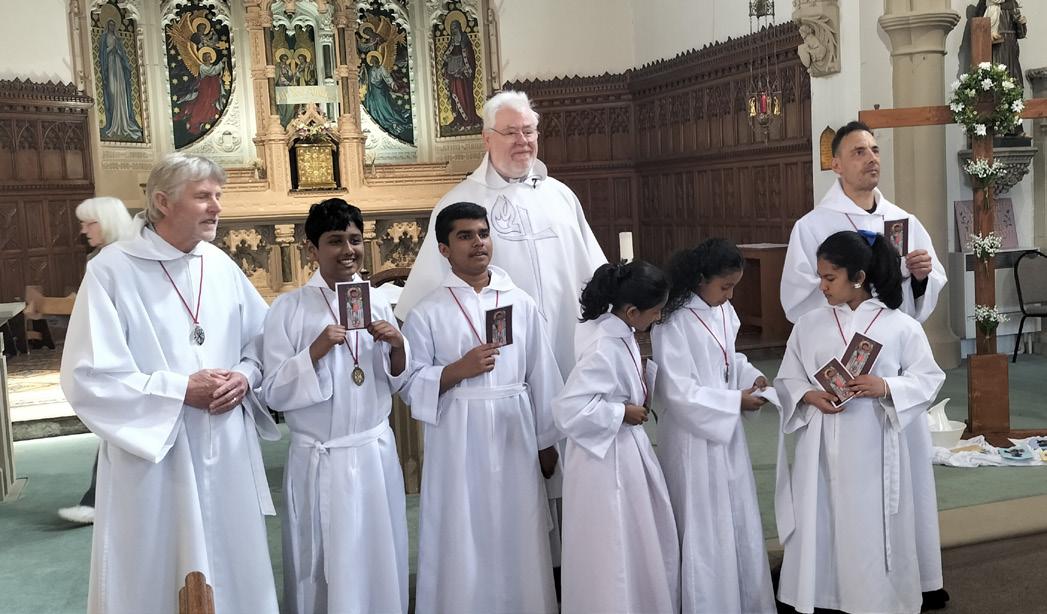
The growing number of servers reflects a vibrant culture of service across both parishes, with children, young people, and adults all playing an important role in supporting the liturgy.
Clive also highlighted the inclusive nature of the ministry, encouraging anyone interested in serving to consider joining the team.
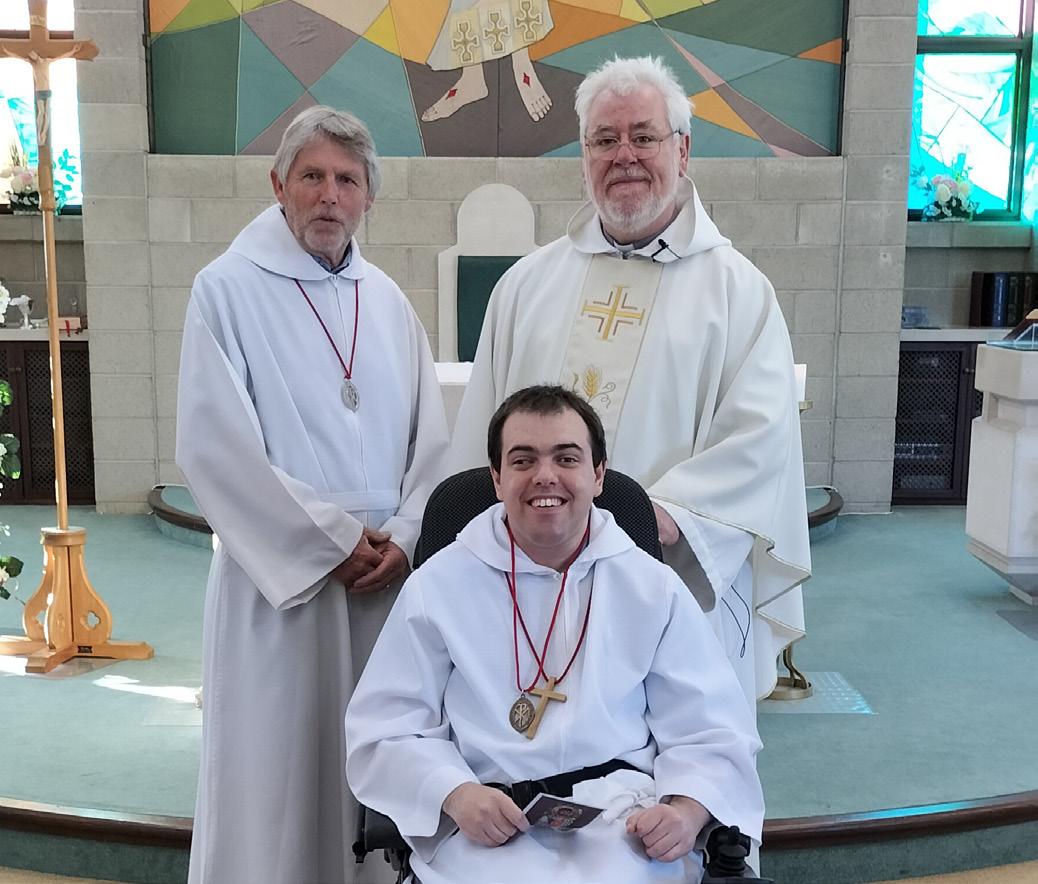
“We now have even more boys, girls and adults coming forward to join our altar serving team here in Southport,” he said. “We encourage people with disabilities to come forward and join our happy team of servers.”
The medal presentations were a wonderful celebration of faithful service, and a reminder of the important contribution altar servers make to parish life.
A group of 40 pilgrims from various churches in Crosby and beyond travelled to the Isle of Iona in May, following in the footsteps of St Columba, who founded a monastery on the island in 563 and helped spread Christianity throughout Scotland and northern England.
The pilgrims spent time exploring the historic abbey and ancient monastic sites that continue to make Iona a place of prayer, reflection, and pilgrimage.
Reflecting on the journey, Mgr John Furnival said: “Our group travelled by coach and ferry, rather than the leather coracle Saint Columba arrived in! However you get there, the spirit of the Saint is still strong, and the abbey and other ancient remains of monastic buildings on the island lend an atmosphere of prayerful quiet and a sense of sacred history.”
Throughout the pilgrimage, participants joined together for worship, including services in Iona Abbey, Mass at the Catholic
House of Prayer, and Night Prayer shared each evening at their hotel. The pilgrimage also provided opportunities for friendship among Christians from different traditions.
Mgr Furnival noted that mealtimes became occasions for genuine encounter, where “differences of religion or church allegiances were dissolved in a tangible sense of sharing and willingness to learn from each other.”
He added: “Iona takes you behind and beyond the divisions of religion and transcends age-old prejudices which have built walls between people. Instead, there is an awareness of Columba’s original vision of the joy of the Christian Gospel to be shared by everyone.”
Despite experiencing Scotland’s famously changeable weather, the group returned home enriched by their time on the island.
Mgr Furnival reflected, “We saw Iona as Saint Columba must have seen it, in all weathers, and as a place where God surprises you.”
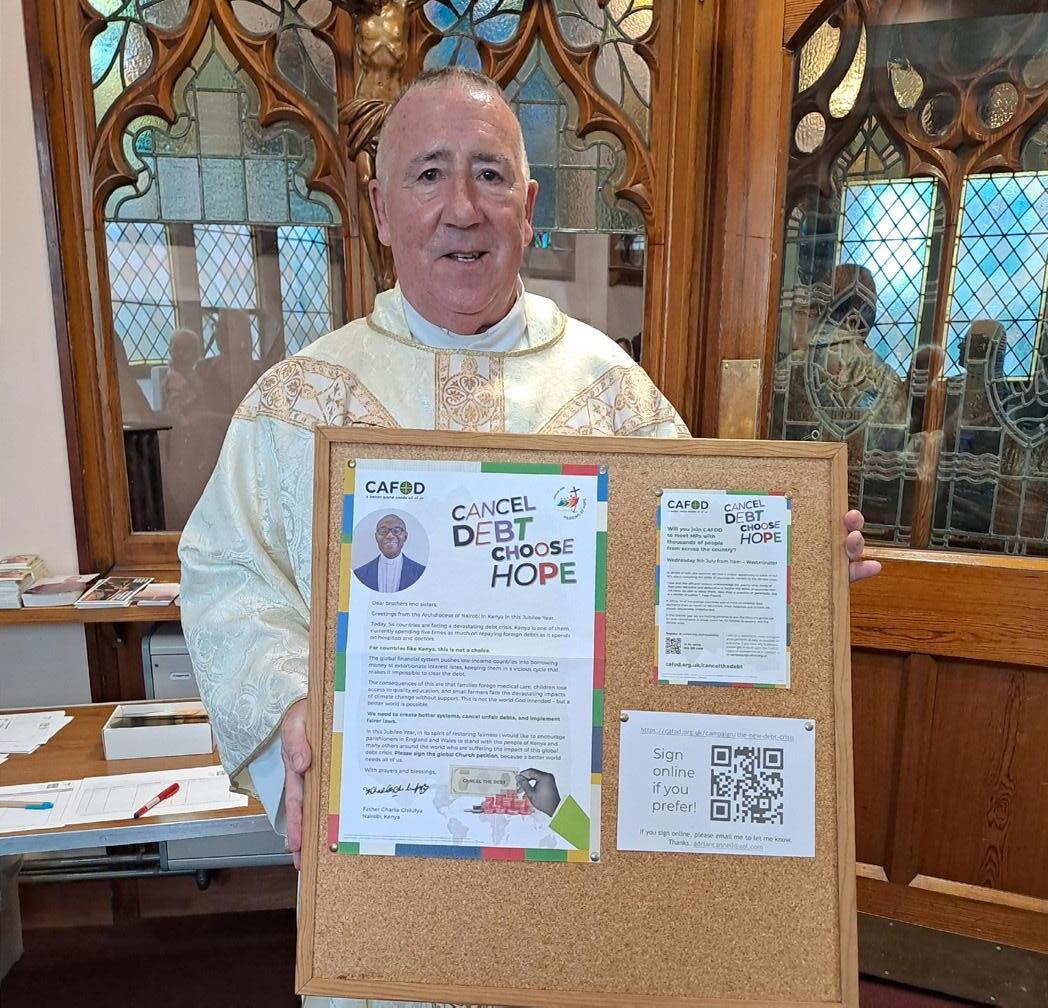
Last year, in the Jubilee Year, over 40 parishes in our archdiocese supported a global Church campaign to tackle the debt crisis. Over 35,000 people nationally signed CAFOD’s petition: let us build on this hope. But we need continued support to change the devastating impacts of debt on low-income countries.
All countries borrow money. But low-income countries need to borrow more and are pushed into a deepening debt crisis, paying high interest rates to wealthy lenders. Often, they have paid their original debt back, but spiralling interest means they cannot break the cycle. Money that should be spent on food, healthcare, and education flows out of countries that can least afford it. Governments across the global south must choose between serving their people or paying creditors.
Wesley Chibamba, Caritas Africa’s Policy and Advocacy Officer, explained people are dying because they can’t access healthcare. Children cannot go to school. People go hungry because the governments have debt obligations. Governments don’t have the capacity to respond to humanitarian crisis, like floods or droughts – they don’t have the funds.
Next year, our government is hosting the G20 – a crucial gathering of the world’s 20 most powerful economies. These leaders have the power to fix the global debt system, to make it fair and sustainable for low-income countries.
This is why CAFOD is inviting parishes to sign a new petition this summer and to build on the momentum of 2025. Cardinal Stephen Ameyu Martin Mulla of South Sudan has written a letter to parishioners in England and Wales to explain the
impact the debt crisis is having on his country and this letter will be shared in parishes. To read more, please see cafod.org. uk/parishdebtresources.
CAFOD give a huge thanks to several parishes where this year’s petition has already been signed, including St Richard’s, Atherton and St Benedict’s, Hindley.
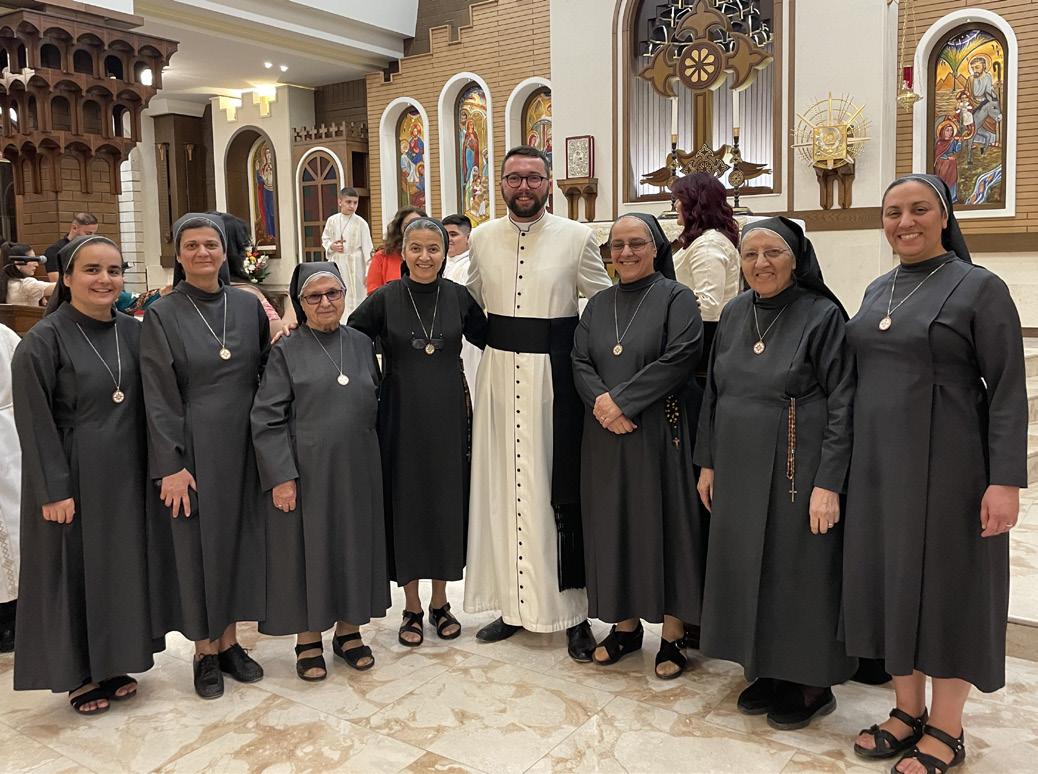
A special Mass in Arabic will be celebrated in the Archdiocese of Liverpool this July, offering Arabic-speaking Catholics an opportunity to worship together in their native language and celebrate the rich traditions of the Church in the Arabicspeaking world.
The initiative comes from Fr James Finnegan, who has spent the past three years studying at the Pontifical Institute for Arabic and Islamic Studies (PISAI) in Rome. During his studies, Fr James has travelled extensively throughout the Holy Land and Iraq, meeting Christian communities and learning more about their faith, traditions and cultures.
Reflecting on his experiences, Fr James said: “There are those who would have us think that Arabic is a language used exclusively by people who are utterly alien to us, but we must remember that somewhere between 10 and 15 million Arabic-speakers are fellow Christians, our brothers and sisters in Jesus of Nazareth.”
His travels have taken him to Palestine, Israel, Jordan, and Iraq, where he encountered a vibrant and diverse Christian presence. In particular, he was struck by the faith and resilience of Christians in Iraq, many of whom were displaced from their homes following the rise of ISIS in 2014.
“The Church in Iraq is flourishing,” he said. “Its witness – in social programmes, the rebuilding of communities, and the care of people of all faiths – is a necessary part of society. I pray to return there soon, to continue to learn from Iraq’s Christians what it means to be a courageous witness to Jesus Christ.”
Fr James hopes the Arabic Mass will provide a welcoming space for Arabic-speaking Christians living in the archdiocese. “We cannot quantify the grace and joy that comes from being able to worship together in our own language, especially when we may be feeling far away from home,” he said.
The Mass will be followed by an opportunity for fellowship and refreshments. Any Arabic-speaking Christians who may wish to attend are encouraged to come and celebrate Mass together.
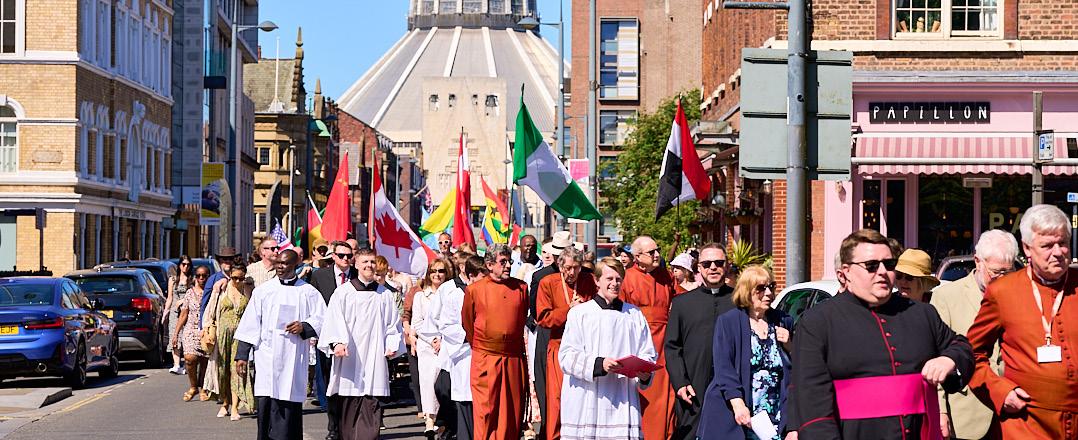
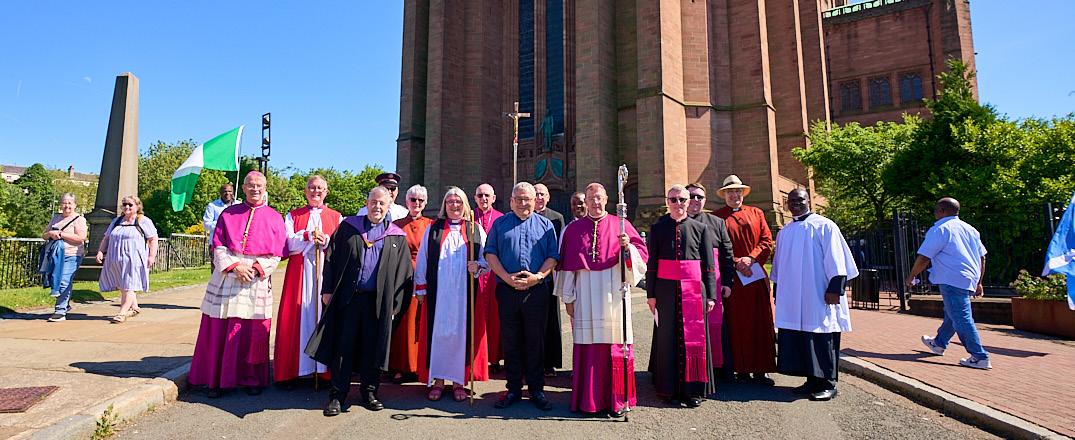
Christians from across the Liverpool City Region came together on Pentecost Sunday, 24 May, for the annual Two Cathedrals Walk, a joyful public witness to Christian unity.
On a warm and sunny afternoon, worshippers gathered outside Liverpool Metropolitan Cathedral, where the combined cathedral choirs sang and the Salvation Army band provided music for the occasion. Archbishop John Sherrington led a short service, reflecting on St Paul’s words that while there are “varieties of gifts”, all are united by the same Spirit and called to work for the common good.
The procession then set off down Hope Street, led by the Salvation Army band. Following behind were the cathedral choirs, the deans of both cathedrals – Fr Tony O’Brien and Very Revd Dr Sue Jones – alongside church leaders from the region, including Archbishop John, Bishop Ruth Worsley, Rev Phil Jump of Churches Together in the Merseyside Region (CTMR), and clergy from a wide range of Christian traditions. Many participants carried national flags, reflecting the international character of the Church and the theme of Pentecost.
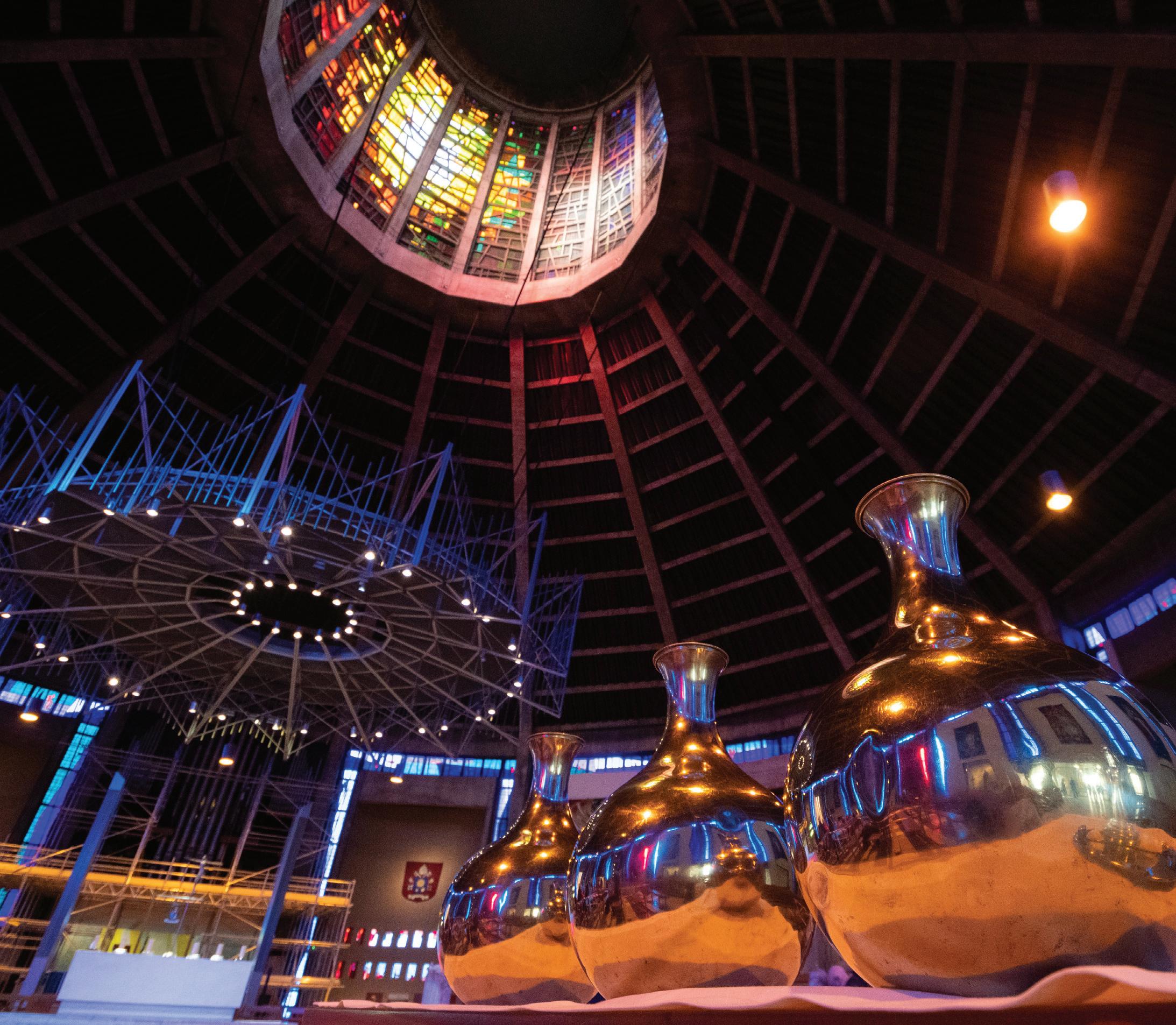
Arriving at Liverpool Cathedral, walkers were welcomed by the Melling Community Gospel Choir before joining in a service of prayer, Scripture and reflection. Rev Phil Jump spoke about the importance of the Churches Together in the Merseyside Region’s Manifesto for Hope, launched during last year’s Faith in the City anniversary celebrations.
Following the service, visitors explored stalls from organisations reflecting the manifesto’s nine themes, including rebuilding trust, constructive partnership, true equality, and ensuring that no one feels alone. Organisations such as Mission in the Economy, L’Arche, the Centre for Theology and Community, and the Catholic Association for Racial Justice were represented.
Inspired by the first Pentecost, and the city’s rich faith history, the annual walk once again demonstrated that, while Christians may come from many traditions and backgrounds, they remain united in one faith and one mission to bring hope to the world.
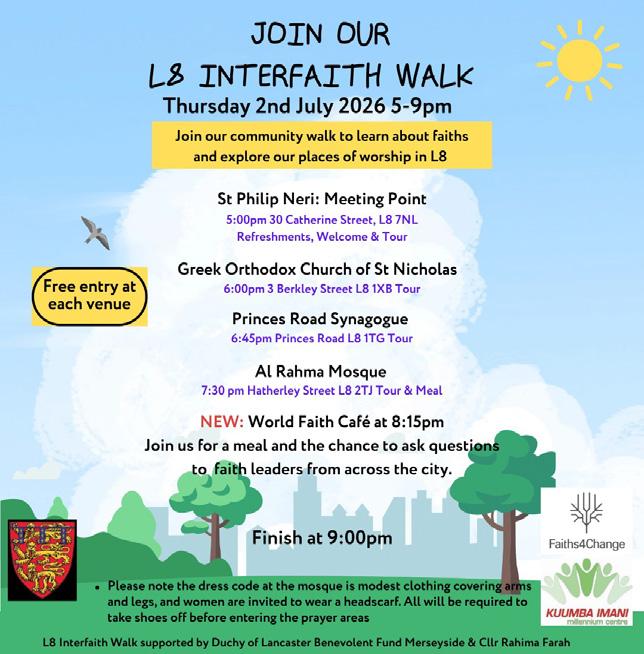
Thursday 2 July
L8 Interfaith Walk
5:00PM - 9:00PM at St Philip Neri, Liverpool
All are welcome to join the interfaith community in L8 to walk to all of the different places of worship in the area. Starting at St Philip Neri church, you will then go on to the Greek Orthodox Church of St Nicholas, Princes Road Synagogue before finishing at Al Rhama Mosque. Afterwards, there will be World Faith Cafe, where you can ask questions to faith leaders from across the city.
Saturday 4 July
A Day For Catechists – 4 July 10am – 3:30pm at St Joseph’s Prayer Centre, Formby
Are you a catechist looking for spiritual renewal? Fr Luke Dominic Onwe, OCD and Fr Liam Finnerty, OCD are leading our Annual Day for Catechists this year, offering time to be inspired and strengthen your vocation as a catechist. Visit archdioceseofliverpool. org/DFC26 to book. For more information, contact Moses at m.mui@rcaol.org.uk
Saturday 4 July
Cathedral Friends Event – 4 July, 1pm- 4pm
A few tickets are still available for this exclusive guided tour of the Lutyens Crypt, followed by a delicious afternoon tea. Don’t miss out!
Tickets are £35 per person. Email friends@ metcathedral.org.uk for your ticket.
Tuesday 7 July
Summer Evenings at Irenaeus: Paul, an Apostle of our time
7:00pm at The Irenaeus Project, Liverpool
The Irenaeus Project are hosting a series of Scripture Evenings, looking at Paul, an apostle of our time. Strawberries and cream will also be on offer. All are welcome to attend! A Zoom link is also availablecontact centreirenaeus@gmail.com
Friday 10 July
Catholic Social Action Conference 2026: Humanitas: Flourishing in Action
At Metropolitan Cathedral of Christ the King, Liverpool
The social action conference is an annual event in the life of the archdiocese, bringing together people working in the faith-based charity sector, volunteers, and anyone with an interest in social justice advocacy and Catholic Social Teaching. We have an excellent line-up of speakers and workshop hosts, including a keynote from Jenny Sinclair, Director of Together for the Common Good and host of the Leaving Egypt podcast. Contact catholicsocialaction@rcaol.org.uk for wait list or for more info.
Saturday 11 July
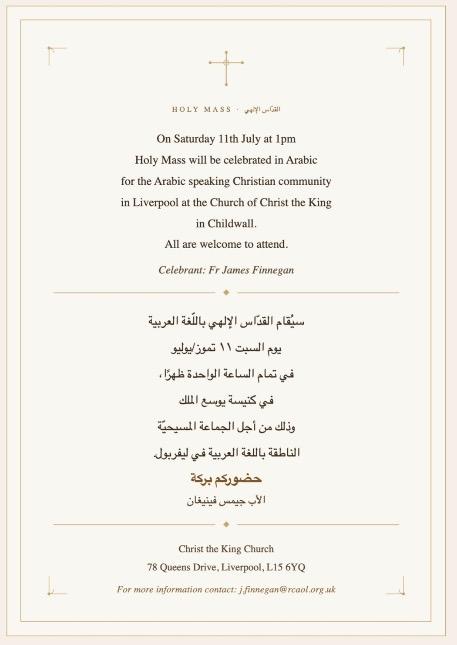
Arabic Mass
1:00pm at Christ the King, Wavertree Holy Mass will be celebrated for the Arabic speaking Christian community in Liverpool. The celebrant will be Fr James Finnegan. All are welcome to attend.
Tuesday 14 July
Summer Evenings at Irenaeus: Paul, an Apostle of our time
7:00pm at The Irenaeus Project, Liverpool
The Irenaeus Project are hosting a series of Scripture Evenings, looking at Paul, an apostle of our time. Strawberries and cream will also be on offer. All are welcome to attend! A Zoom link is also available - contact centreirenaeus@gmail.com
Sunday 19 July
Lourdes Mass
3:00pm at Metropolitan Cathedral of Christ the King, Liverpool
All are welcome to the annual Lourdes Mass at the Metropolitan Cathedral ahead of the 2026 pilgrimage.
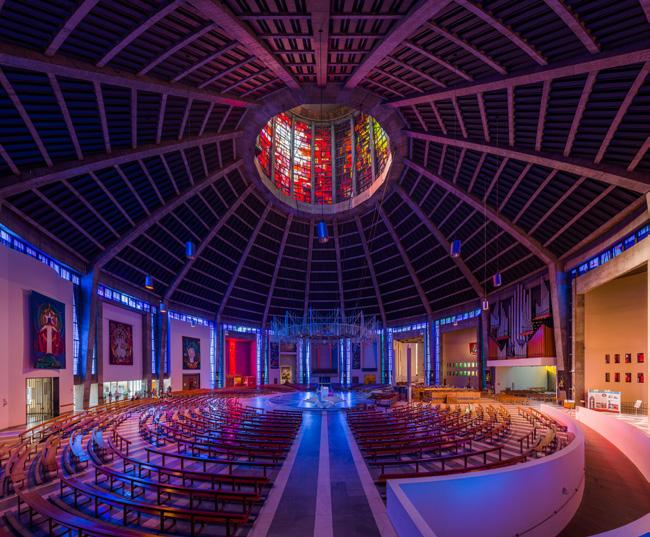
Saturday 1 August
Retreat Day: Francis: A Saint for Today? 9:30am – 4:00pm at Poor Servants of the Mother of God, St Joseph’s Convent, Blundell Avenue, Formby, L37 1PH
The Archdiocese of Liverpool invites you to walk alongside others on a day of spiritual journeying in the Franciscan spirit, as Hazel Bradley of the L’Arche community joins us at St Joseph’s Prayer Centre in Formby for a day of retreat, prayer, and encounter with God in creation. In the beautiful surroundings of forest and sea, St Joseph’s offers a brilliant place to explore St Francis’ spirituality during this Franciscan Jubilee Year. There is no charge for the day, but please bring your own lunch.
See more event details on our website: www.liverpoolcatholic.org.uk
By Pat Murphy
July is the month of preparation for the annual Liverpool Pilgrimage to Lourdes. Maybe I am getting older, but this year, and indeed years in general, somehow seemed to have sped up since the Covid epidemic. For the dozens of pilgrims who are part of the hospitalité group, it’s time to get the blue T shirts out, yellow T shirts for the youth pilgrimage, and pale blue for the music group. It’s an easy way of knowing who is who in Lourdes.
Preparation for the annual pilgrimage goes on all year, and we are so very grateful to the good folk who meet regularly to arrange the full programme of services and events whilst we are in Lourdes. I try to attend all (or nearly all) of them, opening and closing the “Liverpool Lourdes shop” around the timetable. I have travelled to Lourdes many times, but this year, a first for me, I am travelling by coach. It’ll be an early morning start and coach to Dover, a short ferry crossing, and journey through the night, before hopefully arriving in Lourdes mid-morning, the day most pilgrims will arrive. A long journey, but I am looking forward to it.
We, as 21st century pilgrims, do have it quite easy flying to pilgrimage destinations, with comfortable accommodation, and having everything at our fingertips. I admire greatly pilgrims who walk or cycle to Santiago de Compostela. It’s a tough journey, involving staying in modest hostels. I think back to our forefathers walking to destinations such as Walsingham, Canterbury and beyond. So if it’s not as comfortable, or I am tired arriving in Lourdes, that is part of my pilgrimage this year. Regardless, I know I will enjoy the journey with some lovely fellow pilgrims as travelling companions, and I know once I arrive at our familiar destination the tiredness will disappear. My first point of call is always the grotto, even only for a few minutes. I have to say hello to Our Lady, thank her for a safe journey – and let her know “Liverpool has arrived.” It’s then busy until the evening, when it’s time to relax and meet up with fellow pilgrims; old and new faces, friends we have never met. Being a pilgrim in the 21st century is part of life’s journey for me and my journey of faith.
For those who cannot visit Lourdes this year but wish to be part of the pilgrimage, our departure Mass is at the Cathedral on Sunday 19 July, when you can bring your petitions for us to place at the grotto.
A safe journey ot all who are travelling. Our Lady of Lourdes, pray for us.
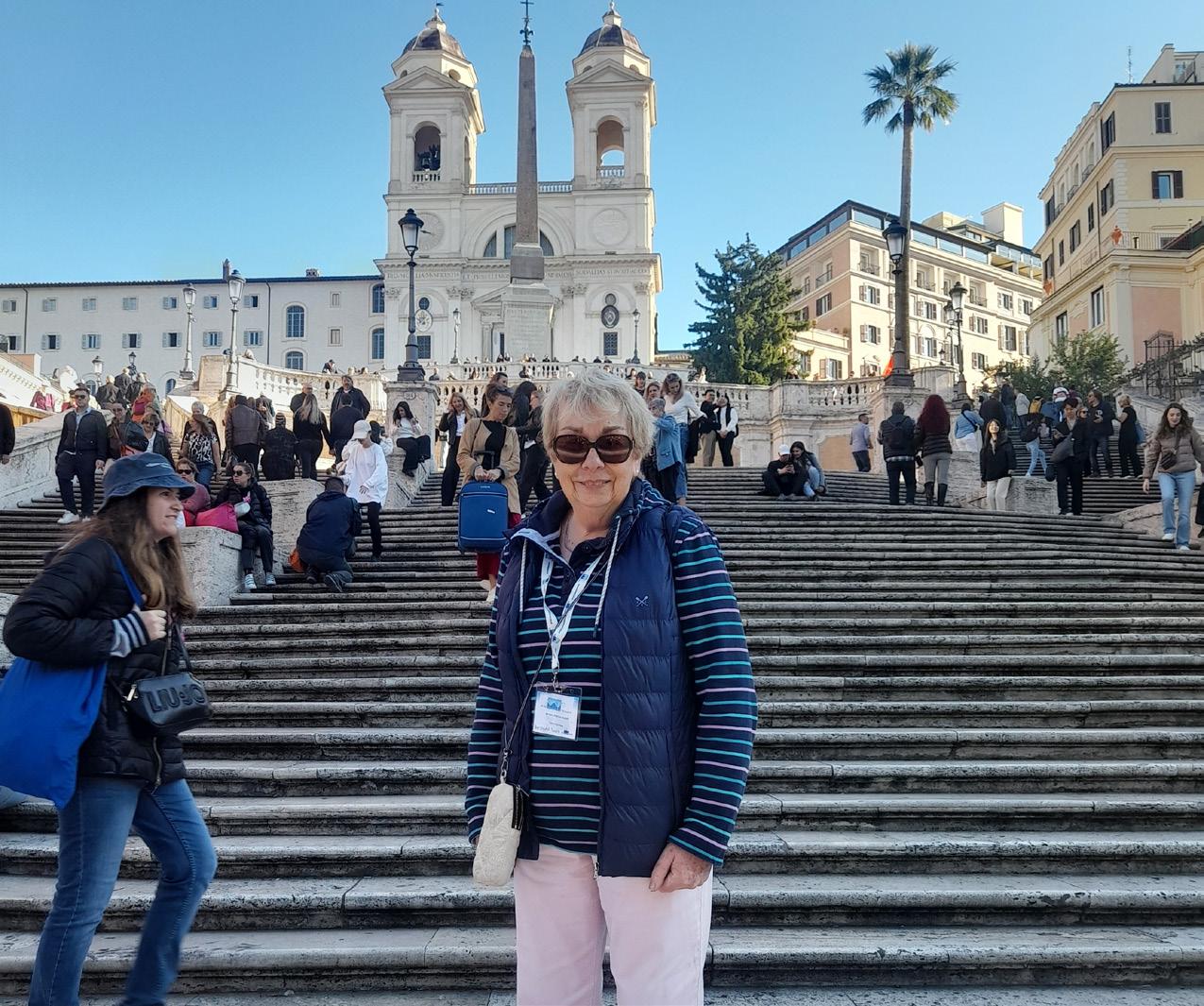
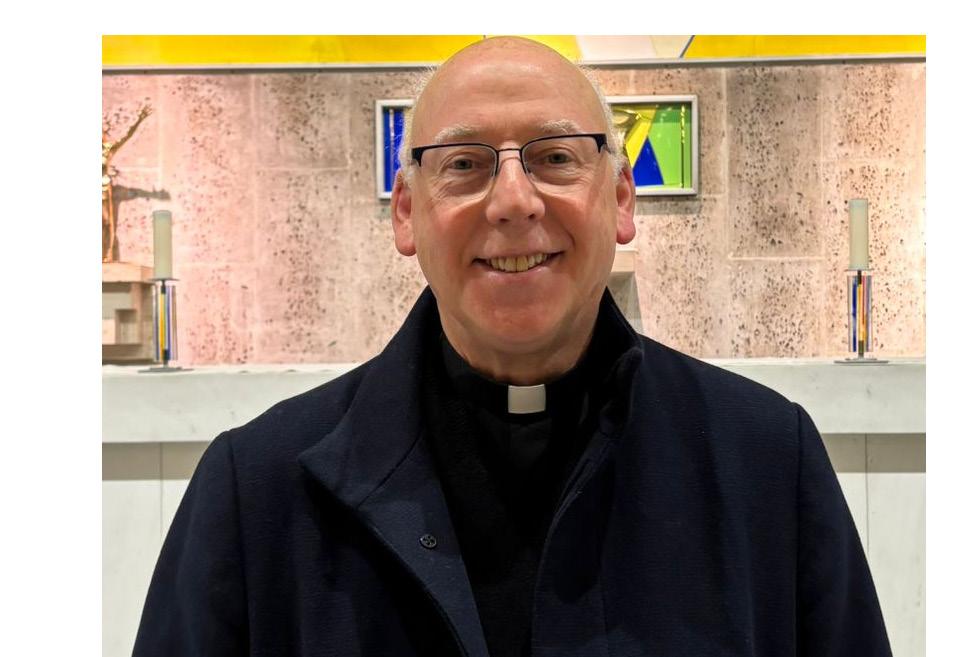
Canon Anthony O’Brien –Cathedral Dean
July is always a joyful month in the Cathedral with lots of services and ceremonies of awards and thanksgivings.
On 2 July, our archdiocesan Education Service have their Annual Mass of thanksgiving for staff and governors, at which there is particular reference to those who have given long service to Catholic education and who are due to retire at the end of term. Later in the week, the Friends of the Cathedral have an exclusive Afternoon Tea Event on Saturday 4 July. It promises to be an enjoyable afternoon exploring the Crypt and discovering some of its secrets and fascinating stories of the past - tickets sold out fast for this!
The choir are due to finish for the summer, with their final appearances on Sunday 12 July and closing with end of term celebrations. The previous Sunday, 5 July, they will be joined by Liverpool Cathedral Choir for the 3pm afternoon service, at which they will jointly perform Herbert Howells choral piece “Take Him Earth for Chasing,” written for American Independence day following the assassination of President John Kennedy.
Hope University are holding three days of graduation ceremonies from 14 July, and the following week, John Moores University have departmental graduation celebrations for the five weekdays in the Crypt Halls. The Archdiocesan Pilgrimage to Lourdes begins at this time too, and Archbishop Sherrington will celebrate the Departure Mass for Pilgrims on Sunday 19 July at 3pm.
Last month, I mentioned that the Cathedral will be celebrating its 60th Anniversary next year. One of the events to mark the occasion will be a Celebratory Flower festival. This will be from Friday 14 – 17 May 2027. The Theme will be ‘Hope’ in all its different forms. If there are any groups or individuals who have had experience and history of creating floral arrangements who would wish to be involved, could they please contact Claire Hanlon to find out more information. Her contact email is c.hanlon@metcathedral.org.uk.
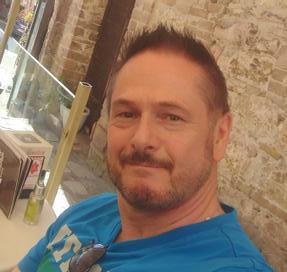
by Dominic Redcliffe
Hello from Rome to everyone at home.
My academic year has ended here at the Beda College, with exams in the courses I have been studying since the cooler days of February. That seems a long time ago, in a way, because as I write this month’s Pastoral Ponderings, it’s 32°C – such a contrast to when these courses started!
Despite the great importance of spiritual formation at seminary, there is no escaping the academic learning that takes place and the amount of concentration this requires. However, there is a third element to formation, and that is a seminarian’s pastoral development. In other words, this is experience away from the classroom and whatever college role is undertaken, and it’s extremely important. Being in Rome, this can be a challenge mostly due to possible language barriers depending upon how much Italian someone speaks.
The summer break from college includes a parish placement, and last year I had the great pleasure of spending time at Our Lady Queen of Martyrs, Croxteth. I was made extremely welcome by Fr Anthony Kelly, the parish deacons, and indeed the lovely parish community. That placement gave me so many experiences of parish pastoral life that can’t be taught in class. Taking part in Mass, adoration, parish groups, baptism preparation, and visiting parishioners and schools gave me a wide experience of being in a parish.
In Rome, I have had local pastoral experience from teaching English in the parish of San Leonardo Murialdo. Some of the parishioners have been keen to learn English, and we had some lively lessons. The members of the class were also really interested in learning about where home is for me. There were some ‘lost in translation’ moments and a few local parishioners are now referring to their shoes as “trainees”!
Then, from my room in college, I was delighted to be part of an Alpha online course organised by the archdiocese’s Pastoral Development Department. Each week via an online meeting, I co-hosted the themes covered by Alpha for people wanting to know more about being a Christian. This proved to be so rewarding, with the discussions, questions asked, and the topics reflected upon – again a pastoral experience for me that could not be delivered in a classroom.
I’m ready for my next parish placement in the archdiocese - you never know, I might be coming to a parish near you!
With prayers until next time,
Dominic
Written by Chris Higgins
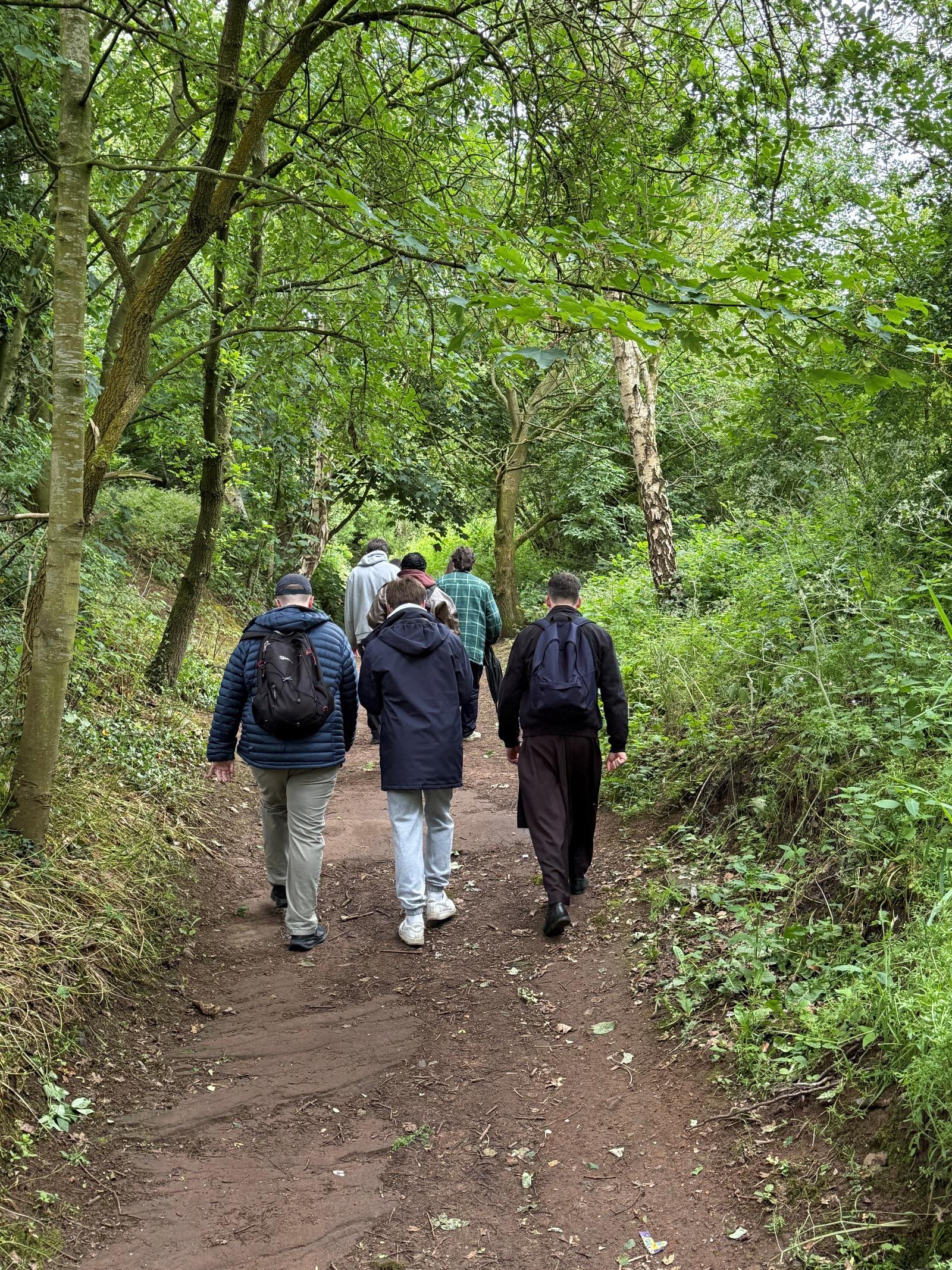
and physical effort in a profound act of faith. Over the Jubilee Year, and beyond into this year, we have embarked on a number of smaller walks within the archdiocese.
Throughout Scripture, God’s people are often portrayed as travellers. Abraham left his homeland in obedience to God’s call. The Israelites journeyed through the desert toward the Promised Land. The disciples followed Christ on the roads of Galilee and Judea. In the same way, modern pilgrims walk as a sign of their desire to follow Jesus more closely.
Walking has a unique spiritual value. The steady rhythm of footsteps creates space for prayer and reflection. The physical challenges of distance, weather, and fatigue become opportunities to offer sacrifices to God, but our shorter, circular walks are just as important - each step can become an act of trust, reminding the pilgrim that the Christian life is not a sprint but a faithful journey.
Pilgrimage teaches humility. A walker must depend on God’s providence, the kindness of strangers, and the support of fellow travellers. This dependence mirrors the Gospel call to become like little children before God. As St Thérèse of Lisieux taught, “The world’s thy ship and not thy home,” reminding Christians
of heart, deeper prayer, and renewed commitment to Christ.
Ultimately, every pilgrimage points toward the final journey of the soul. With each step, pilgrims remember that they are travelling toward their eternal home, trusting in the words of Jesus: “I am the way, and the truth, and the life” (John 14:6). Walking in pilgrimage thus becomes a living expression of faith, hope, and love.
As we celebrate the Season of Creation and mark the 800th anniversary of St Francis of Assisi’s enduring witness to God’s love for all creation, we warmly invite people from across the archdiocese to join us on a special pilgrimage walk on Saturday 5 September. Beginning at St Clare and St Hugh Church, Sefton, and concluding at St Anthony of Padua Church, Mossley Hill, with the celebration of Holy Mass, this pilgrimage will offer an opportunity for prayer, fellowship, and reflection on our call to care for our common home. Following in the footsteps of St Francis, we will walk together in gratitude for the gift of creation and in renewed commitment to living the Gospel. Whether you are an experienced pilgrim or joining for the first time, all are welcome to share in this joyful journey of faith. Save the date!
By Simon Hart
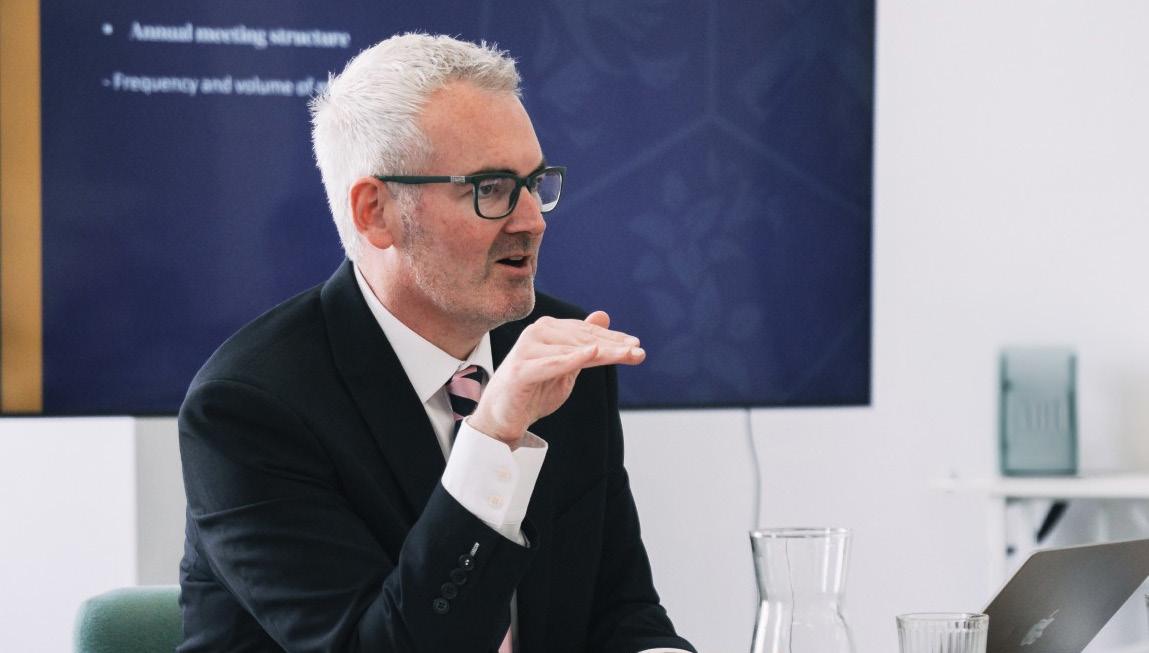
It is safe to say that Andrew Truby has education in his blood. After all, his parents were both French teachers, who met at St Mary’s Catholic High School in Astley, where they taught in adjoining classrooms.
Andrew’s own work in schools began early: he was still at Northumbria University, studying for his degree in French and Spanish, when he began working with a small business organising after-school foreign language clubs. By his early 20s, he had taken over the running of that business. “Looking back, it was quite an entrepreneurial thing to do,” he admits. “I had connections with lots of native speakers, and we employed staff to go in and teach primary and nursery school children.” It means he can point to his experience of teaching children aged from one up to Sixth Form – valuable lessons for this founding Fellow of the Chartered College of Teaching.
If that suggests Andrew – today CEO of the St Joseph Catholic Multi-Academy Trust – was quick off the blocks, you would not be wrong. Having stepped onto a fast-track programme for teachers, by the age of 28 he was the acting head of a primary school in Sheffield. “There were lots of things I didn’t know, but it did force me to learn quickly,” says Andrew, now 45. “It’s all on you now and not just in terms of educational standards. I can remember one day as deputy when the head wasn’t there and I was in charge and there was a smell of gas – there’d been a leak and I had to make a split-second decision, be calm with staff and say, ‘OK, we’re going to evacuate the school now’. Nobody really teaches you those things but in that moment you’re responsible for 200 children’s lives.”
In his current position, the scale of responsibility is now so much greater. Andrew is a key figure in the new academisation strategy for schools in the Archdiocese of Liverpool. Launched in April, its aim is to have each of the archdiocese’s 221 schools operating within a MAT by 2032.
He adds: “Looking ahead over the next five years, I will have responsibility for 28,000 children across Liverpool and St Helens. I take really seriously the impact we can have. The responsibility but also the opportunity to shape their lives through excellence is huge.”
Andrew, who commutes to Liverpool from his home in Derbyshire, arrived at St Joseph’s in January 2022. “There was just me in the management, so I had to recruit all key central posts,” he recalls. “By the March we’d brought in the first school, then it was six schools, now it has grown to ten, and we will grow to 66.” He describes a multi-academy trust as a “protective structure” for its schools. “It’s very much driven by the head and the leadership team in the school and we’re there to facilitate their journey and enhance it. When we bring in a school, we look at their three-year improvement plan and say, ‘How can we add value to that?’ It’s not one-size-fits-all but a shared responsibility.”
For Andrew, attendance is a “really big priority”. Literacy is another. He goes on: “I guarantee that whatever school you go to in the St Joseph’s family you’ll learn to read and have an ambitious curriculum. Children get one chance at their education so it’s our job to give the very best possible Catholic education – an education that’s not only going to give them the academic skills and knowledge but also that formation of the whole person, so that they understand morally and socially and have that spiritual development.
“The Catholic Church’s mission in education has served Liverpool over two centuries and particularly for the most disadvantaged and vulnerable pupils. As a trust, we judge our success through the lens of whether we’re getting it right for the most vulnerable children.” In this respect, he cites high expectations for all and the potential to pool resources for SEND (Special Educational Needs and Disabilities) pupils as a clear advantage of a multi-academy framework.
Andrew may have grown up in Northumberland, but he has a connection to the northwest through his grandfather, Danny Murphy, who lived in Burtonwood and played football for Bolton Wanderers, Crewe Alexandra and Rochdale. His own sporting achievements are limited to having set up a pétanque club in the Derbyshire village where he lives with his deputy headteacher wife Melissa. A game of boules sounds more than enough for a man already juggling plenty of balls in his day job.
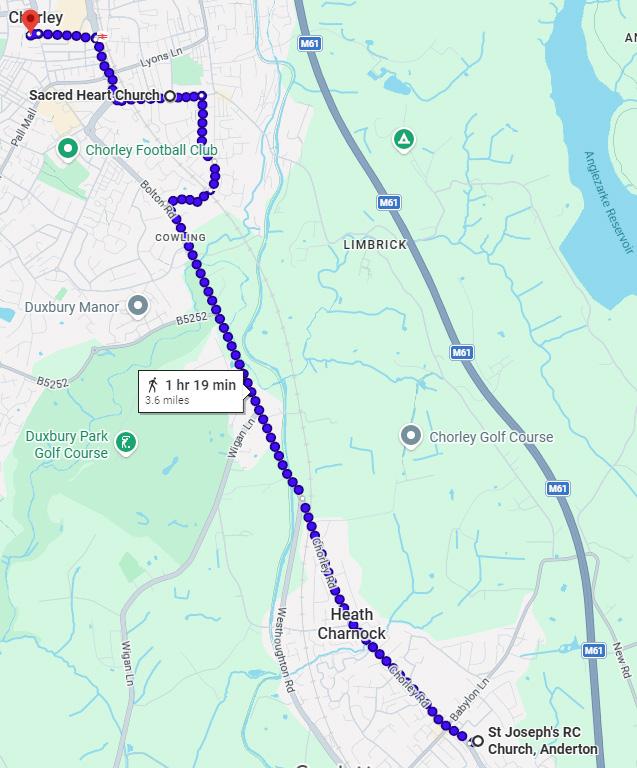
Start: St Joseph, Anderton
Our latest Families of Parishes walk takes us into Lancashire, exploring Family Two, centred around Chorley.
This route will bring a lot of greenery, and for the football fans, it will even pass close to the home of Chorley FC.
Total Time: 1 hr 19 mins
Distance: 3.6 miles
We will start our latest walk in Anderton, and St Joseph’s Church. Currently under the pastoral care of Fr Francis Marsden, this church has a lot of history behind it. The mission was first established in 1862, with the current church being built the following year. If you would like to do this walk on a Sunday, Mass is at 11am, followed by Reconciliation, making it an ideal way to prepare spiritually before setting off.
Stop 1: Sacred Heart, Chorley
The longest section of the walk takes you through Heath Charnock and onwards to Sacred Heart in Chorley. Continue up Bolton Road towards Chorley FC’s ground, then follow the footpath to rejoin the main road by Sacred Heart. This church also has quite the history: the parish was established in 1876, and the impressive church building, now Grade II listed, has stood since 1894. Whilst there, give your feet a rest and pray for Fr Francis Ball and the parishioners he serves, and all those who have gone before in the parish.
Time: 1 hr 3 mins
Distance: 2.9 miles
Final Stop: St Mary, Chorley
Just a 15-minute walk away is St Mary’s in Chorley - just head towards the train station, then along Chapel Street, and you will reach the church. Under the pastoral care of Fr Francis Marsden, this church has an even longer history, filled with ups and downs. The parish can be traced back to 1847, and the current church has stood since 1854. The rich legacy of the mission can be found on the church’s website if you wish to read more.
As this is so close to the train station, you may also want to do this walk in reverse, and have St Mary’s as the starting point. Either way, take a moment to reflect on the achievement of completing another Families of Parishes walk.
Time: 15 mins
Distance: 0.7 miles
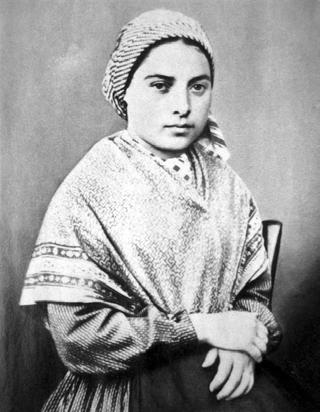
As a young girl, Bernadette Soubirous became known for her Marian visions in Lourdes. In those visions, the young lady, who identified herself as the Immaculate Conception, asked for a chapel to be built at the nearby cave-grotto. Her unwavering trust in the Blessed Virgin Mary’s messages have made her a beloved figure in the Catholic faith. To this day, the chapel is visited by millions of pilgrims every year from all around the world.
The Archdiocese of Liverpool’s Parish Development Strategy (PDS) continues to gather momentum as deaneries across the archdiocese engage in prayerful discernment about the future mission of the Church.
Rooted in the Pastoral Plan and guided by Archbishop John Sherrington’s vision of a missionary, sustainable and hopefilled Church, the PDS is helping parishes reflect on how they can best proclaim the Gospel, serve their communities, and respond to the changing realities facing the Church today.
The strategy recognises several significant challenges, including a projected reduction in the number of diocesan priests from around 100 today to fewer than 60 within the next seven years, increasing financial pressures, changing demographics, and the need to engage new generations in the life of the Church. At the same time, it presents an opportunity to renew parish life, strengthen collaboration, and focus more clearly on the Church’s mission.
The three Sefton deaneries – Sefton Coast North, Sefton Coast South and Sefton Inland – have been leading the way as pilot deaneries. Having completed the initial stages of parish review and discernment, they have now published their initial proposals. These proposals are being shared more widely and are entering a period of consultation and discernment, allowing parishioners and local communities to reflect on the emerging vision and contribute to shaping the next steps.
The pilot process has demonstrated the value of listening, collaboration, and prayerful reflection. Participants have spoken positively about the opportunity to work together across parish boundaries, identify common priorities, and focus more intentionally on the mission of the Church.
Meanwhile, the deaneries of Liverpool South and Warrington & Widnes are beginning their discernment process. Following their parish reviews, they are now entering the next stage of the journey, considering local priorities and exploring how their parishes can best respond to the opportunities and challenges of the years ahead.
In Wigan & Leigh, work is also underway. Parishes are currently gathering information, reviewing local circumstances, and reflecting on the mission of the Church within their communities. This important stage will help build a clearer picture of parish life and support future discernment and planning.
The Parish Development Strategy follows a four-stage process: reviewing the current situation, discerning future priorities, making plans, and implementing agreed actions. Throughout every stage, prayer and discernment remain central, ensuring that decisions are guided by the Holy Spirit and rooted in the mission of Christ.
For further information or queries, please contact our Parish and Deanery Development Adviser, Chris Higgins: c.higgins@rcaol.org.uk
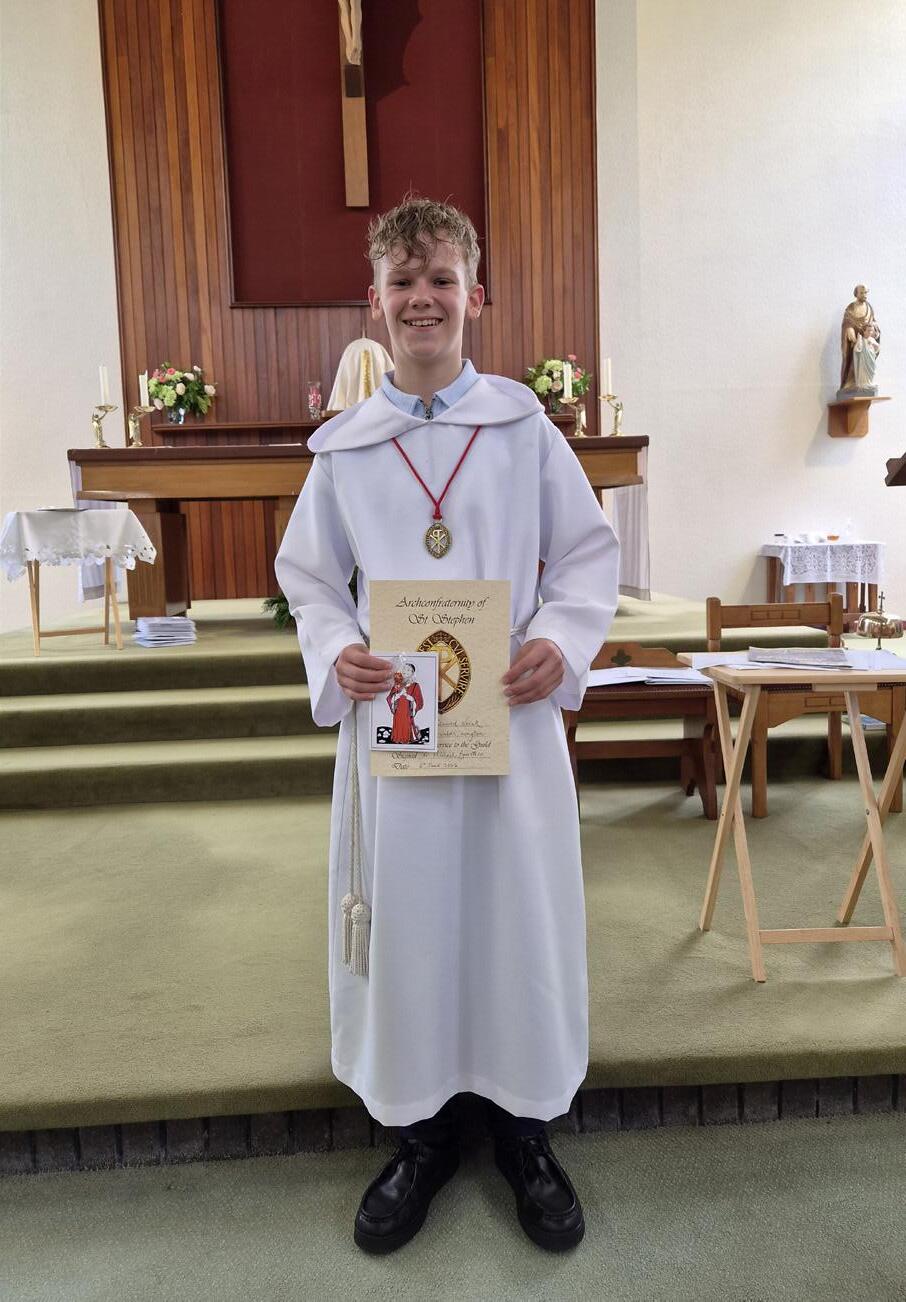
Year 7 student, Edward, from All Hallows Catholic High School, Penwortham, has been awarded the Guild of St Stephen Medal in recognition of his dedicated service as an altar server at St Oswald’s Church.
Edward received the award on the Feast of Corpus Christi during a special parish Mass. He was presented with his certificate and medal by Fr Michael and Deacon Bill in the presence of parishioners, family and friends, making it a proud and memorable occasion for all involved.
The Guild of St Stephen is an international organisation for altar servers which promotes and recognises faithful service at the altar. The medal is awarded to those who have demonstrated commitment, reliability and a willingness to serve their parish community through their ministry.
Edward has served as an altar server for a number of years and has shown great care and reverence in carrying out his duties. Through his service, he has supported the clergy during Mass and other liturgical celebrations, helping to ensure that these important occasions run smoothly and prayerfully. His dedication and sense of responsibility have made a valued contribution to parish life and have set an excellent example for other young people.
All Hallows Catholic High School take pride in the many ways in which its students live out their faith both within school and in the wider community. Edward’s achievement reflects the values of service, commitment and faith that the school seeks to foster in all its young people.
As All Hallows celebrates its 50th anniversary year, it is particularly proud to see its students continuing to make such a positive difference within their parish communities. The school congratulate Edward on this well-deserved award.
Broughton Hall Catholic High School welcomes members of its inclusion cohort to an enhanced transition programme designed to help students become familiar with the school and its Mercy values in a supportive and nurturing environment.
Throughout the programme, students take part in a variety of engaging lessons and activities that allow them to explore different areas of the curriculum while building confidence ahead of starting at Broughton Hall in September.
This year, in history lessons, students travelled back in time to Ancient Egypt to discover fascinating facts about one of the world’s earliest civilisations. In religious education, they explored religious artwork before designing and creating their own pieces, encouraging creativity and self-expression.
Maths was brought to life through a fun Smarties activity, where students used sweets to create and solve mathematical problems. The activity showed pupils how learning can be both enjoyable and rewarding.
Alongside these academic experiences, students participated in therapeutic sessions focused on managing transition worries and anxieties. These activities encouraged reflection, discussion, and the development of coping strategies to help students feel more confident about moving to secondary school.
The enhanced transition programme has been invaluable in helping students build relationships with staff, become familiar with their new environment, and develop the confidence needed for a successful start to Year 7. Broughton Hall is incredibly proud of the enthusiasm and resilience shown by all who took part in the programme this year. The school looks forward to seeing the students flourish when they join in September.
Broughton Hall will also be welcoming parents, carers, and students to an induction evening. This event provides an opportunity to meet key staff, learn more about life in Year 7, and ask questions ahead of September. Alongside this, the citywide transition day will give students another valuable chance to experience school life, meet their peers, and continue to build confidence.
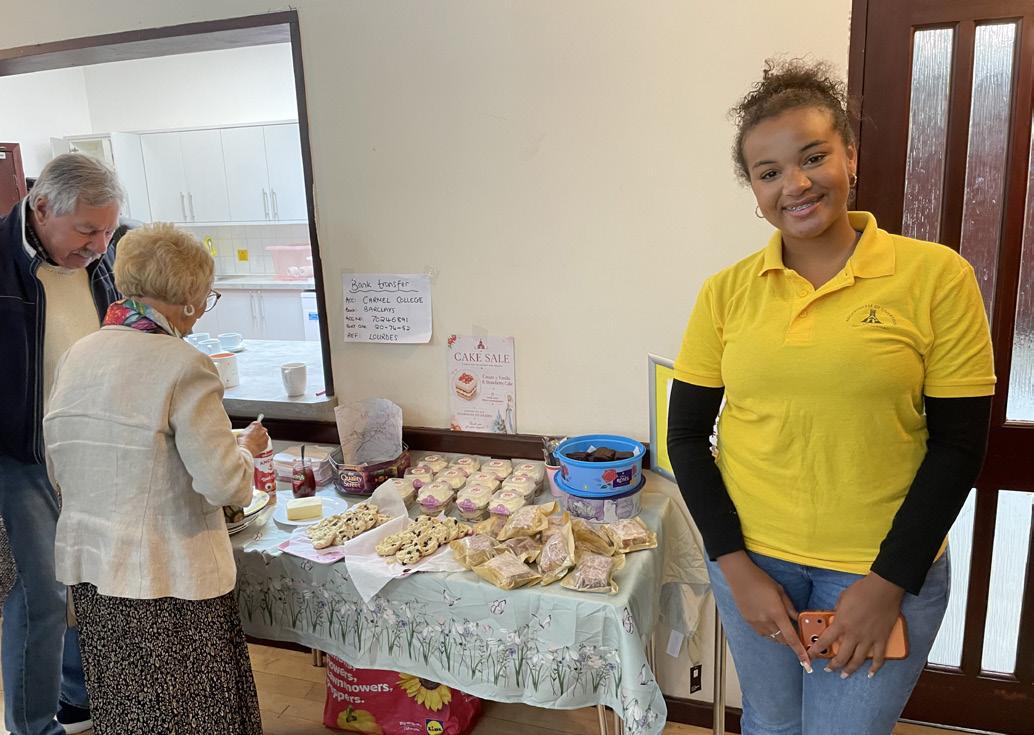
Students at Carmel College have been working hard throughout the year to raise funds in support of their participation in this summer’s Archdiocesan Lourdes Pilgrimage.
A group of 14 students will be joining the pilgrimage, travelling on four of the seven youth coaches making the journey to Lourdes. For some students, this will be their first experience of the internationally renowned pilgrimage, while for others it will be their fourth visit, reflecting a continued commitment to this important faith journey.
In preparation for the trip, students have demonstrated impressive enthusiasm and dedication, taking part in a wide range of fundraising activities to help support the cost of the pilgrimage. Their efforts have included a staff car wash at the college, pop-up book sales, bake sales and fundraising events within local parishes.
The fundraising activities have provided students with opportunities not only to raise money, but to also engage with the wider community and share the spirit and purpose of the Lourdes pilgrimage. Through their hard work and commitment, they have received support from staff, families, parishioners and members of the local community.
The college offers its gratitude: “We would like to extend our sincere thanks to everyone who has supported our students, whether through donations, attending events, purchasing
cakes and books, or keeping them in your prayers. Your generosity and encouragement have helped make this opportunity possible.”
Students are looking forward to taking part in the pilgrimage and representing Carmel College as part of the wider Archdiocesan community. Their fundraising success is a testament to the generosity of supporters and the determination of the young people involved, who have worked tirelessly to make this valuable opportunity possible.
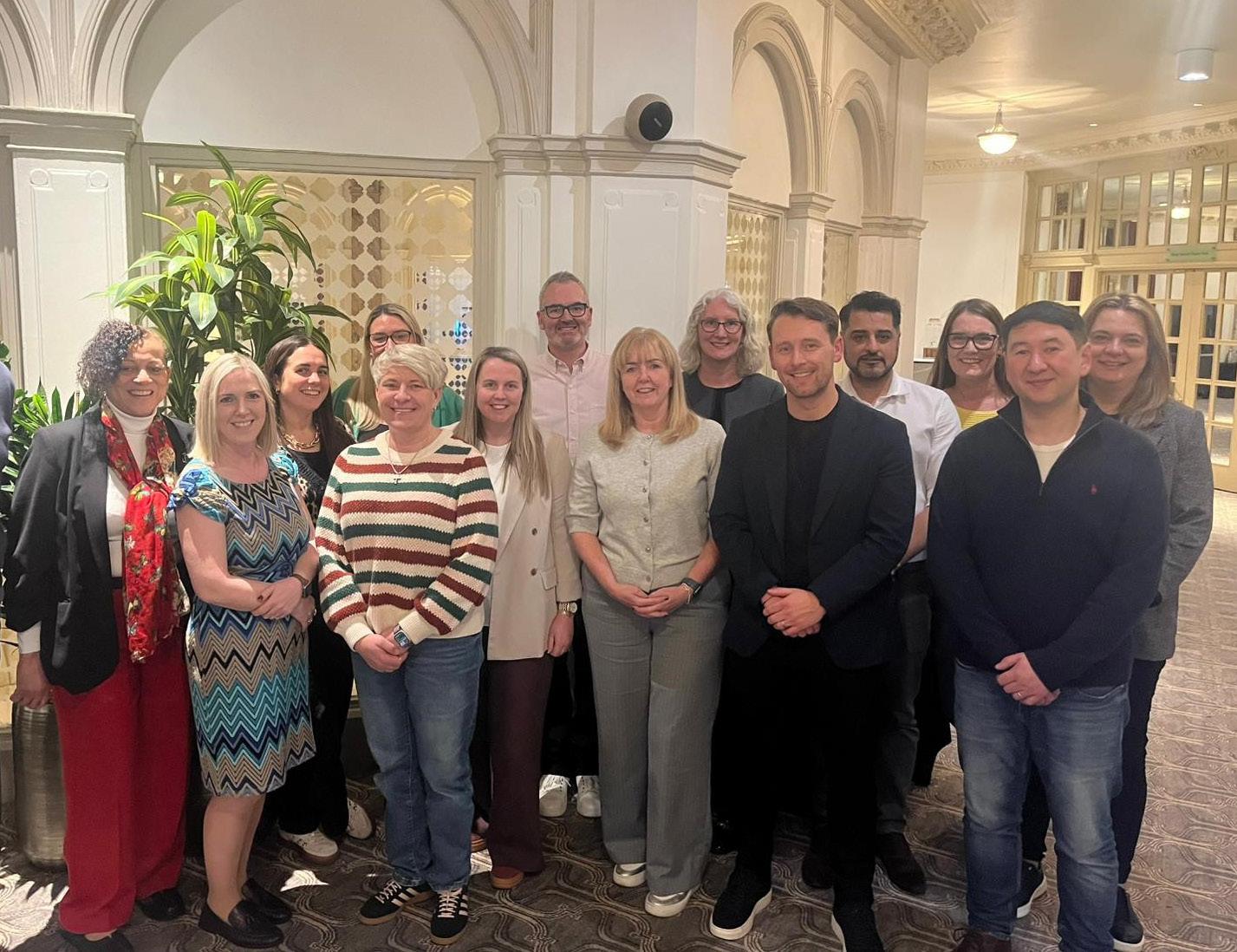
For a trust preparing to play a significant role in the Archdiocese of Liverpool’s new vision for Catholic education, investing in leadership has become an investment in mission itself.
Over the past two years, St Joseph Catholic Multi Academy Trust has embedded executive coaching into its leadership structure, recognising that sustainable school improvement depends not only on systems and strategy, but on the people entrusted to lead them.
This approach aligns closely with the Archdiocese’s new strategy, ‘A Family in Christ: Our Future Together’, launched by Archbishop John Sherrington in April 2026. As Catholic schools come together in stronger families of schools, the need for leaders who can build trust, navigate complexity and remain rooted in shared values has become increasingly important.
Christ is at the centre of everything St Joseph CMAT does, guided by its mission: ‘Transforming children’s lives through a world-class, Catholic education’. Investing in leaders means strengthening the people who shape that mission every day.
The impact on the trust is already being felt. Leaders report greater confidence in difficult conversations, improved decision-making, reduced stress and stronger professional relationships. Issues are addressed earlier, collaboration is strengthened, and leaders are better equipped to serve their communities with clarity and compassion.
This focus is about creating the conditions in which leaders can continually grow, reflect and remain faithful to their role, particularly during educational times of pressure and change.
Pope Leo XIV recently reminded the Church that education must not simply preserve structures but “open paths where
communion, formation and mission meet”. St Joseph CMAT is demonstrating what this can look like in practice.
As Catholic education continues to evolve across the Liverpool region, investing in leadership can create a lasting legacy of stronger schools, thriving communities and better outcomes. By supporting leaders to grow and flourish, trusts can ensure that future generations of pupils benefit from high-quality education and care.
To find out more about the St Joseph CMAT’s work and initiatives, visit: sjcmat.co.uk
For any further information about the trust’s Executive Leadership Programme, or for those wishing to be involved, email: corinaroobeck@gmail.com
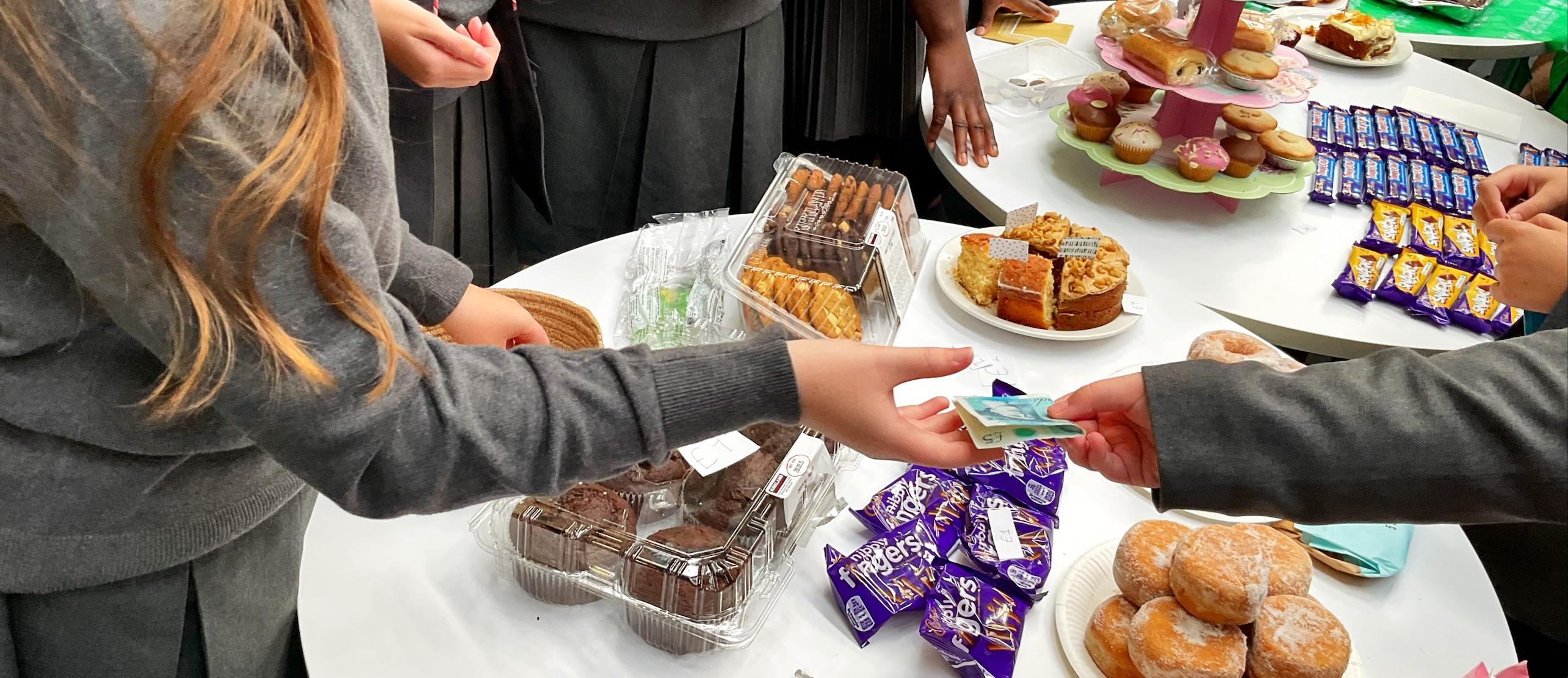
Students at St John Bosco Arts College, Croxteth, have raised £3,000 for local, national and international charities during the 2025/26 academic year through a series of fundraising events, awareness campaigns and donation drives.
Throughout the year, each year group selected and supported a charity of its choice, while students and staff also came together as a school community to support causes across Liverpool and beyond.
Whole-school initiatives included a Macmillan Coffee Morning, which raised £365, a harvest collection that generated more than 150 food and toiletry donations for the Norris Green North Liverpool Foodbank, support for Nugent’s Toy Appeal, and the school’s annual Christmas fayre, which raised £654 for three of the year groups’ chosen charities, Mary’s Meals, VIDES UK, and Woodlands Hospice.
The school also marked key awareness days and weeks such as Children’s Mental Health Week and World Down Syndrome Day through bake sales and ribbon fundraising, raising a total of £979, which was distributed accordingly to Hello Yellow / YoungMinds and Down Syndrome UK.
Mr Darren Gidman, headteacher of St John Bosco Arts College, said: “I am extremely proud of our school community and all it has achieved over the past year to raise awareness and funds for such important causes.
“At St John Bosco Arts College, we believe in nurturing not only bright minds, but also kind and compassionate hearts. It has been fantastic to witness students’ empathy, sense of social responsibility and Catholic values in action throughout the year.
“Alongside raising an incredible amount of money and collecting vital donations for charities, these activities have helped students further develop their teamwork, leadership and organisational skills. As we reflect on all that has been achieved this year and look ahead to the future, I am excited to see what next year’s fundraising events will accomplish.”
Year 7’s charity of choice for 2025/26 was Zoe’s Place, which provides specialist care to babies and children with life-limiting and life-threatening conditions in Liverpool. To support the charity, Year 7 students raised awareness of the vital work
Zoe’s Place does through sponsored walks, bake sales and tutor group collections.
CAFOD (The Catholic Agency for Overseas Development) was the chosen charity of Year 8 students, who raised £364 by collecting donations following whole-school productions and services including Advent and Lent. They also took part in a sponsored ‘water walk’ during PE lessons, where they carried buckets filled with water to experience the challenges faced by communities without easy access to water.
Year 9 students chose to support Mary’s Meals, which provides school meals to children in some of the world’s poorest countries, after being inspired during an assembly led by a member of the charity’s outreach team. From selling handmade gifts at the Christmas fayre to organising a bake sale, the year group raised £473.
Handmade gifts and treats for the Christmas fayre were also prepared by Year 10 students in support of VIDES UK. Through important enterprise and communication skills, the year group raised £160 to support the charity, which works with young people and communities globally.
Students in Year 11 organised and managed the whole-school foodbank drive for Norris Green North Liverpool Foodbank, which coincided with harvest, and sixth form students also supported the foodbank by collecting a range of essential items for women, including hygiene products, for International Women’s Day.
Sixth formers also raised £151 for Woodlands Hospice during the Christmas fayre by selling goods provided by the hospice on their stalls.
As well as year group charity initiatives, St John Bosco Arts College supported individual students who were fundraising for initiatives close to their hearts. Heidi in Year 11 raised over £300 for the 26th World Scout Jamboree, which is taking place in Poland next year, by organising two cake sales, and Evie in Year 8 had her very first haircut in order to donate 29 inches of hair to The Little Princess Trust.
The 2025/26 fundraising events formed part of St John Bosco Arts College’s commitment to serving others and making a positive difference, demonstrating the power of kindness, generosity and community spirit in action.
As the Liverpool Youth Pilgrimage prepares to celebrate its 50th anniversary, attention turns not only to the thousands of young people who have travelled to Lourdes over the decades, but also to the lasting impact the pilgrimage has had on Catholic education across the archdiocese.
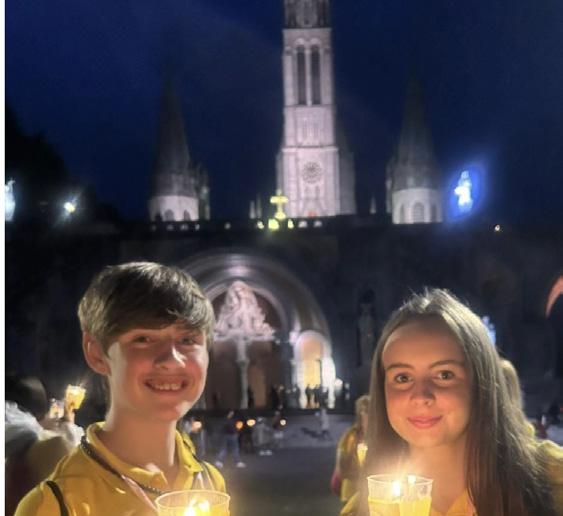
This July, pilgrims will once again gather in Lourdes, united in the familiar sea of yellow t-shirts that has become a defining symbol of the pilgrimage. For many, the Youth Pilgrimage is far more than a trip away. It is an experience that nurtures faith, inspires service, and encourages young people to place the needs of others at the centre of their lives. Over the past five decades, countless pilgrims have returned home with a renewed sense of vocation, carrying the values of compassion, leadership and community into their future careers.
Many teachers, school leaders, governors, and support staff working in schools and colleges across the archdiocese first encountered this spirit of service through the Youth Pilgrimage. What began as a commitment to helping others in Lourdes has, for many, developed into a lifelong dedication to serving young people through Catholic education. The archdiocese’s education department reflects this strong link, with several members of the team having longstanding associations with the pilgrimage, including Ben McMullen, Deputy Director of Education, and Canon Michael Fitzsimons, episcopal vicar for education, who will once again travel on coach five this summer.
As the school year draws to a close, this jubilee year also provides a fitting opportunity to thank all those involved in Catholic education. I wish to express my sincere gratitude to staff, leaders, governors and all who work tirelessly to support young people throughout the year. The same spirit of generosity, care and commitment that is witnessed in Lourdes each year can be seen daily in classrooms, colleges, and governing bodies across the archdiocese.
As we celebrate 50 years of this remarkable pilgrimage, we give thanks for all those whose lives have been shaped by the experience of Lourdes and for those who continue to answer the call to serve through Catholic education. May the example of faith, service and compassion that has inspired generations of pilgrims continue to bear fruit in our schools, colleges and communities for many years to come.
Our Lady of Lourdes, pray for us.
Joan McCarthy, Director of Education
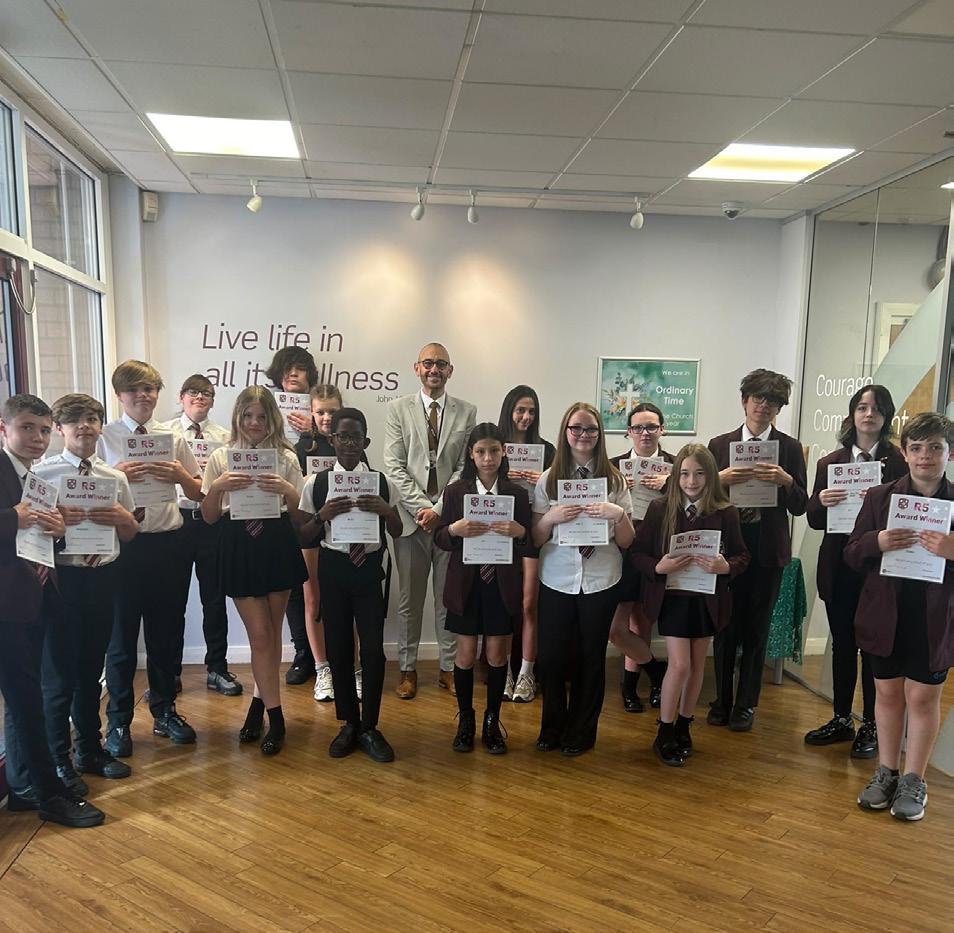
Students at St Cuthbert’s Catholic High School have been developing their talents, serving others and strengthening their sense of belonging through two inspiring initiatives that reflect the school’s core values. This year, students have been taking part in the school’s new accolades book programme, designed to encourage participation both inside and outside the classroom. Through a range of challenges, students are recognised for their contributions to school life, community service, charity work, environmental projects, leadership, clubs and personal development.
The initiative supports the school’s mission to ‘live life in all its fullness’ (John 10:10) by helping students to develop important life skills such as resilience, teamwork, communication, empathy and leadership. It celebrates the many ways young people contribute to their community and encourages them to become confident, compassionate and responsible citizens.
Alongside this, students have been collaborating on an exciting mural project led by creative agency Nonconform, as well as mural artists, Charlie Weatherstone and Leo Welton. Over a number of weeks, art students have worked closely with the artists to develop a design inspired by the school’s core values of courage, compassion, community and commitment.
Through workshops and creative discussions, students have explored what these values mean to them and how they can be represented visually. Their ideas have helped shape a striking mural which will become a permanent feature within the school grounds.
The project has given students a unique opportunity to work alongside professional artists, develop their creative skills and contribute to a lasting legacy for future students.
Both initiatives demonstrate St Cuthbert’s commitment to nurturing the whole person, encouraging students not only to achieve academically, but also to grow in faith, character and service. The school supports its students to become young people who truly live out Gospel values in their daily lives.
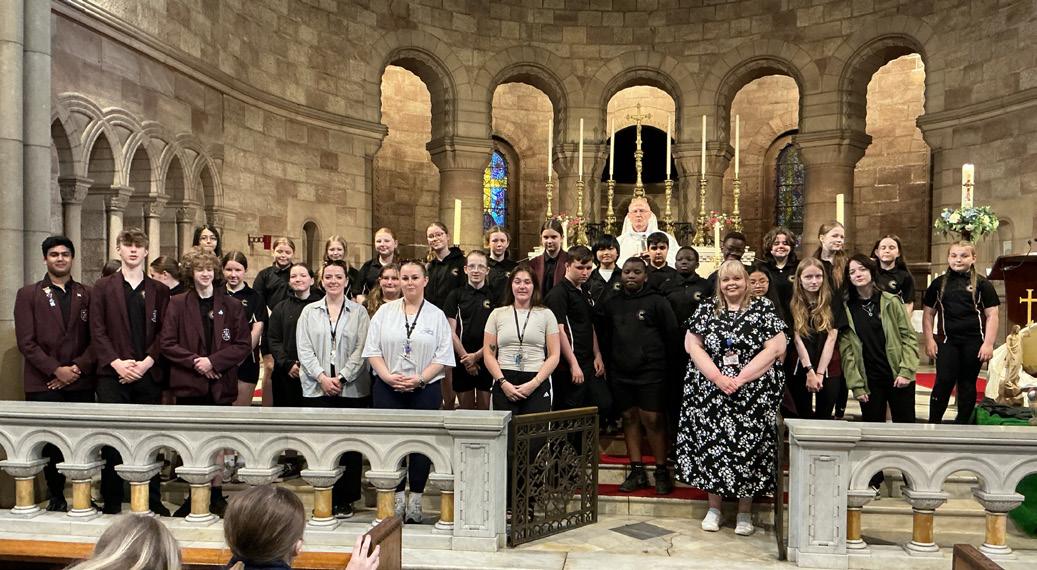
Three St Helens Catholic secondary schools gathered together on a sunny Friday morning last month for their second annual pilgrimage.
The schools walked together to the Shrine of St Oswald and St Edmund in Ashton-in-Makerfield. 75 students and staff ambled through flowering meadows, hiked along woodland bridleways, and even crossed the East Lancs bridge over the M6.
St Augustine of Canterbury Catholic Academy, De La Salle School and St Cuthbert’s Catholic High School joined to celebrate the rich Catholic heritage of the St Helens area.
The 2026 pilgrimage was even longer and more ambitious than last year, with a four-and-a-half mile walk from St Augustine to the Shrine of St Oswald and St Edmund to attend Mass and learn about St Edmund Arrowsmith’s life in Haydock, as well as his martyrdom in Lancaster. Schools raised funds for the St Vincent de Paul Society, inspired by the example of St Pier Giorgio Frassati and the ‘To the Heights’ SVP campaign.
Students enjoyed a day out in nature, singing together, carrying the SVP banner, and getting lorries to sound their horns while the group walked along the road. Students were encouraged to imagine themselves meeting St Edmund Arrowsmith in the fields and what it must have been like in the 17th century for persecuted Catholics.
By lunchtime, all arrived at St Oswald and St Edmund for a well-deserved rest. Vinny Bear from the SVP stopped by to
congratulate the pilgrims, while De La Salle led a reflection on the SVP and St Pier Giorgio Frassati.
Fr John Gorman welcomed the tired pilgrims to the parish and told the history of St Edmund Arrowsmith and the Holy Hand relic. After Mass, schools received a blessing from the saint’s hand.
A Year 8 student remarked: “We made friends and the pilgrimage was special because we don’t get to do that every day.”
Students and staff agreed the walk in warm weather was challenging. One chaplain noted: “We were really pilgrims this year with dusty feet and tired legs.”
As St Pier Giorgio Frassati said when he hiked the mountains near Milan: “To the Heights!”
St Bartholomew’s Primary School came together recently for a special time of prayer, reflection and remembrance as members of the school’s Mini Vinnies group joined parish priest, Fr Phil Swanson, in a traditional crowning of Mary ceremony.
The service took place in the school’s Mary Garden, a dedicated prayer space created in memory of treasured former teacher Mrs Rigby, who passed away several years ago. The garden serves as both a place of devotion to the Blessed Virgin Mary and a lasting tribute to Mrs Rigby’s contribution to the school community.
Deputy headteacher, Helen Forrest, said: “Mrs Rigby was passionate about sharing prayer with our pupils and had a deep appreciation of the natural world, often encouraging children to marvel at God’s wonderful creation. The garden provides a peaceful place for prayer, reflection and remembrance, and continues to be a fitting tribute to her lasting contribution to our school community.”
During the ceremony, Mini Vinnies played an active role by blessing the crown with holy water, carrying it in procession and placing it on Mary’s head. They also led prayers in honour of Mary and spent time reflecting on God’s creation in the peaceful setting of the garden.
The occasion was made even more memorable by the beautiful weather, with bright sunshine and birdsong providing a fitting backdrop to the service. Following the ceremony, Mini Vinnies visited each class throughout the school, inviting fellow pupils to spend their own time in prayer and reflection within the Mary Garden.
Headteacher, Melanie Lockley, said: “We were delighted to welcome Fr Phil to school to lead a special time of prayer and reflection with some of our Mini Vinnies. It was a wonderful
opportunity to honour Mary, mother of Jesus, during the month of May, whilst also taking time to remember those we have lost, including a much-loved former member of staff. Mrs Rigby dedicated many years to supporting children and families across our school community and continued to do so long after retiring from her classroom teaching role.”
Pupils also reflected on the significance of the ceremony and the importance of the Mary Garden within school life. Harmony said: “The Mary Garden was created in honour of Jesus’ mum, Mary, and in memory of a past teacher called Mrs Rigby who dedicated her life to our school with passion and love.
“Mrs Rigby led lots of religious services within our school and worked very hard to ensure that we prayed together, as well as trying to do our best in subjects like RE, maths and English. We enjoyed spending time outside listening to the birds and looking at the lovely plants in our Mary Garden.”
The annual crowning of Mary remains an important tradition at St Bartholomew’s, bringing together prayer, reflection and remembrance while celebrating the values of faith, community and gratitude at the heart of school life.
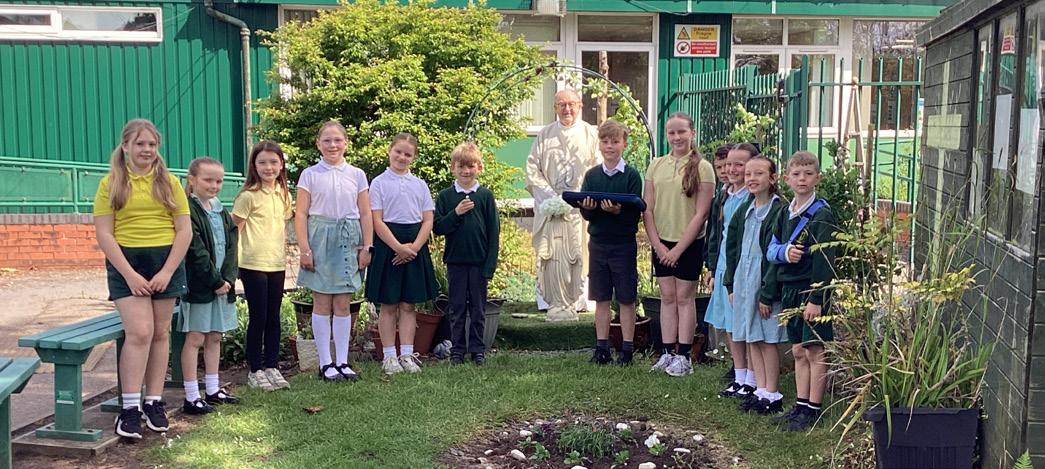
The Academy of St Francis of Assisi, part of All Saints Multi Academy Trust, has been awarded ‘Outstanding’ following its latest Joint Denominational Inspection by the Diocese of Liverpool and the Archdiocese of Liverpool.
The academy achieved the highest possible judgement in areas such as the school’s distinctive Christian life, the effectiveness of collective worship, and the impact of leadership and management in developing the Christian life of the school.
The inspection highlighted the strength of the school’s community: “The Academy of St Francis of Assisi has continued over time to establish what is now a whole generation of membership and connection within the local community and wider neighbourhoods.”
The report also commended the school’s approach to collective worship: “Prayer and worship are well-led, inclusive and speak to the community of participants in terms of how its meaning can be lived in everyday life.”
Inspectors recognised that student performance has continued to rise since the last inspection in 2018 and is wholly inclusive of the increased percentage of SEND (special educational needs and disabilities) students.
They also celebrated the dedication of headteacher, Ms Teresa Bleasdale, and her committed senior leadership team, together with the continued support of All Saints Multi Academy Trust and governors.
Ms Teresa Bleasdale said: “Our Christian mission of ‘Live, love and learn together in the light of Christ’ is not just a statement but something that shapes daily life across the academy. We are proud of the inclusive, nurturing environment we have
built, where every young person is supported and encouraged to flourish academically, personally and spiritually.”
CEO of All Saints Multi Academy Trust, Miss Heather Duggan, commented: “We are overjoyed that The Academy of St Francis of Assisi has achieved ‘Outstanding’ in its Joint Denominational Inspection.
“This outcome is a testament to the dedication of the entire academy community and the strength of its Christian ethos. This is an academy that makes a real difference in the lives of young people and their families, and everyone involved should be proud of this result. Congratulations to Ms Bleasdale and her brilliant team!”
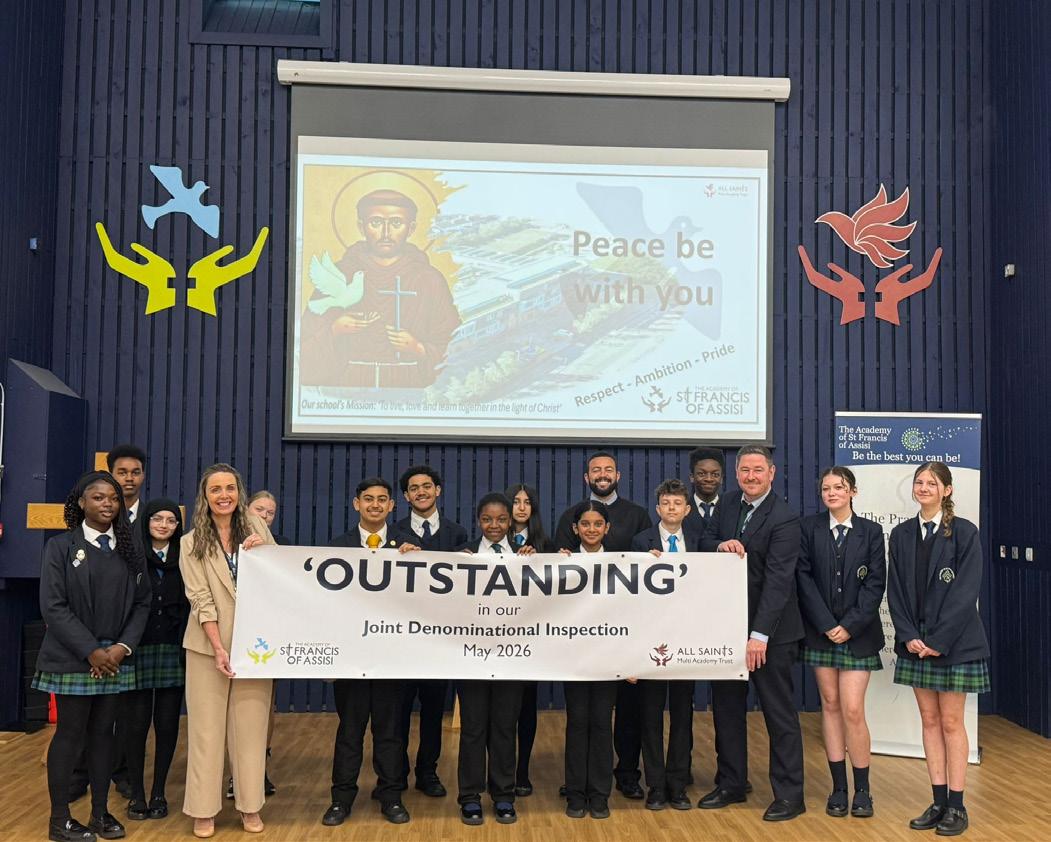
In June, St Gregory’s Catholic High School achieved a remarkable milestone by training the entire school community to become dementia friends, officially earning the status of a Dementia Friendly School.
This significant achievement reflects the school’s ongoing commitment to promoting understanding, compassion, and inclusion, while empowering students to make a positive impact within their local community.
Through the dementia friends programme, students learned about dementia and gained a greater understanding of the challenges faced by those living with the condition.
To celebrate their achievement, students were presented with dementia friends pins and certificates in recognition of their commitment to raising awareness and supporting people affected by dementia. These awards served as a reminder of the important role young people can play in creating more understanding and supportive communities.
Head of RE, Miss Hanrahan, shared her pride in the students, saying: “I am incredibly proud of our students for embracing this initiative with such enthusiasm and dedication. Their hard work reflects not only their compassion but also the values we hold dear as a school community.”
This achievement highlights St Gregory’s commitment to raising awareness and fostering empathy. The knowledge
and awareness gained through this initiative will help ensure that students are better prepared to support those living with dementia and contribute positively to the wider community.
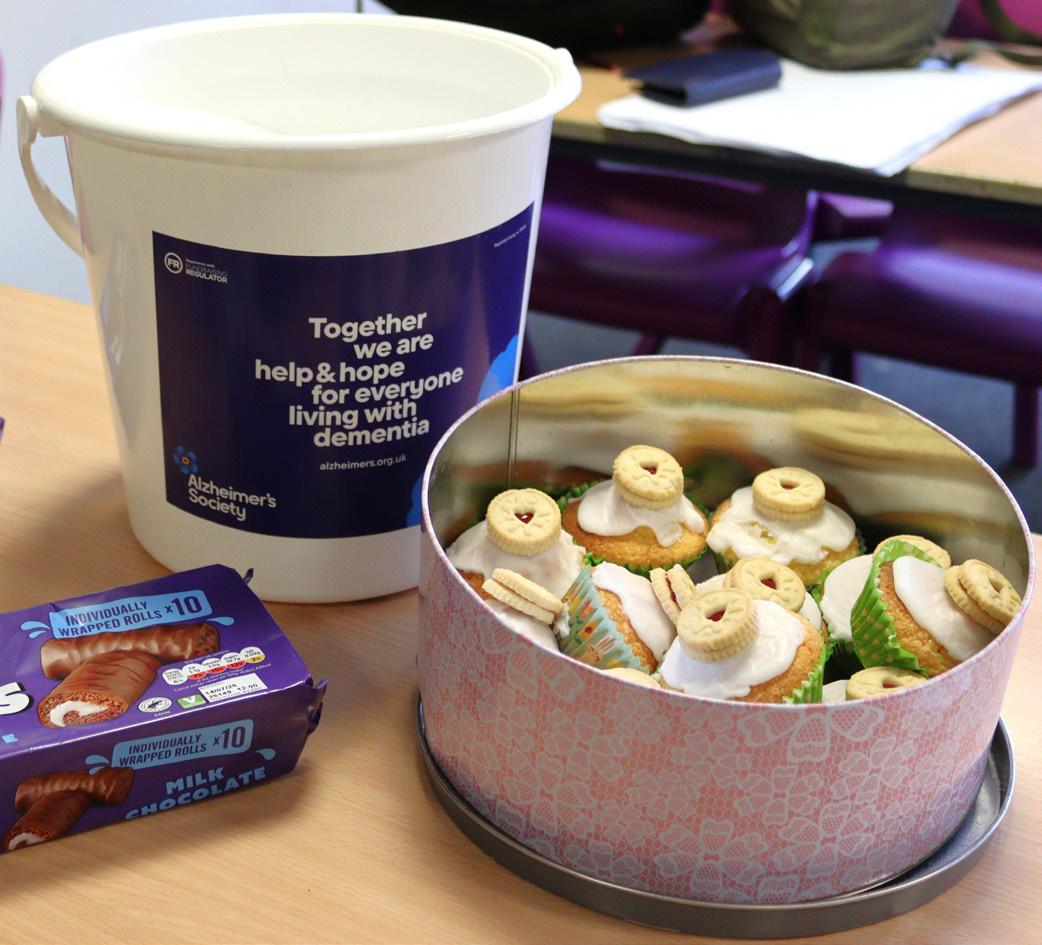
Members of St Teresa’s eco council recently joined local environmental group, Cleaner Greener Up Holland, for a litter-picking session at a nearby park, helping to make a positive difference to their local community while learning about their responsibility to care for the environment.
The day began with an assembly led by volunteer Gill Sinnott, who spoke to pupils about the importance of looking after the environment and keeping local areas clean. Her presentation encouraged children to think about how small actions can have a big impact on their community and the wider world.
Following the assembly, volunteers accompanied a group of pupils on a litter pick in the park. Working together, the children collected rubbish and helped to improve the local environment, putting into practice the messages they had learned earlier in the day.
The activity provided an opportunity for pupils to reflect on the importance of caring for God’s creation and protecting the environment, a key principle of Catholic social teaching. By taking an active role in keeping their community clean and safe, pupils developed a deeper understanding of the responsibility everyone shares in caring for the world around them.
The litter-picking event forms part of St Teresa’s ongoing commitment to sustainability and environmental stewardship
as the school works towards achieving the prestigious Green Flag Award. Through initiatives such as this, pupils are being encouraged to become responsible citizens who make a positive contribution to their community and the environment.
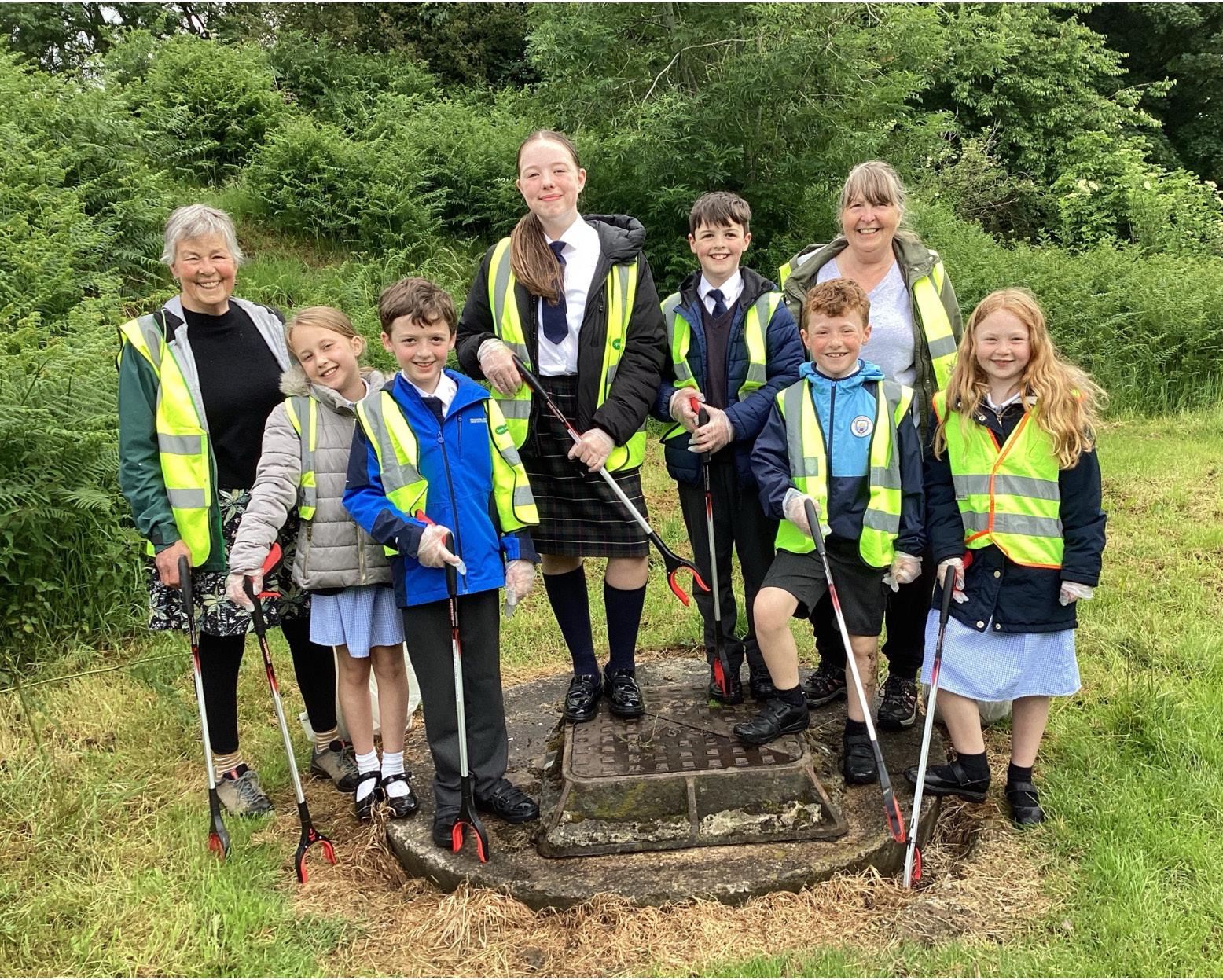
As we settle into the summer days and nights, it feels only right to pause and give thanks for the many quiet graces the season has brought.
For a small group of us, members and friends of the Union of Catholic Mothers, one such grace comes in the form of our annual pilgrimage to Our Lady’s Shrine at Walsingham. There is something timeless about Walsingham. Perhaps it is the sense of continuity – centuries of prayer woven into the very air. Or perhaps it is the simple beauty of pilgrims each arriving with their own intentions, hopes, and burdens. Whatever the reason, it remains a place where hearts are gently turned back towards God.
As this is a national pilgrimage, it is always delightful to meet old friends from across the country. Almost every city is represented by a UCM branch, and we spend a great deal of time greeting each other. Our visit is not elaborate; it is delightfully simple – a group of women gathering in faith, united by prayer and ready to place our lives before Our Lady. Of course, there will be lots of laughter. It would not be a gathering of Catholic mothers without it. But Walsingham also offers stillness. We will walk in procession, reciting the rosary and singing hymns. We will light candles and place petitions for our loved ones. When we arrive back home, we will feel calm and quiet.
It is so easy to become caught up in the demands of daily life. Our time in Walsingham will challenge that rhythm and remind us that prayer is not an added extra, but the foundation upon which everything else rests.
We return home, back to routines and responsibilities, but something of Walsingham remains: a gentle call to keep prayer at the centre of our lives.
Our Lady of Walsingham, pray for us.
Maureen Finnegan, Archdiocesan vice-president
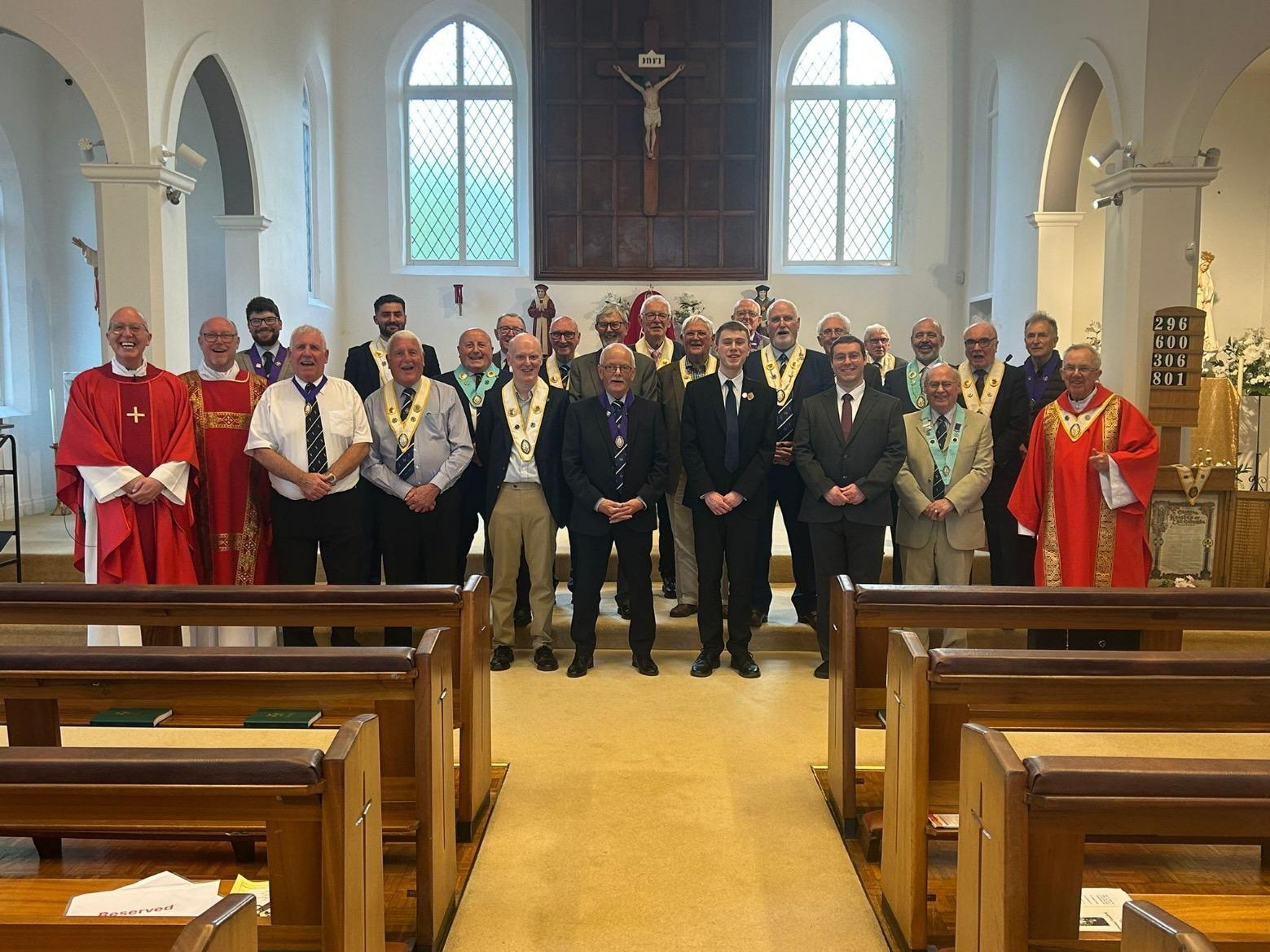
A celebration of the installation of new brothers took place on Saturday 23 May during the 6pm Mass at St John Fisher parish church in Widnes. Knights from across the province welcomed brothers to the order during the Mass, and a reception was held afterwards in the parish centre. A special mention and heartfelt thanks are due to Father Mark Moran and his congregation for their welcome and participation in this joyful event.
Knights from across the region were joined by the immediate past supreme knight (IPSK), Brother Harry Welch, when they attended 11am Mass at St Columba’s in Huyton on Sunday 7 June to celebrate St Columba’s feast day. Following the service, the parish hosted a reception which was enjoyed by all present.
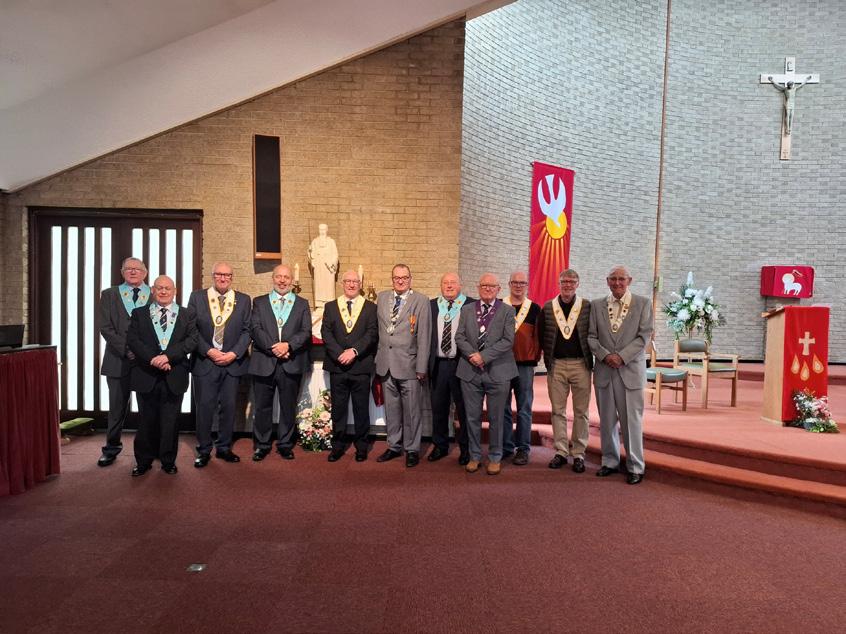
On Tuesday 9 June, I was proud to stand in a guard of honour as the funeral cortege entered the church for the funeral of the much-loved wife of a knight. A guard of honour at a funeral is a visible and reverent expression of respect, faith, and fraternity. When the Knights of St Columba assemble in regalia to honour a deceased brother, clergy member, or devoted Catholic, they do so as a sign of gratitude for a life lived in service to God, the Church, and the community. It reflects the order’s deep-rooted commitment to brotherhood, where no member stands alone in life or in death. Our presence also offers comfort to the bereaved family, reminding them that their loved one’s faith and contribution are recognised and cherished. The guard of honour stands as a quiet witness to the dignity of Christian life and the hope of eternal life promised by the Resurrection. In accompanying the deceased on their final earthly journey, the knights embody the Church’s call to pray for the dead and support the living. More than ceremony, it is an act of solidarity and prayer - an outward sign of inward faithdemonstrating that the bonds formed in Christ endure beyond this life.
The KSC welcome men of all ages who are willing to give what they can—time, talent, and commitment—to make a difference. No special qualifications are needed, only a willing heart and a desire to serve Christ through others. If you have ever felt called to do more for your Church and community, this is your invitation. Step forward, stand alongside your brothers, and be part of something enduring. Join the KSC and help build a stronger, more vibrant Catholic future.
If you would like to learn more about the KSC or visit your local council, please email me at Philonline2@btinternet.com.
Phil Woods, Provincial Grand Knight - Province 2 Website: www.ksc.org.uk
Facebook: The Knights of St Columba
Instagram: @knightsofstcolumba
By Father Simon Gore
With much of this edition of the Pic celebrating 50 years of the Lourdes Youth Pilgrimage, I wanted to take the opportunity, on this page, to talk about how we are hoping to link the past to the present and then look to the future.
When we looked at past photos, we could work out certain names and faces and it brought back some memories, but we wanted to create something more tangible that could give future pilgrims an insight into what Lourdes meant for pilgrims travelling in 2026, and who those pilgrims were. Therefore, we are making a pilgrimage time capsule.
The time capsule has been created to mark the 50th anniversary of the Lourdes Youth Pilgrimage. It will hold the voices, experiences, faith, and creativity of the young people who will travel to Lourdes in this special year, half a century on from the first such pilgrimage. Each item has been chosen to reflect what Lourdes means to our young pilgrims in 2026: challenge, grace, community, service, and hope for the future. Together, these items will capture not just what we were doing in July 2026, but who we were and what God was doing among us during this pilgrimage.
This poster contains 50 challenges, designed to be completed by a young person during their week in Lourdes.
Why is this important? The ‘Going for Gold’ challenges reflect the active, joyful and practical way that young people experience pilgrimage in 2026. Lourdes is not just a place to visit but a place to live faith—through service, prayer, friendship, courage and stepping outside of comfort zones. The number 50 marks this anniversary year, but the challenges themselves show how the experience of pilgrimage invites young people to grow: spiritually, emotionally and socially. We hope the poster captures the energy, creativity and engagement of the pilgrimage, and shows how faith is explored through action.
These are pieces of paper on which young people will note the blessings received during the pilgrimage. We have chosen to call these blessings ‘graces’, inspired by Lourdes’ 2026 theme, ‘Full of Grace’.
Why is this important? These writings will give a deeply personal insight into how Lourdes touches individual lives. Some graces may be joyful, others quiet or challenging, but together they will form a powerful testimony of faith at work. The purpose is to remind future pilgrims that Lourdes is not only about miracles that can be seen but about the many unseen ways God moves in hearts—through peace, healing, friendship, service, and new understanding.
These letters are to be written by young people on this pilgrimage, intended to be opened and read by future youth pilgrims.
Why is this important? These letters will create a bridge across time, allowing today’s young people to speak directly to those who will come after them—sharing encouragement, honesty, advice, faith and hope. The aim is to show that pilgrimage is something passed on, generation to generation, and that young people are not just participants but witnesses and guides to the future.
This altar cloth is made up of individual pieces of fabric, each decorated by a young person with information about themselves. These pieces will be brought together and glued into one larger cloth.
Why is this important? The altar cloth is a powerful symbol of community. Each piece of fabric represents a unique individual with their different backgrounds, personalities and stories, yet together they will form something sacred and whole, reflecting the heart of Lourdes: many people coming together in faith, united in prayer and service. It also shows that young people are not anonymous pilgrims, but valued and visible members of the Church.
This time capsule will hold the faith, questions, joy, generosity and creativity of young people in this 50th anniversary year. When it is opened, may it remind future pilgrims that Lourdes is alive—not only in the grotto stone and holy water of the shrine, but in the hearts of those who come seeking grace.
By Ultan Russell, Diocesan ecumenical officer
Elsewhere in this issue we cover the wonderful ‘Two Cathedrals Pentecost Walk’ but a range of other events take place at our sister cathedral often under the radar – and here we highlight two recent ecumenical events there.
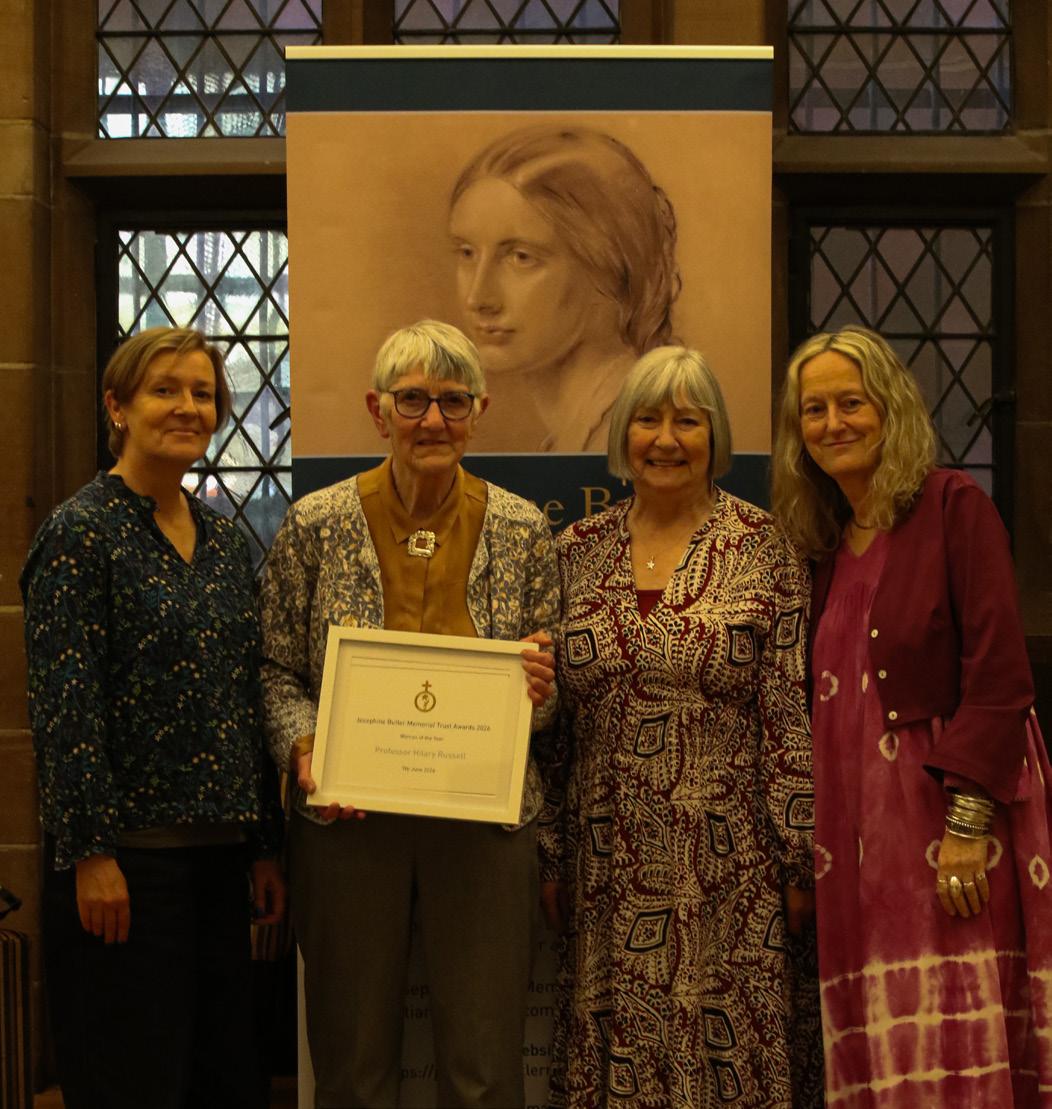
The Annual Josephine Butler Awards
This event was held on 9 June and began with Evensong. The Woman of the Year award went to Professor Hilary Russell who came to Liverpool to attend university in 1960. After graduating, she became a neighbourhood worker, then taught youth and community work and, after time raising her family, became a university hall warden for 10 years. She later joined the Centre for Urban Studies, exploring urban regeneration initiatives in the wake of ‘Faith in the City’ on Merseyside.
The centre moved to Liverpool John Moores University in 1992 and became the European Institute for Urban Affairs, where she remained until retiring as Professor of Urban Policy in 2010. This period coincided with major regeneration initiatives on which she was involved in authoring major research reports.
Professor Russell combined all that with volunteering, including roles as chair of Merseyside & Region Churches Ecumenical Assembly (which preceded Churches Together in the Merseyside Region) and co-chair with Bishop John Rawsthorne of Feeding Liverpool, as well as a trustee of both Liverpool Hope University and Church Action on Poverty. Hilary also chaired the Committee that supported the work of the Churches’ Officer for the North-West, which did groundbreaking work on the extent of faith engagement in community action. She also served on the Diocesan Synod and its Bishop’s Council and as a lay canon of Liverpool Cathedral, and was a founder trustee of Together for the Common Good (T4CG). She is pictured above with her daughter Kate, Paul Lewis, and Dr Wendy Bignold (photo courtesy of Jason Burnet).
The Organisation award went to Triple C, a charity established over 20 years ago by the Anglican churches in Norris Green which supports individuals and families facing tough times. Through
partnerships, Triple C works closely with local organisations, faith groups, and volunteers to make sure help reaches those who need it most.
Finally, the Volunteer of the Year award went to Elisabeth (Liz) Clarke. From St David’s Church in Haigh (Wigan deanery), Liz has been active in the Mothers’ Union for 30 years. At the diocesan level, she is the prison lead, building links with Hindley and Liverpool Prisons and facilitating the MU campaigns combatting domestic abuse and modern-day slavery.
Josephine Butler was a remarkable Victorian woman who spent much of her life in Liverpool – a Christian writer, lobbyist, and the first woman to get an Act of Parliament changed.
The friendship and mutual support between the two sets of cathedral guides probably predates the Pentecost Walk. This has led to an annual meeting alternating between the two cathedrals, held this year on 6 June. This has been enthusiastically supported by Canon Neal Barnes at the Anglican Cathedral and Deacon Paul Mannings at the Metropolitan Cathedral. Paul is an ecumenical project in himself, as his son Stephen is the director of music at our sister cathedral and his daughter-in-law is the Revd Kim Mannings, rector of Prescot! He is pictured below at lunch with fellow guides (photo courtesy of Brian Dowling).
Canon Neal Barnes said: “It was a very joyful, convivial and encouraging event and stands alongside the long list of ways that the two cathedrals have been working, and continue to work, so closely on many fronts. It is a joy that we can share worship together, campaign together on issues that affect our communities (witness the recently published CTMR report ‘Manifesto of Hope’), have signposting to each other’s cathedrals, share help and advice with security, and host joint choral events.”
A prayer for guides
‘Heavenly Father, bless all who enter this House of Prayer. Grant us, as guides, the wisdom to share its history with clarity, the patience to welcome all who come, and the grace to be instruments of your peace.
May our words inspire and our welcome make every visitor feel at home here.
Through Jesus Christ our Lord. Amen.’
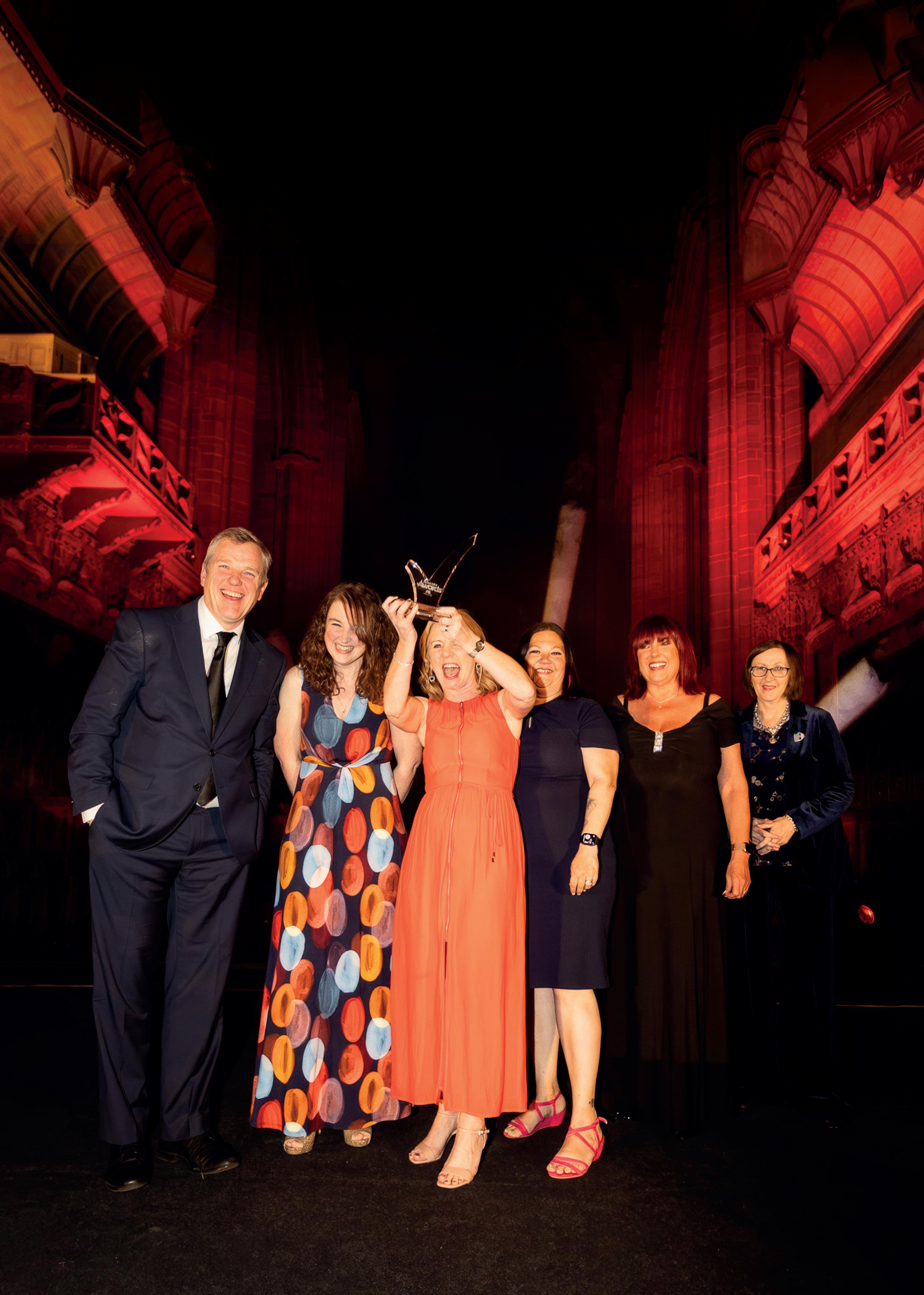

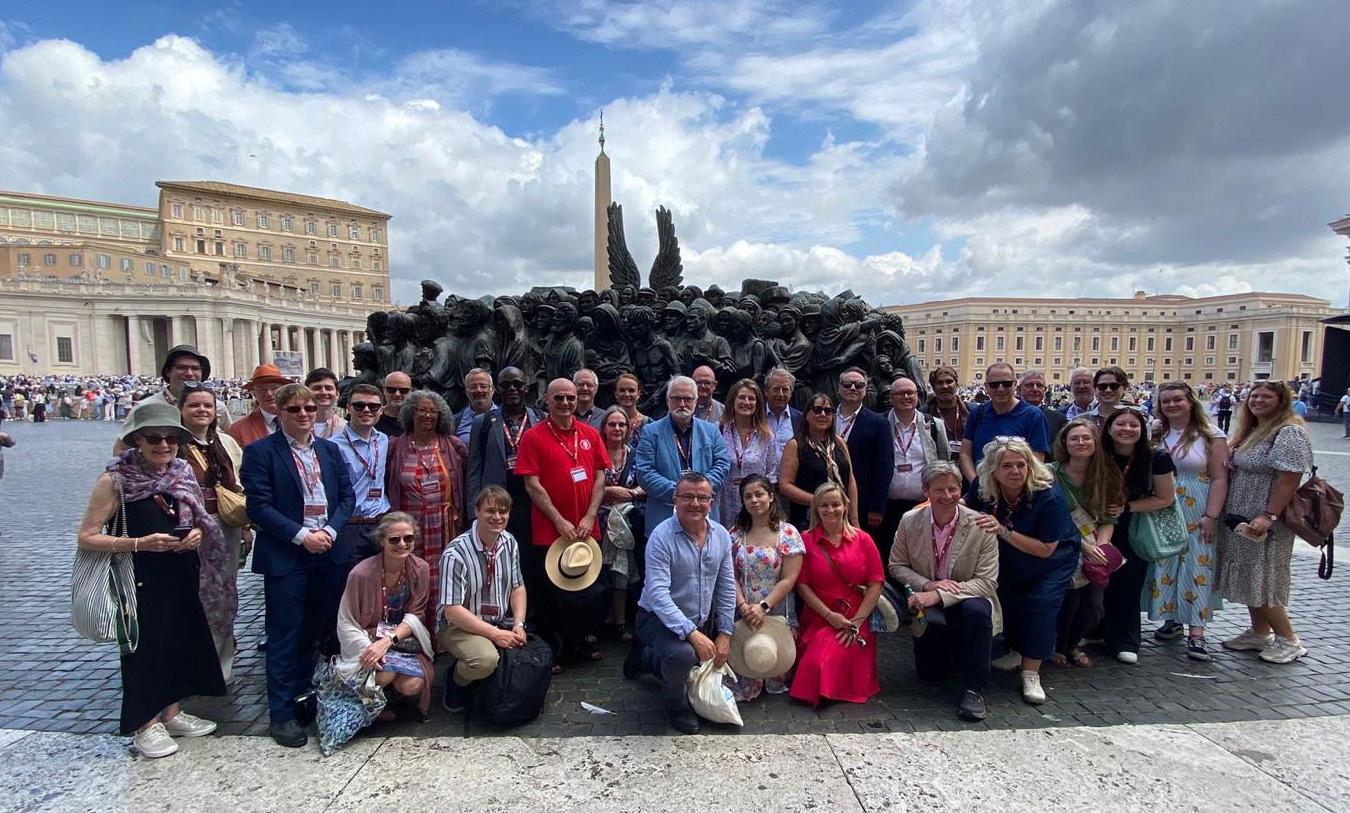
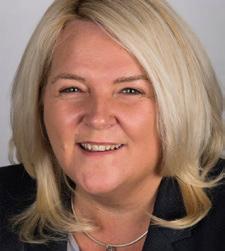
Jo Henney Chief Executive Officer Nugent
I recently had the privilege of representing Nugent at the Caritas Social Action Network Leadership Conference in Rome, joining charity leaders from across England and Wales for a week of reflection, discussion, and shared learning. Set against the beautiful surroundings of Villa Palazzola, the conference explored some of the most pressing issues facing our communities today, including poverty, social justice, human dignity, leadership, the future of work, and the impact of emerging technologies such as artificial intelligence.
Throughout the week, a recurring theme was the importance of listening. Whether discussing leadership, Catholic social teaching, or the future role of the Church, we were encouraged to slow down, listen deeply and discern together how we can best respond to the challenges facing those we serve.
One of the highlights of the week was attending Pope Leo XIV’s General Audience in St Peter’s Square. Gathering alongside pilgrims from around the world was a powerful reminder of the universal nature of the Church and our shared mission to build communities rooted in hope, compassion and solidarity. We also arranged for books written about the life of Father Nugent (which are available online at Amazon and eBay) to be shared with His Holiness.
The conference concluded with a powerful call for greater collaboration between Catholic organisations. As charities, we cannot address society’s challenges alone. By working together, sharing knowledge and supporting one another, we can have a greater impact on the lives of those who need us most. I return to Liverpool inspired by the commitment, compassion and faith of those I met throughout the week. The conversations may have taken place in Rome, but their relevance extends far beyond it.
I look forward to bringing these insights back to Nugent as we continue our mission of walking alongside people, supporting them to flourish and ensuring that every person is treated with dignity, respect and love.