CATHEDRAL MUSIC
1/18
ISSUE


We offer four brands of organ each with their own identity, sounds, appearance, technology and style. All our brands share valuable characteristics such as technological innovation and the best sound quality, which is never a compromise. All provide the player with a unique playing experience. A great heritage and tradition are our starting points; innovation creates the organ of your dreams.
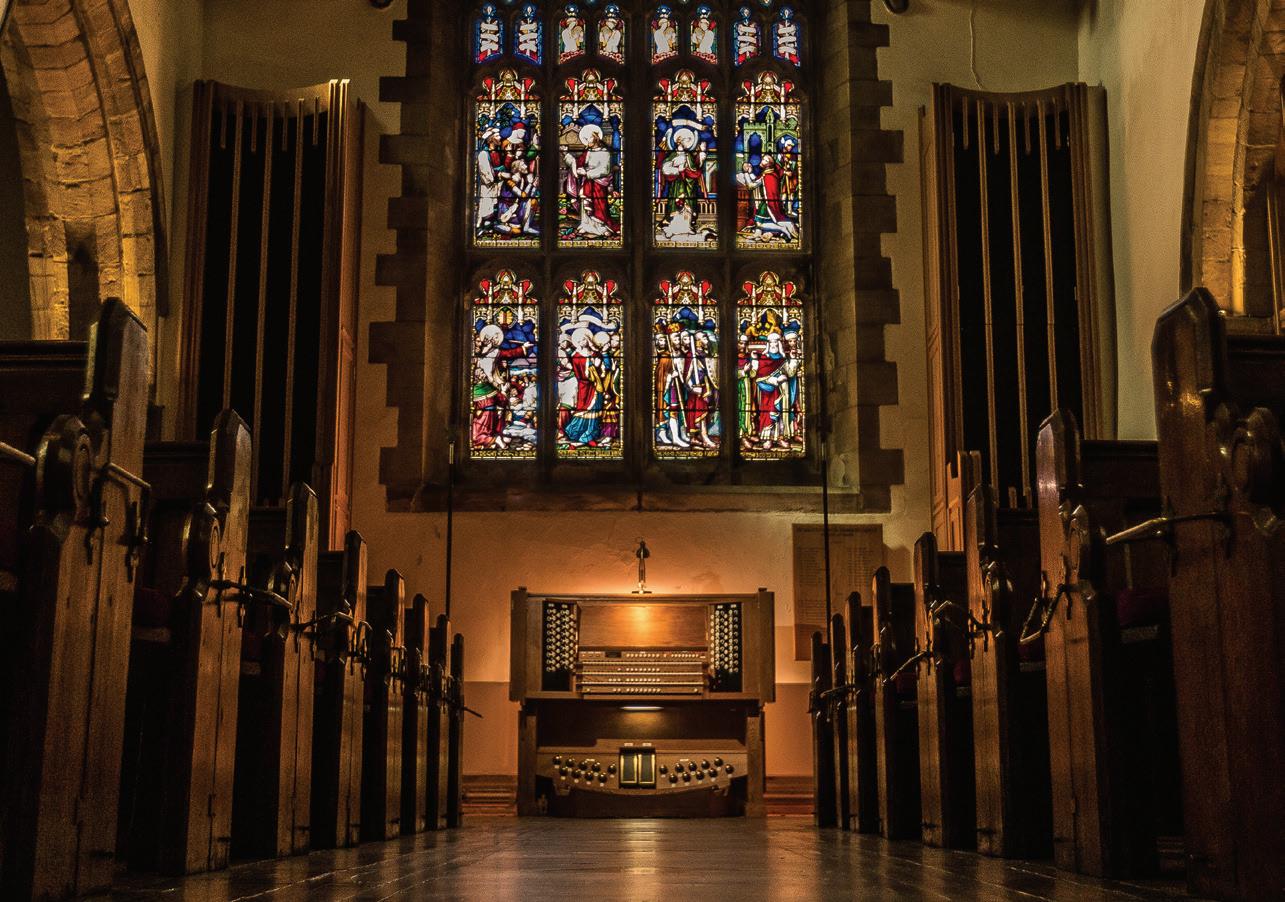
Contact us for tickets for our ‘Autumn Shades’ concert at Shaw on Saturday 6th October 2018
Makin | Copeman Hart | Johannus | Rodgers
CATHEDRAL MUSIC is published twice a year, in May and November
ISSN 1363-6960 MAY 2018
Editor
Mrs Sooty Asquith, 8 Colinette Road, London SW15 6QQ editor@fcm.org.uk
Editorial Advisers
David Flood & Matthew Owens
Production Manager Graham Hermon pm@fcm.org.uk
FCM Email info@fcm.org.uk
Website www.fcm.org.uk
The views expressed in articles are those of the contributor and do not necessarily represent any official policy of Friends of Cathedral Music. Likewise, advertisements are printed in good faith. Their inclusion does not imply endorsement by FCM.
All communications regarding advertising should be addressed to:
DT Design, 1 St Wilfrids Road, Ripon HG4 2AF 07828 851458
d.trewhitt@sky.com
All communications regarding membership should be addressed to:
FCM Membership, 27 Old Gloucester Street, London WC1N 3AX
Tel: 020 3637 2172
International: (+44) 1727-856087 info@fcm.org.uk
Every effort has been made to determine copyright on illustrations used We apologise for any mistakes we may have made The Editor would be glad to correct any omissions.
Designed and produced by:
DT Design, 1 St Wilfrids Road, Ripon HG4 2AF 07828 851458
d.trewhitt@sky.com
Cover photographs
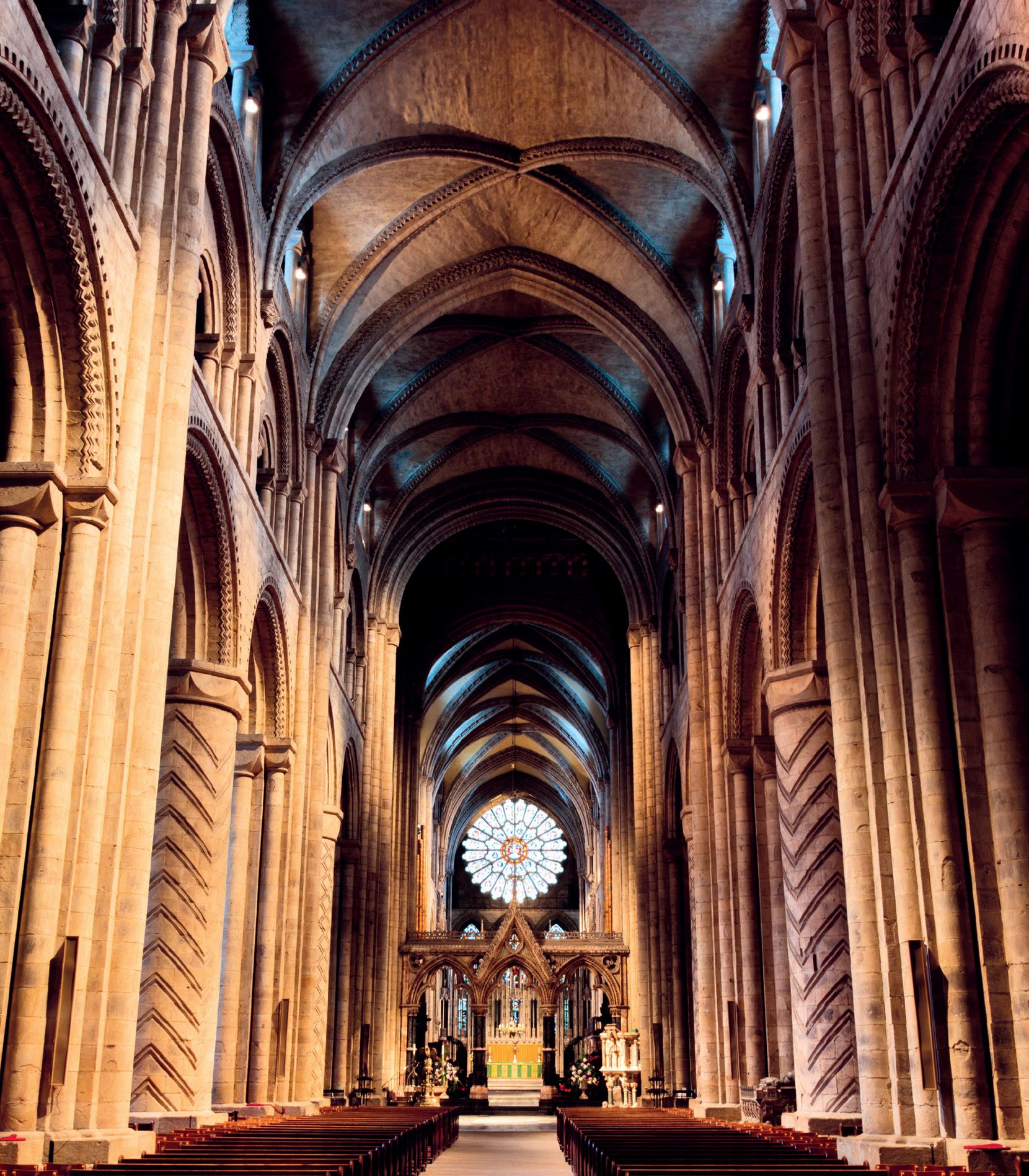
Front Cover
Durham Cathedral interior
Photo: Philip Roberts
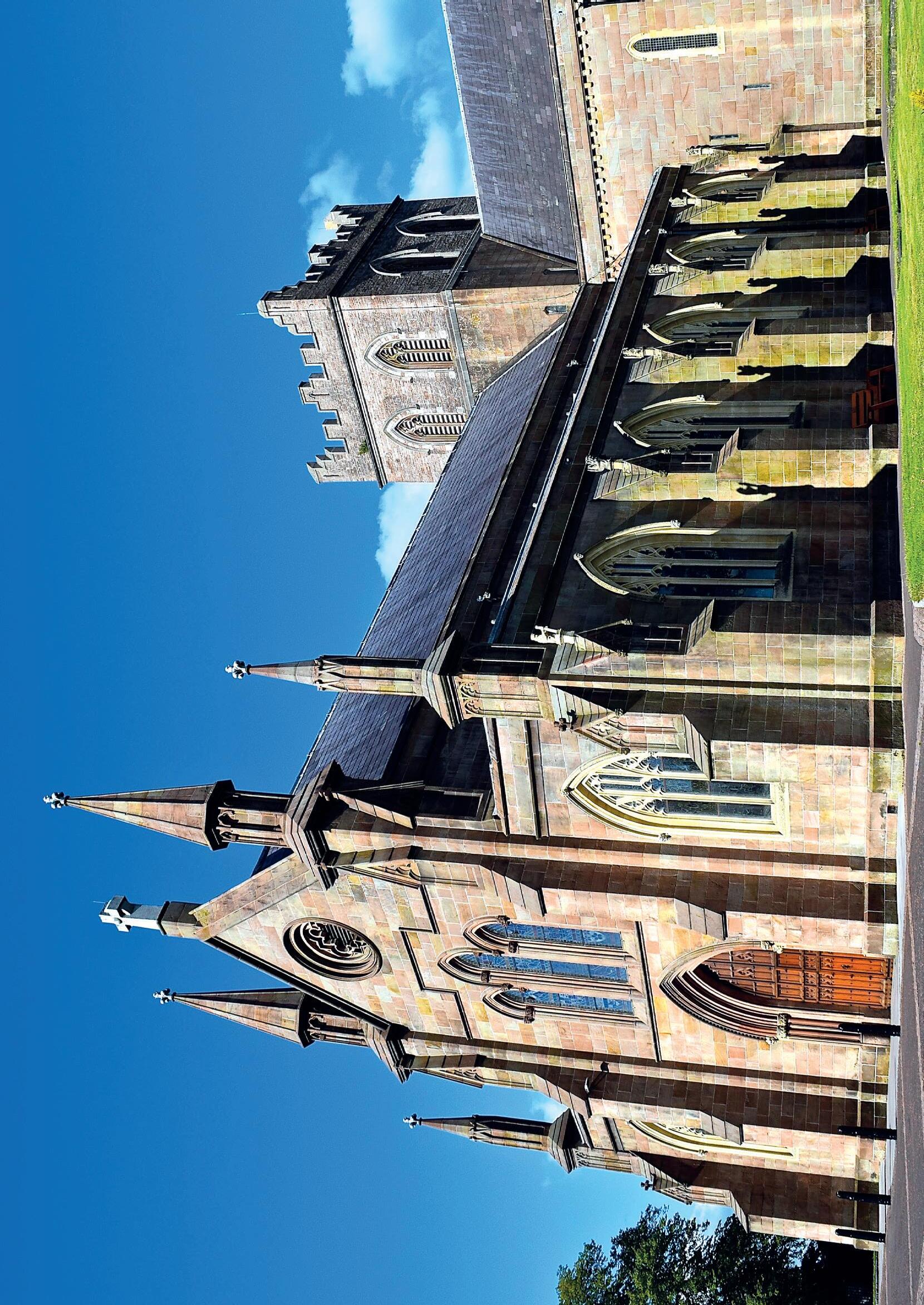
Back Cover
Armagh Cathedral
Individually Designed Organs by Viscount
5 Magnificent Venues, 1 Marvellous Musician
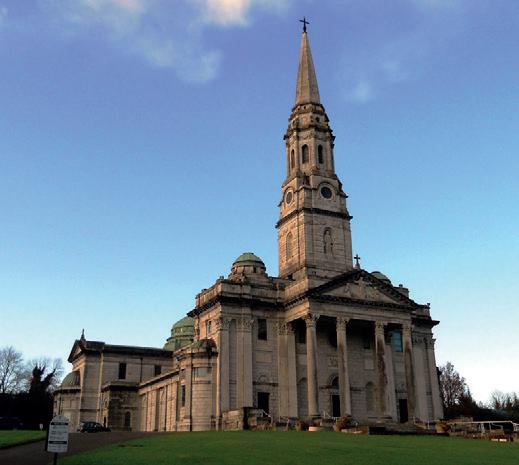
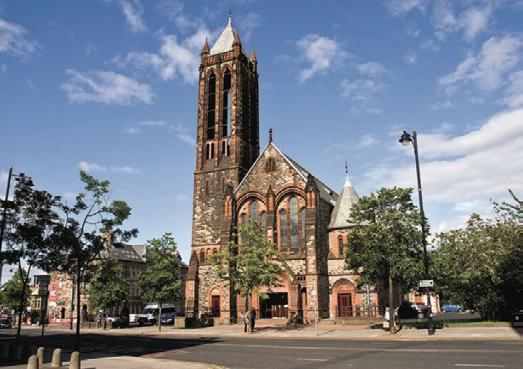
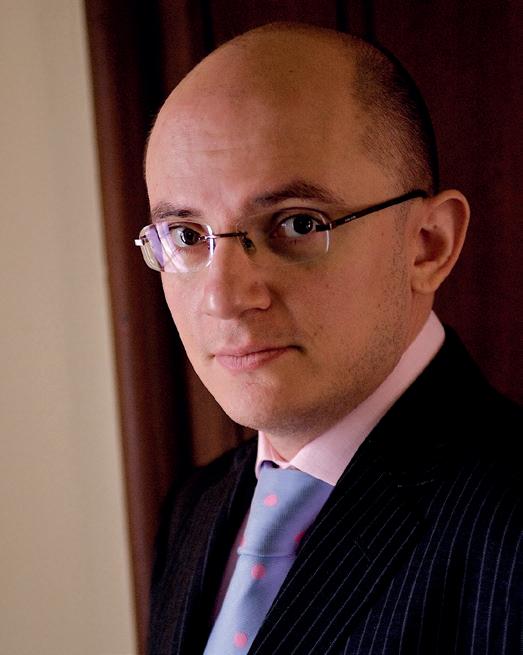
Regent Classic and Viscount Classical Organs are delighted to present this concert series on instruments installed in recent months, featuring internationally renowned organist, Joseph Nolan.
Particularly known for his recordings of the complete organ works of Charles Marie Widor, Joseph was appointed to Her Majesty’s Chapels Royal, St James’s Palace in 2004 and moved to be the Director of Music at St George’s Cathedral Perth Australia in 2007.
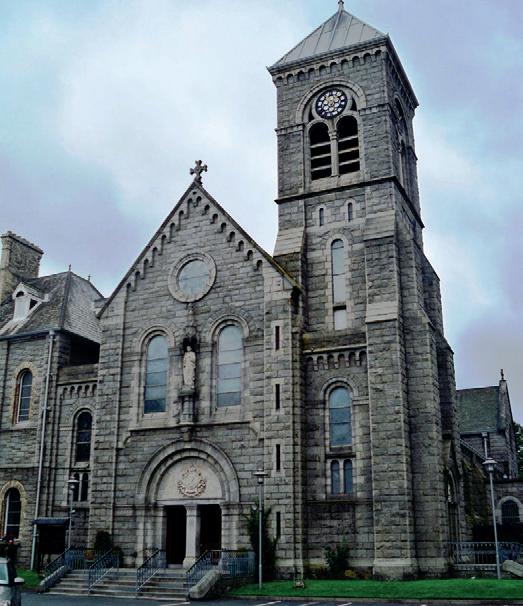
For ticketing and programme information for each of the recitals please refer to our web site:
www.viscountorgans.net/recitals Viscount
Tel: +44 (0) 1869 323747
April saw the interment of the ashes outside Salisbury Cathedral of Jessie Sibthorp, wife of FCM’s founder Ronald Sibthorp who died in 1990. Ronald was a self-effacing man but he stood firmly by what he believed in: one of his primary reasons for founding FCM was that the Provost of Southwell abolished the choral service on Saturdays so that the lay clerks could go and watch the weekly football at Newark! (No catch-up TV in those days...) With Jessie’s death there is perhaps the end of an era, but as is very neatly put by – it turns out – Alexander Graham Bell, ‘When one door closes, another door opens...’ as can be seen by the way FCM has moved smoothly, if perhaps a little gently, into the 21st century (witness the new website, the (relatively!) new Chairman, our much-changed admin department and the excellent fundraising arm, The Diamond Fund for Choristers. All of these help us to initiate the unconverted into the delights of cathedral music.
Those who would prefer to reflect upon the past rather than consult the crystal ball of the future can find out more about the cathedral and parish church choirs of the 20th century in Colin Brownlee’s article on the Archive of Recorded Church Music (www.recordedchurchmusic.org). This remarkable website, set up by Colin, is full of fascinating recordings collected by him over the years. The project has been a labour of love and the website is a joy to explore – it contains an extensive gallimaufry of broadcasts dating back as far as 1902, and many wonderful photographs of choirs, a very few of which are reproduced in these pages. There is also a YouTube channel dedicated to rare
and historic recordings, more of which are added regularly. Both are sites which are hard to tear oneself away from, and even if you do not find the computer a joy to use and a boon to all mankind, if you take pleasure in cathedral music you cannot fail to rejoice in these sites. You will even find the Sir John Betjeman series of radio broadcasts on English cathedrals, each lasting approximately 40 minutes, which have stood the test of time quite brilliantly. Colin is always looking for more recordings, so if you know of any or have any stored away, please do get in touch with him through his website.
Another keen recorder of choirs is Gary Cole of Regent Records, who has been at the forefront of his profession for the past 30 years. Regent’s CDs appear in the review sections of each and every issue of Cathedral MusiC, almost always with a very favourable comment about the excellence of the recording/the engineer(s)/the match of player and instrument etc. Gary explores in his article how the company began, and how his own career developed from being an organist and conductor to becoming a CD producer. We are the richer for it – Regent CDs are recognisably outstanding.
Beating Gary to the post by a mere two extra years ‘in post’ is James Lancelot, recently departed from Durham Cathedral (via St Paul’s and Winchester) after 32 years. He pays tribute to the much-loved David Willcocks, whose playing of the psalms will for ever stand out for him, and also to Martin Neary, a great commissioner of new music, in particular from Jonathan Harvey and John Tavener. James’s well-deserved retirement will hopefully allow him a great deal more organ-playing than he had time for at Durham.
2018 is the centenary of Leonard Bernstein’s birth. Learn more about his glorious Chichester Psalms on p50. Tenebrae’s immaculate recording of this is already available and will be reviewed in the next magazine.
Sooty Asquith
The easiest way to do this is to go online to www.fcm.org.uk. Click on the Menu symbol on the right hand side of the website page and choose ‘Membership’ from the list which appears. Alternatively, email info@fcm.org.uk, or write to FCM Membership, 27 Old Gloucester Street, London WC1N 3AX (telephone numbers from the UK and abroad are given on page 3). You can also buy a Gift Membership online.
Member benefits include a welcome pack, the twice-yearly magazine Cathedral Music, and the twiceyearly newsletter Cathedral Voice There are regular day and weekend gatherings in our magnificent cathedrals and minsters which are
held regionally and nationally across the UK, and occasionally overseas. These offer opportunities to meet others with a shared interest in cathedral music and enjoy talks, masterclasses, choral performances, organ recitals and excursions to local places of interest.
Subscription - Members are asked to contribute a minimum of £30 per year (£35 for Europe, £45 for the rest of the world). UK choristers and fulltime UK students under 21 qualify for a reduced minimum rate of £10 or £15 respectively. New members subscribing at least £30 by standing order or £50 or more as a single payment will receive a free full-length CD of cathedral music especially compiled for FCM.
FCM is a national charity which exists solely to support the music at cathedrals, collegiate chapels and larger parish churches with a full SATB choir across the UK and abroad. We strive to increase public awareness and appreciation of cathedral music, and encourage high standards in choral and organ music. Money for choirs in need is raised by subscriptions, donations and legacies. Since its founding in 1956 FCM has given over £4 million to Anglican and Roman Catholic choirs; it has also endowed many choristerships; ensured the continued existence of a choir school and worked to maintain the cathedral tradition. Please join now and help us to support our unique heritage.
The musical journey which led to 32 years at Durham began for me as a parish choirboy, as it has for so many church musicians. My father was an assistant priest at St Patrick’s Church, Balsall Heath, Birmingham, a Pearson church and a more modest relation (and latterly daughter) of St Alban the Martyr, Bordesley, whose organist at that time was Roy Massey. From early childhood I was fascinated by the sound of the organ – unseen from my pew near the back and so not unreasonably assumed to be the voice of God (a dangerous illusion of which organists are not always innocent). At the age of seven I joined the choir, which was ruled with a rod of iron and a heart of gold by Muriel Armitage. Somehow, indefatigably, she moulded an unlikely bunch of parish boys and a few adult singers into a choir. Staple fare were the English Hymnal (including the plainsong Propers) and Martin Shaw’s Anglican Folk Mass. What emotions were stirred when we introduced the Martin Shaw Creed at Durham during Ordinary Time a few years ago!
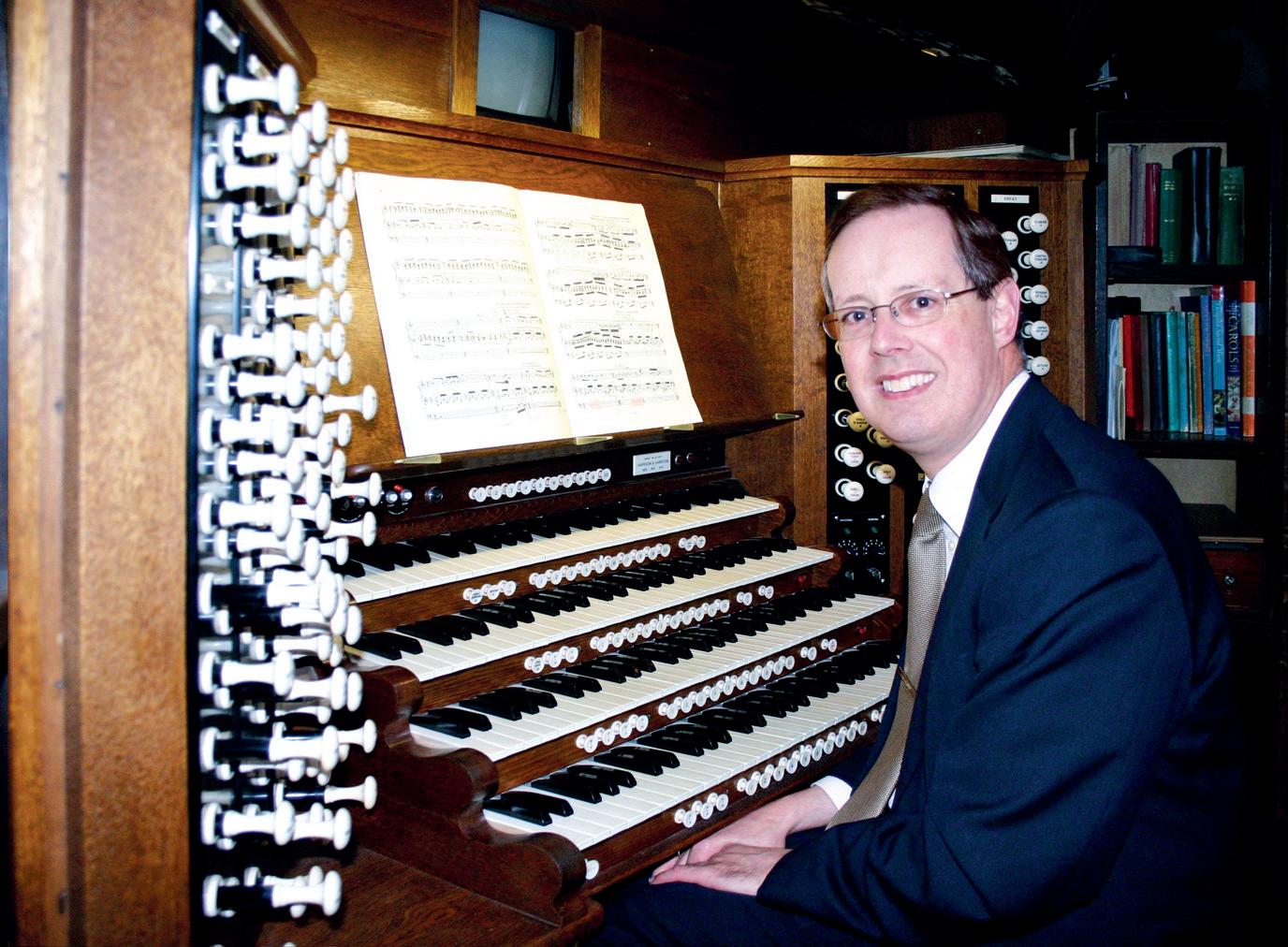
This environment captivated me. Highlights were the occasional anthem – The strife is o’er by Henry Ley, On this day, earth shall ring by H C Stewart – and in particular movements from Stainer’s Crucifixion. Besides all this, Miss Armitage encouraged me at the organ, allowing me to play the occasional hymn and teaching the choir an anthem I had written (long since lost, mercifully). All of this, together with witnessing the glorious liturgy and hearing plainchant sung beautifully at a convent the family visited in Peeblesshire,
instilled a love of church music and liturgy which would inspire and enrich my life.
The other great influence at this time was another unsung hero, William Bennett: having started me on the piano when I was four, he went on to give me singing lessons. I was one of several boys whom he coached for choristership. So it was that, having a passed a voice trial, I became a probationer at St Paul’s Cathedral in 1961, 120 miles from home and in a school of just 38 boys. Out went the English Missal and in came the Book of Common Prayer. The first choir practice with Dr John Dykes Bower remains clearly remembered –Stanford in B flat canticles and Samuel Wesley’s In exitu Israel
There is no musical training quite like that of a cathedral chorister. The constant striving for high standards and the fact that one is doing an adult’s job at a child’s age are just two of the benefits that are quoted; valuable too, though, is the instinctive understanding of harmony and of counterpoint that one gains. St Patrick’s had been musically a homophonic environment; at St Paul’s I came face to face with the music of Byrd, the organ music of Bach, and so much more. ‘DB’ was a choirmaster of the old school (though the repertoire included continental European music that was not often sung elsewhere at that time) but a kind taskmaster and a superlative organist. Self-effacing and never given to overstatement, he left few recordings, and posterity has not sufficiently appreciated him: but his choristers loved him, and my visits to the (old) organ loft to turn pages were an education and an inspiration in themselves.
The choristers’ round at St Paul’s involved between 12 and 13 sung services each week, with boys’ practices to match, but only 45 minutes rehearsal with the men(!). On top of the daily round came many special services, most notably the funeral of Sir Winston Churchill.
By the time I left St Paul’s in 1966 it is probably true to say that I had learnt not only the treble parts of most of our repertory there but also the organ parts – and gained a good idea of how to register them, too. Without that experience and despite meeting so much more music later on I wonder how I would have coped with the demands that King’s, Winchester and Durham made.
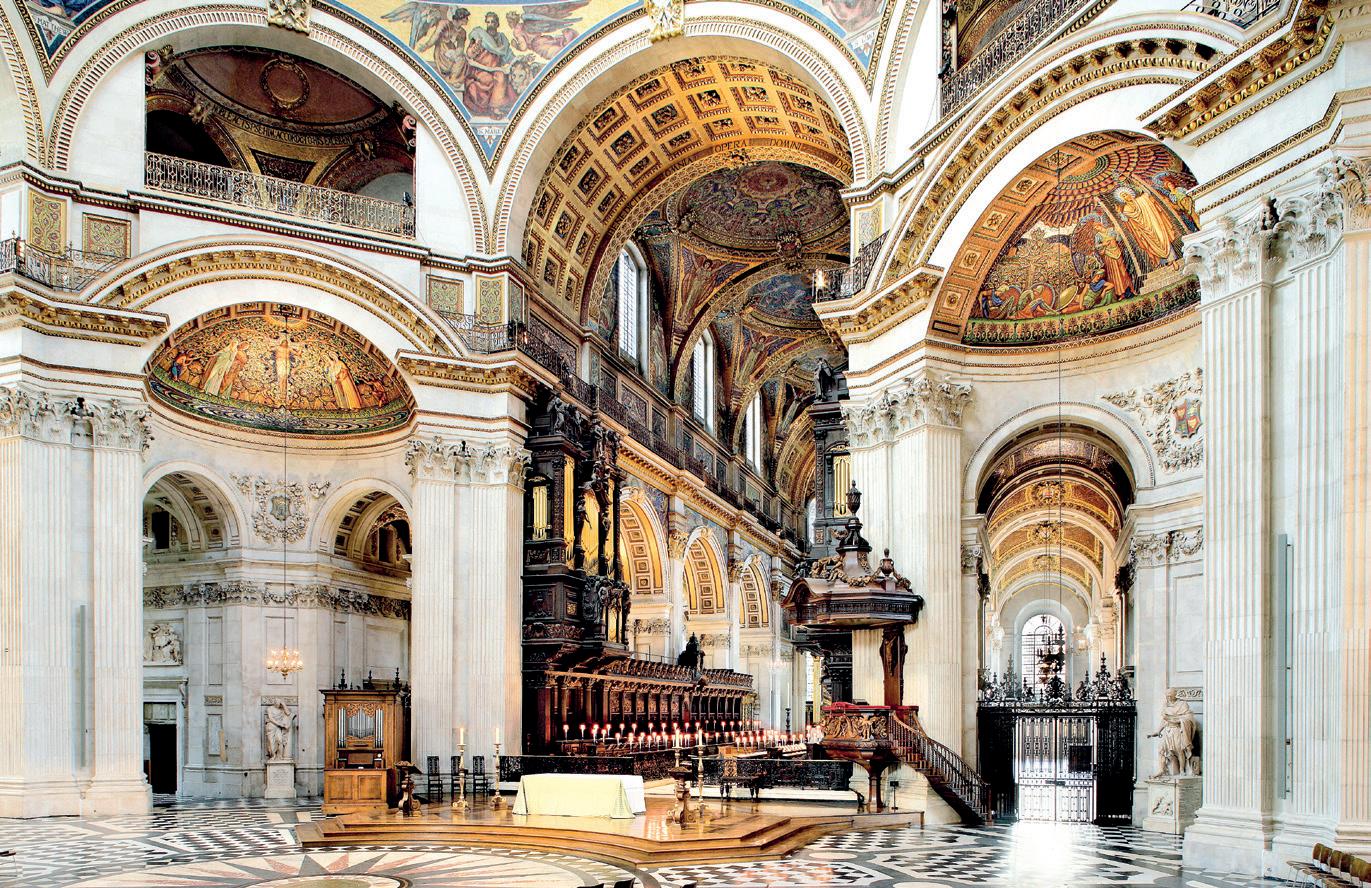
One thing that was not offered at St Paul’s was organ tuition, and by the time I arrived at Ardingly College in 1966 I was desperate to start lessons. The school had not only a new organ by Grant, Degens & Bradbeer but also a fine tradition of music. It was thanks to Alan Angus as Director of Music, Michael Bigg as my organ teacher, and Victor Bradley as teacher of harmony (and literature, and much more) that I gained my RCO diplomas at school, and scholarships to first the RCM and then King’s Cambridge.
The RCM not only brought me under the wing of Ralph Downes but also gave me the opportunity to study composition with Herbert Sumsion and piano with John Russell – more than at any other period, I had the chance to indulge a love of the piano that has too often suffered from lack of time. I was too inexperienced and impetuous to absorb all from Ralph that I might have, but his influence has stayed with me and the occasional lesson with him in Brompton Oratory remains unforgettable.
Ahead of me beckoned King’s, and the need to build a repertoire which could be played accurately and reliably on top of preparing accompaniments – and reading Classics. David Willcocks had come to personify the chapel for me, and while he may have struck terror into many a choral scholar I found him not only utterly supportive but also a good friend.
His ability to give the impression that the world would end if things were not performed perfectly could seem wearing, but I came to realise in later years that that was part and parcel of the need to try to ensure that the music at every service was sung and played as well as possible.
Rather than David staying with the choir at the end of each service he usually returned to the loft; and I soon discovered that one was expected to comment on any facet of the service that had not been quite right (and as a newcomer I was often at a loss to find any fault with the choir’s singing!). Looking back, I realise that this was part of a training in critical faculties that would be needed in later life. There is so much more I could write about David, though there is not the space here, but I cannot leave my time at King’s without mentioning his accompaniment of the psalms, the excellence of which is mercifully captured on two recordings.
From King’s I went to Winchester in 1975 as Sub-Organist. Martin Neary had been in charge for three years and the choir was excellent. Under John Taylor as Bishop and Michael Stancliffe as Dean the cathedral was enjoying something of a golden age, and as well as the daily services there were many broadcasts, concerts, recordings and tours – Come Sunday with Cleo Laine and Johnny Dankworth stays especially clearly in the memory. Martin was particularly enterprising in commissioning new works, notably from John Tavener and Jonathan Harvey. I was not infrequently faced with complex accompaniments to be played from a console significantly distant from the choir and occasionally with a live BBC microphone in the vicinity.
Martin was immensely supportive, never more so than having the confidence to leave me in charge for the first half of 1980
when he had a Bicentennial Fellowship in the USA. The experience of taking the helm for this period perhaps did more than anything else to prepare me for the responsibility of leading the music at Durham – the third cathedral of my career (and the smallest!).
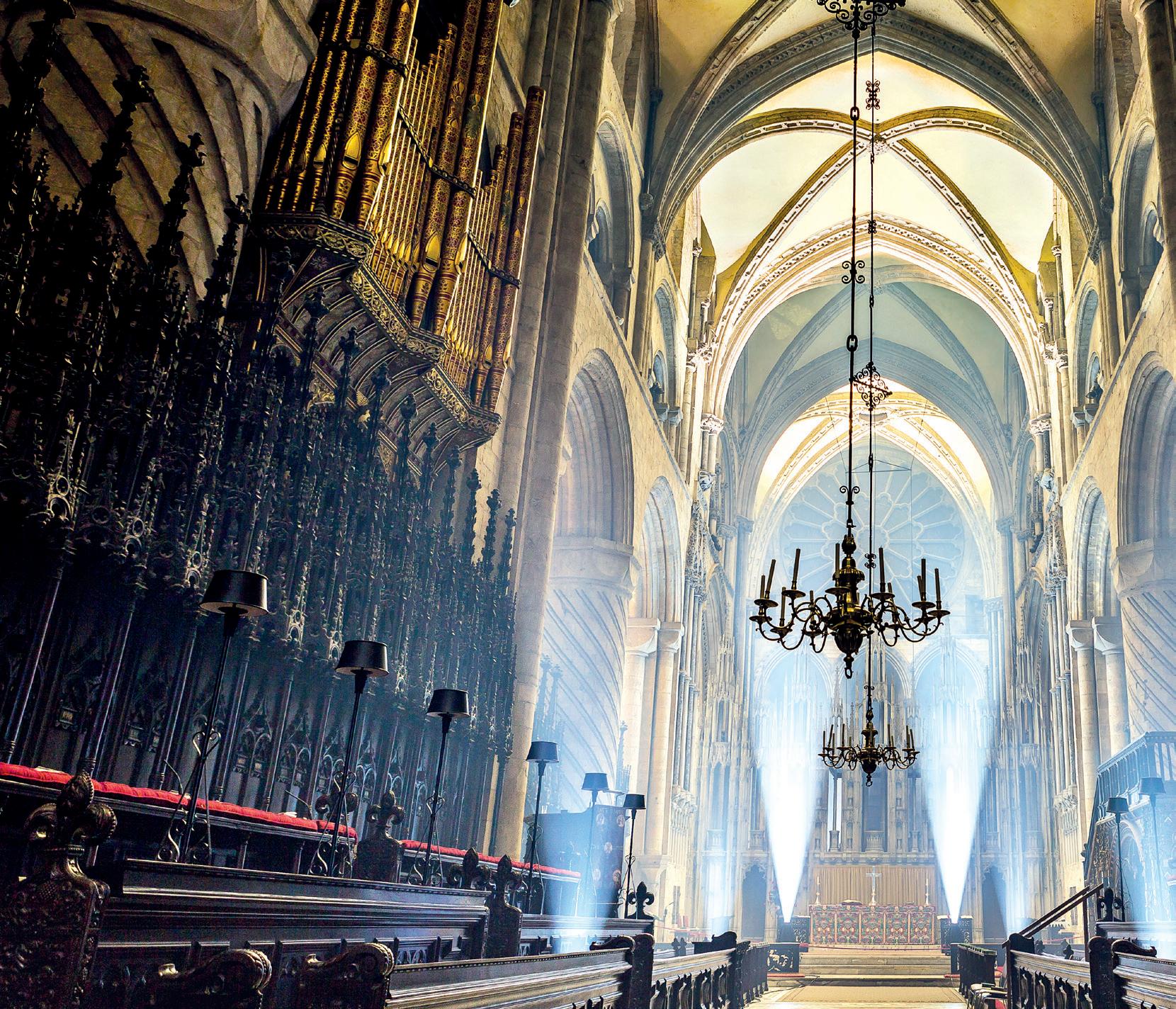
Durham is unique among English cathedrals in being the shrine to not one but two saints, Cuthbert and Bede. The spirituality with which this imbues the place is frequently commented on by those who visit, and for those who belong to the foundation this spirituality informs their worship. Over the years, as I explored the holy sites of the North East and assimilated its Christian heritage, I tried to reflect this in the music, and also to seek to mark the seasons of the Church’s year as richly as possible in the choice of repertoire. I grew to love each of the seasons for its own sake; through them and through the whole year ran the daily singing of the psalms, the love of which I know many members of the choir of all ages shared with me.
Durham is fortunate, of course, in having a thriving university whose music department is not only exceptional but also very near the cathedral. Teaching Fugue brought me into
contact with many students, and conductorship of Durham University Choral Society with very many more. I valued greatly the contact with students, and it gave me great satisfaction to enable so many of them to sing or play the great oratorios of the repertoire in the incomparable setting of the cathedral.
None of whatever I may have achieved in 32 very special years would have been possible without the constant support of wise colleagues, among whom (but far from exclusively) must be listed Michael Sadgrove as Dean, David Kennedy as Precentor, Yvette Day as Headmistress, and James Randle as School Director of Music and Cathedral Director of Outreach Music. Durham has been hugely fortunate too in its sub-organists over many years; during my time I greatly valued the expertise and warm support of Ian Shaw, Keith Wright and Francesca Massey, each of them exceptional players. The liturgy is daily enriched by voluntaries carefully chosen and meticulously prepared. There is, too, another organist resident in the precincts, and to her my debt is enormous, for my playing owes more to her than to anyone else – Dame Gillian Weir, with whom I had lessons in the 1970s; she has been a constant support ever since, and I am just one of many who have found
their playing raised to a different level through her insight and inspiration.
Richard Lloyd had been my predecessor for 11 years, during which time he had worked wonders with the choir. But given the high turnover of personnel – particularly so with a back row including choral scholars – there could be no resting on laurels. As well as the obvious need for excellence in worship, in a situation where the architecture at Evensong is always going to be five-star, the music must always match that if possible.
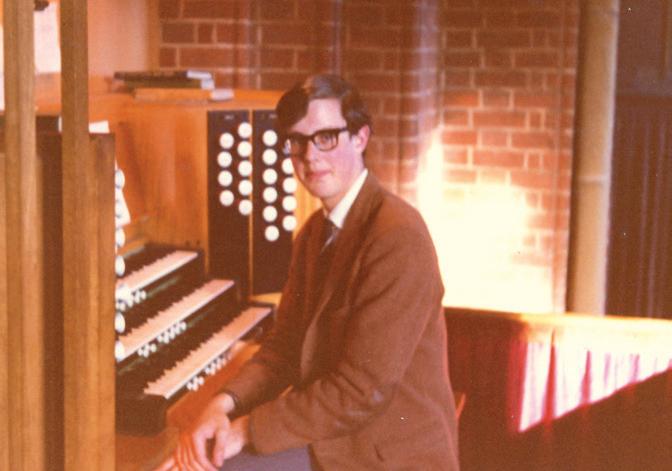
Of paramount importance is the daily round of the worship of God, and it is essential that any other choir activities nourish that, rather than detract from it. There were many, many other activities, and among them in particular have been a service of Vespers sung in monastic style in 1987, the 1300th anniversary year of St Cuthbert’s death; the choir’s first foreign tour in 1998; the cathedral’s 900th anniversary in 1993; music from our twin diocese of Lesotho; Highway with Harry Secombe and Jessye Norman; and above all two liturgical collaborations with Stan Tracey and his orchestra, performing music from Duke Ellington’s Sacred Concerts. 1987 also marked the
first commissioned work of my time, the Ikon of St Cuthbert of Lindisfarne by John Tavener. Many more works followed from composers including John Casken, Michael Berkeley, James MacMillan, Francis Grier and Richard Lloyd.
While it would not have been possible to offer soprano choral scholarships to university students in the same way as they are offered to men (though recently alto choral scholarships have been opened to women), I was keen that there should be opportunities for both female and male undergraduates and townspeople to sing in the cathedral in an official capacity. To this end in 1997 I persuaded the Chapter to form Durham Cathedral Consort of Singers. This proved a hugely rewarding development, and I ought to mention that one of its original members was a school pupil from Hartlepool by the name of Daniel Cook!
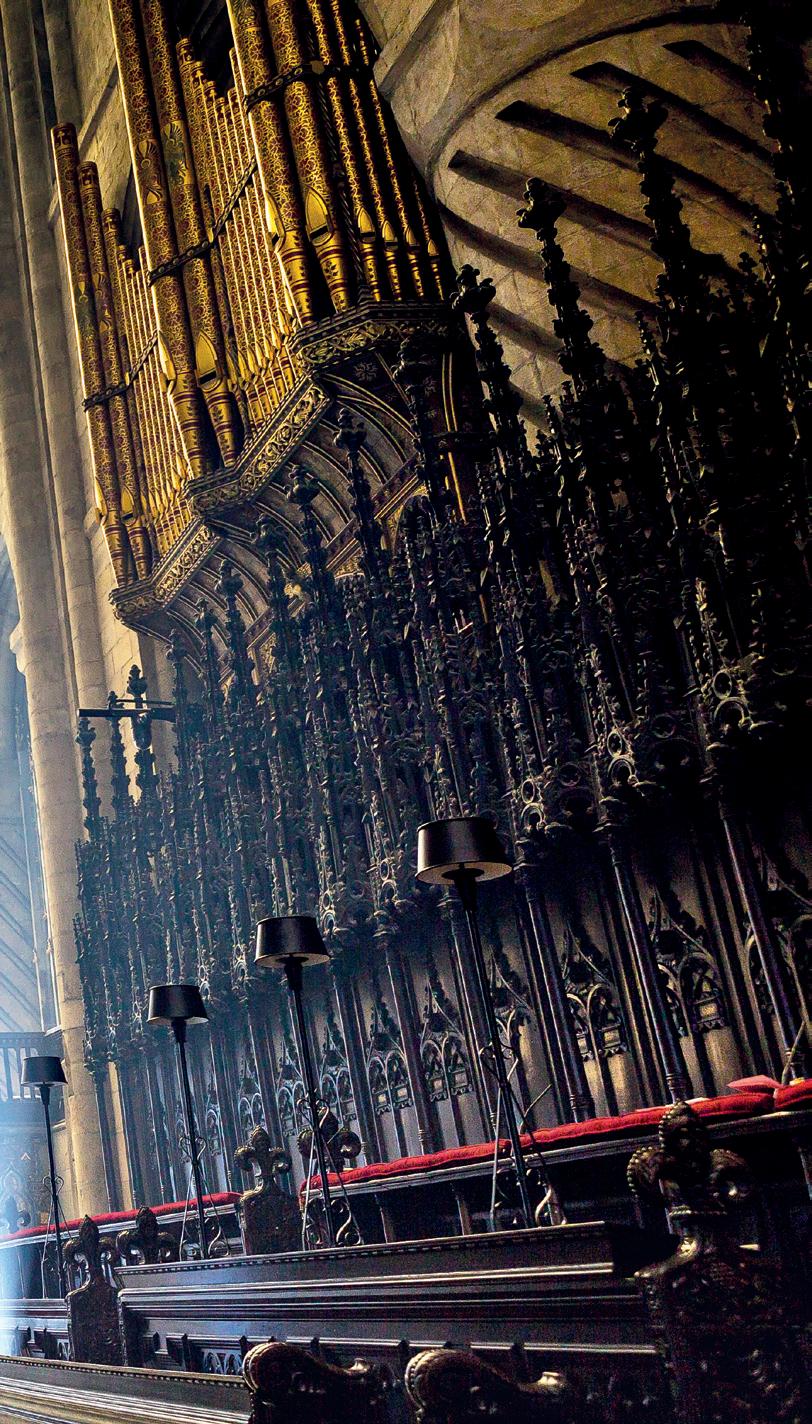
The Consort was in a sense a prelude to the formation of a second team of choristers in 2009. By this time both the Chapter and I were clear that we needed to include girls among the choristers for many reasons, not least the Church’s witness to inclusivity in a world where women are still too often shamefully treated, but also because it was clear that the boys’ workload needed to be shared if they were to continue to achieve high standards and tackle demanding repertoire – as has proved to be the case. Given that the boy choristers all attend The Chorister School as boarders, it made sense for the girls to do likewise; we were keen that they should have equal status with the boys, equal scholarships, and an equal share of the services. This was, I think, the most exciting venture of my career and the result has been to enrich the music, the choir, the school, the cathedral and its community immeasurably. There was inevitably an effect on the organist’s workload, and I was certainly in no danger of growing stale. But this development was one of many factors which caused me to have no wish to leave Durham.
Nevertheless there is a time to hand over the reins before one ceases to be equal to the demands of the job, and I have been keen to devote more time to playing, which while by no means disregarded at Durham was not always easy to fit into a busy schedule. So Sylvia and I have retreated nearer to our roots and our family to Tewkesbury, where we can enjoy choral services of an excellent standard not only on Sundays but on weekdays as well, accompanied by not one but two 4-manual organs in a magnificent Norman church. What more could one ask?
raison d’etre of the Archive is to acquire and preserve these precious moments through the recordings which stretch way back to 1902 up to the present day. In the fullness of time, the Archive will be handed on to an educational or musical institution.
Many, many years ago, a young music student marched purposefully up to the counter of one of the finest gramophone record shops in England and enquired what recordings Magdalen College choir had made over the years. The young music student was given a withering look by the grande dame behind the counter and informed that only current recordings were in the catalogue.
That young music student was of course myself, and the encounter left me perplexed but, unknowingly, it was to sow the seed for the founding of the Archive of Recorded Church Music 15 years ago. The grande dame was correct; there was no way of knowing what a particular choir had recorded and, as I was to discover, many choirs themselves did not know either.
‘To sustain our unique and priceless heritage of cathedral music’ are familiar words to FCM members. Yet those words apply equally to a unique and priceless heritage of another kind – our heritage of recorded church music, from choirs great and small, singing in the English cathedral tradition. We are a country concerned with preserving our heritage, yet these choir recordings have received scant attention, have never been properly researched, catalogued, preserved or brought together as one unified collection.
Sound recordings freeze musical moments in time and, when played back, allow us to understand, to experience, to be immersed in and to relive those precious moments. The
I realised early on in my search that this was not just about collecting recordings from the major record companies, I also needed to contact smaller independents, often run by only one person. And then there were the in-house recordings issued by a choir for limited local sales and, the rarest of all, private recordings, which exist only in a single recording.
Looking more closely at the recordings which make up the Archive, there are almost all the commercial recordings issued and one might assume these to form the main body of the collection – but not so; the majority of recordings are from independent labels which specialise in church music, together with in-house and private recordings.
In-house recordings are usually issued by the choirs themselves for sale in the local area, making them more difficult to unearth and track down. Thousands are now in the Archive in every format (78rpm shellac records, reel-to-reel and cassette tapes, mini-discs, vinyl records and CDs – together with the
The 1920s saw a revolution in recorded sound, which, quite literally, would change the world...
machines on which to play them), many from choirs now long gone, these being their lasting legacy.
It is amongst these private recordings that some of the greatest treasures of the Archive are to be found, as they are one-offs, usually made by the choirmaster himself or an enthusiastic amateur. They are the most vulnerable of all recordings, for if lost, thrown out or destroyed, they would be gone for ever. Over the years, the Archive has gathered a vast quantity of these private recordings, all now being digitised for preservation.
There is, of course, another source of recordings, the archival value of which cannot be overstated – the radio and television programmes which have been broadcast over the years. In the world of radio, BBC Radio 3’s Choral Evensong reigns supreme, giving as it does a snapshot of the choir on that particular day, but we also hold broadcasts of other services, concerts, recitals and documentaries. Television too has a rich heritage of service broadcasts, concerts and documentaries on choirs and composers. The Archive has collected thousands of these broadcasts, the earliest on radio from 1939 and on television from 1955.
Only by the preservation of these recordings are we able to listen to cathedral choirs through the decades; to listen to the heyday of the parish church choir, which could in days gone by have given many a cathedral choir a run for its money; and to listen to collegiate and Royal Peculiar choirs, school chapel choirs and independent choirs.
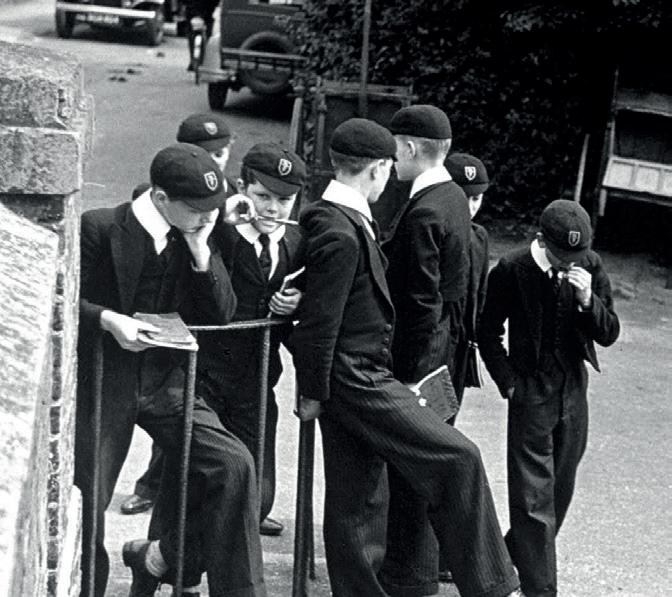
Delving a little deeper into the history of choir recordings, these started way back in 1902 when the choir of St Andrew’s, Wells Street in London was the first to make a gramophone record. It was considered one of the finest choirs of its day, so much so that a resplendent new choir school was purpose-built for the 24 choristers. Needless to say, these first gramophone records are amongst the rarest in the Archive.
Recording techniques were in their infancy, the microphone had yet to be invented and gramophone records were recorded acoustically, with the sound travelling down a large metal horn to a vibrating stylus which then cut directly into a wax master. Records were thick, heavy and single-sided only, but the biggest drawback was that the recording equipment could not be moved, so the choir had to travel to the studio.
It’s therefore not surprising that only five choirs were tempted into the recording studio in this first decade of the 20th century. St Andrew’s Wells Street, which produced 32 records during this decade, followed by the one and only recording of the London College for Choristers in 1904, Christ Church and Holy Trinity London in 1905, produced between them 16 records, and Westminster Cathedral in 1907 produced 13 records.
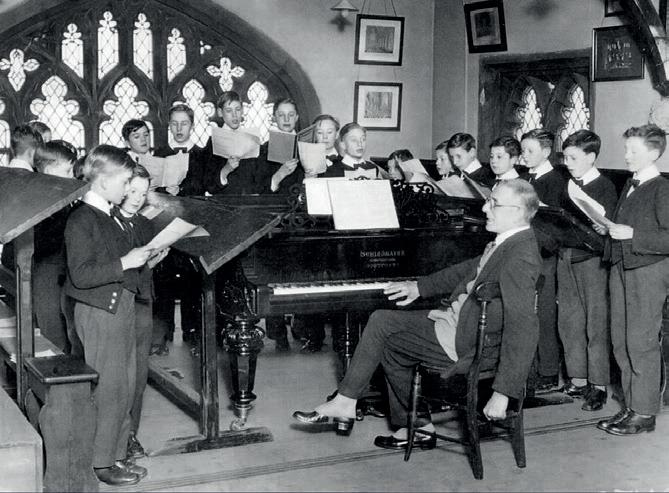
The names of organists and choirmasters on these early recordings reads like a Who’s Who of English church music. We can hear choirs under George Alcock, H K Andrews, Edward Bairstow, Herbert Brewer, Frederick Bridge, Ernest Bullock, George Dyson, Edmund H Fellowes, William Harris, Francis Jackson, Sydney Nicholson, Stanley Roper, Herbert Sumsion, Richard Terry and Henry Walford Davies, and from the later recordings we have every director of music from the 1950s onwards.
From these recordings one can chart the changes in performance style: the singing of Anglican chant, the revoicing of choirs under their various directors and probably most noticeable of all, the diction and pronunciation from the choristers which has changed beyond all recognition over the years.
In the following decade, 1910-1919, the London Oratory and Eton College Chapel Choir both produced one record each, in 1910. Westminster Abbey (which didn’t wish to be outdone by the Cathedral!) produced four records in 1911, much to the distaste of Sir Frederick Bridge, who loathed the
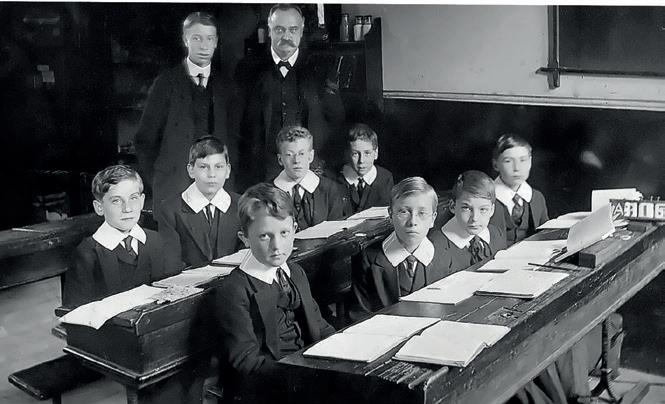
gramophone. Then there were the multi-tasking choristers of All-Hallows-by-the-Tower, which did not just sing at that church but also formed the Lord Mayor’s Boy Singers and the concert party of the Lord Mayor’s Own Scouts; they recorded one record on the Zonophone label in 1914. The following year two records each were produced from the Church of the Immaculate Conception, Farm Street and the Temple Church under Walford Davies. Westminster Cathedral choir produced a further 15 records during this decade.
The 1920s saw a revolution in recorded sound, which, quite literally, would change the world; the BBC made its first radio broadcast, the first ‘talkies’ appeared on the cinema screen and gramophone records came of age. And the reason for all of this... was the production of commercially viable microphones.
The difference in sound quality compared to the old acoustic records was extraordinary, and every major record company in the world re-fitted their studios with breathtaking speed to electrical recordings using the wonders of the microphone The Gramophone Company (HMV/EMI) went one step further and fitted out their famous mobile recording vans which travelled the length and breadth of the country. No longer did the choir have to come to the studio, the studio came to them.
The last acoustic recording to be made without a microphone was a set of four records of Choral Mattins from St George’s Chapel, Windsor, directed by Edmund H Fellowes. Recorded at the Gramophone Company studio in Hayes, Middlesex in 1924, it’s a misnomer to say ‘the choir’, as they couldn’t all fit round the horn! The choir only consisted of six senior choristers, one alto, one tenor and one bass.
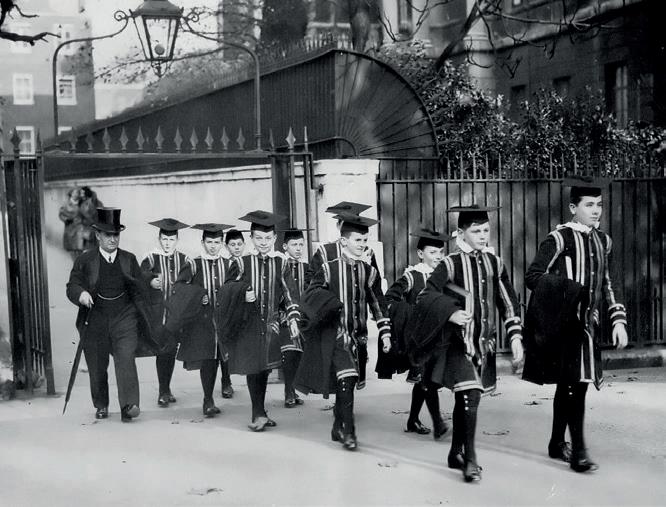
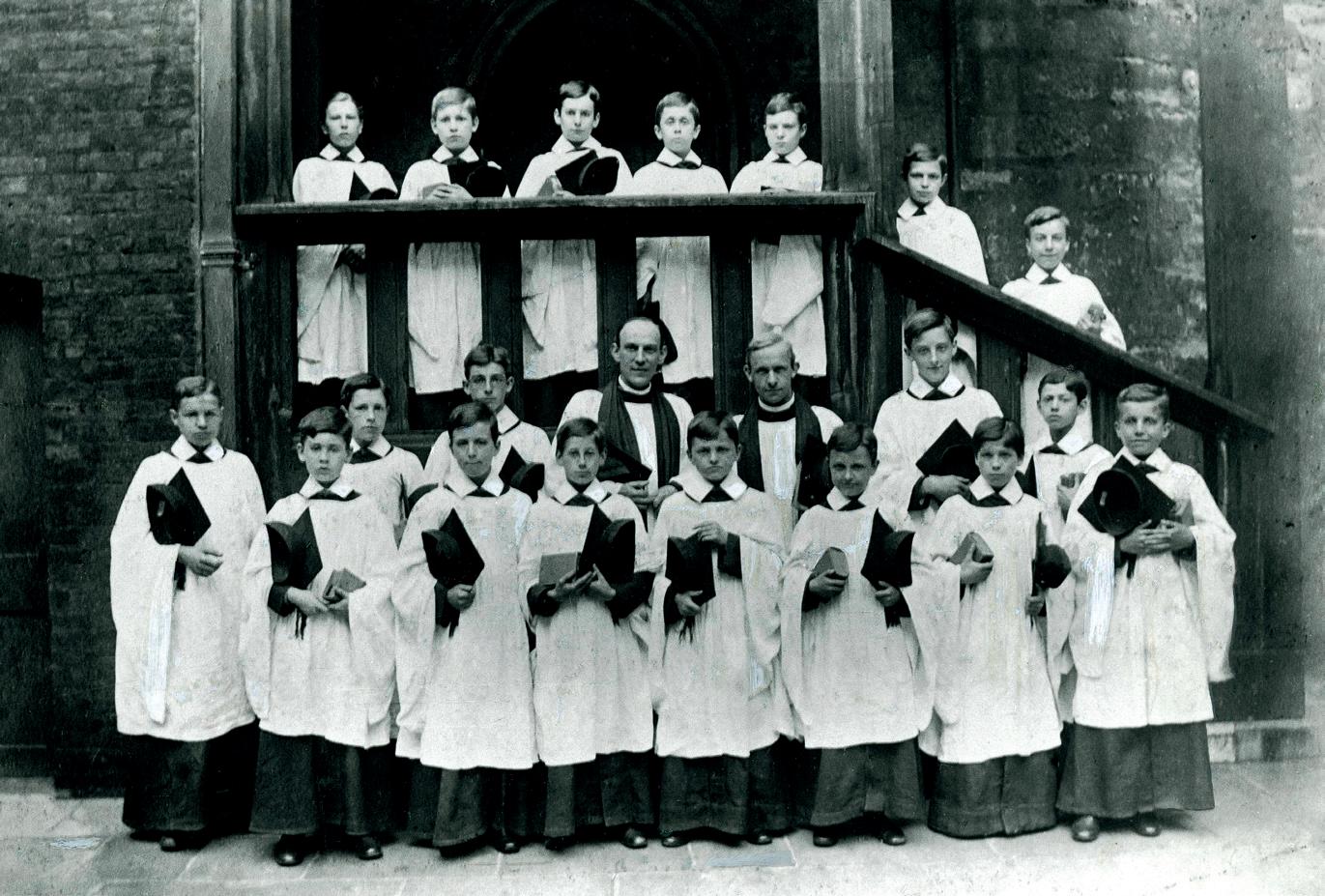
Two years later, on 20 March 1926, the HMV mobile recording van rolled up to the Chapel Royal and the first electrical recording of an entire choir using microphones was produced. As well as the dramatic improvement in sound
quality, two other major differences were apparent. Firstly, the reverberation and acoustics of the building added to the overall effect, and secondly, the organ was being used, not a wheezy studio harmonium.
The floodgates were opened and choirs clamoured to record. A year after the Chapel Royal recording there came one of the most famous records of all time: the 15-year-old Ernest Lough and the Temple Church Choir, directed by George Thalben-Ball, recorded Mendelssohn’s Hear my Prayer on 5 April 1927. During the first eight months a staggering half million records were sold, and six presses worked 24 hours a day at the HMV factory to keep up with demand.
To the great consternation of HMV, the metal stampers which pressed the records began to wear out, so it was decided that a new recording would have to be made, and this was done in great secrecy on 30 March 1928. Ernest Lough was then 16 years old.
more ironic as Columbia Records invented the LP! To add to their woes, the singing from most of the choirs was savaged by the critics. Today, however, these records are considered an extraordinary achievement and a great historical legacy.
This brings us neatly to the end of the first part of our story, when for 50 years or so, the 78rpm gramophone record reigned supreme, leaving a legacy of choir recordings which is only now being fully appreciated. The LP explosion was to follow.
Visit the Archive’s website, www.recordedchurchmusic.org, for an audio-visual presentation, narrated by myself, with musical examples and photos charting the first 100 years of recorded church music. You will also find there a link to the YouTube music channel onto which is uploaded rare and interesting recordings from the Archive each week.
There are significant differences between the recordings, but no one seemed to notice ... it was just Ernest Lough singing Hear my Prayer. Ernest himself preferred the first version, describing his voice as ‘crisper’.
One could say that Ernest Lough was the first boy ‘superstar’ and the cult of solo treble recording was born. Record companies frantically tried to find the next great ‘boy-soprano’ voice and the competition was intense. However, it wasn’t just the solo voice that appealed to the public – they wanted to hear more of our great choirs, and so during the 1930s many of these choirs made their debut in front of the microphone. Cathedrals, churches, collegiate chapel and Royal Peculiar choirs, together with prep and public school chapel choirs all wanted to record.
St Nicolas College, Chislehurst, directed by Sir Sydney Nicholson, issued 13 records in 1939 but later that year war was declared, which meant an abrupt end to this first golden age of recording. No gramophone records from robed choirs were issued during the war years, but not even the Luftwaffe could silence the weekly broadcasts of BBC Choral Evensong, which mostly came from King’s College Cambridge and New College Oxford.
When the war ended, the record companies and choirs once again turned their attention to recording, and in 1949 Columbia Records embarked on an ambitious project, their famous Anthology of English Church Music, featuring some of the most famous choirs of the day. Between 1949 and 1954 a total of 48 records was issued with accompanying booklets. This was to be the flagship of Columbia Records.
Unfortunately, the timing could not have been worse, as Columbia, greatly lacking in foresight, chose to record the series on 78rpm. By the time the series was complete, the 78rpm record had almost been superseded by the LP – all the
Colin’s love of church music began when he was a young chorister. He first played for Evensong aged 13 at his local parish church in the holidays, and continued to do so until he went to university. Here, he studied Music, with organ as his main instrument and voice his second. Later, although taking up a career in social work, his passion for church music continued and he decided to retire early in order to devote his time to the Archive of Recorded Church Music. Colin also has a passion for architecture and fine arts and is spearheading the restoration of the Victorian Grade I listed gem, St Leonard’s Church at Newland, which is in the same quadrangle as the home of the Archive. He has also written a book on Tractarian choir schools.
August 19 August 19 August 19 August 19 th thth th-26 2626 26 th th 2018
The Priory Church, Edington, Wiltshire BA13 4QN
Commemoratingthecentenaryofthe endoftheFirstWorldWarthroughthe eyesoftheWarPoets
Commissions:
‘War’ by Joanna Ward (text by Vera Brittain)
‘Idyll’ by Simon McEnery (text by Siegfried Sassoon)
Director: Richard Pinel Pinel
Information from 01380 830512
www.edingtonfestival.org www.edingtonfestival.org
Reg Charity No: 1099266
No gramophone records from robed choirs were issued during the war years, but not even the Luftwaffe could silence the weekly broadcasts of BBC Choral Evensong...
“Beauty came like the setting sun”
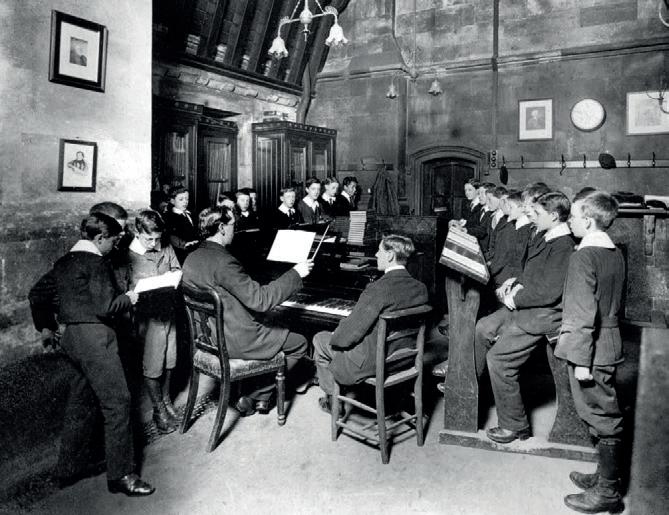
During the decades after World War II Benjamin Britten wrote a wealth of music which required significant contributions from boys’ choirs. He was fortunate that, in addition to the country’s cathedral and collegiate choirs, he could also call on a number of fine London-based boys’ school choirs, most notably perhaps, Russell Burgess’s Wandsworth School Boys’ Choir. Sadly, many of those justifiably lauded school choirs either do not now exist or, if they do, they are no longer able to aspire to their previous standards of excellence. One school where singing remains strong and vibrant, though, is Trinity School in Croydon, the home of Trinity Boys Choir, an ensemble that has been at the forefront of the British musical scene for over 50 years. And it is a choir that has a particularly close association with the music of Benjamin Britten.
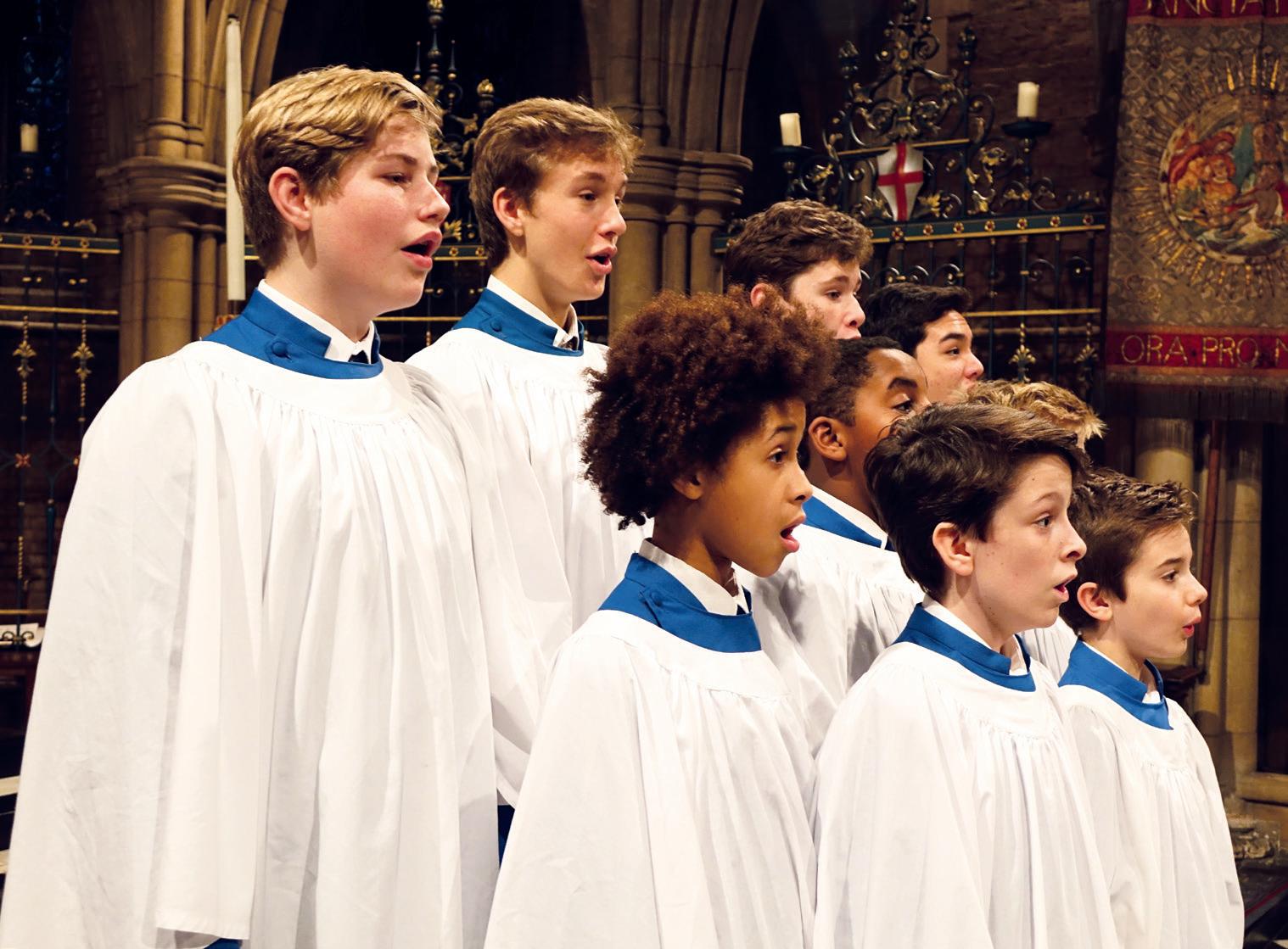
David Squibb became Director of Music at Trinity School in 1964 and he soon set about raising the profile of the school choir. He started by gathering together all those boys who sang in their local church choir to sing an evensong under the Trinity banner in a Croydon church. This became so successful that Squibb arranged for the choristers to undertake a weeklong cathedral residency at Exeter in 1969. This was enjoyed so much by the boys that the one-week cathedral course became an annual event and it has taken place every year since, with this year’s visit to Worcester Cathedral in April marking the 50th anniversary.
David Squibb’s educational philosophy was underpinned by his own musical training as a piano student at the Royal Academy of Music and as a Royal Marine bandsman. He
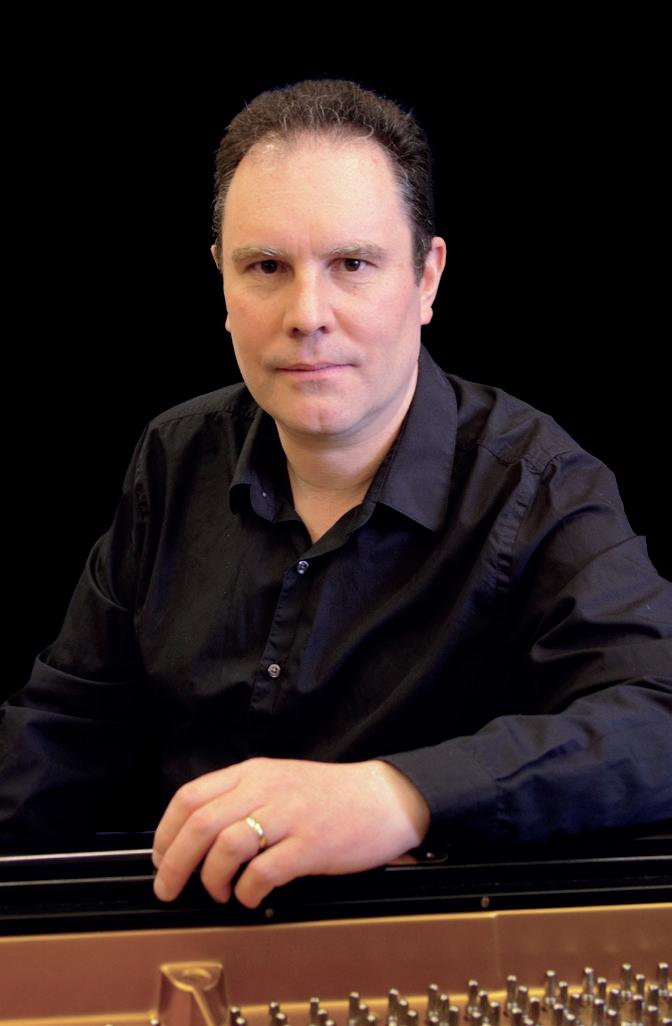
believed that a professional ethos should be introduced at the outset, with the highest standards of musical performance and behaviour deemed essential. Furthermore, he wanted the school’s instrumentalists to be challenged just as much as his singers. The perfect vehicle for combining the best of the school’s instrumentalists with its singers proved to be children’s operas, and Squibb became a keen advocate of the genre. Richard Rodney Bennett’s All the King’s Men, Britten’s The Golden Vanity and Malcolm Williamson’s The Red Sea were performed to critical acclaim in London, and All the King’s Men was televised as a Christmas special on Granada in 1973. The school’s choir and instrumentalists had seemingly found their niche, and a series of commissions soon followed, including, most notably, Bang!, John Rutter’s children’s opera based on the Gunpowder Plot.
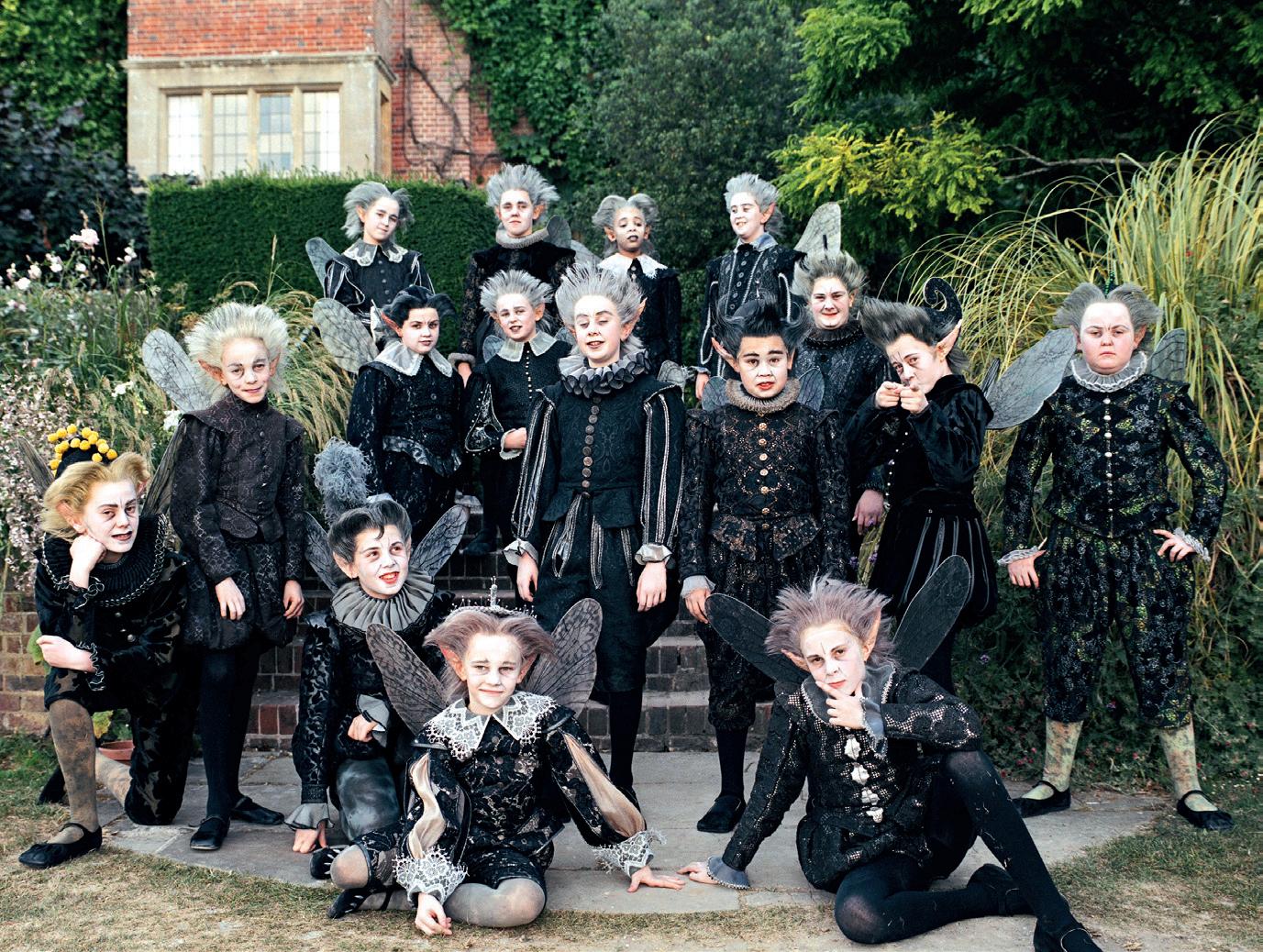
It is perhaps no surprise that opera companies began to take notice of Trinity Boys Choir, and in 1980 a long and distinguished association began with Britten’s opera A Midsummer Night’s Dream. This opera is unique in that it eschews the use of an adult chorus in favour of a chorus of boy trebles; Britten wanted a soundworld for the fairies that contrasted markedly with that of the human ‘Mechanicals’, and so he combined the countertenor role of Oberon with the boy fairies and the coloratura soprano of Tytania. Britten also made no concession to age: whereas many operas with a children’s chorus present a ragazzi-style unison number or two, the boy fairies are required to sing in two-part harmony over a wide vocal range.
Steuart Bedford, famed Britten conductor and an assistant to Britten on numerous recordings and productions, took musical charge of David Williams’s Royal Academy of Music production of 1980 with the result that 15 young Trinity boys became the school’s first chorus of fairies. Three performances followed just months later at the Aldeburgh Festival and in 1981 Sir Peter Hall’s much anticipated production opened at the Glyndebourne Festival. This beautiful and detailed production took the musical world by storm and the Trinity fairies appeared in both radio and TV broadcasts. The production returned to Glyndebourne with its chorus of Trinity boys in 1984 and then on the Glyndebourne Tour and in Hong Kong in 1985 and 1986. The boys have been involved in all subsequent Glyndebourne revivals, the last of which was in 2016.
Trinity Boys Choir has provided the chorus of fairies in 14 different productions of A Midsummer Night’s Dream at home and abroad but it is Sir Peter Hall’s Glyndebourne version and that of Robert Carsen for the Aix-en-Provence Festival that have endured most successfully. Performed in the magical setting of the Théâtre de l’Archevêché, Carsen’s production, based around a set of giant beds, presents stunning images
in blue and green. It debuted at Aix-en-Provence in 1991 and has been revived there most recently in 2015. It has also travelled widely and Trinity boys have been fortunate to appear not only in the original production but also in its revivals in Aix-en-Provence, in Beijing and on four occasions at English National Opera.
The choir’s early reputation may have been enhanced by its association with A Midsummer Night’s Dream but when I succeeded David Squibb in 2001 it was the choir’s versatility which appealed. By 2001 the choir had performed at the BBC Proms, recorded Stravinsky’s Mass with Leonard Bernstein and featured with Bing Crosby in his final TV appearance. The challenge, therefore, was to maintain a precious and enviable tradition, and there have been only two directors of music at Trinity School since the school moved to its current site in Shirley in 1964.
The world of education has changed enormously since David Squibb established the choir in the 1960s and 1970s. The advent of league tables, regular and rigorous performance management and inspections has meant that, while Trinity’s tradition of singing continues to be cherished, it also has to be justified and balanced. Squibb’s final act as director of the
choir was to lead the boys through the Glyndebourne revival of A Midsummer Night’s Dream in the summer of 2001. On my arrival just a few weeks later the performance diary was quiet and, as voices were changing, it felt very much like a fresh start, but, crucially, one with the enthusiastic support of the school and the choir’s enviable reputation as crutches. It was and remains my firm belief that a school which professes to value singing has to involve the largest possible number of its pupils. Class singing became mandatory as we think that every child has a natural singing ability and that good teaching and the nurturing of an atmosphere that positively encourages vocal expression are the key ingredients to building and maintaining a successful choral tradition. Every boy is told that they can sing and is invited to join the choir; within the school, the choir is not a single entity, rather a variety of groups based on experience. Boys are then selected for professional projects based on many different factors, including age and size in the case of opera; the name Trinity Boys Choir is only used outside school.
A glance at the choir’s current diary sees a busy schedule of operas, concerts, tours, film soundtrack recordings and TV appearances. This may sound glamorous and exciting but boys have to attend school lessons and there are a vast array of electronic attractions and diversions that were not available to older generations: competition for boys’ attention is keen. My philosophy is that every project must be accepted on its educational value rather than its monetary worth and that the happy by-product of engaging large numbers of
boys in singing is that, if more than one equally appealing project arises at the same time, it may be that they can all be accommodated, thereby giving a larger number of boys a potentially life-enhancing experience. I take pride, for example, in the fact that Trinity School provided boys for all three operas on the Glyndebourne Tour of 2008: a trio for The Magic Flute, a two-part chorus for Hänsel und Gretel and the chorus for Carmen. This fact was commented on admiringly in the musical press and, although it presented some interesting logistical problems, there was a great buzz and healthy sense of competition between the groups.
My plan is to stay at Trinity School until retirement: I love both my work with the choir and my role of overseeing all musicmaking in the school. It is true, though, that maintaining a strong tradition of boys’ singing is a constantly changing challenge. In 2001, for example, I struggled to imagine how the school’s long-established chorister choir could continue. We are situated in south London and the majority of pupils come from either non-Christian families or families with no faith; very few pupils sing in a church choir. Clearly the choristers needed a new identity and ethos. I am sure that the wonderful experience I gained as a chorister under Bernard Rose was fundamental to my musical development and I believe also that the skills learnt through the disciplined singing of the liturgy are invaluable. Our national choral tradition, as represented daily in our cathedrals and collegiate chapels, is an important part of our heritage and young people should be encouraged to participate respectfully, regardless of their
beliefs. Trinity’s choristers, therefore, form the bedrock of the school’s choral foundation; the 60-strong group is the closest thing to a typical school choir, comprising pupils of all ages, and there is a genuine affection for church music among its members.
The school is not bound by liturgical obligations, though, and a complementary tradition of secular choral music has developed. David de Warrenne was a member of Trinity’s music department for almost 40 years until his retirement in 2011. David was a former chorister at the Temple Church under Sir George Thalben-Ball, a fine pianist and a brilliant arranger. During his time at Trinity he produced almost 100 arrangements for the SSA concert choir and these form the basis of the choir’s secular tour and concert programmes. Numerous British folksongs, pop songs and nursery rhymes are given a new lease of life in these vibrant and often virtuosic versions which encompass a variety of musical styles. The choir is also committed to contemporary works and has recently commissioned works by Grayston Ives, Tom Harrold, Graham Lack and Richard Wilberforce. This combination of in-house, signature repertoire alongside contemporary pieces has been well received on recent tours to China and Japan, as well as around Europe.
The final part of the choir’s choral jigsaw is collaboration. The choir is frequently invited to join forces with the London orchestras and choirs and these often represent stimulating and inspiring opportunities for young musicians. The association with Sir John Eliot Gardiner and his Monteverdi Choir has been particularly rewarding as he famously demands and expects the highest of standards, regardless of age and experience. The boys were thrilled to sing in performances of Bach’s St Matthew Passion in London, Italy, Spain and Germany with Gardiner, and honoured to be invited to sing the boys’ ripieno chorus on his recent recording of the work. The world of Early Music has also been embraced in a TV documentary about Handel’s Messiah with Paul McCreesh
and the Gabrieli Consort, and in an appearance in last year’s Utrecht Early Music Festival alongside the Dutch viol consort, L’Armonia Sonora.
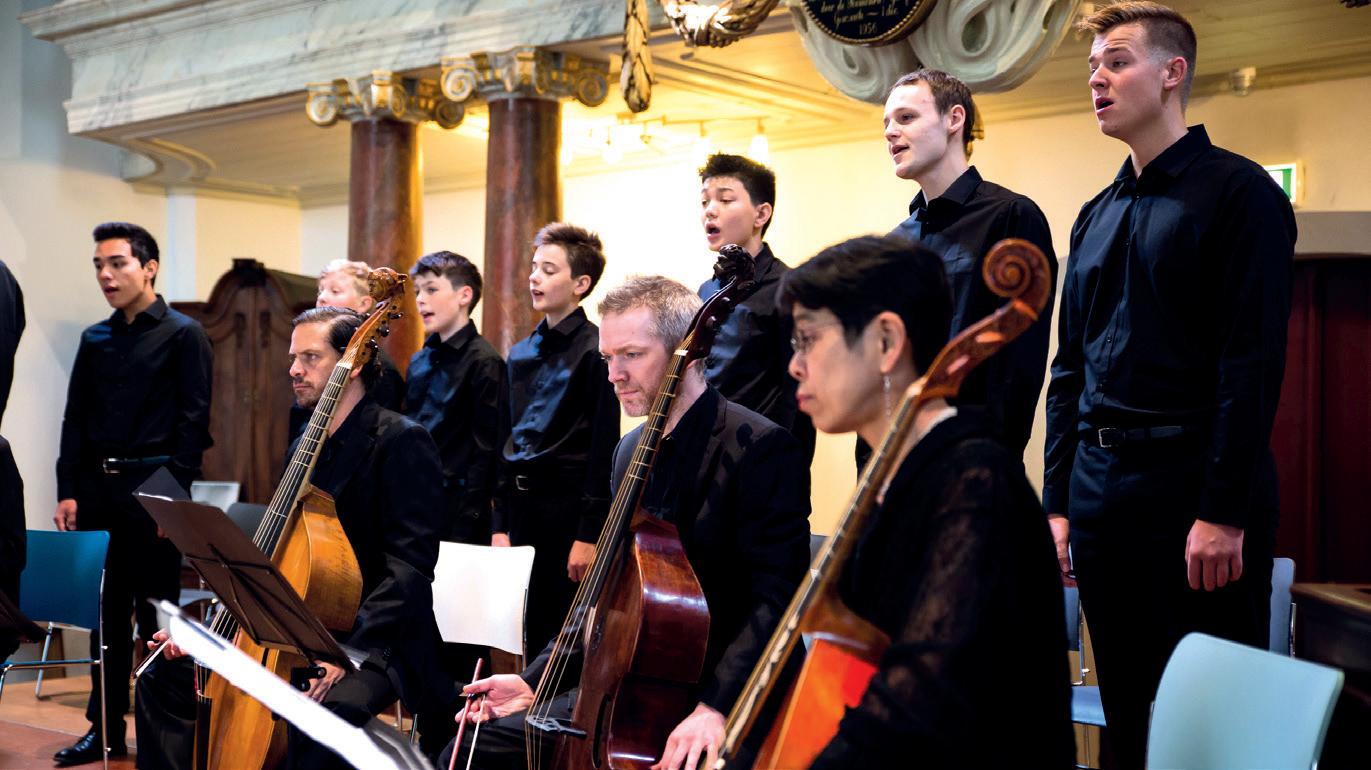
The soprano Katharine Fuge is renowned for her outstanding recordings of music from the Baroque and Classical periods and the boys are fortunate to have her as their singing teacher.
On another part of the musical spectrum is film music: the boys are frequent visitors to Abbey Road and Air Studios, where they have recorded the soundtracks of numerous major film releases. The educational value of learning to concentrate for a full three-hour professional recording session where there is only one version of correct is not to be underestimated!
Finally, back to the fairies. Generations of Trinity boys of all shapes, sizes and backgrounds have represented the school and the choir in performances of Britten’s opera A Midsummer Night’s Dream. As recognition of their work they are awarded a special school tie with an embroidered picture of a fairy. It is worn with genuine pride!
David Swinson was head chorister under Bernard Rose at Magdalen College Oxford before studying piano and organ at The Royal College of Music and then Music as Organ Scholar at Jesus College Cambridge. Musical distinctions during this period included five RCM prizes, a scholarship from the Countess of Munster Musical Trust, and his Fellowship of the Royal College of Organists.
David was Director of Music at Croydon Minster and St Thomason-the Bourne in Surrey, where he ran cathedral-style choirs of boys and men, and taught at The Royal Grammar School, Guildford and The Portsmouth Grammar School. He has been Director of Music at Trinity School and Director of Trinity Boys Choir since 2001.
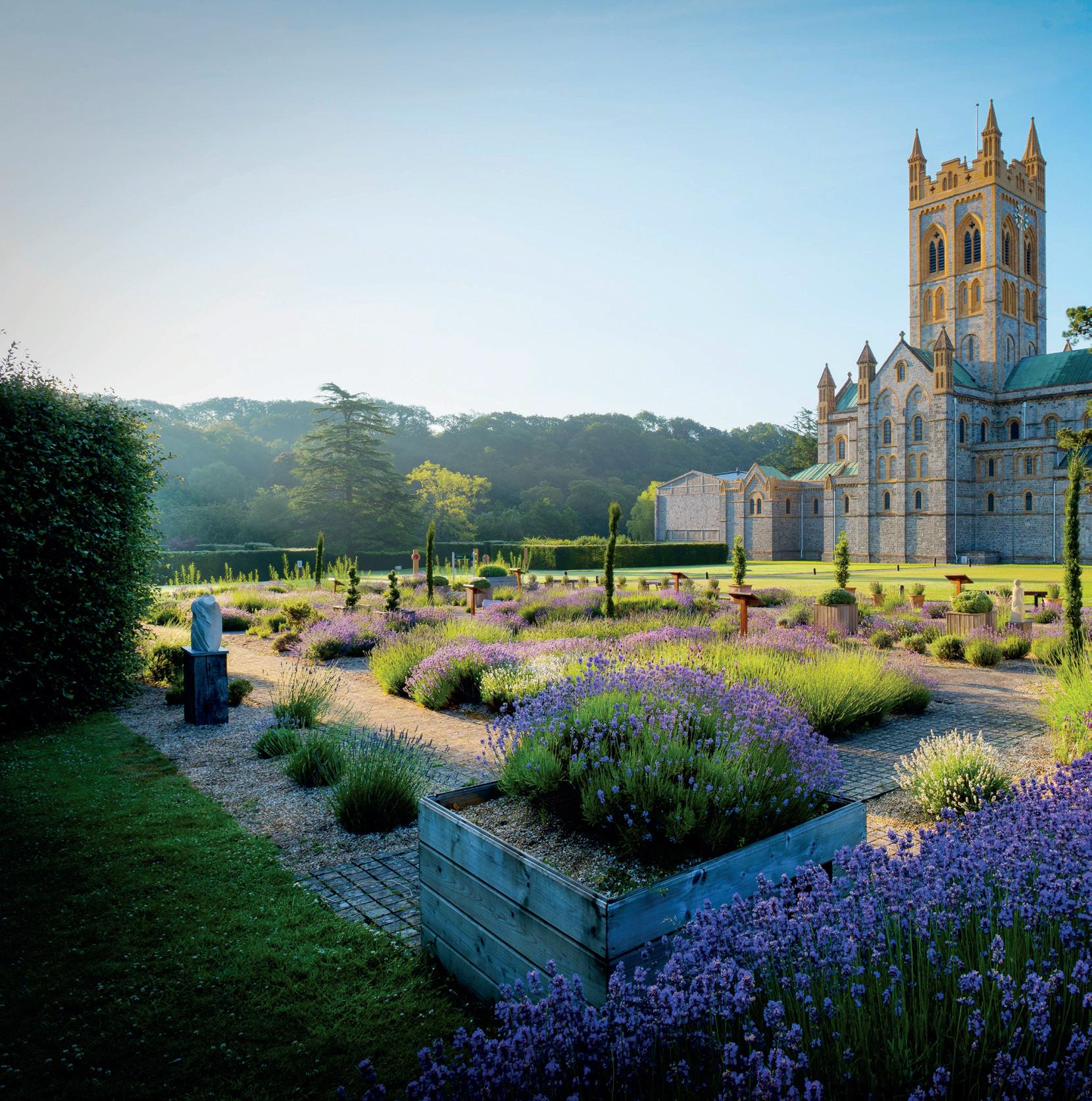
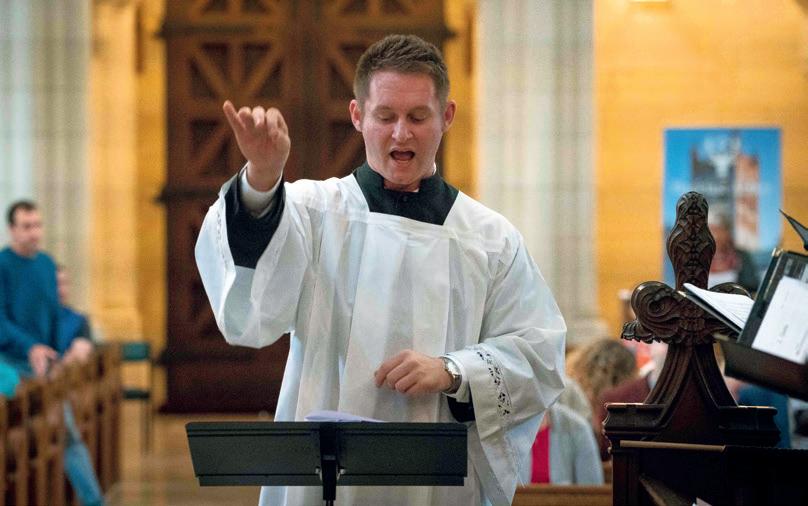
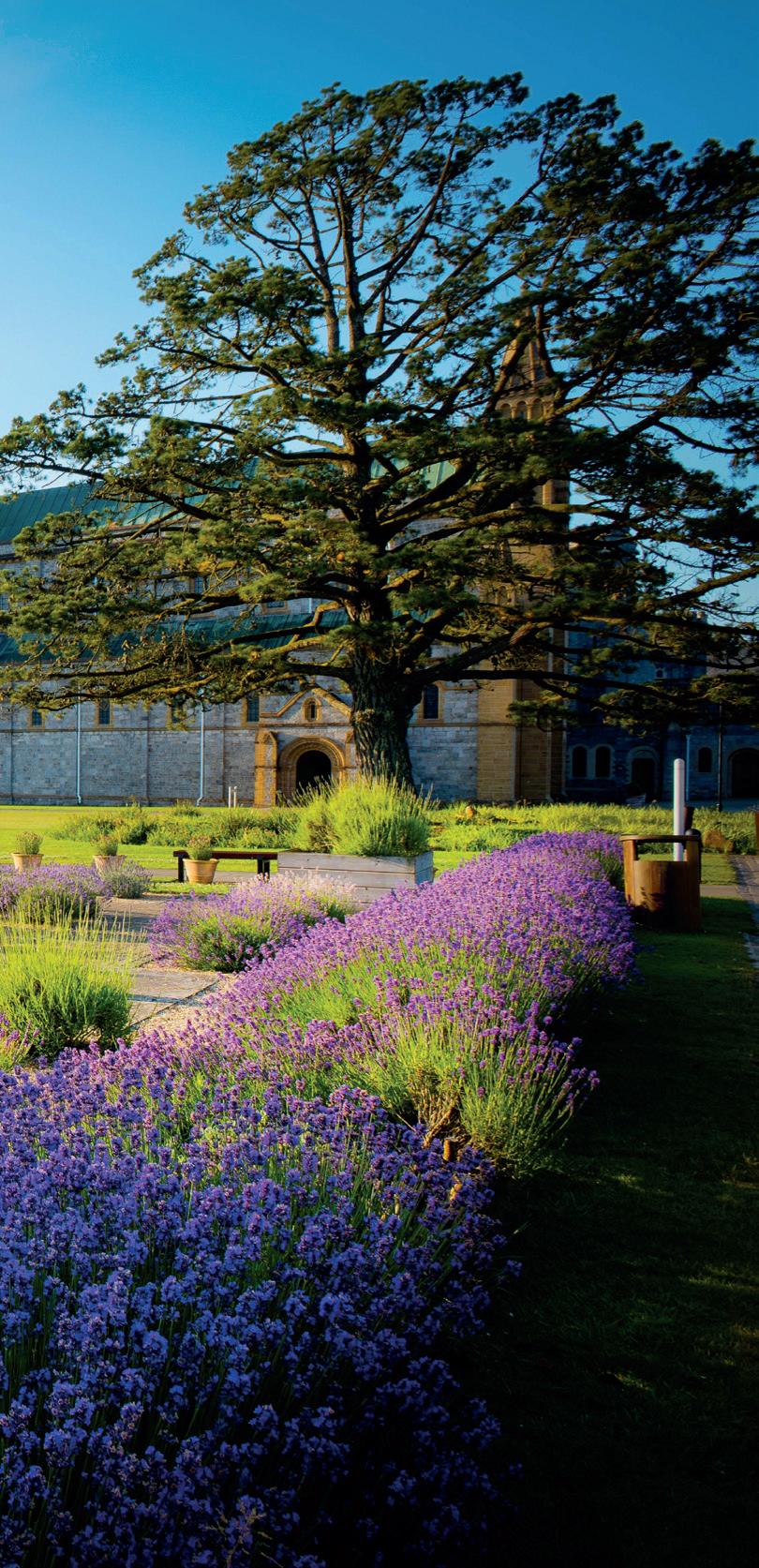
The Abbey of St Mary at Buckfast – the home of a community of Roman Catholic Benedictine monks – is nestled at the bottom of a valley on the edge of Dartmoor National Park, and lies adjacent to the River Dart. The beautiful ebb and flow of the hills, the vibrant colours of the natural surroundings, and the gentle sound of running water all contribute to making Buckfast a place of peace and tranquillity. The valley has been home to deer for thousands of years, hence the ‘Buck’ in the title of the Abbey. The playful deer still roam the woodland area, and occasionally make their way into the garden of the organist’s residence, to the delight of my small pug which attempts to chase them away. As a former cathedral organist, used to the hustle and bustle of big city life, the attraction of living and working in such a scene of serenity was a powerful one.
Before being appointed Organist & Master of the Music at Buckfast Abbey in September 2013, I spent 12 years in various roles at Liverpool Metropolitan Cathedral, latterly as Sub-Organist with responsibility for founding and directing the cathedral girls’ choir. Although Buckfast Abbey already had a choral foundation in its early stages of development, the allure of being able to mould a new tradition was very appealing. A supportive Abbot, and a monastic community which was looking to invest time and resources in liturgy and music, was refreshing. Whilst seeking to nurture a ‘cathedralstyle’ choir, there are many differences between cathedral and abbey life. In the setting of a monastery, liturgy (and therefore music) never stops. The monks live and breathe the daily round of liturgies as part of their monasticism. A Feast Day in the monastery is literally just that – a day when the usual dietary self-restraint and eating in silence is done away with, and a lunch banquet with wine is enjoyed as the monks celebrate the significance of the solemnity. Music is integral to liturgy here rather than an added adornment.
The monastic community sings seven offices each day, as well as Mass. For these services, the monks sing the ancient Gregorian chant melodies, in Latin. I or one of the two other resident full-time organists accompany the community for four services each day; morning Mass, the early afternoon offices of Sext and None, and the evening office of Vespers. Visitors to the Abbey, as well as the regular congregation, are drawn to hear the chant, perhaps due to its modal nature, which is not bound by the modern tonality of major and minor keys. The chant is also rhythmically free, unrestricted from a strong sense of pulse, giving it a timeless quality. Perhaps these two factors contribute to the revival of interest in chant, and why visitors come to the Abbey, to be spiritually uplifted by what they hear. Being a singer is not a qualifying factor in becoming a monk, but whilst the community singing might not be a polished performance in the musical sense, it certainly does not lack vehemence – the fervour of religious prayer.
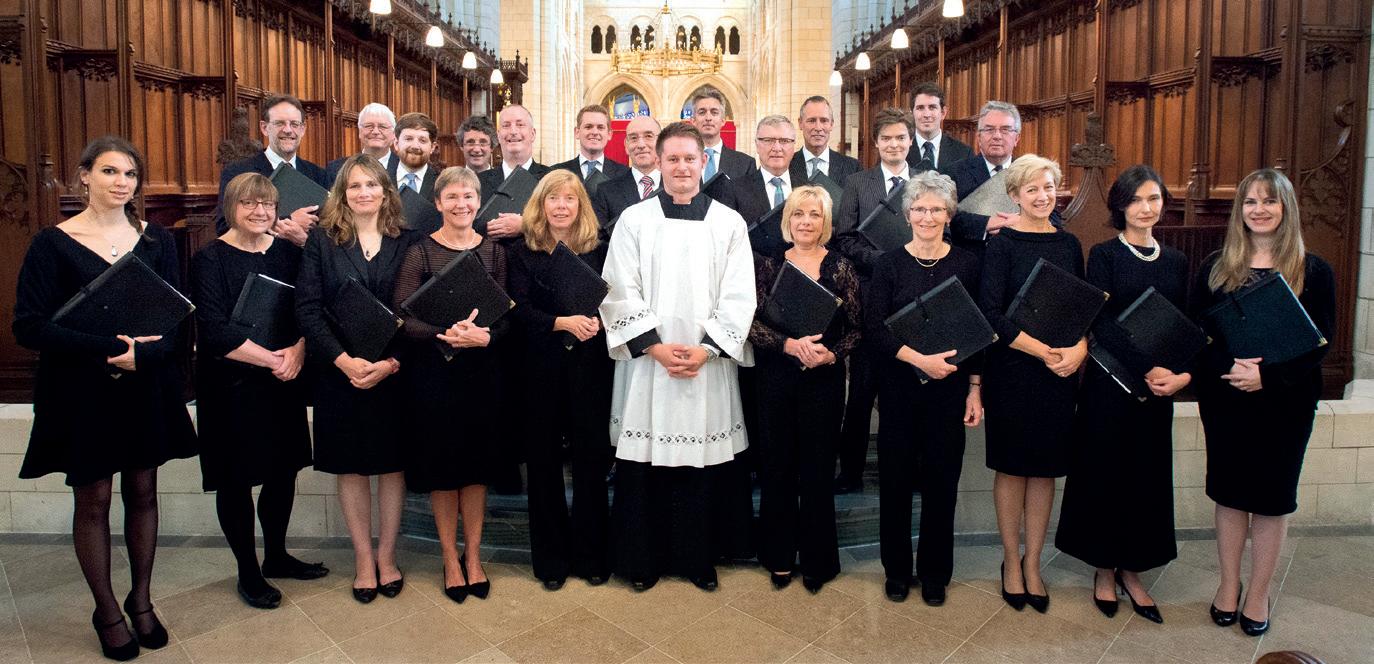
The Abbey boasts a choir of semi-professional singers which sings on Sundays and Feast Days and gives concert performances throughout the year. Singers are drawn from across the south-west, and are attracted by the high quality of performance, as well as the glorious acoustic of the Abbey church. The choir’s repertoire is drawn mainly from 16thcentury polyphony, featuring Guerrero, Josquin, Lassus, Monteverdi, Palestrina and Victoria, but with a special focus on the English school of polyphonic composers when possible, especially the works of Byrd and Tallis, but also the slightly less well-known composers such as Philips, Sheppard, Taverner, Tye and White. Skip a few hundred years and the choir also sings masses and motets by the composers of the French romantic tradition; Dupré, Duruflé, Langlais, Vierne and Widor are names which appear on the music list regularly. Last year the choir recorded its first professional CD, and it has been approached to broadcast on live radio and television.
2018 marks a significant point in the history of the Abbey, being 1000 years since its foundation by Royal Charter in 1018 by King Cnut. The celebration of the millennium year has been a particular focus for the whole Abbey community, not least the music department which has organised a nineday Festival of Sacred Music to be held in April. In addition to sung services and concert performances by the Abbey
Choir, the festival will also feature the choir of Liverpool Metropolitan Cathedral, the choir of Exeter University Chapel, and the choir of Westminster Cathedral. A specially commissioned choral work will also be premiered during the festival – a new setting of Psalm 41: ‘Sicut cervus’ – fittingly, the motto of the Abbey, ‘Like the deer that yearns for running streams’ or, in another translation, ‘Like as the hart desireth the waterbrooks’. The composer is Matthew Martin, Director of Music of Keble College Oxford, one of today’s foremost English composers.
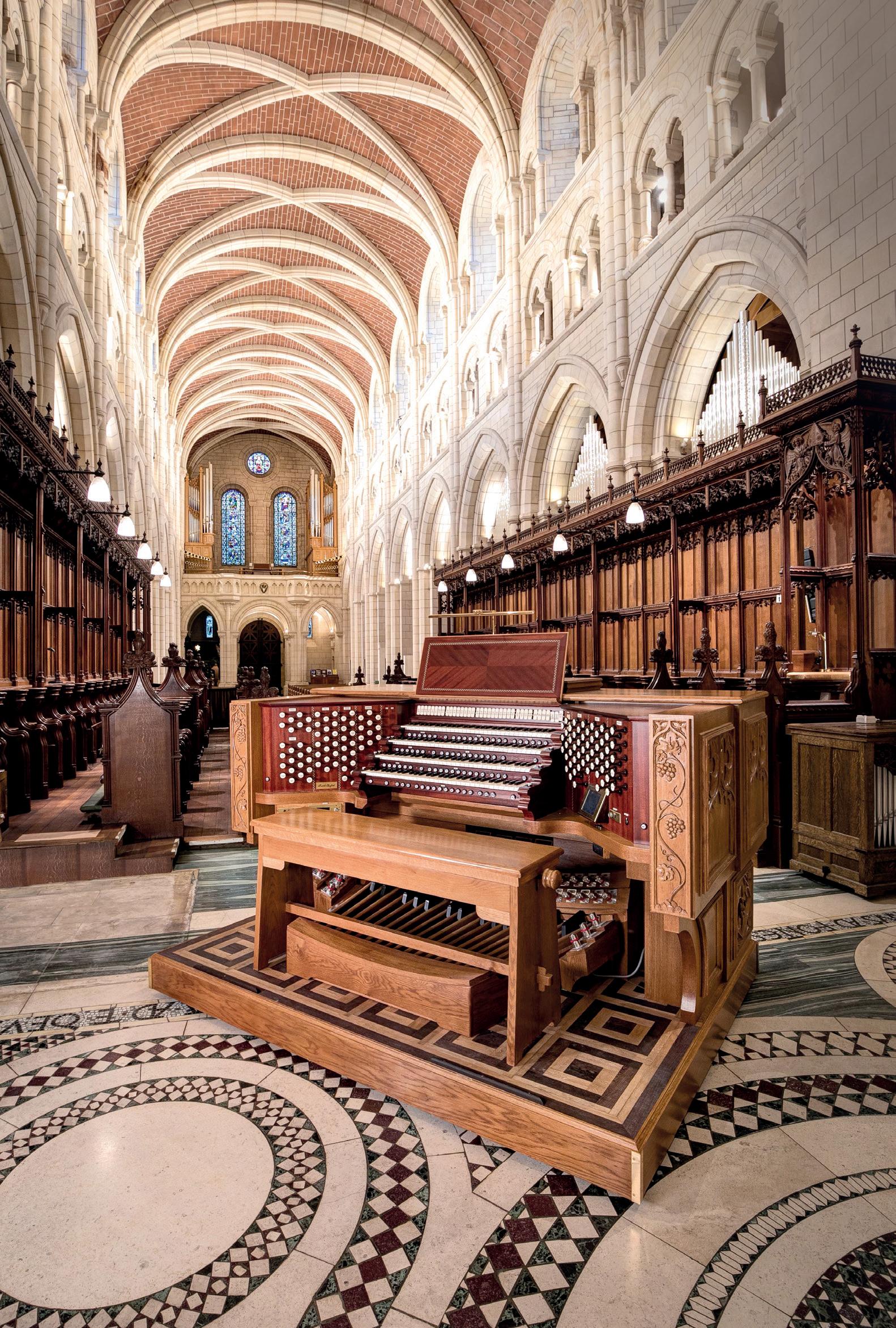
Upon my arrival at the Abbey, the old pipe organ (Walker/ Ralph Downes) had been removed while some major structural work took place in the Abbey church. One of my first tasks was to manage the rebuild of that instrument, or to explore the possibility of a new one. With the demands of a growing musical tradition, and the fragility of the old pipework and console, I decided that a new organ (or two) was the way forward. And although the installation of the new organ was exciting, it was also rather daunting, knowing that the organ would be a lasting legacy to be played upon by future generations of organists at the Abbey. After a wide consultation and many discussions with the local community, I drew up a brief and distributed it to seven organ-builders worldwide.
After a three-year wait, in 2017 two new pipe organs were installed in the Abbey church by the Italian organ builders Fratelli Ruffatti, the first instruments by the firm to be commissioned in the UK. The organs, which consist of a substantial 4-manual Quire organ and a 2-manual Grand Orgue are spatially separated, allowing for the exciting possibility of antiphonal playing. During the Festival of Sacred Music, Martin Baker, the Master of Music at Westminster Cathedral, will give the grand opening recital on the new instruments, which will feature Martin’s own organ transcription of Mussorgsky’s Pictures at an Exhibition, as well as an extensive improvisation to show the whole capability of the organ. Throughout the year, some of the world’s finest organists will give recitals at the Abbey, including David Briggs, Organist of the Cathedral of St John the Divine, New
York and Vincent Dubois, organiste titulaire at Notre Dame Cathedral, Paris.
In a further development to the choral tradition, this year will mark the foundation of a choir made up of boy and girl choristers at the Abbey. Music scholarships will be awarded to pupils of St Mary’s School, located on the Abbey site. The school will act as the Abbey choir school, allowing morning chorister rehearsals to take place in school, whilst being only a one-minute walk to the Abbey church for evening rehearsals and services. The foundation of an educational establishment has often been a feature of Benedictine monasteries – whether it be a school or university – and with the choral foundation we are continuing that tradition. As well as the cultivation of future singers and musicians, a choristership is an excellent form of evangelisation in the faith, giving the choristers a high level of exposure to Christian liturgy and culture.
In addition to my work at the Abbey, I act as secretary to the Conference of Catholic Directors of Music, a group of professional musicians who lead music in the UK’s Roman Catholic cathedrals, abbeys and churches with choral foundations. The group meets for a formal conference each year, allowing the opportunity for professional development and, importantly, the chance to socialise with other church musicians. The group aims to connect our choral establishments across diocesan boundaries, and to aid in the development of music in the Roman Catholic liturgy. It is a cause I feel passionate to be involved in, in a role I am privileged to hold.
This year is certainly going be extraordinary and memorable; the festival and ‘celebrity’ organ recitals – the culmination of four years’ work – are exciting events to look forward to. Then on to new challenges, and to the Abbey choristers who will add another dimension to the Abbey’s wide-ranging and ever increasing musical output. The hustle and bustle of city life may seem far away from the spiritual sanctuary which is Buckfast Abbey, but the pace of life (at least for its musicians) is busier than ever!
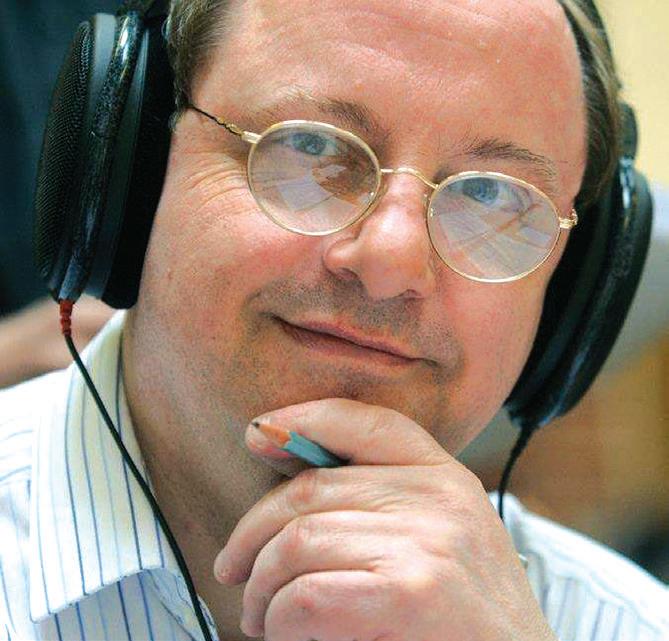
teaching at RCM Junior College, together with teaching adult education classes, directing a couple of choral societies, a stint as acting librarian for the RCO, and very occasionally being drafted in at the last minute to accompany the choir of St Paul’s for Evensong.
Ibegan writing this article at the end of February, sitting in Peter King’s wonderfully warm and inviting sitting room in his new – actually 1890s – house in Exeter. In 2016 Peter retired after 30 years’ distinguished service as Director of Music at Bath Abbey, moving to Exeter, which has one of his favourite cathedrals. I’m enjoying Peter’s generous hospitality while spending five days making Regent’s first two recordings in this most beautiful of English cathedrals just a few minutes walk away. The cathedral choir, directed by Timothy Noon, is recording the latest volume in our A Year at… series. It is accompanied by former Selwyn organ scholar, Timothy Parsons, who is contributing his first solo disc – and the first showcasing of the recently restored Exeter organ – to our English Cathedral Series. After productive first sessions for both of these discs with inspired music-making from both choir and organist, things came to a rapid halt with red weather warnings of impending snow, the cathedral school closing, and our choir sessions on the final two evenings aborted. A quick packing-up and return home was achieved with about 30 minutes’ head start on the encroaching snowstorm.
It is also 30 years since the launch of the Regent label, which I set up with the altruistic intention of promoting young artists (myself included!) in all genres – not just sacred choral. In the late 1970s my ambition was to be a cathedral organist or, failing that, a famous conductor, but despite studying at the RCM, an Oxbridge organ scholarship, and the recital award for FRCO, I never had any great ability or facility as an organist (a complete absence of anything resembling a pedal technique didn’t help) – much preferring directing choirs and orchestras. After teaching in a couple of schools I returned to London in the mid-80s to freelance – being appointed Director of Music at St Mark’s, Regent’s Park,
Starting a record label was then seen as a novel thing, and the first release was of my own chamber choir in a recording of music by Poulenc and Langlais, which we recorded in the evenings at Norwich Cathedral during a week spent singing the daily services. A second disc from my choir followed, featuring works by Kodály, with the late, great, John Scott playing the organ. Then the most extraordinary thing happened: a phone call came from Hyperion asking if I could produce a recording with Winchester Cathedral choir and David Hill. (Whatever I’m doing, I’ll cancel it...) From having never produced a commercial recording before, this very quickly led to over a decade of full-time work producing several hundreds of projects for Hyperion, Chandos, Naxos, and other labels, with my own Regent label very much on the back burner.
Following a move to Wolverhampton in 1994 I directed the music at St Peter’s Collegiate Church (where I’d had my first organ lessons in the early 70s) from 1998 to 2001. This took up most of my time, pushing recording work even further into the background. The boys’ choir at the time had reached a very low ebb (five younger boys and three men – a bit of a struggle singing fully-choral services every Sunday) and intensive recruitment was needed. Three years later we had over 20 boys, a dozen men, a new, separate girls’ choir of 24, and a mid-week Choral Evensong. Under my successors, Nicholas Johnson and, from 2005, Peter Morris, the music programme at St Peter’s has continued to flourish; it is now one of the largest parish church music departments in the country.
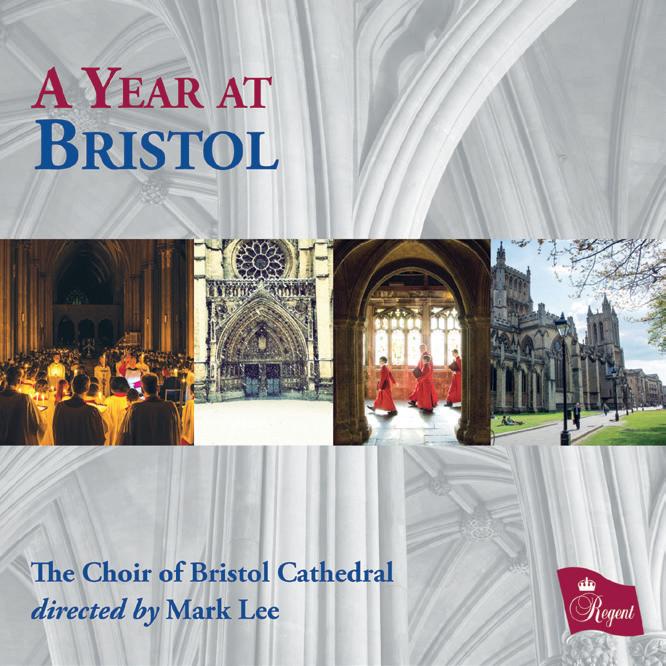
On leaving St Peter’s in 2001 I returned with renewed energy to full-time recording work, and Regent rapidly established itself as an emerging choral/organ label. The first three discs in the new English Cathedral series were: Worcester/Adrian Lucas; Birmingham/Marcus Huxley; Lichfield/Andrew Lumsden. Another series – A Year at… – followed, featuring music for the church’s year, with 11 releases so far and discs from Exeter and Lincoln on the horizon.
Since 2010 we have released over 200 new titles, with a number of cathedral choirs appearing on the label for the first time (St Patrick’s, Dublin; Winchester; Manchester; Ely; Bristol; Hereford; Rochester; Southwark; Southwell; Worcester; Tewkesbury Abbey Schola Cantorum), and solo discs from a host of brilliant organists. In 2012 we completed our 17-disc survey of the complete organ works of J S Bach with Margaret Phillips begun in 2002 – still the only cycle by a British organist predominantly using historic instruments in Germany and the Netherlands.
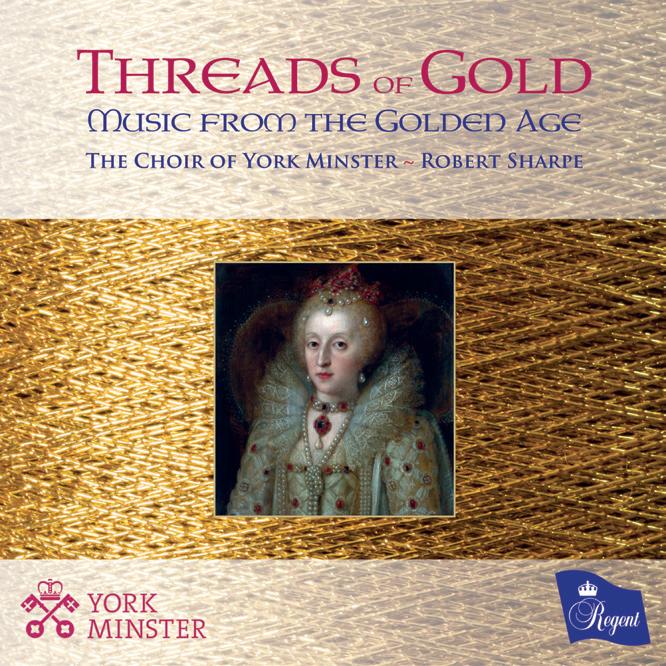
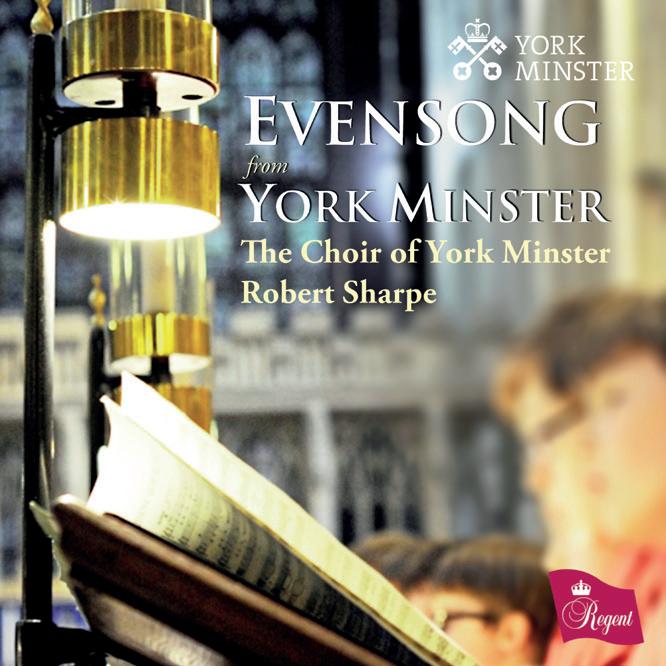
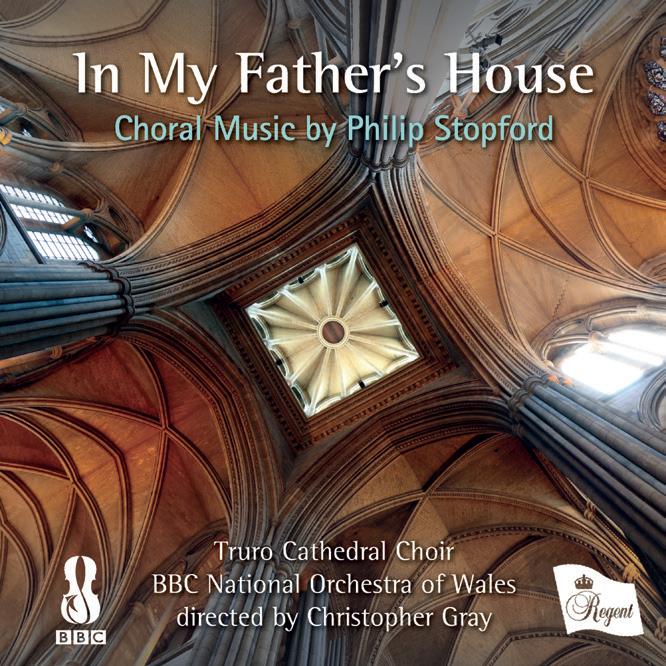
One of the most rewarding aspects of this work is building long-term relationships with artists. My relationship with Truro Cathedral began with Robert Sharpe and this has continued both with his successor (and former assistant), Christopher Gray, and with Robert at York Minster. It has been a great pleasure seeing these two directors over the years take their respective choirs to formidable new levels of distinction. At Truro, recent highlights have been a disc of Philip Stopford’s beautiful music, In my Father’s House, featuring the BBC National Orchestra of Wales, and Vox Clara – music by Gabriel Jackson, which featured new works for choir with saxophone, brilliantly played by Joel Garthwaite. York Minster took pride of place in launching the A Year at… series, and Evensong from York, released in November 2017, has been hailed as the definitive recording of this service. Threads of Gold – music from the golden age – marked a welcome move into recording a disc entirely devoted to Early Music.
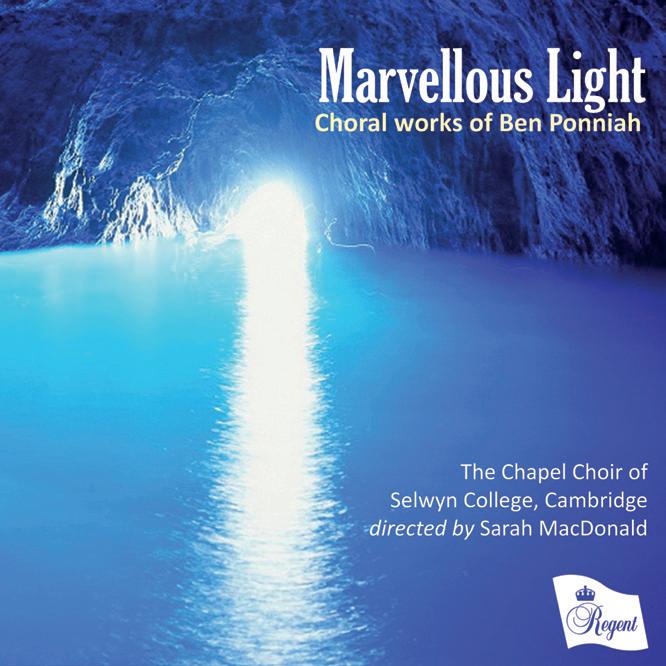
We’ve been working with Selwyn College Cambridge and the indefatigable Sarah MacDonald (also director of the Ely Cathedral girls’ choir) for over ten years. Our Selwyn recordings have been mainly focused on contemporary British choral music and particularly on emerging younger composers. Selwyn has achieved an unequalled reputation in this field, with discs of works by Paul Spicer, Gary Higginson, Phillip Cooke, John Hosking, Ben Ponniah, and two by Alan Bullard. Discs of works by Mark Gotham, Iain Quinn, and Stuart Turnbull are due for release during 2018. Another Selwyn project The Eternal Ecstasy – a Classic FM ‘Disc of the Week’ – was recorded in the glorious acoustic of the Lady Chapel of Ely Cathedral, and charted the development of ‘The Ecstatic Style’ – a title I’d coined to describe the form of spiritual choral music embodied by such composers as
Morten Lauridsen, Eric Whitacre and many more, which has spawned an entire industry in Eastern Europe. It is the subject for my yet-to-be-started PhD.
Contemporary music also featured on two discs from Wells Cathedral choir which brought the music of David Bednall to the wider world for the first time, and this relationship with David has continued with recent recordings of his Requiem (Philip Dukes viola, St Mary’s Calne, Edward Whiting), his Stabat mater (Jennifer Pike violin, Benenden School, Edward Whiting – Gramophone ‘Editor’s Choice’), and most recently Magna Voce, a disc of his solo organ music played by Paul Walton on the organ of Blackburn Cathedral. Bednall’s massive Sonata for Cello and Organ, coming in at nearly 30 minutes, is due for release later this year on a new disc from the Svyati Duo.
Two other groups with whom we have developed a long-term relationship in the last few years deserve mention: the Saint Louis Chamber Chorus – an ambitious and vibrant chamber choir directed by Philip Barnes which commissions much new music from composers across the world, and La Maîtrise de Toulouse – an extraordinary world-class children’s choir –now with an adult tenor and bass contingent – directed by Mark Opstad (a former chorister of Bristol Cathedral), which sings with passion and intensity and for whom there is no music which holds any terrors!
One of our biggest developments in recent years has been DVDs. Our move into this area has been measured – partly because of the high cost of such projects – but also because our aim is to release projects that have an additional dimension beyond a concert. There are four DVD releases so far: The Town Hall Tradition/Town Hall, Birmingham/Thomas Trotter – exploring the role of transcription on the restored Hill organ; A Shropshire Idyll/St Laurence, Ludlow/Thomas Trotter – celebrating the 250th anniversary of the Snetzler organ; Peter King plays the Klais organ of Bath Abbey – celebrating the Klais organ, Peter’s work at the Abbey, and marking his well-earned retirement; The Story of Nine Lessons and Carols/ Jeremy Summerly, Truro Cathedral choir, Christopher Gray –
a major project tracing the development of the service from its first days in Truro, and including the December 2014 Nine Lessons service filmed live, a comprehensive documentary on the early history of both the service and the new cathedral, and an audio CD of the reconstruction of the first 1880 service.
Coming late to the download party, nevertheless all new releases are now being made available as downloads from iTunes and Amazon shortly after the physical CD release, and we are working to get our back catalogue available as soon as possible.
Regent could not have happened without my wife, Pippa, who has assisted with administration from the beginning – and most particularly dealing with all the hard bits! Five years ago she became full-time with the company and now handles all of that side of the business, together with CD booklet typesetting and design, advertising, finance, and often being the first point of contact also.
Returning (almost) to where we started, the postponed Exeter recordings have been re-scheduled to April!
For me, one of the pleasures of working with Gary is that we both come from Wolverhampton, so when we work together there is inevitably a certain amount of gossip about what is going on – and what used to go on – in that part of the West Midlands. Our first project together was a CD from Bath Abbey, recorded in the time left over from dubbing the organ part of The Planets with BBCNOW for BBC Radio 3. This led to a long and fruitful association recording a series of CDs, both with the Abbey Choir and on its famous Klais Organ.
Our most recent collaboration, a DVD from Bath, was a result of Gary attending a concert of mine which included the Reubke Sonata on the 94th Psalm. It had been our intention to include the work on a CD, but after the concert Gary was heard to remark to another audience member, “We’re supposed to be putting that on Peter’s next CD, but I’m going to make him do it on a DVD, and I’m not going to let him say no!”
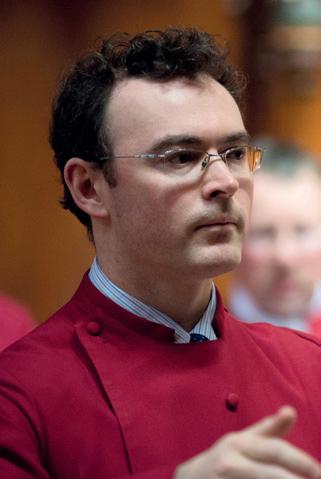
Whether recording the choir or the organ, Gary has always been easy to work with; he captures superb sound quality, has quick and reliable ears and has a knack of getting the best out of his performers. The final recording session is inevitably followed by a trip to the nearest curry house.
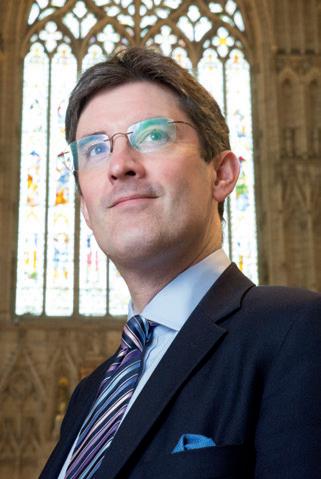
Peter King
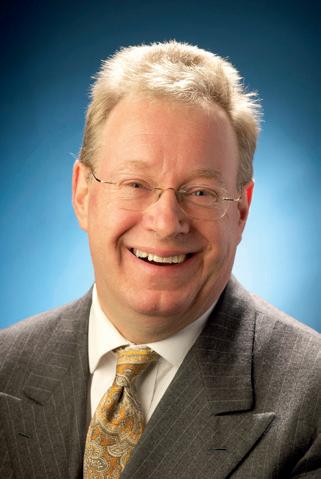
Technical and financial discussions can come later – first and foremost, is there good music to be recorded, and can our group bring something interesting to it on disc? Passion for the repertoire, an encyclopaedic knowledge of and sympathy for our country’s choral tradition, and up-to-the-minute recording technology define Regent in my eyes. Regent’s flexibility and willingness to take risks, whether it be with niche repertoire or with ambitious programming, have led to single-composer CDs of Benjamin Britten, Louis Vierne and Gabriel Jackson, a World War I disc, a Spanish renaissance disc, a disc of Philip Stopford’s music, and a DVD about the service of Nine Lessons and Carols. Our next one will feature music by Dobrinka Tabakova.

On all of our discs, I feel that Regent has captured the essence of our particular voices in our particular acoustic, always in a way that is very slightly on the flattering side of authentic. In the sessions, Gary is a master at work: a consummate musician with an excellent ear and a great deal of experience in judging how much can be achieved in the time available (the answer is never as much as the conductor thinks!). On the scientific side, he keeps up with the latest innovations in recording technology and seems to know when the old way is best. This is why so many of our best reviews have complimented the recorded sound.
Pitching an idea for a new CD to a record label is always daunting, even when you have worked with that label for more than a decade, as Truro Cathedral has with Regent. When we have our initial conversations, I am always struck by Gary’s deep-rooted scholarly interest in the academic, historical and musical drivers of any proposed project. Regent’s approach has an artistic integrity that comes from this substance which informs their rich and colourful output in which Truro proudly takes it place.
The experience of working with a record label where the owner is not only a gifted musician in his own right but is also a superb producer is one we have enjoyed for the past ten years in York Minster, working with Gary Cole and Regent Records. Gary has the ability to give positive encouragement to a group of singers whilst attending to details with a keen producer’s ear. This is particularly noticeable when working with a choir which has boys or girls singing the top part, and is combined with attention to detail on artwork and booklet notes as well as superb recorded sound; Regent are a joy to work with.
When you think about the RSCM and the role it has played in the history of the Christian church, I wonder if you think of it in very ‘English’ terms? After all, it was founded just over 90 years ago in Westminster Abbey, and for almost the first two decades of its existence it was known as the ‘School of English Church Music’.
Nevertheless, the vision of the founder – that the School was there to help promote what is best in the musical offering of individual churches – meant that churches in other places soon perceived the opportunities this offered them as well. The result was that the School set down roots in Englishspeaking countries overseas from the early 1930s.
Since those early days, although RSCM-affiliated church choirs from elsewhere have periodically undertaken tours to France, there had been no official representation ‘on the ground’ until RSCM France got going in late 2011. Our principal mission is an educational one, in a Christian context, and we have held firmly to that as we have developed our activities and extended the reach of our work.
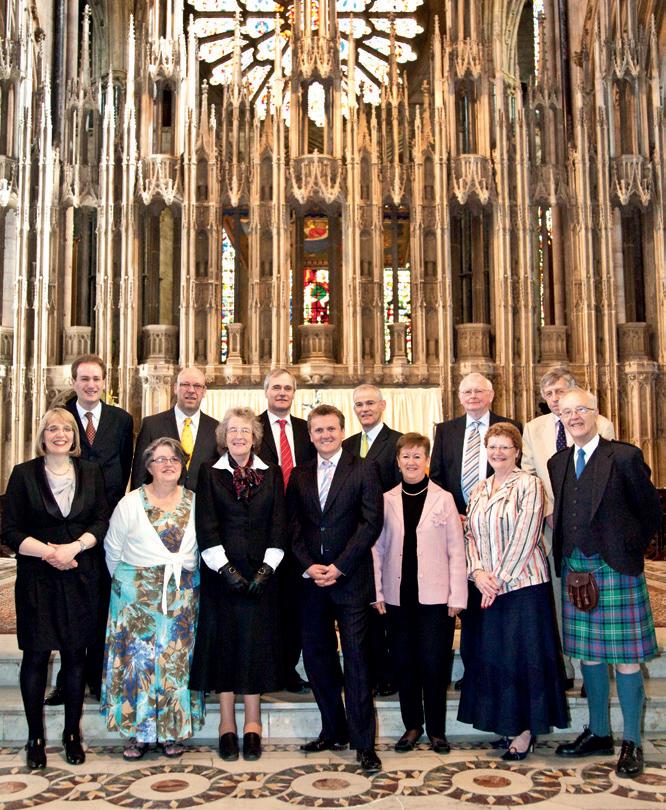
The variety of that work has extended as well, as the RSCM has ‘bedded down’ in the country. Looking back over six years, there have been Singing Days for choirs and for congregations, organ tuition, instrumental courses, involvement in national radio programmes, Remembrance services, residential singing and instrumental weekends, and two remarkably successful National Festivals.
My own involvement with RSCM goes right back to the late 1970s, when, impressed by what I had learned about the movement, I persuaded the church where I was organist in Northern Ireland to affiliate. A few years later I was invited to join the Irish National Committee and in 1992 I was designated Chair for Ireland. In 2001 I made the move to France and so had to give up my RSCM responsibilities.
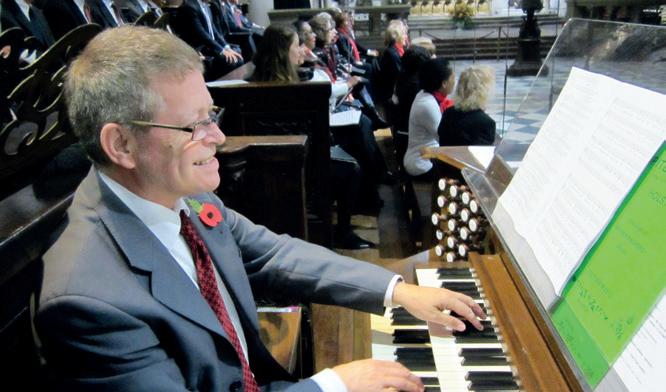
When I arrived in the Paris area in September 2001 it was to work as a university English language teacher, a job for which I had retrained after almost 30 years spent teaching French and German in a grammar school in Northern Ireland. For the next few years, that was what I did, together with deputising at the organ in various churches – and even a cathedral!
I still received CMQ, the RSCM’s quarterly magazine of information, always packed with informative articles for anyone interested in church music. In the early summer 2010 edition my eye fell on a list of people who had been awarded RSCM Sacred Music Studies Certificates in May of that year. To my astonishment, one of the names, a certain Shirley Rowson, was listed as living in France!
Almost immediately, an idea began to form: if this person proved to be interested, might we together be able to set up an RSCM-type structure here? Past experience had convinced me that the RSCM model works, so there was no reason that it should be any different in France. A few weeks later I was on my way by TGV to the Mediterranean coast near SaintRaphaël, where Shirley and her husband Peter welcomed me to their lovely villa in the sun.
Those few August days sped by, and after a good deal of work (and, I freely admit, a good deal of the delicious local produce, for Shirley proved to be an outstanding cook), we arrived at a framework for a possible national branch of the RSCM. We discovered a shared enthusiasm, a shared vision for RSCM in France: help and encouragement for churches of all kinds in a situation where the English-speaking churches in particular were spread across the country and doubtless had a tendency to feel isolated. There was thus likely to be more than enough interest to justify the setting up of a national branch.
It soon became clear that, if the organisation was to take off, Shirley’s husband, Peter, needed to be involved. As a former bank manager, his wisdom proved invaluable – particularly when it came to how we might go about obtaining an account and the permission to use it. (Those who have moved to France will recognise that getting a bank account set up is probably the most difficult of all the administrative tasks they have to accomplish!)
At our initial meeting we had realised that we needed to see first-hand how the RSCM worked in other European countries so we invited Martin van Bleek, Co-ordinator for RSCM NorthWest Europe, to visit and give us the benefit of his wisdom. We decided on an outline structure and, by casting around amongst our contacts, set up a committee consisting of four or five individuals. Over the succeeding years, the committee has never been larger than six people and has, I believe, accomplished far more in a short time than groups twice its size.
I have had the great privilege of working with some outstanding people. Shirley, our indefatigable secretary, looks after all the admin, liaises with many of our visiting course directors and deals with our website. Peter, as treasurer, oversees our finances. Joan Marie Bauman, our Vice-Chair, is a career musician and teacher. She solves problems and sorts out potential difficulties, as does Zachary Ullery, who, as DoM at Paris’s American Cathedral, willingly puts the facilities at our disposal and regularly supplies essential logistical support. As with Joan, his experience in the field (having previously served with RSCM America) is invaluable.
Being located in France has certain advantages: courses have attracted participants not just from the four corners of France but also from England, Wales, Luxembourg, the Netherlands, Italy, Germany and Switzerland! People enjoy the good weather and excellent food and drink – but that’s not the main consideration, of course! They like the relaxed and friendly atmosphere we generate too.
Early on, we saw the benefits offered by a longer course, where singers could spend time learning more challenging music, while getting to know other RSCM members in a holiday atmosphere. We were very fortunate that our secretary
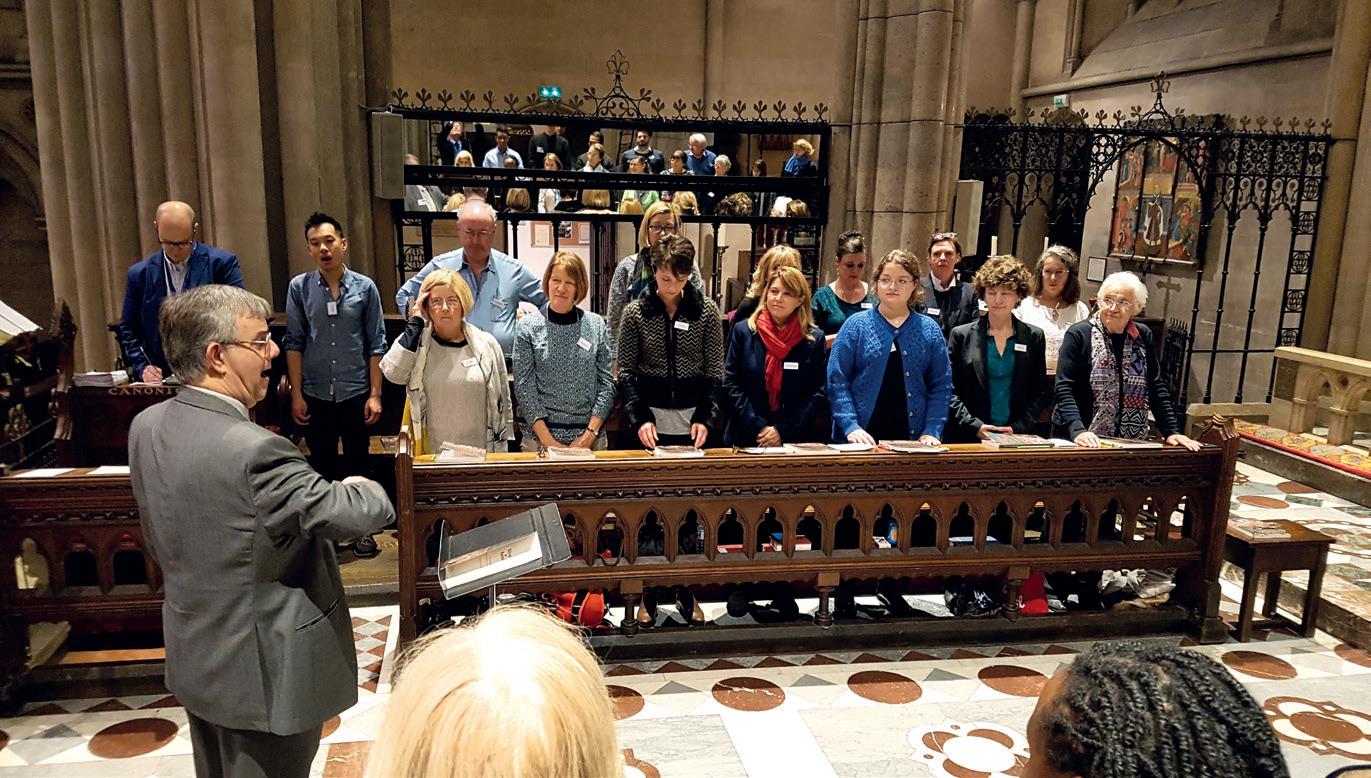
unearthed a holiday village in the south-east of France which was prepared to host us at very reasonable rates and put a hall at our disposal, both for practices and performances.
So it was that our Roquebrune Singing Weekend saw the light of day and continued from 2013 to 2017. We have been fortunate in that we almost always have a good spread of voices on our singing courses, which allows four-part singing to take place. Ages typically range from late teens to ‘young’ pensioners.
Beginning in Paris with our Inaugural Service of Commissioning in February 2012, we widened our sphere of activity to include towns on the periphery, such as Versailles, Maisons-Laffitte and Chantilly, in addition to places in the mid-west (Aquitaine) and the south-east (Saint-Raphaël).
We have ten affiliated chaplaincies, with their numerous individual churches – large and small – and are working to extend our work even farther in this vast country – to Brittany (Dinard), the east (Strasbourg) and the north (Lille). Naturally, however, any further expansion will call for the involvement of people on the ground who know the specific needs of their area and will be willing to work closely with us. The great choir schools in France were largely destroyed at the time of the French Revolution, and choral singing never really regained the place in public life that it once enjoyed. There are some fine choral societies and choirs (in some cathedrals, for example), but mostly the public thinks of choirs simply as groups that provide background music for soloists singing operatic arias!
Except for one or two large churches in the main cities, the Catholic church largely depends on cantors, rather than
Having acquired some confidence in organising events, we felt the time had come in 2015 to hold a first National Festival.
choirs, to encourage people to sing the liturgy. Some of these are skilled, some less so, especially in country areas. We don’t see it as part of our present job to go about trying to influence this format unduly but we are looking into how we can best help what is already there. As for the Protestant churches, in a number of cases they are beginning to break with a centuriesold style of worship but have generally not adopted the ‘worship song’ tradition as wholeheartedly as many have in the UK.
It was to the English-speaking churches, however, that we first turned our attention, principally because all of us on the committee are native speakers. We found that the Anglican Church has the greatest number of chaplaincies in the country. It uses a liturgy which is quite often sung and it is generally receptive to improving the standard of that liturgy. We had thought that churches might like help with improving their standards in more modern music, something we were fully prepared to give, but most requested that we gave them the opportunity to prepare services of Choral Evensong! We have now extended our work to Roman Catholic chaplaincies too.
Courses sprang up over the next few years in the area around Paris and in the south, near the Riviera. It was clear that there were churches where mainly young organists could benefit by being challenged to improve their standards and learn about the instrument and its place in Christian worship. To that end, we set up an organ course, using the RSCM’s instruction manuals and the 2-manual Patrick Collon organ in St George’s, Paris. Not an easy instrument to play, but one that would give our young organists the feel of an authentic tracker instrument.
Our organ and instrumental courses tend to appeal to younger folk who are still at school and leading their church worship at weekends. Given the rigours of the education system in France, there are particular constraints on the time young people have for activities like these, so their involvement is particularly appreciated.
In 2014 the opportunity arose to provide the Royal British Legion (RBL) with a choir to sing at the Annual Remembrance Service in Notre-Dame Cathedral on 11 November. This service was a special commemoration of the outbreak of hostilities 100 years earlier. Much time and effort was expended on preparing a worthy act of worship in which words and music, instruments and song contributed to the main themes of sorrow for war, thanksgiving for deliverance and a desire for peace. In the end, seven choirs affiliated to the RSCM in France provided some of their most experienced singers, to form the ‘RSCM France Singers’. Together with a group of instrumentalists, they led a memorable service which was long talked about afterwards and greatly appreciated by those present.
Our links with the RBL have continued and developed: instrumentalists have played before the service, recalling the popular songs of WWI, together with other, quite different songs of lament and committal. We found that arrangements of these, as well as some newly-composed instrumental music, set a remarkable atmosphere for the worship, so it was perhaps not surprising that we thought of commissioning a new work for the singers, now drawn from some nine local choirs. We thus turned to an up-and-coming English composer, Jack Oades, currently organ scholar at St Patrick’s Cathedral,
Dublin, to write a new anthem for the choir to sing in 2017.
Jack had won the Young Composers’ Competition at the 2016 Charles Wood Summer School for Church Music in Armagh, Northern Ireland, and I had been impressed by his work – as indeed had David Hill, Chair of the judges. Jack’s In pace sets words from the Book of Wisdom to some apparently complex but very singable music. The fact that the words begin in the languages of the three main protagonists and end in Latin, the universal language of worship, hints at the peace to which both service and anthem point. We hope that this attractive and memorable work will soon be available in print for many other choirs to sing at Remembrance-tide 2018.
Having acquired some confidence in organising events, we felt the time had come in 2015 to hold a first National Festival. The American Cathedral in the Avenue Georges-V in Paris was the splendid venue, and the choir of some 60 participants sang a memorable Evensong under their director, Barry Rose. To continue the work of binding us together, while seeking to draw others into the circle of the RSCM, we have instituted an annual Parisian Organists’ Lunch, to which we invite not only organists of affiliated churches but some of those who are not yet convinced of the benefits that affiliation can bring. This has begun to produce some positive results.
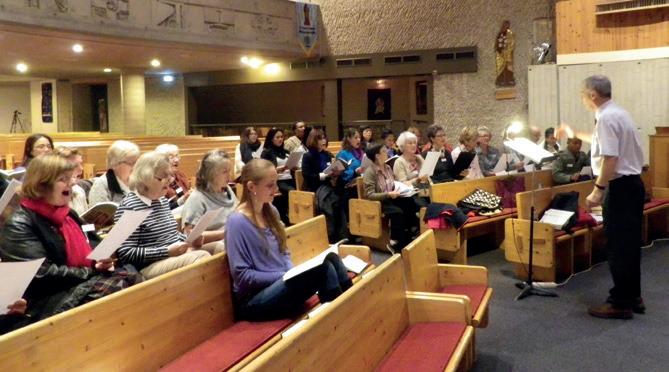
We try to keep in contact with our affiliated members by publishing an e-newsletter three or four times a year. Its purpose is of course to supply information about past events and future courses, but it also serves to remind people that they are at the heart of everything we do and the reason why, under God, we do what we do at all.
In all this ‘busyness’, we are concerned not to lose sight of our initial vision as a ‘school’, which is that of our founder, Sydney Nicholson, more than century ago: to provide opportunities to those involved in worship, so that what we offer to God is nothing less than our best. Equipping singers and instrumentalists with tools to serve their churches at the highest level possible has been our aim from the beginning.
Since we live in France, celebrations are very much part of life. Thus it was that a little sparkling wine helped us mark our anniversary following a Singing Day held in Maisons-Laffitte, west of Paris, in early 2017, five years almost to the day after our Commissioning. I suppose we’re already looking to our tenth, wondering what exciting challenges and opportunities we may yet encounter along the way. As our friends here might say – with, I venture to believe, the approval of Sir Sydney himself: Vivement de nouvelles aventures!
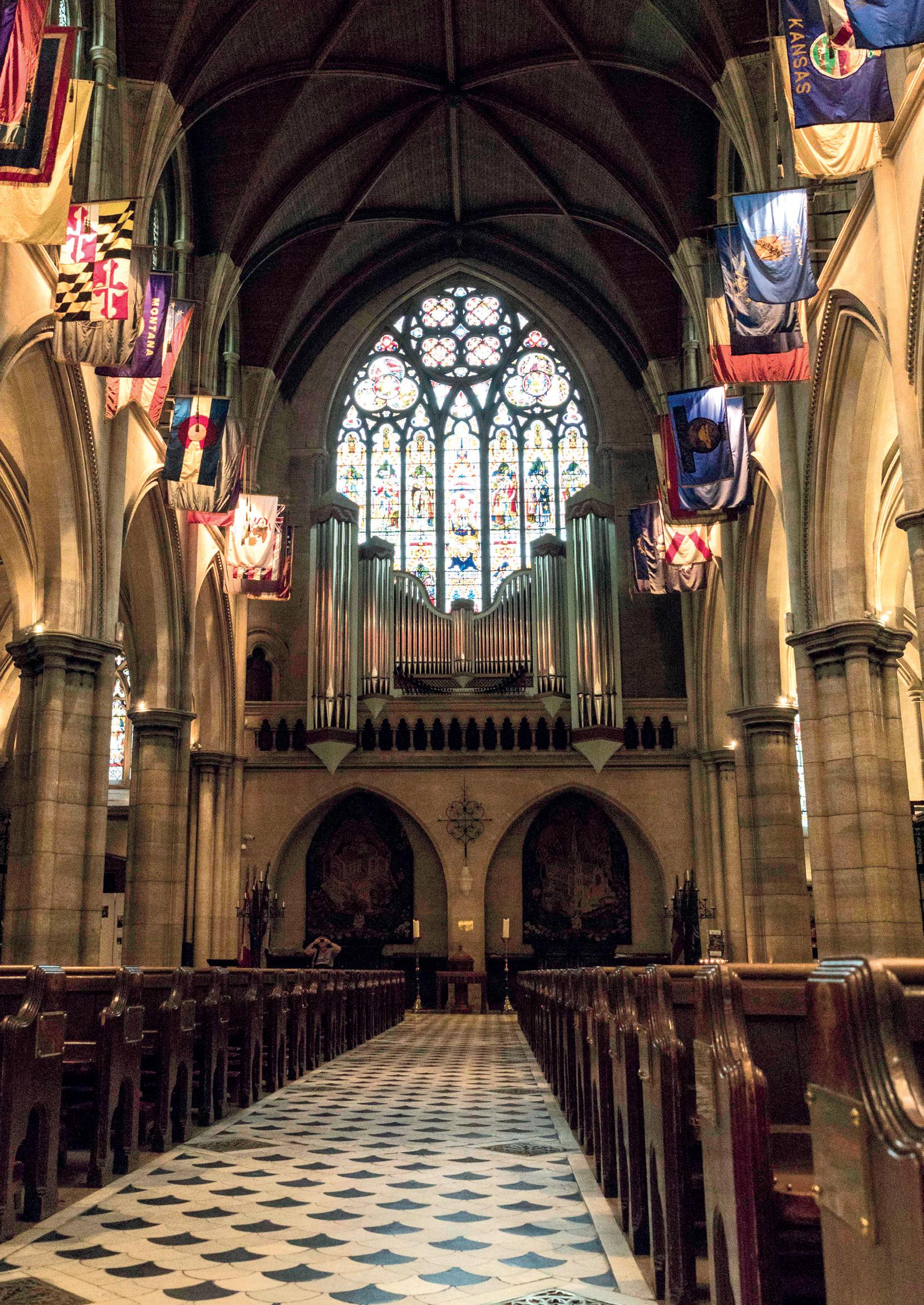
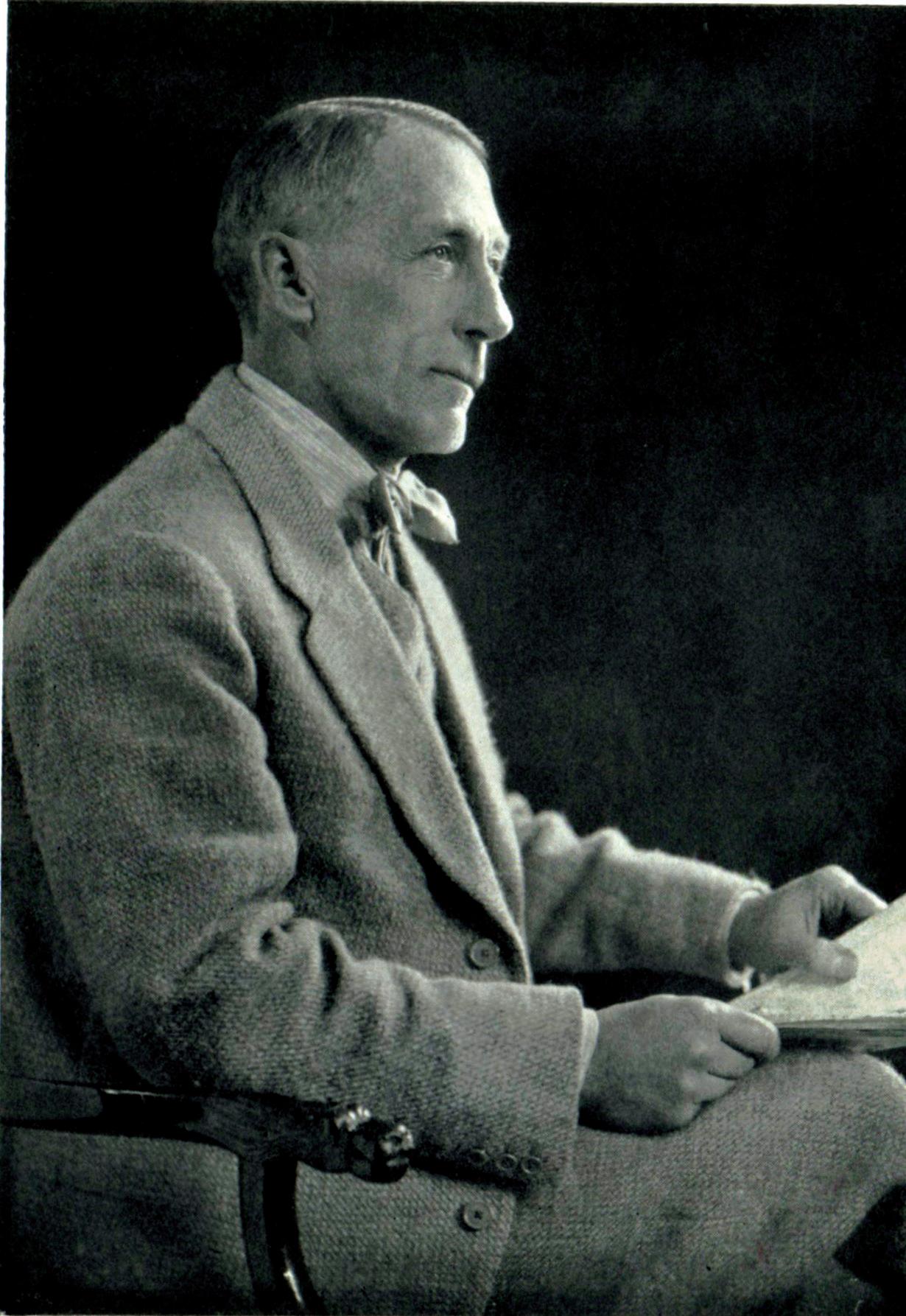
Dr Martin Shaw, the church musician responsible for two of the most popular hymns in the English language, Morning has Broken and All Things Bright and Beautiful, was the first president of the Friends of Cathedral Music He died 60 years ago this October, much lauded in his lifetime, and regarded by some as the leading church musician of his day. He had the highest standards for cathedral music, and felt it his calling to write such music.
Martin, born at 3 Camberwell Green, the home of his maternal grandparents in south London (not, as some thought, in Belsize Park) was the eldest of nine children born to two musicians, James and Charlotte Shaw. James was an accomplished pianist, composer and professor of music well known in musical circles at the time; he was a friend of Hubert Parry at the Royal College of Music (RCM) and of Alexander Mackenzie at the Royal Academy. He also founded the Middlesex Choral Union, which performed Parry’s Job at St James’s Hall in 1892, famously reviewed by George Bernard Shaw, for which the 17-year-old Martin played the organ.
The family had moved to Hampstead in 1886 with James’s appointment as organist at the parish church, but some years later this life changed abruptly when, ever the eccentric, James resigned from his post, only to be dismayed to find his resignation gratefully accepted! At the same time Martin departed early from the RCM, intending to become a virtuoso pianist. His habit was to practise for eight hours a day, and sadly his ambition was thus thwarted, because he succumbed to pianist’s cramp! Instead, therefore, he taught singing in Hampstead, and was also organist and choirmaster at a church there. This position stood him in good stead when, in 1899, he and Edward Gordon Craig (1872-1966) founded The Purcell Operatic Society. It was a significant cultural turning point as Purcell was at that time virtually unknown to the general public (his music being referred to as ‘this new music’ by one reviewer!).
Craig and Shaw had met in Southwold two years earlier, at a time when Craig, son of the actress Ellen Terry, was between careers. He had yet to find his métier as a designer, and Martin was a fledgling theatre producer. The pair renewed their
acquaintance once back in London, and Martin introduced Craig to various different forms of music, interrupting one of their walks by dropping into a pub to play Bach’s St Matthew Passion on the piano. In asking Craig to do the miseen-scène for The Purcell Operatic Society he was instrumental in launching into the world a man of outstanding vision, whose designs were so far ahead of their time that they were viewed as unacceptable by the British – until they were imported back into the UK as Bauhaus design in the 1920s. Craig’s productions of Purcell’s Dido and Handel’s Acis were a considerable critical success but sadly not financial ones, and Craig in 1904 departed for the Continent, where he came to be regarded as a genius. Meeting the American dancer Isadora Duncan later that year, the pair became colleagues and lovers, which led to Martin becoming Music Director for Duncan’s European tours in 1906 and 1907. This period of Shaw’s life, continuing until 1929, is told in Up to Now, his delightful book of reminiscences, which is being republished by Albion Music as part of The Greater Light: a Martin Shaw Compendium, published in September 2018. The book includes a full catalogue of music; A Daughter’s Recollection by Elizabeth Montgomery Campbell, and 100 letters to and from Martin Shaw, which aim to give an overview of his life.
In 1908 Martin returned to Hampstead to become Director of Music at St Mary’s, Primrose Hill, where the vicar, Percy Dearmer, introduced him to plainsong. This captivated Martin, and he returned to its influence in church music again and again. His Modal Mass was written in 1914; his Folk Mass,
Martin did much research in the British Library, where he found ‘Bunessan’, a tune originally paired with a Gaelic carol, now known as Morning has Broken.
in 1918, was re-published by Roberton in 1975 for Martin’s centenary. He also composed music for Mabel Dearmer’s plays, many songs for soloists and children, and completed much editorial work, some of which was for his composer brother Geoffrey, at that time His Majesty’s Inspector of Music for Schools.
in the British Library, where he found ‘Bunessan’, a tune originally paired with a Gaelic carol, now known as Morning has Broken. Similarly ‘Royal Oak’, first paired by Martin with All Things Bright and Beautiful in 1916, a tune associated with the restoration of the English monarchy, was originally the wassail tune in Gammer Gurton’s Needle (a mid-Tudor comedy by an unknown author) We know Martin’s own hymn tunes: ‘Little Cornard’ (‘Hills of the North rejoice!’) and ‘Marching’ (‘Through the night of doubt and sorrow’) but looking at the catalogue chronologically, it is noticeable that there was a distinct flowering towards the end of the 1920s and into the 1930s, a period that coincided with the tenancy of Martin’s writing retreat in West Wycombe. Here he wrote a number of large works in association with John Masefield, (Easter, a play for singers, and Arise in Us, an anthem for mixed or male chorus among them), and many for Liverpool Cathedral. Two song sequences, The Ungentle Guest and Water Folk, were premiered at the Three Choirs Festival, as was the cantata Sursum Corda, for tenor solo, chorus and orchestra. This is possibly one of Martin’s finest pieces, with words specially written for Martin by Laurence Binyon. Easter and Sursum Corda have been re-orchestrated and are now available again. In 1934 came a collaboration with T S Eliot: The Rock, staged at Sadler’s Wells with a choir of 300. The music for the final chorus was rediscovered in the 1960s and set as an anthem, The Greater Light, for double choir, organ and timpani.
In 1916 the brothers were asked to dinner by Miss Luard, the head of Whitelands Teacher Training College; she in turn had asked her music director, Miss Cobbold, to join her. Martin had imagined Miss Cobbold to be a strict elderly spinster, but was delighted to find that she was an attractive young woman called Joan! Joan was fascinated by his conversation – which she described as being all sweetness and calibre; for his part, Martin was further attracted to Joan when he heard her playing some of his music at the college chapel – because for once it was being played fast enough! After a whirlwind romance the couple married that July, at which point Martin’s career seemed to settle and expand, possibly because of the needs of his family (the couple had three children), but also because Joan took on the task of managing his day-to-day living. The only person who understood quite what she did was Ursula Vaughan Williams, who was similarly occupied in later years with Ralph.
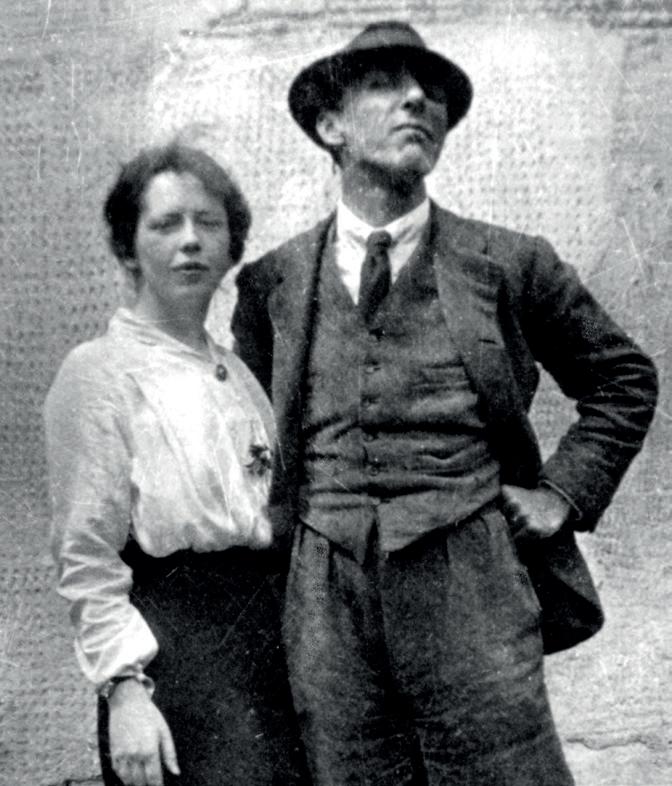
In 1920 Martin was appointed Director of Music at St Martinin-the-Fields with the forward-thinking vicar Dick Sheppard. Together the men developed the church to the musical and pastoral excellence which continues today, and they are remembered there still – the conductor’s rest room is named ‘The Martin Shaw Room’ in his honour.
Martin’s output was prodigious (the catalogue lists around 500 titles). His editorial work included much with Percy Dearmer and Vaughan Williams, including Songs of Praise, The Oxford Book of Carols, and The English Hymnal. It was with this latter that the team aimed to pass on the English heritage of poetry and folk song. Martin did much research
As well as composing, Martin was also a popular speaker: he travelled widely to train choirs, give lectures, or attend conventions. He was also an examiner for Bangor University. In 1932, together with Geoffrey, he was awarded the Lambeth Degree of Music for his services to the Anglican Church. In
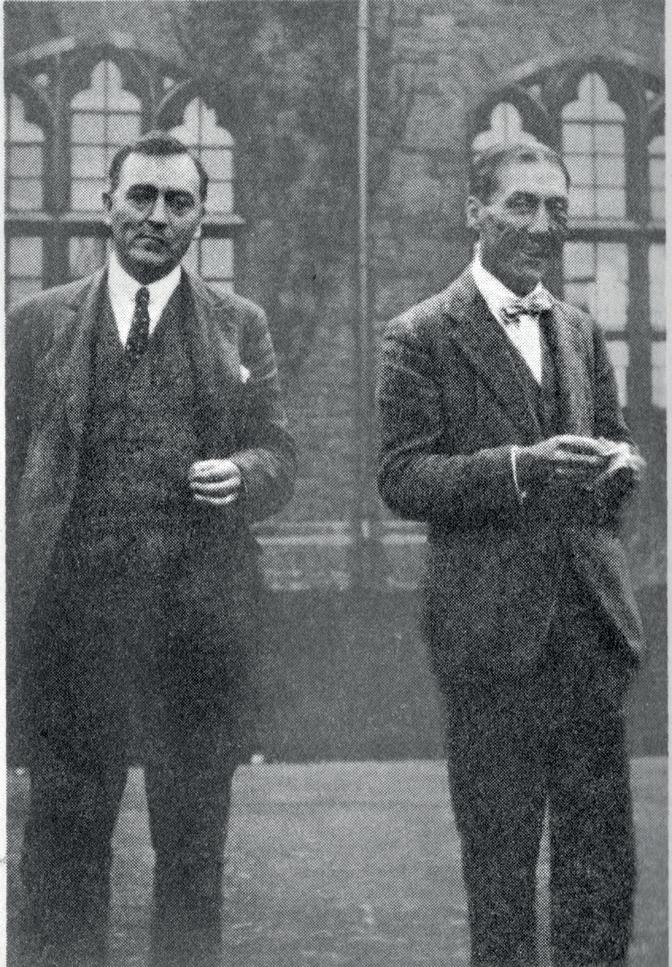
1935 the family moved to Kelvedon in Essex when he was appointed Adviser of Music for the Diocese of Chelmsford, becoming, in effect a Bishop of Music, a church role S S Wesley had championed 80 years earlier.
The letter ended:
Please forgive this intrusion from a stranger, but we do very much hope to include a new work of yours in our first Suffolk Festival!
In reply Martin wrote God’s Grandeur, a setting of the poem by Gerard Manley Hopkins, scored for mixed chorus, trumpet solo, strings and organ, which is still available today from the music publishers Good Music. In one of his last letters to Martin, RVW wrote to say, ‘I like God’s Grandeur very much.’
For Martin’s 80th birthday in 1955, Vaughan Williams gave the address at a service held at St Mary-le-Tower in Ipswich to honour his old friend. Unexpectedly he delivered a much more fiery oration than the one he had prepared, practically a commination on the basis of ‘Cursed be the congregations, choirmasters, and organists who do not listen to Martin’. The congregation shrank in their seats as Ralph warmed to his task and thundered on, but Martin and Joan, at first surprised, shook with laughter.
In 1940, following his retirement from Chelmsford, he and Joan continued to live in Essex. The death of his brother Geoffrey in 1943 hit him hard. This, combined with his own poor health, brought on a bleak period. His friends rallied round; Vaughan Williams invited him to have what he and Gustav Holst had called a ‘field day’ together, composing and sharing their music. This happened early in 1944, and out of it came Martin’s oratorio, The Redeemer. The first performance was a BBC broadcast in March 1945. At the time it was much admired, not least by Vaughan Williams and the RSCM. Erik Routley wrote:
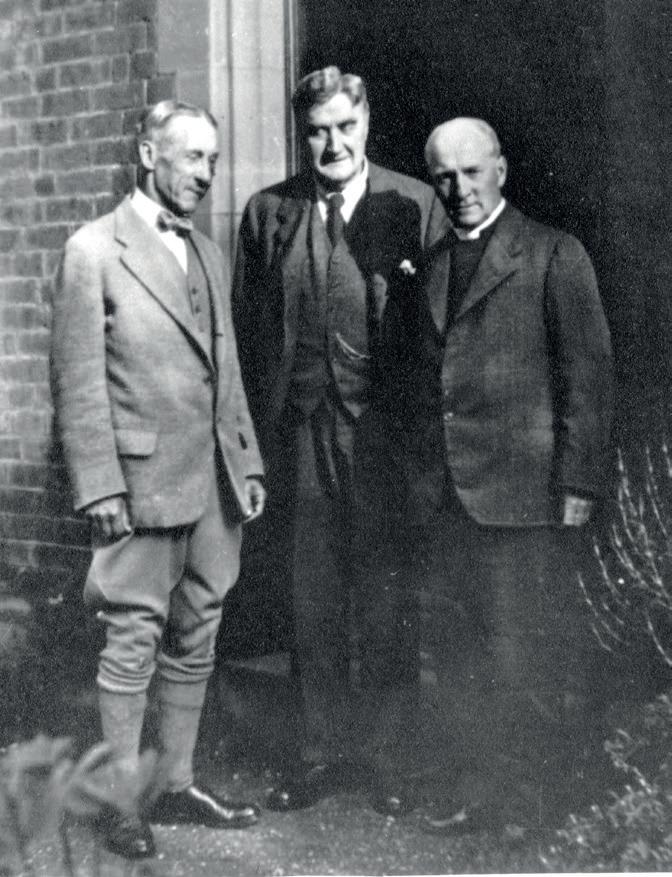
[It] remains the most ambitious, the most musically rich and adventurous setting of the Passion by any English composer… In its dramatic sense and its musical subtlety it leaves Stainer and Maunder far behind: and in its appeal to those who value such performances it has more to offer than Wood, and much more than Somervell. …a piece of music which rises to the heights that Martin reaches here… is bound to be a musical landmark.
People who hear it today cannot understand why it is not widely known.
You may perhaps have heard rumours, or seen some announcements, of a festival which we are planning to hold this coming June in Aldeburgh. It isn’t at all an ambitious affair, as the enclosed leaflet will show you, but as we hope it will develop into an annual festival we feel that it may be best to start quite cautiously!
Martin and Joan had by now retired to the Suffolk coastal town of Southwold, where Martin had lived for periods as a boy. He had crippling health problems which prevented him travelling, but he continued composing and writing until his death in 1958. His warm-hearted personality, wit and wisdom come over in both his music and in his autobiography, Up to Now, all the more remarkable when you consider that he had been born with a large and daunting birthmark marring the left side of his face. To his close friends and family, it was just a part of the person they loved; my mother said she never noticed it, and he himself never referred to it, except once to say to Joan, ‘I am as God made me’. Known for his humility, and his dislike of overblown sentimentality, he never took anything for granted; he was honoured to be the first president of Friends of Cathedral Music, and would be greatly impressed with its standing today.
The Greater Light: A Martin Shaw Compendium is to be launched in September at the British Library with a concert of songs followed by a symposium.
Isobel Montgomery Campbell, the daughter of Martin Shaw’s daughter Elizabeth, is the current CEO of The Martin Shaw Society. She lives in London with her husband Richard Platings. Since 2008 she has been working on the life and works of Martin Shaw following the return of his archive to the family
from a private individual. She maintains her mother’s archive, which includes most of Martin Shaw’s sheet music. The vast Martin Shaw Collection is now with the British Library. For more information on Martin Shaw and his music contact Isobel at info@martinshawsociety.org
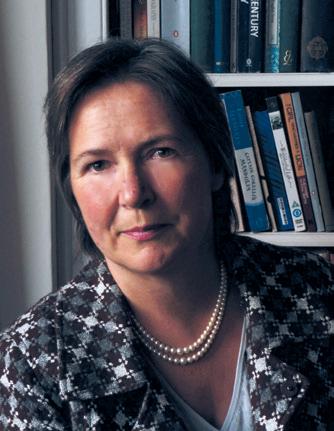
The recent release of the recording by the choir of Westminster Cathedral singing all three of Byrd’s masses revives the question of who should sing historically informed performances of these works, and in what venues.1
Westminster Cathedral Choir is male, has several voices to each part, and made their recording in the vast spaces of the cathedral itself. The CD is a wonderful version of these three much loved, much admired and much recorded works, sung with what might superficially be regarded as a Roman Catholic zeal, different from, though not automatically better than, the best of the cooler interpretations commercially recorded by Anglican cathedral and collegiate male choirs.2 But this is only half the story. Byrd’s masses and motets completely passed out of liturgical use for the best part of three centuries. Even in his lifetime they could only be sung either at illegal Catholic services (new evidence suggesting that for safety the movements were sung continuously, rather than expansively at their appropriate liturgical points) or possibly (if this is not imposing a 21st-century sensibility upon Tudors and Stuarts) as chamber music to be sung by enlightened Protestants or Catholics unthreatening to the authorities.3 They were revived liturgically late in the 19th century4 by the male Catholic ecclesiastical choirs and, notwithstanding some recordings by mixed chamber choirs,5 tended to remain the preserve of male ecclesiastical choirs, either Catholic or, increasingly, Anglican, for nearly a century. The challenge to this orthodoxy was laid down by Joseph Kerman and Philip Brett. Even if they did not personally originate the challenge, their writing and editing provided the momentum. Typical of their tone is Kerman’s assertion in his monograph about Byrd’s masses and motets in 1981:
‘The model for such Gradualia choirs would not have been the traditional cathedral choirs, with their platoons of lay clerks and choirboys … in the masses and the Gradualia Byrd for the first time published Latin music … suitable for more modest musical establishments,’ which Kerman suggests were modelled upon ‘the informal madrigal groups of the 1580s and 90s’.6
Brett’s observations on this topic published around this time adopt a similar tone.
Irrefutable evidence exists confirming that in Byrd’s day females participated musically in singing clandestine Catholic services7 and quite soon after the publication and dissemination of Kerman’s and Brett’s observations, the
previous orthodoxy of male ecclesiastical choirs performing (and recording) Byrd’s masses came to be replaced by a new orthodoxy of mixed choirs performing it, both as liturgical and as chamber music. It is this new orthodoxy that I wish briefly to ponder: not to overturn it, but to broaden it to suggest that the previous male orthodoxy might at least be accommodated to coexist with it, without being regarded as entirely anachronistic or sexist or inauthentic.
Byrd died in 1623 and during that century, after the Anglican High Church interlude under Archbishop Laud, there followed the dethroning and execution of the reigning king, Charles I, and the replacement of the monarchy by a commonwealth which became a protectorate. The Anglican Church was disestablished, and its services banned. The monarchy, and with it the Anglican Church, was reestablished in 1660, along with the Church’s liturgy, and besides a shortage of trained musicians, including choristers, there was a shortage of modern repertory. Initially, much music from the Tudor and Jacobean periods, including some by Byrd, was reinstated in the repertory of the Chapel Royal and provincial cathedrals.8 Going back several decades, Byrd composed and, miraculously, published his masses during the 1590s.9 Given Byrd’s known friendship with Roman Catholic activists,10 it might be reasonable to assume that he wished for the reinstatement of the Catholic Church and its liturgy and music, including his own. Perhaps as an employee of the Crown he wished for there to be an English monarch in this new dispensation, and either that Elizabeth would return to her father’s and half-sister’s theological persuasion, or that whoever succeeded Elizabeth – subsequently the heir turned out to be James VI of Scotland (who became James
...Byrd composed them in the hope that one day the three masses we know today would indeed be sung, liturgically and unaltered, during his lifetime in English cathedrals.
I of England and had a Roman Catholic mother) – might reestablish the Catholic Church.
This is the point at which Byrd’s existing masses might have advanced from being sung in makeshift chapels to becoming part of an established liturgy. Just as, at the Restoration, there was a shortage of current Anglican music, so that older, Tudor, Anglican music had to be revived temporarily to plug the gap until modern liturgical music could be composed, so at this putative re-establishment of a Catholic liturgy, a repertory of older Catholic music could have been pressed into service (in both senses) to fill the breach in the music at the nation’s cathedrals until more could be composed by current musicians. If this had happened during Byrd’s lifetime, he might subsequently have composed new masses specifically for the wide open spaces of cathedrals, not domestic rooms or barns; or he might have adapted his three existing masses to reflect this different acoustic; or perhaps Byrd composed
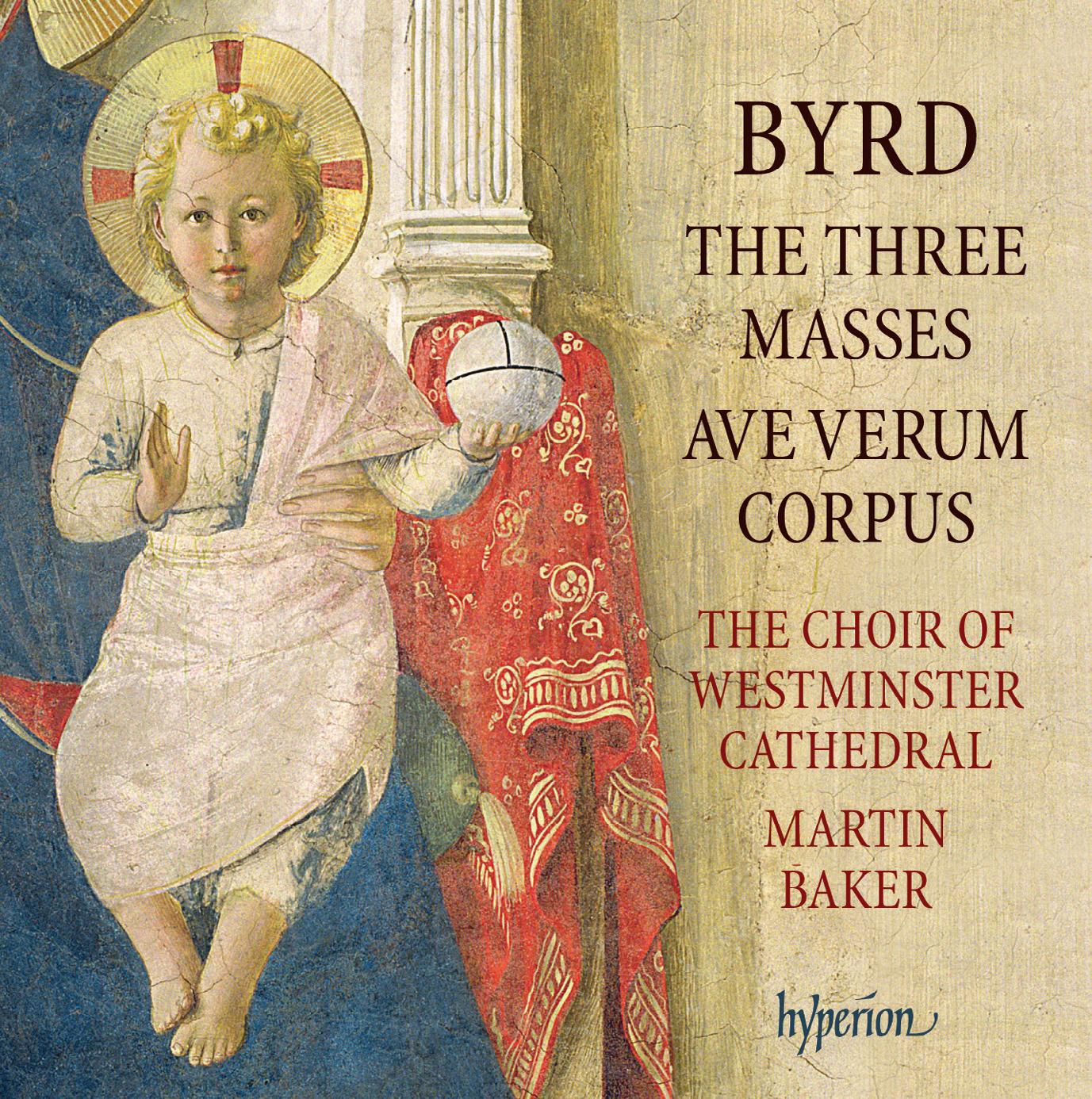
them in the hope that one day the three masses we know today would indeed be sung, liturgically and unaltered, during his lifetime in English cathedrals.11 So it is worth pondering the possibility that, had there been a change of established denomination back to Roman Catholicism, then Byrd’s masses as we know them today could have been pressed into use in the liturgy at the very least as stopgaps, in the same way that anthems by Tallis and Byrd were used in the early days of the Restoration until a repertory of suitable music by contemporary composers could be composed, disseminated, practised, and put into performance.
In this context, I suggest that the strictures of Kerman and Brett, implying that performances of Byrd’s masses and motets by male choirs consisting of choristers and lay clerks have no authentic legitimacy, should be set aside, and that such performances should be considered just as historically informed as those of choirs consisting of males and females.
1. William Byrd: the three Masses, The Choir of Westminster Cathedral, conducted by Martin Baker, Hyperion CDA68038. These artistes also performed the masses at a public concert in the cathedral on 7 July 2015.
2. Greenhalgh, Michael. ‘A Byrd discography’, in Byrd studies, edited by Alan Brown and Richard Turbet. Cambridge University Press 1992, pp202-64, esp. 204-07; ‘A Byrd discography supplement’, Brio 33 (1996): 19-54, esp. 19-20; ‘Byrd discography 1995-2003’, in Turbet, Richard. William Byrd: a guide to research. 2nd ed. Routledge music bibliographies 2006, pp231-305, esp. 23234; ‘Byrd discography 2004-2010’, in Turbet, Richard. William Byrd: a research and information guide, 3rd ed. Routledge music bibliographies 2012, pp231-83, esp. 231-33.
3. McCarthy, Kerry. Byrd. The Master Musicians. Oxford University Press 2013, pp149-50.
4. Cole, Suzanne. ‘Who is the father? Changing perceptions of Tallis and Byrd in late nineteenth-century England’, Music & letters 89 (2008): 212-26.
5. Greenhalgh, Michael. ‘A Byrd discography’, pp205-07.
6. Kerman, Joseph. The masses and motets of William Byrd. The music of William Byrd, Faber 1981, p52.
7. Harley, John. William Byrd, Gentleman of the Chapel Royal. Aldershot: Scolar, 1997, rev. repr. 1999, pp79-80.
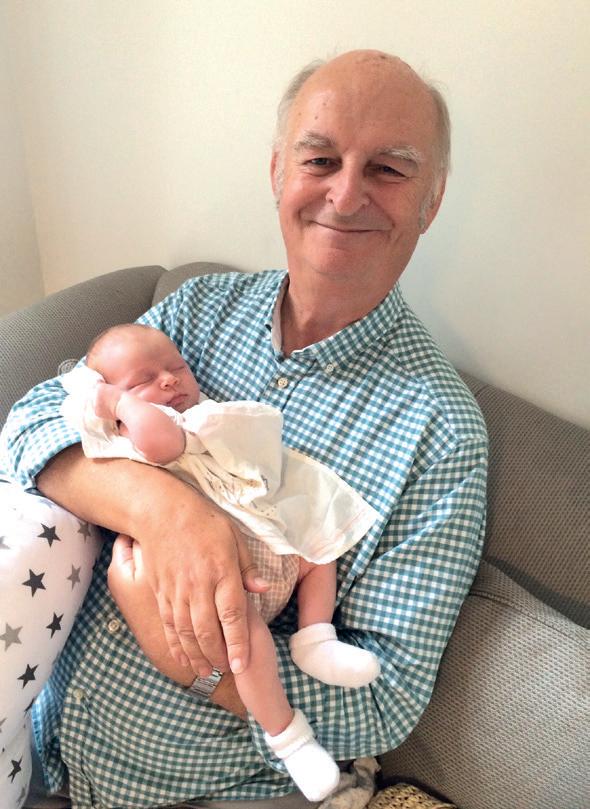
8. Thompson, Robert. ‘Purcell’s great autographs’, in Purcell studies, edited by Curtis Price.: Cambridge University Press 1995, pp6-34. Shay, Robert. ‘Purcell as collector of “ancient” music: Fitzwilliam MS 88’, in ibid., pp35-50. Crosby, Brian. ‘A service sheet from June 1680’, Musical Times 121 (1980): 399-401.
9. Clulow, Peter. ‘Publication dates for Byrd’s Latin masses’, Music & letters 47 (1966): 1-9.
10. ‘Recusancy’, in Harley, op. cit., pp67-81.

11. Hearing the Mass for Four Voices sung liturgically during an Anglican service of Holy Communion in Truro Cathedral by the resident choir during September 2011 convinced me that Byrd’s masses, when performed in diligent response to the prevailing acoustic, are as effective in the greatest of cathedrals as in the most claustrophobic of chambers.
Richard Turbet was born at Ilford in Essex. His interest in cathedral music began over 50 years ago while at Bancroft’s School in nearby Woodford. After university he sang in chamber choirs in Canada and England, becoming a lay clerk at Wakefield and Aberdeen, where he was proud to be joined by his two sons as trebles. A music librarian by profession, he has published extensively, and two of his books, about Tudor music (1994) and Byrd (2012), have won the annual CB Oldman Prize as their year’s best music reference book.
It’s a common myth that only the rich and famous leave money to charity when they die. The reality is that without gifts left in wills by people ‘like you and me’, many of the charities we know and support today wouldn’t be able to exist. Thankfully, 74% of the UK population support charities, and a good number say they’d happily leave a gift in their will once family and friends have been provided for.
The problem is that ‘the way to hell is paved with good intentions’, and most people do not leave any money to charity in their wills. Are you one of these? And if so, did you know that a reduced rate of inheritance tax (IHT), 36% instead of 40%, is applied to estates leaving 10% or more of their total to charity? This means, in essence, that on an estate worth, for example, £500,000, instead of paying IHT of £70,000, the tax would be £56,700. 10% of the estate – once the nil band of tax is removed – would be £17,500, which you could leave to the charity or charities of your choice, and the reduction in funds payable to family and friends would be only £4200.
Without a charitable bequest
If you consider that most charities would not survive without legacies, that a reduced rate of IHT will apply to your estate if you give 10% of it to charity, and that you are ensuring the vital work of your chosen charity can continue, it makes very good sense to donate 10% to charity in your will. The icing on the cake is that the taxman gets a lot less of your hard-earned cash than would be the case if you were to leave a smaller percentage.
If you have already made a will, as many if not most of us have, it’s still quite easy to change or add to it by writing a codicil. Sometimes it’s simpler to make a new will, and you’d do well to speak to a solicitor, but the benefits to whatever charity you choose to support (which clearly we hope will be FCM) will be worth the extra effort this requires.
Example:
With a 10% charitable bequest
including nil rate band
receives £56,700 instead of £70,000, and beneficiaries receive only £4200 less
A Pecuniary Gift
I give the sum of £ _____________ (in figures and words) to the Friends of Cathedral Music (FCM) (registered charity No. 285121). I direct that the receipt of the Treasurer of FCM shall be a sufficient discharge to my executors.
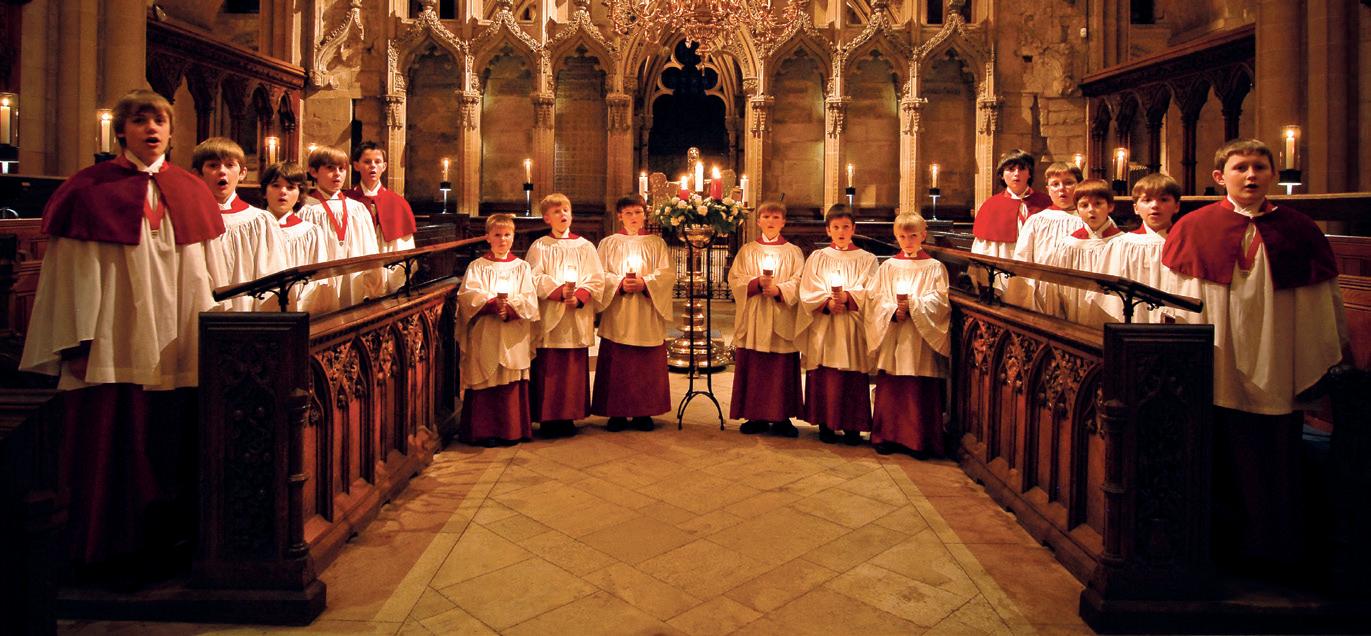
A Residuary Gift
I give the whole (or a _____% share) of the residue of my estate to the Friends of Cathedral Music (registered charity No. 285121). I direct that the receipt of the Treasurer of FCM shall be a sufficient discharge to my executors.
Please remember Friends of Cathedral Music in your will and help us to secure our priceless heritage for future generations
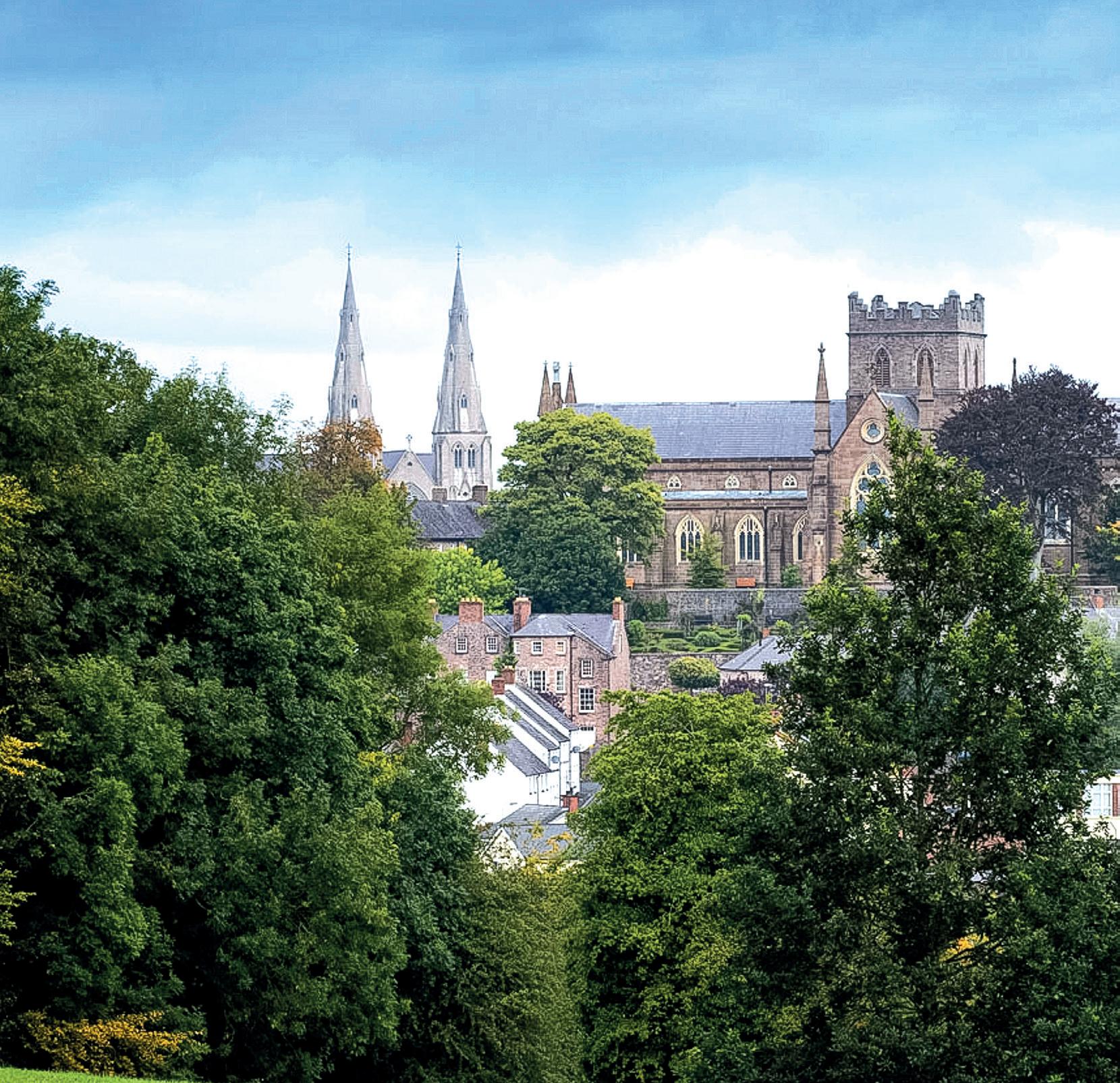
It took quite a leap of faith to launch the Northern Ireland International Organ Competition (NIIOC) back in 2011. How would it be funded? Who would travel not just to Northern Ireland but to the tiny city of Armagh, which doesn’t even have a railway station, to compete or to adjudicate? Where would the participants stay, and who would help with the administration?
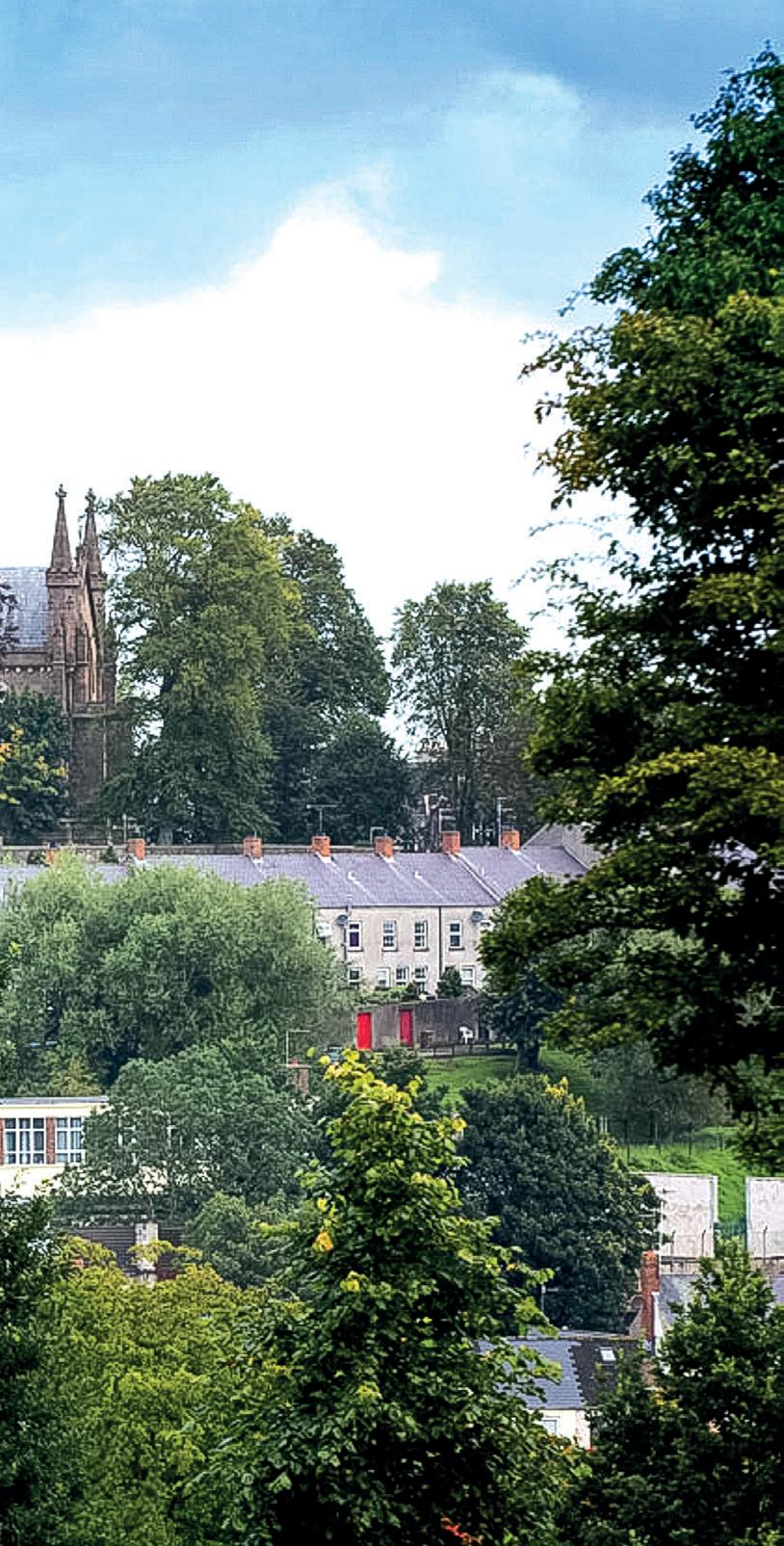
Richard Yarr, the competition’s founding chairman, is not short on faith. He also has an abundance of energy and a remarkable ability to persuade other people to share his vision. Senior producer, classical music, with BBC Northern Ireland, he is also an organist, and Director of Music at a Church of Ireland parish church. The vision was his: he saw a gap in the market for an event that would give young organists their first experience of performing alongside equally talented contemporaries from across the world in a
competitive environment, enlisted the support of colleagues within Northern Ireland and beyond, and NIIOC was born.
Seven years later the competition for players aged 21 and under is thriving, and it has succeeded in attracting a truly international roster of entrants to its Senior and Intermediate categories.
Crucial to NIIOC’s success has been its close relationship with the Charles Wood Summer School and Festival, a longestablished event which runs concurrently with the organ competition in Armagh at the end of August. Charles Wood was born in 1866 in a terraced house opposite the west door of Armagh’s Church of Ireland cathedral, where his father was a vicar choral. Wood himself was a chorister at the cathedral before going on to become Director of Music at Gonville and Caius College (in Cambridge), Professor of Music at the university and (as readers of this magazine probably do not need to be told) one of the best-known and best-loved composers of church music of his age. Inspired by Wood’s associations with the place, young musicians spend a week in Armagh every year giving concerts and singing services, at least one of which is usually broadcast by the BBC.
The current artistic director of the Charles Wood Summer School is conductor and organist David Hill, former Director of Music at Westminster and Winchester cathedrals and St John’s College Cambridge, and until recently chief conductor of the BBC Singers. He was an early recruit to the NIIOC team, as a founding patron (alongside Dame Gillian Weir, James O’Donnell of Westminster Abbey and Mark Duley, artistic director of the Dublin organ festival Pipeworks, and Director of Music at St Nicholas Collegiate Church, Galway) and as a regular member of the competition jury.
Each year Dr Hill is joined at NIIOC by two guest jurors. These have included Thierry Mechler, Professor of Organ and Improvisation at the Musikhochschule in Cologne; Mattias Wager, Organist of Stockholm Cathedral; Kimberley Marshall, Professor of Organ at Arizona State University and a past winner of the St Albans Organ Competition; Frédéric Blanc from Toulouse; Dublin-based Gerard Gillen and, last year, the UK’s Thomas Trotter.
The competition has three categories: Senior for post-Grade 8 performers; Intermediate for Grades 6-8 and Junior for Grades 4-5.
Rules and requirements have varied slightly as the event has developed, but the Senior competition is currently based on a balanced, 20-minute programme of the performer’s choice, consisting of at least three pieces of diploma level and including a major work of J S Bach (or part thereof). This category is limited to 16 competitors, who are selected on the basis of CD recordings submitted several weeks ahead of the event.
Candidates in the Intermediate category play a 12-minute programme of their own choice, including two or three pieces, and Junior candidates play an eight-minute own choice programme.
Each category has small cash prizes for up to three competitors, together with performance opportunities, and for the
Senior category there is also a separate prize for the finest performance of a work by Bach. The package for the first prizewinner in the Senior category has become increasingly generous over the competition’s short lifetime, consisting in 2017 of £1,000 plus six public recitals hosted by Saint Thomas Fifth Avenue, New York (with a £650 flight subsidy); Westminster Abbey; Trinity College Chapel, Cambridge; Manchester Cathedral; St Patrick’s College, Maynooth; and the Royal College of Organists – one of their ‘Raise Your Game’ recitals.
There are also media opportunities, and professional recordings have been made of performances by some of the winners.
Such opportunities are hugely valuable for players in the early stages of their careers. However, as previous winners are keen to acknowledge, the entire experience of taking part in the competition is beneficial, because it involves so much more than just playing in front of the judges. There are masterclasses, concerts by the judges and by choirs and singers taking part in the Charles Wood Summer School, performance etiquette workshops and plenty of time for the competitors to relax and talk to one another and to members of the organising committee. They also have the opportunity to receive one-to-one feedback from jury members. Most of the competitors are hosted and extremely well looked after by local residents.
The compact Georgian city makes an ideal base for the event, which is well supported by the local council, tourist office, churches and businesses, as well as by the lottery-funded Arts Council of Northern Ireland (though financial constraints mean this support is always fragile). Allen Organs NI Ltd,
Cormont Music, Wells-Kennedy Partnership, Pipeworks and the Tonic Organ Trust NI were among the headline funders in 2017. The modern Armagh City Hotel offers visitors all the facilities of a major business hotel, while the historic Charlemont Arms suits those who prefer a more traditional atmosphere. There are several smaller B&Bs and the city centre is full of coffee shops, pubs and restaurants (including, somewhat incongruously, an Australian restaurant!).
In 2016 NIIOC established a formal partnership with the St Albans International Organ Festival, which has helped to consolidate its place in the organ competition circuit. The term ‘international’ might have seemed somewhat ambitious for Armagh when it was launched, but word of this unique event spread rapidly; there was a Swedish entrant in 2013 and since then competitors have come from Denmark, the United States, Russia, France, Poland, Holland and several from Germany, including last year’s winner Sebastian Heindl.
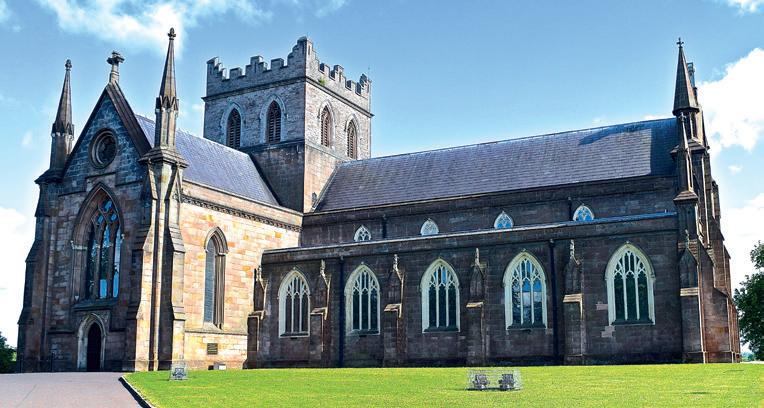
A snapshot of the standard of playing represented by some of the winners can be heard on NIIOC’s inaugural CD recording, Organ Splendour, which was released in August 2017 and features 12 pieces played by the winners of the 2011, 2013, 2014 and 2015 competitions. Copies can be purchased from info@niioc.com.
NIIOC 2018 will take place from Monday 13 – Wednesday 15 August. Dame Gillian Weir will chair the jury, and a new Dame Gillian Weir Medal will be awarded for an exceptional performance of an individual work.
Further details of jurors and prizes will be announced on the competition website www.niioc.com and on Facebook.
The Senior competition takes place at St Patrick’s Church of Ireland Cathedral, on the Walker organ, which has been rebuilt at various times over the years but still incorporates some of its 1840 pipework. It has three manuals and 56 stops, electro-pneumatic action and a detached console curiously sited in a pit to the east of the choir stalls. Most of the pipes are in a chamber on the north side of the stalls, with just the Tuba stop on the south side of the stalls.
The late Theo Saunders, organist of St Patrick’s from 2002-2015, wrote that the organ speaks very well into the cathedral, partly because of the skill of the organbuilders ‘and partly because of the excellent acoustics, which add to the warmth and clarity of the sound, without drowning it in echo’. He added that as a recital instrument, it benefits from Choruses to Mixtures on the Great and Swell, and plenty of Reeds. ‘For sheer unadulterated excitement it has a Cymbelstern, a pungent 32’ reed, and a commanding Tuba.’ It has two swellboxes and plenty of registration aids. All in all, a rewarding instrument for the young players to explore.
The Intermediate and Junior categories take place on the 1986 Wells-Kennedy organ in St Malachy’s Roman Catholic Church, a few streets away. This has ten stops spread over two manuals and pedals, and is housed on a west end gallery in a mahogany case with the two manual departments disposed vertically, the Great above the Positive, with the pedal pipes flanking either side of the soundboards. It has tracker action and is particularly suited to baroque repertoire.
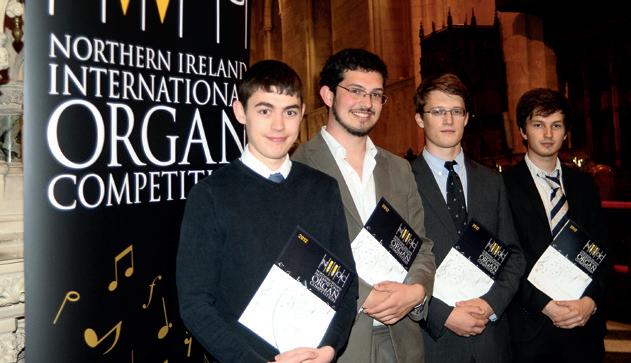
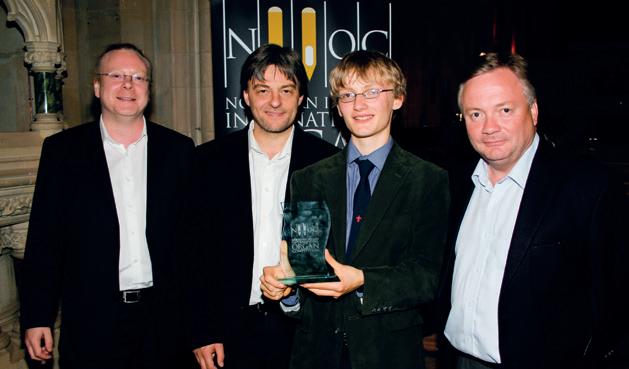
previously held posts at St Mary’s Cathedral (Edinburgh), Glasgow University Chapel, and St John’s Kirk (Perth). Andrew is reading for an MMus in Historically Informed Performance Practice, jointly at the Royal Conservatoire of Scotland and Glasgow University.
Ben Comeau is a freelance musician based in London, where he divides his time between organ, piano, composition and jazz. He was organ scholar at Girton College Cambridge for three years, and recital venues have included twelve Cambridge colleges as well as several English cathedrals. In 2014 he graduated top of his year with a starred first in music.
Ben Bloor began his musical education as a chorister in Derby Cathedral where he later became the organ scholar. He went on to organ scholarships at St George’s, Windsor and New College Oxford before graduating with a First Class Honours degree in Music. Thereafter, Ben spent a year as the organ scholar at Westminster Cathedral and subsequently as the Assistant Sub-Organist at Rochester Cathedral. He is currently organist of the London Oratory Church. In 2017 he was a semi-finalist in the inaugural Wadden Sea International Organ Competition in Denmark.
Richard Gowers was organ scholar of King’s College Cambridge from 2014-2017, graduating with a starred first, and is now a freelance organist, pianist and conductor, based in London. He is studying for a Masters in piano accompaniment at the Royal Academy of Music and is Organist at the Old Naval College Chapel in Greenwich. His first solo CD, Messiaen La Nativité du Seigneur from King’s College chapel, is scheduled for release in Autumn 2018.
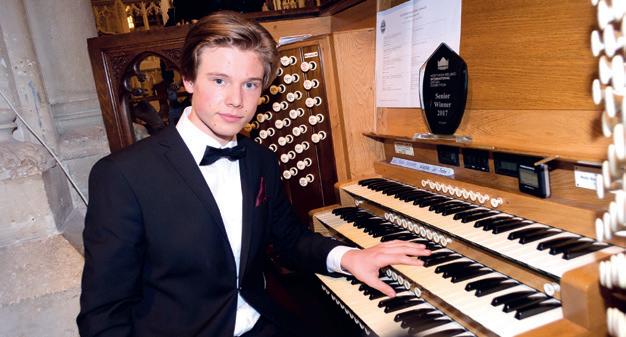
In 2014 Andrew Forbes was appointed Director of Music of Glasgow Cathedral, where he directs the professional choir and leads a diverse programme of music, including artistic direction of the Glasgow Cathedral Festival. He has
Alex Hamilton was a music scholar at Merchant Taylors’ School and organ scholar at St George’s, Windsor before taking up an organ scholarship at Trinity College Cambridge. He has studied the organ with Ann-Elise Smoot, Colin Walsh, Stephen Farr, David Briggs, and now also with Pieter van Dijk in Alkmaar, NL.
Mona Rozdestvenskyte graduated in 2016 with a degree in church music from the Detmold Academy of Music, Germany and stayed to study for a Masters. She receives organ lessons with Martin Sander. She won the third prize at the international Petr Eben Organ Competition in Opava (Czech Republic) in 2014, first prize at the MK Čiurlionis Organ Competition in Vilnius (Lithuania) in 2015, third prize in 2016 at the Organ Competition Bachpreis in Wiesbaden (Germany), and first place at the international Fugato Organ Festival in Bad Homburg (Germany).
Sebastian Heindl received his early musical education as a member of the Thomanerchor at St Thomas Church, Leipzig, where he also studied organ. From the age of 13 he has given solo organ recitals and numerous performances as accompanist of the Thomanerchor; he also contributed as a soloist to Sir John Eliot Gardiner’s BBC TV documentary Bach – A Passionate Life. In 2016 Rondeau released his debut CD ‘Flaschenpost-Secrets’, recorded on the organ of Magdeburg Cathedral. He is currently studying church music and organ at the Mendelssohn University of Music and Theatre in Leipzig, with Martin Schmeding and Thomas Lennartz.
Sansara was founded in December 2013 with the aim of bringing together some of the UK’s best young singers, and to provide opportunities for aspiring conductors to direct an group of like-minded friends in a collaborative and dynamic environment. Our first concerts in Winchester and the nearby village of Northington featured former choristers from Winchester and Salisbury cathedrals, as well as singers from the universities of Oxford, Cambridge, York and London. Some four years later, Sansara is a professional ensemble giving concerts across the UK and abroad.
Since the beginning we have performed a broad range of repertoire from the Renaissance through to the present day, and have always sought to present narrative programmes that explore themes and tie texts together in new and thoughtprovoking ways. We do our best to maximise the potential of the spaces in which we perform, singing from different areas of the church, often surrounding the audience, so as to create an immersive experience rather than more distanced ‘museumpiece’ performances. These elements have gradually become more refined and they continue to develop in our approach to choral music, old and new.
In 2015, after two years of giving concerts in Hampshire, Oxford and London, we decided to enter the London International A Cappella Choir Competition (LIACCC), then in its second year. Hosted by The Tallis Scholars and their director Peter Phillips at St John’s Smith Square, the competition was a real turning point for the group. I was keen to manage the expectations of the choir in order to reduce any pressure that could easily have built up as the competition progressed: and perhaps because of this we were able to perform without inhibition and be as true to ourselves as possible. For each stage we put together mini programmes, pieces that worked with the rubric of the competition but also told a story. In our heat, we performed Rudolf Mauersberger’s shattering Wie liegt die Stadt so wüst, a beautiful movement from Gabriel Jackson’s Requiem called Peace, my heart, and Nicolas Gombert’s epic Lugebat David Absalon. Our performances took us through to the final the following day.
We were up against The Epiphoni Consort and The Gesualdo Six, who both gave brilliant performances before us. For our final programme we sang William Byrd’s Laudibus in sanctis, Gabriel Jackson’s Our flags are wafting in hope and grief and the traditional Norwegian song Gjendines bådnlåt, before ending with Howells’ Take him, earth, for cherishing. We were praised for our versatility of sound in approaching a broad range of repertoire, and particularly for affecting the mood in the
room and creating a tangible atmosphere. It is this feedback that has stuck with me the most, and it is this atmosphere that the group always strives to create. Sansara won first prize and, perhaps more importantly, the Audience Prize, as voted for by the audiences from across the competition. Needless to say, we were delighted.
Several of the pieces we performed at LIACCC made it onto our debut recording, Cloths of Heaven, which was produced in summer 2016 and released in February 2017 by Convivium Records (this was reviewed in CM 2/17). The disc is essentially a concert programme, moving from darkness to light and framed by the opening and closing texts of the requiem mass, beginning with Manuel Cardoso’s stunning Introitus to his six-part requiem setting and ending with James MacMillan’s Lux aeterna. The recording also features works by our two
As a collective body of voices, a choir is a living, breathing instrument with unparalleled expressive potential.The whole group, taken at one of the recording sessions Photo: Daniel Hawkins
associate composers, Oliver Tarney and Marco Galvani, as well as previously unrecorded pieces by Malcolm Archer, Gabriel Jackson and Cheryl Frances-Hoad.
music in Spanish and music in Basque; we have never been afraid of mixing influences in our music-making. It was also fantastic to spend time with each other as a group – the eight days together in a beautiful hotel in the Basque mountains really helped strengthen some of the friendships that we have developed through being part of the choir, and we are looking forward to travelling together in the future.
As we move into our fifth year as an ensemble, we have had to take stock and ask ourselves the big questions that have been on our minds for some time: what are we? What do we hope to achieve? In endeavouring to answer these questions I have drawn on our experiences over the last few years to try to distil what it is about Sansara that is distinct, and why it is something that we should continue to develop and nurture.
Since its inception, the group has had no single director or conductor. This is relatively new territory for a chamber choir, which is traditionally the voice of a single artistic vision, fronted by a single individual. Whilst clear direction is often necessary, particularly from a practical perspective (in rehearsal for example), we have developed a collaborative approach to music-making which encourages individual expression within the framework of a collective artistic focus. The result is a highly engaging – and engaged – group of professional musicians working together to get to the essence of the music we perform: our interpretation of its core truth and message.
We recorded the disc in June 2016 in the wonderful chapel of Merton College Oxford, where I had just finished my undergraduate degree in Music. The process was another transformative one for the group, and the disc has since received high praise for ‘Perfect intonation and clean, pure sound’ (Observer) and ‘Breathtaking interpretations’ (Choir & Organ). The disc has been aired on BBC Radio 3’s The Choir, Breakfast and Essential Classics
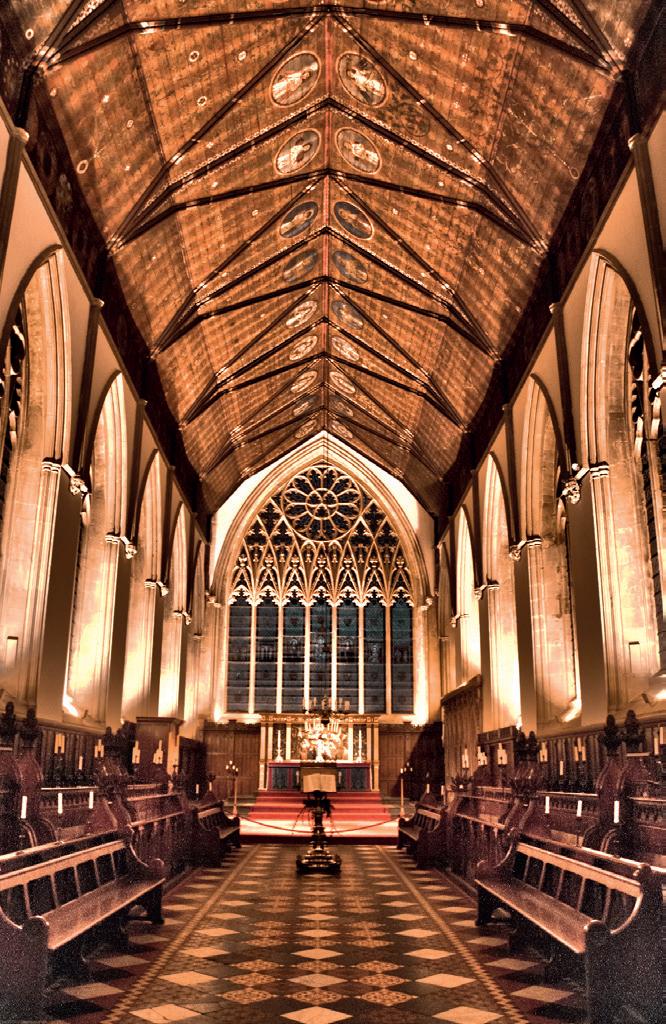
In the last two years we have performed in several UK festivals, including the Temple Winter Festival, Winchester Festival, London A Cappella Festival, and a special performance of Arvo Pärt’s music at St John’s Smith Square with the composer present. I had the immense privilege of meeting him and his wife after the concert and was humbled to hear how much they had enjoyed our performances of his music, particularly the incredible Virgencita, which is now one of our favourite pieces. One of the most striking things Pärt said was that the choir had ‘heart’. To hear this from the world’s mostperformed living composer was amazing, and encouraged us to push the group forward into our next chapter.
Last year, we went on tour for the first time and took a programme including Virgencita to northern Spain, performing four concerts as part of the Tolosa International Choral Festival. The concerts included music in English,
Thinking about the music and approaching it in this way enables the group to communicate to its audiences with openness and transparency. As a collective body of voices, a choir is a living, breathing instrument with unparalleled expressive potential. Sansara realises this through direct and honest music-making, always striving to conjure compelling atmospheres, and communicating with clarity and vivid integrity. With these elements in mind, our work is always first and foremost about the music, whether it be from Tudor England or composed yesterday.
Now, in 2018, we’ve embarked on our first large-scale project, Music of the Spires: a six-concert series in Oxford featuring works from the city’s unique library collections. For this year, we are focusing on the Forrest-Heyther partbooks held in the Bodleian library and six of the festal masses, with three by John Taverner and three by Robert Fayrfax. While most choral enthusiasts are familiar with the music of William Byrd, Thomas Tallis and their contemporaries, the music of the previous generation is much more rarely performed. We were keen to put together a set of concerts that would explore this remarkable repertoire and celebrate it in venues across the city.
The masses of Taverner and Fayrfax are astonishing compositional achievements and present immense challenges to the choir. The text is often set to be sung incredibly slowly, with long phrases dedicated to a single vowel. The music requires careful attention to unanimity of vowel colour and blend; it is music that employs the full potential of the human voice as an expressive instrument, without the emphasis on clarity of text that came later, in the music of Tallis, Byrd and their contemporaries. Moving between duets, trios and full sections, this repertoire is full of variety and has been a revelation to explore so far.
Although the project is primarily a focus on music from Tudor England, each concert features new music, to provide a contrast to the early repertoire. We have set pieces by our associate composers, Oliver Tarney and Marco Galvani, among others, against the backdrop of England’s unique musical inheritance. Bringing the two soundworlds together is always an exciting process, in rehearsal and in performance equally, as both old and new musics echo and reflect each other, often in unexpected ways. In the opening concert of the series, for example, Galvani’s Ave Sanctissima Maria was paired with Robert Parsons’ glorious Ave Maria. We tried to make these two devotional prayers to the Virgin speak to each other, through a shared poignancy and clarity of expressive gesture.
We hope to continue Music of the Spires into 2019 and beyond, with the aim of performing this wonderful repertoire in some of the country’s cathedrals and abbeys, as well as in the chapels and churches of Oxford. Other future projects include educational work, recording, and further collaborations with other ensembles and composers. With everything we do, we return to the guiding principle that music matters and has tangible – if often ambiguous – meaning, that is as relevant today as it has ever been.
Visit
Saturday 28 July
Ireland These things shall be
Smyth Mass in D
Sunday 29 July
Programme to include:
Holst The Planets
Monday 30 July
Elgar King Olaf
Tuesday 31 July
Monteverdi Vespers
Wednesday 1 August
Bruckner Te Deum
Mendelssohn
Lobgesang
Thursday 2 August
Parry Blest pair of Sirens
Parry Symphony No 5
Parry Invocation to Music

Friday 3 August
Ravel Le tombeau de Couperin
Boulanger Psalm 130
Walton Viola Concerto
Stravinsky Symphony of Psalms
Saturday 4 August
Vaughan Williams
Toward the Unknown Region
Parry Elegy for Brahms
Brahms Ein deutsches
Requiem
28 July – 4 August
The greatest choral, orchestral and chamber music at the world’s oldest classical music festival!
01452 768 928
3choirs.org
 Andrew Griffiths
All photos by Sheila Burnett
The George pub, on the corner of Great Portland Street and Mortimer Street, is one of London’s unlikelier musical landmarks. Forlornly shrouded in scaffolding and deprived of its obligatory saint-and-dragon sign, its closed doors hardly merit a second glance from today’s shuffling commuters. It’s all a far cry from its heyday, when the composer Elisabeth Lutyens was able to claim that ‘if a bomb dropped on The George a large proportion of the musical and literary world would be destroyed’.
Next to the old Queen’s Hall, and close to the BBC in Langham Place, The George was once so popular amongst musicians that Sir Henry Wood, frustrated by its adhesive effects on his
orchestra, christened it ‘that bloody Gluepot’. The Queen’s Hall was lost in the Blitz, but the pub’s nickname stuck, and The Gluepot enjoyed a second flourishing after the War as the watering hole of choice for a remarkable group of composers, poets, writers, producers and artists, often associated with the BBC’s new Third Programme. In the words of Humphrey Searle, ‘It was then a real rendezvous des artistes… many BBC programmes were discussed and settled within its walls’.
My chamber choir Londinium prides itself on unearthing high quality music from the fringes of the repertoire. We first encountered the fascinating history of The George by chance, when a musical acquaintance, enthusing about the work of Alan Rawsthorne, was heard to say, “Of course, they all met in The Gluepot”. Intrigued, we began to read around, and to ask questions of those in the BBC with longer memories. The more we researched this remarkable meeting of artistic minds, the more it became clear that there was an important tale to be told.
Lutyens, herself a key member of the Gluepot group of the 1940s, supplied us with the fullest account of its regulars: ‘Looking around, one could see John Ireland, Alan Rawsthorne, William Walton, Constant Lambert, Humphrey Searle, Lawrence Leonard, [the poets] Louis MacNeice, Bertie (W H) Rodgers, Dylan Thomas, Roy Campbell, Uncle Tom Cobleigh and all!’ Careful sleuthing through memoirs and autobiographies of the time allowed us to expand her list a good deal. Arnold Bax was an early habitué, and E J Moeran dropped in on occasion. It’s not far-fetched to think that Moeran’s housemate Peter Warlock might have joined him; we know that Constant Lambert and William Walton liked to visit them both at their riotous Eynsford cottage. Other notable figures include the composers Leslie Heward, Hyam Greenbaum and Christian Darnton, Warlock’s biographer Cecil Gray, the legendary producer Walter Legge, the poet Randall Swingler, and the artists Michael Ayrton and Isabel Rawsthorne (née Nicholas).
Constant Lambert, composer of The Rio Grande and founding conductor at The Royal Ballet, was undoubtedly the central figure of the group. Lutyens furnishes a wonderful description of him holding court in The Gluepot: ‘...Shaking with inner laughter, to explode, when joined with friends, in lucid and uproarious descriptions of something ridiculous spotted in a newspaper, or his latest limerick or French poem. He was larger than life, and a life lived to the fullest and most all-embracing.’ He even married a member of The Gluepot set: the fascinating Isabel Nicholas – painter, artists’ model, socialite and muse to lovers such as Jacob Epstein, Alberto Giacometti and Francis Bacon. After Lambert’s early death, Isabel married another Gluepot regular, Alan Rawsthorne.
The more we researched this remarkable meeting of artistic minds, the more it became clear that there was an important tale to be told.
Between them, Lambert and his Gluepot composer friends ran the whole gamut of musical style, from the relative conservatism of Ireland, Bax, and even Walton, to the 12-tone advocacy of Searle and Lutyens, who had the misfortune to acquire the sobriquet ‘12-tone Lizzie’. Their discussions about music would surely have made for fascinating listening! Yet despite their differences of approach, they seem to have shared a real sense of camaraderie. Michael Tippett even went so far as to suggest that Lutyens, Walton, Lambert and Rawsthorne represented an anti-Britten cabal: ‘They all had great chips on the shoulder and entertained absurd fantasies about a homosexual conspiracy in music led by Britten and Pears.’
Whatever the truth of this, it’s clear that The Gluepot composers enjoyed many musical and professional connections, and looked out for one another wherever possible. Lambert was one of the original narrators for Walton’s Façade, whilst Walton personally stumped up the fee for Lutyens’ first commission. Ireland had taught several of the younger composers, and Greenbaum (an expert orchestrator) gave advice to Lambert, Walton and Rawsthorne. Prompted by Warlock, the young Walton received advice from Cecil Gray, and may also have studied informally with Searle.
Several of The Gluepot composers were drawn together by their progressive politics. Rawsthorne, Darnton, and Swingler were all strongly left wing, as was Rawsthorne’s friend Alan Bush, a communist party member and founder of the Workers’ Music Association (WMA). Amongst the fruits of their collaborations was a WMA recording of two-piano arrangements of international marching songs by Rawsthorne,
brilliantly entitled Left!, Left!. Bush even contrived to introduce the socialist anthem The Internationale into Ireland’s 1937 coronation commission These Things Shall Be (he’d been drafted in to assist with the orchestration). Ireland later had cold feet, but the title survives in the published vocal score, immediately after the word ‘Paradise’! Such a subversive streak perhaps explains the BBC’s attempt to ban Bush’s music from the airwaves during the Second World War; only when Vaughan Williams threatened to withdraw a new commission of his own in solidarity was the situation resolved.
If this all sounds a bit weighty, then it’s worth noting that not every Gluepot collaboration was so earnest. Lutyens relates meeting Constant Lambert one day whilst struggling with a Post Office Film Unit assignment: ‘I walked into The Gluepot... and said to Constant, “You know, I’m rather perplexed because I have to write some music that sounds like a brown paper parcel”... and he had a brown paper parcel and together we wrote a piece of music on the parcel. Unfortunately it had to go somewhere – so it was posted!’
Londinium’s debut recording brings together music by these Gluepot composers in what we hope will prove a rewarding and highly varied programme. There is plenty of classic repertoire here, not least in Bax’s monumental Mater ora filium and the delicious I sing of a maiden, and Walton’s Where does the uttered music go?, but the disc also features premiere recordings of Rawsthorne’s highly impressive Four Seasonal Songs, and two works by Alan Bush: Like Rivers Flowing, and Lidice, a deeply moving response to the atrocities committed by the Nazis in the Czech village of that name. The daring chromaticism
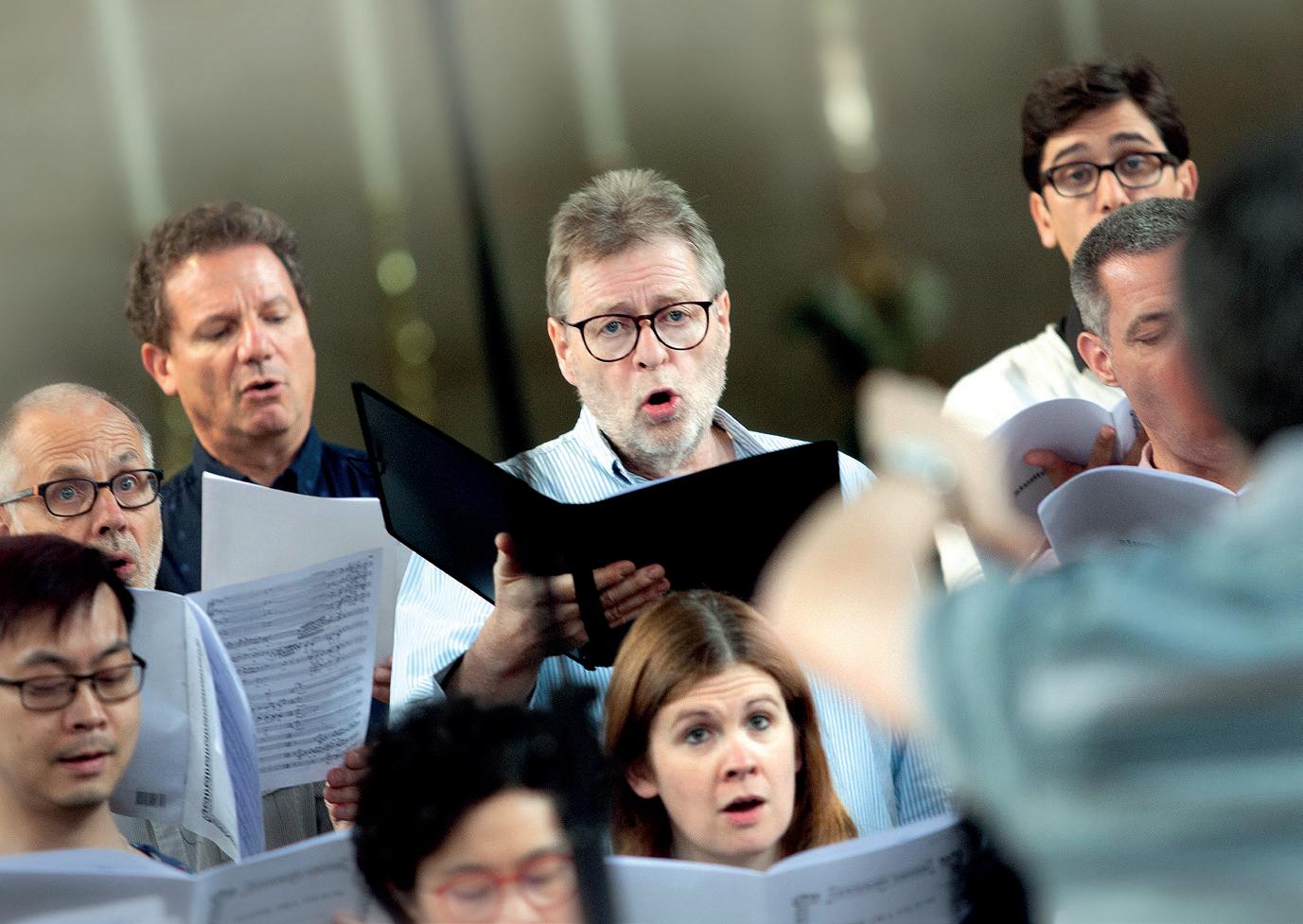
of Peter Warlock’s breathtaking The Full Heart is paired with the work that may have inspired it, Delius’s On Craig Ddu, whilst Moeran’s Songs of Springtime provide quasi-madrigalian sparkle. The programme is completed by a pair of nostalgic part-songs by Ireland, and an exquisite late work by Lutyens, Verses of Love, whose warm tone-clusters and melting glissandi perfectly capture the hushed rapture of Ben Jonson’s text.
Recorded in the generous acoustic of All Hallows’, Gospel Oak, and produced and engineered by the choral dream team of Adrian Peacock and David Hinitt, the disc was made possible thanks to a spirited crowdfunding campaign, and
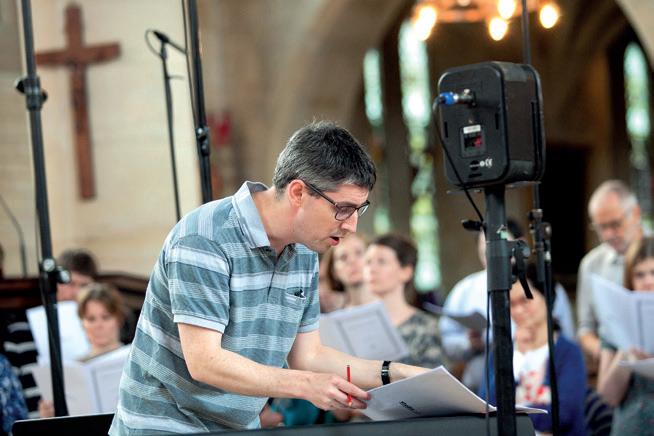
assistance from the John Ireland Charitable Trust, the Alan Rawsthorne Trust, and the Alan Bush Music Trust. We are thrilled that it appears on the SOMM label, renowned as a champion of British music.
A trawl through the more arcane recesses of Westminster City Council’s planning website reveals that The George has recently had its premises licence renewed. Perhaps its doors will open once again, and music lovers may yet have the chance to savour a pint or two in The Gluepot, and consider its rich cultural heritage. But then again, they’d best be careful not to get stuck inside!
Andrew Griffiths enjoys an enviable reputation as a dynamic young conductor with a particular flair for opera and choral music. He has conducted productions for The Royal Opera (where he was a Jette Parker Young Artist), WNO, Mid Wales Opera, Early Opera Company, Bampton Classical Opera, and Iford Festival Opera, and concerts with the Orchestra of the Swan, Southbank Sinfonia and Orpheus Sinfonia. He regularly broadcasts and records with the BBC Singers, has conducted the choirs at Dartington, New London Chamber Choir, and Hong Kong’s Tallis Vocalis, and is musical director of Londinium and Kingston Choral Society. He is also a staff vocal coach at the National Opera Studio, and sings professionally as a founder member of renowned vocal consort Stile Antico. More about Londinium can be found at www.londinium-voices.org.uk.
2018 marks the centenary of American composer (conductor/ educator/arranger/pianist...) Leonard Bernstein’s birth. Probably best known for his West Side Story, Candide and On the Town, he was a varied and prolific composer, his works encompassing symphonic and orchestral music, ballet, film and theatre music, choral works, opera, chamber music and pieces for the piano.
Bernstein’s desire to be a musician was initially opposed by his immigrant parents, originally from the Ukraine, but they became more supportive when it became clear where his talents lay. He began his musical life by learning the piano and would often play entire operas or Beethoven symphonies together with his younger sister at the keyboard. From his earliest years, jazz was an integral part of his life, and it had a crucial impact on his music. As a teenager in the 1930s he was famous for his jazz piano playing at parties, he directed a swing band at summer camp and, later, earned money playing the piano in a jazz club at night. Some of the jazz-inflected music he composed in the mid-1930s at Harvard provided source material for future works, which abound with jazz influences and rhythms. He became friends with Aaron
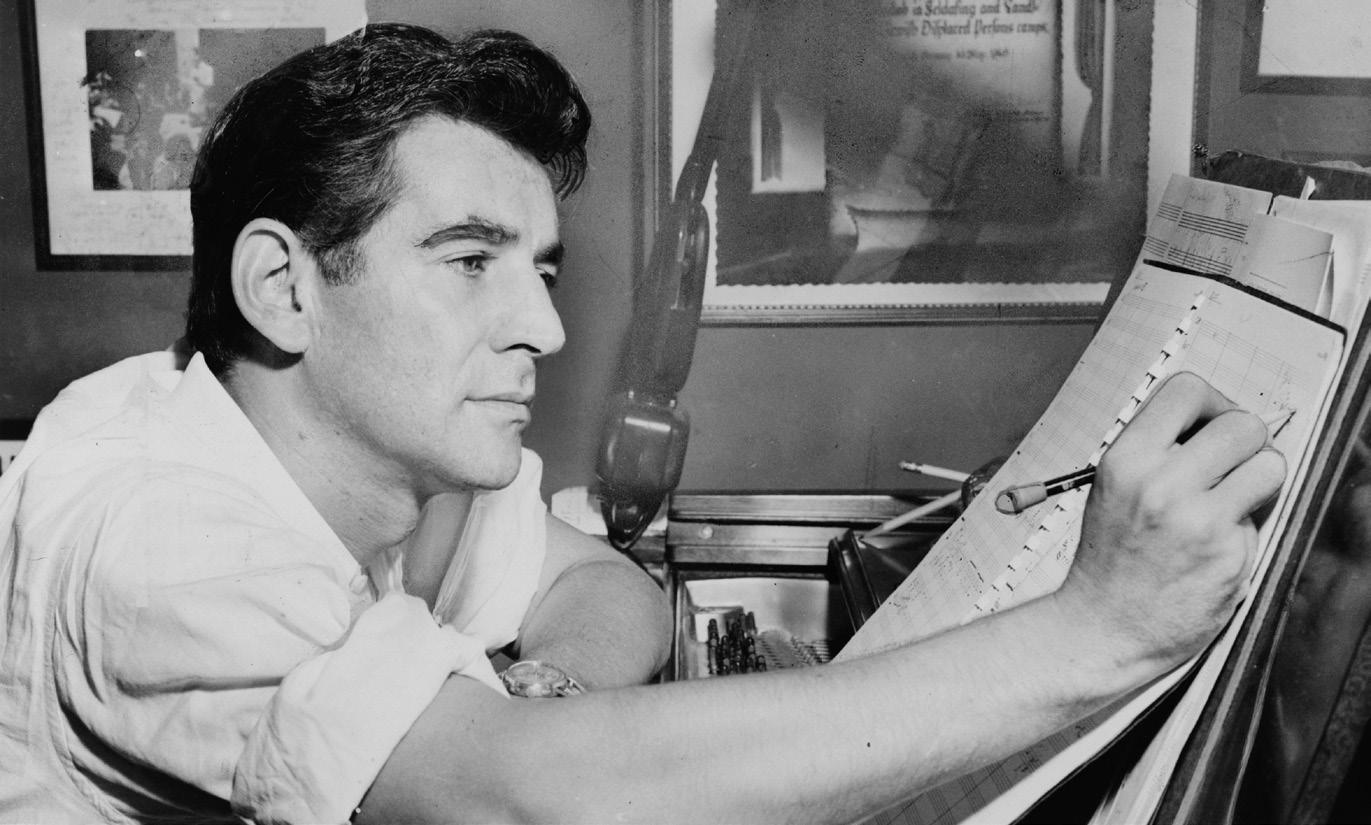
Copland and, although never formally his student, would regularly seek advice from him about his own compositions. After Harvard and the Curtis Institute of Music he began to study conducting, and was appointed assistant conductor to the New York Philharmonic Orchestra in 1943. He became its music director in 1958.
In early December 1963, Bernstein received a letter from the Very Reverend Walter Hussey, Dean of Chichester, requesting a piece for the Southern Cathedrals Festival in 1965:
“The Chichester Organist and Choirmaster, John Birch, and I, are very anxious to have written some piece of music which the combined choirs could sing at the Festival to be held in Chichester in August 1965, and we wondered if you would be willing to write something for us. I do realise how enormously busy you are, but if you could manage to do this we should be tremendously honoured and grateful. The sort of thing that we had in mind was perhaps, say, a setting of the Psalm 2, or some part of it, either unaccompanied or accompanied by orchestra or organ, or both. I only mention this to give you some idea as to what was in our minds.”
The festival features the cathedral choirs of Chichester, Winchester and Salisbury. Dr Hussey was a noted champion of the arts, having commissioned works by visual artists, poets and composers. Among these are an altarpiece painted by Graham Sutherland, stained glass windows by Marc Chagall, a sculpture depicting the Madonna and child by Henry Moore, a litany and anthem by W H Auden, a tapestry by John Piper and, perhaps most notably, the cantata Rejoice in the Lamb by Benjamin Britten. Despite Dr Hussey’s initial wish for the setting of Psalm 2, Bernstein responded with a ‘suite of psalms, or selected verses from psalms’, under the working title Psalms of Youth (Bernstein later changed the title because it misleadingly suggested that the piece was easy to perform). Hussey was hoping that Bernstein would feel unrestrained for composing in a more popular vein despite the sacred nature of the assignment. Hussey wrote, “Many of us would be very delighted if there was a hint of West Side Story about the music.”
It was at this time that Bernstein took a sabbatical from his post as Music Director of the New York Philharmonic. Freed from the time-consuming obligations of conducting and studying scores, he could now turn his attention to composition. He worked on Chichester Psalms amid a busy schedule, completing this, his first work since Kaddish (his third symphony), which was written in memory of President Kennedy in 1963. Both Chichester Psalms and Kaddish combine choruses singing Hebrew text with orchestral forces, but where Kaddish is a statement of profound anguish and despair, Chichester Psalms is hopeful and life-affirming.
Unlike a good portion of the music Bernstein composed (but did not complete) during his sabbatical, Chichester Psalms is firmly rooted in tonality. Bernstein commented during a 1977 press conference, “I spent almost the whole year writing 12tone music and even more experimental stuff. I was happy that all these new sounds were coming out: but after about six months of work I threw it all away. It just wasn’t my music; it wasn’t honest. The end result was Chichester Psalms, which is the most accessible, B-flat majorish tonal piece I’ve ever written.”
Chichester Psalms juxtaposes vocal part-writing most commonly associated with church music (including homophony and imitation), with the Judaic liturgical tradition. Bernstein specifically called for the text to be sung in Hebrew (there is not even an English translation in the score), using the melodic and rhythmic contours of the Hebrew language to dictate mood and melodic character. By combining the Hebrew with Christian choral tradition, Bernstein was implicitly
issuing a plea for peace in Israel during a turbulent time in the young country’s history. Each of the three movements of Chichester Psalms contains one complete psalm plus excerpts from another paired psalm. Musically, Bernstein achieved Dr Hussey’s wish for the music to remain true to the composer’s own personal style. The piece is jazzy and contemporary, yet accessible. In a letter to Hussey, Bernstein characterised it as ‘popular in feeling’, with ‘an old-fashioned sweetness along with its more violent moments’.
This somewhat unconventional work must have raised several eyebrows at the Southern Cathedrals Festival: an American Jewish composer with a leaning towards the sounds of Broadway writing a setting of psalm selections in Hebrew for the English cathedral world? This was a culture, it should be noted, in which the appearance of risqué biblical texts and the tones of the saxophone (Walton’s Belshazzar’s Feast) or the use of war poetry in a religious work (Britten’s War Requiem) ruffled the Establishment’s feathers. Still, this unique jewel in the repertoire has become recognised as an illuminated expression of the message of the psalms; it is also a possibly-unintended commentary on the timeless struggles of mankind and, maybe more specifically, on the conflict among different nations.
There is no conventional approach to the combination of choirs and orchestra – first the use of a solo boy in a lower range than the typical, floating-chorister role is a distinctive marker. This exacting vocal part has the option of being taken by a countertenor, and, since the persona represents the psalmist himself (the boy David), Bernstein stipulated that it was a male-only domain. The orchestral forces, while omitting woodwind, make the most imaginative use of strings, brass and percussion, but most of all the piece is a major role for two harps. The biblical references alone grant these instruments a heavenly part, and the composer made their importance clear at an initial rehearsal by treating the rest of the forces to a play-through by the harpists alone. The percussion lends colour, and also adds metrical and rhythmic dimensions which would have seemed, at the very least, refreshing in the intended setting of an English cathedral. In the event, the actual premiere was in Philharmonic Hall, New York City, shortly before its unveiling in Britain. The legendary percussionist, James Blades, had an important consultative role in adapting the instrumentation for an economy version
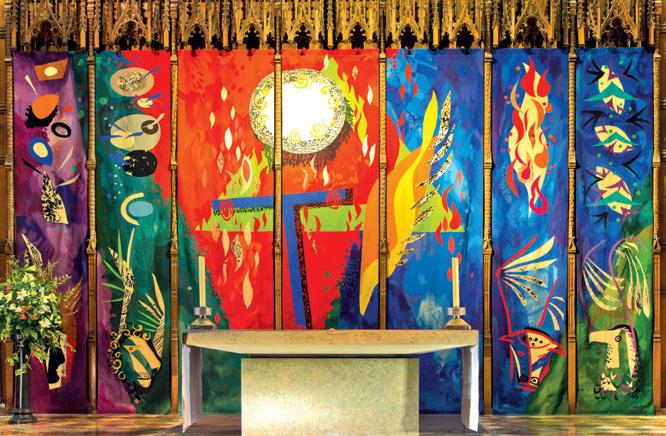
The talents required in Chichester Psalms should not be underestimated. The movements are written with a rhythmic complexity and interval-calculations which, even in the 1960s, would have come as a shock to members of choral societies or church choirs.
by the composer for organ and one player each on harp and percussion, and this has helped to contribute to the work’s widespread following ever since.
There are three movements, each using selected verses from the Hebrew psalms, identical except in some details of versenumbering to the psalms chanted and recited daily in churches and monasteries in all of Christendom, so the work serves as an essay in ecumenism, whether that was the intention or not. The best known of these psalms is the central movement, which depicts God as the Good Shepherd, tending his flock. The opening is essentially a call to praise God and rejoice in Creation, with a paean of praise in what is known in the Christian liturgy as the Jubilate. After the comforting words of the central section, the third movement delights in a divine optimism of comfort and hope, with an appeal for unity at the close, echoed in Bernstein’s use of a unison ending for voices and orchestra.
There is a risk in the world of choral singing to undertake works which demand just a little too much of the singers. The talents required in Chichester Psalms should not be underestimated. The movements are written with a rhythmic complexity and interval-calculations which, even in the 1960s, would have come as a shock to members of choral societies or church choirs. All the voices, including a short section for an SATB quartet near the end, have huge technical demands made of them, both vocal and musical. The major part of the first movement is in 7/4 metre, itself a counter-intuitive sensation for musicians. There is a predominance of the
interval of the seventh, especially between the lowest two voices – a tricky relationship for the ear to gauge. The use of this number is specific to its symbolism in the Bible. In the Book of Revelation alone the number is used 54 times! We are perhaps so accustomed to references such as ‘sevenfold grace’, the seventh day, seven divisions of the Bible, seven angels, seven trumpets, and seven seals, that they go unnoticed unless pointed out. It should be noted also that the modern harp has seven pedals to alter the pitch of the strings and the octave, despite the name, has seven letter-named notes. That is probably enough about this subject on paper: the feel of it is in the musical effect.
Bernstein made a motivic use of an angular shape heard at the outset which consists of a downward fourth, a rising seventh (see above) and a descending fifth. This gets transformatory treatment throughout the work, which has the effect of binding it together through its various moods and messages. Some have found it close, at least in the elements of the fourth and the seventh, to the principal theme of Mahler’s Symphony of a Thousand, ‘Jupiter’ from Holst’s The Planets and even, most surprisingly, to the introduction to the 1964 theme for Star Trek, composed by Alexander Courage.
Leonard Bernstein, the composer of big tunes, taut rhythmical interplay and glitzy instrumentation, succeeded in merging two contrasting musical worlds of biblical Hebrew verse and Christian choral tradition; Chichester Psalms is an enduring favourite among choral singers and a work which grabs the attention of all who hear it.
Sacred and Profane
The Sixteen and conductor Harry Christophers present a beautifully curated programme contrasting the sacred and secular work of the two 16th-century composers William Cornysh (father and son), and one of the 20th-century’s great masters of vocal music, Benjamin Britten.
UK tour runs from 14 April – 9 November 2018
For a full list of dates and locations visit www.thesixteen.com
Postage and packing
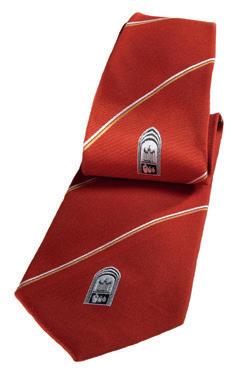
£1.75 for 1 item
£3.25 for 2 items
£4.50 for 3+ items
TOTAL TO PAY
Please send orders and enquiries by email to judychisman@hotmail.com or by post to Judy Chisman, 83 Eastern Way, Elmswell, Bury St Edmunds IP30 9UD Cheques should be made payable to Friends of Cathedral Music
Choral Music by Philip Stopford
Choir of Truro Cathedral
Dir: Christopher Gray
In my Father’s house; Bring us, O Lord God; Ubi caritas; Christ is our cornerstone; Love divine; The Chorister Prayer; Jesu, lover of my soul; O how glorious is the kingdom; Ave maris stella; Ave Maria; Stabat Mater; There is no rose; A child is born in Bethlehem; What sweeter music; A Christmas Blessing; We three kings; Silent night; The star of kings.
REGENT REGCD 517 TT 79:56
Philip Stopford’s choral music has become widely known on both sides of the Atlantic. Some might feel his writing somewhat saccharine, but nevertheless, he has an appeal which suits diverse tastes with its emphasis on a rich melodic style.
This is the second disc of his music from Truro but on this recording the full choral ensemble is supported by the forces of the BBC National Orchestra of Wales. Many of the anthems were specifically orchestrated for this recording by the composer.
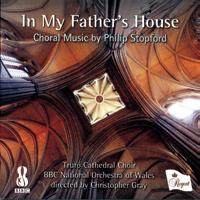
Both the singing and playing are first rate although, bearing in mind the style of the music, there is not a great deal of room for contrast. This is alleviated to a limited extent by juxtaposing the more meditative pieces against those on a larger scale. The reflective setting of Ubi caritas serves well as a prelude to the setting of Christ is our cornerstone with its stirring brass writing and sweeping melodic lines: O how glorious followed by Ave maris stella is equally successful. The orchestrations are generally colourful although the tutti string writing occasionally blurs the choral sound despite effective inclusion of interesting counter-melodies often played on solo woodwind instruments. I especially enjoyed the sparkling colours in an exuberant performance of A child is born, but considering the ready availability of a harp, the use of piano in Love Divine did feel somewhat incongruous. This recording is especially recommended for those who enjoy wallowing in well-crafted melodies accompanied by sympathetic orchestral playing.
David ThorneChoir of Salisbury Cathedral
Dir: David Halls
Organ: John Challenger
Shephard In Christ we see our God; Psalms 82, 84, 85; Purcell Te Deum and Jubilate in E Flat; Tallis Loquebantur variis linguis; Halls Missa Festiva; 2 hymns; Todd M&N Short Service; Howard Moody In the hand of God.
PRIORY PRCD 1173
The music for a more or less typical Sunday makes a fine structure for a programme of cathedral music, and Salisbury’s offering is well and truly far off the beaten track, with everything most beautifully sung by the girls and men of the cathedral choir. Purcell’s Te Deum and Jubilate from his complete service in B flat are an unusual and welcome inclusion, as is Loquebantur; otherwise there is a heavy emphasis on works commissioned for Salisbury, of which all repay careful listening though the most striking is the Missa Festiva by Salisbury’s Director of Music, in which one may discern and enjoy the influence of the 20th-century French school. Will Todd’s Magnificat and Nunc Dimittis are attractive but somewhat lightweight for a Sunday. Sadly, the compilers of this programme have not played by the rules, for to maintain verisimilitude it needs to be anchored somewhere in time. On the one hand, at Mattins Richard Shephard’s Introit is for Christmas but Loquebantur variis linguis is a great Pentecost classic, and the three psalms from the 16th evening do not belong together on any Sunday at all, even if one is glad to praise the subtlety and colour of the organ accompaniment. Howard Moody’s extensive anthem might just find a fitting place on the Feast of Dedication. As to the two hymns, ‘O God of earth and altar’, while being loved for its fine East Anglian folk-song tune, seems to have little liturgical use though such lines as ‘Our earthly rulers falter’ appear all too relevant to the Brexit process. As for the other hymn, ‘I cannot tell’ is a curiously popular piece of sentimentality with a meaningless and irritating repetition of the word ‘saviour’ in the last line of each verse. I cannot tell why it was included, but this I know, that the Londonderry Air (‘Danny Boy’) to which it is sung, makes a rotten hymn-tune. Such scruples may not worry anyone desiring a memento of a great cathedral and its excellent choir (though the front cover of this CD should have conveyed the information that it is the girl choristers who are singing), and I am pleased to say again how well everything has been done.
 Timothy Storey
Choir of New College, Oxford
Dir: Robert Quinney
Organ: Timothy Wakerell
Harris Faire is the heaven; Bring us, O Lord God; Stanford For lo, I raise up; Te Deum in C; M Martin Ut unum sint; I saw the Lord; Finzi Lo, the full, final sacrifice; God is gone up; Hadley My beloved spake; Samuel Love bade me welcome.
NOVUM NCR 1391 TT 65:50
This CD of anthems by British composers brings together some well-loved pieces of the 20th century and three contemporary ones by composers with a connection to New College Oxford. The recording starts with two splendid pieces by Sir William
Harris, who was Organist of New College from 1919 to 1929. While there, he composed the exquisite 8-part motet Faire is the Heaven, which is given a beautiful performance by the choir, as is his equally fine anthem Bring us, O Lord God, composed some 30 years later. Stanford’s dramatic For lo, I raise up is sung with some panache and I particularly enjoyed the brief treble solo. The organ playing of Timothy Wakerell is excellent throughout the disc. He certainly can’t be blamed for the lack of fiery swell reeds which would have helped the drama of this anthem. The performance of Finzi’s Lo, the full, final sacrifice is one of the highlights of the recording. One senses the engagement of the choir with the changing moods. Less successful was Hadley’s My beloved spake, which I found slightly wooden.
Matthew Martin was briefly Assistant Organist at New College and is now Director of Music at Keble College Oxford. His two anthems are immediately appealing, and I especially enjoyed his imaginative setting of Ut unum sint, commissioned as an Offertory motet when the choir sang at a Pontifical Mass in St Peter’s Basilica in Rome in 2015. Rhian Samuel taught composition at the university of Oxford, having been Professor of Music at City University in London. Her unaccompanied setting of George Herbert’s Love bade me welcome uses imitative counterpoint and imaginative harmonies to good effect. The CD ends with a joyful account of Stanford’s Te Deum in C, skilfully directed by Robert Quinney.
Paul MorganChoir of St John’s, Cambridge
Dir: Andrew Nethsingha
Organ: Joseph Wicks, Glen Dempsey
Harp: Anne Denholm
Poulenc Mass in G; Kodály Missa Brevis; Janáček Otčenáš.
SIGNUM SIGCD 489 TT 63:32
Having recently written about the reissued Argo recordings made by the late George Guest with St John’s College Choir from quite a few years ago, I was interested to hear this new recording sung by the current choir, particularly as GG also recorded the Mass in G by Francis Poulenc. This has to be one of the most technically demanding pieces of the a cappella repertoire, and Andrew Nethsingha’s choir has risen to the challenge superbly. Poulenc said: ‘I tried to compose this act of faith....in this rough, direct style...particularly striking in the opening Kyrie’. The St John’s choir brings this ‘roughness’ (Poulenc also used the word savage!) but also the playful character to the music throughout while maintaining technical security and excellent intonation. The Gloria is full of rhythmic life but also has sensitive and graceful lines (the references to a motif in the slow section of the Organ Concerto, written at roughly the same time, are particularly beautiful). Poulenc considered ‘the Agnus Dei, sung by the soprano in the high register...without question one of the pieces in which I’ve most completely realised my intentions’ The soloists in this very exposed music are to be commended. A comparison between the GG and AN recordings would be interesting!
On 13th February 1945 the city of Budapest surrendered to the Red Army following a devastating siege of some 50 days. Two days earlier a choir made up of surviving members of the Opera House company gave the world premiere of Kodaly’s Missa Brevis accompanied by a harmonium. The work starts with a profound organ Introitus, setting the scene for the whole piece, clearly a huge cry from the heart and a great act of faith. The St John’s choir responds instinctively to
the emotions displayed here, from the pleading of the Kyrie eleison and Miserere of the Gloria through the brilliance of the Et resurrexit and the Hosanna to the final soul-searching Agnus Dei. The work ends with the triumphant organ Postlude played here by the organ scholar, Joseph Wicks.
Janáček’s Otčenáš from 1901 completes this recording in a re-scored version for organ and harp. The piece was inspired by a set of paintings depicting Russian peasants in devotional acts suggested by the lines of the Lord’s Prayer; there are six sections which flow on from one another linked by instrumental interludes. The piece is sensitively performed here with some heroic contributions from tenor soloist Michael Bell.
Nicholas Kerrison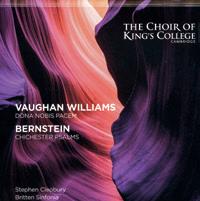
Choir of King’s College, Cambridge
Britten Sinfonia
Dir: Stephen Cleobury
Vaughan Williams Dona nobis pacem; Bernstein Chichester Psalms
KINGS KGS 0021
The two composers superbly performed on this CD (which I heartily recommend) are rather unlikely bedfellows, though one could establish similarities of a sort between the works here recorded: both incorporate recycled material, both are performed with reduced orchestrations, and in both cases the commissioning bodies got rather more than they were expecting. I refer you to the liner notes for more information, though I suggest the aid of a magnifying glass, so small is the print.
Dona nobis pacem, commissioned to celebrate the Huddersfield Choral Society’s centenary in 1936, requires soprano and baritone soloists, a large choir and a full orchestra. On the joint themes of peace and war Vaughan Williams assembled an anthology text, rather after the manner of Parry’s ‘Ethical Oratorios’, with a setting of Walt Whitman’s Dirge for Two Veterans as its centrepiece. Other words are drawn from the Mass and the Bible, and famously or notoriously, the baritone soloist declaims part of John Bright’s ‘Angel of Death’ speech, surely the only instance of words spoken in the House of Commons being set to music. This CD presents a fine performance, in which choir and soloists (Ailish Tynan and Roderick Williams) sing with admirable energy and expression. Jonathan Rathbone’s revised and reduced orchestration works well, and I cannot imagine that the composer would object to such an attempt to make his work accessible to smaller forces. I regret the rather distant recording of choir and soloists, which, combined with Dr Cleobury’s brisk tempi, makes it hard to make out the words. The Chichester Palms, superbly performed here in the composer’s own re-scoring for organ, harp and percussion, are settings in Hebrew of three complete psalms (100, 23 and 131) plus verses from three others. Most striking and exacting is the central movement, Psalm 23, in which the shepherdboy David sings serenely of the Lord his shepherd while all manner of choral mayhem is let loose around him as the tenors and basses sing part of Psalm 2 (‘Why do the nations so furiously rage together’). The treble soloist here, George Hill, quite steals the show, singing with complete confidence, security and control. Although this solo is sometimes taken by a countertenor, a Chichester chorister sang it at the first performance in the UK, as preferred by the composer.
It may be worth adding that the choirs of Chichester, Salisbury and Winchester Cathedrals took the work very
much in their stride, the boys especially, and that they greatly enjoyed performing it at the 1965 Southern Cathedrals Festival, the occasion for which it was written. It was given with full orchestra which posed a few problems because (to quote one of my informants) ‘The band turned up expecting to sight-read a Boyce symphony, and found the Bernstein rather a shock!’
Timothy Storey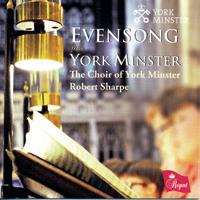
Choir of York Minster
Dir: Robert Sharpe
Organ: Benjamin Morris
F Jackson Improvisation; Sheppard Libera nos, salva nos; Smith Preces & Responses; Psalms 69 and 70; Howells M&N St Paul’s service; O pray for the peace of Jerusalem; Bairstow Blessed City; Vaughan Williams Te Deum in G; Vierne Final from Symphonie No. 3. REGENT REGCD 506 TT 77:26
Fine singing we have here from York with the combined boys, girls and songmen of the Minster. With music ranging from John Shepherd to Herbert Howells, the choir is on good form under the leadership of Robert Sharpe, with expert accompaniments from Benjamin Morris. The psalm-singing has an excellent natural pace to it and this is followed by one of the highlights of the disc, Howells’ St Paul’s Service. This too moves on well, with its unfolding lines and slowlychanging harmonies exploiting the acoustic of the Minster and the recording here is notable: the full force of the organ carefully balances the singers. Evensong from York would not be complete without Bairstow, and so we are treated to an excellent rendition of Blessed City, the first of two anthems, the other being one by Howells. Vaughan Williams’ Te Deum in G is an added bonus, even if it is ‘cut short’ (no ‘O Lord, save thy people’), and the whole Evensong concludes with a stirring performance of Vierne’s Final from Symphonie No. 3. If you are too far from one of our cathedral cities, this disc will give you the whole experience of our great choral tradition.
Nicholas KerrisonChoir of Nottingham Cathedral
Dir: Alex Patterson
Plainsong Salve Regina; Alma redemptoris Mater; Ave Regina caelorum; Regina caeli; Salve Regina; Hassler Dixit Maria; Philips Alma redemptoris Mater; Victoria Missa Ave maris stella (Kyrie, Sanctus, Agnus Dei); Britten A Hymn to the Virgin; Byrd Beata viscera; Anerio Regina caeli; Lassus Salve Regina;
McDowall Ave Regina caelorum; Tavener Mother of God; Skempton Ave Maria; Ave Virgo sanctissima; Amy Summers Salve Regina; Palestrina Alma redemptoris Mater; Patterson Ave Maria; Rachmaninoff Bogoroditsye Dyevo.
PRIORY PRCD 1196 TT 61:36
This attractive programme is centred around devotion to the Blessed Virgin Mary and the music that she has inspired. The four great plainsong Marian antiphons, Salve Regina, Alma redemptoris Mater, Ave Regina caelorum and Regina caeli punctuate the polyphony, as do movements from Victoria’s Missa Ave maris stella. It is good to hear Cecilia McDowell’s
setting of the Ave Regina caelorum text. Composed for the Choirbook for The Queen, it is a piece of considerable intensity, and also gentleness. The two pieces by Howard Skempton are most attractive in a largely calm and prayerful mood. The choir’s director, Alex Patterson, has contributed an Ave Maria setting, and another local musician, Amy Summers, who is the cathedral’s composer-in-residence, has set the Salve Regina in a harmonically ambiguous way that is strangely unsettling.
I said at the outset that the choir presents an attractive programme, and so it does. However, as it is all a cappella, the strain on the singers to maintain pitch does sometimes tell, which is a pity as this detracts somewhat from one’s total enjoyment.
Roger JuddThe Sixteen Dir: Harry Christophers
Angelus Domini descendit; Ave maris stella; In diebus illis; Beatae Mariae Magdalenae; Beata Barbara; Song of Songs: Nos. 19-21; Missa Ave Regina caelorum CORO COR 16155 TT 72:01
In this series, Harry Christophers and The Sixteen intend to explore a significant proportion of Palestrina’s sacred music using a single Mass setting as the theme for each disc, in this instance, the Missa Ave Regina caelorum. This recording is based on music composed in honour of the many women who feature in the scriptures.
As Christophers clearly states in his introduction, Palestrina is a master craftsman who shapes his music in a beautifully sonorous way. In many interpretations, choirs seem often to wallow in their own soundworld, especially in smaller works such as motets which require vibrancy and colour. The Sixteen consistently exhibit an extremely well blended and carefully managed sound with an excellent balance between vocal parts in both the homophonic and contrapuntal writing, and the controlled dynamism creates an unwittingly rhythmic approach especially evident in the motets. The triple metre tempo at the conclusion of Ave maris stella and the luscious performances of three of the Song of Songs highlight this to the full.
The production is of Coro’s usual high standard and St Alban’s Holborn an ideal recording venue, allowing resonance yet clarity.
David Thorne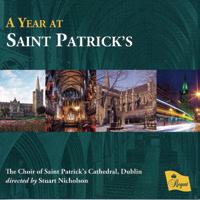
Choir of St Patrick’s Cathedral, Dublin
Dir: Stuart Nicholson
Organ: David Leigh
Plainsong Creator of the stars of night; Mathias A babe is born; Hopkins arr Nicholson We three kings; Litaize Epiphanie; arr Stanford I bind unto myself today; Briggs Magnificat (St Patrick’s Service); Moore It is a thing most wonderful; All wisdom cometh from the Lord; arr Nicholson Lord of the Dance; Stanford For lo, I raise up; Harris Strengthen ye the weak hands; M Martin Justorum animae; Hewson Sunset and Evening Star; Ernest Dines Nunc dimittis in E. REGENT REGCD 504 TT 75:53
A number of works featured on this disc are not only a welcome addition to the catalogue but also provide a platform
for a choir heard rarely on CD or radio broadcasts in the UK. The choir school for St Patrick’s, formed as far back as 1432, provides the choristers for this recording which comprises mainly 20th-century music. Both the singing and fine organ accompaniments by David Leigh more than match the standard found in many British cathedrals. The general characteristic which underpins the disc is the way in which the choir communicates its pleasure in performing. There are just a few occasions, especially at the end of phrases and in some of the rather more reflective moments, where the blend and tuning is not always quite focused, but these are minor blemishes and are more than compensated for by exuberant yet controlled singing in the large acoustic of St Patrick’s. The more powerful moments in Stanford’s For lo I raise up and Harris’s Strengthen ye the weak hands are both sung with aplomb, and David Briggs’s setting of the Magnificat, composed for the cathedral, is most effective. Philip Moore’s All wisdom cometh from the Lord serves as a fitting conclusion. Perhaps the wittier and more colourful moments in Stuart Nicholson’s arrangements of We three kings and Lord of the dance provide a clue behind the exhilarating and committed sound from Ireland’s national cathedral.
David ThorneMissa Confitebor tibi Domine
Yale Schola Cantorum
Dir: David Hill
Cornett: Bruce Dickey
Organ: Liuwe Tamminga †
Confitebor tibi Domine; Ricercar del sesto tuono†; Introduxit me rex†; Ricercar del quinto tuono†; Benedicta sit sancta Trinitas†; Loquebantur variis linguis†; Magnificat primi toni.
HYPERION CDA 68210
I much enjoyed listening to this CD of music by Palestrina. It begins with his 8-part motet Confitebor tibi Domine, musical ideas from which feature in his 8-part Missa Confitebor tibi Domine, which is the central item of the recording. It concludes with a flowing and nicely shaped performance of Palestrina’s Magnificat primi toni, again scored for eight voices. Interspersed between the choral items are five pieces by Palestrina, arranged on this recording for cornett (an early wind instrument popular from 1500 to 1650, and not to be confused with the cornet) and organ.
The Yale Schola Cantorum is a chamber choir specialising in sacred music and open by audition to all students of Yale University. Their distinguished principal conductor, David Hill, directs the choir for this recording. The voices of this youthful choir blend exceptionally well and their intonation is really excellent. David Hill’s interpretation avoids any sense of monotony by using changes of tempi and volume to reflect the words. The rhythmic and joyful excitement of the Hosanna of the Mass, for example, contrasts with the gentle Benedictus A beautifully sung Agnus Dei, which is both dignified and poignant, concludes the Mass.
Placing instrumental pieces between the choral items works really well. Most if not all of these are arrangements of Palestrina’s choral music. Within a few notes, I could tell that the organ being played by Liuwe Tamminga was not American. Then I noticed in the CD notes (although in very small print) that the instrumental items were recorded in the Basilica of San Martino, Bologna. Further research revealed that the organ was built by Giovanni Cipri in 1556, when Palestrina was about 30. It’s a pity that this isn’t mentioned in
the notes. We particularly associate cornetti with Monteverdi’s music and the brilliantly improvised ornamentation of Bruce Dickey, who plays the cornett, turns Palestrina’s music into Venetian splendour! I’m sure you will enjoy this CD.
Paul MorganChoir of Truro Cathedral
Dir: Christopher Gray
Victoria O quam gloriosum est regnum; Missa Simile est regnum caelorum; Lobo Missa Vox Clamantis; de Vivanco Magnificat octavi toni; Guerrero Simile est regnum caelorum.
REGENT REGCD 491 TT 61:26
The contribution made by Portuguese and Spanish composers of the Renaissance period has significantly increased the repertoire of many Anglican cathedral choirs over recent years, and it is admirably demonstrated in this disc made by the Truro choir. The opening track, Victoria’s O quam gloriosum, is sung with great vibrancy and sets the tone of the disc.
Many might not be aware of the works of the Portuguese composer, Duarte Lobo, who began his career in Evora before moving to Lisbon, eventually serving as choirmaster at the cathedral from 1594. The performance of his Missa Vox Clamantis is well focused in a convincing blend which highlights the contrasts between his contrapuntal and homophonic styles. Vivanco, like Victoria, began his musical life in Avila. The Magnificat octavi toni very much reflects the writing of the period. The singing in the lower parts is sometimes rather over-exuberant, although the Guerrero is far more refined and the Victoria Mass is of the quality we have come to expect from this most distinguished choir.
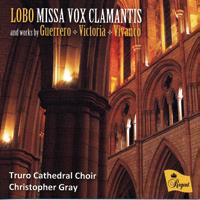 David Thorne
Trinity Boys Choir
Handbell Choir Gotha
Dir: David Swinson
Organ: Lewis Brito-Babapulle
Processional: Gaude, gaude, gaude Maria; Square Le Roy; Ludford Missa Dominica (Kyrie, Gloria, Alleluia, Credo, Offertorium, Sanctus, Benedictus, Agnus Dei; Communio); Anon There is no Rose; Angelus ad virginem; Graham Lack Candlemass; Leighton The Lord is my Shepherd; Recessional: Alma redemptoris Mater. RONDEAU ROP8001 TT 79:21
Nicholas Ludford (c1485 – c1557) is one of those names which prompts the response, ‘Ah yes’, followed by a realisation of how little one really knows of this near-contemporary of John Taverner and Robert Fayrfax who, in recent times, owes much to the pioneering work of The Cardinall’s Musick. This disc has just been joined in the discography by one by the Westminster Abbey choir (both favourably reviewed in The Gramophone, incidentally). So if you’re a fan of Ludford, the tide is turning in your favour.
The recording benefits from the contributions by The Handbell Choir of Gotha which, however authentic, are a matter for personal taste. Much scholarly work has gone into the preparation of the recording, the liner notes of which tells us about the influence of the Sarum Rite. Ludford’s musical
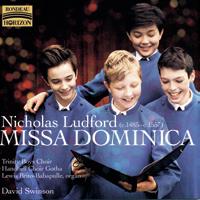
movements are interspersed by plainsong, some anonymous carols and a couple of more modern pieces. The singing of the two upper parts and tenors is rather spare, but the sound is effective and compelling, and I was immediately taken by the opening processional (Gaude Maria).
I have learned more about Ludford from the liner notes and the Gramophone reviews than I have gleaned from works of reference, and Dr Patten’s analysis of cathedral music lists does not reveal much in the way of performances at services. This is a pity because there is a magicality about this Mass even if an 8-minute Credo might strain the balance of a Sung Eucharist. This could be something for the Southern Cathedrals Festival, or Edington.
The liner notes suggest that the Trinity Boys Choir is more used to performing in opera houses than in the liturgy. Nevertheless, the performance is sensitive and professional and likely to be appreciated by aficionados, though I wouldn’t necessarily recommend 79 minutes of uninterrupted listening (well, you’d get breaks if you were at church).
Richard OsmondSt George’s RC Cathedral Choir, Southwark
Dir: Norman Harper
Organ: Frederick Stocken
Plainchant Veni benedicti Patris mei; Laetabitur iustus in Domino; Gloria VIII (Missa de angelis); Harrison Two motets; Duruflé Ubi caritas; Harper Mass for Lower Voices; Ives Missa brevis; O sacrum convivium; Three Latin motets; O’Neill Missa seria; Dominus regit me; Peeters Missa in honorem Sancti Josephi; Rimsky-Korsakov The Lord’s Prayer; Tranchell Two Psalm Settings. St George’s Cathedral (www.stgeorgescathedral.org.uk)
The musical life of St George’s RC cathedral in Southwark has undergone a significant resurgence in recent years, and on this CD Norman Harper has assembled a particularly imaginative and enterprising musical programme, including several first recordings and other items rarely encountered in the recording catalogue. A focus on contemporary, or nearcontemporary, works is a further plus.
The items new to the catalogue all justify their inclusion most handsomely. The two Mass Ordinaries by Nicholas O’Neill and Norman Harper, both written for St George’s, achieve tremendous atmosphere through their rich harmonic language, highly effective organ writing and constant sensitivity to the texts. O’Neill’s lovely setting of Dominus regit me, similar in idiom, also employs an actual plainchant psalm tone near the end. Timothy Craig Harrison, Director of Music at Middlesbrough RC Cathedral, wrote Two Motets for his choir there; these attractive pieces for (mainly unison) upper voices with organ contrast the vitality of the psalm (150) –attributable to its 7/8 metre and rapid delivery of its text –with the calm lyricism and gentle pace of the antiphon. Peter Tranchell’s psalm settings, almost wholly in unison, are lyrical in character; their tonal language is occasionally subverted by some quirky harmonic shifts.
The entire programme is performed with verve and enthusiasm, stylistic sensitivity, and a real sense of commitment from all participants. The lower voices are consistently excellent. The initial and closing plainchants are performed with an assured sense of style by the tenors and basses, who sound especially well in the cathedral’s generous acoustic ambience. The girl and boy choristers also make impressive contributions, producing a fresh and bright sound. The
girls provide very assured performances of (in particular) Harrison’s Two Motets, and of the first of Tranchell’s Two Psalm Settings. The boys, though less consistent – they confront some pitch challenges in Ives’ Missa brevis, for instance – provide a strong and convincing top line in the Mass settings by O’Neill and Peeters. Frederick Stocken’s organ accompaniments are uniformly outstanding in quality.
Roger WilkesWinchester College Chapel Choir
Dir: Malcolm Archer
London Mozart Players
Introitus, Kyrie, Sequentia, Offertorium; Sanctus, Benedictus, Agnus Dei, Communio. CONVIVIUM TT 48 mins
Surely we are all familiar with the plot of Amadeus and with the evil Salieri and the sinister Stranger. We also know that Mozart’s widow commissioned his pupil Süssmayr to complete the unfinished Requiem. Not the least merit of the disc under review is Malcolm Archer’s admirable liner-note in which he makes sense of the fog of myth, legend and dramatic invention in which this work has become enveloped. He presents the familiar Süssmayr version, an intrepid choice which puts him into direct competition with such giants as Karajan, Solti and John Eliot Gardiner, and John Butt, whose Dunedin Consort even offers a cleaned-up, ‘authentic’ Süssmayr. I say nothing of the various recent attempts to recreate the real Mozart. The Winchester forces give us a decent, straightforward performance with excellent soloists and notably good singing from the quiristers, who are sadly overwhelmed by the lower voices and some rather heavy orchestral playing. Unfortunately, singers and orchestra are not always together, and there is a curious and sad impression that the performers are somewhat unmoved by the music. Despite its many good qualities, I cannot imagine that this recording will appeal to a public beyond Winchester.
 Timothy Storey
SLAVA!
La Maîtrise de Toulouse
Dir: Mark Opstad
Organ: Jeremiah Stephenson Stravinsky Mass for choir and double wind quintet; Four Russian Peasant Songs; Penderecki Iže cheruvimy; Łukaszewski Ubi caritas; Bárdos Patkóéknál; Kodály Esti dal; Túrót ëszk a cigány; Laudes organi; Bartók Children’s Choruses.
REGENT REGCD 513 TT 69:57
It’s a pleasure to review another fine recording by La Maîtrise de Toulouse, directed by its founder, Mark Opstad. All the music comes from Eastern Europe, with the youthful choir overcoming with great distinction such challenges as singing in Hungarian and Russian, not to mention a number of melodic complexities over a wide vocal range.
Stravinsky’s somewhat austere Mass for choir and double wind quartet was written with the intention that children should sing the upper parts. This, together with the exquisite instrumental playing, makes this performance particularly special. Penderecki’s Song of Cherubim was composed for Rostropovich, who was often called Slava (Russian for ‘Glory’) – which explains the CD’s title. The deep chanting of the
basses reminds us of the Russian Orthodox tradition. This is followed by a work specially commissioned for this recording, Ubi caritas by the Polish composer Paweł Łukaszewski. A sensitive setting with beautiful warm harmonies, it is given an outstanding performance. Ten songs for upper voices by Kodály, Bartók and Stravinsky are nicely phrased and have a pleasing lightness about them.
The concluding work is Kodály’s Laudes Organi, composed for the 1966 convention of the American Guild of Organists, which was held in Atlanta. As one would expect in a work celebrating the virtues of the organ, the instrument plays a major part, starting with a lengthy introduction. Jeremiah Stephenson plays the demanding organ part with great skill, and the choir sing with real conviction, resulting in a succession of thrilling and glorious moments.
Paul MorganArcangelo
Dir: Jonathan Cohen
Begin the Song!; Chaconne a 4 in G; An Ode on the Death of Mr Henry Purcell; Ground in G min; The Nymphs of the wells; Sonata in A; Dread Sir, the Prince of Light.
HYPERION CDA 68149 TT 76:36
The undoubted success of this CD lies in an inspired decision by Jonathan Cohen to use two ‘haute-contre’ (high tenor) voices to realise the otherwise low-lying countertenor parts. The fine voices of Samuel Boden and Thomas Walker are the out-and-out stars of this recording, bringing life to John Blow’s wonderful music in a way that I certainly had not hitherto imagined possible. Of course, it is not just these singers that make this disc rather special. Jonathan Cohen’s group Arcangelo is made up of some of the most distinguished musicians well versed in repertoire of this period, and the playing throughout is of the very highest order, and a constant delight.
One joy of this CD is hearing echoes or pre-echoes of Henry Purcell. Blow was Purcell’s mentor, and famously stood aside to let the precocious youngster take over from him as organist of Westminster Abbey. Did Purcell model the famous low bass part of They that go down to the sea in ships on Blow’s ode Begin the song!, or was it the other way around? We’ll never know for sure. Blow’s Ode on the Death of Mr Henry Purcell shows the rightness of Cohen’s choice of singers – the result is a performance of great and affecting beauty.
The other choral items and the purely instrumental items, the Chaconne, the Ground and the Sonata, are no less striking, and combine to make this a CD of distinction. The booklet has an excellent essay by Professor Bruce Wood, and the whole is presented in the traditional Hyperion way.
Roger Judd
Dir: Andrew Arthur
Purcell O sing unto the Lord; M&N in G min; Suite in G min for solo harpsichord; Rejoice in the Lord alway; Voluntary in G for solo organ; Chacony in G min; Jehova, quam multi sunt hostes mei; Thou knowest, Lord, the secrets of our hearts; Te Deum in D. PRIORY PRCD 1182
Only recently has Trinity Hall appointed a Director of Chapel Music, Andrew Arthur, who very usefully can also call upon Orpheus Britannicus, his ensemble of specialist Early Music players and five solo singers, to collaborate with the undergraduates of the chapel choir in music-making of the highest professional standard, to which this CD of Purcell’s sacred and instrumental music bears ample witness. From the very first notes of his greatest anthem, with which this admirable programme begins, it is obvious that we are enjoying a performance of the highest quality, in which the chapel choir is no mere ‘backing group’ but a well-balanced and capable ensemble with a notably attractive, clear and steady soprano tone. I rejoiced to note that the Suite in G minor for harpsichord was entrusted to one of the organ scholars, Mr Arthur taking a back seat at this point. The mighty Te Deum is a grand but also highly expressive finale to a programme which could well have borne the title ‘Essential Purcell’ or ‘Henry’s Greatest Hits’, for it would be perfect for anyone wishing to know rather more of the composer of Dido’s Lament or Sound the trumpet. I have no hesitation in giving it my warmest recommendation.
Timothy Storey
Canterbury Cathedral Choir
Dir: David Newsholme
Organ: Adrian Bawtree & Nicholas Wearne
Tallis Honor, virtus et potestas; Byrd Ave verum corpus; Gibbons See, see the Word is incarnate; Croft We will rejoice in thy salvation; Greene Lord, let me know mine end; Boyce O where shall wisdom be found; Stanford 3 motets Op. 38; Parry I was glad; Harris Bring us, O Lord God; Howells Like as the hart; Leighton Let all the world.
SIGNUM SIGCD 514 TT 61:40
There must be dozens of discs with titles like this one, which have little attraction beyond their immediate circle. This is not one of them. It is a distinguished collection of music from the 16th to the 20th centuries, and a number of tracks left me with the sense of feeling ‘better’, which I am used to on coming out of Evensong. The programme is sensibly chosen and not too full of lollipops. It is strongly to be recommended.
I don’t usually play the girls or boys game and would not have been very certain with this disc, but certainly the Canterbury girls achieve a welcome lightness of attack in the Greene verse anthem and, indeed, generally, (though perversely I could have done with the Leighton anthem being a little less restrained in its attack).
The Tallis was new to me and a real pleasure to encounter and I am sure purchasers will not begrudge another recording of Stanford’s motets or of Parry’s I was glad, though it would be a treat to buy a disc of entirely unknown pieces.
For me, the highlight was the Boyce verse anthem, which had superb accompaniment, well-balanced soloists and a sensitive use of vocal ornamentation, but there is plenty for those with other preferences. The accompaniments by Nicholas Wearne in particular add much to the overall musical effect, and it is good to have the soloists identified. Philip Borg-Wheeler’s liner notes are a model of helpfulness, and free of self-advertising erudition. Warmly recommended beyond the confines of the Canterbury diaspora.
Richard Osmond
Siglo de Oro
Dir: Patrick Allies
Lassus Tristis est anima mea; Handl Filiae
Jerusalem, nolite; H Praetorius O vos omnes; Tulerunt Dominum meum; Missa Tulerunt
Dominum meum; Surrexit pastor bonus; Hassler Deus, Deus meus; A. Gabrieli Maria stabat ad monumentum
DELPHIAN DCD34208 TT 59:27
The choir Siglo de Oro present a most compelling programme of music. The listener is taken on a journey from Maundy Thursday through Good Friday to Easter Day and the joy of the resurrection. The Hamburg-based organist/composer Hieronymus Praetorius (1560–1629) is the featured composer, supported by a rich European mix of Lassus (the Netherlands), Handl (Moravia/Bohemia), Gabrieli (Venice) and Hassler (Bavaria). The Praetorius motet Tulerunt Dominum meum is an impressive piece, setting the moving story of Mary Magdalene visiting Jesus’s tomb on Easter morning and finishing with a peal of rousing ‘Alleluias’. The Mass of the same name makes frequent references to the music of the motet to great effect, some of them quite surprising, like the end of the third Kyrie. Both the Gloria and the Credo seem to encourage Praetorius into exploring a rich variety of compositional possibilities. The opening of the Sanctus is stunning, and not a little unexpected. The singers seem to relish all this, and the performance of the Mass is really splendid.
The supporting motets all come from a remarkable book – Erhard Bodenschatz’s Florilegium Portense 1618. This two-volume publication contained over 250 motets. The CD launches with Lassus’s glorious Tristis est anima mea and immediately the listener is engaged by the quality of the singing and the interpretation of this moving music. The Handl motet that follows is similarly arresting.
The Mass, and its attendant motet, is recorded for the first time, and they and the other motets are beautifully recorded by Delphian in the chapel of Merton College Oxford. Siglo de Oro and their director, Patrick Allies, are to be warmly congratulated on presenting this music so persuasively. One takes it for granted that ensemble, balance and tuning will be impeccable, and so they are – a great disc.
Roger JuddJames Lancelot plays the organ of Durham Cathedral
Toccata, Adagio & Fugue in C BWV 564; Herr Jesu Christ, dich zu uns wend BWV 709; Trio super ‘Herr Jesu Christ, dich zu uns wend’ BWV 655; Jesus Christus, unser Heiland BWV 665; Prelude & Fugue in A BWV 536; Erbarm dich mein, O Herre Gott BWV 721; Nun freut euch, lieben Christen gmein BWV 734; Partite diverse sopra il Corale ‘Sei gegrüßet, Jesu gütig’ BWV 768; Einige kanonische Veränderungen über das Weihnachtslied ‘Vom Himmel hoch’ BWV 769; Fantasia super ‘Komm, Heiliger Geist’ BWV 651.
PRIORY PRCD 1179
The organ in Durham Cathedral, originally built by Father Willis in 1876, over the years has been rebuilt, enlarged and revoiced by Harrison & Harrison, with the last restoration and additions taking place in 1970. It is considered to be a particularly outstanding example of Arthur Harrison’s work but is most definitely a Romantic instrument which some would consider ill-suited to the performance of Baroque music. James Lancelot knows the instrument well, having only just retired in 2017 as Master of the Choristers and Organist, a post he took up in 1985. On this CD he presents some of Bach’s music which is heard less often, starting with the exuberant C major Toccata, Adagio and Fugue, then moving through chorale preludes and variations towards the final flourish of the Fantasia super ‘Komm, Heiliger Geist’. In the middle of the programme is the very infrequently performed and recorded Prelude and Fugue in A BWV 536
James Lancelot’s love and understanding of this music is clear from the start, and he shows just what the Durham organ can do and how such an instrument can be appropriate for this music. I may not agree with some of the registrations (JL appears decidedly fond of one particular reed stop which seems to feature regularly, even in the middle of Jesus Christus, unser Heiland which was very unexpected) but the instrument’s various colours are heard singularly well in the sets of variations, and the full majesty of the organ is heard brilliantly in the swirls of sound in the final track, thanks also to the work of the Priory engineers. I believe this is the first of a short series of recordings of Bach’s music to showcase the versatility of cathedral organs within the UK. I look forward to hearing the others.
Nicholas KerrisonSolo Organ Works
Organ: Joseph Nolan
Suite latine; Trois nouvelles pièces; Bach’s Memento; Marche Americaine; Conte d’Avril: No. 6 (Marche Nuptiale)
8-10th June 2018
Bangor (North Wales)
12-14th October 2018
SIGNUM SIGCD438
This is a kind of coda to Joseph Nolan’s much-acclaimed recordings of Widor’s organ symphonies. The (English) organist of Perth Cathedral WA has an enviable command of the French Romantic repertoire and the instruments which inspired it; for this double CD he has used quite delectable instruments in Lyon and Toulouse, both of them offering unforced, colourful fluework and powerful manual and pedal
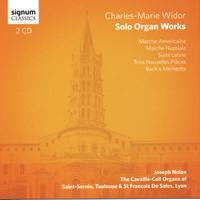
reeds. I would venture to say that the instruments and the performer outclass the music, nearly all of it composed in the Maestro’s old age, though some movements of the plainsonginspired Suite latine are attractive and worthwhile, especially Ave maris stella and Lauda Sion Sadly, one is forced to agree with Widor’s contemporaries who could make little of the Bach arrangements grouped together as Bach’s Memento; the re-working of Wachet auf! is strange, and the assault on the last chorus of the St Matthew Passion by the full organ is tasteless in the extreme. The remaining handful of assorted pieces offers more to delight the listener. Organ enthusiasts might buy this to complete their collection, but the general public should look elsewhere.
Timothy Storey
Scott Farrell plays the organ of Rochester Cathedral Holst Mars, the Bringer of War; Bach arr Virgil Fox Come sweetest death, come blessed rest; Franck Pièce héroïque; Vierne Epitaphe; Mendelssohn Sonata in A; Howells Rhapsody in C sharp min Op. 17 No. 3; Elgar arr Harris Nimrod; Joseph Jongen Sonata Eroïca.
REGENT REGCD 507 TT 70:30
The earliest pipes on the Rochester instrument date from the 18th century and were incorporated in the original organ (built by Samuel Green). The rebuilds, notably by Walker in 1905 and 1957, provide the organ with much of its character and colour, with further work by Mander in 1989 and 2016 creating an exciting and powerful sound. Scott Farrell reveals considerable virtuosity in a diverse and generally popular programme. Arthur Wills’ arrangement of the Holst is certainly a tour de force, although whoever the arranger, it is hard to better Holst’s original orchestration. Generally, the performances are extremely secure, with perhaps moments in the Jongen tending to feel over-enthusiastic and a touch rushed. The interpretation of the Mendelssohn is the high point of the disc. The first movement is often played in a rather nonchalant manner, but in this performance the chorale, stated in the pedal line, is compellingly heard against the fugal writing in the manuals. The registration is most effective, shining a new light on the entire work, and also highlighting Mendelssohn’s ability not only to write a fine melody but also his skill as a contrapuntalist. An enjoyable disc, but do adjust your equipment to cope with the wide dynamic range!
David Thorne
Paul Ayres plays the organ of St Barnabas, Ealing
Music written or arranged
by Paul AyresFour movements from ‘Suite for Eric’ (Toccata; Aria; Duo; Intermezzo); Variations on ‘Es ist ein’ Ros’ entsprungen’; Mostly Bach’s Toccata & Fugue in D min; Fantasy Sonata
‘Over the Rainbow’; Nine Pieces based on Beatles tunes.
PRIORY PRCD 1159
The detailed liner notes written by Paul Ayres, the performer, composer and arranger of all the music presented, give us
an insight into the influences on his work. Several of the pieces were written following commissions and they have also been submitted into various composition competitions. The first piece on the disc, Toccata from the Suite for Eric, was the winning piece in the Harrison & Harrison 150th anniversary competition, and its invention and forward momentum music must have contributed significantly to its success. This is not a disc for purists! Mostly Bach’s Toccata and Fugue in D minor could cause offence even if we accept the ‘original’ is not by Bach. Apparently ‘only 12.5% of the music has been cut’! Perhaps of greater interest, and certainly of considerable use for the concert hall, are the Fantasy-Sonata ‘Over the Rainbow’ and the Pieces based on Beatles tunes. Here we have melodies which are not only popular but which have been reworked rather well and which might just bring a new audience to the world of organ music. Ostinato from Over the Rainbow is particularly interesting and leads into ‘a melodic slow movement’ (the Cantabile), which develops the theme effectively. The Pieces based on Beatles tunes are full of character and variety of invention and bring the colours of the St Barnabas organ to the fore. If you want a disc which is different then this might be the one!
Nicholas KerrisonDavid Leigh plays the organ of St Fin Barre’s Cathedral, Cork Germani Toccata; Jonathan T Horne Three Introductory Voluntaries; Franck Grand Pièce Symphonique; Eoghan Desmond Four Simple Chorale Preludes; Lemare Symphony No. 2 in D min.
PRIORY PRCD 1190
The organ in St Fin Barre’s Cathedral, Cork has an interesting history. The architect of the building, William Burges, was determined that the organ should be placed on a west gallery – as in most French cathedrals – from where the sound could penetrate the whole building without obstruction. Prior to the cathedral’s consecration in 1870 he was repeatedly urged to allow the instrument to be placed at the east end so as to be appropriate for Anglican choral worship, but Burges got his way! Only 11 years after the consecration of the cathedral Burges died, and Thomas Magahy was asked to reposition the organ ‘more appropriately’. However, so as not to interfere with the architecture of the building, his solution was to put the William Hill instrument in a pit 14’ deep within the north transept! The result, of course, was an instrument which did not serve congregational singing effectively even if the choir was well supported. Various revoicings, reflections off the roof and walls and an additional manual and stops to make the instrument louder followed, but it took until 2013 and a radical rebuild by Trevor Crowe for a solution to be found. The organ is now at the east end, and at the same time a new nave division has been built onto the west gallery.
David Leigh’s recital shows just how successful the latest rebuild has been, with the solid foundation stops and brilliant reeds penetrating the building well. I was unfamiliar with most of the music on this CD but the performances show not only David Leigh’s considerable technical expertise but his complete understanding of the music. From the exciting build of Germani’s Toccata through the gentle and expressive pieces by J T Horne, to the majestic orchestral writing of the Lemare Symphony 2, Mr Leigh brings off completely convincing performances.
Nicholas KerrisonStefan Engels
Seven Pastels from the Lake of Constance Op. 96; Sinfonie für Orgel Solo Op. 143. PRIORY PRCD 1135 TT 70:49
The two major works on this disc, Seven Pastels from the Lake of Constance and Symphony in F sharp minor are played on the large, Romantic 4-manual organ of Pauluskirche in Ulm, Germany. The complex harmonies of Karg-Elert, together with the constant registration changes, may be something of a challenge to anyone unfamiliar with his music. There are moments here which are truly magical, particularly in the Seven Pastels, which were inspired by the composer’s love of nature. For example, the beauty of the scenery of Lake Constance together with the magical effects of the sun and moon can be heard in shimmering strings. Fierce storms and lightning bring out torrents of raging reeds. We even hear a cuckoo and BACH (B flat, A, C & B in English). Karg-Elert said of Seven Pastels, ‘This is my very best, most personal and, regarding content, most valuable work’. The Symphony in F sharp minor wasn’t published in Karg-Elert’s lifetime. It is in five sections and, like the Seven Pastels, contains complex harmonies and frequently changing timbres.
Nearly twenty pages of notes in the accompanying booklet go into great detail about the two works, but I had difficulty in understanding some of the text. What, for example, are ‘indifferent quartal chords’?
Stefan Engels founded a Karg-Elert Festival in Leipzig whilst Professor of Organ there from 2005-2015. Both KargElert and Bach had been residents of Leipzig. Engels plays with great skill and, in association with Priory Records, his project to record all of Karg-Elert’s organ works on organs throughout Europe and the USA is much to be admired.
 Paul Morgan
Daniel Cook plays the organ of Westminster Abbey
Fantasia (In festo omnium sanctorum); Idyll; arr S Nicholson Funeral March from Becket; Three Idylls Op. 194; arr A G Matthews Roundel; Fantasia upon ‘Intercessor’; arr E S Roper Sketches for Piano and Violin Op. 155; Six Occasional Preludes; arr W G Alcock Procession Music from ‘Drake’.
PRIORY PRCD 1174 TT 79:53
The five volumes on the Priory label surveying Stanford’s organ-writing provide not only an insight into his ability as a composer but also as an organist. Unfortunately, there are not enough works specifically written for the instrument to fill a fifth disc, although this allows an opportunity to hear more of his diverse output, albeit in the form of arrangements.
The two Fantasias showcase Daniel Cook’s virtuosity, and display the kaleidoscope of colours and power of the Westminster Abbey organ, but both works feel somewhat overrhapsodic and lacking in a sense of direction. However, in the extremely well-written liner notes, Jeremy Dibble justifies Stanford’s writing and provides a useful insight into his stylistic versatility and compositional technique. Conversely, Nicholson’s arrangement of the Funeral March from Becket and the Procession Music from Drake arranged by Walter Alcock
come across as very fine pieces, and both would serve well as additions to an organist’s recital repertoire. The whimsical nature of the Sketches for violin and piano in an arrangement by Stanley Roper are highly enjoyable, but although the Six Occasional Preludes serve a functional purpose, they do not display the quality found in other pieces composed in a similar vein. Moreover, despite generally fine playing, there are moments when the rhythmic impetus seems a touch blurred. However, this disc completes yet another most welcome anthology from Priory.
David Thorne
David Goode plays the organ of Trinity College, Cambridge Fantasia in G min BWV 542i; Choral Preludes on ‘Allein Gott in der Höh’ sei Ehr’ BWV 717, 711, 715; Toccata & Fugue in F BWV 540; Fantasia in C min BWV 1121; Chorale Variations on ‘O Gott, du frommer Gott’ BWV 767; Fugue in G min BWV 578; Prelude & Fugue in C BWV 545; Chorale Preludes on ‘Herr Jesu Christ, dich zu uns wend’ BWV 709, 726; Fugue in G min BWV 542ii.
SIGNUM SIGCD803 TT 67:37
This is the third volume of 15 planned for release by the end of 2019 on the Signum label and it provides quite a challenge: a number of very fine sets of the complete works are already available, such as the recordings made by Peter Hurford on different organs worldwide over a period of 12 years in the 70s and 80s.
David Goode’s series features the Metzler organ of Trinity College Cambridge, rebuilt in 1976 and containing some of the pipework from the original two Bernard Smith organs of 1694 and 1708. The instrument possesses an array of colours which are used to great effect either in a solo capacity or as a vehicle to enhance Bach’s intricate contrapuntal writing.
Goode displays not just a superb and nimble technique. The playing reveals thoughtful research discussed with erudition in the extended liner notes by George Parsons. The familiar and larger works contrast with the chorale preludes based on ‘Herr Jesu Christ’ and the chorale variations on ‘O Gott du frommer Gott’. Some listeners might well find the very bright mutation stops used in the more substantial works overpowering and the ornamentation somewhat fussy. The highly decorated melodic lines might well be effective in a ‘live’ performance but could become rather mannered on repeated listening. Nevertheless, both David Goode and Signum are to be congratulated on this enterprise and many will eagerly anticipate the further works in the series.
David ThorneStephen Cleobury plays the organ of King’s College, Cambridge Preston Alleluyas; Bach Preludes from ‘Das Clavierübung III’ BWV 680, 684, 671; Preludes from ‘Das Orgelbüchlein’ BWV 615, 622, 630; Mendelssohn Organ Sonata No. 1 in F min; Grace Resurgam; Franck Pièce héroïque; George Baker Procession royale. KINGS KGS 0020 T63:37
It is a joy to hear the restored Harrison & Harrison organ in the chapel at King’s Cambridge – especially when demonstrated so skilfully by Stephen Cleobury, who has been Director of Music there for over 30 years. Although the organ retains the overall character that is very well known throughout the world, it now speaks more clearly and beautifully after a thorough overhaul; this included a number of major improvements such as a new layout of the pipes within the main organ case. The programme begins with a joyous performance of Simon Preston’s Alleluyas. Six chorale preludes by J S Bach demonstrate both Stephen Cleobury’s dexterity as an organist and how well the organ choruses and solo stops convey the varying moods of the preludes. Mendelssohn’s fine Sonata No. 1 moves us into the Romantic period and reveals extra colours of the organ in its varying moods. I was delighted to hear Harvey Grace’s superb Fantasy Prelude Resurgam. Although said to be based on Thomas Adam’s hymn tune ‘Resurgam’, I can’t find any thematic evidence of this. It opens dramatically with slow snarling reeds and, following a few quiet bars, it picks up and becomes ‘more and more impetuous’. After a passacaglia, which gradually builds to a great climax, it ends triumphantly in a section which includes an organ glissando. If I have a slight reservation about the performance, it is that it might have been even quicker and more impetuous in places! Franck’s Pièce héroïque is beautifully played and sounds so well in the glorious acoustics of the chapel. This very special recording, which I thoroughly recommend, ends with Procession Royale, featuring trumpets and tuba; it was especially composed for Stephen Cleobury by the American organist George Baker.
Paul MorganMAGNA VOCE
Organ Works by David Bednall
Paul Walton plays the organ of Blackburn Cathedral
Magna voce cane et magno cum jubilo; Passion Chorale/Herzlich thut mich verlangen: Meditation; Ach Herre Gott, mich treibt die Not; Evocation of Wells Cathedral ‘O radix Jesse’; Festal Sortie on ‘Gopsal’; Charity: Berceuse; Iubilium; Adagio for Organ; Toccata: Aberystwyth; Wie schön leuchtet: Meditation; Triptych in honour of Herbert Howells.
REGENT REGCD 498 TT 78:02
This is a very enjoyable recording of David Bednall’s organ music. He is perhaps better known for his choral music, which has deservedly received high praise. It is, therefore, very good to hear his organ music so excellently played by Paul Walton, who is Assistant Organist of Bristol Cathedral. Since David Bednall also works in Bristol as University Organist, Lecturer in the Music Department and Sub Organist of the cathedral, it is slightly surprising that the recording was made at Blackburn Cathedral! However, this was David’s first choice of instrument, and I have to say his music comes across brilliantly on this fine organ.
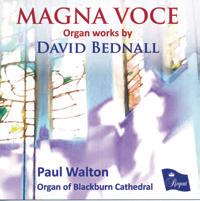
A number of the works are based on hymn tunes. The exuberant Toccata: Aberystwyth is inspired by the improvisational style of Pierre Cochereau. Whilst still adopting a French manner, Wie schön leuchtet is beautifully serene. Charity: Berceuse continues this peaceful mood by setting the tune by Stainer in the style of Vierne. The energetic Festal Sortie on ‘Gopsal’ utilises features of Leighton’s music, although one wouldn’t suspect that the tune was composed by Handel. Ach Herre Gott returns to the vigorous French toccata style, as do the exciting
and virtuosic works Magna voce cane and Iubilium. The Adagio, a longer and more serious work, develops musical ideas which are, in the end, peacefully resolved.
Triptych in honour of Herbert Howells reflects the esteem Bednall has for this wonderful composer. Certain rhythmic, harmonic and melodic features, which so clearly identify this composer, are to be heard frequently in the three pieces, which I much enjoyed. The Triptych and the imaginative Evocation of Wells Cathedral ‘O Radix Jesse’ were composed for this recording, which is highly recommended.
Paul Morgan
La Nativité du Seigneur
Colin Walsh plays the organ of Lincoln Cathedral
Le Banquet Céleste; La Vièrge et l’Enfant; Les Bergers; Desseins Eternels; Le Verbe; Les Enfants de Dieu; Les Anges; Jésus accepte la Souffrance; Les Mages; Dieu parmi nous.
PRIORY PRCD 1194
Colin Walsh is always worth hearing, and here we have a notable union of music, player, instrument and building. Listening to this fine CD, one is constantly impressed by the ability of an organ by Father Willis, with additions by Harrisons, to supply every registration required for Messiaen’s colourful music. Effects of great loveliness abound; but possibly it is all rather too lovely, for the Lincoln organ is renowned for its gentleness and suavity. The effect is that the music is presented in pastel colours or carpet slippers, as it were; and some may long for the rather more robust tones of a French instrument. With that reservation, I would recommend this as a good addition to any organ-lover’s collection.
 Timothy Storey
Francesca Massey plays the organ of King’s Lynn Minster
Whitlock Hymn-Prelude on ‘King’s Lynn’; John Jordan Folk Tune; Bach Chorale
Partita on ‘Sei gegrüsset, Jesu gutig’ BWV 768; Stanley Voluntary in D min; de Grigny Récit de Tierce en taille; Burney Cornet Piece No. 1 with an Introduction for the Diapasons; Litaize Epiphanie; Racine Fricker Pastorale; Reger Sonata No. 2 in D min. PRIORY PRCD 1178 TT 78:58
Francesca Massey has, for her second CD with Priory, migrated from Durham to King’s Lynn to record an eclectic repertoire, showcasing the excellent instrument in the Minster. Appropriately the programme opens, in fine style, with Whitlock’s typically harmonically colourful prelude on the hymn tune known as ‘King’s Lynn’. A generous tribute to John Jordan follows. He was Director of Music at the Minster (then known as St Margaret’s) from 1990 to 2006, and a much-loved figure in church music circles.
A group of ‘old’ pieces serves to air some of the instrument’s older voices. Bach’s great Partita on Sei gegrüsset leads the charge and receives an accomplished interpretation, with each variation nicely and neatly characterised. The wonderful final iteration of the chorale in five voices brings the journey through the Partita’s 11 variations to a most satisfying conclusion. The Voluntary by John Stanley and the Cornet Piece by Charles Burney (who, as organist here for eight
years, commissioned the Snetzler organ in 1753) and the attractive Récit de Tierce en Taille by de Grigny complete this part of the programme.
Massey then turns to more recent music – Gaston Litaize, a pupil of both Vierne and Dupré, was a first-rate improviser, and there is more than a touch of this apparent in Epiphanie.
Peter Racine Fricker’s Pastorale is very much a product of its time (1959) and none the worse for that. Her programme ends with Reger’s Second Sonata, which is given a splendidly assured performance, Massey being totally in control of the music’s considerable technical demands.
All in all, a striking recording, and an admirable showcase for the Minster organ – forgotten no more, perhaps.
Roger JuddRobert Poyser plays the organ of Beverley Minster
Lefébure-Wély March in F; Zipoli Toccata; Reubke Sonata on the 94th Psalm; Guilmant Prière et Berceuse Op. 27; Bach Prelude & Fugue in F min BWV 534; Wenn wir in höchsten Nöten sein BWV 641; Howells Psalm-Prelude Set 2 No. 1; Choveaux Three Pieces (March, Meditation, Introduction and Toccata).
PRIORY PRCD 1181
Beverley Minster’s organ is justly prized for its majestic casework and its substantial quantity of early 18th-century pipework by John Snetzler. William Hill substantially enlarged the instrument in the 19th century, as did his successors in the 20th, and the 21st century has seen substantial additions and alterations by Wood of Huddersfield. The result is a large 4-manual instrument of considerable power and great tonal variety, which the Minster’s organist displays with great skill and ingenuity. I was less than happy with some of the instrument’s brighter tonalities, the Bach F minor Prelude being especially shrill and unpleasant, as are the choruses extensively employed in the Reubke Sonata; I suspect that the culprit may be the 4-rank Fournturet recently added to the Great, which perhaps does too little furnishing of the unison tone of the ensemble. The inclusion of Reubke’s mighty Sonata was perhaps foolhardy, as neither instrument nor player can withstand the inevitable comparison with Simon Preston’s classic Westminster Abbey recording, recently reissued on CD. Also, something played solely on the Snetzler pipework, and identified as such, would have been welcome. Such reservations apart, I am happy to commend this CD as a worthy souvenir of a splendid organ in a wonderful church.
Timothy StoreyDavid Goode plays the organ of Symphony Hall, Birmingham
Introduction, Variations and Fugue on an Original Theme; Introduction, Passacaglia and Fugue in E min; Five Easy Preludes and Fugues; Prelude & Fugue in G; Prelude and Fugue in C sharp min.
SIGNUM SIGCD 329 TT (2 discs): 127.31
To quote the performer, these recordings ‘have been a labour of love ..... over the (rather too many) years in which this volume has lain, in its constituent parts, on the shelf
until time and resources
Recorded in Symphony Hall, Birmingham in 2003, Reger’s music has found, in David Goode, a man dedicated to the understanding and strength of the invention located in the black pages of the music (!) and which is heard infrequently in concert performance. I suppose the reason for that is the considerable length of pieces such as the Introduction, Variations and Fugue at 35 minutes, but David Goode has set himself a formidable challenge and he rises to that in spectacular fashion. He is a clear advocate of this music and has both the technical skill and musical sensitivity to bring Reger’s music to life through careful pacing and excellent variation of colours from the Symphony Hall organ which he considers has ‘the scope, musical coherence and power that this music...demands’ Goode himself writes the liner notes, giving detailed descriptions of the multi-sectional pieces and guiding us through these extensive works.
Disc 2 has the Five Easy Preludes and Fugues which are far from easy – I imagine – and still of considerable length but perhaps more accessible. The CD ends with transcriptions by Reger of two Preludes and Fugues from Bach’s 48. These CDs are of considerable importance, for it is not often that we find such an interpreter of Reger’s music. The recording by Signum has captured the Birmingham organ superbly and shows how well it suits this music.
 Nicholas Kerrison
Robert Quinney plays the organ of Trinity College, Cambridge Fantasia super ‘Komm, Heiliger Geist’ BWV 651; Komm, Heiliger Geist BWV 652; Concerto in D min BWV 596; An Wasserflüssen Babylon BWV 653; Schmücke dich, o liebe Seele BWV 654; Partita on ‘Sei gegrüsset, Jesu gütig’ BWV 768; An Wasserflüssen Babylon cum doppio pedale BWV 653b; Prelude & Fugue in E min BWV 548. CORO COR 16157 TT 77:31
For the fourth CD in Robert Quinney’s survey of Bach’s organ music, we have chorale preludes from the ‘Eighteen’, one of JSB’s Vivaldi transcriptions, a Partita and the great E minor Prelude and Fugue. As before, Quinney plays the Metzler organ in Trinity College Cambridge. The musical partnership of Quinney and Bach is superbly supported by this fine instrument, which must be Cambridge’s answer to Oxford’s Frobenius at The Queen’s College. Is it possible to make an unpleasant sound on this instrument?
By now, in this journey through Bach’s organ music, Quinney’s way with this music is becoming familiar. Works like the first Komm, Heiliger Geist are delivered with tremendous vitality and vigour, while the other chorale preludes are more introspective, as in Schmücke dich, the performance of which is ravishing. The Partita is given a compelling interpretation, with each variation finely characterised. It is fascinating to have both versions of the prelude on An Wasserflüssen Babylon on the CD. The programme ends with the E minor Prelude and Fugue, both sections of which are given magisterial performances, rounding off the CD most satisfactorily.
The recording comes on The Sixteen’s own label Coro, and the organ and the chapel acoustic are well caught by the microphones.
Roger Judd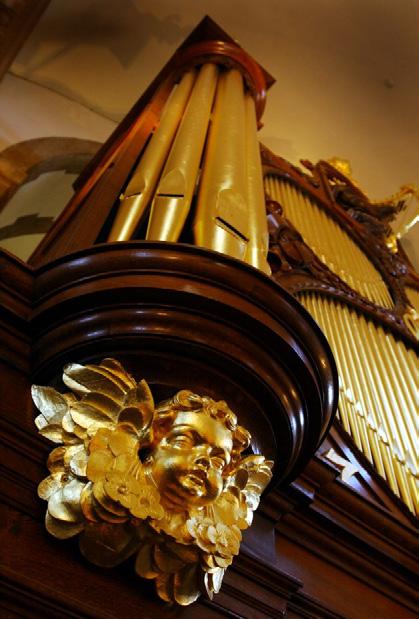
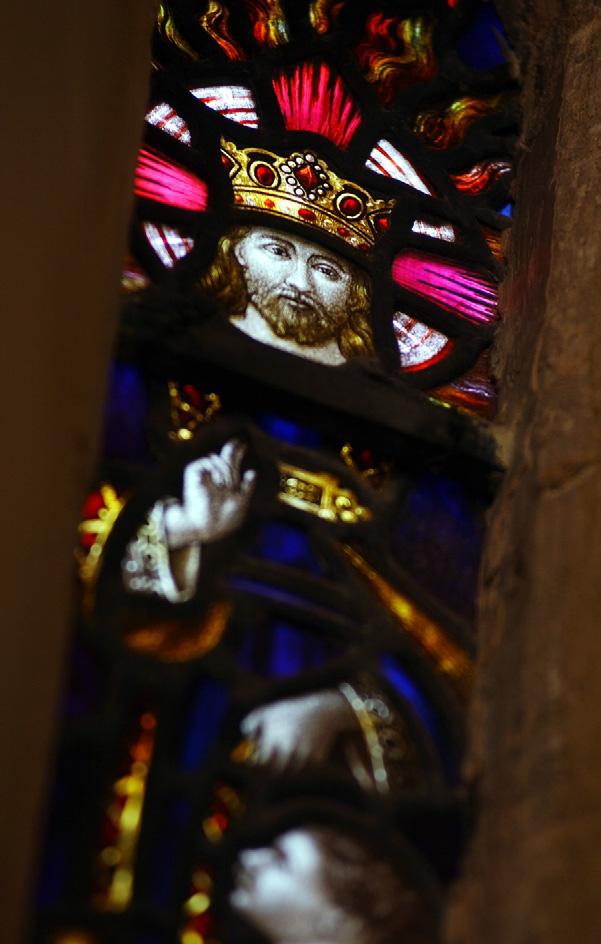
Portsmouth Cathedral Choir and The Portsmouth Grammar School offer unique opportunities for young altos, tenors, basses and an for the academic year 2019/20.

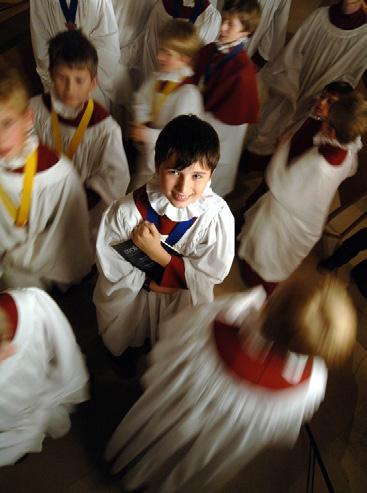
Opportunities exist for gap year students (pre or post University) to spend a year working with the Portsmouth Cathedral Choirs , whilst working as departmental assistants at one of the country’s leading co educational schools, The Portsmouth Grammar School. The year involves daily choral worship in the Cathedral, major concerts and BBC broadcasts, choir tours (Cyprus, Belgium, Norway and Iceland in 2017-19) and recordings.
Recent Portsmouth scholars now sing in Christ Church Cathedral Oxford, St John’s College Cambridge, Winchester Cathedral and York Minster Choirs as well as with major UK groups such as the Monteverdi Choir and The Sixteen
Regular vocal/organ tuition provided. Accommodation available. Remuneration circa £8,500 per annum.
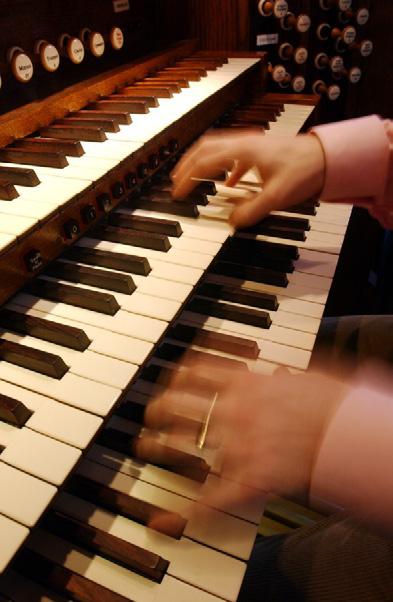
Further Details from
Dr David Price
music@portsmouthcathedral.org.uk
023 9282 3300
portsmouthcathedral.org.uk/music/ pgs.org.uk



The English cathedral all-male choral tradition is probably the oldest musical tradition in the western world, yet its future survival is under increasing threat. Please join and help us do all we can to support the continuation of this unique sacred art form.
Please write to:


Miss L Collins
Cow Hey Farm
7 Gawthorpe Lane
Kirkheaton
Huddersfield HD5 0NZ for a membership leaflet or visit www.ctcc.org.uk

REGCD514
The Choir of Bristol Cathedral directed by Mark Lee, Paul Walton (organ)
Vigilate Byrd; O radiant dawn MacMillan; In the stillness



Beamish; Hodie Whitbourn; Videte miraculum Tallis; In exile


Sumsion; Drop, drop slow tears Leighton; Christus factus est Bruckner; O vos omnes Casals; The Reproaches Sanders; Surrexit a mortuis Widor; Ave Maria Bruckner; Valiant-for-truth Vaughan Williams; O clap your hands Bednall (first recording)
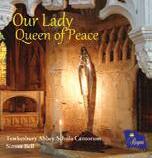
Music for the Feast of The Assumption of the Blessed Virgin Mary
Tewkesbury Abbey Schola Cantorum directed by Simon Bell, Carleton Etherington (organ)
enquiries@howellstrust.org.uk
REGCD510
Do you know a musical boy who dreams of becoming a Cathedral Chorister? If so, please bring him along for an informal voice trial.
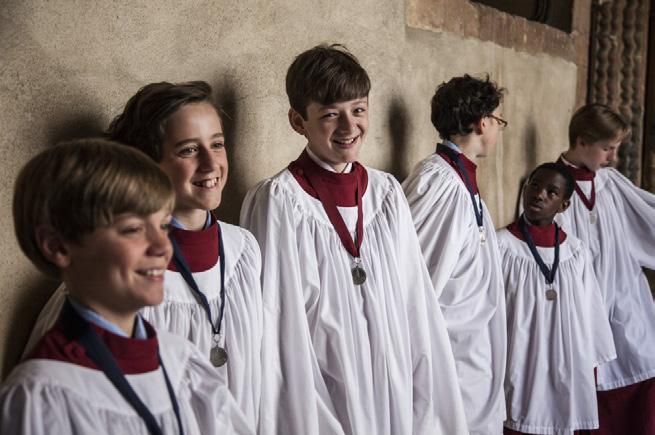
Please contact the Registrar, Clare James, at registrar@cccs.org.uk or on 01865 242561.

www.cccs.org.uk
REGCD512
Ave Maria Dupré; Missa Brevis Dove; Salve Regina Poulenc; Ave Maria Biebl; Preces & Responses Radcliffe; Psalm 132 Peterson; Magnificat & Nunc Dimittis (Edington Ser vice) Ives; Responses Radcliffe; Emmanuel Moore; Te Deum in C Stanford; Toccata, Fugue et Hymne sur Ave Maris Stella Peeters
avourite anthems from Rochester Cathedral
ochester Cathedral Choir directed by Scott Farrell nd Claire Innes-Hopkins, James Norrey (organ)
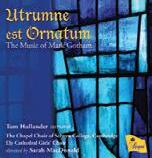
saw the Lord Stainer; Greater love Ireland; If ye love me Wilby; Jesu, joy of man ’ s desiring Bach; Blessed be the God nd Father Wesley; Ave maris stella Grieg; Insanae et vanae curae Haydn; Abendlied Rheinberger; The Spirit of the Lord Elgar; Hilariter trad arr Webster; Ave Maria Mendelssohn; The Lord is my shepherd Goodall; Ave verum corpus Mawby; Through the day thy love has spared us Moore; Bring us, O Lord God Stopford; Hallelujah (Messiah) Handel
The Music of Mark Gotham
Tom Hollander narrator
The Chapel Choir of Selwyn College, Cambridge, Ely Cathedral Girls’ Choir, directed by Sarah MacDonald
REGCD485


Sarah MacDonald and the Chapel Choir of Selwyn College, Cambridge, continue their exploration of new British choral works in the debut recording of works by Mark Gotham, a composer and music theorist based at the University of Cambridge His compositional technique is directly linked to his theoretical research where small cells of an ideabe they melodic, harmonic, or rhythmic - are explored, developed, and adorned into an intense and gripping largescale structure This new disc features a selection of recent sacred choral works together with three solo instrumental items It ends with the riotous community opera The Pied Piper of Hamelin, featuring distinguished Selwyn alumnus Tom Hollander, as the narrator
Jonathan Vaughn plays the organ of St Mary Redcliffe, Bristol
REGCD494
Following the success of Jonathan Vaughn’s ‘Wagner at the Organ , Tchaikovsky at the Organ features transcriptions by Edwin Lemare and Jonathan Vaughn including Romeo and Juliet, the Nutcracker Suite, and movements from the 4th and 5th Symphonies
REGENT RECORDS, PO Box 528,Wolverhampton, WV3 9YW Tel: 01902 424377 www regentrecords com (with secure online ordering) Retail distribution by RSK Entertainment Ltd, Tel: 01488 608900, info@rskentertainment co