Middlesbrough Diocesan Catholic
What’s Inside
Painting celebrates 40 years of St Mary's Cathedral


Papal honour for Dan
Page 8


Papal honour for Dan
Page 8
On Saturday March 28, at St Mary’s Cathedral, FATHER DOUGLAS McKITTRICK became the first priest to be ordained for the Diocese of Middlesbrough by Bishop Marcus. Here, he looks back on this very special occasion… My ordination to the sacred priesthood was the greatest, most joyful day of my life. For some weeks leading up to that day I was conscious of prayers being offered for me by so many people from so many places, all of which helped me enormously in preparing for my ordination.
I truly felt that the Spirit of God was upon me as I prepared myself for priesthood. The atmosphere in the cathedral was one of prayerfulness, and it was deeply moving to know that something profound was happening.
I want to thank those who accompanied and encouraged me as I moved towards the possibility of being ordained a priest. In truth, there are too many to mention, but I do specifically want to thank the Abbot of Ampleforth Abbey, Robert Igo, and all the community of monks; Monsignor David Hogan; Bishop Terry Drainey; Sister Mary Peter and the community of sisters at Stanbrook Abbey. Last, but by no means least, I want to thank Bishop Marcus for agreeing to ordain me. In addition, I would like to thank the Dean of St Mary’s Cathedral, Canon Paul Farrer, and his entire team involved in the life of the cathedral, from musicians to stewards, plus the wonderful team of ladies who produced the superb buffet lunch after the service, which included a bespoke, delicious cake to celebrate my ordination. Thank you all! Bishop Marcus was so generous in his memorable homily in acknowledging my former 46 years as a minister in the Church of England.
His warm words addressed to my close friends present from the Church of England were very much appreciated. I continue to cherish their friendship, even though there has been, in the words of St John Henry Newman, “The parting of friends.”
Bishop Marcus rightly spoke of that crucial relationship between the priest and the Mass. His words reminded me of words written by Pope St John Paul II in his last letter to priests for Holy Thursday: “The priestly life must have in a special way a ‘Eucharistic form’. The devout daily celebration of Holy Mass, the centre of the life and mission of every priest, contributes to this end.”
I hope I might be forgiven for in addition referring again to St John Henry Newman, who wrote in a letter to a friend: “Nothing is so consoling, so piercing, so thrilling, so overwhelming as the Mass. I could attend Masses forever and not be tired. It is not a form of words – it is a great action, the greatest action that can be on earth. He becomes present on the altar in flesh and blood, before whom the angels bow and devils tremble.”
I pray to God that I, and all my brother priests, will always have that sense of being “overwhelmed” when celebrating the Mass.
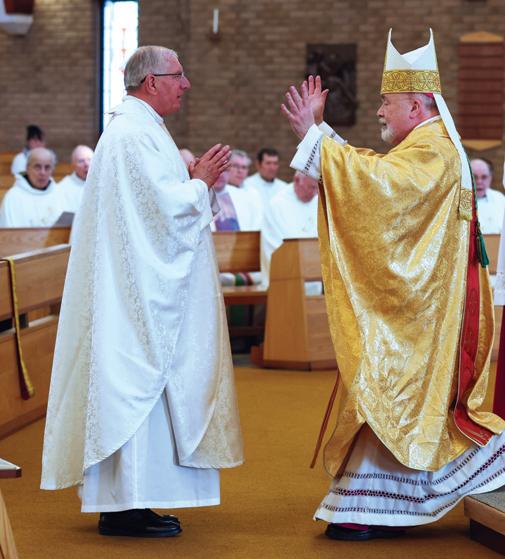
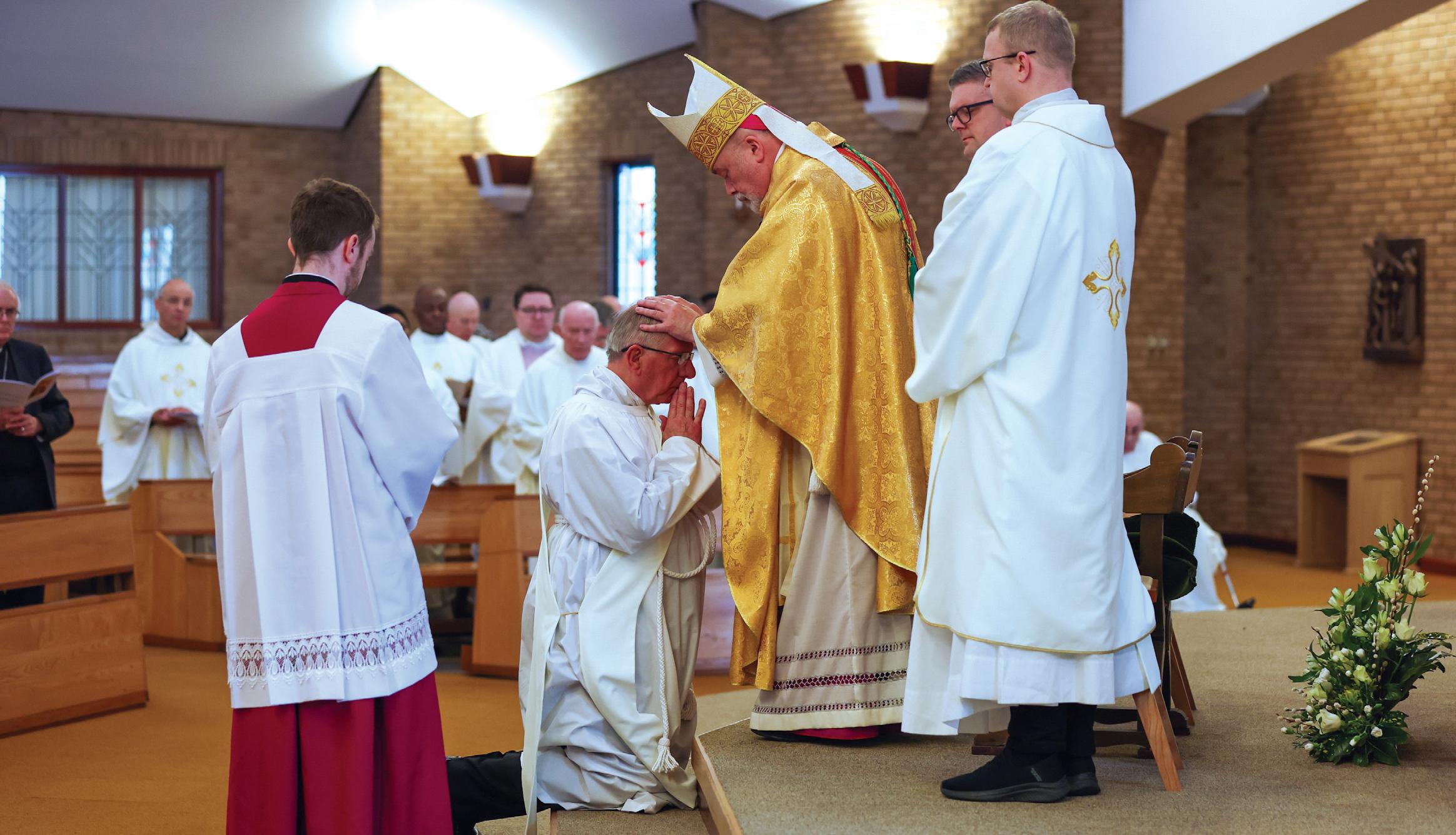
One of the many marvellous aspects of my priestly ordination, which I experienced on the day and again the following Tuesday at the Chrism Mass, was the sincere fraternity among the diocesan clergy.
For several months now, I’ve been serving the two parishes of Malton and Pickering alongside the parish priest, Father Tim Bywater. The two congregations have been so
welcoming, so loving and I'm very grateful for their prayerful support and encouragement. It is for me a joy to be part of their life in witnessing to Christ.
Finally, I must thank God for the grace given to me at my ordination to faithfully carry out that priestly ministry entrusted to me and so with all the faithful be an ambassador for Christ, reconciling all to God as St Paul says in 2
• Father Douglas served as the Anglican Archdeacon of Chichester from 2002 to 2018. One of his predecessors in the role, from 1841 to 1851, was Henry Manning, who was received into the Catholic Church in 1851 and, four years later, became the second Archbishop of Westminster to be made a cardinal. May 2026
Corinthians 5:20: “We implore you on behalf of Christ: be reconciled to God.”

Across our parishes we encounter people at many stages of their walk of faith: those exploring faith for the first time, those returning to the Church, those experiencing doubt or struggle and those seeking to deepen their relationship with Christ. Increasingly, the Church recognises the importance of accompaniment – walking with people personally, listening to their stories and helping them grow in faith through meaningful relationships.
In his encyclical Evangelii Gaudium, Pope Francis writes: “The Church will have to initiate everyone into this ‘art of accompaniment’, which teaches us to remove our sandals before the sacred ground of the other” (EG 169).
Accompaniment is the practice of walking alongside another person in their life of faith with purpose and care, listening deeply, recognising how God is already at work in their life and gently encouraging their next steps in discipleship.
Rather than simply offering programmes or information, this approach focuses on presence, patience and genuine care. It reflects the way Jesus himself journeyed with others, most clearly seen in the Gospel account of the disciples on the road to Emmaus.
Jesus first listened to the two disciples and allowed them to explain their situation. Only
then did he help them understand the events of Easter by opening the Scriptures to them. He stayed with them, shared a meal and they recognised him in the breaking of the bread. Through his presence, their hearts burned within them as they realised they had encountered the Risen Christ.
Over the past few years, many people have been discovering how accompaniment can be a powerful tool for evangelisation and mission. This form of accompaniment is not about a formal or structured relationship, but rather a way of relating to one another that encourages us all to become missionary disciples through friendships centred on coming to know Christ.
Each of us is invited to consider who the people around us are who might benefit from accompaniment, and how we can build genuine, Christ-centred relationships with them.
The Diocese of Middlesbrough Adult Formation team is launching a workshop, Walking Together: Accompaniment as a Tool for Mission, to help parishes welcome people and walk together in faith. This formation workshop is designed to develop the mindset, spirituality and practical skills needed to accompany others well.
During the session, participants will reflect on the Church’s call to form communities of genuine friendship and explore the model
found in Scripture. They will consider the attitudes and spirituality needed to walk with others, learn practical ways to listen attentively, ask helpful questions, and discern possible next steps in faith.
There will also be guided exercises offering opportunities to practise accompaniment conversations, alongside time to reflect on how this approach can shape and strengthen parish culture.
The workshop is designed to be interactive, supportive and rooted in prayer, offering practical tools that can be used in everyday parish life. For more information, please contact me at adultformation@rcdmidd.org.uk.
Nicola
Sweetman
Adult Formation Coordinator
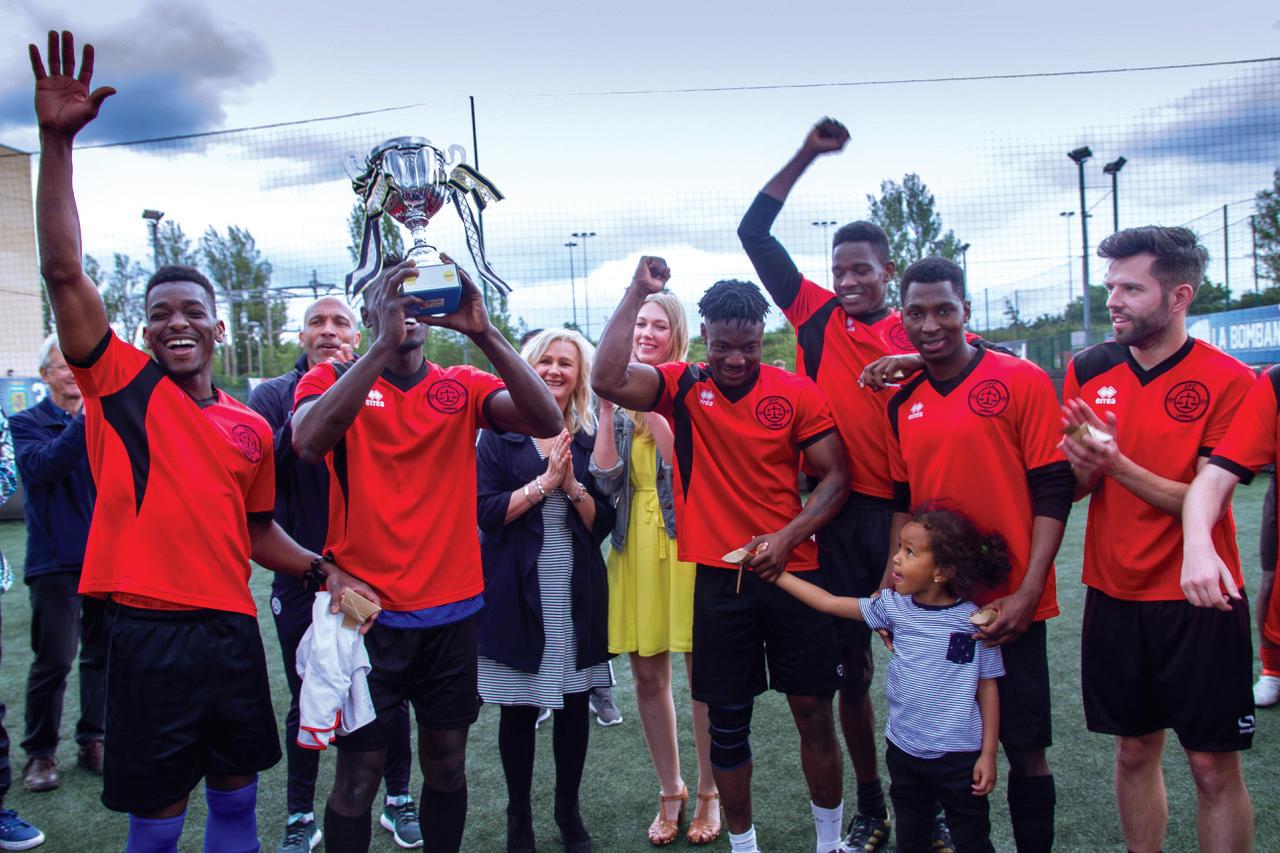
Asylum seekers’ charity Justice First has announced a new fundraising drive to mark its 20th anniversary, saying there is now more need for its services than ever before.
For the last two decades Justice First has provided a safe and welcoming service for those seeking asylum in our region, who often have nowhere else to turn.
A former president of the Young Christian Workers, Joe Nolan’s decisions were informed by Catholic Social Teaching. He welcomed and respected asylum seekers he met, and they him.
Welcome, acceptance, dignity and respect are the building blocks of Justice First.
His attitude and actions had a profound effect on Joe’s daughter Catherine Ramos, now a Justice First trustee.
“When I told my father I was starting a youth club at the cathedral many years ago, he said to me, ‘Don’t start something you are not prepared to finish.’
“And then in 2006, when considering whether to become a trustee of Justice First, I thought of his words. I did become a trustee. Like others who work at, volunteer for or support Justice First, I have never regretted this decision.”
Chair Barbara Hungin recalls the time in 2002 when she was part of a Saturday morning team who set up a “drop in” for recently arrived asylum seekers – something they felt they ought to do.
“Within a few weeks, we were all drawn in and deeply affected by the stories we heard from those who came,” she says.
“Saturday mornings became a focal point of our lives. I remember particularly one young
man who had hidden upstairs in the house while the rest of his family were shot indiscriminately.
“His subsequent journey to safety had been fraught with danger. He had escaped, leaving his home forever; something difficult for us to comprehend.”
Justice First is the only North-East charity exclusively offering free, specialist legal advice and support to asylum seekers and refugees.
Its work fills a critical gap in provision and has expanded and developed to meet the most urgent need.
The charity’s strong belief in the necessity for its work – that Justice First was “meant to be” – has sustained it throughout, often when there has been a shortage of funding. It has been encouraged by support from parishes and schools, where the interest and response have been gratifying.
One Justice First client said: “There are not enough words to fully express my heartfelt thanks for your support throughout these years. You have given me the gift of encouragement and hope in such difficult times.”
Justice First is marking its 20th anniversary with a renewed fundraising drive. With the need for its services rising each year, it is asking friends and supporters to use their creativity to fundraise for us by holding events such as sponsored events and walks, coffee mornings, lunches and car boot sales –all ideas are welcome.
You can also donate via the charity’s website, justicefirst.org. For more information, email info@justicefirst.org, bhungin@yahoo.co.uk or catherine_ramos@hotmail.co.uk.
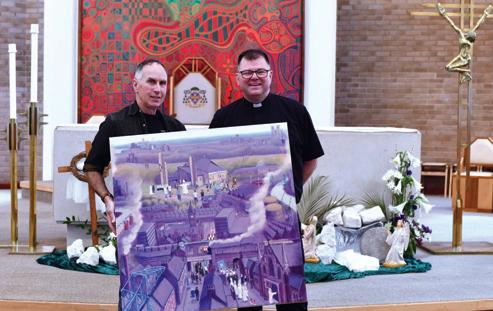
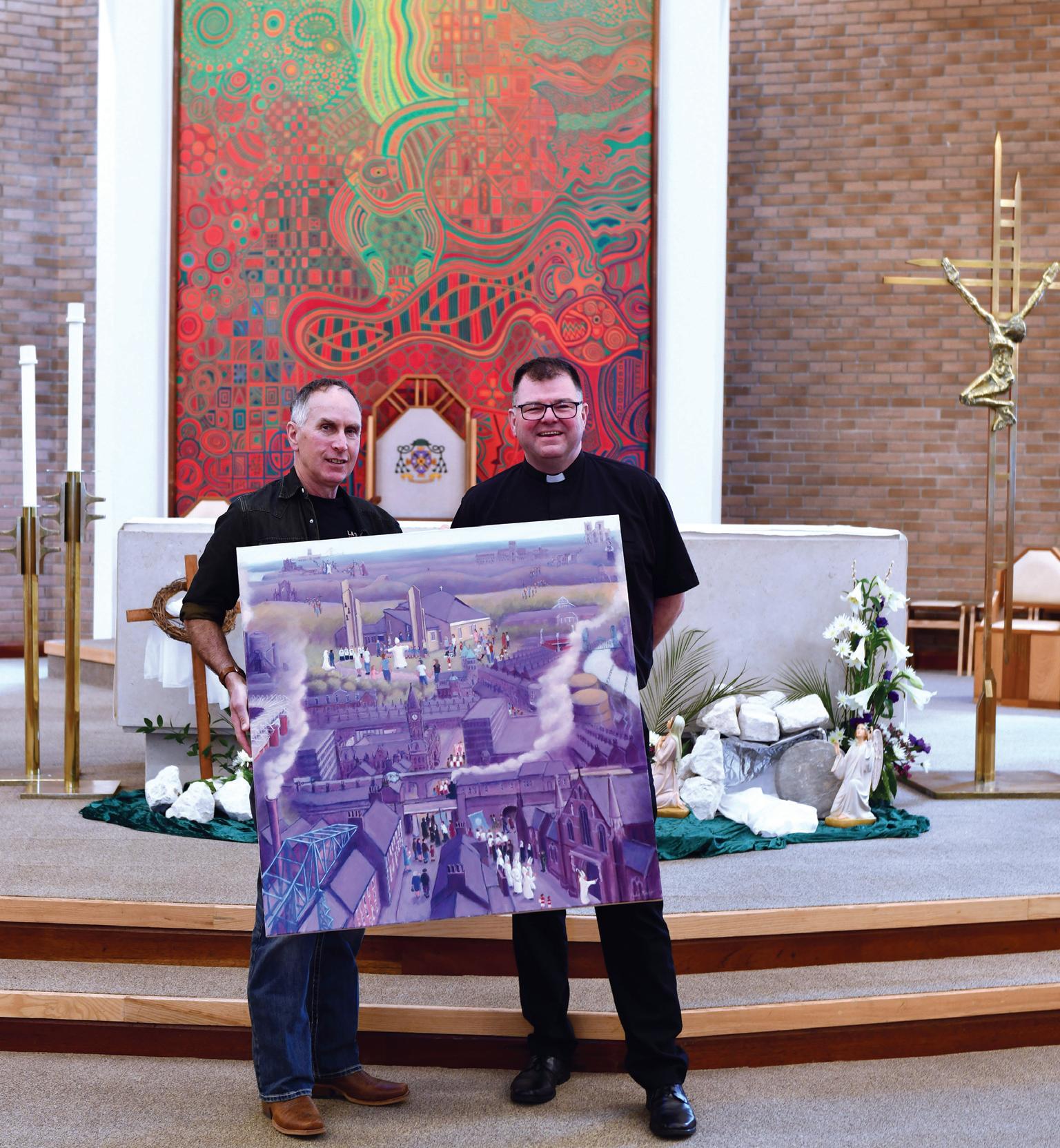
A stunning painting that captures the story of Middlesbrough and its rich Catholic history in a single image has been commissioned to mark the 40th anniversary of St Mary’s Cathedral.
Procession, by local artist Philip Meadows, begins at the foot of the canvas with the “old cathedral” in Sussex Street, “over the border” and continues upwards through the streets to the “new cathedral” in Dalby Way, built to serve the population that was moving out to new areas to the town’s south.
The painting is brimming with depictions of local landmarks such as the Transporter Bridge and Newport Bridge, Ayresome Park and the Riverside Stadium, as well as religious references, including parishioners taking part in the famous Corpus Christi Procession, which was held annually from 1924 to 1971 and brought the town to a standstill.
Beyond the horizon, the Cleveland Hills can be seen, together with holy men and women from our part of the world, including St Hilda of Whitby, the Martyr of the Moors, Blessed Nicholas Postgate, and the Pearl of York, St Margaret Clitherow.
“The whole painting captures a procession –not only a physical journey from the old cathedral to the new, but a procession through time,” said Philip.
“It begins almost in monochrome, reflecting the area’s early industrial heritage, and gradually works its way into full colour as it moves toward the present – brighter and lighter, mirroring the evolving community and spirit of Middlesbrough.
“The train in the painting represents the immigrants who founded Middlesbrough. Many were from Ireland, and their story is woven into the fabric of the town.”
St Mary’s Cathedral dean Canon Paul Farrer, who commissioned the painting as part of a series of ruby jubilee celebrations, added: “We have included lots of little nods, like the woman in the blue dress holding the baby, representing the patron of our diocese, Our Lady of Perpetual Help, walking just like any local woman down the street, grounding the sacred in everyday life.
“Opposite her is the figure of Tom Hoy, who was cured in Lourdes in 1924, and whose story sparked a deep connection between Middlesbrough’s Catholic community and Lourdes.
“The wedding couple near the cathedral represents the sacramental life of the Church
and local people.”
Canon Paul hopes the painting will bring back many memories, as well as showing a vibrant diocese that is looking towards the future with renewed faith and hope.
He said: “This is a celebration of memory –past and present in a time when we are being asked to consider the changes we need to make to step into the future with confidence.
“The detailed, symbolic imagery invites viewers to explore Middlesbrough’s rich religious and cultural heritage.
“The old cathedral wasn’t knocked down – it was lost to fire, a tragic event that ended efforts to preserve it despite its listed status.
“The Rt Rev Augustine Harris, our bishop when the new cathedral was built, knew that Middlesbrough was changing. He insisted the new building be ‘a cathedral for the people’. Its circular, amphitheatre-shaped design means everyone feels welcome, involved and drawn together as we meet to worship. This is the place we meet each other and God, the Father.
“As its current custodians, we still see this place as a ‘cathedral for the people’ in every sense – accessible, inclusive and meaningful to all who encounter it.
“The cathedral’s design mirrors the landscape – the roof mimics Roseberry Topping, linking the building visually and spiritually with the natural environment of the area.
“The painting also acknowledges the community’s diversity today, including new immigrants from Nigeria and India, reflecting how the parish continues to evolve.
“We imagined a family arriving through the tunnel near the cathedral, symbolising immigration – a continuing narrative of welcome and change.
“The artist has drawn inspiration from Renaissance narrative paintings to tell layered stories visually, bringing together history, faith and local identity in one piece.
“It’s not just a painting, it’s a community story – a visual procession inviting reflection on where we’ve come from and where we’re going together.”
A special exhibition to officially unveil the painting on Wednesday May 6 will include music and stories from parishioners and clergy who remember the old cathedral, as well as photos from the 40 years of the new cathedral.
All are also invited to a Ruby Jubilee Thanksgiving Mass celebrated by Bishop Marcus Stock, Apostolic Administrator of the Diocese of Middlesbrough, at 7pm on Friday May 15.
Full-sized limited-edition prints of Procession will be on sale, each signed and numbered by the artist, enabling the wider community to own a piece of this special celebration.
• Wednesday May 6: Procession Painting Unveiling
• Friday May 15: Ruby Jubilee Thanksgiving Mass with Bishop Marcus Stock
• Saturday May 16: An Evening of Praise with Jo Boyce & Friends
• Tuesday May 19: The Dedication of the Cathedral Movie Night
• Friday June 12: Four Choirs United with Paula Odell
• Saturday June 20: Come & Sing Handel's Messiah
• Friday June 26: Rocking in the Aisles
Angolan bishops have vowed not to “squander” Pope Leo XIV’s African visit – as the continent knows how obsessions overpower and wealth can destroy civilisation.
The Holy Father undertook an 11-day trip pilgrimage with plans to celebrate public Masses, deliver speeches and speak to community leaders in Algeria, Cameroon, Angola and Equatorial Guinea.
The Pope, who is a member of the Augustinian religious order, began his tour in Algeria, a non-Catholic country, which holds deep significance as the birthplace of fourthcentury St Augustine of Hippo, in an area now called Annaba.
In his first address to political leaders he said he travelled to Africa as “a witness to the peace and hope that the world so ardently desires”.
He said the future belongs to “those who do not allow themselves to be blinded by power or wealth.
“Africa knows all too well that people and organisations that dominate others destroy the world.”
More than a fifth of the world’s Catholics are in Africa, some 288m people, according to Vatican figures from 2024. The continent is one of the fastest-growing regions for the Church.
Bishop Estanislau Chindecasse, of Dundo, eastern Angola, told Catholic charity Aid to the Church in Need (ACN) that “above all, it is a great grace to host the Holy Father, Pope Leo XIV. He has not even been Pope for a year, and already he is visiting Angola.”
The bishop, who is also vice-president of the Bishops’ Conference, said the Pope was coming to Angola as a pilgrim of hope, reconciliation and peace.
He added: “These are three very important and highly topical issues for our Church today.
“Therefore, we are going to prepare for this visit through catechesis, prayer and meetings, so that we may truly deepen our understanding and not squander this great opportunity that God is offering us, by sending his representative on earth in the person of Pope Leo XIV, the man who has spoken of peace, of unarmed peace.”
Bishop Chindecasse said one of the highlights of Pope Leo’s trip was to Saurimo, in the east, which is home to an important diamond mining industry on the border with the Democratic Republic of Congo. Angola is a former Portuguese colony. Following independence in 1975, the country was embroiled in a prolonged civil war. Although the war has since ended, the nation is still plagued by division and extreme poverty, despite immense natural resources. In a statement published in anticipation of the papal visit, the Angolan bishops said that this is a perfect occasion to promote unity.
They added: “We need to prepare through a personal conversion and turn this visit into an opportunity to heal our internal wounds. We cannot host the ‘Messenger of Peace’ with our hearts full of hate, resentment, division and strife.
“Reconciliation must begin in each heart, in each family and in each civic, sporting, professional or party-political organisation.” ACN has been supporting the Church in Angola for decades, through projects including the renovation of churches, chapels and schools.
The charity also supports the formation of priests, religious, seminarians and lay people, and provides subsistence for clergy and sisters – as well as cars and motorbikes, which are essential for pastoral work in a country where the roads are in very poor condition.
Nathalie Raffray
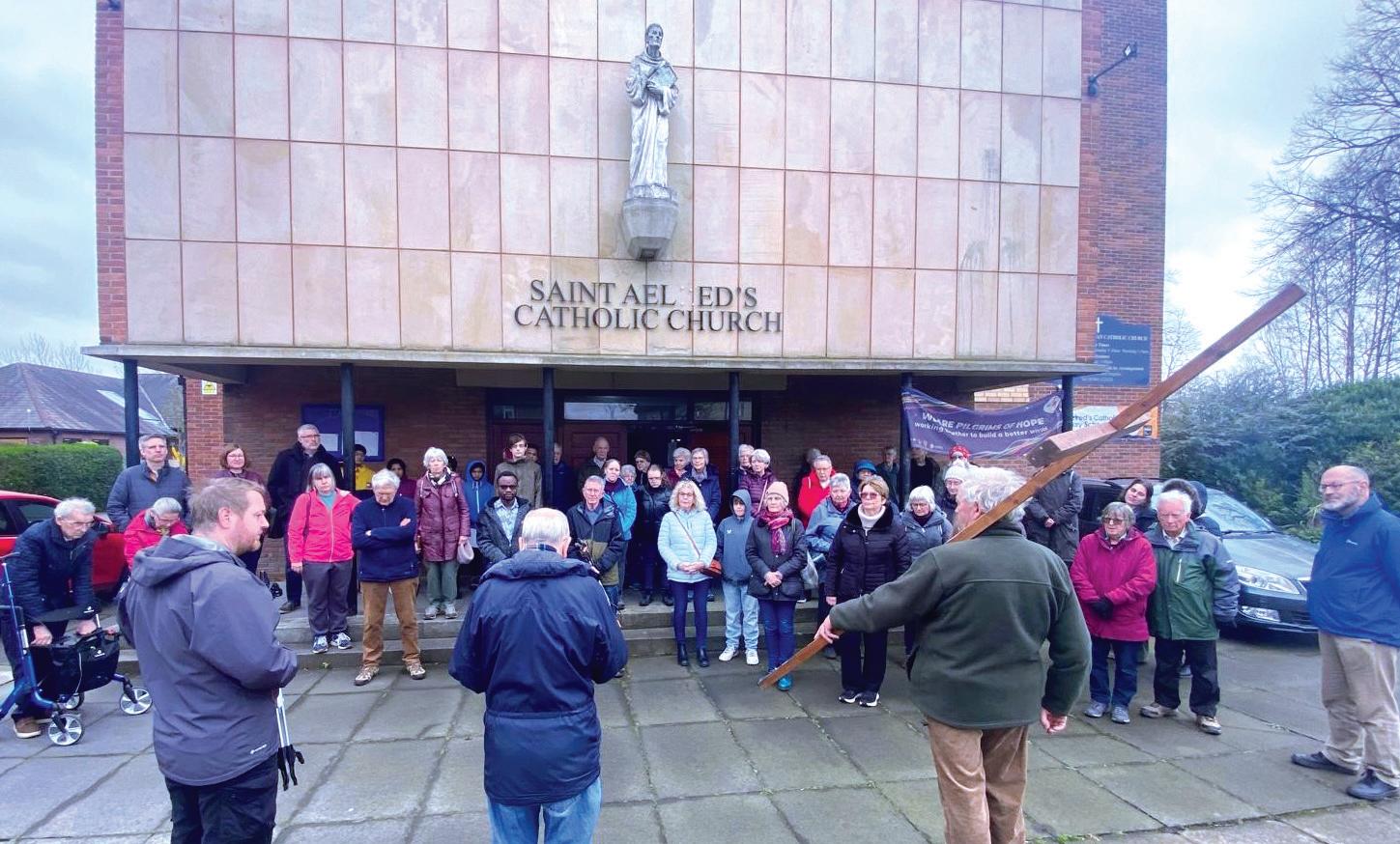
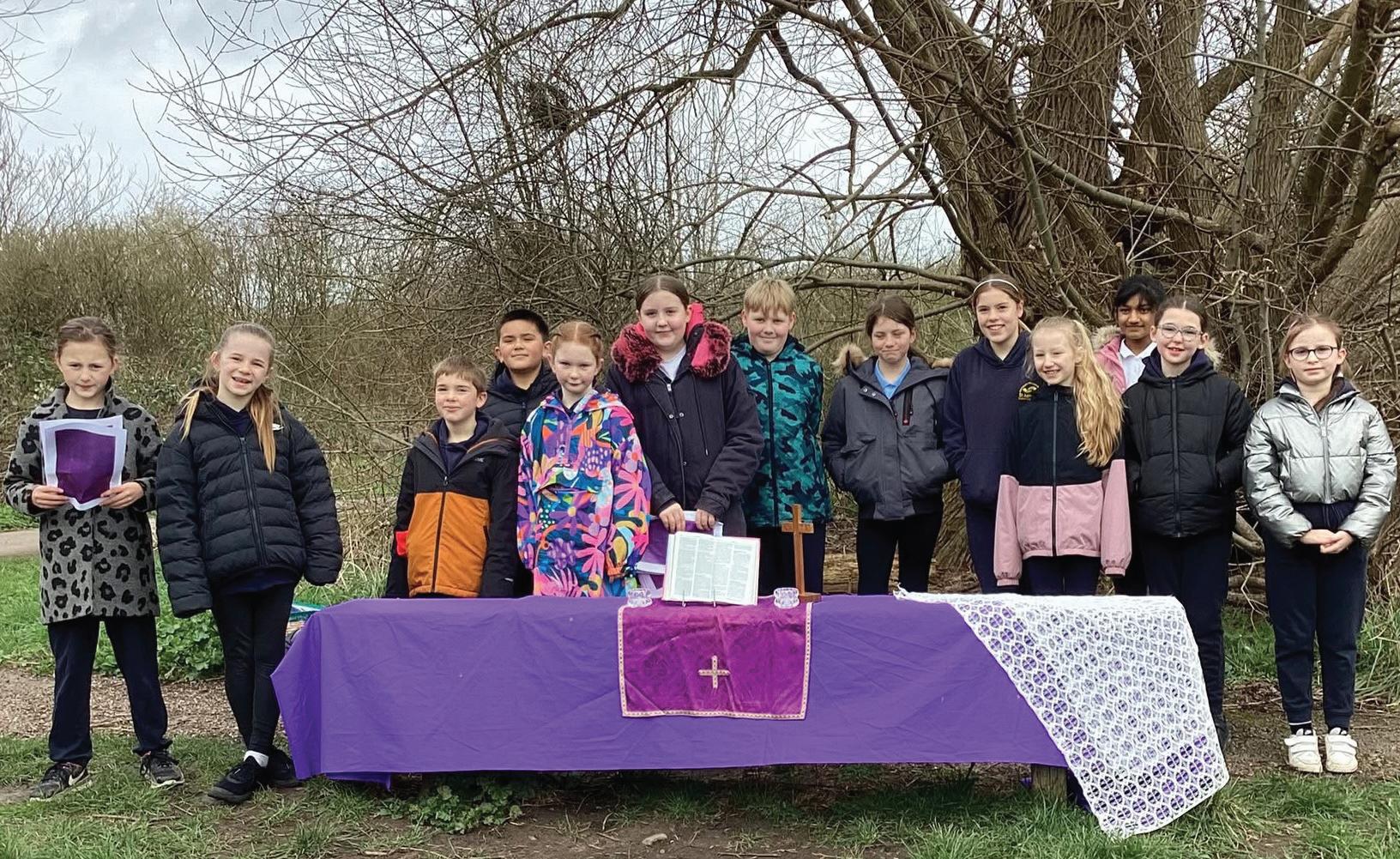
Children at St Aelred’s Catholic Primary School in York took part in the Big Lent Walk to St Nicholas Fields, where they came together for a special Celebration of the Word.
The liturgy was led by our Mini Vinnies and supported by members of the SVP. The children read and sang beautifully, taking time to reflect on our mission to support both our local and global communities.
Throughout Lent, the children have also been busy working alongside the SVP to support people in our local community.
Year 5 visited Mossdale Residential Home, where they spent a wonderful afternoon singing with the residents and bringing great joy to everyone involved. During the walk, the children completed an amazing 1,029,000 steps in total. They have raised more than £100 for this wonderful cause, and donations are still coming in.
It has been wonderful to see our children truly putting their faith into action through these acts of service and kindness during Lent.
Claire Hughes Headteacher



Our Mini Vinnies at St Aelred’s Catholic Primary School in York recently had the wonderful opportunity to work alongside members of our local St Vincent de Paul Society to prepare for Easter in a truly meaningful way.
Together, we created handmade Easter cards that were distributed to care homes and hospitals in our community, bringing messages of hope, joy and compassion to those who may need it most.
The session was filled with creativity and kindness, as pupils carefully designed each card with bright colours, thoughtful messages and symbols of new life.
The Mini Vinnies showed great care and dedication, understanding that these small acts of kindness can make a big difference to someone who may be feeling lonely or unwell during the Easter season.
Working with SVP members was a valuable experience for our pupils.
They shared the importance of service, reminding us all that living out our faith means reaching out to others with love and generosity.
It was inspiring to see different generations come together with a shared purpose.
“St Aelred’s Mini Vinnies were one of the first Mini Vinnies groups in Middlesbrough and have always worked closely with St Aelred’s SVP,” said Middlesbrough SVP Central Council president Patricia Nobbs.
“For the latest collaboration, the Mini Vinnies
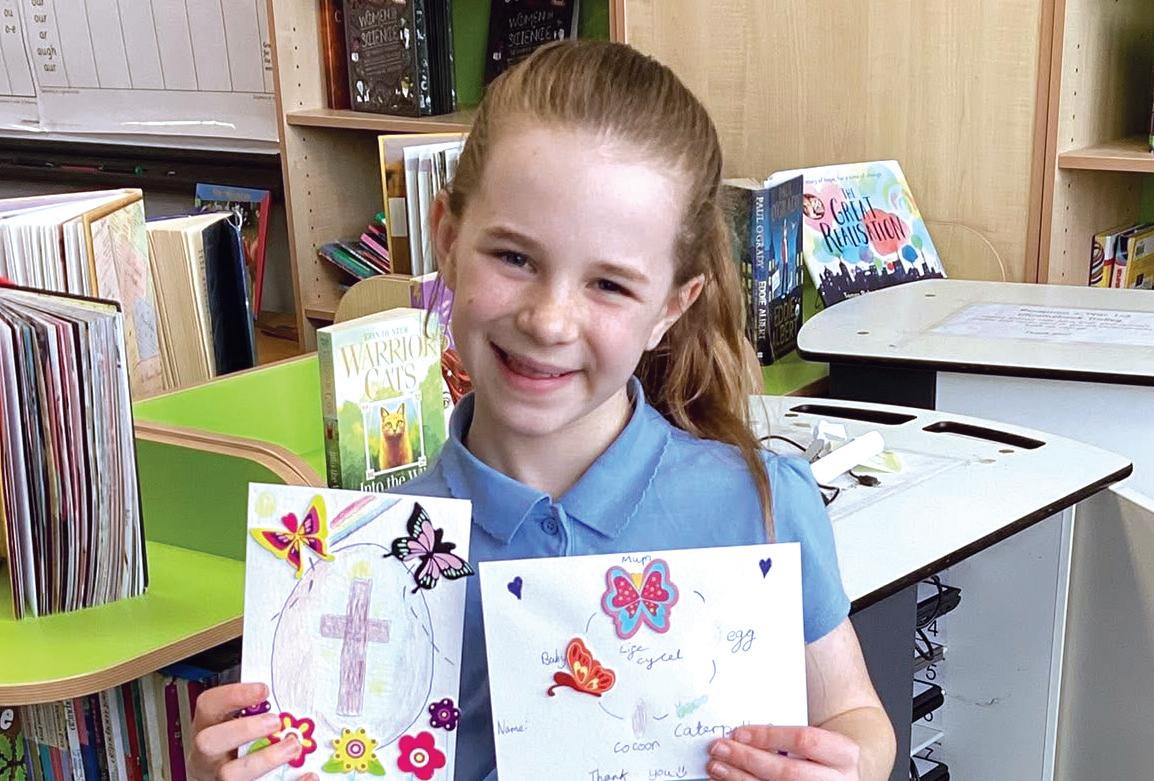
made Easter cards to be delivered by the adults to the people they visit in hospital, care homes or their own homes.
“These recipients are always so grateful to receive cards from the Mini Vinnies as this might be the only card they receive this Easter.
“They are also comforted knowing that St Aelred’s Mini Vinnies are praying for them.”
This initiative reflects the true meaning of
Easter: renewal, hope and selfless love. We are incredibly proud of our Mini Vinnies for embodying these values and for continuing to make a positive impact in our local community.
We hope each card will bring a smile to its recipient and serve as a reminder that they are remembered and cared for this Easter.
Ryan Deakin Deputy Headteacher
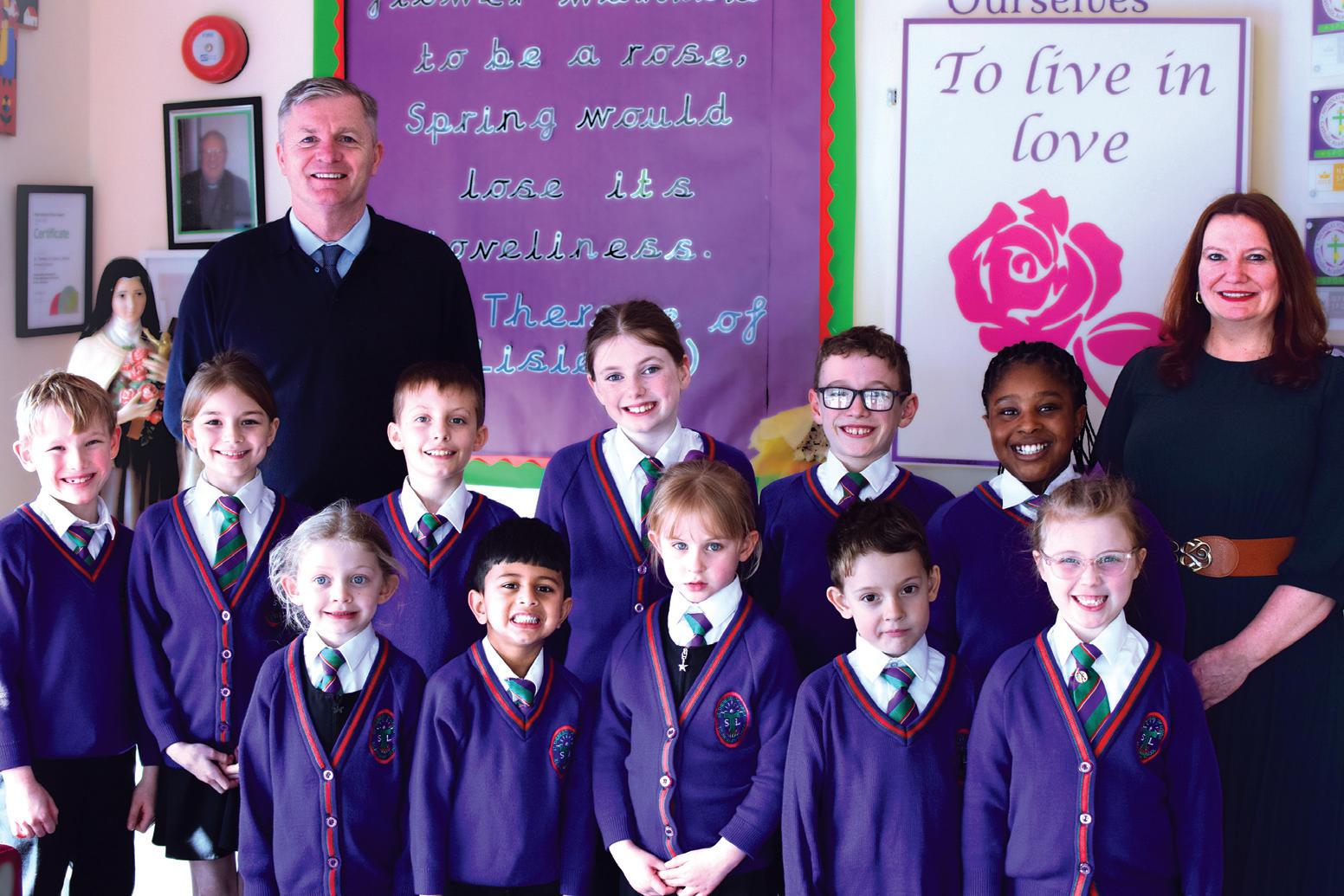
A Teesside school’s silver jubilee celebrations got off to the best possible start after it was handed a glowing report by Ofsted.
Inspectors say St Thérèse of Lisieux Catholic Primary School in Ingleby Barwick secures a “strong standard” status in all seven areas –achievement, attendance and behaviour, curriculum and teaching, early years, inclusion, leadership and governance and personal development and wellbeing.
The school, which has 230 pupils aged from three to 11, is part of Nicholas Postgate Catholic Academy Trust (NPCAT), which operates 38 schools across Teesside and North Yorkshire.
Delighted executive head of school Helen Lickess said everyone at St Thérèse is delighted with the report.
“We are incredibly proud to have achieved a ‘strong standard’ across every single area,” she said.
“While this is a wonderful achievement for all connected with the school, our true pride lies in our pupils, who the report describes as ‘excellent role models’ who ‘flourish’ in everything they do.
“We also feel so proud to have such a ‘broad and ambitious’ curriculum where every child is supported to reach their full potential.
“This success belongs to our whole school community, and we are more committed than ever to giving our children the very best
opportunities and start in life that we possibly can.”
Executive headteacher Mark Ryan thanked everyone who he said worked so hard to make St Thérèse such a happy, thriving place to work and learn.
He said: “This report is a direct result of the incredible dedication of our entire school community. I am so proud of what we have achieved together.
“Our exceptional teaching staff are the cornerstone of our success, inspiring a love for learning every day. Equally vital are our invaluable non-teaching staff, whose professionalism and care create the nurturing environment that allows everyone to thrive.
“The trust and engagement of our supportive parish, parents and families are truly invaluable. We are so grateful for their partnership.
“My thanks also go to our dedicated governors for their strategic guidance and to NPCAT for their unwavering support and vision.
“Most importantly, I’d like to thank our wonderful children, who are the heart of our school. You are a huge credit to your families and it’s a real joy and privilege to be with you every single day.”
Among the report’s findings, inspectors said: “Pupils flourish at this school. The school places pupils and their families at the heart of its work. This sense of community is woven
through many aspects of school life.”
“The school’s high expectations for behaviour are ever present. Pupils rise to these expectations with ease.”
“[The curriculum] is expertly designed to help pupils build and connect their knowledge together.”
A series of celebrations is being planned for
later in the year to celebrate St Thérèse’s 25th birthday.
Built in response to the rapid expansion of Ingleby Barwick, the school was opened by the then Bishop of Middlesbrough the Rt Rev John Crowley.
It has previously been named among the top 200 primary schools in the country in the Sunday Times Parent Power survey.
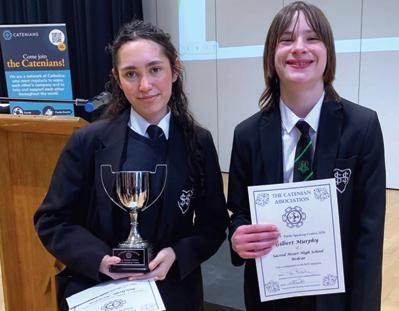
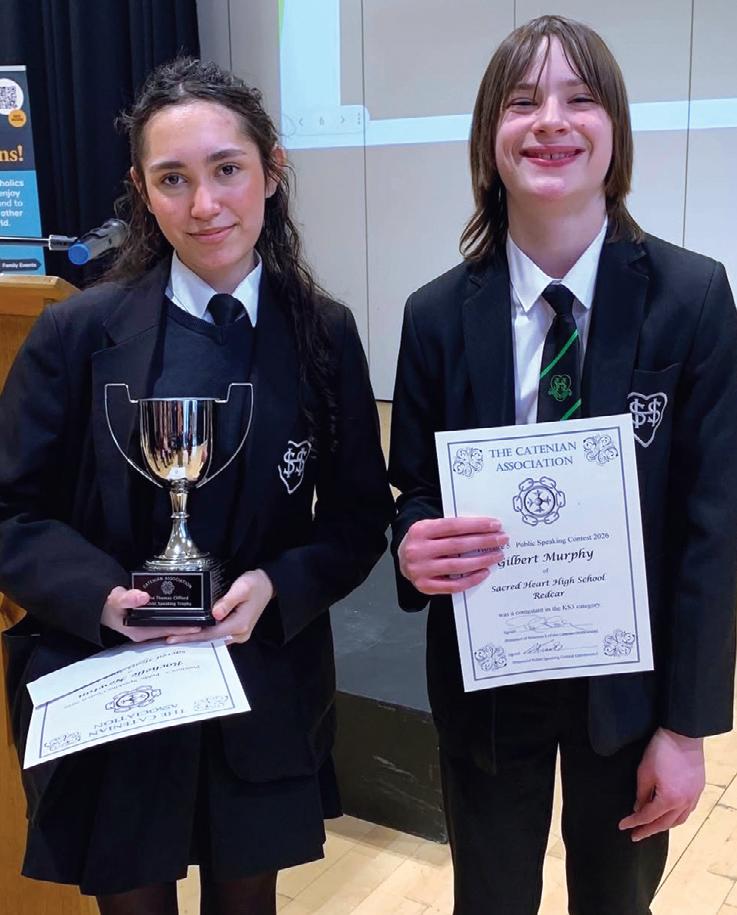
Two pupils from Sacred Heart Catholic Secondary in Redcar were among the winners in this year’s regional Catenian Public Speaking Competition.
Teachers and families from schools across the North-East filled the auditorium at Trinity Catholic College in Middlesbrough for this prestigious event.
Pupils representing all Key Stages, from Year 6 to Year 12, competed in four sections for impressive silver trophies, with winners’ prizes of £100 and £50 for runners-up.
There was evidence of serious research, each speaker presenting a thoughtful case and often raising laughter with some sharp observations.
Rochelle, from Year 10 at Sacred Heart, delivered a deeply personal and powerful speech on the topic of migration, speaking with confidence and compassion about her own experience of moving across the world in
search of security, opportunity and a different way of life. Members of Rochelle’s family were there to champion her while she spoke from the heart about the importance of family and the support they give each other.
Competing against a strong field of speakers covering a wide range of topics, Rochelle impressed the judges with her clarity, maturity and insight.
She was awarded first place, earning £100 and a silver cup awarded by a representative from the Catenians in a forthcoming assembly.
Gilbert, from Year 8, also represented the school superbly with his engaging speech on Japanese cuisine.
Speaking enthusiastically about the traditions, ingredients and cultural importance of well-known dishes, he captivated the audience and demonstrated excellent confidence and delivery.
In a competition filled with exceptional speakers and diverse topics, Gilbert’s impressive performance earned him the runners-up prize.
The event was made even more special by the wonderful atmosphere created by the Catenians, whose encouragement and commitment to supporting young people make them such positive role models for our pupils. It was also lovely to see Catholic families coming together from across the region to celebrate the talents and achievements of these exceptional young speakers.
“We are incredibly proud of both students for representing the school so well and for their wonderful achievements,” said headteacher Louise Dwyer.
Catenian provincial president Paul Healy praised the courage and confidence of all the competitors and the support they had been given by their families and schools.
Generous parishioners at Sacred Heart in Hornsea raised £1,615 for CAFOD with a variety of initiatives during Lent. Gabby Hayes raised £1,000 in sponsorship towards the total by taking part in The Big Lent Walk.
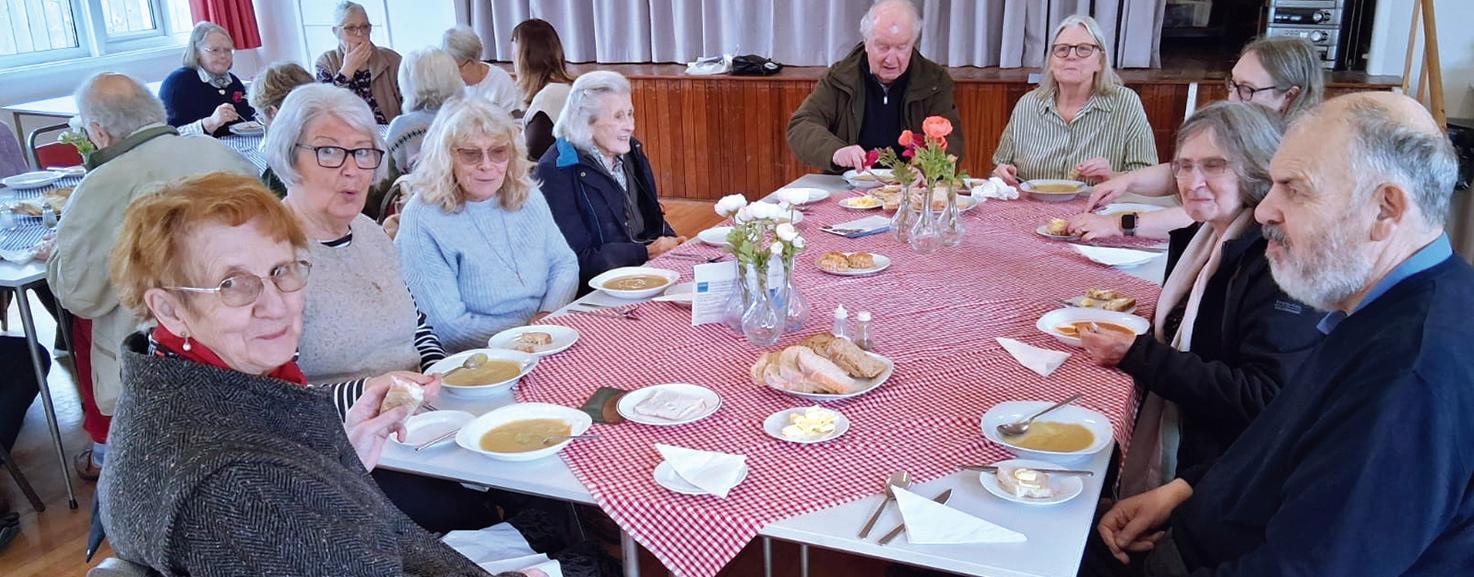
Tasty soups and homemade breads and scones were served at two lunches, raising another £350 – thank you to all those who gave their time to prepare the food and those who supported and enjoyed them.
The rest of the money was donated through the Fast Day envelopes and plate donations. Other parishioners give online.
The donations will provide help and hope for people such as Salem, Rejoice and Shorai and their communities in Bangladesh, Sudan and Zimbabwe, providing ingenious solutions to their water supply problems.
Thank you to everyone who helped in any way.
If you’re serious about tackling poverty, you have to tackle the causes, not just the symptoms. Last year, 500 parishes in England and Wales joined the global Church campaign to tackle the debt crisis that’s having a devastating impact on low-income countries.
Pope Francis called repeatedly for action on this debt crisis in the Jubilee Year, and 35,000 people signed CAFOD’s petition in response. This year we want to build on the momentum of 2025, when we saw some hopeful signs. All countries borrow money. But due to a complex set of factors, low-income countries are being pushed into a deepening debt crisis, forced to pay ever higher interest rates to wealthy lenders.
Often they have paid their original debt back, but spiralling interest means they will never break the cycle. Money that should be spent on food, healthcare and education is flowing out of countries that can least afford it. Governments across the global south have an impossible choice between serving their people or paying their creditors.
Wesley Chibamba, Caritas Africa’s policy and advocacy officer, explains why this is causing terrible suffering: “We have to find a solution. At the moment people are dying because they can’t access healthcare. Children cannot go to school. People are going hungry and children are sleeping on empty stomachs because the
governments have debt obligations. “Governments don’t have the capacity to respond to any kind of humanitarian crisis, like a flood or drought – they don’t have the funds.”
In the Jubilee Year, as a result of campaigning efforts around the world, the debt crisis was firmly on the agendas of international summits, with decision-makers agreeing that urgent action is needed.
Even the chief economist of the World Bank, Indermit Gill, said: “It’s time to face the reality: the poorest countries facing debt distress need debt relief if they are to have lasting prosperity.
“A 21st-century global system is needed to ensure fair play in lending to all developing economies.”
The whole debt system needs to change to make it fair and sustainable for low-income countries. Our government has the power to play a key role in bringing that change about, because it is hosting the G20 in 2027 – a crucial gathering of the world’s 20 most powerful economies. These leaders have the power to fix the global debt system.
That’s why we must keep building the call for debt justice throughout this year, and why CAFOD is inviting parishes to sign a new petition this spring and build on the momentum of 2025.

Please join us – let’s make real change happen. The stakes couldn’t be higher, as the lives of millions of our sisters and brothers around the world are being ravaged by this crisis that is only worsening.
As Wesley says: “It is not an issue of
compassion – it is an issue of justice. If you care for humanity and development, we urge you to support the debt justice campaign.”
Please see cafod.org.uk/cancelthedebt
Rachel Blaylock CAFOD Community Participation Coordinator
SHAWN RAS, a Dutch-born historian and parishioner of Our Lady of Lourdes and St Peter Chanel in Hull, continues his series of articles about Church history with the story of the man who became the last non-Italian pope for more than 450 years…
The importance of the Protestant Reformation runs through recent articles in this series.
It would seem to be one of the seminal moments in the life of Christianity, a point to which the modern world can be traced back.
Martin Luther’s 95 Theses are often seen as the moment that kicked off the Reformation, but as often with the historical narrative (which, far from being false, is rather simplified, as the full picture can be dizzyingly vast: hence the purpose of historians), it is an incomplete picture.
As mentioned previously, Desiderius Erasmus had already called for some reform. His friend and academic sponsor, the future Pope Adrian VI, also tried to instigate some reform within the Church, especially given the reputation of his problematic predecessor, Pope Leo X.
In the first article this year, the first Council of Nicaea (325) was discussed, called as such, as there was another in 787.
The councils of Nicaea are the first and the seventh of the Seven Ecumenical Councils. These were called to deal with the most important issues facing the Church. The first seven are called as such because they concerned all the “Ecumene”, which by the Middle Ages meant the inhabited, civilised and Roman world.
These councils were called to face the issues of the day, and they kept being called whenever the Church faced a crisis.
We differentiate the first seven, however, as those are the councils accepted by the umbrella group called “Chalcedonian Christianity”, named for the Fourth Council, that of Chalcedon.
Chalcedonian Christianity includes the Roman Catholic and Eastern Orthodox churches, as well as the Lutheran, Calvinist and Anglican creeds.
The second Nicene council is accepted by these creeds as the seventh Ecumenical council. However, this is also where the churches split on opinion. For the sake of brevity, this article will focus on the Seventh Ecumenical Council and one of the inspirations for later Protestantism, namely, Iconoclasm.
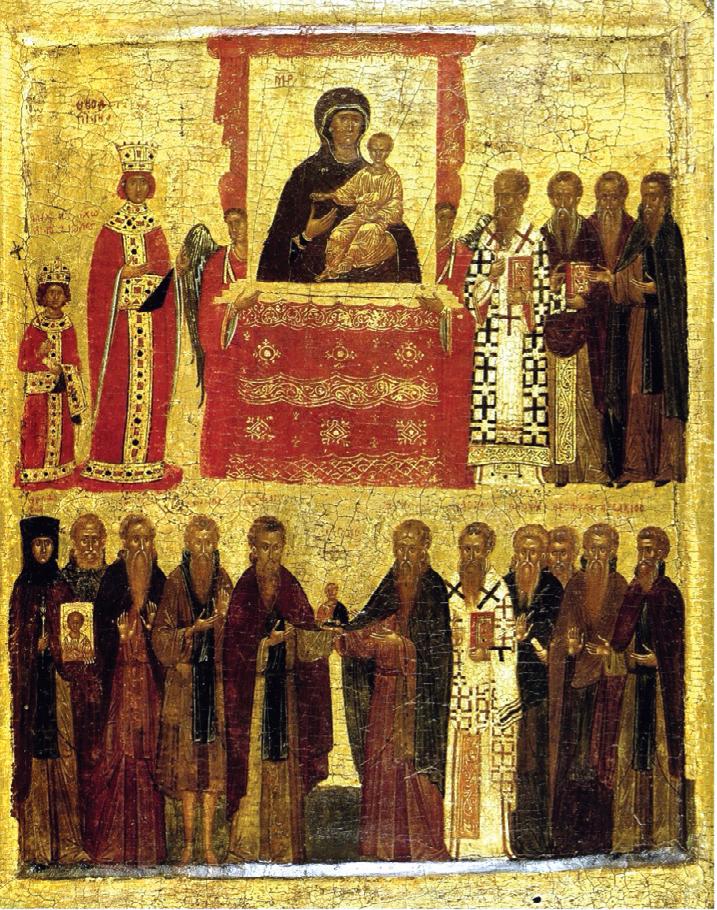
Tradition holds that the first icon was drawn by St Luke the Evangelist. To keep things simple, there are several icons of Our Lady allegedly drawn by Luke: Our Lady of Czestochowa, Our Lady of Vladmir and the Vatican’s own Salus Populi Romani.
The latter especially was transferred to Rome before Iconoclasm started and was spared destruction. Iconoclasm starts in a sordid period.
The Eastern Roman Empire, persevering in Constantinople, was under massive attack from the rise of the Islamic Caliphate. In the early 17th century, the famed emperor Heraclius (reign 610-641) fought a war against the Iranian Sassanid Empire. Scholars call this the Last Great War of Antiquity.
For almost 700 years the Romans and Persians were bitter enemies, fighting cold, hot and proxy wars, much like the US and USSR in the 20th century.
This war was brutal and destructive, both sides using Arab tribes as mercenaries. The Sassanians soon conquered Syria, Egypt, the Holy Land and parts of Anatolia. In a daring assault, the Persians attacked Constantinople in 626, but were miraculously repulsed by the Romans, who wrote the Akathist Hymn in thanksgiving for the Virgin Mary’s divine protection.
This setback soon led to a counterattack, with Heraclius attacking Nineveh, famously
depicted in Piero della Francesca’s fresco in Arezzo.
Heraclius returned the True Cross to Jerusalem, but his victory was short-lived. In the wake of the destruction, a new faith grew in Arabia around the cities of Makkah and Madinah.
This new faith rose like wildfire and spread to the entire Peninsula by 632. Under the Caliphs Abu Bakr, Umar, Uthman and Ali, Egypt, Syria, the Levant and North Africa were soon lost.
The Romans retreated beyond the Taurus mountains, while the Sassanids were completely conquered. Having taken Our Lord’s cross to Constantinople, Heraclius began to doubt the ways of Christianity and considered conversion.
The subsequent century was one of hardship for the empire. Still reeling from the great plague of the previous century, continued attacks from the Ummayad Caliphate led the Emperor Leo III (reign 717-741), named the Isaurian, to issue a decree. The Muslims succeeded and believed similar things to the Christians. Perhaps, he thought, their opposition to images was the key to their perceived divine fervour.
After another siege of the capital in 717, mirroring the later Battle of Tours, the emperor issued a decree in 726, banning all divine images, citing the commandment “Thou shalt not make unto thee any graven image” and causing a massive rift in Christendom.
To this day, most famously in the Hagia Eirene church, the apse mosaic of Our Lady is still replaced with a bare Calvary cross. Iconoclasm was enforced by the state and caused a tremendous amount of conflict.
Pope St Gregory II defied the emperor, excommunicating him and supporting the Patriarch St Germanus of Constantinople against Leo, deepening the rift between Rome and Constantinople.
His later successor, Pope St Stephen II, called on the Merovingian Franks instead of the emperor to resolve the issue of the invading Lombards, making the rift between Rome and Constantinople permanent, and establishing the Papal State in 752. Finally in 787, Iconoclasm was repudiated in the Second Nicene Council, doing little to mend the gap between the two capitals. Iconoclasm returned in 814 in the East. Emperor Leo V (reign 813-820), nicknamed “the Armenian”, reinstated the practise based on military losses, viewing them as divine displeasure.
In 843, at the Synod of Constantinople, Icon veneration was triumphantly restored, as celebrated on the first Sunday of Orthodox Lent as the Feast of the Triumph of Orthodoxy. Iconoclasm represents the first great schism of the Church, and its legacy was revitalised not only in 814 but also with the many Protestant policies of Iconoclasm. It represents an oft forgotten but essential period of the Christian Faith.
Bishop Marcus has revealed how singing in a church choir helped him overcome a childhood stammer and discover the love of God.
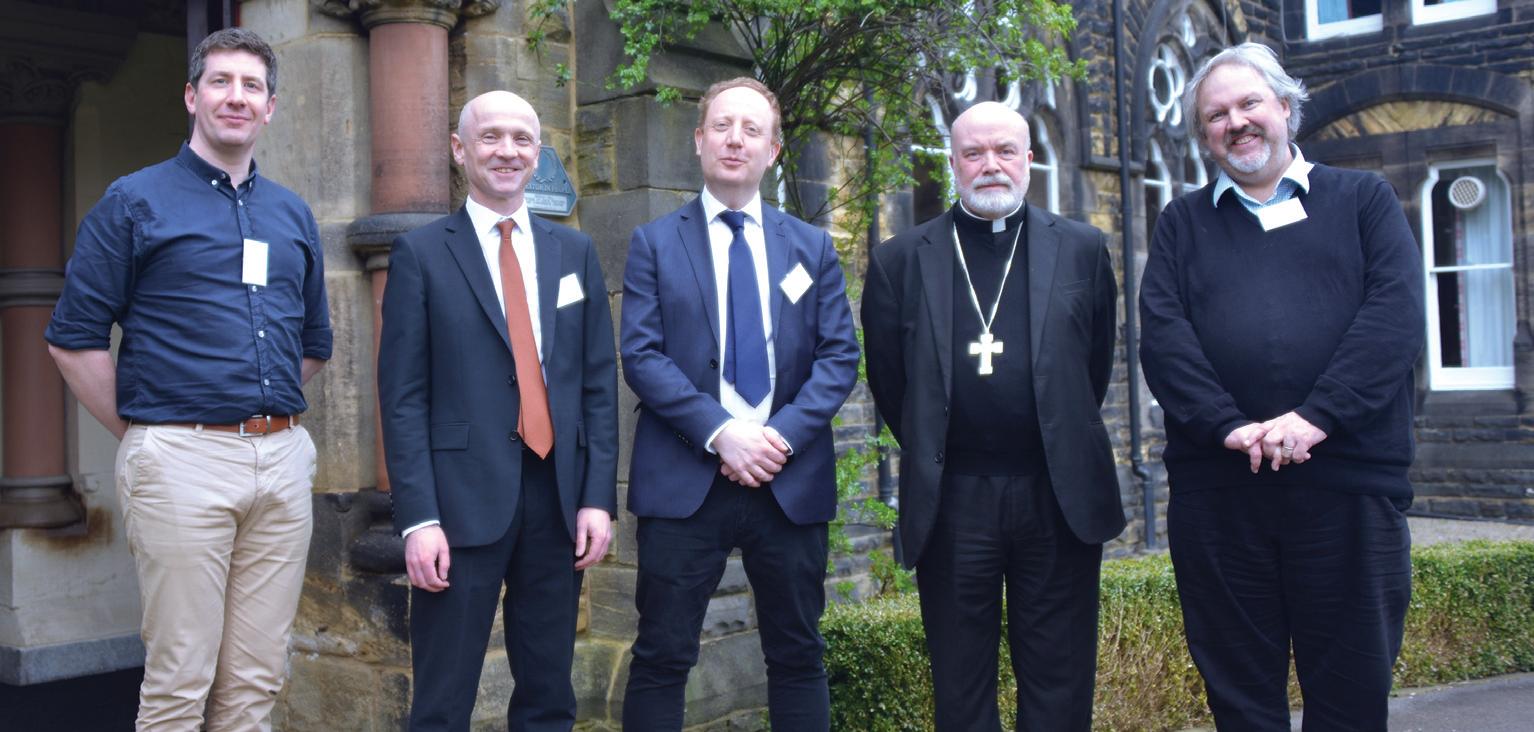
Speaking as he opened the National Schools Singing Programme (NSSP) annual conference at Hinsley Hall in Leeds, Bishop Marcus explained how joining the choir to try to overcome his speech difficulty soon became something far deeper. Through singing, he discovered both confidence and clarity of voice – but also an awakening of faith. In time, the stammer disappeared and a lifelong relationship with God began to take shape.
That childhood experience continues to inform his belief in the transformative power of sacred music, particularly within the life of the Church and its mission of evangelisation. He describes the NSSP, which all three of the dioceses in his care take part in, as “one of the most effective forms of evangelisation I have seen and experienced”.
The programme supports Catholic dioceses and Anglican cathedrals in developing music programmes for children educated in state schools.
At its heart is the belief that music, especially
choral music rooted in the Church’s liturgical tradition, has the capacity to form the whole person.
Bishop Marcus highlights how choral singing deepens knowledge of the Word of God. When Scripture is sung, it is not merely heard but internalised, carried in memory and prayer.
It also draws young people into the rhythm of the Church’s liturgical prayer, fostering reverence and attentiveness, and leading into deeper personal prayer. For many children and their families, involvement in a choir becomes an entry point into an encounter with Christ.
The communal nature of choral singing reflects the wider communion of the Church. Through shared discipline and harmony, choristers experience unity across diversity and are introduced to the Church’s rich musical heritage.
Beyond its spiritual dimension, the NSSP contributes to personal development. It raises aspirations, encourages reflectiveness and nurtures social skills. Friendships are formed, commitments are honoured and a sense of responsibility for the common good is cultivated. In this way, choral music fosters Christian values such as patience, humility
and perseverance, supporting spiritual wellbeing and human flourishing.
Above all, Bishop Marcus says sacred music draws people toward “the beauty of holiness”. For him, the programme is not simply about music education but about forming disciples and helping young people to find their voice – and, in doing so, to discover God.
The NSSP is now in 10 schools across three deaneries in our diocese, reaching more than
1,000 children each week. Children from our diocesan programme schools had a prominent role in the choir at the Chrism Mass, with the newly founded liturgical choir from St Alphonsus School joining members of the Cathedral Junior Choir from St Augustine’s, St Clare’s, St Edward’s and St Gerard’s schools, along with adult singers from the Cathedral and Diocesan Choirs. Schools interested in joining should contact diocesan director of music Steven Maxson on musicdept@rcdmidd.org.uk.
More than 3,000 pilgrims gathered in Lourdes this Easter as HCPT marked 70 years of its lifechanging pilgrimage.
Founded in 1956 by Brother Michael Strode, HCPT began with a simple but transformative vision, for young people to be able to travel to Lourdes with dignity, joy and a true sense of belonging.
Today, that vision continues to shape the charity’s work, as 3,399 pilgrims gathered at Easter under the theme “Together in Love”.
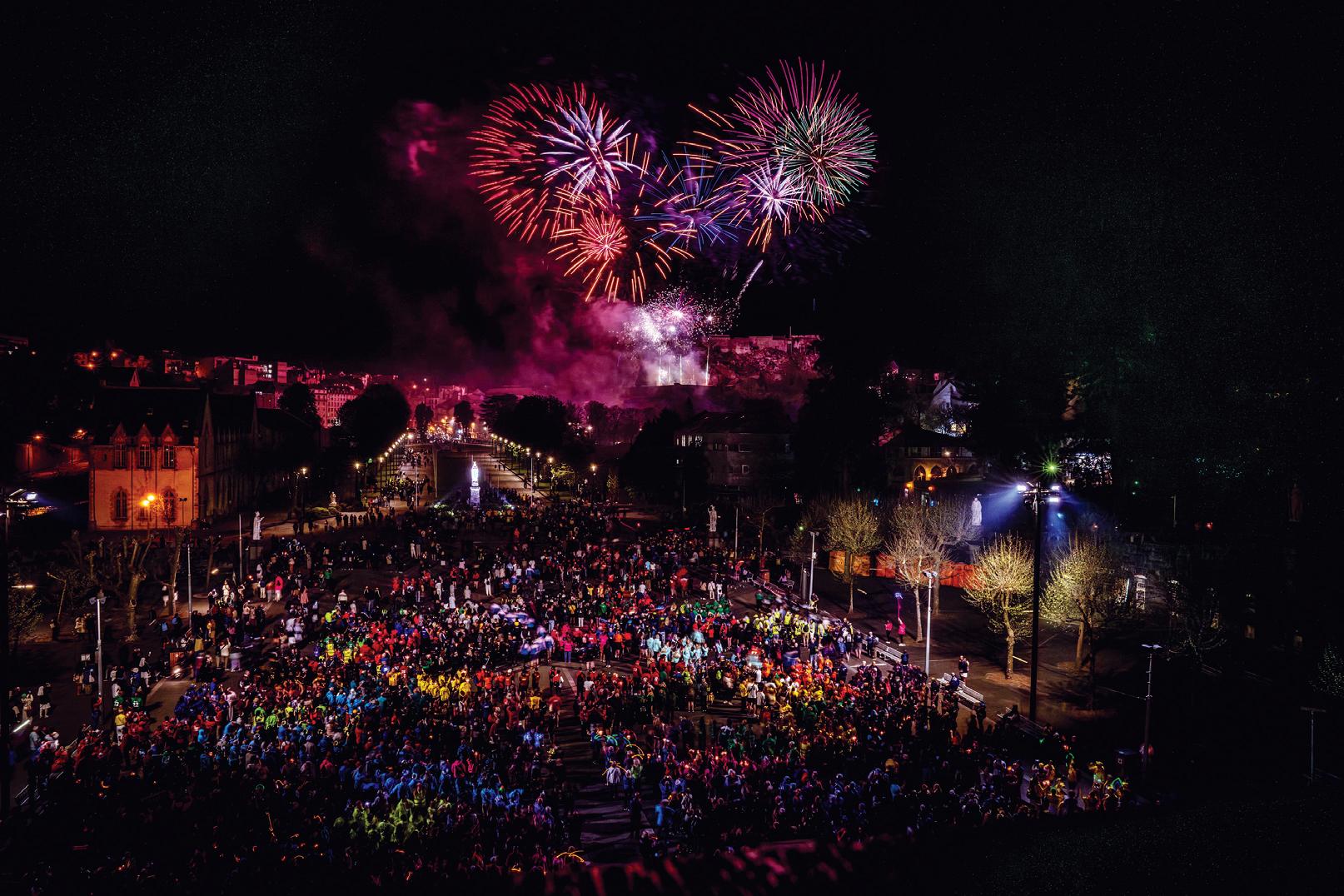
As part of the anniversary celebrations, pilgrims gathered for a special fireworks display after the Torchlight Procession.
The display marked the 70th anniversary in a moment as pilgrims from across the world gathered in answer Our Lady’s message.
The connection between past and present was especially poignant this year, as pilgrims celebrated not only the milestone anniversary but also the enduring spirit of those who first carried the pilgrimage forward.
In the light of the Gospel of the Wedding at Cana, the homily highlighted the theme of God’s generosity, a message that resonates deeply with the HCPT experience in Lourdes.
Throughout the week, pilgrims take part in a rich programme including Mass, processions and visits to the Grotto, as well as excursions to the mountains. Alongside these moments, it is often the simple, personal encounters that leave the deepest impression.
These are what many from HCPT would describe as “Everyday Miracles”, the small but significant moments that continue to define the pilgrimage, 70 years on.
Brother Michael Strode’s brother, Peter Strode, was among those who travelled with HCPT, sharing in the celebrations and witnessing the continued impact of his brother’s vision.
I love sharing my reflections about Mary, Mother of God. Jesus, her son, is Son of God in his divinity and Son of Man in his humanity.
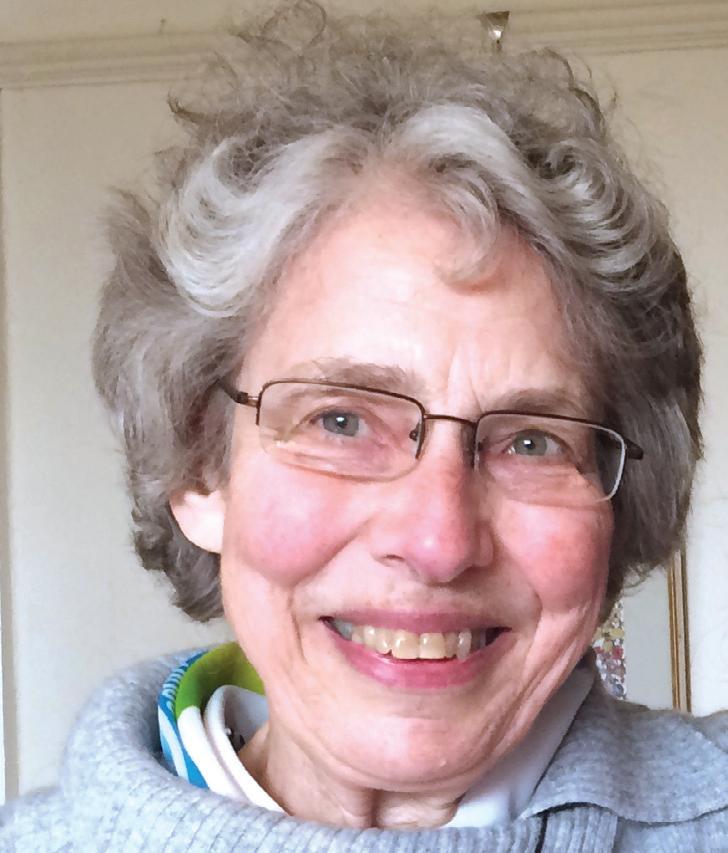
The Angel Gabriel (God’s Messenger) addressed Mary as “Full of grace”, so this is God’s description of Mary. She is, was and always will be full of grace.
Psalm 45 (v 9b-17 ESV) is easily applied to Mary. “At your right hand (God’s) stands the queen in gold of Ophir. Hear, 0 daughter… incline your ear. Forget your people and your father’s house and the king will desire your beauty.”
It concludes with, “I will cause your name to be remembered in all generations; nations will praise you forever and ever.” Mary’s Magnificat echoes this prophecy: “All generations will call me blessed.” (Luke 1:48)
We call her the Blessed Virgin Mary, but what are we really asking when we say, “Mother of God, pray for us”? Let me share a personal experience. One Friday before Palm Sunday I
was having a quiet day in one of our prayer rooms. It has a large wooden cross, unusual in that the natural wood knots mark the place of the wounds of Christ. In my meditation on the passion of Christ, I received what I consider a remarkable insight. It’s this: Mary, our mother, is an essential participant in our salvation. Jesus, Son of God and Son of Mary offered himself as the new Adam and was sacrificed in reparation for Adam’s sin (and ours). Eve was an essential player in the choice of pride and self-determination. Mary is the New Eve and her embracing the will of God the Father in the death of her Son is part of the sacrifice of reparation accomplished by the passion and death of Jesus. Let me explain: Jesus suffered terrible temptations on the cross. He was mocked by the chief priests: “He trusts in God, now let God deliver him if he desires him. For he said, ‘I am the son of God’.” (Matthew 27:42-44) Jesus could have come down from the cross.
He had proved his divine power by the raising of Lazarus from the tomb. Mary heard these taunts and suffered the temptation with Jesus. In his humanity, seeing his mother resisting the temptation to cry out against his death, Jesus drew strength from her surrender to the Divine Will.
In fulfilling the prophetic cry, “My God, my God, why have you abandoned Me? (Psalm 22) he knew the utter darkness of separation from God caused by sin. Mary knew it too and was united with her son in her fiat. The sacrifice of God’s son was accepted in expiation for the sins of humanity, and the curse of death was broken.
The heart of Mary is totally united to the heart of Jesus and thus she is drawn into the love relationship of the Holy Trinity. This is God’s desire for each of us. Holy Mary, pray for us sinners.
Carol Ann Gieske
The Cleveland Newman Circle welcomed Canon Alan Sheridan to give a talk on “God’s Messengers: Angels and Prophets”.
Canon Alan began his lively talk by asking, “What is God’s message for people?” and suggesting the Old and New Testaments offered contrasting versions.
First, we must understand how they came to be different. The Old Testament contains mixed messages.
On the one hand the Israelites were encouraged to fight their enemies but then to stay clear of foreign tribes. On the other, they were God’s chosen people.
He wanted them and would always take them back.
They were in “learning mode” throughout this time and God’s messages were helping them to evolve and grow in their knowledge and love of him.
In the New Testament God reveals himself directly, through Jesus: God is Love and we must share his love with everyone, including our enemies.
Angels and prophets occur in both testaments.
In around the sixth century it was proposed that there are nine orders of celestial beings serving God, but only the lowest two, angels and archangels, have dealings with people (angel means messenger).
Scripture describes fearsome creatures with six wings: maybe the three visitors to Abram and Sarah were angels; an angel guided the Israelites across the Red Sea; an angel visited Mary for the Annunciation.
Three archangels are named – Michael, Raphael and Gabriel – and all the stories about angels contain messages from God, even when they sound strange to modern ears.
God also gives us messages through prophets, and Canon Alan emphasised that there have been prophets throughout time, in all cultures.
Most prophets are not like John the Baptist, with camel-hair clothing and eating locusts. Many Old Testament prophets were ordinary
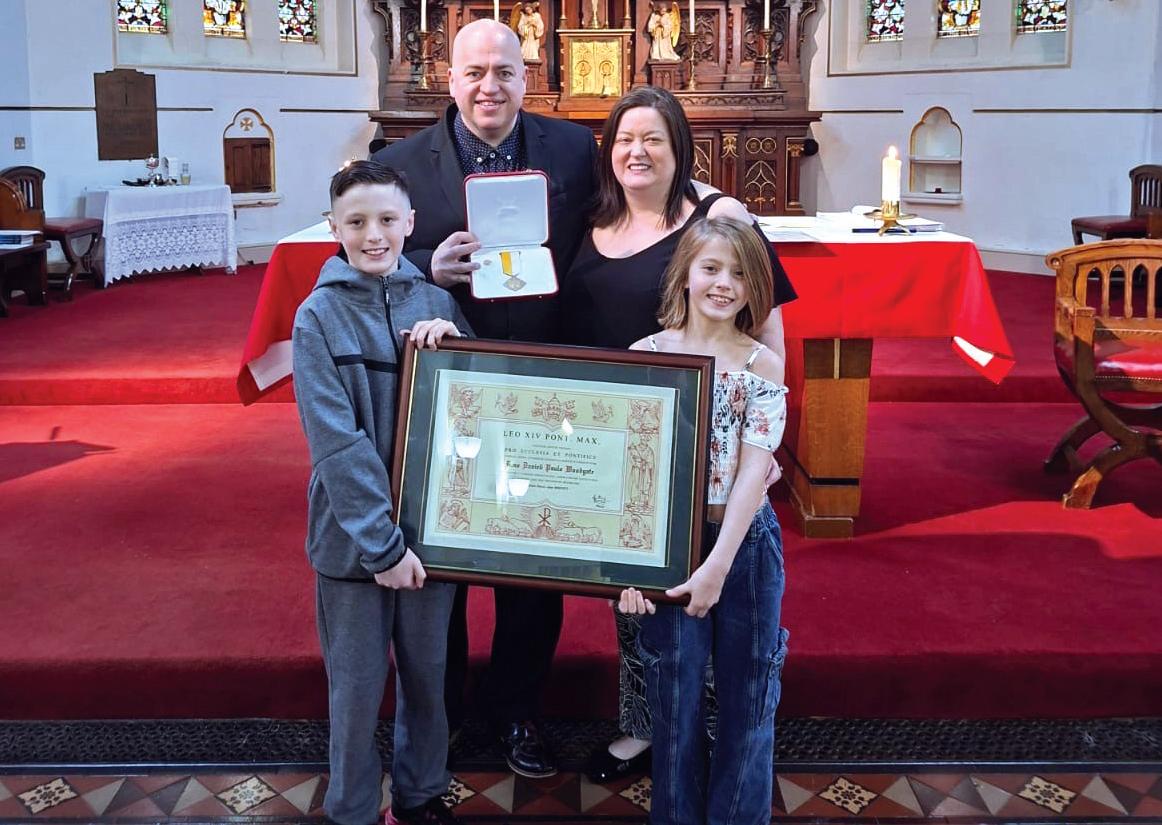
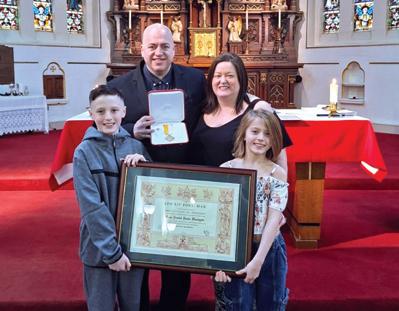
The Diocese of Middlesbrough is delighted to share the news that diocesan fundraising officer Dan Woodgate has been awarded the Pro Ecclesia et Pontifice, one of the highest honours that can be conferred upon a lay Catholic by the Holy See.
The award, whose Latin title translates as “For Church and Pope,” was established in 1888 by Pope Leo XIII and is given in recognition of distinguished and longstanding service to the Catholic Church. Dan was presented with the award by Bishop Marcus Stock in front of his Curial Office colleagues after a recent meeting of the diocesan trustee board.
The occasion marked a moment of recognition not only for Dan’s service, but for the many years of commitment given to the life of the Church.
The news was later shared with his parish community by his parish priest, Father Pat O’Neill, at St Patrick’s in Thornaby.
Parishioners joined Dan and his family in the parish hall after Mass to celebrate the award, offering their congratulations and support.
“professional” people. Sometimes, not always, prophets have had visions and performed miracles. It is the knowledge of the divine that sets them apart: they discern the truth and proclaim it. Only recently has prophecy meant telling the future.
The prophet above all others is Jesus, who reveals God the Father and proclaims the Father’s will. Jesus is prophet, priest and king, and by baptism we share in all these roles.
It is not only those such as St Catherine of Siena, St Oscar Romero and St Theresa of Calcutta who are prophets.
We too are called to rediscover the Holy Spirit within us, discern God’s truth and speak out whenever it is good for the Church and the world.
For further information about the Cleveland Newman Circle programme, email p.egerton123@gmail.com or call 01642 645732. Talks are held in St Mary’s Cathedral Hall and all are welcome.
To celebrate the 300th anniversary of the birth of St Gerard Majella, the Redemptorists organised a tour of his relics around England and Wales, with several stops in each diocese.
The relics came to the Diocese of Middlesbrough in February, first with a Mass at Sacred Heart, Middlesbrough, celebrated by Canon Gerard Robinson, and the next day a visit to St Gerard’s Primary School in Hemlington.
Next came an evening Mass at the York Oratory, and finally two Masses in Hull, at lunchtime in St Charles Borromeo, and in the evening at Our Lady of Lourdes and St Peter Chanel.
St Gerard was born to poor parents in the south of Italy in 1726. After the death of his father, the young Gerard took on various jobs to support his family.
He was a devout but sickly boy, and when a group of Redemptorist missionaries visited his town, Gerard resolved to join them.
door of the monastery and aiding those who came knocking for help; as a cook and gardener, seeing to the practical needs of the monastery and as a tailor, using his childhood skills to make Redemptorist habits. All through this, he was deeply united with Jesus in prayer and penance. Many miracles are attributed to him, but in his humility he saw that they always pointed to the glory of God. This leads us on to his most popular title, “The Mothers’ Saint”.
St Gerard seems to have had a strange knack for consoling couples desperate for children that their prayers would soon be answered. He became associated with prayers for safe delivery through one of his miracles, and if you visit his major shrine at Materdomini, in Italy, the walls are covered with passport pictures of chubby Italian babies, and the ceiling is a sea of pink and blue ribbons pinned up by parents in thanksgiving.
Speaking about the honour, Dan said: “I feel very grateful and humbled to receive this award. It really reflects the people I have worked alongside over the years and the shared commitment we have to our parish communities and the wider Church.
“I am especially thankful to my family for their constant support and encouragement.”
Reflecting on the spirit of service recognised by the award, the words of Mother Teresa offer a fitting reminder: “Not all of us can do great things. But we can do small things with great love.”
The Pro Ecclesia et Pontifice is a visible sign of the Church’s appreciation for faithful service, and its presentation is a moment of pride not only for the recipient, but for the whole diocesan community.
This recognition offers an opportunity to give thanks for the many individuals across the Diocese of Middlesbrough who quietly and generously support the life of the Church, often without recognition, and whose contributions continue to sustain parish communities for generations to come.
His family was opposed and locked him in his bedroom, but undeterred, he knotted his sheets together and climbed out of the window to run away and join the order.
Gerard became a brother, rather than a priest, and supported his community through various jobs: as a sacristan, preparing the church for Mass; as a porter, manning the
We still hear stories of couples conceiving after years of heartbreak, thanks to the intercession of St Gerard, and I commend all in the Diocese of Middlesbrough to this powerful friend in Heaven.
If your parish would like to start devotions to St Gerard Majella, contact Missions@Redemptorists.co.uk.
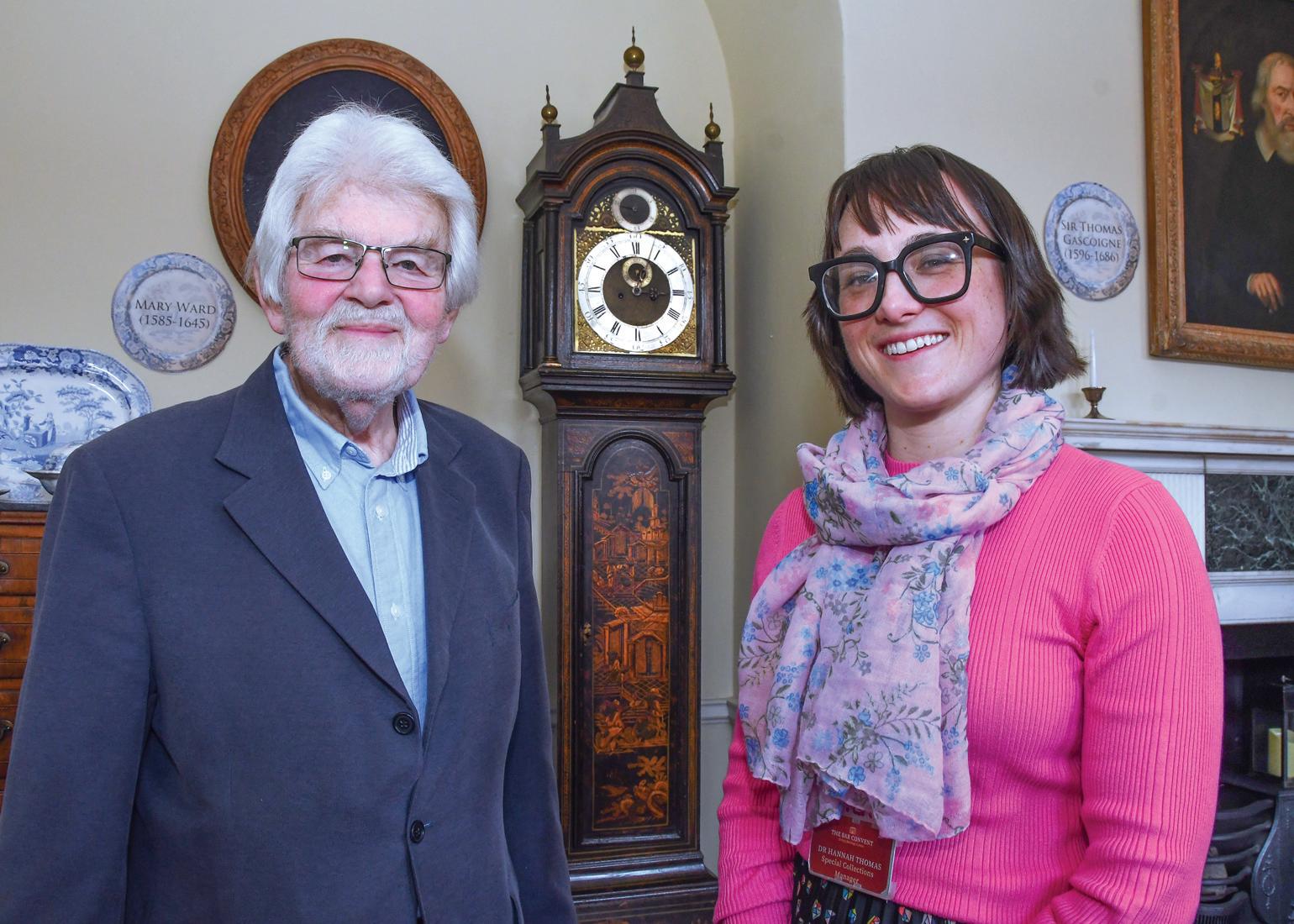
The historic Bar Convent has received a remarkable donation of a rare long-case clock made by renowned 18th-century York clockmaker Henry Hindley.
The clock, made in around 1735-1750, will join two other Hindley timepieces already held at the convent, making this the only place in the world where visitors can see three Hindley clocks on permanent display.
Among them is the convent’s celebrated turret clock, widely regarded as one of the most innovative and groundbreaking examples of its kind in the world.
With the addition of this latest piece, the Bar Convent is now further enhancing its internationally significant horological collection.
Special collections manager Dr Hannah Thomas said: “We are absolutely delighted and privileged to have received this wonderful donation.
“Not only does this addition mean we can display three remarkable Hindley clocks, but it also enables us to tell the stories of the house in a wider context, particularly in the central role the sisters played in the city during the Georgian period.
“Alongside the timepieces, Hindley’s blue plaque is also on display on loan from York
Civic Trust, which means we can offer visitors rare and unique insight into York’s clockmaking heritage.”
Donor John Anfield added: “My father Alfred Anfield and my uncle Walter Anfield owned the shop until it was sold in the early 1960s. My father bought this Hindley clock in the 1950s to stop it being sold to an American dealer.
“It has been in my family for 75 years. I live in Buxton, in the Peak District. I am very pleased to donate the clock to the Bar Convent. It is amazing that this clock was probably made in the same workshop as the turret clock at the Bar Convent.”
The newly donated Hindley Clock is on display in the Georgian Parlour at the Bar Convent for free. The additional long-case clock, working pendulum of the Turret Clock and the Henry Hindley blue plaque can be seen as part of the exhibition where admission applies.
Born in Lancashire, Hindley made his home in York, where his career and inventive genius flourished. He set up workshops on Petergate and Stonegate and sent his daughter to be educated at the Bar Convent alongside other well-to-do Catholic girls.
Hindley set up his first workshop and home in York on Petergate. In 1769, he moved to a
workshop on Stonegate. The sites of both workshops are less than a five-minute walk from St Michael le Belfrey, where Hindley is buried.

Pope assures archbishop of dialogue ‘in truth and love’
Pope Leo XIV has sent a message to Sarah Mullally on the occasion of her installation as Archbishop of Canterbury, assuring her of his prayers and invoking “grace, mercy, and peace… in truth and love”. The installation service took place in Canterbury Cathedral in the presence of some 2,000 guests, including the Prince and Princess of Wales.
Archbishop John Sherrington has revealed the theme for this year’s Day for Life (Sunday June 21) in a reflection celebrating the Feast of the Annunciation. Focusing on the Virgin Mary’s “Yes”, he emphasised that: “God chose to enter the world as an unborn child, embracing the fullness of human existence from its earliest stage.” Highlighting the significance of every unborn child as a unique and irreplaceable person, Archbishop Sherrington noted how this truth is acknowledged even in civil practices, such as the issuing of baby loss certificates to parents who suffer pregnancy loss. He announced that this understanding will guide the Day for Life, inviting people to reflect on the humanity of the unborn and to recognise the deep grief of families who lose a child before or shortly after birth.
Two summer courses exploring faith, ethics and leadership for sixth form students, offered by the Christian Heritage Centre at Stonyhurst. Each course offers six days in the beautiful Ribble Valley to explore themes linked to The Common Good (Year 12, August 10-15) and to The Human Ecology (Year 13, July 5-10). There are also opportunities to meet new friends, to discuss and share with peers, tutors and academics, to learn new skills, to develop one's relationship with Christ and to build character. Visit christianleadershipformation.com.
The National Day of Prayer for Survivors of Abuse is on Tuesday May 5. This year’s theme looks at the scourge of domestic abuse, which causes pain and fear that prevent its victims from living the life Jesus came to bring.
The Catholic Church’s World Day of Migrants and Refugees will focus this year on minors on the move, recalling the duty to welcome each one of them as the Gospel teaches us. “Even just one of these children” is the theme that Pope Leo XIV has chosen for the 112th edition of the day, which will be marked on Sunday September 27.
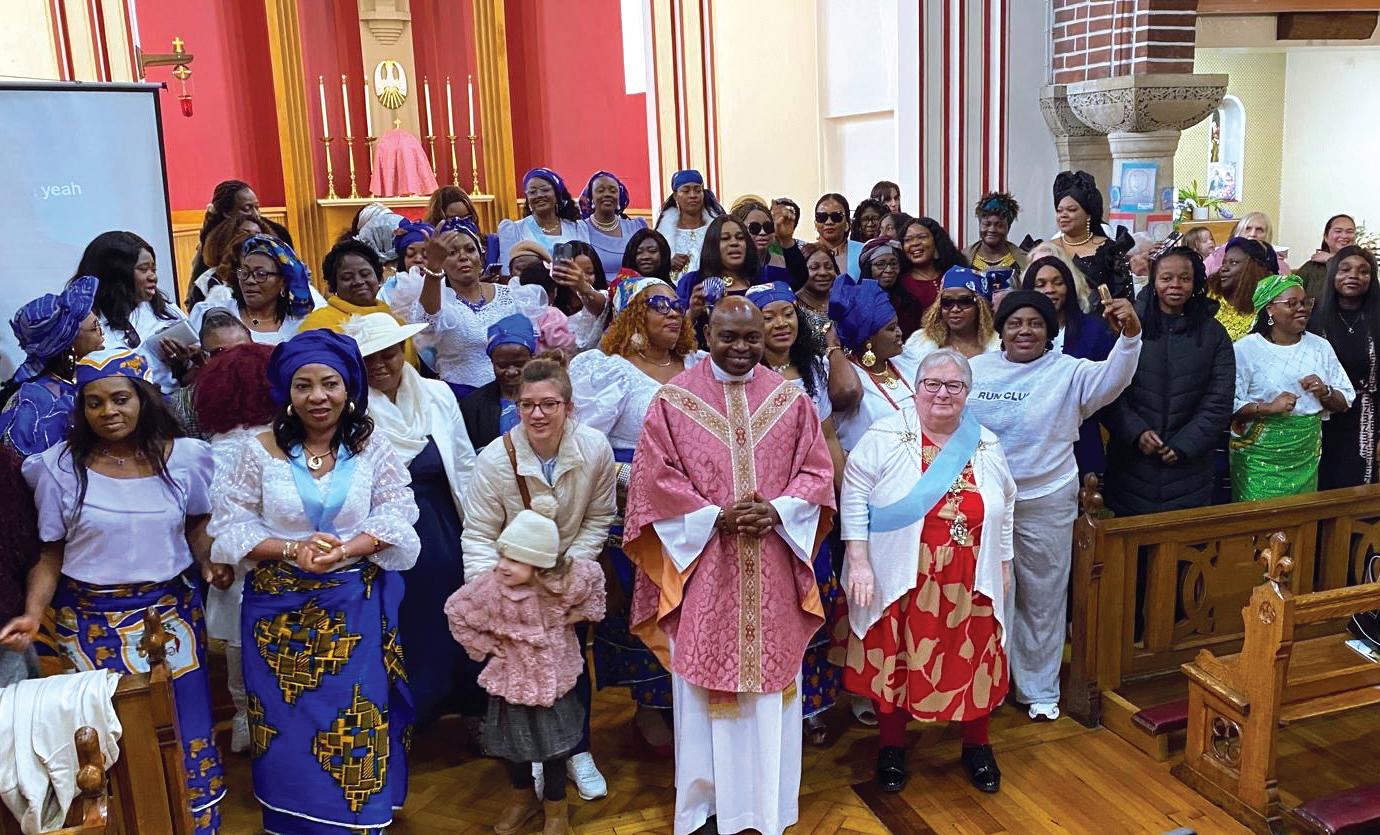
Following on from last year's success, St Vincent's Parish in Hull hosted a Mother's Day celebration Mass, followed by a buffet and games.
Mass was celebrated by Father Richard Nwagwu, who gave out daffodils to all the ladies in the parish, and beautiful music was led by St Vincent's African choir.
We were delighted to have Lord Mayor of Hull Cheryl Payne in attendance. At the end of the Mass she was presented with a gift and she spoke about the importance of the role of mothers in our society.
We thought we would try something new this year, so we asked parishioners to bring a photograph of their mothers so they could be displayed alongside a statue of Our Lady.
After Mass, parishioners gathered in St Vincent's School hall, where they shared in a multicultural buffet.
We were joined by mothers from our sister parish of Our Lady of Lourdes and St Peter Chanel, many taking part in our relay race. It was a joyful celebration full of happiness and we look forward to next year already. Catherine Holtby and Adrian Crummay
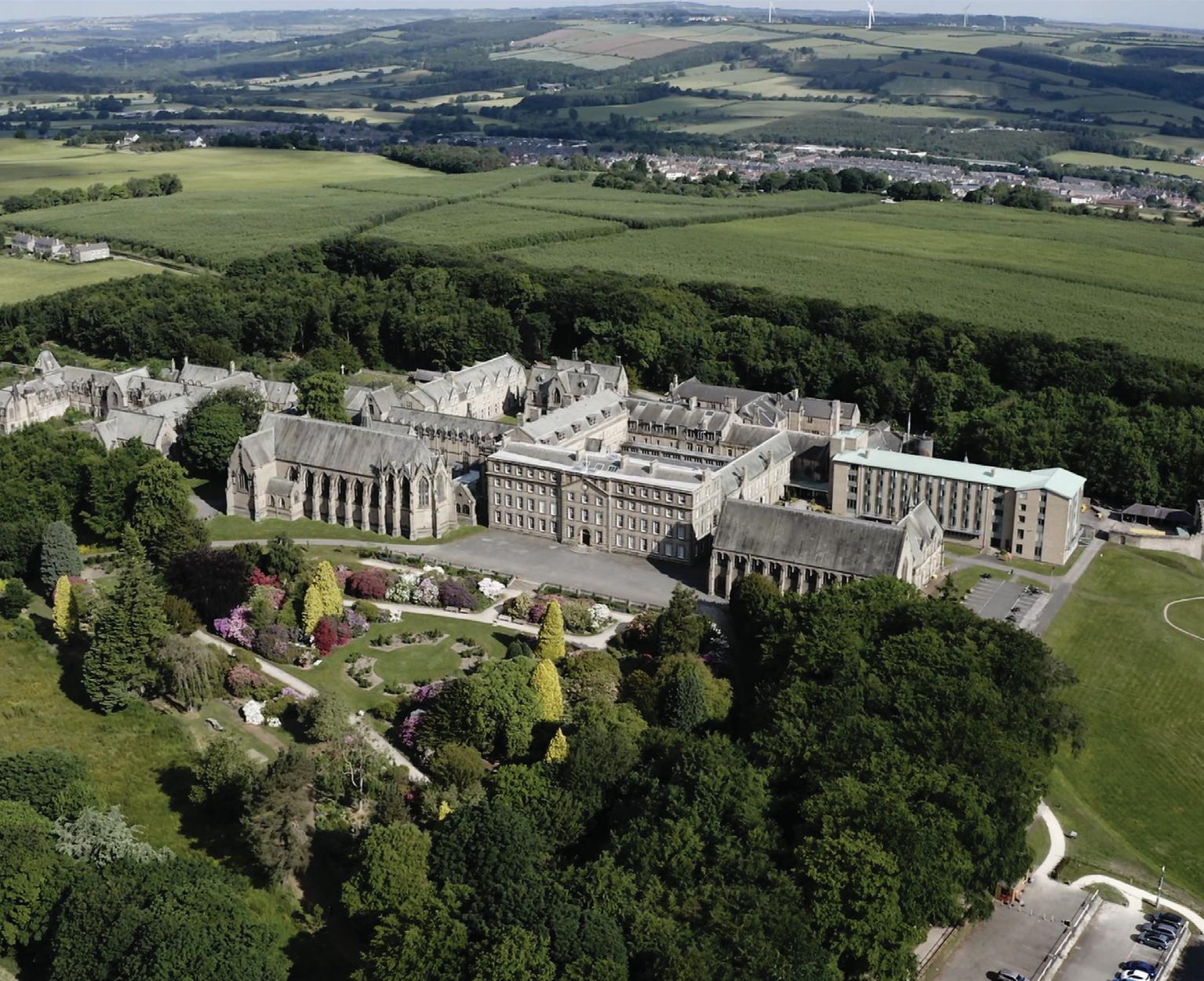
Ushaw Historic House, Chapels and Gardens has been handed a “transformative” £400,000 funding boost.
The National Lottery Heritage Fund has awarded £250,000 and Historic England has granted £150,000 to support the next phase of development at the former Catholic seminary.
The funding will underpin “Unlocking Ushaw: Heritage, Community and the Spirit of Emancipation”, a major project designed to secure Ushaw’s long-term future as a heritage destination, conserve its architecturally and historically significant assets and enhance the visitor experience.
Building on ten years of development, this project marks a strategic shift from experimental growth to a long-term, sustainable plan that will guide Ushaw over the next decade.
“These grants from The National Lottery Heritage Fund and Historic England are a powerful vote of confidence in Ushaw’s journey to date and in our ambitions for the future,” said co-CEO Lucy Jenkins.
“Unlocking Ushaw builds on our first decade as a heritage visitor attraction, enabling us to care for this extraordinary place while
opening it up more fully to communities, with a programme of activities underpinned by values of care, collaboration and social impact. This investment allows us to plan for long-term sustainability, ensuring Ushaw remains a living, relevant heritage site for generations to come.”
The project centres on three main areas aimed at revitalising Ushaw’s historic estate.
First, estate planning will seek to unlock the potential of Ushaw’s 15 listed buildings and its 550 acres of gardens, grounds and landscapes through a comprehensive conservation and reuse strategy.
Second, Community Engagement aims to involve local residents, stakeholders and visitors in shaping the future of Ushaw, ensuring that its rich heritage remains accessible, inclusive and valued by all.
Finally, Audience Development focuses on understanding and expanding Ushaw’s visitors, with efforts to boost regional and inbound tourism, increasing engagement and ensuring the estate’s long-term resilience.
These interlinked initiatives will culminate in 2029/2030, coinciding with the commemoration of 200 years of Catholic Emancipation, when Ushaw will unveil its long-term vision.
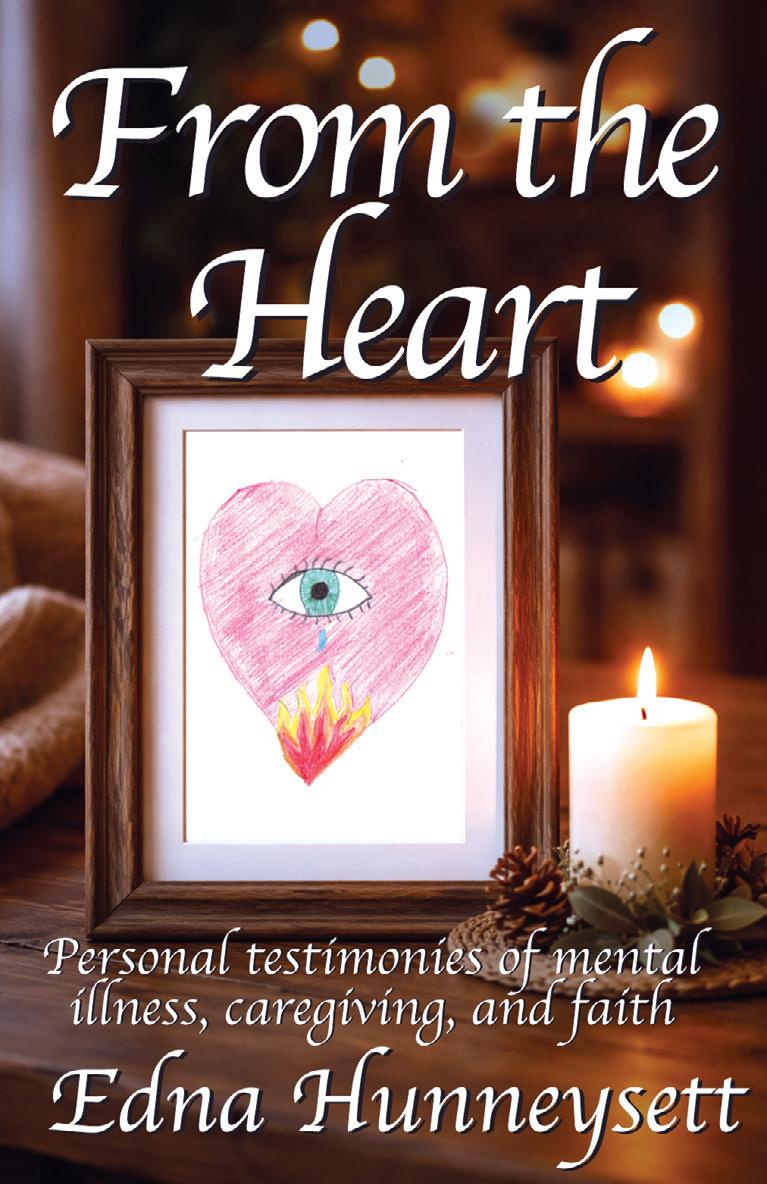
A new edition of Catholic author Edna Hunneysett’s book From the Heart: Personal Testimonies of Mental Illness, Caregiving and Faith, has been published in paperback and ebook.
The updated book is a collection of raw and moving real-life survival stories of people reflecting on their mental health and the spirituality they drew on to help them on their journey.
It was written to offer hope and empowerment to those in similar situations and to help those caring for loved ones with mental illnesses and sufferers themselves to tell their own stories.
Including stories and poems, the book questions what it means to be human and to care for our fellow human beings.
The then Catholic Voice editor, the late Brian
Dowd, wrote: “This book gives voice to the voiceless, allowing those caring for loved ones with mental illnesses and sufferers themselves to tell their own often painful but always moving stories.”
Archbishop Richard Moth, who recently became Archbishop of Westminster, said: “We journey towards a time when mental health issues are better understood, and I commend this book as a welcome contribution to that journey.”
John Swinton, professor of Practical Theology and Pastoral Care at King’s College, University of Aberdeen, wrote: “If we listen carefully to the stories and poems gathered in this book, we will hear new voices.”
Edna’s first book, Our Suicidal Teenagers: Where Are You God?, was about her experiences of the Church while bringing up
a child with a severe mental illness. When it was first published many years ago, she visited parishes throughout the diocese to give talks about what she had gone through, to raise awareness about the need for understanding and support, including spiritual support, for a person with a mental illness and for their family. She is currently working on a revised edition.
A parishioner of the Holy Name of Mary in Linthorpe, Middlesbrough, and a mother of eight and a grandmother and greatgrandmother, Edna has since penned a series of semi-autobiographical novels. From the Heart is available on Amazon in paperback priced £9.99 and in ebook at £2.99.



Copy and photographs for inclusion in the Catholic Voice should be sent to: The Editor, Middlesbrough Diocesan Catholic Voice, Curial Offices, 50a The Avenue, Linthorpe, Middlesbrough, TS5 6QT. Tel (01642) 850505, email catholicvoice@rcdmidd.org.uk
Deadline Friday May 1 for June edition.
Where possible please send articles in Word and photographs as jpegs. Please confirm when you send in your photographs that those who appear in them have given their permission for publication.
1 Friday
Events, articles and photographs for the June edition of the Voice are due by this day.
2 Saturday
11am Catholic women are invited to share an hour of feminine communion including meditation, via Zoom. Text Barbara on 07796 117704 with your mobile number and email address so she can add you to the WhatsApp group, or email catholicwomenmdl@gmail.com for Zoom link.
6pm Mass in Italian in the Father Kelly Room, Our Lady, Acomb, York. Followed by refreshments. All welcome.
4 Monday
9.45am-10.25am Beverley Christian Meditation Group meets online. Further information from christianmeditation.beverley@gmail.com. This takes place every Monday.
7pm Catholic charismatic prayer group meets on first Monday each month at St Bede’s Pastoral Centre, Blossom Street, York. For more information, contact Sharon on cdscsmiddlesbrough@gmail.com or 07932 420809.
5 Tuesday
10am Coffee at the Cathedral. Tea, coffee and treats every Tuesday after 9.30am Mass. A warm welcome and friendly atmosphere. Make new friends and enjoy some fellowship. Those who are alone especially welcome.
10am Christian Meditation Group meets online. Further information from Terry Doyle terry-doyle@live.co.uk. This takes place every Tuesday.
6.30pm Knights of St Columba Council 29 meets at St Mary’s Cathedral.
6 Wednesday
5.30pm Sung Evening Prayer and Benediction at St Mary’s Cathedral. Join us every Wednesday for a time of prayer and quiet reflection before the Blessed Sacrament (term-time only).
10 Sunday
3pm Mass for LGBT+ community, family and friends at the Chapel of the Bar Convent. Doors open from 2.30pm.
11 Monday
2pm Music for the Mind, an hour of fun and music for people living with dementia, their friends and carers with Trish McLean. All welcome.
12 Tuesday
12.45pm Catholic Women's Luncheon Club meets every second Tuesday of the month at the Kingston Theatre Hotel, Kingston Square, Hull. Gather at 12.45pm, lunch at 1pm. All ladies in the Hull and East Riding area welcome. Call 01482 446565 or email jayne.wilson24@ymail.com.
13 Wednesday
7pm Hull Circle of the Catenian Association meets at the Lazaat Hotel in Cottingham, followed by a Mass and a buffet-style meal. If interested, email Charles Cseh at hullcirclesecretary@gmail.com.
14 Thursday
7.45pm Middlesbrough Catenians meet at Middlesbrough Cricket Club, Green Lane, TS5 7SL. Contact Peter Carey on 01642 317772 or Chris Rhodes on 01642 319161.
15 Friday
7pm Ruby Jubilee Thanksgiving Celebration Mass at St Mary’s Cathedral, with Bishop Marcus Stock.
16 Saturday
7.30pm Irish dance with Michael Coyne at the Erimus Club, Cumberland Road, Middlesbrough TS5 6JB. Contact John Brown on 07871 958412.
7.30pm An Evening of Praise with Jo Boyce and Friends at St Mary’s Cathedral.
17 Sunday
3pm Catholic Fellowship Mass at Sacred Heart Church, Middlesbrough, with Father John Idio.
19 Tuesday
7pm 1986 Film of the Dedication of the Cathedral screened at St Mary’s Cathedral.
30 Saturday
Noon LGBT+ social gathering at the Bar Convent, York. All welcome.
If you have any events that you would like to include in the Out and About section, please email heidi.cummins@rcdmidd.org.uk.


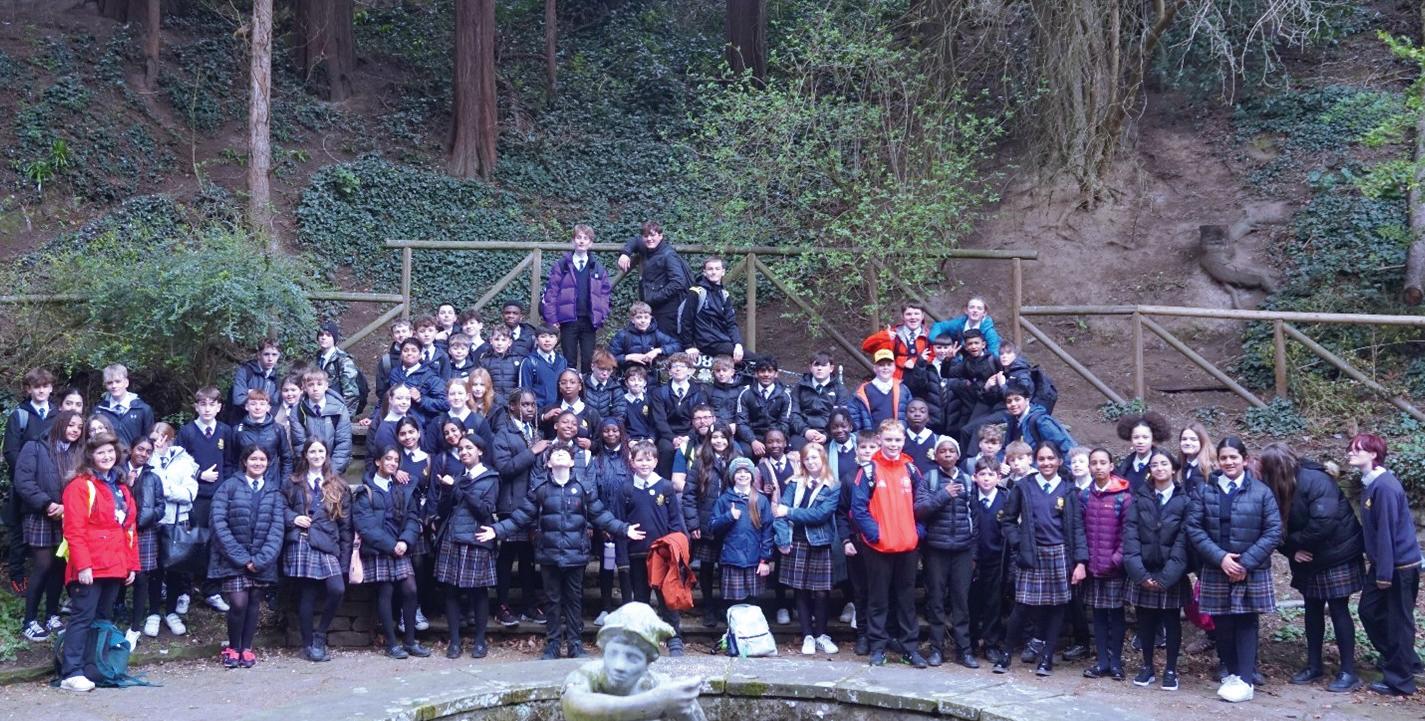
As part of their Lenten observance, more than 80 pupils from St Augustine’s School in Scarborough put their faith into action by taking part in CAFOD’s Big Lent Walk.
Supported by staff, the walkers covered five miles on foot from school, through Peasholm Park to Scarborough’s North Bay, raising over £750 in sponsorship for CAFOD’s floating gardens project in Bangladesh.
Pupils have been learning about how climate change is affecting communities. In some parts of the world, there is too little rain but in Bangladesh, there is too much. The result is the same – seeds don't grow, plants die and families go hungry.
With CAFOD’s help, communities in Bangladesh are building floating gardens that are immune to floods, allowing them to grow enough food to eat and sell, helping them make a living.
As one St Augustine’s Faith in Action walker said: “It really is amazing what we can do when we work together as one global family.”
LUCA SETTIMO (Professor of Theology at the University of Nottingham) continues his series of reflections on the meaning of some key biblical words.
We continue our exploration of biblical words by examining the biblical notion of salvation. In the Bible, this concept is expressed through two key terms: jasha’ in Hebrew and soteria in Greek.
The name Jesus, in fact, derives from the root of this Hebrew term. In many countries, out of reverence, this name is not given to people, with an exception being Spanishspeaking nations.
The closest name in the Anglophone world is Joshua. It is well known that at the root of this name lies the Hebrew verb jasha’, meaning “to save”, as the angel explains to Joseph, his foster father: “You are to name him Jesus, for he will save his people from their sins” (Matthew 1:21).
This verb is present 354 times in the Old Testament (136 times in the Psalms as an invocation of the saving God) and most often this verb has the Lord as its subject. Salvation also alludes to help, support and liberation.
Here are some instances in the Bible showing the value of this highly significant Hebrew word – so much so that the divine
Revelation is commonly described as the “history of salvation”.
David exclaims: “The LORD lives! Blessed be my rock, and exalted be the God of my salvation” (Psalm 18:46).
The righteous person is the recipient of a divine promise: “Those who bring thanksgiving as their sacrifice honour me; to those who go the right way I will show the salvation of God” (Psalm 50:23).
For this reason, the believer who entrusts himself to the saving God can walk serenely along the paths of the world and of history, as the prophet Isaiah sings: “I will greatly rejoice in the LORD, my whole being shall exult in my God; for he has clothed me with the garments of salvation” (Isaiah 61:10a).
In the Old Testament, the most significant act of salvation is Israel’s liberation from Egyptian oppression. This is not merely a socio-political event, but the sign of a complete salvation. This is what is attested to in chapters 11–19 of the Book of Wisdom, in which the story of Exodus is transposed to the level of definitive liberation from evil.
Historical dimension and spiritual perspective intersect, so much so that Jesus himself, when he heals a sick person, reiterates the necessity of faith, because his healing miracles do not solely enable physical healing, but they provide salvation: “Your faith has saved you!” (Luke 8:48; 17:19).
Other biblical names, besides Joshua, preserve the verb jasha’ within them in various forms: this is the case with King Josiah of Judah, as well as the prophets Isaiah and Hosea (“God saves”).
That full salvation is, above all, a divine gift, a grace, and that it requires faith is attested to by this statement of the Psalmist: “No king is saved by his vast army; no warrior is delivered by his great strength. A horse is a vain hope for salvation; even its great strength cannot save” (Psalm 33:16-17).
Against the logic of power and force, the faithful is invited to trust in God: “Our soul waits for the LORD; he is our help and shield” (Psalm 33:20).
The equivalent Greek word for salvation is soteria. The root of this Greek word is the verb sozo (to save), even in its variations (salvation, saviour). This term occurs 192
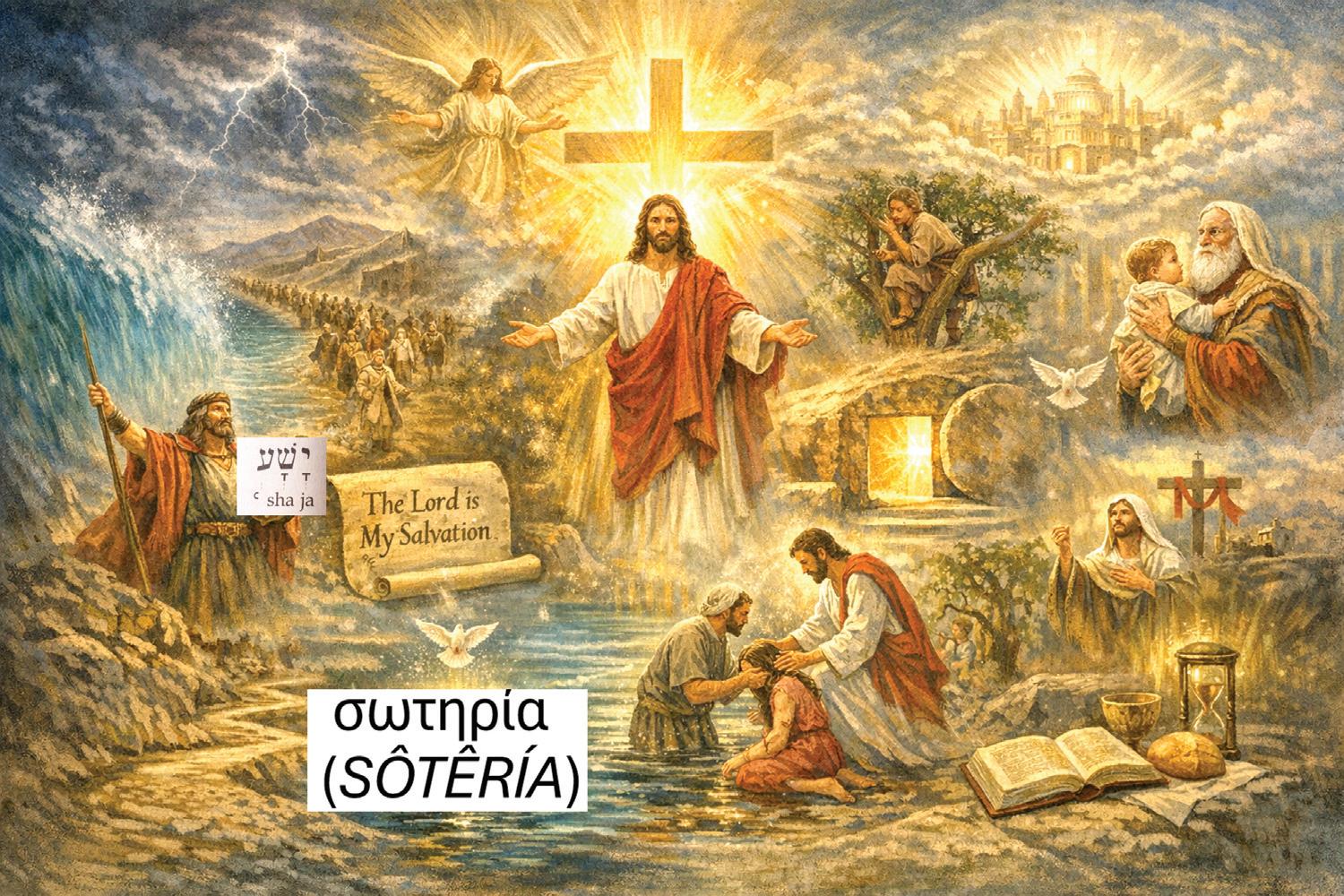
times in the New Testament. Similarly to the Hebrew root, also the Greek term points to the fact that Jesus is the saviour as the angel reminds Joseph: “She will bear a son, and you are to name him Jesus, for he will save his people from their sins” (Matt 1:21).
Thus, soteria, by referring to its Hebrew root, points to the triumph of life expressing the idea of victory from oppression.
In fact, the great act of salvation-liberation that the Lord carries out for Israel is the exodus (exit/departure) from Egyptian slavery. There is, therefore, a connection between the physical or historical dimension and the religious perspective.
Also, Jesus often connects salvation with liberation from bodily evil; nevertheless, Jesus requests the presence of faith as a precondition for His miracles. Simeon in his old age is joyful: “for my eyes have seen your salvation”, while he holds the newborn Jesus in his arms (Luke 2:30).
The affirmation in both Luke and John that salvation begins already now in our present existence, through faith, charity and the life of grace, is significant.
Jesus says to Zacchaeus: “Today salvation has come to this house” (Luke 19:9). In his nocturnal dialogue with Nicodemus, Christ proclaims: “God did not send the Son into
that the world might be saved through him” (John 3:17).
But salvation, which has its source in Christ’s supreme victory over death in the resurrection, will obtain its fulfilment in the fullness of time: “the one who endures to the end will be saved” (Mark 13:13).
In baptism, therefore, one receives the living and active seed of salvation that will blossom and reach its complete fulfilment in the final glory.
Indeed, the risen Christ declares to the 11 gathered at table with him: “The one who believes and is baptised will be saved; but the one who does not believe will be condemned” (Mark 16:16).
I wish to acknowledge Cardinal Gianfranco Ravasi, former president of the Pontifical Council for Culture, for granting me permission to use his material originally published in Italian.
A YouTube video entitled “The Biblical Notion of Salvation,” which explores this biblical concept in greater detail, is available on my YouTube channel at the following link: youtube.com/@LucaSettimo-7 (this video also explains how to pronounce the Hebrew and Greek terms mentioned above).
SIR JOHN BATTLE, MP for Leeds West from 1987 to 2010 and a minister in Tony Blair’s government, has kindly agreed to contribute a new regular column in the Voice. Sir John, who was made a Knight Commander of the Order of St Gregory the Great by Pope Benedict and was knighted in the 2022 New Year Honours, is chair of the Diocese of Leeds Justice & Peace Commission and has a deep commitment to Catholic Social Teaching.
At an inner Leeds community centre supporting a range of local people under pressure and marred by low income, poor employment opportunities, poverty and hard-to-heat housing, I overheard a conversation between a group of young mothers with their children.
They were commenting on how depressing the TV news bulletins were, with their images of death and destruction in the Middle East, always accompanied by warnings of an energy crisis here and more price rises. They always seem to reinforce feelings of a catastrophic future. One mother remarked: “There’s just no hope.” Her young son at her
side looked up to her and asked: “Mummy, what is hope?”
Perhaps an answer to that child's direct question is now our Easter challenge.
It is now commonly recognised that our society is more fragmented and fractured and people are more individualised, if not treated as consumers and commodities.
Pope Benedict XVI, commenting on poverty in our western societies, insisted that we remember that “poverty is also isolation”. Any sense of community seems to have dissolved.
The American Vice President JD Vance argued that immigration crackdowns are compatible with Christian love and that love is owed in concentric circles, thus putting one's own family and community ahead of duties to the stranger.
His interpretation of St Augustine's theology of love in his Ordo Amoris he regarded as a ranking of family first, then neighbourhood and then community – and all before the rest of the world.
This prompted Cardinal Robert Provost (now Pope Leo XIV), to share on social media an article in the National Catholic Register headlined: “JD Vance is wrong. Jesus does not ask us to rank our love for others.”
Unfortunately, the Cambridge evangelical and adviser to Nigel Farage, Professor James Orr, seems to have taken a step further, suggesting that “the nation is the outermost concentric circle of concrete affection”.
He says: “If you think that the message of the Parable of the Good Samaritan is that Samaria should welcome and care for all of
Judea’s dispossessed, think again.”
Significantly, both Pope Benedict XXI and Pope Francis devote major chapters spelling out the implications of the parable of the Good Samaritan in detail in their social justice encyclicals, stressing that the urgent needs of strangers can supersede those of our close circles.
In Fratelli Tutti, Pope Francis writes (para 8081): “Jesus told the Parable of the Good Samaritan in answer to the question: Who is my neighbour? The word ‘neighbour’, in the society of Jesus’s time, usually meant those nearest us. It was felt that help should be given primarily to those of one's own group and race…Jesus…completely transforms this approach. He asks us not to decide who is close enough to be our neighbour, but rather that we ourselves become neighbours to all. Jesus asked us to be present to those in need of help, regardless of whether or not they belong to our social group.”
Former Archbishop of Canterbury Rowan Williams, commenting on the crucifixion of Jesus, says it was a shocking declaration that “no human life was beyond the love of God and that human community transcended what any state politics or culture could define”.
He added that: “To belong in the realm of God people would have to recognise that they stood on the same level as all kinds of unwelcome strangers and let go of their pride and belonging into any kind of privileged or powerful or innocent group.”
In other words, the symbolism of the Cross was something that “in principle speaks to
all kinds of dispossessed and insecure people and promised a life-giving, absolving hopeful kind of human association”.
The South African Dominican Father Albert Nolan, reminding us that the Ten Commandments are complemented by the Beatitudes in the Gospels, notes that we still often fail to go the extra mile or forgive 70 times seven. Moreover, we all have a little list of who we do not want as neighbours living next door to us.
But just as we don't choose our birth families, most of us do not choose our neighbours. Perhaps we should regard them as given to us with whom we are invited to build community, offering a shared social life, helping each other to find a purpose, regarding “home” as a process rather than a house or just a place to shut a door.
Hope, then, as the Easter gift is a verb, a doing word, rather than an abstract noun. We are called to help develop hope in others.
The Middlesbrough-born Dominican theologian Father Herbert McCabe put it clearly: “We are not optimists. We do not present a lovely vision of the world which everyone is expected to fall in love with. We simply have where we are some small task to do on the side of justice for the poor.” This year's brightly colourful Easter poster from the Jesuit Refugee Service, with its bold banner: “Refugees welcome”, adds a quotation from Pope Francis: “The Easter message of the risen Christ invites us not to forget those men and women seeking a better future.”
A very happy Easter to all.
Mass was celebrated in the chapel of the Casa Santa Marta to mark the first anniversary of the death of Pope Francis. Archbishop Luigi Travaglino presided and read out a homily from Cardinal Angelo Acerbi.
“Now is not the time to dwell on the course of his daily life, made here of work and meetings and prayer in the small chapel on the second floor,” he said.
“I am sure that Pope Francis grew fond of this house, and we grew fond of him. Such remains the spirit of our prayer of suffrage in this first year of his passing. We still feel him close to us.”
Cardinal Acerbi recalled that despite physical challenges, Pope Francis kept great momentum as Successor of Peter.
“I only wish to recall the apostolic courage with which he faced the years of his pontificate, even when, despite his physical limitations, he wanted to carry out his apostolic mission to the farthest ends of the earth.”
Rosary was recited in the Basilica of St Mary Major, where Pope Francis is buried, followed by a Mass of suffrage presided over by Cardinal Giovanni Battista Re, dean of the College of Cardinals.
Amid growing urgency over the climate crisis, Catholic Church representatives from different continents took part in the launch of the “Manifesto of the Churches of the Global South for Our Common Home. Towards Peace with Creation: An Urgent Call for a Just Transition Beyond Fossil Fuels”.
The launch was part of the journey towards the international conference to be held in Santa Marta, Colombia, and seen as the opportunity to define a global roadmap to address climate change. From the beginning of the meeting, it was emphasised that the climate crisis has specific causes.
One delegate said: “We all know that the climate crisis is not being driven by abstract emissions, but by something very concrete: coal, oil and gas.”
The Fossil Fuel Non-Proliferation Treaty I referred to in last month’s column was presented as part of the proposal designed to confront this reality.
What is needed is a global strategy to stop the expansion of these fuels, phase them out, and guarantee a just transition towards clean energy.
The manifesto proposes three pillars: The first is non-
proliferation and phase-out, to involve a coordinated plan to reduce existing production and end new exploration and expansion.
The second refers to a fair phase-out, taking into account the inequalities between countries.
Countries with the greatest responsibility for emissions must move first and fast, in addition to providing help in transition.
The third pillar focuses on a global just transition, promoting renewable energy.
As one supporter explained: “The treaty is not about turning off the lights, but about turning on a different kind of energy.”
A moral call from the world’s churches
During the meeting, it was emphasised that bishops and church leaders from Africa, Asia, Latin America, Europe and Oceania have united to endorse the manifesto, stressing that those who have contributed the least to creating this crisis are suffering its worst consequences.
The document is also consistent with the path initiated at COP30 held in Belém, as well as with the teachings of the encyclicals Laudato Si’ and Laudate
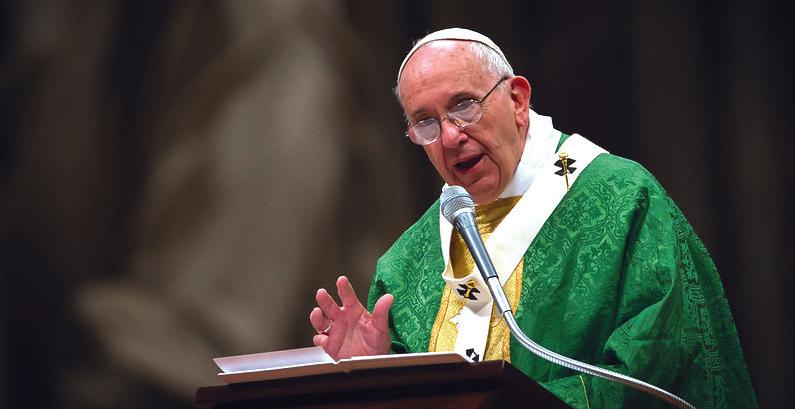
Deum, which call for urgent action in the face of environmental degradation.
For more information visit laudatosimovment.org.
Barbara Hungin


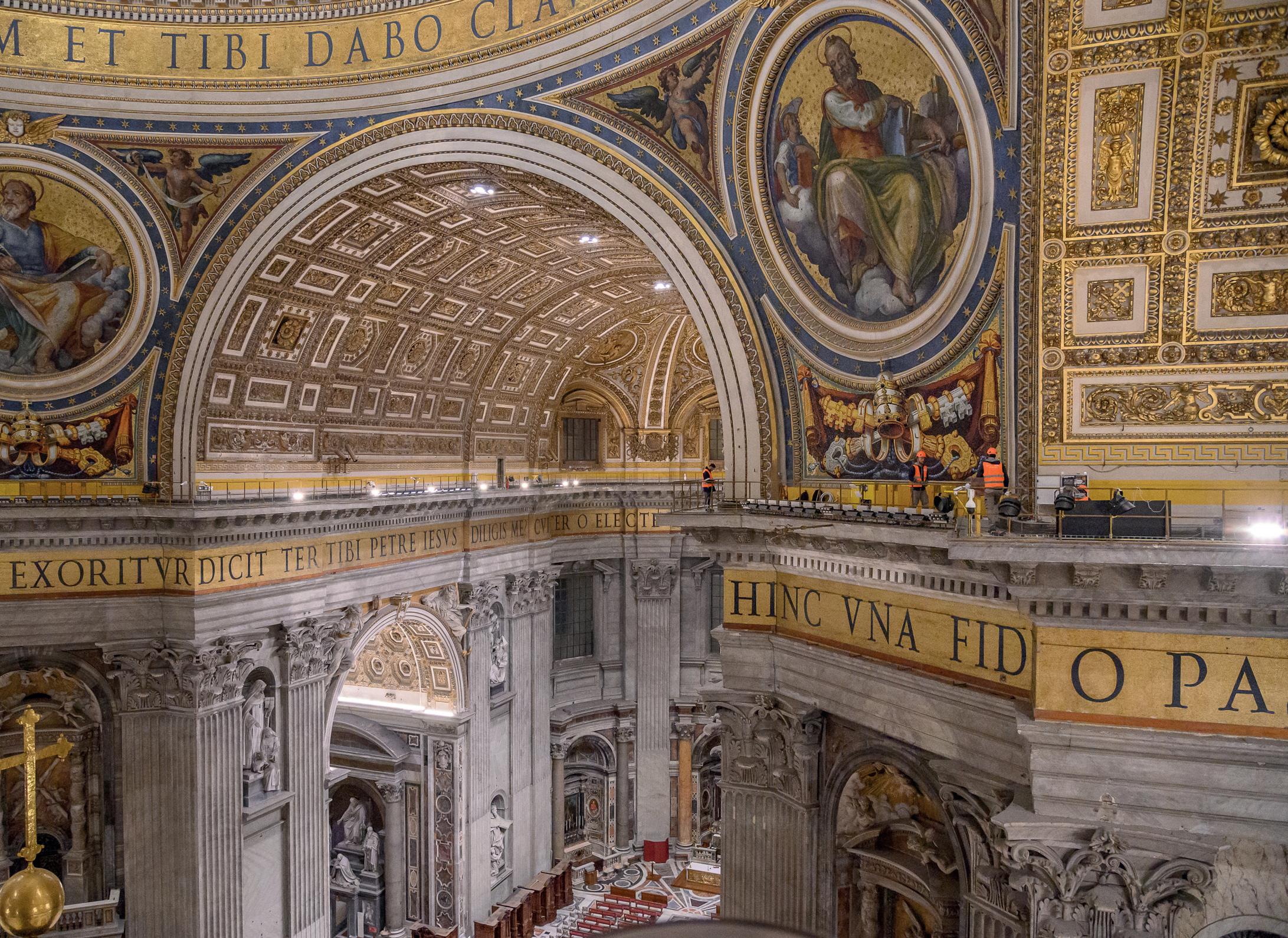
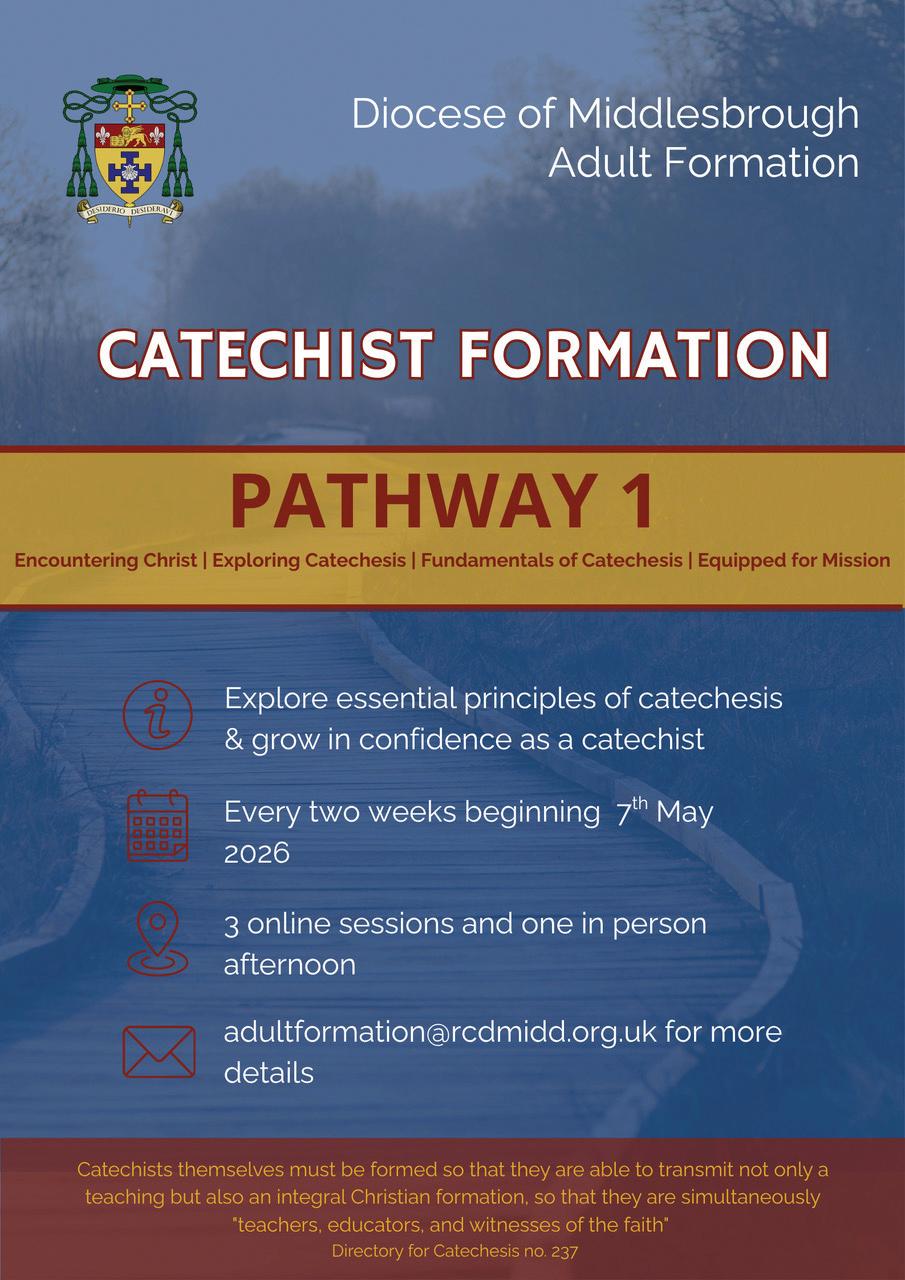
The organising committee are still looking for your memories of the Sacred Heart Church in Hull ahead of our centenary celebrations.
We’re especially looking for photographs of weddings or processions. Did you attend our jubilee celebration of VE night in 1995 or travelled with us on the special train to York for the visit of Pope John Paul II?
If so, please drop us a line with your memories and any photographs you would like to share.
A celebration Mass will take place at 11am on Saturday June 13 and all are invited. This will be followed by a buffet in the parish hall. If you intend to come, please contact Margaret Moxon on 01482 782052 or margaretmoxon@yahoo.com or Eileen France on 01482 705855 or emfrance1948@gmail.com to help with catering arrangements.
Further details will be available in next month’s Voice Bernard France
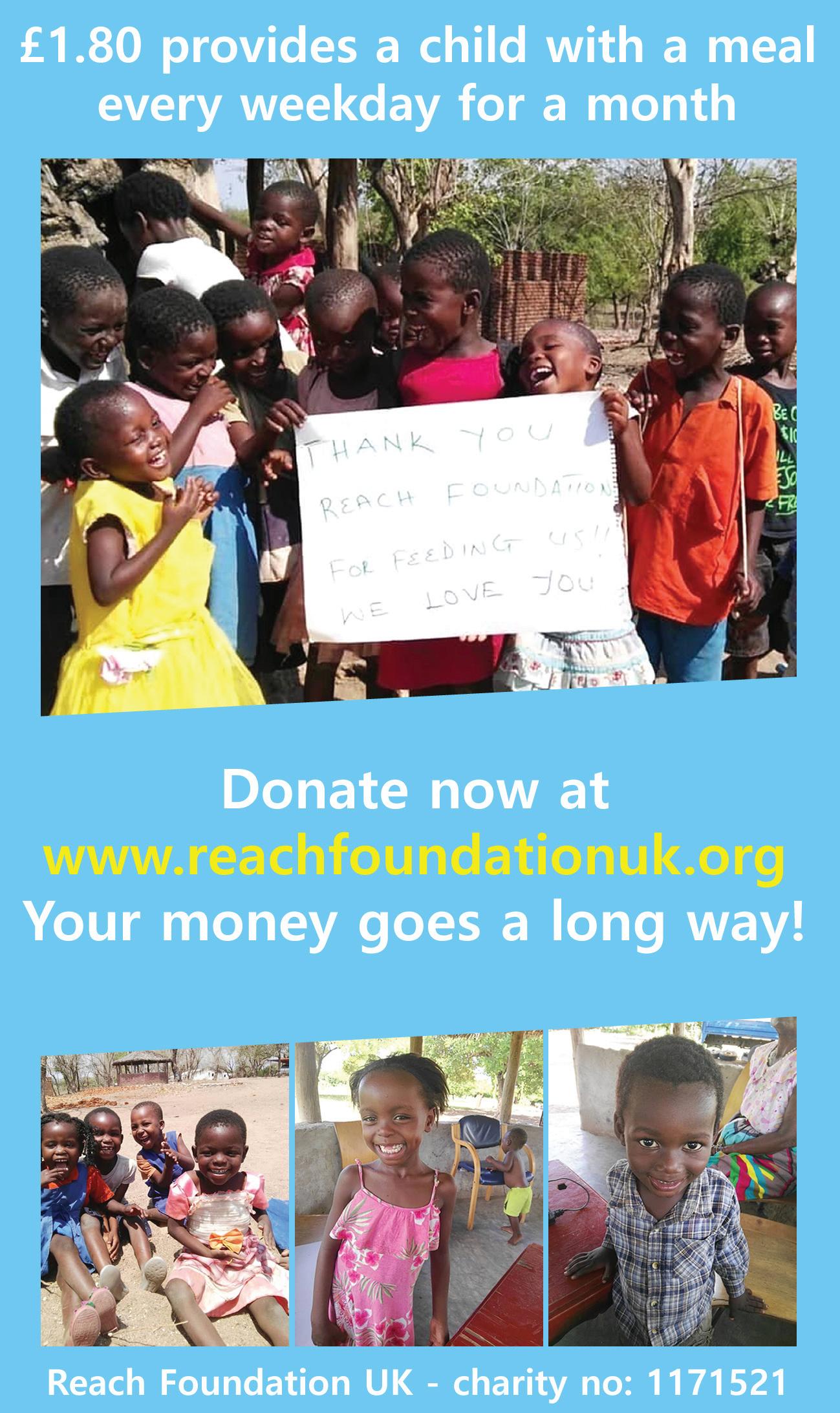
Around 70 parishioners and members of the clergy from churches in the Tang Hall and Heworth areas of York joined together for a Walk of Witness on Good Friday.
The walk started at St Aelred’s Catholic Church with a reading from Luke’s Gospel, telling of Jesus being brought before Pilate and Herod.
This was followed by a prayer before one of the parishioners carried the cross as the group processed to Holy Trinity Church, Heworth.
Here, Luke’s Gospel continued as we heard about the consequences of Jesus being brought before Pilate for a second time. Again, the reading was followed by a prayer before another parishioner took up the cross and the group walked on to Heworth Methodist Church.
Luke’s account of the crucifixion was read here and after the subsequent prayer the group made their way through Tang Hall Lane.
As they reached the Co-op, the final passage from Luke’s Gospel was read. After hearing Luke’s account of the death of Jesus and a last prayer, all were invited to St Hilda’s Parish Church for tea, coffee and a hot cross bun. Walkers also took the opportunity to collect litter during the walk.
This was a wonderful way for Christians in our area to profess the Gospel together at this holiest of times in the Church’s calendar.