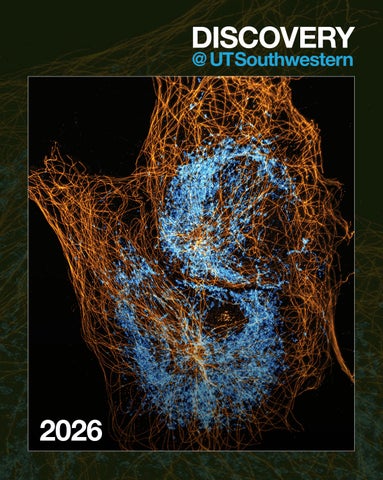
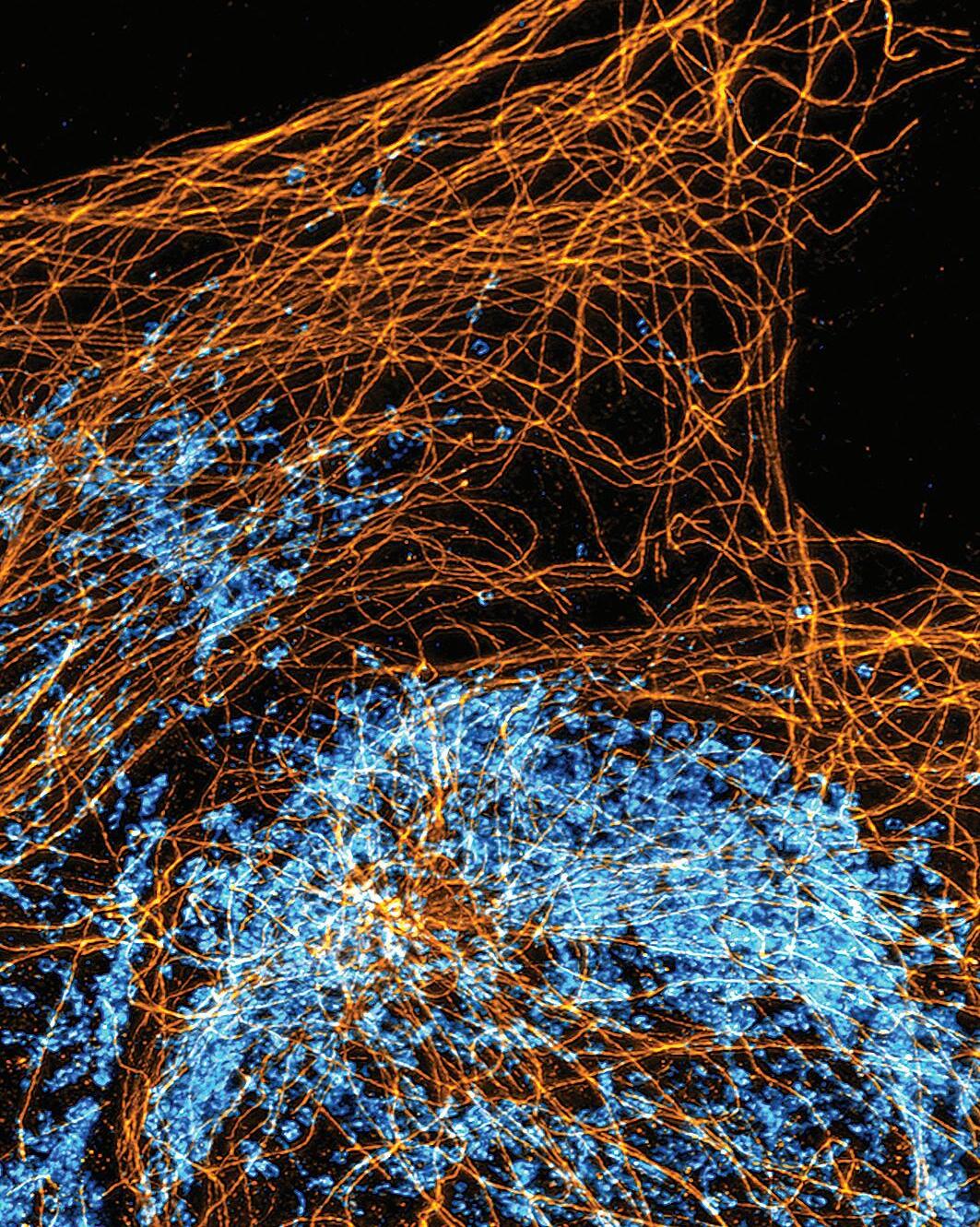
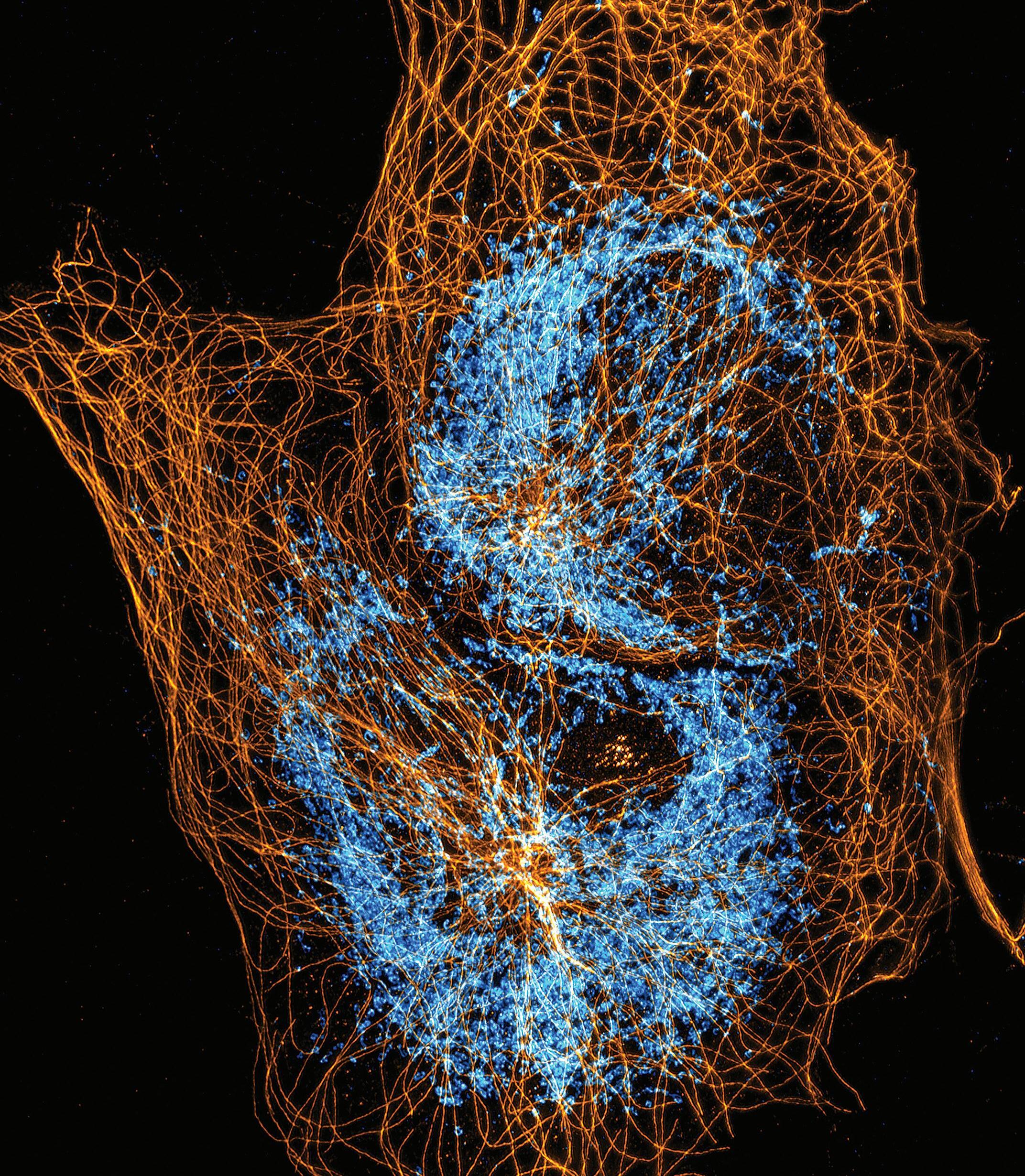
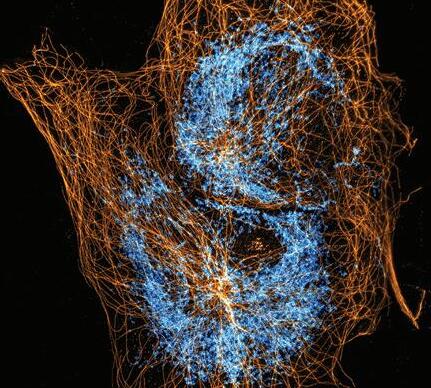
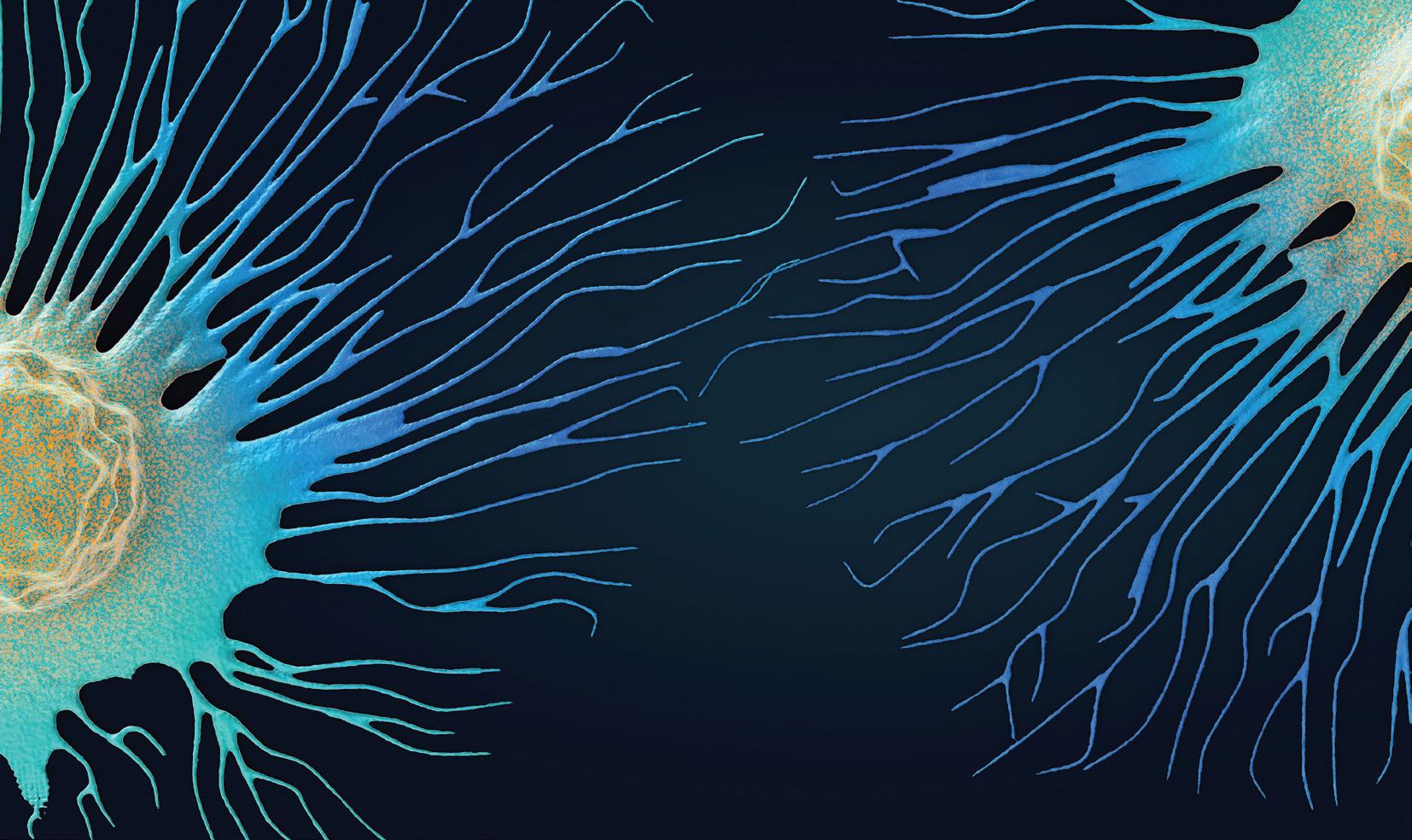
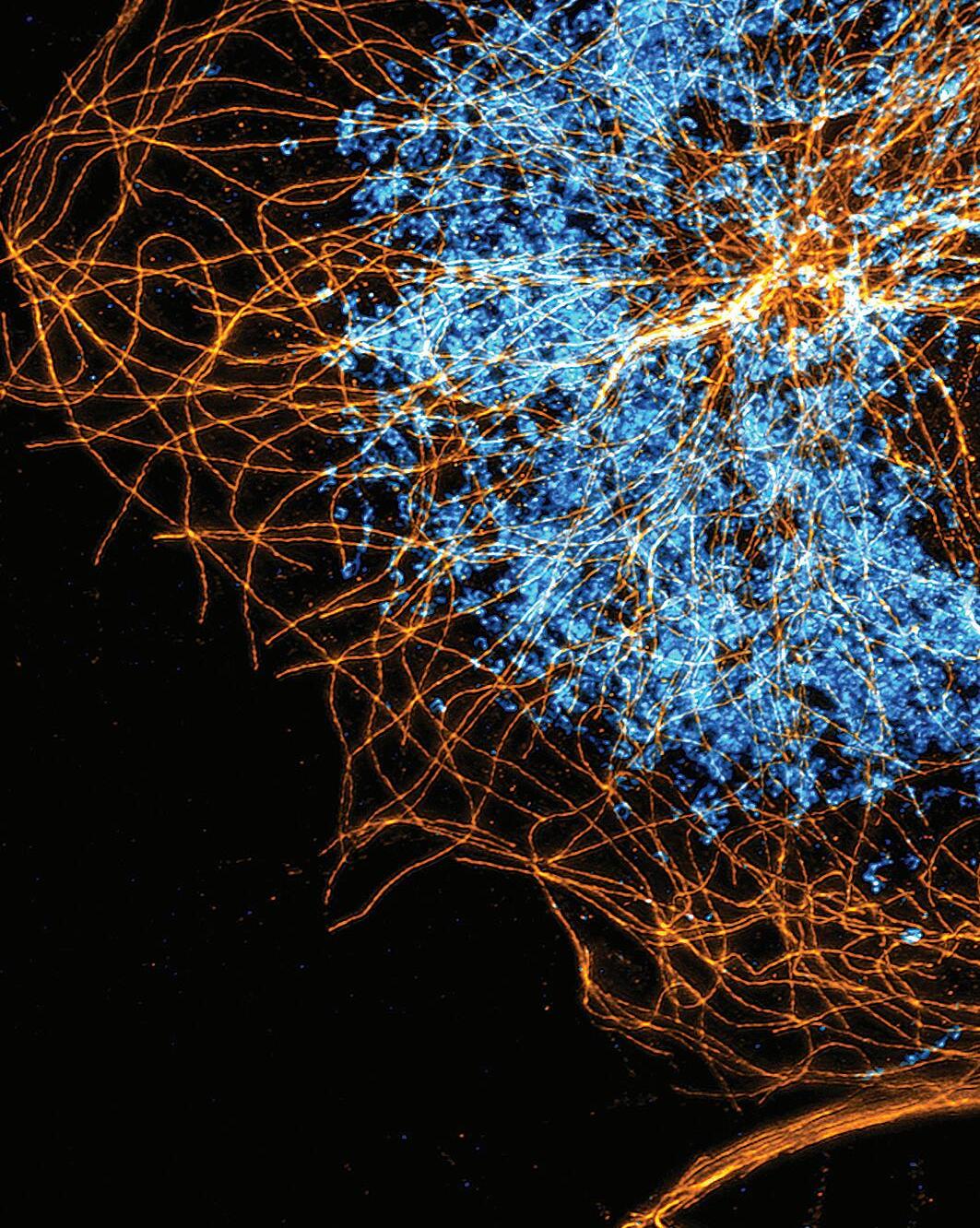
By combining innovative sample preparation methods developed in the Dean Lab with light-sheet microscopy systems built in the Fiolka Lab, researchers at UTSW can now visualize cellular architectures beyond the conventional limits of optical resolution to gain new insights into cancer biology. Microtubules (orange) serve as the cell’s internal highways, while mitochondria (blue) power its metabolism.
50 members of the National Academies of Sciences, Engineering, and Medicine
520+ basic and translational research labs on campus
5,660+ clinical trials annually
6,200+ research projects annually
$816 m in research expenditures in FY25
Letter From Leadership
This edition of Discovery at UT Southwestern highlights advances in biomedical and clinical research made possible by the skill and dedication of our scientists.
For the second year in a row, we open our report with a profile on our most recent Albert Lasker Basic Medical Research Award winner. One of the most esteemed honors in science, the Lasker is a testament to the level of fundamental research that takes place at our institution.
Our scientists are unveiling how an FDAdesignated orphan drug may enhance the response to radiotherapy for lung cancer
Sincerely,
W. P. ANDREW LEE, M.D.
Executive Vice President for Academic Affairs, Provost, and Dean, UT Southwestern Medical School
patients; studying how interconnected circuits in a critical region of the songbird brain offer a viable model for better understanding how humans learn to speak and what goes wrong in communication disorders such as autism; and preparing to launch a large-scale whole-exome sequencing program for patients in our Health System.
Multidisciplinary collaborations are at the heart of the discoveries taking place at UT Southwestern. A story on an 18-year scientific partnership between a biomedical engineer and a head and neck surgeon illustrates how basic scientists
JOAN W. CONAWAY, PH.D.
Vice Provost and Dean for Basic Science
ALYSSA H. HASTY, PH.D.
Vice Provost and Senior Associate Dean for Faculty Affairs and Career Development
and clinicians work together to find solutions to clinical challenges.
Pushing the boundaries of what’s known, our faculty are also exploring how improved access to technologies can enhance postpartum care and developing artificial intelligence tools to increase the efficiency and accuracy of medical student performance evaluations.
We are proud of our faculty, postdoctoral fellows, students, and staff who are diligently using their talents to bring our institution’s mission – to promote health and a healthy society that enables individuals to achieve their full potential – to life.
SHERRY C. HUANG, M.D.
Vice Provost and Senior Associate Dean for Education
ERIC PETERSON, M.D., M.P.H.
Vice Provost and Senior Associate Dean for Clinical Research
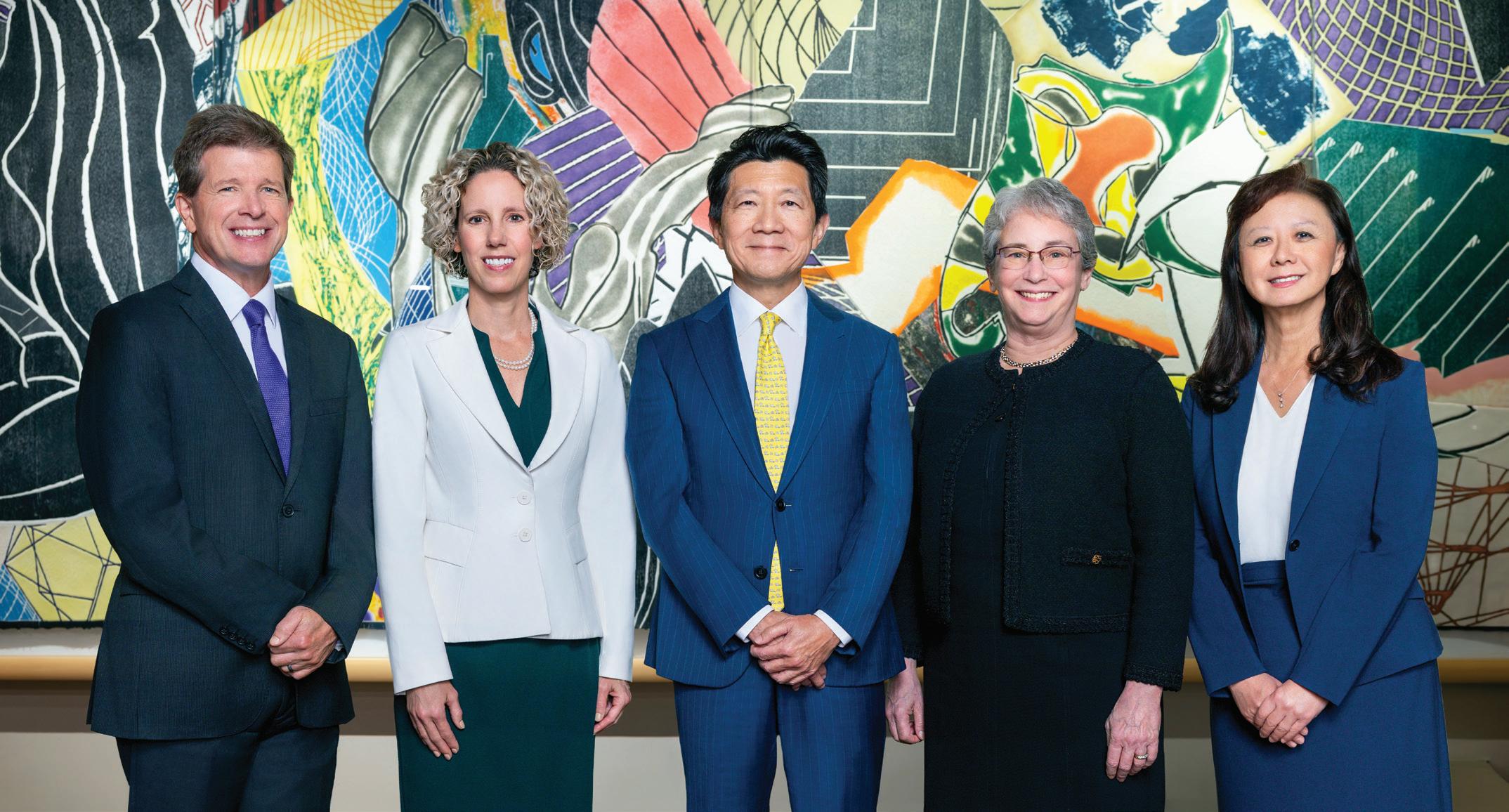
From left: Drs. Peterson, Hasty, Lee, Conaway, and Huang photo credit : henrik olund
Deciphering the Mysteries of Unstructured Proteins
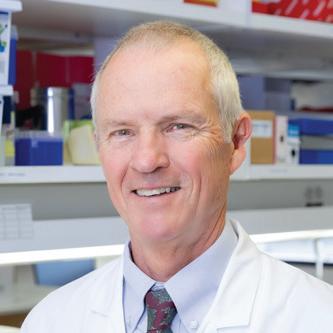
Discoveries by Steven McKnight, Ph.D., have revealed the active role of shapeless protein regions known as low-complexity domains in gene regulation.
Proteins are made of a combination of 20 amino acids, the sequence of which determines how they fold into precise shapes and sustain their functions throughout the body. However, approximately 20% of proteins defy this paradigm, containing extended regions that lack sufficient chemical interactions to snap into a well-defined structure.
Over the last two decades, Steven McKnight, Ph.D., Professor of Biochemistry, has studied these protein regions, called low-complexity domains (LCDs). His work has helped to reveal how these flexible proteins contribute to an incredible number of dynamic cellular processes and neurologic and neurodegenerative disease.
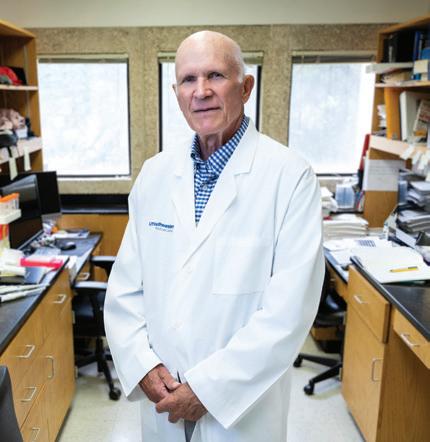
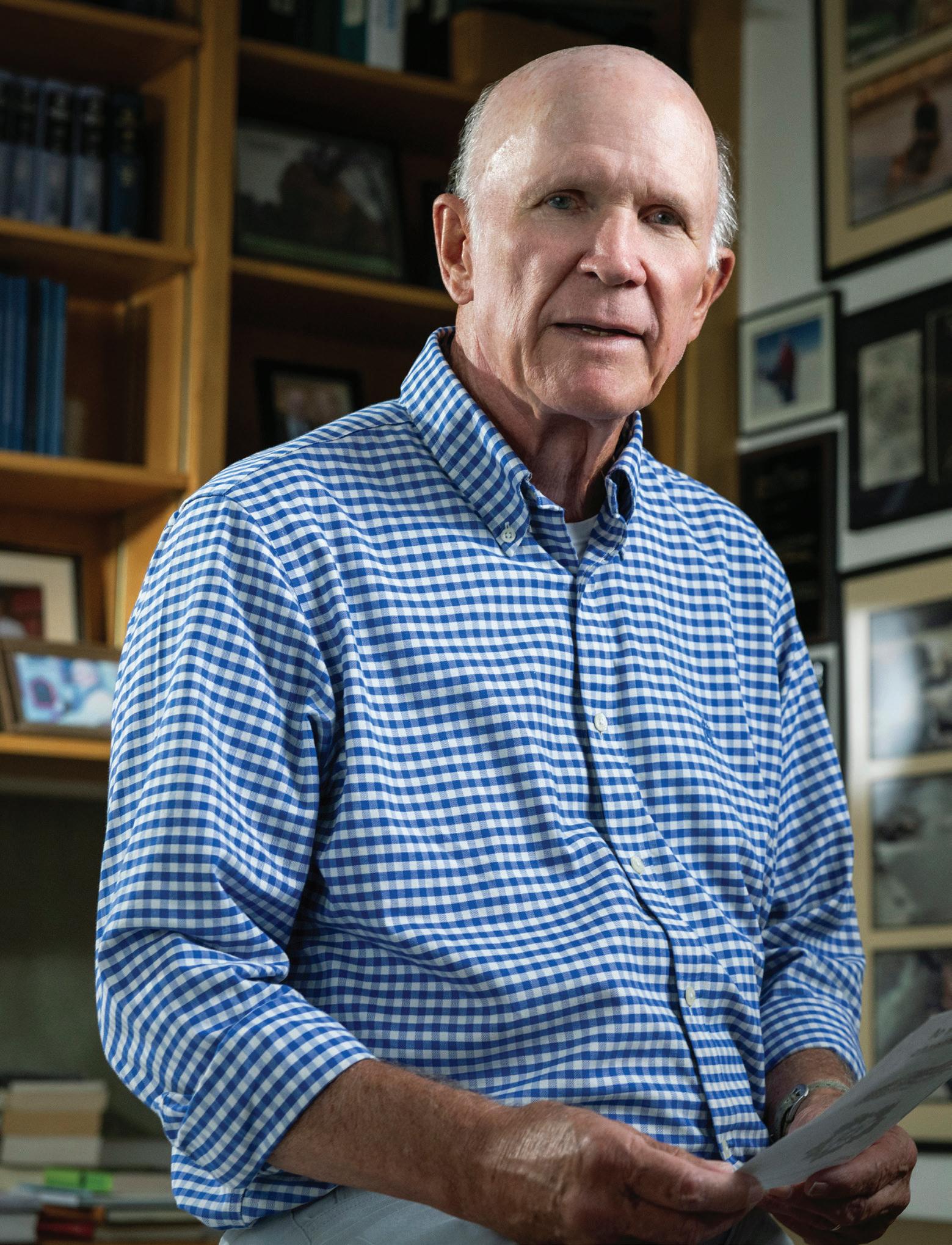
Steven McKnight, Ph.D., in his office on the UTSW campus. Photos from his combat service in Vietnam adorn the walls alongside memories of his accomplishments as a scientist.
Award-Winning Research
In 2025, Dr. McKnight received the prestigious Albert Lasker Basic Medical Research Award, often referred to as “America’s Nobel,” in recognition of furthering our understanding of LCDs. He shared this award with Dirk Görlich, Ph.D., a German biochemist who is director of the Max Planck Institute for Multidisciplinary Sciences.
Dr. McKnight’s recognition marks the second consecutive year and fifth time that a UT Southwestern scientist has earned a Lasker Award.
“This honor illustrates the level of fundamental research that takes place at UT Southwestern,” says W. P. Andrew Lee, M.D., Executive Vice President for Academic Affairs, Provost, and Dean of UT Southwestern Medical School. “Dr. McKnight’s work provides insight into how cells organize proteins for critical functions and what goes awry in some neurologic and neurodegenerative diseases. That is crucial information to develop new and better treatments.”
For Dr. McKnight, science is the ultimate adventure. “Pursuing the unknown and trying to figure out something that’s otherwise complicated and obscure, that’s really the fun of it for me,” says Dr. McKnight, who holds the Distinguished Chair in Basic Biomedical Research and is a member of the Harold C. Simmons Comprehensive Cancer Center.
His findings on LCDs are a testament to his curiosity-driven research approach.
“Steve is a passionate, inquisitive person who has pursued a mechanistic understanding of the basis for key problems in cellular biology throughout his career. Each new answer leads him to another question,” says Margaret Phillips, Ph.D., Professor and Chair of Biochemistry. “The discoveries he’s made pursuing those questions over the last three decades have had a tremendous impact on the field of biochemistry as a whole.”
W.
P. Andrew Lee, M.D., Executive Vice President for Academic Affairs, Provost, and Dean of UT Southwestern Medical School
Steven McKnight, Ph.D., Professor and former Chair of Biochemistry
Margaret Phillips, Ph.D., Professor and Chair of Biochemistry
David
Russell, Ph.D., Professor Emeritus and former Vice Provost and Dean of Basic Research
“Pursuing the unknown and trying to figure out something that’s otherwise complicated and obscure, that’s really the fun of it for me.”
An ‘Aha’ Moment
Born and raised in El Paso, Texas, Dr. McKnight earned a bachelor’s degree in biology from the University of Texas at Austin and a Ph.D. in biology from the University of Virginia. He then went to the Carnegie Institution of Washington for postdoctoral training and stayed as a staff member. He joined UTSW in 1995, serving as Chair of the Department of Biochemistry from 1996 to 2016.
In the 1980s, Dr. McKnight studied transcription factors, proteins that regulate gene expression by binding to specific DNA sequences and acting as switches to turn genes on and off. He and his colleagues found that certain transcription factors that have LCDs require the unstructured sections to work properly. However, since “structure equals function” had long been a paradigm in biology, the team couldn’t figure out why these strange, shapeless portions were so important.
By the 1990s, Dr. McKnight had moved on to other questions about gene regulation, leaving LCDs behind. But in 2010, Dr. McKnight began experimenting with a chemical – an isoxazole compound – that prompted embryonic stem cells to differentiate into beating heart cells. To better understand why, McKnight and his colleagues added this compound to cell extracts to see what proteins it might interact with to incite the change.
Expecting to find just one, or at most a handful of interacting proteins, the researchers were astonished to see that the isoxazole compound bound to hundreds of different proteins, a result that usually suggests the experiment failed, Dr. McKnight explains. However, the determined researchers continued to investigate what all of these proteins could have in common. Dr. McKnight found that all of the proteins contained LCDs, and the proteins were suddenly snapped back into his focus.
Further studies showed that the isoxazole compound made LCD-containing proteins behave strangely – creating small gelatin-like
balls that would form out of the mixture.
“In front of our eyes, a gel formed, and I’d never seen that before,” says Dr. McKnight. “That was the ‘aha’ moment.”
These balls of gel-like material were formed from LCDs’ fleeting chemical bonds with themselves and other parts of proteins.
Research over the next several years showed that these temporary interactions encourage dynamic protein organization that’s necessary for a host of critical cellular functions, such as gene regulation, cell signaling, and stress responses. Dr. McKnight’s research has also shown that mutations in LCDs could be responsible for several different neurodegenerative diseases, such as Charcot-Marie-Tooth disease, frontotemporal dementia, and Paget’s disease.
Important Questions and High Expectations
In another line of research, a partnership with David Russell, Ph.D., Professor Emeritus and former Vice Provost and Dean of Basic Research, revealed the HIF-2α transcription factor and identified its role in adapting cells and tissues to conditions of oxygen starvation. The discovery led to the development of a chemical inhibitor of HIF-2α called belzutifan, which was approved by the U.S. Food and Drug Administration in 2021 to treat kidney cancer.
Dr. McKnight’s research has also been honored with the Robert A. Welch Award in Chemistry (2020), the Wiley Prize in Biomedical Sciences (2014), the National Institutes of Health Director’s Pioneer Award (2004), the Monsanto Award from the National Academy of Sciences (1991), and the Eli Lilly Award from the American Society for Microbiology (1989). He is a former Howard Hughes Medical Institute Investigator and a member of the National Academy of Sciences, the National Academy of Medicine, and the American Academy of Arts and Sciences.
“The way that science is performed at UT Southwestern is simply wonderful,” Dr. McKnight says. “We’re asked to probe challenging and important questions, and the expectations are very high.”
SCAN TO MEET DR. MCKNIGHT
Glow Getters
Working together, a bioengineer and a surgeon at UTSW are lighting the way to a new era in cancer treatments with fluorescent nanotechnology and breathtaking clinical trial results.
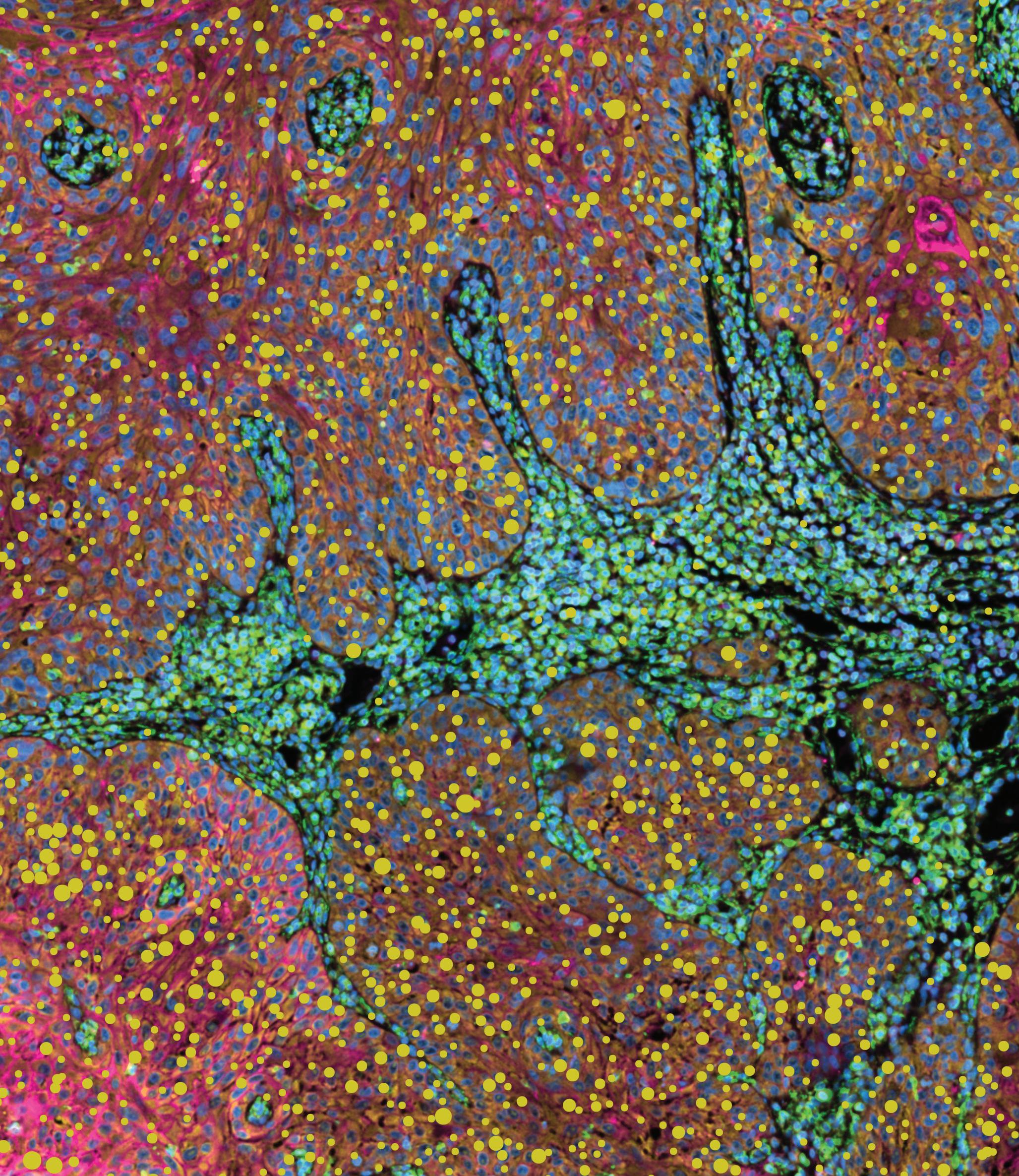
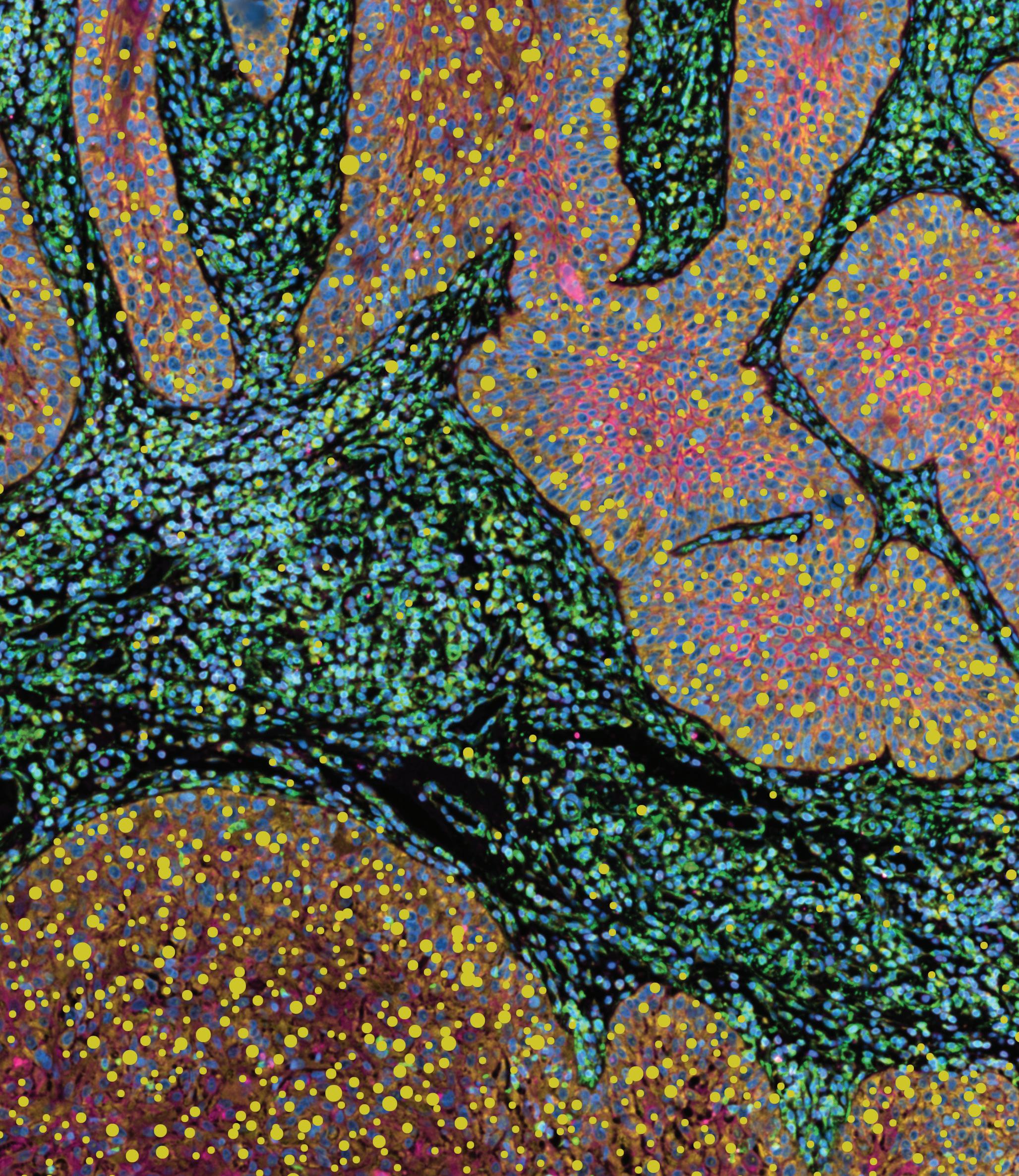
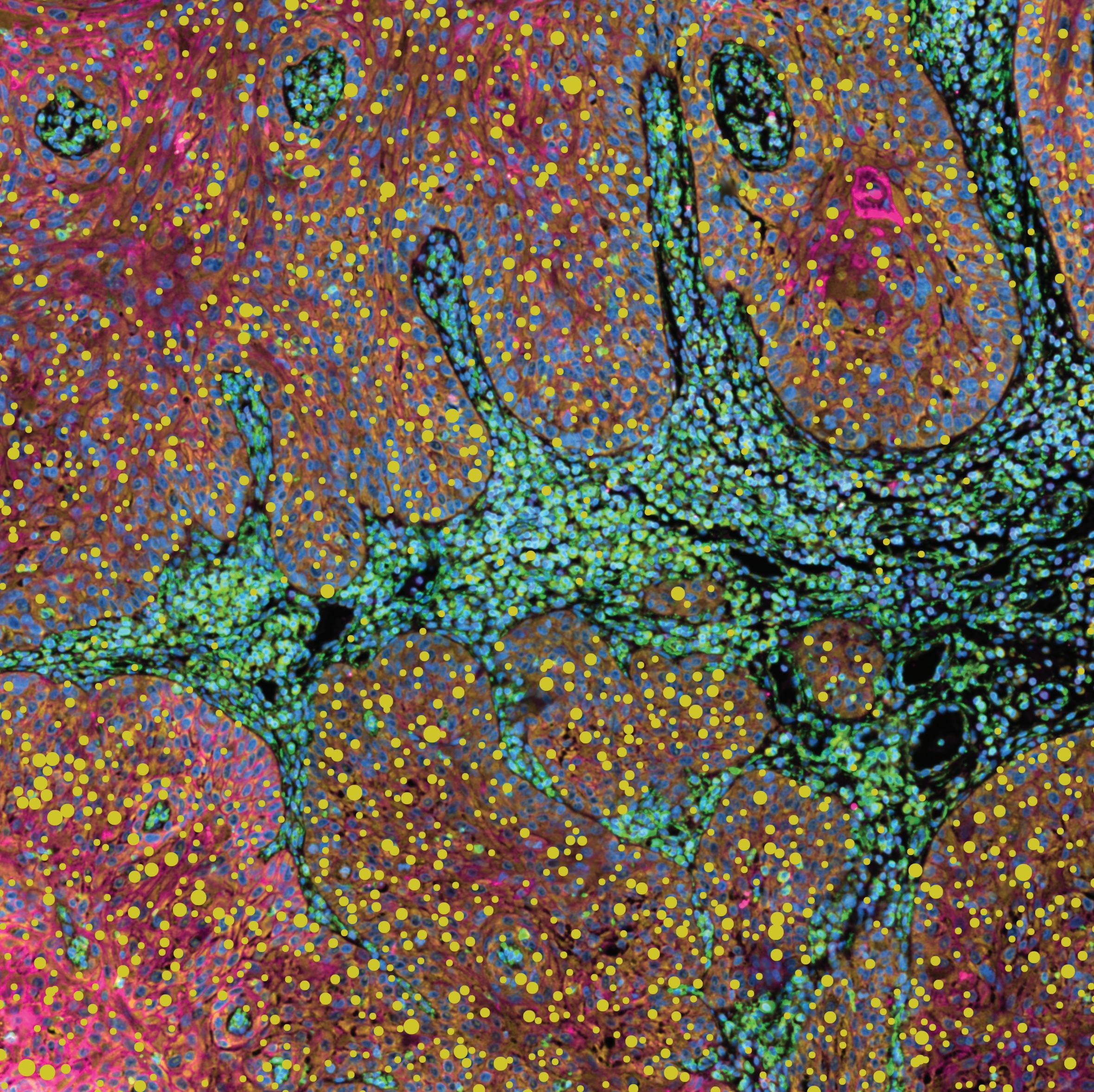
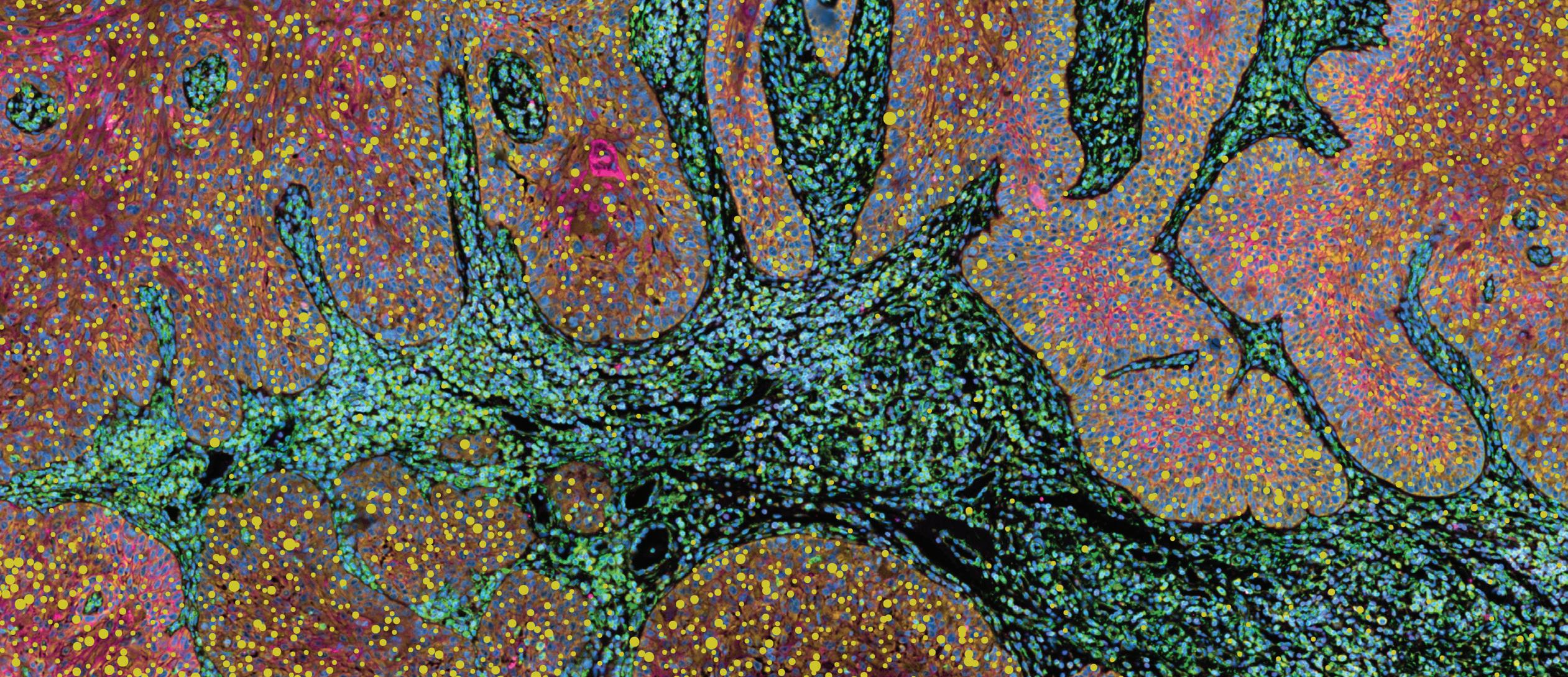
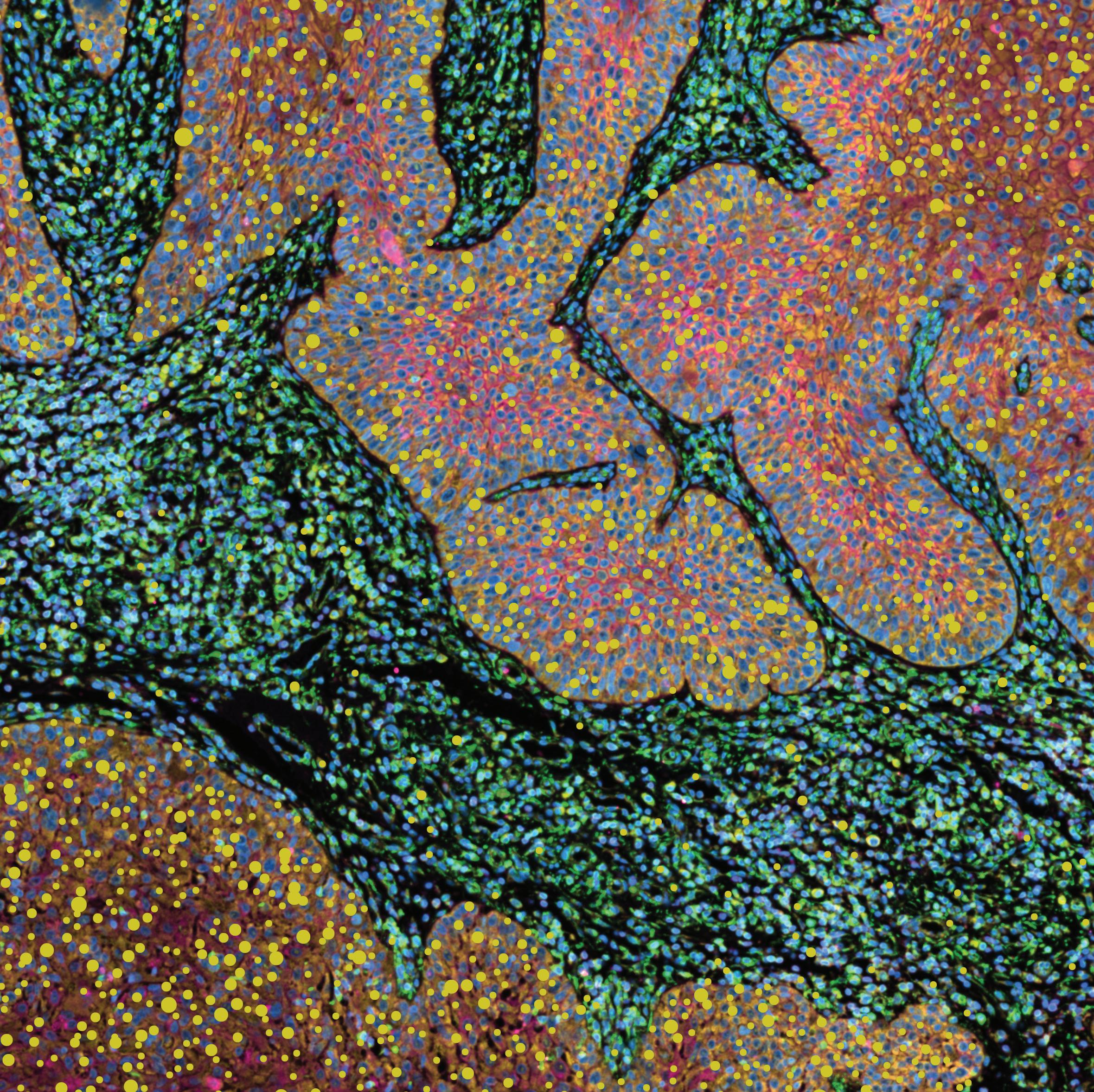
This image of a head and neck tumor is a stunning example of how collaboration between the laboratory and the clinic can accelerate research. The yellow dots reveal the expression of monocarboxylate transporter 1 gene in cancer cells (pink regions) that are responsible for acid secretion and nanoprobe activation. Drs. Gao and Sumer used this information from patients to hone their nanoprobe’s ability to illuminate cancer cells or deliver drugs to tumors.
Nanotechnology
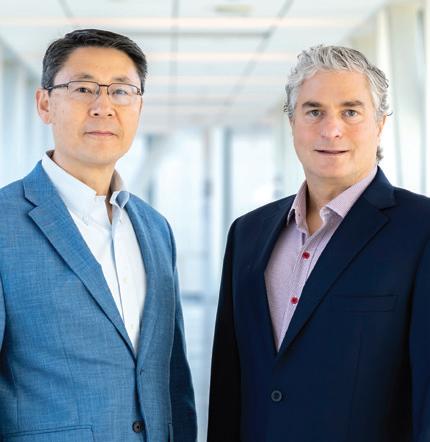
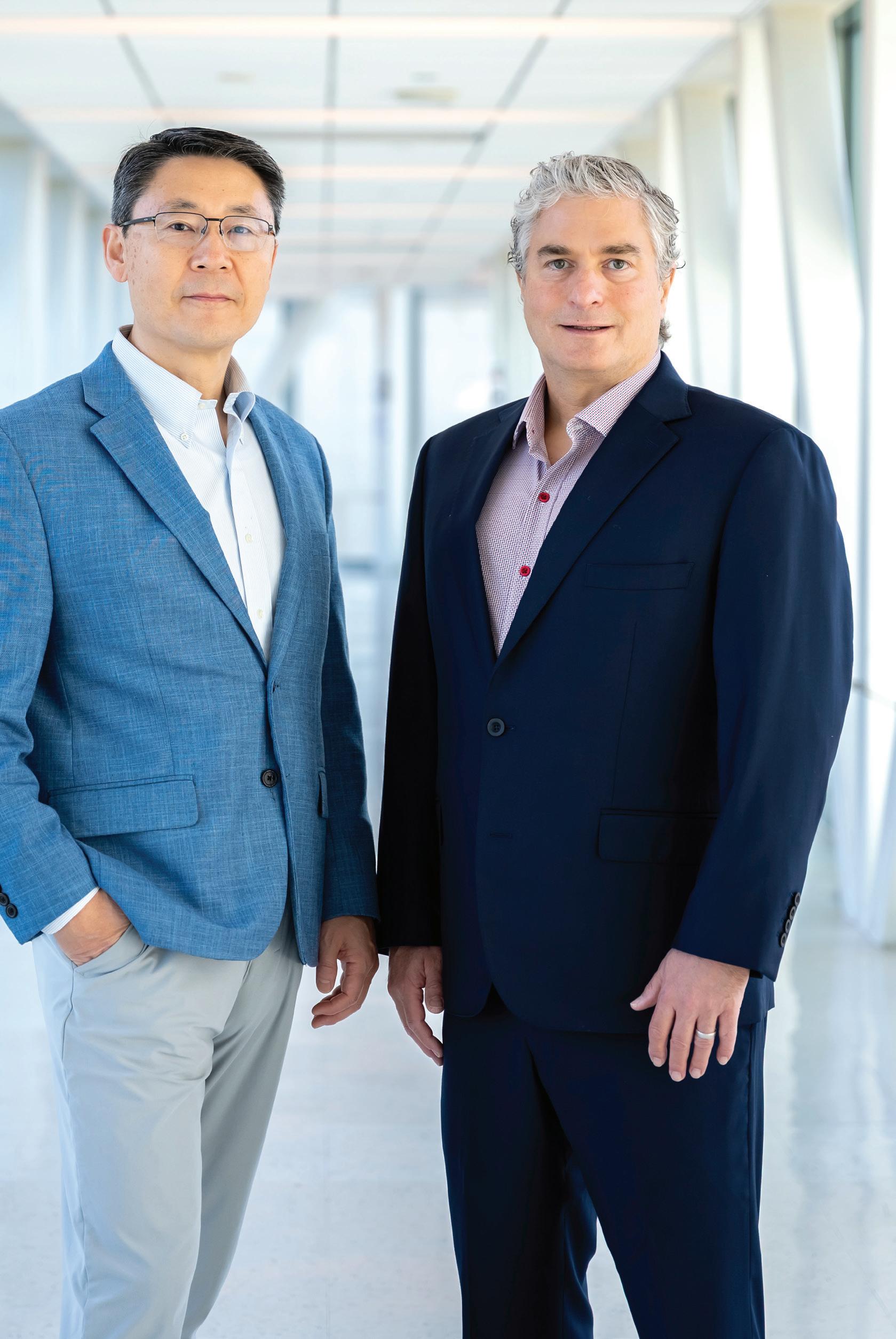
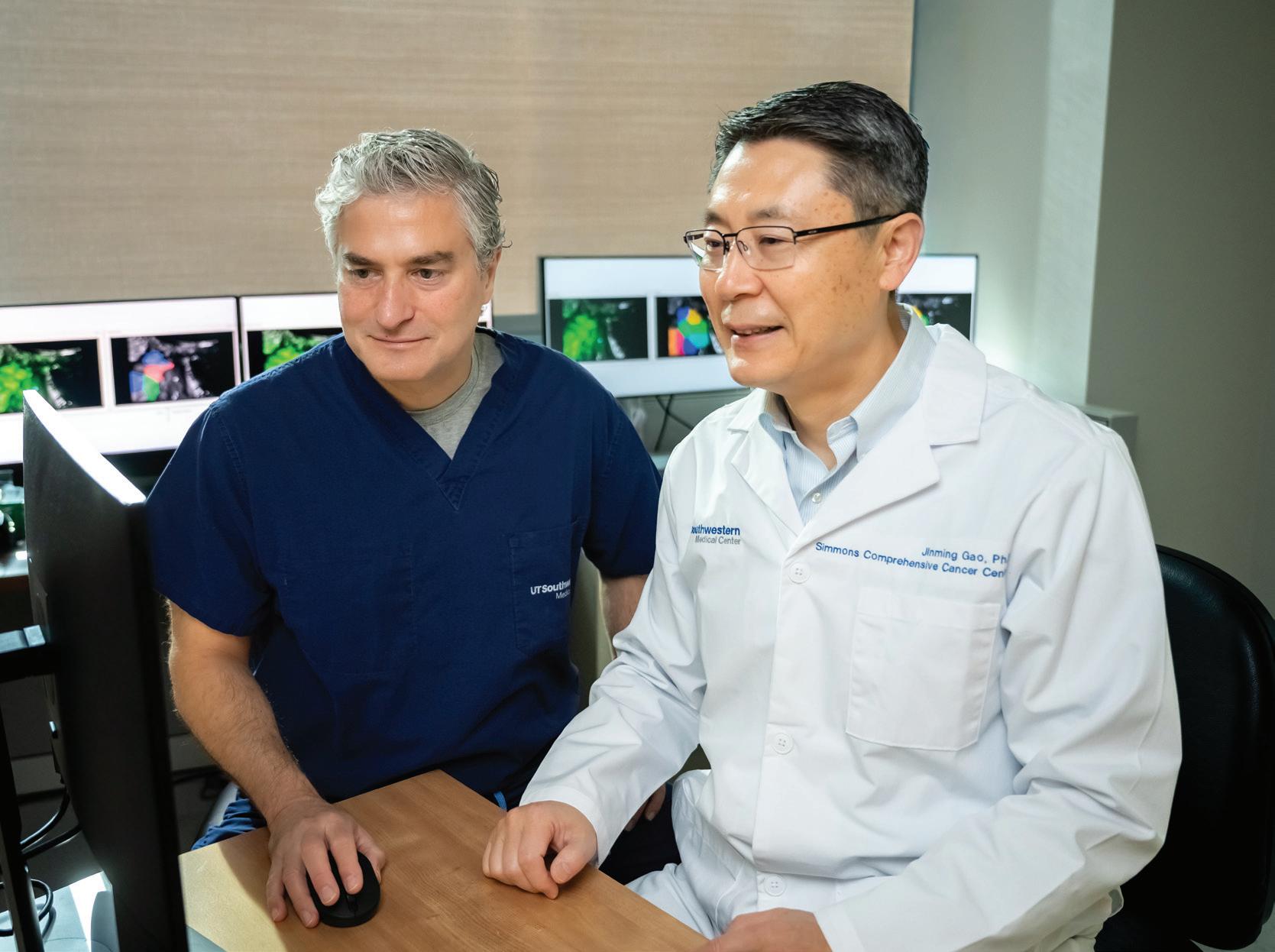
Apartnership between Professors Jinming Gao, Ph.D., a chemist and biomedical engineer, and Baran Sumer, M.D., a head and neck cancer surgeon, combines nanotechnology and surgery to identify and remove cancer with extraordinary precision.
Their cross-disciplinary collaboration began nearly 20 years ago with a probing question: What if we could make cancer cells “light up” or “glow” so we could see exactly where the tumors are and more completely remove them? The answer to that came first in Dr. Gao’s lab with the discovery of what they now call the “fluorescent nanoprobe” and then in the operating room, where Dr. Sumer deployed the discovery, first in animal models and later in human patients. The results were eye-opening.
A Fast-Tracked Discovery
Delivered to patients via an IV prior to surgery, the nanoprobe – a pH-sensitive imaging agent called pegsitacianine – circulates through the body and “digitizes” acidic signals from cancer cells, making them glow under near-infrared light. Although human eyes can’t see that glow, surgical cameras or goggles developed at UT Southwestern can, and Dr. Sumer is currently testing different versions of those for effectiveness.
So promising were early results that the U.S. Food and Drug Administration (FDA) fast-tracked the fluorescent nanoprobe as an adjunct for visualization of metastases in the peritoneal cavity (space in the abdomen that contains the stomach, liver, and intestines). In 2023, the FDA
awarded Drs. Gao and Sumer’s work its Breakthrough Therapy designation. In addition, the real-time imaging agent has been licensed by OncoNano Medicine, Inc., which Drs. Gao and Sumer co-founded.
Clinical trials showed the enhanced visibility provided by the fluorescent nanoprobe enabled surgeons to remove cancer cells throughout the abdomen at 50% to 60% higher rates than standard cancer imaging technology. Importantly, the nanoprobe was also able to detect cancer not visible on either CT or PET scans. Equally and perhaps even more importantly, Drs. Gao and Sumer designed their nanoprobe to be “tumor agnostic,” meaning it’s capable of seeking out and lighting up almost any type of cancer across the body.
Seeking a Partnership
The scientific partnership between Drs. Gao and Sumer began 18 years ago, when Dr. Sumer, after completing a fellowship in head and neck oncologic surgery at Washington University in St. Louis, was looking for his first job. He sought out UT Southwestern and Dr. Gao in particular.
“I wanted to work with someone who was an expert in nanotechnology, and Dr. Gao was known for it,” Dr. Sumer says. “We started working together immediately when I joined.”
And they haven’t looked back since.
“Our collaboration has endured over time,” Dr. Gao says. “It exemplifies the lasting value of sustained partnership and its importance in innovation across disciplines. Having Dr. Sumer’s clinical guidance was critical.”
“Our collaboration has endured over time. It exemplifies the lasting value of sustained partnership and its importance in innovation across disciplines.”
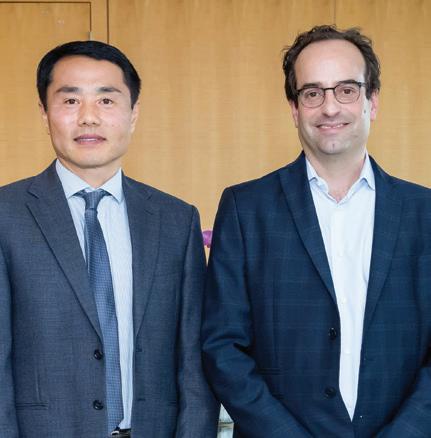
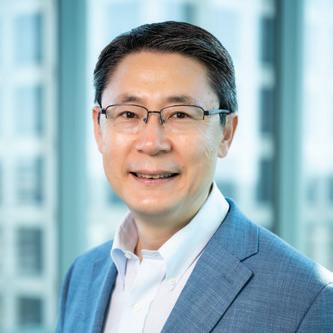
Jinming Gao, Ph.D., Professor of Biomedical Engineering, Cell Biology, Otolaryngology - Head and Neck Surgery, and Pharmacology and in the Harold C. Simmons Comprehensive Cancer Center
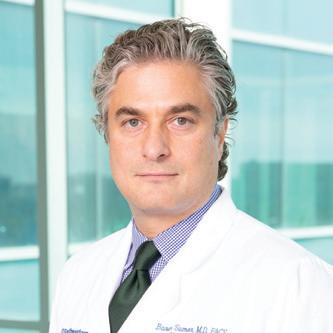
Baran Sumer, M.D., Professor of Otolaryngology - Head and Neck Surgery and Chief of the Division of Head and Neck Oncology
Extraordinary Results
Given the early success of the fluorescent nanoprobe, Drs. Gao and Sumer received approval for and launched the ILLUMINATE Study in March 2024, a clinical trial designed specifically to gauge pegsitacianine’s efficacy for head and neck cancer. The phase two trial is scheduled to continue through 2027.
The study has two main goals: to assess how well the nanoprobe performs in finding cancer in areas such as the throat, salivary glands, and sinuses and, crucially, to ascertain how well it can find otherwise undetectable primary cancers where the disease first began. So far, with 60 patients participating and the hope of doubling that number by study’s end, the trial has yielded extraordinary results, finding 15 of 16 unknown primary cancers.
“The success rate is very gratifying because it means those patients may not need radiation,” Dr. Sumer says. “Or, if they do, it’s going to be very targeted because now we know where this cancer originated.”
Building on ‘Bench to Bedside’
The ILLUMINATE Study is a prime example of collaborative science and medicine at UT Southwestern. In fact, it builds on the phrase “bench to bedside,” taking discoveries from the lab, translating them to clinical applications for patients, and returning to the lab, where it is now yielding even more vital research for the future of the fluorescent nanoprobe, according to Dr. Gao.
“We’ve collected over 1 million cells for analysis from our patient samples, and now we have a much deeper understanding of how the nanoprobe is fluorescing in the
Dr. Gao and Dr. Sumer are co-founders, stockholders, and royalty recipients of OncoNano Medicine, Inc., which has exclusive rights to pH-sensitive nanoparticle technology.
tumor environment,” he says. “Our work is leading to discoveries in head and neck cancer and also basic science.”
Fundamental studies of tumor metabolism and vasculature cues for nanoparticle activation are helping researchers in the Gao and Sumer Lab to expand their discoveries. “We’re now developing newer nanoparticles to even more specifically and efficiently light up the tumors,” Dr. Gao says.
A Wow Factor
Even as their ILLUMINATE Study is at its halfway point, Drs. Gao and Sumer are involved in future plans that could and should further their fluorescent nanoprobe’s benefit to health care. One potential path is using the fluorescent images and videos they’ve gathered to train an artificial intelligence-based algorithm to both assist in surgical excision and help train novice surgeons in fluorescenceguided surgery. Another path is to adapt the technology to produce a nanovaccine that initiates an immune response against non-resectable, metastatic cancer.
“There are a lot of ideas behind the technology platform we created,” Dr. Gao notes. “The versatility and potential impact in patient care are fantastic.”
“It definitely has a wow factor,” Dr. Sumer agrees. “Patients participating in the trial are especially interested in seeing their post-surgery videos.”
“After their procedure I’ll ask them if they want to discuss the cancer, and so often they say, ‘No, no, no – did it fluoresce? Was it green? Show me the video! There’s my tumor, glowing green, and you took it out!’” he adds. “It’s very visceral, and their response is yet another gratifying part of this work.”
Studying Songbird Neurology to Unlock
Language Acquisition
By mapping connections in the brain of the zebra finch, UTSW neuroscientists are finding parallels in how humans develop vocal learning.
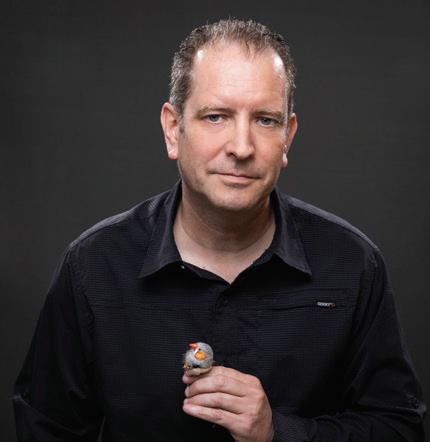
When he was just 6 months old, Todd Roberts moved with his family from Houston to Brazil to support his scientist father’s research on malaria and other mosquito-borne diseases. There, he simultaneously learned Brazilian Portuguese and English, becoming the most fluent bilingual speaker in his household. But soon after moving back to the U.S. at age 7, he stopped speaking Portuguese and lost the ability to understand the language.
Spotlight on a Songbird
As an undergraduate neuroscience major at the University of Maryland, he became fascinated by how vocal learning is gained and lost. He has pursued that mystery ever since, using as his model the zebra finch – a common pet in the U.S. that’s one of an estimated 4,000 extant songbird species.
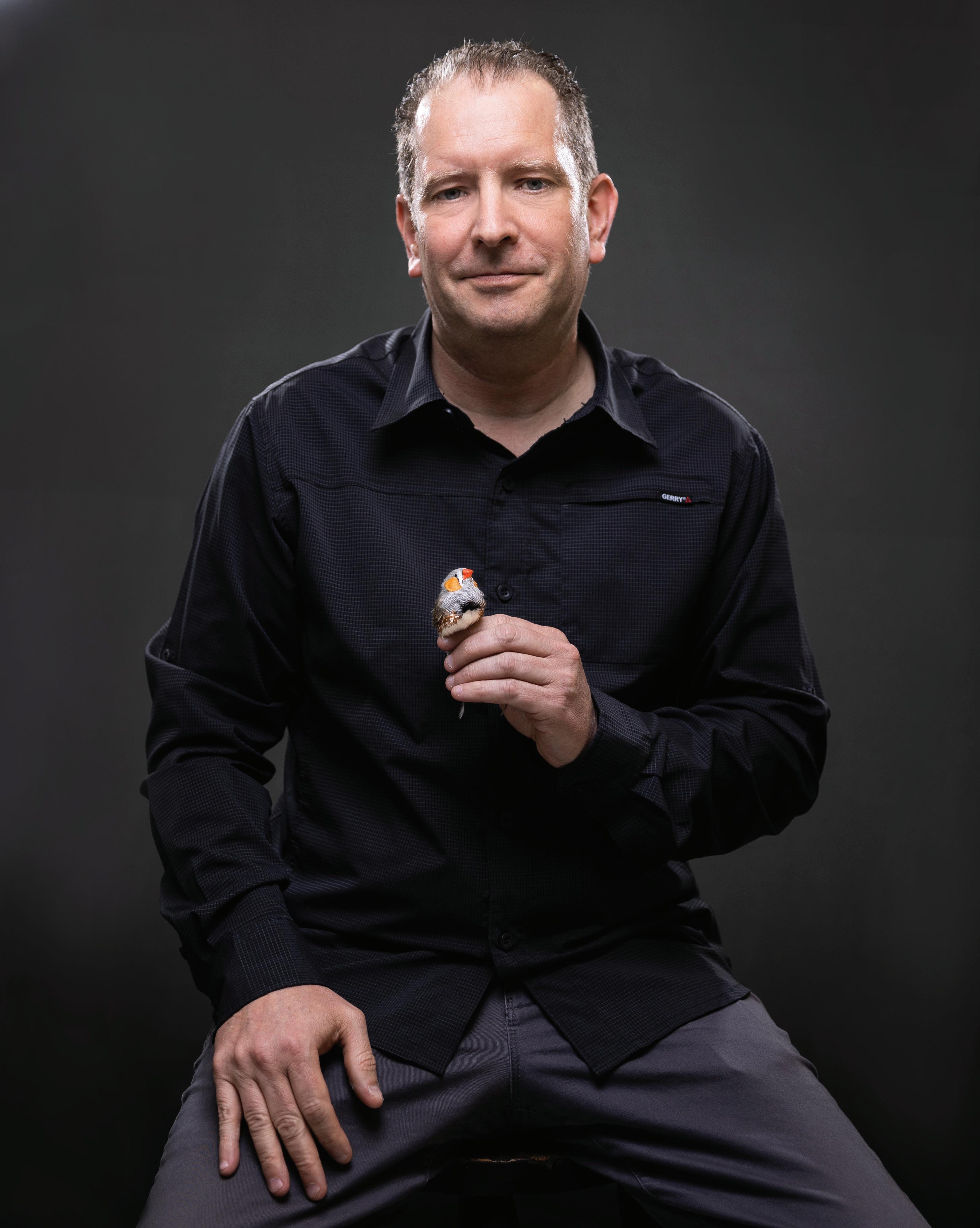
Today, Todd Roberts, Ph.D., is Professor of Neuroscience and an Investigator in the Peter O’Donnell Jr. Brain Institute at UT Southwestern. His latest study, published in eLife, reports the first “wiring diagram” of interconnected circuits in a critical region of the songbird brain, providing important insights into how vocal learning occurs in songbirds that could help researchers develop better models of human speech.
“Learned vocalizations are controlled by a complex of interconnected sensory and motor circuits in the brain, but the details of how these different sensory and motor pathways ‘talk’ to each other has been difficult to ascertain using standard approaches,” says Dr. Roberts, who co-led the study with Massimo Trusel, Ph.D., Instructor of Neuroscience. “This research breaks new ground by providing the first cell-type specific functional mapping of connectivity within core sensory and motor pathways critical for vocal learning.”
Like other songbirds, zebra finches learn their vocalizations through imitation, a type of learning that shares many behavioral and genetic features with how humans learn to talk. Unlike other common lab models, such as mice, rats, and flies, these birds can shed light on the process behind how language acquisition takes place, as well as conditions in which it sometimes goes awry, such as with autism spectrum disorder.
For decades, researchers have known that an area of the avian brain called the HVC is critical for birdsong. Earlier anatomical studies have shown that the HVC acts like a hub, receiving information from four upstream brain regions and sending outputs to three downstream brain regions. But how these input and output circuits are wired to transfer information through this hub has been unclear.
Finding Hidden Connections
To illuminate this process, the UTSW researchers used a technique called optogenetic circuit mapping, in which they inserted a gene into targeted neurons, allowing their activity to be controlled by light. By stimulating individual groups of neurons delivering inputs to the HVC and then measuring the electrical activity of outputting neurons, they could see which neurons communicated with one another.
Their findings revealed an unexpectedly high degree of specificity in how input circuits wire with output circuits to transfer information through this hub. The researchers also found that two of these input pathways directly communicate with each other, revealing a previously unknown connection within this well-studied circuit.
“Complex vocal learning is not ubiquitous among animals; it seems to be extraordinarily special, shared by songbirds, humans, and just a few other species,” Dr. Roberts says. “By studying this special form of learning in birds, we are unlocking new knowledge of what makes us human.”
“This represents the most extensive simultaneous circuit interrogation ever conducted in any vertebrate, not only in birds, and granted us a comprehensive understanding of how sensory, thalamic, and premotor circuits integrate to orchestrate skilled motor behavior,” Dr. Trusel adds.
Driven by Curiosity
William T. Dauer, M.D., Director of the O’Donnell Brain Institute and Professor of Neurology and Neuroscience, says Dr. Roberts’ research is “the kind of discovery the O’Donnell Brain Institute exists to foster – cross-disciplinary, mechanistically deep, and driven by curiosity about how the brain works.”
“Dr. Roberts has an extraordinary ability to ask elegant, fundamental questions about how the brain learns and acts,” Dr. Dauer says. “His mapping of the songbird’s HVC reflects a combination of conceptual clarity, technical mastery, and creativity that defines his work.”
The strong emphasis at UT Southwestern and the O’Donnell Brain Institute on interdisciplinary collaboration, linking behavior, systems neuroscience, and molecular tools, has given life to his research that wouldn’t have been possible elsewhere, Dr. Roberts says.
“The combination of our intellectually vibrant environment, world-class neuroscience expertise, open communication across labs, and access to advanced imaging and computational resources has been invaluable,” he says. “Just as importantly, the supportive culture and generosity of colleagues here have provided both the technical guidance and creative energy that continually push my work forward.”
William T. Dauer, M.D., Professor of Neurology and Neuroscience and Director of the Peter O’Donnell Jr. Brain Institute
Todd Roberts, Ph.D., Professor of Neuroscience
Massimo Trusel, Ph.D., Instructor of Neuroscience
Orphan Drug Boosts Radiation Therapy
Researchers find that an orphan drug holds promise in boosting efficacy of radiation in non-small cell lung cancer.
For decades, lung cancer has been one of medicine’s toughest opponents. Radiation therapy can slow the disease, but delivering curative doses without harming nearby organs, such as the heart and esophagus has remained out of reach. But as lung cancer cells fight back, they rewire their metabolism to repair DNA damage from radiation and survive.
Blocking an Escape Route
Orphan drugs offer a fast avenue to new cancer treatments, since many of the drugs have been tested for safety. The UTSW research team is using this benefit to accelerate the discovery of a wide range of cancer therapies beyond lung cancers.
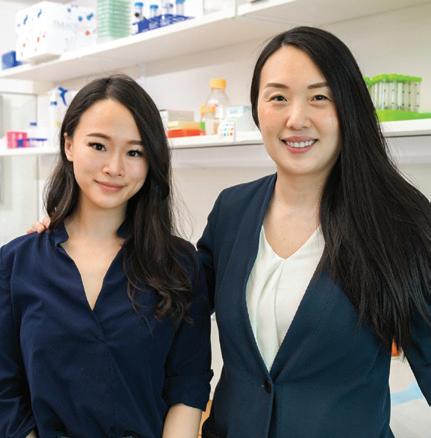
That metabolic adaptation sparked an idea for Yuanyuan Zhang, M.D., Ph.D. Several years ago, when she was a resident doing research in the laboratory of Ralph DeBerardinis, M.D., Ph.D., who was at the time Professor in Children’s Medical Center Research Institute at UT Southwestern (CRI), she decided to screen for metabolic pathways that help cells resist radiation therapy.
Using CRISPR gene editing, Dr. Zhang started by switching off thousands of metabolism-related genes in non-small cell lung cancer (NSCLC) cells, one gene in each cell, and exposing them to radiation. One pathway stood out: lipoylation, a key molecular modification critical to metabolism.
As Dr. Zhang transitioned to the role of Assistant Professor of Radiation Oncology, she and her mentor asked a bold question: Could blocking this metabolic escape route make radiation more effective in killing lung cancer cells?
A Key Discovery
In research with their colleagues, the pair showed that a lipoylation inhibitor compound, designated by the Food and Drug Administration (FDA) as an orphan drug, boosted the effects of radiation in NSCLC cells. Their findings, published in Science Advances, suggest a new way to halt DNA repair in NSCLC, the most common form of lung cancer and one of the most difficult to treat.
“This study was motivated by the challenges faced by millions of lung cancer patients undergoing radiation therapy, where treatmentrelated toxicities limit both curative potential and the patient’s quality of life,” says Dr. Zhang, a radiation oncologist who specializes in lung cancer treatments.
Cancer cells, such as the illustrated ones here, grow rapidly into surrounding tissues. Developing targeted treatments to eliminate the cells before they cause damage is essential to improving patient outcomes.
Dr. DeBerardinis, a Howard Hughes Medical Institute Investigator since 2018 and now Director of the Eugene McDermott Center for Human Growth and Development, is a pioneer in cancer metabolism research. Studies from his lab have identified many metabolic processes that allow lung cancer cells to survive, grow, and spread. In this study, blocking lipoylation led to widespread metabolic changes in cancer cells, but a key discovery was that one altered metabolite, L-2hydroxyglutarate (2-HG), impaired DNA repair and made tumor cells more sensitive to radiation.
Jui-Chung Chiang, Ph.D., a postdoctoral fellow in Dr. Zhang’s Lab and the study’s first author, made significant contributions to help uncover how 2-HG affects homologous recombination, a process that cells use to fix damaged DNA, in cancer models of lipoylation deficiency.
Deploying an Orphan Drug
Enter CPI-613 (Devimistat), an investigational anticancer drug that inhibits lipoylation. The FDA issued orphan drug status for CPI-613 several years ago. Orphan drugs are used to treat rare conditions and come with certain incentives to encourage their development given their small patient population. On its own, CPI-613 has shown little success. Ongoing studies elsewhere suggest it may boost the sensitivity of cancer cells when combined with various chemotherapy medications.
For Drs. Zhang and DeBerardinis, the question was obvious. What if the drug were paired with radiation treatments? The team put the theory to the test in cancer cell lines and mouse models. As expected, CPI-613 alone didn’t slow tumor growth. But when combined with radiation, the results were striking. Tumors shrank faster and cancer cells lost their ability to recover.
“This study demonstrates for the first time that inhibiting lipoylation enhances lung cancer cells’
response to radiotherapy, offering a clinically translatable strategy using a clinically tested drug,” Dr. Zhang says. “Metabolic disturbances and genome instability are both key hallmarks of cancer, yet the connection between the two is still not fully understood. Our study, along with ongoing follow-up work, suggests that the mitochondrial lipoylation pathway can directly shape genome stability, which has important implications for cancer development and treatment.”
CPI-613 has already proved to be well tolerated in clinical trials, with few severe side effects for patients. Dr. Zhang is planning further studies to evaluate its efficacy and toxicity.
Further Implications
And the implications go beyond lung cancer. The team believes this approach is worth testing in other tumor types, paving the way for therapies tailored to a cancer’s unique metabolic fingerprint.
“Dr. Zhang’s work demonstrates the value of studying different kinds of metabolic disease together,” says Dr. DeBerardinis, who is also co-leader of the Cellular Networks in Cancer Research Program in the Harold C. Simmons Comprehensive Cancer Center and Director of the Genetic and Metabolic Disease Program at CRI. “Our experience with genetic defects in the lipoylation pathway in children helped us recognize the effects of lipoylation blockade in cancer cells and how these might relate to radiation therapy.”
For Drs. Zhang and DeBerardinis, this breakthrough reflects more than scientific ingenuity. It underscores UT Southwestern’s culture of collaboration.
“We bring together clinicians and basic scientists to work side by side, exploring open-ended cancer questions,” says Carlos L. Arteaga, M.D., Director of Simmons Cancer Center. “This research is turning molecular insights into patient-focused solutions.”
Ralph J. DeBerardinis, M.D., Ph.D., Professor and Director of the Eugene McDermott Center for Human Growth and Development
Yuanyuan Zhang, M.D., Ph.D., Assistant Professor of Radiation Oncology
Carlos L. Arteaga, M.D., Director of the Harold C. Simmons Comprehensive Cancer Center and Professor of Medicine
Maternal Care
Expanding Access to Postpartum Care
UTSW researchers work to improve maternal outcomes for underserved communities.
In southern Dallas County, UT Southwestern researchers are creating groundbreaking initiatives that are giving access to postpartum care to thousands of new mothers.
The new study, Improving Maternal Postpartum Access to Care through Telemedicine (IMPACT), is exploring how virtual care and smartphone-based education can transform maternal health outcomes.
Funded in 2024 by an $18 million award from the PatientCentered Outcomes Research Institute (PCORI), the five-year IMPACT study launched as a randomized controlled trial involving 3,500 medically underserved women at two public safety-net hospitals: Parkland Memorial Hospital in Dallas and Grady Memorial Hospital in Atlanta.
It compares two models of postpartum care – intensive education vs. enhanced virtual care – to determine which better detects early complications, prevents hospital readmissions, and improves overall quality of life.
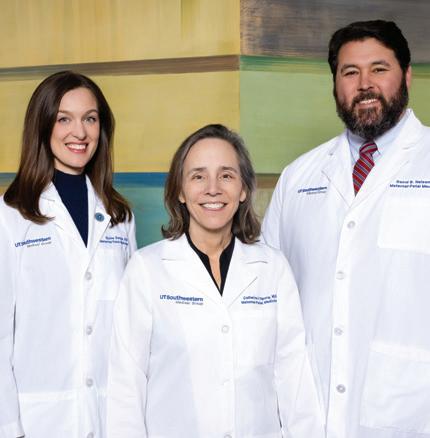
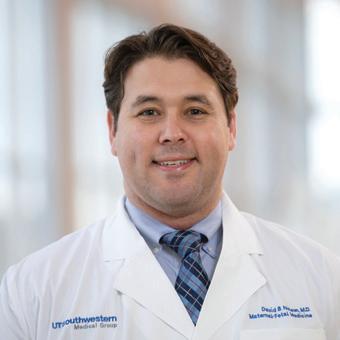
The study is led by David B. Nelson, M.D., Associate Professor of Obstetrics and Gynecology and Division Chief of Maternal-Fetal Medicine at Parkland Health; study senior
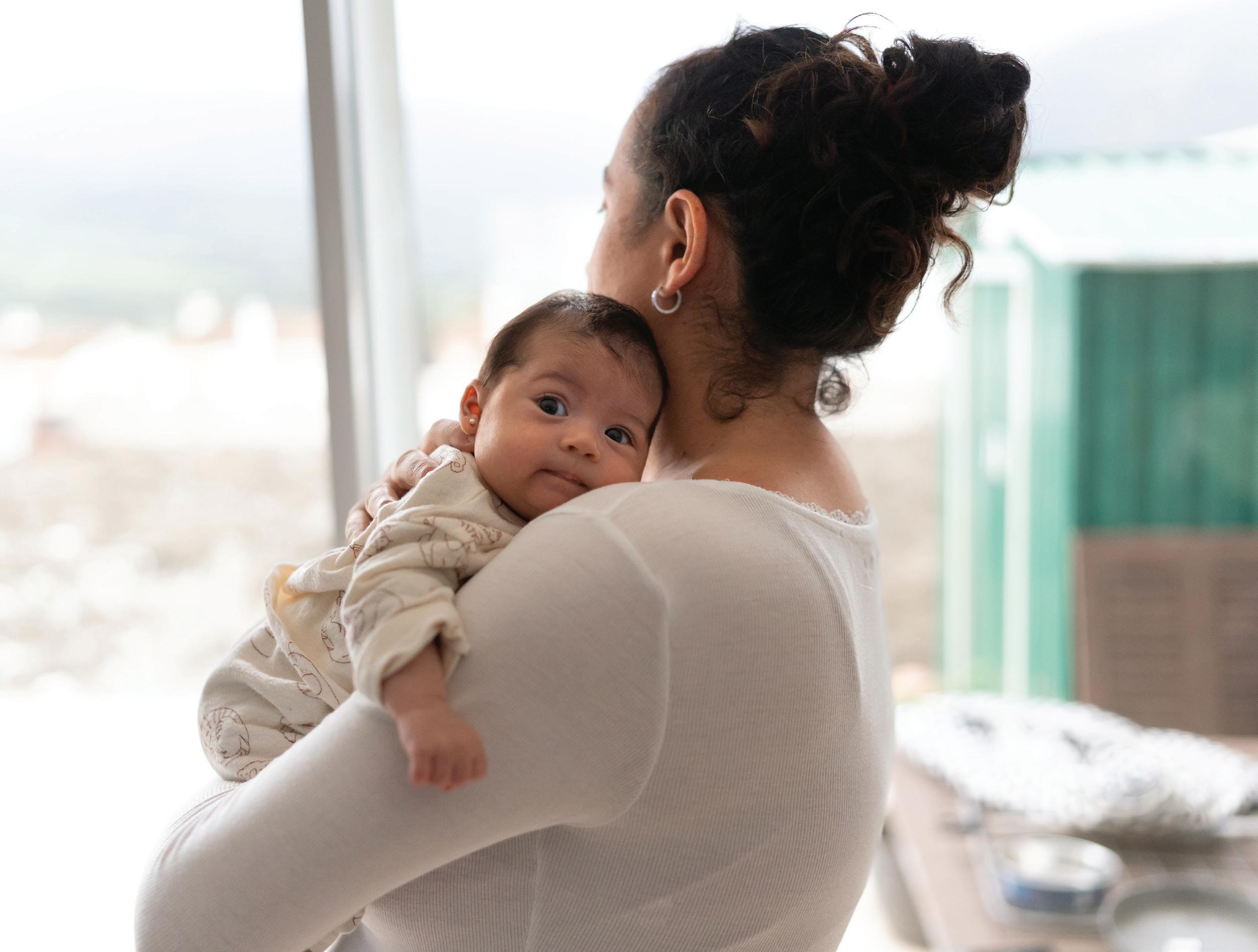
Strategies that benefit both mom and baby are central to all Ob/Gyn care at UT Southwestern.
author
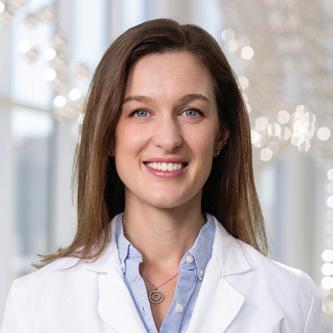
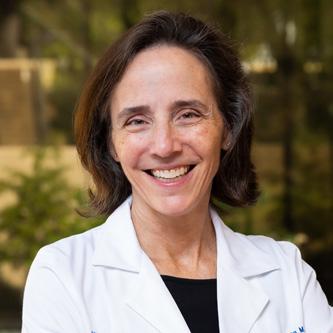
Elaine Duryea, M.D., Associate Professor of Obstetrics and Gynecology and Chief of Obstetrics at Parkland Health; and Catherine Spong, M.D., Chair and Professor of Obstetrics and Gynecology.
Services are tailored to meet patients where they are with mobile clinics, virtual visits, and community health workers embedded in neighborhoods.
Building on Success
Their work on IMPACT builds on the success of the extending Maternal Care After Pregnancy (eMCAP) initiative, a partnership between UT Southwestern and Parkland Health.
The eMCAP program, which kicked off in October 2020, was designed to address alarming disparities in maternal health, particularly among non-Hispanic Black and Hispanic women. Parkland, one of the busiest maternity hospitals in the country, serves a population where systemic barriers – transportation, insurance gaps, and language differences – often prevent mothers from receiving adequate care after childbirth. eMCAP stepped in with a bold solution: Extend care for a full year postpartum, far beyond the traditional six-week window.
Meeting Patients Where They Are
Since its inception, the eMCAP initiative’s impact has been profound. Women with chronic conditions such as hypertension and diabetes mellitus enrolled in eMCAP were significantly more likely to attend follow-up visits, and better manage their health postpartum. Mental health screenings became routine, and those with elevated scores were successfully referred to licensed counselors.
Services are tailored to meet patients where they are with mobile clinics, virtual visits, and community health workers embedded in neighborhoods. By offering remote consultations and smartphone-based education, the program eliminates logistical hurdles to accessing care.
The eMCAP program has enrolled more than 8,000 patients and has expanded to east Dallas County as well as Hunt County with a mobile health unit grant from the U.S. Department of Health and Human Services. The program also served as a foundation a $25 million-plus Dallas-Fort Worth initiative, for which UT Southwestern is clinical lead.
How IMPACT Works
“IMPACT centers on an important component of pregnancy care, detecting and addressing complications in the postpartum period with the goal of preventing emergency visits and hospitalizations,” says Dr. Spong. “The work from eMCAP, identifying common barriers and potential solutions, is the foundation for this work.”
The first year of the IMPACT study focused on observing 1,000 patients to solidify understanding of the social determinants of health faced by postpartum patients in Texas. In phase two, 2,500 patients are randomized into two groups:
• Group one receives extensive discharge instructions and educational push notifications on their phones, which cover timely information about their health checkins and ways to access expert care.
• Group two receives normal discharge instructions and access to serialized telemedicine appointments.
Patients in each group will be followed for a year by a team of dedicated providers and researchers from PCORI, who will assess patients’ mental health, diabetes, and blood pressure outcomes. The team will also measure which communications channels patients prefer, and which work best to manage postpartum health conditions and reduce hospital and emergency department visits.
“IMPACT builds on the work from the eMCAP program by investigating how technology can best be leveraged to improve the delivery of effective postpartum care,” Dr. Duryea says. “By comparing a patient-driven approach to a more traditional telehealth visit model, this study will help determine the best way to improve the detection of postpartum complications before they cause harm.”
Feedback Matters
Patients helped create the study structure and have access to results in real time. They have a voice throughout the study, giving feedback at the point of care and participating on the research advisory board.
Dr. Nelson has been encouraged by the enrollment, engagement, and participation of the patients in the IMPACT study.
“Our goal is to offer evidence-based guidance for optimizing postpartum care delivery and help reduce maternal health disparities,” says Dr. Nelson. “We look forward to sharing our results as soon as they are available.”
Elaine Duryea, M.D., Associate Professor of Obstetrics and Gynecology
David B. Nelson, M.D., Associate Professor of Obstetrics and Gynecology
Catherine Y. Spong, M.D., Professor and Chair of Obstetrics and Gynecology
AI Innovations in Medical Education Artificial Intelligence
UTSW is deploying artificial intelligence to provide accurate, immediate feedback on assessments, a win for both medical students and faculty.
Artificial intelligence (AI) is rapidly transforming the landscape of medical education, offering innovative solutions to longstanding challenges.
One such challenge, efficiently and accurately evaluating student performance, has found a promising ally in AI. At UT Southwestern, AI tools are now being harnessed to streamline the reviewing and grading of medical students’ work, significantly reducing faculty workload while enhancing the consistency and quality of academic assessments.
A Glimpse Into the Future
Researchers from the Jamieson Lab, in collaboration with UTSW’s Simulation Center, are utilizing advanced AI tools to analyze and swiftly grade the Objective Structured Clinical Examination (OSCE), a standardized test
of medical students’ clinical skills using a simulated patient encounter. Since fall 2023, the AI evaluation process has transformed OSCE feedback for UT Southwestern medical students, replacing more than 91% of human grading and delivering results within days versus weeks (as noted by the researchers in their case study “Rubrics to Prompts: Assessing Medical Student Post-Encounter Notes with AI,” published in The New England Journal of Medicine).
“The process of manually reviewing and grading these notes is labor-intensive, timeconsuming, and prone to inconsistency,” says Andrew Jamieson, Ph.D., Assistant Professor in the Lyda Hill Department of Bioinformatics. “The Sim Center hosts more than 2,000 OSCE encounters in a single session, rendering the operational demands of timely, accurate grading particularly daunting. It was not uncommon for students to wait weeks to months to receive scores.”
Accurate, scalable, automated grading systems are helping to address these challenges and maximize the educational benefits of the OSCE by providing feedback while the experience is fresh in students’ minds. This approach also can be readily adapted, at scale, for other institutions and to new scenarios.
“This flexibility provides a glimpse into a future where medical educators can effortlessly evaluate student performance using any number of bespoke grading rubrics on the fly, each tailored to the unique objectives and subjective preferences of faculty members,” Dr. Jamieson says.
Near-Instantaneous Results
This is one of many examples of how UTSW is looking for ways to incorporate AI into medical education in a manner that enhances the experience for both students and faculty.
The Office of Medical Education (OME) sees a bright future for applying multimodal AI using audio, video, and notes to assess competency-based medical education. Frameworks such as the Association of American Medical Colleges’ Entrustable Professional Activities (EPAs) outline 13 skills that medical school graduates must be competent in on the first day of their residency training.
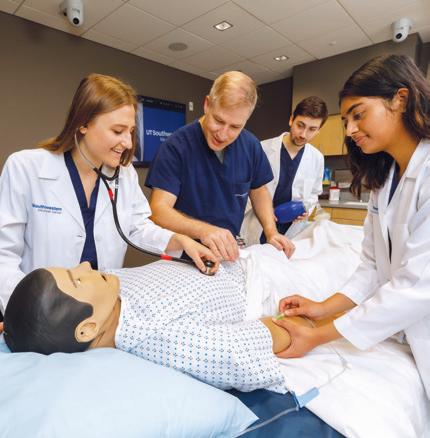
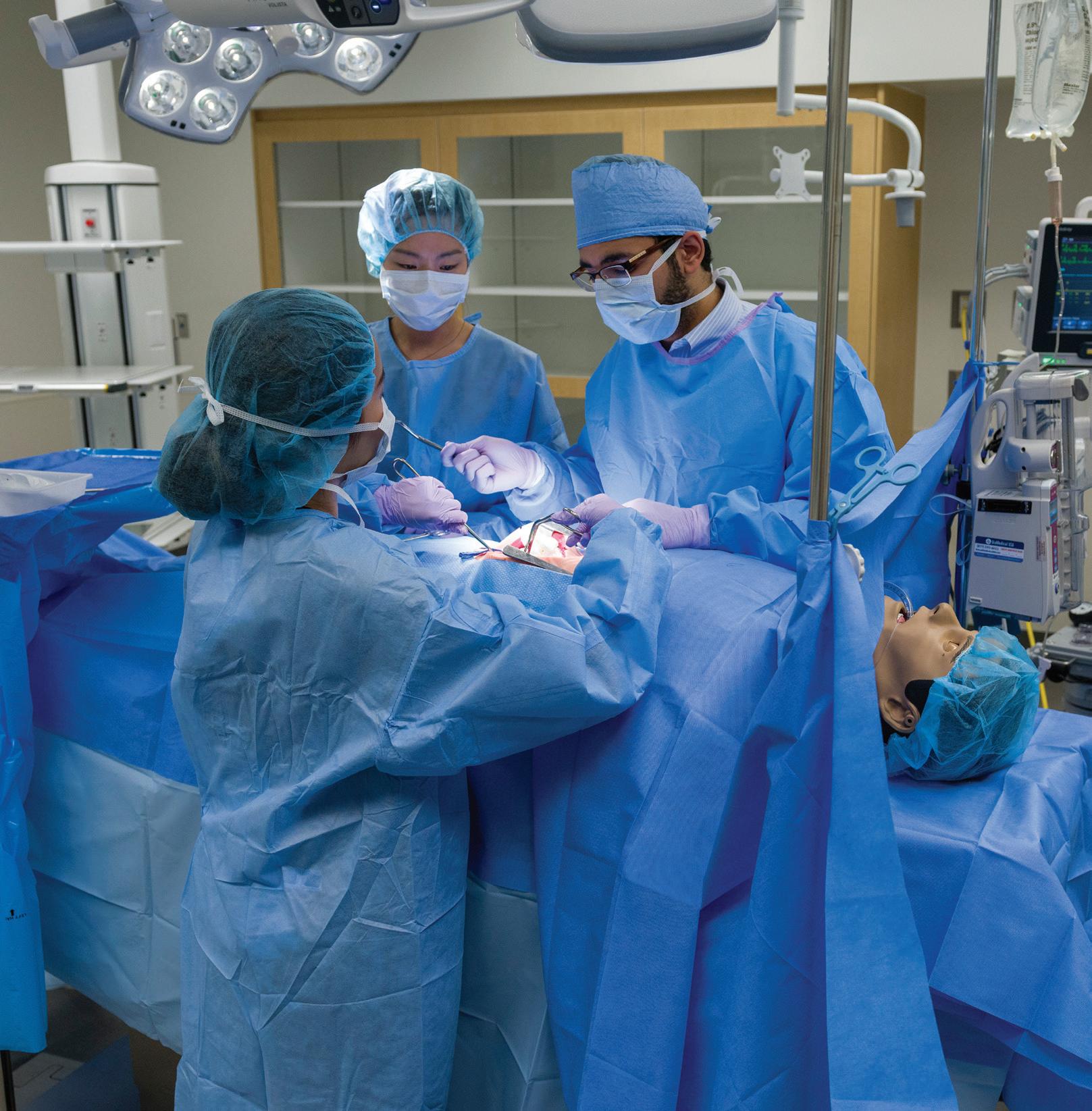
UTSW has one of the largest simulation centers in the United States, replicating and creating virtual environments for training in clinical care and procedures.
Andrew
Jamieson, Ph.D., Assistant Professor, Lyda Hill Department of Bioinformatics
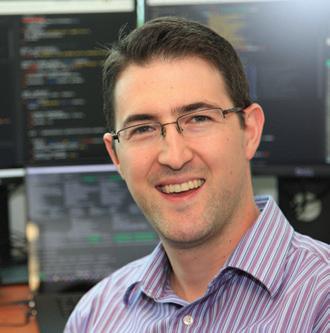
Sherry C. Huang, M.D., Vice Provost and Senior Associate Dean for Education
Ngoc “Kim” Van Horn, M.D., Associate Professor of Pediatrics
James
H. Willig, M.D., M.S.P.H., Professor of Internal Medicine and Associate Dean for Undergraduate Medical Education
With standardized patient encounters, AI can measure whether the student spoke too fast, used too much jargon, or allowed the patient enough time to share their concerns.
Each EPA is complex and multifaceted, so OME educators have “atomized” each one into discrete and measurable sub-competencies (three or four per EPA). “Using the pioneering technology created by the Jamieson Lab and leveraging the data capture and simulation expertise of the Sim Center greatly facilitates evaluating each sub-competency,” says Sherry C. Huang, M.D., Vice Provost and Senior Associate Dean for Education.
In the pre-clerkship phase, educators have created detailed scenarios with corresponding AI-graded rubrics to evaluate developing history-taking, physical examination, and early clinical reasoning skills.
In the subsequent clerkship phase of the curriculum, they further drill down on clinical reasoning skills using structured rubrics to dissect each student’s ability to craft a problem representation, a differential diagnosis, and a management plan. The multimodal AI grades the notes, producing near-instantaneous results.
Enriching Student Learning
Ngoc “Kim” Van Horn, M.D., Associate Professor of Pediatrics, has crafted a fivestation examination for her department’s clerkship that includes history-taking, physical examination, clinical documentation, patient counseling, and an oral presentation of the case to a more senior clinician. The rubric for this evaluation leverages video, audio, and text reading capabilities for true multimodal AI
assessment. Upon completion, each student receives a detailed report on their performance for each EPA sub-competency, showing what they did well and where they can improve.
“This level of feedback vastly exceeds what was available to my generation and those prior in medical school and marks a new day for medical education,” says James H. Willig, M.D., M.S.P.H., Professor of Internal Medicine and Associate Dean for Undergraduate Medical Education. “We do not need to wait to see a poor grade to know a learner needs help, but rather we can observe their development benchmarked to peers for each EPA sub-competency.”
With the arrival of higher-precision, competency-based medical education, UTSW now will embark upon the hard work of validating these methods and researching how to best leverage this technology to augment student development.
“The curricular implications will be farreaching, and I am immensely excited that we will be able to guarantee that upon completion of our curriculum, our learners will have reached competency across all EPAs and are ready to excel on day one of graduate medical education training,” Dr. Willig says.
By embracing these technological advancements, UTSW is reaffirming its enduring commitment to excellence in medical education while empowering faculty, enriching student learning, and shaping the future of clinical practice.
Genomic Research
Putting the SPARC in Genomic Research
UT Southwestern is building one of the largest biobanks in the country, with a goal of redefining how genetics research informs clinical care.
Eric Peterson, M.D., M.P.H., believes that UT Southwestern’s new Sequencing Populations to Accelerate Research and Care (SPARC) program will help unlock the future of medical research. It’s a bold objective, but transformative science requires equally bold ambitions. By uniting genomic sequencing with real-world clinical data, SPARC aims to accelerate the translation of research findings into clinical application on an unprecedented scale.
Dr. Peterson, Vice Provost and Senior Associate Dean for Clinical Research at UT Southwestern, has been working for more than a year to bring SPARC to life. The program, announced in August 2025, promises to transform how research is conducted across UT Southwestern and how it is used.
Alexandre
Bolze, Ph.D., Associate Professor in the Eugene McDermott Center for Human Growth and Development
At its core, SPARC will create an institutional biobank and perform whole-exome sequencing (WES) on up to 150,000 patients in collaboration with biotechnology partner Regeneron. WES is a lab test that reads the parts of DNA that contain instructions for making proteins –the exome – and analyzes them to find genetic mutations that may cause disease or other health conditions.
How Patients Can Join
Much like the landmark Dallas Heart Study, which just marked its 25th year, SPARC will align genomic and clinical data to identify new genetic drivers of disease and therapeutic response.
All patients treated at UTSW and Children’s Health are eligible to participate in SPARC, with enrollment conducted through online and in-person recruitment. Participants provide a small blood sample, often drawn as part of routine clinical care. In return, they can receive information on their genetic ancestry, screening for important genetic risk markers, genetic risk scores for specific diseases, and genetic counseling upon request.
Population Health at Scale
Once fully implemented, SPARC will allow investigators to explore genetic connections to disease across a large, diverse population. Linked genetic and clinical data will be available through the SPARC database, eliminating the need for time-consuming participant recruitment and costly testing.
Just as important, SPARC will connect both genetic insights and ongoing research to clinical care.
“We often talk about the promise of population health and precision medicine, but those goals are difficult to realize in practice,” Dr. Peterson says. “Studies show that about 5% of the population carries actionable genetic variants, such as BRCA gene mutations that increase breast cancer risk. For patients who opt in, we’ll offer that information to their physicians, enabling proactive diagnosis and preventive care. It can also guide downstream screening for family members. That’s how we begin to practice population health at scale.”
SPARC will be housed in the Eugene McDermott Center for Human Growth and Development at UT Southwestern, under the leadership of Ralph DeBerardinis, M.D., Ph.D. Alexandre Bolze, Ph.D., joined UTSW last fall to serve as SPARC Director.
“We have a great team in place,” Dr. Peterson says. “The future of genetics’ role in research and clinical care is being designed right here at UT Southwestern.”
Ralph DeBerardinis,
M.D., Ph.D., Professor and Director of the Eugene McDermott Center for Human Growth and Development
Eric
Peterson, M.D., M.P.H., Vice Provost and Senior Associate Dean for Clinical Research
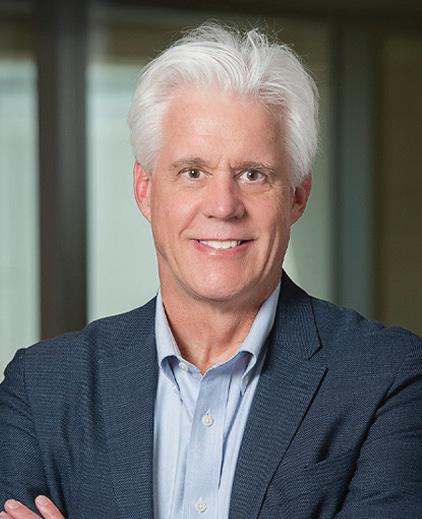
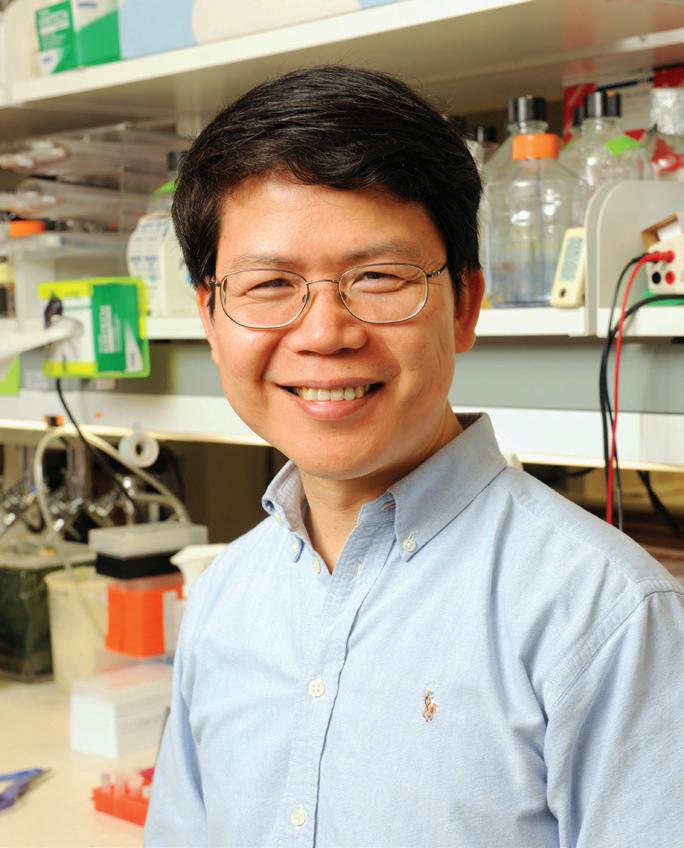
DRS. MENDELL AND PAN ELECTED TO NATIONAL ACADEMY OF MEDICINE
Joshua Mendell, M.D., Ph.D., and Duojia Pan, Ph.D., were elected to the National Academy of Medicine, one of the highest honors in health and medicine.
Dr. Mendell, Professor of Molecular Biology, has conducted pioneering research on the functions of microRNAs in normal physiology and disease. Dr. Pan, Chair and Professor of Physiology, is recognized for his
Dr. Olson Honored With Horwitz Prize
Eric Olson, Ph.D., Chair and Professor of Molecular Biology, has received the 2025 Louisa Gross Horwitz Prize from Columbia University. The award celebrates his work uncovering the genetic mechanisms that govern muscle development and his innovative efforts to develop gene-editing therapies for Duchenne muscular dystrophy.
groundbreaking work in elucidating molecular pathways that regulate growth and tissue homeostasis.
Both are members of the Harold C. Simmons Comprehensive Cancer Center, and their discoveries have significantly advanced our understanding of the mechanisms underlying cancer development and progression.
Dr. Chen Receives 2026 Japan Prize
Zhijian “James” Chen, Ph.D., Professor of Molecular Biology, has been awarded the Japan Prize in Life Sciences – one of the highest international honors for science and technology – in recognition of his discoveries related to the innate immune system including cyclic GMPAMP synthase, or cGAS, which acts as the body’s burglar alarm to trigger defense from invading pathogens. He shares the 2026 Prize with Shizuo Akira, M.D., Ph.D., Professor at Osaka University.
UTSW Designated as North Texas Alzheimer’s Disease Research Center
The National Institute on Aging, part of the National Institutes of Health, recently funded the North Texas Alzheimer’s Disease Research Center (ADRC) to be based at UT Southwestern Medical Center, in collaboration with UT Dallas and UT Arlington.
The five-year award, expected to total $23 million, will fund initiatives to investigate the basic mechanisms underlying these diseases and clinical interventions for diagnosis, monitoring, and treatment.
“Being named an ADRC is not only an indication of scientific excellence, but also highlights an intentional commitment to research Alzheimer’s disease and cognitive impairment in our community,” says the Center’s Principal Investigator, Ihab Hajjar, M.D., Professor of Neurology and Internal Medicine at UT Southwestern and in the Peter O’Donnell Jr. Brain Institute.