THE KIDS CORNER: AN 8.7 BILLION MARKET
- casa e art de la table -
036
COFFEE: A RITUAL IN TRANSFORMATION 070
THE QUALITY OF SOLIDARITY FRAGRANCE
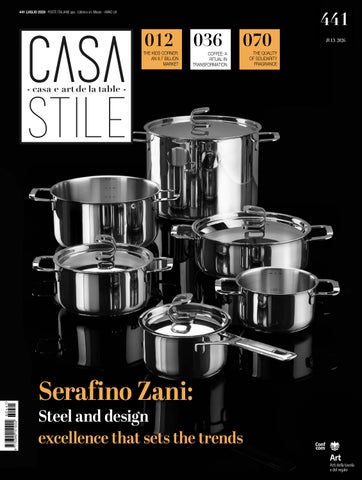
THE KIDS CORNER: AN 8.7 BILLION MARKET
- casa e art de la table -
036
COFFEE: A RITUAL IN TRANSFORMATION 070
THE QUALITY OF SOLIDARITY FRAGRANCE
51 TUTORIAL
Japanese Furoshiki: Fabric Wrapping
Sera no Zani: Sixty Years of Trends
46 NEWS
ART Confcommercio: Diego Toscani is the New President
12 KIDS CORNER
The children's corner featuring baby registries, new rituals, and design products
36 MARKETS
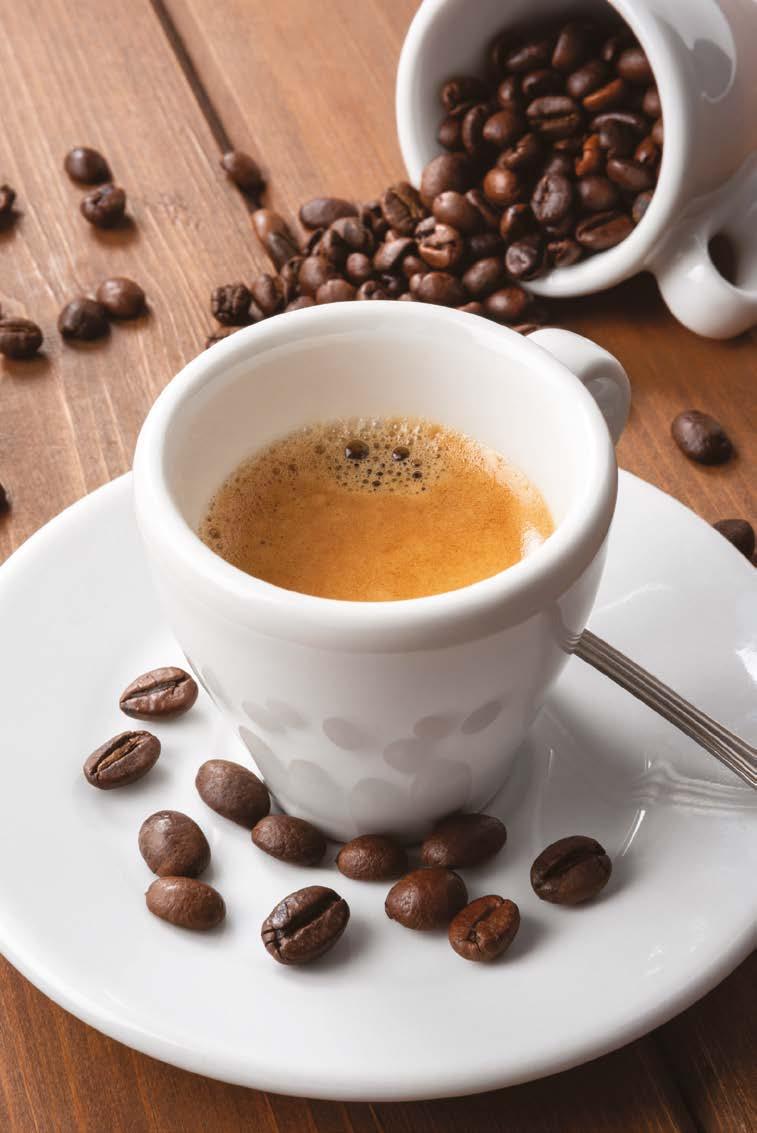
Coffee, a ritual in transformation
48 MERCATI
Silver economy: la nuova età dell’oro del retail casa
52 STORES
The algorithm doesn't know how to make macarons
20 VERONICA BARSOTTI
The store is no longer just a store
70
BELFORTE FRAGRANZE ITALIANE
The quality of solidarity fragrance



Bimestrale - 441 Luglio 2026 - www.casastileweb.it
EDITORE
EDIBRICO srl con socio unico
Viale Emilio Caldara, 44 - 20122 Milano
DIRETTORE EDITORIALE E RESPONSABILE
Nicla de Carolis - decarolis@edibrico.it
COORDINATORE DI REDAZIONE
Laila de Carolis - laila@edibrico.it
GRAFICA E IMPAGINAZIONE
Gabriele Curato - gabriele.curato@edibrico.it
SEGRETERIA DI REDAZIONE
Patrizia Ferrari - p.ferrari@edibrico.it
Claudia Cazzulo - claudia@edibrico.it
IN REDAZIONE
Mauro Balbi, Francesco Poggi redazione.casastile@edibrico.it
COLLABORATORI
Fabio Destefani, Francesca Guerini Rocco, Patrizia Pagani
IMMAGINI Shutterstock
DIRETTORE COMMERCIALE
Cesare Gnocchi - cesare.gnocchi@tecnichenuove.com
SVILUPPO COMMERCIALE
Monica Sposito - monica.sposito@tecnichenuove.com
UFFICIO COMMERCIALE VENDITA SPAZI PUBBLICITARI: Milano, Via Eritrea 21 - tel. 02 92984481 - commerciale@tecnichenuove.com
Anna Boccaletti (coordinatore) anna.boccaletti@tecnichenuove.com
UFFICIO TRAFFICO E PUBBLICITÀ
Lorena Villa - lorena.villa@tecnichenuove.com - tel. 02 92984542
ABBONAMENTI
Tariffe per l’Italia: cartaceo annuale 22,00 euro; cartaceo biennale 34,00 euro.
Modalità di pagamento: sul sito www.edibrico.it; Conto corrente postale n.13844469 intestato a: EDIBRICO - loc. Vallemme, 21 15066 Gavi (AL) Bonifico bancario su Iban: IT43Q0623048310000046330946 L’abbonamento avrà inizio dal primo numero raggiungibile. Servizio clienti: 0143 645037 - abbonamenti@edibrico.it
STAMPA
Faenza Printing Spa - Via Vittime Civili di Guerra, 35 - 48018 Faenza (RA)
Copyright EDIBRICO SRL
La riproduzione delle illustrazioni e degli articoli pubblicati dalla rivista, nonché la loro traduzione è riservata e non può avvenire senza espressa autorizzazione della Casa Editrice. I manoscritti e le illustrazioni inviati alla redazione non saranno restituiti, anche se non pubblicati e la Casa Editrice non si assume responsabilità per il caso che si tratti di esemplari unici. La Casa Editrice non si assume responsabilità per i casi di eventuali errori contenuti negli articoli pubblicati o di errori in cui fosse incorsa nella loro riproduzione sulla rivista.
REGISTRAZIONE
Tribunale di Milano n.392/72
ROC n. 34848 del 26 agosto 2020
ISSN 0390-1512
"Milanese Itineraries: 30 activities that are redesigning the city" is the title of a new guide published by American Express in collaboration with the Young Entrepreneurs Group of Confcommercio Milano Lodi Monza Brianza. It highlights a new generation of independent businesses contributing to the evolution of Milanese neighborhoods. This initiative stems from an Ipsos Doxa study commissioned by American Express, revealing that Italian citizens are increasingly drawn to local retailers who combine authenticity with innovation. The guide shines a spotlight on local businesses that merge creativity, community connection, and fresh approaches to proximity retail. Even with the strength of online commerce, there is an undeniable priority among Italians and tourists to preserve cities populated by beautiful storefronts. Visitors adore wandering our streets not only to appreciate historic architecture but also to make purchases curated with professional expertise. I believe many of the stores reached by CasaStile can become destinations on these urban itineraries due to their ability to safeguard heritage, foster social cohesion, and provide safety and identity to neighborhoods. Innovation is a key asset here: CasaStile is consistently packed with suggestions to help retailers follow trends and formulate offers that capture customer interest. Starting on page 20, you will !nd a straightforward exercise designed to assist in self-criticism and point-of-sale optimization. Furthermore, market research yields compelling insights: an article on page 12 highlights that parents prefer purchasing items for their infants in neighborhood stores that offer a dedicated children's corner !lled with irresistible products like specialized mugs, plates, and cutlery. Complementary data underscores that consumers over 65 are spending more—not to replace broken items, but to upgrade their overall home environment. These indicators, when paired with the intrinsic heritage of neighborhood shops, can effectively turn local retailers into destinations for upcoming itineraries of beauty!
Nicla de Carolis
pre-Alpine valley north of Brescia, where the working of iron and steel is ancient knowledge passed down from generation to generation. It is here, in Lumezzane, that in 1963 Serafino Zani founded his company with a clear vision: to make beautiful, lasting objects. A centuries-old heritage of knowledge that the founder put to work alongside the experience gained at his father Bernardo Lorenzo's side, giving life to a brand that today his six children, and the grandchildren of the third generation, continue to lead with that same original identity. Yet this is not a story of simple preservation. The company was most likely the first to bring the language of design into the cookware sector, opening an entirely new market segment as far back as the late 1970s. A bold choice, one that meant rethinking not only the product but also its packaging and communication. The philosophy was clear from the outset: every object must satisfy the end user to the fullest, be pleasant to use, easy to maintain. High quality, generous thickness, precise finishing. A pot is not merely a cooking tool: it is an object with which one has a daily relationship, and as such it must be designed accordingly. This vision found confirmation and momentum in collaborations with some of the greatest masters of world design. Tapio Wirkkala, the celebrated Finnish master, was the first to work with the company from the 1980s onwards. Then came Ettore Sottsass, with whom in 2004 "La cucina sapiente e la tavola contenta" was born — an organic programme of kitchen utensils and table accessories, several of which won the Red Dot Design Award in 2007. Between 2009 and 2014 it was Konstantin Grcic's turn, who created "Passami il sale" ("Pass me the salt"), a range of accessories defined by a bold aesthetic entirely free of super"uous elements: laser-cut baskets and trays, Accento cutlery, Certamente wire-steel salad servers, and Al Dente cooking
From the workshop in Lumezzane to international design, a family business that has never stopped reinventing the kitchen and the table
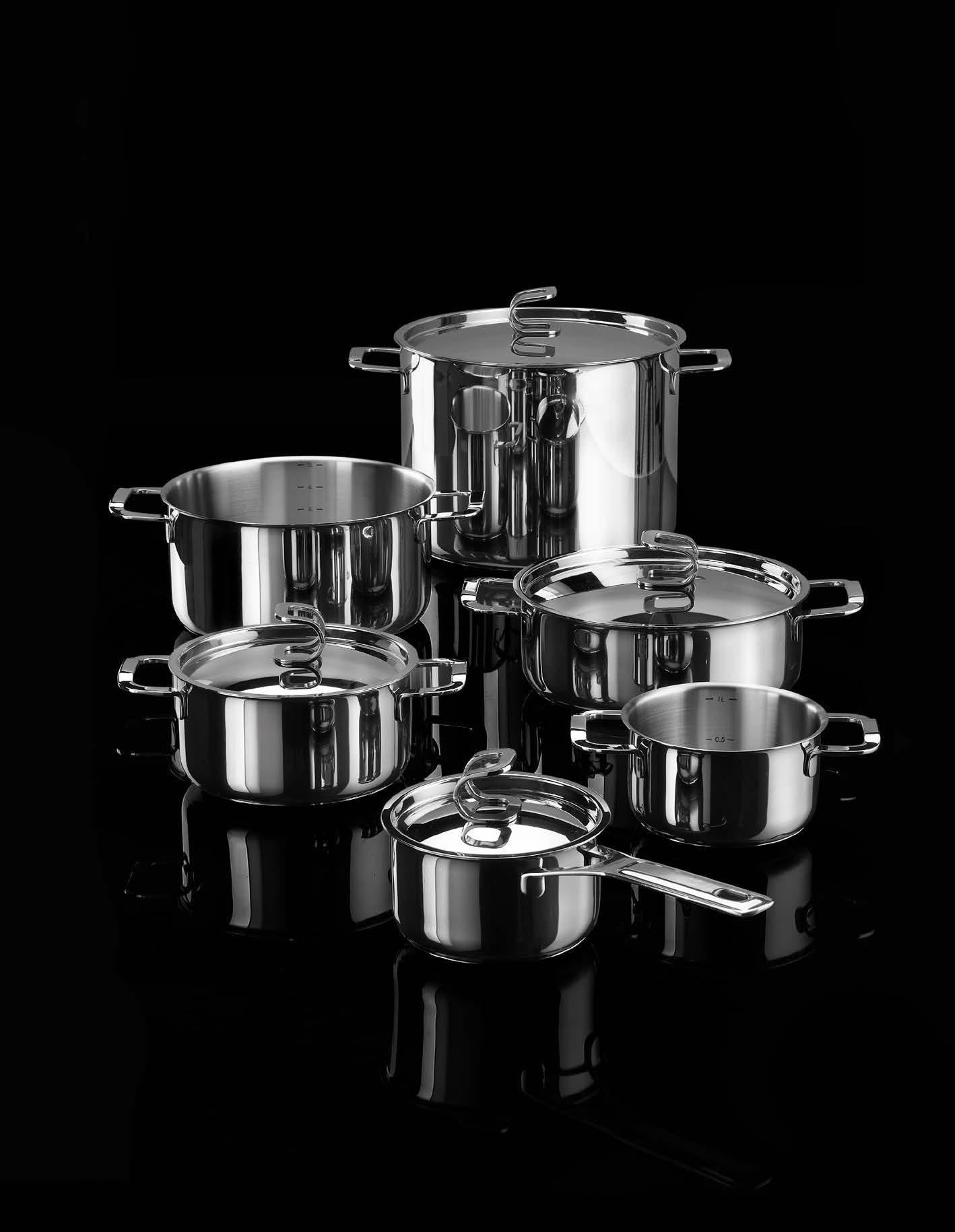
Heavy-gauge 18/10
stainless steel, thermodiffuser base, and mirror
finish: Tullio unites formal elegance with everyday functionality.
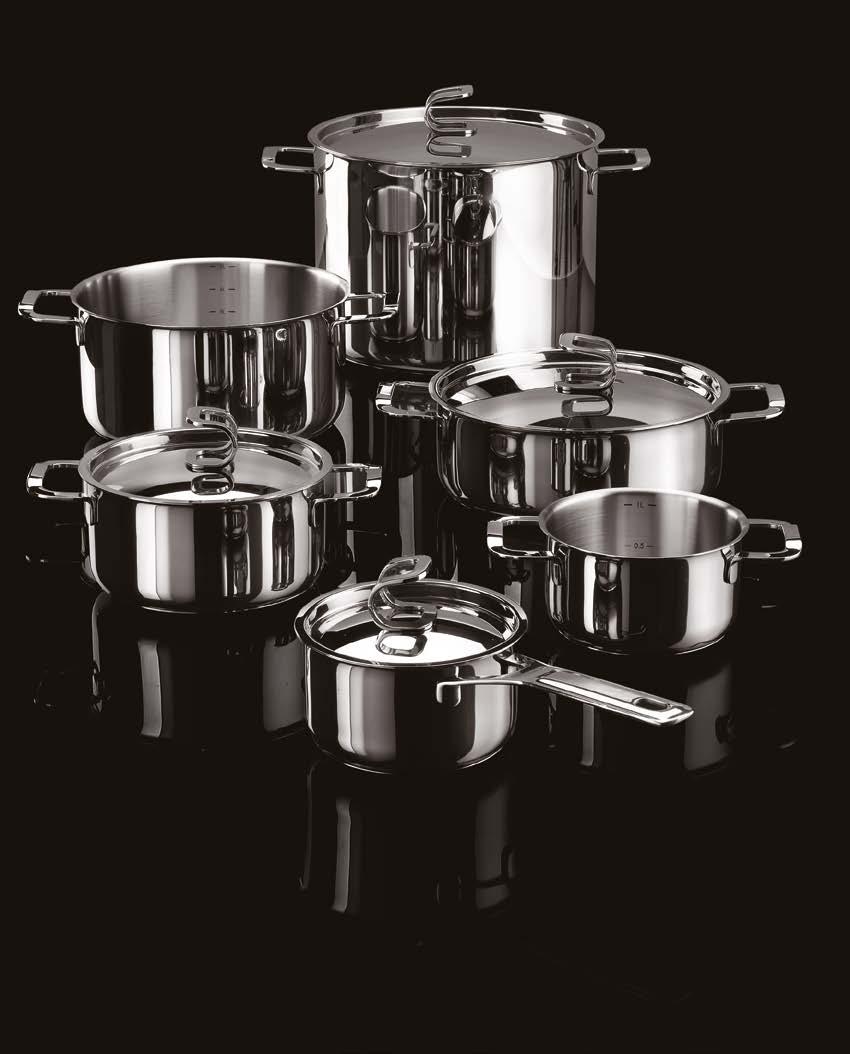

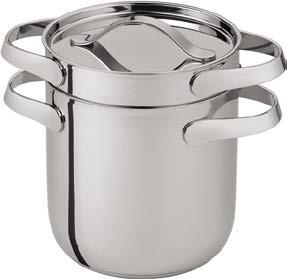
The spaghetti pot from the Al Dente collection is part of the "Passami il sale" project. Good Design Award 2010 and honourable mention at the Compasso d'Oro.
tools. A collection that earned the Good Design Award in 2010 and, the following year, an honourable mention at the Compasso d'Oro for the Subito pressure cooker.
at quality in seeking to use industrial tools while remembering that choosing a technology or a machine is like choosing an implement: neither has intrinsic value, but through design, both are capable of conveying the touch of the person who made them."
2026 brings two launches that look in complementary directions. The Tullio cookware range, designed by Andrea Zani, is conceived for preparations that demand capacity, sturdiness, and precise heat control.
Crafted from heavy-gauge 18/10 stainless steel, it combines construction quality, formal elegance, and everyday functionality. The thermo-diffuser base ensures even heat distribution, making it suitable for gas, induction, glass-ceramic, and electric hobs.
Of his relationship with the company, Grcic has said: "Working with Sera!no Zani gives me the opportunity to compare my way of working with Italian manufacturing on ground I !nd very interesting and which I call the Casa-Fabbrica — the Home-Factory. Sera!no Zani is a contemporary, industrial company with a particularly keen eye for design, yet at the same time it has a very strong bond with its territory and with the craft of making. It uses industrial means of production without forgetting the knowledge of skilled hands. I believe there is a gre-
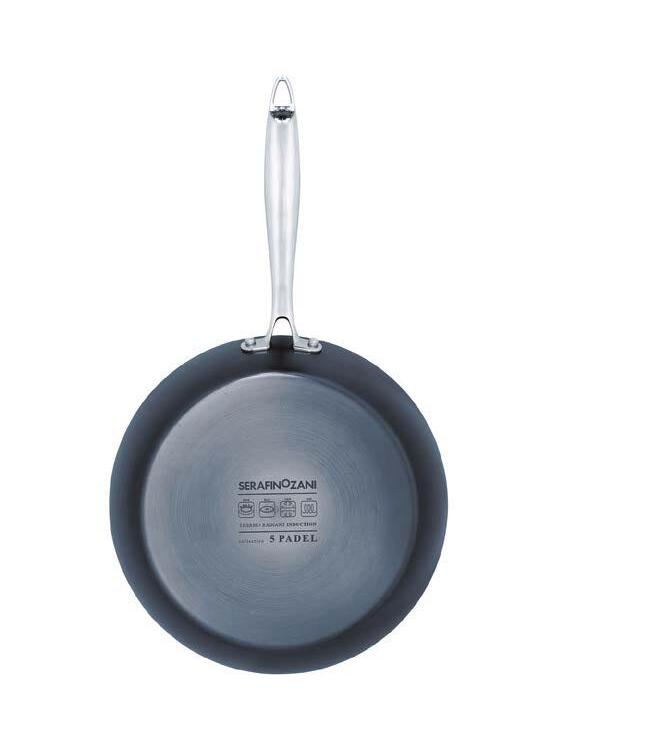
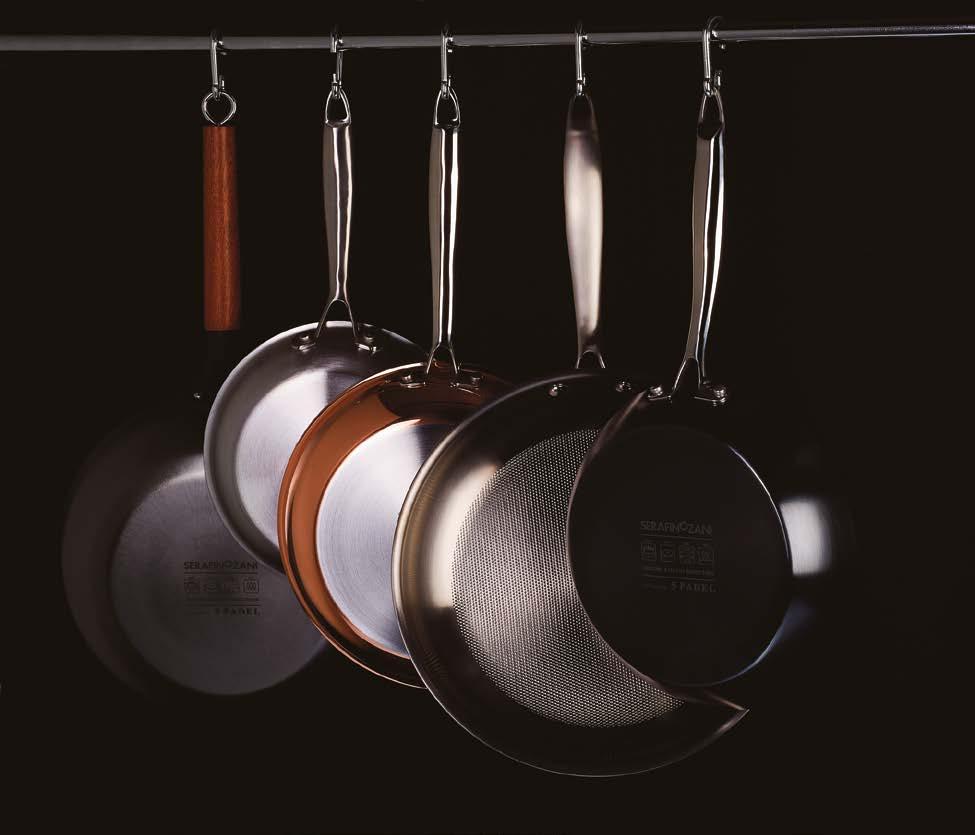
The 5 Padel — five pans in five different materials, engineered to meet today's most pressing market demands and already a proven sales success across the board.
A relationship with design that Roberto Zani, president of the company, describes as a fundamentally human encounter: "In our preliminary meetings with designers, our conversations revolve around topics that seem to have nothing to do with the design of objects. We need to get to know each other. If I get along with them and they get along with me, then we start working on the project we have in mind. I am !rmly convinced that design projects embody the shared values of those who designed them and those who produced them. That is how the end user acquires something that is certainly useful, genuine, and solidly made, but at the same time connects with the meaning inherent in the object itself and takes on the values of its designer and maker."
The satin-!nish interior with measurement markings simpli!es portioning, while the high-gloss mirror exterior enhances the collection's clean, contemporary design.
The handles — substantial yet wellproportioned — provide a secure and comfortable grip. The entire collection is born from the idea of bringing an essential design language into the kitchen, one capable of harmonising aesthetics and functionality through soft, clean lines studied to create a balanced visual whole.
Alongside Tullio come the 5 Padel — !ve pans in !ve different materials, engineered to meet today's most pressing market demands and already a proven sales success across the board.
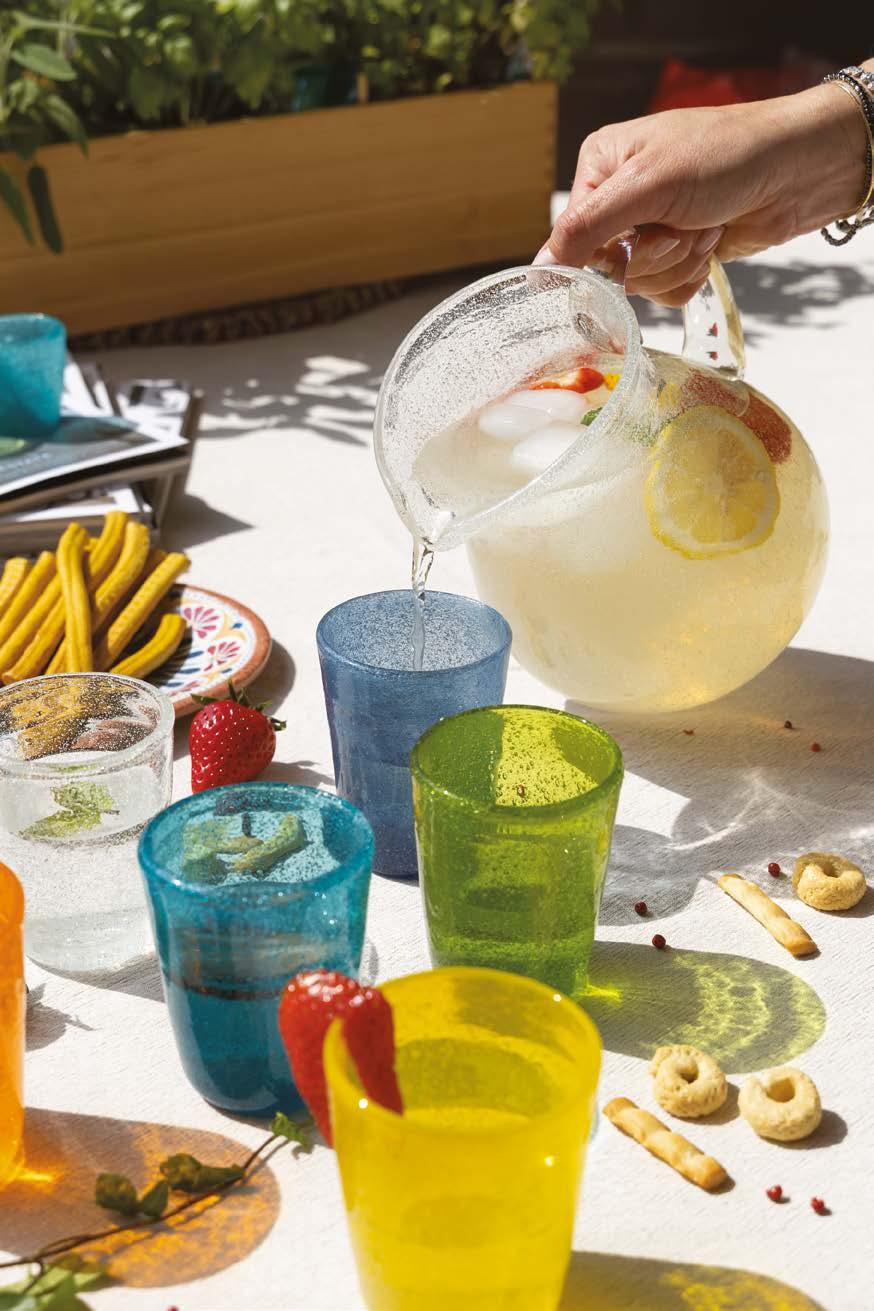
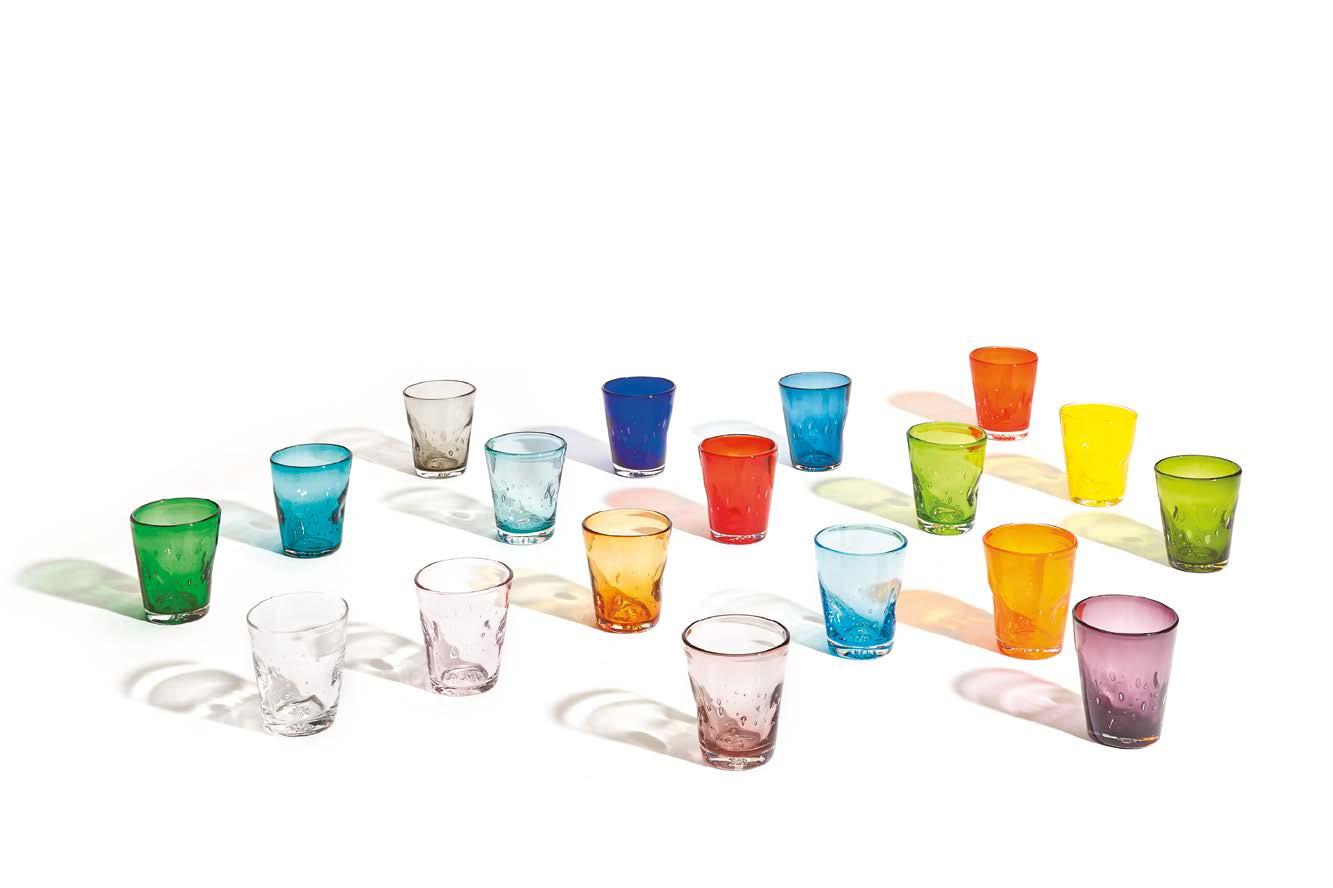
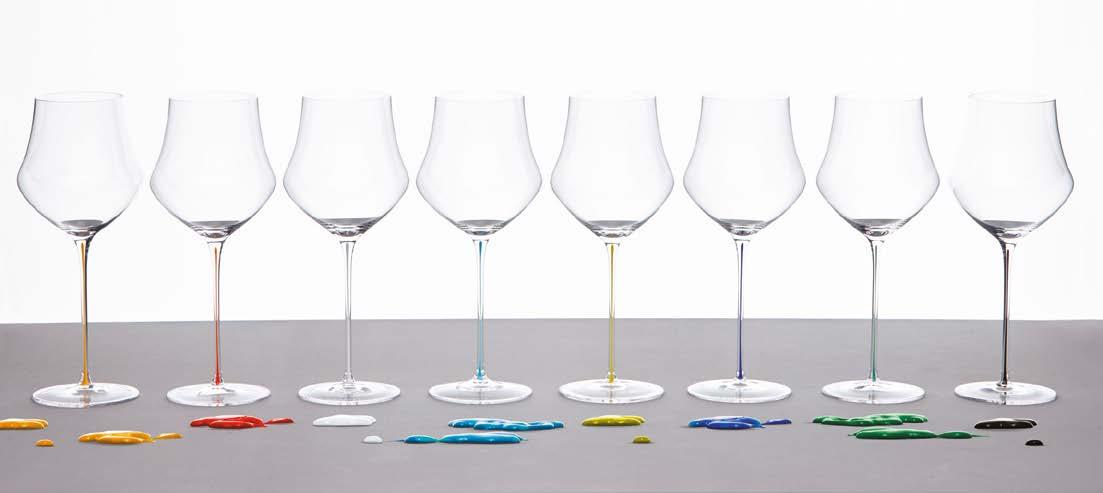
Memento's new 2026 collection: Dune — handblown glasses, each one different from the next.
Today, in 2026, the brand is in full revival. New investments, new products, new energy — but the same identity. The Tullio cookware collection, designed by Andrea Zani, a third-generation designer who grew up in that very CasaFabbrica, represents far more than a new product line: it is proof that the generational transition has left neither the vision nor the quality untouched. Crafted from heavy-gauge 18/10 stainless steel with a thermo-diffuser base and mirror !nish, Tullio brings a clean, contemporary aesthetic to the kitchen that speaks the same language as the great projects of the past. Alongside Tullio come the 5 Padel — !ve pans in !ve different materials, designed to meet today's most pressing market demands, and already a commercial success. Two launches that con!rm this company's ability to read the times before they arrive.
Memento: the glass you won't forget
Acquired by Serafino Zani in 2016, Memento is the brand that has transformed the concept and role of glassware, elevating it into a genuine medium of expression and personal identity. Memento Originale glasses are the result of an artisanal blowing and crafting process, guaranteeing a set of truly unique characteristics: each individual glass may vary in colour tone and intensity, shape, bubble density, and the thickness of both base and body. Imperfections that make every object one of a kind, unlike any other. Thirtyfive colours, fifteen shapes.
The collection has grown over time: Memento Synth brings the same glasses in methacrylate — durable, dishwasher-safe, and ideal for outdoor use or everyday occasions — available in an ever-evolving colour range. Memento Wine completes the table with crystal wine glasses featuring coloured stems, while Memento Table adds distinctive ceramic plates. 2026 brings two new expansions: the Dune collection and, as a spring/summer novelty, the brandnew Memento Moon plates.
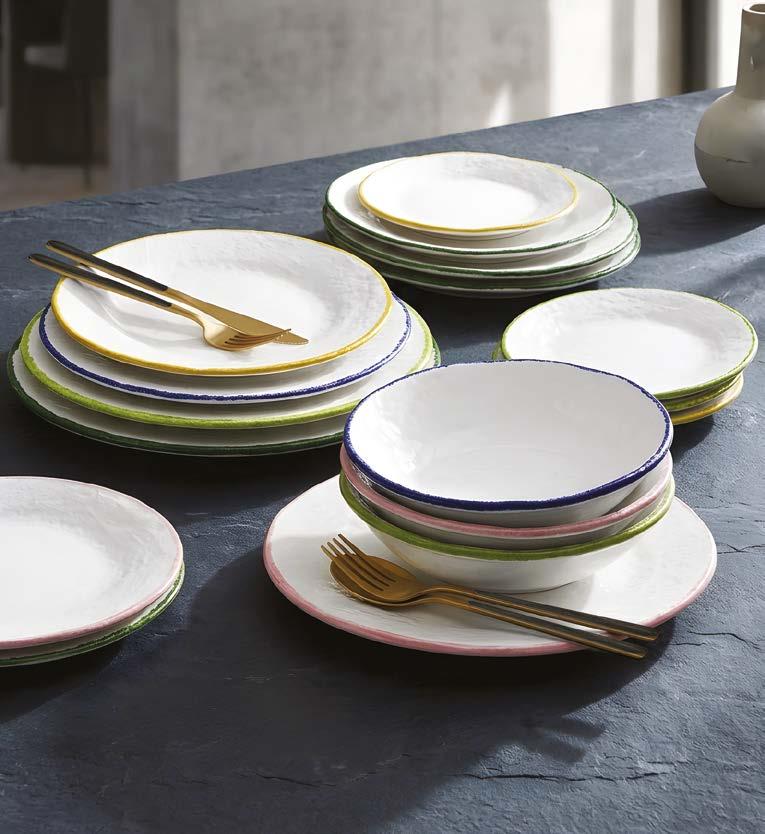
Spring/summer 2026 newcomer: Memento Moon ceramic plates, Made in Italy. Beautiful to look at, beautiful to use.
But the world surrounding this historic brand has, for some time, been about far more than its cookware. Over the years, the company has built a complete table universe through new brands and strategic acquisitions, each with its own distinct identity. Emporio Zani explores materials beyond steel — wood, ceramics (the Vulcano knives are exceptional), and an approach rooted in democratic, sustainable design. Touch-MeL has rede!ned the concept of melamine tableware: striking textures, vibrant colours, and a tactile quality that sets it clearly
apart from any conventional product in the same material. And in 2025 came an innovation that opened entirely new territory: Sorrento, the !rst line of melamine plates designed for the microwave oven — an absolute !rst in the industry. Perhaps the most surprising jewel in this universe is Memento, the mouth-blown glass brand acquired in 2016 and since then transformed into one of the most recognisable love brands in the !nest stores across Europe. The secret behind this longevity — sixty years, three generations, a market in constant transformation —
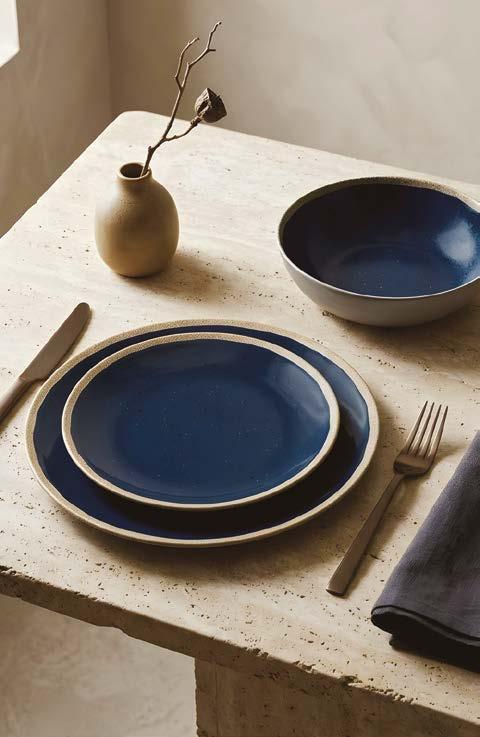
Striking textures, vibrant colours, a uniquely tactile feel. Touch-MeL redefines high-quality melamine tableware.
may lie in the phrase Roberto Zani repeats like a manifesto: "I never claim that our products are more beautiful than others, or that we are better than other companies. It is for the market to judge. What I do say, however, is that we are different. We have our own distinctive character, and we believe in promoting our values." A pursuit of design, product innovation, and a reading of international trends — it is this dynamism, rooted in tradition, that makes Sera!no Zani a true point of reference. www.zaniserafino.it
Crystal wine glasses with coloured stems: Memento Wine completes the table with the same chromatic spirit and unmistakable character of the brand.
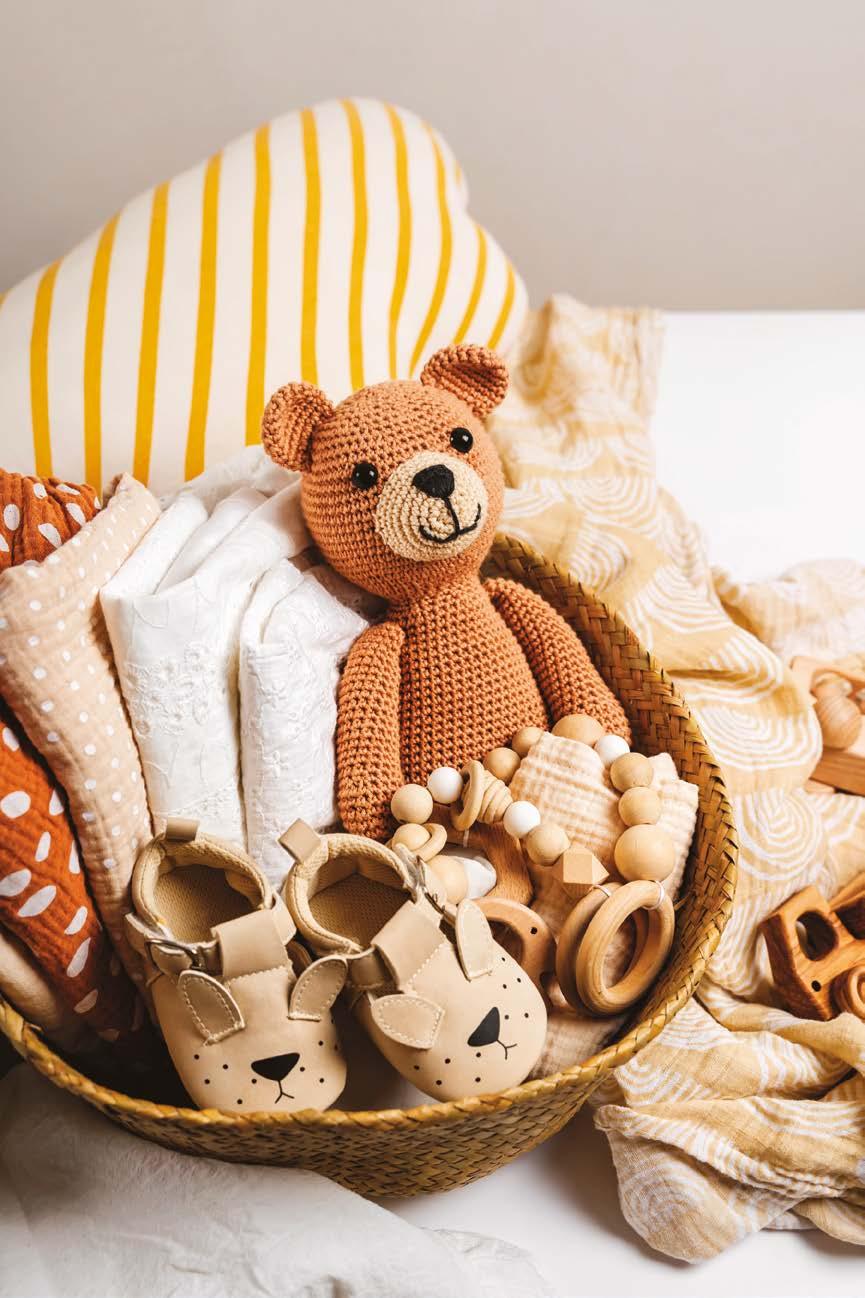
The evolution of children's retail: a hub that unites the tradition of the bomboniera with trends such as the Baby Shower and the Baby List. With a market worth 8.7 billion dollars, the physical store wins through expert advice, sustainability, and design-led collections — turning every purchase into a tailored experience.
The children's sector is no longer a simple service shelf, but a fully-fledged experiential hub capable of rede"ning the identity of traditional retail stores. In an era where physical commerce is constantly seeking new reasons to attract the public, the "Kids Corner" is emerging as a winning strategic choice. This dedicated space is not merely a display area, but a meeting point that combines the timeless appeal of the bomboniera with the modern ef"ciency of baby lists and new social rituals. Despite demographic challenges, the children's products market in Italy shows remarkable vitality: projections for 2026 indicate a total value exceeding 8.7 billion dollars, supported by an annual growth rate (CAGR) of 5.7%.
The role of Generation Z in the return to physical retail
Paradoxically, it is the most digital generation of all time that is driving this renaissance: Generation Z parents. Recent analyses conducted by the Osservatorio Giovani & Retail reveal that over 45% of these young consumers prefer the traditional store for purchases related to their children. The reason lies in a search for reassu-
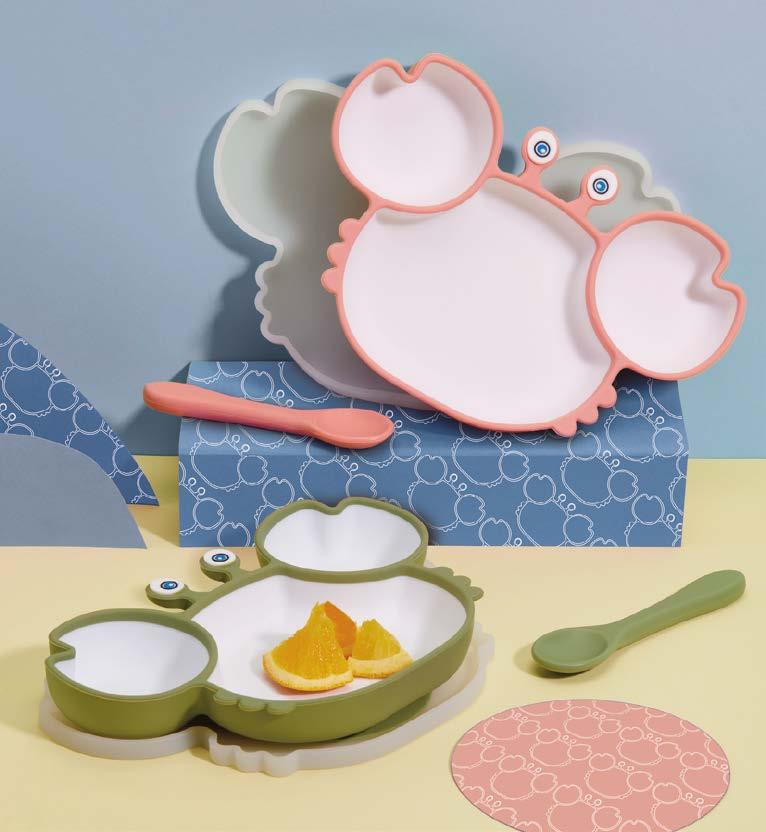
Brandani's Granchietto feeding plate makes mealtimes fun and organised. Made from soft, colourful silicone, the set includes a practical lid and a coordinating spoon, offering a safe and functional solution that cheerfully encourages little ones to develop their independence at the table.
rance and tangibility: for new parents, being able to touch the quality of Oeko-Tex certi"ed materials or assess the ergonomics of an accessory takes priority over the savings offered by large online marketplaces. The neighbourhood store thus becomes a place of trust, where the retailer's expert guidance turns into the real added value, transforming the purchase into a moment of reassurance and discovery.

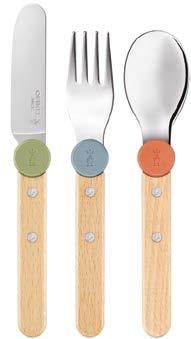
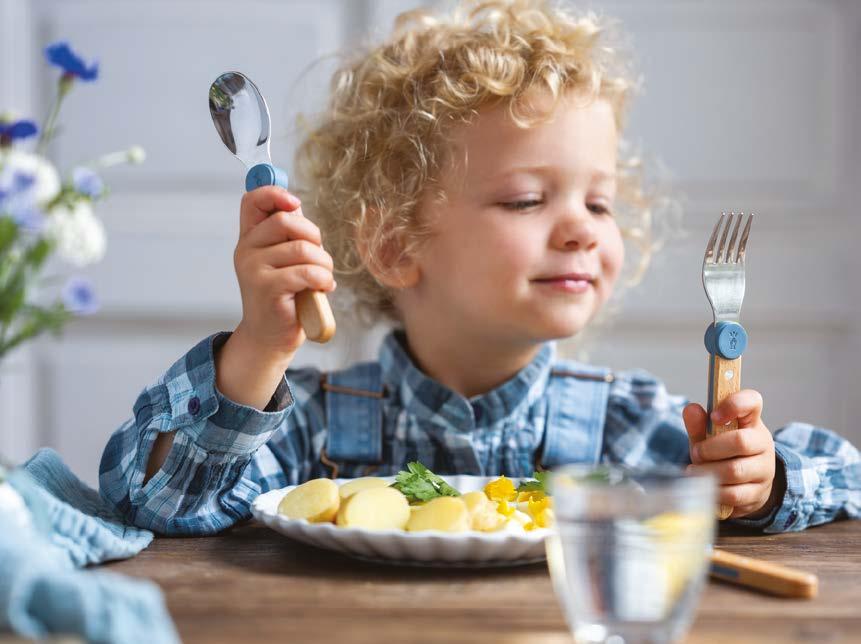
Opinel's Le Petit Gourmet set accompanies children from 6 months to 7 years on their journey towards independence at the table. Made in France from stainless steel and beechwood, it includes an ingenious educational clip designed to guide grip and encourage tidiness.
The Baby Shower opportunity and the evolution of the children's favor
One of the main drivers of this growth is the consolidation of the Baby Shower, a celebration of Anglo-Saxon origin that has now become a "xture in Italy as well. It is a party typically organised in the "nal trimester of pregnancy to "shower" the expectant mother with gifts and affection — hence the term. For the retailer, this
The Kids Corner: why it makes sense in traditional stores
While market data points to robust growth in demand, the challenge for physical stores is to turn this opportunity into a concrete and compelling offer. The Kids Corner — a dedicated children's space within a gift or ceremony store — responds to a clear logic: a christening generates two distinct needs within a single event. On one side, the bomboniere for guests; on the other, everything needed to welcome the newborn.
Why it makes strategic sense:
Natural synergy with the event. The parent who comes in to choose the christening bomboniere is the same person who is setting up the nursery and building the baby list. Finding everything in one single point of sale, supported by knowledgeable staff, represents an added value that is difficult to replicate online.
Long-term customer loyalty. Unlike the bomboniera, which is a one-off purchase, children's products generate repeat buying. A well-curated corner converts the occasional customer into a regular one. Premium positioning. Specialist stores capitalise on consumer trust, allowing customers to try products and offering a complete, practical shopping experience that is particularly valued by time-pressed parents. The physical experience, expert guidance, and the ability to handle products in person remain a precious competitive advantage.
What to stock in the Kids Corner: assortment guidelines
An effective Kids Corner is not a catch-all storage space for miscellaneous products, but a carefully curated and coherent area. Here are the main categories around which to build the offer:
For birth and christening: personalised birth frames, footprint keepsake kits, baby-themed confetti boxes, organic cotton pouches, birth candles, keyrings and children's jewellery. Everything that can serve both as a bomboniera and as a baby list gift.
For the nursery: wall decorations, night lights, music boxes, personalised cushions, muslin blankets. Products with a strong aesthetic and gift appeal.
For the newborn: skincare products (oil, cream, gentle cleanser), hygiene kits, thermometers, sleeping bags. Practical, high-turnover items.
For the mother: post-partum products, breastfeeding kits, pregnancy and maternity cosmetics. A segment that is often overlooked but very well received.
The integrated baby list: the service that transforms the corner into a complete ecosystem. Parents create their list in store; friends and family come in to browse, choose, or contribute.
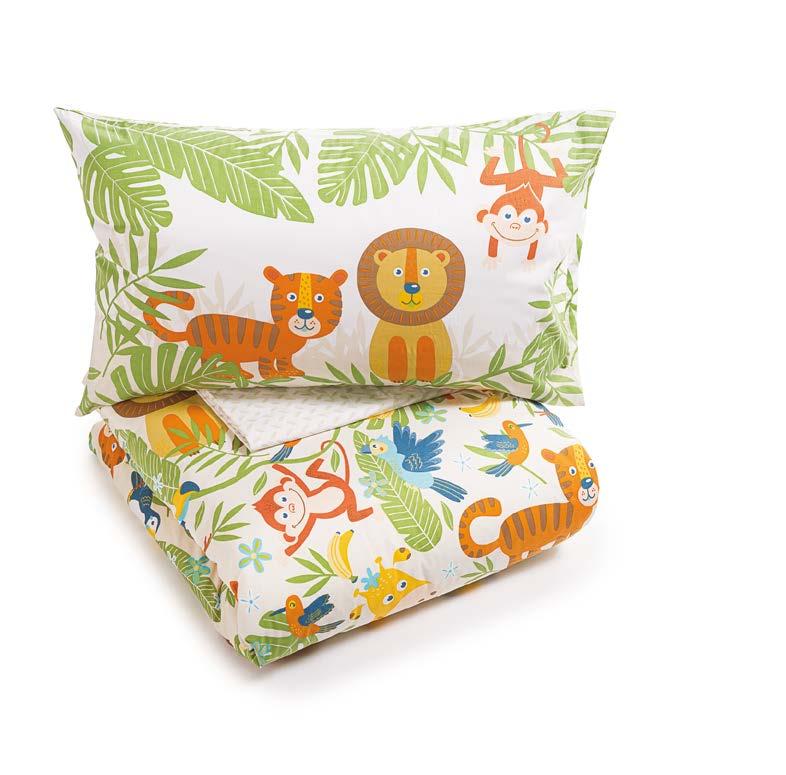
The Caleffi Kids collection transforms the nursery into a world of fairy tales. With pastel colours and graphic illustrations, pure cotton quilts and bed linen offer the ultimate in comfort. Thanks to high-quality materials and hypoallergenic padding, every nap becomes a safe and magical moment, populated by animals, planets, and hot air balloons.
event represents a golden opportunity, as it brings the purchasing moment forward by several months relative to the birth itself, creating an immediate bond with the couple's family and friends.
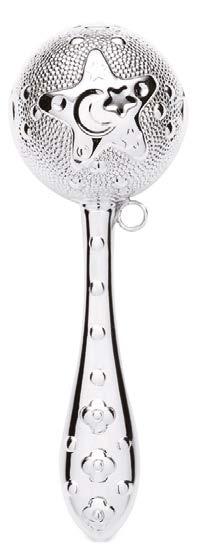
The sterling silver rattle by Zaramella Argenti is a precious keeper of memories. Ideal for births and christenings, it unites refined design and artisanal craftsmanship in a timeless gift — already beautifully presented in elegant packaging, ready to give.
In this context, the favor has undergone a radical transformation. It is no longer conceived as the classic decorative object destined to gather dust, but has become part of an experiential gift-giving culture. The trends for 2026 reward utility and sustainability: artisanal ceramic diffusers, natural soy wax candles, and small botanical kits for planting are all leading the way. Aesthetics, too, have become more re"ned, moving away from the clichés of pink and blue to embrace natural tones such as sage green, taupe, and ochre yellow, applied to organic fabrics like linen and cotton.
sets and tableware: the new frontier of the useful gift
One segment recording unprecedented expansion is that of feeding products and children's tableware. Market data for the 2025–2034 period indicates that the children's tableware sector will reach a global value of over 8.3 billion dollars, with annual growth of 6.3%. A growing number of companies are integrating speci"c collections of ergonomic cutlery, food-grade silicone or bamboo "bre plates, and sophisticated
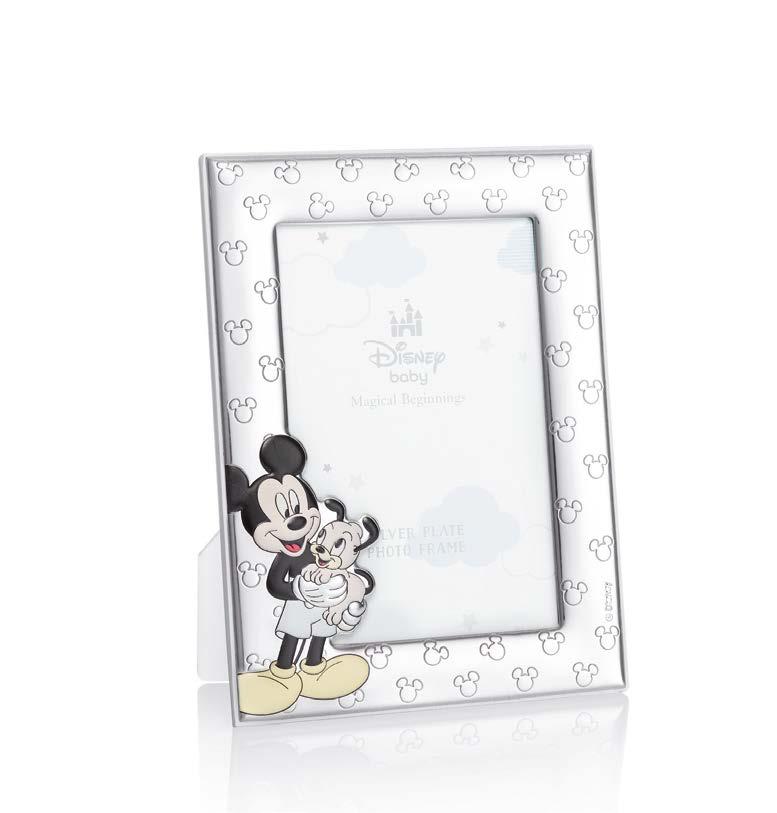
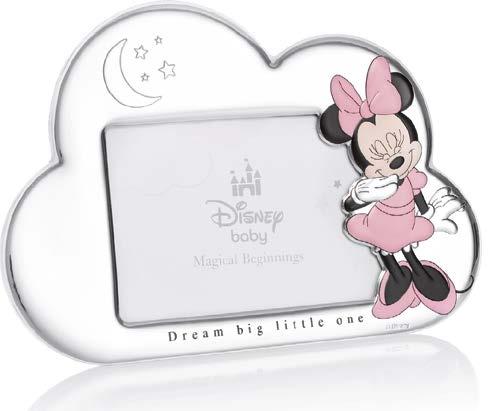
The Disney collection photo frame by Ottaviani in Miro Silver®. The cloud-shaped frame featuring Minnie measures 10×15 cm; the frame with Mickey Mouse measures 14.6×9.6 cm. A refined, Made in Italy birth gift, perfect for preserving the very first memories.
feeding sets.
This success is driven by parents' increasing focus on weaning and child autonomy (as seen in the rise of baby-led weaning). Gifting a feeding set is not merely a practical gesture, but an investment in the newborn's health and development. For the physical store, these products represent high-turnover items that attract a broad clientele — from grandparents seeking a quality gift to friends looking for something both useful and well-designed. Material certi"cation (such as high-quality stainless steel or NSF-certi"ed silicone) becomes a powerful purchase driver, placing these items among the most sought-after on birth registries.
The Baby List and upselling strategies
The nerve centre of every modern Kids Corner is the Baby List (or birth registry). This is a personalised list of products selected by expectant
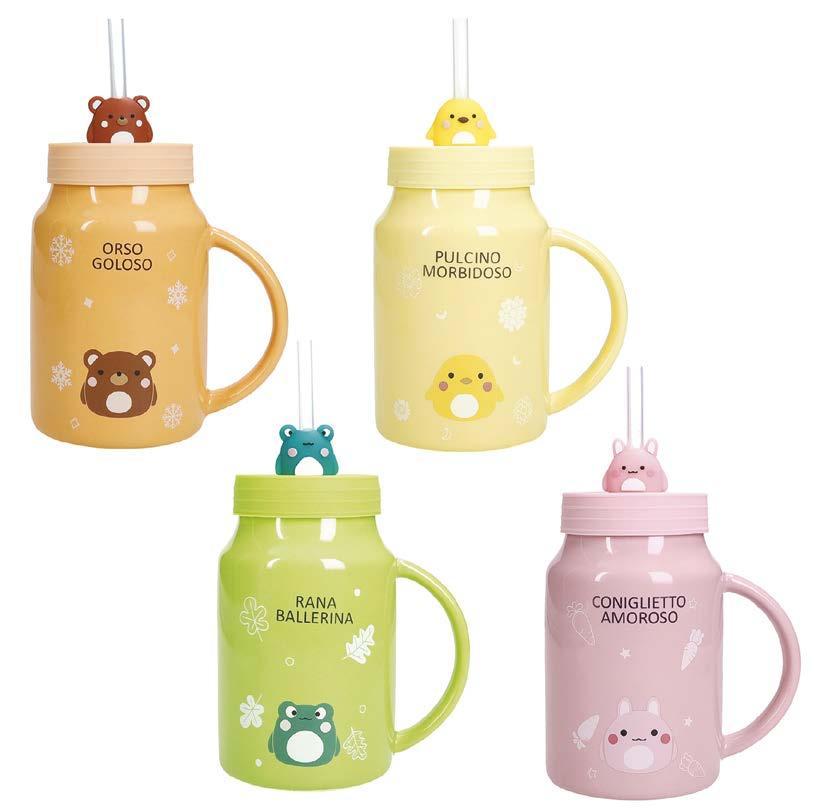
Brandani's Amico Mio mug turns every snack time into a moment of play. Colourful and made from durable porcelain, it comes complete with a soft lid and a silicone straw — perfect for drinking safely and splash-free.
parents within the store and made available to friends and family for gift-giving. The tool guarantees that parents receive only what is genuinely useful, while ensuring the store a planned volume of sales. Integrating a baby list has driven revenue increases of close to 45%, thanks to its considerable upselling potential. A customer who enters the store to purchase, say, a cutlery set from the list, is almost always drawn in by a carefully curated display and ends up adding an extra touch — a scented candle, a coordinated soft toy, or a personalised textile accessory. The experienced retailer uses the birth registry as a starting point for cross-selling that signi"cantly raises the average transaction value through targeted suggestions.
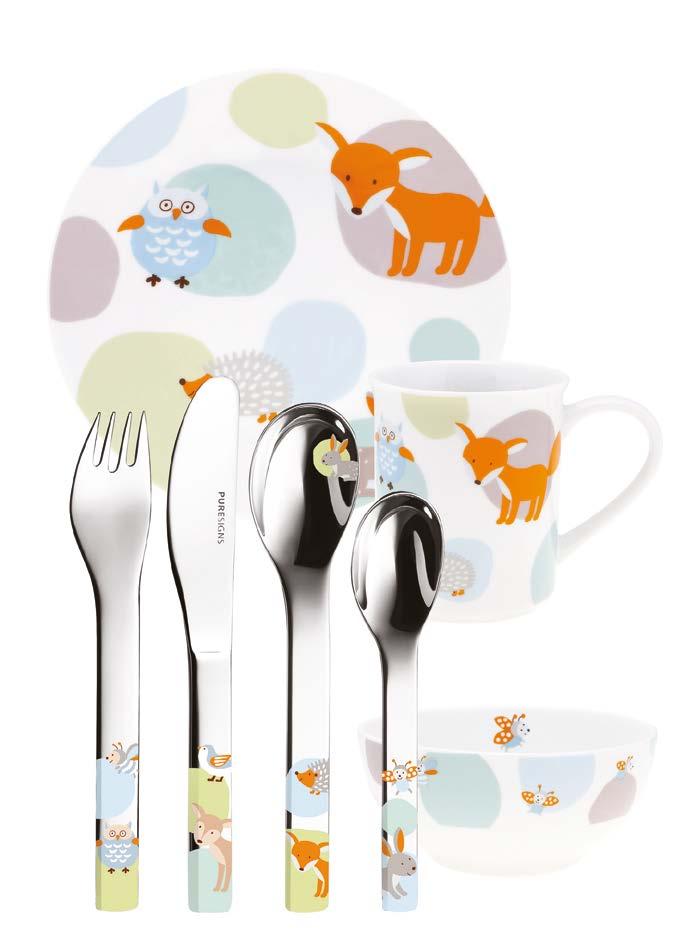
Ideal for little nature and animal lovers, Mepra's Woody pattern transforms every meal into an adventurous experience, nurturing curiosity and respect for the natural world. Foxes, bunnies, owls, ibexes, and hedgehogs — these endearing woodland friends also adorn the handles of the 18/10 stainless steel cutlery, enriched with details that evoke the charm of the wild. Available in both a 4-piece and a 7-piece set.
Sustainability and organic
Demand for organic, natural, and minimally processed children's products is on the rise, as parents seek healthier options for their children. In physical stores, this translates into a preference for certified brands, reduced packaging, and natural materials.
Today's parents spend more on their children. The premium segment is growing at above-average rates, and physical stores — through expert guidance and personalised service — are the ideal channel for showcasing and selling high-end products.
neutral
Demand for gender-neutral products — neutral colours and universal designs — is growing strongly, in line with a broader cultural shift. This represents an opportunity to introduce innovative product lines.
Digital and physical, integrated
A shareable online baby list that directs customers to the physical store for collection or delivery is the winning model for competing with large marketplaces without losing the neighbourhood store's core identity and proximity vocation.
Storytelling and visual merchandising strategies
For a Kids Corner to be truly effective, it must be designed as an interactive space that harnesses visual storytelling. Rather than simple shelving, the point of sale should present genuine "life scenes": a sleep nook with muslins and soft toys, an area dedicated to feeding time featuring the new silicone tableware sets, or a laid table showcasing the possibilities of a modern confettata.
Furthermore, the store of 2026 cannot ignore the digital dimension: QR codes placed among the shelves allow customers to access digital baby lists instantly or view demonstration videos. Ultimately, investing in a structured children's segment means creating a perfect blend of technological convenience and the warmth of traditional retail — offering new parents a trusted haven for their most emotionally charged purchases.
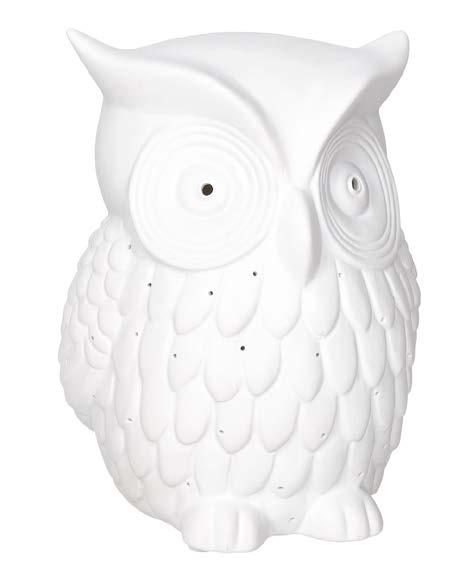
Brandani's Gufo lamp transforms lighting into a sophisticated decorative accent. Crafted from fine white porcelain, its delicately pierced structure diffuses a soft light, perfect for a child's bedroom.
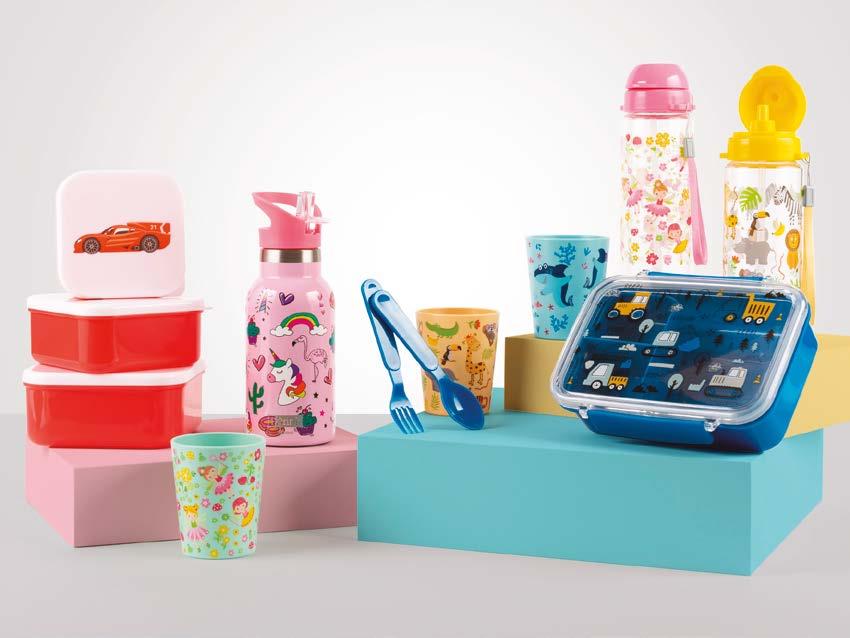
The iDrink Kids range combines Italian design and sustainability for little explorers. It includes thermal flasks in steel or BPA-free Tritan, durable lunch boxes, and feeding sets in recycled R-PET. Lightweight, shockproof, and dishwasher-safe, these products are designed for school and leisure. A colourful, eco-friendly alternative for reducing single-use plastic with style and safety.
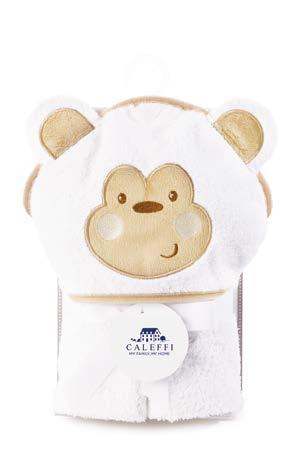
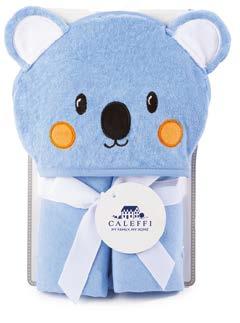
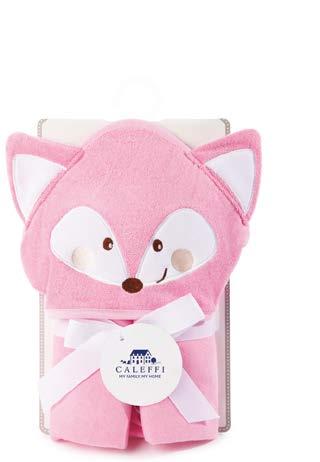
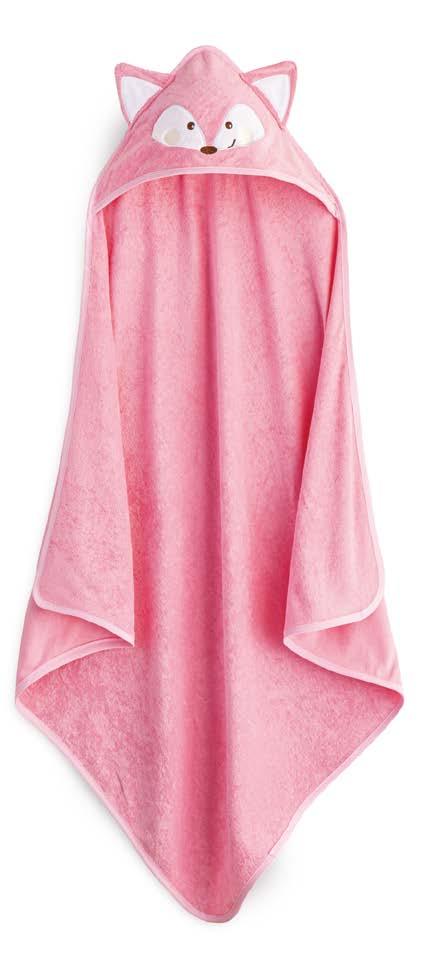
Designed to accompany little ones during playtime and after bathtime, the new Caleffi baby poncho towels combine practicality and softness. Made from plush, enveloping terry cloth, they are easy to put on and ideal for gently drying and wrapping children. Available in three fun designs: Koala, Monkey, and Fox.
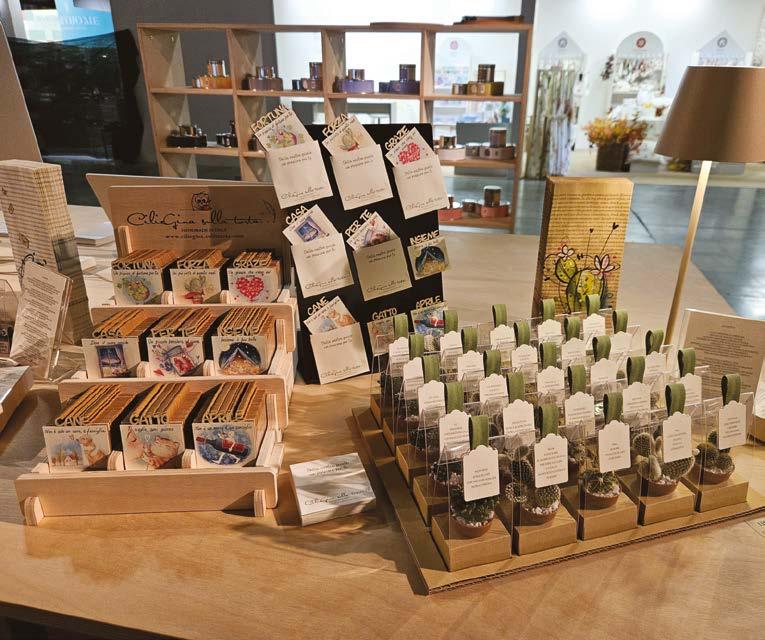
CilieGina sulla torta is an Italian artisan company offering handmade creations crafted with meticulous attention to detail — from mini cacti as symbols of resilience, to birchwood magnetic frames with dedications, and fabric characters including owls, gnomes, and hedgehogs. Each piece comes with a special message and illustrated packaging, designed to bring a touch of magic and everyday positivity.
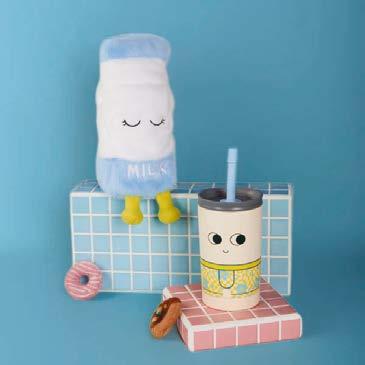
Beanie the Buzz Fuzzie is the soft toy that keeps drinks warm. Soft and cuddly on the outside, it conceals a removable 340 ml vacuuminsulated stainless steel tumbler on the inside, dishwasher-safe and fitted with a drip-proof waterproof lining. Free from BPA, PFAS, and lead.

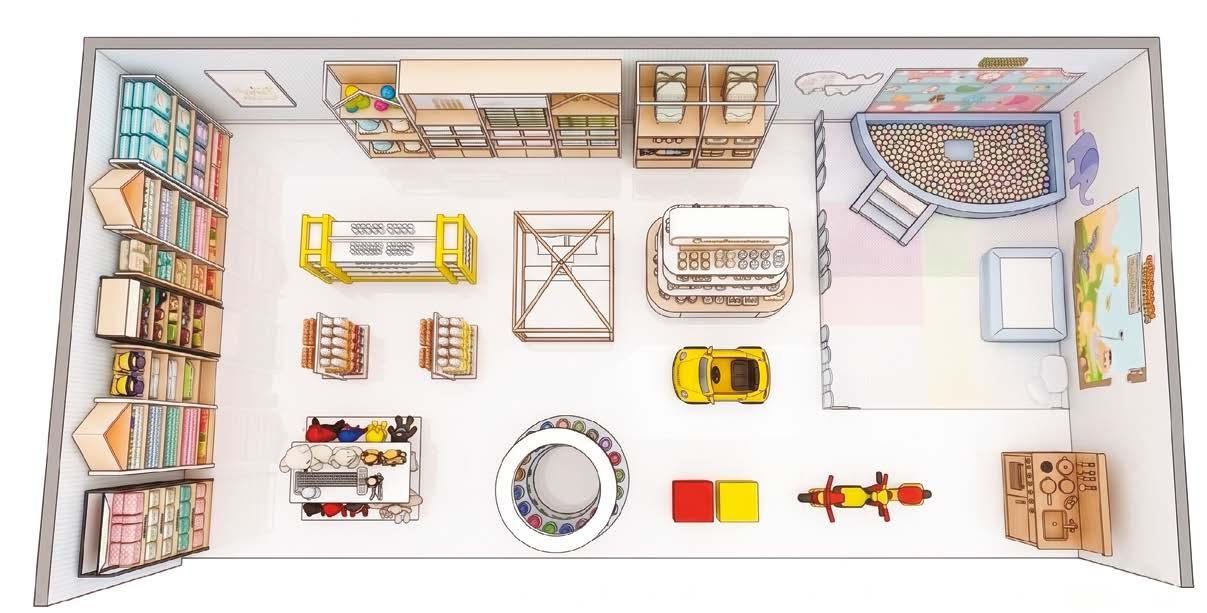
To complete the shopping experience, the modern Kids Corner cannot do without a dedicated micro-area for entertainment — conceived as a genuine tool for sensory and strategic marketing. Far from being a simple distraction to keep little ones occupied, this space, furnished in perfect harmony with current trends — non-toxic foam rugs in neutral tones, small light-wood seating, and Montessori-inspired educational toys — pursues two very specific commercial objectives.
On one hand, it provides parents with a calm and relaxed environment, eliminating the sense of urgency and extending the time spent in store — a crucial factor when navigating complex, high-budget decisions such as compiling a birth registry. On the other, this area becomes an interactive "test drive" zone, where the products on the shelves come to life.
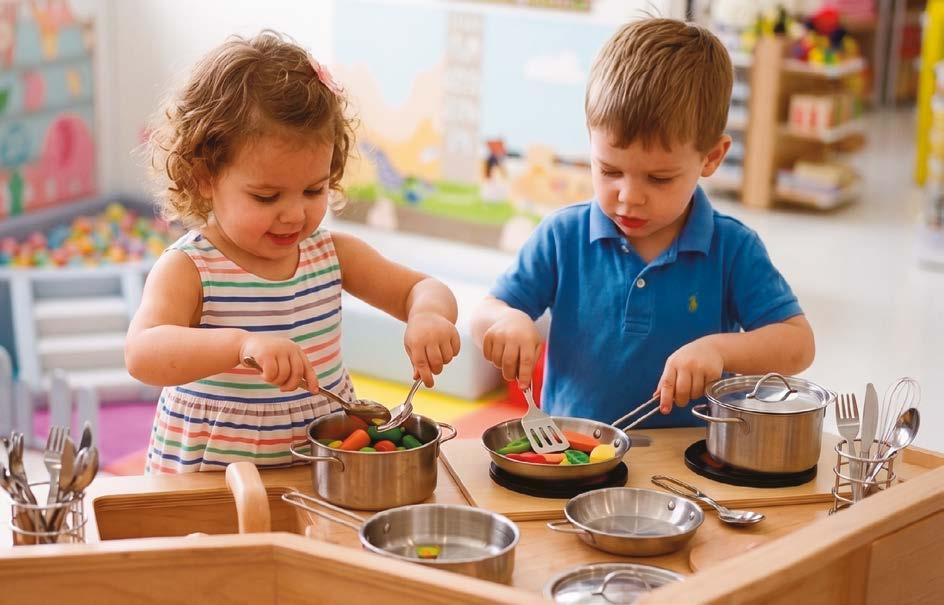
Imagine placing a small display wooden kitchen in the play area, laid out with the plates, cups, and cutlery that the store sells for weaning. As the child plays at "making dinner" in imitation of grown-ups, parents can observe the products' features first-hand.
This mechanism not only reassures the adult of the object's quality and real-world usefulness, but also triggers an immediate sense of desire in the child — turning a simple moment of play into a highly effective prompt for an impulse purchase or the instant addition of the set to the Baby List.

Rebecca Flint Marx
The emergency brought on by the pandemic changed the world we live in, triggering irreversible processes of transformation. Suddenly, a large part of our daily activities had to migrate to the digital environment — including sales. Virtual selling thus became a reality with which every company had to come to terms, even those that had done nothing to prepare for the transition. Jeb Blount, speaker and expert author on sales acceleration, was the first to thoroughly investigate how sales strategies had changed and what the best approach to virtual selling looks like. With this book, he offers salespeople practical guidance on managing the technical aspects of remote selling, on harnessing the emotional dimension to achieve the desired outcome, and on mastering video communication — both live and recorded — the medium closest to a faceto-face sales conversation.
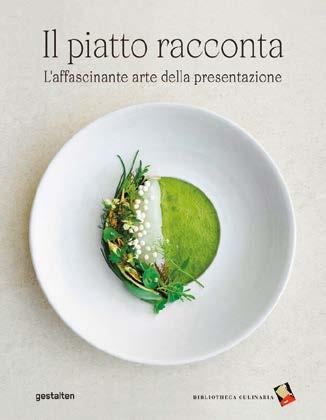
In the realm of gustatory pleasure, aesthetic appeal should never be underestimated — particularly in the age of social media. A well-presented dish, after all, earns the diner's approval before the first taste. But what are the elements to consider when deciding how a dish should take shape? Il piatto celebrates a new generation of chefs, photographers, and food stylists who are adopting a considered — and at times bold — approach to plating. The volume pairs interviews with an international group of chefs with practical guides covering tools of the trade, colour, texture, aroma, form, and tableware. A creative analysis of specific dishes provides further inspiration. Useful at every level of expertise, this visual guide to the choices of selected professionals will help others transform their presentations into an art form capable of communicating their gastronomic philosophies.

What has been — and what continues to be — the contribution of women to design? This volume answers that question by presenting over 40 female designers alongside more than 100 objects created between 1945 and the new millennium: a survey of products that have shaped, and continue to shape, the domestic environment. The selection is the fruit of research by two collectors and gallerists, Daniele Lorenzon and Alessandro Padoan, who for years have devoted close attention to "feminine" design across a specific product typology — analysed here by Anty Pansera with Mariateresa Chirico. Objects that have furnished our homes — beds, sofas, seating, tables and coffee tables, ceiling, "oor, and desk lamps, wall lights, as well as decorative accessories in silver, ceramic, glass, and plastic — continue to stir emotion, confirming that these are, without question, "well-designed" objects.
The physical store is no longer simply about selling — it is about relationship. Veronica Barsotti proposes an alignment exercise between the customer's needs and the retailer's offer, with the aim of defining a clear value proposition. The goal? To remain relevant in a market that never stops changing.
At heart, everyone has had a grandmother or a mother who related to the neighbourhood shopkeeper almost like a member of the family. And in a sense, that is exactly what they were. The shop was not merely a place to buy something: it was a space where memories, decisions, words, and habits were left behind. Sometimes outstanding debts too. The shopkeeper — who today would be called a retailer — was often a trusted figure. A reliable point of reference for many of the pur-
chases that revolved around family life. They knew tastes, needs, and means. Then that role changed. Other figures moved in alongside: first television, then the digital world, which brought in"uencers, creators, brands, and platforms speaking directly to consumers. The result was that the shopkeeper's role became less direct and harder to sustain over time. The point of sale, too, lost the spontaneous centrality that had once seemed perfectly natural. And yet its value did not disappear. It transfor-
med. Today a store can no longer simply display and sell. For small and medium-sized retailers, this is particularly apparent: the real challenge is not only to increase sales, but to remain attractive, recognisable, and trustworthy. It means creating a place that customers remember, recommend, and choose again.
In this landscape, the point of sale changes its nature. It is no longer purely a commercial space — it becomes a place of relationship. But how can this transformation be achieved? Or, more precisely, how can one return to that earlier state in a world that has changed profoundly?
When a point of sale feels the need to rebuild a stronger connection with people's lives and with the community it serves, a useful starting point can be a simple yet highly revealing exercise.
The exercise involves taking a sheet of paper and dividing it in two with a vertical line. On one side goes the customer; on the other, the store.
On the customer's side, the first step is to try to answer a few essential questions. Who is the customer? A brief description is often enough to surface useful insights. What challenge brings them into the store? Clearly they enter because they are looking for something the store offers, or believes it can offer. But the most useful question concerns the real motivation behind their choice of that particular place: are they looking for a gift, something symbolic, inspiration, guidance in making a decision, or simply confirmation? And further: what solution do they expect
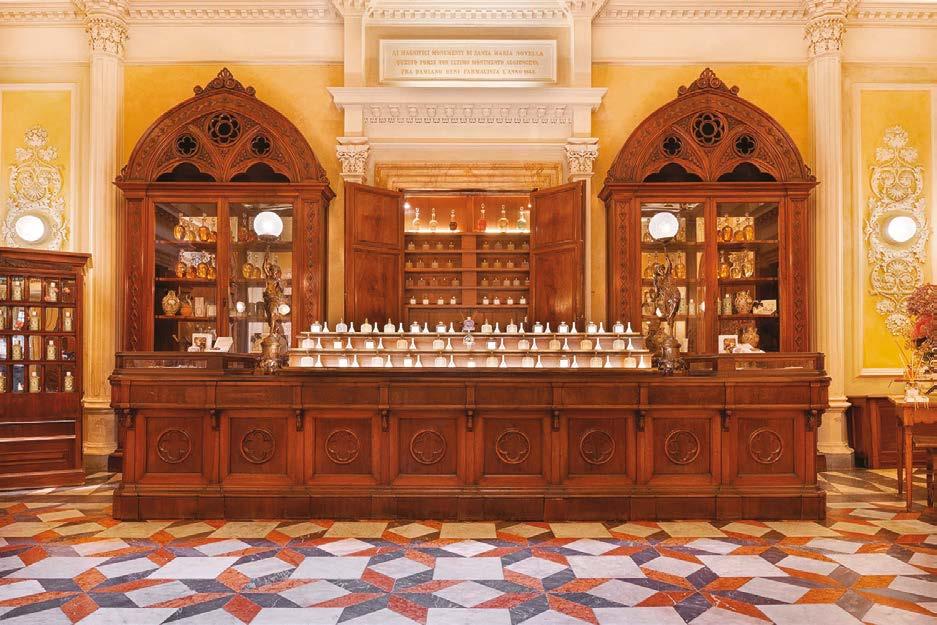
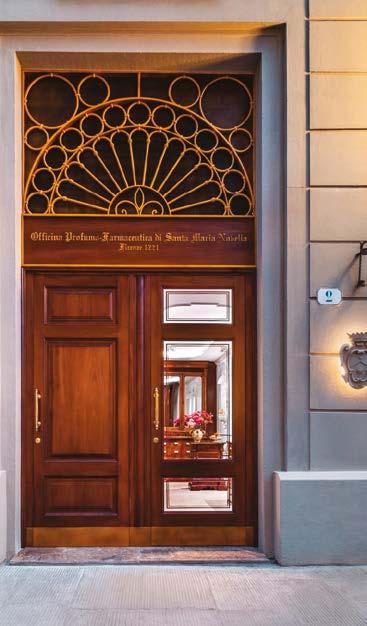
With over eight centuries of history, the Officina Profumo-Farmaceutica di Santa Maria Novella stands as the supreme example of how a store can be a place of memory and enduring value. Founded by Dominican friars, it welcomes visitors today not merely to sell fragrances, but to offer an immersive experience at the intersection of art, tradition, and bespoke solutions. It is a benchmark that has evolved while keeping intact the trust that transforms a purchase into a deep and lasting bond with its place of origin.
to find when they step through the door? Are they seeking identification, reassurance, expertise, speed, or a frictionless service experience? On the other half of the page, attention shifts to the business itself. Who is the store? What does it do and what does it sell? Which of the customer's difficulties does it help to resolve? Finally, it is worth examining what concrete benefits it actually offers: simplicity, clarity, taste, guidance, time-saving, or confidence in decision-making.
At this point, the sheet should be considered as a whole. The central question is whether a clear correspondence exists between what the customer is looking for and what the store genuinely offers.
When the answers come easily and reveal a strong connection, there is likely already a solid foundation on which to build services, narrative, and communication. When, on the other hand, the exercise proves difficult, or yields generic and unconvincing answers, an equally valuable signal emerges: perhaps the store needs to sharpen its focus on its target audience, or to define with greater precision the value it delivers. This exercise, in its simplest form, is one of the first tools used when working on a value proposition. It is useful because, in a short time, it helps to determine whether a genuine alignment exists between people's needs and what a business offers. And when that alignment fails to emerge, it brings a fundamental point into focus: the store may have been built to meet different needs, or to speak to an audience that no longer matches the one standing before it today. If one reaches this point in the re"ection, an essential truth comes to light: the store was never merely a place of purchase, but a reference point capable of offering solutions, guidance, and trust. Today the context has changed profoundly, but that does not mean the retailer's role has weakened. On the contrary — new tools are available, from digitalisation to artificial intelligence, to communicate one's value with even greater clarity. In the next issue, the journey will continue with further insights for examining one's business more deeply and making it more robust and distinctive.

Veronica
works at the intersection of branding, marketing, and business culture. Through Café Consulting, she supports companies and businesses in the Made in Italy world — across the design, décor, and craftsmanship sectors — helping them build positioning, offer, and communication. With a background in design and a career spanning both industry and consultancy, her perspective stems from a single question: how can a brand become more recognisable, desirable, and relevant in its own market? In Casastile, she brings reflections, tools, and practical insights for those who live and breathe this sector every day.
Download the template to define your value proposition and analyse the relationship between your store and your customers.

Veronica Barsotti, Positioning and marketing consultancy for Made in Italy brands
info@cafeconsulting.it – www.cafeconsulting.it
Instagram: @cafeconsultingmarketing Anyone wishing to share the outcome of the exercise is welcome to write to info@cafeconsulting.it.
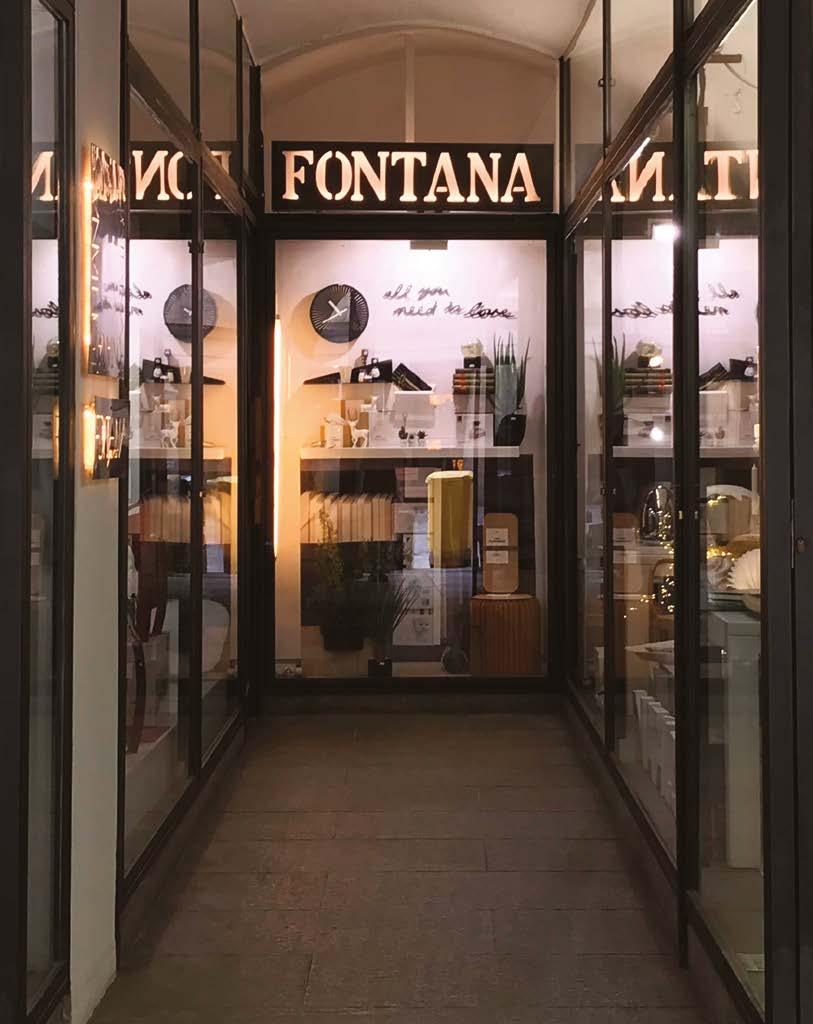
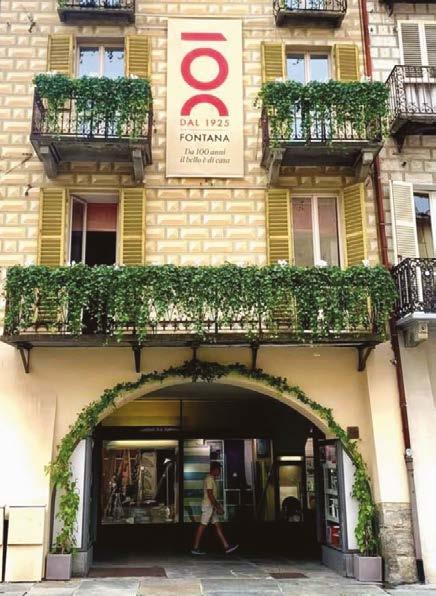
For 100 years, the Fontana store in Cuneo has been a symbol of excellence. Managed by the third generation — sisters Gisella, Anna, and Paola — it transforms its space into a place of relationship and trust, combining the history of a seventeenth-century building with an innovative vision recognised at a global level.
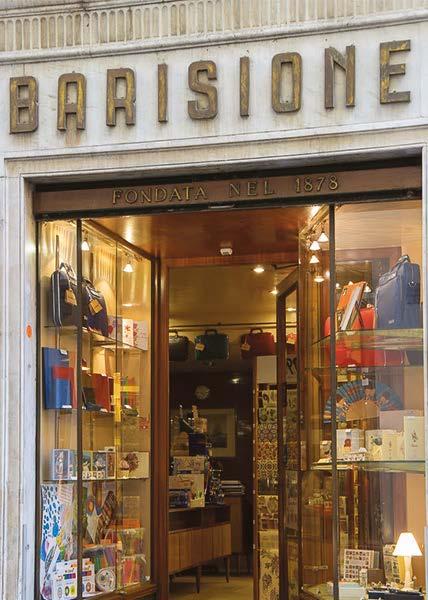
Since 1878, Cartoleria Barisione has been a point of reference in the heart of Genoa, where paper becomes the medium through which the city's private history is told. Now in its fifth generation, Barisione is not simply a shop, but a place of relationship — one that preserves, through its cards and inks, the memory and identity of the territory.
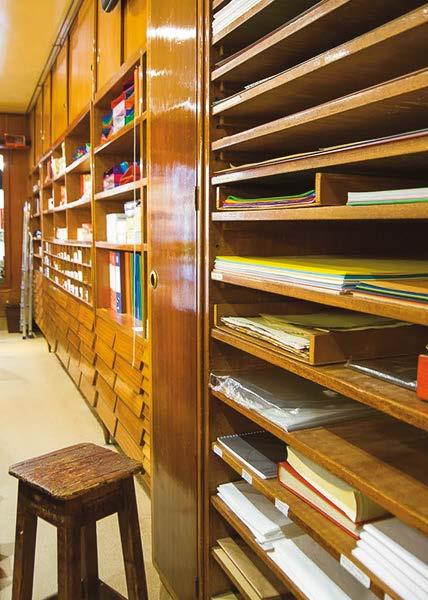
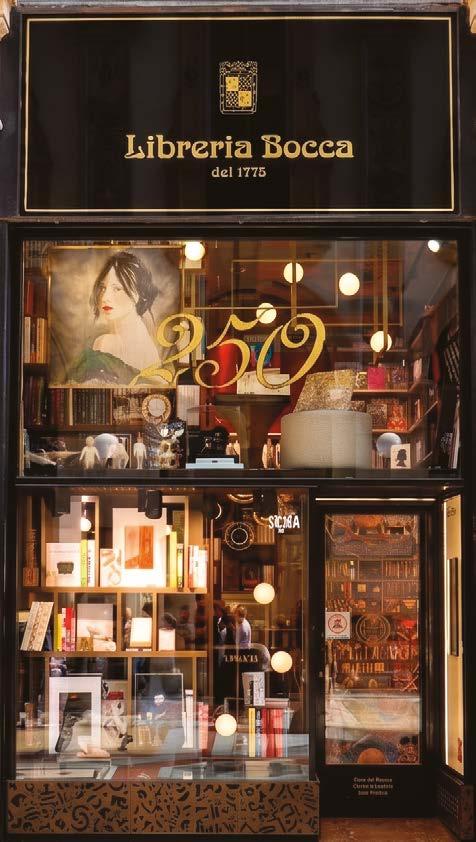
In Milan, Libreria Bocca perfectly embodies the idea of the store as a place of relationship. With 250 years of history, this space does not merely sell books, but offers guidance and culture — remaining a trusted reference point capable of uniting the value of tradition with the challenges of the present.
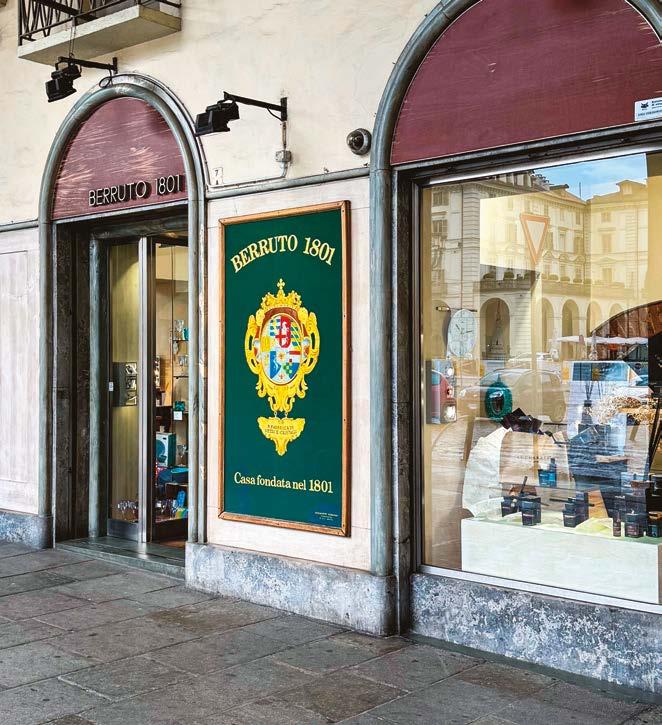
Berruto 1801 in Turin is the embodiment of how a business can remain central to people's lives for over two centuries. From "Regia Fabbrica" to landmark address on Piazza Vittorio, it has evolved into a place of relationship where the art de la table and design become tools for meeting everyday needs with expertise and a warmth that carries the scent of history.

By Francesca Guerini Rocco
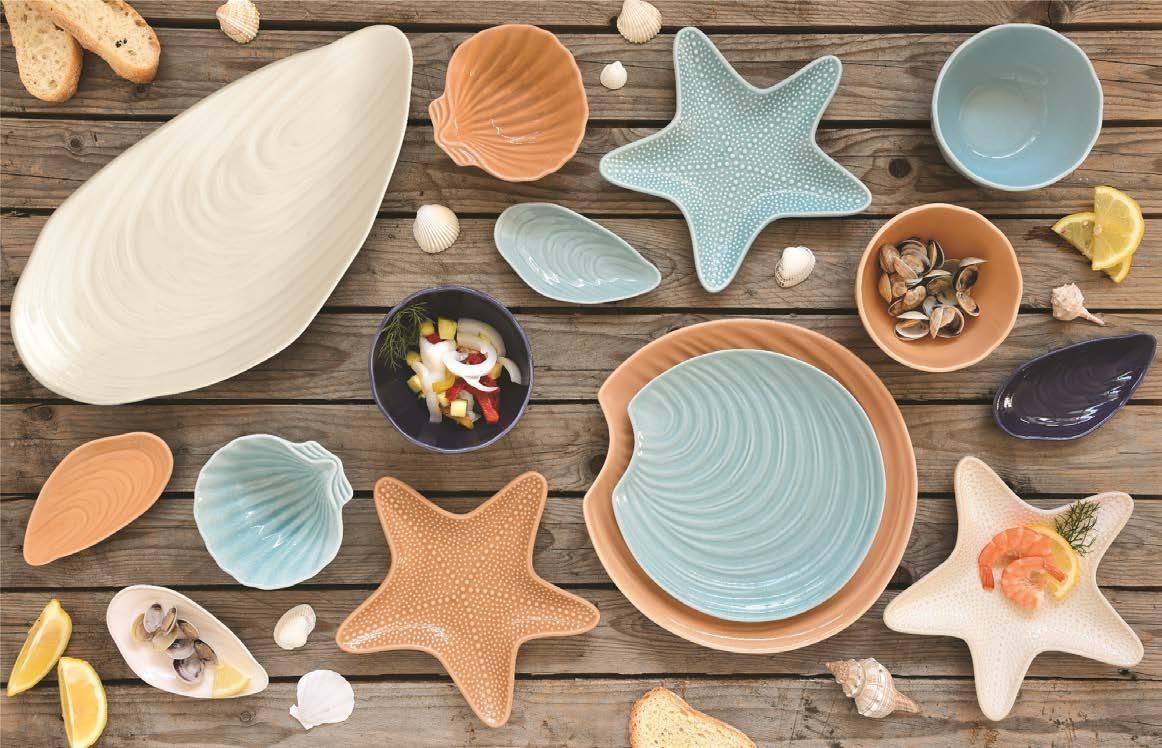
EasyLife 's pastel-toned shells and starfish bring the sea to the city. The Coquillages collection focuses on pearl white and sand, aquamarine and deep blue, to interpret the Mediterranean style with a porcelain service that reproduces grainy reliefs and smooth veining: to brighten up the table of the little ones.
From the kitchen to the table, summer it turns into a shared experience that unites different generations, tastes and abilities. With intuitive tools, lightweight and safe materials, multifunctional accessories, and vibrant table settings, every gesture becomes simpler and more enjoyable. From the first recipes of little chefs to outdoor dinners with friends and grandparents, design accompanies a new idea everyday life: inclusive, practical and full of color
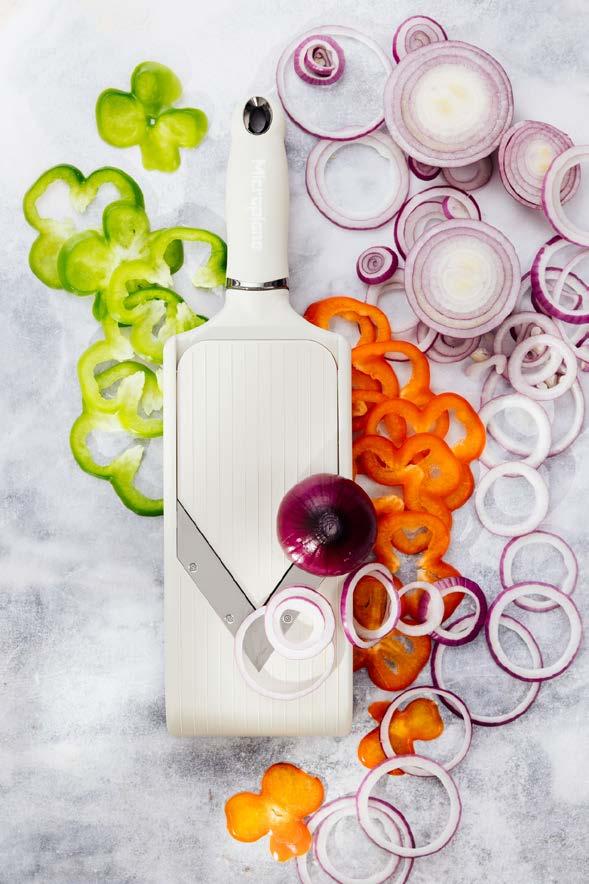
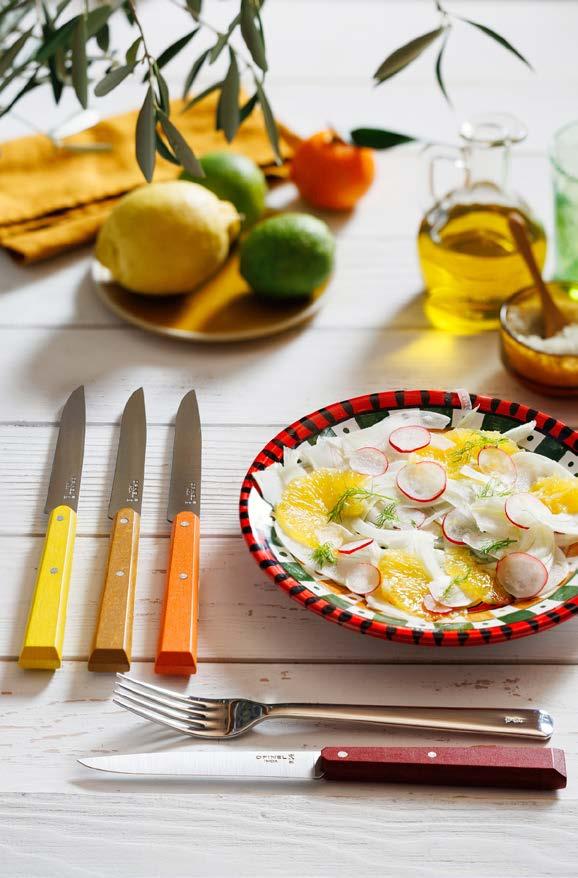
With a bistro-inspired design, Opinel brings the warm colors of summer to the table. The Citrus box set contains Bon Appétit in the new shades of yellow, orange, brick red and mustard. The knives have a smooth stainless steel blade for precise cutting and effective and the handle in PEFC varnished hornbeam wood (from certified French forests), light and comfortable.
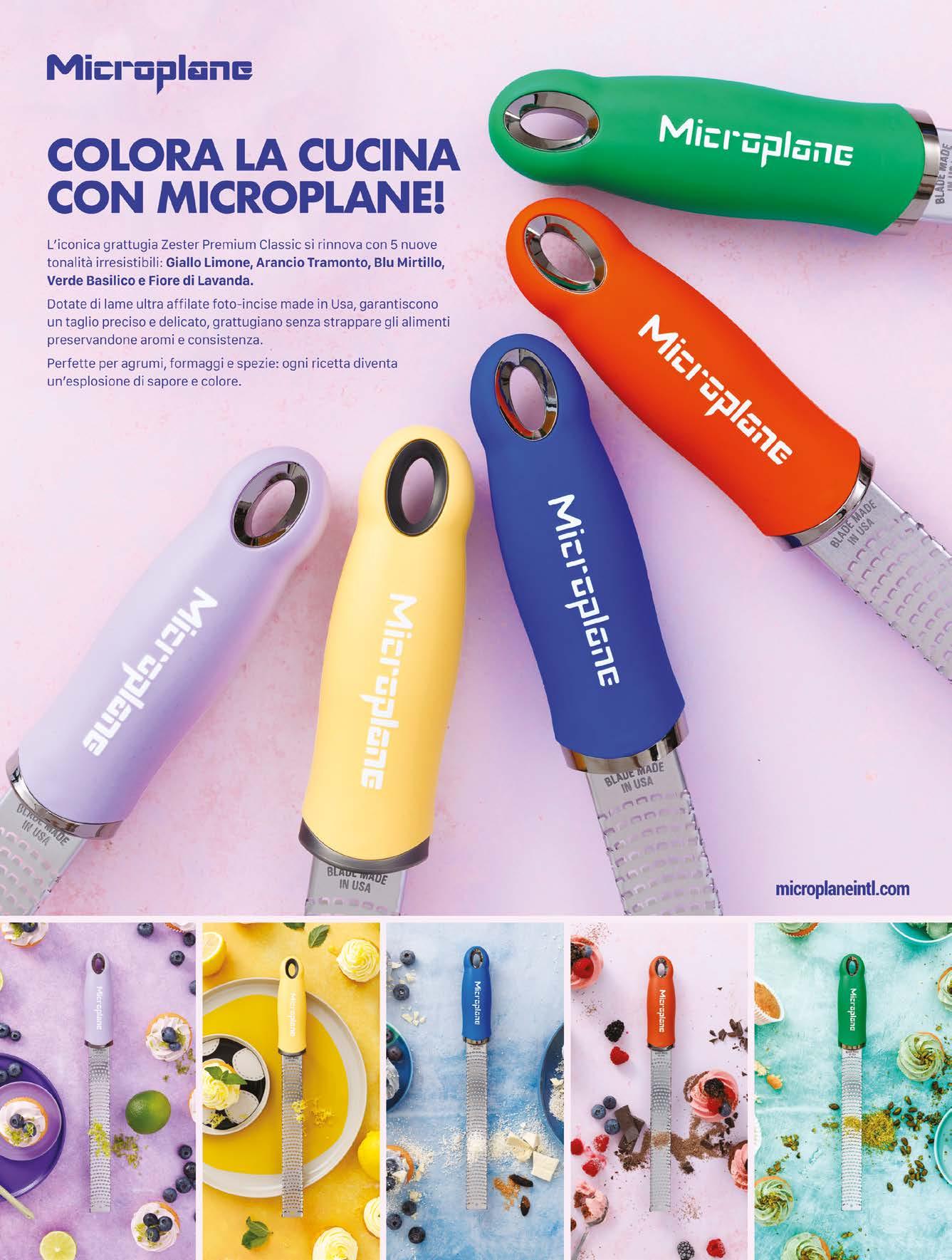
Microplane rethinks its iconic adjustable slicer with V-blade. Thus PureCut was born, the stainless steel model that focuses attention exclusively on the converging and adjustable blade, eliminating the julienne function. Perfect cutting, intuitive and simplified use, absolute efficiency and safety (thanks also to the support to protect your fingers) make it the perfect everyday tool for everyone, from expert chefs to novice baby cooks.
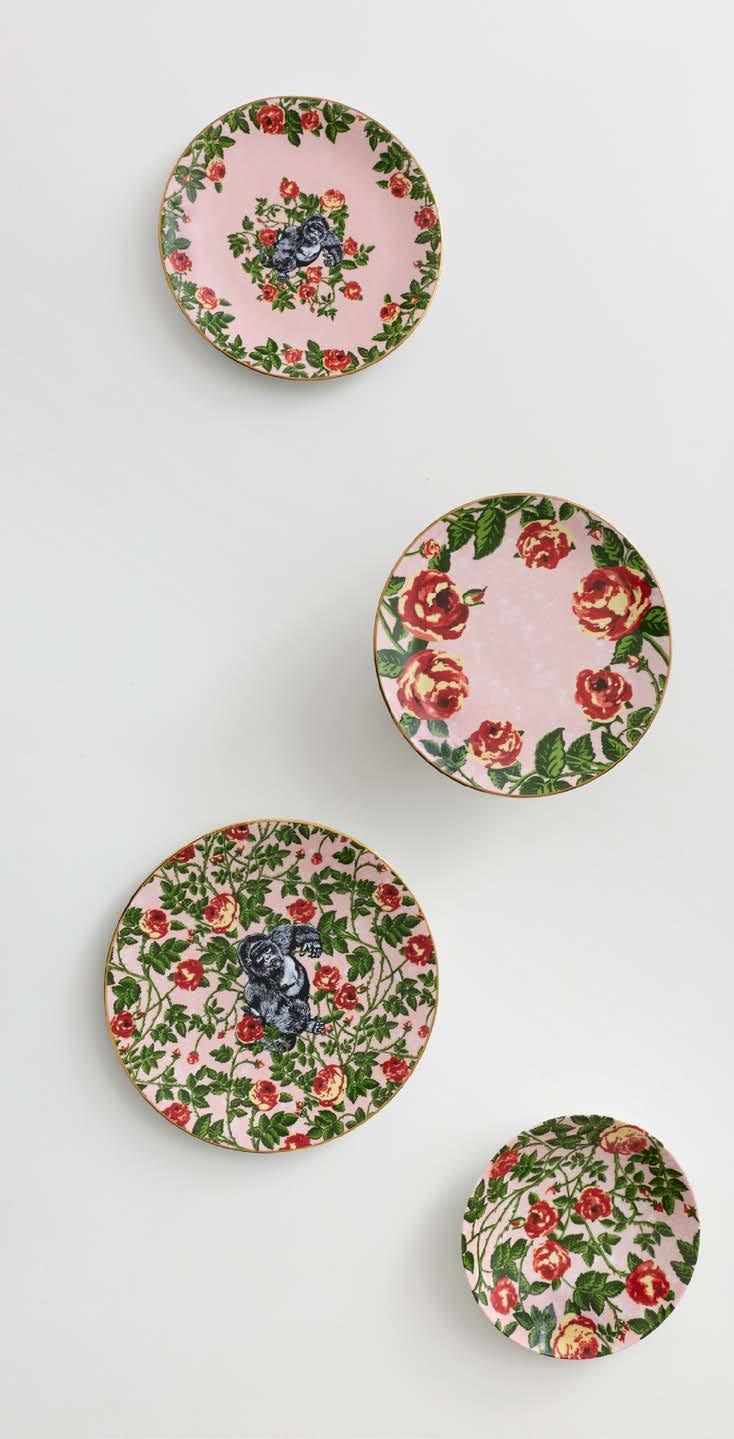
Weissestal presents the third collection designed by Simone Guidarelli: King of the Roses redefines elegance at the table with sinuous gorillas climbing among English rose bushes. Romantics, but Characterful dishes and objects are kept in precious hand-crafted boxes: an unusual gift suitable for all ages.
With the Cactus glass from Casarialto, your table will instantly be adorned with a cheerful summer atmosphere. Handcrafted in Venice, it can also be used as a tealight holder, adding a touch of drama to dinner on the terrace.

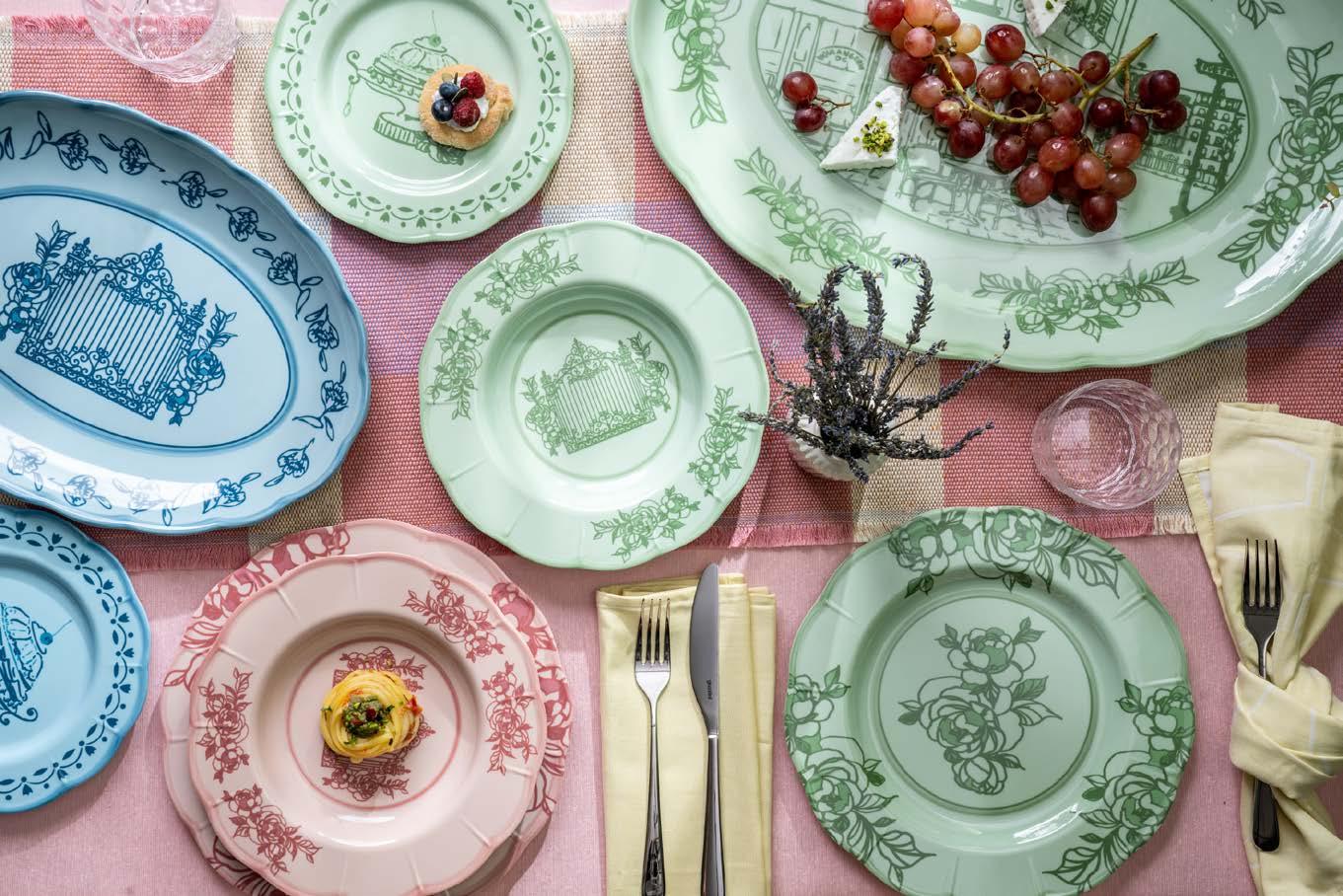
A tribute to Josephine Bonaparte, Josephine by Guzzini, decorated by Rosanna Grigolon, reproduces the aristocratic services of the late eighteenth century in a contemporary key. Made of melamine, lightweight and unbreakable, it is embellished with roses and Parisian motifs, in pink, yellow, green and blue. It includes plates (flat, deep and fruit), round and oval trays, 20 and 30 cm bowls with salad servers, a cake tin and a stand with a dome and removable stem which, when turned upside down, becomes a cutlery holder or breadstick holder.
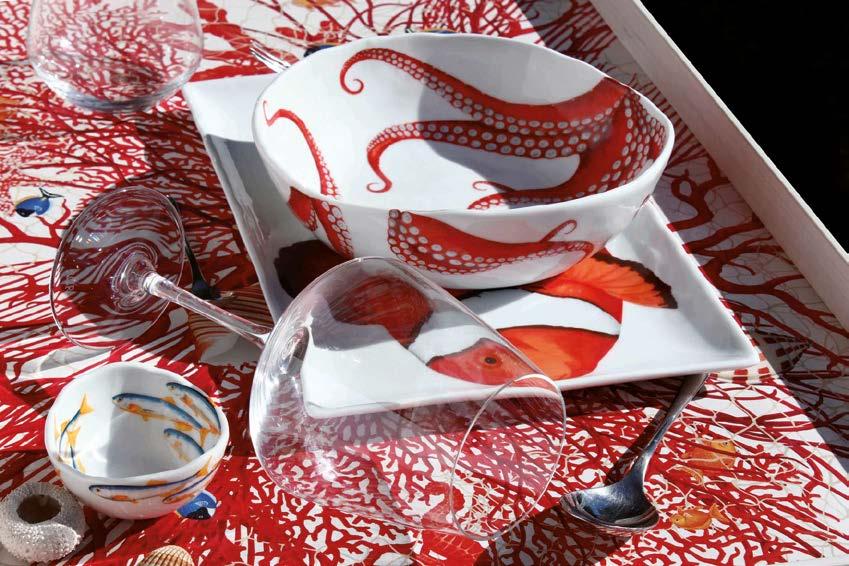
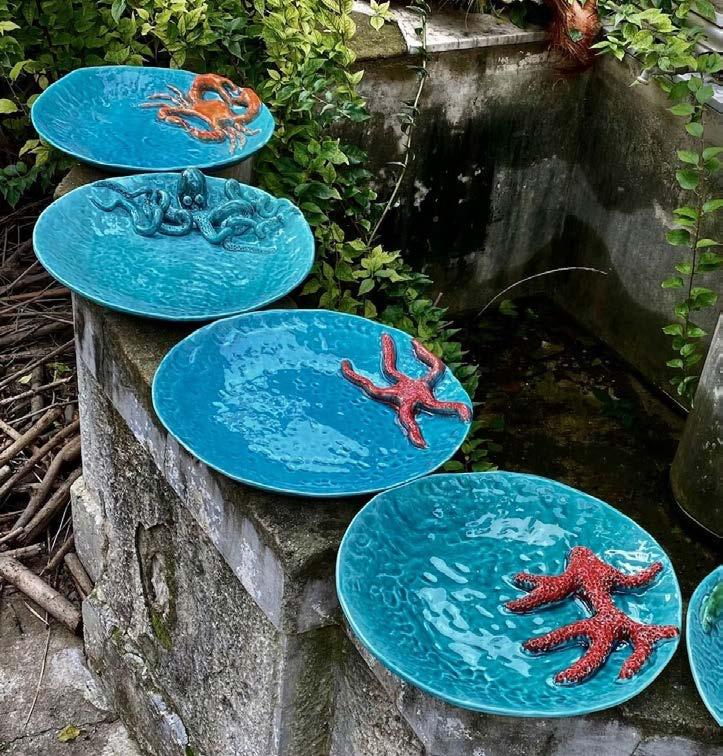
High-quality porcelain with a rusticated effect, vibrant marine-themed decorations, and tableware for all purposes, from casserole dishes to salad bowls, plates, bowls, and serving trays. The Mediterranean Fish Diet collection by TAITÙ celebrates the menu based on fish with bright decorations of octopus, crustaceans, fish and molluscs.
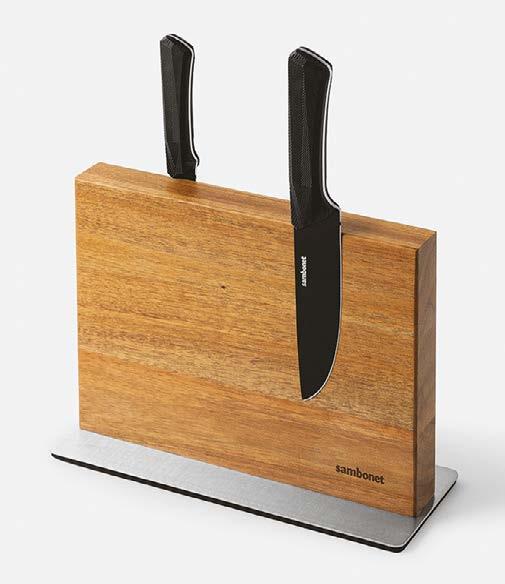
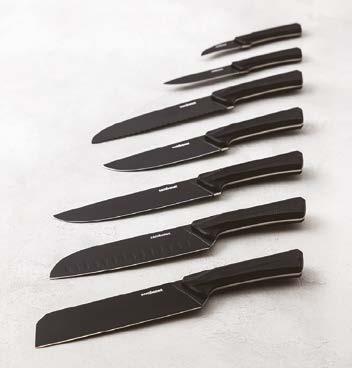
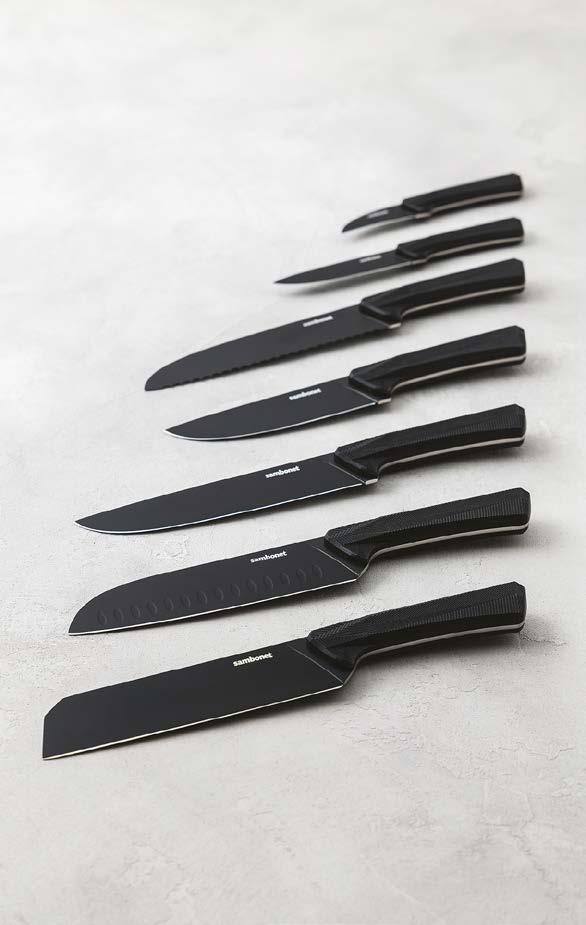
The Sambonet kitchen range is expanded with Black Edge, the new series of 6 knives in all-black. The matte black blade, with Xynflon coating, is made of German steel treated with “Ice Hardening” cryogenic tempering, a technology that maximizes cutting performance, while the handle is made of nylon reinforced with glass fiber. It is extremely light and ergonomic and has a grip designed to ensure a secure hold. To be combined to the wooden block with magnetic stainless steel sides.
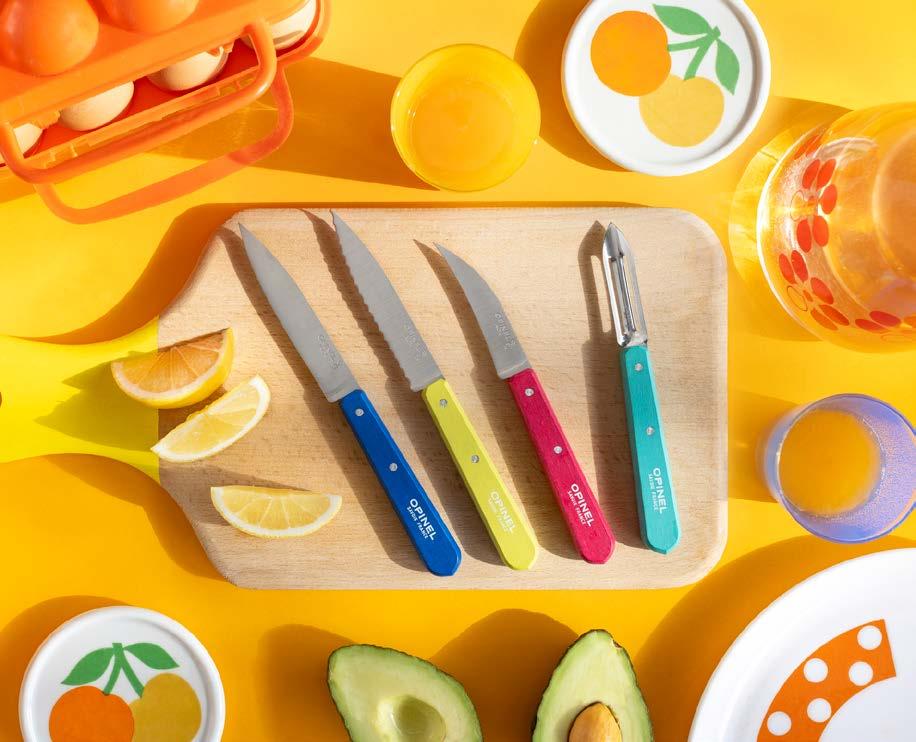
Indispensable and extremely practical, the new Les Essentiels tools from Opinel make life in the kitchen easier. The stainless steel blades are small, sharp and easy to handle, while the handles Made of varnished hornbeam wood, they are resistant to stains and water. The set includes a utility knife, a vegetable peeler, a vegetable knife with a curved blade and abrasive back. and serrated knife with microserrated blade. In elegant boxes, in nine color variations.
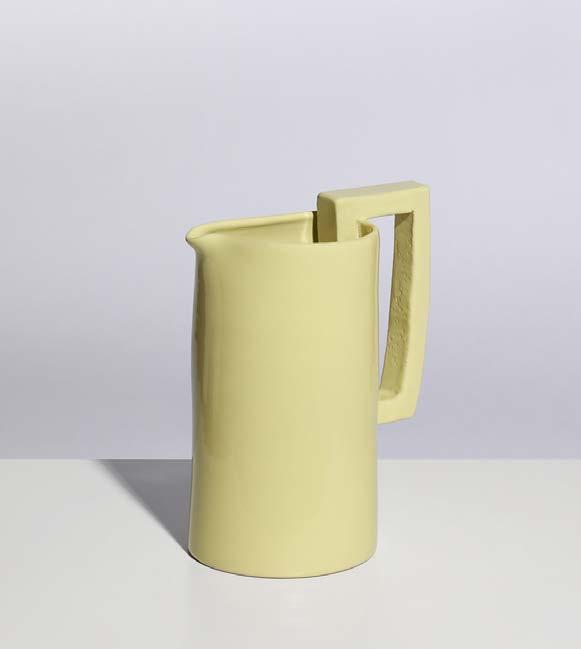
“D” Jug, the jug by RedDuo, is part of a limited collection of handcrafted objects for the table. The strong point is the geometry with the distinctive “D” base and the lateral spout, but the finish is also special: it is hand-painted (like every piece in the collection) and finished with a monochrome enamel, while the handle is made of refractory material that ensures a firm and resistant grip.


The Double Rocks and Highball glasses from RIEDEL'sBAR Rituals line combine the elegance of fluted crystal with extraordinary everyday practicality. Perfect for a multigenerational home, they offer a secure grip thanks to the geometric texture and an innovative anti-breakage interlocking base that optimizes space and resists to small household impacts.
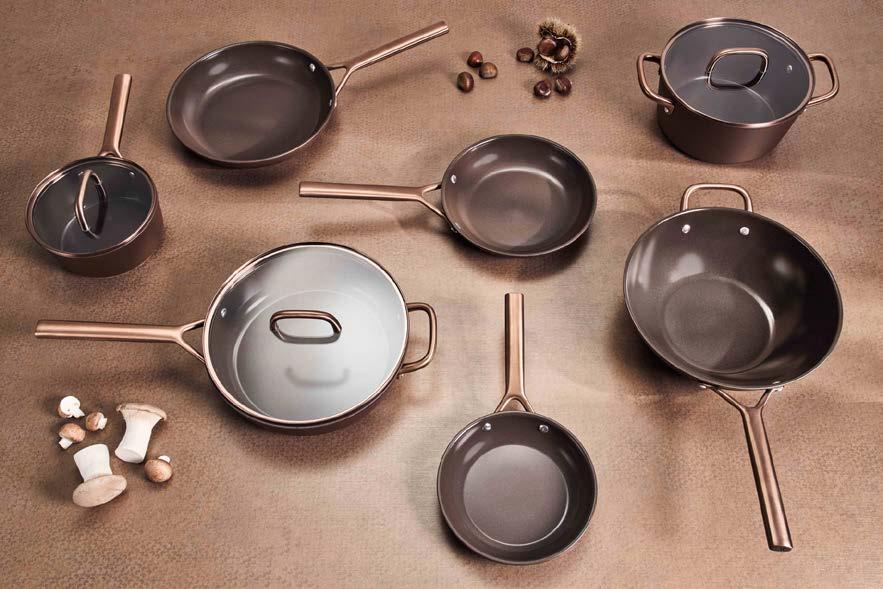
Zwilling Milano it's the new line of cookware that celebrates Italian design by combining contemporary aesthetics and high technical performance. Designed by Milanese designers Matteo Thun and Antonio Rodriguez, the pans, skillet, saucepan, stockpot, wok, and lids are made of highperformance forged aluminum with the innovative, ultra-resistant CERAFORCE® Titanium non-stick ceramic coating, free of PFAS. For a distribution uniform heat and reliable results over time.
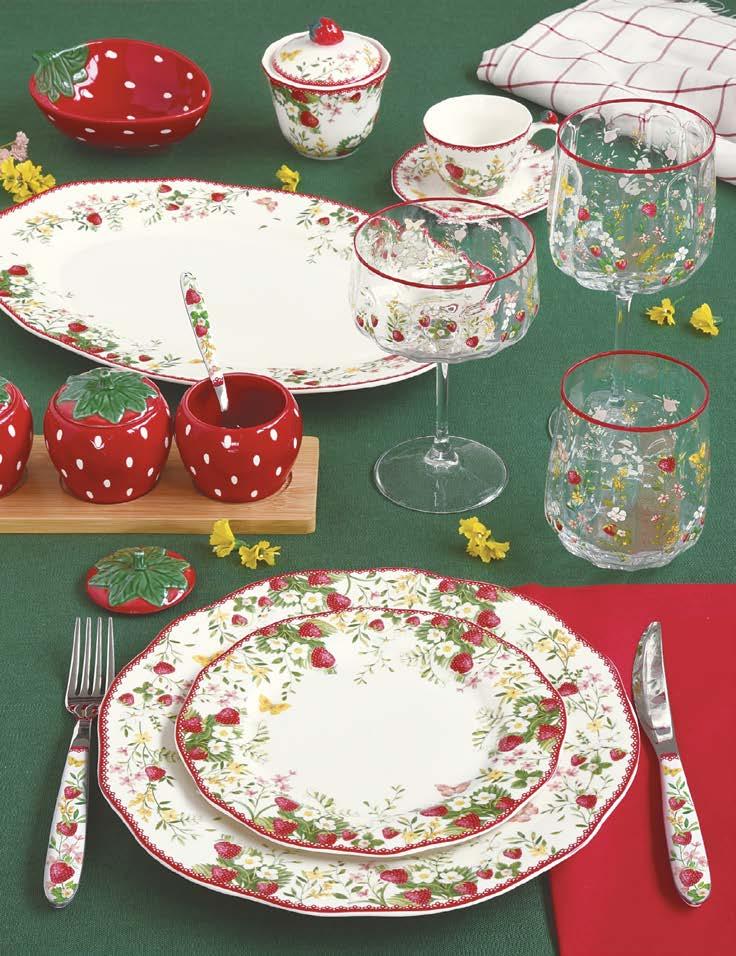
Easylife 's Strawberry Garden it is an invitation to rediscover the carefree nature of lunches under the sun. The mise en place in lively and bucolic porcelain, has shaped plates of fruit and bright tones that will please both adults and children. To be combined with the matching glasses and cutlery.
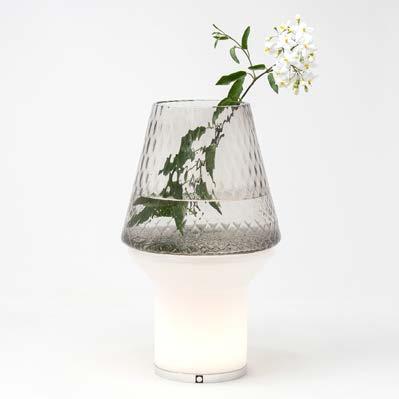
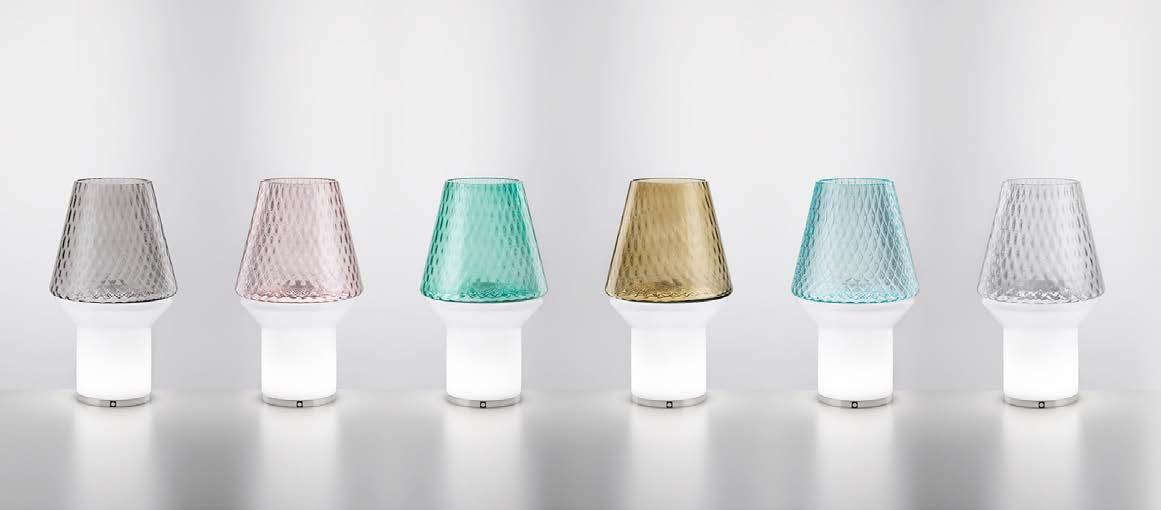
Designed by Romani Saccani Architetti Associati, Mini Forest by Multiforme is the ideal accessory to give a twist to the table, day or night. The blown glass lampshade with balloton workmanship, transparent or colored, acts as a vase for small floral centerpieces and radiates the soft light of the opal blown glass base. With touch dimmer and rechargeable battery.
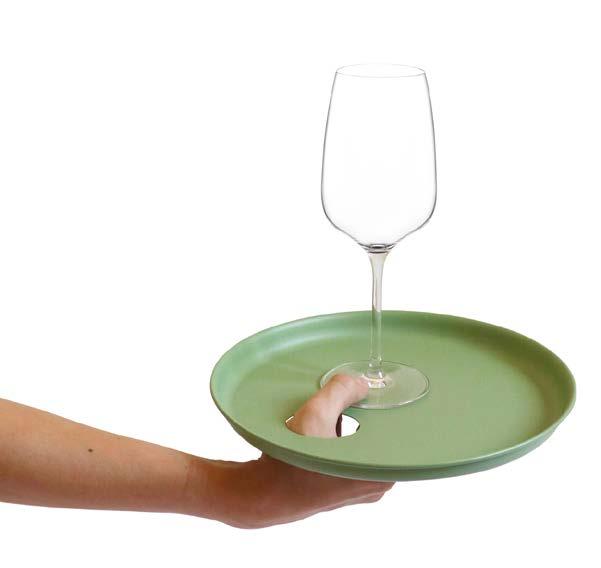
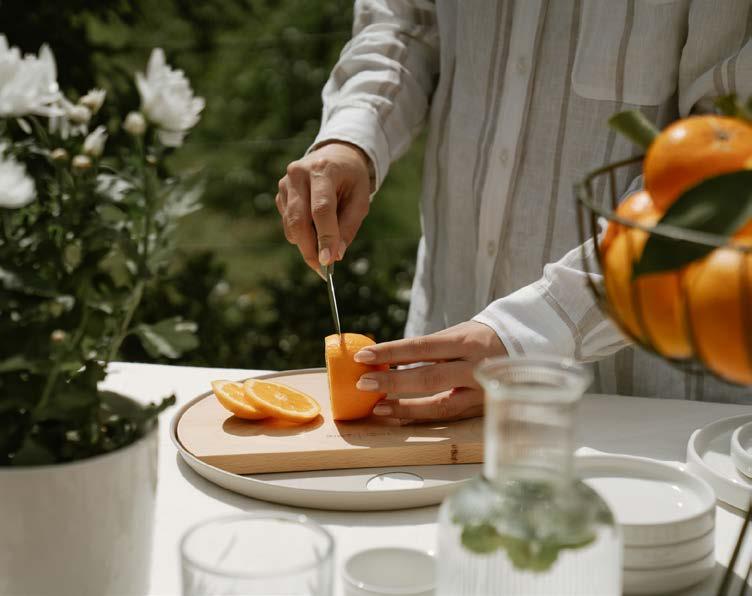
Tray, but also cutting board and serving plate: Pinti thinks of informal lunches and outdoor aperitifs with the O tray, in sage and butter tones. Equipped with a practical integrated cutting board, it is also equipped of a hole that facilitates grip and allows to eat comfortably even while standing.
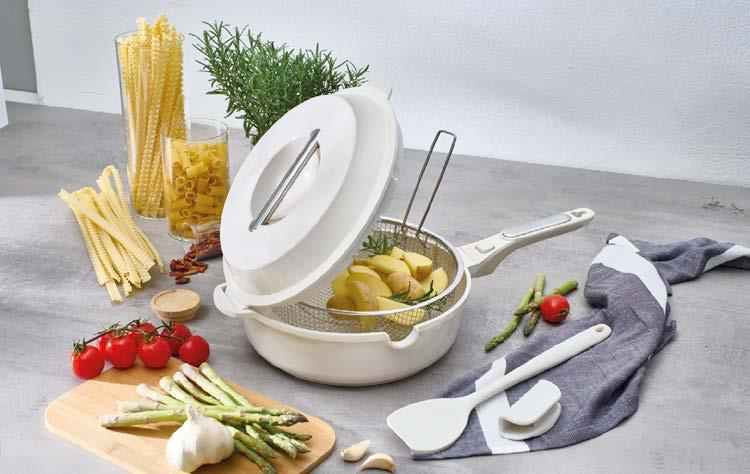
Brandani presents Pandora, the multifunctional aluminum pot with non-stick ceramic coating. A single tool designed for frying, sautéing, cooking steamed (thanks to the internal stainless steel basket) or in the oven by removing the removable handle in Bakelite. The lid is designed to replace the colander and transform into a practical pot rest.
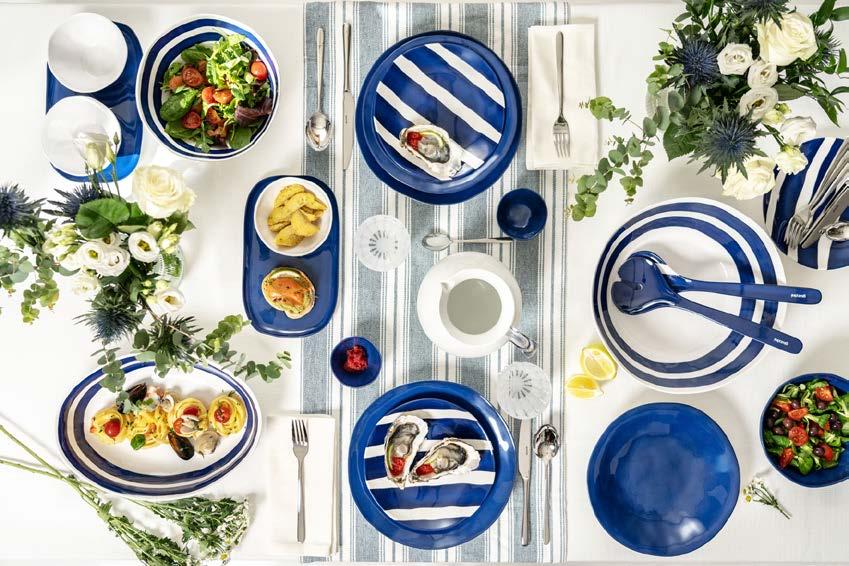
Designed by Pio&Tto Toso and Rosanna Grigolon for the decoration, Riviera by Guzzini is the emblem of the summer table setting. The brush strokes and the irregular design evoke the charm of hand made, while all the items have different decorations: from total blue with white and blue stripes. The collection is composed of flat, soup and fruit plates, bowls of different sizes with salad servers, oval rice bowl can also be used as a fruit bowl or centerpiece and four oval trays (XL, L, M, S), in resistant melamine to impacts and thermal shocks.
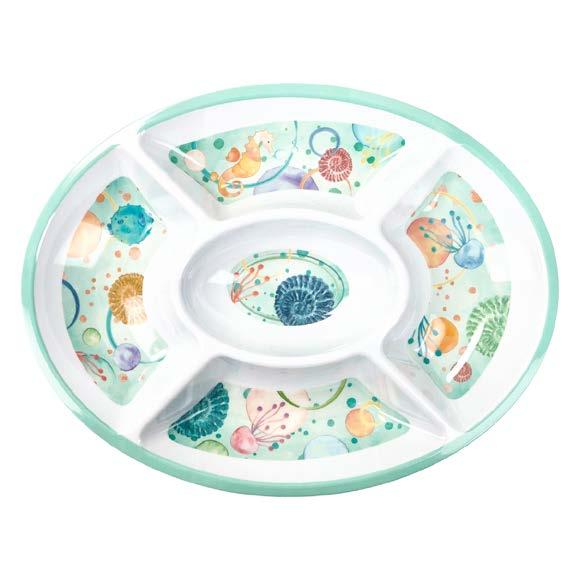
The compartmented plate from Brandani 's Bollicine collection is just what you need for serving appetizers and snacks on your summer table. In addition to being decorated with a vibrant pattern and palette, it is made of melamine, a practical, durable and lightweight material, ideal for outdoor use, picnics, informal dinners and all occasions where functionality and style must coexist without compromise.
The new project by Casarialto Atelier is called ReVitrum and it is created in collaboration with the Murano startup rehub, which completes the art de la table. Born from scraps of borosilicate glass transformed into a new noble material, the sculptural and resistant top it's perfect as a tray, but also a stand, plate or cutting board. Limited edition of 30 pieces, with three matching bowls in borosilicate glass, certified for food contact.

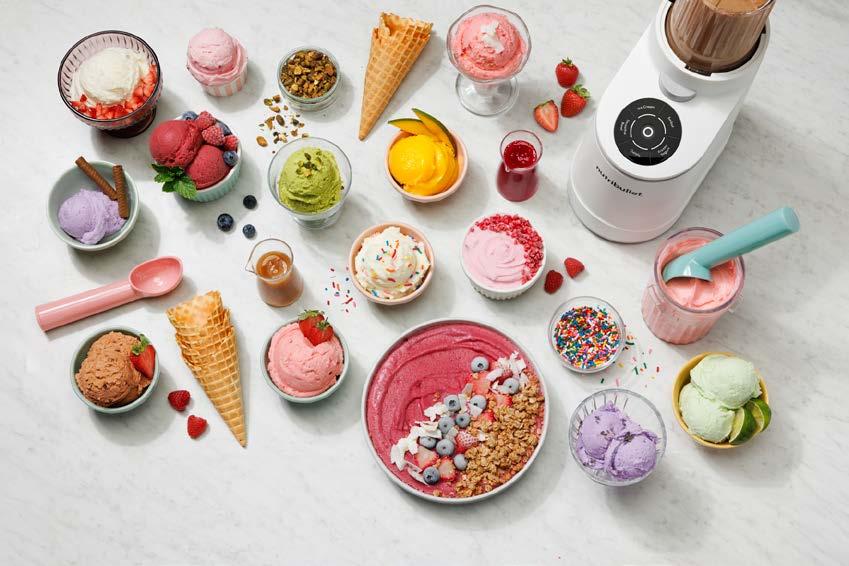
Want some ice cream?
Nutribullet 's new compact Chill ice cream maker prepares desserts, frozen yogurt, sorbets, smoothies and soft ice cream in just minutes. Equipped with 5 automatic programs, intuitive controls and pre-programmed functions, guarantees immediate use even for those who he has never made ice cream at home. Plus, containers and accessories can be washed in the dishwasher.
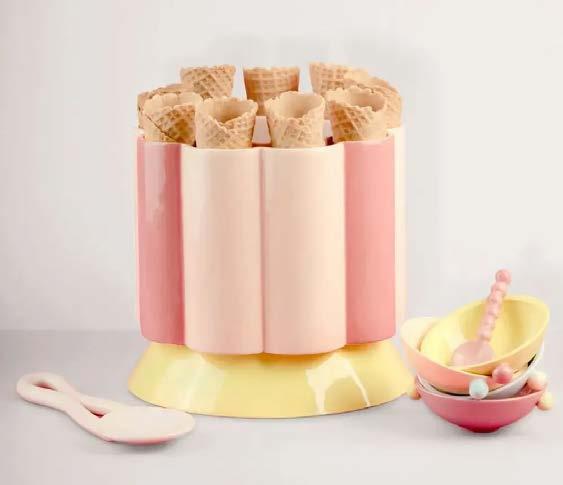
The Carosello tray-cup by ELEIT.IT, in handcrafted ceramic, reinvents the family ice cream ritual. Perfect for bringing generations together, its “carousel” structure houses trays, cups and external compartments for waffle cones on the table. A playful yet functional design that evokes childhood and encourages sharing between grandparents and grandchildren.
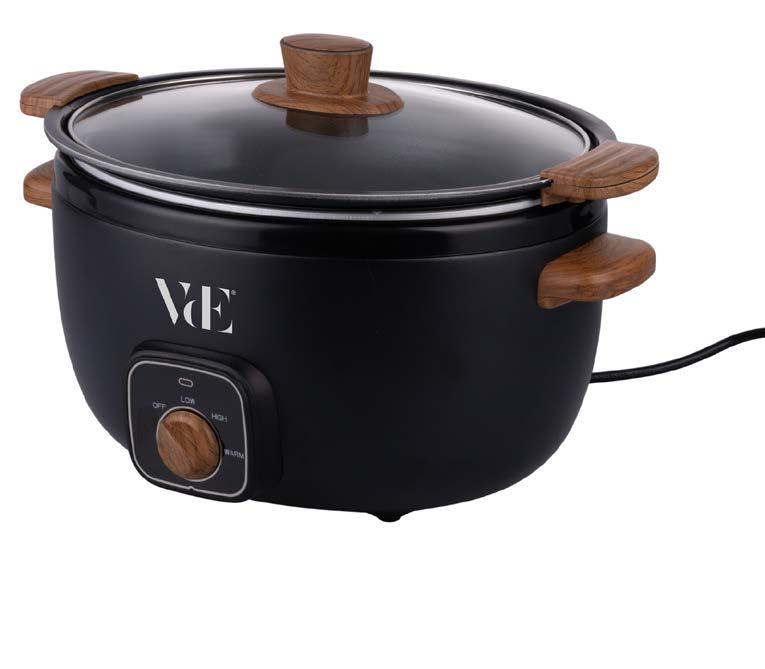
Designed for slow and controlled cooking, The Radici Slow Cooker electric pot by Villa d'Este Home Tivoli combines safety and practicality. It has an external steel body, the transparent tempered glass lid, the anti-scald plastic handles and the removable internal pot in aluminium with non-stick ceramic coating, for even heat distribution and easy cleaning.
The “Mediterranean Collection” celebrates the typical conviviality of Mediterranean culture through warm and versatile kitchen accessories.
Perfect for large tables, this line combines natural materials and a sunny design that invites shared meal preparation and passage of recipes between grandparents, parents and children. Patricia Italian
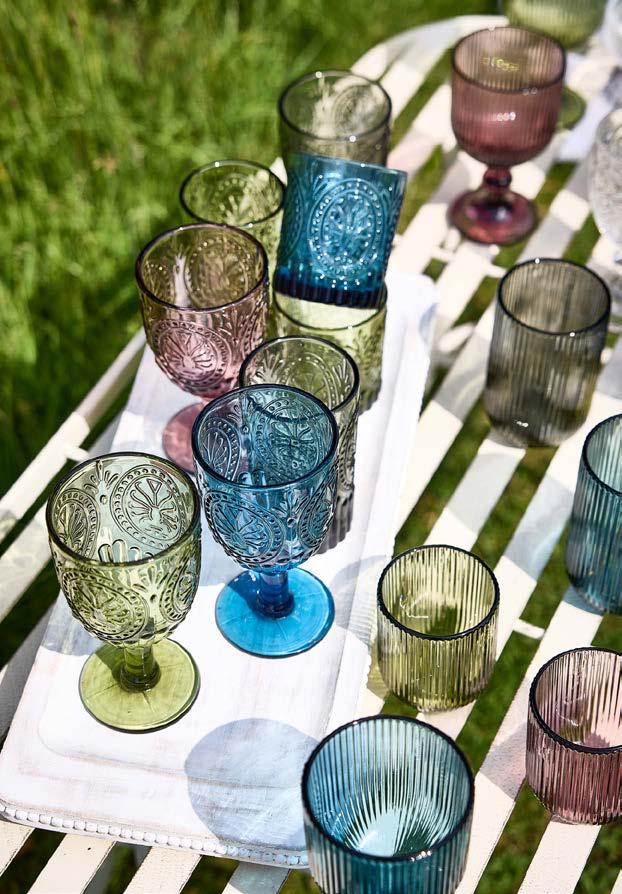
The Spring Embossed Glassware collection brings tactile elegance to the table that is safe for the whole family. The embossed glass surface is not only a refined aesthetic detail, but also offers a firm, non-slip grip. Sturdy and versatile glasses, perfect for everyday routine.

The Tomatalo Anniversary food mill, by F.lli Rivadossi, recalls the gestures of culinary tradition in a pop key and light. Made of durable plastic, it is the ideal tool to pass on family recipes: Its simple and intuitive ergonomics make it easy to use, transforming sauce preparation into a shared ritual.
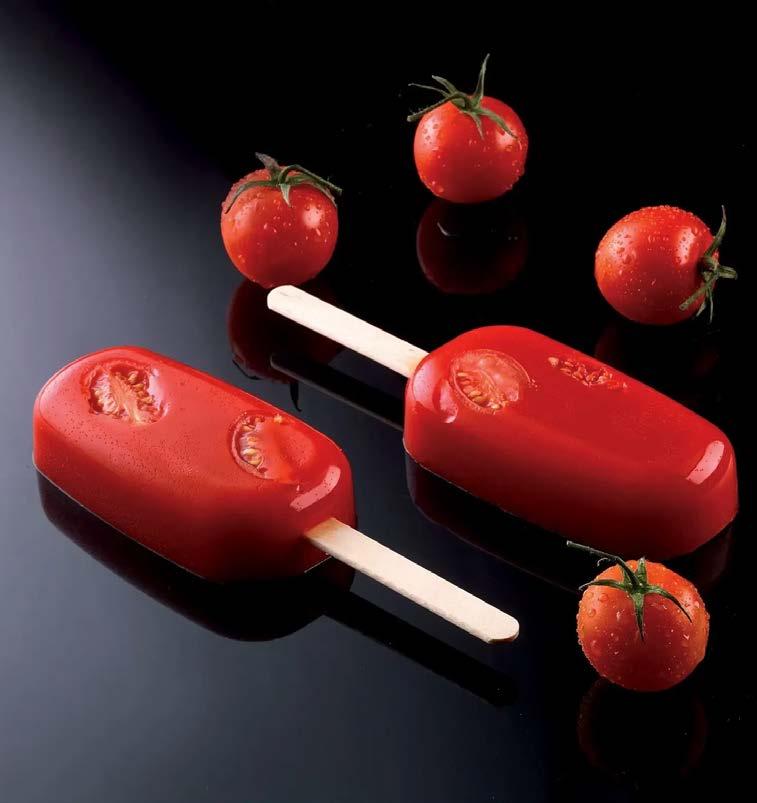
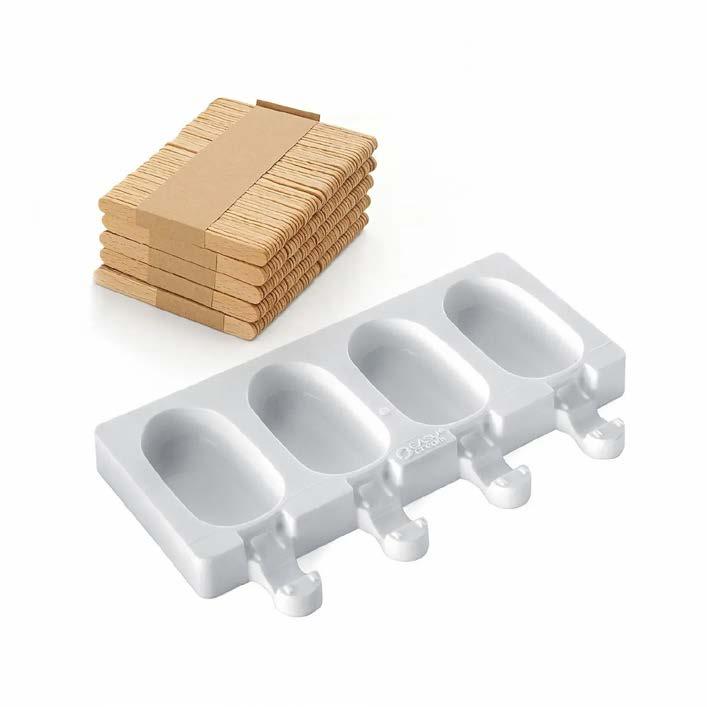
The GEL01M Mini Classic silicone mold, by SILIKOMART, reinvents the homemade snack at home in miniature format. Thanks to the flexibility and non-stick properties of highquality silicone, it allows you to unmold ice cream or finger food with extreme ease. A safe and fun activity, perfect to stimulate creativity.
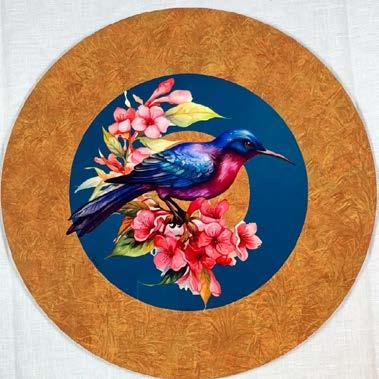
The placemats from the Ucceldibosco line by Furia Living combine the excellence of Italian craftsmanship with maximum practicality for everyone's table. the days. Made of cork and heat-resistant masonite, protect surfaces from impacts.
The original decorations and captivating, they appeal to the little ones and bring joy in moments of family conviviality.


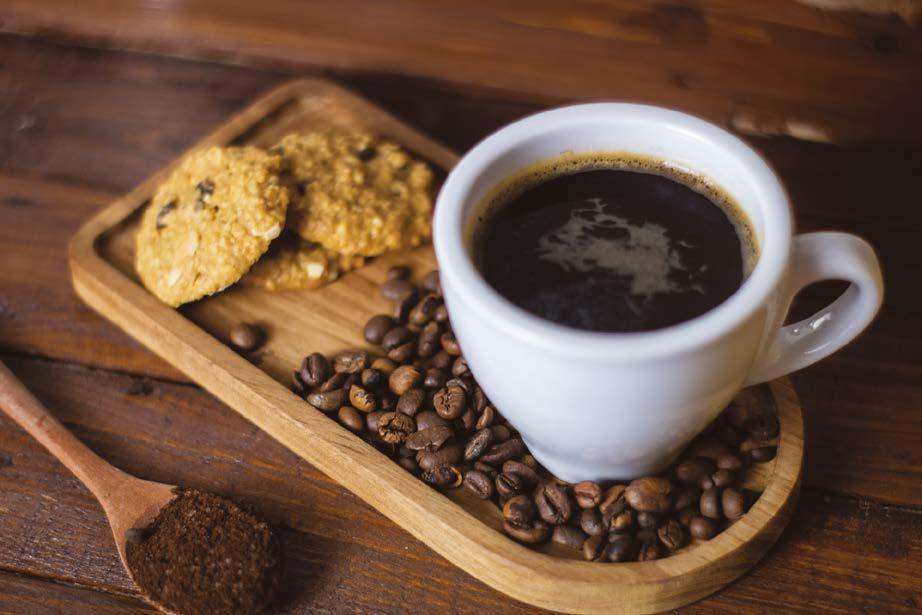
From a simple commodity to a true lifestyle statement: for the classic "tazzina," the focus has shifted from the mere intake of caffeine to considerations of origin, extraction method, and overall consumption experience. Not to mention the growing consumer desire to recreate the café experience at home, a trend driving significant demand for coffee machines, moka pots, cups, and other premium accessories
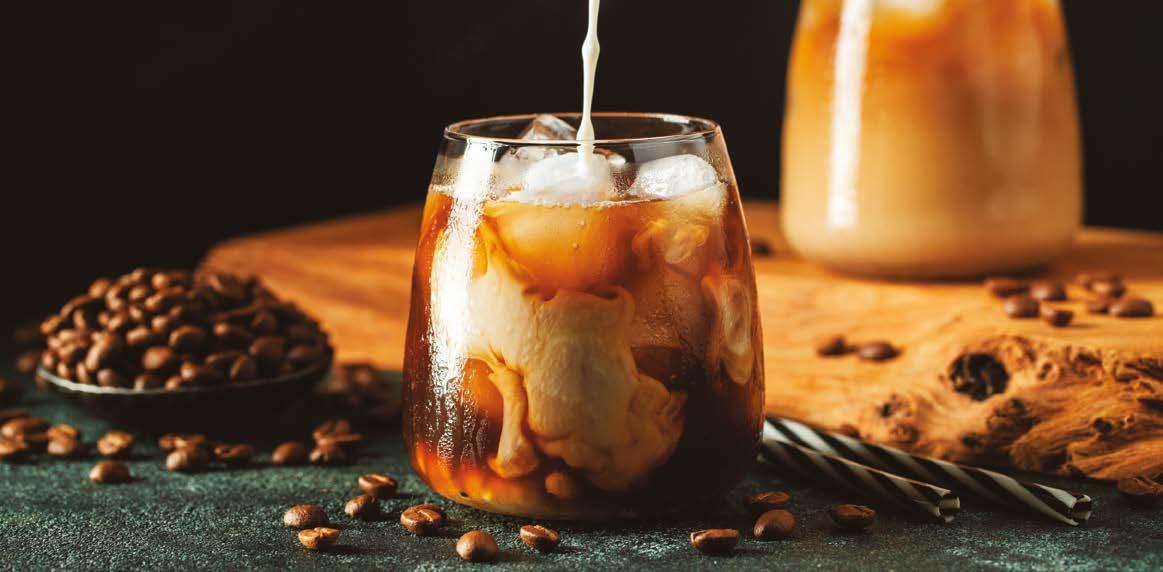
In Italy, coffee consumption is de"ned by its profound symbolic value. It is not merely a beverage, but a social ritual — a beloved tradition deeply rooted in the culture of the country. It is the common thread running through countless recurring gestures and established habits that mark the rhythm of daily life: from the "rst espresso of the morning to the leisurely weekend cappuccino, from a latte macchiato with friends to an iced coffee on the balcony or in the kitchen during the summer
by Patrizia Pagani
months.Recently, however, an evolution towards specialisation and personalisation has been taking shape: in terms of blends, standardised varieties are increasingly giving way to socalled specialty coffees — traceable, often sustainably sourced, highest-quality beans — while domestic espresso machines, as well as branded cups or those paired with traditional moka pots, are becoming ever more prominent as design and characterising elements of the kitchens that house them.It comes as no surprise,
therefore, that many retailers specialising in gift items, wedding registries, or mid-to-high-end housewares are demonstrating that the coffee category offers new and rewarding business opportunities. In other words, the forward-thinking retailer does not merely sell a moka pot or a set of espresso cups, but rather a complete, coordinated ecosystem — leveraging effective cross-selling techniques and presenting visually attractive solutions to the potential buyer.
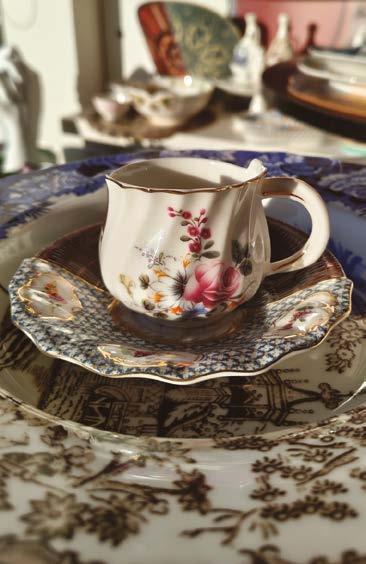
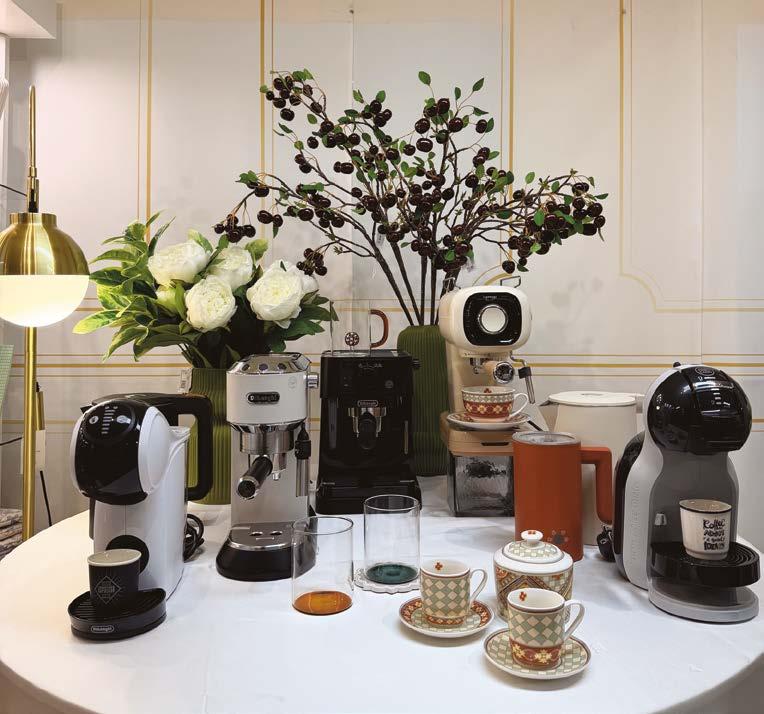
In recent times, the world of coffee has made a powerful return to the dynamics of design. "We have moved from the classic daily habit associated with basic moka pots in traditional shapes to a true celebration of the ritual," explains Rosanna Ciniglio, owner of La Casa del Regalo in Benevento. "Today, almost every kitchen features a meticulously curated 'bar corner,' equipped with advanced machines not unlike professional ones, coordinated canisters, cups and glasses for every extraction variant. Another noteworthy element is the great comeback of the stovetop moka pot (or induction version), which is reclaiming its role thanks to well-conceived modern reinterpretations and appealing pairings with cups."As customers become progressively more discerning, informed, and attentive, retailers are devoting increasing care to the selection of brands to include in their assortment and to the presentation of harmonious visual solutions capable of capturing shopper interest. "We love guiding customers in defining their perfect set," Ciniglio continues. "Sometimes we create our own original, personalised pairings; other times we are supported by our partner companies,
who suggest ingenious coordinated solutions that break the mould. Our range spans porcelain products in various thicknesses — which retain a timeless appeal — to borosilicate glass items, valued for their contemporary lightness. But the truly emerging trend today is versatility: the domestic environment has transformed into a laboratory of experimentation, where the functional boundaries of objects have become "uid. For instance, a particularly glamorous glass may prove to be the perfect vessel for an iced tea or a matcha "at white; coffee itself tends to challenge classic paradigms in order to explore new transparencies."In this process, social media represents an enormously powerful source of inspiration for both consumers and retailers
alike — a continuous stream of ideas, suggestions, and tips for giving objects a second life or for presenting them in original ways. "This drives people to want a home that is not only comfortable, but also on-trend, potentially shareable, capable of telling a story and impressing guests," Ciniglio notes. "In-store, our role consists of translating digital stimuli into genuine, personalised advice — rooted in attention to detail, family passion, and human warmth." More than the clientele itself, then, it is the requests that have radically changed: shifting from the necessary and/or functional purchase to one strongly driven by inspiration — people seek the design object seen on television, spotted on social media, or discovered during a trip.

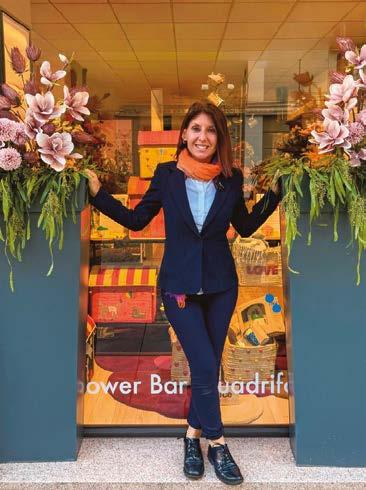
How Rewarding a Coffee Break Can Be From Campania to Piedmont, the story is the same. "The indulgence of a break represents a growing desire that customers seek to fulfil by creating a dedicated area of the home in which to enjoy a good coffee," explains Emanuela Capella, owner of Quadrifoglio Liste Nozze, a shop spread across two "oors in the historic centre of Chivasso, in the province of Turin. "With this in mind, we also try to offer an analogous experience in-store: in a specially reserved area, we serve high-quality coffee using the very machines we wish to promote. Over the years, we have developed a corner expressly dedicated to this experience, focusing on design machines such as Alessi Plissè and Illycaffè, as well as numerous elegant and refined moka pots, including those by Alessi, KN Industrie, and Bialetti Edizioni d'Arte."
The focus on the world of coffee extends to window displays: throughout the months of the year, Quadrifoglio Liste Nozze presents striking, meticulously crafted windows centred on thematic accessories — original teaspoons, cups of every shape and material, milk jugs and trays — capable of creating a genuine "trousseau" that pleases both the palate and the eye. "The window di-
splays and, inside the store, the layout and coffee-time-oriented fixtures generate numerous cross-selling opportunities," Capella concludes. "The customer must feel the desire to treat themselves to a complete coffee experience at home as well — a delightful moment of relaxation using objects that make truly pleasant companions."
Emphasis on the most customer-appreciated
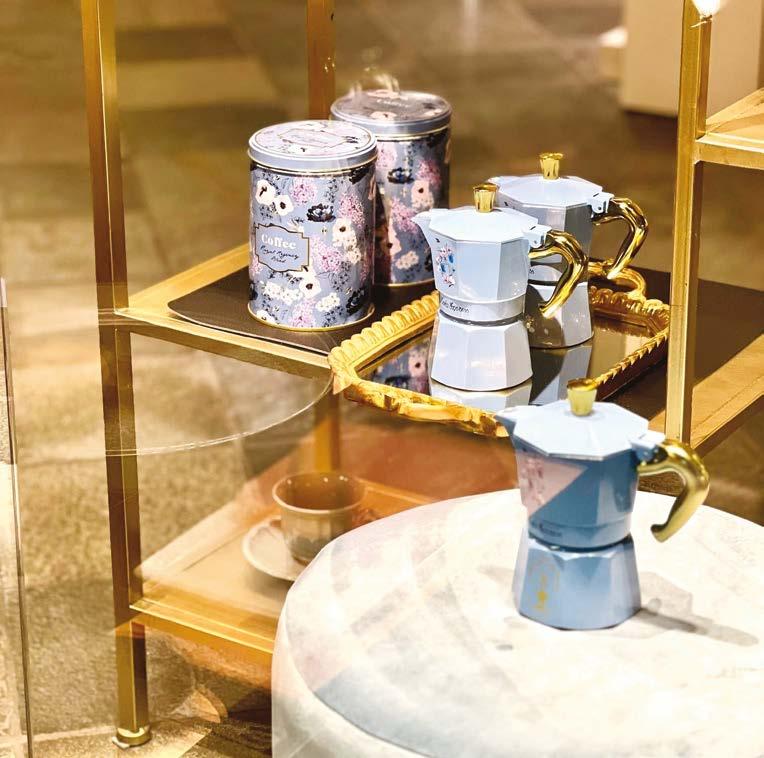
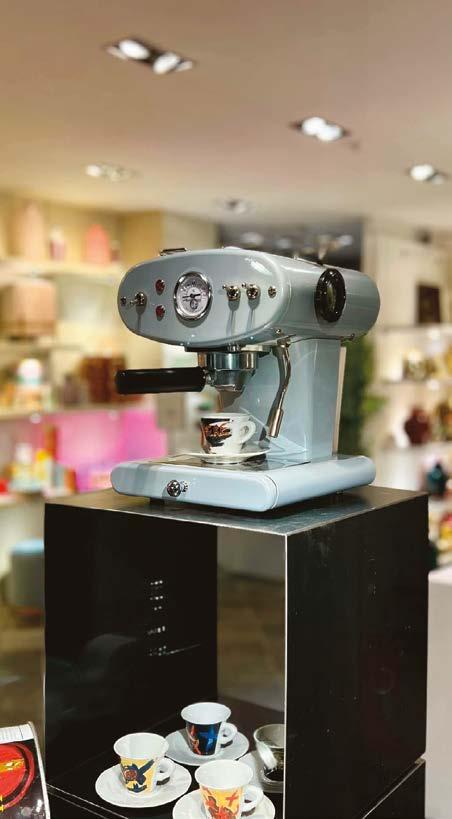
brands and the arrangement of dedicated in-store spaces also guide the commercial choices of Cose di Casa, run by the Fratelli Gallo family in San Giovanni in Fiore, in the province of Cosenza. "The coffee ritual is certainly a strong concept to develop profitably in-store," underlines Giuseppe Gallo, the fourth generation at the helm of the historic family business. "Our shop, originally founded for the sale of kitchen housewares, has progressively expanded its range to encompass adjacent product categories — gift items, wedding registries, personal care, outdoor — and has worked intensively on communication and the appealing display of its offer, enhancing windows with themed arrangements and scenography. All of this has naturally and extensively involved the world of coffee and the tools used in its preparation: suffice it to say that we have been Bialetti retailers for at least 50 years, carrying both the iconic moka pots and the more recent capsule coffee machines. The consumables for these appliances are, among other things, an excellent driver of foot traffic in-store."
With regard to coffee consumption, today's pu-
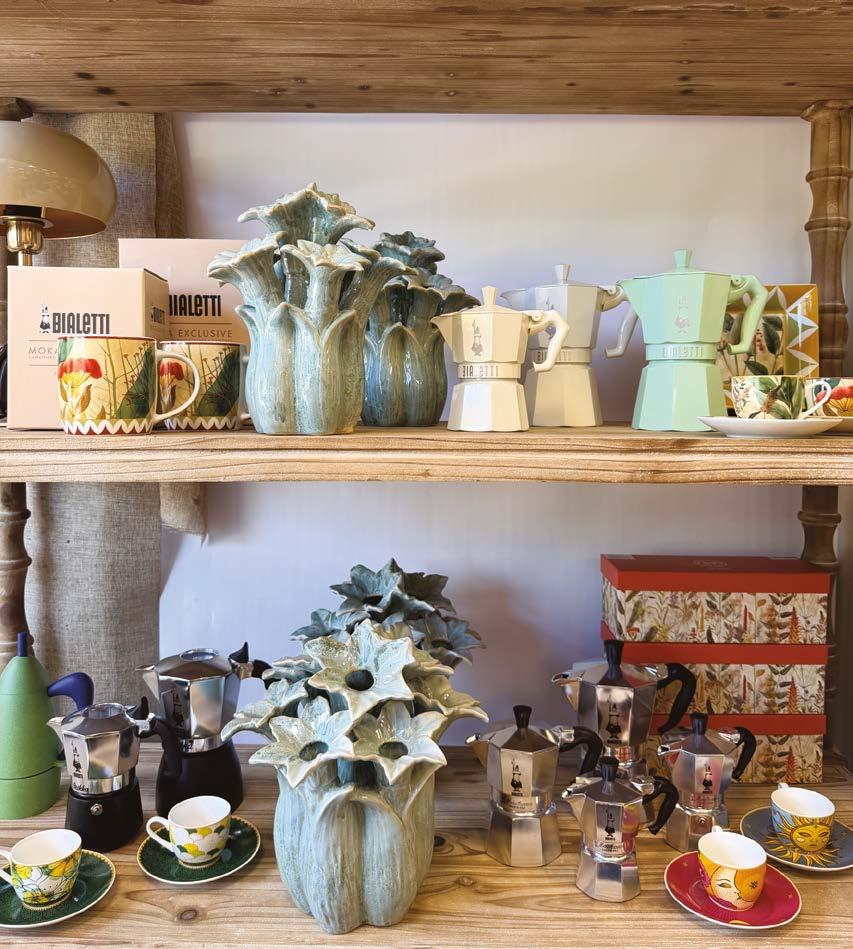
blic appears decidedly more knowledgeable and sensitive to quality and to the ethical and environmental aspects of the product. "We have moved from pods to capsules and then, more recently, to whole beans ground at the moment of preparation: everyone is looking for high-end appliances such as the Rivelia by De'Longhi or machines from the Jura range," reports Gallo. Whole-bean coffee is fresher and retains its aroma better than pre-ground blends: once ground, the particles are exposed to air and, as a consequence, an oxidation process immediately begins that alters both fragrance and "avour. On the gifting front, coordinated themed sets are particularly well received at Cose di Casa. "I am referring, for example, to the matching moka pot and cups from the Gli Onesti line by La Porcellana Bianca," says Gallo, "which are characterised by their striking inscriptions — the moka pot reads 'profumo di felicità' ('scent of happiness'). We also regularly put together gift sets, typically comprising two cups, a sugar bowl, and a tray: our customers show great appreciation for them, and not only as gifts for others."

The market is proving extremely receptive to new products launched by leading manufacturers of moka pots and related accessories. Quality, versatility, performance, design, and product continuity are currently the most sought-after attributes among consumers
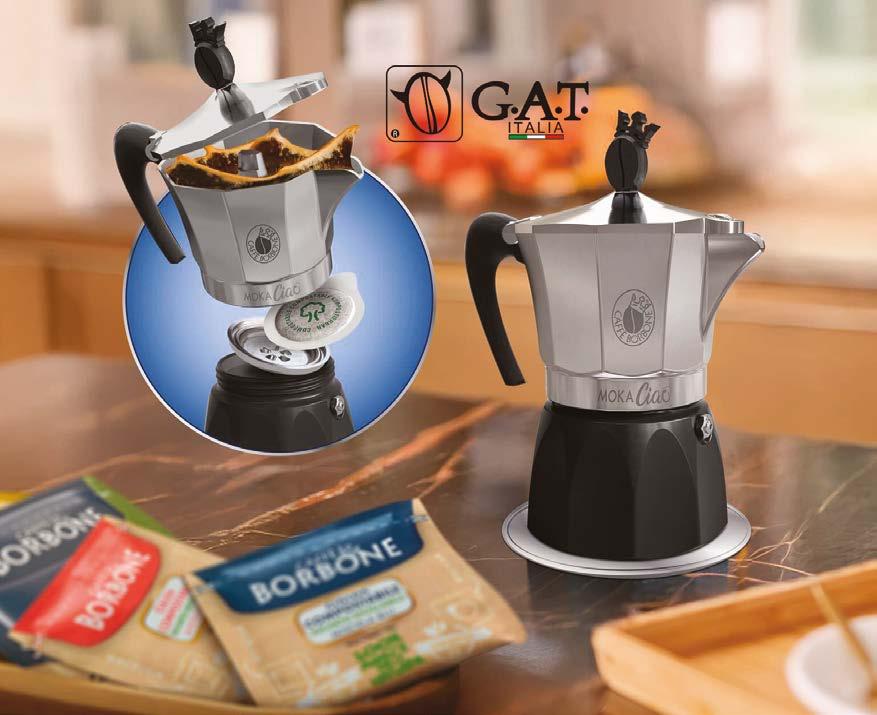
Recreating the atmosphere of a bar or specialty café in a domestic setting — and this not only in terms of taste, but also of aesthetics and ritual. In response to this emerging trend on the demand side, the housewares industry answers with a wealth of tailored solutions, positioned along several emerging lines in terms of functionality, aesthetics, and compatibility with different heat sources. Presented as the natural evolution of the Italian coffee tradition, Moka Ciao by GAT — compa-
tible with all heat sources — is conceived as a product for those seeking simplicity, quality, and freedom of choice, without sacri"cing the authentic taste of a classic moka-brewed cup. Its notably innovative feature, however, is the system that allows the moka pot to be used with practical ESE 44mm paper pods, delivering a consistently perfect, clean, and quick-to-prepare coffee.
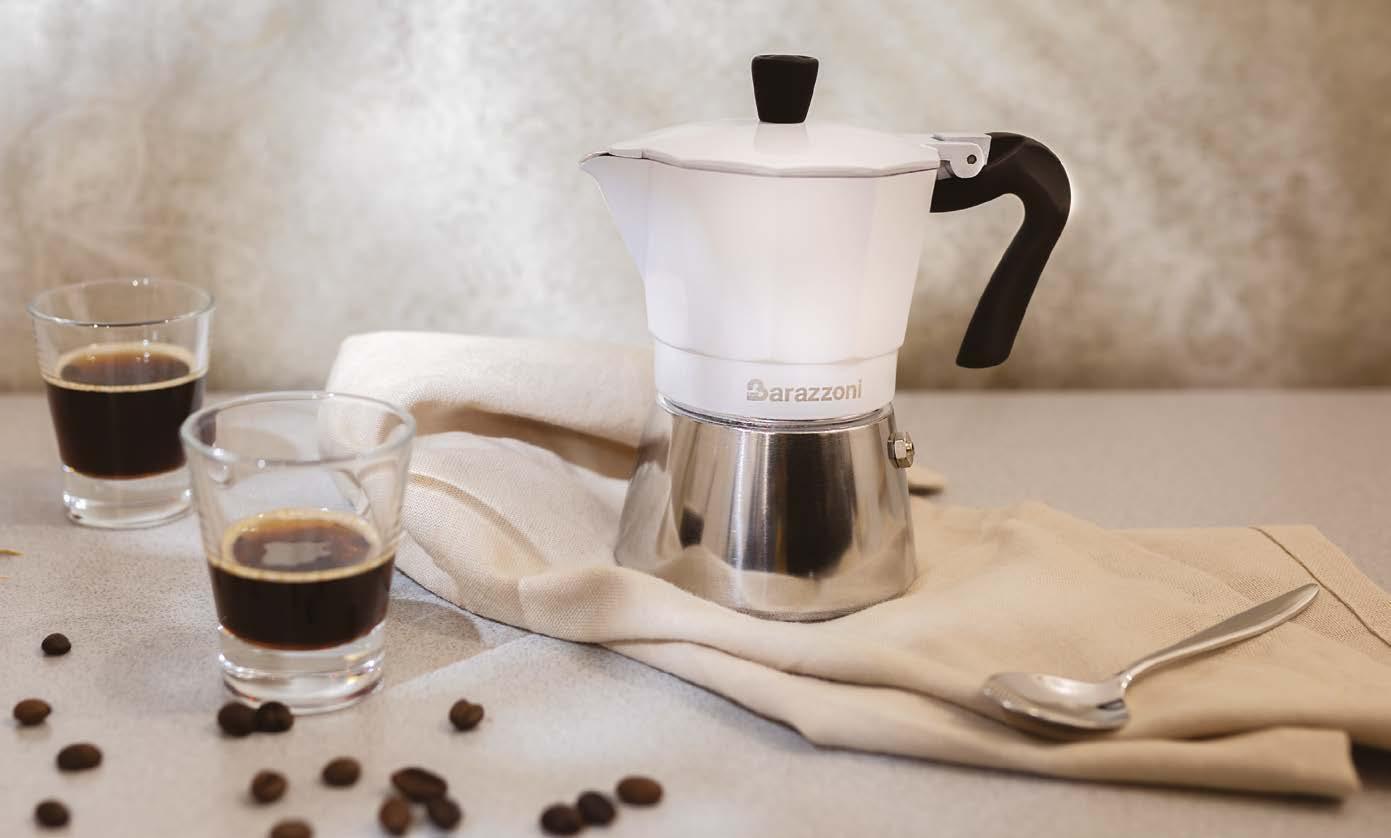
Elegant and high-performing, the new Hybrid Moka by Barazzoni features a bimetallic boiler
(aluminium interior, stainless steel exterior), an ergonomic anti-scald knob, and a silicone gasket for extended durability as well as easier cleaning — and above all, a base compatible with induction hobs.
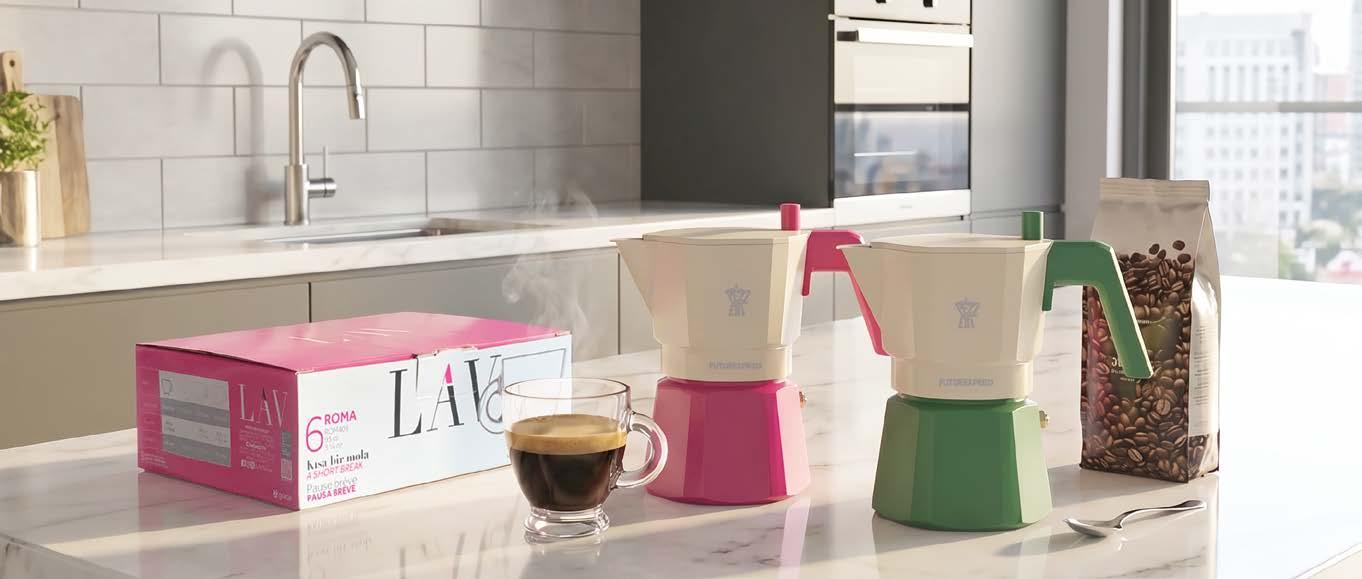
The moka pots in various formats from the Futurexpress Pezzetti line, distributed by Ghidini, are made from lacquered aluminium: given the bold chromatic combinations of the moka pots themselves, the overall consumption experience can be harmoniously completed with transparent glass cups.
Coordinated Colour Palette Lines Gain Ground
In terms of distinctive style and evocative colour, the new Capri Home line by Mokavit is impossible to overlook — a collection conceived as a tribute to the traditions, design, and colours of the Amal" Coast. It comprises a moka pot featuring the characteristic majolica motifs of the region, available in three sizes and compatible with all heat sources, an elegant wood and glass tray, a re"ned tablecloth with six coordinated napkins, and a selection of decorated cups in keeping with the moka pot. Made entirely in Italy, with artisanal attention to detail and a deep respect for tradition, this collection em
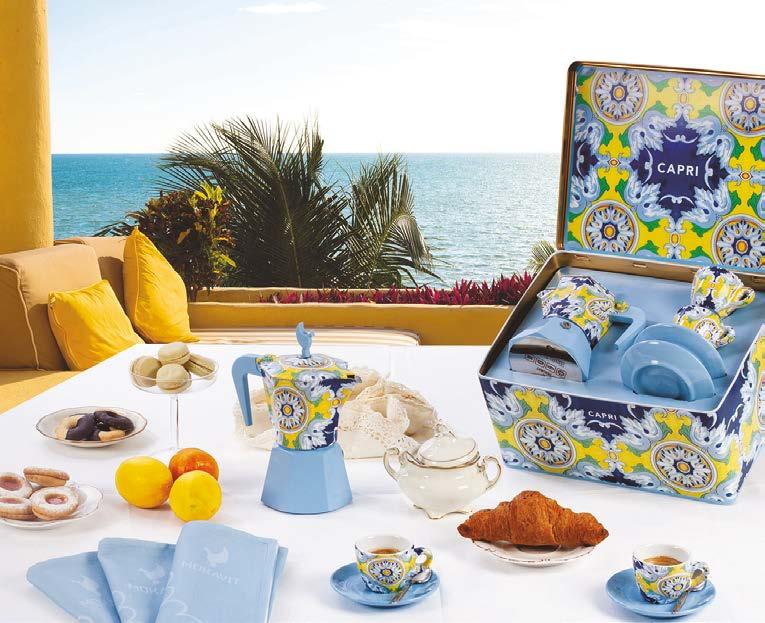
bodies the company's commitment to offering objects that are not merely functional, but capable of conveying a narrative of beauty, culture, and Italian lifestyle.
In recent years, new and varied ways of consuming coffee have emerged, yet the moka pot continues to be a "xture in millions of Italian homes. Experts believe this to be a cultural matter: the traditional moka pot demands attention, time, and small repeated gestures — it is an object that does not merely function, but succeeds in constructing an experience.
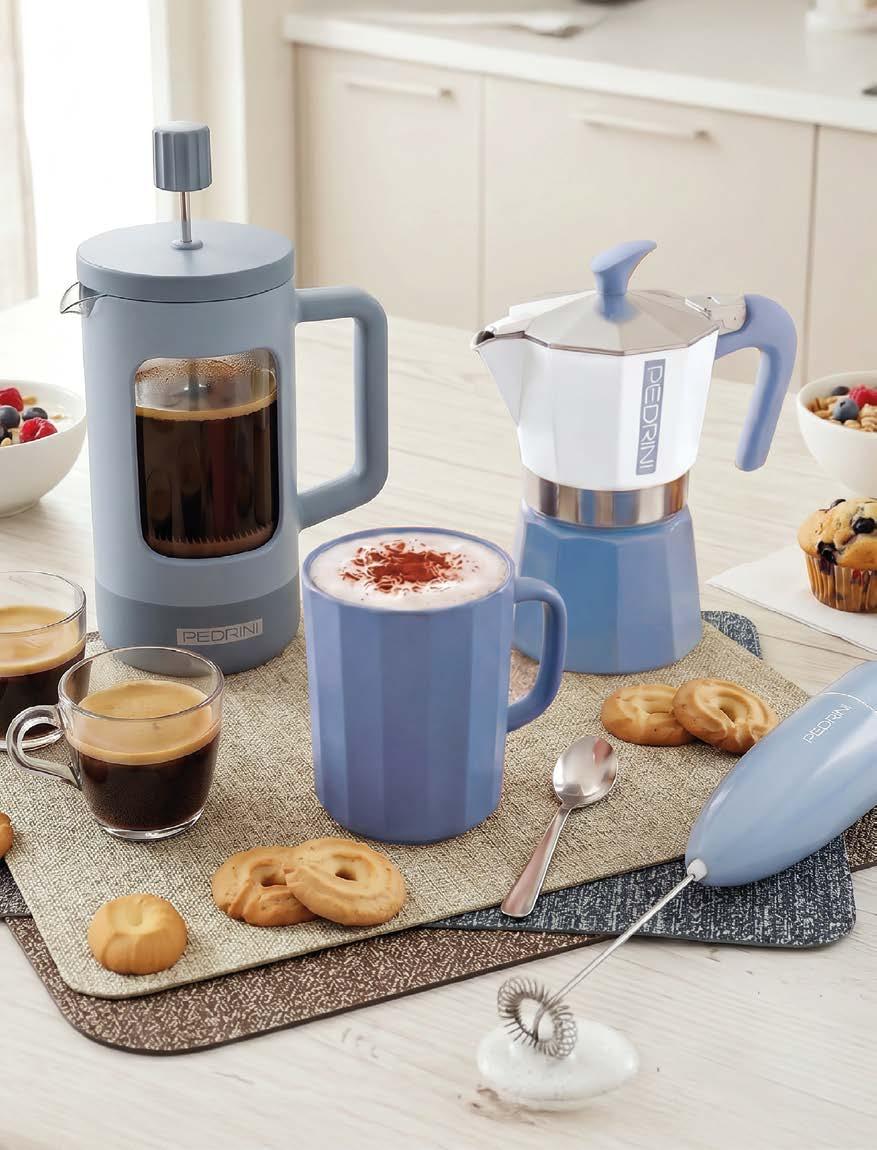
Observing this balance between vision and heritage — which translates, on one hand, into the evolution of materials and design and, on the other, into respect for an unchanging ritual — Pedrini believes that the future of the kitchen and of coffee lies not in replacement, but in coexistence: between speed and slowness, between technology and human action.
With this in mind, the company has launched a coordinated breakfast collection designed to transform the "rst ritual of the day into a complete, harmonious, and style-rich experience — a kit in which every element communicates with the others through coordinated colours, details, and functions. The undisputed centrepiece of the collection is My Moka Color, a lacquered aluminium moka pot available in four sizes and three colourways, which pairs perfectly with the other accessories: coordinated mugs in matching hues, a battery-operated milk frother, a French Press, and PVC placemats.
Born in the heart of the Verbano-Cusio-Ossola area — a territory traditionally associated with the production of high-quality moka pots and aluminium articles — the Angelina Made in Italy brand aims to express the authenticity of Italian coffee through an iconic, recognisable range manufactured entirely in Italy. "Production is entrusted to Fonderia Alfredo Togno, a historic family company with a long manufacturing tradition and consolidated expertise in aluminium processing," explains Barbara Togno, founder of the brand. "Angelina interprets the moka pot as an object that unites functionality, design, and Italian culture. All products are crafted with great attention to build quality, sustainability, and aesthetic research: our collections therefore
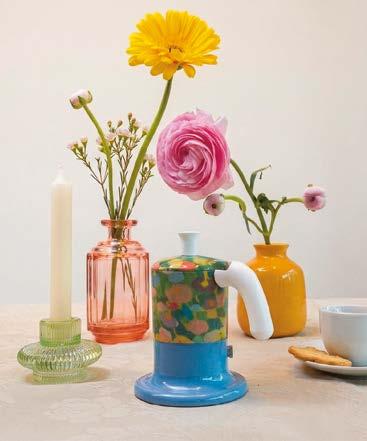
stand out for their wide chromatic customisation, compatibility with induction hobs, use of recycled and recyclable aluminium, contemporary aesthetics, and collaborations with partners emblematic of Italian identity."
The Angelina range encompasses moka pots, accessories, and special collections designed to transform the coffee ritual into an aesthetic and emotional experience. "In recent years," she continues, "coffee has become far more than a simple daily break: today it represents a true moment of personal experience, conviviality, and lifestyle. This shift has led to growing attention towards the quality and design of equipment, materials, personalisation and coordination with accessories — objects that are not only functional but beautiful to display. In this sense, the moka pot has returned to centre stage precisely because it represents an authentic icon of Made in Italy and of Italian domestic culture. Today's consumer seeks products with a strong identity and coherence with their personal style — products that can tell a story."
The brand's offering is currently evolving along three main directions: "rst, colour and personalisation — for example, the "Componi la tua Angelina" display unit allows the buyer to select the base, top, and handle by combining their preferred colours; second, collaborations with Italian artists, cultural institutions, and companies emblematic of Italian excellence, such as Jannelli&Volpi and Astorina with Diabolik; and third, a focus on quality and sustainability, encompassing Italian manufacturing, short supply chains, and the use of recyclable materials. "We
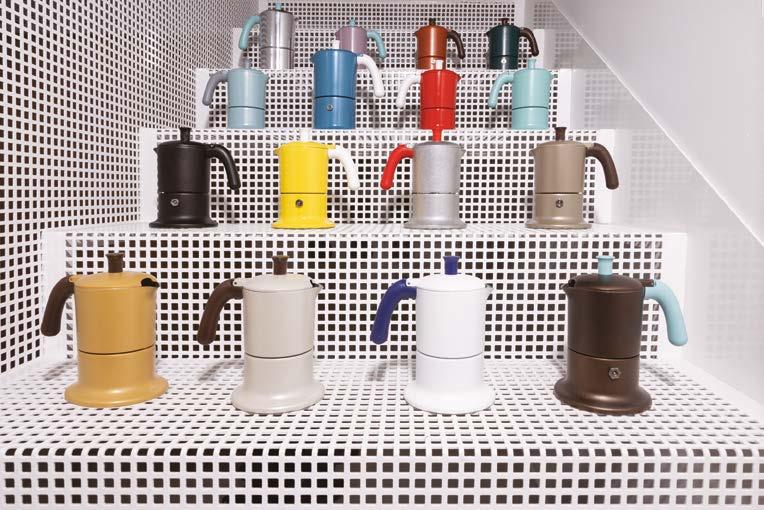
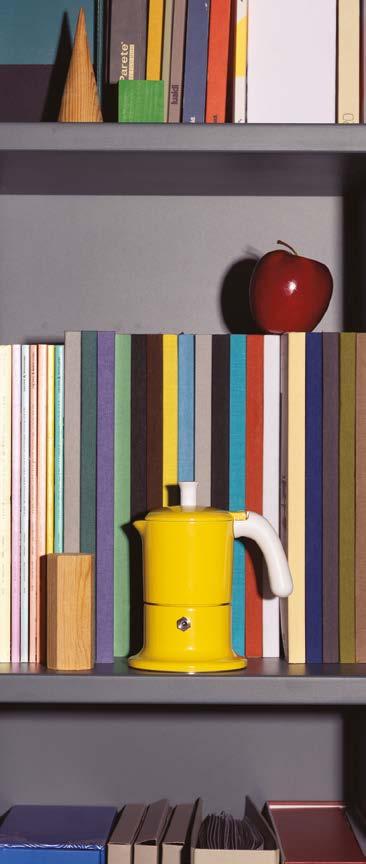
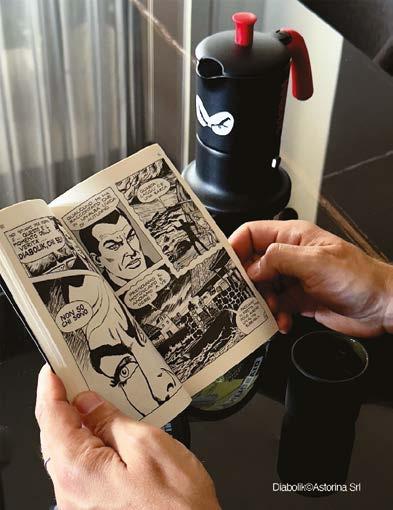
are working on further partnerships, which will be announced shortly," says Barbara Togno. "These will be collaborations with distinguished names closely aligned with our world, capable of creating cross-pollination between craftsmanship, art, and Italian cultural tradition — transforming the moka pot into an object that is ever more narrative and identity-de"ning."
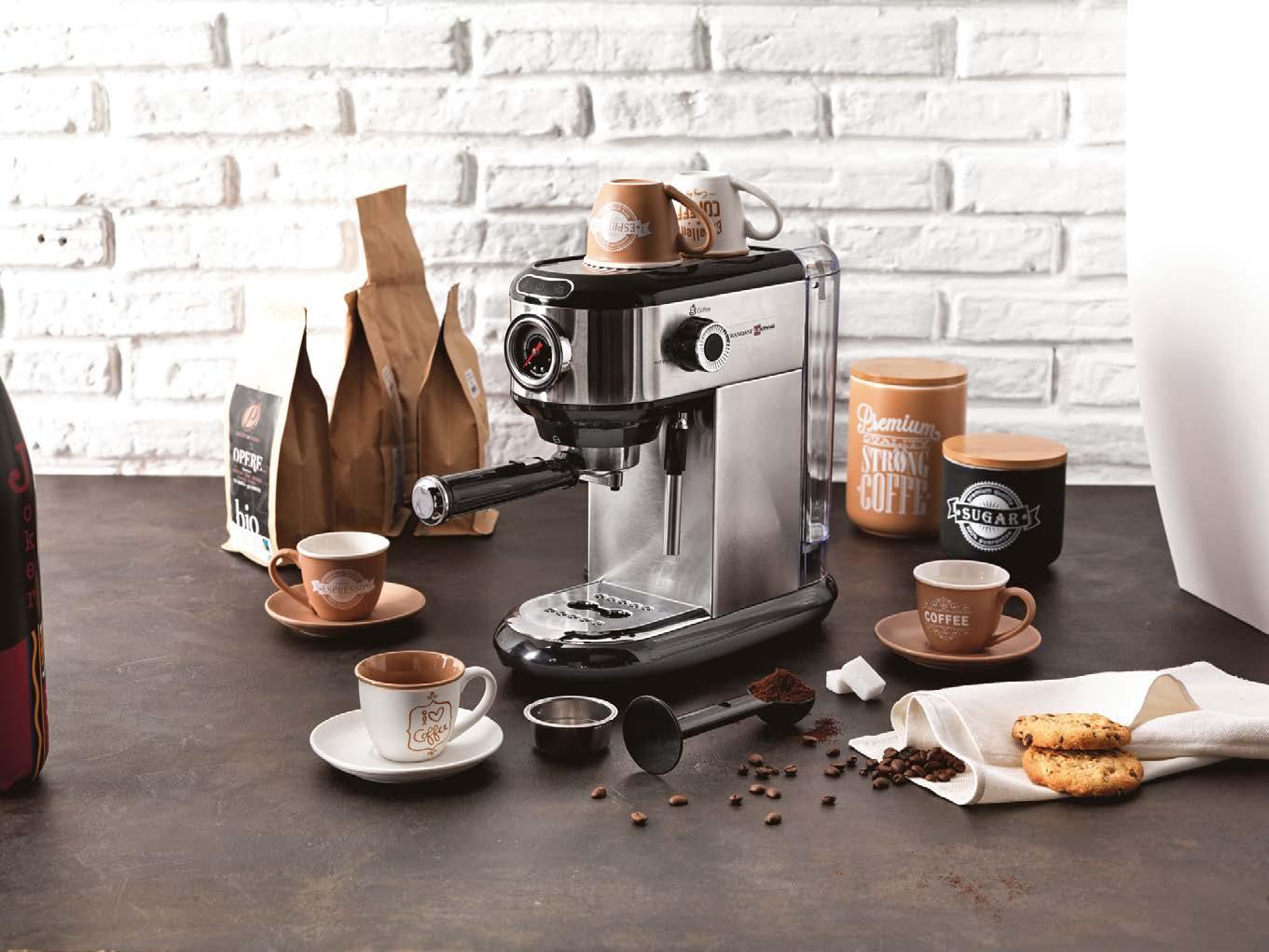
On the electric coffee machine front, prevailing lifestyle trends today favour solutions that combine performance, aesthetics, and optimised counter footprint. A case in point is the new electric coffee machine from Brandani's Techno
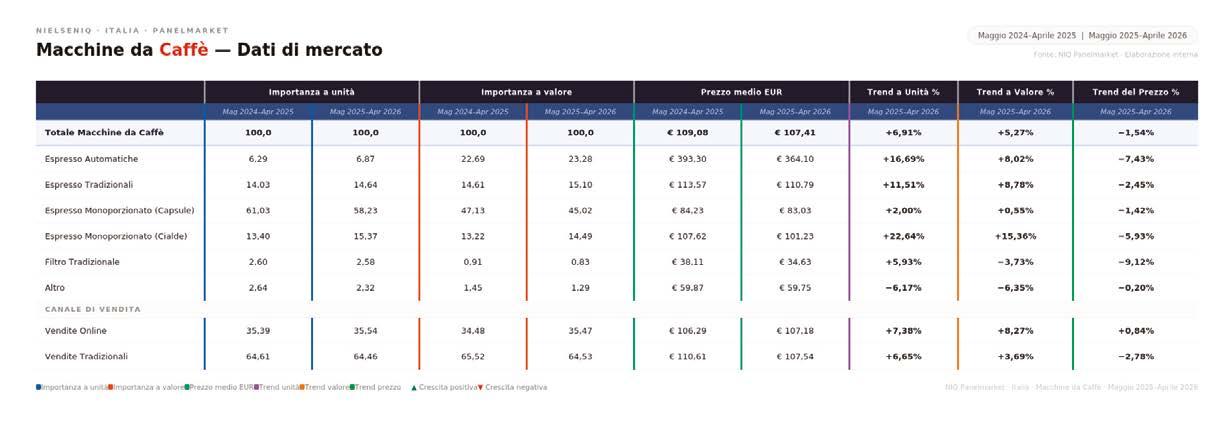
According to NIQ data, in the twelve months ending April 2026, the domestic coffee machine market continues to expand, driven primarily by product innovation and the advance of digital channels. "In the period May 2025 – April 2026, we recorded value growth of +5.3% compared to the same period of the previous year,"
and elegant steel "nishes, promising users the pleasure of a bar-quality espresso in the comfort of their own home. Versatile and intuitive, it is equipped with a porta"lter compatible with both ground coffee and ESE pods, facilitating the choice between a traditional espresso and a lun-
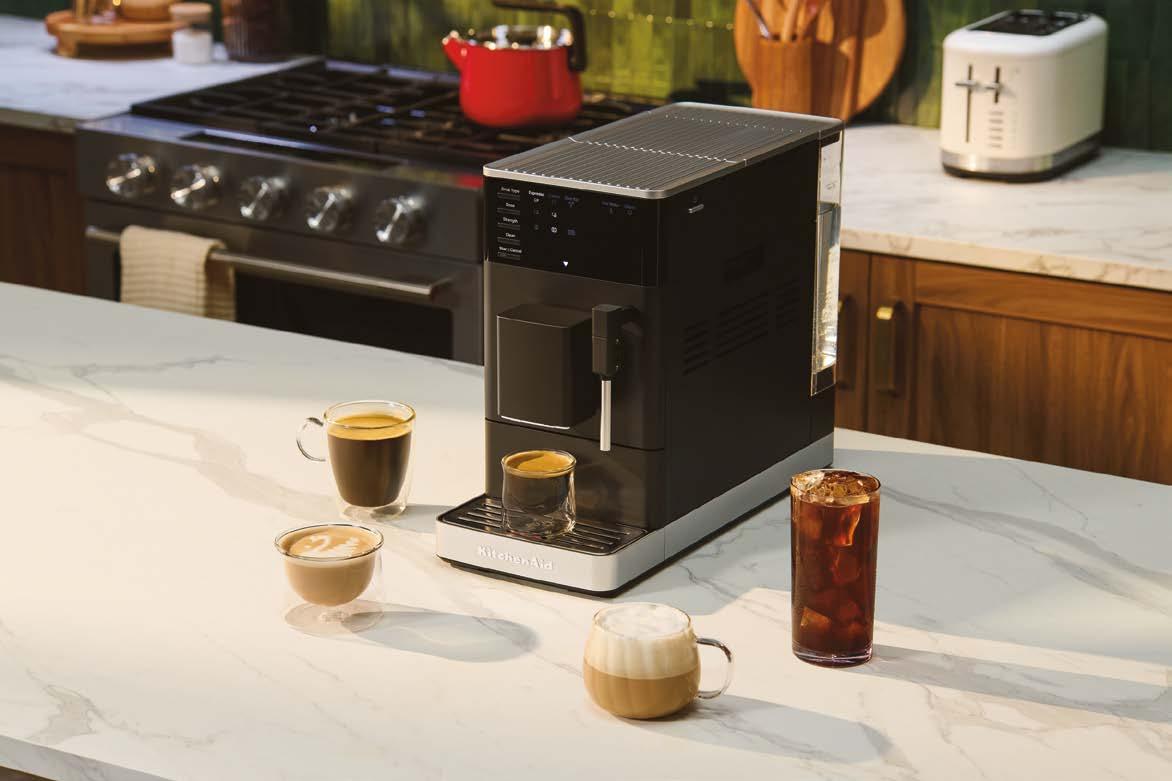
go. Rounding out the feature set are a steam function for effortlessly preparing cappuccinos and creamy beverages, a hot water dispenser that extends the appliance's range of use, and a practical cup-warming surface on top of the machine, ensuring a consistently perfect espresso. As a welcome to the summer season, Kitche-
states Beatrice Rigamonti, SDA Consultant at NIQ. "Within this, automatic espresso machines showed value growth of +8.0%, accompanied by a signi"cant contraction in average price (7.4%). Traditional espresso machines also demonstrated value growth (+8.8%), against a reduction in average price (-2.5%): this trend is partly sustained by the spread of models equipped with integrated grinders.
The single-serve capsule machine segment — which remains the most signi"cant in the category — recorded a slight value increase
(+0.6%), despite a decline in average price (1.4%). More robust was the performance of pod machines, which grew in value by +15.4%: this dynamic is associated with rising demand, particularly in Northern Italy and through the online channel. From a distribution standpoint, ecommerce continues to show positive momentum, with value growth of +8.3%, outpacing traditional channels (+3.7%): this con"rms the increasingly central role of online, not only as a tool for discovery and research, but also as a purchase channel."
nAid has instead launched the KF2, KF3, and KF4 — three new fully automatic machines with cold coffee functionality, designed to accompany every moment of the day: they allow users to move seamlessly from a classic espresso to cold preparations and through to milk-ba-
sed beverages, offering tailor-made consumption options in a home setting. These models pursue the goal of expanding the brand's espresso range, delivering an increasingly intuitive, "exible, and customisable experience.
SUBTITLE
Diego Toscani (President of Pozzi Milano) is the new President of ART Arti della Tavola e del Regalo, the Association affiliated with the Confcommercio System that represents the supply chain of items for the table, kitchen, and home decoration. He was elected on March 20th by the Board of Directors during its inaugural meeting, which marked the start of the 2026/2029 term of the Association's Governance.
Toscani takes on the role held in the last four years by Angelo Maino (Maino Carlo Srl), who has been appointed Deputy Vice President, while Donatella Galli (Vip Home Group) and Anna Nocentini Lapini (Lapini) have assumed the Vice Presidency. According to data presented by ART, the
The Association’s Board of Directors, elected by the Members’ Assembly, is composed of the following directors: Cristina Baroni (Baroni Porcellane), Walter Bongiorni (Bongiorni), Nicoletta Bruni (Alluflon), Francesca Corradi (Corrado Corradi), Carolina Grigoriadis (International Cookware), Massimiliano Guzzini (Guzzini), Walter Montagna (Lamart), Giusto Morosi (Tognana), Fabio Rocchigiani (Alessi), Gabriele Sabbatini (Vesta), Giorgio Toninelli (Pedrini), Marina Vago (Taitù), and Alessandro Viglione (Livellara).
ART CONFCOMMERCIO: DIEGO TOSCANI IS THE NEW PRESIDENT. THE ITALIAN HOME MARKET 2025 EXCEEDS 8 BILLION
“It is an honor for me to lead ART, which brings together important companies and brands and represents the entire supply chain of the sector,” stated Toscani at the time of his appointment, “and I thank the Board of Directors for the trust placed in me, to which I respond by dedicating all my commitment.” I will ensure continuity and further impetus to the activities in which ART has long been engaged on issues of utmost importance for our sector, such as the protection of businesses in a complex context, the study of consumption dynamics, and the dissemination of the cultural and social values of products for the table and kitchen. ART is the point of reference for an important market, made up of thousands of companies with signi cant employment levels: a market that deserves to be known, studied, protected, and developed.”

tableware, kitchenware, and home decoration sector in Italy is growing and reached in 2025 a total value exceeding 8 billion euros , with a 6% increase compared to the previous survey in 2023. The main component is kitchenware (5.5 billion, +7.9%), followed by tableware products (1.5 billion, +2%) and home accessories (almost one billion).
2025 ended with an extremely positive balance for domestic consumption, despite a slight contraction in the number of buyers (84.8%, -2.7% compared to 2023).
Kitchenware : They confirm themselves as the beating heart of the sector with a value of 5.59 billion euros (+7.9%). Cooking tools were purchased by 77.6% of consumers.
Tableware: The sector (plates, glasses, cutlery) grew by +2%, reaching 1.52 billion euros. Home accessories: This category, which includes lamps and accessories, accounts for 0.96 billion euros of the total market.
THE OVERTAKING OF ONLINE AND THE RESILIENCE OF CHAINS
The distribution landscape is changing, with a gradual reduction in the importance of physical stores.
Specialized and Web: Specialized chains remain the primary channel (50.2%), but online continues its rise, reaching 45.6% of preferences. Large-scale retail on the rise: Large supermarkets and hypermarkets are gaining ground, chosen by 45.5% of consumers for home purchases.
Loyalty and Promotions: The use of loyalty programs is increasing (+3.3%), while 35.3% of Italians took advantage of Black Friday offers to renew their household equipment.
Why do Italians buy?
Renewal: The main motivation is the replacement of worn-out items (49.8%), followed by the desire to own new or missing products (45.6%).
Price Lever: Price remains the fundamental driver for 53.3% of the sample, followed by promotions and discounts (48.9%).
The Gift: When giving a gift, people mainly seek originality: 42.5% choose products that the recipient does not yet own. Wedding lists account for 15.8% of total purchases.
Attention to the environment is no longer just a trend, but a concrete criterion for choice: For 56.3% of consumers, the sustainability of a brand is an important factor.
For 12.1% of respondents, the "green" positioning is even the main criterion for choice.
Willingness to spend: 40.9% are willing to pay a premium for sustainable products; of these, almost 10% would accept a price increase of more than 25%.
www.art-tavolaregalo.it
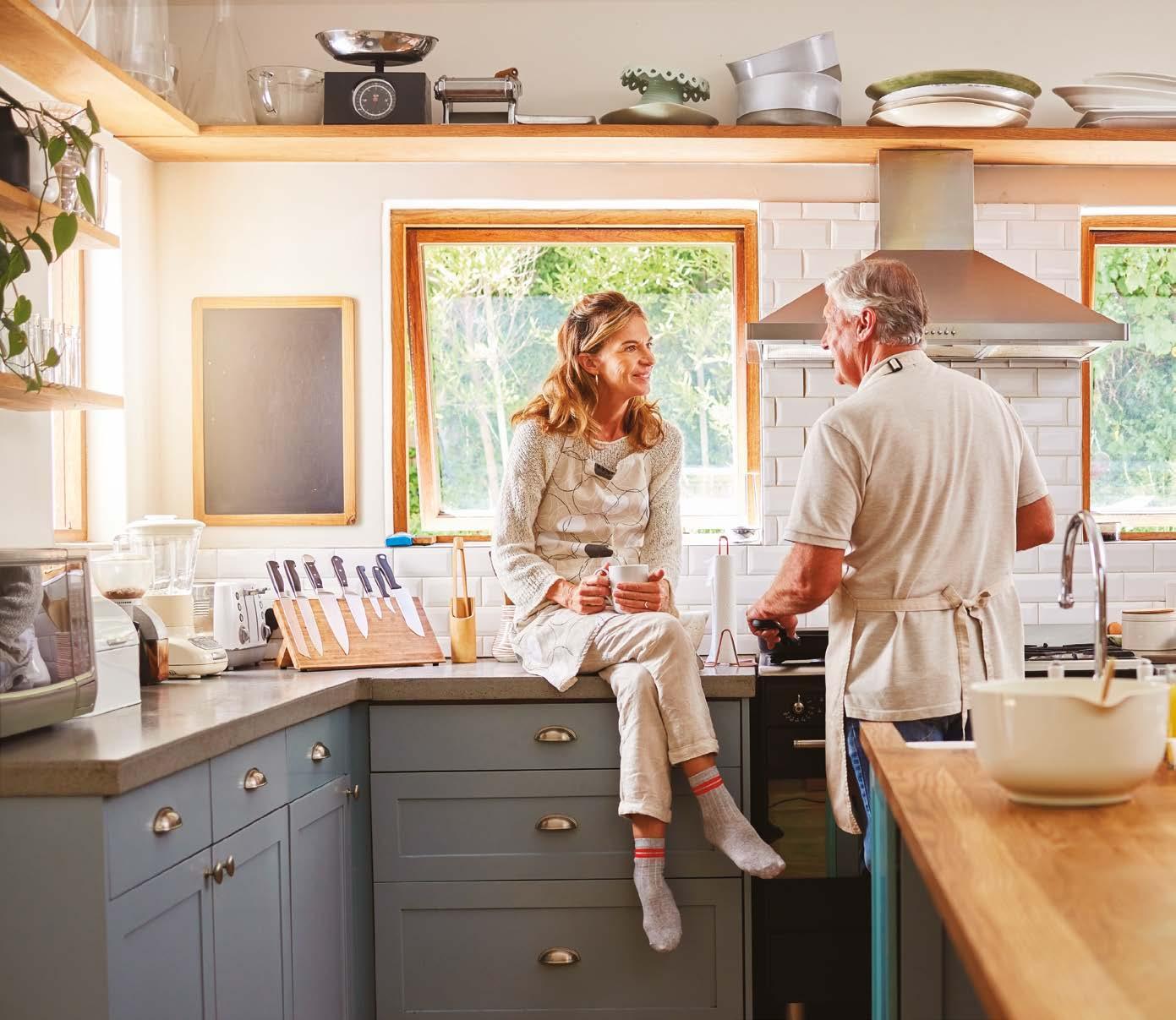
The over-65s are leading spending in the home furnishings and domestic technology sector. Not out of necessity, but by choice. The Italian market is being rewritten around them
There is a paradox at the heart of Italian retail that is worth confronting directly: while advertising campaigns chase millennials and Generation Z, the seventy-year-old grandmother is the customer who spends the most in your store, returns with greater loyalty, and recommends your products to her friends. Not because she is unwell or frail. But because she can afford to, has all the time in the world to choose carefully, and does exactly that.
the most important signal is not demographic but psychological. Today's Silver consumer does not buy out of clinical necessity or urgency: they buy for pleasure, for aesthetics, for a precise vision of how they want to live in their home. They are a considered, project-driven buyer — not a reactive one.
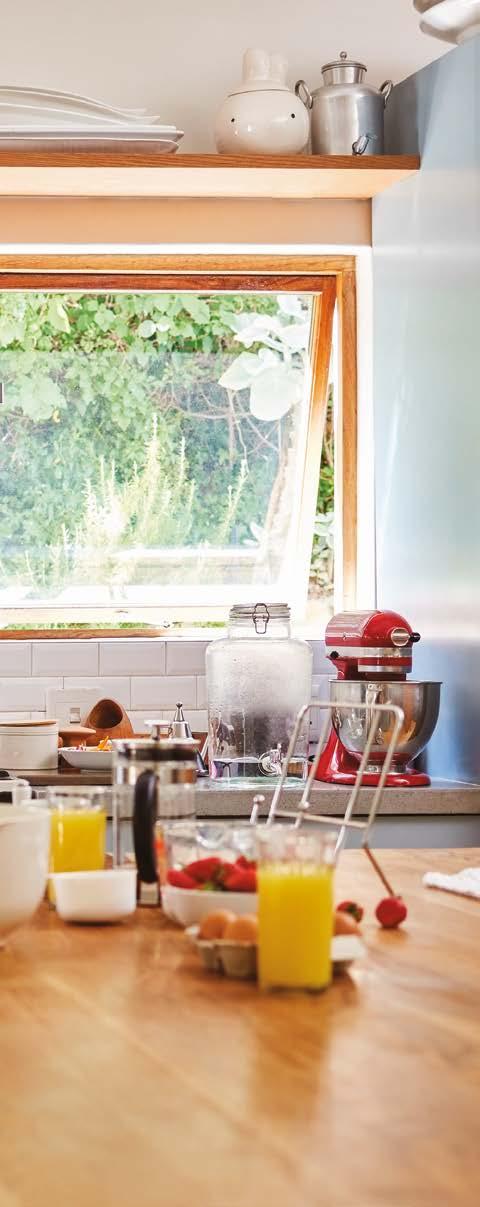
According to data from Rome Business School and Intesa Sanpaolo, the Silver Generation holds over 60% of the net wealth of Italian households. A retired couple without children spends an average of €2,674 per month — above the national average of €2,571 (Istat/Poste Italiane) — and a growing share of that "gure goes towards upgrading the home. Not replacing what breaks: the conscious choice to live better.
For those managing a housewares store, a textile retailer, or a gift and homewares point of sale,
60% of net household wealth held by the over-55s
Contrary to common assumptions, the average spending of senior households in Italy has surpassed that of younger generations, thanks to greater financial stability.
According to the 2025 report by Rome Business School and Intesa Sanpaolo data, the "Silver" generation holds over 60% of the net wealth of Italian households. Against a national monthly average expenditure of approximately €2,571, a childless over-65 couple spends an average of €2,674 (Poste Italiane/Istat data). Of this figure, the share allocated to home maintenance, efficiency improvements, and furnishing upgrades is continuously growing. The goods they are directing their spending towards are no longer "replacement" purchases (changing an appliance because it has broken down), but "upgrade" purchases.
This overturns the logic of product assortment. The question is no longer "do I carry products suitable for elderly customers?" but rather "does my assortment speak to someone who wants the very best in quality, functionality, and durability?" If the answer is yes, you are already working for the Silver Generation — perhaps without realising it. If the answer is no, there is a market walking right past you.
Data on domestic investment among the over-55 segment maps out the winning categories with considerable clarity. On the home appliances front, the preference runs towards products that reduce physical effort without saying so: self-
2.674€ average monthly expenditure of a childless over-65 couple
66%
of over-55s desire AI in the home, provided it simplifies their lives
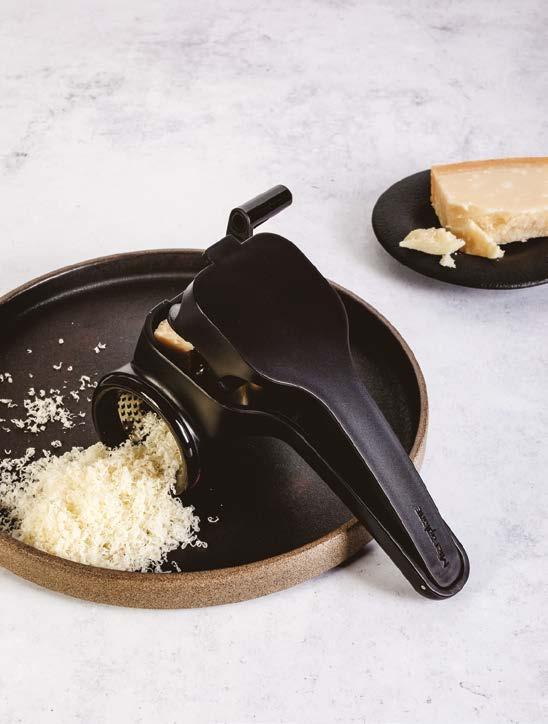
Microplane® rotating grater with funnelshaped photo-etched stainless steel blade. Manual crank operation: fingers never come into contact with the blade. Detachable and dishwasher safe.
Retailers must understand that today's Silver consumer buys for pleasure and prevention, not out of clinical necessity. The stereotype of the Longevity Economy being driven solely by health needs must be dispelled: Silver consumers invest in order to live their independence more fully, transforming the home into an active wellness hub.
Data from the PoliMi Longevity & Silver Economy Observatory (2026) confirms this openness: 35% of over-55s regularly shop online, and 66% are aware of and wish to integrate AI into their domestic routines, provided it makes daily life easier rather than more complicated.
cleaning ovens, quiet dishwashers with ergonomic baskets, coffee machines with simple interfaces. These are not "elderly products": they are excellent products, which the Silver consumer chooses because they can afford them and know how to recognise quality.
In cookware and tableware, the logic is identical. The Silver customer buys the thick-based stainless steel saucepan because they still cook with pleasure and want to do it well. They choose artisanal ceramic tableware because the table is still an important social occasion, a daily ritual they care about. They buy the quality chef's knife because they will use it for twenty years. For retailers, the Silver Economy is not just a matter of product: it is a matter of environment and relationship. The over-60 consumer is generally more willing to spend time in-store, more interested in conversation with staff, and more inclined towards considered purchasing. This is
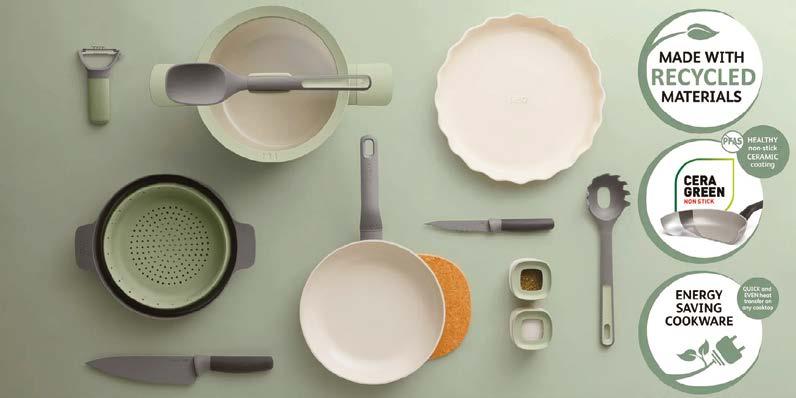
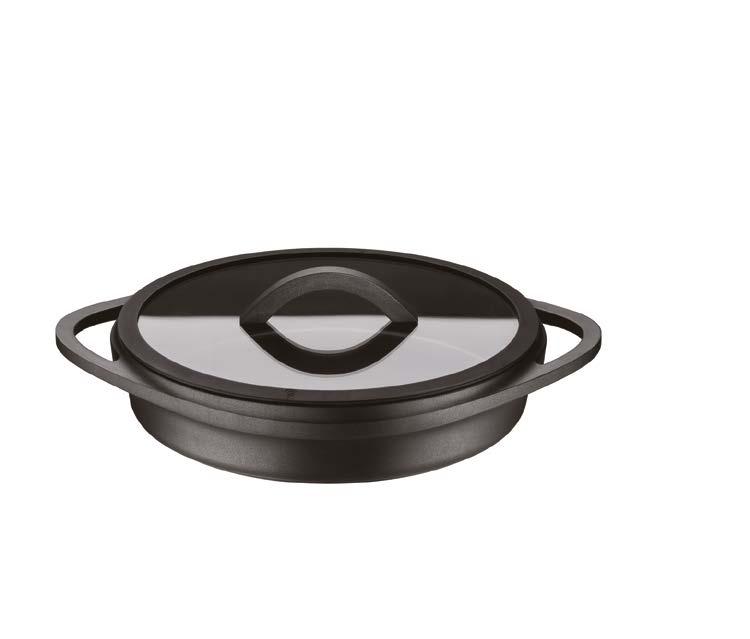
the customer every good retailer would want. There are three concrete levers to work with. First: readability. Clear product labels with information on materials and maintenance make a real difference for someone who wants to understand what they are buying. Second: consultancy. Well-trained staff who can explain why one product is superior to another are a receiptmultiplier for this segment more than for any other. Third: the tactile experience. The Silver consumer wants to touch, weigh, and open things. A layout that encourages physical contact with the product drives purchasing. By 2035, the share of domestic spending by the over-55s will exceed 70% of the national total. Those in retail and industry who have already begun building relationships with this segment — through assortment, training, and communication — will hold a competitive advantage that will be very dif"cult to close.
Universal Design is the architectural and methodological paradigm that aims to design environments, products, and services so that they can be used by the greatest possible number of people, regardless of age, ability, or social condition — without the need for specialised adaptations.
Developed in the 1980s by architect Ronald Mace, the concept has evolved well beyond the limited vision of removing physical barriers. Whereas barrier elimination intervenes after the fact to "correct" a limitation (such as adding a ramp), Universal Design builds inclusivity in from the outset.
BergHOFF's Leo line embodies intuitive design through vibrant colours, organic forms, and ergonomic soft-touch handles. Perfect for the Silver Generation, it combines lightness and safe materials, simplifying every technical gesture in the kitchen without sacrificing a fresh and contemporary aesthetic.
Pinti's Fusioni collection, designed by Marcello Ziliani, transforms cooking into an act of conviviality. Thanks to its singlepiece die-cast aluminium construction, the body and arcshaped handles merge into a harmonious ribbon that ensures robustness, an exceptionally comfortable grip, and an iconic style inspired by Japanese culture.
Equitable Use: an induction hob is safe for an elderly person but equally so for a child. The design is identical; safety increases for everyone.
Flexibility and Simplicity: environments that adapt. For example, cabinets with automatic internal lighting that assist those with reduced vision, while remaining highly elegant and practical for anyone searching for an item in a dark cupboard.
Reduction of Physical Effort: this is the trend emerging from trade fairs such as EuroCucina. Mechanisms that bring shelving to the user's level eliminate the need to bend or reach, transforming a strenuous movement into a fluid one.
Furoshiki - Furoshiki
A traditional square piece of fabric, historically used in Japan to carry clothing, bento (Japanese meals), gifts, and other items.
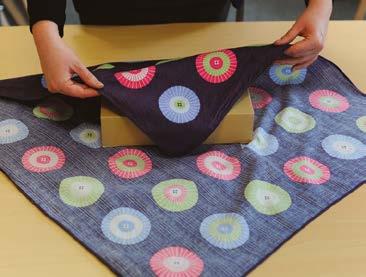
1
Place the furoshiki in a diamond orientation and centre the object on it. Lift the bottom flap, cover the box, then bring the opposite top flap towards you to wrap the central section.
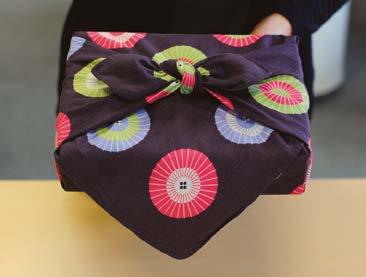
4
Complete the square knot by crossing the flaps in the opposite direction. Tighten and adjust the loops to achieve a symmetrical, flat, and geometrically neat bow.
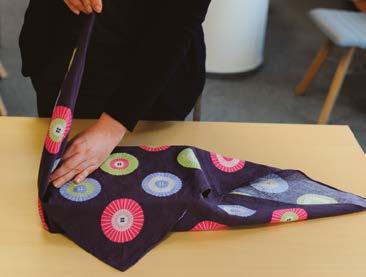
2
Pull one side flap outwards to eliminate any excess fabric, folding the inner edge inward to create a clean line and begin wrapping the side.
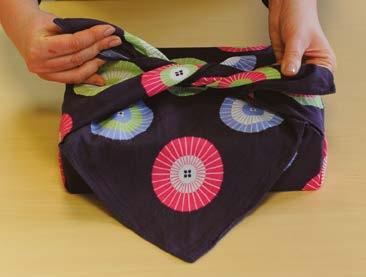
3
Gather both side flaps, bring them up over the centre of the box, and cross them firmly, completing the first pass of a square knot (known as Mamonusubi).
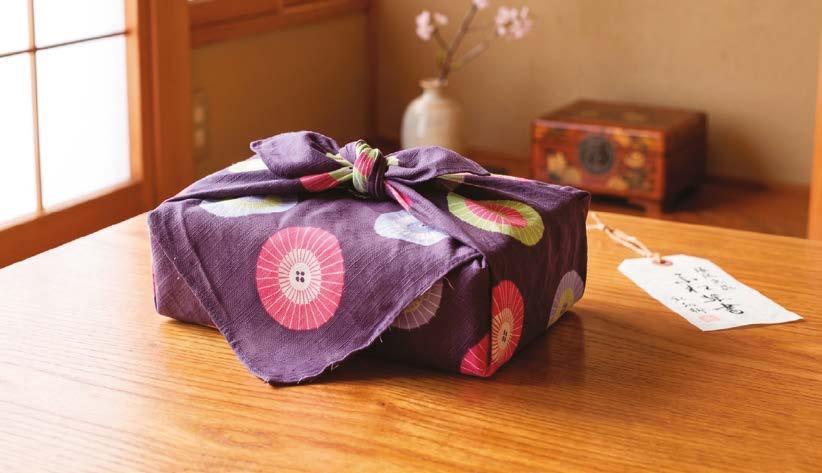

From Germany, the department store in Osnabrück founded in 1891 that won over the judges of the GIA with its vision of retail as a human, sustainable, and digital experience
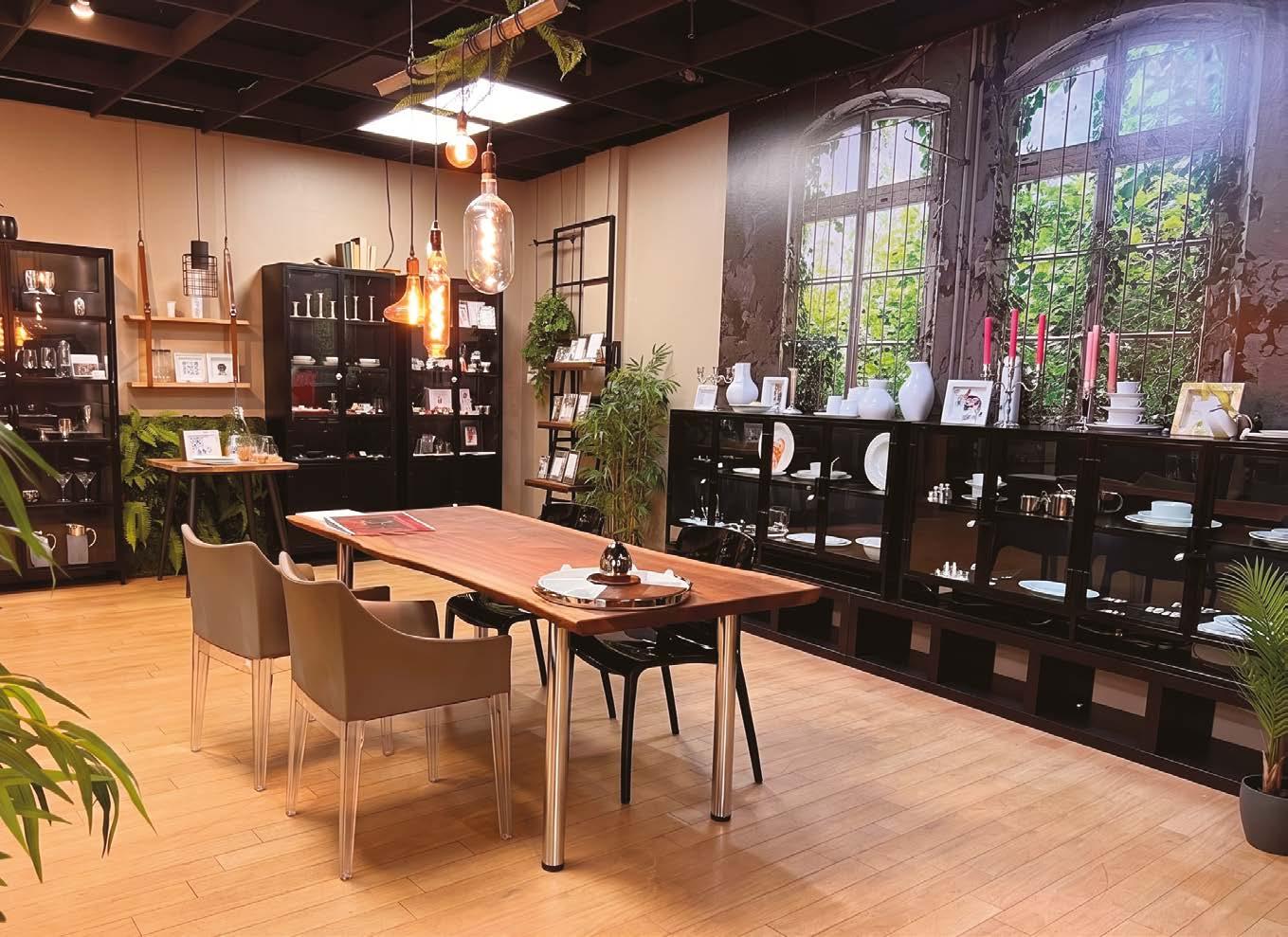
There are shops that sell products and shops that sell experiences. Schäffer, the department store in Osnabrück, Germany, belongs without question to the second category — and has done so for 135 years, with the same philosophy etched into its DNA since its founding: "Feel deeply, reflect wisely, act justly." It comes as no surprise, then, that the jury of the gia – IHA Global Innovation Awards selected Schäffer as Global Honoree 2026, a recognition that rewards excellence, innovation, and creativity in home goods retail worldwide.
The story begins in 1891, when Carl Schäffer opens a haberdashery on Nikolaiort, in the heart of Osnabrück. The building is almost completely destroyed during the bombings of 1942 and 1945, but in 1949 Tekla Schäffer has it rebuilt and relaunches the business. Today, at the "fth
generation, the store is led by Vanessa Waldvogel-Schäffer and Tobias Schonebeck: approximately 60 employees, 3,000 square metres of retail space spread across four floors, and an online shop with over 50,000 items.
"Our customers and visitors don't just see products — they see people," explains Tobias Schonebeck. "In a good, fair, and family-oriented working environment, enthusiasm develops, and people can feel it. The special strength of our company comes from the fact that 60 employees feel safe and free to bring their own ideas, to participate in decisions. This strength, rooted in our company motto, shapes our actions every single day."
Stepping into Schäffer is not simply going shopping. The ground floor is home to gift items; the "rst floor is dedicated to tableware and home dé-
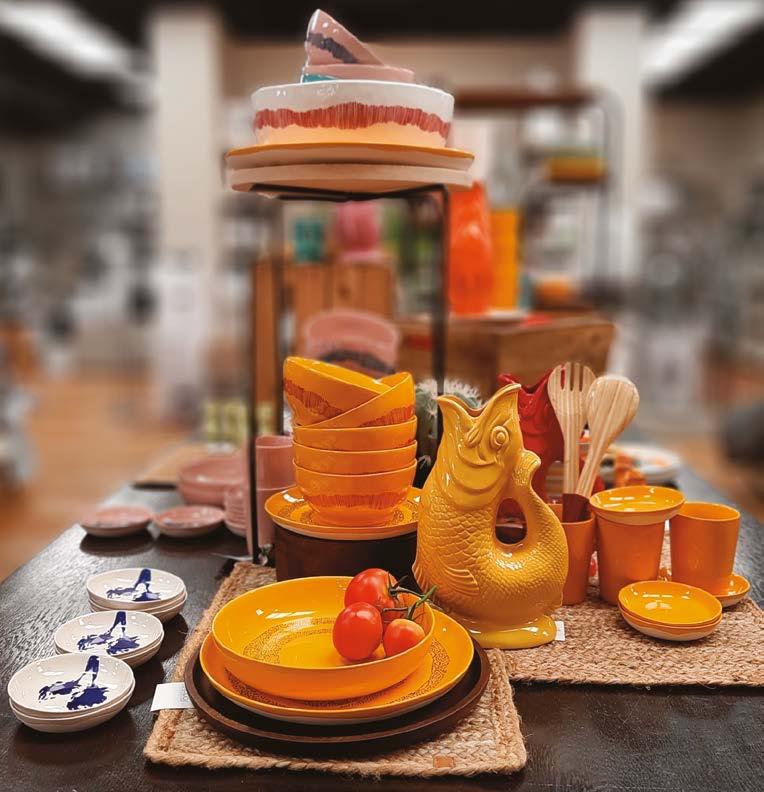
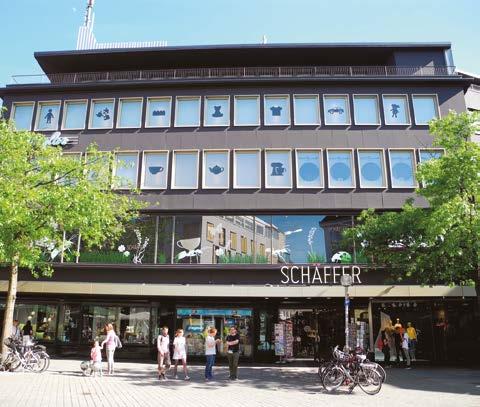
The historic Schäffer premises on Nikolaiort, in the centre of Osnabrück: the very same address where Carl Schäffer opened his haberdashery in 1891. Today the department store spans four floors across approximately 3,000 square metres.
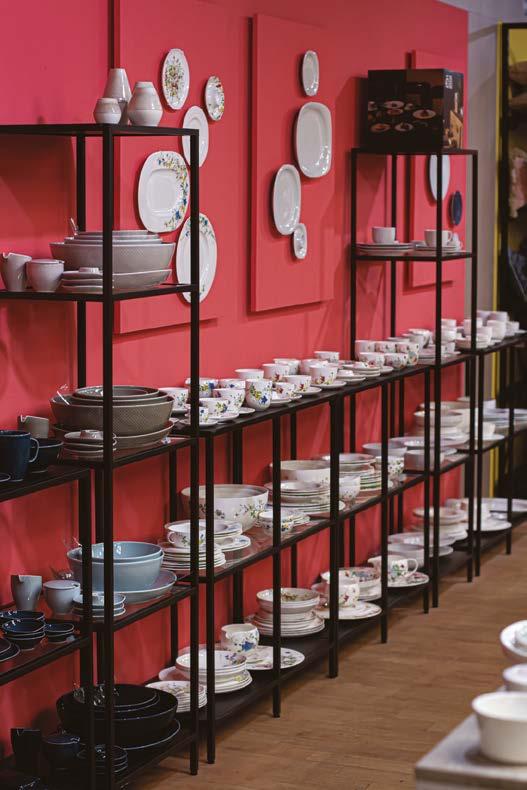
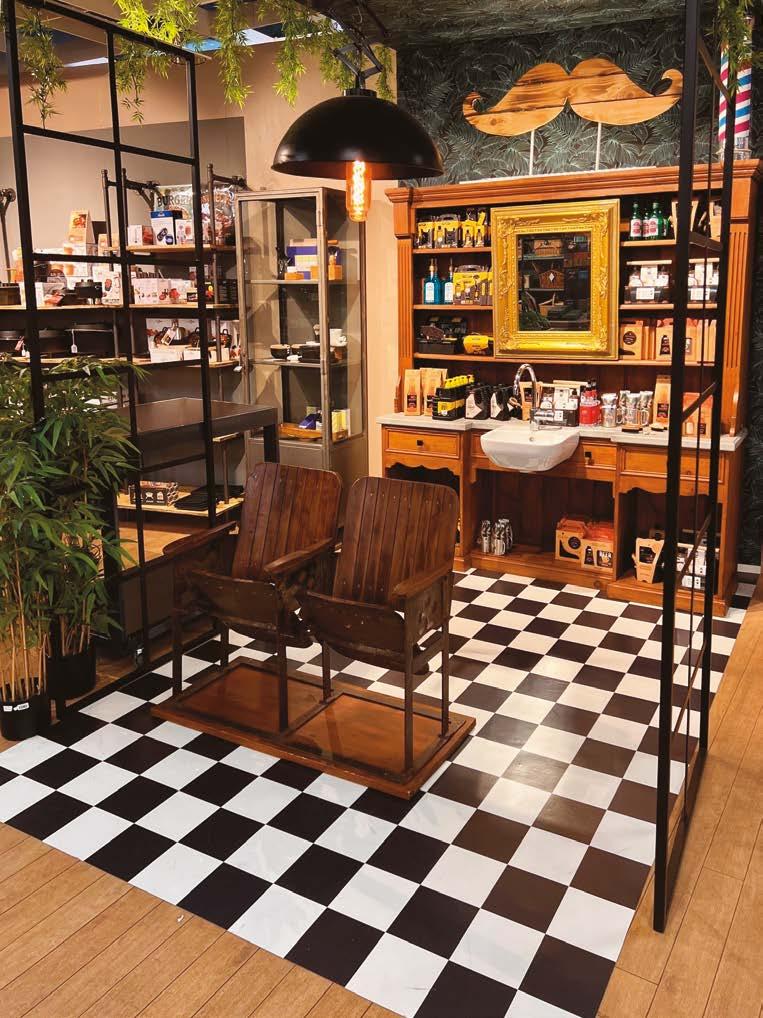
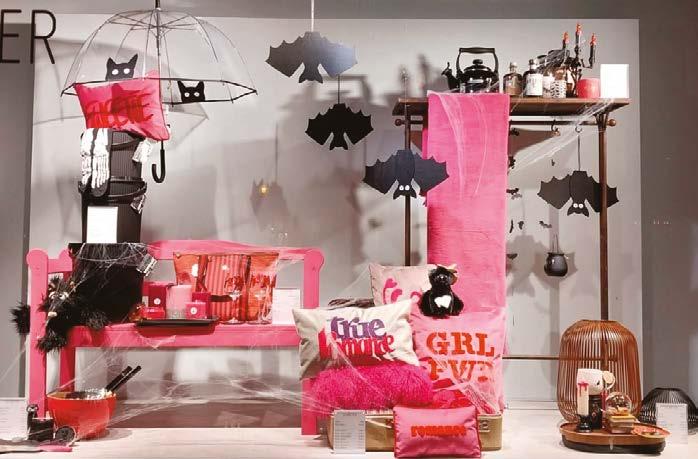
cor; the second houses a cookery school and Café Carl, where four master pastry chefs prepare macarons, cakes, and artisanal specialities overlooking the magni"cent Nikolaiort square; on the third floor, the toy department draws families through the entire building. Each floor is a world unto itself, designed around the needs of customers rather than the dictates of brands.
Among the most original concepts is the Men's Shop, which combines a cinema, a Barbour boutique, and a bar in a single area with a character all its own. Then there is the Regio-Store: subsidised display units for local producers and startups — a small commercial incubator at the heart of the store.
On the roof, beehives visible from the toy department through a glass wall produce Schäffer honey, sold in-store and at the café. A detail that speaks volumes about the ethos of the place: care for the environment, customer education, and always one more reason to come back.
The Men's Shop: a chequered floor, vintage cinema armchairs, and an antique barber's cabinet repurposed as a shelving unit.
Schäffer's window displays change theme several times a year, and each arrangement tells a complete story: from the vivid pink with black Halloween bats, to a rocket built from blue ceramic pots, through to the Christmas Wonderland with mirror-effect baubles and a giant mushroom.
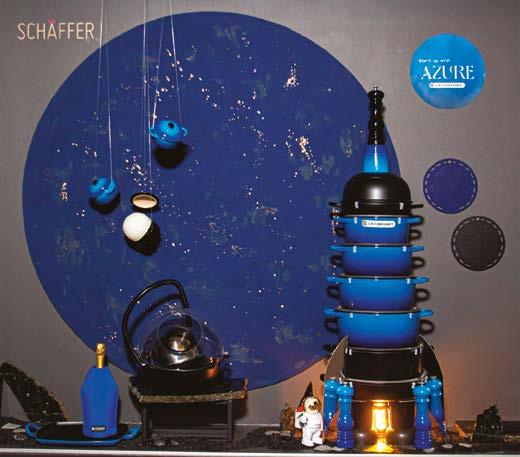
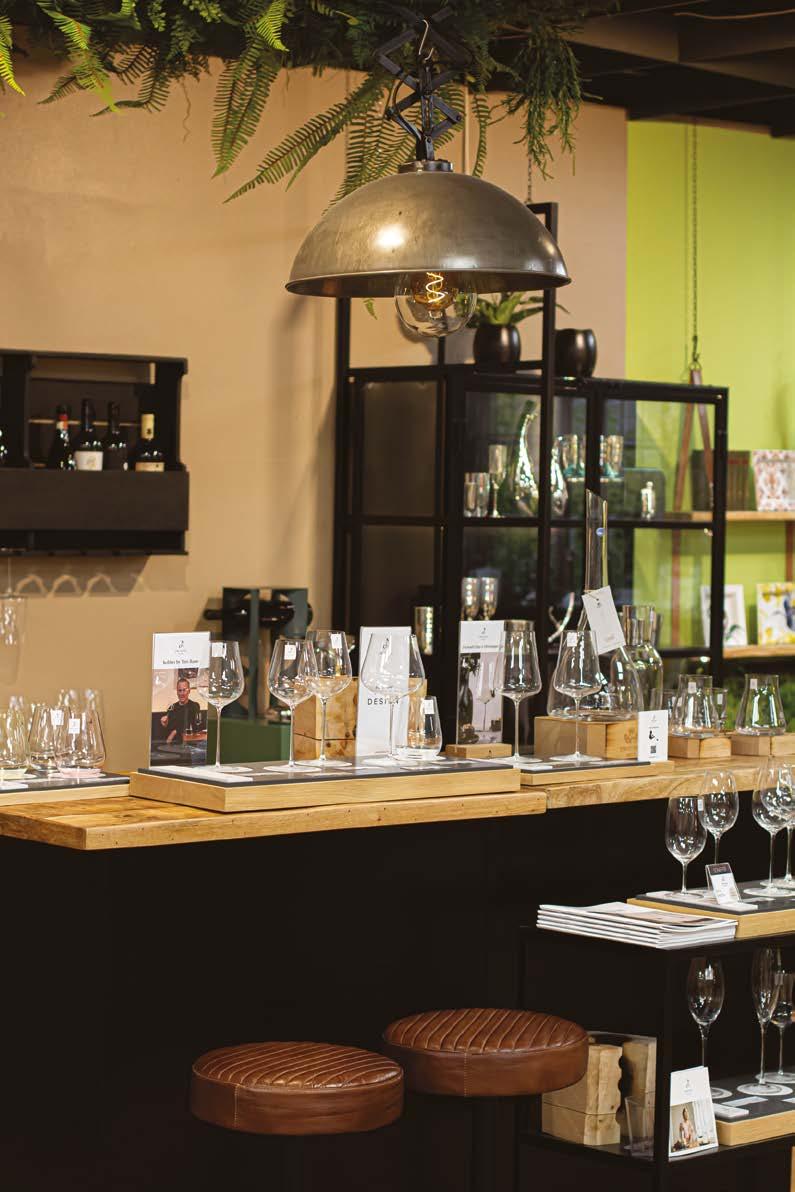
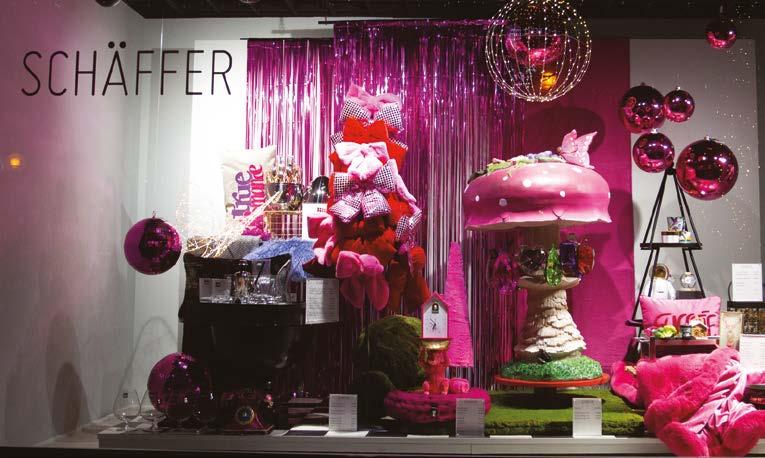
When the Store Becomes a Stage Schäffer's true innovation lies in its events calendar. From November to mid-January, the store transforms into Schäffer's Wonderland — an immersive Christmas universe complete with elves, glitter, and a colour palette that changes every year. The window displays, the sales floor, and the digital channels all tell the same story: a coherent narrative that runs through every touchpoint.
The "Nights at the Department Store" evenings — held for both children and adults — turn the store into a fully-fledged evening venue featuring a disco, theatre, magic acts, "re engine rides, macaron-making workshops, and tastings. Tickets sell out quickly: the Halloween edition sold 400 places. A single Instagram post can reach 100,000 to 200,000 impressions; in the weeks leading up to Christmas, "gures climb into the millions of users.
There is even room for the unexpected as an opportunity: during the Christmas period, a popcorn machine triggered the "re alarm with its steam. The store was evacuated — for the "rst time in 135 years. The "re"ghters who responded were invited to stay and eat popcorn with children and families, and the little ones were given the chance to have their photo taken on the "re engine. "For the children, it was an exciting experience," recalls Tobias. "We had imagined things going slightly differently, but the "re"ghters' visit turned into something truly special."
Omnichannel and Arti cial Intelligence
Schäffer demonstrates that an independent physical retailer can compete with the major digital players. Every day, hundreds of parcels are dispatched within 24 hours through an e-commerce system fully integrated with the store's management and accounting software. Scanning an item picked from stock automatically triggers the generation of an invoice, delivery note, tracking information, and return label — a process that also enables the seamless involvement of temporary workers and people with disabilities, thanks to the simplicity of the automated operations.
The store already offers self-checkout stations and a Click & Collect system with 24-hour pic-
The in-store self-checkout till and the automated collection point outside, available 24 hours a day: two tools through which the store brings the autonomy of digital commerce both inside and outside the physical department store, without sacrificing the brand's visual identity.
The Schäffer model is replicable in its principles, even on a smaller scale. Some ideas worth drawing inspiration from:
Design the experience before the product: strategic seating areas, scents, events — every detail is conceived around the "moment of pleasure."
The events calendar as a marketing tool: themed evenings, workshops, tastings. Enormous budgets are not required; what is needed is creativity and consistency.
Coherent visual merchandising across all channels: the same story told in the window display, in-store, on Instagram, and via newsletter.
Sustainability as narrative: the rooftop beehives, the recycled paper bags with reusable tags — small gestures that become powerful stories.
Celebrating the local area: the RegioStore gives space to small local producers, reinforcing the store's identity as a community hub.
kup availability. The management of online sales platforms is automated with real-time margin optimisation. Across the 50,000 online references, each one has dedicated editorial content, made possible by the extensive use of arti"cial intelligence tools for text production and management.
Currently in the launch phase is an AI system applied to the customer journey: after purchasing a frying pan, the customer receives a message that same evening with tips for the "rst use and a coupon for their next purchase. Communication takes place on the customer's preferred channel — email, WhatsApp, or app. This represents a return to the expertise of the specialist retailer, replicated in a scalable way: more ef"cient and sustainable than mass mailings, and more personal than any generic recommendation algorithm.
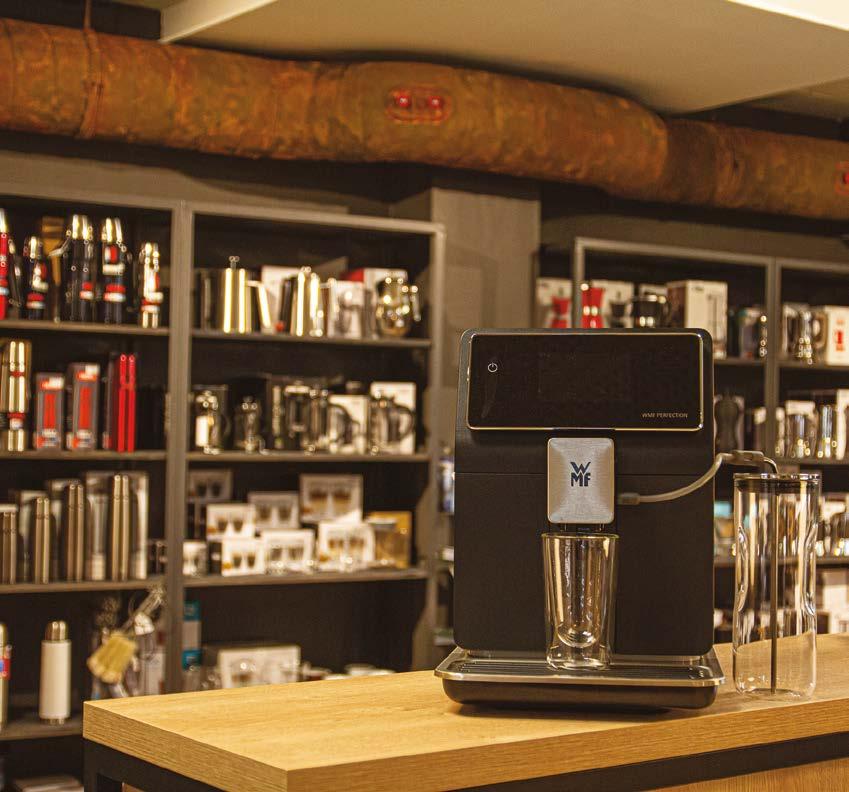
On the social media front, the "Schäffer 2.0" strategy targets younger demographic segments with bold and humorous video content, using "P.O.V." and "Aura" formats in which employees and influencers speak directly to the customer with naturalness and authenticity. The social media team documents events in real time, generating signi"cant in-store traf"c.
The Carl Schäffer Foundation, established on the occasion of the store's 125th anniversary, supports animal welfare and young people in dif"cult circumstances. Every year, the Schäffer Advent Calendar — produced in high print runs and eagerly anticipated by customers — generates thousands of euros for the foundation. The unprinted brown recycled paper shopping bags, paired with detachable designer tags in over 20 variants ("Shopping Tour", "Girls' Day Out"…), feature a voluntary donation mechanism: customers can either pay for the bag or make a donation, with funds going directly to the foundation.
Staff mobility is an integral part of the sustainability strategy: public transport subsidies and bicycle leasing for employees, with the conviction that every kilometre not travelled by car represents the best possible mobility model. The Future? People at the Centre, Always After 135 years and the gia recognition, the question is what comes next. Tobias's answer is clear: "We are incredibly grateful for this legacy and feel a great sense of responsibility in being part of it and in shaping the future. The world is changing rapidly, and consumer behaviour is undergoing signi"cant transformation. Now is the moment to take the right steps. One thing is certain: we will always keep our company philosophy "rst, and people at the centre. That has always been the secret of our success."
For 2026, an expansion of the ground floor is already planned, featuring a modern mixed shopping and dining concept. The store that Carl Schäffer founded as a haberdashery has never stopped reinventing itself — and has no intention of doing so.
The Regio-Store: a wall of rough wooden crates houses the products of local producers and small start-ups from the Osnabrück region, who rent a display space at a subsidised rate. A way of supporting the local economy and bringing a constantly renewed offer into the store.
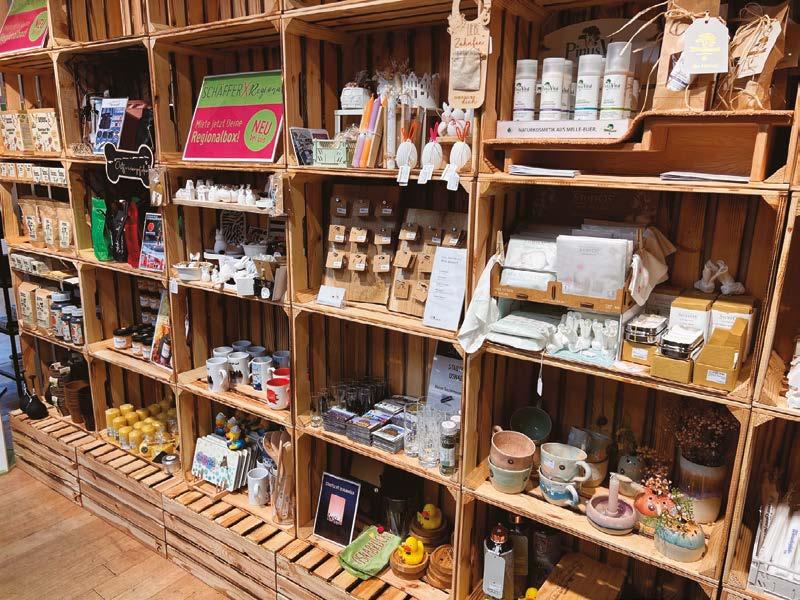
The beehives on the roof of the department store, tended by a professional beekeeper. The honey produced is sold in-store and at Café Carl. Customers can take part in urban beekeeping events — honey harvesting, hive painting, and beeswax processing — organised throughout the year.
Entering the gia 2026-2027
The IHA Global Innovation Awards (gia) are the leading international programme recognising excellence, innovation, and creativity in home goods retail. Sponsored and organised by The Inspired Home Show and the International Housewares Association (IHA), the gia is a global accolade with a local selection process: each country nominates its own national winner, who then competes on the international stage. The Italian winner of the gia 2026–2027 edition will represent Italy in Chicago at The Inspired Home Show, 9–11 March 2027. If you wish to enter your store, complete the form on the website — you will find the QR code alongside — or visit:
casastileweb.it/gia-award2026-2027



La rivista dedicata a chi progetta, arreda e vende il bello per la casa è disponibile gratuitamente in versione digitale, in italiano e inglese, sul nostro sito
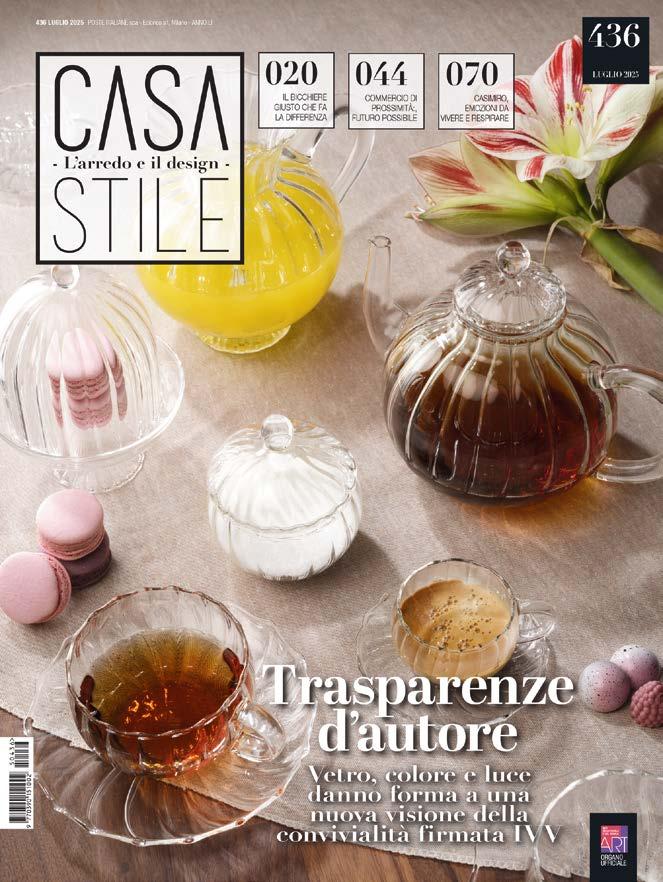
- tessile e profumazioni-
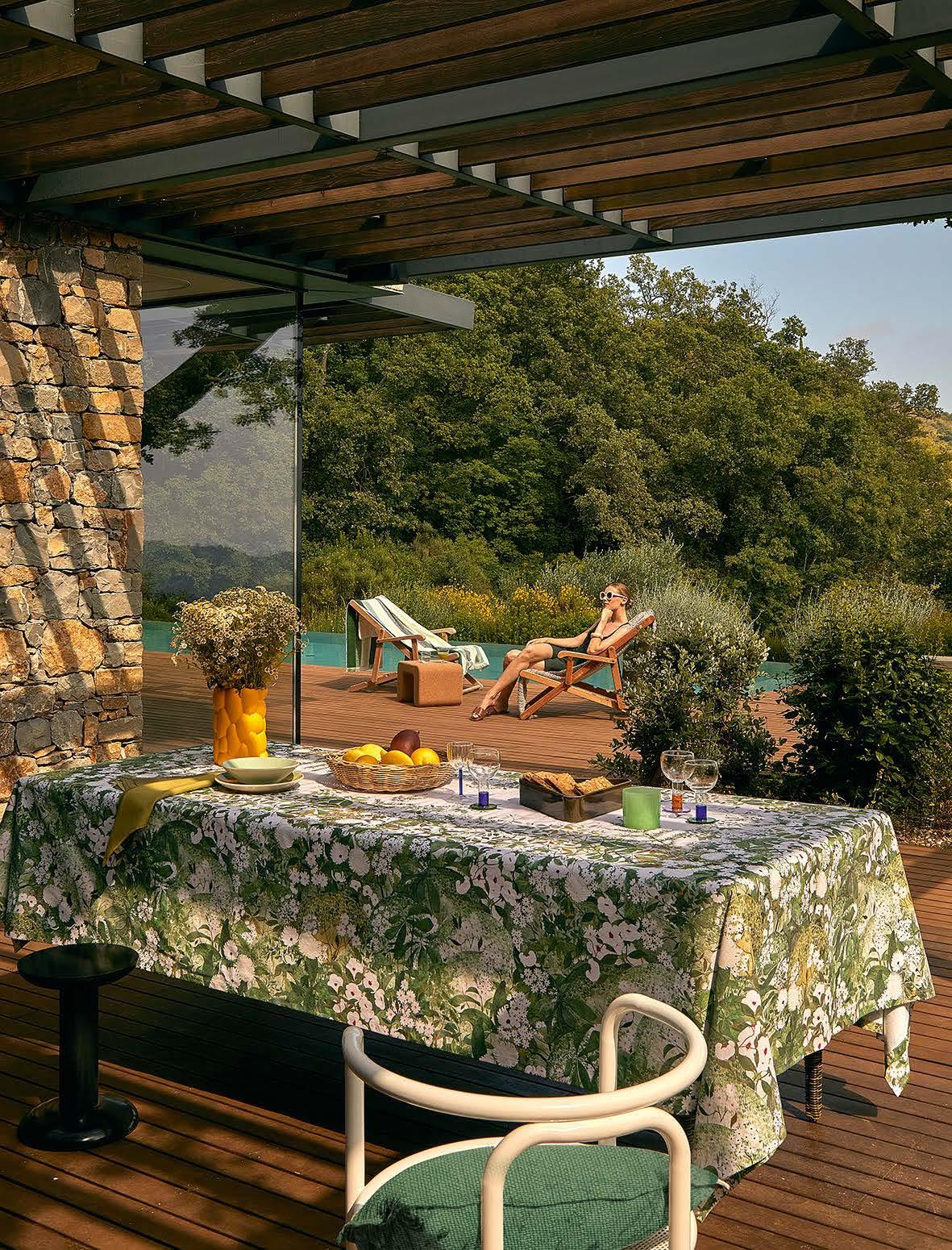
Fresh textures and olfactory rituals designed to accompany the everyday moments of the whole family
Fazzini presents its new collections inspired by the ephemeral nature of flowers and the art of Flemish vanitas painting. Between 100% Made in Italy craftsmanship and sensory research, the collection in satin and percale unites the fluidity of petals with highend design for a profound sense of wellbeing.
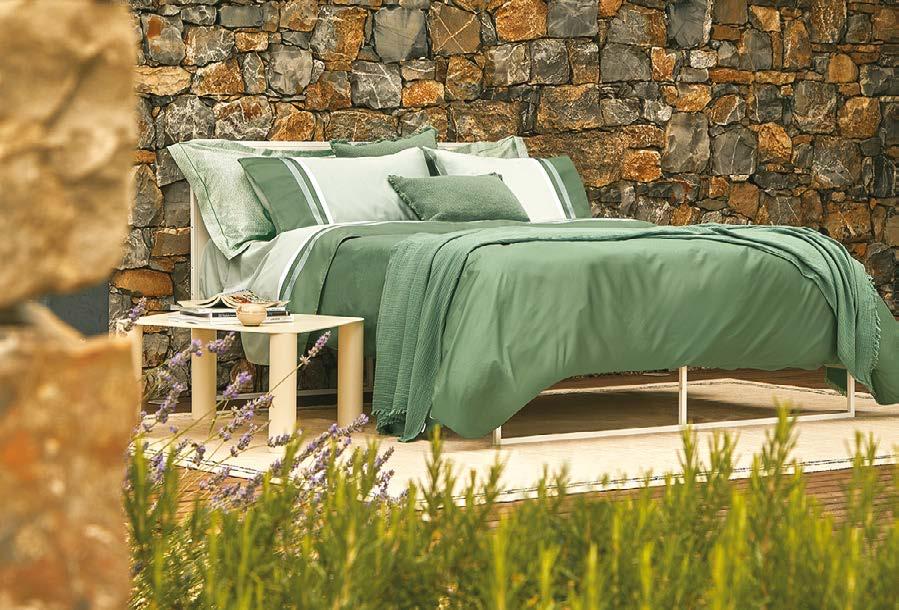
Humanity has always entrusted the plant microcosm with its most profound messages, translating them into aesthetic codes and complex spiritual or secular symbolism. Flowers thus reveal themselves as an absolute vehicle of expression — a concept that Fazzini elevates to the guiding thread of its seasonal offering. In the seventeenth century, Flemish painters made them the protagonists of their stilllife works: the art of vanitas celebrated the contrast between splendour and decline, where the ephemeral beauty of petals alluded to the transience of life. Fazzini draws on this age-old les-
The Kubric collection, in satin, is renewed through colour: a green evoking a hint of mint and a rose variant bring freshness and a contemporary feel.
son to transform floral impermanence into a reservoir of visual and olfactory memories — custodians of a deep wellbeing to be rediscovered at a sensory level in the everyday life of the home. This decorative strand has traversed the centuries, inspiring movements that Fazzini now calls upon in its narrative: from the Japanese woodblock prints of Utamaro, Hokusai, and Hiroshige, which captivated the Impressionists, to the sinuous motifs of William Morris in the Arts and Crafts movement, through to the vital exuberance of Frida Kahlo and the symbols of freedom of the 1970s. To this day, the garden continues to inspi-
re Fazzini with an imagery capable of evoking fragility and strength, intimacy and renewal.
A Palette of Intimate Transformation
The chromatic metamorphosis of petals — from bud to "nal dissolution — directly inspires Fazzini's proposals. The new palette embraces the purity of white in dialogue with violet and fresh lavender; sandalwood combines with powder pink and brick, while a novel, slightly acidic yellow makes its debut. Paying tribute to the botanical dimension, a broad range of greens fades through to the blue-tinged gradations of water, de"ning the identity of the spring/summer season.
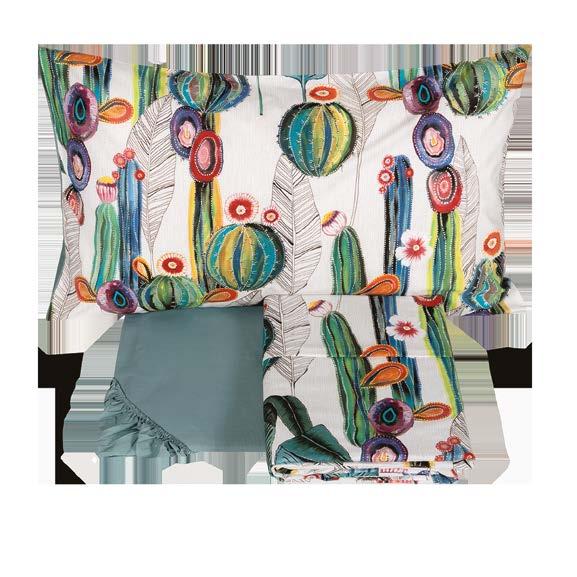
Colourful, bold, and full of energy, Frida is a journey through the artistic suggestions of Mexico and the great artist to whom it pays homage. Oversized flowering cacti, leaves, and a lightly textured ground make this percale collection a celebration of vitality.
A direct homage to the aesthetics of the Flemish painters and to cut flowers, Vanitas is crafted in refined cotton satin — available in rose-lavender, grey-sandalwood, and green-blue variants — and distinguished by its enlarged floral motif in worked jacquard that lends texture and relief to the fabric, as well as by the high tailored border with contrasting edge on the complete sheet set.
The Belle Époque collection pays tribute to the decorative spirit of the late nineteenth century and to the art of William Morris, exalting the sinuous form of the iconic flower of the era: the iris. The printed motif on percale is available in two variants — on a white ground or paired with a yellow base.
Founded in 1976 in the industrial district north of Milan, Fazzini has its roots in the textile tradition of the Zibetti and Fazzini families, active since the early twentieth century. This solid heritage gave rise to a company that combines craftsmanship with 100% Made in Italy production. For SpringSummer 2026, the brand celebrates a poetic analogy between the transience of nature, the evolution of art, and the mutability of human life — translating the intimate process of floral transformation into a home linen collection capable of evoking a profound sense of wellbeing.
Lightweight, fresh, practical yet always refined: the new summer textiles dress the home with bright colors, natural fibers, and pleasant textures to the touch. From the table to the bedroom, up to the bathroom and leisure time, these collections are designed to accompany the daily moments of the whole family, transforming every space into an oasis of comfort, well-being, and style
by Francesca Guerini Rocco
The Nara collection by Fazzini (dedicated to the bedroom) extends to the table with a discreet and natural elegance. The floral pattern, digitally printed in high definition on pure cotton fabric, frames the table setting with a flowery meadow that gently fades towards the center.
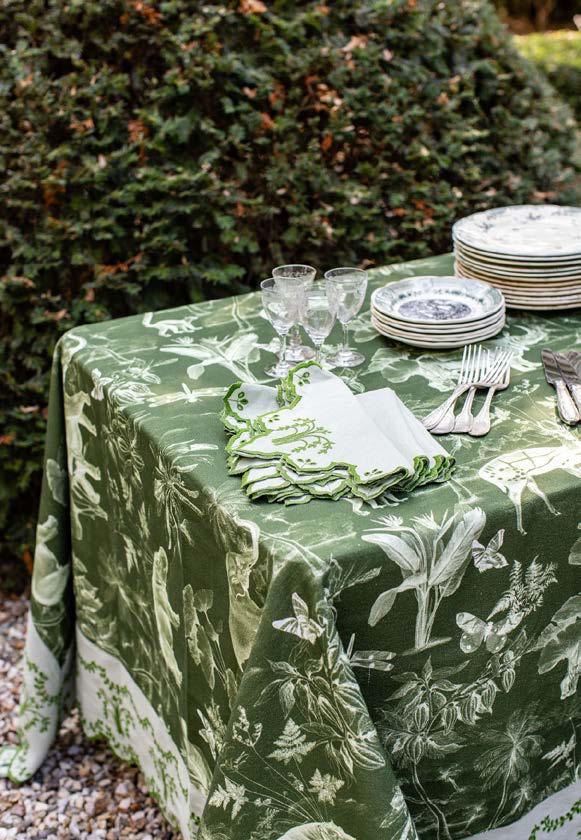
Figs, Toucan, Damier, Orto, Koi: Vallesusa presents many new patterns for the Color Club collection. To the tablecloths, runners, and comfortable American placemats, two practical new items are added: the apron with adjustable bib and the monospugna spinning cloth. All designs are made with high-definition digital printing, while the stain-resistant treatment makes these products suitable for both indoor and outdoor use.
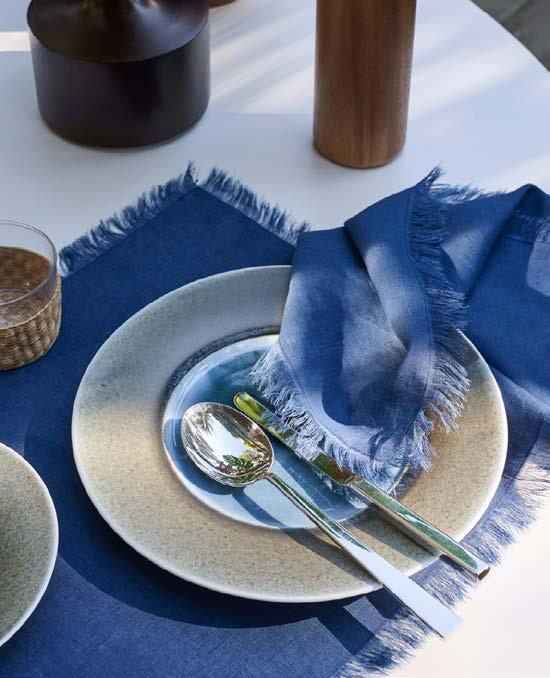
Living Weaves: this is the name of the new textile line by Quagliotti that showcases tablecloths, napkins and placemats made on Crespolino and Raso Lux bases, with interlacing lines, stitched colors in the blue palette and tailored details with a refined touch. For a fresh, relaxing table suitable for every occasion.
Thanks to the special resin treatment, the tablecloths by Borgo delle Tovaglie are the emblem of stain-resistant textiles, but in a deluxe version. All models, in fact, in addition to being practical and easy to clean, are made to measure with meticulous tailoring and are embellished with crafted edges and fine embroidery.
Designed to celebrate the most elegant convivial moments, without sacrificing practicality, the Convivio collection by Vallesusa is made with fine fabrics such as jacquard, linen blend, twill, and cotton panama, yarn-dyed and printed on satin. Its exceptional comfort is due to the exclusive Avantgarde stainresistant finish.
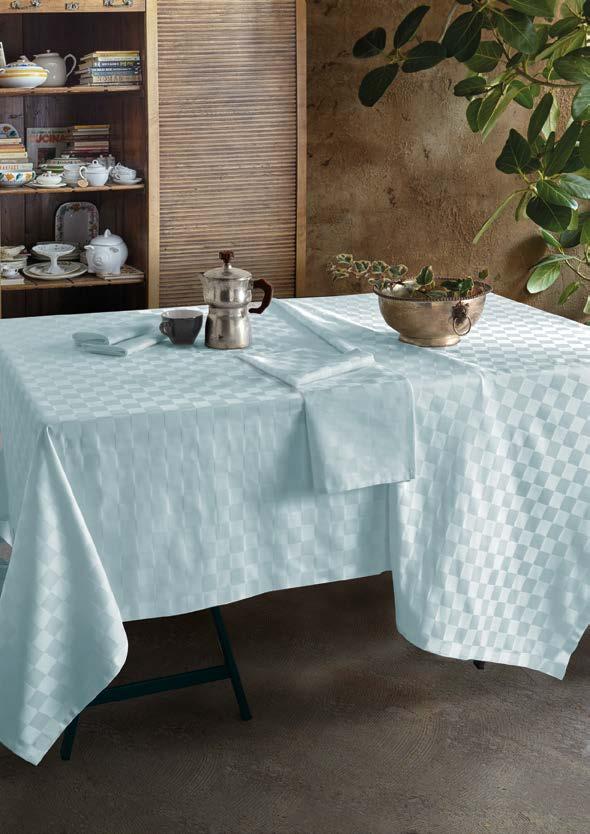
Lightweight and designed specifically for the summer season, the quilts from the Quinta Stagione Hammerfest line are made of 100% printed cotton satin fabric, with different fillings according to needs: cotton fiber for Twig, wool fiber for Forme. Opale, on the other hand, is made of 100% linen with the interior in cotton fiber.
Cinelli Piume e Piumini expands the Natura collection with Mistral, a product designed specifically for the warmest months. The line, consisting of quilt, bedspread, and pillow, is made exclusively with linen and cotton, 100% natural. Suitable for the whole family, ensuring comfort, freshness, and breathability.
A fresh caress on the skin: this is the proposal from Cassera Casa, to wish you a good rest. The new muslin collection in cotton is ideal for the warmest nights thanks to its lightness and breathability. To the ongoing version in solid white, natural and pearl, is added the lively multicolored embroidery-effect Erbario print.
Svad Dondi interprets the sleeping area as a jungle of lush leaves, streaked with orange petals. The new Bali bedding plays with bright greens, deep blue, soft cream shades, triple-flanged pillowcases, satin fitted sheet and top sheet printed in bedspread style. There are two variants: Paprika and Carminio.
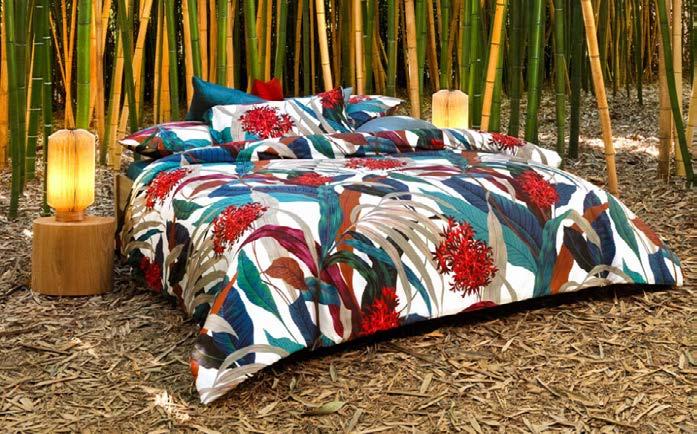
Care Fresh is the name of the exclusive pillowcase by Daunestep which, thanks to its special thermoregulating function, manages to improve the quality of rest. A versatile proposal, suitable for all needs and seasons, ideal for those who desire a practical, fresh, and functional textile accessory, easily matched with any bedding collection.
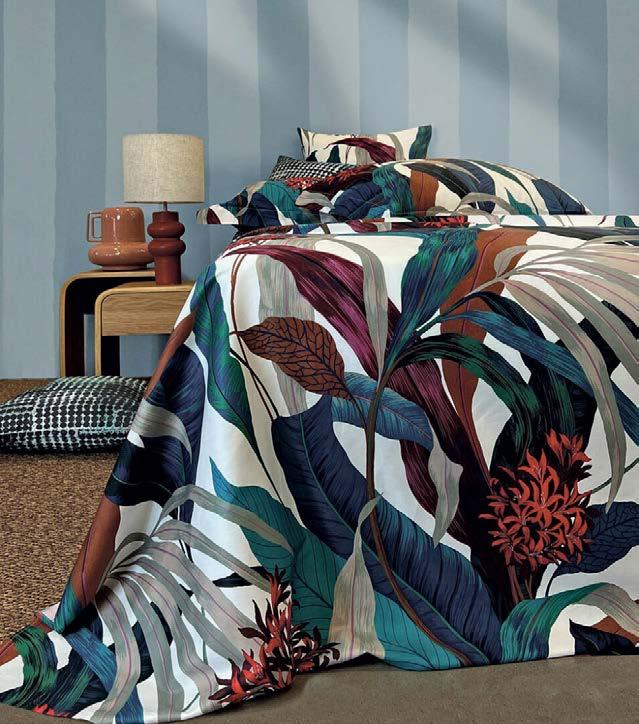
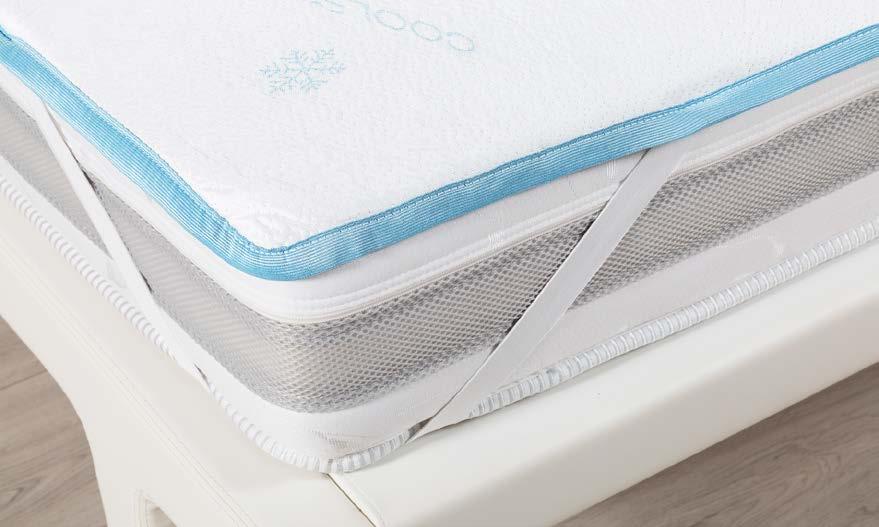
Cooler, the new proposal by Caleffi for the sleeping area, is designed to offer a pleasant and constant sensation of freshness and absolute rest even during the hottest periods. Available as a mattress cover with elastic corners and pillow cover with zipper, it is made with a special fiber that disperses heat and absorbs moisture, promoting breathability even after countless washes.
A soft, elastic, and pleasantto-the-touch jersey sheet: just what you need to dress the bed with simplicity, without sacrificing daily comfort. Durable and suitable for the whole family, Vivacolor by Daunenstep is available in a wide range of colors.
The bathroom collection by Gabel speaks of nature and well-being: the entire Naturae collection is made with double-twisted yarns and Touch Soft&Dry finishing, a process that gives the terry cloth softness and hydrophilicity, greater volume, and non-shrinking dimensions and an enveloping and extremely soft touch.
The collection is available in 1+1 sets, 2+2 sets, bath towels, bathrobes, and fouta, in the two new patterns Maia and Orizzonte.
Thanks to the special online customization service, Caleffi allows you to create elegant custom embroidery on soft terry towels and fluffy cotton bathrobes. Simply choose from various colors and fonts a short personal phrase or your own monogram to create exclusive and intimate sets for the whole family.
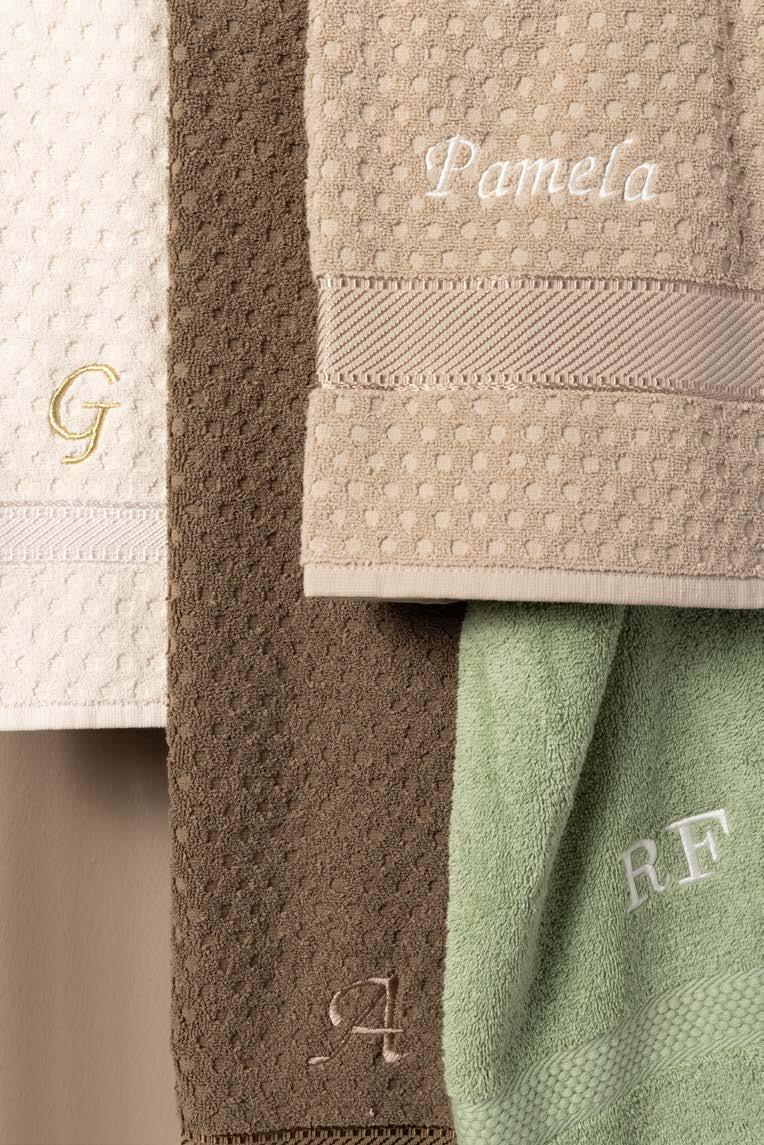
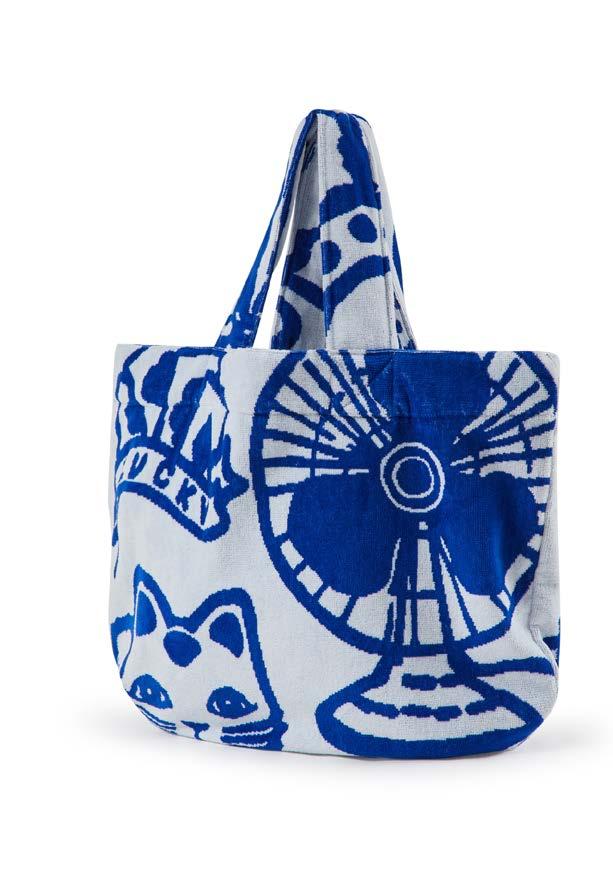
Lucky, the successful collection designed by Paola Navone – OTTO Studio for Lanerossi, is now available in a summer version: the new Lucky You Mare line is made of 100% cotton terry with velour finish, decorated with pop symbols and lucky charms. It includes the beach towel with the characteristic overlock stitching on the edges and a convenient matching beach bag.
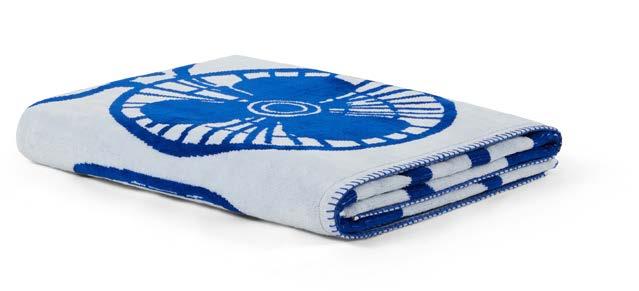
The Timeless blanket by Maryhome unites softness, material quality, and timeless elegance
F.lli Campagnolo is an Italian industrial company founded in 1948 in Bassano del Grappa, with over seventy years of experience in the development of textile collections. Family-run, it is today led by the second generation of the family and has evolved into an international group organised around complementary brands: CMP for outdoor and sportswear, Jeanne Baret for premium women's sportswear, Melby for the children's and junior market, and Maryhome for homewear and home textiles.
The latter was born from a recent rebranding, the previous name being Maryplaid, which accompanied a strategic evolution of the offering and a comprehensive rethinking of the brand's visual identity, with the aim of positioning it as a point of reference for domestic wellbeing. Distribution takes place through a carefully selected network of multi-brand retailers, chosen for their af"nity with the brands' positioning and for their attention to the purchasing experience. www.maryplaid.it
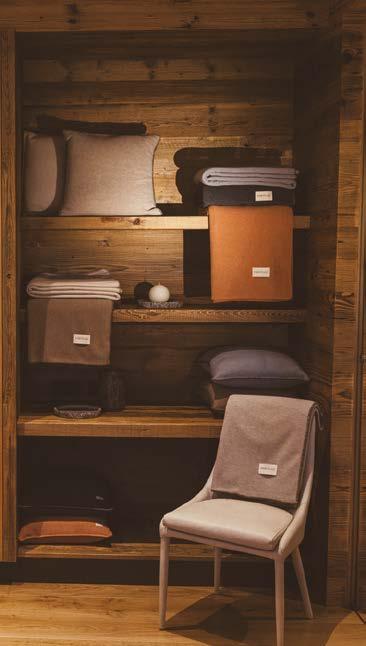
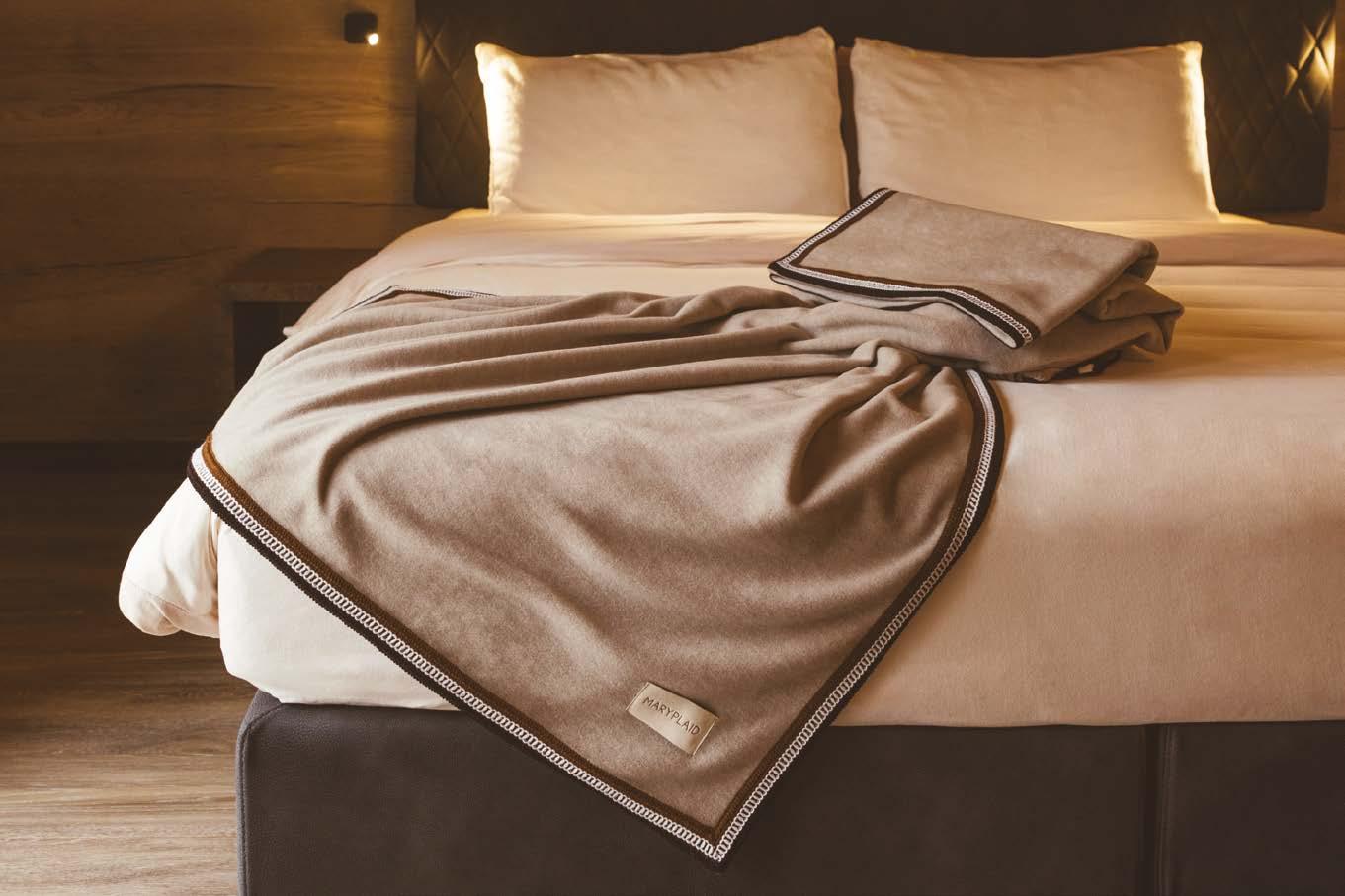
Maryhome Timeless line blanket in viscose fleece, soft and enveloping. Its standard warmth rating makes it ideal for every season, summer evenings included. The tricolour embroidery along the edges, a distinctive detail of the collection, adds a refined touch to living spaces.
"Fragrance has a unique ability: it can evoke emotions, memories, and atmospheres in an immediate and profound way. A fragrance can change the perception of a space and create a sense of wellbeing in people." These are among the reasons that led Chiara Fantini, Commercial Director of Belforte Fragranze Italiane, to choose to work in the world of fragrance. In the interview that follows, she explains how artisanal care, attention to the finest detail, respect for tradition, and social commitment can coexist harmoniously to give life to a product of impeccable quality, fully in keeping with the excellence of Made in Italy.
by Fabio Destefani
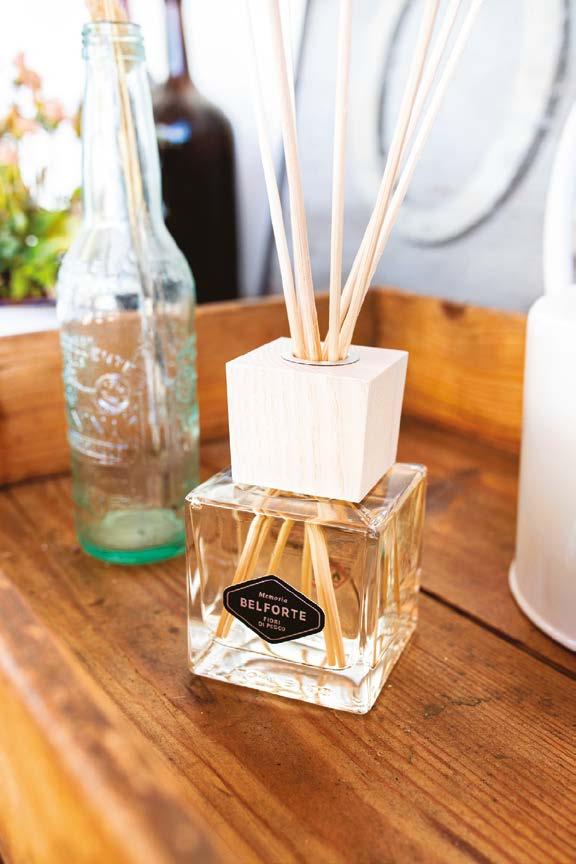
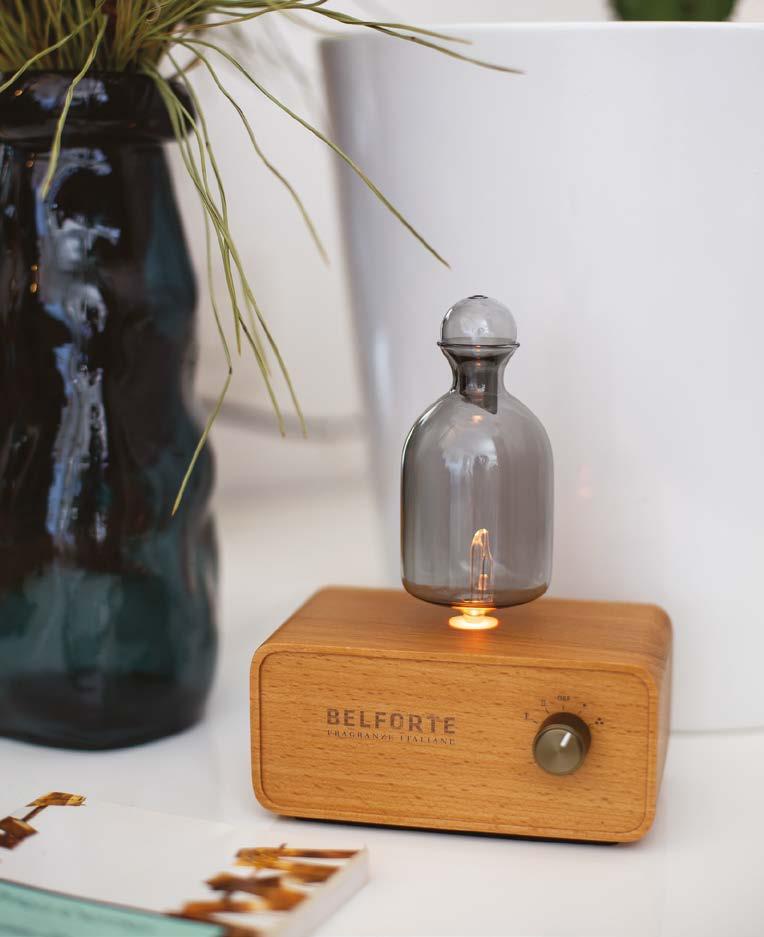
From concept to realisation: could you give me a brief history of Belforte Fragranze Italiane?
Belforte Fragranze Italiane was born approximately twenty years ago from the initiative of a woman from the Marche region, originally from Belforte — a territory suspended between sea and mountains. From this sensibility took shape what would come to be known as "the factory of scented things": a project created to develop fragrances for the home, for textiles, and for the person, capable of expressing emotion, research, and an authentic Italian spirit. In 2013, this legacy was taken up by a group of young people from the social cooperative Gli Amici di Gigi, who chose to carry the brand forward, accompanying it on a path of growth and renewal. Belforte has evolved while keeping its identity intact: artisanal attention, olfactory research, and a strong connection to Made in Italy. Today the brand collaborates with shops, concept stores, the hospitality industry, and interior design professionals, bringing to Italy and abroad a vision of fragrance de"ned by personality, style, and authenticity.
The brand was founded to support the activities of the social cooperative Gli Amici di Gigi. Could you explain the reasons behind this choice and describe the cooperative's activities?
The choice arose from the desire to build a company capable of generating value that is not solely economic, but also social. With the transition to the Gli Amici di Gigi cooperative, Belforte became a social enterprise that promotes pathways of professional inclusion for people with physical and mental disabilities. Within the cooperative, work is experienced as a tool for growth, autonomy, and participation. The Belforte production method is founded on sharing: from the design of the fragrances through to the realisation of the product, service users and employees collaborate together, drawing on individual capabilities, sensitivities, and skills. The value generated by the business is also reinvested entirely in the cooperative's social projects, supporting initiatives dedicated to inclusion and the support of the most vulnerable. For us, fragrance is not merely a product — it is also a concrete way of creating opportunities and human connections.
The Ampolla Retrò is a refined diffuser designed to enhance the purity of concentrated essential oils, without the use of water or heat.
Essential oils available in 15ml bottles with a dropper, allowing precise dosage for a targeted, intense, and longlasting diffusion. The collection comprises 20 fragrances.

How important is it today for a brand to operate with a social purpose?
Today, people seek authenticity. I believe a brand has a responsibility that goes beyond the product: it can contribute to generating culture, relationships, and value for the community. Operating with a social purpose, however, should not be a communication strategy, but a concrete choice — one consistent with the way one works every single day. In our case, social commitment is not something added on: it is an integral part of Belforte's identity.
You produce fragrances for the home, for textiles, and for the person. What is it about fragrance that captivated you enough to build a business around it?
Fragrance has a unique ability: it can evoke emotions, memories, and atmospheres in an immediate and profound way. A fragrance can change the perception of a space and create a sense of wellbeing in people. What fascinates me is precisely this invisible yet tangible power of scent: to enter daily life with discretion and leave an emotional impression.
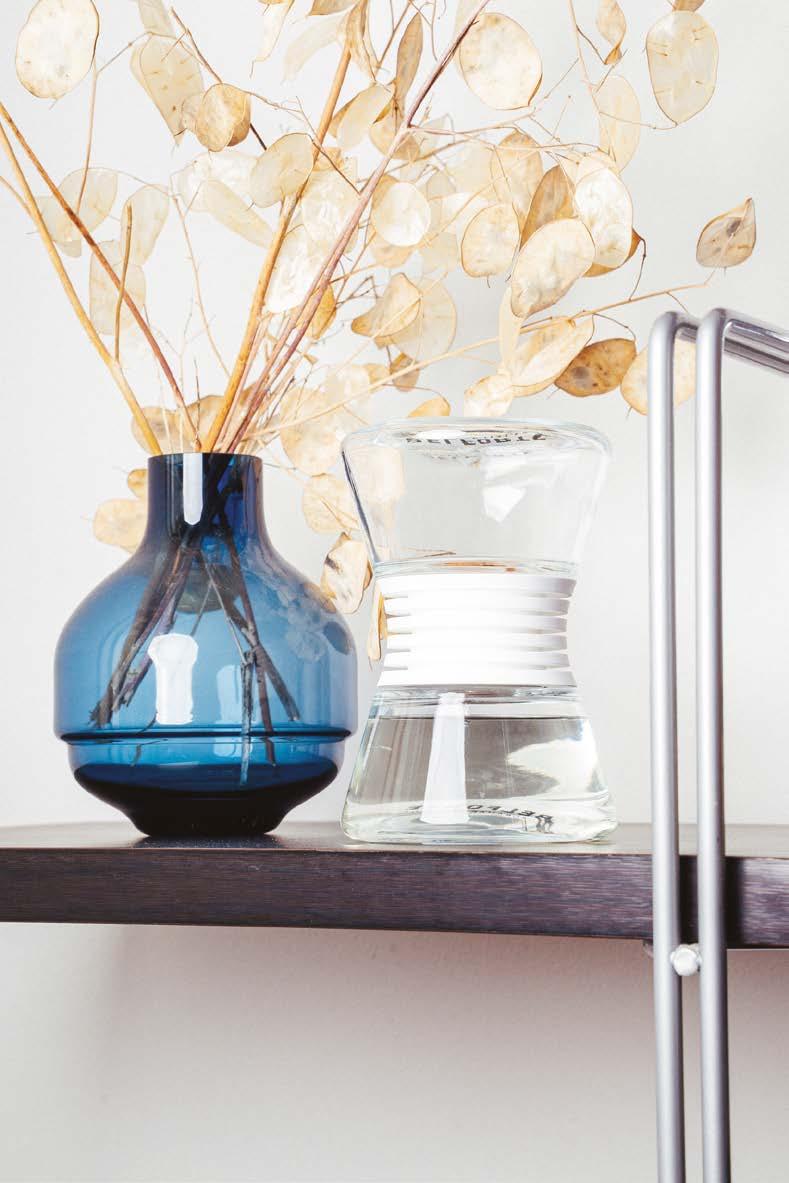
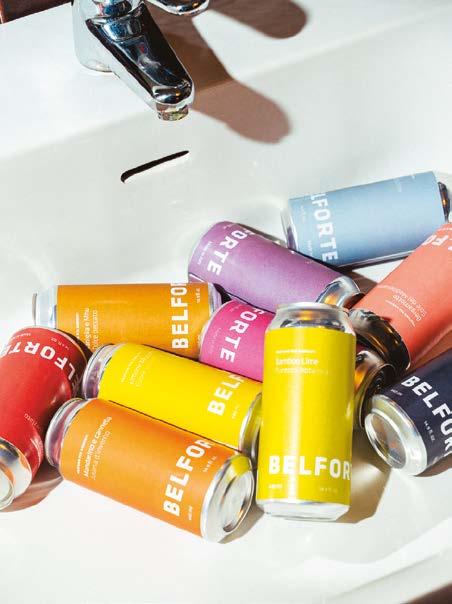
Lattine Art, the collection comprises 10 fragrances of distinctive character, presented in a full-colour, continuous-edition packaging conceived for a bold and instantly recognisable visual impact. Lattina Color combines olfactory effectiveness and decorative presence in an original and playful format.
To what extent can home fragrances enrich a space and give it personality?
Enormously. Today, home fragrance is an integral part of the identity of a house, a hotel, or a commercial space. Just as we choose furnishings, lighting, or materials, fragrance too contributes to de"ning the character of a space. A well-conceived scent makes an environment more welcoming, distinctive, and memorable.
Home fragrances are attracting growing interest among consumers. What do you think is driving this trend?
In recent years, there has been a growing awareness of personal wellbeing and the quality of the spaces we inhabit. People desire environments that convey comfort, harmony, and identity. Ambient fragrances respond precisely to this need: they transform spaces into sensory experiences and contribute to everyday wellbeing.
Do you have an in-house nose, or do you work with external professionals?
We collaborate with external professionals specialising in olfactory creation, selecting partners who share our sensibility and our idea of quali-
ty. It is very important to us that every fragrance has balance, personality, and coherence with the Belforte identity.
What elements do you use in creating your fragrances?
We use carefully selected raw materials and high concentrations of essential oils, with particular attention to the quality and longevity of the scents. We seek harmonious and recognisable compositions, capable of creating atmosphere without being intrusive.
Which compositions are most successful, and what kind of imagery do they evoke?
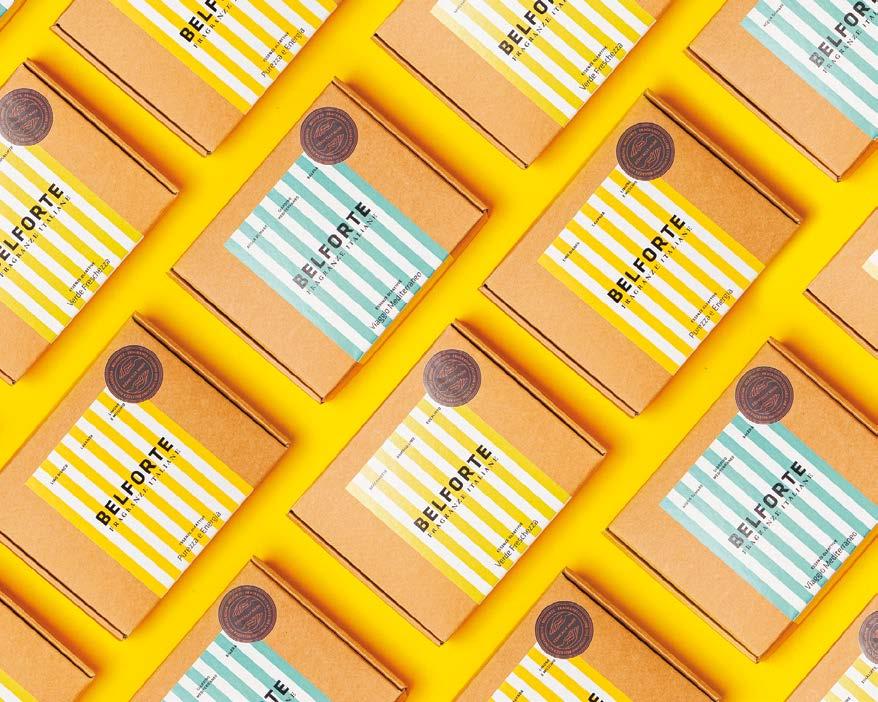
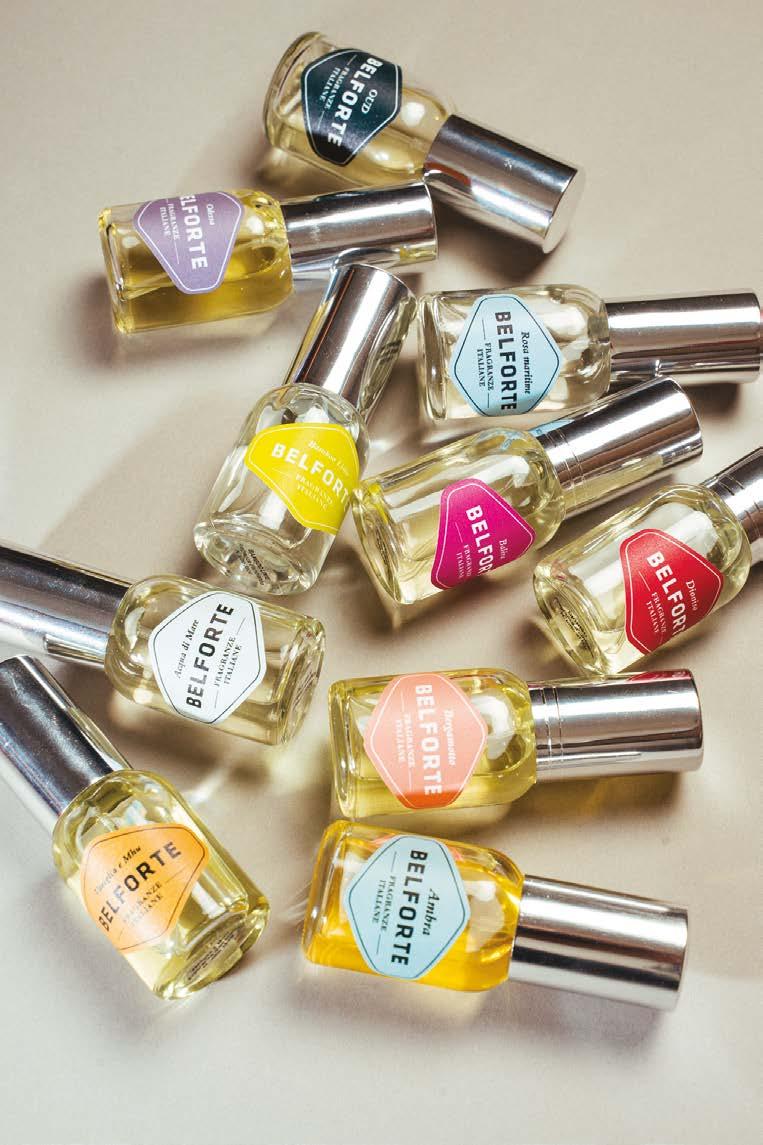
The compositions that prove most successful are often those capable of creating an immediate emotional connection. Fragrance has this extraordinary power: to bring us back to a place, a moment, or a precise sensation. We have soft, enveloping vanillas that recall the sweets of childhood just unwrapped, transforming into the reassuring warmth of a homecoming embrace. Citrus fragrances, on the other hand, evoke the vitality of a freshly squeezed juice on a summer afternoon, with all the light and energy of the Mediterranean. Other compositions are born from more sensual, nocturnal suggestions: we even have a fragrance inspired by the nights of the Riviera — the timeless charm of a dance venue, with "oral notes, soft lighting, and summer warmth. For us, every fragrance must tell an emotion before it tells an olfactory note. We do not simply create fragrances; we create experiences capable of accompanying people through the spaces they inhabit.
Your brand name includes the word "Italiane." Is this a way of underlining the strength of Made in Italy?
Absolutely. For us, Made in Italy means a culture of beauty, attention to detail, care in craftsmanship, and aesthetic sensibility. Including "Fragranze Italiane" in the brand name is an identity choice, because we want to celebrate an Italian way of creating products: refined, authentic, and deeply rooted in taste.
In the world of fragrance, what are the strengths of Made in Italy compared to other traditions?
Italy has a great tradition linked to beauty, art, and design. In fragrance too, this translates into balance, elegance, and attention to the overall sensory experience. The strength of Made in Italy lies in the ability to unite artisanal quality, creativity, and contemporary style.
What distinguishes your offering from that of other brands in the sector?
I believe Belforte stands out for its desire to continuously surprise, without approaching fragrance in a static or conventional way. We love experimenting, seeking new stimuli for ourselves and for our customers, transforming fragrance into something living, everyday, and unexpected. Over the years we have placed fragrance inside unusual and playful objects: from scented tins to fans, through to Christmas baubles. We enjoy cross-pollinating the world of fragrance with everyday objects, reinterpreting them with wit, style, and creativity. The idea is to move beyond the classic concept of a room diffuser and create small objects capable of striking, intriguing, and drawing a smile of genuine surprise. Because fragrance, in our view, should not only furnish a space — it should also create emotion, lightness, and memory.
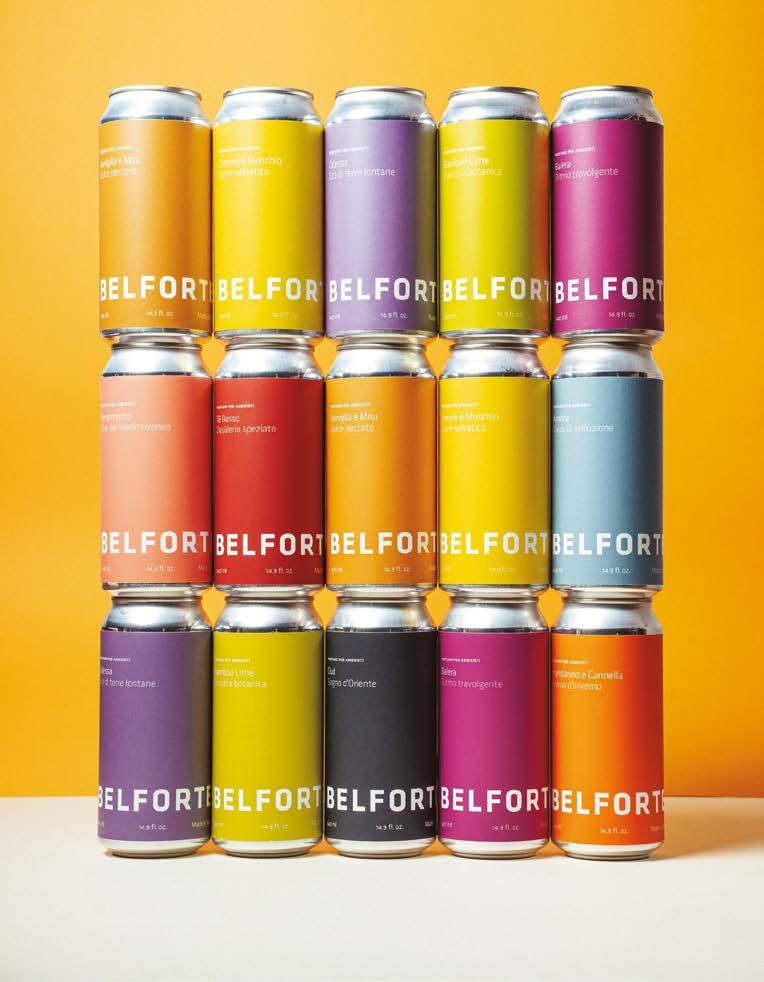
You also produce diffusers with great attention to design. Could you tell us more?
For us, the diffuser is as much a part of the experience as the fragrance it contains. We do not consider it a mere accessory, but an object that
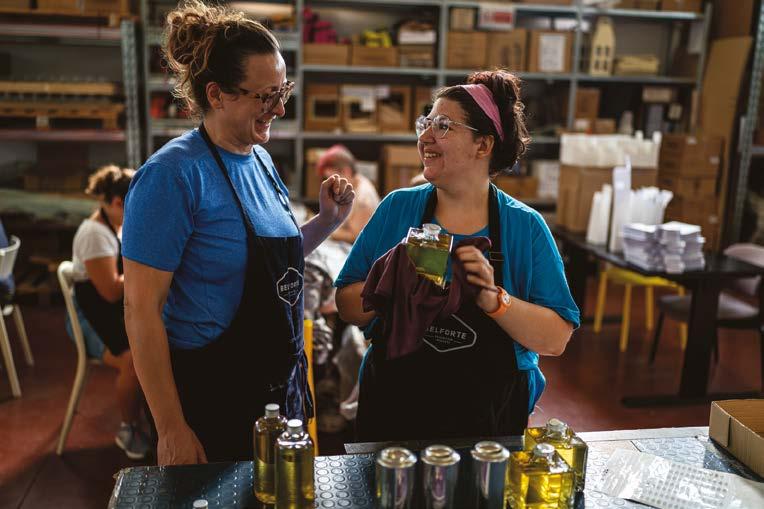
must enter into dialogue with spaces, with light, with the style of a home or a hospitality setting. For this reason, we seek essential forms, balanced details, and materials capable of conveying personality and harmony without being intrusive. We work with glass, ceramics, wood, metal, and other materials, continuously experimenting with new solutions — including through collaborations with Italian craftspeople and manufacturers. We are interested in creating products with a discreet yet recognisable presence, able to integrate into very different environments: from a contemporary concept store to a more classical home, through to the hospitality
The members of the Gli Amici di Gigi social cooperative pictured during one of the production stages of the Belforte Fragranze Italiane range.
sector. In design, too, we pursue the same balance we seek in our fragrances: character, harmony, and the ability to leave a pleasant impression over time.
What are your sales channels?
We work primarily with specialist retailers, concept stores, interior designers, the hospitality industry, and businesses in the gift and home décor sector. Over the years, we have built a network based above all on direct relationships, trust, and continuity of collaboration.
Are you present internationally?
Yes, in recent years we have developed collaborations abroad as well, bringing our concept of Italian fragrance to various markets. Interest in products that combine quality, identity, and authenticity is growing steadily outside Italy too.
Is there anything I haven't asked that you would like to share with our readers?
I would like to add that Belforte, for us, has always been a challenge within a challenge. Not simply a fragrance brand, but a concrete demon-
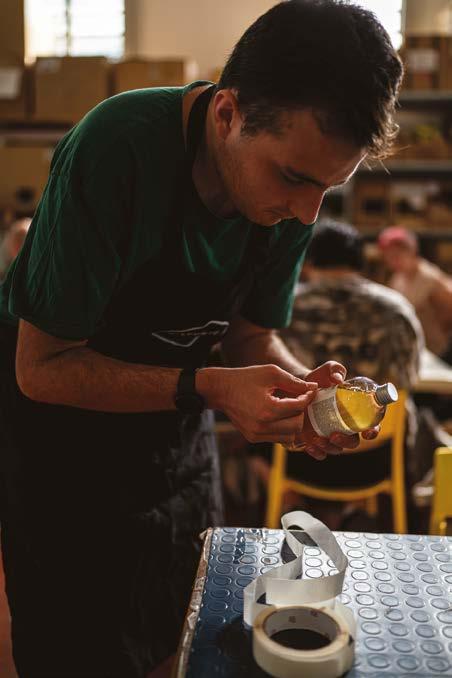
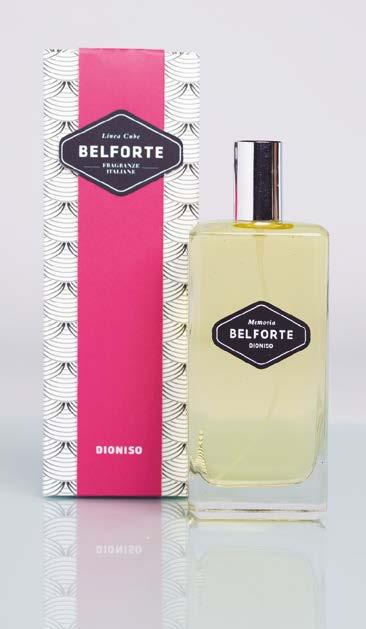
stration that it is possible to build a company capable of uniting beauty, work, and human value without sacri"cing quality, creativity, or ambition. It is a shared choice: made by those who work with us every day, by those who have supported us for years, and by all the customers who choose to enter the Belforte world — choosing not only a fragrance, but also a story made of people, relationships, and possibilities. We live in a world that moves very fast and often leaves little room for sensitivity, curiosity, and listening. We, on the contrary, try to maintain an open outlook, continuing to experiment, to enjoy what we do, and to believe that each person can play an important role — even through simple, everyday gestures. After all, even a fragrance can make a difference: it can awaken a memory, change the perception of a space, or offer an unexpected moment of wellbeing. And it is precisely this awareness that continues to guide our work every day.
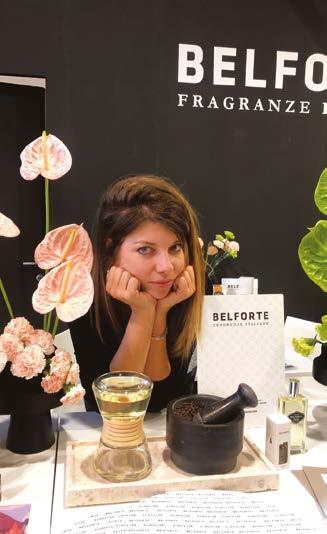
Belforte Fragranze Italiane was born approximately twenty years ago from the initiative of a woman from the Marche region, originally from Belforte, who gave shape to what would come to be known as "the factory of scented things" — a project created to develop fragrances for the home, for textiles, and for the person, imbued with an authentic Italian spirit. In 2013, this entrepreneurial vision was taken up by a group of young people from the social cooperative Gli Amici di Gigi, who chose to carry the brand forward, committing to a path of growth and renewal. A renewal that, however, left the brand's defining characteristics entirely intact: its identity, artisanal care, olfactory research, and strong connection to Made in Italy. Crafted using carefully selected raw materials and high concentrations of essential oils, Belforte Fragranze Italiane's creations are distributed throughout Italy — through specialist retailers, concept stores, interior designers, the hospitality industry, and businesses in the gift and home décor sector — as well as abroad. Chiara Fantini, current Commercial Director of Belforte, brings together in her work a passion for the olfactory world, aesthetics, and ethics. Having grown up in her family's perfumery, she developed a career spanning international cooperation, innovative start-ups, and sustainable design, giving rise to a creative vision deeply attentive to social impact. Today she contributes to Belforte's growth with a contemporary approach, focused on quality, olfactory research, and the value of craftsmanship.
by Francesca Guerini Rocco
In summer, it is pleasant to enjoy the open air, but even the fragrances that fill the home can offer moments of pure well-being. Light fragrances, floral notes, citrus accents, and hints of freshness envelop fabrics and laundry, transforming every room into a small haven dedicated to relaxation. It is precisely the diffusers, sprays, and linen fragrances that suggest new domestic rituals: to create an atmosphere of freshness and comfort and pleasant harmony

L’Occitane chooses the wild essence of the HauteProvence trails to give the atmosphere a completely new twist. The classic rattan sticks absorb the concentrated essence of Les Chemins dea Baronnies and diffuse the intense notes of cypress, juniper berries, and forest moss throughout the home.

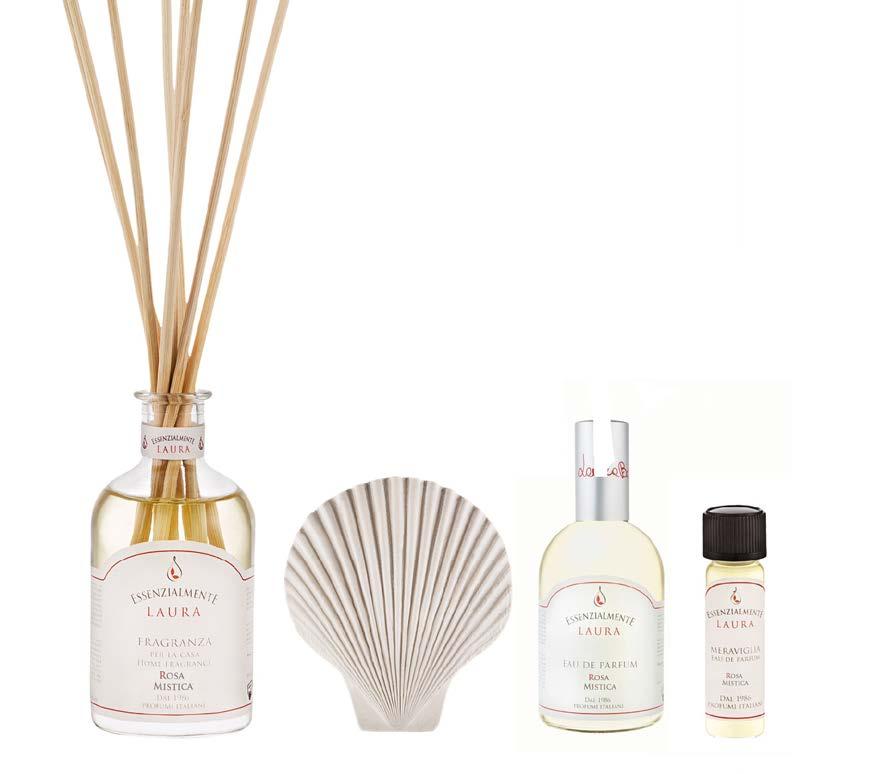
Satinine presents LUMERA, the limited edition alabaster lamp developed with Matlight, which diffuses three essential oils (I Pini, Arte, and Otto) created specifically for this purpose. Carved from a block of natural alabaster and assembled by hand, it features a small dish on which the essential oils are heated.
Reed diffuser, scented plaster shell, home fragrance, and eau de parfum: nothing is missing from the special collection Rosa Mistica by Essenzialmente Laura. To envelop the entire home with the gentle and refined scent of the ancient rose.
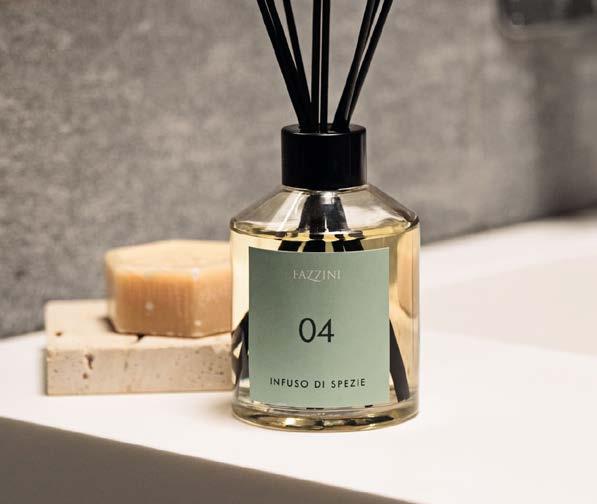
Relaxing and persistent at the same time, the new home essences by Fazzini are available in many different variants: Indian Wood, Log on fire, Vanilla Thaiti, Spice Infusion, Citrus in the woods. In reed diffuser or room spray format, they blend the sparkling notes of citrus with the pungent ones of the woods, the warm accords of wood with exotic and floral touches... for every taste.
OLFACTORY FURNISHING
The new proposal from the Green line by Meliconi is called Eco Parfum Biancheria, designed for washing machines and dryers. Safe, sustainable and certified, it contains essential oils that scent laundry for a long time, offering a pleasant sensation of freshness and cleanliness every day.


Delicate, discreet, and suitable for the whole family: Dalfilo chooses the Cotton Flowers essence to give curtains, fabrics, laundry, and wardrobes a new freshness with a musky note, even for the children's room. Available as a sachet for drawers, laundry fragrance, fabric spray, diffuser with sticks, and candle.
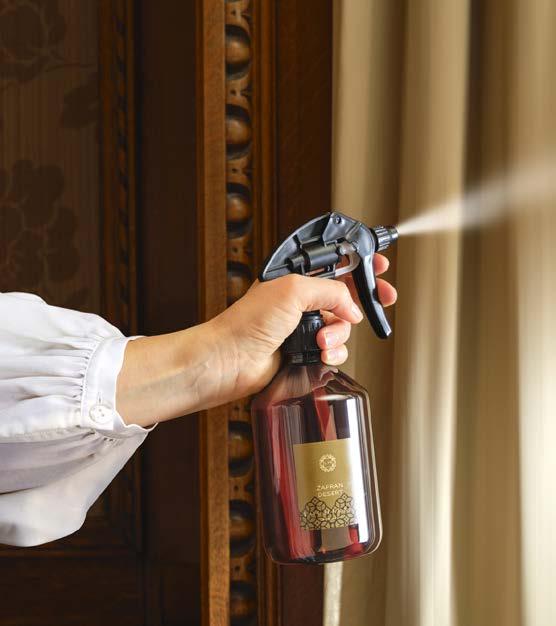
Zafran, the new fragrance by Locherber Milano, weaves together seductive spices, Middle Eastern charm, and the magic of ancient lands to enrich the iconic Skyline Collection, the line of elegant diffusers (from 250 ml to 2500 ml) made of matte black glass and finished by Italian master glassmakers. Inspired by the profile of Milanese skyscrapers, they are embellished with personalized details: the golden label dedicated to Zafran recalls the desert sand, while the geometric pattern is inspired by Middle Eastern architectural elements and the art of mosaic.
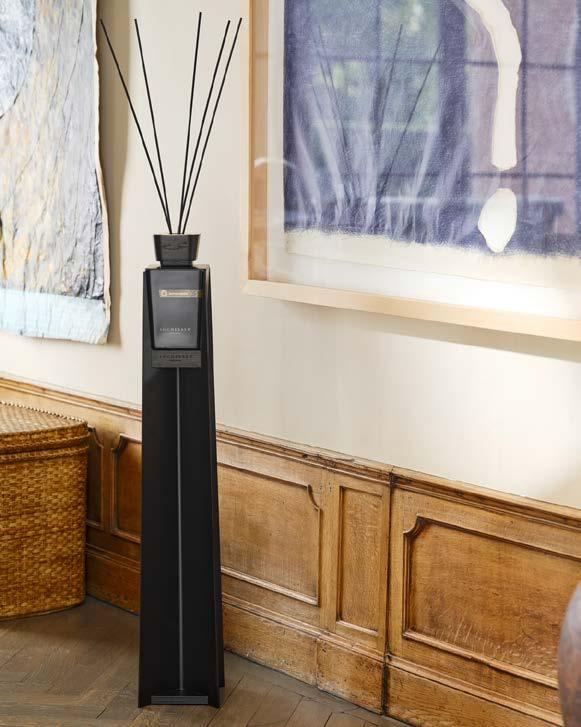
The ideal accessory to protect yourself from the summer heat, with style? The new Scented Fans by Belforte Fragranze, in cotton and wood of bamboo. Each color is linked to a different essence: simply open your favorite fan and wave it to diffuse soft, enveloping, and refined notes that provide immediate well-being.
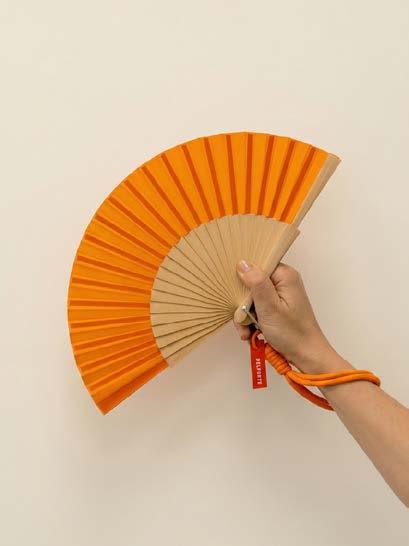
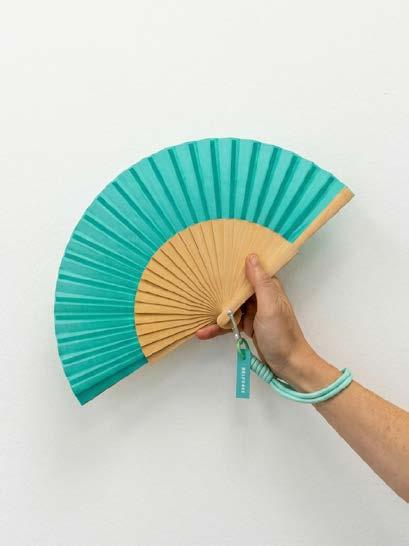
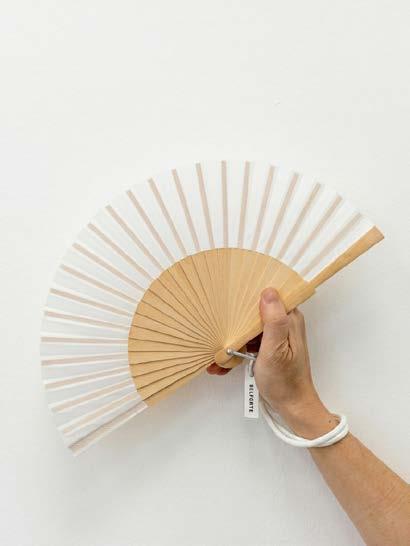
OLFACTORY FURNISHING
Functional and sophisticated, with a high decorative value, the Satinine diffusers blend contemporary aesthetics and deep knowledge of materials. In four different shapes, they are all made of ultra-light borosilicate glass, combined with sticks in selected cotton and accompanied by a tray in bio-resin made in Italy. Four fragrances are available.

The Mimosa interior spray by Diptyque diffuses its unmistakable mimosa fragrance into the air, imbued of notes of straw and honey.
A tribute to the south of France and to the small flower that heralds the arrival of the beautiful season, also suitable for curtains, sofas, and cushions.
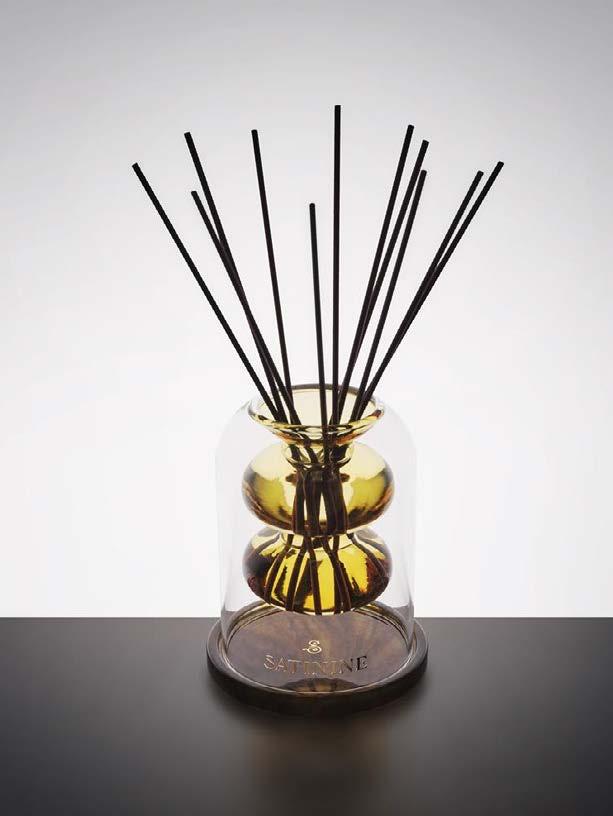
Wally1925 thinks of the whole family with a line of dedicated fragrances: Dolci Nanne is designed for children's bedrooms, Biancheria Cotone adds a unique sensation of cleanliness to laundry, Biancheria Igienizzante exploits the properties of essential oils and eliminates bacteria from sheets, clothing, and linen.