Modalità di pagamento: sul sito www.edibrico.it; Conto corrente postale n.13844469 intestato a: EDIBRICO - loc. Vallemme, 21 15066 Gavi (AL) Bonifico bancario su Iban: IT43Q0623048310000046330946 L’abbonamento avrà inizio dal primo numero raggiungibile. Servizio clienti: 0143 645037 - abbonamenti@edibrico.it
STAMPA
Faenza Printing Spa - Via Vittime Civili di Guerra, 35 - 48018 Faenza (RA)
Copyright EDIBRICO SRL
La riproduzione delle illustrazioni e degli articoli pubblicati dalla rivista, nonché la loro traduzione è riservata e non può avvenire senza espressa autorizzazione della Casa Editrice. I manoscritti e le illustrazioni inviati alla redazione non saranno restituiti, anche se non pubblicati e la Casa Editrice non si assume responsabilità per il caso che si tratti di esemplari unici. La Casa Editrice non si assume responsabilità per i casi di eventuali errori contenuti negli articoli pubblicati o di errori in cui fosse incorsa nella loro riproduzione sulla rivista.
REGISTRAZIONE
Tribunale di Milano n.392/72
ROC n. 34848 del 26 agosto 2020
ISSN 0390-1512
ANGELINA 20-21 BALDINI 12-13
Italian companies: number one in many sectors!
The Milan Salone del Mobile, held from April 21 to 26, 2026, at the Rho fairgrounds, is an unmissable event even for those working in the elds of design and "beauty" in all its forms. The event con rms its status as the undisputed global leader in the furniture and design sector, outperforming major international trade fairs in terms of foreign operators, exhibitor quality, and economic impact on the host city. The "Milan system" is further ampli ed by the Fuorisalone, which creates a city-wide Design Week and serves as an inexhaustible source of ideas and novelties for those who own home decor and accessory stores. It is here that Italian design companies bring innovation, design culture, and industrial vision, shaping tomorrow's trends and con rming the leadership of Made in Italy worldwide.
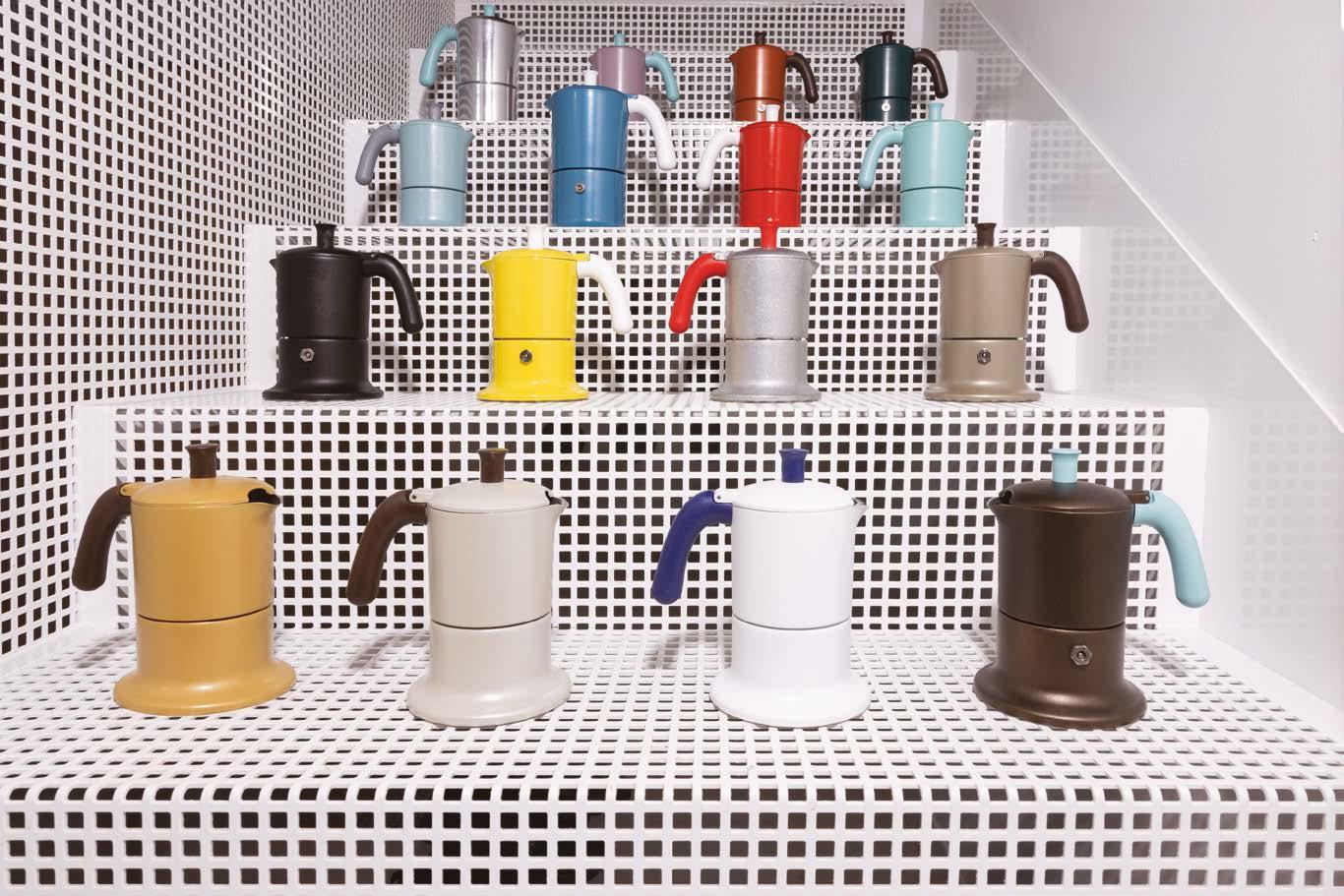
In this issue, we feature in-depth looks at Made in Italy companies with truly interesting productions, rich in tradition yet driven by innovation. We talk about Angelina, the moka pot born from the idea of the vibrant entrepreneur Barbara Togno, whose "roots" lie in aluminum casting with her family business, Fonderia Alfredo Togno in Verbania. Her idea was to reinterpret one of the most iconic objects of Italian culture, the moka, without altering its essence, making it customizable and almost a work of art, available in a single-cup version and for induction hobs. All this with an eye on savings for the user, as the cost of coffee with a moka is lower than with capsule machines. This novelty has been a success that, in just one year, has already conquered 16 countries.
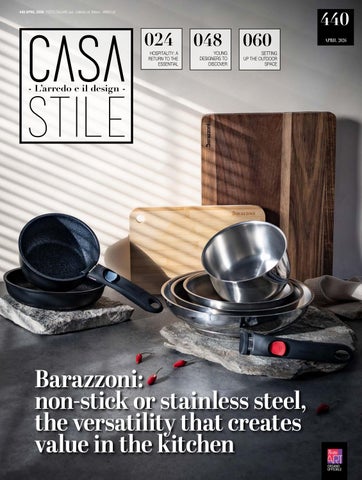
The cookware on the cover also represents the best of Made in Italy, with the perfect synthesis of tradition and innovation from the historic company Barazzoni. Founded in 1897, when Giovanni Battista Barazzoni started a small artisanal workshop for household items in Invorio using brass, copper, and tin, the company has reached major milestones over the years. This includes the "Tummy" series, designed by Ennio Lucini, the rst to feature a rounded line when all pots were strictly cylindrical, which was even exhibited at the Philadelphia Museum of Art. Many other award-winning models have followed over the years, but you will nd the details on today’s Barazzoni cookware in the following pages. Reading about their performance, you’ll nd yourself wanting them, even if you don’t particularly love to cook...
Nicla de Carolis
COOKING without limits, living without clu er
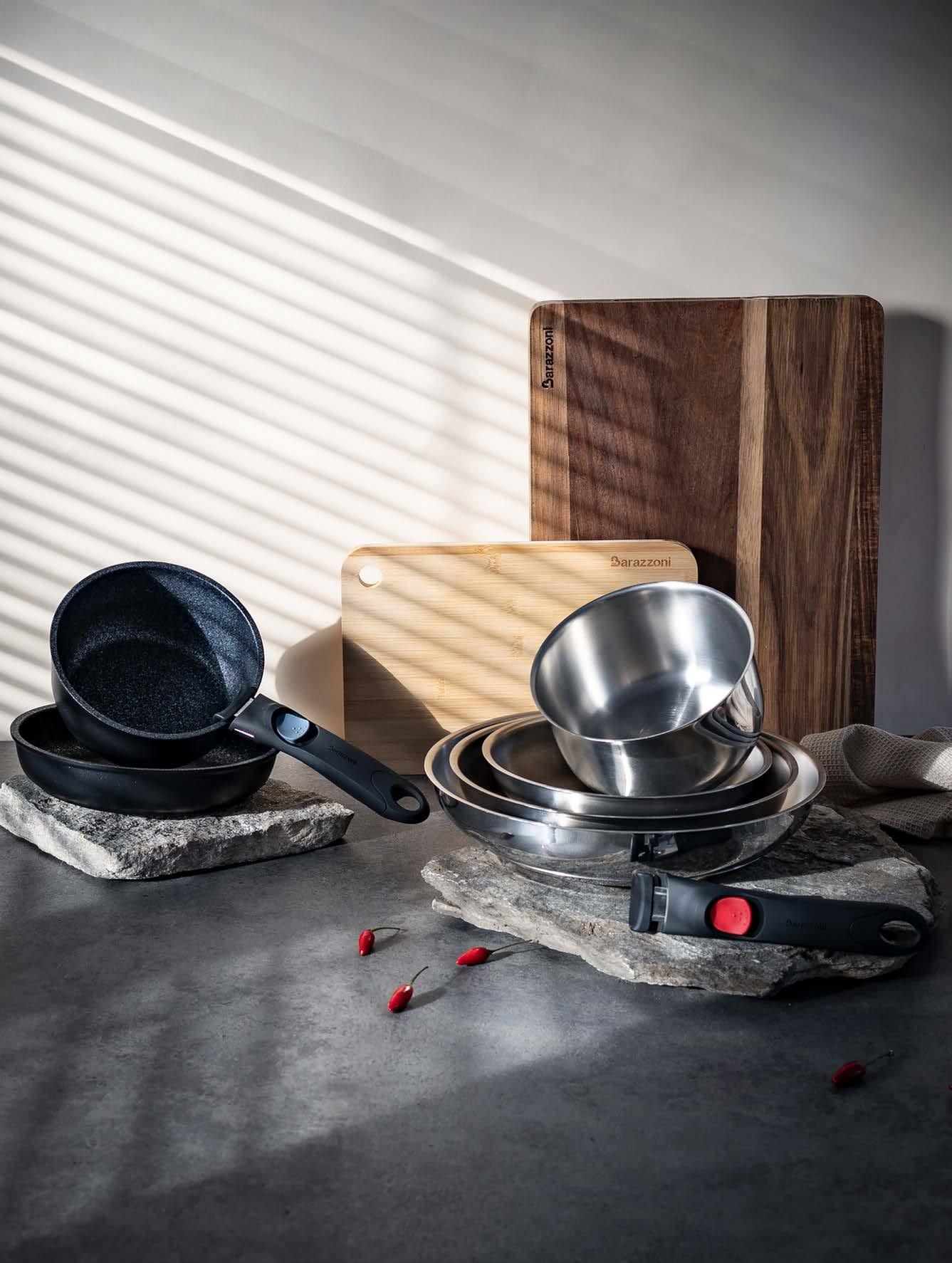
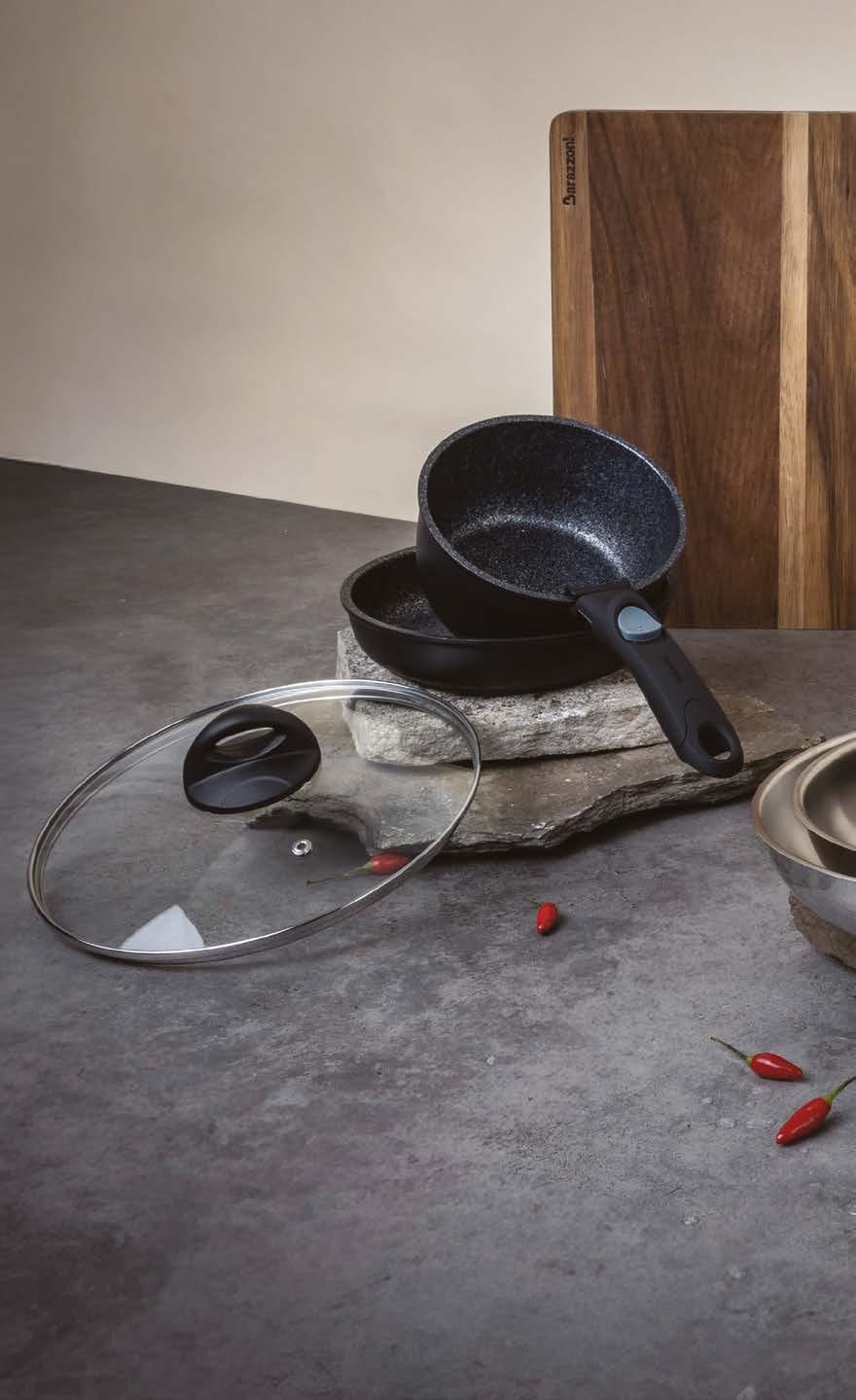
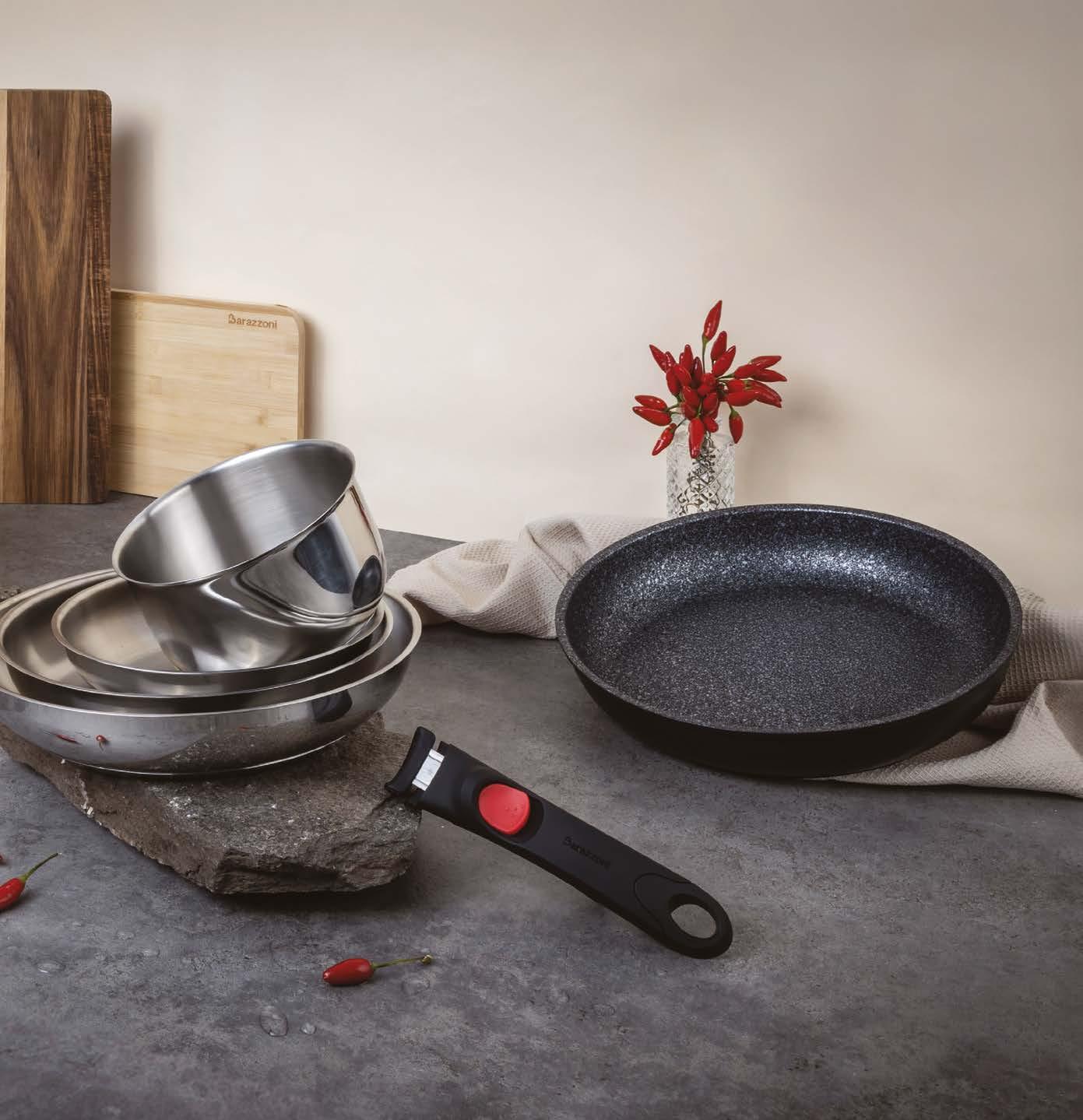
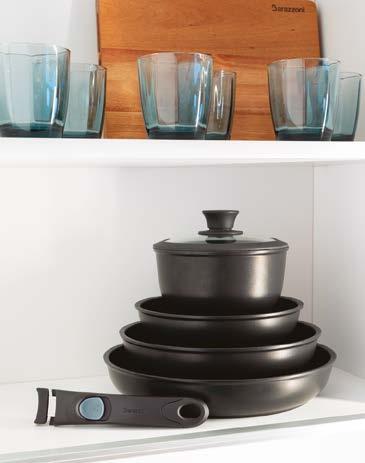
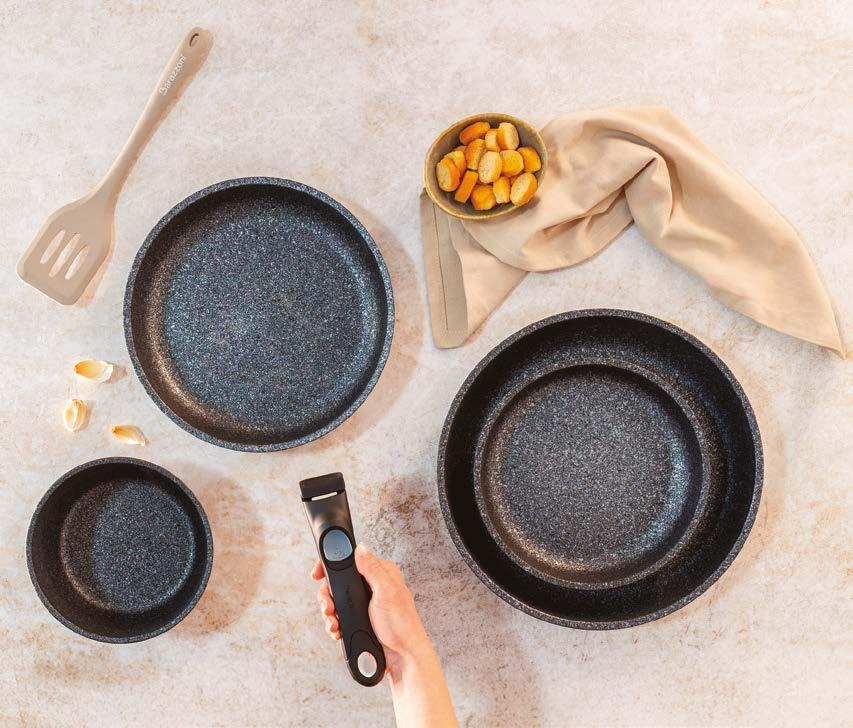
Two of Barazzoni's best-selling cookware lines are being relaunched — distinguished by material and purpose: Granitica Extra Facile and Inox Facile, one non-stick, the other stainless steel, are now available in a new detachable-handle version. This is not a restyling, but a deliberate design choice that rede nes how a pan lives in the kitchen — from the hob to the oven, from the refrigerator to the table.
Detachable Handle: A Paradigm of Modernity
The evolution of the Italian cookware market is increasingly driven by functional innovation. Barazzoni, a historic company in the sector with deep roots in the national manufacturing tradition, has chosen to meet this challenge by innovating two product lines that share the same design philosophy: an ergonomic detachable handle, made from bakelite, which transforms every individual pot or pan body into a versatile, multi-purpose tool.
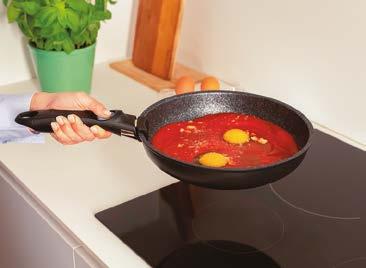
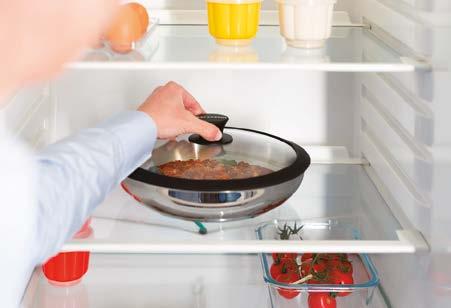
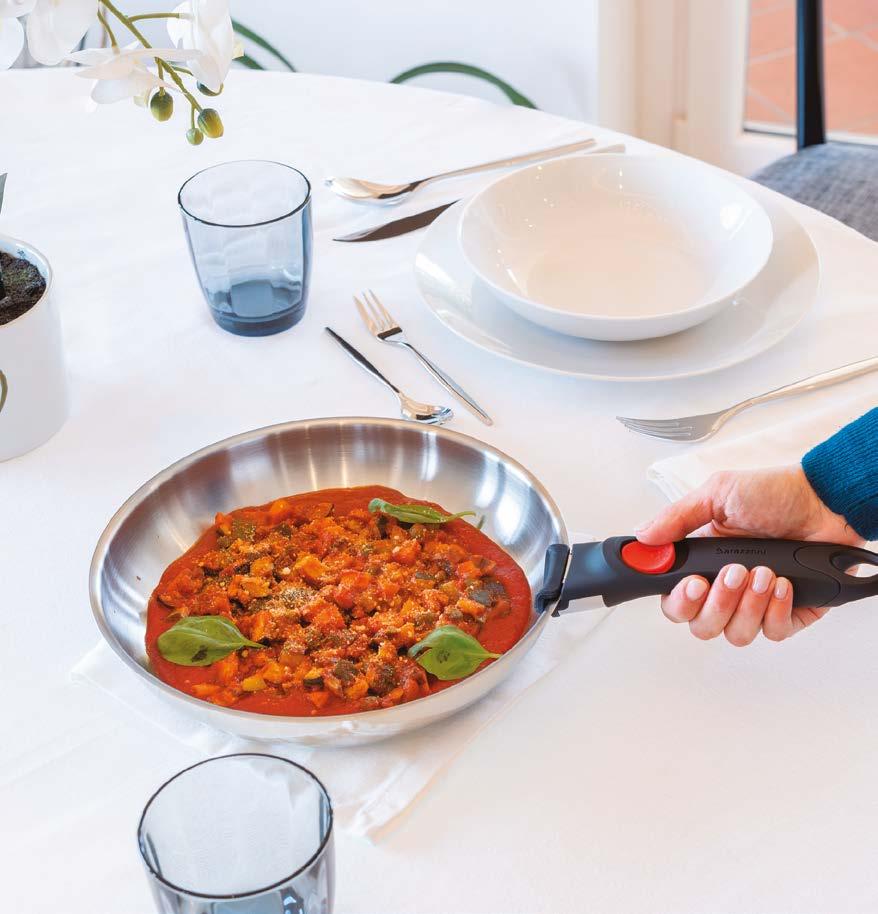
The concept "One handle for all" is not a mere commercial gimmick — it addresses a real, documented need of the modern consumer, who seeks intelligent solutions without compromising on quality and appreciates the ability to take a pan from the hob or oven to the table, and on to the refrigerator, concretely expanding its everyday functions.
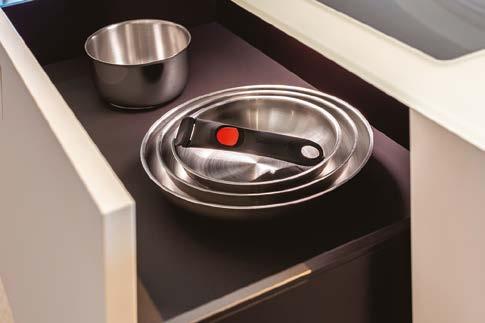
For retailers and housewares buyers, this represents a direct, immediate, universally relatable selling point: greater versatility in daily use and less clutter in drawers and cupboards — an effective answer for those living in increasingly compact homes with limited kitchen space.
Barazzoni www.barazzoni.it
A quality leap for two established Barazzoni cookware lines: Granitica Extra Facile and Inox Facile bring to market a detachable handle paired with premium, made-in-Italy materials, to meet the demands of an ever more discerning consumer.
Granitica Extra Facile:
The Flagship Non-Stick Evolves
The Granitica line has long been the best-selling non-stick product in the Barazzoni catalogue. With the Extra Facile version, this best seller takes a significant qualitative and functional leap forward. The internal coating is the cornerstone of the offering: water-based, free from PFOA, BPA and Nickel, it ensures maximum food safety and precisely meets the expectations of a clientele increasingly attentive to the composition of materials in contact with food.
The Marmotech technology — a 6-layer coating — provides durability up to five times greater than a traditional non-stick coating. The highthickness, differentiated aluminium body promotes uniform heat distribution across the entire cooking surface, eliminating hot spots and reducing the risk of burning. Energy efficiency is also maximised: on induction, the Granitica Extra Facile heats up 65% faster than other heat
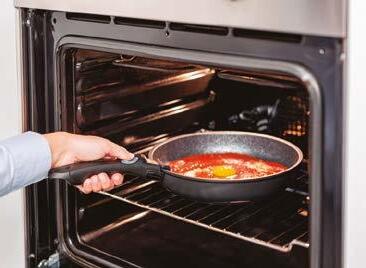
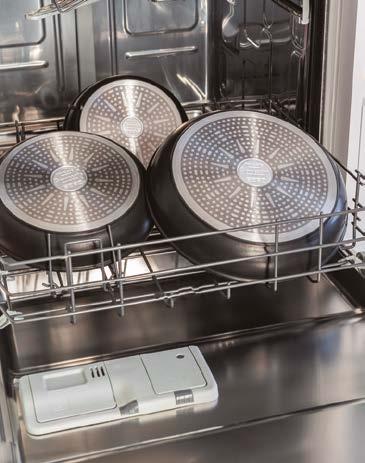
sources and delivers 37% energy savings — figures that translate into concrete talking points for those working at the point of sale who need to guide customers towards an informed choice. The reinforced exterior coating completes the product's technical profile, ensuring greater overall robustness and more efficient heat management from the outside in. The ability to use the pans and saucepans in the oven without the handle, and to wash them in the dishwasher with equal ease, further enhances everyday practicality. Tempered glass lids, available separately, allow cooking to be monitored while retaining heat and moisture inside.
In terms of range, the line offers purchasing "exibility with sets combining pans in various diameters (20, 24 and 28 cm) with or without a 16 cm saucepan, paired with the detachable handle. The handle is also available as a standalone accessory, with its own product code.
Inox Facile:
18/10 Stainless Steel, Naturally PFAS-Free
While Granitica Extra Facile covers the highend non-stick segment, the Inox Facile line targets a different consumer: one who prioritises the naturalness of the material, long-term durability, and safety guaranteed by the complete absence of any chemical coating.
The body of the Inox Facile pans is made from 18/10 stainless steel — a benchmark material valued for its corrosion resistance, organoleptic neutrality and ease of maintenance, appreciated by those seeking durable and reliable kitchen solutions. The satin- nished interior facilitates daily cleaning, while the polished exterior lends a re ned aesthetic consistent with a premium positioning. The glossy nish also enhances the product's visual appeal on shelf — a detail that is far from irrelevant for buyers focused on the visual impact of their display.
The Triplen base — a triple-layer steel-aluminium-steel construction with an integrated heat diffuser — is the technical solution adopted to ensure optimal heat distribution across the entire base of the pan and prevent food from sticking
in the absence of a non-stick coating. Full induction compatibility is today a non-negotiable requirement: the line is engineered to achieve maximum energy ef ciency on induction hobs compared to traditional heat sources.
The Inox Facile range is structured across ve set con gurations, including a version with a 28 cm wok that broadens the offering towards Oriental and fusion cooking categories — a growing segment in the Italian market. The detachable handle is included, but also available as a separate accessory; glass lids, however, are sold separately.
Made in Italy:
A Positioning That Carries Weight
Both lines carry the Made in Italy designation — an element that, in the mid-to-high-end housewares segment, continues to hold signi cant value. Barazzoni, with its manufacturing heritage rooted in Italian territory, offers retailers the opportunity to build an authentic product narrative, supported by veri able provenance and quality standards associated with national craftsmanship.
The Detachable Handle Locking System
The mechanism is designed to ensure a secure and stable connection via a locking button positioned on the underside of the handle: a full press locks it in place, while release is achieved by pushing the button backwards and lifting the handle upwards. The system is certified to withstand loads of up to 10 kilograms, although it is recommended not to exceed 5 kg to preserve comfort in use. Each line features a dedicated handle — with a red button for Inox Facile and a grey button for Granitica Extra Facile — ensuring maximum technical compatibility with the specific thickness and rim of each range. From the retailer's perspective, this translates into an implicit loyalty mechanism: customers who purchase a set are naturally inclined to expand their collection with additional compatible pan bodies over time.
In a distribution landscape increasingly crowded with low-cost imported offerings, the availability of detachable-handle products at this level of build quality and material certi cation represents a concrete opportunity to differentiate the range, increase the average basket value, and build loyalty among customers willing to invest in lasting solutions. Granitica Extra Facile and Inox Facile thus present themselves as two concrete responses to the challenges of today's market: differentiated in materials and positioning, yet united by the same vision of intelligent, safe, and uncompromising cooking.
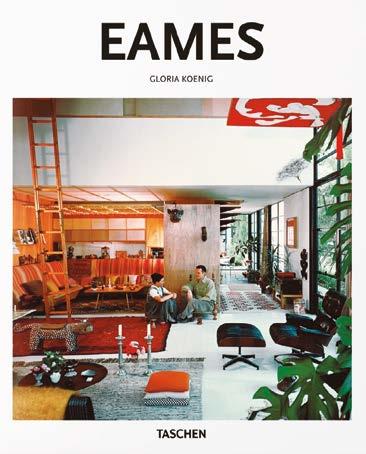
Eames
Gloria Koenig Taschen
CASA - DESIGN - LIFESTYLE Books
by Fabio Destefani
"Details are not details. They are the essence of the design." This was the firm conviction of Charles and Ray Eames, the American design couple who built their rich and varied creative output on this very principle, spanning multiple disciplines: from architecture to industrial and textile design, from photography to film. This image-rich volume, illustrating the breadth of the Eames' body of work, chronicles the revolutionary impact that this couple's work had on the American middle class — and well beyond — from the post-war period onwards, promoting a new multifunctional modernity. The critical text included in the volume helps to contextualise the work of the two designers, highlighting its enduring significance. Gloria Koenig, the author, is a scholar specialising in contemporary architecture.
La maiolica a Milano nel Se ecento
Raffaella Ausenda Polistampa
Timothy Wilcon, Honorary Curator of the Ashmolean Museum at the University of Oxford, has described this book as "the ne plus ultra of studies on Milanese majolica, destined to remain a point of reference for a long time to come." High praise indeed for the author of a work that came to fruition after ten years of research. In it, Raffaella Ausenda retraces the history of Milanese majolica, which began when, in 1745, Felice Clerici established the city's first fine majolica manufactory. His stroke of genius lay in producing something more affordable than Austrian and Oriental porcelain while achieving the same aesthetic beauty. This made majolica objects accessible to less af"uent social classes, while simultaneously capturing the attention of the aristocracy, who by no means disdained acquiring them.
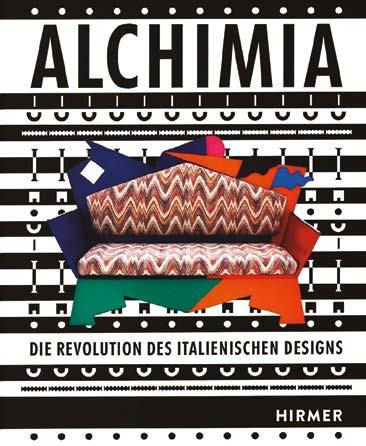
Alchimia, La rivoluzione del design Italiano A.A.V.V. Hirmer
For those who did not have the opportunity to visit the exhibition "Alchimia. The Revolution of Italian Design" — which, following its Berlin debut, was held at the ADI in Milan until 22 January last — we highly recommend viewing and reading the exhibition catalogue. Founded in 1976 by Alessandro and Adriana Guerriero, Alchimia (with contributions from, among others, A. Mendini, P. Navone and A. Branzi) was a laboratory of freedom and cross-pollination in which design, architecture, visual arts, fashion, music and performance intertwined to give shape to a new, ironic and poetic language. Through the theory of "banal design", the group subverted the rules of functionalism and industrial aesthetics, restoring to the design project its value as narrative, symbol and interpretation of the world. This substantial catalogue of over 400 pages, edited by François Burkhardt (the exhibition's curator) and Tobias Hoffman, is trilingual (Italian, English and German) and brings together photographs, sketches, furnishings and critical texts. The exhibition will soon travel to other cities across Europe and the world, demonstrating how Italian design continues to exert its fascination virtually everywhere.
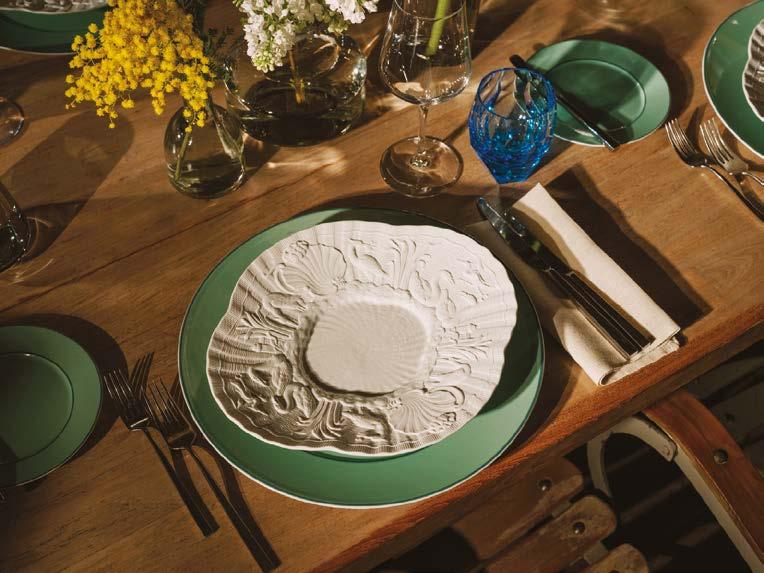
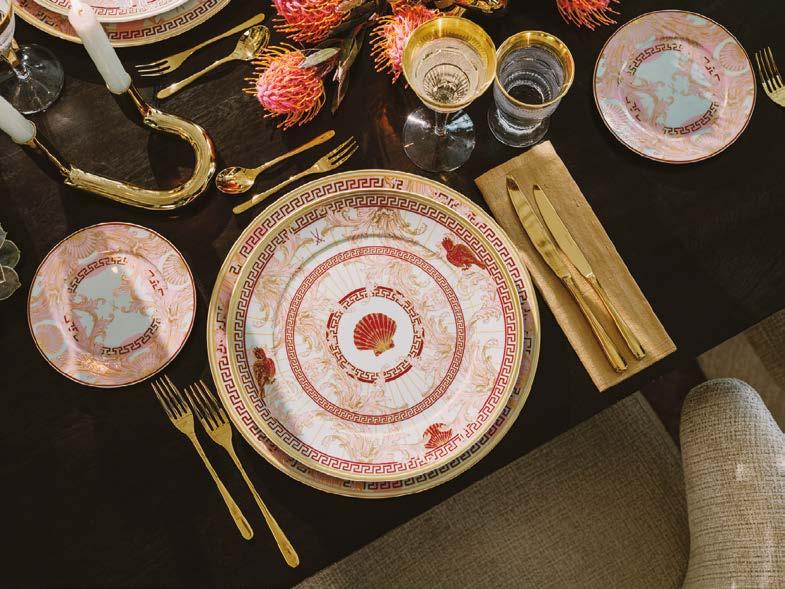
MEISSEN and Sonja Quandt are taking part in the Salone Internazionale del Mobile and the Fuorisalone. We speak with Stefania Baldini, Exclusive Agent for the Italian market for both brands.
Aware of the important role they play in the world of home living, many tableware brands are taking part in Design Week (20–26 April) and the Salone Internazionale del Mobile in Milan (21–26 April), among them MEISSEN and Sonja Quandt.
“The MEISSEN Manufactory,” says Stefania Baldini, exclusive agent for the Italian market for both brands, “has been part of my professional life for over 25 years. The acquisition of Sonja Quandt, on the other hand, is more re-
cent.” Two brands that, in their different ways, represent excellence in the eld of tableware and beyond.
“Founded by the innovator Augustus the Strong, Elector of Saxony and King of Poland, at the Albrechtsburg in Meissen, Europe’s rst porcelain manufactory has been captivating the world for 315 years with its unique artisanal craftsmanship. To this day, the MEISSEN manufactory remains the sole production site for worldwide sales. The product world encompasses Fine Art, gurines, tableware, Home Décor and jewellery, all offering a sense of uniqueness in style and pleasure. At Milan Design Week, MEISSEN will present a selection of interior porcelains and two special collections with and at Bodo Sperlein. You will therefore nd us at Bodo Sperlein's Menu, Via Solferino 17, from 20 to 25 April.
Sonja Quandt, meanwhile, is a brand that has been based in Schwäbisch Gmünd since 1860, a city with a long tradition in silver and gold craftsmanship. Through the integration of the Wilkens brand, renowned for its exclusive ranges of silver and stainless steel cutlery, the portfolio has been expanded, reinforcing its position in the premium segment. Every product in the Sonja Quandt collection is a unique, handcrafted piece, created in tested and certi ed sterling silver, often combined with precious materials such as gold, crystal, glass and ne woods. The designs are signed by Sonja Quandt. The bran-
d's assortment includes cutlery, table accessories and an extensive selection of caviar bowls and trays.
The presence of MEISSEN and Sonja Quandt at both the Fuorisalone and the Salone del Mobile represents a unique opportunity to introduce their creations to a vast international audience of retailers, designers and journalists.”
The MEISSEN Manufactory will be exhibiting during the Fuorisalone in Milan at Via Solferino 17, while Sonja Quandt will be at the Fiera di Rho: Hall 13, Stand C37.
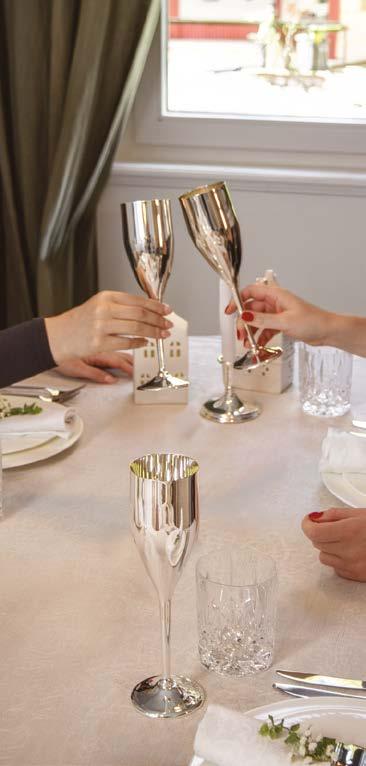
Silver champagne flute from the "Enjoy" collection.
After graduating in Interior Design from the IED in Milan, Ilaria Innocenti founded the ilaria.i brand in 2012, through which she expresses her passion for porcelain. We interviewed her.
After completing your Interior Design course at the IED in Milan, you created the ilaria.i brand, specialising in the production of plates and other porcelain tableware. How did this turning point come about in your professional journey?
I was born in Maranello, in the province of Modena — an area with a very strong ceramics tradition — so before moving to Milan to attend the IED, I had already breathed in that heritage. I should also say that my training began when I was a child, when my mother, who worked in the sector, used to take me to the workshop where she worked on Saturday afternoons. As I grew up, I chose an art school with a ceramics specialism, which contributed to my early formation before I went on to attend the IED — a school that provided me with a true design methodology.
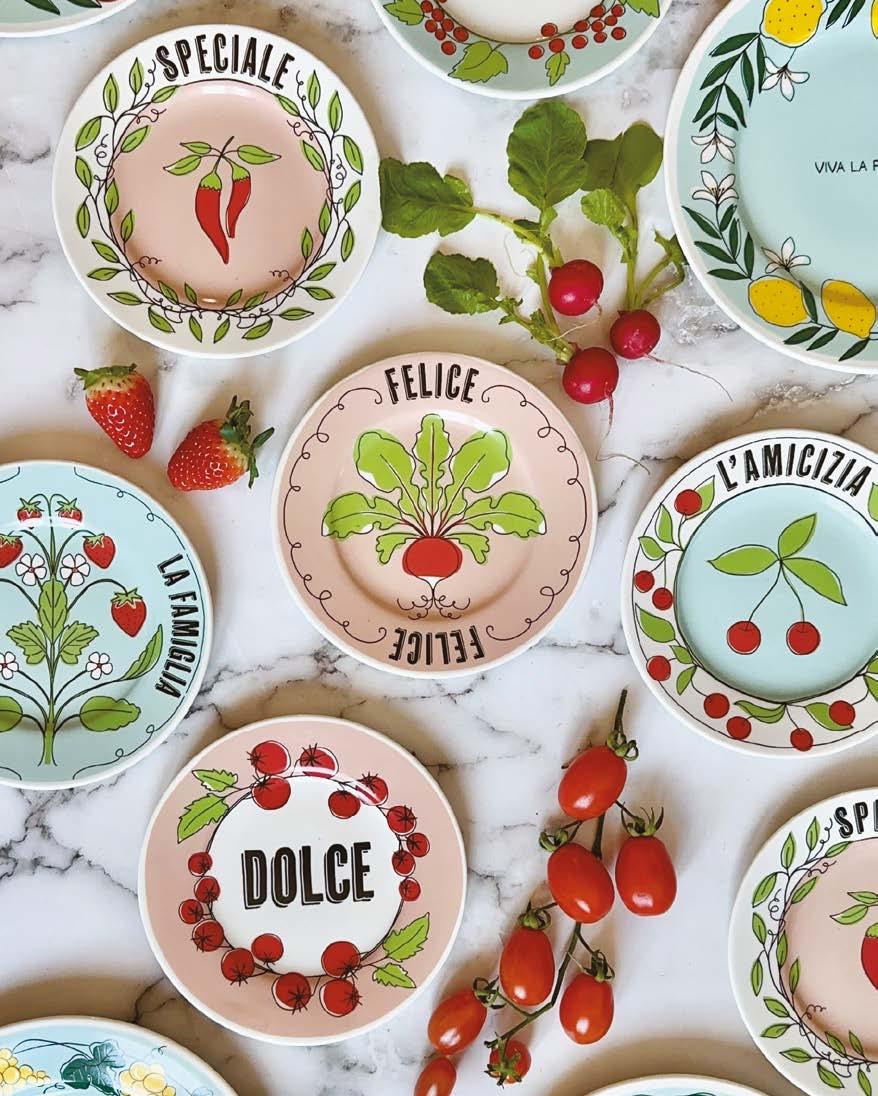
Porcelain plates from the "Fruit" collection
What draws you to the world of ceramics and the tableware universe, to which most of your creations are directed?
I have explored the world of design in many directions — I have designed sofas, armchairs, worked in textiles and much more — but I have always had a particular af nity for objects that belong on the table, because I have always felt they were closer to who I am. It is no coincidence that I am a collector of these objects. In practice, it is a eld of design in which I feel most free to express myself.
When was your brand born?
It was founded in 2012. After my interior design studies, I felt the need to focus more on product design, and to introduce myself to a professional audience I began producing small self-produced pieces. I had found craftspeople who could bring my projects to life. With these creations I participated in the Salone Satellite in Milan and other trade fairs, with the aim of building new contacts. In the meantime, a company I was collaborating with asked me to design a Christmas gift for their clients. And so, since it happened to be a ceramics company, I created some decorated plates. That was the rst time I worked on a plate — it was essentially a matter of chance. The products were well received and clearly circulated, and some shops began asking me for more. With that client we agreed to produce a small run destined for interested retailers. Everything grew from there — I began to understand the dynamics of the retail world, a sector that immediately stimulated me greatly.
What types of products does your brand offer?
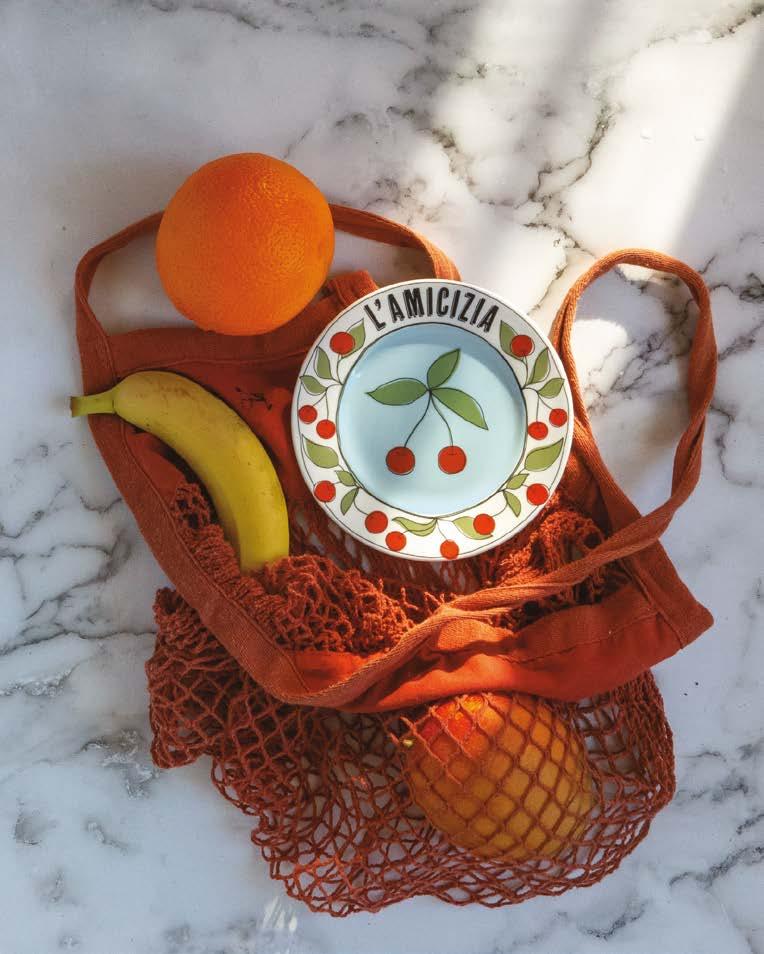
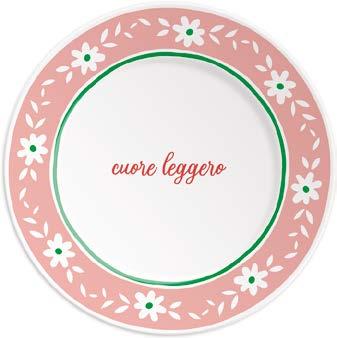
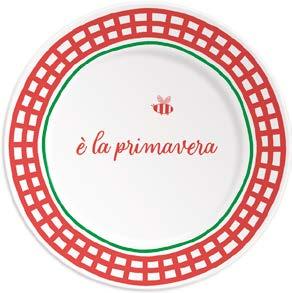
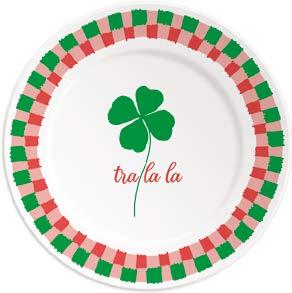
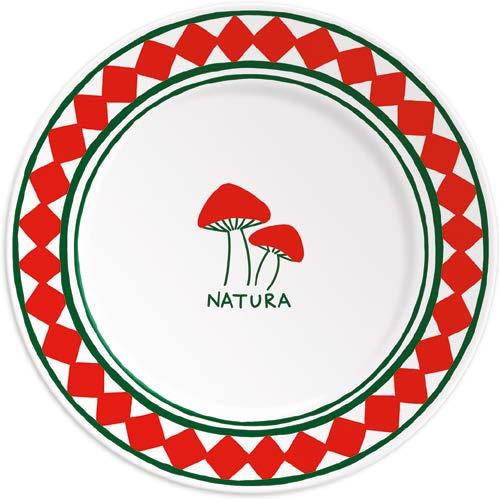
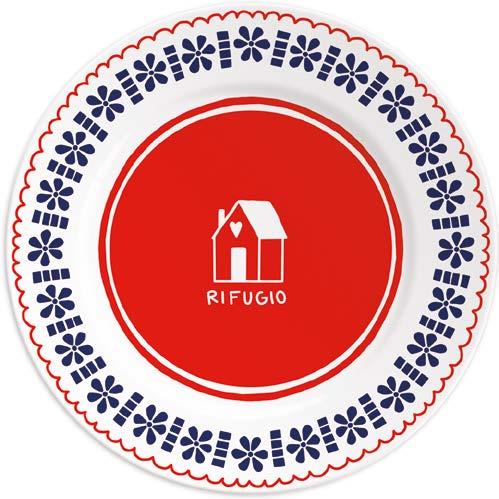
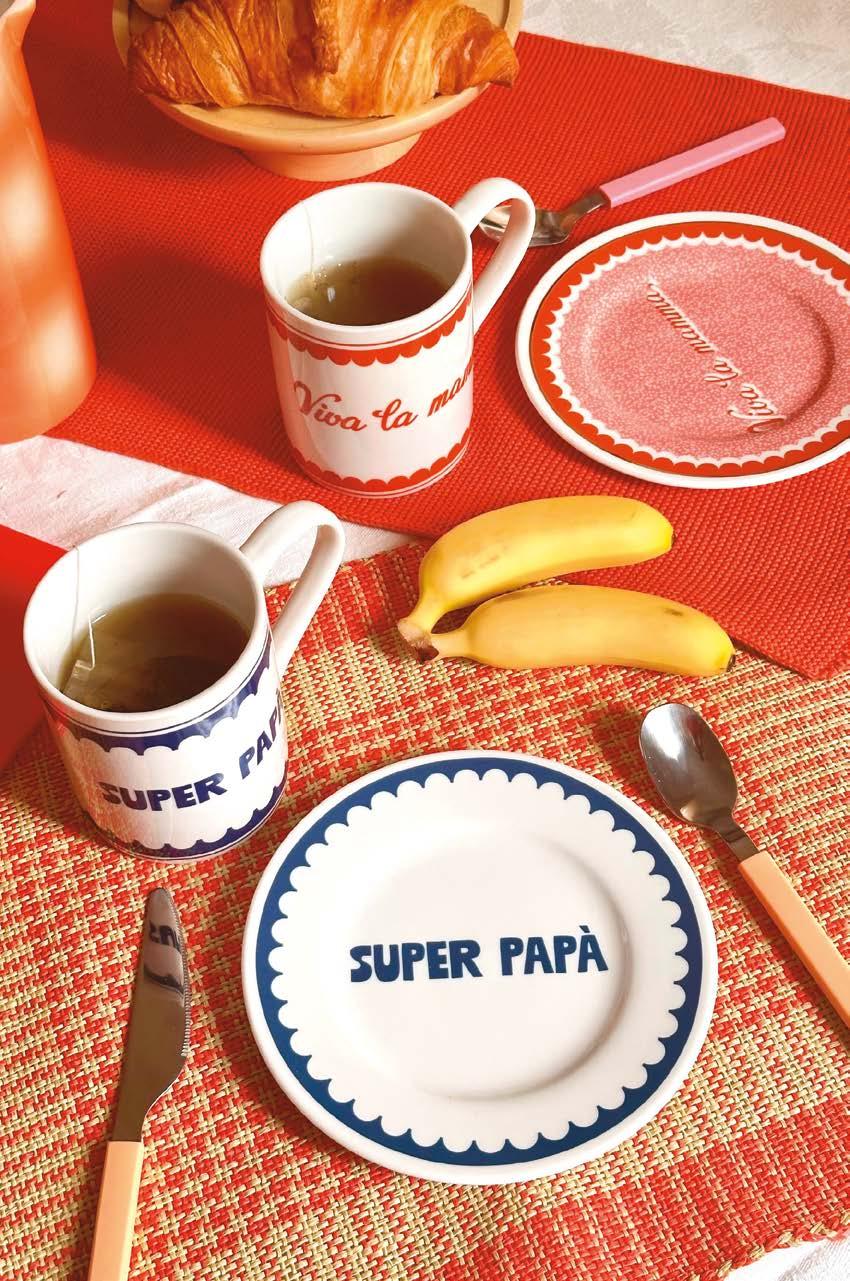
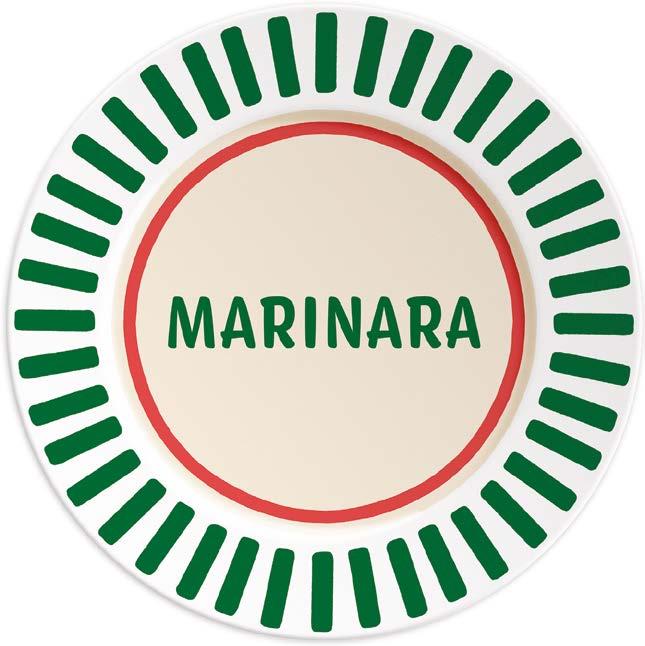
Primarily plates in various sizes — our best seller is the 16 cm diameter, though we also use the 21 cm plate. While the 16 cm plate is somewhat versatile, as it can also be used to decorate walls or as a catch-all tray, the 21 cm plate is the one that adorns the table during meals. Our range also includes larger serving plates designed for special occasions such as Christmas and so on. We also produce mugs, and from this year we will also be making small bowls suitable for holding food — and beyond — as well as
espresso cups. Our goal is to offer objects that fall within the realm of gifting: useful objects that also express a thoughtful sentiment for someone we care about. That, at its core, is the meaning of the phrases found on our objects, which make them a little bit special. Each surface carries a message it wishes to convey — and indeed, our pieces are chosen not only for their usefulness and aesthetic quality, but also for the sentiment they communicate.
plates from the "Spring
collection (21 and 16 cm)
Porcelain
"
Porcelain plate from the "Fruit" collection
DESIGN
Do you have a workshop?
Yes, it is located in Sassuolo, where part of the decoration of the products is also carried out. I handle the design, while the production is entrusted to a team of skilled craftspeople. Ours is a product I would describe as semi-industrial, in the sense that alongside the industrial process it involves the hand-application of decals.
You described your product as semi-industrial — a blend of industry and craftsmanship. How do you explain the renewed interest in handmade today?
Perhaps because creating with one's own hands is, fortunately, not yet something that can be delegated to artificial intelligence.
Where do you draw inspiration for your decorations?
I always try to explore the emotions felt in particular moments — during a journey, for example — and then attempt to distil them into words or brief phrases. It is gratifying to discover that my emotional syntheses resonate with those who buy the product. One of our best sellers is the "Dolce far niente" design — a sentiment many Italians cherish, and one that raises a smile in foreigners because it reminds them of the Italian inclination to favour a relaxed pace of life without being swept away by the frenetic rhythms of modernity. An attitude we have perhaps inherited from our Latin ancestors, for whom "Otium" was always something productive and creative.
Are there any ceramic traditions you particularly admire?
I love travelling, and one of the projects closest to my heart would be to establish collaborations with craftspeople from the various countries I visit. I would love to create a collection in Japan, in Peru, or in Mexico — there are so many ceramic traditions that attract me and could find their way into my creations.
What kind of distribution does your brand have?
We have direct distribution through our website, and then through retailers — at least a hundred in Italy alone — as well as sales in Europe, the United States, Canada, Australia and South Korea.
Are those selling your products mainly shops specialising in tableware?
They are largely what are known as concept stores, characterised by the sale of diverse product categories — from clothing to small objects — alongside tableware specialists, but also herbalist shops and "orists. A heterogene-
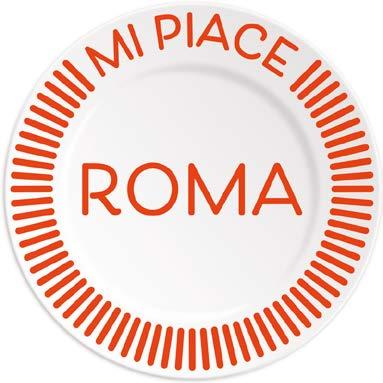
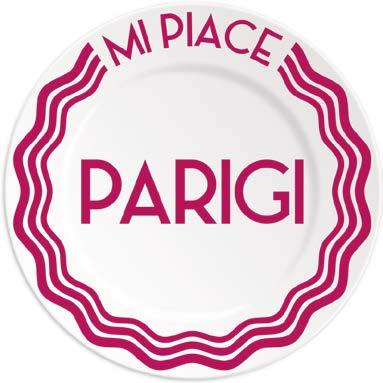
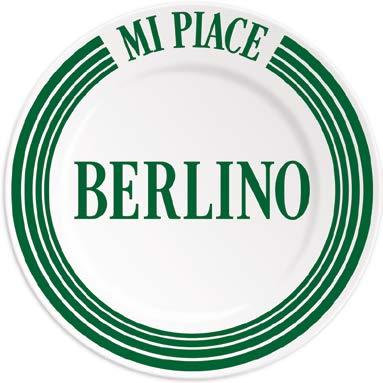
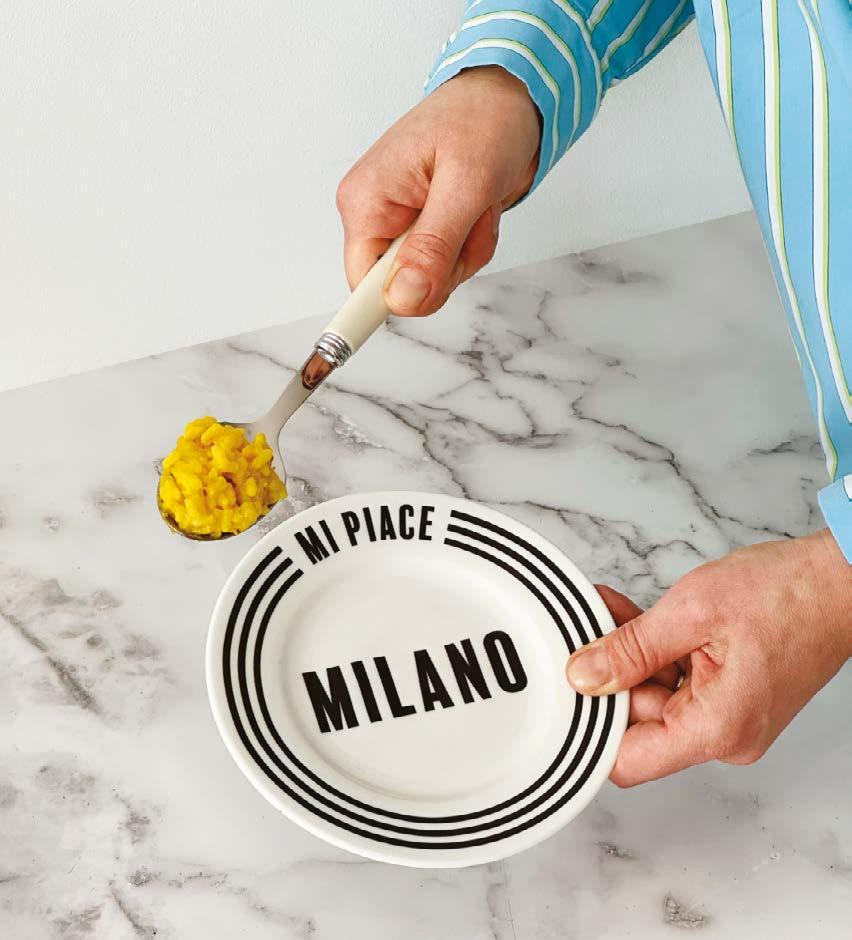
Porcelain plates from the "Cities" collection
ous mix of retail outlets, which reflects the versatility of our product.
Returning to the world of the table: what characteristics should the contemporary table have, in your view? Should it remain tied to tradition, or can it be freer, more imaginative and "deconstructed"?
My table is certainly one that is built over time, composed of a series of pieces that are almost like small collectibles. Even though I produce new series every six months, mine is always conceived as an overall vision — by which I mean that the different collections can interact on the table without any dif"culty. Some time ago I collaborated with the well-known brand Vista Alegre, and on that occasion I noticed that their services — very beautiful and signi"cant — were completed over time. That is, a child was given the "rst piece of the collection at birth, and further pieces were added at impor-
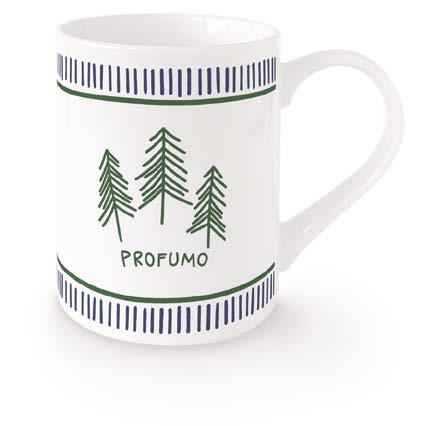
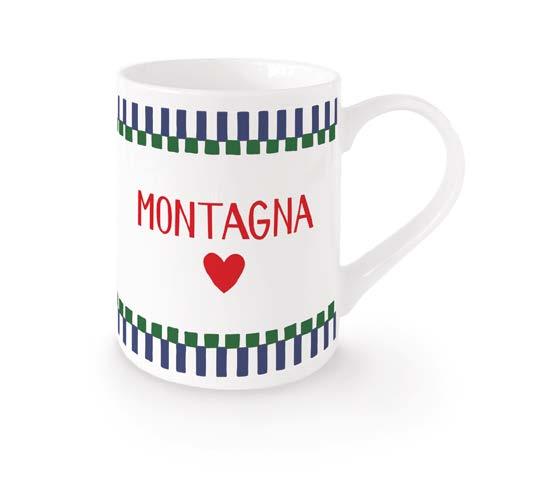
Porcelain mugs from the "Montagna" collection
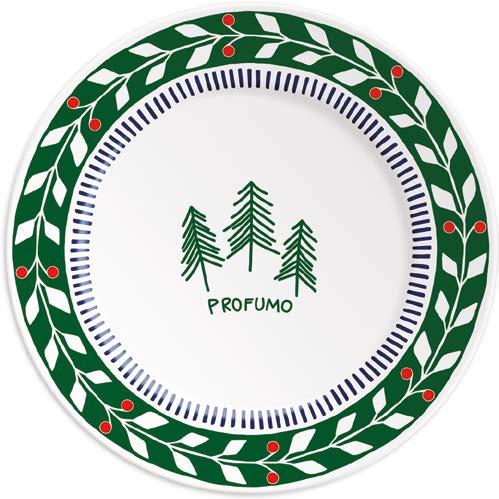
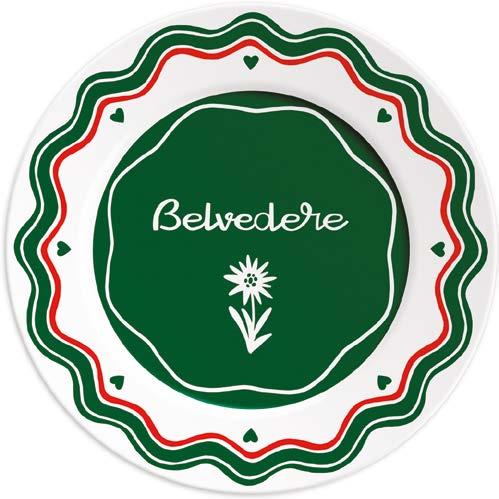
Porcelain plates from the "Montagna" collection
DESIGN
tant life milestones until the service was complete. I would not compare my creations to those of Vista Alegre, which feature very re ned craftsmanship, but I greatly love the idea that a collection can grow and be completed over time.
Who is your typical buyer?
I would say she is certainly a woman — our aesthetic is very feminine — in an age range of roughly 35 to 55 years old.
Among the design elds you have worked in, there is also textiles. How, in your view, does this sector contribute to the identity of the domestic environment?
I worked as Art Director for Karpeta — an experience that helped me sharpen my expressive language. The rugs I designed for that brand were lled with highly expressive marks that told stories of memories and emotions. Textiles are undeniably very important in the context of the table, as they complete and enliven it. Some time ago I had decided to enrich my brand by producing tablecloths and tea towels to accompany the plates and cups. I looked for a business partner but unfortunately did not nd one. It is a project I had to set aside, but it may well come to fruition in the future. In fact, my decorations work beautifully on porcelain but could equally be applied to other surfaces.
As an interior designer, you have also worked in retail. What advice would you give to retailers looking to make their shop an attractive destination capable of competing with e-commerce?
In the past I designed retail spaces — work I enjoy enormously. Today I draw on that expertise by personally designing my brand's stands at the various trade fairs, attending to every detail. When designing a shop, I believe it is very important to focus not only on the display of products but above all on the experience the customer has inside the space, which must always be positive and enriching. I am referring to the creation, within the shop, of moments of sharing that can make it increasingly a meeting point where people feel at home. I know it is not
an easy time for traditional retailers, but — and here I speak as a devoted customer — it is truly important that they survive. Their disappearance would impoverish our social fabric in an immeasurable way, and that would be a real loss.
Plans for the future?
As I mentioned, I would love to create collections in collaboration with craftspeople from around the world. And I would like to produce further collections like the one I have called "Ci-
Porcelain plates and mugs from the "Superpapà"
ties". With this project, I gave retailers the opportunity to offer a bespoke plate tailored to their location — a personalisation linked to the city in which the shop is situated. In practice, I created various plates bearing the names of the cities where they are sold. In addition to the city name, retailers were given the option to perso-
nalise the object by choosing from eight decorations and six different colours. It is a collection we launched in January 2025, and given its success we plan to continue developing it, offering retailers a truly bespoke product capable of attracting customers who are always seeking something of this kind.
Ilaria Innocenti
After graduating from the IED in Milan and expressing her creativity across various design disciplines, in 2012 Ilaria Innocenti created ilaria.i — a brand that tells the stories of everyday emotions through decorated porcelain objects: plates, saucers and mugs. Each piece is designed to be given as a gift, used, displayed or collected. The catalogue features over 100 products, including plates (in 16 and 21 cm formats) and mugs. Every creation is unique thanks to the message conveyed by its decoration — made up of words, phrases and familiar expressions — all accompanied by a delicate and contemporary aesthetic.
ilaria.i porcelain is decorated in Italy using the decalcomania technique, a semi-industrial process that combines production precision with artisanal gestures. Each decoration is applied by hand and fired at high temperatures (800–1000°C), fusing with the glaze and becoming a permanent part of the object. The production technique makes the products suitable for intensive daily use and fully dishwasher safe. Drawing on her Modenese roots — a land of ceramics and artisanal know-how — Ilaria Innocenti oversees every stage of production closely, ensuring quality and flexibility even for bespoke projects.
ilaria.i collaborates with shops, restaurants, brands, wedding planners and private clients, offering a personalisation service capable of transforming every object into a unique project. ilaria.i is available online at www.ilariai.com and through a network of selected retailers in Italy and abroad.
Brand: ilaria.i www.ilariai.com
Instagram: @ilariai.i_official
Portrait of designer Ilaria Innocenti
Porcelain plates from the "Pizza" collection
WEARS ITALIAN the Moka Pot that Angelina,
Born in 2025 in the manufacturing district of Verbano Cusio Ossola, the Angelina coffee maker is already present in 16 countries. Configurable in 20 colours and 7 handle variants, available in 1, 3 and 6-cup versions. The brainchild of Barbara Togno, who transformed a family legacy into an international brand.
It is a moka pot and yet it is not a moka pot.
Or rather: it is far more than that. Angelina
Made in Italy is a coffee maker born from the intersection of a centuries-old artisanal heritage and a contemporary ambition: to transform the everyday ritual of coffee-making into an act of personal style. Launched in 2025, in just over a year it has already found its way onto shelves and into kitchens in sixteen countries, from France to Japan, from the Caribbean
to South Africa.
The idea belongs to Barbara Togno, an entrepreneur with deep roots in aluminium casting. Together with her sons Mauro and Federico and a team of professionals, she has drawn on the expertise of the Fonderia Alfredo Togno in Verbania — the family foundry — creating a brand with its own voice, a de ned aesthetic and a story to tell.
The challenge was an ambitious one: to reinter-
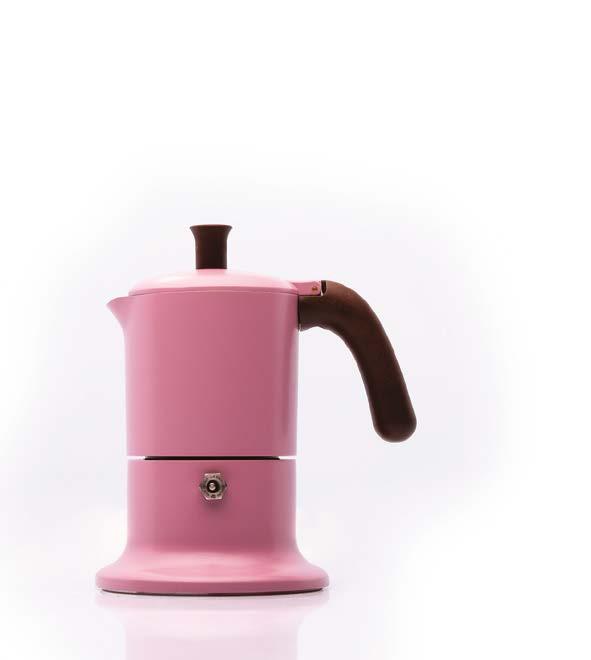
, gas only, available in 3 and 6-cup versions
pret one of the most iconic objects in Italian culture, the moka pot, without betraying its essence, while nally making it customisable. The result is a coffee maker con gurable online in 20 colour options — from sky blue to plum, from gold to tiffany — paired with 7 handle variants. Every single piece is, in effect, unique.
But Angelina is not merely about aesthetics. The 1-cup version responds to a genuine need in an era when households are shrinking and cof-
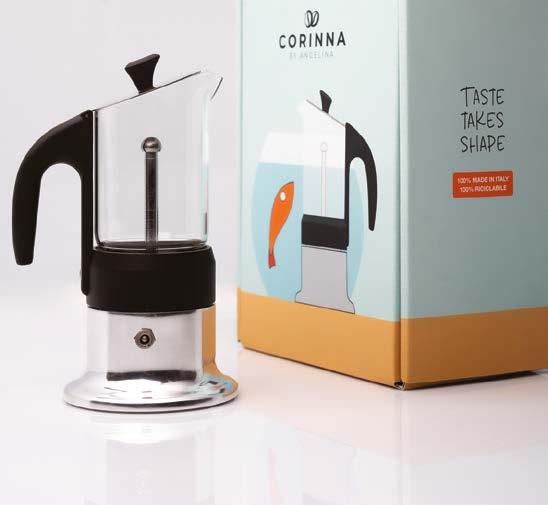
Corinna, the aluminium and glass body allows you to watch the water rise and the coffee form. Induction-exclusive, available in 3 or 6 cups
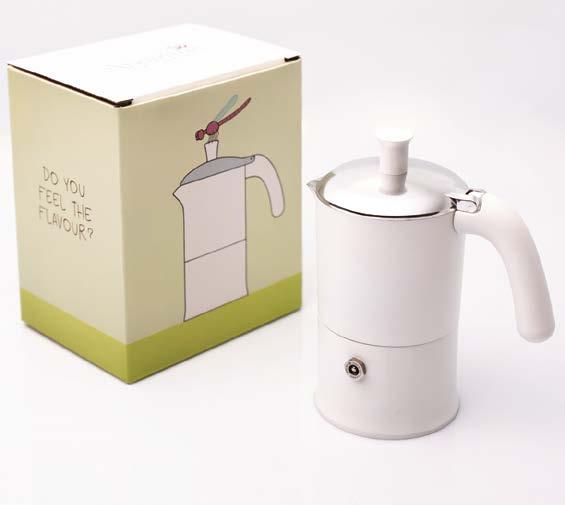
Libellula
fee is becoming an increasingly solitary and mindful ritual. Alongside the single-serve model, the 3 and 6-cup versions complete the range, available for both induction hobs and traditional cookers.
An Object That Is Also a Work of Art
The collaboration with illustrator Massimo Caccia has added a further layer of meaning to the project. The packaging for each line is decorated with small animals — a hummingbird, a ladybird, a dragonfly — drawn in a style that blends irony and delicacy. The hummingbird, in particular, accompanies the tagline "Do you feel the flavour?", which, according to the founder, is inspired by the aroma of coffee and the gurgling of the moka pot — that precise moment when time stands still and the ritual is complete.
Four Souls, One Brand
The range is structured around four distinct models. Colibrì and Coccinella work on both induction and gas and represent the heart of the collection, with their classic form reinterpreted through colour. Libellula is the only gas-only model, while Corinna — designed exclusively for induction, in glass and aluminium — reveals the extraction process as it unfolds and is the
most sophisticated offering in the range. All models are made from recycled and recyclable aluminium, with a stainless steel base for induction-compatible models, a heat-resistant ergonomic handle and a safety valve. The entire production process — from casting to "nishing, from assembly to quality control — is managed entirely within the foundry, just a few kilometres from Verbania.
The Value of Made in Italy
The fact that a manufacturing company from the Verbano Cusio Ossola district managed to reach sixteen countries within a single year is no accident: it is proof that Made in Italy, when it is authentic and well communicated, still "nds its audience. Angelina is already on the shelves of the Rinascente in Milan's Piazza del Duomo, and has also reached France, Germany, Switzerland, Spain, the Netherlands, the United Kingdom, Ireland, Portugal, China, Japan, South Korea, the Caribbean, Venezuela, Mexico and South Africa.
International trade fairs — Ambiente in Frankfurt and the Salone del Mobile in Milan — served as the launchpad. The result is a brand that speaks the universal language of design, while bearing an unmistakably Italian accent.
Colibrì, available in 20 colour options, in 3 and 6-cup versions, for induction and gas.
Origins
The story of Angelina begins long before the brand itself. It is 1938 when the Fonderia Alfredo Togno opens its doors in the heart of the Verbano Cusio Ossola housewares district, an area that for over a century has been synonymous with excellence in metalworking and the design of household objects. For decades the foundry quietly produced thousands of aluminium components for the most celebrated Italian brands in the coffee maker sector, precision work, far from the spotlight, yet fundamental to the quality of iconic products that found their way into homes around the world. In 2021, the Fonderia Alfredo Togno joined Assofond, the national association of foundries. Then, in 2025, came the turning point: Barbara Togno, heir to the family tradition, decided the time had come to step out of the shadows and bring Verbania's manufacturing expertise directly to the end consumer. Angelina was born — a name that pays tribute to her great-grandmother.
The foundry today holds ISO 9001 (quality), ISO 14001 (environmental management), ISO 50001 (energy efficiency) and ISO 45001 (occupational health and safety) certifications: a set of credentials that speaks to a commitment to responsible business practice, looking to the future without forgetting its roots.
angelinamadeinitaly.com
Production:
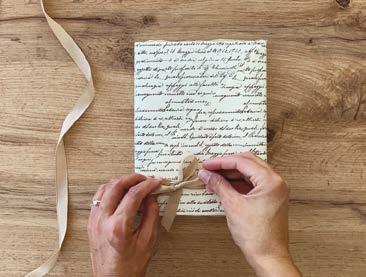
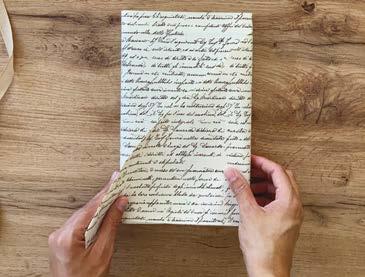
GIFT WRAP WITH A CARD POCKET
Photo frame
1
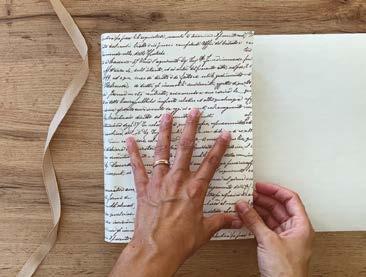
Cut the paper to size, leaving an excess of one third along the longest side, and wrap the box.
4
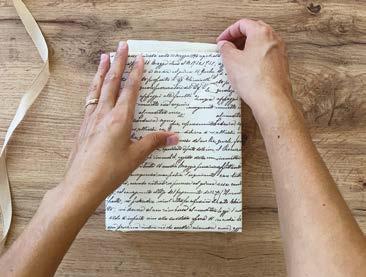
Close the parcel on all sides with double-sided tape.
2
- Decorative paper
- Coordinating fabric ribbon
- Floral decoration
- Card with envelope
- Double-sided tape
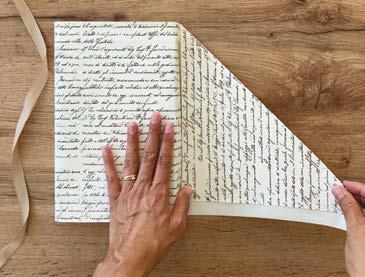
Fold the diagonal of the excess paper, starting from the top right-hand corner of the box.
5
Decorate with the ribbon.
3
Secure the freshly folded corner to the opposite side with double-sided tape.
6
Tuck the envelope into the pocket created by the fold, together with a small sprig or floral decoration.
Vola a
Chicago
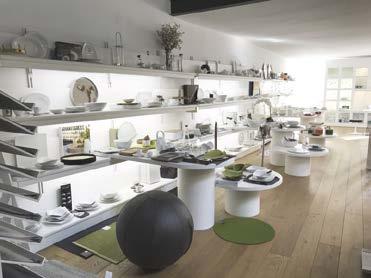
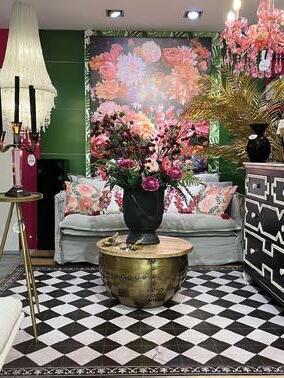
Hai un negozio di articoli per la casa?
Partecipa con le foto del tuo negozio al Italia
Per candidare il tuo negozio, invia una selezione di foto e una breve descrizione a casastile@edibrico.it. Le proposte saranno valutate dalla redazione per la pubblicazione.
Partecipare al offre opportunità uniche per il tuo negozio:
• Ricevere visibilità tramite i canali di comunicazione di Casastile
• Suggerimenti di esperti e di altre realtà del settore
• Trovare ispirazioni per migliorare la propria attività confrontandosi con negozianti di tutto il mondo
• Il vincitore del Italia volerà a Chicago in occasione dell’evento The Inspired Home Show dal 9 al 11 marzo 2027
Scopri i negozi italiani vincitori di alcune edizioni passate
ELEGANCE Without Ostentation The Ritual of Hospitality:
Setting a table has never been merely a practical gesture. It has always been, above all, an act of declaration: of who we are, of how we wish to be seen, of how much we care for those we have invited to sit with us.
In recent years, something has shifted — quietly but profoundly — in the way people relate to tableware. This is not a simple swing in taste, nor a seasonal trend destined to fade. It is a broader cultural transformation, one that the most attentive retailers have already begun to detect, and that no one working in the tableware sector can afford to ignore.
The key word is rituality. In an era de ned by digital acceleration and the fragmentation of time, the table has become one of the last spaces where slowing down is not only permitted, but actively sought. Laying the table with care, choosing crockery with intention, placing glasses with precise attention to detail: these are gestures that restore to both guest and host a sense of mastery over time.
A History as Long as Civilisation
To understand the present, one must take a step back. Even in the Italian Renaissance courts, the mise en place was a code of social status. At the Medici banquets, the silverware on display was not merely functional: it was political language, an instrument of diplomatic seduction. Guests read in the richness of the tableware the solidity of the host's power. In the eighteenth century, the European manufactories — from Meissen to Capodimonte, from Sèvres to Doccia — transformed porce-
lain into applied art and an object of collective desire. Owning a complete service was a mark of bourgeois distinction; gifting one on the occasion of a wedding was to pass on a symbolic patrimony, not merely a material one. The industrial nineteenth century democratised access without extinguishing the fascination — on the contrary, it multiplied the codes. The Victorian table was a theatre of meticulous rules: the exact positioning of forks and knives, the number of courses, the colour of the tablecloth in relation to the season. Table
etiquette was a form of unwritten literature, learned and passed down like a mother tongue. The twentieth century brought simpli"cation — the Bauhaus, Scandinavian design, and then the plastic chic revolution of the Sixties — but also a counter-reaction: the return to artisanal ceramics, to imperfect forms, to stoneware bearing the marks of the human hand. Every era has always found in the table a "eld of tension between the desire for modernity and a nostalgia for something slower, warmer, more authentic.
The glasses are part of the Chateau series by Kosta Boda, represented by Maino 1919 Luxury
BACK TO BASICS: A HISTORICAL NOTE
The history of the table has always been a reflection of social structure. In the eighteenth century, aristocratic tables were stages of power — think of the monumental silver surtouts de table or the Meissen porcelains that celebrated status. The nineteenth century introduced the concept of service à la russe. This innovation radically transformed the ritual: courses no longer arrived all together on the table (as in service à la française), but were served in sequence. This shifted attention to the quality of individual objects: the plate, the cutlery and the glass became protagonists of a more intimate tactile and visual interaction. Today, elegance without ostentation draws on precisely that functional precision, while stripping away its formal rigour to embrace a warmer naturalness.
Current Trends: Materiality and Sustainability
The Perfect Imperfection
There is a strong return to craftsmanship. Ceramics with irregular edges, reactive glazes that make each piece unique, and mouth-blown glass. The ostentation of "industrial perfection" is giving way to the warmth of the "handmade".
Organic Palettes
Vibrant, synthetic colours are making room for the tones of the earth. Beige, sage, terracotta and dusty blue dominate collections, enabling creative mix-and-match combinations that convey a sense of calm and welcome.
Tactile Minimalism
It is not only what you see, but what you touch. The current trend favours matte finishes, porous textures and natural woods, transforming the moment of the meal into a multisensory experience.
Today's Customer: Identity, Not Status
What distinguishes the contemporary consumer from their predecessors is a subtle but fundamental difference in motivation. One no longer purchases tableware to make a statement to others — at least, not primarily. One buys to build a personal experience, to inhabit one's domestic space more fully, to give concrete form to a value system.
Sustainability is one of those values. Natural materials, transparent production processes, local or short-chain craftsmanship: the informed consumer demands credible stories behind the object. It is no longer enough for a plate to be
beautiful; it must be beautiful in a way that is consistent with the world its buyer wishes to inhabit.
Alongside sustainability, there is a growing interest in imperfection as an aesthetic value. Japanese wabi-sabi — the beauty of the transient, the incomplete, the marked by time — has found fertile ground in a generation that grew up surrounded by digital perfection and is now hungry for texture, irregularity and tactile authenticity. The plate with a not-quite-symmetrical rim, the bowl whose glaze falls asymmetrically: these are details that speak of the human presence in the production process.
CONTEMPORARY Bringing
elegance to the table
by Francesca Guerini Rocco
TAVOLA D’AUTORE: LUXURY STYLE
Contemporary table setting moves between formal balance, neutral palettes, or those devoted to the absolute elegance of black, and premium materials, in a measured dialogue between aesthetics and functionality. Refined craftsmanship, textured finishes and essential graphic details enhance crystal glassware and porcelain services, while decorations, often monochrome or inspired by natural motifs, lighten to become a mere visual accent. Completing the table, a quiet yet decisive technical innovation, from stackability to material durability, that naturally meets the demands of everyday gestures and the professional world, always with style.
designed for a scenographic table setting. A proposal that combines craftsmanship, durability and a mix-and-match spirit, translating the concept of everyday luxury.
Fine porcelain meets precious detailing in the Luxury Muse collection by Taitù, an emblem of timeless elegance. Sophisticated decorations and carefully crafted workmanship enhance luminous, refined surfaces,
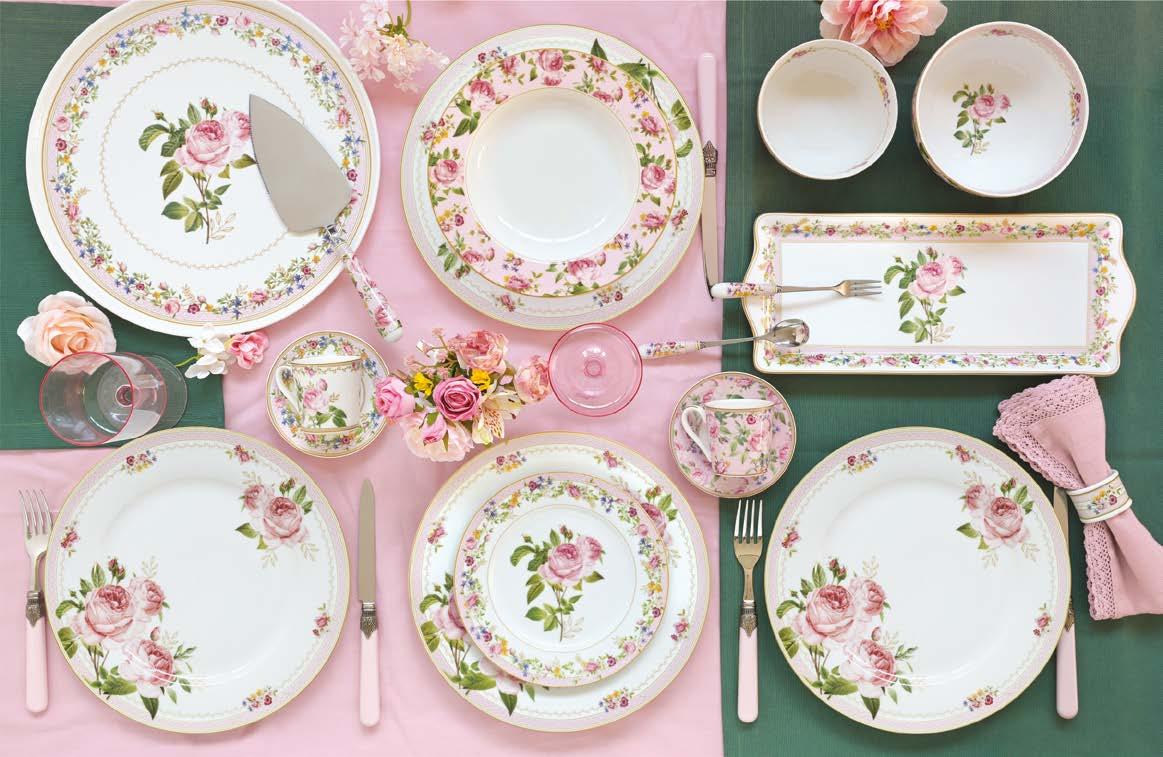
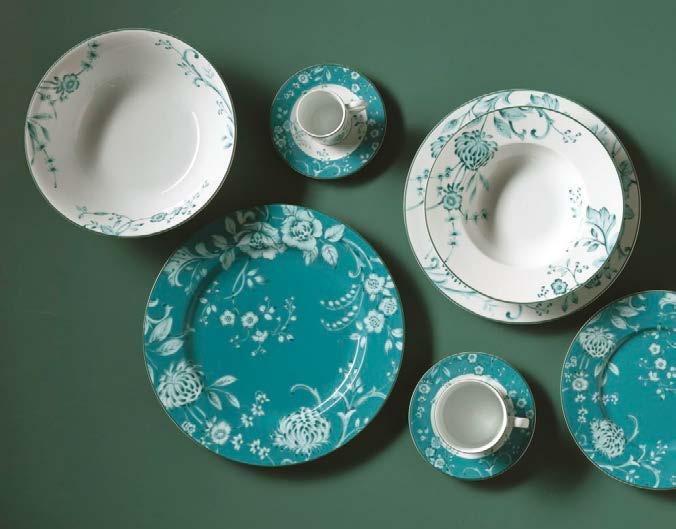
Romantic and refined, the Chant des Roses collection by Easy Life is crafted in fine porcelain, enriched with romantic vintage-style floral motifs inspired by blooming gardens. It includes 18-piece dinner services, 300 ml mugs, espresso cup and saucer sets, 15 cm bowls and serving platters.
Black Eclipse by Brandani plays with essential volumes and black surfaces to create a table setting with a modern yet distinctive aesthetic. The matte finish enhances dishes without sacrificing practicality: all tableware is made from melamine, a light and durable material equally suited to buffets and outdoor entertaining.
Noritake presents Bangle, a fine porcelain collection that combines lightness and durability with a sophisticated aesthetic. Its decorations, inspired by bracelets, create elegant and contemporary graphic rhythms capable of enhancing the table with a distinctive yet understated mark, blending Eastern influences with international taste. The collection won the Best of Year Awards 2025.
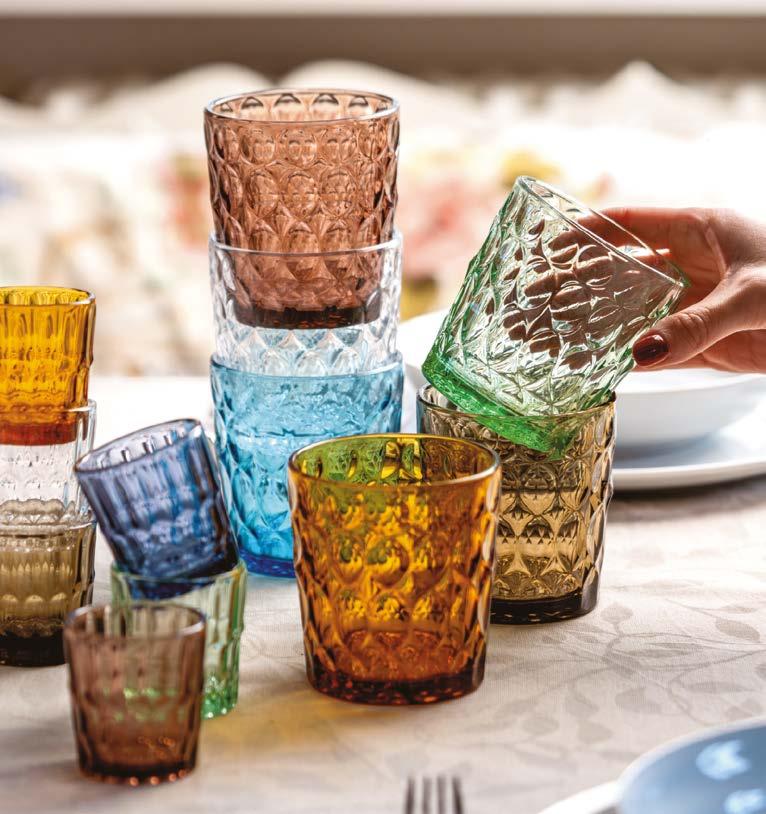
RCR Cristalleria Italiana opens 2026 with Circus, the line presented at Ambiente 2026 that brings the poetry and balance of the circus world to the table. Made in Luxion®, a patented superior sonorous glass, it combines brilliance, durability and sustainability. Its true standout feature, however, is the stackability of the Dof, HB and Rock glasses, which add a scenographic yet practical touch to any service.
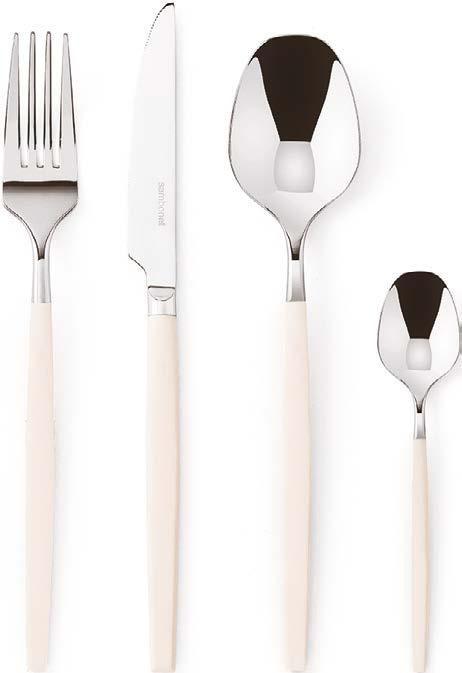
Tapered lines and essential elegance define Siro, Sambonet's new cutlery collection (available from June), inspired by Scandinavian design. A project that unites aesthetics and functionality through the innovative integration of stainless steel and PBT, fused into a single, continuous body. The result is a pure, seamless form in which the stylistic research is emphasised by neutral yet refined tones, ranging from ivory to grey-black.
TABLEWARE
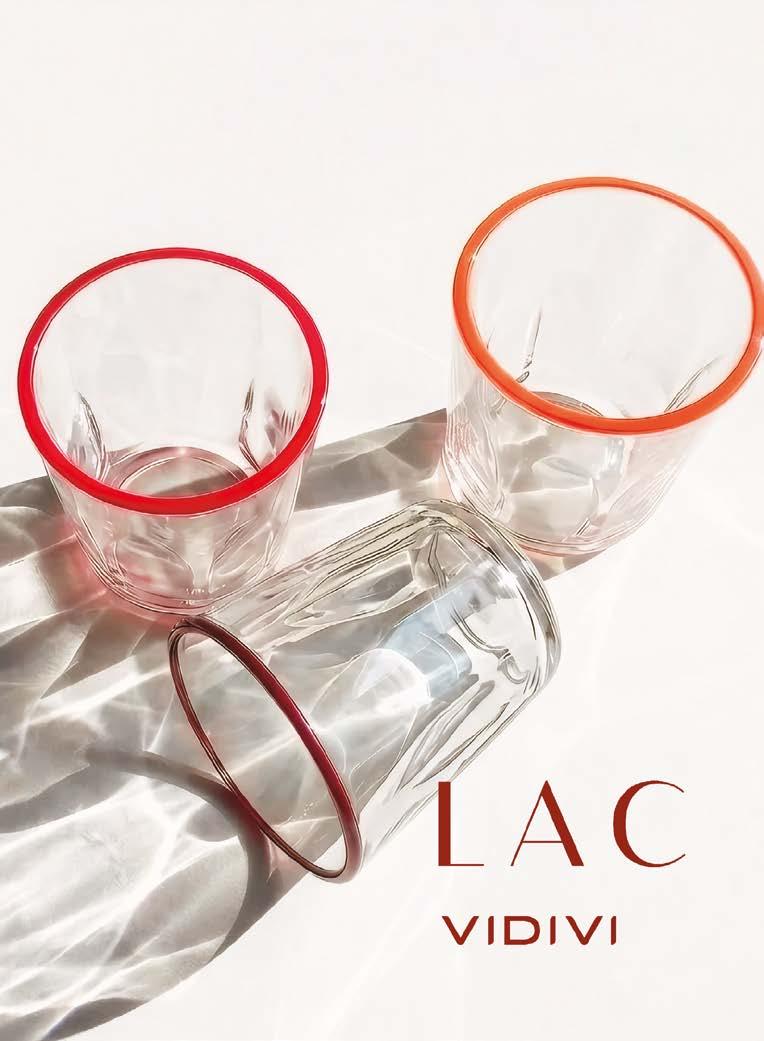
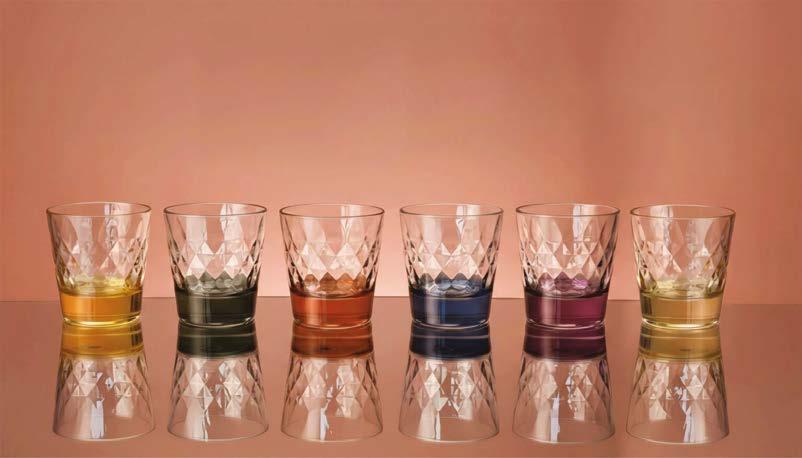
The brand-new LAC line by Vidivi, part of the Cerve group, draws inspiration from the intensity of lacquered colours: full, glossy, almost liquid tones. The thick rim of the glass becomes the defining feature of the table — a graphic frame with a pop sensibility that adds an unexpected note even to the most rigorous table setting.
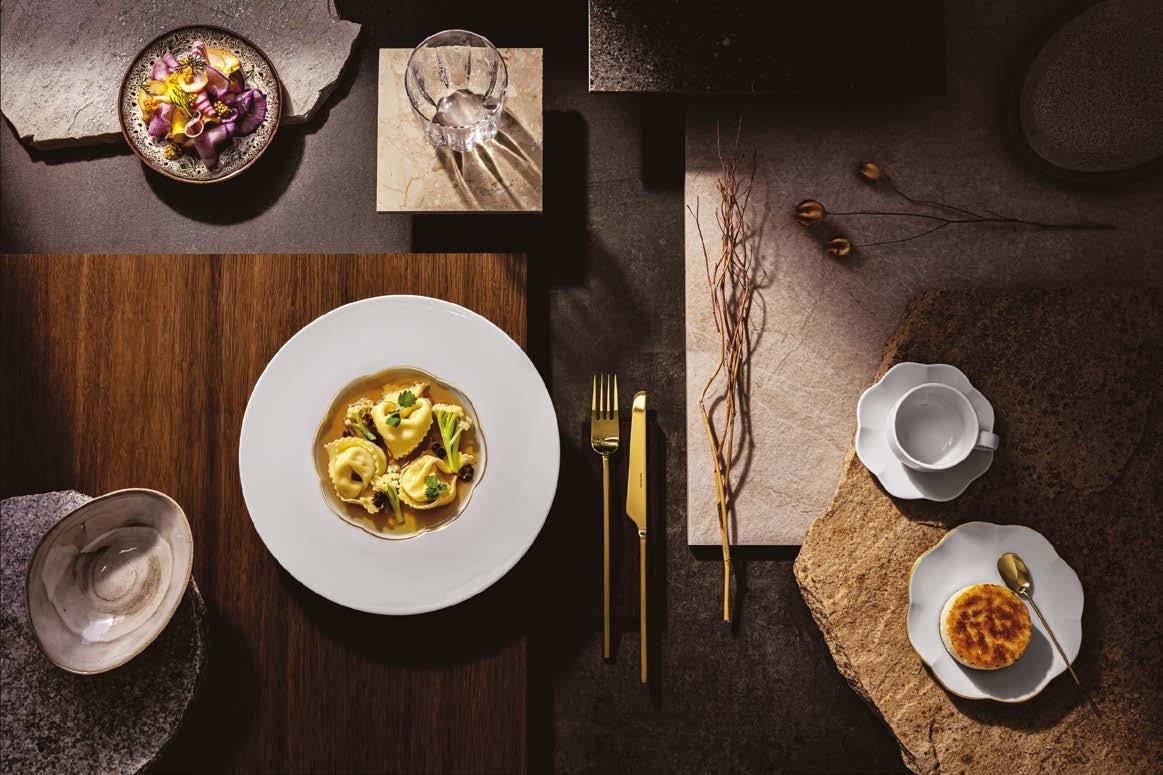
With Sonetto, the new line created for the Horeca world, Rosenthal translates Italian lyricism into a sensitive, threedimensional narrative. White glazes, shifting between gloss and matte, dialogue with delicate golden outlines, animating the table with floral volumes and refined trompe-l'œil effects, while ceramic elements with a more textured surface introduce a calibrated contrast. The result is a compositional balance of elegance, craftsmanship and contemporary research.
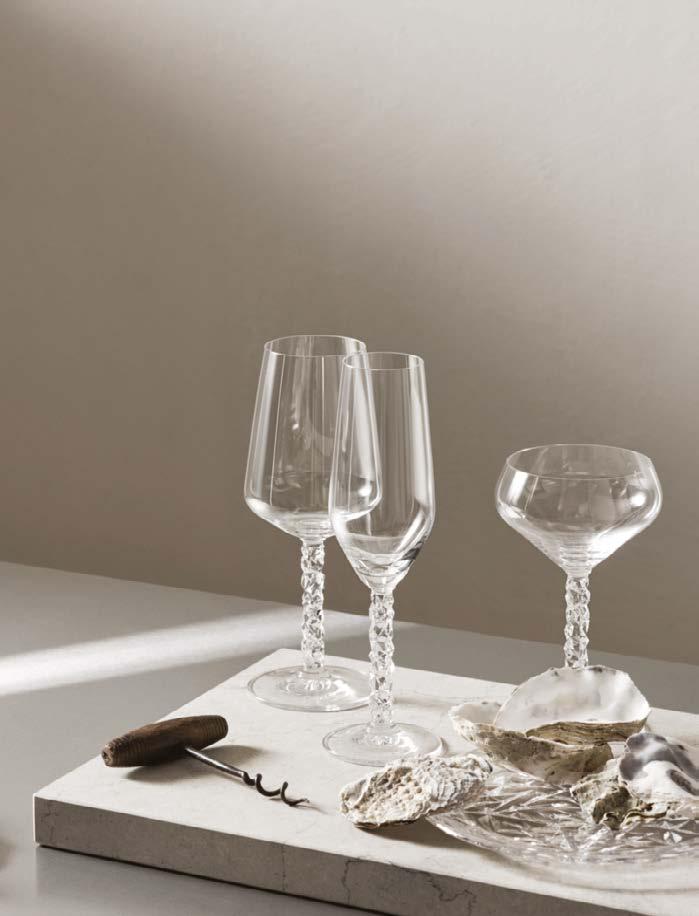
Orrefors – Carat (represented by Maino 1919 Luxury) Orrefors presents the Carat glasses, designed by Lena Bergström — a project in which crystal craftsmanship meets a bold and contemporary decorative signature. The stem, marked by an asymmetric faceted motif, captures and multiplies light into a web of brilliant reflections, lending the ensemble an elegant and scenographic presence. The purity of the bowl dialogues with the material richness of the base, in a refined balance that makes these glasses ideal for enhancing both the table and the moment of service.
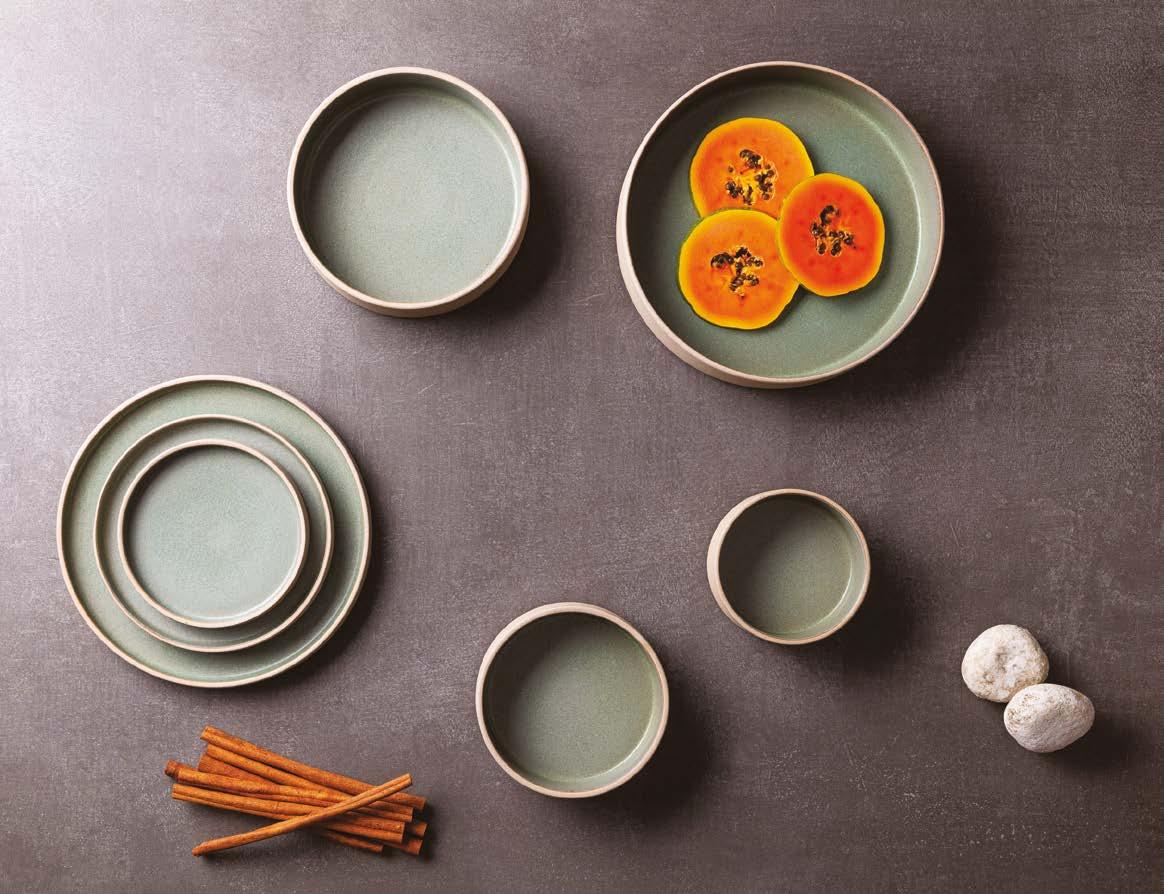
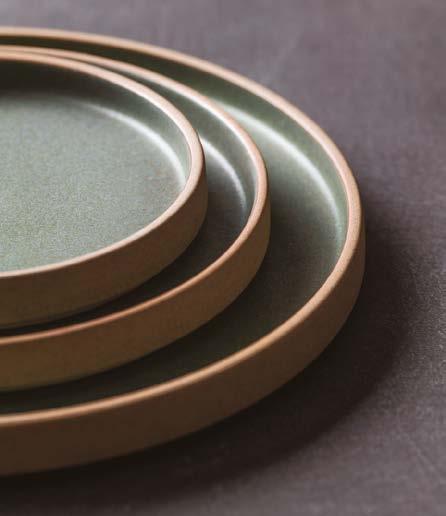
The defining hallmark of Sandie, by Arthur Krupp, is the refined interplay of textures and surfaces, essential lines and natural suggestions. The slightly grainy beige exterior evokes sandy matter, while the aqua-green glazed interior recalls luminous marine reflections. A tactile and chromatic interplay that composes a versatile service of plates, bowls and cups.
TABLEWARE
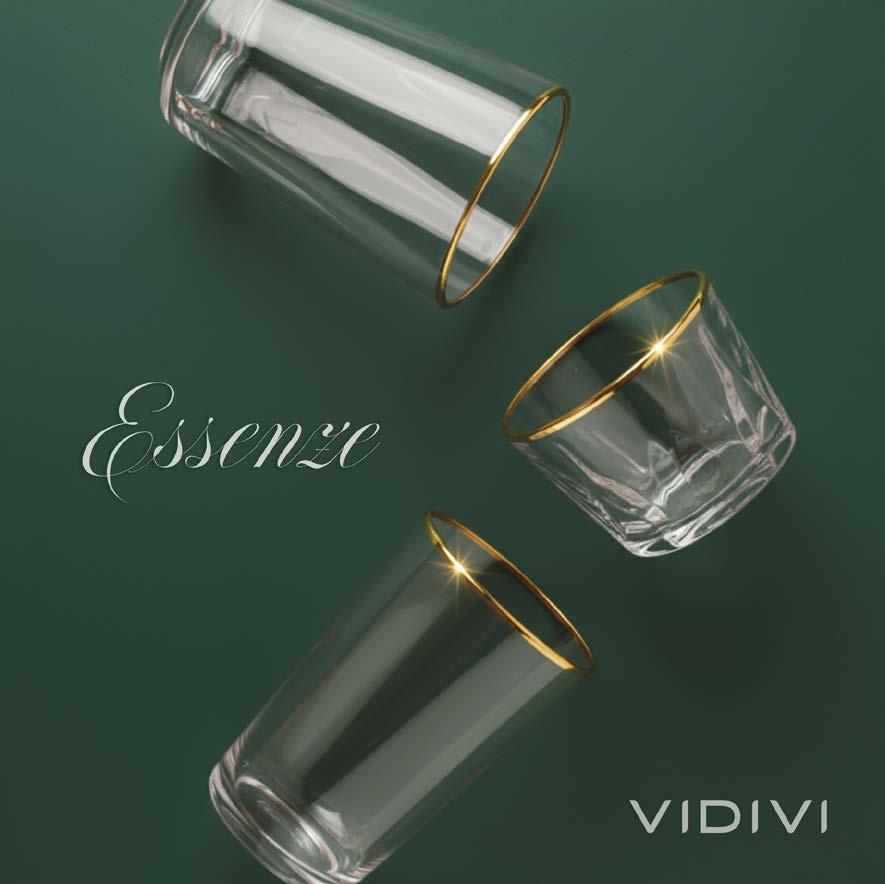
Essential volumes, pressed glass and a platinum thread (also available in gold): this is how Vidivi of the Cerve group interprets contemporary elegance. The Essenze Murano tumbler collection draws on the Venetian tradition, combining maximum durability with brilliant reflections to illuminate both everyday and special-occasion tables.
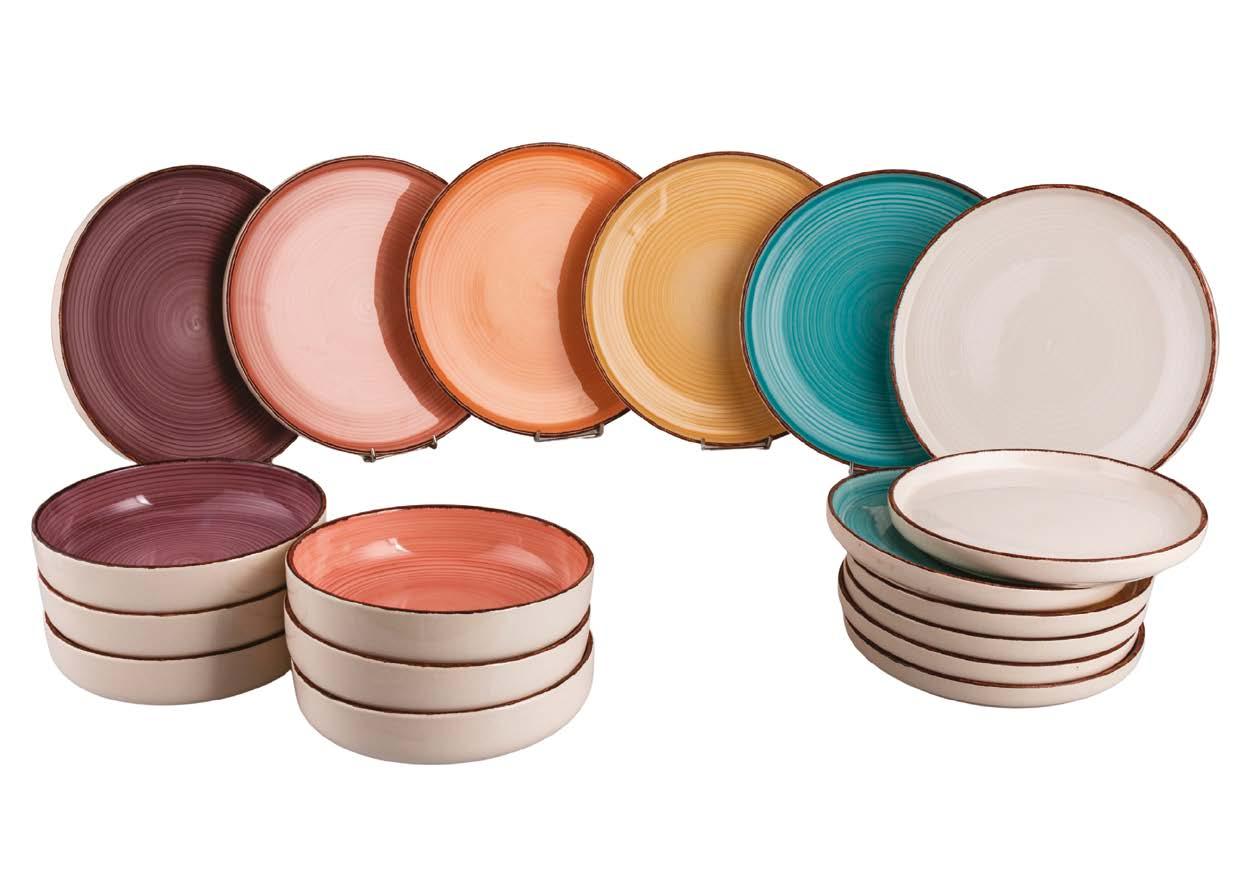
Villa d'Este Home Tivoli dresses the table in pastel tones and the rustic character of porcelain stoneware. Baita Modern Acquerello combines durability and practicality, presented in a range of delicate watercoloureffect shades for an informal country-style elegance. The 18piece service includes 6 dinner plates, 6 soup plates and 6 side plates in different colours, suitable for microwave and dishwasher use.
The colours of the sea and summer sky meet an elegant floral decoration rendered in contrast on plates, saucers and cups: the Heritage Sea line by Weissestal, in fine porcelain, is perfect for bringing a 1950s allure to the table, reinterpreted in a modern key.
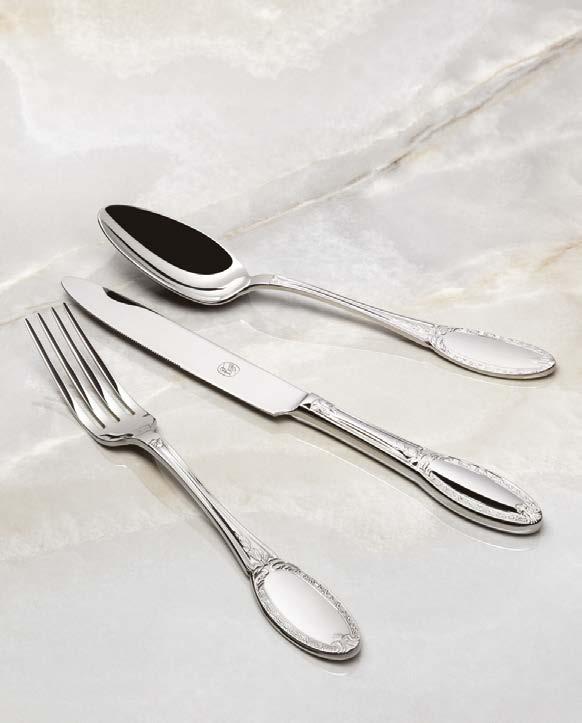
Broggi – Foscari (represented by Maino 1919 Luxury) In the Foscari cutlery by Broggi, the memory of a historic classic is translated into an elegant and contemporary expression. A reissue of the early 1900s Collection 34, this model renews its original traits through stainless steel and a sensibility tailored to modern tables. The finely chiselled details and polished finish define its character, lending the ensemble a refined and distinctive presence — ideal for table settings that are understated yet full of personality.
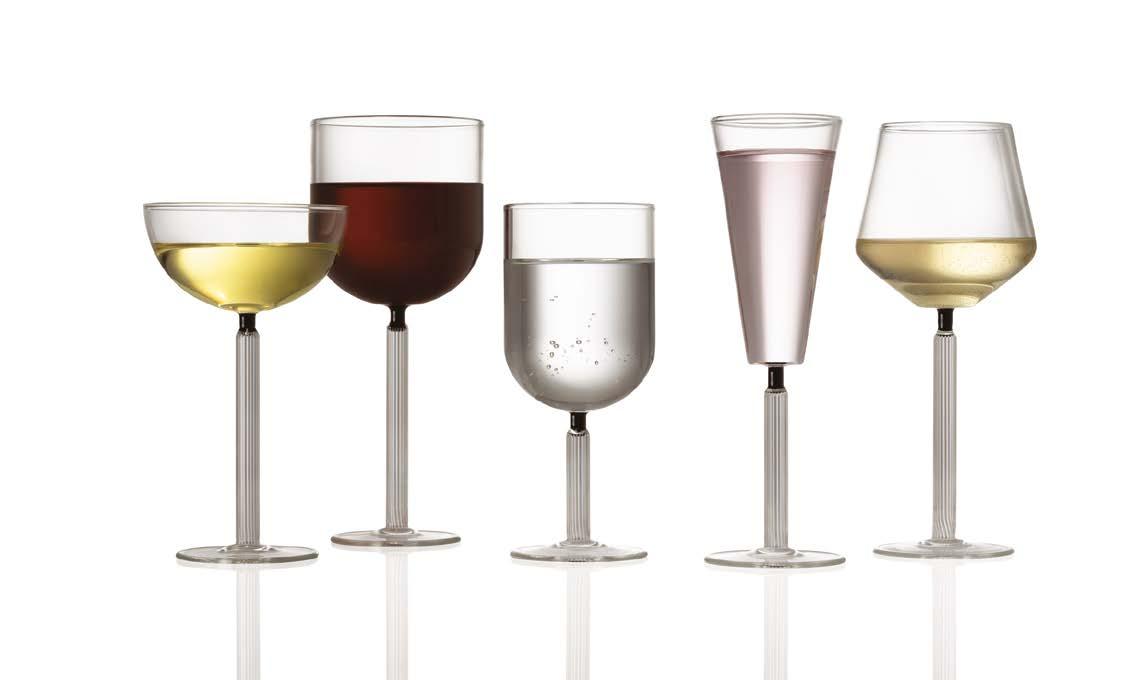
Manufacturing artistry and fashion-forward aesthetics converge in fferrone's new table collection. Cerna represents a technical breakthrough in the world of luxury glassware: it is the first wine glass collection to achieve this archetypal form with a borosilicate glass stem, made possible through deep collaboration with Czech master craftsmen. The name — cerna meaning black in Czech — evokes the signature black detail of the stem.
for the contemporary kitchen FORMS AND COLOURS New materials
by Patrizia Pagani
Competition is driven by the capacity to innovate. Cookware manufacturers spare no effort when it comes to product strategies aimed at introducing advanced performance, technically sophisticated raw materials, stylistically appealing tools, and increasingly effective solutions in terms of environmental sustainability and user health. The result is a constant process of technological, performance-driven and design development that, in order to be properly appreciated by consumers, requires coherent and integrated communication activity.
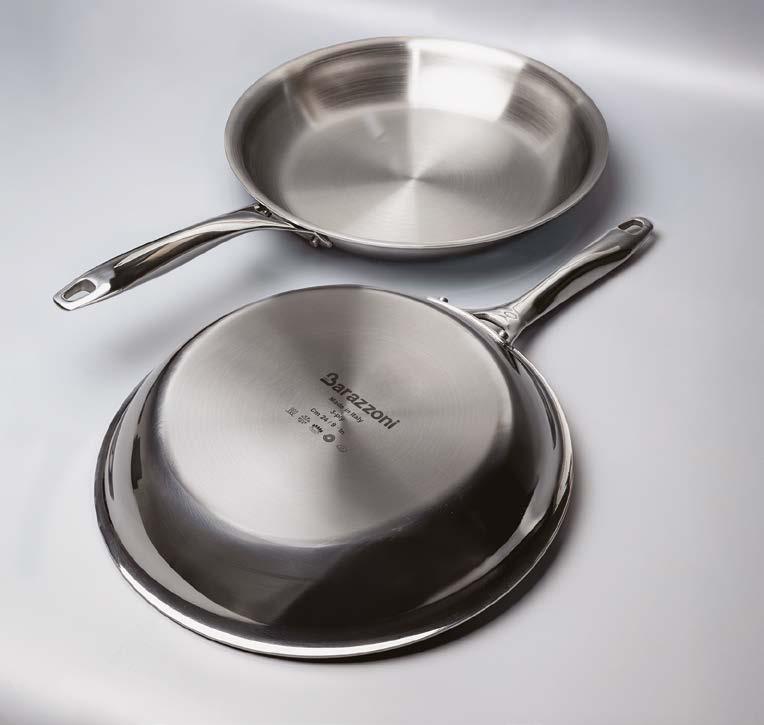
Pan from the Trimetallo collection by Barazzoni
With the goal of capturing the interest of potential buyers, a pot must appropriately express the right combination of performance, aesthetic appeal, health credentials and sustainability. From this perspective, product innovation in the cookware segment remains a fundamental driver of growth within the competitive strategies of the leading players. Major manufacturers continue to invest substantial resources in Research & Development aimed at delivering a strong and systematic innovative impulse across their product ranges — both in terms of high-performance materials and coatings, and in terms of design, with unconventional forms and colours that are pleasant to use and display in the kitchen — as well as in terms of advanced functionality. All of this without overlooking a dual imperative: today, frying pans, saucepans, casseroles, baking trays and the like must guarantee maximum safety for human health while simultaneously minimising their environmental impact.
At the same time, given the growing complexity of intrinsic product content, the importance of effective storytelling is steadily increasing. A decisive role is increasingly being played by communication activities aimed at conveying new concepts in a correct and engaging way, whether
the focus is on technological, functional, design or sustainability attributes.
Barazzoni Launches a Line for Connoisseurs
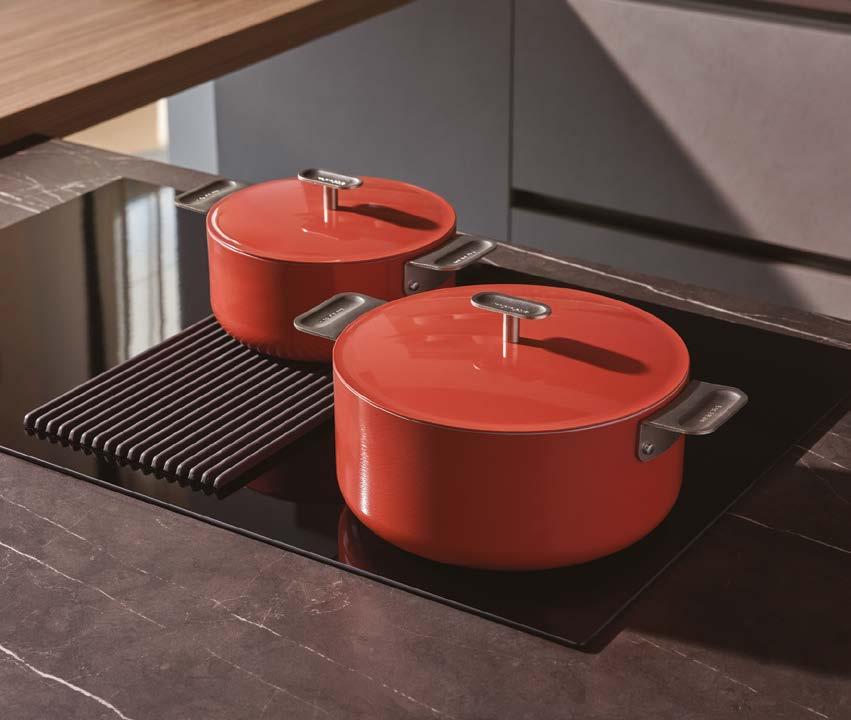
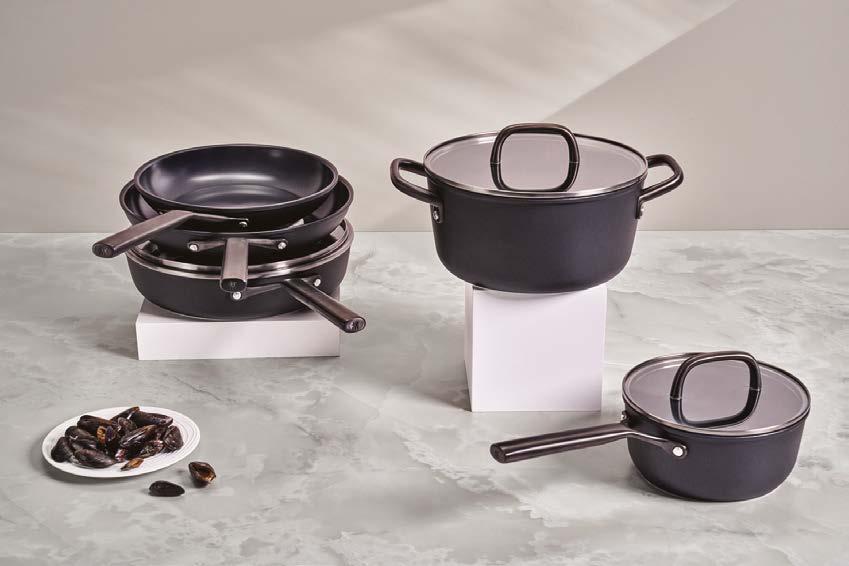
In keeping with the distinctive characteristics of Italian cuisine, the cooking tools used to prepare it must represent the perfect synthesis of tradition and innovation. "Since our distant origins in 1903, our company has been de ned by a modus operandi characterised by innovative capacity in thinking, designing and manufacturing," states Andrea Barazzoni, Chairman and CEO of Barazzoni Spa. "In this spirit, we continue today to focus on Made in Italy quality, health safety and the design content of our lines — which means, above all, choosing high-level raw materials to ensure that our nished products are truly excellent, and manufacturing them exclusively in Italy, at our historic production facilities. This is demonstrated by one of our latest innovations: Trimetallo, a collection of cookware featuring an aluminium body with a double steel coating — both interior and exterior — designed to satisfy a target audience of discerning connoisseurs, positioning itself in a segment that is still not widely represented in our country. The distinguishing elements of this new se-
ries worth highlighting are its Italian manufacture and — given its speci c advantages — a price positioning that is nonetheless consistent with our usual best value-for-money policy." Alongside premium materials, the company is also focused on functionality in terms of space optimisation and ease and versatility of use. Recently it launched two new proposals with detachable handles, adding to the ceramic range with removable handles introduced some years ago.
To effectively support the communication of innovation in cookware — as in other sectors — a strategy grounded in consumer education is essential, given that users are increasingly informed and aware. "It is essential that consumers are able to fully appreciate the quality of the materials used and the transparency regarding their origin," Barazzoni explains, "as well as real-world evidence of the bene ts of our cookware in terms of performance, health and sustainability. To this end, we are continuing an intensive training programme across our commercial network — agents, clients and sales staff — and re ning all our marketing materials and social content for use by all actors in the supply chain."
, CEO of Barazzoni Spa
Andrea Barazzoni
TRENDS
COOKWARE
Risolì: A Timeless Traditional Approach
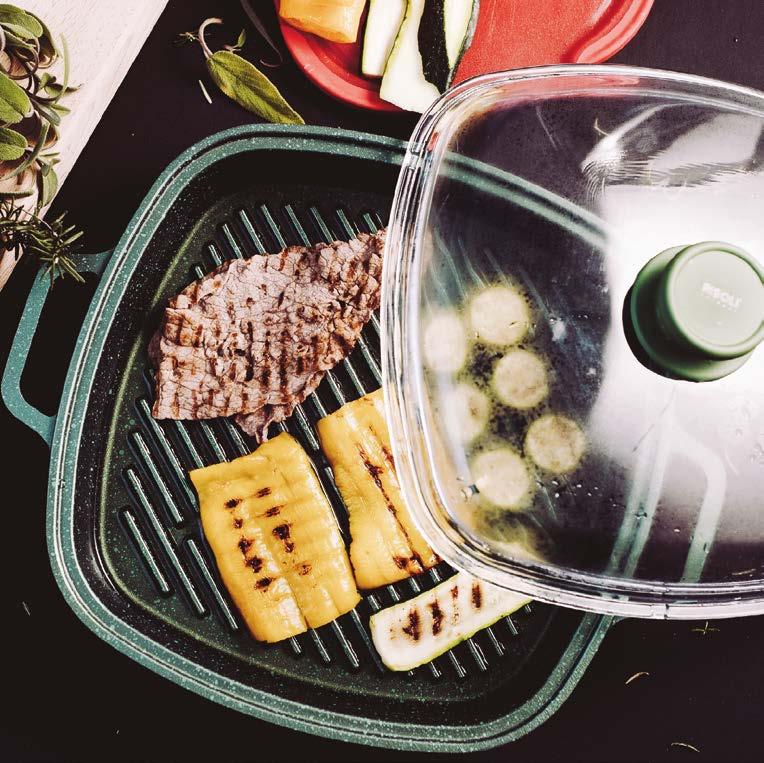
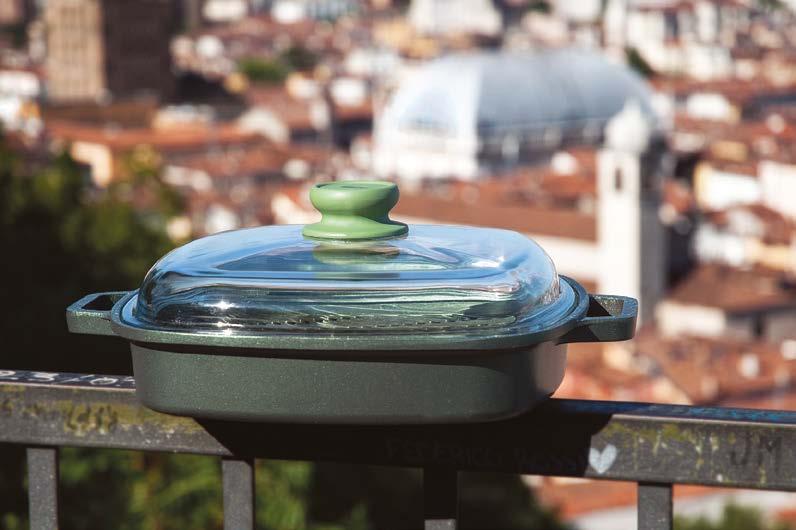
Maximum focus on a comprehensive range of cookware produced using a thick, food-grade certi ed cast aluminium alloy. "This strategic choice de nes us and sets us apart from competitors," explains Cristina Montini, Owner and Commercial Director of Risolì. "Thanks to the high quality of the materials used, the certi ed coatings and the attention paid to the health and wellbeing of users, the products in our DrGreen collection are naturally positioned in the premium segment. Within this line, the most distinctive and innovative tool in terms of characteristics and functionality is undoubtedly Vaporgrill, which allows food to be cooked initially by steam — to tenderise it without losing its nutritional properties — and then nished on the grill for a healthy, natural result."
From an aesthetic standpoint, the re nement of the black colour gives the product a timeless quality. "Our production is characterised by continuity, centred on ranges of cast cookware that have historically always been black," Montini underlines. "This distinctive trait, synonymous with elegance and enduring appeal, makes our cookware undeniably suited to all kitchen styles. In terms of design, we also believe that maintaining tradition creates iconicity, allowing products to transcend the trends of the moment: the introduction of modern or uncon-
ventional styles and forms concerns essentially functional everyday objects, mostly intended for mass-market distribution."
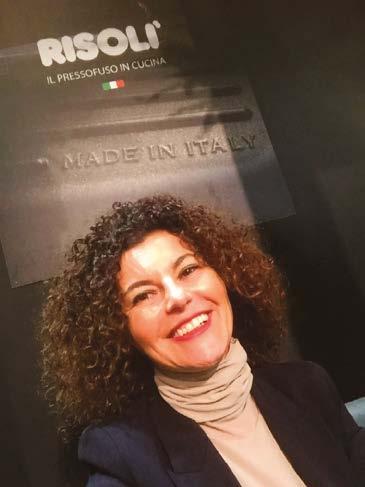
Cristina Montini, Owner and Commercial Director of Risolì
Vaporgrill from the DrGreen collection by Risolì
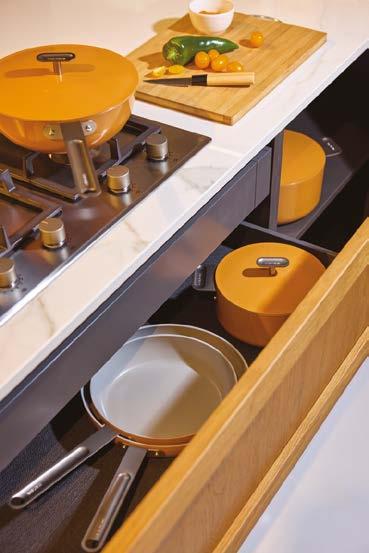
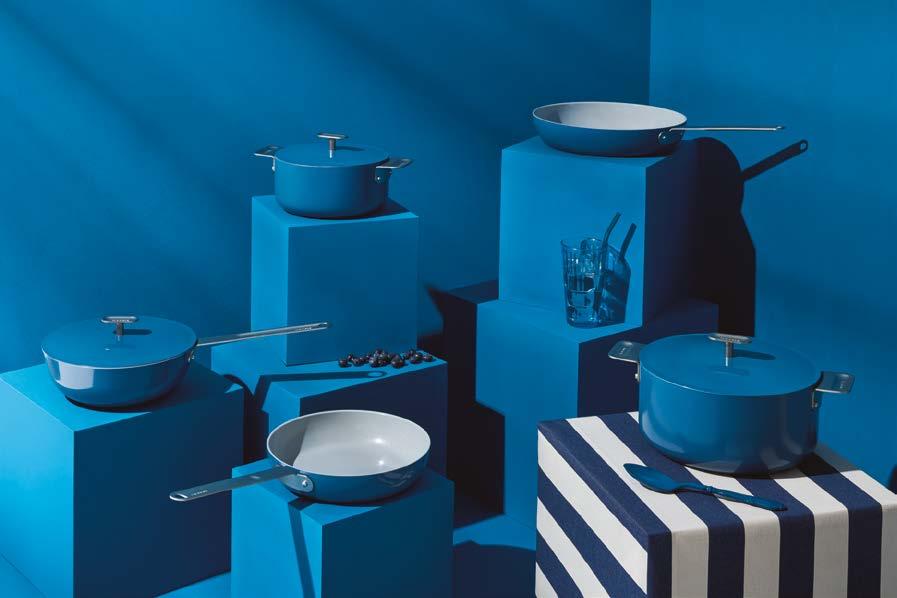
A development process that advances by synergistically combining technological advantages with the brand's distinctive style. "After our brand Moneta reached 150 years of history, innovation for us means evolving without losing coherence," says Cinzia Casagrande, Marketing and Sales Director of Alluflon Spa. "We are investing particularly in the technological evolution of coatings: our focus is on Finegres, a natural PFAS-free non-stick coating that guarantees high performance and a greater commitment to sustainability. In parallel, we are working on the structural quality of our products, with thick aluminium bodies and full-induction bases designed to ensure optimal heat distribution and compatibility with all hob types."
Performance meets personality. The new Linea 151 Moneta represents the most complete expression of this journey, combining signi"cant performance advantages with three signature colour palettes — Red Vibe, Yellow Glow and Blue Grace — conceived to reflect different preferences and styles, along with a meticulously re"ned design: exclusive stainless-steel handles, high-temperature external lacquering, and display concepts and packaging coherent with the chromatic language. "This is the project that marks the transition to a new evolutionary phase, because it successfully unites technical innovation with structured colour choices capable of triggering an emotional response," Casagrande
notes. "Today, a cooking pot is no longer merely a functional tool, but an integral part of the kitchen's aesthetic."
In terms of communication, planned in an integrated and multi-level manner, the narrative journey from 150 years of history to Linea 151 reinforces the message of industrial continuity and innovative capacity. "Presented at Ambiente 2026, the collection will be supported by a structured programme of digital and social content activity, including influencer marketing
projects, to amplify the message and reach new consumer targets," Casagrande adds. "At a local level, we have also planned to support the best retailers with in-store events and dedicated activation moments, designed to showcase the product at the point of sale and communicate its innovative content to the end consumer in a direct and experiential way."
Moneta Bets on Bold Colours
Linea 151 by Moneta
Zwilling Introduces Innovative Hi-Tech Coatings
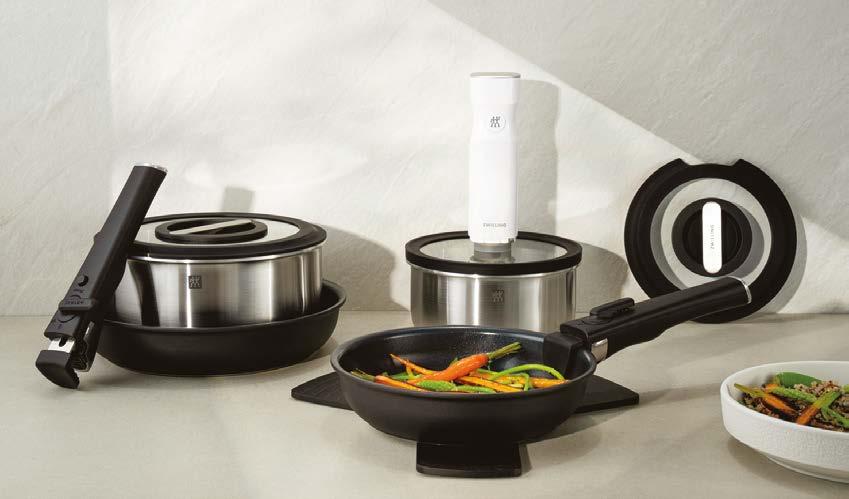
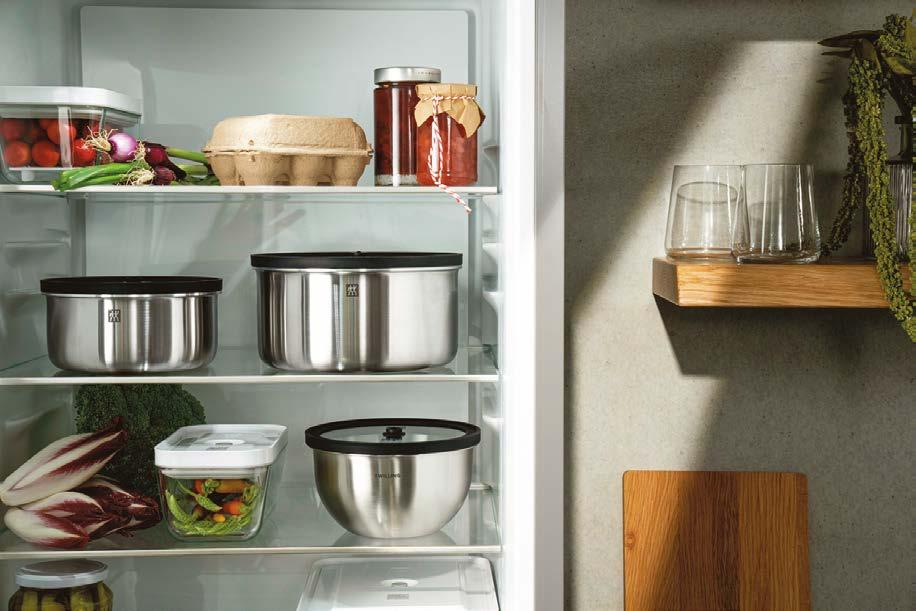
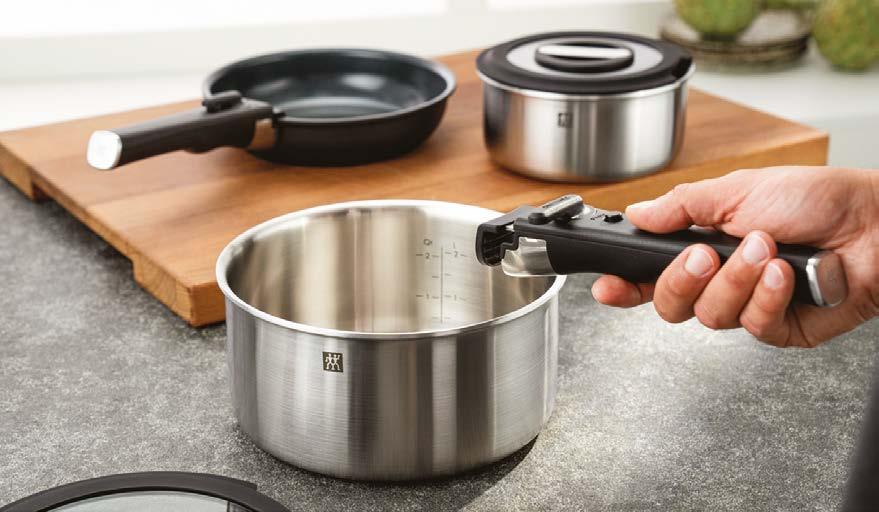
Zwilling's innovation strategy develops along two parallel tracks — next-generation nonstick coatings and smart solutions for the modern kitchen — realised through the recent launch of two targeted lines. On one side, the modular Unlock set — comprising non-stick aluminium pans and steel saucepans with mutually compatible detachable handles and lids designed for subsequent vacuum storage — bets on performance advantages and space optimisation; on the other, the coated aluminium Milano collection celebrates the fusion of technological expertise and Italian style. "Both collections," states Valentina Casotto, the company's Marketing Manager, "embody the strong innovative drive of the Zwilling brand, both in terms of design and materials, introducing the new Ceraforce® Titanium non-stick coating, tested for nickel and heavy metals and manufactured without PFAS."
Zwilling Unlock, launched at the end of 2025, stands out for its functionality and ease of use: it is an all-in-one system designed to meet today's emerging culinary needs, enabling food to
be prepared in advance, cooked, served, stored or reheated. Its true revolution lies in the integration of a vacuum function, made possible by dedicated borosilicate glass lids compatible
with the Fresh&Save pump.
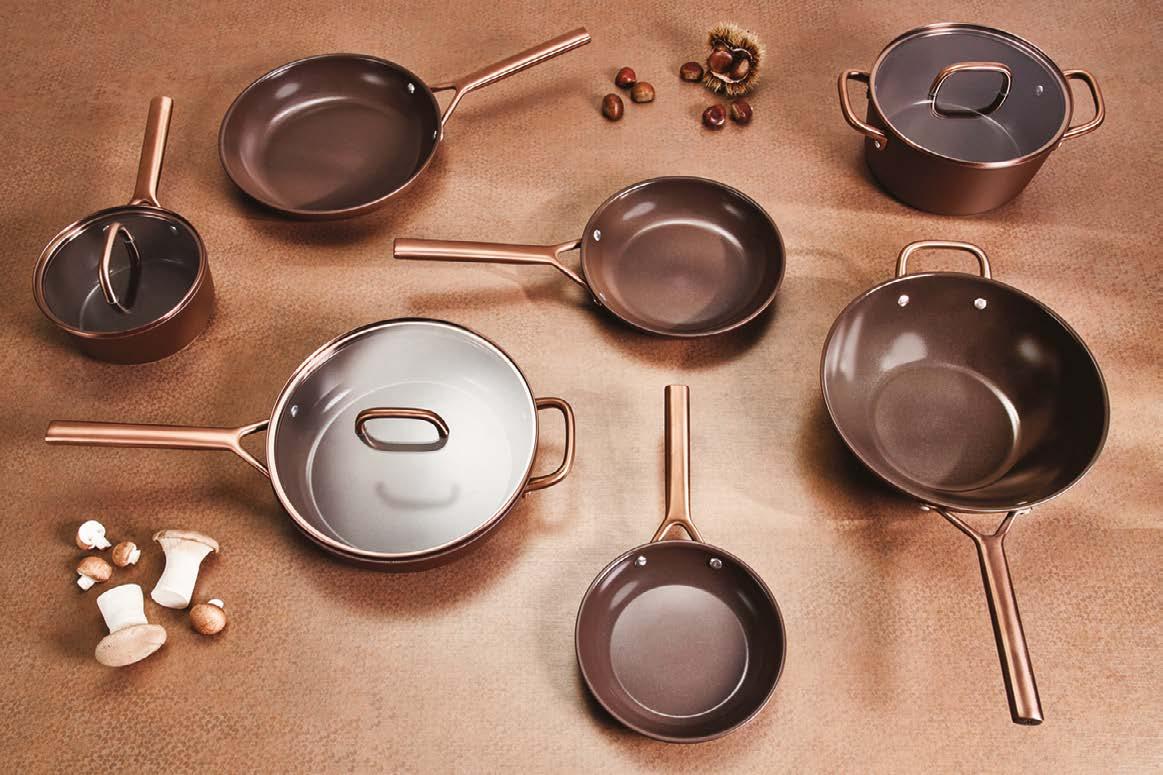
Zwilling Milano, meanwhile, has recently made its market debut as a Made in Italy collection that unites contemporary aesthetics with high technical performance. Designed by Matteo Thun and Antonio Rodriguez, the collection is conceived as a tribute to the city of Milan — capital of design and the emblem of a style that is at once essential, functional and elegant — a character further underscored by three bold and sophisticated colourways (black, brown, blue).
A hi-tech concept with a premium aesthetic identity to be conveyed through targeted communication: its launch will be supported by social and in uencer marketing activity, with a dedicated focus during Milan Design Week, including tailored outdoor advertising and a collaboration with L'Espresso magazine and Michelin-starred chef Andrea Berton.
"Through the introduction of the new Zwilling Unlock and Milano lines, we aim to represent the evolution of contemporary cooking through solutions that increasingly meet the needs of our consumers: ease of use, appealing design and an uncompromising quality of materials," concludes Casotto.
Valentina Casotto, Marketing Manager of Zwilling
Aeternum: Health Begins in the Kitchen
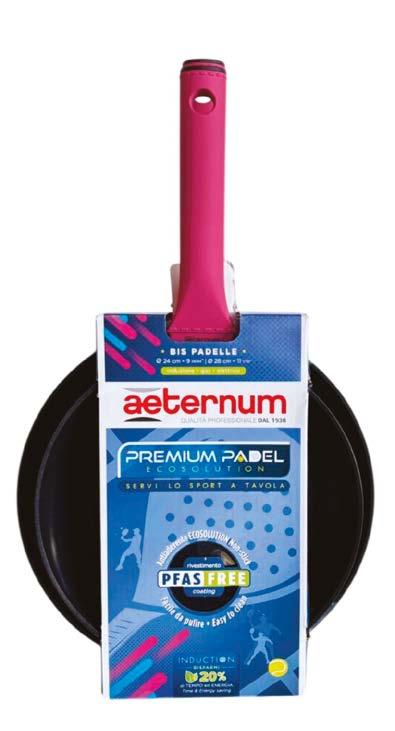
The innovation-and-communication pairing is equally a priority for the brand Aeternum, which in December 2024 of cially entered the PFAS-free non-stick cookware market with the Ecosolution coating system. This saw the debut of the Petragress Ecosolution line, whose core concepts are sustainability and health — for both the environment and the user — with reduced cooking times and the resulting energy savings. "A classic and timeless line," states Elena Rusconi, Marketing Manager, "produced in an elegant anthracite grey and characterised by a textured material appeal, as well as a PFAS-free ceramic stone-effect coating — unique in its category — and a full-induction base compatible with all hob types."
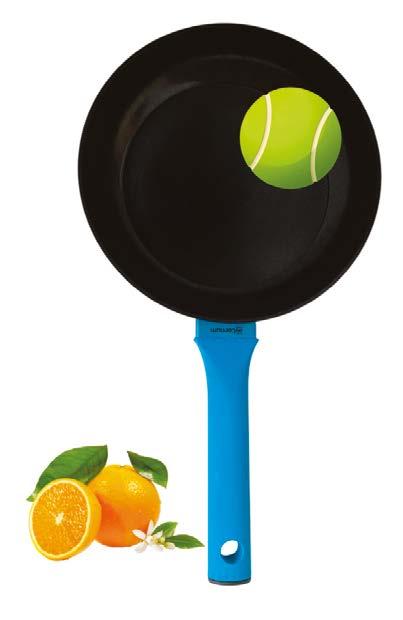
But a further upgrade is now underway: the Ecosolution range has recently been expanded with a new coating that reaf rms its credentials in terms of resistance, durability, sustainability and energy ef ciency, as well as compatibility with all heat sources. "We drew inspiration from the healthy lifestyle world and focused on a target audience de ned by a high 'sport attitude', analysing the habits of consumers who practise padel — a rapidly growing sport," explains Ru-
sconi. "This research gave rise to the Premium Padel Ecosolution line, inspired by the increasingly popular game of padel, with product aesthetics and on-pack communication featuring key visuals inspired by the sport. The collection is distinguished by a novel leather-effect handle design, available in two vivid colourways (Fuchsia and Bluette), and a latest-generation highperformance PFAS-free ceramic coating suitable for any hob. A durable, long-lasting cooking tool manufactured with sustainable technology that also guarantees reduced pollutant emissions during production — its core proposition being that health and tness begin at the table."
Guardini Expands into Airfryer Accessories
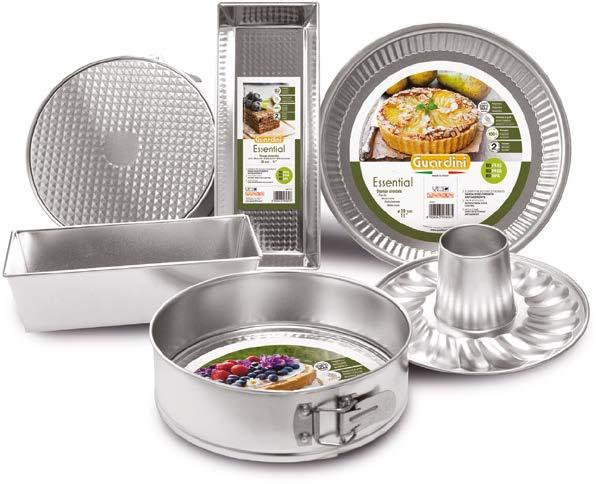
At Guardini, the main innovation projects focus on sustainable and functional solutions to meet the demands of a market increasingly attentive to health, versatility and practicality. "With regard to innovative coatings and materials," explains Elena Guardini, Marketing Director, "we are investing heavily in PFAS-free coatings, as in the case of that used in the production of our XBake collection. These coatings deliver high non-stick performance with greater care taken in the production process, where no controversial chemical substances are used, thus preserving food safety and ensuring a higher level of environmental responsibility. At the same time, we offer alternatives to traditional materials: our Essential range, in tinplate steel, and Professional range, in anodised aluminium, provide ideal solutions for those who prefer options without non-stick coatings but equally durable and high-
Premium Padel Ecosolution by Aeternum
performing."
There are also interesting developments in terms of additional applications. "From a functional standpoint," Guardini continues, "we have developed dedicated moulds for airfryers, available in versatile materials including singleuse paper, silicone and non-stick steel. These products expand the range of applications of our offerings, optimising cooking uniformity, ease of cleaning and compatibility with a modern cooking technology, further enhancing the endconsumer experience."
More broadly, the company supports the com-
munication of its innovative content through product packaging, its institutional website and social media channels. "Packaging offers an immediate, tangible point of contact, with clear visual messaging directly on the product," Guardini explains, "while our website provides in-depth information for those seeking more speci c details. Social media, nally, enables dynamic engagement through posts, stories and campaigns that reach a wide audience quickly and compellingly."".
Elena Guardini, Marketing Director of Guardini
Essential line
Professional line
XBake Collection
TRADITION Maurizio Riva:
is preserved through innovation
by Fabio Destefani
A passion for woodworking, handed down from generation to generation over more than a century. It is the passion that shines through in the solid wood creations offered by Riva1920, whose CEO Maurizio Riva tells his story in the interview that follows.
“Tradition means keeping the flame alive, not worshipping the ashes.”
This statement by composer Gustav Mahler, which suggests a dynamic vision of tradition, seems a "tting starting point for this conversation with Maurizio Riva, CEO and President of Riva1920, a company with over a century of activity behind it, throughout which it has always maintained a close bond between tradition and innovation.
Mr Riva, over more than a century of history, the thread that has united each successive generation has always been a profound passion for woodworking. With you, we are at the third…
Yes, exactly. In the nineties I took over from my father, who had in turn, years earlier, stepped into the role from my grandfather. And the generational succession continues: today I am joined in the management of the company by my daughters Elena and Monica. Looking further
“Grangusto”, kitchen composed of base units with doors and drawers, special modular shelves and wall units with hinged doors, complemented by fitted larder columns. Design: Marc Sadler
ahead, I also have an eighteen-year-old grandson who is attending a cabinetmaking school, and whom I hope will want to take on the company when the time comes.
As far as you are concerned, did you experience the decision to take the reins of the company as an obligation, or rather as the fruit of a passion for wood that was passed on to you?
At its root, there was undoubtedly my passion for wood. A passion pursued with determination, also born of the awareness that here in our small factories we work with real wood — not chipboard, which is simply panels covered in paper. Our purpose is to create quality furniture that lasts over time and can be handed down through generations.
To have such a long and successful history as yours, what matters most — knowing how to strengthen your identity over time, or on the contrary making it more exible in order to meet the diverse demands of the market?
I would say the former, without hesitation. People must allow themselves to be captivated by the beauty of wood, by the extraordinary way it is worked, by the type of craftsmanship that our creations express.
One of the central tenets of your production philosophy is to create a bridge between tradition and technological innovation. Can you tell me about this relationship and explain how technology can interact with craftsmanship?
The manual skill of our forebears allowed them to execute a dovetail joint with mastery and without dif culty. Today, that same process is carried out by the tools that technology makes available to us. In the past, holes were drilled by hand, joints and dowels were tted, and furniture — wardrobes, beds, chairs — gradually took shape. Now we have electronic machining centres that help us achieve perfection. This is why I believe that craftsmanship and technology, combined, produce quality..
So you are telling me that, contrary to what one might expect, the bond between technology and craftsmanship is a close one… Yes, certainly — unless, for example, one needs to work on a door lock, an operation that undoubtedly requires the manual skill of a carpenter. In the case of a joinery workshop, however, it is inevitable that alongside traditional tools one also has at hand the planer, the band saw, or
a
, table with solid
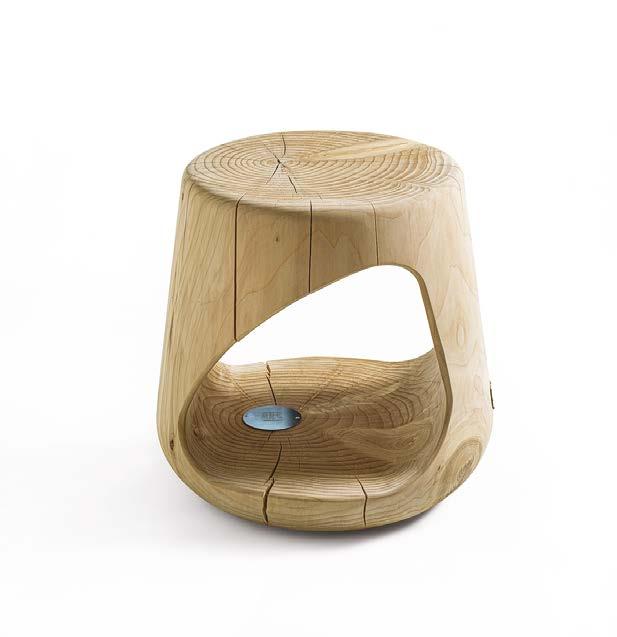
“Geppo”, stool in solid fragrant cedar wood, carved from a single block, featuring a soft, curvilinear form. The distinctive shape incorporates a compartment beneath the seat for storing objects, books, etc. Can also be used as a side table or bedside table. Design: Marco Baxadonne
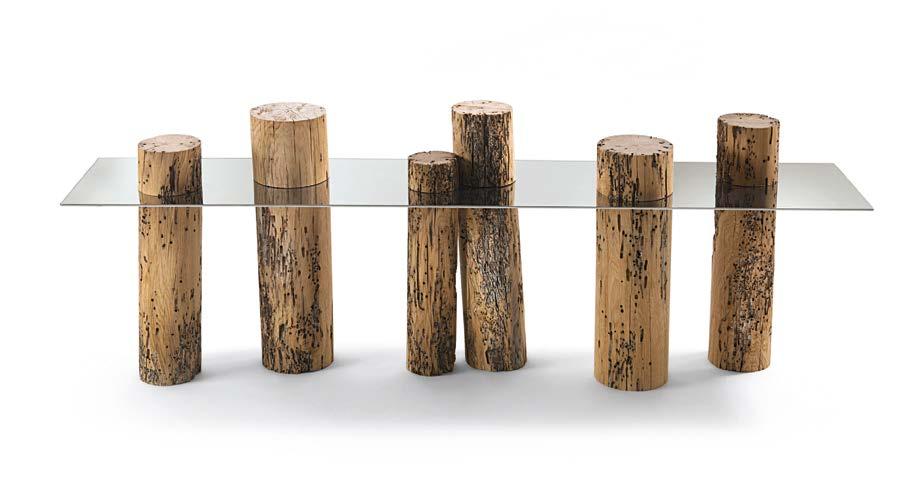
“Venice”, console featuring a polished steel top (also available in extra-clear glass and "stopsol" glass) paired with a series of poles in solid Briccola wood — decommissioned poles from the Venice Lagoon. Design: Claudio Bellini
“Bedrock”
Kauri top, paired with
geometric iron sheet base. Design: Terry Dwan
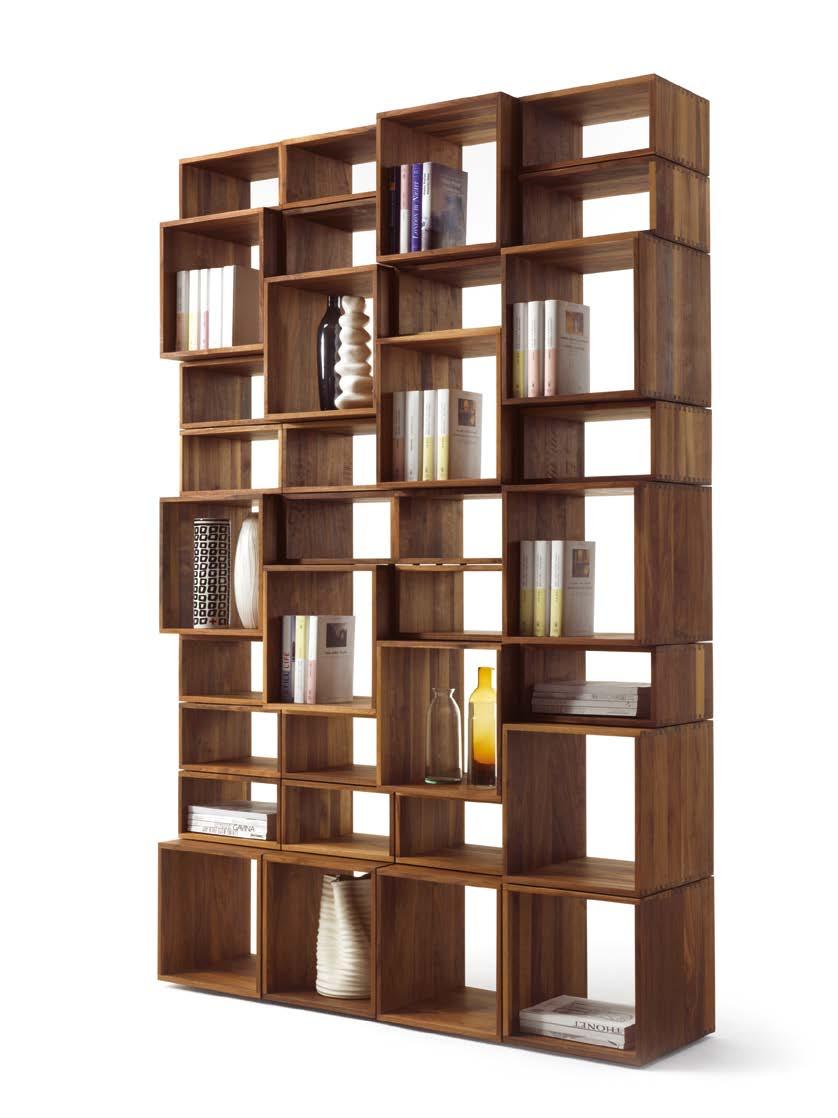
“Freedom”, bookcase in solid wood, comprising stackable, combinable modular units assembled with dedicated mounting hardware. Available with fixed or rotating TV compartment with cable management system. Can be used as a room divider. Design: C.R.&S. RIVA1920
more advanced equipment such as machining centres — machines that allow wardrobes and furniture to be made without hand-drilling, mortising or boring, and that can square, round and shape components with precision.
Over the years you have worked with a great many important designers, Italian and international — among them Alessandro Mendini, Michele De Lucchi, Paola Navone, David Chipper eld, Enzo Mari, Karim Rashid, Marc Sadler, Elio Fiorucci — and I could go on, because the list is truly very long. What can you tell me about these relationships?
For many years we had an American designer, Terry Dwan, as a permanent collaborator who, as art director, oversaw our trade fair installations and created several products for us. However, I have always wanted to remain free to consider proposals from designers outside the company. I have always enjoyed looking beyond our walls, promoting idea competitions and project calls aimed above all at young designers, giving them the opportunity to express their talent. Initiatives that have each time met
with great success, attracting an average of 800 to 900 designers per competition.
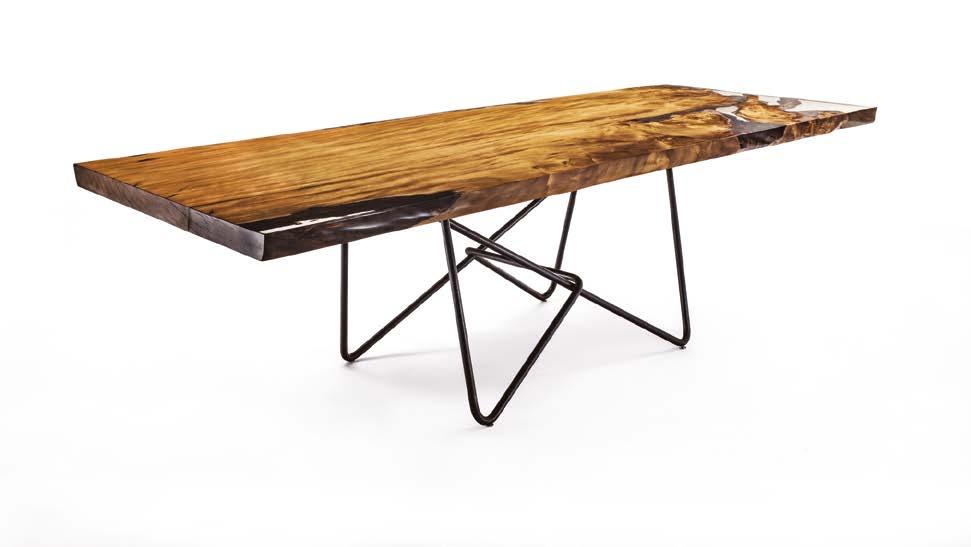
“Kauri piano antico”, table with solid Kauri top, paired with a tubular iron base. Design: Renzo & Matteo Piano
And once the projects to be realised have been selected, how does the relationship between designer and craftsman unfold? Is there genuine collaboration?
It depends on the circumstances, and on the personality of the designer. Sometimes the relationship is easy and stimulating; at other times it is more complex and dif cult. I, for instance, consider myself a simple carpenter, and I have to say that designers sometimes have an oversized ego — rather like what happens today with chefs, who upon receiving a star think they have acquired unlimited authority. That said, one cannot generalise, whether with designers or with chefs. I was fortunate, for example, to have been a friend of Gualtiero Marchesi, and I must
say he was a true gentleman — precise, meticulous and demanding on a professional level, yet equally impeccable on a human one. He never used his great fame and talent to exercise power over others.
Does wood, compared to other materials, offer more limitations or more possibilities to the designer?
Wood cannot easily be curved, but it offers many possibilities — though these are reduced when working with chipboard panels and even with multi-layer plywood.
Riva1920 pays great attention to eco-sustainability — a very important topic today, about which, it must be said, almost everyone speaks, often more for marketing reasons than out of genuine conviction. Greenwashing is, after all, very widespread. How does Riva1920 avoid this pitfall by adopting genuinely green policies that respect the environment?
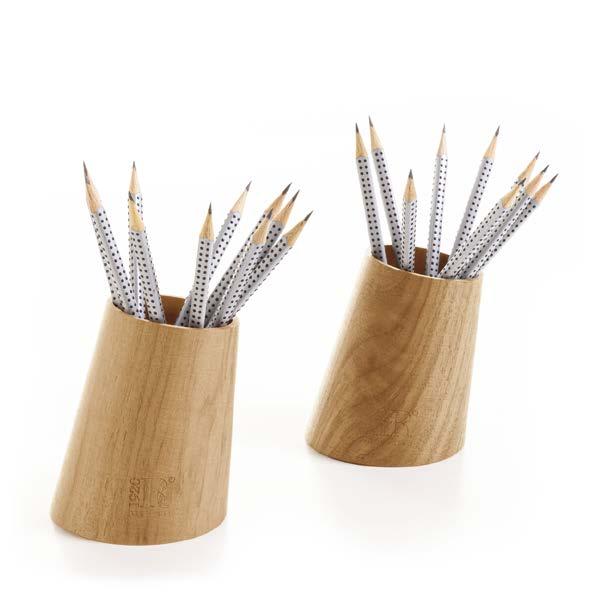
Portapenne, carved from a block of fragrant cedar wood. Design: C.R.&S. RIVA1920
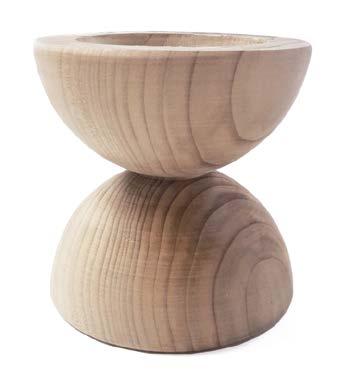
“Clessidra”, stool in solid fragrant cedar wood, carved from a single block, characterised by two hemispheres placed one above the other to form an hourglass. Design: Mario Botta
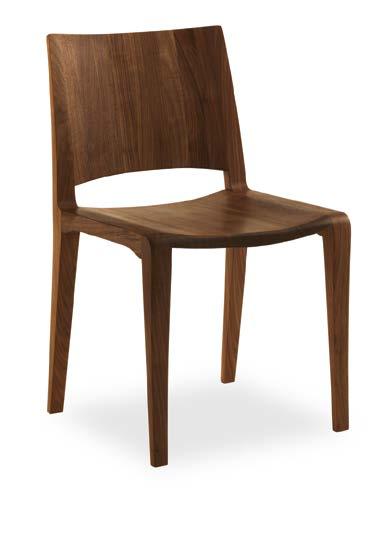
“Voltri”, chair made entirely in solid wood, distinguished from the Piano Design Chair model by a lower backrest and a wider seat. Design: Renzo & Matteo Piano
It is true that eco-sustainability is very fashionable today and that everyone at least pays lip service to it. The challenge, of course, is to move from declarations of intent to concrete action. I recognise that this issue, as applied to the eld of wood, is highly complex. Today, furniture is often purchased that is 90% chipboard — which is sustainable, fair enough. But what kind of furniture is it? It is certainly not furniture to be passed down through generations. As far as we are concerned, the solid wood, plywood and laminated timber that feature in our production come exclusively from certi ed forests and from controlled, planned felling programmes. For every tree felled, others are planted, completing the circle of life in a gesture of respect for the environment. But our environmental commitment does not stop there: our production also includes the recovery and reuse of precious woods such as the millennial Kauri from New Zealand, the Briccole of Venice, the Cedar of Lebanon and wine barrique staves — woods rich in history and meaning that, thanks to the savoir-faire of our craftspeople, are given new life.
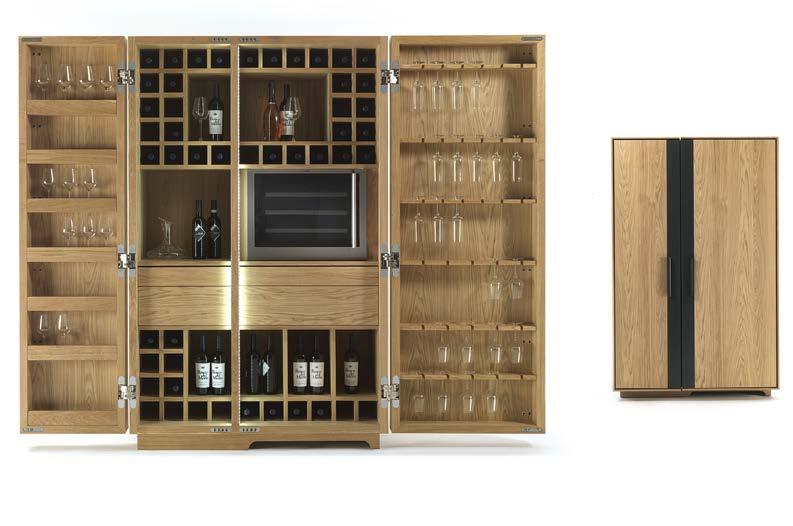
“Cambusa wine”, multifunctional storage unit in laminated and solid wood, with a single door opening to 180°. The interior features bottle and glass compartments, with the option of housing small appliances (in the Jumbo version). The door itself provides additional storage for glasses and accessories. Design: Giuliano Cappelletti
DESIGN
Are you also sustainable in terms of adhesives and nishes?
Yes, also because our clients' health is a priority for us. We therefore use only formaldehyde-free vinyl adhesives, which guarantee a safe, non-toxic production process with low environmental impact. The nishes on our furniture are applied exclusively using natural vegetable oils and waxes, with the aim of offering a product that is authentic, healthy and entirely natural.
Yours is a broad range of production that includes kitchen furniture, living and bedroom collections, outdoor pieces, and also collections of small household objects. A privileged vantage point that presumably allows you to identify the dominant trends in furniture today… Trends are also shaped by producers themselves, and each has their own style. Forms vary depending on the materials used. What I can say is that recently there has been strong demand for furniture in dark tones, black in particular, and so on
certain pieces we use, in keeping with our ecosustainable approach, black oils rather than varnishes, which can in some cases cause problems for the furniture.
How do you see the world of craftsmanship today?
Not very positively, to be frank. Nobody wants to be a craftsman anymore. If you have ever tried to nd a bricklayer or a carpenter, you will have discovered how dif cult it is to nd these professional gures. These are trades that require passion to be practised well — a vocation that, unfortunately, almost nobody seems to have any longer.
A pity, especially since public interest in craftsmanship seems to have grown in recent times…
You think so? I am not entirely convinced. In the small city of Cantù there were once 1,200 craft workshops; today roughly 200 remain.
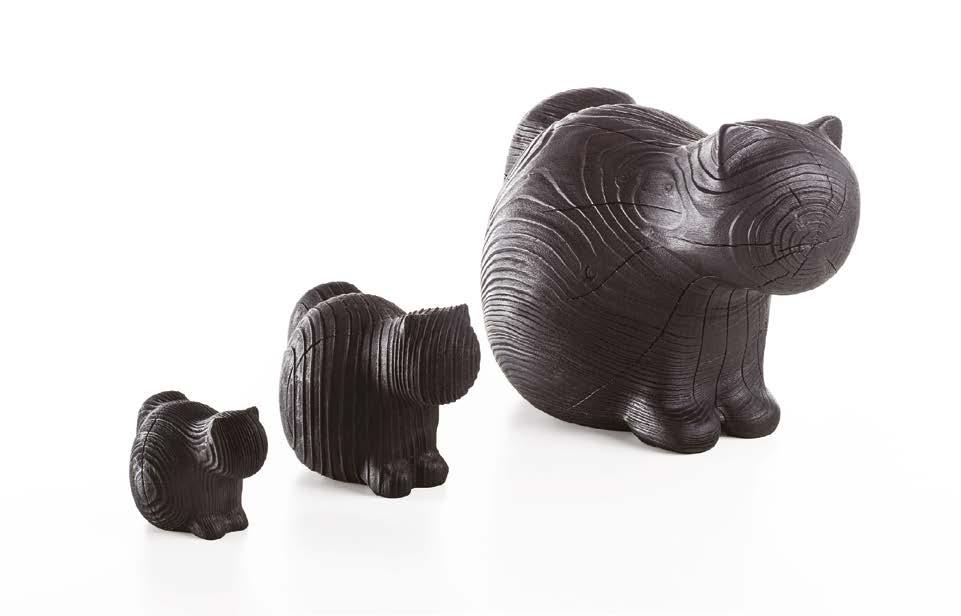
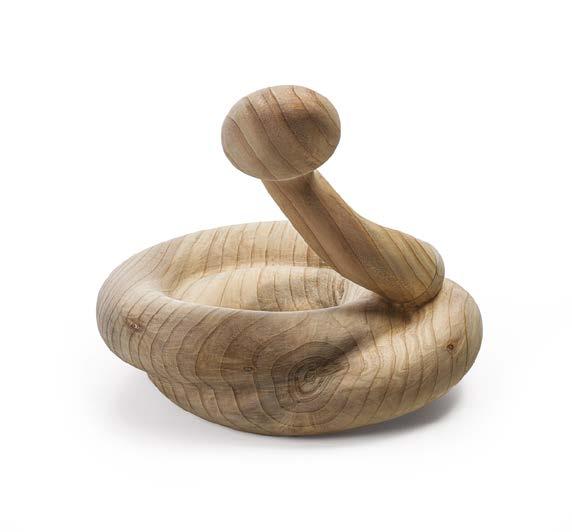
Animal collection; “Hebi”, decorative accessory in solid fragrant cedar wood. Design: Setsu & Shinobu Ito
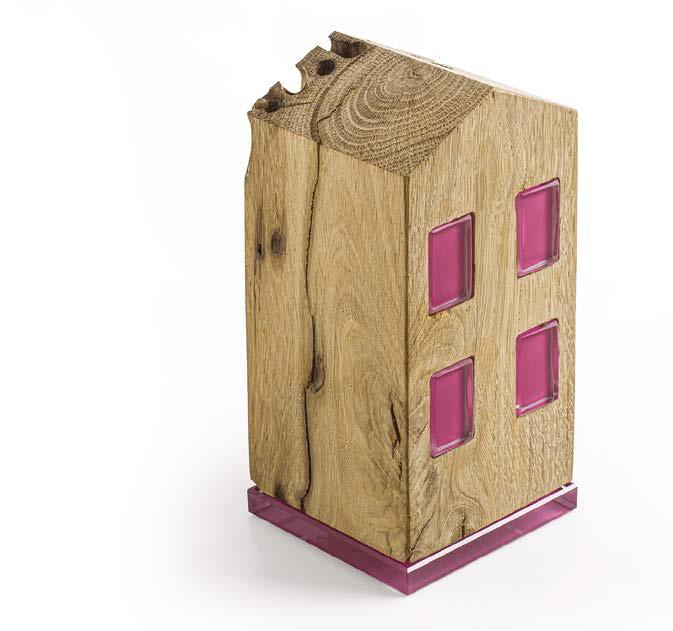
Cities Collection: “CÀ_1” decorative accessory in Briccola wood with contrasting fuchsia lacquered glass details. Design: Authentic Design
Animal collection; “Neko”, decorative accessory in solid fragrant cedar wood. Design: Setsu & Shinobu Ito
Draw your own conclusions…
What is behind this impoverishment of artisanal practice?
The state, as our "majority shareholder", should have credibility — but unfortunately it does not, because it continues to burden us with excessive demands. It seems as though we entrepreneurs have no rights within our own businesses, only obligations, and in my view that is simply wrong. There are an enormous number of laws in Italy, costs keep rising, and market share is consequently lost.
Tradition is kept alive also by building a relationship with the younger generations, so that knowledge and practices that must not be lost, and that can indeed be revitalised through youthful enthusiasm, are handed down…
I agree entirely. The relationship with young people is fundamental. We take on many interns, and
in fact from tomorrow we will be taking on a twenty-year-old whom we will train.
You have three small production units, each dedicated to a different product category, and in Cantù there is the Riva Center, with an eco-sustainable cladding designed by Renzo Piano's studio — a multi-storey building that includes your showroom, the Wood Museum (free admission) and the Pangea Lab, a space dedicated to meetings and the exchange of ideas. Another important testament to your great passion for wood… It is a way of leaving to those who will come after me a testament to my love for wood, and also a way of demonstrating that in this world, alongside negative things such as war, it is also possible to carry forward positive and stimulating projects that everyone can enjoy.
Riva1920 is exhibiting at the Salone Internazionale del Mobile in Milan (Fiera Milano, Rho, 21–26 April), building in era: E03 | corso Italia EST (near Hall 7).
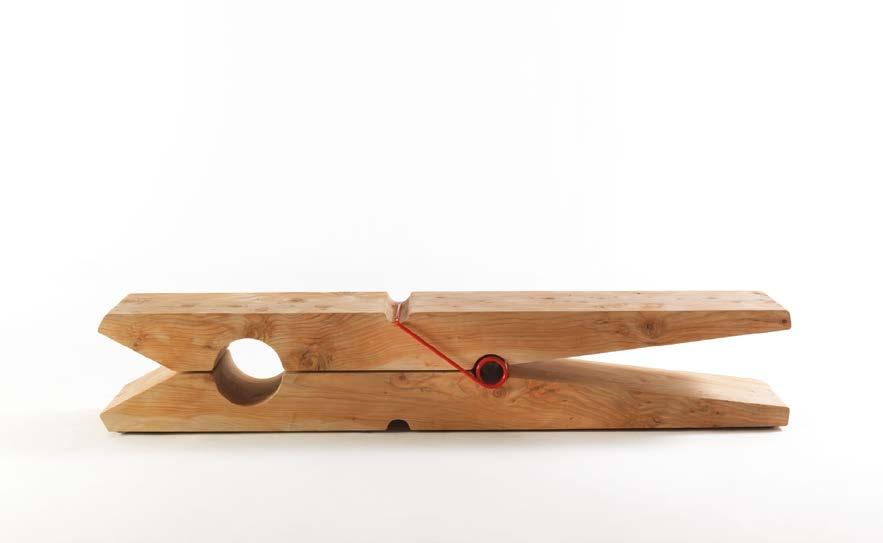
“Molletta”, bench in solid fragrant cedar wood, carved from unique blocks, featuring a sculptural design that plays with the typical oversized scale of Pop Art. Available in three sizes: Mollettina, Molletta Medium and Molletta. Design: Baldessari e Baldessari
Maurizio Riva, President and CEO of Riva1920
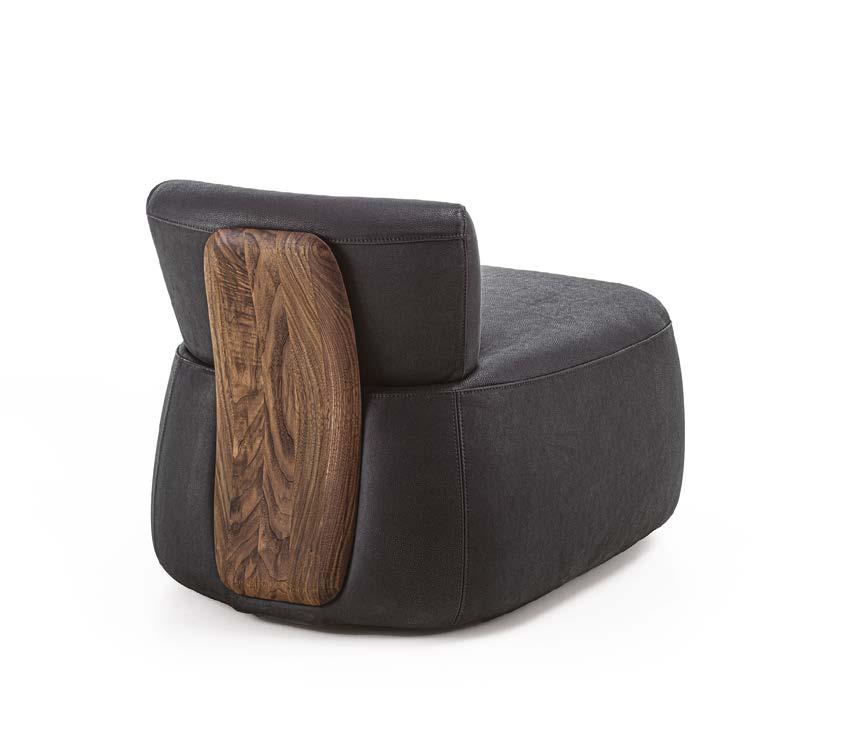
“Passo”, upholstered armchair in fabric or leather, featuring a distinctive solid wood backrest that serves as both a structural and decorative element. The solid, sinuous wooden structure connects the backrest to the seat, creating a visual and functional dialogue between the two upholstered volumes. Design: Ronald Sasson
Riva1920 is a company specialising in the production of solid wood furniture, founded in Cantù, in the heart of the Brianza region, in 1920. It is a production company built on tradition, culture, creativity and innovation, where artisanal skills and values combine with cutting-edge innovation and technology, where design — signed by the most important names of international renown — enhances ideas, and where respect for the environment is a daily commitment. The love of nature and the pursuit of a high-quality standard of living set the rhythm of a company in which craftsmanship unites with technology, where design enriches ideas and where meticulous attention to every detail gives rise to products of the highest quality. The creations that make up the Riva1920 collection are made from genuine solid reforestation wood, using different types of wood including maple, cherry, oak and walnut. A defining characteristic of the company is its use of reclaimed wood, such as the millennial Kauri from New Zealand — vegetable giants, up to 70 metres tall and 9 metres in diameter, felled by enormous natural disasters more than 50,000 years ago and kept buried under metres of mud until the present day — the Briccole of Venice, and the fragrant Cedar of Lebanon (majestic trunks felled by natural phenomena or planned events). Having joined the company at a very young age, Maurizio Riva became its President and CEO in 1993. His daughters Monica and Elena today assist him in the leadership of the brand.
RIVA1920 - Maurizio Riva
TO DISCOVER young designers emerging talents:
In today's tableware and home goods landscape, the "new" is not merely an aesthetic matter, but a concrete response to markets demanding sustainability and authentic narratives. Casastile has identified five designers who are redefining the way objects are conceived, produced, and desired.
GUSTAF WESTMAN SWEDEN, STOCKHOLM
Trained at Chalmers University of Technology in Gothenburg, he founded his studio in Stockholm in 2020. In just a few years, he has built an immediately recognisable aesthetic — inflated forms, glossy "nishes, pastel palettes — that has won over more than 550,000 Instagram followers and the most prestigious concept stores in Europe. His objects (Chunky Plate, Chunky Wine Glass, Curvy Mirror) blend Scandinavian precision with an ironic pop sensibility. Each launch generates anticipation: the Curling Bowl, inspired by the Milano Cortina 2026 Winter Olympics, went viral before it even reached the market.
The home goods market no longer moves solely in the wake of major trade fairs and established brands. Increasingly, it is emerging designers who set the direction — those working in small studios, collaborating with craftspeople, experimenting with unconventional materials, and building a visual identity so distinctive it goes viral before reaching wide distribution.
The Casastile editorial team has identified some of the most compelling voices in the current international scene: diverse in background, nationality, and approach, yet united by a shared ability to generate desire and conversation around their objects.
Design that communicates before it is touched
If there is one designer capable of transforming a global event into an iconic object within hours, it is Gustaf Westman. His Curling Bowl — a glossy pastel-blue bowl inspired by the curling stone, complete with an integrated handle that doubles as a wine glass holder — circled the web before it was even available for purchase. In an Instagram video that went instantly viral, Westman slides it down a lane loaded with popcorn, wine, and bunches of grapes. This is no isolated episode, but the perfect expression of a method. Born in 1993 in Dalsjöfors and
3D-printed, inspired by the curling stone of the Milano Cortina 2026 Winter Olympics. The V-shaped handle on the lid holds the wine glass and clears the table, Gustaf Westman
trained at Chalmers University in Gothenburg, Westman founded his Stockholm studio in 2020 and has since built one of the decade's most recognisable aesthetics: in"ated silhouettes, glossy finishes, a full pastel colour palette. With over 550,000 Instagram followers and pieces stocked in Europe's most in"uential concept stores, his approach merges Scandinavian precision with a pop, ironic sensibility that has no precedent in Northern Europe.
The value of matter: craft looking forward Elena and Margherita Micheluzzi inherited not only a surname, but an entire universe of knowledge. As daughters of Massimo Micheluzzi, a master of Venetian artistic glasswork, the
The Ghiaccio series, born from the heat of the Murano furnace, captures the essence of winter through a masterful interplay of material contrasts. The texture is achieved by fusing small glass fragments onto the incandescent surface.
two sisters chose not merely to preserve that tradition, but to rewrite it with a modern entrepreneurial vision. The result is Micheluzzi Glass: a collection of mouth-blown vases and glasses crafted in Murano by master glassblowers, then cold-worked with diamond grinding — objects that decisively escape the trap of luxury souvenirs to enter the realm of international contemporary design. Dense, opaque colours; faceted surfaces that catch the light; organic forms inspired by the movement of water: every piece is designed to be used daily, not merely displayed.
MICHELUZZI GLASS ITALY, MURANO
Elena and Margherita Micheluzzi grew up immersed in their father Massimo's glassmaking art — a master of Venetian glass. Rather than simply preserving that tradition, they chose to rewrite it: they founded Micheluzzi Glass to produce mouthblown vases and glasses in Murano, coldworked with diamond grinding. Objects conceived for everyday use, not for the display case.
Five kitchen tools (3Modality, ModuBoard, LevaPress, ErgoBlade, PivotPop) sharing a single underlying idea: every gesture in the kitchen can be redesigned. Stainless steel, beechwood, and precision aluminium with artisanal finishes. Each piece reinterprets an existing tool — the chopping board, the knife, the bottle opener — finding the form that was always missing.
MARIA ISENIA SPATOLA
ITALY / GERMANY
Born in Palermo, raised in Assisi, she moved to Frankfurt at the age of 21 to complete a Master's in Product Design at the Hochschule für Gestaltung in Offenbach. Her trajectory already reflects her design philosophy: fusing Italian elegance with German functional precision. She works on home and tableware products de"ned by formal clarity and an acute attention to usability. Through her studio, Isenia Design, she creates objects capable of transforming habitual gestures into meaningful experiences — free from both decorative excess and cold functionalism.
Born in Palermo, raised in Assisi, and relocated to Frankfurt at the age of 21 to complete a Master's in Product Design at the Hochschule für Gestaltung in Offenbach: Maria Isenia Spatola's path already speaks for itself as a statement of her design philosophy. Her speciality lies in merging Italian elegance with German functional precision — a rare cultural synthesis in the design-for-living landscape, one that yields products where the ways people live, act, and interact with objects inform every formal decision. It is the approach of someone who believes design can transform everyday actions into motivating experiences: not objects to be admired, but objects that accompany habitual gestures and invest them with new meaning. Home and tableware products de"ned by formal clarity and a careful attention to usability, equidistant from cold functionalism and decorative excess. A rare balance — one that speaks directly to an increasingly sophisticated consumer.
Objects that live with the user: ethics, craft, and narrative
Selected for the Rising Talent Awards Germany at Maison&Objet September 2025, Lisa Ertel and Anne-Sophie Oberkrome (Studio Œ) share everything: their birth year (1990), their stu-
dies at the HfG in Karlsruhe, a passion for materials, and a vision of design as a vehicle for storytelling.
Their work spans furniture and object design, industrial commissions, and self-produced pieces. The Romer Glasses, inspired by the traditional Rhenish goblet, reinterpret a glassmaking heritage with a contemporary sensibility. The Moving Stool, developed in collaboration with Mattiazzi, applies the logic of movement to the
everyday seat. The Silo Swing — a hammock crafted from agricultural industrial materials — pushes the concept of outdoor living into unexpected territory. Every object begins with the observation of an everyday phenomenon, transformed into form.
Alessandro Stabile is the kind of designer the industry struggles to categorise — and that may well be his greatest strength. An industrial designer in the most rigorous sense of the term, he works for companies, for production, for the market, yet with a formal sensibility and ethical consistency that align him with the Italian tradition of authored design. His presence at DesignInspire Hong Kong 2025 — where he participated as one of Italy's top emerging designers alongside brands such as Moroso and Ferragamo — says much about his trajectory: a name the international market has already taken note of.
STUDIO ΠGERMANIA
Lisa Ertel and Anne-Sophie Oberkrome trained at the HfG in Karlsruhe and founded Studio Πin Berlin. Their work ranges from furniture to object design, from self-produced pieces to commissions for international brands such as Mattiazzi. In 2025 they were selected for the Rising Talent Awards Germany at Maison&Objet. Since 2022 they have taught at the HfbK in Hamburg and serve as guest professors at HBK Saar.
A Milanese industrial designer, he founded his studio in 2011. He works with clients including Magis, Alessi, Huawei, Moleskine, and De'Longhi, and has amassed a wealth of international recognition: Honorary Mention at the Compasso d'Oro ADI, Red Dot, iF Design Award, and German Design Award. In 2025 he was selected for ADI Design Index with two projects.
Away, Alessandro Stabile for Alessi. Stainless steel water bottle with recycled plastic cap and large quick-release clip. The clip is not a functional addition: it is the conceptual core of the project. It attaches to a backpack, a belt, a bicycle. Hydroformed double-walled body; internal threading to preserve the clean external line.
Selected for ADI Design Index 2025 and winner of the Good Design Award 2025.
Shori, design by Alessandro Stabile. Japanese cypress rice container, handcrafted in Shiga by artisan Shuji Nakagawa using the traditional Oke technique — strips of wood joined by metal rings, without adhesives.
His approach centres on a precise question: is this object truly necessary? The design process begins by questioning the object itself, before a single line is drawn. What emerges is an aesthetic of necessity: clear, legible forms; costs kept in check; a genuine attention to circularity and product lifecycle. Not greenwashing — method. Among his most recent projects: Away and Celestia, selected for ADI Design Index 2025, and AirDoor for Meroni Serrature, winner of Red Dot and German Design Award 2024.
These designers are not merely selling products — they are selling a new vision of how we inhabit our world: a strategic opportunity for the high-end retail sector.
IN PARIS and new trends Outdoor
The winter edition of Maison&Objet closed on 19 January at the Parc des Expositions in Villepinte, Paris. The overarching theme — Past Reveals Future — was articulated across four creative directions: Metamorphosis, Mutation, Recomposed Baroque and Neo-Folklore, underlining how contemporary design draws on memory in order to project itself forward.
The undisputed protagonist was Harry Nuriev, Designer of the Year 2026. Founder of Crosby Studios and a leading gure in global minimalism, Nuriev created an immersive installation in Hall 3 inspired by his Transformism manifesto — the transformation of what already exists as a creative and cultural act — developed through an exclusive collaboration with Baccarat. Curatio, the collectible design village curated by Thomas Haarmann, made a strong return: 60 pieces selected from the nest craftsmanship and collectible design, displayed in a setting that evokes an art gallery rather than a trade fair stand. Ample space was also given to the What's New? installations, three curatorial projects dedicated respectively to Decor (Elizabeth Leriche), Hospitality (Rudy Guénaire with the visionary Suite 2046) and Retail (François Delclaux). The fair con rmed its six-sector structure, Signature & Projects, Decor & Design, Craft, Fragrance & Wellness, Fashion & Accessories, Gift & Play, spread across 7 halls, with a total of over 2,294 brands, 543 of which were rst-time exhibitors, and 67,300 visitors from 148 countries. The major structural innovation of this edition was the launch of Outdoor Living: a dedicated, purpose-built space that brought together for the rst time in a single area 50 international brands specialising in outdoor furniture, lighting, pergolas and technical solutions for exterior spaces. A sector previously fragmented across different pavilions has thus found its own autonomous identity, recognising the outdoor as a genuine extension of the living space. The next edition is scheduled for 10–14 September 2026.
The Parisian fair confirms its role as a global compass for the sector: 2,200 brands, a brand-new Outdoor section and a creative gaze turned toward the past to build the future. Next edition: 10–14 September 2026
Here are the products that caught our eye at the early-year
best of Reportage
TRADE FAIRS 2026
The start of 2026 brought with it a packed calendar of international trade fair appointments — a valuable opportunity to discover trends, new products and projects set to rede ne the world of the home. We attended Maison&Objet in Paris, the premier stage for furniture design and the art of living well; Milano Home, the Milanese fair that reaf rmed its role as a reference point for the housewares sector and Italian lifestyle; and Ambiente in Frankfurt, an unmissable event for everyone working in the global world of tableware, kitchen and home products. Three shows different in character and geography, yet united by a common energy: the desire to innovate without losing sight of quality, sustainability and beauty. Bio-based materials, artisanal design and attention to the aesthetics of everyday life were the de ning threads running through editions full of surprises. We toured the stands with curiosity and a critical eye, looking for those products that truly stand out. Here is a selection of new launches that caught our attention — for their quality, originality or vision: pieces that speak to where beautiful living is heading.
The transparent borosilicate glass saucepan by Brandani brings both aesthetics and functionality to the table: resistant to thermal shock, free from harmful chemicals and allowing cooking to be monitored at a glance. The tempered glass lid with a stainless-steel rim completes a clean, contemporary design conceived for those who want a kitchen that is healthy, safe and visually refined. Available in three sizes.
Guzzini reinvents the kitchen with Sous Chef, the first range of small household appliances made from biobased material of non-fossil origin. Eight products designed by Pio and Tito Toso — from toaster to portable blender — available in three colourways: ivory, blue and anthracite. Tactile design inspired by corduroy, high performance and a sustainable soul.
Vidivi brings Elisir to the table: a collection of glasses with diamond-faceted surfaces that capture light and translate it into colour. Six shades produced with organic pigments give each piece an authentic artisanal elegance. Dishwasher-safe.
Pozzi 1876 brings wild nature indoors with Sauvage, a collection featuring tiger, lion, elephant and zebra motifs across porcelain and lifestyle accessories. Plates, vases, scented candles, cushions and trays are transformed into objects of exotic yet refined character.
Palais Royal illuminates the home with Led Therapy, a collection of framed artworks and decorative objects inspired by the vibrant aesthetic of Pop Art. Art, technology and colour combine to create dynamic spaces with a contemporary sensibility and a strong visual identity.
Elegant and functional, the acacia wood bread bin by CONTINENTA keeps bread and baked goods fresh for longer thanks to lateral ventilation openings. The lid is extremely versatile: one side is ridged, making it perfect as a cutting board. Fitted with recessed handles, it combines a modern, warm design with high artisanal quality.
Easy Life presents Très Jolie, a porcelain collection in which every piece is accompanied by a gift box that faithfully reproduces its pattern. Quality Italian design, conceived with Easter gifting in mind: refined in aesthetics, attentive to detail and capable of turning every pause into a special moment.
Total black elegance comes to the kitchen with Black Edge by Sambonet: six knives with German steel blades featuring Xynflon coating and cryogenic "Ice Hardening" tempering for a fluid, long-lasting cut. A reinforced nylon handle, a magnetic wooden knife block and a coordinated cutting board complete a line of distinctly original character.
Brandani launches Pandora, the 10-in-1 multifunctional aluminium pan with a ceramic non-stick coating. It fries, sears and steams using the internal stainless-steel steamer basket, and goes in the oven thanks to a removable bakelite handle. The lid doubles as a pot rest and colander: one tool, infinite possibilities.
The Nomade Glazed planters by Common Place are a selfwatering system in 3D-printed terracotta, with a glazed upper section for easier cleaning. Compatible with any glass jar or bottle, the plant absorbs water by capillary action only when needed. Available in four sizes, in blue, green and white.
Belforte Fragranze Italiane reimagines time with Clessidra, a 250 ml glass diffuser that fragrances rooms by capillary action with a precisely timed 30-minute diffusion. An object with a dual soul — decorative and functional — compatible with over fifteen fragrances.
Eden by Vesta is an acrylic crystal room diffuser, clearer than glass, lightweight yet elegant, shatterproof, weather-resistant, recyclable and luminous. Paired with the Destino fragrance by Chiara Firenze (notes of rosehip, cedar, cardamom and resin), it brings an intense and lasting olfactory presence to contemporary living spaces.
Italian organic botanicals, hand-harvested and distilled using ancient artisanal techniques: WDRINK transforms medicinal plants into pure hydrolates, additive-free. Available in bag-in-box, liquid concentrate and pocket format, it offers an authentic sensory experience for the skin, the kitchen and the glass.
Innbamboo brings Tuscan textile tradition into the living room with Plaid Bamboo, the first bamboo-fibre throw Made in Italy. The line comes in two versions: Aurea, in virgin wool for those seeking warmth and refinement, and Cromia, in organic cotton, light and versatile, available in a wide palette of natural colours.
Mauve linen and "Farnese" lace come together in the bed linen collection by Arte Pura: an entirely Made in Italy range crafted from hypoallergenic fibres and natural dyes. Softness, durability and craftsmanship combine in an authentic elegance that transforms any bedroom into a refined atmosphere.
The outdoor department is a constantly expanding business, and therefore extremely attractive for retailers. It is increasingly extending and qualifying its presence within houseware points of sale. This evolution is causing it to shed its “seasonal phenomenon” label, while simultaneously redefining products and solutions. This is achieved through significant upgrades in materials, durability, and supporting technology, establishing a growing continuity between the home’s interior and exterior environments.
by Patrizia Pagani
CONQUERING SPACES Outdoor living:
in houseware stores
In Italy, the domestic outdoor market is gradually becoming a strategic sector for turnover, pro tability, and responsiveness to new lifestyles and consumption patterns. The strong appeal of this sector has already convinced a signi cant number of medium-to-large houseware stores to create or expand dedicated sales areas to showcase and enhance products for outdoor living. Recent assortments highlight a signi cant evolution in design, intrinsic quality, and sustainable materials. Preference is given to supports and furnishings that endorse continuity between indoor furniture and outdoor equipment, whether for a terrace or the home’s green space. Furthermore, there is a growing approach toward objects designed to last and original items, such as new lighting solutions capa-
ble of providing a pleasant visual impact for open-air spaces.Finally, it is worth noting the ongoing boom in BBQs, a practice that continues to gather overwhelming support. Also, thanks to the introduction of “ecobonus” incentives, there is recent success for bioclimatic pergolas. These structures, usually made of aluminum with motorized adjustable slat covers, manage light, ventilation, and rain protection to create a speci c microclimate. Alongside these product listing trends, other transversal trends are emerging at points of sale, such as the progressive extension and quali cation of in-store spaces, the increasing de-seasonalization of the department, and the introduction of a growing number of dedicated events, often with a signicant impact on public attraction.
Recreating the outdoor environment in-store
Regarding the selection and in-store presentation of housewares for external environments, a decidedly original approach is taken by Smania Idee Casa. This point of sale, active since the 1960s, is currently located in a modern facility in Martellago, in the province of Venice. “In 2024, we introduced a bioclimatic structure with a surface area of approximately 90 m2 between two store buildings,” explains Diego Pesce, one of the owners. “Our intent was not to
Smania Idee Casa, Martellago (VE)
set up a classic thematic display area, but a real environment where the customer can understand how to live outdoors. Here, we organized the space by functions, so that anyone entering can imagine their garden or terrace as a natural extension of the house. Our philosophy is sim-
ple: to offer products that stand out for a fair price but also for a speci c character. We focus particularly on garden furniture, emphasizing design, comfort, and durability, and on outdoor kitchens with professional cooking systems designed for those who truly want to use the outdoor space every day, not just in summer”. There is an interesting change in the public’s mentality regarding cooking outside: while the classic barbecue is still popular, more people are seeking actual outdoor kitchens. “This is because they wish to move activities outside that they would normally do in the house, especially those that leave odors or require time,” Pesce continues. “The outdoor space is therefore no longer just for the Sunday grill, but a functional area to be lived in daily”. While outdoor environments in homes remain active year-round, the succession of seasons guides the dynamics of the offer within the exhibition area. At Smania Idee Casa, summer is a triumph of furniture, kitchens, and other dedicated items, all displayed in a real context. In spring, outdoor activities are organized in the property’s courtyard, where various cooking systems are presented with live demonstrations. Showcooking and events continue
OUTDOOR
into autumn, focusing on showing customers and enthusiasts the tools and methods for effective outdoor cooking. The area dedicated to the outdoors remains active and integrated with other sections even in winter, being used for Christmas gift-wrapping services. The evolution of the range proceeds in harmony with emerging new needs from end-users. “We are working hard on accessories that can make the outdoors more comfortable and usable,” Pesce concludes. “Lighting is an important focus: consider battery-powered, cordless lights that offer great freedom without needing complex installations. To this, add lanterns, decorative elements, and heating systems, always with an eye on aesthetics and correct price positioning. The underlying idea is to allow the use of external environments even when it’s cool, extending the seasonality as much as possible”.
Generating mood to inspire customers
An area of the store that is clearly identi able and easily accessible, with a display style that favors complete settings functional to customer inspiration. This is the fundamental idea that guided the development of the outdoor sector at Idea Regalo, a store in the historic center of Dalmine, near Bergamo, started in 1936 and still family-run.” By leveraging expertise and professionalism, we have long been considered a local reference for those who enjoy cooking and love the home in a broad sense, including the outdoors,” says Paolo Facchinetti, Owner and grandson of the founder. “The outdoor sector, which in our commercial reality identi es a space with increasing relevance in terms of assortment range, dedicated activities, and attractiveness, touches on several main segments: barbecues and accessories, garden and terrace furniture, outdoor textile accessories, outdoor tableware, solutions for outdoor storage and cooking, alongside speci c seasonal accessories. In recent years, we have noticed increasing attention from customers toward the quality, durability, and multi-functionality of products”. Buyers are proving to be more conscious and oriented toward solutions capable of combining aesthetics, performance, and ease of maintenance. “Specically, there is high demand for mid-to-high-end
Idea Regalo, Dalmine (BG)
barbecues, technical accessories, space-saving solutions for terraces and balconies, and items for an outdoor table setting curated down to the smallest detail”. In the brand’s vision, the development of a rich calendar of ad hoc events proves extremely strategic. These take place—appropriately reconfigured—during all four seasons and regularly include a BBQ raf"e for a participant. “The offered range also varies significantly throughout the year,” Facchinetti highlights. “Starting in spring, we expand the assortment dedicated to barbecues, conviviality, and outdoor furniture, creating true thematic islands in-store. During peak seasons, we create targeted window displays, consistent promotional activities, and, when possible, demonstration moments particularly linked to the BBQ world, which always garner great public interest”. At Idea Regalo, the outdoor space remains a “work in progress”. “We are working on further strengthening the area,” explains Facchinetti, “through an expansion of the BBQ accessory range and a more experiential display that allows the customer to visualize complete settings. The goal is to increasingly value the department as a place of inspiration, beyond simple sales”.
Thematic islands with functional logic
A thematic ecosystem rather than a simple product department: this is how outdoor space is
configured in modern stores. “With the goal of making the customer perceive a clear and attractive world of use, garden, balcony, camping, leisure. the department is usually divided into thematic islands, each equipped with an immediately recognizable functional logic,” reports Luca Carraresi, Sole Director of Dal To-
scano, a large and historic point of sale located in Cerese-Borgo Virgilio, in the Mantua area. “In our store, the outdoor furniture area, rich with tables, chairs, lounge sets, umbrellas, and gazebos, represents the most scenic zone, with complete settings useful for suggesting combinations and styles. Alongside it is the BBQ & outdoor cooking space, with gas, charcoal, and electric barbecues, planchas, accessories, utensils, and fuels”. At this store, the outdoor proposal follows a very marked seasonal cycle, with profound changes in both range and commercial initiatives. There are two main phases: the preseason, focusing on stimulating desire, and the high season, where rotation and impulse sales culminate. Typically, from March to May, the foundations for the subsequent seasonal peak are laid with the massive arrival of furniture, gazebos, umbrellas, cushions, and a strong push on BBQs and outdoor cooking, including events and demonstrations. Demand is changing very rapidly today. “The 2025-2026 trends show an evolution driven by new values and a different way of living in outdoor spaces,” Carraresi continues. “Recent analyses indicate that today’s
OUTDOOR
outdoor consumer is less technical and more ‘lifestyle’ oriented. Among the main buying drivers are product and material sustainability, the combination of quality and craftsmanship, comfort and practicality, and the search for experiences rather than just products. The outdoors is experienced as an extension of the home, thus a place for conviviality, relaxation, cooking, and well-being. However, budget pressure is not overlooked: economic uncertainty leads to more selective choices and greater interest in durable items with a good quality-to-price ratio”. This results in clear progression in speci c clusters:
premium and modular outdoor furniture is growing, with a preference for long-lasting materials (aluminum, certi ed teak, nautical ropes) and “indoor-outdoor” design, furnishings with living-room aesthetics but resistant to elements, so the garden or balcony becomes an additional room of the house. Another signi cant trend concerns the advancement of the barbecue and outdoor cooking segment, with particular emphasis on products that are easy to use but offer chef-level performance, as outdoor cooking tends to become a social experience. Interesting opportunities also exist regarding the expansion
Luca Carraresi, Director of Dal Toscano, Borgo Virgilio (MN)
of the range to new items for living outside the home. “Bioclimatic pergolas are currently experiencing a phase of strong expansion, moving from a niche product to a mainstream solution for those who want to transform balconies, terraces, and gardens into year-round livable spaces,” Carraresi emphasizes. “Regulatory evolution in 2024-2025 has further accelerated demand, making installation simpler and less bureaucratic. For this reason, we are creating an ad hoc commercial structure aimed at strengthening our premium proposal, offering technical advice and installation services. In this view, in our showroom, we aim to create real settings intended to show the ‘additional room’ effect that such equipment can offer”.
OF COMFORTthe beautyOutdoor living:
EN PLEIN AIR STYLE
The Berkel BBQ Set combines precision and character in tools designed for the outdoors: stainless steel tongs (AISI 304) with a sensitive spring mechanism and a multifunctional spatula (AISI 301) with an integrated bottle opener and serrated edges. Iconic details and red inserts define a distinctive aesthetic, completed by a leather bag to carry them with you.
by Francesca Guerini Rocco
The new concept of domestic outdoor living transcends the boundary between interior and exterior, transforming terraces and gardens into fluid extensions of the home. The true protagonists are the small furnishings and accessories that combine aesthetics and performance: technical materials, sophisticated textures, lightweight volumes, and refined details define cushions, vases, containers, as well as lamps and practical yet elegant table settings. For an inviting and functional open-air space focused entirely on comfort.
Compact and ingenious, the NOMAD COOKING KIT by Opinel is designed for those who love picnics, outings, camping, or holidays on the road. It consists of three knives—a corkscrew knife with a bottle opener, a vegetable peeler, and a serrated knife—and two accessories: a wooden cutting board and a microfiber cloth that serves as a dishcloth, placemat, and storage pouch. The handles in varnished beech wood with double safety rings and the stainless steel blades ensure maximum precision and ease of use.
Practical and chic: the Flag synthetic crystal tray by Marioluca Giusti is just what is needed to serve tea and coffee in the garden or on the terrace. Besides being lightweight yet robust, it features ergonomic, foldable handles that open like butterfly wings, allowing it to transition from a simple tray to a tabletop surface. Available in blue, red, black, or green, with transparent handles. Dimensions: 40x45x7h cm.
A table lamp that transforms, in an instant, into a suspension or floor light. The brandnew Thaïs, designed by Marcello Ziliani for Platek, redefines the concept of portable light thanks to cutting-edge technology and a clever modular system. The stonewashed finish brass disk can be fixed to the pole with adjustable height, used suspended from a cable, or placed directly on the table; the battery is rechargeable and the light is dimmable.
Minerva and Atena by Blim Plus reinterpret the tray with formal rigor and contemporary sensitivity: made of polypropylene, they combine lightness and durability and are perfect both for table service and as serving platters. The essential lines, inspired by the colonnades of Magna Graecia, meet combinable pastel tones in a collection that also includes trays, cake stands, carafes, napkin holders, and accessories for conviviality.
Created by spirally sewing Rope or Aquatech yarn cords, the new Sika containers by Paola Lenti create forms that are soft yet structured at the same time. Resistant and suitable for outdoor use, they stand out for their bright colors and are convenient on the veranda or terrace for storing small objects, magazines, and leisure accessories. They are part of a series of sets that includes baskets, vases, and bowls of various shapes and sizes.
An absolute novelty in the Paolelli Outdoor collection, the Fronda concrete vases designed by Studio Marco Piva translate the natural movement of foliage into an organic and measured language. The surfaces, crossed by subtle veins, add a touch of style to the outdoor space without yielding to decorative excess.
The Garden Nomad cushions by GAN, designed by Alejandra Gandía-Blasco, translate knitting into a technical and refined key: made from sustainable synthetic fibers derived from post-consumer plastic waste, weatherresistant, they feature removable covers, are lightweight, and are designed to last over time. To transform an en plein air relaxation corner into a nomad-style oasis.
The Place-we-met placemats by Fatboy transform the table into a daily gesture of design: made of 100% silicone, they are non-slip, heatresistant, and dishwasher-safe. Designed for practical and safe use, they lightly accompany every convivial occasion, from informal dinners to barbecues, adding a playful and contemporary touch.
Vanity glasses by Guzzini, made of 100% recyclable bio-based acrylic crystal, are perfect for organizing outdoor buffets and aperitifs because they are lightweight, ultra-resistant, and easily stackable. Featuring a faceted surface, available in six shades, for a cheerful and contemporary table setting.
Retail Excellence
The 2026 gia Awards in Chicago celebrated global retail excellence. Among 31 national winners, including the Italian store Giocovivo, 5 Global Honorees were selected for innovation, design, and customer service.
In the beating heart of design and home innovation, the IHA Global Innovation Awards (gia) gala celebrated the excellence of world retail. The prestigious ceremony, held last March 10th at the historic Palmer House Hotel in Chicago, revealed the names of the ve 2026 Global Honorees, selected from a shortlist of 31 national winners representing 30 different countries. Organized by the International Housewares Association (IHA) during The Inspired Home Show, the award recognizes retailers who have distinguished themselves through strategic vision, store design, and innovation in customer service.
This year’s ve global winners are: Kabinett (Australia), Kitchen Center (Chile), Casa Cuesta (Dominican Republic), SCHAFFER (Germany), and The Culinary Institute of America -
shines in Chicago
Marketplace at Copia (USA).
Italy shone in this international showcase thanks to Giocovivo, the national award winner and a proud representative of our country’s taste and creativity in Chicago. Italian participation conrms the high level of innovation in Italian retail within a context that, from 2000 to the present,
In the photo: Monica Sposito, senior account of Casastile, and Marco Destefani, owner of the Giocovivo store, winner of the Italian edition of gia and world finalist at the Global Innovation Awards.
has involved over 600 stores worldwide.
Among the special recognitions, the Martin M. Pegler Award for visual merchandising was given to Kabinett and Casa Cuesta, while the gia Digital Commerce Award was granted to Home Centre (Saudi Arabia) for excellence in online retailing.
- L’arredo e il design -
Textile elegance en plein air
Lightweight fibers, botanical inspirations, and luminous palettes for the summer season
ON LAKE COMO Propostetextile2026,excellence Heritage Forward:
From May 5th to 7th, Villa Erba in Cernobbio once again becomes the heart of highend furnishing textiles. The 33rd edition of the international fair opens with a new presidency and a concept that looks to the future without forgetting its roots.
When Lake Como dresses in spring, the global textile industry meets in Cernobbio. From May 5th to 7th, 2026, the Proposte fair returns for its thirty-third edition, once again held within the setting of Villa Erba—an architectural jewel designed by Mario Bellini that has served for years as the privileged backdrop for this essential appointment for designers, interior architects, and international buyers.
A
change at the top, continuity of vision
The 2026 edition opens with a signi cant institutional update: the debut of Marco Parravicini as President, working alongside Director Massimo Mosiello to lead the event. This relay does not interrupt, but rather consolidates a precise trajectory. “We continue to work on the path traced by Piercarlo Viganò, to whom we owe the international prestige of this fair,” says Parravicini. “Proposte remains an exclusive showcase dedicated to excellence in furnishing fabrics and
curtains, where the absolute quality of the exhibitors, all direct producers, is the true hallmark.”
Heritage Forward: the 2026 concept
The theme chosen for this edition is “Heritage Forward.” In an era dominated by the ephemeral, Proposte celebrates the value of textile heritage, the “savoir-faire” handed down through generations of weavers, reinterpreting it through the lens of innovation and environmental responsibility. The fair is not just a commercial platform but a place where history meets technology, where classic weaves are renewed through recycled bers, sustainable dyeing processes, and high-performance nishes.
87 Exhibitors, 14 Countries, 4 Continents
The core of the fair remains its exhibition selection: 87 companies from 14 countries and 4 continents, rigorously chosen to represent the best in furnishing fabrics, curtains, trimmings, and wall coverings. Alongside historic names, some of which have been present since the very rst edition in 1993, this year the landscape is enriched by signi cant new entries: eight Italian companies making their debut, a Lithuanian manufacturer appearing at the fair for the rst time, the return of a Scottish company, and the admission of a Belgian producer. It is a mosaic
that captures the global vitality of the sector.
“The growth in foreign participation and the entry of new entities testify to the vitality of the industry and the central role of the fair as a place for targeted networking and concrete business,” emphasizes Director Mosiello.
Transforming Spaces:
the signature of Cristina Celestino
If fabrics are the soul of Proposte, the spaces are its body. For 2026, that body is being renewed through the signature of Cristina Celestino, one of the most original voices in contemporary interior architecture. Her studio was called upon to
Baumann Dekor Corinna
A THOUSAND YEARS OF HISTORY OVERLOOKING THE LAKE
The property that today welcomes buyers and designers from all over the world carries centuries of history within it. On the site where Villa Erba now stands, a Benedictine Nunnery existed from the 12th to the 18th century, which was suppressed during the Austrian occupation in 1785.
After several changes of ownership, in 1894 Luigi Erba, brother and heir to the pharmaceutical industrialist Carlo Erba, commissioned the construction of the current villa, entrusting it to architects Angelo Savoldi and Giovan Battista Borsani. The style is Neoclassical but with a wealth of details that makes it exceptionally dramatic: majestic columns, perfect symmetries, and meticulous attention to detail evoke the feeling of being in a 19th-century novel residence.
The garden of Villa Erba is a unique case on Lake Como: it is the only one that is entirely flat. It is an English-style garden, based on the masses, volumes, and chromatisms offered by groups of monumental trees, such as lindens, hackberries, and cypresses—a layout respected over the centuries by all its owners. It is precisely on this centennial lawn, overlooking the waters of Lake Como, that the world’s most re"ned fabrics "nd their ideal setting every spring.
Cristina Celestino
The designer who transforms spaces into sensory experiences
Born in Pordenone in 1980, Cristina Celestino graduated in 2005 from the IUAV Faculty of Architecture in Venice, subsequently dedicating herself to interior architecture by working with several design firms. In 2013, she founded her studio in Milan, which operates across residential, hospitality, and commercial projects, as well as creative direction and product design. Her style follows a global philosophy based on observation and research, bridging the gap between old and new, traditional and contemporary. Her projects play with forms and the perception of materials, fostering a dialogue between artisanal know-how and a contemporary vision.
For Proposte 2026, Celestino brings her sensory and narrative approach to the common areas of Villa Erba, with the stated objective of restoring centrality to the experience of meeting by intertwining the textile tradition of the sector with the sensitivity of contemporary design.
interpret the “Heritage Forward” theme into an interior design project involving the fair’s common areas, starting with the Ala Regina (Queen’s Wing), which regains a central role in the exhibition layout.
The centerpiece will be the Sala Esedra, overlooking the villa’s centuries-old gardens: it will be transformed into a re"ned lounge designed to host business meetings as well as cultural and entertainment events. Celestino will also curate the cafeterias and the entrance portals to the exhibition areas in a coherent project that intertwines identity, comfort, and experience. “I imagined spaces capable of restoring centrality to the experience of meeting, through a language that dialogues with the architectural identity of Villa Erba and the textile tradition, reinterpreting them with contemporary sensitivity,” the architect explains.
Proposte and Comocrea: an integrated system
In parallel with the fair, and on the same dates, Comocrea Interni will take place—an event dedicated to textile design for furnishings, hosted at the Palazzetto dello Sport in Cernobbio. This increasingly structured ecosystem transforms the Lake Como area into a global reference hub
Ph. DePasquale+Maffini
for high-end textile design.
With nearly 200,000 visitors and over 260 exhibitors throughout its 33 editions, Proposte conrms itself as a unique platform of its kind: not a generalist fair, but a selected meeting place where quality is a condition for access and the direct relationship between producers and international professionals is the true engine of business. From Lake Como, once again, the future of textiles takes shape.
Libeco
Martinelli Ginetto
Marco Parravicini, President of Proposte
BEYONDprice Margins
As retail faces the challenge of competitiveness, the home sector responds with quality. From assortment exclusivity to the power of visual merchandising, here are the strategies to defend product value and transform emotional purchasing into a solid profit driver for the point of sale
In today’s retail landscape, the challenge is no longer just to sell, but to sell well. For retailers operating in the home and giftware sector, pro t margins are the true barometer of business health. When faced with erce market competition, the response should not be a race to the bottom, but rather the enhancement of value. Here is how to transform every SKU into a real pro t opportunity by focusing on quality, emotion, and strategy.
From Discounts to Experience
The modern customer seeks something that goes beyond the object itself. In the home sector, a purchase is often linked to a desire for beauty or the pleasure of giving. Instead of competing over pennies, the successful retailer must focus on storytelling. Explaining the craftsmanship of a vase, the sustainability of a textile set, or the innovation of a kitchen utensil transforms the product into a “must-have,” reducing price pressure and protecting margins.
Visual Merchandising
A curated display is not just about aesthetics; it is a powerful commercial lever. Creating themed settings and dedicated corners allows the object to be contextualized, facilitating impulse buys. Seeing a set of wine glasses paired with an elegant tablecloth and a re ned centerpiece shifts the focus from the cost of the single item to the overall value of the proposed lifestyle; in this way, cross-selling becomes natural, and pro tability per square meter increases.
Fragrances and Candles:
The High-Margin Realm
Home fragrances are arguably the category with the highest profit margins in the entire home and giftware sector. Scented candles, reed diffusers, fabric sprays, and high-quality incense have relatively low production costs compared to their perceived value by the end consumer. Their value is almost entirely intangible: the fragrance, the packaging, the brand, or the artisanal story behind them.
This means that a retailer who selects wisely—prioritizing brands with a strong narrative or exclusive artisanal products—can maintain high retail prices without facing customer pushback. Furthermore, fragrance is a category with low logistical complexity: it is not fragile (in the same way as glass or ceramics), has no sizing issues, and requires no after-sales service. It is also one of the strongest categories for impulse buys and last-minute gifts—two purchasing behaviors that reward brick-and-mortar stores over e-commerce.
The main risk lies in the proliferation of supply: the market is saturated with mediocre products at aggressive price points. Careful selection and the ability to tell the story of the product are what separate a profitable display from a bargain bin.
Product Mix Selection
To maintain high margins, balancing the assortment is fundamental. Alongside “traf cker” brands (those that attract customers but offer tighter margins), it is essential to include niche brands, exclusive novelties, or artisanal products. These “curated” items allow for more attractive markups and provide the customer with a unique reason to choose a speci c store over mass distribution or online marketplaces.
The Team as a Pro t Engine
A well-trained sales staff is the best ally for pro-
Textiles: Building Margins Through Perceived Quality
Home textiles are a category with more complex margin dynamics compared to home fragrances. The procurement cost is often significant, managing formats and color variants requires careful organization, and the risk of seasonal unsold stock is real. Yet, for those who position themselves correctly, textiles offer excellent margin opportunities. The key factor is perceived quality. The end consumer often finds it difficult to objectively evaluate a fabric; they may not understand weights (gsm) or distinguish between Egyptian cotton sateen and a well-finished polyester blend. This means that product communication and presentation directly influence the price the customer is willing to pay. For instance, raw linen carefully presented on a natural wood shelf, accompanied by a tag telling the story of the supply chain, holds much higher perceived value than the same product stacked on an anonymous shelf.
The textile categories with the most attractive margins typically include:
- Blankets and throws in premium fibers (Merino wool, cashmere, alpaca): High unitvalue products that are rarely subject to comparative online shopping.
- Decorative cushions in refined fabrics: Customizable, seasonal, and featuring high turnover during gifting periods.
- Tablecloths and coordinated table linens in natural linen or Jacquard cotton: These lend themselves to theatrical displays that justify the price point.
- High-end towels and bathroom sets: Frequently purchased as gifts, where the buyer demonstrates low price sensitivity.
t. Knowing how to recommend the right accessory, suggesting an upgrade (upselling), or sharing a brand’s backstory requires expertise. When a customer perceives high-level consulting service, their price sensitivity decreases drastically, making room for satisfaction and loyalty.
Giftware as a Premium Service
In the home goods sector, gift wrapping is not a detail but an integral part of the product. Offering distinctive packaging and ancillary services (such as personalization or dedicated delivery) justi es a premium price positioning. The per-
fect “gift wrap” adds a perceived value that goes far beyond the raw cost of the materials used.
Looking to the Future with Optimism
The home and gift sector is experiencing a new renaissance: people are once again placing value on the spaces they inhabit and the objects they choose to give. For the retailer, this is the golden moment to regain control over their margins. By focusing on quality, exclusivity, and emotion, the brick-and-mortar store con rms its role as the place of excellence where value meets desire.
SEASON comfort in every
Hammerfest, a brand with a long artisanal tradition and a philosophy deeply oriented toward sustainability and quality, introduces the Quinta Stagione collection for those seeking comfort beyond the winter months. This line of products is designed for the "extra-winter" seasons, capable of adapting to the unpredictable climates of spring, summer, and autumn, capturing the essence of continuous change.
Each item is crafted from high-quality materials from certi ed suppliers, complying with internationally recognized standards such as OekoTex, Nomite, GRS, and RDS. From natural cotton fabrics, in percale, satin, and organic variants, to linen and hemp, and through to down and wool llings, Hammerfest combines craftsmanship and technology to offer beautiful, functional, and long-lasting products.
Hammerfest presents the "Quinta Stagione" (Fifth Season) collection: four lines of sustainable and certified products designed to tackle the non-winter seasons with quality and versatility.
The collection is divided into four distinct lines, each with a precise identity:
InCot: Made of natural, breathable, and absorbent cotton, it keeps the skin dry, ensuring freshness even on the hottest nights.
InWool: Celebrates wool as a sustainable and innovative ber: lightweight, breathable, and capable of absorbing moisture and releasing it gradually. The products are made in Italy using recycled natural bers or production surpluses, through a process that eliminates the use of additional chemicals.
Iglù: Combines the prestige of natural down with a versatile design intended for every season. Options range from the Nuvola summer quilts and Light items to Medium and Clima versions for intermediate
seasons, culminating in the Twins duvet, available in four different weights for true year-round use.
InSof: Offers a particularly versatile multi-seasonal solution available in various weights, featuring a soft layer composed of 75% regenerated bers.
www.hammerfest.it
of daily living THE "COMFORT LIFESTYLE" Maryhome:
by Fabio Destefani
F.lli Campagnolo is a solid industrial entity composed of various brands operating in the textile sector. Among these is Maryhome, born from a recent rebranding, whose characteristics and goals are illustrated to us by Maria Pia Campagnolo, brand manager and owner of the group along with her brothers.
F.lli Campagnolo is an industrial reality founded in 1948. What are its values and mission?
At the heart of the corporate philosophy is the idea that comfort and harmony in daily living should be accessible to everyone. From this comes the desire to create collections that combine functionality, well-being, and aesthetic care, maintaining a balance between material innovation and contemporary style. Over time, the company has developed an ecosystem of complementary brands.
The images accompanying this feature illustrate a selection of Maryhome items.
Could you tell me about the brands that are part of the group?
Let’s start with Maryhome, a brand that brings to the home world the same culture of comfort and textile quality developed by the company over the years. The collections convey an idea of a welcoming and authentic home, made of soft materials, enveloping textures, and warm atmospheres, designed to transform daily spaces into places of relaxation, sharing, and wellbeing. Since 2004, a homewear collection was added, initially for women, and now also for men, to live one's living environment with harmony and balance. CMP, on the other hand, is a brand dedicated to outdoor and sportswear, designed for experiencing the mountains and leisure time in every season. Jeanne Baret is a women's brand that interprets contemporary premium sportswear, spanning travel, city life, and lifestyle. Finally, Melby is a brand dedicated to the world of children and juniors, featuring a bright and dynamic style. Through these brands, F.lli Campagnolo continues to present a vision centered on movement, quality, and authenticity, values that have always guided the company’s growth.
You recently underwent a rebranding. Could you illustrate what this operation consisted of and what its goals are?
The transition from Maryplaid to Maryhome stems from the need to accompany the brand's natural evolution. Maryplaid originated as a brand strongly identi ed with the world of home textiles, particularly plaids and blankets,
products that became iconic for the company over the years. However, with the development of new collections, the project progressively expanded to embrace a broader universe linked to daily comfort and lifestyle. The rebranding into Maryhome therefore represents a strategic evolution: the new name more clearly communicates the desire to position the brand as a true lifestyle brand dedicated to comfort in daily living, capable of interpreting different moments of private life, from home well-being to leisure time outside the home.
The operation involved not only the name but also a comprehensive rethinking of the visual identity and brand language, with the aim of further enhancing the concepts of hospitality, well-being, and care for daily life. At the same time, the name change accompanied a signicant evolution of the offer: from a proposal initially focused on plaids, the brand has opened up to new product categories, from homewear, such as pajamas and more, to leisure garments for free time, which more fully interpret comfort and lifestyle both inside the home and outdoors. In addition to all this, the Maryhome universe is expanding its range by adding re ned complements, such as selected home fragrances. The goal is to build an increasingly complete narrative, where textile components and daily objects become tools to create atmosphere and transform simple gestures into moments of pleasure and self-care.
Is the Maryhome brand already active?
Yes, it is, and the transition process is underway. We are gradually updating all communication materials, starting from the FW26 season, with the goal of being fully operational by FW27, when the entire brand system, packaging, retail materials, and communication tools, will be completely aligned with the new identity. Some elements of the rebranding are already visible: social channels have already adopted the new graphic look, while the new website will be online for the next autumn/winter season, marking a further step in consolidating the Maryhome identity.
TEXTILES
What kind of product range do you offer?
The Maryhome offer is designed to accompany various moments of daily life, combining comfort, quality materials, and a timeless, essential aesthetic. The collections are developed around four major universes: Living, Leisure, Homewear, and Kids.
With Living, Maryhome interprets the idea of the home and private life as a place of harmony and widespread well-being. The collection is conceived as a unique and timeless proposal: an essential line that enhances living spaces with plaids, blankets, and accessories for the living and sleeping areas, all designed to adapt to different furnishing styles. The textile line stands out for its material versatility, ranging from fleece and tricot blankets to more premium models in pure Merino wool, virgin wool, cotton, alpaca, or viscose fleece. This variety is also expressed in the craftsmanship, from soft and enveloping textures (such as 3D faux fur blankets) to more classic techniques like Italian-made Jacquard blankets. To complete the textile offer, Maryhome also proposes a selection of products dedicated to daily care: a complete collection of fragrances and items for body and environment care, such as scented candles, diffusers, liquid soaps, and bath products.
An important component of the offer is represented by the Maryhome Timeless Leisure line, designed as an elegant and functional wardrobe. These are garments for moments of relaxation made from soft, breathable materials like modal and cotton. Fabrics are selected to ensure comfort and impeccable "t: from modal jersey, which ensures fluidity and freedom of movement, to breathable cotton jersey and more structured fabrics like punto Milano, used for more versatile and contemporary pieces.
The Homewear universe for men and women consists of pajamas, dressing gowns, and garments designed to accompany the most intimate moments of the day.
To complete the brand's universe, there is also Kids, dedicated to the newborn and baby world—a line that includes stroller and cot blankets, terry triangles, hooded robes, bath ponchos, and items designed for the "rst moments of life.
What type of customers do you intend to reach with Maryhome?
Maryhome targets an adult audience that is attentive to the quality of domestic life and the care of their surroundings. The primary target is often the person responsible for home-related choices, seeking products that combine comfort, material quality, and timeless aesthetics. These are individuals who view daily life as an opportunity for movement and well-being and who appreciate versatile and comfortable garments that combine style and practicality for every moment: from a walk in the city to a weekend getaway or active relaxation.
Alongside this primary audience, Maryhome speaks to couples and young families wishing to build a cozy and well-kept domestic environment by choosing durable and versatile products. Another important component is represented by those looking for a quality gift for a special occasion. Many Maryhome items lend
themselves perfectly to anniversaries, births, or holidays. The brand's positioning is that of an accessible but high-quality "comfort lifestyle," designed for those seeking discreet and contemporary elegance.
What is the distinctive element of Maryhome compared to other homewear and home textile brands?
One of the distinctive elements is, first and foremost, the history of the project. The brand stems from the long textile tradition of the Campagnolo family and can count on nearly thirty years of experience in developing home products, a heritage re"ected in the care with which collections are designed. Great attention is dedicated to material research and selection, as well as product
development, followed step-by-step by an internal team.
A characteristic aspect of Maryhome is also the harmony between different product categories: plaids, blankets, and homewear garments dialogue with each other to create a coherent universe of coordinated textures, colors, and atmospheres. Particular care is given to details and craftsmanship, with refined embroidery and sophisticated finishes that make every piece distinctive.
What is the distribution for Maryhome?
It is primarily distributed through a selected network of multi-brand stores, chosen for their affinity with the brand's positioning and their ability to enhance an offer that combines home textiles, homewear, and home well-being products. The goal is not mass distribution, but a selected presence in points of sale that focus heavily on product quality, display care, and the shopping experience. Alongside the traditional retail channel, the brand will naturally continue to develop digital channels and online platforms.
Will there be a website?
Yes, a website was already present before the rebranding. With the transition from Maryplaid
to Maryhome, a restyling of the site is planned to accompany the new visual and narrative identity. The new site will re"ect the evolved positioning of Maryhome as a space to present collections, tell the story of materials, and offer a more complete vision of the brand's universe. The launch is scheduled in conjunction with the autumn/winter season.
Do you plan to sell Maryhome products online?
At the moment, the site serves a storytelling function for the brand and the Maryhome world, but in the future, we do not rule out developments in this direction.
Founded in Bassano del Grappa in 1948, F.lli Campagnolo is an Italian family-run company that for over seventy years has been developing clothing and lifestyle collections linked to the worlds of sport, outdoor, and leisure, while also extending into living, home decor, and children's collections. Grown in the heart of the Veneto region, the company has built significant expertise over time in developing versatile collections and high-quality products, maintaining a solid identity rooted in its local territory. Today, the Group is led by the second generation of the Campagnolo family and has evolved into an international entity capable of combining innovation, Italian design, and accessibility, with products designed to accompany people throughout the various moments of their daily lives.
F.lli Campagnolo
Maria Pia Campagnolo, Owner of the group together with her brothers Fabio and Michela
The new home
textiles
NATURAL AND LIGHTWEIGHT choose comfort
Between botanical suggestions, luminous palettes, and natural fibers, the textile collections dedicated to the home for the summer season rewrite the codes of domestic comfort. Linen, cotton, and silk dialogue with tactile textures and sophisticated colors, outlining intimate and regenerating environments. From the bedroom to the bathroom, wellbeing, sustainability, and contemporary elegance design the new backdrops for living.
Luminous and lightweight atmospheres define the new SS 2026 collection by Caleffi, organized into eight worlds, Caleffi White, Dreaming, Primanatura, Garden, Decor, Miami Beach, Casa Colors, and New Generation, designed to interpret different styles and sensibilities. Duvet cover sets, quilted and non-quilted bedspreads, sheets, and furnishing textiles explore quality materials, from cotton and satin to lyocell. Alongside the patterns, solid colors emerge as an expression of sophisticated chromatic research: soft and contemporary nuances, enhanced by textures and tactile craftsmanship.
by Francesca Guerini Rocco LUMINOUS AND BOTANICAL PALETTES
Cassera’s SS 2026 collection focuses on vibrant colors and fresh, premium fabrics. A prime example is the Sucre set, crafted in cotton percale and embellished with a delicate floral print on a white background. The yarn-dyed motif, in berry tones, brightens the room and defines the atmosphere with a discreet and contemporary elegance.
Hand-painted effect for the linen blanket by Once Milano, characterized by shaded cabana stripes ranging from coffee brown to dark cherry and fresh matcha tones. The polyester padding is perfect for the mid-season, while the print lends itself to various combinations, either tone-on-tone or with the other shades in the collection.
Cinelli Piume e Piumini expands its Natura collection with Mistral, a proposal designed to enhance rest during the warmest months through 100% natural materials focused on comfort, freshness, and breathability. The line, made exclusively of linen and cotton for both the covering and the filling, consists of a light quilt, bedspread, and pillow.
Hidamari, the new SS 2026 collection by Fazzini, reinterprets traditional Japanese Sashiko embroidery. Crafted in dyed and overprinted pure cotton percale, it stands out for its micro-pattern of geometric shapes and light shadows that create a threedimensional, elegant, and sophisticated texture. It is available in pink and green, including a quilt version.
Designed for holiday homes, yet perfect for the city, the Vela plaid by Il Borgo Cashmere is handcrafted with premium yarns. Like a fine painting, it depicts a yacht through a refined technique inspired by pointillism. Soft and enveloping, it is an exclusive piece that interprets comfort with elegance and artisanal mastery.
Natural chic inspiration for Caleffi’s Primanatura line, dedicated to the bedroom and bathroom, where soft and enveloping towels stand out in soothing, botanical shades. Made of bamboo cotton, they accompany daily gestures with a feeling of authentic comfort, bringing a discreet balance of well-being, sustainability, and elegance to the bathroom.
Once Milano enriches its 2026 collection by introducing prints on linen that take on a new expressive dimension. Decorative pillowcases and round placemats, animated by retro 70s-inspired floral motifs, dialogue with sophisticated nuances, such as the matcha green of the plaid and the plum shade of the pillowcase.
TEXTILES
The crown jewel of the new Cassera collection is the pure silk jacquard: available in the most natural tones, with tone-on-tone natural motifs in Pura Seta Firenze Jacquard, or updated with a sporty stripe for a more masculine feel in the Pura Seta Perla rigata variant. For a timeless classicism.
Fazzini transforms the bedroom into a flowery meadow with Nara, the textile collection in 300TC cotton satin that recalls the poetry of Japanese screens. Delicate compositions of flowers, vegetation, and small birds take shape through digital printing, while the solidcolor percale balances the decoration. The collection includes sheets, duvet cover sets, quilts, and bedspreads.
500 g/m² yarn-dyed terry cloth in relaxing tones for the Fazzini-branded bathroom. Dialogo plays with embossed canneté textures and a new palette, available in green and terracotta, to perfectly interpret the concept of natural well-being. Guest towel (38x50 cm) and hand towel (50x110 cm).
Hermet and Beverly Hills Polo Club sign a new collaboration that brings the charm of the Californian lifestyle into daily life. A collection is born that ranges from home textiles to sleepwear and men’s underwear, where comfort and quality combine with a sophisticated and sporty aesthetic. A project that reinterprets domestic relaxation in an elegant and contemporary way, which, for the bathroom, is expressed in ultra-soft and enveloping towels.
IS IN THE AIR Spring at home
by Francesca Guerini Rocco
Cherry Blossom by Yankee Candle celebrates the poetry of the first spring blossoms with cherry notes intertwined with rose, cherry blossom, and jasmine, on a velvety base of musk and sandalwood. The result is a balanced and sophisticated fragrance, perfect for creating an intimate and romantic atmosphere.
With the arrival of the warm season, scent becomes a true design element for the home. By weaving the right notes, fresh, floral, citrusy, or woody, with materials and objects, every room is transformed into a continuous sensory experience. Today, candles, diffusers, and sprays for environments and fabrics redefine the domestic atmosphere with light olfactory incursions capable of evoking spring and summer. It is an invitation to live the home with greater awareness, where fragrance is not just a detail, but an element that accompanies daily life and amplifies its emotions and suggestions.
OLFACTORY DESIGN FOR LIVING
Bergamot, Lemon, Rose, Potpourri, Lavender, Salt Crystals: Brandani's scented candle collection plays with the olfactory notes and colors of the warm season to fill every room with vibrant freshness. Perfect also as a gift idea, they are packaged in glass jars of different nuances, with cylindrical boxes featuring a pop-inspired flair.
The Santal reed diffuser by Miller Harris (150 ml) defines the environment with a woody and enveloping olfactory signature. Notes of pink pepper and saffron intertwine with woods, amber, and musk, featuring a vanilla base. A technical and sensory balance that diffuses character and atmosphere, ideal for creating sophisticated spring inspirations.
OLFACTORY
The latest addition to the Locherber family, the exclusive Zafran Desert fragrance is an invitation to travel through the magic of the Middle Eastern desert. Tea rose, raspberry, and jasmine, but also saffron, patchouli, and agarwood, leading to an enveloping base of oud, ambergris, and sandalwood. An opulent olfactory journey, made even more precious by the aesthetics of the diffusers: in matte black glass hand-finished by Italian master glassmakers, with a decorated label and a wooden cap featuring a galvanic gold plate. They are part of the Skyline Collection, the line of slender diffusers (from 250 ml to 2500 ml) inspired by skyscrapers. The essence is also available as a candle and Eau de Parfum
Linens, curtains, and fabrics are infused with a subtle fragrance that immediately evokes a feeling of cleanliness and care.
Scented creations by Chiara Firenze bond discreetly with fibers, releasing persistent and enveloping notes over time. The fabric sprays, available in a 250 ml format across 14 fragrances, are complemented by laundry perfumes in a 150 ml format available in 9 variants.
With Sablier 34 Boulevard SaintGermain, Diptyque transforms home fragrance into a poetic and unexpected gesture. The elegant 75 ml hourglass diffuses the fragrance through capillarity and gravity, slowly releasing (in cycles of about one hour) green, spicy, and woody notes. Ideal for adding a decorative touch to small spaces.
Cotton and silk, white musk, freesia and jasmine, sandalwood, orange... Brandani offers a wide array of essences, ranging from the most romantic to the spiciest, in practical 100 ml refill bottles. To create everchanging atmospheres by playing with room diffusers.
Aesop's home fragrance collection combines olfactory research and design: ceramic candles, bamboo-core-free incense, room sprays, and oil burner blends dialogue with objects of refined aesthetics, such as the brass burner. Complex and unconventional fragrances, inspired by botanicals and cultural inspirations, are designed for those who wish to experience their domestic space with all their senses.
With Brezza di Primavera, Horomia creates a coordinated collection for laundry and the home: from laundry perfume to multi-use scented sachets and fabric deodorant spray. The latter, in a 250 ml format, instantly refreshes curtains and upholstery, diffusing balsamic notes of mint and eucalyptus over a base of cedar and musk. A simple gesture to welcome the arrival of spring.
With the new Pillow Sprays, Perdormire transforms the bedtime ritual into an olfactory indulgence. The Chamomile and Lavender fragrances, to be sprayed on the pillow half an hour before going to bed, slowly diffuse relaxing notes that promote relaxation and stillness. A balance between function and well-being that accompanies sleep with discreet elegance.
Notes of seaweed and sea lily combine with rockrose and white thyme, alongside citrus hints of Bergamot and Green Lemon in the new 'Buon vento' room spray by Chiara Firenze. The name comes from the saying 'Fair winds and calm seas,' a wish used among sailors as a good omen. The true magic of the sea in 100 ml.