Monodrama for voice, chamber orchestra and electronics
2017-2021
Lyrics by Diana Syrse and Aleksi Barrière
Full Score
PART I
CONNECTED IDENTITIES
I. Nahual (6'10'')
II. The Tower of Babel (5'10'')
III. The Aleph (6'10'')
I. II. Lyrics by Diana Syrse
III. Lyrics by Aleksi Barrière
Commissioned by Los Angeles Philharmonic Association Gustavo Dudamel, Music & Artistic Director
PART II
THE INVENTION OF SEX
I. Cambrian explosion (3'30'')
II. From a hundred flowers open (3'30'')
III. The hunt (3'50'')
IV. Perpetual spring (4'45'')
Lyrics by Aleksi Barrière
Total: 33'05'' apx
Commissioned by the New Juilliard Ensemble, Joel Sachs artistic director and conductor
The premiere of the first part of Connected Identities took place at the Walt Disney Concert Hall peformed by Diana Syrse and Los Angeles Philharmonic in 2017.
The premiere of the complete work was in 2021 at the Musée du Quai Branly in Paris performed by Diana Syrse and the Secession orchestra conducted by Clément MaoTakacs with a staging by Aleksi Barrière. A collaboration with the new music theater company "La Chambre aux échos”.
CONNECTED IDENTITIES
PROGRAM NOTES
I. NAHUAL
This piece is divided into three parts that are connected. The first part of this piece is about a woman who moves between two different cultures, either by migrating to other countries or having a family with two different cultural backgrounds. It also refers to the word mestizo, which is a combination of two cultures: the Mexican and the European. This self-fragmentation is shown as two cha racters that become one represented by the nahual. A nahual is a spirit being or animistic entity closely associated with a human being in the Mexican culture. Some people believe that each person has his or her own nahual that acts a double, a shadow, or as a protective spirit. During sleep, the nahual wanders something that can be seen in the dream. The character of this first part is born as a half-jaguar, half-human.
II. THE TOWER OF BABEL
In the second part, the Tower of Babel, the character travels to other countries and is influenced by different persons, cultures, and other beliefs. She finds herself in a multicultural new environment. She realizes that her identity has broken into fragments that have to adapt to a new place. She also starts to identify with other persons and realities. In this period of her life, she stands between fascination and confusion, while trying to understand the simultaneous lives that flourish in different ways. After realizing that different cultures and languages are different answers to the same questions, she becomes aware of the interconnectedness of humanity.
"...in each world, my heart had learned to beat at a different tempo and my tongue dances a different rhythm while I start to see these broken parts of myself in every one of you"
I tried to imagine what the experience of her naked soul would be if it could contemplate it's own coming into existence in a specific place and time, and how it is suddenly trapped in a body, a language, and an identity. All these influences are part of the soul´s story and only experiences and actions can make this soul evolve. Her soul does not have a religion, a color, a place of origin, or sex and it becomes labeled by others and even by itself. It is only defined by its actions, its will, and to the idea of who it wants to become.
Her soul sees that we are divided into groups. Everyone searches for identity and finds it by sharing ideas, differentiating them from the others, and seeing what they had in common. It realizes that all these realities are somehow connected and that we all speak the same language, although this language may not be made of words, but of vibrations.
The text is written in: English, Spanish, French, Arabic, and German.
III. THE ALEPH
This last part of the piece is inspired by "The Aleph", a short story by Jorge Luis Borges. The Aleph is a point in space that contains everything. Anyone who gazes into it can see everything in the universe from every angle simultaneously, without distortion, overlapping, or confusion. This image is an analogy of the "fragmentation of self that creates a whole, past and presents together".
In this piece, the character sees all these different realities at once. She sees her past and the future that is defined by the new perspectives in her life that she obtained through time.
She is also influenced by her ancestors and cultural aspects of her origins as well as new people and other cultures that will help her to nourish her perspective about her own life.
"Their secrets passed in hidden forms over time are mine and I seem to be all of them together and at once"
At the end, the character finds her true self in a shadow. The shadow is her own unconsciousness that becomes part of the collective unconsciousness, a reference to the theory by Carl Jung. The shadow could also represent another human being, her "other half", with whom she sees all these different realities as a whole. Her soul becomes a part of everything and she is free.
The text of "The Aleph" is written by Aleksi Barrière, a stage director, and writer and it is written in English.
CONNECTED IDENTITIES
DIANA SYRSE
IV I. NAHUAL
Tu yek’er in nok’
Tu yek’er in k’äb
Tu yek’er in xikin
Chulel, Chaac, B'alam
Máax u k’a’at’ u kí kí yúubik u k’aay ch’i’cho’o’obe’, ma’ k’a’abet u béettik núup’o’obi’, ka’a’bet’ u pak’ kulche’o’ob
Chulel, Chaac, B'alam
Chulel, Chaac, B'alam
Ants nu stak tijel xchi’uk k’oponel ja’a ch’ulel jun yajval ak’obal
Kin ts’áik majni ti’ leti’ in wich ka páajchak u yok’ol.
II. THE TOWER OF BABEL
(voices on tape in different languages) Everything is connected.
My soul has become a simple vibration of thought. I want to remember every feeling inspired by this world of different faces, a unique vibration of strings gathered in every identity.
I am broken in different pieces divided in identities that resonate in each world and in each world, my heart had learned to beat at a different tempo and my tongue dances a different rhythm while I start to see these broken parts of myself in every one of you.
Duality arrives along the rich mountains of pain and grass, a pain that never ends as identity never finds itself
Languages like bricks in a tower separate us from the words used by the theater of the mind.
My soul has become a simple vibration of thought
Me siento perdida en dimensiones (I feel lost in dimensions)
Tratando de reconocer mi propio rostro (trying to recognize my own face)
My skin speaks louder than me
My body says the words I have already forgotten.
III. THE ALEPH
I have lost myself in you All of you
Like splinters under your skin
Too small to notice
Is it me speaking or is it you
Is this pain I feel from your entangled nerves
I stand or do not stand here
Trapped in a city
Trapped in a body that is not mine
Trapped in a language that is not mine
O-Open skies
I am lost in a forest of pictures
What you see I see
What you know I know
That mother feeding her fearful child
That worker paving the road with blocks of eternity
That fisherman hunting a whale Ice-flowers in his eyebrows
That woman stepping on the moon. It crumbles gently
That child telling stories to the shadows of her lamp
Their secrets passed in hidden forms over time are mine
And I seem to be all of them together and at once
(Translation)
My skin is spotted. My paws are spotted. My ears are spotted.
Nahual, Chaac, Jaguar
The one that would like to enjoy the singing of the birds, does not need to construct cages but plant trees.
Delicate woman with the soul of a nocturnal animal the thread of your memory tears apart and you sit there to witness how the distance possesses it
Libretto devised by Diana Syrse
Based on textes by Lunez, Cocom Pech, Cuevas Cob and the lacandón song of the jaguar.
(others) Her skin narrates a story that she hasn´t heard, a story that is written in the mind of others, while trying to escape from that prejudice she feels liberated.
My voice is dancing in your head and it feels like being free of any judgment for a moment I get lost in others while trying to find my own self
Was ich denke ist was Ihr hört (German) (What I think is what you hear)
Ahora soy parte de ustedes (Spanish) (Now I am part of you)
Vous faites partie de moi (French) (You are now part of me)
Kullu Shay´een Multaasil (Arabic) (everything is connected)
Magdla d-Baḇel (Syriac) (The tower of Babel)
English, German, Spanish, Japanese, Arabic, Syriac and French. Lyrics by Diana Syrse
Like a cloud gliding lightly
Despite its five hundred kilotons
I am heavy with you
Heavy with all your voices
Buzzing with your dreams
Familiar and bizarre
But there is a human shadow on the street corner I follow him under a scorching sun I know this shadow, wherefrom I have forgotten I catch him up in an alley (maybe the shadow himself) And gently curl up in his lukewarm bosom
The rumor of all your voices fades And suddenly I hear a voice
Que es mi voz (Spanish) (That I know is mine)
Lyrics in English and Spanish by Aleksi Barrière
CONNECTED IDENTITIES
DIANA SYRSE
Instrumentation:
Voice
Flute/Piccolo/Medium bottle made of glass
Oboe/Small bottle made of glass
Clarinet Bb/Bass clarinet/Big bottle made of glass
Alto Saxophone
Bassoon/Contrabassoon/Medium bottle made of glass
Trumpet in C/straight mute/small bottle made of glass
Horn/Big bottle made of glass
Bass Trombone/Medium bottle made of glass
Tuba/Small bottle made of glass
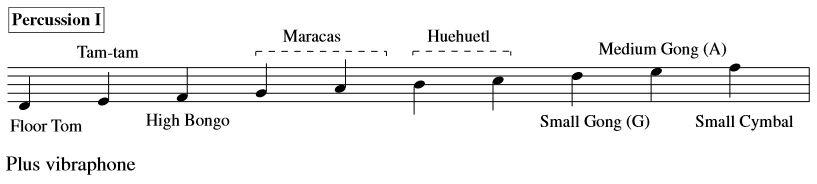
Percussion I
Floor Tom
Tam-tam (shared with percussionist II)
High bongo
Maracas
Huehuetl
Small gong
Medium gong
Small cymbal
Vibraphone
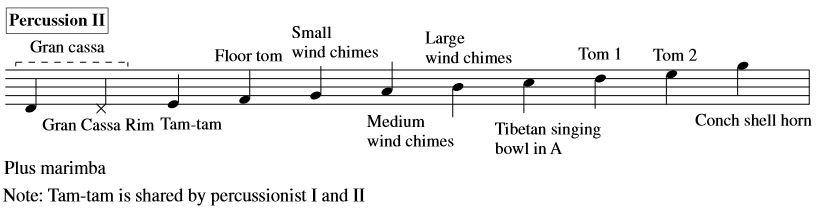
Percussion II
Gran cassa
Tam-tam
Floor tom
Small wind chimes
Medium wind chimes
Large wind chimes
Tibetan Singing bowl in A
Tom high
Tom low
Conch shell horn
Marimba
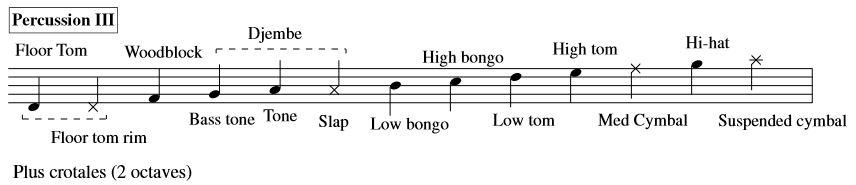
Percussion III
Floor tom
Woodblock
Djembe
Low bongo
High bongo
Low tom
High tom
Med cymbal
Hi-hat
Suspended cymbal
Crotales (2 octaves)
Piano
2 violins
2 violas
2 cellos
2 contrabasses
Electronics - Audio
Technical requirements:
-Voice (amplified voice)
1 microport to amplify the voice of the singer
1 stand for the death whistle
-Electronics
The electronics should be played from an audio device. The number of the tracks are marked on the score. Trigger each track as written on the score
The conductor needs a click track to coordinate the electronics with the acoustic instruments only in the first two movements. Trigger the click track that corresponds to each track of each movement. On the case of the third movement, the tape should not be precisely coordinated with the acoustic instruments.
CONNECTED IDENTITIES
DIANA SYRSE
Techniques for brass and bassoon:
Growling
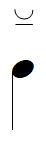
Lowest possible note
Techniques for tam-tam:
Techniques for voice:
CopyrightbyG.Ricordi&Co./Forperusalonly
Vibrato capretino
Spoken
Sprechgesang
Glotis strike
Cracking sound
Voice without specific pitch
Highest possible pitch
Techniques for strings:
Overpressure
Gradual change form ordinary pressure to overpressure
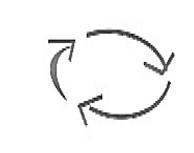
Circular bowing
(Sprechgesang) Speak-sing the text written below the note while playing. You can also speak the text following the melodic line.
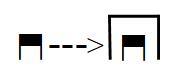
Put pressure against the tam tam making semi-circles slowly on the front part of the instrument with a short superball friction mallet (create low and high tones)
Variate the velocity and pressure (Whale sound)
With a contrabass bow
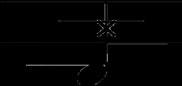
Scrape the tam-tam surface with a triangle beater
Slightly nasal sound
Very nasal sound
Voice with noise
Vowel with noise produced by either the throat or the tongue
Growling improvisation combining vowels and consonants in a random way imitating the sound of an animal roar
Improvisation
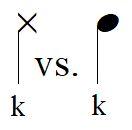
Consonants that are written with a cross have a percussive non-pitched sound, consonants that are written with a pitch should be sung with that specific pitch
Hit the instrument with the left hand
Play percussive sounds (noise) with your instrument this can be: col legno battuto, hitting on the wood or white noise with muted strings. Increase intensity. Free rhythm
Hit the left shoulder of the instrument with the four fingers of your left hand
CONNECTED IDENTITIES
Nahual
Commissioned by Los Angeles Philharmonic Association Gustavo Dudamel, Music & Artistic Director
Music and lyrics by Diana Syrse
j œ ‰Œ‰ rœ
The Tower of Babel
Music and Lyrics by Diana Syrse
Speak-sing
(Sprechgesang) Speak-sing
Speak-sing
Speak-sing
(Sprechgesang) Speak-sing the
(Sprechgesang) Speak-sing
> > ‰ŒÓ
> œ > ‰ŒÓ
> œ œ > ‰ŒÓ
The Aleph
Commissioned by Los Angeles Philharmonic Association Gustavo Dudamel, Music & Artistic Director
Chilling q = 130
Chilling q = 130
Everytime
Everytime you see words below the notes: Speak and play.
Everytime you see words below the notes: Speak and play.
the words with the same articulations marked for your instrument.