Lisa Streich MANTEL
for string orchestra and 2 percussion 2018
Partitur
Sy. 5713/01
ISMN 979-0-2042-5713-3

for string orchestra and 2 percussion 2018
Partitur
Sy. 5713/01
ISMN 979-0-2042-5713-3
INSTRUMENTATION
Percussion I:
- Timpani: Bb - f#
- Triangle + Triangle stick
- Triangle + Drum Stick
- Piatti
- Gran Cassa + hard bass drum stick
- Egg Slicer
- Whip
Percussion II:
- Timpani: DES - Bb & F - d + soft Timpani stick
- Triangle + Triangle stick
- Triangle + Drum stick
- Xylophone + hard rubber mallets
- Whip
6 Violins I
5 Violins II
4 Altos
3 Violoncelli
1 Contrabass
DISPOSITION Violin II Viola
Percussion I Violin I Violoncello Contrabass Percussion II
Conductor
DURATA: ca 17'
REMARKS PERCUSSION
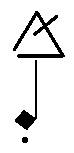
= press one side of the triangle onto the skin of the Timpani while hitting one side of the Triangle with a drumstick (Hammer-like sound with resonance occurs)
= hit along the side of the Triangle - a transition in sound occurs to the above described technique
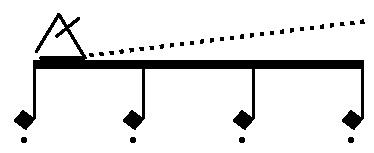
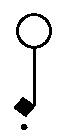
= hit with drum stick flat on the border of the timpani, half of the stick is on the skin and half of the stick is in the air
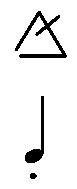
= traditional Triangle
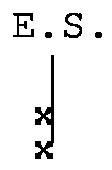
= pluck two random strings of the Egg Slicer simultaniously
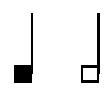
= damped notes on the Vibraphone
= drum stick

= hard rubber mallet

= hard Timpani stick

= hard Bass Drum stick

= play with one hard rubber mallet in one hand and with one drum stick in the other hand
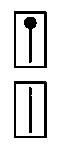
STRINGS


+1/4 +1/2 +3/4


-3/4 -1/2 -1/4
I II roman numerals above a note indicate the string on which to play III IV
ord. = ordinario
s.p. = sul pont
s.t. = sul tasto
fl. = flautando
c.l. = col legno
c.l.cr. = col legno crini
c.l.b. = col legno battuto

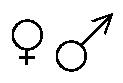
= only women hum the same note as they're playing

= only men hum the same note as they're playing = women and men hum the same note as they're playing

= indicates the velocity of the bowing: 0 = no velocity 0.5 = very very slow = approx. 60 sec. per bow (unstable tone) 1 = very slow = approx. 15 sec. per bow (stable tone) 2 = slow = approx. 3 sec. per bow 3 = medium velocity = approx. 1 bow per sec. 4 = fast = approx. 1.5 bows per sec. 5 = very fast = approx. 2 bows per sec. 6 = as fast as possible = approx. 2.5 bows per sec. all numbers lower than 1 should result in an unstable, grainy sound. Important with this action is that always the whole bow is to be used - the indication 6 doesn't mean a normal tremolo!
the dynamics indicate in this case the bow pressure: ppp = very very light bow pressure
pp = very light bow pressure
p = light bow pressure
mf = medium bow pressure
f = high bow pressure
ff = very high bow pressure
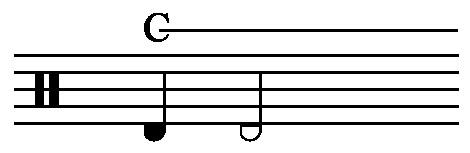


= play on the center bout (rib).
= Bartok pizz.
= tap string on given note with flesh of the finger
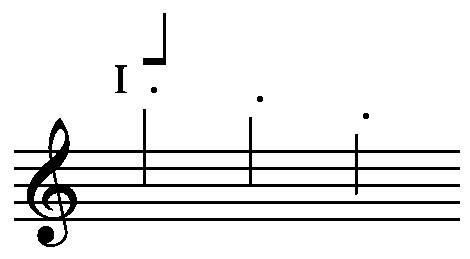
= tap string with bottom of tension-screw of the bow while damping the half of the string below the tension screw with the left hand
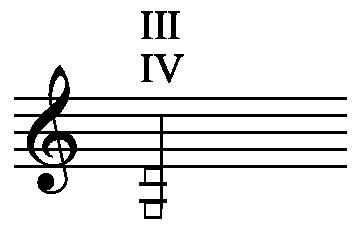
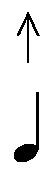
= damp given strings lightly with left hand and play the bow- a white noise should occur.
= damp given strings and swish bow vertically on them
= swish bow vertically on given note
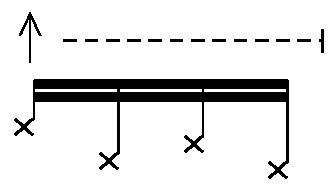
= tap given notes and swish on one bow as long as the dotted line indicates
CHOREOGRAPHIC NOTATION (MUSICIAN)
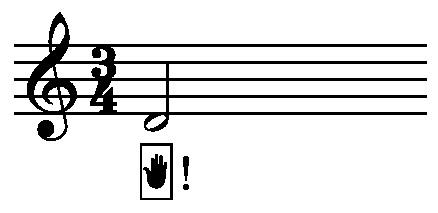
this notation is used to create waves wandering through the orchestra

= indicates that the dynamics for the material as notated above is to be taken from the conductor. Play only when the conductors arm is quasi pointing at you. A f is indictaed from the conductor with a high lifted arm and a ppp with a low held arm. A niente is shown with a closed fist. Listen to your neighbours and try to create a continous sound through the orchestra. When the conductor's hand moves towards you start the sound softly. When the conductor's hand moves away from you, make a short decrescendo to niente. = shows the maximum of the bow velocity. Is the conductor quasi pointing at you you play with the maximum velocity given. When the conductor's hand moves towards you start with the lowest velocity (0) or dal niente. When the conductor's hand moves away from you, slowly slow down to the lowest velocity again (0) or al niente.
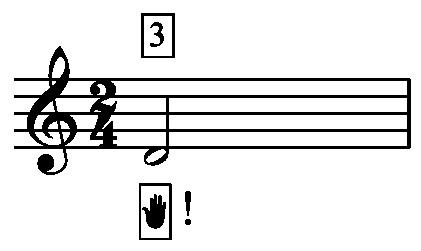
= shows that a traditionally conducted section is strarting now.

CHOREOGRAPHIC NOTATION (CONDUCTOR)
this notation is used to create waves wandering through the orchestra
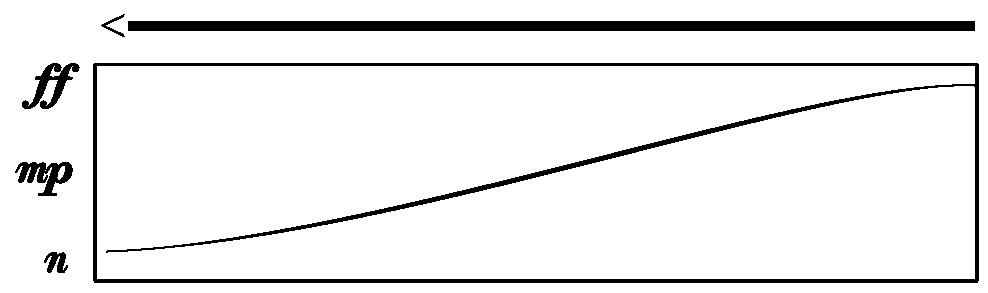
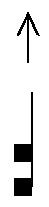
= the arrow indicates the direction of the choreographic wave through the orchestra (here: from the right to the left) = the line in the square indicates the dynamic progression of the wave. Indicate a ff with a high lifted arm and a ppp with a low held arm. Close your fist for niente.
Attention: there are parts that have to be conducted both traditionally and choreographically at the same time. In that case use one arm for each way of conducting.
& I, 6
c.l.cr.
6 - - - - - - - - - - - - - - - - - - - - - - - - - - - - - - - - - - - - - - - - - - - - - - - - - - - - - - - - - - - - 0
6 - - - - - - - - - - - - - - - - - - - - - - - - - - - - - - - - - - - - - - - - - - - - - - - - - - 0
6 - - - - - - - - - - - - - - - - - - - - - - - - - - - - - - - - - - - - - - - - - - 0
c.l.cr. ppp
6 - - - - - - - - - - - - - - - - - - - - - - - - - - - - - - - 0
c.l.cr. ppp
6 - - - - - - - - - - - - - - - - - - - - - - - - - - - - - - - 0
c.l.cr. ppp
c.l.cr.
6 - - - - - - - - - - - - - - - - - - - - - - - - - - - - - - - - - - - - - - - - - - 0
& II, 2 pp
6 - - - - - - - - - - - - - - - - - - - - - - - - - - - - - - - - - - - - - - - - - - - - - - - - - - 0
c.l.cr. ppp
c.l.cr. ppp
c.l.cr.
6 - - - - - - - - - - - - - - - - - - - - - - - - - - - - - - - - - - - - - - - - - - - - - - - - - - - - - - - - - - - - 0
6 - - - - - - - - - - - - - - - - - - - - - - - - - - - - - - - - - - - - - - - - - - - - - - - - - - - - - - - - - - - - 0
6 - - - - - - - - - - - - - - - - - - - - - - - - - - - - - - - - - - - - - - - - - - - - - - - - - 0
6 - - - - - - - - - - - - - - - - - - - - - - - - - - - - - - - - - - - - - - - - - - 0
c.l.cr.
6 - - - - - - - - - - - - - - - - - - - - - - - - - - - - - - 0
c.l.cr.
6 - - - - - - - - - - - - - - - - - - - - - - - - - - - - - - 0
6 - - - - - - - - - - - - - - - - - - - - - - - - - - - - - - - - - - - - - - - - - - 0
6 - - - - - - - - - - - - - - - - - - - - - - - - - - - - - - - - - - - - - - - - - - - - - - - - - - 0
6 - - - - - - - - - - - - - - - - - - - - - - - - - - - - - - - - - - - - - - - - - - - - - - - - - - - - - - - - - - - 0
6 - - - - - - - - - - - - - - - - - - - - - - - - - - - - - - 0 o ppp
6 - - - - - - - - - - - - - - - - - - - - - - - - - - - - - - 0
6 - - - - - - - - - - - - - - - - - - - - - - - - - - - - - - - - - - - - - - - - - - 0
c.l.cr. p 6 - - - - - - - - - - - - - - - - - - - - - - - - - - - - - - - - - - - - - - - - - - - - - - - - - - 0
c.l.cr. 4 - - - - - - - - - - - - - - - - - - - - - - - - - - - - - - - - - - - - - - - - - - - - - - - - - - - - - - - - - - - - - - - - - - 0
4 - - - - - - - - - - - - - - - - - - - - - - - - - - - - - - 0
c.l.cr. p
c.l.cr.
4 - - - - - - - - - - - - - - - - - - - - - - - - - - - - - - - - - - - - - - - - - - - - - - - - - - - - - - - - - - 0
3 - - - - - - - - - - - - - - - - - - - - - - - - - - - - - - 0
& II, 2
c.l.cr. ppp
4 - - - - - - - - - - - - - - - - - - - - - - - - - - - - - - 0 o pp
3 - - - - - - - - - - - - - - - - - - - - - - - - - - - - - - - - - - - - - - - - - - - - - - - - 0 o & II, 3
c.l.cr. pp
4 - - - - - - - - - - - - - - - - - - - - - - - - - - - - - - - - - - - - - - - - 0 o pp
3 - - - - - - - - - - - - - - - - - - - - - - - - - - - - - - 0 o & II, 4
4 - - - - - - - - - - - - - - - - - - - - - - - - - - - - - - 0
c.l.cr. pp
c.l.cr. ppp
4 - - - - - - - - - - - - - - - - - - - - - - - - - - - - - - 0
4 - - - - - - - - - - - - - - - - - - - - - - - - - - - - - - - - - - - - - - - - - 0
c.l.cr. p 4 - - - - - - - - - - - - - - - - - - - - - - - - - - - - - - - - - - - - - - - - - - - - - - - - - 0
3 - - - - - - - - - - - - - - - - - - - - - - - - - - - - - - - - - - - - - - - - - - - - - - - - 0