Lisa Streich FRANCESCA
ISMN 979-0-2042-5711-9 Full
Sy. 5711/01
INSTRUMENTATION
1 Flute, Bass Flute, Piccolo
1 Oboe, Egg Slicer
1 Clarinet in Bb, Bass Clarinet in Bb
1 Percussion:
- 1 long whip
- 1 orchestral whip
- 1 short whip (rod)
- 1 Furin (high, vibrating sound)
- 1 egg slicer
- 1 hammered tenor Dulcimer tuned in the following way:
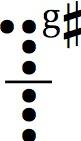
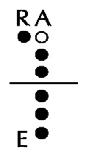
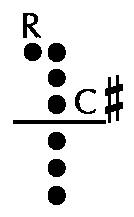
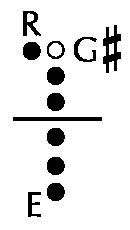
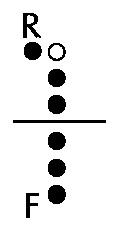
given d's should be tuned in just minor third to h (+16 cents )
given e's should be tuned in just major third to c (-14 cents)
given ba should be tuned in just minor third to f (+16 cents)
additionally, the following strings should be tuned down a quarter note
1 motorised piano (contact composer for motors: mail(a)lisastreich.se)
1 Violin
1 Viola
1 Violoncello
DISPOSITION
Pno. Perc.
Vlc. Cl.
Vla. Ob. Vln. Fl.
Audience
DURATION
ca. 25'
REMARKS
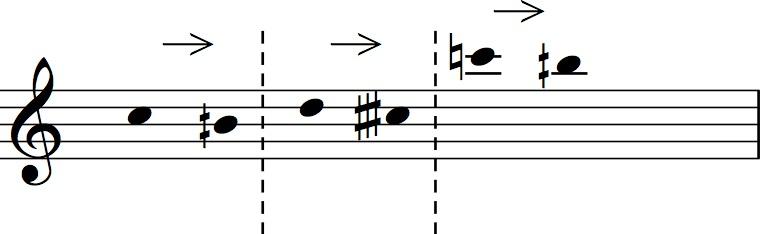
+ 1/8 + 1/4 + 3/8 + 1/2 + 5/8 +3/4
- 3/4 - 5/8 - 1/2 - 3/8 - 1/4 - 1/8
FLUTE
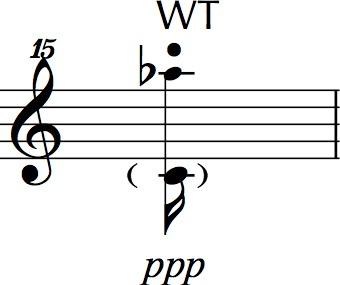
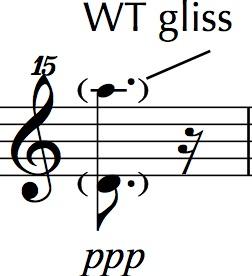
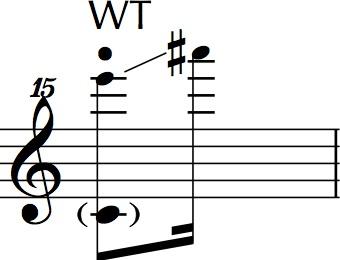
= whistle tone glissando on open flute
= whistle tone on closed flute = whistle tone glissando on closed flute
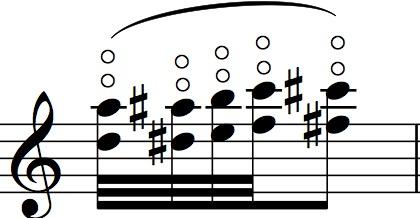
= play given harmonics on Piccolo
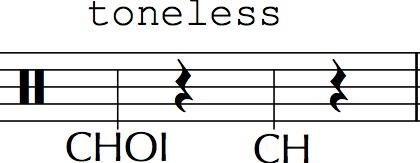
= articulate given consonants and vowels above the mouthpiece with a rich amount of formants
OBOE
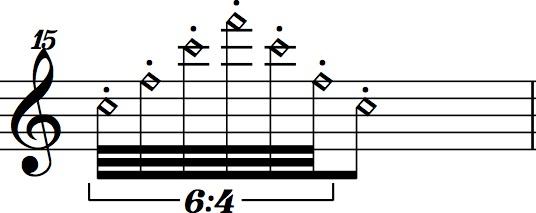
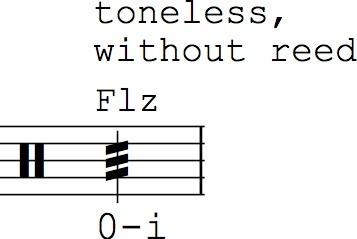
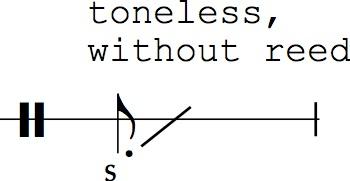
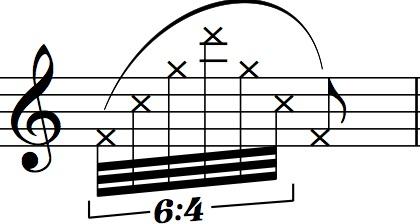
= double harmonics = glissando on a very high note played "à la tromba" = without reed, perform a flutter-tongue articulating o-i formants into the air stream = without reed, articulate "s" into the air stream while performing a glissando from dark formants to light formants
= kissing notes
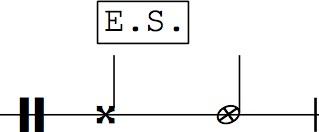
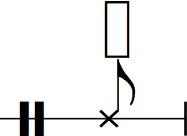
= play random strings on Egg Slicer (totally unisono with a given instrument)
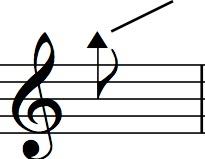
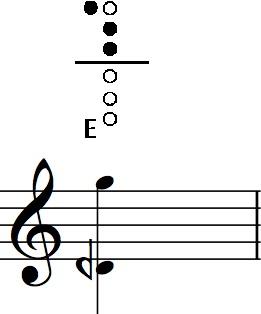
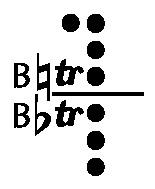
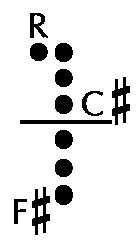
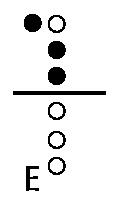
= Multiphonic
CLARINET
PIANO
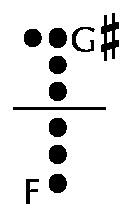
The motorised installation which lies on top of the piano consists of a long metal stick. Attached to the metal stick are four motors with paper strips attached to it. These paper strips pluck the strings inside the piano (psalterium-like). For more information contact the composer: mail(a)lisastreich.se
IF! the concert program and situation allows it the below given: ba's should be tuned in just minor thirds to f (-14 cents)
e's should be tuned in just major thirds to c (+16 cents)
#a should be tuned in just major thirds to #f (-14 cents)
d's should be tuned to just minor thirds to h (+16 cents)
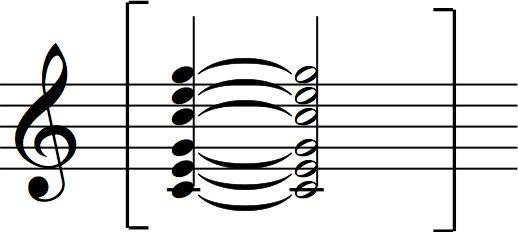
= silently depressed chord / silently held chord in 3rd pedal
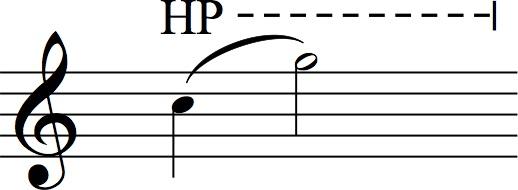
= half pressure = press the key down until you reach a small resistance beforehand (without letting the hammer audible hit the string). Press the key from this point when it's supposed to sound - very soft sound.
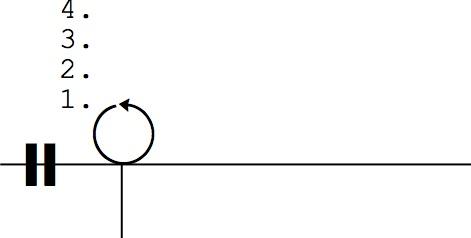
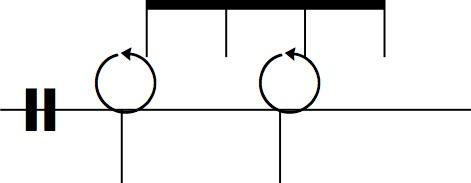
= shows which motor to activate. 1. strikes the lowest strings, = the first voice shows that the paper attached to the motor flaps twice during one turn of 2. the mid low strings, 3. the mid high strings, 4. the high strings the motor (2nd voice)
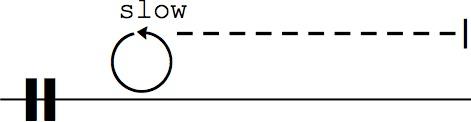
= slow motor in an unspecific tempo
STRINGS
= hit the piano from below with a flat piece of wood, ca. 20 cm long, 10 cm wide, 3 cm thick.
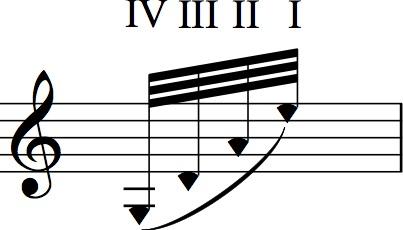
II = roman numerals above a note indicate the string on which to play
= decreasing tempo in the motor (to nothing / to no velocity)
I ord. = ordinario
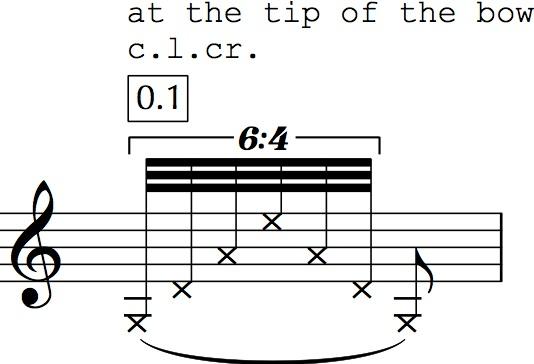
c.l.cr. = play with both wood and hair of the bow III
c.l. = play only with the wood of the bow IV
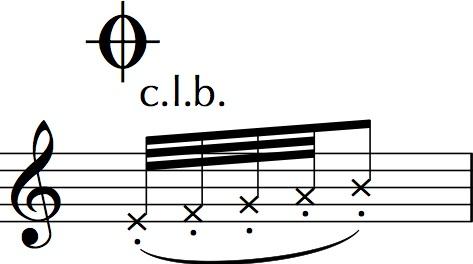
c.l.b. = col legno battuto
s.t. = sul tasto
m.s.t. = molto sul tasto
fl. = flautando
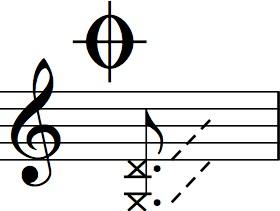
= damp lightly and comfortable near the midpoint of the string with all four fingers = deep tone produced by playing on the tail piece with the bow
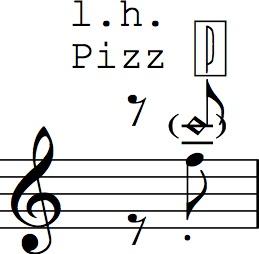
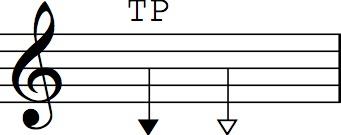
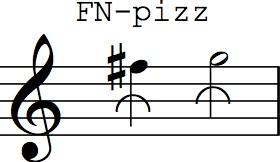
= press the lower note normally and touch the 5th flageolet with the tension screw of the bow. = press given string on given note with the fingernail of the left hand and execute a fingernail pizz. Make a left hand pizz. The sounding result is the pressed lower note with a metallic overtone spectrum. with the right hand. = play behind the bridge on given strings = thumb nail arpeggio behind the bridge
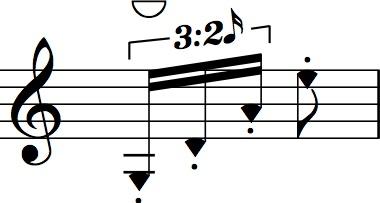
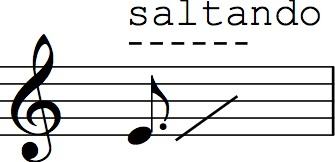
= saltando contact points glissando
= col legno battuto contact point glissando
= play saltando while performing a glissando with the left hand = white noise created through bowing very close to the bridge on given strings. The fingers of the left hand damp the strings very high on the string so they almost touch the bow.
= let the bow rest on the strings, at the tip of the bow, and perform an arpeggio with almost now bow speed. A soft metallic sound occurs. = dynamics in quotation marks refer to the intensity of a performance technique, not the actual loudness This gesture is primarily choreographic and should be performed with of the resulting sound an exaggerated arm movement.
= hum the same note as you're playing ! = play in just intonated thirds
= indicates the velocity of the bowing: 0 = no velocity
0.5 = very very slow = approx. 60 sec. per bow (unstable tone)
1 = very slow = approx. 15 sec. per bow (stable tone)
2 = slow = approx. 3 sec. per bow
3 = medium velocity = approx. 1 bow per sec.
4 = fast = approx. 1.5 bows per sec.
5 = very fast = approx. 2 bows per sec. 6 = as fast as possible = approx. 2.5 bows per sec.
all numbers lower than 1 should result in an unstable, grainy sound. No matter what the indicated speed is, the entire length of the bow should always be used.
The indication "6" does not mean a normal tremolo!
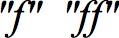
the dynamics indicate in this case the bow pressure: ppp = very very light bow pressure pp = very light bow pressure
p = light bow pressure
mf = medium bow pressure
f = high bow pressure
ff = very high bow pressure
with all my gratitude for ensemble recherche for wonderful 4 years of work and development