Lisa Streich ALV
Sy. 5709/01
ISMN 979-0-2042-5709-6

Sy. 5709/01
ISMN 979-0-2042-5709-6
INSTRUMENTATION:
2 Piccolo flute + egg slicer
2 Oboe/English horn + egg slicer
1 Clarinet in Bb + egg slicer
1 Bass clarinet in Bb + egg slicer
2 Contrabassoon + egg slicer
4 Horn in F + egg slicer
2 Trumpet (with a high portion of water) + egg slicer
3 Tenor trombone (with a high portion of water) + egg slicer
1 Tuba
Timpani
Percussion 1: Triangle / Cymbals
Percussion 2: Egg slicer / Wood Blocks (five outspread in register) / Washboard
Harp
12 Violin I
10 Violin II
8 Viola
6 Violoncello
5 Double bass (with C-extension)
the score is written in C - piccolo flute, contrabassoon and double bass are notated transposed
REMARKS
= quarter tone higher

= three quarter tone higher

= quarter tone lower

= three quarter tone lower

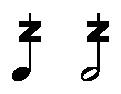
= irregular tremolo
Woodwind and brass:
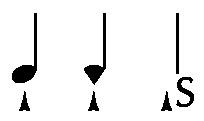
= toneless sounds of blowing
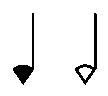
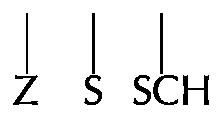
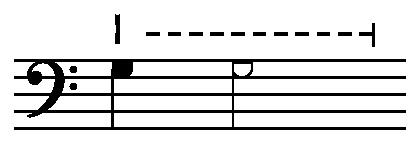
= consonants to be articulated into the mouthpiece. hold the consonant as long as the dashed line indicates
= pitched but very breathy sound
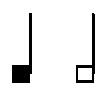
= sounds played on the "water trombone" and the "water trumpet". The sound that occurs is unstable and interspersed with clicking noise
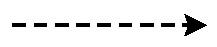
= gradual progression from one technique to another
Percussion:
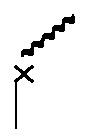
= (washboard) scratch along the washboard with a hard mallet = tremolo: from slow to fast and back to slow again
Strings:
m.s.t., s.t., ord., s.p., m.s.p. = molto sul tasto, sul tasto, ordianario, sul ponticello, molto sul ponticello
c.l., c.l.cr., c.l.b. = col legno tratto, col legno crini, col legno battuto
I II = roman numerals above a note indicate the string on which to play III IV
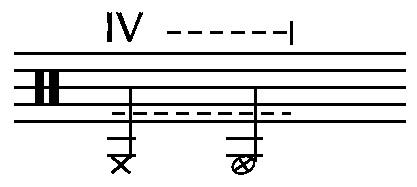
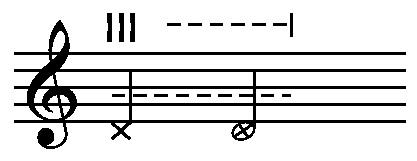
= play with the wire wrap of the bow behind the bridge on the indicated string = play with the pad of the bow or thumb on the indicated string
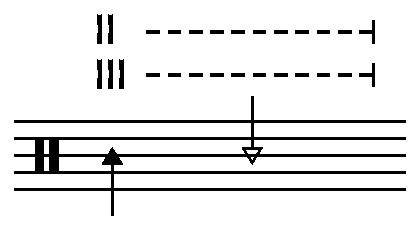
= move the bow in the notated direction on the string(s) along the axis of the bridge and the tuning pegs
= tip the string on the indicated note - a mixture of the string's note and the tipped note will occur
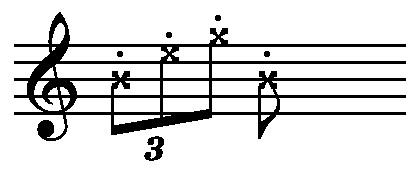
= play behind the bridge on the indicated string

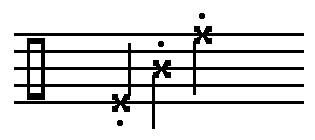
= play with the bow on the body of the instrument or if preferred, execute the action on damped strings (best on string III and IV) - try to avoid as much tone as possible. This action should produce white noise
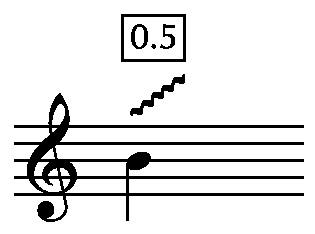
= indicates the velocity of the bowing: 0 = no velocity
0.5 = very very slow = approx. 60 sec. per bow (unstable tone) 1 = very slow = approx. 15 sec. per bow (stable tone) 2 = slow = approx. 3 sec. per bow
3 = medium velocity = approx. 1 bow per sec. 4 = fast = approx. 1.5 bows per sec.
5 = very fast = approx. 2 bows per sec.
6 = as fast as possible = approx. 2.5 bows per sec. all numbers lower than 1 should result in an unstable, grainy sound. No matter what the indicated speed is, the entire length of the bow should always be used. The indication "6" does not mean a normal tremolo! the dynamics indicate in this case the bow pressure:
ppp = very very light bow pressure
pp = very light bow pressure
p = light bow pressure
mf = medium bow pressure
f = high bow pressure
ff = very high bow pressure

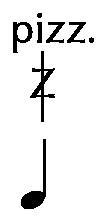
= a "snoring" effect to be achieved by a slow vertical steep shift of the bow, pressing the frog between the middle of the fingerboard and the edge of the fingerboard = Bartók - pizz
= pull at the string with the left hand and touch it with the wood of the bow very lightly immediately thereafter so that a loud rattling sound is produced
= irregular tremolo
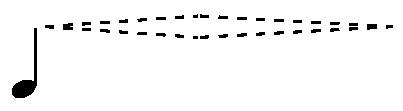
= gradual progression from one technique to another
Egg slicer:
= pizzicato on a low, mid and high string of an egg slicer
LARGAMENTE
PICCOLO FLUTE
OBOE/ENGLISH HORN
CLARINET IN Bb
BASS CLARINET IN Bb
CONTRABASSOON
HORN IN F
TRUMPET IN Bb (with a high rate of water)
ALTO TROMBONE (with a high rate of water)
PERC. I: TRIANGLE/ CYMBALS
WASHBOARD
PERC. II:
WOOD BLOCKS/ EGG SLICER
e = 63 e = 63
1 - - - - - - - - - - - - - 0
1 - - - - - - - - - - - - - 0
m.s.t. ppp 1 - - 0.5 - - - - - 1 - - - 0 - 6 - - 1