
Dai Fujikura Akiko's Piano
Piano Concerto No. 4
Full Score
Sy. 4977/01 ISMN 979-0-2042-4977-0
Commissioned by Hiroshima Symphony Orchestra
World Première:
August 5th + 6th 2020, Hiroshima, Japan
Hiroshima Symphony Orchestra
Conductor: Tatsuya Shimono
Piano: Martha Argerich
Instrumentation:
Orchestra
2 Flutes doubling Piccolos (I+II)
2 Oboes (I + II)
2 Clarinets in B-ßat (I + II)
1 Bassoon (I)
1 Bassoon (II) doubling Contrabassoon
2 Horns in F (I + II)
1 Trumpet in C (I) - Needs Straight Mute and Harmon Mute
1 Trumpet in B-ßat (II) - Needs Straight Mute and Harmon Mute
1 Vibraphone
STRINGS
Solo Piano
The Score is in C
NOTE: The complete solo piano part of this concerto can be performed on a grand piano, as for a normal piano concerto.
Alternatively, the solo piano part can also be played on a grand piano with the cadenza (from bar 399) being played on an upright piano, or “Akiko’s Piano”.
If using the two-piano version, the composer’s wish would be that the upright piano should be one which has some significance to the local history of where the concert is taking place, or Akiko’s own piano can be used.
Akiko’s Piano:
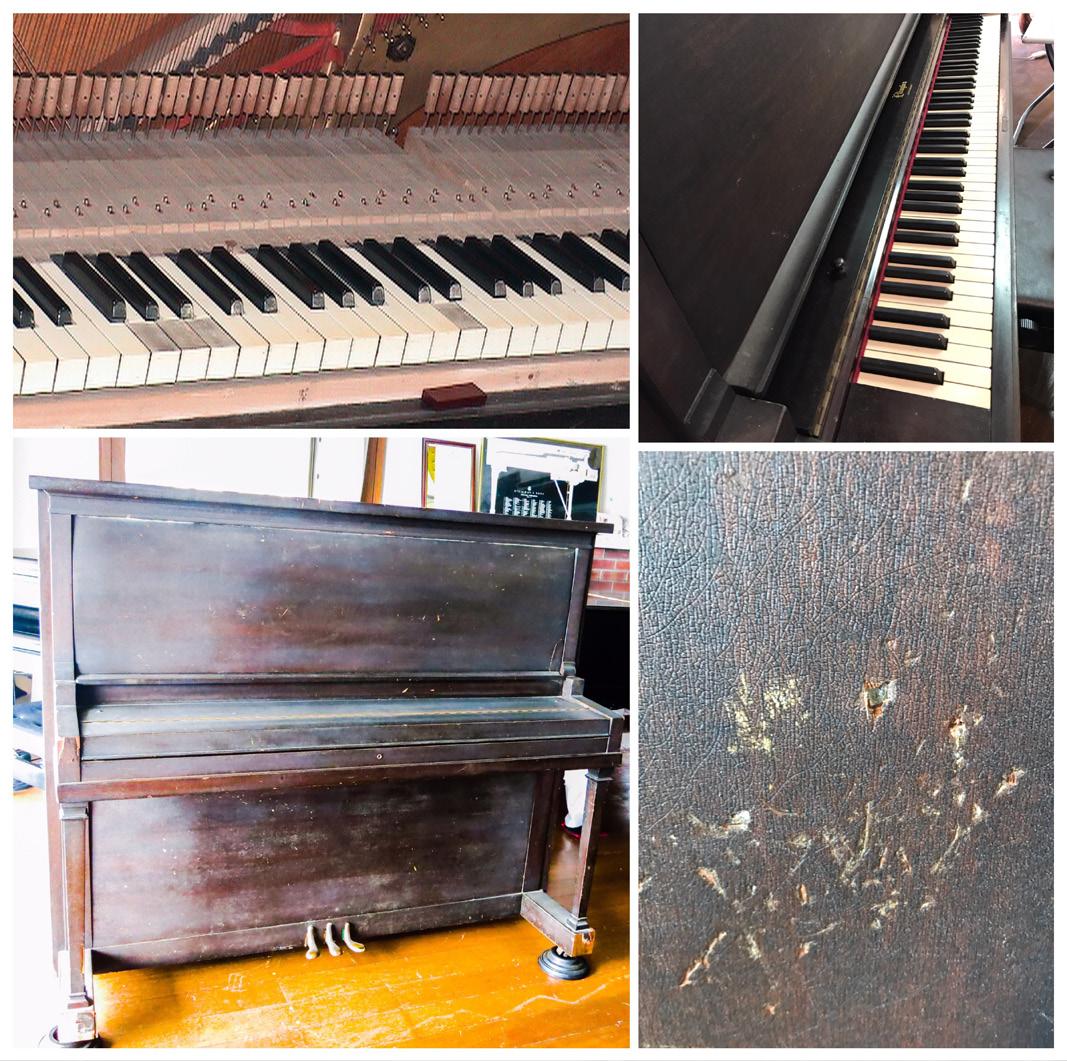
Programme note of “Akiko’s Piano”:
This special piano concerto was written for and dedicated to the Hiroshima Symphony Orchestra's Peace and Music Ambassador, Martha Argerich. Then why it is called “Akiko’s Piano”? Who is Akiko?
In Hiroshima, there is a piano that survived the atomic bomb, the smashed glass window from the blast is still stuck to the piano’s body. This piano belonged to a 19-year-old girl, Akiko.
Akiko was born in LA to Japanese parents. There was a strong friendship, especially in LA, between the American and Japanese people before the Second World War.
Akiko got the piano when she was still in America, this piano is also American, Baldwin, made in Cincinnati.
When Akiko was six, she and her parents moved to Japan, to live in Hiroshima.
She kept practicing the piano, having lessons, and when she was 19 years old, while she was working as a mobilized student, the atomic bomb was dropped.
She walked and swam as the bridge had been destroyed, to her home where her parents were that day. Then, the next day, she died in her parents’ arms. Her parents cremated their daughter’s body under a big persimmon tree which still exists today. Her last words were “Mom, I want to have a red tomato.”
Though naturally this concerto will have “music for peace” as its main message, as a composer I like to concentrate the personal point of view. This microscopic view to tell the universal subject, is the way to go, I feel, in my compositions : the view of Akiko's, ordinary 19-year-old-girl who didn’t have any power over politics (and she was born in US, which means she is also an American) At the time of her death, she didn’t know what had happened, or what killed her (radiation poisoning, as she didn’t die from the initial blast).
There must be similar stories to that of this 19-year-old girl in every war in history and in every country in the world. Every war will have had an “Akiko”.
I am using two pianos in this concerto, one is the main grand piano, then, the cadenza part of this concerto, at the end of the concerto, Akiko’s Piano, the piano that survived the atomic bomb will be used, played by the soloist.
To express such an universal theme of “music for peace”, the piece should portray that most personal, smallest point of view. I think that is the most powerful way, and only music can achieve this.
Dai Fujikura (edited by Alison Phillips)
NOTE: The complete solo piano part of this concerto can be performed on a grand piano, as for a normal piano concerto.
Alternatively, the solo piano part can also be played on a grand piano with the cadenza (from bar 399) being played on an upright piano, or “Akiko’s Piano”.
If using the two-piano version, the composer’s wish would be that the upright piano should be one which has some signiÞcance to the local history of where the concert is taking place, or AkikoÕs own piano can be used.
STRINGS:
S.P.= sul pont. P.O.= position ordinary
General:
Accidentals (including grace notes) only affect the pitch to which they directly refer, not other octaves, for the duration of the bar in which the accidental is written.
To Martha Argerich
= means "open", "close" by hand (on harmon mute) very fast until the end of the bracket unless stated otherwise.
STRINGS:
Make a difference between Gliss. and Port. Gliss. = shift the pitch immediately (and travel during the full length of the note duration). Port. = shift the pitch just before you go to next note.