carthage music department presents
Flutissimo!
Wind Orchestra
Concert Band
AMATI
Flute Ensemble
James Ripley, conductor
Mandy Nelson, flute
Sunday, May 3, 2026 | 2:00 p.m.
A.F. Siebert Chapel
Toy Symphony Franz Joseph Haydn Allegro (1732—1809)
Menuetto arranged by Paige Dashner Long Finale
Flute Ensemble
Consort
Robert Spittal
II.Aubade (b. 1963)
I.Jeux
AMATI
Meditation Jules Massenet from “Thais” (1842—1912) arranged by Albert Austin Harding
Jacob Muller, student conductor
Eurydice Walks with Wounded Soles
Frontiers
John Cargille ‘26 (b. 2004)
Hope Johnson ‘28
I.Dreams (b. 2006)
II.Coveted Peaks
III.Murky Depths
IV.Frontiers
The Pennywhistle Song Leroy Anderson (1908—1975) arranged by Mark Rogers
Drake Thomas, student conductor
Sweet Nightingale
Concerto for Flute
Rile y Gaylord, student conductor Concert Band
Gordon Jacob (1895—1984)
Mike Mower
II.[Andante] (b. 1958)
I.Briskly
Stars and Stripes Forever
Mandy Nelson, flute
Wind Orchestra
John Philip Sousa (1854—1932)
Toy Symphony
To this day, no one is quite sure who wrote Toy Symphony. The kidfriendly work has worn Franz Joseph Haydn and Leopold Mozart’s names throughout the years, but it is now disputed whether either of them wrote it.
Even without a name attached to it, the piece has become a mainstay for children’s shows and Christmastime concerts. Each of its three movements features the sounds of actual toys and instruments that sound like they came straight from Geppetto’s workshop. The piece calls for a trumpet, ratchet, nightingale, cuckoo, drum, and for a handful of toys. Noisemakers rattle throughout the first of its three movements. The cuckoo and nightingale call out mischievously during the second, and in the third, the trumpets channel their inner kazoo. The presence of the toy instruments make this a fun piece for children to play, especially when there are also some toys waiting under the tree.
Composed in the mid-1700s but not published until well into the 1800s, Toy Symphony first appeared with the last name “Haydn” on it. A story surfaced that Haydn composed the piece after buying a handful of toys at a fair, then played it for his children at a Christmas party. Because the work did not appear in Haydn’s self-assembled catalog of work, scholars started to second-guess this story.
Consort
Each movement of Consort reflects on the music of “Les Grandes Hautboise,” the court wind band of France’s great “Sun King”, Louis XIV. “Jeux” (games) is a whimsical, lively dance which reflect the frivolities and excesses of the court, while the “Aubade” (morning song) is more intimate, lyrical, and influenced by the imitative styles of vocal music of the period.
Sweet Nightingale
This short programmatic work was written in 1984 for the publisher G & M Brand during the final year of Jacob’s long and prolific career as a composer for wind band.
The youngest of ten siblings, Jacob enlisted in the Field Artillery to serve in World War I when he was 19, and was taken POW in 1917, one of only 60 men in his battalion of 800 to survive.
After being released he spent a year studying journalism, but left to study composition, theory, and conducting at the Royal College of Music, where he studied with Charles Villiers Stanford, Adrian Boult and Ralph Vaughan-Williams. After teaching at Birbeck and Morley Colleges in London, Jacob joined the RCM staff in 1924 and remained until his retirement in 1966. His pupils included Malcolm Arnold, Imogen Holst and Joseph Horovitz. Sadly, because of his cleft palate and a childhood hand injury, his instrumental abilities were limited; he studied piano but never had a performing career.
Jacob’s first major successful piece was composed during his student years: the William Byrd Suite for orchestra, after a collection of pieces for the virginal. It is better known in a later arrangement for the symphonic band. While a student Jacob was asked by Vaughan Williams to arrange the latter’s English Folk Song Suite in full orchestral form. At the time of his death in 1984, he had written over 700 works, with Sweet Nightingale among his final compostions.
The Pennywhistle Song
From the master of light classical music, Leroy Anderson, this short feature for one, two, three (or more!) flutes was completed on June 3, 1951, and first performed for a recording made in June 1951. Written as a “moderate fox trot”, the melodic and rhythmic patterns fall very closely along the same lines as the composer’s Bugler’s Holiday and Trumpeter’s Lullaby.
Meditation from “Thais”
The Méditation is an instrumental entrʼacte performed between the scenes of Act II in the opera Thaïs; a wordless chorus joins in for the last reprise. In the first scene of Act II, Athanaël, a Cenobite monk, confronts Thaïs, a beautiful and hedonistic courtesan and follower of Venus, and attempts to persuade her to leave her life of luxury and pleasure and find salvation through God. It is during a time of reflection following the encounter that the Méditation occurs. In the second scene of Act II, following the Méditation, Thaïs tells Athanaël that she will let him take her to a cloister near the desert.
Concerto for Flute and Wind Orchestra
Mike Mower is a British composer who originally studied classical flute at the Royal Academy of Music, London. He also plays saxophones, clarinets, keyboards and bass guitar. He has led numerous jazz ensembles, playing his own compositions from quartet to big band all over the world. In 1985 Mike founded and led Itchy Fingers, the internationally renowned saxophone quartet.
Mike’s playing and writing careers have always run side by side. As a self – taught composer and arranger, he has written for orchestras, big bands, saxophone quartets, string quartets, and wind bands to solo recital works. Mike also arranges music for the pop industry, TV and radio and through his wide practical knowledge of the disciplines of jazz, pop and classical genres, is in demand writing commissioned works for a variety of artists and ensembles.
He has written hundreds of pieces for flute from beginner to virtuoso level, he wrote and produced two albums for James Galway and his most recent commission was for a piccolo showpiece with the United States Air Force band. His Concerto for Flute was commissioned for a number of university bands and the Brannen Cooper Foundation in 2004.
about our soloist
Mandy Nelson is a senior flute performance major and criminal justice minor from Loves Park, Illinois. Throughout her time at Carthage she has been involved in many instrumental ensembles including Wind Orchestra, Carthage Philharmonic, and Jazz Ensemble. Outside of music, Mandy is a member of the track and field team at Carthage. In the fall, Mandy will be attending Northern Illinois University College of Law.
carthage
college wind orchestra philosophy
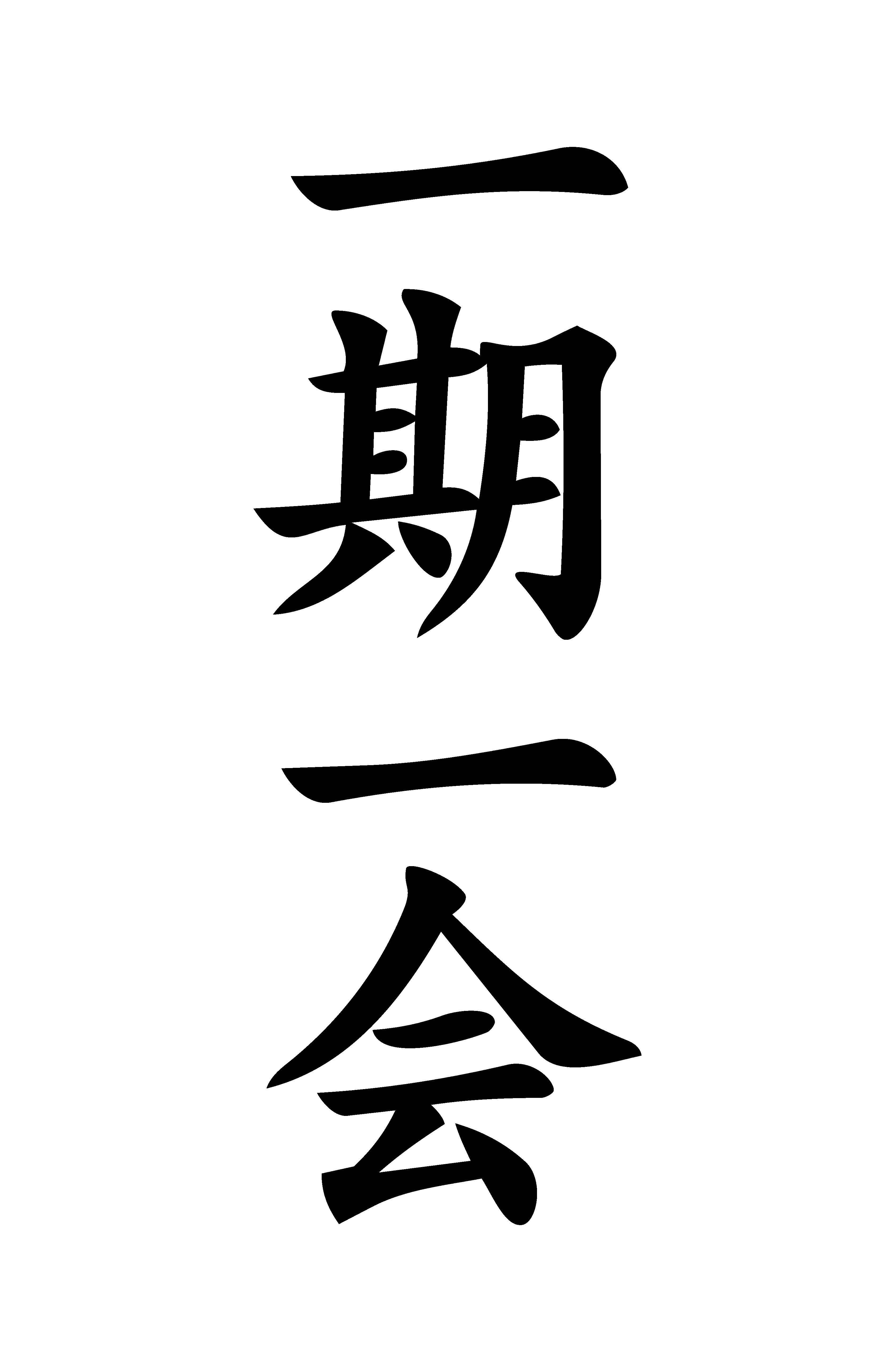
“When we are on stage, we do the best that we can and make every performance as perfect as possible. We attain this goal with spirit –the idea being that each time we do something, it will be for our first and last time. This is the concept of ichigo ichie; we must do it right, here and now.” - Seiici Tanaka
Flute
Kaylynn Brewton *
Addison Kelnhofer *+
Mandy Nelson*+
Eleanor Powell*
Dani Tranchita
Oboe
Laurel Brown *
Bella Howard *+
Toby Staaden *
Ash Wilcox
Bassoon
Neil DuJardin *+
Clarinet
Ely Aita
Riley Gaylord *
Maya Griffin *
Hope Johnson *
Emma Lorenz *
Grace Miller *
Jana Paulsen *
Angel Raygoza
Kaylie Szczepanik
Meg Williams
Bass Clarinet
Madison Bazylewicz *
Dontice Wooley
Saxophone
Ava Bartecki*
John Cargille*
Grace Grassinger
Jalen Imroth *+
Zach Shoemaker *
Horn
Michael Aylward *+
Ella Christensen *
Lanie Klawonn *+
Ellamae Monk *
Trumpet
Nathan Esboldt *
Elliot Podratz *
Luke Rodriguez *
Trombone
Anita Gross *
Johnathan Ledanski *
Amelia McCray-Grotto
Jake Muller *
Andrew Schaer *
Tuba
Riley Betthauer*
Oliver Juarez-Wunderlin *
Percussion
Cora Brown *
Avery Conger *
Cece Cooper *
Davian Santiago *
Drake Thomas *
Piano Alasdair Ladd *
* -Wind Orchestra +- AMATI
upcoming events
Riley Gaylord: Wherever the Wind Takes Me, Student Recital
Tuesday, May 5 • 7:30 p.m.
H. F. Johnson Recital Hall
Spring Dance Show - Away From The Mirror
Friday, May 8-9 • 7:30 p.m.
Wartburg Theatre
Tickets Required. Visit www.carthage.edu/tickets for ticket information.
Dan Klimzcak: Lives and Times, Grad Student Recital
Saturday, May 9 • 4:00 p.m.
H.F. Johnson Recital Hall
Yingcheng Dou, Grad Student Recital
Sunday, May 10 • 2:30 p.m.
H.F. Johnson Recital Hall
Percussion Ensemble Concert
Tuesday, May 12 • 7:30 p.m.
A.F. Siebert Chapel
Lydea King; Time, Student Recital
Wednesday, May 13 • 7:30 p.m.
A.F. Siebert Chapel
Arts at Carthage acknowledges that the land on which our building stands is part of the traditional Potawatomi, Sioux, Peoria, Kickapoo, and Miami peoples past, present, and future. These homelands reside along the southwest shores of Michigami, North America’s largest system of freshwater lakes. We honor with gratitude the land itself, and the people who have stewarded it throughout the generations. Many Indigenous peoples thrive in this place— alive and strong, and this calls us to commit to continuing to learn how to be better stewards of the land we inhabit as well.
connect with us carthage.edu/arts 262-551-5859 facebook.com/CarthageVPA instagram.com/CarthageVPA