
A D I A M O N D I N T H E R O U G H A DIAMOND IN THE ROUGH
Editor’s Note: this updated article first appeared in the Ferrari Opera Omnia (La Gazzetta Dello Sport, June 2007, ISBN: 977-1120506178), a 15-volume encyclopedia published in Italian. The author has dedicated his life to the pursuits of an automotive historian, and this subject has been part of his lectures to this day. My random inquiries may not be sufficient to fully support the notion that the subject herein is largely unknown, but I found that even avid Ferrari historians were not aware of what you’re about to read—perhaps because not all news travels quickly when there’s a language barrier. If so, this is a humbling reminder that there’s a whole world out there beyond what is recorded in English.
Isit still possible, in the third millennium, to stumble upon the proverbial automobile barn find? Which car enthusiast hasn’t dreamt, at some point or another, of coming across a “Holy Grail” of motoring history, a car the very existence of which may never have been fully ascertained, or simply never even talked about?
From the story you are about to read, I can confirm it is still possible, for that’s precisely what I managed to do.
This amazing find was triggered in the most banal fashion, by sifting through the classified ads of Hemmings Motor News: one of the best-known classic car magazines in America, with an international readership. Isn’t it ironic that such an important car would go so unnoticed when advertised in possibly the most obvious of publications, scanned by thousands of knowledgeable car freaks, col-
lectors and traders? The reason why this happened in this particular case has to do with a specific element of history that only one reader was aware of.
Hemmings’ October 2005 issue carried the ad, as succinct as they come: 1922 20-30 1641 ES Sport, body by Carrozzeria Emilia in Modena, one of the rarest old Alfas (What “1641” refers to is unknown —Ed.) Contact details were provided in the form of an e-mail address and telephone number in Greece. Those short few lines were enough to make me fall off my seat and awake the “Indiana Jones” in me.
Why the fuss? Well, when an archaeologist spends a good part his life theorizing the existence of an ancient civilization without the back-up of real scientific evidence, the discovery of an irrefutable artifact proving him right can only be followed by a moment of bemused incredulity and sheer excitement. The feeling is hard to describe.

In itself, Alfa Romeo’s 20-30 ES Sport is a sufficiently rare model to arouse interest without the need of further pedigree. According to Luigi Fusi’s reference work, Tutte le Alfa Romeo dal 1910 (the Bible of all serious Alfisti), only 123 were assembled in 1921 and 1922. Until this one surfaced in 2005, not a single example was known to survive anywhere in the world. The closest parent to this car is kept at the Alfa Romeo Museum in Arese, near Milan: a tipo 20-30 E from 1920, discovered by Fusi himself in Australia, sporting a phaeton body by Schieppati. A long wheelbase tourer with no sporting pedigree, its most important claim to history is that it was
the first Alfa Romeo model to bear the Romeo name on the badge (although he had taken over the marque in August 1915, Nicola Romeo kept the original A.L.F.A. name unchanged until 1920).
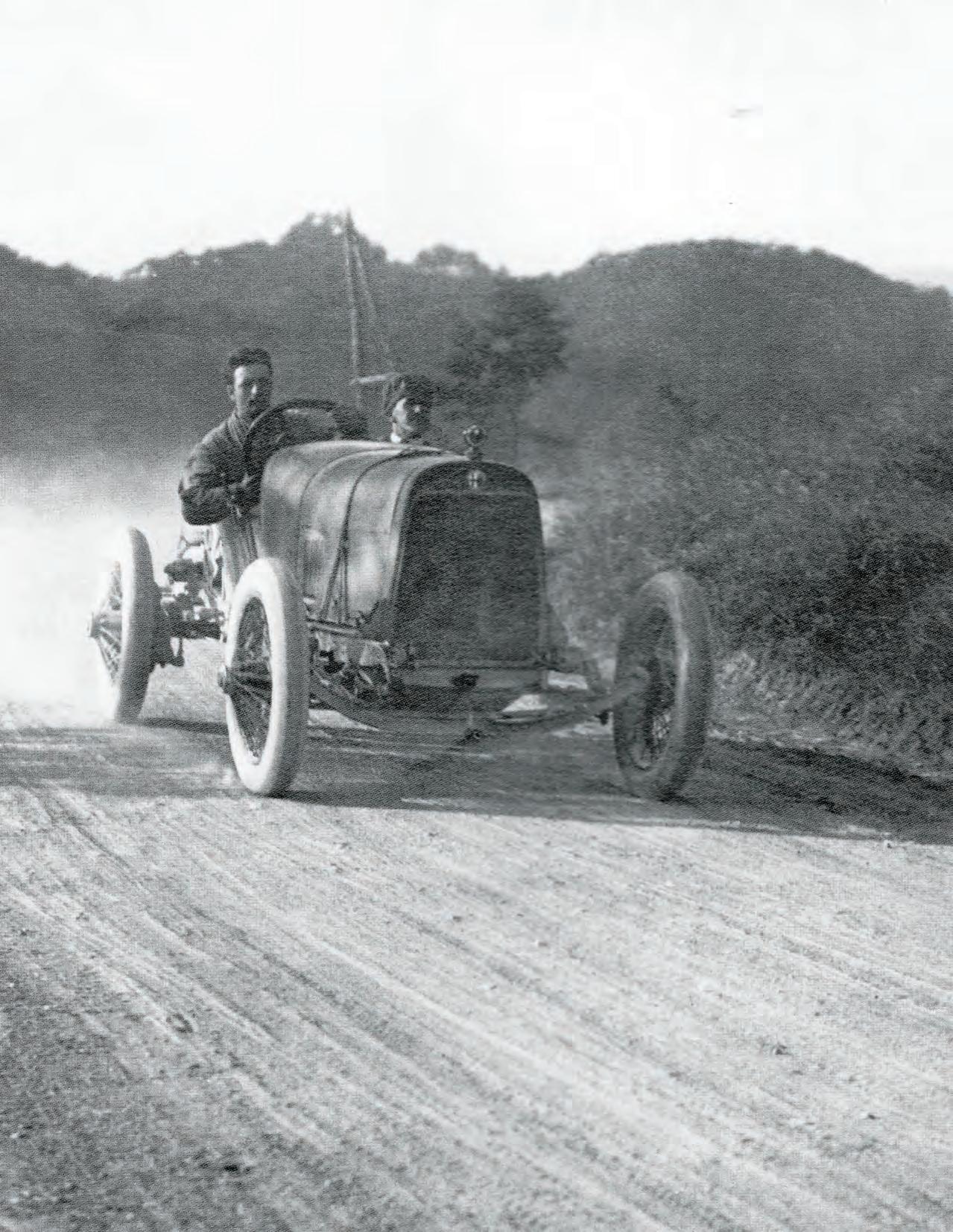
As the name indicates, the 20-30 ES Sport that followed was born with clear racing intentions in mind. It marked an important milestone for the company as it was its first model to be raced extensively, and rather successfully too. As such it should be reckoned as the heir to a long line of prewar racing Alfas, which would culminate with the 8C 2300s and 2900s of the 1930s.
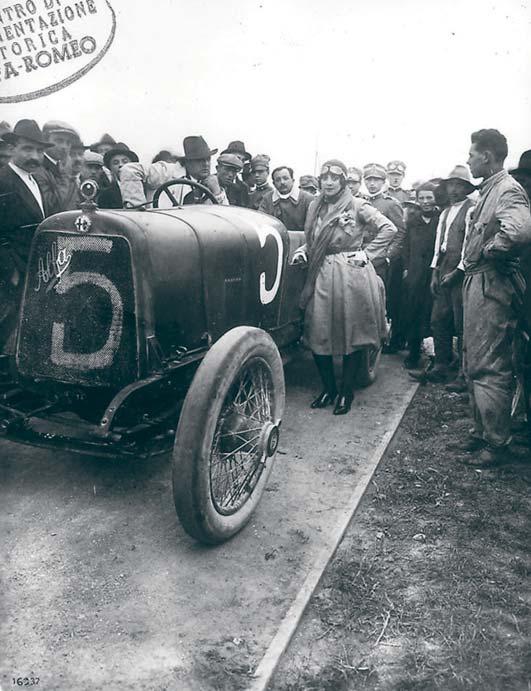
Some of the greatest drivers of that era raced behind its wheel: Antonio Ascari, Ugo Sivocci, Giuseppe Campari, Giulio Masetti, the baroness Maria Antonietta Avanzo and (drumroll…) a young hopeful from Modena named Enzo Ferrari.
The design was the work of Piacenza-born Giuseppe Merosi, the first technical director of the Milanese manufacturer at the famous Portello works. The engine was a large in-line 4 displacing 4.25 liters rated at 67 bhp, which was installed in a version of the chassis shortened to 2,900 mm, allowing the car to reach a top speed of 130 kph. At this point, one ought to stop and consider that this was still a model devoid of any brakes on the front wheels.
In those days, it was normal practice for customers to purchase the bare chassis and mechanicals (including the radiator grill, engine,
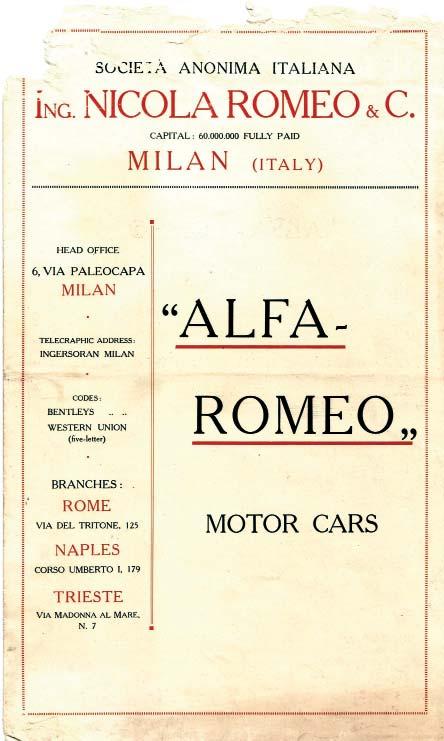
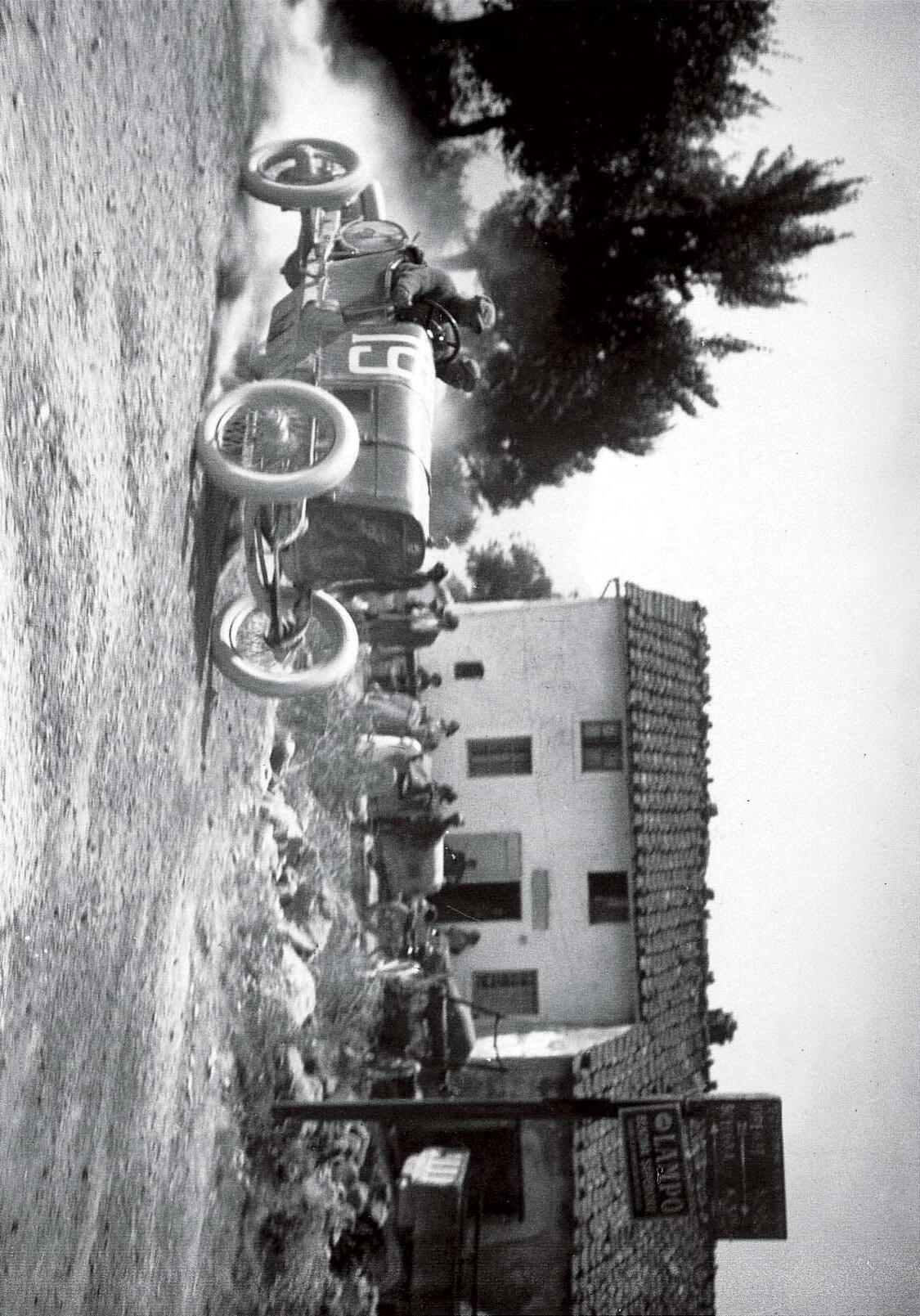
hood and dashboard) and have the coachbuilder of their own choice conjure up the body type that suited their needs and taste. Works entries were dressed in Spartan coachwork featuring either “deux baquets” or “quatre baquets” 1—two or four bucket seats—depending on race regulations: two seats for “speed” events such as the Targa Florio or the Circuito del Mugello race (that saw Ferrari win his class while finishing 2nd overall in 1921), and four seats for endurance races. The Coppa delle Alpi was one such race (anticipating modern rallies with a combination of speed and regularity trials), held over a grueling 2,300 km of Alpine roads and certainly one of the most prestigious events of the entire season. Enzo Ferrari came in second in class in 1921, an impressive fifth overall.
For all the above reasons alone, the resurgence of such an exceptional car should have raised more than a few eyebrows. Yet the real reason that sent chills down my spine was the mention of “Carrozzeria Emilia of Modena” coachwork. Being a native of Modena and having researched local automotive history for decades, I could be excused for taking a very personal interest in this find, but even so, there was more to it than that.
To explain the relevance of Carrozzeria Emilia not just in Modena’s history but in that of the automobile at large, I must take a step back to the period between 1988 and 1991 when I organized

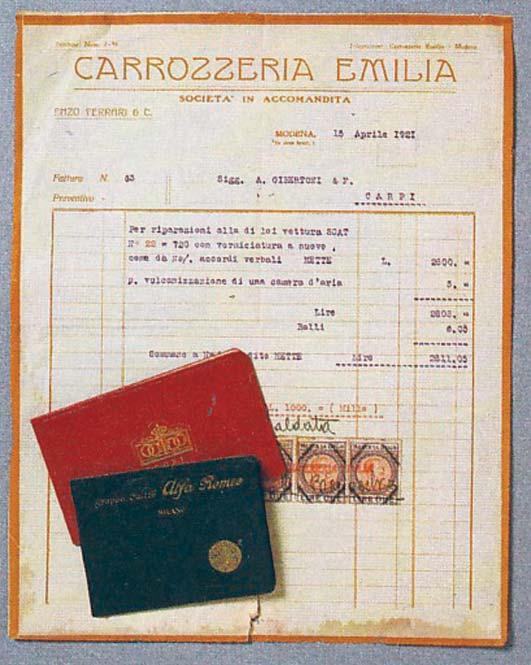
classic car auctions in Italy in association with Finarte. The sales—set in Modena—also included classic motorcycles as well as numerous lots of automobilia which attracted international attention. The very last of these auctions, in December 1991, featured an invoice from “Carrozzeria Emilia di Enzo Ferrari & C., n.63” dated April 15th, 1921, made out to Gibertoni & F. from Carpi (a nearby village). The work invoiced included “body repairs, new paintwork and a tire repair carried out on a SCAT automobile, n.22=720.”
It was the first time I had ever heard of Enzo Ferrari heading a coachbuilding concern. Until then, it was thought that Ferrari’s only activity prior to founding his Scuderia had been acting as an Alfa Romeo agent retailing the company’s models for the EmiliaRomagna and Marche regions. Scuderia Ferrari was founded in December 1929 and set him on his way to fame as a racing manager and entrepreneur for which he is remembered today. The invoice indicated instead that his career had begun at the helm of Carrozzeria Emilia, of which he was the acting partner with his own capital.
In researching the matter, I consulted all the known literature about Enzo Ferrari’s personal life, including works by Giulio Schmidt and Valerio Moretti, two of his biographers who had spoken with him at length before he passed away. All came to no avail, hence I remained non-committal upon writing the lot description for the auction’s catalogue, which read: “…in all likelihood this was the first company set up by Enzo Ferrari, of which however he never spoke in any of his autobiographical books. In 1922 he would appear in Alfa Romeo publicity material as a sales agent for the marque, reporting the same Via Jacopo Barozzi 5 address…”
Long after the auction passed, I kept wondering why this episode had so blatantly been passed under silence by the Commendatore. An encounter with prominent Italian journalist Arrigo Levi in 1997 finally prompted a reply, on the occasion of a celebration of Ferrari’s 50th anniversary as a car manufacturer held by the Modena town council.
The Levi family was originally from Modena and Arrigo’s father, himself called Enzo, had acted as Ferrari’s lawyer before the war. Arrigo Levi explained that his father had long planned a book which remained unpublished, tentatively entitled “On willfulness and moral life.”
Among the entries Enzo Levi had written up was one about Ferrari: “I have often taken notice of the contrasting effects that an unfortunate event can produce upon different people. In some cases it marks the beginning of a vertiginous downfall, while in others it triggers the emergence of an unsuspected willpower: the energy of the subject hit by misfortune suddenly multiplies and his true qualities and skills come to light. Not only does the experience become revenge, but the errors made are learnt from and become a future entrepreneurial resource… [Enzo Ferrari’s] first professional venture was indeed a rather unfortunate one. Having lost his father while still very young, he elected to sell his father’s business, a steel construction company which had slowly and painfully matured from little more than a private workshop, and devoted himself to his passion for motor racing. Admittedly, this brought along a few successes but hardly of any economical nature and soon the family’s finances were ruined. The final straw was the bankruptcy of a coachbuilding concern that Ferrari had founded. The company produced quality coachwork but, alas, failed to return a profit. Enzo Ferrari’s mother [author’s note: Signora Adalgisa] was forced to intervene—even selling her furniture—to pay off all the debts, and Ferrari was left to start again from scratch…” Ferrari managed to keep this episode of his personal past perfectly concealed right up until his death. It took over 70 years, and a series of casual incidents, for the story of Carrozzeria Emilia2 to be unearthed and finally revealed to the world. Back in 1998, the AISA (Associazione Italiana per la Storia dell’Automobile)3 organized a series of talks to celebrate the centenary of Enzo Ferrari’s birth, for which I wrote a short story about Carrozzeria Emilia which was then published partially in an Italian newspaper La Gazzetta dello Sport
Now you will better understand my excitement upon discovering the advert in Hemmings’ classified pages. I immediately got on the phone to Greece, asking further details about the car. As you will undoubtedly understand, I voluntarily omitted to drop Enzo Ferrari’s name into the conversation, for any historical fact linking him to the car would have resulted in an immediate increase of the asking price, by at least 100%... Luckily for me, the seller made no mention of Ferrari either.
On the very same day, out of curiosity, I searched the Internet for “Carrozzeria Emilia.” Together with a modern-day repair shop of no significance in Ozzano, Italy, the results returned the full transcript of my own article drawn up for the AISA seven years earlier… my knees started to shake!
This was turning into a race against time, as I needed to identify quickly a potential home for this important motor car. As a historian acting as consultant to collectors, I enjoy the privilege of influencing the destiny of the items I discover. The choice of an appropriate destination is crucial. In a way, a classic car we research and bring back to light after years in oblivion becomes like a second daughter. You cherish it for the sadness of its condition, the importance of its

history, the rarity of its breed. And you certainly do not place your daughter in the hands of the first passer-by.
It was important to entrust this car to a connoisseur willing to restore it without spoiling its originality, and patient enough to al-
low us to study it carefully before doing so. Cars, like archaeological artifacts, can reveal a tremendous amount of information about their particular history upon close, meticulous inspection.
I knew one such connoisseur in Lawrence Auriana of New York, a well-known investor of Italian origin and President of the Columbus Foundation. A dedicated collector, he owns one of the most comprehensive collections of Italian sports and racing cars in the world, and I have worked with him for several years.
After I revealed my story and the car’s credentials to him, he quickly decided this Alfa Romeo should become a central piece in his already impressive stable of rare Alfa Romeo and Ferrari models. All that was left was for me was to fly to Greece and seal the deal. The car was still complete, despite having presumably not turned a wheel for the better part of sixty years. Up until only a few months earlier, it still had traces of its original dark livery, but the seller— thinking a traditional Alfa Romeo color would increase his chances of a attracting customers—had had it repainted a flamboyant red.
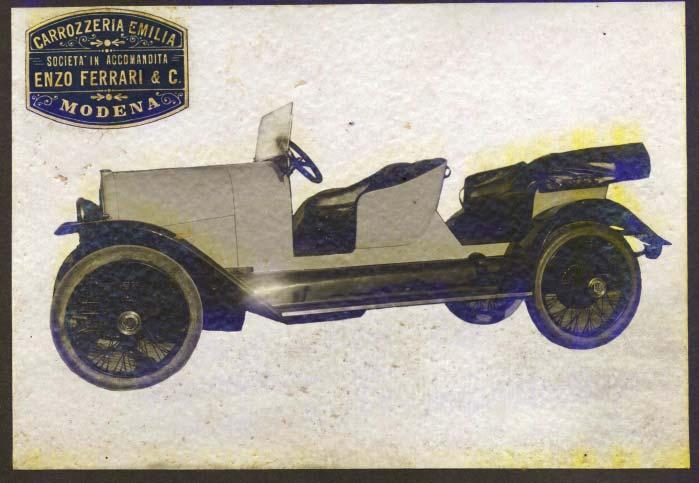
The color in itself did not matter all that much: of much more consequence was to find the mark of Enzo Ferrari’s legacy. I had to wait a while before finally being able to search for it and photograph it. After looking in all the usual areas, I finally found the coachbuilder’s plaque on the sills after opening the rear doors. There it lay, proof at last: “Carrozzeria Emilia, Via Jacopo Barozzi No. 5, Modena.”
Modena, indeed, is where the car is now, waiting. Research has not been fully completed as of yet, and documentation is still being sourced wherever possible. The Swaters Foundation in Belgium delivered an original letter from the company, and pictures have been found with the Testi-ZagariSpitzley archives in England and those of Alfa Romeo’s own Centro Documentazione Automobilismo Storico.4 My friend Giovanni Bossi also supplied an original sales brochure of the 20-30 ES Sport model from his own collection.
In a few months’ time, the car will be stripped very carefully, and will be analyzed in detail in search of any hints as to its past history. The story, as told up to this point, is purely factual. Let us now venture into unknown territory and allow ourselves a few conjectures.
This car bears chassis number 3390 (no body number), and factory records indicate it is the 13th built in the series. It sports Rudge wheels, a period option which was expensive and generally was found on cars used in competition. Enzo Ferrari, at that time, was an official racing driver for Alfa Romeo. It would be a quite plausible assumption to imagine that the car was raced as a works entry, and—why not?—that Ferrari himself could have raced it. This could lead to the further assumption that he then acquired the used car at a preferential price, had it bodied in his own works and sold it on for profit. Perhaps—we can only hope—this not so far-fetched and certainly fascinating hypothesis can be substantiated in part if positive elements are found upon


dismantling the car. But that story can only be completed in another two to three years, and maybe then we can indulge in more detail in presenting the various phases of its recovery and the restoration process.
Enzo Ferrari was a representative of Alfa Romeo and of the CMN brand for the Emilia-Romagna and Marche regions. We can
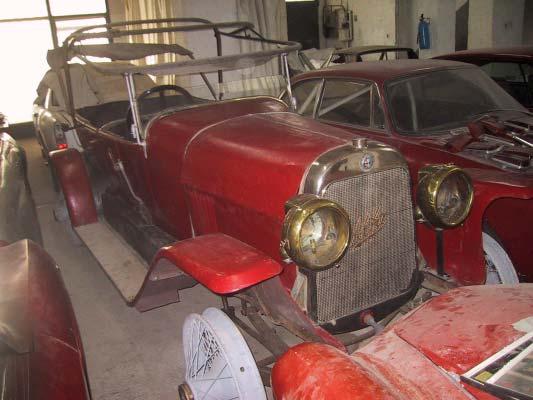
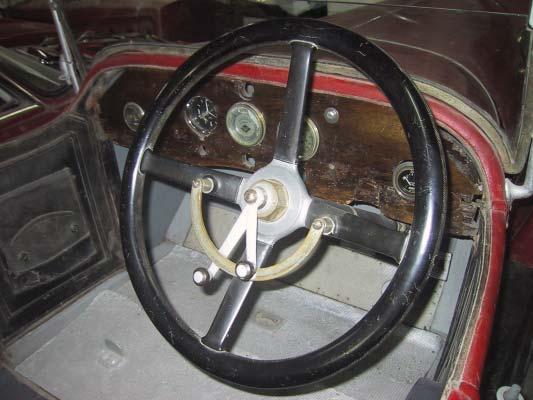

only assume that this 20-30 ES Sport was therefore sold locally, to a well-off family which later passed it on to a similarly well-heeled Greek estate. An Italian road tax sticker dating back to 1925 still adorns the steering column, hence suggesting that the car remained in Italy at least until that year. It is likely that it found its way to Greece at some point within the next two years. We do not know where the car was registered in Italy—the number plate system in Italy was completely revised in 1927 (letters indicating the county were introduced to the previously numerical-only arrangement), and it is still possible to research records from that point onwards, while all previous records have been lost, leaving us with no clue where this car might have been first registered; the ante-litteram Ferrari.
—Adolfo Orsi, Jr.
Notes:
1) The term bucket derives from the French baquet (as used in Italian consequently), which identifies just that: a bucket. Between the last two decades of the 19th century and the first decade of the 20th century, France had been home to the biggest automotive expansion; thus many terms of French origin were applied to the automobile in the pioneering days, such as garage, chauffeur, cabriolet, coupé, and many more.
2) The Carrozzeria Emilia di Enzo Ferrari e C., società in accomandita semplice (limited partnership), was registered on 1st August 1920 between the general partner Enzo Ferrari and the limited partner Pietro Casalegno, from Milan with a capital of Lire 50.000; Enzo Ferrari paid Lire 37.500 and Casalegno Lire 12.500.
3) Italian Association for Automotive History. (The SAH has had a relationship with the IAAH since 1989. See: aisastoryauto.it —Ed.)
4) Alfa Romeo Historical Automotive Documentation Center.
“ A “A C A R AR G U Y UY ”
Ihad an interesting experience during “The Elegance At Hershey” concours weekend held June 13-15. At the Friday night gathering at the AACA Museum I had the opportunity to spend some time talking to Robert A. “Bob” Lutz, the honorary chairman for the event. Bob Lutz only recently concluded a 47-year career in the automobile business, holding executive positions with Ford, Chrysler, BMW and, most recently, from 2001 to 2010, vice chairman of General Motors.
I wanted to ask him how, as an admitted “car guy,” he had managed to survive in Detroit. I related to him how, in early 1970, when I was getting ready to leave the editorship of Antique Automobile magazine, I thought seriously of trying to get a job in Detroit in some public relations position. A good friend of mine, John Conde , who had been one of my fellow founders of the Society of Automotive Historians, was head of PR for American Motors (remember them?) and I contacted him. I said, with my experience racing sports cars in the 1950s, working as a race car mechanic and writing experience as editor of Antique Automobile , old-car editor of World Car Guide and writing a column “Old Car World” in the former Competition Press & Autoweek (now just Autoweek), I would be one of the fi rst persons to get hired for any PR opening in Detroit.
Conde’s reply to me was that I would be absolutely the last person hired. Reason? Because some time I might make a company decision based on my heart rather than my head and could cost the company a lot of money. He added that the fact he was a “car guy” was one of the best kept secrets in Detroit. So much for Detroit and being a “car guy.”
I did ask Lutz that question. His reply was that when he got into the automobile business back in the 1960s, it was the “car guys” who were in charge. They knew if you gave the public cars with good looks, innovative design and top quality craftsmanship, sales and profitability would follow. He pointed to General Motors’ domination of the market with its then-bold, creative leadership and its iconic brands, Buick,
Cadillac, Chevrolet, GMC, Oldsmobile and Pontiac.
However, he said GM’s leadership started listening to the “bean counters,” their faith in numbers and spreadsheets. Profi ts for profi ts’ sake became the tune they were playing and product and customer satisfaction became secondary. When they lost their single-minded focus on product excellence, cookie-cutter cars at the lowest cost and quality resulted and their competitive advantage disappeared, smarter competitors (spelled J-A-P-A-N) emerged and decline soon followed.
Lutz was hired back out of retirement in 2001 with the mission to help GM start making exciting quality automobiles again, and they have. This is the cautionary tale he tells well in his 2011 book Car Guys vs. Bean Counters: The Battle for the Soul of American Business (Please see SAH Journal #253 for a review of this book written by Louis Fourie —Ed.)
If you are a “car guy,” and I assume most SAH members are, it’s well worth reading and is still available.
—William S. Jackson



In early 1901 bicycle manufacturer Robert M. Keating developed and marketed a ground-breaking motorcycle before either Indian or HarleyDavidson, and later successfully sued both companies for patent infringement. His company also manufactured automobiles beginning in 1898, both electric and gasoline powered. At the time of his death Keating held 49 patents— everything from bicycle and motorcycle designs to baseball’s rubberized home plate to a modern flushing device for toilets. This book tells the story of Keating and his Keating Wheel Company, a Gilded Age story of unbridled inventiveness.
296 pages $35 softcover (7 × 10) 12 photos, notes, bibliography,
In Memoriam
G. Marshall Naul (1919-2015)
The Society’s co-founder and first president, Marshall Naul, died Sunday, January 14th, 2015, at the Shore Nursing and Rehabilitation Center in Chestertown, Maryland. He would have been 96 in a fortnight’s time.
Born in Pittsfield, Massachusetts, George Marshall Naul was the only son of James and Rebecca Coggswell Naul and grew up in Plainfield, New Jersey. A graduate of Pratt Institute in Brooklyn, New York, he was a chemical engineer and worked with Celanese Corporation in Delaware during the 1940s. He later worked in plastics development, with such companies as General Electric, Westinghouse and Owens Corning, and was awarded a number of patents.
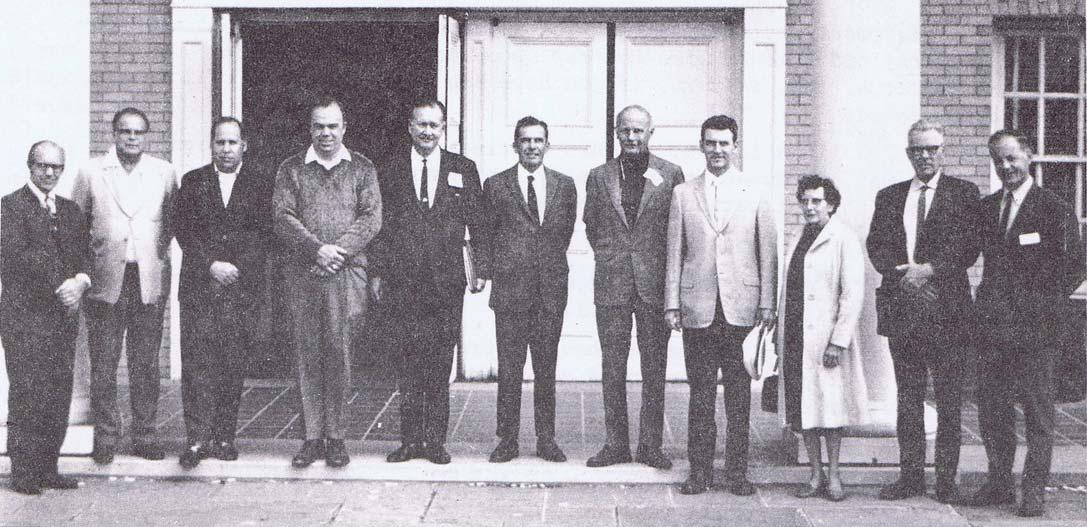
It was the automobile, however, that was Marshall’s lifetime consuming passion. He always had a penchant for unusual cars, and his daughter remembers growing up with a succession of makes, the likes of Hillman, Renault and Peugeot. It was a long-running correspondence with the late Richard Brigham that led to the founding of SAH. In fact, it was Marshall’s idea. As Dick Brigham’s wife, Grace, put it, in a history of the early years of the Society published in Automotive History Review No. 29, it was “about a special organization for all those historians who were constantly digging up puzzling facts concerning motoring’s past and present.” In the early part of 1969, Marshall and Dick wrote to everyone they knew with a similar bent. An unofficial newsletter was issued that September, and on October 11th an organizational meeting was held in the office of Bill Jackson, then editor of Antique Automobile, magazine of the Antique Automobile Club of America, at Hershey, Pennsylvania. By Marshall’s account, as related to Grace, “by default I was selected to chair this very informal get-together.” Very soon a members’ list and by-laws followed, and collaborative work began on “correcting the roster,” the “roster” being a haphazard list of American automobile makes concocted over the years by journal-
ists and industry figures. The culmination of this effort emerged in 1985 as the very comprehensive Standard Catalog of American Cars 1805-1942.
Some time after the Society’s founding, membership numbers were assigned, and Dick Brigham was honored as Number 1. Bill Jackson, who provided not only his office but also refreshments for the organizational meeting, was allocated Number 2. Marshall, in his characteristic unassuming manner, came away as Number 10. His work for SAH was not low-key, however. In addition to kicking off the Society as president, he edited the newsletter for 21 issues in the 1970s.
An engineer by training, he had an analytical mind and was well versed in statistics. Thus he delved into survival rates for old cars, publishing several articles on the topic, and compiled histories of proprietary engine manufacturers—Continental, Lycoming and minor makes like Falls, Northway and Ansted—that remain the trusted sources even today. I keep a folder containing these articles within arm’s reach of my keyboard, for ready reference whenever I need it.
I had the pleasure of working with him on a project to plot the geographic center of the American auto industry over the twentieth century. He supplied the geographic data and I had access to industrial computers that could crunch the numbers. The results of our investigations were published in AHR No. 22.
Marshall also compiled and edited two books, The Specification Book for U.S. Cars 1920-1929, and a similar volume for 1930-1969, the former with Keith Marvin and Stanley K. Yost and the latter with Perry Zavitz. It was with much justification that he was named, somewhat belatedly, a Friend of Automotive History in 2009. He was predeceased by his wife, Katie, in 1984. Survivors include a sister, Ruth Hucks of Centennial, Colorado; a daughter, Melissa Clarke, of Chestertown; a son, Patt, of Honolulu, Hawaii; and two granddaughters. Services and interment were private.
—Kit Foster