Q1MarketReport &AreaResults
Prepared for the Asheville region

TABLEOF
Data Disclaimer:
The source of all data contained in this report is provided by the Canopy REALTOR® Association, Triad Real Estate MLS, & Paragon MLS (Raleigh).
Data provided for Charlotte is comprised of the Charlotte mailing area as reflected in the Canopy REALTOR® Association.
Information is deemed reliable but not guaranteed. Consult your ERA Live Moore Sales Associate | Charlotte Regional REALTOR® Association for more information.
Dear Friends and Neighbors,
As we close out the first quarter of 2026, it is worth pausing to reflect on what the Asheville and Western North Carolina real estate market has shown us about resilience, about change, and about the enduring value of steady, thoughtful guidance in a landscape that continues to evolve
Q1 has carried forward the themes we saw developing through the close of 2025 The market is normalizing Inventory has expanded meaningfully across the region, giving buyers more options and breathing room than they have had in several years Closed sales have risen year-over-year, signaling that demand is real and buyers who have been waiting are beginning to move At the same time, homes are spending more time on market than in recent cycles, and that measured pace is creating a more deliberate, balanced environment for everyone involved
Pricing across Asheville and Buncombe County has softened modestly from recent highs Median values have adjusted, homes are selling closer to but somewhat below list price, and price reductions have become more common That shift reflects a market recalibrating after years of compressed inventory and accelerated appreciation For sellers, pricing discipline and preparation matter more than ever For buyers, it represents a genuine opportunity to make thoughtful decisions with less pressure than the market has allowed in some time
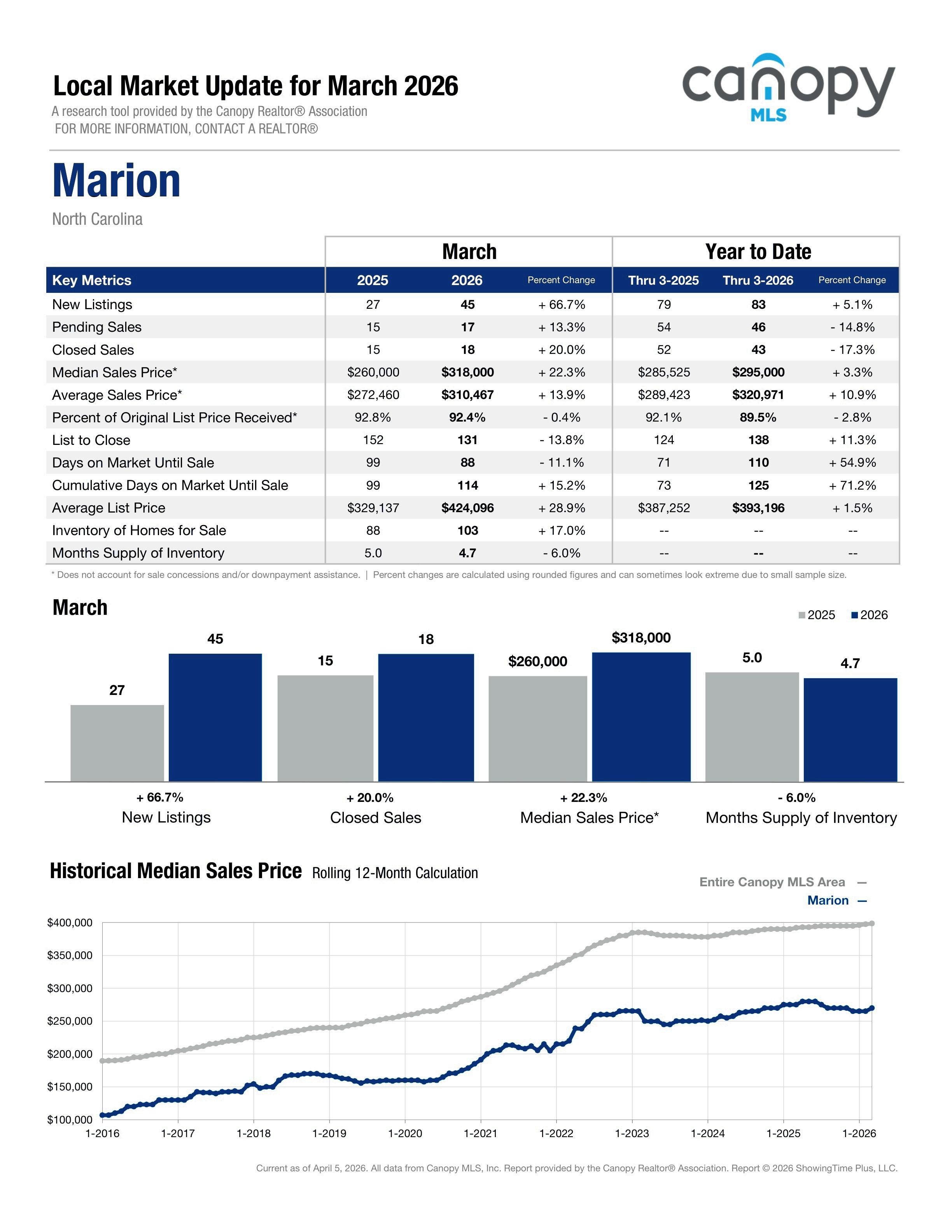
In Marion and McDowell County, momentum has strengthened Buyer engagement has increased, closed sales have risen, and the community continues to move forward with the confidence and spirit that has always defined it
the long-term value and appeal of this area remain as compelling as ever for families, investors, and those simply looking for a place to put down roots
Looking ahead, we expect Q2 and the remainder of 2026 to reward those who plan early and move with clarity. Mortgage rates in the low-to-mid 6% range continue to support buyer activity, and any further easing could unlock meaningful pent-up demand across our region Western North Carolina’s enduring appeal its natural beauty, creative energy, and deep sense of place has not diminished The people and communities here have demonstrated what they are made of, and that foundation only strengthens the longterm case for this market.
Our commitment to you remains steady We are here to advocate, to listen, and to guide with honesty and care whether you are preparing to make a move or simply watching the market to understand what lies ahead. Thank you for the trust you place in our team. We are grateful to serve Asheville, Marion, and the communities of Western North Carolina, and we look forward to a strong year ahead
Warmest regards,
Scott McKenzie Broker-In-Charge | REALTOR® Carolina Mountain Sales An ERA Live Moore Company

ASHEVILLE RESIDENTIAL SALES SUMMARY
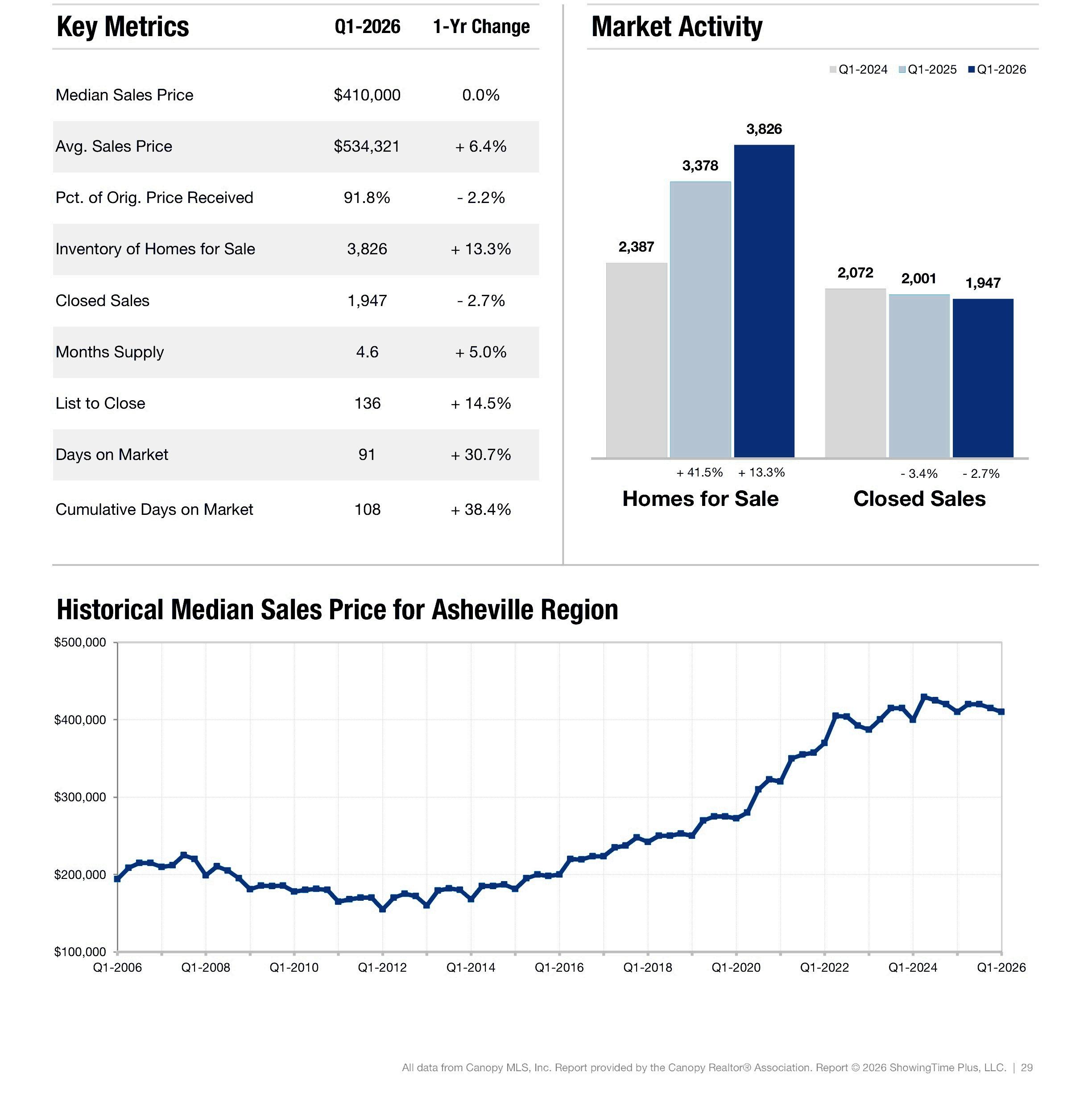
Asheville closed the first quarter of 2026 with prices largely stabilized, continuing last year’s median sales price. Inventory expanded significantly, with months’ supply up more than 13%, giving buyers more options. Closed sales fell slightly, signaling a more normalized market, ideal for both buyers and sellers
Asheville (Region)
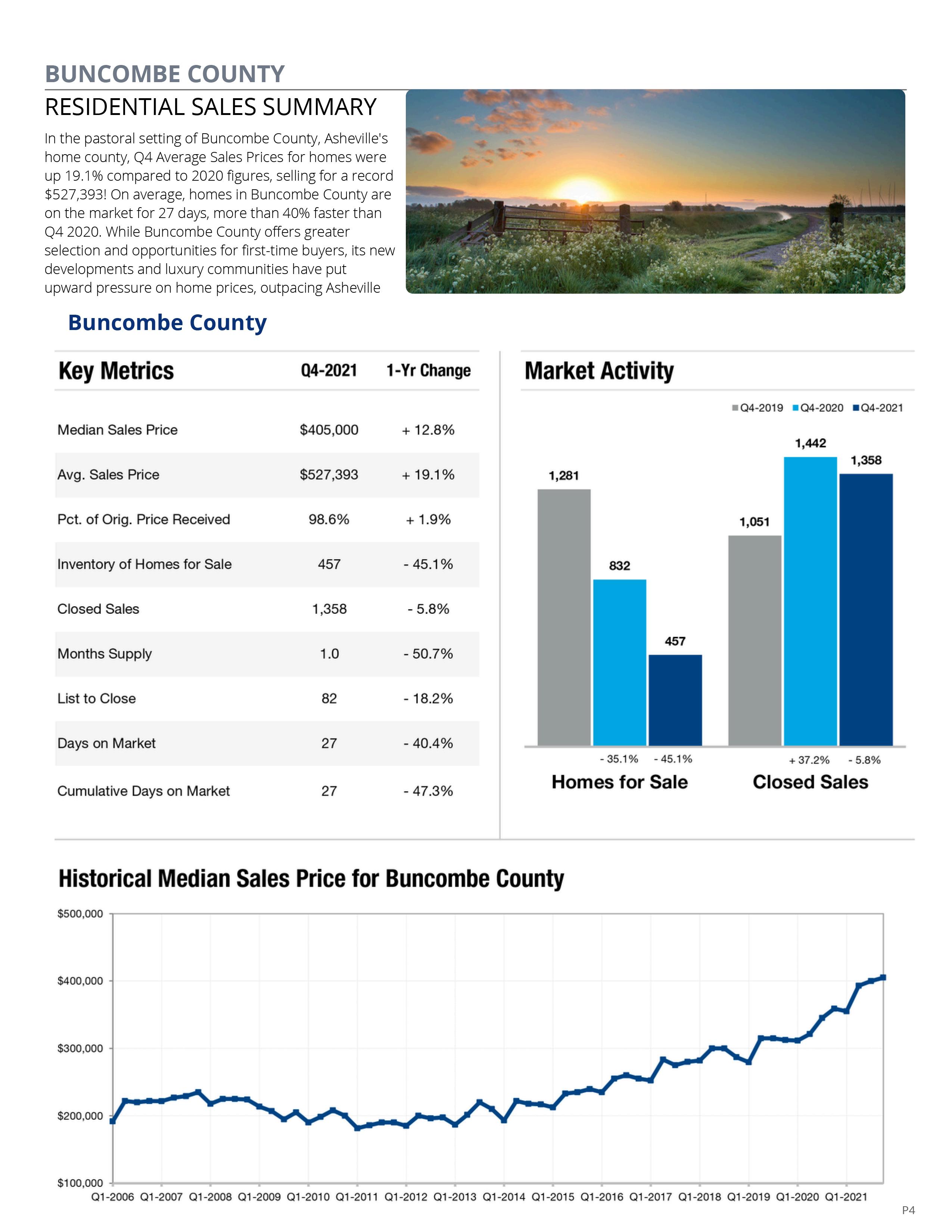
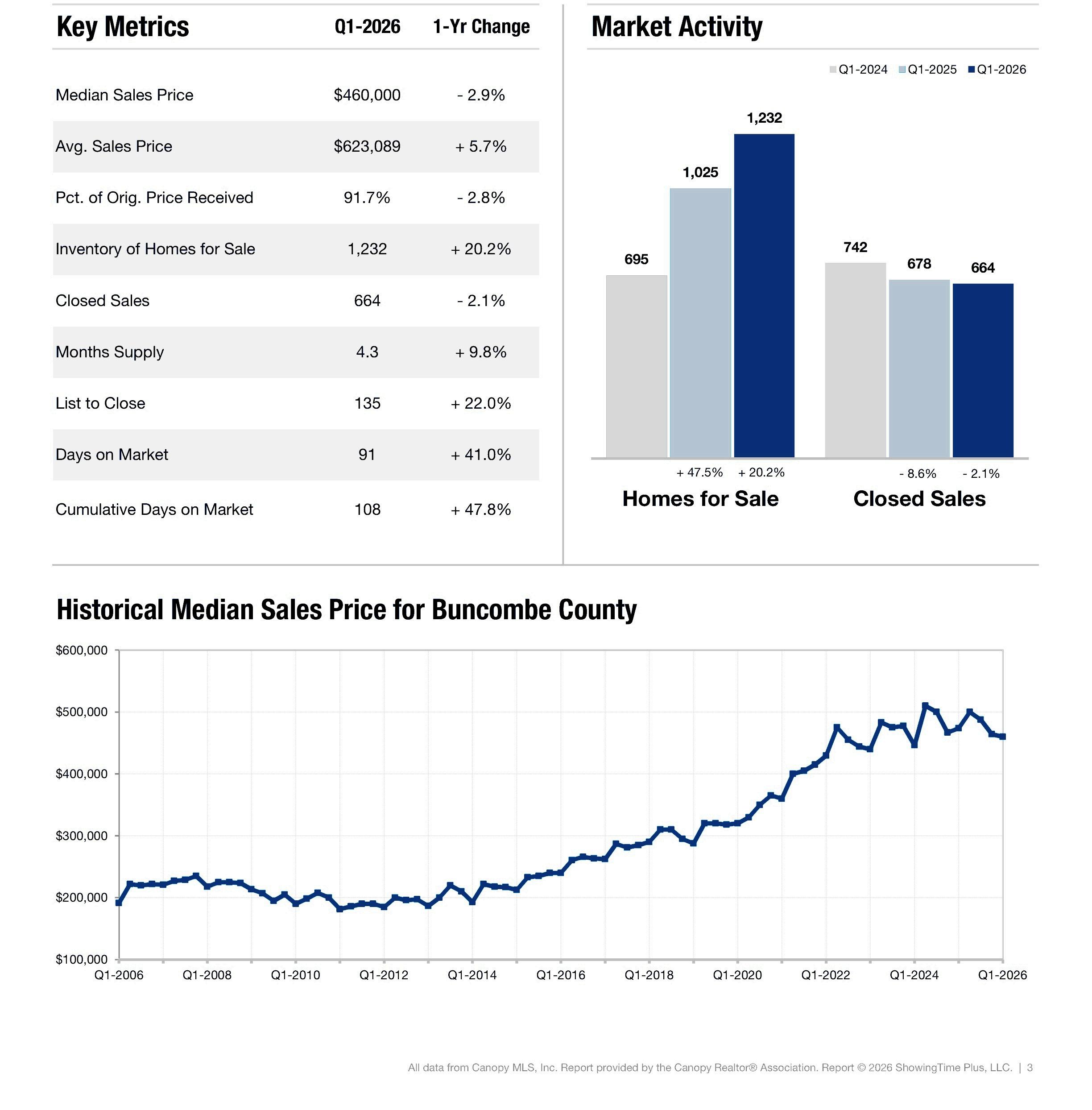
Buncombe County closed the first quarter with a softening market, even as average sales prices rose slightly year over year Inventory grew substantially, lifting months' supply and lengthening time on market. Demand held steady nonetheless, buoyed by ongoing interest in new developments and luxury communities, which continue to push values higher, despite a reduction in Median Sales Price, falling just under 3%
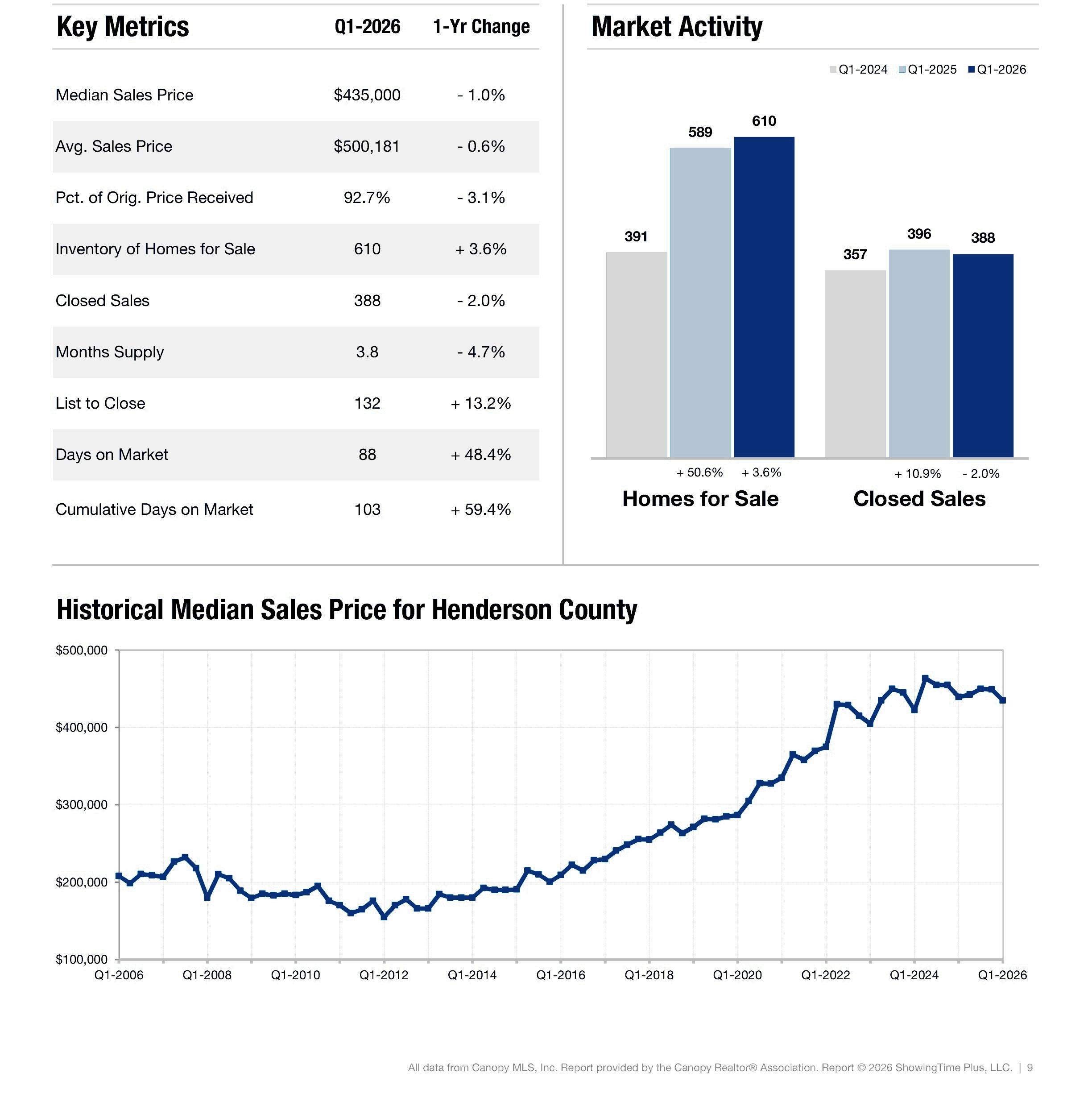
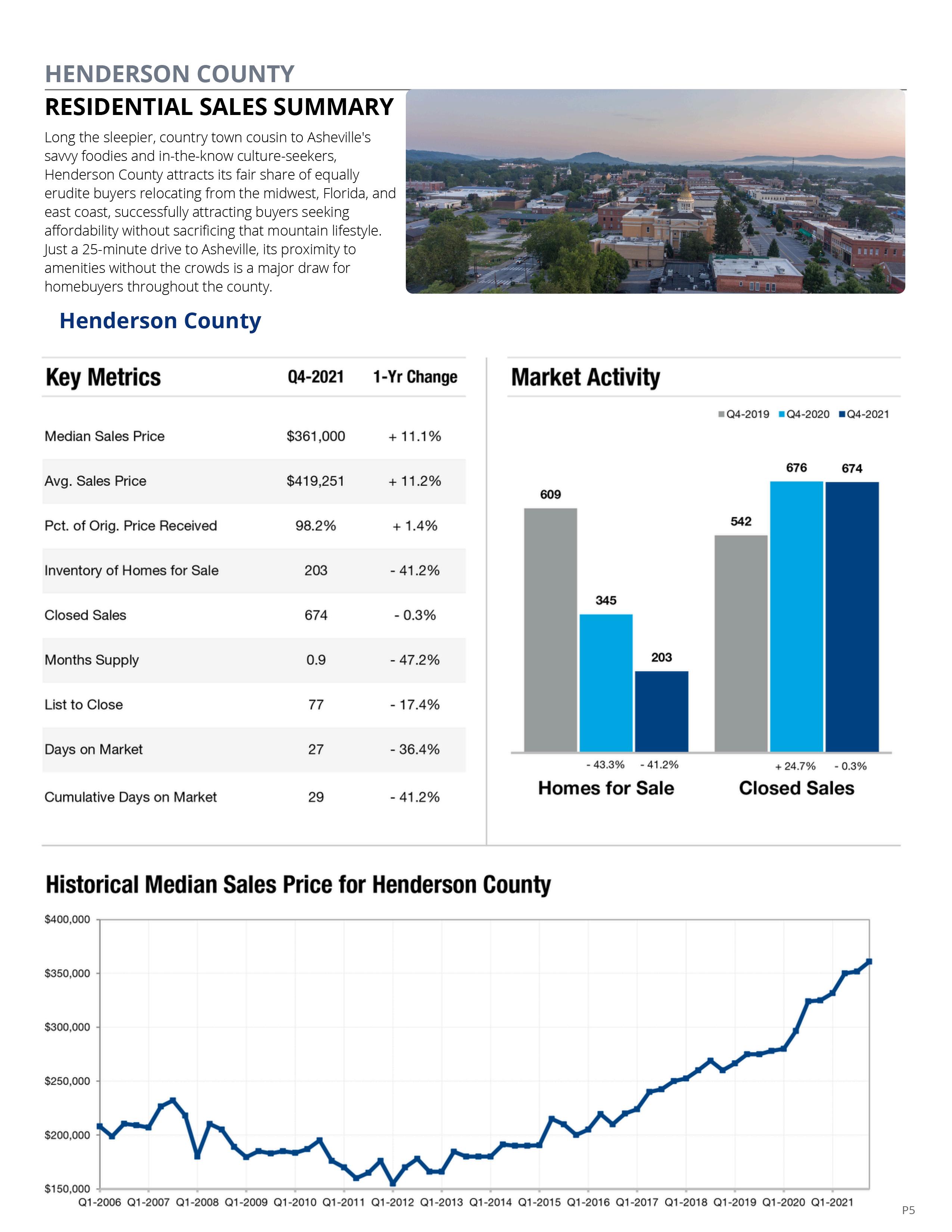
Henderson County saw steady market activity in Q4, with median sales prices down slightly year over year and average sales prices showing the slightest decline Inventory expanded, but months’ supply decreased by almost 5% Closed took a dip, down 2%. Buyer demand has increased at the start of Q2, which is consistent with the county’s affordability and proximity to Asheville.
CHARLOTTE AREA
RESIDENTIAL SALES SUMMARY
CHARLOTTE AREA MARKET OVERVIEW Q1 2026
The Charlotte region opened 2026 with a market that's continuing to find its footing steady, balanced, and increasingly defined by buyer choice Modest price growth held across the region, with both median and average sales prices ticking up roughly 1% year over year Inventory expanded meaningfully, climbing nearly 13% to give buyers more room to shop and compare, while closed sales eased back as activity settled into a more deliberate pace.
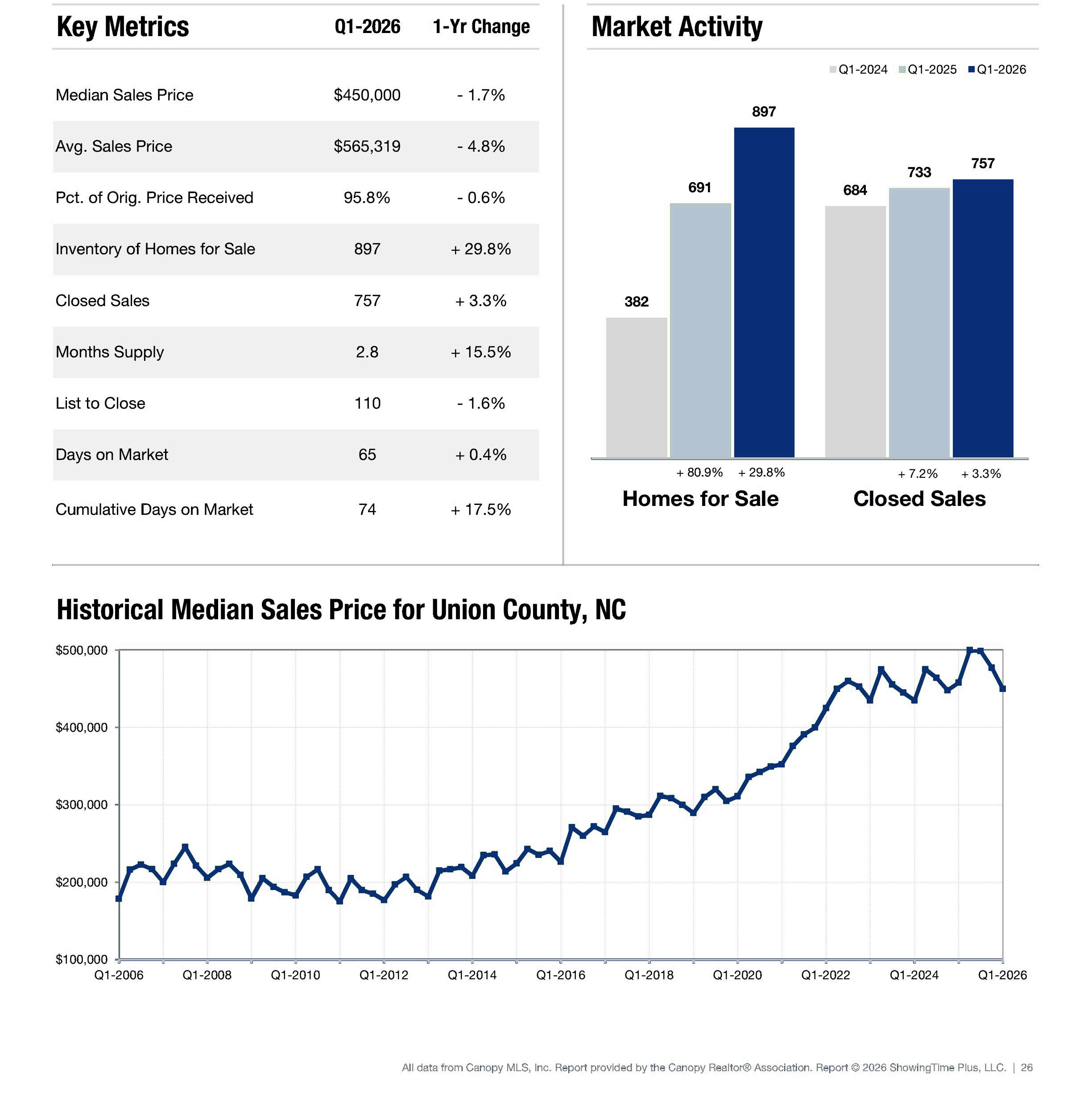
Across Mecklenburg, Cabarrus, Union, York, and Lancaster Counties, the story was one of normalization rather than slowdown. Mecklenburg saw prices soften slightly as inventory rose more than 17%, while Union and Lancaster counties posted gains in closed sales evidence that demand remains healthy across the surrounding markets. Cabarrus and York continued to attract buyers drawn to value and lifestyle, and homes throughout the region are taking longer to sell, signaling that buyers are taking their time without stepping away
Charlotte's economic strength, urban energy, and growing surrounding communities continue to anchor the region's appeal. It's a market where the "three P's" preparation, pricing, and presentation matter more than ever, and where local expertise turns a good listing into a closed sale
KEY TAKEAWAYS
For Buyers. Expanded inventory means more choice, more leverage, and more time to make confident decisions Surrounding counties continue to offer compelling value and lifestyle flexibility
For Sellers. Pricing discipline and strong presentation are essential. Homes that align with current market conditions and show their best continue to outperform
Bottom Line: The Charlotte region remains one of the Southeast's most stable and dynamic markets balanced, resilient, and well-positioned for thoughtful growth in the year ahead.
CHARLOTTE REGION
RESIDENTIAL SALES SUMMARY
The Charlotte region closed Q1 2026 with modest price gains, fueled by growing inventory and steady buyer demand. More listings gave buyers greater choice, easing competition and tempering the pace of activity Homes that were well-priced and wellpresented performed best, underscoring a market where preparation and strategy matter most Overall, Charlotte remains stable and resilient, setting a strong baseline for North Carolina.

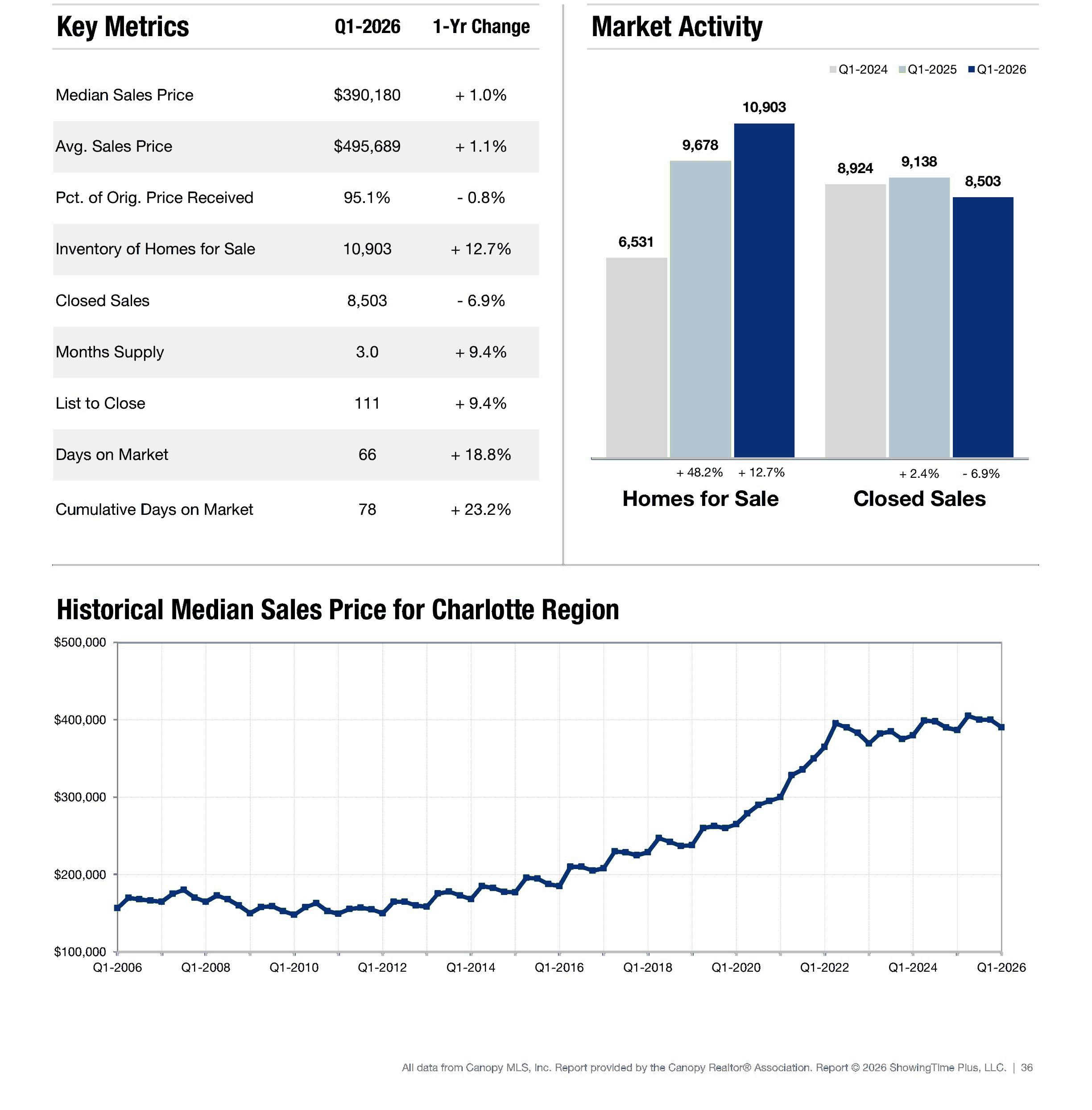
The Median Sales Price in Q1 2026 for a single family home in Charlotte was $390,180 for a year over year increase of 1%
As of March 2026 the Average Month's Rent in Charlotte for a 2 bedroom was $1,713
Charlotte Occupied Housing Units 53% of homes are owner-occupied households and 47% are renter-occupied households
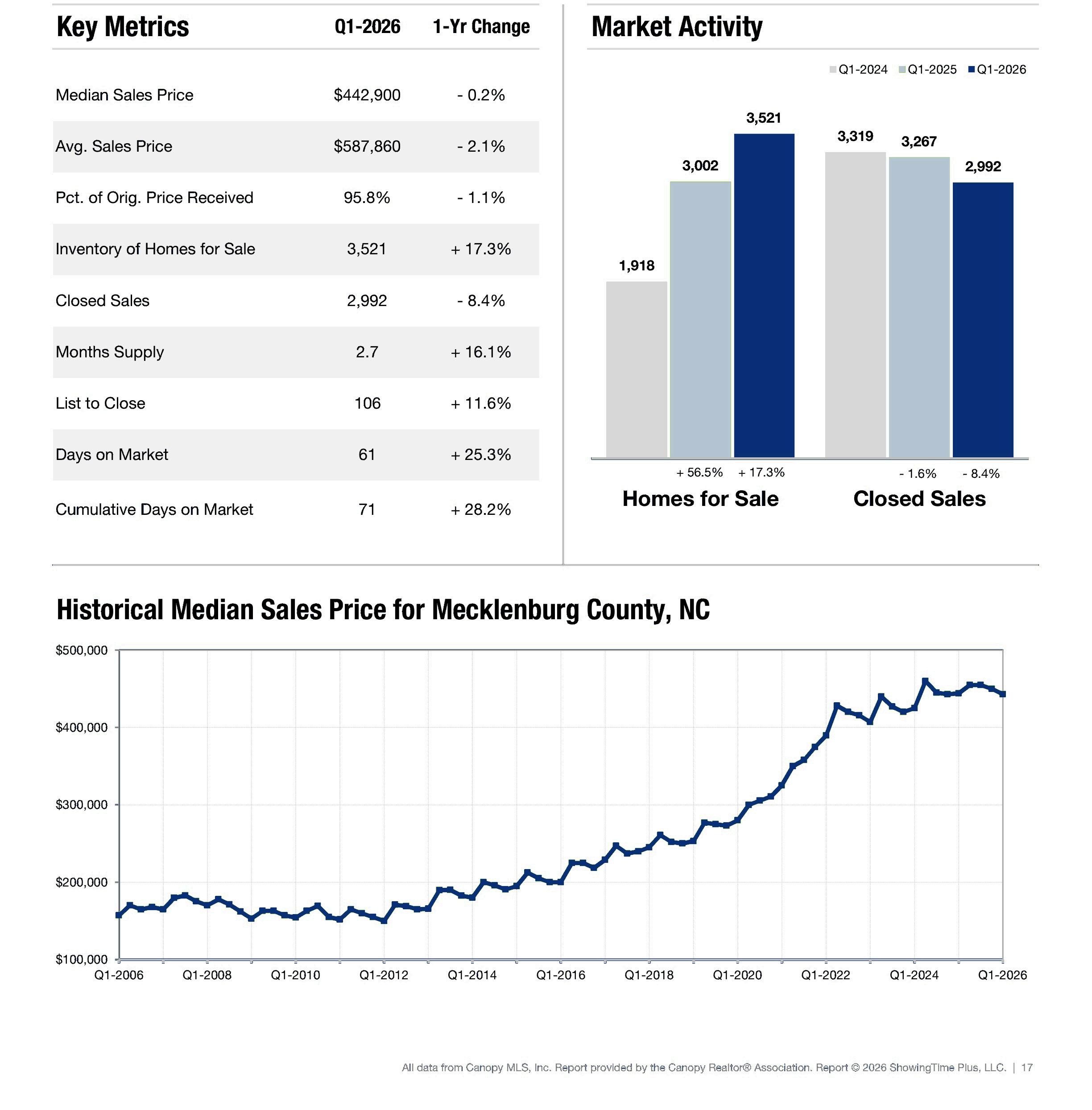
The Median Sales Price in Q1 2026 for a single family home in Mecklenburg County was $442,900 for a year over year decrease of 0.2%
MECKLENBURG CO.
RESIDENTIAL SALES SUMMARY
Mecklenburg County's price growth eased in Q1, with both median and average sales prices correcting downward as inventory grew by just over 17% Closed sales slowed 8 4%, signaling a more balanced market Even with the added supply, Mecklenburg's average sales price remains notably higher than that of the broader Charlotte region
CHARLOTTE-AREA COUNTIES
RESIDENTIAL SALES SUMMARY
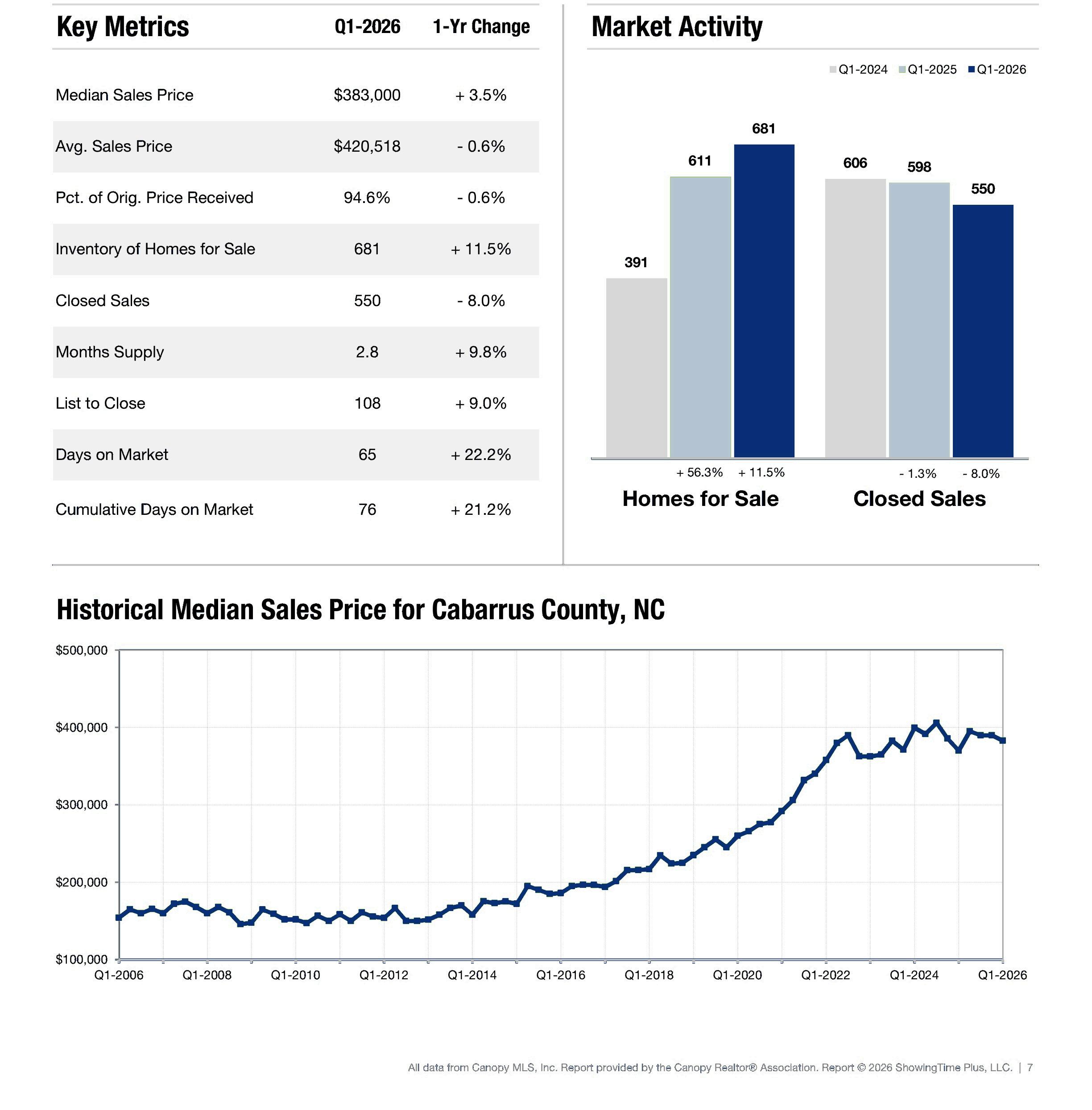
Cabarrus County recorded modest price gains in Q1, with the median sales price up 3.5% and average sales price adjusting down by .6% year over year. Inventory increased 11.5%, expanding buyer choice, while closed sales declined by 8%. The market reflects increasing demand heading into Q2, with gradual normalization across price points
Cabarrus Co.

Union Co.
CHARLOTTE-AREA COUNTIES,
RESIDENTIAL SALES SUMMARY
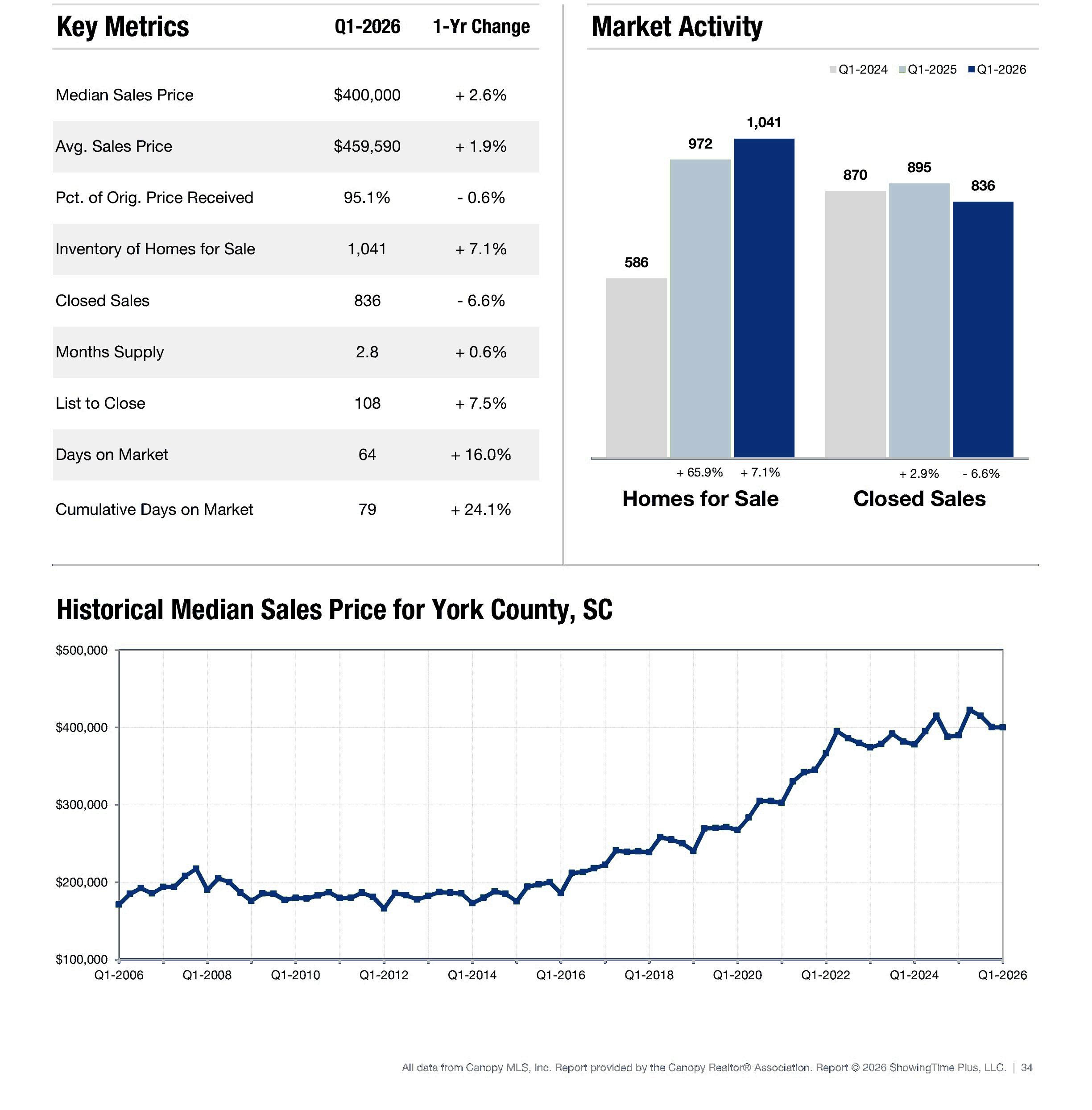
York County posted steady price growth, supported by expanding inventory and rising demand. Lancaster County saw inventory climb as well, with prices holding consistent and closed sales declining. Together, these counties reflect a market shifting toward balance, where pricing strategy and preparation remain key.
York Co.
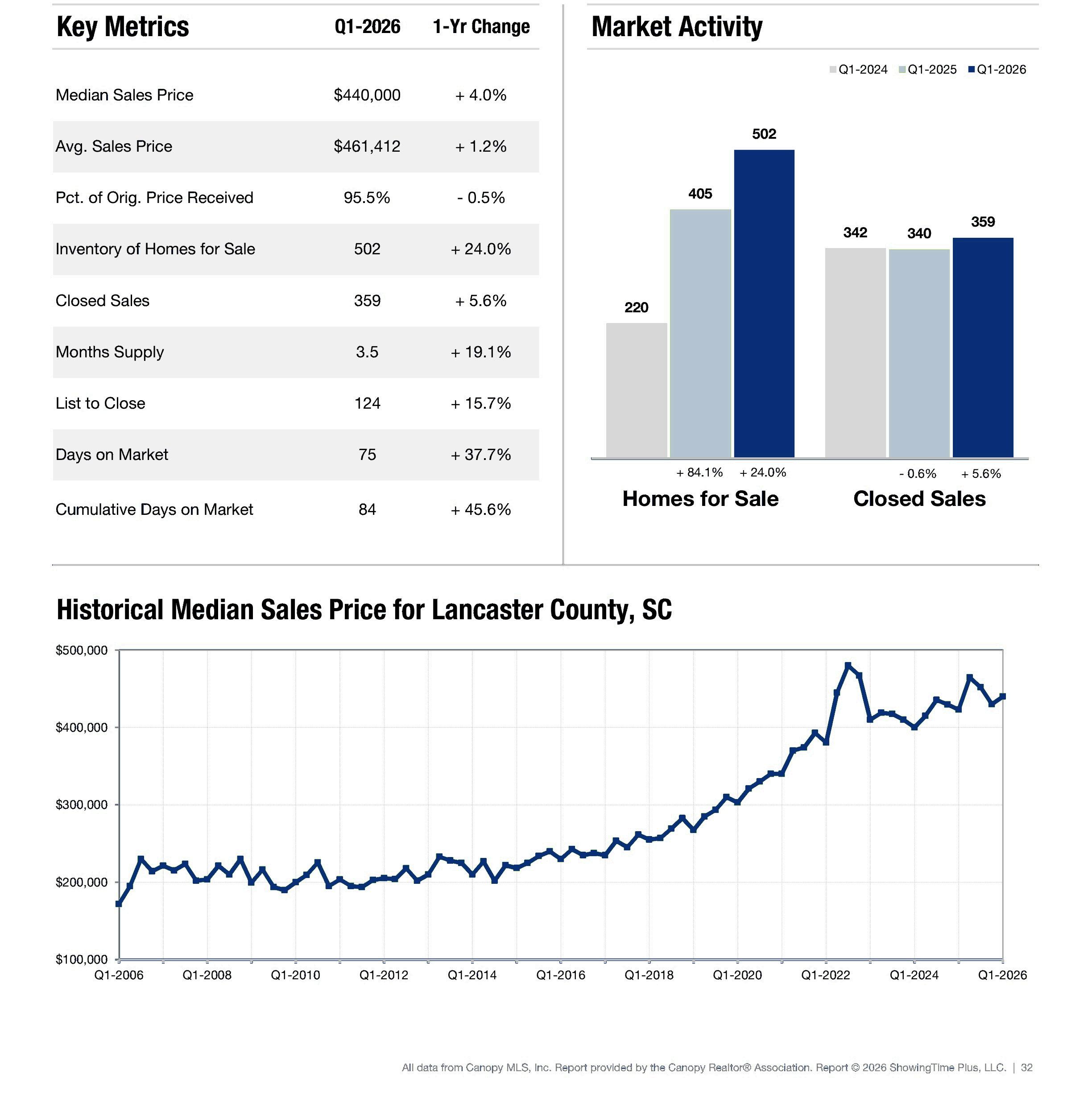
Lancaster Co.
THE TRIAD | WINSTON SALEM
RESIDENTIAL SALES SUMMARY
The Triad closed Q1 on strong footing, propelled by affordability and steady demand. Winston-Salem posted solid year-over-year price gains, with both median and average sales prices climbing across property types Inventory surged, giving buyers ample choice, while closed sales held firm further cementing the Triad's reputation as a value-driven market within North Carolina
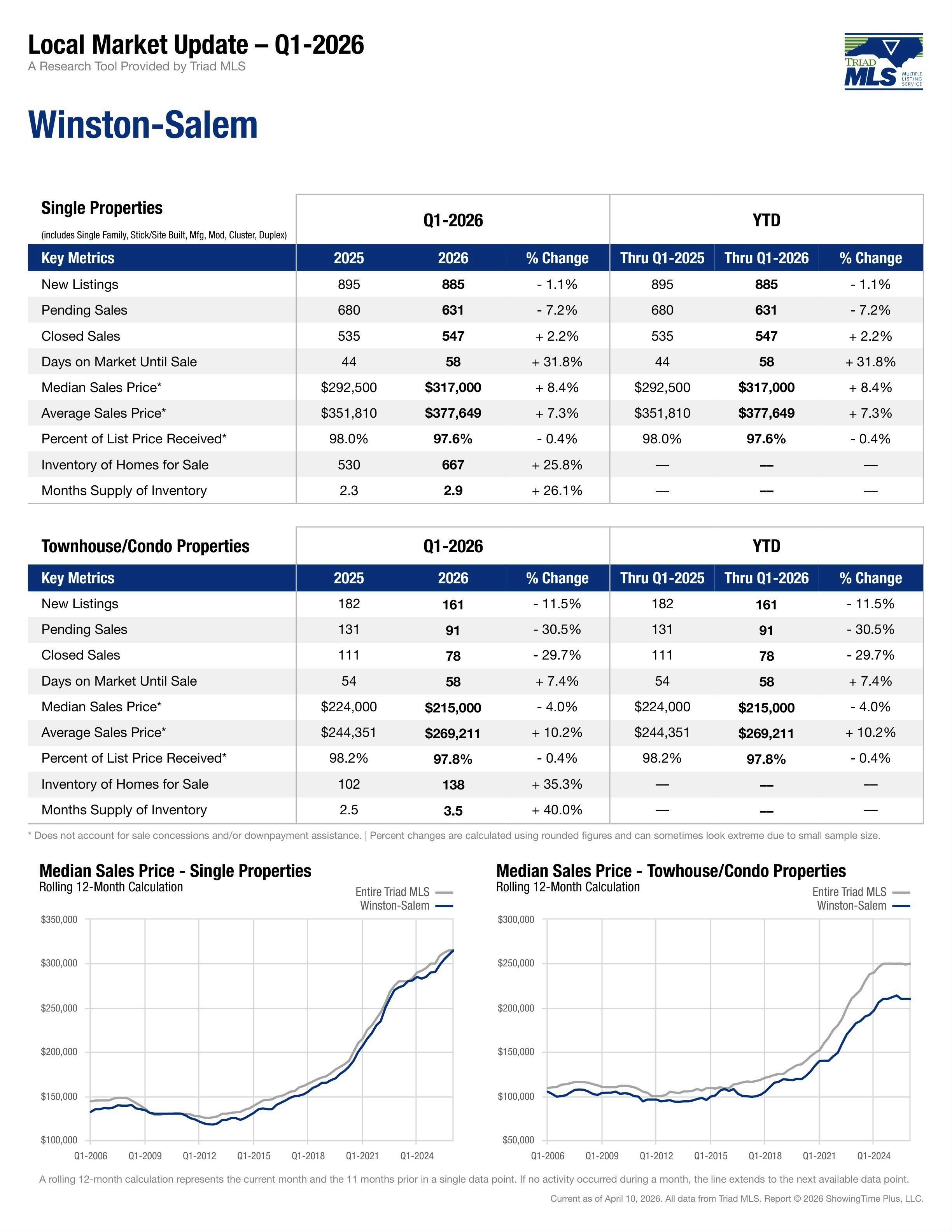

THE TRIAD | GREENSBORO
RESIDENTIAL SALES SUMMARY
Greensboro still remains one of North Carolina’s more affordable metro markets in Q1, supported by a relatively low median sales price Inventory continued to rise sharply, giving buyers more options, while days on market extended as homes took longer to sell. This market reflects a drop in sales for the quarter, but an increase in buyer activity as we move into Q2.
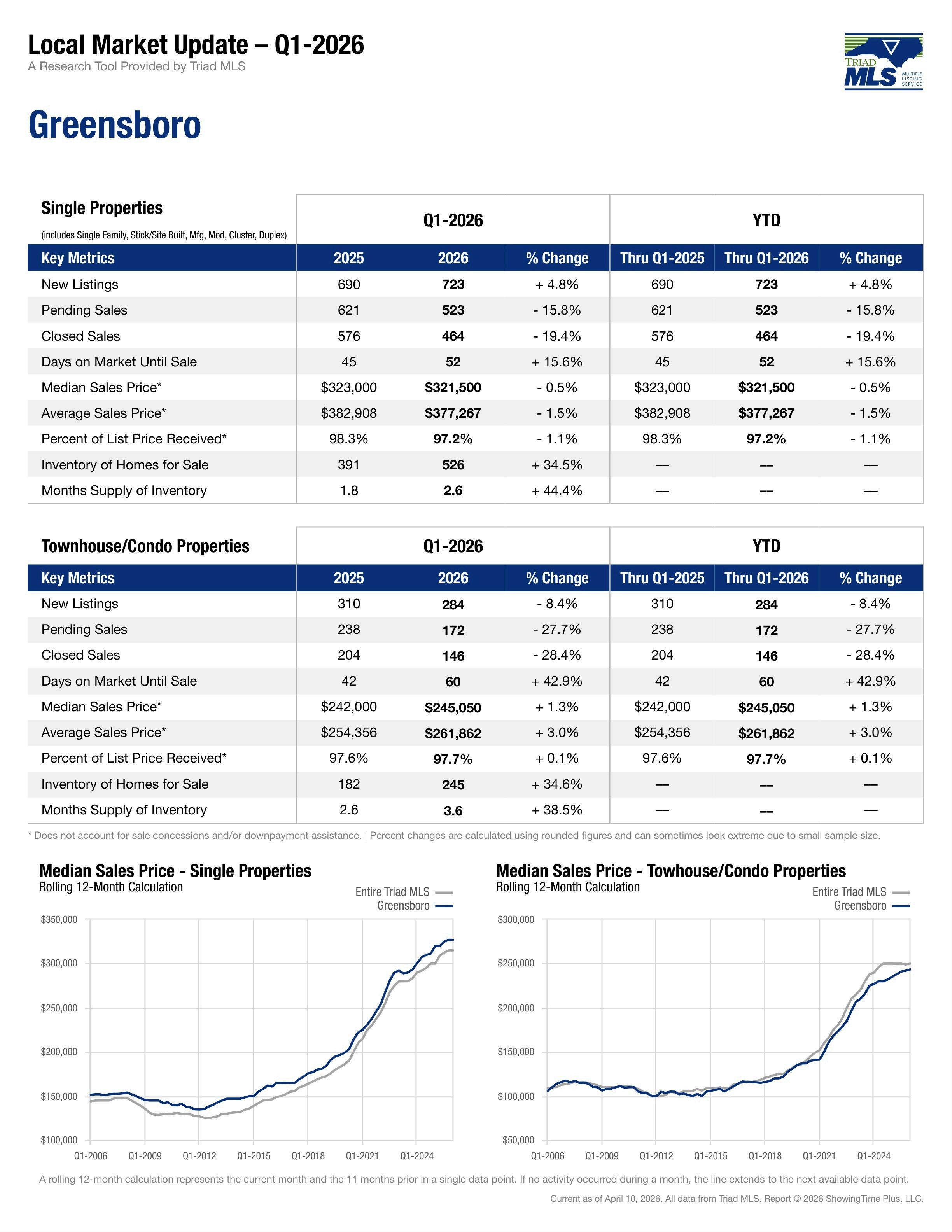

THE TRIAD | HIGH POINT
RESIDENTIAL SALES SUMMARY
High Point offered steady value in Q1, with modest price movement and expanding inventory. Homes took less time to sell, reflecting a more measured pace, while sellers continued to capture a relatively high percentage of list price This market favors well-prepared listings and remains attractive for value-driven buyers
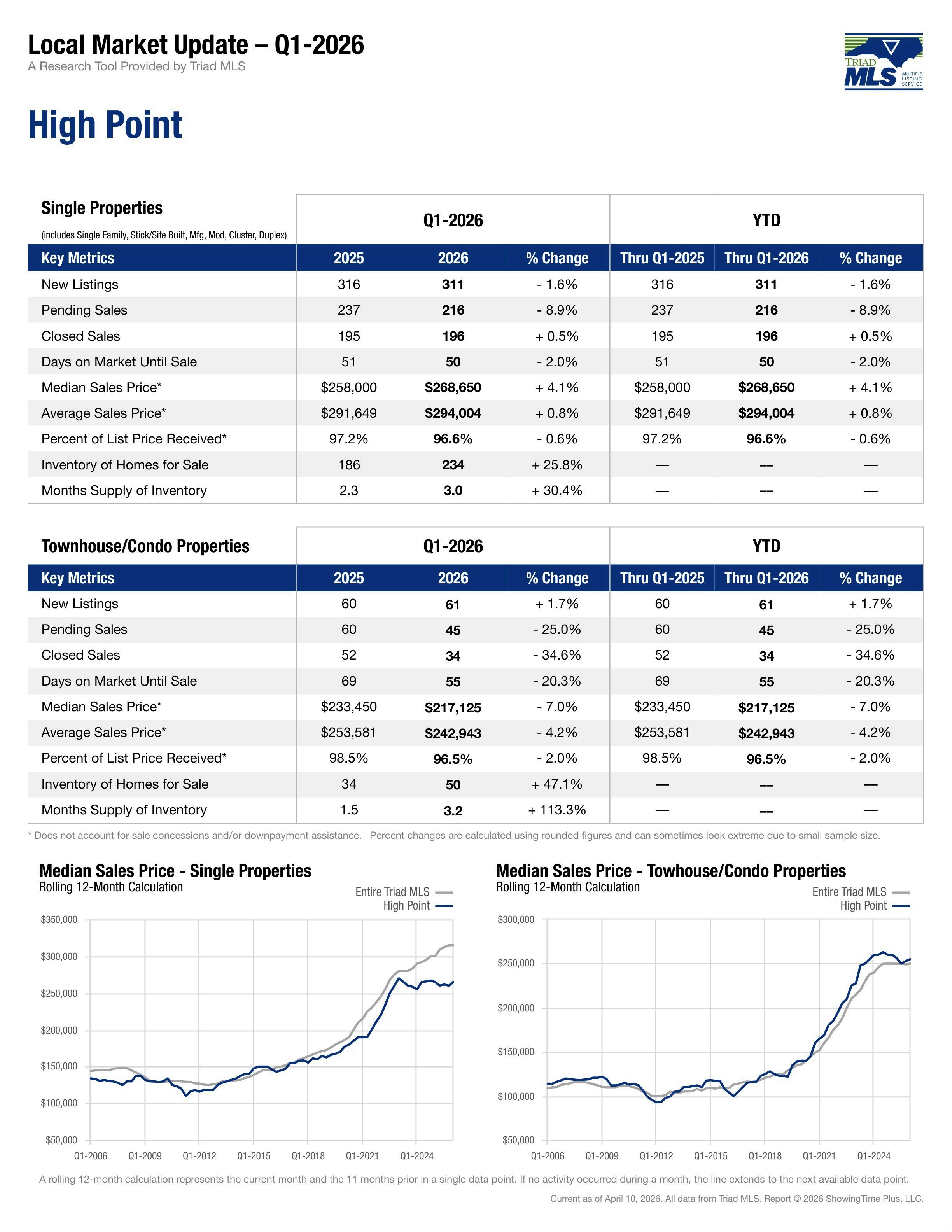

THE TRIAD | WILKES COUNTY
RESIDENTIAL SALES SUMMARY
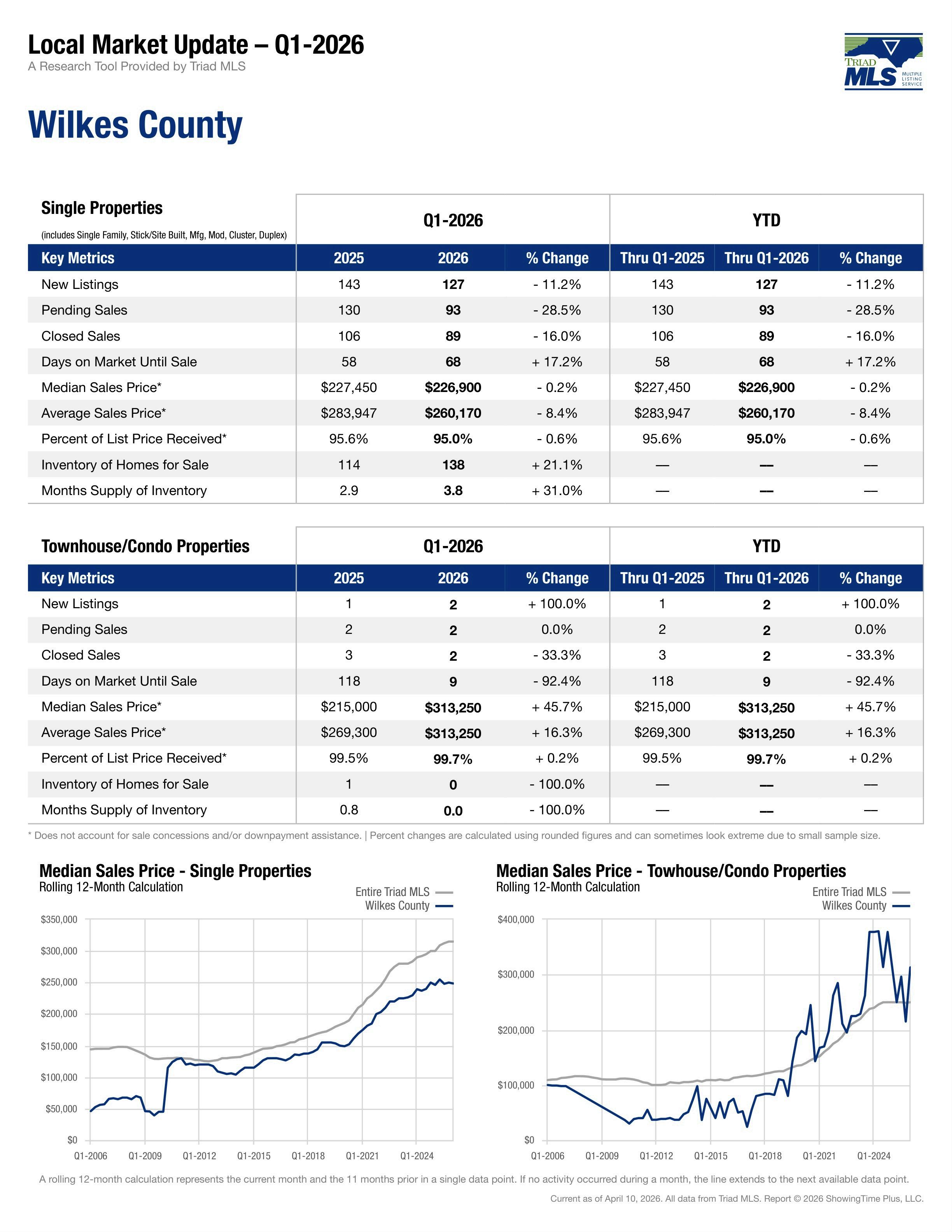
Wilkes County continued to offer strong affordability in Q1 with relatively low sales prices compared to larger metro areas Closed sales decreased, while rising inventory levels supported greater buyer choice This market appeals to value-focused buyers seeking proximity to Winston-Salem without metro-level pricing

McDowell County RESIDENTIAL
SALES SUMMARY
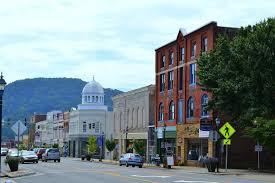
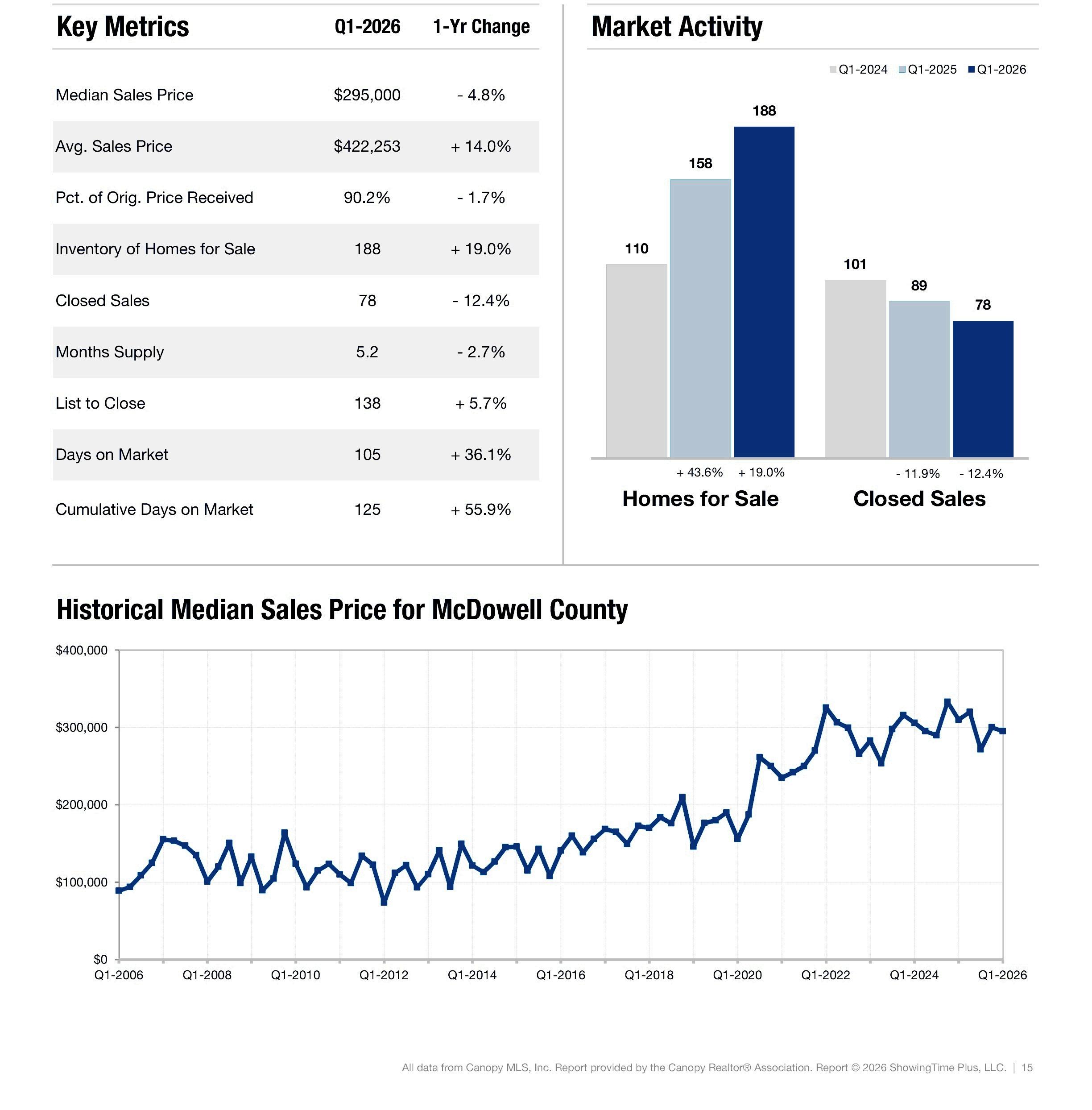
Marion and McDowell County remained one of North Carolina’s most affordable markets in Q1, with a jump in Average Sales Price Inventory expanded and closed sales declined Overall, this renewed activity reflects continued recovery efforts following Hurricane Helene. The market presents an outstanding opportunity for valuedriven buyers and long-term investors as momentum rebuilds throughout 2026
Burke County
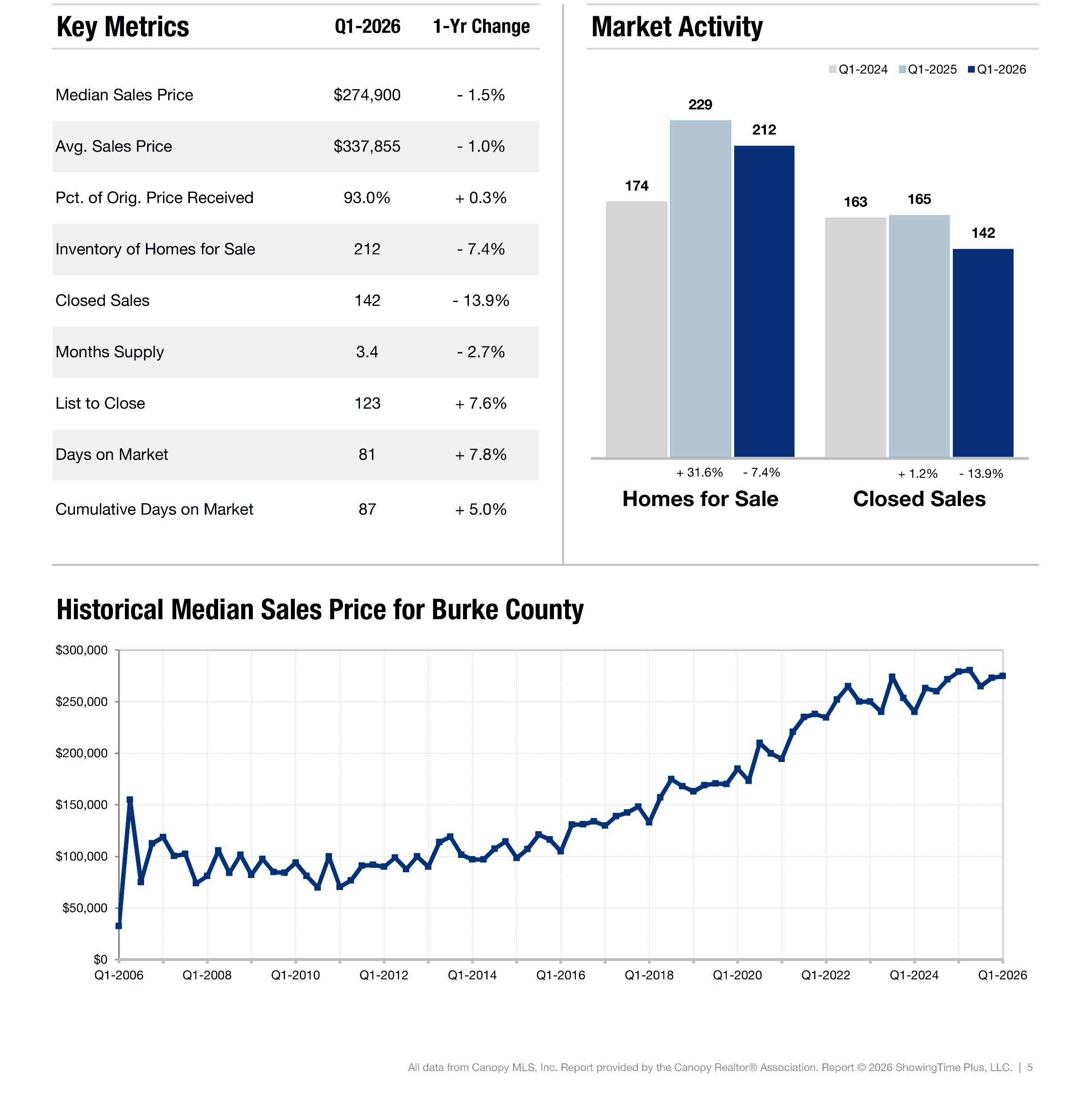
Burke County held its ground as a steady, community-driven market in Q1, with prices staying largely stable despite a double-digit drop in closed sales. Inventory tightened by more than 7%, and homes spent longer on the market, reflecting a more deliberate pace of activity. As the region continues to recover from Hurricane Helene, Burke remains a draw for families and professionals seeking long-term stability

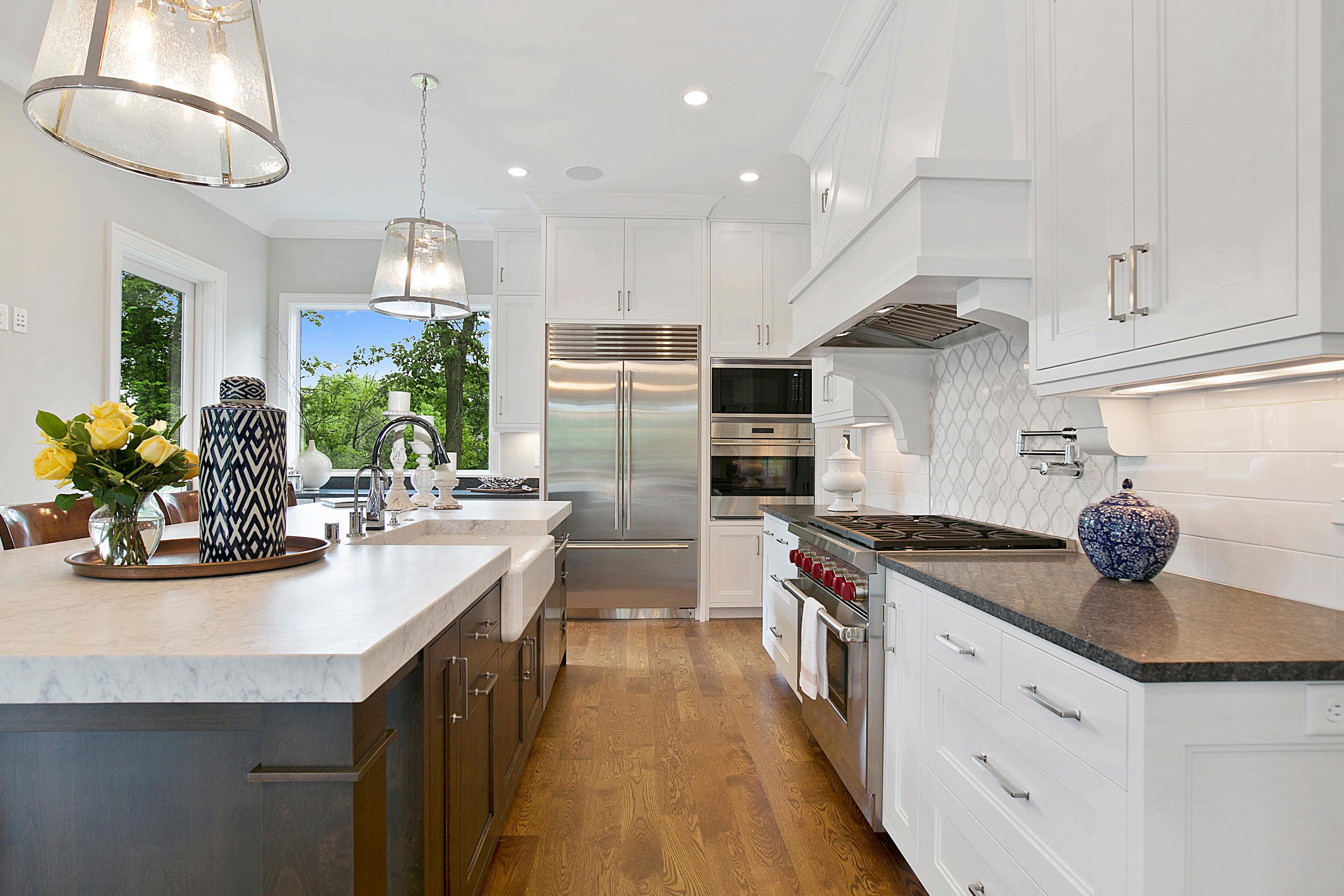
RALEIGH & TRIANGLE AREA
RESIDENTIAL SALES SUMMARY
RALEIGH & TRIANGLE AREA MARKET OVERVIEW — Q1 2026
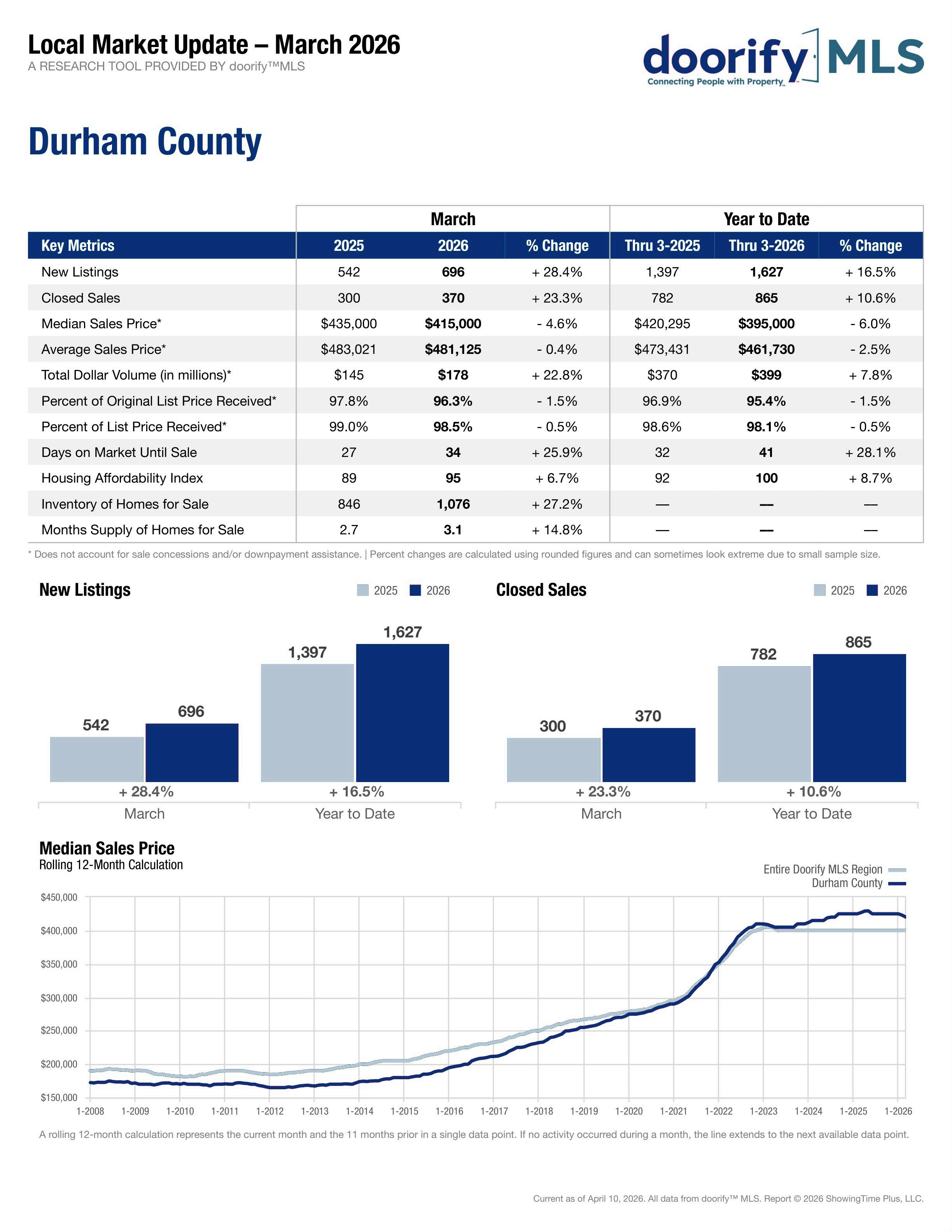
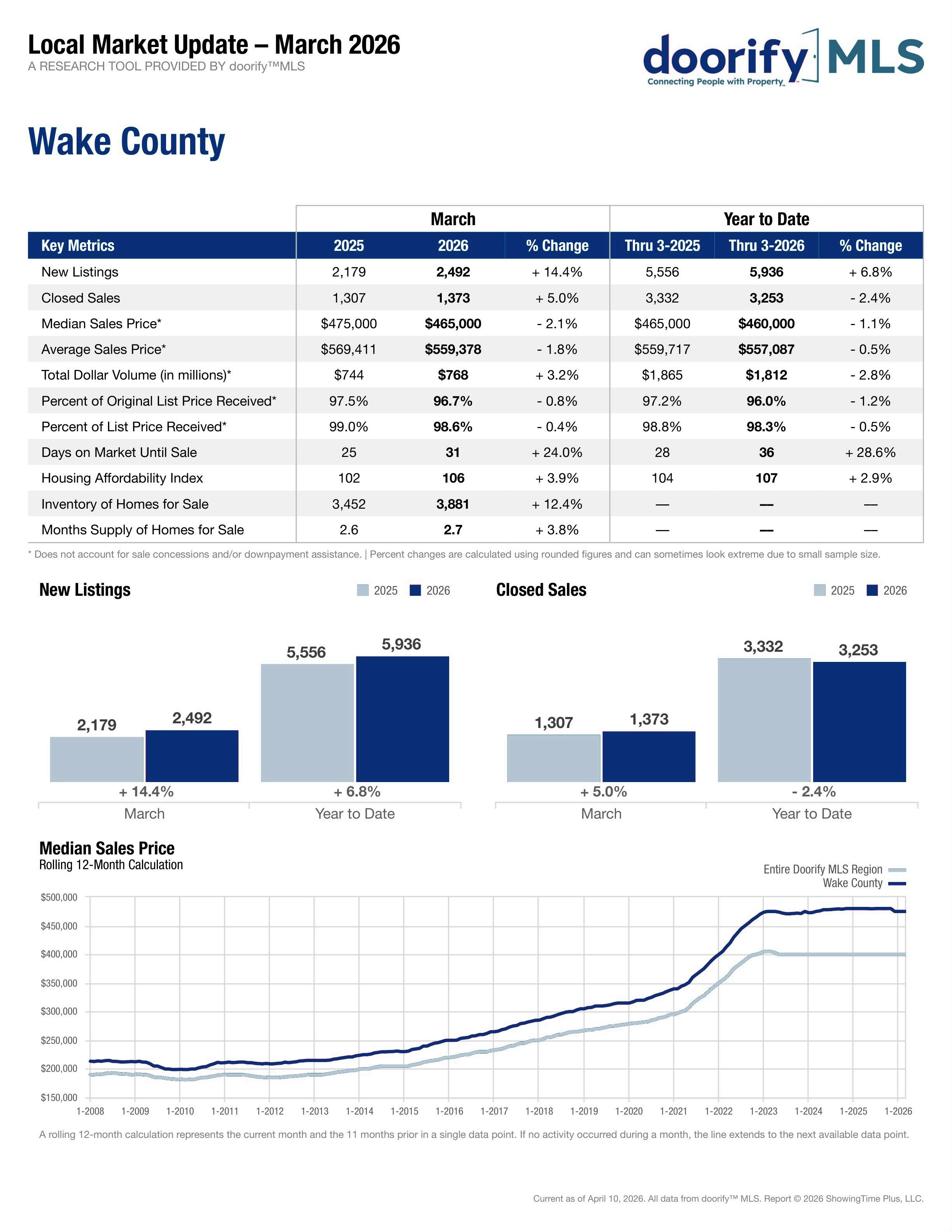
The Triangle Area opened 2026 with a market that's tilting toward balance, giving buyers more breathing room without losing its underlying strength. Across Raleigh, Durham, and Wake County, prices softened modestly year over year while inventory expanded meaningfully most notably in Durham, where active listings climbed more than 28%. Homes are taking roughly a week longer to sell than they did a year ago, reflecting a more measured pace of decision-making.
Demand, however, remains a defining feature of the region Durham and Wake County both posted gains in closed sales, signaling that buyers are still active just more deliberate Raleigh saw a slight dip in monthly sales as values leveled near record highs, but well-priced, well-presented homes continue to attract serious interest across the Triangle Sellers are finding success when preparation, pricing, and presentation align with what today's more thoughtful buyers expect
Anchored by a strong employment base, world-class universities, and sustained national attention, the Triangle remains one of North Carolina's most resilient and dynamic regions It's a market defined less by urgency and more by strategy where preparation, pricing, and professional guidance make all the difference.
KEY TAKEAWAYS
For Buyers. Expanded inventory means more choice and more time to evaluate. Strategic preparation still matters desirable homes continue to move quickly.
For Sellers. Buyer expectations are higher and pricing has tightened. Homes that align with current market value and show well continue to outperform.
Bottom Line: The Raleigh–Durham–Chapel Hill market remains a cornerstone of North Carolina real estate stable, competitive, and well-positioned for long-term growth.
THE TRIANGLE AREA | RALEIGH
RESIDENTIAL SALES SUMMARY
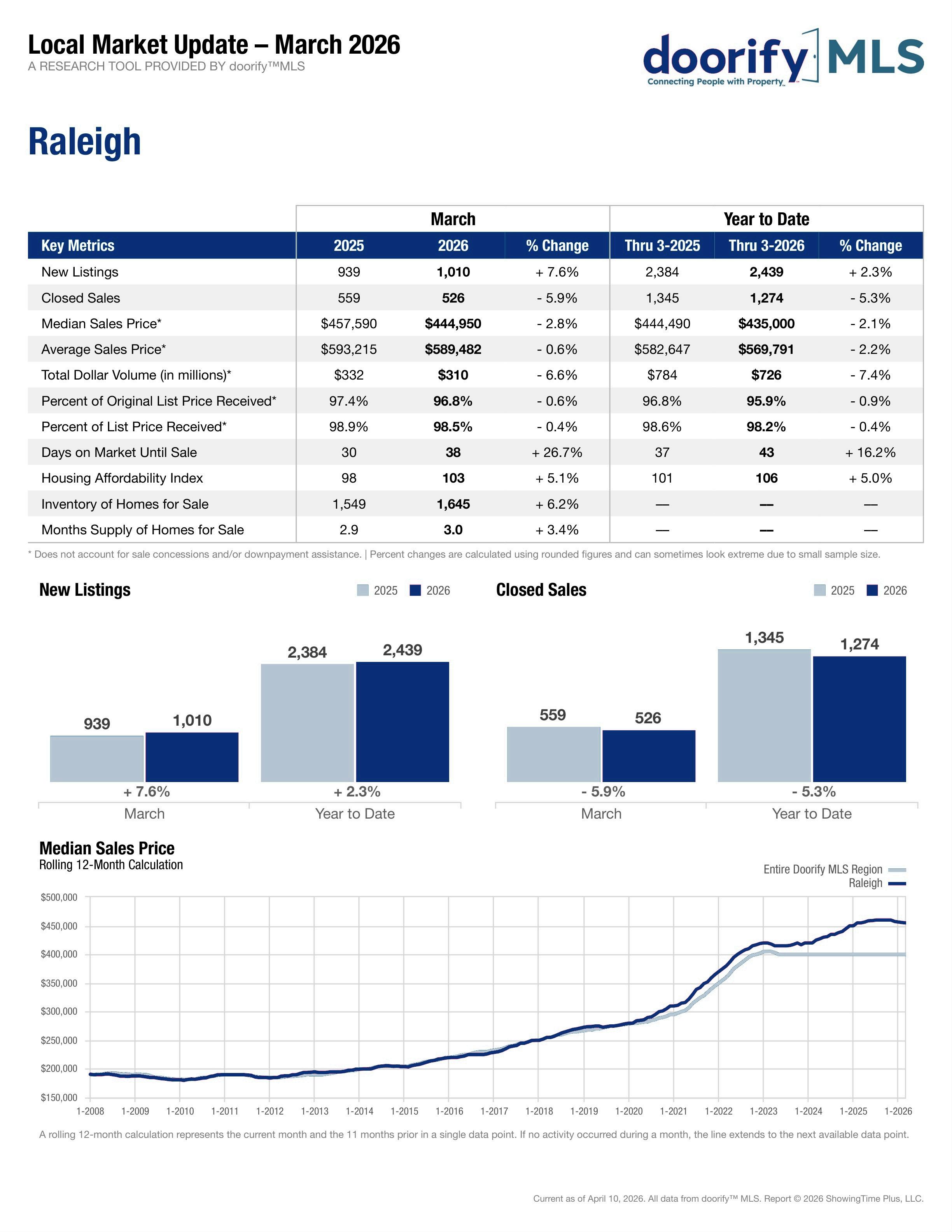
Raleigh closed March with prices near record highs, even as values leveled slightly The Average Sales Price and Median Sales Price dipped year over year, while monthly sales activity declined by almost 6% compared to this time last year Inventory expanded up more than 6% giving buyers more flexibility and continuing to contribute to a more balanced, market as we move into Q2.

THE TRIANGLE AREA | DURHAM
RESIDENTIAL SALES SUMMARY
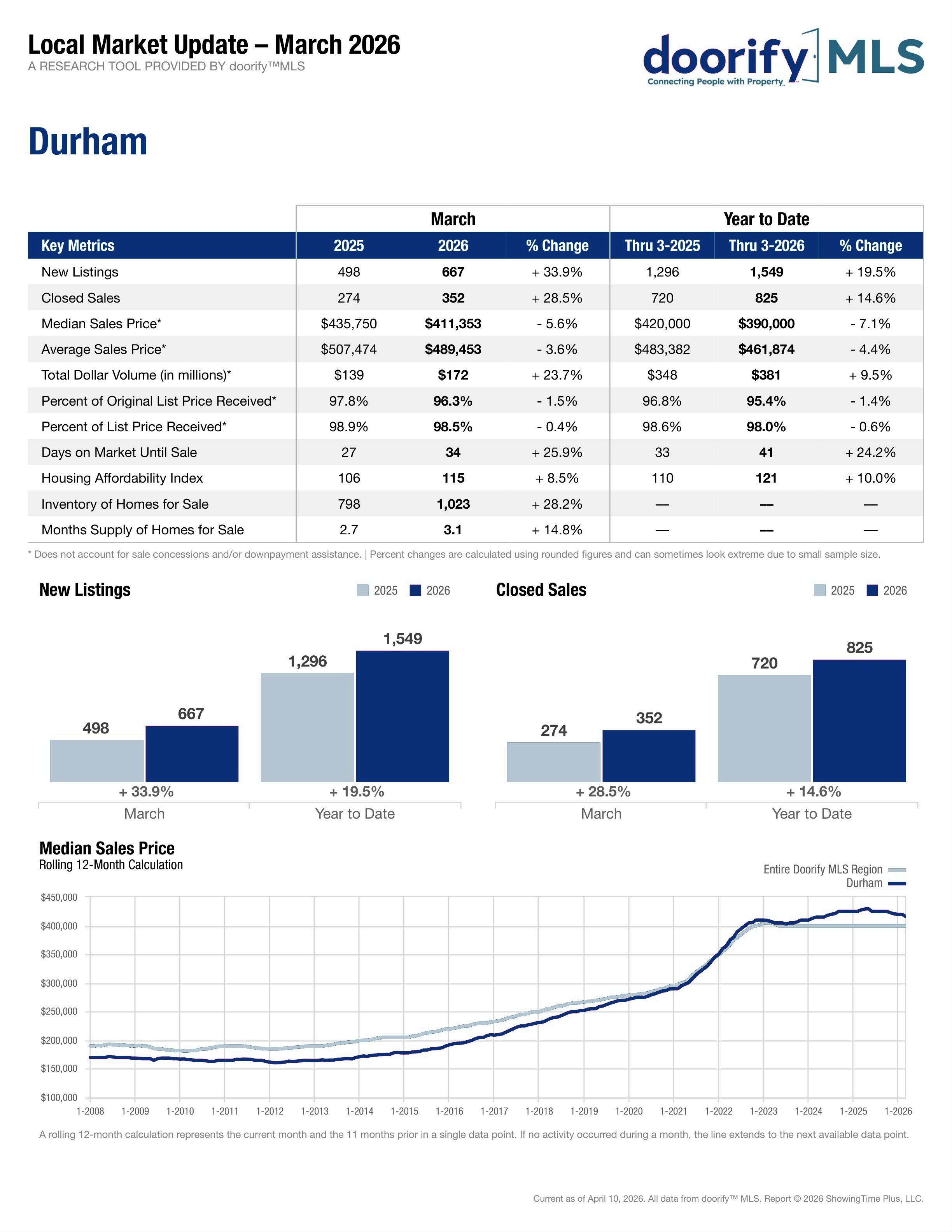
Durham closed March with active demand alongside a significant rise in inventory, which increased more than 28% year over year. Closed sales surged over 28%, while homes took a bit longer to sell, signaling a shift toward balance Buyers are moving more thoughtfully, while sellers continue to benefit from sustained interest in this highly competitive market
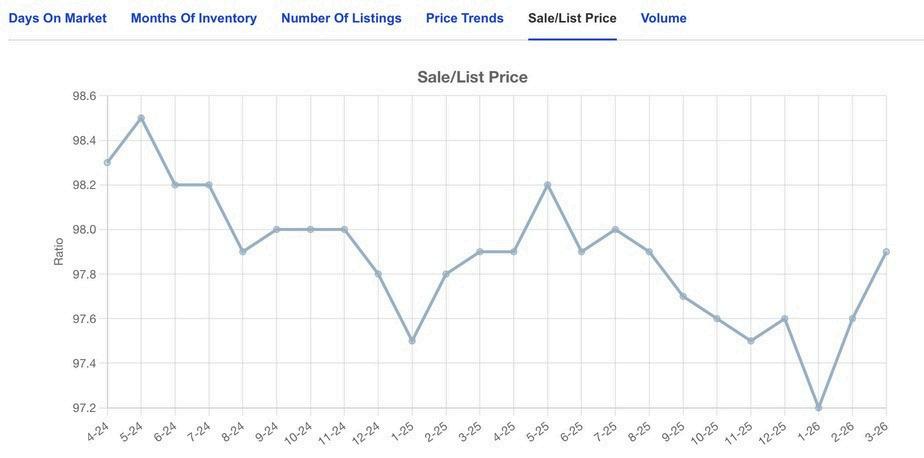
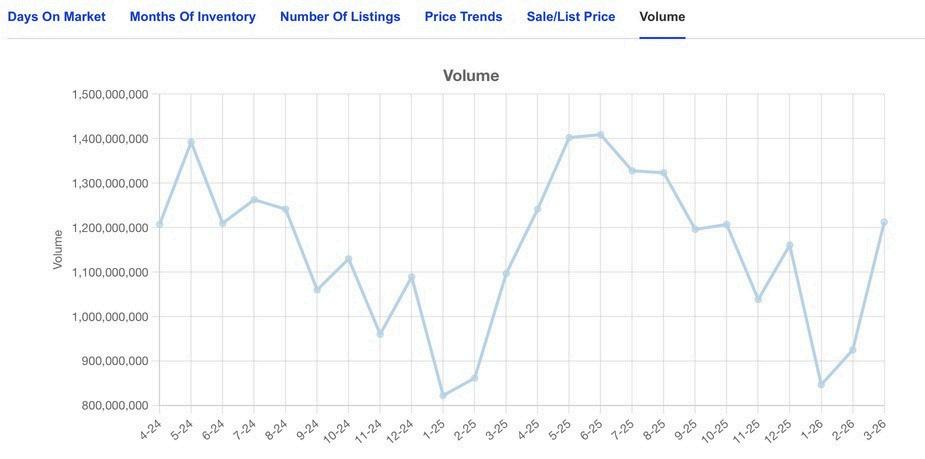
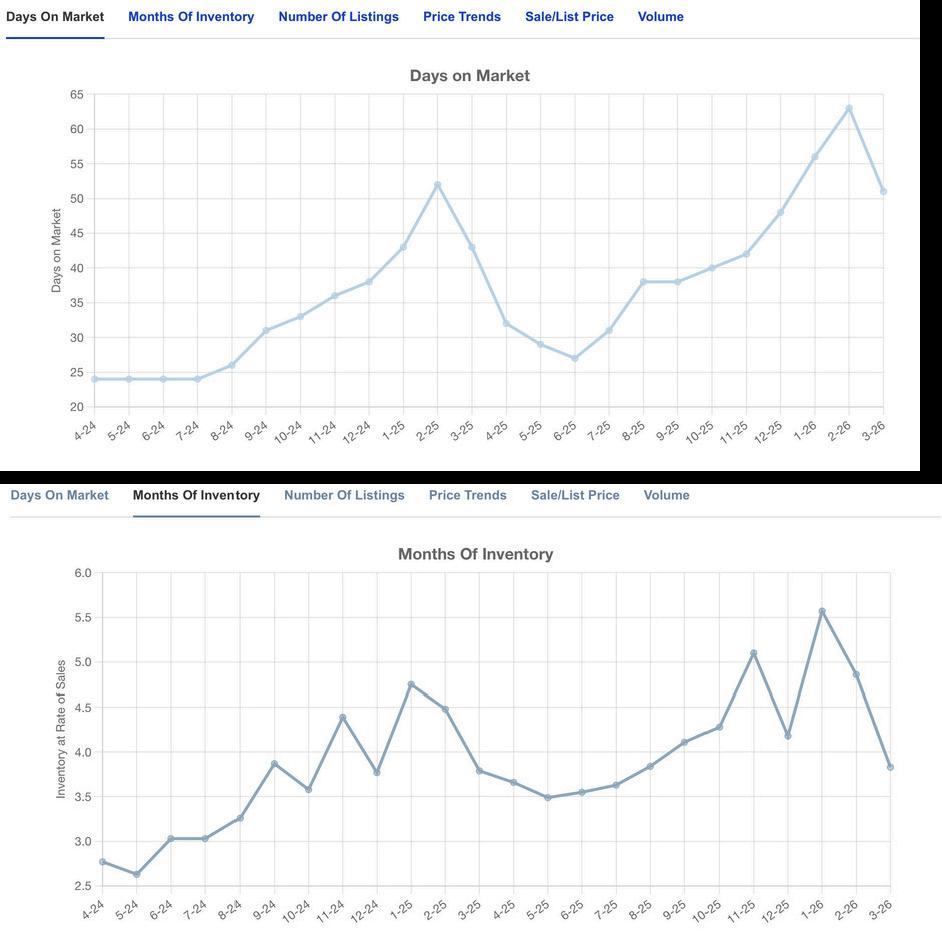
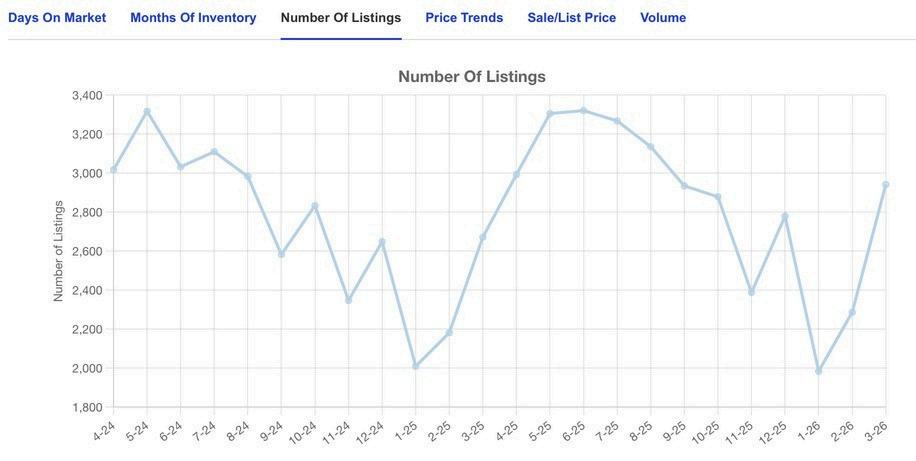
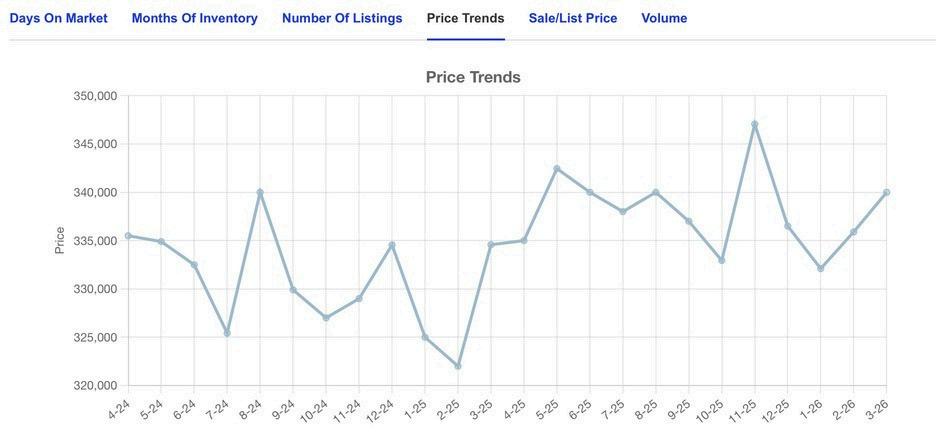
Jacksonville closed Q1 withan active inventory and steady pricing, as listings began to move in the first quarter Days on market’s downward trend signalled a measured pace List vs Sold ratios remained steady, just under 98%, while Sales Volume’s Spring trend upwards continues to be supported by population growth, affordability, and buyer demand
Market Summary
JacksonvilleResidential,Q1 2026

Market Summary
JacksonvilleResidential,Q1 2026
Market Summary
JacksonvilleResidential,Q1 2026