As we reflect on 2025, we are reminded that the strength of Roanoke Cooperative has always been rooted in the people and communities we serve. This year marked an exciting new chapter as we continued building momentum around Connect 2030—our long-term vision focused on innovation, reliability, economic opportunity and community transformation across northeastern North Carolina.
Throughout the year, we invested in critical infrastructure, expanded opportunities for member-owners, strengthened community partnerships and advanced technologies designed to support a more resilient energy future. From commissioning new substations and celebrating battery storage innovations to hosting community forums and clean energy education events, every initiative reflected our commitment to creating meaningful progress for our region.
But beyond the projects and milestones, 2025 was ultimately about connection. Connection between neighbors. Connection between technology and opportunity. Connection between today’s investments and tomorrow’s possibilities.
As a member-owned cooperative, we believe the future is strongest when it is built together. Your engagement, trust, and participation continue to guide the direction of our cooperative and inspire the work we do every day.
Together, we are not simply delivering electricity—we are helping power communities, strengthen local economies and create opportunities for generations to come.
Thank you for being part of the Roanoke Cooperative family as we continue Connecting People, Places & Possibilities—Today, Tomorrow, Together.
COOPERATIVE OF THE YEAR
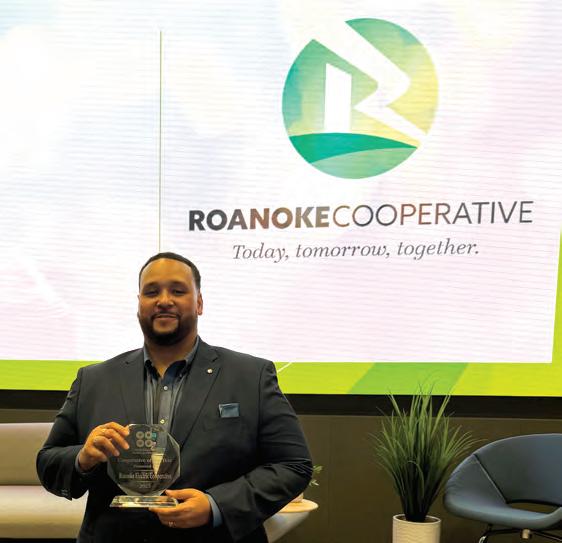
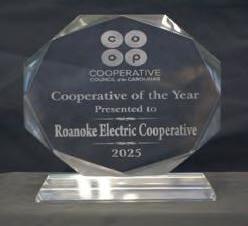
In 2025, Roanoke Cooperative was honored to be recognized as Cooperative of the Year—an achievement that reflects the dedication, innovation and service-minded commitment of employees, board members and memberowners across our cooperative family.
This recognition celebrates the cooperative’s continued leadership in advancing community-focused initiatives, embracing innovative energy solutions, expanding broadband connectivity and creating meaningful opportunities throughout rural northeastern North Carolina.
From clean energy investments and infrastructure modernization to educational outreach and economic development efforts, the work accomplished throughout the year reinforced Roanoke Cooperative’s mission to improve quality of life for the communities we serve.
While the award recognizes organizational achievement, it also serves as a testament to the power of cooperation and collaboration. Every employee, partner, community stakeholder and member-owner plays an important role in helping move our mission forward.
As we continue advancing Connect 2030, this recognition inspires us to keep building a future centered on innovation, resilience and community impact.
Allen Speller CHAIRMAN
Marshall Cherry PRESIDENT AND CEO
SERVING BEYOND THE METER
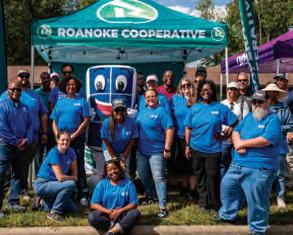
At Roanoke Cooperative, service extends far beyond delivering electricity. Throughout 2025, employees and volunteers continued demonstrating the cooperative spirit through initiatives focused on supporting local families, strengthening communities and giving back to those in need.
Community outreach efforts included the annual Breast Cancer Awareness event, roadside cleanup initiatives, canned food drives and turkey giveaways that helped provide support and encouragement to families throughout the holiday season. These efforts reflect the cooperative’s ongoing commitment to making a positive difference across the communities we serve.
Employees dedicated countless hours volunteering, partnering with local organizations and participating in events that support health awareness, environmental stewardship and food security throughout the region.
As a member-owned cooperative, caring for community remains at the heart of everything we do. Through service, partnership and compassion, Roanoke Cooperative continues working to create stronger communities and brighter futures for all.
ROANOKE COOPERATIVE’S TURKEY, CANNED FOODS & PIE GIVEAWAY
Serving our communities extends beyond providing reliable energy and broadband services. Through our annual Turkey, Canned Foods & Pie Giveaway, employees came together to demonstrate the cooperative principle of Concern for Community by helping local families celebrate the Thanksgiving season with dignity, warmth and gratitude.
Employees donated more than 1,100 pounds of canned goods and volunteered their time to organize and distribute holiday meal essentials to member-owners throughout the region. The giveaway provided turkeys, canned food items and pies to families, helping ease financial burdens during the holiday season and ensuring more neighbors could enjoy a traditional Thanksgiving meal.
Overwhelming participation from employees and memberowners highlighted both the need within our service territory and the power of neighbors helping neighbors.
As Roanoke Cooperative continues to fulfill its mission of connecting people, places, and possibilities, initiatives like this exemplify the spirit of service that defines the cooperative. By working together, employees and memberowners are making a meaningful difference and strengthening the communities we proudly call home.
CONVERSATIONS THAT SHAPE THE FUTURE: Today, Tomorrow, Together Forums
Throughout 2025, Roanoke Cooperative continued engaging directly with member-owners and community leaders through the Today, Tomorrow, Together forums held across the service territory.
These forward-focused conversations provided opportunities for member-owners to learn more about Connect 2030, ask questions, share ideas and discuss the challenges and opportunities facing rural communities. Topics included energy innovation, broadband expansion, economic development, reliability improvements and community partnerships.
The forums reinforced the cooperative principle of democratic engagement by creating meaningful spaces for dialogue and collaboration. Each event highlighted the importance of listening to the voices of memberowners while working together to shape the future of the communities we serve.
Member-owner engagement remains central to the Roanoke Cooperative’s mission and long-term success. Together, these conversations are helping connect people, places, and possibilities across northeastern North Carolina.
REVITALIZING COMMUNITIES THROUGH PARTNERSHIP
ECIP—RIPE FOR REVIVAL
Through Roanoke Cooperative’s Employee Community Involvement Program (ECIP), employees volunteer their time to support organizations and initiatives that strengthen the communities we serve. In 2025, employees partnered with programs such as Ripe for Revival, contributing their time and talents to efforts focused on reducing food waste, addressing food insecurity and improving the quality of life for local residents.
By encouraging employee volunteerism and community partnerships, Roanoke Cooperative continues to invest in the long-term success of northeastern North Carolina while advancing the cooperative’s Connect 2030 vision of building stronger, more resilient communities.
FYBE AND COMMUNITY CONNECTION
In 2025, Fybe continued its mission of connecting people, places and possibilities by strengthening its partnership with eNCore and successfully transitioning broadband operations to the new organization. This transition positions Fybe for continued growth while enhancing service and operational efficiencies for our subscribers. During the year, Fybe also implemented a new billing platform designed to provide members with an improved customer experience, offering streamlined account management, enhanced payment options and greater convenience.
Bright Ideas Education Grants
Through the Bright Ideas Education Grant Program, Roanoke Cooperative continued its commitment to supporting innovative learning opportunities for students across northeastern North Carolina. The program provides funding for creative, hands-on classroom projects that bring lessons to life and inspire students to think, explore and achieve beyond traditional learning environments.
During 2025, Roanoke Cooperative awarded grants to local educators whose projects demonstrated creativity, innovation and the potential to make a meaningful impact in the classroom. Grant recipients transformed ideas into opportunities that engage students and foster a lifelong love of learning.
The Bright Ideas program reflects the cooperative principle of Concern for Community by empowering educators with resources that enhance educational outcomes and create memorable learning experiences for
INSPIRING THE NEXT GENERATION
Innovation and education came together in 2025 as Roanoke Cooperative hosted its annual Clean Energy Expo, bringing together students, educators, industry partners and community members for a day focused on the future of energy and technology.
The event provided hands-on learning opportunities designed to increase awareness of renewable energy, battery storage, electric vehicles, broadband technology and career pathways connected to the evolving energy industry. Participants engaged with interactive exhibits, demonstrations, and educational displays highlighting how innovation is transforming rural communities.
The Clean Energy Expo reflects Roanoke Cooperative’s commitment to preparing future generations for emerging opportunities while promoting sustainability, workforce development and digital empowerment throughout the region.
By creating opportunities for education and engagement, the cooperative continues investing not only in infrastructure, but also in the people who will help shape the future of our communities.
students. Through partnerships with local schools and dedicated teachers, Roanoke Cooperative continues to help cultivate the next generation of leaders, innovators and problem-solvers.
By supporting classrooms today, Roanoke Cooperative is helping build brighter futures for the communities it serves—one innovative idea, one educator, and one student at a time.
BATTERY STORAGE RIBBON CUTTING & SOLAR INNOVATION
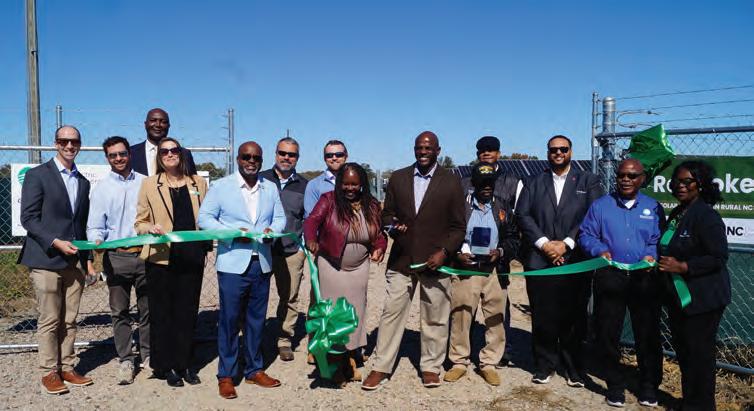
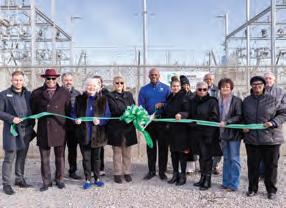
In 2025, Roanoke Cooperative celebrated a major milestone in its commitment to innovation and grid resiliency with the official ribbon cutting of advanced battery storage and solar energy facilities in our service territory.
These projects represent more than new infrastructure—they symbolize a forward-thinking investment in the future of rural communities. Designed to improve reliability, support peak energy demand and strengthen grid performance, the battery storage systems provide an added layer of resilience while helping position our cooperative for the evolving energy landscape.
BRIDGING THE DIGITAL DIVIDE THROUGH DIGITAL LITERACY
The projects also reinforce Roanoke Cooperative’s leadership in clean energy innovation throughout North Carolina. By integrating solar generation with battery storage technology, the cooperative is helping create smarter energy solutions that benefit member-owners today while preparing for the needs of tomorrow.
Community leaders, partners and member-owners joined cooperative staff and board leadership during the ribbon-cutting celebration to recognize the significance of these investments and the opportunities they create for the region.
As Connect 2030 continues to guide our future, projects like these demonstrate how innovation and community-focused leadership can work together to build a stronger, more sustainable energy network for northeastern North Carolina.
Sustainable Forestry and Land Retention Project
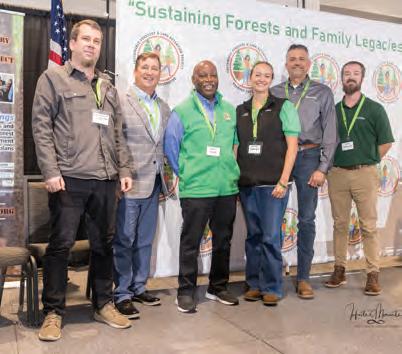
Roanoke Cooperative remains committed to preserving the region’s natural resources through its Sustainable Forestry and Land Retention Project (SFLRP). The program helps landowners protect family-owned forestland, strengthen long-term economic opportunities and preserve generational wealth by promoting sustainable forest management practices.
Throughout 2025, the SFLRP continued to provide educational workshops, technical assistance and one-on-one support to landowners across northeastern North Carolina. By connecting participants with forestry professionals, conservation organizations and funding opportunities, the program empowers families to make informed decisions about their land while maintaining healthy, productive
forests for future generations.
Access to high-speed internet is only part of the solution to closing the digital divide. Equally important is ensuring individuals have the knowledge and confidence to fully participate in today’s digital world. In 2025, Roanoke Cooperative continued its commitment to digital inclusion through the work of Digital Health Navigator Angela Battle, helping residents connect to technology, information and essential services.
Through free workshops, one-on-one assistance and community partnerships, Battle empowered residents with skills ranging from internet safety and device usage to telehealth access and digital communication. Her outreach helped individuals of all ages gain the confidence needed to navigate an increasingly connected world.
These efforts complement Roanoke Cooperative’s investment in broadband infrastructure and reinforce its mission of connecting people, places and possibilities. By expanding both access and education, the cooperative is helping build stronger, more connected communities across northeastern North Carolina.
The project’s success is made possible through strong partnerships with state and federal agencies, forestry associations, nonprofit organizations, educational institutions and industry leaders who share a common vision of sustainable land stewardship. Together, these collaborations help landowners address challenges related to forest management, estate planning, land retention and conservation.
As Roanoke Cooperative advances its mission of improving the quality of life in the communities it serves, the Sustainable Forestry and Land Retention Project continues to demonstrate how responsible stewardship of natural resources can create lasting environmental, economic and community benefits. Through education, collaboration and advocacy, the program is helping ensure that family forests remain a valuable legacy for generations to come.
SAFETY: BUILDING A CULTURE OF EXCELLENCE
Safety remains a core value at Roanoke Cooperative and is embedded in every aspect of our operations. Working with electricity requires a steadfast commitment to safety, continuous training, and adherence to industry best practices. Throughout 2025, employees participated in ongoing safety education, skills development and hands-on training designed to protect our workforce, member-owners and the communities we serve.
A significant milestone during the year was the achievement of Journeyman Lineman certification by three members of our line crew. Earning this certification represents years of dedication, technical training and practical field experience. The accomplishment not only reflects the individuals’ commitment to their profession but also underscores Roanoke Cooperative’s investment in developing a highly skilled workforce.
Safety at Roanoke Cooperative extends beyond compliance with regulations. This shared responsibility guides decision-making, work practices and daily operations. Employees take part in safety meetings, equipment inspections, emergency preparedness exercises and training programs that reinforce a culture where every task begins and ends with safety in mind.
Technology Update
Technology continues to play an important role in supporting the cooperative’s mission to provide safe, reliable service to our members. During 2025, Roanoke Cooperative strengthened the systems and infrastructure that support daily operations, enhanced cybersecurity protections and expanded capabilities that improve visibility across the electric system. These investments ensure the cooperative can operate efficiently, respond
effectively to changing needs and remain well-positioned for the future while maintaining a strong commitment to reliability, security and service. While much of this work occurs behind the scenes, these investments help ensure reliable electric service, protect critical systems and support the cooperative’s ability to serve members efficiently today and into the future.
STRENGTHENING THE BACKBONE OF OUR GRID: SUBSTATION COMMISSIONING & INFRASTRUCTURE IMPROVEMENTS
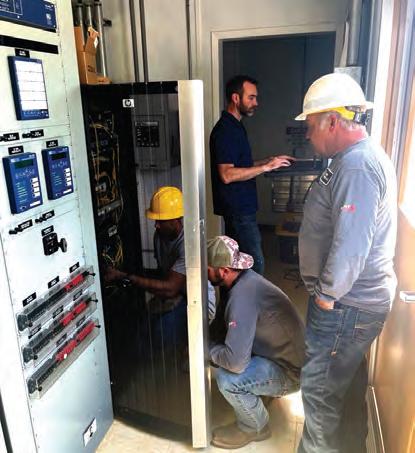
Reliable service begins with strong infrastructure. In 2025, Roanoke Cooperative continued making strategic investments in the electric system through the commissioning of upgraded substation facilities designed to support growing energy demands and enhance overall system reliability.
Substations play a critical role in delivering safe, dependable electricity to homes, farms, schools and businesses throughout our service area. These improvements help increase operational efficiency, support future growth and strengthen the cooperative’s ability to respond during periods of high demand and severe weather.
As technology and energy needs continue to evolve,
ROANOKE HIGH-IMPACT SERVICES
✔ Levelized billing: Balanced bills throughout the year helps you budget while avoiding seasonal highs and lows.
✔ High Usage Alerts: Customizable alerts to receive notifications when your usage meets its preset threshold.
✔ Paperless Billing: E-Bill means receiving valuable information before its too late.
✔ Smart Grid Devices: Water heater controls and smart thermostats reduce energy use by adjusting automatically during peak demand.
✔ Bank Drafts: Bank drafts ensure payments are received on time.
✔ Time-of-Day Rates: Take advantage of lower rates during Off-Peak hours. A special meter installed records usage throughout the day.
modernizing the grid to support our communities remains an important part of Roanoke Cooperative’s long-term strategy. Infrastructure improvements completed throughout the year reflect the cooperative’s continued focus on reliability, innovation, and service excellence—cornerstones of the Connect 2030 vision.
✔ Electric Vehicle Rates: Member-owners who own an EV can receive incentives for charging at the right time.
✔ Annual Meeting Attendance: An annual meeting is held every August for member-owners to elect Directors, hear financial reports, win prizes and transact other important business.
Upgrade to $ave
Roanoke Cooperative’s Upgrade to $ave program continued to help member-owners improve comfort, reduce energy usage and lower monthly energy costs. Through free in-home energy assessments and targeted energy efficiency upgrades such as insulation, air sealing and duct improvements, the program empowers members to make lasting improvements to their homes while supporting more efficient energy use across our communities.
2025 FINANCIAL REPORT
Our annual summary of operations and expense distribution
The 2025 operating year delivered another strong financial performance for Roanoke Cooperative, reflecting disciplined financial management, steady operational execution and continued investment in services that benefit member-owners. The cooperative ended the year with total net margins of $3.2 million, positioning the organization to continue strengthening its financial foundation while supporting future capital credit retirements.
SUMMARY OF OPERATIONS 2025 Revenue
Cost of Service
Power Cost
$59,150,743
$24,523,281
Distribution Expense—Operation $3,079,546
Distribution Expense—Maintenance
Customer Accounts Expense
Customer Service and Information Expense
Sales Expense
Administration & General Expense
Depreciation/Amortization Expense
$3,748,404
$1,307,374
$208,734
$25,558
$6,231,477
$7,140,871
Total Operating Expense $46,265,245
Interest/Other Expense $7,048,313
Total Cost of Electric Service (CES) $53,313,558
Throughout the year, Roanoke Cooperative remained focused on balancing affordability, reliability and long-term sustainability. Careful management of operating expenses, strategic planning and ongoing investments in critical infrastructure helped the cooperative maintain a strong financial position despite continued economic pressures and rising costs across the utility industry.
A significant priority in 2025 remained the expansion of the cooperative’s fiber network. Construction continued toward the goal of providing broadband access to all serviceable member-owner locations, helping bridge the digital divide across the communities Roanoke Cooperative serves. These efforts were supported through a combination of external funding, prudent financial oversight and a commitment to delivering long-term value to member-owners.
The cooperative also continued advancing its broadband strategy through eNCore, a partnership designed to support sustainable broadband operations while reducing long-term capital requirements. This approach allows Roanoke Cooperative to remain focused on delivering reliable electric and broadband services while protecting the cooperative’s financial strength.
In addition, Roanoke Cooperative enhanced its financial forecasting, budgeting and long-range planning efforts, providing greater visibility into future opportunities and challenges. These improvements support informed decision-making and reinforce the cooperative’s commitment to transparency, accountability and responsible stewardship of memberowner resources.
Roanoke Cooperative appreciates the continued trust and support of its member-owners. Their partnership remains essential as the cooperative works to provide safe, reliable, and affordable services while investing in the future of the communities it serves.
Total Margins & Equities $53,246,215 Long-Term Debt $134,325,839 Other Noncurrent Liabilities $926,972
McNair, McLemore, Middlebrooks & Co., LLP completed Roanoke Cooperative’s 2025 Combined Financial Audit in accordance with Government Auditing Standards issued by the Comptroller General of the United States.
BOARD OF DIRECTORS
Swimming Pool Safety Word Scramble
Dive into this word scramble challenge! Read the pool safety tips below to uncover the scrambled words. Remember these tips to stay safe while having fun in the sun.
Doublecheck your work in the answer key.
1. Never swim without an lutda nearby, even if you know how to swim.
2. Walk around the pool. Gunrnin on wet surfaces can cause slips and falls.
3. Wear cessrnuen and drink plenty of water to stay safe in the summer heat.
4. Keep cilarcteel devices, cords and speakers far away from the water.
5. If you see lightning or hear drehtnu, get out of the pool immediately and go indoors.
Nature’s Master Builder
The remarkable world of beavers
By Rue Reynold
The gentle current carries a freshly cut willow branch across the water. Strong orange teeth grip the prize as this creature slips beneath the surface, webbed feet paddling with quiet determination. Ahead lies a growing lodge, each carefully placed stick strengthening a home that will shelter generations. Every branch has a purpose. Every ripple shapes the landscape. This is the world of the North American beaver — nature's original engineer.
Built for life in the water
The North American beaver is North America's largest rodent and one of its most remarkable architects. Thick, waterproof fur insulates it from cold water, while large webbed hind feet provide powerful propulsion. A broad, flat tail provides balance while swimming, stores fat for winter and serves as a warning signal when slapped against the water.
Beavers possess unique teeth. Their bright orange incisors never stop growing and are strengthened by iron-rich enamel, allowing them to gnaw through trees that would quickly wear down ordinary teeth. Transparent eyelids protect their eyes underwater, while valves behind their lips let them carry sticks or chew wood beneath the surface without taking in water.
The engineers of the wetlands
Beavers inhabit rivers, streams, lakes, ponds and wooded wetlands throughout North Carolina. Wherever flowing water and hardwood trees meet, they find opportunity. By felling trees and building dams, beavers slow moving water, creating ponds and wetlands that provide shelter from predators and easy access to food.
Their diet consists entirely of plants, including bark, twigs, leaves, aquatic vegetation, and the inner bark of hardwood trees such as willow, sweetgum, birch and maple. During autumn, they gather branches underwater near their lodges, creating food caches that remain accessible even when the surface freezes farther north.
The benefits of beaver engineering extend far beyond their own survival. Beaver ponds create habitat for fish, amphibians, waterfowl, turtles, insects and countless other species, while also improving water quality, reducing erosion and helping wetlands store water during droughts.
Legends and folklore
Across cultures, beavers have long symbolized diligence, cooperation and wisdom. Their tireless work ethic has made them enduring emblems of perseverance and community.
In Celtic traditions, beavers were admired for their determination and ingenuity. Medieval stories often portrayed them as intelligent, resourceful creatures, while later folklore associated beavers with perseverance and the ability to shape the landscape around them.
Many Indigenous tribes throughout North America recognized beavers as teachers of hard work and cooperation, admiring their ability to transform entire landscapes and live in balance with the natural world.
Today, many conservationists celebrate beavers not simply as builders, but as ecosystem engineers whose work benefits countless forms of life.
Beaver Facts
1. Beavers are North America's largest rodents.
2. Their orange front teeth are strengthened with iron and never stop growing.
3. Beaver dams create wetlands that support hundreds of other plant and animal species.
4. Transparent eyelids allow beavers to see underwater while protecting their eyes.
5. Beaver lodges have underwater entrances, helping keep families safe from predators.
Quick-thinking, hardworking and endlessly resourceful, beavers do far more than build lodges and dams — they reshape entire ecosystems. By protecting healthy waterways and allowing these remarkable rodents to continue their work, we preserve wetlands that benefit wildlife and people alike.
Visit NCWildlife.gov to learn more about these incredible ecosystem engineers.
Rue Reynold is the editorial assistant for Carolina Country magazine.
Managing Costs Across the Grid
Your electric cooperative has a unique and important advantage in serving its members with affordable, reliable electricity: the strength of a statewide network. By working closely together—leveraging their collective strength and sharing innovative ideas—North Carolina’s 26 electric cooperatives are able to manage costs across the grid.
Collective Buying Power
The state’s electric cooperatives pool their buying power through the Tarheel Electric Membership Association (TEMA). By working together, co-ops reduce the impact of rising material costs on everything from poles and wires to energy storage projects.
Meeting Growing Demand
Demand for power is growing nationally. Co-ops work to negotiate the best possible contracts on large power purchases and manage peak demand every day. Decades ago, electric co-ops formed the North Carolina Electric Membership Corporation (NCEMC) to help manage generation and transmission needs. Today, NCEMC owns power generation plants, purchases power through contracts, identifies innovative energy projects and coordinates transmission resources for its members.
Innovative Resource Management
Advocating for Affordability
NC electric co-ops advocate at the General Assembly and in Washington, D.C., in coordination with their trade association, the North Carolina Association of Electric Cooperatives (NCAEC). Together they form a powerful voice on issues that affect rural communities and power affordability.
North Carolina’s electric co-ops are national leaders in collective management of 600 megawatts of distributed energy resources, including battery storage sites, microgrids, solar projects and member-owned generation.
Over the course of their history, NC co-ops have formed organizations to support the work they do, each with its own governing board of directors made up of representatives from each member co-op. Today, this family of organizations— NCEMC, NCAEC and TEMA—is collectively known as North Carolina’s Electric Cooperatives.
Throw Yourself a Bone
for a knife that combines impeccable craftsmanship with a sense of wonder, the $79 Huntsman Blade is the trophy you’re looking for. While supplies last, we’ll include a pair of $99 Stauer power pocket binoculars and a genuine leather sheath FREE when you purchase
Plugging in for Healthier Homes
A clean cooking initiative is changing lives
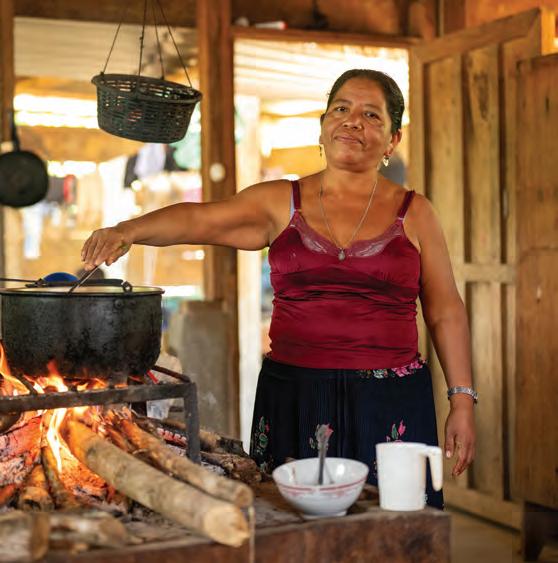
Residents of a remote Guatemalan village will no longer have to fill their small homes with toxic smoke every time they cook, thanks to life-changing electricity brought to them by volunteers from North Carolina’s electric cooperatives.
In the village of El Plan Nuevo Amanecer near the Mexican border, women and girls were cooking over flaming wood fires, breathing in thick smoke that irritated their eyes and lungs and lingered inside their houses.
“Several of the children have this kind of chronic cough that you would hear throughout the village,” says Cara Johnson, who is working with North Carolina’s Electric Cooperatives as an Energy Innovator Fellow through the Department of Energy.
Solving the problem became part of the mission for Cara and volunteers from eight North Carolina co-ops who traveled to Guatemala to construct more than three miles of line by hand, wiring 55 homes to receive electricity for the first time (see page 8). Residents were able to quickly put that power to use with new two-burner, plug-in Black+Decker stovetops, purchased from a local supplier.
Cara, who is fluent in Spanish, educated residents about the health and safety benefits of the electric stovetops.
“I spent the majority of the trip speaking with the women in their homes, learning about their lives and families and gaining their trust. They even taught me how to make tortillas by hand,” she says. “Most of the houses are about 20 feet by 20 feet spaces with no interior walls, so there’s one room to live, eat, cook and sleep in. There’s no ventilation, so the smoke from the fire just collects and sits in the air. When you walked
in, your eyes and throat would burn. And the temperature was already upwards of 90 degrees in April, even without the fire.”
Adults in the village talked about how much electricity would improve their children’s lives.
“There was an 80-year-old gentlemen who was completely blind and would sit on a hammock every day and talk about what the village was like when he was a kid,” says Josh Conner, multimedia communications strategist for North Carolina’s Electric Cooperatives, who traveled to Guatemala to document the project. “He said one of the biggest things that electricity is going to do is keep the kids from moving away because there’s more opportunity there for them now.”
One mother said the new electric stovetop will improve her children’s health and prevent them from getting badly burned like she did.
Not only were we bringing electricity, but we were giving the community a tangible resource they could use with that electricity that will improve their health and hopefully their children’s futures.”
“Half of her eye was burnt from flames that blew into her face on a windy day as she was cooking over her open fire stove,” Cara says. “She didn’t want that same thing to happen to her daughters.”
“The clean-cooking initiative felt meaningful beyond just the kitchen,” she adds. “Not only were we bringing electricity, but we were giving the community a tangible resource they could use with that electricity that will improve their health and hopefully their children’s futures.”
Erin Kelly is a staff writer for the National Rural Electric Cooperative Association.
Story by Erin Kelly
Josh Conner, NC Electric Cooperatives
Arturo Rivera Photography
Surprises Await in Alamance County
A history of revolution shaped these vibrant Piedmont communities
By Renee C. Gannon
In the 1700s, Alamance County was still part of Orange County, not having its own county borders until 1849. But the growing community would find itself at the forefront of two revolutions: America’s fight for independence and the economic juggernaut of the textile industry.
Now just a whisper of its former dominance, the textile industry that built this region created a culture that has grown into a vibrant area offering a well-rounded day trip for visitors.
Alamance Battleground
Before the first shots were fired in America’s battle for independence, NC farmers formed associations in the 1760s to protest local government corruption. These Regulators aired their grievances against excess taxes, illegal fees and corrupt officials. In 1771, Regulators gathered in a field just south of Alamance Village and unsuccessfully engaged with Governor William Tryon’s British militia.
Visitors to the Alamance Battleground State Historic Site walk the battlefield between the British lines at the visitor center and the Regulator lines near what is now Highway 62.
Lisa Cox, the historic interpreter at the site, weaves a tale of exasperated farmers fighting for equal justice under British rule and the battle’s aftermath. She notes that most Regulators remained loyal to Britain — even fighting for the British — and simply wanted equal treatment.
Textiles to trails
A few miles away from the battleground sits the Alamance County Historical Museum, within the 19th century home of the Holt family. Textile pioneer Edwin Holt helped build the economic engine that would add more than 50 mills to the region. His “Alamance Plaid” was the first commercially woven colored cotton fabric made in the American South. Later, nearby Haw River would become the “Corduroy Capital of the World.” The Textile Heritage Museum in historic Glencoe, near Glencoe Mills, details the history of the industry, as does the local town museums and along the Textile Heritage Trail.
The Haw River powered the textile mills and now powers a burgeoning outdoor industry. The Haw River Paddle Trail offers 14 access points
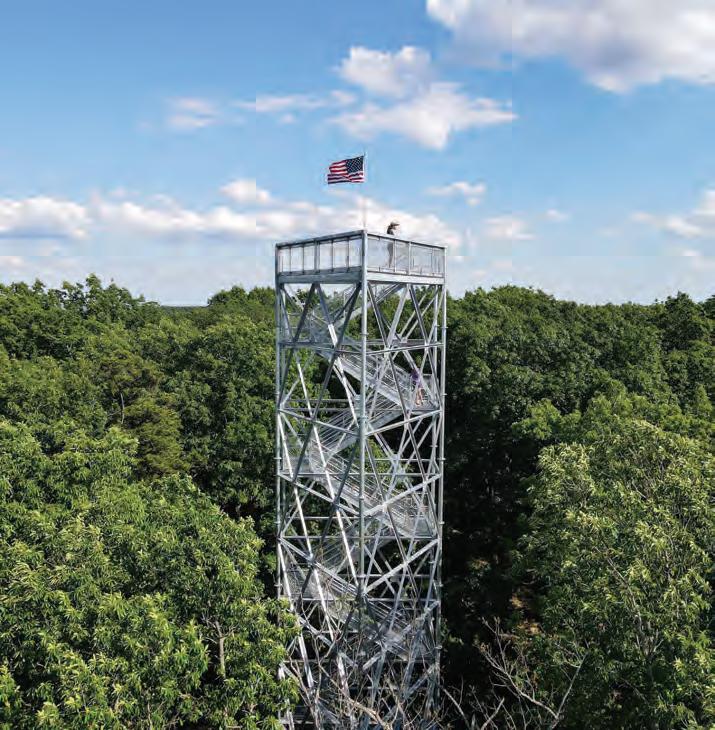
Climb the 80-foot-tall Monadnock Tower in Snow Camp to survey the rolling hills and forests of the Cane Creek Mountains Range.
(Right) The Textile Heritage Museum in historic Glencoe details the history of the industry. Piedmont Lagacy Trails
to the river as it flows through the county and passes towns the river helped build (the entire trail covers five counties). The paddle trail is part of the Haw River Trail corridor, 80 miles of paddle and hiking trails from Haw River State Park to Jordan Lake State Recreational Area.
Want a view above the river and trees?
Head to Cane Creek Mountains Natural Area in Snow Camp and hike to the Monadnock Tower via either the Northern Approach Trail or the Lookout Trail, two of the 10 trails available. Climb 80 feet to survey the rolling hills and forests of the Cane Creek Mountains Range, which boasts the highest peak east of Greensboro at 987 feet.
Small town charm
After hiking or visiting the past, the area’s downtowns offer local shops, breweries and eateries to satisfy every taste.
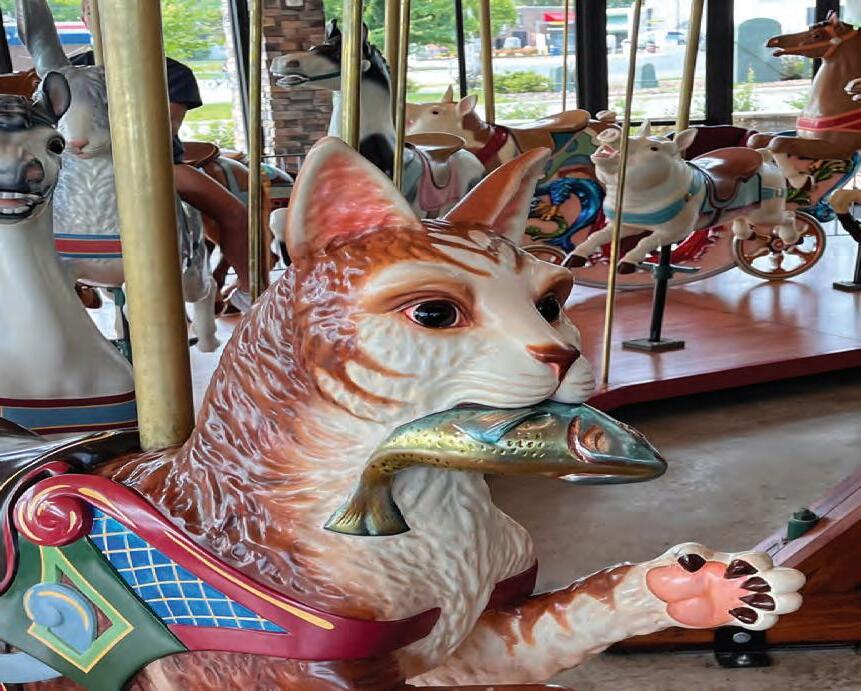
And a historic ride awaits young and old at the Burlington City Park: on the restored 1910 Dentzel Menagerie Carousel. Choose from a cat, an ostrich, lion or horse (with real horsehair tails) — just a few of the 46 unique handcarved animals to relive your childhood. And not to be overlooked at the park, ride on the mini classic diesel-powered train — an appropriate ride for a town built by the railroad industry and once known as “Company Shops.”
Events: August
01 Marlins Baseball Big Rock Stadium 252-269-9767
International Black Theatre Festival Various locations, Winston-Salem | 336-723-2266
K9s in Flight Frisbee Dogs Aug. 1–2 Tweetsie Railroad 828-264-9061
Horn in the West Aug. 1–8
Daniel Boone Park 828-264-2120
“The Lost Colony” Outdoor Drama Aug. 1–22
Fort Raleigh National Historic Site, Manteo | 252-473-6000
INTERTWINED Aug. 1–23
Hillsborough Gallery of Arts 919-732-5001
Cannon Day Aug. 1–Sept. 5 Demonstrations, storytelling Fort Macon State Park 252-726-3775
07 Ocracoke Fig Festival Aug. 7–8
Berkley Barn, Ocracoke 252-921-0283
Sarah James Fulcher Redfish Tournament Aug. 7–9
Cedar Island Resort 252-422-5141
08
Junior Naturalist Day Grandfather Mountain, Linville 828-733-2013
Tea with Seagrove Potters Participating potters, Seagrove 336-879-4145
15 Lions Duck Race Festival Riverview Lions Sheets 336-620-5581
Monster Trucks Carteret County Speedway 252-436-7223
Hot Nights Cool Rides Car Show
Historic Main Street, Forest City 828-447-1730
21 NC BeachBlast Festival Aug. 21–22 Patriots Park, Kings Mountain
22 Nature and Forest Therapy Grandfather Mountain, Linville 828-733-2013
SUBMIT YOUR EVENT
Visit carolinacountry.com/calendar for more information about each event, including links to the most current information, or to submit your own event.
Renee C. Gannon is the senior associate editor for Carolina Country magazine.
Find this article online, with links to local destinations to help plan your trip.
Haw River Trail.org
LA’S WEBSITE OF THE MONTH Nurseries Caroliniana (nurcar.com) is a South Carolina-based e-nursery specializing in perennials, vines and woodies, with particularly large selections of camellias and osmanthuses.
The Lilies of August
Take your pick of late-blooming hostas
Story and photos by L.A. Jackson
When there is a need for foliage plants with the elegance to doll up semi-shady spots in the landscape, gardeners often turn to hostas — durable summertime performers that can be counted on for lasting visual interest with their various textures and subtle hues.
However, starting in August, some hostas seem to want even more attention, so they stretch long stalks above their leaves and begin to flower. And not only are these blooms welcome sights for eager eyes in the perennial shade garden that typically goes into a flowerless funk during the high heat of a scorching summer, but the nose knows of their presence because they are also fragrant. Wait … hostas that bloom in late summer? And they’re fragrant? Welcome to the nifty niche of hostas often tagged as “August lilies.”
I’m not breaking any new ground here. These so-called August lilies are old-school hostas that originated in southern China and migrated to America in the early 1800s. Botanically grouped in Hosta plantaginea, they became instant hits in the South due to their heat tolerance and ability to cast scented spells in gardens on warm afternoons of waning summers.
As with many plants that become popular with gardeners, H. plantaginea has been tinkered with by breeders looking for improvements, but most mutated and hybridized forms still retain the good ol’ August lily charm of late-blooming, scented flowers. While white is the typical color of these bell-shaped beauties, some have also been tinted with light purple hues.
Today, although many variations have been created, there
GARDEN TO-DO’S FOR August
are only about two dozen selections of August lilies generally available to the gardening public. But this doesn’t make them hard to find. Heck, I bought the classic “Royal Standard,” which has been around for ages, at a big box home improvement store.
Other August lilies that can be found with minimal searching include the popular “Guacamole” showing off sassy avocado-colored leaves; “So Sweet,” the 1996 Hosta of the Year with foliage that shimmers in shades of cream and green; and “Sugar Babe,” a petite, variegated pretty with scented, amethyst-streaked blossoms.
Online hunting will find other selections for sale, of course, but try local garden centers first because they, too, know well the dreamy appeal of these enchanting lilies of August.
L.A. Jackson is the former editor of Carolina Gardener Magazine.
The pursuit of perfectly shaped, home-grown tomatoes can be spoiled at this time of year by a nastiness known as cracking. This is marked by concentric, unappetizing rings circling tomato tops, or vertical splits along the sides of ripening fruits. It usually occurs when a big rain falls after an extended dry spell. So much water suddenly available to tomato plant roots can cause fruits to expand quickly and literally break right out of their skins. Heavily mulching your plants will help steady the ground moisture supply, and a regular watering schedule when the rains don’t come will also help prevent cracking.
® Continue harvesting mature cucumbers, squash, green beans, tomatoes and okra at least once a week to encourage more and more production from your summer edibles.
® Looking to add more horticultural snap-crackle-pop to your midsummer garden? Check out local botanical gardens, arboretums and even garden centers to see what kinds of plants are showing off the best during these hazy, lazy days of August.
Royal Standard hosta
Recipe
Advertising published in Carolina Country is accepted on the premise that the merchandise and services offered are accurately described and willingly sold to customers at the advertised price. All ads must adhere to Carolina Country’s advertising policy, which can be found in our media kit at carolinacountry.com/advertise/MediaKit. The magazine, North Carolina Association of Electric Cooperatives, Inc., and the member cooperatives do not necessarily endorse the products or services advertised. Advertising that does not conform to these standards or that is deceptive or misleading is never knowingly accepted. Should you encounter advertising that does not comply with these standards, please inform Carolina Country at 3400 Sumner Blvd., Raleigh, NC 27616. 919-875-3091.
1920s Style for a 1920s Price
It was a warm summer afternoon and my wife and I were mingling with the best of them. The occasion was a 1920s-themed party, and everyone was dressed to the nines. Parked on the manse’s circular driveway was a beautiful classic convertible. It was here that I got the idea for our new 1920s Retrograde Watch.
Never ones to miss an opportunity, we carefully steadied our glasses of bubbly and climbed into the car’s long front seat. Among the many opulent features on display was a series of dashboard dials that accentuated the car’s lavish aura. One of those dials inspired our 1920s Retrograde Watch, a genuinely unique timepiece that marries timeless style with modern technology.
With its remarkable retrograde hour and minute indicators, sunburst guilloche face and precision movement, this design is truly one of a kind. What does retrograde mean?
Instead of displaying the hands rotating on an axis like most watches, the hands sweep in a semicircle, then return to their starting point and begin all over again.
Retrograde watches by the big brands can set you back thousands; one recent offering from a big French fashion house is selling for more than $150,000! But because we’ve designed the 1920s Retrograde Watch in-house, we can offer it to you for just $99!
This watch is so wildly popular with our customers that we’re actually concerned about running out; we only have 937 729 left for this ad!
Join more than 1 smart people who love stauer watches
Watch Specifications:
• Precision movement
• Stainless steel case, caseback and crown
• Retrograde hour and minute indicators
• Water-resistant to 5 ATM
• Brown genuine leather band
• Fits wrists up to 8"
1920s Retrograde Watch
$399 $99* + S&P Save $300
*Special price only for customers using the offer code.
“An elegant and exciting timepiece that every collector will love.”
— George omas, internationally renowned watch expert
“[A] unique and beautiful timepiece.”
— Carlos C., Los Banos, CA
Chilled Southwest Vegetable Lasagna (No Cook)
Turn those ovens off and savor cool meals on hot summer days. Overload on the abundance of garden goodies with this easy recipe. Makes a colorful side or main dish.
Cilantro Pesto Ricotta
1 cup ricotta cheese
½ cup packed fresh cilantro
2–3 large garlic cloves
½ cup sliced almonds
2–3 tablespoons avocado or olive oil
Juice of ½ lime
½ teaspoon each salt and pepper
Blend in food processor until smooth and creamy. Chill.
Lasagna
1–2 large zucchini (8 thin slices)
1 large English cucumber (8 thin slices)
About 1½ cups salsa
Kernels cut from 2 ears of corn
Several sweet mini peppers, sliced into thin rings
¾ cup shredded Colby Jack cheese
¾ cup crumbled queso fresco
Chopped cilantro
Chili powder and cumin
Slice zucchini and cucumber very thin lengthwise, preferably with a mandolin. Layer between paper towels to remove excess moisture.
Spoon a little salsa on a platter. Arrange a layer of zucchini and cucumber (on top of each other) over salsa on platter. Spread half with a thin layer of pesto ricotta and spoon over a little salsa. Fold over the cuke and zucchini and repeat layers of ricotta and salsa. Scatter with corn, peppers and cheeses.
Garnish with cilantro and a light dusting of cumin and chili powder. Chill 30 minutes before serving.
Yield: 4–8 servings
FROM YOUR KITCHEN
Pepián de Pollo
This chicken stew recipe is Guatemala's national dish and was recommended by Arturo Rivera, the Guatemalan photographer who helped document North Carolina’s Brighter World initiative in 2026. (See page 8.)
Honey Crunch
Peach Chiffon Pie
Light, fluffy and plumb full of peach flavor, this chilled pie is nestled in a sweet honey-crunch crust for a simple no-cook dessert that tastes like summer.
1 box (12-ounce) honey granola type cereal (we used Honey Bunches of Oats)
1 stick salted butter, softened
2 tablespoons peach gelatin powder
¹/₃ cup cold water
3 cups fresh or frozen peeled peaches, setting aside a few for garnish
2 tablespoons orange juice
½ cup sweetened condensed milk 2–3 tablespoons sugar as needed
1 pint heavy whipping cream, whipped to soft peaks
Yellow and red food coloring, optional (3 parts yellow + 1 part red)
For the crust, roughly crumble cereal with butter in a food processor. Spread into a 9-inch pie plate and refrigerate.
Submit your recipe online at: carolinacountry.com/myrecipe Contributors whose recipes are published will receive $25.
Scatter gelatin over cold water in a small bowl and let stand for 5 minutes to “bloom” and become spongy.
Purée peaches with juice and condensed milk. Blend in bloomed gelatin until smooth. Taste and add sugar if needed, depending on sweetness of peaches.
Gently fold in half of the whipped cream. Leave as is or add a few drops of food coloring for a deeper peach color.
Spoon filling into crust and chill 4–6 hours.
Garnish with peaches and serve with remaining whipped cream.
Yield: 8 slices
Culinary Adventurist Wendy Perry (WendyPerry.com) is a home economist, blogger and NC food artisan.
3 Lynette Carlston, Beaufort, A member of Carteret-Craven EC
4 Karee Smith, Mount Holly, A member of EnergyUnited
Send us your best shots based on an upcoming theme—we’ll pay $25 for those published. Submit high resolution digital photos and find full terms and conditions at carolinacountry.com/snapshots (no emails, please). We retain reprint and online rights for all submissions.
where in Carolina Country is this?
Send your answer by Aug. 15, with your name, address and the name of your electric cooperative.
Online: carolinacountry.com/where
By mail: Where in Carolina Country? 3400 Sumner Blvd., Raleigh, NC 27616
Multiple entries from the same person will be disqualified. The winner, chosen at random and announced in our October issue, will receive $25.
Have a roadside gem you’d like to share? Submit a photo, plus a brief description and general location information, at carolinacountry.com/where
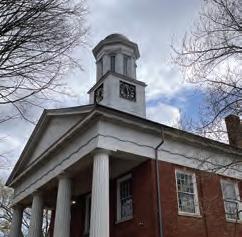
The June “Where Is This” photo by Carolina Country’s Renee Gannon shows the Old Orange County Courthouse and its Tower Clock on the corner of King and Churton Streets in downtown Hillsborough. Given as a gift from King George III to St. Matthews Church in 1766, the clock was moved about two blocks to the courthouse once it was built in 1844. Many claim it is the “oldest continuous-running tower clock in America.” The clock has seen its share of history in Hillsborough, a hotbed of Regulator protests and battles against the British before and during the Revolutionary War, including the hanging of six Regulators captured at the Battle of Alamance and marched to the town for trial and execution in 1771. Check out visithillsboroughnc.com for more on the town’s history. The winning entry chosen at random from all correct submissions came from Sarah Shore of Hillsborough, a Piedmont Electric member.
#1 Selling Walk-In
The best walk-in tub just got better with breakthrough technology! Presenting the all new Safe Step Walk-In Tub featuring MicroSoothe. ® An air system so revolutionary, it oxygenates, softens and exfoliates skin, turning your bath into a spa-like experience. Constructed and built right here in America for safety and durability from the ground up, and with more standard features than any other tub.
✓ Heated seat providing warmth from beginning to end
✓ Carefully engineered hydro-massage jets strategically placed to target sore muscles and joints
✓ High-quality tub complete with a comprehensive lifetime warranty on the entire tub
✓ Top-of-the-line installation and service, all included at one low, affordable price
You’ll agree – there just isn’t a better, more affordable walk-in tub on the market.
The Cooperative Advantage
North Carolina’s electric cooperatives work hard to provide reliable, affordable power at the cost of doing business. The state’s 26 not-for-profit co-ops collectively manage costs and pool our buying power for the benefit of the 2.8 million people we serve. Co-op employees are active members of the places we serve — your neighbors, friends, and family. We’re here to keep the lights on and the community strong, because this is our home, too.
COUNTIES ACROSS NC
Bylaw Requirements for Election of
Directors
Article III, Section 3.01 of the Roanoke Cooperative’s Bylaws requires that an Annual Meeting of the member-owners be held on the fourth Saturday of August each year for the purpose of electing directors, hearing and passing upon reports covering the previous fiscal year and transacting such other business as may come before this meeting.
Directorate Districts
Roanoke Cooperative’s service area is divided into nine Directorate Districts, which are each described in Article IV, Section 4.05 of the co-op bylaws. One director serves each district. These districts are pictured on the map included in the Annual Report.
Eligibility Requirements for Directors
To become or remain a Director, an individual must comply with the following Director Qualifications during his or her term:
(a) Be an individual;
(b) Have the capacity to enter legally binding contracts;
(c) Not have been convicted of a felony;
(d) Be a Member-Owner and receive the Cooperative’s electric service at his or her primary residential abode for at least the twelve (12) months period immediately preceding the date of his or her nomination.
(e) Fulfill all Membership Obligations for any and all accounts and, for the 12 months preceding the date of his or her nomination:
(1) have no more than two delinquent payments to the Cooperative;
(2) have no involuntary disconnections; or
(3) have no more than two returned checks.
(f) Have no instance of Meter Tampering at any time;
(g) Not have been an employee of the Cooperative or its subsidiaries for at least 10 years preceding the date of his or her nomination;
(h) Not be a close relative of an incumbent Director or of an employee of the Cooperative or its subsidiaries; provided however, no incumbent Director shall lose eligibility to remain a Director or to be re-elected as a Director if that person becomes a close relative of another incumbent Director or of an employee of the Cooperative or its subsidiaries because of a marriage to which he or she was not a party;
(i) Not be employed by or substantially financially interest- ed in an enterprise in competition with the Cooperative or its subsidiaries; a business selling electric energy or supplies to the Cooperative or its subsidiaries; or a business substantially engaged in selling electrical appliances, fixtures or supplies primarily to MemberOwners of the Cooperative or its subsidiaries.
(j) Not have been removed by the member-owners pursuant to a Removal Petition; and
(k) Except as otherwise provided by the Board for good cause, receive and complete all Director certification levels offered by the National Rural Electric Cooperative Association within three (3) years of becoming a Director.
Election of Directors
The election of directors will be conducted by Survey & Ballot Systems, an independent election services provider. Each member-owner has received voting materials by mail and via email.
Member-owners may cast their vote by either of the following methods:
✔ By mail: Complete the paper ballot included in the mailed election packet and return it in the provided postage-paid envelope.
✔ Online: Use the secure link and credentials provided in the election email from Survey & Ballot Systems to submit your vote electronically.
The results of the election will be announced at the conclusion of the Annual Meeting on August 22, 2026.
Credentials and Elections Committee
It shall be the responsibility of the Committee to establish or approve the manner of conducting memberowner registration and any ballot or other voting, to pass upon all questions that may arise with respect to the registration of Member-owners in person or by proxy, to count all ballots or other votes cast in any election or in any other matter, to rule upon the effect of any ballots or other vote irregularly or indecisively marked or cast, to rule upon all other questions that may arise relating to Member-Owner voting and the election of Directors (including but not limited to the validity of petitions of nomination or the qualifications of candidates and the regularity of the nomination and the election of Directors), and to pass upon any protest or objection filed with respect to any election or to conduct affecting the results of any election.
The Committee’s decision on all such matters is final. The 2026 committee was appointed by the Board on March 23, 2026, pursuant to requirements of Article III, Section 3.06 of the co-op bylaws.