The Debate on Recruiting Track and Field Athletes for High Schools
By Daniel Harris
The recruitment of track and field athletes for high schools has been a contentious topic in the education and sports communities Some argue against this practice, emphasizing concerns about fairness, equity, and the overall student experience
Opposition to Recruitment
The note expresses disagreement with the recruitment of athletes, suggesting that Jamaica’s schools operate under a unified system where students are expected to attend the institution they qualify for through the Primary Exit Profile (PEP) for their entire academic life. This system ensures stability and fosters a sense of continuity for students in their educational journey. Allowing recruitment for sports purposes might disrupt this structure and prioritize athletic prowess over academic and community-based criteria.
Potential Drawbacks
● Disruption of Educational Priorities: Recruitment could overshadow the primary role of schools, which is to provide quality education.
● Unequal Opportunities: It might create an uneven playing field, favoring schools with better resources to attract top athletes.
● Pressure on Young Athletes: Students could face undue pressure to perform, sometimes at the cost of their academic development.
On the flip side, recruiting athletes could bring certain advantages:
● Improved Performance and Recognition: Schools with strong sports programs might achieve greater national and international recognition
● Opportunities for Students: Talented athletes could gain access to better training facilities and opportunities to showcase their skills
Striking a Balance
While the recruitment of athletes has its merits, it is essential to strike a balance that safeguards the integrity of the educational system Policies should ensure that academics remain a priority and that all students, regardless of their athletic abilities, have access to equitable opportunities
As Jamaica continues to produce world-class athletes, fostering talent while preserving the fairness of the school system remains a challenge Engaging all stakeholders - students, parents, educators, and policymakers can help in crafting policies that align sports with education effectively
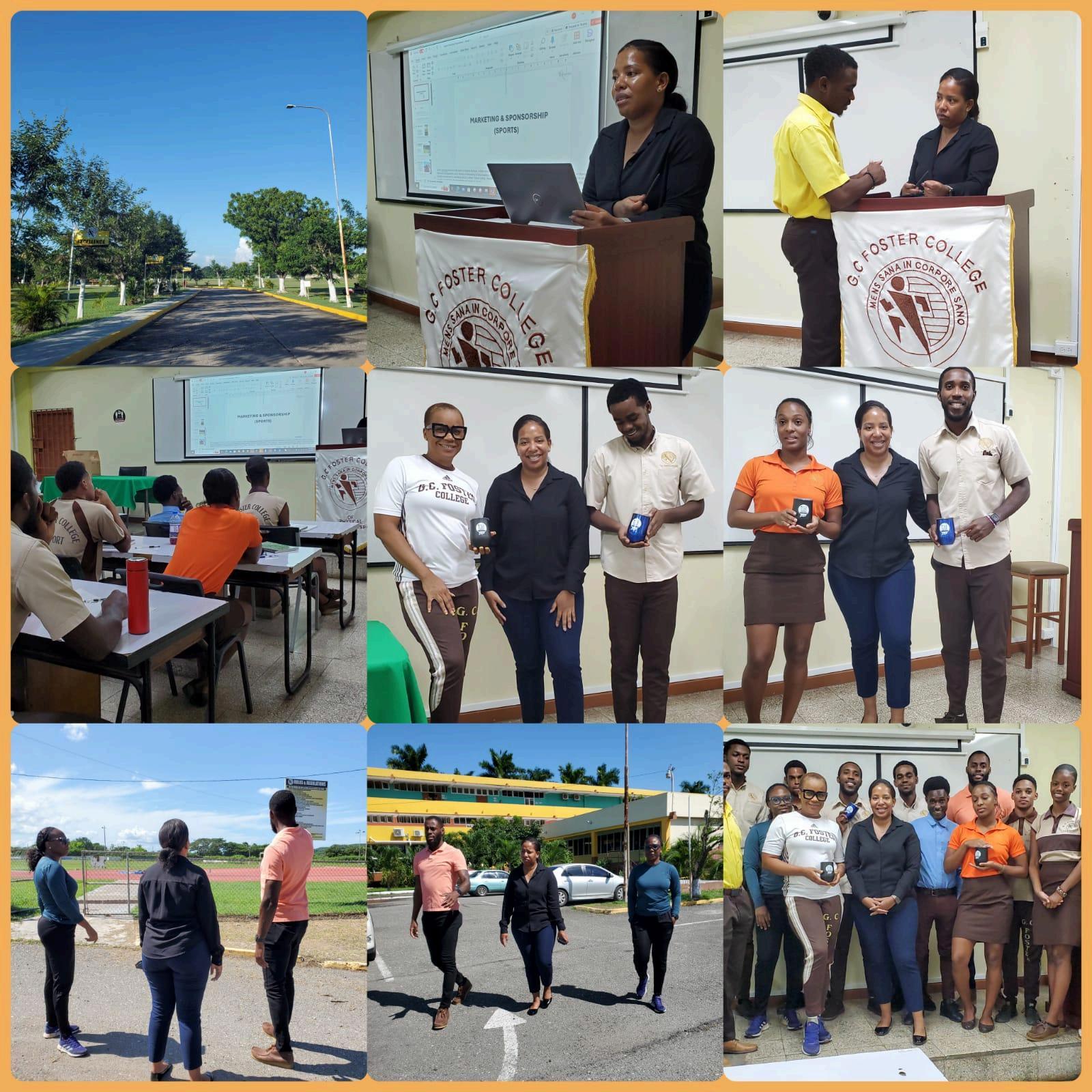
The College hosts courtesy calls from time to time and Ms Ayawna Morgan, Category Manager, Lasco visited and spoke on her role in Sport Marketing She has, among the brands, responsibility for iCool
Fast5 Netball for High Schools
by Lavana Shorter
As Jamaican high schools continue to seek innovative ways to engage students in Physical Education, Fast5 Netball has emerged as a game-changer This condensed, high-energy version of traditional netball offers numerous benefits for students, schools, and the nation
Among the benefits are improved cardiovascular fitness The game enhances cardiovascular endurance, agility and will help to develop strength and endurance
Jamaica has entered since 2009 and has had relative success. This year’s results in 2024 where the team lost every game was a clear indication that it was inexperience that caused the results.
I am of the view that introduction to players at an early stage in the netball career, specifically in high schools, would help to advance the rate at which Jamaica can participate and win.
Introducing Fast5 Netball in Jamaican high schools offers a winning combination of physical, mental, educational, and social benefits. By embracing this exciting format, schools can:
● Enhance student engagement and well-being
● Foster school spirit and community
● Develop future national netball stars
● Win at the global level
Cavauni Gowdie is suggesting that Jamaica’s Footballers require greater overseas exposure In this article he speaks to the path to excellence
Football is often referred to as “the beautiful game,” and its universal appeal transcends borders. For players, the opportunity to gain overseas exposure can be a game-changer. The experience of training, playing, and competing in diverse football environments not only sharpens individual skills but also elevates the overall standard of the game. Club players, in particular, stand to benefit immensely from such opportunities, gaining insights that can be brought back to their home teams, enriching the sport locally.
Why Overseas Exposure Matters
● Enhanced Technical Skills
Exposure to different styles of football allows players to refine their technical abilities. European leagues, for instance, emphasize tactical discipline and precision, while South American leagues are known for their flair and creativity. Training alongside players from these regions equips footballers with a broader skill set that might not be accessible within their domestic setups.
● Increased Tactical Awareness
Football is as much a mental game as it is physical Competing overseas helps players understand varied tactical approaches, such as high pressing, zonal marking, or counter-attacking strategies These insights enable them to adapt to different game situations, making them more versatile and valuable to their teams
● Improved Physical Conditioning
The physical demands of top-tier leagues in Europe or South America often exceed those of smaller leagues Overseas exposure forces players to adapt to higher levels of fitness and endurance This improvement in physical conditioning ensures they can compete at elite levels and raise the intensity of matches when they return home
● Cultural and Psychological Growth
Moving to a new country requires adaptation, not just on the field but off it as well Footballers learn to handle new languages, climates, and cultures. This fosters resilience, a crucial quality for high-pressure scenarios during matches. Moreover, the cultural exchange broadens their perspective and builds camaraderie across borders.
The Impact on Club Football
Overseas exposure doesn’t just benefit individual players; it has a ripple effect on their home clubs and leagues. When players return, they bring with them:
● Innovative Training Techniques: By implementing what they’ve learned, players can inspire teammates and improve overall team performance
● Increased Competitiveness: Clubs gain a competitive edge, raising the standard of the domestic league
● Global Networks: Exposure helps create connections with international clubs, opening doors for future collaborations, scouting opportunities, and joint training programs
Challenges to Overseas Opportunities
While the benefits are evident, accessing overseas exposure is not without its challenges:
● Financial Constraints: For many clubs, especially in developing football nations, funding international stints is difficult.
● Adaptation Struggles: Some players face challenges in adjusting to different climates, food, or languages, which can affect their performance
● Limited Opportunities: The most prestigious leagues often scout only elite players, leaving limited chances for mid-tier or developing talents
Solutions and Recommendations
● Partnerships with Foreign Clubs: Developing exchange programs between clubs can facilitate regular overseas training opportunities for players
● Government and Private Sponsorship: Investments in football development, including funding for overseas exposure, can yield long-term returns for the sport.
● Youth Development Initiatives: Focusing on young talent ensures players are better prepared to adapt when opportunities arise.
Overseas exposure is a critical component for the growth of football players and the sport itself By embracing opportunities abroad, players not only improve their individual skills but also uplift their clubs and leagues To truly unlock the potential of football globally, stakeholders must work together to ensure more players gain access to this invaluable experience After all, the lessons learned overseas have the power to shape the future of football everywhere
Opportunities for Branding of Jamaican Track and Field Athletes
By James M. Tucker
It has long been acknowledged that Jamaican track and field athletes are among the world's most talented and accomplished athletes Jamaican sprinters and long-distance runners have won gold at international championships on a regular basis, from the great Usain Bolt to the up-and-coming talents like Elaine Thompson-Herah, Shelly-Ann Fraser-Pryce, and others Beyond their sporting accomplishments, Jamaican track athletes are also starting to gain from brand ambassador opportunities. These collaborations can yield substantial benefits on both a professional and personal level, enhancing the athlete's brand and matching them with businesses that share their achievements and beliefs.
Increasing Athlete Earnings to Generate Revenue
Financial incentives may be scarce for many track and field athletes, especially those who do not compete at the highest level. Although international companies like Puma, Nike, and Adidas frequently sponsor athletes, these deals are typically only offered to the most well-known athletes. However, by promoting goods, services, and lifestyle companies, brand ambassador positions give athletes additional ways to make money.
For instance, athletes can sign endorsement contracts with businesses that sell everything from luxury goods like watches and cars to energy pills and sports drink brands Particularly for Jamaican athletes who can have shorter competitive seasons or experience financial instability because of the sport's unpredictability, these contracts provide other revenue streams
Long-Term Professional Development
Particularly for sprinters, whose prime years can span from their early twenties to their early thirties, track and field careers are usually brief By assisting them in developing a personal brand that they can use when they retire or move into other positions like coaching, the media, or public speaking, brand ambassadorship can help athletes advance their careers off the track
After their athletic careers are ended, athletes who establish a strong brand presence can continue to be seen In addition to her athletic career, Jamaican sprinter Shelly-Ann Fraser-Pryce, also known as "Mommy Rocket," has endorsed brands, guaranteeing that she would continue to interact with the public beyond retirement Both the athlete and the sponsoring companies gain from this sustained involvement
Greater Recognition and Visibility Worldwide
Because of their track achievements, Jamaican athletes are already well-known throughout the world, but possibilities to serve as brand ambassadors increase their exposure in other markets Through partnerships with well-known companies, sportsmen can reach a wider audience outside of the sports industry and have more clout with supporters and prospective
Foster Times - a publication of the 2B Coaching Group - 2024 - GC Foster College of Physical Education and Sport, Angel, Spanish Town, St Catherine - JAMAICA ®
buyers
Consider the partnership between Puma and Usain Bolt Even though Bolt was already well-known throughout the world for his sprinting skills, his collaboration with Puma, which continued beyond his career, gave rise to a multifaceted brand Bolt transformed from an athlete to a commercial tycoon and world ambassador through products, media appearances, and international campaigns
Through these chances, athletes are exposed to a variety of industries, including media, technology, and fashion, reaching new audiences who might not otherwise be interested in track and field
Encouraging Social Impact and Community Empowerment
Jamaican sportsmen can also use their status to support significant social causes by serving as brand ambassadors. Track athletes can significantly impact their communities by collaborating with socially conscious companies or starting their own projects. Brand ambassadors can play a critical role in advancing social causes that align with their own values and their fan base, whether it be through supporting educational initiatives, raising awareness of mental health issues, or encouraging ecological practices. For instance, Jamaican athletes have advocated for gender equality, sport education, and youth development initiatives through their platforms Athletes like Fraser-Pryce, who is very active in the community, frequently utilize their alliances to fund charitable causes or encourage constructive change in the nation Beyond their achievements on the track, these kinds of collaborations have the power to solidify an athlete's legacy
Increasing Prospects for the Upcoming Generation
Future generations of Jamaican track athletes will benefit from the success of established athletes in landing brand ambassador positions Emerging Jamaican talent will have more chances to establish connections with brands as the market for athlete endorsements expands, which might help them with their training, competition schedules, and career longevity
Younger athletes, for example, can get help getting sponsorships and endorsements before they become well-known worldwide Developing a strong personal brand, creating marketable values, and forming connections with well-known brands early in their careers are frequently the causes of these collaborations. This establishes a sustainable strategy for Jamaica's track & field scene by allowing the athletes of the future to gain from the success and expertise of present brand ambassadors.
Conclusion
Opportunities for Jamaican track athletes to serve as brand ambassadors are advantageous for both parties. They give athletes a route to long-term career possibilities, increased visibility, and financial security. Brands also have access to influential role models who motivate millions of people around the globe. It's not enough for Jamaican athletes to run faster, jump higher, or cross the finish line first. It's about creating a legacy that benefits themselves, their communities, and the world market both on and off the track.
The sponsorship prospects for Jamaican athletes will only grow as the world continues to witness their amazing exploits, enhancing Jamaica's standing as a major force in track and field as well as the global sports branding scene.
"Kicking it Up a Notch: Revitalizing Jamaica's Football League" by Joel
McLean
As a proud Jamaican and an avid football fan, it's disheartening to see the state of our national football league Despite having a rich football history and producing talented players like Raheem Sterling and Leon Bailey, our league continues to struggle In this article, we'll explore the challenges facing the Jamaica Football Federation (JFF) and propose solutions to revitalize the sport
The Jamaica Football Federation (JFF) has faced numerous challenges in recent years, including financial struggles, poor infrastructure, and a lack of investment in grassroots programs. These issues have resulted in a decline in the quality of play, low attendance figures, and a lack of competitiveness in regional and international tournaments.
PROPOSING SOLUTIONS
To address these challenges, we propose the following solutions:
● Increase Investment in Grassroots Programs: The JFF should invest more in grassroots programs, such as youth leagues and coaching clinics, to develop the skills of young players and increase participation in the sport.
● Improve Infrastructure: The JFF should work with the government and private sector to improve the infrastructure of football stadiums and fields across the island.
● Enhance Marketing and Promotion: The JFF should develop a comprehensive marketing and promotion strategy to increase awareness and excitement about the league, including social media campaigns, sponsorships, and community outreach programs
Tennis Jamaica: Developing the Next Generation of Players - Kimani Fletcher
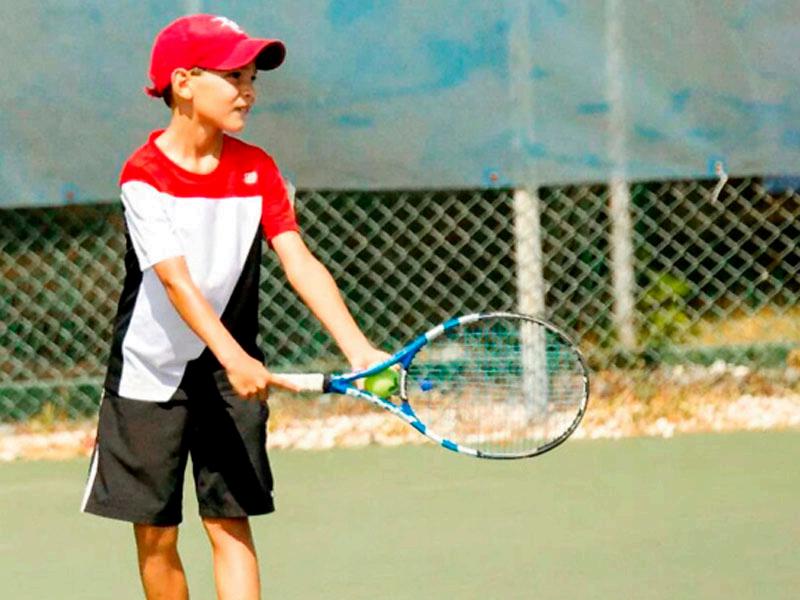
Tennis Jamaica, led by President John P. Azar, is forging new paths for young sportsmen to succeed. The organization is committed to introducing young Jamaicans to tennis through initiatives such as "Play and Stay,"
The "Play and Stay" initiative is designed to make tennis more accessible and enjoyable for young athletes by modifying courts and equipment to suit beginners This approach helps children build essential skills like coordination through smaller courts, softer balls, and lower nets As a result, kids can develop hand-eye coordination and motor skills while feeling less overwhelmed
Furthermore, the program promotes cooperation by urging kids to cooperate and help one another through doubles play This collaboration helps them play better and teaches them valuable life lessons Little setbacks help kids grow resilient and confident, which boosts their self-esteem and prepares them for the trials of life These programs help young players immediately develop core skills and confidence through a combination of talent and enjoyment
Additionally, Tennis Jamaica hosts youth tournaments to foster a feeling of community and offer vital experience In order to guarantee that every child receives personalized guidance and encouragement, certified coaches provide mentorship programs Through partnerships with communities and schools, Tennis Jamaica can reach a wider audience and develop talent throughout Jamaica
Since its first World Championship in 1963, netball has grown from a relatively niche sport into a global phenomenon This growth, however, has been uneven, with funding playing a pivotal role in shaping the sport’s trajectory Over the past six decades, financial support for netball has evolved, but challenges remain in achieving parity with other sports
1960s-1970s: grassroots Beginning and Minimal Funding
The inaugural Netball World Championship in 1963, held in England, marked the sport’s international debut At the time, funding for netball was minimal, relying heavily on volunteers, community support, and limited government assistance The Sport was largely amateur, with players and coaches often self-funding their participation in national and international events
Infrastructure was basic, and training programs depended on local clubs and schools. Despite these challenges, netball flourished at the grassroots level, particularly in Commonwealth nations such as Australia, New Zealand, and England.
1980s-1990s: Incremental Progress and Sponsorship
The 1980s saw incremental growth in funding as netball gained more recognition National governing bodies began receiving modest grants from governments and sports councils Sponsorship also started emerging, though they were often small and limited to regional competitions
By the 1990s professionalization in sports globally began influencing netball The introduction of leagues such as Australia’s Commonwealth Bank Trophy (1997) marked a significant shift However, the funding gap between netball and other major sports like rugby and cricket remained substantial
2000s: Professionalization and Increased Investment
The 2000s ushered in a new era for netball, with increased media coverage and sponsorship deals Landmark events such the 2002 Commonwealth Games in Manchester elevated the sport’s profile Governments and sponsors started recognizing netball’s potential as a tool for community development, particularly for empowering women and girls
Professional leagues like the ANZ Championship (launched in 2008 in Australia and New Zealand) highlighted the sport’s growing commercial appeal However, funding disparities persisted, particularly for nations outside the Commonwealth powerhouses
2010s: A Global Spotlight
The 2010s were transformative for netball Events such as the 2015 Netball World Cup in Sydney broke attendance and viewership records, showcasing the sport’s growing global appeal
In England, netball experienced a breakthrough moment when the national team, the Roses, won gold at the 2018 Commonwealth Games. This success triggered a surge in funding, including a landmark investment of £16.9 million by Sport England (2017-2021). Corporate sponsorship, such as those with vitality, further bolstered the sport.
Foster Times - a publication of the 2B Coaching Group - 2024 - GC Foster College of Physical Education and Sport, Angel, Spanish Town, St Catherine - JAMAICA ®
Meanwhile, international leagues like Australia’s Super Netball attracted significant investments, allowing athletes to pursue professional careers However, smaller nations continue to struggle, relying on external grants and donations to sustain their program
2020: Challenges and Opportunities
Netball faced new challenges in the 2020s, particularly during the COVID-19 pandemic The disruption impacted revenue streams from ticket sales and sponsorship, forcing many organizations to adapt Despite these setbacks, there were significant investments in digital platforms and broadcast deals, ensuring the sport remained accessible to fans worldwide
Efforts to close the funding gap for developing nations also gained momentum Initiatives by the International Netball Federation, now World Netball, provided grants to emerging teams
However, systemic funding disparities remained evident Prime Example while Australia’s Super Netball boasted multimillion-dollar broadcast deals, nations like Malawi and Uganda relied on inconsistent funding for international tournaments
Key Funding Milestones (1963-2023)
1963: Inaugural Netball World Championship held minimal funding
1997: Launch of Australia’s Commonwealth Bank Trophy, one of the first professional leagues
2008: Establishment of the ANZ Championship, boasting professional opportunities
2017: Sport England’s £16 9 million funding for grassroots and elite programs in the UK
2021: World Netball launches new global sponsorships and development grants
Key Funding Milestones (1963-2023)
From humble beginnings in 1963 to the professional era of 2023 netball has made significant strides However, to ensure sustainable growth, stakeholders must address funding disparities Investments in emerging nations, grassroots programs, and professional leagues will be crucial for the sport’s future
As netball continues its journey, equitable funding will determine whether it can fully realize its potential as a truly global and inclusive sport
Is Test Cricket Dead?
by Cavauni Gowdie
The region’s team, West Indies is playing host to Bangladesh which with all the forms of the game being played Sabina Park is due to host the second Test, November 30 to December 4. I don’t think more than 500 people will go to Sabina Park to watch.
Test Cricket has traditionally been watched by a dedicated and passionate fan base While viewership numbers can vary depending on the series and location Cricket enthusiasts and die-hard cricket fans who follow the sport closely and watch test cricket matches regularly.
Sports enthusiasts: Viewers who enjoy watching various sports, including cricket, and may tune in to test cricket matches occasionally National pride supporters: Fans who support their national team and watch test cricket matches to cheer them on
New and casual fans: With the rise of online streaming and social media, test cricket has attracted new and casual fans who may not have watched the sport before
In terms of specific numbers, according to recent reports, the 2022 test series between Pakistan and England drew significant viewership, with millions of fans turning in worldwide
The big question is, what can the West Indies do to win fans back to that format of the game?
Football needs new approach to grow the sport - Davain Spencer
The organization lacks sufficient components and a foundation for players and supporters. There is no professional setup here, many parents might not be comfortable with a group of young Jamaicans starting their school careers playing football.
Compared to one of our traditional high schools, I don't know many Jamaican parents who would choose to send their exceptionally talented child to a football academy The football academy would therefore be at risk of losing our brightest young brains There is not the same guarantee in Jamaica as there was in Germany that the best talent would earn a decent livelihood from the game, and some parents would be reluctant to have their children in such a programme.
The idea of specialized training for gifted footballers in an academy-type structure must, however, be encouraged I am not prepared to throw out the idea altogether, and what I would suggest is that we try to modify the concept a bit I advise the JFF to look into the concept of parish academies as an alternative to having a central, live-in academy Therefore, they would choose the top football players, say those aged 13 and under, from each of the 14 parishes and have them attend specialized training each weekend On holidays, they would also stay longer
Each parish could have a school connected to this initiative Therefore, STETHS may serve as the parish's home base for the youth of St. Elizabeth. In Hanover and Manchester, respectively, Rusea's and Manchester High might also be home bases for others. Every Saturday, the young football players participated in two training sessions where they were exposed to the best instructors in the area. The finest of them would join the national Under-17 team after spending three seasons in this parish-style environment.
Foster Times - a publication of the 2B Coaching Group - 2024 - GC Foster College of Physical Education and Sport, Angel, Spanish Town, St Catherine - JAMAICA ®
To heighten the interest in this programme, we would then have a competition for those 14 parish academies where the winning team and coach would be given all the plaudits when it is all over One may select an all-academy team at the conclusion of the competition and perhaps force them to fly abroad to play against young people in a comparable age range
In addition to providing the young people with a prize of some kind, this would guarantee that they had something to strive for and, as a result, give it their all.
In sports, sponsorship is usually crucial, therefore any program would obviously need a lot of funding. These parish programs should receive a monthly grant from the JFF, the Premier League Clubs Association, and similar organizations; nevertheless, the parish associations would be responsible for helping to fund these costs.
Nearly 300 young football players would be ready for the future if we had 14 parishes working with the best talent certain will inevitably be forgotten, but eventually we will find certain treasures that will be beneficial to us
Hockey needs new turf
by Matthew Ellis
Hockey, a sport synonymous with skill, teamwork, and athleticism, is gaining traction in Jamaica Despite the country's rich sporting culture, which has predominantly focused on Track and Field and Football, there is a growing recognition of the need to diversify the sporting landscape. A new hockey turf presents an invaluable opportunity for Jamaica and its government not only to promote the sport but also to reap a multitude of social and economic benefits.
The construction of a new hockey turf will reflect the government's commitment to enhancing sports’ infrastructure within the country Currently, many aspiring hockey players are confined to makeshift surfaces that do not meet international standards A dedicated facility with high-quality turf is crucial to attracting national and international competitions, which could elevate Jamaica’s standing on the global sports stage This development aligns with Jamaica’s vision to be a leader in sports and recreation, championing events that could foster a spirit of national pride
Investing in a new hockey turf is an investment in the future of Jamaican sports With a proper facility, there is potential to discover and nurture young hockey talent athletes who could one day represent Jamaica at the Olympics and other prestigious international competitions By providing robust training environments, the government can help create pathways for athletes to excel, bringing recognition to Jamaica as a nation capable of competing on the world stage
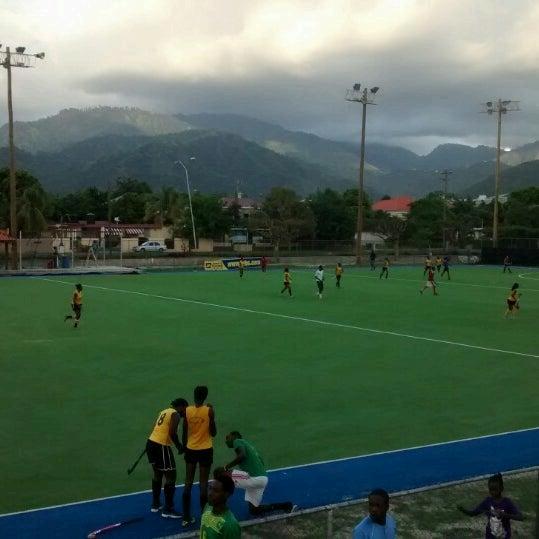
The importance of a new hockey turf in Jamaica transcends the confines of the sport itself It stands to benefit the nation economically and socially while fostering a culture of unity and promoting physical fitness among the population As the Jamaican government continues to seek avenues for growth and development, the establishment of a state-of-the-art hockey facility should be a priority Embracing this vision will not only elevate the sport of hockey but will also contribute to the overall well-being and Foster Times - a publication of the 2B Coaching Group - 2024 -
prosperity of the nation In doing so, Jamaica can carve out a new niche in the global sports arena, showcasing its rich potential and indomitable spirit
Foster Times - a publication of the 2B Coaching Group - 2024 - GC Foster College of Physical Education and Sport, Angel, Spanish Town, St Catherine - JAMAICA ®
“Pin