Why SMEs Struggle with ERP Solutions Implementation
(And How to Fix It)

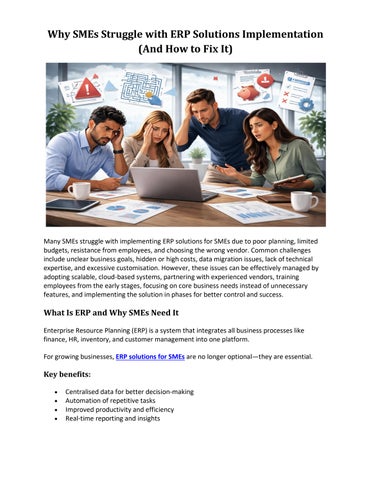
Many SMEs struggle with implementing ERP solutions for SMEs due to poor planning, limited budgets, resistance from employees, and choosing the wrong vendor. Common challenges include unclear business goals, hidden or high costs, data migration issues, lack of technical expertise, and excessive customisation. However, these issues can be effectively managed by adopting scalable, cloud-based systems, partnering with experienced vendors, training employees from the early stages, focusing on core business needs instead of unnecessary features, and implementing the solution in phases for better control and success.
What Is ERP and Why SMEs Need It
Enterprise Resource Planning (ERP) is a system that integrates all business processes like finance, HR, inventory, and customer management into one platform.
For growing businesses, ERP solutions for SMEs are no longer optional they are essential.
Key benefits:
Centralised data for better decision-making
Automation of repetitive tasks
Improved productivity and efficiency
Real-time reporting and insights
Modern ERP systems also support cloud integration services, making them more flexible and accessible for small and mid-sized businesses.
Top Reasons SMEs Struggle with ERP Implementation
1. Lack of Clear Business Goals
Many SMEs start ERP projects without defining what they want to achieve.
Impact: Confusion, delays, and poor ROI
Fix: Define clear KPIs like cost reduction, faster reporting, or improved inventory control
2. Budget Constraints & Hidden Costs
ERP projects often exceed initial budgets due to licensing, training, and maintenance costs.
Fix:
Choose scalable and modular systems
Opt for cloud-based ERP to reduce upfront investment
3. Resistance to Change
Employees are often reluctant to adopt new systems.
Impact: Low adoption rates and inefficiency
Fix:
Conduct proper training sessions
Communicate benefits clearly
Involve teams early
4.
Poor Vendor Selection
Choosing the wrong ERP provider can lead to long-term issues.
Fix:
Look for expertise in ERP solutions development
Select vendors experienced in your industry
Check client case studies
5. Data Migration Challenges
Transferring data from old systems is complex and risky.
Clean and validate data before migration
Use professional cloud integration services
Run test migrations
6. Lack of Skilled Resources
Many SMEs don’t have in-house ERP experts.
Fix:
Partner with experienced IT consultants
Invest in employee training
Use external support for implementation
7. Over-Customisation
Trying to customise everything increases complexity and cost.
Fix:
Stick to standard features where possible
Use custom CRM development only where it adds real value
Real-World Impact of Failed ERP Implementation
When ERP implementation goes wrong, SMEs face:
Operational delays and disruptions
Increased costs and budget overruns
Employee frustration and low productivity
Poor customer experience
Missed growth opportunities
This is why choosing the right IT solutions for startups and SMEs is critical.
How to Successfully Implement ERP in SMEs (Step-by-Step
Step 1: Define Business Objectives
Identify your business goals and expected outcomes.
Guide)
Step 2: Choose the Right ERP System
Select a system that aligns with your industry and growth plans.
Step 3: Set a Realistic Budget
Include hidden costs like training and maintenance.
Step 4: Build a Skilled Implementation Team
Combine internal staff with external experts.
Step 5: Plan Data Migration Carefully
Ensure data accuracy and consistency.
Step 6: Train Employees Effectively
Focus on hands-on training sessions.
Step 7: Test Before Full Deployment
Run pilot tests to identify issues early.
Step 8: Monitor & Optimise Continuously
ERP implementation is an ongoing process.
Cloud ERP vs On-Premise ERP for SMEs
Recommendation:
Cloud-based ERP with scalable tech solutions is ideal for SMEs due to flexibility and costeffectiveness.