Contents

Welcome to the conversation.
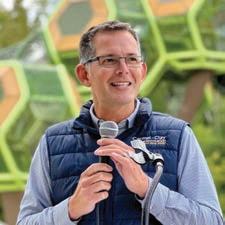
At the beginning of all successful endeavors, leaders play an impactful role in creating a mission and strategy for the future. This issue of Park Conversations celebrates the forward-thinking visionaries who, 35 years ago, set Carmel Clay Parks & Recreation on a path to protect greenspaces, serve as stewards of nature and wellness, and strengthen our community through shared, engaging places.
You’ll also find stories of determination, healing, selfless community service, and commitment to physical well-being. As we celebrate 35 years of helping make Carmel the best place to live, work, and play, we look forward to continuing to create exceptional experiences for you and generations to come.
Regards,
Michael Klitzing, CPRE Director of Parks and Recreation/CEO
For
COUNSELOR CAMPER CAMPER COUNSELOR FROM TO
Belonging shapes Carmel Clay Parks & Recreation Summer Camps.
By Patricia Pickett
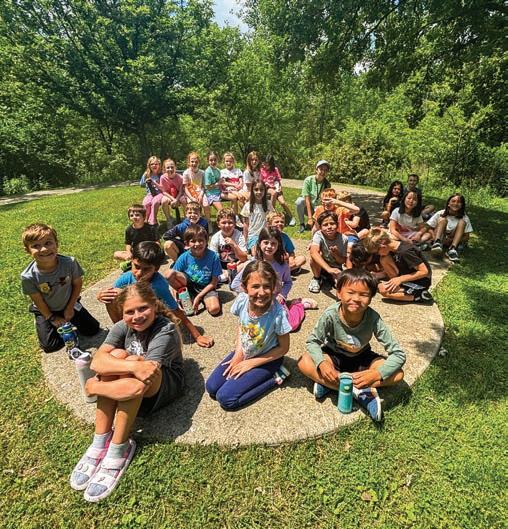
For thousands of families each summer, Carmel Clay Parks & Recreation (CCPR) camps are more than a place to spend summer break—they are a place to belong. That sense of connection is intentional, cultivated year after year through caring staff, engaging programming and relationships that often span a child’s entire youth. One of the clearest expressions of that belonging is seen when campers grow up and return—not as participants, but as mentors.
“It’s one of my favorite parts of the job,” said Jennifer Brown, Director of Extended School Enrichment (ESE) and Summer Camps. “When kids come back to work for us, it tells us they felt safe, supported, and valued here.”
One such journey belongs to Sara Keating. As a child, Sara spent her summers enrolled in Adventures in Art, returning year after year. When she was 11, she joined IMPACT, the department’s junior counselor program, where teens begin learning leadership skills while still experiencing camp from a camper’s perspective.
Once she turned 16, applying to become a camp counselor felt like a natural next step. “Working as a camp counselor is such a great experience with incredible kids and coworkers,” she said.
“You get to relive being a kid as a counselor and it’s so much fun.”
That progression — from camper to junior counselor to staff member — is not uncommon. It’s a pattern staff see repeatedly, and one that speaks volumes about the culture within CCPR camps.
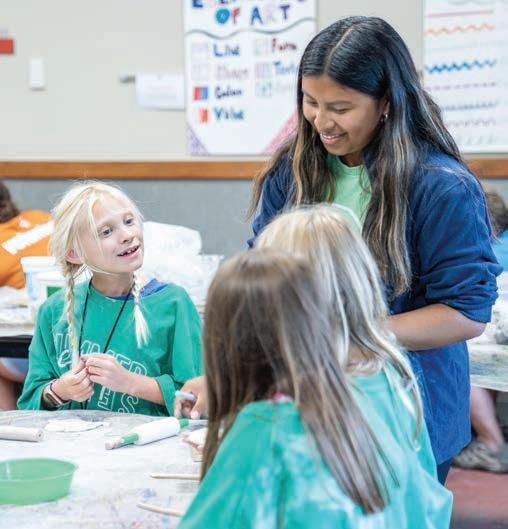
“If a camper feels that sense of belonging,” Brown explained, “they often want to give that feeling back. They remember what it was like to be the kid who needed encouragement, friendship or understanding.”
That perspective can be powerful. Former campers turned counselors often bring empathy to their roles, especially those who struggled socially or behaviorally as children. “I’ve heard some of them say, ‘I know I was a handful,’” Brown said, laughing. “Now they understand what those kids are going through, and it helps them support campers better.”
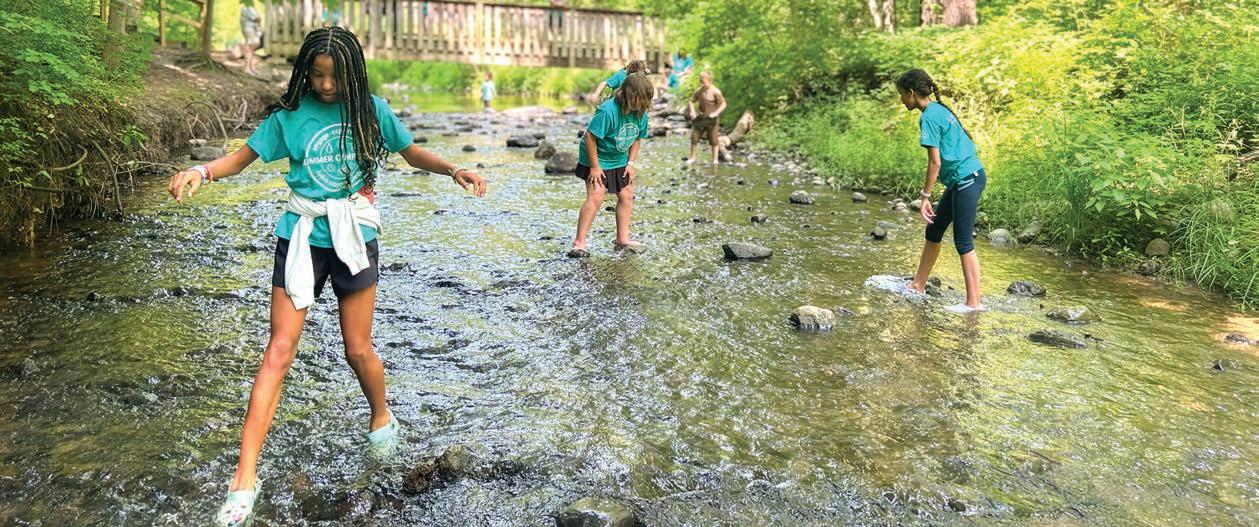
Marlee Russell is another example. She began attending ESE and summer camps at just four or five years old and stayed until she aged out. Today, she works as a counselor, facilitating activities and supporting children at Carmel Elementary. Reuniting with former counselors who once mentored her has been especially meaningful.
“I want to impact their lives,” Russell said. “Camp is a place where kids can have fun, blow off steam, and feel excited to be themselves. I loved it so much growing up and I couldn’t imagine not coming back.”
In 2025 alone, Carmel Clay Parks & Recreation recorded more than 7,200 summer camp enrollments over a nine-week period. ESE serves approximately 2,300 children during the school year, often welcoming families when children are incoming kindergarteners and staying connected through their teenage years. Unlike traditional classroom settings, staff may work with the same children for a decade or more.
“We’re part of their village,” Brown said. “We celebrate milestones, we watch them grow and we genuinely care about their happiness and safety.”
That commitment is reflected not only in stories, but in standards. In November of 2025, ESE received reaccreditation from the American Camp Association (ACA), recognizing the program’s excellence in safety, staff training and youth development.
Ultimately, whether campers return as counselors for a summer or discover a lifelong calling in youth development, it says the same thing: they belonged here. And now, they’re helping ensure the next generation feels the same way.
Steps Toward Strength
A journey of resilience and recovery.
By Grace Fishback
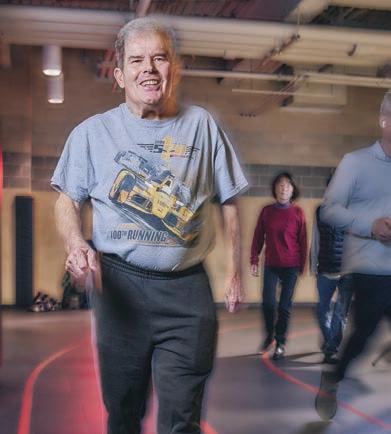
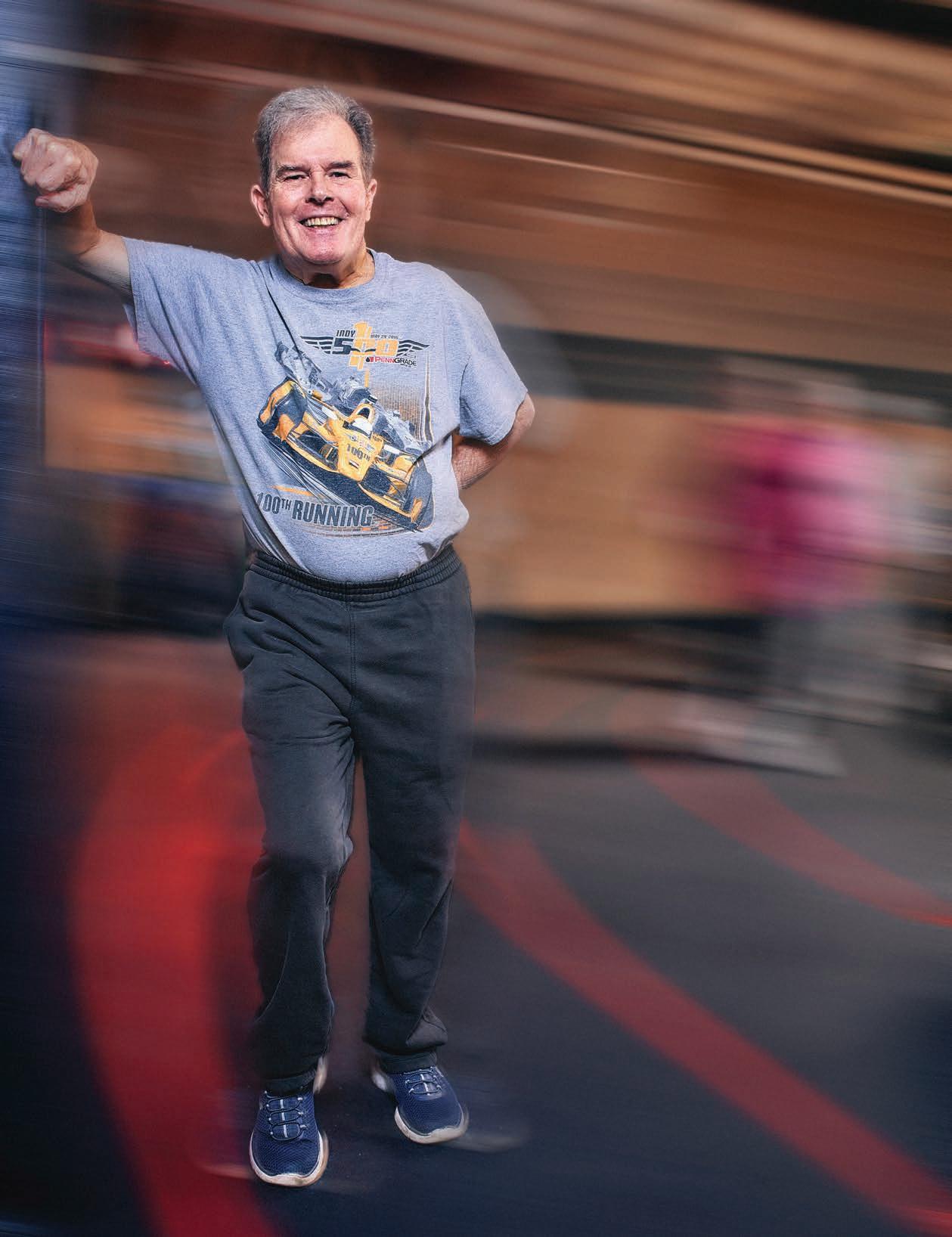
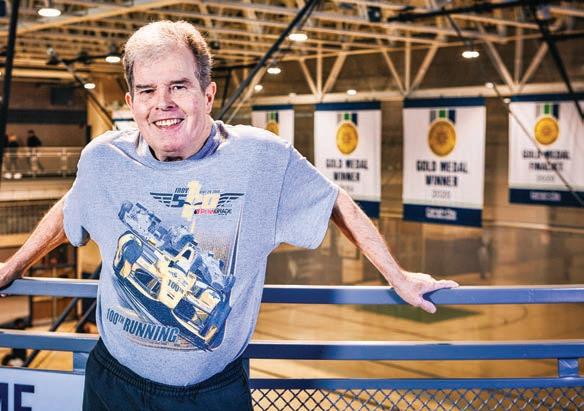
If you visit the Monon Community Center (MCC) on a weekday morning, you might notice Jim Dickerson making steady laps around the indoor track. He walks with purpose, greeting familiar faces and moving with a quiet determination that’s hard to miss. Some days he logs more than 10,000 steps, a remarkable achievement considering where his story began just five years ago.
A Sudden Shift
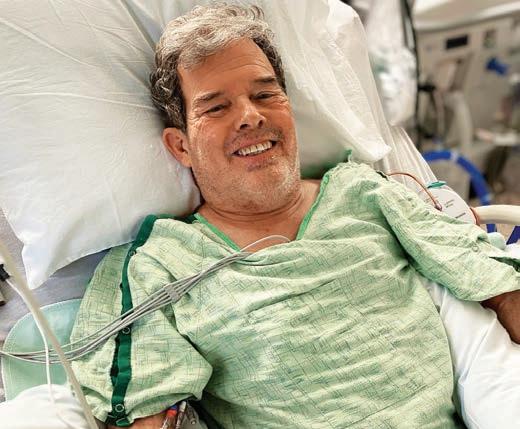
In January 2021, Dickerson woke up to a frightening reality: he couldn’t move. What started as an ordinary morning quickly turned into an emergency as he was rushed to the hospital. There, doctors discovered MRSA, a severe bacterial infection that had spread to his spine and caused significant nerve damage, requiring urgent surgery.
The days that followed were some of the hardest of Dickerson’s life. He spent nearly three months in the hospital and almost 40 days paralyzed, unable to get out of bed. He couldn’t roll over or sit up on his own. The uncertainty of what lay ahead – and the sudden loss of independence – felt overwhelming. Even in the middle of that fear, something inside him refused to give up.
“Those were dark days,” Dickerson said. “I thought I’d spend the rest of my life like that. Slowly, and with immense effort, I began relearning how to move – rolling onto my stomach, pushing myself upright and eventually doing modified exercises from my hospital bed. Inch by inch, I fought my way back.”
Finding His Drive Again
As weeks turned into months, those small efforts began adding up. What started as a few tentative movements eventually grew into hundreds of steps a day, then thousands. Dickerson’s tenacity became one of the most powerful forces in his recovery.
“I’m a retired salesman, and hustling was part of the job. I applied that same determination to my recovery,” explained Dickerson. “You’ve just got to keep moving.”
By the fall of 2021, he was walking with a walker. Early the following year, he no longer needed it. Each milestone, no matter how small, reinforced the idea that progress was possible.
Community and Strength
When his formal physical therapy ended, Dickerson knew he needed a place where he could safely continue rebuilding his strength. Through his SilverSneakers® membership, he discovered the MCC and immediately felt welcomed.
He began by walking on the indoor track, embracing the consistency and routine it offered. Over time, that routine expanded to include yoga classes and winter walks in the pool to help support his joints. Personal trainers offered him tips for managing a herniated disk, and staff members encouraged him at every step.
“It was like a burden had been lifted off me. Knowing I had a space where I could walk safely and at my own pace made all the difference and the MCC became more than a fitness center – it became a home away from home. I formed friendships, found familiar faces to walk beside and discovered a sense of belonging that helped fuel my recovery.”
Moving Forward
Dickerson continues to grow stronger. His wife remains his greatest support, and the connections he’s made at the MCC encourage him on the days he needs it most.
“I’m happy where I’m at, and I’m going to continue to get better,” Dickerson said. “I’m focused on being more consistent, aiming for steady 5,000-step days instead of pushing too hard one day and not enough the next.”
His journey hasn’t been easy, but it’s a reminder that healing rarely happens all at once. It shows up in moments, some difficult and some triumphant, and in the commitment to keep going even when progress feels uncertain.
Now, whether Dickerson is walking the track or pausing to chat with a friend, he can see how far he’s come. Each day brings more strength and confidence, and the MCC is there to help him keep moving forward.
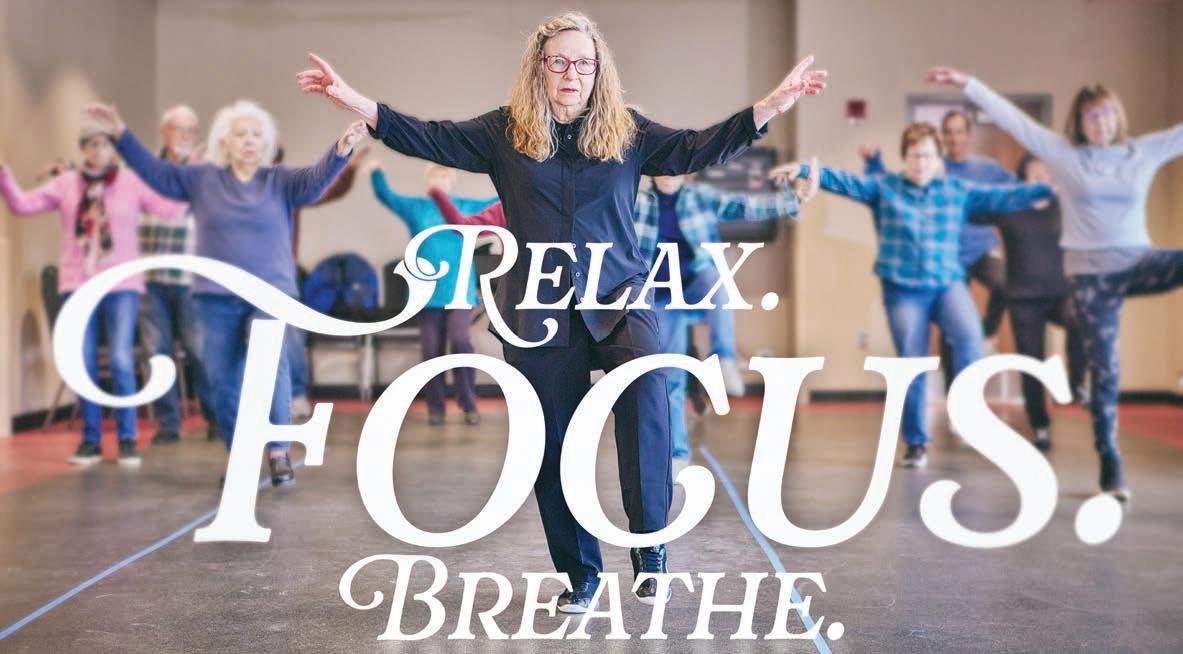
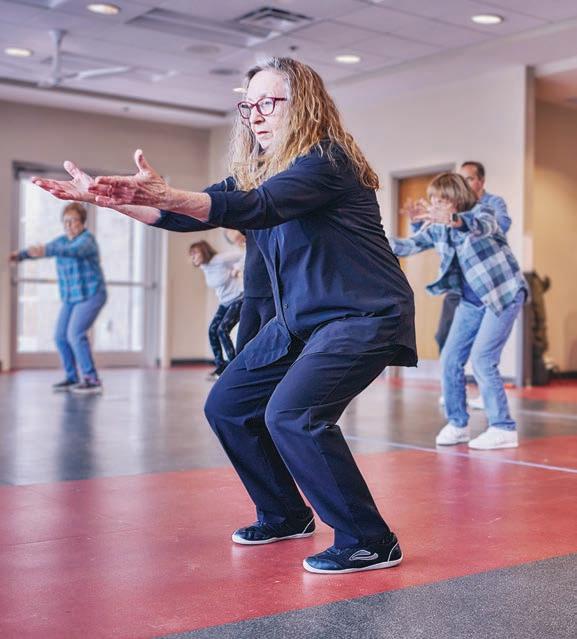
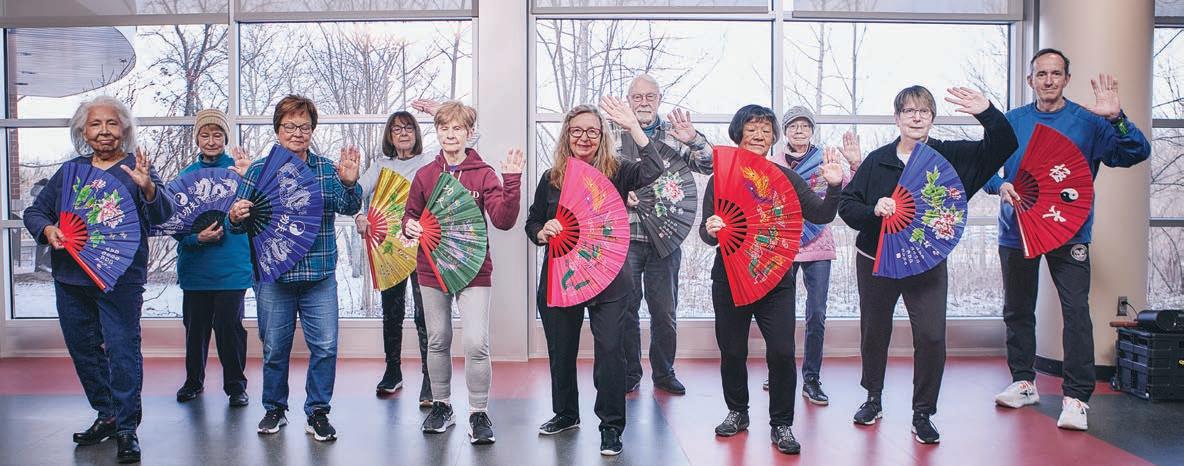
Tai Chi offers multiple class levels to help folks find a mind, body and spirit connection.
By Sheryl Rodgers
It’s as easy as breathing in — and breathing out. You’ve probably heard that saying before, but did you know that your very breath is also described as your Chi and is the energy or life force of all living things? If you are in search of a way to reduce stress, calm yourself, focus on mindfulness in the present, and improve your concentration, Monon Community Center (MCC) fitness instructor Ingrid Ritchie says Tai Chi may be just the activity for you.
“One of the exciting things about Tai Chi is that it is an activity for folks at any age with a wide range of fitness levels,” shared Ritchie. “I’ve taught classes that included pre-teens all the way up to a gentleman in his mid-90s. What is unique about Tai Chi is that it is highly adaptable to fit everyone’s needs or limitations.”
Growing up, Ritchie watched her farming family work hard but noticed few social activity options as they got older, especially for those nearing or in retirement. As the university-level instructor progressed through her own career, she knew
that once retirement was near, she wanted to find activities that offered both health-focused exercise to keep her moving and opportunities for socialization.
In her search post-retirement to find that mix of exercise and community, Ritchie saw an advertisement for a Tai Chi class and gave it a try. She was instantly hooked by the flowing — yet deliberate and intentional — movements of the class combined with the relaxation benefits of a complete and rewarding mind-body-spirit experience.
“I’ve been teaching Tai Chi at the MCC for over five years now, and I know that each person is searching for something specific from the class that will help their overall health and wellness goals,” Ritche said. “Not everyone is searching for the same health outcome. Tai Chi is a come-one-come-all form of exercise that offers a multitude of take aways for class goers depending on what they are seeking.”
Tai Chi provides a mind-body-spirit exercise that integrates the mind with the body and does so through movement, visualization and the ability to use breathing techniques for many benefits including:
• Strengthening physical balance
• Stress reduction
• Integration of physical balance with the mind
• Spiritual, yet not religious, support
• Lowering blood pressure
• Memory, focus and concentration
• Support in slowing chronic disease progression
“For many, Tai Chi offers benefits for individuals with chronic disease and has been proven to help support the slowing of disease progression,” shared Ritchie. “For both patients with Parkinson’s and Alzheimer’s, among many other diseases, scientific research indicates training the brain to focus and concentrate on a new activity, along with improved physical coordination through Tai Chi, is beneficial to longevity.”
As an instructor, Ritchie went through a rigorous training certification with the Tai Chi for Health Institute, an organization that values quality control and offers training on how to teach a myriad of routines, modify movements for folks with limitations, and how to recognize when class participants need help adapting the movements.
Her vast teaching knowledge often comes in handy during her 10-plus hours of instruction each week. Beyond the joy Ritchie takes from teaching is a sense of camaraderie and community that she shares with her class.
“If I think back to my childhood and my keen understanding even then of the need for socialization as part of a healthy lifestyle, Tai Chi has offered me the opportunity to find community and keep moving physically postretirement.”
“It’s a wellness win-win and I get to contribute to others in a way that makes their life better, healthier, more mindful, focused and relaxed.” Tai Chi began centuries ago as a martial arts activity and has evolved into a wellness activity that we today use to focus and improve our own personal wellness. The flow of the Chi — that simple breathe in, breathe out philosophy that provides us basic life energy may be exactly what we all need to slow down, relax and become connected with our mind, our body, our spirit, and our community.
Preserving Natural Greenspace It’s in Our DNA
For over 35 years, CCPR has worked to preserve Carmel’s natural spaces and has had the vision to create a park system that serves all.
By Sheryl Rodgers
Doesn’t everyone love a birthday party? Especially a celebration that includes forwardthinking visionaries, nature and health stewards, greenspace creators and protectors, dedicated supporters, and an unwavering commitment to maintain and grow our community bond through shared and interactive spaces. Happy 35th birthday, Carmel Clay Parks & Recreation (CCPR)!
In 1988, the City of Carmel was in the throes of a boom in building and development. A group of concerned and nature-minded residents formed the organization Citizens for Greenspace with a dedication to preserving open greenspace for the community amidst expanding construction.
Another local group of parents formed the Community Build Playground Project working to ensure that a public playground — at the time called Carmelot and now Gray Road Park — was available to the community for safe and creative outdoor play for kids.
“These two groups understood that if as a community we didn’t start to preserve some amount of greenspace as parkland that it was going to become increasingly difficult to do so as Carmel grew,” shared Michael Klitzing, Director/ CEO. “Ultimately, these efforts highlighted the need to plan for parks, and on August 20, 1991, elected officials from Clay Township and the City signed an interlocal agreement that formally created CCPR.”
Thriving Foundation Sets Its Sights on the Future Today, CCPR serves more than 6.3 million people who come to visit the parks system and, in turn, the Carmel community, bringing economic impact to local businesses, attractions and restaurants. Notably, most of these visits are made by city residents.
“We are providing an outlet for exercise, for getting out into nature, and offering safe places to take kids to a park to play,” Klitzing said. “We are significantly contributing to the quality of life for our Carmel residents and beyond. Without our park system, it would still be a beautiful city, but it wouldn’t be the city it is today without our valuable and thriving network of parks and recreational spaces.”
The future looks bright and exciting for Carmel residents. Plans include:
• The development of Bear Creek Park within the northwest corridor of Carmel, with plans to open in 2027/2028.
• Completion of the north extension of the White River Greenway — a major milestone for CCPR — will provide additional recreational amenities in the northeast quadrant of Carmel as well as providing more exposure to the White River, our greatest natural resource for the community.
• Plans are underway to develop a new park east of Old Meridian Street. The 1.6-acre Veterans Park will be thoughtfully designed with direct input from the local veterans community.
• Plans are underway to develop the Autumn Greenway, an east-west corridor that will create a direct connection between Old Meridian Street and Guilford Road. Future phases envision extending the trail from Guilford Road to the Monon Greenway, further enhancing connectivity across the community.
• Planning is also underway for a future northsouth corridor, the Veterans Greenway, which will connect Main Street to the planned Autumn Greenway. The trail is also envisioned to directly link with the future Veterans Park, creating a cohesive and accessible network of community spaces.
Where will Carmel Parks & Recreation be in the next 10-15 years? Klitzing shared that he doesn’t see much change at least from a foundational standpoint with environmental stewardship remaining a cornerstone along with opportunities for the community to participate alongside CCPR as volunteers and citizen scientists.
“It is going to be increasingly challenging to expand our parks with so much of Carmel already developed, but I see us continuing to work closely with Clay Township and the City to identify unique opportunities to grow green spaces, especially in ways that offer a more impactful and expanded footprint.”
In the beginning, committed citizens launched local efforts to preserve open greenspace and mark its importance for the future.
“I don’t see the vision of those grassroots efforts changing much as we plan ahead,” Klitzing said. “We are proud that about 80 percent of our parkland is located in some type of natural resource whether that be woods, prairie or water. I think that original leadership is in our DNA — and we are going to lean into that as we plan for the future.”
1991-2026 THROUGH YEARS
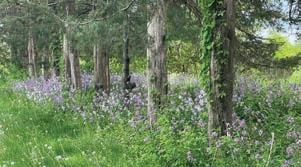
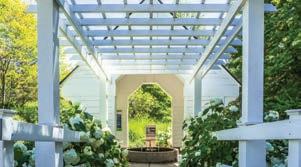
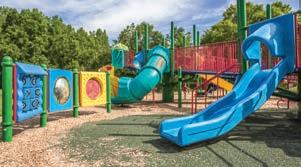
Carey Grove and Flowing Well parks reopen under the Reimagining Parks Initiative that included updated playgrounds, trails and facilities.
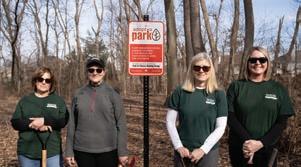
Created the Adopt-A-Park program providing the community support and volunteer opportunities to help maintain parks, trails and natural areas.
Property for Bear Creek Park acquired.
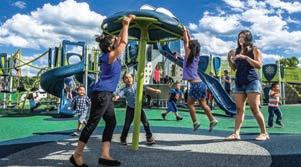
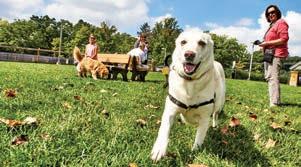
Carmel Clay Parks & Recreation was founded. The first two parks within CCPR were Flowing Well Park and Meadowlark Park.
River Heritage, Prairie Meadow and Hazel Landing Parks were created.
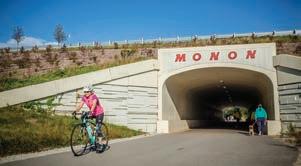
The Monon Greenway opens from 96th Street to 146th Street.
Central Park Dog Park opens.
Westermeier Commons opens at Central Park.
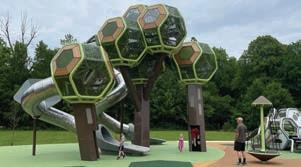
Lawrence W. Inlow, Meadowlark, River Heritage and West parks reopen after the Reimagining Parks initiative.
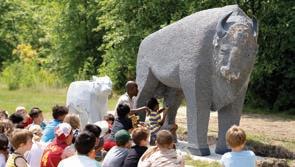
Bison and Calf installed in Central Park, created by internationally renowned sculptor Dominic Benhura.
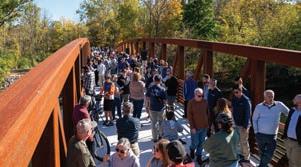
2025
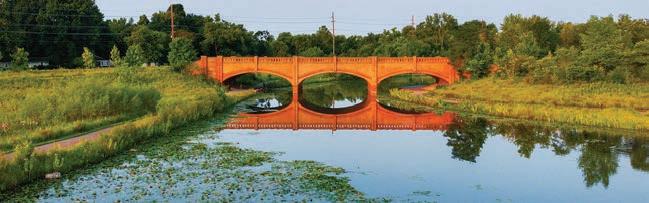
Bur Oak Bridge opens to the public with regional trail connectivity linking Zionsville’s Big-4 Rail Trail, Carmel’s Monon Greenway and Fishers’ Nickel Plate Trail.
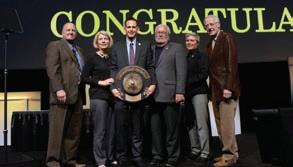
CCPR receives its first of two National Gold Medal Awards from the American Academy for Park and Recreation Administration.
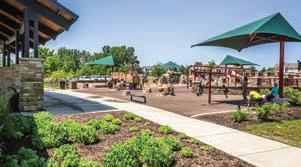
Founder’s Park was dedicated on August 20 and won the Indiana Park & Recreation Association award for Outstanding Park Development.
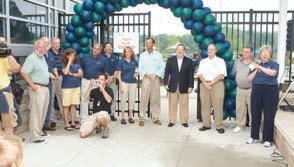
The Monon Community Center (MCC) and The Waterpark opened their doors for the first time over Memorial Day weekend.
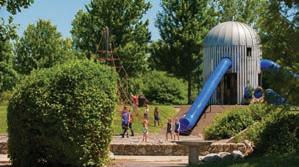
West Park originally opened as a 75-acre park and is currently CCPR’s second-largest park.
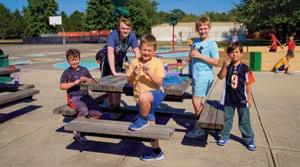
A collaboration with Carmel Clay Schools offering before-and-afterschool care at grade schools began serving local students.
Sue Dillon
A Lasting Legacy of Greenspace, Vision and Community
By Patricia Pickett
For more than four decades, Sue Dillon has been a powerful force behind the evolution of parks and greenspaces in Carmel and Clay Township. As the second longest-serving member and president of the Carmel/Clay Board of Parks and Recreation, Dillon helped shape not only a park system, but a community ethos that values preservation, planning and public engagement.
Dillon’s commitment to parks was deeply rooted in both personal history and civic responsibility. Raised on a farm near Noblesville, she grew up with a natural appreciation for land stewardship and community service.
Education ran strong in her family. Her grandfather served as superintendent of county schools, and her father taught science and math, instilling values that would later guide her volunteer leadership.
After marrying Jim Dillon, whose father had served on the Noblesville Parks Board for decades, Sue’s connection to parks governance became more personal. Following years that included her husband’s medical training, military service, and time on the west side of Indianapolis, the Dillons eventually settled in Carmel, where they lived for more than 42 years.
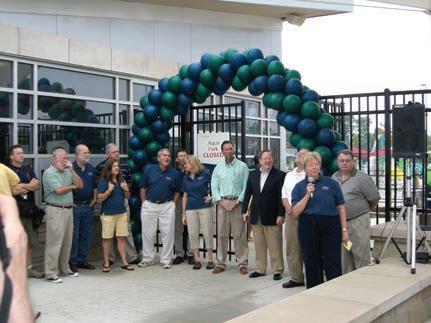
It was there, amid rapid growth and uncertain planning, that Sue Dillon’s advocacy took shape. What began as neighborhood concern quickly evolved into purposeful action. Alongside longtime collaborator Judy Hagan, Dillon helped organize residents to better understand planning and zoning decisions and to engage constructively in the future of their community. That effort led to the founding of Citizens for Greenspace Awareness, an organization that became instrumental in building momentum for a comprehensive parks system.
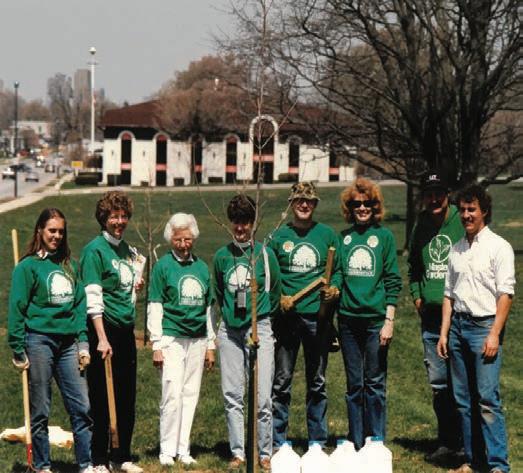
Under Dillon’s leadership, Citizens for Greenspace became known not only for advocacy but for action. The group organized large-scale tree plantings throughout Clay Township, engaging Boy Scouts, Girl Scouts, parents and volunteers. Over the course of two-plus decades, more than 5,000 trees were planted, with thousands of residents participating. Those efforts helped reforest areas like West Park and created a sense of ownership among families who literally put roots into the community.
“If you think about it,” Dillon reflected, “all of those parents and kids who planted trees had a vested interest in our parks.” That philosophy of connection through participation became a hallmark of Carmel’s parks culture.
As the parks department became formally established, Dillon transitioned from citizen advocacy to governance.
She served a total of 16 years on the park board, guiding policy, land acquisition and longrange planning during a period of extraordinary growth. Citizens for Greenspace eventually evolved into the Carmel Clay Parks Foundation, with Dillon playing a key role in the transition. The foundation’s early assets grew into a permanent endowment exceeding $500,000, ensuring long-term support for parks programming and enhancements.
Those who worked alongside Dillon describe her as tireless, optimistic and collaborative. Judy Hagan calls her “a force of nature,” noting that Dillon’s energy and work ethic helped transform parks from an abstract idea into a shared community priority.
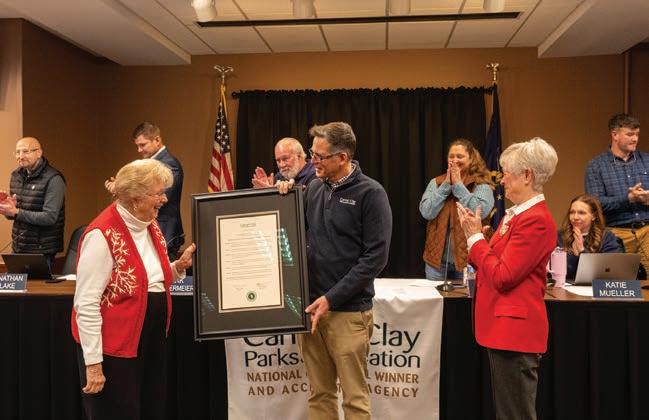
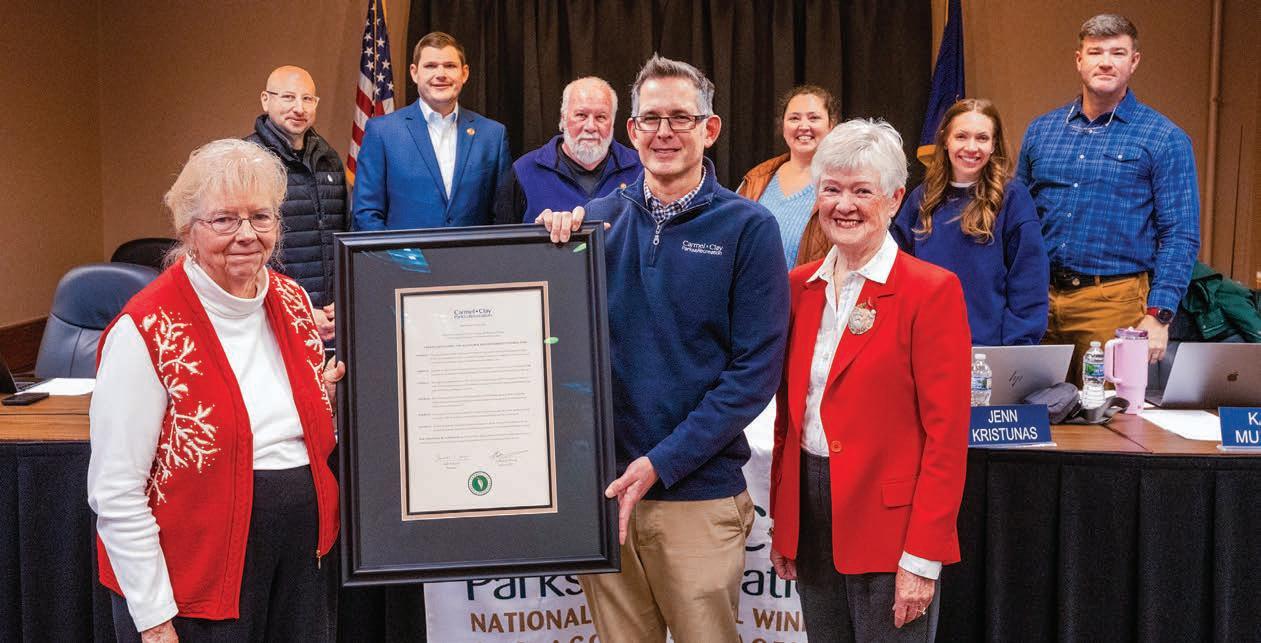
Today, Carmel Clay Parks & Recreation is recognized statewide and nationally for its quality, innovation and professionalism. Dillon is quick to credit staff, leadership and partners for that success, but there is little doubt that her early vision and sustained dedication laid critical groundwork. The Central Park Woodlands (the woods north and south of Central Park Drive East) have been renamed “Susannah H. Dillon Woods” by the Carmel Clay Parks Board, honoring her vision, advocacy and unwavering service.
Reflecting on her journey, Dillon often notes that none of it was planned. “If Judy and I hadn’t met,” she said, “who knows?”
Yet decades of collaboration, friendship and shared purpose has left a lasting imprint on the landscape and on the lives of those who enjoy it.
For Sue Dillon, it has been, simply, “a good ride.” And for the community she has served, an enduring gift.



RIVER HERITAGE PARK
JUNE 8-14
FLOWING WELL PARK
JUNE 15-21
WEST PARK
JUNE 22-28
WHITE RIVER GREENWAY
JUNE 29-JULY 5
GREYHOUND TRAIL & HAGAN-BURKE TRAIL
JULY 6-12
CENTRAL PARK YOUR SUMMER MILES SUPPORT OUR PARKS! All proceeds from the 2026 Summer Fun Run Series will benefit Carmel Clay Parks Foundation (CCPF). Since 2010, CCPF has supported Carmel Clay Parks & Recreation with dedicated funds committed to native restoration projects, as well as other programs.