Youth Basketball Handbook
• I will use those coaching techniques the skills that I teach.
I hereby pledge to provide positive support to all youth sports programs in my community, to administer youth sports programs with professionalism and in the best interests of the children involved by following the Youth Sports Administrators’ Code of Ethics:
• I will run youth sports programs for the children involved, not the adults.
• I will ensure that I am knowledgeable in the area of youth sports administration.
• I will do my best to provide a safe playing situations for all participants.
• I will provide support for coaches, officials and parents to provide a positive, enjoyable experience for all.
• I will require all coaches and officials to be trained in the responsibilities of being a volunteer within the organization and that they uphold the T.R.U.S.T. (Teaching Respect through Understanding, Sportsmanship and Teamwork) Code of Ethics.
• I promise to keep informed about current issues involving youth sports programs.
Coaches:
I hereby pledge to live up to my expectations as a Coach by following the T.R.U.S.T. Program:
• I will place the emotional and physical well-being of my players ahead of a personal desire to win.
• I will treat each player as an individuals, remembering the large range of emotional and physical development for the same age group.
• I will do my best to provide a safe playing situation for my players.
• I will promise to review and practice basic first aid principles needed to treat injuries of my players.
• I will do my best to organize practices that are fun and challenging for all my players.
• I will lead by example in demonstrating fair play and sportsmanship to all my players.
• I will be knowledgeable in the rules of each sport that I coach, and I will teach these rules to my players.

• I will remember that I am a youth Sports Coach, and that the game is for children and not adults.
I hereby pledge to be positive about my youth sports experiences and accept responsibility for my participation by following this Players’ Code of Ethics pledge:

• I will encourage good sportsmanship from fellow players, coaches, officials and parents at every game and practice by demonstrating good sportsmanship.
• I will attend every practice and game that I can, and will notify my coach if I cannot.
• I will expect to receive fair and equal amount of playing time based on my attendance .
• I will do my very best to listen and learn from my coaches.
• I will treat my coaches, other players, officials and fans with respect regardless of race, sex, creed, or abilities and I will expect to be treated accordingly.
• I deserve to have fun during my sports experience and will alert parents or coaches if it stops being fun.
• I deserve to play in an environment that is free from drugs, tobacco and alcohol and expect adults to refrain from their use at all youth sports events.
• I will encourage my parents to be involved with my team in some capacity because it is important to me.
• I will do my very best in school.
• I will remember that sports is an opportunity to learn and have fun.
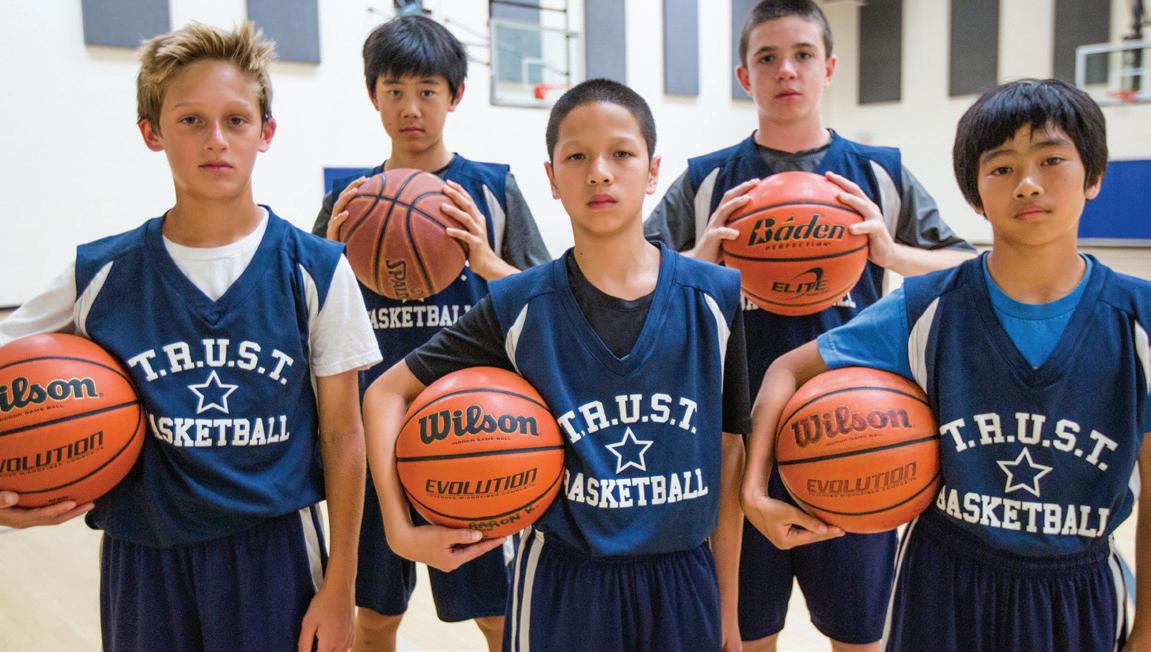

I hereby pledge to provide positive support, care, and encouragement for my child participating in youth sports by following this Parents’ Code of Ethics:
• I will encourage good sportsmanship by demonstrating positive support for all players, coaches, officials at every game, practice of other youth sports events.
• I will place the emotional and physical well-being of my child ahead of my personal desire to win.
• I will insist that my child play in a safe and healthy environment.
• I will require that my child’s coach be trained in the responsibilities of being a youth sports coach and that the coach upholds the Coaches’ Code of Ethics.
• I will support coaches and officials working with my child in order to encourage a positive and enjoyable experience for all.
• I will demand a sports environment for my child that is free from drugs, tobacco and alcohol and will refrain from their use at all youth sports events.
• I will remember that the game is for youth - not adults
• I will do my very best to make youth sports fun for my child
• I will ask my child to treat other players, coaches, fans and officials with respect regardless of race, sex, creed or ability.
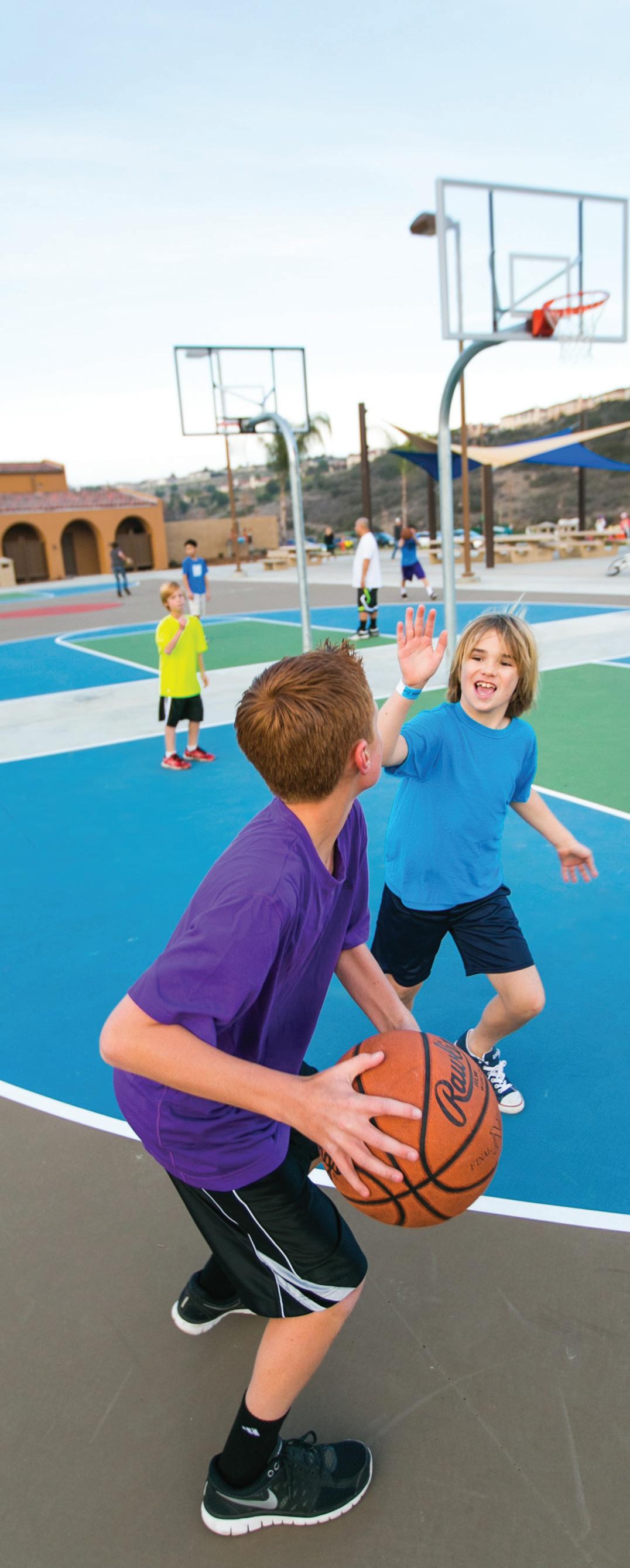
The criterion of the successful volunteer coach is not the win/loss record of their team. It is, rather, whether the behavior of the players changed in a positive way and whether valuable lessons were learned. The uninformed coach is only interested in winning games. The good coach is just as interested in winning games but, in addition, wants their players to come out of the athletic experience as better citizens on and off the court.
The Coaches behavior in relation to officials should obey the following guidelines:
1. The official should be treated with respect.
2. Judgement calls made by officials should not be questioned. In cases of suspected rules misinterpretation, the official should be addressed in a courteous manner during a period of time out, and they will reply in a courteous manner.
3. The coach shall stay off the court and remain in the designated coaches box.
4. Players are not allowed to question officials’ decisions
Education of the parents and the spectators is one the coach’s basic responsibilities. These individuals should be reminded that the philosophy of the program is for youth to enjoy themselves and learn the importance of teamwork, sportsmanship, and acquire the ability to cope with competitive situations. Occasionally it may be necessary for the coach to have parent meetings to instill the proper attitude. During games, a word from the coach to a spectator who is “out of line” will usually be more effective than a reprimand from a game official or gym supervisor.
All coaches shall abstain from the following actions at all times. Any violation of these rules will result in disciplinary action.
• Foul or obscene language
• Indecent gestures
• Fighting (Physical contact of any type)
• Officials abuse
• Substance Abuse
• Object throwing
• Arguing with the opposing team’s coaches or parents for any reason
• Harassing own or opposing team’s players, coaches or parents
• Violation written division rules or safety rules
• Any display of unsportsmanlike conduct
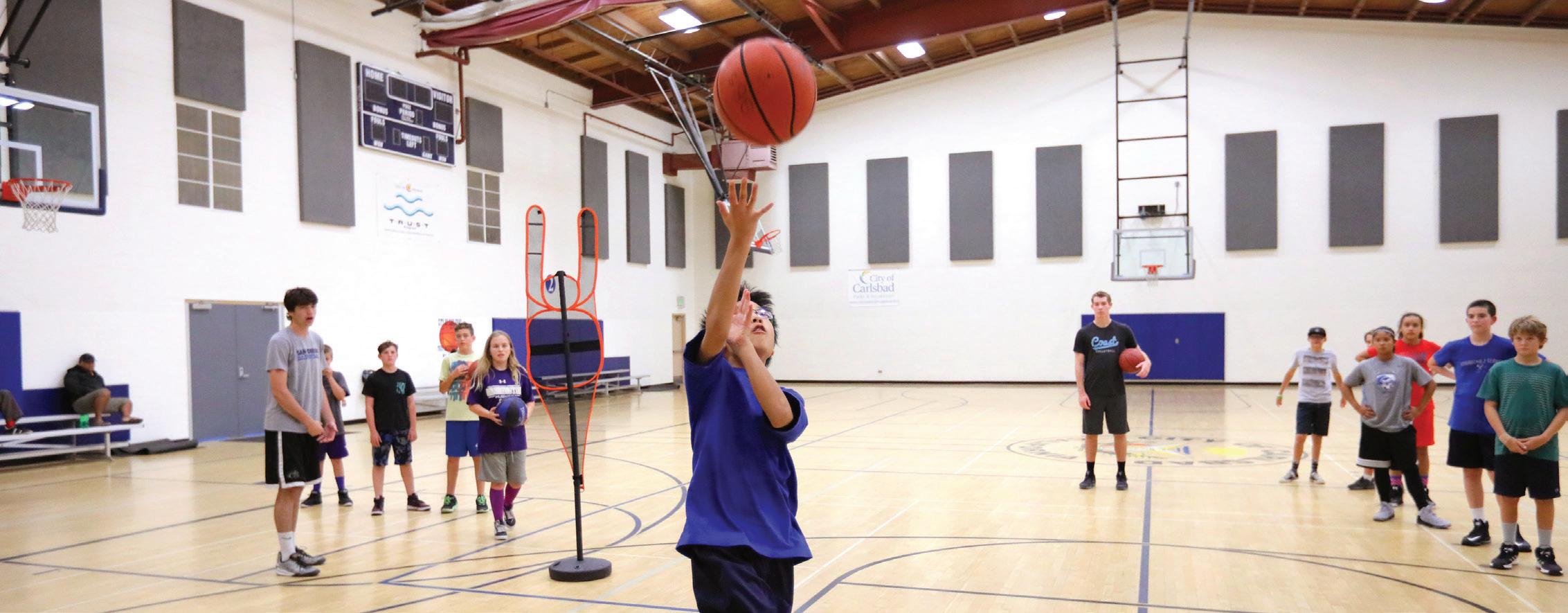
All players shall abstain from the following activities at all times. Any violation of these rules will result in disciplinary action.
• Fighting
• Foul or obscene language
• Indecent gestures
• Arguing with officials and/or city staff for any reason
• Substance Abuse
• Object thrown in anger
• Showing disrespect or arguing with coaches
• Harassing opposing team’s players, coaches or parents
• Any display of unsportsmanlike conduct
Parents are encouraged to attend games and provide enthusiastic support for their child and the game. Parents shall abstain from the following actions at all times. Any violations of these rules will result in disciplinary action.
• Foul or obscene language
• Indecent gestures
• Fighting (Physical contact of any type)
• Officials abuse
• Substance Abuse
• Object throwing
• Arguing with the opposing team’s coaches or parents for any reason
• Harassing own or opposing team’s players, coaches or parents
• Any display of unsportsmanlike conduct
Gym Supervisors are responsible for providing direction and organization for the Youth Basketball Program. A gym supervisor is expected to maintain exemplary behavior and sportsmanship at all times. All coaches/parents who have concerns or questions should seek out a gym supervisor who will be able to assist them.
Gym Supervisors are expected to:
• Act on behalf of the league and the Youth Sports Office.
• Maintain the “Code of Conduct” for coaches and parents when conducting business on behalf of the City of Carlsbad.
• Conform to all the rules established by the Youth Sports Office and the T.R.U.S.T. Program

In our continuing effort to create community through people, parks and programs, the Parks & Recreation Department will strive to provide quality activities that are safe, fair and enriching for all its participants will be implemented through the T.R.U.S.T. Program, which focuses on teaching respect, unity and sportsmanship through teamwork.
The Carlsbad Parks & Recreation Department requires its staff, participants, spectators and neighbors to recognize the following expectations in order to maintain a healthy community.
We T.R.U.S.T. that you will maintain a safe and positive environment.
We T.R.U.S.T. that you will treat every individual with courtesy and respect.
We T.R.U.S.T. that you will honor the rules established for each activity.
We T.R.U.S.T. that you will demonstrate fair play and sportsmanship at all time.
The initial call to a child should be directed to the parents, as the child may be too excited to remember the necessary information. The parents should be given your name, phone number, e-mail and team name, as well as as the day, time, and place of the first team meeting. Parents should be encouraged to attend the first meeting with their children. The first meeting is an appropriate time for the coach to explain to the parents and players the philosophy of the program, role of the officials and staff, number and times of games and practices, and culminating activities. This is the time for all coaches to establish a rapport and set guidelines for player commitment in practice and games.
Of equal importance is the dissemination of information to parents and getting commitments in telephoning players as needed, providing refreshments and assisting with practices and games (team parents). No matter what age or level, the interest of the parents and their attendance at the games will increase the children’s interest and make the game more fun to them.
Practice equipment is available for check-out to each head coach at the gym ball room. Equipment is to be checked in immediately following each team’s practice or game. An I.D. or collateral may be required.
All participants who are registered in the program will receive playing time based on their practice attendance. Coaches are allowed to have up to two practices a week (1 primary, 1 optional) . If a child misses the primary practice time the coach has the option of only playing the child 5 minutes a half. I f a child misses the optional practice the minimum play rule (10 min. a half) will remain in effect.
It is important that the coach explain their expectations for all team members at the first practice, and maintain consistency throughout the season. The coach’s guidelines should be consistent with program/park rules and policies and should be uniformly applied to all team members. In dealing with children, each coach should be aware of that.
• Each child should be treated as an individual and dealt with according to their own unique personality.
• Demand for perfection may lead to loss of interest among some players
• Discipline should be given privately, away from the player’s peers whenever possible, and should be positive rather than degrading.
• Children will be most receptive to the coach who is considerate, cooperative and patient.
• Children cannot be expected to behave as “small adults” (unreasonable and immature behavior can be expected and must be handled with an adult response by the coach.
• The coach has the responsibility for ensuring that players maintain respect and the proper attitude toward game officials, spectators and opponents.
In the event that a player has not conformed to agreedupon team standards (absent at team practices without valid excuses, fighting, swearing, etc.) the coach may be allowed to suspend the player for one game, with the Youth Sports office’s approval. Continued offenses may require other actions which must first be approved by the Youth Sports office. The coach should exhaust all other possibilities such as discussing the problem with the player and parents before calling the office regarding suspensions.

Many athletes need help in learning their limitations without devaluing themselves. Coaches, rather than conveying the inaccuracy that every athlete is capable of becoming a superstar or professional athletes, must realize that participants will mature more if they encourage youngsters to seek out and discover for themselves their own limits.
De-emphasize winning and reemphasize attainment of personal goals. These are the vital steps to enhancing the motivation of all young athletes. “You do not win as a person, you win as a team!”
Most first-time minor violations should be resolved between individuals Serious violations of the “Code of Conduct” should be immediately reported to the appropriate Gym supervisor and the Youth Sports Coordinator and Recreation Supervisor will conduct a thorough review of the situation with the assistance of the appropriate Gym Supervisor.
A. Players are divided into selected age groups determined by participant’s grade level.
B. Players are given skill tests and evaluation so that staff can do its best to create balanced teams.
1. Each player must play at least 10 minutes each half when 7-10 players are at the game. Unless player practice participation rules are not met. A player must sit out 5 minutes a half when 7-9 players are present. thirty minutes is the maximum when 7-9 players are present.
2. One minute between quarters, 2-minute half time.
3. Jump ball starts the game; alternating possession afterwards.
4. Ten second violation, five second held ball violation, and back court violation will be enforced.
5. The bonus (1+1) rule shall be in effect ON the 7th team foul in each half. Double bonus (2 free throws) will be in effect on the 10th team foul in each half.
6. Time-outs: Teams are awarded Three (3) time-outs per game. Unused time-outs will not carry over into overtime. Time-outs will be granted when either a player or coach notifies a referee. In the ‘C’ and ‘GC’ divisions, during the last three minutes of the game, the team in possession of the ball and calling the timeout must inbound the ball at mid court and into the front court. This is to prevent teams running out the clock (due to “no press” rules).
7. Maximum Play rules: Substitutions are made at the beginning and mid-way point of each quarter. No free substitutions. If both teams have 7-10 players at game time, then the minimum/maximum play rule is in effect. A team that has 7 or more does not have to meet the maximum play rule if the opposing team has 6 or less players. Read below if a team has: 6 players.
• If a team has 6 players, two players are required to sit out 10 minutes while the other 4 players will be required to sit out just 5 minutes over the course of the game.
• And the opposing team has 7-8 players, 1-2 players will only be required to sit 5 minutes over the course of the game, and the minimum rule is in effect for all other players.
• If a player fouled out leaving team with 5 players and one of the 5 players gets injured and is unable to continue, a fouled out team member can re-enter the game. Each foul by re-entering fouled out player will be 2 free throws and possession.
• If a team has: 5 players, and the opposing team has 6 players, the maximum play rule is no longer in effect but the minimum play rule is in effect.
8. If a team has only 5 players from the start of the game until the final buzzer then, should any player reach the 5 foul limit, they may remain in the game. The opposing team shall automatically receive 2 free throws and possession of the ball. For every foul committed thereafter by the players with over 5 fouls.
9. If a team starts the game with over 5 players and fouls out their last available player, they must remain in the game and cannot be substituted for a player who previously fouled out. The opposing team shall automatically receive 2 free throws and the ball for every foul committed by the player with over 5 fouls.
10. Any injury to the head the player must be removed from the game. In order to return to the next practice or game the parent must supply a doctors release.
11. If a team has 6 or more players from the outset, a player’s 5th personal foul will warrant disqualification from playing the remainder of the game. This includes overtime.
12. No jewelry of any kind will be permitted to be worn by players, including earrings.
13. A player who is bleeding or has an open wound, or has blood on their body or clothing, shall be prohibited from playing until appropriate treatment has been administered. If blood is on clothing, the clothing must be changed before player will be allowed to re-enter the game.
14. A player with a cast of any kind will not be allowed to play in the game. (A removable, padded brace could be an exception). This will be determined by the officials and gym supervisor.
15. Two practices a week maximum. (1 primary, 1 optional)
16. No standings will be sent out for any division.
17. Players shake hands before each game.
(continued on page 10)
18. If a game goes into overtime, teams can have any players start the overtime. Players that have fouled out are not eligible to play in overtime unless you have only 5 players, a technical foul will be issued and that player canremain in the game.
19. Coaches will need to stay within the coaches box.
20. Once a child is placed on a team, no changing of teams will be allowed due to scheduling conflicts within our programs.
21. Coaches must inform the score keeper the game jersey number of those that are sitting on the bench for that substitution mark. Players entering the game do not have to line up with their back turned to the score keeper. Players must enter the court immediately and resume play. Coaches let the score keeper know what players are sitting on the bench.
22. Any player receiving a technical foul (Flagrant Foul, or unsportsmanlike intentional foul.) will be required to sit out the rest of the game and possibly a one-game suspension. The team must play with four players until the next substitution mark.
Division ‘A’ Boys 7th & 8th Grade ‘GB’ Girls's 6th, 7th, 8th Grades
1. Basketball: Official size, 29.5"
2. Three (3) second key violation
3. Time: Four, ten (10) minute quarters, running clock, regulation clock the last 2 minutes of 4th quarter.
4. One (1) minute between quarters and two (2) minutes between halves.
5. Scoring cumulative throughout the game (see scoring philosophy)
6. Overtime: Two (2) minute, last minute is regulation clock. Only one time-out allotted in overtime. Time outs will not carry over from regulation time. Game will be played until the winner is determined.
7. Bullet Points (A) Pressing Rule: Start of 4th quarter only.
• 12 points and under: Both teams can press
• 13 points or more: Winning Team can’t press, Losing team can continue to press
• 12 points or more: Last two minutes of the 4th quarter clock will continue to run.
‘B’ Boys 5th & 6th Grade
1. 1. Basketball: 'B' Division - Official size, 29.5". 'GB' Division - Official women's size, 28.5"
2. Time: Four, ten (10) minute quarters, running clock, regulation clock the last 2 minutes of 4th quarter.
3. One (1) minute between quarters and two (2) minutes between halves.
4. Three (3) second key violation.
5. Scoring: cumulative throughout the game.
6. Overtime: Two (2) minutes last minute is regulation clock. Only one time-out allotted in overtime. Time outs will not carry over from regulation time. Game will be played until the winner is determined.
7. Bullet points (B) (GB) Pressing Rule: Teams can press start of the last substitution mark of the 4th quarter.
• 8 points and under: Both teams can press
• 9 points or more: Winning team cannot press. Losing team can continue to press.
• 12 points or more: Last 2 minutes of the 4th quarter, clock will continue to run
Division ‘C’ | Boy’s 3rd & 4th Grades | ‘GC’ Girl’s 3rd, 4th, 5th Grades
1. Basketball: Official women's size, 28.5".
2. Time: Four, ten (10) minute running quarters.
3. One (1) minute between quarters and two (2) minutes
4. Five (5) second key violation.
5. Free throws: twelve foot (12') line. Shooter must remain behind the line until ball reaches the cylinder. (‘C’, ‘GC’ only)
6. No back court pressing while the offense is in possession of the ball. Defense must allow offense to cross, or make an initial pass to a player behind the 3 point line extended (GC + C). Penalty: A warning to the team on the first offense and a team technical foul for all other offenses.
7. Scoring: Noncumulative (see scoring philosophy)
8. If the ball goes back behind the three point line teams can continue to play defense.
9. No double team will be allowed on the ball, or any player without the ball, outside the lane. Help defense is permitted.
10. Offense has 5 seconds after crossing court to initiate an entry pass below the 3-point extended. 5 second violation is a turnover.
11. No stop clock at any time. Only four time outs and at substitution.
12. Three-point made baskets will count as two points.
The Parks and Recreation Department adheres to the following scoring system:
• Scoring is kept by quarters (‘C’ and ‘GC’ divisions only).
• Score will return to 0-0 at beginning of each quarter (‘C’ and ‘GC’ divisions only). Team with the highest score at the end of each quarter will receive two (2) points. If the quarter is tied, each team will receive one (1) point.
• Scoring is cumulative in ‘A’, ‘B’ and ‘GB’ divisions.
• Winner is determined by highest score in ‘A’, ‘B’ and ‘GB’ divisions.
• 3 points will be awarded in Divisions A, B, and GB only.
Division ‘A’, ‘B’ and ‘GB’
1. Best Overall Win-Loss Record
2. Head-to-Head Win-Loss Record
3. If teams split head to head, then head to head point differential will be the deciding factor. For 3-way ties, head to head between teams, then total point differential will determine the breaker.
‘C’ and ‘GC’
1. 2 points will be awarded for every quarter won 2. 1 point awarded for every quarter tied
3. 0 points awarded for a quarter lost
4. If still tied, team tiebreakers (#2 through #5) will be instituted from the 'A', 'B' and 'GB' classifications.

BLOCKING:
Illegal personal contact which hinders or impedes the progress of an opponent
BOUNDARY LINE:
The end and sidelines on the basketball court. The inside edges of these lines mark the in-bounds and out-of-bound areas.
CHARGING:
When the ball handler comes into personal contact with a defensive player who has established their position.
COURT:
The playing area of a basketball game. A court is divided into two parts, front and back. A team’s front court includes its offensive basket and backboard between the end and half court lines. A team’s back court includes its defensive basket and backboard between the end and half court lines.
The ball is considered dead and out of play when:
• A held ball occurs for five (5) seconds or the ball gets stuck on the basket support.
• The official’s whistle is blown; or
• Time expires for a quarter, half, or extra period.
DISQUALIFIED PLAYER:
A player who is no longer allowed to participate in the game because of committing five (5) fouls or in a serious unsportsmanlike foul.
FOULS:
• Personal Foul: Or a common foul when a player comes in personal contact with an opponent while the ball is alive. Holding, pushing, charging or tripping an opponent is not allowed.
• Technical Foul: A technical foul is when a player or coach is disrespectful to an official; behaves in an unsportsmanlike manner; intentionally delays the game; or enters the court without official permission. A technical foul on a player also results in a personal foul.
• Double Foul: When two (2) opponents commit personal fouls against each other at the same time. A personal foul is charged to each and play begins with alternating possession
• Intentional Foul: Is a personal and a technical foul, which, in the judgement of the official, appears to be designed or premeditated. It is not based on the severity of the act. Two (2) free throws and ball out of bounds at closest spot to foul.
• Unsportsmanlike Foul: Is a non-contact technical foul which consists of unfair, unethical or dishonorable conduct.
A free throw is a chance to score a basket without obstruction or interference from the opposite team. The Free throw is awarded to a player who has been fouled. The free throw is taken from the free throw line. Each free throw is worth one point.
HELD BALL:
Two (2) opponents have both hands on the ball and possession cannot be established without unnecessary roughness. Possession is established by arrow on scorekeeper’s table.
LANE:
The area of the court which extends from the basket line to the top of the free throw line, The lane boundary lines are marked on all basketball courts (12' lane - ‘C’ & ‘GC’ only).
OVERTIME PERIOD:
Is the extension of playing time necessary to break a tie score at the end of regulation time.
PASS:
The movement of the ball caused by a player who throws, bounces, or in any manner gives the ball to another player.
REGULATION CLOCK:
The clock will stop at every whistle.
SCREEN:
An action by a player who, without coming into physical contact, prevents an opponent from reaching their desired position.
TAP (TIP):
Is the striking or batting of the ball with any part of the hand(s) while there is no player controlled by the tapper.
THROW IN:
A method of putting the ball into play from out of bounds.
TRAVELING (WALKING):
To run or run illegally while holding the ball.
Welcome to another season of Carlsbad Youth Basketball!
This handbook is designed to educate you on the Rules, Regulations, Philosophies and Procedures of the Parks & Recreation Department’s Youth Basketball League. Please read the information provided, in its entirety, to help familiarize yourself with the program.
Enjoy! And thanks for participating!

Please refrain from bringing coffee mugs, cops, sodas, food, etc. Players are allowed to bring in water bottles which must be placed under players’ bench!