Maynors install Bettses as West’s leaders
A call to unity, surrender and the refining fire of God.
BY CHRISTIN THIEME
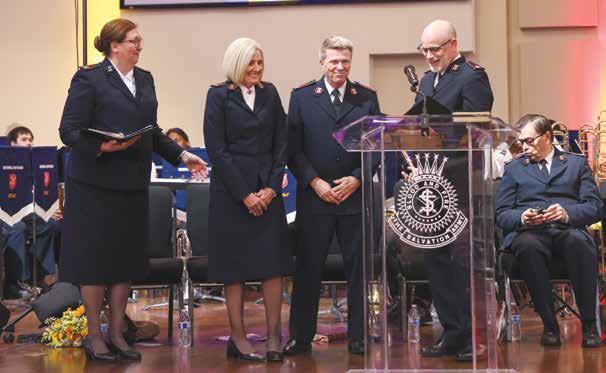
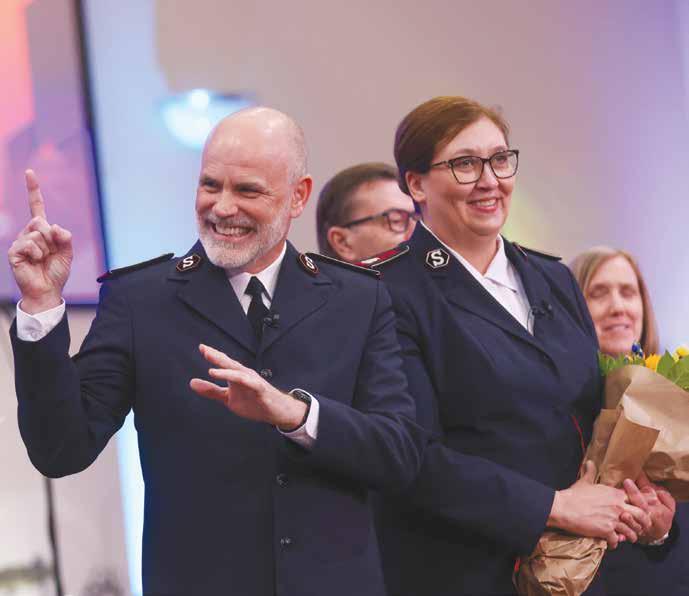
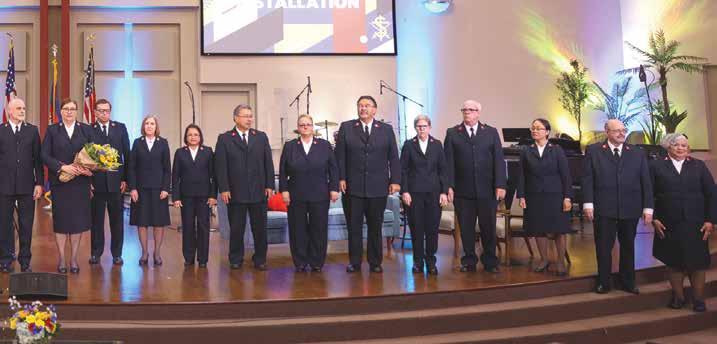
The Salvation Army Western Territory gathered at the Tustin Ranch (California) Corps Feb. 14 for a celebratory Welcome and Installation Meeting, formally installing Commissioners James and Sue Betts as territorial leaders.
The service brought together Salvationists in a spirit of worship and expectancy, marking
a significant moment in the life of the territory.
Secretary for Personnel Lt. Colonel Charles Fowler offered the opening prayer, and Chief Secretary Colonel Ivan Wild extended words of welcome to those gathered in person and online. “This is a sacred moment with a sacred task,” Wild said.
The Bettses bring nearly three decades of Salvation Army officership to their new season of leadership in the West. Married for 33 years, now INSTALLATION PAGE 10
Colorado Springs raises funds to reopen family shelter units
Support from donors and community partners helps restore capacity at the R.J. Montgomery Family Hope Center.
BY VIVIAN LOPEZ
Last summer, budget cuts forced The Salvation Army in Colorado Springs, Colorado, to reduce capacity at the R.J. Montgomery Family Hope Center from 31 family units to 15.
“We had to cut just over $1 million from our budget, and that happened in July,” said Salvation Army El Paso County Co-
ordinator Major Stephen Ball. “It meant layoffs. It meant trimming our shelter rooms down. It ended a 2026 youth summer day camp program. It was hard, and we’re still in the middle of that in a lot of ways, but we started a special campaign and the Lord has brought in a good amount of money.”
The ongoing campaign, known as Hope Needs Help, has raised approximately $800,000 so far. It brings the shelter closer to restoring capacity after last year’s cuts—
Army expands Portland shelter footprint
The Salvation Army now operates three overnight shelters in Portland.
BY KAREN GLEASON
When Joe first moved to Portland, Oregon, things didn’t work out as he had planned. He spent his first nights there on the streets, unable to sleep, he said.
Then someone told him about The Salvation Army’s Northrup Shelter.
Located in Northwest Portland’s Pearl District, Northrup Shelter—a low-barrier, overnight shelter— opened in September 2025. Joe was one of its first guests. He quickly became a regular there.
“It was the first time in some time that I felt safe getting a good night’s sleep,” he said.
With a current capacity of 200 beds, the Northrup Shelter joined the two overnight shelters The Salvation Army opened in January 2025: the Burnside Shelter, formerly called SAFES, (55 beds) and the SHELTER PAGE 13
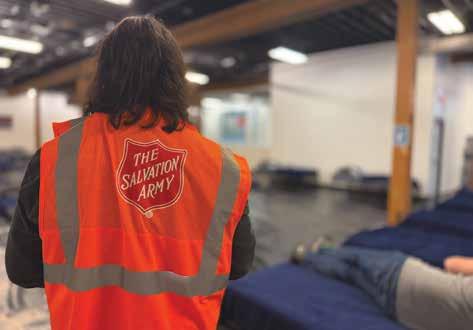
Shelter opened in September 2025 with 200 beds. |PHOTO
The Salvation Army Northrup
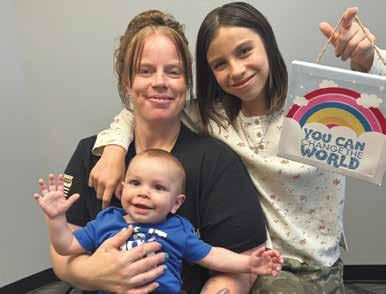
The Salvation Army R.J. Montgomery Family Hope Center shelters families together in Colorado Springs, Colorado. |PHOTO COURTESY JACQUELINE BAUMGARTNER
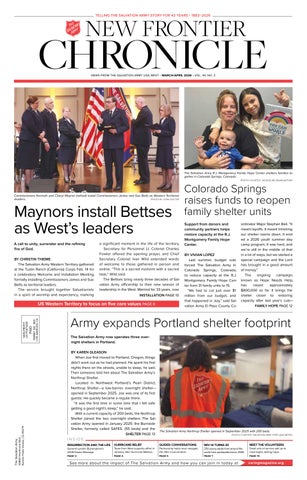
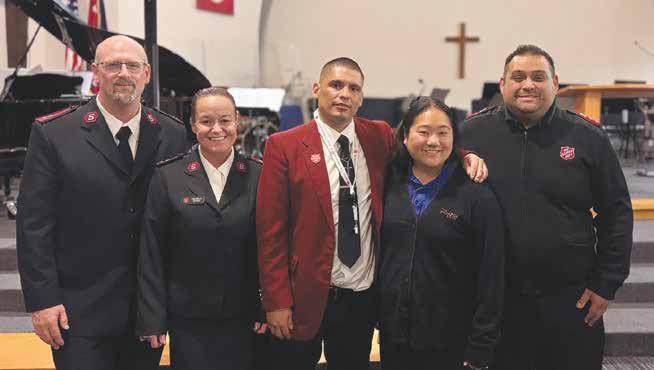
Commissioners Kenneth and Cheryl Maynor (retired) install Commissioners James and Sue Betts as Western Territorial leaders. |PHOTO BY JOHN DOCTER
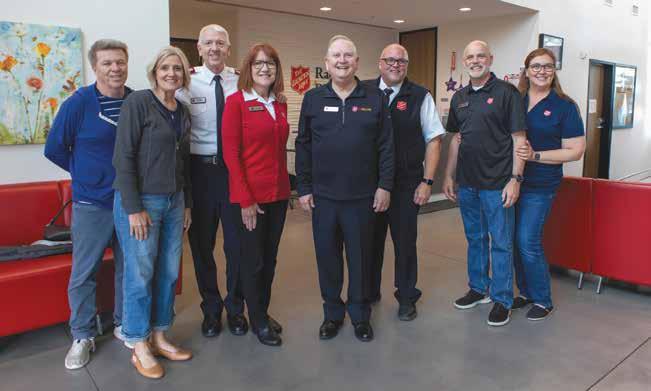
National Advisory Board convenes in San Diego
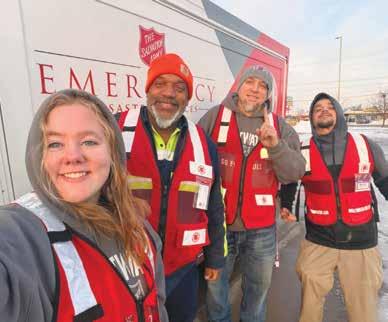
Salvation Army responds to US polar vortex
Across the U.S., after a massive winter storm exposed millions to dangerously low temperatures in January, The Salvation Army has provided emergency shelter, meals and essential support to communities affected. In Tulsa, Oklahoma, crews took to the streets to feed neighbors and provide life-saving winter weather supplies.
“God allowed us to be the
answer to a prayer,” one team member said. “We met a woman who had been outside for two days with no place to go and no one to help her. She told us she prayed someone would find her and take her to shelter. We were able to bring her in, and she was overwhelmed with gratitude. Glory to God for moments like this.” NFC

3 BIBLE VERSES ON JOY
You show me the path of life. In your presence there is fullness of joy; in your right hand are pleasures forevermore. (Ps. 16:11, NRSV).
Be joyful in hope, patient in affliction, faithful in prayer (Rom. 12:12, NIV).
This is the day that the Lord has made; let us rejoice and be glad in it (Ps. 118:24, NRSV).
“JOY ISN’T SOMETHING WE WAIT TO FEEL ONCE EVERYTHING IS FIXED—IT’S SOMETHING THAT GROWS AS WE PARTICIPATE IN THE GOOD.”
—Christin Thieme on The Do Gooders Podcast Episode 253: Why joy is meant to be shared
EDITORIAL STAFF
Christin Thieme, Editor-in-Chief and Literary Secretary
562/491-8723 • christin.thieme@usw.salvationarmy.org
Hillary Jackson, Managing Editor
562/491-8330 • hillary.jackson@usw.salvationarmy.org
Karen Gleason, Senior Editor
562/491-8332 • karen.gleason@usw.salvationarmy.org
Haley Osness, Editor 562/491-8345 • haley.osness@usw.salvationarmy.org
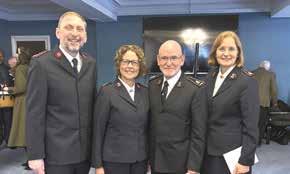
International leaders represent at U.N. General Assembly
General Lyndon Buckingham, Commissioner Bronwyn Buckingham, Commissioner Jane Paone and Lt. Colonel Nick Coke represented The Salvation Army at a service of thanksgiving marking the 80th anniversary of the inaugural United Nations General Assembly Jan. 17 at Methodist Central Hall in London.
The day highlighted a growing awareness of each participant’s responsibility to help rekindle the spirit of peace, hope and unity born from the first U.N. General Assembly in 1946. The General’s Global Call to Action reinforces this message, calling for a return to our roots as a way to move forward with clarity, unity and hope. NFC
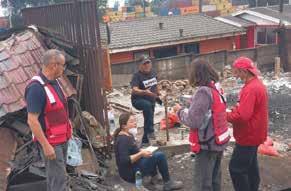
The Salvation Army responds to wildfires
in Chile
Catastrophic wildfires tore through southern Chile’s Biobío and Ñuble regions beginning Jan. 16, devastating nearly 74,132 acres and destroying more than 750 homes. The fires left over 6,700 people homeless, claimed at least 20 lives, and forced roughly 50,000 residents to evacuate as the flames spread.
The Salvation Army’s Disaster Response Teams deployed at ground zero, working with local authorities to coordinate the preparation and distribution of food, drinking water and essential hygiene items. Salvation Army officers are also providing emotional and spiritual support to families. NFC
Joy isn’t fluff — it’s fuel. In Caring's free 5-day email course, Find Your Story: Share the Joy, you’ll uncover a meaningful story from your life and learn how sharing it can help someone else believe in goodness. Enroll today at caringmagazine.org/story.
ONLINE AND SOCIAL MEDIA Cory Gaudaur, Digital Operations Director 562/491-8326 • cory.gaudaur@usw.salvationarmy.org Emily Truax, Digital Content Producer
562/491-8793 • emily.anderson@usw.salvationarmy.org
LAYOUT AND DESIGN Kevin Dobruck, Art Director 562/491-8328 • kevin.dobruck@usw.salvationarmy.org
Caption: (L-r) Chief Secretary and Territorial Secretary for Women’s Ministries, respectively, Colonels Ivan and Jennifer Wild; Southern California divisional leaders Lt. Colonels Mike and Cindy Dickinson; National Commander Commissioner Merle Heatwole; Divisional Secretary for San Diego County Major Rob Reardon; and territorial leaders Commissioners James and Sue Betts gathered for a work day at the Door of Hope Rady Campus in San Diego during a meeting of The Salvation Army National Advisory Board (NAB), held Jan. 28-30.
‘I
THE GENERAL'S EASTER MESSAGE
am the resurrection and the life’
BY LYNDON BUCKINGHAM, GENERAL
ITwas a good Saturday. Or was it? Truthfully, it could have been disastrous. It certainly did not look good in the beginning. I suffered a heart attack. Seems it was quite a significant episode; frightening for Bronwyn and, yes, deeply troubling for me. Was this it? Had my time come? Is this how the Lord was calling me home? What about the kids and the grandkids? What about Bronny? What about my ministry? I still had things that needed to be done. This was not a good Saturday. It was awful, frightening, dark and scary.
And yet, yes, as it happens, it was a good Saturday. As I reflect on that day last October, I celebrate the miracles of that scary day. The right people intervening at the right time. Christian concern that led to action. A beautiful Salvationist nurse whose friend was a Christian cardiologist. A life-saving intervention and even a promise from God himself that all will be well. God’s timing was perfect. His providence abundant. So, as I reflect and look deeper into the events that transpired, I have come to the conclusion that it was a good Saturday after all.
I remember as a young junior soldier being perplexed by the use of the word “good” in the Easter story. Good Friday— the day they crucified Jesus. How can that possibly be described as good? I mean, let’s not sugar-coat it. It was a horrible day. A day of unjust conviction, brutal torture, of unrelenting pain and suffering. The cross, a weapon of the devil, used against the Lamb of God. Horrifying, ugly and unforgivable. But if, without excusing the events of the day, we look deeper, we actually witness God himself in action. God meets the manifestation of pure evil represented by a physical cross, with all its brutality, with the redeeming love that conquers evil, sin and, yes, death itself. He turns an ugly Friday into an exceptionally Good Friday indeed.
Understand this: whatever else was going on, Jesus himself was motivated by love. He went to the cross out of love for all humanity; out of love for you and for me. In his Letter to the Romans, Paul wrote: But God demonstrates his own love for us in this: while we were still sinners, Christ died for us (Rom. 5:8). Christ demonstrated the extent of God’s love for all of us by taking upon himself the sin of the world. On this Friday, Jesus was motivated by love. The truth is, God loves us and Jesus is the proof.
The writer to the Hebrews asks the question: ...how shall we escape if we ignore so great a salvation? (Heb. 2:3). The prophet Isaiah wrote: ...by his wounds we are healed (Is. 53:5). It is a mystery for sure. In some mysterious and divine way, the events of Good Friday hold the

key to our own healing, our forgiveness, our salvation and our adoption. The atonement makes possible our being embraced by Almighty God himself. Jesus, motivated by love, makes possible our restoration, redemption and reconciliation. We are healed; we are saved. We are loved.
It can be difficult to see the events of Good Friday as triumphant, but that is exactly what it is. First, it is a triumph for Jesus. He was faithful and obedient, even to death on the Cross. “It is finished,” he declared (John 19:30). I have completed my mission. It is done. The power of sin and death is defeated.
Second, the triumph of Calvary is the defeat of evil. In Jesus’ victory over sin and evil, his “triumph” becomes our triumph as well. Because we live on this side of the Resurrection, we are able to celebrate our Lord’s vindication. He conquered death and lives forevermore. His victory becomes ours. It was Jesus himself who said: “I am the resurrection and
the life. The one who believes in me will live, even though they die; and whoever lives by believing in me will never die”
(John 11:25-26).
Jesus acknowledges the reality of physical death, but goes on to declare that death does not have the final word over those who, by faith, belong to him. This means death is no longer a wall, but a doorway. It has lost its ultimate power and its terror, and it cannot sever a person from the life Jesus gives. Eternal life is not only duration, but also dimension. It is a life infused with the presence of God and it begins the moment we place our trust in Jesus.
Turns out, it was a very Good Friday indeed!
My prayer for each of you is that you will be captivated by, and experience for yourselves, the reality of God’s love for you, revealed in the person of Jesus Christ, the Son of God and Savior of the world.
God bless you. NFC
“I AM THE RESURRECTION AND THE LIFE. THE ONE WHO BELIEVES IN ME WILL LIVE, EVEN THOUGH THEY DIE; AND WHOEVER LIVES BY BELIEVING IN ME WILL NEVER DIE.”
(John 11:25-26)

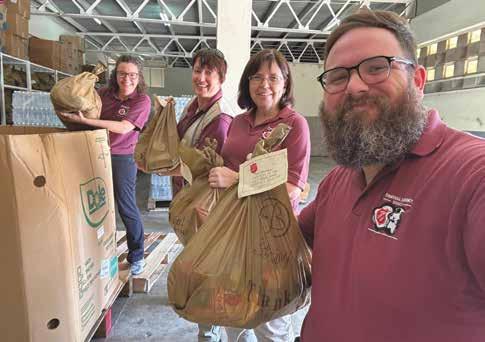
West team supports hurricane relief efforts in Jamaica
A team from the USA Western Territory aided the ongoing response following Hurricane Melissa.
After Hurricane Melissa made groundfall in Jamaica in October 2025 as a Category 5 storm— the most severe to strike the island in modern history—it left behind an unprecedented trail of destruction.
In the months following, The Salvation Army Western Territory deployed a dedicated team of leaders and volunteers to support the ongoing recovery effort there, joining local Salvation Army teams and international partners to meet urgent needs and strengthen long-term recovery.
Among those deployed were Territorial Emergency/Disaster Services (EDS) Deputy Director Nicole Kanne, serving on her first international deployment; Salvation Army Intermountain Division EDS Director Ian Anderson; volunteer Victor Leonardi; and Red Lightning CEO Michael Shiffler, whose team provides critical communications support through the installation of Starlink systems.
Working alongside Jamaican Salvation Army teams and international responders, the Western Territory team has contributed to a large-scale mass care operation that served more than 225,000 people, provided over 70,000 hot meals, and delivered more than
125,000 meal kits as of Jan. 23. These efforts are part of a sustained Salvation Army presence that began before the storm and continues as communities move from immediate response into recovery.
For Kanne and Leonardi, the deployment marks a significant milestone.
“This deployment has reinforced why preparedness and partnership matter,” Kanne said. “The needs are real and ongoing, and the collaboration between local leaders, international teams and private partners allows us to respond with both speed and compassion.”
Leonardi echoed that sentiment, noting that serving alongside experienced disaster leaders has been formative.
"It takes many hands to help an island recover from catastrophe, and The Salvation Army's partnership with other nonprofits that responded was critical to help individuals and families receive resources."
Anderson, in his third international deployment, brings extensive disaster leadership to the operation, supporting coordination and logistics across feeding, distribution and community engagement.
“Every deployment builds on the last,” Anderson said. “In Jamaica, the strength of local Salvation Army leader-
ship, combined with international support, has made it possible to scale services quickly while keeping people at the center of every decision.”
Reliable communications have been essential to that coordination. Through Red Lightning, Shiffler’s team has installed Starlink systems to restore connectivity in affected areas, enabling responders to communicate, track needs and coordinate resources.
“Connectivity is a lifeline in disasters,” Shiffler said. “When responders can communicate, help reaches people faster.”
While some have questioned how long international teams would remain, Salvation Army leaders emphasized their enduring commitment. The organization was present before the disaster, remains active now, and will continue to walk alongside Jamaican communities for as long as there is need.
As recovery continues, The Salvation Army teams remain committed to supporting Jamaica through feeding, emotional and spiritual care, and practical assistance—working hand in hand with local Salvation Army officers, staff and volunteers to help communities rebuild with hope. NFC
With reporting by Nicole Kanne
Kalispell youth gain safe place to connect in winter
BY HALEY OSNESS
When winter settles over Kalispell, Montana, the town grows quieter as the days get shorter. After-school opportunities are often limited, leaving kids and teens with routines of going from school to home with few places in between.
The decrease in activities compared to summer months can lead to isolation, and coupled with reduced sunlight, it can negatively impact mental health, exacerbating symptoms of depression and anxiety, according to research from the Centers for Disease Control and Prevention.
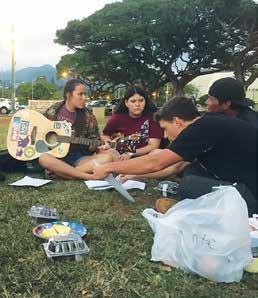
Seeing a gap in opportunities for local youth, Kalispell Corps Officer Lt. Sean Pease set out to strengthen the corps’ support for kids. “I felt God pulling on my heart and saying, ‘We can do more to fulfill needs in the community,’” Pease said.
He began by sending a survey to families connected to the Angel Tree program, asking how The Salvation Army could continue serving their children throughout the year. He said the majority of responses made it clear that families wanted a dedicated teen night.
dren. Pease ensured accessibility wasn’t a barrier by offering transportation to and from the corps, along with a free onsite dinner, easing stress for parents.
Since launching the programs, the corps has welcomed an average of 20 kids each week, strengthening engagement with families already involved at the corps while also drawing in new participants.
He said growing youth attendance prompted the corps to hire Thamires SilvaRocha as Youth Ministries Coordinator to help with transportation and lead weekly Bible studies and activities.
“It’s become an opportunity for more intentional one-on-one connection and support,” Pease said. “It’s through that care and consistency that we help build a space where kids feel safe and heard.”
At the time, Pease said portions of the building had remained unused since the pandemic, including four empty classrooms and an indoor gymnasium—one of the only ones in Kalispell.
“I realized this needed to happen,” Pease said. “I envisioned the corps as a place where kids felt they belonged— somewhere they wanted to be.”
“I know that God was guiding me to do this,” he said. “I went in with the mindset that even if it's just a space for one kid or one teen a night, it's worth it.”
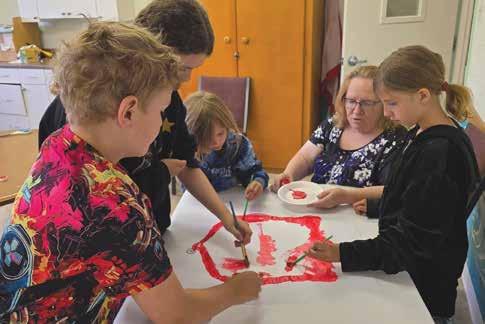
In March 2025, the corps opened its doors for a Monday teen night and a Wednesday evening Troops character-building program for younger chil-
Following group dinners, kids participate in a Bible study where they can ask questions and engage in open conversations often surrounding identity, friendships and the challenges they may face in everyday life.
SilvaRocha said that after weekly
|PHOTOS COURTESY NICOLE KANNE
Troops work together to paint a Salvation Army shield during an art lesson.
|PHOTO COURTESY THE SALVATION ARMY KALISPELL CORPS
Guided conversations
Partnership helps men navigate life after incarceration.
BY HALEY OSNESS
Once a month, men rebuilding their lives after incarceration while staying at The Salvation Army Anaheim Adult Rehabilitation Center (ARC) gather to talk openly about where they’ve been—and where they’re going. It’s a time to share past mistakes, take responsibility and plan for the future.
The group conversations are guided by a partnership with Project Kinship, an Orange County-based nonprofit with a mission to provide support and training to individuals leaving a past of incarceration or gang involvement.
“For many guys, the ARC is a transition period where they learn positive, constructive strategies for navigating life in recovery,” said Captain Tanya Pemberton, Administrator for Program at the Anaheim ARC. “Men coming from a past of incarceration often benefit from more individualized support.”
Over 150 men are currently enrolled in the Anaheim ARC’s 180-day residential program, where they work through challenges such as previous substance use and other personal struggles. About 20 percent of participants have spent time in prison before joining the program.
Recognizing the need for support specifically for men exiting incarceration, Pemberton began developing community partnerships—one of which led her to meet Steven Kim, Founder and Executive Director of Project Kinship.
She said partnering with Kim and Project Kinship was a natural fit, as Kim himself graduated from the Anaheim ARC in 2000.
“He understands what it’s like to go through the program,” Pemberton said. “Men see him as a role model, especially once they realize how much he’s accomplished in his recovery.”
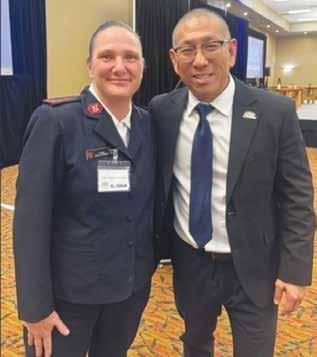
With a desire to serve the community the way he was served, Kim went on to earn a degree in Criminology, Law & Society and a Master of Social Work before founding Project Kinship in 2014.
“Our lives transform the moment we realize we’re not a mistake,” Kim said, noting that Project Kinship focuses on restoring hope and helping individuals recognize that they are worthy of love, support and a second chance.
“Some of these individuals are coming from their rock bottom,” Kim said. “There’s always a broken heart at the core of a wounded soul. You cannot reach it with more pain or judgment—only with love.”
Kim and the more than 150 Project Kinship staff meet people where they are, providing hands-on employment coaching, job training, group education
and life skills classes, one-on-one case management and more.
“Project Kinship is a hub of support and connection for hundreds of men,” Pemberton said, adding that residents are introduced to the organization while at the ARC, so they know it will be available to them once they graduate.
Since beginning the partnership in 2024, Kim and his staff have visited the ARC monthly to mentor residents, lead reentry-focused classes and discussions, and help prepare them for stable, independent lives.
In addition, they host specialized events for ARC beneficiaries, including tattoo removal services, workforce development training, mental health counseling and legal assistance.
“The guys look forward to meetings with Project Kinship,” Pemberton said. “It helps them set goals, plans, and feel excited for their futures.”
During the meetings, men are encouraged to be open and honest about their past, allowing them to identify areas for change while also acknowledging the progress they’ve already made.
Pemberton said that partnering with Project Kinship has helped the men see that though change can be frightening, it can also be the start of something great.
“They usually leave a Project Kinship meeting with their heads held high,” Pemberton said. “They begin to see life through Jesus’ lens and learn a new way of approaching obstacles and setbacks.”
She said the partnership has also helped men see that they, too, can be a source of support and guidance in sobriety, offering encouragement to others and showing that their experiences can help someone else navigate recovery.
“Community makes all the difference,” Pemberton said. “It helps us meet needs while showing the men the value of supporting each other.” NFC
‘Come to church’
The Hilo (Hawaii) Corps helped Doug Bitterman rebuild his life after years in prison.
BY KAREN GLEASON
After 26 years in prison, Doug Bitterman made a phone call to The Salvation Army in Hilo, Hawaii, in July 2022, hoping it could help him rebuild his life. Recently released, he’d been staying with his daughter and looking for a fresh start. He’d learned about The Salvation Army while incarcerated and was hopeful when he discovered a corps in his hometown.
He reached Hilo Temple Corps Officer Captain Sam LeMar.
“I called Captain Sam because I was kind of wearing out my welcome with my daughter,” Bitterman said. “And so I told him, ‘Captain Sam, I’m homeless. I need a job. I need a place to stay.’ He just kept saying, ‘Come to church. Come to church.’ And that’s what I did.”
That Sunday at church, Bitterman recognized townspeople he hadn’t seen in 30 or 40 years. He said that was the start of everything.
“I like the fellowship, the camaraderie—that’s my family, my home church,” he said.
The experience was new to Bitterman, who at age 70 had never had a home church. He said he came to know Jesus by accident while he was incarcerated.
“I was never a believer in the Lord Je-
sus Christ,” he said. “I was running amok.”
In 1996, after committing a violent crime, Bitterman was sentenced to life in prison with a 40-year minimum. During his time in custody, he began attending chapel services—at first just for the chance to get out of his cell.
“Anytime there was a call for religious services, I raised my hand,” he said. “Then I hear about Jesus, and I’m thinking, maybe this Jesus can get me out of prison. That’s what got me interested. And then the more I went, the more I listened, the more I started reading the Bible and studying. It’s like the Lord got a hold of me.”
Over time, his perspective shifted. “I knew God had forgiven me for my crime,” he said. “Even if I spent the rest of my life in prison, I still had a purpose. This is my ministry—I’m going to walk with the Lord.”
As he worked to reopen his case, his faith deepened. “I was like a sponge soaking up every Christian thing I could,” he said.
While in prison, Bitterman came across The War Cry, The Salvation Army’s national magazine. “I never knew anything about The Salvation Army,” he said. “I started reading about how they help people all over the world. It really impressed me.”
After surviving the pandemic in prison, Bitterman’s case was reviewed and he was granted parole.
“When they said, ‘We recommend parole,’ all I could say was, ‘Thank you, Jesus,’” he said. He called it a miracle, and after 26 years behind bars, walked free— grateful for the chance to start again.
He made the call to the Hilo Temple Corps and began rebuilding his life. Within months, he earned his driver’s license and was hired as a shuttle driver for Hertz Rent-a-Car. Now 73, he drives 75 miles each way to work.
“I play Christian music on my bus and talk to people about Jesus,” he said. “That’s my ministry now.”
He continues to worship at The Salvation Army, influencing others with his dedication.
“He has become a shining example of faith and perseverance in our congregation,” LeMar said. “He took the steps to put his life in order, found steady work, and has lived with integrity ever since.”
Bitterman encourages others to try The Salvation Army.
“I’ve been there for three years now. You can make it your home base. It’s a great place for fellowship and helping people,” he said, mentioning the opportunity to ring the bell during the annual Red Kettle Campaign.
He even had the chance to give his testimony at The Salvation Army’s Camp
Captain Tanya Pemberton and Steven Kim |PHOTO COURTESY CAPTAIN TANYA PEMBERTON
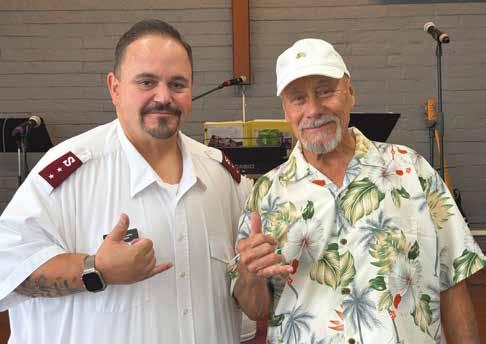
Captain Sam LeMar and Doug Bitterman |PHOTO COURTESY SAM LEMAR
WOUNDED HEALERS
BY HALEY OSNESS
Fabian Vivero grew up a straight A student and had college soccer scholarships lined up.
In his teens, experimenting with marijuana and alcohol with friends began to steer him off the path he had charted.
After being caught under the influence at school twice, Vivero was expelled. Although he completed high school through a continuation program, his soccer scholarship was gone.
He describes the 18 years that followed as a cycle of addiction—one marked by lost jobs, strained relationships, DUIs and on-and-off homelessness.
“It got to a point where I knew I had to truly look at my behaviors—what I’d been through and why I kept making the same choices and mistakes,” he said.
Eventually, that reflection led him to seek help.
In March 2025, Vivero entered The Salvation Army Seattle Adult Rehabilitation Program (ARP), a free, sixmonth residential recovery program designed to help men overcome substance use challenges and rebuild their lives.
“I was nervous at first,” Vivero said. “But over time, I realized I was in the right place—I could see myself improving, reconnecting with God and thinking more clearly.”
He said he surprised himself as he noticed changes in how he spoke and thought, often turning to Psalm 23 for comfort and a reminder to trust God’s guidance and provision rather than worry about what comes next.
“I just took everything one day at a time and learned
to let God lead me,” he said—a new habit he’s developed in recovery.
The ARP’s structured daily routines combine counseling, recovery education and spiritual support along with practical assistance for employment and housing.
Vivero said classes in anger management, relapse prevention and substance use disorders were especially helpful for him to identify triggers and learn new ways of coping.
He said the holistic approach is guiding him to become independent and has prompted him to consider a future helping others navigate recovery.
“I committed myself to the program because I wanted to understand myself and others,” Vivero said. “I wanted to get to the root of my issues and studying it felt like the only way.”
In fall 2025, Vivero received a scholarship to
Woman experiences transformation with Pathway of Hope
At the Siemon Center in Southern California, one woman turns hope into lasting change for her family.
BY KAREN GLEASON
Ericka Bernard first walked into The Salvation Army Siemon Family and Youth Community Center in South Los Angeles in December 2023. She carried not only her young daughter but the weight of years spent in foster care, homelessness and unsafe streets—and a hope that had survived it all.
“At the time, I was struggling with finances, lack of transportation and little family support,” Bernard said. “Having someone guide me and hold me accountable made all the difference.”
At the Siemon Center, Bernard joined Pathway of Hope, a Salvation Army initiative that helps families move toward long-term stability. Families work with a case manager who helps them set goals—such as finding stable housing, improving income or managing childcare—and connects them with resources that support those goals. The program offers guidance along the way and focuses on helping families build lasting independence, not just solving short-term problems.
Pathway of Hope isn’t a quick fix, yet it proved the right fit for Bernard.
Her first connection with The Salvation Army came in 2019, when she and her newborn were referred to the Westwood Transitional Living Center after experiencing homelessness. She stayed for a year
and secured stable housing with the help of her case manager. That experience showed her what steady support could look like and prepared her for the next chapter with Pathway of Hope.
Siemon Center Executive Director Edwin Perry remembers the day Bernard arrived with her daughter.
“Ericka came in feeling broken but hopeful, determined to reconcile with herself while mothering her daughter.
Pathway of Hope partnered with Ericka to create an action plan, and together, we witnessed her transformation as she got back on track.”
Through Pathway of Hope, Bernard began turning hope into clear, steady progress. The program helped with essentials—housing, food, utilities and transportation—but it also offered something less visible and equally critical: consistent guidance, accountability and
encouragement. With her case manager, Vera Maciel, Bernard learned to set goals she could act on, develop healthy habits and take deliberate steps toward a secure life for herself and her daughter.
Maciel said Bernard’s story is inspiring.
“I’ve watched her learn to set boundaries and face each challenge with a mindset of growth,” Maciel said. “She leaned on her faith and her determination as she worked to overcome homelessness, domestic violence and poverty.”
Bernard, in turn, credits Maciel for steady encouragement.
“She sent me daily reminders along with uplifting positive affirmations to keep me grounded and focused on accomplishing my goals,” she said.
Despite the instability she experienced, Bernard protected her educational goals. After high school, she enrolled at California State University, Northridge, where she
is now completing her final year toward a degree in psychology. She maintained a 3.0 GPA and continued building her skills through work with nonprofits serving foster and unhoused youth.
Those work choices weren’t random. Because of what she experienced—foster care, homelessness and a lack of family support—Bernard is committed to helping others navigate similar challenges.
“I want to help people and make sure they feel supported,” she said. “What I’ve been through pushes me to do better and give back.”
Pathway of Hope launched at the Siemon Center in August 2023. Since then, it has enrolled 37 households and currently manages 15 active cases. Six clients have successfully completed the program.
Pamela Dong, who supervises Pathway of Hope case managers in Southern California, highlights Bernard’s story as an example of the program’s transformative potential.
“Even with a small number of families served, the impact is profound,” she said. “Ericka’s resilience, perseverance and determination show what lasting change looks like. Her story demonstrates how breaking cycles of adversity is possible when families receive the right support and guidance.”
Today, Bernard’s life has changed dramatically. She has safe housing, financial stability and a plan for the future.
“The most significant change was
(L-r) Captains John and Kyna Kelley, Fabian Vivero, and Captains Kalani and Jennie Onitsuka-Adams pose at Vivero's graduation.
RevHI launches condensed 3-month “Essentials” program
RevHI'S first 20 years
RevHI’s first year-long session ends
This year, Revolution Hawaii (RevHI) is celebrating its 20th year of offering young adults the opportunity to grow their faith and serve others. Funded and run by the Hawaiian and Pacific Islands Division, the program is international, welcoming Salvationists and non-Salvationists from around the world to a 14-week discipleship intensive based at Camp Homelani on Oahu’s North Shore.
“God made it very clear from the start that he wanted this ministry to happen,” said RevHI Director Rob Noland, who has led the program since its start. “It has been such a relief to know that RevHI is his plan, not mine, and I just need to remember to continue to trust him.”
What’s RevHI all about?
Service
RevHI teams have served the community in a range of ways—from providing crisis relief at the Honolulu Airport following a 6.7 earthquake in 2006, to helping prepare and distribute food during COVID-19 and helping individuals and businesses clean up after flooding, among others. “At Revolution Hawaii, they’re signed up for this service and set that example,” then Hawaiian and Pacific Islands Divisional Youth Director Captain Jeff Walters said in the aftermath of 2021 flooding. “It’s important for me to show the young people in this division as well. This is what it looks like to be a servant, to do the dirty work, to just lend a helping hand in a time of need. If it’s not Revolution Hawaii setting that example, if it’s not The Salvation Army setting that example, where are they going to look?”
Outreach
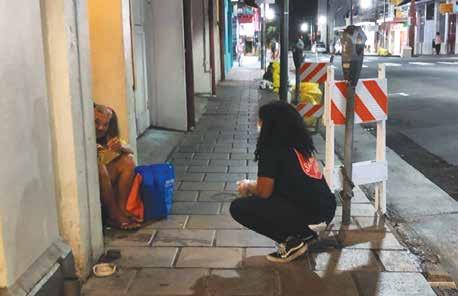
RevHI teams frequently engage with individuals living on the streets in Oahu, getting to know them and even washing their feet. One outing in Honolulu’s Chinatown led participant Makensy Peiffer to a personal epiphany in 2019. “Gratitude is so important—if you do not have it then how can you spread God’s love to others? It is more than saying, ‘I am thankful for my family, friends and things.’ Rather, it’s, ‘I am blessed in more ways than I can imagine and because of that I need to give my time and talents to those who have less, so that
Program

RevHI TURNS 20
“COMING HERE HAS MADE ME WANT TO KNOW AND LOVE GOD EVEN MORE.” —2019
they can experience the joy I have in my heart through Jesus Christ.’”
Discipleship
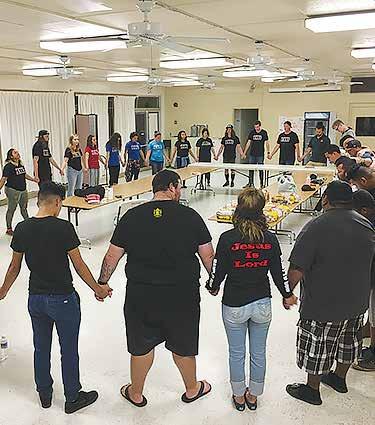
At its core, RevHI is a discipleship program. Participants commit this portion of their lives to Jesus—to active discipleship through daily group Bible study and prayer; weekly classroom teaching, small group discussion and guest speakers; practical evangelism; and servant leadership training. “Coming here has made me want to know and love God even more,” said 2019 participant Natalie Alonso, from Punta Gorda, Florida. “The officer at my corps said, ‘I don’t want you to come to church to be spiritually fed; I want you to come here to get hungry.’ And that is what RevHI has done for me—I came here thinking I would get fed, but what is so awesome is that RevHI has made me hungry to know God more.”
Christmas help
RevHI participants are dispatched throughout the Hawaiian islands as Christmas Angels to support Salvation Army units. The season is full of delivering meals, organizing gifts and raising money for those in need. “Getting to help the corps officers during one of their busiest seasons, Christmas, was so much fun and so rewarding because we worked so hard…and helped take some stress away from what’s already a super stressful time,” said Hannah Trayler, who took part in Revolution Hawaii from 2022-2023.
Pipeline to officership
While not an official incubator for Salvation Army officers, RevHI’s intense curriculum of discipleship and getting to know people who are suffering on Oahu has led many to find their calling—21 alumni went on to become accepted as candidates for training, Noland said. “We’re taking young people who have potential coming through our program and creating world-changers,” he said in 2017. “It’s creating an opportunity for young people to realize their potential for serving and helping others.” RevHI alumni include Captain Jeff Walters, Captain Travis Yardley, Captain Belle Green, Captain Victoria Mercer, Lt. Monique Aviles, Lt. Zechariah Guess and Lt. Melissa Esquivel. NFC
expands to Camp Homelani on Oahu’s North Shore
RevHI steps up to serve amid record need during COVID pandemic
Team takes a summer mission to Japan
20 years of RevHI
REVHI participant Natalie Alonso
THIS IS NOT ABOUT INTRODUCING SOMETHING FOREIGN OR NEW. IT IS ABOUT RECOGNIZING WHAT HAS BEEN PRESENT IN OUR BEST MOMENTS—AND ALLOWING THOSE CONVICTIONS TO SHAPE OUR FUTURE TOGETHER.
The Western Territory’s 5 values
TBY JAMES BETTS, COMMISSIONER
his past January marked a season of leadership transition for our territory. With that change comes both responsibility and opportunity—to listen carefully, to honor faithful work already underway, and to carry it forward with clarity and conviction under the continued leading of the Holy Spirit.
Before my arrival, the Territorial Executive Council (TEC) began a thoughtful and prayerful process to discern and articulate a shared set of values for our territory. I was not part of those original conversations. However, I want to say clearly that I fully support the work that has been done and the direction it points us toward. These values reflect the heart of The Salvation Army and serve the mission God has entrusted to us.
This is not about introducing something foreign or new. It is about recognizing what has been present in our best moments—and allowing those convictions to shape our future together. Our goal is not to redefine the mission of our Army, but rather to clarify the posture with which we carry out that mission. These values clarify how we approach that mission in every setting.
Why values matter now
The Salvation Army is a movement of action. We respond to need, often quickly and under pressure. In seasons of complexity and change, values give us a shared compass. They help ensure that while our methods may adapt, our identity does not drift.
Shared values create alignment across a territory as large and diverse as ours. They help officers lead with confidence, employees work with clarity, soldiers serve with unity, and those we serve experience care that is consistent, dignified and Christ-centered. Values do not replace the mission; they protect it.
Our territorial values
The following five values emerged from the work of TEC and reflect both our mission and our lived experience as The Salvation Army in the Western Territory.
CHRIST-CENTERED MISSION
Everything begins and ends with Christ.
We affirm that our identity, purpose and mission are rooted in Jesus Christ and guided by
Scripture. Our programs, decisions and relationships are not simply motivated by good intentions, but by biblical faithfulness and intentional discipleship. As Colossians 1:17 reminds us, “He is before all things, and in him all things hold together.”
PEOPLE MATTER
Every person matters.
We are called to see and honor the God-given dignity of every individual—those we serve and those we serve alongside. Each of us carries the image of God. Our prayer is that we embrace a culture of compassion, dignity and respect. We are called to remember that people are never a means to an end; they are the reason for our mission, and the vessel God uses to accomplish it. Jesus reminds us in Matthew 25:40 that “Whatever you did for one of the least of these… you did for me.”
FAITHFUL STEWARDSHIP
Be faithful with what we have been given.
Faithful stewardship calls us to integrity, transparency and responsibility in how we manage resources—financial, physical and human. This value builds trust and ensures sustainability, allowing us to serve well today while preparing responsibly for tomorrow, for “Whoever can be trusted with very little can also be trusted with much” (Luke 16:10).
CARE-DRIVEN LEADERSHIP
Lead with courage, grounded in care.
Leadership in The Salvation Army requires both boldness and humility. This reminds us that strong leadership and genuine care are not opposites; they belong together. Decisions are made with courage, guided by prayerful discernment, and shaped by concern for people and mission alike. We continue to be called to “Act justly, love mercy, and walk humbly with our God” (Micah 6:8).
FUTURE FOCUS
Shape tomorrow, today.
Faithfulness includes preparation. We are called to anticipate change, embrace thoughtful
innovation and make strategic decisions that position the Army to meet emerging needs. Future focus is not about chasing trends but about stewarding opportunity with wisdom and hope. While we may not know what the future holds, we do serve a God who does. He asks us to “Commit to the Lord whatever we do, and he will establish our plans” (Prov. 16:3).
What this makes possible
As we share and live values such as these, they shape our culture in beautiful ways. They bring consistency during leadership transitions. They help us all navigate hard decisions. They clarify priorities when resources are stretched. And they strengthen trust with donors, partners, communities and one another.
For those we serve, values lived out mean care that is both effective and compassionate. For leaders, they offer alignment and confidence. For the territory, they provide a steady foundation as we continue the work God has called us to do.
Mission integration is not an added initiative. It is the natural outcome of God-honoring values lived consistently across every expression of ministry.
When Christ remains central, the gospel is never separated from service. When people are truly valued, our engagement becomes relational rather than transactional. When stewardship is faithful, resources serve mission rather than distract from it. When leadership is care-driven, courage is exercised with humility. When we focus on the future, we honor our heritage while preparing responsibly for what lies ahead.
Moving forward together
This work did not begin with one person, and it does not belong to one group. It belongs to the territory.
To our officers, soldiers, employees, volunteers and all who call The Salvation Army home: these values are offered as a shared language and a shared commitment. They are not expectations placed upon you, but convictions we carry together.
As we move forward in this season, may these values help us walk with clarity, serve with unity, and remain faithful to the mission entrusted to us—always centered on Christ, and always guided by love. NFC
A SHARED WAY FORWARD
• CHRIST-CENTERED MISSION • PEOPLE MATTER • FAITHFUL STEWARDSHIP
• CARE-DRIVEN LEADERSHIP • FUTURE FOCUS
with three children and three grandchildren, they first met at Star Lake Camp in New Jersey—a Salvation Army summer camp that helped shape both their relationship and their shared calling to ministry. Over 29 years as officers, they have served in ministry across Ohio, New York, New Jersey and Virginia.
Now appointed as Territorial Commander and Territorial President of Women’s Ministries, respectively, the Bettses are known for their commitment to raising Christ-centered leaders and helping people experience the transforming love of Jesus.
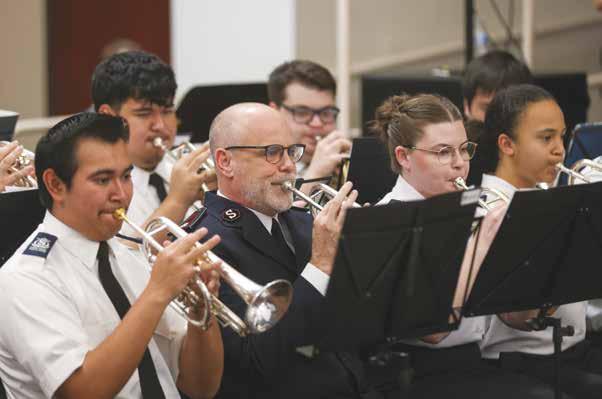
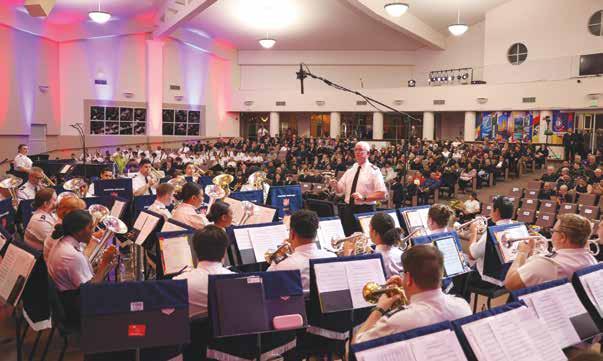
The meeting included worship led by the Territorial Youth Band and Chorus, the Cathedral City Praise Team and the El Cajon Singing Company.
Commissioner Sue Betts shared words of greeting, reflecting on the faithfulness of God and the mission of The Salvation Army.
“Today is not about individuals assuming new roles, but about God’s faithfulness and his ongoing work in this territory,” she said. “We come with a deep awareness of our dependence on God and with joy—the joy of the Lord is our strength (Neh. 8:10).”
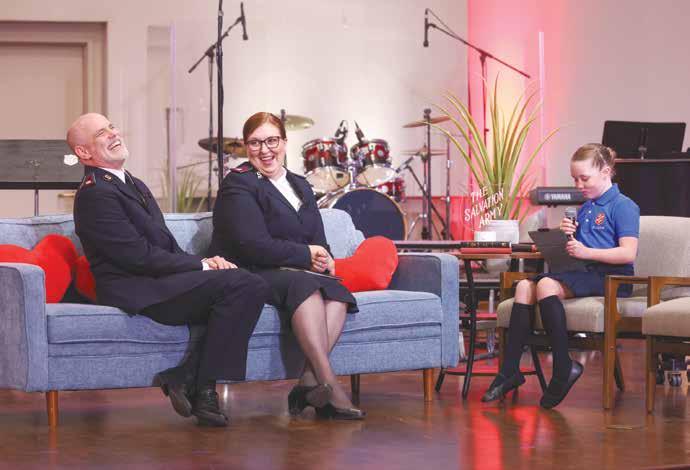
The service also included a time of personal introduction and reflection, allowing attendees to “get to know” the new leaders more deeply. Scripture was presented by members of the Territorial Executive Council, and special music selections such as “Walk Tall, Stand Firm, Be Strong,” “Rejoice” and “No Other Name” underscored the theme of steadfast faith and joyful service.
Commissioners Kenneth and Cheryl Maynor (retired) formally installed the Bettses, acknowledging their years of faithful service. They invited Commissioners Betts to kneel at the mercy seat to renew their covenant—a promise first rooted in their junior soldier commitment to love and obey Jesus and to tell others about him, later affirmed through their soldier’s promise and officer’s covenant to win souls and make salvation the first purpose of their lives.
“May the everlasting arms of God our Father hold you and protect you,” Kenneth Maynor said. “May the love of Christ compel you and inspire you to holy service. May his Spirit anoint you, fill you and strengthen you for daily living.”
As the Bettses knelt in renewal, the congregation stood to recommit themselves to Christ and to the Army’s mission, underscoring the shared nature of the call to serve. The moment concluded as their daughter, Captain Katherine Tripari, prayed over them, asking for God’s continued guidance and strength.
As their first official act, the Bettses took a moment to acknowledge Colonels Ivan and Jennifer Wild in their new roles as Chief Secretary and Territorial Secretary for Women’s Ministries, respectively, expressing gratitude for their faithful leadership. James Betts noted that the Wilds were not being introduced to the territory but embraced by a community that has known and loved them well. He honored their leadership as consistently marked by integrity, passion and a deep commitment to the Gospel.
“We don’t simply welcome you,” Betts said. “We truly thank God for you,” before offering Proverbs 3:5–6 as a guiding promise for them and the West in the days ahead.
Betts then delivered the message, titled “Transforming Love,” drawing from Romans 12 and calling the territory to a deeper life of holiness and unity. Reflecting on the early church’s struggle between Jewish and Gentile believers, he noted Paul’s repeated emphasis on unity was rooted in the transforming power of the gospel—one that calls believers not merely to tolerate one another, but to love across differences.
“Therefore, offer your bodies as living sacrifices,” he said, pointing to Paul’s reminder that everything begins with God’s mercy. Just as Old Testament sacrifices passed through the fire, believers today are invited to bring their fears, brokenness, ambitions and even their conflicts before God’s refining flame. “Tolerance is not enough,” he urged. “We must allow God to burn away what is not of him.”
Betts challenged the congregation not to limit salvation to forgiveness alone, but to embrace sanctification—a daily surrender that allows the Holy Spirit to shape hearts and deepen love. Holiness, he said, is not about rule-keeping but about laying down one’s life for Christ each day and trusting him fully.
“Never let the fire in your hearts go out,” he said, echoing Romans 12:11. “Keep it alive as you serve the Lord.”
As he concluded, he invited those who longed for deeper transformation—those weary of “just getting by”—to come forward and lay their lives on the altar. In a powerful moment of response, many rose from their seats and knelt in prayer, seeking renewal and a fresh work of God’s refining fire.
The congregation continued in worship before Colonel Jennifer Wild pronounced the benediction, closing a service marked by gratitude for past leadership and renewed commitment to the future. The event served as a reminder that transforming love begins with surrender—and that the same God who calls his people is faithful to lead them forward.

learning to let go of what no longer serves me,” Bernard said. “Pathway of Hope has been essential, and I am proud of myself. My goal is to obtain my cosmetology license and continue growing my hair business while also exploring new opportunities like joining the sheriff’s department. I want to keep building multiple streams of income and show my daughter that no matter the obstacles, you can create the life you want through hard work and determination.”
From the day she walked into the Siemon Center carrying hope, Bernard has transformed it into a life of possibility for herself and her daughter—a testament to resilience, guidance and determination.
At the Siemon Center, Perry witnessed Bernard’s transformation firsthand.
“Seeing Ericka’s gratitude and progress fills our hearts with joy,” he said. NFC
continue his education through City Vision University’s Wounded Healers pathway that’s designed for students who were formerly affected by substance use, homelessness or incarceration. He is now working toward a business certificate while studying addiction counseling in an accredited program.
“Recovery doesn’t stop when the program ends,” said Seattle ARP Program Administrator Captain Kyna Kelley. “We want the men to leave here with connection, stability and a clear sense of what comes next.”
Once ARP beneficiaries reach the fourth month in the program, they have the option to enroll in the City Vision University Wounded Healers Program.
Kelley said her own experience studying at City Vision showed her how education, spirituality and service can work together in recovery, leading her to help establish the ARP’s partnership with Wounded Healers in 2023.
Today, the ARP is one of more than 50 recovery and reentry programs across the country engaged in the educational partnership to ensure those who complete programs have access to continued education.
Salvation Army Adult Rehabilitation Centers (ARC) in the eastern U.S., including the Columbus (Ohio) ARC, have also partnered with Wounded Healers, helping lower tuition costs for program graduates.
“For some individuals, education becomes part of their recovery,” Kelley said. “It gives them a gradual way to build confidence and envision what life can look like after the program.”
Kelley said every man who graduates from the ARP leaves with employment or housing in place. She added that support continues for up to 18 months after graduation, offering assistance with enrolling in courses, accessing resources and staying connected.
For Vivero, his days are now filled with lessons, assignments and meetings with professors, offering a new rhythm that supports both his education and his sobriety.
“I’m learning more about the science of addiction and how it affects the way people think, behave, and cope,” Vivero said. “The more you know about a problem, the more you can do to help find a solution.”
As he continues his studies, Vivero said he’s already begun to see his experience as something he can offer others.
“I know what it feels like to be stuck,” Vivero said. “Now I want to be part of what helps someone move forward.”
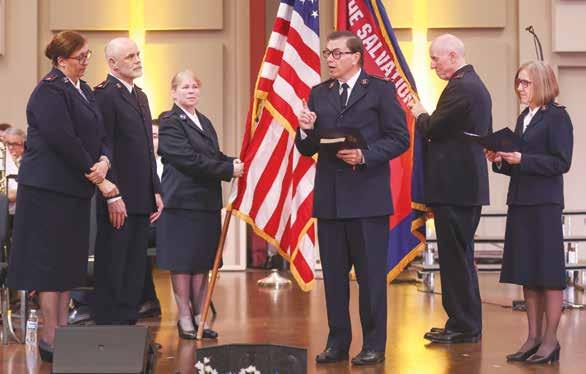
1. Commissioner James Betts joins the Territorial Youth Band. 2. Bandmaster Neil Smith leads the Territorial Youth Band during the meeting's prelude. 3. Commissioners James and Sue Betts welcome Colonels Ivan and Jennifer Wild to their new leadership positions. 4. Commissioners James and Sue Betts are welcomed by attendees after being installed as Western territorial leaders. 5. Junior Soldier Zoe Fowler interviews Commissioners James and Sue Betts. 6. The Territorial Executive Council offers a Scripture presentation.
|PHOTOS BY JOHN DOCTER
LT. COLONEL CHECK HUNG YEE
Sept. 22, 1929–Dec. 31, 2025
Lt. Colonel Check Hung Yee was promoted to Glory Dec. 31, 2025, from Richmond, California, surrounded by family.
He was born Sept. 22, 1929, in Canton, China. His mother, a devout Christian, dedicated her firstborn son to God at his birth, naming him Check Hung Yee, meaning “Herald of the Truth.” Raised in a third-generation Christian family, Yee’s childhood was marked by war, displacement and poverty during the Japanese invasion of China during World War II. Deprived of formal schooling when his school was destroyed, he developed a deep love for reading and writing, later finding employment as a proofreader and assistant editor for a daily newspaper.
Yee first immigrated to Canada, and later to the U.S. At age 22, he experienced a personal conversion at a Salvation Army meeting. There, he sensed God’s call to full-time ministry. He married Phyllis Mah on July 7, 1951, and together they entered The Salvation Army School for Officer Training in San Francisco in 1958 as members of the Pioneers Session.
Commissioned as probationary lieutenants in 1959, the Yees were appointed to the San Francisco Chinatown Corps. That appointment became the focus of Yee’s entire 35-year active officership.
At the Chinatown Corps, Yee devoted himself to evangelism, public witness and creative communication of the gospel. He established weekly open-air meetings and helped develop an annual March of Witness that grew to include hundreds of participants and continued for five decades, from 1965–2015. He wrote a weekly column for a Chinese-language newspaper for more than 40 years, produced a long-running weekly television
FAMILY HOPE
FROM PAGE 1
The Salvation Army is preparing to reopen 10 units.
To generate support, staff took a handson approach to fundraising, including reaching out to neighboring churches and hosting open houses and private tours that allowed community members to see the shelter’s impact firsthand.
“This was something that we've never done before. Once people come into our facility and see the way we have it set up and the dignity that it gives our clients… people are like, ‘Oh my gosh, you're doing so much,’” said Family Hope Center Program Manager Jacqueline Baumgartner. “It was just a great way to spread that message and give people an idea of what really goes on here because there's such a stigma behind the word ‘shelter,’ and it's just eye-opening.”
Clients were invited to share their testimonies with visiting community members.
“A lot of our clients are always looking for a way to give back to us. And we’re like, ‘No, you don't need to do anything. We're here for you and here to serve you,’” Baumgartner said. “It was a special moment for them to feel like, ‘I'm supporting this program.’”
These stories speak to a more than 70 percent success rate in getting families into more stable housing within 90 days of entering the shelter.
“There are so many stories of how difficult some of these circumstances are that clients face,” Ball said. “Yet, the staff work so well with them, and things get turned around, and they find
program titled “Blessings from Heaven” (1977–1994), and authored eight books— five in Chinese and three in English—covering devotional themes, Salvation Army history and his own life story.
Yee’s ministry extended far beyond San Francisco. He conducted evangelistic campaigns in 21 U.S. states and seven countries, helped establish new Salvation Army works, and nurtured second-generation and English-speaking congregations. In 1968, he attended the International College for Officers in London.
Promoted to lieutenant colonel in 1992, Yee was at the time the only corps officer in the Western Territory—and only the second in the U.S.—to hold that rank. He retired Sept. 11, 1994, following a large public celebration in San Francisco that included a March of Witness, international guests and a proclamation by the mayor declaring “Check Hung Yee Day.”
Following retirement, Yee continued to serve the Army. In 1996, he opened The Salvation Army’s office in Kunming, Yunnan Province, China, further extending his lifelong commitment to the land of his birth.
In 1997, General Paul A. Rader admitted Lt. Colonel Yee to the Order of the Founder, The Salvation Army’s highest international honor, recognizing his 35 years of fruitful corps ministry, his exceptional communication through media, and his contributions to the redevelopment of The Salvation Army’s presence in Mainland China. Previously, in 1995, General Eva Burrows presented him with the Recognition of Exceptional Service award.
Lt. Colonel Yee was predeceased by his wife, Major Phyllis Yee, in 1991, and leaves a legacy of faith in his children: Major Keilah Toy (Ronald), Karen Lim (Victor), Keriena Tillery (Darwin); nine grandchildren and three great-grandchildren.
A celebration of life will take place
themselves on a much better platform.”
The shelter’s team gave more than 15 tours, and each ended with a donor giving $1,000 or more.
“It was shocking. Every time we got a check…we were all crying tears of joy and just in awe of how much this community steps up to help one another,” Baumgartner said. “We have a story to tell, and people want to get involved.”
One anonymous donor had heard about the shelter’s budgetary challenges and initially dropped off a $5,000 check. After Baumgartner gave the donor and their spouse a tour, she said the couple added about $200,000 to their initial donation.
This was one of two instances in which anonymous donors stepped up to support the shelter during the campaign. According to Ball, approximately half of the $800,000 raised was from private donors.
In addition to individual community member donations, the local Rotary Club, which helped set up many of the private tour and open house events, contributed $50,000. The El Pomar Foundation in Colorado Springs donated $100,000 as well.
“It was really super heartwarming and encouraging. We have total gratitude for all of those who stepped up,” Ball said. “The biggest message in the Hope Needs Help campaign is that God is in this business and he's watching over the work that's being done. He cares for those who are lost and hurting and homeless and it is remarkable.”
Now, with these funds, the shelter plans to hire the staff necessary to reopen 10 units as cold winter weather begins in Colorado.
“We've had a very mild winter so far, praise the Lord,” Ball said. “The number
March 15 at the Suisun City (California) Ray and Joan Kroc Community Center.
MAJOR MERLE ELLIOTT, Oct. 2, 1927–Feb. 8, 2026
Major Merle Elliott was promoted to Glory Feb. 8 from Vancouver, Washington.
Merle Parsons was born Oct. 2, 1927, in Nelson, British Columbia, Canada, with a twin sister named Pearl. Merle entered officer training with the King’s Messengers Session and was commissioned in 1948. Her sister, Pearl, was commissioned in 1951. Merle met her future husband, Thomas Elliott, at The Salvation Army Trestle Glen Camp in Boring, Oregon, and they wed in 1949.
The Elliotts served in 17 corps and headquarters assignments throughout the Western Territory. After more than 39 years as active officers, they also accepted several post-retirement positions. Some of their longer appointments include Olympia, Washington (seven years), Redondo Beach, California (five years), and Inglewood, California (seven years). They launched programs like Angel Tree and Meals on Wheels in the communities they served. In the late 1970s, they handled the property purchase and construction of the Torrance (California) Corps.
The Elliotts retired in 1991 and settled in Beaverton, Oregon. Later, Merle Elliott moved to Vancouver.
Major Merle Elliott is survived by her children: Sharon (Bob) Gregg, Diane Henderson, Jerry (Becky) Elliott, Janet (Bob) Yardley, and Jeff (Mary) Elliott; 11 grandchildren and 15 great-grandchildren; and many extended family members throughout the territory. She was predeceased by her husband, Major Thomas Elliott in 2014, and by
one thing, though, in getting the rooms back up is getting more families safely off the streets during the coldest part of the year.”
The reduced capacity over the last few months has also been felt heavily by the community, as the need for shelter continues.
“It was a huge blow to us having to cut back those rooms. I remember the day that we started doing it, and we were turning away some 15 families a day,”
Baumgartner said. “It was just heart-
BITTERMAN
FROM PAGE 4
Homelani on Oahu’s North Shore. “That’s part of my family, too,” he said.
Bitterman has advice for anyone facing a seemingly insurmountable problem.
“Give it all to the Lord—Proverbs 3, 4 and 5,” he said. “Let him direct your path.”
He reflected on turning 73 this year.
“That’s another miracle that Jesus is
NEW APPOINTMENTS
CASCADE DIVISION
Majors Charity and Premek Kramerius , Corps Officers, Boise, Idaho*— Dec. 1, 2025
Captain Nathan Perry, Assistant Corps Officer, Boise, Idaho—Dec. 1, 2025
GOLDEN STATE DIVISION
Captain Kailah Kim, Divisional Business Officer—March 4
her twin sister Major Pearl Pack Benson. The family anticipates holding a celebration of life service in March at the Clackamas (Oregon) Corps.
MAJOR BETTY RANDALL Oct. 20, 1932–Jan. 16, 2026
Major Betty Randall was promoted to Glory Jan. 16 from Hemet, California.

Betty Averett was born Oct. 20, 1932 in Quinton, Oklahoma. She was commissioned as a Salvation Army officer in 1955 with the Soul Winners Session. Her first appointment was to Booth Memorial Hospital in Spokane, Washington.
In 1962, Lt. Betty Averett met Lt. John Randall at Camp Mt. Crags in Calabasas, California, introduced by Betty’s sister, Lucille Youngquist. Soon after their first date, John was appointed to Juneau, Alaska, and a correspondence relationship followed while Betty was appointed to Saxman, Alaska.
They were married in 1963 and appointed as corps officers in Ketchikan, Alaska. Over the next 11 years, they served in corps appointments and were responsible for new corps buildings in Casper, Wyoming, and Stockton, California.
In 1972, the Randalls transitioned to the Adult Rehabilitation Center (ARC) ministry, serving as trainees at the Seattle ARC and later as directors of the Tacoma (Washington) ARC. They then returned to corps appointments for four years before resuming ARC service, where they served more than 24 years. Their final appointments were as administrator and director of Special Services at the Long Beach (California) ARC.
Major Betty Randall is survived by sons Michael and Stephen, and by her sister, Major Lucille Youngquist. Her husband, Major John Randall, was promoted to Glory in 2020. NFC
breaking over and over and over again.”
While the funds raised will allow the shelter to operate closer to full capacity through October, the fundraising efforts continue to ensure the long-term sustainability of the program. For now, The Salvation Army is thankful for the impact it will have on families as units reopen.
“We just want this place to be a place of healing and love for all of our clients when they come in,” Baumgartner said. “We want to make sure that they feel safe and heard while they're here.” NFC
working in my life,” Bitterman said. “He allows me to do what I do. I’m carrying suitcases—70 pounds—and hauling them up on shelves, and I give God all the glory. It’s been so awesome.”
LeMar said Bitterman’s faith and persistence continue to inspire others. “Doug’s journey is a testament to God’s grace, and we are truly blessed and proud to call him a beloved member of our church ohana.” showing the men the value of supporting each other.” NFC
Envoys Guillermo and Rosio L. Marquez, Ministry Leaders, Clovis, California—March 4
SOUTHERN CALIFORNIA DIVISION
Lt. Sharon M. Reimers, Corps Officer, Oceanside, California—Feb. 8
* Additional responsibility
RETIREMENTS
Majors Richard and Tammy Larson March 2026, Special Assignment Golden State Divisional Headquarters NFC
Moore Street Shelter (100 beds), creating a network of overnight shelter locations across the city.
The Salvation Army operates these shelters in partnership with the City of Portland, responding not only to the immediate danger of sleeping outdoors, but to the more complex journey toward permanent housing.
Cascade Divisional Commander Major Jonathan Harvey said The Salvation Army in the Portland area has a plan that details the expansion of services to people experiencing homelessness—one that ultimately leads to self-sufficiency.
“The first step is overnight shelter, which our partnership with the City of Portland has enabled us to accomplish,” Harvey said. “The future of service in the Portland Metro region is on track to impact more lives than ever before.”
At these three shelters last year, The Salvation Army provided overnight shelter to 3,363 individuals.
“[Staff] have worked so hard and put in countless hours to stand up three shelters over the past year,” Harvey said. “The Salvation Army has been bringing hope to the City of Portland for 140 years and a legacy for the future is being established by the care and attention each individual is given on a day-to-day basis.”
The shelters were a key part of Portland Mayor Keith Wilson’s initiative to add 1,500 beds for Portland's unsheltered population by Dec. 1, 2025, a goal the city surpassed.
In a Dec. 1 video recorded at the Northrup Shelter, Wilson announced the city had reached its goal, while noting overnight shelters are only a first step toward permanent housing.
“Now, we must turn our focus to housing development with the same tenacity, urgency and coordination that we brought to delivering shelter," Wilson
said in a press release. "Shelter saves lives today, but housing provides stability and dignity for a lifetime."
The low-barrier, overnight-only shelters move people from dangerous street conditions into temporary safety. While it’s impossible to know how many lives have been saved, a JAMA study cited by the City of Portland found people living on the streets are 300 percent more likely to die than those in overnight shelter.
It’s not just about coming in from the cold, then; it’s about being safe. The city released a report in July 2025 revealing “significant decreases” in crime around The Salvation Army’s Burnside and Moore Street shelters.
“We have learned that when you’re living on the streets, you’re stuck in survival mode,” said Justin Moshkowski, Executive Director Multnomah County Shelter Services. “You are always on edge, always looking over your shoulder, just trying to make it through the day. You can’t think about moving forward when you’re just trying to stay safe.”
Moshkowski said change is possible, though, with the efforts of a dedicated staff. At The Salvation Army’s shelters, there is a culture of care.
“When staff treat [guests] with basic respect by learning their name, looking them in the eye, treating them like they matter, something shifts,” Moshkowski said. “When they feel safe here, when they’re treated with dignity, they don’t need the protective armor as much. That’s when real change becomes possible.”
Joe, who has now found permanent housing, called the Northrup Shelter staff “wonderful.”
“Making [the shelter] inviting and providing compassion has made me feel human again,” he said. “Thanks in big part to this shelter and staff I now have a job and hope.”
As The Salvation Army continues to serve Portland’s unhoused community, it aims to maintain The Salvation Army’s overall mission to meet human needs in Jesus’
“She simply needed a place where she could be a kid and be heard.”
Griffin said it didn’t take long for teen night to become a highlight of her week.
name without discrimination, serving the vulnerable and upholding human dignity.
“We count it a privilege to serve our unhoused neighbors, not only by meeting their practical needs but by demonstrating the love of Jesus,” said Major Maggie
Laubach, Divisional Secretary for Portland Metro Social Services. “Through this work, we hope to remind every individual that they are seen, further affirming their dignity and value as a person created in the image of God.”
NFC
For the rst time ever, the National Seminar on Holiness and the National Seminar on Evangelism will be meeting during the same week at Camp Hoblitzelle, Texas!
Want to be part of it? Talk to your Corps O cer or DHQ to get registered today. Corps O cers are not required to attend—even if their soldiers will. COME READY TO GROW, CONNECT, AND BE INSPIRED!
lessons, she gets the kids up and moving with indoor basketball, pickleball and other games, giving them an outlet that winter weather often takes away. She said they also plan themed nights, including movie screenings and a ramen cooking contest—a favorite for many.
“They tell us how much fun they’re having, and we see it firsthand as they begin building friendships with one another,” she said.
Throughout the evening, she reminds participants that she’s always available if they need someone to talk to.
“Some kids have concerns at home or school, and this becomes a space where they can express their emotions or just have fun for a while,” she added.
One participant, Violet Griffin, 16, has attended Sunday service at the corps for over six years.
“Attending the corps has helped me become more confident in my faith,” Griffin said. “It’s a place where I don’t feel like I have to hold back.”
Once Griffin heard about teen night, she knew she wanted to get involved to connect with teens her age who share similar interests and values.
“We learned she’s the oldest of several siblings, and that responsibility comes with various pressures,” SilvaRocha said.
“I just like to hang around and talk with everybody,” Griffin said. “We definitely support each other a lot. Everyone’s going through their own things and so we just listen and be there.”
Today, she is a corps cadet who volunteers as a leader during Teen Night, often helping SilvaRocha read Scripture to the group. She has also begun assisting with worship by playing guitar and singing alongside Pease.
“She’s grown so much in just a year,” SilvaRocha said. “She’s become a confident peer leader and a role model for the other kids.”
SilvaRocha said she grew up in a busy home similar to Griffin’s and recognizes the role faith and community can play in helping kids find stability amid chaos.
“It’s so important to give kids these spaces to be themselves,” SilvaRocha said.
Looking ahead, Pease said his focus is on building more connections between local youth and the corps and creating opportunities for them to engage with the wider community.
“Youth ministry is so valuable because it sets the tone for young people’s futures,” Pease said. “We can give kids the tools not to avoid difficult situations, but to get through them and rely on God.” NFC
20–23, 2027 A national professional development conference for officers and staff working in:
• Advisory Organization Leaders
• Community Relations & Development
• Emergency Disaster Services
• Social Services


ALASKA
Kodiak provides coats for kids
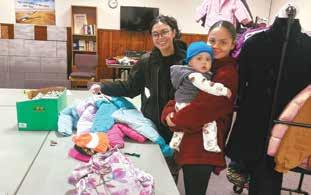
The Salvation Army Kodiak (Alaska) Corps distributed coats to 69 families during their Coats for Kids event Jan. 22. The distribution was part of a broader effort offered during the corps’ Angel Tree distribution. Corps Officer Captain Diane Shatto said over 100 families were served in total. Coats for Kids was possible thanks to community members and Kodiak Rotary, who donated 200 coats to help keep neighbors warm. “Rotary collected and got the coats cleaned for us at the local cleaners,” Shatto said.
CASCADE
Clackamas Corps Officer honored
The North Clackamas (Oregon) Chamber of Commerce honored Clackamas Corps Officer Lt. Sarah Culley as a Large Nonprofit Leader, awarding her the 2026 Women in Leadership and Management Award. This recognition reflects her vision, integrity and deep commitment to serving the community. Culley received the award and participated in a leadership panel Jan. 29 at the Abernethy Center in Oregon City.
“This award is a powerful reminder that God has invited me into his kingdom work, and with that comes a beautiful responsibility,” Culley said. “I must ensure that any good that comes from my work brings glory to God and not to me.”
Recently renamed, the Clackamas Corps was formerly called the Portland Metro Corps.
DEL ORO
Del Oro acknowledges one-of-a-kind leadership
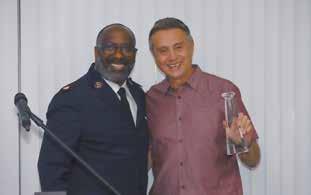
At the conclusion of a 17-year tenure, Mitch McConkey retired as Director of Gift Planning for the Del Oro Division. During his service, McConkey helped raise more than $200 million to support life-changing programs across Northern California and Nevada, expanding services for unhoused individuals, families in crisis and disaster survivors. He was a recipient of The Salvation Army’s Lifetime Achievement Circle of Excellence Award.
“Mitch brought a rare and powerful blend of professionalism and pastoral heart to the work of fundraising. He never saw fundraising as simply about dollars—it was ministry,” said Del Oro Divisional Commander Major Osei Stewart.
STATE

co, a coffee farm in Guatemala, known for its high quality, careful and innovative processing methods.
“These experiences give CTA participants exposure to the real stories, people and pathways behind the food and beverage world they are preparing to enter,” said CTA Chef Timothy Tucker.
HAWAIIAN AND PACIFIC ISLANDS
Salvation Army advocates honored Pacific Business News selected two Salvation Army advocates as honorees for this year’s Women Who Mean Business awards. Hawaiian and Pacific Islands Divisional Director of Development Charmaine Hauanio-Kuewa and Honolulu Advisory Board Chair Minna Lehti (of Hawaii Dental Service) were both selected. Profiles of the honorees will be featured in the March issue of Pacific Business News
Majors Troy and Anie Trimmer are the Hawaiian and Pacific Islands divisional leaders.
INTERMOUNTAIN
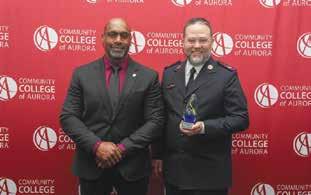
The Salvation Army Aurora (Colorado) Corps received the Hometown Hero Award from the Aurora Police Department’s Community Relations Section Jan. 26, recognizing the Army’s meaningful local impact. The honor reflects the dedication of officers, staff and volunteers who serve the community each day. Divisional Youth Secretary and Divisional Candidates’ Secretary Major Shane Halverson accepted the award on the corps’ behalf.
Lts. Carl and Melissa Esquivel are the Aurora Corps officers.
NORTHWEST
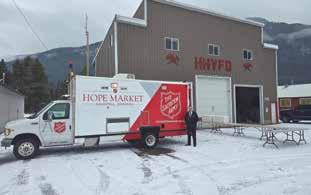
Kalispell Corps launches mobile Hope Market
The Salvation Army Kalispell (Montana) Corps gave new purpose to an unused canteen, transforming it into a mobile Hope Market. The vehicle was fully rebuilt with new flooring, shelving and an exterior wrap, creating an 18-foot, walk-in pantry on wheels. The traveling Hope Market will serve families across Flathead County, reducing barriers to food assistance—especially in rural communities. Operations began Jan. 29 and will continue twice a week, rotating between four locations. “This isn’t just a refrigerator on wheels,” said Kalispell Corps Officer Lt. Sean Pease. “It’s built to operate year-round and respond quickly, even in emergency situations.”
SOUTHERN CALIFORNIA
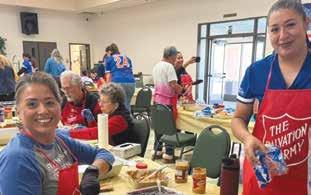
wiches for the 2025 Tour de Palm Springs, a large annual cycling fundraiser benefiting charities in the Coachella Valley, including The Salvation Army. In just four hours, the group made 4,313 peanut butter and jelly sandwiches to help fuel thousands of cyclists. During the race, Salvation Army volunteers and staff distributed the sandwiches and water to participants along the route.
Majors Rubina and Neil Navarro are the Cathedral City Davis Center Corps Officers.
SOUTHWEST
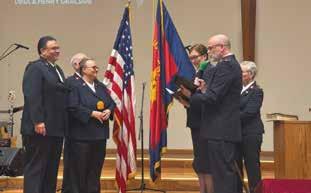
Gracianis installed as divisional leaders
On Jan. 16, Lt. Colonels Dina and Henry Graciani were installed as the Southwest divisional leaders by territorial leaders Commissioners James and Sue Betts. In an event that exuded joy and inspiration, the Gracianis shared their compassionate commitment to serving the communities of Arizona, New Mexico and Southern Nevada.
ARCC
Lives changed at Hope Harvest outreach
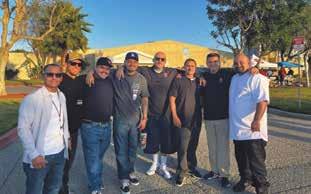
The Anaheim Adult Rehabilitation Center (ARC) hosted a quarterly outreach and fellowship event Jan. 24, bringing together more than 550 individuals from the Anaheim and Long Beach ARCs, along with guests and staff from nearby shelters, nonprofits and the community. Throughout the evening, attendees broke into groups to share about the work of the ARCs.
“Lives were touched, hope was renewed, and seeds of lasting transformation were planted,” said Anaheim ARC Administrator for Development Captain Timothy Pemberton. “Most importantly, 11 men and women made first-time decisions to give their lives to Jesus Christ.”
CFOT
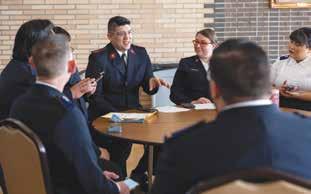
Future Officers Fellowship—‘Same God’
The Crestmont campus hosted the West’s annual Future Officers’ Fellowship retreat Feb. 13–15, welcoming 90 Salvationists from throughout the Western Territory— individuals who feel called to full-time ministry as a Salvation Army officer. This year’s theme, “Same God,” is based on Malachi 3:6: “I the Lord do not change.”
In January, the San Francisco
Orantes
Volunteers fuel Tour de Palm Springs
More than 25 volunteers gathered Feb. 3 at The Salvation Army Cathedral City Davis Center to prepare sand-
During the weekend, prospective officer candidates attended classes. Additionally, CFOT offered “Explore,” offering delegates the opportunity to visit various departments and ask questions. “Answering the call to officership can be scary, but we believe in a God who is faithful, and will provide strength, wisdom and the resources for the call,” said Territorial Candidates’ and Recruitment Secretary Major Jennifer Masango. “God’s faithfulness in the past shows that he will be faithful in the present and faithful in the future.” NFC
GOLDEN
Culinary Arts Training Academy welcomes special guest
Culinary Arts Training Academy (CTA) welcomed guest Eric
from the Rotary Club. Orantes is connected to Finca San Francis-
Aurora Corps receives Hometown Hero award
Because of Salvation Army volunteers, hungry neighbors are fed, families find safety and communities receive hope and practical help right when it’s needed most. April marks National Volunteer Month—a time when we’re especially grateful for the volunteers who show up week after week to serve their neighbors.
The impact of volunteerism is seen in everyday moments—a warm meal served, a food drive filled, a bell rung in the cold. Together, these small acts of service add up to a meaningful, lasting hope.

Meet the volunteers
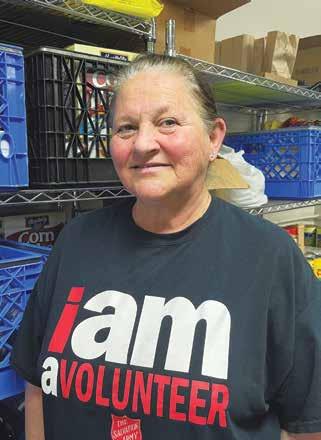
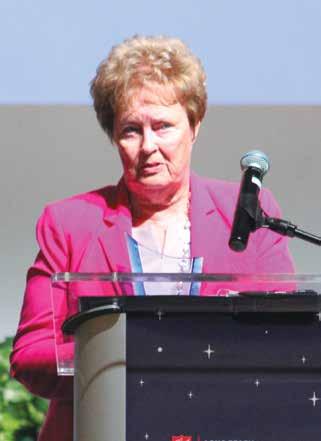
Location: Bremerton (Washington) Corps
What they do: Gloria manages and schedules a network of volunteers, coordinates programs and seasonal efforts, and supports daily operations at The Salvation Army Bremerton Corps. She’s known for baking hundreds of cupcakes each month to celebrate birthdays.
Why: “I just love people, and I want them to know they’re valued exactly as they are.”
RESEARCH SHOWS
Volunteering is linked to better mental health and overall well-being, including lower stress and improved mood.
Where they volunteer: St. George (Utah) Outpost
What they do: Alex assists with food distribution at the pantry and offers words of hope and encouragement to each guest he meets.
Why: “I find happiness in helping others and being there for people, especially during everyday moments of need.”
VOLUNTEER IMPACT
In 2025, over 1.5 million people dedicated their time to volunteering for The Salvation Army.
The Western Territory saw a nearly 16 percent growth in registered volunteers from 2021-2024.
SEE MORE about the impact of The Salvation Army and how you can Give with Joy today at caringmagazine.org.
Where they volunteer: Long Beach Adult Rehabilitation Center (ARC)
What they do: Joyce counsels men in the Long Beach ARC’s residential program, offering steady guidance as they work toward recovery.
Why: “My joy is seeing men improve their lives and return to their families—that’s what keeps me coming back.”
THE BEST PART?
There’s a place for you, too. Consider how you might serve and help bring hope to your community by giving your time and care. Contact your local Salvation Army to learn about volunteer opportunities near you.
Name: Gloria Moren
Name: Alex Guzman
Name: Joyce Quinn