“IT'S NOT ABOUT ME…THERE ARE DAYS WHEN YOU BEGIN TO QUESTION
BUT GOD JUST CONTINUES TO REMIND ME IT'S ABOUT HIS GRACE…IT'S A
“IT'S NOT ABOUT ME…THERE ARE DAYS WHEN YOU BEGIN TO QUESTION
BUT GOD JUST CONTINUES TO REMIND ME IT'S ABOUT HIS GRACE…IT'S A
New territorial leaders bring decades of ministry experience and a shared commitment to helping people encounter the love of Christ.
BY CHRISTIN THIEME
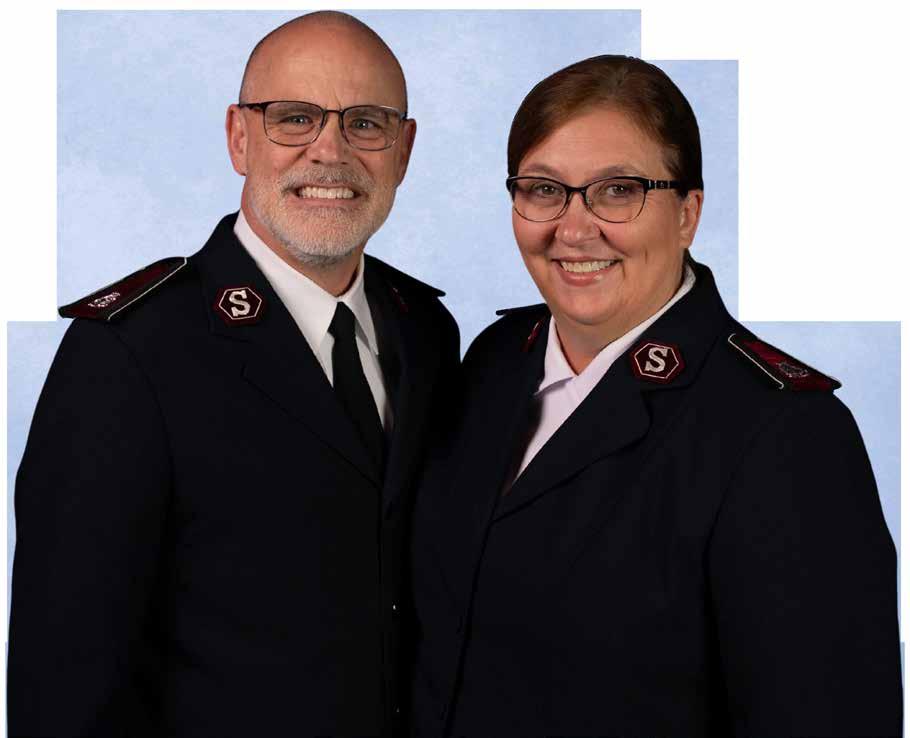
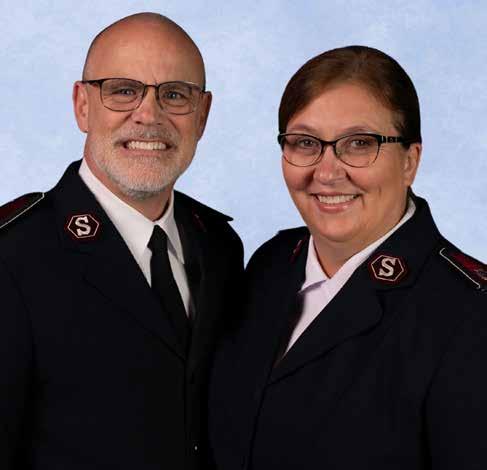
Commissioners Jim and Sue Betts have stepped into leadership of The Salvation Army’s USA Western Territory, assuming the roles of Territorial Commander and Territorial President of Women’s Ministries. Together, they bring nearly three decades of officership, a deep love for people, and a shared commitment to raising up Christ-centered leaders.
“At every stage of our ministry, we’ve simply wanted to help people experience the transforming love of Jesus,” James Betts said.
Though both were raised in Northeast Ohio, their story began at Star Lake Camp in New Jersey. James, then serving in the U.S. Army Band, had returned on military leave hoping to reconnect with friends when he saw Sue board a van to camp.
“I picked up all my luggage and moved it to her van,” he said with a laugh. “There’s no way I was riding in the other one.”
And that simple decision sparked a friendship that grew into a lifelong partnership in marriage and ministry.
Their journey to officership was shaped early. Sue wasn’t raised in a Christian home, she said but her aunt and uncle—active Salvationists—drove her and her siblings 40 minutes to church. At 14, during a Youth Councils altar call, she silently prayed to receive Christ.
“I didn’t even know what the Holy Spirit was necessarily, but the Spirit was speaking to me and I knew…all the love and acceptance I had felt was Jesus,” she said. In that same moment, she sensed a call to officership. “The Spirit was telling me, ‘You need to be saved’… and at the same time…‘There’s a plan. You’re going to be a preacher.’”
James affirmed that calling as their paths aligned. “I’m truly not complete without Sue, particularly in ministry,” he
BETTS PAGE 13
“ONE OF THE THINGS I'VE REALIZED IS THAT THERE ARE SOME
SIT BACK AND LISTEN. COMING TOGETHER…THAT'S WHEN
Salvation Army continues supporting LA families after January 2025 wildfires.
BY HALEY OSNESS
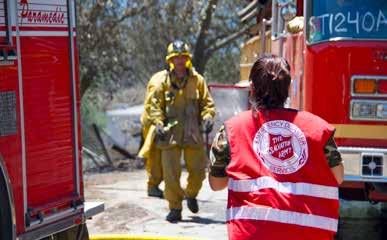
Raging flames and smoke filled the skies over Southern California on Jan. 7, 2025, as the Palisades and Eaton wildfires tore through communities from Malibu to Altadena, destroying homes and forcing thousands to evacuate.
The fires continued to spread for over three weeks due to dry conditions and high winds, burning more than 37,000 acres across the region and destroying over 16,000 homes and structures.
In the wake of the disaster, The Salvation Army Southern California Division mobilized its Emergency Disaster Services (EDS) to support evacuation centers and resource hubs across Los Angeles County, helping provide hot meals, clean-up kits, air purifiers and emotional support to survivors.
As the fires subsided and communities began to assess the extensive damage, many families were left to pick up the pieces.
WILDFIRES PAGE 11
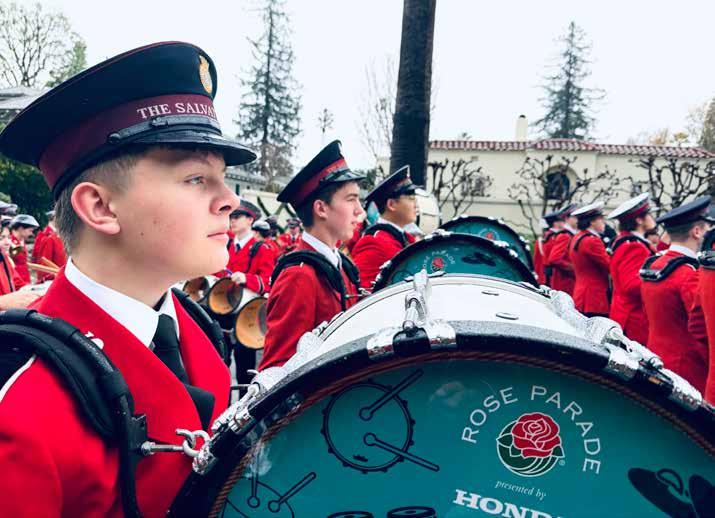
Potomac Brass, from The Salvation Army Southern Territory’s Potomac Division, marched in this year’s Tournament of Roses Rose Parade on New Year’s Day in Pasadena, California. Led by Bandmaster David Delaney, the band had a busy schedule after their arrival on Dec. 26, 2025. They led worship at the Pasadena Tabernacle Corps Sunday morning, Dec. 28, followed by a New Year’s concert at the Tustin Ranch Corps that evening. On Dec. 29, they participated in the Tournament of Roses Bandfest at Pasadena City College, which showcases the parade’s marching bands. Finally, they marched through Disneyland the afternoon of Dec. 30. |PHOTOS BY JIM SPARKS
Sometimes the most powerful thing you can offer isn’t a solution—it’s a story.
A newly updated 5-day email course from Caring Magazine, called Find Your Story: Share the Joy, helps you notice the moments in your own life that carry meaning and shows how sharing them can bring hope and encouragement to someone else.
If you’ve ever wondered how your everyday experiences could make a difference, this is a beautiful place to start.
Sign up for free at caringmagazine.org/story. NFC
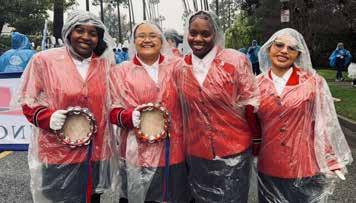
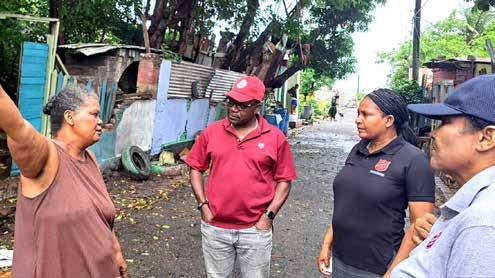
The Salvation Army responded to the catastrophic impact of Hurricane Melissa in Jamaica and across the Caribbean, providing emergency food, clean water, shelter support and critical supplies in coordination with local authorities. In Jamaica alone, teams have distributed food parcels and clean water while working with government shelters and assessing needs on the ground.

In the Philippines, The Salvation Army supported families displaced by Typhoon Tino (international name Kalmaegi), which struck in early November 2025, making multiple landfalls and causing widespread damage and displacement. The storm affected an estimated 4.1 million people, with more than 200 reported deaths, and damaged over 200,000 structures, including nearly 40,000 destroyed. Working with government agencies, The Salvation Army provided hot meals and emotional support to evacuees, while identifying those most in need and supplying them with food rations and essential hygiene items. NFC
The Salvation Army, working in partnership with the Hong Kong government, supported residents affected by the Wang Fuk Court fire in Tai Po on Nov. 26, 2025, which claimed more than 150 lives and displaced hundreds of families. Salvation Army officers, social workers and psychologists were deployed immediately to provide pastoral care, trauma support and emergency assistance.
On the day of the fire, nearby Salvation Army institutions opened their doors to displaced residents, particularly the elderly and families, while care packages and warm clothing were distributed. In coordination with government authorities, the Army helped secure temporary housing for more than 200 families, a number that doubled in the days that followed.
As of Dec. 10, more than 20,000 items of clothing and daily necessities had been delivered, and over 2,000 beds had been assembled with the help of volunteers. The Salvation Army continues to provide psychological support, essential household furnishings and assistance with funeral costs as recovery efforts continue. NFC Follow along in your favorite podcast player or find it at caringmagazine.org/podcast.
Hurricane Melissa hit southwestern
EDITORIAL STAFF
Christin Thieme, Editor-in-Chief and Literary Secretary
562/491-8723 • christin.thieme@usw.salvationarmy.org
Hillary Jackson, Managing Editor
562/491-8330 • hillary.jackson@usw.salvationarmy.org
Karen Gleason, Senior Editor
562/491-8332 • karen.gleason@usw.salvationarmy.org
Haley Osness, Editor
562/491-8345 • haley.osness@usw.salvationarmy.org
Jamaica Oct. 28, 2025, with winds of about 185 mph, making it the strongest hurricane to hit the island on record and causing widespread destruction, flooding and power outages. The storm also impacted Cuba, Haiti, the Dominican Republic and other Caribbean nations with flooding, landslides and displacement. The Army’s International Emergency Services will continue to assist as recovery needs evolve. NFC
ONLINE AND SOCIAL MEDIA Cory Gaudaur, Digital Operations Director 562/491-8326 • cory.gaudaur@usw.salvationarmy.org Emily Anderson, Digital Content Producer 562/491-8793
The Salvation Army partners with The Giving Machine in Roseville to invite shoppers to support local families and neighbors in need during the holiday season.
BY VIVIAN LOPEZ
While Salvation Army bell ringers are a familiar sight during the holiday shopping season, shoppers at the Westfield Galleria in Roseville, California, encountered a bright red vending machine inviting them to give, rather than receive. Known as The Giving Machine, the interactive display offered a unique way to support local charities, including The Salvation Army in Sacramento and Roseville, during the mall’s busiest time of year.
The Giving Machine, established in 2017, is a charitable endeavor that is part of The Church of Jesus Christ of Latter-day Saints’ (LDS) Light the World campaign.
“Light the World is basically an invitation to transform the Christmas and holiday time into a season of service,” said Becca Stephenson, Executive Committee Member for The Giving Machine in the Greater Sacramento area. “It’s a worldwide movement to be able to touch hearts and change lives by basically helping feed the hungry, comforting the lonely, visiting the sick and afflicted, and showing kindness to everyone…The Giving Machine became a popular and really a visible piece of Light the World.”
When The Giving Machine first launched, it started as a social experiment in New York City. They installed two vending machines—one with traditional items, such as snacks, that displayed the message “Get,” and another with cards offering opportunities to donate to various charities, displaying the message “Give.
“People just overwhelmingly chose to give rather than to get,” Stephenson said. “After that short time in New York City, they actually thought, ‘We need to probably see how this would do in the world.’”
The vending machines are now installed in 131 cities across 21 countries, including Roseville, where it has appeared annually since 2022. This is the first year that Salvation Army locations in the Del Oro Division were selected as featured nonprofit organizations in the machine in Roseville, which was installed at the mall from Nov. 17 to Dec. 8.
“The Giving Machine is an LDS initiative to really bring the community together and make them aware of all of the resources that are available and really spark an opportunity for the public to respond to community need,” said Major Peter Pemberton, Salvation Army Sacramento County Coordinator. “It’s a beautiful endeavor together.”
Stephenson said The Salvation Army was selected for The Giving Machine in

Roseville this year because of its existing partnership throughout the year. And the Army’s mission aligned with the initiative’s goals, with its community services, family and youth programming, and disaster relief efforts.
The vending machine featured cards listing a variety of services and programs at different donation amounts that people could support at The Salvation Army. This included options like $10 to help fund a Christmas dinner, $25 to support youth summer camps, $25 to gift a wrapped Christmas present, $75 to help provide food boxes, and $150 to contribute toward its workforce development program. All donations made to The Salvation Army will be distributed between its Sacramento and Roseville locations.
Donors selected what they wanted to donate in the machine, paid digitally, and 100 percent of the proceeds went to the participating organizations.
“People will give for the things that are personal to them, the things that speak to their hearts. And so The Giving Machine offers an opportunity to reach every person on a personal level,” Pemberton said.
He recalled that one woman approached the machine and saw she could buy a baby goat for a family in Africa through one of the other featured charities. This option resonated with her because growing up, she had goats that provided milk for her family.
“That spoke to her in a deep, mean -
ingful way. Now, why is that important? If we just give opportunities for people to give, but we don’t pare that down and explain exactly what that goes to, it may never reach that person on a personal level,” Pemberton said. “It is powerful that The Giving Machine creates opportunity to reach people on a personal, individual level, speak into their heart, and prompt them to support someone in a similar way that maybe they were supported when they were younger or during a time of need in their own life.”
For The Salvation Army, in particular, it was important to provide opportunities to give at a local level during a time of year when people need it most.
“The reality is that many of our community members are faced with very hard decisions during the holidays. Some of them are faced with whether or not they put a proper meal on the table for their family, whether or not they put gifts under the tree for their children, or whether or not they fill prescription medication that they desperately need,” Pemberton said. “We don’t want parents to have to decide whether or not they fill a prescription or put a gift under the tree … They should be able to give their children a proper Christmas and take care of themselves. So these initiatives really come together to alleviate those things.”
Beyond donations, Pemberton believes The Giving Machine gives the general public more visibility into the
need that exists at the local and global level and the causes they can support.
“It certainly helps promote awareness for what we do and what we offer.
It also promotes awareness to the community that there are people in your own neighborhood that are in need,” Pemberton said. “Sometimes we tend to turn a blind eye toward that. If we don’t recognize it, it’s not real in our lives. This is an opportunity to share the reality that some of our neighbors aren’t in as good a financial position as we are, but it also really gets the organizations on the community’s radar.”
Reasons like this are why the LDS church decided to use The Giving Machine to support charities.
“Outside agencies are in the community. They are working with the people to have the greatest impact,” Stephenson said. “I think that the church realized that that’s why we need to partner with those who are doing the most good.”
Pemberton echoed the importance of partnering and coming together to help those who need it.
“We’re just stronger together…We can move the needle more greatly if we attack poverty, if we attack homelessness, and if we attack addiction together,” Pemberton said. “It doesn’t mean that we have to agree theologically on every issue, but that doesn’t mean that we can’t put aside theological differences and work for the betterment of our communities and collaboration.” NFC
BY EMILY TRUAX
The best Christmas gifts don’t always come with a bow on top. They aren’t always stuffed in a stocking or placed under the tree. They may not even be sealed in an envelope or sent from a close friend.
The best gifts often come disguised as small acts of kindness.
This Christmas season, thousands of people chose to give Christmas gifts to their community through The Salvation Army. Volunteers sorted toys and packed food boxes. Folks rang the bell at a Red Kettle or dropped in some of their spare change. Shoppers fulfilled Angel Tree wish lists and bought canned goods for their local food pantry. By giving time, skills and resources, these donors and volunteers sparked joy— both for others and themselves.
But where did all that joyful giving lead? Who did it reach? What difference did it make?
Here are just some of the places your joy went this season:
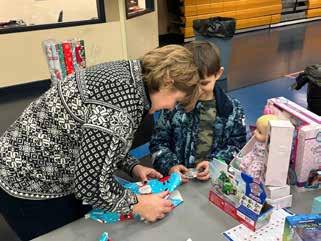
Each year, The Salvation Army partners with the Alaska National Guard for Operation Santa. Typically, a Black Hawk helicopter flies Santa to remote villages, bringing plenty of presents and Christmas cheer.
But this Christmas, the effort focused on children impacted by Typhoon Halong, which made landfall on Alaska’s west coast in October, causing historic flooding and displacing more than 1,500 people. Many families ended up in Anchorage for the holidays, some 400 miles away from home.
Thanks to the efforts of Operation Santa’s donors, corporate partners and volunteers, more than 200 displaced children in Anchorage received Christmas presents to unwrap.
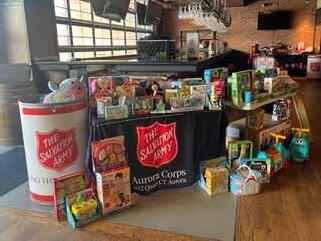
The Salvation Army’s eighth annual Hearts Apart Christmas Party invited military families from Buckley Space Force Base to go ice skating together, see a movie and share a meal from Olive Garden. And while the kids enjoyed a photo booth, music and face painting, their parents selected toys for Christmas morning.

“These families are in crisis,” said Salvation Army Aurora Corps Officer Lt. Carl Esquival. “Either one of the parents is deployed or the children might have special needs.”
But, Esquival said, he hopes this year’s event, attended by 250 people, serves as “a token of gratitude for military families and their sacrifices.”
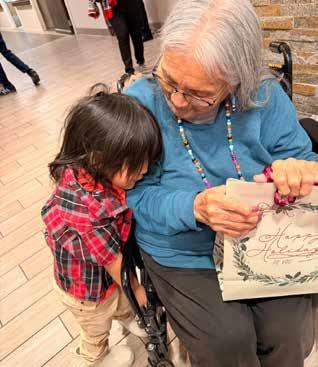
Every December, The Salvation Army challenges young people to participate in community service on the first Saturday of the month, known as “I’ll Fight Day.” Youth at The Salvation Army Flagstaff Corps answered the call by visiting a local nursing home with gifts, carols and hugs to share with the residents.
The Los Angeles Rams and The Salvation Army teamed up to take 100 kids on a Christmas shopping spree at Walmart in West Hills, California. Each child was paired with a volunteer and invited to purchase $200 worth of items.
David Weingarten, Rams Senior Manager of Community Impact and Engagement—who helped launch the
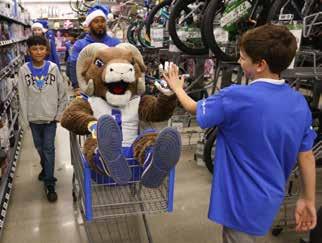
annual event in 2016—said the partnership helps the team meet real community needs and create holiday memories with kids.
“The power of the shopping spree shines through in the heartfelt exchanges between kids and volunteers,” he said. “When they roll out of the store with new bikes or toys and their faces glowing with joy—you see the impact right there.”
OLYMPIA, WASHINGTON
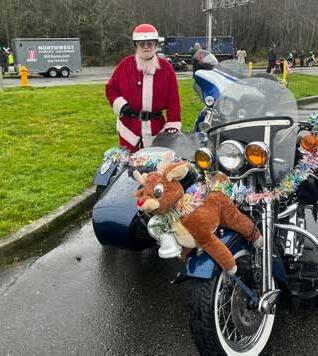

Some 1,300 kids across Thurston County, Washington, had presents to open on Christmas morning thanks to thousands of local bikers who strapped toys to their motorcycles for the 48th annual Olympia Toy Run.
Every year, the event supplies The Salvation Army Olympia Corps’s Toy and Joy program with around $140,000 in presents. Each gift ends up in the hands of a child based on that child’s wishlist, brightening the holidays for parents and kids alike.
“It’s hard for me not to cry on that day when I just see the joy and the hope that it brings,” said Corps Officer Captain Amelia Mott. “When people in the community get together and work together, we can achieve so much.”
Community volunteers, including representatives from Walmart, helped The Salvation Army Moore Street Community Center pack 1,700 food boxes Dec. 10 to be distributed alongside Angel Tree gifts.
Offering a behind-the-scenes look at the volunteer effort on social media, Cascade Divisional Commander Major Jonathan Harvey said, “We want to make sure the families we assist with toys this Christmas also have food for the whole family.”
A generous donor fulfilled 16 unhoused seniors’ Christmas wish lists through The Salvation Army Silicon Valley Command’s Adopt-A-Senior program. The recipients, all Salvation Army shelter guests or lunch program participants, requested some practical items—bikes, jackets, gift cards, lanterns and shoes—and some personal ones, like San Francisco 49ers gear.
By providing personalized gifts, the program aimed to help seniors in need celebrate the season with joy, dignity and love.
Every generous gift to The Salvation Army—time, toys, dollars—sparked joy in the community. It filled plates with Christmas dinner and put presents under the tree. And, ultimately, it helped build meaningful relationships that will keep the spark of joy alive all year round. NFC
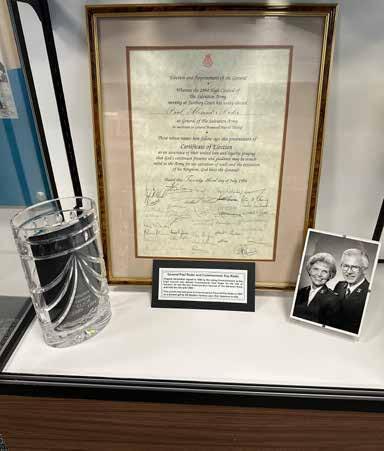
“THIS GIFT IS DEEPLY MEANINGFUL TO THE WESTERN TERRITORY. THE RADERS’ ELECTION STORY IS WOVEN INTO OUR HISTORY, AND FOR THIS CERTIFICATE TO RETURN TO THE WEST CONNECTS PAST, PRESENT AND FUTURE SALVATIONISTS,”
—Commissioner
Douglas Riley
BY CHRISTIN THIEME
The Salvation Army Museum of the West has received a singular piece of Army history: the original certificate documenting the unanimous election of General Paul A. Rader—the first American-born Salvation Army General and the first elected from the Western Territory.
Commissioner Kay Rader, who served as World President of Women’s Ministries during her husband’s tenure as General (1994–1999), presented the document for preservation and display in the Western Territory, where the couple last served in the U.S. before moving to London.
“We had such wonderful years in the Western Territory, and I felt a real closeness in my heart to it,” she said of the decision to make this gift.
Territorial Commander Commissioner Douglas Riley expressed gratitude on behalf of the West, noting the historical significance.
“This gift is deeply meaningful to the Western Territory. The Raders’ election story is woven into our history, and for this certificate to return to the West connects past, present and future Salvationists,” Riley said. “We are honored to showcase it as a testament to God’s leading and the impact of leaders who have served from this territory.”
Rader recalled the unusual circumstances of the 1994 High Council outcome. “Paul made history…there was no working General when he was elected,” she said. “They actually put the General’s epaulettes on his shoulders immediately after the decision was announced.”
When he returned to Los Angeles soon after, he was already wearing the General’s uniform.
The certificate itself, Rader said, is “pretty big…kind of ornate,” with “a gold hue,” bearing the signatures of all High Council members who voted. It hung first in the General’s office in London and, following retirement, in the Rader home—where children and grandchildren would pause to ask questions. “It was very impressive to them,” she said.
One granddaughter summed up the family’s sentiment: “Others may call him General, but to us, he will always be Papa.”
For the Museum of the West, the piece represents far more than a historical document.
“This artifact allows us to tell a story of legacy, leadership and God’s guidance,” said Andrea Anaya, Director of Library Services and Archives. “We hope that as visitors view the certificate, they will not only understand its importance, but also be inspired by the example of service and faith it represents.”
Beyond family meaning, Rader hopes the display offers viewers a window into how The Salvation Army selects its international leader. The High Council—comprised of commissioners and territorial commanders—prays, discerns and conducts successive ballots until a General is chosen, historically at Sunbury Court near London.
“I hope people will see that these things are done with prayer and with godly people who are willing to sign their names to it,” she said.
Rader also reflected on what the couple brought to international leadership as Americans formed by more than two decades of service in South Korea and five formative years in the West.
“We understood other lands and cultures,” she said. “The Western Territory felt like a microcosm of the kingdom of God—stretching from Alaska to Guam, with all colors and cultures. Wherever we landed, we were different, yet immediately at home with Salvationists whose hearts were warmed by love for God and the Army.”
The transition to international leadership, she admitted, carried weight. “Honestly, I was fearful—plunging into an abyss of the unknown,” she said. “But God was faithful.”
The role also enabled her to “stand in the gap for women,” including advocating for uniform adjustments that have increasingly taken hold over time.
Ultimately, Rader said she’s “rejoicing” that the certificate is now publicly accessible. She hopes visitors leave with pride—in the movement and in its thoughtful processes—and with fresh inspiration.
“It’s an important position, and the certificate’s beauty speaks to its significance,” she said. “Maybe seeing these treasured items will inspire someone to carry on and do the best they can—who knows what God may do?”
NFC
BY VIVIAN LOPEZ
The Salvation Army in Aurora, Colorado, made its partnership with the City of Aurora Office of International and Immigrant Affairs official in August 2025. Together, they launched a series of classes to help the city’s growing immigrant population get the skills they need to thrive in the U.S. The courses include English for Work, Citizenship Test Prep and Natural Helpers Leadership Program.
“Our goal is to assist the immigrant and refugee community, so they can integrate into the greater Aurora community successfully,” said Minsoo Song, Senior International Program Coordinator at the City of Aurora Office of International and Immigrant Affairs. “Everybody came to this country with somewhat of an American dream, but it’s not just for an American dream. Most of our community members came to the States so they could provide a better opportunity for their family members, so we want to make sure they can.”
Aurora is known as the most diverse city in the state. And according to the U.S. Census Bureau, approximately 21.8 percent of Aurora’s population is composed of immigrants, making the need for classes like these crucial.
“The Salvation Army’s mission is twofold. It’s to preach the gospel of Jesus and to meet human needs in his name without discrimination,” said Lieutenant Carl Esquivel, Salvation Army Aurora Corps Officer. “This immigrant population is part of the Aurora community…It’s our responsibility to be able to serve all demographics as long as we are able to do so.”
Song was grateful for the opportunity to work with The Salvation Army for these outreach efforts.
“Partnering with The Salvation Army is
such a blessing because they do have the reputation and trust in the community,” Song said.
The partnership with the City of Aurora allows The Salvation Army to expand its reach to immigrants in the community and vice versa. The City of Aurora develops and runs the courses, and The Salvation Army provides the space for participants to learn.
“The Salvation Army serves people from all different, diverse cultural backgrounds, so we were able to serve those communities,” Song said.
Esquivel added: “We have now been able to increase that scope to not only expose people to the love of God, but to put it into tangible, practical personal development for individuals.”
This development is focused on three areas that are covered in the courses, which will be offered regularly each year.
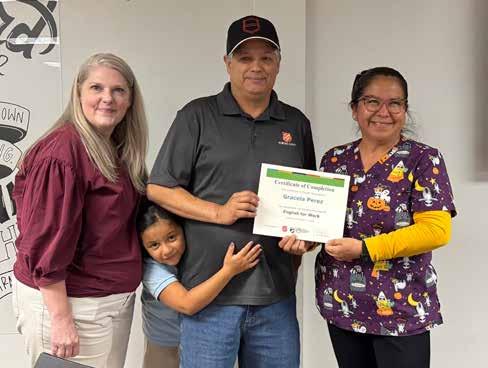
The first class to launch was English for Work, which started in early September 2025 and ran for eight weeks. It was not a standard English as a Second Language (ESL) class. The course is for people who already know the basics of English but need more advanced knowledge specific to their line of work. Participants learn work-related vocabulary for better communication in the workplace.
“What we’re seeking with this program is to elevate the individual’s capacity, to potentially be able to get a pay raise,” Esquivel said. “That’s the focus of that— moving people from an entry-level position to a higher position within their own work sphere.”
Song said that participants were putting their new knowledge to use in their jobs at the Emmanuel STEM International Preschool, located in the same building as The Salvation Army Aurora Corps.
“It was really fun to see them, and they would come back and say, ‘Oh, I used this phrase last time when I talked to one of the parents when we were talking,’” Song said. “I could definitely see they were able to use some of the things they picked up from the class right away. It’s really rewarding.”
Another participant in the English for Work class, Olga Garces Flores, also experienced similar success. She immigrated to the U.S. from Mexico many years ago and decided to take the class because of its unique focus on building English skills specifically for the workplace.
“The class instructor focused on the English we needed for work, which is what we really needed,” Flores said.
Flores works for Ability Connection Colorado, in a role in which she works with children from infant to preschool age. She’s using the more advanced English she learned in the class to better communicate with her supervisors and coworkers.
“Many times, we learn English just to communicate, but there’s much more to the language. There’s job-specific vocabulary in every job type—from hospitals to law firms,” Flores said. “We have to always be prepared.”
Now that Flores completed the class, she takes with her a sense of accomplishment and appreciation for the camaraderie she built with fellow class participants, many who also worked in the same field as her.
“It felt good to graduate from the class, and I really liked meeting new people,” Flores said. “To have the opportunity to meet other people who are working in the same field as me and have the same hopes and dreams of continuing to learn is extraordinary.”
IMMIGRANTS PAGE 13
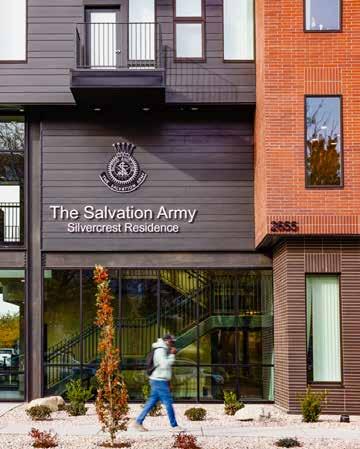
The residence is the first new Silvercrest to open since 2006.
BY VIVIAN LOPEZ
A new Salvation Army Silvercrest Residence has opened in Ogden, Utah—the first to debut in nearly two decades. The 52-unit community now provides affordable housing for low-income older adults, with residents beginning to move in late October before the official dedication in early November 2025.
The dedication ceremony included a message from Territorial Commander Commissioner Douglas Riley and a performance by The Salvation Army’s Intermountain Divisional Band. Around 70 community members attended the ceremony, including state and city officials and architectural, development and construction partners.
“It was one of those things where you realize the Army’s bigger than just a food bank or Silvercrest or whatever services they’re offering—it’s bigger,” said Jason Piecuch, the Ogden Silvercrest Property Manager.
“A lot of people were there to celebrate working together to make this Silvercrest possible,” added Susan Lawrence, Executive Director of Silvercrest Management for The Salvation Army Western Territory.
The opening of the Silvercrest comes after the
older adult population (age 65 and older) in Utah grew 53 percent between 2010 and 2020, according to the U.S. Census Bureau. Prospective tenants can apply to live at the Silvercrest if they are 62 or older and at 30-50 percent of median income levels. Those selected will pay 30 percent of their income for rent, with the remainder covered by the U.S. Department of Housing and Urban Development (HUD).
“So many of our seniors just cannot afford the rent nowadays, and this program provides an opportunity for residents to have a beautiful home,” Lawrence said. “This provides them an opportunity to live independently.”
So far, 25 tenants have moved into their apartments, and management has been steadily receiving applications for the remaining units. They expect a waitlist to start forming within the next month.
“It’s just a new start for everybody here,” Piecuch said. “In some cases, residents were just overwhelmed with gratitude. Some were a little more stoic…but some people are just crying. They’re very, very pleased that they get to move in here.”
Ogden was selected to be the site of the new Silvercrest Residence after The Salvation Army Ogden Corps advocated for it. When HUD gave a notice SILVERCREST PAGE 13
BY HALEY OSNESS
When the Eaton Fire tore through Altadena, California, Jan. 7, 2025, scorching more than 14,000 acres, single mom Monique Carlo and her three kids had no time to gather belongings—they fled with only the clothes they wore.
“It was one of those moments where you kind of can’t believe it’s happening to you,” Carlo said.
Flames consumed their family home in hours, leaving only the faint outline of what had once been a lively property, filled with antique collector cars and 12 pet chickens, all lost in the blaze.
The disaster struck only weeks after Carlo’s father passed away, deepening an already painful chapter of grief.
“We lost absolutely everything at once,” she said. “All we could do was be grateful we still had each other— we were alive.”
Following everything they had endured, support from the community began to arrive, bringing aid, resources and a glimmer of hope for the family. Carlo said they even started joking that the kids now had more clothes than they did before the fire, thanks to countless donations.
The family moved into a smaller, temporary space while figuring out their next steps and began to plan the process of rebuilding. Their car, however, was starting to fail and required costly repairs.
“I began to worry because having a car helped keep our lives somewhat normal,” she said. “Being able to get to work and school was something I just couldn’t picture losing.”
Looking for a solution, Carlo learned about a vehicle replacement initiative for wildfire survivors organized through The Salvation Army and signed up, hoping it would help her family regain some stability.
“A few weeks later, I got a call saying we were one of the recipients—it felt surreal,” Carlo said. “Just remembering that phone call makes me emotional still.”
To help families like the Carlos family recover, Genesis Motor, the luxury vehicle brand of Hyundai Motor Company, committed $8 million in vehicle donations and cash contributions to support families and communities affected by the 2025 Los Angeles wildfires.
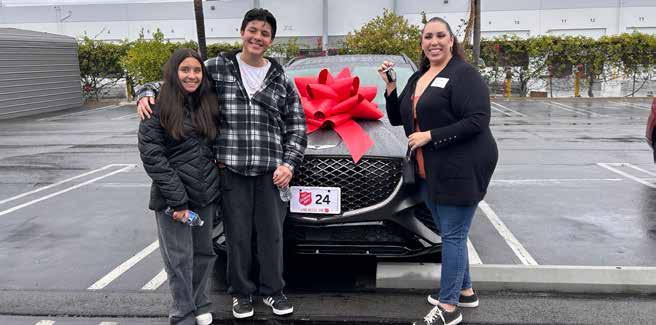
In addition, they partnered with The Salvation Army Southern California Division to get 28 Genesis GV70 SUVs to survivors in need.
“Genesis is honored to stand alongside The Salvation Army in supporting families who have endured unimaginable hardship following the Los Angeles wildfires,” said Tedros Mengiste, Chief Operating Officer of Genesis Motor North America. “We hope to provide not just transportation, but a renewed sense of free-
dom, mobility, and optimism as these families rebuild.”
The Carlos family joined 27 other recipients and their families at a celebratory giveaway hosted Nov. 14 at The Salvation Army Southern California Divisional Headquarters.
After filling out paperwork and receiving their keys, all made their way to the back parking lot, where rows of new gleaming cars, each adorned with an oversized red ribbon, awaited the families.
“It’s like a holiday movie,” Carlo said. “We just can’t believe the kindness and care we’ve been shown.”
The car is just one part of a larger recovery effort. Beyond the giveaway, The Salvation Army continues to support survivors directly through Disaster Case Managers, who have assisted over 500 individuals since June 2025.
Staff work one-on-one with families to assess needs, connect them with resources such as housing, and coordinate rebuilding efforts. After the fires, Carlo worked with a Case Manager to help her family find their current home—just five minutes from their old neighborhood.
“When Disaster Case Managers open a case, we assess the need, vet the family, and create a plan to help them get back to a similar living situation as before the fire,” said Nicholas Nguye, Divisional Emergency Disaster Services (EDS) and Service Extension Director for The Salvation Army Southern California Division.
Nguyen added that the role supports families by handling logistics and linking them to resources, allowing them to focus on restoring their homes and routines. About half of the Genesis vehicle recipients are currently receiving this hands-on support.
“People who have lost their home due to a disaster are often new to experiencing homelessness,” Nguyen said. “It can be quite overwhelming and taxing for them to figure out what they need to do.”
According to Nguyen, support for families through Disaster Case Managers will continue as long as the need is there. With that ongoing help—and a new car—families like Carlos are feeling hopeful for the future.
“It’s hard to feel like we have to start over,” Carlo said. “But knowing there’s a community supporting us—people who see our struggles and want to help—makes it a little easier.”
She said their plan is to rebuild their home on the family property, but they are currently waiting for the insurance company to assess the land while also working with the planning department to secure building permits.
“We have a long journey ahead of us,” Carlo said. “But we have faith that we’ll be back to where we once were, and with the support of our community, we’ll rebuild stronger than before.” NFC

BY HALEY OSNESS
Quiet moments fill Terri Nacke’s new apartment. With air-conditioning humming and her two dogs curled at her feet, she describes the small, simple space with mountain views as “the richest home in the world.”
Just months ago, she and her dogs took refuge in her car and under the sparse shade of a park during Phoenix’s scorching summer, where temperatures often exceeded 115 degrees during the day.
“You don’t realize how precious safety is until it’s gone,” she said.
Nacke, facing multiple health challenges including a traumatic brain injury and respiratory complications, said her health declined quickly in the heat—until one day she called a crisis hotline for help.
“That’s when they connected me to The Salvation Army,” she said. “And it felt like my saving grace, someone actually cared to understand and help be a voice with me.”
Within a day, Michele Kirkpatrick, Emergency Assistance, Outreach, and Contact Compliance Manager for The Salvation Army Phoenix Family Services Herberger Center, called Nacke to begin helping her secure stability and rebuild her life.
The Tempe Street Level mobile outreach team met Nacke where she was, bringing essential supplies and helping her into a motel with her dogs the same day.
“Having a roof over one’s head allows them to focus on what else they need to do,” Kirkpatrick said. “We meet a lot of people living in this survival mode because they have no other choice.”
She added that a combination of Salvation Army programs worked together to provide immediate relief and financial assistance for Nacke, including Project H.O.P.E., which typically focuses on families.
For Nacke, the genuine care and support felt like a turning point.
“Connecting with Michele and her team changed everything for me,” she said. “They gave me the chance to breathe, to think, and to realize that I still had hope.”
Before facing homelessness, Nacke had a longterm home and a career in gardening and farming, crafting pure aromatic oils and sharing organic cooking techniques and recipes with her community. She said that when she fell ill, one hardship led to another, eventually resulting in the loss of her home.
“It’s easy to forget that homelessness can happen to anyone,” Nacke said. “It doesn’t matter what success you’ve had; one unexpected health issue or setback can turn your world upside down.”
During her motel stay, Nacke spent her time making phone calls and searching online for affordable housing in her area, emphasizing that keeping her dogs with her was a priority.
“WHAT A SMART AND GENEROUS MAN—A MENTOR OF OTHERS IN HIS
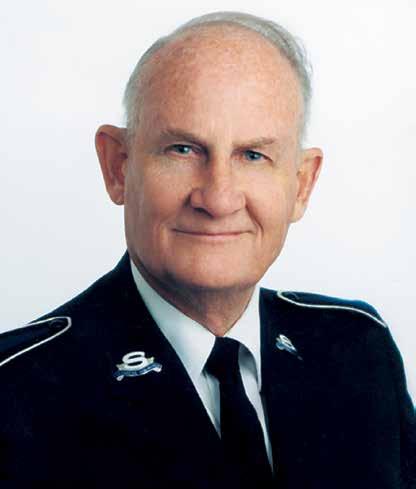
There are lives that leave a mark through achievement, and there are lives that leave a mark through love.
Dr. Robert L. Docter, O.F., did both.
His influence reached across classrooms, corps halls, boardrooms, publication pages, parade routes and breakfast tables. He led with conviction, laughed with joy, questioned with honesty and believed with a sincerity that made space for others to believe, too.
As we remember his life, we honor not only what he did, but who he was—a man of integrity, curiosity, faith and heart.
Well done, good and faithful servant… Come and share your master’s happiness.
Matthew 25:21 NIV
“I RECALL HIM GIVING A SHOELESS MAN HIS OWN SHOES. A PERFECT CHRISTIAN EXAMPLE AND GENTLEMAN.” — Howard Boyd
A
letter from the editor in chief upon the passing of Founding Editor
BY CHRISTIN THIEME
Today, we said goodbye to Dr. Robert Docter, O.F.— our founder, mentor, encourager and friend. Though his familiar voice grew quieter in recent years, his wisdom never drifted far. We continue to feel the imprint of his vision, his values and his heart in all we do.
Bob’s influence on New Frontier Publications and on the life of The Salvation Army Western Territory is woven so tightly through our history that it’s hard to know where to begin. He didn’t simply start a publications department in 1983—he shaped a culture of thoughtful, honest, faith-filled communication. Through more than 600 “On the Corner” columns, he invited us to see the world through a lens of hope, sincerity and conscience. He believed deeply in the power of words, yes—but even more in the power of the character behind them. It was a gift to work alongside Bob for many years, and when I stepped into the role of editor in chief nine years ago, he continued to invest in me in ways that went beyond professional guidance. He taught me— and so many of us—what it looks like to live with intentionality, integrity, humor and heart.
I often return to three lessons I learned from Bob, which today feel truer than ever.
He taught me to live with positivity. Bob had a remarkable gift for joy. His frequent greeting—“Are you happy today?”—wasn’t small talk; it was an invitation to consider how we were choosing to move through the world. He
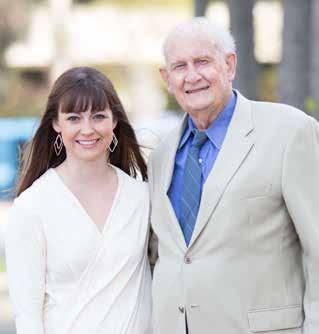
believed this work was fun, and his delight in it made it so.
He taught me to build character. Conversations with Bob were rarely surface-level. He once said, “Decisions reside in the brain, but values are in your heart.” He believed that a conscience-based awareness was the foundation for a meaningful life. He modeled kindness, integrity and a way of being that made you want to become a better version of yourself.
He taught me to seek understanding—and to believe. Bob wrestled with faith honestly, in print and in person. He never pretended to have all the answers. His authenticity drew people in. In one of his written prayers, he said, “Help me to speak less and listen more…that
I might more powerfully share your grace.” That was Bob: a man who sought God sincerely, listened deeply and offered grace freely.
Some of my most cherished memories with Bob weren’t in the office at all, but around a breakfast table early in the morning before the day began. Nearly every week, we walked to breakfast, and Bob would spend most of the meal talking about his family. He adored them—especially Diane. As someone preparing to be married at the time, watching the way he loved, honored and championed his spouse was one of the most formative lessons I could have received. He modeled true partnership, and the kind of faithful love that shapes a life.
Bob cared for people—not as titles or roles or responsibilities—but as human beings. If you knew him, you know that his investment in you didn’t end when a story did. His mentorship was personal, heartfelt and lasting. I still treasure how, on his way out of the office, he would pop into my doorway to say, “Bye, Chris. I love ya.”
Today, the corner is a little quieter. His voice is missed—in our pages, in our halls, and now in our hearts. But his legacy remains. It remains in the stories he told, the values he instilled, the laughter he shared, the truth he championed, and in the lives and ministries of those he encouraged.
To our readers across the West and beyond: thank you for honoring his life with us. May we carry forward what Bob embodied so well—joy, integrity, curiosity, compassion and the willingness to see and love people as they are.
And to Bob: thank you for your words, your wisdom and your witness. Thank you for building this corner. We will keep the light on. NFC
“BOB WAS A LEGEND…HE SAW YOU AND BELIEVED IN YOU BUT HE WAS ALSO JUST REALLY FUN TO BE AROUND…I’M GRATEFUL
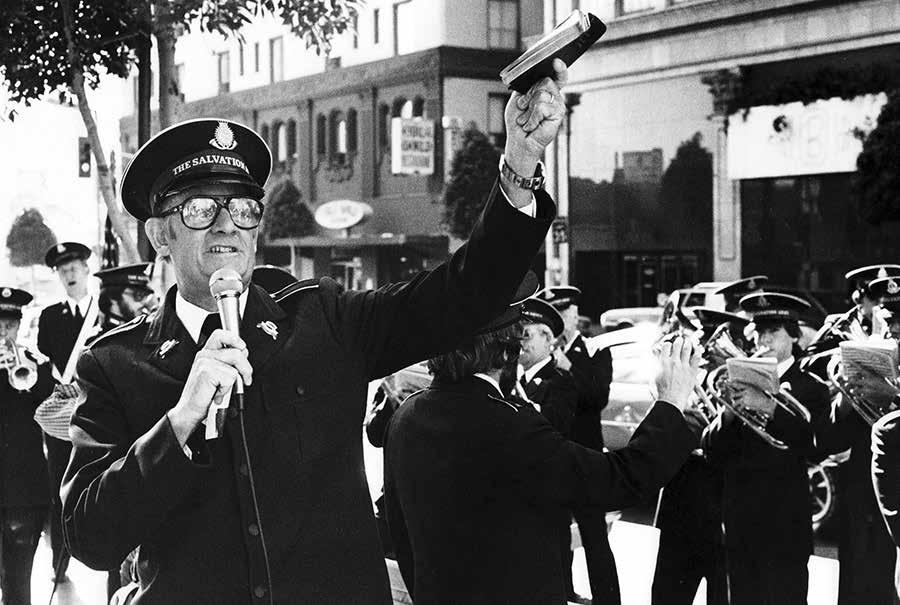
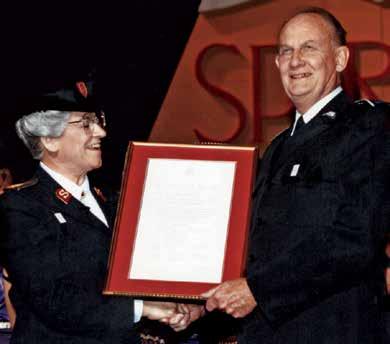
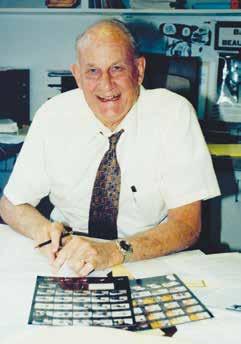

Bob taught us that faith is lived in real life: in listening well, laughing often, thinking deeply and loving sincerely. He modeled a way of being that made the world brighter, kinder and more hopeful. He believed joy was a choice, grace was a gift and love was the point and he lived accordingly.
As we remember Bob, may the way he lived continue to inspire us.
The Bob Way
Choose joy. Not as a denial of life’s challenges, but as a posture that sees goodness anyway.
Listen well. Ask people how they are and mean it. Let your presence be a place of trust.
Live with integrity. Align your decisions with your values. Let your character speak louder than your words.
Seek understanding. Be curious. Ask questions. Learn from those who see differently than you do.
Believe with honesty. Wrestle with faith but keep leaning toward God with an open heart.
Lead with compassion. See people not for what they can do, but for who they are.
Love deeply. Invest in your family, your community, your faith. Show up with your whole heart.
Keep standing on the corner. Be a voice of hope, sincerity and grace in the places you’ve been given to serve. NFC
For more than three decades, Bob Docter stood “on the corner” with us—a place of thoughtful pause, honest reflection and sincere encouragement. His writing was marked by honesty, curiosity, conviction and a joyful, practical faith. From that corner, he invited us to slow down, notice the world, see people with compassion and consider what it means to live with conscience and grace. Bob never claimed to have the answers. Instead, he helped us ask better questions—about faith, character and
how to love well. The corner became a space where humor, humility and hope met real life, and where his words challenged, comforted and inspired us to grow. These writings and more can be found online using these QR codes:
A VIEW FROM THE CORNER
INTEGRITY: A COMPLETE LIFE
“HE WAS ALWAYS WILLING TO ASK THE HARD QUESTIONS, BELIEVING THAT EXPLORING THE HARD QUESTIONS WOULD MAKE US A BETTER GOD-HONORING ARMY.”— Bram Bailey
BY CHRISTIN THIEME
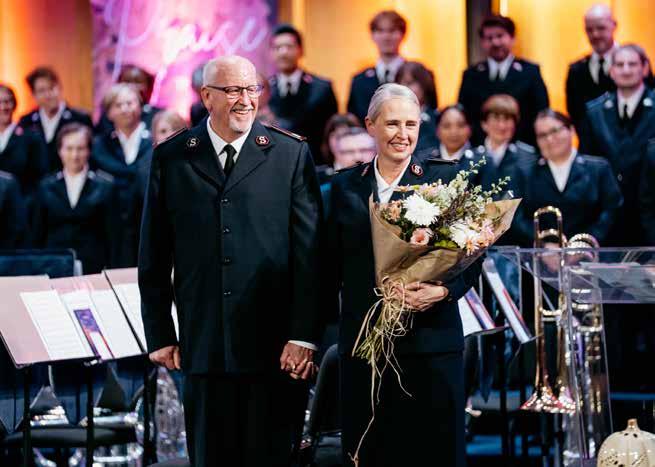
The Salvation Army Western Territory came together in joyful praise Nov. 15 for a Celebration of Thanksgiving concert at the Pasadena Tabernacle Corps. The event blended musical excellence with heartfelt gratitude as the territory honored the faithful service of Commissioners Douglas and Colleen Riley and bid a fond farewell to Colonels Eddie and Genevera Vincent.
Territorial Secretary for Business Administration Lt. Colonel Kelly Pontsler opened the evening by welcoming the congregation into what she called “a worship celebration filled with enthusiasm and jubilation.” In keeping with the Thanksgiving season, Pontsler reflected on the importance of recognizing God’s provision— through family, daily needs and the Army’s ministry to those most vulnerable.
“When life is confusing or heavy, we can bow down before the Lord,” she said. “And when we do, we too will be able to testify to his glory.”
Music from the Pasadena Tabernacle Band and Songsters, the Orange County Korean Singing Company and Chosen Generation anchored the evening. Selections such as “Shout Aloud,” “Joyful Noise,” “The Majesty and Glory” and “Greater Things” created an atmosphere of worship, reflection and celebration.
Douglas Riley delivered warm words of farewell to the Vincents, who conclude more than three years of ministry in the Western Territory to take up appointment at International Headquarters. He commended their steadiness and faith, noting, “Whether in Canada, Los Angeles or London, you live daily in the presence and peace of God.”
Riley spoke of the Vincents’ wholehearted service: “You’ve given yourself fully to the West. Your presence has made us stronger. On behalf of a grateful territory, thank you for your faithful service, your example and your friendship.”
As a symbol of appreciation, the Vincents were presented with a framed window view of the Pacific Ocean from the College for Officer Training at Crestmont campus—an enduring reminder of God’s faithfulness during their ministry in the West.
Genevera Vincent expressed profound gratitude to the territory for embracing them. “We are leaving with full hearts—and honestly, with a bit of a hole in our hearts,” she said. “But we trust the Army’s call, and even more, we trust the God who is always faithful.” She encouraged the congregation to keep their eyes on Jesus and remain rooted in his Word.
Pontsler introduced a new Kevin Larsson composition, “Messengers of Hope,” written in honor of the Rileys, both members of the Messengers of Hope Session. She highlighted the piece’s focus on the lifelong calling to bring hope to the world, noting how its cornet duet symbolized the couple’s enduring partnership in ministry.
Colleen Riley, speaking from the platform of her home corps, delivered the devotional, titled “With Gratitude.” She reflected on the deep personal significance of the Pasadena Tabernacle—where she and Douglas Riley met, married and later returned to serve as soldiers.
“Thank you for celebrating God’s goodness with us,” she began. “Every act of worship tonight is a thanksgiving concert to God for all he has done and will continue to do.”
Drawing from Lamentations 3:21–24, she reminded listeners that gratitude is a spiritual lens—one that transforms perspective even when the world feels broken. Using the story of the 10 lepers and the Israelites’ stones of remembrance from the Jordan River, Riley urged the congregation to practice gratitude as a way of recognizing God’s ongoing faithfulness.
“The mission continues,” she said. “And you are the ones who will carry it forward. Keep being The Salvation Army that believes no one is beyond redemption.”
Eddie Vincent returned to the stage to honor the Rileys for their leadership, humility and pastoral care.
“People don’t quit jobs—they quit bosses. These are bosses I would never quit,” he said, drawing warm
“YOU HAVE BROUGHT THE LIGHT OF CHRIST TO PLACES WHERE IT MAY NEVER HAVE GONE. DON’T LIMIT GOD. PREPARE YOUR HEARTS FOR THE MIRACULOUS.”
—Commissioner Douglas Riley
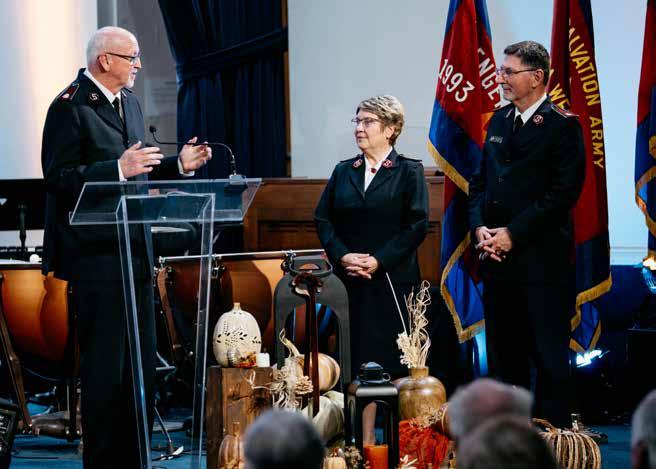
laughter from the capacity crowd. “You always put God first, and you put people first. You are loved, and you will always be loved.”
The territory presented several meaningful gifts, including artwork featuring the beloved Crestmont cross and a sea-glass-filled vase symbolizing God’s refining grace. Douglas Riley was also given a personal ice cream maker with a replica plaque from the Crestmont ice cream maker he dedicated, an affectionate nod to his well-known love of ice cream.
Riley closed the evening with words of encouragement to the Western Territory.
“You have brought the light of Christ to places where it may never have gone,” he said. “Don’t limit God. Prepare your hearts for the miraculous.”
He urged officers and soldiers alike to let Christ’s light shine through their kindness, holiness and service.
“Dream big, pray boldly and step out in faith,” he said.
“This world desperately needs Jesus.”
In a personal tribute, he thanked Colleen Riley—“the most sincere person I’ve ever met”—for her love, support and partnership in ministry.
National Commander Commissioner Merle Heatwole prayed over the Rileys before a Songster presentation of “Boundless.”
A closing prayer was offered by Colonel Olin Hogan and Douglas Riley led the choral benediction, concluding an evening defined by worship, gratitude and deep affection for the leaders who have shaped the Western Territory in recent years with faithfulness and grace. NFC
At the San Francisco Harbor Light, a weekly music class offers residents a pathway to healing, connection and hope.
BY KAREN GLEASON
Captain Andrea Finch has learned to expect the unexpected in her weekly Music as Therapy class at The Salvation Army Harbor Light in San Francisco. But one session still stands out.
Staff had warned her to be mindful of a resident whose mental illness could leave him withdrawn and unpredictable. When the music began, though, he rose from his chair and started to dance—fluid, expressive and completely in sync with every song Finch played.
“He’s the best dancer I’ve ever seen,” Finch said. “He was able to dance every genre—Latin, country, pop— he really came to life.”
Moments like that reveal why Finch says the Wednesday class is the best time of the week. When she arrived at Harbor Light in 2023 as Associate Corps Officer for the Lighthouse Corps, administrators asked what she wanted to contribute—something she cared about and could build. She knew immediately.
“I want to do music,” she told them.
She said she created the Music as Therapy class off the top of her head as a way for everyone to come together. She had researched the topic beforehand.
“I’m not a music therapist,” she said, “but there are songs and musical genres known to be therapeutic— uplifting songs, fun for all musical tastes”—which suited the diverse group of participants at Harbor Light.
The San Francisco Harbor Light is a residential program that provides comprehensive treatment for adults struggling with substance use and co-occurring mental health disorders. Residents participate in clinical groups, individual therapy and various enrichment activities. Each week, residents choose between Music as Therapy and an art class, and Finch said more than half opt for the music session. In this hour, rhythm, movement and community help participants reconnect with parts of themselves that can feel out of reach.
A typical session begins with a short reading from slides that introduce the week’s theme—selected by Finch— such as “Living Your Best Life,” “Glisten” or “Positive Affirmations.” Residents then follow Finch through hand movements, stretches and percussion with tambourines or other handheld instruments. Dance ribbons encourage free-flowing movement.
Sometimes Finch tells participants, “You guys are
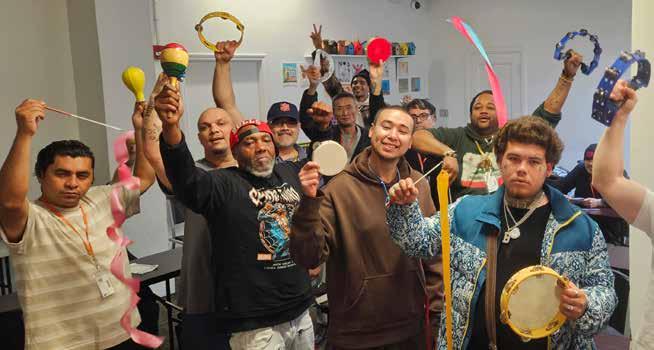
so tense”—often drawing a laugh as participants relax. The class is flexible. Those who prefer to sit and watch are welcome to do so, joining in when they are ready.
For many residents, music serves as a bridge back to themselves.
“It helps me open up a little bit, and I actually understand myself a little bit more,” said Avery, a regular participant. “Most times I’m more reserved, but through dancing, that’s how I express myself. Having that avenue has helped me reintroduce or introduce myself to people in a new way. I’m willing to open up and show who I am when the time comes.”
Finch said she chooses songs that are uplifting and that connect with the class themes, selecting a mix of secular songs and occasionally Christian rap, choosing themes that can resonate with residents’ recovery journeys. Selections have included “Celebrate Good Times” by Kool and the Gang,” “This Little Light of Mine,” and songs by Jelly Roll and Christian rap artists like Sevin.
Some weeks she explores sub-genres such as yacht rock; other weeks the focus is on songs with lyrics about resilience or joy. About every three months, Finch introduces pool noodle drumming, an activity that synchronizes rhythm and movement in a playful, high-energy exercise. She also incorporates skits and uses a disco ball to create a lively atmosphere.
The impact on residents is notable, according to Finch.
While some may quickly respond to the music, others slowly gain confidence and ease into participation, encouraged by the communal, nonjudgmental environment. Music therapy’s effectiveness in supporting mental health and recovery is increasingly supported by research, showing improvements in mood, cognitive function, and social engagement in clinical and community settings.
“Music class helps residents come out of their shells,” said Harbor Light Recovery Counselor Eric Greenlee. “It lifts their spirits and gives them space to experience joy, even in the midst of hardship. I’ve seen it make a real difference—encouraging people to step beyond their comfort zones. Most of all, I see smiles. Residents smile, laugh and genuinely look forward to the class each week.”
Over time, the program has inspired other initiatives. Harbor Light now offers a praise band and guitar classes, and some participants are writing their own music. Meanwhile, the weekly hour of Music as Therapy continues to be a space for residents to rediscover joy, culture, and self-expression.
The class aligns closely with Harbor Light’s mission to promote whole-person recovery.
“We meet people where they are, and we give them tools to heal, grow, and reconnect with hope,” Finch said. “Music bypasses defenses and reaches places that trauma has shut down. Through rhythm, lyrics, movement, and creative expression, participants start to feel again— safely, honestly, and in community.” NFC
“We help provide that immediate relief, but in many cases, that’s just the start of the support after a disaster,” said Nicholas Nguyen, Divisional Emergency Disaster Services (EDS) and Service Extension Director for The Salvation Army Southern California Division.
To support long-term recovery, The Salvation Army implemented the role of disaster case managers to help families navigate housing, financial assistance, and rebuilding, while providing ongoing emotional support.
“Disaster case managers serve as the primary point of contact for families and really become a guide through the recovery process,” Nguyen said.
Just a few months after the fires, Barbara Colombo-Taylor joined the team as a Disaster Case Manager based at the Pasadena Tabernacle Corps, and said she quickly realized that recovery after a disaster is far from a “quick fix.”
“There’s no one-size-fits-all solution,” she said. “Working alongside myself or our other two case managers helps families navigate each step and access the right resources for them.”
She manages up to 50 active cases at a time, with
new families added each week as other organizations scale back support, resources and financial aid. On a typical day, she balances as many as seven in-office meetings along with numerous phone calls.
In every case, the goal is for the family to return to a living situation similar to what they had before the fires.
“Every situation is so different, and each family has unique needs and obstacles,” Colombo-Taylor said. “We see many individuals with existing plans for rebuilding their homes, but still need guidance on resources, temporary housing, or tools and supplies to clean up their properties.”
She recalled one mother who was living with her children in an RV on their burned lot in Altadena with little to no electricity, while also facing exposure to lingering toxins in the air.
“It was a situation we needed to get them out of,” Colombo-Taylor said. “We housed them in an Airbnb for the past two months, and now she’s looking to purchase a new RV while they rebuild their home.”
Once the RV is in place, the family will live on their land as Colombo-Taylor helps coordinate with partner agencies who can secure permits, clear the property and handle remediation.
“Families are grateful for the help,” Colombo-Taylor said. “Disaster recovery is complex, and for many, it’s their first time facing something like this, so they don’t even know where to start.”
She described another case involving an individual whose home was half destroyed in the Palisades fire, and who is handling most of the rebuilding and repairs himself.
Colombo-Taylor said she used financial assistance to help the man replace tools and equipment lost in the fire, allowing him to rebuild the fence around his property. She also coordinated with Hope Crisis Response Network to begin roof repairs.
“Once people see things moving in the right direction, they start to feel hope and regain a sense of control over their lives,” she said. “Clients often tell us how relieved they feel knowing they’re not facing this alone.”
While the flames have subsided, rebuilding lives and communities is just beginning, complicated by fears of future wildfires, unstable burn-scarred ground, slow insurance claims and the ongoing challenge of reconstructing homes and infrastructure.
“Some cases are closed in months, and some will require support for years to come,” Nguyen said. “The Salvation Army’s role is to be there as long as there is a need.” NFC
LT. COLONEL CHARLES STRICKLAND
Aug. 29, 1938–Nov. 26, 2025
Lt. Colonel
Charles Strickland was promoted to Glory Nov. 26, 2025, from Tucson, Arizona.
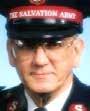
He was born Aug. 29, 1938, in New Bern, North Carolina, and was a first-generation Salvationist. Prior to entering officership, he served in the United States Air Force from 1958 to 1962. While stationed in Tucson, Arizona, he met his future wife, April, whom he married in 1961.
The Stricklands entered The Salvation Army School for Officer Training in San Francisco and were commissioned in 1965 with the Proclaimers of the Faith Session.
Strickland earned a Bachelor of Science degree in Business Administration from California State University, Long Beach, in 1977. Together, the Stricklands served in a wide range of appointments, including corps appointments in the Intermountain, Hawaiian and Pacific Islands, and Southern California divisions; Adult Rehabilitation Center appointments in California and Arizona; and a brief appointment to the training school in San Francisco.
Charles Strickland also served as Southern California Divisional Youth Secretary and as Southwest Divisional Finance secretary. From 1984 to 1986, he served at Territorial Headquarters as General Secretary for the Men’s Social Service Division.
In 1995, the Stricklands were appointed to lead the newly formed Del Oro Division, where they served for nearly seven years.
Three international appointments enriched their ministry: service at the Lai King Children’s Home in Hong Kong (1979–1983); as consultants for Family Thrift Stores at Territorial Headquarters in Sydney, Australia (1991–1993); and in Bandung, Indonesia, where Charles Strickland served as Chief Secretary (2002–2004).
Following retirement, Strickland continued to serve the Army as Administrator at
the Phoenix Adult Rehabilitation Center.
Lt. Colonel Strickland is survived by his wife, April; children Craig Strickland, Major Linnea Desplancke (John), and Major Derek Strickland (Angela); four grandchildren and eight great-grandchildren.
MAJOR PETER CLACK
Sept. 9, 1945–Nov. 9, 2025
Major Peter Joseph Clack was promoted to Glory Nov. 9, 2025, at the Hospice of Dayton (Ohio), following a courageous battle with Parkinson’s disease with dementia.
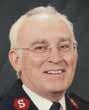
He was born Sept. 9, 1945, in Inverness, Scotland, and attended William Booth Memorial Training College in London. He was commissioned in 1968 with the Messengers of the Faith Session and went on to serve 45 years as a Salvation Army officer, embracing a calling that took him across the world.
His international service included appointments in the Bahamas, Jamaica, Panama and Pakistan. He also served in corps and appointments throughout England, including London, Northampton, Leeds, Sutton, Birmingham, Sheffield and Southport. After transferring to the United States, he served in Seattle, Tucson and Phoenix (Arizona), before retiring in 2011.
Following retirement, Clack and his wife, Estelle, settled in Bethel, Ohio. In 2017 they returned to England, residing in Chatham, Kent, and in 2023 moved back to Ohio to live with family due to declining health.
Clack is remembered as a quiet, unassuming man of deep integrity, whose gentle spirit, steady faith and understated humor left a lasting impression on all who knew him.
He is survived by his wife, Estelle; daughter Sonja Williams (James); son Edward Clack (Amy); and five grandchildren. He was preceded in death by his granddaughter Bethany Clack.
A memorial service was held Nov. 21 at the Salvation Army Kroc Center in Dayton.
MAJOR MIRIAM KEENE
April 10, 1949–Nov. 19, 2025
Major Miriam Louise Keene was promoted to Glory Nov. 19, 2025, from her home in Milwaukie, Oregon.
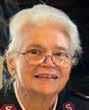
Miriam John was born April 10, 1949, in Long Beach, California. After high school, she attended Long Beach City College, where she studied home economics with an emphasis in dress design and a minor in dance.
She married Robert Keene June 6, 1981, at The Salvation Army Long Beach Temple Corps. Later, the couple entered the School for Officer Training. They were commissioned in 1988 with the Messengers of Joy Session and served together as corps officers in Clovis and Hobbs, New Mexico; Flagstaff, Arizona; Hayward and Grass Valley, California; Bend, Oregon; and at Cascade Divisional Headquarters, where Keene served as Assistant Women’s Ministries Secretary. They retired Aug. 1, 2015.
In addition to her officership, Keene worked as a secretary and bookkeeper, including service at The Salvation Army Moore Street Corps in Portland, Oregon. In retirement, she remained active at the Clackamas Corps (formerly Portland Tabernacle), participating in Home League, senior ministries, and Songsters, and faithfully supporting others through prayer and encouragement.
Major Miriam Keene is remembered as a compassionate encourager and a devoted listener who cared deeply for those around her.
She is survived by her husband, Major Robert Keene; three children: Peter Cassford, Richard Cassford and Amy Keene-Keebler; two stepchildren; eight grandchildren; one great-grandchild; and many extended family members.
A celebration of life service took place Dec. 4, 2025, at the Clackamas Corps in Happy Valley, Oregon.
CAPTAIN BETTY PEARSON
May 16, 1931–Oct. 22, 2025
Captain Betty Pearson was promoted to Glory Oct. 22, 2025, from Citrus Heights, California.
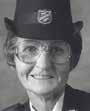
Betty Jane Yardley was born May 16, 1931, in Pocatello, Idaho, to Russell and Nellie Yardley and was introduced to The Salvation Army at an early age. Active in corps life with her family, Betty developed a lifelong love for music and singing, which became a defining part of her ministry.
After graduating from Pocatello High School in 1949, she moved to Eureka, California, where she worked with her brother, Brigadier Robert Yardley and his wife, Olive, at the Eureka Corps. There she met Paul Kellerer, whom she married in 1950. Following his military service during the Korean War, the couple raised their daughter, Verna, while remaining deeply involved in corps life and music ministries.
The Kellerers later entered Salvation Army officership and served in a variety of appointments, including Fresno, San Diego, Oakland, Lytton and Santa Rosa, California; and Phoenix. After Paul’s promotion to Glory in 1985, Betty continued her service with appointments at the Portland White Shield Center and at Territorial Headquarters in Rancho Palos Verdes, California.
In 1990, she married Major John Pearson and together they served faithfully until retirement in Sacramento. Known for her warmth, creativity and love for corps life, Betty continued to encourage and inspire others long after retirement.
Betty is survived by her daughter, Verna Catalfano; stepdaughters Mary Gochnauer (Bill) and Janet Knapp (Jonathan); stepson John D. Pearson; seven grandchildren; one great-grandchild; and many extended family members. She was preceded in death by her husbands, Paul Kellerer and John Pearson.
A celebration of life service was held Nov. 8, 2025, at the Sacramento Citadel Corps. NFC
The council will advise territorial leadership on theological and ethical matters impacting the Western Territory.
Social media feeds and podcasts are full of passionate discussions about important events in communities and across the country. Many of these topics are complex, and Christians sometimes disagree on key issues. Questions may arise about how to understand these matters from a Christian perspective, particularly where contemporary topics intersect with theology and ethics.
Formed in Fall 2025, the Territorial Theological Council (TTC) aims to help Salvationists in the Western Territory navigate theological and ethical issues while encouraging biblical literacy and theological education across the region.
“We have an opportunity to help The Salvation Army engage difficult conversations from a biblically orthodox perspective, helping soldiers and officers alike consider what we believe and why we believe it,” said TTC Co-Chair Captain Erin Wikle. “In recent years, we have at times seen a turning from what is biblically true, echoing Paul’s warning to the Romans about exchanging the truth of God for a lie. We can -
not suffice committing ourselves only to an institution or its mission to ‘do good.’ It is not enough. We are called to be deep thinkers and faithful doers, remaining firmly tethered to truth himself.”
For decades, The Salvation Army has had an International Doctrine Council to advise leadership on theological and ethical issues. This group was renamed the International Theological Council several years ago, reflecting the reality that contemporary questions often extend beyond The Salvation Army’s 11 doctrines. In recent years, national issues have emerged that may not concern the international organization. To address this need within the United States, a National Theological Council (NTC) was formed in early 2025.
The NTC advises national leadership on theological and ethical matters impacting the country, including topics such as transgenderism and Wesleyan-Holiness theology. One key recommendation from the NTC was that each of the four U.S. territories establish Territorial Theological Councils to address questions at the local level first, raising them to national or international discussions as appropriate.
“Our goal is to help Salvationists think through challenging issues thoughtfully and faithfully,” said Envoy David Witthoff, Chair of the TTC.
In addition to Witthoff and Wikle, initial members of the TTC include Summar Bussey, Lt. Sarah Culley, Major Ryan Miller, Captain John Morrow, Lt. Col. Doug O’Brien, Richard Potter, Captain Caroline Rowe, Captain Sidney Salcido and Lt. Hyoung-Il Seo. NFC

said. “We each bring different strengths, and God uses them together.”
Married for 33 years and officers for 29, the Bettses have served in corps, divisional and Adult Rehabilitation Centers leadership across Ohio, New York, New Jersey and Virginia, and most recently at National Headquarters, where their work connected them to every U.S. territory.
They are parents to three adult children—all engaged in ministry—and grandparents to three. “Our three grandchildren…are perfect in every way, if you ask us,” James said.
Lessons that shape leadership
Early in officership, Sue had an experience that reshaped her view of ministry. Visiting a nursing home as part of what was then the League of Mercy, she encountered a woman in her 40s who seemed out of place among the residents. Pressed for time, Sue initially walked away—only to feel compelled to return. When she did, the woman “just started bawling,” sharing the heartbreak of illness, abandonment and fear.
“It served as a reminder to me that it's so easy to get caught up in the doing…and in the midst of all that, we forget to see people,” Sue said. “The Spirit has repeated the message for 30 years: “No matter what you do, see my people, see their hurts, see their needs, see them how I see them.”
James describes his ministry through the lens of grace. Quoting Ephesians 2:8–9, he said the reminder he carries is: “It's not about me…there are days when you begin to question your vulnerabilities…but God just continues to remind me it's about his grace…it's a gift.”
Their ARC experience also shaped their understanding of transformation.
“The ARC is a residential church,” James said. “You see authentic community, and you see that Christ alone is enough.”
Sue added, “When someone is caught in addiction, it’s life or death. But really, every ministry we do is life or death spiritually. We’re called to pull people from darkness into hope.”
A vision for the West
At National Headquarters, the Bettses worked closely with leaders from all four territories and Canada, and Sue said the experience reinforced the value of collaboration.
“One of the things I've realized is that there are some really good ideas if you just sit back and listen,” she said, noting she looks forward to fostering the same culture in the West: “Coming together…that's when the creativity flows.”
James echoed the conviction. He warned that “a spirit kind of isolationism or competition” can creep in among territories or divisions, and “it doesn't usually end well.” Instead, he said, “We really do strengthen each other… we’re part of something pretty awesome.”
As they begin service in the West, their priorities remain simple and grounded. James said they are guided by Proverbs 1:5 and the reminder to lead with openness: “Let the wise listen and add to their learning…We're not bringing God to the Western Territory. He's been doing amazing work here for millennia.”
As the territory begins a new year, James offered this encouragement: “May none of this be about us as leaders…Keep your eyes on Jesus. Be people of prayer, people of the Word and people of peace.”
Sue shared the Scripture God has pressed on her heart from Mark 12:30-31: Love the Lord your God with all your heart…And love your neighbor as yourself. “Difficult, but basic,” she said. “You really can't do one without the other.”
When asked what is bringing them joy in this season of transition, Sue said, “I'm finding joy in just each day learning to trust the Lord even more.” Moving far from the East Coast has “strengthened those trust muscles.”
James said he feels joy in “the excitement of new possibilities,” the kindness of those who have welcomed them and, of course, their grandchildren. Looking ahead, he said, “We’re excited to see what God has in store… God is already moving—we just want to come alongside what the Holy Spirit is doing.” NFC
Hear from Commissioners James and Sue Betts directly on The Do Gooders Podcast Episode 252: A New Year, A New Chapter with Commissioners James and Sue Betts
of funding availability, Salvation Army territorial leadership prompted divisions for interest. The Ogden Corps Advisory Board responded with a proposed site on an underused lot owned by the corps.
“We analyzed the location to see if it would meet the parameters required by HUD—and it did,” Lawrence said.
From there, Lawrence brought in consultants to assess the site and help secure additional funding, including the State of Utah’s Olene Walker Housing Loan Fund ($2 million) and Deeply Affordable Housing Fund ($2 million), as well as HUD ($3 million).
Each unit is about 600 square feet, fully Americans with Disabilities Act (ADA)-adaptable, and includes one bedroom, bathroom, kitchen and living room— along with new appliances, such as refrigerators, dishwashers and microwaves. The building will soon also include amenities like a community room, exercise room and community garden boxes. Residents will have on-site property management and maintenance.
“This is home—not just low-income housing—home,” Piecuch said. “Seniors can stay here and be near family or friends or the place where they grew up. They don’t
FROM PAGE 6
The Citizenship Test Prep class started in late September 2025 and runs through the end of November 2025. The course covers weekly lessons in U.S. history, government and civics information, as well as practice interview questions to pass their U.S. naturalization test.
“They’re not just memorizing questions and answers,” Song said. “We cover why the question is asked and why this is the answer.”
The timing of the course is especially important as the U.S. citizenship test was updated this year to include 20 civics questions during the oral test—double the amount asked in the previous 2008 version of the test. The list of potential questions that can be asked also increased from 100 questions to 128, so there is more material to study.
“We will be providing this class continuously because, based on national studies, there is a definite increase in income and social status, so we want to make sure our community has that opportunity,” Song said.
“Our goal is to bring people up to self-sufficiency. And so if that looks like increasing your immigration status within the nation that you want to be part of, I think that’s important,” Esquivel said. “If there is no av-
FROM PAGE 7
“Everyone was putting so much investment into me and my well-being,” Nacke said. “In a way, it made up for all of the times I felt overlooked or invisible, and it pushed me to keep going.”
Kirkpatrick said Nacke took the lead in finding her own housing, ultimately securing an apartment for her and her dogs.
“She was very determined and never once mentioned giving up,” Kirkpatrick. “She called me and said she thought she found a place that would work, and I could hear the relief and excitement in her voice.”
The same day, Kirkpatrick contacted the apartment complex to explain the utility assistance Nacke would receive from The Salvation Army, and the complex handed over the keys without hesitation.
Now settling in her own apartment, Nacke said she’s focusing on her physical and mental health so she can return to helping others.
“My fight for me is a fight for others,” she said. “I’m working on myself so I can help others and leave the world better than I found it.”
Looking ahead, Nacke plans to focus on her health so she can continue her gardening work. She and Kirkpatrick have discussed expanding the community garden at the Phoenix Family Services Herberger Center, where Nacke hopes to help feed clients and the broader community
have to up and move across state lines. They’re home in their hometown.”
Hiring for additional social work and service coordination staff is underway to develop programming for residents. The neighboring Ogden Corps has already committed to hosting bingo twice a month to start. There’s also already a women’s Bible study group in place on Wednesday evenings.
“We’ll just have to kind of see what the residents want and need,” Lawrence said. “We’ve already had some residents ask if they can be part of an activities committee, so it’s really going to be dependent on what people want.”
Piecuch said the community has responded well to the new Silvercrest Residence, with many expressing their excitement as the building went up.
“I am just overwhelmed,” Piecuch said. “It was something that was urgently needed here.”
He’s excited for the lasting impact this Silvercrest will have on the community.
“I hope it continues to expand,” Piecuch said, “and I hope it continues to serve seniors for decades to come.” NFC
enue, then people get stuck and they stay the same.”
One more class will begin in January 2026 called Natural Helpers. This is a leadership training program in which immigrants and refugees who are wellversed in the challenges of starting a new life in the U.S. can connect others who are newer in their immigration journey to resources available to them in the community.
“We just want to make sure our communities are well-connected with those available resources,” Song said.
These three courses are just the beginning of a partnership that The Salvation Army and the City of Aurora want to continue to grow in the years to come. Song and Esquivel hope that through their current efforts, Salvation Army corps attendees will start taking advantage of the classes, and that those who attend the courses from outside The Salvation Army get connected to other programs and services the corps offers, like church services, youth programs and more.
“The hope has always been to increase our impact and expose people to the love of God, no matter what that looks like,” Esquivel said. “That’s our hope—that this partnership continues to do that for years to come.” NFC
while teaching people how to grow their own food. “I want others to see that even if you’re in a rough spot, it’s only temporary—healing and growth are possible,” she said. “Even the smallest seeds buried deep in the soil can flourish into something strong and bold.” NFC
TERRITORIAL HEADQUARTERS
Lt. Colonel James Lee, Territorial Secretary for Missions, Men’s Ministries, and Korean Ministries—Feb. 3
Lt. Colonel Joyce Lee, Territorial Secretary for Intercultural Ministries and Community Care Ministries Secretary*—Feb. 3
ADULT REHABILITATION CENTERS COMMAND
Major Jennifer Swain, Program Coordinator
Pro-Tem*—Feb. 3
ALASKA DIVISION
Captain Denice M. Delgado, Divisional Secretary for Social Services, Feb. 3
Commissioner Douglas F. Riley—January 2026| Territorial Commander, USA Western Territory
Volunteers wrap presents for Operation Santa
In December, The Salvation Army Alaska Division and the Alaska National Guard partnered for Operation Santa. Although the annual event typically involves Black Hawk helicopters bringing Christmas gifts to remote villages, the 2025 effort focused on children displaced by Typhoon Halong, which devastated Alaska’s west coast in October.
Two hundred children celebrating the holidays in Anchorage, some 400 miles away from home, received Christmas presents thanks to the community and corporate donors and volunteers who supported Operation Santa.
Majors Dina and Henry Graciani are the Alaska divisional leaders.

In November 2025, sheds built by students in the Salem (Oregon) Kroc Center’s I-Build Construction Skills Program were delivered to a community in Linn County, Oregon, still recovering from the devastating Holiday Farm Fire of 2020. The fire burned more than 173,000 acres through the McKenzie River Valley, destroying much of the community of Blue River. Pictured is the shed placed at Lazy Days Mobile Home Park through a partnership with Homes for Good Housing Agency and Lane County Government.
“Identifying and responding to significant needs in our region is woven into the fabric of the Cascade Division,” said Divisional Commander Major Jonathan Harvey. “To know that the structures built through the I-build program are being used to provide shelter during a time of disaster, speaks to the essential nature of this program and the heart of the young people who participate in it.”
Giving Machine delivers joy
The Salvation Army joined community partners in celebrating the return of the Giving Machine in the greater Sacramento area, offering a simple but meaningful way for shoppers to support local families and individuals in need. Located at the Roseville Galleria from Nov. 17 to Dec. 8, and in Modesto from Nov. 21 to Dec. 12, the vending-style machines allowed donors to purchase gifts that will be distributed by local service organizations, including The Salvation Army. Shoppers received a card symbolizing the gift they purchased.
“The Salvation Army was honored to stand alongside other impact-driven organizations working together to strengthen and support the community,” said Del Oro Divisional Commander Major Osei Stewart. “The Giving Machine invites people to experience the joy of giving while making a tangible difference close to home.”

Bakersfield Toy Run benefits local Salvation Army
Approximately 3,000 motorcyclists participated in the 42nd annual Bakersfield Toy Run on Dec. 14, raising toys and canned goods to benefit about 600 children
from 300 local families through The Salvation Army in Bakersfield. Golden State Divisional Commander Major Zielinski joined riders this year.
The procession was led by Bakersfield Police, followed by a fire engine and Salvation Army canteen, with Santa Claus riding ahead of motorcycles and show cars. The ride concluded at the Kern County Fairgrounds with food trucks and live music.
“What makes the toy run special is that it spans generations—families passing the torch to help kids in need through The Salvation Army,” Bakersfield Corps Officer Captain Clinton Trimmer said.
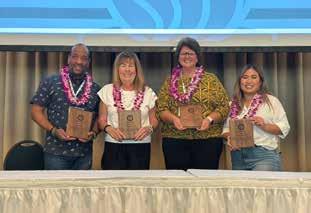
The Salvation Army celebrated Roxanne Costa, Countywide Social Services Director, who received the 2025 Kūkulu Kumuhana Award for Hawaiʻi County. Established in 2024, the award recognizes individuals who embody the Native Hawaiian approach to well-being, rooted in cultural values, ancestral strengths and community collaboration. Costa was selected by her peers for her dedication, leadership and compassion, reflecting the award’s focus on collective problem-solving and service to families and individuals in need.
“Under her leadership, we operate five shelters, school outreach programs, and housing for foster youth transitioning out of the system,” said Hawai’i County Coordinator Captain Sam Lemar. “We are truly blessed by her unwavering commitment and outstanding leadership.”
Festive fun for military families in Aurora
On Dec. 6, The Salvation Army in Aurora, Colorado, hosted its seventh annual Hearts Apart event, supporting more than 200 veteran and active-duty military families. In partnership with Buckley Space Force Base, the holiday celebration gave families with a deployed parent a joyful day together. During the event, parents shopped for gifts while their children enjoyed festive activities, including ice skating and watching Christmas movies.
“Many of our military families struggle like any other family in our community,” Lt. Carl Esquivel, Salvation Army Aurora Corps officer, told Denver7. “We care deeply about all our neighbors, but we provide this special Christmas party for our military families to thank them for their service.”
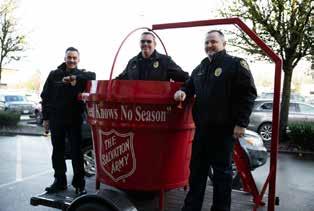
Police raise thousands in bellringing contest
In Centralia, Washington, local police departments brought some friendly competition to fundraising for The Salvation Army of Lewis County in the annual Battle of the Badges donation competition. For the third year, the Centralia and Chehalis police departments stood outside Safeway stores for a day, bellringing for donations from shoppers. Maintaining their title as the top fundraiser, the Centralia Police Department raised $4,498.87, while the Chehalis Police Department collected $2,006.13.
Captains Gin and Steven Pack are the Centralia Corps Officers.

Rams help spread cheer with kids’ shopping spree
On Dec. 8, 100 children joined The Salvation Army and the Los Angeles Rams for a holiday shopping spree at Walmart, sponsored by Los Angeles personal injury attorney Jacob Emrani of Call Jacob. Each child had the chance to shop for $200 worth of merchandise with the help of a volunteer. Rams players, cheerleaders, and the team mascot Rampage joined the festivities, adding extra excitement and making the evening especially memorable for the children.
Flagstaff troops celebrate “I’ll fight day”
In Flagstaff, Arizona, youth from The Salvation Army’s troops program joined children around the world in celebrating I’ll Fight Day, inspired by General William Booth’s pledge to help those in need. The kids visited a local nursing home, spending time with residents and distributing Christmas gifts. Afterwards, they spent time outside Sam’s Club, bellringing and singing carols, spreading holiday cheer throughout the community.
Lt. Zechariah Guess is the Flagstaff corps officer.
ARCC
Men’s retreat strengthens faith and fellowship
Men from Adult Rehabilitation Centers (ARCs) and alumni across the West gathered Nov. 1-2 at The Salvation Army’s Camp Summit in Big Bear, California, for the annual Men’s Retreat. The weekend, themed “As Iron Sharpens Iron,” featured fellowship and worship, as men came together to share stories, connect, and deepen their faith.
“Hearts were restored, faith was renewed, and brotherhood was strengthened. It was the perfect spiritual jump-start heading into the holiday season—a powerful reminder that God is still in the business of transforming lives every single day,” said Captain Timothy Pemberton, Administrator for Development at the Anaheim ARC.
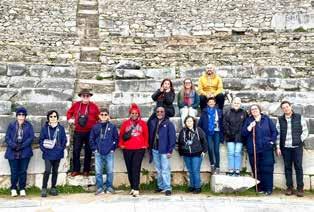
CFOT instructors explore the ‘Footsteps of Paul’ While cadets served in Christmas assignments throughout the Western Territory, College for Officer Training instructors, led by Principal Major Terry Masango and Director of Continuing Education Major Rutendo Masango, traveled to Greece and Turkey for a two-week Footsteps of Paul study tour. Visiting ancient towns and sites where the Apostle Paul preached, faced persecution and wrote his letters, instructors experienced biblical history firsthand.The tour deepened understanding of Paul’s ministry and the geographical, cultural and historical context of the Scriptures. “This journey strengthened our faith, sharpened our understanding of the Word of God and renewed our sense of calling,” said Major Masango.
“I can’t wait to take what I’ve learned and apply it to the various classes I teach at CFOT,” said Captain Harryette O’Brien. NFC

The Future Officers Fellowship Retreat for the Western Territory will be held February 13-15, 2026 at the College for Officer Training in Southern California. This year’s theme “Same God” invites delegates to reflect on the unchanging nature of God. The same God who was faithful to Abraham, heard Hannah’s cry, and provided for Elijah, is still at work in our lives today. His faithfulness in the past shows that He will be faithful in the present and faithful in the future. God is at work in and through our various ministries, programs and services, meeting the spiritual and physical needs of His people.
Answering the call to officership can be scary, but we believe in a God who is faithful, and will provide strength, wisdom and the resources to for the call. Whatever it is that God is calling you to do today…take the leap of faith! Trust Him- He is faithful! Rest in His character, stand on His promises, and find assurance in His presence. So, don’t delay, register to attend the Future Officers Fellowship Retreat! NFC
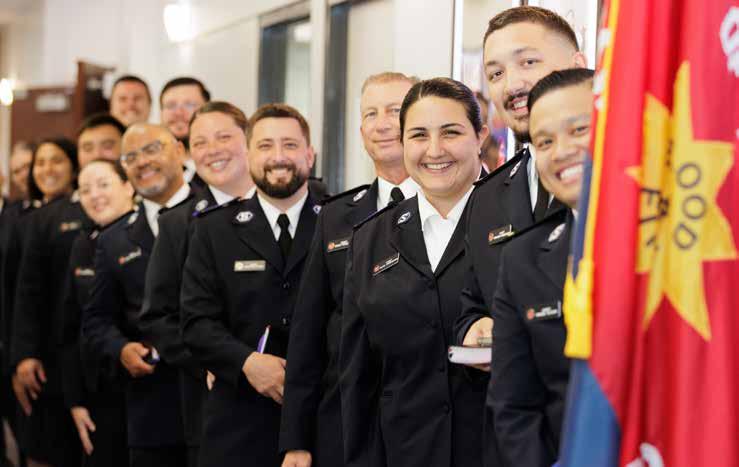
83% of first year students are first generation attending The Salvation Army
62% of second year students are first generation attending The Salvation Army
This self-reflection tool is designed to help you discern your readiness for Training College with The Salvation Army to become an officer in the Salvation Army. There are no right or wrong answers. Please answer honestly and prayerfully.
Scale Used for All Questions:
Strongly Agree = 5, Agree = 4, Unsure = 3, Disagree = 2, Strongly Disagree = 1
SECTION 1 Calling & Spiritual Readiness
I have a growing and personal relationship with Jesus Christ.
I sense God calling me toward full-time ministry.
Mature Christian mentors or leaders have affirmed my calling.
I spend intentional time in Scripture, prayer, and worship.
I desire to help others meet Jesus and grow spiritually.
SECTION 2 Alignment With Salvation Army Mission
I feel connected to The Salvation Army’s ministry and values.
I understand the Army’s doctrines and lifestyle expectations and am willing to follow them.
I am willing to be stationed wherever I am appointed.
I agree with the Army’s Wesleyan-Holiness theology.
I am passionate about loving and serving those who are hurting or marginalized.
SECTION 3 Emotional, Relational & Personal Stability
I have healthy coping strategies for stress and criticism.
I maintain healthy relationships with family, friends, and church community.
I am open to accountability, feedback, and growth.
I manage conflict in a Christlike and mature manner.
I feel emotionally and mentally prepared for a demanding season of training.
SEE MORE about the impact of The Salvation Army and how you can help Love Beyond today at caringmagazine.org.
SECTION 4 Practical Readiness
I am willing to follow a structured schedule and academic expectations.
I can balance ministry, study, and personal life.
I understand that ministry does not always follow a traditional 9–5 schedule.
I am financially (with not too much debt) and logistically able to begin training (or willing to take steps to prepare).
I have discussed this calling with my spouse, family, or those impacted by my decision.
SECTION 5 Motivation & Heart
My desire to become an officer is based on calling—not comfort, pressure, or status.
I feel joy and anticipation when I imagine serving as
I am willing to grow, learn, and be stretched.
I love people—even when
Reflection Question (Short Answer)