Biological, technological, and market criteria as well as feasibility levels must be evaluated to rank the suitability of marine fish species for commercial aquaculture. We developed a methodology termed Aquaculture Performance Index (APIX) considering all these parameters represented by a simple model to determine the prospects of any species for commercial aquaculture development in land-based, coastal, or offshore systems. Here, as a case study, we focus on tropical and subtropical marine fish species selection for offshore aquaculture in the Gulf of Mexico. The APIX equation considers the following basic criteria, each assigned different weights to calculate a respective final value/score: feed conversion rate, growth rate to market size, survival rate, stocking density, feed costs, fish processing yield, marketability (demand and price) as well as the feasibility levels.
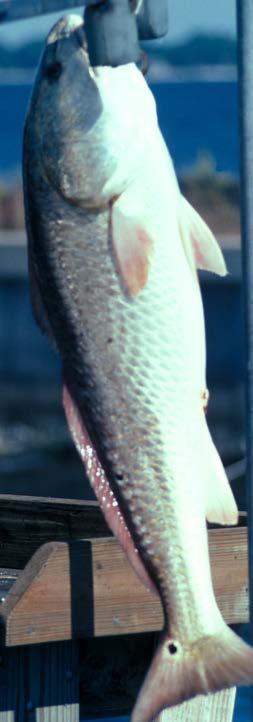
APIX scores were calculated and assigned to each species. Red drum (Sciaenops ocellatus) was the top selected species using this methodology (Figure 1). Even though red drum has a lower market value when compared to some of the other species considered, it was found to be the most feasible since it thrives at wide temperature ranges (16 to 32°C), tolerates a much higher stocking density (>30 kg/m3), and has a lower feed cost since good growth and survival results can be obtained using a high percentage of soy protein as a substitute for fishmeal. In addition to that, there is a long history of red drum production in the southern U.S., which makes fingerlings and feed readily available as well as an established market. As a competitive advantage, red drum produced offshore will likely have an improved taste (no off-flavour) when compared to pondreared fish and, for this reason, has a potential of being marketed as premium. However, we suggest a thorough market research study to establish the price and support the economic analysis model for the species in offshore cages. It is also worth considering an innovative approach conducting trials combining the fish farming operation with
is
top selected species based on the Aquaculture Performance Index (APIX) methodology. It thrives at a wide temperature range, tolerates higher stocking densities, and has a lower feed cost. Red drum produced offshore typically has an improved taste compared to pond-reared fish.
seaweeds and/or bivalves culture in an integrated multi-trophic aquaculture (IMTA) system. Some of the native species of mollusk bivalves with potential are the Lion’s paw scallop (Nodipecten nodosus), the Atlantic oyster (Crassostrea virginica), and the hard clam (Mercenaria mercenaria). Euchema spp., Gracilaria spp., and Hypnea spp. are likely suitable seaweed species to be recommended based upon their application for agar and carrageenan production among other potential uses (biostimulants, feed, cosmetics, etc.).
IMTA adds unfed aquaculture organisms –filter feeders (mollusks) and nutrient stripers (seaweeds) – to fed aquaculture (marine finfish) and has the potential of producing additional crops with relatively low inputs while improving water quality utilizing the organic and inorganic wastes of the fish. It then represents an interesting option and deserves serious consideration when implementing offshore aquaculture in the Gulf of Mexico and elsewhere.
With respect to feasibility levels, the broad criteria analyzed were combined to determine whether the species rank either at the Experimental , Technological , or Commercial feasibility level. These concepts are flexible and often overlap as the technology for producing a species from egg to market might exist and be prevalent but its commercial viability has not been yet proven. This is the case for several tropical marine species. Indeed, there are still no operations raising some species whose technology for full cycle production is available and turnkey projects with business and production plans are handy. Investors prefer less risky alternatives when deploying the extensive resources required to develop a commercial aquaculture operation. It is a long-term commitment requiring high investments and a thorough understanding of the business.
Species Selection Criteria
The following criteria related to the species to be cultured were considered for the final selection:
Market criteria: Market and marketing related criteria are crucial for species selection. Market demand and value are decisive for the business planning and implementation of the operation. This is where it all starts and how revenues are generated. Whether the species selected already has a high market demand and reasonable price are the most important considerations. At the very least, the species must have the potential to be turned into an appealing and high-quality product that will meet consumer expectations. Relevant considerations include acceptance by a large segment of the target population, which may include mass markets and/or specific niche markets such as white tablecloth restaurants, Japanese restaurants (sashimi grade), live products, etc. It is also important to understand the changes in the market and the market behaviour in response to certain predictors. Organoleptic characteristics such as flavour, taste, odour, etc. may be more important to certain market niches than others. Also, the appearance of the product (external and flesh: white flesh, red muscle tissue, marble colour, fat content, etc.) as well as its texture (firm, buttery, mushy, fatty, etc.) are key factors in the process. The level of processing (whole fish, gutted, fillet, frozen, fresh, fresh/flash-frozen, ready-to-eat portions, etc.) is also a key factor. Processing level is determined by the target market needs.
Technological criteria: The level of readily available technological development for the culture of the species from egg to market is also a crucial consideration. It is important to ensure that there are hatchery, nursery, and growout technologies available to raise the species throughout its entire life cycle, from egg all the way to harvest. Technological criteria encompass maturation, spawning, incubation, larval husbandry, fingerling production, nursery techniques, adequate feeds, growout equipment and methods (including cages, net cleaning/replacement), and harvesting techniques. Likewise, availability of feeds formulated to meet the nutritional requirements of the species at the various life stages is an important consideration.
Technology is available for all the pre-selected priority species in this case. In addition, recent developments in seaweed and bivalve cultures in offshore systems enables an IMTA approach, which can take advantage of the infrastructure, generate additional revenues, and minimize environmental impacts.
Socio-economic and regulatory criteria: It has become increasingly important to take social and economic considerations into account when selecting a species for commercial aquaculture development. Responsible aquaculture development must be socially accepted and viewed as a powerful means of generating high quality food/protein, jobs, and income, with a minimal environmental footprint. In essence, aquaculture should minimize competition with existing fisheries. Instead, aquaculture should be regarded as a harmonic complement to fisheries by diminishing the pressure upon declining and overfished stocks. It is also important to consider the regulatory situation and the role of government in establishing laws, rules, and regulations for open ocean aquaculture development. The process for obtaining the concession of an area may still be relatively complex, expensive, and time consuming, requiring expertise to navigate the system.
Ecological criteria: Whether the species is native, endemic, or exotic to the particular region in question is an important ecological consideration. The introduction of non-native species for aquaculture is not recommended since it is unlikely to be authorized. In addition, many non-governmental organizations and environmentalists are against introduction of non-native species and that can also create undesired public opposition to a project. These considerations are highly relevant for obtaining permits for new operations and must be considered when selecting a species to be raised in open environments. This is even more important when cages are to be used in exposed areas in the open ocean, considering risks of escapements that, even though mitigated, could potentially occur. For such reasons, only
native species to the Gulf of Mexico are being considered for this case study.
Biological criteria: In terms of priority, biological criteria are likely to be the most important for species selection because they determine the technical feasibility and express the aquaculture performance of any given species in terms of densities, survival, growth to market size, and feed conversion rates. These characteristics are recognized as the most important criteria for species selection for commercial aquaculture. The selected species need to have physiological characteristics that will enable it to thrive and grow to market size in the proposed site. Technically, an ideal species for aquaculture must be able to withstand wide ranges of temperature (eurythermal) and salinity (euryhaline) as well as other environmental parameters such as low dissolved oxygen levels, high ammonia, pH variations, etc. The precise environmental stressors likely to be encountered in the given environment and production method can usually be determined based on similar operations and are of chief concern. The open ocean environment considered in this case study is very unlikely to experience low dissolved oxygen or high ammonia levels, as well as other metabolic byproducts, whereas those are high concerns in recirculating systems. Another important biological aspect is regarding the fish diets. It is well known that marine fish species can be carnivorous, herbivorous, or omnivorous. While herbivorous and omnivorous species are less demanding when it comes to animal protein requirement in their diets – which represents the highest costs in the feeds – these species also tend to have a lower demand and a lower price in the market. On the other hand, carnivorous marine fish require higher levels of animal protein –mainly derived from fishmeal and fish oil – yet in turn present higher levels of omega-3 and invariably have a higher demand and higher prices in the market.
Other biological criteria are the species behaviour (schooling and gregarious species
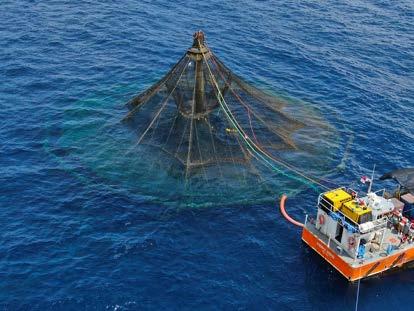
are preferred over territorial and aggressive species) and cannibalism (especially in the hatchery/nursery stages). Specifically considering the high energy levels found in the open ocean, where greater depths and strong currents prevail, the right candidate species needs to exhibit the ability to cope with continuous swimming at velocities commensurate with the current velocities to which they would be exposed (Figure 2). This would require that the species exhibit exceptional physiological, biochemical, and anatomical adaptations – including respiratory, cardiovascular, and proportions of white and red muscle tissues – fit for enduring exercise. For example, the red drum (S. ocellatus) has been shown to be able to swim between 0.5 to 0.75 m/s, the equivalent of 1-1.5 knots. This is not surprising, since this species is associated with constant waves motion and rip and tidal currents that characterize most coastal waters where it inhabits. Cobia (C. canadum) can also swim
under high current conditions (>1 knot), although it routinely rests at the bottom if given the opportunity. From the results of previous research, and from the literature references available, these species can likely endure currents of 1 knot without fatigue. Indeed, in theory, except perhaps for a few strictly epipelagic species such as tunas, mahi, barracudas, and wahoo (to name a few), no fish species would fulfil all ideal criteria for being raised in a high energy environment with currents at or above 1 knot without incurring fatigue or negative physiological impact. Finally, it is important for the species to be hardy, being resistant to diseases (viral, parasitic, bacterial, and fungal) under environmental fluctuations. Generally, native species exhibit these characteristics when cultured within their respective habitat ranges.
Feasibility Levels
The criteria used for establishing the feasibility of each species are determined by
the consistent and replicable success in the following basic aspects:
1. Maturation: broodstock availability and management; easy to obtain, handle, keep, and feed; resistant to diseases; adaptability to captivity; ease of domestication.
2. Spawning: volitional, natural, environmentally conditioned and/or hormone induced; controlled reproduction is of paramount importance.
3. Larval rearing: level of control of larval husbandry techniques.
4. Survival rates: during the larval rearing, nursery, and growout stages.
5. Feed conversion rates: feeds and feeding strategies mastered; basic information on nutritional requirements known and wellestablished.
6. Market and marketing: established, stable, good demand and value.
Experimental feasibility: Research level . The species is generally hard to be raised, with little or no control over maturation, spawning, and larval rearing. Survival rates from fry to harvest size are low (between 0-1%). The species has been and can be experimentally raised but results cannot be consistently repeated. Research at this level is generally conducted at universities or research institutions and is funded by government grants.
Technological feasibility: Research and development level . High level of control over maturation, spawning, and larval rearing. Survival rates are generally low to medium (between 5-20% at the hatchery). The species has been and can be raised but not yet on a commercial basis. Results can be repeated consistently. R&D is generally conducted in private companies, universities, and research institutions using both private and government funds.
Commercial feasibility: Economic feasibility level. Total control is achieved over all stages of the production cycle (maturation,
spawning, larval rearing, nursery, and growout). Survival rates are generally medium to high (10-30% at the hatchery and 70-90% in the growout). The species has been and is being commercially cultured at a profit by the private sector.
Overview of Pre-Selected Candidate Species
Red drum (Sciaenops ocellatus), almaco jack, also known as Kampachi (Seriola rivoliana), pompano (Trachinotus carolinus), red snapper (Lutjanus campechanus), and cobia (Rachycentron canadum) were considered top candidate species for commercial offshore aquaculture development and were preselected for this evaluation.
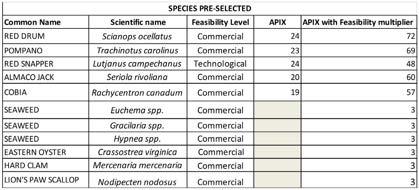
The criteria and values assigned to rank the species are shown in Table 1. The maximum number of APIX points with the feasibility level multiplier is 90. No APIX was calculated for seaweeds and mollusks. The feasibility level of all species listed is considered commercial (3).
Using the criteria presented and discussed in Table 1, we developed a matrix to evaluate the viability of several pelagic, demersal, reef, and coastal species for open ocean aquaculture in the Gulf of Mexico. Table 2 presents a ranking of the species pre-selected for offshore aquaculture development in the region. We applied the APIX considering all criteria and respective weights assigned for each criterion and assigned each species a final score. These variables were assigned a weight of 1. Adding to that, we incorporated the level of feasibility, which was given a weight of 1, 2, or 3 depending on the level of species readiness for commercial aquaculture development. The APIX can be applied with different weights to each project at the users’ discretion to support specific project goals.
Our evaluation indicates that red drum, almaco jack (a.k.a. Kampachi), pompano, red snapper, and cobia can all be considered potential candidate species for commercial aquaculture development in subtropical marine locations.
Table 1: Criteria and values assigned. APIX = [(FCR + growth rate + survival rate + cost of feeds + fish yield + marketability + market price + stocking density + processing ) x feasibility level multiplier].
FCR (Feed Conversion Rate)
1. Poor FCR; ranges from 2.5 and beyond
2. Average FCR; ranges from 1.5 to 2.5
3. Excellent FCR; ranges from 1.2 to 1.5
Survival rate (30 g to harvest)
1. Very poor survival (20-40%)
2. Poor survival (40-60%)
3. Acceptable survival (60-80%)
4. Excellent survival (>80%)
Fish yield
1. Poor fish yield (<20-30%)
2. Moderate fish yield (30-50%)
3. Good fish yield (50-75%)
4. Excellent fish yield (75-90%; whole)
Market price
1. Low market price: at or below $5/lb
2. Average market price: $5-10/lb
3. High market price: ≥ $10/lb
Processing Level
1. Requires processing (fillets, steaks, smoking, canning, etc.)
2. Does not require processing (whole fish, head on and gutted)
Growth rate
1. Slow growth rate to market size (<500 g/yr)
2. Average growth rate (500-1,000 g/yr)
3. Fast growth rate (>2 kg/yr)
Feed costs
1. High feed costs (>60% of total production costs)
2. Average feed costs (50-60% of total production costs)
3. Low feed costs (<50% of total production costs)
Marketability (demand and consumer awareness)
1. Poor marketability (few people know the species)
2. Moderate marketability (carried by specialty fish markets)
3. Good marketability (commonly encountered on restaurant menus)
4. Excellent marketability (high demand at high prices by all sectors)
Stocking density
1. Low stocking density (<10 kg/m3)
2. Average stocking density (10-25 kg/m3)
3. Excellent stocking density (> 25 kg/m3)
Feasibility level (multiplier)
1. Experimental (1)
2. Technological (2)
3. Commercial (3)
Table 2: Table of results for species pre-selected for offshore aquaculture development.
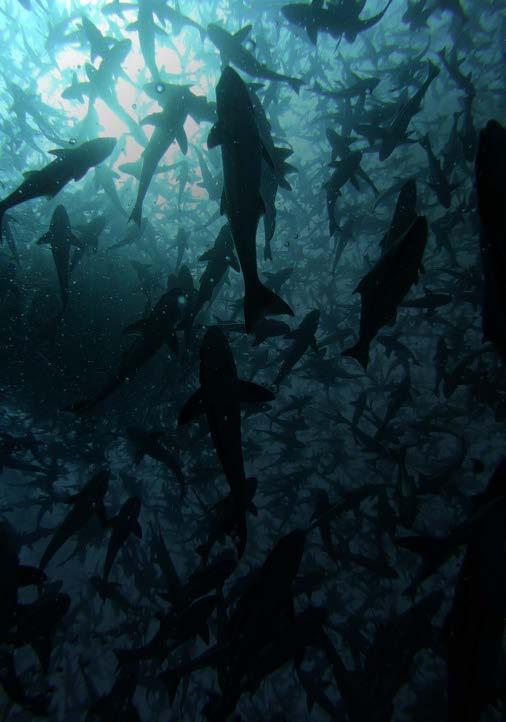
Specifically considering the high energy levels found in the open ocean, where greater depths and strong currents prevail, the right candidate species needs to exhibit the ability to cope with continuous swimming at velocities commensurate with the current velocities to which they will be exposed. Red drum is known for being a strong fish and cobia has shown the same, being produced successfully in open ocean conditions at Open Blue Sea Farms in Panama.
We selected tropical and subtropical native species and the offshore environment in the Gulf of Mexico for this case study. However, the APIX is directly related to the environmental conditions of the site and the method to be used, and can be adapted for any species, environment, location,
and method. For example, Atlantic salmon ( Salmo salar ) would certainly have a high APIX and, combined with its commercial feasibility level, rank very high for farming in temperate areas. Likewise, the Japanese or olive flounder ( Paralichthys olivaceus ) would rank exceedingly high for landbased aquaculture in flow-through or recirculating aquaculture systems where ideal temperatures of 18-24°C can be maintained. Both species have reached commercial feasibility level and have excellent aquaculture performance in terms of growth, survival, feed conversion rate, and marketability. The selected species ranked closely and some criteria might be deemed subjective, making it reasonable to consider some species as having no significant difference. However, in a data sparse field,
the process reflects the information, data, and knowledge available, and provides valuable guidance to interested parties outside the industry.
Red drum (Sciaenops ocellatus) was the top species selected using the APIX grade combined with feasibility level (Figure 3). Nonetheless, while it is technologically feasible to produce all species listed offshore, their respective aquaculture performance in terms of growth, survival, and feed conversion rates as well as the economic viability of their farming can only be proven in practice. u

Dr. Daniel Benetti, PhD, is a professor and director of aquaculture at the University of Miami Rosenstiel School of Marine, Atmospheric, and Earth Sciences. He works extensively with the academic, government, and private sectors internationally, and has over 200 scientific and technical publications in the field of aquaculture. His areas of interest include technologies of marine fish hatcheries and growout aquaculture operations.

Fabio Dos Santos Neto, MS, is a marine biologist with over 20 years of aquaculture experience both in the public and private sectors, as well as in non-governmental organizations. He has acquired professional experience through leading, developing, and managing R&D and commercial projects comprising the major aquaculture groups – algae, mollusks, shrimp, and finfish – in the various links of the value chain. His area of interest encompasses sustainable aquaculture systems and development.

Tyler Sclodnick, M.Sc., MBA, is the principal scientist at Innovasea, a designer and retailer of the most technologically advanced aquatic solutions for aquaculture and fish tracking. He has worked on projects in over 15 countries across five continents, helping new farms plan their business, obtain permits and financing, and work through the early struggles of producing fish.

Jenna K. Baggett, M.P.S., is a biological research technician for the Aquatic Animal Nutrition Laboratory at the Harbor Branch Oceanographic Institute of Florida Atlantic University. She oversees aquatic animal nutrition experiments and operations, data collection and analysis, husbandry, equipment maintenance, laboratory coordination, and water chemistry. Her areas of interest are marine finfish nutrition and sustainable aquaculture of marine finfish.

Carlos E. Tudela, MS, is the assistant manager at the University of Miami Experimental Hatchery (UMEH). He oversees all UMEH production operations: broodstock, larval rearing, shipments, equipment maintenance, fish health, data collection/ experiments, and personnel training. Mr. Tudela has over 10 years of aquaculture experience. His area of interest is in production technolgy of marine finfish.