



On the cover: Building resilience in Guyana
In Guyana, a young man takes part in a training programme in beekeeping, funded by the Caribbean Development Bank. The country, known mostly for producing sugar and rice, is aiming to add honey to the list, and in the process, provide a sustainable pathway out of poverty for Guyanese. Guyana’s apicultural industry produces, on average, 11,300 gallons of honey annually. The CDB-funded training is helping the Government achieve its goals of maximising agricultural and natural resources and seeking alternative exports that not only grow gross domestic product but also help it fulfil its Low Carbon Development Strategy.
“The purpose of the Bank shall be to contribute to the harmonious economic growth and development of the member countries in the Caribbean (hereinafter called the "region") and to promote economic co-operation and integration among them, having special and urgent regard to the needs of the less developed members of the region.”
Article 1 - Agreement establishing the Caribbean Development Bank
CDB intends to be the leading catalyst for development resources into the Region, working in an efficient, responsive and collaborative manner with our Borrowing Member Countries and other development partners, towards the systematic reduction of poverty in their countries through social and economic development.
Wildey, St. Michael Barbados, West Indies
May 30, 2018
Dr. the Rt. Hon. Keith Mitchell Chairman
Board of Governors
Caribbean Development Bank
Dear Chairman
I enclose the Annual Report of the Caribbean Development Bank for the year ended December 31, 2017, which the Board of Directors, acting pursuant to Paragraph 2 of Article 38 of the Agreement establishing the Caribbean Development Bank and in accordance with Section 18 of the By-Laws of the Bank, has requested me to submit to the Board of Governors.
Yours sincerely
Wm. Warren Smith, Ph.D., CD President
Partnerships
Renewable
Feature:

Economic Infrastructure
Technical Cooperation
Feature: Training Dominicans to Build Back Better
Private






I visited some of the areas affected by the 2017 Atlantic Hurricane Season and viewed many images of widespread destruction of critical infrastructure and human suffering in the affected countries. These were stark reminders of the extreme vulnerability of Caribbean economies to natural disasters and other climatic conditions, and considerably set back the sustainable development that lay ahead for the impacted countries.
Happening on the eve of the 23rd meeting of the United Nations Framework Convention on Climate Change Conference of Parties (COP23), these disasters also focused international attention on the unique challenges that climate change poses for a Region ranked as the second highest in terms of climate vulnerability. Since
1980, Borrowing Member Countries (BMCs) of the Caribbean Development Bank (CDB) have experienced disaster events with economic impact greater than 50% of gross domestic product (GDP). The damage in 2017 alone exceeded 225% of GDP in Dominica and over 300% of GDP in the British Virgin Islands (BVI).
The prediction is that these meteorological systems will become more intense and destructive in the future, further pushing up the financial cost of responding to them. The economic damage to the capital stock in the Region is estimated, on average to be 5.7% of GDP annually. By 2030, global warming could lead to additional losses averaging 1% to 3% of GDP per annum for Caribbean states.
As the leading regional development institution, the Caribbean Development Bank (CDB) is committed to support actions that build resilience to external shocks and natural hazard events. We have, therefore, been making some major strategic shifts and altering the focus of our operations so that we can play our part in helping our BMCs to build back better and stronger.
As a small regional institution, CDB has been leveraging its partnerships to mobilise concessional and grant resources as well as technical and capacity-building support that can achieve lasting development results for the BMCs. Our resource mobilisation efforts in 2017 produced additional financing in the form of a Second Climate Action Line of Credit from the European Investment Bank (EIB); a grant from the European Union for geothermal energy development in up to five countries in the Eastern Caribbean; an infrastructure fund supported by the Government of Mexico; and the expansion of the United Kingdom Caribbean Infrastructure Partnership Fund (UKCIF) to include assistance for hurricane recovery.
We also incentivised BMCs to invest in climate-resilient infrastructure by offering grant and other attractively priced financial resources. All of the infrastructure financing approved in 2017, therefore, will be used to finance climate-resilient projects – road rehabilitation; water supply improvement; and the strengthening and modernisation of other economic and social infrastructure. In preparation for this shift, CDB has been mainstreaming disaster risk management in its operations since the Bank adopted the Disaster Management Strategy and Operational Guidelines in 2009; reorganised its operations; and put in place the appropriate supporting policy framework. After a period of testing, in 2017, CDB also initiated systematic screening for climate risks in all its investment projects and country strategy work.
A sizeable proportion of CDB’s financing in 2017 was targeted specifically at disaster recovery. We approved $104 million (mn) in Rehabilitation and Reconstruction Loans, Immediate Response Loans, and Emergency Relief Grants, which will benefit an estimated 134,000 displaced and affected people in Anguilla, Antigua and Barbuda, and BVI. Notably, we included, for the first time, community resilience and psychosocial support services in our recovery programming. We also committed to make $700-800 mn available, over the next five years, to help affected BMCs recover from the devastating effects of the recent hurricanes.
Meanwhile, we advanced the Region’s sustainable and clean energy agenda by approving funding for electricity grid modernisation and energy storage; a geothermal energy exploratory test-drilling project; and street lighting projects to replace existing high-pressure sodium bulbs with high-efficiency light-emitting diode (LED) lamps. These projects will contribute to reduced greenhouse gas emissions and cost savings to governments, consumers and the business community.
The 2017 edition of the Annual Report chronicles the key initiatives undertaken and the results delivered by CDB
during the year. The Bank recorded strong growth, and exceeded targets in both total approvals and disbursements. We approved capital loans and technical assistance interventions totalling $364 mn, up 18% over 2016. Disbursements, meanwhile, climbed by 13% to $233 mn.
I was pleased with this performance. The Bank was able to respond quickly and meaningfully to the various setbacks and the challenges that BMCs faced during the year. With this level of support, CDB was able to maintain its position as a leading source of long-term development financing and capacity-building in the Caribbean. Our interventions are transforming lives Region wide by connecting communities; making roads safer; and increasing access to a more reliable supply of potable water.
I wish to thank the Board of Governors, Board of Directors, Management and Staff for their strong support, and for pushing the Bank to achieve some critical performance targets.
Wm. Warren Smith, Ph.D., CD President
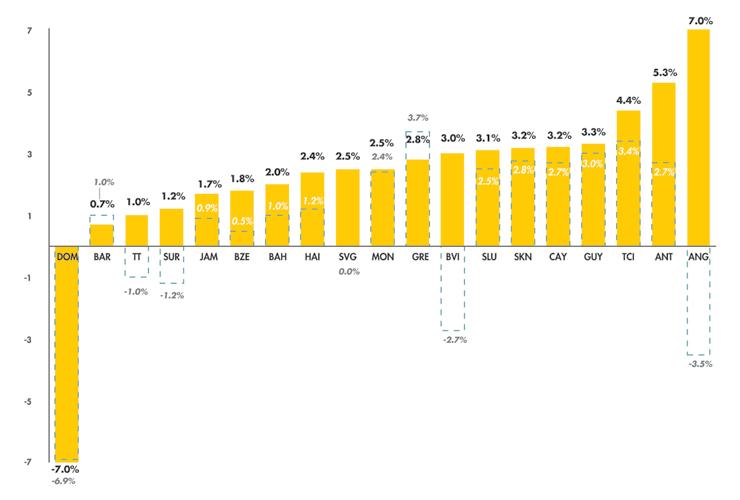
In 2017, vulnerability was a central theme of the economic performance of the BMCs of CDB. Severe weather events affected several countries, resulting in significant economic and social damage and losses. However, on average, there was an overall uptick in economic growth of 0.5% in BMCs, led by a rebound in oil prices, and supported by buoyant tourism and construction activities. Fiscal balances remained weak in most cases; and public sector debt continued to be worryingly high in many BMCs.
The Region is expected to grow by 1.8% in 2018 due to anticipated improvements in global economic growth; but risks are tilted to the downside. Mitigating these risks will require improved resilience on many levels. Macroeconomic stability, increased competitiveness, improved human development, and environmental preparedness are conditions that are necessary to improve resilience, and ensure sustainable and inclusive growth and development.
Many BMCs were affected by extreme weather events in 2017, particularly Hurricanes Irma and Maria–two Category 5 storms, which caused considerable damage to economic and social infrastructure and loss of life. They affected 10 BMCs, most significantly Anguilla; Antigua and Barbuda; BVI; Dominica; and Turks and Caicos Islands (TCI). The costs of damage and losses are estimated at about 225% of GDP in Dominica and more than 300% in BVI. The damage in TCI was mainly on Grand Turk, where cruise-ship visits were disrupted; however, there was less of an effect on overnight tourism, which is mainly based on Providenciales. In all of the affected BMCs, the social impacts are yet to be fully assessed; but the consequences of displacement and unemployment, especially for more vulnerable households, are potentially severe and could limit future growth.
Four of the five major commodity exporters—Belize, Guyana, Haiti, Suriname, and Trinidad and Tobago— saw improved performance relative to 2016. However, growth remained negative in Suriname, and Trinidad and Tobago. In Suriname, crude oil production targets were not met, although output from the refinery increased following an upgrade in 2016. In Trinidad and Tobago, output from the dominant oil and gas sector is estimated to have increased marginally due to the completion of infrastructure maintenance work, and new oil and gas activities.
Belize’s economy rebounded in 2017, led by increased buoyancy in the agriculture and fisheries, and tourism sectors. Growth in Guyana was underpinned by increased construction and manufacturing output, with a ramping up of the public sector investment programme. Haiti benefited from improved output of textiles and food. There were also increases in industrial production and construction, some related to rebuilding following Hurricane Matthew in 2016.
The tourism-dependent economies—The Bahamas; Barbados; Cayman Islands; Grenada; Saint Lucia; and St. Kitts and Nevis—are estimated to have grown, due primarily to positive developments in their tourism and construction industries. Despite a tapering in construction activity and stayover arrivals, economic growth in St. Kitts and Nevis was buoyed by cruise-ship arrivals, transportation and financial sector activity. In The Bahamas, growth is attributed to the delayed opening of Baha Mar.
Growth in Jamaica was led by strong performances in tourism, construction and manufacturing. In St. Vincent and the Grenadines, visitor numbers were down despite the opening of the new airport. This was partly because room stock declined with the closure of Buccament Bay Resort.
Regional consumer price inflation continued to edge up in 2017, due in part to an increase in aggregate demand. On balance, regional inflation (measured by the median rate) was 2.4% in 2017, up from 0.9% in 2016.
Sources: National Statistics Offices, Central Banks and CDB estimates *Data for 2017 are preliminary estimates
The majority of BMCs are ranked in the high human development category1. But issues of persistent poverty and indigence; inequality; vulnerability; and the inability of the poor to sustainably improve their well-being remain.
High levels of poverty and income inequality persist. By providing up-to-date and more reliable measures of poverty, the new CDB-financed Enhanced Country Poverty Assessments (ECPAs) will support improved targeting of underlying factors.
The countries that reported declines in their unemployment rates in 2017—The Bahamas, Belize, Grenada, Jamaica and Saint Lucia—also recorded positive economic growth.
However, double-digit unemployment remains an area of concern for most of the Caribbean, and youth and women are disproportionately affected (Chart 2).
2017 Estimate Unless Otherwise Noted
Sources: National Statistics Offices, IMF
Fiscal conditions in the Region weakened and public debt remained high in 2017. The median fiscal deficit of central governments increased from 0.7% of GDP in 2016 to 1.6% in 20172. This reflected sluggish revenue performances related to declining commodity outputs, declining receipts from citizenship by investment programmes, and inadequate responses on the expenditure side. Barbados, Suriname, and Trinidad and Tobago received credit rating downgrades. The ratings agencies expressed concerns about fiscal deficit and debt levels, and underlying economic strength3. These three BMCs rationalised public expenditure and introduced revenue-enhancing measures. The restructuring of Belize's commercial debt in March resulted in an upgrade of its credit rating4
High levels of indebtedness remain a challenge, with increasing debt-service payments crowding out the expenditure needed to stimulate growth. The median public debt burden declined marginally from 68% of GDP in 2016 to 64.6% in 2017. Table 2 shows that debt-to-GDP ratios had fallen in 15 of the 19 BMCs as at the end of 2017. This was due to continued implementation of economic reform programmes in the case of Grenada and Jamaica; and improved revenue performance, lower interest costs associated with active debt and liability management, and a return to moderate economic growth in the tourism-driven economies. However, debt is still above the benchmark of 60% of GDP in 12 BMCs. In addition, it is expected that there will be sizeable fiscal and/or debt slippages during the period 2018 to 2019 as hurricane-related reconstruction picks up.
Sources: IMF World Economic Outlook Database, Central Banks, Ministries of Finance, CDB estimates
2 Source: IMF WEO Database. Not including the five UK Overseas Territories.
3 Barbados was downgraded by Moody’s in March (to Caa3 from Caa1) and by S&P in September (to CCC from CCC+). Suriname was downgraded by Fitch in February (to B- from B+), and by S&P in April (to B from B+); and later in the year, Moody’s placed the country on review for downgrade. In April, Trinidad and Tobago was downgraded by Moody’s (to Ba1 from Baa3).
4 S&P upgraded the foreign currency rating back to B-, with a stable outlook. In April, Moody’s upgraded from Caa2 to B3.
External positions improved in the commodity-producing BMCs but in other countries the situation worsened, and the level of foreign reserves came under further pressure. The current account deficit fell in Suriname, and Trinidad and Tobago due to increased oil and gas prices. Guyana and Suriname benefitted from an increase in the price of gold. However, in Guyana, the current account returned to deficit, as imports related to the extractive industries rose. The current account improved slightly in Belize, helped by higher exports of sugar, bananas and marine products. And imports declined as the effects of a restrictive budget set in.
The external reserves positions were below the benchmark of three months of imports in The Bahamas and Barbados Both countries experienced high external current account deficits, mainly due to higher fuel prices driving increases in the price of imports. The reserves position deteriorated slightly in Belize, as a result of the final compensation payment in United States dollars, for a previously nationalised utility company.
Monetary conditions in the BMCs were consistent with the anaemic real GDP growth. Generally, monetary growth slowed in 2017, consistent with sluggish domestic credit growth in The Bahamas; Barbados; Eastern Caribbean Currency Union; Suriname; and Trinidad and Tobago. Jamaica, where an easing of credit conditions underpinned household and private sector credit growth, was an exception.
Generally, the regional banking system remained relatively stable. Bank capitalisation continued to be satisfactory, with capital adequacy ratios above prudential guidelines. However, some vulnerabilities persisted across BMCs, with high (albeit declining) levels of non-performing loans (NPLs) and increasing supervisory costs; both of which are drags on banks’ profitability.
Expectations are that high levels of liquidity will be maintained over the medium term, given the uncertain economic environment. Furthermore, modest improvements in credit quality indicators are expected, as banks ratchet up efforts to address the NPLs on their balance sheets. The loss of correspondent banking relationships continued to pose a threat to the stability of some domestic banks, amidst tighter lending conditions and increased oversight for anti-money laundering and combating the financing of terrorism.
BMCs’ economic prospects are correlated with developments in the global economy. The IMF forecast an increase in global growth to 3.9% in 2018 and 2019, from 3.7% in 2017, driven in part by the growth momentum
in the United States5. However, the IMF highlights the medium-term downside risks, such as a correction in financial markets; inward-looking policies; geopolitical tensions; and political uncertainty in some countries.
BMCs’ exposure to the global risks is high; and there are also risks associated with natural disasters and other weather-related events. The increasing frequency and intensity of these events highlight the need to improve resilience. Economies reliant on financial services will continue to face levels of scrutiny from the international community regarding the use of offshore financial centres for tax avoidance. Corporation tax reform in the United States could also result in profits being repatriated from offshore, with a possible effect on revenues in the Caribbean.
With these considerations in mind, CDB is projecting regional economic growth of 1.8% for 2018. Returns to positive growth are forecast for Suriname, and Trinidad and Tobago, driven by recovery in the energy sector, and in the case of Suriname, gold production. Higher gold production is also anticipated in Guyana. In addition, Guyana can expect an increase in construction and investment activity in advance of oil first coming on stream in 2020. In Belize, increased economic activity is projected as agriculture and fisheries continue to recover, and as tourism picks up. Construction will also increase, although public investment could be limited by budget-tightening to comply with the conditions of debt restructuring. Haiti is likely to continue to grow. However, plans to mobilise local resources through tax measures, which recently led to protest and labour unrest, will need to be managed carefully.
As far as the service-dependent economies are concerned, reconstruction activity should drive growth in some of the countries most affected by Hurricanes Irma and Maria (Anguilla, Antigua and Barbuda, BVI, and TCI) but further
contraction is expected in Dominica because of, inter alia, the slow pace of private sector recovery, human capacity constraints, and limited availability of materials. The Bahamian economy will benefit from Baha Mar operating at full capacity; and there will be further hotel investment in St. Kitts and Nevis, and Saint Lucia. An increase in
growth is forecast for Jamaica, as agriculture recovers and mining picks up following the opening of a new operation. New inward investment is also planned for Barbados, but uncertainty over the future of macroeonomic policy during a general election year is likely to cause delay of some investment decisions.


CDB continued fulfilling its commitment to make its portfolio sustainable and to fully align its work with its Environment and Social Review Procedures (ESRP) Performance Standards. In compliance with the ESRP, investment projects were screened and categorised for environmental and social risks, to enable effective management of identified risks. Of the 19 investment projects approved and entered into the Bank’s investment portfolio, 11 were categorised “B”, and two as Financial Intermediary. The others, which were emergency operations financed under the Bank’s Disaster Management Strategy and Operational Guidelines, did not require ESRP categorisation. The Bank approved and advanced implementation of three technical assistance grants to establish environmental and social systems in two financial intermediary institutions, and for one economic and social planning institution.
The Bank strengthened systematic screening for climate risks in all its investment projects and country strategy work. Climate vulnerability and risk assessments were undertaken for projects identified as having moderate or significant climate risks, or which presented opportunity for addressing adaptation or mitigation considerations in their design.
Fourteen technical assistance grants totalling EUR7.6 mn were approved and financed from resources provided by the African Caribbean Pacific–European Union-Caribbean Development Bank Natural Disaster Risk Management


Farmers in Toledo District, Belize who are among the direct beneficiaries of a Community Disaster Risk Reduction Fund (CDRRF) project launched in 2017. It aims to build adaptive capacity and resilience to climate change in 11 villages.
Programme. These projects will contribute to improving institutional capacities for data analysis, modelling, early warning systems, national hazard risk profiling, and to strengthening community-level capacity for disaster risk reduction in BMCs and regional institutions. Beneficiary recipient organisations included the Caribbean Disaster Emergency Management Agency; Caribbean Institute for Meteorology and Hydrology; the Caribbean Tourism Organization (CTO); and the University of the West Indies Climate Studies Group, Mona (CSGM), Jamaica. Guyana, Haiti, Jamaica, and St. Vincent and the Grenadines were among the beneficiary countries.
The Bank provided Emergency Relief Grants totalling $800,000 to Anguilla, Antigua and Barbuda, The Bahamas and BVI following the passage of Hurricanes Irma and Maria. Four Immediate Response Loans totalling $2.8 mn were approved to assist with immediate hurricane recovery efforts in Antigua and Barbuda, and BVI. In addition, the Bank provided a grant of $3.5 mn to the Government of Haiti to cover its annual insurance premium to CCRIF SPC.
At the end of December 2017, an additional four community-based disaster risk management projects were approved under CDRRF. Eight projects are now under implementation in four BMCs—Belize, BVI, Jamaica, and St. Vincent and the Grenadines.
CDB continued to collaborate with other development institutions working to improve environment and social safeguard issues, disaster risk reduction and climate resilience in its BMCs.
In May, the Bank signed a line of credit of $110 mn with EIB, to finance climate action investments. In the aftermath of the devastation caused by Hurricanes Irma and Maria, the two
institutions signed an additional financing package of $24 mn to assist with reconstruction efforts in the affected BMCs.
Staff participated in and provided support on national and regional technical committees, relating to sustainability issues such as disaster risk management; climate change adaptation, mitigation and finance; environment and social frameworks; pollution control; gender analysis; and poverty assessments.
CDB, participated in and financed the Caribbean Pavilion at COP23 held in Bonn, Germany. At the Conference, the Bank joined the NDC Partnership to help BMCs accelerate achievement of their climate action goals. The Bank also signed on to the Principles for Mainstreaming Climate Action Initiative as a supporting institution at the end of 2017.
In September, CDB partnered with the Inter-American Development Bank (IDB) to host the Second Regional Policy Dialogue on Environmental Permitting and Compliance. The event facilitated the exchange of experiences, innovative practices, and lessons learned between highlevel Caribbean government officials and experts.
CDB, in collaboration with the Caribbean Community Climate Change Centre and the Green Climate Fund (GCF), conducted a technical workshop aimed at strengthening the capacity of BMCs to develop concept notes and proposals for GCF-financed projects in the water and urban sectors. Twenty-six participants from nine BMCs also enhanced their understanding of the GCF process and investment framework.
In October, CDB co-hosted, with the Adaptation Fund Secretariat, a workshop in Barbados, designed to enhance the knowledge of senior technical stakeholders about the accreditation, project development, submission and review processes of the Fund. Representatives of 13 BMCs attended the workshop.
CDB financed a study undertaken by CSGM on the physical, social and economic implications for Caribbean small island developing states, if global warming rises

to 1.5 degrees Celsius above pre-industrial levels. The technical paper will be the contribution of the Caribbean Community (CARICOM) to a 2018 Special Report, which the Inter-governmental Panel on Climate Change agreed to produce, at the invitation of the Conference of the Parties to the UNFCCC, during the 21st Session in Paris in 2015. A presentation on the initial findings of the study was delivered at a side event during COP23.
CDB continued to address the Region’s renewable energy and energy efficiency challenges, and accelerate the implementation of projects and programmes to improve access to clean and affordable energy across the Caribbean.
Under the GeoSmart Initiative, CDB’s Board of Directors approved the receipt of a EUR12 mn grant from the
European Union Caribbean Investment Facility (EU-CIF) to support geothermal energy development in the Eastern Caribbean. These resources will finance investment at the exploratory drilling phase, and will be blended with contingently recoverable grants. They will ultimately be accounted for as government equity in the national geothermal development company. CDB will also use the EU-CIF grant to provide technical assistance to beneficiary governments, and to study the feasibility of interconnection for the export of electricity.
CDB scaled up its support for geothermal energy development. The Bank approved grants provided through IDB and the Global Environment Facility Trust Fund to establish a geothermal energy Project Management Unit in Grenada, and for the conduct of an Environmental and Social Impact Assessment (ESIA) at sites identified for geothermal test drilling. In addition, the Bank supported the completion of an ESIA for test drilling on the island of St. Kitts, and capacity-building in geothermal energy development in St. Vincent and the Grenadines.

Through grants from the Sustainable Energy for the Eastern Caribbean (SEEC) programme and resources from the Canadian Support to the Energy Sector in the Caribbean Fund (CSES-C), CDB and beneficiary countries scaled up project identification and preparation efforts. SEEC grants financed energy audits to prepare investment projects, which aim to improve energy efficiency in government buildings in Grenada, and St. Kitts and Nevis. Energy audits were also completed for government buildings in Anguilla.
The Bank also worked closely with the Division of Environment, to prepare a project for the installation of solar photovoltaic (PV) panels on select schools and clinics on the island of Antigua. Grant funding for this project was approved in December 2017.
The Bank continued to promote its streetlight retrofitting programme, encouraging BMCs to undertake network-wide replacement and sustainable disposal of inefficient highpressure sodium lamps with LED lamps. Loans were approved for streetlight retrofitting in Jamaica and Suriname; and the implementation of similar projects in Antigua and Barbuda, St. Kitts and Nevis, and St. Vincent and the Grenadines
advanced. When these projects are fully implemented, savings of at least 50% in streetlight energy consumption, system-wide, are expected.
CDB addressed the shortage of technical capacity in specialised areas within the regional renewable energy and energy efficiency sector. The Bank supported six formal training interventions, including workshops to build the capacity of regional physical planners, and of utility leaders in grid modernisation and battery storage. The Bank also supported training in the measurement of greenhouse gas emissions. Staff in two development finance institutions participated in on-site training delivered by CDB Staff. The Bank continued to roll out capacity-building initiatives in regulation of the energy sector.
The Bank made further progress on mainstreaming renewable energy and energy efficiency across its work. Country strategies approved in 2017 included energy considerations. In addition, the Basic Needs Trust Fund (BNTF) continued to integrate renewable energy into its sub-projects, rolling out solar PV installations in the rural areas of Belize and Guyana.

CDB participated in the 2017 Caribbean Renewable Energy Forum (CREF), the largest annual gathering of regional energy stakeholders from academia, governments, utilities, multilateral institutions and investment companies.
The Bank and the Government of Canada sponsored the Utility Leaders Workshop, where attendees exchanged knowledge about developments in the design and implementation of projects integrating battery storage technology. The event, designed to improve utility leaders’ understanding of how and when to invest in energy storage, was supported by CDB through CSES-C.
During CREF, the Bank also urged sector stakeholders to accelerate the Region’s transition to renewables
by building diverse partnerships and networks, and improving their engagement with the wider public.
At CREF, CDB’s energy specialists also held discussions with sector stakeholders; hosted delegates at the Bank’s booth; and shared with participants the Bank’s role in supporting sustainable energy projects in the Caribbean.
The Bank presented five information products on new technologies, its partnerships and sustainable energy programmes at the event, which brought together more than 500 participants.
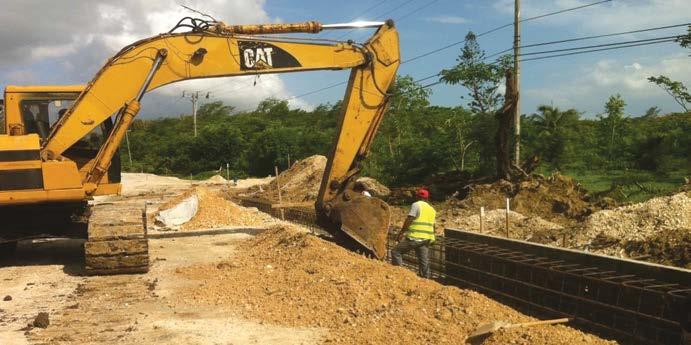
Infrastructure projects under implementation during 2017 included the construction and upgrading of approximately 32 km of roads, benefitting over 130,000 men, women, boys and girls in Belize, BVI, Guyana, and St. Vincent and the Grenadines. In The Bahamas, the Bank supported the installation of water supply infrastructure that improved access to water for 1,150 households. Under the United Kingdom Caribbean Infrastructure Partnership Fund (UKCIF), implementation advanced for a project in Antigua and Barbuda, which will construct and upgrade approximately 8.7 km of roads, benefitting approximately 65,000 people.
CDB also hosted two regional workshops targeting professionals in the transport and urban sectors. These stakeholder engagements were critical components of the process for updating the Bank’s sector policies. The Bank also advanced initiatives to mainstream climate-resilience planning in the road transport and water sectors in the Caribbean.
The Bank approved 10 capital and eight technical assistance interventions in the energy and transport sectors in Anguilla; Antigua and Barbuda; Belize; BVI; Dominica; Grenada; Guyana; Montserrat; Saint Lucia; and St. Vincent and the Grenadines. These included six technical assistance interventions and one capital project supported through UKCIF.
A capital project for road infrastructure rehabilitation was also approved for Antigua and Barbuda. The expected outcome of this project is increased efficiency, climate resilience and improved safety of road transport along selected primary highways in Antigua and Barbuda. Under UKCIF, a seaport redevelopment project was approved for Montserrat, and is expected to lead to improved efficiency, effectiveness and resilience of the port facilities, and to provide a safe harbour and accessibility to its users.
In addition, CDB approved feasibility and design studies for road infrastructure in Belize, Grenada, Guyana and Saint Lucia through UKCIF. Under the Fund, the Bank also approved feasibility and design studies for marine
transport in Guyana, and St. Vincent and the Grenadines. Hurricane reconstruction and rehabilitation loans were approved for:
• the rebuilding of the electricity transmission and distribution network in Anguilla;
• the reconstruction of education facilities, public buildings, road and water infrastructure in BVI; and
• education, road and water infrastructure in Antigua and Barbuda.
In 2017, CDB scaled up its efforts to supply and improve regional public goods, taking into account regional targets and outcomes across its portfolio.
Regional cooperation and integration
The Bank completed the implementation of 28 projects under the CARICOM Single Market and Economy and the Economic Partnership Agreement (EPA) Standby Facilities. Total disbursements in 2017 were $1.4 mn. Across 11 BMCs, individuals and businesses in the creative arts, manufacturing and public sector, and small and mediumsized enterprises benefitted from the development of policy, drafting of legislation, outfitting of equipment for testing laboratories, training and workshops.
Regional public goods
CDB approved a grant of $48,720 to the Regional Security System (RSS), which coordinates collective response to security threats impacting the stability of the Region. The funds were used to finance an organisational and strategic review as well as to develop a risk management system, and a policy on corruption, fraud and bribery.
CDB also continued to play a leading role in building an efficient regional statistical system. Working with
partners to advance the data revolution for sustainable development, the Bank supported 12 national statistical offices and the CARICOM Secretariat to improve the coordination of statistical activities and knowledge transfer throughout the Region. CDB funding also advanced the implementation of the Region’s Action Plan for Statistics, and critical preparations for the impending rounds of National Population and Housing Censuses throughout the Region.
Supporting MSMEs’ development, competitiveness and resilience
CDB continued to invest in the development of competitive, innovative and resilient micro, small and medium-sized enterprises (MSMEs) in its BMCs. During 2017, through its Caribbean Technological Consultancy Services (CTCS) Network, the Bank approved $806,000 to facilitate the implementation of 45 technical assistance development activities, of which 863 business persons were beneficiaries.
In keeping with its focus on building economic and social resilience to the impact of natural disasters, the Bank provided training to 234 artisans and community groups in Dominica to improve their knowledge and skills in enhanced construction methods and practices, and to reduce the vulnerability of structures to hurricanes and similar events. One hundred and seventy men and 64 women participated in the programme, which was part of CDB’s immediate response to Dominica following the passage of Hurricane Maria.
CDB prioritised support to help MSMEs become more compliant with international standards—an important factor for boosting competitiveness. In Belize, the Bank funded the development of a quality management system for the Citrus Research and Education Institute laboratory that is compliant with ISO/International Electrotechnical Commission 17025. Implementation of this system paves the way for MSME citrus growers in Belize and across the Region to gain better access to affordable and accredited testing services. CDB also continued to collaborate
with CTO to provide training for the Hospitality Assured Certification Programme for the Caribbean, to improve the competitiveness of tourism-related MSMEs.
The Bank promoted innovation in sustainable agriculture development, approving a grant to support capacitybuilding in aquaponics for farmers and trainers in Jamaica. When the project is completed, at least 20 extension officers, and 45 prospective and existing farmers will be trained in aquaponics farm management; and an online training programme to be rolled out in other BMCs will have been developed.
The Bank advanced the implementation of its Public Policy Analysis and Management and Project Cycle Management Training Programme. One hundred and eighty-six civil servants in Barbados and Grenada completed all components in 2017. The Programme blended online and face-to-face courses in public policy analysis and management, results-based management, risk management, procurement management and trainthe-trainers techniques. Overall, 98% of respondents to the post-training survey reported that they had improved their skills and knowledge. The Programme is scheduled for implementation in the remaining 17 BMCs and for the Bank’s Staff in 2018 and 2019.


Through the CTCS Network, the Bank provided training to improve the competitiveness of MSMEs. In Guyana, training in beekeeping targeted vulnerable groups at risk for lower participation in available economic activities, including Amerindian communities, youth, women and people with disabilities.

On September 21, 2017, Hurricane Maria swept through Dominica with category five winds of nearly 160 mph damaging or destroying 90% of the island’s structures. Following the devastation, stakeholders called for in-depth reviews of building practices, and the Government of Dominica, with plans of rebuilding stronger than before, commenced resilient construction.
Through funding from CDB, 234 Dominicans, 40% of them women, are now more equipped with the skills and knowledge needed to construct homes that can better withstand hurricanes. They have completed the Rapid Training of Artisans programme, a learning experience
which taught them how to efficiently and economically repair and rebuild roofs and timber-framed walls in accordance with building codes.
Artisans in each of Dominica’s 10 parishes participated in the programme, which follows a similar one implemented with notable results in Grenada immediately after Hurricane Ivan in 2004. Lessons learned will be applied to future interventions in CDB’s other BMCs, which have been affected by, and are vulnerable to hurricanes.
The programme was implemented through the CTCS Network.
During 2017, CDB focused its private sector interventions on expanding credit delivery to priority sectors; strengthening the capacity of institutions that deliver services to MSMEs; and supporting mechanisms that increase access to affordable long-term financing. The Bank also revised its Private Sector Policy and Strategy, which guides its contribution to the transformation of the sector in CDB’s BMCs.
Through ongoing credit programmes, the Bank disbursed approximately $12 mn in financing to regional development finance institutions to provide credit for 117 business enterprises, 652 student loan recipients and 23 low-tolower income households seeking assistance for home improvement and home acquisition. In addition, the Board of Directors approved financing of $12mn to Dominica Agricultural and Industrial Development Bank (DAIDB) to support housing and education. The funding will assist in providing student loans, and low and lower-middle income housing, which combined are expected to benefit 400 people. Under the project, technical staff from DAIDB will also receive training on how to assess and manage climate risk and gender equality in the project appraisal process.
CDB facilitated capacity-building initiatives to strengthen business support organisations (BSOs) and development institutions that provide services to the private sector, and enhance their service delivery and business models. In collaboration with the IDB and the Multilateral Investment Fund (MIF), CDB designed a project in direct response to the loss of correspondent banking relationships caused by de-risking. When this project is completed, national risk assessments and action plans will have been prepared, legal and regulatory reforms initiated, a communication strategy designed and implemented, and personnel from financial institutions trained in anti-money laundering and combatting the financing of terrorism.
The Bank approved an initial contribution of $2.6 mn for the establishment of the Cultural and Creative Industries
Innovation Fund, which will support innovation and emerging business opportunities in the sector. The Fund will provide non-reimbursable grants to projects and/or activities at the national, sub-regional and regional levels, and targets outcomes including business-climate reform, improved data capture and market intelligence, and direct institutional strengthening of BSOs and MSMEs involved in the sector.
Building resilience through social interventions Natural hazards have significant social impacts in CDB’s BMCs. In direct response to this issue, the Bank provided funding for the provision of psychosocial services as part of its post-disaster reconstruction and rehabilitation interventions in Antigua and Barbuda, and BVI. These services directly targeted children, their families, educators and other service providers affected by the hurricanes.
Non-communicable diseases present a threat to human capital gains in the Bank’s BMCs, and childhood obesity is among the root causes. In 2017, CDB cooperated with the Healthy Caribbean Coalition to support childhood obesity prevention through capacity building. The project is providing training for civil society organisations to develop and implement childhood obesity action plans in The Bahamas, Barbados, Belize and Jamaica.
CDB increased its focus on reducing gender-based violence (GBV), a persistent and pervasive issue, which threatens resilience and severely damages the human capital base of BMCs. The Bank, in collaboration with UN Women, provided support to enhance technical capacity at the regional level to collect systematic, harmonised and comparable data on GBV which could be used to inform evidence-based decision-making. The Bank also continued to support the
Legal Aid and Counselling Clinic in Grenada in providing psychosocial and psycho-educational interventions to victims and perpetrators of GBV. About 200 beneficiaries access these CDB-supported services annually.
CDB, for the first time, approved a project to combat Trafficking in Persons (TIPs) in Guyana. TIPs affects men, women and children; however, women and girls are the main victims. The project will enhance the institutional framework for the provision of services by the public and non-governmental organisations.
CDB’s interventions in education emphasised the promotion of sustainable sector outcomes. This was achieved primarily through a focus on quality and the enhancement of education systems. Three major activities included: the finalisation and approval of the Bank’s Education and Training Policy and Strategy (ETPS); the launch of a Framework for the Advancement of Mathematics Education (FAME); and the provision of training designed to enhance the capacity of teachers and school administrators in instructional effectiveness and leadership.
The ETPS sought to align outcomes in the Bank’s proposed interventions with national, regional and global developments, particularly the Sustainable Development Goals (SDGs). The Bank pursued its objective to meet and be responsive to the new and changing demands of BMCs, taking into account differences in language and education systems, and good practice in the sector.
The primary goal of FAME is to improve outcomes in Mathematics education through enhancement of the policy and enabling environment; curriculum development, implementation and monitoring; teacher development; assessment; teaching and learning and instructional resources; and the addressing of gender disparities that affect the teaching and learning of Mathematics. In advancing the Framework, key performance indicators have been identified; and it is expected that BMCs’
Education Sector Plans will be revised to incorporate relevant aspects of FAME.
The Bank funded training to enhance teacher effectiveness and the instructional leadership capacity of administrators in a number of BMCs. Sixty secondary school administrators and secondary-level teacher trainers from the University of Belize received training in effective school leadership and management. Upon completion of this programme, six participants were selected for a study tour to Canada to further enhance their capacity as trainers of trainers and to continue the cycle of training and orientation for new participants on an annual basis. In Antigua and Barbuda, while 16 teachers are receiving degree-level training to enhance both their pedagogical and content capacity, a total of 488 teachers and school administrators benefitted from professional development to improve their instructional effectiveness and instructional leadership skills. Eleven of the teachers trained are now skilled in the development and implementation of programmes for children with special educational needs.
The Board of Directors approved a $16 mn project, which will assist the Government of Haiti with improvements in the education sector. The project aims to enhance the role of the state in basic education, by enabling it to be more active in the delivery of education services. In addition to providing more public places, the Government will implement a number of quality assurance mechanisms to strengthen basic education generally, and to hold private providers accountable for maintaining established standards. It is expected that 48 new classrooms will be provided and a further 84 will be rehabilitated. There will be approximately 69,000 beneficiaries, including teachers and school directors who receive training.

The Bank approved a grant to strengthen the capacity of the Caribbean Examinations Council to implement and assess the Caribbean Advanced Proficiency Examination (CAPE) in Environmental Studies. It will also enhance the skills of 240 Environmental Science teachers to deliver the CAPE
Environmental Science curriculum. This support is expected to improve the performance of 5,000 students by 2021 and increase public awareness of issues related to climate change, natural disasters and energy conservation.
Implementation of the Enhanced Country Assessment Programme6 continued during the year, with the completion of Country Needs Assessments (CNAs) in 12 BMCs. These CNAs were designed to identify the level of local institutional and technical capacity, and the quantum of financial resources required from CDB to assist in the successful implementation of the ECPA. In addition, CDB hosted the Regional Toolkit Workshop to raise awareness and build the skills of BMC stakeholders in implementing all aspects of the ECPA.
CDB’s BMCs continued to confront the challenges of food and nutrition insecurity, and a ballooning food import bill. Also, increasingly intense natural hazards impacted the agriculture sector, in several BMCs, threatening production and productivity, and the livelihoods of a large percentage of the population whose primary source of income is agriculture. During the year, the Bank responded directly to these changes, laying the foundation for a more resilient regional agriculture sector.
In partnership with the Food and Agriculture Organization of the United Nations, the Bank worked on a study entitled, “The State of Agriculture in the Caribbean”. It highlights key trends in agriculture and the related opportunities for investments to support economic and social growth, poverty reduction, and sustainability. The study also supports the revision of the Bank’s Agricultural Policy and Strategy Paper, which will inform the CDB’s future interventions in the sector. The findings of the study are scheduled for publication in May 2018.
In 2017, the Bank’s Board of Directors approved the Essex Valley Agricultural Development Project – Jamaica, which is being funded through a grant of GBP35.5 mn from UKCIF. The integrated Project aims to enhance the production
6
and productivity of farmers in Essex Valley through the development of:
• a 700-hectare irrigation system, powered by a 3.1 megawatt (MW) PV plant;
• enhanced production and marketing facilities; and
• agricultural support infrastructure and road improvements, post-harvest handling facilities and beneficiary training in good agricultural practices and climate-smart agriculture.
In addition, the Board approved interventions directly focused on addressing agricultural challenges resulting from climate change. These included a project to assist the Government of Guyana in identifying location-specific measures to adapt and mitigate the effects of climate change on the agriculture sector. CDB also approved a loan to the Government of Grenada to support climatesmart agriculture, which will promote farmer adoption of new technologies and practices to build climate resilience; and the expansion and rehabilitation of infrastructure, including farm-access roads, and irrigation and drainage systems.
CDB approved a project to strengthen food safety management systems in Grenada. The project, which has potential for replication across other BMCs, will support efforts to ensure that the agriculture sector in Grenada aligns with internationally recognised food safety management systems. The project will finance capacity building of key stakeholders and also includes a component for infrastructure and systems upgrades with a view to ensuring the effective production, processing, packaging, storage, marketing and export of fresh fruits and vegetables.
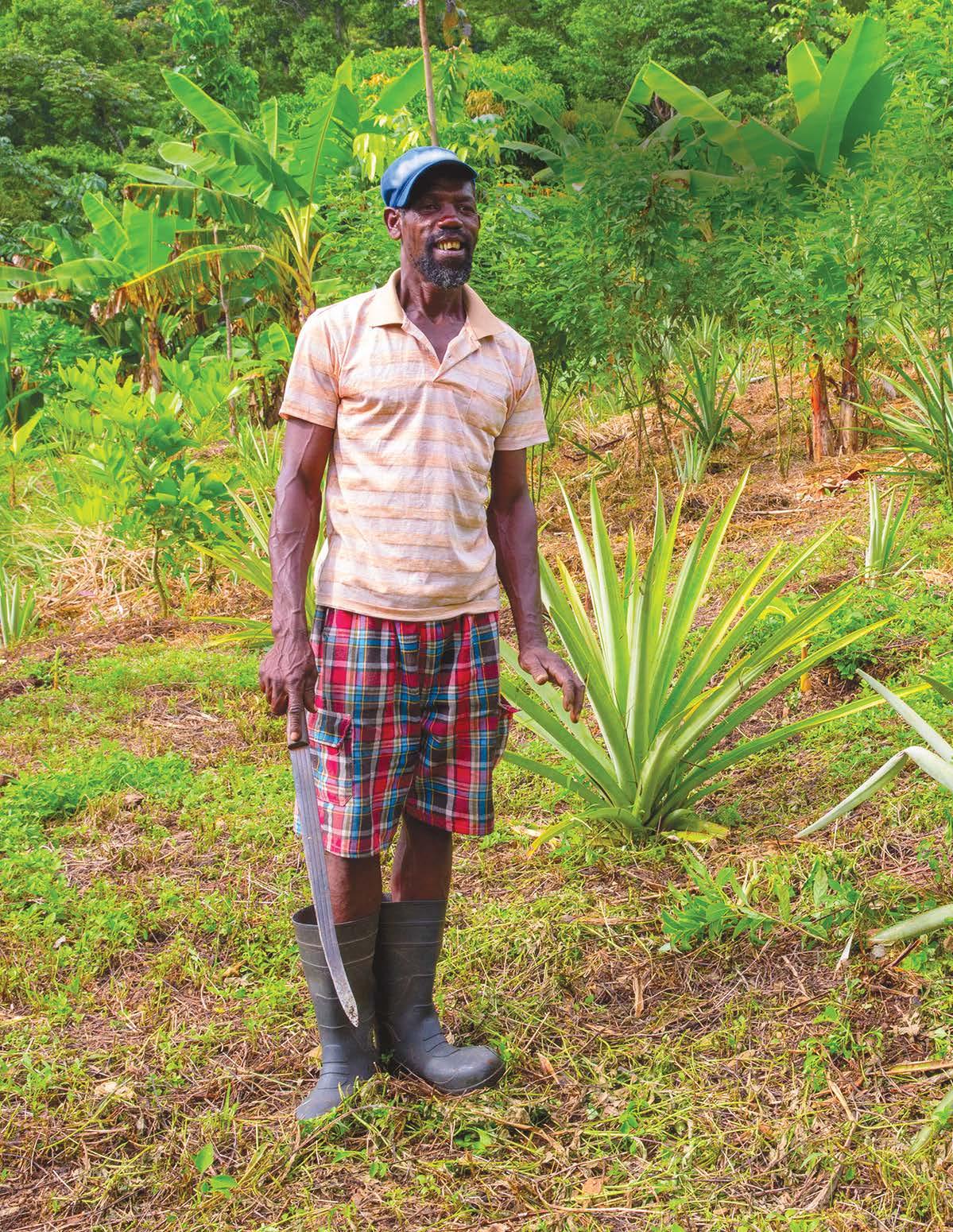
In March 2017, Contributors to the Ninth Cycle of the Special Development Fund Unified [SDF (U)] approved a contribution of $40 mn to the ninth phase of the Basic Needs Trust Fund (BNTF 9). Nine participating countries provided an additional $6 mn in resources to support poverty-reduction programmes through the Fund. Montserrat was subsequently included in BNTF 9 operations, with an allocation of $780,000. Participating countries began preparing policy framework documents to guide the use of BNTF resources. An institutional and organisational assessment was initiated in August 2017 to establish a governance mechanism for the delivery of BNTF programming in Suriname, the Fund’s newest participating country.
BNTF results in 2017
During 2017, the Bank approved 18 sub-projects totalling $4.76 mn, spanning education and human resource development, water and sanitation, and basic community access.
Throughout the year, 163 sub-projects were completed across ten participating countries. Hurricane Maria slowed the implementation of sub-projects in Dominica, where BNTF offices and some records and equipment were destroyed, and staff displaced. Since the passage of the hurricane, CDB has been discussing with the Government of Dominica options and opportunities for accelerating the implementation of BNTF interventions.
282 classrooms were built or upgraded, providing new and improved learning environment for 51,100 students.
351 teachers received training in early childhood development.
Approximately 22,000 people graduated from training activities covering career development, life enhancement skills, and community capacity-building skills.
Capacity-building interventions for government institutions and non-government organisations in the areas of gender integration in projects, project planning and monitoring.
Approximately 9,300 households gained better access to quality water supply and sanitation services through the installation of 52.2 km of water supply pipelines and the construction of 12,644 m3 of water storage capacity.
Vulnerable persons in schools and poor communities received complementary basic health and hygiene education, and water, sanitation and hygiene (WASH) training.
Approximately 16,600 people in vulnerable communities gained access to basic services through the construction of 22.9 km of secondary roads and farm access roads with associated drainage structures.
Sub-project beneficiaries and project monitoring committees received training in the maintenance of basic community access and drainage infrastructure.
Nearly 8,100 people participated in community-based citizen security activities under the Youth at Risk – Violence Prevention against Children in Jamaica Project.
Approximately 11,300 people benefitted from six newly constructed or upgraded basic community infrastructure in Saint Lucia.
In the hinterlands of Belize and Guyana, 0.043 MW of renewable energy capacity was installed mainly on new or upgraded indigenous schools and water systems.
IN JAMAICA, A SCHOOL UPGRADE LEADS TO IMPROVED STUDENT PERFORMANCE
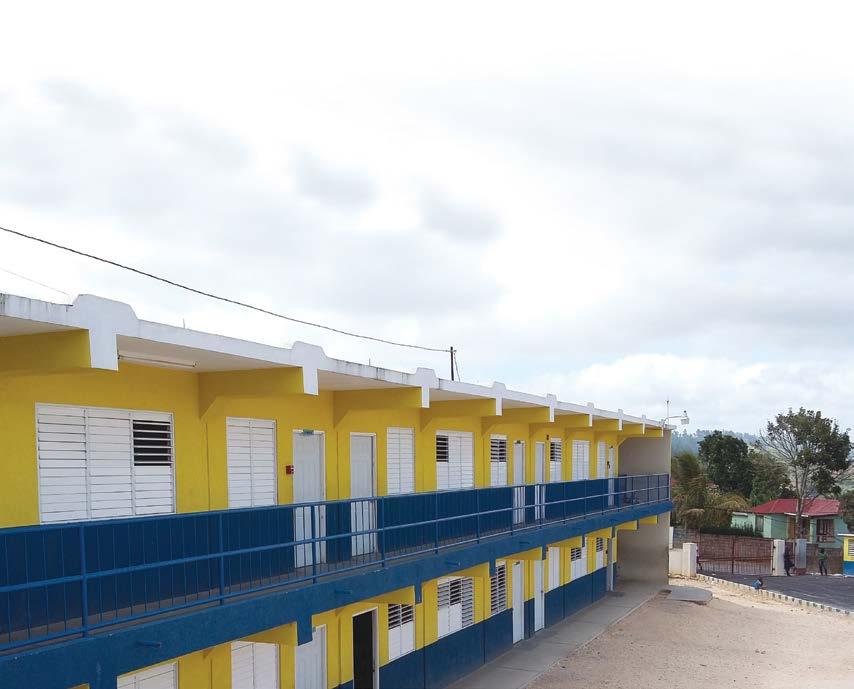
At the Christiana Moravian Primary and Infant School, there were once as many as 46 students to one teacher in some classes. The issues with overcrowding have now been alleviated, with the rollout of new programmes, the construction of 10 new classrooms, and the renovation of two buildings and student bathrooms. These improvements are stimulating pride in, and enhancing the lives of 1,200 Jamaican students.
BNTF and the Jamaica Social Investment Fund collaborated on a rehabilitation and expansion project, which included training for special education needs coordinators; instruction in WASH; and the Literacy and Numeracy Project (LNP).
Through LNP, academic staff participated in extensive training, and the school received teaching and learning aids to support the math and language curricula. As a result, students’ performance in national examinations improved, the school surpassed the national average for literacy, and there has been a marked improvement in numeracy.
With the knowledge gained through WASH training, the school also created an action plan to address sanitation and hygiene issues.
Improvements in the Special Education Unit were particularly notable, with significant increases in the number of students reaching mastery levels in literacy and numeracy.
In 2017, CDB built on previous procurement capacitybuilding efforts, conducted more than 12 training sessions for key executing agencies, and held five events for private sector stakeholders. This face-to-face training was blended with the Bank’s online procurement training, participants in which more than doubled during the course of the year, totalling almost 1,000. The Regional Procurement Centre, established at the University of Technology, Jamaica under a CDB- and World Bank-funded project to strengthen public procurement capacity in the Caribbean, began its pilot training programme.
During the year, work commenced on reviewing CDB’s existing project procurement guidelines with a view to revising them to reflect the Bank’s current needs as well as global good practice in 2018. In addition, the Bank updated all of its standard bidding documents to improve the effectiveness of its procurement.
CDB also supported BMCs’ public procurement reform efforts, in accordance with its strategic objective of promoting good governance. The Bank worked with BMCs in the Organisation of Eastern Caribbean States (OECS) and other development partners, to craft a holistic procurement reform intervention for the sub-region. The Board of Directors approved the project in late 2017. CDB also invested in the participation of public procurement officials from its BMCs in the Inter-American Government Procurement Network, to further exchanges on best practice and the building of strong professional networks.
The Bank made progress in improving its disbursement process, including the drafting of new guidelines for project stakeholders, and a more comprehensive suite of disbursement modalities. Work to integrate an e-claims solution within Project Resource Interface for Systematic Management (PRISM) also reached an advanced stage; and when completed, will provide improved efficiency within the Bank and executing agencies.
In 2017, the Regional Support Facility delivered on its mandate to promote public-private partnerships (PPP) policies and projects. In addition to supporting policy development and capacity building, CDB expanded its engagement with BMCs, focusing on providing technical assistance and long-term financing for PPPs.
The PPP Helpdesk, launched by the Bank to help governments better manage PPP programmes and projects–especially in the early stages of development–assisted the Governments of Belize and Guyana in the development and adoption of PPP policies. The process involved multistakeholder consultations, spanning the public and private sectors. The Helpdesk also supported the Tobago House of Assembly, in the creation of a sub-national PPP Policy.
Through support from CDB, in Jamaica, the pre-feasibility study for the North Coast Water Supply Scheme was completed. In addition, the Bank assisted the Urban Development Corporation with screening three downtown Kingston redevelopment projects for PPP potential. In Tobago, the Helpdesk screened five PPP projects, and secured funding for additional support through IDB.
The Regional Support Facility continued to support capacity building in BMCs, conducting PPP workshops for government employees in Guyana, and Trinidad and Tobago. In May, the Bank launched the Caribbean PPP Toolkit in collaboration with the World Bank, Public-Private Infrastructure Advisory Facility, IDB and MIF. The online tool offers guidance and practical assistance in preparing and managing PPP projects. In addition, the Facility published a case study on Jamaica’s Highway 2000 project, the largest PPP in the Region to date. This case study was the focus of one of the Bank’s presentations at a workshop titled, “Better Managing the Fiscal Impact of Public-Private
Partnerships”. During the event, the Bank also shared with participants the Region’s experience implementing PPPs. The workshop took place in St. Kitts and Nevis under the
auspices of the Caribbean Regional Technical Assistance Centre of the IMF.
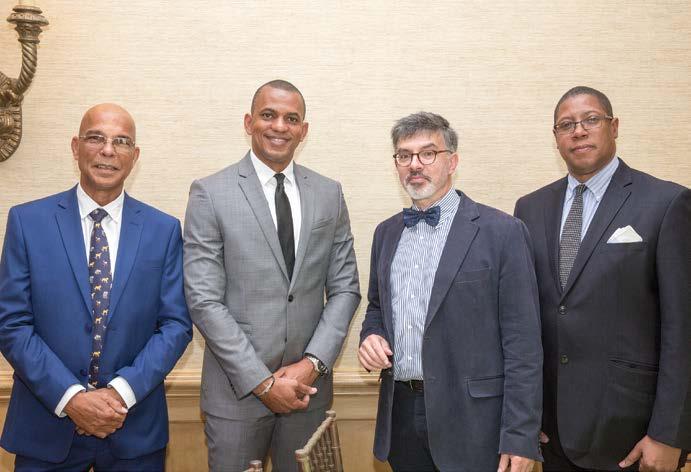


In 2017, CDB continued working to maximise the impact of development resources to improve lives, reduce poverty and help its BMCs achieve their development goals. Using its results management framework (RMF), the Bank tracked the implementation of its Strategic Plan 2015-2019.
Progress towards achieving the SDGs and regional development outcomes
In 2017, BMCs continued to grapple with difficult challenges such as low economic growth, unsustainable debt, high energy costs, limited fiscal space for public spending, and climate change. The devastating impacts of Hurricanes Irma and Maria in September 2017 have derailed social and economic development programmes in the affected BMCs and eroded the gains made from previous interventions. As a result, funds that would have
been directed to social and economic development programmes will now be diverted to reconstruction and rehabilitation efforts. The need for considerable assistance from development partners will be high on the regional agenda.
CDB’s contribution to the SDGs, country and regional development outcomes
CDB made notable contributions to development results in BMCs in areas outlined in its Strategic Plan 20152019 -- economic and social infrastructure; education and training; agriculture and rural development; private sector development and environment; and disaster risk reduction and climate change, with gender equality and energy security as cross-cutting themes.

• Improved access to water and sanitation services to 14,515 urban and rural households or 43,542 people
• Installation or upgrading of 12,794 m3 and 158 km of potable water capacity in urban and rural areas
• Training for 1,010 teachers, educational and administrative staff to improve service delivery at the basic education level
• Improved learning environments, including 247 new and upgraded classrooms for 23,600 students including 11,163 girls
• Construction or upgrade of 59 km of primary, secondary and other roads benefitting 108,000 people
• Lines of credit to financial intermediaries for on-lending to 115 individuals and MSMEs at a value of $5.2 mn. Through these financial intermediaries, 23 people gained access to mortgages for home purchase
• Enhanced the managerial and operational capacities of MSMEs through training workshops and in-plant assistance. These interventions benefitted 863 business people, including 332 females
• Approval of approximately $116 mn in loans and grants geared towards immediate response, rehabilitation, and reconstruction following the 2017 Atlantic Hurricane Season
• Partnership with CCRIF SPC, which recorded payouts to governments of $61.5 mn, including $30.8 mn after Hurricane Irma and $23.6 mn after Hurricane Maria, providing much-needed liquidity for immediate repairs and recovery
CDB made progress in improving the quality and overall performance of its operations. The Bank continued its efforts to accelerate project start-up and implementation, and disbursements. In addition, it advanced the rollout of PRISM, a new system designed to improve CDB’s ability to measure, monitor and report on results throughout the project/loan life cycle and improve the timeliness of decision-making. The Bank also met its gender mainstreaming targets for core sectors and worked with BMCs to build capacity in gender development at the sector and country levels.
CDB embarked on a number of reforms to strengthen human resources management; streamline work processes; improve employee relations and communication; and boost morale, wellness and job satisfaction. The Bank launched a new human resource information system (HRIS), and completed an employee engagement pulse survey. Financial efficiency and value for money were key guiding principles as the Bank continued its efforts to allocate and utilise resources.
The Bank expanded efforts to implement the Managing for Results Action Plan, which was developed in 2016 to improve the way CDB does business and foster a resultsmanagement culture throughout the organisation. The areas of focus and action include leadership and culture for results; results-focused human resource management; portfolio management; performance management; performance evaluation; and the sharing of lessons learned.


In 2017, CDB supported the construction or upgrade of 59 km of primary, secondary and other roads benefitting 108,000 people.




The Internal Audit Division (IAD) is an independent and objective assurance and advisory function, designed to enhance and protect organisational value to CDB by improving its operations. IAD’s work is carried out in accordance with the Institute of Internal Auditors (IIA) International Professional Practices Framework (Standards). The Division reports administratively to the President of CDB and functionally to the Bank’s Oversight and Assurance Committee (OAC).
During 2017, IAD completed a number of internal reforms, which included amendments to work processes and modifications to its Charter, to account for changes to the IIA’s Standards, and the implementation of a more efficient and collaborative audit management system (AMS).
The assurance and consultancy engagements performed by IAD in 2017 considered the process reforms and information technology systems being implemented by CDB. The Division provided two consultancy engagements related to the implementation of the Bank’s HRIS and PRISM. Both of these systems were activated in 2017. In addition, IAD participated in business development activities where the adequacy of associated internal controls processes needed to be assessed.
IAD continued following up on Management Action Plans, stemming from the external auditors’ management letters and IAD’s assurance work. With the implementation of the AMS in mid-2017, new procedures and reports were utilised in the follow-up process. The process enhancements fostered increased management ownership and commitment to timely reporting, and supported the mitigation of identified risks.
In line with good practice for independent evaluation offices within multilateral development banks (MDBs), an external review of CDB’s evaluation function was finalised in 2017. Delivered by a panel of international evaluation experts, the review made a number of recommendations intended to strengthen evaluation practice at the Bank, including improving the engagement of stakeholders in evaluation processes; managing and disseminating lessons and knowledge; and creating a longer-term plan for thematic and country strategy evaluation. These recommendations were accepted by the Bank and are reflected in an action plan approved by OAC.
The Office of Independent Evaluation (OIE) completed an evaluation of the Bank’s policy-based operations for the period 2006 to 2016. It included case studies of policy-based lending in Barbados, Grenada, Jamaica, and St. Vincent and the Grenadines. Overall, there was evidence of continuing demand for this lending instrument; achievement of most of the agreed prior actions; and some progress on expected outcomes. Similar to experiences at other MDBs, it was difficult to observe whether longer-term reform outcomes had been fully achieved, or whether attribution to CDB lending was possible. However, a number of lessons for more effective planning and management of policy-based lending were drawn, including the need for:
• thorough engagement with a cross-section of BMC stakeholders in determining the expected reform agenda and prior actions;
• clearer formulation of expected results and indicators;
• better implementation monitoring; and
• anticipating and meeting technical assistance requirements.
This theory-based evaluation was positively peer-reviewed by the World Bank’s Independent Evaluation Group.
Ensuring the sustainability of project benefits, after external financing has ended, remains a challenge for development agencies. In direct response to this issue, OIE undertook a study of evaluation evidence and good practices in this area, looking at both CDB’s experience and that of other MDBs. The resulting report, “Managing for Sustainability”, outlines approaches and conditions most likely to result in positive, ongoing, socially inclusive outcomes. Its extensive compilation of project and sector experience at CDB will be summarised into a user-friendly format in 2018.
Among its outreach activities, OIE sponsored the engagement of Caribbean Evaluators International, the regional association of professional evaluators, with the International Development Evaluation Society. This resulted in a signed memorandum of understanding between the two organisations, representing a further step towards professional capacity development in the Region.
The Office of Integrity, Compliance and Accountability (ICA) is a convergence of five legacy internal governance functions, covering:
1. institutional integrity (fraud and corruption);
2. ethics;
3. whistleblowing;
4. money laundering, terrorist financing and financial sanctions; and
5. accountability for environmental and social harm allegedly caused by projects financed by the Bank.
Promoting resilience through enhanced internal governance
ICA complemented CDB’s resilience-building efforts by ensuring the Bank had the right governance framework to support its fiduciary duty to deliver development assistance with integrity and accountability.
The Office received and reviewed complaints, and conducted preventive and investigative activities to resolve matters related to integrity, ethics and compliance in the Bank’s systems and operations.
Promoting resilience through collaboration
ICA co-hosted the MDB Private Sector Integrity Meeting in Barbados. The event enhanced the benchmarking of integrity policies and practices; facilitated networking among the institutions; and created opportunities to extend the global reach of the banks’ anti-corruption work.
ICA operationalised its compliance function in mid-2017 and supported CDB’s work in finding solutions to the derisking of correspondent banking relationships, which are fundamental to the efficient operation and resilience of the global and regional financial ecosystem:
ICA focused on prevention throughout 2017, particularly, integrity due diligence. Activities included issuance of advisories, and training for Management, Staff and OAC. Training included a cybersecurity exercise between the Bank and the United States Federal Bureau of Investigation, and the observance of Anti-Corruption Week 2017, during which ICA conducted mandatory and voluntary training for all CDB Staff.
In 2017, CDB continued to follow its strategic roadmap developed for the period 2015 to 2019, maintaining a focus on:
• strategic workforce planning and talent acquisition;
• effective talent management; and
• enhanced efficiency and effectiveness in human resources (HR) business processes and service delivery.
The Bank’s second strategic workforce plan was developed, building on the foundation of the previous plan, which covered the period 2017 to 2019. The new plan addresses the Bank’s workforce needs until 2020. Using a predictive model for staffing and CDB’s project pipeline as the main demand drivers, the projected growth in staffing will complement increases in the loan portfolio, and supporting work such as technical assistance and business development. The workforce plan was designed to address the Bank’s resourcing requirements, talent management needs, and current workforce challenges.
CDB pursued its “build-from-within” talent management strategy and implemented the 70:20:10 Model for Learning and Development to maximise the effectiveness of its learning and development programmes. Staff were given several opportunities to improve their leadership and technical skills throughout the year. Training investments included risk management; infrastructure financing; project management; leadership development; eco-efficiency; financial analysis; entrepreneurship; and innovation.
Maintaining a high level of employee engagement was established as a critical success factor in the Bank’s
achievement of its strategic objectives and corporate priorities. The 2017 Employee Engagement Survey results indicated an increased level of overall Staff engagement to 81%, compared with 70.5% in 2015. The percentage of disengaged employees decreased from 14% in 2015 to 6% in 2017.
A formal rewards and recognition programme was implemented in September. The programme established four categories of awards to recognise and reward Staff for exceptional performance, innovation, and exemplifying the Bank’s Core Values. The On-the-Spot category of awards is administered using an e-platform, which makes it possible for recognition given to an employee to be immediately viewed and acknowledged by their colleagues.
The Bank implemented an HRIS, to consolidate all of the Bank’s HR activities and processes into a single platform. This new system improves the efficiency of CDB’s HR operations and provides managers with real-time analytics to facilitate decision-making and a better understanding of the Bank’s people resources.


In 2017, the Bank maintained its Enterprise Risk Management (ERM) approach with coverage including financial, strategic, operational and developmental risks. The operational risk pillar takes into account environmental, climate and disaster risk management, given its increasing visibility and potential impact on the sovereign risk profiles of BMCs.
The ERM framework continues to be supported with key risk governance tools and resources such as risk appetite
statements (RAS); risk taxonomy; risk control self-assessments; risk registers; internal risk ratings; risk-based limits; market surveillance; portfolio controls and an oversight Enterprise Risk Committee (ERC). The RAS, in particular, sets out highlevel quantitative and qualitative boundaries or thresholds within which the Bank’s strategic initiatives are executed.
At yearend, CDB was in full compliance with all of its risk appetite thresholds, as shown in Table 4.
The Office of Risk Management (ORM) is an independent but integral part of the Bank’s activities, free from influence and operating to a three-lines-of-defence governance structure:
• Line 1 - Front Line Functions: This represents areas where activities directly take place either in the front, middle or back office.
• Line 2 - ORM: ORM provides leadership, guidance, monitoring, and independent oversight of the activities conducted by Line 1.
• Line 3 - Internal Audit: IAD is responsible for, and provides assurance on internal compliance with controls.
CDB successfully replaced its manual operational risk process with a system called aCCelerate. aCCelerate automated the Bank’s end-to-end operational risk management process, including but not limited to, its annual risk and control assessments; risk register; and escalation and management processes. The system also serves as an automated internal surveillance and early warning system for identifying impending threats to the Bank, and will support the timely implementation of mitigating controls and actions.
During the year, ORM delivered training to all Staff, including management and risk liaisons, on the use of the system.
The Bank completed its second annual Risk Control Self Assessment (RCSA) exercise across all areas, using aCCelerate. The RCSA process enabled ORM to gain insight into the Bank’s universe of actual and potential operational risks.
CDB has in place a firm-wide business continuity framework that provides for an assured contingency response in the event of an emergency. Regular assessment of the framework continued in 2017.
The Bank currently has a warm backup and IT recovery site located away from its campus and a secondary site in another country. The risks of catastrophic loss are also mitigated with the use of comprehensive insurance programmes.
Matters related to environmental risk and climate change are addressed systematically at various levels of the institution through enterprise risk reporting. They are also addressed by the ERC whose membership includes a representative from the Bank’s Environmental Sustainability Unit (ESU). ESU is responsible for managing environmental and climate risk.
The sovereign credit risk profiles of some of CDB's BMCs were adversely affected by extreme weather events in 2017. However, the threat has been mitigated through support from the Bank’s shareholders, development partners and in some instances, through insurance coverage provided by CCRIF SPC.
During the year, exposures to Jamaica and Barbados, two of the Bank’s largest borrowers fell to 17% and 11% respectively (previously 18% and 14%) relative to the entire portfolio. This decline was achieved through limit controls and cancellation of aged, undisbursed balances.
Over the past five years, the Bank has been strategically diversifying its portfolio by targeting highly rated BMCs
for new business growth, while also reducing exposure to challenged credits via the targeted review and cancelling of aged, undisbursed balances. These efforts have resulted in measurable improvements in the distribution of the portfolio, as shown in Chart 5.
With these efforts, the Bank’s top six sovereign exposures declined systematically as depicted in Chart 6.
BAHAMAS
The measures adopted by the Bank to improve its capital adequacy included encouraging new lending to highly rated BMCs; supporting lower-rated entities with interventions sourced from its soft funding window; enforcing hard credit limit controls; minimising concentration; strengthening
operational risk controls; managing undisbursed balances; and maintaining a robust internal capital generation strategy.
These efforts led to a reduction in the Bank’s risk-weighted assets, while increasing its capital levels, as reflected in Chart 7.
The ORM computes the Bank’s capital adequacy manually, utilising the Basel II framework.
Under Pillar I, ORM uses a Basic Indicator Approach for Operational Risk, and a modified Standardised Approach for Credit Risk.
Under Pillar II, the Bank ensures that all other residual risks over and above Pillar I are computed, which includes, but is not limited to, additional liquidity requirements, interest rates, and business and concentration risks. This is then complemented with top-down and bottom-up scenario assessments to determine the extent of additive capital that may be needed as a cushion against unexpected risk losses. Under Pillar III, CDB has been meeting its enhanced disclosure reporting obligations by improving the dissemination of risk information.
The Bank is monitoring Basel III developments closely to determine if amendments to its modus operandi will be necessary. Compliance, which is voluntary, ensures that the Bank’s procedures are in alignment with best practice.
CDB’s overall objective is to manage its market risks in order to minimise market losses and optimise return.
CDB manages its interest rate exposure by ensuring that the changes in the cash flow of its assets closely match those of its liabilities. This relationship is managed with the use of interest rate swaps, which convert fixed rate liabilities into floating rate liabilities. There is, however, residual exposure resulting from interest rate movements, which is effectively monitored and managed operationally with governance
oversight provided by ERC. Any residual interest rate exposure risk arising out of these during the year were well within the Bank’s risk appetite.
CDB’s exposure to currency exchange movements is minimised by the extent of its activities, which limit its assets and liabilities to a single currency, U.S. Dollars. Mismatches are managed effectively via the use of derivative hedging instruments, where necessary. All loans by the Bank are made either from currencies available from members’ subscriptions, or from currencies borrowed. The principal amounts are repayable to the Bank in the currencies lent. Any residual currency exposure risk arising out of these during the year were well within the Bank’s risk appetite.
CDB’s objective is to ensure that all foreseeable funding commitments can be met when due, and that access to the wholesale market is maintained.
To that end, the Bank seeks to maintain a portfolio of highly liquid assets augmented with a diversified funding base, to enable it to respond promptly to unforeseen liquidity gaps. During the year, the Bank also received approval from its Board of Directors to increase its secured borrowing limit to boost its funding options.
The risks relating to rollover have been eliminated, with no immediate maturities anticipated.
CDB loans are usually fully disbursed over several years and the Bank, as a result, continues to have undisbursed balances on approved loans. The liquidity risk remains with CDB, as it is required to provide funds to the borrowers, as and when requested, provided the conditions precedent for disbursement are satisfied. This risk is managed by conformity to the Bank’s policy of maintaining a net three years’ funding
requirement, or 40% of undisbursed commitments, whichever is greater. Presently, CDB’s liquid assets exceed the 150% prudential minimum guideline, which is in keeping with management’s decision to maintain high liquidity levels.
During the year, the Bank rolled out its regional risk framework supported by a dedicated portal to ensure the effective exchange of key information on sovereign risks and robust mitigation strategies between its BMCs. Through a pilot programme in one of the BMCs, risk liaisons were appointed and training delivered. The objective is to create a comprehensive regional and intra-regional model that would help BMCs better manage country risks.
In collaboration with CCRIF SPC, the Bank launched an initiative to integrate disaster and climate risks in the Bank’s ERM approach.
The Bank engaged two companies to validate its internal risk model and risk-based pricing models and co-build a risk-weighted assets engine to enable its planning and simulation of capital adequacy to effectively support its strategic planning initiatives.



CDB (“The Bank”) is a multilateral financial institution dedicated to the development of the economies of the BMCs, with a focus on the Least Developed Countries, primarily through project loans and technical assistance to the governments, public agencies and other entities in those countries. The Bank’s main goals are to promote sustainable economic development and to reduce poverty. The Bank was established in 1969 and is owned by its member countries. These include 19 borrowing member countries and 9 non-borrowing members.
The operations of the Bank are divided into two categories, ordinary operations and special operations. Ordinary operations are financed from CDB’s Ordinary Capital Resources (OCR) which comprises share capital, borrowings raised in the capital markets, lines of credit from commercial and other multilateral institutions and internally generated equity. Special operations are financed from the Special Funds Resources (SFR), comprising the Special Development Fund (SDF) and Other Special Funds (OSF).
The Bank is rated by three major international rating agencies. In May 2017, Fitch Ratings assigned a LongTerm Issuer Default Rating (IDR) of AA+ with a Stable Outlook. In May 2017, Standard and Poor’s (S&P) raised its Long-Term Issuer Credit Rating to AA+ from AA with a
Stable Outlook while Moody’s Investor Services reaffirmed CDB’s Long Term Issuer Rating as Aa1 with a Stable Outlook.
The following discussion should be read in conjunction with the audited financial statements of the OCR and accompanying notes set out in Section 7 of this report.
The financial statements of the OCR are prepared in accordance with International Financial Reporting Standards (IFRS) on a historical cost basis, except as modified by the revaluation of investment securities held at fair value through profit or loss and derivative financial instruments which are reflected at fair value.
The preparation of the financial statements in conformity with IFRS requires management to make estimates and to exercise judgement in the process of applying its accounting policies.
All of the amounts shown in the financial statements are US dollar equivalents.
The accounting treatment under IFRS requires that derivatives are recorded at their fair value, while loans and borrowings are recorded on the amortised cost basis. This creates income volatility which is not representative of the underlying strategy or economics of the transactions, as it is the Bank’s policy to hold these instruments to maturity. In accordance with policy therefore, the Bank excludes the
impact of the fair value adjustments and related foreign exchange translation adjustments associated with these derivatives from the determination of its Operating income. This Operating income is, in turn, used in the determination of CDB’s financial performance, liquidity, capital adequacy and other ratios and analyses.
Total comprehensive income: The OCR operations of the Bank for the year ended December 31, 2017 recorded total comprehensive income of $0.9mn, an increase of $16.6mn from the loss of $15.7mn in the prior year. This change was mainly due to increases in net income, lower negative derivative adjustments and other comprehensive income of $6.3mn, $3.2mn and $7.1mn respectively.
Operating income: Operating income is defined as total comprehensive income adjusted for the effects of derivative adjustments, the foreign exchange translation on the related Japanese yen and Swiss Franc borrowings and the actuarial re-measurements. It is this metric which is used to analyse the performance of the Bank and is allocated to reserves by the Board of Governors in accordance with the Bank’s Charter. The operating income increased by $0.3mn over the 12 month period.
Income from loans: Loan income for the year increased by $6.0mn from $32.1mn in 2016 to $38.1mn in 2017. This was due to a higher average interest rate of 0.58% over the previous year which was primarily driven by the Bank’s higher cost of borrowings.
Income from cash and investments: For the year ended December 31, 2017, income from cash and investments in 2017 was $5.8mn compared to $3.7mn in 2016. This was due to increases in yields from 0.24% in 2016 to 1.22% reflecting the rising international interest rate environment.
Interest expense: Interest expense for the year ended December 31, 2017 was $18.8mn, an increase of $5.0mn compared to $13.8mn in 2016. This was primarily due to rising interest rates and the full year impact of the Swiss Franc borrowing in July 2016 and the related cross currency interest rate swap.
Operating expenses: In 2017, operating expenses increased by $2.3mn to $18.3mn compared with $16.0mn in 2016 resulting from increases in administrative expenses of $4.4.mn, exchange rate translations of $0.3mn , and favourable impacts of reductions in realised and unrealised fair value losses of ($2.4)mn (see table below).
($ mn)
Rate/Volume analysis: The rate/volume analysis shows the effect on the net earning assets of the Bank due to changes in the Bank’s lending rate, the yield on investments and the cost of borrowings.
POSITION OF THE OCR
Total assets: At December 31, 2017, total assets were $1,641.0mn, representing an increase of $41.8mn (2.6%) from $1,599.2mn in 2016. This was due primarily to the growth in the loan portfolio during the year.
Loans: In 2017 the loan portfolio grew by $43.2mn from $1,016.9mn in 2016 to $1,060.1mn in 2017 an improvement of 4.3%. This growth is expected to continue slowly but consistently over the short term. There were two non-performing non-sovereign loans in the portfolio with a total amount outstanding of $5.1mn which has been fully provided for.
Borrowings and other liabilities: Total liabilities increased by $38.6mn (5.5%) from $702.7mn at December 31, 2016 to $741.3mn. This increase was mainly due to drawdowns from two institutional lines of credit.
Shareholders’ equity: At December 31, 2017, CDB’s equity totaled $899.8mn compared with $896.5mn as at December 31, 2016. The increase was due to new net paid-in capital of $2.3mn and total comprehensive income of $0.9mn. Total equity currently represents 54.8% of the Bank’s liabilities and capital at the end of the reporting period.
(EXPRESSED IN MILLIONS OF UNITED STATES DOLLARS) (1) Net of provisions.
The Special Development Fund, (“SDF” or ‘the Fund’), was established in 1970 and is the Bank’s largest pool of concessionary funding, offering loans on “softer” terms and conditions than those that are applied in the Bank’s Ordinary operations, i.e., longer maturities and grace periods and lower interest rates.
SDF represents a significantly important enabler in the Bank’s mission to reduce poverty and contribute to sustained welfare enhancement in eligible BMCs. Indeed, successive replenishments of the SDF since its inception have allowed CDB to make a meaningful contribution to the transformation of the lives of ordinary men, women, boys and girls particularly those in rural settings where they are more o likely to be at risk.
The SDF originally offered an assortment of terms and conditions which were fixed by the Fund’s various contributors. These differing terms and conditions created a number of complexities and inefficiencies in the Fund’s operation, which prompted the decision to set up a fund with a uniform set of rules. Hence, in 1983, SDF(U) was formed.
All members of the Bank are required to contribute to SDF(U), and contributions are also sought from nonmembers. Contributions are interest-free and provided on a multi-year basis, for an indefinite term. SDF(U) also has consistent terms, objectives and procurement conditions and thus overcomes the problems associated with individual donors and funding arrangements. There is a supplementary governance structure through an Annual Meeting of Contributors which provides the focus for the SDF(U)’s operations and they are provided with an annual report on the performance of the fund. Non-members are also invited to participate as observers in meetings of the Bank’s Board of Directors (BOD) and Board of Governors (BOG).
Contributors to the SDF(U), which is usually replenished in four-year cycles, enter into negotiations with the Bank
with the objective of agreeing on the priority areas and programmes which should be addressed and on the amount of SDF(U) resources which will be necessary to realise the agreed objectives. The recently approved ninth cycle of the SDF (U), covering the period 2017 – 2020, will be underpinned by the Bank’s efforts to support the BMCs in achieving their development goals consistent with the Sustainable Development Goals (SDGs).
As part of the furtherance of the objectives of the SDF and the Bank, approval was obtained from the Contributors to reduce the applicable interest rates on all loans to 1% effective from the commencement of the new cycle on January 1, 2017.
The following discussion should be read in conjunction with the audited financial statements of the SDF and notes set out in Section 7 of this report.
For the year ended December 31, 2017 there was comprehensive loss of $5.1mn, compared with a loss of $1.2mn in 2016. Gross income for the year was $17.6mn, an increase of $2.1mn from $15.5mn in 2016 due to higher investment yields during the year. Total expenses increased from $16.7mn in 2016 to $22.7mn in 2017 mainly arising from a larger share of the administrative expenses and the negative change from a foreign exchange gain of $0.3mn in 2016 to a loss of $1.4mn in 2017.
Income from loans: At December 31, 2017, loan income declined marginally to $12.6mn from $12.7mn at the end of 2016 arising from a slightly lower weighted average portfolio.
Income from cash and investments: Income from cash and investments of $5.0mn increased from the $2.8mn which was achieved in 2016. The escalation in 2017 was due
to increases in the yields, from 0.79% in 2016 to 1.43% in 2017, and growth of 9% in the average portfolio balances. Unrealised losses were also lower by $0.8mn in 2017.
Administrative expenses: At December 31, 2017, administrative expenses were $21.4mn, an increase of $4.5mn from $16.9mn in 2016. The SDF’s share of the Bank’s total administrative expenses is based on a predetermined cost-sharing formula, which is driven by the number of loan accounts and their status.
Exchange: Foreign exchange translation losses were $1.4mn for the year, compared with a gain of $0.3mn in 2016. This is as a result of the volatility in the various currencies against the US dollar.
Total assets: At December 31, 2017, total assets were $1,008.1mn, representing growth of $3.0mn (0.3%) from $1,005.1mn at the end of 2016. The main components of the change are discussed below.
Investments: At December, 31 2017, SDF cash and investments amounted to $371.9mn, compared with $374.8mn at the end of 2016. This change was marginal but mainly due to the increased disbursements in the technical assistance area of the Bank’s operations.
Loan portfolio: Total outstanding loans were $556.4mn at the end of the period under review, being $1.3mn (0.2%) lower than the $557.7mn outstanding at the end of 2016.
Receivable from contributors: There was an increase of $7.5mn (11.2%) in non-negotiable demand notes in 2017 as a result of the finalisation of negotiations for SDF9 in December 2016.
Liabilities: In 2017, subscriptions in advance increased by $9.6mn from the receipt of demand notes arising from the conclusion of the SDF9 negotiations.
Contributed resources: Contributions to the SDF net of allocations to technical assistance and grant resources decreased by $6.1mn (0.8%) to $744.6mn in 2017 from $750.7mn in 2016. This was the due to the first year allocation of the resources to technical assistance from the amount set aside in SDF9.
The Other Special Funds (OSF) was established to carry out the special operations of the Bank by providing resources on concessional terms to assist BMCs in poverty reduction. The Bank accepts contributions to the OSF for on-lending or administering on terms agreed with the contributors once the purposes are consistent with its objectives and functions.
The financial statements are prepared in accordance with accounting policies set out in the notes to the financial statements.
The following discussion should be read in conjunction with the audited financial statements of the OSF and notes set out in Section 7 of this report.
At December 31, 2017, the fund’s incurred a comprehensive loss of $0.4mn a decrease of $5.0mn from the net income of $4.6mn in 2016. This change was due to large changes in the income from investments and cash balances and foreign exchange translation movement during the year.
Income from loans: For the year income from loans was $2.2mn, a marginal decrease from $2.3mn in 2016. This decline was caused by a smaller average balance in the loan portfolio compared to the previous year.
Income from cash and investments: At December 31, 2017, income from cash and investments declined to $0.3mn from $3.5mn in 2016. This change in investment income was due to the normalisation of income after a oneoff realised gain in 2016 of $2.5mn from managed funds in addition to an unrealised impairment loss of $0.6mn.
Administrative expenses: At December 31, 2017, administrative expenses decreased to $1.2mn from $1.4mn at the end of 2016. The OSF’s share of the total administrative expenses for the Bank as a whole is based on a predetermined cost-sharing formula, which is driven by the number of loans and accounts and their status.
Exchange: Foreign exchange translation losses were $0.8mn for the period, a negative change of $1.9mn from a gain of $1.1mn in 2016. Foreign exchange translation movement is a result of the volatility in various currencies in relation to the US dollar.
Total assets: At December 31, 2017, total assets were $370.8mn, representing an increase of $81.2mn from $289.6mn at the end of 2016. The main components of the change are discussed below.
Investments: At December 31, 2017, cash and investments amounted to $77.1mn, compared with $89.3mn at the end of 2016. These balances include equity investments amounting to $9.2mn (2016: $7.6mn).
Loan portfolio: Total outstanding loans were $97.5mn, a decrease of $6.1mn (5.9%) from $103.6mn in 2016 due to repayments during the year 2017.
Receivable from members: This increase represents the receipt of an additional promissory note of GBP69.9mn received in respect of the UK Caribbean Infrastructure Partnership Fund (UK CIF).
Liabilities and funds: Liabilities and funds totalled $370.8mn at December 31, 2017, compared to $289.6mn in 2016. This increase was represented by increases of $82.8mn in technical assistance and grant resources and $0.8mn liabilities. There was a decrease of $0.4mn in accumulated net income due to the net loss for the year. There was also an increase of $0.7mn in accounts payable and a decrease of $1.9mn in contributed resources.
In 2017, CDB approved, excluding UKCIF, $259.9mn in loans (2016 - $277.3mn) and $104.0mn in grants, (2016 - $45.8mn) totaling $363.9mn (2016 - $323.1mn). UK CIF approvals for the year amounted to £56.4mn.
During the year, there were loan disbursements of $173.3mn (2016 - $154.8mn) and grant disbursements of $57.5mn (2016 - $42.8mn) excluding UK CIF. UK CIF disbursements amounted to £2.9mn (2016: Nil).
Loans: Lending to the public sector accounted for twenty (20) of the twenty-one (21) loans approved in 2017. Of the loans approved during the year, ten (10) were entirely funded from the OCR, while eleven (11) were a blend of OCR and SFR funding.
The three (3) largest borrowers were Antigua & Barbuda, British Virgin Islands (BVI) and Suriname with 34.5%, 29.6% and 11.5% of the portfolio respectively.
Grants and Equity: Grant and equity approvals, excluding UKCIF, amounted to $104.0mn. The three (3) major beneficiaries were Regional ($35.9mn), Haiti ($25.0mn) and Jamaica ($9.1mn).
Resource Transfers: In 2017, there was a positive ne transfer of resources (i.e. the net of disbursements of loans and grants less repayments of principal, interest and charges) between CDB and its BMCs. The net flow of resources amounted to $41.5mn, a significant increase of $28.5mn when compared to the transfer of $13.0mn in 2016.
Financing: During 2017, additional sources of funding became available for CDB through:
(a) A Climate Action Line of Credit (CALC) for an initial amount of EUR100mn and an additional EUR20mn from the European Investment Bank;
(b) A credit facility of USD30mn with the Agence Francaise de Developpement (AfD) with an additional USD3mn in grants;
(c) A Memorandum of Understanding (MOU) with the Government of Mexico’s Development Bank to act as Trustee for an Infrastructure Fund of up to USD70mn; and
(d) An additional £28mn to the UK CIF augmenting the £300mn originally approved in 2016.
Repayments: During the year, CDB was repaid 97.8% (2016 – 97.7%) of the total amounts which were charged to its borrowers. A breakdown by fund group is shown on the following page:
December 31, 2017
December 31, 2016
A comparative analysis of major administrative expenditure items is shown below. At December 31, 2017, total administrative expenses amounted to $40.3mn, increasing by $8.7mn (28%) from $31.6mn in 2016. This change was driven by two factors – an unrealised pension charge of $7.7mn resulting from a change of assumption for
establishing the applicable discount rate for the valuation of the post-employment obligations. This change impacted the financial years prior to 2015 up to 2017. There was also an increase of 7.9% in the Bank’s contribution to the New Pension Plan from January 1, 2017 based on the recommendation of the actuaries in the triennial valuation report.

AS OF DECEMBER 31, 2017 (EXPRESSED IN THOUSANDS OF UNITED STATES DOLLARS, UNLESS OTHERWISE STATED)
AS OF DECEMBER 31, 2017 (EXPRESSED IN THOUSANDS OF UNITED STATES DOLLARS,
Approved by the Board of Directors on and signed on their behalf by:

Wm. Warren Smith President

Carlyle Assue Director, Finance and Information Technology Solutions
CARIBBEAN DEVELOPMENT BANK
STATEMENT OF CHANGES IN EQUITY
STATEMENT OF CASH FLOWS
FOR THE YEAR ENDED DECEMBER 31, 2017 (EXPRESSED IN THOUSANDS OF UNITED STATES DOLLARS, UNLESS OTHERWISE STATED)
FOR THE YEAR ENDED DECEMBER 31, 2017
(EXPRESSED IN THOUSANDS OF UNITED STATES DOLLARS, UNLESS OTHERWISE STATED)
Corporate structure
The Caribbean Development Bank (“CDB” or “the Bank”) is an international organisation established by an Agreement (“Charter”) signed in Kingston, Jamaica, on October 18, 1969 and accepted and ratified by all the member countries which are signatories thereto. The Charter is an international treaty which, together with the instruments of ratification and accession by member countries, is deposited with the United Nations Secretary-General. The Charter entered into force on January 26, 1970 and CDB commenced operations on January 31, 1970. Since then other countries have become members of CDB by acceding to the Charter.
The Bank’s headquarters is located in Wildey in the parish of Saint Michael in the island of Barbados.
Purpose and objectives
CDB is a regional financial institution established for the purpose of contributing to the harmonious economic growth and development of the member countries in the Caribbean (“Region”) and to promote economic cooperation and integration among them, with special and urgent regard to the needs of the less developed members.
Membership
The membership of the Bank is open to:
(a) States and Territories of the Region;
(b) Non-Regional States which are members of the United Nations or any of its specialised Agencies; or of the International Atomic Energy Agency.
The Bank’s members are classified as either:-
• Borrowing member countries (“BMCs”) which comprise members of the Region that are qualified to borrow from the Bank.
• Non-regional members (“NRMs”) which comprise of members outside of the region that do not qualify to borrow from the Bank.
The BMCs are also shareholders of the Ordinary Capital Resources (“OCR”) of the Bank and are therefore considered related parties.
The current membership of the Bank is comprised of twenty-three (23) regional states and territories and five (5) nonregional states (2016: 23 regional states and territories and 5 non-regional states). A detailed listing of the membership is provided at Note 22(c) - Equity.
Reducing poverty in the region is CDB’s main objective and it finances development projects in its BMCs primarily through its OCR which comprises shareholders’ paid-in capital, retained earnings and reserves and borrowings. In advancing this objective, the Bank participates in the selection, study and preparation of projects contributing to poverty reduction and, where necessary, provides technical assistance and support.
FOR THE YEAR ENDED DECEMBER 31, 2017 (EXPRESSED IN THOUSANDS OF UNITED STATES DOLLARS, UNLESS OTHERWISE STATED)
…continued
Special funds resources
Attainment of the Bank’s objectives are also supplemented by the Special Development Fund (“SDF”) and Other Special Funds (“OSF”) which comprise its Special Fund Resources (“SFR”) with distinct assets and liabilities and which are subject to different operational, financial and other rules as set out by the contributors some of which are non-members of the Bank. The SFR is independently managed from, and has no recourse to, the OCR for obligations in respect of any of the liabilities of the SDF or OSF.
Mobilising financial resources is an integral part of CDB’s strategic and operational activities, where alone or jointly, it administers funds under agreements that are restricted to specific uses such as technical assistance, grants and regional programmes.
These funds are provided by donors, including members, some of their agencies and other development institutions.
Accounting policies which are specific in nature are included as part of the disclosures that are relevant to the particular item in these Notes to the financial statements. All policies have been consistently applied to the years presented, except where otherwise stated. Prior year comparatives have been adjusted or amended to conform with the presentation in the current year where applicable. The accounting policies that are of a general nature applied in the preparation of these financial statements are set out below:
The functional and presentation currency of the Bank is the United States dollar (USD). Monetary assets and liabilities in currencies other than USD are translated at market rates of exchange prevailing at the reporting date. Non-monetary items measured at historical cost in currencies other than United States dollars are translated into USD using the prevailing exchange rates at the effective dates of the initial transactions.
Foreign currency transactions are initially translated into USD at applicable rates of exchange on the transaction dates. Any gains or losses arising as a result of differences in rates applied to income or expenses and to assets or liabilities are shown as an exchange gain or loss in the determination of net income for the year.
Under the provisions of Article 55 of the Charter and the provisions of the Caribbean Development Bank Act, 1970-71 of Barbados, the Bank’s assets, property, income and its operations and transactions are exempt from all direct and indirect taxation and from all custom duties on goods imported for its official use.
FOR THE YEAR ENDED DECEMBER 31, 2017
(EXPRESSED IN THOUSANDS OF UNITED STATES DOLLARS, UNLESS OTHERWISE STATED)
Basis of preparation
Statement of compliance
These financial statements are prepared in accordance with International Financial Reporting Standards (IFRS) under the historical cost basis, except as modified by the revaluation of debt securities at fair value through profit or loss and derivative financial instruments (cross currency interest rate swaps and interest rate swaps) which are reflected at fair value. The financial statements are presented in United States dollars (USD) and all values are rounded to the nearest thousand, except where otherwise indicated.
Content of financial statements
The financial statements comprise the statement of financial position, the statement of comprehensive income, the statement of changes in equity, the statement of cash flows and the notes to the financial statements for the year ended December 31, 2017 (the reporting date).
Presentation of financial statements
The presentation format of the Bank’s statement of comprehensive income reflects the Operating income from the Bank’s core activities. In the opinion of management, this enhances the information to the users of the Bank’s financial statements as Operating income is the basis upon which the Bank’s financial, liquidity, capital adequacy, efficiency and other performance ratios and measures are determined.
The Bank presents its statement of financial position in order of liquidity. An analysis regarding recovery or settlement within 12 months after the reporting date (current) and more than 12 months after the reporting date (non–current) is presented in Notes 6 – 21 as applicable.
Financial assets and financial liabilities are generally reported gross in the statement of financial position. They are only offset and reported net when, in addition to having an unconditional legally enforceable right to offset the recognised amounts without being contingent on a future event, the parties also intend to settle on a net basis in all of the following circumstances:
• The normal course of business
• The event of default
• The event of insolvency or bankruptcy of the Bank and/or its counterparties
Derivative assets and liabilities with master netting arrangements (e.g. ISDAs) are only presented net when they satisfy the eligibility of netting for all of the above criteria and not just in the event of default.
The preparation of financial statements in conformity with IFRS requires management to make estimates and assumptions that affect the reported amounts of revenues, expenses, assets and liabilities and the disclosure of contingent liabilities. All estimates and assumptions required in conformity with IFRS are applied in accordance with the applicable standard. Estimates and judgments are continually evaluated and are based on historical experience and other factors, including expectations of future events that are believed to be reasonable under the circumstances. Uncertainty about these assumptions and estimates could result in outcomes that require a material adjustment to the carrying amount of assets or liabilities affected in future periods.
FOR THE YEAR ENDED DECEMBER 31, 2017
(EXPRESSED IN THOUSANDS OF UNITED STATES DOLLARS, UNLESS OTHERWISE STATED)
NOTE 2 – ACCOUNTING POLICIES (GENERAL)…continued
Basis of preparation...continued
Critical judgments and estimates...continued
Management’s judgment for certain items that are especially critical for the Bank’s results and financial situation due to their materiality is included in the relevant note disclosures in these financial statements, except as stated below:
Going concern
The Bank’s management has made an assessment of its ability to continue as a going concern and is satisfied that it has the resources to continue its operations for the foreseeable future. Furthermore, management is not aware of any material uncertainties that may cast significant doubt upon the Bank’s ability to continue as a going concern and therefore the financial statements continue to be prepared on this basis.
New and amended standards and interpretations which are applicable to the Bank
The Bank applied for the first time certain standards and amendments, which are effective for the reporting period. The Bank has not early adopted any standards, interpretations or amendments that have been issued but are not yet effective.
The nature and the impact of each new standard and amendment is described below:
- IAS 7, Disclosure initiative - Amendments to IAS 7 (Effective January 1, 2017)
The amendments require entities to provide disclosure of changes in their liabilities arising from financing activities, including both changes arising from cash flows and non-cash changes (such as foreign exchange gains or losses). The Bank has provided the information for both the current and the comparative period in Note 21.
Standards in issue not yet effective and which are applicable to the Bank
The following is a list of standards and interpretations issued that are applicable but not yet effective up to the date of the issuance of the Bank’s financial statements. The Bank intends to adopt these standards when they become effective. The impact of adoption depends on the assets held by the Bank at the date of adoption.
- IFRS 9, Financial Instruments (Effective January 1, 2018)
In July 2014, the IASB issued the final version of IFRS 9 Financial Instruments that replaces IAS 39 Financial Instruments: Recognition and Measurement and all previous versions of IFRS 9. IFRS 9 brings together all three aspects of the accounting for financial instruments project: classification and measurement, impairment and hedge accounting. IFRS 9 is effective for annual periods beginning on or after 1 January 2018, with early application permitted. Except for hedge accounting, retrospective application is required but providing comparative information is not compulsory. For hedge accounting, the requirements are generally applied prospectively, with some limited exceptions.
FOR THE YEAR ENDED DECEMBER 31, 2017
(EXPRESSED IN THOUSANDS OF UNITED STATES DOLLARS, UNLESS OTHERWISE STATED)
NOTE 2 – ACCOUNTING POLICIES (GENERAL)…continued
Standards in issue not yet effective and which are applicable to the Bank…continued
The Bank plans to adopt the new standard on the required effective date and will not restate comparative information. During 2017 to the date of issuance of these financial statements the Bank is engaged in a detailed impact assessment of all three aspects of IFRS 9. This assessment is based on currently available information and may be subject to changes arising from further reasonable and supportable information being made available to the Bank in 2018 when the Bank will adopt IFRS 9. Overall, the Bank expects no significant impact on its statement of financial position and equity except for the effect of applying the impairment requirements of IFRS 9. The dollar value of the impact however has not been finalised. In addition, the Bank will implement changes in classification of certain financial instruments. The Bank does not currently apply hedge accounting.
- IFRS 15, Revenue from contracts with customers (Effective January 1, 2018)
In May 2014, the IASB issued IFRS 15 Revenue from Contracts with Customers, effective for periods beginning on 1 January 2018 with early adoption permitted. IFRS 15 defines principles for recognising revenue and will be applicable to all contracts with customers. However, interest and fee income integral to financial instruments and leases will continue to fall outside the scope of IFRS 15 and will be regulated by the other applicable standards (e.g., IFRS 9, and IFRS 16 Leases).
Revenue under IFRS 15 will need to be recognised as goods and services are transferred, to the extent that the transferor anticipates entitlement to goods and services. The standard will also specify a comprehensive set of disclosure requirements regarding the nature, extent and timing as well as any uncertainty of revenue and corresponding cash flows with customers.
The Bank has not early adopted IFRS 15 and is currently evaluating its impact.
- IFRIC Interpretation 22 Foreign Currency Transactions and Advance Consideration (Effective January 1, 2018)
The Interpretation clarifies that, in determining the spot exchange rate to use on initial recognition of the related asset, expense or income (or part of it) on the de-recognition of a non-monetary asset or non-monetary liability relating to advance consideration, the date of the transaction is the date on which an entity initially recognises the non-monetary asset or non-monetary liability arising from the advance consideration. If there are multiple payments or receipts in advance, then the entity must determine the transaction date for each payment or receipt of advance consideration. Entities may apply the amendments on a fully retrospective basis. Alternatively, an entity may apply the Interpretation prospectively to all assets, expenses and income in its scope that are initially recognised on or after:
(i) The beginning of the reporting period in which the entity first applies the interpretation; or
(ii) The beginning of a prior reporting period presented as comparative information in the financial statements of the reporting period in which the entity first applies the interpretation.
The Bank does not currently have non-monetary assets or liabilities relating to advance consideration but will evaluate its impact on present operations.
FOR THE YEAR ENDED DECEMBER 31, 2017 (EXPRESSED IN THOUSANDS OF UNITED STATES DOLLARS, UNLESS OTHERWISE STATED)
The Bank’s principal financial liabilities, other than derivatives, comprise borrowings and trade and other payables, the main purpose of which is to finance the Bank’s operations. The Bank also provides guarantees to its borrowers under set terms and conditions. The Bank’s principal financial assets are loans, receivables, cash and short-term deposits and debt securities at fair value through profit and loss that are all derived directly from its operations. The Bank also holds derivative contracts and enters into derivative transactions when deemed necessary by senior management. All derivative activities for risk management purposes are undertaken by senior management in accordance with the approved Board of Directors (BOD) policy which includes the provision that derivatives are held to maturity except under specific conditions and that no trading in derivatives for speculative purposes may be undertaken.
The Bank’s BOD sets the governance framework for the Bank by setting the risk and risk appetite framework, and the underlying policies and procedures. Financial risk activities are governed by the policies and procedures and financial risks are identified, measured and managed in accordance with the Bank’s approved policies and risk objectives.
The ability to manage these risks is supported by an enterprise wide risk management framework which was approved by the BOD. Operationally, CDB seeks to minimise its risks via the implementation of robust mitigating controls aimed at reducing exposure to achieve adherence to approved risk appetite portfolio limits. The Bank’s risk mitigation approaches include adopting processes, systems, policies, guidelines and practices which are reviewed and modified periodically in line with the institution’s changing circumstances.
The Bank’s Office of Risk Management (ORM) manages, coordinates, monitors and reports on the mitigation of all risks that the Bank faces such as strategic, financial, operational, and reputational risks. The ORM also has the responsibility for recommending and implementing new or amended policies and procedures for effective risk management to the BOD for approval and to ensure that risk awareness is embedded within the Bank’s operations and among the Bank’s employees. CDB’s risk management framework is built around its governance, policies and processes. The risk management governance structure supports the Bank’s senior management in their oversight function in the coordination of different aspects of risk management, and is built around the following committees:
(i) The Enterprise Risk Committee (ERC) which is responsible for monitoring adherence to BOD approved policies related to financial and other risks;
(ii) The Loans Committee (LC) which reviews and recommends Loans, Grants and Technical Assistance (TA) applications to the BOD for consideration;
(iii) The Oversight and Assurance Committee (OAC) through which the ORM, the Office of Institutional integrity, Compliance and Accountability (ICA), the Office of Independent Evaluation (OIE) and the Internal Audit Division (IAD) report to the BOD. ICA was established to operationalise the strategic framework for integrity, compliance and accountability. It is responsible for managing institutional integrity, compliance, anti-money laundering (AML), countering the financing of terrorism (CFT) and financial sanctions, ethics, whistleblowing, and project accountability;
(iv) The Advisory Management Team (AMT) which is the highest decision making body of the Bank.
The Bank is exposed to market risk, credit risk, liquidity risk and operational risk which is overseen by its senior management through its established committees. Market risk includes currency, interest rate and price risk. The most important types of risk faced by CDB are associated with its BMCs in relation to country credit risk and concentration risk.
The Bank manages limits and controls concentration of credit risk through financial policies which limit the amount of exposure in relation to a single borrower and to groups of borrowers, by counterparties, credit ratings and by type of investments. Performance against these limits are measured and reported on a monthly and quarterly basis.
FOR THE YEAR ENDED DECEMBER 31, 2017
(EXPRESSED IN THOUSANDS OF UNITED STATES DOLLARS, UNLESS OTHERWISE STATED)
NOTE 3 – RISK MANAGEMENT…continued
Credit risk
A major risk to CDB as a multilateral development bank is its exposure to country credit risk. This risk relates to potential losses in the event that a BMC is unable or unwilling to service its obligations to the Bank. CDB manages its country credit risk through its financial policies and lending strategies, including the setting of individual country exposure limits and evaluation of overall creditworthiness. Individual BMC exposure to the Bank on outstanding loans as at December 31, 2017 is reported in Note 4 and Note 10.
The Bank manages its credit risk in liquid funds and derivative financial instruments by ensuring that all individual investments carry a minimum credit rating as follows:
Additionally, CDB can invest in non-freely convertible currencies in unconditional obligations issued or guaranteed by indigenous commercial banks provided that no such bank holds more than $1 million of the investible amount of the given currency or 10% of CDB’s capital, whichever is smaller. In relation to derivative transactions, all counterparties must have a minimum rating of BBB/Baa2 (by Standard & Poor’s and Moody’s respectively), with a minimum rating for new transactions of A-/ A3 (stable outlook by Standard & Poor’s and Moody’s respectively).
Credit risk measurement
The Bank assesses borrowers based upon their external credit ratings. For borrowers without an external rating, judgment and bench-marking against similar credits are used to assign an appropriate internal rating. Borrowers are segmented into four rating classes. The rating scale, shown below, reflects the range of default probabilities defined for each rating class and related exposures can migrate between classes based on the results of the re-assessments of their probability of default.
Internal rating scale and mapping of external ratings are as follows:
The ratings of the major rating agency shown in the table above are mapped to the rating classes based on the long-term average default rates for each external grade. External ratings where available, are used to benchmark the internal credit risk assessment. Observed defaults per rating category vary year on year, especially over an economic cycle.
FOR THE YEAR ENDED DECEMBER 31, 2017 (EXPRESSED IN THOUSANDS OF UNITED STATES DOLLARS, UNLESS OTHERWISE STATED)
NOTE 3 – RISK MANAGEMENT…continued
Credit risk…continued
Risk limit control and mitigation measures
Loans
Currently the approved exposure limit to the single largest borrower is 40% of total outstanding loans or 50% of total available capital, whichever is greater. The limit for the three largest borrowers is 60% of total outstanding loans or 90% of total available capital whichever is greater.
Cash and cash equivalents and Debt securities through profit and loss
The Bank’s results as at December 31 against the BOD approved policy ratios were as follows:
Credit related commitments
Guarantees and standby letters of credit represent irrevocable assurances that the Bank will make payment. The primary purpose of these instruments is to ensure that funds are available to a borrower as required. The Bank currently has guarantees not exceeding the equivalent of $12 million with respect to bonds issued by the Government of St. Kitts and Nevis (GOSKN).
netting arrangements
All of the Bank’s derivatives are executed under International Swap Dealers’ Association (ISDA) Master Agreements and the Schedule to the Master Agreement in order to limit exposure to credit risk through the provisions in these agreements for offsetting of amounts due to or by both counterparties. Under the provisions of these agreements both parties compute amounts owing to and by each other and the party with net amount owing makes payment to the second party. The ISDA and related Schedule also make provision for the voluntary netting of currencies and transactions and for the computation methodology of and settlement of final net payment in the event of termination. CDB is currently party to five swaps with four counterparties.
FOR THE YEAR ENDED DECEMBER 31, 2017 (EXPRESSED IN THOUSANDS OF UNITED STATES DOLLARS, UNLESS OTHERWISE STATED)
NOTE 3 – RISK MANAGEMENT…continued
Credit risk…continued
Maximum exposure to credit risk before collateral held or other credit enhancements
Credit risk exposure relating to assets included on the statement of financial position is as follows:
$1,983,449
The above table represents a worst case scenario of credit risk exposure as at December 31, 2017 and 2016, without taking account of any collateral held or other credit enhancements attached.
The Bank’s policy in relation to collateral is disclosed in Note 10 to these financial statements.
For assets included on the statement of financial position, the exposures set out above are based on gross carrying amounts as reported in the statement of financial position. As shown, the total maximum exposure from loans and commitments to the sovereign was 69.7% (2016: 68.9%), and to the non-sovereign was 2.4% (2016: 1.7%).
FOR THE YEAR ENDED DECEMBER 31, 2017 (EXPRESSED IN THOUSANDS OF UNITED STATES DOLLARS, UNLESS OTHERWISE STATED)
NOTE 3 – RISK MANAGEMENT…continued
Credit risk…continued
Credit quality
Debt securities, treasury bills and other eligible bills
The main investment management objectives are for capital preservation and liquidity. In accordance with these parameters, CDB seeks the highest possible return on its investments. CDB’s Investment Policy restricts its investments to government and government-related debt instruments and time deposits. Investments may also be made in unconditional obligations issued or guaranteed by commercial banks rated A-/A3, or better, AAA rated asset-backed securities, and AAA-rated mortgage-backed securities. Adherence to the investment policy guidelines is monitored on a continuous basis by the ERC.
The following tables present an analysis of the credit quality of debt securities, treasury bills and other eligible bills, neither past due nor impaired based on Standard & Poor’s rating or equivalent, as of December 31, 2017 and 2016.
1/
FOR THE YEAR ENDED DECEMBER 31, 2017 (EXPRESSED IN THOUSANDS OF UNITED STATES DOLLARS, UNLESS OTHERWISE STATED)
NOTE 3 – RISK MANAGEMENT…continued
Credit risk…continued
Credit quality…continued
Debt securities, treasury bills and other eligible bills…continued In accordance with the Bank’s internal rating scale 100% (2016: 99.6%) of debt securities, treasury bills and other eligible bills are classified as ‘Basic monitoring’.
Loans and advances Loans are summarised as follows:
As of December 31, 2017, loans that were neither past due nor impaired represented 99.5% (2016: 99.5%) of gross loans outstanding.
Loans and advances neither past due nor impaired The credit quality of the loan portfolio that was neither past due nor impaired can be assessed by reference to the internal
system adopted by the Bank.
FOR THE YEAR ENDED DECEMBER 31, 2017 (EXPRESSED IN THOUSANDS OF UNITED STATES DOLLARS, UNLESS OTHERWISE STATED)
NOTE 3 – RISK MANAGEMENT…continued
Credit risk…continued
Credit quality…continued
Loans and advances…continued
Loans and advances neither past due nor impaired…continued
As at December 31, 2017, there were no financial assets past due but not impaired (2016 – Nil).
Other financial assets
Other financial assets comprise amounts due from the Bank’s member countries, local institutions and staff.
Other financial assets neither past due nor impaired
NOTES TO THE FINANCIAL STATEMENTS
FOR THE YEAR ENDED DECEMBER 31, 2017 (EXPRESSED IN THOUSANDS OF UNITED STATES DOLLARS, UNLESS OTHERWISE STATED)
NOTE 3 – RISK MANAGEMENT…continued
Credit risk…continued
Credit quality…continued
Loans and advances…continued
Loans and advances neither past due nor impaired…continued
FOR THE YEAR ENDED DECEMBER 31, 2017 (EXPRESSED IN THOUSANDS OF UNITED STATES DOLLARS, UNLESS OTHERWISE STATED)
NOTE 3 – RISK MANAGEMENT…continued
Credit risk…continued
Risk concentration of financial assets with exposure to credit risk
Concentrations of risk arise from financial instruments that have similar characteristics and are affected similarly by changes in economic or other conditions. The Bank manages risk concentration by counterparty and geography.
Geographical sectors
The following table presents CDB’s main credit exposures at their carrying amounts, as categorised by BMC and non-regional members, USA, and other countries. For this table, the exposures are allocated to regions based on the country of domicile of the counterparties. A further analysis of the Bank’s exposure to loans by geographical region is provided at Note 10.
FOR THE YEAR ENDED DECEMBER 31, 2017 (EXPRESSED IN THOUSANDS OF UNITED STATES DOLLARS, UNLESS OTHERWISE STATED)
NOTE 3 – RISK MANAGEMENT…continued
Credit risk…continued
Risk concentration of financial assets with exposure to credit risk …continued
Geographical sectors…continued
Market risk
CDB takes on exposure to market risks, which is the risk that the fair value or future cash flows of a financial instrument will fluctuate because of changes in market prices. CDB is exposed to two types of market risk - foreign currency risk and interest rate risk. Financial instruments affected by market risk include loans, debt securities at fair value through profit or loss, borrowings and derivative financial instruments.
Foreign currency risk
Foreign currency risk is the risk that the fair value or future cash flows of a financial instrument will fluctuate because of changes in foreign exchange rates.
The Bank manages foreign currency risk by ensuring that all loans by the Bank are made either from currencies available from members’ subscriptions or from currencies borrowed, and the principal amounts are repayable to the Bank in the currencies lent. It also manages this risk by entering into currency swaps where borrowing currencies are not denominated in USD. The following table summarises the exposure to foreign currency exchange rate risk. Included in the table are the financial instruments at carrying amounts, categorised by currency.
CARIBBEAN DEVELOPMENT BANK
FOR THE YEAR ENDED DECEMBER 31, 2017 (EXPRESSED IN THOUSANDS OF UNITED STATES DOLLARS, UNLESS OTHERWISE STATED)
NOTE 3 – RISK MANAGEMENT…continued
Market risk…continued
Concentrations of foreign currency risk
FOR THE YEAR ENDED DECEMBER 31, 2017 (EXPRESSED IN THOUSANDS OF UNITED STATES DOLLARS, UNLESS OTHERWISE STATED)
NOTE 3 – RISK MANAGEMENT…continued
Market risk…continued
Concentrations of foreign currency risk …continued
In calculating these sensitivities management made the assumptions that the sensitivity of the relevant item within profit or loss is the effect of the assumed changes in respect of market risks based on the financial assets and liabilities at the reporting period.
The Bank entered into currency swap agreements by which proceeds of two Yen denominated and one Swiss Franc (CHF) borrowings were converted into US dollars in order to hedge against ongoing operational currency risks.
FOR THE YEAR ENDED DECEMBER 31, 2017 (EXPRESSED IN THOUSANDS OF UNITED STATES DOLLARS, UNLESS OTHERWISE STATED)
NOTE 3 – RISK MANAGEMENT…continued
Market risk…continued
Foreign currency sensitivity…continued
The following is the estimated impact on profit or loss that would have resulted as a result of management’s estimate of reasonable possible changes in the Yen and the CHF rates respectively:
The ‘Other’ currency category comprises various individual currencies which management does not consider to be material and therefore sensitivity analysis has not been applied.
Interest rate risk
Interest rate risk arises from the possibility that changes in interest rate will affect future cash flows on the fair value of financial instruments. CDB manages its interest rate exposure by ensuring that the changes in the cash flow of its assets closely match those of its liabilities. This relationship is maintained by the use of interest rate swaps which converts its liabilities from fixed rate into floating rate obligations where applicable.
The following table summarises the exposure to interest rate risks including financial instruments at carrying amounts, categorised by the earlier of contractual repricing or maturity dates.
CARIBBEAN DEVELOPMENT BANK
FOR THE YEAR ENDED DECEMBER 31, 2017 (EXPRESSED IN THOUSANDS OF UNITED STATES DOLLARS, UNLESS OTHERWISE STATED)
NOTE 3 – RISK MANAGEMENT…continued
Market risk…continued
Exposure to interest rate risk
As at December 31
CARIBBEAN DEVELOPMENT BANK
FOR THE YEAR ENDED DECEMBER 31, 2017 (EXPRESSED IN THOUSANDS OF UNITED STATES DOLLARS, UNLESS OTHERWISE STATED)
NOTE 3 – RISK MANAGEMENT…continued
Market risk…continued
Exposure to interest rate risk…continued
FOR THE YEAR ENDED DECEMBER 31, 2017 (EXPRESSED IN THOUSANDS OF UNITED STATES DOLLARS, UNLESS OTHERWISE STATED)
NOTE 3 – RISK MANAGEMENT…continued
Market risk…continued
Interest rate sensitivity
All other variables held constant (and excluding the effects of the derivative instruments), if interest rates had been 50 bps higher, net income for the year would have increased by $3,713 (2016: $3,669). Had interest rates been 50 bps lower, net income would have declined by the same amount.
All other variables held constant if interest rates had been 50 bps higher, the impact upon the derivatives would have caused a decrease of $25,244 (2016: $20,166) in the net income for the year and an increase of $15,479 (2016: $23,870) if 50 bps lower.
The sensitivity analyses have shown the exposure to interest rates for both derivatives and non-derivative instruments at the reporting date. For floating rate liabilities, the analysis is prepared assuming the amount of liability outstanding at the reporting date was outstanding for the whole year. The 50 bps movement represents management’s assessment of a reasonable possible change in interest rates.
Liquidity risk
Liquidity risk relates to the probability that the Bank will be unable to meet the payment obligations associated with its financial liabilities when they fall due. The consequence may be the failure to meet obligations or to disburse on its loan commitments. This risk is managed by conformity to the Bank’s policy of maintaining a net three years’ funding requirement of $197 million; (2016: $210 million) or 40% of undisbursed loan commitments and loans not yet effective (comprising loans approved by the BOD for which all conditions precedent have not yet been met) of $552 million (2016: $529 million), whichever is greater.
The Bank holds a diversified portfolio of cash and securities to support payment obligations and contingent funding in the event of a highly stressed market environment. The Bank’s assets held for managing liquidity risk comprise:
• Cash and balances with commercial banks;
• Time deposits;
• Government bonds and other securities that are easily traded; and
• Secondary sources of liquidity including a line of credit with a commercial bank.
FOR THE YEAR ENDED DECEMBER 31, 2017 (EXPRESSED IN THOUSANDS OF UNITED STATES DOLLARS, UNLESS OTHERWISE STATED)
NOTE 3 – RISK MANAGEMENT…continued
Liquidity risk …continued
Non-derivative cash flows
The table below presents the cash flows by remaining contractual maturities at the reporting date. The amounts disclosed in the table are the contractual undiscounted cash flows.
FOR THE YEAR ENDED DECEMBER 31, 2017 (EXPRESSED IN THOUSANDS OF UNITED STATES DOLLARS, UNLESS OTHERWISE STATED)
NOTE 3 – RISK MANAGEMENT…continued
Liquidity risk …continued
Derivative cash flows
The following table shows the derivative financial instruments that will be settled on a net basis into relevant maturity groupings based on the remaining period at the reporting date to the contractual maturity date. The amounts disclosed in the table are contractual undiscounted cash flows.
FOR THE YEAR ENDED DECEMBER 31, 2017 (EXPRESSED IN THOUSANDS OF UNITED STATES DOLLARS, UNLESS OTHERWISE STATED)
NOTE 3 – RISK MANAGEMENT…continued
Liquidity risk …continued
Commitments, guarantees and contingent liabilities
Loan and capital commitments
The table below summarises the amounts of the Bank’s commitments and guarantees to which it has committed for the extension of credit to its BMCs.
Loan commitments represent amounts undrawn against loans approved by the BOD. Capital commitments represent obligations in respect of ongoing capital projects.
Other commitments comprise a proposed allocation, subject to the approval of the Board of Governors of the Bank, from the net income of the OCR to the operations of the Special Development Fund [SDF (U)] in respect of the four (4) year cycle (Cycle 9) covering the period 2017 to 2020.
December 31
FOR THE YEAR ENDED DECEMBER 31, 2017 (EXPRESSED IN THOUSANDS OF UNITED STATES DOLLARS, UNLESS OTHERWISE STATED)
NOTE 3 – RISK MANAGEMENT…continued
Fair value of financial assets and liabilities
Fair value hierarchy
IFRS 13 specifies a hierarchy of valuation techniques based on whether the inputs to those valuation techniques are observable or unobservable. Observable inputs reflect market data obtained from independent sources; unobservable inputs reflect the Bank’s market assumptions. These two types of inputs have created the following fair value hierarchy:
Level 1 – Quoted (unadjusted) market prices in active markets for identical assets or liabilities.
Level 2 – Inputs other than quoted prices included in Level 1 for which the lowest level input that is significant to the fair value measurement is directly or indirectly observable.
Level 3 – Inputs for the asset or liability for which the lowest level input that is significant to the fair value measurement is unobservable.
CARIBBEAN DEVELOPMENT BANK
FOR THE YEAR ENDED DECEMBER 31, 2017 (EXPRESSED IN THOUSANDS OF UNITED STATES DOLLARS, UNLESS OTHERWISE STATED) NOTES TO THE FINANCIAL STATEMENTS
NOTE 3 – RISK MANAGEMENT…continued
Fair value of financial assets and liabilities…continued
Fair value hierarchy…continued
FOR THE YEAR ENDED DECEMBER 31, 2017
(EXPRESSED IN THOUSANDS OF UNITED STATES DOLLARS, UNLESS OTHERWISE STATED)
Fair value of financial assets and liabilities…continued
Financial instruments not measured at fair value
The fair value measurement using valuation techniques for the Bank’s assets and liabilities which are not measured at fair value but for which fair value is disclosed are as follows:
The fair value of both the loans outstanding and borrowings disclosed above is ranked as Level 2 in the fair value hierarchy. There is no active market for loans made by CDB's to its BMCs and therefore there are no quoted market prices which can be used to value such assets. The discounted cash flow method which is used to derive the fair value of the loans contains inputs in the form of a series of interest rates which reflect the tenor and the credit risk associated with the cash flows arising from the loans. Yield curves which are derived from observable market trades of US-dollar denominated bonds, issued by US-based financial institutions with credit-ratings similar to those assigned to CDB's BMCs, are deemed to be acceptable proxies for the yield curves required by the discounted cash flow valuation process. The credit ratings for BMCs which have been assigned ratings by international credit rating agencies are used in the cashflow analysis. Those BMCs without ratings from international agencies are assigned a default rating of "CCC".
Management
CDB’s objectives when managing capital, which is a broader concept than “equity” on the face of the statement of financial position, are to:
(i) Safeguard the Bank’s ability to continue as a going concern; and (ii) Maintain a strong capital base to support its development mandate.
The Bank’s capital adequacy framework which is consistent with the guidelines developed by the Basel Committee takes into account the Bank’s total equity, which is defined as paid-up capital, retained earnings and reserves, less receivables from members, the effects of derivative adjustments and the General Banking Reserve. The goals of the Bank’s capital adequacy are to:
(i) Ensure a reliable framework and methodology to determine the appropriate levels of economic capital that the Bank should carry; and
(ii) Determine from time to time the appropriate changes in the level of economic capital that the Bank must have, based on changes in the risk profile of its credit exposures.
FOR THE YEAR ENDED DECEMBER 31, 2017 (EXPRESSED IN THOUSANDS OF UNITED STATES DOLLARS, UNLESS OTHERWISE STATED)
NOTE 3 – RISK MANAGEMENT…continued
Capital Management…continued
The Bank’s enhanced capital adequacy framework is supported by an income targeting policy that would enable the Bank not only to safeguard, but also to strengthen its level of capitalisation and to meet its commitments. The policy requires the Bank to maintain available capital (as defined in the Bank’s Board approved policy) at a minimum level of 150% of baseline economic capital (comprising a methodology for calculating capital requirements based on the types and levels of risks, such as borrower defaults, operational losses, or market changes).
As at December 31, 2017 the Bank’s available capital was 219.0% (2016: 209.8%) of its economic capital.
No changes were made to the objectives, policies or processes for managing capital during the year ended December 31, 2017.
NOTE 4 – SEGMENT ANALYSIS & REPORTING
Operating segments are reported in a manner consistent with the internal reporting provided to the chief operating decision maker which is the person or group that allocates resources to and assesses the performance of the operating segments of an entity. Under Article 33.4 of the Bank’s Charter, the President is the Chief Executive Officer (CEO) and is required to conduct, under the direction of the Board of Directors (BOD) the current business of the Bank.
In accordance with IFRS 8 the Bank has one reportable segment, its OCR, since its operations are managed as a single business unit and it does not have multiple components for which discrete financial information is produced and reviewed by the chief operating decision maker for performance assessment and resource allocation.
The following table presents CDB’s outstanding loan balances inclusive of accrued interest and net of impairment provisions as of December 31, 2017 and 2016, and associated interest income by countries which generated in excess of 10% of the loan interest income for the years ended December 31, 2017 and 2016:
FOR THE YEAR ENDED DECEMBER 31, 2017
(EXPRESSED IN THOUSANDS OF UNITED STATES DOLLARS, UNLESS OTHERWISE STATED)
In accordance with IAS 39, the Bank categorises its assets as follows: financial assets at fair value through profit or loss, or loans and receivables. Financial assets are recognised on the statement of financial position when the Bank assumes related contractual rights. Management determines the classification of its financial instruments at initial recognition.
Regular way purchases and sales of financial assets are recognised on the settlement date which is the date the Bank becomes a party to the contractual provisions of the instrument.
Initial recognition and measurement of financial assets
All financial assets are recognised initially at fair value plus, in the case of loans and receivables, directly attributable transaction costs which are related to the acquisition of the financial asset.
Subsequent measurement
Financial assets at fair value through profit or loss
This category has two sub-categories: financial assets held for trading and those designated at fair value through profit or loss at inception.
A financial asset is classified as held for trading if it is acquired principally for the purpose of selling in the near term or if it is part of a portfolio of identified financial instruments that are managed together and for which there is evidence of a recent actual pattern of short-term profit-taking. Derivatives are categorised as held for trading and are classified as a financial asset if positive and a financial liability if negative. They are not designated as hedging instruments. Additional information on ‘Derivatives’ is included in Note 14.
Financial assets designated at fair value through profit or loss upon initial recognition are managed, evaluated and reported to management on a fair value basis. Once the asset has been so classified, it cannot be changed. Financial instruments in this category are included in the statement of financial position as ‘Debt securities at fair value through profit or loss’ representing all of the Bank’s investments. For more information on ‘Debt securities at fair value through profit or loss’ refer to Note 7.
Financial assets at fair value through profit or loss are carried in the statement of financial position at fair value with net changes in fair value presented as ‘Derivative fair value adjustments’ in the statement of comprehensive income in the period during which they arise. Income and expenditures related to derivative financial instruments are shown as ‘Net interest income from derivatives’ in Note 23 (b) and are included in ‘Interest expense and similar charges’ in the statement of comprehensive income.
Loans and receivables are non-derivative financial assets with fixed or determinable payments and are not quoted in an active market. After initial measurement, such financial assets are subsequently measured at amortised cost using the effective interest rate (EIR) method, less impairment. Amortised cost is calculated by taking into account any discount or premium on acquisition and fees or costs that are an integral part of the EIR. The EIR amortisation is included in ‘Interest and similar income’ in the statement of comprehensive income. The losses arising from impairment of loans and in other receivables are recognised in the statement of comprehensive income in ‘Operating expenses’.
FOR THE YEAR ENDED DECEMBER 31, 2017 (EXPRESSED IN THOUSANDS OF UNITED STATES DOLLARS, UNLESS OTHERWISE STATED)
NOTE 5 – FINANCIAL ASSETS…continued
Subsequent measurement…continued
Loans and receivables…continued
This category applies to ‘Loans outstanding’ and ‘Receivables from members’ and generally applies to receivables. More detailed information in relation to these balances are disclosed in Notes 8 to 13.
The Bank measures financial instruments such as those designated at fair value through profit and loss and derivatives at fair value at each reporting date. Fair value related disclosures for financial instruments and non-financial assets that are measured at fair value or those for which only fair values are disclosed, are itemised in Note 3 – Risk Management –“Fair value of financial assets and liabilities”.
For financial instruments traded in active markets, the determination of fair value is the price that would be received to sell an asset in an orderly transaction between market participants at the measurement date. The fair value measurement is based on the presumption that the transaction to sell the asset takes place either in the principal market for the asset or in the absence of a principal market, in the most advantageous market for the asset or liability. The principal or most advantageous market must be accessible to the Bank.
The fair value of an asset is measured using the assumptions that market participants would use when pricing the asset assuming that the market participants are acting in their economic best interest.
The Bank uses widely recognised valuation models for determining fair values of non-standardised financial instruments for which the inputs into models are generally market-observable. Models are also used to determine the fair value of financial instruments that are not quoted in active markets. All models are calibrated to ensure that outputs reflect actual data and comparative market prices. To the extent practical, models use only observable data; however, consideration of inputs such as credit risks, liquidity risks, volatilities and correlations require the inclusion of estimates by management. Changes in assumptions about these factors could affect the reported fair value of financial instruments.
Financial assets are allocated within the fair value hierarchy based on the lowest level input that is significant to the fair value measurement as a whole.
For assets that are recognised in the financial statements on a recurring basis, the Bank determines whether transfers have occurred between Levels in the hierarchy by re-assessing categorisation (based on the lowest level input that is significant to the fair value measurement as a whole) at the end of each reporting period.
It is not the Bank’s policy to renegotiate sovereign loans. In respect of its non-sovereign portfolio the Bank seeks to restructure loans in preference to taking possession of collateral. This may involve extending the payment arrangements and the agreement of new loan conditions. Once terms have been renegotiated any impairment is measured using the original effective interest rate as calculated before the modification of terms and the loan is no longer considered past due. Management continuously reviews renegotiated loans (if any), to ensure that all criteria are met and that future payments are likely to occur.
FOR THE YEAR ENDED DECEMBER 31, 2017
(EXPRESSED IN THOUSANDS OF UNITED STATES DOLLARS, UNLESS OTHERWISE STATED)
NOTE 5 – FINANCIAL ASSETS…continued
Provision for loan impairment
Management assesses at each reporting date (at a minimum), whether there is objective evidence that a financial asset or group of financial assets is impaired. A financial asset or a group of financial assets is impaired and impairment losses are incurred if, and only if, there is objective evidence of impairment as a result of one or more events that occurred after the initial recognition of the asset (a “loss event”) and that loss event (or events) has/have an impact on the estimated future cash flows of the financial asset or group of financial assets that can be reliably estimated. A provision for loan impairment is established if there is objective evidence that the Bank will not be able to collect all amounts due according to the original contractual terms of loans (the “incurred loss” basis).
Objective evidence that a financial asset or groups of financial assets is/are impaired includes observable data that comes to the attention of the Bank about the following loss events including:
(i) Significant financial difficulty of the issuer or obligor;
(ii) A breach of contract, such as a default or delinquency in interest or principal payments;
(iii) The Bank granting to the borrower, for economic or legal reasons relating to the borrower’s financial difficulty, a concession that the Bank would not otherwise consider;
(iv) It becoming probable that the borrower will enter bankruptcy or other financial re-organisation;
(v) The disappearance of an active financial market for that financial asset because of financial difficulties; or
(vi) Observable data indicating that there is a measurable decrease in the estimated future cash flows from a group of financial assets since the initial recognition of those assets, although the decrease cannot yet be identified with the individual financial asset in the group, including:
(a) adverse changes in the payment status of borrowers; or
(b) national or local economic conditions that correlate with defaults on the assets in the portfolio.
Management first assesses whether impairment exists for financial assets that are individually significant, or collectively for financial assets that are not individually significant. If the Bank determines that no objective evidence of impairment exists for an individually assessed financial asset, whether significant or not, it includes the asset in a group of financial assets with similar credit risk characteristics and collectively assesses them for impairment. Assets that are individually assessed for impairment and for which an impairment loss is, or continues to be, recognised are not included in a collective assessment of impairment.
The methodology used for assessing collective impairment also takes into account the Bank’s preferred creditor treatment afforded by its borrowing members. The provision is calculated on a methodology which combines the external credit ratings of the borrowers, the probability of default related to those ratings, the loss given default based on CDB’s historical loss experience and the exposure at default. The methodology is applied to both sovereign and non-sovereign loans.
FOR THE YEAR ENDED DECEMBER 31, 2017
(EXPRESSED IN THOUSANDS OF UNITED STATES DOLLARS, UNLESS OTHERWISE STATED)
NOTE 5 – FINANCIAL ASSETS…continued
Provision for loan impairment…continued
The amount of the provision is the difference between the assets’ carrying value and the present value of expected cash flows including amounts recoverable from guarantees and collateral, discounted at the financial asset’s original effective interest rate. The carrying amount of the asset is reduced through the use of an allowance account and the amount of the loss is recognised in the statement of comprehensive income.
When a loan is deemed uncollectible, it is written off against the related impairment provision. If, in a subsequent period, the amount of the impairment loss decreases, and the decrease can be related objectively to an event after the impairment was recognised, the previously recognised impairment loss is reversed by adjusting the provision amount and the amount of the reversal is recognised in the statement of comprehensive income.
Because of the nature of its borrowers and guarantors, Management expects that all of its sovereign and sovereign guaranteed loans will be repaid in full. The OCR has had a fully performing sovereign and sovereign guaranteed loan portfolio since its inception in 1970.
Once a financial asset or a group of financial assets has been written down as a result of an impairment loss, interest income is recognised using the rate of interest used to discount the future cash flows for the purpose of measuring the impairment loss. The estimated future cash flows projected in the effective interest rate method consider all contractual terms but do not consider future credit losses that have not yet been incurred.
De-recognition
A financial asset (or, where applicable, a part of a financial asset or part of a group of similar financial assets) is primarily derecognised (i.e., removed from the statement of financial position) when:
(i) The rights to receive cash flows from the asset have expired; or
(ii) The Bank has transferred its rights to receive cash flows from the asset or has assumed an obligation to pay the received cash flows in full without material delay to a third party under a ‘pass-through’ arrangement; and either:
(a) the Bank has transferred substantially all the risks and rewards of the asset; or
(b) the Bank has neither transferred nor retained substantially all the risks and rewards of the asset, but has transferred control of the asset.
When the Bank has transferred its rights to receive cash flows from an asset or has entered into a pass-through arrangement, it evaluates if and to what extent it has retained the risks and rewards of ownership. When it has neither transferred nor retained substantially all of the risks and rewards of the asset, nor transferred control of the asset, the Bank continues to recognise the transferred asset to the extent of the Bank’s continuing involvement. In that case, the Bank also recognises an associated liability. The transferred asset and the associated liability are measured on a basis that reflects the rights and obligations that the Bank has retained. Continuing involvement that takes the form of a guarantee over the transferred asset is measured at the lower of the original carrying amount of the asset and the maximum amount of consideration that the Bank could be required to repay.
FOR THE YEAR ENDED DECEMBER 31, 2017 (EXPRESSED IN THOUSANDS OF UNITED STATES DOLLARS, UNLESS OTHERWISE STATED)
For the purposes of the statement of cash flows, cash and cash equivalents comprise balances with maturities of three months or less from the date of acquisition which are subject to an insignificant risk of changes in value. Cash and cash equivalents include cash, time deposits, treasury bills and other eligible bills, amounts due from other banks and shortterm government securities.
Cash and cash equivalents comprise the following balances:
Due from banks includes cash and inter-bank placements. The estimated fair value of floating rate placements and overnight deposits is their carrying value.
The accounting policy is as defined in Note 5.
(a) A summary of the Bank’s debt securities at fair value through profit or loss is as follows:
FOR THE YEAR ENDED DECEMBER 31, 2017 (EXPRESSED IN THOUSANDS OF UNITED STATES DOLLARS, UNLESS OTHERWISE STATED)
NOTE 7 – DEBT SECURITIES AT FAIR VALUE THROUGH PROFIT OR LOSS…continued
(b) A maturity analysis of debt securities at fair value through profit and loss is as follows:
The accounting policy for receivables is as defined at Note 5.
Prepaid assets are not financial assets and are recorded as assets on the statement of financial position when cash is paid and expensed to profit and loss over the relevant contract term.
Due to the short-term nature of receivables and prepaid assets, fair value is assumed to be equal to carrying value.
Receivables and prepaid assets comprise the following:
During the year, no provision for impairment (2016: nil) was recorded as none of the above receivables was deemed to be impaired.
The Bank attempts to reduce counterparty credit exposure in derivative transactions through bilateral collateral requirements. Under these arrangements collateral is not required to be posted up to an agreed valuation threshold beyond which collateral is posted in cash by either one of the parties based on the exposure that is in excess of the credit threshold. When the Bank’s derivative is in a liability position, it posts collateral to the counterparty and records the collateral posted as an asset receivable. When the Bank’s derivative is in a receivable position, it receives collateral from the counterparty and records the collateral received as a reduction in the receivable or an increase in the liability.
FOR THE YEAR ENDED DECEMBER 31, 2017 (EXPRESSED IN THOUSANDS OF UNITED STATES DOLLARS, UNLESS OTHERWISE STATED)
The Bank is party to a currency swap with Credit Suisse International AG to convert $145 million CHF to USD at a fixed exchange rate on a fixed date and to exchange a fixed interest rate of 0.297% for a floating rate based on USD Libor. As at December 31, 2017, the Bank held a collateral receivable of $6,675 (2016:$11,655) from Credit Suisse International in respect of this cross currency interest rate swap. Interest on this account is calculated at the daily US Federal Funds rate and the amounts accrued for the year was $52 (2016: $5).
These arrangements form part of the Credit Support Annex (“CSA”) to the ISDA Agreement and is an integral part of the valuation of the fair value of the underlying derivatives as disclosed Note 3 – Risk Management and Note 14 – Derivative financial instruments.
Loans outstanding are financial assets as defined in Note 5.
The Bank’s loan portfolio comprises loans granted to, or guaranteed by, it’s BMCs and are disbursed and repaid in US Dollars. The amount repayable in each of these currencies are equal to the amount disbursed in the original currency. Loans are granted for a maximum period of twenty-two years, including a grace period, which typically covers the period of the project implementation and are for the purpose of financing development projects and programmes, and are not intended for sale. Interest rates are reset semi-annually. The interest rate prevailing as at December 31, 2017 was 3.80% (2016: 2.97%).
The estimated fair values of the loans are based on discounted cash flow models using an estimated yield curve appropriate for the remaining term to maturity. The loans are evaluated based on parameters such as interest rates, specific country risk factors and individual credit worthiness.
CDB does not take collateral on its sovereign loans. The Loans (CDB) Acts or other applicable legislation are enacted in the various BMCs and authorise the governments to raise loans from CDB or guarantee loans provided by CDB to their statutory authorities. They also provide for repayment of any loan made by CDB to the Government or to any statutory corporation, to be charged upon and paid out of the consolidated fund. CDB also derives comfort from the negative pledge condition included in its loan agreements which prohibits, except with CDB’s written consent, the charging of Government assets to secure external indebtedness unless CDB is equally and ratably secured. Furthermore, CDB continues to be accorded preferred creditor treatment (PCT) by its BMCs by which, in applicable circumstances, the Bank’s loans are not included in any debt rescheduling arrangements and defaults of its BMCs and the Bank is also given preferential access to foreign currency.
With respect to non-sovereign loans, CDB requires its commitments to be secured, the nature and extent of which is determined on a case-by-case basis. During 2017 the Bank obtained cash collateral against one non-sovereign loan which is refundable to the borrower upon maturity of the loan. In addition to security pledged by the borrower, the security against the non-sovereign
NOTES TO THE FINANCIAL STATEMENTS
FOR THE YEAR ENDED DECEMBER 31, 2017
(EXPRESSED IN THOUSANDS OF UNITED STATES DOLLARS, UNLESS OTHERWISE STATED)
NOTE 10 – LOANS OUTSTANDING ...continued
Collateral ...continued
loans, where applicable, also comprises that pledged against sub-loans (comprising loans on-lent by the borrower in accordance with terms of the original loan agreement) assigned to trusts that are managed by the borrower at no cost to CDB. The fair value of the security pool is the future expected cash flows of the sub-loans discounted by a current market interest rate reflective of the risk of the borrowers. Marketable assets secure direct loans to the non-sovereign, while the fair value is the observable market price of the asset.
The fair value of the collateral held (off-balance sheet) for the impaired non-sovereign loans was estimated at approximately $1,000 (2016: $1,000). This is comprised of the fair value of sub-loans and the Bank’s portion of the estimated realisable value of a property.
FOR THE YEAR ENDED DECEMBER 31, 2017 (EXPRESSED IN THOUSANDS OF UNITED STATES DOLLARS, UNLESS OTHERWISE STATED)
NOTE 10 – LOANS OUTSTANDING ...continued
(a) The following tables disclose the Bank’s credit exposures at their carrying amounts, as categorised by Borrowing Member Countries, regional institutions and non-sovereign entities as at December 31.
NOTES TO THE FINANCIAL STATEMENTS
FOR THE YEAR ENDED DECEMBER 31, 2017 (EXPRESSED IN THOUSANDS OF UNITED STATES DOLLARS, UNLESS OTHERWISE STATED)
NOTE 10 – LOANS OUTSTANDING…continued
(a) Credit exposures…continued
$1,016,926
NOTES TO THE FINANCIAL STATEMENTS
THE YEAR ENDED DECEMBER 31, 2017 (EXPRESSED IN THOUSANDS OF UNITED STATES DOLLARS, UNLESS OTHERWISE STATED)
NOTE 10 – LOANS OUTSTANDING…continued
(b) An analysis of the composition of outstanding loans was as follows:
FOR THE YEAR ENDED DECEMBER 31, 2017 (EXPRESSED IN THOUSANDS OF UNITED STATES DOLLARS, UNLESS OTHERWISE STATED)
NOTE 10 – LOANS OUTSTANDING…continued
(c) As at December 31, 2017, two loans relating to one borrower in the non-sovereign loan portfolio were assessed as impaired (2016: two). A specific provision for impairment has been made representing the full amounts outstanding. Based on the collective assessment and methodology as applied to the sovereign and non-sovereign loan portfolio, no additional collective provision for impairment was required (December 2016: $ Nil).
Reconciliation of the allowance account for impairment on loans is as follows:
(d) The Bank also maintains a General banking reserve of $7,006 (2016: $7,006) classified in equity – Refer to Note 22(f).
NOTE 11 – NON-NEGOTIABLE DEMAND NOTES
Non-negotiable demand notes are financial assets as defined in Note 5.
Under the provisions of its Charter the Bank shall accept, in place of any part of the members’ currency paid or to be paid with respect to capital subscriptions, promissory notes issued by the Government of the member or by the depository designated by the member, subject to such currency not being required by the Bank for the conduct of its operations. These notes are non-negotiable, non-interest bearing and payable at their par value on demand. They are thus classified as current assets and their fair value is therefore estimated to be their carrying value.
As at December 31, 2017 the non-negotiable demand notes amounted to $46,088 (2016: $45,682).
FOR THE YEAR ENDED DECEMBER 31, 2017 (EXPRESSED IN THOUSANDS OF UNITED STATES DOLLARS, UNLESS OTHERWISE STATED)
MOV receivables are financial assets as defined in Note 5.
In order to ensure that receipts for capital subscriptions originally paid in currencies other than US dollars retain at a minimum their value as determined in accordance with Article 24 of the Charter, each member is required to maintain the value of its currency held by the Bank. If in the opinion of the Bank, the value of a Member’s currency depreciates or appreciates to a significant extent, the Bank or Member may be required to repay an amount of currency equal to the increase or decrease in the value of its currency which is held by the Bank in respect of capital subscriptions. For the purposes of effecting settlement, MOV obligations are established at December 31 in each year.
The Board of Directors has agreed that MOV obligations on any part of a member’s paid-up capital which is represented by loans outstanding be postponed and become payable on each portion of the principal of such loans when such portion is repaid to the Bank. MOV obligations that are not so deferred are due for settlement within 12 months of the date established. The regime approved by the Board with respect to MOV payments does not allow for the making of MOV payments by the Bank where circumstances are unfavorable to the Bank. In particular it permits the offsetting of Notes and will allow the encashment of Notes only with the prior and specific approval of the Board.
Member countries, whose currencies do not have a fixed relationship with the US dollar but for which there have been adjustments to the exchange rate, are obliged to maintain the value of their currencies in respect of capital contributions if such currencies depreciate. These adjustments are made to maintain the value of the member’s subscriptions received by the Bank and is based on the prevailing exchange rates at the end of each reporting period, therefore reflecting fair value and can constitute a liability of the member or the Bank.
As at December 31, 2017, the amount due by certain members was $4,250 (2016: $5,769) and at the reporting date, no amounts were due by the Bank (2016: Nil).
Subscriptions in arrears are financial assets as defined in Note 5.
Member countries are required to meet their obligations for paid-in shares over a period determined in advance and in the case of the last approved General Capital Increase in 2010 comprises six instalments. The amount of $2,310 (2016: $6,866) represents amounts that are due and not yet paid by certain members.
FOR THE YEAR ENDED DECEMBER 31, 2017 (EXPRESSED IN THOUSANDS OF UNITED STATES DOLLARS, UNLESS OTHERWISE STATED)
The accounting policy is as defined at Note 5.
The Bank is party to five swaps with four counterparties. Two swaps were used to transform underlying fixed rate borrowings in Japanese Yen to floating rate obligations in USD. One of these swaps has subsequently been modified to reinstate fixed rate exposure, at a rate lower than that of the original underlying note. The two fixed rate Japanese Yen notes which mature in 2022 and 2030 carry interest rates of 2.75% and 4.35%, respectively. The principal amounts due on maturity are in Japanese Yen, while the interest payments are due in USD.
Two interest rate swaps were executed in August 2013 and September 2014, which transformed a fixed-rate borrowing of 300 million USD into obligations with LIBOR based floating rates of interest. Both swaps mature in November 2027.
A cross currency interest rate swap was also executed in July 2016 related to a bond issue of 145 million Swiss Francs. The swap was used to transform the underlying 0.297% fixed rate borrowing in Swiss Francs to LIBOR based floating rate obligations in USD. The swap matures concurrently with the borrowing in 2028.
Counterparties to derivative contracts are selected in accordance with the Bank’s approved policy. In accordance with this policy, engaging in speculative activities are prohibited and all derivative financial instruments are held to maturity but may be terminated in those instances where the contract no longer satisfies the purpose for which it was intended, or is detrimental to the Bank’s profitability in any way.
Derivatives are recorded at fair value and carried as assets when their fair value is positive and as liabilities when it is negative. The fair values of derivative financial instruments held at December 31, were as follows:
FOR THE YEAR ENDED DECEMBER 31, 2017
Non-current assets classified as held for sale are measured at the lower of their carrying amount and fair value less costs to sell. Non-current assets are classified as held for sale if their carrying amounts will be recovered principally through a sale transaction rather than through continuing use. This condition is regarded as met only when the sale is highly probable and the asset is available for immediate sale in its present condition, management has committed to the sale, and the sale is expected to have been completed within one year from the date of classification.
Property and equipment once classified as held for sale are not depreciated.
Non-current assets of $572 shown as held for sale in 2016 was disposed of in 2017 based on open market solicitations. These assets comprised a building and associated land. A gain of $235 was realised on disposal of the asset which is included in “Other Income” in the statement of comprehensive income.
Property and equipment is stated at historical cost less accumulated depreciation. Historical cost includes expenditures that are directly attributable to the acquisition of the assets.
Land totaling 2.2 hectares and the associated buildings were conveyed to the Bank by the Government of Barbados in 1983. These assets are not accounted for by the Bank and therefore do not form part of the Bank’s financial records. Management does not consider the historical cost to be material.
Subsequent costs are included in the asset’s carrying amount or are recognised as a separate asset, as appropriate, only when it is probable that future economic benefits associated with the item will flow to the Bank and the cost of the item can be reliably measured. All repairs and maintenance are charged to operating expenses during the financial year in which they are incurred.
Land is not depreciated as it is deemed to have an indefinite life.
Depreciation of other assets is computed on the straight-line basis at rates considered adequate to write-off the cost of these assets over their useful lives as follows:
The assets’ residual value and useful lives are reviewed and adjusted if appropriate at each reporting date. Assets that are subject to depreciation are reviewed for impairment whenever events or changes in circumstances indicate that the carrying amount may not be recoverable. Where the carrying amount of an asset is greater than its estimated recoverable amount, it is written down immediately to its recoverable amount. The asset’s recoverable amount is the higher of the impaired asset’s fair value less costs to sell and its value in use.
FOR THE YEAR ENDED DECEMBER 31, 2017 (EXPRESSED IN THOUSANDS OF UNITED STATES DOLLARS, UNLESS OTHERWISE STATED)
NOTE 16 – PROPERTY AND EQUIPMENT…continued
Gains or losses on disposals are determined by comparing proceeds with the carrying amount and costs to sell. These are included in the statement of comprehensive income.
Under the Headquarters’ Agreement with the host country, Bank owned buildings in the host country are intended to be used for the purposes of the Bank.
The carrying values of property and equipment were as follows:
FOR THE YEAR ENDED DECEMBER 31, 2017 (EXPRESSED IN THOUSANDS OF UNITED STATES DOLLARS, UNLESS OTHERWISE STATED)
NOTE 16 – PROPERTY AND EQUIPMENT…continued
December 31
Financial liabilities are recognised on the statement of financial position when the Bank becomes a party to the contractual provisions of an instrument. Management determines the classification of its financial instruments at initial recognition.
The Bank’s financial liabilities include accounts payable and borrowings. Further information is included at Notes 18 and 21 respectively. All financial liabilities are recognised initially at fair value and, in the case of borrowings and payables, net of directly attributable transaction costs. After initial recognition, the fair value option is not applied and interest-bearing borrowings are subsequently measured at amortised cost using the effective interest rate (EIR) method. Gains and losses are recognised in profit and loss when the liabilities are de-recognised. Amortised cost is calculated by taking into account any discount or premium on acquisition, and fees or costs that are an integral part of the EIR. The EIR amortisation is included as a borrowing expense in the statement of comprehensive income. This category generally applies to interestbearing borrowings.
FOR THE YEAR ENDED DECEMBER 31, 2017 (EXPRESSED IN THOUSANDS OF UNITED STATES DOLLARS, UNLESS OTHERWISE STATED)
…continued
Fair value measurement
Fair value disclosures for financial liabilities are contained in Note 3 – Risk Management - “Fair value of financial assets and liabilities”. Fair value is determined using valuation techniques and are estimated from observable data in respect of similar financial instruments, using models to estimate the present value of future cash flows, or other valuation techniques using inputs.
The Bank uses valuation techniques that are appropriate in the circumstances and for which sufficient data is available to measure fair value, maximizing the use of relevant observable inputs and minimising the use of unobservable inputs.
De-recognition
A financial liability is de-recognised when the obligation under the liability is discharged or cancelled or expires. When an existing financial liability is replaced by another from the same lender on substantially different terms, or the terms of an existing liability are substantially modified, such an exchange or modification is treated as the de-recognition of the original liability and the recognition of a new liability. The difference in the respective carrying amounts is recognised in the statement of comprehensive income.
The accounting policy for accounts payable is as defined at Note 17.
Accrued liabilities are not financial liabilities. These are recorded as liabilities on the statement of financial position when the OCR has a present obligation (legal or constructive) as a result of a past event, it is probable that an outflow of resources embodying economic benefits will be required to settle the obligation, and a reliable estimate can be made of the amount of the obligation.
Due to the short-term nature of these liabilities with no stated maturity, fair value is assumed to be equal to carrying value which is the amount payable on demand.
The carrying values of accounts payable and accrued liabilities is as follows:
NOTE
Deferred income comprises freehold land donated to the Bank as a Government grant and is stated at historical value of $875 (2016: $875). The grant was recorded using the income approach and will be recognised in profit and loss in line with the useful life of the assets scheduled for construction on the property.
FOR THE YEAR ENDED DECEMBER 31, 2017 (EXPRESSED IN THOUSANDS OF UNITED STATES DOLLARS, UNLESS OTHERWISE STATED)
Pension obligations
CDB has both a contributory defined benefit New Pension Plan (“the Plan” or “NPP”) and a hybrid Old Pension Scheme (“the Scheme” or “OPS”) to secure pensions for eligible employees of the Bank. Both the Plan and the Scheme are final salary defined benefit and are managed by independent Trustees who are appointed by representatives from the management and staff respectively, and operated under the rules of respective Trust Deeds.
A defined benefit plan is a pension plan having terms that specify the amount of pension benefits to be provided at a future date or after a certain period of time. The amount specified usually is a function of one or more factors such as age, years of service, and compensation prior to retirement.
The cost of providing benefits under the defined benefit plan is determined using the projected unit credit method. Current service costs, past service costs and gain or loss on settlement and net interest expense or income on the net defined liability are recognised immediately in profit and loss under “Operating expenses”. Net interest is calculated by applying the discount rate to the net defined liability or asset.
Re-measurements of the net defined liability/(asset) comprising actuarial gains and losses, return on plan assets excluding amounts included in net interest on the net defined liability/(asset) and any change in the effect of the asset ceiling (if applicable) excluding amounts included in net interest on the net defined liability (asset), are recognised immediately in the statement of financial position with a corresponding debit or credit to retained earnings through other comprehensive income (“OCI”) in the period in which they occur. Re-measurements are not reclassified to profit or loss in subsequent periods.
The Bank provides post-retirement medical benefits to its retirees. The expected costs of these benefits are accrued over the period using an accounting methodology similar to that for defined benefit pension plans. The present value of the post-retirement obligation is determined by discounting the estimated future cash outflows (relating to service accrued to the reporting date) using the yields available on high-quality corporate bonds.
The plans require contributions to be made to independent investment managers under respective management agreements and who are authorised to exercise complete discretion over the investment and reinvestment of the plans’ assets and the reinvestment of the proceeds of sale and the variation of investments made.
The solvency of the plans is assessed by independent actuaries every three years to determine the funding requirements for the plans. The most recent actuarial valuation was performed as at January 1, 2017. The financial statements of the plans are audited annually by independent external auditors. The level of contributions necessary to meet future obligations is approved by the Trustees acting on professional advice.
FOR THE YEAR ENDED DECEMBER 31, 2017
(EXPRESSED IN THOUSANDS OF UNITED STATES DOLLARS, UNLESS OTHERWISE STATED)
NOTE 20 – POST-EMPLOYMENT OBLIGATIONS...continued
Description of the plans…continued
With respect to the hybrid pension scheme, members other than those of the NPP or those who have completed 33 1/3 years of pensionable service, pay regular contributions of 5% of salaries. The Bank meets the balance of the cost of funding the defined benefits and must pay contributions at least equal to 16.9% of contributing members’ salaries and fund any deficit over a maximum period of 40 years.
In accordance with the rules of the NPP, members contribute 7% of their annual salary and the Bank contributes such sums as are certified by the Actuary to be sufficient together with the existing assets of the plan to provide the benefits payable and preserve the solvency of the plan. The current contribution rate effective January 1, 2017 as certified by the Actuary and applied by the Bank is 30.7% (2016: 22.8%) of the aggregate amount of the annual salaries of eligible employees. All contributions (initially determined in Barbados dollars) are immediately converted to United States dollars and held or invested in that currency.
The latest changes to the Plan were approved by the BOD in 2014.
The post-retirement medical benefit is provided through a group insurance contract which is available to all defined benefit pension plan and hybrid pension scheme retirees (including those who took their hybrid pension scheme entitlement as a lump sum) provided they retired from the service of the Bank after completing at least 10 years’ service. It is not available to persons who leave the service of the Bank before retirement. The Bank and the retirees share the burden of the medical premiums using a predetermined ratio of 65% and 35% respectively.
The cost of the defined benefit pension plan and other post-employment medical benefits and the present value of the pension obligation are determined using independent actuarial valuations. An actuarial valuation involves making various assumptions that may differ from actual developments in the future. These include the determination of the applicable discount rate, future salary increases, mortality rates and future pension increases. Due to the complexities involved in the valuation and its long-term nature, a defined benefit obligation is highly sensitive to changes in these assumptions. All assumptions are reviewed and approved by management at each reporting date.
The parameter most subject to change is the discount rate. In determining the appropriate discount rate, Management considers the interest rates of corporate bonds in currencies consistent with the currencies of the post-employment benefit obligation with at least an ‘AA’ rating or above, as set by an internationally acknowledged rating agency, and applying a single weighted average discount rate that reflects the estimated timing and amounts of benefit payments and the currency in which the benefits are to be paid extrapolated as needed along the yield curve to correspond with the average expected term of the defined benefit obligation.
FOR THE YEAR ENDED DECEMBER 31, 2017 (EXPRESSED IN THOUSANDS OF UNITED STATES DOLLARS, UNLESS OTHERWISE STATED)
NOTE 20 – POST-EMPLOYMENT OBLIGATIONS...continued
Key assumptions and quantitative sensitivity analyses ...continued
With respect to the Post-Retirement Medical Plan, the appropriate discount rate has been determined to be based on the yield on Government of Barbados long term Bonds since there is no deep market in Barbados Dollar denominated long term Corporate Bonds. Barbados Dollar Bonds are used as the liability is denominated in that currency.
The mortality rate is based on publicly available mortality tables for the specific countries. Those mortality tables tend to change only at intervals in response to demographic changes.
Future salary increases and pension increases are based on expected future inflation rates of the country of the Bank’s location. The key assumptions and their sensitivity analyses are discussed further below.
Risks factors that may impact the Bank
The defined benefit new pension plan exposes the Bank to:
• longevity risk,
• inflation risk since although pension increases are capped, the benefits to current employees are based on final average salaries,
• interest rate risk due to the liabilities being of longer duration than the dated securities;
• investment risk in order to counter the inflation risk and improve the investment return. As at the reporting date 55.4% (2016: 41.8%) of the plan assets were invested in equities.
The hybrid pension scheme also exposes the Bank to the same longevity, inflation and interest rate risks. The investment risk inherent in the cash balance option has been managed by concentrating on short term high quality dated securities, leaving the Bank exposed to the inflation and interest rate risks in the pension option.
Net
recognised in other comprehensive income
FOR THE YEAR ENDED DECEMBER 31, 2017 (EXPRESSED IN THOUSANDS OF UNITED STATES DOLLARS, UNLESS OTHERWISE STATED)
NOTE 20 – POST-EMPLOYMENT OBLIGATIONS...continued
The amounts recognised in the statement of financial position for the individual plans are determined as follows:
The amounts recognised in profit or loss are as follows:
Re-measurements recognised in other comprehensive income are as follows:
FOR THE YEAR ENDED DECEMBER 31, 2017 (EXPRESSED IN THOUSANDS OF UNITED STATES DOLLARS, UNLESS OTHERWISE STATED)
NOTE 20 – POST-EMPLOYMENT OBLIGATIONS...continued
Movement in the liability recognised in the statement of financial position was as follows:
Movement in the defined benefit obligation over the year was as follows:
CARIBBEAN DEVELOPMENT BANK
FOR THE YEAR ENDED DECEMBER 31, 2017 (EXPRESSED IN THOUSANDS OF UNITED STATES DOLLARS, UNLESS OTHERWISE STATED) NOTES TO THE FINANCIAL STATEMENTS
NOTE 20 – POST-EMPLOYMENT OBLIGATIONS...continued
Movement in the fair value of plan assets over the year was as follows:
The asset allocation as at December 31 for the Defined benefit pension plan is as follows:
The asset allocation as at December 31 for the Hybrid pension scheme is as follows:
FOR THE YEAR ENDED DECEMBER 31, 2017 (EXPRESSED IN THOUSANDS OF UNITED STATES DOLLARS, UNLESS OTHERWISE STATED)
NOTE 20 – POST-EMPLOYMENT OBLIGATIONS...continued
The principal actuarial assumptions used for accounting purposes for both the defined benefit pension plan and the hybrid pension scheme are:
It was assumed that there would be no future pension increases with respect to the hybrid pension scheme.
The proportion of the defined benefit pension plan preserved members opting for pension was assumed to be 100% (2016: 100%). The proportion of other members opting for pension was assumed to be 75% (2016: 100%).
Assumptions regarding future mortality experience are set based on actuarial advice, published statistics and experience.
The average life expectancy in years of a pensioner retiring at age 60 for current pensioners as at the reporting date is as follows:
The average life expectancy at age 60 for current members age 40 as at the reporting date is as follows:
FOR THE YEAR ENDED DECEMBER 31, 2017 (EXPRESSED IN THOUSANDS OF UNITED STATES DOLLARS, UNLESS OTHERWISE STATED)
NOTE 20 – POST-EMPLOYMENT OBLIGATIONS...continued
Sensitivity analysis and liability profile
(a) Defined benefit pension plan
A quantitative sensitivity analysis for significant assumptions as at December 31, 2017 is as shown below:
The sensitivity analyses disclosed have been determined based on a method which extrapolates the impact on the net defined benefit obligation as a result of reasonable changes in key assumptions occurring at the end of the reporting period.
The following payments are expected contributions to be made in the future years to the defined benefit obligation:
The defined benefit obligation is allocated among the plan members as follows:
Active members……………….63% (2016: 60%)
Pensioners…….……………….37% (2016: 40%)
The weighted average duration of the defined benefit obligation was 15.8 years (2016: 15.6 years).
94% (2016: 94%) of the benefits for active members were vested, 22% (2016: 22%) of the defined benefit obligation for active members was conditional on future salary increases.
FOR THE YEAR ENDED DECEMBER 31, 2017 (EXPRESSED IN THOUSANDS OF UNITED STATES DOLLARS, UNLESS OTHERWISE STATED)
NOTE 20 – POST-EMPLOYMENT OBLIGATIONS...continued
Sensitivity analysis and liability profile…continued
(b) Hybrid pension scheme
A quantitative sensitivity analysis for significant assumptions as at December 31, 2017 is as shown below:
The sensitivity analyses disclosed have been determined based on a method which extrapolates the impact on the net defined benefit obligation as a result of reasonable changes in key assumptions occurring at the end of the reporting period.
The following payments are expected contributions to be made in the future years to the defined benefit obligation:
The defined benefit obligation is allocated among the plan members as follows:
Active members…………………. 57% (2016: 65%)
Pensioners………………………...43% (2016: 35%)
The weighted average duration of the defined benefit obligation was 11 years (2016:12 years). 100% (2016: 100%) of the benefits for active members were vested, 7% (2016: 7%) of the defined benefit obligation for active members is conditional on future salary increases.
NOTES TO THE FINANCIAL STATEMENTS
FOR THE YEAR ENDED DECEMBER 31, 2017 (EXPRESSED IN THOUSANDS OF UNITED STATES DOLLARS, UNLESS OTHERWISE STATED)
NOTE 20 – POST-EMPLOYMENT OBLIGATIONS...continued
Post-retirement medical plan
Changes to the medical obligation are determined as follows:
FOR THE YEAR ENDED DECEMBER 31, 2017 (EXPRESSED IN THOUSANDS OF UNITED STATES DOLLARS, UNLESS OTHERWISE STATED)
NOTE 20 – POST-EMPLOYMENT OBLIGATIONS...continued
Post-Retirement Medical Plan…continued
Principal actuarial assumptions
The principal actuarial assumptions used for accounting purposes are:
Assumptions regarding future mortality experience are set based on actuarial advice, based on published statistics and experience. The same assumptions used for the pension plans regarding mortality rates were used for the medical plan.
An increase of 1 year in the assumed life expectancies would increase the medical obligation at the reporting date by $70 (2016: $69).
Sensitivity analysis
A quantitative sensitivity analysis for significant assumptions as at December 31, 2017 is as shown below:
The expected contributions to be made to the post-retirement medical obligation within the next twelve months is $88 (2016: $86).
Liability profile
The post-retirement medical obligation is allocated among the plan members as follows:
(2016: 49%)
(2016: 51%)
FOR THE YEAR ENDED DECEMBER 31, 2017 (EXPRESSED IN THOUSANDS OF UNITED STATES DOLLARS, UNLESS OTHERWISE STATED)
NOTE 20 – POST-EMPLOYMENT OBLIGATIONS...continued
Post-Retirement Medical Plan…continued
Liability profile…continued
The weighted average duration of the post-retirement medical obligation was 13.7 years (2016: 15 years). 54% (2016: 51%) of the benefits of active members were vested.
NOTE 21 – BORROWINGS
The accounting policy for borrowings is as defined at Note 17.
It is the Bank’s policy to limit borrowing and guarantees chargeable to the Bank’s Ordinary Capital Resources to 100% of the callable capital of its investment grade non-borrowing members plus the paid in capital and retained earnings less receivables from members (cash reserves). As of December 31, 2017, total borrowings amounted to $691,549 (2016: $654,530).
The aggregate fair values are based on discounted cash flow models using a current yield curve appropriate for the remaining term to maturity, similar terms and credit risk.
As of December 31, 2017, the ratio of total outstanding borrowings and undrawn commitments of $938,040 (2016: $821,691) to the borrowing limit of $1,398,831 (2016: $1,405,510) was 67.1% (2016: 58.5%).
CARIBBEAN DEVELOPMENT BANK ORDINARY
FOR THE YEAR ENDED DECEMBER 31, 2017 (EXPRESSED IN THOUSANDS OF UNITED STATES DOLLARS, UNLESS OTHERWISE STATED)
NOTE 21 – BORROWINGS…continued
(a) A summary of the borrowings was as follows:
DEVELOPMENT BANK ORDINARY
NOTES TO THE FINANCIAL STATEMENTS
FOR THE YEAR ENDED DECEMBER 31, 2017 (EXPRESSED IN THOUSANDS OF UNITED STATES DOLLARS, UNLESS OTHERWISE STATED)
NOTE 21 – BORROWINGS…continued
(a) A summary of the borrowings was as follows:
1/
Market Borrowings
FOR THE YEAR ENDED DECEMBER 31, 2017 (EXPRESSED IN THOUSANDS OF UNITED STATES DOLLARS, UNLESS OTHERWISE STATED)
NOTE 21 – BORROWINGS…continued
(b) Currencies repayable on outstanding borrowings were as follows: A
FOR THE YEAR ENDED DECEMBER 31, 2017 (EXPRESSED IN THOUSANDS OF UNITED STATES DOLLARS, UNLESS OTHERWISE STATED)
NOTE 21 – BORROWINGS…continued
On May 9, 2017 Standard & Poor’s raised its long-term issuer credit rating to ‘AA+’ from ‘AA’ and reaffirmed its 'A-1+' short-term credit rating, both with a Stable outlook.
On April 28, 2017 Moody’s Investors Service reaffirmed the Bank’s long term issuer rating at ‘Aa1’ and maintained the Stable outlook.
On May 16, 2017 Fitch Ratings Limited assigned to the Bank a Long Term Issuer Default rating of ‘AA+’ with a Stable Outlook and a short-term Issuer Default rating of ‘F1’.
NOTE 22 – EQUITY
Equity is comprised of capital stock, retained earnings and reserves.
The capital stock of the Bank was initially expressed in terms of United States dollars of the weight and fineness in effect on September 1, 1969 (“the 1969 dollar”). However, with effect from April 1, 1978, the Second Amendment to the Articles of Agreement of the International Monetary Fund came into force, as a result of which currencies no longer have par values in terms of gold.
Prior to December 1986, the Bank had not taken a decision on the implications of this change on the valuation of its capital stock and had translated its capital stock into current United States dollars at the rate of 1.206348 current United States dollars (“current dollars”) per 1969 dollar. On December 11, 1986, the Board of Directors of the Bank agreed that, until such time as the Charter may be amended in respect of the standard of value, the expression "United States dollars of the weight and fineness in effect on September 1, 1969" be interpreted, pursuant to Article 59 of the Charter, to mean the "Special Drawing Right" (SDR) introduced by the International Monetary Fund as the SDR was valued in terms of United States dollars immediately before the introduction of the basket method of valuing the SDR on July 1, 1974, such value being 1.206348 current dollars for one SDR as at June 30, 1974 (“the 1974 SDR”).
For the purposes of the financial statements, the Bank has expressed the value of its capital stock on the basis of the 1974 SDR.
The Bank’s capital stock is divided into paid-in shares and callable shares. Payment of the amount subscribed to the callable capital is subject to call by the Bank to meet its obligations as and when required by the Bank subject to certain conditions. Payment for paid-in shares subscribed by its members is made over 6 annual instalments. Of each installment, up to 50 percent is payable in non-negotiable, non-interest bearing promissory notes or other obligations issued by the subscribing member and payable at their par value upon demand. Subscriptions that are not yet payable are presented as subscriptions not yet matured. Amounts paid in advance of the due dates by members are treated as a liability and classified as subscriptions in advance. The Charter states that payment of the amount subscribed to the callable capital is subject to call by the Bank to meet its obligations incurred pursuant to Article 7, paragraph 6 taking into account paragraphs (b) and (d) of Article 13 on borrowings of funds or on guarantees, only as and when required by the Bank.
FOR THE YEAR ENDED DECEMBER 31, 2017 (EXPRESSED IN THOUSANDS OF UNITED STATES DOLLARS, UNLESS OTHERWISE STATED)
NOTE 22 – EQUITY…continued
The Charter also allows for a member country to withdraw from the Bank, at which time the Bank is required to arrange for the repurchase of the former member’s shares. There has been only one occurrence of membership withdrawal in the Bank’s existence which occurred in 2000, and no other member has indicated to the Bank that it intends to withdraw its membership. The stability in the membership reflects the fact that the purpose of the Bank is to contribute to the harmonious economic growth and development of its BMCs individually and jointly. Moreover, there is a significant financial disincentive to withdrawing membership. The repurchase price of the shares is the value shown on the books of the Bank on the date a country ceases to be a member. However, the former member shall remain liable for direct obligations and contingent liabilities to the Bank for so long as any part of the loans or guarantees contracted before the date of withdrawal are outstanding. The Bank may partially or fully offset amounts due for shares purchased against the member’s liabilities on loans and guarantees due to the Bank. Were a member to withdraw, the Bank may set the dates in respect of payments for shares repurchased. In the instance where paying a former member would have adverse consequences for the Bank’s financial position, the Bank can exercise its option to defer payment until the risk has passed, and indefinitely if appropriate.
If the Bank were to terminate its operations, within six months of the termination date all liabilities of the Bank would first be settled out of the assets of the Bank and then, if necessary, out of members’ callable capital, before any distribution could be made to any member country, including the withdrawing member. Management has therefore determined that members’ shares are deemed to be a permanent investment in the Bank and are appropriately classified as equity.
(a) At the fortieth meeting of the Board of Governors in May 2010, a general capital increase of 150% was approved. The Bank’s capital as at December 31 was as follows:
Authorised capital: 312,971 shares (2016: 312,971) shares
Subscribed capital: 279,399 shares (2016: 279,399) shares $1,763,656 $1,763,656 Less callable capital: 218,050 shares (2016: 218,050) shares (1,375,135) (1,375,135)
Paid-up capital: 61,349 shares (2016: 61,349) shares $388,521 $388,521
Less: Subscriptions not yet matured (4,632) (6,941)
NOTES TO THE FINANCIAL STATEMENTS
FOR THE YEAR ENDED DECEMBER 31, 2017 (EXPRESSED IN THOUSANDS OF UNITED STATES DOLLARS, UNLESS OTHERWISE STATED)
NOTE 22 – EQUITY…continued
(b) The movement in the Bank’s paid-up capital during the year was as follows:
The movement in subscriptions matured during the year was as follows:
States and Territories
Less: Prepayment discounts (Note 22 d) - (158) Balance at December 31 $383,889 $381,580
The determination of the par value of the Bank’s shares is disclosed hereto.
NOTES TO THE FINANCIAL STATEMENTS
FOR THE YEAR ENDED DECEMBER 31, 2017 (EXPRESSED IN THOUSANDS OF UNITED STATES DOLLARS, UNLESS OTHERWISE STATED)
NOTE 22 – EQUITY…continued
(c) The subscriptions by member countries and their voting power at December 31 were as follows:
CARIBBEAN DEVELOPMENT BANK
FOR THE YEAR ENDED DECEMBER 31, 2017 (EXPRESSED IN THOUSANDS OF UNITED STATES DOLLARS, UNLESS OTHERWISE STATED)
NOTE 22 – EQUITY…continued
CARIBBEAN DEVELOPMENT BANK ORDINARY
NOTES TO THE FINANCIAL STATEMENTS
FOR THE YEAR ENDED DECEMBER 31, 2017 (EXPRESSED IN THOUSANDS OF UNITED STATES DOLLARS, UNLESS OTHERWISE STATED)
NOTE 22 – EQUITY…continued
FOR THE YEAR ENDED DECEMBER 31, 2017 (EXPRESSED IN THOUSANDS OF UNITED STATES DOLLARS, UNLESS OTHERWISE STATED)
NOTE 22 – EQUITY…continued
FOR THE YEAR ENDED DECEMBER 31, 2017
(EXPRESSED IN THOUSANDS OF UNITED STATES DOLLARS, UNLESS OTHERWISE STATED)
NOTE 22 – EQUITY…continued
(d) Prepayment discounts
The Board of Governors of the Bank approved a “Variation of conditions of subscription of shares to permit a discount for prepayment” policy. The provision of this policy is that members are entitled to a discount from the Bank for prepayment of an instalment or part thereof (including those members which have already made prepayments) only if the prepayment is received more than three months prior to the date of the scheduled General Capital Increase (GCI) payments. The discount is computed based on a present value methodology and is disclosed as a charge against equity. During the year, no discounts were provided to members. The cumulative discount provided to date is $341 (2016: $341).
(e) Retained earnings and reserves
Retained earnings and reserves is comprised of:
(f) Other reserves
Special reserve
In accordance with Article 18 of the Charter, commissions and guarantee fees received on loans made out of OCR are required to be set aside in a Special Reserve which shall be kept for meeting liabilities of the Bank. The assets of the Special Reserve are to be held in such liquid form as the BOD may decide.
At the One Hundred and Nineteenth Meeting of the Board of Directors held on July 21, 1988, the Board decided that appropriations to the Special Reserve should be discontinued with effect from January 1, 1989. Pursuant thereto, no commission is charged on loans approved after January 1, 1989, and all amounts received after that date as commission on loans approved before that date are treated as interest and accounted for as such. During 1993, the Special Reserve was converted into United States dollars and is valued at $6,254 (2016: $6,254).
The General banking reserve has been deemed a reserve for asset impairments. During the year no reserves (2016: Nil) were transferred to retained earnings. As at December 31, 2017, the amount of the general banking reserve was $7,006 (2016: $7,006).
FOR THE YEAR ENDED DECEMBER 31, 2017 (EXPRESSED IN THOUSANDS OF UNITED STATES DOLLARS, UNLESS OTHERWISE STATED)
NOTE 22 – EQUITY…continued
(f) Other reserves…continued
Post-employment obligations reserve
Post-employment obligations reserve comprise various gains/ losses arising from the actuarial valuation where actual performance results differ from projected results due to changes in assumptions and in differences between actual investment returns and assumed returns from the previous year’s calculations. These differences are classified as experience gains/ (losses).
NOTE 23 – INTEREST INCOME/EXPENSE AND SIMILAR INCOME/CHARGES
Interest income and expense
For instruments carried at amortised cost, interest income and expense are recognised in the statement of comprehensive income using the EIR method. Interest income and expense are recognised on a level yield basis for items classified as fair value through profit or loss.
Other fees and charges
Fees and other income are recognised on an accrual basis when the service has been provided.
(a) Interest and similar income
Interest income earned from loans outstanding and debt securities at fair value through profit or loss was as follows:
FOR THE YEAR ENDED DECEMBER 31, 2017 (EXPRESSED IN THOUSANDS OF UNITED STATES DOLLARS, UNLESS OTHERWISE STATED)
NOTE 23 – INTEREST INCOME/EXPENSE AND SIMILAR INCOME/CHARGES…continued
(b) Interest (income)/expense and similar charges
Interest expense and other charges from borrowings and interest income and expense from derivative financial instrument swaps were as follows:
Financial liabilities carried at amortised cost (borrowings)
Financial assets at fair value through profit and loss (derivatives)
and similar charges
NOTE 24 – OPERATING EXPENSE
Administrative expenses
Administrative expenses incurred by the Bank are allocated to the OCR and the SFR in accordance with a methodology approved by the Board of Directors.
Other operating expenses
Other operating expenses result from realised and unrealised fair value losses/gains on debt securities at fair value through profit and loss and foreign exchange losses/gains as a result of daily transactions.
CARIBBEAN DEVELOPMENT BANK
NOTES TO THE FINANCIAL STATEMENTS
FOR THE YEAR ENDED DECEMBER 31, 2017 (EXPRESSED IN THOUSANDS OF UNITED STATES DOLLARS, UNLESS OTHERWISE STATED)
NOTE 24 – OPERATING EXPENSE…continued
Operating
are broken down as follows:
FOR THE YEAR ENDED DECEMBER 31, 2017 (EXPRESSED IN THOUSANDS OF UNITED STATES DOLLARS, UNLESS OTHERWISE STATED)
In accordance with Article 39 of the Charter, the Board of Governors shall determine at least annually the disposition of the net income of the Bank arising from its OCR (“operating income”). The OCR net income is typically allocated to the Ordinary Reserves. These reserves are available to meet possible future losses on loans and guarantees made by the Bank in its Ordinary operations and possible future losses from currency devaluations. As part of the Agreement governing the new Special Development Fund Cycle (SDF 9) which forms part of the Bank’s SFR, an allocation of $15 million has been committed but not yet settled from the net income of the OCR to SDF 9 to be met over the 4 year cycle.
The derivative fair value adjustment of $(11,060) (2016: $(14,278)) included in the statement of comprehensive income is derived as a result of the revaluation of the derivative financial instruments (cross currency and interest rate swaps) of $1,670 (2016: $(18,659)) and the foreign exchange effect thereon of $(12,730) (2016: $4,381).
(a) The movement in the net inter-fund receivable or payable during the year was as follows:
The receivable account represents net amounts due from/ (payable to) the SDF and OSF as a result of payments by OCR on their behalf as well as the allocation of administrative expenditure in accordance with Bank policy. Inter-fund balances are settled in cash on a quarterly basis.
FOR THE YEAR ENDED DECEMBER 31, 2017 (EXPRESSED IN THOUSANDS OF UNITED STATES DOLLARS, UNLESS OTHERWISE STATED)
NOTE 27 – RELATED PARTY TRANSACTIONS…continued
The composition of the balances as at December 31, 2017 and 2016 was as follows:
Included in “Receivables and prepaid assets”:
$792 Due from/ (to) Pension schemes $61 $(101) Due to Others $(61) $(59) $9,115 $4,472
(b) Key management compensation for the year ended December 31 was as follows:
(c) Interest subsidy fund
In 2008, the interest subsidy fund was established by the Board of Directors of the Bank to subsidise part of the interest payments for which certain borrowers are liable on loans from the OCR. During the reporting period, $436 (2016: $479) was received from the OSF in interest on behalf of the borrowers. The fund balance is included in Receivable and prepaid assets in the statement of financial position.
NOTE 28 – COMMITMENTS AND GUARANTEES
Legal claims are recognised when the Bank has a present legal or constructive obligation as a result of past events and it is more likely than not that an outflow of resources will be required to settle the obligation and the amount has been reliably estimated. The Bank recognises no provisions for future operating expenses.
Commitments
The Bank’s commitments are represented by loan disbursement obligations to its borrowers up to the approved amount of these loans (Refer to Note 10 – Loans outstanding) and OCR commitments to the operations of the SDF(U) (Refer to Note 3: Risk Management – Commitments, Guarantees and Contingent liabilities).
FOR THE YEAR ENDED DECEMBER 31, 2017 (EXPRESSED IN THOUSANDS OF UNITED STATES DOLLARS, UNLESS OTHERWISE STATED)
NOTE
Guarantees
Financial guarantee contracts are contracts that require the issuer to make specified payments to reimburse the holder for a loss it incurs because a specified debtor fails to make payments when due, in accordance with the terms of a debt instrument.
Financial guarantees are initially recognised as a liability in the financial statements at fair value, adjusted for transaction costs that are directly attributable to the issuance of the guarantee, on the date the guarantee was given. Subsequently, the liability is measured at the higher of the best estimate of the expenditure required to settle the present obligation at the reporting date and the amount initially recognised less cumulative amortisation.
At its two hundred and forty-ninth meeting held on December 8, 2011, the Bank issued a guarantee in an amount not exceeding the equivalent of $12 million with respect to Bonds issued by the Government of St. Kitts and Nevis (GOSKN) on a rolling, re-instatable and non-accelerable basis.
The guarantee contains a Counter Guarantee and Indemnity clause whereby the GOSKN undertakes irrevocably and unconditionally agrees to reimburse the Bank for any amount paid under the guarantee together with interest and other charges at a rate specified by the Bank. Where reimbursement to the Bank is not made (in whole or in part) within a period of 90 days of such amounts being paid the Bank such unreimbursed amounts shall be converted to a loan due by the GOSKN to the Bank’s OCR.
On March 19th, 2018 Fitch Ratings affirmed the Bank’s Long Term Issuer Default Rating (IDR) at ‘AA+’ with a Stable Outlook and Short-Term IDR at ‘F1+’.

CARIBBEAN DEVELOPMENT BANK SPECIAL FUNDS RESOURCES – SPECIAL
STATEMENT OF FINANCIAL POSITION
and cash equivalents – Note 3
Debt securities at fair value through profit or loss (Schedule 1)
Loans outstanding (Schedule 2)
Receivable from contributors
The accompanying schedules and notes form an integral part of these financial statements.
STATEMENT OF FINANCIAL POSITION… continued
AS OF DECEMBER 31, 2017 (EXPRESSED IN THOUSANDS OF UNITED STATES DOLLARS, UNLESS OTHERWISE STATED)
Funds – Note 5
Contributed resources (Schedule 3)
Accumulated net income (Schedule
STATEMENT OF COMPREHENSIVE INCOME AND ACCUMULATED NET INCOME
FOR THE YEAR ENDED DECEMBER 31, 2017 (EXPRESSED IN THOUSANDS OF UNITED STATES DOLLARS, UNLESS OTHERWISE STATED)
THE YEAR ENDED DECEMBER 31, 2017 (EXPRESSED IN THOUSANDS OF UNITED STATES DOLLARS, UNLESS OTHERWISE STATED)
for non-cash items
CARIBBEAN DEVELOPMENT BANK
STATEMENT OF CASH FLOWS…continued
THE YEAR ENDED DECEMBER 31, 2017 (EXPRESSED IN THOUSANDS OF UNITED STATES DOLLARS, UNLESS OTHERWISE STATED)
CARIBBEAN DEVELOPMENT BANK SPECIAL FUNDS RESOURCES – SPECIAL DEVELOPMENT FUND
SUMMARY STATEMENT OF INVESTMENTS
AS OF DECEMBER 31, 2017 (EXPRESSED IN THOUSANDS OF UNITED STATES DOLLARS, UNLESS OTHERWISE STATED)
securities at fair value through profit or loss – Note 4
Residual term to contractual maturity
five years to ten years
Total – December 31 $360,976 $332,648
SUMMARY STATEMENT OF LOANS
AS OF DECEMBER 31, 2017 (EXPRESSED
SCHEDULE 2
SUMMARY STATEMENT OF LOANS...continued
AS OF DECEMBER 31, 2017 (EXPRESSED IN THOUSANDS OF UNITED STATES
countries in which loans have been made
SCHEDULE 2
SCHEDULE 2
AS OF DECEMBER 31, 2017 (EXPRESSED IN THOUSANDS OF UNITED STATES DOLLARS, UNLESS OTHERWISE STATED)
1/There were no overdue installments of principal (2015- nil).
CARIBBEAN DEVELOPMENT BANK SPECIAL FUNDS RESOURCES – SPECIAL DEVELOPMENT FUND
SUMMARY STATEMENT OF LOANS…continued
AS OF DECEMBER 31, 2017 (EXPRESSED IN THOUSANDS OF UNITED STATES DOLLARS, UNLESS OTHERWISE STATED)
1/ There were no overdue installments of principal (2015- nil).
DEVELOPMENT
AS OF DECEMBER 31, 2017 (EXPRESSED IN THOUSANDS OF UNITED STATES DOLLARS, UNLESS OTHERWISE STATED)
(b) Special Development Fund (Other) United
Maturity structure of loans outstanding
January 1, 2018 to December 31, 2018
$33,818
January 1, 2019 to December 31, 2019 30,956
January 1, 2020 to December 31, 2020 31,829
January 1, 2021 to December 31, 2021 33,049
January 1, 2022 to December 31, 2022 32,713
January 1, 2023 to December 31, 2027 157,339
January 1, 2028 to December 31, 2032 128,951
January 1, 2033 to December 31, 2037 73,043
January 1, 2038 to December 31, 2042 32,099
January 1, 2043 to December 31, 2046 2,594
Total – December 31 $556,391
1/Relates to amounts disbursed and outstanding.
SUMMARY STATEMENT OF LOANS…continued
(b) Special Development Fund (Other)
United
Maturity structure of loans outstanding
January 1, 2017 to December 31, 2017
$33,378
January 1, 2018 to December 31, 2018 30,356
January 1, 2019 to December 31, 2019 30,389
January 1, 2020 to December 31, 2020 32,086
January 1, 2021 to December 31, 2025 155,145
January 1, 2026 to December 31, 2030 137,711
January 1, 2031 to December 31, 2035 87,738
January 1, 2036 to December 31, 2040 44,238
January 1, 2041 to December 31, 2045 6,464
January 1, 2046 to December 31, 2046 200
Total – December 31 $557,705
1/Relates to amounts disbursed and outstanding
DEVELOPMENT BANK
AS OF DECEMBER 31, 2017 (EXPRESSED IN THOUSANDS OF UNITED STATES DOLLARS, UNLESS OTHERWISE STATED)
1/
2/
3/
(Unified)
CARIBBEAN DEVELOPMENT BANK SPECIAL FUNDS RESOURCES – SPECIAL DEVELOPMENT FUND
AS OF DECEMBER 31, 2017 (EXPRESSED IN THOUSANDS OF UNITED STATES DOLLARS, UNLESS OTHERWISE STATED) STATEMENT OF CONTRIBUTED RESOURCES…continued
Contributors
Total approved 1/
Approved but not yet effective 2/ Total contribution agreed Amounts made available 3/
Receivable from members nonnegotiable demand notes
AS OF DECEMBER 31, 2017 (EXPRESSED IN THOUSANDS OF UNITED STATES DOLLARS, UNLESS OTHERWISE STATED) STATEMENT OF CONTRIBUTED
(Unified)
CARIBBEAN DEVELOPMENT BANK SPECIAL FUNDS RESOURCES – SPECIAL DEVELOPMENT FUND
AS OF DECEMBER 31, 2017 (EXPRESSED IN THOUSANDS OF UNITED STATES DOLLARS, UNLESS OTHERWISE STATED) STATEMENT OF CONTRIBUTED RESOURCES…continued
Contributors
1/Net of repayments
Total approved 1/
Approved but not yet effective 2/
Total contribution agreed Amounts made available3/
Receivable from members nonnegotiable demand notes
DEVELOPMENT BANK
AS OF DECEMBER 31, 2017 (EXPRESSED IN THOUSANDS OF UNITED STATES DOLLARS, UNLESS OTHERWISE STATED)
(a) Special Development Fund (Unified)
(b) Special Development Fund (Unified)
AS OF DECEMBER 31, 2017 (EXPRESSED IN THOUSANDS OF UNITED STATES DOLLARS, UNLESS OTHERWISE STATED) STATEMENT OF CONTRIBUTED RESOURCES…continued CARIBBEAN DEVELOPMENT BANK SPECIAL FUNDS RESOURCES – SPECIAL DEVELOPMENT FUND
(a) Special Development Fund (Unified)
(b) Special Development Fund (Unified)
CARIBBEAN DEVELOPMENT BANK SPECIAL FUNDS RESOURCES – SPECIAL DEVELOPMENT FUND
FOR THE YEAR ENDED DECEMBER 31, 2017 (EXPRESSED IN THOUSANDS OF UNITED STATES DOLLARS, UNLESS OTHERWISE STATED)
STATEMENT OF ACCUMULATED INCOME…continued
FOR THE YEAR ENDED DECEMBER 31, 2017 (EXPRESSED IN THOUSANDS OF UNITED STATES DOLLARS, UNLESS OTHERWISE STATED)
FOR THE YEAR ENDED DECEMBER 31, 2017 (EXPRESSED IN THOUSANDS OF UNITED STATES DOLLARS, UNLESS OTHERWISE STATED)
The Special Development Fund (SDF) was established to carry out the special operations of the Caribbean Development Bank (the Bank) by providing resources on concessional terms to assist borrowing members primarily for poverty reduction. Resources are provided by contributions from members and other contributors.
Due to the nature of the SDF, these financial statements have been prepared for the specific purpose of reflecting the sources and applications of member subscriptions and contributions and other development resources. These financial statements are not intended to be presented in accordance with International Financial Reporting Standards (IFRS) and have been prepared in accordance with the accounting policies outlined below.
Preparation of these financial statements requires management to make estimates and assumptions that affect the reported amounts of assets and liabilities and disclosure of contingent assets and liabilities at the date of the financial statements and the reported amounts of revenue and expenses during the reported period. Actual results could differ from these estimates.
Foreign currency translation
Functional and presentation currency
The functional and presentation currency of the Fund is the United States dollar (USD$) and the Fund’s financial statements are rounded to the nearest thousand. Monetary assets and liabilities in currencies other than United States dollars are translated at market rates of exchange prevailing at the reporting date. Non-monetary items measured at historical cost in currencies other than United States dollars are translated using the exchange rates at the dates of the initial transactions.
Foreign currency transactions are initially translated into United States dollars at applicable rates of exchange on the transaction dates. Any gains or losses arising as a result of differences in rates applied to income and expenses and to assets and liabilities are shown as an exchange gain or loss in the statement of total comprehensive income for the year.
All debt securities are in a portfolio designated at fair value through the profit or loss and reported at fair market value. Securities are recognised on the statement of financial position when the Fund assumes related contractual rights and de-recognised when the rights to secure cash flows from the financial asset expire or when all risks and rewards of ownership have been substantially transferred.
FOR THE YEAR ENDED DECEMBER 31, 2017
(EXPRESSED IN THOUSANDS OF UNITED STATES DOLLARS, UNLESS OTHERWISE STATED)
2. SUMMARY OF SIGNIFICANT ACCOUNTING POLICIES…continued
Debt securities at fair value through profit or loss…continued
Regular way purchases and sales of financial assets are recognised on the settlement date which is the date the Fund becomes a party to the contractual provisions of the instrument.
All securities are initially recognised at fair value, and transaction costs are expensed in the statement of comprehensive income and accumulated net income. Gains and losses arising from changes in the fair value of debt securities through profit or loss are included in the profit for the year in the statement of comprehensive income and accumulated net income in the period in which they arise. Interest income earned whilst holding securities is reported as “Interest and similar income - investments and cash balances” in the statement of comprehensive income and accumulated net income.
Determination of fair value
For securities traded in active markets, the determination of fair values is based on quoted market prices or dealer price quotations. A security is regarded as quoted in an active market if prices are readily and regularly available from an exchange, dealer, broker, industry group, pricing service or regulatory agency, and those prices represent actual and regularly occurring market transactions on an arm’s length basis. If the above criteria are not met, the market is regarded as being inactive.
For securities in inactive markets, fair values are determined using valuation techniques. In these techniques, fair values are estimated from observable data in respect of similar financial instruments, using models to estimate the present value of expected future cash flows, or other valuation techniques, using inputs (for example, LIBOR yield curves, FX rates, volatilities and counterparty spreads) existing at the reporting date.
The Fund uses widely recognised valuation models for determining fair values of non-standardised financial instruments. For these securities, inputs into models are generally market-observable.
FOR THE YEAR ENDED DECEMBER 31, 2017
(EXPRESSED IN THOUSANDS OF UNITED STATES DOLLARS, UNLESS OTHERWISE STATED)
2. SUMMARY OF SIGNIFICANT ACCOUNTING POLICIES…continued
Loans
Loans and receivables are non-derivative financial assets that have fixed or determinable payments that are not quoted in an active market. After initial measurement, loans and receivables are subsequently measured at amortised cost using the effective interest rate method net of impairments if any.
All loans by the Fund are made either from currencies available from members’ subscriptions or from currencies borrowed and the principal amounts are repayable to the Fund in the currencies lent. The balances outstanding on loans to members and their agencies are secured by guarantees of the Governments of the member countries in which the loans are made.
The Fund is one of very few lenders of development and structural adjustment loans to Caribbean countries. There is no secondary market for development loans nor does the Fund intend to sell these loans and as a result, the use of market data to arrive at the fair value of loans will not yield any meaningful results.
The Fund does not make provisions for impairment on loans as any loss that may occur is taken in the statement of comprehensive income and accumulated net income for that year.
Cash and cash equivalents
For the purposes of the statement of cash flows, cash and cash equivalents comprise balances with maturities of three months or less from the date of acquisition.
Technical assistance and grants
Technical assistance and grants for capital projects to borrowing member countries are provided either from grants received from contributors or from other resources specifically allocated for this purpose. The contributions from donors are included in the financial statements from the date of the contribution agreement. Technical assistance is recognised when the project is approved and becomes effective.
Interest income and charges on contributions
For instruments carried at amortised cost, interest income and expense are recognised in the statement of comprehensive income and accumulated net income using the effective interest rate method. Interest income and expense are recognised as earned for items classified as fair value through profit or loss.
The effective interest rate is the rate that exactly discounts estimated future cash payments or receipts through the expected life of the financial instrument or, when appropriate, a shorter period to the net carrying amount of the financial asset or financial liability.
Administrative expenses
Administrative expenses incurred by the Bank which cannot be directly charged to individual funds are allocated between the Ordinary Capital Resources (“OCR), the Other Special Funds (“OSF”) and the SDF in accordance with a method of allocation approved by the Board of Directors.
CARIBBEAN DEVELOPMENT BANK
NOTES TO THE FINANCIAL STATEMENTS
FOR THE YEAR ENDED DECEMBER 31, 2017 (EXPRESSED IN THOUSANDS OF UNITED STATES DOLLARS, UNLESS OTHERWISE STATED)
3.
Cash and cash equivalents comprise:
to Banks $(4,154) - $(3,096)Due from banks - $28,621 - $1,465
The amount shown as Due to Banks comprises the net balance of items in transit and was cleared subsequent to the year end.
As part of its overall portfolio management strategy, the Bank invests in Government, agency, supranational and bank obligations, including time deposits and euro commercial paper as well as corporate bonds. The Bank limits its activities of investing in securities to well established dealers and counterparties meeting minimum credit rating standards set by the Bank.
The annualised rate of return on the average investments held during the year, including realised and unrealised gains and losses was 1.43% (2016: 0.79%). Net realised gains on investments traded during 2017 for the Unified and Other funds amounted to $109 (2016: $50) and net unrealised losses were $909 (2016: $1,680).
In accordance with the Agreement establishing the Bank (the Charter), Special Funds Resources comprise the Special Development Fund and Other Special Funds established or administered by the Bank, including technical assistance and other grant resources contributed on a non-reimbursable basis. The Special Development Fund was established to receive contributions or loans which may be used to make or guarantee loans of high developmental priority, comprising longer maturities, longer deferred commencement of repayment and lower interest rates than those determined by the Bank in its Ordinary Operations. As a result of Rules adopted by the Bank in May 1983 for the Special Development Fund, contributions to the Special Development Fund currently comprise funds made available to the Bank under the rules applicable to the old Special Development Fund (referred to herein as “Other”) and shown separately from funds made available to the Bank from the Unified SDF (referred to herein as “Unified”).
DEVELOPMENT
NOTES TO THE FINANCIAL STATEMENTS
FOR THE YEAR ENDED DECEMBER 31, 2017 (EXPRESSED IN THOUSANDS OF UNITED STATES DOLLARS, UNLESS OTHERWISE STATED)
Details of contributions and loan resources to the Special Development Fund are stated at the equivalent in thousands of United States dollars where such contributions and loans have been made in currencies other than United States dollars, and are as follows:
(i) Special Development Fund – Unified
All contributions to the Special Development Fund - Unified are interest-free with no date for repayment.
Effective October 27, 2000, France ceased to be a member of the Bank, however under the Rules of the Special Development Fund, its contributions are non-reimbursable.
(ii) Special Development Fund – Other
The contribution is interest-free and was not repayable before 2000. The agreement with the contributor provides that not less than 5% or more than 10% of the contribution may be used for technical assistance.
CARIBBEAN DEVELOPMENT BANK
NOTES TO THE FINANCIAL STATEMENTS
FOR THE YEAR ENDED DECEMBER 31, 2017 (EXPRESSED IN THOUSANDS OF UNITED STATES DOLLARS, UNLESS OTHERWISE STATED)
5. FUNDS…continued
(ii) Special Development Fund – Other …continued
The contributions are interest-free and were not subject to call before 2009.
(as per Schedule 3)
The contributions are interest-free and were not subject to calls before 1999 and 2006, respectively. The agreement with the contributor provides that up to 10% of the first contribution may be used to finance technical assistance on the basis of contingent recovery.
NOTES TO THE FINANCIAL STATEMENTS
FOR THE YEAR ENDED DECEMBER 31, 2017 (EXPRESSED IN THOUSANDS OF UNITED STATES DOLLARS, UNLESS OTHERWISE STATED)
5. FUNDS…continued
(ii) Special Development Fund – Other …continued
The contribution is interest-free with no definite date for repayment.
The contributions were subject to interest at the rate of 2% per annum on the amounts outstanding for the first ten years after first disbursement and thereafter at the rate of 3% per annum. Both contributions were repaid.
6. ACCUMULATED NET INCOME AND TOTAL COMPREHENSIVE INCOME FOR THE YEAR
In accordance with the rules of the Special Development Fund, the accumulated net income and total comprehensive income for the current year form part of the contributed resources of the fund and are not available for allocation by the Board of Governors.
FOR THE YEAR ENDED DECEMBER 31, 2017 (EXPRESSED IN THOUSANDS OF UNITED STATES DOLLARS, UNLESS OTHERWISE STATED) NOTES TO THE FINANCIAL STATEMENTS
In accordance with paragraph 4.9.2 of the Rules for the Special Development Fund, allocations/appropriations of income and capital of the Fund may be made for the purpose of the Bank's technical assistance and grant operations. The movements during the years ended December 31, 2017 and 2016 were as follows:
at December 31, 2015 $118,979
for the year 28,500
for the year (12,962)
at December 31, 2016 $134,517
for the year 33,750 Expenditure for the year (28,937)
at December 31, 2017 $139,330
8. LOANS OUTSTANDING – UNIFIED AND OTHER
The average interest rate earned on loans outstanding was 2.33% (2016: 2.32%). There were no impaired loans at or during the financial years ended December 31, 2017 and 2016.
9. ACCOUNTS PAYABLE – UNIFIED AND OTHER

FOR THE YEAR ENDED DECEMBER 31, 2017 (EXPRESSED IN THOUSANDS OF UNITED STATES DOLLARS, UNLESS OTHERWISE STATED)
CARIBBEAN DEVELOPMENT BANK
STATEMENT OF CASH FLOWS
THE YEAR ENDED DECEMBER 31, 2017 (EXPRESSED IN THOUSANDS OF UNITED STATES DOLLARS,
CARIBBEAN DEVELOPMENT BANK SPECIAL FUNDS RESOURCES – OTHER
SUMMARY STATEMENT OF INVESTMENTS
AS OF DECEMBER 31, 2017 (EXPRESSED IN THOUSANDS OF UNITED STATES DOLLARS, UNLESS OTHERWISE STATED)
through profit or loss – Note 4
Residual Term to Contractual Maturity
CARIBBEAN DEVELOPMENT BANK
SUMMARY STATEMENT OF LOANS
AS OF DECEMBER 31, 2017 (EXPRESSED IN THOUSANDS OF UNITED STATES DOLLARS, UNLESS OTHERWISE STATED)
SUMMARY STATEMENT OF LOANS…continued
AS OF DECEMBER 31, 2017 (EXPRESSED IN THOUSANDS OF UNITED STATES DOLLARS, UNLESS OTHERWISE STATED)
countries in which loans have been made
AS OF DECEMBER 31, 2017 (EXPRESSED IN THOUSANDS OF UNITED STATES DOLLARS, UNLESS OTHERWISE STATED)
CARIBBEAN DEVELOPMENT BANK
SUMMARY STATEMENT OF LOANS…continued
AS OF DECEMBER 31, 2017 (EXPRESSED IN THOUSANDS OF UNITED STATES DOLLARS, UNLESS OTHERWISE STATED)
CARIBBEAN DEVELOPMENT BANK
SUMMARY STATEMENT OF LOANS…continued
AS OF DECEMBER 31, 2017 (EXPRESSED IN THOUSANDS OF UNITED STATES DOLLARS, UNLESS OTHERWISE STATED)
1/ Relates to amounts disbursed and outstanding.
Maturity structure of loans outstanding
January 1, 2018 to December 31, 2018 $7,420
January 1, 2019 to December 31, 2019 6,890
January 1, 2020 to December 31, 2020 6,892
January 1, 2021 to December 31, 2021 6,895
January 1, 2022 to December 31, 2022 6,897
January 1, 2023 to December 31, 2027 30,741
January 1, 2028 to December 31, 2032 20,067
January 1, 2033 to December 31, 2037 7,179
January 1, 2038 to December 31, 2042 788
January 1, 2043 to December 31, 2046 408
January 1, 2047 to December 31, 2052 3,351 $97,528
SCHEDULE 2
CARIBBEAN DEVELOPMENT BANK
SUMMARY STATEMENT OF LOANS…continued
AS OF DECEMBER 31, 2017 (EXPRESSED IN THOUSANDS OF UNITED STATES DOLLARS, UNLESS OTHERWISE STATED)
1/Relates to amounts disbursed and outstanding.
Maturity structure of loans outstanding
January 1, 2017 to December 31, 2017 $7,381
January 1, 2018 to December 31, 2018 6,812
January 1, 2019 to December 31, 2019 6,815
January 1, 2020 to December 31, 2020 6,817
January 1, 2021 to December 31, 2021 6,819
January 1, 2022 to December 31, 2026 32,117
January 1, 2027 to December 31, 2031 21,613
January 1, 2032 to December 31, 2036 10,439
January 1, 2037 to December 31, 2041 971
January 1, 2042 to December 31, 2046 539
January 1, 2047 to December 31, 2052 3,296 $103,619
SCHEDULE 2
CARIBBEAN DEVELOPMENT BANK
SUMMARY STATEMENT OF CONTRIBUTIONS
AS OF DECEMBER 31, 2017 (EXPRESSED IN THOUSANDS OF UNITED STATES DOLLARS, UNLESS OTHERWISE STATED)
$53,724
SUMMARY STATEMENT OF CONTRIBUTIONS…continued
AS OF DECEMBER 31, 2017 (EXPRESSED IN THOUSANDS OF UNITED STATES DOLLARS, UNLESS OTHERWISE STATED)
Maturity structure of repayable contributions outstanding
January 1, 2017 to December 31, 2017 $3,201
January 1, 2018 to December 31, 2018 3,121
January 1, 2019 to December 31, 2019
January 1, 2020 to December 31, 2020
January 1, 2021 to December 31, 2021
January 1, 2022 to December 31, 2026
January 1, 2027 to December 31, 2031 10,691
January 1, 2032 to December 31, 2036 8,090
January 1, 2037 to December 31, 2041 5,039
January 1, 2042 to December 31, 2046 1,989
January 1, 2047 to December 31, 2053 3,429 $55,739
CARIBBEAN DEVELOPMENT BANK
SUMMARY STATEMENT OF CONTRIBUTIONS…continued
AS OF DECEMBER 31, 2017 (EXPRESSED IN THOUSANDS OF UNITED STATES DOLLARS, UNLESS OTHERWISE STATED)
3
CARIBBEAN DEVELOPMENT BANK
FOR THE YEAR ENDED DECEMBER 31, 2017 (EXPRESSED IN THOUSANDS OF UNITED STATES DOLLARS, UNLESS OTHERWISE STATED)
CARIBBEAN DEVELOPMENT BANK
AS OF DECEMBER 31, 2017 (EXPRESSED IN THOUSANDS OF UNITED STATES DOLLARS, UNLESS OTHERWISE STATED)
CARIBBEAN DEVELOPMENT BANK
AS OF DECEMBER 31, 2017 (EXPRESSED IN THOUSANDS OF UNITED STATES DOLLARS, UNLESS OTHERWISE STATED)
FOR THE YEAR ENDED DECEMBER 31, 2017 (EXPRESSED IN THOUSANDS OF UNITED STATES DOLLARS, UNLESS OTHERWISE STATED)
The Other Special Fund Group (“OSF” or “the Fund”) was established to carry out the special operations of the Caribbean Development Bank (“the Bank”) by providing resources on concessional terms to assist borrowing members primarily for poverty reduction. Resources are provided by contributions from members and other contributors.
Due to the nature of the OSF, these financial statements have been prepared for the specific purpose of reflecting the sources and applications of member subscriptions and contributions and other development resources. These financial statements are not intended to be presented in accordance with International Financial Reporting Standards (IFRS). These financial statements have been prepared in accordance with the accounting policies outlined below.
Preparation of these financial statements requires management to make estimates and assumptions that affect the reported amounts of assets and liabilities and disclosure of contingent assets and liabilities at the date of the financial statements and the reported amounts of revenue and expenses during the reported period. Actual results could differ from these estimates.
Foreign currency translation
Functional and presentation currency
The functional and presentation currency of the Fund is the United States dollar (US$) and the Fund’s financial statements are rounded to the nearest thousand. Monetary assets and liabilities in currencies other than United States dollars are translated at market rates of exchange prevailing at the reporting date. Non-monetary items measured at historical cost in currencies other than United States dollars are translated using the exchange rates at the dates of the initial transactions.
Foreign currency transactions are initially translated into United States dollars at applicable rates of exchange on the transaction dates. Any gains or losses arising as a result of differences in rates applied to income and expenses and to assets and liabilities are shown as an exchange gain or loss in profit or loss in the statement of comprehensive income and accumulated net income for the year.
Investments
All investment securities with the exception of equities are in a portfolio designated at fair value through profit or loss and reported at fair market value. Securities are recognised on the statement of financial position when the Fund assumes related contractual rights and de-recognised when the rights to secure cash flows from the financial asset expire or when all risks and rewards of ownership have been substantially transferred.
Equity instruments are carried at cost where they do not have a quoted market price in an active market and their fair value cannot be reliably measured.
FOR THE YEAR ENDED DECEMBER 31, 2017 (EXPRESSED IN THOUSANDS OF UNITED STATES DOLLARS, UNLESS OTHERWISE STATED)
2. SUMMARY OF SIGNIFICANT ACCOUNTING POLICIES…continued
Investments...continued
Regular way purchases and sales of financial assets are recognised on the settlement date which is the date the Fund becomes a party to the contractual provisions of the instrument.
All securities are initially recognised at fair value, and transaction costs are expensed in the statement of comprehensive income and accumulated net income in the period during which they arise. Gains and losses arising from changes in the fair value of securities designated at fair value through profit or loss are included in technical assistance (TA) contributions/expenses for the year based on the terms of the specific fund. Interest or dividend income earned whilst holding securities is reported as “Interest and similar income - investments and cash balances” in the statement of comprehensive income and accumulated net income.
Equity investments are assessed for impairment annually. The impairment assessment is based on the net book value of the underlying asset and adjusted if the carrying value is less than the Fund’s proportionate share of net assets. Impairment losses are recorded within income from investments and cash balances in the statement of comprehensive income and accumulated net income. Amounts distributed to the Fund are recorded as a return on investment until such investments are written off and are subsequently recorded as income.
For securities traded in active markets, the determination of fair values is based on quoted market prices or dealer price quotations. A security is regarded as quoted in an active market if prices are readily and regularly available from an exchange, dealer, broker, industry group, pricing service or regulatory agency, and those prices represent actual and regularly occurring market transactions on an arm’s length basis. If the above criteria are not met, the market is regarded as being inactive.
For debt securities in inactive markets fair value is determined using valuation techniques. In these techniques, fair values are estimated from observable data in respect of similar financial instruments, using models to estimate the present value of expected future cash flows, or other valuation techniques, using inputs (for example, LIBOR yield curves, FX rates, volatilities and counterparty spreads) existing at the reporting date.
The Fund uses widely recognised valuation models for determining fair values of non-standardised financial instruments. For these securities, inputs into models are generally market-observable.
Loans and receivables are non-derivative financial assets that have fixed or determinable payments that are not quoted in an active market. After initial measurement, loans and receivables are subsequently measured at amortised cost using the effective interest rate method less any impairment.
All loans by the Fund are made either from currencies available from members’ subscriptions or from currencies borrowed and the principal amounts are payable to the Fund in the currencies lent. The balances outstanding on loans to members and their agencies are secured by guarantees of the Governments of the member countries in which the loans are made.
FOR THE YEAR ENDED DECEMBER 31, 2017 (EXPRESSED IN THOUSANDS OF UNITED STATES DOLLARS, UNLESS OTHERWISE STATED)
2. SUMMARY OF SIGNIFICANT ACCOUNTING POLICIES…continued
Loans …continued
The Fund is one of very few lenders of development and structural adjustment loans to Caribbean countries. There is no secondary market for development loans nor does the Fund intend to sell these loans. As a result, the use of market data to arrive at the fair value of loans will not yield any meaningful results.
The Fund does not make provisions for impairment on loans as in the event of any such occurrences, the impairment would be taken into the statement of comprehensive income and accumulated net income in the year that it occurred.
For the purposes of the statement of cash flows, cash and cash equivalents comprise balances with maturities of three months or less from the date of acquisition.
Technical assistance and grants
Technical assistance and grants for capital projects to borrowing member countries are provided either from non-reimbursable grants received from contributors or from other resources specifically allocated for this purpose. The contributions from donors are included in the financial statements from the date of the contribution agreement. Technical assistance is recognised when the project is approved and becomes effective.
Interest income and charges on contributions are recognised in the statement of comprehensive income and accumulated net income for all interest-bearing instruments carried at amortised cost using the effective interest rate method.
The effective interest rate is the rate that exactly discounts estimated future cash payments or receipts through the expected life of the financial instrument or, when appropriate, a shorter period to the net carrying amount of the financial asset or financial liability.
Administrative expenses
Administrative expenses incurred by the Bank which cannot be directly charged to individual funds are allocated between the OCR, the OSF and the SDF in accordance with a method of allocation which is approved by the Board of Directors.
CARIBBEAN DEVELOPMENT BANK
NOTES TO THE FINANCIAL STATEMENTS
FOR THE YEAR ENDED DECEMBER 31, 2017
(EXPRESSED IN THOUSANDS OF UNITED STATES DOLLARS, UNLESS OTHERWISE STATED)
3. CASH AND CASH EQUIVALENTS
Cash and cash equivalents comprise:
4. INVESTMENTS
As part of its overall portfolio management strategy, the Fund invests in Government agency, supranational and bank obligations, including time deposits. The Fund limits its activities of investing in securities to well established dealers and counterparties meeting minimum credit rating standards set by the Fund.
The annualized rate of return on the average investments held during the year, including realised and unrealised gains and losses was 1.23% (2016: 4.95%). Net realised gains on investments traded during 2017 amounted to nil (2016: $2,564) and net unrealised losses of $375 (2016: Gains $124).
5. FUNDS
In accordance with the Agreement establishing the Bank (the Charter), Special Funds Resources comprise the SDF and OSF established or administered by the Bank, including technical assistance and other grant resources contributed on a non-reimbursable basis. For the purposes of these financial statements, the OSF have been presented separately from the SDF. The OSF are established in accordance with agreements between the Bank and the contributors and are for specific types of projects as agreed between the Bank and the contributors. In accordance with the Agreement, each Special Fund, its resources and accounts are kept entirely separate from other Special Funds, their resources and accounts.
These financial statements reflect the aggregated position of all the funds that comprise the OSF.
Technical assistance and other grant resources include resources for the Basic Needs Trust Fund and other resources established for specific purposes as determined between the Bank and contributors.
CARIBBEAN DEVELOPMENT BANK
FOR THE YEAR ENDED DECEMBER 31, 2017 (EXPRESSED IN THOUSANDS OF UNITED STATES DOLLARS, UNLESS OTHERWISE STATED)
Details of contributions, loans and technical assistance resources of the OSF are stated at the equivalent in thousands of United States dollars where such contributions, loans and technical assistance grants have been made in currencies other than United States dollars and are as follows:
(Schedule 5)
DEVELOPMENT BANK
NOTES TO THE FINANCIAL STATEMENTS
FOR THE YEAR ENDED DECEMBER 31, 2017 (EXPRESSED IN THOUSANDS OF UNITED STATES DOLLARS, UNLESS OTHERWISE STATED)
5. FUNDS…continued
Inter-American Development Bank…continued
5)
Loan 975/SF-RG is subject to interest at the rate of 1% per annum until 2006 and thereafter at 2% per annum and is repayable during the period 2003 to 2036.
The second global loan was fully repaid in 2015.
Global Credit 1108/SF-RG was subject to interest at the rate of 1% for the first ten years and 2% thereafter and is repayable during the period 2012 to 2042.
Grenada Reconstruction 1637/SF-RG is subject to interest at the rate of 1% per annum until 2015 and thereafter at 2% per annum and is repayable during the period 2016 to 2045.
2798/BL Regional Global Loan is subject to interest at the rate of 0.5% fixed and is repayable in 2053.
The loans are subject to a credit fee of 0.5% per annum on any undrawn balance.
The Global loan II – B was repaid in full in a single installment on September 30, 2016 (2015:$1,054).
NOTES TO THE FINANCIAL STATEMENTS
THE YEAR ENDED DECEMBER 31, 2017 (EXPRESSED IN THOUSANDS OF
All contributions are subject to interest at the rate of 2% per annum on the amount outstanding for the first ten years after first disbursement and thereafter, at the rate of 3% per annum.
The contributions are subject to interest at the rate of 1% per annum. The first contribution is repayable during the period 1992 to 2021 and the second contribution is repayable over the period 1994 to 2024.
FOR THE YEAR ENDED DECEMBER 31, 2017 (EXPRESSED IN THOUSANDS OF UNITED STATES DOLLARS, UNLESS OTHERWISE STATED) CARIBBEAN DEVELOPMENT BANK SPECIAL FUNDS RESOURCES
Development Association
NOTES TO THE FINANCIAL STATEMENTS The credits are subject to a service charge of 0.75% per annum on amounts outstanding.
(Schedule 3)
(Schedule 5)
BMZ/ The Federal Government of Germany
(Schedule 5)
European Investment Bank Climate Action Support
5)
5)
CARIBBEAN DEVELOPMENT BANK
NOTES TO THE FINANCIAL STATEMENTS
FOR THE YEAR ENDED DECEMBER 31, 2017 (EXPRESSED IN THOUSANDS OF UNITED STATES DOLLARS, UNLESS OTHERWISE STATED)
5. FUNDS…continued
Included in the amounts shown against each contributor in Schedule 5 – “Statement of Technical Assistance & Other Grant Resources” are the following programmes for which specific disclosures are included in these financial statements.
European Union Sustainable Energy for the Eastern Caribbean (SEEC)
Geothermal Risk Mitigation for the Eastern Caribbean (EU-CIF)
United Kingdom
Increasing Renewable Energy and Energy Efficiency in the Eastern Caribbean
(SEEC)
Inter-American Development Bank [Acting as Administrator for the Global Environment Facility (GEF)]
Sustainable Energy Facility for the Eastern Caribbean (SEF)
Inter-American Development Bank [Acting as Implementing entity for the Clean Technology Fund (CTF)]
Sustainable Energy Facility for the Eastern Caribbean (SEF)
Canada
Canadian
to the Energy Sector in the Caribbean
CARIBBEAN DEVELOPMENT BANK
NOTES TO THE FINANCIAL STATEMENTS
FOR THE YEAR ENDED DECEMBER 31, 2017
(EXPRESSED IN THOUSANDS OF UNITED STATES DOLLARS, UNLESS OTHERWISE STATED)
5. FUNDS…continued
European Union
Sustainable Energy for the Eastern Caribbean (SEEC)
United Kingdom
Increasing Renewable Energy and Energy Efficiency in the Eastern Caribbean
Sustainable Energy for the Eastern Caribbean (SEEC)
Inter-American Development Bank [Acting as Administrator for the Global Environment Facility (GEF)]
Sustainable Energy Facility for the Eastern Caribbean (SEF)
Inter-American Development Bank [Acting as Implementing entity for the Clean Technology Fund (CTF)]
Sustainable Energy Facility for the Eastern Caribbean (SEEC)
Canada
Canadian Support to the Energy Sector in the Caribbean Fund (CSES-C)
6. TOTAL ACCUMULATED INCOME AND TOTAL COMPREHENSIVE INCOME FOR THE YEAR
On an annual basis the Board of Governors determine the disposition of the accumulated net income and net income for the current year of each of the OSF, subject to any rules and regulations governing each Fund and any agreement relating thereto.
CARIBBEAN DEVELOPMENT BANK
FOR THE YEAR ENDED DECEMBER 31, 2017 (EXPRESSED IN THOUSANDS OF UNITED STATES DOLLARS, UNLESS OTHERWISE STATED)
7. LOANS
The average interest rate earned on loans outstanding was 2.18% (2016: 2.19%). There were no impaired loans at December 31, 2017 and 2016.
8. NON NEGOTIABLE DEMAND NOTES
The non-negotiable demand notes represent the equivalent sum of GBP118.7 million submitted to the Bank by the UK Department for International Development (DFID) against commitments under the UK Caribbean Infrastructure Fund (UKCIF). The UK Government has committed to donating GBP300 million over a four (4) year period 2016 - 2020, from which grants are to be provided to build economic infrastructure which have been identified by DFID in countries eligible for overseas development assistance. By agreement of the parties the duration of the programme was extended to March 31, 2024.
9. ACCOUNTS RECEIVABLE 10. ACCOUNTS

Grenada
Germany
Mexico
Dr. the Rt. Hon. Keith Mitchell
Mr. Hans-Joachim Fuchtel
Mr. José Antonio González Anaya
Anguilla, British Virgin Islands, Cayman Islands
Montserrat, Turks and Caicos Islands
Antigua and Barbuda
Hon. Roy McTaggart, JP
Minister for Finance and Economic
Development
Ministry of Finance and Economic
Development Government Administration
Building
Grand Cayman
CAYMAN ISLANDS
Hon. Gaston A. Browne
Prime Minister and Minister of Finance, the Economy and Public Administration
Office of the Prime Minister
Government Office Complex
Parliament Drive, St. John’s
The Bahamas
Barbados
Hon. Peter Turnquest
Minister of Finance
Ministry of Finance
P.O. Box N-3017
Nassau
Hon. Christopher P. Sinckler, MP
Minister of Finance and Economic Affairs
Ministry of Finance and Economic Affairs
Government Headquarters
Bay Street, St. Michael
Chairman
Vice-Chairman
Vice-Chairman
Hon. D. Orlando Smith, OBE
Premier and Minister of Finance
Premier’s Office
33 Admin Drive Third Floor, Central
Administration Complex, East Wing
Road Town
Tortola
BRITISH VIRGIN ISLANDS
Mr. Whitfield Harris, Jr.
Financial Secretary
Ministry of Finance, the Economy and Public Administration
Government Office Complex
Parliament Drive, St. John’s
Dr. Louis Woodroffe
Director of Finance and Economic Affairs (Ag)
Ministry of Finance and Economic Affairs
Government Headquarters
Bay Street, St. Michael
Belize
Brazil
Canada
Colombia
Dominica
Germany
Hon. Dean Barrow
Prime Minister and Minister of Finance
Office of the Prime Minister
New Administration Building
Belmopan
Minister Dyogo Henrique de Oliveira
Interim Minister of Planning, Development and Management
Ministry of Planning, Development and Management
Esplanada dos Ministerios
Bloco K - 5˚ Andar,
Brasília-DF-CEP:70.040-906
Honourable Chrystia Freeland
Minister of Foreign Affairs
Office of the Minister of Foreign Affairs
Lester B. Pearson Building
125 Sussex Drive
Ottawa, Ontario
Hon. Mauricio Cardenas Santa Maria
Minister of Finance and Public Credit
Ministry of Finance
Carrera 7a, Numero 6-64
Bogota
Hon. Roosevelt Skerrit
Prime Minister and Minister for Finance, Foreign Affairs and Information Technology
Office of the Prime Minister
Financial Centre
Kennedy Avenue Roseau
Mr. Hans-Joachim Fuchtel
Parliamentary State Secretary
Federal Ministry for Economic Cooperation and Development
Europhaus, Stresemanstr. 94 10963 Berlin
Mr. Joseph Waight
Financial Secretary
Ministry of Finance
New Administration Building
Belmopan
Mr. Jorge Saba Arbache Filho
Secretary of International Affairs
Ministry of Planning, Development and Management
Esplanada dos Ministerios
Bloco K - 5˚ Andar, sala 544 – Gabinete
Brasília-DF-CEP:70.040-906
Mr. Robert Stewart
Assistant Deputy Minister
Int. Trade and Finance Canada
140 O’Connor Street
Ottawa, Ontario
Mr. José Dario Uribe
Governor, Banco de la Republica
Carrera 7a, Numero 14-18
Oficina Principal Bogota
Sen. the Hon. Miriam Blanchard
Minister of State in the Office of the Prime Minister
Financial Centre
Kennedy Avenue
Roseau
Ms. Marianne Kothe
Deputy Director General
Int. Financial and Monetary Policy
Federal Ministry of Finance
WilhelmstraBe 97
10117 Berlin
Grenada
Guyana
Haiti
Italy
Jamaica
Mexico
Dr. the Rt. Hon. Keith Mitchell
Prime Minister
Office of the Prime Minister
Financial Complex
The Carenage St. George’s
Hon. Winston DaCosta Jordan
Minister of Finance
Ministry of Finance
49 Main & Urquhart Street
Georgetown
Hon. Jude Alix Patrick Salomon
Ministry of Economy and Finance
#5 Avenue Charles Summer
Port-au-Prince
Hon. Pier Carlo Padoan
Minister of Economy and Finance
Ministry of Economy and Finance
Via XX Settembre 97
Roma 00187
Hon. Audley Shaw, CD, MP
Minister of Finance
Ministry of Finance and Planning
30 National Heroes Circle
P.O. Box 512
Kingston 4
Mr. José Antonio González Anaya
Secretary of Finance and Public Credit
Secretaria de Hacienda y Credito Publico
Insurgentes Sur 1971
Torre III, piso 3, Col. Guadalupe Inn
Del. Álvaro Obregón
C.P. 01020 México, D.F.
Dr. Hector C. Butts
Finance Secretary
Ministry of Finance
49 Main & Urquhart Street
Georgetown
Mr. Jean Baden Dubois
Governor of the Bank of the Republic of Haiti
Angle rues Pavée et du Quai, Rue de Quai
Port-au-Prince
Ms. Gelsomina Vigliotti
Head of International Financial Relations
Treasury Department
Ministry of Economy and Finance
Via Settembre, 97-00187 Roma
Ms. Darlene Morrison
Financial Secretary (Acting)
Ministry of Finance and the Public Service
30 National Heroes Circle
P.O. Box 512
Kingston 4
Temporary Alternate Governor
Mr. Carlos Marquez Padilla Casar
Head of the Financial Affairs Unit
Secretaria de Hacienda y Credito Publico
Insurgentes Sur 1971
Torre III, piso 3, Col. Guadalupe Inn
Del. Álvaro Obregón
C.P. 01020 México, D.F
People’s Republic of China
Dr. Zhou Xiaochuan
Governor
People’s Bank of China
32 Cheng Fang Street
West District, Beijing 100800
St. Kitts and Nevis
Dr. the Hon. Timothy Harris
Prime Minister and Minister of Finance
Office of the Prime Minister
Government Headquarters
P.O. Box 186 Basseterre
Saint Lucia Hon. Guy Joseph
Minister of Economic Development, Housing, Urban Renewal, Transport and Civil Aviation
Ministry of Economic Development, Housing, Urban Renewal, Transport and Civil Aviation
3rd Floor Greaham Louisy Administrative Building Waterfront Castries
Mr. Yi Gang
Deputy Governor
People’s Bank of China
32 Cheng Fang Street
West District, Beijing 100800
Mrs. Hilary Hazel
Financial Secretary
Ministry of Finance
Golden Rock Basseterre
Dr. Reginald Darius
Permanent Secretary
Ministry of Finance, Economic Affairs and Social Security
3rd Floor Financial Centre
Bridge Street, Castries
St. Vincent and the Grenadines
Hon. Camillo Gonsalves
Minister of Economic Planning, Sustainable Development, Industry, Internal Trade, Information and Labour
Ministry of Economic Planning and Sustainable Development
1st Floor Administrative Building
Bay Street, Kingstown
Suriname Hon. Gillmore Hoefdraad
Minister of Finance
Ministry of Finance
Waterkant 16-20
Tamarindelaan #3
Paramaribo
Trinidad and Tobago
Hon. Camille Robinson-Regis
Minister of Planning and Development
Office of the Minister
Ministry of Planning and Development
Level 14 Eric Williams Financial Complex Port of Spain
United Kingdom
Rt. Hon. Priti Patel, MP
Secretary of State for International Development
Department for International Development 22 Whitehall
London SW1A 2EG
Venezuela
Mr. Simon Zerpa Delgado
President
Venezuelan Economic and Social Development Bank (BANDES)
Avenida Universidad
Traposos a Colon, Torre Bandes
Hon. Colm Imbert
Minister of Finance
Ministry of Finance
Eric Williams Financial Complex
Port of Spain
Rt. Hon. Lord Bates
Minister of State for International Development
Department for International Development 22 Whitehall
London SW1A 2EG
Mr. Raul Li Causi
Director for Latin America and the Caribbean
Ministry of Popular Power for Foreign Affairs
Traposos a Colón Torre Bandes
Caracas 1010
DIRECTOR
Jamaica
Ms. Dian Black
Principal Director for Debt Management Branch
Economic Management Division
Ministry of Finance and the Public Service
30 National Heroes Circle
P.O. Box 512
Kingston JAMAICA
TEL: (876) 932-5402
FAX: (876) 922-5975
Email: dian.black@mof.gov.jm
Trinidad and Tobago, and Haiti
Mrs. Joanne Deoraj
Permanent Secretary
Ministry of Planning and Development
Level 14 Eric Williams Financial Complex
Independence Square
Port of Spain
TRINIDAD AND TOBAGO
TEL: (868) 612-3000
FAX: (868) 624-1149
Email: Joanne.Deoraj@planning.gov.tt
Adviser
Mr. Hancy Pierre-Louis
c/o Ministry of Finance, 204, Palais des Ministeres, Rue Mgr. Guilloux, Port-au-Prince HAITI
TEL: (509) 462-3919
FAX: (509) 229-91732
Email: hancyp@yahoo.com
Ministry of Finance and the Public Service
30 National Heroes Circle
P.O. Box 512
Kingston JAMAICA
TEL: (876) 932-5441
FAX: (876) 932-5975
Email: trevor.anderson@mof.gov.jm
Mr. Vishnu Dhanpaul
Permanent Secretary
Ministry of Finance
Eric Williams Finance Building
Independence Square
Port of Spain
TRINIDAD AND TOBAGO
TEL: (868) 627-3235
FAX: (868) 627-6108
Email: dhanpaulv@gov.tt
The Bahamas
Mr. Marlon Johnson
Financial Secretary (Ag.) Ministry of Finance
P.O. Box N-3017
Nassau
THE BAHAMAS
TEL: (242) 327-1530
FAX: (242) 327-1618/1620
Email: marlon.johnson@bahamas.gov.bs
Guyana
Ms. Sheranne Isaacs
Head, Multilateral Financial Institutions Department Ministry of Finance
49 Main & Urquhart Streets
Georgetown GUYANA
TEL: (592) 225-4834
FAX: (592) 227-1114
Email: sisaacs@finance.gov.gy
Barbados
Mr. Seibert Frederick
Permanent Secretary, Economic Affairs
Ministry of Finance and Economic Affairs
Government Headquarters
St. Michael BARBADOS
TEL: (246) 535-1302
Email: seibert.frederick@barbados.gov.bb
Ms. Christine Thompson
Deputy Director, Economic Unit Ministry of Finance
P.O. Box N-3017
Nassau
THE BAHAMAS
TEL: (242) 327-1530
FAX: (242) 327-1618/1620
Email: christinemthompson@bahamas.gov.bs
Ms. Donna Levi
Head
Bilateral Department Ministry of Finance
49 Main and Urquhart Street
Georgetown GUYANA
TEL: (592) 227-2440
Email: dlevi@finance.gov.gy
Mr. Patrick McCaskie
Director of Research
Economic Affairs Division
Ministry of Finance and Economic Affairs
3rd Floor Warrens Office Complex
Warrens
St. Michael BARBADOS
TEL: (246) 535-1306
Email: mccaskiep@hotmail.com
Dominica and Saint Lucia
Mrs. Rosamund Edwards
Financial Secretary
Ministry of Finance, Industry and Planning
5th Floor, Financial Centre
Kennedy Avenue
Roseau DOMINICA
TEL: (767) 448-2401/266-3221
FAX: (767) 448-8690
Email: edwardsr@dominica.gov.dm
Grenada, and St. Vincent and the Grenadines
Mrs. Laura Anthony Browne
Director of Planning
Ministry of Finance, Economic Planning, Sustainable Development and Information Technology
1st Floor Administrative Building
Bay Street
Kingstown
ST. VINCENT AND THE GRENADINES
TEL: (784) 457-1746
FAX: (784) 456-2430
Email: cenplan@svgcpd.com
Mr. Philip Dalsou
Permanent Secretary
Department of Economic Development, Transport and Civil Aviation, First Floor Financial Complex
Castries
SAINT LUCIA
TEL: (758) 468-5825
Email: philip.dalsou@govt.lc
Mr. Fitzroy James
Director, Economic and Technical Cooperation
Ministry of Economic Development, Planning, Trade and Cooperatives
Financial Complex
The Carenage
St. George’s GRENADA
TEL: (473) 440-9480
FAX: (473) 440-4115
Email: Fitzroy.james@gov.gd
Belize and Anguilla, British Virgin Islands, Cayman Islands, Montserrat, and Turks and Caicos Islands
Mrs. Athenee J. Harvey-Basden
Permanent Secretary, Finance
Ministry of Finance, Investment and Trade
N.J.S. Francis Building
Pond Street
Grand Turk
TURKS AND CAICOS ISLANDS
TEL: (649) 946-2801
FAX: (649) 946-1498
Email: ajharvey@gov.tc
Ms. Yvonne S. Hyde
Chief Executive Officer
Ministry of Economic Development, Commerce, Industry and Consumer Protection
Belmopan
BELIZE
TEL: (501) 822-2526
FAX: (501) 822-3673
Email: ceo@med.gov.bz
Antigua and Barbuda, and St. Kitts and Nevis
Mrs. Hilary Hazel
Financial Secretary Ministry of Finance
P.O. Box 186
Basseterre
ST. KITTS AND NEVIS
TEL: (869) 467-1088
FAX: (869) 465-1532
Email: finsec@govt.kn, sknmof@gmail.com
Suriname
Mrs. Iris Sandel
Director, Development Planning
Ministry of Finance
Tamarindelaan #3
Paramaribo
SURINAME
Tel: 597 472610
Email: iris.sandel@finance.gov.sr
Brazil
Mr. Carlos Eduardo Lampert Costa
Deputy Secretary of Foreign Affairs
Ministry of Planning, Development and Management
Secretariat of Foreign Affairs
Esplanada dos Ministerios
Bloco K - 5˚ Andar
BRASÍLIA-DF-CEP:70.040-906
BRAZIL
TEL: 55 61 2020 4876
Mr. Whitfield Harris, Jr.
Financial Secretary
Ministry of Finance, the Economy and Public Administration
Government Office Complex
Parliament Drive
St. John's ANTIGUA AND BARBUDA
TEL: (268) 462-5002/5261
FAX: (268) 462-5093/1622
Email: whitfield.harris@ab.gov.ag
Colombia
Mr. Alberto de Brigard Perez
Advisor
Banco de la Republica
Calle 69 #6-46 Int. 1
Bogotá COLOMBIA
TEL: (57 1) 249-9824/322-0719
Email: adebrigard@yahoo.com
Venezuela
Ms. Vanessa Avendaño
Executive Vice-President
Venezuela Economic and Social Development (BANDES)
Av. Universidad
Traposos a Colón
Torre Bandes
Caracas 1010
VENEZUELA
TEL: 58 (212) 505 8010
Email: vavendano@bandes.gob.ve
Mexico
Ms. Maria Isabel Lozano Santin Director
International Financial Affairs Unit
Secretaria de Hacienda y Credito Publico
Insurgentes Sur 1971
Torre III, Piso 3
Col. Guadalupe Inn
C.P. 01020, MEXICO, D.F.
TEL: (5255) 3688-1209
FAX: (5255) 3688-1182
Email: isabel_lozano@hacienda.gob.mx
Mrs. Lina Mondragón Artunduaga
Deputy Director of Financing with Governments and Multilaterals
Ministry of Finance and Public Credit
Ministerio de Hacienda y Crédito Público Carrera 8 # Numero 6-64 Bogotá COLOMBIA
TEL: (57 1) 381 1700
Email: lmondrag@minhacienda.gov.com
Miss Siodelys María Arredondo Ojeda
Executive Director of International Relations Venezuela Economic and Social Development (BANDES)
Av. Universidad Traposos a Colón Torre Bandes
Caracas 1010
VENEZUELA
TEL: 58 (212) 505 8010
Email: sarredondo@bandes.gob.ve
Ms. Luciana Vanessa Camargo Jofre
Deputy Director
International Financial Affairs Unit
Secretaria de Hacienda y Credito Publico Insurgentes Sur 1971
Torre III, Piso 3
Col. Guadalupe Inn
C.P. 01020, MEXICO, D.F.
Email: Luciana_camargo@hacienda.gob.mx
Mr. Benoît-Pierre Laramée
Head of Development Cooperation for the Caribbean High Commission of Canada
Bishop's Court Hill
P.O. Box 403
Bridgetown BARBADOS
TEL: (246) 629-3586
FAX: (246) 629-3623
Email: benoitpierre.laramee@international.gc.ca
Ms. Colleen Wainwright, Head Department for International Development (DFID) Caribbean
British High Commission
Lower Collymore Rock
P.O. Box 167
Bridgetown
BARBADOS
TEL: (246) 256-8127
FAX: (246) 430-7959
Email: c-wainwright@dfid.gov.uk
Italy
Mr. Adolfo Di Carluccio
Division Chief, Directorate for International Financial Relations
Department of the Treasury, International Financial Relations Directorate, Multilateral Development Banks Office, Ministry of Economy and Finance, Via XX Settembre 97-00187
Rome
ITALY
TEL: (39) 06 4761 4289
FAX: (39) 06 4761 0693
Email: adolfo.dicarluccio@tesoro.it
Mr. Matthew Straub
First Secretary (Development) High Commission of Canada
Bishop’s Court Hill
P.O. Box 404
Bridgetown
BARBADOS
TEL: (246) 629-3586
FAX: (246) 629-3623
Email: matthew.straub@international.gc.ca
Mr. Mark George
Deputy Head, Growth Team Leader
DFID Caribbean
British High Commission
Lower Collymore Rock
P.O. Box 167
Bridgetown
BARBADOS
TEL: (246) 430-7981
FAX: (246) 430-7959
Email: m-george@dfid.gov.uk
Mr. Paolo Cappellacci
Senior Advisor
Multilateral Development Banks Office
International Financial Relations
Department of the Treasury Ministry of Economy and Finance
Via XX Settembre 97-00187
Rome
ITALY
TEL: (39) 06 4761 8342
FAX: (39) 06 4761 0693
Email: paolo.cappellacci@tesoro.it
Germany
Mrs. Johanna Brueggemann Director for Germany
Federal Ministry for Economic Cooperation and Development (BMZ)
c/o The World Bank
1818 H Street NW
Room MC 11-125, Mail Stop MC 11-1109
Washington D.C 20433
UNITED STATES OF AMERICA
TEL: (202) 458-1182
FAX: (202) 522-0222
Email: Johanna.Brueggemann@bmz.bund.de
People’s Republic of China
Ms. Zhu Jun
Director-General
International Department
The People's Bank of China
32 Cheng Fang Street West District Beijing 100800
PEOPLE’S REPUBLIC OF CHINA
TEL: (86) (10) 6619-4266
FAX: (86) (10) 6601-6725
Email: zjun@pbc.gov.cn
Mr. Zhou Ye
Chief Representative of the Liaison Office of the People’s Bank of China and CDB’s Alternate Director for China
Embassy of the People's Republic of China 25 Foursquare
Rockley Golf & Country Club Golf Club Road
Christ Church BARBADOS
TEL NO. (246) 435-9702
FAX NO. (246) 435-9702
Email: zhouye@pbc.gov.cn
President
Chief Risk Officer
Deputy Director, Internal Audit Division
Head, Office of Integrity, Compliance and Accountability
Head of Evaluation, Office of Independent Evaluation
Head, Corporate Communications
Vice-President (Corporate Services) and Bank Secretary
Director, Finance and Information Technology Solutions
Deputy Director, Finance
Director, Human Resources and Administration
Deputy Director, Human Resources Policy & Compliance and Staff Relations
General Counsel
Deputy General Counsel
Operations
Vice-President (Operations)
Director, Economics
Deputy Director, Economics
Director, Projects
Division Chief, Social Sector
Head of Procurement, Procurement Policy
Division Chief, Economic Infrastructure
Division Chief, Technical Cooperation
Head, Infrastructure Partnerships
Deputy Director, Corporate Strategy
Head, Regional Public-Private Partnerships
Head, Renewable Energy / Energy Efficiency Unit
William Warren Smith, Ph.D., CD*
Mr. Malcolm Buamah**
Mr. Denis Bergevin
Dr. Toussant Boyce
Mr. James Melanson
Ms. Sueann Tannis
Mrs. Yvette Lemonias Seale**
Mr. Carlyle Assue**
Mr. Earl Estrado
Mr. Phillip Brown**
Mrs. Fay Alleyne Kirnon
Mrs. Diana Wilson Patrick**
Mrs. S. Nicole Jordan
Ms. Monica La Bennett**
Dr. Justine Ram**
Mr. Ian Durant
Mr. Daniel Best**
Ms. Deidre Clarendon
Mr. Douglas Fraser
Mr. L. O’Reilly Lewis
Ms. Darran Newman (Ag.)
Mr. Andrew Dupigny
Mr. Carl Howell
Mr. Steven Samuel
Mrs. Tessa Williams Robertson
DISTRIBUTION OF LOANS, SECONDARY MORTGAGE, EQUITY AND GRANTS APPROVED (NET) BY COUNTRY AND BY FUND - 2017 ($'000)
DISTRIBUTION OF LOANS, SECONDARY MORTGAGE, EQUITY AND GRANTS APPROVED (NET) BY SECTOR AND BY FUND - 2017 ($'000)
OF LOANS, SECONDARY MORTGAGE, EQUITY AND GRANTS APPROVED (NET) BY COUNTRY AND BY SECTOR2017 ($'000)
OF LOANS APPROVED (NET) BY COUNTRY AND BY FUND - 2017 ($'000)
DISTRIBUTION OF LOANS APPROVED (NET) BY SECTOR AND BY FUND - 2017 ($'000)
DISTRIBUTION OF LOANS, CONTINGENT LOANS, EQUITY AND GRANTS APPROVED (NET) BY SECTOR AND BY FUND (1970 - 2017) ($'000)
OF LOANS, CONTINGENT LOANS, EQUITY AND GRANTS APPROVED (NET) BY COUNTRY AND BY SECTOR (19702017) ($'000)
1,065,838 692,843 1,261,639 567,486 161,643 855,865 5,526,560
APPROVALS OF LOANS, CONTINGENT LOANS, EQUITY AND GRANTS (NET) BY COUNTRY AND BY YEAR (1970 - 2017) ($'000)
Note:
DISTRIBUTION OF LOANS APPROVED (NET) BY COUNTRY AND BY FUND (1970 - 2017) ($'000)
DISTRIBUTION OF LOANS APPROVED (NET) BY SECTOR AND BY FUND (1970 - 2017) ($'000)
APPROVED
BY COUNTRY AND BY FUND (1970 - 2017) ($'000)
LOANS APPROVED (NET) BY SECTOR AND BY FUND (1970 - 2017) ($'000)
APPROVED (NET) BY SECTOR AND BY FUND (1970 - 2017) ($'000)
GRANTS APPROVED (NET) BY COUNTRY AND BY YEAR (1970 - 2017) ($'000)
Note: Cancellations prior to 2009 are deducted in the year in which approvals
ABBREVIATIONS AND ACRONYMS
BMC - Borrowing Member Country
BNTF - Basic Needs Trust Fund
BVI - British Virgin Islands
CNAs - Country Needs Assessments
CARICOM - Caribbean Community
CDB - Caribbean Development Bank
COP23 - 23rd Meeting of the United Nations Framework Convention on Climate Change Conference of Parties
CPA - Country Poverty Assessment
CREF - Caribbean Renewable Energy Forum
C-SESC - Caribbean Support to the Energy Sector in the Caribbean Fund
CSGM - University of the West Indies Climate Studies Group, Mona
CTO - Caribbean Tourism Organization
ECPAs - Enhanced Country Poverty Assessments
EIB - European Investment Bank
ERC - Enterprise Risk Committee
ERM - enterprise risk management
ESIA - Environmental and Social Impact Assessment
ESRP - Environmental and Social Review Procedures
ETPS - Education and Training Policy and Strategy
EU-CIF - European Union Caribbean Investment Facility
FAME - Framework for the Advancement of Mathematics Education
GBV - gender-based violence
GCF - Green Climate Fund
GDP - gross domestic product
HR - human resources
HRIS - human resources information system
ICA - Office of Integrity, Compliance and Accountability
IDB - Inter-American Development Bank
IDR - Issuer Default Rating
IFRS - International Financial Reporting Standards
IIA - Institute of Internal Auditors
IMF - International Monetary Fund
LED - light-emitting diode
LNP - Literacy and Numeracy Project
MDB - multilateral development bank
MIF - Multilateral Investment Fund
mn - million
MSME - micro, small and medium-sized enterprise
MW - megawatt
NPL - non-performing loan
OAC - Oversight and Assurance Committee
OCR - Ordinary Capital Resources
OECS - Organisation of Eastern Caribbean States
OIE - Office of Independent Evaluation
ORM - Office of Risk Management
OSF - Other Special Funds
PRISM - Project Resource Interface for Systematic Management
PV - photovoltaic
RAS - risk appetite statements
RCSA - Risk Control Self Assessment
RMF - Results Management Framework
RSS - Regional Security System
S&P - Standard and Poor’s
SDF - Special Development Fund
SDGs - Sustainable Development Goals
SEEC - Sustainable Energy for the Eastern Caribbean
TCI - Turks and Caicos Islands
TIPs - Trafficking in Persons
WASH - water, sanitation and hygiene