Care Leavers Connected
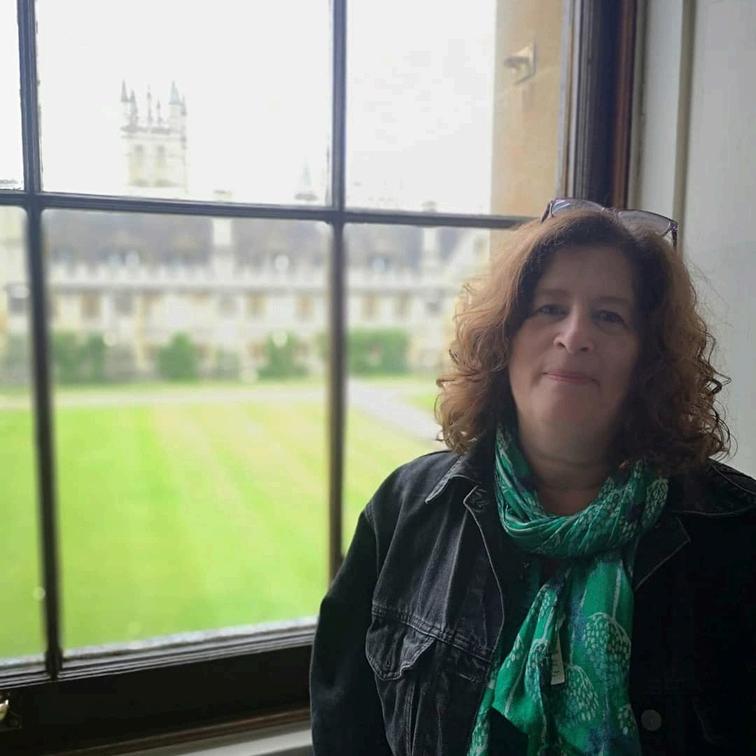
Dr Rosie Canning in Oxford
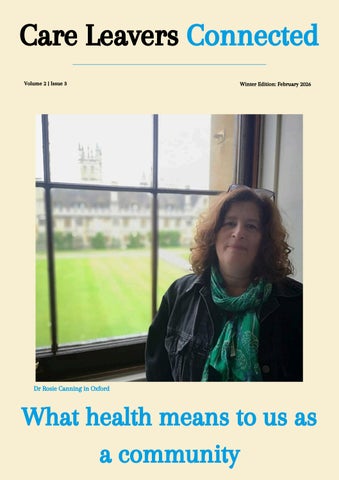
“The health impact of the care experience can last a life time”
Welcome to this first edition of Care Leavers Connected for 2026. In this issue we have a focus on the health of care leavers of all ages and carry a number of articles on what health means to care leavers as a community.
For many care leavers, childhood experiences can last a life time and simply do not disappear when a certain age is reached This is particularly true of health issues.
In this issue, we hear from care leaver Dr Rosie Canning about her research on the health of older care leavers and also Dr Jim Goddard, chair of the CLA, on the long-term health impact of care leavers who were abused in care in the 1980s
These health problems can stay with us
There has been lots of new research since 2000 into how difficult experiences in early life can produce physical as well as mental health problems later on in life These health problems can stay with us until we are able to recognise the cause of them and can then address them.
There are also some very practical heath matters that need attention For example, the regular dental checks have not always been provided for children when in care. The habit of not visiting the dentist can carry on into later life for some, especially when
If you are reading a hard copy of this magazine and need any of the links included, please contact connected@careleavers.com
finding a dentist or covering the cost can be difficult, which is why the CLA welcomes young people leaving care in England will receive free prescriptions, and dental and eye services up to their 25th birthday
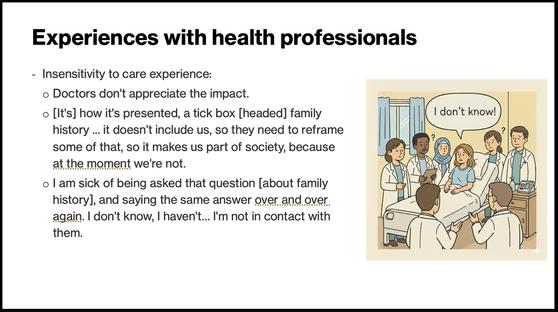
As adults, many care leavers have to face the question from a GP “is there any history of ‘ x ’ in your family medical history?”, to which the answer can be “I have n’t a clue”, where not knowing can really matter
There are also long-term impacts of trauma experienced by being in care. Recent research by the Nuffield Institute which you can find here, demonstrates that for some care leavers the health impact of the care experience is life long and life shortening
Care leavers may need to return to care when elderly
The question of those care leavers who need to return to institutional care as the end of their lives is growing in importance. The CLA has been working with AgeUK to encourage care homes for the elderly to think about asking if people have been in care so they can address the specific concerns they may have. The Australian Government has already addressed this and there is an excellent video about the issue here.
We hope you find this issue of interest. If you want to share your account of your health as an older care leaver then please get in touch at connected@careleavers.com


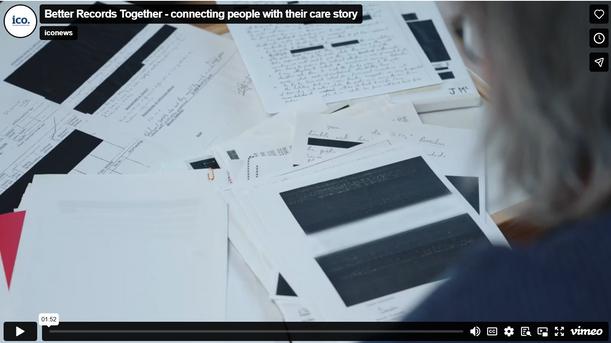
The Information Commissioner’s Office (ICO) released new Better Records Together standards aimed at finally improving how care records are handled and accessed A recent survey found:
• waits of up to 16 years
• 71% reported poor communication
• 59% received incomplete records
• and 87% were left with unanswered questions after reading them
These aren’t just “files” they are our identities, our childhoods, our life stories. The ICO is now calling for urgent action from local authorities Read more here.

The Government has launched a new site for care leavers. It covers most aspects of the care leaving experience, including foster or residential care, time in custody and young asylum seekers It does have a small amount of information for post-25 care leavers but unfortunately does not point older care leavers towards the CLA. Read more here.
A new package of measures announced by the Department of Health and Social Care means young people leaving care in England will receive free prescriptions as well as dental and eye services up to their 25th birthday. Also, there will be a pilot to trial paid internships for care leavers in the NHS and a guaranteed interview scheme for NHS roles.

We understand that some of the articles in this magazine are about sensitive issues. If you need any support please contact us on 0161 826 0214 or email connected@careleavers.com or on social media. If you need urgent support please contact the Samaritans on 116123
I was put into care along with my 2 sisters and 2 brothers by our mother who could not cope with not only the children but life itself as she was an alcoholic. When I was only 18 months old, my younger brother and I were put in a nursery until I reached 5 .
We then moved to a family children's home where our siblings were staying . We had some good times in that home and as the years passed my older siblings went back to live with my dad or were fostered out, by this time my mother had passed away.

My youngest brother and I were fostered out to a family but this did not work out for either of us, I was the first to be taken out of there and sent to another home, eventually my youngest brother also was moved to another home, it was the first time we had ever been apart.
reunited
After 12 months we were finally reunited back at the family children's home we had been before, life got a bit different from then as things that had happened during the 12 months we were apart which doesn't need to be aired, let's just say it was bad.
After a few more years we were fostered out again and this time it was successful and we still call them mum and dad. When I was 15 I decided to join the Army as a junior soldier and even though I did join up I was still under a care order until I was 18, that was the law then. I served for 17 years and was medically discharged By now I was married and had 3 young children, due to my last posting I lived off base as it was only 30 mins drive away.
When I left the Army it felt like a culture shock This was the first time since being born that I was truly alone in the big wide world. I had no dentist, no GP, I did not know how to go about getting one, I had to start paying expenses that I never knew existed, basic things I should have known were alien to me.
I struggled a lot with my feelings, was I a bad dad, bad husband ? Was it my fault? It felt like it was. I had gone from being in care to joining the army to then leaving the Army everything had been basically done for me , I did not know how to manage day to day finances at all, I felt alone and useless, some days I even considered killing myself as I thought that would be the easier option
There needs to be a system put in place for people leaving care that can help them transition into normal everyday life, simple things like day to day running of family finances, how to go about getting a GP or Dentist, and buying food. These may seem easy to other people but to care leaver they are hard and in most cases new to them.
Mark A Humphrey
Care Leavers Connected Magazine is produced by care leavers for care leavers. Please read through the magazine and give us feedback.
‘I don't think I've ever talked to anybody or met anybody who's been in care, or had anything to do with it, and today has just been so bloody inspiring.’
For many care leavers, the impact of being in care shapes their health, wellbeing, identity and relationships throughout their lives.
Yet older care-experienced people are rarely asked about these experiences, and their voices are often missing from research, policy and services. Rosie Canning, a care-experienced researcher, and Jonathan Taylor, a researcher based at the University of Oxford, set out to change this by asking older care experienced adults (50+) about their health and wellbeing concerns. The research brought together care-experienced people from across England to share their experiences in their own words.
Five focus groups were held with 29 care-experienced adults aged 50-89. Participants came from across England and had a wide range of care backgrounds, including residential children’s homes, foster care, kinship care, boarding schools and approved schools The project concluded with a workshop held at Worcester College, University of Oxford.
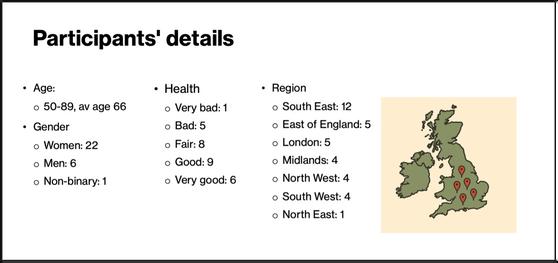
Participants’ varied health experiences showed clearly that older care leavers are not a single group with the same needs. Many spoke about how childhood experiences continue to affect their physical and
mental health decades later. People described living with chronic illnesses, addiction, anxiety and longterm mental distress Several linked these directly to trauma, abuse, instability and their time in care. Many people described the impact of not knowing their family medical history. Participants described the frustration and distress of repeatedly being asked about conditions that “ run in the family” For some, missing this information had serious consequences for both themselves and their children
Alongside these difficulties, participants displayed remarkable resilience Surviving care helped some develop determination, adaptability and independence. However, some admitted that these qualities could lead to them to display a ‘destructive independence’, avoiding doctors, delaying treatment
or trying to cope alone even when seriously unwell, because asking for help felt unsafe or pointless
Hospitals and care homes reminded many participants of childhood institutions Several said that the idea of going into residential care was one of their greatest fears For them, ageing was not just about health, but about control, safety and dignity.
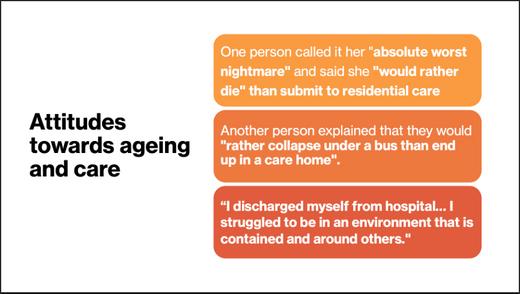
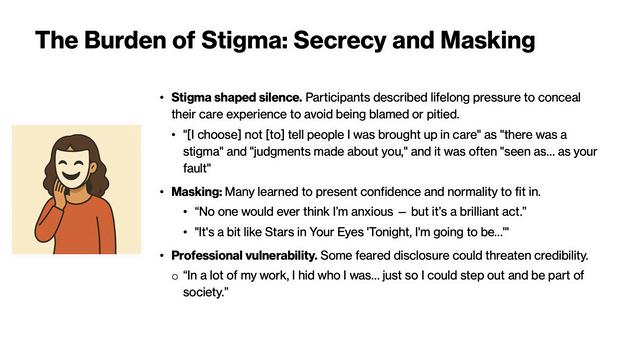
Stigma played a major role in people’s lives. Many participants said they had hidden their care experience for years, particularly in work settings, fearing judgement or blame To cope, people learned to mask how they were really feeling This silence took its toll, and some felt that not being believed or listened to had worsened their health over time.
Being able to talk openly especially with other careexperienced people was described as powerful and liberating. Participants described a variety of experiences with health and social care services Long waiting lists, short-term support and lack of follow-up were common frustrations.
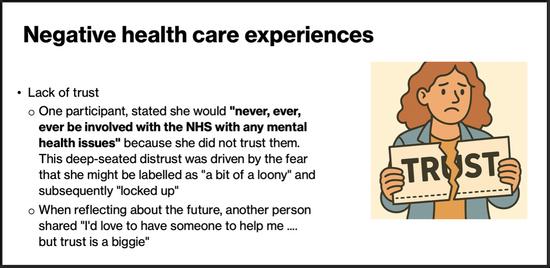
Some felt they were dismissed by professionals who did not understand the lifelong impact of care or the
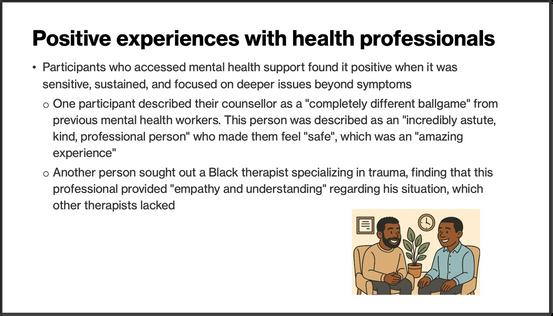
importance of trust. At the same time, people spoke warmly about professionals who listened, showed kindness and took them seriously Long-term, traumainformed therapy and community-based support were described as life-changing when available.
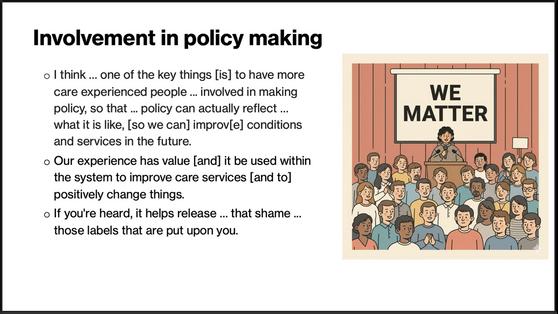
Participants were clear about what needs to change. The impact of care is lifelong, so support should be too Above all, they wanted to be seen, heard and valued as people whose experiences matter.
This research has been indebted to the incredible people who took part in the focus groups and attended the end of project event The project’s influence is perhaps most evident in this reflection from one of our participants:
“Today has just been an incredible experience, and I don't think I've ever talked to anybody or met anybody who's been in care, or had anything to do with it, and it's just been so bloody inspiring.”
For more information, please feel free to contact Rosie drrosiecanning@outlook.com or Jono jonathan.taylor@phc.ox.ac.uk
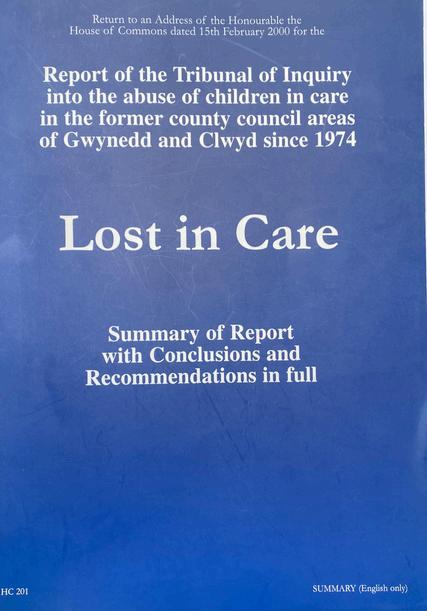
Older care leavers will recall the raft of inquiries in the 1990s about abuse within children’s homes in England and Wales. As a side effect, these inquiries also often uncovered abuse in foster care.
They mostly focussed on abuse from the 1970s to the mid-1990s In this article I focus on the health effects – mainly mental, but sometimes physical – some care leavers from that and other periods may be dealing with.
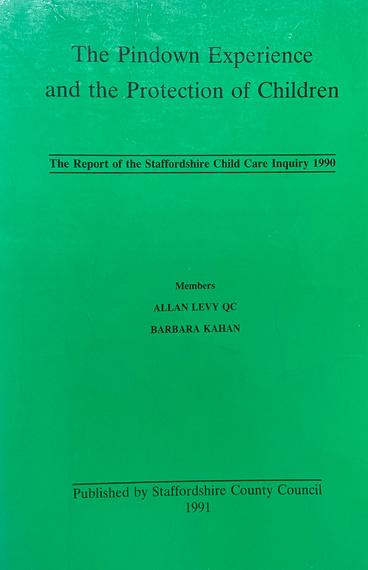
The best known inquiries from that period are those concerning Staffordshire, Leicestershire, North Wales and Islington, but there were many others For example, I recall receiving my own letter from Merseyside police inviting me to give evidence to their ‘Operation Care’ inquiry
These inquiries revealed widespread physical and sexual abuse, sometimes along with emotional abuse and neglect. The many hundreds (almost certainly thousands) of children in care who experienced such abuse are now in their 40s, 50s and 60s and the legacy of those experiences may continue to affect their lives and health
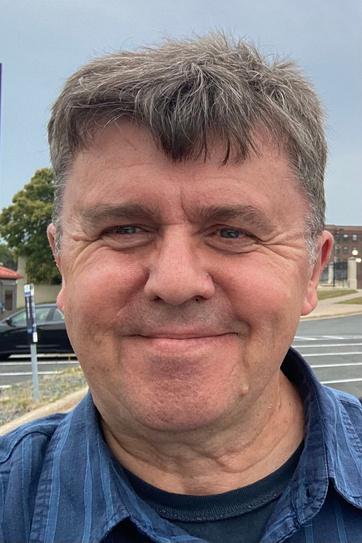
For example, one of those who experienced Staffordshire’s ‘Pindown’ experience of solitary confinement in the 1980s told the 1991 inquiry that the care system had “messed my life up ” (Staffordshire Report, p.111) and he was experienced several difficulties adjusting to adult life Another ‘Pindown’ victim had a serious drink problem by the time of the inquiry (p.115).
However, the long-term health effects related to growing up in care are not just related to abuse while in care. The CLA’s own research into the health and
wellbeing of care of care leavers of all ages, conducted in 2014-2017 (and which can be downloaded from our website) showed that care leavers often carry a large legacy of health effects from their childhoods.
One of them told us:
“I do believe that the temporary and often mobile nature of my time in care in different homes made me feel a little like a traveller with nothing permanent - which might be why I joined the Army My Army life was good, and while still very mobile, was relatively stable until I was married when things went down hill I never sought help in those years, as the Army at the time, regarded anyone who came forward as a ‘welfare case ’ which might have affected my career or promotion prospects. I can see in retrospect that this was a reaction to the nature of my childhood and time in care. ”
The best way to understand this is to consider the four major periods of trauma or potential trauma for a child in care:
1. Prior to entry into care: most children enter care due to abuse or neglect in their birth families.
2. On entry into care: the sudden and almost complete separation from family, friends, neighbourhood and other familiar things will be traumatic.
3 While in care: some children will experience abuse in care.
4. Leaving care: having to become independent at about the age of 18 carries huge risks that children with supportive birth families do not face The multiple problems many care leavers experience are well known
Hence it is no surprise that fellow care leavers I have spoken with routinely score highly when it comes to ‘Adverse Childhood Experiences’ (ACEs). These ACEs, which are various forms of abuse, neglect and family or household dysfunction – are strongly linked to poor adult health outcomes.
In the past decade, the long-term health problems facing adult care leavers have gained more recognition. For example, in 2021 research by Professor Amanda Sacker of University College London, which was funded by the Nuffield Foundation, shows that adults who were raised in care are 70% more likely to die prematurely than those who were not.
Indeed, the extra risk of premature death increased from 40% in 1971 to 360% in 2011. In short, everyone ’ s life expectancy has improved in this time but the gap in life expectancy between care leavers and the rest of the population has grown.
Abuse survivors, whether from the care system or outside it, often face barriers to accessing appropriate health and social care support. Many report feeling misunderstood by professionals and the prospect of repeatedly retelling traumatic experiences can deter them from seeking help.
Fortunately, there is now more awareness of these long-term issues and more organisations – such as NAPAC and The Survivors Trust – out there who offer routes to support.
There is also more legal advice available through organisation such as The Association of Child Abuse Lawyers The culture of silence and cover-up that aided the abuse that took place in the care system in the second half of the twentieth century has faded. It’s effects on the lives of many care leavers, however, are still with us.
Dr Jim Goddard

I recently had the privilege of being interviewed by National Prison Radio (NPR) about the importance of care leavers accessing their files whilst in custody, it was a conversation that felt both necessary and deeply personal.
For many care experienced people, their files hold pieces of their life story that might never been explained fully to them. When someone enters prison, it can bring up questions about identity, belonging and worth. We had conversations about how accessing files in custody can be an incredibly powerful step but also about the potential implications.
Launched in 20029, NPR was the world's first national radio station for people in prison, broadcasting directly into prisons in England and Wales 24 hours a day. The content is largely produced by serving prisoners who work in NPR studios in HMP Brixton, a men ' s prison in London, and HMP Styal, a women ' s prison just outside of Manchester.
“We Care”
'We Care' is a year long project focussing on supporting the roughly 25% of people in prison who have experience of the Care system Episodes will focus on practical information around rights and entitlements, inspirational stories from people who have lived experience of care and prison and signposting to organisations who can offer support both in prison and beyond the gates
Accessing files can be an incredibly powerful step. It can help people make sense of their past, understand decisions that might have been made for them, and potentially answer questions they may have carried

for years. In some cases, it can support emotional healing and self understanding
However, during the interview we also spoke honestly about the potential implications of accessing files in custody. These records may contain distressing or uncomfortable information about abuse, neglect, family separation or systemic failures. Without the right emotional support in place, reading this alone could be overwhelming and upsetting There is also the risk of re-triggering trauma in an environment that is already emotionally challenging
That’s why I discussed doing this work with care, preparation and the right support in place Care Leavers in prison need a trauma informed approach with direct access to counselling, advocacy and safe spaces to process the information they are reading. My hope is that conversations like this help highlight not only the importance of access to records, but the responsibility we all share in ensuring that the access is safe, supportive and ultimately at the right time for that person.
Toya Dunscombe
Do you want to share your account of you and your files? You can remain anonymous if you want to.
In July 2026, Care Leavers Connected will enter its third year of publication. This could not have been done without the support of the volunteers who make up the magazine’s editorial board alongside the Care Leavers Connected staff team who also play a role in ensuring the magazine comes out on schedule.
Members of the Editorial Board (EB) brings lots of things to the table - in particular their life experience. Some have been involved in publishing before, others not. The EB has members in their 20s to their 60s. The key skill needed is a willingness to collaborate on ideas and learn from each other.
The EB meets once a month online for one hour at a regular time. At present this is 12 noon on the first Tuesday of the month Each issue takes three meetings to produce. Month one discusses the theme of the next issues and we then ask for articles from the care leaver community Month two discusses how
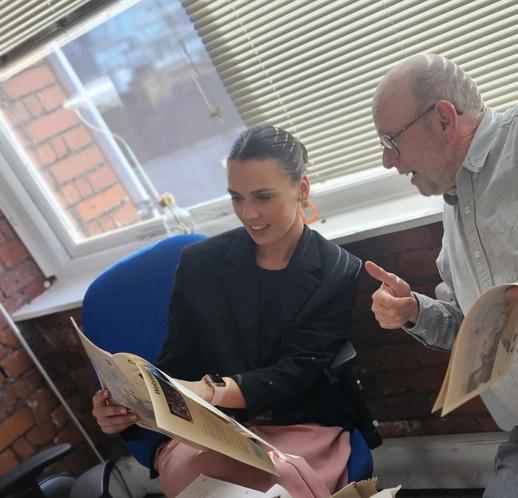
commissioning is going and fills any gaps. and has an initial brainstorm about future issues in the year ahead. Month three looks at the final content of the next issue just before publication and makes sure that everything ok to go just before publication and also discusses ideas the year ahead
Interested in getting involved? The send an email to conected@careleavers.com and we will get right back to you.
The Information Commissioner’s Office (ICO) has released new Better Records Together standards aimed at improving care record handling and access.
For too long, care experienced adults have faced huge delays, redactions and painful bureaucracy just to understand their own history. A recent survey found:
• waits of up to 16 years
• 71% reported poor communication
• 59% received incomplete records
• and 87% were left with unanswered questions after reading them.
The ICO is now calling for urgent action from local authorities, including:
• better record keeping from the moment a child
enters care
• compassionate, trauma informed processes
• and the possibility of enforcement if organisations fail to improve.
The standards come with guidance for professionals, advice for individuals and a national supervision pilot through 2025/26 This is a step in the right direction and something the Care Leavers Association have been campaigning on for years. We know access to records can be emotional and overwhelming While change won’t happen overnight, this new guidance recognises something care experienced people have been saying for decades: we deserve answers, respect and support when looking at our own lives.
Some of you may have watched Netflix’s latest Harlan Coben series ‘Runaway’ - a thriller about a missing daughter. After watching, we felt that the two care leavers had been portrayed as negatively and end up becoming murderers. These kind of portrayal's can reinforce the idea that care leavers are problematic, feeding into the stereotypes that many of us grew up with. We are working on challenging these stereotypes by pushing for more authentic representations of care leavers that reflect real stories, achievements and voices of care experienced people
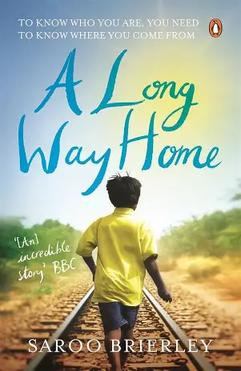

This is the miraculous story of Saroo Brierley, a young man who used Google Earth to rediscover his childhood life and home in an incredible journey from India to Australia and back again At only five years old, Saroo Brierley got lost on a train in India. Unable to read or write or recall the name of his hometown or even his own last name, he survived alone for weeks in Calcutta before being transferred to an agency and adopted by a couple in Australia
Despite his gratitude, Brierley always wondered about his origins. Eventually, with the advent of Google Earth, he had the opportunity to look for the needle in a haystack he once called home
Weaving a Web of Belonging (Lisa Cherry, 2025) explores how to foster a sense of belonging in children and young people, especially those facing trauma, inequity, and marginalization. Drawing from research, professional practice, and lived experiences, the book offers practical strategies to build traumainformed cultures and relational webs of care across services, schools, and communities.

One slurred line.
One safe hug.
Five bottles down, then one empty shrug.
Three hospital trips.
One brand-new dress.
One tidy room To hide the mess.
One cinema trip.
One pair of shoes.
One visit to the seaside, to avoid the blues.
One hit.
One slap.
One bruise she hides.
Nine more bottles then the sister guides.
One hospital trip.
Three broken, confused girls.
One visiting hour in a world that swirls.
One ready meal.
Three quiet smiles.
One mended heart, For a little while.
Nine bottles more.
One house on fire.
One more trip, then a family for hire.
Soon Nine bottles.
One slurred line.
One broken family.
One visiting hour.
One last breath, And a wilted flower.
One funeral.
One hundred cries.
Three girls, three lives,
one word: Goodbye.
Fostered is a haunting collection of poems charting the emotional landscape of foster care, trauma, displacement, and identity.

From loss and abandonment to reclamation and survival, these pages burn with honesty and healing. Through lyrical yet grounded verse, the author invites readers into the lived reality of belonging after being uprooted
Their writing explores themes of identity, healing, and transformation, often drawing from personal experience. Eli is also working on a memoir and a romance/fantasy novella, continuing to blend raw emotion with imaginative storytelling.
When not writing, they can be found tending to their garden or enjoying time with their husband and children
To find out more follow her on social media instagram and Facebook
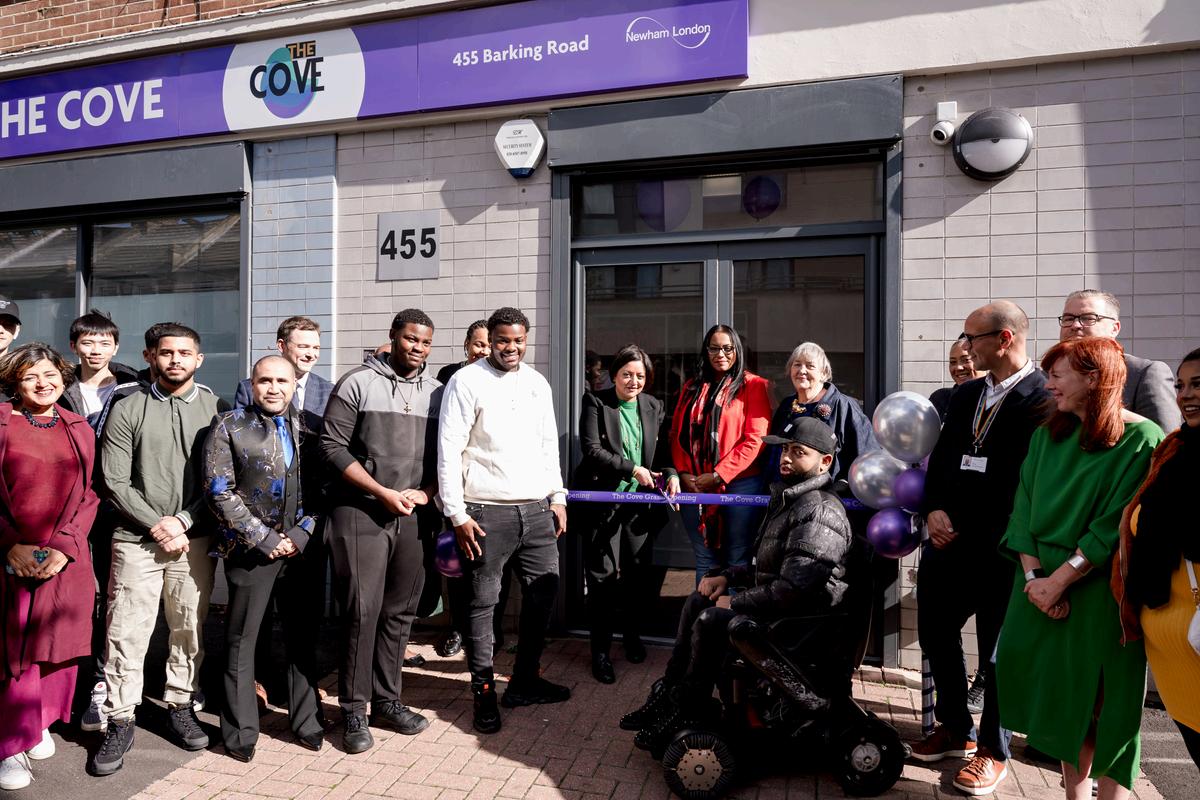
Open since 2022 The Cove is a communal meeting and work space in the London Borough of Newham for care leavers aged between 18 to 25 which provides an extensive range of activities and support.
The centre is a really good example of the provision of services for young people leaving care and also offers lessons for the kind of support that many care leavers, no matter what their age, might need
At the heart of the council funded project is an ethos of creating a non-judgemental space for any care leaver who needs support. There is a strong emphasis on the need for mental health support to respond the many stressful life experience that a care leaver may have had
Professional understanding gap
The project fully recognises what is described as a ‘professional understanding gap’, the lack of knowledge that many statutory services have with regards to the care leaver experience and how a care leaver community centre can address this gap, build a sense of community and peer support, alongside providing specific advice to individual care leavers

The Cove’s opening in 2022
A recent short film by North East London NHS and the Partnership for Young London features The Cove and has key messages that can be equally applied to older care leavers. You can see the film here
One of the care leavers in the film says “As a care leaver you are left to do things by yourself yet there is still trauma from the past.” This message can equally apply to some care leavers who find themselves on their own when starting a new job or going to university, or facing a stay in hospital without family support (a theme recently covered in the BBC drama Casualty) or, perhaps re-entering care as an older person who can no longer live alone.
AgeUK recently worked with the Care Leavers
Connected team to produce an article about the life long impact of being in care and then being of an age where a care leaver may be returning to institutional care in older adult care settings.
The Care Leavers Connected Project explained how older people who were in care as children can best be supported when returning to care in later life. You can read the article here
Phone: 0161 826 0214
Email: connected@careleavers.com
Address: The Care Leavers' Association 3rd Floor, Swan Buildings, 20 Swan Street, Manchester, M4 5JW
Join our next Care Leavers Connected Zoom will be on February 26 between 7-8pm. This is a drop in session for all care leavers of any age. th
Sign up here
Become a member of our EB
Editorial Board volunteers make a crucial contribution to every issue of this magazine. Interested in getting involved? There are more details on page 11 of this issue.
Are you finding it hard to keep up with the cost of calls and need data? The CLA’s "Keeping Care Leavers Connected", in collaboration with The Digital Inclusion Network. Get in touch.
Jim’s Zoom Group
Jim’s sessions are on every first Wednesday of the month between 8-10pm. They sometimes have a topic for discussion and sometimes we just talk about any topic that care leavers who turn up want to raise.
Sign up here
Tok
Following care leavers month, we have been sharing care experienced voices of all ages to raise awareness that care doesn’t stop at 25. If you would like to share your voice please get in touch.
Join our upcoming Life Skills Zoom series for care leavers, covering energy support with an Energy Mentor, housing issues, debt, and more to be announced. Keep an eye out for sign-up links in the CLA Bulletin and on our social media pages.
We are determined to ensure that care leaver issues are addressed by government. We want to make sure that care leavers have as good a life as possible. If you want to join us in campaignimg, then get in touch.