Workforce Issue
A special thank you to Skills for Care for their valuable contributions to this newsletter


A special thank you to Skills for Care for their valuable contributions to this newsletter

How the workforce strategy is driving rea; change PAGE 6
The Care Workforce Pathway PAGE 8-9
Providign dedicated support for registered managers PAGE 14-15
What Today’s Care Workforce Is Really Telling Us
PAGE 25
Overcoming AI Misuse in social care
PAGE 30
The dedicated professionals who work in social care are our biggest asset. Care providers have always known this, and Care England has, over many years, championed our workforce and advocated for a more coherent approach to training and development, as well as recognition and reward.
The challenge we have always faced is that our biggest customer, the central and local government, talks endlessly about improving pay and conditions, but refuses to allocate the necessary funds to social care to deliver this outcome.
The Government has now embarked not only on raising expectations but also on delivering legislation that will establish a fair pay agreement and enshrine a duty on employers to allow unions to contact the workforce. This piece of legislation, part of the Employment Rights Bill, will have significant financial implications for the care sector, and the Government expects all this to be delivered with an additional £500 million.
This is impossible. We already have a situation where the funding is totally inadequate, and we estimate a gap of approximately £4.5 billion between what is currently available and the fair cost of care. The sector is already reeling from the increases to employers' national insurance contributions, and we are all waiting in fear and anticipation of what the budget will hold.
One of the things that the Government is saying is that much of this money needed to fund these extra costs should be recouped from self-funders. For many years, self-funders have been paying the true cost of care, while local authorities have been accessing the same services for approximately 60% of their actual cost. Why should local authorities get care at a reduced cost? It is their responsibility to deliver the resources necessary to support citizens who cannot afford to pay for care themselves, but they are abusing their monopsony commissioning power to demand Care at unrealistic prices. it is interesting to note that the majority of large charities have completely exited the publicly funded market because they know that it is not sustainable. All this new legislation and the extra cost that it will be heaped on businesses will be the final straw for many, and I confidently predict we will see a reduction in capacity. This will initially be implemented in areas that are predominantly publicly funded, and the danger is that we will start to see care deserts, where access to care will be very difficult because the market will not be sustainable.
In some areas, local authorities are commissioning care for self-funders and charging them for this service, but not telling the care provider that this person is a selffunder accessing care at the local authority rate. This practice is not only immoral, but it will also undermine the sustainability of services. With all this new legislation and extra cost, we must demand transparency and an end to this practice.
When they were elected, the Government put an extra £30 billion into the NHS, which was intended to reduce waiting lists and provide the NHS with more financial security. The benefits of this additional funding for the NHS were short-lived, and yet again, the NHS is asking for more money while discussing winter pressures. If the Government had put £10 billion of that extra money into social care, it would’ve been transformational, and I’m quite confident that it would have reduced the burden on the NHS and given much better value for money.
The decision to reorganise the NHS, ICS, and local authorities simultaneously is likely to create enormous challenges, which I predict will result in time, energy, and money being spent on the reorganisation rather than on delivering outcomes for people.
The public sector does not understand that, during times of reorganisation, it must also focus on its primary functions and deliver for its citizens. All too often, public sector organisations suspend business as usual and devote all their energies to the reorganisation process; we should not allow them to do this. Over the years, we have seen the CQC, the NHS, government departments, and local authorities use reorganisation as an excuse for poor performance. In the real world, organisations such as X were told they had to reduce headcount by 40%, rebrand, and deal with the challenges of a new owner, all while maintaining their platform's uptime. They understood that
business as usual had to take priority, and reorganisation must be delivered alongside their services. This is a lesson the public sector needs to learn.
2025 has been a very tough year for the care sector, and sadly, I do not believe that 2026 will be any different. In light of this, there has never been a more important time for the care sector to stand together. I would urge every Care England member to recruit another so that our voice becomes stronger. We can amplify our messages and offer solutions to individual providers and, through our network of partnerships, deliver not only advocacy but savings to our members.
In tough times, we must celebrate our successes, and the care sector can take great pride in how we are transforming lives. I would like to wish you all a Happy Christmas and reassure you that Care England will continue to fight tenaciously for the interests of our members in the coming year, just as we have done in the past.
Professor Martin Green OBE Chief Executive: Care England
DH: Independent Sector Dementia Champion





Skills for Care is delighted to be joining forces with Care England for their final newsletter of the year.
2025 has been a busy and exciting year as ever for social care, with some really positive developments including the launch of the Fair Pay Agreement consultation; new role categories being added to the Care Workforce Pathway, and the one-year anniversary of the Workforce Strategy for Adult Social Care when we noted that 50% of the Strategy’s commitments and recommendations are either complete or in progress.
Skills for Care’s latest ‘State of the adult social care sector and workforce’ report also provided some good news for the sector, including a drop in vacancy rates and an increase in filled posts. We also found that social care has contributed £77.8 billion to the economy in 2024/25.
The report of course also highlighted ongoing challenges for the sector particularly around recruitment and retention, and highlighted why domestic recruitment as well as a focus on learning and development must continue to be a priority for the sector moving forward.
In Skills for Care’s contribution to this special edition of the Care England newsletter we’ll take a deeper dive into our latest data as well as looking into some of the important activity taking place across the sector this year, including the Care Workforce Pathway, the Strategy, the latest support for student and newly-registered nurses, and ongoing work around delegated healthcare activities.
We’re really pleased to be able to share these insights with the Care England audience, and you can find out more about all our work on our website.

Oonagh Smyth Chief Executive, Skills for Care
Skills for Care reflects on discussions about the Workforce Strategy for Adult Social Care in England and how it’s driving change.
At the Care Show 2025, a panel of sector leaders gathered to discuss how England’s adult social care workforce strategy is already making a difference and how care providers are at the heart of the change. The session, led by Sarah Gilbert who heads up the workforce strategy team, which is hosted by Skills for Care, brought together voices from policy, practice, and frontline care to explore their experience of what’s working, what’s possible, and what’s next.
If we want to ensure we have enough of the right people, with the right skills to provide the best possible care and support for the people who draw on care in the future, the panellists had a clear message - the workforce strategy isn’t just another policy document, it’s a shared blueprint for change.
Running over 15 years, there’s a recognition that transformation is about more than a set of recommendations. As Sarah Gilbert described, “It’s the first time the whole social care sector has come together to agree what the biggest challenges are, what the solutions might be, and who needs to do what.”
That sense of collective ownership is key. The strategy was co-produced with over 30 organisations reflecting the adult social care sector, and it’s designed to be implemented by the sector itself.
For care providers, this means the strategy is something to shape and use - not just read.
Practical progress: Dementia training, digital roles, and fair pay
Transformation is one of the three key themes in the strategy – the others being attract and retain, plus train.
Beverly Futtit, Director of Digital Transformation at the National Care Forum spoke about the new role of care technologist - a care and support professional who blends person-led care with digital tools to
improve outcomes. “Frontline staff are becoming technical experts by default, but it’s not being recognised.” she said.
The NCF is now running a three-year programme to formalise and support this role. For providers, this is a chance to focus on being person-led, recognise emerging skills and offer new career pathways that reflect the realities of modern care.
Dementia care is another area where the strategy will make a huge difference. Around 70% of adults living in older age residential care have dementia. Emily Hindle from Alzheimer’s Society highlighted the strategy’s recommendation that all care staff receive funded high-quality dementia training aligned with national standards. “You wouldn’t expect a midwife to deliver a baby without training - why should we expect care staff to deliver high-quality care without training in a complex condition like dementia?”
For providers, this is a clear opportunity to improve care quality and staff retention. Alzheimer’s Society research shows that well-trained staff are less likely to burn out and more likely to stay. Their report, Because We’re Human Too, outlines what good dementia training looks like - interactive, embedded, and supported by leadership
Meanwhile, Rachel Kelso from Homecare Voices pointed to the strategy’s modelling on fair pay, especially for homecare workers. “It was really positive to see the issue of unpaid gaps between visits explicitly addressed,” she said. “It acknowledges and addresses a really key issue, which is that a lot of us aren’t paid for the gaps between visits and that breaks down our true hourly rate of pay, sometimes to below the national minimum wage.”
This kind of modelling helps build the case for better funding and fairer contracts - and gives providers a framework to advocate for change.
So how can care providers get involved and start putting the strategy into practice?
1. Sign up as a Workforce Strategy Champion.
This is the easiest way to stay informed and connected. You’ll receive updates, resources, and opportunities to get involved in local and national initiatives. Visit ascworkforcestrategy.co.uk
2. Co-produce your response with your workforce.
Don’t try to implement the strategy alone. As Beverly Futtit advised, “Your workforce will have some of the answers you haven’t had time to think of.” Involving staff in shaping your approach can unlock new ideas and build buy-in.
3. Invest in meaningful training.
Emily Hindle stressed the importance of interactive, embedded training that’s supported by leadership. “There’s no point in training that’s a tick-box exercise. It’s got to be high quality.”
4. Recognise and support emerging roles.
Digital skills are increasingly part of care work. Providers can support staff by recognising these skills, offering training, and exploring new roles like care technologists. This can also help with recruitment and retention by offering clearer career progression.
5. Engage with policy consultations.
The Government’s consultation on the Fair Pay Agreement is open to the public. Providers can respond to questions on training and pay to help shape future policy.
6. Use data to drive decisions.
Join the 20,000+ care providers who are using the Adult Social Care Workforce Data Set (ASC-WDS) to help them understand trends in recruitment, retention, and training. Contributing to and using this data can help you benchmark your organisation and make evidence-based decisions.
Implementing the workforce strategy won’t be without hurdles. But the strategy offers more than ambition: it’s a practical tool with which to improve day-to-day care.
By working together - sharing insights, co-producing solutions, and amplifying frontline voices - we can build a stronger, more confident workforce. The strategy helps providers focus on what works: quality training, clearer career pathways, and harnessing transformation. It’s not just about the future - it’s also about making today’s care better. And when the sector pulls in the same direction, real change becomes not only possible, but achievable.
Find out more about the Workforce Strategy for Adult Social Care in England.

Learn more about the Care Workforce Pathway and how it aims to help sustain and grow the adult social care workforce.
The adult social care sector in England continues to grow, with an increasing demand for high-quality, person-centred care. However, the latest data from Skills for Care’s ‘State of the adult social care sector and workforce in England’ report highlights ongoing challenges in recruitment, retention, and workforce sustainability. A decrease in the number of qualifications held also highlights that capability, as well as capacity, must be a priority.
To meet these challenges, the sector needs to invest in its greatest asset, it’s people. A confident, welltrained workforce is essential to ensure that those who draw on care and support can maintain their quality of life, independence, and connection to the things that matter to them.
The Care Workforce Pathway is a comprehensive, universal career structure for adult social care developed by the Department of Health and Social Care and Skills for Care, alongside representatives from the sector and people who draw on care and support. It clearly defines what a career in care means and sets out the knowledge, skills, values, and behaviours required to work in different roles, from entry-level to leadership.
The Pathway aims to support workforce development, improve retention, and make the sector a more attractive place to work by providing clear routes for career development and progression.
A sector-wide framework for a sustainable workforce
The Pathway is designed to be flexible and inclusive and can be tailored to suit the workforce needs of all adult social care providers, regardless of size or service type.
It currently includes eight role categories, from new to care to registered manager, with additional role categories, such as nominated individual, activities coordinator, and care / digital technologist being developed. The role categories reflect the diversity of roles available within care and demonstrate that career progression can take many forms. Some people are keen to move into leadership or specialist practice, while others want to develop further within their current role. The Pathway fully supports this individual approach by providing clear development and progression routes, outlining the expectations for each role category as well as highlighting suitable training and development opportunities, including any relevant qualifications.
In 2024, 30 organisations were supported to adopt the Pathway. These Early Adopters reported a range of benefits, including support with workforce planning, career progression, and staff retention.
Skills for Care is now working with over 90 employers and ecosystem partners to adopt the Pathway. These organisations represent a workforce of over 250,000 people, from micro, small and medium care providers, to large national providers and care associations. Their insights are helping refine the Pathway to
ensure it meets the evolving needs of the sector.
“We are proud to have been among the first Early Adopters of the Care Workforce Pathway, a national framework to professionalise social care, create transparent career progression, and bring parity across sectors.”-Glassmoon Services
The Workforce Strategy for Adult Social Care in England has the development and rollout of the Pathway at the heart of its recommendations. It highlights its importance in attracting, retaining, and valuing those coming into the workforce. Crucially, the Pathway can play a significant part in ensuring adult social care has enough of the right people with the right skills to provide the best possible care and support for the people who draw on it.
The Pathway is a key component of the Government’s wider social care reforms to improve adult social care. Speaking in July 2025, Stephen Kinnock, Minister of State for Care said:
“The Care Workforce Pathway is the first ever universal career structure for adult social care and its rollout is a huge milestone for the sector.
“It provides guidance for progression and development for professionals across adult social care with the knowledge, skills, values, and behaviours that our carers need.
“This will upskill the workforce, boosting recruitment and retention in addition to the first ever Fair Pay Agreement for adult social care. This marks another welcome step towards our vision for a National Care Service that is fit for the future.”
Empowering care professionals to take ownership of their careers is central to the Pathway. Practical tools and resources that support the Pathway have been developed to enable care workers and line managers to identify and understand their strengths and motivations, and to consider how these attributes can advance their personal career goals or develop their teams. Similarly, it provides human resource professionals, operations managers, and learning and development teams with a structured and
standardised approach to workforce development.
“Introducing structured career development planning has given staff and managers the tools to support progression, retain talent, and ensure we continue providing high-quality care and support.” Brandon Trust
The Care Workforce Pathway recognises the professionalism of the adult social care workforce and provides a platform for lifelong careers in care. By investing in the development of care professionals and providing a shared vision for career progression, the Pathway supports a sustainable, skilled workforce capable of meeting the complex and changing care needs of our society.
Whether you’re an individual looking to grow your career, or an organisation seeking to strengthen your workforce, the Care Workforce Pathway can help.
Find out more at Skills for Care and Gov.UK
Take a deep dive into the latest social care workforce data, published in Skills for Care’s annual report.
In October 2025, Skills for Care published their latest ‘The state of the adult social care sector and workforce in England’ report. It provides comprehensive information about the adult social care sector, on topics including recruitment and retention, workforce demographics, pay, factors affecting staff turnover, and Care Quality Commission (CQC) ratings.
The latest report shows that the total number of posts in adult social care increased by 2.2% on the previous year, while the economic contribution of social care increased by 12.2% to reach £77.8 billion.
Other headlines from this year’s report include:
• The number of people working in adult social care was estimated at 1.5 million. They worked
at an estimated 19,000 organisations, delivering services in an estimated 42,000 establishments.
• As at 2024/25, there were 1.6 million filled posts in adult social care in England and there were 111,000 vacant posts.
• By 2040, based on growth of the population aged 65 and above, the sector may need 470,000 extra new posts (27% growth).
• The turnover rate of directly employed staff working in the adult social care sector was 23.1%, equivalent to approximately 335,000 leavers over the year. Many of those who leave their roles remain within the sector, as 53% of recruitment is from within adult social care.

• The proportion of male workers in the adult social care sector in 2024/25 stood at 22%, the highest on record.
• The proportion of staff in the ‘care worker and support worker’ group with a Level 2 or above qualification has decreased by 10 percentage points since 2018/19 (from 48% to 38%).
• The mean average age of a worker in adult social care was 44.0 and the proportion of staff aged 55 and over was 27%.
The report reinforces the importance of succession planning for registered managers. Around 32% of workers in registered manager filled posts were aged 55 and over, meaning they will be reaching retirement age in the next 15 years. Supporting deputy managers and others to be confident and capable to move into registered manager roles remains crucial to the stability and continuity of services.
New analysis of sick pay and pension contributions
For the first time, the report also includes figures on employer sick pay and pension contributions. It shows that as at March 2025, of those care providing establishments who responded to the particular questions:
• nearly two-fifths (38%) of employers (7,800) reported that they pay care workers more than Statutory Sick Pay if they cannot work because of illness
• over two-fifths (43%) of responding employers (6,800) reported that they contribute more than the minimum 3% to their care workers’ pensions.
Enhanced pension and sick pay are factors that contribute to a person’s decision to take or leave their job. This information is included within section nine of the report, which focuses on how workforce characteristics relate to workers’ propensity to leave their roles.
There are useful insights for adult social care employers to take from this chapter of the report. For example, it highlights that care workers with five positive employment factors in place are more likely to remain in post (14.4% turnover), compared to workers with no positive employment factors in place (42.2%). The five factors are:
• pay up to 30% below the local authority average
• guaranteed hours
• receiving training
• having a qualification relevant to social care
• working full-time.
The section of the report also looks at the correlation between the factors affecting CQC ratings. For example, care homes with more staff in post per bed received better CQC ratings on average than those with lower staffing ratios. Establishments with a registered manager with more experience in their role were also more likely to receive higher CQC ratings.
The Adult Social Care Workforce Data Set – more than a data collection service
Skills for Care is only able to create the insights in the report thanks to the data they collect anonymously through the Adult Social Care Workforce Data Set (ASC-WDS). It holds information on more than 700,000 staff in over 21,000 locations.
The ASC-WDS is more than just a data collection service. It’s a useful and free tool to help you as an adult social care employer. You can use it to benchmark your organisation to others on metrics including pay rates, staff turnover, and qualifications. The training and qualifications section allows you to store and keep track of your staff training, alerting you when a staff member is missing training or when training has expired or is about to expire.
An up-to-date account also means you’ll be eligible to claim funding for training through the Government’s Learning and Development Support Scheme (LDSS). Eligible adult social care employers in England can claim staff training costs from the LDSS, including for the Oliver McGowan Mandatory Training on Learning Disability and Autism. An eligibility checker is included as part of the ASC-WDS service to help you make sure you are meeting the criteria to claim money through the fund.
If you’re one of the care providers already taking the time to share your data, thank you. If you haven’t already created an account for your own service, why not get started today?
Read the full ‘The state of the adult social care sector and workforce in England’ 2025 report.
Skills for Care’s nursing leads discuss the importance of preceptorship and placements in nursing, and how Skills for Care is supporting this activity.
The state of the adult social care sector and workforce in England, 2025 report from Skills for Care provides useful insight into the nursing workforce within adult social care. We know that the vacancy rate has reduced to 6.7% which is an encouraging statistic. However, other statistics indicate that 60% of recruitment into posts comes from within adult social care itself, only 5% of the nursing workforce are new to social care having less than three years’ experience whilst 71% of the registered nurses working in the sector have 10 years’+ experience. This tells us that social care is currently not a destination of choice for those new to the sector or newlyregistered. The turnover rate of 32.8% also tells us that we need to do more to retain our nursing workforce to ensure continuity of care.
We know that new graduates seeking employment expect to be offered a preceptorship package upon entering the workforce, as identified within the recent Florence Nightingale Foundation preceptorship pulse check report. We also know that preceptorship, a structured period of support for newly-registered nursing professionals, has been closely linked to retention. How preceptorship achieves this is by giving newly-registered professionals the opportunity to settle in, adjust and successfully transition into their roles whether they are new graduates, returning to practice or internationally educated.
In social care preceptorship is offered by some care providers but not all and this was identified by Skills for Care as a gap which required support and funding to develop and improve retention amongst the nursing workforce. The development of preceptorship resources, workshops and community of practice supports a key recommendation within the Workforce Strategy for Adult Social Care in England
for employers to adopt preceptorship programmes.
Over the autumn this offer was rolled out commencing with a recorded introductory webinar supported by Wendy Fowler (Education Advisor) at the Nursing and Midwifery Council (NMC) giving attendees the opportunity to explore the Nursing and Midwifery Council Principles of Preceptorship. These are the guiding principles for organisations to adopt; designed to be flexible and to suit the needs of each organisation and setting making them adaptable for implementation in social care. The accompanying preceptorship resources provide organisations with the tools they need to implement a preceptorship policy and preceptorship programme.
Workshops for experienced nursing professionals who wish to act as preceptors or preceptorship leads for their organisation have been delivered with 100% of surveyed participants stating they found the workshops useful. In January a bi-monthly community of practice will commence for those leading and championing preceptorship in their organisation as Preceptorship Leads. This support to the nursing workforce is designed to ensure that newly-registered professionals are supported, welcomed and encouraged to stay in social care nursing. As one recent workshop attendee pointed out the preceptorship offer, for them, ‘is one of the greatest achievements since being in care platforms’.
Visit the Skills for Care website to explore the supporting resources.
In July 2025 Skills for Care funded by DHSC and in partnership with The Council of Deans for Health launched the first ever Strategy to enable social care placements for student nurses and nursing associates as part of nursing education programmes.
The development of the strategy had been a collaborative effort, bringing together key stakeholders to develop the recommendations and ensure they were representative, ambitious and achievable within the gift of social care, education and wider stakeholder provision.
Landing at a time when the Government were forging ahead with priorities shifting from treatment to prevention, analogue to digital and care closer to home and the launch of the 10 year plan for health which recommends every student nurse and nursing associate should have placements across the breadth of health and social care provision-a nod to our strategic ambition.
The strategy was enthusiastically received by both universities and care providers, marking a long-overdue recognition of the professional autonomy, complexity, and value inherent in social care nursing careers. Beyond addressing practice learning, the strategy also strengthens the nursing curriculum by ensuring that programme faculty possess the knowledge and experience needed to embed social care into education. This alignment supports the development of future graduates who are equipped to thrive across an integrated health and care landscape.
The strategy actively encourages universities to re-evaluate the traditional NHS-centric approach to nursing education and adopt a broader, personcentred model that reflects the full spectrum of care settings. When students are primarily socialised within the confines of NHS hospitals or community services, they may struggle to appreciate or engage with the wider health and social care landscape upon
graduation. This narrow educational focus contributes to challenges in graduate role placement and sector integration.
The strategy is a call to action for care providers, recognising the challenges in developing and sustaining practice learning environments, it makes recommendations to alleviate the challenges and set in progress positive experiences for students to experience a care sector that is rated by the Care Quality Commission 69% good or outstanding
Therefore, the strategy is a huge step gain in meeting the ambitions of our government and presents an opportunity for transformation. By embracing the richness of social care—supporting individuals with multiple and complex co-morbidities to live ‘gloriously ordinary lives’—we reaffirm a core nursing value: promoting health and wellbeing in every setting. This shift not only enhances the student experience but also strengthens the workforce across integrated care systems.
our
Our established nursing community focuses on sharing and celebrating the exceptional work being done by nurses working in social care. We offer a range of nursing resources from guidance, webinars, networking groups, events and newsletters to support employers and nurses in all areas from pre-registration to revalidation.
Visit our website to explore our resources
Sign up to our newsletter, network and forums.

Find out more about the varied support Skills for Care offers registered managers.
Registered managers sit at the centre of every high-quality care service. They shape culture, set standards, and ensure people receive safe and person-centred support. It’s a demanding role — and one that deserves dedicated support.
Skills for Care offers a wide range of resources designed specifically for registered and frontline managers to help them:
• build knowledge and confidence in their leadership role
• stay up-to-date with sector change and best practice
• develop the skills needed to lead teams and deliver excellent care
• connect with like-minded peers through networks, forums and events.
By investing in the development and wellbeing of registered managers, we strengthen services, empower teams, and improve outcomes for people who draw on care and support.
Skills for Care supports more than 130 local registered manager networks across England, offering safe and supportive spaces where managers can connect with peers, share challenges and strengthen their professional identity in their local area.
Being able to come together and talk openly about the realities of the role matters. In 2024–25, over 450 network meetings took place nationwide — and new attendees are always welcome.
Each meeting provides:
• peer support from others in similar roles
• opportunities to share knowledge and practical
• learning from guest speakers such as Care Quality Commission (CQC) inspectors, commissioners and integrated care system (ICS) representatives
Joining a local network helps managers feel supported, stay informed about sector developments and access a trusted forum to ask questions. Most importantly, managers take away ideas they can put straight into practice to improve care.
“Help to network with others and learn from other professionals which helps improve your own service.”
Fostina Darko, Registered Manager, Needs Matter Care
Our registered manager membership is designed to support and connect leaders across adult social care. Members gain access to exclusive resources and information, including a printed copy of the Social Care Manager’s Handbook and a monthly newsletter packed with practical guidance for the role.
Membership also opens the door to mentoring — either by training as a mentor or by receiving mentoring yourself. Taking part in mentoring, in either role, supports skill development, builds confidence and contributes to ongoing professional growth.
Through membership we help managers stay upto-date with sector developments, share ideas with peers, and strengthen best practice across services.
Our regular registered managers webinars are presented live to a virtual audience, and recordings are available on our website.
We have over 30 recorded webinars to watch
covering a wide range of topics, including artificial intelligence (AI), induction and positive workplace culture, delegated healthcare activities, effective supervision and leading effective teams.
• Managing a service: webinars that help you run your service effectively, including preparing for CQC assessment and support for new managers.
• Managing people: support with leadership and team development — including effective supervision, leading effective teams and succession planning.
• Recruitment and retention: learn strategies to strengthen both recruitment and retention within your service.
• Wellbeing: explore webinars on the importance of wellbeing — for yourself as a leader and for your team.
• Care topics: gain insight into a range of topics, such as supporting people to live healthier lives and involving people in care planning.
• Digital, data and technology: build your confidence in digital requirements in social care and learn how technology can support independence and improve outcomes through tech-enabled care.
Our popular podcast, The Care Exchange, is now in its fifth series and continues to celebrate, support and inspire registered managers in adult social care.
It is an opportunity for managers to share real-life experiences, practical tips and lessons learnt. The care exchange remains extremely popular with over 28,000 downloads. Previous guests have discussed the importance of feedback in CQC assessments, how to prepare for assessment and how to create a good recruitment journey, plus much more.
Find out more about our dedicated support for registered managers.

Hear about Skills for Care’s new #KeepLearning spotlight running in January and February.
This January and February, Skills for Care will launch a new campaign highlighting the importance of ongoing learning and development across the adult social care sector.
The campaign will highlight how investing in learning and development supports a sustainable, confident and skilled workforce, ensuring that people who draw on care and support receive the best possible service. It will also shine a light on the wide range of Skills for Care resources that can help employers and workers take the next step in their learning journey.
Learning and development is vital to securing the future of adult social care. When employers invest in training and qualifications, it helps staff feel valued, capable and motivated, all of which improves retention and builds a stronger, more resilient workforce. Data from ‘The state of the adult social care sector and workforce in England 2024’ report shows that workers who receive more training are less likely to leave their roles.
One of the campaign’s core themes will focus on the personal benefits of ongoing learning and development. Continuing to learn helps staff at all levels stay up-to-date with best practice, build confidence and stay open to opportunities for career progression. It also sets an example for others, creating a culture where learning is embedded as part of everyday practice.
Skills for Care will share examples of how workers and managers are using learning and development to enhance their skills and grow their careers. The campaign will also direct people to key resources including the Care Certificate, continuing professional development for regulated professionals, and qualifications such as the Level 2 Adult Social Care Certificate.
With an estimated 470,000 new posts needed by 2040 to meet increasing demand, supporting recruitment and retention is more important than ever. The campaign will highlight how learning and development plays a central role in making social care an attractive and rewarding career choice. By investing in staff capability and offering clear career progression, employers can help people feel happier and more confident in their roles and more likely to stay.
The campaign will also explore how national developments are shaping the direction of learning and development for the future. This includes the rollout of the Care Workforce Pathway, the first universal career structure for adult social care, and the Workforce Strategy for Adult Social Care. Together, these initiatives will help ensure that we have the right people with the right skills to deliver high-quality, person centred care.
Throughout the campaign, Skills for Care will share blogs, articles and case studies featuring practical advice for employers, learning providers and care professionals. By keeping learning at the heart of care, we can build a more capable, confident and sustainable workforce for the future.




Joanna Barton, National Workforce Delivery Lead, Skills for Care discusses what delegated healthcare activities can look like and the positive impact this approach can have.
In adult social care, collaborative care is more than a concept, it’s a practical approach to delivering high-quality support. As the sector faces increasing demand and workforce pressures, working together across roles and organisations has never been more important.
One way this is being achieved is through the safe and structured delegation of healthcare activities from regulated professionals to care and support workers or personal assistants.
What is delegated healthcare?
A delegated healthcare activity is an activity that a regulated healthcare professional, such as a nurse, nursing associate, occupational therapist or speech and language therapist, delegates to a care worker or personal assistant.
These activities might include supporting with medication, assisting with mobility, monitoring health indicators, or helping with nutrition and hydration. When done well, delegation strengthens the care team, improves continuity, and ensures that people receive timely, person-centred support.
What makes delegation work?
Delegated healthcare activities are most effective when they are grounded in the guiding principles that support safe, person-led care. The four key principles that underpin successful delegation:
Delegation must always begin with the individual receiving support. The activity should be tailored to their needs, preferences, and goals. Care workers, often the most consistent presence in someone’s life, can deliver delegated activities in a way that strengthens trust and continuity—provided the delegation is responsive to what matters most to the person.
Care workers must be supported to develop the skills and confidence needed to carry out delegated activities safely and effectively. This includes structured training, practical supervision, and opportunities for ongoing learning.
Regulated professionals play a key role in assessing competence and providing feedback. Learning should be continuous—not just at the point of delegation, but throughout the working relationship.
Delegation is not a one-off event—it requires regular oversight. Regulated professionals must monitor how delegated activities are being carried out and review them in partnership with care workers and the person receiving care.
This includes checking for changes in the person’s condition, ensuring the activity remains appropriate, and making adjustments where needed.
Delegation must be underpinned by clear governance. This includes written protocols, defined responsibilities, escalation routes, and documentation. Everyone involved should understand who is accountable, what is expected, and how decisions are made.
Strong governance supports collaboration between organisations—particularly between health and social care—by creating shared standards and expectations around delegated activities.
Across the UK, examples of successful delegation are emerging. In some areas, care workers are supporting with wound care, rehabilitation exercises, or health monitoring—activities that would previously have
required a regulated professional to be present.
At Skills for Care, we have just concluded our regional roadshow series on delegated healthcare activities, delivering six in-person events across England in September, followed by a national showcase at the Care Show in Birmingham. These sessions provided opportunities to explore delegation in practice, share real-world local examples, and gather insights from providers, regulated professionals, and people drawing on care and support.
Feedback from these events highlighted a strong appetite for practical guidance and peer learning. The conversations reinforced the importance of creating spaces where the sector can share experiences, discuss challenges, and co-produce solutions that work in local contexts.
Feedback from care workers highlighted that delegation can be empowering. It gives them a greater sense of purpose and recognition, and it opens up career development opportunities. For regulated professionals, delegation allows them to focus on complex decision-making while knowing that trusted colleagues are delivering day-to-day support.
For people receiving care, the impact can be lifechanging. As Rob Moriarty, who receives support from personal assistants, shared:
“This has completely transformed not only the way my care is delivered, but my whole life.”
—Rob Moriarty, via Skills for Care
Supporting implementation
As more areas explore delegation, the need for practical support is growing. Skills for Care is currently developing a series of short guides to delegated healthcare activities to support regulated professionals, care and support workers/ personal assistants, and people drawing on care and support. These guides aim to offer clear, accessible information on how to delegate safely and effectively, grounded in the principles outlined above. They are being developed in response to feedback from the sector, which highlighted the need for shorter, more focused resources that support implementation within increasingly timepressured environments.
Join the conversation
We offer a range of resources on delegation from guidance, webinars, networking groups and events, visit our website to explore our resources and find out more about our upcoming events:
Learning exchange: Exploring funding solutions
Tuesday 20 January 2026 | 10:30 – 12:00 | Online
An interactive session featuring insights from Integrated Care Boards (ICBs), local authorities, service providers, and people with lived experience. Includes breakout discussions and practical strategies to inform your work.
Find support in your area
Our locality managers work with adult social care providers at a local level, as well as a wide range of other partners within the local health and care systems. They can signpost you to information relevant to your needs, share best practice and can connect you with local groups, networks and events you may find useful.
Find your locality manager

Adult social care is one of the most diverse sectors in England, a strength that brings together a wealth of perspectives, experiences and insights. Yet, it’s not always the case that every voice is equally heard, respected or represented. This is where allyship becomes essential.
Allyship is about taking intentional, ongoing action to support and advocate for others. It’s not a label or a one-time gesture, but a continuous commitment to equity, inclusion and justice in the workplace. In social care, where relationships and trust are at the heart of what we do, allyship is a cornerstone of inclusive leadership.
Being an ally means standing alongside colleagues or communities who experience discrimination, exclusion or marginalisation, and using your influence to help challenge inequity.
As Symone Stuart, National Lead for Leadership Development at Skills for Care, puts it: “Allyship acknowledges that the fight against discrimination is the responsibility of everyone - you and me.”
This shared responsibility is vital in a sector where evidence still shows inequalities persist. For instance, Skills for Care’s Social Care Workforce Race Equality Standard (SC-WRES) report found that staff from Black, Asian or minority ethnic backgrounds were 45% less likely to be in senior management roles than their white colleagues. Similarly, research from Pride in Leadership found that over 70% of LGBTQ+ respondents in social care reported a lack of visible role models, with half experiencing uncomfortable or hostile environments.
These figures highlight why allyship cannot be left to chance, it must be actively practiced and embedded.
What allyship looks like in practice
Effective allyship in social care means:
• Supporting others: Speak up when you witness exclusion or discrimination. Be the voice that backs others when theirs is unheard.
• Listening to learn: Engage with different perspectives. Listen to understand, not to respond.
• Using your influence: Advocate for fair treatment and representation in decisions and policies.
• Committing to growth: Reflect on your own biases and take visible steps to create change.
These actions not only support marginalised groups, they benefit entire teams. When allyship is part of an organisation’s culture, people feel safe, valued and empowered to contribute fully. It builds trust, collaboration and stronger relationships across the workforce.
Allyship doesn’t have to start with grand gestures. You can begin small, for example, by connecting with curiosity (get to know a colleague’s story) or by practising present listening (ensuring all voices are heard in meetings). Over time, these small actions create meaningful impact.
For leaders and managers who want to deepen their understanding and build confidence, Skills for Care’s Building Allyship programme offers a practical, twoday learning experience led by inclusion expert Hári Sewell. The programme goes beyond awareness, providing tools and strategies to turn good intentions into real, sustained action.
Inclusion doesn’t happen by accident, it happens through allyship in action. Every one of us has a role to play in creating a culture where everyone feels they belong.
Learn more about allyship.
We stood by you as Towergate, now we’re standing by you as Everywhen
Our new name reflects exactly what we stand for: being here for you, “always” and “at all times” (which is the literal definition of Everywhen). While our name has changed, everything else stays the same. You’ll still be supported by the same team, delivering the same great service, just with the added benefit of being part of a business united behind a shared purpose.
What does it mean for
The world is evolving and so are we. Our new identity brings clarity to who we are and what we stand for: making the complex
simple, supporting our clients through change, and helping people feel confident in their cover, whatever comes their way. Whether we help you protect your business, lifestyle, health or hobbies, one thing is clear – giving you greater clarity of all we can offer under one name is key to giving you the best of us.
Find out more at our new website www.everywhen.co.uk.
What are the key legal risks for complex care providers under CQC regulation?

In the second in this series of blogs, Philippa Doyle, Head of Social Care at Hempsons, answers another of the most common questions providers ask when dealing with the CQC: What are the key legal risks for complex care providers under CQC regulation, especially when delivering care involving restrictive practices or managing people with high clinical needs?
Click here to read Philippa’s advice.
Sponsored by Hempsons, CMM has launched a new CQC resource page; a one-stop-shop for care providers’ regulatory needs. For breaking news, newly published guidance, informative blog posts, a monthly column from the regulator, advice on preparing for an inspection and more, click here.
Skills for Care updates on the new Quality Assured Care Learning Service and what it means for you.
High-quality learning and development is essential to building a skilled, confident and resilient adult social care workforce. To support this, the Department of Health and Social Care (DHSC) has launched the Quality Assured Care Learning Service (QACLS), which reviews and benchmarks the quality of training providers, courses and qualifications across the sector.
The service is designed to make sure that training and development is accessible, relevant and of outstanding quality, supporting both the needs of the workforce and the people who draw on care and support. By setting a clear standard for quality, the QACLS helps to strengthen confidence in training across the sector and ensures that investment in workforce development delivers the greatest possible impact.
The QACLS forms part of the Government’s wider programme of workforce reform, which also includes the Care Workforce Pathway, the new Level 2
Adult Social Care Certificate, and the Learning and Development Support Scheme (LDSS). Together, these initiatives aim to build a professional, well supported and skilled social care workforce.
Over time, the ambition is for all training and development identified or funded through the LDSS to be quality assured by the QACLS. This phased approach recognises the diversity of training provision in the sector and allows time for providers to meet the required quality standards.
Raising standards and improving confidence
The QACLS has been developed to set a clear benchmark for what good quality training looks like. Training providers applying for quality assurance must demonstrate that their courses meet nine
quality standards which focus on the design, delivery and impact of learning.
Successfully meeting the standards means that individual courses and qualifications can receive the Quality Assured Care Learning Mark, showing that they have met the required level of excellence. These approved courses are then added to a publicly available list of quality assured training and qualifications. This list helps employers and commissioners to make informed choices about where to invest in learning and development, directing them to trusted providers offering training that meets the needs of the workforce.
The QACLS is also helping to ensure that mandatory and recommended training across the sector meets a consistent level of quality. This includes the Oliver McGowan Mandatory Training on Learning Disability and Autism.
By embedding quality and accountability within training, the QACLS supports a stronger and more confident workforce, helping employers to invest in the right development opportunities for their teams.
Find out more
If you are a training provider interested in becoming quality assured, or an employer looking to access high quality funded learning, you can find full guidance and the latest list of approved courses on the Skills for Care website. The list is updated fortnightly to ensure employers and training providers have access to the most up to date information.
As part of a national legal firm with over 150 specialist health lawyers, we cover all aspects of health care related law and practice.
We have a long history of providing market-leading legal advice to care providers. Our large team of specialist and experienced care homes lawyers advise our regulated care business clients daily across wide-ranging areas including:
▪ Inquests and inquiries
▪ Safeguarding and investigations
▪ Employment and HR advice including immigration
▪ Refinancing and restructuring advice
▪ CQC issues and regulatory advice
▪ Commercial disputes and debt recovery

To find out more about the care services we can offer, contact Julia Appleton, Partner, at julia.appleton@weightmans.com
weightmans.com
As Benjamin Zephaniah reminded us, “People need people.” In an era dominated by conversations about AI, tech innovation, and change, this truth has never been more relevant. At the Outstanding Society (OS), our focus remains unwavering: delivering outstanding and compassionate care for the people we support in social care. That begins with nurturing a workforce that must feel respected, valued, and empowered. Every action we take must reflect this commitment. 2025 has been a year of momentum and meaningful engagement for us. From vibrant sector events and parliamentary receptions to the thought-provoking Care Show Learning Lounge and industry panels, the OS has continued to champion collaboration and excellence across the social care sector. These are some of our key takeaways from 2025:
The emergence of AI in social care is an exciting prospect—but one that demands caution. During our Care Show panel, AI developers echoed the phrase “walk slowly.” While technological solutions are advancing rapidly, they must earn trust and demonstrate real-world value before widespread adoption. For the OS, innovation will always be balanced with integrity and the human touch that defines outstanding care.
Our Cybersecurity Roundtable with headline partner Howden sparked lively debate and deep reflection, reminding us that safeguarding data is as critical as safeguarding dignity. Culture, too, remains a cornerstone of quality. As Steve Gruenert and Todd Whitaker famously said, “The culture of any organisation is shaped by the worst behaviour the leader is willing to tolerate.” At the OS, we strive to set the bar high—because excellence is not optional.
One of the year’s most memorable moments was attending Brighton and Manchester Pride alongside those we provide care to. These were days full of joy, inclusion, and solidarity-celebrations that will
be talked about for years to come. Our followup roundtable in Birmingham reinforced this commitment, amplifying voices from across the sector to create meaningful change for the rainbow family and beyond. And of course, we had the privilege of attending the beautiful Hindu wedding ceremony of our fellow director Sanjay to his husband Harry, set in the grounds of his former care home in Oxfordshire—unforgettable!
The OS continues to speak to everyone involved in social care, from frontline carers to CEOs. Through well-attended webinars with CQC and Skills for Care, representation at conferences hosted by Care England and the RCN, and judging at industry awards, we’ve taken every opportunity to share expertise and inspire improvement.
Our contribution extends to groundbreaking research, notably the VIVALDI project, where care home infection data is now flowing to researchers in ways that will shape future policy and practice. We’ve also supported regional Social Care Nursing Advisory Councils (SCNACs), ensuring that nursing voices remain central to sector development.
With CQC’s consultation on its future inspection plans underway and providers preparing for new systems in 2026, the OS’s role has never been more vital. In challenging economic and regulatory times, we want to stand as a beacon of collaboration, inspiration, and integrity—helping providers deliver their best for those who matter most.
Because at the heart of everything we do is a simple truth: People need people. And outstanding care starts with outstanding culture.
The OS is a Community Interest Company, free to all providers irrelevant of their rating. It is a platform to share and celebrate best practice, help others to improve and promote careers in Social Care. Please contact Sonia: info@theoutstandingsociety.co.uk for more information click here
Workforce pressures remain one of the defining issues shaping social care. Recruitment challenges, national employment reforms and rising demand continue to dominate discussion, yet these headline themes don’t always reflect the realities of those delivering care.
As part of new insight commissioned by Alsico in partnership with Care England, more than 400 care workers from across the UK shared their experiences. Care providers, including HC-One and Abbeyfield, also contributed organisational perspectives. Together, these voices offer a grounded view of what staff are facing — and what is already making a difference.
Care workers described roles with significant physical and emotional demands. Many reported an impact on mental wellbeing, while others highlighted practical obstacles that make daily work harder than it needs to be. These are the pressures felt on every shift: the tools available, the support provided, and the small adjustments that either help or hinder.
While structural pressures remain significant, both frontline staff and provider leaders agreed that practical, achievable improvements can make a meaningful difference right now. Organisations across the country are already introducing low-cost changes — refining shift patterns, responding more quickly to workplace adjustments, strengthening wellbeing initiatives and improving the design of everyday tasks. Within this, workers repeatedly told us that even something as ordinary as a uniform can shape how they feel and perform. Clothing that fits properly, moves with them during physical tasks and supports rather than restricts may sound minor, but staff were clear: these small details influence confidence, comfort and the ability to work effectively.
Charlotte Clarke, Managing Director at Alsico, reflected on these findings:
“The care sector has long been a priority for us at Alsico. Through our partnerships with care home organisations and ongoing conversations with teams across the country, we’ve seen firsthand both the dedication of the workforce and the pressures
they face. We commissioned this research to help decision-makers access clear, actionable insight. What remained clear throughout this project was the sector’s determination to improve working experiences for staff, often through small, practical changes that are highly achievable.”
As national workforce plans and employment reforms continue to evolve, organisational action remains essential. Staff emphasised that improvements to the basics — training, communication, equipment and the uniform worn every day — are not minor considerations. They shape wellbeing, professional identity and the quality of care.
Meaningful progress does not always depend on large-scale reform. Often, it begins with listening to the workforce and acting on practical, achievable steps that improve working life today.
The full research report — developed by Alsico in partnership with Care England — explores these themes in greater depth and offers practical recommendations for providers.
Read it here: https://www.alsico.com/uk/enhancingteam-support-in-uk-care-homes/

By Jayne Connery, Founder and Director, Care Campaign for the Vulnerable (CCFTV)
The strength of our care system lies not in policy or profit, but in people. Every day, across the UK, care staff turn up for long, demanding shifts to look after our most vulnerable. They are the ones who hold a frightened hand, who calm anxiety, who bring dignity and compassion to lives often forgotten -and yet, the care workforce continues to be stretched to breaking point.
Through my work at Care Campaign for the Vulnerable, I speak daily with health and social care students, care staff, managers and families who share the same concern - that our system leans heavily on goodwill, while too often overlooking the people who hold it together.
We see dedicated carers working 12-hour shifts, juggling agency work to make ends meet, and still giving everything they have to residents. Many feel undervalued, underpaid, and emotionally exhausted. It’s not just a workforce issue; it’s a wellbeing crisis.
CCFTV, believes the future of care depends on how we value those delivering it. Retention isn’t only about wages, though fair pay is vital. It’s about culture - the environment carers work in, and the respect they receive. When staff feel listened to, supported, and trusted, care quality improves. When they fear blame or dismissal for speaking up, everyone loses, most of all, the residents they care for.
There are shining examples of providers who understand this. They invest in training, nurture their teams, and build open cultures that encourage transparency. These are the homes where staff stay, where families trust, and where residents thrive. They remind us that care, when done well, changes lives — not just for those being cared for, but for those providing it.
Technology, when used ethically and with
consent, can also support this workforce. Choice-led safety monitoring, for instance, not only protects residents but also safeguards staff from false allegations and offers reassurance to families. It’s about partnership — people and innovation working side by side to create safer, more transparent environments.
We must shift the perception that care is “low-skilled.” It takes extraordinary emotional intelligence, resilience and professionalism to manage complex dementia, end-of-life care, and challenging behaviour. These workers are not unskilled; they are specialists in humanity.
The future of care depends on national recognition that the workforce is our foundation. Without them, there is no safety, no continuity, no compassion. We owe them more than thanks - we owe them proper pay, training, mental health support, and respect.
I’ve met many extraordinary carers some who remind me of those who looked after my own mum during her dementia journey. They are why I continue to fight for safer, fairer care. The workforce is the beating heart of this sector — and if we truly want to protect the vulnerable, we must first protect them.

Across the adult social care sector, providers are facing growing pressure to manage costs, reduce waste, and demonstrate their commitment to sustainability. Equipment purchases from profiling beds to pressure care mattresses often represent a major outlay, and with VAT adding an additional 20% to many purchases, margins can quickly tighten.
However, there are opportunities for care home and residential providers to reduce these costs significantly while also supporting environmental and social good.
A Sustainable Alternative to Buying
Grace Cares, an award-winning not-for-profit organisation, has alerted Care England to an opportunity it has been working on, to make care more sustainable by rescuing, refurbishing, and re-selling high-quality equipment that would otherwise go to landfill. The organisation partners with manufacturers to ensure all refurbished items are professionally tested, fitted with new covers where appropriate, and certified for safe re-use.
Because Grace Cares operates as a not-forprofit and is not VAT registered, care providers can currently save 20% VAT on purchases and thus offers meaningful savings at a time when budgets are under strain.
Example: Refurbished Hybrid Pressure Mattresses
One of the current opportunities includes a batch of refurbished Dyna-Form Mercury Advance Hybrid Mattresses designed for individuals at high risk of pressure damage. Each unit combines foam and dynamic air technology, allowing carers to use the mattress with or without a pump.
Originally retailing at around £800, the
refurbished models are available for £199 each complete with new covers and manufacturer sign-off. Further discounts are available on bulk orders. Compatible compressors are also available for £85. See the attached link Pressure Relief - Dyna-Form Mercury Advance Hybrid Mattress - Grace Cares
For care home providers supporting individuals with limited mobility or those transitioning from hospital to care home or home, refurbished hybrid mattresses like these can help improve comfort, reduce risk, and deliver cost-effective care, while supporting the sector’s broader sustainability goals.
Choosing refurbished equipment can help providers to:
• Save up to 80% compared to buying new
• Evidence sustainability for CQC and Care Inspectorate standards, with full carbon and social impact reporting
• Reduce waste and landfill, supporting national environmental targets
• Support community wellbeing, as every sale through Grace Cares funds projects for unpaid carers and older people
In addition to pressure care solutions, refurbished hospital beds, hoists, over-bed tables, and other care essentials are also available through the scheme which are all fully tested and certified.
Providers interested in accessing refurbished equipment or joining the Care Equipment Updates List can contact Grace Cares directly: 01543 730189 / hello@grace-cares.com www.grace-cares.com
As the UK’s social care sector grapples with workforce shortages, tightening regulations, and increasing complexity of care, one priority stands out above all others: building workforce capability. A resilient, confident, and wellsupported workforce is not only the foundation of safe, high-quality care, it is essential to the sustainability of the sector itself.
For over two decades, Altura Learning has been helping social care providers meet that challenge head-on. Specialising in high-quality, video-based training designed by sector experts and delivered through a multi award-winning learning management system (LMS), Altura Learning has become a trusted partner to care organisations looking to develop their people and enhance performance.

Its courses go beyond compliance, offering learning experiences that are authentic, accessible, and directly relevant to the
realities of care work. From dementia, safeguarding and medication management to leadership, communication, and understanding radicalisation, Altura’s catalogue supports the full spectrum of workforce needs, enabling providers to align education with both regulatory requirements and long-term strategic goals.

Crucially, Altura Learning’s content is grounded in real-world practice. By using video-based scenarios filmed in genuine care settings, the organisation ensures that learning feels relatable and immediately applicable. This approach fosters confidence and capability among staff, helping care teams translate knowledge into better care outcomes.
Partnership lies at the heart of Altura’s approach. The organisation collaborates with industry experts, care providers, and regulatory bodies to ensure that its content reflects the latest standards and sector priorities. This close

alignment means that providers can trust Altura to deliver training that prepares their workforce not only for today’s challenges but for the demands of tomorrow.
Today, more than 700 care organisations and 175,000 learners worldwide rely on Altura Learning’s platform, evidence of a growing movement towards professional development that delivers measurable impact rather than mere compliance.
This month, Altura Learning will launch two new courses designed to address one of the most critical aspects of workforce capability: building safe, supportive, and psychologically healthy workplace cultures.
The first, Understanding Whistleblower Protections in the Care Sector, empowers care workers to speak up when concerns arise, safely, confidently, and in accordance with the law. By highlighting legal protections and organisational responsibilities, the course promotes transparency and accountability, key pillars of a culture that prioritises quality and safety.
The second, Psychological Safety, explores how care leaders can identify psychosocial hazards, implement preventative strategies, and foster inclusive, mentally healthy workplaces. As the sector faces ongoing challenges around stress, burnout, and retention, the course provides practical tools to help organisations strengthen wellbeing, resilience, and trust across teams.
Together, these modules demonstrate Altura Learning’s ongoing commitment to building capability through culture, not just compliance. In doing so, they reflect a growing recognition across UK social care that developing people, and empowering them to thrive, is central to the future of high-quality care.
To find out more about Altura Learning courses, visit alturalearning.co.uk

From note-taking tools to chat bots, AI is everywhere. While many care organisations are seeing brilliant results, with huge efficiency gains reported, this powerful technology also comes with risk. We must be careful not to create new challenges in the pursuit of solving old ones. In this article, we take a look at the key risks, and how you can avoid introducing them into your organisation.
We would recommend against using generic AI tools that haven’t been designed for social care, as they don’t understand the nuances of the role. These tools often censor key information from a case note like swear words or mentions of sexual abuse. This is critical information for social workers and care professionals to include within reports, so omitting this could have devastating consequences. Organisations with big technical engineering teams might be able to customise off-the-shelf tools, but we'd usually recommend buying from a reputable partner instead.
Handling sensitive data in social care requires the highest standards. If you enter confidential client information into a standard chatbot, you are opening yourself up to a serious privacy breach. It’s important to look for tools with “privacy by design” principles, including:
A commitment not to use data to train any AI models
• Security credentials, including ISO27001 and Cyber Essentials
• Full encryption on all data
• The ability to set your own data retention policy
• A provider with a strong track record in the sector
Organisational chaos and unexpected overheads
Establishing clear policies around AI usage is

wise. Otherwise, employees may download unvetted, disparate AI tools. Aside from privacy concerns, this can lead to chaotic working practices.
When choosing an AI tool, ask the provider what training they offer and whether they have a dedicated support team. AI tools are new for everybody, so you could end up with a big overhead training your staff to get the most out of them. This can be solved by choosing a provider who offers this level of support already.
While AI may be a powerful assistant, it cannot replace professional judgement. AI generated case notes should always be considered a “first draft” rather than a final copy. We don’t recommend directly inputting notes into a case management system without being checked first. A professional must always review, edit, and sign off all documentation. A lot of generic tools don’t have in-built editing features that allow practitioners to do this easily, so mistakes are more likely to happen.
The good news is that when used ethically, AI can be a game-changer in the care sector, tackling admin loads, reducing wait lists and improving the quality of care. This is something we will explore in our next blog, where we look at the benefit of AI tools that are custom-built for social care, like Beam’s Magic Notes.
For more information, please contact Alex Leonard from Magic Notes on alex.l@beam. org or 07907 826492.
By Abbey Milne, Social Care Lead at Sona
As we near the end of 2025, Social Care providers continue to face unprecedented challenges in managing and retaining their workforce. The pressures of rising costs, tighter regulation, and persistently high turnover are already reshaping how the sector thinks about staffing. And with new employment legislation on the horizon for 2027, the time to future-proof workforce strategies is now.
The Employment Rights Bill will bring significant shifts around predictable scheduling, zero-hours contracts, and flexible working. These changes are designed to improve conditions for employees, but they also bring operational complexity, particularly in a sector that depends on agility to meet fluctuating care needs.
Rather than viewing these changes as burdens, leading providers are treating them as a catalyst to rethink workforce management from the ground up. The organisations that thrive will be those that combine compliance with creativity and embrace technology as a strategic enabler.
Take scheduling, for example. Predictable rotas and stable contracts are set to become the new standard, but many providers still rely on manual, reactive rostering. This not only leaves them exposed to penalties and last-minute costs but also fuels employee dissatisfaction. Digitising rotas allows teams to plan ahead, reduce errors and gives staff greater visibility and control over their working lives, a critical factor in retention. One provider with a team of over 3000 using Sona’s platform, uncovered approx £1.3M in payroll savings within the first 4 months, simply by gaining transparency into their time tracking processes.
At a time when 41% of workers are still on zero-hours contracts and vacancy rates remain nearly triple that of the wider economy, improv-
ing job stability and satisfaction isn’t just good ethics, it’s good business.
Workforce management systems can also bridge the gap between structure and flexibility. Tools like shift-swapping and on-demand overtime booking ensure providers can respond quickly to changing needs without breaching new scheduling laws. And when algorithms help match shifts to both availability and skills, care quality improves while management time is freed up to focus on people, not paperwork.
The Skills for Care Workforce Strategy rightly places retention, development and job quality at the heart of sector reform. Technology won’t fix everything, but it can significantly reduce admin, surface insights to drive better decisions and create working environments where people feel empowered rather than exhausted.
The next 12 months will be critical. Providers who act now, adopting proactive, tech-enabled staffing practices, won’t just be ready for 2027’s regulations. They’ll be better positioned to attract and retain great people, balance costs and deliver consistent, high-quality care.
The future of workforce management in Social Care is structured, strategic and digital. And with the right tools, it’s entirely within reach.
To learn more please get in touch - click here.

At Nilaqua, we believe that clean air and clean bodies go hand-in-hand. While our products promote hygiene without water, we’re equally committed to reducing our environmental footprint because every action against pollution counts.
Air Pollution: A National Emergency
• Air pollution is the largest environmental threat to public health in the UK:
• Globally, 9 out of 10 people breathe air below WHO standards, and 7 million people die each year as a result.
• Increases the risk of respiratory disease, heart conditions and even dementia
• Vulnerable groups like children and the elderly being at most risk
Top 5 Sources of Air Pollution
1. Burning Fossil Fuels - Power generation & heating
2. Industrial Emissions - Manufacturing & incineration
3. Transportation - Vehicle emissions, especially diesel
4. Agriculture - Ammonia & methane from livestock/ fertilisers
5. Household Pollution - Wood/biomass burning indoors
Spotlight: Industrial Emissions in UK Healthcare
Clinical waste incineration is a hidden contribution:
• 156,000 tonnes of clinical waste annually in England
• £32 million spent on incineration
• Equal to 400 jumbo jets in weight
• Often burned, releasing toxic chemicals and greenhouse gases
The NHS Net Zero Plan sets ambitious goals:
• 50% reduction in carbon from clinical waste by 2026
• 80% reduction by 2028
• Net Zero direct emissions by 2040, indirect by 2045
With waste forecast to rise by 3% each year, urgent action is needed.
If Incineration Is Inevitable: Choose Wisely Burning Plastic
• Releases toxic chemicals (dioxins, furans, PCBs● Produces greenhouse gases
• Contributes to smog and microplastic pollution
Burning Cardboard
• Less toxic than plastic
• Lower CO2 emissions
• No microplastics
• Compostable or recyclable

Nilaqua’s Biodegradable Alternative
To reduce impact before products reach the incinerator, Nilaqua’s 100% biodegradable large dry wipes IN a PLASTIC FREE OUTER are made from sustainably sourced wood pulp. They are:
• Super thick (50 GSM) and ultra-absorbent, so you use up to 50% fewer per application
• Packaged in biodegradable FSC-certified boxes
• Zero plastic, zero waste, and fully compostable
• Aligned with upcoming UK legislation and NHS sustainability goals
By choosing biodegradable wood pulp instead of a plastic outer, we’re reducing the environmental and health impact before even reaching the incinerator.
Bottom line? If you have to burn something, cardboard is far safer than plastic - for humans and the planet.
Did you know? Many products labelled as biodegradable are only around 50% biodegradablewhereas Nilaqua is completely plastic-free.
Nilaqua’s Approach to Cleaner Choices
Sustainability is built into everything we do. We prioritise:
• Compostable, FSC-certified packaging
• Plastic-free materials wherever possible
• Local Sourcing to reduce emissions
• Supporting better purchasing decisions across healthcare and beyond
Solutions That Make a Difference
• Use cleaner energy sources
• Make smarter purchasing choices
• Choose recyclable and compostable packaging
• Avoid plastic incineration wherever possible
Final Thought
Air pollution is the UK’s biggest environmental threat. But with innovation, better choices and a shared commitment to sustainability, we can protect both human health and the planet.
The UK care sector continues to face one of its greatest challenges, a stretched and shrinking workforce. With more than 130,000 vacancies across adult social care, staff are under increasing pressure to deliver safe, responsive care despite limited time and resources. The result is a workforce that is often reactive, overstretched, and forced to choose between monitoring residents and meeting immediate care needs.
At Earzz, we believe technology should lighten that load, not add to it. Our AI-powered acoustic monitoring platform is designed to give carers back their time, focus, and peace of mind by helping them anticipate residents’ needs before incidents occur.
Unlike traditional fall detection or nurse call systems, Earzz does not wait for a crisis to happen. Instead, it recognises key sounds of concern, such as movement noise as a resident begins to get out of bed, coughing, or distress vocalisations; and sends early alerts to carers. This means teams can respond proactively, preventing falls and other incidents before they occur. By analysing changes in residents’ behavioural patterns, Earzz also provides actionable insights into wellbeing and care needs. For example, an increase in nighttime restlessness or coughing can indicate underlying health changes, enabling carers to act early and plan interventions before conditions escalate.
The impact on the workforce has been significant.
In recent deployments, homes using Earzz have reported:
• Over 80% reduction in falls across monitored rooms.
• Up to 25x faster carer response times.
• Hours of staff time saved daily, allowing teams to focus on meaningful, face-to-face care.
In one Norfolk-based group, the implementation of Earzz has not only reduced hospital admissions but has also improved staff morale and retention. Carers report feeling more confident in their ability to deliver safe, high-quality care, knowing they will be alerted to issues promptly without having to conduct frequent, disruptive night checks. Managers, meanwhile, gain access to valuable data that helps them allocate
resources more efficiently and demonstrate care quality to regulators and families.
Crucially, Earzz was built with privacy and empathy at its core. The patented system does not record or store audio, ensuring full compliance with privacy standards while maintaining residents’ dignity. Its simple installation and easy-to-use dashboard mean it integrates seamlessly into daily workflows without increasing administrative burden.
As staffing shortages continue to challenge care providers, it’s clear that the answer isn’t just more people, it’s smarter ways to support the people we already have. Earzz offers a tangible, proven way to do just that: reducing the strain on care teams while improving outcomes for residents.
By bridging technology and compassion, Earzz is helping care providers move from reactive firefighting to proactive, data-led care, creating a safer, calmer, and more sustainable environment for everyone.

Incontinence affects millions of individuals across the UK, yet it remains a condition often managed in silence—particularly in professional settings. We understand the physical and emotional challenges that continence issues can present, especially in the workplace. With the right strategies, products, and mindset, it is entirely possible to maintain comfort, discretion, and productivity throughout your working day.
It is always important to seek professional medical help if you are experiencing incontinence for advice on product usage and prevention,
Practical Strategies for Managing Incontinence at Work
1. Choose the Right Continence Products
Selecting high-quality, discreet continence products is essential. Modern options for both men and women offer excellent absorbency, odour control, and skin protection. Wearing the correct product can significantly reduce anxiety and help you feel secure and confident.
2. Maintain Healthy Hydration
It may seem counterintuitive, but reducing fluid intake can worsen symptoms. Concentrated urine irritates the bladder and increases urgency. Aim to drink water regularly throughout the day and limit bladder stimulants such as fizzy and acidic drinks.
3. Prepare an Emergency Kit
Even with reliable products, having a discreet emergency kit can provide peace of mind. Include spare continence products, cleansing wipes, and a change of clothing. Store it in a locker, desk drawer, or handbag for easy access.
4. Consider Strategic Seating
If possible, choose a workstation near the restroom or with a clear path to it. This allows for discreet and timely access when needed, reducing stress and improving your sense of control.
5. Dress for Confidence
Opt for dark or patterned clothing, which can help conceal any potential leaks or product outlines. Well-chosen attire can boost your confidence and reduce self-consciousness.
6. Schedule Regular Toilet Breaks
Establishing a routine for bathroom visits can help prevent accidents. Setting reminders or alarms on your phone or computer can support a consistent schedule, especially during busy workdays.
7. Strengthen Your Pelvic Floor
Pelvic floor exercises (also known as Kegel exercises) are beneficial for both men and women. Practicing them daily can improve bladder control and reduce symptoms over time. Consider consulting a pelvic health physiotherapist for tailored guidance.
8. Manage Stress and Anxiety
Stress can exacerbate incontinence symptoms. Incorporate mindfulness techniques such as deep breathing, short walks, or guided meditation into your day. Taking regular breaks and prioritising mental wellbeing is crucial.
9. Communicate with Your Employer
While it may feel uncomfortable, discussing your needs with your employer or HR department can lead to meaningful adjustments. This might include access to appropriate disposal bins, flexible break times, or seating arrangements. Employers have a duty to support health-related needs with discretion and respect.
Final Thoughts
Living with incontinence does not mean compromising your professional life. With thoughtful planning, the right products, and supportive workplace practices, you can maintain your dignity, comfort, and productivity. If you’re unsure where to start, speak with a continence nurse or healthcare provider for personalised advice.
For discreet, high-performance continence products, visit www.id-direct.com
Staffing shortages across the care sector are placing unprecedented pressure on frontline teams. With fewer staff available, maintaining resident safety becomes increasingly difficult, especially when it comes to preventing falls. Every incident not only compromises wellbeing but also adds hours of reactive work for carers, increasing stress and fatigue. In today’s environment, the question is clear: how can technology help bridge the gap?
Resident safety is the foundation of quality care yet falls remain one of the most common adverse events in care homes and hospitals. Each fall can lead to serious injury, prolonged recovery, and emotional distress for patients and families. As a result, preventing these incidents is critical for both wellbeing as well as maintaining trust in care standards.
From a logistical standpoint, every fall also triggers a cascade of operational challenges. Responding often requires multiple staff members, pulling resources away from other residents and disrupting planned care routines. The follow-up, incident reporting, assessments, additional monitoring, all add further strain, and in an environment where staff shortages and burnout are rising, this dual impact on safety and workforce sustainability is simply unsustainable.
For care providers, the challenge is clear: how do we maintain patient safety without adding to the workload of an already overburdened workforce?
Patient safety is non-negotiable, yet with workforce shortages and rising care demands, staff cannot be everywhere at once. This is where technology can play a supportive role, not as a substitute for human care, but as an extension of it.
SafeSense® 3 is not a replacement for human care; rather, it complements it. Think of it as the ‘eyes in the back of the head’ that every care team wishes they had. By providing real-time
alerts, it reduces the need for constant physical checks, freeing up valuable nursing time for direct, meaningful interactions with patients. This proactive support enhances safety while easing operational strain, allowing staff to focus on care rather than crisis.
Unlike traditional monitoring systems, SafeSense® 3 is fully integrated into the bed design, offering a discreet and reliable solution without adding complexity to workflows. Alerts can be tailored to individual risk profiles, ensuring targeted support where it’s needed most.
The result? Enhanced patient safety and reduced emotional and physical burden on caregivers.
Preventing falls isn’t just about resident safety, it’s about protecting staff and preserving resources. Every avoided incident means fewer emergency interventions, less strain on care teams, and more time for meaningful engagement with residents. Combined with ergonomic features such as height adjustment and person centered mobilisation aids, WissnerBosserhoff beds create a safer, smarter environment for both residents and caregivers.
For further information and support on how SafeSense® 3 can help your team manage workload and maintain quality care under pressure, visit https://www.wi-bo.com/en-WI/

Across the care sector, providers continue to face deepening pressures in rising workforce costs, increasing reliance on agency and bank staff and growing expectations around transparency, compliance and audit readiness. Yet one of the greatest operational challenges often lies in the most fundamental workforce process of all - reliably tracking who worked, when, where and for how long.
In many care homes, Time & Attendance (T&A) still relies on manual sign-in sheets, siloed systems or outdated and expensive hardware. While these methods may feel familiar, they can create inefficiencies and risks. Illegible handwriting, forgotten signatures and retrospective adjustments can lead to inaccurate records, disputes with suppliers and errors in payroll or invoicing. For managers already stretched thin, time spent resolving discrepancies or chasing missing data is time taken away from residents and frontline teams.
This becomes more complex when care homes depend on a flexible workforce mix. Agency shifts, short-notice bookings and variable hours mean records must be both real-time and reliable. Without robust T&A data, the true cost of care can be obscured, compliance checks become reactive rather than preventative and financial accuracy is harder to guarantee.
Digitisation offers a transformative opportunity to bring efficiency to a traditionally manual process. Modern T&A systems allow staff to clock in and out digitally, removing ambiguity and reducing the risk of human error. This shift not only improves the accuracy of timekeeping but also strengthens governance.
For care homes, the benefits are tangible:
Accurate monitoring and real-time visibility
Managers can see exactly who is on site at any given moment, supporting safe staffing, preparing for inspections and ensuring that ratios align with clinical need and regulatory expectations. Having reliable data at your

fingertips improves roster planning and helps identify patterns such as regular lateness, early departures or frequent short-notice cover.
Digitised T&A means timesheets are generated automatically from verified time logs. This reduces disputes with agencies, ensures that homes are only paying for the hours actually worked and significantly decreases administrative burden. For finance and procurement teams, this level of accuracy supports tighter cost control and faster, more transparent reconciliation.
Stronger compliance for agency and bank workers
Digital T&A provides clean, auditable records that align with frameworks and CQC expectations. It creates a traceable link between who worked and their compliance status, ensuring that homes always have an accurate audit trail for every shift.
a T&A technology partner
While digitisation can feel like a significant shift, the right solution makes it simple and scalable. Venta® is Neuven’ s flexible time and attendance software that seamlessly integrates with your own mobile devices - providing real-time T&A capture, automated timesheets, robust compliance integration and clear workforce reporting without the need for costly hardware.
For more information on how Neuven can help your care organisation to streamline T&A management: Phone: 07944 571 962
Email: ian.roth@neuven.co.uk / www.neuven. co.uk
When was the last time you completed a full audit of your waste management services?
Care homes in the UK produce a diverse range of waste streams; from Hazardous and Clinical Waste to General Waste, Food and Recyclables often leaving residents and staff unsure of proper disposal methods and encountering issues such as contamination and unnecessary charges. With legislation such as Simpler Recycling and the Care Quality Commission considering environmental assessments it has never been more important for care homes to consider their own waste management processes.
This is why Veolia is offering expert guidance to every Care England member with a comprehensive onsite free waste audit.
Waste audits can identify valuable areas for improvement that drive down costs, guarantee compliance, reduce your carbon impact, increase your recycling rates and show your employees and residents that sustainability and responsible operations are important to your business.
As a Care England member, we want to work collaboratively with you to develop sustainable and efficient waste management solutions, tailored to your care home, ultimately enhancing your environmental performance and creating a better future for all.
Our free waste audit process:
1. Site Visit & Assessment
A Veolia representative visits your site, to evaluate your current waste setup, checking if waste streams are properly segregated and compliant with regulations.
2. Identify Opportunities
We'll spot chances to improve recycling, reduce costs, and introduce innovative waste strategies tailored to your organisation's needs.
3. Review Your Setup
We'll examine your internal bins to ensure they're practical and easy for both staff and residents to use, considering your space and daily operations. We'll

also speak with your team to understand any specific waste management challenges.
4. Receive Your Bespoke Action Plan
You'll get a detailed proposal with clear recommendations for improvement, including how to enhance staff engagement and training around waste management. The complimentary, no-obligation proposal will outline our service costs, enabling you to evaluate whether you're maximising value for your investment and identify potential immediate savings. On average we can save new customers up 20%.
The result? A compliant, cost-effective waste system that works for your entire care home team.
Additionally, we'll provide a complimentary, noobligation proposal outlining our service costs, enabling you to evaluate whether you're maximising value for your investment and identify potential immediate savings. On average, for new customers, Veolia can help you save up to 20%.
Conducting an audit provides invaluable benefits; identifying inefficiencies and cost-saving opportunities, ensuring regulatory compliance, reducing environmental impact through increased recycling and reduced carbon impact, improving operational processes and supporting your sustainability goals and environmental stewardship.
To book in your free waste audit or to kick start a conversation with us, contact us using the button below:

As part of the Alzheimer’s Society’s Dementia Action Week, Boots recently launched a nationwide initiative to spark conversation and rekindle memories for those affected by dementia.
As the UK’s leading health and beauty retailer, Boots created over 1,000 multi-sensory memory boxes which have been distributed to care homes and communities across the UK.
The initiative follows research by Professor Victoria Tischler and colleagues from the Universities of Surrey, West London and Nottingham that supports the connection between smell, handling familiar objects and memory,1 conducted using the Boots Memory Boxes.
In many people with dementia, handling familiar objects that combine distinctive smells, and attractive designs can provide wellbeing benefits including enhanced mood, social inclusion and memory retrieval. Simple prompts like familiar smells from a person’s past can stimulate recall and bring people into the present moment.
The Boots Memory Boxes are filled with items carefully selected by the Boots Archive team and include familiar smells and sounds to trigger

memories. For example, popular toiletries and soaps can remind them of a loved one and cough medicine or bath salts can help them remember times they looked after themselves or others. The boxes will also feature items with familiar sounds, like the click an old powder compact, or camera.
1 D’Andrea, Dening and Tischler (2022) Object Handling for People With Dementia: A Scoping Review and the Development of Intervention Guidance | Innovation in Aging | Oxford Academic
Further details can be found at:
Treasured Items information: Treasured items from Boots can help rekindle memories for those with dementia
Treasured Items video: https://m.youtube.com/ watch?v=E--CPM5xmR8
So what happens when that trust doesn’t land early on? Ultimately, if you can’t show your value upfront, someone else will. Families swipe left. They bounce off the website. They opt for another provider whose online presence looks more transparent, even if the care itself isn’t any better.




2 Whole Celeriac
1 Onion, sliced
4 Garlic Cloves, chopped
2L Milk
50ml Truffle Oil
Salt & Pepper
1 In a pan sweat down the onion and garlic together with a pinch of salt and pepper. Cook for 5 minutes or until the onion has become soft and translucent
2 Peel the celeriac and slice as finely as possible, add to the onions and cook for approximately 5 minutes.
3 Add the milk and bring to a simmer, cook until the celeriac is soft then add the truffle oil and blend the mix.
4. A great garnish would be parmesan croutons to boost the calories Cut bread into small pieces and bake to crisp up then add grated parmesan at the end.

Creed Foodservice are sharing a monthly seasonal soup recipe showcasing British produce To be in with a chance of winning a Creed cookbook, tag us both in your recreation of the recipe on social media!

The Government is consulting on the establishment of an Adult Social Care Negotiating Body for England, seeking views on how this new body could be set up to create fair pay agreements and ensure both workers’ and employers’ voices are represented. This consultation, open until 16 January 2026, will shape the future of pay and conditions in the sector.
A fair pay framework for adult social care has been a longstanding Labour Party goal.
This consultation builds on the Employment Rights Bill (likely to become an Act soon) which outlines this framework and provides the necessary powers to make secondary legislation to fill in the detail. This consultation is about the body which will operate in England. The Bill also allows for similar bodies in Wales and Scotland. Regulations are set to come into force in October 2026, with negotiations beginning the following autumn and the first fair pay agreement anticipated by April 2028. Funding commitments
Significant public investment in adult social care will be required. To balance improved pay with taxpayer costs, the consultation proposes a “cost envelope” to set the maximum funding available to councils for increased costs from the fair pay agreement. While the exact amount is not specified, £500 million has been earmarked for improving pay and conditions - a sum equating to about £500 per directly employed adult care worker, based on 2023/2024 data from the King’s Fund.
The consultation covers six main areas:
1. Establishment and membership: The proposed body would be an advisory non-departmental public body, with equal representation for workers and employers. Local authorities are expected to play a “clear role”.
2. Negotiation process: Negotiations would be triggered by specific criteria, with a suggested six-month negotiation period and six months for implementation.
3. Coverage and remit: Views are sought on which workers should be included (excluding self-employed, potentially including agency and bank staff) and what matters should be negotiated, such as pay, conditions, and possibly training. There is also consideration of whether workers covered by other frameworks (NHS, Local Authority staff) should be included.
4. Dispute resolution: The consultation invites comments on what constitutes a dispute, resolution processes, and involved parties.
5. Implementation: Details the process for implementing agreements, including review by the Secretary of State for affordability and ratification by Parliament. Guidance topics are also open for feedback.
6. Enforcement: Once ratified, pay awards will be incorporated into care workers’ contracts and enforced similarly to the National Minimum Wage.
The consultation recognises that providers and commissioners will need time, support, and guidance before the first fair pay agreement. Initial ambitions are expected to be limited, but the long-term impact will depend on future funding settlements and reforms to individual care cost options. If established correctly, the new body could become a strong advocate for the sector’s funding and other needs.
For further information and support, contact employment partner, Rebecca Pallot.

By Kirsty Simmonds,
The adult social care sector in England is facing profound workforce pressures, with tens of thousands of vacancies across roles. Many providers report recruitment as a significant challenge, with a number fearing they cannot sustain current service levels. The drivers of this crisis are multifaceted: low pay and poor employment conditions, high turnover, limited career pathways, and wider labour market challenges.
These pressures matter not just for providers, but for the people who rely on care. Staff shortages undermine service continuity, increase costs through agency staffing, and threaten the quality of care.
In this context, Connect2AdultCare, an award-winning training provider, offers a practical solution. Its staff are experts drawn from the adult care sector, bringing real-world experience into every programme. The organisation delivers practical, tailored training that helps providers grow confident teams, raise care standards, and attract and retain talent. It offers apprenticeships and short courses ranging from foundational Level 2 through Level 5 leadership programmes, alongside short modules such as first aid, infection control, and self-management. Skills and Confidence Building
A key challenge for care providers is that newly recruited or less experienced staff often feel underprepared, while clients expect high standards. Connect2AdultCare’s practical training builds confidence and capability across all levels, from entry-level roles to leadership positions. By improving competence, providers can enhance job satisfaction, reduce turnover, and limit reliance on external staffing.
High turnover in social care is often linked to the lack of clear career pathways. Connect2AdultCare addresses this through structured apprenticeship ladders—from Level 2 Adult Care Worker to Level 5 Leader in Adult Care. This gives staff tangible milestones and providers a route to grow talent internally, reducing constant recruitment pressures.
Every care setting is different, from residential and domiciliary services to specialist care. Connect2AdultCare adapts programmes to match the unique demands of each provider, ensuring staff are
well-equipped to perform their roles effectively. This tailored approach reduces mismatch, burnout, and turnover.
Rising workforce costs, including agency staffing and turnover, put financial pressure on providers. By providing a single, sustainable source of skills and a network of trainers with sector experience, Connect2AdultCare helps organisations develop and retain talent internally. This reduces dependence on costly external recruitment and enhances workforce stability.

While workforce shortages and retention challenges remain systemic, training and development are powerful levers that providers can control. Connect2AdultCare offers a practical pathway to invest in people, foster a culture of career progression, and build resilient, confident teams.
As demand grows with an ageing population, solutions like this will become increasingly essential—not just for compliance, but for the long-term sustainability of care services. Providers that proactively invest in their workforce will be better positioned to thrive.
CTA For more information call 0800 954 2803, email info@connect2care.net or visit https://connect2care. net/adult-care/
At our recent OneAdvanced Social Care Summit, the workforce theme was front and centre, echoing what providers and care teams experience daily. It’s clear: the sector is under immense pressure, with staffing shortages, retention issues, and wellbeing concerns making it harder than ever to deliver the level of care our communities rely on. However, the summit also brought hope, showing how better tools and targeted support can help address these challenges head-on.
The headlines are stark. Our Care Trends Report 2025 found that 97% of providers struggle with recruitment and 98% face serious retention challenges. The Care Workers Charity presentation delved deeper into the day-today reality for care employees: whilst 77% are satisfied with their training, nearly 40% have faced or witnessed physical violence at work, and 42% have experienced harassment or bullying. Mental wellbeing findings were equally striking. Nearly half (47.5%) of staff reported experiencing burnout, yet only 9.36% of those who burned out actually received paid time off. Yet an impressive 87% believe the work they do makes a difference.
Financial pressures are adding to these burdens. Over 72% of respondents said they don’t feel financially secure, and 41% report giving additional unpaid hours each week to their organisation. More than half have had to access some form of financial support, and 22.86% have relied on a food bank—many times higher than the national average.
Amidst these realities, it’s clear that investment in the workforce is an investment in care quality. As Karim Nanji, Owner of South Care Homes, captures: “The jewel in our crown is always the care staff.” Ensuring care teams are skilled and supported is at the heart of excellent outcomes—and a responsibility that can’t wait. While support for the sector requires a
multifaced approach, a key player in this must be technology. Sector-focused solutions are designed to empower both providers and their people. Directly addressing staffing frustrations through automated scheduling and seamless payroll remove admin headaches and support both job satisfaction and wellbeing.
Training and ongoing development enableevery staff member to focus on best practice, drive continuous improvement, and handle complex situations confidently. And of course with this clarity, it helps foster safer workplaces, with clear guidance to reduce risk, and supports long-term professional growth.
Beyond processes, technology gives leaders visibility of real-day-to-day pressures, from shift gaps to resource availability. This data helps organisations proactively support staff wellbeing—whether that’s adjusting workloads, planning wellbeing initiatives, or highlighting where more support is needed, including mental and financial health resources.
The message from our Summit is as relevant as it is urgent: workforce challenges require joined-up solutions. By making it easier to recruit, retain, and support care workers through technology, we can help providers build skilled, motivated, and resilient teams ready to deliver the best for those in their care. The future of social care depends on giving our greatest asset – our people – the support and tools they need to thrive.

Every act of care begins with a person. Behind each meaningful moment stands a care worker, a nurse, a leader or a support colleague whose confidence and compassion shape the daily lives of people living with dementia.
Across the dementia care community, workforce pressures are widely felt. But at the heart of every challenge is a simple truth: great dementia care grows from people who feel prepared, supported, and valued. No one arrives with all the skills, understanding, or emotional resilience that this work asks of them. These are nurtured over time, through meaningful induction, ongoing learning, and a culture that cares for staff as much as they care for others.
What Teams Tell Us They Need
Dementia care is deeply human work. It calls for knowledge, patience, empathy, and courage. Staff consistently tell us they want to feel more confident to understand the person behind the dementia, to respond calmly during moments of distress, and to communicate in ways that offer comfort rather than correction. They want time to learn, space to reflect, and reassurance that they’re not alone in the emotional weight of the role.
When teams feel supported, something shifts. Care slows down. People connect more deeply. A sense of calm settles into the home, and people living with dementia feel safer, understood, and more loved.
Change the Experience of Care
Induction is often a team member’s first glimpse into the values of a home. A strong induction introduces tasks, but more importantly, welcomes someone into a shared purpose. It helps them understand how dementia affects communication, how emotions might be expressed, and how connection can be created even when words fade.
Training deepens this understanding. Through real scenarios, shared learning and reflective discussions, teams begin to shift from “What do I need to do?” to “How can I truly connect?”. It builds confidence, emotional intelligence, and the ability to respond wisely in moments of uncertainty.
Nurture is a quiet, steady thread that runs through the NaDCAS Framework, ensuring that those who care are also cared for. A listening leader, a space to pause after a difficult moment, a culture where emotional wellbeing matters: these are the foundations that help staff stay resilient, compassionate, and grounded.
Homes that focus on this feel different. Teams communicate more clearly. Distress is met with gentleness. Small moments of connection become everyday practice. People living with dementia experience care that is calmer, kinder, and deeply attuned.
The NaDCAS Framework for Exceptional Dementia Care places Team Induction, Training and Nurture as one of its central pillars because it shapes every other aspect of care. Our approach helps providers deepen their culture of learning, strengthen emotional resilience, and create teams who feel steady and proud in their roles.
To explore how NaDCAS can help strengthen your workforce, contact Claire@ dementiaaccreditation.org or visit www. nadcas.org to register your interest in 2026 accreditation.
By Cheryl Jones, Head of Brand and Marketing, CareHomeLife
Anyone involved in running a care home will be all too familiar with ongoing workforce issues - from recruitment difficulties and high staff turnover to burnout, sickness, and problems with retention. These challenges are closely tied to how supported people feel at work, shaped by the organisation’s culture, leadership, and workload.
There are so many reasons why it makes good sense for care home leaders to encourage good health and wellbeing in their organisation. The CQC increasingly looks at staff wellbeing because it has a direct impact on the quality of care. On the receiving end of a carer’s disposition are the residents themselves, who are inevitably affected by a person’s demeanour. An individual with a healthy mind in a healthy body is far more likely to be positive, patient, and present as a caregiver, with the energy needed to perform tasks effectively.
Supporting wellbeing in the workplace can take many forms. There’s much more to it than placing a fruit bowl in the staffroom. Constant exposure to illness, death, and human suffering can, and does, take its toll on a person’s mental and physical health and bouncebackability. They don’t simply ‘leave it at the door’ at the end of a shift. The body always keeps the score as advancing science tells us how trauma literally reshapes both body and brain, so, it’s essential to offer psychological support. The emotional intensity of the work means that emotional safety and structured support are just as important as PPE. Without meaningful interventions that prioritise wellbeing, these pressures inevitably lead to high staff turnover, sickness absence, presenteeism and lower job satisfaction.
There is no substitute for professional intervention in a mental health crisis but there are measures that care homes can adopt to protect and support staff.
Micro breaks and recovery rituals
Create quiet, restorative spaces for short re-sets, encouraging moments of decompression and simple breathing exercises.

At CareHomeLife we have six colleagues accredited with Qualsafe Level 3 Award in Mental Health First Aid in the Workplace with Optimise Workplace Wellbeing. They are first point of contact for colleagues who feel overwhelmed, there to listen and signpost if a member of the team is struggling, normalising helpseeking. Consider training suitable employees to be first-responders.
Simple but effective physical wellbeing support Hydration stations.
Sleep health resources, especially for shift workers.
Physical strain is a major contributor to musculoskeletal issues and long-term sickness. Access to physiotherapy or osteopathy support and training can prevent injuries that commonly lead to long-term absence.
Access to strength training exercises to improve resilience to physical tasks. Many free, accessible resources are available online, including those offered by Joe Wicks.
These measures help the body manage stress more effectively.
By embedding these approaches, care homes can create healthier, happier, and more resilient teams.
Request your free copies of our health and wellbeing magazine CareHomeLifestyle by messaging marketing@carehomelife.co.uk
As the cold weather sets in, health and social care services across the UK are bracing for familiar winter pressures: a surge in emergency demand, bed shortages, staff illness, and increasing strain across both acute and social care services.
These seasonal challenges don’t just strain the system – they raise critical questions about service user safety, staffing, and system resilience.
At Care 4 Quality from WorkNest, we’re supporting providers through this intense period by offering guidance on preparation, compliance, and continuous improvement – especially as the CQC’s inspection approach evolves under its new single assessment framework.
Here are six proactive steps all providers can take to stay compliant in the winter months:
1. Staffing plans: Build in flexibility for higherthan-usual absence rates, including access to bank or agency staff, cross-training where appropriate, and contingency rotas to maintain safe staffing levels.
2. Escalation protocols: Ensure staff know what to do when services become overwhelmed, with clear communication routes, defined escalation thresholds, and well-rehearsed procedures.
3. Effective discharge planning: Work closely with ICS partners, local authorities, and community teams to support timely, safe discharge and reduce avoidable delays, helping free up hospital beds and maintain flow.
4. Real-time audit: Implement regular spot checks or digital monitoring to identify emerging risks early – from infection outbreaks to staffing shortfalls – and take swift corrective action to safeguard service users.
5. Documentation: Keep clear, up-to-date records of your winter planning, decisionmaking, risk assessments, and quality assurance activities to demonstrate compliance and readiness during inspections.
6. Business continuity: Ensure robust business continuity plans are in place, tested, and understood by staff to prevent any harm to service users from a disruption in service.
Remember, the CQC will be watching closely this winter – and so will the public. For care providers, winter is an opportunity to show resilience, compassion, and leadership.
At Care 4 Quality, we’re here to help you rise to the challenge through tools, support, and expertise – ensuring you don’t just meet but exceed regulatory expectations.
Will you be inspection-ready this winter? Don’t wait for the CQC to come knocking – get ahead now. Book a compliance review or CQCstyle audit today and start building a stronger, more resilient service.
Contact the Care 4 Quality by WorkNest team by calling 08083 037 629 or emailing enquiries@worknest.com, quoting Care England.
For families, the decision to place a loved one in residential care is among the most difficult they will ever make. Trust is everything. Awards play a vital role in building that trust, offering reassurance that a home is not only safe and compliant but excels in quality and compassion. Reducing Anxiety in Decision-Making
The process of choosing a care home is often stressful. Families must weigh cost, location, and availability while worrying about the wellbeing of their loved one. Awards act as a shortcut to reassurance. They provide external validation that a home has been recognised for excellence, reducing anxiety during the decision-making process.
Demonstrating Quality and Compassion Awards highlight what makes a home special. They might recognise excellence in dementia care, innovation in resident activities, or outstanding leadership. These stories resonate deeply with families, who want to know their loved one will be supported not just practically, but emotionally and socially too. Recognition gives tangible evidence of values in action. A Visible Standard of Excellence
Inspection ratings remain crucial, but they are regulatory. Awards feel celebratory. They show that a home goes beyond compliance, actively striving for excellence. For families, this creates confidence that their loved one will not just be safe, but thrive.
Reinforcing Ongoing Trust
The role of awards does not end when a family chooses a care home. Continued updates about recognition reassure relatives that their choice remains the right one. Newsletters, social media, and family meetings provide opportunities to share award success, reinforcing pride and building stronger relationships.
Enhancing Reputation in the Community Awards resonate beyond families, too. They raise visibility within the local community, showcasing the home as a place of excellence. This builds confidence among healthcare professionals, commissioners, and potential staff, all of whom play a role in supporting residents’ wellbeing. Families take pride in being associated with an award-winning home, and that pride becomes part of the home’s wider reputation.
Care homes should integrate awards into every stage of the family journey. Display trophies and certificates in reception areas. Share recognition online and in local media. Most importantly, tell the stories behind the awards because it is those human stories that reassure families their loved ones are in safe hands.
Awards do not just celebrate success; they build trust. For families, they provide comfort, reassurance, and confidence in an immensely difficult decision.
Make awards part of your care home’s story. By showcasing recognition, you give families the reassurance they need to choose with confidence and the peace of mind they deserve. For more information please contact us at info@ cornerstonecare.co.uk


www.cornerstonecare.co.uk
info@cornerstonecare.co.uk

Winter is a busy time for care providers – darker days and icy conditions increase risks, while holiday events bring more visitors and activity. With extra seasonal staff, entertainers, and contractors on site, safeguarding becomes even more important. Here’s how to stay compliant and keep everyone safe, with guidance from our partner, uCheck.
What the law says
Government guidelines on Enhanced DBS checks state that anyone working with vulnerable adults must have one if they work:
• More than three days in a 30-day period
• Once overnight between 2AM and 6AM
• At least once a week on an ongoing basis
Those on site less frequently but still in contact with residents may require a Standard DBS check instead. What this means
Seasonal staff must always have appropriate DBS checks. For one-off events or performances, Enhanced checks aren’t required – but if the same individuals attend regularly (for example, every Saturday in December), they are.
To decide what’s needed, ask yourself:
• Is the visit routine?
• Will they have contact with vulnerable adults?
• Will they be working overnight?
Ensuring Safety Without a DBS Check
Even if a DBS check isn’t required, there are practical ways to protect residents:
• Background checks: Research agencies or individuals and confirm they’re reputable.
• Planning: Know who’s coming, where they’ll be, and how often they’ll return.
• Visitor log: Record everyone entering the premises for safety and accountability.
• Legal review: Confirm your safeguarding and access policies are up to date.
• Monitoring: Supervise visitors at all times, ensuring staff are present when residents are nearby.
Practical winter controls
With more activity around your care setting, take steps to reduce risks:
Plan people flow
• Define and label areas for residents, events, and contractors.
• Mark off construction or maintenance zones with barriers and signs.
• Check lighting, especially around floors, stairs, and exits, to prevent slips and trips.
Vetting, induction, and supervision
• Assign chaperones for visitors.
• Brief all third parties on dignity, consent, and photography policies.
• Carry out Right to Work and ID checks for new hires.
• Ensure training on working safely around vulnerable adults.
• Issue visible photo badges or visitor passes.
Construction Regulations
• Stay compliant with the Construction (Design and Management) Regulations 2015, ensuring all health and safety risks are properly managed. So, to sum it all up...
Most frontline care roles require Enhanced DBS checks with Adults’ Barred List checks. However, one-off or occasional third parties usually only need Basic or Standard checks. Frequent or overnight work increases the requirement level. Avoid requesting unnecessary checks – verify each case carefully.
Stay Safe with uCheck
As a Care England member, you can access preferential rates and FREE registration with uCheck, saving you £49 + VAT. Sign up here and use code CAREENGLANDFREE at checkout to gain lifetime access to the uCheck portal!
For more information on background checks and maintaining safety standards over winter, click here to read our full blog.
https://www.careengland.org.uk/ucheck-ensuringsafety-when-there-are-more-people-in-theworkplace-than-normal/

In care home management, the difference between reacting to a problem and preventing it often comes down to how data is used. Traditionally, care homes have relied on retrospective methods like endof-month reports, which only show what’s already happened. While valuable, this approach doesn’t allow for immediate action.
The real advantage lies in using real-time data. By accessing live insights and empowering teams to act in the moment, care homes can respond to emerging needs proactively. This shift can transform care home operations, improving outcomes, streamlining processes and delivering better care when it matters most.
The importance of real-time data
Digital systems are now common in care homes, such as care planning tools and eMAR software. However, simply digitising data isn't enough. To truly add value, data must be live and accessible, enabling real-time decisions.
When used only for reflection, data becomes less impactful. But when treated as a live asset, it helps staff act quickly, managers plan accurately and teams stay ahead of challenges. Real-time data turns information into action, allowing managers to make decisions based on what’s happening right now.
of real-time
Traditional reporting methods look back at performance, typically a month after the fact. By that time, opportunities to intervene may have passed. With real-time insights, managers can act immediately. Whether it’s an unfilled shift, changes in occupancy or an issue with a resident’s care, responding in real-time gives care homes a significant operational advantage.
For example, real-time occupancy data lets managers track available spaces and react quickly to changes. Similarly, staff can be deployed dynamically, ensuring gaps are filled with minimal disruption. This proactive approach enhances operational efficiency and care delivery.
Real-time data also simplifies financial management. Complex fee structures and billing can be a headache,
especially when adjustments are required. Real-time insights allow managers to update billing instantly, whether it’s adding additional services or adjusting for resident absences. This eliminates delays and ensures accurate, up-to-date billing, reducing manual errors and improving confidence in financial reporting.
Care homes face hundreds of decisions every day. Real-time data makes these decisions faster and smarter. Live rotas show availability and gaps in staffing, while occupancy dashboards offer instant updates. Shared, up-to-date data ensures managers and teams are always informed, making operational decisions more efficient and reducing unnecessary delays.
Having a single platform for all operational insights means that managers can plan ahead instead of reacting to issues after they arise. This visibility fosters better planning and a smoother, more organised care environment.
Real-time data has the potential to transform care home management. It empowers staff to act proactively, improves operational efficiency and supports better decision-making across the board. From smarter financial management to more effective staffing, real-time insights ensure care homes can deliver high-quality care while staying ahead of the challenges they face daily. By embracing real-time data, care homes can operate more efficiently, improve outcomes for residents and provide the best possible care at the right moment.

Staff turnover in adult social care remains high, with rates reaching 23.1% in 2024–25, equivalent to approximately 335,000 leavers over the year. At the same time, vacancies across the sector are proving increasingly difficult to fill. This combination places mounting pressure on resources and on those who continue to deliver frontline care.
Statistics such as these show that workforce instability across adult social care has intensified, as providers need to protect service continuity and the wellbeing of both staff and those drawing on care. Providers across the North of England in particular face persistent challenges, including unfilled posts, escalating agency costs, and difficulty in attracting new entrants to a profession already burdened by high expectations, rising complexity of need and comparatively low pay. Local authorities are equally constrained, operating within funding frameworks that often fail to reflect the true cost of sustainable care provision.
This misalignment between rising workforce pressures and static fee structures has become one of the region’s most significant strategic risks. Without coordinated action, the cycle of turnover, burnout and reduced capacity becomes self-perpetuating.
These pressures have downstream effects, with providers struggling to maintain staffing ratios, training budgets become harder to protect, and innovation is often postponed in favour of immediate firefighting. The broader system feels the cumulative effect as financial risk mounts and quality assurance becomes harder to sustain. Without a true understanding of the real drivers that underpin workforce stability, solutions remain fragmented.
Two forthcoming developments from LaingBuisson can help offer a structured path forward.
The Social Care Summit NORTH 2026, held in Manchester on 9 January 2026, provides a dedicated arena for leaders across commissioning, provision and policy to interrogate these challenges together. The agenda covers a range of pertinent areas in adult and children’s social care in the North of England and Scotland, with workforce resilience one of these areas. In our workforce sessions, LaingBuisson enables delegates to test assumptions, learn from regional counterparts and examine the operational realities behind recruitment, retention and funding.
Complementing this, the Care Cost Benchmarks toolkit fourteenth edition, to be published in December 2025, will give organisations the analytical foundation required to address workforce pressures with data-driven precision. Building on the established structure of the thirteenth edition, the updated toolkit will refresh core assumptions and cost inputs, offering clear modelling for pay progression, staffing structures, training investment and inflationary pressures. By quantifying what a sustainable, well-staffed service truly costs, the toolkit supports evidence-led commissioning and strengthens providers’ ability to negotiate fees that enable competitive wages and longterm workforce planning.
Together, these two assets form a coherent response. The Summit convenes leaders to align on priorities, and the Care Cost Benchmarks toolkit equips them with the data needed to implement sustainable solutions.
Secure your place at the Social Care Summit NORTH 2026 by heading to laingbuissonevents. com. Also, to learn more about the Care Cost Benchmarks email us at sales@laingbuisson.com or call +44 (0)20 7841 0045.

By Gemma Christie, Business Account Manager at Miele Professional

In care homes, every operational decision has a major impact on not only the wellbeing of residents, but also the efficiency of the staff running the home. One area that often goes unnoticed but plays a critical role in both hygiene and quality of life, is laundry management. For care homes, the choice between outsourcing their laundry and investing in an on-premise laundry (OPL) facility is more than just logistics and cost, it’s actually a matter of safety, dignity and efficiency.
Hygiene without compromise
Care homes provide a safe environment for vulnerable individuals, many of whom have weakened immune systems. When laundry is processed offsite, items are exposed to environments where they can come into contact with pathogens, allergens or other contaminants increasing the risk of cross contamination. By keeping laundry in-house, care homes maintain full control over hygiene protocols, ensuring that wash cycles are consistently meeting the temperatures required for thermal disinfection. This level of oversight is incredibly important for reducing infection risks and safeguarding Care Quality Commission ratings.
To ensure that these high standards are being met, the importance of commercial laundry machinery cannot be understated. Modern laundry equipment designed for care settings can offer programmes that comply with stringent hygiene standards. These machines deliver consistent results, protecting residents and giving managers peace of mind that infection prevention measures are being upheld.
Enhancing resident wellbeing
Beyond hygiene, the way that laundry is handled also has a human element, which can easily be forgotten. For many residents, familiar comforts like the scent of freshly laundered
clothes or the softness of linens can make a significant difference in helping them feel at home. OPLs allow care homes to personalise laundry services, whether that’s using preferred detergents to accommodating delicate fabrics. This flexibility can play a huge role in maintaining resident’ dignity and individuality.
Some homes even involve residents in simple laundry tasks where appropriate, which can go a long way in promoting independence and providing meaningful daily routines.
Operational efficiency and cost control
The introduction of an OPL isn’t just about care. Whilst that’s the priority and an important consideration, it’s also about efficiency. Quick turnaround times mean fewer linens in circulation, reducing storage needs as well as costs. Modern machines also deliver impressive energy and water savings, helping homes meet sustainability goals whilst bringing down their utility bills.
All the benefits of an OPL solution are there to see, but selecting the right machines is equally as important. Machines like the Miele Professional Benchmark range combine robust performance with intuitive controls, ensuring reliable results even under heavy daily use. Features such as automatic detergent dosing and programmable settings help maintain consistency while reducing waste.
Investing in an OPL provides a fantastic opportunity to reinforce a home’s commitment to maintaining their resident’s dignity and keep on top of infection control. Discover Miele Professional’s solutions for care homes, here.
The Government rashly promised “generational change” for the UK workforce when it announced its Employment Rights Bill 14 months ago. As the Bill continues to be “ping ponged” in Parliament, such a hyperbolic description delivered with election winning enthusiasm might be waning.
That said, a Bill of over 300 pages, however damaged by the machinations of the Parliamentary process, will impact the workforce and is a key consideration for all organisations. Social care with its heavy reliance on its staff, many of whom earn less than the average annual salary and work unpredictable hours, will be heavily impacted. In its election promises, it was workers such as these that the Government vowed to help. Their key headlines were aimed at redressing the balance between employers and employees; day one unfair dismissal rights meaning employees could not be fired at will within the first two years of employment; regulation of zero-hour contracts ensuring more job security; greater union involvement to strengthen the worker voice; and a Fair Pay Agreement to ensure uniform and fair wages across the adult social care sector.
It is the aim of most providers to ensure their staff are well paid for the tough and long hours they work. It is the aim of most providers that their staff have job security and a sense of belonging and a voice. However, many remain unconvinced that new legislation will help them further these aims. Whilst advising providers on the new Guaranteed Hours Offer regime, many have reported that a sizeable number of their workforce prefer their zero-hour arrangement as it suits their working life enabling them to balance other commitments. This new administrative burden of offering a GHO to zero-hour workers will provide yet another administrative burden but with potentially no benefit to employer or employee. The proposal for a fair pay agreement across the sector is a welcome one. There does need to be parity

of pay across the sector and meaningful comparison with other sectors. However, without meaningful financial support from the Government, enforcing a FPA across the sector could prove catastrophic for some smaller providers, their staff and ultimately the people they care for.
Legislation which protects workers and gives them a voice is important. We need it to ensure our workplaces are safe spaces for the workforce and there is still work to be done. However, legislative changes are rarely sufficient to usher in change without a strong culture led and demonstrated by those leading an organisation. A culture which values its workers regardless of pay packet or title. One which involves staff and their representatives in negotiations and one which seeks to recognise concerns and act accordingly. This is not easy road to take when margins are being squeezed, and staff are leaving the sector. That said, the workforce is a provider’s key asset; it may be the road less travelled, but it may be the best one to take.

This year’s CQC State of Care report makes one message unmistakably clear: the social care sector is under unprecedented strain. Workforce shortages, rising acuity, and intensified regulatory expectations are converging into what CQC describes as a system under pressure, where quality risks being eroded unless new models of care are adopted.
Nowhere is this pressure sharper than in dementia care. Dementia is no longer a specialist segment of residential care, it is now the majority profile. An estimated 70–80% of residents are living with dementia.
With this complexity comes operational challenge:
• rising distress behaviours,
• increased incidents and unplanned escalations,
• greater family anxiety,
• and deeper workforce burnout.
CQC data also shows that homes where most residents have dementia experience more than double the serious-injury notifications compared with homes with lower dementia prevalence. For small and medium-sized operators, this is the lived reality of delivering dementia care in 2026.
The sector cannot meet tomorrow’s dementia demands with yesterday’s tools.
The gap between aspiration and capability Care home leaders are committed to delivering person-centred, therapeutic dementia care. But the CQC highlights a critical barrier: a workforce without sufficient dementia-specific training, particularly around structured cognitive and psychosocial interventions. Activities and wellbeing, essential to quality of life, are described as inconsistent, unstructured, or deprioritised because staff lack the time, training, or confidence to deliver them meaningfully.
This is the structural gap the sector must close. 2026 is the turning point: CST becomes scalable Cognitive Stimulation Therapy (CST) is the only non-drug dementia intervention recommended by NICE and the WHO, proven to improve cognition, communication, mood, and social connection. Historically, however, it has been difficult for homes to deliver consistently due to the training and planning required.

A proven solution, Ayla, your Cognitive Stimulation Therapy Assistant, now makes CST feasible, consistent, and measurable across care homes of any size.
Ayla is a clinically validated digital platform that upskills Activity Coordinators, Wellbeing Leads and frontline carers into confident CST facilitators, effectively trained dementia therapists, without removing them from the home or disrupting operations. This directly answers the CQC’s call for better workforce capability and improved therapeutic support.
Homes using Ayla report:
• calmer daily routines and fewer reactive incidents
• stronger resident engagement
• improved staff confidence and reduced preparation time
• meaningful improvements in cognition and communication
• seamless, automatic CQC-ready reporting
• Independent evaluations show:
• 47–56% improvement in cognition and memory
• 40%+ improvement in communication
• significant uplift in mood and social connection
The structured, measurable model the sector now needs
As the CQC urges providers to strengthen training, consistency, data, and meaningful engagement, digital CST provides a timely, practical answer. It delivers the therapeutic benefit residents need, the professional development staff deserve, and the measurable outcomes regulators expect.
For operators preparing for the realities of 2026, the question is no longer whether structured dementia therapy is needed, but how soon it can be embedded.
For further information, contact Brain+ at info@brainplus.com or visit ayla-care.com
https://www.careengland.org.uk/dementia-careshift-from-reactive-to-outcome-driven-support/
Paragon Skills has long been a trusted apprenticeship partner within adult social care, and in partnership with Care England we continue to champion the role apprenticeships play in building a confident, capable, and resilient workforce. Together, we aim to ensure providers have access to high-quality, relevant learning that reflects the realities of modern care.
To highlight this impact, our Paragon Skills Impact Report 2025 is now available. The report showcases the real-world outcomes apprenticeship training is creating across the sector. A sneak peek at the insights include:
• 95% of employers say apprenticeships help fill critical skills gaps
• 99% of employers believe apprenticeships are essential to workforce development
• 77% of learners made recommendations that improved business performance
These findings reinforce that apprenticeships are not simply a training route. They are a strategic workforce solution that supports providers to address ongoing challenges.
Apprenticeships combine practical, on-thejob experience with structured learning. In a sector where confidence, competence, and consistency are essential, this blended approach helps individuals strengthen their skills, deepen their understanding of the people they support, and develop professionally while continuing to work in their roles.
They also give staff clear and motivating progression opportunities, something that plays a crucial role in retention. Through Paragon Skills,
training remains aligned to the requirements of care environments, ensuring that development is relevant, meaningful, and capable of driving real improvement across teams and providers.
The Impact Report reflects this clearly, capturing the measurable difference apprenticeships make, from improved care quality to enhanced staff engagement and stronger organisational performance.
Paragon Skills is proud to share this year’s findings and continue advocating for the role apprenticeships play in supporting adult care. We remain committed to helping care workers grow their careers and supporting providers to build skilled, sustainable teams.
You can read the full 2025 Paragon Skills Impact Report here - https://paragonskills. co.uk/celebrating-our-impact-paragon-skillsimpact-report-2025/

How to create an effective job advertisement that attracts the right candidates and accurately represents an employer’s needs and values?
Core elements of an effective job advertisement
Totaljobs identifies seven essential components that make job adverts clear, appealing and discoverable:
Job title
A clear, specific, industry-recognised job title improves search visibility and helps candidates understand whether the role aligns with their skills. Overly creative or vague titles can cause confusion, thereby reducing applications.
Introduction to the organisation
A job ad should briefly explain who the employer is, what they do and what their values are. According to Totaljobs data, two-thirds of candidates are more likely to apply when they understand an organisation’s purpose and culture.
Salary transparency
Being open about salary improves trust and application rates. The majority of job seekers prioritise pay when looking for roles and many will avoid applying if salary information is missing.
Location
Clear location information, including whether the role is on-site, hybrid or remote helps candidates assess feasibility. Any travel requirements or flexibility options should also be mentioned to avoid mismatched expectations later.
Responsibilities
The duties of the role should be described using active verbs and straightforward language. The advert should outline key tasks, team structures and reporting lines as this helps candidates picture the day-to-day experience and determine if the role matches their strengths.
Required skills and experience
Employers should detail essential and desirable skills without being overly restrictive. Totaljobs encourages focusing on core competencies, technical and soft skills and relevant qualifications, while avoiding excessive criteria that deter capable applicants.
Diversity & Inclusion statement
A genuine inclusion statement signals that all candidates are welcome. This helps attract a wider range of applicants and demonstrates a commitment to fairness and equal opportunity, helping to strengthen employer branding in the process.
Wherever possible, employers should look to highlight opportunities for professional development, as this is among the key priorities for jobseekers when looking for a new role. As a result, clear information about learning pathways, training and mentoring can significantly strengthen job ads.
Employers are also advised to list the benefits on offer for each role. Candidates value transparency and more than half of jobseekers prefer adverts with a thorough benefits breakdown. Beyond standard entitlements, benefits may include:
• Mental health support
• Enhanced leave
• Wellbeing programmes
• Flexibility options
• Recognition initiatives Common pitfalls to avoid
There are numerous errors that employers often make when crafting their job adverts that can actually reduce the number of applications they receive. These include:
• Using jargon or unexplained acronyms
• Including gendered or biased language
• Spelling or grammar errors
• Overly long, unstructured text that discourages mobile readers
A well-structured, transparent and candidatefocused job advert increases both the quantity and quality of applicants. By focusing on clarity, inclusivity and genuine insight into the role and organisation, employers can significantly improve their recruitment outcomes.
Find out more in the “How to improve job application quality guide”

Care homes across England are facing unsustainable energy costs. Not only does the UK rank in the top 4 for the highest electricity rates among 154 countries, but average nondomestic electricity prices have surged by 113% in real terms between 2019 and 2024.
This is not a minor overhead, it eats into the heart of care: staffing, resident wellbeing, and the quality of your facilities. The Care England Solar Framework offers a genuine way out. It empowers providers to take charge of their energy future, save money and build resilience.
What Is the Solar Framework?
Designed specifically for care providers, this Framework brings clarity, expertise and trust to the complex solar market.
By joining, you access:
• Independent energy specialists who deeply understand how care homes work.
• A pre-vetted group of solar installers experienced in regulated, care-home settings.
• Honest, data-led proposals based on your actual energy use, not over-optimistic sales pitches.
• A review process with no cost and no obligation, so you can explore solar without pressure.
Your care home is ideally placed to benefit from solar. Energy demand is consistent during the day, which means your home can consume much of the power you generate.
That translates into:
• Real savings on your electricity bill
• Less exposure to volatile energy markets
• Greater predictability in your operating budget
Beyond financial gains, adopting solar also helps strengthen your reputation: a lower carbon
footprint, more sustainable practices, and a clear signal of leadership to regulators, local authorities and families.
Energy prices have shown no sign of easing. Market volatility is expected to continue, and delaying action only locks you into more risk. By registering today, you can lock in the benefits of mature solar technology, tap into expert support and get ahead of others who put off planning. The solar journey begins safely, with clear comparisons and specialist insight tailored to care homes.
Take control of your energy future now.
Register your interest in the Care England Solar Framework today - no cost, no obligation, real opportunity:
https://www.careengland.org.uk/solarframework-care-providers/

SAVE THE DATE! 16th February 2026
Advance Care Planning is a process rather than a form, a series of conversations not a one-off event and very much part of everyday life not just something associated in later life.
Clare Fuller teaches members of the public, and health and social care professionals, and hosts a podcast ‘Conversations about Advance Care Planning’.
In England the Universal Principles for Advance Care Planning set out a universal personalised approach to Advance Care Planning and aim to support a consistent approach to “what good looks like” in Advance Care Planning. The work is in response to recommendations in the CQC report Protect, respect, connect - decisions about living and dying well during COVID-19, one of which called for a more consistent approach to Advance Care Planning.
There is no standard Advance Care Plan in England, and forms between areas can differ but ACP is a process rather than a form. This study day will help staff in care homes to have the important conversations leading to the development of an advance care plan.
Link for programme, learning objectives and other important information regards to the course: Lasting Power of Attorney | Secure Your Future Today — Speak For Me LPA
This course is priced at £50 per person with lunch included
Location: OxCERPC, Sobell House Hospice, Oxford
Click here to book your place
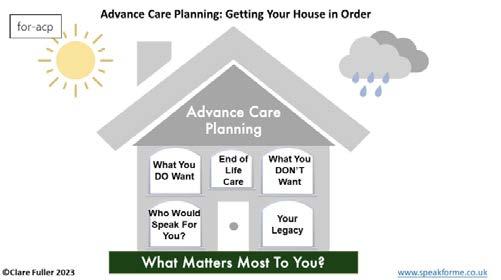




W hy e M A R ?

Welcome to a series of short, insightful articles from Boots Care Services designed to support care homes taking their first steps into the world of eMAR, as well as those ready to advance further on their digitalisation journey but would like to understand more.
E le c tro nic Med ic at io n Ad m inis tra t io n Re co rd (eMAR ) Sys tem s
Care Planning systems have been championed through the government’s Better Care Fund since 2015. Now, as the focus shifts towards deeper digital transformation within care homes, Boots Care Services can help you to explore the importance of eMAR and why it matters for modern, efficient and safe care.
Electronic Medication Administration Records (eMAR) systems come in many different shapes and sizes, each offering benefits tailored to different care home needs. And, in some cases, integrate seamlessly with other care planning systems that you may already have in place so that all the information you need is right at your fingertips. Through integrated systems, your care team will have the ability to offer coordinated care, leading to better outcomes for residents.
W hy eMAR ? – C ha pters
Naturally, you might be wondering: why make the switch to eMAR at all? Why not stick with the paper MAR system that’s served your care home for years?
Throughout this series of short articles, we will explore the proven benefits of eMAR including the time saving benefits, the importance of a more person-centred approach and how you and your care teams can get the most of out the eMAR system. Ultimately, freeing up your care team to spend more crucially needed time with your residents.
Our articles will cover a range of different perspectives to help you make a confident, wellinformed choice when selecting the best eMAR system for your care home. From real-world experiences shared by care homes already using eMAR to the trusted guidance of our specialist Care Services Pharmacists, we aim to equip you with the insights and knowledge you need to make the decision that’s right for you.
Im par t ia l Adv ic e
We understand that choosing the right one can be overwhelming but that’s where we come in. With the help of our experienced Care Services Business Managers and Digital Specialists, we can advise on the differences between the systems and why one system may be more suited to your care home’s needs.
We're here to support you every step of the way. Reach out to us at care.services@boots.co.uk to learn how we can help.

Facing the unknowns in care home marketing
This season finds care home marketers in a landscape that’s anything but predictable. The rise of AI-powered search, growing competition from domiciliary care, and a more complex customer journey are reshaping how care homes connect with families and prospective residents. Understanding these shifts is key to making informed decisions. Here are some critical questions to consider:
• How is AI-driven search influencing website traffic and enquiry patterns?
• Which marketing channels are gaining traction—and which are losing relevance?
• What subtle changes are emerging in care seeker behaviour?
Recent analysis conducted by Mediahawk has shed light on these questions and what’s changing as well as how leading marketers are adapting. A few highlights include:
• Channel mix: While organic website traffic is starting to dip, some marketers are seeing renewed results from Facebook campaigns and Bing PPC.

• Changing search habits: There’s a noticeable increase in care seekers using AI and social media to research options, leading to more “zero-click” searches and a longer path to enquiry.
• Keyword shifts: Calls driven by “residential” care keywords are up 38% year-on-year, while “respite” has surged by 144%.
For care home marketers, staying informed isn’t just about keeping up. It’s about finding clarity in a complex environment and making confident decisions for the months ahead.
To explore these trends in depth and see how your approach compares, the full Mediahawk care homes trends report is now available.



a
e a n d e v o l u t i o n i n
l a n d s c a p e a n d c h a l l e n g e s , a n d d r i v e t h e f i e l d f o r w a r d .




T h e A s s o c i a t i o n f o r C o n t i n e n c e P r o f e s s i o n a l s i s p r o u d t o i n v i t e y o u t o o u r
Bladder and Bowel Nurses
Bladder and Bowel Nurses
Urology Nurses
Urology Nurses
Doctors
Doctors
Specialist
Nurses
Specialist Nurses

c o n t i n e n c e c a r e . H o n o u r i n g 4 5 y e a r s o f d e d i c a t i o n t o t h e f i e l d , w e w i l l
c o m e t o g e t h e r t o r e f l e c t o n o u r r i c h h e r i t a g e , c o l l a b o r a t e o n t h e c u r r e n t





Physiotherapists and Occupational Therapists
Physiotherapists and Occupational Therapists
All allied healthcare professionals
All allied healthcare professionals