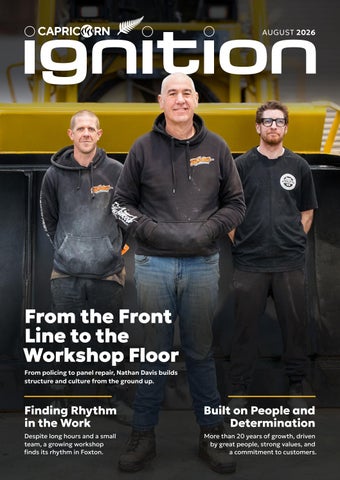
From the Front Line to the Workshop Floor
From policing to panel repair, Nathan Davis builds structure and culture from the ground up.
Finding Rhythm in the Work
Despite long hours and a small team, a growing workshop finds its rhythm in Foxton.
Built on People and Determination
More than 20 years of growth, driven by great people, strong values, and a commitment to customers.

CEO’s message
August is shaping up to be an important month for our Capricorn Community, with a strong focus on how we represent and support our Members as the industry continues to evolve.
Over recent months, our team has been working hard behind the scenes on our 2026 State of the Nation Report. To every Member who took the time to share their insights, thank you. Your input is incredibly valuable and plays a critical role in shaping this research.
We’ll be launching the report in a few months, and it will form a key part of how we advocate on behalf of our Members with policymakers and industry bodies. Making sure the voice of small businesses is heard, and backed by real data, is essential as our industry continues to change.
I also want to remind you that tickets for our 2026 Gala Dinners and Trade Shows are now available through myCAP. These events are always a highlight, bringing our Members, Preferred Suppliers and team together in one place.
If you have the opportunity to attend, I strongly encourage it. Time with our Community matters. It is a chance to connect, share experiences and enjoy yourself after the hard work that goes into running and supporting businesses every day.
Finally, behind the scenes we’ve recently taken an important step forward in our risk protection services.
In June, we moved to a modernised Risk Protection platform. While you may not see the systems themselves, what you will notice is the difference. We are responding to Members faster, working more efficiently and continuing to improve the experience when it comes to protecting your business.
Across everything we do, our focus remains the same. Improving the lives of our Members by helping them build stronger businesses and supporting a connected, thriving Community.
Thank you for being part of Capricorn and for the role you play in making a difference every day.
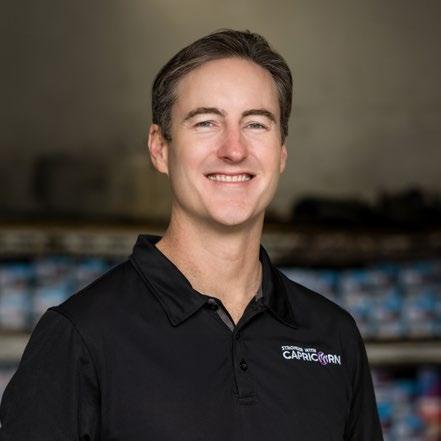
Brad Gannon Group CEO
4 From the Front Line to the Workshop Floor
From policing to panel repair, Nathan Davis builds structure and culture from the ground up.
8
Finding Rhythm in the Work
Despite long hours and a small team, a growing workshop finds its rhythm in Foxton.
12 Building a Workshop Culture that Gets the Best Out of Your Team
14 Built on People and Determination
More than 20 years of growth, driven by great people, strong values, and a commitment to customers.
17 MTA’s Manifesto Launch
Supporting Members by contributing to the conversations shaping the industry.
FROM THE Workshop Floor Front Line TO THE
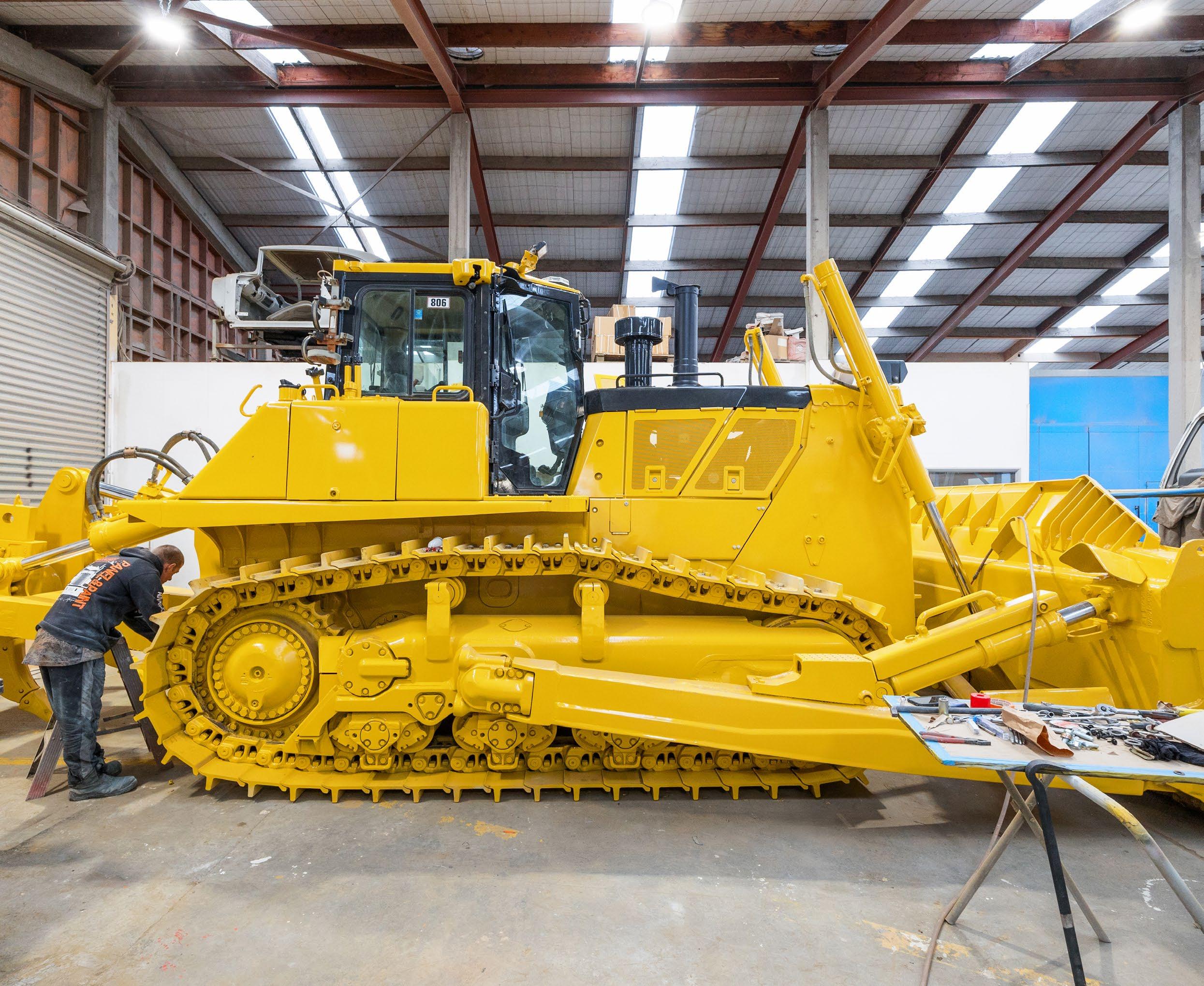

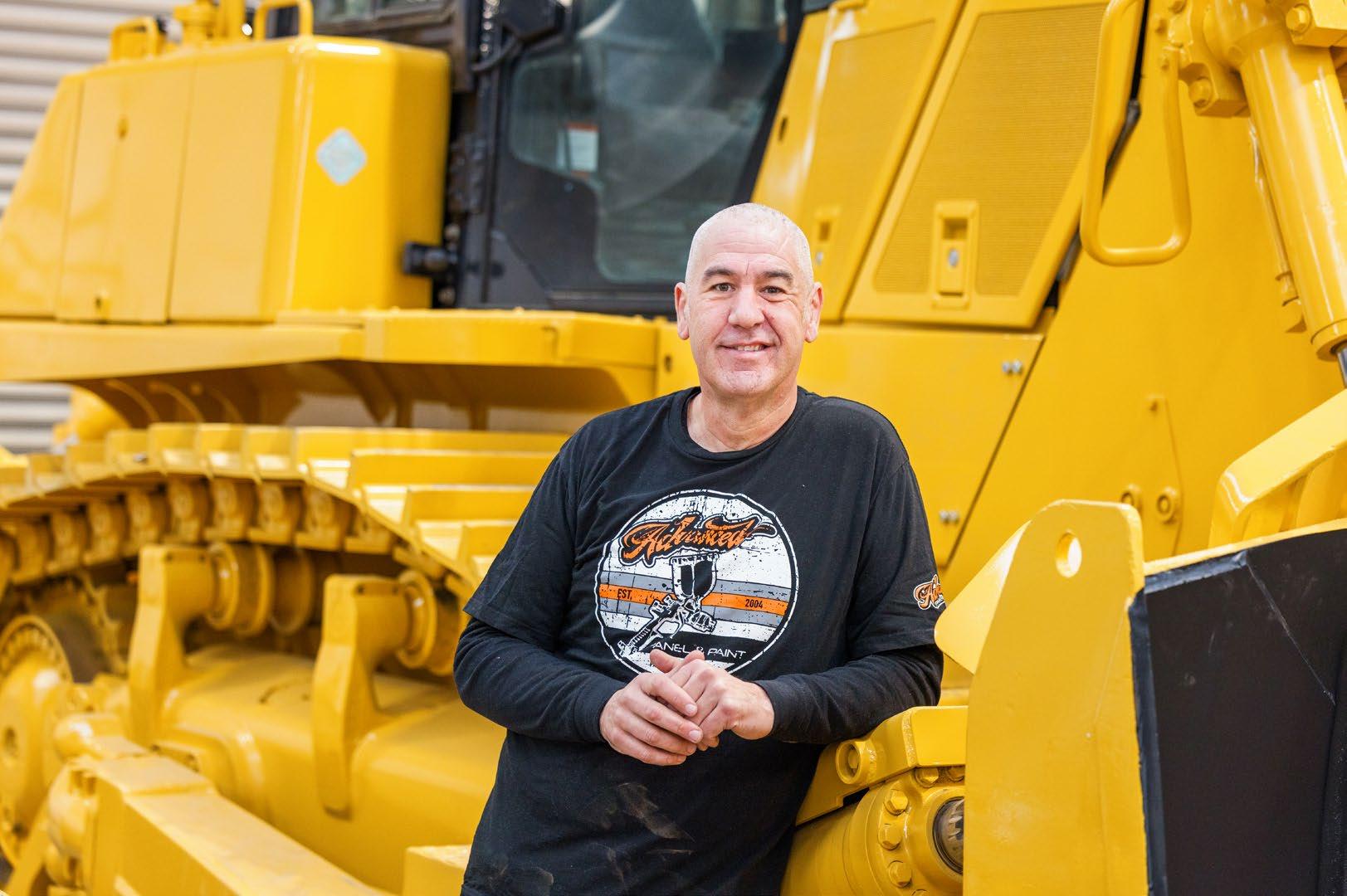
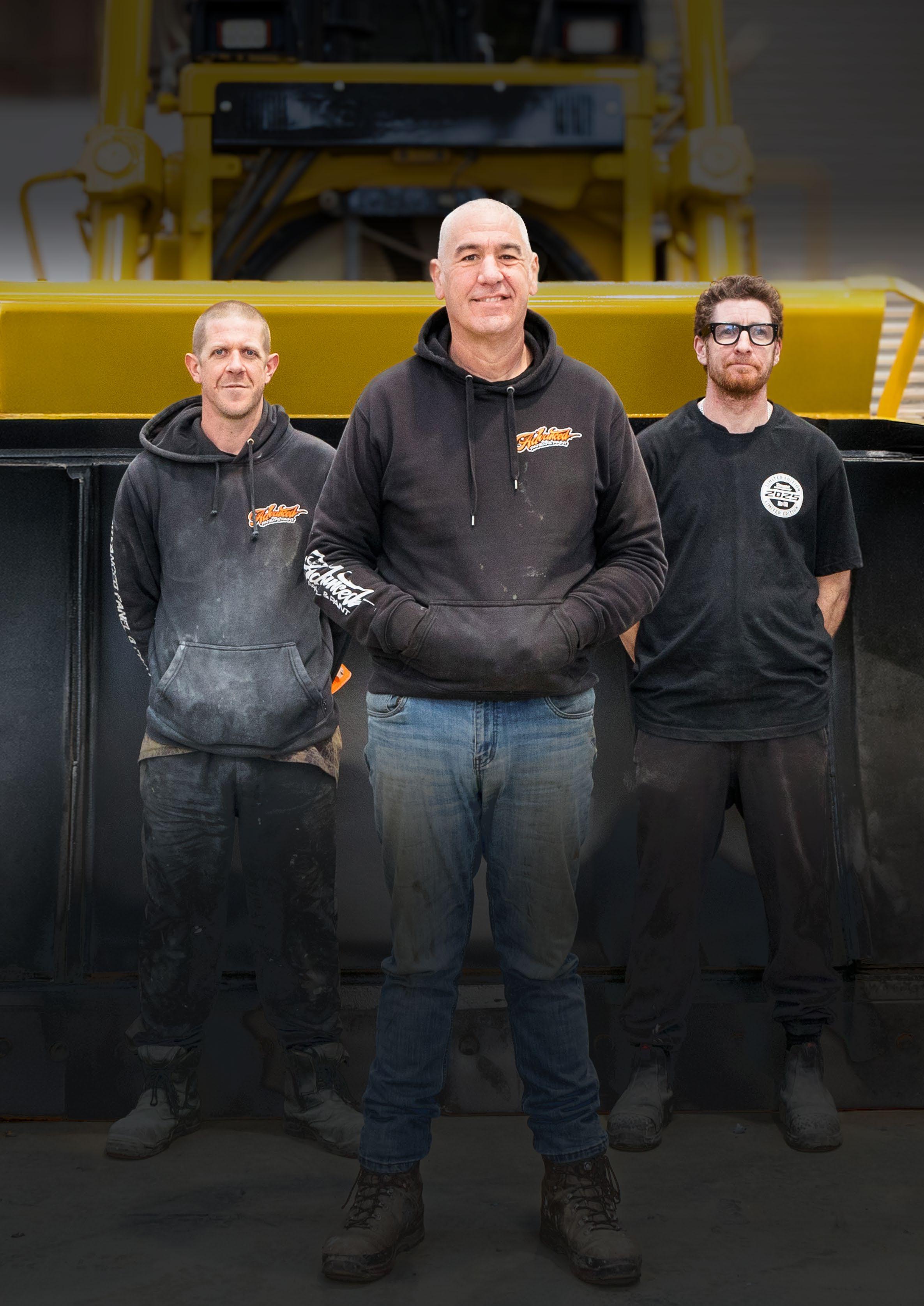
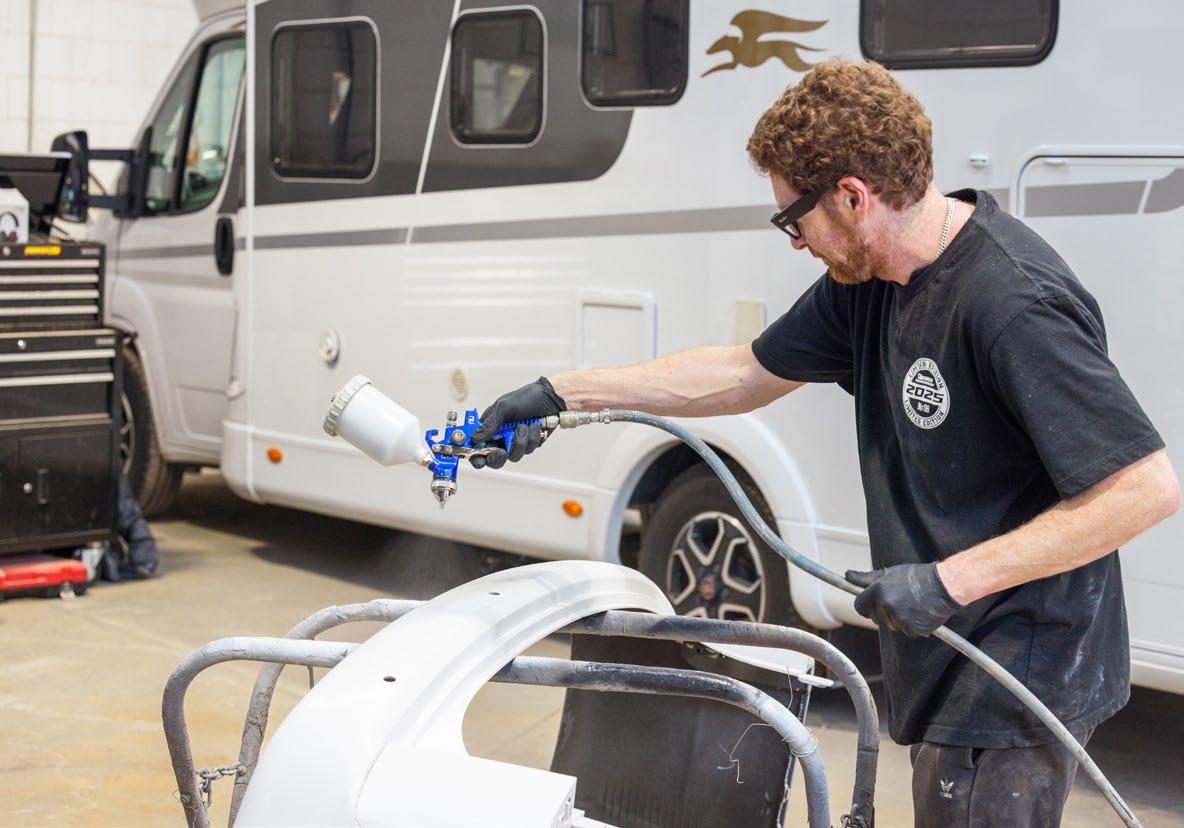
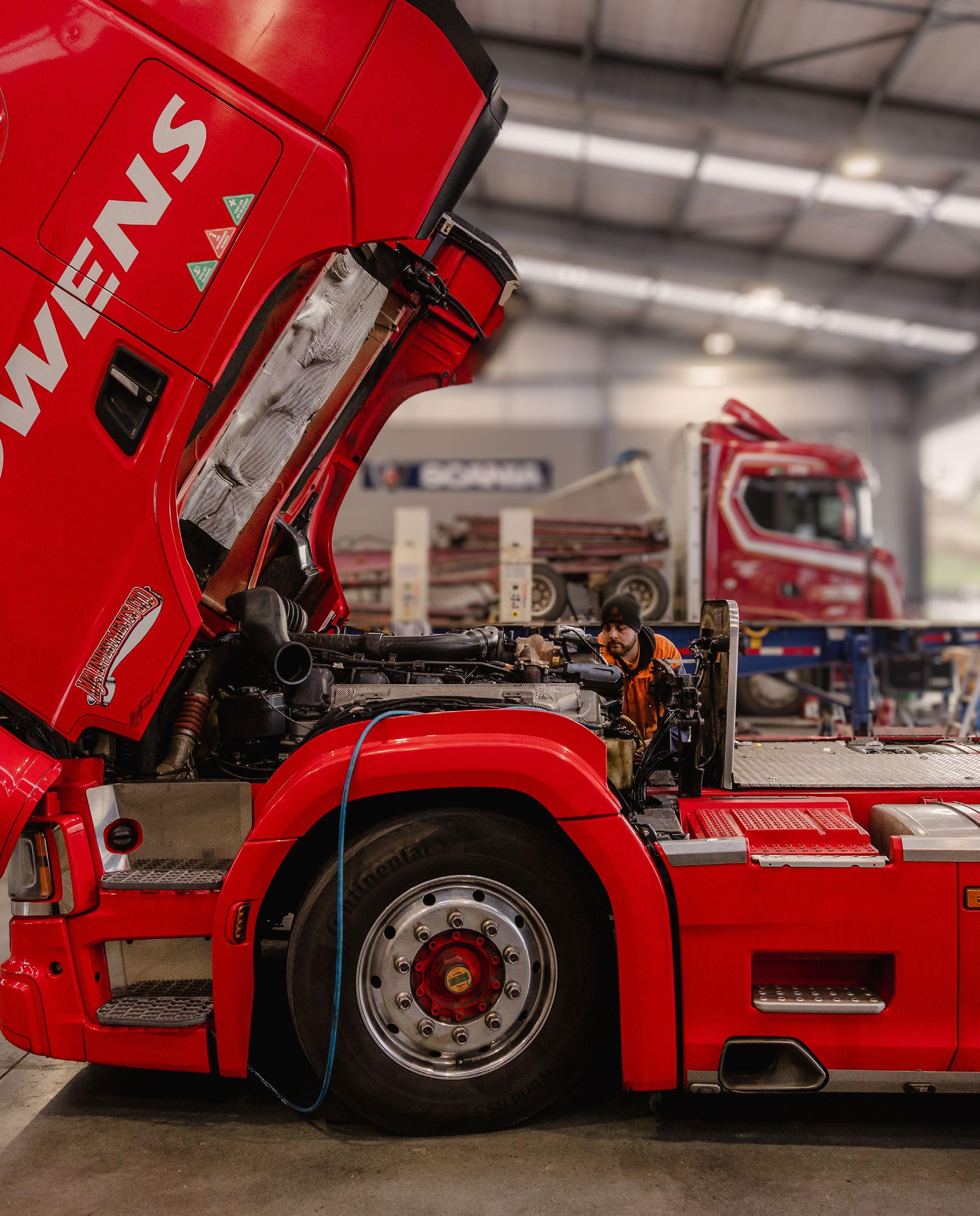
From policing to panel repair, Nathan Davis builds structure and culture from the ground up.
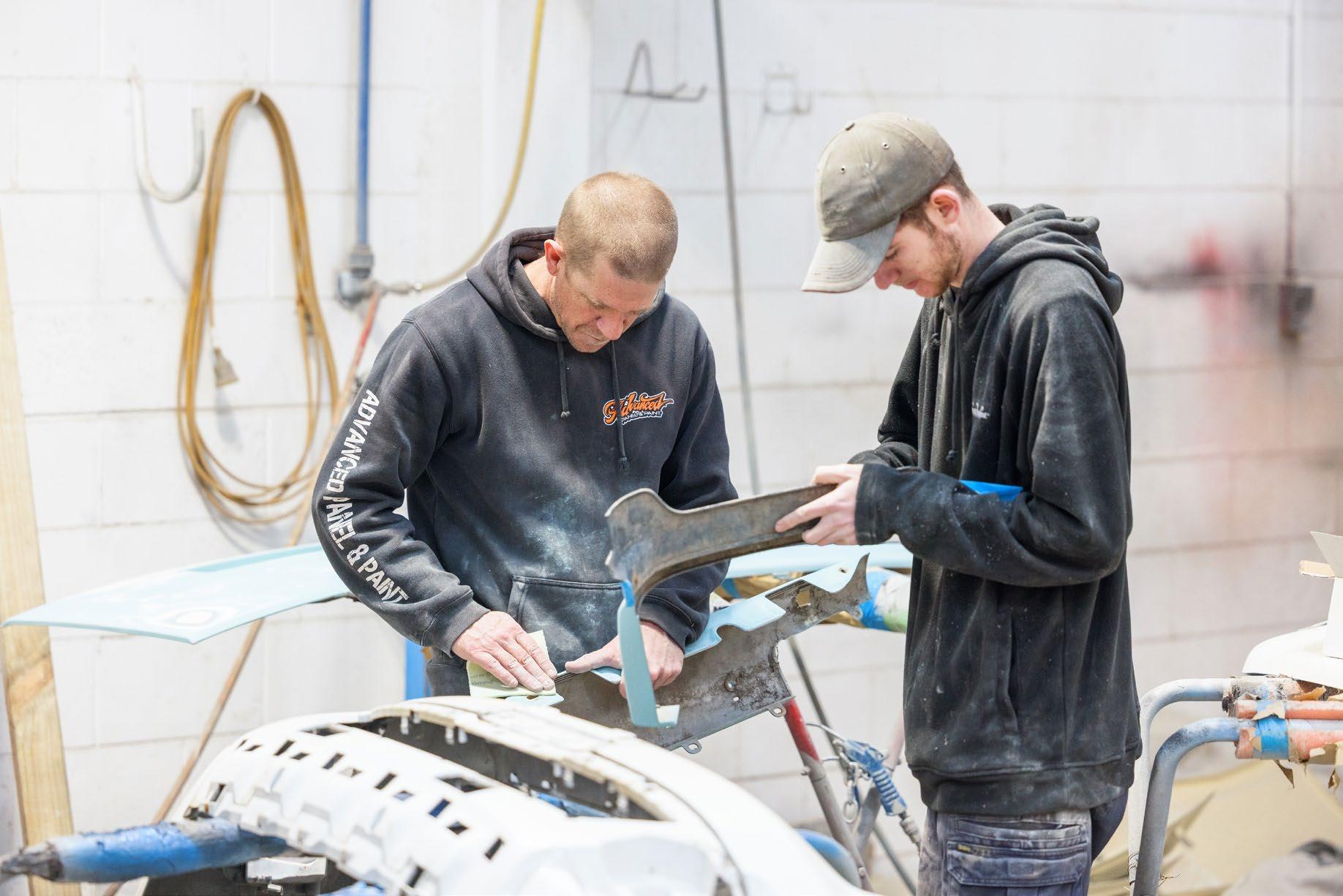
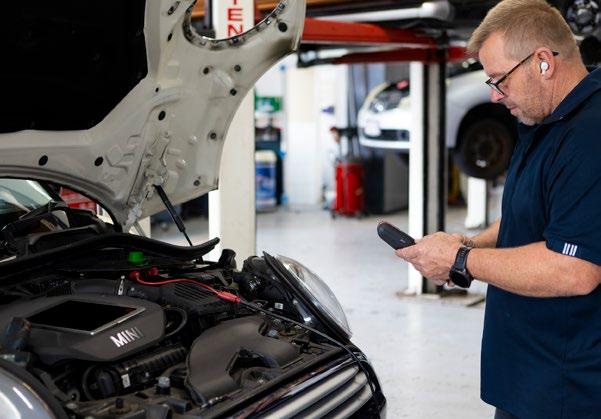
The workshop floor hums with activity; dual action sanders buzzing, panels shifting, conversations drifting between jobs. At first glance, it looks like any other busy panel and paint operation. But behind the scenes at Advanced Panel & Paint, there’s a different kind of structure taking shape.
One that hasn’t come from years in the trade, but from something else entirely.
For Nathan Davis, the path into the industry wasn’t conventional. Not even close.
“I don't have a panel or paint background,” he says. “I'm an ex-police officer. I did twenty years in the police.”
That perspective still shapes how he leads today.
After two decades in policing, Nathan wasn’t chasing a quiet exit. He was looking for a different kind of challenge — one that would keep him thinking.
“I wanted something where you’re constantly solving problems,” he says. “Something that keeps evolving.”
The automotive industry, particularly heavy vehicles, stood out. Time spent working in road policing had already given him a window into how transport networks operate at scale. He’d seen firsthand the volume of freight moving through the region and the businesses behind it.
“You look around and see nationally recognised companies”, he says. “All these nationally recognised operators with seriously large and heavy fleets.”
In a region built around logistics, that scale was hard to ignore. It pointed to an industry that would always be moving, and always need support.
Eighteen months ago, that thinking turned into ownership of Advanced Panel & Paint. The early days were, by his own admission, confronting.
“The learning curve was just horrific,” he says. “For the first few months, I really just thought, man, what have I done?”
Without a technical background, he leaned on something else; systems, process, and people. Skills built over years in high-pressure environments.
“I don’t need to know all the information. I just need to know where to find it.”
Building structure without the ego
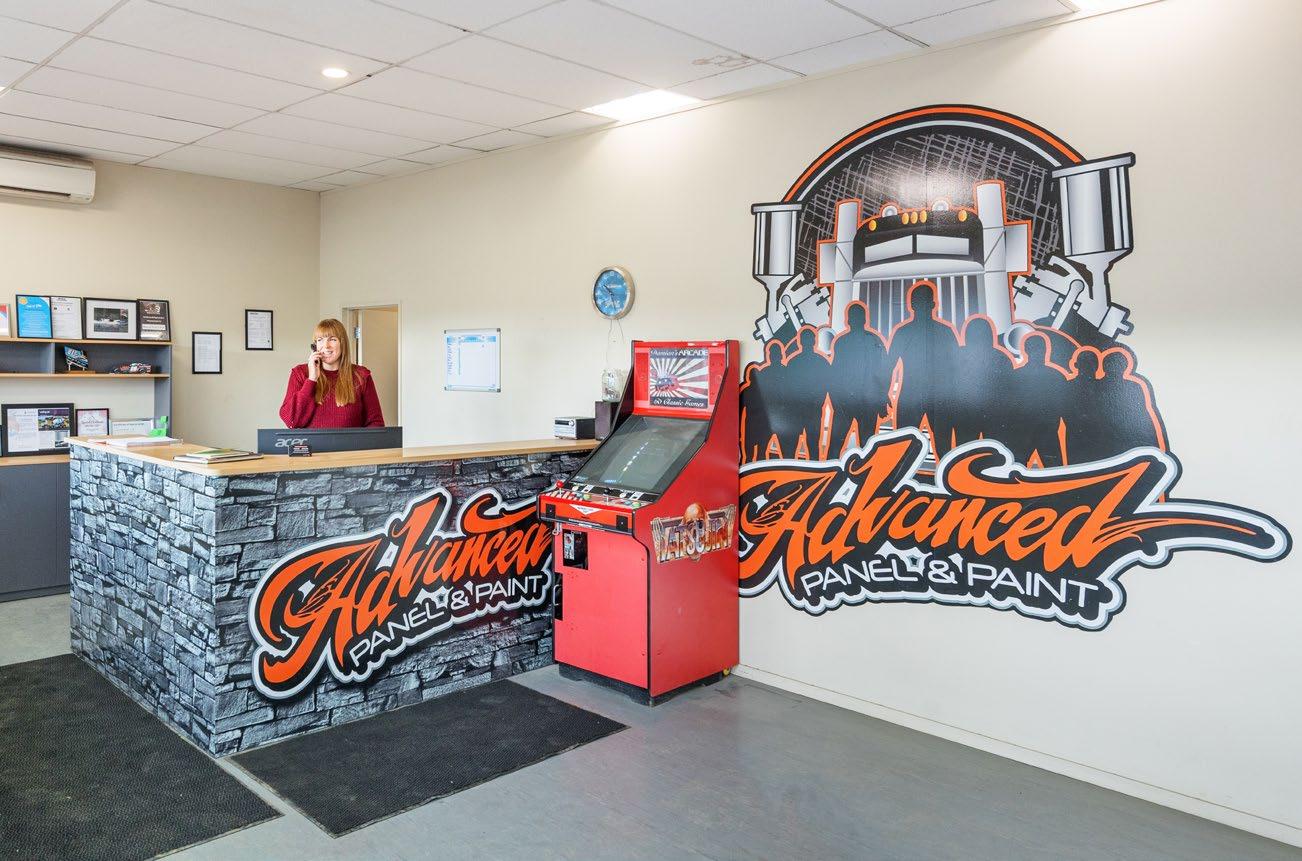
Step into the office, and you won’t find scattered systems or overcomplicated processes. One of Nathan’s earliest changes was consolidating how the business runs day-to-day.
Estimating, job cards, invoicing; everything brought into one place.
“I don’t go to the spare room to get the flour and then the laundry to get the butter,” he says. “All the ingredients are in the one place.”
It’s a simple way of thinking, but it’s been effective. Especially for someone learning the trade from the outside in.
There’s also a clear awareness of where his strengths start and stop. In a workshop filled with decades of combined experience, Nathan doesn’t pretend to be the expert.
“If I’m the smartest one in the room, we’re in a whole heap of trouble,” he says. “You guys (referencing his team) are the smartest in the room.”
That mindset has helped build trust across the team; a group he describes as carrying “two hundred years of psychological capital” on the floor.
It’s also shaped how he approaches leadership longer term. Developing people, creating opportunities, and keeping talent moving forward.
“If you give people opportunities, they can grow,” he says. “We need to make sure we’ve got a conveyor belt of talent building and capacity building.”
Culture that extends beyond the job
For Nathan, structure is only part of the story. Culture carries just as much weight, and in many ways, it comes first.
“I think culture is really important,” he says. “You want them to go home and when someone asks how was your day, they say, excellent.”
That thinking has led to one of the more distinctive initiatives inside the workshop; a wellness fund designed to support staff beyond the job itself.
“I initiated a wellness fund,” he says. “If it makes them feel better, up to a certain amount, I will pay.”
That support can be practical or personal; doctor visits, massages, even everyday wellbeing expenses. The goal isn’t complicated. It’s about making sure people are in a good place before they walk through the workshop door on a Monday.
“Good people make good organisations,” Nathan says. “If you try and look after people outside the organisation, inside the organisation should be a little bit easier.”
It’s a philosophy grounded less in policy and more in perspective. Stronger relationships at home, better focus at work, and a team that shows up with energy rather than fatigue.

Learning on the run
Despite the systems in place and the culture taking hold, Nathan is the first to admit he’s still learning.
“I’m still in the learning phase,” he says. “Every day I get home and go, what did you learn? What do I need to start doing, stop doing, do more of and do less of?”
There’s an acceptance that mistakes will happen. That gaps in knowledge will surface. And that progress isn’t always straight.
What matters is the response.
“I’ve just got to keep going and learn from it.”
Looking ahead, there’s no rush to chase growth for the sake of it. The focus is on steady improvement, stronger systems, and a team that continues to build capability over time.
That approach mirrors a broader shift across the industry. As highlighted in Capricorn’s State of the Nation reporting, businesses are increasingly balancing technical performance with people-focused leadership. Skills shortages, rising workloads and evolving customer expectations all place pressure on workshops to think differently about how they operate.
Nathan’s business offers a clear example of that shift in action.
Not built on decades of trade experience, but on a willingness to listen, adapt and invest in people.
And for a leader who started his career in an entirely different world, it’s a sign he’s exactly where he needs to be.
Finding in the Work Rhythm
Despite long hours and a small team, a growing workshop finds its rhythm in Foxton.
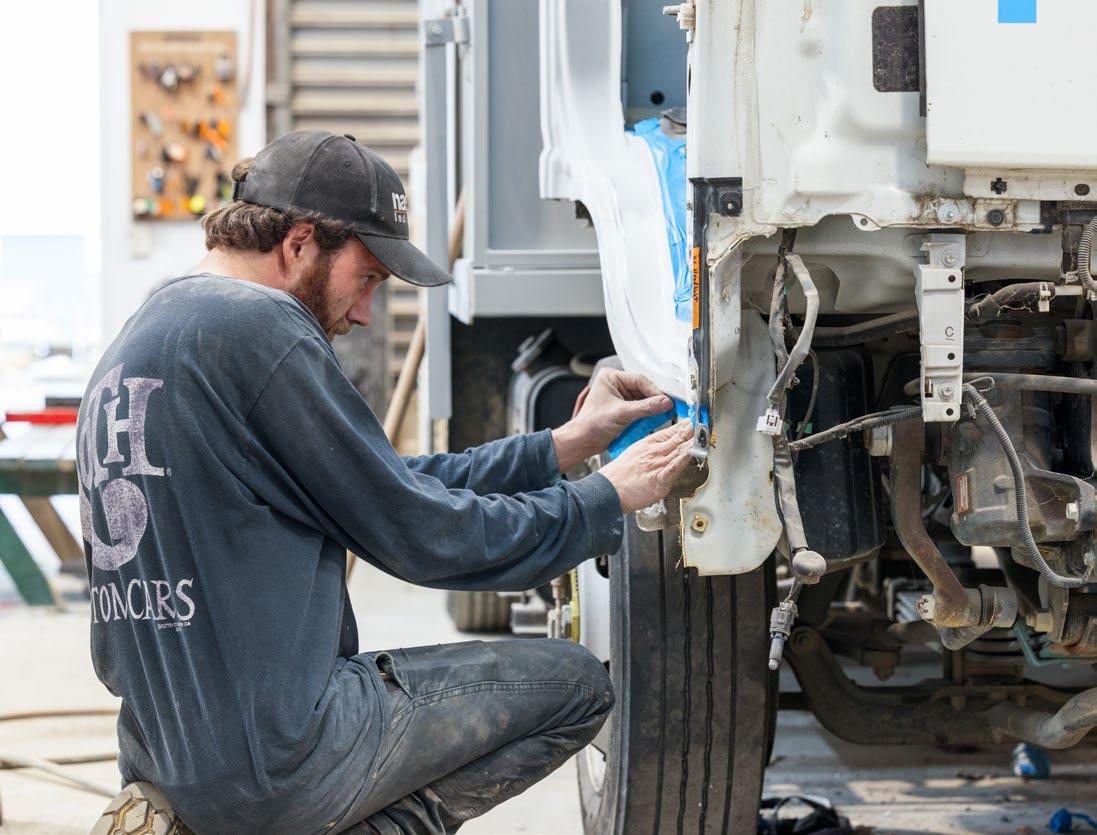
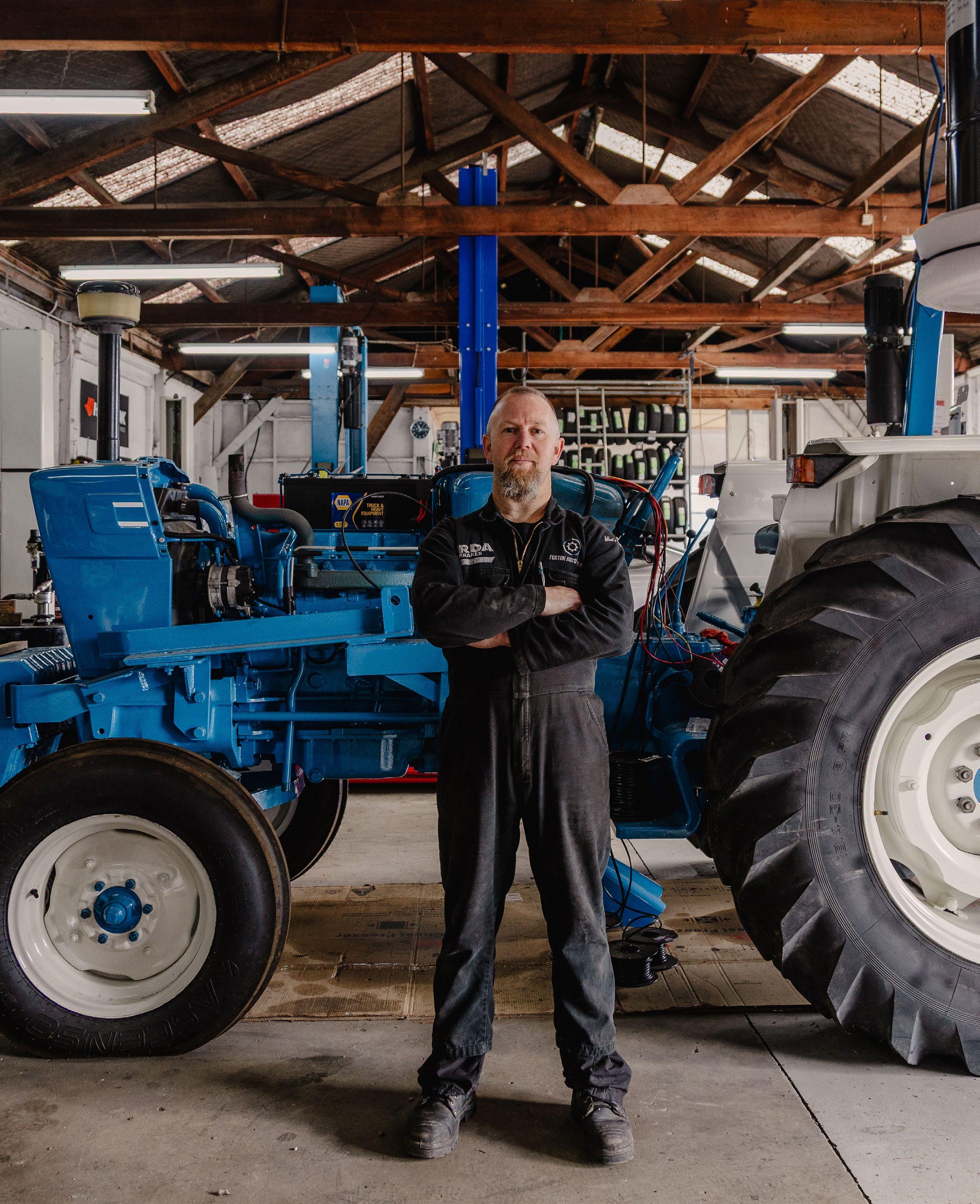
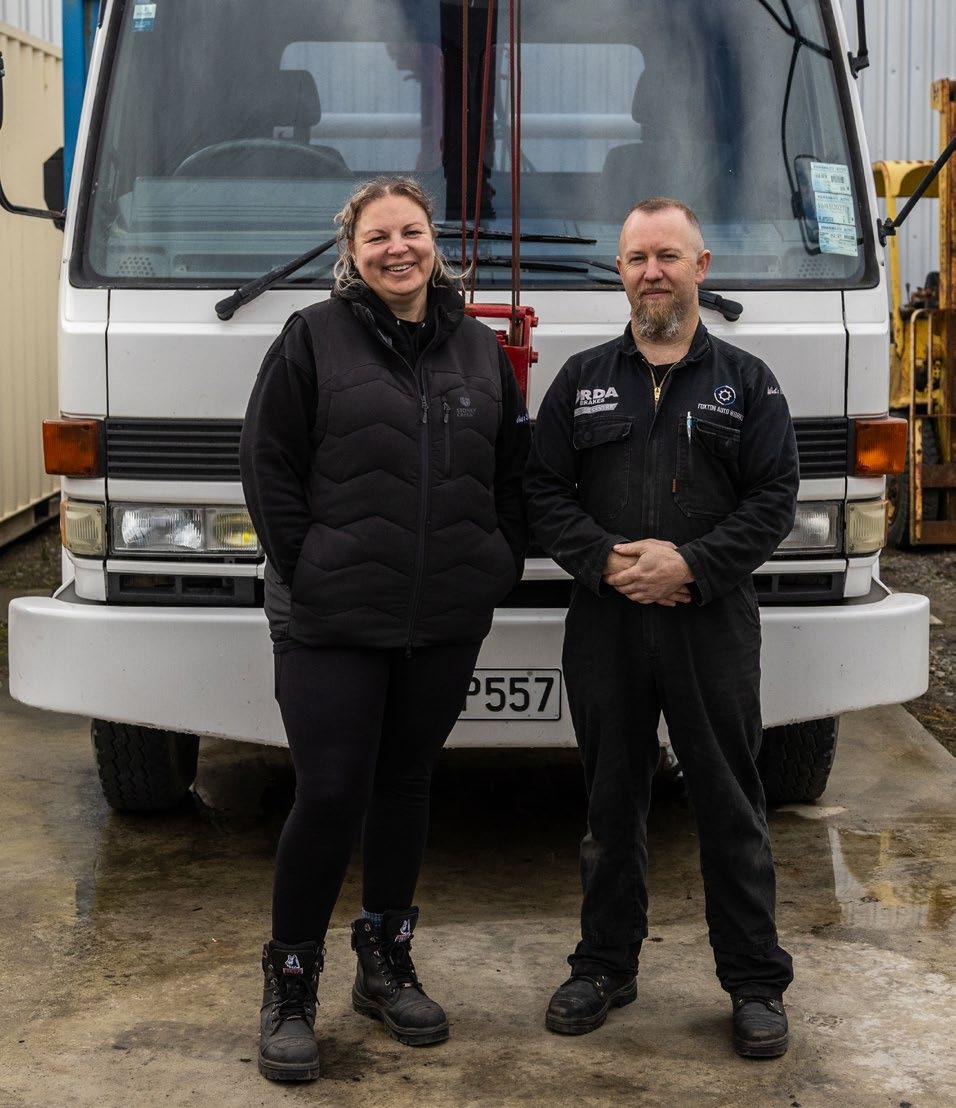
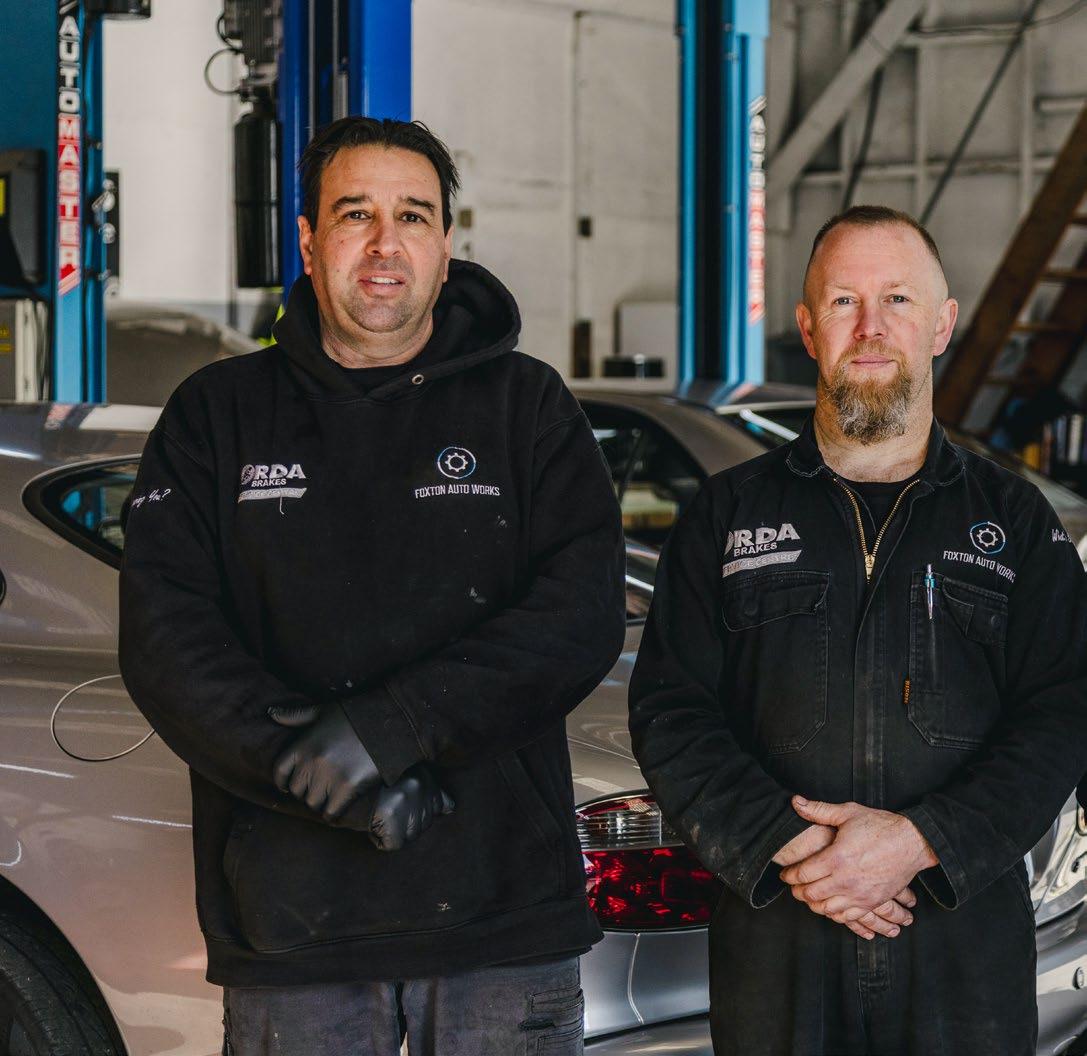
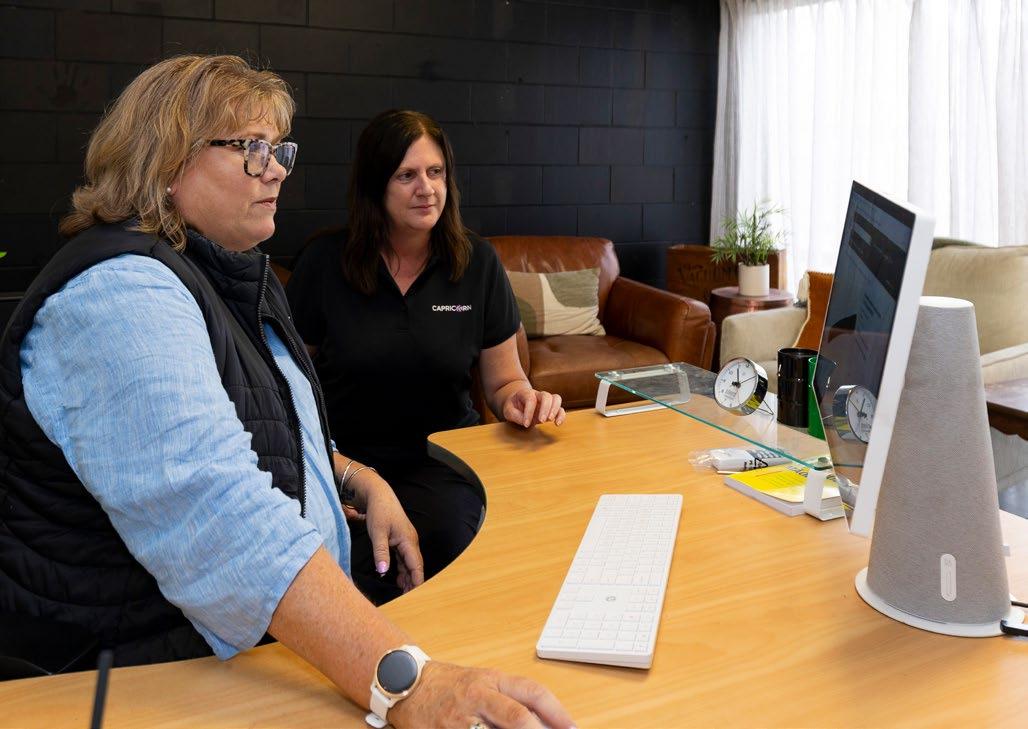
By the time most of Foxton is getting started, Foxton Auto Works is already in full swing, and it rarely slows down when the clock says it should. Inside, the work doesn’t queue neatly. It arrives in all forms: a Harley Davidson, a ride-on mower, a supercharged Jaguar, an old Ford tractor. For Aaron and Jo Girvan, that constant mix is both the challenge and the reward.
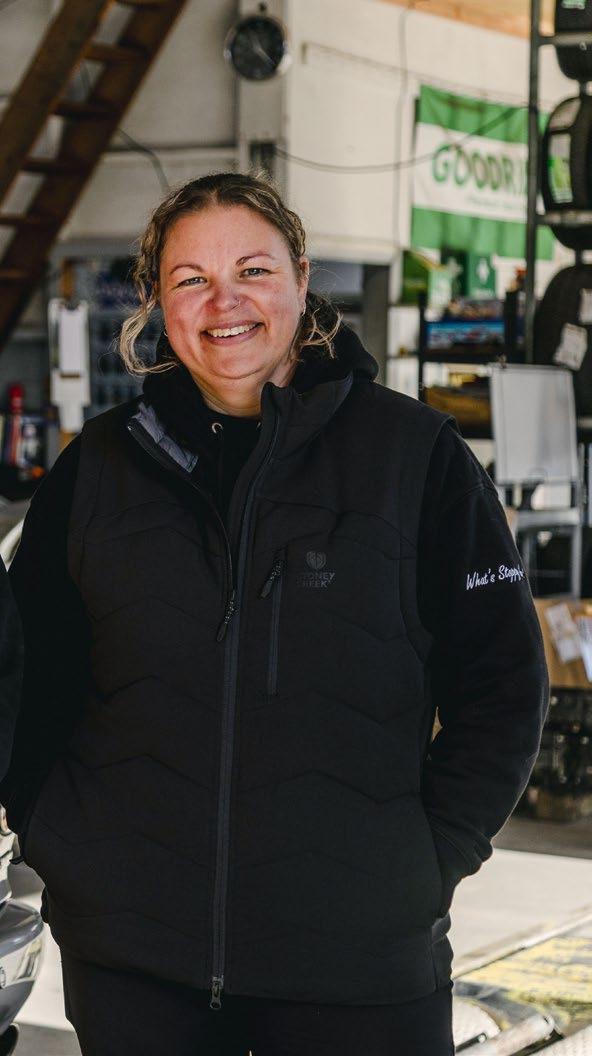
Aaron moves between jobs, tools in hand, always thinking about what’s next on the floor. Out front, Jo keeps the day moving, handling customers, managing the office, and making sure everything connects. In a workshop like this, there isn’t much room to pause.
Hands-on in a tight team
Aaron’s path into the industry was steady and practical: an apprenticeship as an auto electrician, followed by years across workshops building his skillset. “I applied for an apprenticeship in Marton at Hopping Automotive as an auto electrician, got accepted and did my apprenticeship there,” he recalls.
Years on the tools eventually led both Aaron and Jo back to Foxton, where owning their own business felt like the natural next step.
“We’ve always talked about wanting to have our own business,” Jo says.
“I come from an administrative background and had worked in a workshop and a car yard before, so it felt like a natural progression.”
But that shift into ownership quickly changed the day-to-day reality.
“It’s certainly been challenging,” Aaron says. “You’re the face of the business, dealing with customers, ordering parts and making sure everything keeps flowing.”
The hours followed. What might have once ended at closing time now stretches well beyond it.
“I thought having the business ourselves we’d have more time, but it’s kind of had the opposite effect,” Aaron says. “There have been a lot of days where I’m here for twelve hours.”
Even within work hours, the pressure remains high.
“The biggest challenge has probably been the work–home balance, especially with young kids,” Jo says. “It’s about being mindful of how much time we spend here.”
According to the Capricorn State of the Nation Report, managing work–life balance is one of the biggest challenges facing small business owners in the automotive space today. It’s something we hope to see improve in the years ahead.
Finding footing as the business grows
At Foxton Auto Works, the structure is simple: Aaron on the tools, Jo in the office, and one additional staff member helping keep everything moving.
There is no shortage of work coming through the door. If anything, staying on top of it is the challenge.
“We’ve been quite lucky. Even with everything going on, we’ve stayed steady to busy,” she says. “There’s always something to do.”
Like many small workshops, they have had people ask about joining the team. But for Aaron and Jo, taking that next step needs to be measured.
“Up to this point, we haven’t been in a position to take on anyone extra,” Aaron explains.
Jo agrees, with a focus on long-term fit rather than quick fixes.
“We would like to have more staff, but they have to be the right fit,” she says. “It’s something that will happen at the right time.”
There is a sense now that they are approaching that point, where the business is established enough to start sharing the load.
Keeping things interesting, job by job
Step into the workshop and the variety is hard to miss.
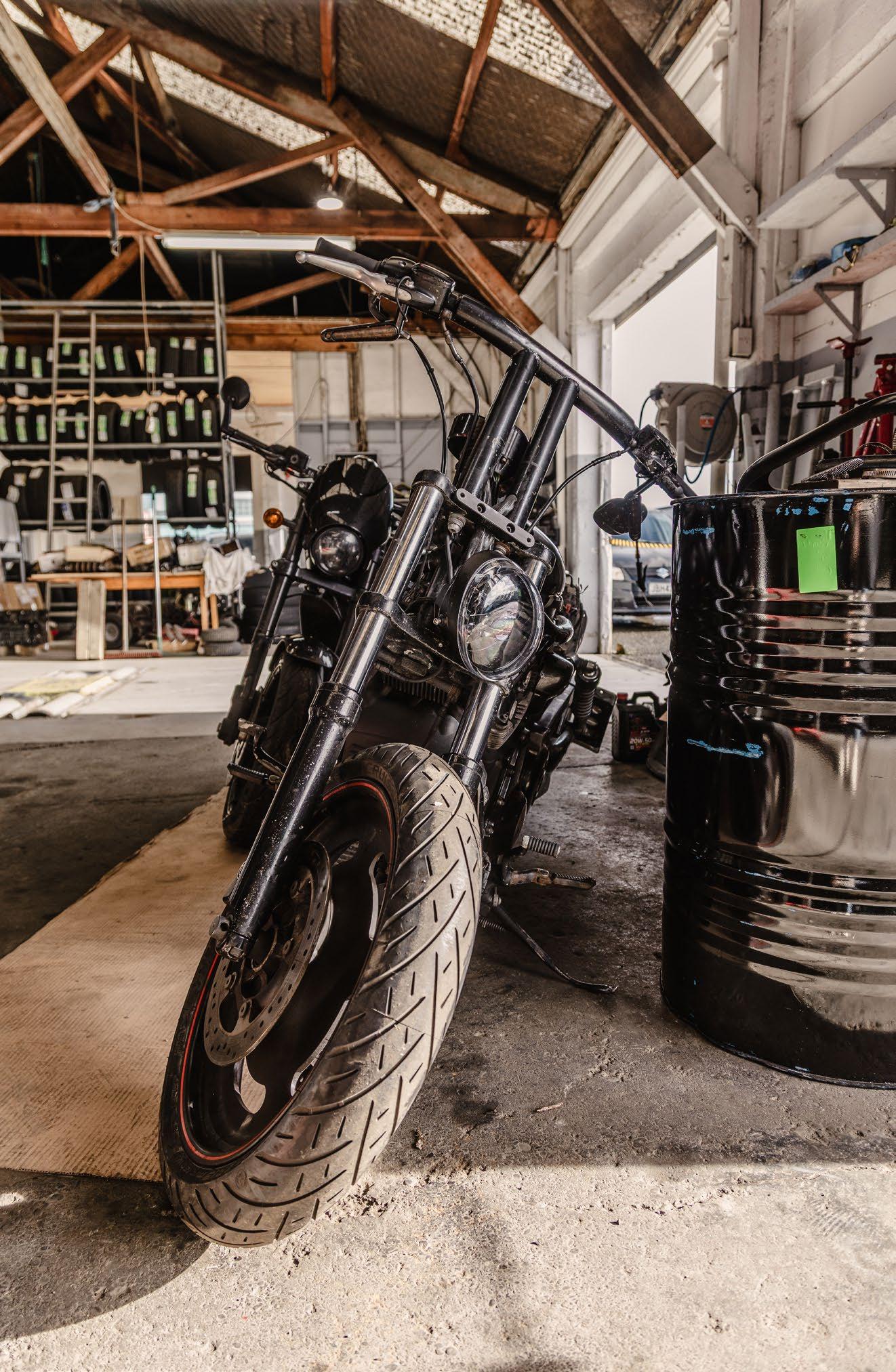
“Currently in the workshop, we’ve got a ride-on lawnmower, a Harley Davidson bike, a supercharged V8 Jaguar and an old Ford tractor,” Aaron says.
“We try to do a variety of stuff and not limit ourselves to just one thing,” he explains. It keeps the days moving and stops the work from becoming repetitive. One job rolls into the next, each one slightly different from the last.
From Jo’s perspective, that variety also serves the community.
“It becomes a one-stop shop,” she says. “People can bring in their motorbike, lawn mower or car and get everything sorted in one place.”
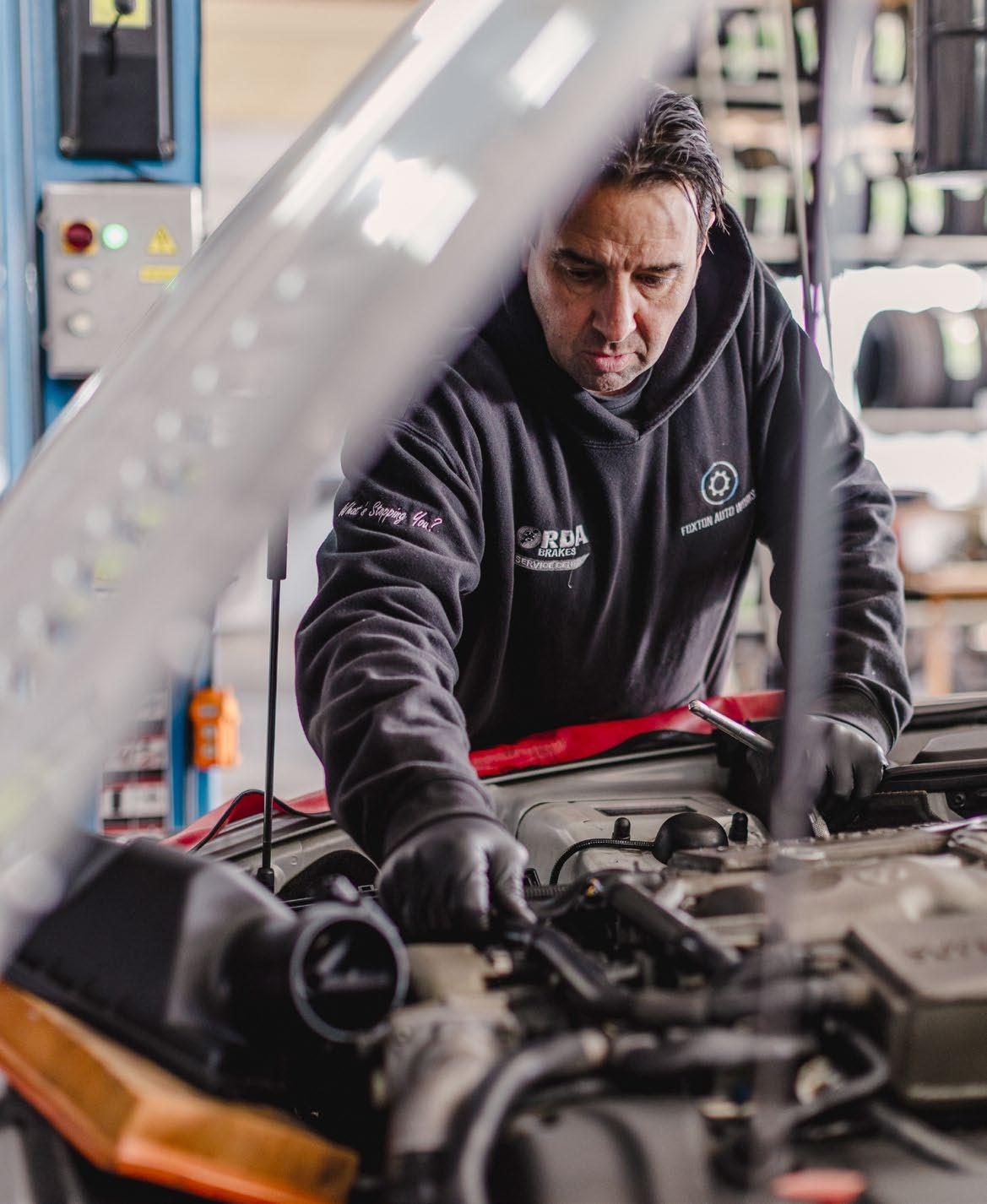
In a small town, offering a variety of mechanical services is important, but so is the way those services are delivered.
The work might bring customers in, but it’s the customer service that keeps them coming back.
Building towards something better
Two years into ownership, Foxton Auto Works is still a work in progress, but the direction is clearer than it was at the beginning.
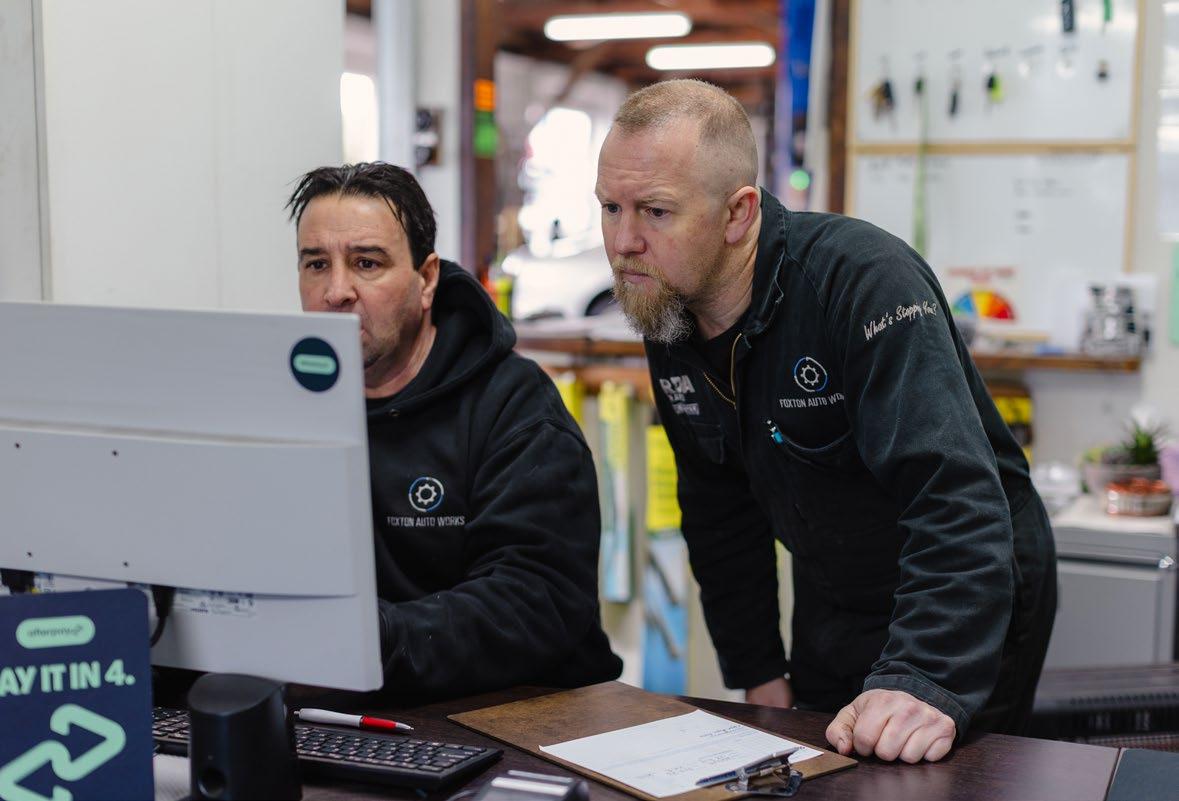
“We’re so much further ahead than we were when we started,” Jo says. “In another year, we’ll be in a completely different space again.”
Growth is being built gradually. No big shifts, just steady steps forward.
For now, the rhythm stays the same. The door opens, the work rolls in, and the day fills up quickly.
It is busy, it is demanding, and it is still evolving. But somewhere in that constant motion, Aaron and Jo have found something that works—for them, for their customers, and for the workshop they are building together.
Building a Workshop Culture that Gets the Best Out of Your Team
By Geoff Mutton
Every auto workshop has a workplace culture that might have been built intentionally or perhaps it simply evolved over time. This culture is often an unseen and silent asset, but it influences how people perform, how they treat each other and ultimately how successful the business becomes.
Over the years, we have talked about staff morale, employee motivation and technician productivity, all of which are vital for a properly functioning workplace, but in reality, they are all heavily influenced by just one thing – the culture in the workplace.
The interesting thing about culture is that most workshop owners don't spend much time thinking about it until there is a problem. Maybe productivity starts slipping. Perhaps there's tension between staff members. Maybe someone who was once highly motivated seems to be doing the bare minimum. Whatever the issue, culture is often sitting somewhere in the background influencing the outcome.
The good news is that culture doesn't require a large budget to improve. More often than not, it comes down to leadership, communication and consistency.
Start with clear expectations
One of the biggest mistakes workshop owners make is assuming employees know exactly what is expected of them. The reality is they often don't. Most technicians understand they are expected to repair vehicles correctly. Beyond that, things can become quite vague.
What level of productivity is expected?
How should customers be treated?
What standards apply to workshop housekeeping?
Employees can't meet expectations that have never been clearly communicated. The best workshops I've worked with are very clear about what good performance looks like. Everyone knows where they stand and what's expected of them.
The owner sets the tone
Staff constantly watch the business owner. They notice how the owner speaks to customers. They notice how the owner reacts when mistakes happen and they notice whether the owner practices what they preach.

If the owner or manager is constantly negative, critical or stressed, that attitude will eventually spread through the workshop. Likewise, staff will generally follow the lead of owners who remain professional, respectful and solutions-focused.
The culture you tolerate becomes the culture you create. It's a simple but incredibly true statement.
Micromanagement kills culture
Many workshop owners started out as sole traders and built their businesses through hard work and determination. The problem is that some never stop trying to control every decision, every job and every employee. When staff feel they're constantly being watched, questioned or second-guessed, they stop taking ownership. I've seen plenty of workshops where employees won't make even the smallest decision without first checking with the boss. That's not because they're incapable. It's because they've been conditioned to seek approval for everything.
Good culture requires trust. Trust people to do the job they were employed to do. They'll occasionally make mistakes, but that's how people learn and grow.
Recognition costs nothing
One thing I've noticed over the years is that workshop owners are generally very good at spotting problems. They're often not nearly as good at recognising the positives.
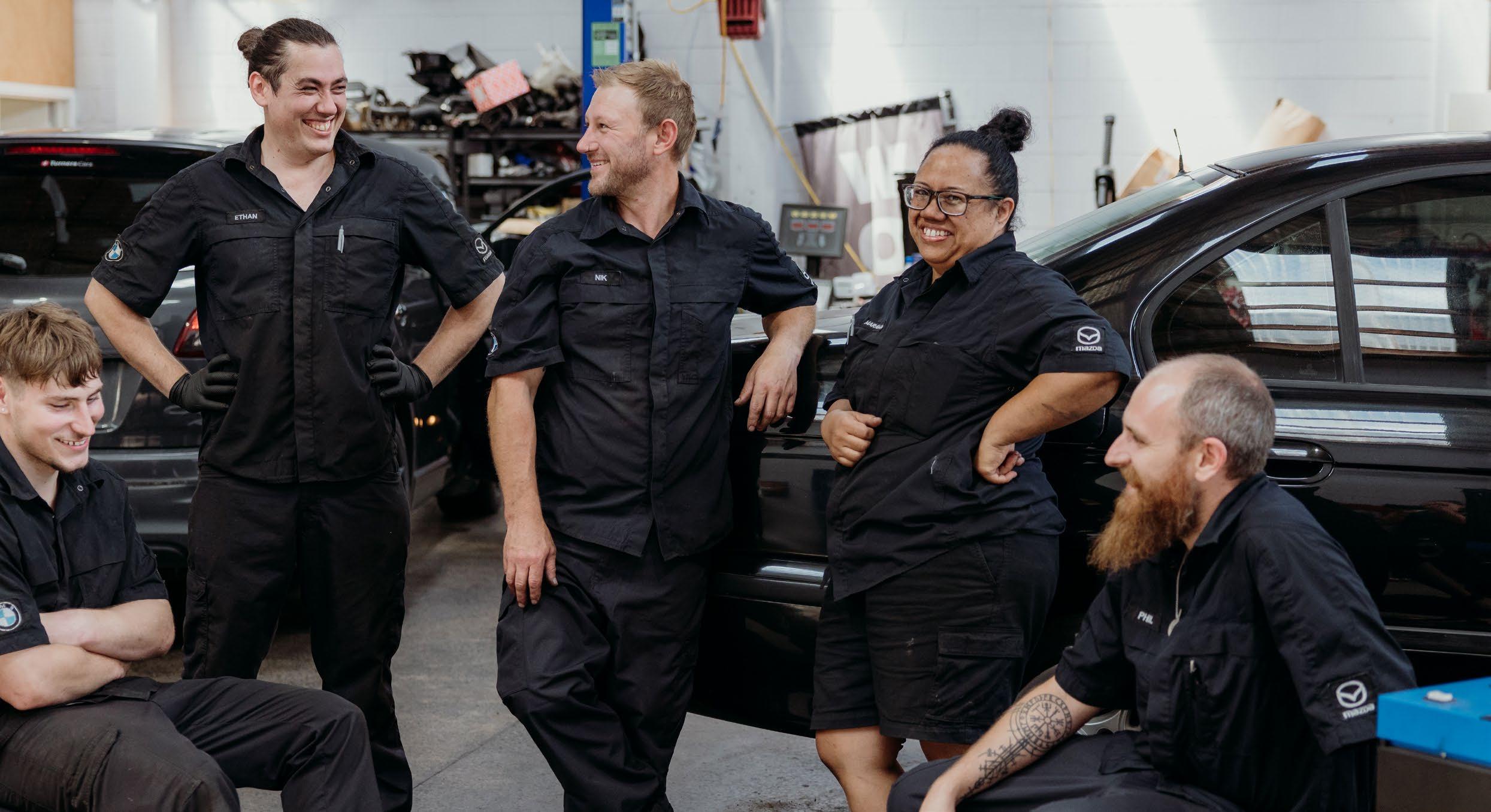
If a technician solves a difficult fault, helps another team member or receives praise from a customer, acknowledge it. Recognition doesn't need to involve bonuses, gift cards or employee-of-the-month programs. A simple "good job" delivered at the right moment can have a surprisingly powerful impact.
Everyone wants to feel that their efforts are appreciated.
Address problems early
The unfortunate reality is that workplace issues arise from time to time. People have disagreements. Attitudes change. Standards slip.
One of the biggest mistakes owners make is hoping these problems will somehow sort themselves out. They rarely do. In fact, unresolved issues generally get worse over time and begin affecting the rest of the team.
If something doesn't seem right, address it.
If someone is becoming disruptive, address it.
If performance is slipping, address it.
Employees respect leaders who are prepared to have difficult conversations when required.
Invest in growth
The automotive industry is changing at a rapid pace. New technologies, advanced diagnostics and changing vehicle systems mean ongoing learning is no longer optional. However, employee growth isn't just about attending training courses.
I've seen technicians thrive simply because they were given more responsibility, trusted to mentor apprentices or challenged with more complex work. It's human nature to want to improve and develop. When employees feel stagnant, that's often when motivation starts to decline. People generally perform at their best when they feel they are moving forward.
Remove unnecessary frustrations
Sometimes poor performance has very little to do with the employee. I've visited workshops with outdated equipment, poor communication systems, cluttered workspaces and inefficient processes. Any surprise that the owner wonders why staff seem frustrated.
Most people come to work wanting to do a good job. Our responsibility as business owners is to create an environment where they can. Take a good look around your workshop. What are the daily frustrations your team deals with? What slows them down? What causes unnecessary stress?
Fixing these issues can have a surprisingly positive impact on morale and performance.
Culture is built every day
Many workshop owners think culture is something that gets discussed during staff meetings or annual reviews. The reality is that culture is built every day through hundreds of small interactions. It's shaped by the behaviours you reward, the standards you enforce and the example you set.
The workshops that consistently get the best out of their employees aren't necessarily the ones paying the highest wages or operating out of the newest buildings. More often than not, they're the workshops where people know what's expected, feel respected, continue learning and take pride in their work.
Build that type of culture and you'll be amazed at what your team can achieve.
Determination AND Built ON People
More than 20 years of growth, driven by great people, strong values, and a commitment to customers.
What started as a small mobile mechanical operation in 2005 has grown into one of the lower North Island's leading commercial vehicle and equipment service providers.
Today, Mobile Mechanical Solutions (MMS) employs 45 people across three branches in Palmerston North, Masterton and Whanganui. The company provides workshop repairs, field service support, parts sales, hydraulic services, breakdown assistance, and specialist franchise support to customers throughout the region.
While the business has grown significantly over the past two decades, its success has been built on a simple philosophy: invest in people, deliver exceptional service, and never stop improving.
Building a business through resilience
Like many successful New Zealand businesses, MMS has faced its share of challenges. Economic downturns, changing market conditions, industry skill shortages and customer pressures have all tested the business at various times. What has defined MMS is not the challenges themselves, but the way the team has responded to them.
The company has built a reputation for resilience, adaptability and a willingness to find solutions. Rather than standing still, MMS has continually evolved, investing in new capabilities, expanding services and developing its people to meet the changing needs of customers.
That mindset has helped the business grow steadily and sustainably for more than 20 years.
People first
At the heart of MMS is a belief that people are the company's greatest asset.
The business has made a significant commitment to creating career opportunities within the heavy automotive industry, investing heavily in training, apprenticeships and leadership development.
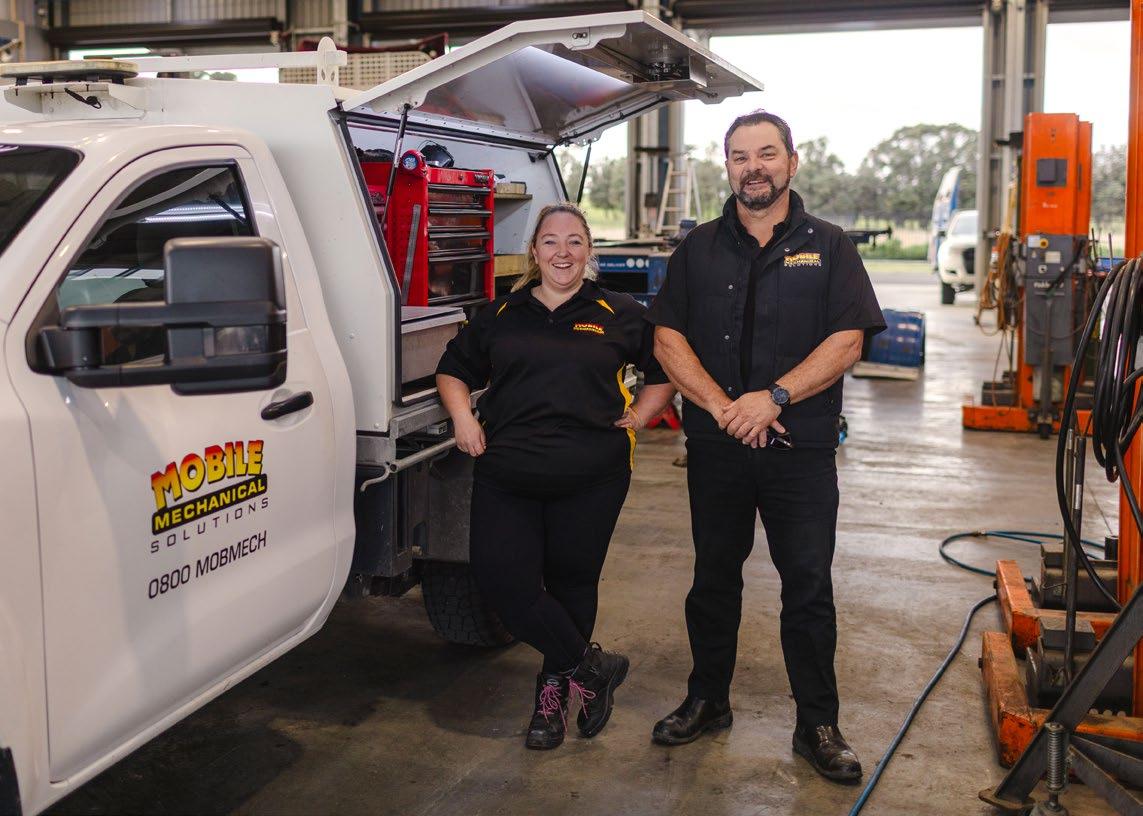
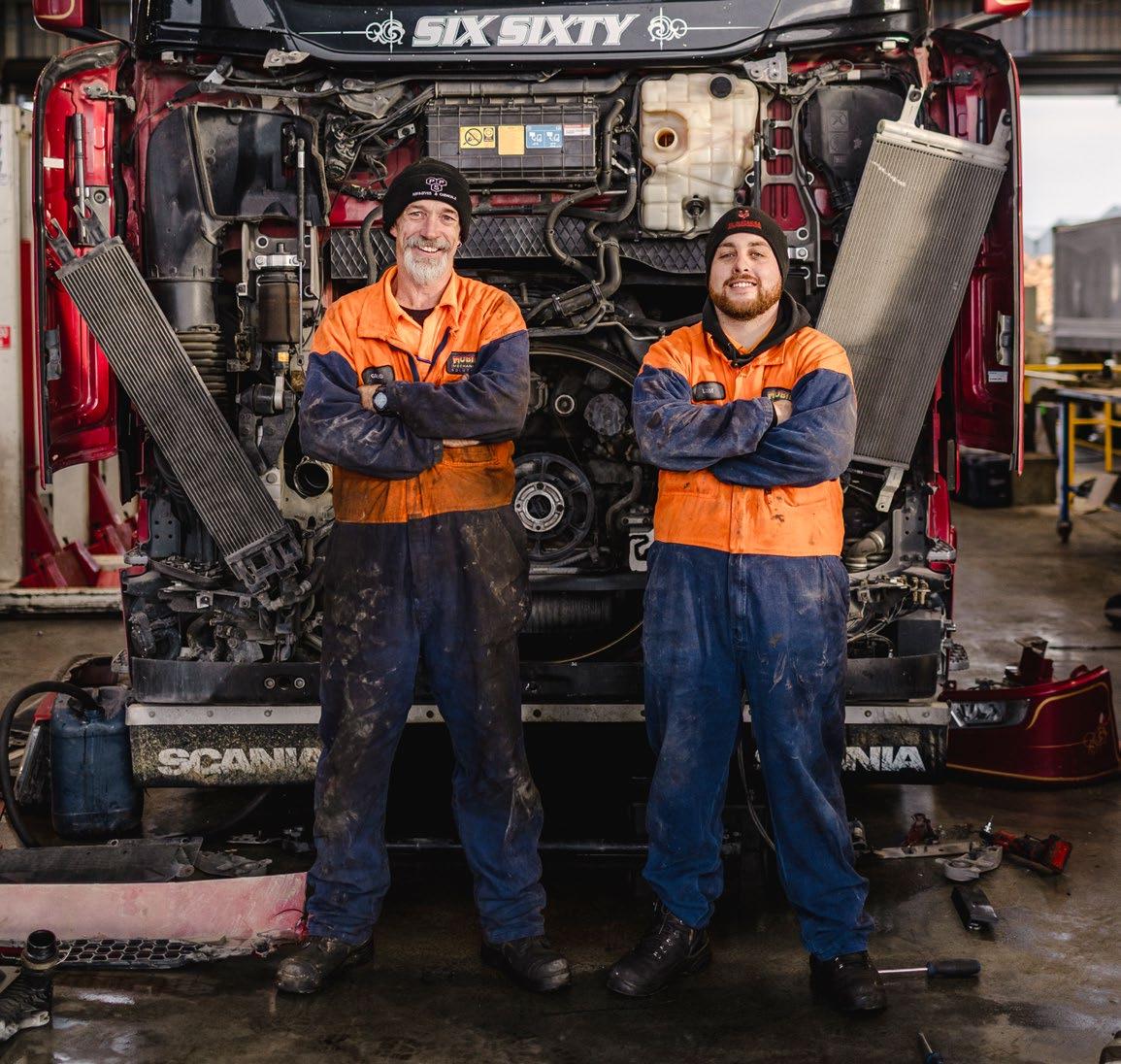
Through partnerships with local schools, work experience programs and industry training organisations, MMS actively encourages young people to consider careers in the transport and heavy vehicle sector.
The company has seen many team members progress from apprentices and entry-level roles through to qualified technicians to leadership positions.
In an industry facing ongoing skills shortages, MMS believes the solution lies in developing talent from within and providing people with opportunities to build rewarding long-term careers.
The approach benefits not only the business, but also the wider industry and local communities it serves.
Creating a great place to work
MMS has worked hard to create a culture where people feel valued, supported and connected to the success of the business.
The company operates under the principles of Open Book Management and the Great Game of Business, giving employees visibility of key business performance measures and helping them understand how their contribution impacts overall success.
By sharing information, encouraging accountability and celebrating achievements, the business has created a highly engaged team environment where everyone understands the role they play.
Employees are encouraged to continue learning, develop new skills, contribute ideas and take ownership of their work.
The result is a workplace culture built on trust, teamwork and continuous improvement.
Diversification Creates Strength
One of the keys to MMS's long-term success has been diversification.
Today, the business supports customers across the transport, construction, agriculture and commercial sectors, providing services for a wide range of trucks, trailers, machinery and equipment.
MMS represents leading industry brands, including Scania, MAN, Western Star, Detroit, Isuzu, Iveco, Kobelco and Bobcat, while also being the Hydraulink distributor for Palmerston North.
Supporting the 3 workshops is a fleet of 12 fully equipped service vehicles, allowing technicians to respond quickly to breakdowns and provide on-site support throughout the lower North Island.
This combination of workshop capability, mobile service support and specialist technical expertise provides customers with a true one-stop solution.
Looking ahead
While MMS is proud of its achievements over the past 20 years, the focus remains firmly on the future.
The company continues to invest in facilities, technology, equipment and training, while maintaining the values and culture that have underpinned its success.
Growth remains important, but equally important is ensuring MMS continues to be a place where people enjoy coming to work, customers receive exceptional service, and team members have opportunities to grow both personally and professionally.
From its beginnings as a small mobile operation to a business employing 45 people across three locations, the story of Mobile Mechanical Solutions is ultimately a story about people.
People who embraced opportunities.
People who supported one another.
People who were prepared to work hard, overcome challenges and keep moving forward.
More than twenty years on, that determination continues to drive the business every day.
MTA’s Manifesto Launch
Supporting Members by contributing to the conversations shaping the industry.
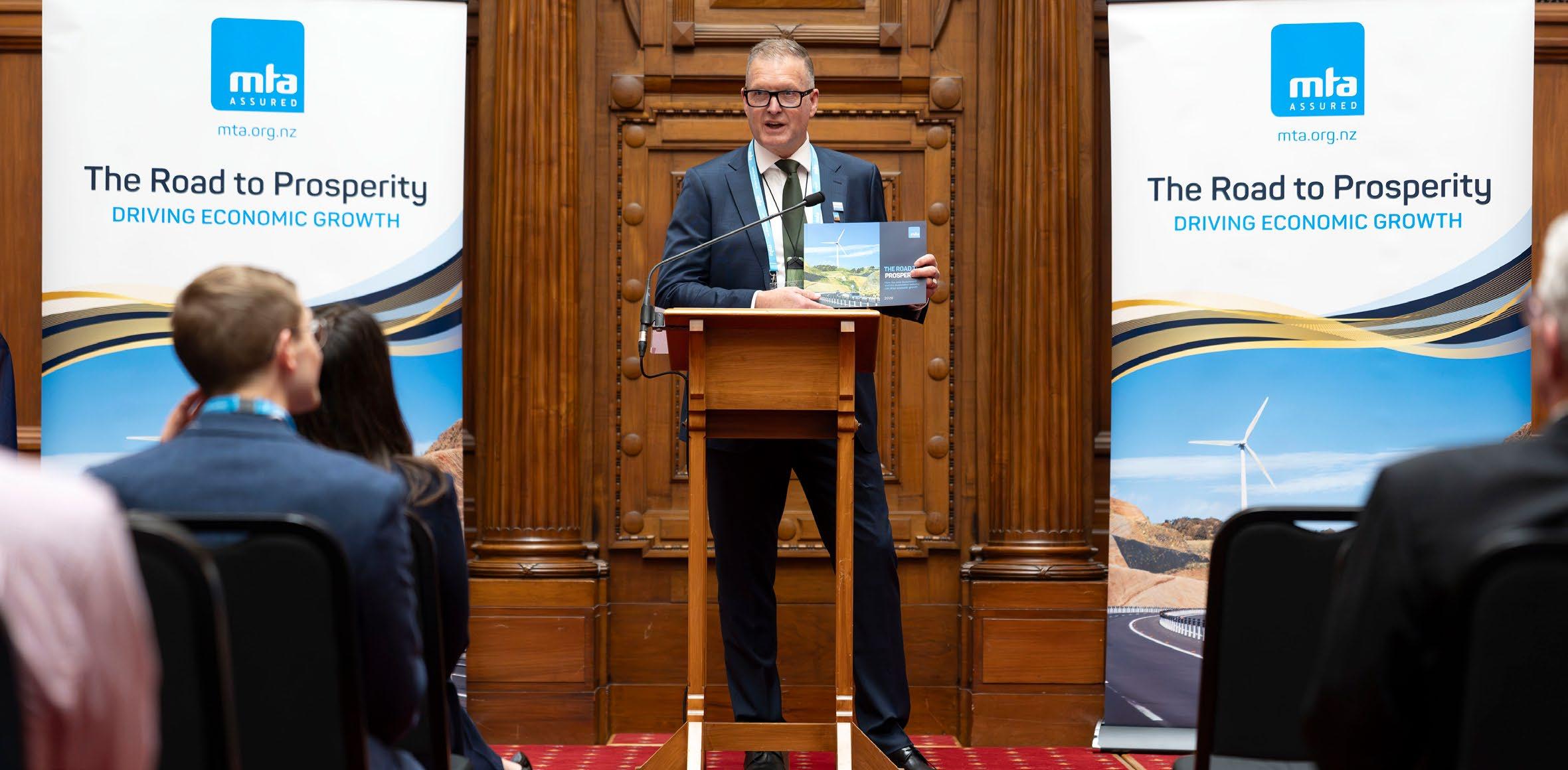
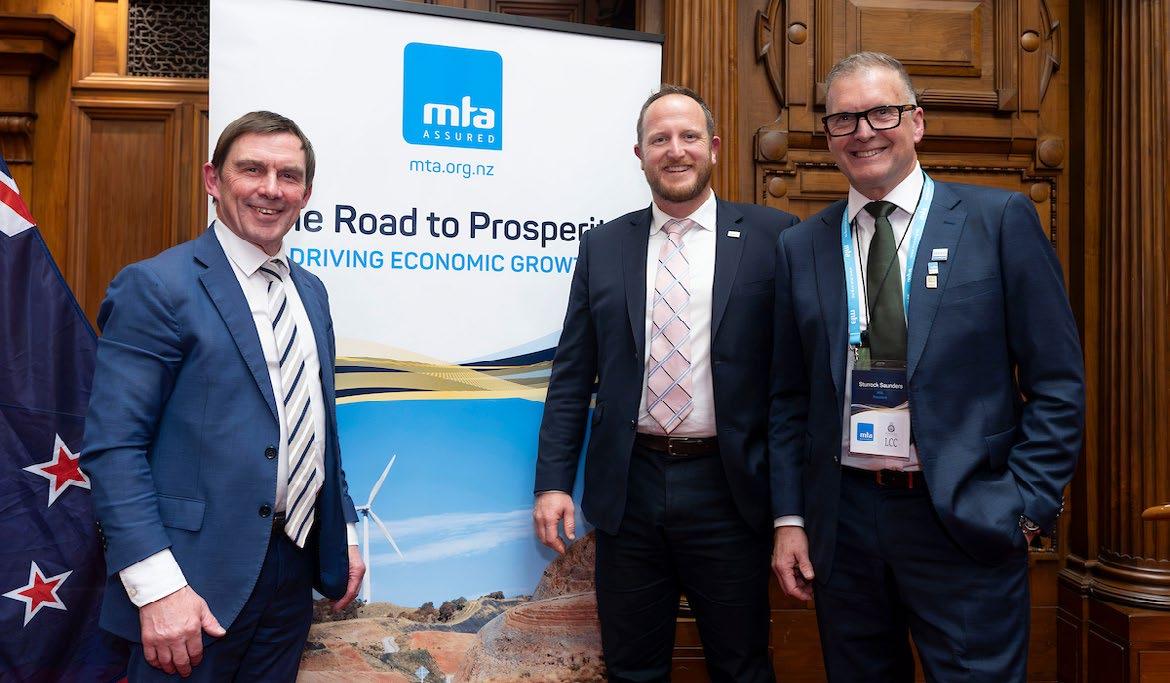
On Wednesday 1 July, MTA’s election year manifesto,
The Road to Prosperity, was launched at Parliament.
The event brought together industry leaders and policymakers to discuss the future of New Zealand’s automotive sector and the role Government can play in supporting its success.
Representing Capricorn at the event were New Zealand Board Director James Candish and Stakeholder Engagement Specialist Niall Naghten.
Hosted by the Hon Erica Stanford and attended by MPs from across the House, the manifesto outlined a roadmap for closer collaboration between government and industry. A key message from the event was the important role the automotive sector plays in supporting New Zealand’s economy to grow.
What is being asked
The manifesto outlines 20 calls for action, grouped under four key themes:
A skilled workforce
Creating stronger apprenticeship, training and migration pathways to help businesses attract, develop and retain the skilled people needed for the future.
A safer fleet
Supporting initiatives that encourage fleet renewal, improve vehicle safety outcomes and ensure New Zealand's ageing vehicle fleet remains fit for purpose.
A fair playing field
Modernising regulatory settings so automotive businesses can operate with greater confidence, embrace new technologies and deliver better outcomes for consumers.
A focus on crime
Taking stronger action on fuel theft and other industry-related crime to reduce the burden on businesses and improve safety across the sector.
Looking ahead
Following the election in November, the next Government will have an opportunity to work closely with our industry to ensure policy settings support a strong, sustainable automotive sector.
Capricorn congratulates MTA on the launch of the manifesto and thanks the Members who contributed to its development.
Members are encouraged to read the manifesto and share their thoughts with MTA
https://issuu.com/mtanz/docs/the_road_to_prosperity
made simple Rewards+
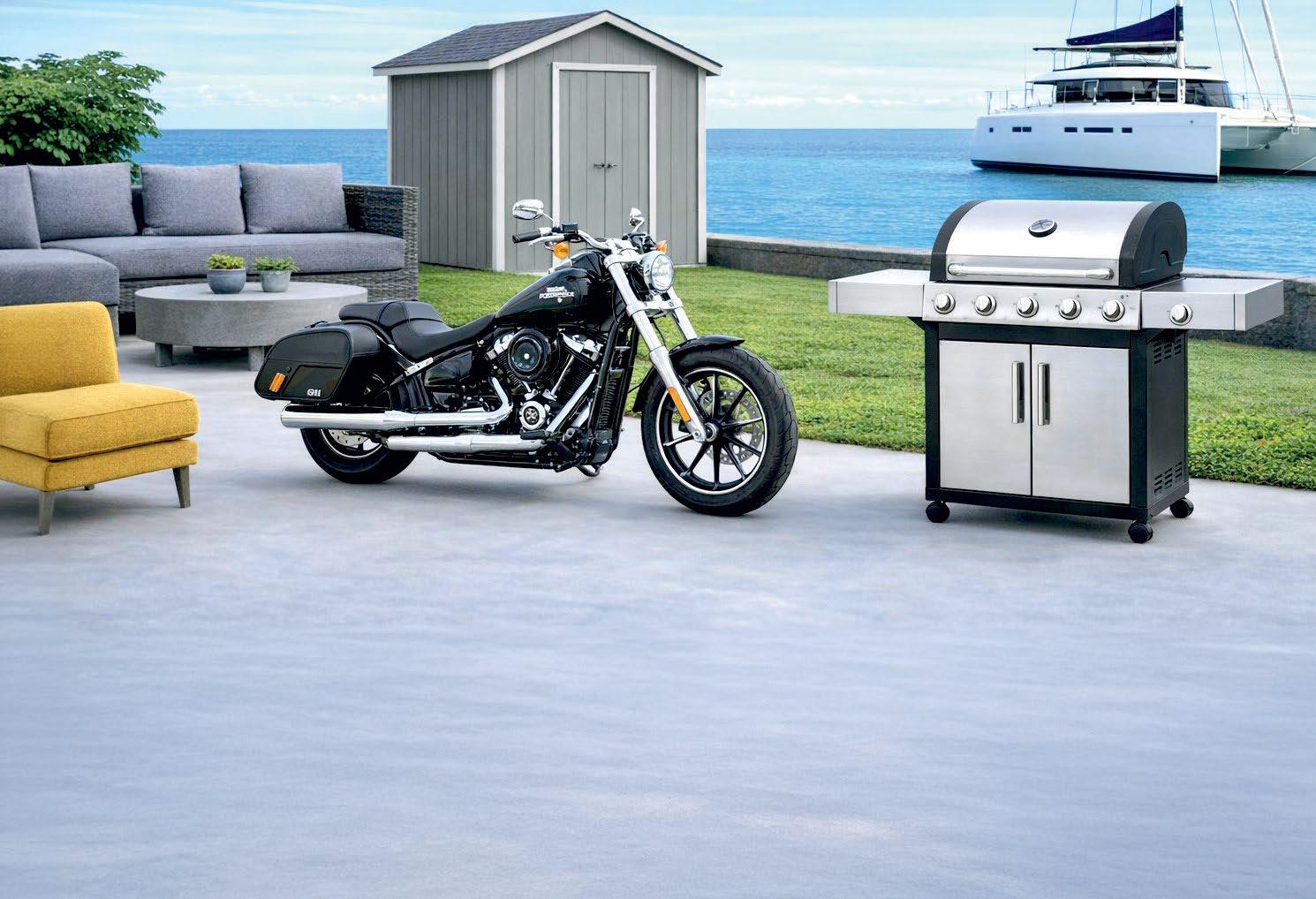
Rewards+ gives you the flexibility to use your Rewards Points to redeem just about anything you want!*
Obtain a sales invoice addressed to 212F Submit invoice via Rewards+ Await approval from
Minimum spend: $3,000
Invoice requirement: Must be addressed to 212F
Reward coverage: Purchase must be fully covered by Rewards Points
Product type: Must be a tangible good Exclusions: Cannot be used for travel
Fun Zone
Submit your entry at cap.coop/funzone by 31 August 2026
June winner: Wanganui Auto Electrical who WON 5,000 Bonus Rewards Points
SPOT THE DIFFERENCE (5 differences to find!)
WORD HUNTER (15 words to find!)
Last month's answers
Please note that this competition and participation in the Capricorn Rewards program are subject to terms and conditions. For the full terms and conditions, visit cap.coop/tc.
Automotive
Business
Capacity
Communication
Culture
Efficiency
Engineering
Growth
Leadership
Mechanics
Performance
Systems
Team
Transport
Workforce
Simplify filling up with the Capricorn Fuel Card
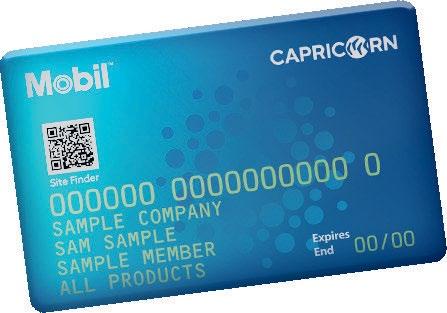

Accepted by a wide range of service stations across New Zealand, the Capricorn Fuel Card lets you fill up without the fuss.
Just scan your card at a participating service station and the transactions will be automatically added to your Trade Account.
Save 8 cents off a litre (incl. GST) at the pump at participating service stations
Accepted at over 290 Mobil, Allied Fuel Stop, NPD and Waitomo fuel stations
Unlimited number of cards
Ready to simplify filling up?
Visit myCAP and complete your application on the Capricorn Fuel Card page.*
csl@capricorn.coop | cap.coop/ GetFuelCard