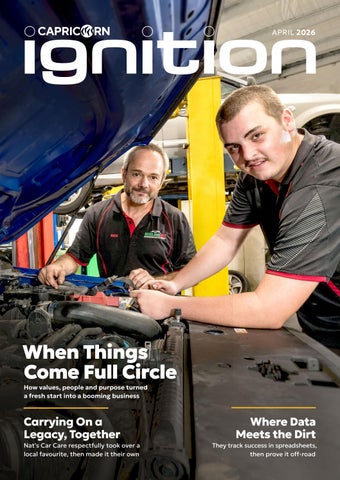
How values, people and purpose turned a fresh start into a booming business
Carrying On a Legacy, Together
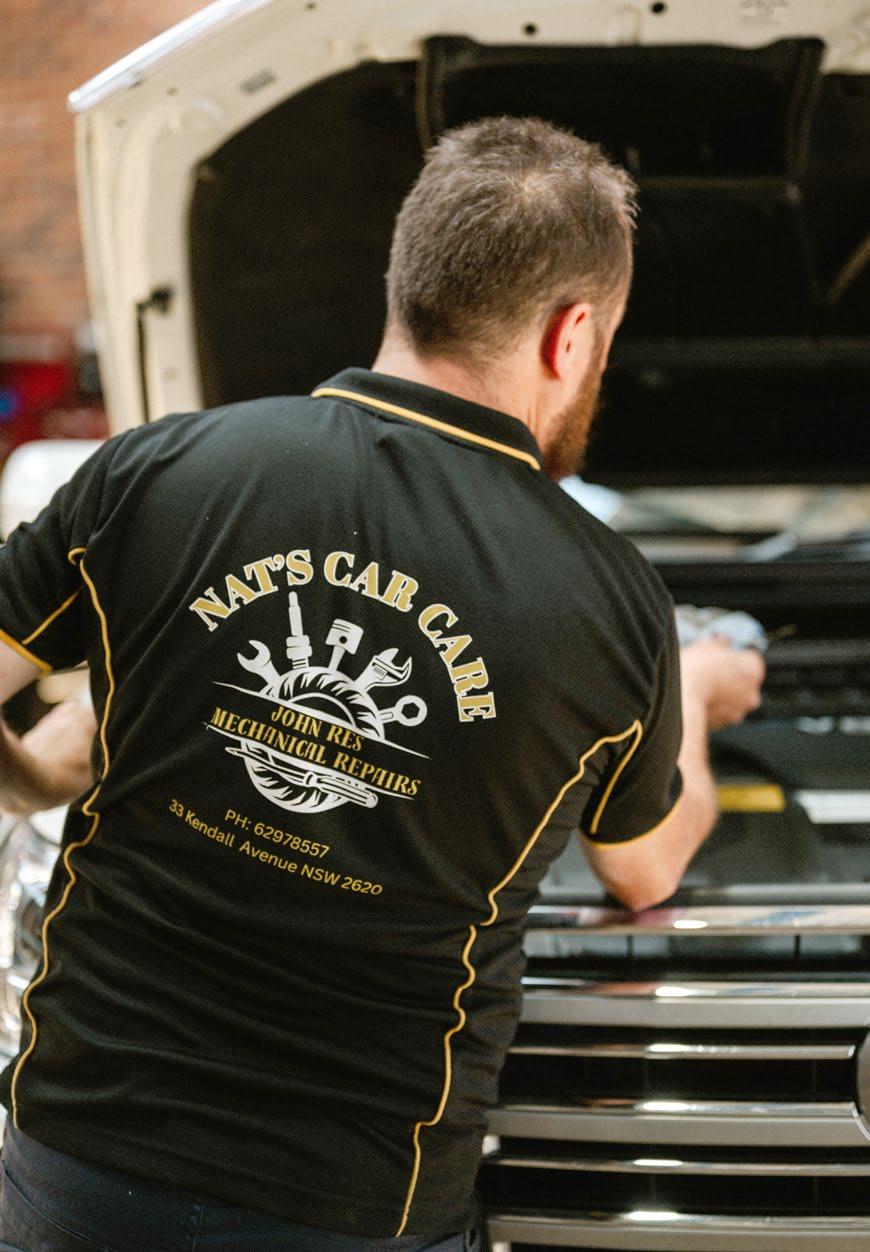
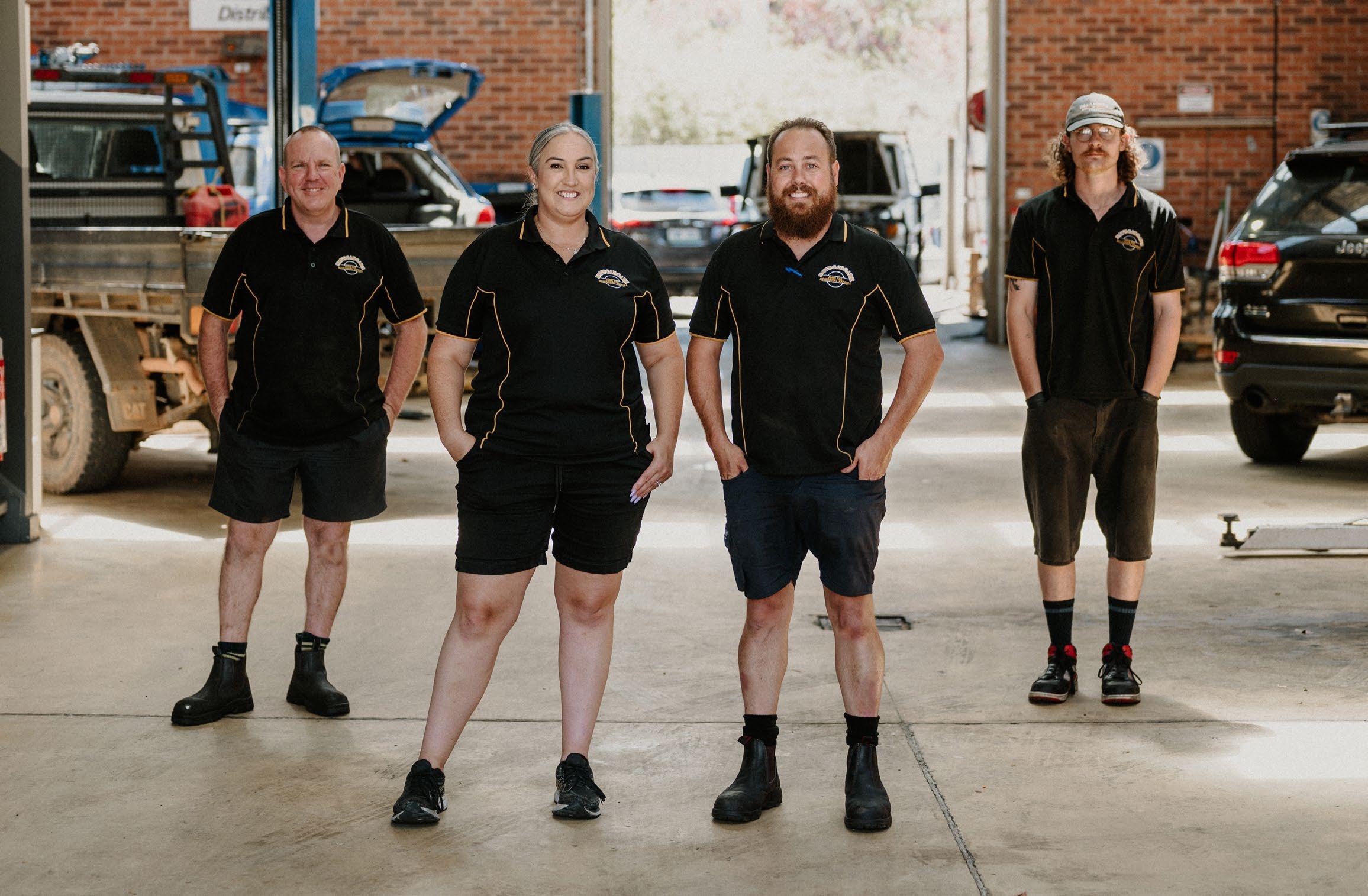
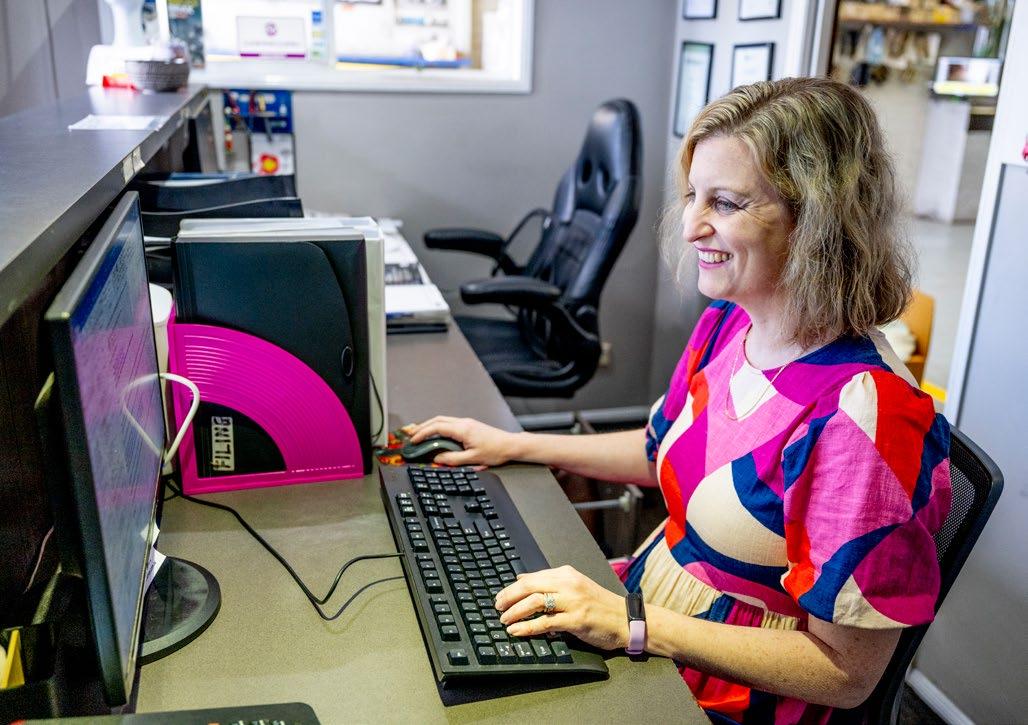
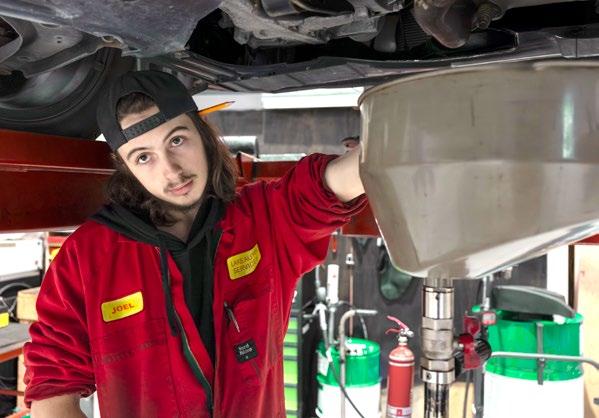
Nat's Car Care respectfully took over a local favourite, then made it their own
They track success in spreadsheets, then prove it off-road
CEO’s message
It's shaping up to be another important month for our Capricorn Community, with a lot happening across information security, skills and industry advocacy.
One milestone I’m particularly proud of is that more than 80% of Members are now using Capricorn ID. That represents tens of thousands of people across Australia and New Zealand taking an important step to protect their businesses online. Capricorn ID gives Members greater visibility and control over who can access their account, while Multi-Factor Authentication adds an extra layer of protection against fraud and unauthorised access. In an increasingly digital environment, keeping Members safe online is critical and it’s great to see our Community embracing these changes with confidence.
We’re also excited to see the Rising Stars awards return, with nominations now open. This program recognises apprentices who are choosing a future in automotive and are committed to building their skills in the trade. Passionate apprentices are the future, and by celebrating their achievements along with the workshops that support them, we reinforce real opportunity, pride and progression for the industry. Be sure to get your nominations before the end of the month.
Finally, I want to encourage every Member to take part in our State of the Nation research. As a member based organisation, your voice matters. This research relies on real experiences from workshops and businesses on the ground, and it directly informs how we advocate, where we invest, and how we support the industry.
Our State of the Nation research has consistently highlighted how severely the skills shortage is affecting the automotive industry. That insight informed Capricorn’s acquisition of Australian Skilled Migration (ASM), who have recently become a Capricorn Preferred Supplier. This is a practical example of how we turn research into action to help support Members and the future workforce. If the 2026 State of the Nation survey lands in your inbox, I encourage you to take the time to complete it. Together, we can influence change.
Thank you for being part of Capricorn and for the role you play in shaping a secure, skilled and sustainable future for our industry.
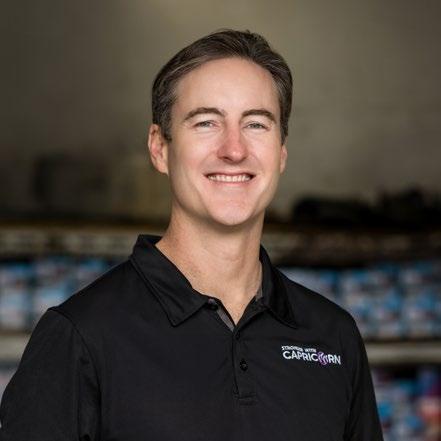
Brad Gannon Group CEO
4 When Things Come Full Circle
How values, people and purpose turned a fresh start into a booming business.
8 Carrying On a Legacy, Together Nat's Car Care respectfully took over a local favourite, then made it their own.
12 Running on Empty: Why Technician Burnout Is Now a Workshop KPI TaT Biz explore solutions to help you combat burnout and strain.
14 Where Data Meets the Dirt
They track success in spreadsheets, then prove it off-road.
18 Shape the Future of Capricorn
Your opportunity to influence the future direction of your cooperative.
Full Circle Come When Things
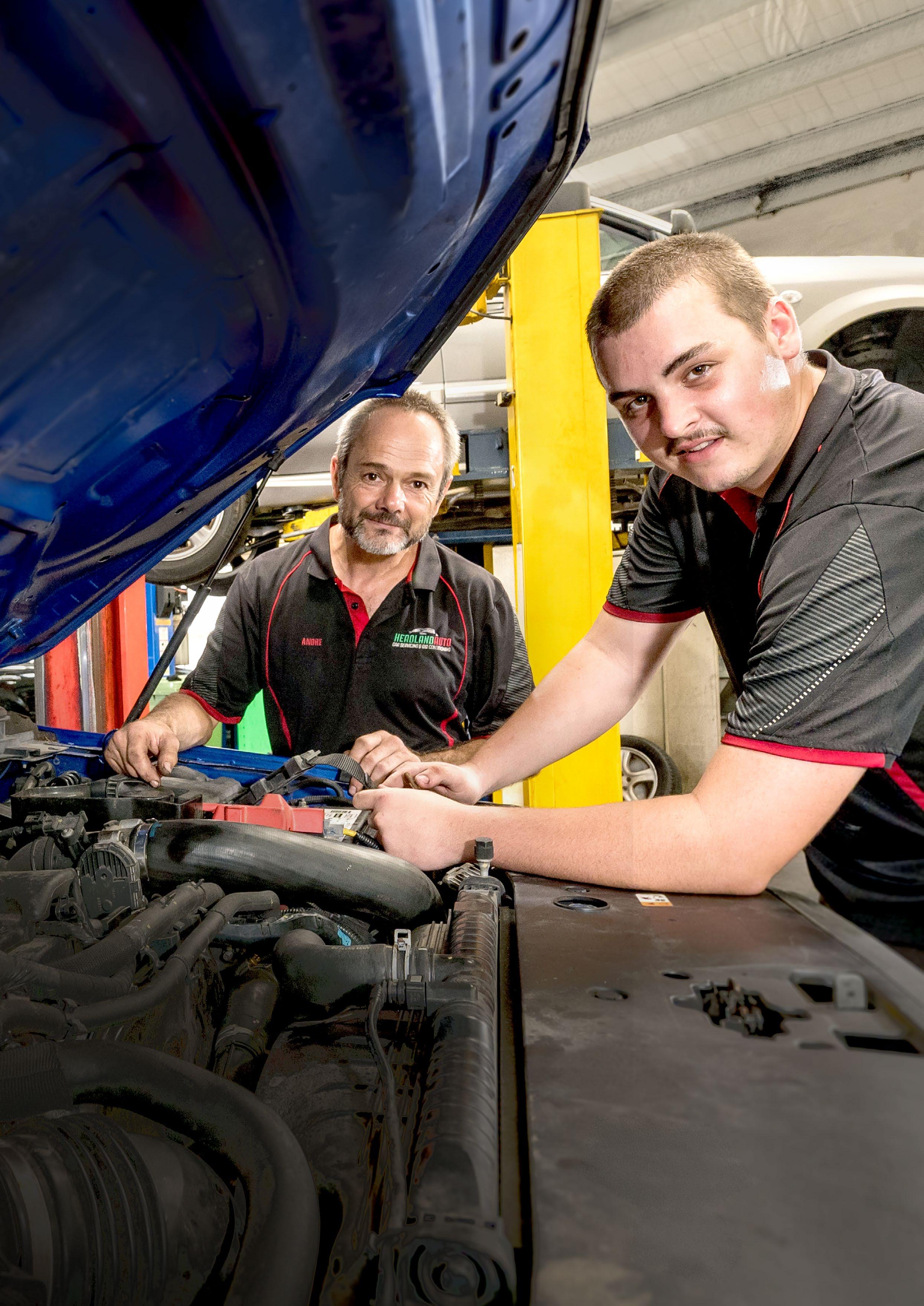
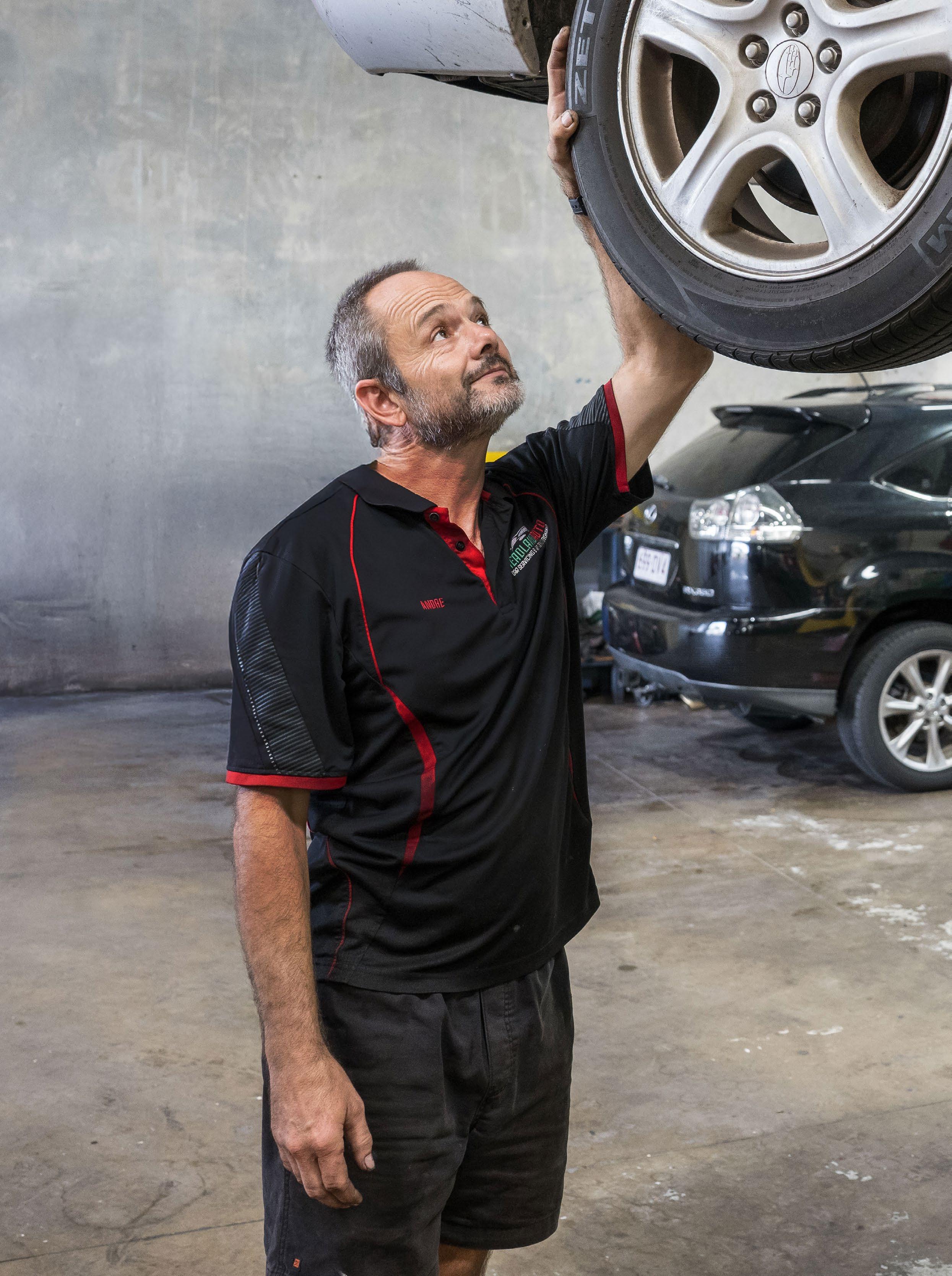
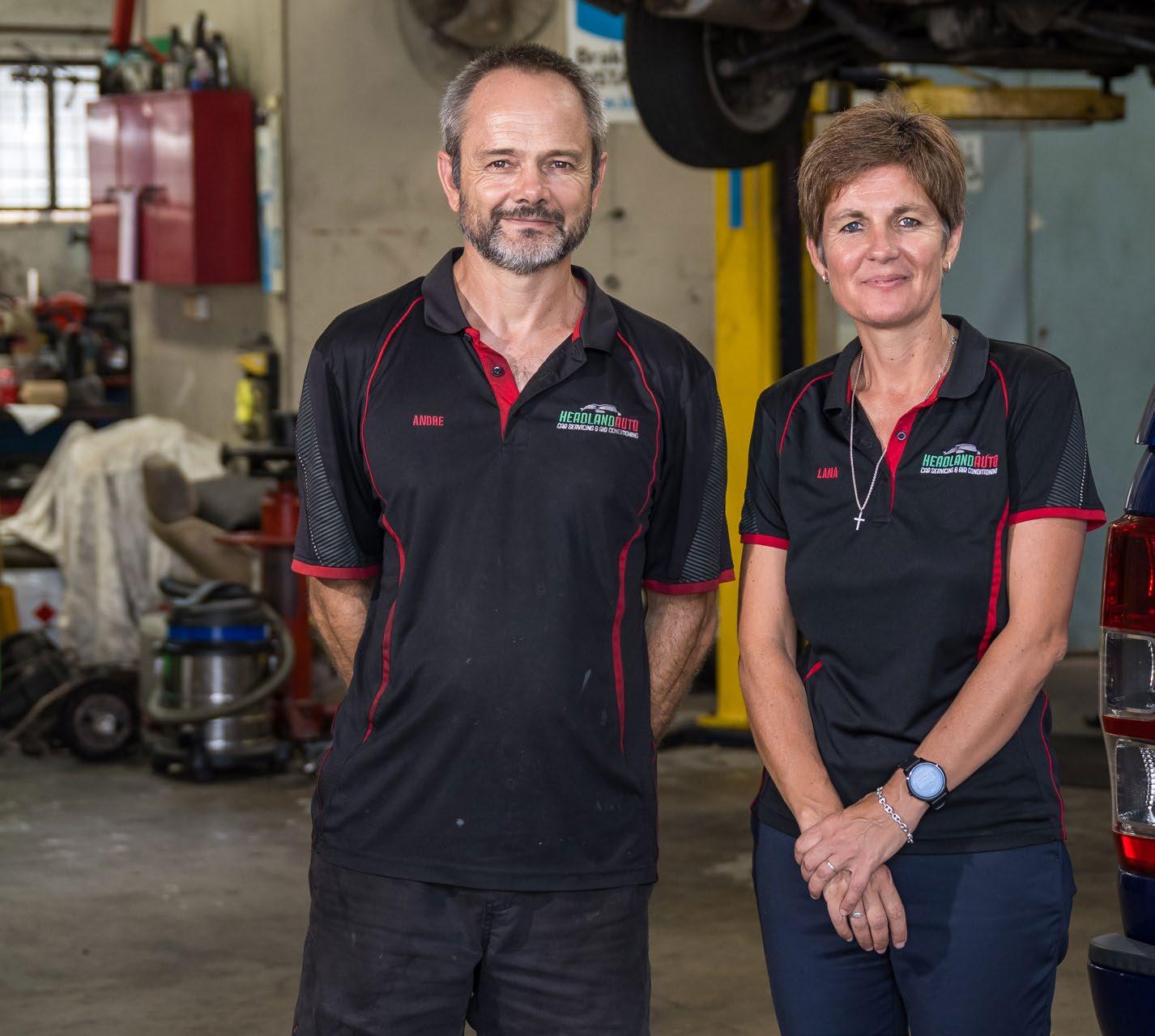
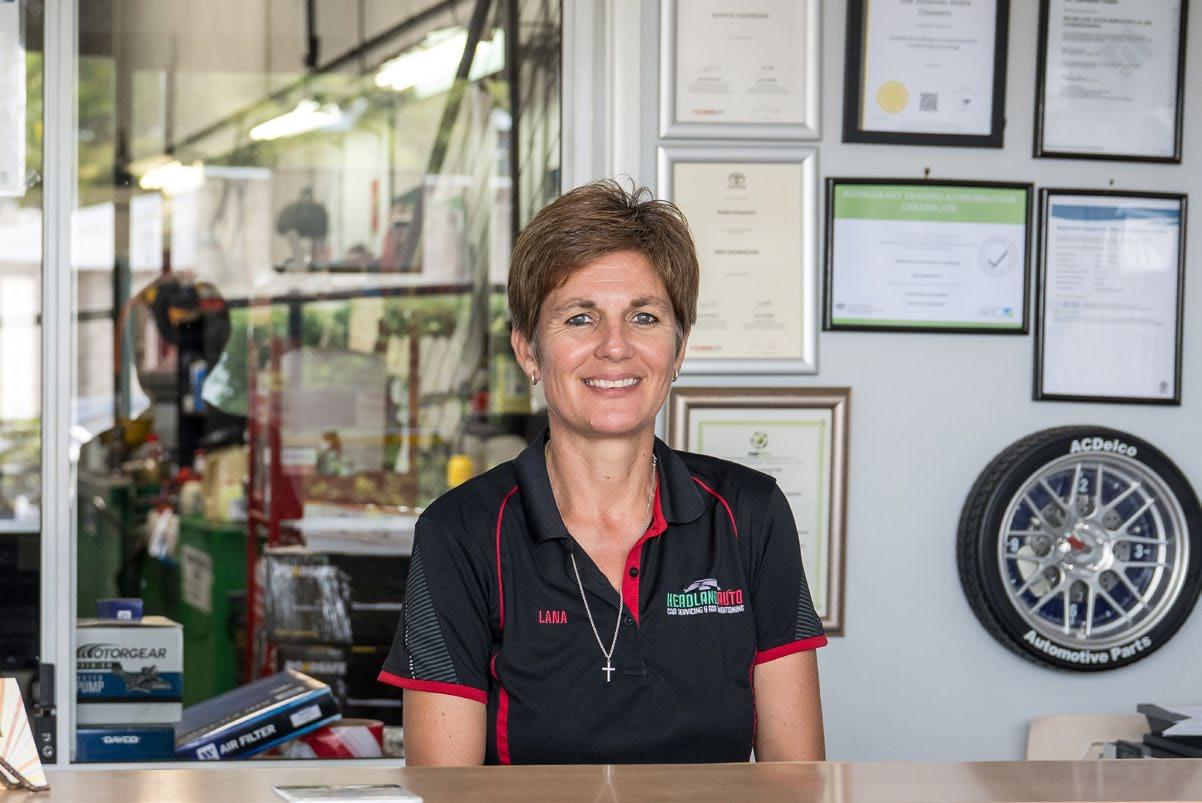
If you asked Lana and Andre Claassens where they thought they’d be ten years ago, running a successful automotive workshop in Australia wouldn’t have been the answer.
Back then, their lives were firmly rooted in South Africa; careers established, businesses built, routines familiar. Andre had spent decades in the automotive world, starting as a tractor mechanic and building a deep technical skillset over time. Lana, meanwhile, brought years of experience in accounts and business management, having run multiple businesses of her own.
But life has a way of forcing decisions you never planned to make.
Finding their community
By 2018, the turmoil and uncertainty in South Africa had reached a tipping point. Safety concerns, instability and a growing sense that the future
was no longer secure pushed them to consider a move — not because they wanted to leave, but because staying no longer felt possible. “It wasn’t easy,” Lana says. “You give up everything you know — your home, your business, your sense of certainty — and take a leap without knowing exactly where you’ll land.”
Australia wasn’t part of the original plan. In fact, it wasn’t even on the radar. But a series of unexpected opportunities — what Lana describes simply as faith — rerouted their journey. What followed was a long, demanding process of migration, work in remote Australia, and slowly rebuilding a life from the ground up.
“It felt like climbing seven Mount Everests,” she says. “But looking back now, it all led us exactly where we needed to be.”
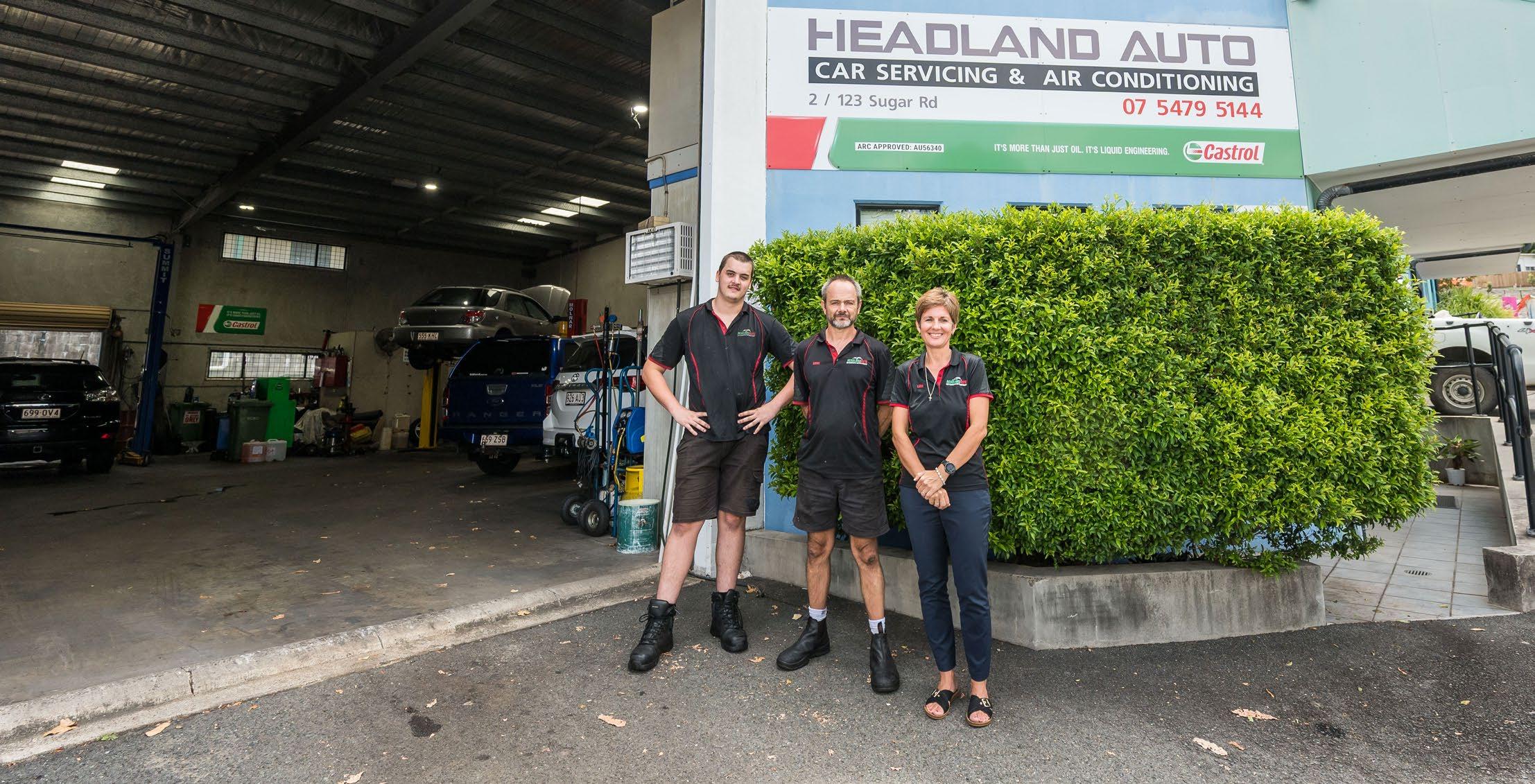
That place turned out to be Headland Auto Servicing & Air Conditioning: a long-standing workshop with deep
roots in its local community. Taking over an established business came with its own challenges. There were systems to learn, expectations to manage and a reputation to uphold, all while finding a way to make it their own.
Five years on, the business is thriving, though Lana is the first to admit that their success hasn’t come from following a textbook approach to business.
Instead, it’s come from trusting their instincts.
Choosing values over the easy option
From day one, Lana and Andre made a conscious decision to operate with transparency, empathy and a strong sense of moral responsibility; even when that choice didn’t always make financial sense. “We’d rather help someone than take money just for the sake of it,” Lana says. “Sometimes it means not charging for a diagnostic or a check, or not fully charging accordingly — but we’d rather trade a couple of dollars for a returning customer, anytime”.
It’s an approach that some would argue goes against conventional business wisdom. Lana acknowledges that openly. “It’s probably not the best way to do business,” she says with a laugh. “You can burn your fingers. But for us, it’s about doing what feels right.”
That philosophy shows up most clearly in the way Headland Auto supports its community. With a customer base that includes elderly locals, young travellers and people far from home, there are moments where compassion outweighs profit. A quick fix for someone who can’t afford more. Extra time spent explaining options. Jobs quietly done at no cost.
For Lana, it’s not about being seen as generous, but about staying true to their values. “We believe in giving back,” she says. “Not because we expect something in return, but because it’s the right thing to do.”
When trust becomes momentum
And yet, in a way, things do seem to come back around.
Despite not chasing growth for growth’s sake, the workshop continues to get busier. Customers return. Word spreads. Trust compounds. “I honestly don’t know why we’re so busy,” Lana admits. “But I do think people feel when you’re genuine. They know when you’re not trying to take advantage of them.”
That sense of trust has become the engine behind their success — steady, reliable and built over time. Like a wheel mounted square against a true rotor, with everything torqued correctly and aligned as it should be, the system works because every part is doing its job. There’s no vibration, no pulling; just smooth, consistent forward motion. For Headland Auto, that alignment comes down to values, people and purpose all working together.
There have been challenges along the way, of course. Lana, as a woman in a male-dominated industry, has had to prove herself more than once — especially when answering the phone. Rather than pushing back, she leaned in, building her technical knowledge so she could speak with confidence and authority. “If someone doubts me, I take it as a challenge,” she says. “And I make sure I know what I’m talking about.”
But more than anything, Lana and Andre’s story is one of resilience. It’s about trusting their gut through uncertainty, staying anchored to their values, and believing that if you put good into the world, eventually good will find its way back. Full circle.
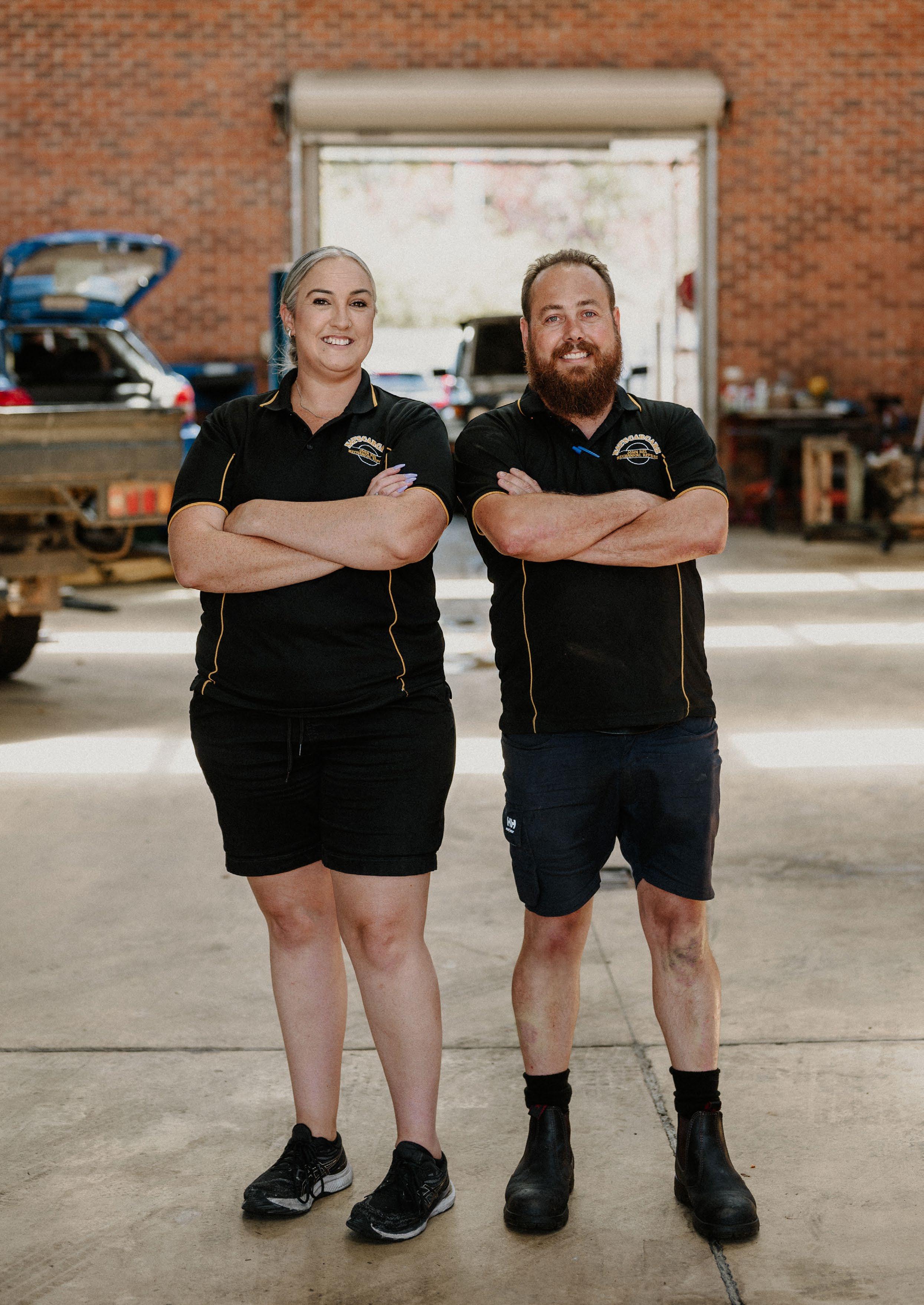
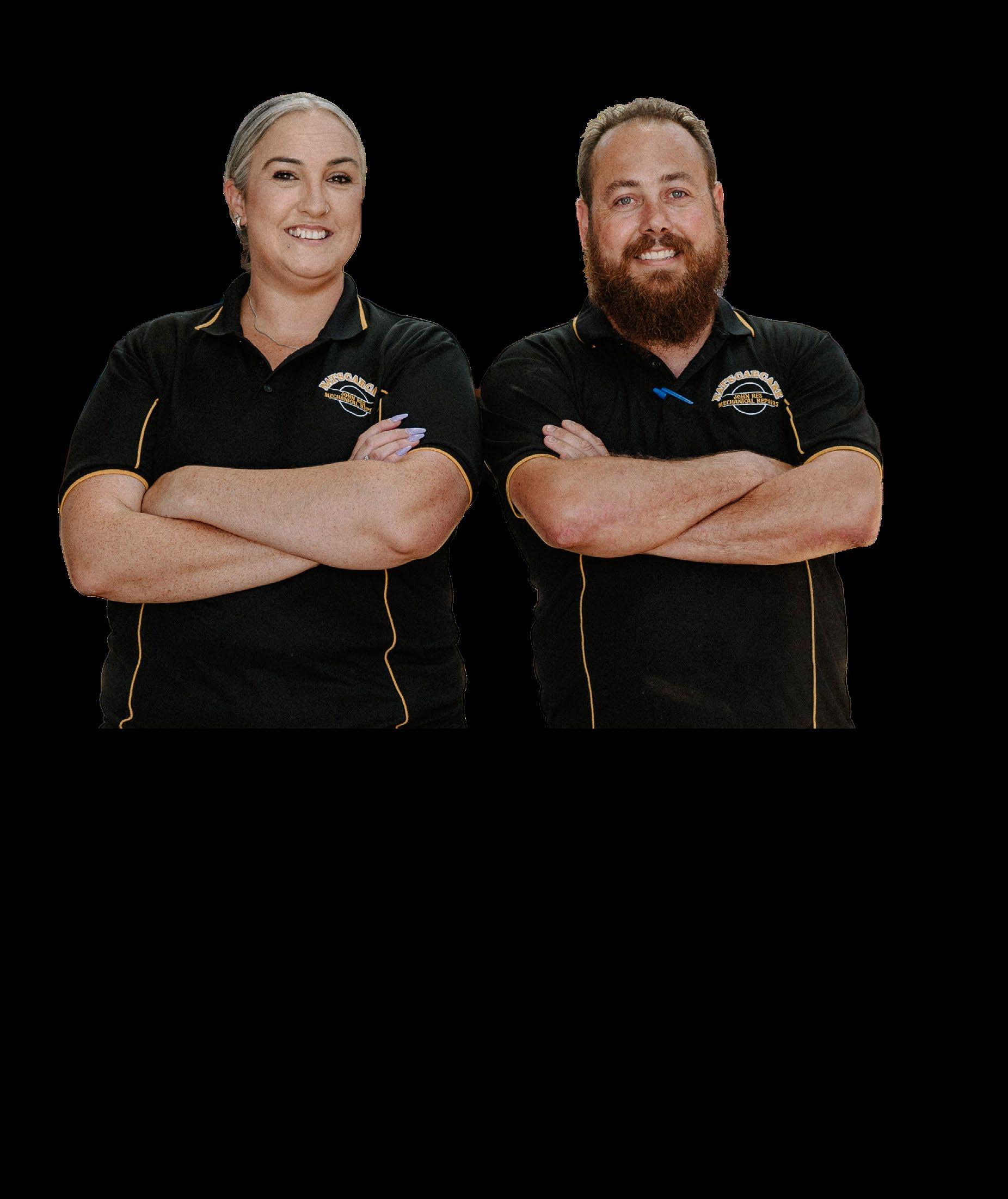
Carrying On a Legacy, Together
Hot pans clatter against stainless steel benches. Service bells ring. Orders are shouted, sweat beads on foreheads, and the air hangs thick with heat, noise and urgency. Not many automotive journeys start here, but for Leah Williams of Nat’s Car Care, the kitchen is where it all began.
Trained as a chef, Leah spent years in windowless kitchens, working long hours alongside tight-knit teams, driven by timing, consistency and unspoken communication. It may seem worlds away from a mechanical workshop, but when the opportunity arose to support her partner, Nat White, in taking over a local automotive business, the transition felt more natural than expected.
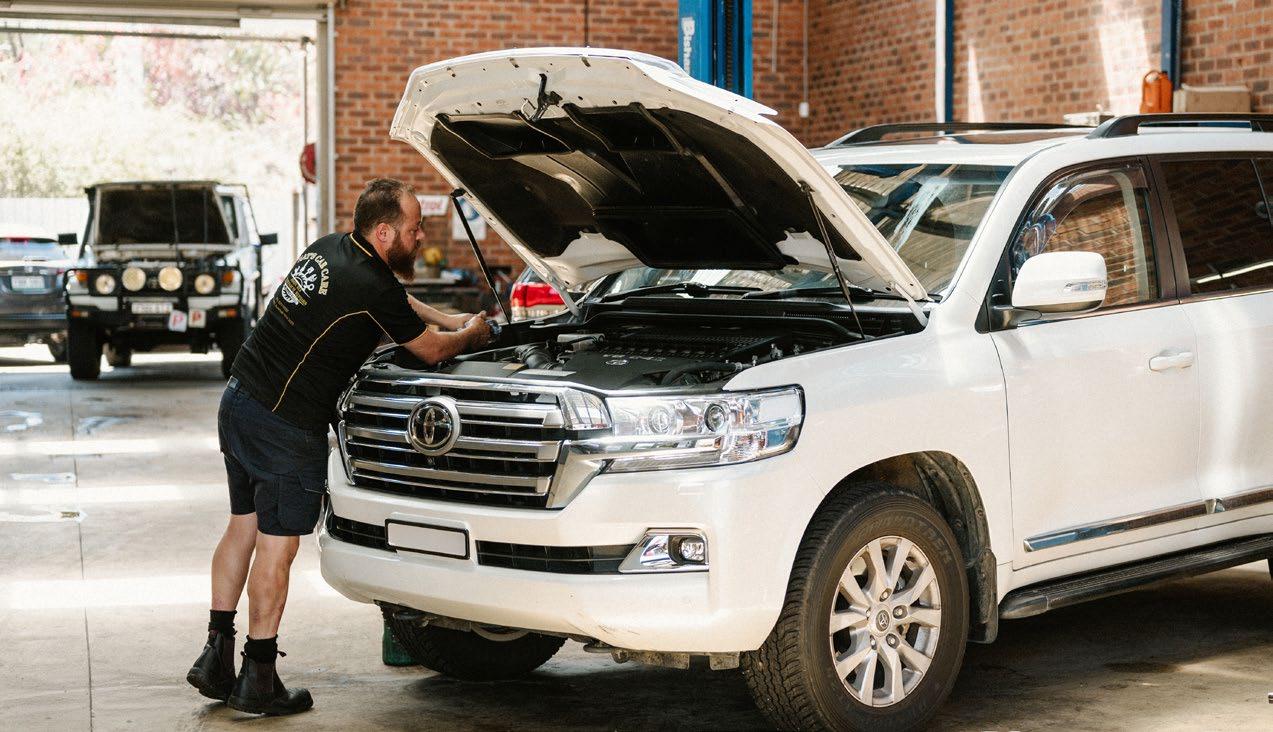
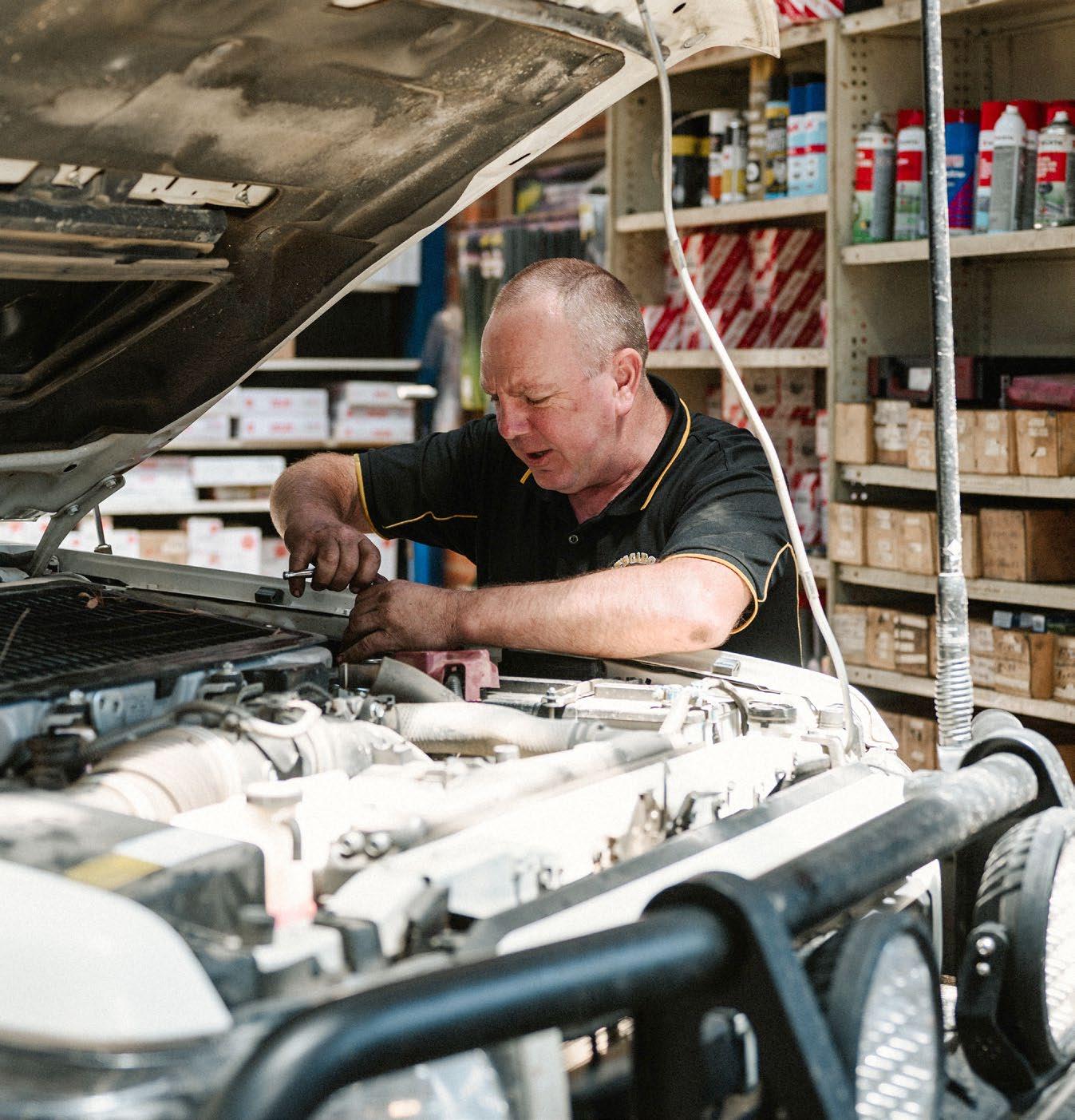
Two years on, Nat’s Car Care (trading as John Res Mechanical Repairs) is showing that the skills forged in high-pressure kitchens — respect for process, people and teamwork — can be just as valuable in the automotive industry as technical expertise.
A different way into the industry
While Leah’s background was hospitality, Nat’s has always been mechanical. From a young age, he was drawn to cars. Racing speedway as a kid, carrying out his own repairs, and stepping straight into an apprenticeship after leaving school.
The idea of owning a workshop had been discussed for years. So, when the chance came to purchase John Res Mechanical Repairs, the decision wasn’t about starting from scratch, but about stepping into something that already mattered.
The business had been run by John and Debbie Res for more than three decades and was deeply embedded in the local community. So, changing its identity was never on the cards for new owners, Nat and Leah.
“We weren’t interested in reinventing it,” Leah explains. “It was a great shop with a great reputation.”
John and Deb stayed on for around eight months to support the transition — a move that proved invaluable. Customers continued to see familiar faces alongside new ones, relationships were handed over with care, and standards were maintained without disruption.
For Nat and Leah, it set the tone for how they wanted to operate: with humility, continuity and respect for what came before.
Earning trust (the right way)
Taking over an established, community-focused business brought its own challenges.
Like many long-serving automotive businesses across Australia, John and Deb’s relationships with customers were deeply personal. They knew families, remembered names, and serviced multiple generations of vehicles. Maintaining that level of connection goes well beyond the realms of just ‘providing a service’ — it means they had a real sense of care for their customers.
“We were really conscious of making sure none of that customer service fell away,” Leah says. “It was never just about the car.”
The early months were focused on learning the rhythms of the business and finding their footing. Gradually, confidence grew. Systems were refined. Conversations became familiar.
The feedback that meant the most came quietly; customers telling them they hadn’t noticed a difference. That quality hadn’t slipped. That trust had been maintained.
“For Nat, that was a huge compliment,” Leah says.
Leah sees her role as helping customers feel informed, comfortable and respected — particularly in an industry that can sometimes carry unfair assumptions.
“For a lot of people, their car is one of the biggest investments they’ll ever make,” she says. “They need to feel confident in who they’re handing it over to.”
That confidence, she believes, is built through transparency, communication and consistency; and once earned, it needs to be protected.
Two years on, Nat and Leah are no longer simply custodians of a legacy. While they’ve worked hard to preserve the trust John and Deb built over decades, they’ve also established a loyal client base of their own. Through the introduction of updated processes, modern systems and a more structured approach to communication — including a stronger online presence across their website and social channels — the business has continued to evolve, without losing its personal feel. Some customers followed Nat from his previous work, but many more have arrived through word of mouth, drawn by consistency, transparency and care.
More than just a workshop
What Leah values most about the role is the human side of the business.
After years spent behind closed kitchen doors, the shift to a customer-facing environment has been refreshing. “You’re building relationships,” she says. “You’re hearing about people’s lives. That’s been the most rewarding part for me.”
The same philosophy extends to the team. Staff are local. The workshop is family-friendly. Lunches are shared. Kids drop by during school holidays. The business reflects the lives of the people who work there.
“We live here, we work here — our whole lives are here,” Leah says. “We love this community.”
Looking ahead, the goal isn’t expansion for expansion’s sake. It’s continuity.
“When we first started, people would say, ‘Oh, you’re just the new John and Deb,’” Leah says. “And we were happy with that.”
One day, she hopes someone else will be described as “the new Nat and Leah”.
By stepping into an existing legacy with care, supporting each other, and staying grounded in the community around them, Nat’s Car Care is building something steady and sustainable — not by changing what works, but by carrying it forward.
Running on Empty: Why Technician Burnout Is Now a Workshop KPI
By Jeff Smit
If you wanted a single phrase to describe the automotive aftermarket service-and-repair market right now, Capricorn’s 2025 State of the Nation nailed it – 'running on empty'.
Twenty-five percent of workshops reported reduced productivity because of the skills shortage, twenty-seven percent were turning work away, and twenty-eight percent said customers were waiting longer for repairs simply because there were not enough hands or hours available in the workshop. That context matters because technician burnout isn’t just a personal wellbeing or mental health issue. It’s a system-level risk that shows up as lower capacity, slower throughput, quality drift and higher staff turnover, especially in small automotive workshops where one absent technician can change the whole day’s plan.
The pressure triangle: shortages + complexity + workload
The skills shortage in our trade has been discussed for years, yet the data still points to a growing problem. A VACC/MTAA submission notes that thirty-five percent of the 26 core automotive occupations were assessed as 'in shortage'. It added that among surveyed
workshops, more than 2,000 vacancies were advertised in 2025, with fewer than 800 filled.
Jobs and Skills Australia’s 2025 Occupation Shortage List provides a broader labour-market signal: twenty-nine percent of occupations nationally are in shortage, and just over half of the occupations in persistent shortage from 2021 to 2025 were technicians and trades workers. In other words, the trades shortage isn’t a blip, it’s a structural condition.
Shortage alone doesn’t explain burnout. The second driver is diagnostic complexity. Vehicles are increasingly software-defined, with networked modules, calibration requirements, programming steps and a growing mix of hybrids and EVs. Capricorn reports that twothirds of workshops are already servicing EVs (most commonly hybrids), yet only sixteen percent feel they are prepared for a rise in battery-electric vehicles. That gap places an extra load on technicians who become the go-to for anything unfamiliar. Sound familiar?
The third driver is workload pressure and interruptions. Much of diagnosis remains trial and error and gut feel. Research into diagnostic support systems, such as TaT’s Tech Tina, shows that interface and process design can significantly reduce task time and effort. In a workshop,
that’s the difference between a controlled diagnostic workflow and a day of constant change: phone calls, parts chasing, quick looks and lastminute detours, all of which add time and frustration.
Why burnout hits profitability (fast)
Burnout doesn’t arrive unannounced. It starts as operational noise.
A 'quick look' can quickly become a multi-hour diagnostic challenge that then has to be added the queue.
Quality and accuracy drop when fatigue and time pressure collide (missed steps, rushed testing and misdiagnosis).
The front counter absorbs more conflict as delays and costs rise.
Overtime creeps in, but output doesn’t keep pace.
Capricorn’s data points to the human strain behind those symptoms: fifty-three percent of members cite finding and retaining skilled staff as their top concern, and forty-seven percent report struggling to maintain a healthy work–life balance.
A UK automotive wellbeing survey found that stress was the most common issue with poor work–life balance also prominent, linked to long hours, low staffing and high workloads.
Support structures that reduce load - and lift retention
There are solutions. Systems and processes can be changed and redesigned. These three support structures consistently reduce stress while protecting performance.
1. Protect diagnostic time as a production asset
Enforce strict diagnostic hours and a clear structure and authorisation steps. Start with a consistent triage routine with a set price (symptoms, scan/health check, fault confirmation), then report back with a structured diagnostic plan, including estimated costs. Complex faults should never be allowed to enter the work schedule as standard service jobs.
2. Build a two or three-speed workflow
Separate routine throughput and service work from standard or complex diagnostic work. This can be as simple as allocating specific times and staff members to attend to advanced diagnostic issues each day, or perhaps setting up a dedicated bay for testing and information access with minimal interruptions. The objective is to reduce constant role switching - one of the fastest pathways to frustration and fatigue.
3. Invest in support, not just training
Training matters, but day-to-day support is what keeps people and fires up enthusiasm for their role in the workshop. Create a clear job escalation path, particularly for young employees, so that they can see how their future in the trade will be influenced by their training and mentoring. Access to current service information should be standardised, and mentoring can protect both apprentices and senior technicians. Capricorn’s report shows that almost half of workshop owners surveyed planned to employ an apprentice, but apprentices also cite low pay and adapting to new technologies as challenges. This makes realistic job progression and mentoring vital to keeping young people interested and enthused about their work – in other words, a retention strategy rather than an optional extra.
Technician and employee burnout is a predictable outcome when chronic shortages meet rising diagnostic complexity and relentless customer demand. The workshops that stay profitable won’t be the ones that simply work harder. They’ll be the ones that adopt better support structures so that diagnosis is planned, the load is shared, and technicians can see a future in the trade.
Addressing the shortage, not just measuring it
Capricorn’s 2025 State of the Nation report paints a clear picture of a trade under pressure. Capricorn's acquisition of Australian Skilled Migration (ASM) underscores a broader recognition that solving the technician shortage will require more than training alone. Hence why skilled migration through providers like ASM, is becoming part of the workforce mix, particularly for workshops struggling to maintain capacity in an increasingly complex repair environment.
Where Data Dirt
Meets the
There’s a certain serenity to K’gari (Fraser Island) in the early hours of the day. Salt air drifts through the trees, the beach stretches endlessly ahead, and the sound of tyres on sand feels almost meditative. But visit on a weekend and the calm is often punctuated by convoys of some of the toughest four-wheel drives on the island; purpose-built rigs, dusted with sand and heavy-duty accessories.
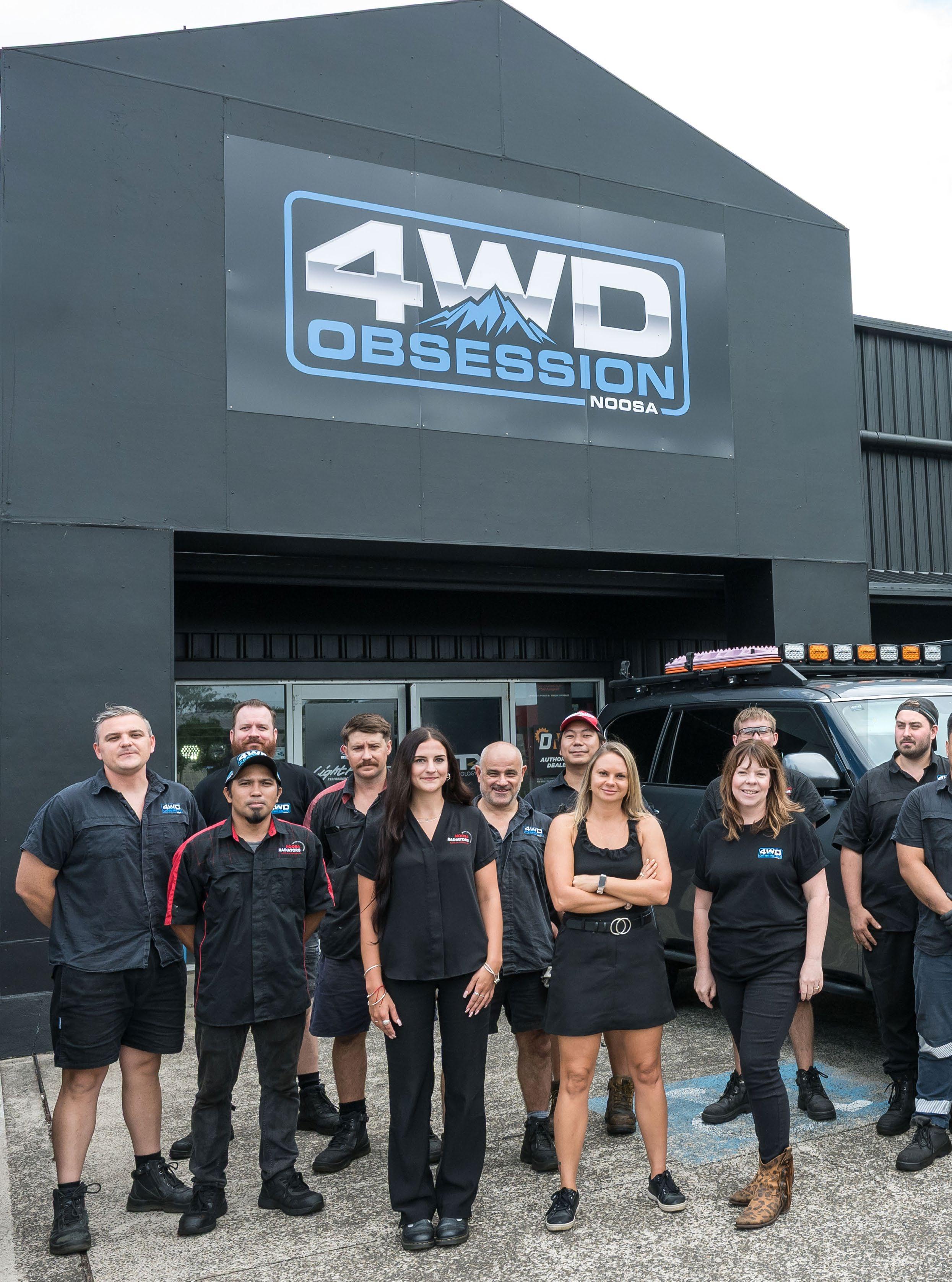
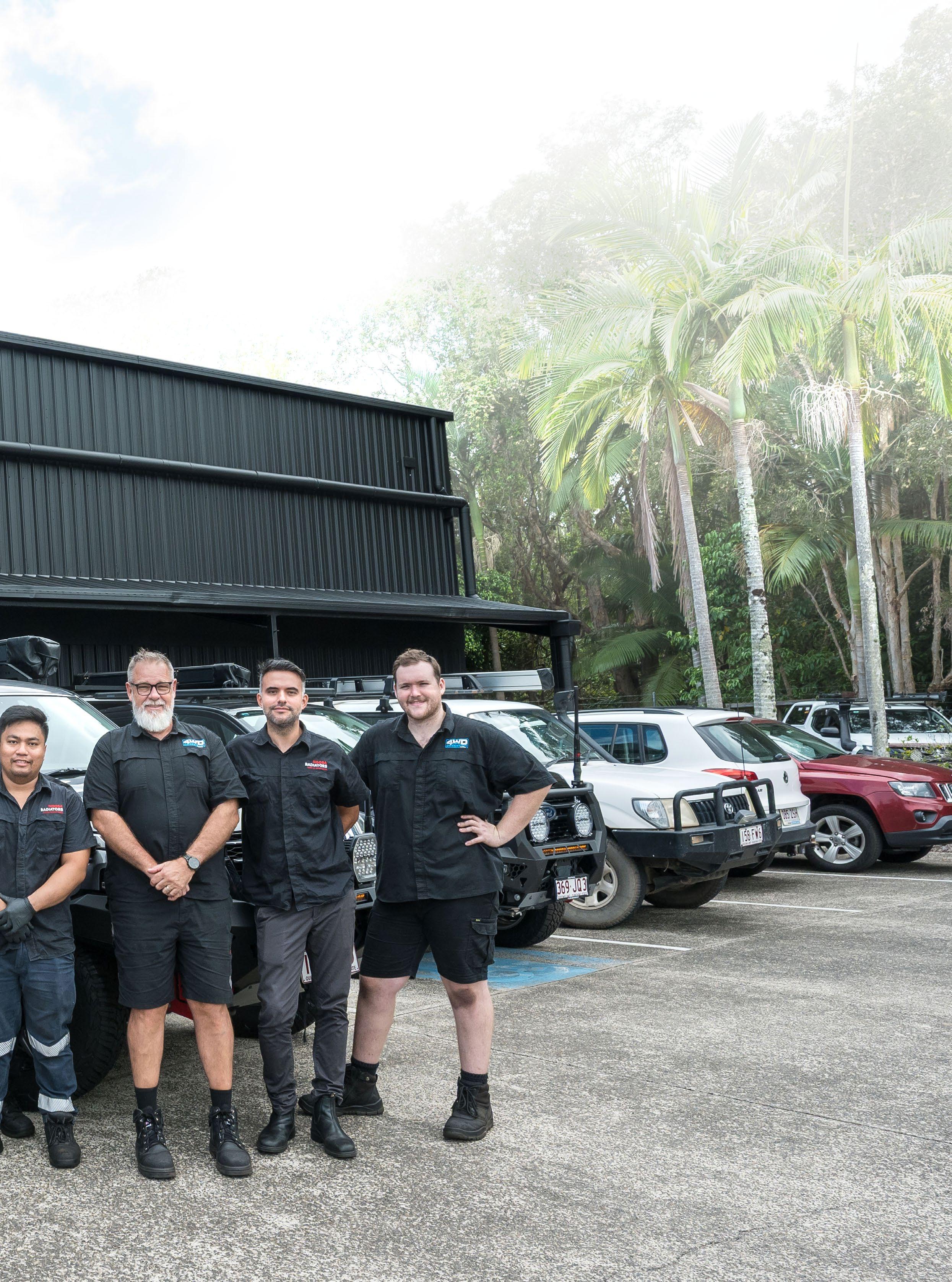
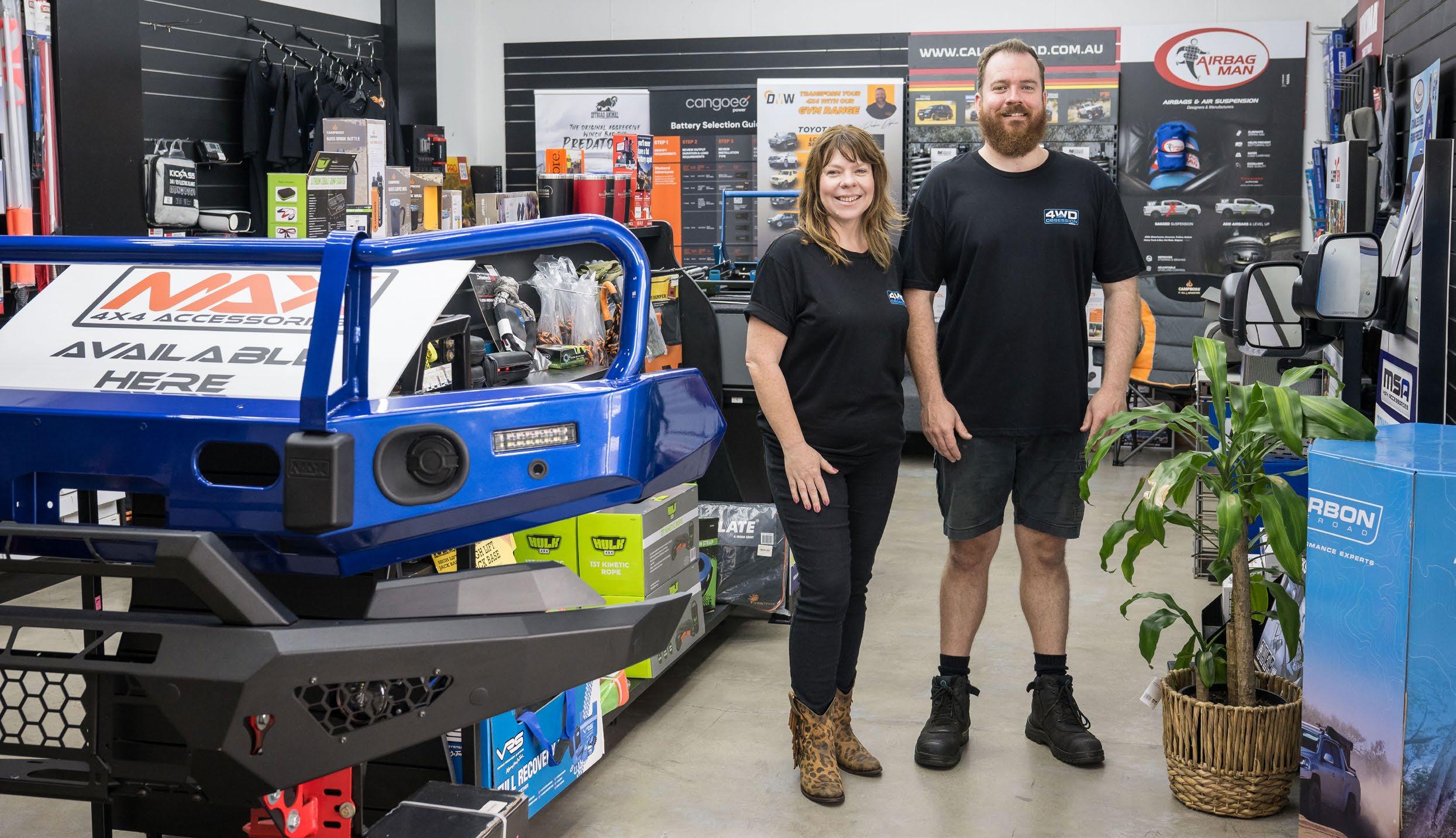
Chances are, a few of them belong to the team from 4WD Obsession Noosa.
For co-owner Selena Nunn and her crew, time spent off-road isn’t an escape from work, it’s part of how the business operates. These trips provide the opportunity to test products in real-world conditions; seeing how builds perform when they’re pushed beyond the workshop floor. Just as importantly, they’re a cornerstone of team culture.
“There’s no better way to build culture,” Selena says. “You’re out there together, using the gear the same way our customers do.”
It’s this blend of lived experience and professional discipline that defines 4WD Obsession Noosa — a business where success is tracked in spreadsheets, then proven out on the tracks.
A family business, built with intent
Selena’s path into automotive began as a family decision. One of the owners — her brother, Luke McMullen — is a qualified mechanic with a long-held ambition to run his own business. Rather than take that step alone, the siblings partnered up, purchasing their first automotive business with the intention of building something sustainable and family-owned.
“We found a business, purchased it with the intention to jump-start the family into a family-owned business,” Selena says. “Then we found out we really loved it — and grew it from there.”
Growth came steadily. Over time, the business expanded, acquired a second operation and eventually merged both into one large workshop. Today, 4WD Obsession Noosa operates as a single, integrated business with multiple specialisations under one roof. From performance vehicles to radiators, air conditioning, and purpose-built 4WD touring rigs.
Crunching the numbers
Despite the adventure-led reputation, Selena is clear about what underpins long-term success.
“Looking at your numbers consistently,” she says. “Making sure you actually understand what those numbers mean, and that you’re hitting targets properly.”
Data isn’t a background function at 4WD Obsession Noosa, but rather, a cornerstone of how decisions are made. From managing growth to responding to customer demand, the business relies on clarity and discipline.
That mindset has shaped the way the workshop operates day-to-day. The move to a fully digital, paperless system has streamlined workflows, with each technician equipped with their own device. It’s a practical shift that reflects a broader focus on efficiency and forward planning.
Support from Capricorn has helped make that transition possible. From accessing technology through JB Hi-Fi Business, to managing insurance —even earning Capricorn Rewards Points using their Woolworths at Work In-store Card. The result is a workshop that runs cleanly behind the scenes, allowing the team to focus on quality work on the floor.
Living the lifestyle they build for
If data provides the structure, the outdoors provide the meaning.
Four-wheel driving is embedded into the rhythm of the business. Team trips to K’gari (Fraser Island), dedicated 4WD days, and shared experiences outside the workshop aren’t add-ons — they’re intentional.
“All of our work vehicles are set up,” Selena says. “Customers can come in, see them, touch them, experience what’s possible. They might like one thing on one car and something different on another — it helps them visualise what they actually want.”
Vehicles arrive standard and leave transformed, fitted with accessories designed for real-world touring rather than just showroom appeal. Practicing what they preach allows them to confidently translate that expert knowledge to their customer base.
Culture that keeps people
Like many regional workshops, 4WD Obsession Noosa has faced challenges finding qualified staff. Selena believes culture has been the difference.
Friday lunches — once mandatory — have become a highlight. Barbecues, family days, boat outings and time spent together outside work have helped turn colleagues into a close-knit team. That environment has had a ripple effect, with staff bringing friends and contacts into the business.
Apprenticeships also play a critical role. While they require time and investment, Selena sees training as essential to the future of the industry.
“Without training the next generation, there isn’t going to be much left,” she says.
By building relationships with local schools and investing deeply in the apprentices they take on, the business is focused on long-term capability rather than short-term fixes.
Where success is measured (and lived)
At its core, 4WD Obsession Noosa is about balance. Planning and play. Precision and freedom. Knowing the numbers — then closing the laptop and heading bush.
Vehicles may be transformed in the workshop, but the real proof comes later, out on the tracks, where preparation meets experience.
It’s there — where data meets the dirt — that this business has found its edge.
Shape the Future of Capricorn
Lydia Stjepanovic
Your opportunity to influence the future direction of your cooperative
There's a lot of strategy and high-end decision making at Board level. As Member Director, our role is to make sure everything we do is for the Members.”
- Mark Rowe
Capricorn’s strength has always come from its Members - business owners who understand the automotive industry because they live and breathe it every day. This year, Members in Queensland and Western Australia will have the opportunity to take that contribution even further by standing for election to the Capricorn Board.
Member Directors play an important role in ensuring Capricorn remains strong, relevant, and firmly connected to the needs of the people it serves. They work alongside our executive team to set the strategic direction of the organisation, uphold cooperative principles, and represent Member voices at the highest level.
Why Member Directors matter
Capricorn is unique. We are a cooperative built and guided by our Members. Our governance model ensures the Board includes a majority of Member Directors, practicing automotive business owners who understand the realities, challenges, and opportunities facing the industry.
Serving as a Member Director is more than a leadership role. It is an opportunity to:
Influence long term strategy
Represent the interests of different zones
Strengthen the cooperative for future generations of Members
Help ensure Capricorn remains responsive, forward-looking, and Member-focused
Find out more at the Town Hall information sessions
To support potential candidates, Capricorn is hosting Town Hall information sessions in Queensland and Western Australia.
These sessions will give Members the chance to hear directly from Capricorn’s leadership about:
The responsibilities of a Member Director
Time commitments and governance expectations
The impact Member Directors have on the organisation
The nomination and assessment process
You’ll also be able to ask questions and hear firsthand what the role is like, helping you decide whether standing for election is right for you.
Town Hall sessions
Queensland April 2026 (virtual)
Western Australia May 2026 (in person)
Panel speakers will include:
Lydia Stjepanovic – Member Director & Chair, Remuneration & Nomination Committee
Brad Gannon - Group CEO
René Batchelor – Chief Legal & Governance Officer, and Company Secretary
Interested?
Nominations open in May 2026.
If you are passionate about the future of the automotive and allied industries, committed to cooperative values, and interested in contributing at a strategic level, now is the ideal time to explore what the role involves. Joining a Town Hall session is the perfect first step.
Learn more and register at cap.coop/elections
The Work Speaks for Itself
If you ask Shane Zabel about his business, the answer is simple: he loves what he does.
There’s no long pitch or polished backstory; just a mechanic who genuinely enjoys being in the workshop, putting his head down, and getting on with the job. And that, more than anything, explains how Zabel’s Mechanical has been built.
A mechanic before anything else
Shane’s connection to engines started early. Growing up on a farm, machinery was simply part of everyday life — cars, trucks, tractors and motorbikes were always around, and pulling things apart came naturally.
“I was always playing with engines,” he says. “That’s where it started.”
More than 30 years later, not much has changed.
Shane has been a mechanic for 32 years and has run Zabel’s Mechanical for nearly 11. What he enjoys most about the work is still the same.
“It’s the satisfaction,” he says. “Taking something that’s broken or worn out and making it good again.”
The industry around him, however, has changed significantly. Shane has seen automotive move from points and carburettors to vehicles dominated by electronics, wiring and computer systems. “I never thought I’d have to be a computer wizard,” he laughs. “But you’ve got no option — you’ve got to learn.”
Training, technical data systems and whatever tools help solve a problem have become part of daily life. Whether it’s manufacturer data, online resources or time spent troubleshooting, staying current is simply part of being a good mechanic.
That love of engines doesn’t stop at the workshop door either. Zabel’s Mechanical is run by people who practically live and breathe motor oil — the kind who appreciate machinery for what it is and what it can do. It’s a shared passion that shows up in the way the team works and the pride they take in doing the job properly.
Doing right by the customer
When it comes to running a business, Shane keeps things just as straightforward. “To be successful,” he says, “you’ve got to keep customers happy and do the right thing by them.”
It’s a mindset that’s paid off quietly over time. Shane has customers who have been with him for more than 20 years, some travelling hours just to have their vehicles serviced at his workshop. It’s the kind of loyalty that isn’t built overnight, but earned through consistently high-quality work, year after year.
Starting the business wasn’t without its nerves. Shane remembers the moment he packed up his tools, left secure employment and committed fully to the workshop. “I remember thinking, ‘I don’t have a job anymore,’” he says. “It was scary.”
But he stuck with it.
Over time, the business grew into what it is today — a solid operation supported by a small team of mechanics and office staff who keep things running smoothly. Shane doesn’t describe it as success in big terms. For him, it’s simply the result of doing the work properly and treating people fairly.
While he’s built a loyal team, finding apprentices remains a challenge. “They’ve got to really enjoy cars,” he says. “If it’s not your passion, it’s not the right job.” The work can be demanding, but for those who genuinely love it, Shane believes it’s a rewarding trade.
Backing what works
Shane joined Capricorn around five or six years ago, and his view is clear. “It was one of the best moves I ever made,” he says.
For someone who values efficiency and practicality, the benefits are simple: access to suppliers, less paperwork, and the ability to get what he needs without slowing the job down. “You’ve got an instant account to grab whatever you need,” he says. “It just works.”
That reliability matters, particularly in an industry still dealing with ongoing parts shortages and supply delays.
Shane says sourcing parts has been one of the biggest challenges since COVID, with suppliers carrying less stock and longer lead times becoming common. Having systems in place that reduce friction makes a real difference.
Shane doesn’t overstate his support for Capricorn. Like everything else in his business, it comes down to function. If something helps him do the job better, it earns its place.
Zabel’s Mechanical isn’t built on hype or big claims. It’s built on long days, experience, and a love of the trade — whether that’s under a bonnet, in the workshop, or wherever a motor happens to be running.
Shane is a man of few words. But after more than three decades in the trade, a workshop full of loyal customers, and a reputation built quietly over time, he doesn’t need to say much. The work speaks for itself.
GIVE YOUR APPRENTICE THE RECOGNITION THEY DESERVE!
Nominate your apprentice for Capricorn Rising Stars. Over $56,000 IN CASH AND PRIZES to be won, with a $7,500 GRAND PRIZE!*
Entries close on Friday, 1 May 2026
Nominate at cap.coop/stars
*Terms and Conditions apply, visit cap.coop/tc
Fun Zone
Submit your entry at cap.coop/funzone by 30 April 2026
February winner: Anzac Avenue Service Centre who WON 10,000 Bonus Rewards Points
SPOT THE DIFFERENCE (5 differences to find!)
WORD HUNTER (15 words to find!)
Last month's answers
Please note that this competition and participation in the Capricorn Rewards program are subject to terms and conditions. For the full terms and conditions, visit cap.coop/tc.
Bring your workshop plans to life before EOFY
Whether you’re upgrading equipment, expanding your fleet or investing in your workshop, we provide flexible options to help Members access the funds they need to bring their business plans to life.
Zero setup fees and industry competitive rates
Quick, hassle-free application
Dedicated team to support you throughout the process