TABLE OF CONTENT
Dear readers,

th
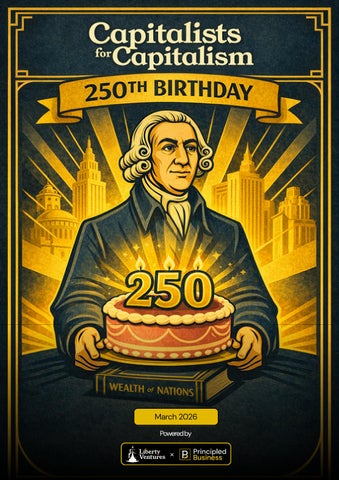
The date of this magazine’s publication, March 9, 2026, is the 250 Anniversary of the publication of one of the most important books in human history: The Wealth of Nations by Adam Smith The ideas articulated in this book were not created by Smith in a vacuum He was articulating a system that he saw already in practice in places. And he was extrapolating principles about what was working in contrast to what did not work in alternative economic systems But what he did was profound In this work, he presented the first cohesive articulation of what we now call capitalism, and so paved the way for 250 years of unprecedented prosperity in humanity.
We carry his legacy on today And throughout 2026, we willl use this magazine to review capitalism’s past, present, and future. We will share the stories of the great leaders in business who have leveraged the opportunity to build to push humanity forward We will interview today’s business leaders who are embodying what capitalism means now. And we will present theories for what capitalism will look like and evolve into over its next 250 years.
And we will not limit ourselves to this quarterly magazine We have launched a new website, capitalistsforcapitalism.com, to provide more regular content sharing the power of capitalism as a force for good including blog posts, podcasts, and videos Be sure to subscribe to get more Capitalists for Capitalism content more frequently.

FROM THE EDITOR
There are many people who question the viability of capitalism in 2026 Some believe that capitalism is the source of all ills affecting the least well off in society; ignoring the tremendous good capitalism has done lifting people out of poverty around the world and standardizing a higher quality of life than ever before Others believe that capitalism lacks the virtues needed for an honorable society; ignoring that capitalism is grounded in certain core principles that are fundamentally about being a good person Indeed, even Adam Smith was a moral philosopher before he was an economist He published his Theory of Moral Sentiments long before The Wealth of Nations and it is not possible to read the former without seeing how it laid the foundation for the latter
There is much strife and confusion in the world today. There always is. But now, more than ever, we need leaders to embrace the power of free interactions and take charge in developing the kind of organizations and collaborations we need for humanity to thrive. We need more capitalists for capitalism.

Founder & CEO, Liberty Ventures

10:00 AM - 6:00 PM
Atlanta, Georgia
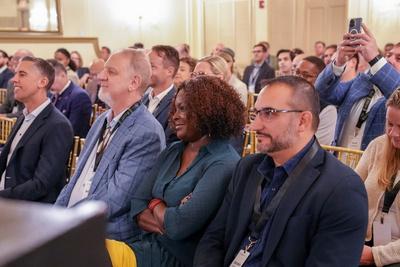
The Liberty Ventures Executives Summit is a high-level gathering for CEOs and senior executives who are building companies with both vision and values
BUILD RELATIONSHIPS THAT MATTER LEARN FROM THE BEST LEVEL UP YOUR LEADERSHIP


Get Access to Private Market Deals

Learn Lessons from Top Investors
Get Invited to Quarterly Summits
Receive Partner Invitations
The 250-Year Blueprint: What Adam Smith Taught Us About Building Wealth
Written by: Michelle Bernier, based on the Liberty Ventures Podcast with Alexander McCobin
In 1776, two documents changed the course of human history One declared the independence of a new nation The other declared the independence of the individual in economic life. The first was the Declaration of Independence. The second was Adam Smith's "The Wealth of Nations " Two hundred fifty years later, you run your business inside the system those two documents made possible.
Alexander McCobin, founder and CEO of the Liberty Ventures Network, puts it directly: 1776 was a tipping point Before it, economic life was controlled from the top down Feudal lords decided what you could produce and who you could trade with Mercantilist governments dictated which industries mattered and hoarded precious metals as the measure of national strength The individual had almost no say
Then Adam Smith changed the question Instead of asking what a central authority should direct, Smith asked what happens when individuals are free to decide for themselves. The answer built the modern world
Smith's core observation was simple People respond to incentives. When you give individuals a direct stake in the outcome of their work, they produce more, and they produce better
The pilgrims learned this the hard way When the early Plymouth colony operated under a collective system, production collapsed. Crops failed. People starved. No one had a personal reason to work harder than anyone else, so no one did The colony nearly disappeared
Then they changed the structure. Each family received their own plot of land to farm. Each family kept what they grew The results were immediate Abundance replaced famine That abundance became the first American Thanksgiving.
This is not ancient history It is a management principle you apply every time you structure a compensation plan, assign ownership over a project, or decide how much autonomy to give a team member The person with a real stake in the outcome performs differently from the person without one.
Ask yourself right now: does every person on your team have a clear, direct connection between their effort and the result? If the answer is no, you have a structural problem, not a people problem
Smith argued that private property rights are not just a legal concept They are the mechanism that aligns interests between strangers. When you own something, you take care of it When you have a clear claim to the fruits of your work, you invest in producing them
This extends directly into business A team that has ownership over their work, over the decisions they make and the results they drive, behaves differently from a team that simply executes orders Ownership creates accountability Accountability creates results.
McCobin describes Smith's insight as the recognition that people can pursue their own self-interest and, by doing so, serve others. This is not a license for selfishness It is a description of how markets actually function The entrepreneur who builds a product people want does not succeed by ignoring others. The entrepreneur succeeds precisely because they pay close attention to what others need
Your business is the same. You succeed when you understand your customer's real problems and build something that solves them Not because you are forced to. Because the incentive structure of the market rewards you for doing so
TThis is where Smith's work speaks most directly to how you run your organization today.
Central planning fails because no single authority has enough information to make good decisions for everyone. A mercantilist government in 1776 could not know which industries would create the most value for its citizens A top-down manager in 2026 cannot know every obstacle, opportunity, or local condition that the people on their team face daily.
Smith's insight was that the price system, built on the free decisions of millions of individuals, aggregates information that no central planner could collect Each transaction is a signal Each price reflects what people actually value, not what an authority thinks they should value
Private ownership aligns effort with outcome.
Give your team real stakes in the work
Specialization produces more than generalization
Build teams where people do what they do best.
Voluntary exchange creates value for both sides
Every deal you close should benefit buyer and seller
Decentralized decisions outperform top-down directives The person closest to the problem usually has the best answer
In your business, this means the front-line employee often knows something the executive does not. The salesperson who talks to customers every day understands the market in ways a quarterly report cannot capture. The engineer building the product knows where the friction is before it shows up in the data
Companies that build systems to capture and act on that ground-level knowledge consistently outperform those that rely on directives from the top This is not a new idea. Smith described the mechanism 250 years ago The question is whether you have built an organization that uses it
It is no coincidence that "The Wealth of Nations" and the Declaration of Independence appeared in the same year The same intellectual tradition produced both
Thomas Jefferson drew on John Locke's concept of natural rights, specifically the rights to life, liberty, and property, when he wrote the Declaration Jefferson shifted "property" to "the pursuit of happiness," but the economic logic remained intact. The individual has an inherent right to be a productive agent. The individual has the right to decide what to produce, who to trade with, and what to do with the results.
Smith grounded that same logic in economic analysis He showed, systematically, why freedom in economic life produces better outcomes than control. The two documents together made the argument from both sides, philosophical and empirical, that individual agency is the source of human flourishing
America became the test case. The results, measured over 250 years of rising living standards, technological progress, and expanding access to opportunity, are the strongest evidence Smith's framework was correct
McCobin is clear that celebrating 250 years of capitalism is not about nostalgia It is about direction The same principles that produced prosperity over the last two and a half centuries will drive it over the next two and a half. The question is who will build the companies, create the products, and generate the abundance that makes the next 250 years worth celebrating.
That answer starts with you
Smith did not know what a free market would produce by 2026 He could not have predicted the industries, the technologies, or the scale of human cooperation that would emerge. That is exactly his point. The system works precisely because it does not require anyone to predict the future It requires individuals to experiment, to serve others, to take ownership of their work, and to respond to what the market signals back
If you run a business or lead a team, three questions are worth asking today First, do the people on your team have a real ownership stake in their outcomes? Second, do you make decisions at the level closest to the actual information? Third, does every transaction you enter create genuine value for both sides?
If you can answer yes to all three, you are building on the same foundation Adam Smith described in 1776 You are operating within the system the Founders established in the same year. And you are contributing to 250 more years of the prosperity that system has proven it produces
This article is written by Michelle Bernier and based on the Liberty Ventures Podcast, hosted by Alexander McCobin, founder and CEO of the Liberty Ventures Network. The network's 2026 initiative highlights 250 stories of American capitalists and the business leaders shaping the next era of free market prosperity

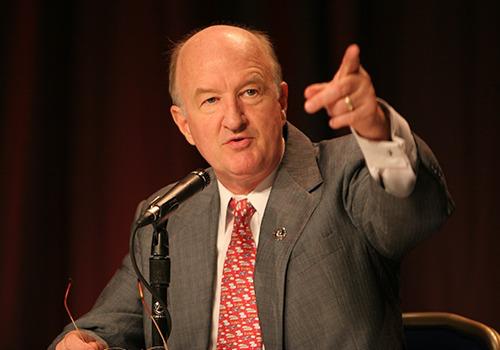
Benjamin Franklin never ran a Fortune 500 company He did not have a board of directors, a pitch deck, or a venture round What he had was a printing business, a diversified portfolio of rental properties, 3 bank accounts, and a set of principles about wealth, incentives, and usefulness that shaped the economic foundations of the United States According to Dr Mark Skousen, economist, author, and the Doti-Spogli Endowed Chair of Free Enterprise at Chapman University, Franklin was nothing less than the father of American capitalism
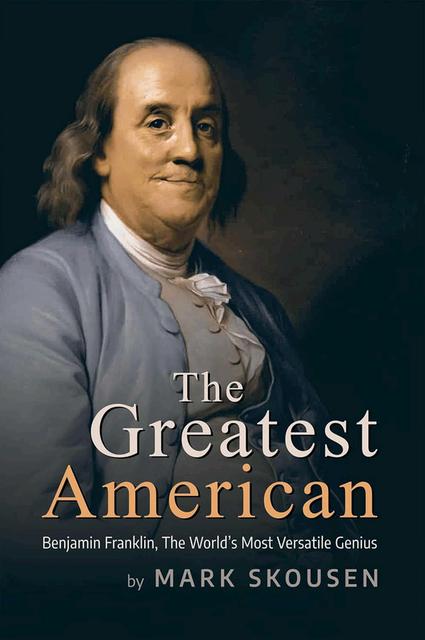
Mark has spent years studying Franklin through the lens of economics and leadership His book, "The Greatest American: Benjamin Franklin, The World's Most Versatile Genius," applies Franklin's life across 80 practical chapters, covering personal finance, business leadership, diplomacy, and the economy Mark draws the conclusion that Franklin's thinking about wealth, incentives, and the role of the individual in a free market is as relevant today as it was in 1776 If you run a business or lead a team, this is a manual.
22 - Distinct Careers Franklin Held $13M - Value Generated by His Compounding Bequest After 200 Years 200 - Years His Financial Experiment Ran
Franklin's Defense of the Rich: Earn It, ThenUseItWell
Franklin believed in wealth He believed in the incentives that create it and in the system that protects it He watched the British poor laws fail the people they were meant to help, because they removed the personal stakes that drive individuals to produce. His argument was that wealth is how you give people a reason to perform
However, Franklin attached a condition. Wealth earned comes with an obligation to use it well He wrote near the end of his life that he hoped to be remembered not as the man who died rich, but as the man who used his money wisely. Usefulness was his measure of a life well spent
It is incredible the quantity of good that a single man can do if he makes a business out of it.
Benjamin Franklin
TheLongestInvestmentPlayinAmerican
History
Franklin's most audacious business move came after his death In his last will and testament, he left £1,000 each to the cities of Philadelphia and Boston with precise instructions For the first 100 years, both cities were to let the funds compound in bank accounts After that, the accumulated interest was to be loaned out to skilled tradespeople and artisans, at interest, with the requirement that all loans be repaid
After 200 years, both accounts were dissolved as Franklin directed Together they had grown to approximately $13 million Boston, as Mark notes, invested more aggressively than Philadelphia and came out ahead
Franklin designed this as a proof of concept. He wanted to demonstrate, through a real financial experiment that would outlast him by 2 centuries, that compounding works The lesson for you is that this applies to every reinvestment decision your company makes, every long-term hire you develop, every customer relationship you choose to build over years rather than extract from in a single transaction.
Short-term extraction and long-term compounding are both available to you Franklin's 200-year experiment shows which one builds something worth leaving behind
"ThelongerIlive,Ihopetobeknownasthe personwhousedmymoneywellratherthan theonewhosimplydiedrich."
Benjamin Franklin, as cited by Dr Mark Skousen
Franklin served as the first Postmaster General of the United States When he took the role, a letter from Boston to Philadelphia took 2 weeks to arrive. Franklin reduced that to 3 days, thanks to an operations overhaul He redesigned postal roads, created the dead letter office to handle undeliverable mail, and built accountability into every step of the system. The result was a dramatic increase in mail volume, which meant more revenue, more reach, and a communications network that helped hold a new nation together.
Franklin approached a government role the way a founder approaches a startup He looked at what was broken, asked what the customer actually needed, and rebuilt the system around that answer He turned a money-losing function into one that produced results
The principle translates directly Wherever you see a process in your organization that everyone accepts as slow or broken, that is a Franklin problem waiting for a Franklin solution. The person who fixes it only needs the same willingness Franklin had to question inherited systems and rebuild them from first principles
FiveFranklinPrinciplesforLeadersToday DrawnfromDr.MarkSkousen'sResearchon Franklin'sLifeandWork
Incentives drive production Never design a system that penalizes the people performing best in it
Wealth is a tool, not a destination. Measure success by what your resources build, not by what they accumulate
Compounding beats extraction. Reinvest in your people, your product, and your customer relationships over time
Operational speed is a competitive advantage Franklin cut letter delivery time by 80 percent. Ask what your team could achieve with the same focus Pessimism is a choice Franklin survived wars, depressions, and runaway inflation while staying solvent and productive Diversify, stay liquid, and resist the pull toward panic
How Franklin Helped Shape "The Wealth ofNations"
Adam Smith and Benjamin Franklin were not strangers When Smith was writing "The Wealth of Nations" in London, Franklin was in the city at the same time According to Mark, Smith brought draft chapters to private clubs and intellectual gatherings, and Franklin was among the readers who offered input and suggestions
Smith's book contains an extensive section on America as a rising economic force in the world Smith declared that America would soon become a great and prominent nation, and he took the controversial position of supporting American independence in 1776, at a time when figures like historian Edward Gibbon openly opposed it. Mark believes that position was shaped in part by Franklin's influence.
The two men reinforced each other's ideas Franklin's views on free trade were direct. He wrote that no nation is ever ruined by trade, even those who are most hurt by it That is a principle Smith built into the architecture of "The Wealth of Nations."
Fromtheinterview: "Adam Smith would bring in his chapters as they were writing them and would present them to these various clubs in London. Franklin was one of the readers. He would give suggestions. And there's a huge section in 'The Wealth of Nations' on America as a very up-and-coming colony" Dr Mark Skousen, Liberty + Leadership Podcast, Fund for American Studies
Franklin Called Pessimists "Croakers." He HadaPoint.
Franklin had a word for chronic pessimists. He called them croakers In his autobiography, he tells the story of a man who urged him to sell all his property ahead of an impending depression. Franklin refused. 10 years later, that same man paid considerably more for real estate than Franklin ever did
This is not a call for recklessness Franklin was one of the most prepared individuals in American history He held a diversified portfolio of rental properties, maintained multiple bank accounts, and kept liquid assets in multiple forms His optimism was a decision to build for the long term while others retreated
Franklin lived through 2 wars, severe depressions, banking crises, and runaway inflation He survived all of them in good financial standing. His structure protected him. His outlook kept him moving forward.
Mark's conclusion from Franklin's example is direct: Never sell America short. The country has a consistent record of making comebacks The leaders who build during difficult periods, who stay capitalized, stay diversified, and resist the pull toward panic, tend to be the ones who emerge with the most to show for it.
Your business faces its own version of this choice right now Tariff uncertainty, interest rate pressure, and a changing labor market give every pessimist in your industry a reason to pull back. Franklin's record argues for a different response
The22-CareerFounder
WhatVersatilityActuallyLooksLikeinPractice
Mark counted 22 distinct careers Franklin held across his life Printer, author, postmaster, scientist, diplomat, inventor, civic organizer, politician, philosopher He was, as Mark puts it, a jack of all trades and a master of many
What made this possible was not genius alone. It was the deliberate application of practical knowledge across domains Franklin did not separate his scientific thinking from his business thinking or his diplomatic thinking. He brought the same structured curiosity to every problem he faced
Modern business rewards this approach more than most people acknowledge The leader who understands operations, finance, product, and people, who does not stay siloed inside one area of expertise, tends to make better decisions than the specialist who optimizes a single function Franklin's versatility was not scattered It was integrated Every skill he built reinforced the others.
This article is based on an interview with Dr. Mark Skousen, economist and author of "The GreatestAmerican:BenjaminFranklin,The World'sMostVersatileGenius, " conducted by Roger Ream on the Liberty + Leadership Podcast, produced by the Fund for American Studies
He wrote 33 words that changed the course of history Lincoln called them hope for the world Kennedy, Roosevelt, and Adams called him indispensable. Two hundred fifty years later, Jefferson's framework for natural rights still defines what it means to build a society worth living in.
By Michelle Bernier • Based on Carol Swain's essay, PragerU
On July 4, 1826, Thomas Jefferson asked his physician one final question: "Is it the Fourth?" He died hours later It was the 50th anniversary of the Declaration of Independence, the document he had written at age 33 in a rented room in Philadelphia. John Adams died the same day The 2 men who had argued, reconciled, corresponded for decades, and shaped the American republic together left the world on the same date, at the exact moment the country they helped found reached its half-century mark No novelist would dare write it that way It happened anyway
Jefferson's story is one of how a set of ideas, written down by one person in a moment of extraordinary clarity, became the operating system for the most consequential democratic experiment in human history British historian Paul Johnson put it plainly: no one did more than Jefferson to create the United States of America.
Abraham Lincoln admired him Franklin Roosevelt admired him. John F. Kennedy admired him. Dozens of other presidents expressed the same According to Carol Swain, historian and professor, that consensus is not sentiment. It is an accurate assessment of what Jefferson put into the world and what it produced
Natural Rights Are Not a Political Preference. They Are a Claim About Human Nature.
Jefferson grew up in Shadwell, Virginia, the son of a farmer and surveyor He was educated by private tutors, then attended the College of William and Mary, where he studied mathematics, philosophy, law, and languages He read Latin, Greek, and French He eventually collected 6,500 books - he declared he could not live without books, and his breadth of reading showed in everything he wrote
By age 26, Jefferson had won a seat in Virginia's House of Burgesses, entering politics exactly when the colonies began challenging British rule Though he was not a gifted speaker, he did, however, have precision with language, the ability to take a philosophical argument, and compress it into a sentence that anyone could read, remember, and believe.
John Adams and Benjamin Franklin, neither of whom was modest about their own rhetorical abilities, asked Jefferson to write the first draft of the Declaration of Independence Adams gave a direct reason Jefferson was more eloquent and more widely liked The assignment produced 1,320 words that defined what America was claiming to be, and why
The core claim was this: all men are created equal, endowed by their Creator with unalienable rights, among them life, liberty, and the pursuit of happiness Jefferson drew this from John Locke's concept of natural rights, originally framed as life, liberty, and property The shift from property to the pursuit of happiness was deliberate It extended the claim beyond ownership to the broader conditions under which a human life could be well and freely lived
We hold these truths to be self-evident, that all men are created equal, that they are endowed by their Creator with certain unalienable Rights, that among these are Life, Liberty and the pursuit of Happiness
Thomas Jefferson, Declaration of Independence, 1776
These were a framework A government that violated those conditions lost its legitimate authority That argument gave the colonies a moral basis for independence that was grounded in philosophy as opposed to just grievance It also set a standard for every government that would follow, including the one Jefferson was about to help build.
Jefferson the Idealist Was Also
Jefferson the Operator
Jefferson was both a political philosopher and a shrewd political operator He used hardball tactics when he needed to. He alienated former allies, including Adams, through calculated maneuvers He understood power well enough to acquire it, hold it, and use it to accomplish things his pure philosophy alone could not achieve.
As President, Jefferson reduced the scope of the federal government. He cut taxes, lowered spending, and retired half of the national debt This was the small-government Jefferson, consistent with everything he had written Yet when the moment required executive authority, he exercised it without hesitation.
The Louisiana Purchase is the clearest proof In 1803, Jefferson negotiated the acquisition of the Louisiana Territory from France for $15 million, approximately four cents per acre In a single transaction, he doubled the size of the United States, incorporated the territory of what were now 15 states, and removed a powerful European empire from North America No congressional mandate compelled it Jefferson acted because the opportunity existed, the price was right, and the strategic consequences were too significant to pass up
Hamilton and Jefferson understood governance differently Where Hamilton wanted a strong central state capable of directing economic development, Jefferson wanted a limited government that protected individual liberty and stayed out of the way. Both had valid points Jefferson's presidency showed that the 2 approaches are not always as incompatible as their advocates insist. He governed with restraint in most areas and with boldness in one decisive moment that shaped the country for the next two centuries
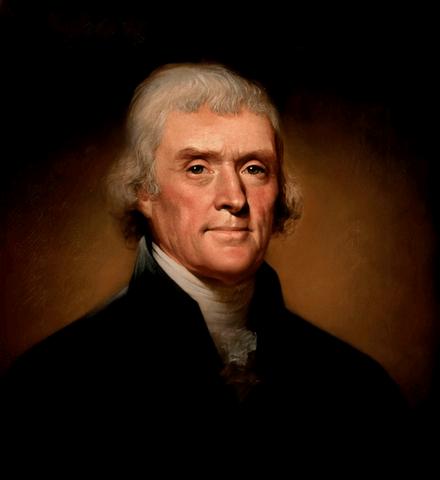
"Jefferson gave liberty, not alone to the people of this country, but hope to the world for all future time."
Abraham Lincoln, on the Declaration of Independence
The Leaders Who Credited Him Most Were the Ones Who Understood What He Had Actually Done
Abraham Lincoln
Called the Declaration Jefferson's gift of hope to the world for all future time Used its framework to argue for the abolition of slavery
Franklin D Roosevelt
Cited Jefferson's principles as the philosophical foundation for democratic governance in the face of totalitarian pressure abroad.
John F. Kennedy
Hosting Nobel laureates at the White House, Kennedy told them it was the greatest gathering of intellect in that room since Jefferson dined alone
John Adams
Despite their bitter rivalry and years of estrangement, Adams spent his final years in fabled correspondence with Jefferson, rekindling one of history's most important intellectual friendships
What these presidents recognized was that Jefferson wrote well and had done something structurally important He had given the American experiment a moral foundation that could be invoked, argued from, and extended across time Lincoln used it to end slavery Suffragists used it to argue for women ' s rights. Civil rights leaders used it in the twentieth century The framework held because Jefferson had built it on a claim about human nature, not about the preferences of any particular group or era
He Wrote That All Men Are Created Equal. He Owned Slaves. Both Are True.
Jefferson's life contains a contradiction that cannot be resolved by choosing one side of it He wrote that all men are created equal yet he owned slaves. He inherited that condition from a world that took it for granted, and he never freed himself from it during his lifetime
Carol Swain's analysis of Jefferson treats this with clarity rather than either dismissal or condemnation Jefferson grew up inside a system his father had participated in before him. He abhorred slavery in principle. He acknowledged, on multiple occasions, that he violated his own foundational belief by participating in it That acknowledgment did not resolve the contradiction; however, it did something that mattered enormously for what came after
Jefferson wrote the words that made slavery indefensible on American terms Every subsequent argument for abolition, for equal rights, for human dignity under law, drew directly from the language he put into the Declaration Lincoln understood this He did not separate Jefferson's words from Jefferson's failures He used those words to do the work Jefferson himself had left undone.
For leaders today, this is an uncomfortable but important lesson. The standard you set for your organization outlasts you Jefferson set a standard he could not fully live up to in his own time Yet that standard still drove progress for the next 2 centuries. What you articulate as the purpose and values of what you build will be tested, interpreted, and extended by the people who come after you Write it carefully
The
Architecture of a Free Society Starts With a Claim About Human Nature Jefferson's Framework for Human Flourishing, Applied Today
Rights precede government The role of institutions is to protect individual agency, not to grant it. Build organizations that protect the autonomy of the people inside them
Principles need operators. Jefferson was both a philosopher and a politician. Ideas without execution change nothing The Louisiana Purchase was philosophy applied at scale
Small government, decisive action. Jefferson cut spending and debt in ordinary times He acted boldly in extraordinary ones Know the difference between when to hold back and when to move.
The standard you set outlasts you Jefferson's words were used by Lincoln to end slavery, by suffragists to win the vote, by civil rights leaders to demand equality. What you write down for your organization will be tested long after you are gone
Read widely Jefferson mastered mathematics, law, philosophy, multiple languages, architecture, and science Range is not a distraction from depth It is the source of it
Jefferson's face is on the nickel and on Mount Rushmore. There is a memorial to him in Washington, DC These are the formal recognitions The more important one is less visible. Every business that operates without government permission to exist, every individual who changes careers without asking a feudal lord, every entrepreneur who decides what to produce and who to sell it to, is operating inside a system whose philosophical foundation Jefferson helped write The right to pursue your own definition of a good life, the right to produce and trade and build on your own terms, is not self-evident in most of human history Jefferson made it the starting point of an entire nation
That answer has never been perfectly realized. Jefferson himself could not fully live up to it But the standard it set has driven more human progress than any alternative framework proposed before or since. 250 years of evidence make that case

This article was written by Michelle Bernier and is based on Carol Swain's essay on Thomas Jefferson, produced for PragerU Carol Swain is a former professor of political science and law at Vanderbilt University and Princeton University, and a noted scholar of American political history.

Written by: Justin Callais and Clay Routledge, originally published
These days, it can feel like Americans across the political divide cannot agree on much of anything; however, there is encouraging news When it comes to the economic foundations of human progress and flourishing, we are not as divided as we might think
Political polarization has become a defining feature of American life. More and more people are avoiding dating or befriending those with opposing political views, and growing numbers describe those on the other side as closed-minded, dishonest, immoral and unintelligent This divide extends to economics, where debates over capitalism versus socialism are often defined by what team you are on rather than honest thinking about how to improve living standards
Of course, political parties have long differed along economic lines. However, that divide has grown in recent decades, largely driven by Democrats souring on capitalism and becoming more favorable toward socialism. According to Gallup, from 2010 to 2025, Republican views on capitalism and socialism remained fairly stable, with favorable views of capitalism hovering between 71% and 74% and favorable views of socialism staying mostly below 20%.
Look beneath the surface, though, and a different story emerges A 2019 Gallup poll found that while only 60% of Americans had a positive attitude toward capitalism, 87% had a positive attitude toward free enterprise, and 90% had a positive attitude toward entrepreneurs The building blocks of capitalism appear to enjoy broad support even if the label doesn’t.
Our team at the Archbridge Institute’s Human Flourishing Lab wanted to explore this further If you describe the core mechanics of capitalism and socialism without using those loaded labels, which system do Americans actually believe will advance human progress and flourishing?
To find out, in our latest Progress Pulse survey of over 2,000 American adults conducted in partnership with The Harris Poll, we presented 2 viewpoints One held that businesses competing freely in the marketplace, driven by private companies and entrepreneurs, are the best way to solve today’s big challenges and improve people’s lives. The other held that government agencies coordinating resources and setting priorities are the better path forward
in Chicago Tribune Read original here
The results revealed more consensus than these polarized times might suggest. Though political differences emerged as expected, clear majorities of both Republicans (76%) and Democrats (60%) chose free markets, private companies, and entrepreneurship over government coordination and planning Economic freedom won out across every demographic group we examined, even among young adults, who are often assumed to be socialism’s most receptive audience. Nearly 6 in 10 adults under 25 choose free markets, private companies and entrepreneurship
So what is going on? Part of the answer likely lies in how the meaning of these terms has shifted in public discourse. On the political left, capitalism has become increasingly associated with inequality, corporate power and corruption, and instability, while socialism is framed around equality, fairness and security Entertainment media, long dominated by those on the political left, tend to depict capitalism as a destructive force Inspiring entrepreneurial stories are told regularly, yet rarely acknowledged as products of the economic system that made them possible The result is a strange disconnect Many who have grown skeptical of the word capitalism still embrace and celebrate the economic freedom that defines it.
2 paths forward are worth considering One is rehabilitating the term capitalism, making a sustained case for what it actually means and what it has achieved The other is simply bypassing the arguments over labels and centering public conversations on the ideas most Americans already embrace, namely entrepreneurship, innovation, free enterprise and individual agency Given how deeply the word capitalism has been politicized in an already-divided country, the latter may be the more pragmatic nearterm strategy, which could pave the way for an eventual reclaiming of the term itself.
Social psychologists use the concept of superordinate identity to describe a shared framework that transcends group divisions. When people tap into that kind of larger identity, they are more likely to set aside tribal loyalties and work together toward shared goals Republicans and Democrats remain divided on many policies and priorities
However, our data suggest there is a shared economic foundation for a superordinate American identity. A belief in economic freedom that cuts across party lines could be the basis for more productive conversations about how to expand opportunity and remove barriers to entrepreneurship and social mobility
Progress requires cooperation And cooperation is facilitated by finding common ground. Most Americans already believe in the engine of prosperity They just do not always agree on what to call it
Justin Callais is chief economist and Clay Routledge is executive vice president and COO at the Archbridge Institute, a nonpartisan think tank.
Greed and cruelty existed long before Adam Smith
When discussing economic systems, I often highlight how Marxist socialism devastated Africa and other regions of the world, leading to the deaths of millions of people Inevitably, someone responds: “But what about the deaths caused by capitalism?”
This response reveals a fundamental misunderstanding that needs addressing It blames capitalism not just for greed, but for all of humanity’s darker instincts, as if free markets somehow invented human flaws Let's get something straight: greed, exploitation, and cruelty have existed throughout human history, long before anyone conceived of property rights or free enterprise
Greed Predates Capitalism
Long before Adam Smith put pen to paper, humans had already committed unspeakable acts of greed, conquest, and exploitation. Genghis Khan ran a brutal empire that expanded through violence and rape. According to genetic studies, around 8% of men in a large region of Asia carry DNA linked to him The Atlantic Slave Trade was powered by kings, empires, tribal chiefs, and European monarchies, most of whom operated under imperial and monarchical structures In pre-revolutionary France, the monarchy, nobility, and upper clergy lived in great privilege and luxury, while the vast majority of peasants (about 80% of the population) endured poverty, heavy taxation, and frequent hunger
There have always been selfish, greedy, and rapacious people, and there always will be, as long as humans exist. Every economic and political system has had greedy people in it The difference is whether that system limits their power or lets it run wild


The Enemies Invented “Capitalism” Voluntary Socialism
The word “capitalism” was coined by socialist critics in the 19th century, including Louis Blanc, Pierre-Joseph Proudhon and Karl Marx. They used it to criticize the system they believed would inevitably collapse Since they coined the term, it means whatever socialists want it to mean That’s why the socialism vs capitalism debate is often a Trojan horse to avoid admitting that free markets actually work
Adam Smith, who’s often called the “father of capitalism,” never actually used the word Instead, he described in his book “The Wealth of Nations” , natural liberty where: “Every man, as long as he does not violate the laws of justice, is left perfectly free to pursue his own interest his own way”
John Locke, whose ideas heavily influenced America's founding documents, focused on natural rights to “life, liberty, and property” in his Second Treatise of Government (1689). He argued these rights existed prior to government, which was instituted specifically to protect them
When the American Founders created the U.S. Constitution, they didn’t use the word capitalism either The Bill of Rights protects individual freedoms like freedom of speech, religion, assembly, property, and due process, all of which protect individuals from both tyrants and mobs In other words, the core principles we now associate with “capitalism” were never about enriching the few, and were actually about protecting the many from power, whether it came from kings, mobs, or bureaucrats
Here’s the thing: if a group of people want to live communally, they should absolutely have that freedom Such voluntary arrangements don't require state coercion or enforcement For instance, the Amish live simply and share resources, but joining is voluntary, and people are free to leave if they choose Kibbutzim are intentional communities in Israel, traditionally based on agriculture and collective ownership Membership is voluntary, and individuals are free to leave at any time Monasteries and religious orders have lived communally for centuries and continue to operate around the world, with monks and nuns sharing resources, labor, and prayer
This is voluntary socialism, and no free-market advocate has a problem with it
Marxist socialism is something else entirely It calls for revolution, the abolition of private property, and stateless dictatorships with no respect for individual rights. It caused 65–94 million deaths, with some estimates exceeding 100 million
It’s worth noting that capitalism even gives people the freedom to experiment with Marxist ideals
In a free market, you’re allowed to create worker-owned businesses based on Marx’s labor theory of value if you want to Cooperatives, mutual aid societies, and communal living models can and do exist under capitalism.
Every system has greedy people, but only free market capitalism, rooted in individual rights and the rule of law, limits their power through competition, transparency, and choice
What Venezuela's Empty Shelves Taught Us (That We're Ignoring)
Written by: Cesar Baez
Search for images of Venezuela's economic collapse, and you'll find them easily: thousands of people standing in lines that stretched for blocks, waiting hours for rice or toilet paper or cooking oil. Search for those same lines today, and you'll notice they've mostly disappeared
Not because Venezuela discovered free markets or reformed its policies The lines disappeared because the regime eventually lost the power to enforce the price controls that created them Like Prohibition, the policy became so detached from economic reality that people simply stopped pretending to follow it The market won by exhaustion.
The story of how Venezuela arrived at those lines begins two decades earlier, when Hugo Chávez took power in 1999 with oil prices climbing and ambitious plans for the state He greatly expanded social programs: free healthcare, subsidized housing, and cash transfers to millions of families. The programs worked, for a while, because they ran on the assumption that oil prices would stay high forever
By 2003, Chávez began imposing price controls on staple goods The logic was straightforward If markets charge too much for bread or milk, the state can mandate lower prices Venezuelans would pay less, and everyone would benefit from the regime's compassion
The price controls expanded over the next decade In 2011, Venezuela established a national price-control authority to oversee production costs and retail prices. By 2014, this framework was replaced with a stronger enforcement agency that expanded state control beyond prices to include profit margins throughout the economy
None of this mattered much while oil money kept flowing Producers grumbled about mandated prices, but imports remained relatively steady, and shelves remained mostly full. Then the oil collapsed.
Between 2014 and 2016, global oil prices fell from over $100 per barrel to below $30 Venezuelan production, which had been declining for years due to mismanagement and underinvestment, dropped sharply. The regime faced a choice: cut the social programs that had become a signature achievement, or find another way to pay for them

They chose the printing press Venezuela began printing bolívares, the national currency, at such a pace that it became worthless. By 2017, Venezuela had the world's highest inflation rate. People who had savings watched them evaporate Workers collected paychecks that lost value by the hour This was when the price controls became catastrophic.
The same regulations that had been tolerable with stable currency became impossible with hyperinflation. A shopkeeper who bought inventory one week could not afford to restock the next week if forced to sell at last month's regime-mandated prices Importers had to choose between bringing in goods to sell at a loss or not bringing in goods at all They chose the latter
Shortages appeared. Supermarkets that once stocked hundreds of products reduced their inventory to whatever they could sell without going bankrupt The regime responded by tightening enforcement. Inspectors raided stores accused of hoarding. Business owners faced prosecution for raising prices without authorization The lines began
Venezuelans queued for hours outside the few stores that still had inventory, hoping to buy whatever remained before it sold out. The regime rationed purchases by the last digit of the national ID number, allowing people to shop only on assigned days There still wasn't enough
Black markets filled the gap Venezuelans who needed to feed their families stopped waiting in regime-approved lines and started buying from informal vendors at market prices Reality and official policy diverged If the regime claimed one dollar equaled ten bolívares, anyone trying to actually exchange currency found a dollar cost thousands The gap between the regime's fiction and economic reality became a canyon.
The regime declared war on the black market Police arrested people for the crime of exchanging currency at real prices. Authorities prosecuted merchants as speculators and hoarders; however, the crackdown failed for a reason. When enough people need to break a law to survive, the law becomes unenforceable There weren't enough prosecutors to charge everyone buying food at actual prices, or enough jail cells to hold everyone exchanging currency at real rates, or enough inspectors to monitor every transaction. The price controls remained on the books, but fewer people paid attention.
This history matters because the policies that destroyed Venezuela's economy remain popular in countries that believe they can implement them better. Last January, Zohran Mamdani, now New York City’s mayor, used his inaugural address to promise a break with “rugged individualism,” vowing instead to embrace the “warmth of collectivism ”
The warmth sounds appealing, especially compared to frigidity. But Venezuelans remember what that collectivism produces Economic laws don't care about rhetoric Price controls create shortages, whether justified by socialism, compassion, or fairness The Venezuelan experiment already ran this test The results are available to anyone who is interested.
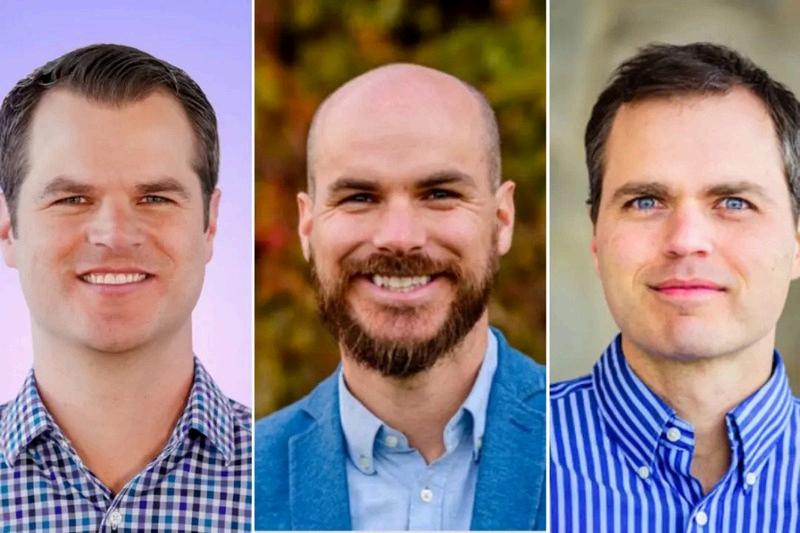
Nine Harmon siblings grew up in Burley, Idaho, where summer meant potato fields. When college started looming, they found a way to fund it that didn’t require a script or a pep talk They loaded up 50 pound boxes of Idaho potatoes, drove to Utah, knocked on doors, and asked one plain question: do you eat potatoes?
Most people did and so sales followed. When someone said no, the rejection ended quickly and the group moved on without arguing That pace became a habit, and it shaped how they worked long after the potato money stopped
Those summers taught them what business books often blur: pricing and volume mattered, rejection was normal, and speed mattered They learned to keep the message clean and to treat “no” as information, rather than a personal insult. They also learned that selling potatoes paid better than minimum wage The skill came from repetition
Door knocking continued through church missions and later through home security programs. Objections arrived faster and sharper leading to tighter responses Yet, the structure stayed the same: lead with the problem, then present the solution. Clear words, quick feedback, no wasted motion
Years later, that discipline powered a marketing firm, though the door into that world opened through a failure.
In 2009, a Brigham Young University marketing class studied Orabrush, a tongue cleaner aimed at bad breath. The research came back with a number that sounded like a dead end: 7% purchase interest online The class recommendation was to simply walk away; however, one student looked at the same number and saw the opposite 7% still meant millions of potential buyers
A test followed: a short video showed people how to check their breath using a spoon Sales jumped more than 30%
Then they added a branded explanation and the conversion rate climbed again YouTube ads were so cheap they cost less than a cent per view Orabrush grew into millions in revenue and eventually landed on shelves at Walmart, CVS, and Walgreens.
A playbook was forming, built around the same instincts they’d developed on doorsteps. Show the problem, prove it, and ask for action Entertainment supported sales, and sales funded growth
The agency arrived almost by accident. After Orabrush, Poopourri took off Press followed, then headlines Adweek and Forbes described the team as an agency The name stuck because the work kept producing results.
The change came when the message shifted toward everyday comfort Much of the world squats The product improved a daily routine, not a clinical outcome Education mattered, and humor gave people room to pay attention without feeling embarrassed A cartoon unicorn replaced realism Ice cream stood in for a detail nobody wanted on screen. The point came through clearly, and the discomfort dropped away Sales surged
Behind the hits sat a set of operating rules that came from lived experience. First, real sales work forces clarity. Cold outreach gives instant feedback, and it arrives without polite filters Second, attention has to be earned because online ads interrupt people mid-scroll, and they skip fast when the content doesn’t justify the time Third, brand and direct response have to share the same frame Emotion builds trust, and information drives purchase. Fourth, testing has to happen early and often Assumptions fail, so major videos launch with 4 different intros and spending is used to validate ideas before scale
Then there are the guardrails. Too much tuning leads to spam, and familiarity without respect wears down a brand Keep demonstrations concrete because analogies drift, while a clear demo holds Stay close to customers by watching faces more than dashboards. Confusion shows early Laughter marks progress
That same approach shaped leadership. The company kept creative leadership close to the top, with the CEO involved in day-to-day creative work Operations existed to support creativity rather than pushing it aside.
Client relationships ran on the same standard Strong work came from mutual respect and real collaboration. Kodiak Cakes stood out, with a close working rhythm that supported growth during its private equity acquisition. Trust improved the outcome for both sides
Pricing followed client reality instead of forcing one model onto every partner. Flat fees worked for big brands Performance models fit smaller teams The firm valued long relationships more than short term margins.
Now technology adds a new set of risks AI tools speed up output, but speed without restraint produces noise. Voice needs boundaries. Brand identity has to be decided before automation touches the work One warning sits behind those decisions: over optimized roads lead to spam.
For entrepreneurs, ask whether attention is earned, whether trust grows, whether the product solves a real, lived pain Back in Utah, the lesson was already visible Sales reward clarity Respect speeds progress Attention follows honesty

Was named one of the top 9 figures shaping Azerbaijan's tech and innovation ecosystem in 2025.

Shared that NearStar Fusion was named a DCA Live 2025 Red Hot Dual Use company, highlighting their work on near-term fusion applications for medical isotopes used in cancer therapies and diagnostics.
joined the Stephan Livera Podcast to discuss Strive’s rapid growth as a Bitcoin treasury company, its merger with Semler Scientific, and how institutional adoption, debt management, and Bitcoin yield strategies are shaping the future of the space Watch the full episode here: https://wwwyoutube com/watch ?v=M2lkYHuAskk
Celebrated the 10th anniversary of Prialto in Portland.
Shared that Middle East Uncovered had reached over 10,000 subscribers, marking an important milestone for the publication and its growing community We invite our community to follow and support Faisal’s work through Middle East Uncovered: https://www.themiddleeastuncove red.com
Spoke at the Sequire Investor Summit in Puerto Rico.
Spoke at the World Economic Forum in Davos, Switzerland.
joined the Your Group Practice podcast to discuss the hidden costs inside 401(k) plans, how Form 5500 filings reveal invisible fees, and why retirement benefits should be treated as a governance decision Watch the full episode here: https://www.youtube.com/watch? v=3UvqBt9IqiA
Spoke at the World Economic Forum in Davos, Switzerland
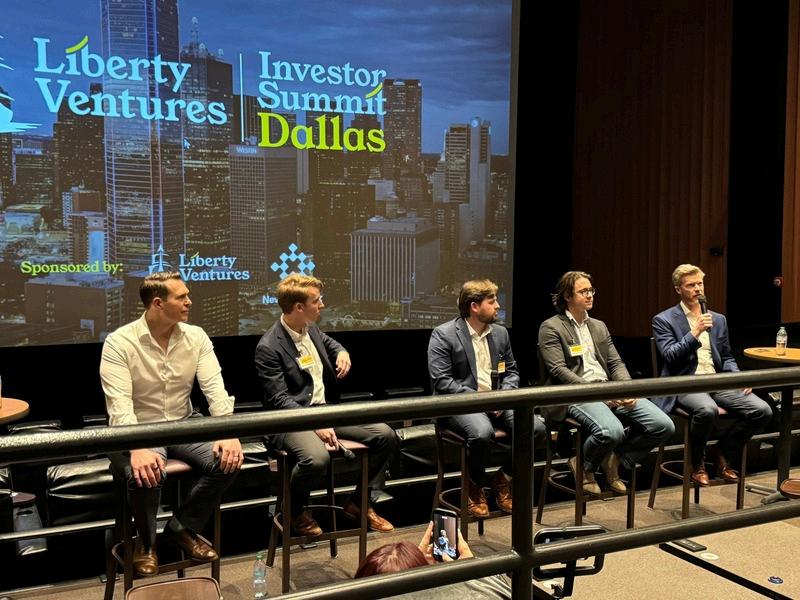
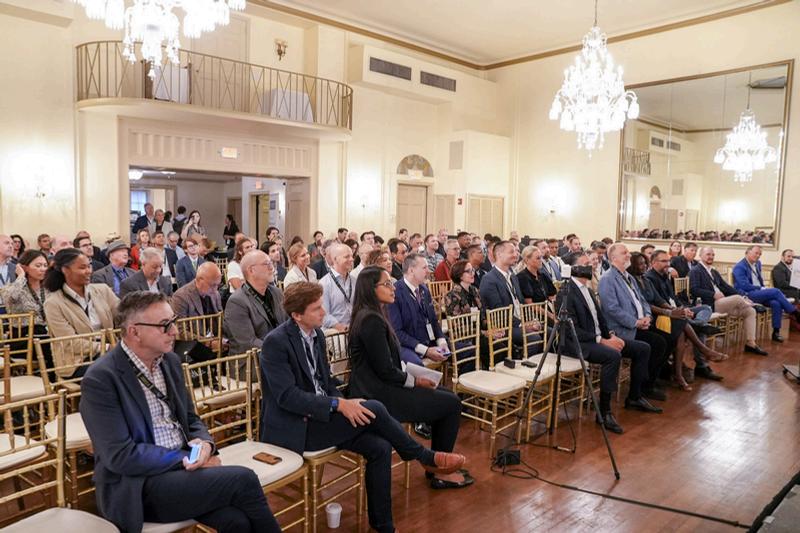
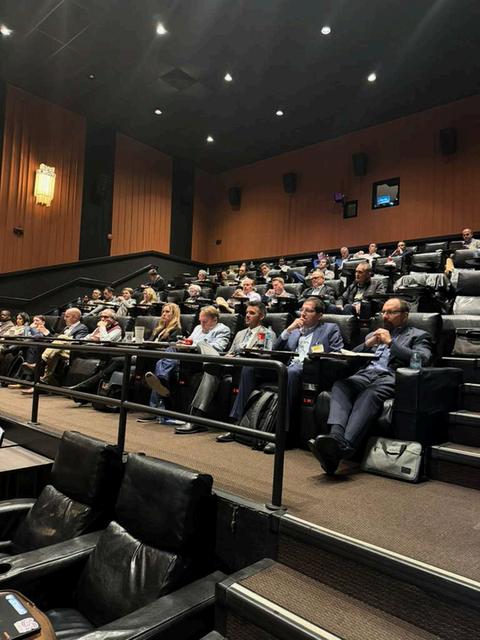
In January, we convened the Principled Business Investor Summit in Dallas in response to a concern shared across investors and operators: capital often moves faster than judgment, technology advances faster than institutional learning, and leadership absorbs pressure without enough shared frameworks for responsibility The Summit met these tensions directly through structured conversations on deployment, incentives, and long-term consequences.
Across the day’s sessions, one conclusion surfaced consistently: durable outcomes depend on values guiding allocation, returns follow judgment sustained over time, and speed without discipline magnifies error rather than opportunity.
Several speakers framed venture capital as a values driven discipline expressed through capital allocation Chrissy Liotta, whose career spans politics, defense, and venture investing, articulated a rule shaped by experience She avoids working with founders who lack integrity or long-term commitment. Financial upside does not make up for misalignment Sector popularity does not replace character under pressure
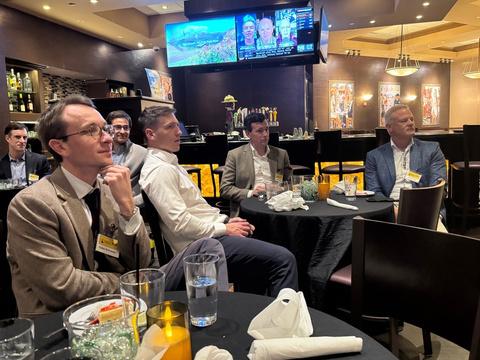
Chrissy’s focus on aerospace and defense investing reflects respect for constraint. Founders operate within regulation, technical complexity, and national responsibility These environments expose behavior early. Decisions reveal seriousness long before financial outcomes appear
Mark Bailey reinforced this view through operating experience across hospitality, infrastructure, and longduration businesses Mark noted that his strongest investments came from proximity to execution and shared values. His weakest shared common signals: obsession with fast exits, artificial urgency, and distance from day-to-day operations Alignment reduced friction while patience compounded trust.
The Summit also examined the ethical foundation of entrepreneurship and capital deployment One investor described growing up under socialism and communism. For them, venture capital represented the freedom to start, risk failure, and try again Supporting founders meant backing people willing to risk family capital, reputation, and years of effort In that context, judgment replaced control, and experience produced humility
John Chisholm expanded this perspective through the lens of early-stage creation Entrepreneurship generates solutions where none previously existed New value enters the system. Progress expands productive capacity rather than redistributing fixed resources Capital can support human advancement when allocation is guided by experience and responsibility.
Geography emerged as a strategic variable rather than a marketing label Investors from New Founding, Capital Factory, Achieve Ventures, and Eagle Venture Fund described a shift toward place-based advantage rooted in proximity to real systems Texas, the Midwest, and industrial corridors were discussed as increasingly relevant because they sit close to manufacturing, logistics, healthcare, housing, energy, and defense
Dallas, Austin, Fort Worth, and El Segundo came up as operating centers tied to those systems. Physical constraints imposed discipline Hardware exposed friction Supply chains rewarded execution In these environments, impact followed necessity rather than narrative
Artificial intelligence anchored urgency throughout the Summit. An Austin-based entrepreneur and investor, founder of 6 companies including Bazaarvoice, framed the next decade as historically consequential while emphasizing humility. Bazaarvoice scaled customer review infrastructure across Walmart, Sephora, Nordstrom, and Home Depot, serving 14,000 customers in 50 languages. Alongside his wife, he invests in 149 startups and roughly 50 venture funds
His perspective returned repeatedly to the limits of formulaic advice. Outcomes reflect timing, context, and integrity alongside effort Coaching fails when advisors lack founder experience Rigid frameworks damage judgment under pressure. The most harmful guidance comes from authority without operational exposure
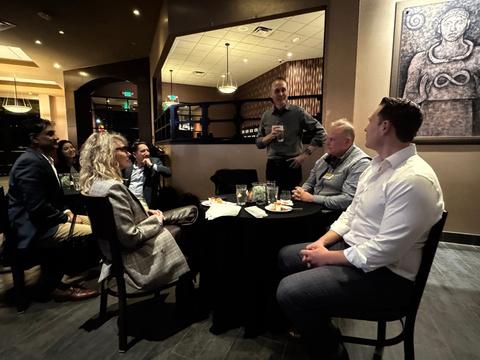
This framing set the stage for a practical case study in applied artificial intelligence through Easybot Chat Sean Jackson and Brian Schultz built Easybot Chat after confronting operational strain inside the movie theater industry following 2020 Brian, owner of LOOK Cinemas, spent years attempting internal automation solutions while managing labor shortages and rising costs. A conversation between the founders clarified a gap Frontline workers lacked accessible systems for daily questions while enterprise tools focused on desk workers.
LOOK Cinemas became the first customer Easybot Chat serves hourly employees through phone-based access Workers ask questions related to payroll, pointof-sale systems, and internal processes Design choices reflect restraint and control. Data remains siloed. Small language models reduce hallucination risk. Feedback loops operate through daily usage Reports surface gaps inside standard operating procedures Distinct personas support kitchen staff and managers.
The case illustrated a broader point running through the Summit: durability through limitation. Control preserves trust Function precedes scale
The investor also described evaluation discipline as essential in artificial intelligence. Success emerges through timing, integrity, and execution Investors without founder experience can introduce risk by leaning on abstraction. Authority without empathy distorts incentives and weakens judgment
When assessing AI companies, he prioritizes durability and vertical focus. Markets dominated by frontiermodel expansion struggle long-term filters Deep technical work inside overlooked sectors such as rail systems, manufacturing, and energy infrastructure offers stronger foundations
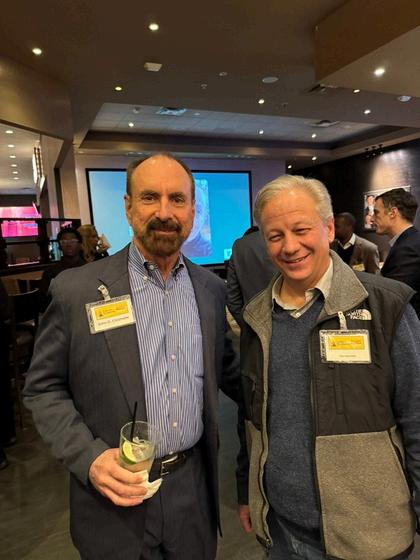
The day’s longer outlook leaned optimistic Energy constraints can ease over time. Disease treatment can improve Productive capacity can expand Yet the Summit returned to the role of choice in shaping outcomes Scarcity-driven thinking narrows cooperation. Stewardship strengthens resilience and reinforces responsible deployment
By the end, the Principled Business Investor Summit had clarified a consistent reality: technology amplifies the values already present, and capital multiplies behavior already chosen. Character tends to precede returns.
The Summit served as a working session on responsibility under acceleration Investors and founders left with sharper filters and clearer judgment. Principles guide deployment, and companies follow
Written by: Michelle Bernier
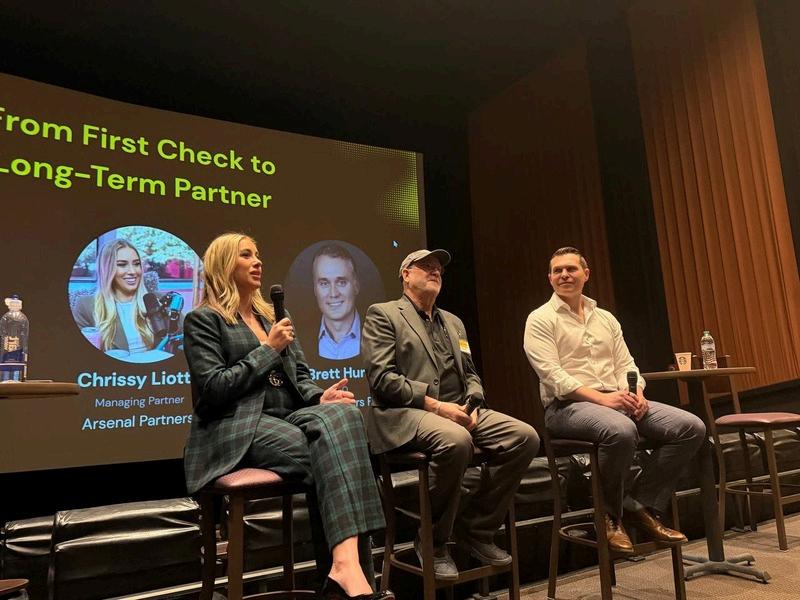
On January 13, Liberty Ventures brought investors to Dallas for an afternoon that stayed grounded in how decisions actually get made when the company is early, the information is incomplete, and the downside is real. The inaugural Investor Summit drew angels, operators, and venture investors into the same room, then put 2 very different profiles on stage: Chrissy Liotta, Managing Partner at Arsenal Partners, and Mark Bailey, CEO at the Original Pancake House Dallas. Their conversation kept returning to the same pressure points of how investors judge founders, how they size risk, and how they respond when reality diverges from the pitch
Chrissy arrived at investing through work that forced decisions under public scrutiny. Her early exposure came from building companies tied to the defense sector, raising money, and learning how congressional appropriations shape what can get funded and when That experience mattered long before defense technology became fashionable in venture circles Time in Texas and at Capital Factory strengthened a practical view of early stage investing: People back people. Trust gets built through repeated interactions and not through a single deck.
Writing her own angel checks made the learning curve steeper When the money is personal, every assumption gets tested faster. She described how that accountability changed her decision making, because mistakes have a price that cannot be explained away. For Chrissy, that discipline still frames how she invests today.
Her focus remains aerospace and defense, and she tied it to mission alignment and the kind of long-term advantage that comes from solving hard national resilience problems. That field, she explained, punishes investors who ignore policy and timing, especially as regulations shift and procurement cycles drag Founders can build the right product and still miss the window. In that environment, she pays close attention to founder intent, because incentives shape choices when things get tense She also stays strict on loss tolerance. Early stage investing carries a high failure rate, so she treats check size as a control lever If a loss would change her behavior or take her out of the game, the check is too big
Then the market taught him a blunt lesson A tech downturn wiped out early seed investments and reset his view of risk There was no slow decline, only a sudden disappearance of value. He rebuilt capital through restaurant growth and returned to investing with a sharper filter and less patience for stories that could not survive basic scrutiny
Culture and leadership sit at the center of Mark’s approach, and he speaks about them in concrete terms He listens for principles that show up in decisions, hiring, and how a founder responds when challenged. He watches whether the founder stays close to operations or delegates without control He presses on the numbers, because a founder who cannot explain the unit economics usually cannot manage them Presence matters in his evaluation, and so does planning He will still trust instinct, but only after he has spent time on diligence and checked the facts. Like Chrissy, his loss tolerance is fixed before the money goes out the door
As the discussion widened, the differences between angels and venture firms became clearer Angels often bring deep domain experience and pattern recognition from operating careers. Venture firms structure decisions around future financing rounds, market cycles, and policy conditions that can affect exits and follow-on funding Chrissy urged angels to build relationships with venture firms early, because knowing how a later round might be priced or timed, changes what makes sense at the seed Mark put weight on network depth, especially for validating founders through trusted references. A warm introduction is useful, but a credible reference who has watched a founder in pressure situations is far more valuable
Both speakers treated losses as part of the curriculum rather than a shock Mark described an investment in SpaceX that worked because the leadership was clear and the mission was coherent. He contrasted it with another deal that failed, where warning signs showed up during fundraising The founder’s behavior raised concerns, but external validation pulled the investment across the line The company later collapsed Mark’s takeaway was that outside enthusiasm cannot replace independent judgment, and early character signals deserve to be taken at face value.
The closing guidance felt less like a checklist and more like a way of operating:
Set a loss limit before you invest and stick to it
Assume some checks will go to zero, then size each one so you can keep investing after a setback.
Push hard on founder motivation early, because the reason someone is building will influence how they handle adversity and compromise.
Favor founders who stay close to execution, because proximity to the work tends to produce better accountability.
They also emphasized the slow work of building a network that tells the truth References uncover patterns that a pitch meeting will never reveal. Diligence takes time, and time is useful because consistency shows itself over weeks, rather than minutes. If conviction fades then decline quickly and clearly as dragging out a “maybe” wastes founder time and weakens relationships
Fundraising behavior mattered to both speakers. Artificial urgency is a signal worth testing A real process has deadlines, but manufactured pressure can hide weak fundamentals or messy decision making. They also put communication standards on the table If a founder wants investor support through volatility, regular updates and honest reporting are part of the deal
By the end of our Dallas Summit, investors on stage were watching behavior, measuring risk, and choosing where to spend time For early angels, the path forward looked clear: define your limits, do the work, and back people whose actions match their claims.
Selling Out
Written by: Michelle Bernier
At the Liberty Ventures Investor Summit in Dallas, Sunny Vanderbeck shared a direct account of building, selling, losing, and buying back a company The message focused on ownership, alignment, and decision making under pressure
His first exit arrived at the worst possible moment to bet on stability Due diligence kept moving as the September 11 attacks unfolded The deal closed, and later the buyer filed for Chapter 11 bankruptcy. Whilst Sunny’s business stayed profitable, the structure around it didn’t This resulted in Sunny buying the company back for far less than the original sale price, not because the work had failed, but because the financial scaffolding had
He described what changed under that ownership Spreadsheet logic dominated. Private equity partners drove decisions from Excel Culture slipped down the priority list, and people became secondary to the model Sunny’s point was that numbers can’t substitute for judgment, and they can’t carry a team through a shock
Years later, a second exit came, and Sunny approached it with a different kind of discipline He chose the buyer intentionally and treated the process as a 2-way inspection. Reverse due diligence shaped the courtship. He looked for a group that understood disruption and would act like it He also set expectations early, telling the buyer he was not a fit for life as a business unit leader inside a larger organization From day one, the plan for departure was clear, and the outcome matched the preparation
Those 2 experiences pushed him toward a new direction He talked about a run of weekly lunches at Chili’s that began as frustration and turned into a decision 15 years ago, Sunny and Randy Eisenman started Satori Capital with the simple aim of becoming the investor each of them wished they’d had earlier in their careers.
Satori launched into the financial crisis of 2008 and 2009, when raising money was hard and conventional thinking tightened its grip Instead of following standard private equity assumptions, they built the firm around 3 operating choices that show up in how they structure capital and how they behave with leaders.
First, time horizon Sunny argued that the typical 5-year fund cycle fights the realities of running a business Operators don’t build lasting momentum on a countdown clock Satori set up capital without a fixed end date, so patience could be real rather than promised.
Second, operator experience Sunny and Randy had both served as CEOs That shaped how they spoke to portfolio leaders and what they asked of them. They didn’t demand moves they hadn’t made themselves. In his telling, credibility came from showing up with the weight of experience, rather than asserting authority.
Third, conscious capitalism Sunny put customers, employees, culture, and community on the same decision table as returns. He framed long-term value as something earned through relationships and maintained through conduct, especially when no one is watching
Early fundraising tested those choices Institutional investors resisted the language and the posture A placement agent advised them to strip out the message to make capital easier to raise. They didn’t and today, Sunny said, Satori manages about $1 5 billion The platform includes private equity, a hedge fund focused on power and AI infrastructure, a venture fund in neurotechnology, and an office platform
Sunny tied these convictions to his own history, crediting his father, rooted in horticulture and ethnobotany, with teaching respect for systems and how fragile they become when one element is ignored Special operations training in the military reinforced the role of culture and trust His time at Microsoft in the 1990s showed him that scale doesn’t have to erase identity, but it only holds if leaders protect the core.
He also pulled the lesson back into the day-to-day reality of operating At Data Return, he built with people and culture at the center. Later, hires who came from large corporations pushed a short-term mindset Thus performance weakened, relationships frayed, and the work suffered. When trust was rebuilt, results returned. He presented that sequence as a reminder that company culture is what shows up in decisions, hiring, and what leaders tolerate
That perspective carried into his book, Selling Without Selling Out, which he described as a guide for founders who want clarity before they sign anything. “Money matters,” he said, “but purpose carries more weight over time” He urged CEOs to define goals beyond price and to examine what a transaction will mean for employees, customers, and the surrounding community. The nonfinancial terms, he warned, can shape reality for years
He also addressed private equity directly, including why the category draws criticism Sunny told early-stage investors to look elsewhere if they want venture-style outcomes.
Private equity depends on cash flow and EBITDA multiples, and the math drives a different kind of decision making He argued that the worst reputations come from the lowestquality firms, and that discipline and alignment separate acceptable outcomes from destructive ones
Satori’s own holding periods reflect the structure he described Sunny said the firm holds investments for an average of 5.8 years, with the ability to stay longer because the capital isn’t forced into an exit by a preset deadline.
By the end of the session in Dallas, his message had narrowed into something practical. If you’re a founder or an investor:
Define what you want before the sale process starts. Treat buyers as partners whose incentives will shape your future
Match time horizons early, because mismatches turn into conflict when pressure arrives.
Back leaders who have run companies and know what execution costs
Protect culture as something built in meetings, budgets, and hiring decisions
Ask the hard questions while you still have leverage Keep venture expectations separate from private equity math.
Choose partners who can hold steady when things get tense
Sunny’s story was a reminder that ownership demands clarity, capital amplifies intent, and early decisions shape outcomes long after the documents are signed.
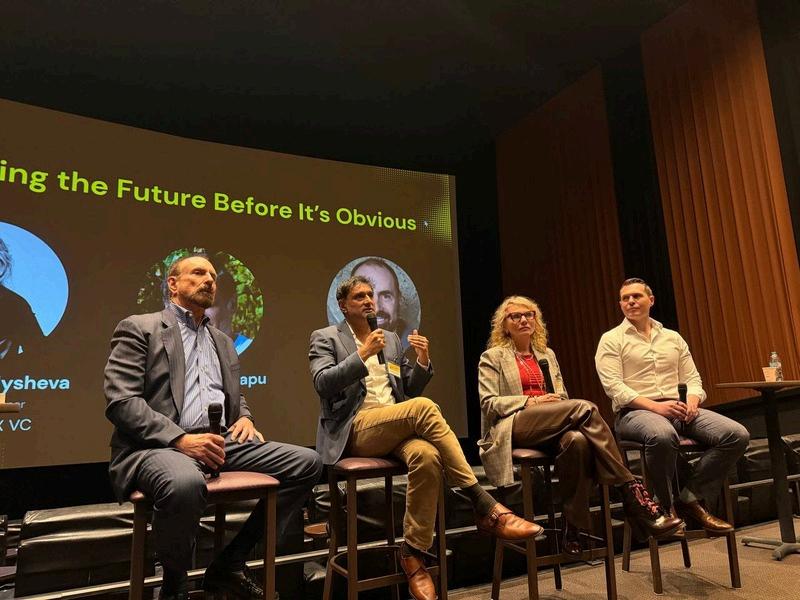
Backing the Future Before It’s Obvious
At another one of our sessions at the Liberty Ventures Investor Summit in Dallas, 3 investors shared how early conviction shapes long term returns John Chisholm of John Chisholm Ventures, Oksana Malysheva of Sputnik ATX VC, and Aneil Mallavarapu of Humain Ventures spoke about the moments that come before consensus, when a founder still feels like a bet, a technology still looks unfinished, and a market still reads as a question mark They pointed out that early conviction, when it is earned, is where long term returns begin
They started the panel with capitalism, because every early check is a vote about how the world should work Oksana Malysheva started the discussion recalling her own experiences She called entrepreneurship a privilege that depends on civil liberties, and she tied that belief to her childhood under socialist and communist systems. Capitalism, in her telling, gives people permission to start companies, take risks, and try to build something that grows For her, backing founders early is a statement about agency. Sputnik ATX VC focuses on Texas, partly because she rejects the idea that Silicon Valley owns ambition For Oksana, the talent is everywhere and the work is to find it and support it before it becomes obvious
Aneil Mallavarapu treated capitalism more like an instrument than an identity Money sets incentives, and incentives shape behavior, so the question becomes where capital should point. His answer is health technology He argued that healthcare’s failures hit households harder than any other sector, with medical bills pushing families into bankruptcy. Humain Ventures looks for companies that change incentives at the root
He kept returning to business models that reward outcomes If providers earn more when people stay healthier longer, the economics begin to match what patients actually want
John Chisholm framed the same system through ethics. Entrepreneurs, he said, build solutions for needs that customers can name and feel The best ventures create new value instead of fighting over old value, and that positive sum result is what makes the work defensible. He spoke as someone who has built companies, made expensive mistakes, and learned to treat failure as data
He referenced his book as a record of errors alongside a method for forming companies that can survive contact with reality
Aneil Mallavarapu treated capitalism more like an instrument than an identity Money sets incentives, and incentives shape behavior, so the question becomes where capital should point. His answer is health technology He argued that healthcare’s failures hit households harder than any other sector, with medical bills pushing families into bankruptcy. Humain Ventures looks for companies that change incentives at the root He kept returning to business models that reward outcomes. If providers earn more when people stay healthier longer, the economics begin to match what patients actually want
John Chisholm framed the same system through ethics. Entrepreneurs, he said, build solutions for needs that customers can name and feel The best ventures create new value instead of fighting over old value, and that positive sum result is what makes the work defensible He spoke as someone who has built companies, made expensive mistakes, and learned to treat failure as data. He referenced his book as a record of errors alongside a method for forming companies that can survive contact with reality
From there, the conversation moved into the discipline required to invest early, when almost every signal is noisy and most outcomes are grim.
Oksana described the math that governs venture capital In a typical portfolio, most startups go to zero, and one breakout result covers the rest. That asymmetry forces investors to make peace with being wrong often and still acting decisively At Sputnik, she said the evaluation starts with founder quality and a credible path to growth It then moves to the product and whether it delivers enough customer value that people will switch and stay. She looks for founder market fit grounded in specific insight, not general competence Finally, she wants a market large enough to support an outcome that changes the fund
Aneil kept his focus on category design He talked about studying industries for structural failures that create recurring waste and frustration. In healthcare, he argued, incentives tied to procedures rather than patient outcomes distort everything from care plans to billing That is why his team is drawn to models such as lifespan based care, where providers can earn returns by extending healthy years
He also highlighted the collision between biology and Artificial Intelligence (AI) across diagnostics, drug discovery, and treatment delivery. Progress accelerates when data becomes denser, feedback cycles shorten, and clinical decisions move closer to real time
John brought it back to the first question he asks: who is hurting, and why? If a problem does not affect real customers in a direct, describable way, he loses interest He wants teams close to the pain, because proximity produces sharper decisions Founders with a personal connection can explain urgency without performing it, and they tend to understand the tradeoffs that outsiders miss. His own deal style reflects that hands on approach He often converts advisory fees into equity and invests alongside venture firms that set pricing and terms.
Their sector interests differed, yet the reasoning behind them sounded similar: pick areas where progress is possible and where incentives can be improved.
Aneil called the convergence of biology and AI a foundational shift on the scale of past industrial revolutions.
He pointed to work in molecular engineering, better diagnostics, and emerging therapeutic approaches such as photobiology and ultrasound therapy. The through line was the chance to build care that works better and costs less, because the model rewards keeping people well
John described a different angle on AI, one rooted in physical industries Construction, manufacturing, and infrastructure still lag behind in software adoption, which creates room for companies that bring modern tools into stubborn environments He cited an investment in QET, a business optimizing bolts for large scale construction projects The example was deliberately unglamorous, and that was the point: real change often happens where the workflow is messy, expensive, and ignored by hype
Oksana emphasized applied AI and drew a clear line against product demos in search of a customer Sputnik favors deployments that solve defined problems across medicine, video processing, and advanced manufacturing, including 3D metal printing She also spoke about the human strain created by rapid technological change, particularly around mental health and social dislocation Her curiosity runs toward tools that support connection and stability, because the pace of innovation is now part of what people are trying to manage
When the panel turned to global opportunity, the room leaned forward. The question of where the next wave of founders comes from always does that
Oksana pointed to Ukraine, looking beyond the war toward recovery She argued that talent density, resilience, and battlefield driven innovation could turn into an unusually strong foundation for new companies once rebuilding begins.
Aneil chose India He cited a young population, a growing middle class, and markets large enough to support experimentation at scale In many sectors, he said, regulation remains lighter, which can allow new models to form quickly.
John stayed closer to home He prefers local angel investing because it reduces uncertainty and speeds learning. Legal clarity and a familiar operating environment make execution more straightforward. Overseas markets add layers of risk that can swamp even strong teams
They converged again on structure High growth technology companies, they agreed, still benefit from being built in the United States, and Silicon Valley playbooks can work well beyond Silicon Valley There is opportunity in regional arbitrage, finding talent clusters that operate outside hype cycles They also noted that venture backed startups tend to benefit from standard corporate structures such as a Delaware C Corp, or, when mission and governance need explicit reinforcement, a Benefit Corporation.
There were a few key takeaways for anyone building or backing companies:
The job is to commit to people before consensus forms, and to look at incentives long before a market settles into its usual habits.
Founders who understand a problem through lived experience tend to make better decisions under pressure.
Investors who respect power law dynamics build portfolios that can survive the many losses required to reach one exceptional win Applied technology beats vague promise, because customers pay for results, not ambition Capital works best when it points at durable human outcomes, and company structure matters because scale punishes ambiguity
The Dallas discussion concluded that early conviction comes from clear judgment, disciplined selection, and a view of what progress should produce Money moves fastest toward founders willing to act before agreement arrives, and toward investors prepared to be early on purpose
Capital, Country, and Conviction
Written by: Michelle Bernier
At the Liberty Ventures Investor Summit in Dallas, 4 investors discussed how capital flows when conviction leads strategy. Wes Lyons of Eagle Venture Fund, Jakob Diepenbrock of Discipulus Ventures, Jonathan Randall of Capital Factory, and Nathan Halberstadt of New Founding argued that long term value is being shaped as much by geography and policy as by product and timing, with moral clarity playing a practical role in what gets built and funded.
They started with common ground Each said the United States remains the best place to build and back companies. The advantages are structural and familiar: predictable legal frameworks, deep talent pools, and capital markets that can scale winners That baseline matters because it frames the more pointed takeaway from the panel that within the United States, location is becoming a sharper tool for investors and founders who want speed, durability, and room to operate
Political pressure in coastal hubs came up early Several speakers pointed to New York City and California as places where policy risk has increased, citing proposals and debates around wealth taxes and taxes on unrealized gains Whether or not any specific measure becomes law, the direction of travel influences decisions now Founders adjust where they live and hire. Investors adjust where they spend time Talent moves when opportunity and stability show up elsewhere
That shift is part of what makes Texas stand out, according to Nathan He described the state as one operating system rather than a collection of isolated startup towns. Dallas brings scale, a metro area of more than 8million people, and a deal culture that moves quickly Houston supports space and aerospace through the presence of Johnson Space Center. Dallas also anchors biotech and healthcare via UT Southwestern and Biolabs Austin remains a center of gravity for software Manufacturing spreads across the state thanks to land availability and logistics
Jonathan widened the lens with an argument about what technology is doing to work itself.
At Capital Factory, he said, the firm is seeing robotics, automation, and applied AI aimed at making jobs better That can mean fewer overnight shifts, safer environments, and less time away from family. These workforce outcomes influence adoption because employers and employees can feel the difference When a product makes working life more livable, it tends to stick.
Jakob brought California back into the discussion in a different register. He highlighted El Segundo as a hardware hub where density still wins Machine shops are close enough to shorten iteration cycles Defense contractors keep experienced talent nearby. SpaceX has helped train and concentrate engineers. The corridor’s proximity to San Francisco keeps capital accessible In other words, even as coastal pressure rises, certain pockets retain an advantage when the supply chain of making things is already in place
The panel also pointed to Fort Worth as a signal worth watching Counter human trafficking innovation has clustered there, with 6 leading projects operating or piloting in the area
The draw is practical: mission alignment makes it easier to recruit founders, attract capital, and coordinate with government partners who can speed pilots and procurement.
Wes pushed back on the assumption that returns and results have to compete At Eagle Venture Fund, he said, the core belief is that every company exists to solve a problem, and revenue follows value creation Eagle Venture Fund invests where payment tracks mission delivery, so impact shows up in the unit economics rather than in a separate report One example trains doctors and nurses to identify trafficking victims The addressable market sits around one to two billion dollars, and the impact is tied directly to what gets paid for and deployed
Nathan described a similar target from a different angle. New Founding avoids the “impact” label, but the focus stays on concrete American challenges: addiction, housing supply, homeownership, and family formation The companies it backs are positioned to serve national resilience in ways a customer can recognize, a regulator can measure, and a market can price
Jakob framed Discipulus Ventures around reindustrialization with specific sectors in view: aerospace, defense, manufacturing, and mining. Government demand can reinforce venture funding when it brings procurement pathways and long term budgets That alignment also draws talent, especially builders who want difficult projects with real constraints. Hardware, in his view, has a filtering effect It attracts founders who are willing to live with friction and solve problems that do not disappear when the pitch deck closes.
How these firms support founders turned out to be as important as what they fund Jakob described Discipulus’s residency program for first time founders, many of them building hardware Early networks are often thin, and the knowledge gaps are expensive The residency brings founders together in the same place, then opens access to top operators and investors First checks come early, when speed can be the difference between momentum and stall.
Jonathan explained how Capital Factory’s All Access program is built around aligned incentives
Mentors invest through a shared fund, so advice and ownership travel together. Staff help match companies with co investors, and introductions are made with intent The goal is velocity with fit
Nathan outlined how New Founding embeds venture inside a broader platform Startups can tap talent, media exposure, and future investors through a connected system. A Dallas coworking space concentrates deal flow, while podcasts and social channels extend reach beyond the room where the meeting happened
Wes described a parallel approach at Eagle Venture Fund, which runs an accelerator and venture studio focused on counter trafficking. Nonprofits, for profits, and government partners collaborate, and the studio aims to build the missing links that keep an ecosystem from working. When a critical piece does not exist, they create it, then connect it to the partners who can carry it forward
Looking toward 2026, each investor pointed to near term bets that reflect their worldview. Wes said Eagle Venture Fund is tracking the intersection of organized crime and artificial intelligence Jakob said Discipulus plans to expand cohorts, increase founder count, and raise check sizes as traction proves out Jonathan said Capital Factory is expanding into Northwest Arkansas, following re-industrialization and supply chains, with food manufacturing and logistics drawing particular interest. Nathan said he sees a rise in young founders motivated by civilizational goals, including addiction recovery, domestic manufacturing, and family formation. He pointed to a company building affordable row homes in Austin through American Housing Corporation
The thread running through the Dallas discussion was a practical view of capital as a mirror of conviction Choose geography with policy awareness Make revenue track the problem you are solving. Back founders who have a reason to stay in the fight when the work gets hard Build dense networks that turn advice into execution Follow talent clusters that form outside legacy hubs. Invest in hard problems tied to national resilience When values and execution match, capital tends to move with confidence, and outcomes tend to follow
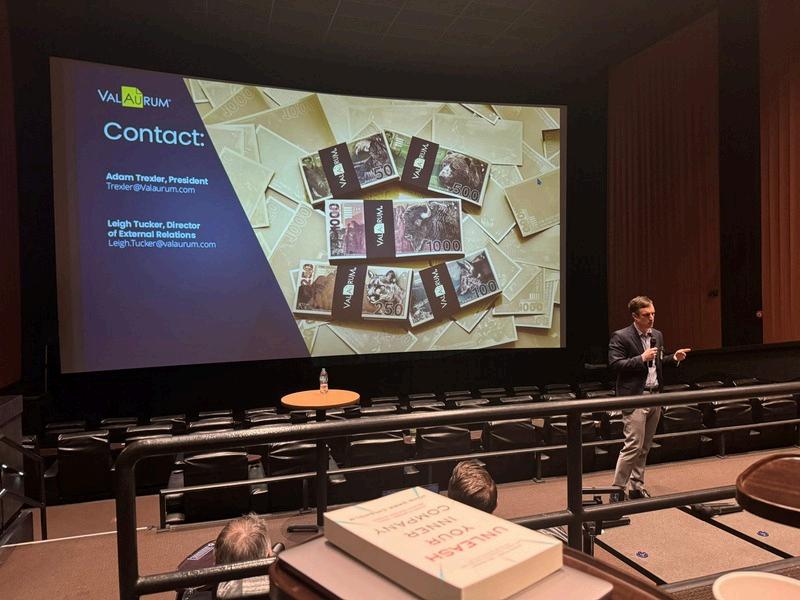
Written by: Michelle Bernier
At the Liberty Ventures Investor Summit in Dallas, the conversation kept circling back to how durable companies get build when investors, operators and founders collaborate closely The session featured Brian Schultz of LOOK Cinemas, Sean Jackson of Easybot Chat, and Brett Hurt, a serial founder and investor with deep experience across technology and hospitality
Brett opened with context from a long career that includes building 6 companies, he has watched cycles come and go, but he sees the current one as unusually consequential. One of those companies, Bazaarvoice, became a backbone for customer reviews at names like Walmart, Sephora, Nordstrom, and Home Depot, and today serves more than 14,000 customers in 50 languages Outside of this, Brett and his wife have invested in 149 startups and around 50 venture funds The experience gives him a wide lens, and he used it to underline urgency: the next decade will shape long-term human outcomes, and leadership decisions made now will echo
He pointed to late 2022 as the inflection when Artificial Intelligence shifted from steady progress into compounding acceleration With that shift, he argued, investor behavior matters more than ever The strongest investors he has worked with listen, not as a performance, but as a discipline Brett described founder support as showing up with attention and restraint. Coaching works when the investor is present and grounded. It collapses when ego takes the wheel He was direct about a common fracture point that advice delivered by investors without operator experience can damage trust fast When trust is real, founders pick up the phone first
From there, Brett moved into how he thinks about investing in Artificial Intelligence now. His filter is shaped by competitive reality Broad, horizontal tools face pressure from incumbents with distribution and capital, including Microsoft, OpenAI, and Amazon He looks for durability where big platforms have less leverage: narrow applications built with deep domain knowledge and close collaboration with customers. In his view, vertical focus wins because subject matter depth keeps products anchored to the workflows people rely on
He also pushed the room to look where others are not. Brett highlighted investments in sectors that rarely draw the spotlight. He mentioned advanced sawmills designed by former SpaceX and Tesla engineers, and companies modernizing railways by tackling infrastructure gaps that many had stopped paying attention to All to say that forgotten categories can offer room to build without constant noise, if the team knows the domain cold
Easybot Chat, as Sean told it, came out of exactly that kind of lived operator pain After ChatGPT broke into the mainstream, a flood of desktop-focused tools hit the market. Many faded quickly as large platforms absorbed features and competition tightened Sean watched the center of gravity shift away from desk workers, and toward frontline teams who still needed fast, accurate answers while working under pressure
Brian experienced that pressure in March 2020 during the Covid pandemic, when theaters and restaurants closed and cost constraints forced operations to run lean Frontline workers still had questions that could not wait for a manager to find time: payroll details, HR rules, point-of-sale workflows, and basic training that used to happen in person When teams shrink, gaps show up faster, and they show up on the floor.
Sean built a proof of concept that turned into Easybot Chat, designed to serve hourly workers first Ease of use was the point, and the name said so. Adoption followed through routine behavior, not hype Managers began asking new hires a simple question: what did Easybot say? That small check-in created accountability and trust because it tied answers to the same source every time


From there, the product expanded into large public companies across hospitality, theaters, and medical services Sean explained that the experience changes based on who is asking Kitchen staff get recipes and operational instructions. Managers get answers connected to profit and loss, not generic guidance New managers ramp faster because the playbook is available in the moment. Consistency improves when teams are stretched thin and cannot rely on one veteran employee to carry institutional knowledge
The founder-investor relationship stayed unusually close because LOOK Cinemas became the first customer That mattered Sean got feedback from live environments where mistakes carry consequences. Brian called with issues at odd hours, the kind of calls that test a vendor relationship and, in this case, improved the product quickly Brian also brought credibility with other large operators, and his operator instincts shaped both sales conversations and product decisions The partnership worked because the feedback came from real conditions, and because both sides treated it as part of the job
Sean was equally blunt about a technical choice that protected reliability. Hallucinations are not an acceptable failure mode when employees are asking about HR policy or operational safety
Easybot uses smaller language models connected to controlled data, with access limited to approved knowledge bases When the system cannot answer, it flags the gap instead of guessing. That gap becomes a to-do: teams update standard operating procedures and close the loop fast
Customization played a cultural role, too Brian ensured responses matched the tone leadership wanted employees to hear. Workers rate answers, and suggestions feed back into content updates. He shared an example where an employee query surfaced a sensitive HR issue Easybot responded with guidance and a formal reporting link, and the visibility exposed a policy hole that leadership then improved The value lies in the system’s ability to surface issues early and route people to the right channel.
Accessibility sat at the center of the product decisions because the users are not sitting at laptops Frontline teams use phones. Easybot runs on mobile, and voice input is built in through a large microphone button Security stayed tight by design: data does not live on personal devices, and employees authenticate through RFID to access content
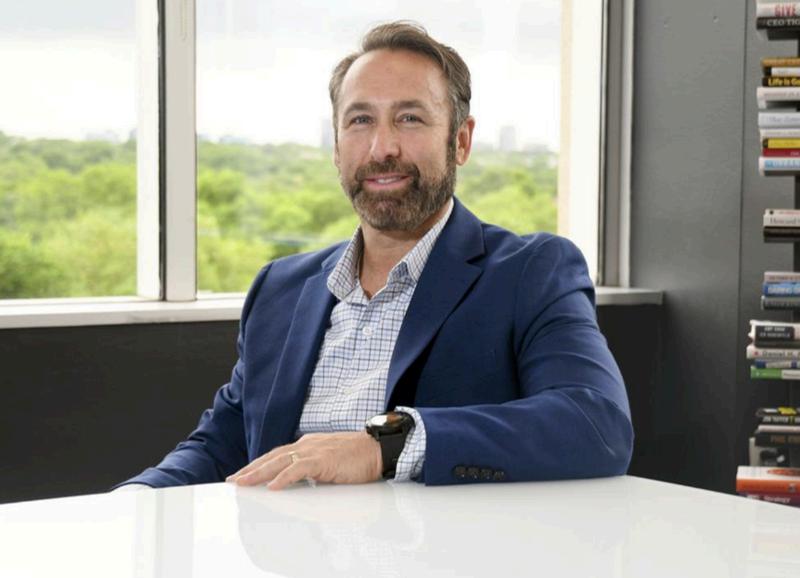
Sean closed with a prediction shaped by user behavior He expects chat-based tools to replace traditional websites for many internal and customer-facing needs, because people want answers The interface matters less than whether the response fits the situation in front of the user
Ultimately, in Dallas, the practical through-line was that investors help most when they stay close enough to see what customers are doing, and founders move faster when they can test inside real operations and hear constant feedback without defensiveness When alignment holds, capital does what it’s supposed to do: it amplifies execution.
Written by: Ravi K. Roy
This is a story about the most famous baseball bat in history, the “Louisville Slugger”! The secret of its success rests in its legendary quality. The Hillerich Bradsby Company’s history reflects a commitment to quality that is “caused” by continual improvement and innovation Bud Hillerich was the son of an immigrant woodworker who created the first Louisville Slugger bat for Pete Browning in 1884 Hillerich was approached by Browning to craft a highly customized bat that would ultimately bear the all-star player’s nickname, "The Louisville Slugger Over its 140-year reign, Browning’s signature bat would continue to make history in the hands of industry legends like Babe Ruth, Joe DiMaggio, Ted Williams, Jackie Robinson, Roberto Clemente, Hank Aaron, George Brett, Ken Griffey Jr , and Derek Jeter, just to name few
John A. "Jack" Hillerich, the company’s current President (and former CEO 1969 - 2001), took over operations at the age of 29, following the death of his father At that time the company was making 6 million baseball bats a year and approximately 1 million golf clubs. Recognizing the need to improve quality, Jack enrolled in Dr W Edwards Deming’s famous “Two and a Half Day Seminar ” Initially hopeful that the “Father of TQM” (Total Quality Management) would help his company make a better baseball bat, Jack quickly realized that Deming’s philosophy was not about improving products. Rather, it was helping leaders better utilize their people and their talents Based on decades of applied research at some of the world’s leading organizations, Deming came to believe that employees are “willing workers” and that the role of leadership was not to manage people but rather the process Accordingly, Deming encouraged organizations to refocus their resources on bolstering the skills and capacities of their employees and empower them to devise innovative solutions Leaders should start, Deming argued, by breaking down silos and fostering conditions that promote teamwork and cooperation among employees
Inspired by Deming’s teachings, Hillerich came to understand that quality was not a result that could be inspected into the product after the fact, but rather, a reflection of the “goodness of fit” between the various parts of the system that are interdependent and interwoven - the owners, managers, employees, suppliers, salespeople, and customers.
Having come to share Deming’s belief that over 90% of the quality problems in his organization belonged to senior management, Jack began applying the management guru’s widely acclaimed “14 Points of Management.” Jack eliminated 30 quality inspectors and reinvesting the company’s resources toward improving the capacities and competencies of his employees He sent 40 people to Deming’s seminars so that they could learn how to contribute more meaningfully to the organization’s success Prior to this, managers at the company used a performance-based ranking system to assess each employee’s productivity to determine their pay Not surprisingly, this practice created a climate of fear within the organization, stifling teamwork, knowledge sharing, innovation, and creativity. Countless opportunities for talented individuals to work collaboratively in pursuit of common organizational aims were squandered as result of this pervasive win-lose work culture.
Deming explained that “if you don’t change you won’t survive.” Jack and his management team responded by attempting to transform the organizational culture by encouraging employees to take greater initiative and assume more responsibility. Acknowledging that his employees had long desired to “get things done”, but that the prevailing top-down management system was getting in the way, Jack challenged his employees to meet new challenges occurring in the marketplace. The innovation of the aluminum baseball bat is a prime example Hillerich Brasby saw themselves as a wood working company and had no prior experience with working with aluminum materials. When Jack’s management team stopped telling employees how to do things and began entrusting them to devise new methods and create new products, things changed dramatically: the dollar sales of the company increased between 300% - 400%
The entrepreneurial spirit is behind Hillerich and Brasby’s initial success and Jack’s bold efforts to build quality into the organizational culture has enabled it to thrive As Dr Deming emphasized, employees, divisions and units as well as the organizations that comprise them, do not operate in a vacuum. Rather, they operate as part of a larger system Consequently, when addressing the causes of success and failure within an organization, larger system dynamics must be accounted for. At the macroeconomic level, free market systems facilitate social learning, discovery, and innovation in ways that facilitate human flourishing and prosperity. At the microeconomic level, open, horizontally organized systems characteristically feature leaders that serve more as facilitators rather than the micromanagers typically found in top-down hierarchies. Characterized by their commitment to continual improvement and innovation, the leaders of these “learning organizations” seek to bolster the abilities and capacities of their employees so that they can contribute meaningfully to their organization’s purpose and aims These organizations serve as market incubators that facilitate “outside the box thinking” that lead to the creation of new products and services and ways to do things
Like many industries in the contemporary era, baseball bat manufacturers face unprecedented challenges as they strive to remain at the “top of their game” in a fiercely competitive global marketplace. If they are to continue to thrive, they must be agile and able to innovate and adapt Indeed, the survival of free market capitalism will depend on principled business leaders like Jack Hillerich and learning organizations like Bradsby Hillerich who are committed to continual improvement by “putting people first ” Accordingly, folks at the W Edwards Deming Institute have been working with Alexander McCobin and his leadership team in The Principled Business network to promote our shared beliefs in the virtue of free markets and learning organizations that seek to build quality by fostering a “people first” culture that emphasizes continual improvement, systems thinking, collaborative teamwork, and human dignity.
Leadership Under Pressure, Lessons from Jim McCann
Written by: Alexka Medina
How do you get a team ready for pressure before the pressure shows up? Jim McCann has lived that question, and on the Liberty Ventures Podcast he answered it by pointing to what people repeat when conditions tighten Building 1800-Flowers was about growth and about designing habits that hold up when demand surges, mistakes get costly, and time disappears.
Jim traced a turning point in his leadership back to his time on Undercover Boss The lesson came from being on the floor, watching work move through real hands and real constraints Presence in everyday operations taught him that small patterns in how people communicate, decide, and follow through end up driving results. Leaders learn faster when they see work as it happens, and when they stay close enough to notice what slows teams down
That mindset mattered because the florist industry fights scale: demand spikes A normal week can jump tenfold around peak days, especially on major holidays Most flower shops stay small for a reason because they depend on informal labor to absorb the swings, and that flexibility doesn’t translate neatly into standard expansion. Jim saw early that copying a typical retail rollout would break under the same pressure customers create every February and May So he aimed for access rather than a bigger footprint
Phone ordering became the first move Securing a number that matched the brand name removed friction at the exact moment a customer decided to send flowers People didn’t have to hunt for a code or remember a long string of digits That single choice lowered barriers, reduced cost, and changed behavior in a way a new storefront couldn’t.
When the internet arrived, online ordering only served to extend what was already working The company kept layering systems that made acting easier, without forcing customers to abandon familiar options. Jim’s point was that if a channel works, don’t tear it out - add another clear path that helps someone follow through on intention
When COVID hit, he applied that same discipline to communication The team shared facts and expectations They avoided sales talk, they wrote directly to customers about what was happening, what to expect, and how the business would respond Engagement stayed steady because trust had already been earned through consistent routines. Yet again, as we’ve heard from many executives in our network, Jim’s message was that trust won’t appear on demand and instead, shows up when a business has spent years doing the basics the same way, especially when it would be easier to cut corners.
His thinking was also shaped by psychologist George Everly George Everly grew up dyslexic, taught himself to read, and later earned multiple advanced degrees. His research centers on trauma and resilience, and over years of collaboration on the book Lodestar, Jim and George built their work through repeated discussion and shared effort That experience reinforced something Jim thinks many leaders miss: asking for help is a strength when it’s done early and clearly. Inviting contribution gives people a real role in outcomes, and that changes how they show up when stakes rise
George’s research also sharpened how Jim thinks about habits under stress The brain reinforces what it practices If people rehearse worry, then worry becomes easier to trigger. If they rehearse calm responses, those responses become easier to access Leaders can’t wish teams into better performance during hard weeks but they can steer repetition toward behaviors that hold up, i.e. clear updates, defined routines, quick decisions made with the same criteria each time Jim tied that to broader findings he’s observed over the years Optimists tend to maintain stronger relationships, see better health outcomes, and live longer In his view, leaders gain an edge when they build environments where productive habits are practiced daily, not saved for crises.
Jim’s guidance centers on disciplined habits over good intentions Leaders should build systems that reduce friction for both customers and employees and create routines that make pressure predictable rather than chaotic Organizations ultimately reflect what they reward and tolerate, so culture is shaped through visible decisions and everyday behavior In practice, this means managing daily thought patterns, interrupting worry before it becomes habitual, reinforcing optimism through small follow-throughs, communicating clearly, and closing the gap between words and actions Reduce obstacles wherever they appear, treat relationships as the infrastructure of trust, ask for help early, and remember that both individuals and organizations become what they repeatedly practice and reward
Watch the full Liberty Ventures Podcast episode to hear Jim explain these ideas in his own voice and explore the lessons behind them: https://www youtube com/watch? v=10mPf5Vuf3E
for social good
Written by: Jason Syversen
Since selling Siege Technologies and setting up a foundation, Jason Syversen and his wife have learned there are several organizations that assist entrepreneurs and business leaders in maximizing their social impact.
I grew up in rural Maine and didn’t grasp how poor I was until I was older I knew food stamps, heating assistance and the Kiwanis Club bringing used Tonka trucks in a Ziploc bag for a Christmas gift were signs we weren’t well off But it wasn’t until I got a job at BAE SYSTEMS and moved to New Hampshire that I fully realized rotating your socks with holes in them wasn’t normal. Apparently most people just throw them out when the first hole appears and driving something other than a rusted Subaru/Chevy/Ford wasn’t a sign you were wealthy but just middle class
After almost a decade at BAE, I had the privilege of working at DARPA (Defense Advanced Research Projects Agency) and launched my firm, Siege Technologies, in the mill buildings in Manchester We built a number of innovative cybersecurity technologies, spun some tech out to a venture-backed firm, and were debating if we should keep growing and doing spinouts, launch products directly or sell. Running the company raised lots of interesting questions and taught me a lot about myself, business and people, and raised a key question What is the purpose of business and entrepreneurship? There are many answers to that question, ranging from “creating value for the shareholder” to “serving our customers” to “taking care of my family and our employees.”
For my wife and I, the answer to that question was that everything we do, should be focused around how to love our neighbor. When asked who your neighbor is, it includes the people physically next to you, strangers and even enemies
We had decided when starting Siege that, after selling the company one day, we would donate whatever proceeds we received to charity after taking enough to cover our living expenses (and a few fun things).
In 2016 we decided that selling was the best way to capitalize on the intellectual property and revenue we created, and so we donated the majority of the sale funds to charity (A video of our story is available online at ncfgiving com/stories/how-the-syversens-give-morewith-a-generosity-life-hack)
Since selling the company and setting up a foundation, we’ve had the privilege of providing meaningful funding to a number of compelling nonprofits. I don’t say privilege because it’s politically correct, but because it is a genuine joy to find people and groups dedicated to making a difference in the world and have the opportunity to partner with them in that process Helping the homeless in Manchester, funding efforts to fight human trafficking across the country, and creating jobs and improving economies in developing countries are each examples of local, national and international ways you can utilize available resources to make the difference in the lives of hundreds or even thousands of people.
When discussing philanthropy and business, I often share how people are presented with a false dichotomy on society If you care about people, you join the Peace Corps, and if you care about money, you join “corporate America. ” Politically, we see this same discussion presented as a false narrative of “every man for himself” free-market capitalism or an increasingly expansive government set up to provide services. However, there is a middle ground: you can care about people AND love entrepreneurship and the free market
People can create innovative technologies, services and products and sell them in a dynamic free market, and then use the resulting capital that accumulates from their hard work to provide for themselves, their families and their employees but ALSO give aggressively to charitable causes
Some people deemed “social entrepreneurs” try to merge this while running their company, maintaining a “double bottom line” that considers positive impact and financial return. Others, like myself, focus on building a strong business and giving personally during and after our time in the business
There are many in New Hampshire that have demonstrated these approaches, from the founder of Turbocam in Barrington, who is liberating people in modern day slavery in Nepal, to the founders of Dyn, who are involved with the New Hampshire Food Bank and funding numerous local charities In fact, 79% of entrepreneurs say that charitable giving is a critical part of who they are, and 47% consider themselves philanthropists Not many entrepreneurs are aware of the wealth of resources and organizations available to the 79% of us who care deeply about charitable giving
The National Christian Foundation has over $2 billion in assets and helped me set up both a donor advised fund (DAF) as well as a foundation that enabled me to manage our assets and be involved in angel/venture capital investing to continue to grow the money we have available to give away, hire staff if needed and to fund unique projects without the overhead of a private foundation
Here in New Hampshire, the New Hampshire Charitable Foundation has tremendous insights into community needs and significant donor advised fund management experience.
Founders Pledge is a nonprofit dedicated to serving business founders who pledge to donate a certain amount to charity In return, they provide free research staff to assist in locating high-impact charities, networking with other like-minded entrepreneurs and creating a no-cost donor advised fund
Pledge 1% is similar but focused around encouraging donating 1% of your current time or money and connecting with others
Once you have decided to give, there are tons of books and organizations available to assist in determining how to maximize impact There is an entire movement, called “Effective Altruism,” dedicated to researching and sharing results in how to maximize the use of your time and capital
Finally, a constant debate that we’ve had in our house is how much to talk about giving and philanthropy Should it be kept a closely guarded secret or shouted from the rooftops? Or something in between? What details do you share and when?
As hardy New Englanders, we pride ourselves on independence, minding our own business and privacy
Equally as important are to cultivate humility and avoid giving to just build your personal brand or reputation. The acclaim from publicizing giving can be an obstacle in those regards Yet, we’ve learned if you hide what you are doing, people assume it’s not happening and you’ve missed an opportunity to share the joy and the positive impact (and some of the strategies and logistical challenges to overcome) that is possible in giving well
It all comes down to analyzing your motivation to share: Is it to help/encourage the person you’re speaking with, or is it for your own ego or personal gain? This is a question that only you can answer, but hopefully the examples in this article are convincing to consider making philanthropy a bigger part of your entrepreneurial journey and join a community of people who are using their time, talent and capital to make a difference
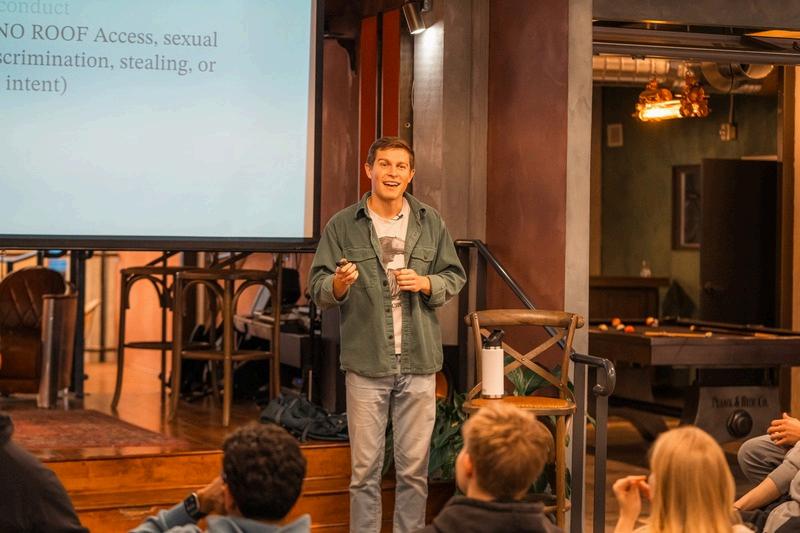
Every year, hundreds of billions of dollars flow through venture capital, shaping which ideas get built, which founders get funded, and which futures become real If you’re a VC who loves your job, you’ve probably read "The Power Law" by Sebastian Mallaby. From it, you’ve seen how the industry has naturally evolved, from a cottage industry in the early days of Arthur Rock, to a booming gold rush during the dot-com era, to a startup-making machine with the advent of accelerators like Y Combinator
The industry keeps inventing new structures to do the same core job better: find exceptional people, allocate capital, and help companies win
Here I’ll make the case that residencies are the next evolution for top-tier pre-seed and seed-stage venture capital We’ll take a first-principles look at venture’s evolution, focusing on 3 factors that are core to the industry: sourcing, selecting, and enabling companies But first, a quick context on residencies.
A residency is a cohort-based accelerator where founders live under the same roof. Not just shared calendars Shared lives No other structure in venture has required founders to inhabit the same space, day and night.
Founder residencies have become much more popular in the last ~1-2 years. Founders want to join residencies because they develop unusually close relationships with other high-caliber talent, they dramatically increase their surface area for luck, and when run well, they save 20+ hours a week on normal life tasks such as cooking, cleaning, and establishing a social life That time and energy gets reinvested into building
And why are people starting residencies? One, to meet demand And two, residencies are the next inevitable step in early-stage VC Those who own residencies, or are close to them, get to influence an industry that shapes which ideas get built, which founders get funded, and which futures become real
So, let's see why residencies will eat early-stage VC
The Evolution of Venture
Venture capital has always been about finding great talent/companies and deciding whether or not to invest What has changed is where this talent is found and what data points are available for an investor to make their decision
Early venture (~1940-1970) sourcing was almost entirely network and geography driven Figures like Georges Doriot and Arthur Rock operated in a world where technical talent was concentrated in a handful of universities, defense labs, and semiconductor firms. For top talent, Route 128 and later Silicon Valley were the best places to gain knowledge, prestige, and capital In these hubs, investors discovered top talent through personal relationships and referrals
Investment decisions, as always, were made based on the merit of the company, the capabilities of the team, and the expectation for the market But what is unique about this era is that investors often made decisions over months, not weeks. Capital was scarce, deal volume was low so investors could take their time having repeated in-person meetings, in-depth technical discussions, and conversations with the entire team. The data available to investors was high-context, but the small size of the industry meant much of the world’s talent remained invisible.
During the dot-com boom of the late 1990s, venture forever changed Deal volume and available capital increased dramatically. Physical hubs and personal connections were still important for sourcing top talent, but with a growing industry, investors were forced to move faster to make investment decisions or else miss out on a hot round. Months of due diligence often collapsed to weeks or even days for the best companies Investors increasingly acted on pitch decks, early traction, and brief interactions with founders. The ability to select based on limited information became a defining skill separating exceptional investors from the rest.
In the years that followed, roughly the mid-2000s onward, accelerators emerged, representing a structural advance in how early-stage ventures sourced and selected talent
Programs like Y Combinator attracted top founders by offering access to knowledge, networks, and early capital, becoming new hubs for sourcing. And for investors, accelerators helped cut the noise Open, cohort-based applications served as an initial filter to select top talent Then 3 months of intense building with weekly check-ins provided "longitudinal data" on execution ability for those closest to the program For the broader set of investors, the primary data point for startup evaluation is demo day. During which investors compare dozens, or even hundreds of teams against a common clock Investment decisions at demo day are often made quickly, under competitive pressure. As the industry of venture has evolved so has expected returns
In "early venture" , average returns of firms hovered near 16% IRR In the dot-com boom, the noise demolished average returns to become negative, roughly -2 5% IRR in 2000 (source). At the same time, top tier venture firms like Benchmark helped save face for venture generating 92x returns Top accelerators only continued to strengthen venture If you had invested into every YC company between 2005-2023, sources say you'd generate 176% average annual IRR
Now we’re in the AI era where competition among founders and investors is at an all time high The number of people who could start a company is exploding Tools are cheaper. Distribution is faster. Building is easier. At the same time, investor demand for exposure to AI has pulled more capital into venture We should expect top performing funds to crush historically high rates of return, and average funds to struggle. Noise is rising. Signal is harder to find
Why Residencies Change the Game
Residencies are entering into the startup ecosystem at a perfect time to help break through the noise, in an even greater way than accelerators First, residencies offer something new that attracts top talent: an environment for success. An environment where founders are 24/7 surrounded by other talented founders An environment where white-boarding sessions after dinner and deep talks before bedtime lead to breakthrough ideas An environment that frees up 20+ hours a week of a founder's time so they can dedicate more to building. An environment with all the resources and structure of a typical accelerator. Residencies are creating new, dense pools of talent. Like accelerators, residencies generate insider signal But the signal is different.
Accelerators observe founders in performance windows: weekly updates, office hours, pitch practice. These are moments when founders are “on ” Residencies observe founders continuously, across work and life Over months of living together, you see who ships at all times of the day, who has high EQ, who is resilient to setbacks, and who earns peer respect Essential characteristics to building a generational team that builds a generational company.
More simply put: accelerators measure performance under pressure; residencies measure that, plus, character over time.
Living with a founder is the highest-fidelity duediligence that exists in venture today.
With superior sourcing of early-stage talent and higherfidelity data on founders, residencies will eat earlystage VC. In many cases, the residency itself becomes the investor; in others, it sits upstream of capital as the primary source of signal In either case, capital flows toward these environments and those investors on the inside will outperform traditional funds and accelerators at selecting the most exceptional founders, thereby generating the best returns. As those wins get marketed to the world, more great talent is attracted to residencies, which leads to more great companies coming out of residencies A flywheel forms and residencies begin to eat early-stage VC.
This shift isn’t theoretical, it’s already underway. Earlystage founders are joining @theresidency, and in less than 2 years, they’ve had residents build a unicorn from nothing. Repeat unicorn founders are joining programs like @hf0 to build their next. Venture firms such as Entrepreneurs First (@join ef) and 500 Global (@500globalVC) are also moving in this direction, building residencies of their own.
The ecosystem is young, but the direction is clear
Venture has always been about finding and backing the exceptional Every new era brought new systems and structures to do that job better Residencies are the next one. They meet top founders where they are, give them the environment to build without friction, and give investors a front-row seat to real, lived performance No pitch deck compares to three months of proximity. No reference call beats watching someone ship through setbacks and show up every day
In a market overflowing with noise, residencies offer signal And in venture, signal compounds If you believe the next generation of great companies will come from residencies, then it’s worth paying attention to where those environments are being built
The best founders already are
This magazine, and more importantly, all of the work that is described in these pages, is thanks to the hard work of a large group of leaders in both Liberty Ventures and Principled Business, working day in and day out to build the movement of capitalists for capitalism.
Liberty Ventures Team
Michelle Bernier
Camilla Chellapermal
Luke Ripp
Emma Eisenman
Graziano Creperio
Diego Laurentin
Alexka Medina
Alexander McCobin
Principled Business Ambassadors
Luis Silva-Ball
Magnús Örn
Steve Thomas
Adam Karl
Anar Alizamanli
Dan Garretson
Dustin Palmer
Patrick McLaughlin
Fabricio Antezana
Gabriel Grilli
Igor Zillner
Jason Syversen
Johnathan Bush
Julio Clavijo
João Ferreira
Mischa Kowall
Nolan Lwin
Rajat Vishwakarma
Rodrigo Nuila
Scott Alford
Valera Vasquez
Yoseob Lim
Ali Khan
Brian Bourgerie
Akin Oladosu
Håkon Broder Lund
Eden Eyjólfsdóttir
Pavel Koktyshev
Gustavo Toxzui Xopa
Danny Chen
Prosperine Hollande Nduwayo
Cynthia Reyes
Adolfo Urquizo
Ishmael Amini
Niko Klein
Haukur Ingi Sigrúnar
Jónsson
Jóhann Portal
Clement Ngu
Zachary Silva