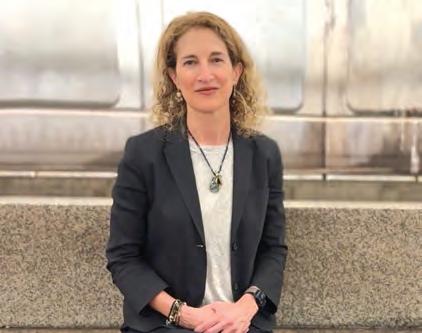
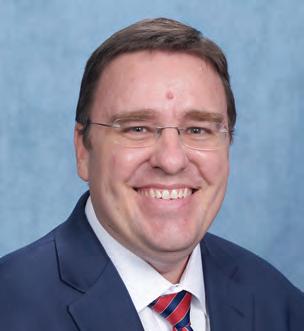
12 Mayoral Candidates Clash over Affordability by Elizabeth O’Gorek
17 At-Large Race: Split on Safety, Housing and DC’s Future by Elizabeth O’Gorek
20 The At-Large Special Election: The Race To Replace McDuf e by Elizabeth O’Gorek
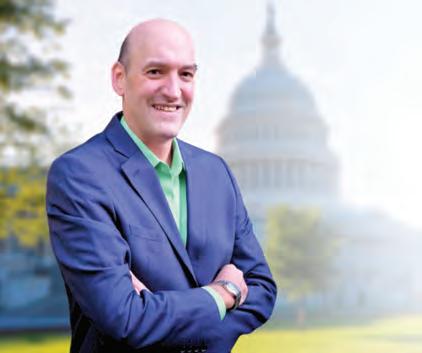
24 The Delegate Race: Winning In uence, Leading the Resistance or Both? by Elizabeth O’Gorek
ON THE COVER:
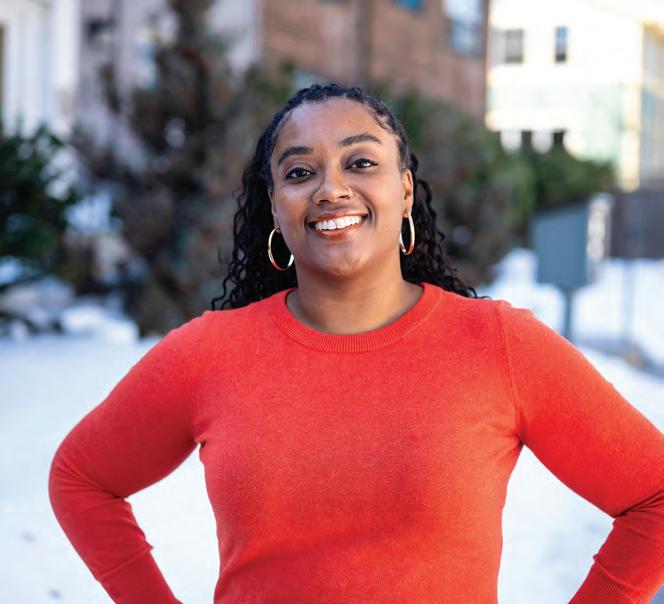
Jasmine Washington, proprietor of The District Hair Lounge. Photo: Andrew Lightman (Page 10).
WHAT’S ON WASHINGTON
“Stretching
the Canvas: Ten Decades of Native Painting” at the American Indian Museum
“Stretching the Canvas: Ten Decades of Native Painting” explores how Native artists challenged perceptions of what constituted Native art and what it should look like. Featuring more than 50 works by over 40 artists, this exhibition tells the story of how American Indian art expanded after World War I and Native painters began to advocate for themselves in a world that often ignored their talent. Artists such as Fred Kabotie, Tonita Pena and Stephen Mopope made space for painting at a time when Native art was often dismissed. Later generations embraced a wide range of approaches. “Stretching the Canvas: Ten Decades of Native Painting” opens at the Smithsonian National Museum of the American Indian on May 15. www.americanindian.si.edu
Anacostia River Festival
On Saturday, May 16, from 2 to 6 p.m., the 11th Street Bridge Park and the National Park Service present the 12th annual Anacostia River Festival. This free, family-friendly event at Anacostia Park, 1800 Anacostia Dr., features events such as: guided mindfulness and movement; bookmark making inspired by Alma Thomas; seed paper making and botany chat; fishing workshops; exploring Anacostia’s water world; pickleball; fun with Building Bridges farms; arts, crafts and games; food allergy games and safety fun; nature exploration activities; creek critter discovery; community flipbook art; hands-on STEAM lab; mindful art making and community chalk art. On the stage are the Washington Ballet, Union Temple Church Choir and Chief Rocka. Reservations and safety waivers must be completed before participating in water activities. Both can be obtained from the River Activities tent located on the festival grounds. All activities are free. www.buildingbridgesdc.org
“How Sweet the Sound” Gospel Competition at
The Anthem
On Saturday, May 30, at 7:30 p.m. (doors at 6 p.m.), at The Anthem, 901 Wharf St. SW, this event showcases the nation’s top gospel choirs, soloists, dance ensembles and spoken word artists. Featuring performances by award-winning artists, this one-night-only experience inspires and energizes audiences of all ages. www.theanthemdc.com
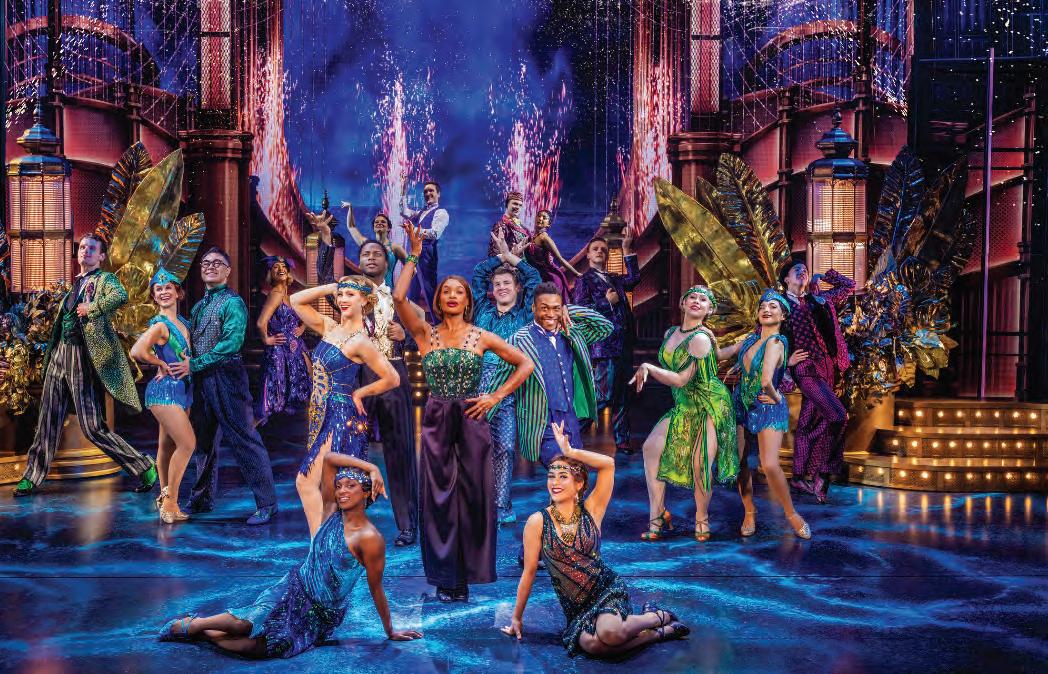
“The Great Gatsby” at the National (The Party’s Roaring in Washington, DC!)
Based on the classic novel by F. Scott Fitzgerald, the Tony Award-winning “Gatsby” is an unforgettable musical about love, wealth and tragedy. “The Great Gatsby” is at the National Theatre, 1321 Pennsylvania Ave. NW, from May 12 to 24. Tickets start at $67. www.broadwayatthenational.com
Dyana White Hawk (Sicangu Lakota, b. 1976), untitled cross, 2024, acrylic on canvas, glass beads, museum purchase, 2014.
WHAT’S ON WASHINGTON
“America’s
State Flowers: An America 250 Celebration” at the Botanic Garden
Through Oct. 12, in celebration of America’s 250th anniversary, the US Botanic Garden, 100 Maryland Ave. SW, blooms with the ower each US state and territory has chosen as its of cial ower. Explore the display showing the state and territory owers with living plants, artistic displays, botanical illustrations and herbarium specimens. For an interactive map showing where each state ower is showcased, visit www.usbg.gov/visit/exhibits/americasstate- owers-america250-celebration.
Click the icon on the map’s top right (four corners of an open box) to make the map full-screen and even more interactive. www.usbg.gov
NGA Jazz in the Garden Celebrates American Sounds
The National Gallery of Art’s Friday summer concert series returns with Jazz in the Garden: American Sounds. Kicking off on May 22, the series spotlights artists from across the country performing genres from indie, soul-funk, alternative bluegrass, salsa and jazz, to rhythm & blues, blues, Americana and brass band. Admission is free. The NGA offers registrations through a lottery system. It opens on Mondays at 10 a.m. and closes Fridays at noon at www.nga.gov/ jazz. Lottery entrants are noti ed by email if they were selected on the Monday before each program. Limited passes will be available at all entrance gates starting at 5 p.m. On concert days, the Sculpture Garden closes from 4 to 5 p.m.; gates reopen at 5 p.m. and the concert begins at 6 p.m. The NGA Sculpture Garden is located on the north side of the National Mall. www.nga.gov
“Burnished: Pueblo Pottery” at NMWA
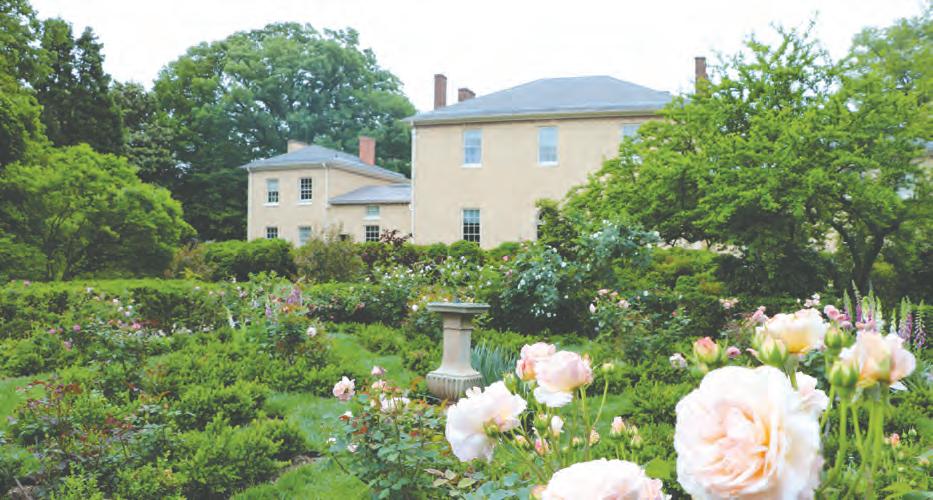
The o cial ower of the District of Columbia, the American beauty rose. Commercial color lithograph (from the owers series for Old Judge Cigarettes), 1890.
From May 8 to Sept. 27, the National Museum of Women in the Arts, 1250 New York Ave. NW, presents a new look at Pueblo pottery in this exhibition drawn from the museum’s collection. “Burnished” af rms the continuing impact of Pueblo women potters as well as NMWA’s longstanding commitment to collecting and exhibiting their work. NMWA is open daily, except Monday, from 10 a.m. to 5 p.m. Adult admission is $16; adult 65+ and DC residents, $13. Free admission for 21 and under, visitors with disabilities and SNAP/EBT holders. www.nmwa.org
Marie Zieu Chino, seed jar, 1982, clay, 12 x 13 inches; National Museum of Women in the Arts, gift of Wallace and Wilhelmina Holladay.
Theater Night
A Curated Review of Theater in the DMV
by Matthew McClure
In DC, we’re spoiled for choice when it comes to great theater. Between the National Theatre, Arena Stage, Ford’s Theatre, Signature Theatre and other big players we arguably rival Broadway when it comes to talent, diversity and sheer variety. However, between the glittering names and sparkling marquees, it can sometimes be easy to forget about the smaller but no less formidable playhouses keeping local actors employed and our minds engaged. Read on for our curated selection of three of these powerhouses and reviews of their current stage productions.
Don’t Miss
“Everything, Devoured,” Nu Sass Productions On now through May 10 www.nusass.com
The Playhouse. Nu Sass Productions – founded by Aubri O’Connor and Emily Todd in 2009 – distends the traditions of theater by throwing out gender conventions in both the casting and production of their plays. A welcoming space for experimentation and for anyone who’s ever experienced discrimination based on gender, race or body type, Nu Sass Productions is comprised of the Sirens of Sin, Pinky Swear Productions and Nu Sass itself, with the first focused on feminist-forward musicals and the last producing original, established plays.
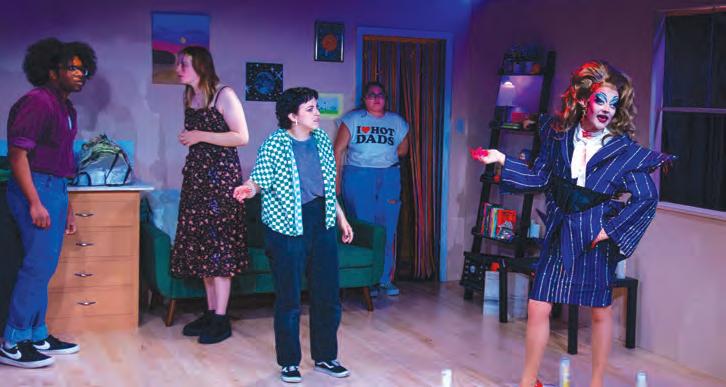
The Play. A last-minute lease termination in March meant that Nu Sass’s world premiere production of Katherine Gwynn’s 2024 play “Everything, Devoured” was almost scuppered, but what O’Connor and directors Tracey Erbacher and Ileana Blustein have managed to salvage is obviously a labor of love. “Everything, Devoured” crams a lot of exposition into 90 minutes. Lovers Kore (June DicksonBurke) and Julian’s (Tristin Evans) small apartment ‒ conjured up within a tiny room at the Sitar Arts Center in Meridian Hill ‒ is the setting of a supernatural evocation that’s both a psychological and an emotional reckoning. But what Kore and Julian summon (with the assistance of their friend Dante and overseen by a ghostly former resident) is more than what any of them could have expected.
What arises from the center of a pentagram marked out in salt and porcine blood on the apartment floor is Ronald Reagan, but not any version of the 40th president of the United States you’d recognize.
O’Malley Steuerman, as a camply demonized Reagan, lured from the flames of hell to do Kore’s bidding, is “snatched for the gods” in a sequined pinstripe suit paired with flame red heels and shoulder pads that’ll poke your eyes out. Steuerman’s Reagan is whip smart and razor sharp, with no regret for the over 20,000 gay men that died of HIV and AIDS during his administration. And this iteration of Ronald Reagan relishes chaos.
The main themes of “Everything, Devoured” are unapologetically heavy: sexual abuse, religion, the damage caused to marginalized communities and individuals through government neglect and the ways in which the Left’s tearing of flesh and gnashing of teeth can so easily poison both the body and the body politic. Despite this, the tight cast of Steuerman, Dickson-Burke, Evans, Selena Gill as Dante and Christian Harris as Michael the ghost shoulder the weight exceedingly well. It’s worth a watch. Bring your rosary.
On Right Now
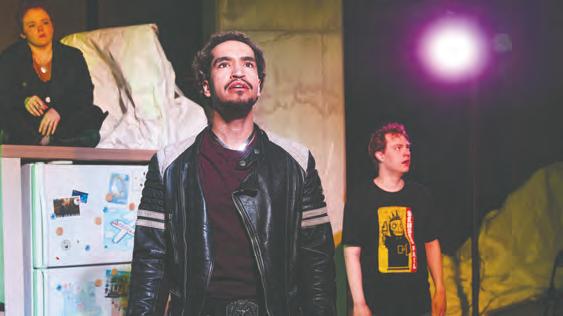
“Dragon Play,” Rorschach Theatre
April 17-May 17
www.rorschachtheatre.com
The Playhouse. Rorschach Theatre – borrowing its name from Hermann Rorschach’s 1921 psychological analysis test – was founded in 1999 by co-artistic directors Jenny McConnell Frederick and Randy Baker. “We wanted to create theater experiences that were more intimate and visceral than a lot of what was going on in DC at the time,” explains McConnell Frederick. “Our mission has evolved since then. We’ve become known for working in unconventional spaces and for transforming
unusual locations.” Since fall last year, Rorschach Theatre has been producing and hosting plays in a repurposed retail outlet at The Stacks, a new mixeduse development in Southwest. “We embrace the idea that we’re itinerant not because we haven’t found a space. It’s part of creating work that embraces both the architecture and the community of the location,” says Baker. “That’s a big part of what we do.”
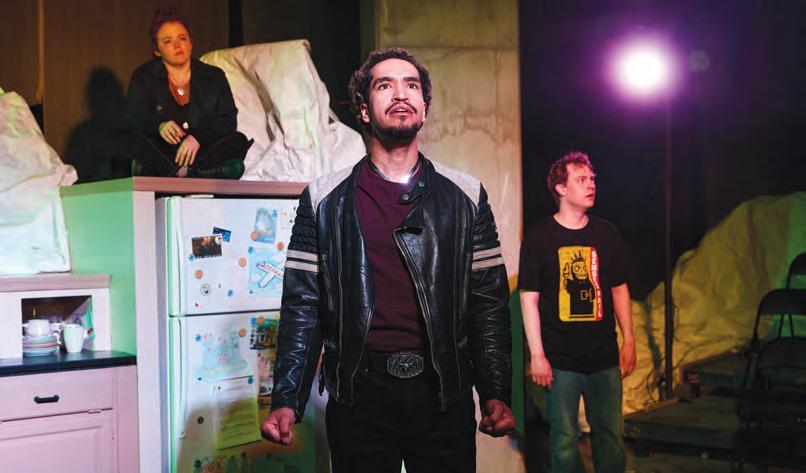
The Play. Jenny Connell Davis’s “Dragon Play” is all about big feelings. Perhaps that’s why it works so well staged within the yawning, double-volume retail space at The Stacks, where director Baker has assembled a cast that artfully fills the concrete void with oodles of angst and emotion.
Inspired set design and lighting by Sarah Beth Hall and Hailey LaRoe serve as the backdrop for two tales about love, loss and sacrifice. That these two stories (one focused on the dewy blush of teenage love and the other on very adult decisions about what we surrender to secure happiness) are connected is something the audience learns only gradually. That both stories feature dragons is equally slowly teased out, and it’s this incremental accrual of awareness that makes “Dragon Play” both a formidable and fascinating play to watch.
With her fiery red hair and smoldering gazes, Erin Denman as Woman deserves praise for fully embodying a disconsolate housewife with a secret who has scraped out an interpretation of happiness with her blue-collar husband (Erik Harrison) in rural Minnesota. Bri Houtman (Dragon Girl) and Ben Ribler (Loser Boy) capably carry their storyline of blossoming love, disillusionment and eventual propitiation alongside Denman, Harri-
Christian Harris, June Dickson-Burke, Tristina Evans, Selena Gill and O’Malley Steuerman in “Everything, Devoured.”
Photo: Shutterbug’s Creations
son and leather-clad bad boy Jalen WilsonNelem.
Got something you want to let go of? Bring it along when you come see “Dragon Play.” There’ll be a fire where you can burn it after the show.
Upcoming Attraction
“OR,” Constellation Theatre Company
May 15-June 7 www.constellationtheatre.org
The Playhouse. It’s been exactly a year since Constellation Theatre Company departed Source Theatre on 14th Street after CulturalDC sold the space to a group of restaurateurs. Founded by artistic director Allison Arkell Stockman in 2007, the company now resides at the Atlas Performing Arts Center on H Street, and that’s where you’ll be able to enjoy the second show of their 19th season. “The idea of ‘The Expanding Universe’ was tied to the fact that Constellation’s world was changing and transforming into something new,” says Stockman, explaining the title of their current season. “We want to create experiences that present a fun and joyful experience for the audience. There’s so much going on right now that’s challenging and painful and dark. We really doubled down on the idea of joy and to give people a sense of community when they come to see a show.”
The Play. “OR,” by Liz Duffy Adams, is all
about a world undergoing the kind of transformation Stockman is referring to. Aphra Behn (played by Constellation regular Veronica Del Cerro) is the first professional female playwright, poet and novelist in Restoration England, living in a society that’s been totally recast by the sybaritic King Charles II. Taking the throne of England, Ireland and Scotland in 1660, Charles rebelled against the puritanical values of his predecessor by supporting the arts, establishing a thriving theater company and (perhaps most importantly for protagonist Aphra Behn) giving women license to be professional playwrights for the first time in modern history. “OR” follows Behn’s misadventures over the course of one evening after she’s liberated from debtor’s prison. Between writing her first play and managing the amorous attentions of men like King Charles (played by Michael Kevin Darnall), Behn must also navigate the treacherous world of espionage and deal with the pressure of being a female in a world still ruled by males. The tight cast of three also features Constellation newcomer Irene Hamilton as Nell Gwynne, a woman as familiar to Restoration England’s acting world as Behn herself.
Under the capable direction of Stockman, “OR” makes deft use of the distinctive verbiage of Behn’s period along with liberal helpings of comedy to explore ideas of freedom, queerness, non-monogamy and our society’s proximity to recent history. u
Erin Denman, Jalen Wilson-Nelem and Ben Riber in “Dragon Play.”Photo: DJ Corey Photography
Spotlight: The District Hair Lounge
by Andrew Lightman
Jasmine saw the vision and gave me the cut I wanted,” says a longtime client of Jasmine Washington, the proprietor of e District Hair Salon, located at 704 O St. NW. A six-foot-tall self-described glamazonian with a radiant smile capable of melting an Arctic glacier, Washington presides over a six-chair salon with three other independent hair stylists.
The Vibe
Light-colored wooden oors and large front windows illuminate the sa-
lon. e light beige walls are punctuated with vibrant hanging plants and decorative mirrors. e foliage, both on the walls and in large urns, complements the green salon chairs. It is an open, clean, inviting space.
e salon’s vibe is reminiscent of the hair salons of yore. Conversation and laughter ll the air as Washington holds court behind her chair, regaling all with her wit and boundless energy. Clients gossip among themselves and with the stylists. Many are close friends. “I always feel comfortable,” said Washington as she carefully col-
ored her client’s hair.
“I wanted to create a haven for both stylists and clients,” explained Washington. “It’s a whole community connection. You want to have a vibe where work can be fun.”
Everyday Beauty
e District Hair Lounge is a fullservice salon. It o ers painting, haircuts, treatments, extensions, keratin smoothing, color correction, glaze/toner and global lightening. Clients can choose from single process color to complicated
highlights. Stylists o er precision cuts and signature blowouts. All tailored to budget, facial structure and lifestyle.
Washington advises clients to come with photos of looks they admire. What do you want? she asks them. “We always try to elevate the client’s look,” she stated.
“ ose fringes sound great, but what are you going to do when you are at the pool with the kids?” Washington recalled telling one client. “Can you maintain it?” she always cautions.
From Left to Right: Stylist India Travis, Stylist Amanda Motte, Mascot Bijou Washington, Proprietor and Stylist Jasmine Washington and Stylist Bohdi Lone. Photo: The District Hair Lounge
Proprietor and Stylist Jasmine Washington blows out a client. Photo: Andrew Lightman
e District Hair Salon, per Washington, is built on color correction. Washington and her fellow stylists are experts in balayage. is technique requires a stylist to paint lightener or color on to the client’s hair by hand, rather than using traditional foils. e method creates a softer, natural-looking gradient, which more e ectively blends darker roots and lighter ends seamlessly. Lacking harsh lines, it has the advantage of lower maintenance as the hair grows.
“ e main art I do is behind the chair,” Washington said, chuckling. e keys to great styling are understanding the color wheel, as well as hair texture and formation, she emphasized.
A Hard Lift
Washington was born in Charlottesville and raised in Richmond, VA. She moved up to the DMV to attend Paul Mitchell e School in Tysons in 2008. “I have always been obsessed with beauty,” she said.
After graduating, she debuted as a stylist at PR At Partners, later heading to California to pursue her career. e move broke clients’ hearts, said one.
Missing the District, Washington returned seven years later. “I love the city deeply,” she enthused. Running through city streets with her four-year-old standard poodle Bijou is her other passion.
In 2022, Washington opened e District Hair Lounge. It took more than year of hard work. e space required a complete gut job, she remembered. e result speaks for itself.
“Our gift is to enhance client’s natural beauty,” said Washington. “We help people be more con dent and be their best selves.”
e District Hair Lounge is located at 704 O St. NW. For information or to make an appointment, www.thedistricthairlounge.com. ◆
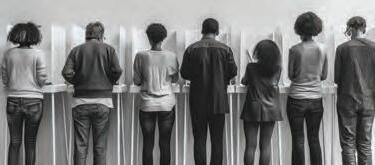
Mayoral Candidates Clash Over Affordability
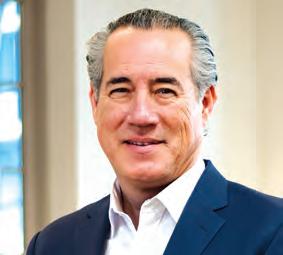
The District’s mayoral race has become a fight over how far government should go to make the city livable again ‒and how long residents can afford to wait.
All candidates agree on the diagnosis: Washington is becoming unaffordable. Housing costs have soared. Federal job cuts have weakened the tax base. City finances are tightening. And an unpredictable White House and Congress continue to interfere in local affairs.
Where they diverge, sometimes sharply, is on what comes next. Eight candidates are vying to be mayor:
1. Ward 4 Councilmember Janeese Lewis George (janeesefordc. com);
2. former At-Large Councilmember Kenyan McDuffie (kenyanmcduffie.com);
3. developer Gary Goodweather (goodweatherfordc.com);
4. civil rights attorney Yaida Ford (yaida4dc.com);
5. former At-Large Councilmember Vincent Orange (orangeformayor.com);
6. federal contractor Rini Sampath (riniformayor.com);
7. real estate broker Ernest Johnson (ernestformayor2026.com);
8. former federal agent Hope Solomon (hopefordc.com).
This analysis draws on candidate websites, campaign materials and two forums: the March 15 Free DC debate and the April 20 event hosted by The 51st News and Washington Informer.
Shocking Electric Bills
The sharpest confrontations so far have not been about crime or schools but electricity.
At the Free DC debate, McDuffie
by Elizabeth O’Gorek
and Lewis George accused each other of being responsible for the spike in electricity bills. Lewis George pointed out that McDuffie had led the DC Council committee responsible for oversight of the Public Service Commission (PSC), which sets utility rates. McDuffie retorted that both candidates had voted to confirm the current appointees.
“Do not fall for the banana in the tailpipe. It’s about leadership,” McDuffie said, arguing the District’s elected officials shared responsibility for the soaring rates. The clash revealed a deeper split: whether the problem is regulatory failure, political failure or system design.
Their answers at the April 20 Martin Luther King Jr. Library forum, hosted by The 51st News and Washington Informer, showed overlap as well as conflict. Lewis George said she would expand community and government solar options, automatically enroll more residents in low-income utility programs and appoint commissioners who “put people first.” She also wanted to explore “public utility options.” McDuffie likewise backed automatic enrollment and called for a strong People’s Counsel and PSC that prioritize affordability, while also holding data centers responsible for increases.
Both candidates are arguing for a more consumer-protective city posture, though Lewis George’s campaign website goes further in making “affordable utilities for all” a named policy plank.
But Orange saw leverage. Utilities, he declared, always need something from the city. An effective mayor could use any ask as leverage to drive down rates, he argued at the MLK forum.
Goodweather proposes a
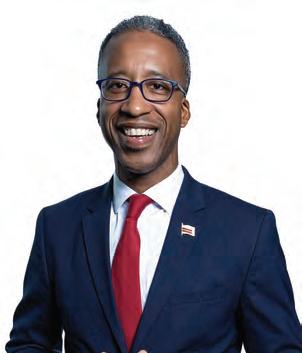
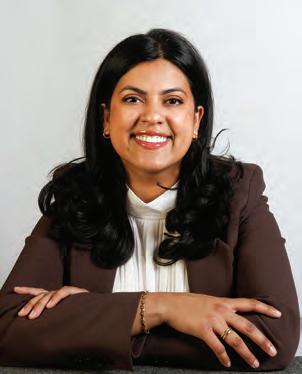
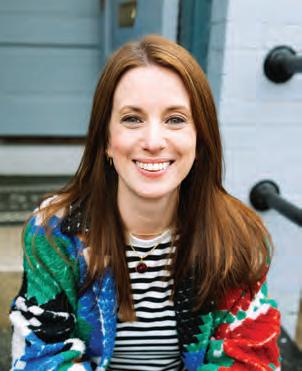
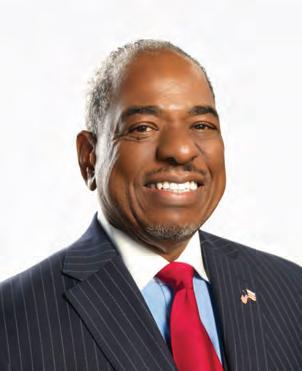
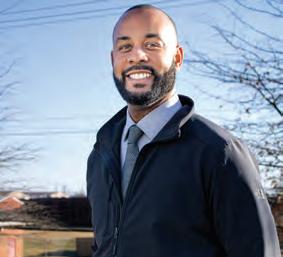
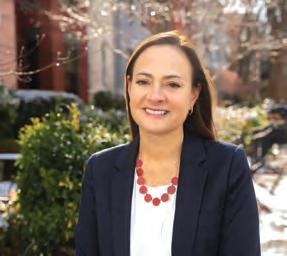
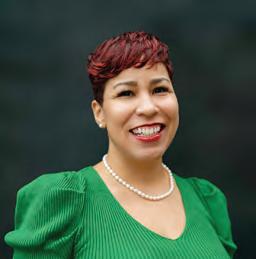
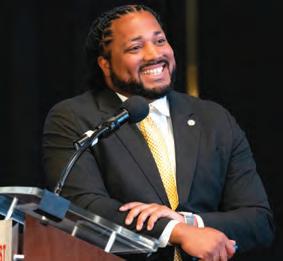
Gary Goodweather
Rini Sampath
Kenyan McDuffie
Hope Solomon
Janeese Lewis George
Vincent Orange
technological solution in his Power DC plan. It involves expanding local electric production by installing solar panels on all public buildings, recovering sewer heat at DC Water’s sanitation plant, encouraging urban geothermal networks and creating community virtual powerplants. Regional partnerships could be used to lock in stable prices.
Sampath and Solomon each cast the issue as a transparency and governance failure. Sampath said that “Pepco will have to fight to continue to prove” that it should remain the sole utility provider, and criticized “backroom deals and closed door meetings.” Solomon, describing her own experience opening a utility bill “like three times the [usual] cost,” said residents need a mayor who will “figure out what the hell is going on in these backdoor conversations.” Neither campaign’s website offers a utility plan as fleshed out as Goodweather’s or Lewis George’s.
Johnson’s campaign site focuses far more on education, jobs and public safety than on power costs. Where Johnson is specific, it is on broader service delivery and budget alignment rather than a utility strategy.
Making Childcare Affordable Childcare reveals some of the clearest contrasts in how candidates approach affordability, particularly around cost, access and how to pay for it. Everyone agrees that the average childcare cost of $2,400 per month is excessive. But they disagree on approach.
Lewis George argues for childcare as a public good. Her Childcare for All plan would cap costs at 7% of household income by expanding the city’s subsidy program so that “everybody qualifies, no matter your ZIP Code.” Presenting childcare as a system to be guaranteed rather than supplemented, she said she could raise $500 million to pay for expansion in part by closing loopholes she says benefit Maryland and Virginia businesses.
McDuffie rejected building a new system and prefers the expansion of existing programs, such as the childcare subsidy and universal pre-K. He proposed reducing barriers to opening new providers, including in-home care and downtown facilities. Framing the issue as one of budget priorities, he called the city’s spending plan “a moral document” that should fund programs that already work.
Other candidates focused less on universal coverage and more on system constraints. Orange presented childcare as part of economic development, connecting childcare to both family stability and job creation. At the April 20 debate,
he argued that the city should invest in childcare centers not only so parents can work, but also because those centers create jobs and prepare children for school.
At the same debate, Sampath claimed that “provider economics” are a major barrier, arguing that regulations such as limits on where childcare centers can be located make opening and expanding childcare difficult, and she criticized what she described as cuts to childcare funding in the mayor’s budget.
Goodweather took a different approach, linking childcare costs to broader household expenses. His proposal to make transit fare-free, he argued, could return about $1,000 annually to residents, money families could redirect toward childcare, while also building a larger early childhood workforce through his Capital Corps program. Solomon warned that candidates were making promises without honestly explaining “how we’re going to pay for it.” Her answer, while not rejecting childcare funding, stressed budgeting and fiscal choices over a new named plan.
Soaring Housing Costs
Housing is the most fully developed issue across the race, but candidates disagree sharply on pace, scale and whether the city should act mainly as regulator, partner or builder. Lewis George wants to create 72,000 new units in five years through a Dignified Homes DC plan that would drive the increase through a publicly owned, mixed-income and permanent affordable-housing developer. To attain that goal, she wants to simplify permitting, relax height restrictions near Metro stations and generally reform the zoning code. Adding supply, she argues, would bring down rents and housing prices. “This crisis is too big and too serious not to be ambitious,” she declared.
McDuffie criticized Lewis George’s goal as unrealistic. His platform takes a more incremental approach. Using the Housing Trust Fund, he plans to expand housing production by 12,000 units. He also promises to preserve another 20,000 existing affordable apartments. Believing in the power of homeownership, McDuffie wants to fund programs to assist residents in accessing the housing market.
Goodweather sits between the two. He promises to audit DC housing agencies in the first 100 days of his administration. He also supports community land trusts, social housing and targeted tax relief. His Affordable DC plan promises 50,0000 new homes by 2032, 36,000 of them being “truly affordable” units that are legally restricted, voucher supported, part of a community land trust
or, alternatively, market units that meet published affordability thresholds at move-in.
Beyond those three, the debate shifts again.
Orange emphasizes execution and experience, pointing to projects like Union Market and NoMa and proposing to use the $100 million Housing Trust Fund to build 1,000 smaller units for entrylevel workers. Sampath focuses on process failure. “It takes on average 13 months to fill an affordable housing unit,” she said. “That would never be acceptable in a high performing organization.” Solomon challenges the premise outright. “I’m not that candidate of the build, build, build” approach, she declared, and focuses instead on unlocking existing small-landlord units.
All agree that the District’s economy is not equitable, citing neighborhood disparities, barriers to employment and lack of effective workforce development to connect residents with well-paying employment.
Opportunity for All
While agreeing that DC’s economy does not distribute opportunity evenly, the candidates part ways on whether government should strengthen labor standards, build workforce pipelines, attract employers or do all three. In her platform’s Good Jobs for All, Lewis George proposes raising standards for workers, supporting unions and ensuring that economic growth translates into higher incomes for residents. Rather than focusing primarily on pipelines into business sectors, she emphasizes reshaping the terms of work itself through labor protection, benefits and governmentbacked investment in job creation. Her emphasis on economic opportunity as inseparable from affordability argues that higher wages and stronger worker protections are necessary to keep residents in the city.
Central to McDuffie’s platform are creating pathways into sectors like technology and expanding opportunities for small businesses, alongside wealth-building programs such as baby bonds. He proposes a Stay in DC fund to keep local shops open, and investment in tech and creative startups. At forums he often connects affordability to economic growth, and his campaign materials outside his site stress support for businesses that anchor neighborhoods.
Goodweather’s approach relies on structure and metrics. He promises to create a citywide service and workforce program, the Capital Corps, to clear pathways into employment, along with an advanced
I’m
I’m
As
technical center in every ward. His proposed RISE Act would require employers to provide 90 days’ notice when technological changes affect jobs.
Others return to growth itself. Orange touts his role in the development of Union Market and Brentwood. Job creation follows economic development, he argues.
Sampath ties opportunity to government performance. Arguing that permitting delays and service failures retard growth, she says, “We need to be a city that actually works.” Solomon echoes that from a business perspective, pointing to bureaucratic barriers. She emphasizes job access and stability as part of broader efforts to improve quality of life and public safety.
Johnson links long-term economic opportunity with educational performance and emphasizes the need for outcomes such as 95% third-grade reading proficiency, 90% math competency by sixth grade and 85% vocational certification completion,
Despite the city’s straightened finances, candidates have made promises that may increase spending.
Expand Government? Reform
Government? Or Both?
All the candidates agree that the District has failed to deliver services efficiently and cost-effectively. They differ on whether to expand government’s role, improve the systems, redesign how government operates or better enforce the current laws.
Lewis George‘s vision is the most radical. Government, she argues, is the primary tool for reducing inequality and lowering costs. The city’s affordability problems are caused by underinvestment and market failure. The solution is more direct public investment when private means fall short. Increased efficiencies in government programs can fund the expansion, she argues. “Working people should not shoulder the burden of balancing the budget,” she said.
For Goodweather, public investment is the solution. His proposal to make public transit free to DC residents could return more than $1,000 annually to regular riders, he argues. Much like Lewis George, he believes savings through increased government efficiency can cover the cost.
Orange takes the call for efficiency a step further. At the April 20 forum, he cited examples of funding he claims is misaligned, from police vacancies to paid family leave and traffic camera revenues, and called for a “revenue alignment commission” to find the money. He argues that the city’s problem is not lack of cash but management.
Taking a more measured approach, McDuffie is not anti-spending but tends to frame programs as things government should scale up if they work rather than create entirely new systems. He pairs a proposal for targeted investments, such as baby bonds, with more effective governance.
Sampath, Solomon and Johnson offer their own versions of that critique. Sampath’s campaign proposes using performance metrics and public dashboards to improve agency functioning. She is particularly focused on 311 and 911 response, and her campaign has built a 311 app. Solomon talks about wanting “a real adult in here” and stresses honest discussion about what can be paid for. Johnson says DC government should work for residents rather than “special interests or outside commuters.”
In the background, the White House and Congress increasingly are interfering in the District’s affairs.
Defending DC
It is time to “stand up for all DC,” says Lewis George. That requires an “inside-outside strategy” that combines litigation, congressional engagement and grassroots organizing. Rather than relying solely on legal challenges or political negotiation, her approach assumes the city must do both. At the April 20 debate, she said that “complying in advance is not a strategy” and argued for using every legal lever with Attorney General Brian Schwalb, while also walking “the halls of Congress” herself and building a federal affairs office inside the executive branch. Her website names this agenda Stand Up for All DC and explicitly calls for rescinding the Metropolitan Police Department (MPD) order that permits officers to work with federal immigration enforcement.
McDuffie also promises to terminate MPD cooperation with immigration enforcement, yet he remains open to working with federal partners on economic development and infrastructure. He is not, however, opposed to litigating to protect the District’s autonomy. “There’s no deal that I would ever cut … that will allow them to terrorize vulnerable residents,” he stated.
Super Home Rule is Goodweather’s initiative to expand the District’s authority over its own laws and budget. He says the city needs a standing system to respond to federal interference. At the April 20 debate, he also said sanctuary protections should be strengthened, that houses of worship and schools should be off limits and that every resident should be protected regardless of status. Home rule is not just a legal principle, he argues, but something to
be operationalized through policy, planning and institutional capacity.
Orange is the clearest accommodationist voice. At the April 20 forum, he said DC autonomy and statehood are “non-negotiable,” but also argued that the city must “at least have a dialog and to find the common ground.” His website similarly speaks of “Common Ground with the White House & Congress.” Orange is not afraid to lay a major part of the blame for the District’s subservient status on the Democrats.
Sampath and Solomon each push the discussion in their own direction. Sampath emphasizes protest rights and the need to audit data-sharing across agencies so residents know if cooperation with federal immigration enforcement extends farther than disclosed. Solomon emphasizes negotiation, arguing the city needs someone who can sit across from a hostile administration and protect local interests. Johnson’s site is much thinner here, his campaign gesturing toward resident-first selfgovernment, but home rule is not developed nearly as fully as in the platforms of Lewis George, McDuffie or Goodweather.
Choices
The new mayor will take office at a pivotal moment that requires a balancing of government investments against fiscal constraints, cooperation with the federal overlords with protecting residents or making the most of private markets while choosing public alternatives. The candidates offer different ways forward. A voter’s choice is less about policy details than about direction, about how much change the city is willing to embrace. Build new systems, fix broken ones, enforce existing rules or try to do all three at once?
For more information on the candidates in the Democratic Primary scan QR code ; or attend the debate at the Hill Center at 921 Pennsylvania Ave. SE on May 5 from 7 to 9 p.m. or on May 9 from 11 a.m. to 1 p.m. at Transmission at 1353 H St. N. Visit www.hillrag.com/2026/04/27/hear-the-candidatesattend-the-may-debates for more details. u
At-Large Race Split on Safety, Housing and DC’s Future
by Elizabeth O’Gorek
All at-large Democratic candidates agree that the District faces rising costs, persistent public safety issues, budget pressure and a more hostile federal environment. They differ in how to respond. As presented at an April 9 forum and across campaign websites, the differences are not subtle.
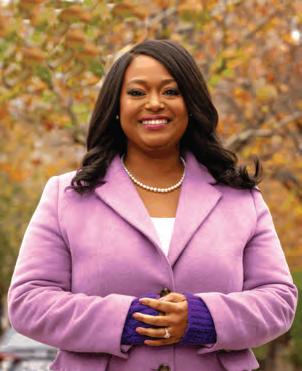
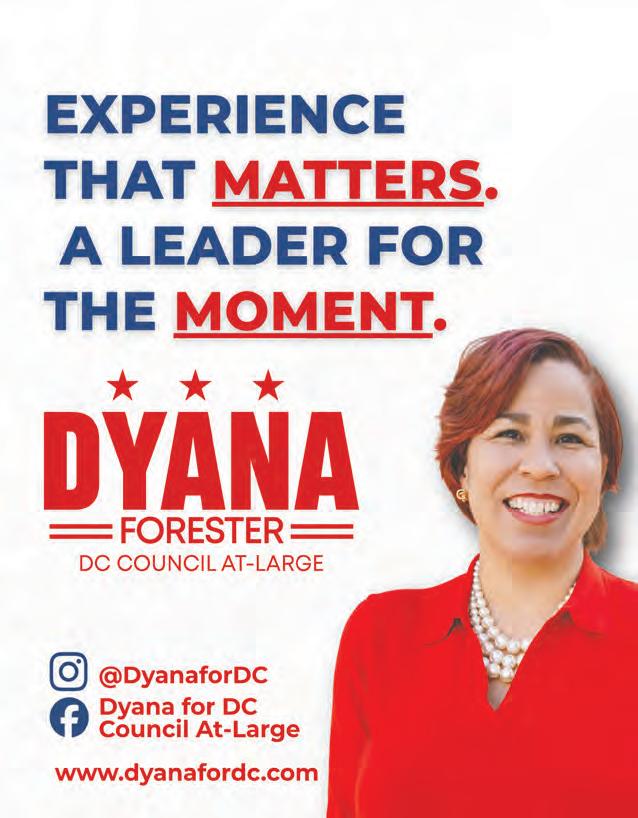
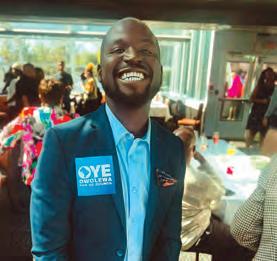
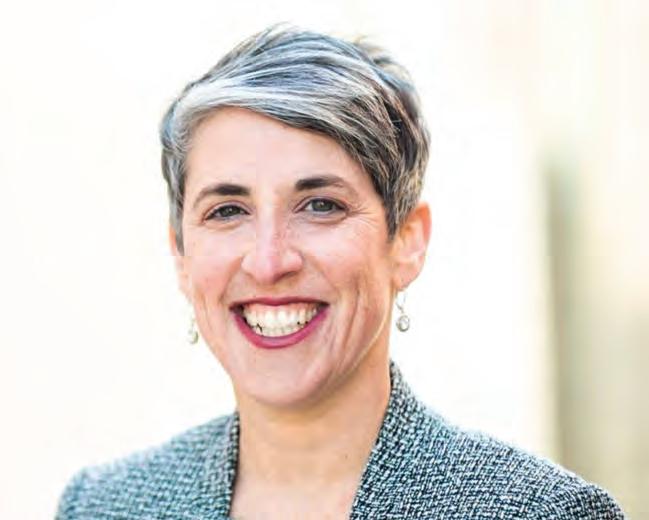
Nine candidates are running in the June 16 primary. Kevin B. Chavous is former DC Council Committee and Policy Director and a current Democratic National Committeeman (https://www.chavousfordc.com/). Dwight Davis is a longtime DC Public Schools educator and former Browne Education Campus principal (https://dwight4dccouncil.com/). Dyana N.M. Forester is a former DC Housing Authority commissioner and ANC commissioner (www.dyanafordc.com/). Business owner Fred Hill is a former chair of the Board of Zoning Adjustment (www.fredhill4dc.com/). Greg Jackson is a former gun-violenceprevention advisor to the White House (gregjacksonfordc.com/). Entrepreneur Leniqua Dominique Jenkins is a former DC Council staffer (www.votejenkinsfordc.com/). Candace Tiana Nelson is a former council chief of staff (https://www.candacefordc.com). Oye Owolewa is the shadow US Representative (https:// www.vote4oye.com) and a pharmacist. And Lisa Raymond is a former State Board of Education member (https://lisaraymondfordc.com).
Public safety reveals real fault lines between candidates, who see safety as a problem of strategy, systems, opportunity or trust.
Public Safety and Curfews
At the forums, Jackson drew on his experience with federally funded violence reduction programs to argue for targeted enforcement paired with largescale intervention. He emphasized data and measurable outcomes. His website presents a focus on gun-violence intervention and the scaling of proven programs, though it offers fewer specifics on police staffing or detention policy.
Owolewa rejects enforcementheavy approaches and prefers youth opportunity, mentorship and engagement as the primary tools of prevention. His website reinforces that framing by focusing on economic opportunity and cost-of-living issues rather than policing or curfew policy, and treats safety as a function of income and stability.
Raymond and Davis sit between those poles. Raymond emphasized schools, families and workforce systems as stabilizing forces, with her website adding support for a “well-trained, adequately staffed police force” alongside prevention. Davis framed safety as relational. “Our city moves at the speed of trust,” he said, pointing to sustained engagement between families, schools and agencies.
Curfews sharpened differences. Owolewa and Jenkins opposed them outright, calling for youth spaces and structured programming. Raymond and Davis declined to endorse curfews, emphasizing schools, families and trust. Jackson also declined to back a citywide curfew, favoring targeted, neighborhood-based interventions.
Chavous did not foreground curfews but rather emphasized governance capacity and implementation. Nelson, Jenkins and Forester similarly framed safety through stability, pointing to housing, health and economic
Oye Owolewa
Leniqua’dominique Jenkins
Greg Jackson
Dyana Forester
Lisa Raymond
Kevin Chavous
Fred Hill
Candance Nelson
supports as preventative tools, while Hill’s broader focus on regulatory and economic structure positioned safety as linked to development and opportunity.
The issues relating to the provision of affordable housing drew shaper divergence.
Housing
Candidates differ widely on whether affordability is driven by market supply, regulation or income.
Hill argued at the forum that easing regulatory barriers and facilitating development is key. Drawing on his zoning experience, he said the city should facilitate projects by balancing competing interests and allowing mixed-income development to move forward, even if that means accepting a lower proportion of affordable set-asides to make projects financially viable.
Raymond supports building more, “with safeguards.” At the forum she emphasized removing barriers while preventing displacement, while her website sets specific goals, including 72,000 new units at 30% affordability, and calls for increased density as key to making homes accessible.
In contrast, Forester takes an affordability-first approach. Drawing on her experience with the DC Housing Authority, she argued development must maximize affordability and protect residents. Skeptical of deals that prioritize market-rate units or trade reductions in affordability for scale, she emphasizes the enforcement of affordability requirements.
Jenkins and Nelson emphasize process and access. Nelson supports rent stabilization, expansion of funding for the Tenant Opportunity to Purchase Act, along with transparency and community input. Calling housing a human right, Jenkins supports equitable distribution, downpayment assistance and communitybased lending.
For Owolewa and Jackson, the focus on production misses the point. Owolewa framed housing as
part of a broader income problem, arguing that wages drive affordability. Jackson emphasized homeownership, complaining that the city has “overlooked homeowners.” Meanwhile, Chavous and Davis did not emphasize detailed housing policy at the forum. Chavous focused on governance and oversight, while Davis tied housing stability to education and community outcomes.
The District’s tight finances will constrain councilmembers from expanding programs and assistance. Candidates also disagreed on how to respond to those limits.
The Tightening Finances
At the forum, Chavous framed the challenge as fiscal discipline. The city must scrutinize contracts and assert DC Council authority over agencies. His campaign materials stress fiscal management and accountability rather than new spending.
Jackson argued the opposite at the forum, calling for continued investment in public safety, housing and jobs. He argued this is essential to avoid long-term costs. Nelson, Jenkins and Raymond also held that view. They identified education, healthcare and housing as priorities, with Raymond emphasizing strategic planning and execution.
Owolewa and Hill pointed to a need to spur economic growth. Increasing employment and expanding the tax base, they argued, would relieve budget pressure. Their websites reinforce that framing. Owolewa’s highlights job creation and income growth as the foundation of fiscal health, while Hill’s emphasizes business development and expanding the city’s economic base. At the forum, Davis focused on outcomes, arguing that investment in youth and education functions as a long-term fiscal policy. His campaign materials stress education and community stability over immediate budget cuts.
Forester introduced another dimension at the forum with a focus on the impact of federal workforce
cuts. e city has not adequately responded, she said, adding that a ected residents “feel alone. ey feel like nobody knows, nobody cares.”
Dealing With the Orange Elephant
Candidates agree the White House plays a central role in the District’s scal outlook but di er on whether the response should prioritize discipline, sustained investment or economic expansion. Jackson called the Trump administration “vindictive,” arguing leaders must confront federal actions directly. Forester focused on local impact, saying DC needs to do more to support laid-o federal workers.
Pointing to their experience as council sta ers, Chavous emphasized defending DC’s autonomy within legal constraints, while Raymond pledged to “ ght congressional interference in our local laws.”
Owolewa and Hill emphasized economic resilience over confrontation. Nelson and Jenkins stressed equity and responsiveness to vulnerable residents. Davis emphasized local trust and engagement as essential elements of federal impacts to schools and families.
Chavous’ and Raymond’s emphasis on legislative experience raises the broader question of whether voters should choose an insider or an outsider.
Should Voters Pick an Outsider Or an Insider?
“Experience really matters,” Raymond said, arguing governance requires preparation and execution. Chavous similarly stressed readiness “on day one,” noting his experience as a committee director.
Davis emphasized experience through his decades in DC Public Schools, while Forester pointed to her service at the DC Housing Authority and on the ANC as grounding her candidacy in communitylevel governance.
Despite his current o ce, Owolewa has hoisted the ag of
change. “We have never had a doctor of pharmacy, a healthcare worker or a doctor on the council,” he said.
“You deserve something di erent!”
Meanwhile, Hill casts himself as an outsider. Private-sector experience provides him with a unique perspective on government regulations, he argued. e DC Council, he said, is too internally focused.
Jenkins touts her background as an entrepreneur and doctoral student. Equity and failed government, especially east of the Anacostia River, are her rallying cries.
Embracing change, Nelson adopts a softer version of the same tone. Echoing Marion Barry’s oftquoted line, she says that residents often feel “left behind, left out and unheard.” She advocates for more governmental responsiveness and community-centered leadership.
Jackson places a foot in each camp. He cites his role in a $17-billion anti-violence federal program while nothing that he is an outsider to District government. He promises to champion new ideas regarding gun violence and unemployment.
The Choice
At-large members shape policy citywide. As the race enters its nal stretch, voters face a choice, not between goals but between approaches: enforcement or prevention, growth or regulation, discipline or investment, experience or change.
For more information on the candidates in the Democratic Primary for an At-Large seat on the DC Council, scan QR code; or attend the debate at St. Coleta’s of Greater Washington at 1901 Independence Ave. SE, on May 17 from noon to 2 p.m. or on Visit www.hillrag.com/2026/04/27/hearthe-candidatesattend-themay-debates for more details. ◆
The At-Large Special Election
The Race To Replace McDuffie
by Elizabeth O’Gorek
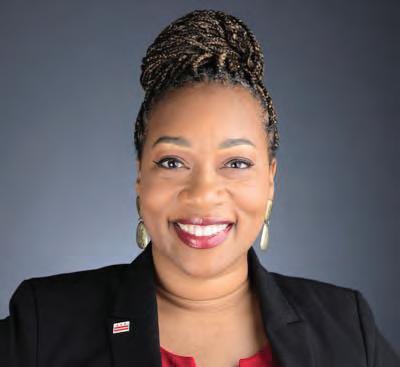
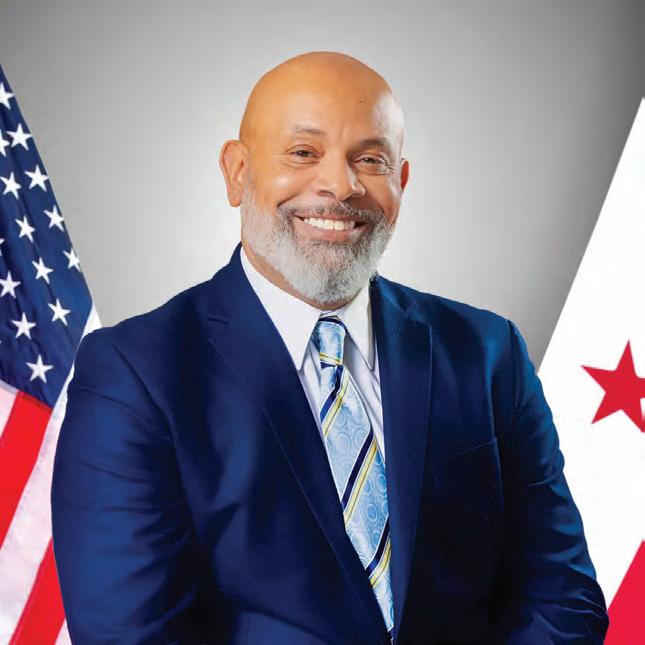
The June 16 special election to replace Kenyan McDuffie has drawn a compact but ideologically distinct field. Five candidates have qualified for the ballot. Interim At-Large Councilmember Doni Crawford (www.donicrawford.com), formerly with the DC Fiscal Policy Institute (DCFPI), was a McDuffie staffer. Former At-Large Councilmember Elissa Silverman (www.elissafordc. com) was also a DCFPI analyst. Jacque Patterson is the DC State Board of Education at-large representative. Douglass Sloan (dougsloan4dc.com) is a political strategist and former vice president of the DC NAACP. Khalil Lee (www.lee4dc.com) is a community activist.
The winner serves the remainder of McDuffie’s term, which ends Dec. 31, 2026, and must compete in the November general election to serve another term.
On paper, the candidates appear similar. All focus on affordability, schools and public safety. All promise more efficient, effective government. However, they are deeply divided over the proper role of the DC Council. Whether it’s affordable housing or improving education, how can government improve things? Who is best trusted to reform it?
Each candidate places affordability at the center of the campaign.
Affordability
Silverman frames her campaign in explicit, measurable terms related to wages, childcare and housing costs. DC should be “a community where people can afford
Doni Crawford
Elissa Silverman
JacquePatterson
to raise a family.” Silverman co-authored the District’s family leave law, which provides up to 12 weeks of paid leave, and emphasizes expanding worker supports and job training tied to “living-wage careers.” Silverman is not afraid of getting her hands dirty. While overseeing the Department of Employment Services (DOES), she sat in the agency’s call center answering the phone to assess the challenges during the height of the COVID crisis. She also took calls at the Unified Communications Center (UCC), which handles 311 and 911.
Crawford looks at affordability from a fiscal management perspective that focuses on preserving services in a tightening budget environment. Patterson and community advocate Lee frame affordability as a question of equity and access. A Ward 8 resident, Patterson is particularly concerned with disparities east of the river. Sloan sits somewhere between, leaning on advocacy experience and civil rights framing but with less detailed policy architecture.
As the candidates move from how families afford to live in the District to how they are educated, the same divisions of outcomes, equity and implementation carry into their approaches to schools.
Education
All five candidates frame education as essential to longterm opportunity and, in many cases, to public safety. They differ in their focus on the specifics and elements of the education system.
Silverman offers the most detailed policies. Her platform highlights concrete issues such as chronic absenteeism and the need to expand universal pre-K to include childcare and aftercare so the school works for working parents. That reflects her general approach to problem-solving: identify measurable problems and then scale or refine programs to improve outcomes. Schools, she argues, are part of a larger ecosystem tied to family stability, childcare and economic security.
Patterson, a former charter school leader with KIPP DC, emphasizes equity in resources, student outcomes and representation, particularly for communities east of the river. Drawing on his role overseeing education policy at the state board level, he is less about introducing a single new program and more about ensuring the system serves all students effectively.
Crawford discusses education in broader terms related to affordability and economic opportunity rather than outlining a standalone schools agenda. Her framing emphasizes investment in teachers, mental health support and modern classrooms. Schools appear in her platform as part of a larger set of services that must be funded and managed effectively rather than as a policy arena with specific reforms.
Sloan and Lee are less specific in their public materials. Sloan’s campaign references education as part of a broader public safety and opportunity framework,
without laying out detailed proposals, while Lee emphasizes community voice and responsiveness, suggesting a focus on how families and neighborhoods interact with schools rather than on specific policy levers.
The differences in emphasis between systems, services and lived experience become even more pronounced when the candidates turn to public safety.
Public Safety
Public safety is a big issue. All five agree that it is not simply a matter of policing. They relate it to housing stability, school quality, economic opportunity and youth programming. They diverge, however, on how much weight to give enforcement, specifically whether the youth curfew is a meaningful tool.
Silverman is the most skeptical about curfews. She wants to see investments with measurable outcomes in wages, childcare, housing and youth programs. She argues that the District’s paid family leave law, her signature legislation, is designed to stabilize families. Curfews, she believes, raise questions. Do they measurably reduce crime? Are their impacts racially disparate? Could the resources be better directed elsewhere?
Patterson accepts curfews as part of a broader public safety response. Short-term interventions like curfews, he argues, can help stabilize conditions but must be paired with investments in schools, engagement and community resources, particularly east of the river.
Sloan is open to targeted enforcement tools but wants them balanced with broader policy responses. His campaign calls for expanding youth programming and workforce opportunities as part of a prevention strategy. Arguing that public safety requires more than policing alone, he emphasizes better coordination between agencies, including police, schools and social services, to respond to youth crime and repeat incidents. At the same time, Sloan supports focused enforcement in highrisk areas, while cautioning that such measures must be paired with services and applied equitably, a stance that reflects both his platform and his background as a former vice president of the DC NAACP.
Crawford has moved from a limited role in the curfew debate to a more active one as current legislation has evolved. She did not vote on an earlier committee action advancing a permanent curfew bill, but she helped shape a compromise measure after the council failed to extend the existing law and Mayor Muriel Bowser imposed a temporary emergency curfew. The revised bill, which the council advanced on an initial vote in April, allows the police chief to designate curfew zones but adds guardrails, including requirements for advance notice and mandates the provision of alternative youth programming during curfew hours. Crawford has supported those changes, framing her approach around how the policy is implemented rather than treating curfews as a standalone solution.
Lee, by contrast, has offered fewer detailed policy prescriptions but frames public safety through community experience and responsiveness. He emphasizes his experience as a DC native and the need for stronger relationships between institutions and residents rather than relying primarily on enforcement tools.
The result is not a simple split between supporters and opponents but a layered debate over whether curfews are necessary tools, marginal interventions or symptoms of a deeper mismatch between policy and the communities it is meant to serve.
Candidates’ views of the District’s roughly $22 billion DC budget offer another key differentiator.
The Role of the Council and the Budget
Silverman declares that the DC Council must ensure the budget “delivers programs that work” and produce measurable results. She grounds her candidacy in spending oversight, improved performance and holding agencies accountable.
Crawford’s approach is different. Her career has centered on shaping budgets from within, particularly through equity-focused fiscal policy. Her months as interim councilmember have also been shaped by such debates. While oversight is important, she remains focused on budget design and implementation.
Aligning more closely with Crawford, Sloan touts his business experience, which he believes gives him an advantage in navigating political systems. Patterson and Lee shift the conversation. Declaring that budgeting cannot be separated from representation, they promise to be at the table when the funds are handed out.
Who to Trust?
In a race where candidates largely agree on the problems, the choice may come down less to policy specifics than to which governing philosophy is the most trusted. Should the DC Council prioritize execution or oversight? Is the problem how government works, or who it represents? Does experience inside the system matter more than independence from it? The answers to those questions, rather than talking points about affordability or schools, may determine the outcome on June 16.
For more information on the candidates for in the Special Election to elect a DC councilmember finish the term of At-Large Councilmember Kenyon McDuffie (I), scan the QR code. u
Your Vote is Your Power -
make sure to use it!
2026 D.C. Primary Election: JUNE 16th
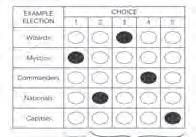
Ranked Choice Voting
• Ranked Choice Voting will be introduced for the first time in D.C. in 2026
• Step 1: Vote for your favorite candidate 1st
• Step 2: Rank your backup choices (2nd, 3rd, 4th, 5th). Only rank candidates you support!
• Step 3: Your vote stays with your 1st choice. If they lose (come in last place), then your vote moves to your next choice.
• This process repeats until one candidate wins over 50% of the vote
• Try not to skip any rankings. But you are not required to rank everyone.
When you’re done filling out your ballot, it should look like this: each choice is in a different column and a different row.
HOW TO VOTE
1) VOTE AT HOME
2026D.C.Primary Election: June16th
• Review your candidate choices at Vote411.org
• Fill out your ballot and sign the envelope
• Submit it in a secure drop box, a US mailbox, or at a voting center (any time between 11am on May 22 until 8pm on Election Day - June 16 )
All 18+ year old D.C. citizens are eligible to vote in this election. D.C. resident non-citizens can vote for local (municipal) officials. D.C. residents who are in jail or prison or have returned are allowed and encouraged to register and vote.
VOTE411.org is the League of Women Voters’ nonpartisan “one-stop-shop” for all the election-related information you need See what’s on your ballot, register to vote, or check your registration at vote411.org. VOTE411’s D.C. Voter Guide provides information on the candidates running for every office and where they stand on key issues, which is especially important in this election, as voters will be ranking candidates on the ballot according to their preference.
The Delegate Race Winning Influence, Leading the Resistance or Both?
by Elizabeth O’Gorek
The race to succeed Eleanor Holmes Norton as Washington’s delegate to the US House of Representatives has evolved into the most dramatic contest in the primary election.
At the center are two members of the DC Council: Ward 2 Councilmember Brooke Pinto (D) (brookepintoforcongress.com/) and At-Large Councilmember Robert White (D) (joinrobertwhite.com). Three others have thrown their hats into the ring: Democratic strategist and business leader Kinney Zalesne (kinneyfordc.com), former Eleanor Holmes Norton staffer Trent Holbrook (trentholbrook. com) and former Nuclear Regulatory Commission chair Gregory Jaczko (gojaczko4dc.com).
All candidates agree on the importance of statehood and the defense of home rule against federal interference. However, they offer sharply different strategies to accomplishing these tasks.
Winning Influence, Leading Resistance
Experience inside the delegate’s office and familiarity with congressional procedure, Holbrook argues, are the most relevant qualifications. His focus is on advancing statehood legislation, protecting federal workers and working within channels to secure incremental gains.
Pinto frames the delegate as a defender of DC against rising congressional intervention in local affairs. A former assistant attorney general under Karl Racine, she centers her campaign on legal expertise, governance and the ability to anticipate and counter federal threats. She argues that the District needs someone who can push back with legislative and legal tools. As chair of the DC Council’s public safety committee, she led passage of the sweeping Secure DC omnibus, a package advanced on an emergency basis to address rising crime and improve public safety across the District.
Other candidates believe the delegate should lead the resistance. Zalesne says the District is “on the front lines” of federal overreach. This, she says, calls for a louder, more aggressive voice in Congress and coalition-building beyond the city. Her ideas include regional economic coordination and a commuter tax. The delegate should operate not just within Congress but across jurisdictions to strengthen the District’s leverage, she argues.
Jaczko is more of a technocrat. In addition to leading the NRC, he was a congressional staffer with expertise in science and energy, and positions himself as someone who understands how federal policy is made. This, he argues, will help him navigate Congress. Rather than focusing on local political networks, he can use his subject-matter expertise to build influence within Congress.
White bridges these two visions. Like Zalesne, he sees the delegate as an advocate capable of building relationships and exerting influence within Congress. His prior experience as a congressional staffer, he argues, gives insider knowledge and coalition-building expertise. White believes the delegate is not just a representative in Congress but a conduit for securing broader opportunity, and can also play a role in workforce development and economic mobility.
Name Recognition and War Chests
Name recognition distinguishes the council incumbents, White and Pinto. This gives them an edge in fundraising. Having competed citywide several times, White holds the clear edge in this regard. Pinto has made up for her more limited citywide exposure with strong funding. She has more
Trent Holbrook
Kinney Zalesne
Greg Jaczko
Robert White
Brooke Pinto
than $800,000 in the bank compared to White’s roughly $230,000. Zalesne approaches Pinto’s haul, having raised $600,000. Money doesn’t win elections but it helps.
The candidates agree on statehood, autonomy and the delegate’s role as a District defender. The differences are more about how change should happen, whether in uence should be built through legal precision and institutional knowledge or through relationships and coalition-building. Some want the delegate to focus narrowly on defending DC; others visualize a role in national policy and regional dynamics. There is also the question of the extent to which the role should be judged by legislative progress versus tangible improvements in residents’ lives.
Choosing a Vision and a Look
Those questions de ne the contours of the race. In a city without a vote in Congress, the delegate’s power depends almost entirely on strategy and approach. The candidates are offering different visions of both. Voters are deciding not just who will represent the District, but how that representation will look. Especially given the tenure of our previous delegate, that could de ne DC in Congress for decades to come.
For more information on the candidates for DC delegate to the US House of Representatives, scan QR code; or attend the debate at St. Coleta’s of Greater Washington at 1901 Independence Ave. SE, May 10 from noon to 2 p.m. or on Visit www.hillrag.com/2026/04/27/hear-the-candidates-attend-the-may-debates for more details. ◆
Shaw Streets
by Pleasant Mann
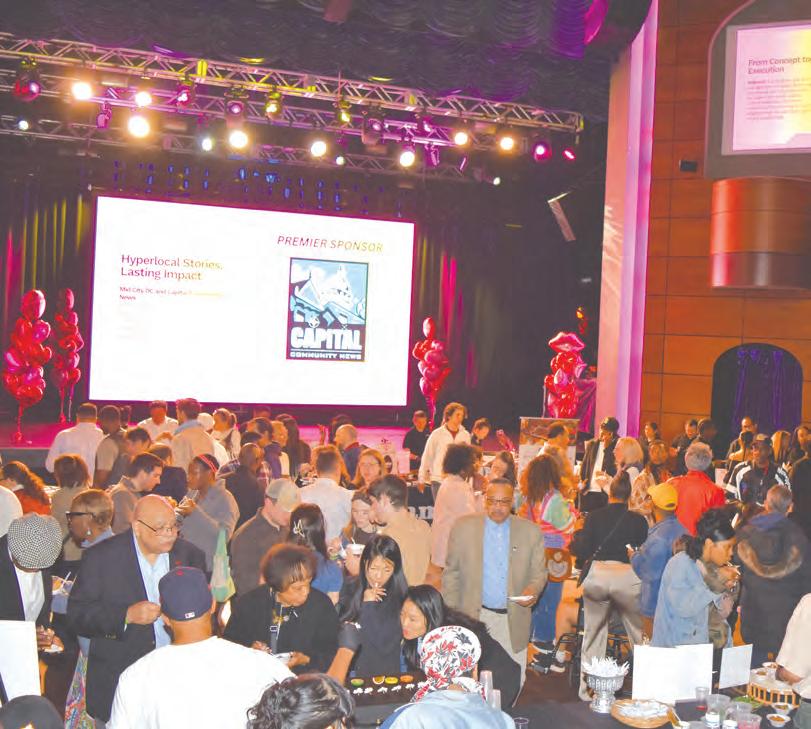
Shaw residents and visitors pack the Howard Theatre for Eat.Drink.Shaw. Photo: Pleasant Mann
Eat.Drink.Shaw Held at the Howard Theatre Shaw Main Streets held Eat. Drink.Shaw, its annual food and drink showcase, on Thursday evening, April 30, at the Howard Theatre. Approximately 300 people from the neighborhood and beyond came to sample the offerings of Shaw’s famed hospitality businesses.
The participating businesses were Michelin-listed restaurants along with RAMMY Award win-
ners. They included 801 Restaurant and Bar, All-Purpose Shaw, Ambar Balkan Cuisine, Baan Mae, Chercher Ethiopian Restaurant, Dolci Gelati, Fosette Focacceria, Gogi Yogi, Minya’s Pizza, Nina May, Shaw’s Tavern, Silk Lounge, SOST and Unconventional Diner. Visitors also got introduced to two new businesses coming to Shaw: Pho Viet on 11th Street and Urban Garden Brewing at the space previously occupied by Right Proper Brewing Company.
The eating and drinking was interrupted when the Shaw Main Streets board chair, Gretchen Wharton, welcomed the attendees and introduced the organization’s board of directors. Wharton also listed the event’s major sponsors, including ArtBoxDC, Beyond Collective, Capital Community News, Douglas Development, Events DC, the Howard Theatre, Howard University, Hyatt House, Industrial Bank, Lee’s Flower & Card Shop, Marriott Marquis Washington, DC, MidCity Development, Miller Copying Service, Roadside Development, TG Cigars, U Street Parking and Washington Gas.
Executive Director Alexander Padro started his remarks by noting the opportunity that the event
offered, mentioning that one Eat. Drink.Shaw. attendee told him that after discovering the Unconventional Diner at a previous year’s event she had eaten there at least 20 times. He went over some of Shaw Main Streets’ accomplishments for the previous year. Based on mobile phone usage data, Shaw was not only the most visited Main Street area in the District in 2025, it ranked second for most-visited Main Street in the nation, with an estimated 5.3 million visitors for the year. Padro also mentioned upcoming events, including the Shaw Open House in June and Art All Night Shaw in September. Last year’s Art All Night events in DC drew approximately 250,000 people.
Proprietors of the soon to open Pho Viet restaurant at Eat.Drink.Shaw. Photo: Pleasant Mann
Shaw Main Streets raised $70,000 in private cash and in-kind contributions at Eat.Drink.Shaw.: Savor the Flavor, our annual food and beverage showcase fundraising event on April 30, 2026. We want to thank everyone who made this event a success, especially our generous Sponsors, the businesses and developers who help us leverage the District government’s investment in the DC Main Streets program. For more information on our Sponsors, Donors and Supporters, and businesses on the Host Committee, visit www.shawmainstreets.org.
LOCAL
Shaw Landmarks Featured in 51 Steps to Freedom Virtual Tour
Shaw is home to many landmarks associated with African American history, including the African American Civil War Memorial Museum, the Carter G. Woodson Home, the Brotherhood of Sleeping Car Porters o ce building, the Howard eatre, Lee’s Flower Shop, the Addison Scurlock Studio, the Blanche Kelso and Josephine Bruce Home, Chuck Brown Way and the site of the former Bohemian Caverns nightclub and Gri ths Stadium. ese landmarks and others in Greater Shaw are included in 51 Steps of Freedom, an immersive, augmented-reality, web-based trail that combines storytelling with landmarks throughout the city.
ley and nearby Your Only Friend were among the top 11 honorees for the US East in the Tales Spirited Awards for the honor of Best US Restaurant Bar. ey are the only DMV establishments to be so honored. Among the organization’s regional awards for bars, Service Bar is one of the 10 Best US Cocktail Bars-US East and the 10 Best US Bar Teams-US East. e Tales of the Cocktail Foundation will present the Spirited Awards on July 23, during the Tales of the Cocktail conference in New Orleans.
Watha T. Daniel Library Renovations Scheduled
e 51 Steps to Freedom Trail launched on April 16, DC Emancipation Day. e Go Live Ceremony for the trail was held at the African American Civil War Memorial, featuring remarks from Shaw Main Streets board of directors chair Gretchen Wharton, African American Civil War Memorial Museum executive director Frank Smith and H.H. Leonards and Tracy Halliday, 51 Steps to Freedom co-founders.
You can begin exploring 51 Steps to Freedom by visiting the Shaw stops, learning about the trail’s stories and patronizing our neighborhood’s businesses along the way. Afterwards, continue to explore Washington, DC, as a destination for cultural, educational and experiential tourism during the nation’s 250th year.
For more information on 51 Steps to Freedom and free virtual tour tickets, visit www.51stepstofreedom.org.
Shaw Bars Get Attention
Shaw has a number of notable bars, some of them getting national attention. Amazonia in Blagden Al-
e Watha T. Daniel/Shaw Library will be closed starting May 18 for signi cant renovations. Opened in 2010, the library will update its physical plant and make changes to the interior design to accommodate new priorities for library patrons. e renovation of the main oor envisions opening up the entrance and recon guring the circulation desk so that it faces the door. e entire rst oor will now be devoted to children’s services. On the second oor, book stacks will be reduced, while the number of areas encouraging collaboration will be increased. e teen study area will be moved to the second oor. At the lower level of the building, the renovations will be limited to physical plant upgrades, replacement of uorescent lighting with LED lights and refreshed nishes. e renovation will not a ect the exterior of the building or its landscaping and should be completed, and the library reopened, in winter 2027.
e library will hold an Open House on Wednesday, May 13, from 4:00 to 7:00 p.m., to allow the Shaw community to view and comment on the planned renovations. ◆
ANC 2G Transportation Issues Reviewed
by Pleasant Mann
Ward 2 District Department of Transportation (DDOT) liaison Christophe Wassmer appeared before the Commission to address several agenda items.
e rst was a complaint raised by Commissioner Howard Garrett about trash accumulation in the bioswales installed as part of the S Street Revitalization Project. Wassmer said that there is a maintenance contract attached to the construction project that is e ective for the next two years. Garrett responded that there was little evidence of maintenance taking place.
en the Commission considered four neighborhood transportation improvements recommended by its Transportation and Public Space committee.
1. DDOT had issued a Notice of Intent (NOI) for a series of safety improvements on 11th Street, including a set of protected bicycle lanes between L and S Streets. A motion to support the NOI passed with four yes votes, one abstention.
2. e committee came up with recommendations to improve the safety of the school zone around Banneker High School. e commission was unanimous in passing a motion to request that DDOT and the Department of Public Works make the improvements.
3. A request to have DDOT and the Department of Public Works install a raised crosswalk and trash cans in front of the KIPP school on P Street passed unanimously.
4. A proposal to review a bike lane shift on New Jersey and Rhode Island Avenues was tabled for later consideration by the commission.
Public Safety
ird Police District Lieutenant Stanley Mark Rawls characterized crime as going down. Over the previous 30 days there was one assault with a deadly weapon, ve robberies, one burglary, ve
motor vehicle thefts, six thefts from autos and 12 general thefts.
ere were questions about the tra c accident on April 4 at Seventh and Q, where a car struck a bus and caused it to crash into a restaurant. Rawls said that the o ending driver tested positive for intoxication and that a warrant was issued. ere were also questions about a fracas at a neighborhood pizza parlor that got notice on social media. e lieutenant advised that they are still investigating the incident.
Commissioner Rachelle Nigro asked about a suspect that she said had been found on the 400 block of N Street, carrying multiple weapons. Rawls said that he did not have any relevant information and that he would report back to Nigro later.
Zoning and Development
611 L Street NW - requested support for a zoning map amendment that would change the lot from RA-2 to MU-8. e owner noted that this would make the zoning of the lot similar to adjoining properties. Commissioner Nigro stated that neighbors were anxious to have something developed on the property. A motion to support the map amendment passed with four yes votes, zero nos and one abstention.
1105 Fifth Street NW - a request to support a planned façade improvement and window replacement for a building before the Historic Preservation Review Board. e Zoning committee voted to support the project. Commissioner Alexander Padro said that since there were no design drawings available for the project, he was not inclined to support it. A motion to support the project passed with 3 yes, one no, one abstention.
Other Resolutions
Commissioner Nigro announced that the previous month, the DDOT Public Space Committee had tabled consideration of the permits needed by the District’s project to put a temporary cell block at
501 New York Avenue, since the questions about the project made by ANC 2G had not been adequately addressed. She asked the commission to pass three separate resolutions, one to atly oppose the project, while the other two expressed the ANC’s questions about the renovation’s compliance with the District’s tree regulations. All three resolutions passed the commission unanimously.
Commissioner Padro wanted the ANC to support a request to the Department of Public Works to install a public trash can at the corner of Columbia and P Streets. He said that neighbors had complained that there was an increase in uncanned dog waste in the area, and that a new trash can would ameliorate the problem. A motion to make the request passed unanimously.
Commissioner Nicole Shea presented a resolution calling on DDOT to conduct an investigation of the April 4 tra c crash at Seventh and Q Streets. She said that since there were no fatalities in the accident, DDOT will not automatically investigate what led to the crash and how it can be avoided in the future. An almost identical incident occurred at the same location almost two decades before. A motion was made for DDOT to investigate the April 4 crash, requesting a response to the ANC within 60 days. Commissioner Padro added an amendment, suggesting that DDOT consider the installation of bollards at the southeast corner of the intersection. e amended resolution passed unanimously.
Advisory Neighborhood Commission (ANC) 2G met on April 14, 2026. Steven McCarty (2G04, chair), Howard Garrett (2G01, vice chair), Alexander M. “Alex” Padro (2G02), Nicole Shea (2G03, Secretary), and Rachelle Nigro (2G06, Treasurer) were in attendance.
ANC 2G will hold its next meeting on ursday, May 14, 2026. e meeting will start at 6:30 p.m. Plans are to hold this meeting as a virtual conference. Visit www.anc2g.org for more information. ◆
BULLETIN BOARD
Memorial Day Concert and Dress Rehearsal
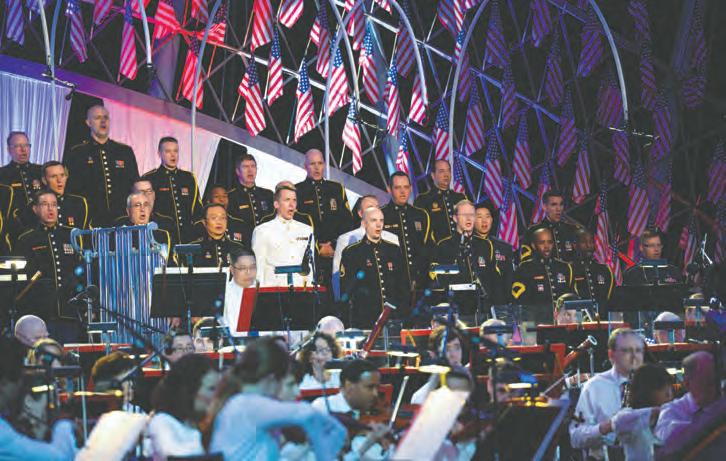
The Annual Memorial Day Concert on the West Lawn of the Capitol is on Sunday, May 24, at 8 p.m. The grounds open at 5 p.m. Checkpoints are set up, and all bags and parcels are checked. Guests will be required to enter through a metal detector. The gates are located at the southwest corner of the Capitol grounds. There are viewing areas for the use of guests with disabilities. The dress rehearsal on the Saturday before the concert is also open to the public. General admission gates typically open at 5 p.m. The same safety procedures and admission policies apply to the dress rehearsal.
www.pbs.org/national-memorial-day-concert
MLK Library’s FirstEver Flea Market
The Martin Luther King Jr. Memorial Library Flea Market, on Saturday, June 6, from 10 a.m. to 2 p.m., is for adults and teens. Vendors showcase unique items, from home decor and antiques to handmade crafts, jewelry and more. Discover treasures while supporting small local businesses.
www.dclibrary.org
“Star Wars” Mondays at MLK Library
Visit the Martin Luther King Jr. Memorial Library, 901 G St. NW, every Monday in May (except Memorial Day) for “Star Wars” double features. Here’s the lineup: May 11, at 11 a.m., “The Empire Strikes Back,” and 2 p.m., “Return of the Jedi”; May 18, at 11 a.m., “Solo,” and 2 p.m., “Space Balls.” Movies will be shown with open captions. Free admission.
www.dclibrary.org
NGA Jazz in the Garden Celebrates American Sounds
The National Gallery of Art’s Friday summer concert series returns with Jazz in the Garden: American Sounds. Kicking off May 22, the series spotlights artists from across the country performing across genres including indie soul-funk, alternative bluegrass, salsa, jazz, rhythm & blues, blues, Americana and brass band music. Admission is free. The NGA offers registrations through a lottery system that opens on Mondays at 10 a.m. and closes Fridays at noon, at www.nga.gov/jazz. All lottery entrants will be notified whether they were selected the Monday before each program via email. Limited passes will be available at all entrance gates starting at 5 p.m. On concert days, the Sculpture Garden closes from 4 to 5 p.m.; gates reopen at 5 p.m. and the concert begins at 6 p.m. The NGA Sculpture Garden is located on the north side of the National Mall. Entrances are at Seventh Street, Ninth Street and Constitution Avenue, and Ninth Street and Madison Drive NW. www.nga.gov
Pups in the Park Returns
Skip the dog park and come to Nationals Park. Pups in the Park is a unique opportunity to bring your dog to a Nationals game. Special ticket buyers and their dogs are invited to participate in a postgame parade on the warning track. Remaining Pups in the Park dates this year are: May 20, 6:45 p.m. vs. Mets; June 23, 3:45 p.m. vs. Phillies; Aug. 25, 6:45 p.m. vs. Rockies; Aug. 29, 4:05 p.m. vs. Marlins; Sept. 27, 3:05 p.m. vs. Mets. If you are planning to attend Pups in the Park with your dog, purchase separate seats for you and your pup. All proceeds from the dog ticket sales will be donated to the Humane Rescue Alliance. www.mlb.com/nationals/tickets/specials/animal-days
The National Memorial Day Concert is held every year on the West Lawn of the US Capitol and is broadcast worldwide.
10AM - 3PM
SATURDAY, JUNE 13
The Great Brookland Yard Sale
The annual Great Brookland Yard Sale is Saturday, June 6 (rain date, June 13), 10 a.m. to 2 p.m. Sales are all over the neighborhood in individual seller’s yards, businesses and churches. Check closer to the date for an interactive map. Printed maps are available for pickup on sale day at Yard Sale Central, 12th and Newton in front of the BNCA Kiosk, Brookland Farmers Market and 12th Street Cleaners. www.brooklandcivic.org/gbys
Resume Building for Beginners at NW One Library
On the second Thursday of every month, Northwest One Library, 155 L St. NW, presents Resume Building for Beginners. This program helps individuals who have never created a resume or need extra help pulling one together. The program has two one-hour sessions, from 4 to 5 p.m. for teens, and 5 to 6 p.m. for adults. www.dclibrary.org
Lane Closure on Kennedy Street NW
The District Department of Transportation (DDOT) has begun construction on the eastbound side of Kennedy Street NW between 13th Street and 14th Street. The work includes restoration of sidewalk, curb and gutter, ADA ramps and PCC base for the roadway. These activities will be performed behind a permanent lane closure of the eastbound lane. Restoration work on the eastbound side is anticipated to be completed within 6-8 weeks. Upon completion, the roadway will be reopened to two-way traffic. Regular working hours, 7 a.m. to 7 p.m., will continue for construction activities within the project limits. Traffic controls, including signage, have been installed to guide motorists, bicyclists and pedestrians through the work zone. www.kennedystnw-reconstruction.ddot.dc.gov
2026 DC Bike Maps Available
The new map includes the latest bike infrastructure updates and features all types of cycle routes, like protected bike lanes, off-street trails and shared lanes, along with amenities such as Fixit stands, secure bike parking and trail access points. Download a copy at www.godcgo.com/wp-content/uploads/DC-BikeMap or request a printed version by emailing info@ godcgo.com with name and mailing address.
Drive-In Movies at Union Market
The Drive-In at Union Market is back for the 14th season. Get tickets to watch from the comfort of your car ($25) or bring chairs and blankets for a picnic-style setup in front of the market. No tickets are needed to watch on Neal Place. Summer movies start at 7:30 p.m. Here’s the lineup: May 8, “Mulan”; June 12, “Barbie”; July 10, “Iron Man”; Aug. 14, “F1: The Movie”; Sept. 4, “Mean Girls”; Oct. 5, “The Addams Family.” www.unionmarketdc.com
Pride Run 5k at Congressional Cemetery
On Saturday, June 6, from 9:00 to 10:30 a.m., the DC Front Runners Pride Run Foundation hosts the 14th annual Pride Run 5k at Congressional Cem-
The Box Knot Photo: Courtesy of Tudor Place DC’s Secret Garden at Tudor Place
Tudor Place Historic House & Garden, 1644 31st St. NW, offers five+ acres of historic gardens free and open to the public. Tucked just off 31st Street, the gardens feel like a step out of the city while quietly holding over 200 years of layered DC history. Originally established in 1805 by Martha Washington’s descendants, the landscape has evolved alongside the country itself, blending English landscape design, formal gardens and unexpected global influences. Beyond the history, it’s a great place to spend an afternoon. www.tudorplace.org
etery. More than 1,200 runners will kick off Pride Weekend 2026 with a running start. $55 to register ($35 for ages 20 and under). Register at www.congressionalcemetery.org/ event/pride-run-5k-2026.
DC Dragon Boat Festival
The 23rd annual DC Dragon Boat Festival is on Saturday, May 16 (rain date, June 13), 8:30 a.m. to 5:30 p.m., at Georgetown Waterfront Park and Thompson Boat Center. The festival includes eye dotting ceremonies, lion dances and other cultural demonstrations. Dragon boating is based on the legend of Qu Yuan, a Chinese poet and statesman who in the ultimate form of protest committed suicide in the Mei Lo river around 278 B.C. Local fisherman thrashed the water to scare the fish away from eating his body.
www.dcdragonboatfestival.com
DC Art Bank Opens
The DC Commission on the Arts and Humanities celebrates 40 years of the Art Bank Program, a public collection that highlights the creativity and vision of DC’s artists. The FY 2027 Art Bank grant cycle is open through May 18. Selected pieces will join the District’s public art collection and be exhibited in government buildings and community spaces across the city. Information regarding eligibility and more is included in the request for application at www.tinyurl.com/ ArtBank2026.
Folger Theatre
Announces Shakespeare’s Plays for 2026-27 Season
Folger Theatre has announced its 2026-27 season with three titles by the best-known playwright in the English language. The plays are: “Measure for Measure,” Sept. 22 to Oct. 25; “Hamlet,” March 2 to April 4; a Shakespeare comedy, title to be
announced, May and June 2027. The theater is in the Folger Shakespeare Library, 201 E. Capitol St. SE. www.folger.edu
The Armed Forces Cycling Classic
The 2026 Armed Forces Cycling Classic takes place on Saturday, May 30, and Sunday, May 31, and is open to cycling enthusiasts of all abilities. The 12-mile Challenge Ride course includes both Arlington and DC, with the start and finish in front of the US Capitol. The ride offers a carfree, closed course for up to three hours. Finishing medals await participants, with gold, silver and bronze awarded based on distance completed. Enjoy at a casual pace (stay to the right) or challenge yourself (pass on the left). Read more and register at www.cyclingclassic.org.
Golden Gears: E-Bike and Scooter Rides
AARP DC, in partnership with Vision Zero, hosts Golden Gears: E-Bike and Scooter Rides, a beginner-friendly way to explore DC’s trails on two wheels. The rides are designed for adults 50+ and are open to riders of all experience levels. Thanks to collaborators Lime and Capital Bikeshare, participants will have free access to shared e-bikes and scooters while enjoying a guided ride along some of DC’s most scenic trails. There is an upcoming ride on Saturday, May 16, at 10 a.m. on the Anacostia Trail and Anacostia Park (www.tinyurl.com/May 16VZride). Advance registration is required and space is limited. You are encouraged to sign up early and join a safe, active and social riding experience. For questions related to registration, email Renee Moore, special assistant at the Mayor’s Vision Zero Office, renee.moore@dc.gov. u
CHANGING HANDS
Changing Hands is a list of most residential sales in the Midcity DC area from the previous month. A feature of every issue, this list, based on the MRIS, is provided courtesy of Don Denton, manager of the Coldwell Banker office on Capitol Hill. The list includes address, sales price and number of bedrooms.
Neighborhood Price BR
ADAMS MORGAN
1853 Ontario Pl NW $850,000 4
BLOOMINGDALE
Bryant St NW $1,113,000 4 1738 1st St NW $1,025,000 0
COLUMBIA HEIGHTS 1323 Randolph St NW $894,500
Kids & Family
Children’s Business Fair of Washington, DC
The annual Acton Children’s Business Fair of Washington, DC, is on Saturday, May 9 (rain date May 16), 10:00 a.m. to 12:30 p.m., in the Dupont Circle neighborhood at 1521 20th St. NW. North America’s largest entrepreneurship event for children gives children the opportunity to showcase their own businesses. Children aged six to 14 are invited to create a product or service and sell to customers. Prizes will be given for the best businesses by age and category. Past businesses have included handmade greeting cards, a pet-sitting service for exotic birds, a photobomb booth and a lemonade stand that donated a percentage of profits to protect honeybees. Join the mailing list at www.dcchildrensbusinessfair.org/email-updates.
DC DPR Outdoor Pools Open for the Season
Chiarina’s Family Concert: Vivaldi’s “Four Seasons”
On Sunday, May 17, at 2:30 p.m., at St. Mark’s Church, 301 A St. SE, in an original adaptation by musicologist and children’s book author Anna Harwell Celenza, Chiarina presents the story of Antonio Vivaldi’s concerti, “The Four Seasons,” and the pupils in Venice who first performed the work. The program features soloist Audrey Wright and includes narration and visuals. It is best enjoyed by audience members ages five and up. Tickets are $23.18; free for ages 18 and under. www.chiarina.org
DC Department of Parks and Recreation outdoor pools will open for the season on Memorial Day weekend and remain open, for weekends only, until school lets out. At DC’s outdoor pools, 15-minute safety breaks occur on the 45th minute of every hour. All children and guardians must exit the pool during safety breaks to lessen the risk of spreading water illnesses. Additionally, poolgoers can hydrate, use restrooms, reapply sunscreen and seek shade. During periods of excessive heat and peak utilization, DPR may require patrons to leave the water, regardless of age. Find a pool and read the rules at www.dpr.dc.gov/page/outdoor-pools.
Semper Fred 5k
The Semper Fred 5k, on Saturday, May 16, is a family-friendly, all-ages event in historic Fredericksburg on the day before the Marine Corps Historic Half. $56. Register for this 3.1-mile experience at www.marinemarathon.com/event/semper-fred-5k.
Capitol Hill Classic Kids’ Fun Run
The National Capital Bank Capitol Hill Classic, on May 17, is an annual
10k, 3k and Fun Run – the only race run exclusively on the roads of Capitol Hill. Funds raised through the event benefit the Capitol Hill Cluster School, a DC public school serving over 1,100 students. Now in its 45th year, the 10k is the oldest and biggest in DC. The 10k ($55) starts in front of Peabody Primary School, a few blocks from the US Capitol. Runners traverse Capitol Hill, passing Stanton Park, the Capitol, the Supreme Court, the Library of Congress, Lincoln Park, the RFK stadium campus and the Anacostia Riverwalk Trail. The 3k ($45) course also begins at Peabody Primary School. Runners head to East Capitol Street and trek to Lincoln Park and back. The Fun Run ($20) is a single lap around Stanton Park (approximately a third of a mile). www.capitolhillclassic. com
Ms. Niki In Concert
Nicole “Ms. Niki” Addison is a classically trained singer/songwriter from Washington, DC. Described as a New Age cross between Mary Poppins and Ms. Frizzle, she will lead audiences of all ages on a colorful adventure through upbeat original songs and classics with a twist. Ms. Niki is at
Hill Center, 921 Pennsylvania Ave. SE, on Friday, May 8, from 5 to 7 p.m. $10 admission. www.hillcenterdc.org
Anacostia Park Skating Skate anytime at Anacostia Park Skating Pavilion – the National Park Service’s only roller-skating rink. Free skate rental is available from Memorial Day through Labor Day, Sundays to Wednesdays, 9 a.m. to 5 p.m., and Thursdays to Saturdays, 9 a.m. to 8 p.m. Last skate rentals are distributed 30 minutes before closing. Rentals are free with a government-issued ID. Socks are required to rent skates. www.nps.gov/anac
Girls on the Run Spring 2026 Celebratory 5k
The Girls on the Run Spring 2026 Celebratory 5k is at Anacostia Park on Sunday, May 17, at 8 a.m. (pre-race fun, 7 a.m.). This non-competitive, inclusive gathering welcomes participants of all ages and fitness levels for a supportive atmosphere and scenic trails while helping a meaningful cause. Registration is $45, and day-of is $55. Registration is now open at www.gotrdc.org/5k.
Living Life Living Life
in Color
KIDS & FAMILY
Library of Congress
Experiential Gallery for Children and Teens
The Library of Congress will open an experiential gallery in May for children and teens with families and school groups. The Source: Where Curiosity Sparks Discovery is spearheading a shift toward participatory, youth-centered learning in one of the nation’s most historic spaces. Created especially for visitors ages eight to 15, the gallery encourages engagement in creative, personalized ways. At interactive stations youth can investigate items from image, film, sound and text collections through guided exploration and open-ended discovery. www.loc.gov
123 Andres at National Theatre’s Saturday Morning Live
On Saturday, May 9 and 23, at 10 a.m., in the National Theatre’s Helen Hayes Gallery, 123 Andres give concerts in Spanish and English. Andres and Christina perform on stages across the US and Latin America and are co-hosts of the awardwinning PBS podcast “Jamming on the Job.” Preregistration is now live. Free admission. The new schedule for Saturday Morning Live! has one 10 a.m. performance on the second Saturday of the
Love & Diapers: Inaugural Mother’s Day Diaper Drive
On Saturday, May 9 (rain or shine), from 10 a.m. to 3 p.m., the New Samaritan Baptist Church and Capital Community News are conducting a Mother’s Day Diaper Drive at the New Samaritan Baptist Church (drive-through or walkup), 1100 Florida Ave. NE. They’re asking for donations of diapers, pullups and wipes. Donations are tax-deductible. It costs an average of $1,200 to diaper a metro-area baby for one year. Diapers are more than just a basic need, they’re a lifeline. They keep babies clean, healthy and dry. They allow caregivers to send their children to daycare so they can go to work or school. The recipient of the donated diapers, pullups and wipes, the Greater DC Diaper Bank, delivers diapers to over 40,000 vulnerable families in the metro area per year through a network of 80+ social service partners. www.greaterdcdiaperbank.org
Family-Friendly NoMa Outdoor Movie Nights
On Wednesday evenings, May 6 to June 10, NoMa BID presents CiNoMatic, an outdoor movie series at Alethia Tanner Park, 227 Harry Thomas Way NE. Here’s the lineup: May 6, “Pirates of the Caribbean”; May 13, “Jurassic Park”; May 20, “Top Gun”; May 27, “National Treasure”; June 3, “Night at the Museum”; June 10, “The Princess Bride.” Movies begin at sunset, with lawn seating opening one hour prior to showtime. Guests are encouraged to arrive early, as seating is first-come, first-served, and to bring their own blankets, chairs and picnic dinners. NoMa restaurants are open for takeout; food and drink will also be on sale from food truck partners. On-leash dogs are welcome. For more information and weather-related schedule updates, visit www.cinomatic.org.
Meet America’s National Mammal: “Bison Standing Strong” (Opens May 7)
Explore a remarkable exhibition about the American bison at the Natural History Museum. This iconic animal once shaped North American landscapes and Indigenous lifeways but was pushed to the brink of extinction. Today, it stands as an enduring symbol of survival and resilience. Explore a full-sized bison specimen, an immersive soundscape, cutting-edge scientific research and Native objects and stories shared in collaboration with community members. www.naturalhistory.si.edu
The Source: Where Curiosity Sparks Discovery Free Family Day at LOC
On May 9, 10 a.m. to 5 p.m., take part in a full day of free family-friendly fun and performances. Enjoy activities highlighting Library materials and staff specialists, and performances. Join an author talk with bestselling co creators Raina Telgemeier and Scott McCloud as they discuss their middle grade graphic novel, “The Cartoonists Club.” The program is being held on the ground, first and second floors of the Library’s Jefferson Building. The event is free but tickets are required for the Jefferson Building. Register at loc.gov/visit.
The Speedwell Conservation Carousel at the Zoo Daily from 10 a.m. to 6 p.m., weather permitting,
Photo: Courtesy NoMa BID
the Speedwell Foundation Conservation Carousel o ers a oneof-a-kind experience, where you can ride a naked mole rat, panda or armadillo. Located across from Lemur Island at the Smithsonian’s National Zoo, the carousel features carved and hand-painted animals under a brightly colored open-air pavilion. $4 tickets can be purchased at the carousel. Riders under 42 inches must be accompanied by an adult. All proceeds support the zoo’s animal care and conservation science initiatives. Wheelchair accessible. www.nationalzoo.si.edu
Hill Family Biking: Tiny Streets 4 Ride
On Sunday, May 17, from 4 to 6 p.m., join Hill Family Biking for a four-mile ride on some of the most picturesque one-block streets on the Hill, followed by free ice cream at the Capital Candy Jar. Marshals will ensure participants stay together as a group. A bike team from the Metropolitan Police Department will join the ride to connect o cers with the community. Riders with bikes needing attention should come 15 minutes early for tools or advice from experienced amateur bike mechanics. Meet at Maury Elementary parking lot on 12th Place NE. Participation is free. www.hillfamilybiking.org
“Under the Baobab Tree” at Discovery Theater
At Discovery eater, on Wednesday through Friday, June 3 to 5, at 10:15 and 11:30 a.m., “Iya” Bashea Imana and her troupe of Kuumba Kids perform traditional songs, dances and stories. eir interactive show features puppets, movement and motivational music. Recommended for ages three to eight. All seating is general admission. Adult tickets are $8; kids, $7; and under 2, $3. www.discoverytheater.org